
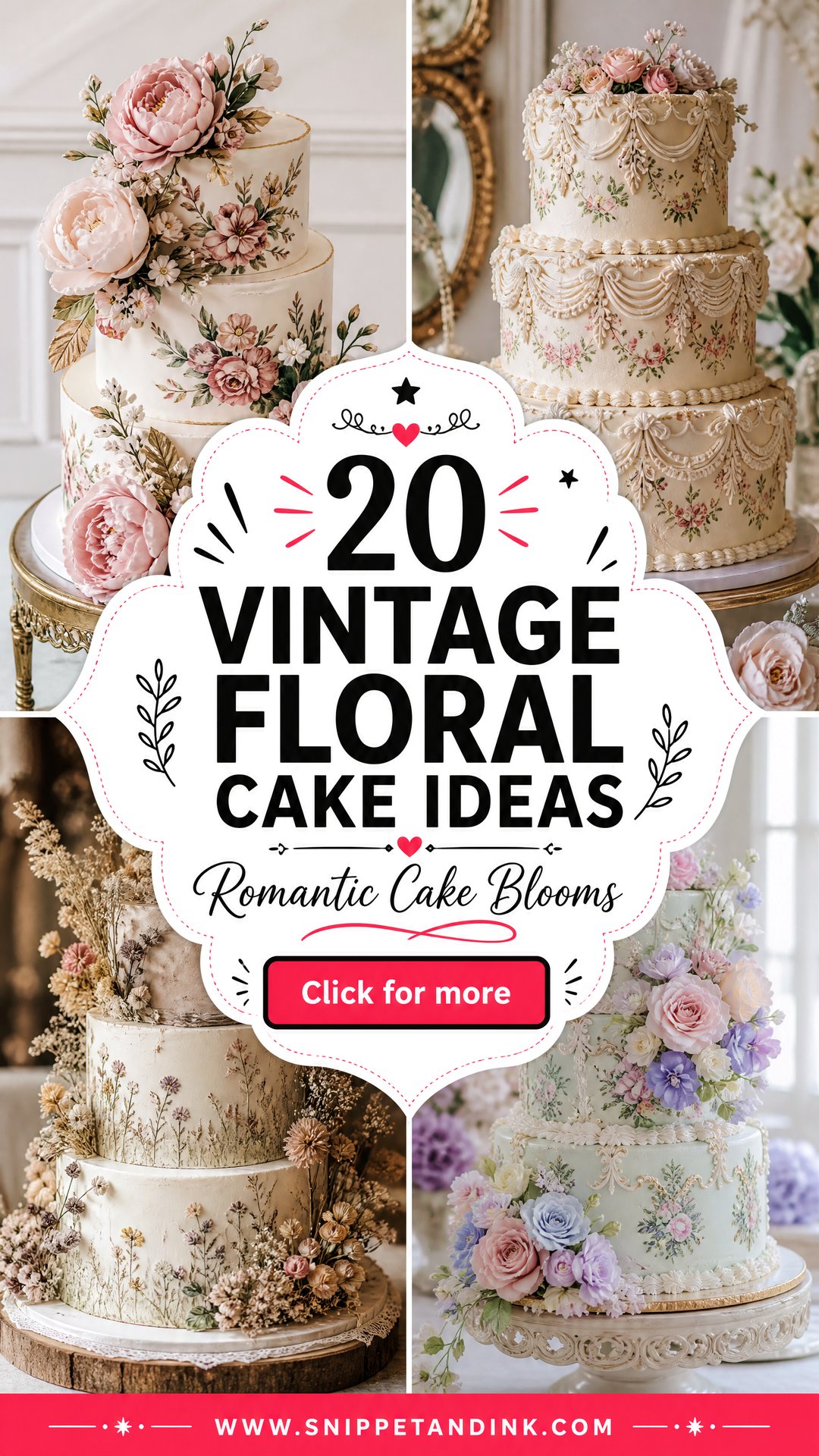
Old-fashioned floral cakes are back on my order sheet more than anything else right now: piped roses, Lambeth borders, pressed violas, sugar peonies, painted china patterns. They read as romantic without needing to look dated, and each one comes with its own practical side. A sugar peony is made weeks ahead, a fresh rose goes on an hour before guests arrive, and piped lace has opinions about warm marquees. Below are twenty vintage-style cakes, with notes on how each decoration is made, how it holds up and what to ask your baker before you commit.
Sugar, Piped, Fresh or Pressed: The Lead Time Behind Each Flower
Every flower in this list is made from one of five materials, and each has its own calendar. Knowing which one you’re ordering tells you when to book, what you can keep afterwards and what might go wrong.
- Sugar (gum paste) flowers are shaped and dried days or weeks ahead. They keep for years in a dry box, but humidity softens them, so they’re stored airtight until delivery.
- Piped buttercream flowers are made in the days before the wedding and chilled. They taste of the cake but don’t survive long in a warm room.
- Fondant flowers sit in between: faster than sugar flowers, firmer than buttercream, less realistic up close.
- Pressed edible flowers are pressed weeks in advance and need a supplier of spray-free blooms, so ask early in the season.
- Fresh flowers are bought for the week of the wedding and placed on site, usually by the baker or florist within an hour or two of display.
For a detailed vintage design, I’d book your baker several months ahead rather than weeks. Busy summer dates fill early, and a cake with a lot of sugar work needs time on the schedule well before the week of the wedding.
1. Vintage Floral Wedding Cake With Buttercream Roses
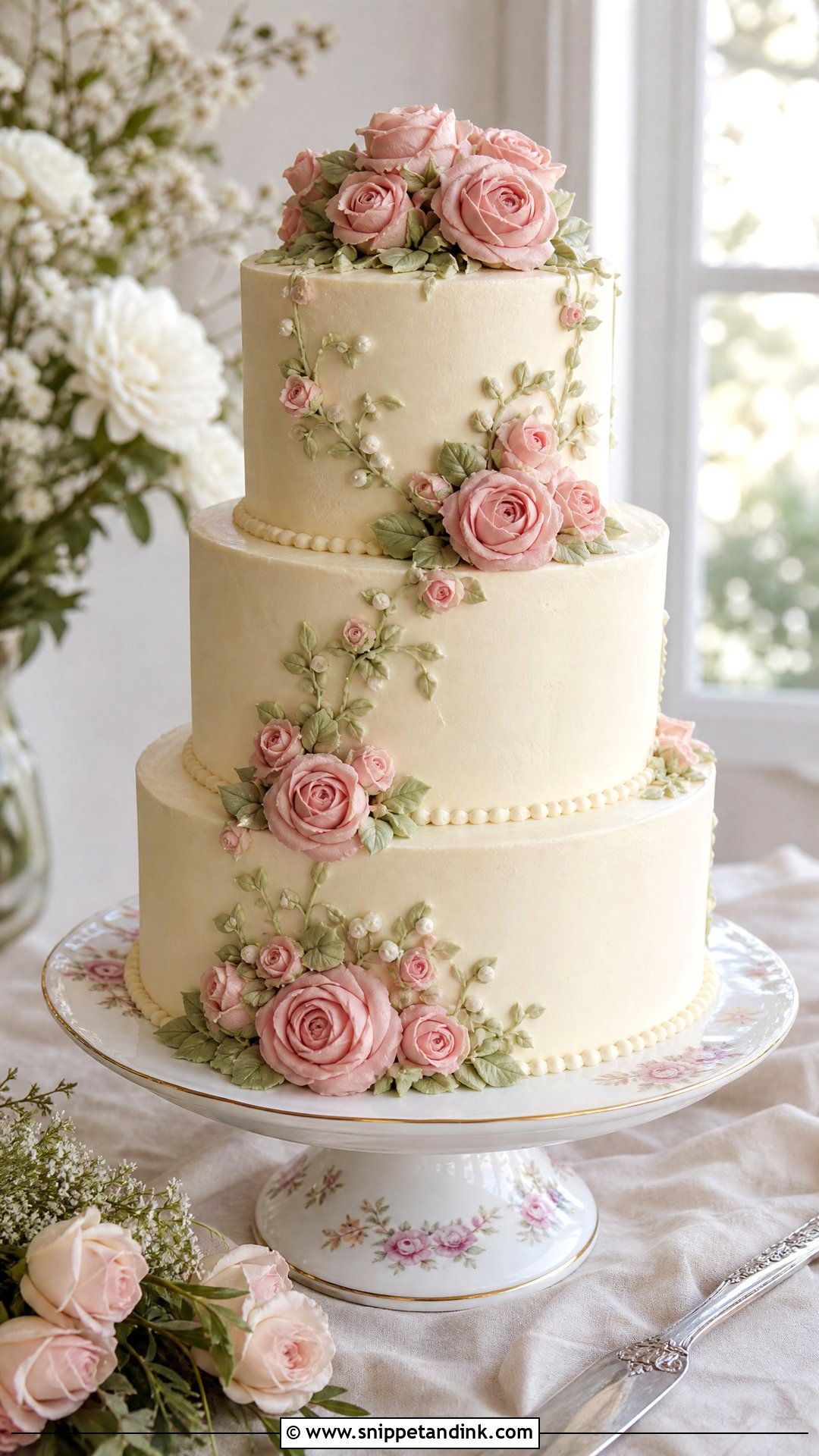
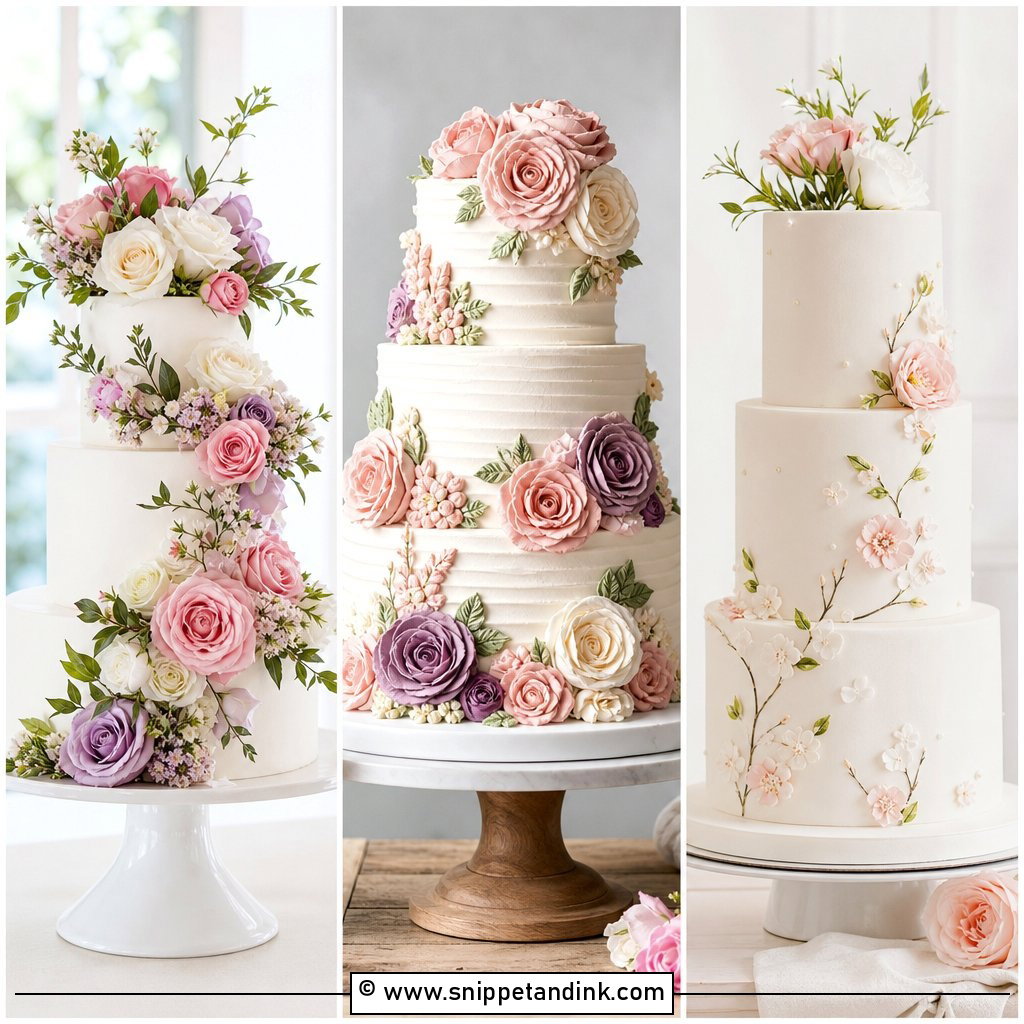
Piped buttercream roses are where most bakers learned the trade, and they still have the most nostalgic charm. Each rose is piped with a petal tip onto a flower nail, chilled, then lifted onto the cake, so the cake can have dozens without them sliding. I like them clustered at the base of a two- or three-tier cake in blush on ivory, with pale green leaves piped straight onto the tier. Let them climb the side if you want movement. A shell border or a few pearl dots finish the vintage look without crowding it.
2. Vintage Floral Wedding Cake With Pressed Flowers
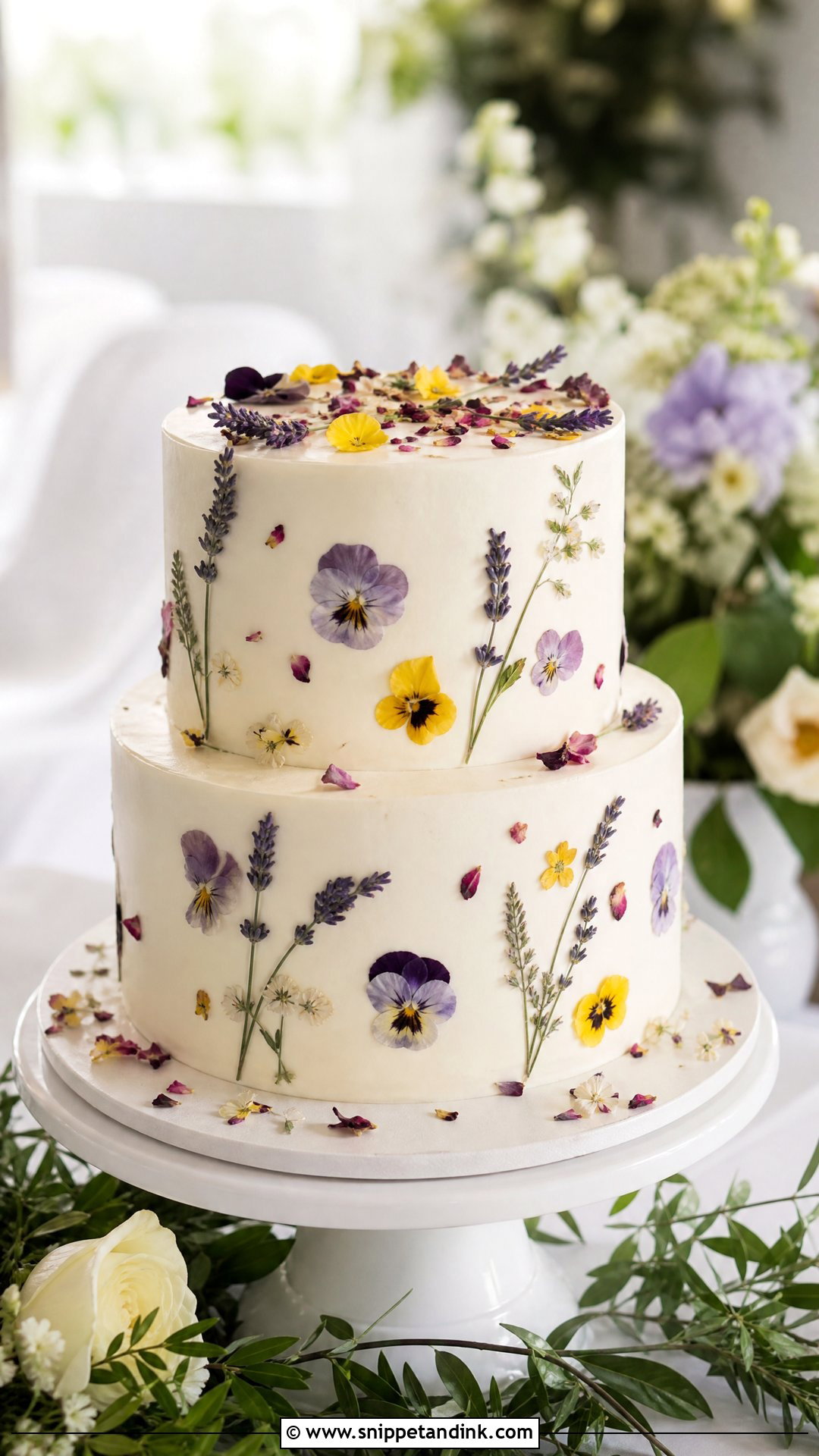
Pressed flowers sit almost flat against the frosting, so the cake reads like a page from a botanical album. They need a smooth buttercream surface to show clearly, and I press them in while the frosting is still slightly soft so they stick without glue. Use only edible pressed pansies, violas, chamomile, lavender or rose petals grown without sprays. Scatter them loosely or set them in a wreath around each tier. Pressed petals fade under strong sun, so I keep this one out of direct light at the venue. An ivory, cream or pale butter-yellow base lets the petal colours lead.
3. Vintage Floral Wedding Cake With Sugar Peonies
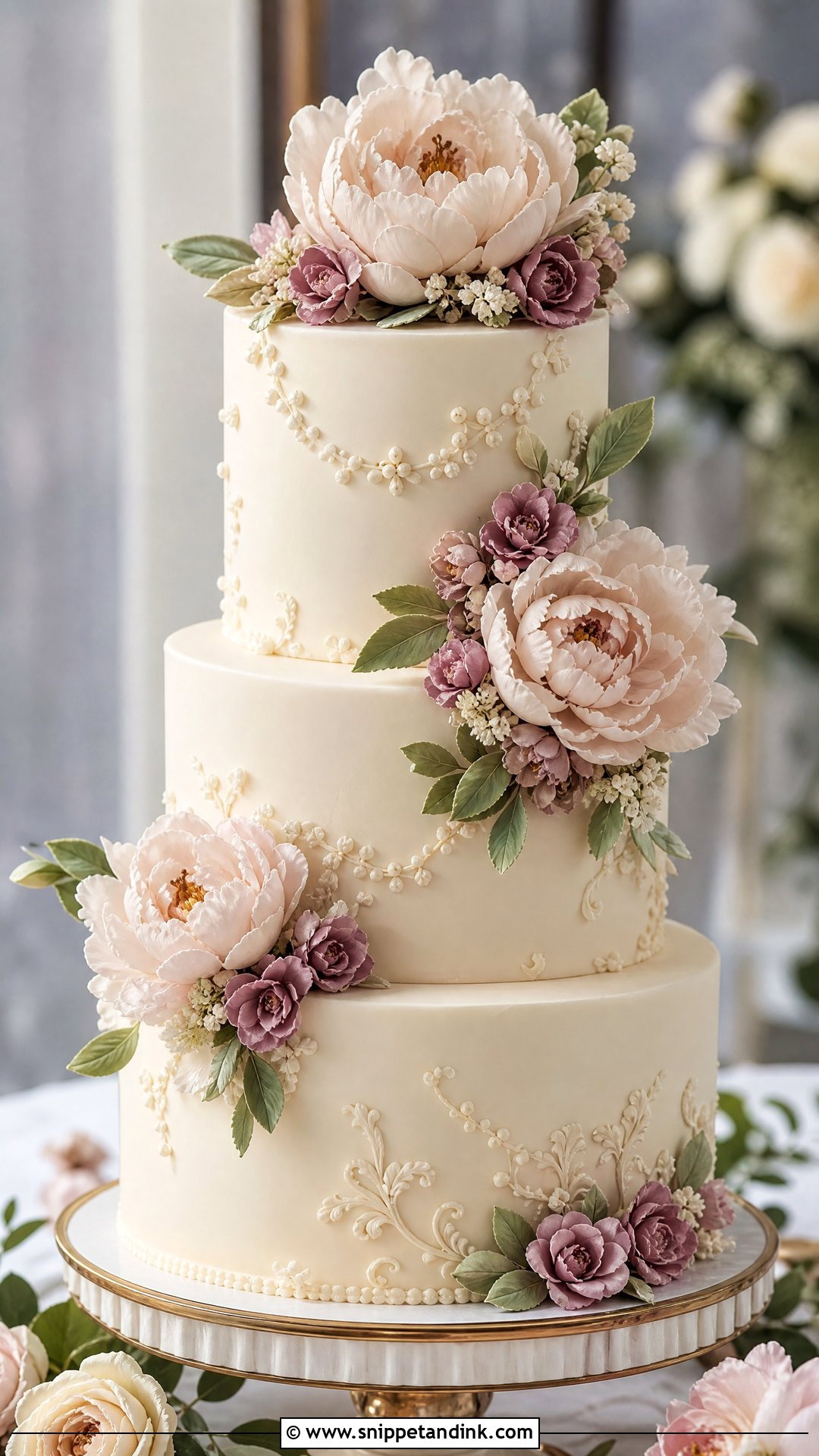
A single sugar peony on the top tier has more presence than a dozen small blooms. Sugar flowers are made from gum paste, petal by petal on wires, and a full peony can take hours to shape and dust, which is why they’re priced as they are. They also keep: many couples save the top flower as a keepsake. A smooth fondant or buttercream base gives them a clean backdrop. Blush, ivory, dusty rose and mauve all suit a vintage palette. I add smaller blooms down one side for balance and finish with fine lace piping or a thin gold edge.
4. Vintage Floral Wedding Cake With Lace Piping
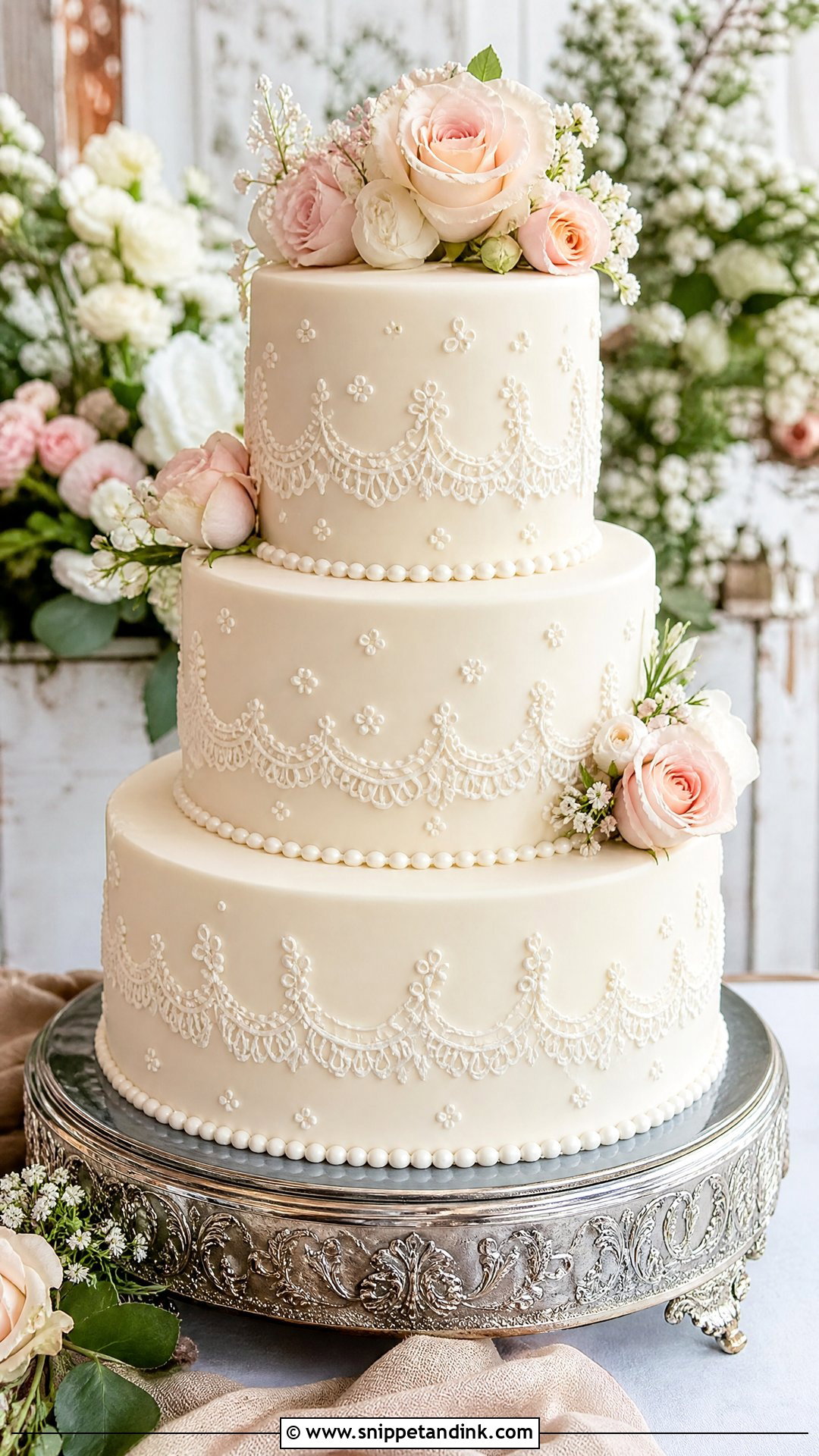
Lace piping borrows its patterns from wedding veils and old table linen, and it’s slow work. I pipe it freehand or over a stencil in royal icing or a firm buttercream, which needs a cool room and a steady hand. It only reads clearly on a smooth ivory or white tier. Keep the pattern light: heavy lace over every tier can look like doily. One laced tier with tiny piped blossoms or a small fresh cascade is often enough. Pearls and scalloped borders pair naturally with it.
5. Vintage Floral Wedding Cake With Lambeth Piping
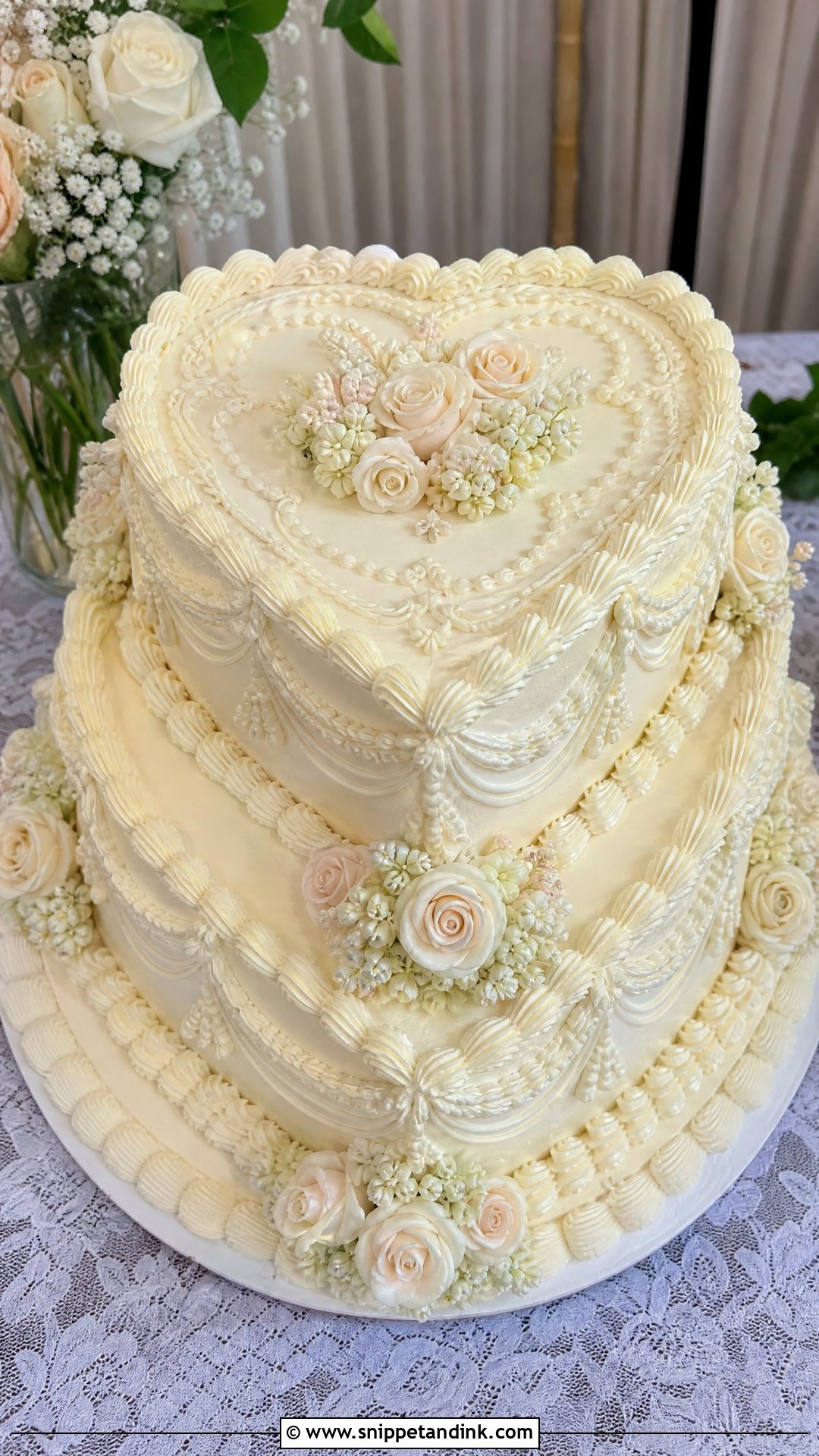
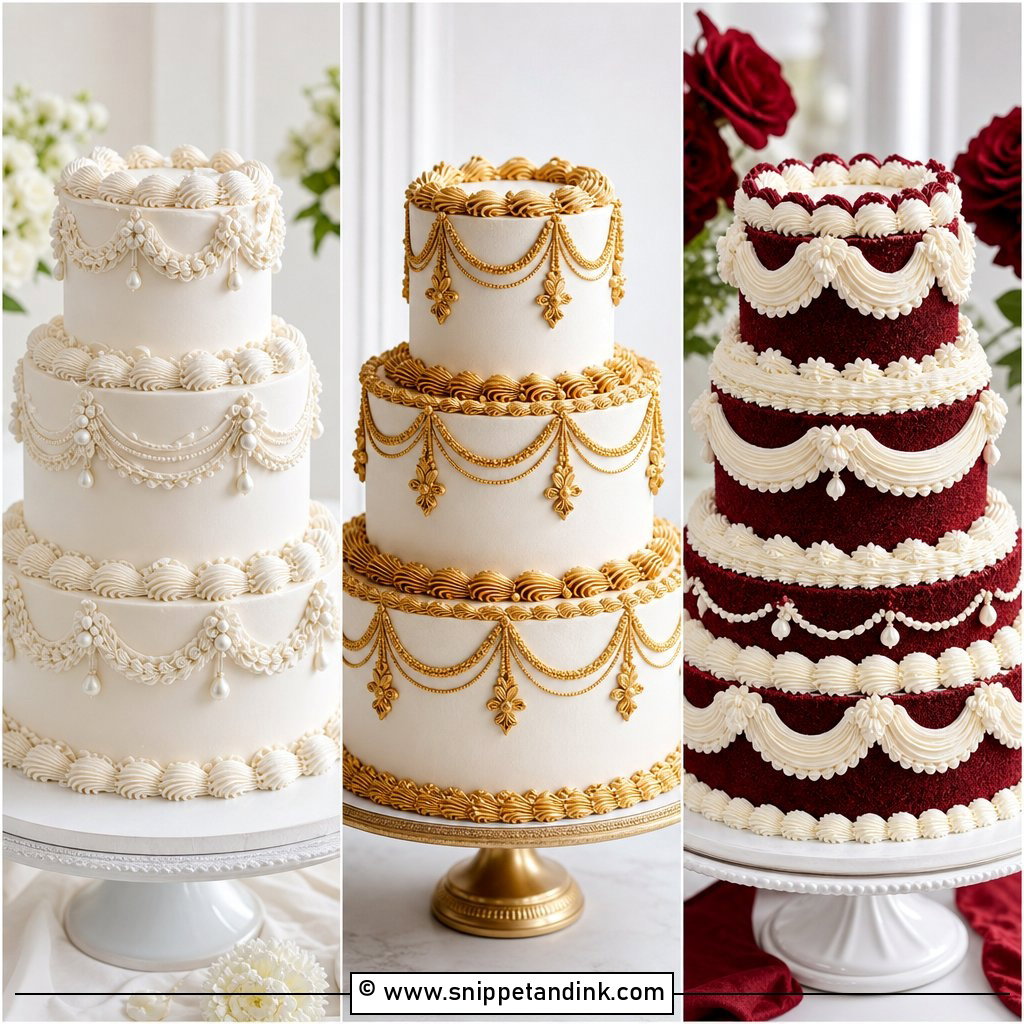
Lambeth piping is the English overpiping method, layering swags, shells, scrolls and borders on top of each other until the cake looks carved. It suits anyone wanting an ornate vintage wedding cake, and it’s having a strong revival. Traditionally it was royal icing; most bakers now pipe it in buttercream, which is softer to eat and fussier in warm rooms. Buttercream roses or small sugar clusters can sit between the borders. Ivory, soft pink and champagne keep it romantic. It can be round, heart-shaped or tiered, and it makes the cake the centrepiece of the room.
6. Vintage Floral Wedding Cake With Fresh Garden Flowers
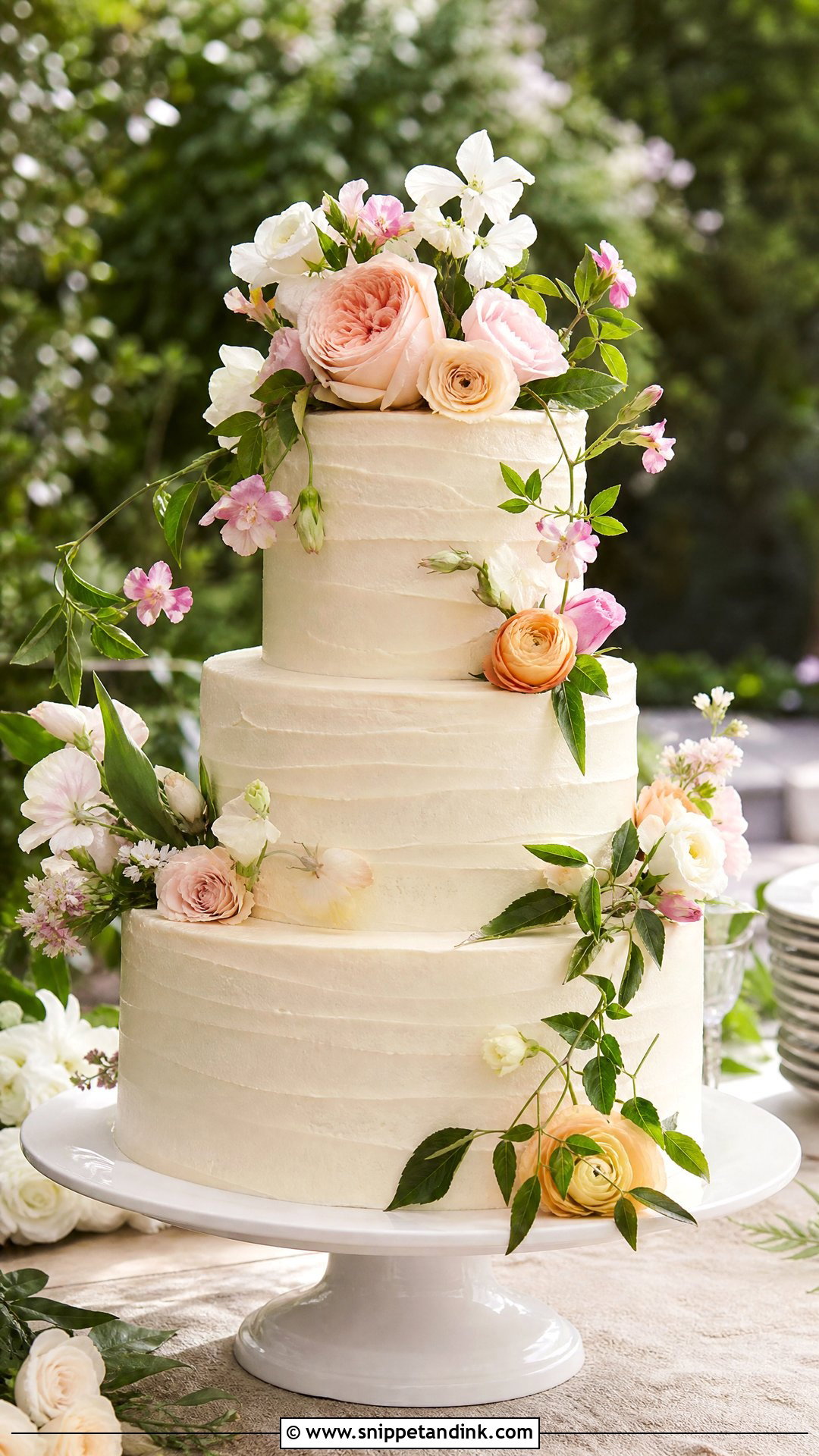
Fresh flowers make a cake look like it came from the garden that morning. Roses, ranunculus, sweet peas, lisianthus and small greenery are popular choices, but several of these, including ranunculus and sweet peas, are not safe to eat, so they must never touch frosting directly. I wrap every stem in floral tape, insert it into a food-safe posy pick and lift the flowers off before cutting. Matching them to the bouquet ties the cake to the day. Semi-smooth buttercream feels relaxed; fondant feels formal. Agree early with your florist who supplies and places the flowers.
7. Vintage Floral Wedding Cake With Hand Painted Flowers
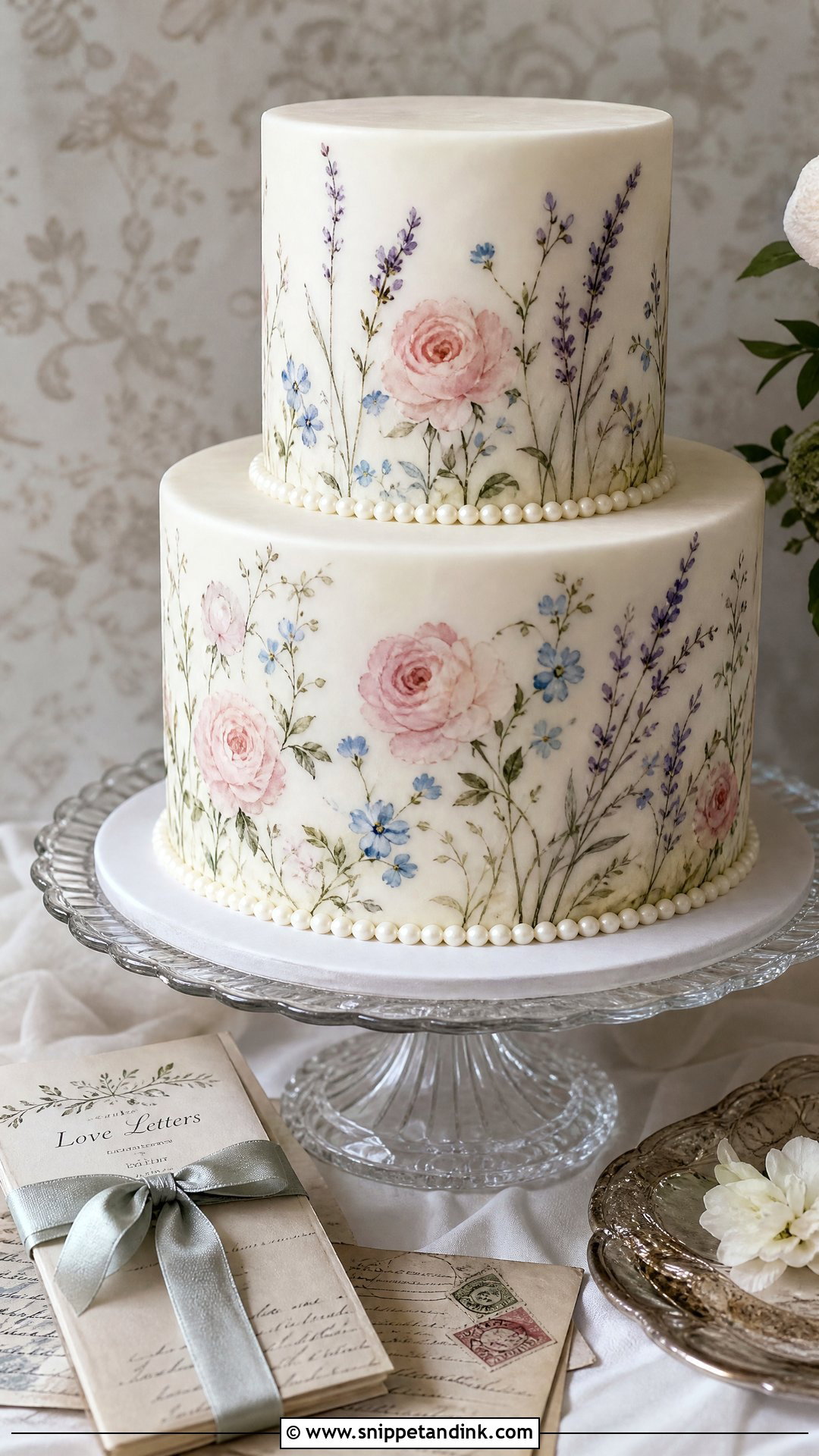
Hand painted flowers are closer to illustration than piping. On fondant I paint with food colour thinned in a clear alcohol that evaporates; on buttercream, a chilled surface and cocoa-butter based paint work best. The subjects suit antique china and watercolour stationery: soft roses, blue forget-me-nots, lavender sprigs, trailing vines. Cover the cake in a print or keep to a few clusters. Ask to see the baker’s painted work in person, since this is a skill that varies hugely. A thin piped border gives the painting a frame.
8. Vintage Floral Wedding Cake With Fondant Flowers
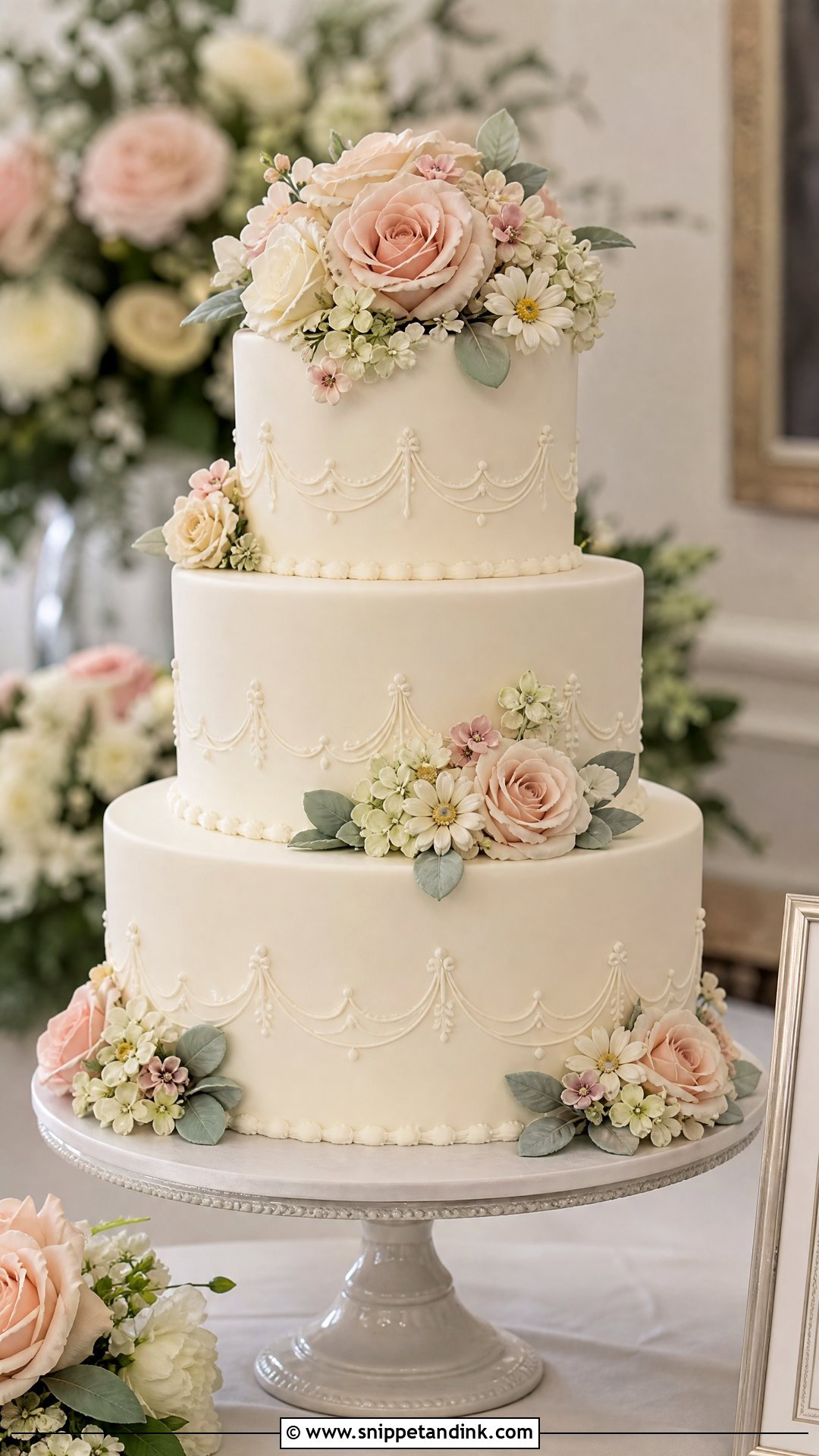
Fondant flowers can be matched to your colours exactly, which fresh flowers never quite can. They’re cut and shaped from fondant or a fondant and gum paste mix: roses, blossoms, daisies, hydrangea florets and tiny fillers. They’re softer and cheaper than full sugar flowers but less realistic up close. A white or ivory cake with pastels feels classic; dusty rose, sage, cream and pale peach look more antique. Group them in small clusters rather than covering the cake, so each one gets attention.
9. Vintage Floral Wedding Cake With Pearl Details
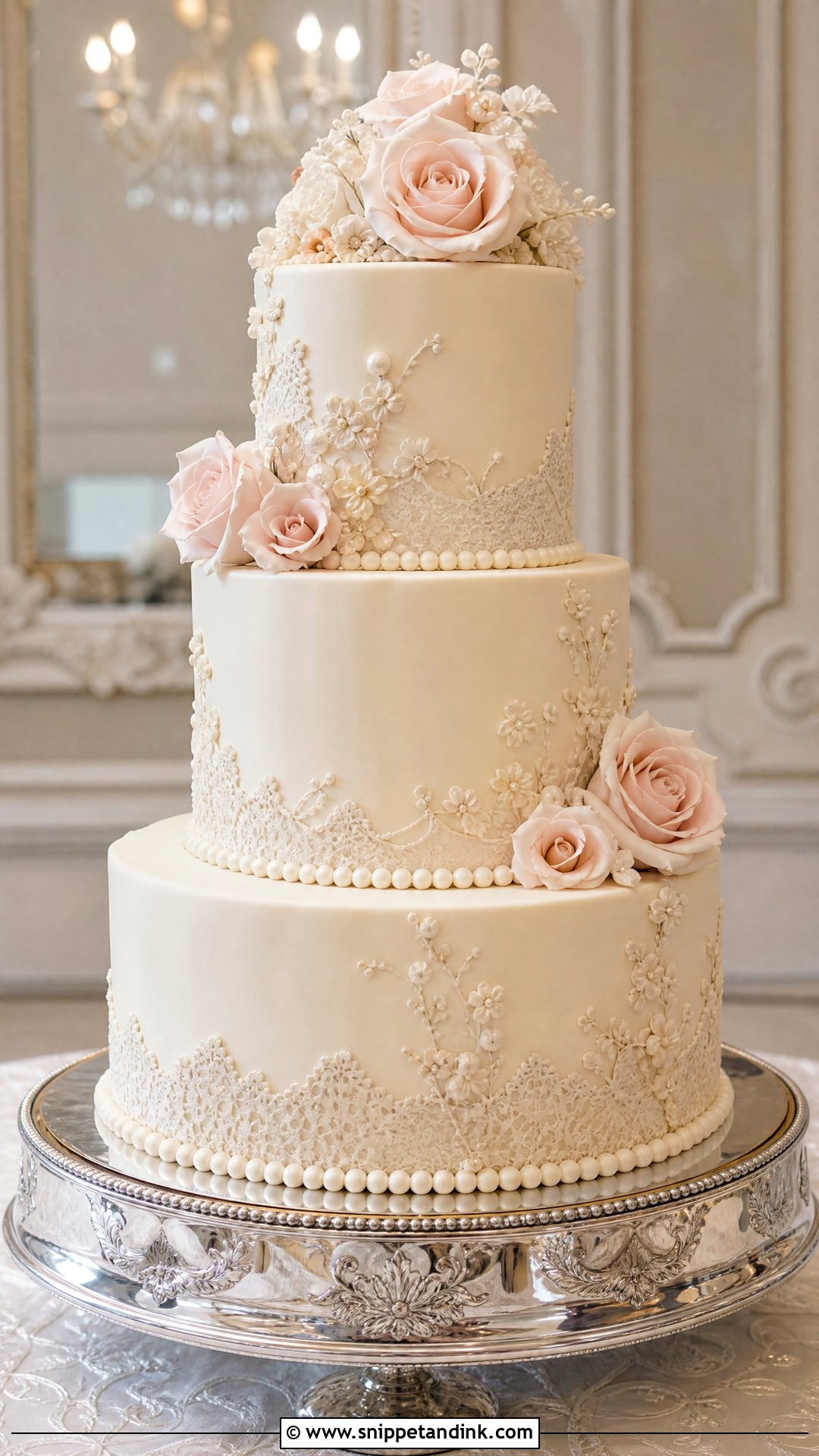
Edible pearls are the quickest way to make a floral cake feel vintage. Sugar pearls can run along tier edges, sit between flowers or frame lace piping. Ivory buttercream with soft pink flowers and a satin finish is the classic combination. One thing I check: some metallic dragées are sold as decorative only, so I use pearls clearly labelled edible. Keep the floral side simple, with sugar roses or piped blossoms, and let the pearls carry texture. They catch the light without competing with the flowers in photos.
10. Vintage Floral Wedding Cake With Cascading Flowers
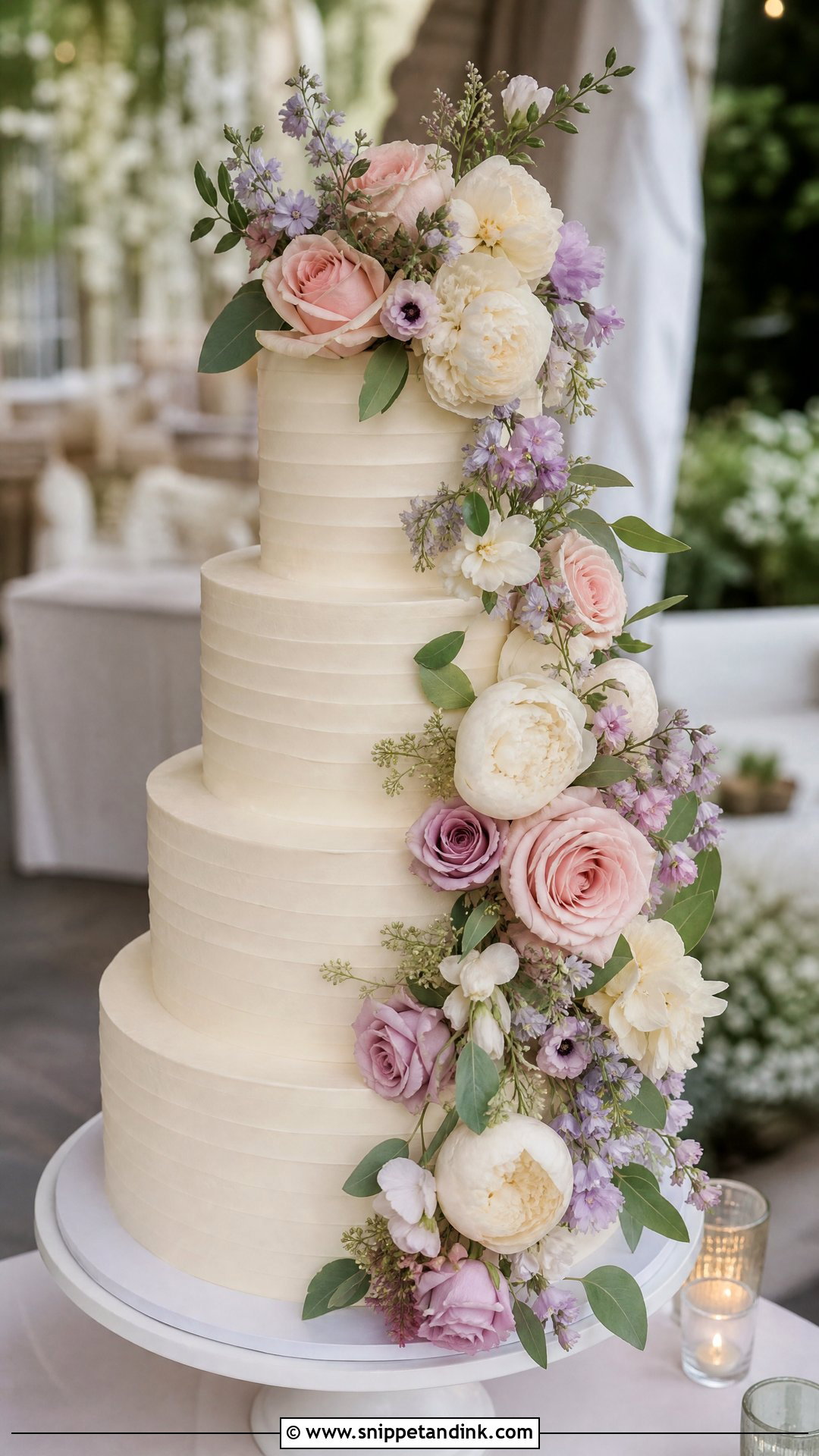
Height and movement come from flowers flowing off the top tier down one side. A cascading flower cake needs room, so I recommend it on three tiers or more. Roses, peonies, orchids, sweet peas and small fillers all appear in cascades, but the inedible ones need wrapped stems and picks just like any fresh arrangement. Muted tones keep it vintage: ivory, blush, dusty lavender, pale peach, sage. The cake surface can be smooth buttercream, fondant or a light texture. Sugar flowers make the safest cascade if anyone at the table is pregnant or has allergies.
11. Vintage Floral Wedding Cake With Floral Wreath
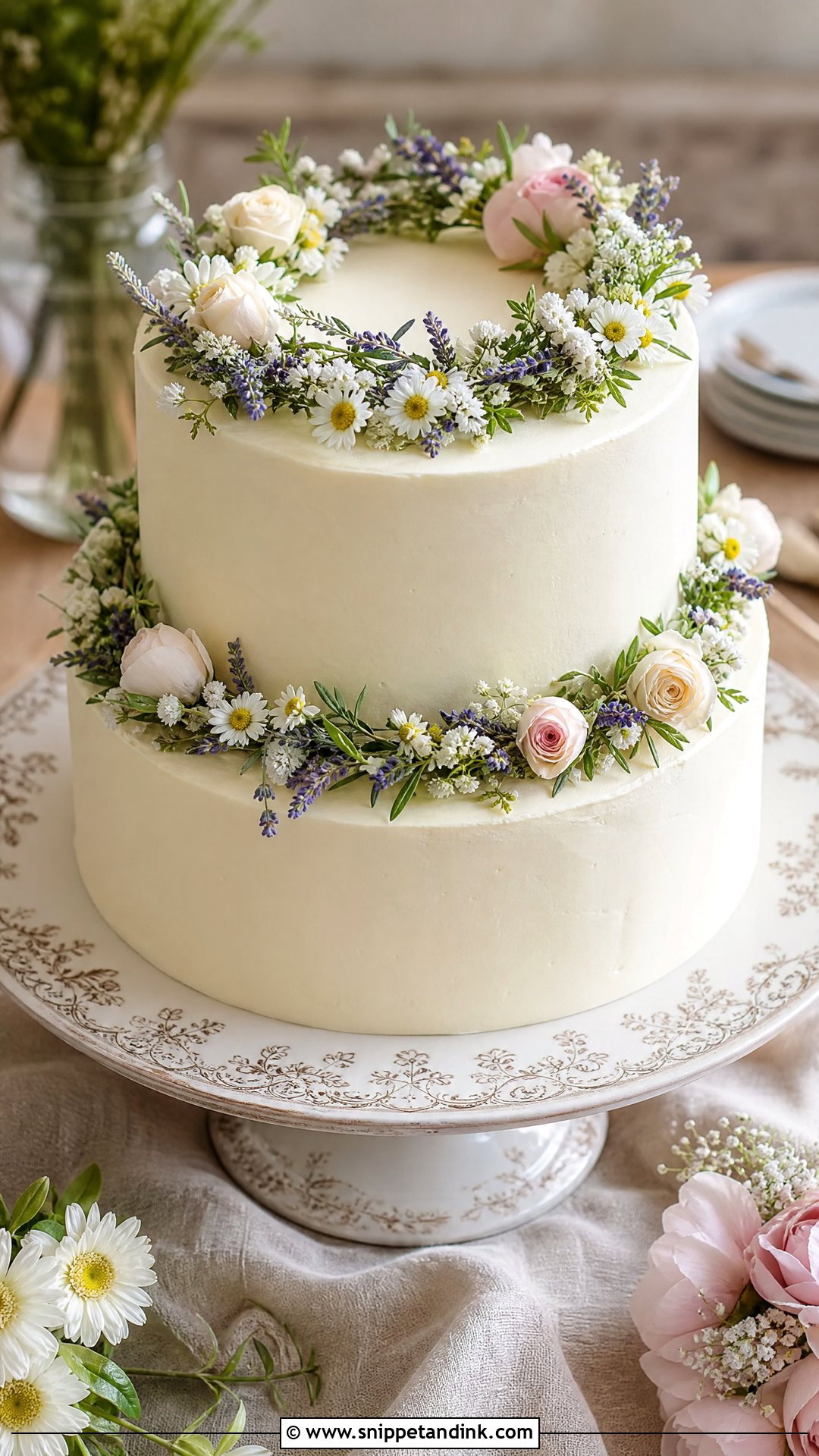
A wreath of small flowers around the top, middle or base of each tier frames the cake like an old botanical plate. It’s restrained, which suits couples who find a full cascade too much. Small roses, lavender, chamomile and greenery work well. Baby’s breath is popular but mildly toxic, so I either use a sugar version or keep the real thing on a barrier. Smooth ivory buttercream keeps the look clean. Piping your initials inside the wreath on the top tier is a lovely personal touch.
12. Vintage Floral Wedding Cake With Ruffle Buttercream
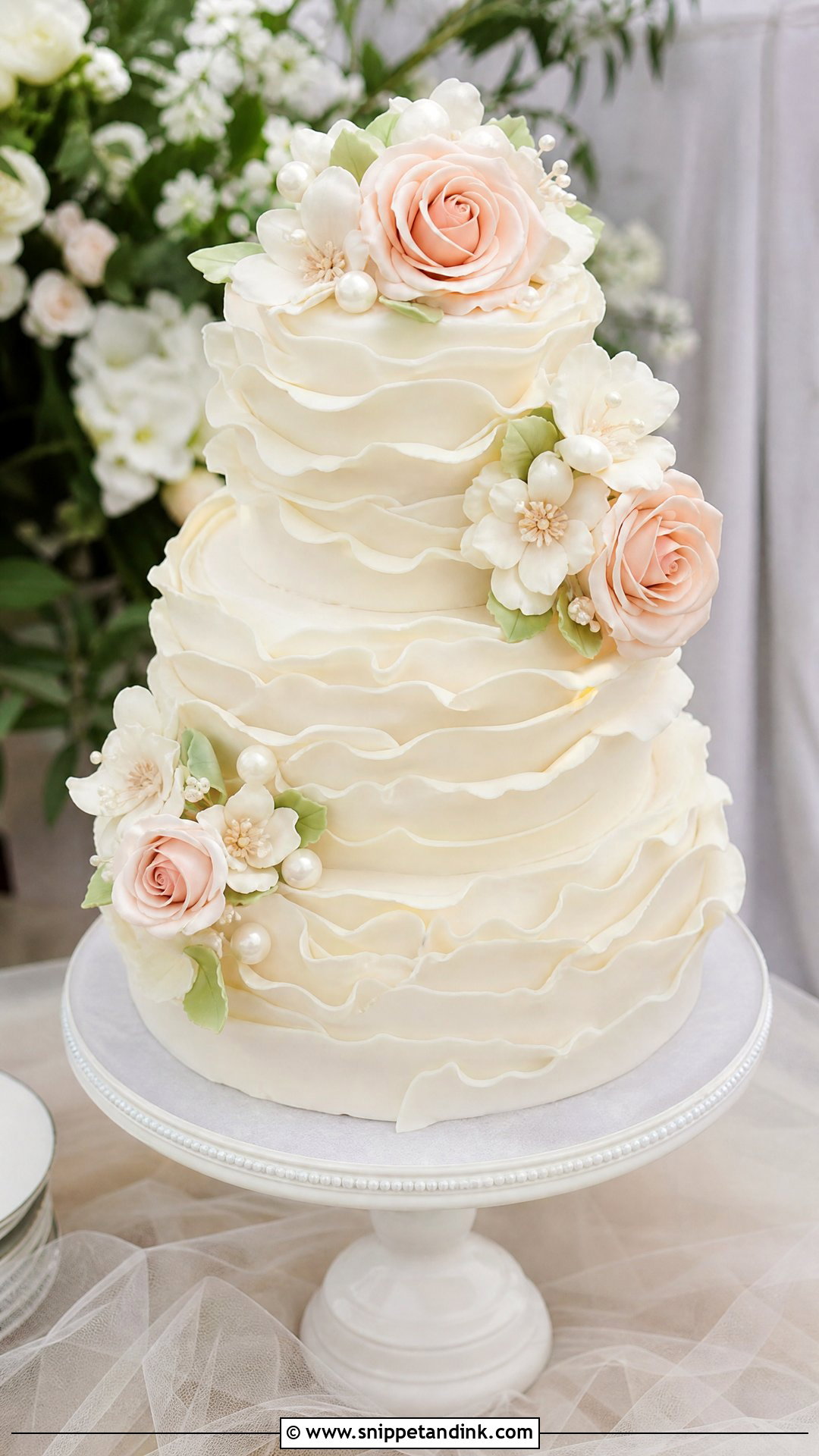
Ruffles piped with a petal tip make the frosting itself the texture, like layered fabric or petals. It already looks romantic, so flowers can stay few: a cluster on top, a few tucked between ruffles or a ring at the base. Creamy ivory, blush or pale champagne keep it soft. My warning is about heat and transport. Ruffles are thin ridges of buttercream, and they are the first thing to slump or smudge in a warm van, so I keep these cakes chilled until the last moment. They suit lace gowns and indoor receptions.
13. Vintage Floral Wedding Cake With Dried Flowers
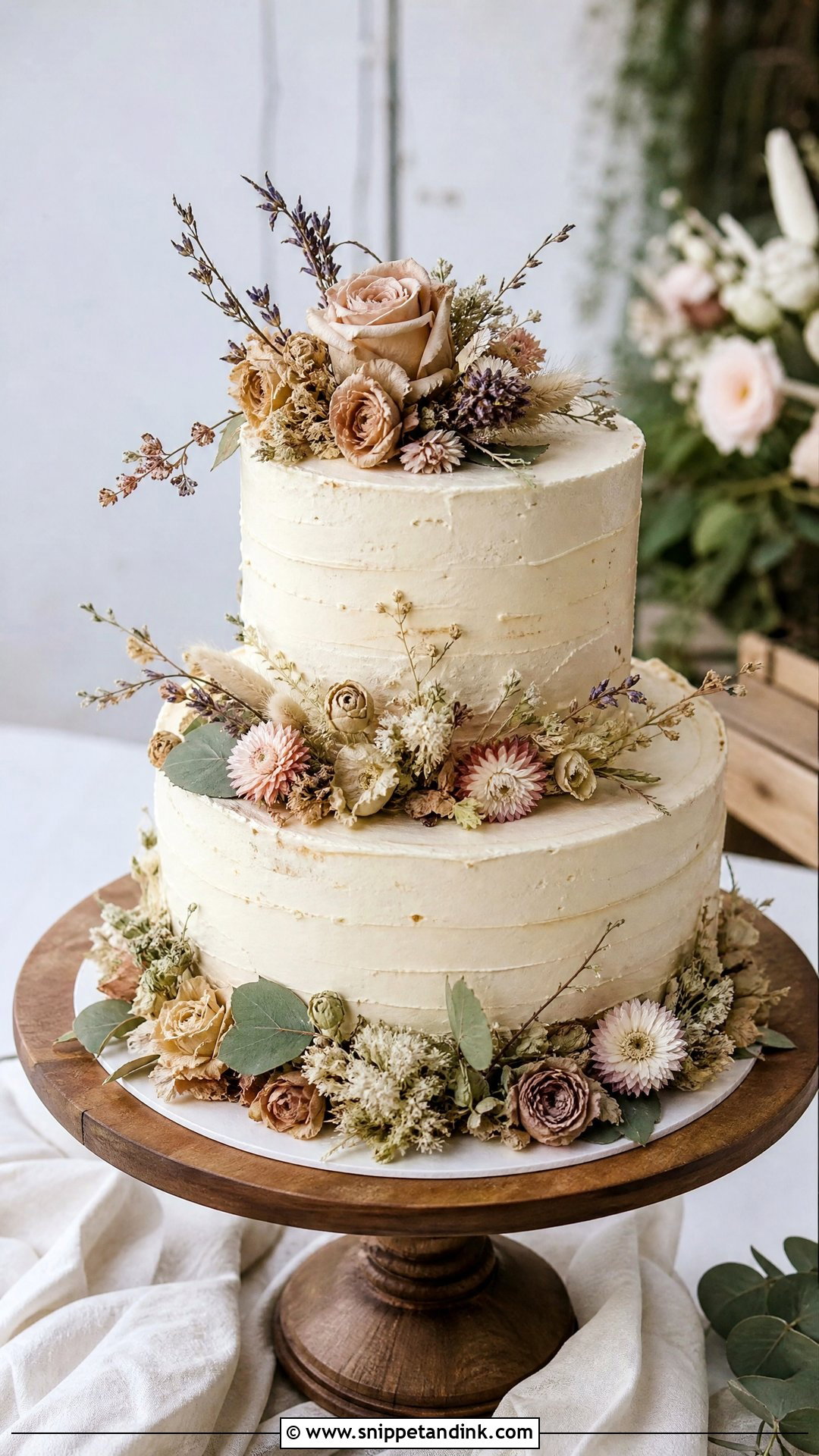
Dried flowers give muted colour and texture that fresh ones can’t, and they won’t wilt in a warm room. Dried roses, strawflowers, lavender, bunny tails and small preserved blooms look right against ivory or beige buttercream. Most dried flowers are treated or dyed, so they go on with a barrier and come off before slicing. A semi-naked or lightly textured finish suits them. Rustic barns, garden tents and autumn weddings are their natural home. Keep the arrangement delicate so it still looks like a wedding cake.
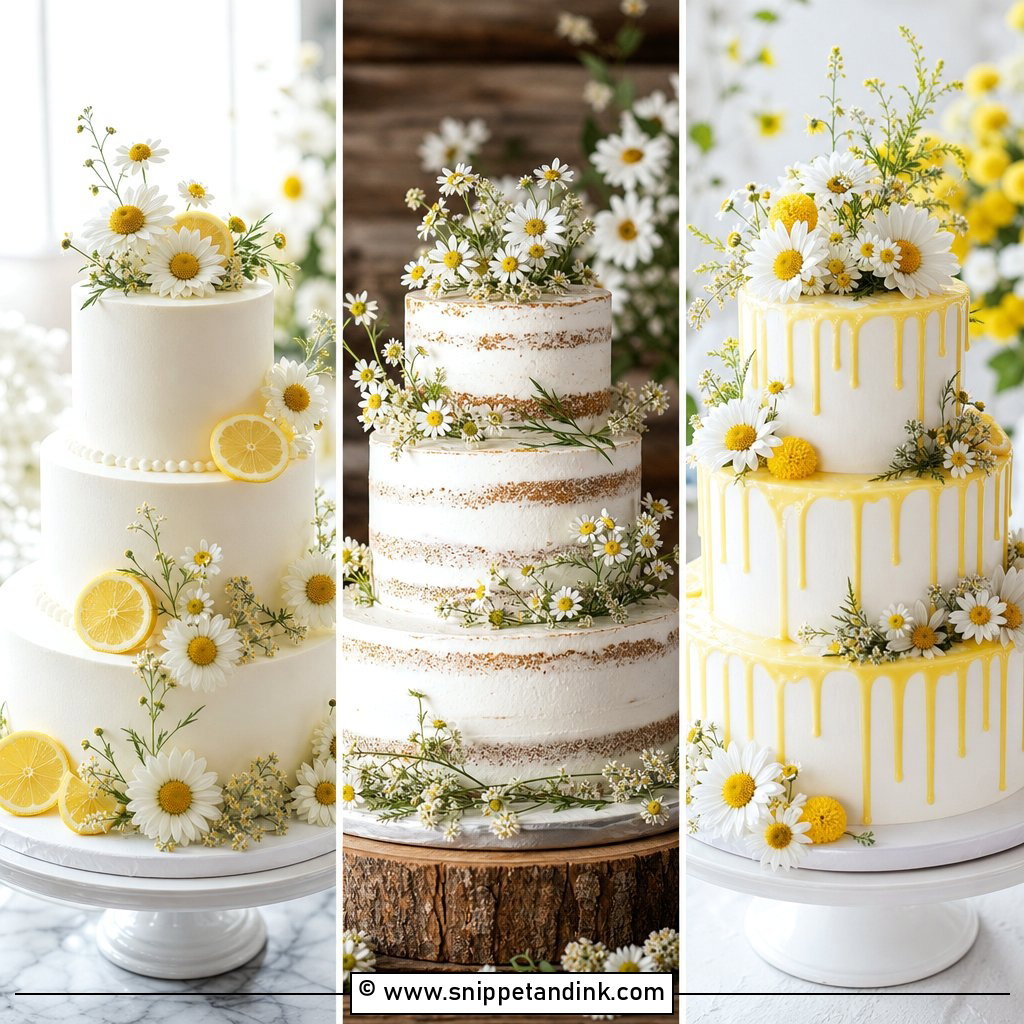
14. Vintage Floral Wedding Cake With Wildflowers
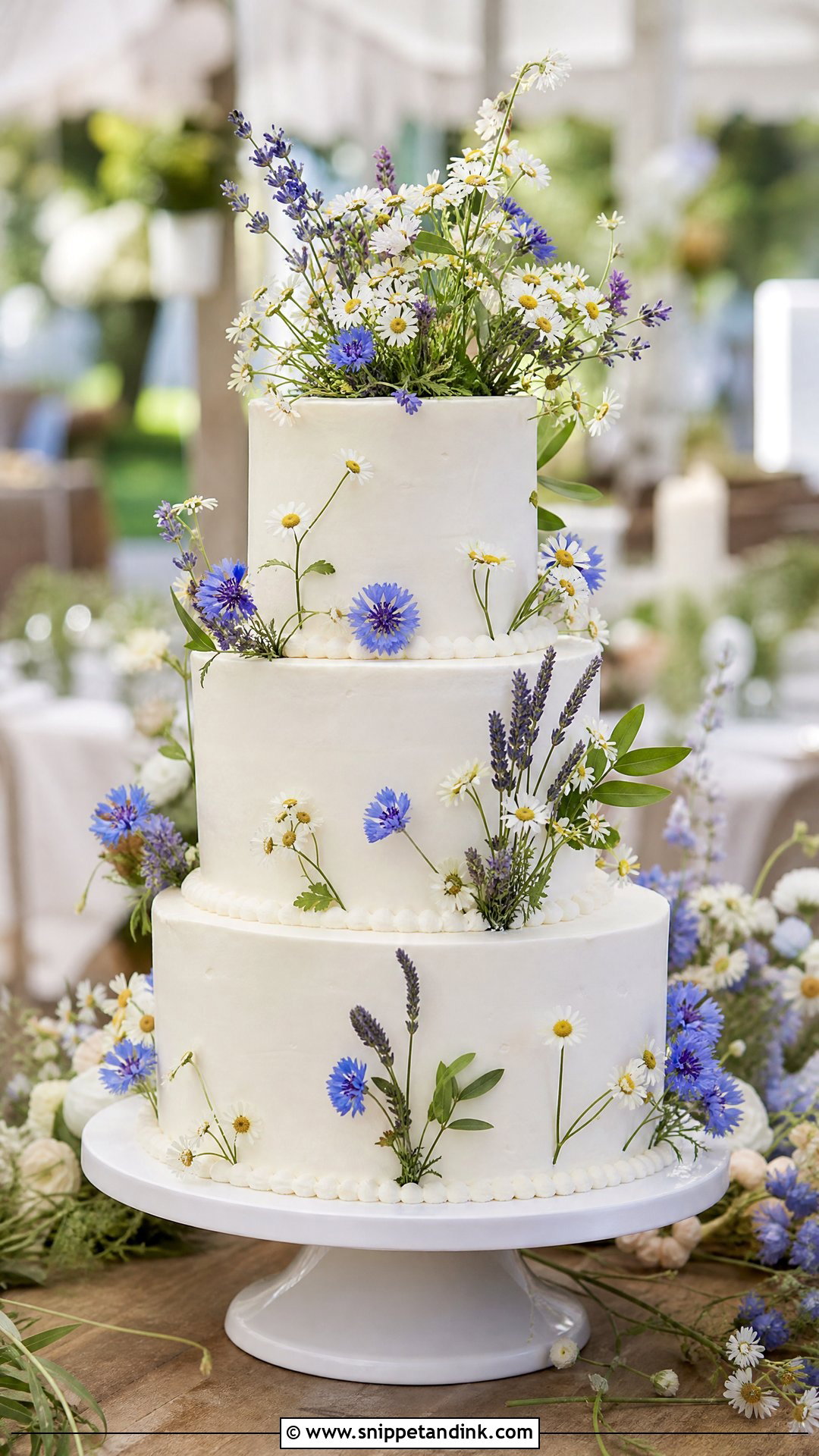
A meadow cake feels relaxed rather than formal. Tiny daisies, chamomile, cornflowers, lavender and small greenery are arranged loosely around the tiers, and many of these have edible varieties, which makes this one of the simpler fresh-flower cakes to do safely. Ivory buttercream lets the colours show. Use pressed wildflowers for a flat look or fresh edible flowers for dimension. Buy them from a grower who sells edible flowers, not from a roadside verge. It suits outdoor weddings and spring.

15. Vintage Floral Wedding Cake With Floral China Pattern
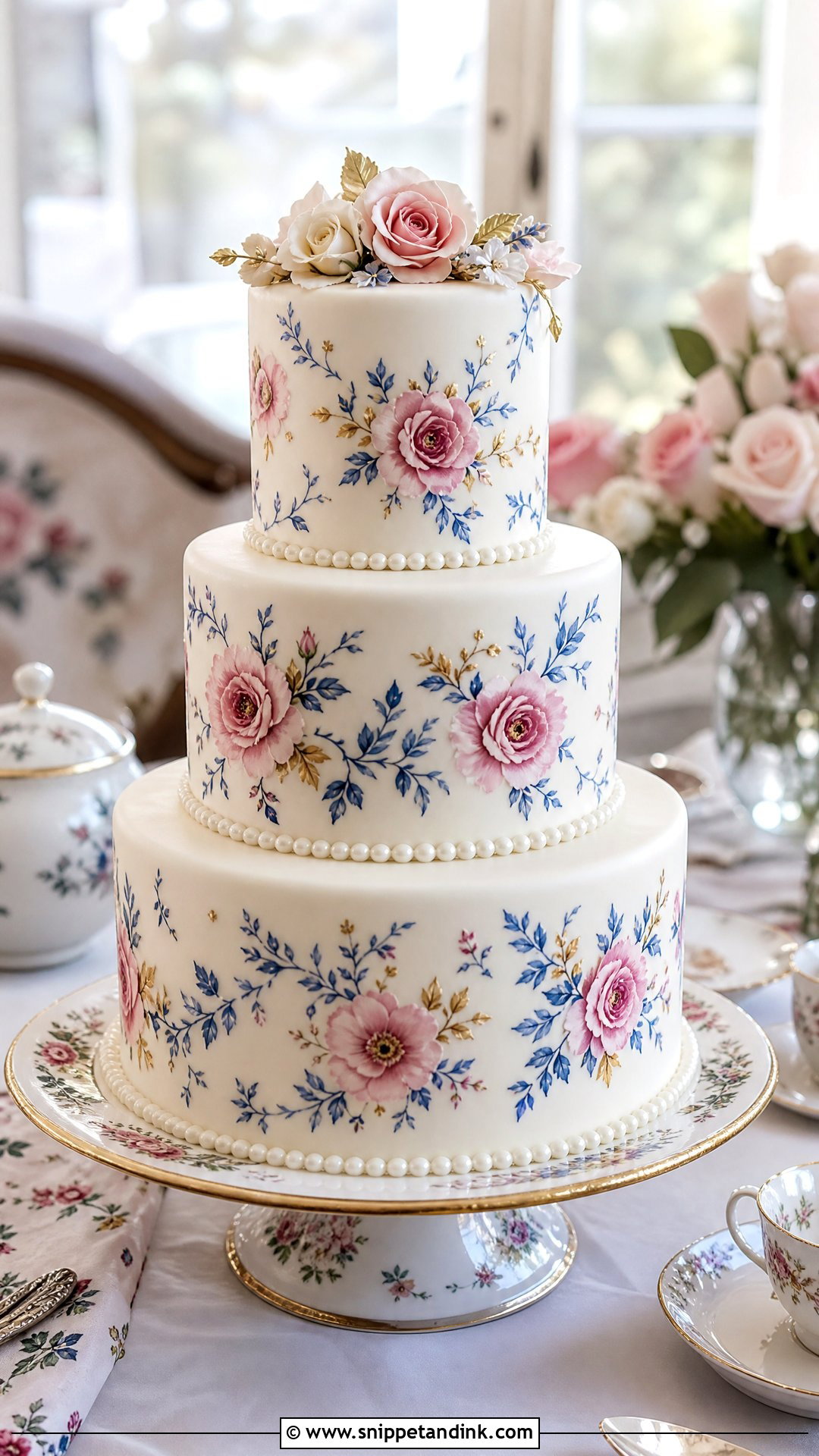
Antique plates and tea services inspire this cake: hand painted flowers, blue vines, pink rose clusters and tiny gold accents copied from old porcelain. Fondant gives the cleanest surface for painting. Keep the tier shapes simple so the pattern carries the design. Bring a photo of a real plate or teacup you love, and I’ll pick the motifs and colours from it. A vintage cake stand and soft linens complete it. It suits brunch weddings and afternoon receptions.
16. Vintage Floral Wedding Cake With Blush Roses
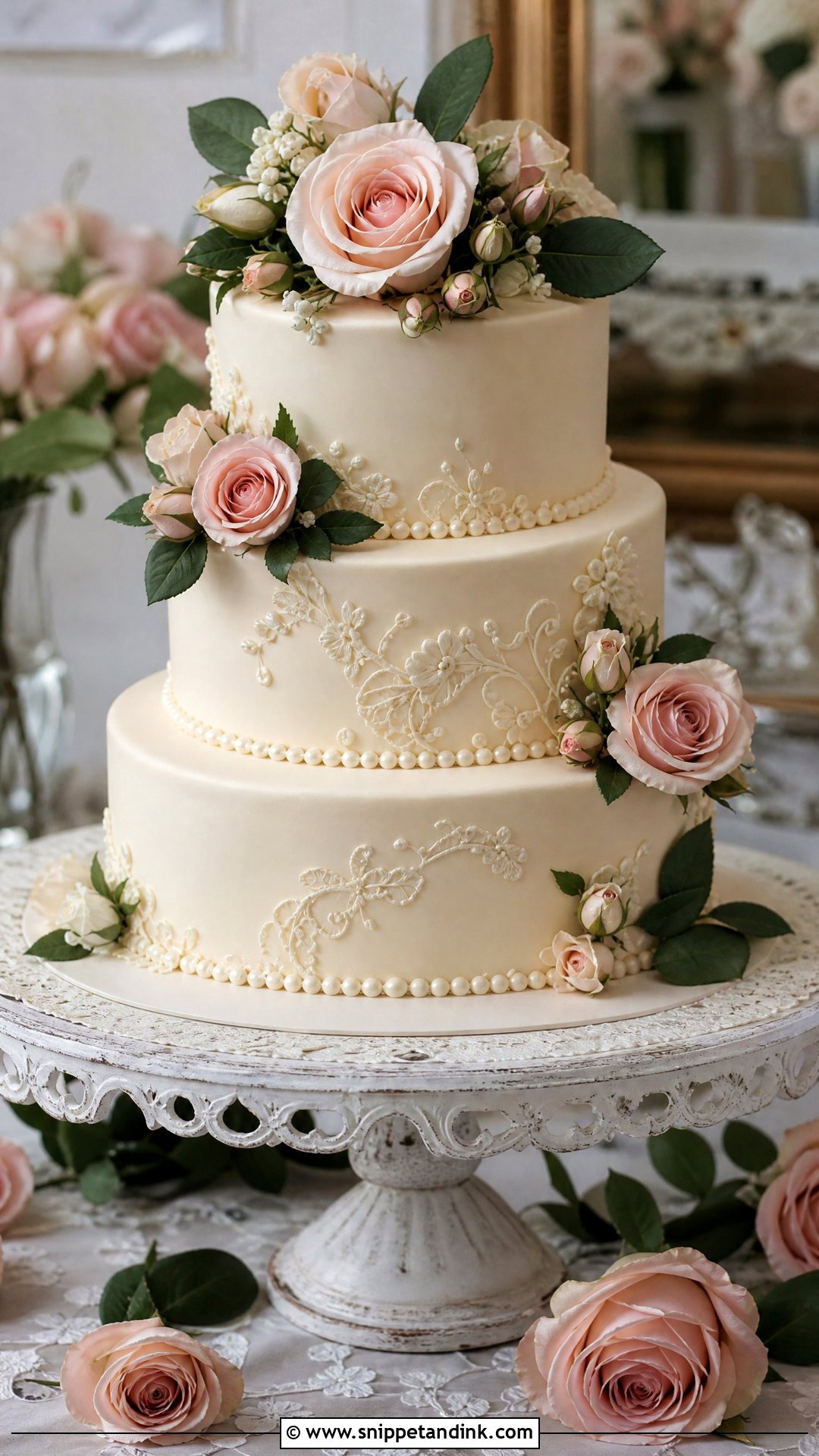
Blush roses match almost any palette, and they can be fresh, sugar or piped. Ivory frosting keeps the look classic; champagne or pale pink buttercream adds warmth. Arrange them in small clusters for a neat finish or a loose cascade for movement. If you go fresh, choose garden roses grown without pesticides, since roses are edible but treated florist roses are not something I want touching icing. Greenery, pearls or lace piping finish the vintage feel in any season.
17. Vintage Floral Wedding Cake With Lavender Flowers
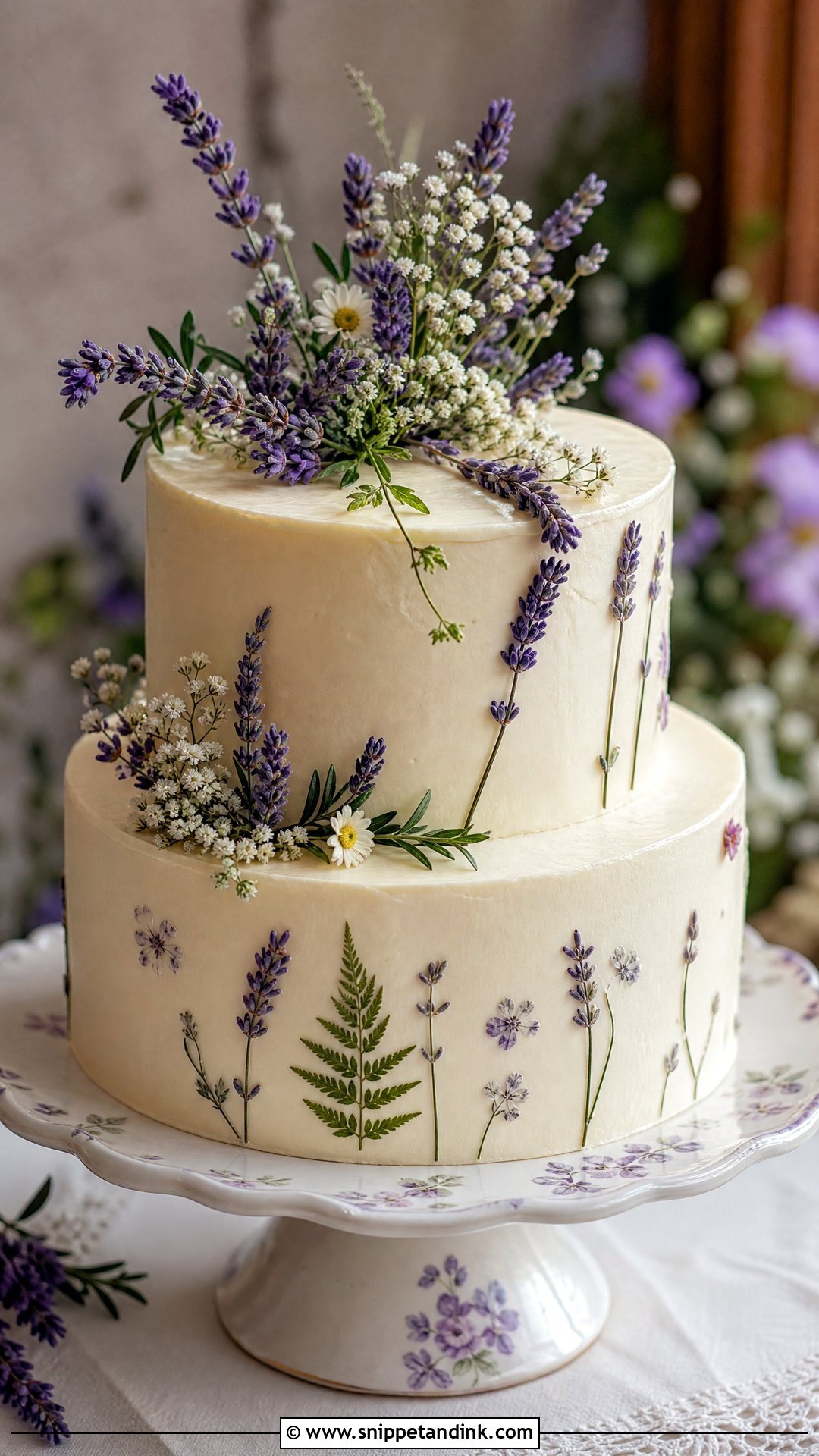
Lavender flowers give a soft countryside look against ivory buttercream and pale purple accents. Fresh sprigs, pressed buds, sugar lavender or painted stems all work. Culinary lavender is edible, but it’s strong, so I keep fresh sprigs as decoration and put the flavour in a light lavender syrup or pair it with lemon, honey or vanilla in the sponge. Gather it around the base or scatter it lightly. Garden weddings with a calm palette suit it best.
18. Vintage Floral Wedding Cake With Gold Trim
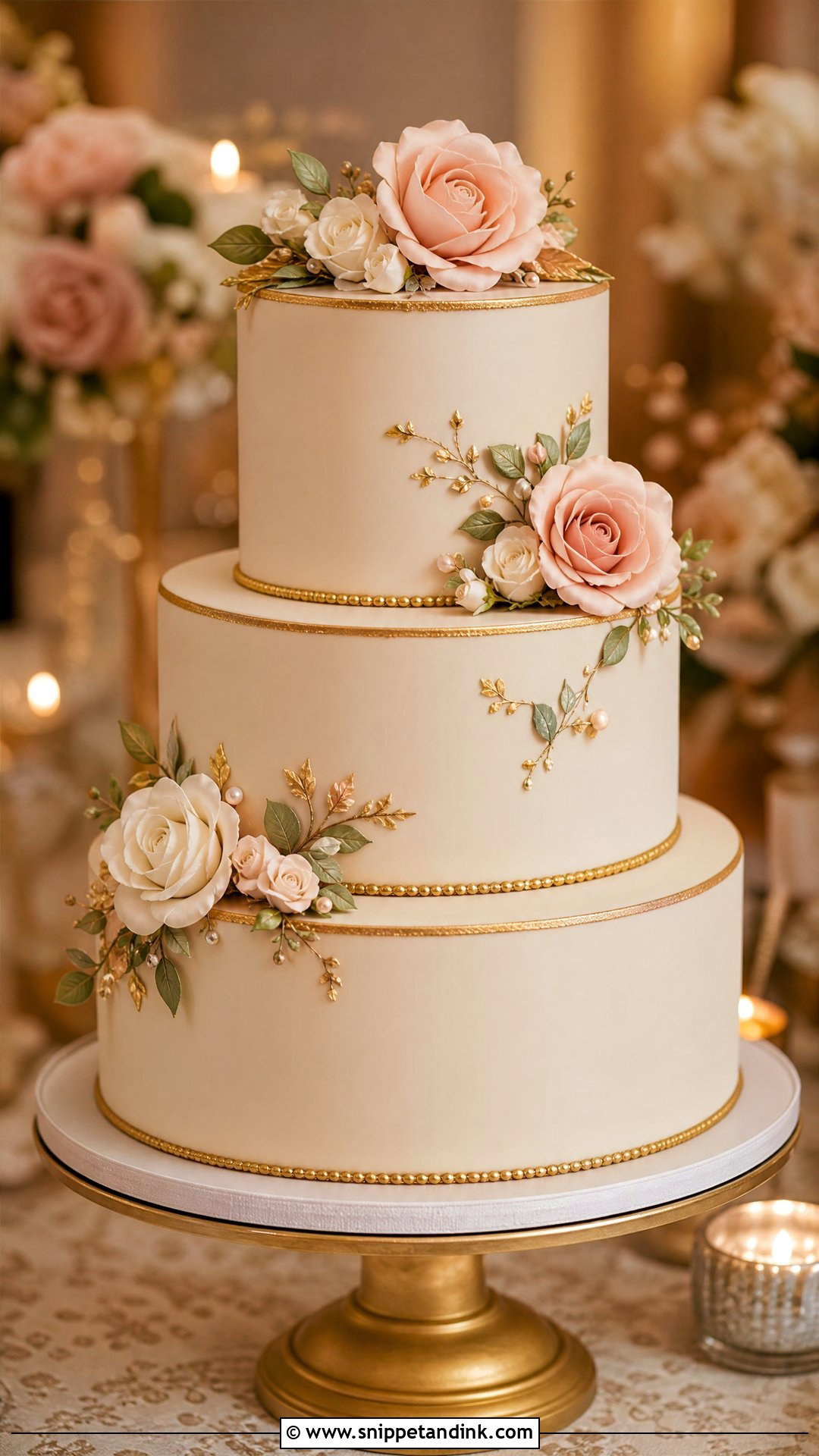
A thin gold line around each tier frames soft flowers in an antique way. Ivory fondant, blush sugar roses and muted greenery are the classic set. Tiny touches of gold leaf near floral clusters add age. I apply gold leaf with a soft brush onto fondant, since it won’t sit cleanly on soft buttercream. Check that any gold is sold as edible, not only non-toxic. Keep the metallic delicate so it supports the flowers. It suits formal and evening receptions.
19. Vintage Floral Wedding Cake With Pastel Flowers
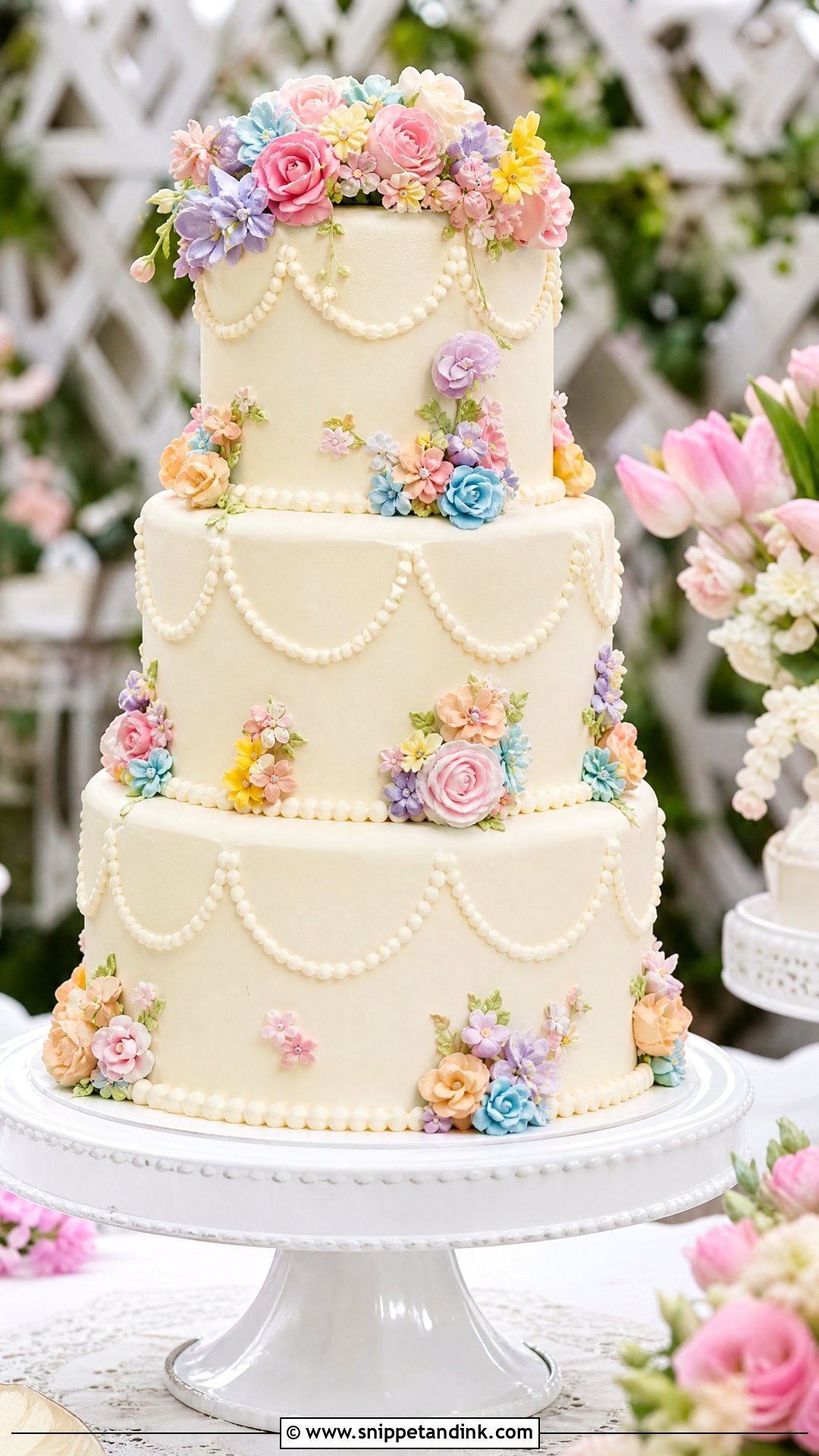
Pastels make a vintage cake cheerful: soft pink, pale blue, butter yellow, lavender and peach on ivory or cream. Sugar flowers, piped blossoms, pressed flowers or painted details can carry them. Pale blue is the tricky one, since buttercream’s natural yellow tint can push blue towards green, so I start from a whitened buttercream base. Lace piping, scalloped borders or pearls keep it vintage. Spring weddings and garden venues suit it.



20. Vintage Floral Wedding Cake With Heart Shape
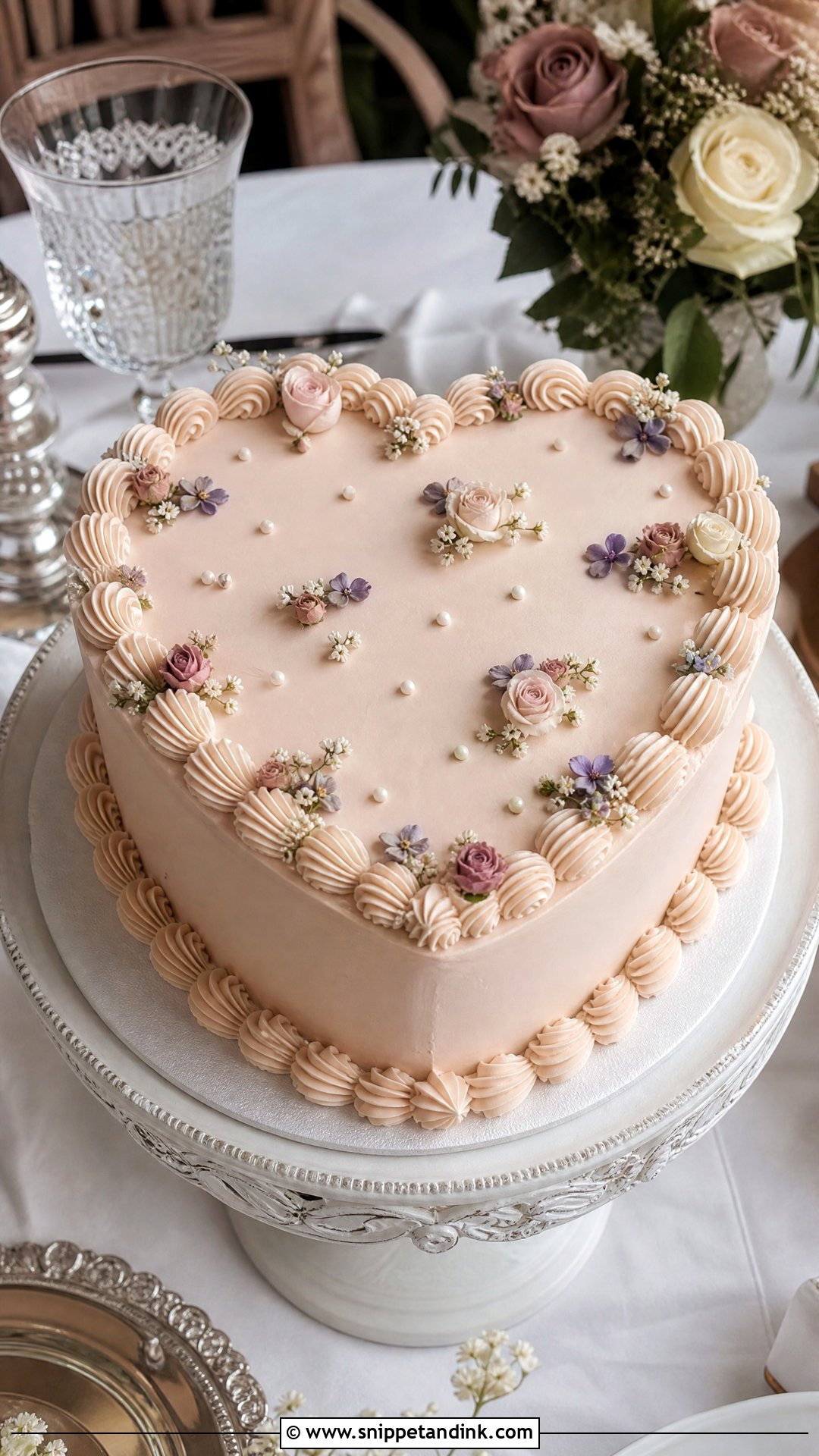
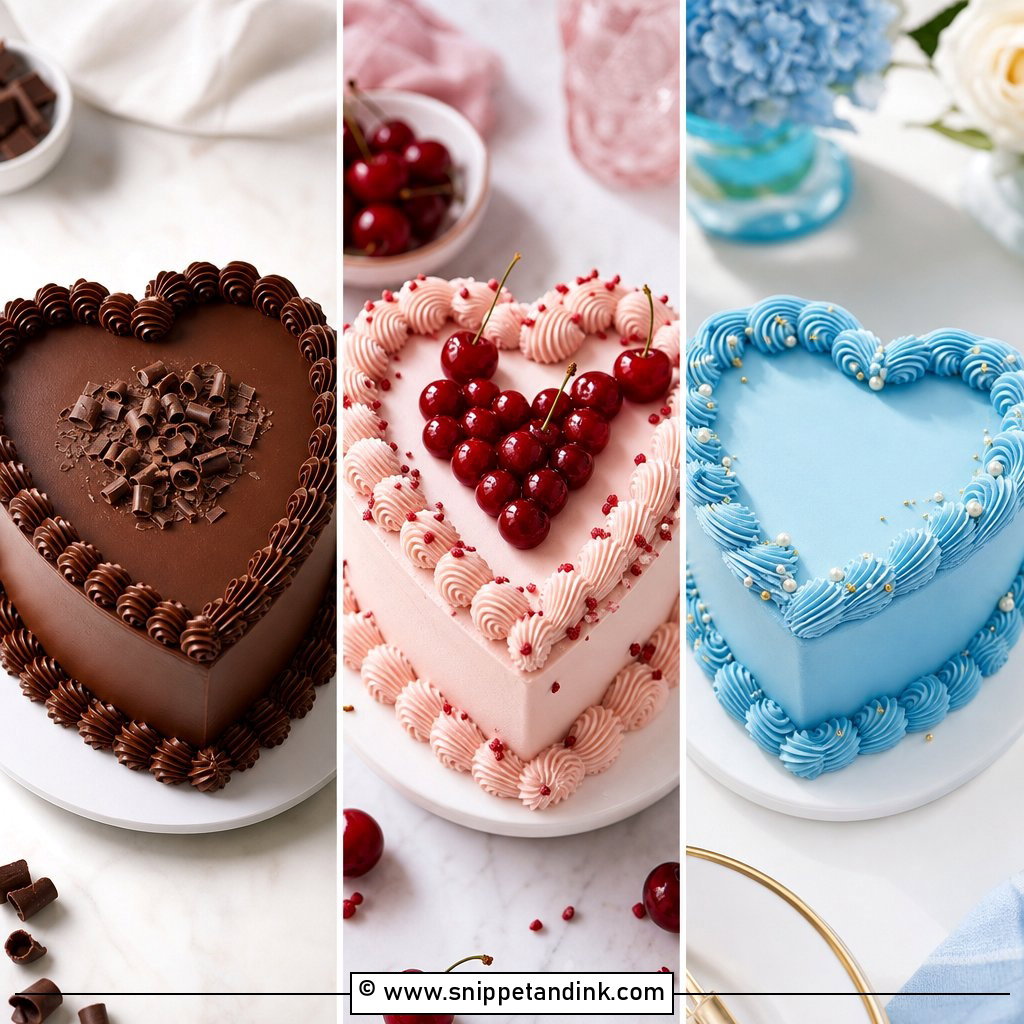
A heart-shaped cake is cheerful and photographs well from above. It’s usually a smaller cake, so it works as a cutting cake, a sweetheart table cake or the centrepiece for a small reception. Ivory or blush buttercream with piped borders, tiny roses and pearl dots suits it. Hearts are harder to slice into even portions than rounds, so if it’s feeding guests, ask your baker how many servings it gives or add a sheet cake in the kitchen. Roses, violets or small blossoms are enough, because the shape does the rest.
The Blooms I Keep Off the Frosting
Florist flowers are grown for looks, not food, and many are sprayed. A few popular wedding blooms are also toxic to some degree: lily of the valley, hydrangea, foxglove, sweet pea, ranunculus, daffodil and baby’s breath are the ones I see most. None of them should touch icing.
If you want them on the cake, they go on with a barrier: stems wrapped in floral tape, set into a food-safe posy pick or a thin disc of fondant, and lifted off before the cake is cut. If you want flowers people could actually eat, choose ones sold as edible, such as violas, pansies, roses, calendula, cornflowers and chamomile, from a grower who sells for food use.
Getting Piped Lace Through a Summer Afternoon
Buttercream softens in heat, and meringue buttercreams soften faster than the crusting kind. Delicate piping like Lambeth swags and ruffles shows it first. I deliver as late as the venue allows, ask for a table away from windows, heaters and dance-floor lights, and keep the cake chilled until it leaves my kitchen. Fondant and sugar-flower cakes handle warm rooms better, though fondant can sweat when it comes out of a cold fridge into humid air. If your reception is outdoors in July, tell your baker at the first meeting; it changes the recipe, not just the timing.
One Floral Medium, Then Let the Piping Follow
The cakes that look the most considered usually start with one floral medium and let everything else support it: pressed flowers with a smooth surface, sugar peonies with a quiet border, Lambeth piping with small roses tucked in. Pick that main idea first, then the frosting, the tier shape and the colours. Ask your baker to show you real work in the technique you choose, ask where any fresh flowers are coming from, and ask how the cake will be kept between delivery and cutting. With those answers, the design almost settles itself.
You'll Like These Ideas:







Leave a Reply