
An Indian bridal hairstyle has to do more work than most wedding hair. It carries a dupatta pinned on top, a maang tikka hooked into the parting, sometimes a matha patti or a passa, and fresh flowers that weigh more than people expect once they’ve been misted. Regional custom shapes it too: a North Indian juda sits low to anchor the chunni, while a South Indian bride often wears a long braid down her back dressed with jada billai. I’ve gathered 25 traditional styles below, from gajra buns to the Bengali mukut look, and with each one I’ve noted how it behaves through a long day of rituals so you can choose with that in mind.
What the Dupatta, Tikka and Flowers Ask of Your Hair
Before we look at a single photo, I ask three questions: will a dupatta go over your head, how heavy is the jewelry, and how many hours until you change for the reception? The answers usually rule out half the options straight away.
Giving the dupatta something to grip
A dupatta pinned on the head needs a solid base. Low buns and judas give it one; open hair and ponytails don’t, and the fabric slides back every time you move. I pin the dupatta into the bun itself with large U-pins, then add two small pins near the parting, hidden under the tikka chain.
Anchoring heavy jewelry
A matha patti, passa or nath chain all hook into the hair, and each needs its own anchor pin. Agree with whoever is dressing you on who places what and in which order. Jewelry goes on after the hair is fully set, never before, or the style gets pulled around while pieces are adjusted.
- Oil your hair during the week if you like, but wash it out the day before; freshly oiled hair won’t hold a pin.
- Wash the day before rather than the morning of, since second-day hair grips better.
- Arrive with hair completely dry, loose and unbraided.
- If you’ll wear extensions, say so at booking so the color can be matched in advance.
1. Floral Bun With Gajra for Indian Brides
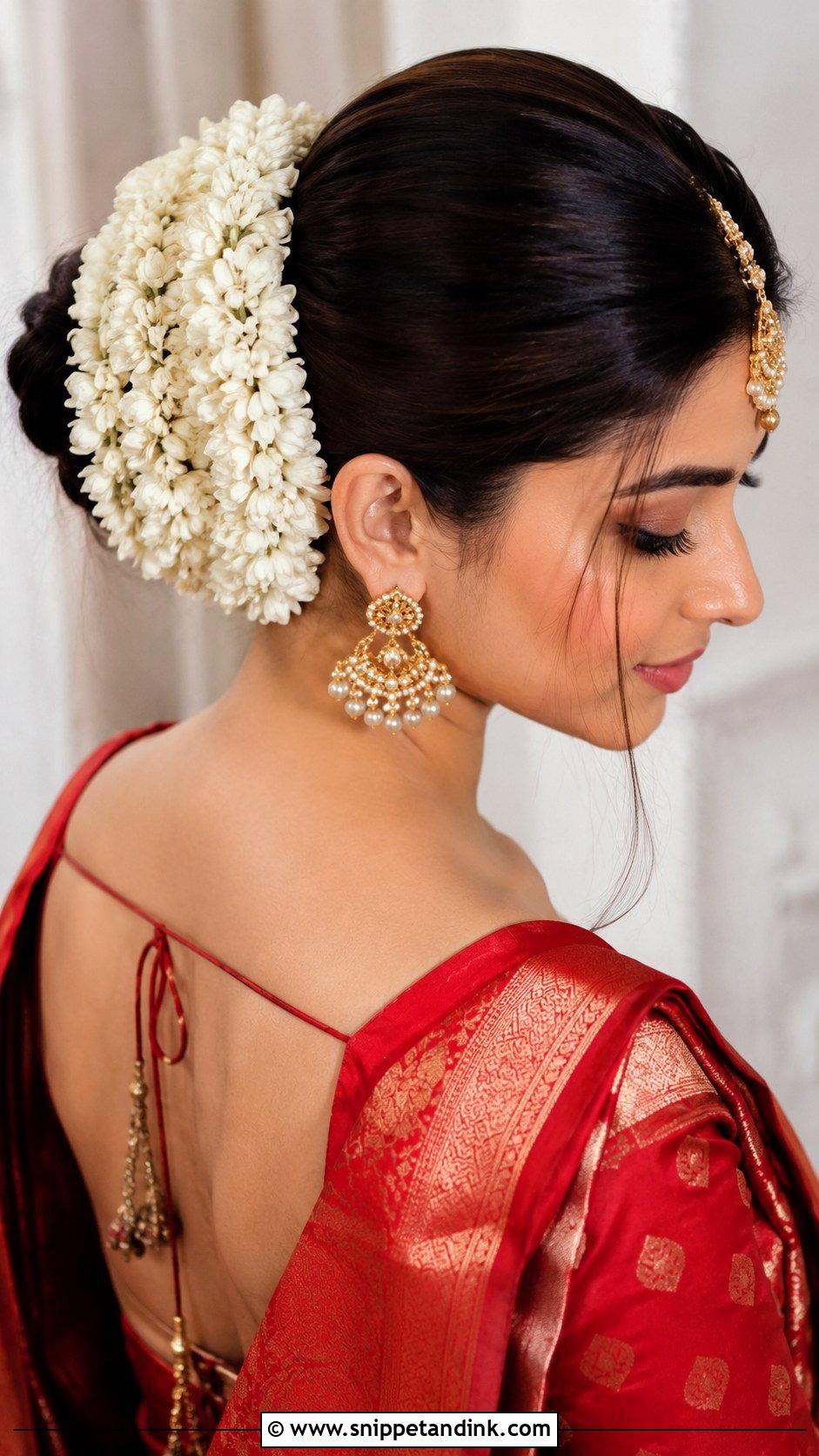
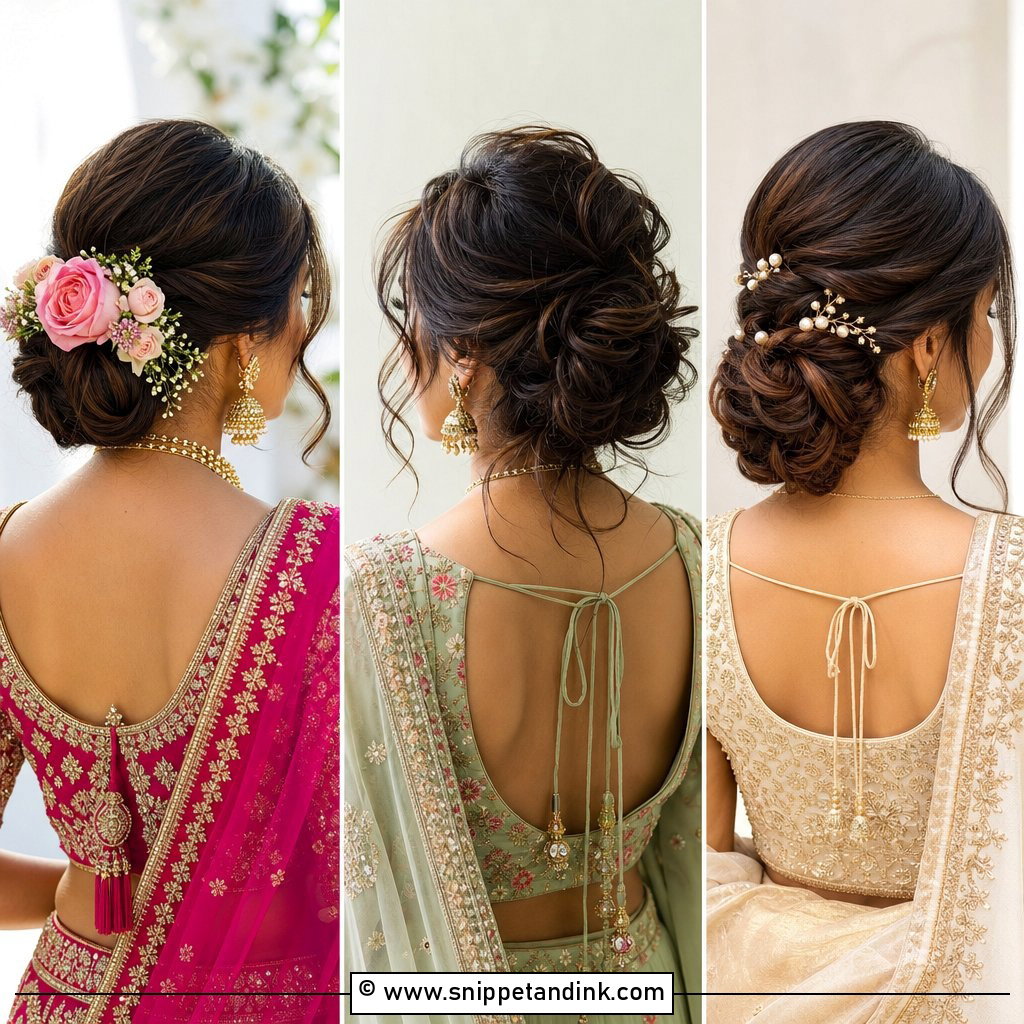
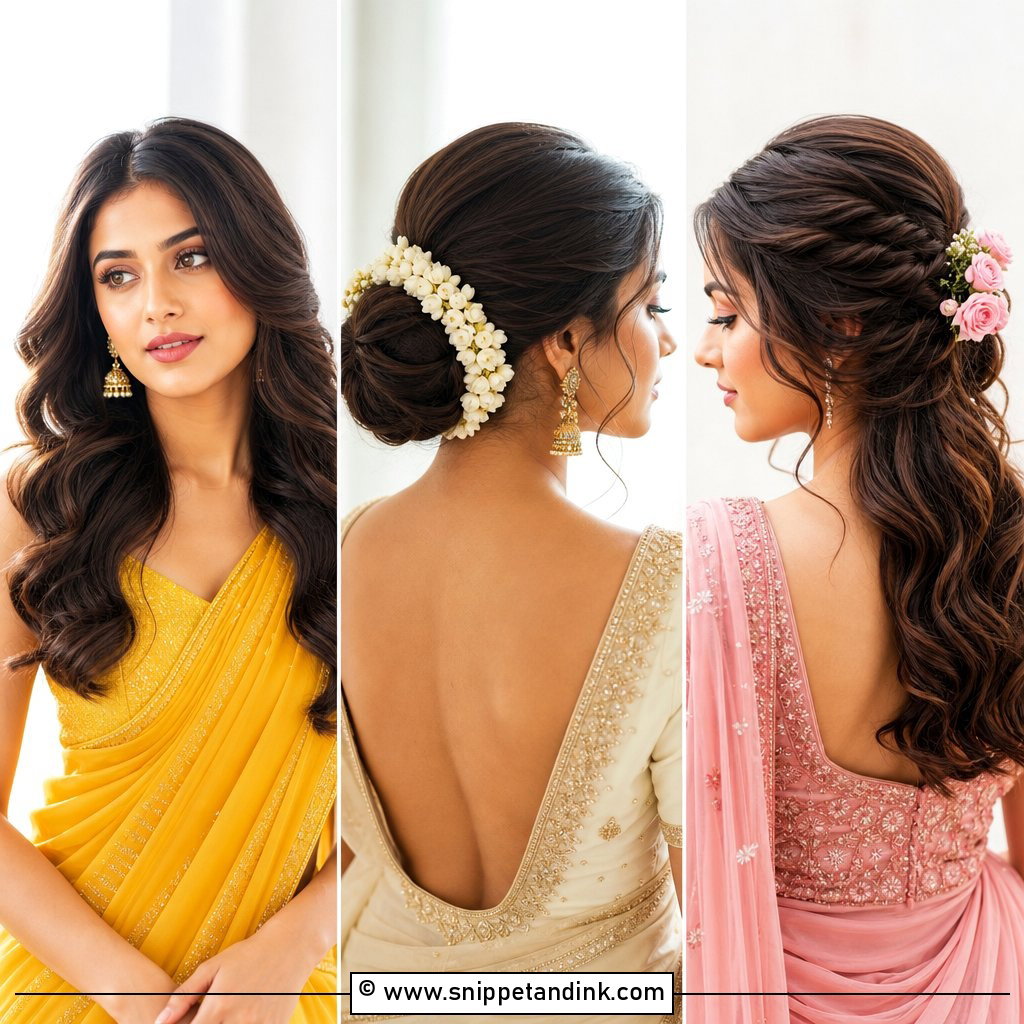
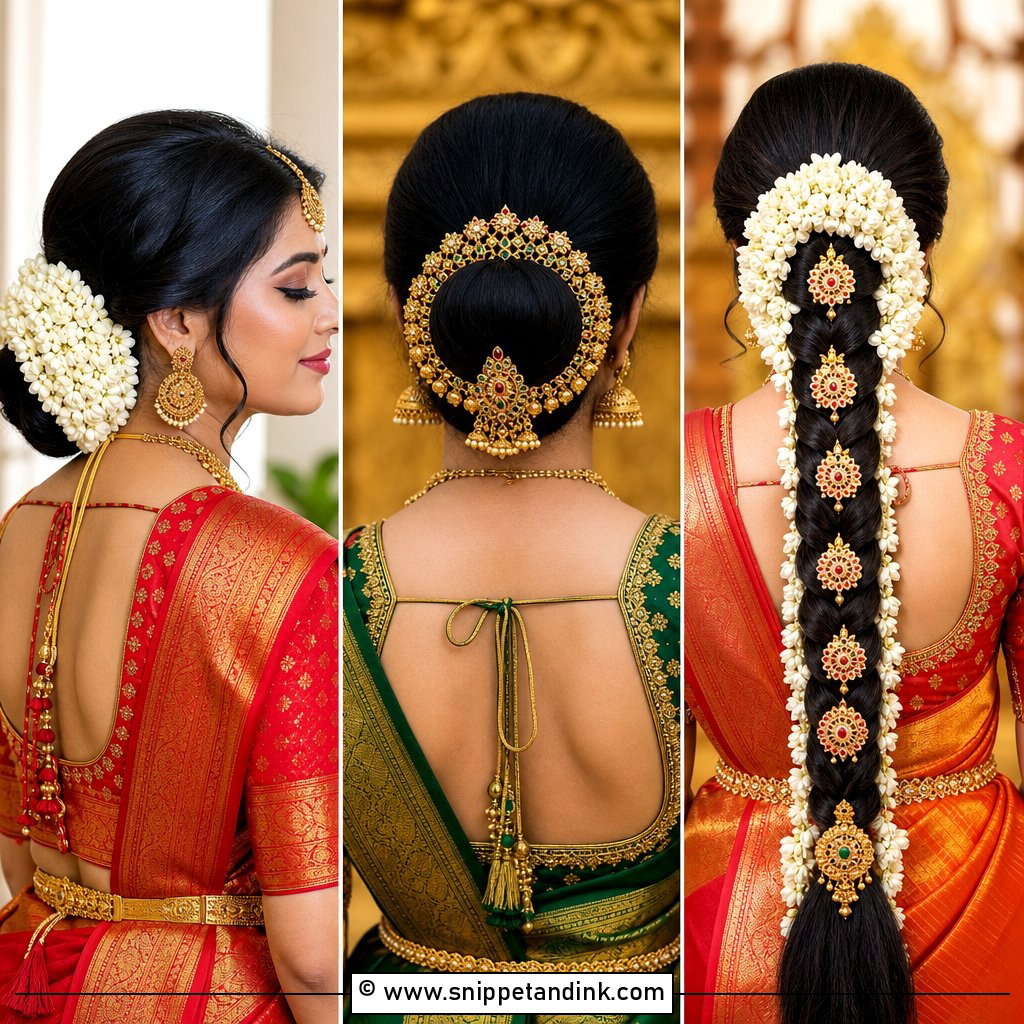
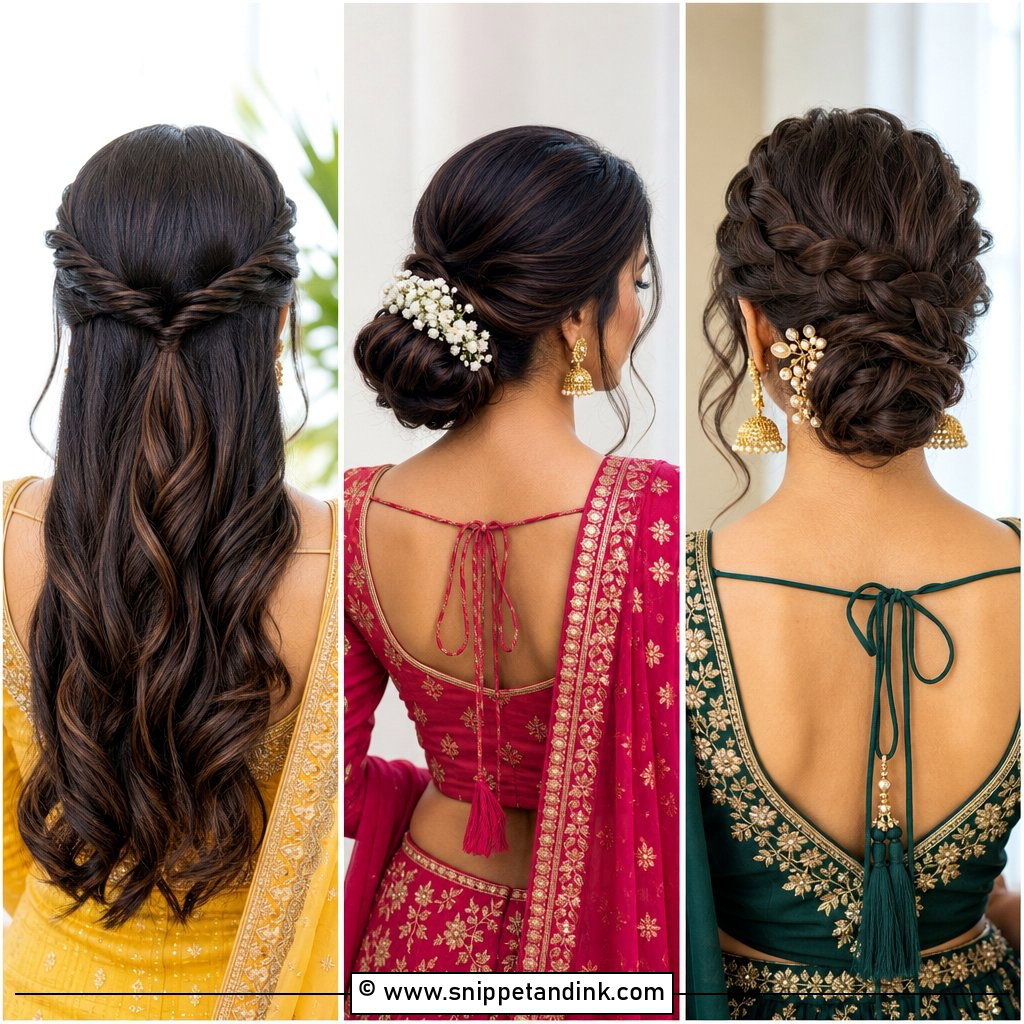
A low, voluminous bun wrapped in mogra gajra is the style I’m asked for most at Hindu weddings, and there’s a practical reason: the bun gives the chunni something solid to pin into. I build it over a padded donut or a backcombed base so the gajra has a firm surface; on a flat bun the strands creep downward by the time of the pheras. Secure the gajra with U-pins hooked through its string, never bobby pins pushed through the flowers. Buy the strands the morning of and keep them in a damp cloth, because buds picked the day before have opened and browned by evening.
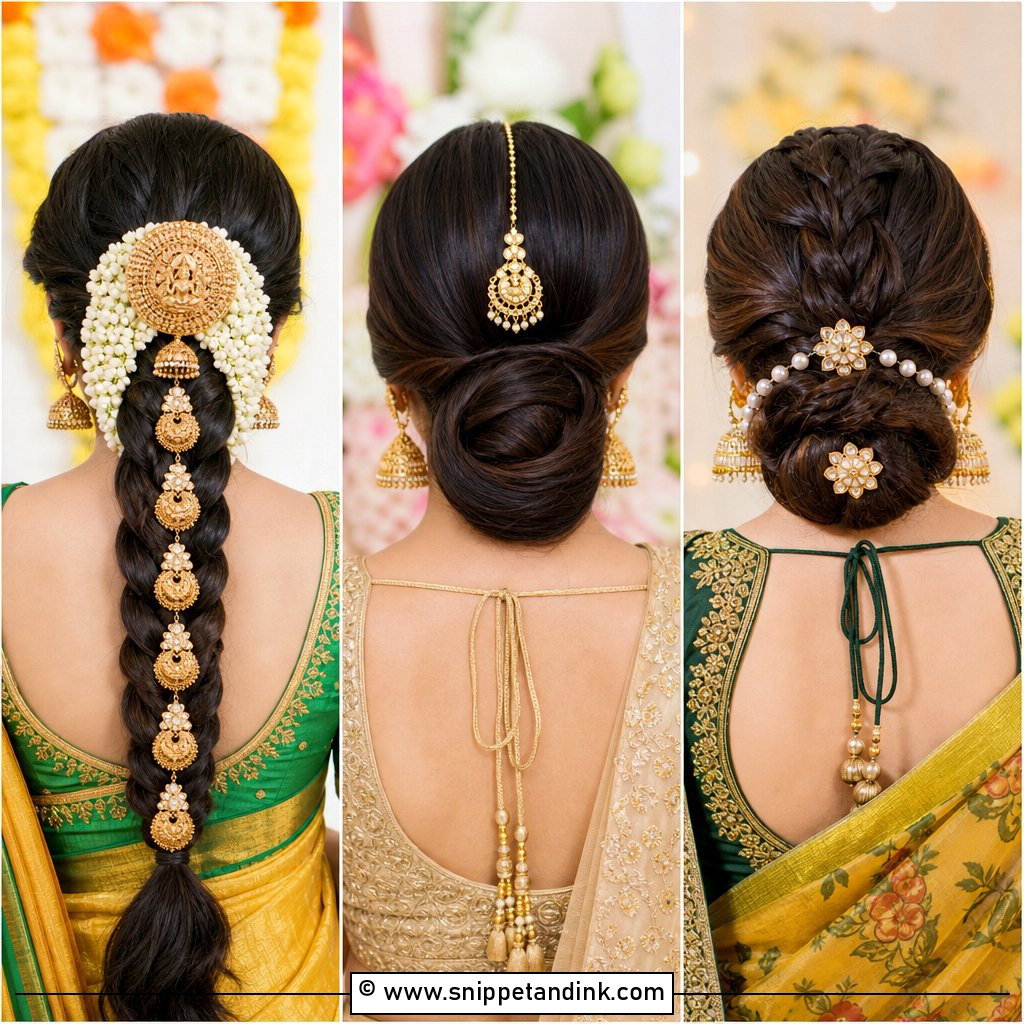
2. South Indian Bridal Braid With Jada Billai
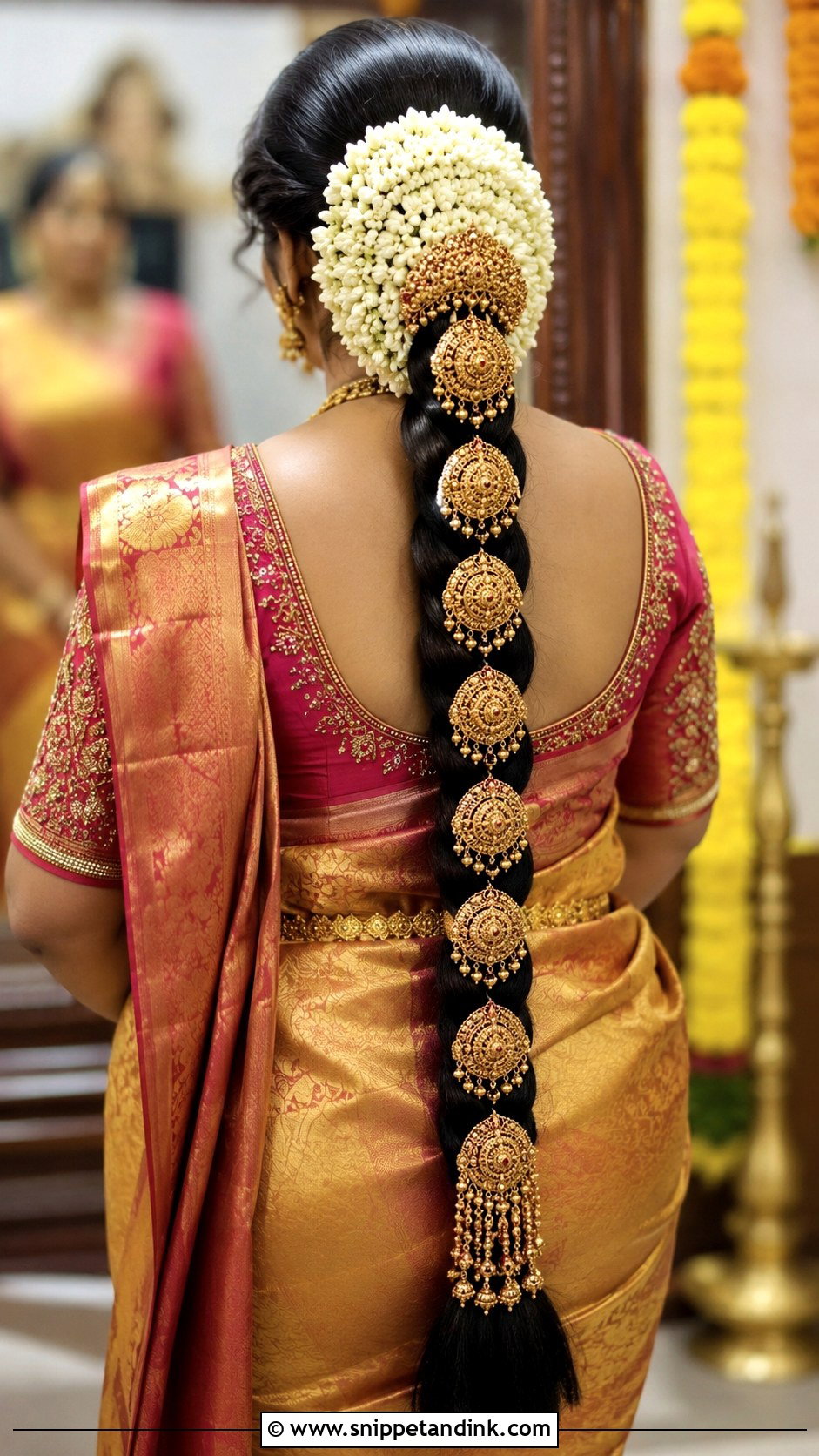
Jada billai are heavy. A full set of gold discs running down a braid can pull on the scalp for hours, so before I attach an ornamental jada billai I anchor the braid firmly at the crown and often weave in a matching extension for length and grip. The kunjalam tassel at the end swings as you walk, which is half the charm. Kanjeevaram silk and temple jewelry are its natural partners, with jasmine and roses tucked along the sides. If your hair stops at the shoulders, tell your stylist early so an extension can be sourced and color-matched well before the wedding.
3. Twisted Side Bun With Fresh Flowers
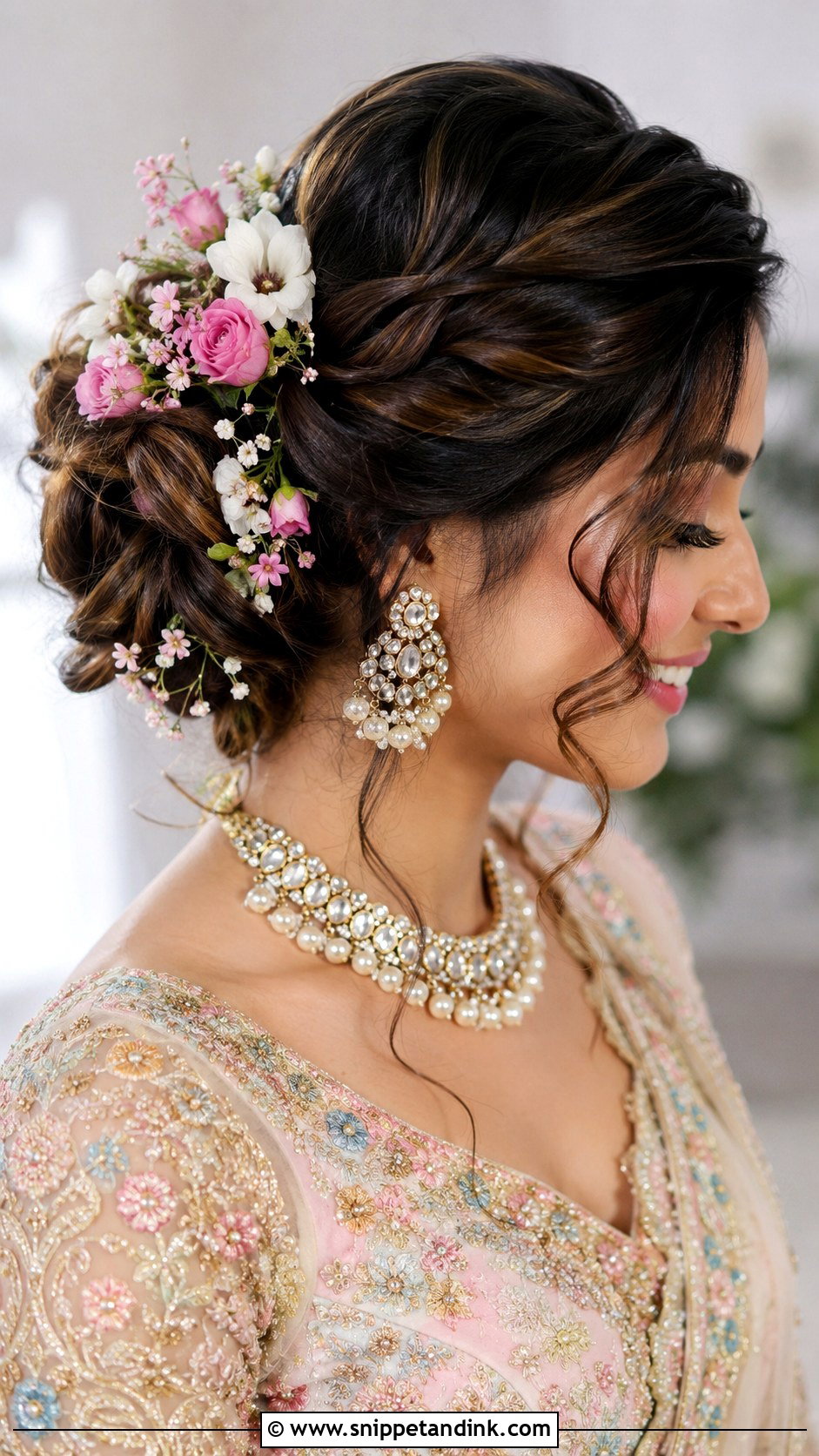
An off-center twisted bun suits the mehendi or haldi better than the main ceremony, mostly because it gives a dupatta no stable center to sit on. I twist each section away from the face before coiling it, which stops the knot unravelling when you turn your head. Pink and white blooms push into the twists easily. On round and heart-shaped faces the side placement adds an angle a center bun can’t. Leave two tendrils at most near the cheeks; any more and they end up stuck in lip gloss or turmeric paste by noon.
4. Pearl-Embellished Low Bun for Weddings
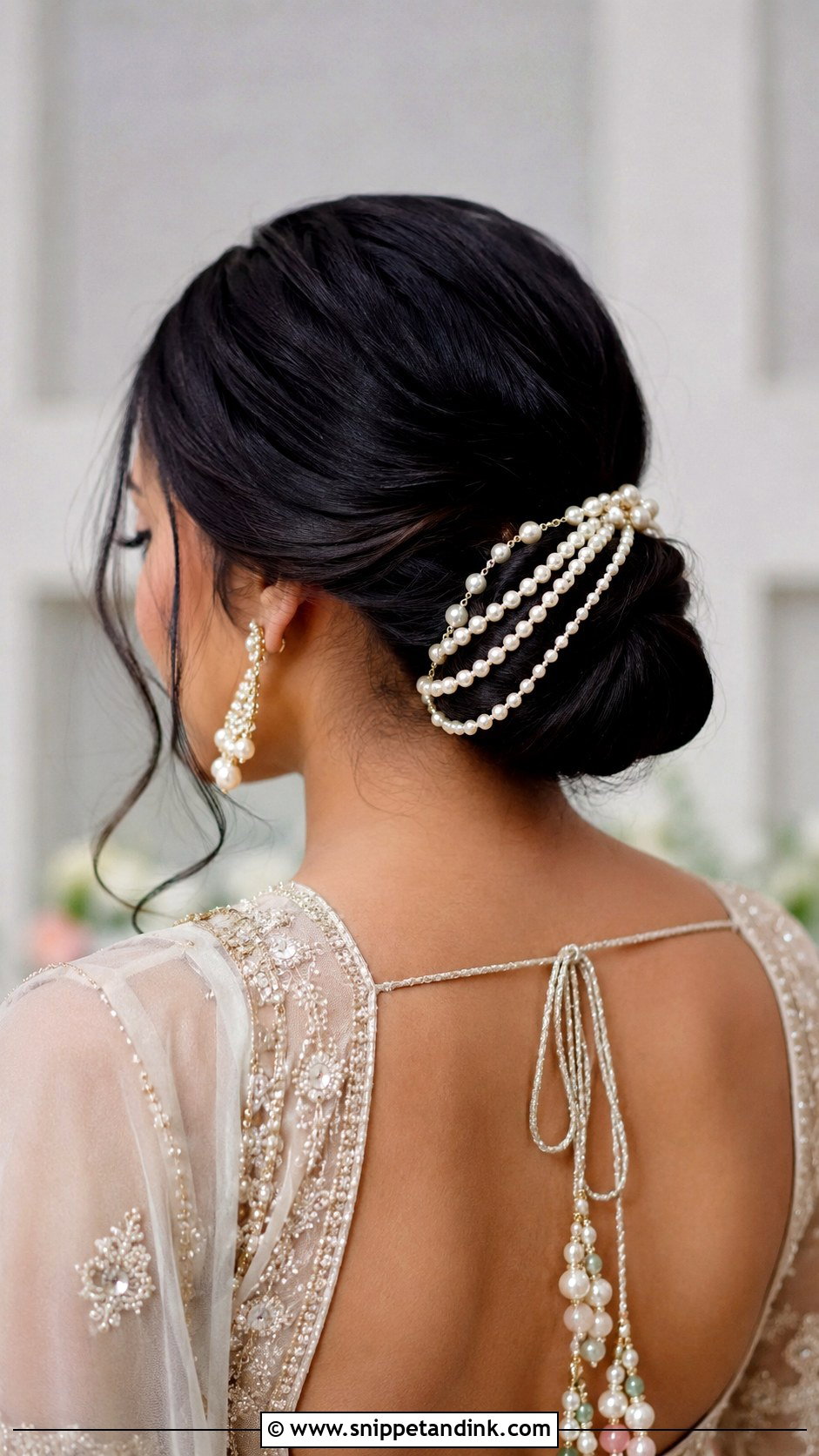
Pearl strings draped around a low knot catch light without the visual weight of flowers, and they never wilt. I pin each strand at three or four points so it follows the curve of the bun instead of sagging at the bottom, using pins colored to the hair rather than gold ones that show. Pastel lehengas and pearl jewelry suit it, and it’s a sensible pick for engagements and receptions where you stand more than you sit. One caution: on very fine, slippery hair the strings slide unless the bun is built on a textured base, so a dry texture spray goes in first.
5. Braided Bun With Maang Tikka
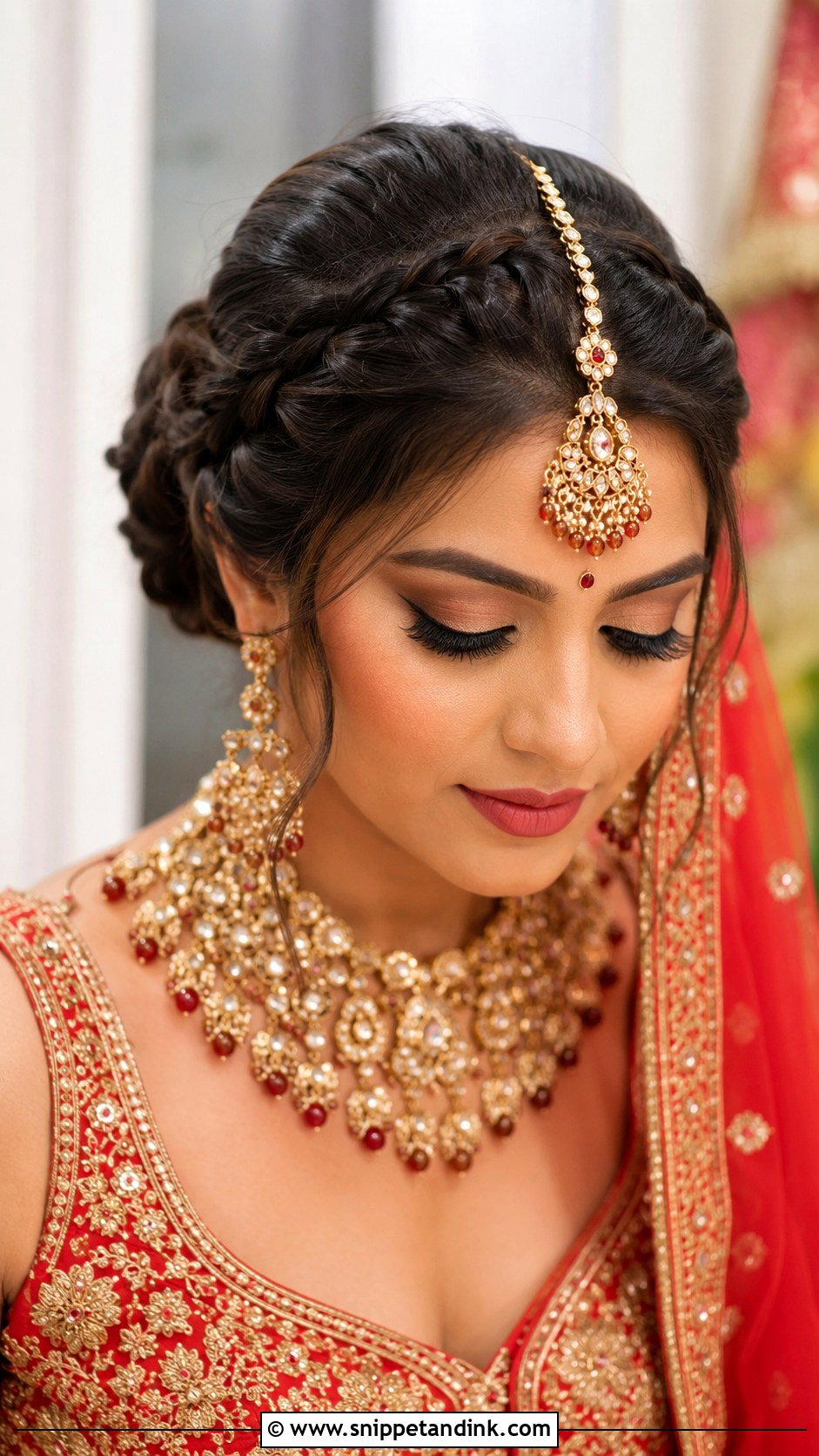
Wrapping a thick braid into a low bun gives you more texture than a smooth knot and far more grip, because the woven hair locks every pin in place. I recommend it to brides with long, heavy hair that tends to drop a plain bun by the end of the night. The maang tikka hooks into the center part, with a small pin at the back of its chain so it doesn’t drift off-center when you bend for rituals. Pearl pins or tiny flowers can sit in the woven sections, and it stands up to a red lehenga, gold jewelry and plenty of dancing.
6. Open Hair With Curls for Reception
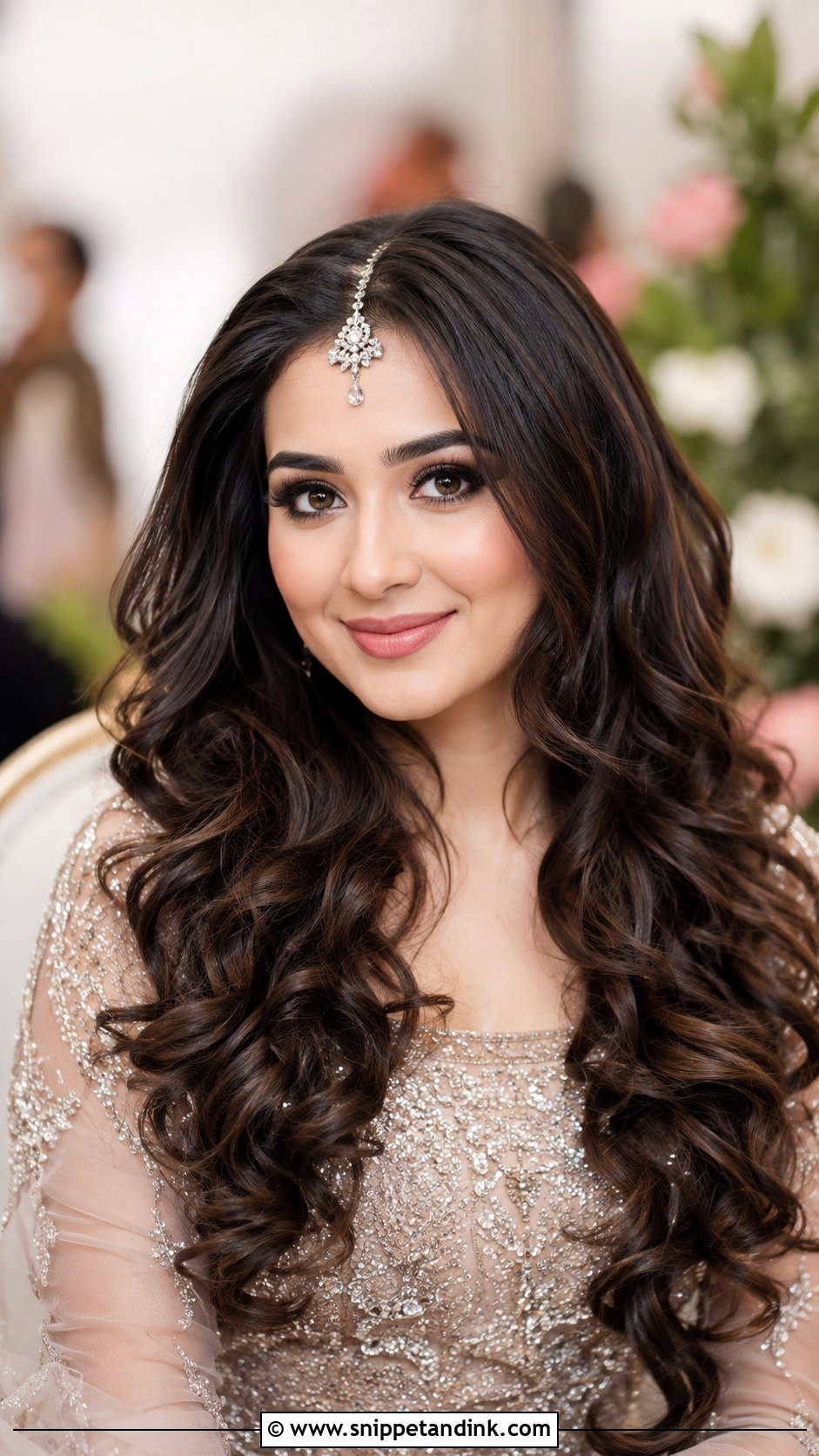
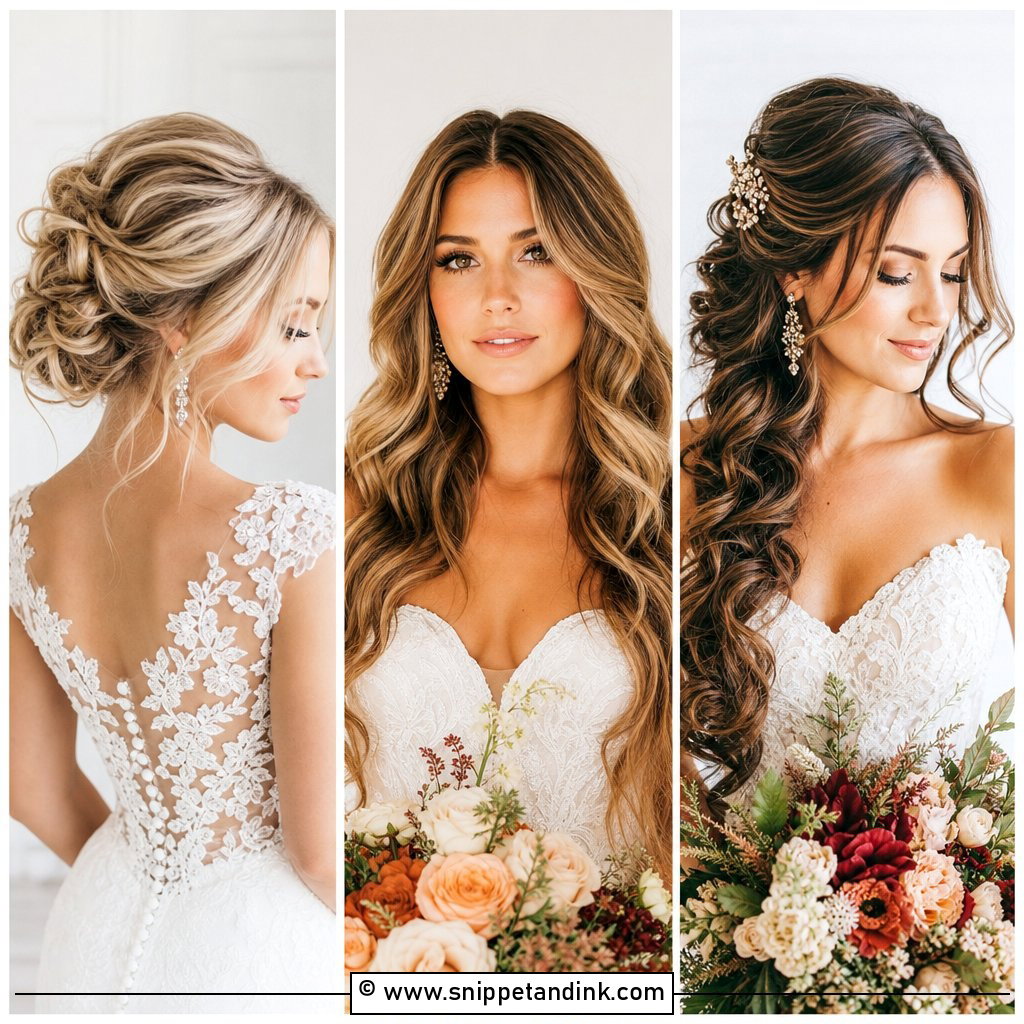
Open curls are the reception style most likely to fall flat, especially in a humid banquet hall. I curl in small sections with a 1 to 1.25 inch iron, pin every curl up to cool completely before brushing it out, and finish with a flexible spray. Pinning one side back with a diamond hairpin keeps hair out of your face while you eat and greet guests. If your hair won’t hold a curl even overnight, ask for a half-up version so the pinned top section carries the shape.
7. Floral Crown Braid for Bridal Look
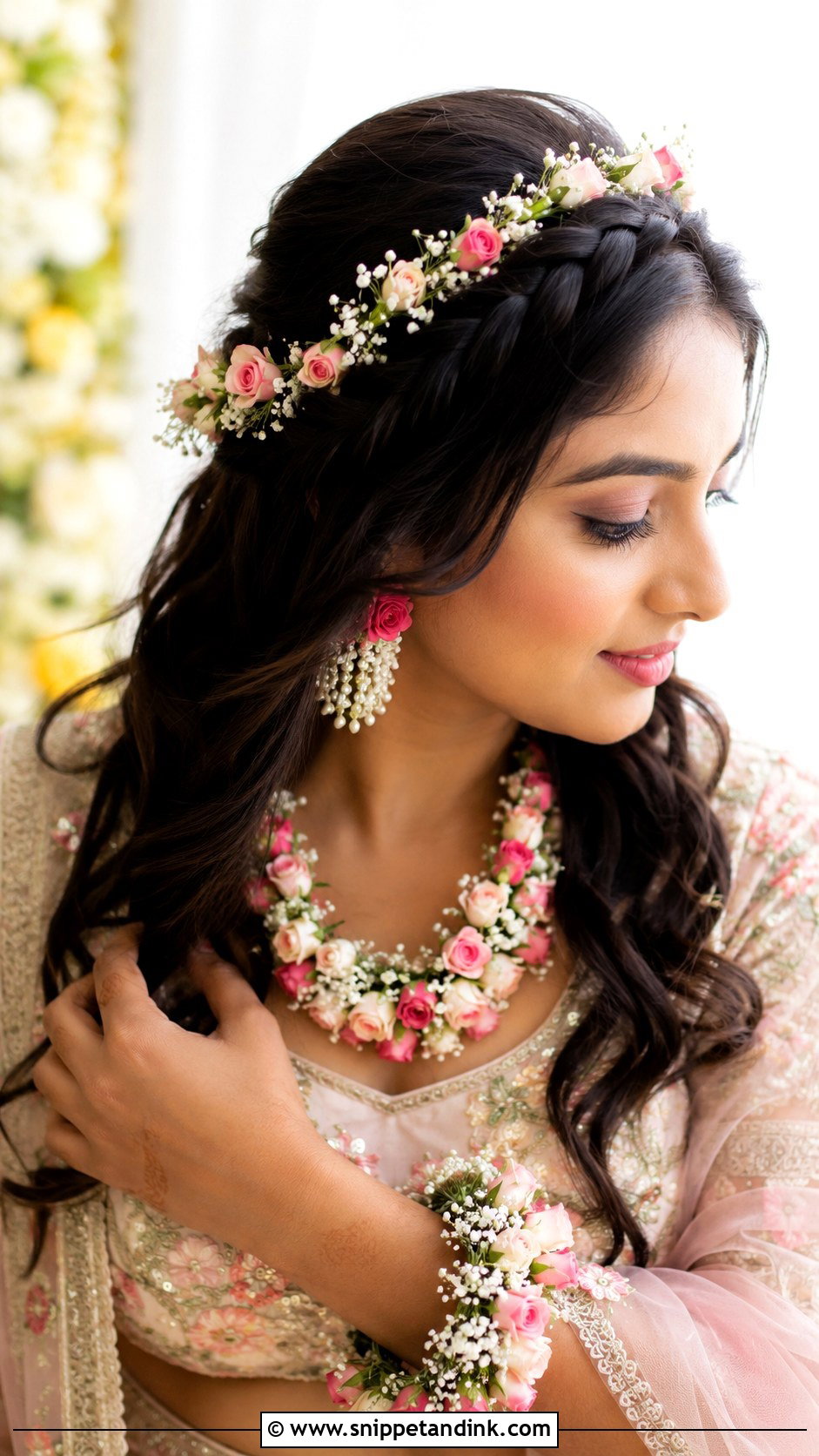
A halo braid keeps every strand off the neck, which you’ll appreciate at a daytime outdoor function. I usually build it as two Dutch braids meeting at the back rather than one long braid circling the head, since that sits flatter and holds better on medium-length hair. Baby’s breath and small roses slot into the weave without extra pins. It leaves no natural place to anchor a heavy dupatta, so I keep it for the haldi, mehendi or a garden reception rather than the pheras.
8. Sleek Bun With Maang Tikka and Nath
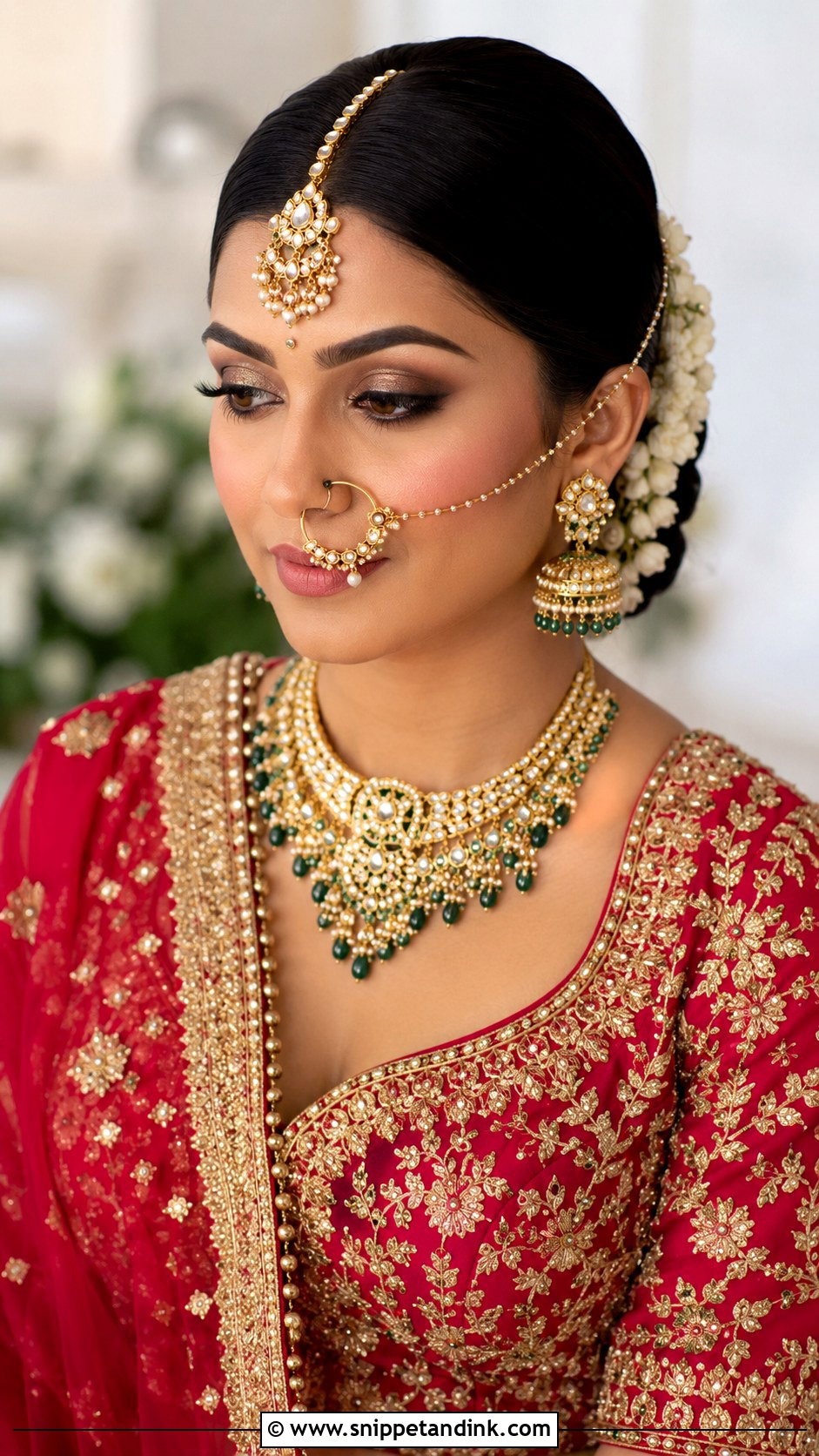
I suggest a sleek knot at the nape when the jewelry is the main event: a bold maang tikka and a large nath with its chain hooked into the hair. That chain needs its own anchor, usually a pin behind the ear near the bun, or it tugs on the nose all day. The finish depends on prep, so the hair is blow-dried tight with a smoothing cream and a light gel brushed through on the morning. Sleek styles show every bump, and I’d avoid this one on very curly hair unless you’re happy with a long straightening session the night before. A small gajra around the bun softens the line.
9. Messy Bun With Loose Tendrils for Mehendi
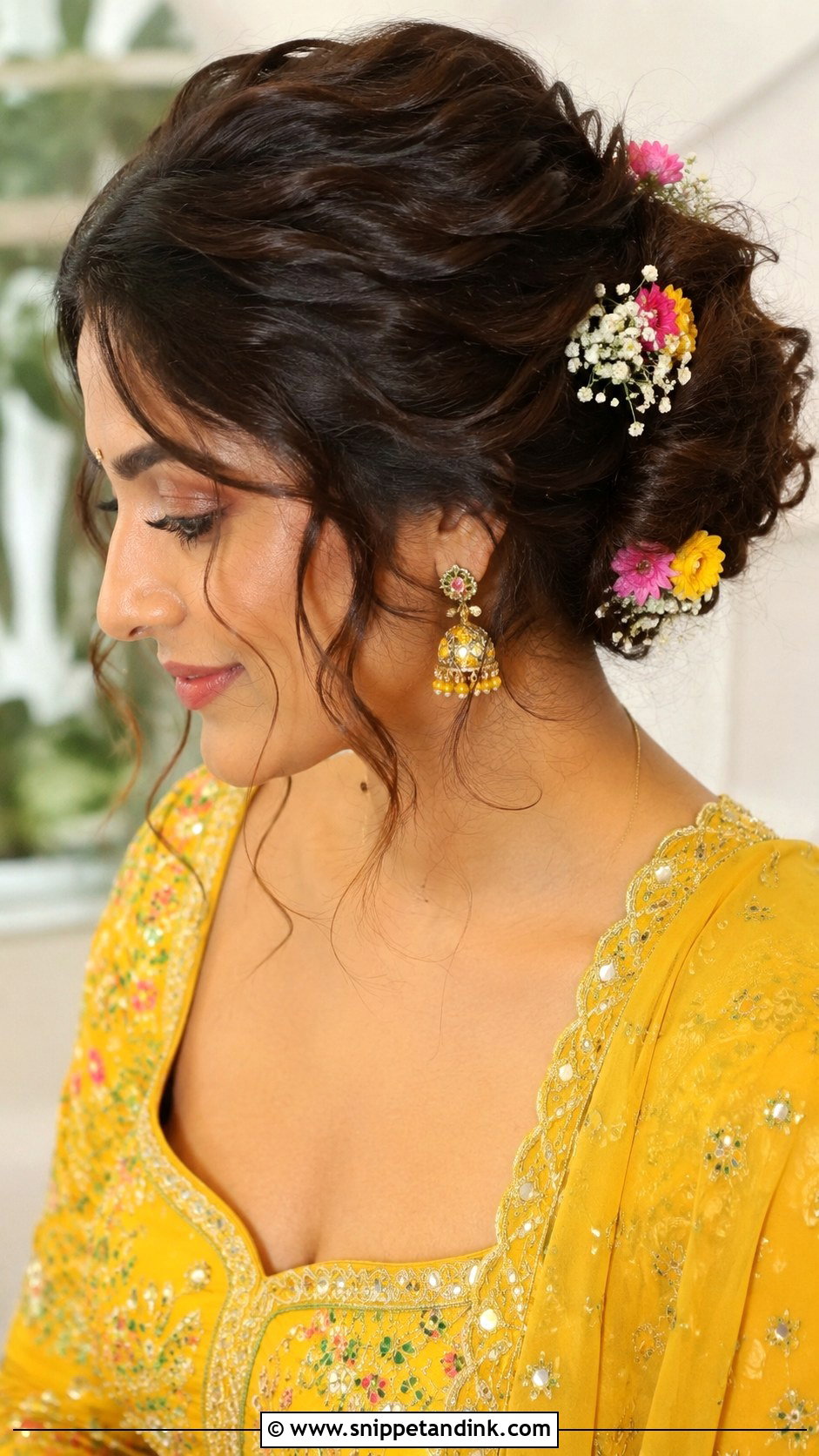
At the mehendi you’ll sit still for hours with wet paste on both hands, unable to touch your hair. That’s why I pin this messy bun far more securely than it looks, and keep the loose strands short enough that they won’t land in the henna. Small flowers or a floral band can pick up a yellow or green outfit. Tendrils get pulled out last, after the bun is fixed, so they don’t drag the knot loose.
10. Fishtail Braid With Floral Accents
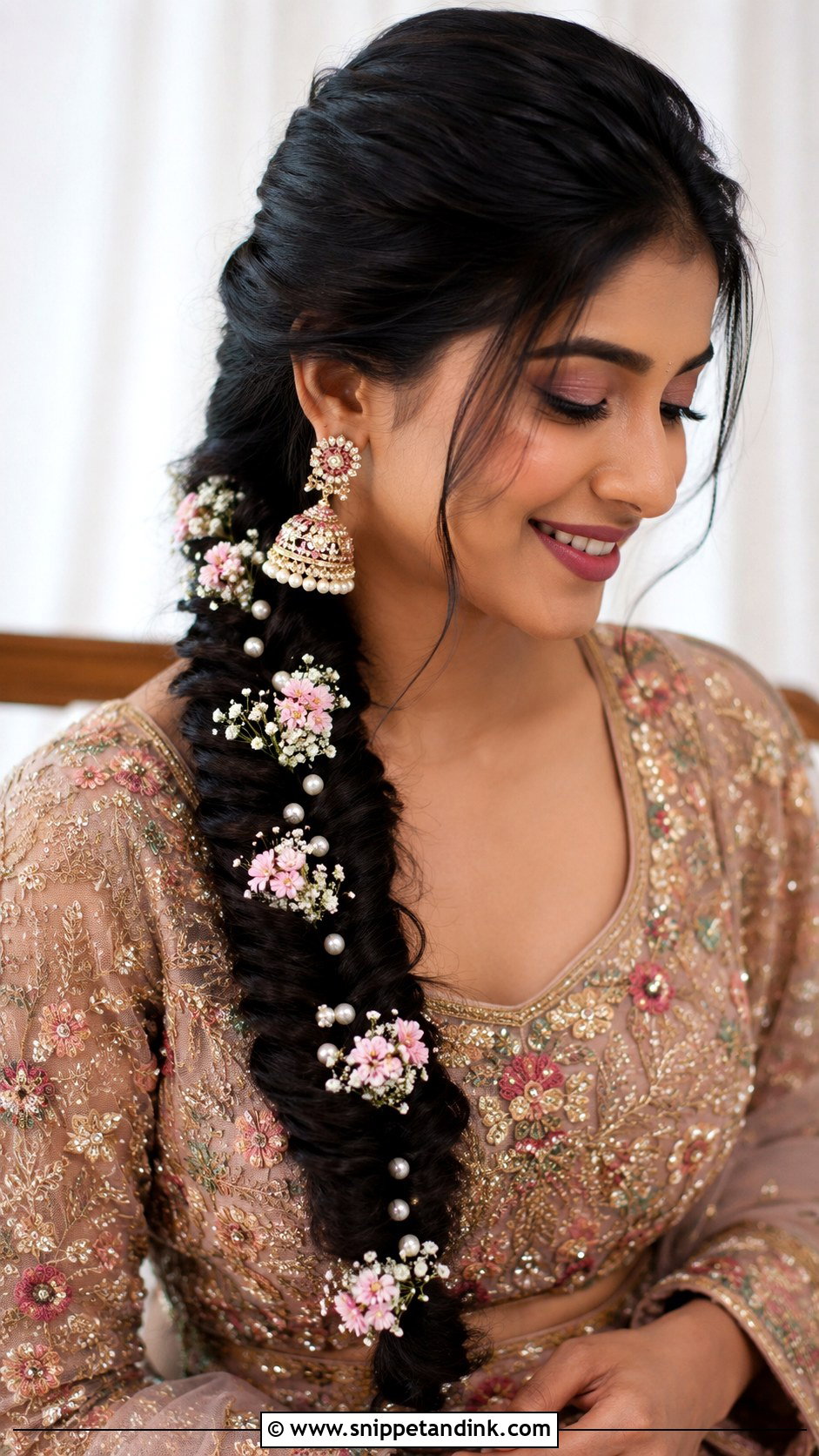
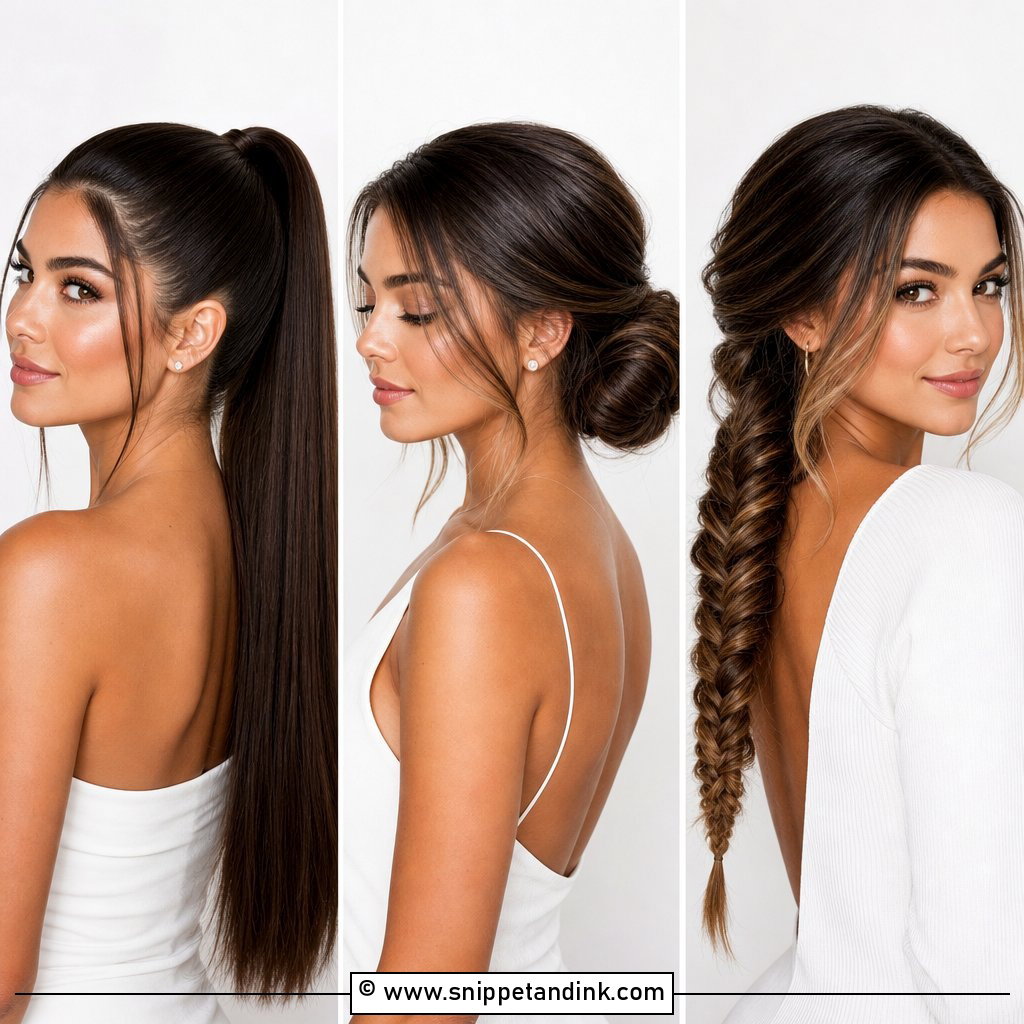
A fishtail is only two sections with thin pieces crossed over each other, but those thin pieces are why it takes longer than a three-strand braid and why it suits long, thick hair. On heavily layered hair the short ends poke out of the weave, so I work a little pomade in as I go. Worn over one shoulder with pearl pins or small flowers, it fits the sangeet, mehendi and daytime functions. Loosen it gently at the end; pulling hard on the outer edges blurs the pattern you spent time creating.
11. Rose Bun for North Indian Brides
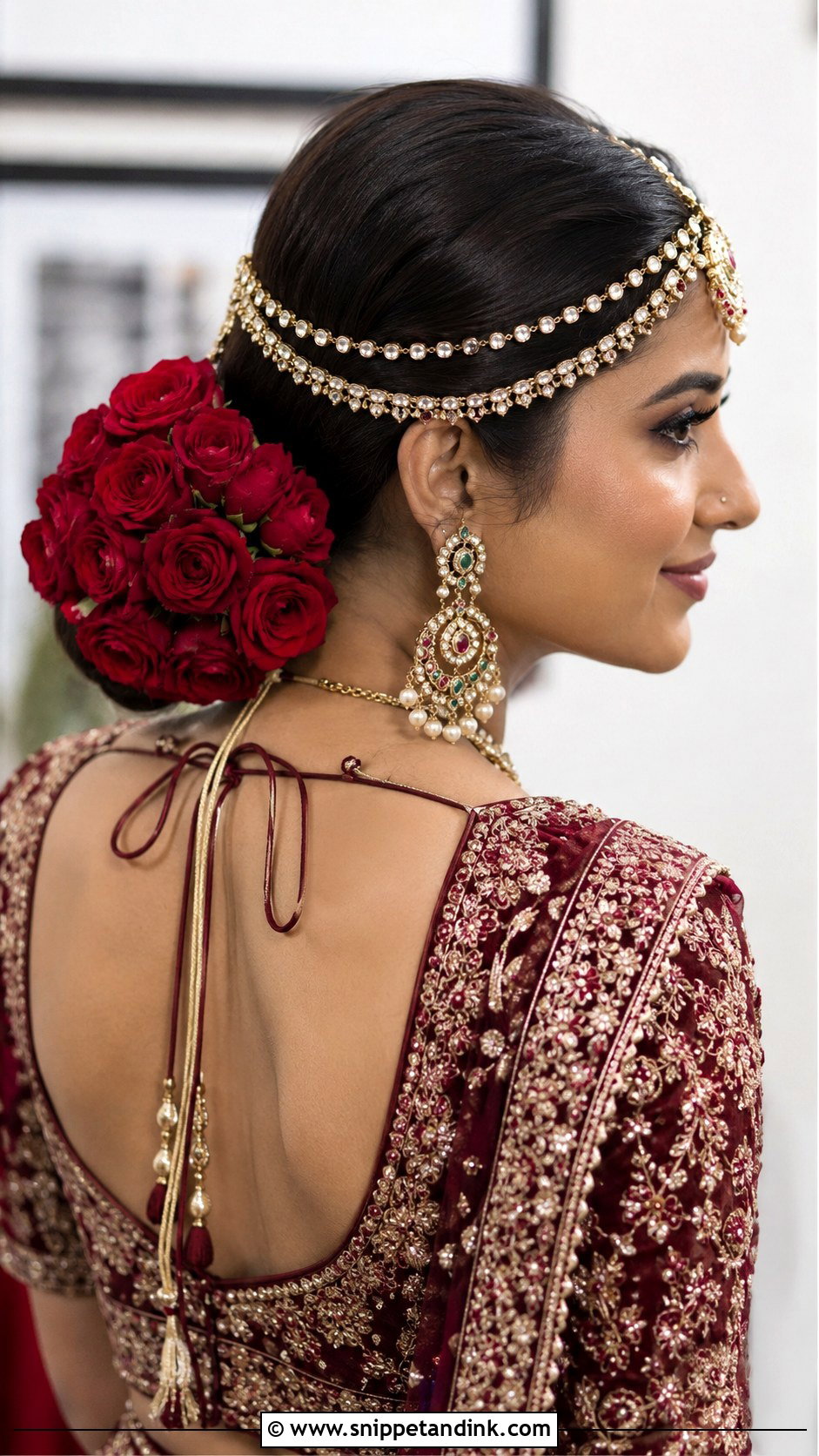
Roses are heavier than jasmine, so a rose cluster needs a firm, low bun to sit in. This classic dulhan juda sits at the nape where the chunni pins in above it, and red or deep pink roses pick up a maroon lehenga. I trim each stem short and push it in at an angle toward the center of the bun so the bloom faces outward. With a maang tikka and matha patti the frame is complete. Ask your florist for roses that are just opening, not fully blown, so they don’t shed petals on your shoulders.
12. Half-Up Half-Down Bridal Hairstyle
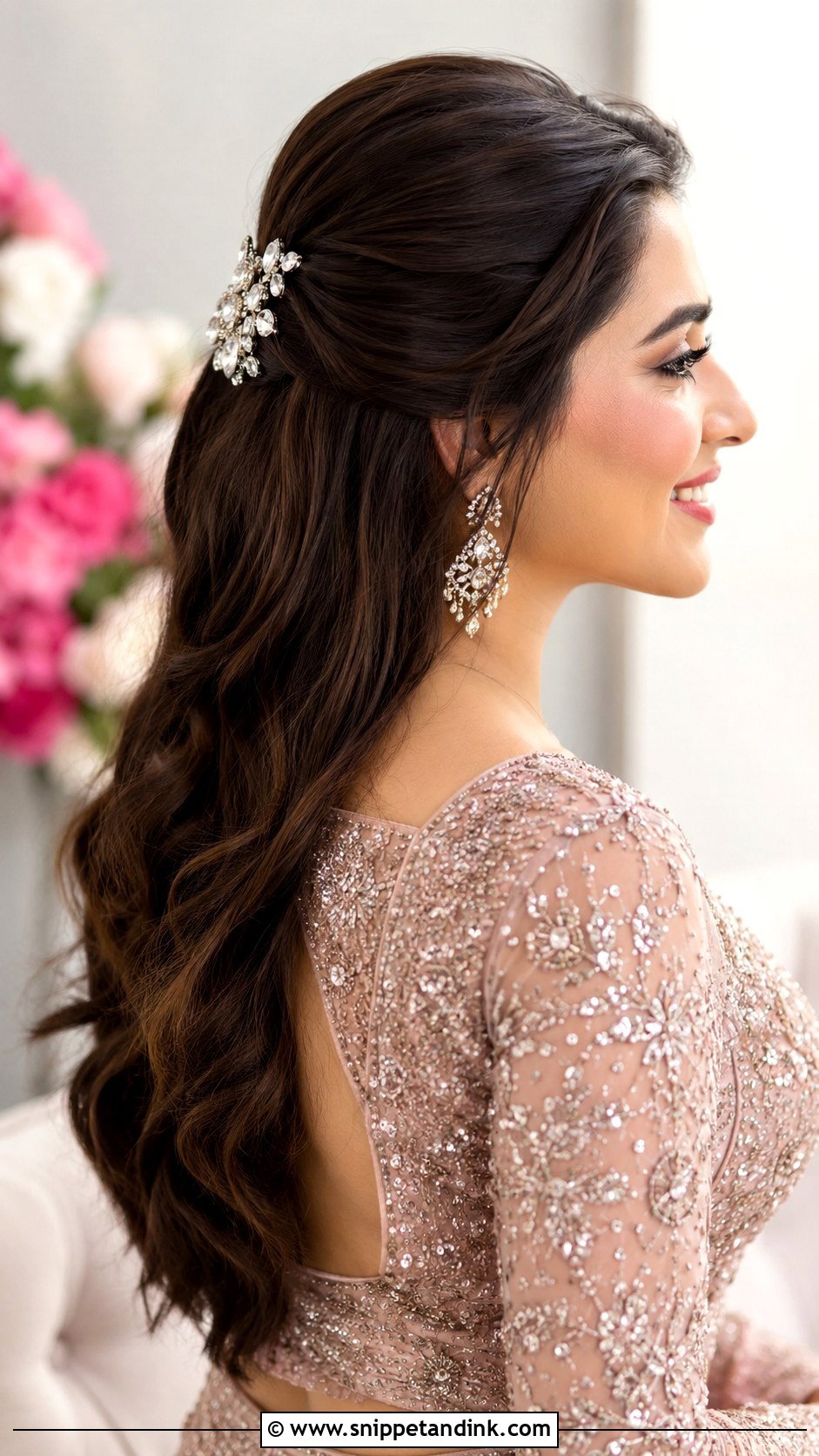
Half-up half-down shows off your length while the pinned crown keeps hair off your face. I secure the top section with crisscrossed bobby pins and lay the jeweled clip over them, so the clip is decoration and not doing the holding. Long and medium hair both suit it, at receptions and engagements especially. Under a heavy dupatta it struggles: the fabric flattens the waves at the back and snags on the clip. If a chunni will go over your head for that function, go with a bun instead.
13. Braided Crown With Veni Flowers
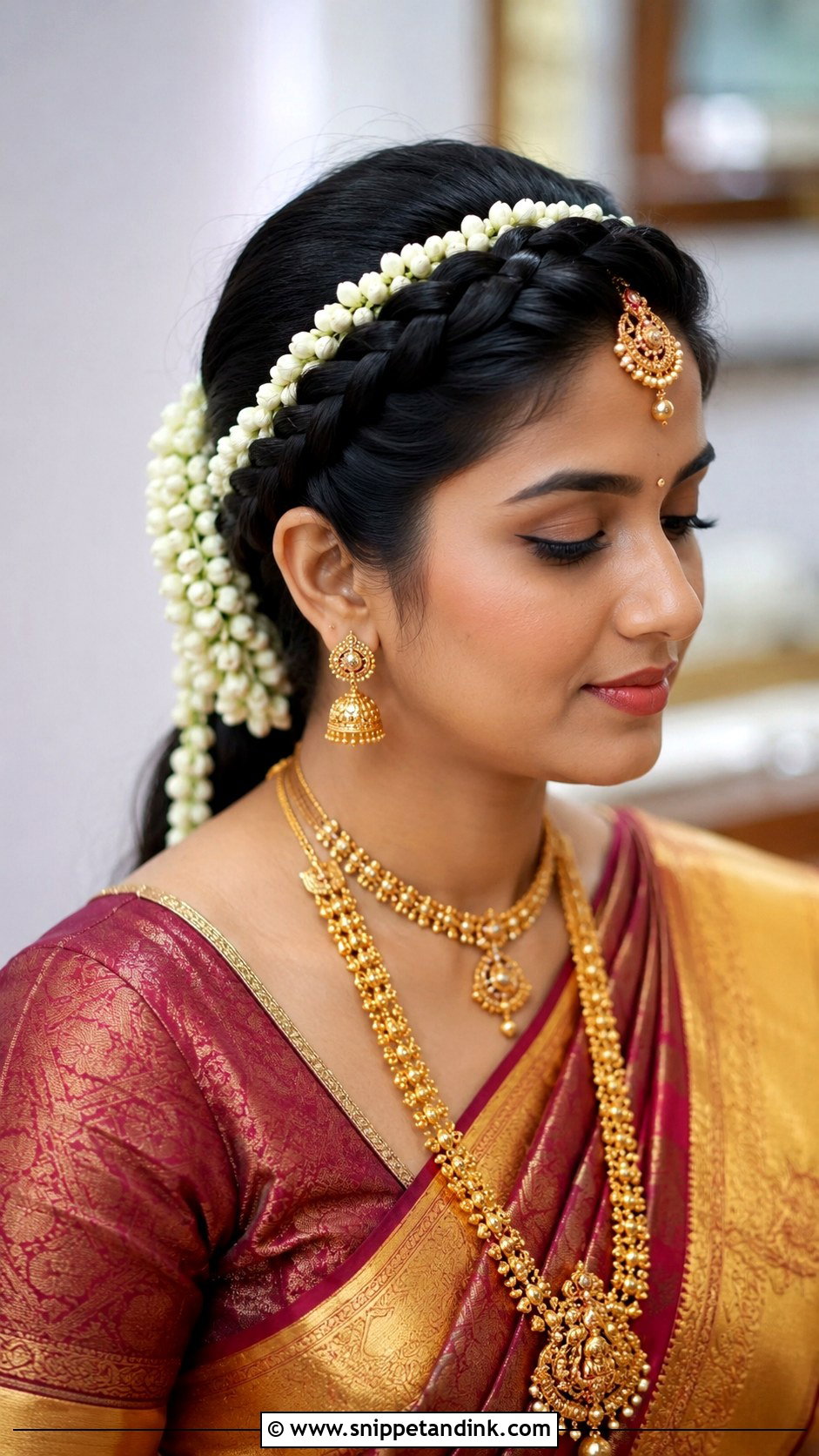
With a jasmine veni woven through a braided crown, the real challenge is balance. I pin the veni along the braid every few inches so it can’t slip to one side as the flowers lose water through the day. Temple jewelry and a silk saree complete it. Keep the veni wrapped in a damp cloth in the fridge until about an hour before styling. The fragrance carries through a whole ceremony, though it softens as the buds open.
14. Voluminous Bun With Matha Patti
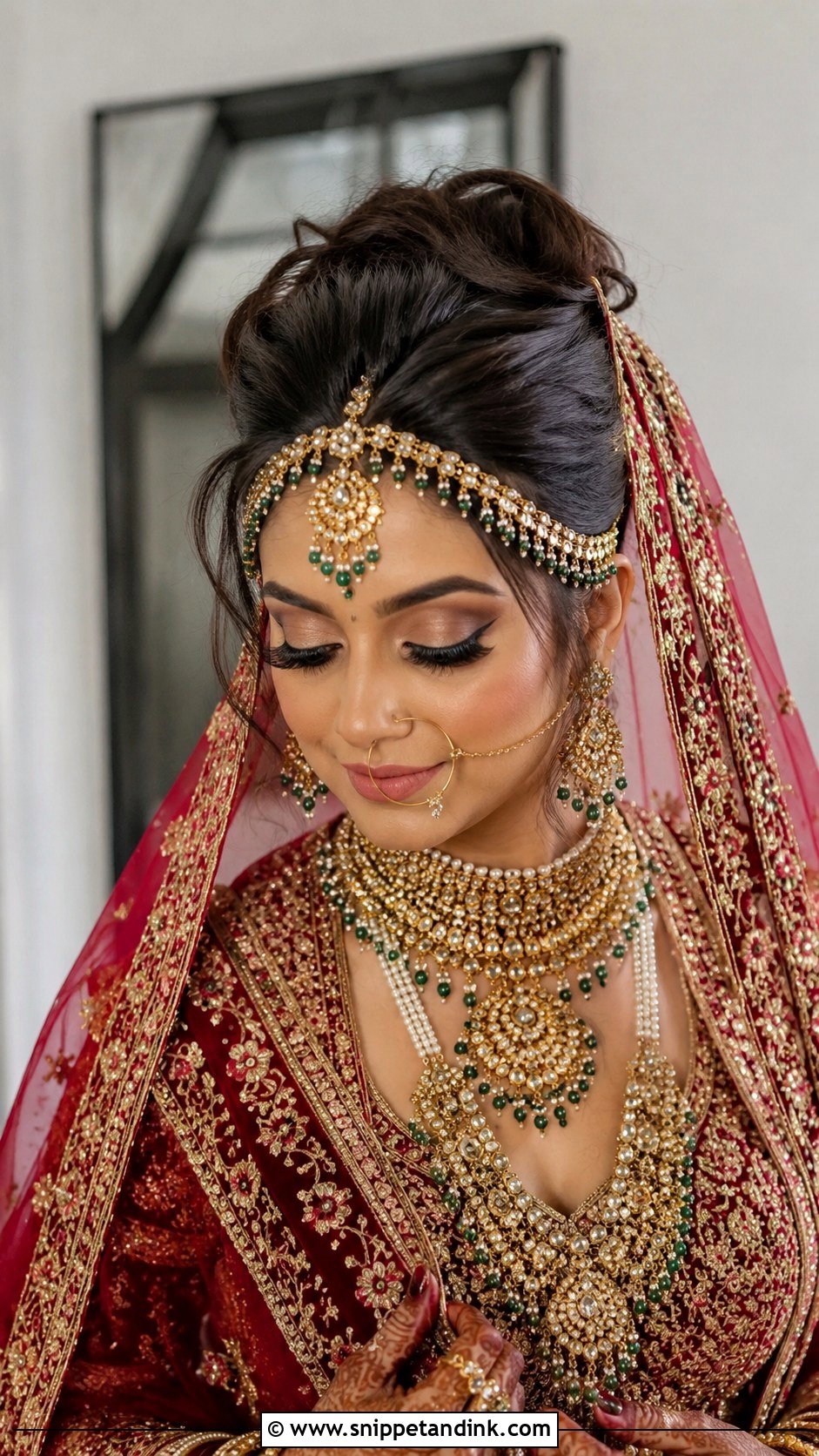
Height at the crown creates the striking royal silhouette worn by so many Rajasthani brides, and it gives the matha patti a raised point to drape from. I backcomb only the crown section and smooth a top layer over it so no teasing shows in profile photos. A full pouf balances a layered necklace and a grand lehenga, though it can look top-heavy on a petite frame or a long face. Pearls or a gajra can wrap the bun. Test it with your dupatta on, because a high crown changes how the fabric falls.

15. Side-Swept Curls With Hair Brooch
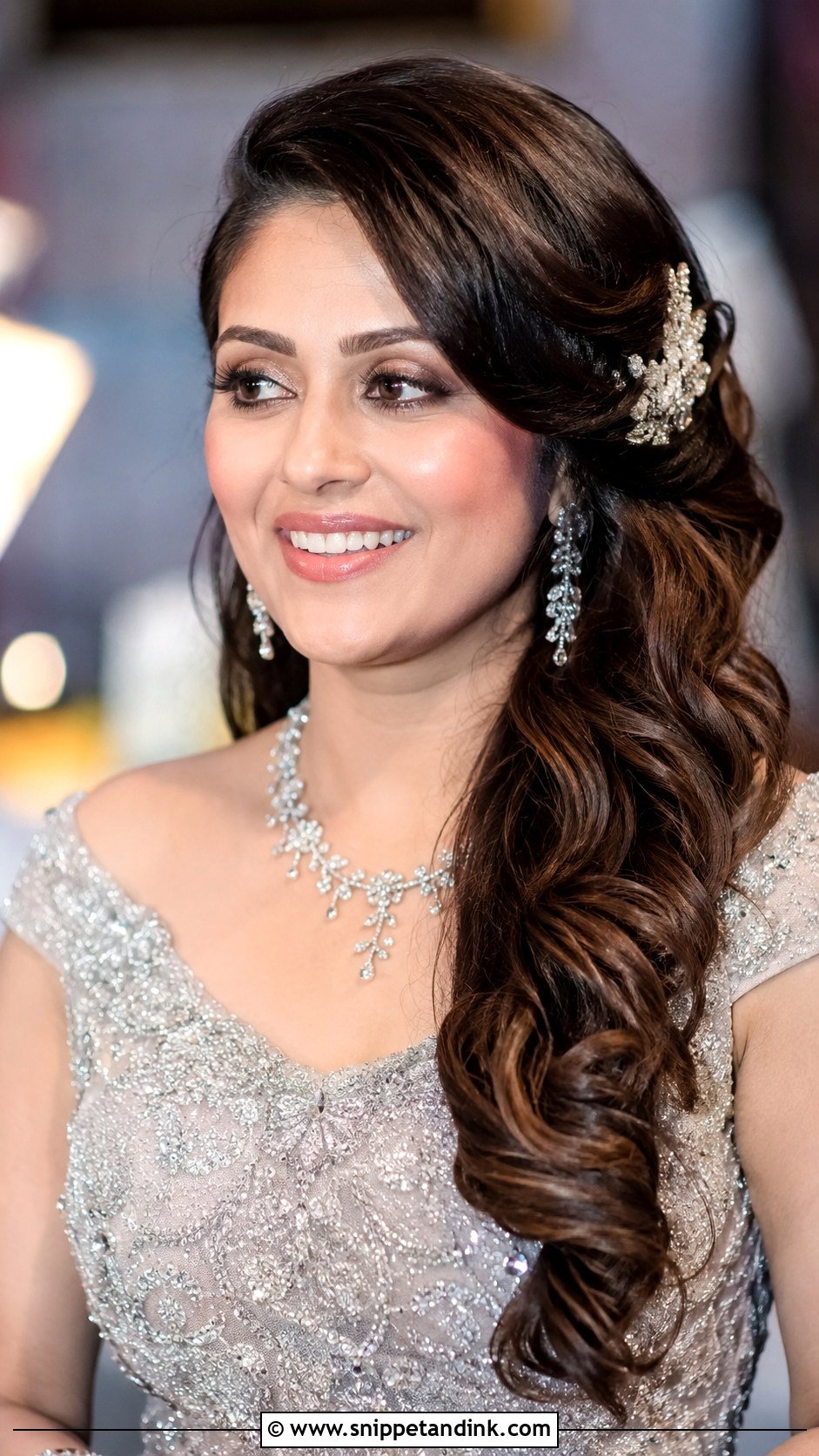
Sweeping all the curls over one shoulder looks relaxed, yet it’s pinned hard along the opposite side so the hair doesn’t migrate back. I hide a row of crossed bobby pins behind the ear and set the brooch over them near the temple. Long faces suit it, and the open side puts a statement earring on show. Keep it for the reception; side-swept hair and a draped dupatta fight each other all evening.
16. Floral Juda for Day Weddings
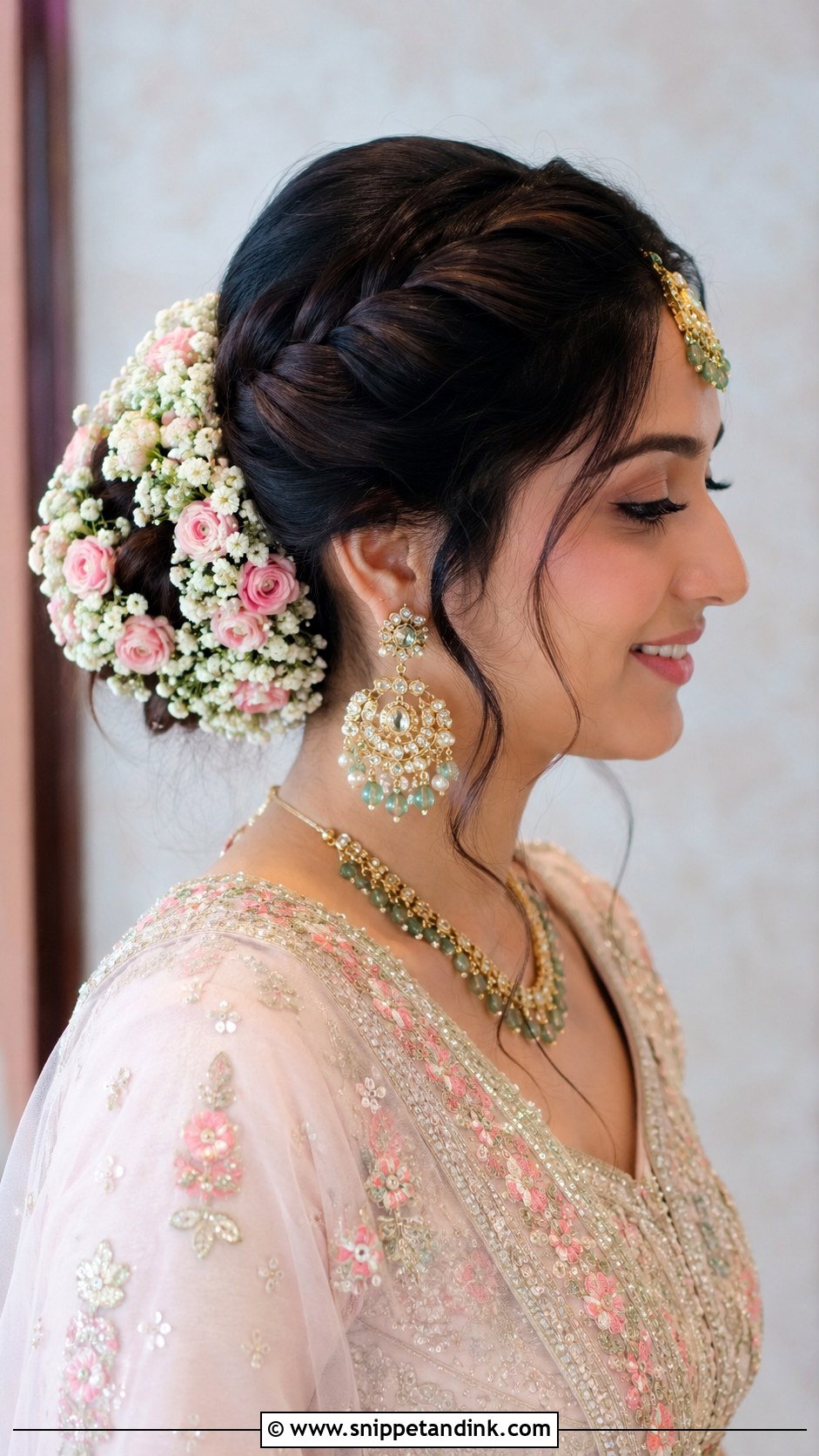
A simple braided juda is one of my go-to styles for a morning muhurat. The braid coils into a compact bun, so there’s less surface to frizz in heat, and mogra or small roses tuck between the coils. Pastel and light-toned outfits sit well with it. A braided base grips pins far better than smooth hair, so it rarely loosens during long rituals. Outdoors, mist the flowers lightly before you walk out and keep the bun in shade between photos so the jasmine stays white.
17. Bridal Ponytail With Floral Wrap
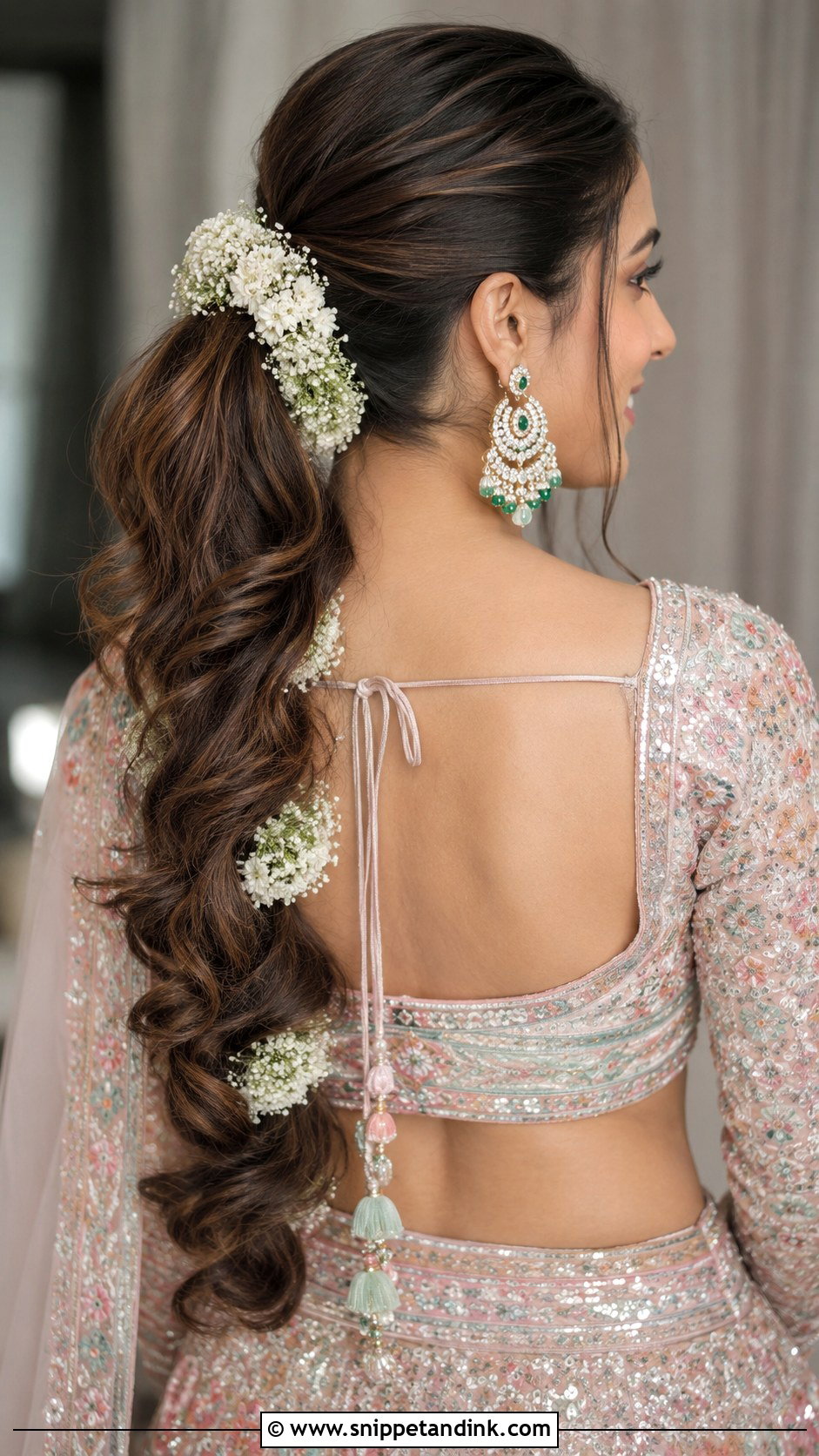
A bridal ponytail is lighter than any bun, which is why some brides wear it for the sangeet or reception when they plan to dance. I wrap a small section of hair around the elastic first, then the floral string over that, so no elastic shows if the flowers shift. Curling the length adds movement. It can’t support a dupatta over the head, so treat it as a pre-wedding or reception style. A very high ponytail also gives some people a headache within a few hours; a mid-height one is kinder.
18. Curly Bun With Gajra for Receptions
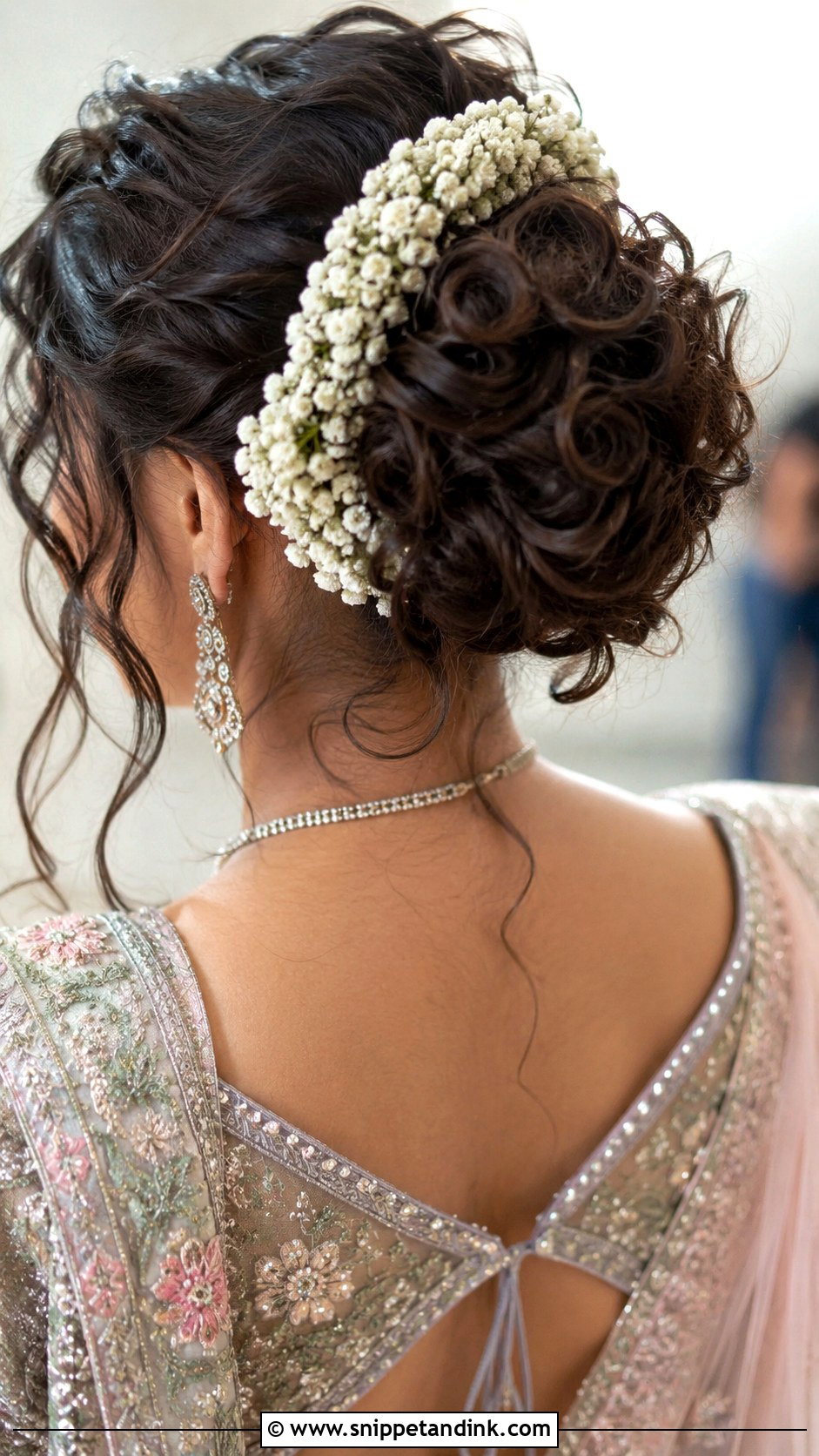
Volume in this bun comes from pinning the curls into the knot one by one rather than twisting the whole length together. That builds a full, dimensional shape at the nape, and the gajra wraps around its outer edge. It’s for the bride who wants softness without the polish of a sleek knot. Leave a couple of tendrils at the front. For evening dancing it’s forgiving, since one curl slipping simply blends in.
19. Dutch Braid Bun for Bridal Look
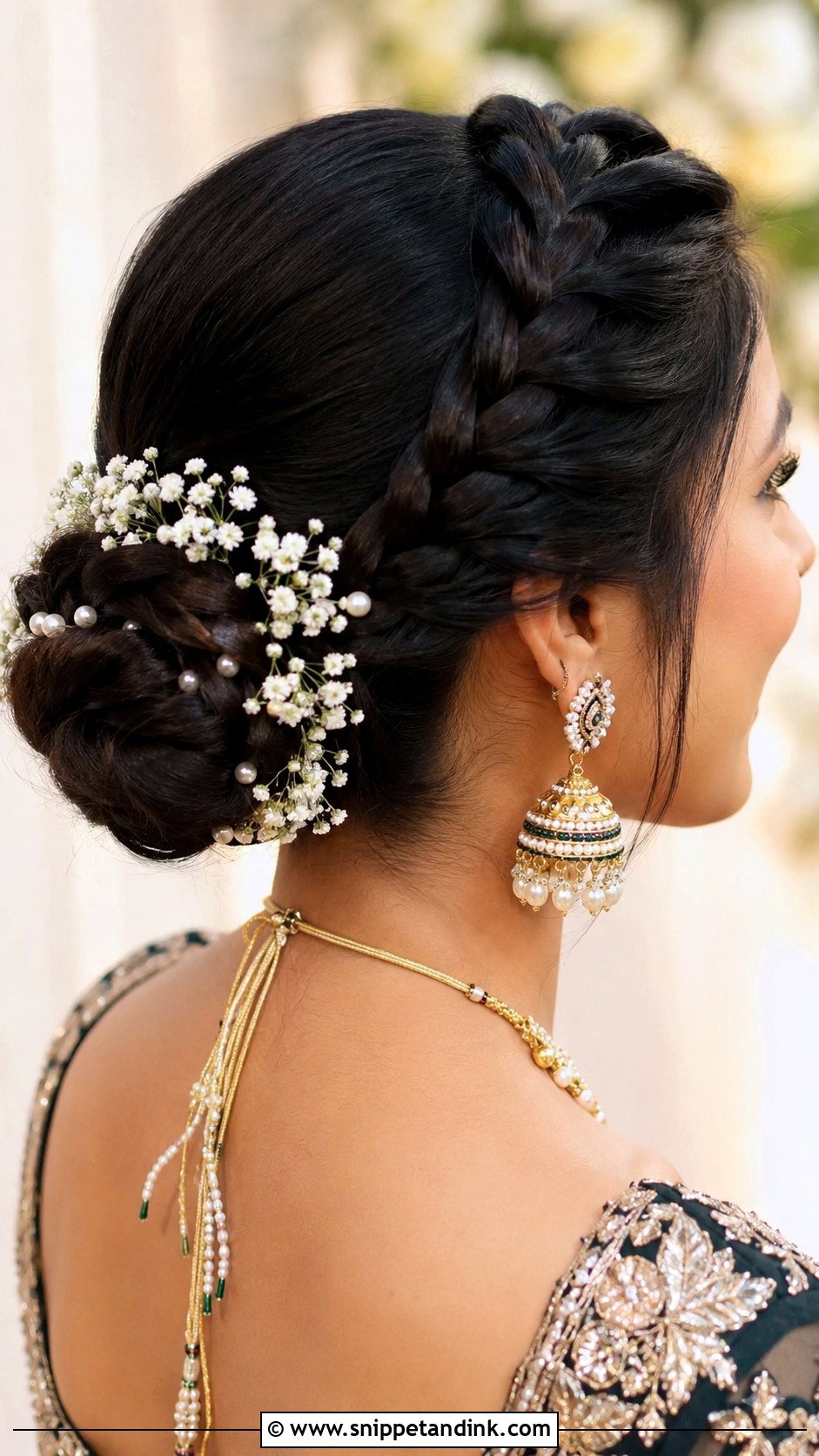
A Dutch braid stands up from the scalp because the strands cross under rather than over, which is why it reads so clearly from behind. I start it at the crown and finish it into a low bun, tucking small flowers or pearls into the raised sections. It locks thick hair in place well. The braid has to reach the nape with enough length left for a full bun, so shoulder-length hair usually needs a clip-in. Mehendi, sangeet and day functions suit it most.
20. Open Waves With Maang Tikka
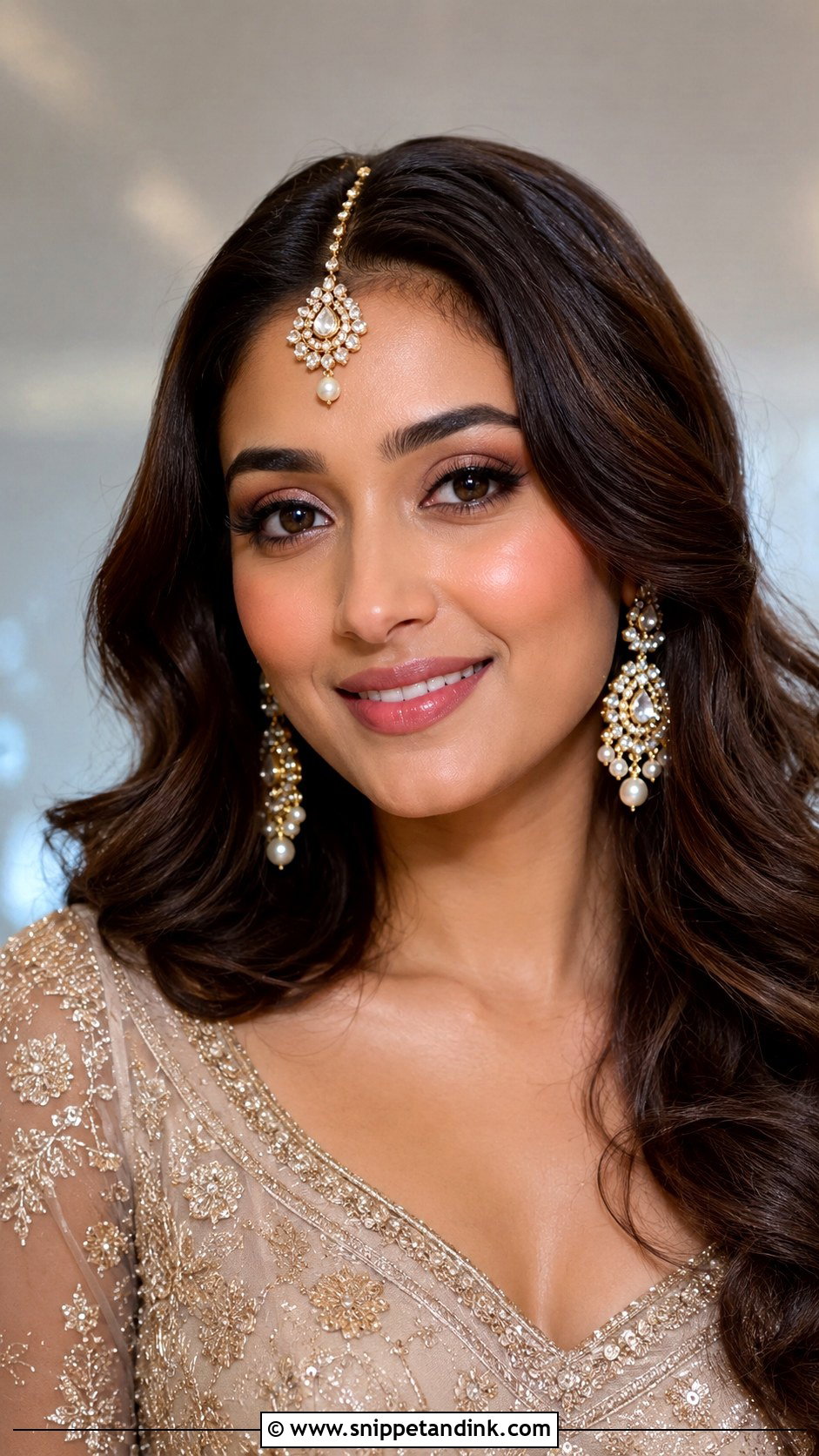
Open waves with a maang tikka are the simplest style on this list and, honestly, the one that needs the most prep to last. I use a heat protectant with some hold and set wide waves rather than tight curls, since waves relax gracefully while tight curls frizz. The tikka needs its own small pin at the back to stay centered on loose hair. Engagements, the sangeet and receptions suit it; under a ceremony dupatta it gets flattened and tangled.
21. Bun With Pearl Strings and Florals
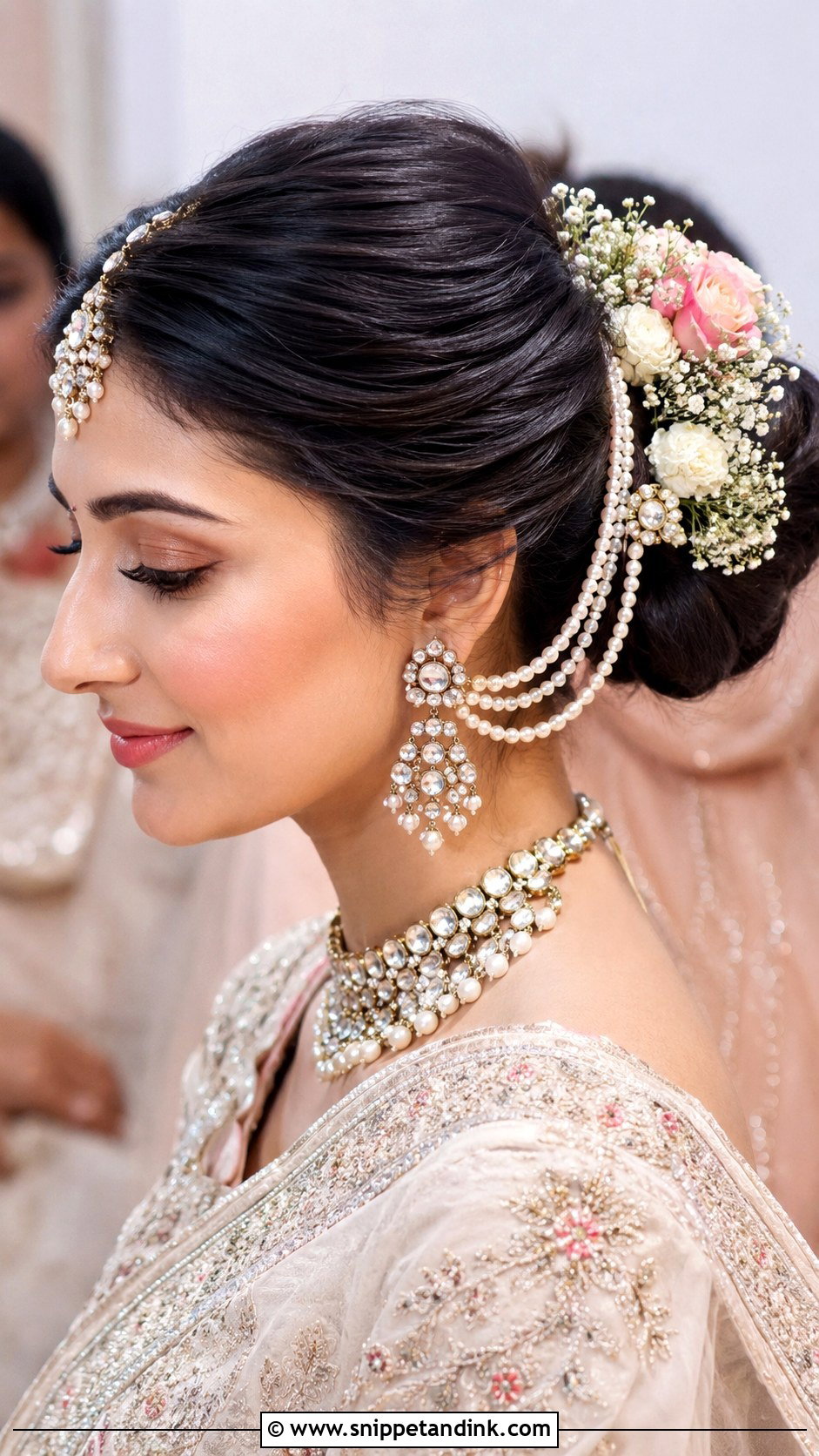
Mixing pearl strings and fresh flowers on one bun is about restraint. I keep the flowers to one side of the knot and drape the pearls around the other, so the two textures don’t compete. With ivory and pastel lehengas it gives a layered look that carries from a day ceremony into the evening. Pearls don’t wilt, so if the flowers tire, the bun still looks finished.
22. Bengali Bridal Bun With Mukut
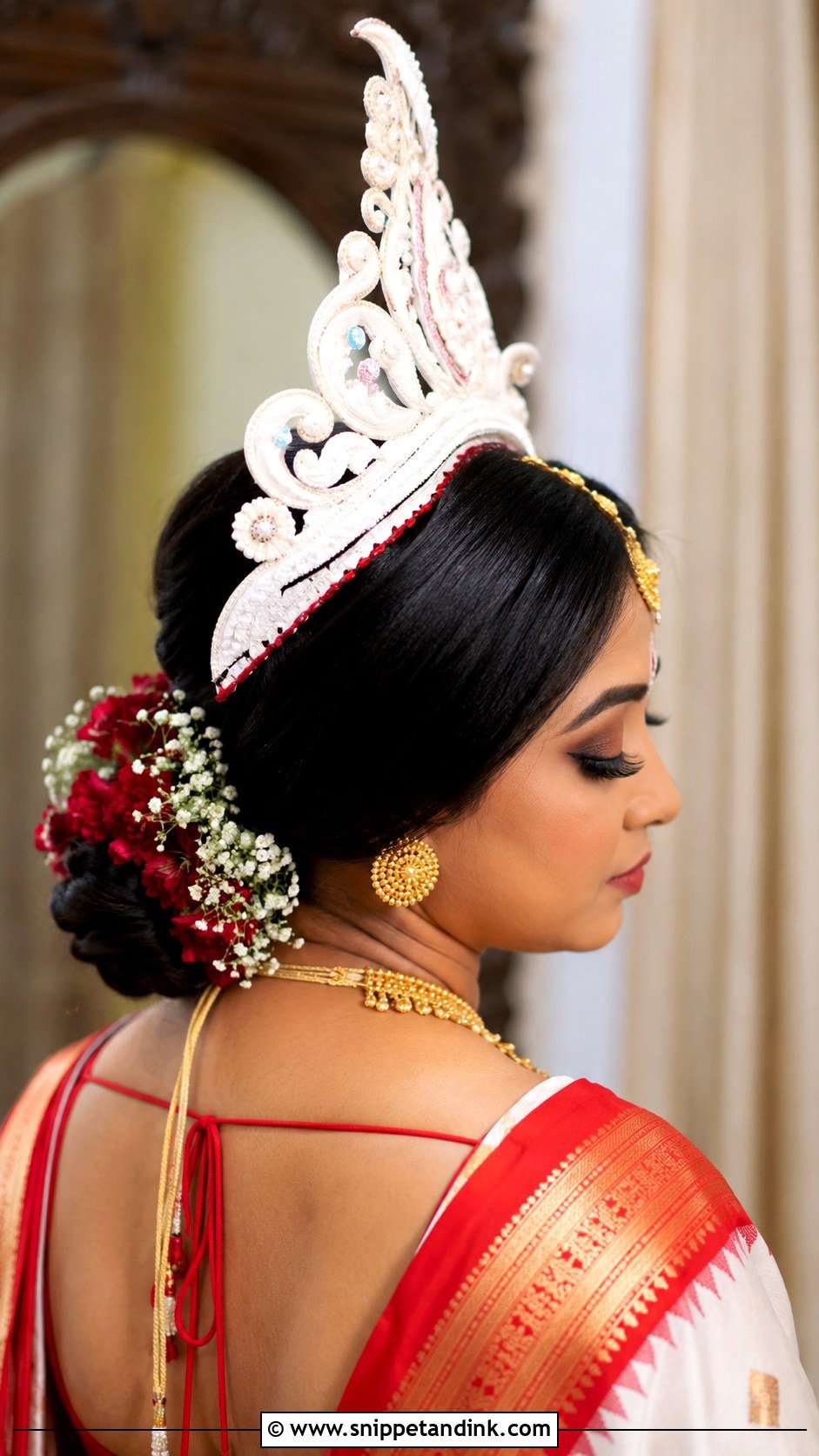
The Bengali bridal look is built around the mukut and the chandan dots drawn across the brow, so the hair itself stays simple: a neat, structured low bun at the nape. I set the bun lower than I would for a North Indian juda so the mukut and the veil above it sit level. With the red and white saree and gold jewelry, a small gajra around the bun is the only extra I’d add. The mukut is light but rigid, so it needs pins through its back band rather than simply resting on the head.
23. Loose Braid With Flowers for Sangeet
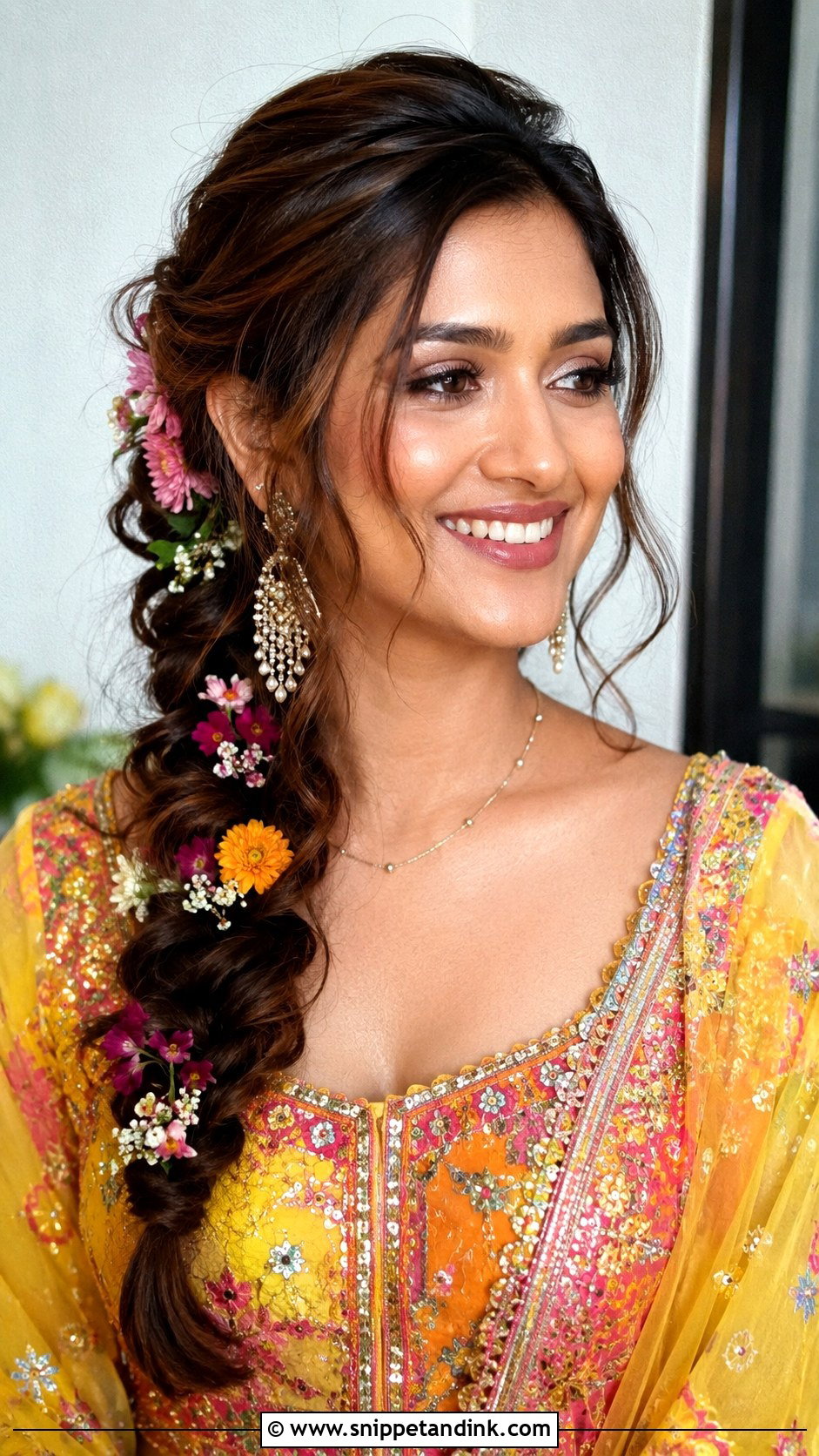
A loose braid pulled apart for fullness is easy to dance in at sangeet celebrations. I braid it firmly first, pin the colorful flowers in, then gently loosen the outer edges, because a braid that starts soft simply falls apart. Bright, lighter outfits suit it. Fairy-light pins are fun, but their battery packs add weight, so keep them small and few. It lasts through hours of music as long as the base braid is tight.
24. Sleek Low Bun With Center Part
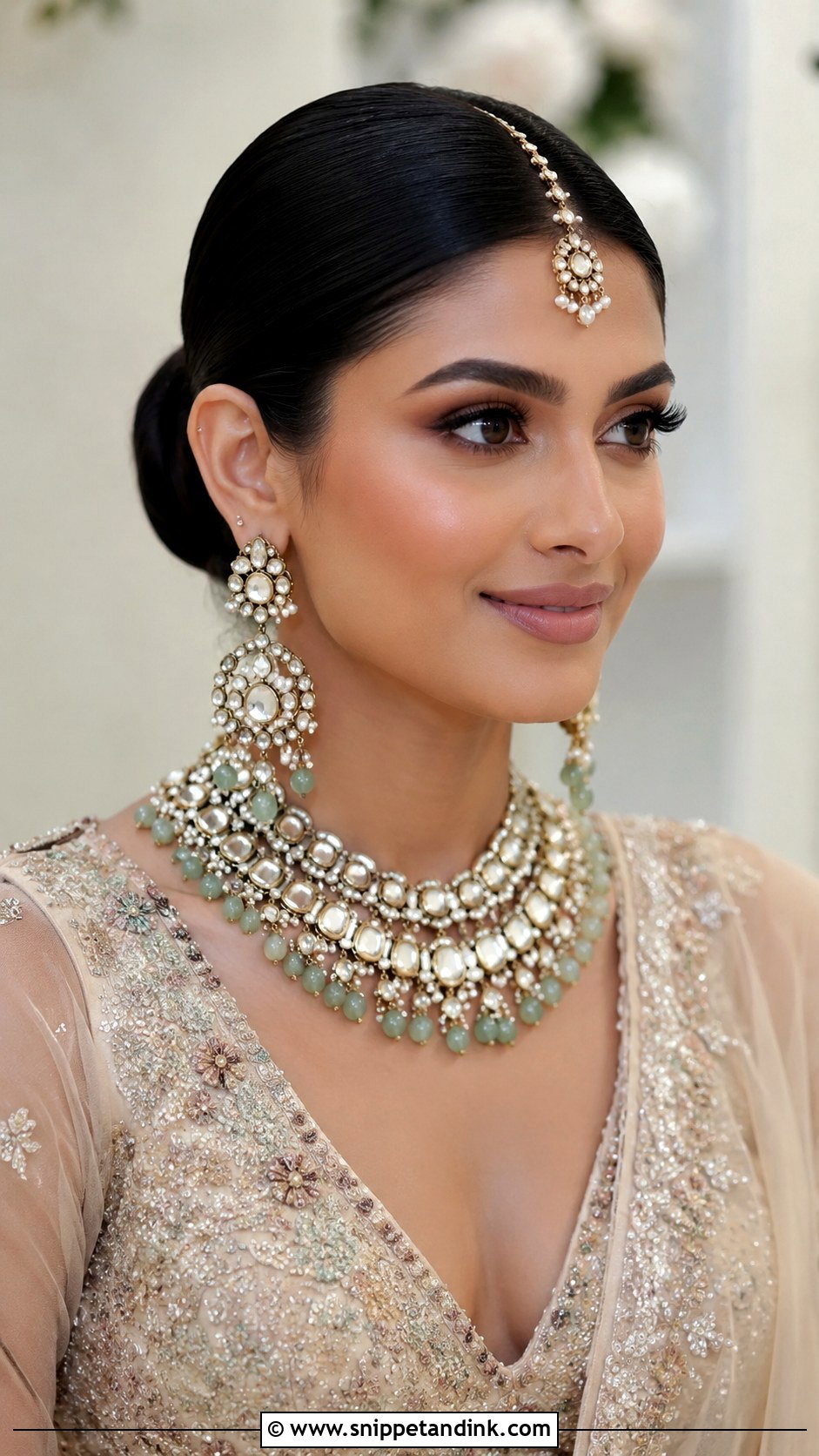
Minimal leaves nothing to hide behind, and a crooked center part shows the moment you face the camera. I part on damp hair using the bridge of the nose as a guide, then blow-dry flat before tying the bun low. The maang tikka sits exactly on that line. It works with traditional and contemporary outfits and most face shapes, though on very angular features I sometimes soften the front with a little looseness. A subtle gajra or one jeweled pin is plenty.
25. Floral Updo With Cascading Flowers
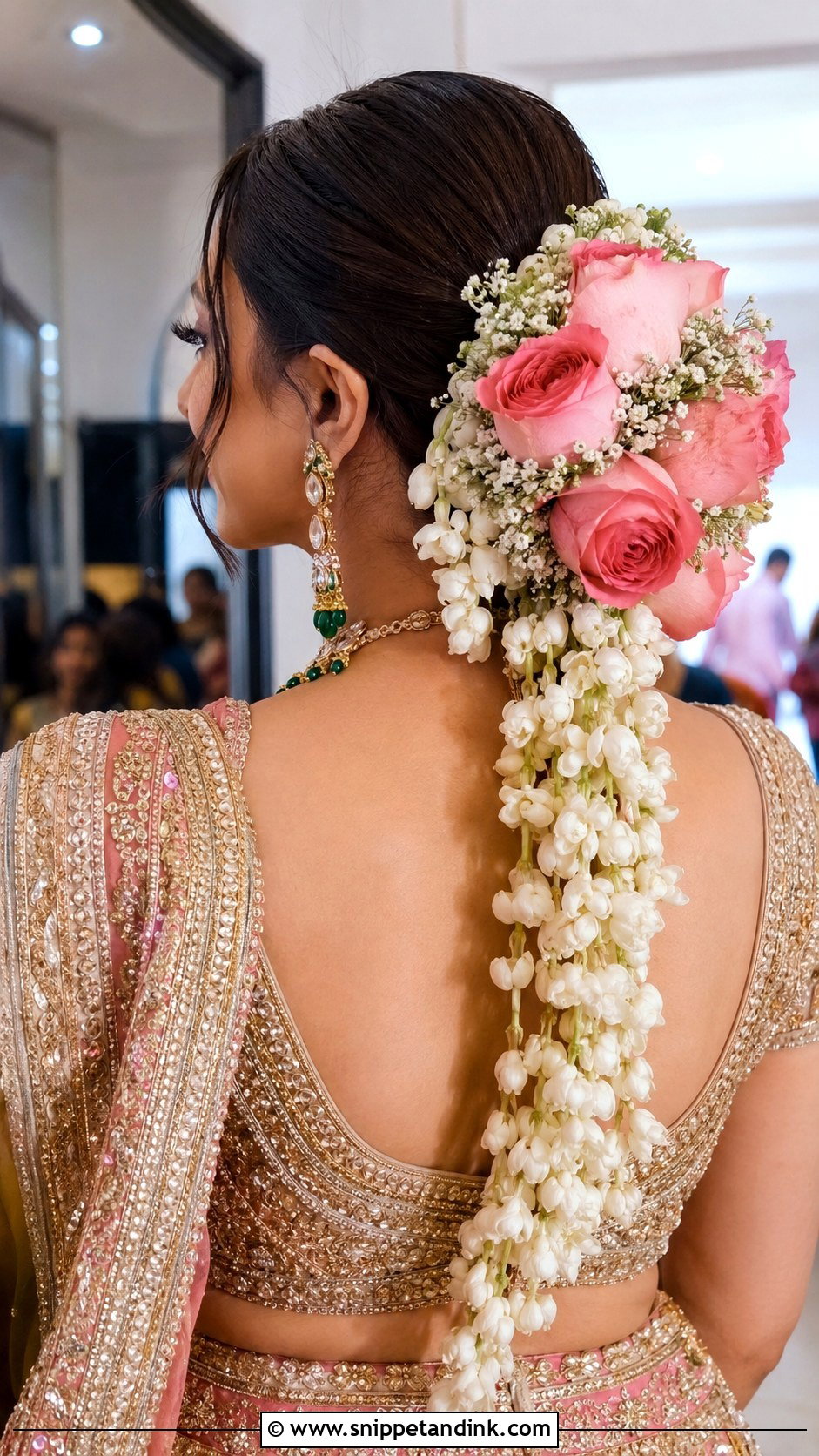
Cascading flowers trailing down from the bun are the most dramatic look here and the most labor-intensive. I attach the trailing strands to a hidden base of pins and thread rather than to loose hair, so their weight doesn’t drag the updo down. Roses, jasmine and orchids together give varied texture, though orchids bruise easily and go in last. It belongs with a heavy bridal lehenga and statement jewelry at a grand celebration. Allow an extra 30 to 45 minutes of styling time.
When the Mogra Wilts Halfway Through the Pheras
Fresh flowers are the most fragile part of Indian bridal hair. Jasmine buds open, turn cream and then brown within hours in heat, and roses drop petals once they’ve been out of water too long. A few habits keep them looking fresh into the evening.
- Order the gajra and veni for delivery that morning, and keep them in a damp muslin cloth in a cool room until styling.
- Ask for tight buds rather than open flowers, so they open during the ceremony instead of before it.
- Mist the flowers lightly before photos, not the hair beneath them.
- Hand a spare gajra strand to whoever is carrying your kit.
Switching styles between the wedding and reception
If the reception follows on the same day, I plan both styles together. Going from a juda to open curls is hard, because by then the hair is creased and full of pins and spray. Going from a juda to a softer low bun or a side braid takes minutes. If you want open hair later, ask for the curls to be set first and hidden inside the morning bun.
A small kit carried by a sister or friend saves a lot of panic: bobby pins that match your hair, a few U-pins, a mini hairspray, safety pins for the dupatta and a tail comb. Most of what goes wrong on the day is one slipped pin.
Bring Your Dupatta and Tikka to the Trial
Almost every style here will look right in the mirror. What separates them is how they cope with your dupatta, the weight of your jewelry, the heat of the venue and the number of hours you’ll wear them. Bring your actual dupatta, tikka and hair accessories to the trial, then keep the style in for a few hours to see what slips. Choose something secure for the pheras and something lighter for the reception if you’re changing in between, and have the flowers delivered fresh that morning.
You'll Like These Ideas:






Leave a Reply