
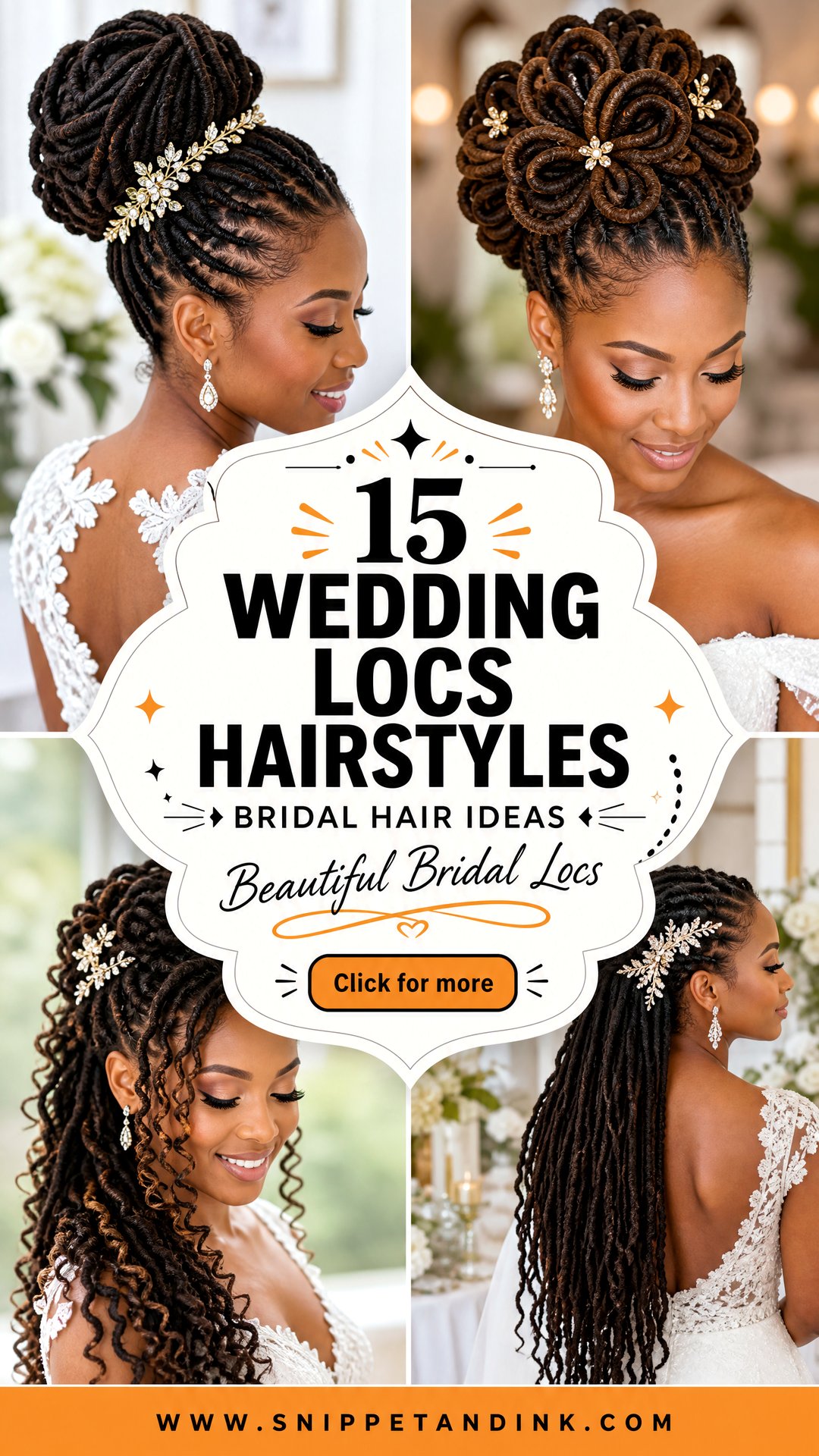
Wedding locs hairstyles have one big advantage over loose hair: locs hold a shape once they’re pinned, so a bridal style built well in the morning still looks the same after the last dance. What I plan around instead is weight, tension at the edges and drying time. Traditional locs, goddess locs, sisterlocks, microlocs and faux locs all behave differently in the chair, and the fifteen styles below note what each one needs, from a full updo to short locs with a few well-placed pins.
When to Retwist, Wash and Set Before the Wedding
Locs look their best a little after maintenance, not the same day. Fresh retwists can look tight and shiny at the roots, and new growth needs a few days to relax. Here is the timing I work from.
Two to three weeks out
Do your trial. Bring your veil and any accessories, and wear the style for at least an hour to check weight and tension.
About a week out
Wash and retwist, or install faux locs. That gives the roots time to soften and any tightness to ease. Avoid retwisting tighter than usual for the occasion; overly tight retwists strain the scalp and can thin the roots over time.
One to two days out
Set any curls on damp locs and let them dry fully. If your stylist builds an updo the evening before, sleep in a satin scarf or bonnet so the shape stays and the locs don’t pick up lint.
Wedding morning
No washing. Refresh with a light mist, add flowers and accessories, and place the veil.
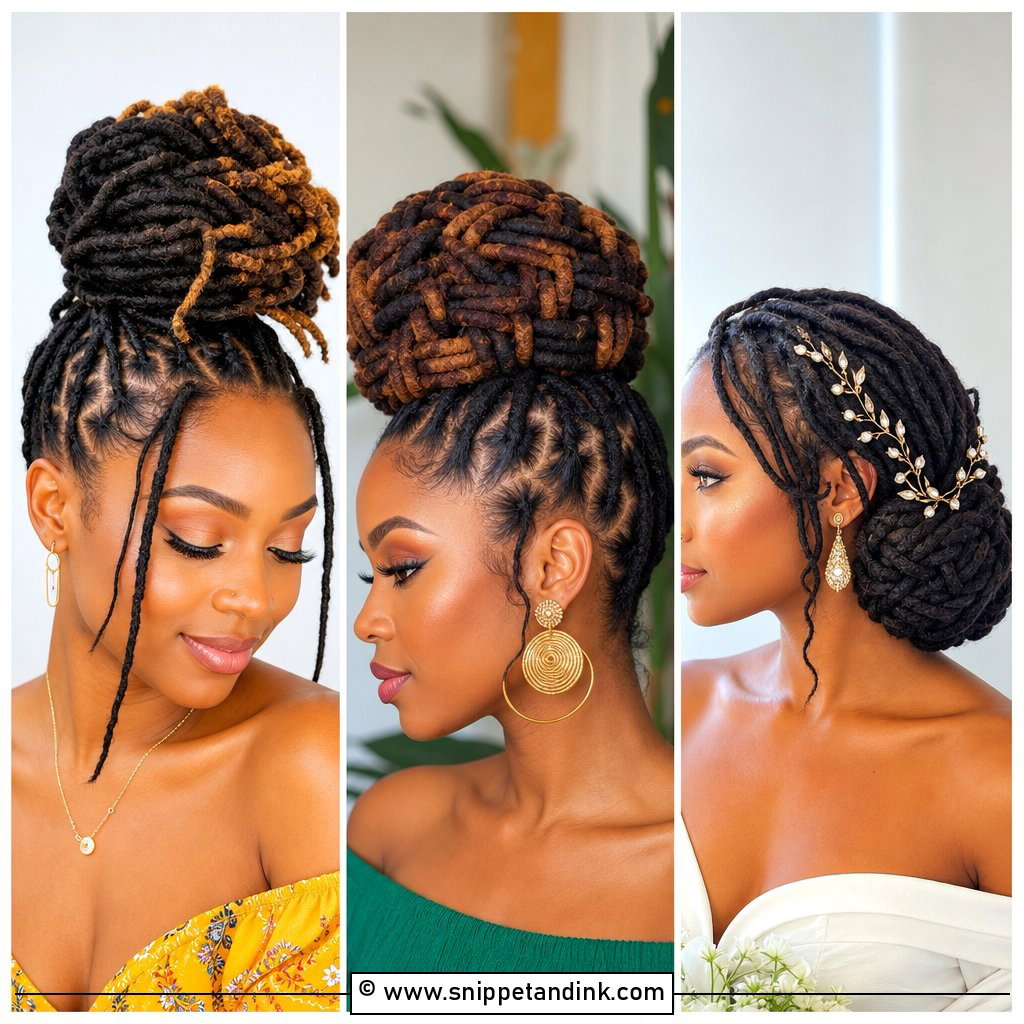
1. Bridal Loc Updo
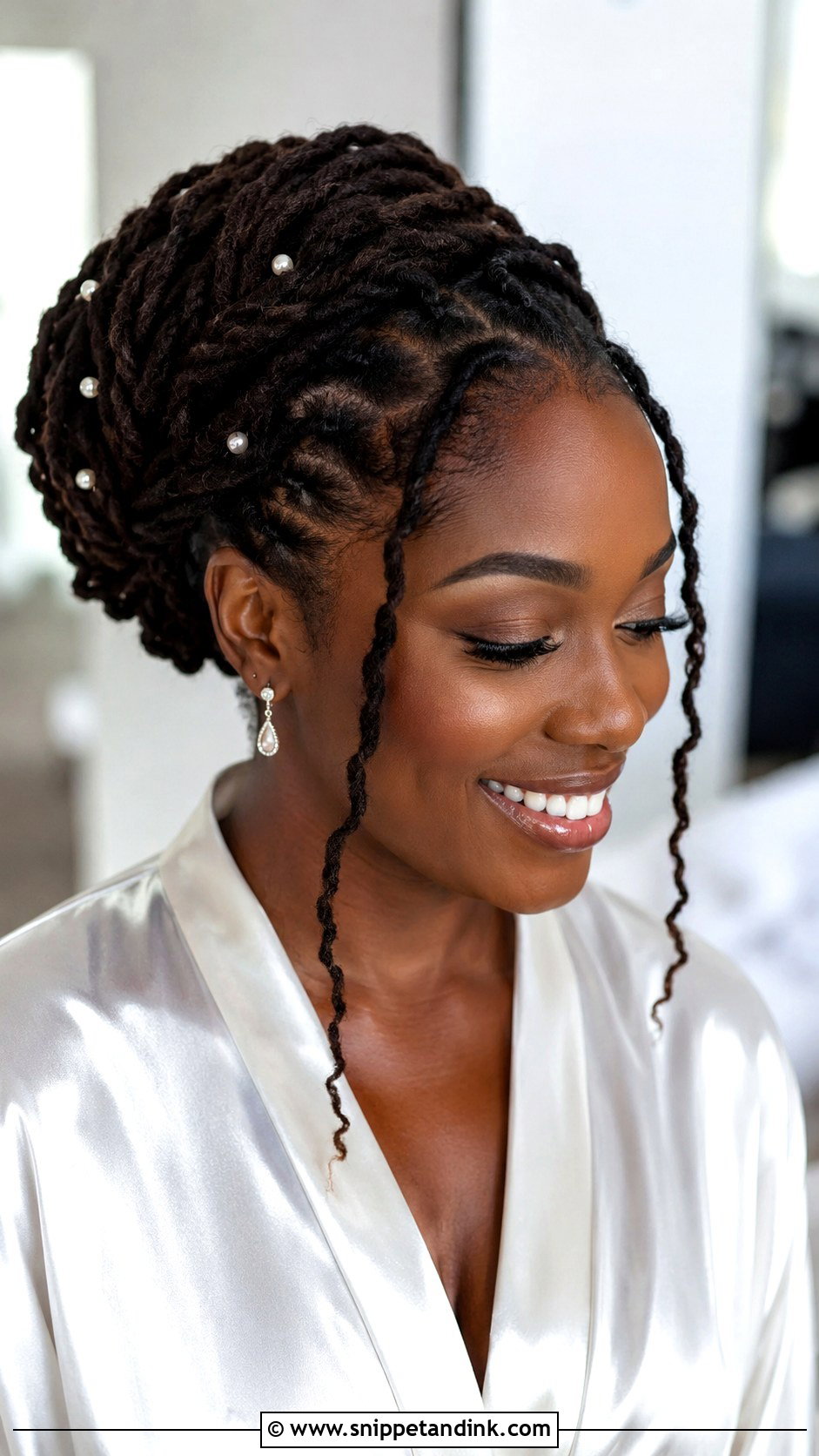
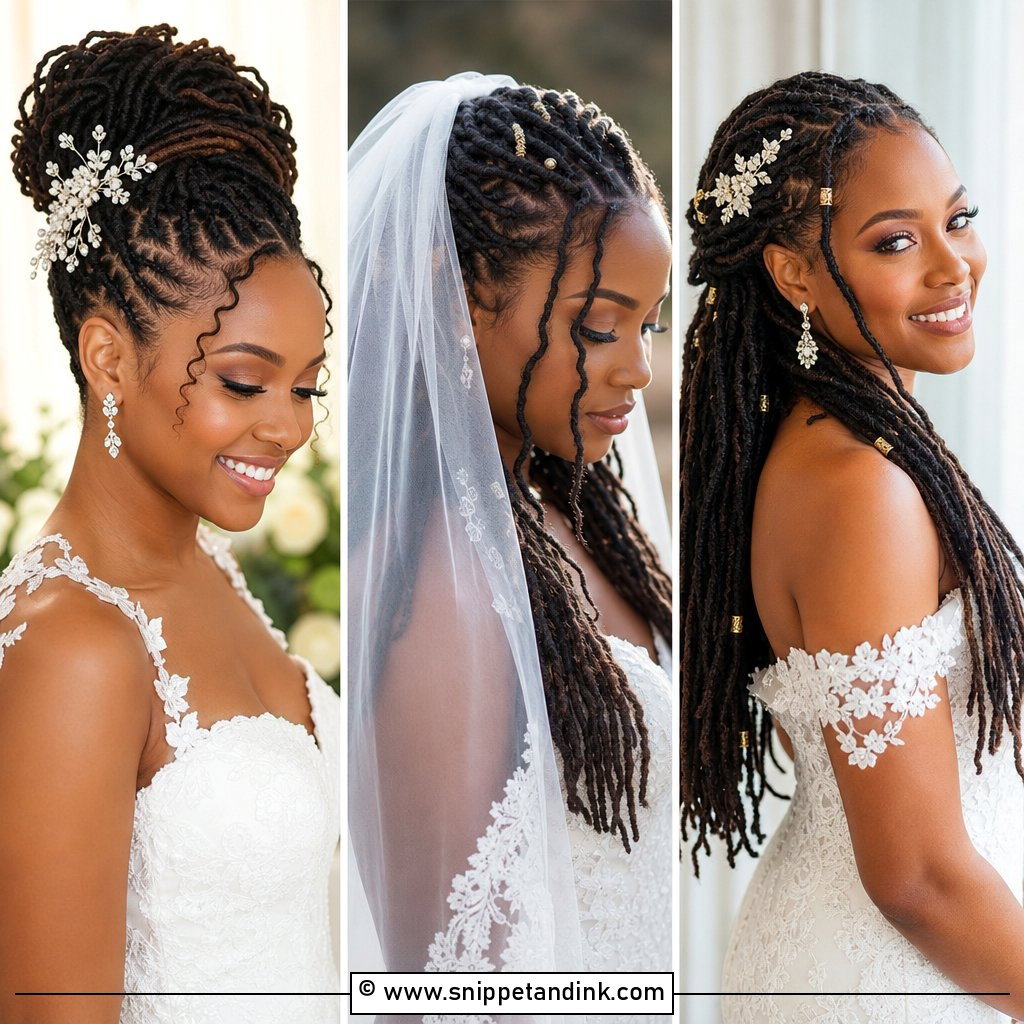
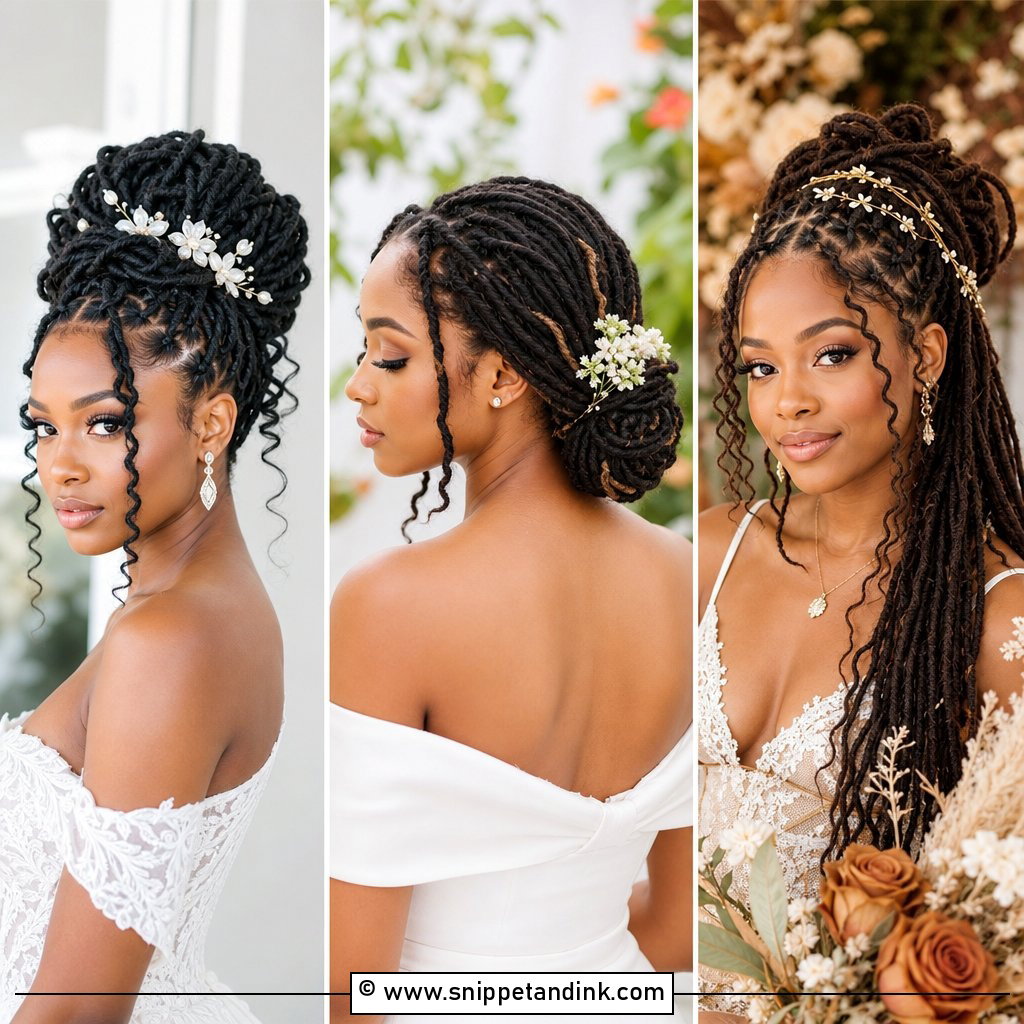
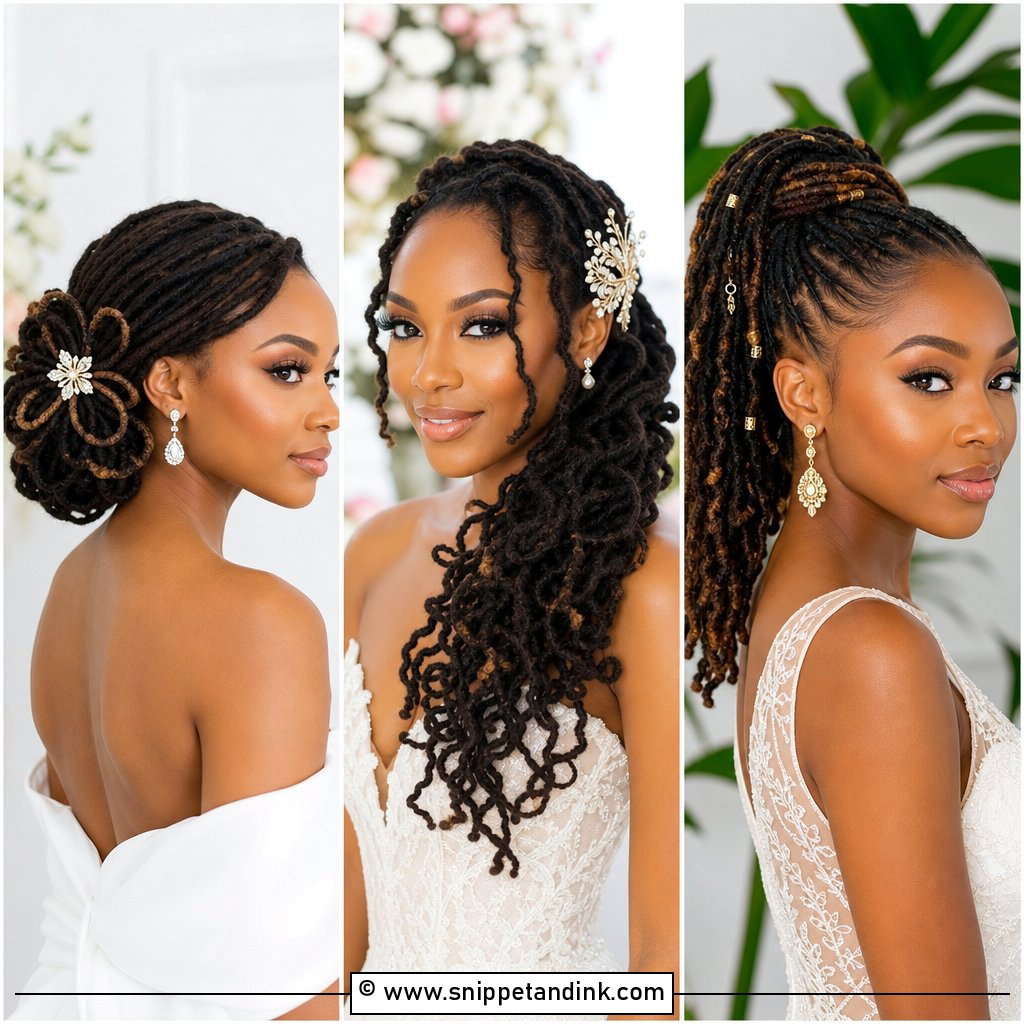
An updo keeps your face open and gives a veil, statement earrings or a detailed bodice plenty of room. I roll and pin the locs at the crown or the back of the head, using long U-shaped pins rather than standard bobby pins, which can’t close around a thick loc. The part I watch most is the hairline. Locs pulled tight toward the crown for ten hours can leave the edges sore by evening, so I keep the front relaxed and leave a few locs loose at the temples. Ask your loctician the same.
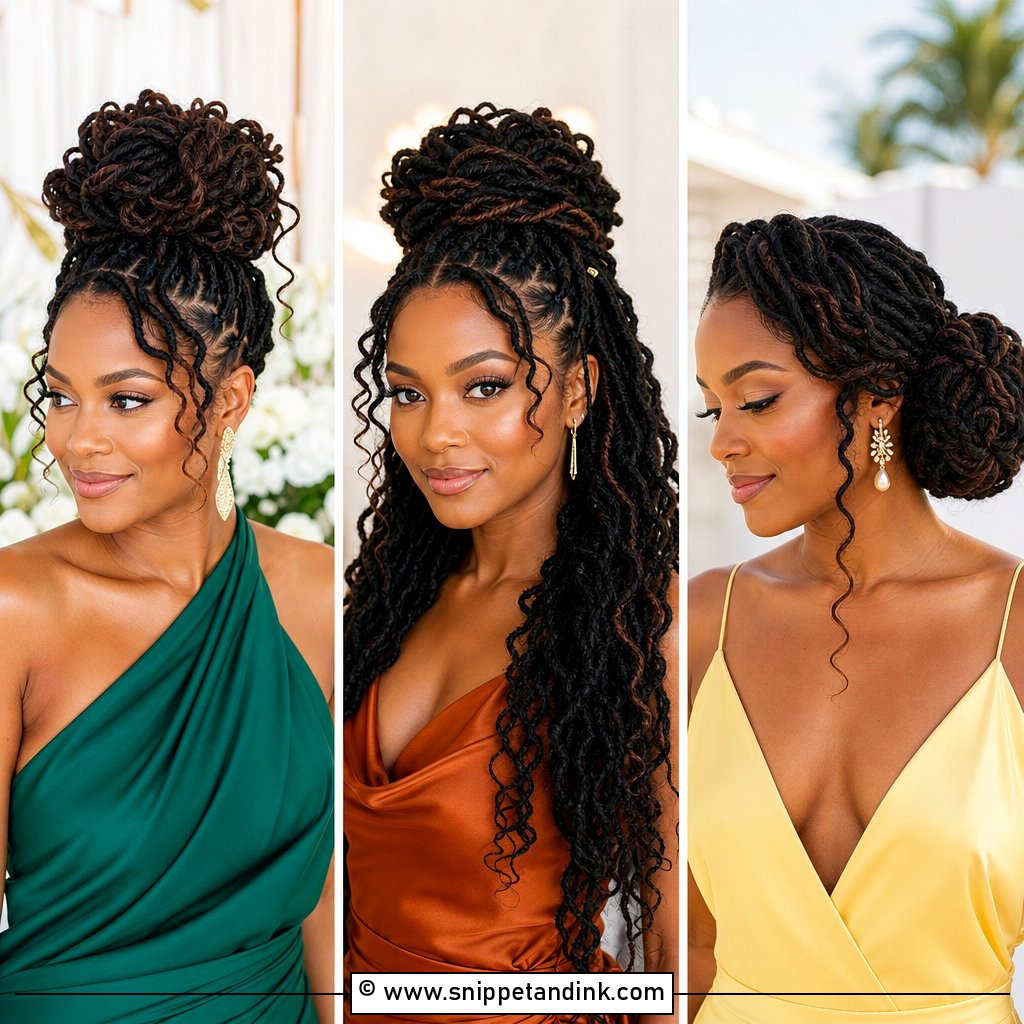
2. Half Up Half Down Wedding Locs
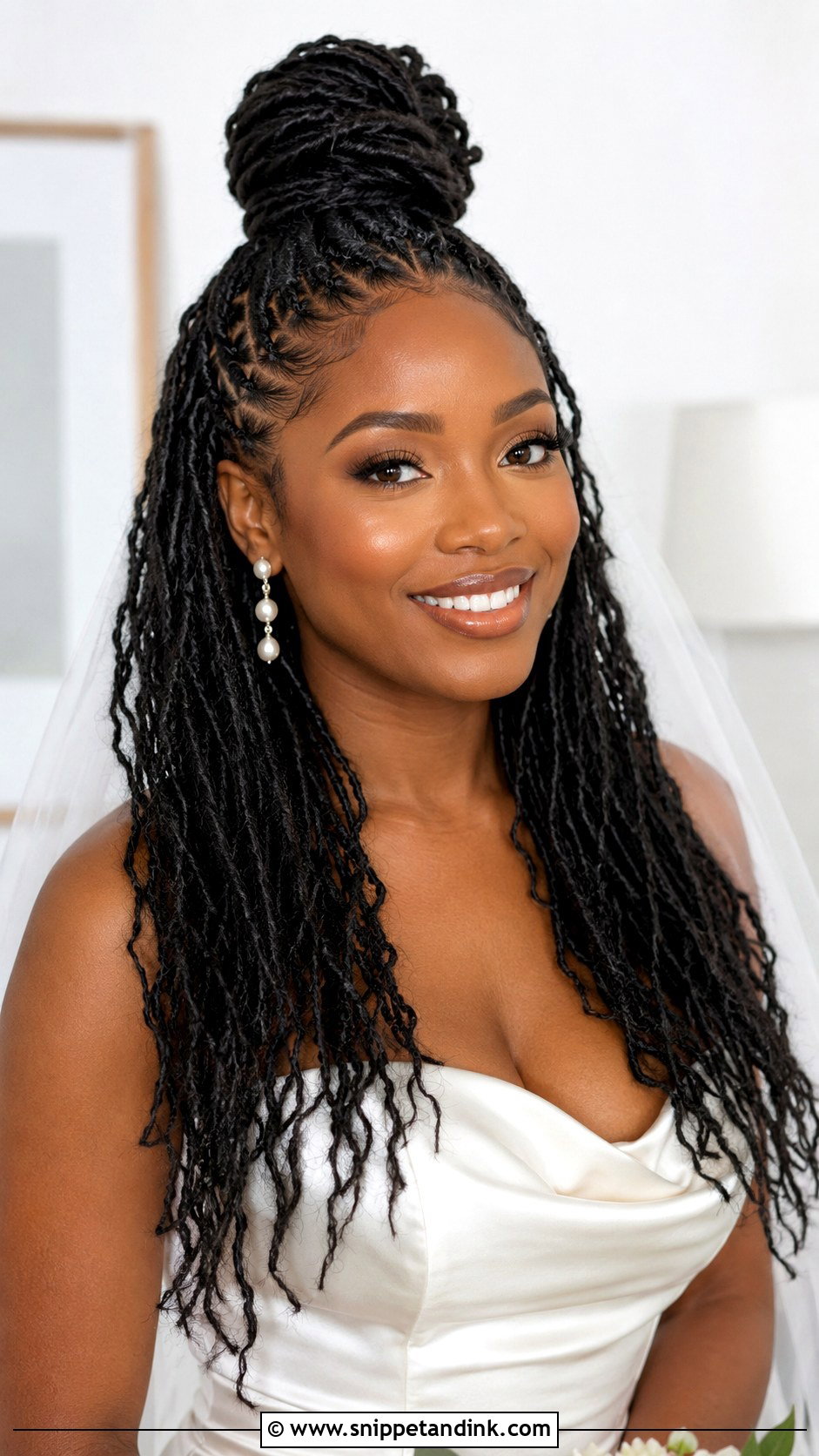
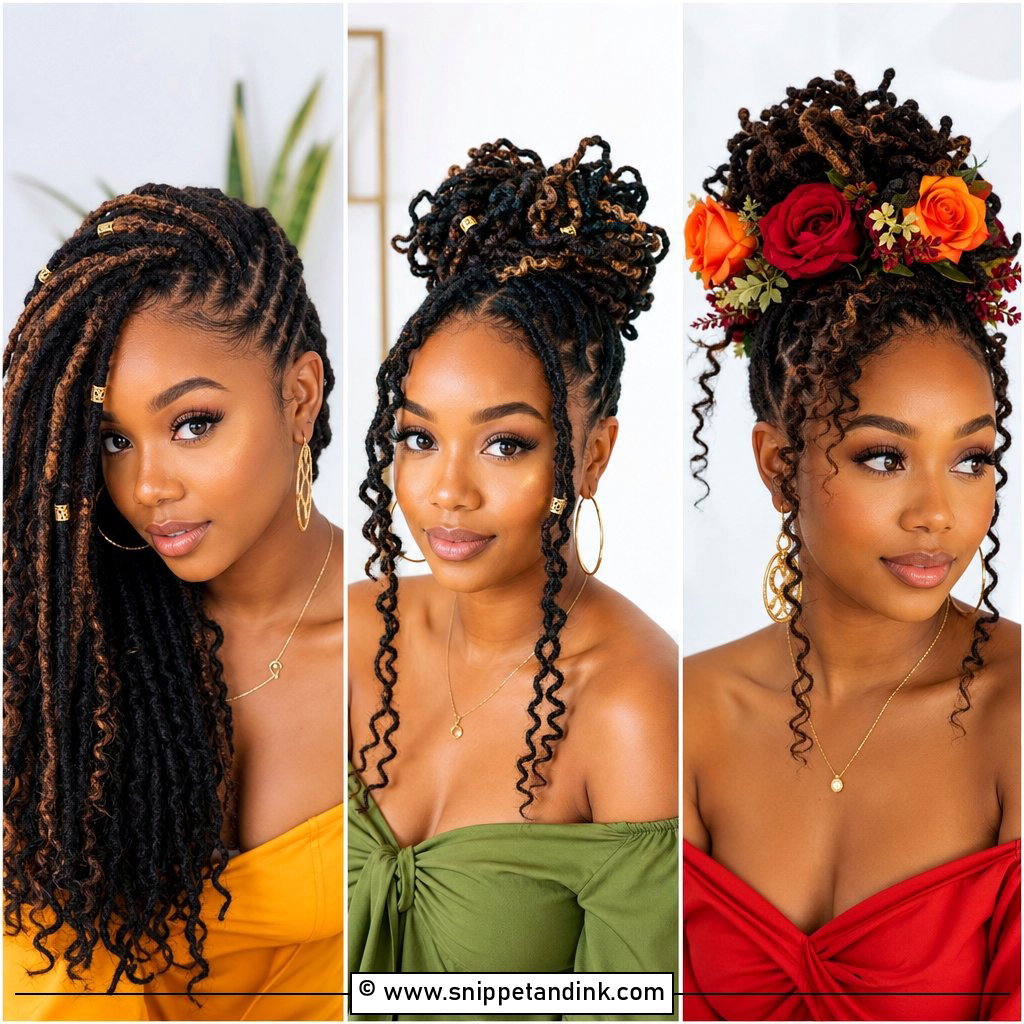
A half-up style shows off your length while keeping the front secure. I twist the top section into a mini bun or a braided crown and leave the rest loose over the shoulders. It’s a natural fit for garden and beach ceremonies, where moving locs read well in photos. Gold cuffs and small floral pins slide easily onto loose locs. Keep the top neat; once the lower locs are free, they’ll do the softening for you.
3. Loc Bun Wedding Hairstyle
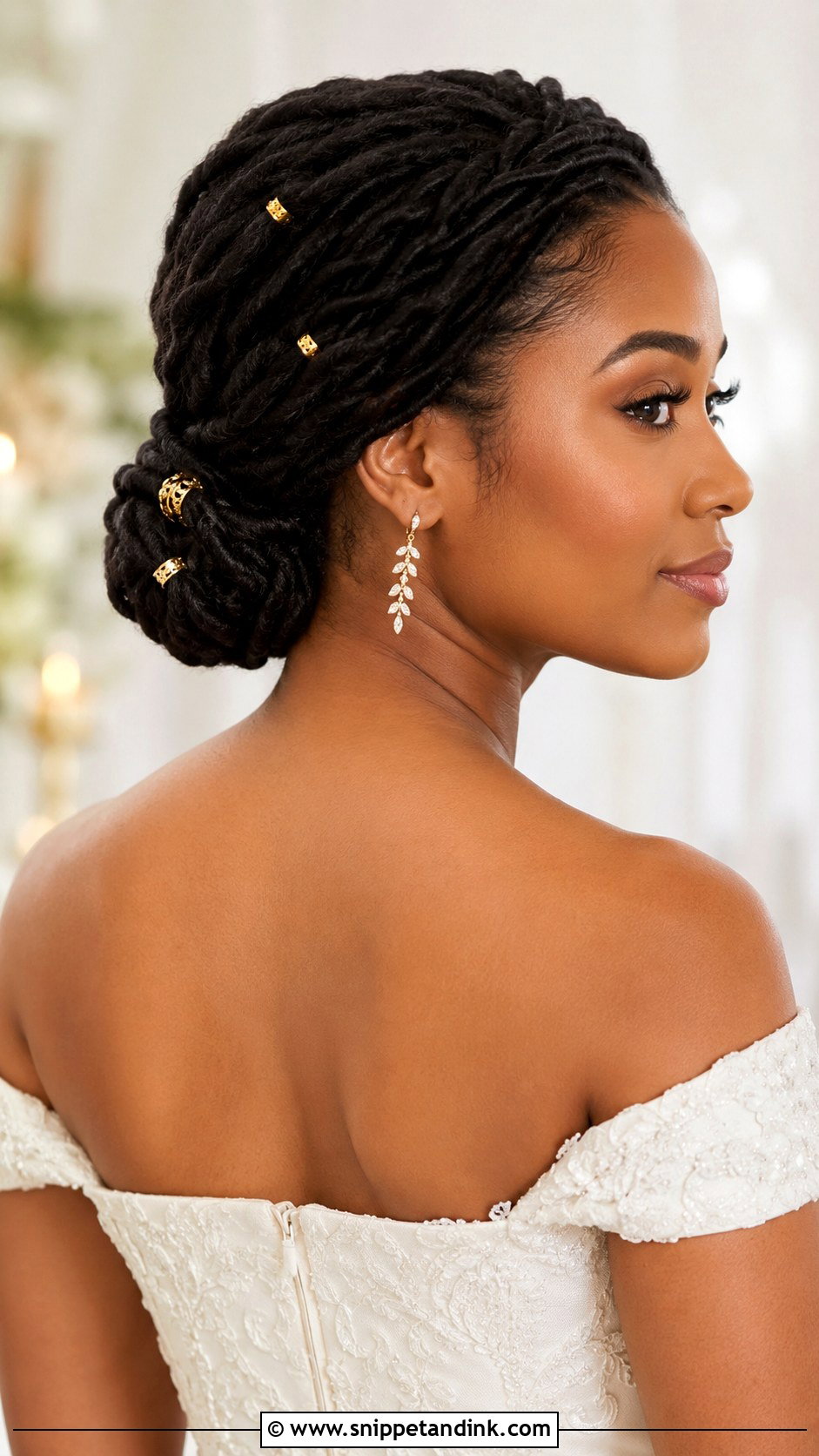
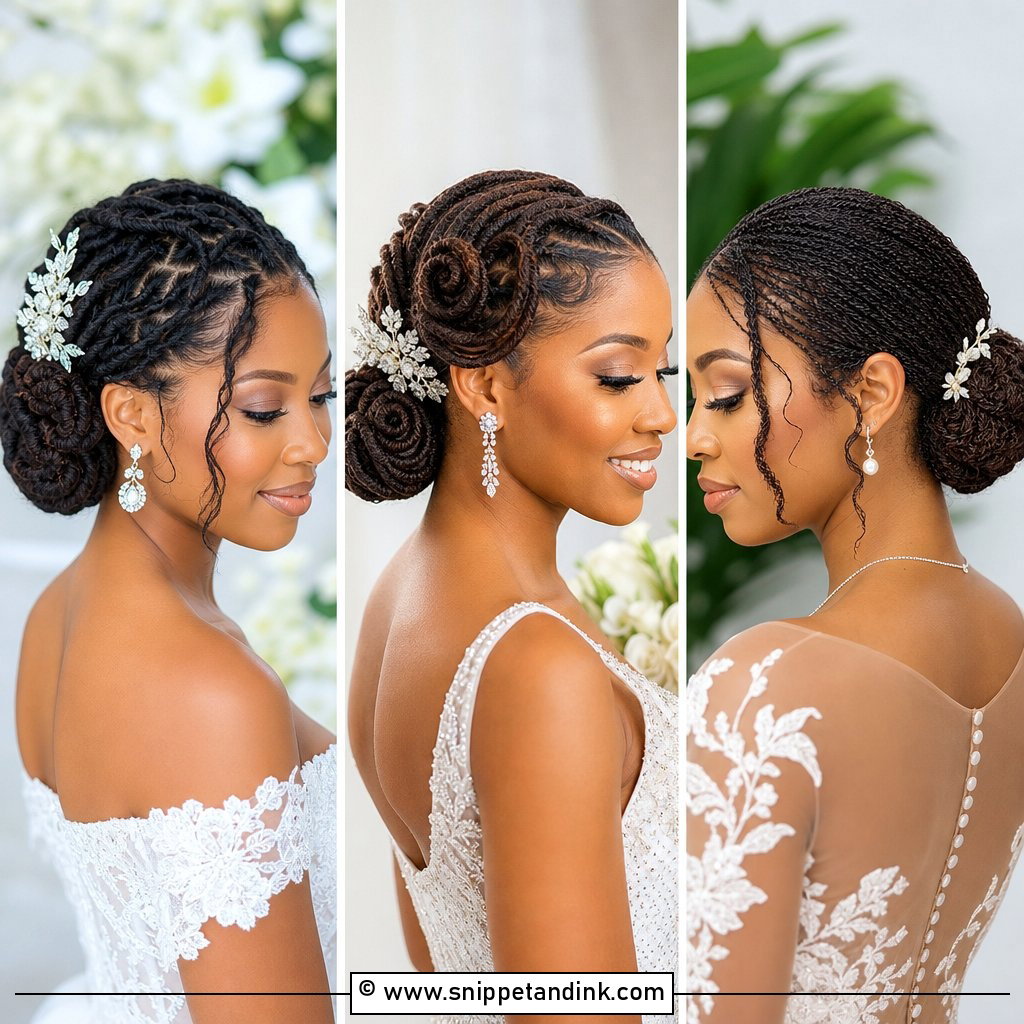
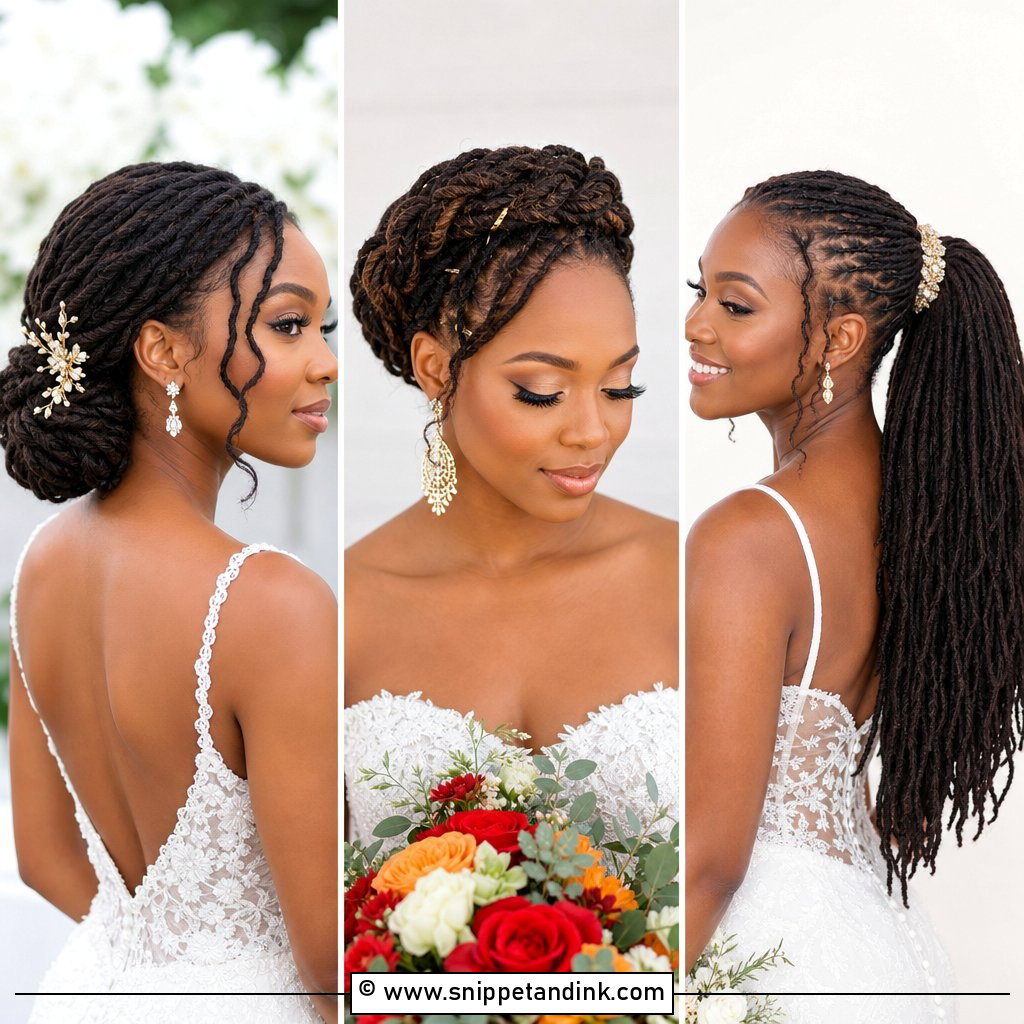
A loc bun wedding hairstyle is the most practical shape here, because nothing moves through hugs, dancing and long photo sessions. Thick locs build a bold, sculpted bun, while thinner locs wrap into a smoother round one. Height is a personal call: low at the nape is classic, high on the crown is dramatic. With very long or heavy locs, I split the bun into two stacked sections so the weight isn’t hanging from one anchor point. A delicate comb or gold wire adds detail without bulk.
4. Goddess Locs Wedding Hairstyle
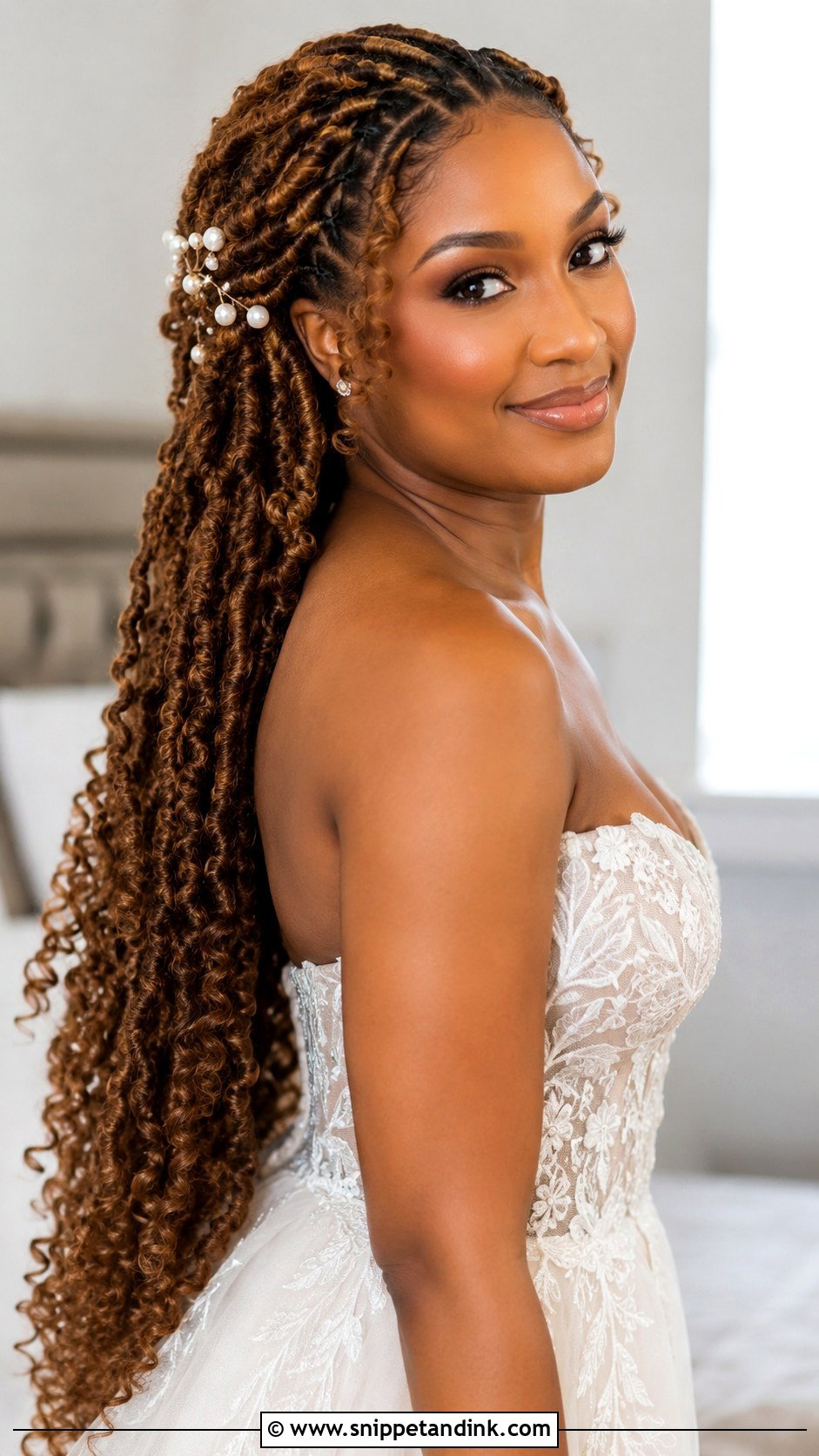
Goddess locs have curly or wavy loose ends, which give them a bohemian charm other locs don’t have. The ends are the fragile part. They frizz and lose definition with handling, so I refresh them with a light mousse or a water-based curl cream on the morning of the wedding and keep fingers out of them after that. Worn down or swept to one side, they suit lace and flowing gowns. A few tiny hair jewels are plenty; heavy pieces drag the curly ends straight.
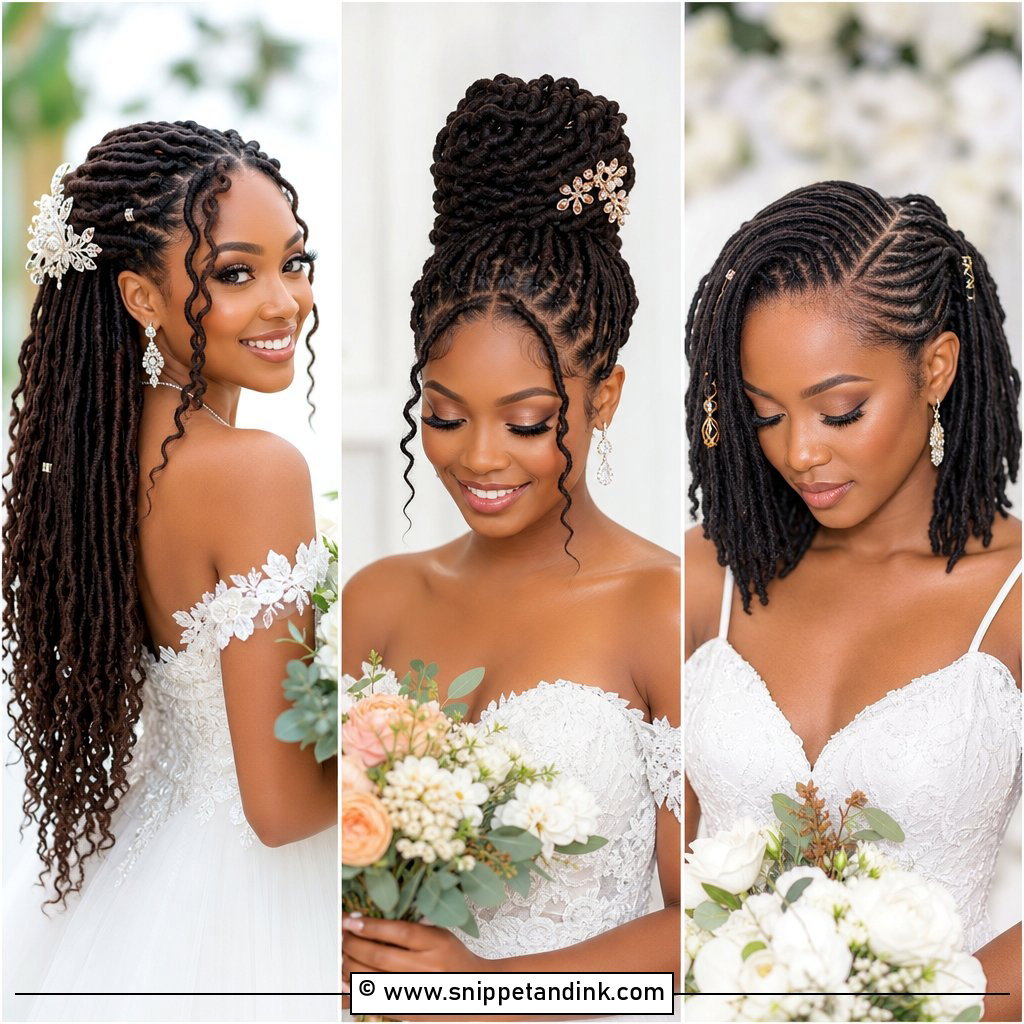
5. Locs With Veil
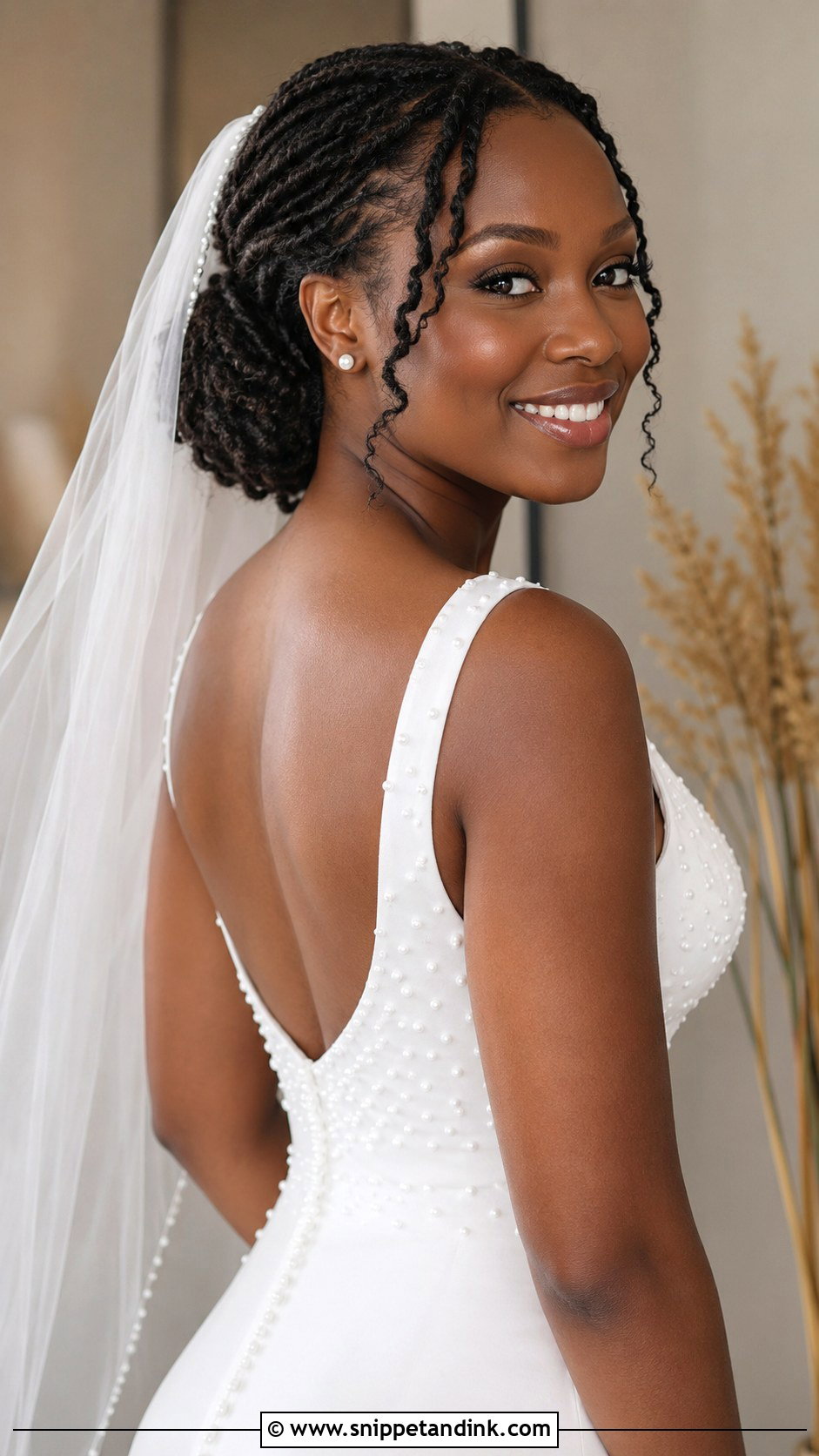
A veil has to be planned around loc volume, because locs sit fuller than loose hair and a standard veil comb can perch on top of them rather than grip. Tucked above a low bun or set beneath a high updo, the veil finds a firm base. On loose long locs, I pin a small hidden section first and anchor the comb into it, sometimes sewing it in with thread. If the veil is beaded or lace-edged, skip extra hair accessories. Test the real veil at your trial.
6. Wedding Locs With Flowers
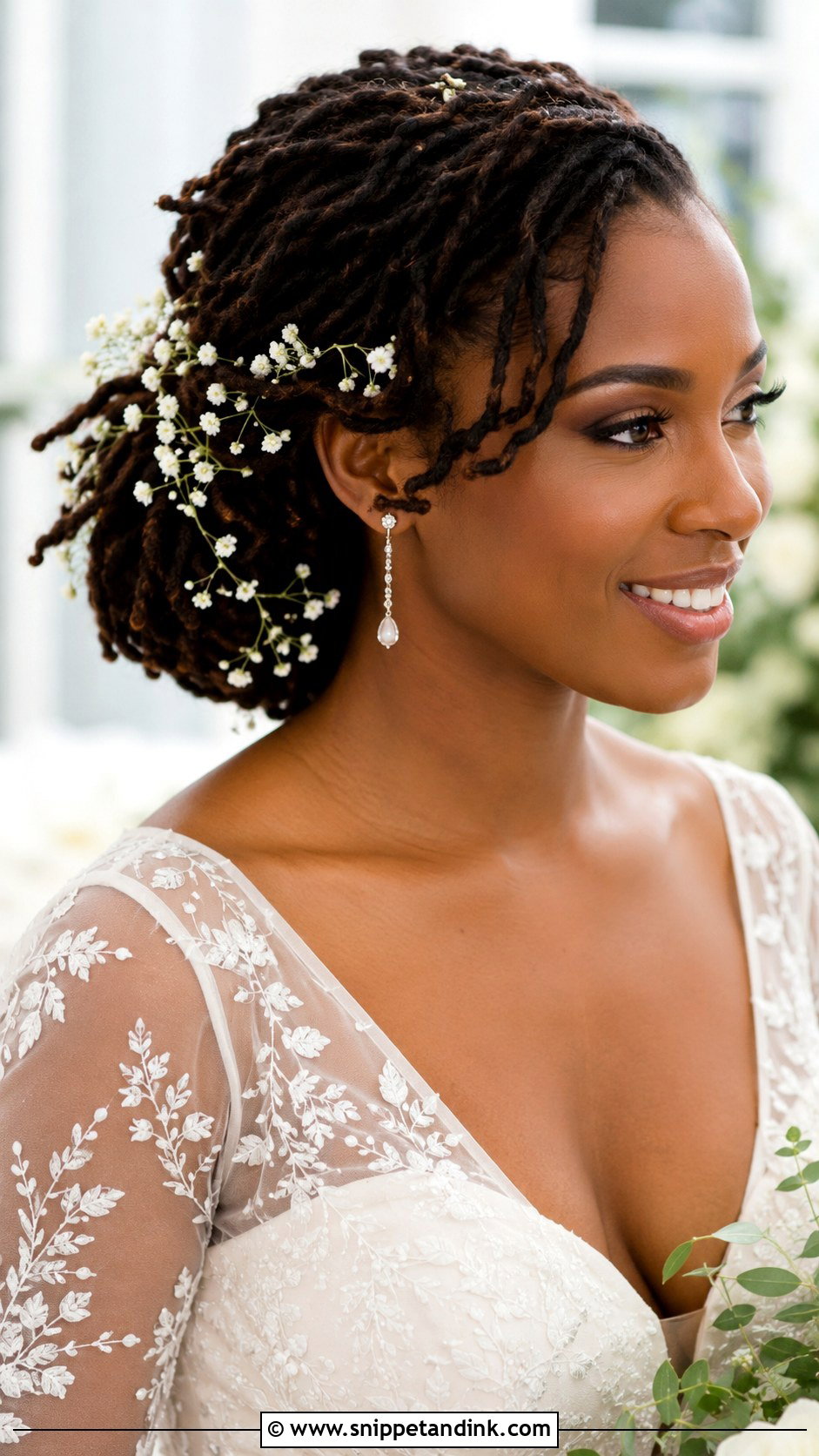
Fresh flowers sit well in locs because the texture holds stems without much effort. I tuck small blooms into a bun or scatter them through a crown braid, usually picking flowers from the bouquet so the colors tie together. Baby’s breath, small orchids and tiny roses wear well; large soft petals bruise quickly against the hair. Secure everything with pins or florist wire bent away from the locs, since a sharp wire end can snag and fray a loc. Preserved flowers are a good choice for a long, hot day.
7. Side Swept Wedding Locs
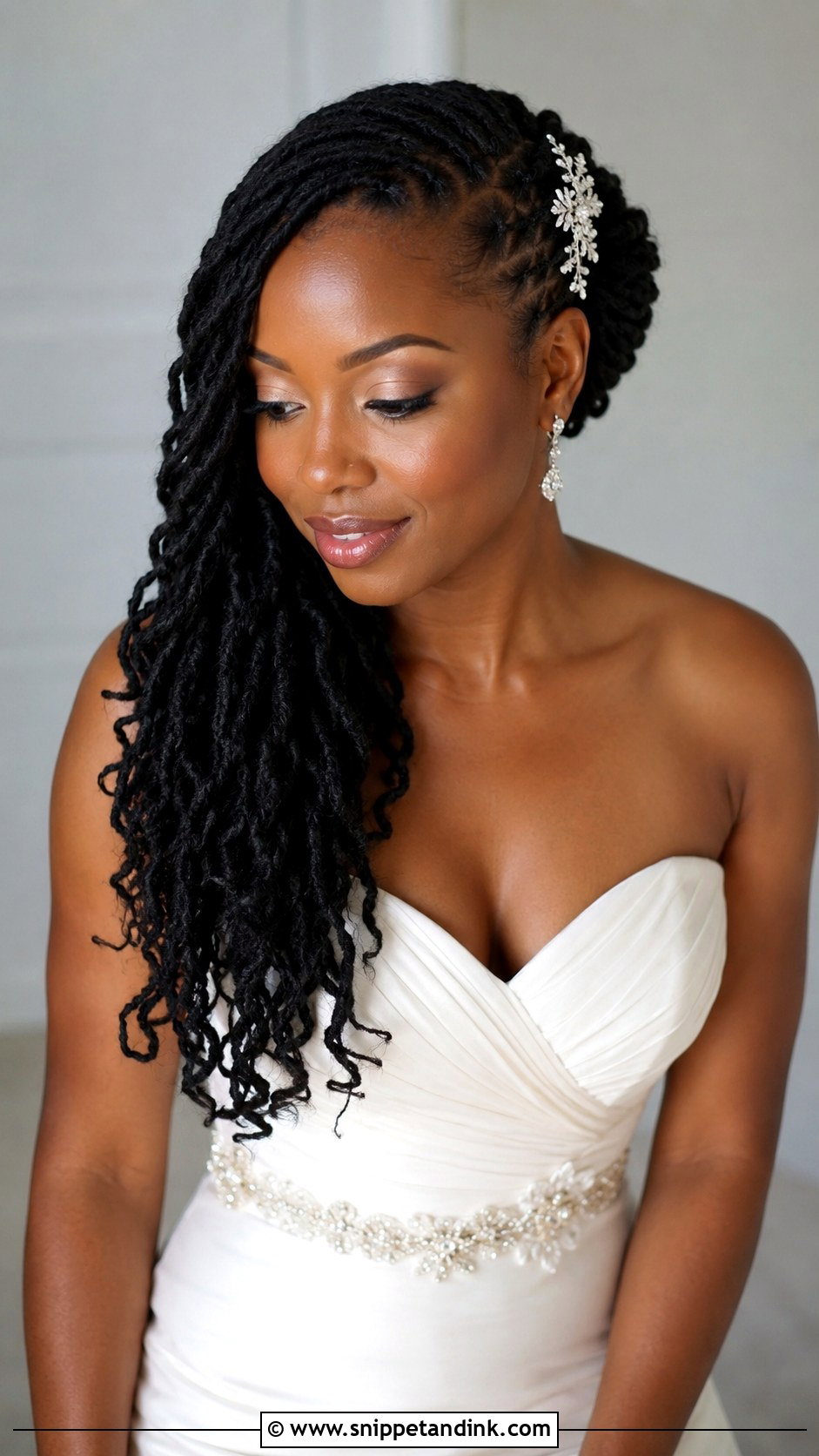
Sweeping locs over one shoulder shows off the neckline, earrings and collarbone. I gather them to one side and pin or braid a firm track behind the opposite ear, which holds the weight. Long locs, goddess locs and faux locs all work; very short locs won’t reach the shoulder and tend to spring back. One-shoulder and strapless gowns match this shape. A jeweled clip covers the pinned side nicely.
8. Loc Petal Bun
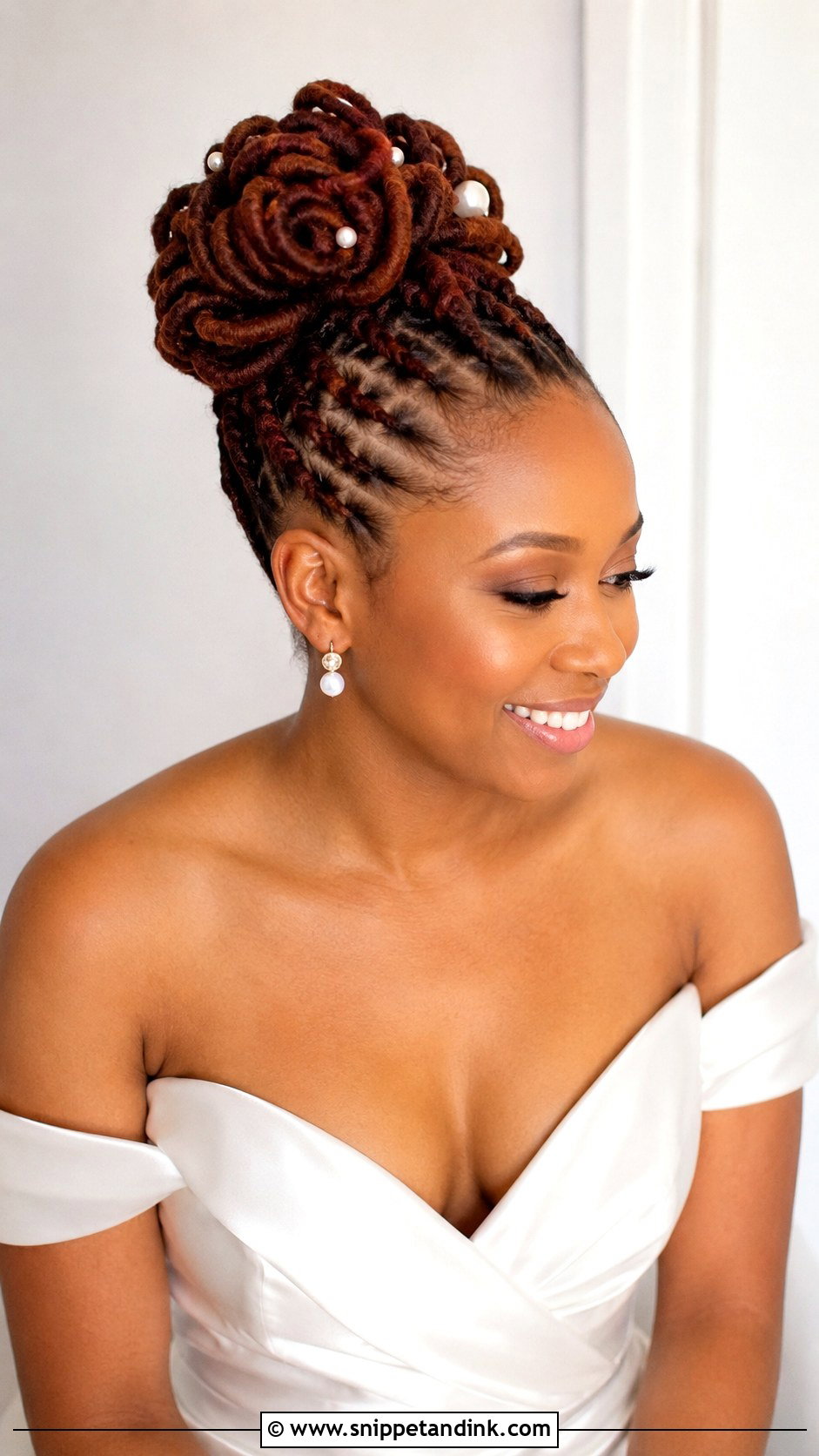
A loc petal bun is the closest thing to sculpture on this list. Each loc is looped and pinned into a petal shape, then the petals are arranged into a bun at the crown, back or side. It needs medium to long locs to form full loops, and it takes time, so book a longer appointment. Because every loop has its own pins, it’s also secure. The petals carry the detail, so keep accessories minimal.
9. Loc Crown Braid Wedding Hairstyle
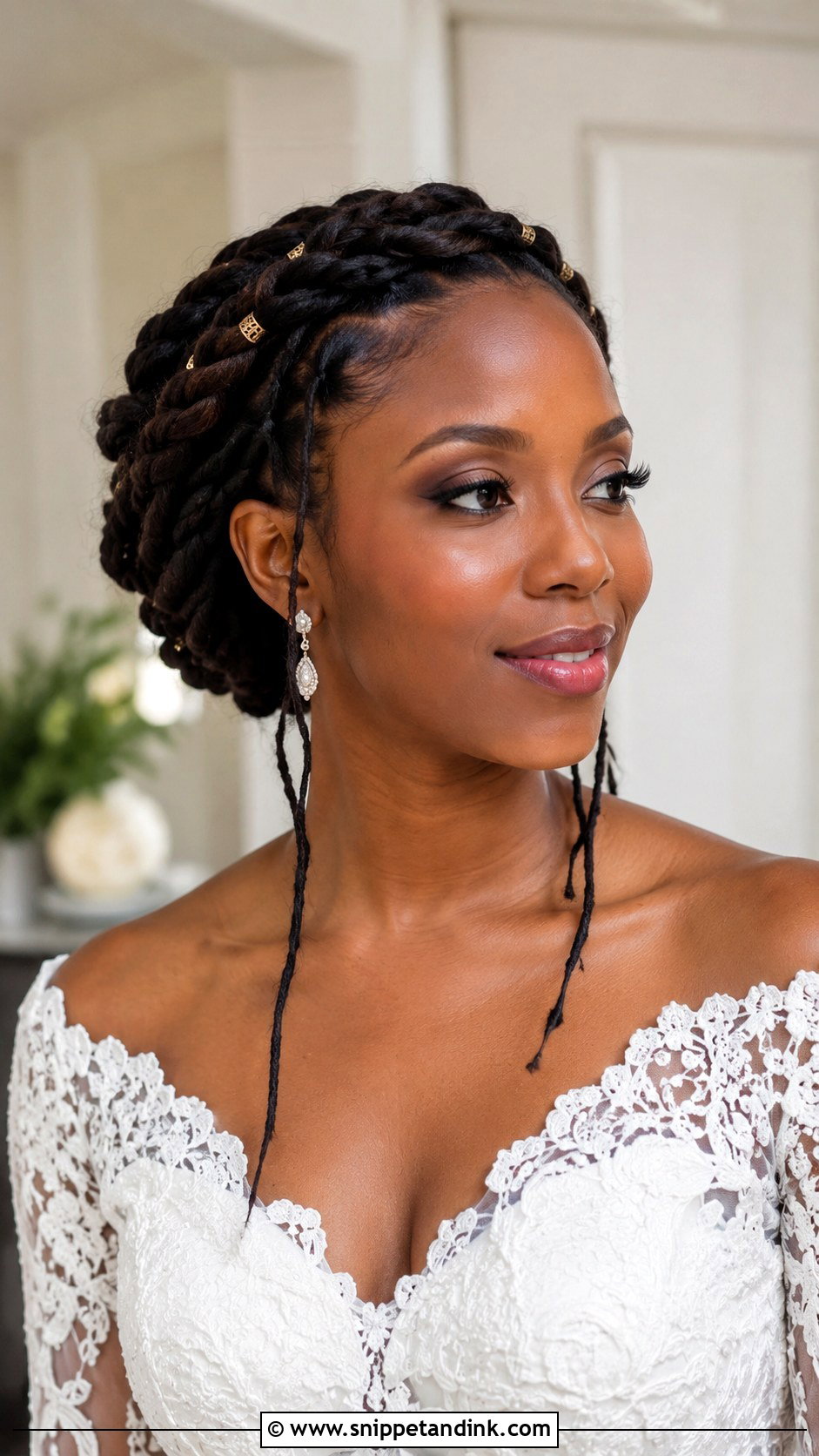
A crown braid wraps the locs around the head in a halo and keeps the face open from every side. I usually braid two sections and cross them over the top rather than wrapping one long braid, which spreads the weight more evenly. It holds very well under a veil placed at the back. Pearl pins and gold cuffs sit easily in the braid’s gaps. Bridesmaids can wear a smaller version, since it reads formal with very few extras.
10. Curled Locs Wedding Hairstyle
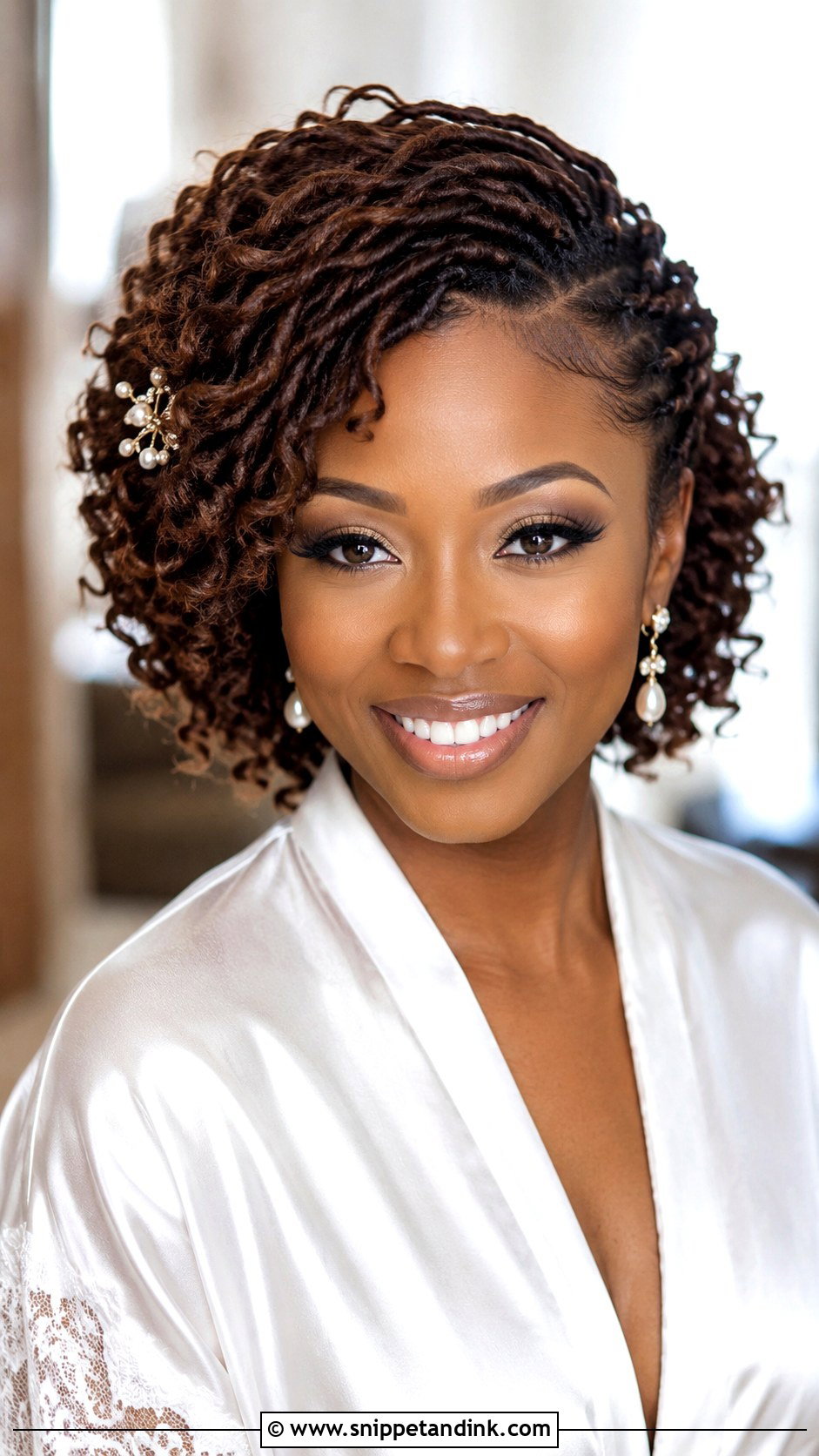
Curled locs are set with rods, flexi rods, rollers or pipe cleaners, usually on damp locs. The real issue is drying time: locs hold water far longer than loose hair, and a full head can take many hours, sometimes overnight, under a hooded dryer. Locs that stay damp inside can start to smell, so never set them the morning of the wedding. I schedule this a day or two before. Once dry, a light shine mist and gentle separation finish it.
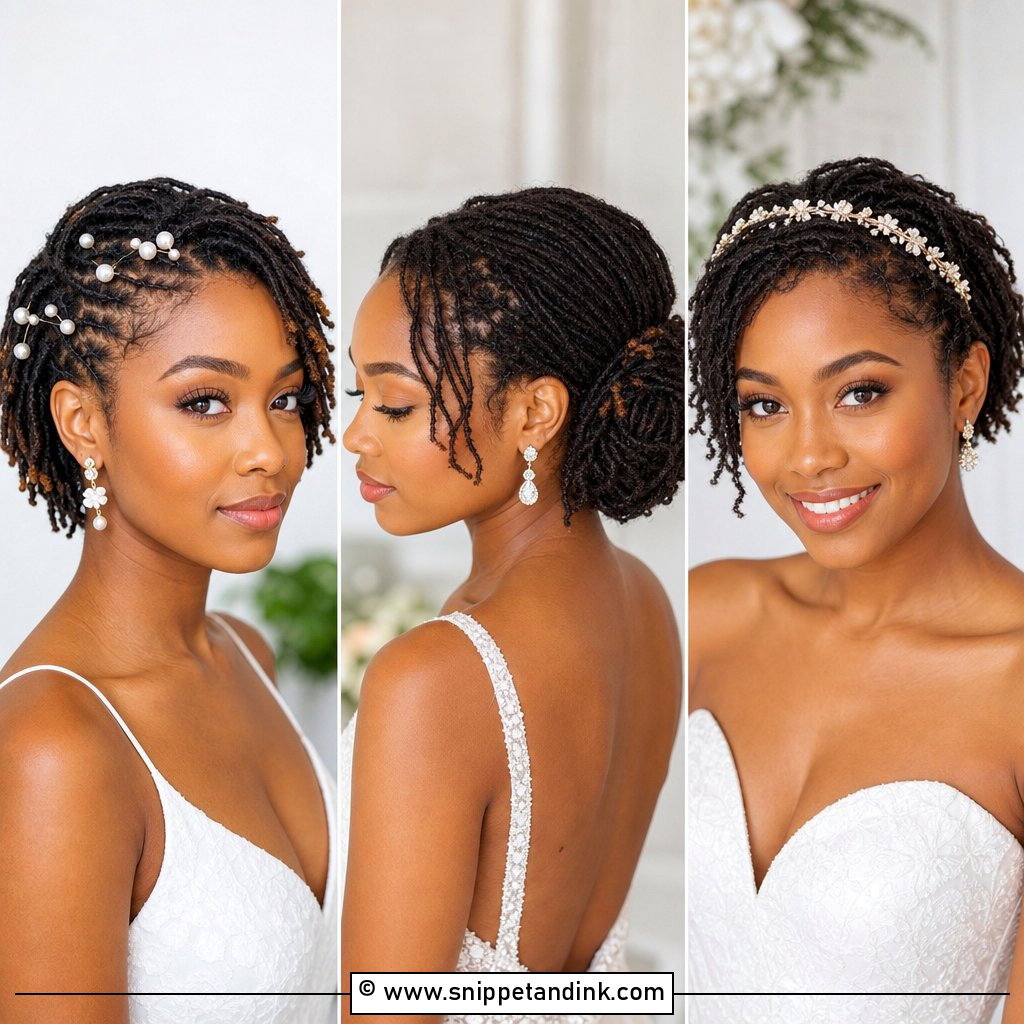
11. Short Locs Wedding Hairstyle
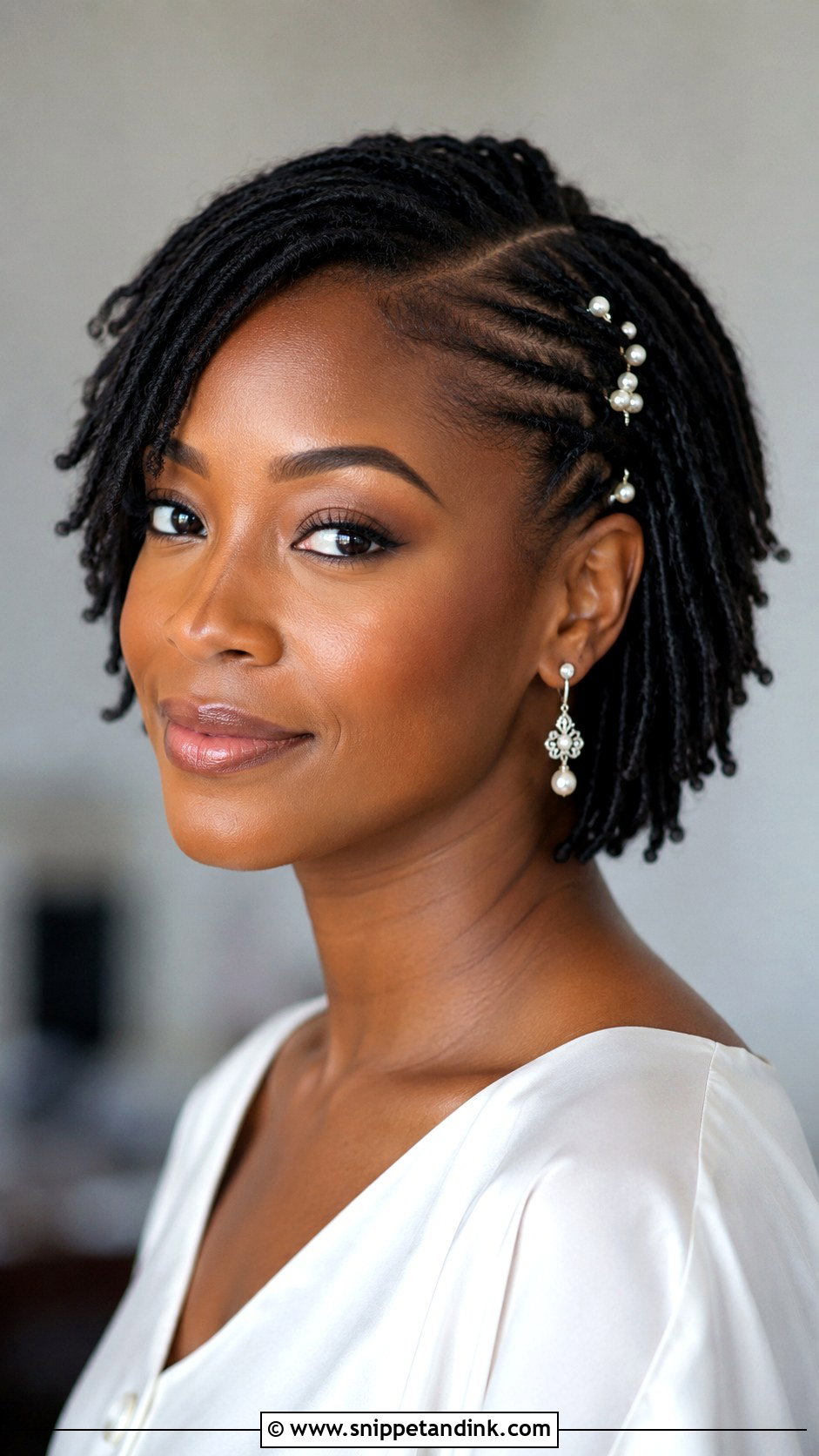
Short locs can look completely bridal without forcing length. If they won’t reach a full bun, I focus on shaping: a defined side part, a few mini twists or pinned sections, and a single accessory near the face. Pearl pins, a slim headband or tiny flowers can instantly lift the style. It’s also comfortable, with no weight pulling at the scalp. The aim is to make the shape you have look deliberate, not to imitate a long style.
12. Long Locs Wedding Hairstyle
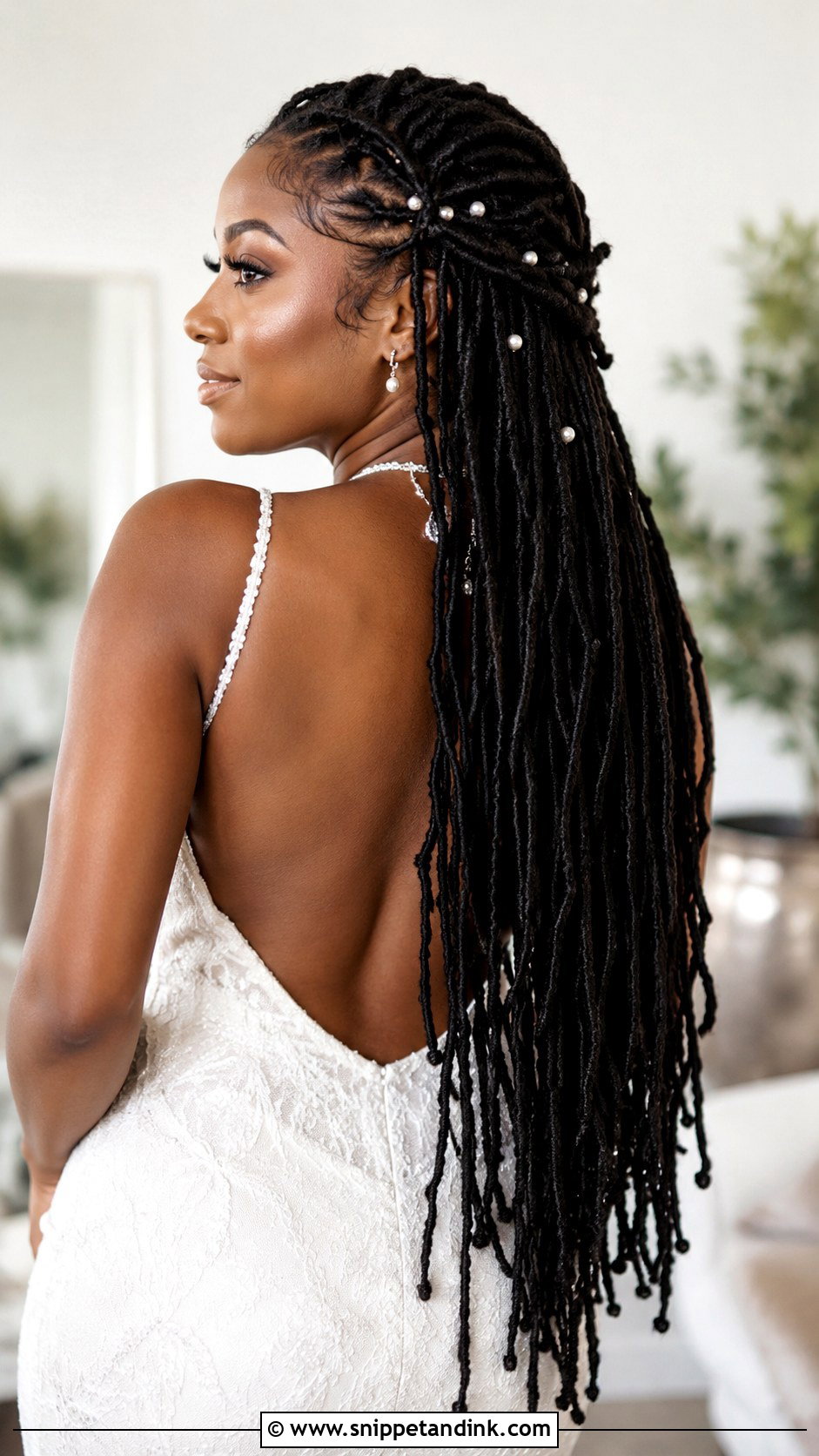
Long locs bring movement to every photo, and also weight. Worn loose, braided into a thick plait or gathered into a large updo, they can pull at the scalp over a long day. When locs are very heavy, I spread them across two or three anchor points instead of one bun, and I check comfort after an hour at the trial. Define the part and smooth the front without flattening the texture. Scattered pearls or a trailing veil sit nicely against the length.
13. Microlocs Wedding Hairstyle
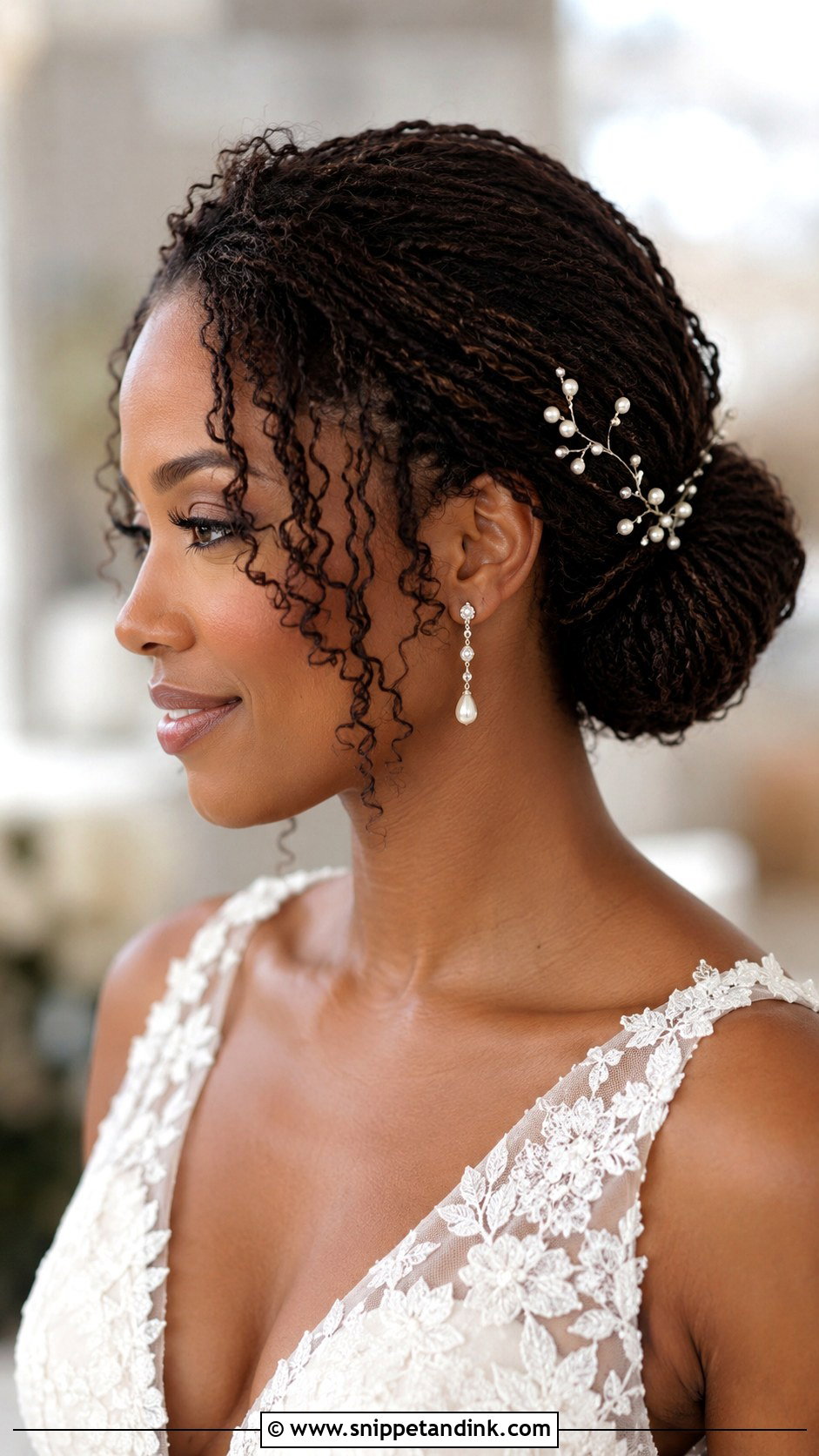
Microlocs wedding hair moves almost like loose strands, so it takes almost any shape, from a chignon or crown braid to a curled half up style. Because microlocs are so fine, I use thinner pins and slide them along the loc rather than through it, which avoids splitting the small locs. A low bun with face-framing curls reads classic. Keep accessories light; oversized pieces hide all the detail that makes microlocs special.
14. Sisterlocks Wedding Hairstyle
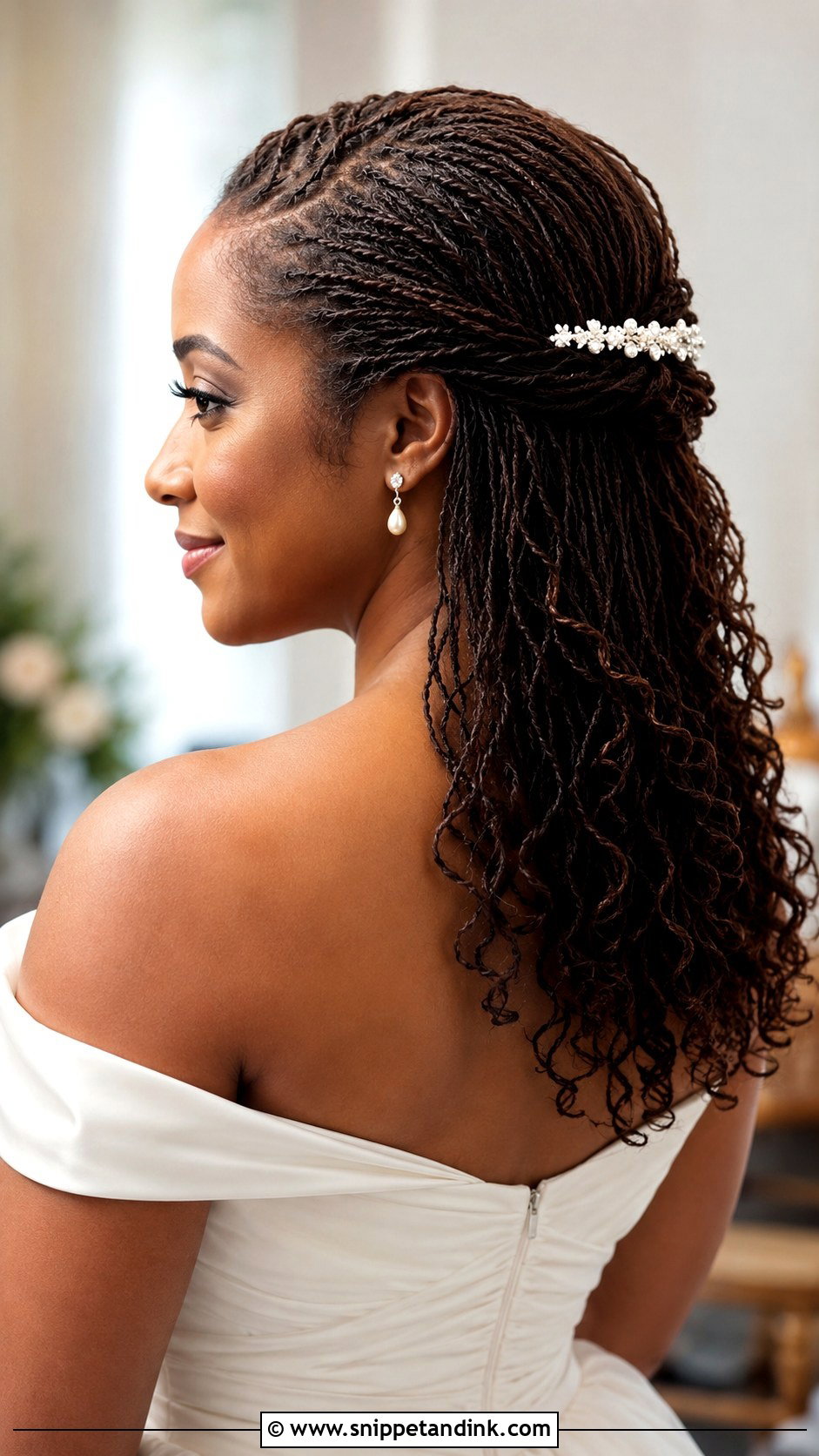
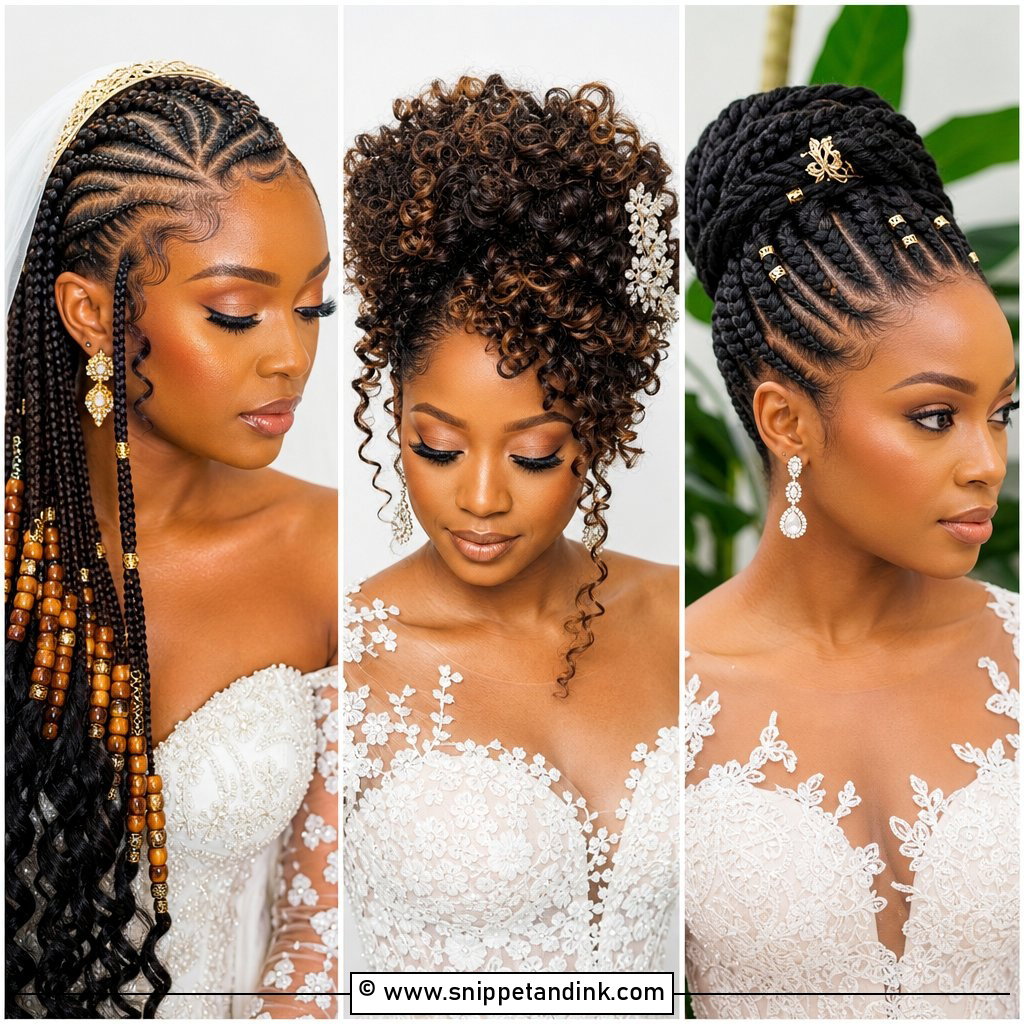
Sisterlocks are fine and flexible, and they hold curls exceptionally well. A low chignon, side bun or crown braid all work, and a curled bob shape is pretty on shorter lengths. For a refined look, I ask for a clean part and a smooth front, with volume through the back. One caution: avoid oily products right before the wedding, because buildup shows clearly in close-up photos of small locs. Lightweight pins or a slim headpiece sit well without weighing them down.
15. Faux Locs Wedding Hairstyle
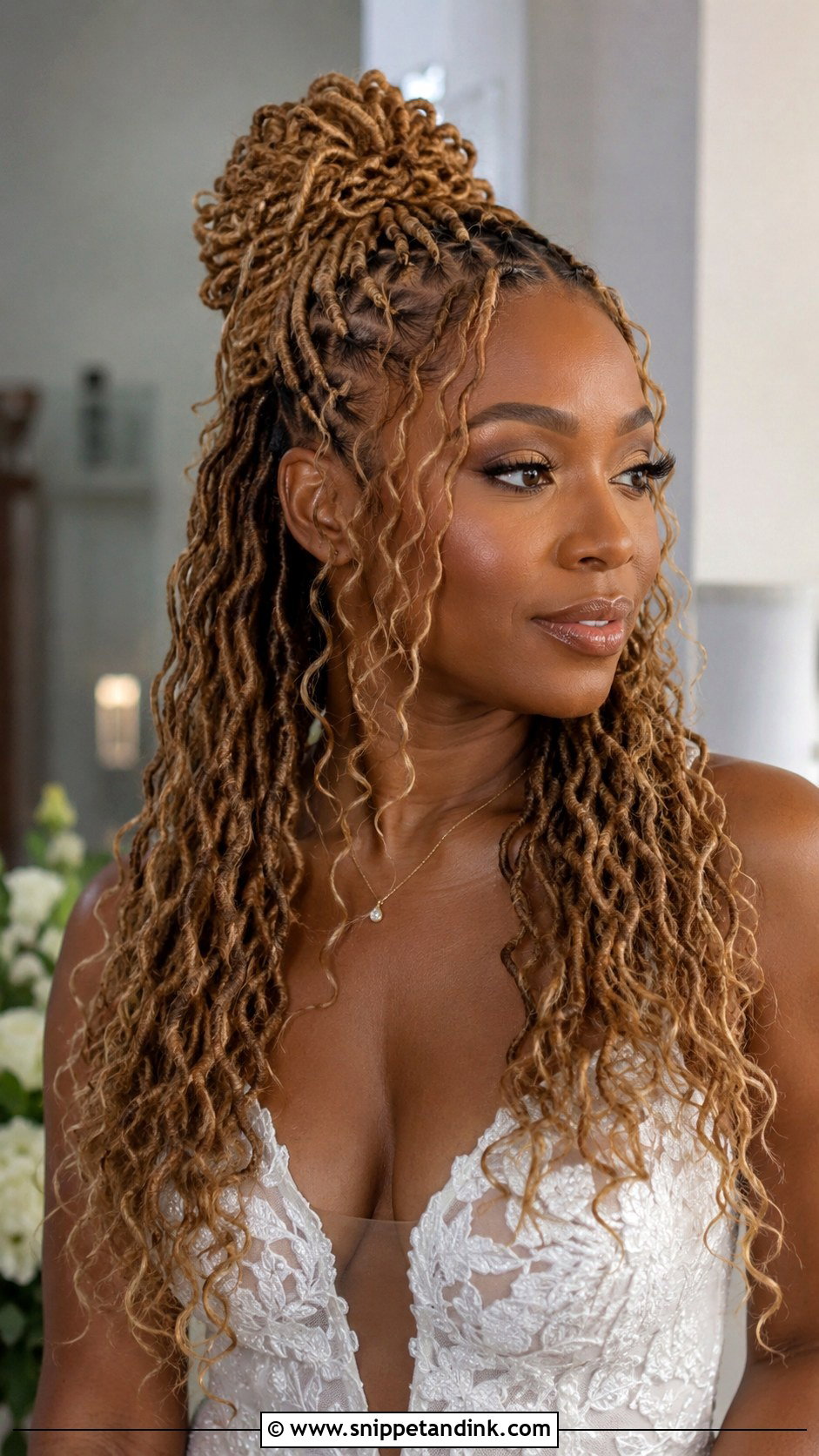
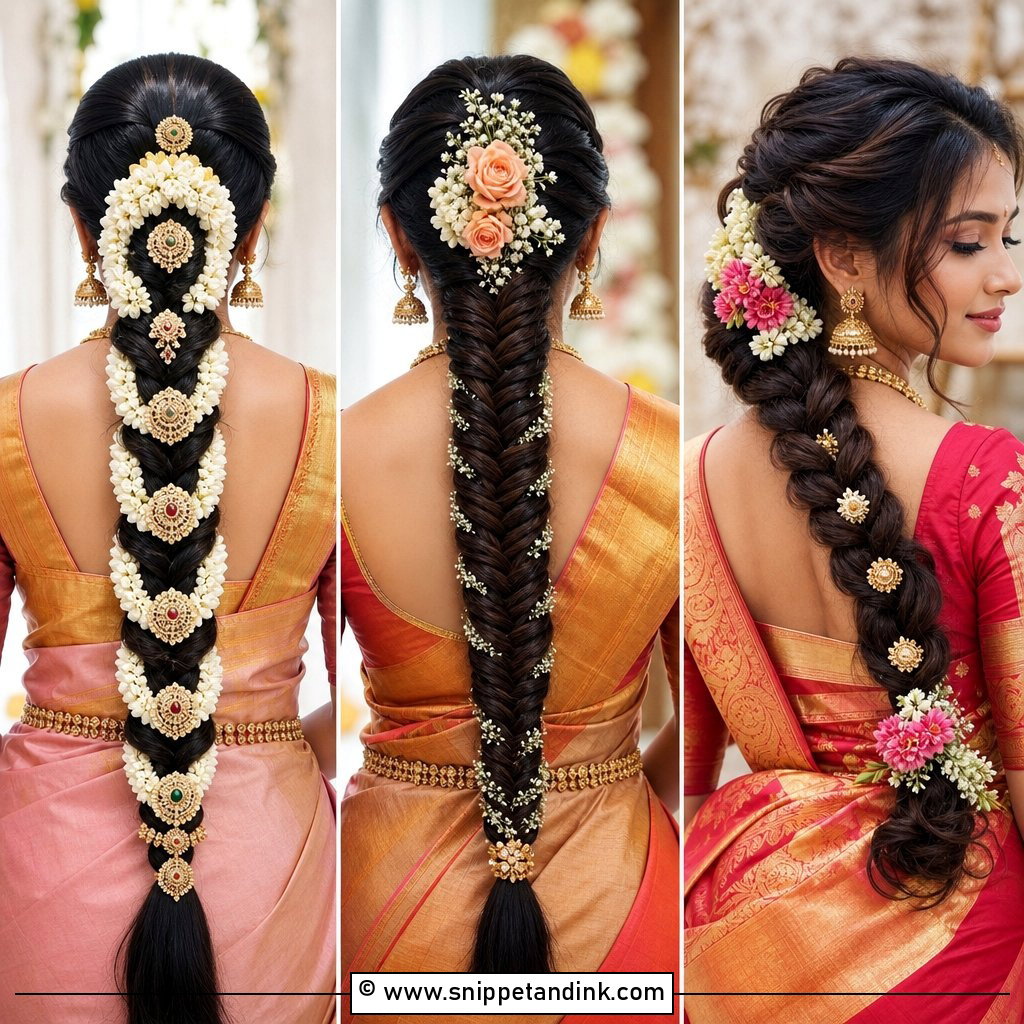
Faux locs wedding hair lets you wear locs for the celebration without a permanent commitment, and you control length, thickness and color. Soft brown, honey blonde, burgundy and dark brunette tones all work with the right dress. The install is where problems start: if it’s too tight at the hairline, you’ll feel it through the ceremony. I recommend installing about a week before, so any tightness eases and the locs settle and look less brand-new.
Protecting Your Edges Under Pins and a Veil
The hairline takes most of the stress in a bridal loc style. Locs are heavier than loose hair, and an updo pulls that weight toward the crown for hours. A style that feels fine in the mirror can ache by dinner.
- Speak up in the chair. Tightness, tingling or small bumps at the hairline mean the tension is too high, and it won’t settle with time.
- Ask for U-shaped pins or loc pins instead of rubber bands, which can grip and break locs when removed.
- Spread heavy locs across several anchor points so no single spot holds the whole weight.
- Pin the veil comb into a separate secured section rather than onto edge locs.
At the end of the night, take the style down slowly, removing pins in reverse order and loosening each loc by hand. Massage the scalp gently and skip tight styles for a few days afterward. If your edges are already fragile, a looser half-up or down style is the kinder choice for your wedding day, and it photographs just as well.
Let the Loc Texture Lead
Locs can go classic or bold, simple or highly detailed, which is why they adapt so well to bridal styling. Match the shape to your dress, venue and comfort: a high bun gives drama, a low bun reads classic, goddess locs feel romantic, and half up locs balance polish and movement. Plan a trial, especially with a veil, flowers or heavy pins, and pay attention to how your edges feel after an hour. The best bridal style celebrates your texture and still feels comfortable when you finally take it down.
You'll Like These Ideas:


Leave a Reply