
Long hair swept to one side keeps your length on show without hiding your face or the neckline of the dress. In my chair, side styles are usually the answer for brides who don’t want a full updo but know loose hair will be a mess by the speeches. The catch is weight: all that length sitting on one shoulder wants to slide back to the middle, so every look below depends on how well it’s anchored. I’ve noted where each one holds well, where it struggles, and what I’d change for fine, thick or very heavy hair.
Which Shoulder Should Carry Your Hair?
Most brides pick a side by instinct, and most of the time instinct is right, because it matches where the hair already wants to fall. Before the trial I still check four things, since moving hair to the wrong shoulder costs extra product and extra pins all day.
- Your natural part and crown. A cowlick or a swirl at the crown pushes hair one way. Fighting it means the part keeps splitting open by late afternoon.
- The ceremony layout. Work out which side of your face guests and the photographer will see during the vows, and put the volume where people are actually looking.
- The dress. A one-shoulder gown usually wants the hair on the bare side so the strap and the hair aren’t stacked on top of each other. An asymmetric neckline sets the direction for you.
- Your earrings and your partner’s height. If you’re wearing one statement earring, clear that ear. If your partner is much taller, think about which cheek ends up against their chest in the first dance photos.
When those point in different directions, I go with the part. Hair falling where it grows is the hair that stays there.
1. Side Swept Bridal Waves For Long Hair
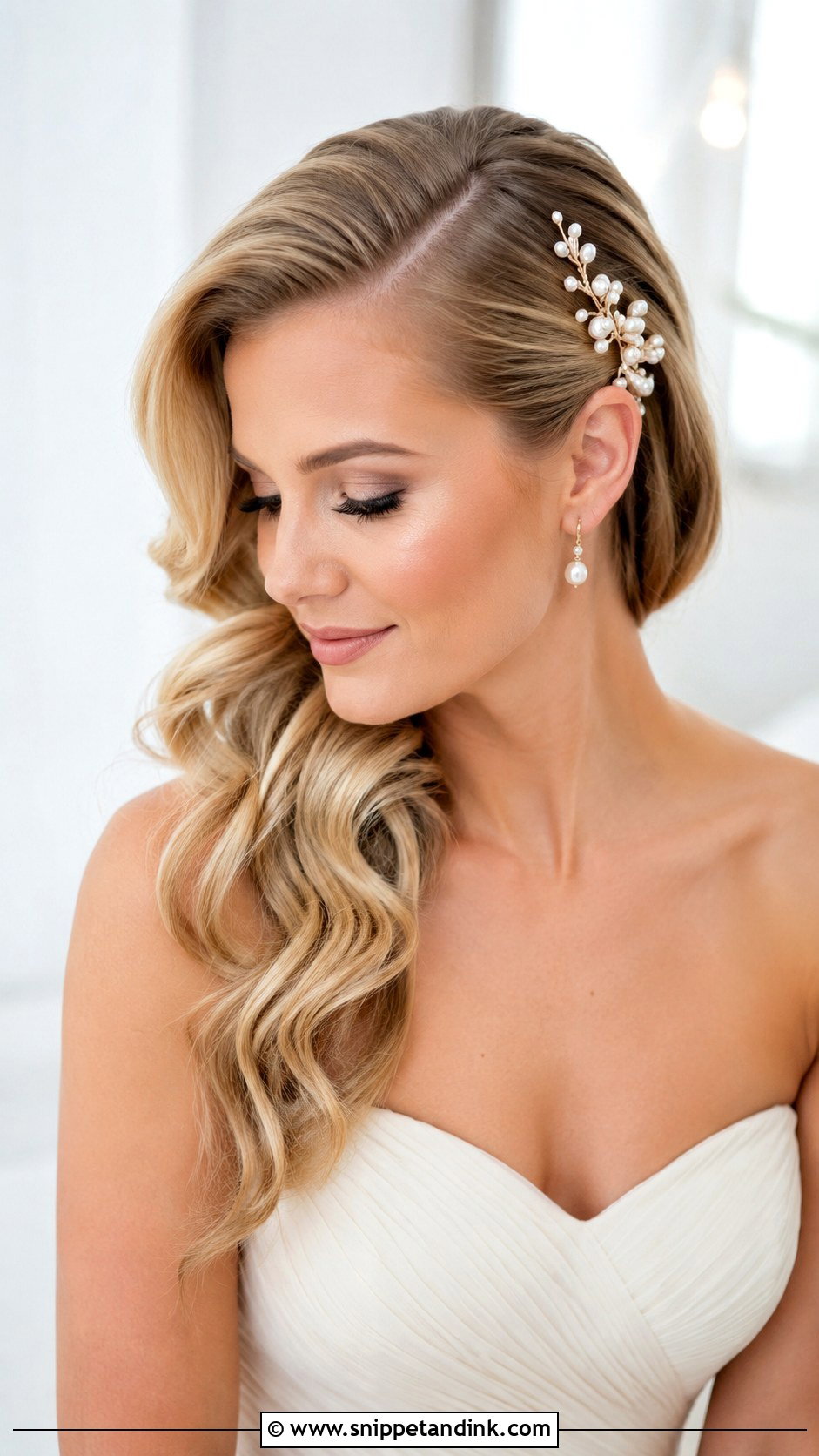
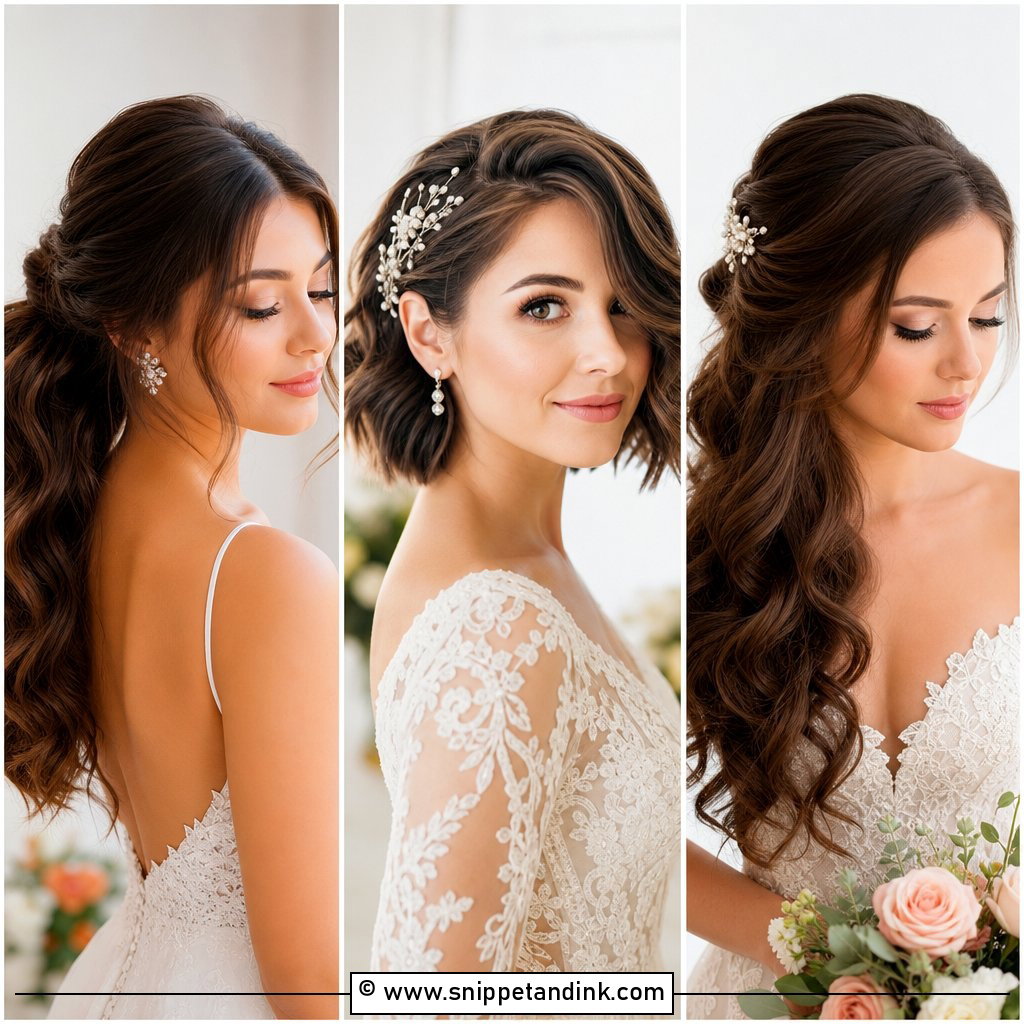
This is the side style I set most often, and the part does most of the work. I take a deep part on the side the hair naturally falls toward, curl in wide two-inch sections, let the curls cool fully, then brush them into one direction so they merge into waves. The hidden side gets a row of crossed bobby pins behind the ear; without them the waves creep back across the shoulder within an hour. It’s a strong partner for strapless gowns, sweetheart necklines and any earring you want seen, because one ear stays completely clear.
2. Side Bridal Hollywood Waves For Long Hair
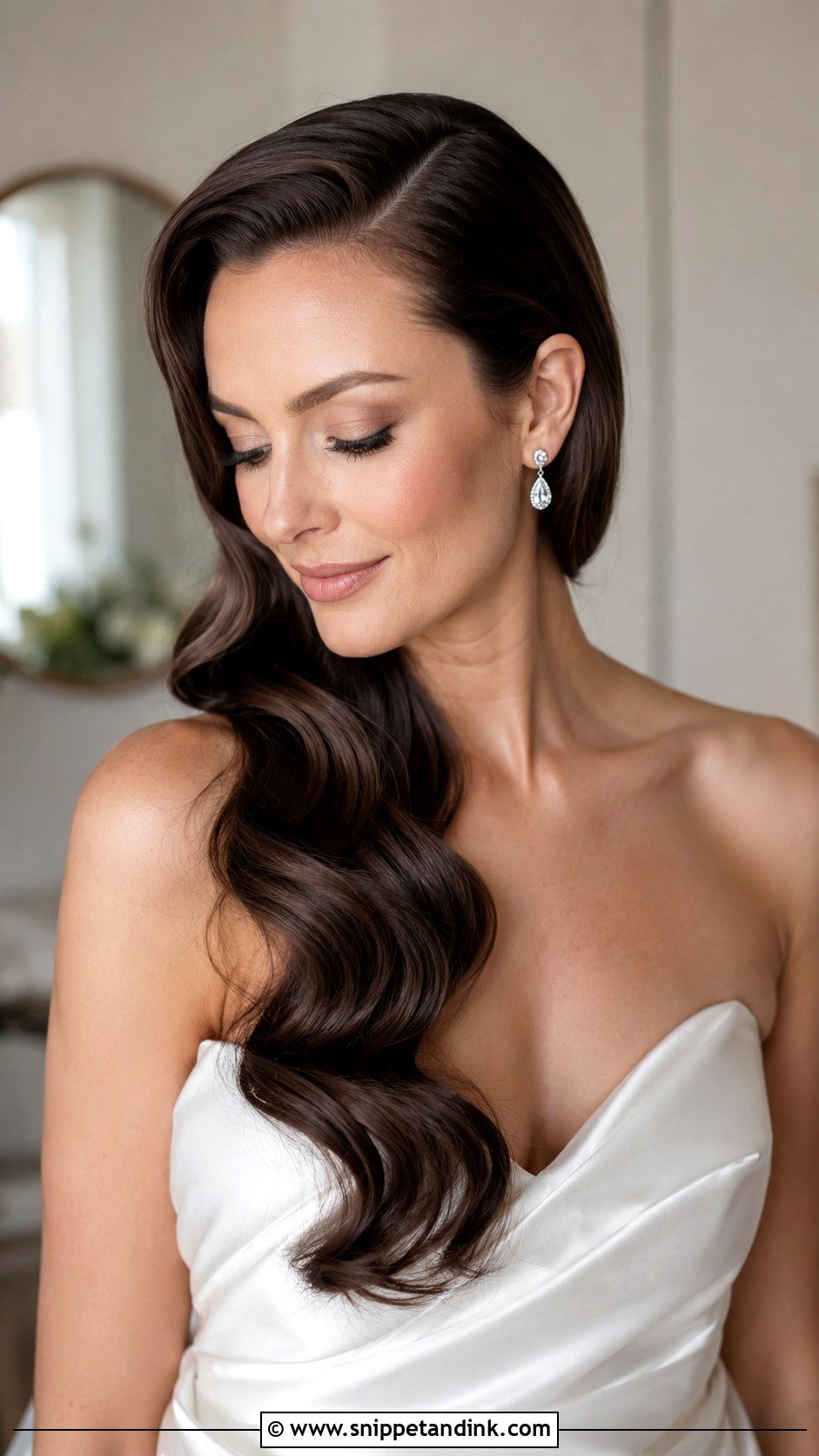
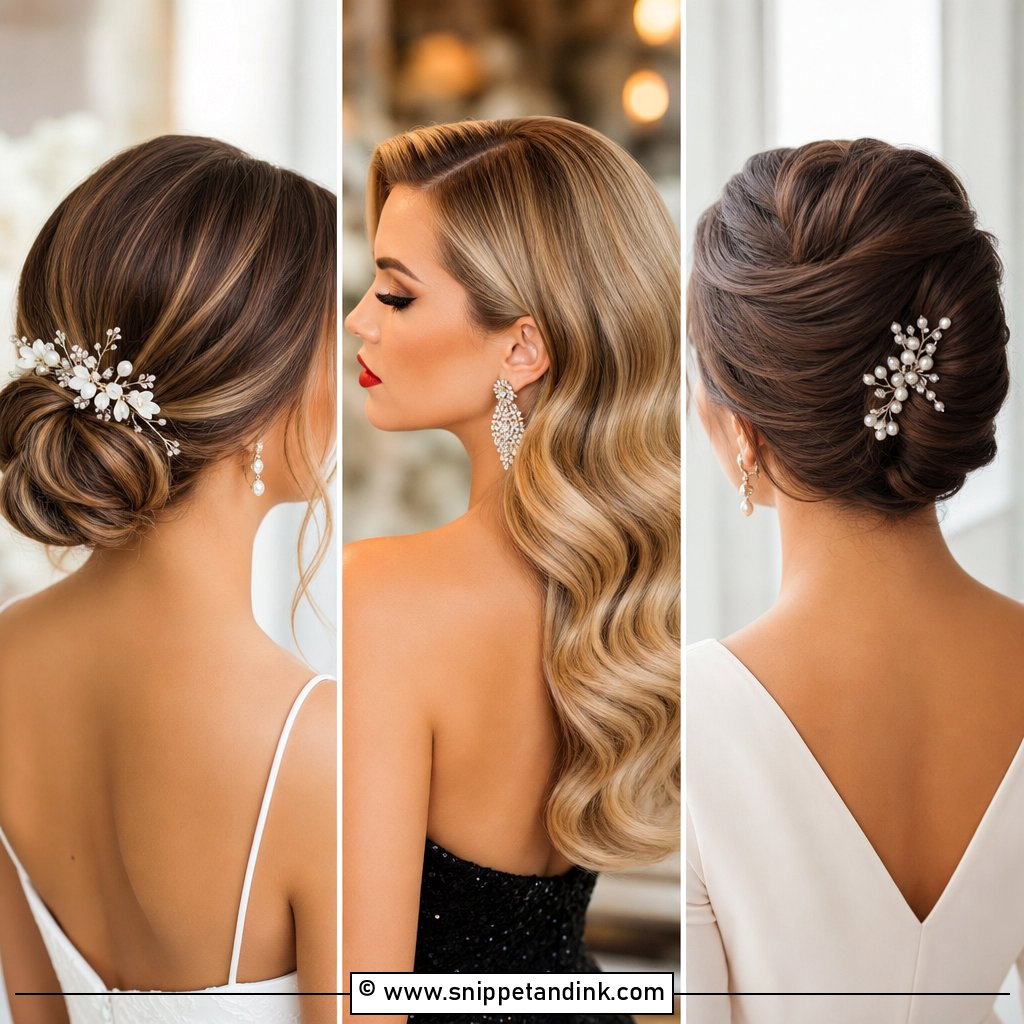
Hollywood waves are a set, not a curl. Every section is curled in the same direction, pinned in a coil while it cools, then brushed out with a boar bristle brush until the curls lock into one continuous S shape. That structure is why they look so glossy and why they’re unforgiving: one rogue section going the wrong way shows instantly. I keep accessories minimal with this one and save it for satin or fitted gowns, where the clean line of the hair matches the dress. Fine hair needs a light setting spray on each section before heat, or the waves flatten long before dinner.
3. Side Bridal Curls For Long Hair
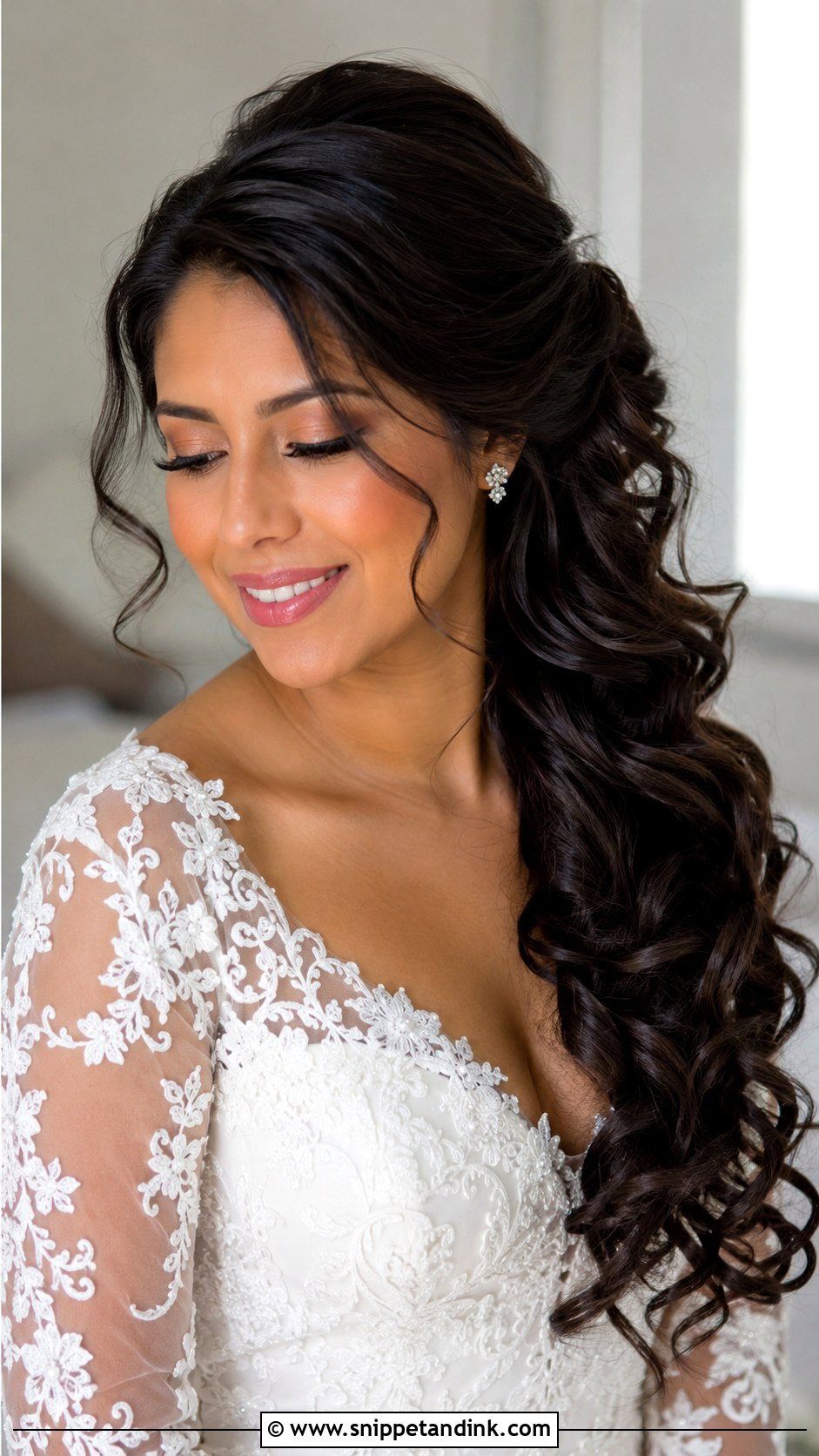
Where Hollywood waves are brushed into one surface, these curls are left separate and airy, curled from mid-lengths down and gathered loosely over one shoulder. That looseness is also their weak point. On heavy hair I curl the underneath layer with a smaller barrel than the top, because the lower curls carry the weight of everything above and drop first. A couple of face-framing pieces soften the forehead, but I cut them back to two or three, since more than that starts sticking to lip gloss by the first dance.
4. Side Bridal Ponytail For Long Hair
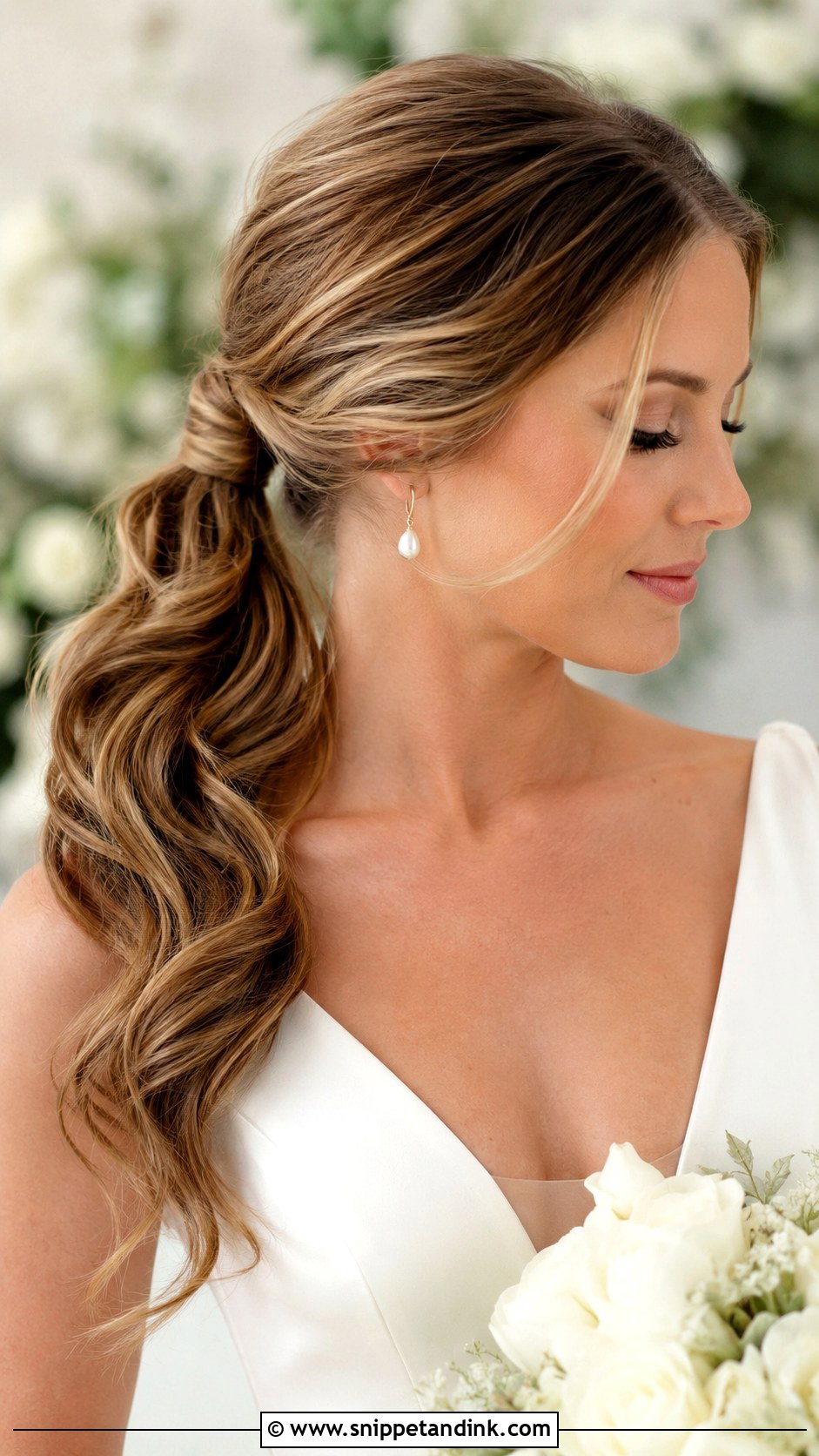
If you hate the feeling of hair moving around your face, this is the side style I’d point you toward. The ponytail sits low, just behind one ear, so the length falls forward over the front of the shoulder and stays put through hugs. I wrap a strand of hair around the elastic and pin it underneath, and I hide a small anchor braid at the base so the tail doesn’t swing back toward the nape. Keep the crown smooth for a sharper finish, or add a little lift there if your face is long and the sleek version looks severe.
5. Side Bridal Braid For Long Hair
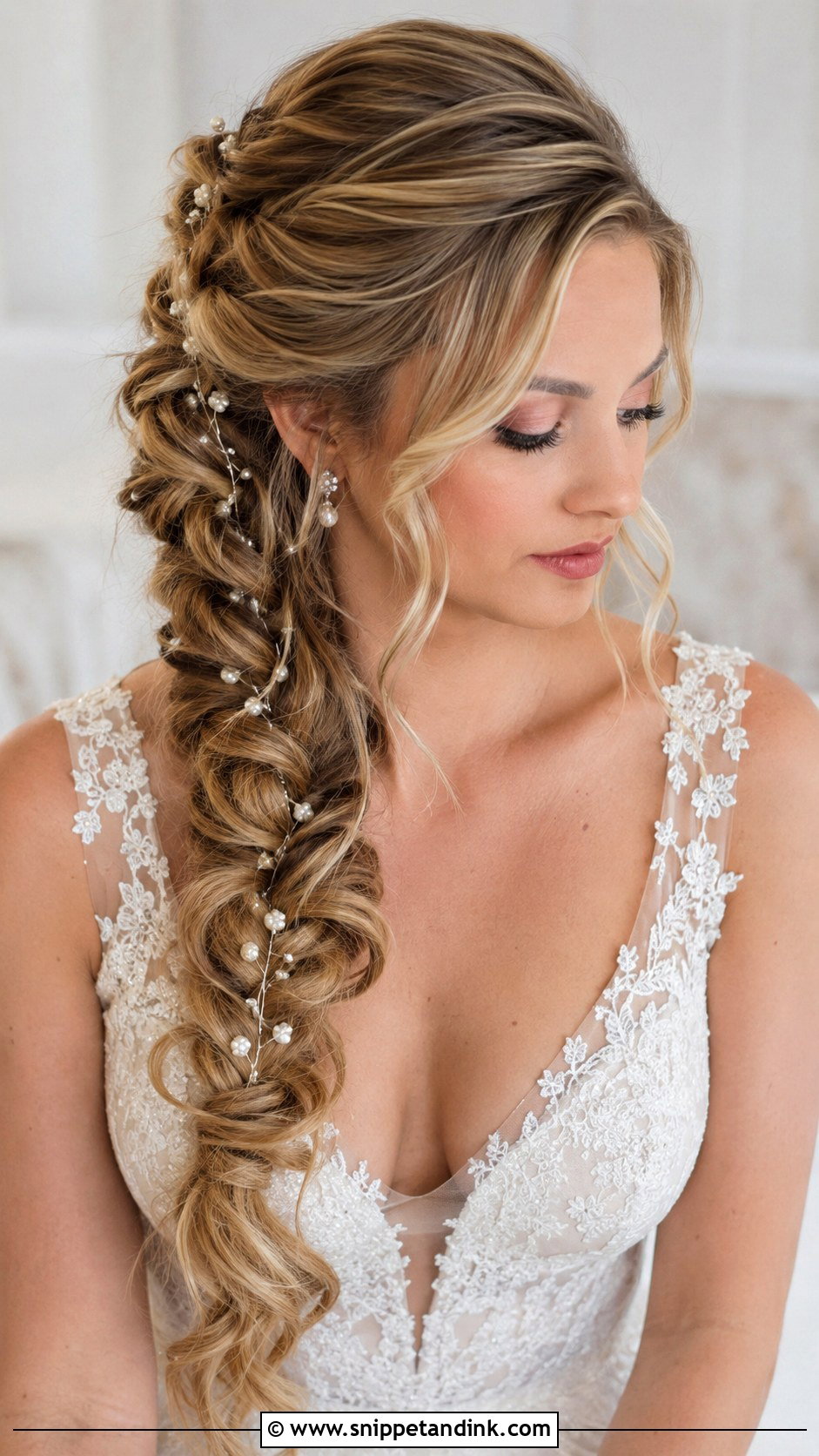
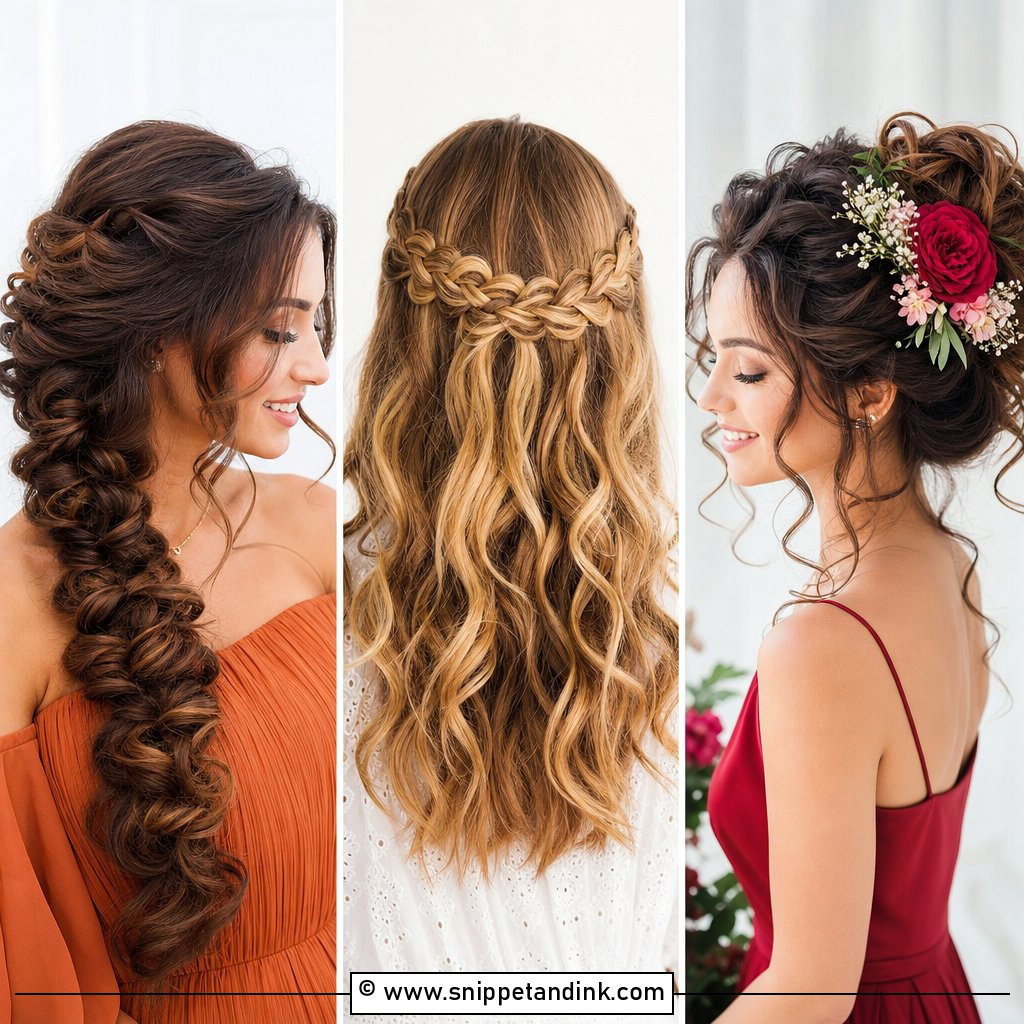
A braid is the most secure way to keep thick or very long hair on one side, which is why I reach for it for warm-weather ceremonies. The plait holds the weight close to the head, then I pancake each loop gently so it reads wider and softer in photos. Small flowers, pearls or a delicate hair vine can be threaded along the braid. Start it tighter than you think you want; it relaxes on its own during the day, and a braid that starts loose looks fuzzy by evening.
6. Side Bridal Fishtail Braid For Long Hair
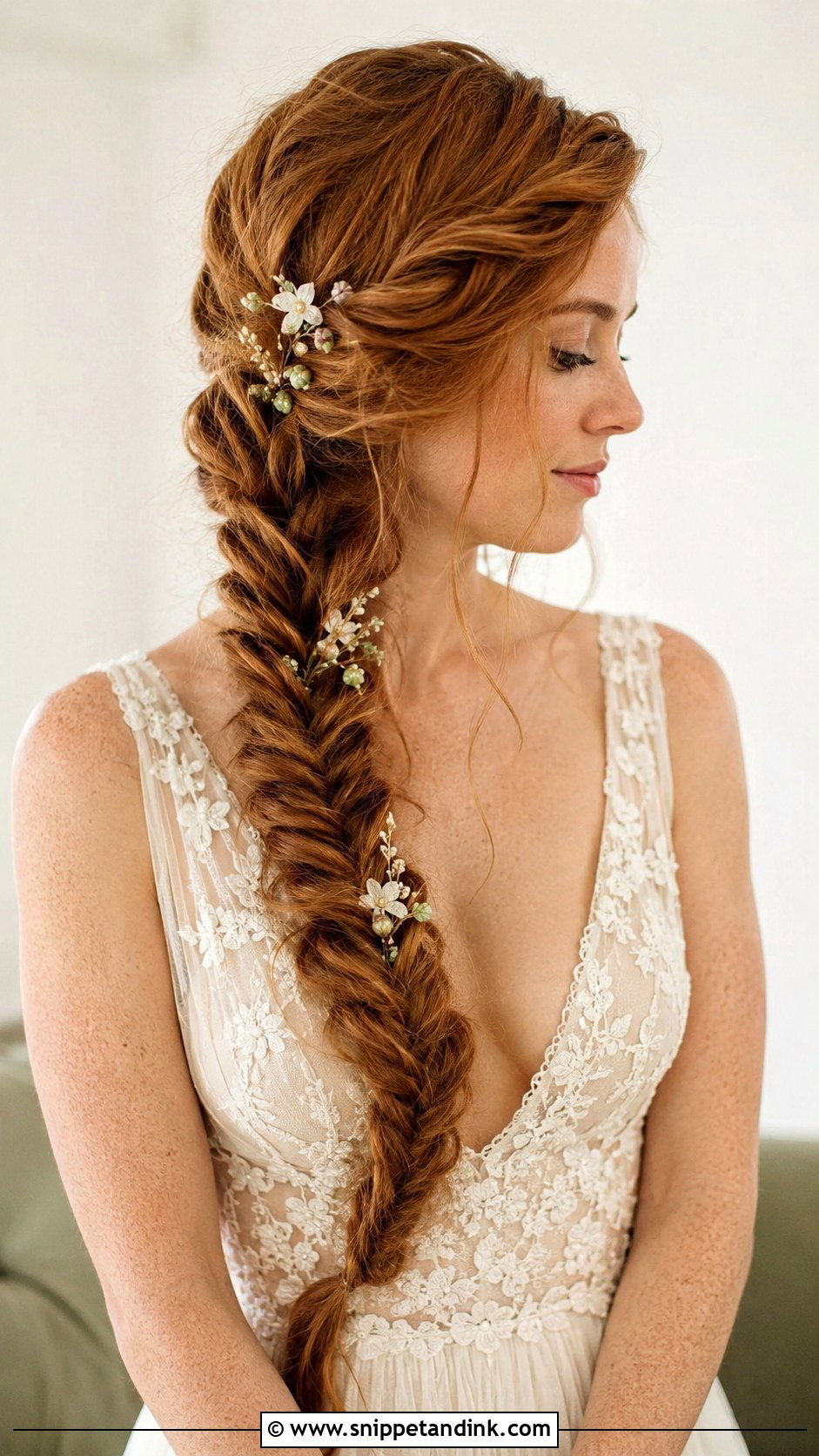
Fishtails take twice as long as a three-strand braid, but the fine weave shows off length better than almost anything. I braid it snug, then pull out the edges after spraying so the pattern widens without the braid unraveling. Bare skin suits it, so backless gowns and floral veils are natural partners. Layered hair is the honest drawback: short layers poke out of a fishtail all the way down, and you’ll need texture paste worked into each section before you start to keep them in.
7. Side Bridal Half Up Hair For Long Hair
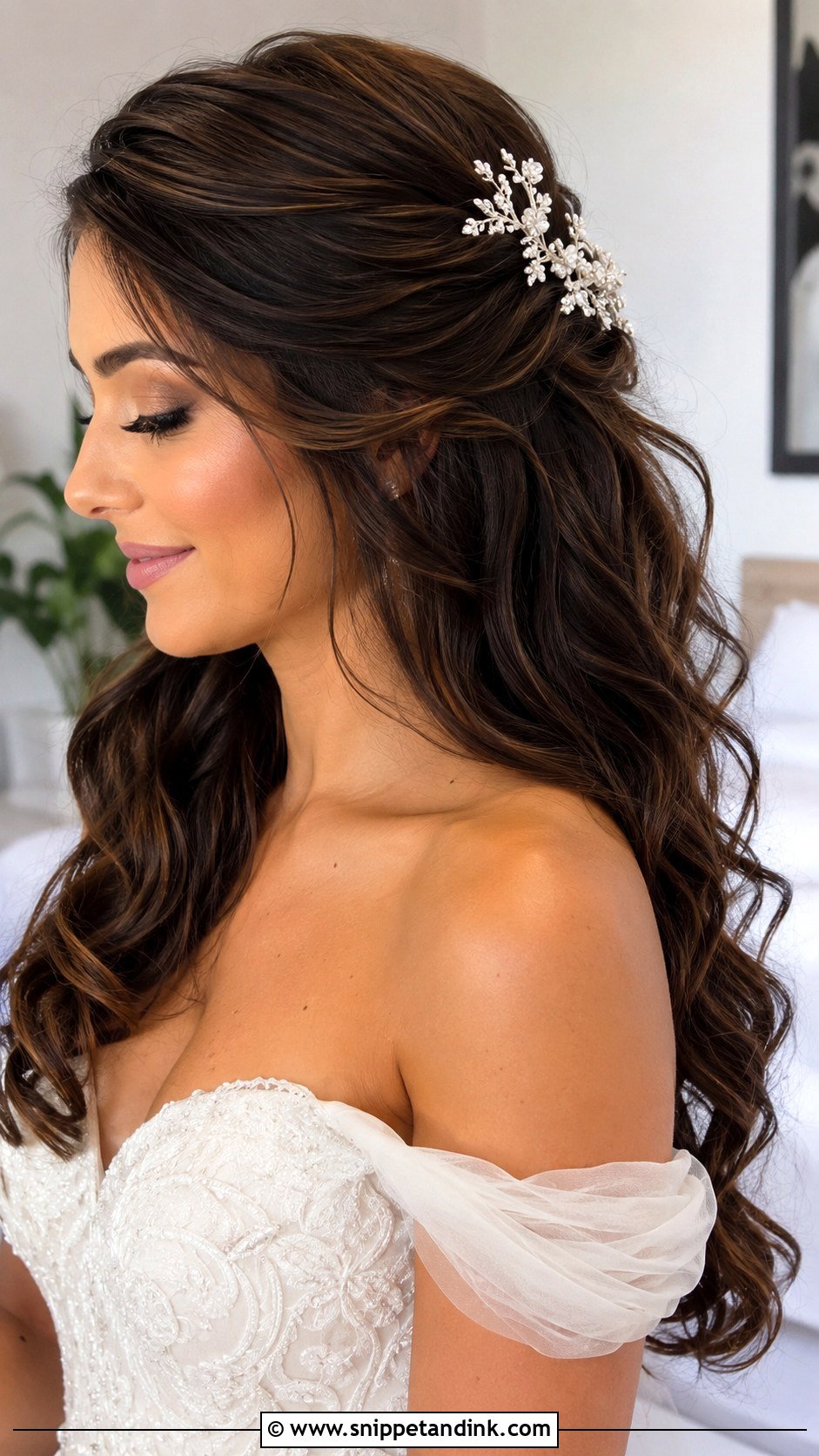
Half up on one side gives you lift at the crown and keeps the front off your face, while the rest of your hair falls in waves. I tease lightly at the root of the top section, smooth it over, and pin it behind one ear with the pins locked in an X so they don’t slide down the hair. If you’ve only ever worn your hair down, this is the gentlest step toward something more finished. A comb or a veil tucks neatly under that pinned section, which gives the veil a solid base.
8. Side Bridal Low Bun For Long Hair
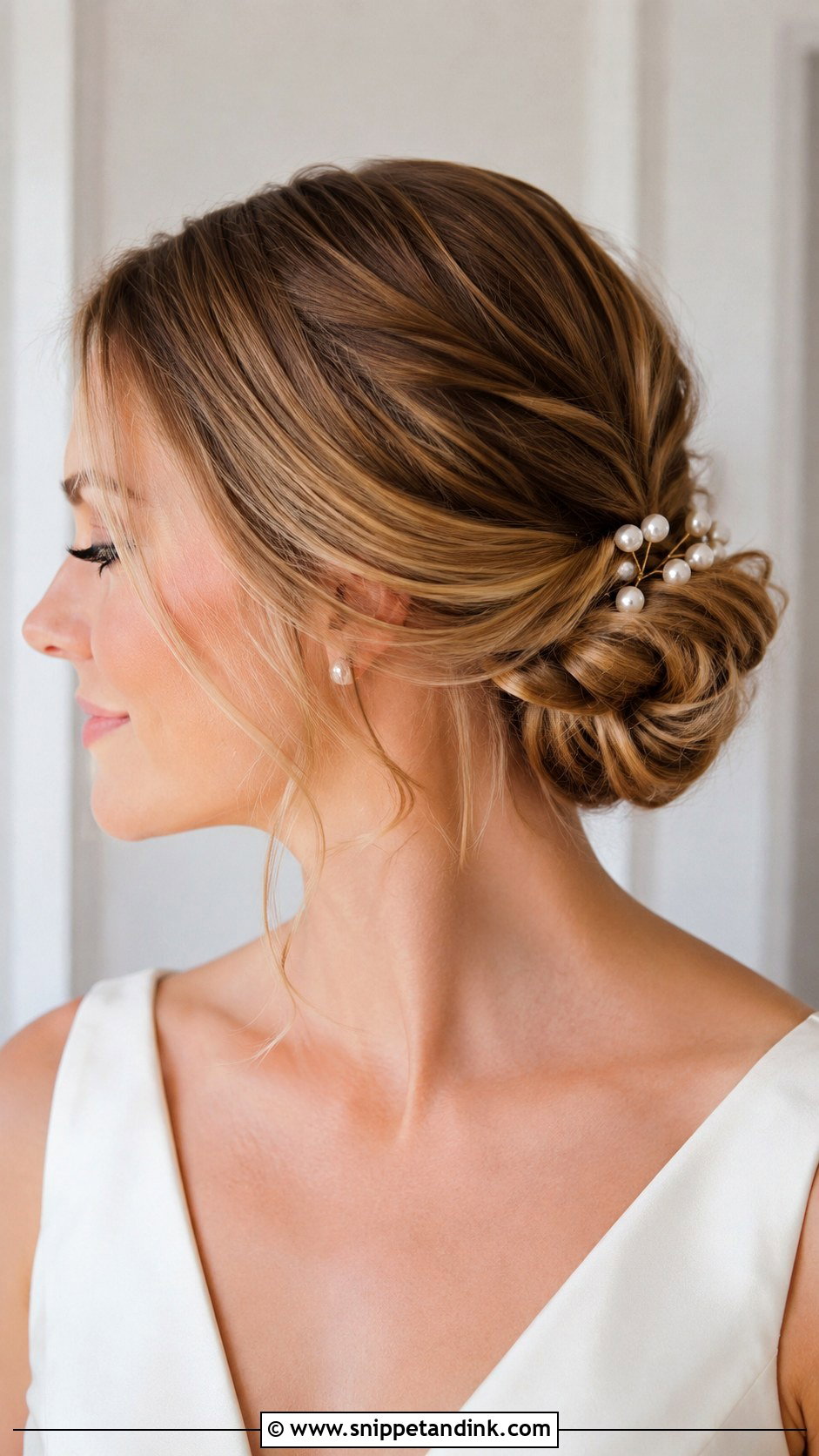
A low bun set off to one side shows your profile and leaves the neckline completely free. On long hair it can be full without padding. I build it in two parts: a firm base ponytail just behind the ear, then the length wrapped and pinned around it, so the bun has something to grip instead of sitting on loose hair. Smooth suits a structured gown; a looser twisted version suits lace. Leave out a few soft pieces at the front if a sleek bun makes your face look harsh in the mirror.
9. Side Bridal Chignon For Long Hair
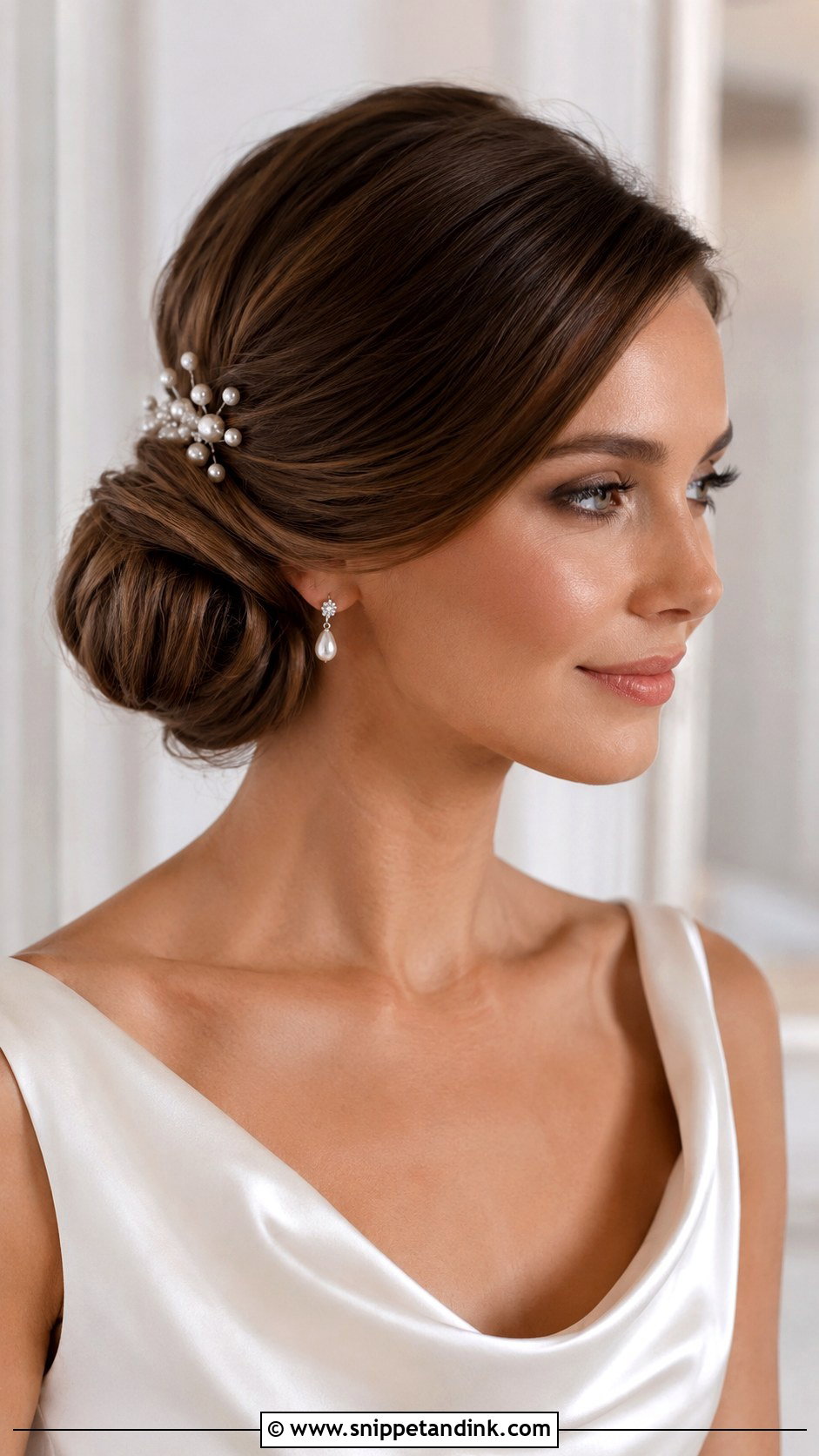
A chignon is tidier than a bun: the hair is rolled and tucked so the shape reads as one smooth twist rather than a coil. It’s my go-to for long hair that drops curl easily, because nothing about the style relies on curl holding. A deep side part and a touch of height at the crown stop it from looking flat in profile. It sits well under cathedral veils, since the comb can slide into the top of the twist. Pearl pins along the roll are enough decoration.
10. Side Bridal Updo For Long Hair
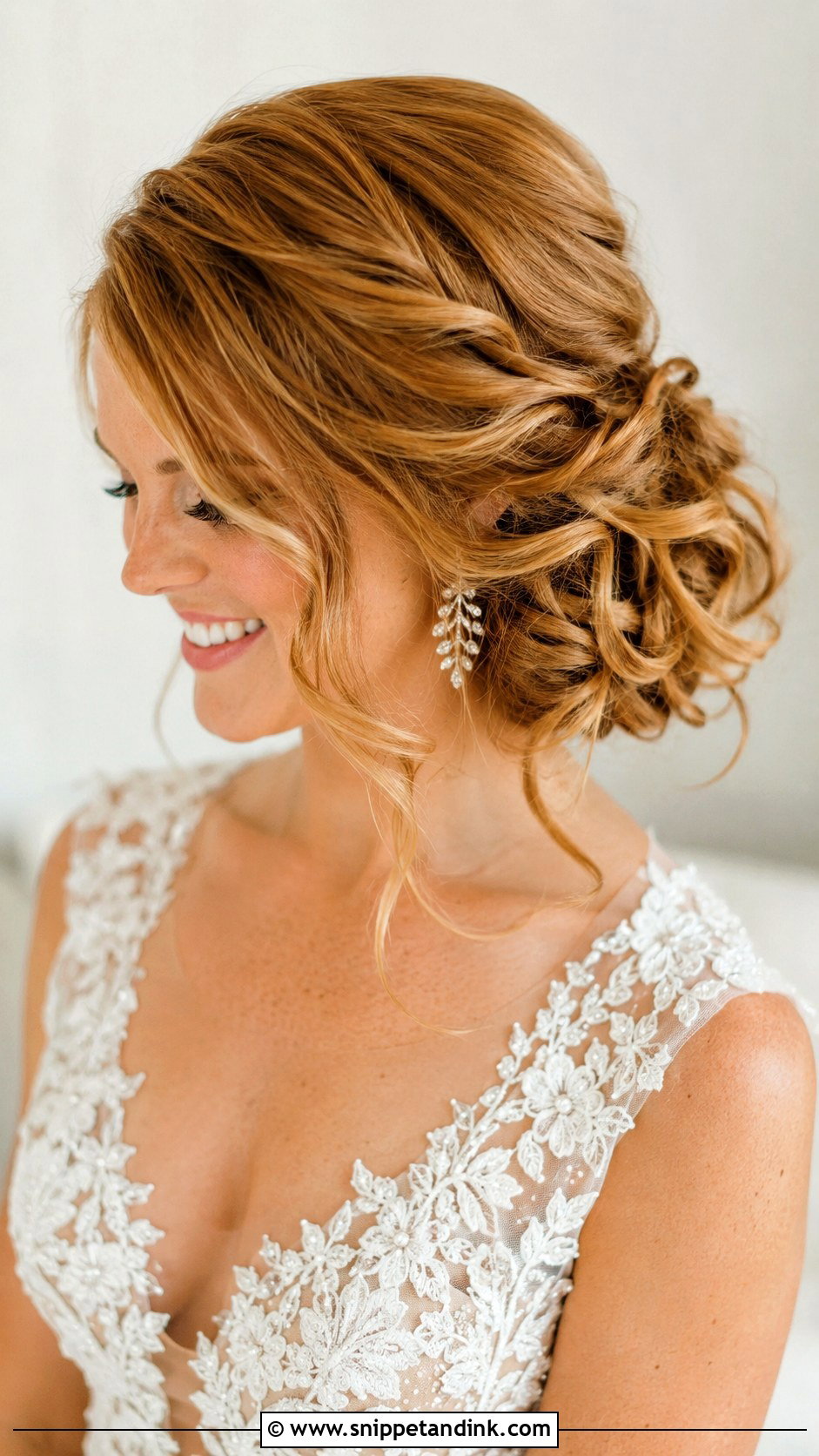
An asymmetrical updo lifts all of the hair while still leaning toward one side, built from twists, pinned curls and soft loops. Long hair gives it real volume, so there’s no need for padding or donut forms. The thing I discuss at every trial is finish. Ask for soft hold: a style lacquered stiff can look dated in close-ups, while flexible spray lets the loops move and still survive the day. It also leaves the back of a detailed gown in full view.
11. Side Bridal Waterfall Braid For Long Hair
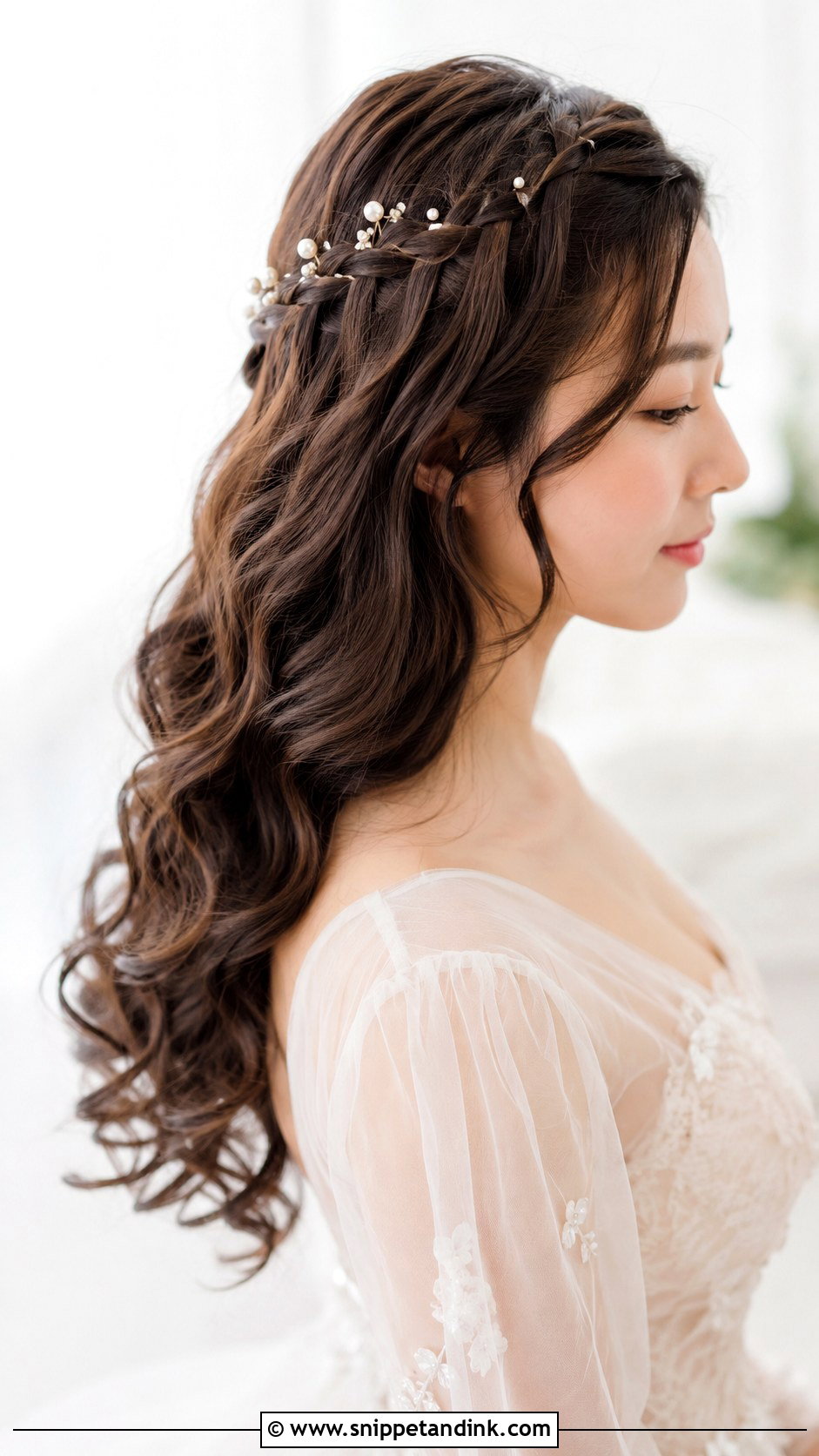
A side bridal waterfall braid runs from the part across the head, dropping a strand through each stitch so the loose hair falls through it. It only reads clearly when the loose lengths are waved; on straight hair the dropped strands vanish into the rest. I pin the braid’s tail behind the opposite ear and hide it under a curl. Very fine hair can struggle here because the braid itself turns out thin, so I usually suggest a thicker Dutch braid instead.
12. Side Bridal Twisted Hair For Long Hair
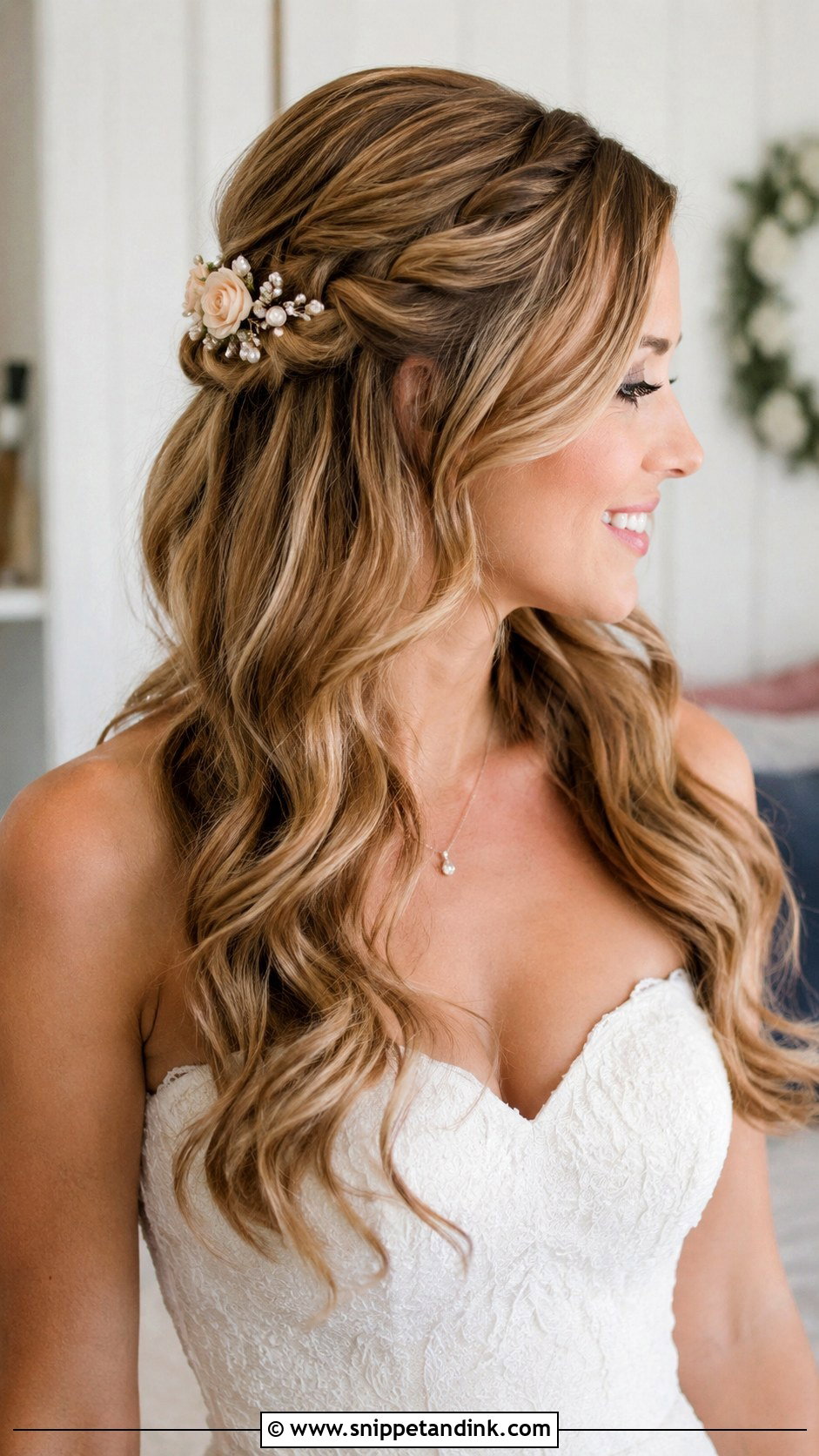
Twists give you texture without the busy pattern of a braid. I take sections from the hairline, twist them away from the face, and pin each one toward one side, where they meet in a neat cluster. The rest of the hair hangs in waves or gathers into a low ponytail. That cluster of pins is also the most secure spot on the head for a veil comb. Twists do loosen with movement, so I set each one with a tiny amount of spray before pinning rather than after.
13. Side Bridal Hair With Veil For Long Hair
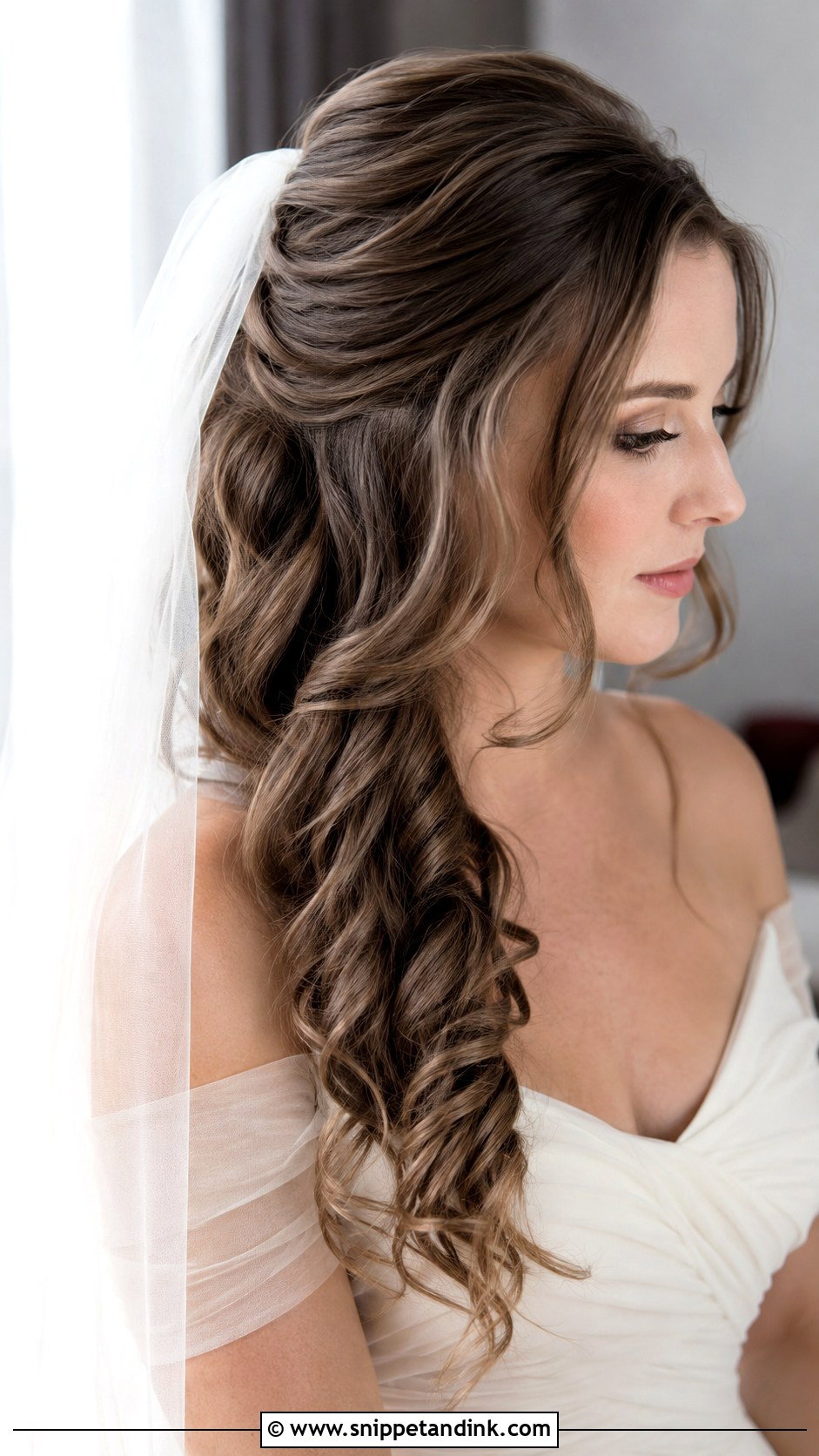
Plan the veil first and the hair second. A veil comb pushed into loose waves flattens them and pulls on the scalp, so I give it a pinned base, usually behind the crown or just above a low side bun. A side wave, a half up look, a side bun or a low side ponytail can all carry a veil once that anchor is there. Placing it slightly off center keeps the hair visible over the shoulder. Bring the actual veil to your trial; its weight changes where the comb can sit.
14. Side Bridal Hair With Hair Vine For Long Hair
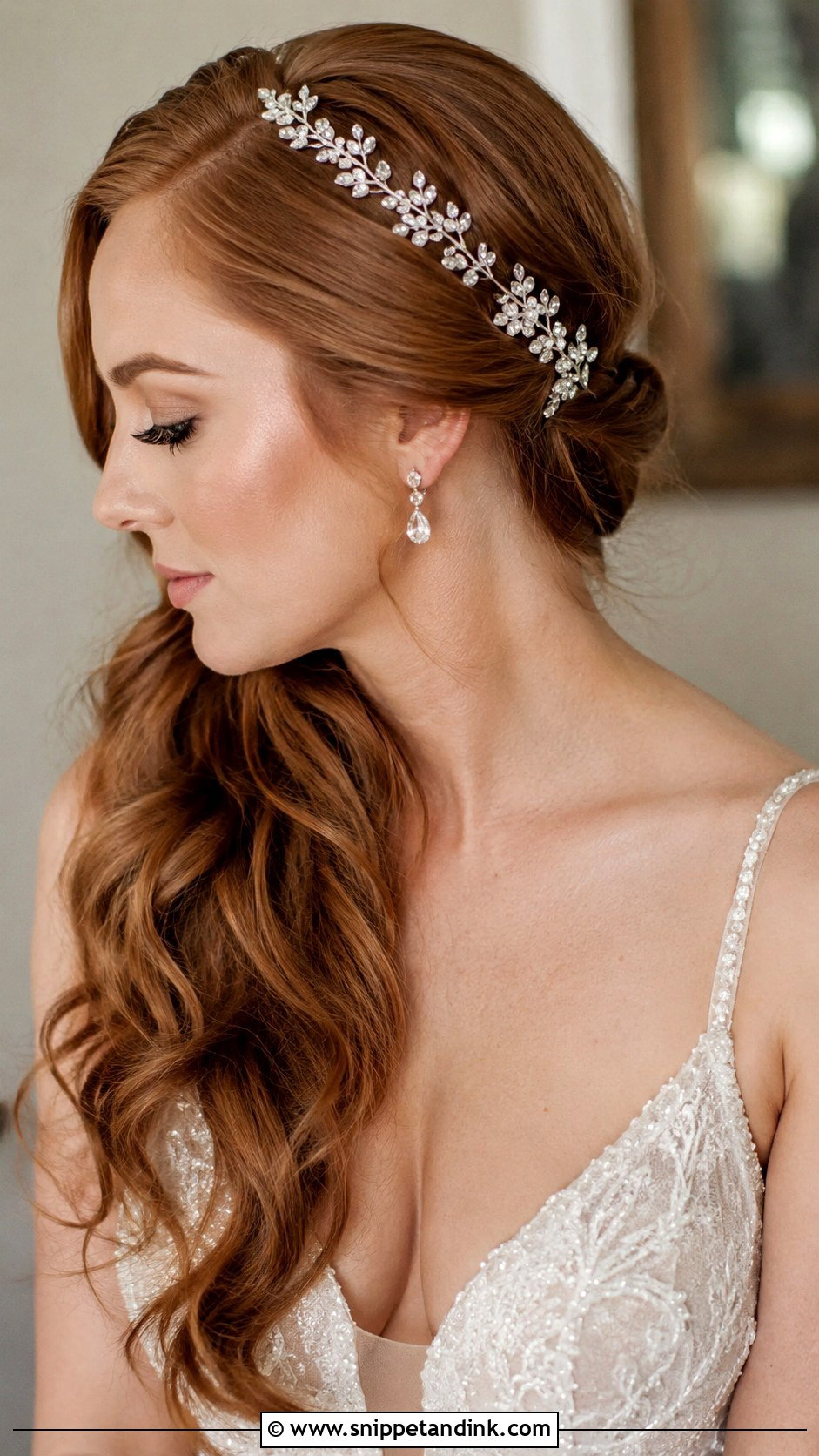
A vine is flexible wire, so it can trace the side part, wrap along a braid, or sit above pinned waves where a large headpiece would feel heavy. I sew it in with small pins every few inches, bending the wire to follow the curve of the head; laid on top, it lifts away as soon as you turn your head. Keep the rest of the styling quiet so the sparkle has room. On very dark hair, gold and crystal show far better than silver and pearl.
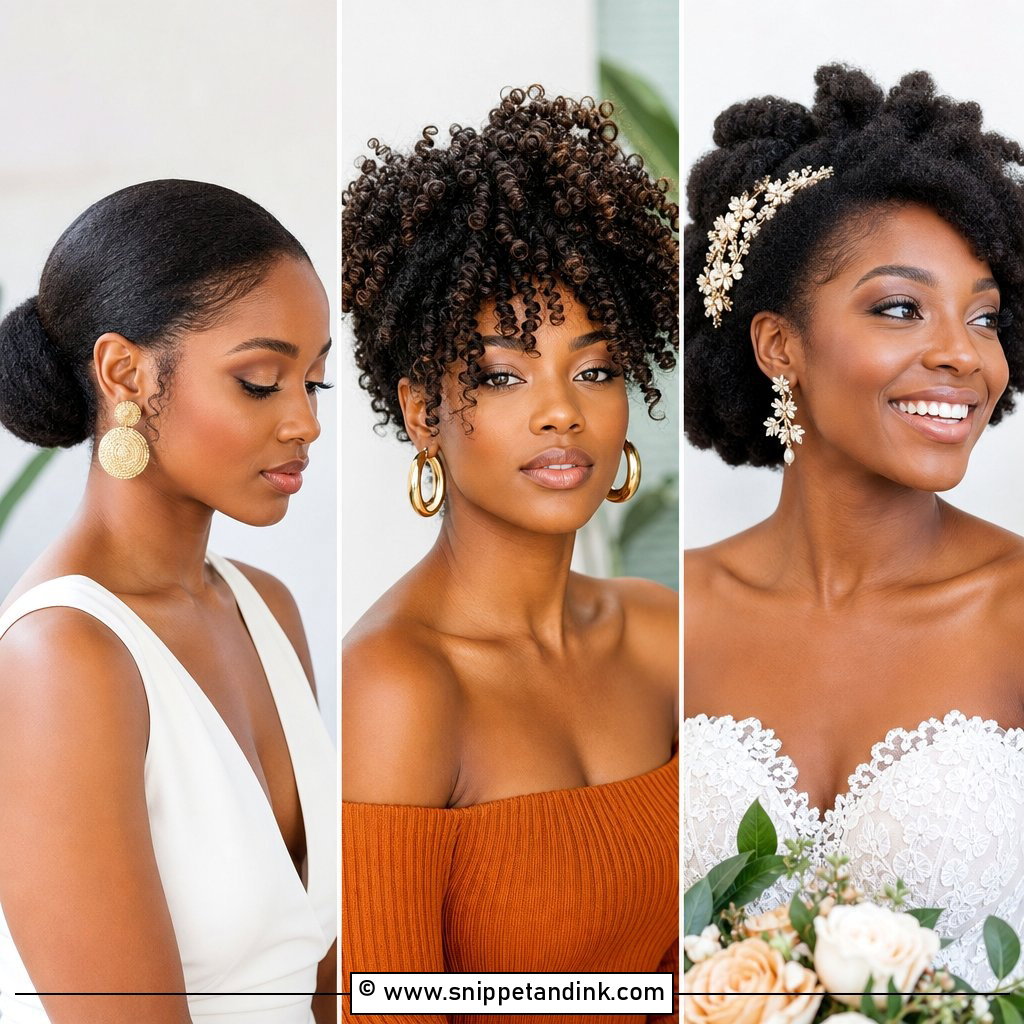
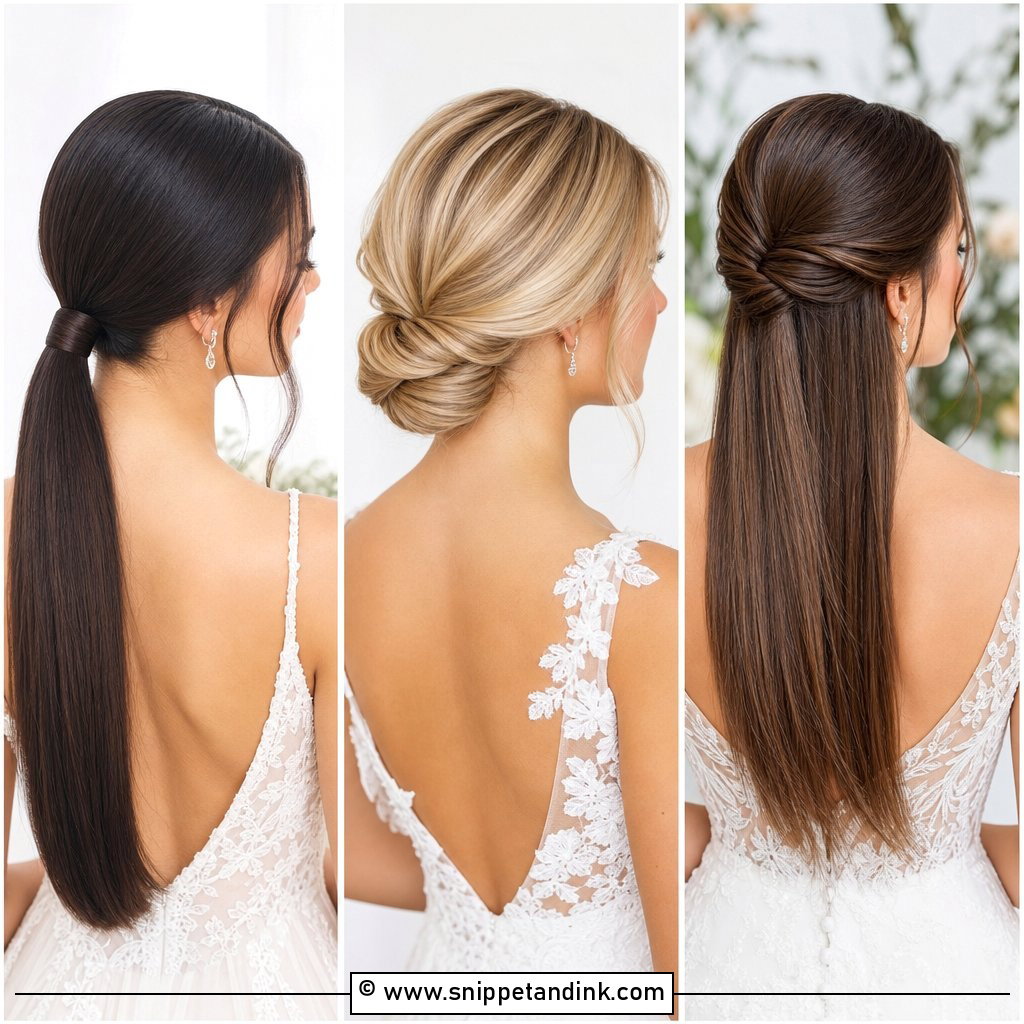
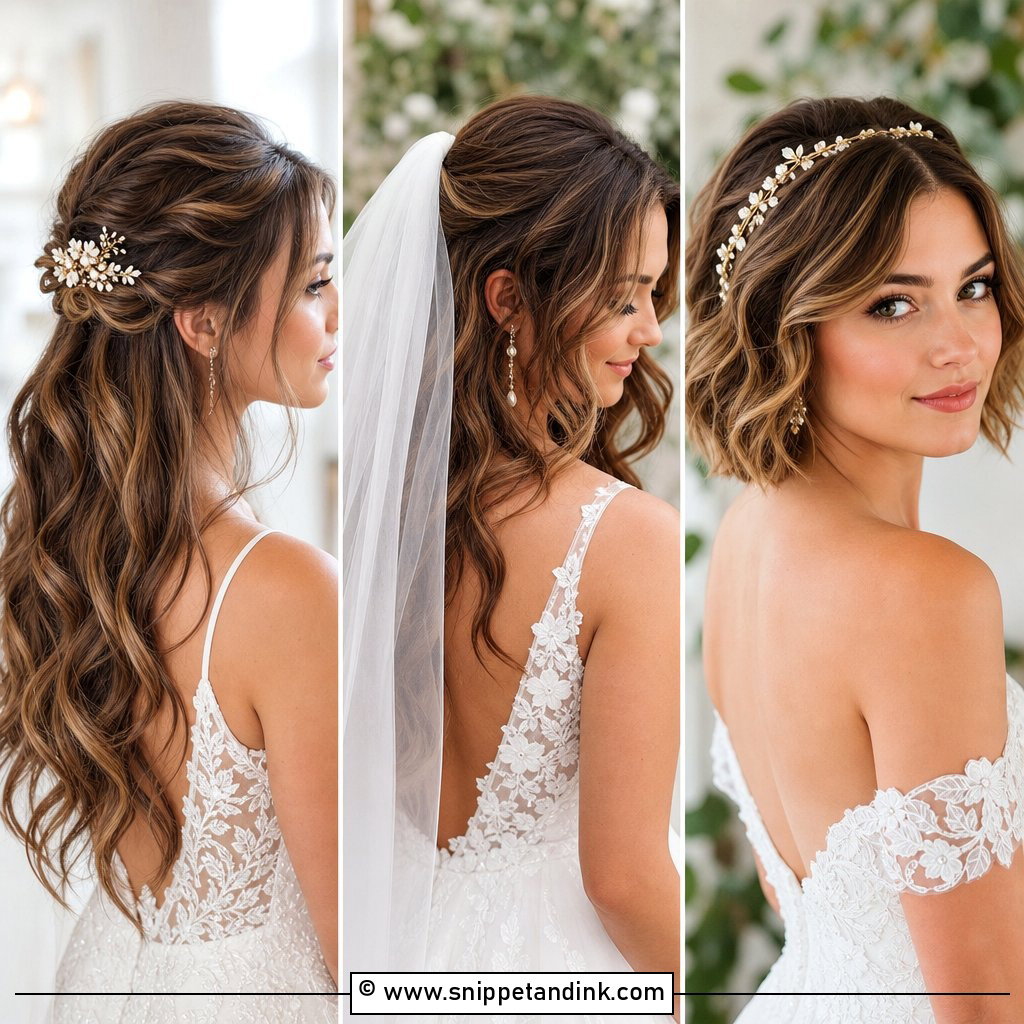
15. Side Bridal Hair With Flowers For Long Hair
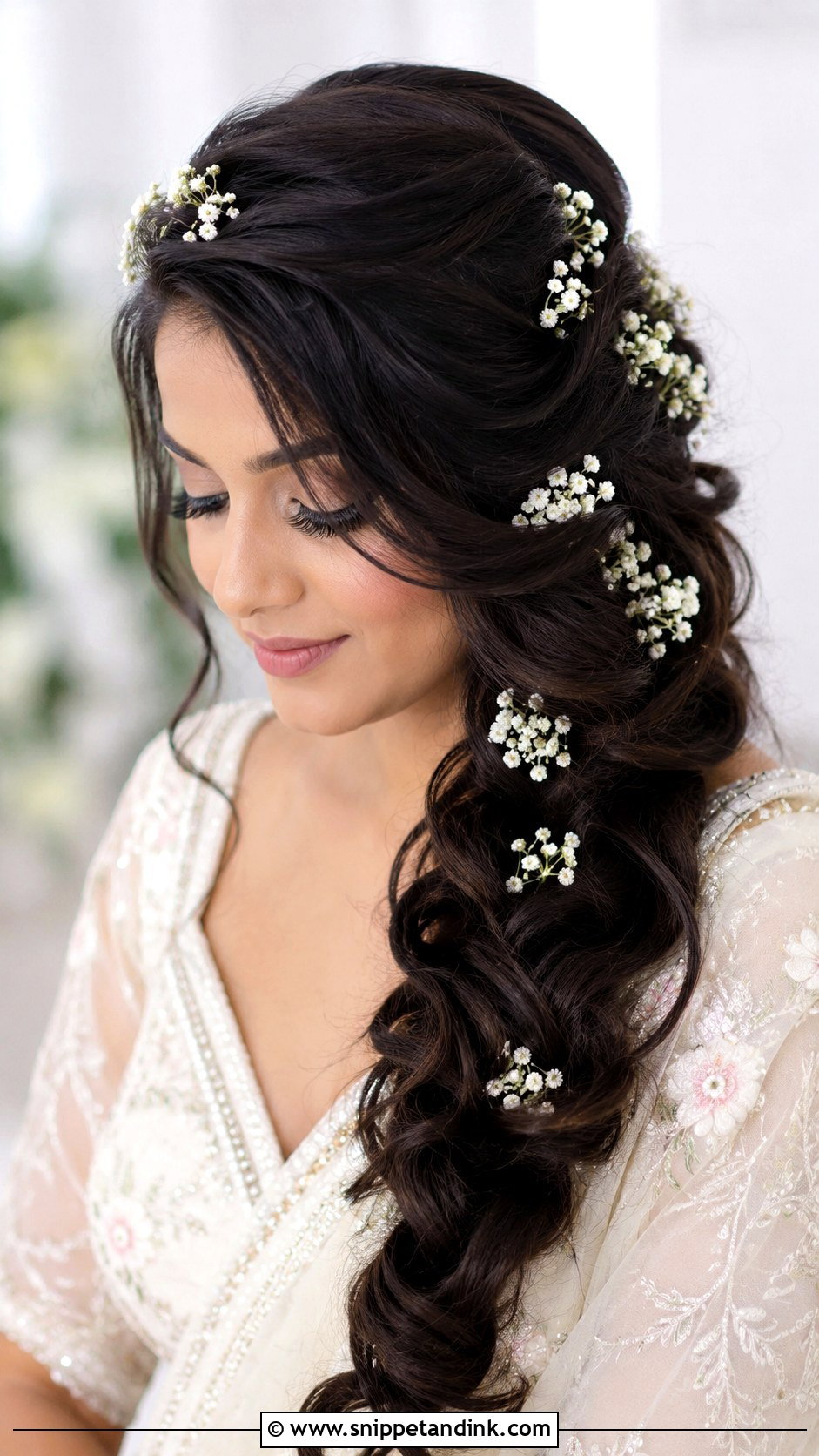
Fresh flowers in hair are on a clock. Out of water they start to wilt within hours, and the hardier blooms (spray roses, waxflower, small orchids) last much better than gardenias or sweet peas, which brown at the edges. I ask the florist to wire and tape stems before the morning so I can pin them straight into a braid or above a side bun. Choose a few small blooms over one large one; heavy flowers drag a side style down. Match them to the bouquet so the two read as one look.
Gravity Pulls Long Side Styles Back to the Middle
Hair longer than mid-back is heavy, and every one of these looks piles that weight onto one side of your head. Around hour five or six you’ll feel it as a dull pull behind one ear, and the style starts drifting toward the nape. Most of my prep for a side style goes into stopping that.
What I do at the anchor point
On the hidden side I build a base: a small braid or a mini ponytail tucked behind the ear. Pins lock into that base in crossed pairs instead of sliding through loose hair. For very heavy or extended hair, I spread the load over two or three anchors rather than one tight point, which also stops the headache that comes from one overloaded spot.
Prep that changes how long it holds
Hair washed the night before holds curl better than freshly washed, silky hair. Come with it dry and free of conditioning oils at the root. I set curls and let them cool completely before brushing, since a warm curl brushed out simply falls. If you’re wearing clip-in extensions, wear them to the trial too; the extra weight changes where the anchors need to go.
Small kit for your bridesmaid
Six matching bobby pins, a travel can of flexible hairspray and a small comb are all she needs. If the hair has shifted toward the back by the reception, she can lift it forward over the shoulder, slide two pins in behind the ear in an X, and give it a light mist.
A Side Style Lives or Dies on Its Anchor
Hollywood waves, braids, low buns or flowers all depend on the same thing: where the weight is anchored and whether it suits your hair texture. Bring the dress neckline, your veil and any accessories to the trial, and check the style from the side and back, not only in the front mirror. Give it a few hours of normal wear afterward. If it’s still sitting where I put it by evening, it will last the wedding.
You'll Like These Ideas:


Leave a Reply