
Long hair at a Desi wedding is both a gift and a workload. It gives you room for a gajra-wrapped braid at the ceremony and loose curls at the reception, but it also carries the weight of a dupatta, a heavy tikka and sometimes a matha patti for hours at a time. I’ve put together 20 Desi wedding hairstyles for long hair, and for each one I’ve added what I actually look at when I style it: how it holds, where the pins go, and who it won’t suit.
Planning Around the Dupatta, the Tikka and the Weight of Long Hair
Before I pick a style for a Desi bride, I ask where the dupatta will sit. Pinned over the head for the ceremony, it needs a flat, firm anchor at the crown, which rules out tall updos and crown braids. Draped over the shoulders, it leaves the back of the head free for a braid or a sculpted bun.
Long hair also has real weight. Waist-length hair pulls curls straight within a couple of hours and drags a loosely built bun downward, so the foundation matters more than the decoration. I build heavier styles on a small ponytail or braided base and cross the bobby pins, so the load spreads across the scalp instead of hanging on a few pins.
- Bring the actual dupatta, tikka and any matha patti to the trial. A heavy dupatta can need several pins to stay secure.
- Tell your stylist where the tikka chain should sit. It decides where the parting goes and how the front is smoothed.
- Wash your hair the day before, not the morning of. Second-day hair holds pins and curls far better.
- If you colour your hair, do it a week or two ahead so the tone settles before the trial photos.
1. South Indian Braid With Fresh Flowers
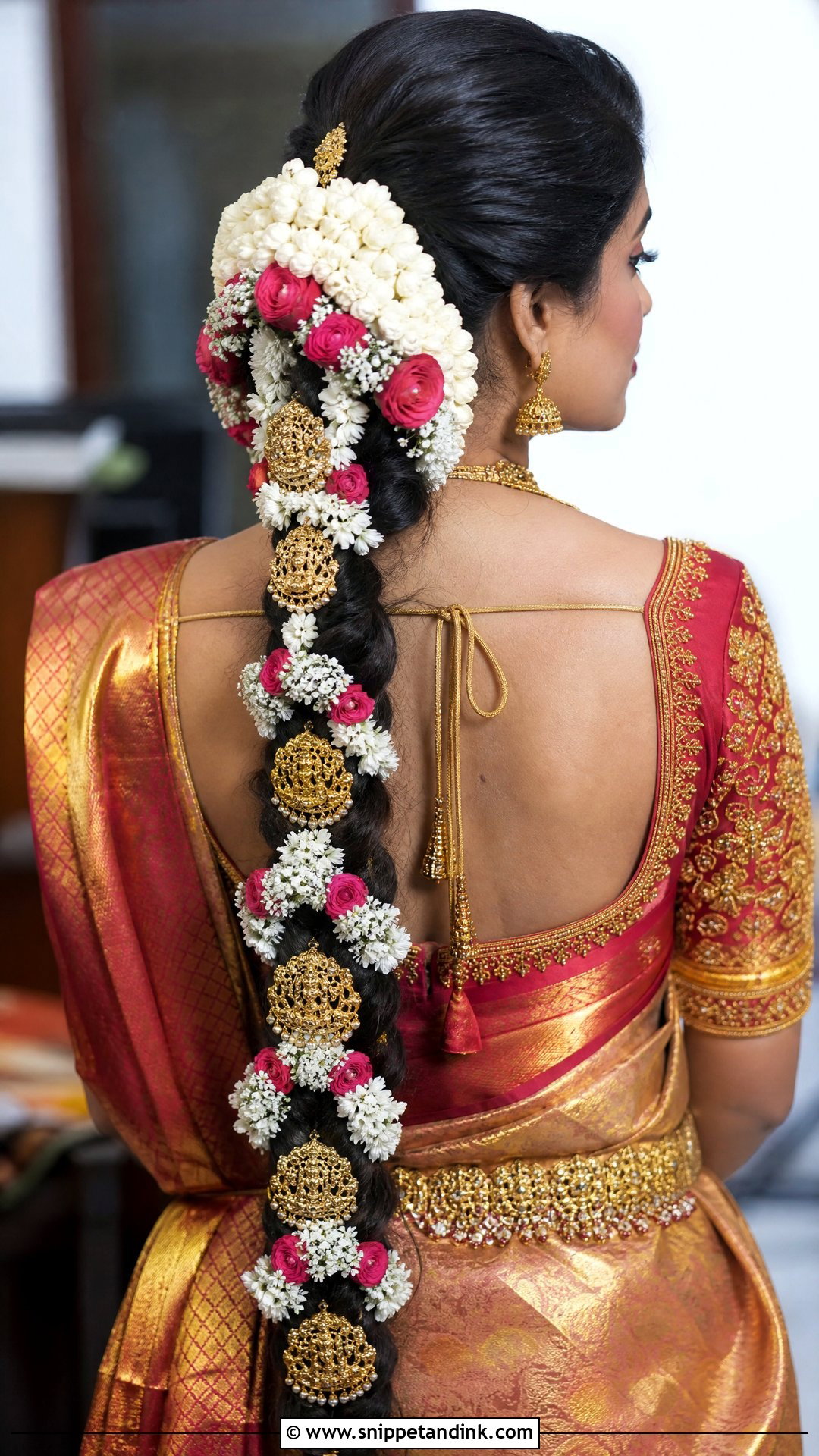
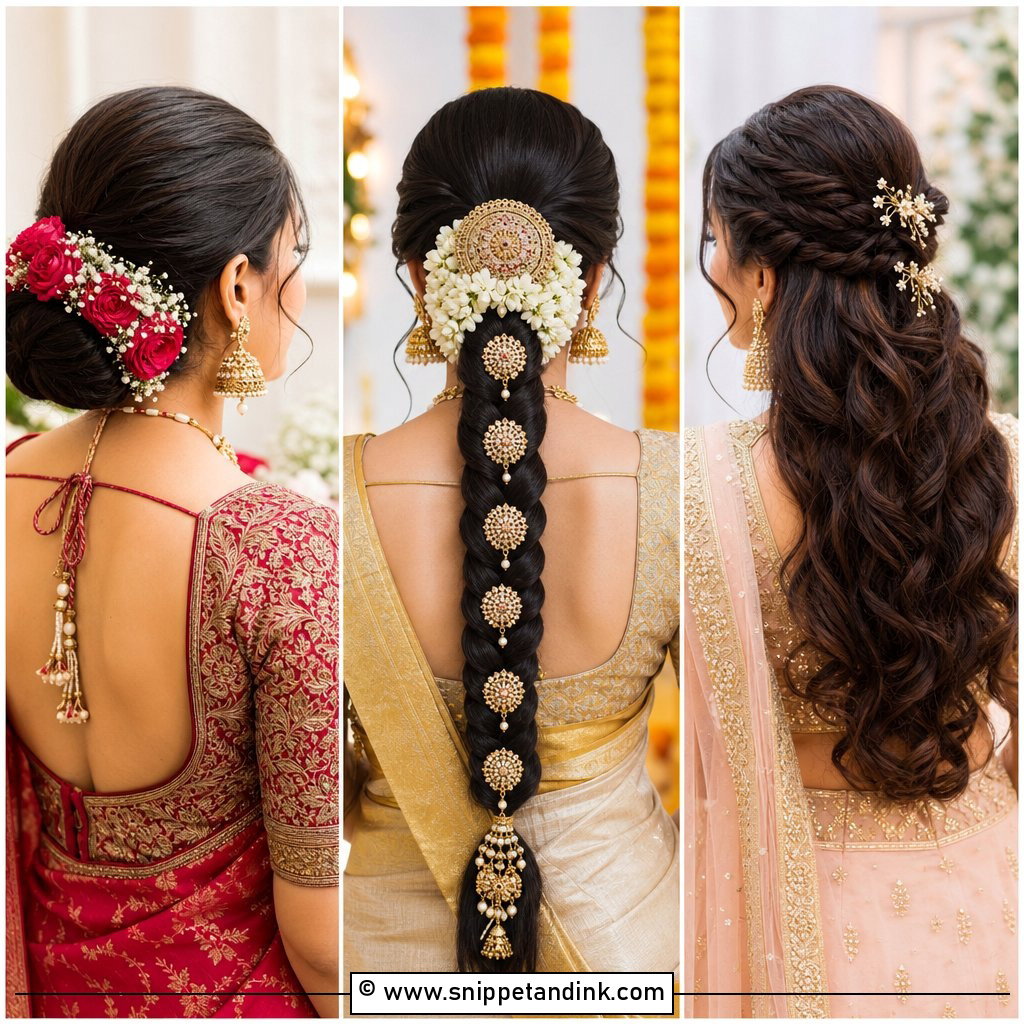
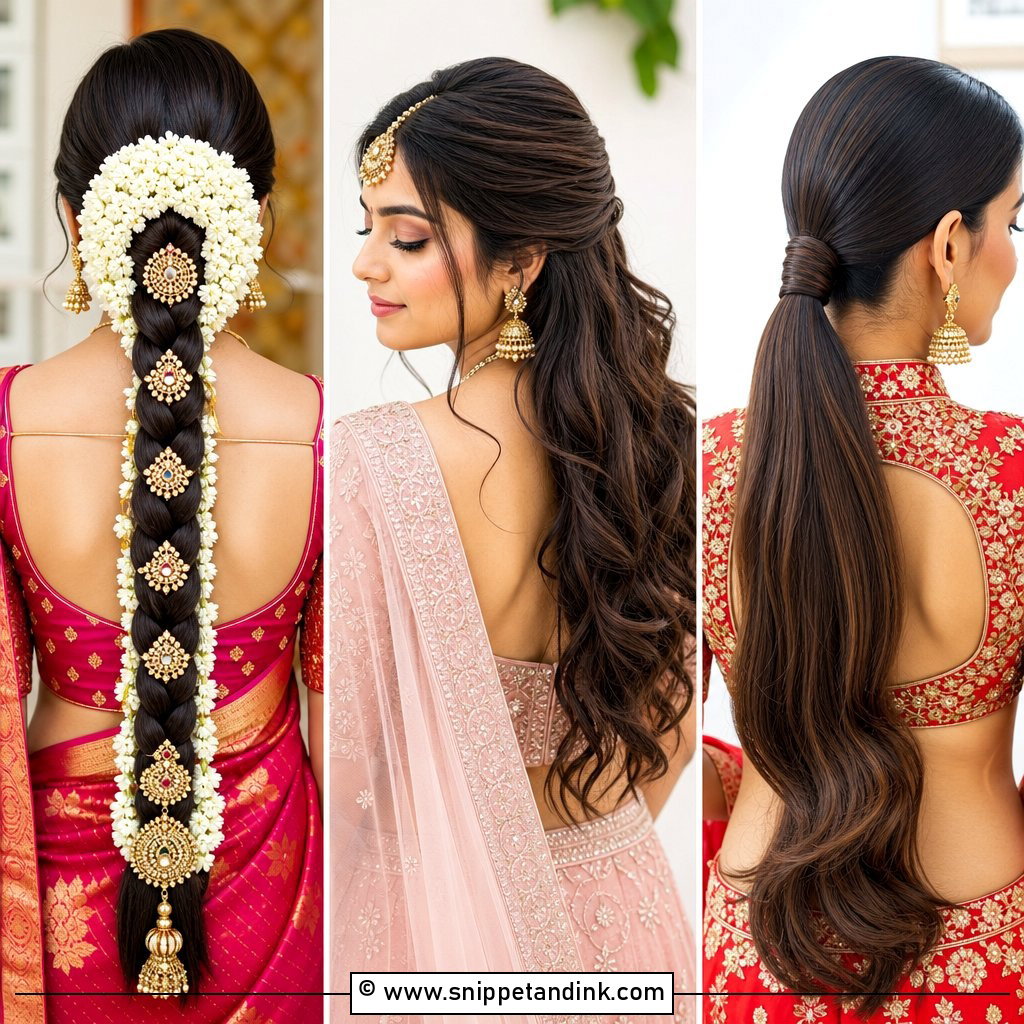
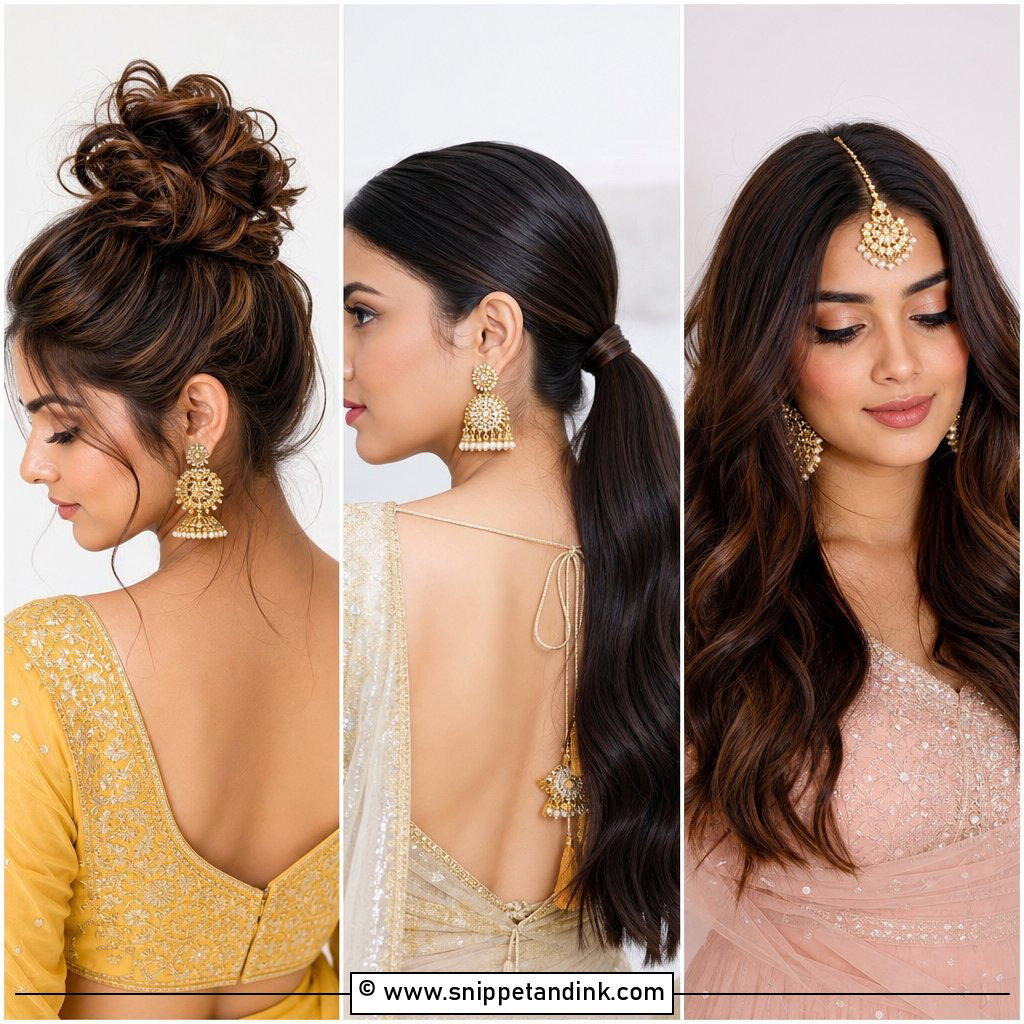
The South Indian braid sits naturally with a silk Kanjeevaram, because the long vertical line of the plait echoes the drape of the pallu. I braid it firmly from the crown so the jadai (the gold braid ornament) and the jasmine rows have something solid to stitch into. Strings of fresh jasmine, roses or marigold go on last, sewn rather than pinned, since pins slide out of a tight plait. If your hair stops above mid-back, a matching extension woven into the lower third gives the length this style needs without looking false.
2. Floral Low Bun for Brides
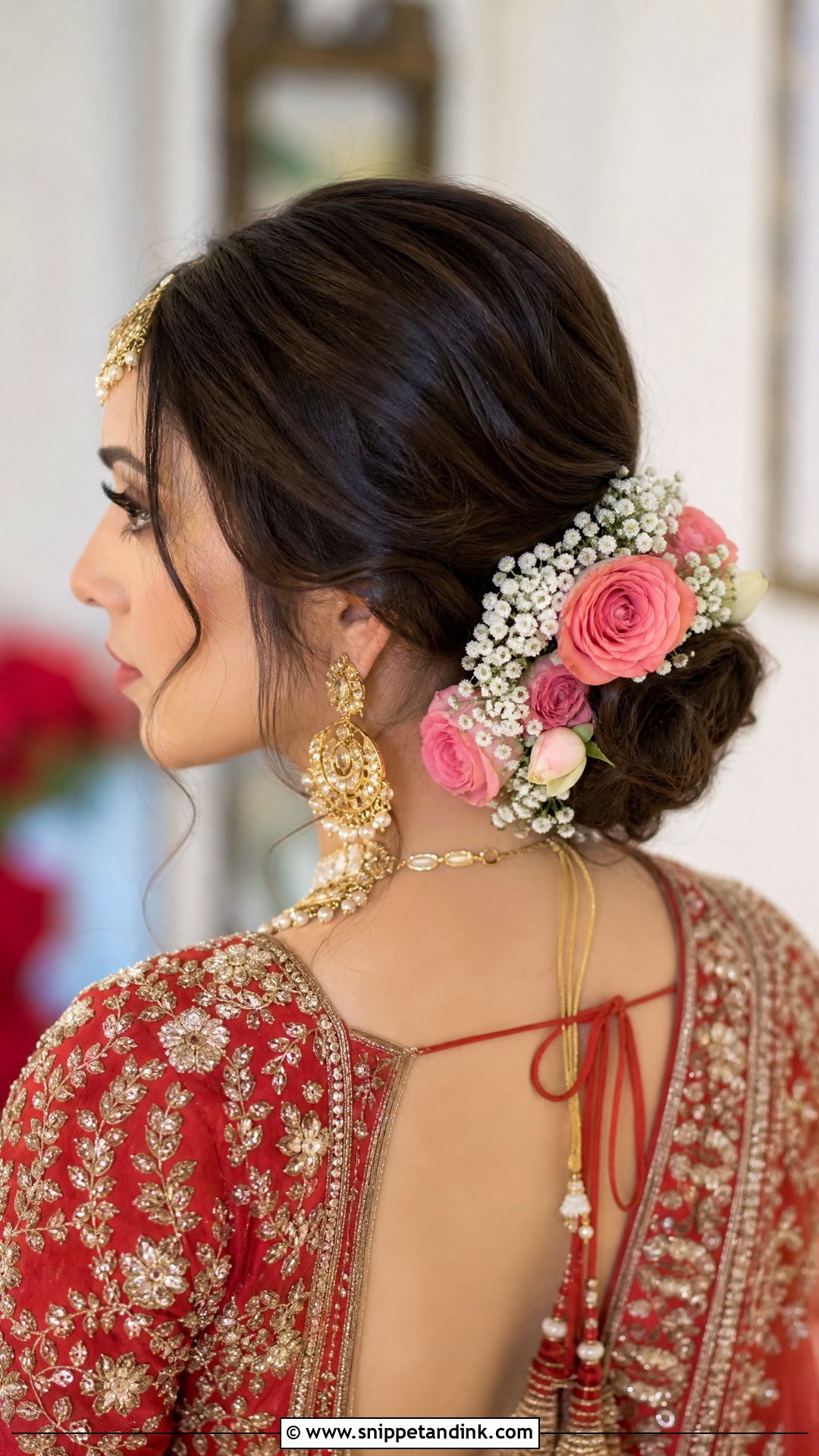
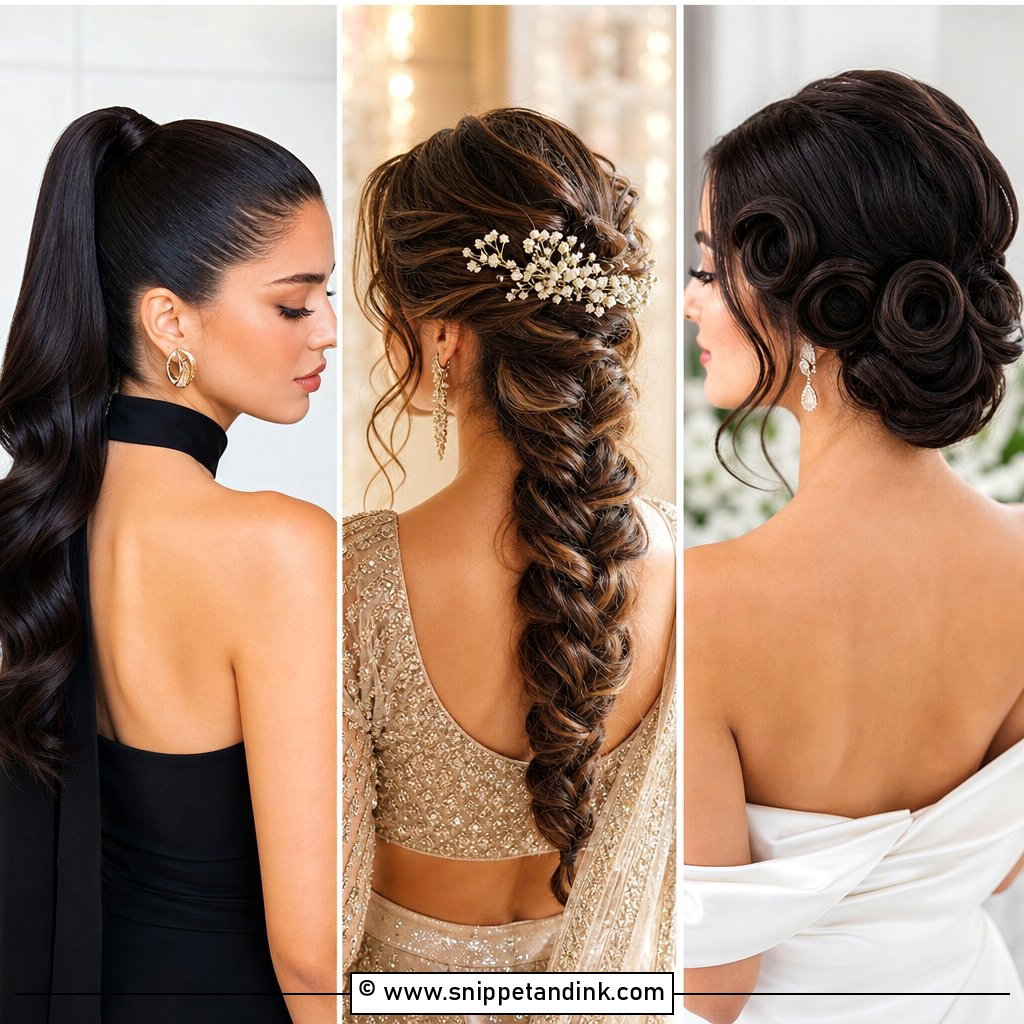
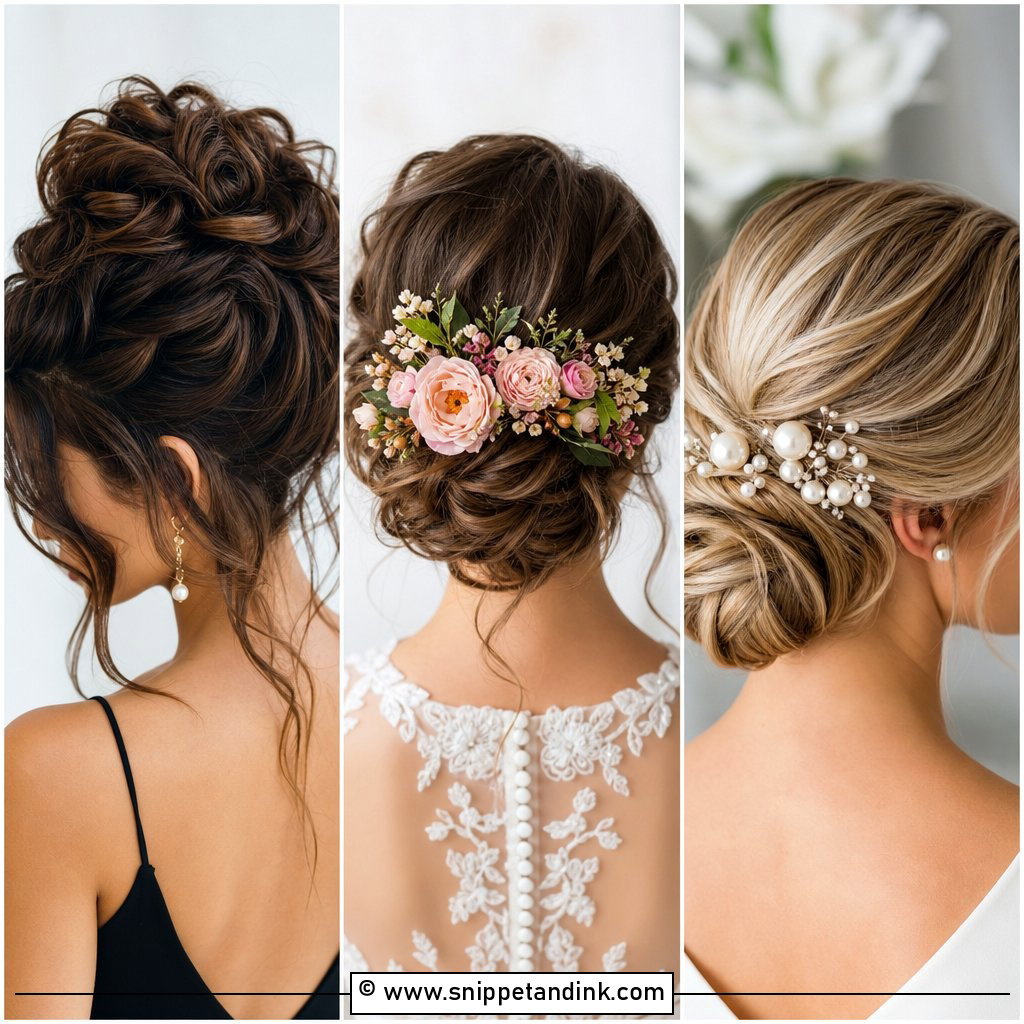
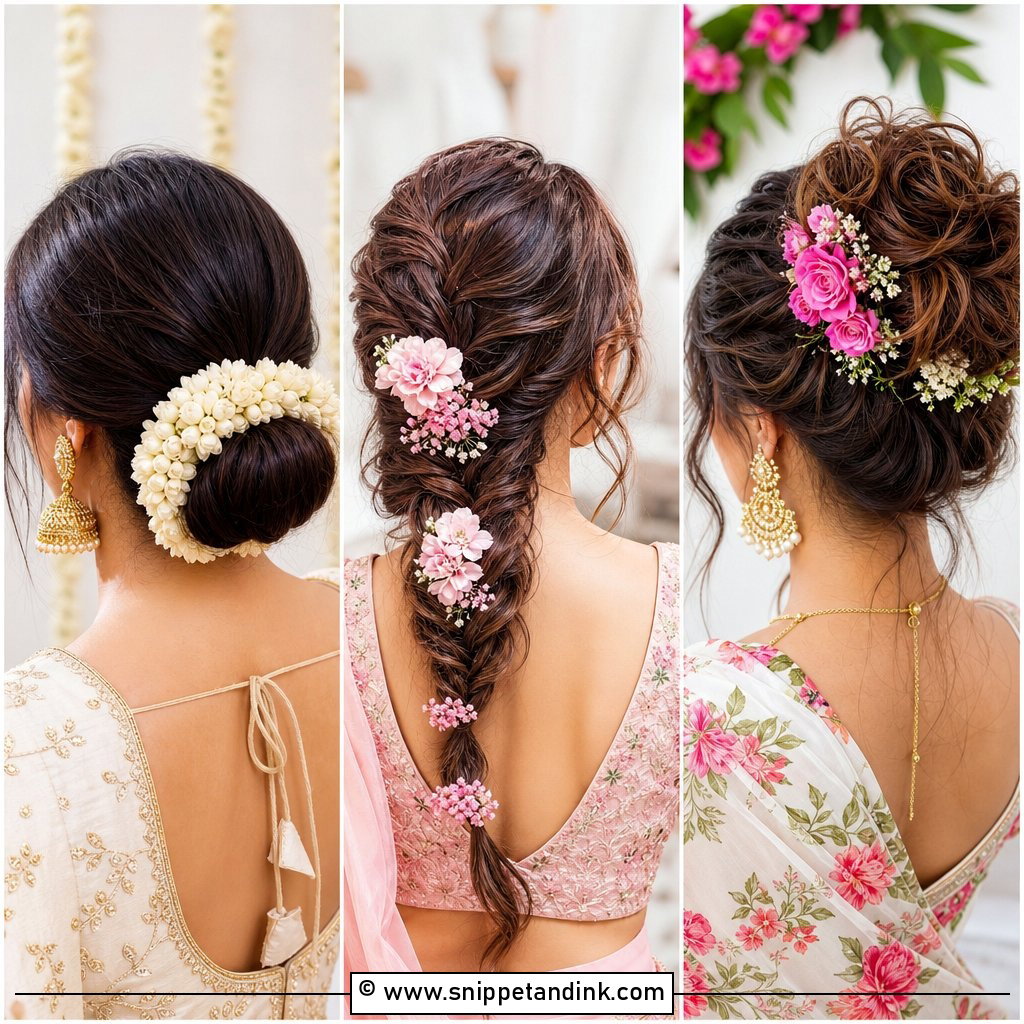
A low floral bun is the style I reach for when the bride will be sitting through a long pheras ceremony and leaning back against a chair. The bun sits at the nape, so it never pushes the dupatta forward. I build it over a small padded donut on very long hair, otherwise the weight drags it loose by the second hour. Roses and jasmine hold up better than baby’s breath, which wilts fast under hot lights, and nothing adds height at the crown, so it suits almost every face shape.
3. Half-Up Half-Down Curls
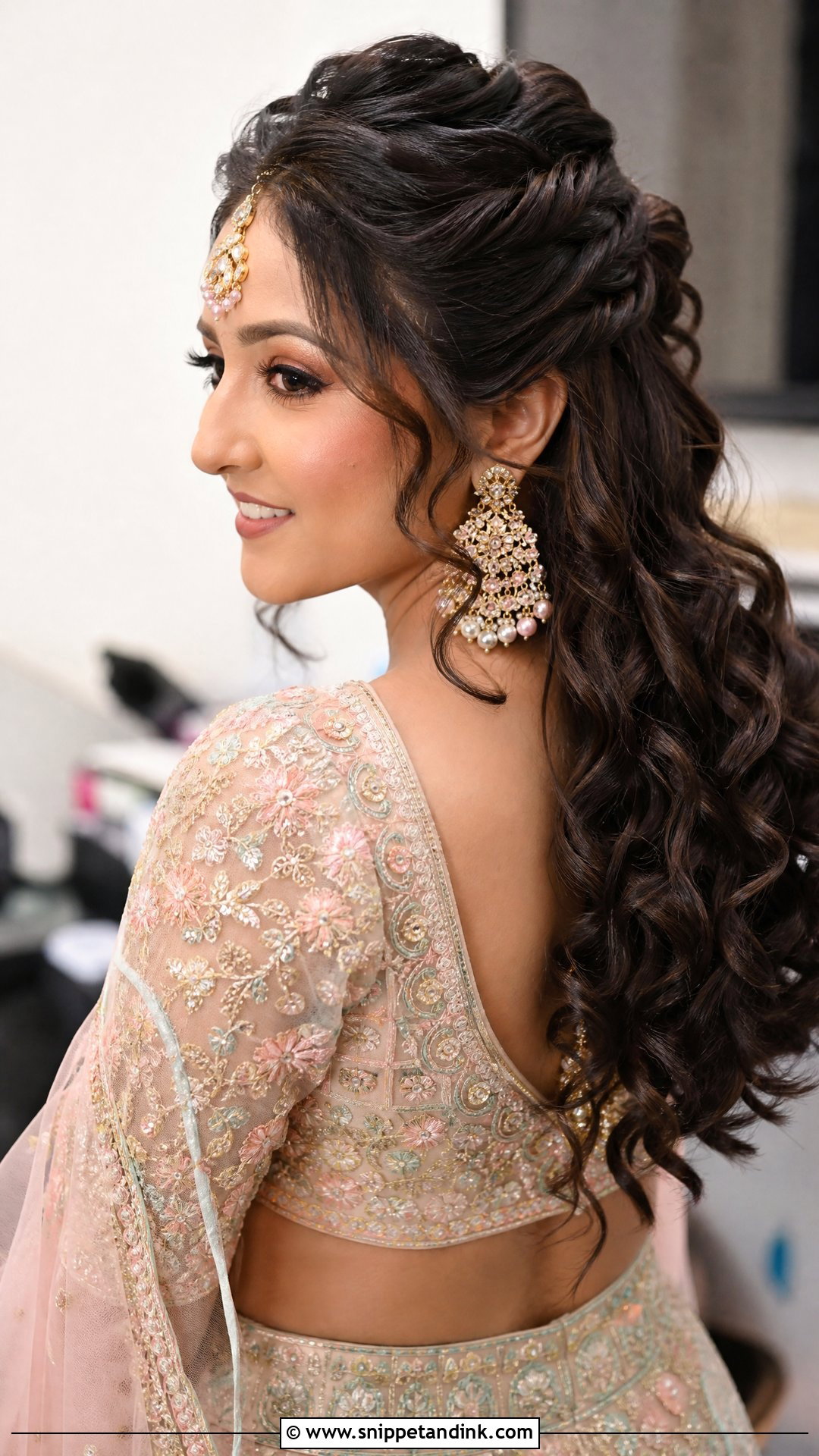
Half-up curls are the answer when you can’t give up the length but don’t want hair in your face while dancing on sangeet nights. I secure the top section with a hidden braid underneath, not just pins, because a pinned half-up section slips as soon as you start moving. The curls get a heat protectant and are pinned up in barrel curls to cool fully before I release them. A small tikka sits well with it; a heavy one fights the soft crown.
4. Messy Braided Bun
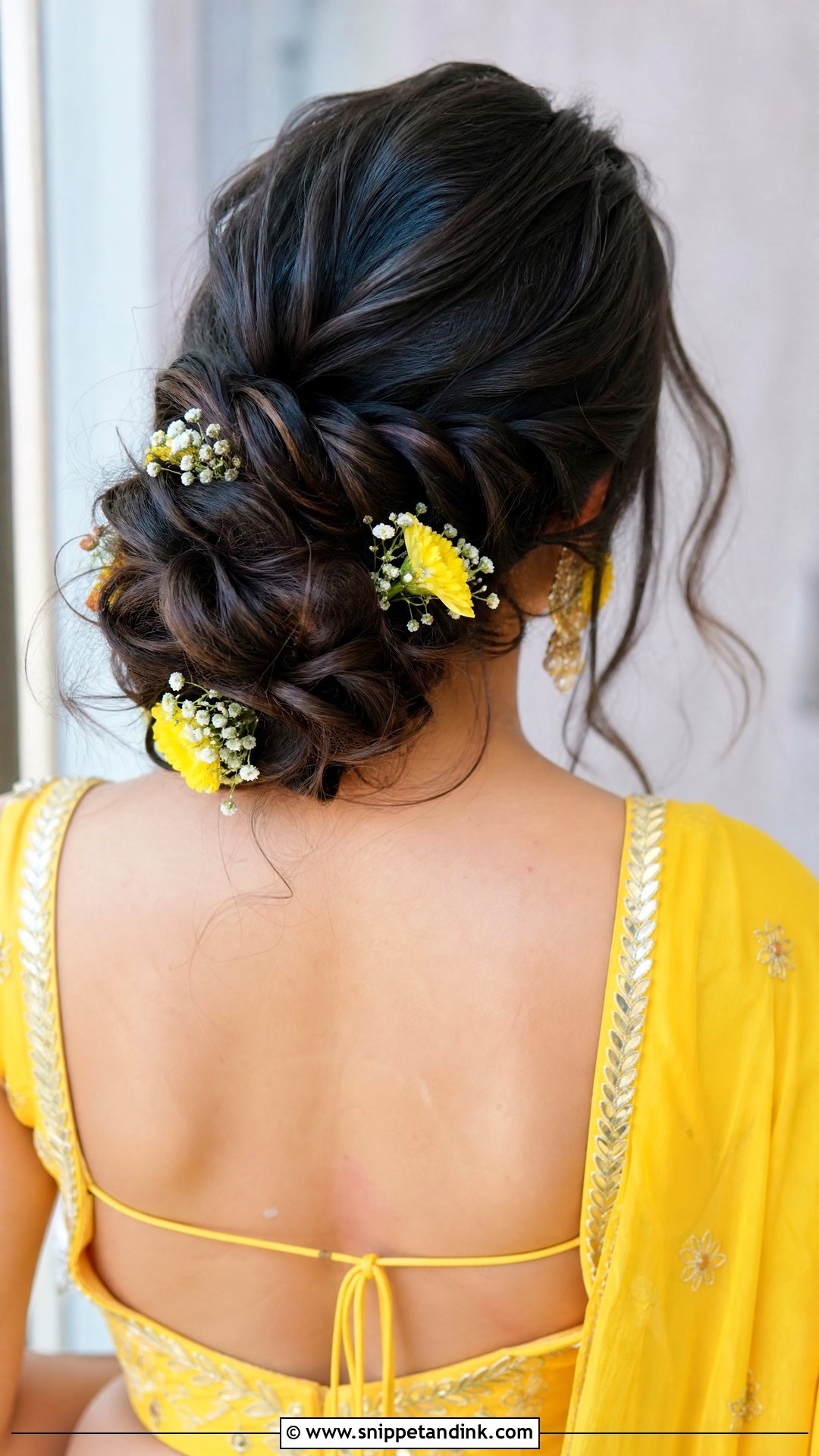
A messy braided bun hides a lot. Thick, long hair that resists smooth styling actually behaves better here, since texture is the point. I braid first, coil the braid, then pancake a few loops loose with my fingertips so it looks relaxed without falling apart. This is the bun I suggest for mehendi and haldi, when you’ll be sitting cross-legged, getting hugged and possibly splashed with turmeric. Small flowers or gota ribbon tuck straight into the braid loops with no extra pins.
5. Fishtail Braid With Pearls
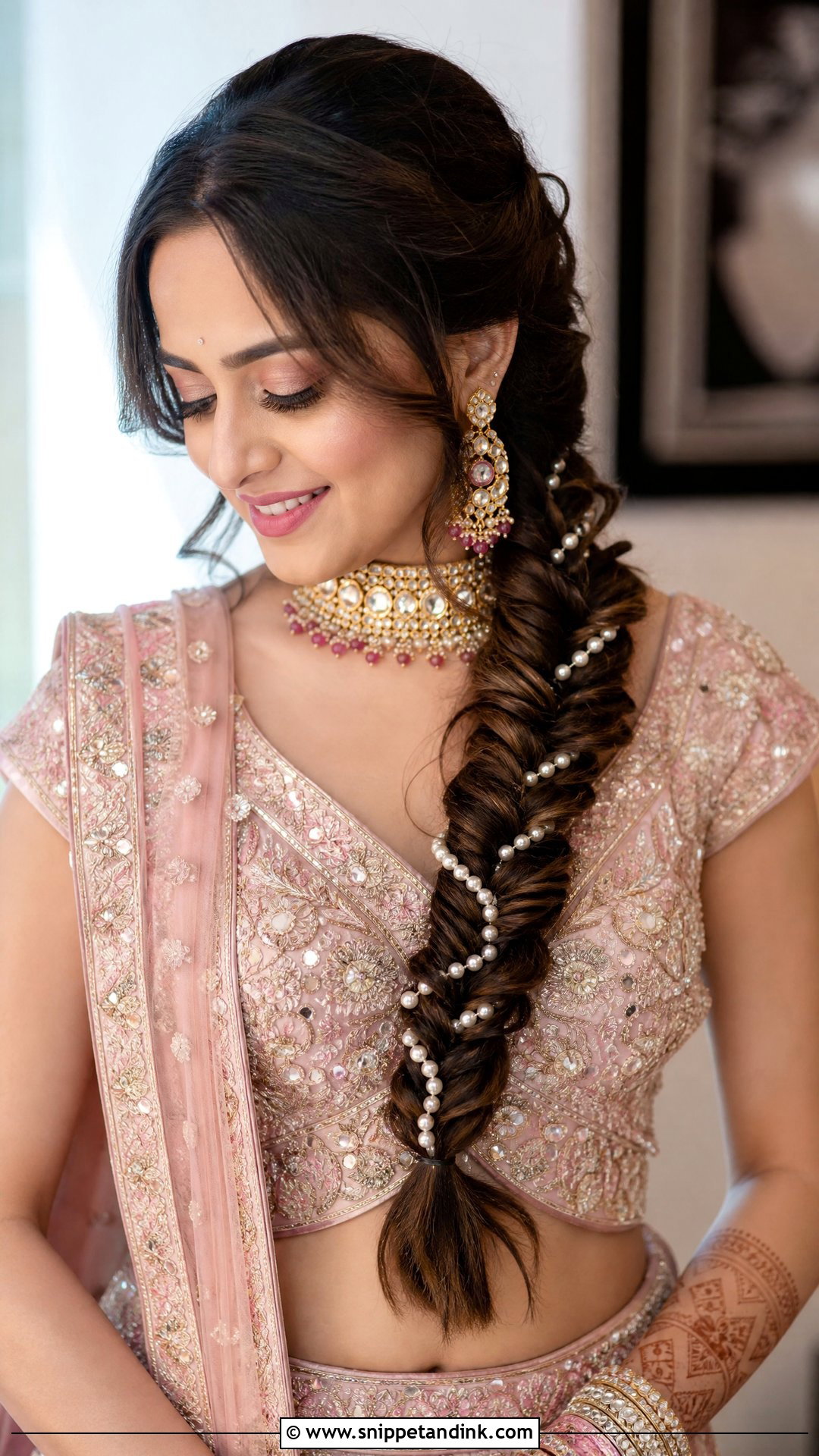
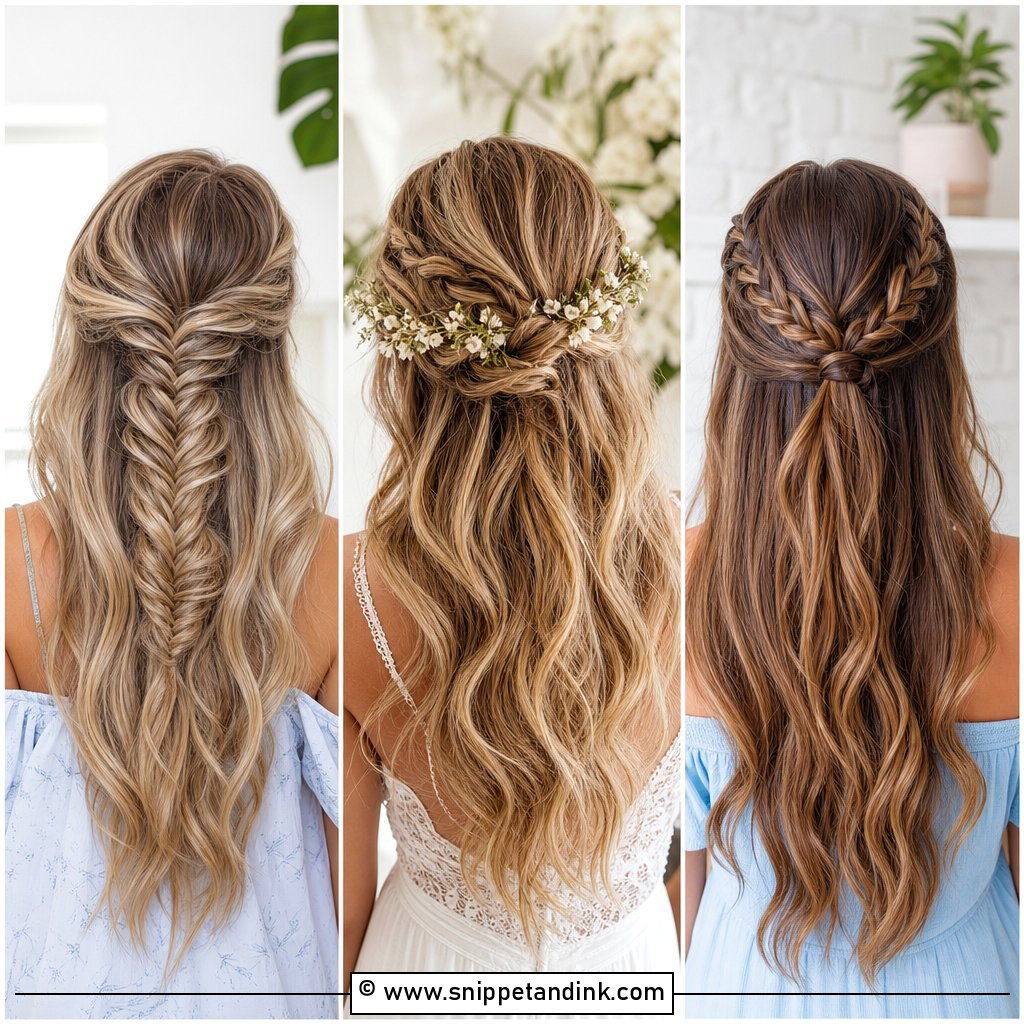
Fishtail braids look intricate but go quickly on long hair, and they hide uneven layers better than a three-strand plait. I loosen each section after braiding so the herringbone pattern reads in photos; a tight fishtail looks like a thin rope from a distance. Pearl strings should be threaded through with a bobby pin used as a needle rather than wrapped, or they slide down the braid. Worn over one shoulder, it leaves the back of a lehenga blouse on show. On very fine hair I add a clip-in weft first.
6. Cascading Floral Waterfall Curls
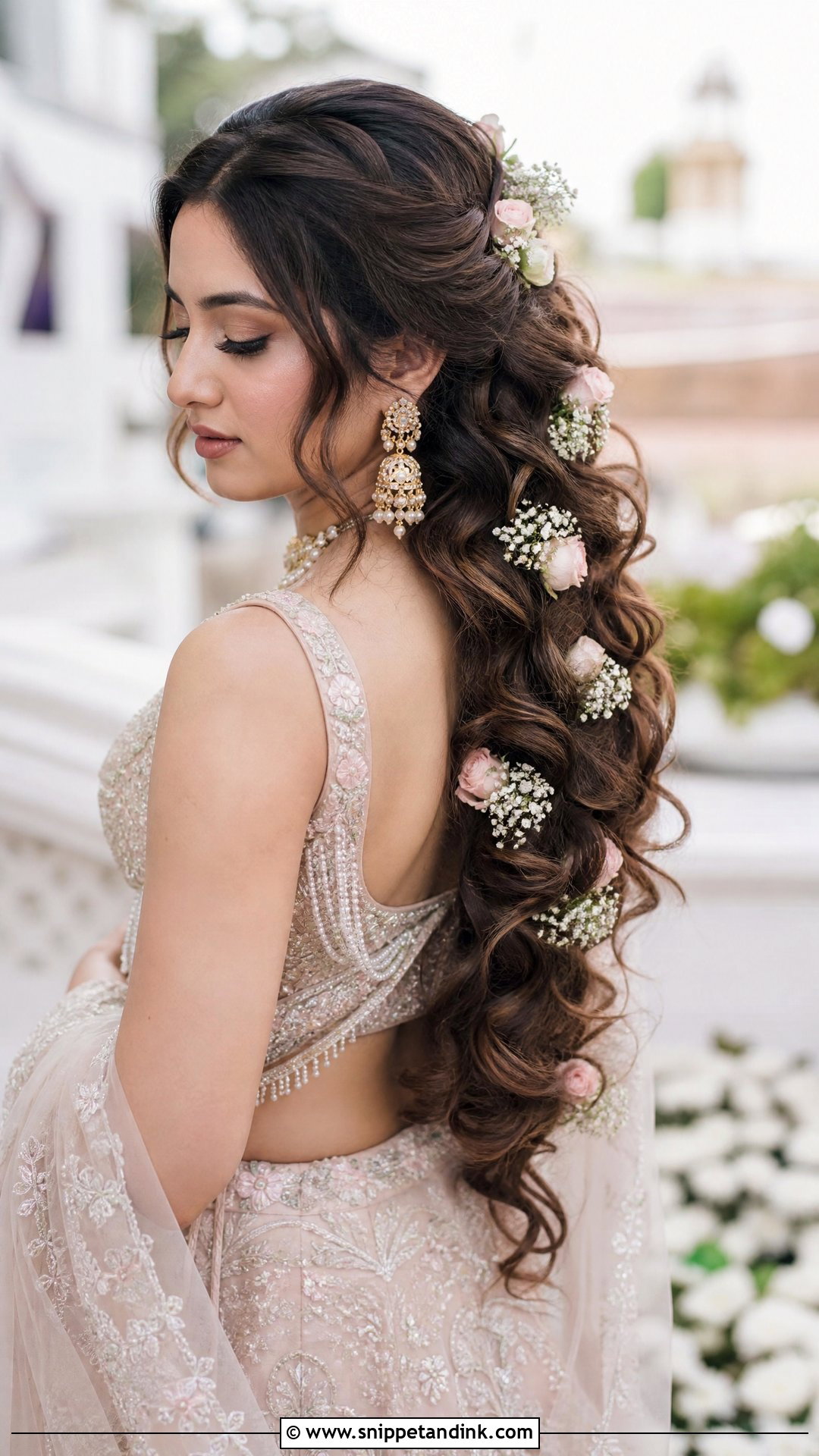
Waterfall curls with tucked flowers belong outdoors, and they are also the most fragile style on this list. Loose curls drop in humidity, so for an afternoon garden or beach event I set them with a stronger hold and keep them pinned up while makeup is being done. Small rosebuds or spray roses survive heat; baby’s breath and fresh jasmine brown by evening. Keep the dupatta draped over the arms, not the head, or the cascade gets flattened.
7. Sleek Bun With Maang Tikka
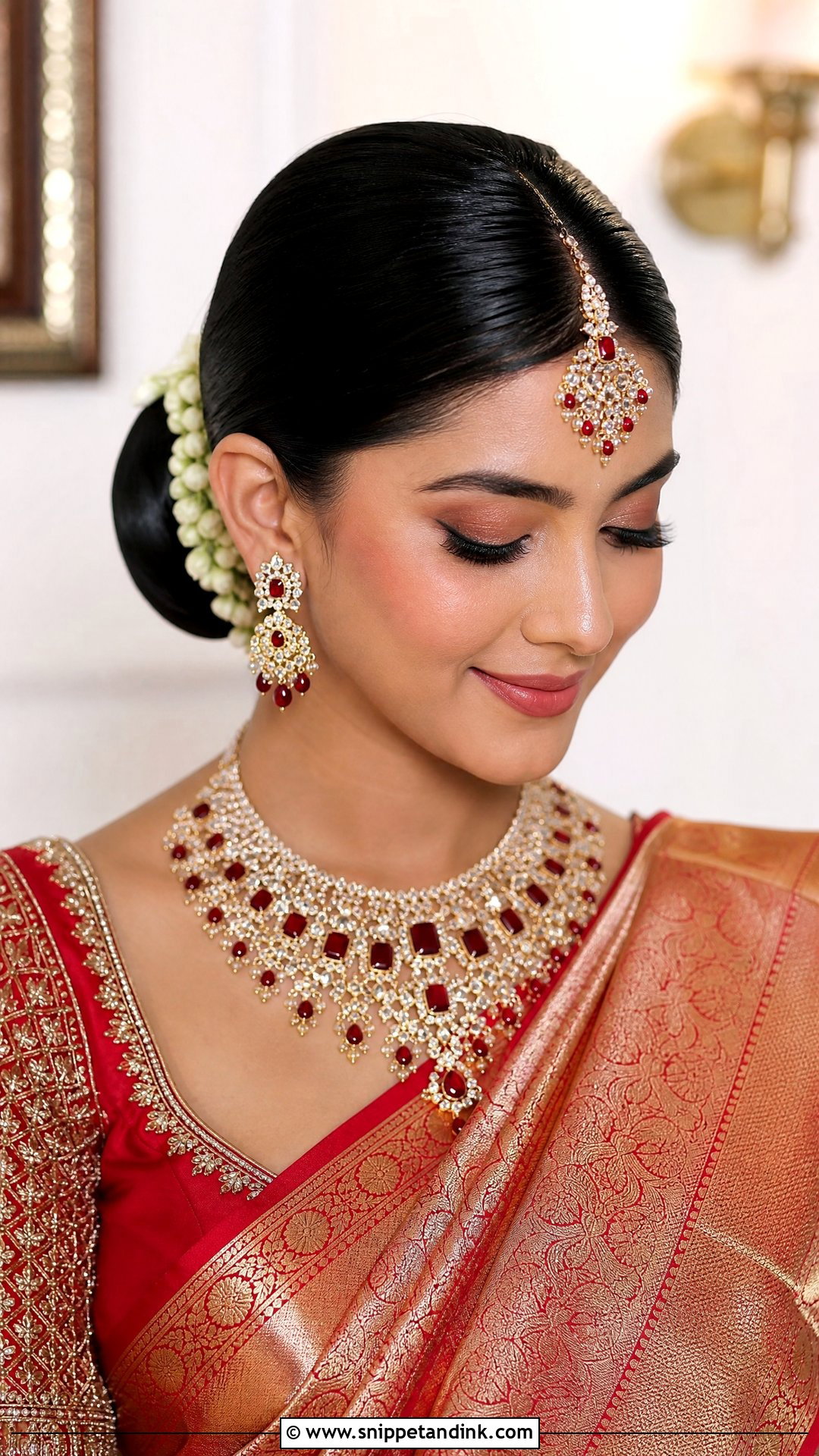
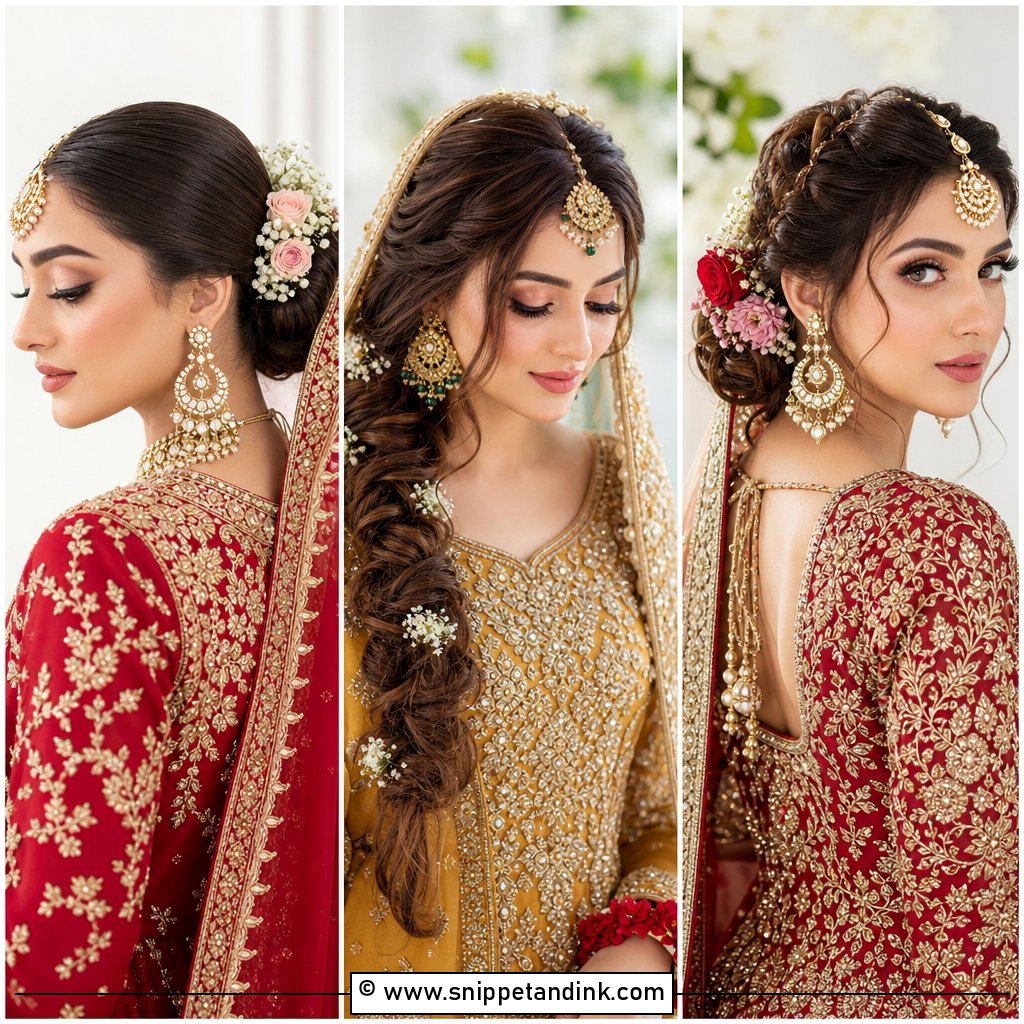
A sleek bun earns its place when the jewelry is the main event. With a statement maang tikka on a clean centre part, the smooth surface makes the gold read sharper in photos. The difficulty is flyaways: on long, layered hair, short pieces pop up at the crown, so I smooth with a firm gel near the parting and a soft brush, not hairspray alone. It sits low under a heavy saree pallu or higher under a dupatta, depending on where the fabric needs to anchor. It is unforgiving if your hairline has gaps, so I’d test it first.
8. Loose Curls With Side Part
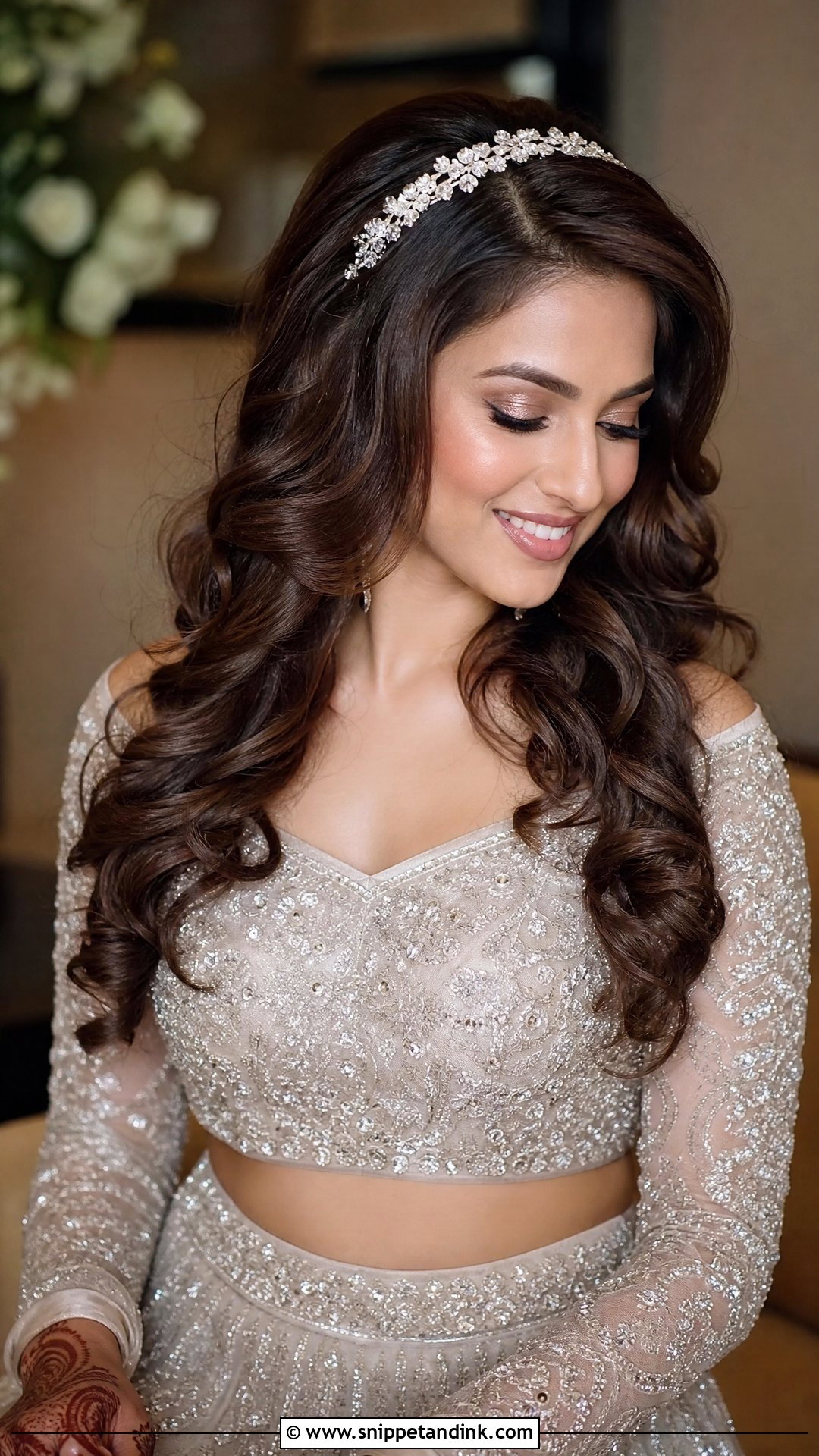
Loose curls with a deep side part are a reception favourite, and halo extensions are often what give the crown that fullness. The side part is what makes it flattering, adding asymmetry and lift to a round face. I curl away from the face and leave the curls pinned until just before the bride walks out, because long hair pulls curls straight under its own weight. At an outdoor summer event, expect soft waves by the end of the night rather than ringlets.
9. Dutch Braid Crown
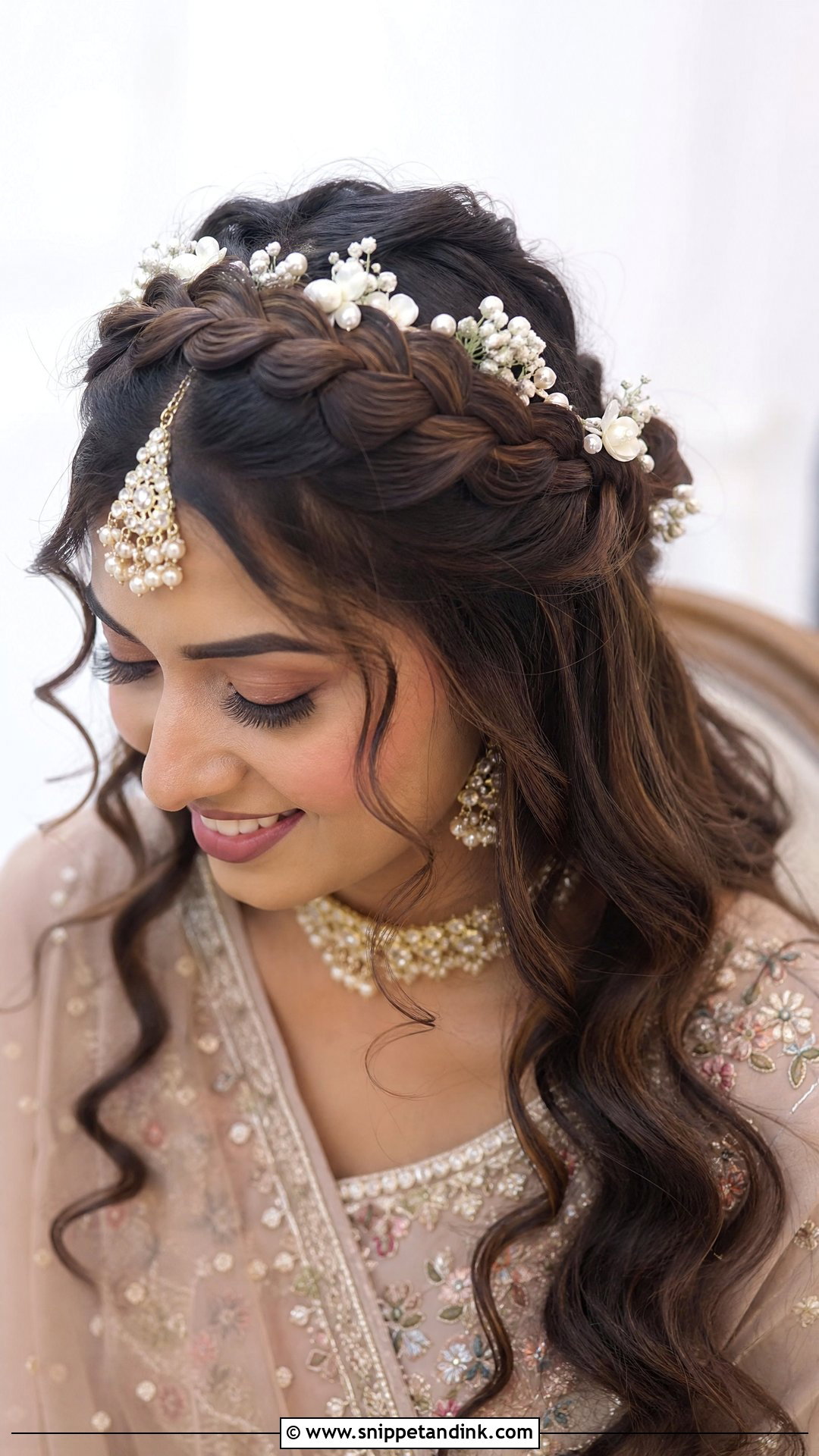
A Dutch braid crown is braided under rather than over, so it stands up from the scalp. That raised ridge gives florals and pearl pins a ledge to sit on. I start the braids behind the ears and meet them at the top; on very long hair, the tail tucks under itself rather than adding bulk. It is light and holds through dancing. Skip it if a heavy dupatta goes over your head, since the crown sits exactly where the fabric needs to rest.
10. Open Hair With Curtain Bangs
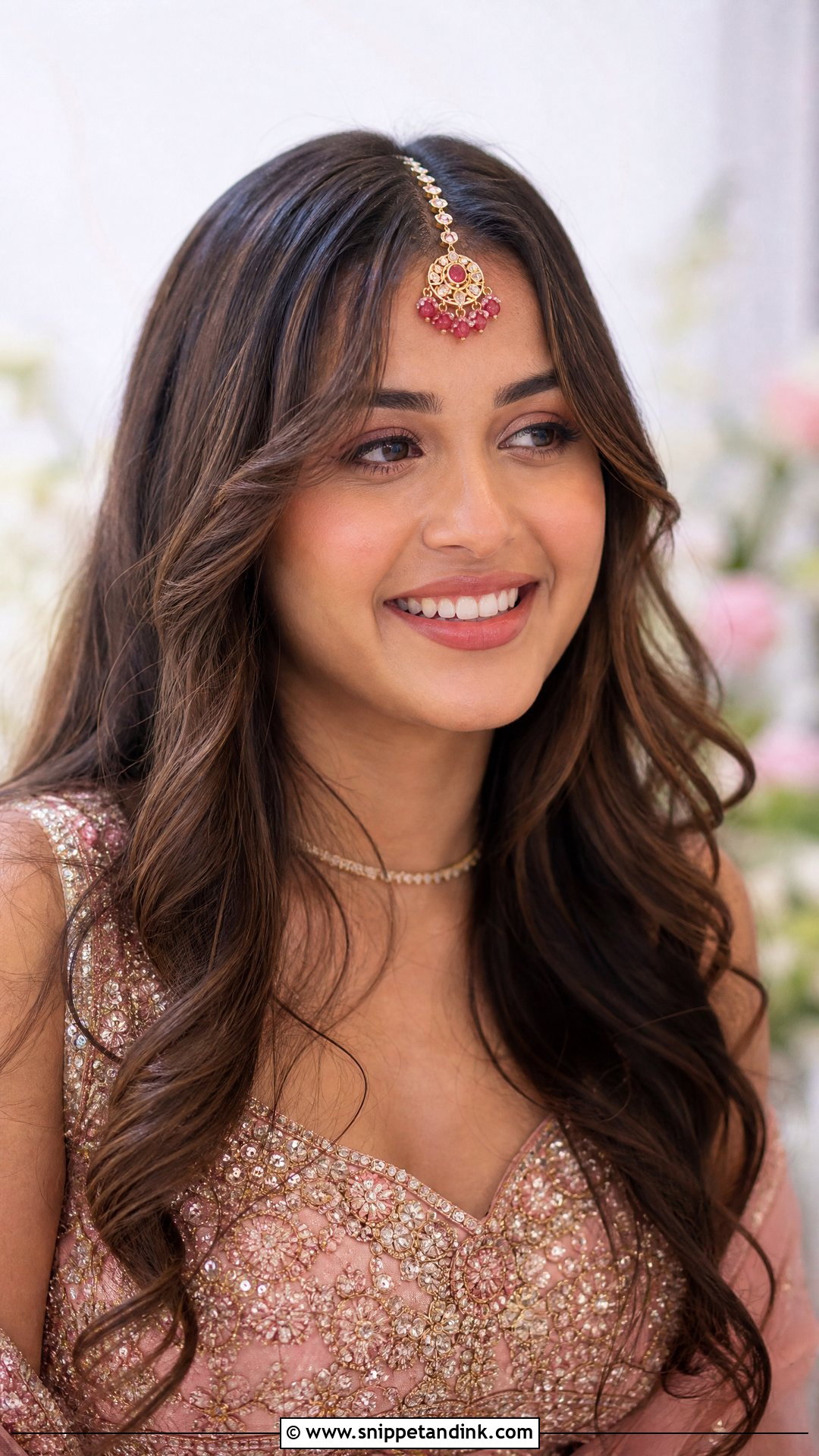
Curtain bangs only work at a wedding if they are cut at least two weeks before, so they settle and lose that fresh-trim bluntness. I blow-dry them over a round brush and set them in a velcro roller while the rest of the hair is styled open. They soften a long face and frame a tikka nicely at sangeet or reception. The catch is sweat. On a dance floor they separate fast, so a little dry shampoo at the root helps.
11. Rose Twist Updo
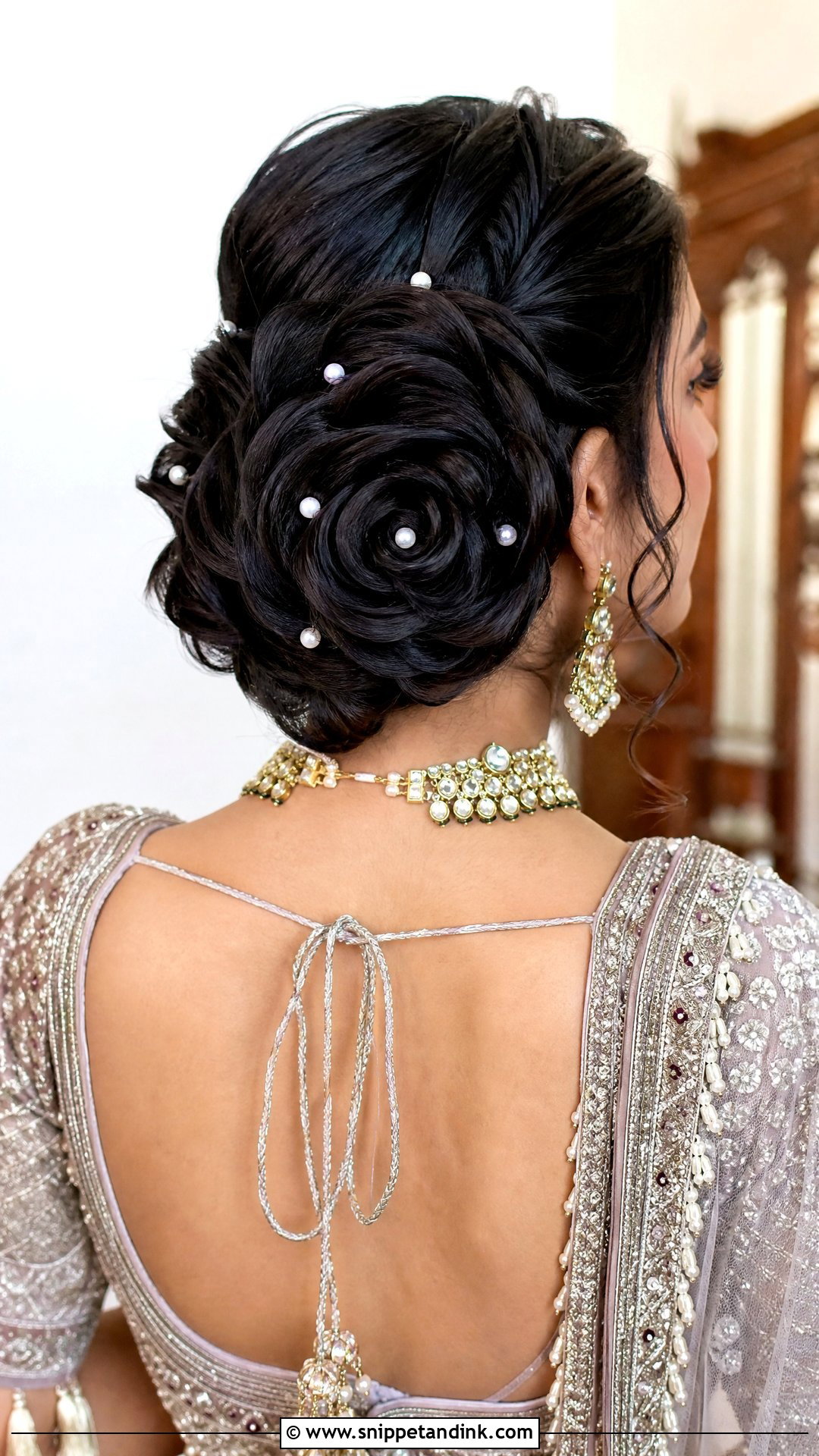
The rose twist updo is sculptural work. I twist small sections, wrap each into a coiled petal and pin it through the centre, building outward. It needs second-day hair with some grip, because freshly washed long hair slips out of the coils. The bare neckline lets a heavy choker show completely, which is why I like it for the main ceremony, and small crystal pins catch light between the petals. Give it extra time at the trial; it takes far longer than a standard bun.
12. Mermaid Braid With Florals
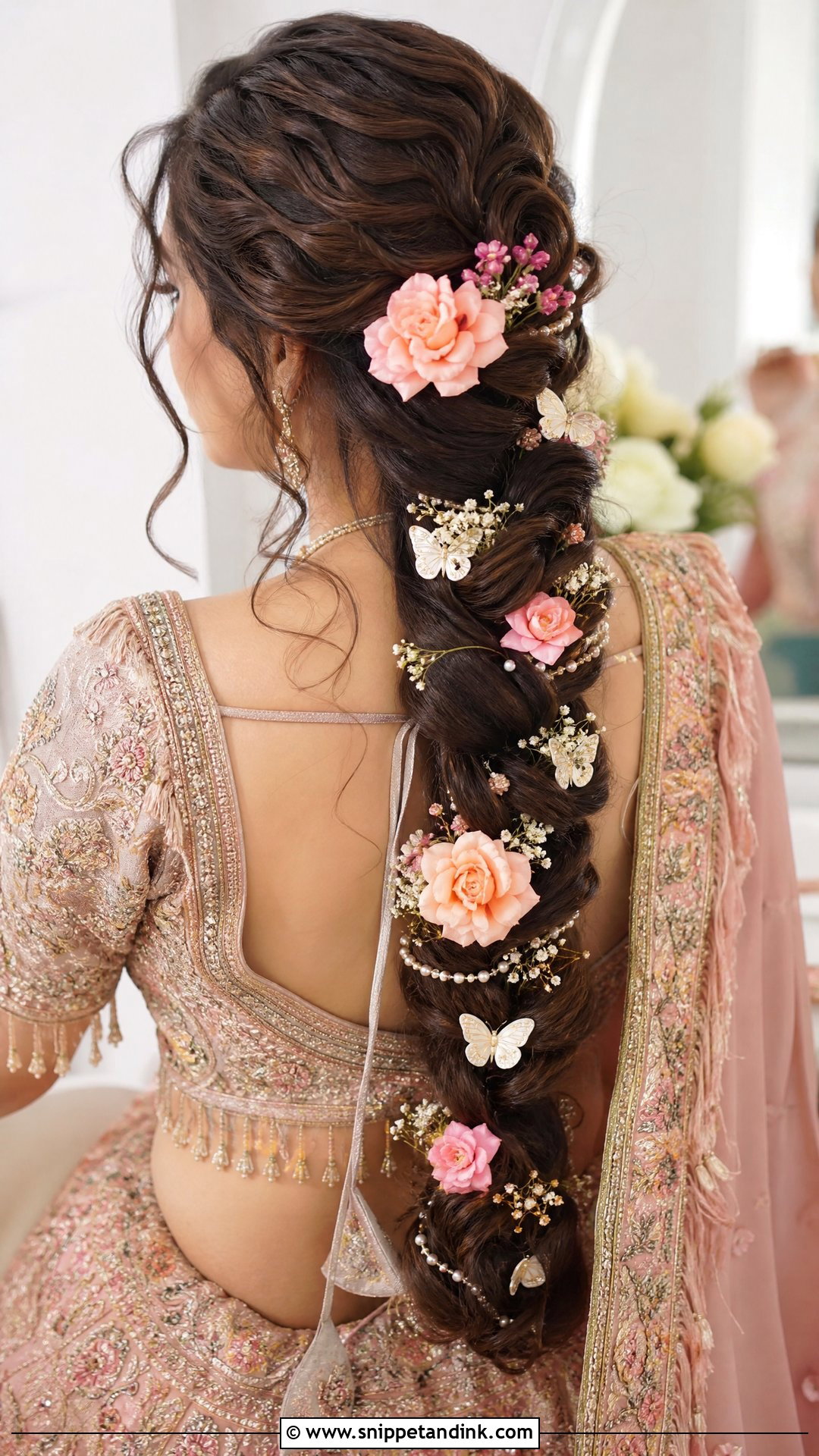
A mermaid braid weaves several sections loosely into one wide plait, which is how it gets that fanned, layered width. It needs genuinely thick, long hair. On medium density I add wefts, otherwise the braid looks stringy. I pull each loop out by hand after braiding, then pin small florals or pearls into the gaps. From behind it’s the most dramatic option here, so remind your photographer to take a back shot. Under a heavy dupatta it disappears entirely.
13. Bubble Braid With Ribbons
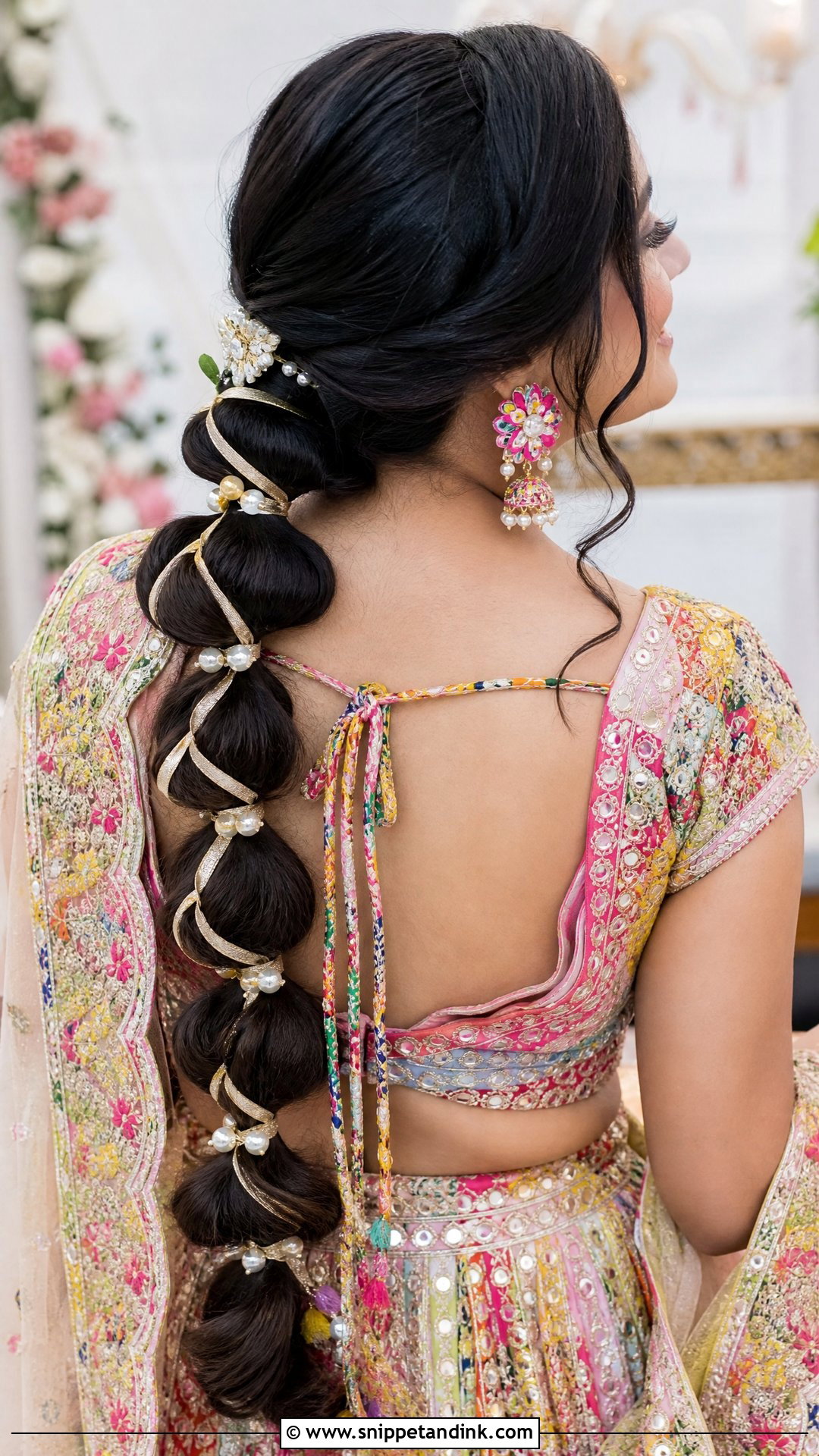
Bubble braids are the quickest style on this list: small clear elastics every few inches, each section pulled out into a puffed bubble. I wrap gota ribbon over the elastics to hide them, which also brings the bright colour mehendi outfits call for. Because it starts as a ponytail, the weight of very long hair pulls on the crown, so I anchor the base with a small braid underneath. It’s playful, easy to fix if a bubble flattens, and better kept for daytime events.
14. Side Swept Curls With Gajra
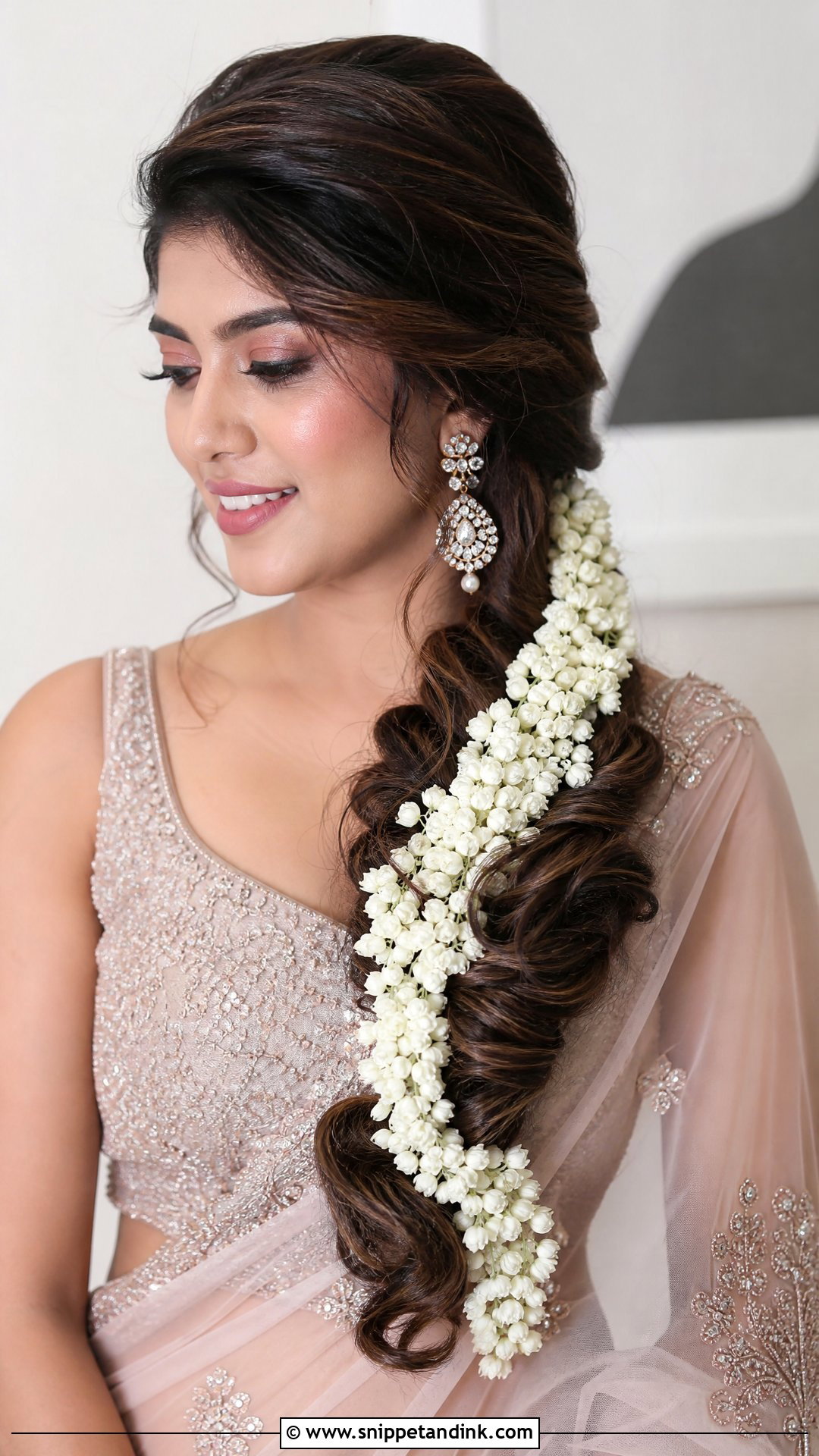
Side swept curls with a gajra of jasmine bring old-Hollywood shape and a traditional scent together. I pin the hair behind the opposite ear with crossed pins so the sweep stays put, then wrap the gajra along the curls loosely enough not to crush them. It shows off long earrings and a bare collarbone. The gajra goes on last and stays chilled until it’s needed, since jasmine bruises and browns in warm rooms.
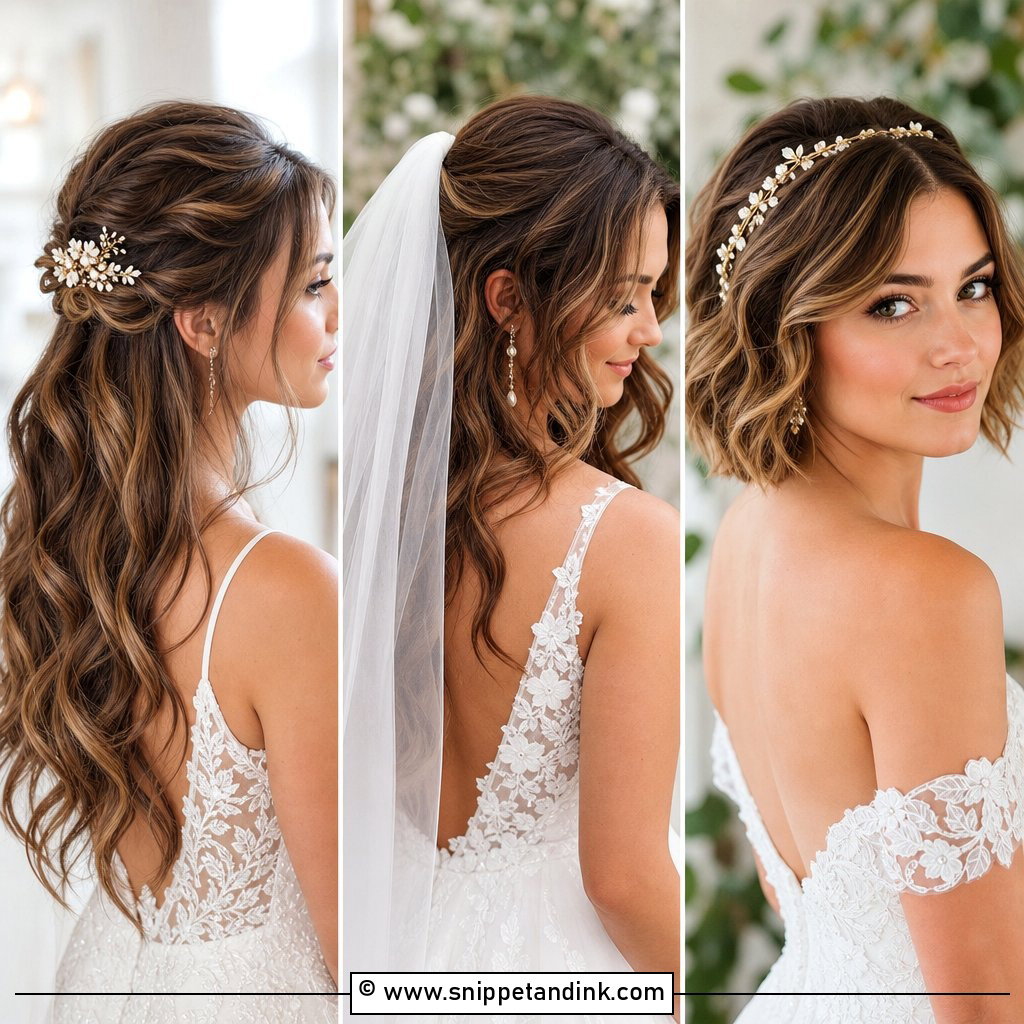
15. Braided Bun With Temple Jewelry
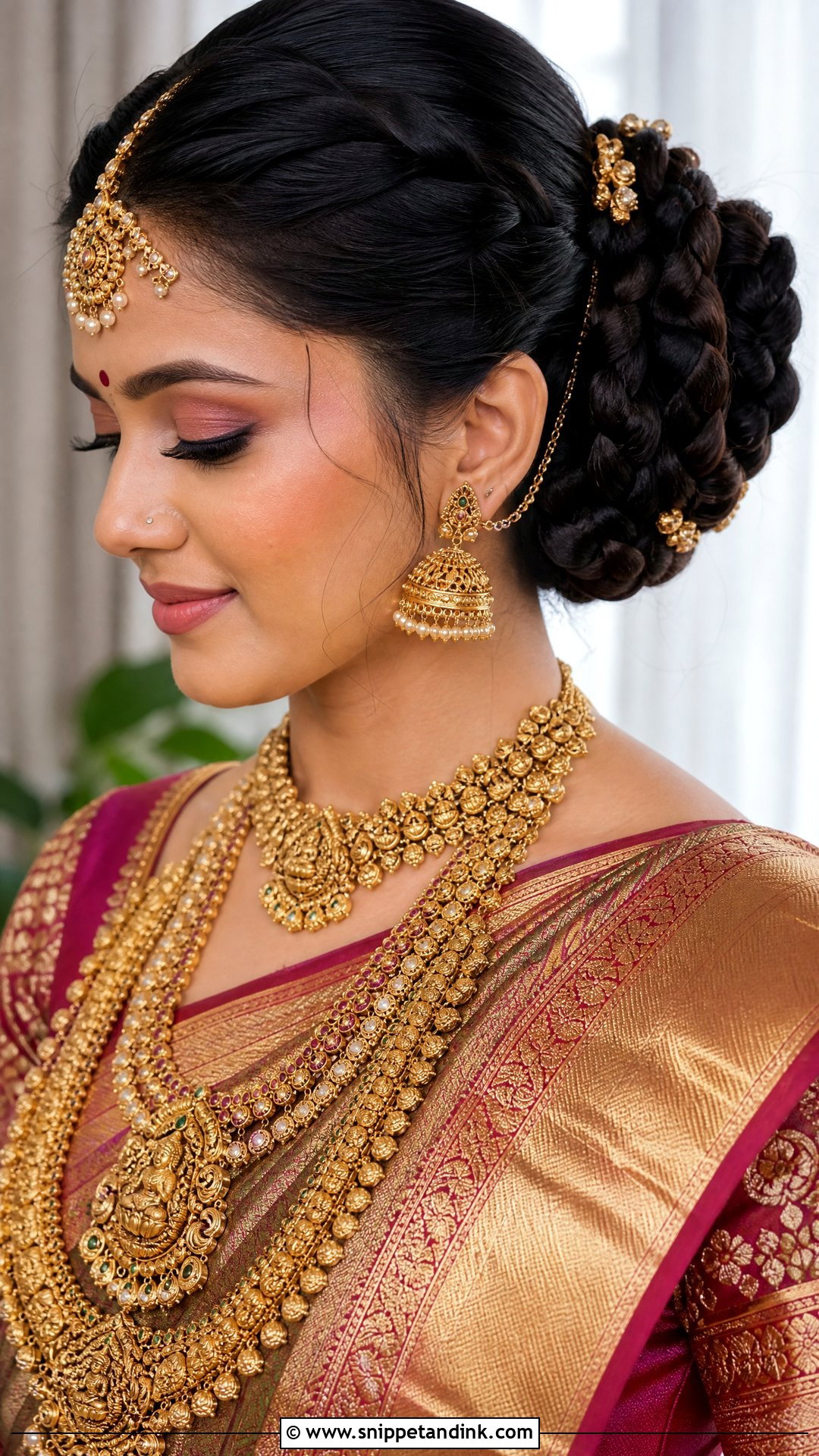
A braided bun dressed with temple jewelry is the heaviest style I do. Gold hair ornaments and jadai pieces add real weight, so I build the bun over a solid base with cross-pinned bobby pins and a few U-pins anchored deep. It sits well with silk sarees and the heritage look many South Indian brides want. If the jewelry is borrowed or antique, bring it to the trial. Some pieces have sharp hooks that need thread to stay put, and that’s far easier to solve weeks ahead.
16. Voluminous Open Waves
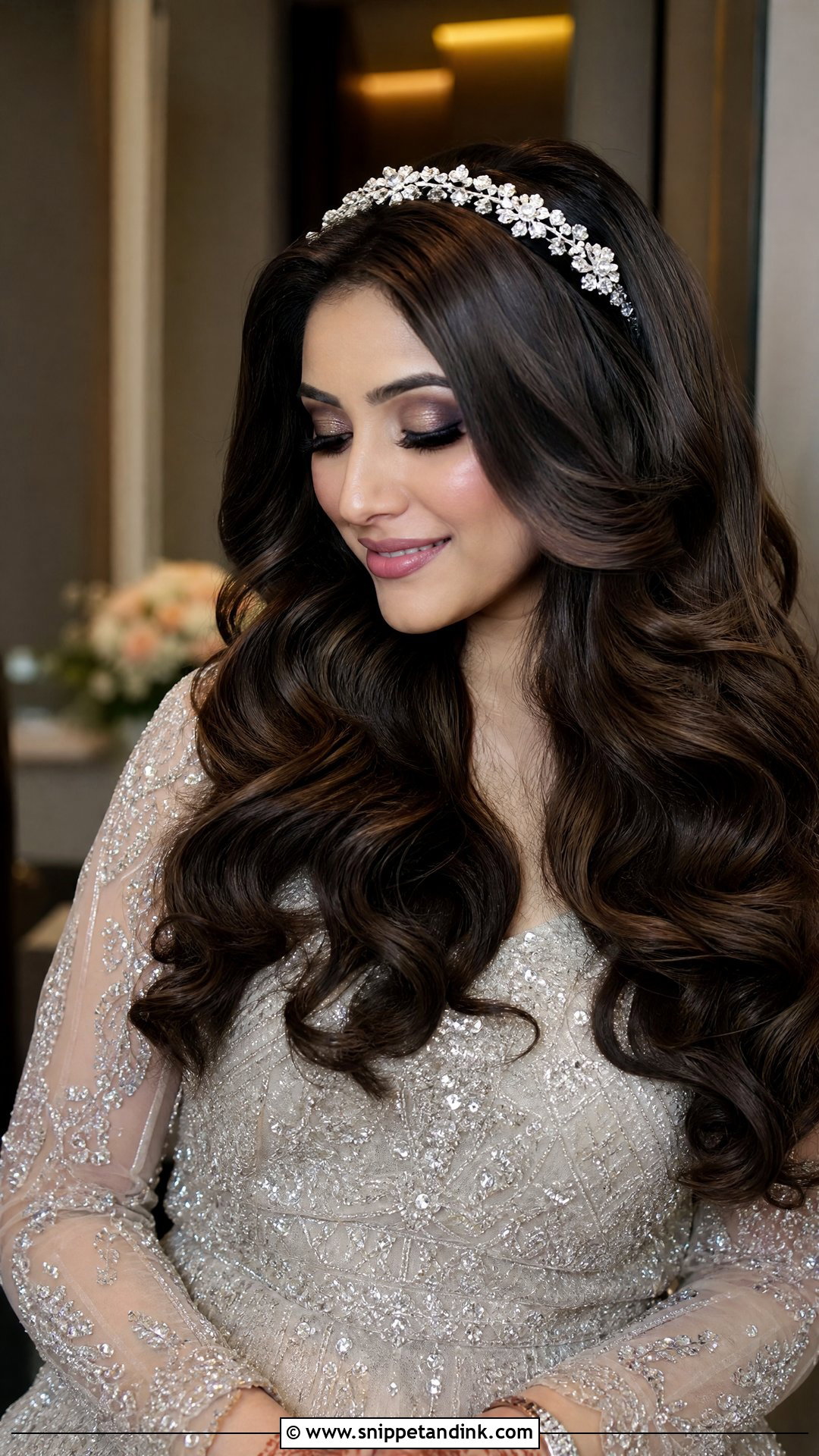
Voluminous open waves get most of their volume from prep: a root-lift mousse, a rough-dry upside down, then large-barrel curls brushed out. Extensions help if your ends are thinner than your roots. The hard part is keeping the waves through a long evening, because long hair is heavy and drops. When the ceremony comes first, I set them in pin curls under the dupatta and brush them out for the reception. A sparkly headband or tikka finishes it without competing.
17. Low Bun With Pearl Accents
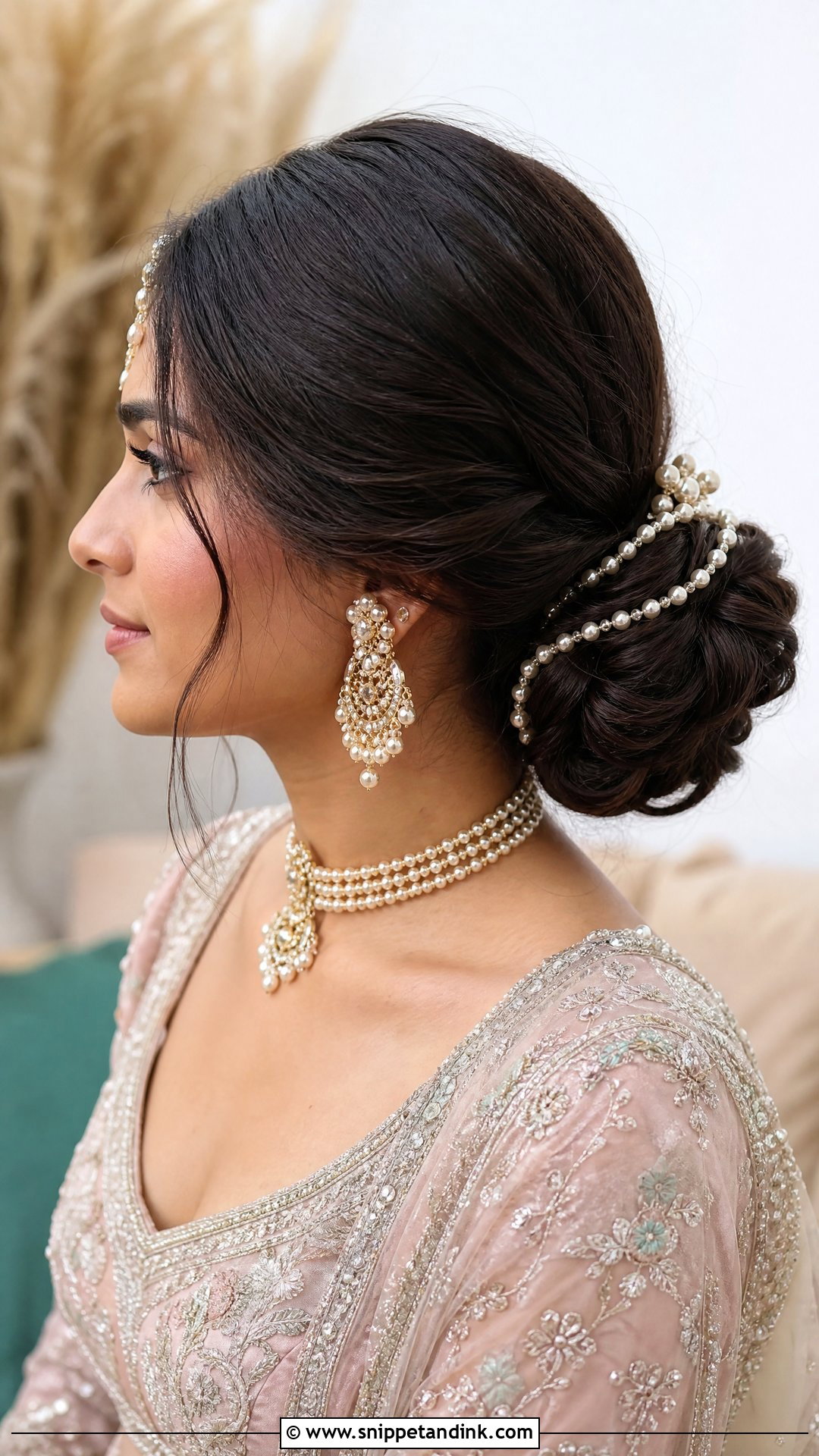
Pearls on a low bun read as quiet luxury, especially beside pastel lehengas and pearl sets. I use pearl pins in two or three sizes so they scatter naturally instead of sitting in a straight line. The low bun keeps long hair tidy for hours and leaves room for a heavy necklace. On very dark hair, pearls glow; on lighter brown or highlighted hair they can blend in, so I sometimes switch to champagne pearls.
18. Boho Braided Half Updo
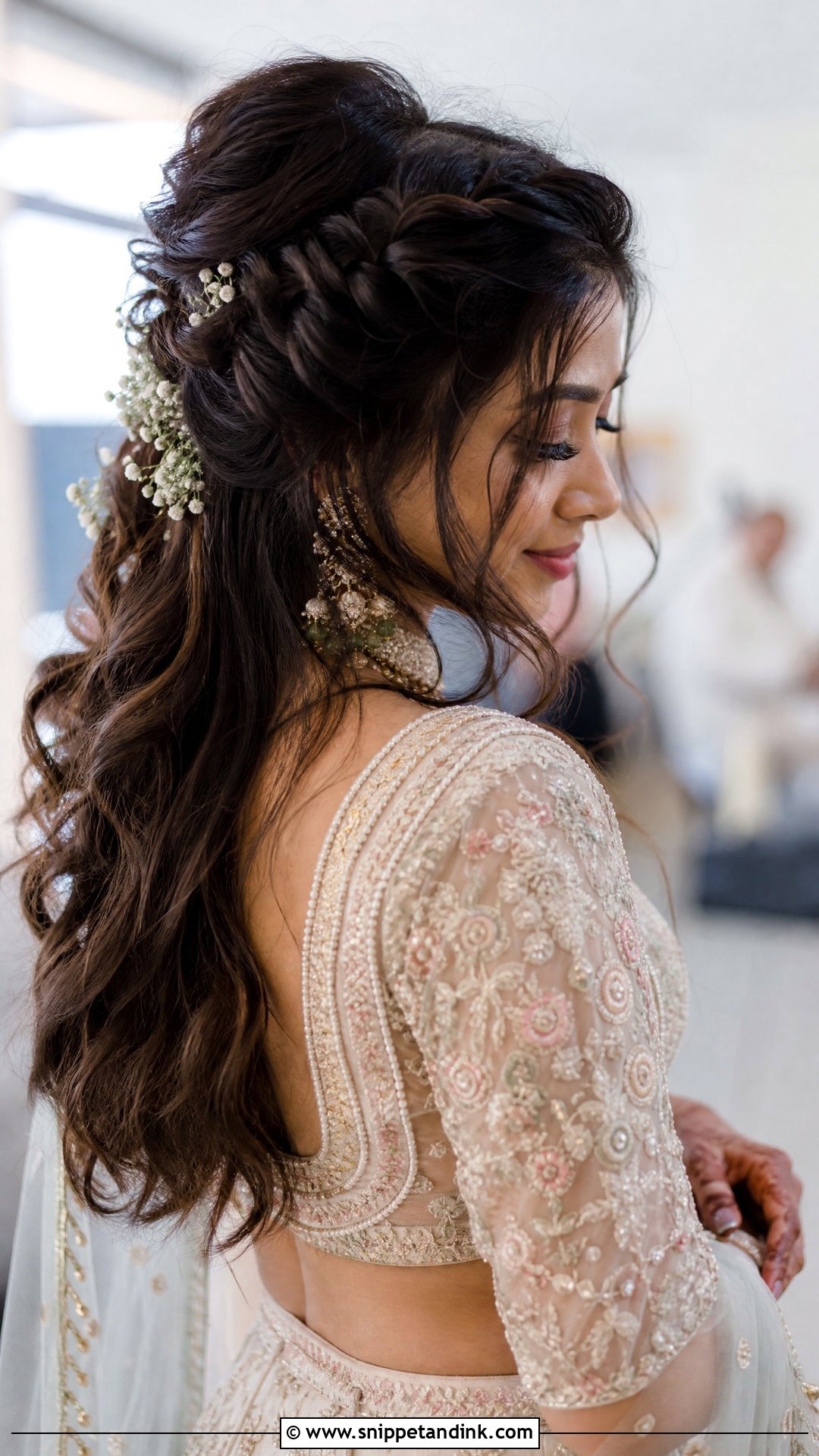
A boho braided half updo uses two or three thin braids across the top, pinned back over loose waves. It keeps hair out of your face, so I suggest it for mehendi and destination functions. Thin braids are where flyaways show most, which is why I braid on slightly damp hair with a light cream. Tiny flowers tuck in without wires. On fine hair, loosen the braids or they look sparse.
19. Twisted Crown Braid Updo
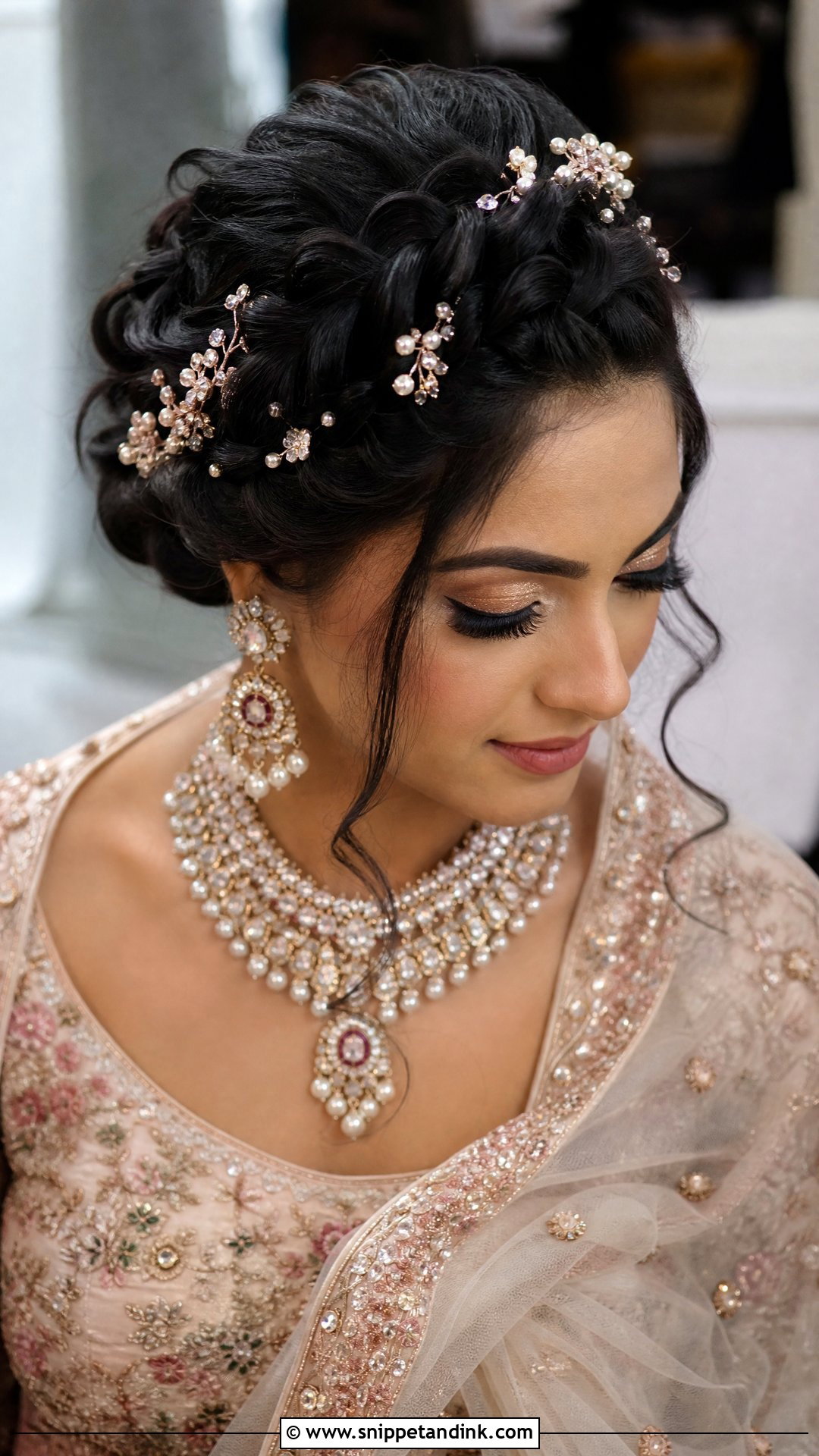
A twisted crown braid lifts the hairline and adds height, which balances a heavy lehenga and dramatic earrings. I twist some sections, braid the rest and wrap everything around the crown, with jeweled pins placed at the twist points. The neck stays clear for a statement necklace, and it holds its shape when photos come from every angle at the main ceremony. On thick long hair it can feel top-heavy, so I anchor it lower at the back to spread the weight.
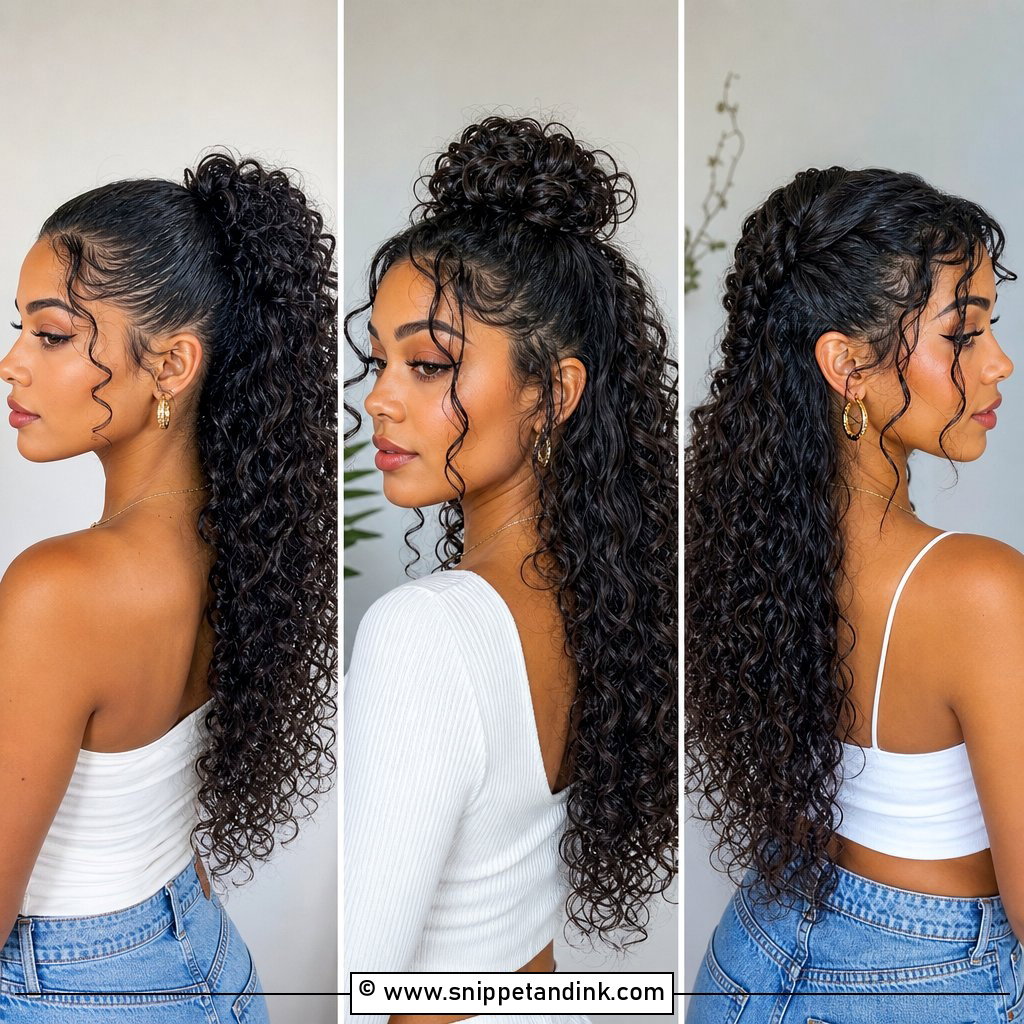
20. Glam Open Hair With Headband
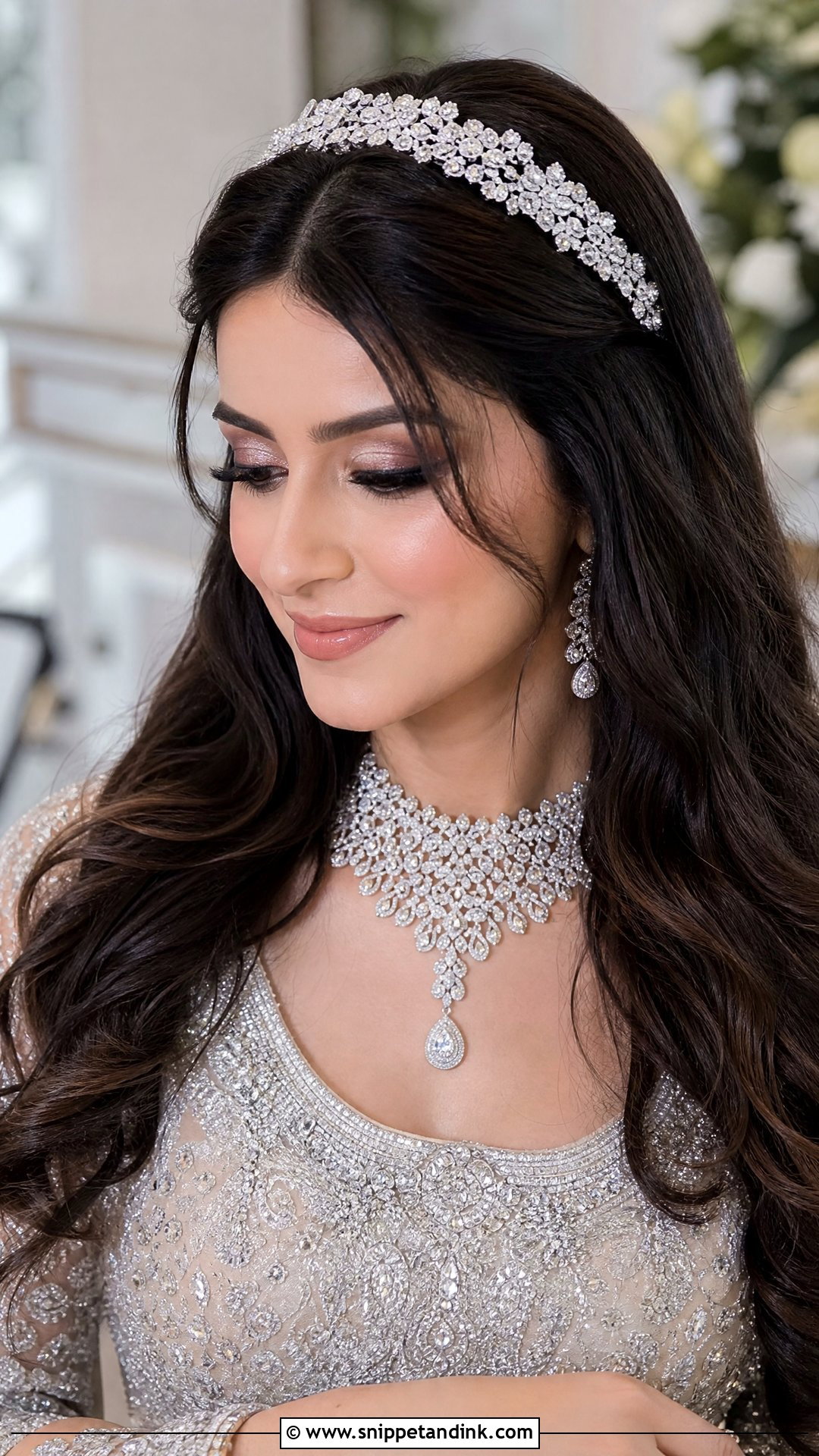
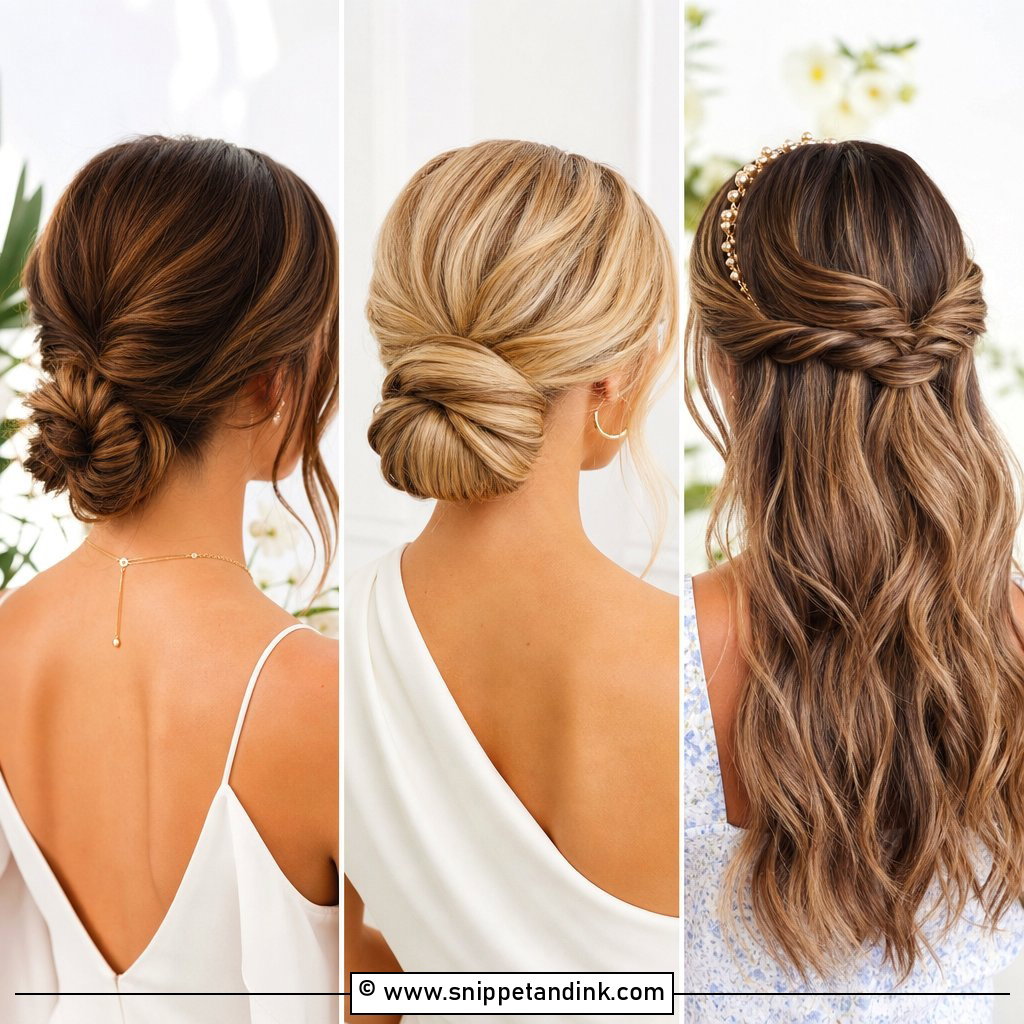
Long open hair with a jeweled headband is the most modern style here and the easiest to wear at a late reception. I decide between soft waves and sleek straight hair by the outfit: waves for flowing fabric, straight for structured gowns or a sequinned lehenga. The headband swaps florals for sparkle. Make sure it has small teeth or a padded inside, or it slides back on silky hair, and bring it to your trial so it can be tested on your texture.
Moving From Ceremony Braid to Reception Waves in One Day
Many Desi weddings stack the ceremony and reception on the same day, and long hair is surprisingly slow to change. A tight braid leaves a crimp, and a sleek bun leaves a ridge where the elastic sat. If you want two looks, plan the first with the second in mind.
Styles That Release Well
A low bun built on pin curls lets down into waves with a light brush-out and a few passes of the iron. A loose braid leaves soft texture you can work with. A sleek gelled bun or a tightly pinned crown braid takes the longest to undo, since the root needs dampening to lose the shape.
Fresh Flowers Through a Long Day
Jasmine and other delicate blooms bruise and brown within hours in a warm room. I keep spare gajras in a cool box, wrapped in damp paper, and swap them before the reception. Roses and orchids last longer, and silk or pearl accents last indefinitely, which is why many brides switch to them for the evening.
- Allow 30 to 45 minutes for a change of hairstyle, more if the jewelry also changes.
- Pack bobby pins, a fine comb, dry shampoo, a travel iron and a mini hairspray.
- Ask someone close to you to carry that kit and keep the spare flowers cool.
Matching Your Hair Plan to Each Event
Any of these can work, but the right one depends on your dupatta, your jewelry, the weather and how many hours you’ll wear it. Bring outfit photos and your actual tikka and gajra plans to your trial, wear a top with a similar neckline, and tell your stylist which events run back to back. Save the ones you love, then let your hair texture and your schedule narrow the list.
You'll Like These Ideas:



Leave a Reply