
Most brides who tell me they want something classy are really asking for a dress they won’t wince at in twenty years. These Classy wedding gown ideas lean on that: good fabric, a shape that suits the body wearing it, and one detail allowed to lead. Some of my brides land on a clean satin column with pearl studs; others need the sweep of a lace ball gown or a sculpted basque waist. Bows, drape, pearls and sleek crepe all have a place here, and so do short reception dresses. What decides it is your venue, your season and how you actually like to move, so below are 30 gowns with the styling I’d put around each one.
The Order and Alterations Calendar for a Bridal Gown
Bridal gowns are rarely bought off the rack. Most are made to order once you choose a size, and the factory or atelier needs months to cut and sew it. I tell my brides to start shopping about nine to twelve months out, because that leaves time for production plus alterations without paying rush fees. Timings vary between designers, so ask the shop for their current delivery estimate in writing.
- Nine to twelve months out: try on shapes, not just dresses. Know whether you suit a column, A-line or ball gown before you fall for a single design.
- Eight to ten months out: order. Your size is taken from your largest measurement, so expect the gown to arrive a little big in places.
- Two to three months out: first fitting. Bring the exact shoes and underwear you’ll wear, because a two centimetre heel difference changes the hem.
- Four to six weeks out: second fitting for bustle, straps and final adjustments.
- One to two weeks out: final fitting and collection. Learn the bustle yourself and teach it to whoever is helping you.
Corsets, lace sleeves and heavily beaded hems take the longest to alter, so if your favourite gown has all three, I’d add an extra fitting rather than squeeze them in.
1. Satin Ball Gown Wedding Gown
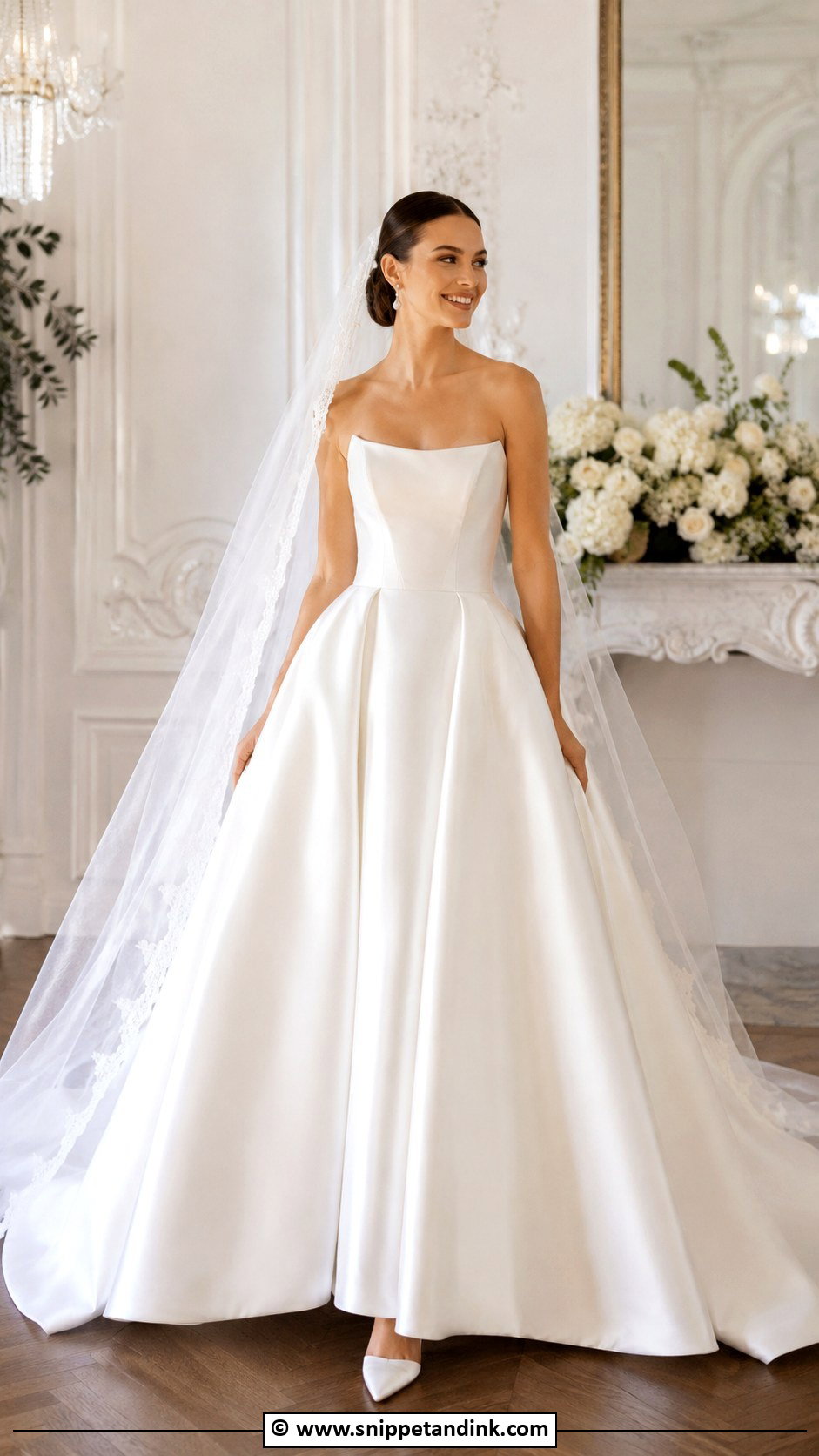
Satin carries a full skirt better than almost any fabric because it holds its own weight instead of collapsing between the layers of petticoat. The structured bodice does the shaping, so the skirt can stay plain and still make an entrance. I nearly always pull ivory or soft white rather than optic white here, since bright white satin can read blue under daylight. Pointed satin heels, pearl drops and a smooth low bun keep it clean. With a plain neckline a cathedral veil earns its length; a shorter veil lightens things for a hotel ballroom or an evening reception.
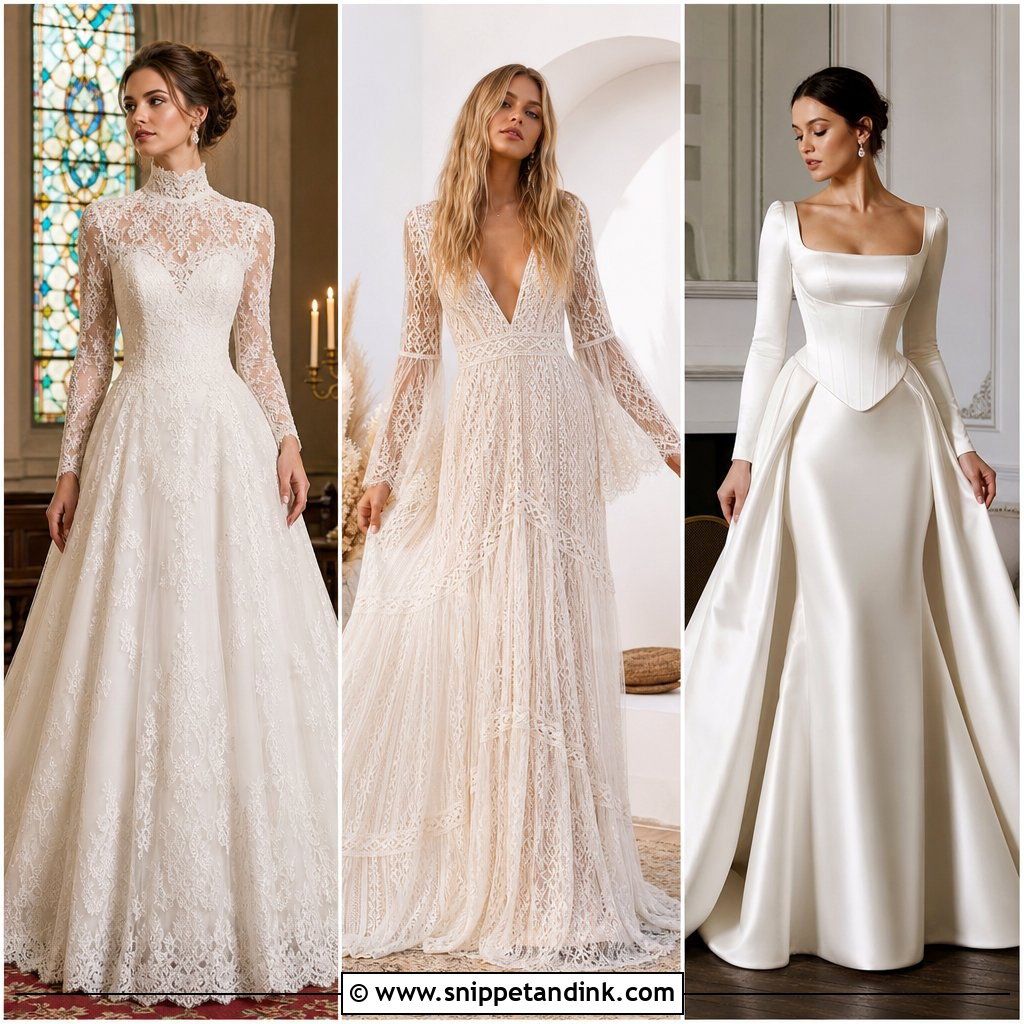
2. Long Sleeve Lace Wedding Gown
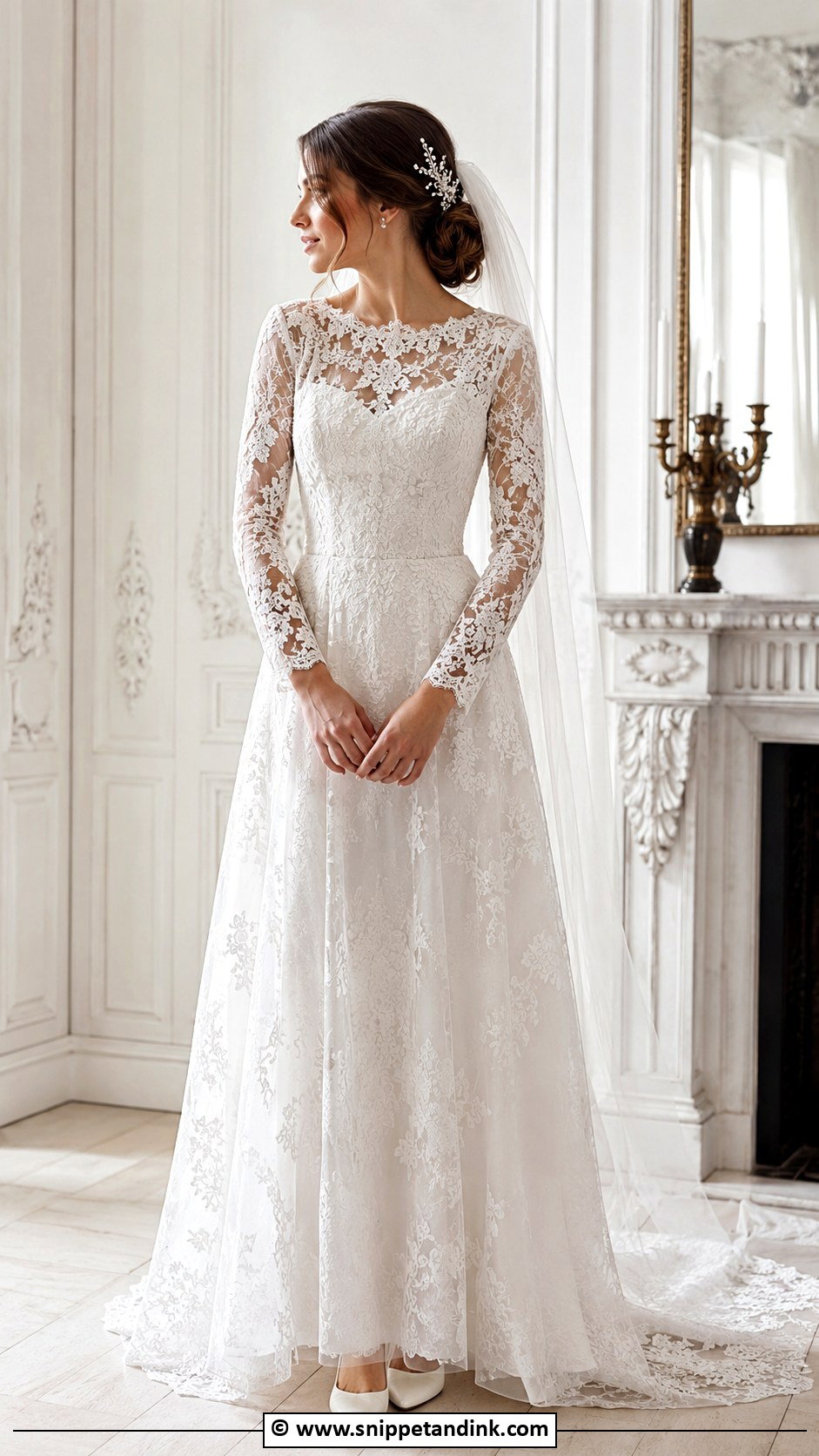
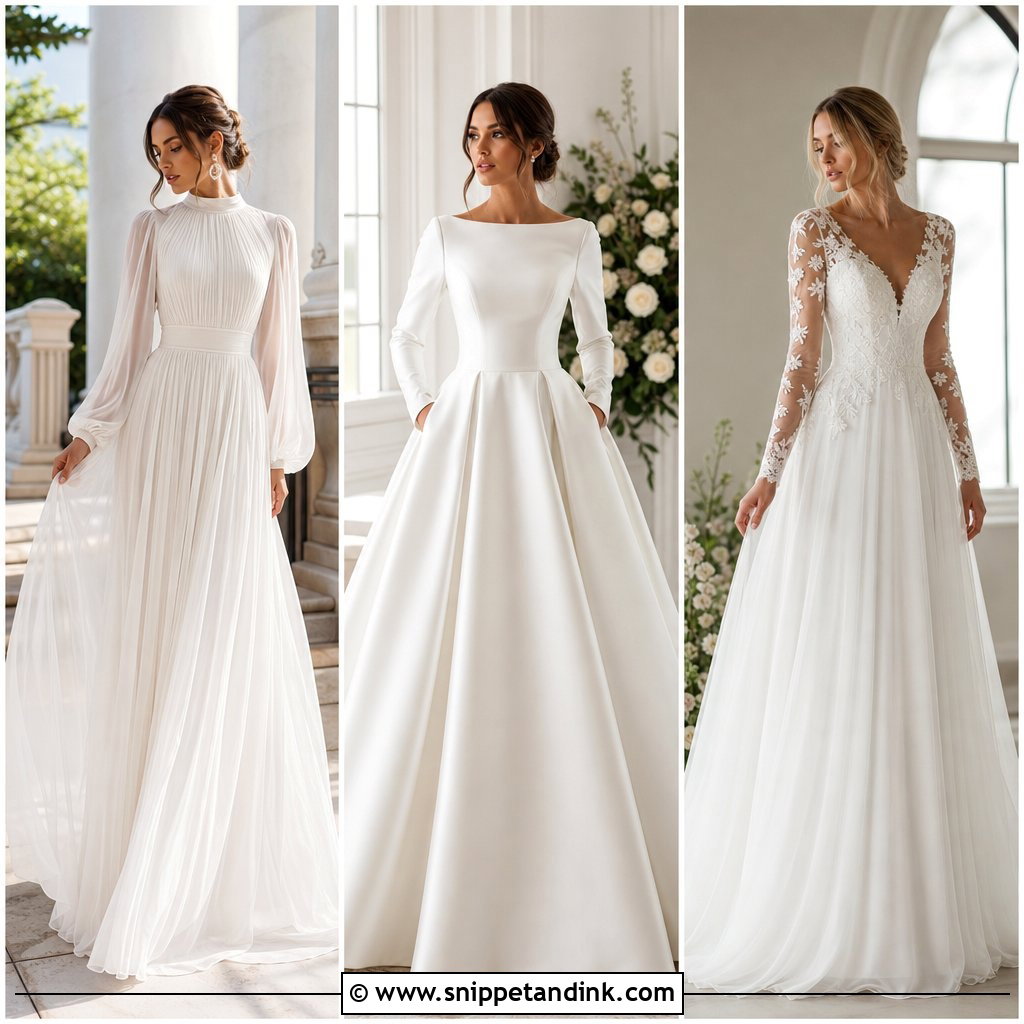
The lace sleeve is where I spend the most time at fittings. Sheer lace over the arm looks delicate, but if the armhole is cut too low you won’t be able to lift your arms to hug anyone, so I always ask brides to raise both hands over their head before we sign off. A lined bodice, scalloped cuffs and a fitted waist keep the gown polished rather than heavy. Closed-toe heels, a pearl comb and a classic chignon suit the vintage feel, and a plain veil lets the lace stay in charge. It’s the gown I reach for most for fall and winter ceremonies indoors.
3. Off Shoulder Wedding Gown
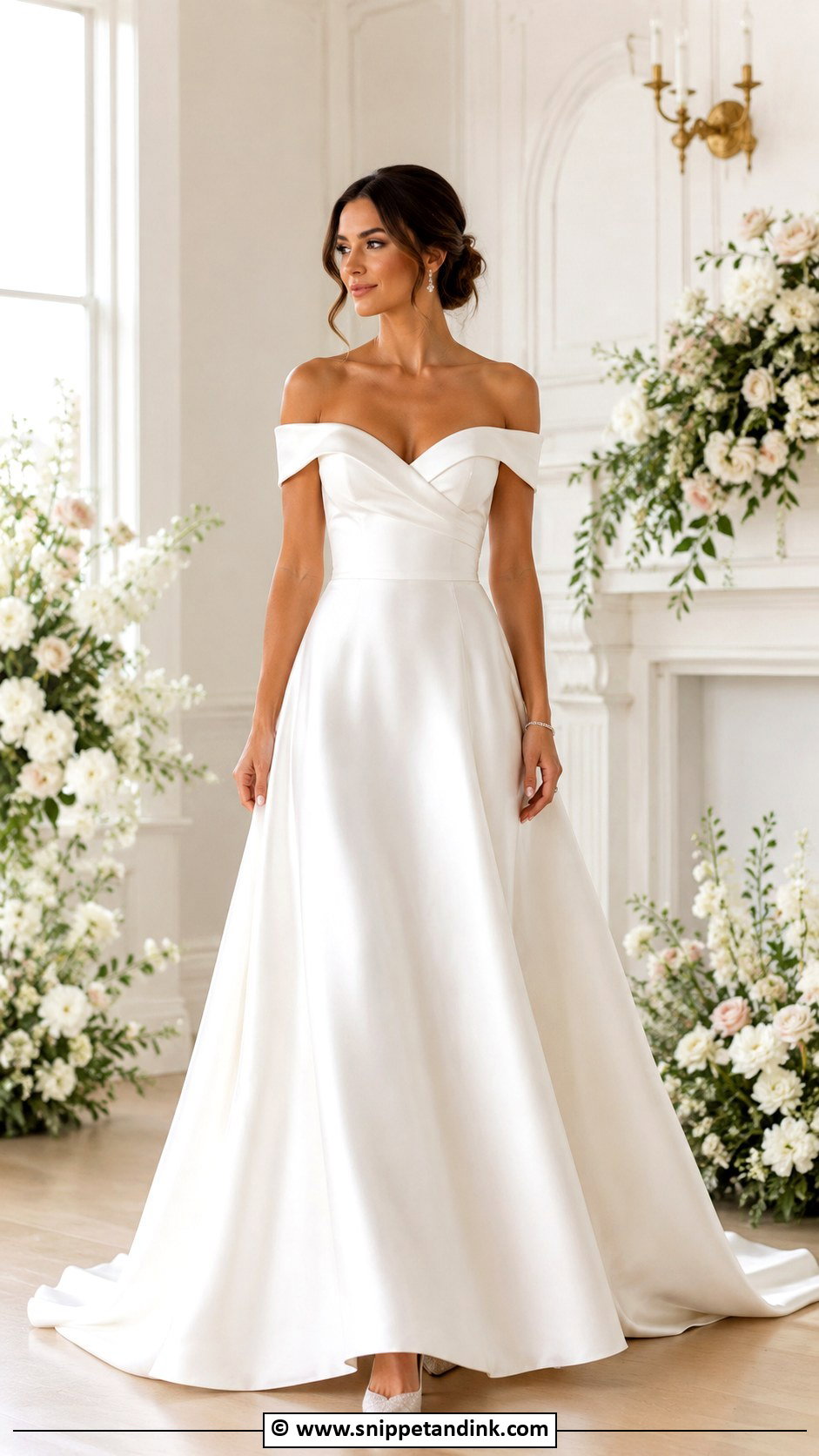
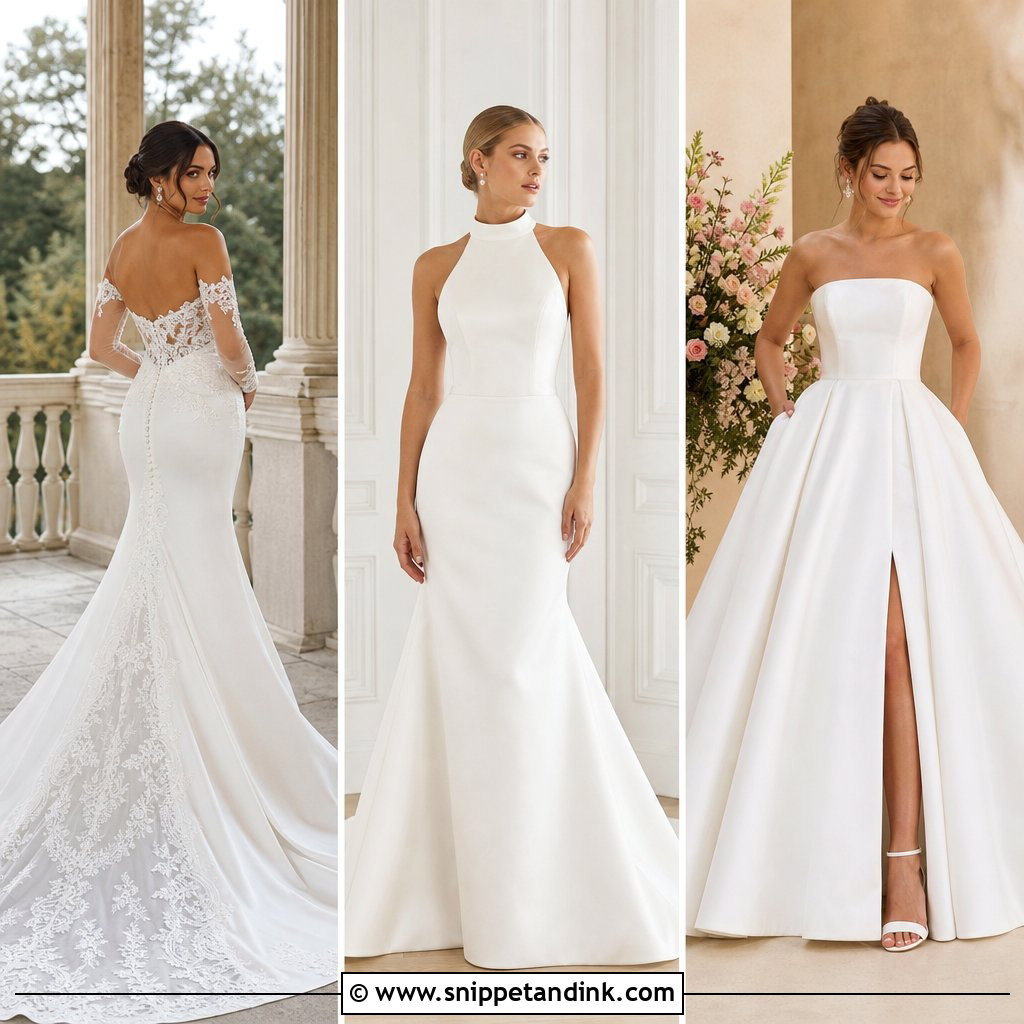
An off-shoulder neckline frames the collarbone, but it only works if the bodice is anchored properly. If the band sits on the upper arm with nothing gripping underneath, it will creep up every time you move, so I check for silicone grip tape or internal boning at the side seams. In satin, crepe, lace or tulle, a fitted bodice with a soft A-line skirt defines the waist and lets you walk easily. Wear drop earrings and a fine bracelet and skip the necklace altogether. A loose updo or side-parted waves keeps the shoulders on show.
4. Minimalist Crepe Wedding Gown
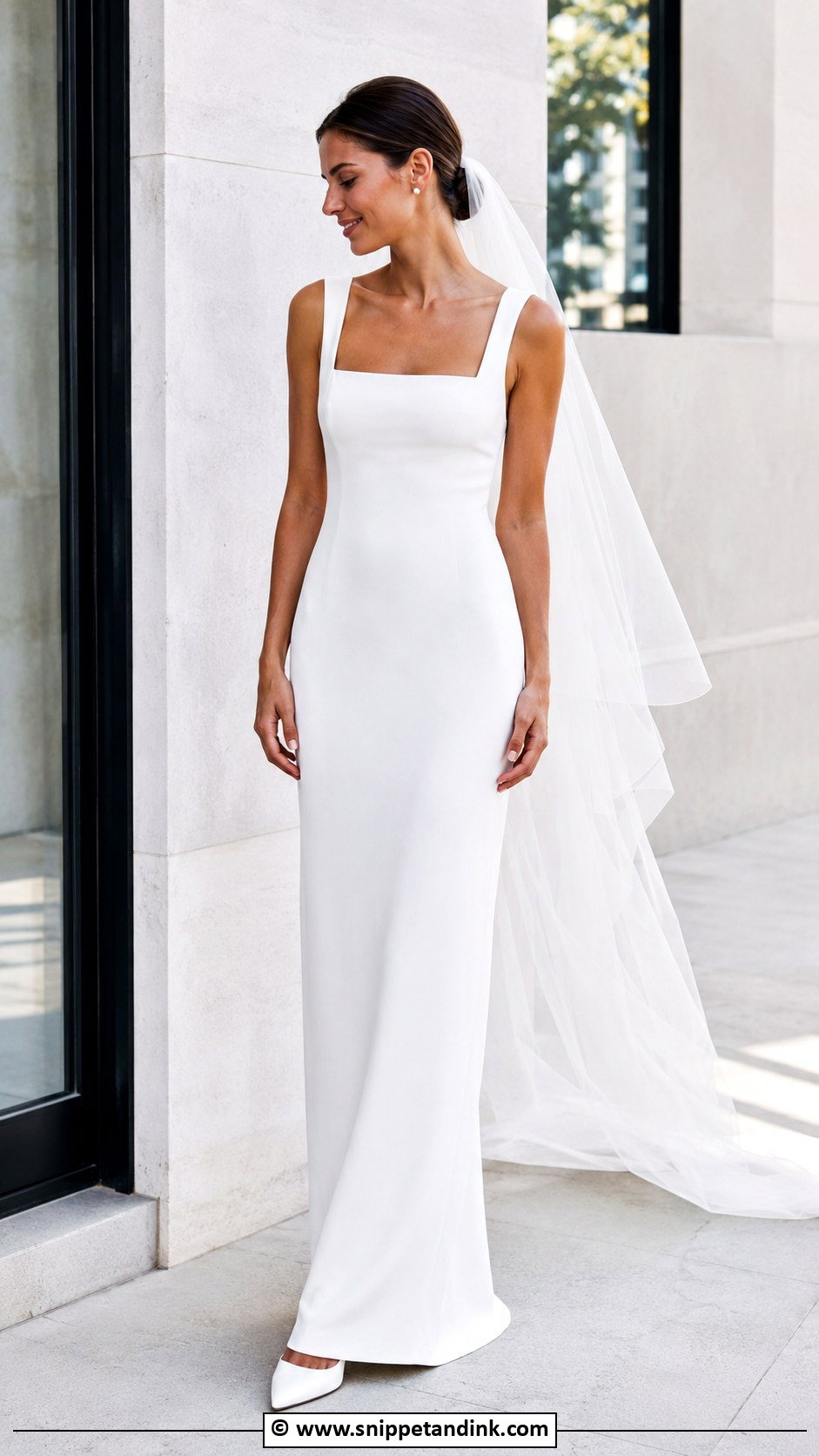
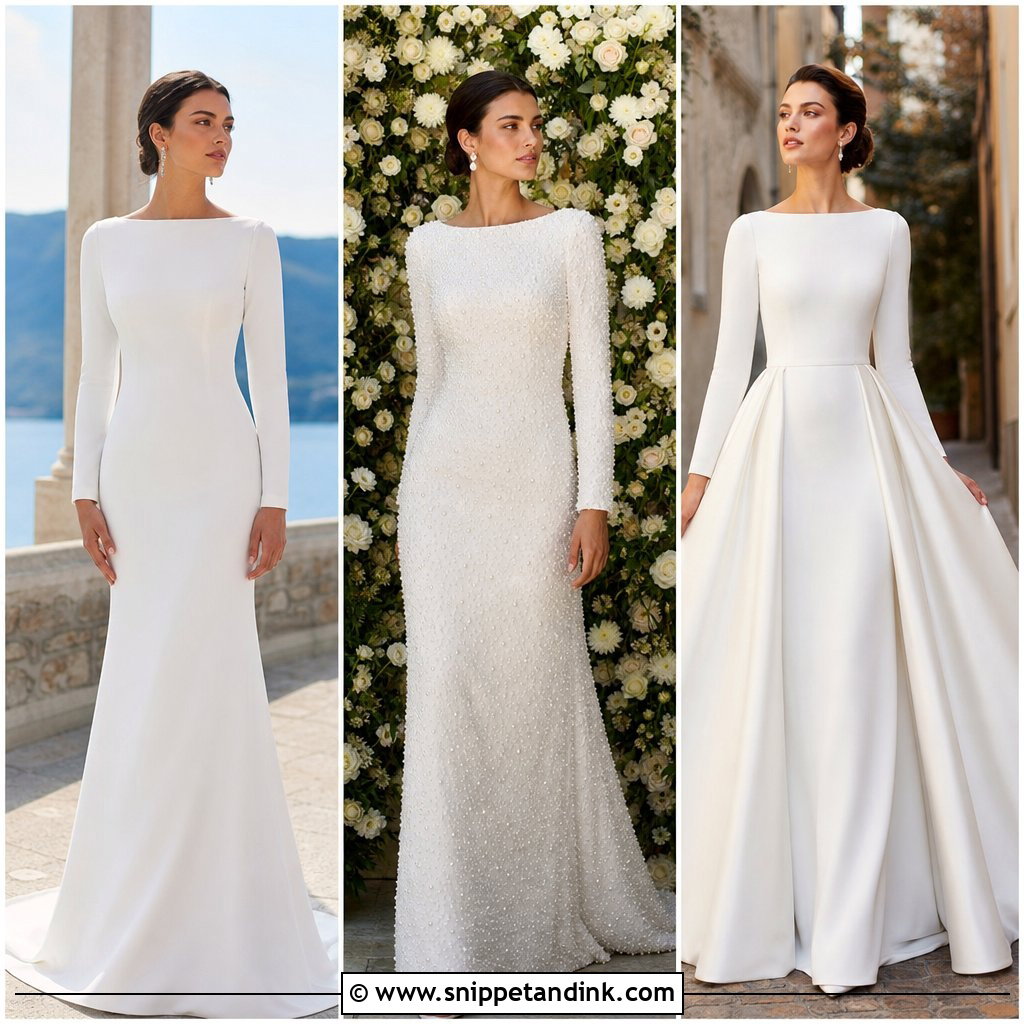
Crepe hides nothing. It skims the body, which means every alteration line, every visible seam of shapewear and every slightly loose dart shows, so I treat tailoring as the whole design on this gown. A square, bateau or soft scoop-back cut keeps it modern. I style it with pearl studs, a sleek bun, white pointed heels and a structured clutch for the reception. A long plain veil gives you ceremony drama without cluttering the lines. Book a try-on with seam-free underwear at your first fitting, not your last.
5. Basque Waist Wedding Gown
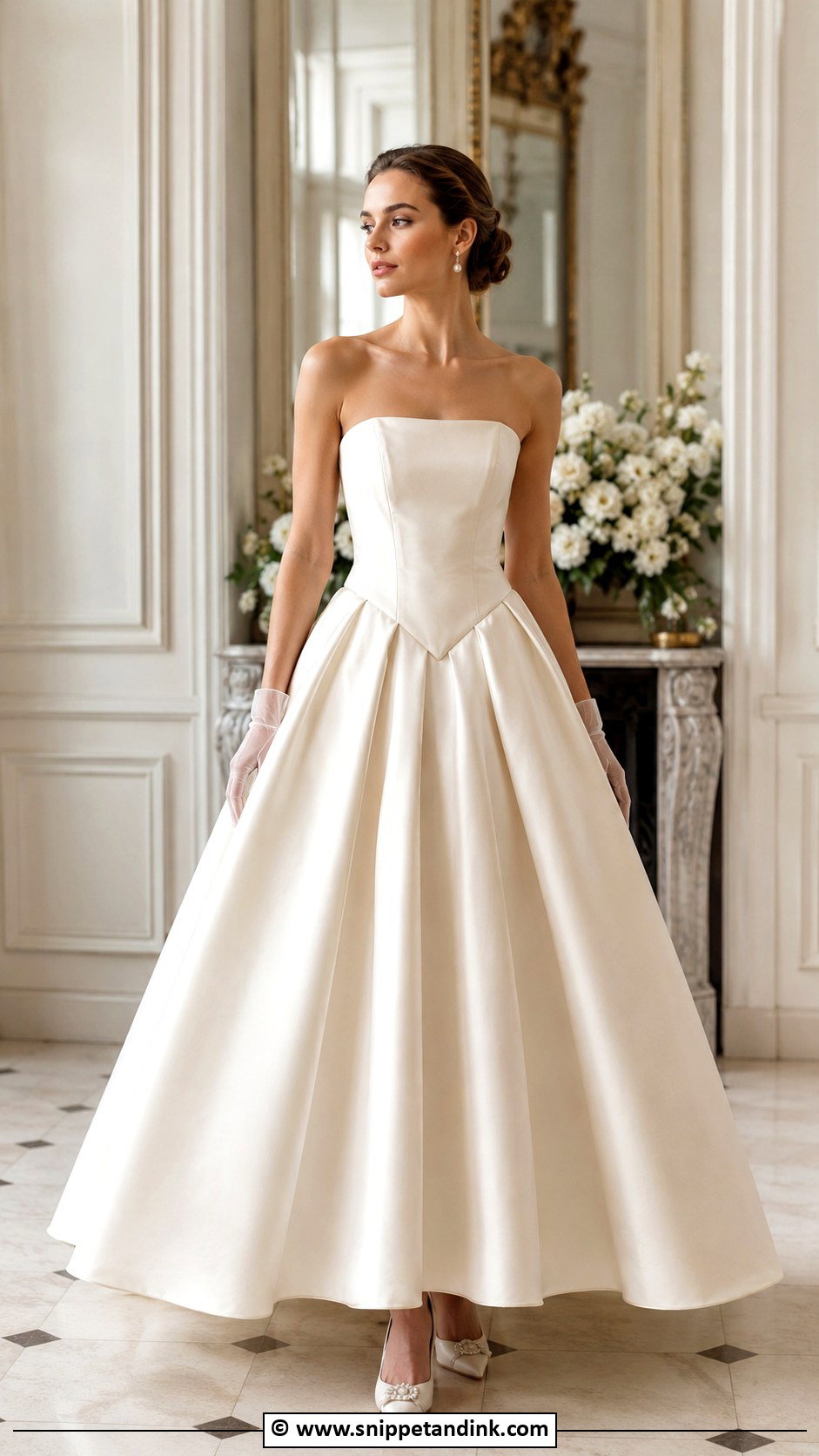
The dipped point of a basque waist wedding gown sits below the natural waist at the centre front, which lengthens the torso and makes a full skirt look deliberate rather than puffy. I’d hesitate with this one for a very short torso, because the point can crowd the hips; a softer, shallower V solves that. Satin or mikado holds the angle best. Pearl earrings, short gloves and elegant pumps finish it, with a smooth bun or a half-up style to keep the shape balanced.
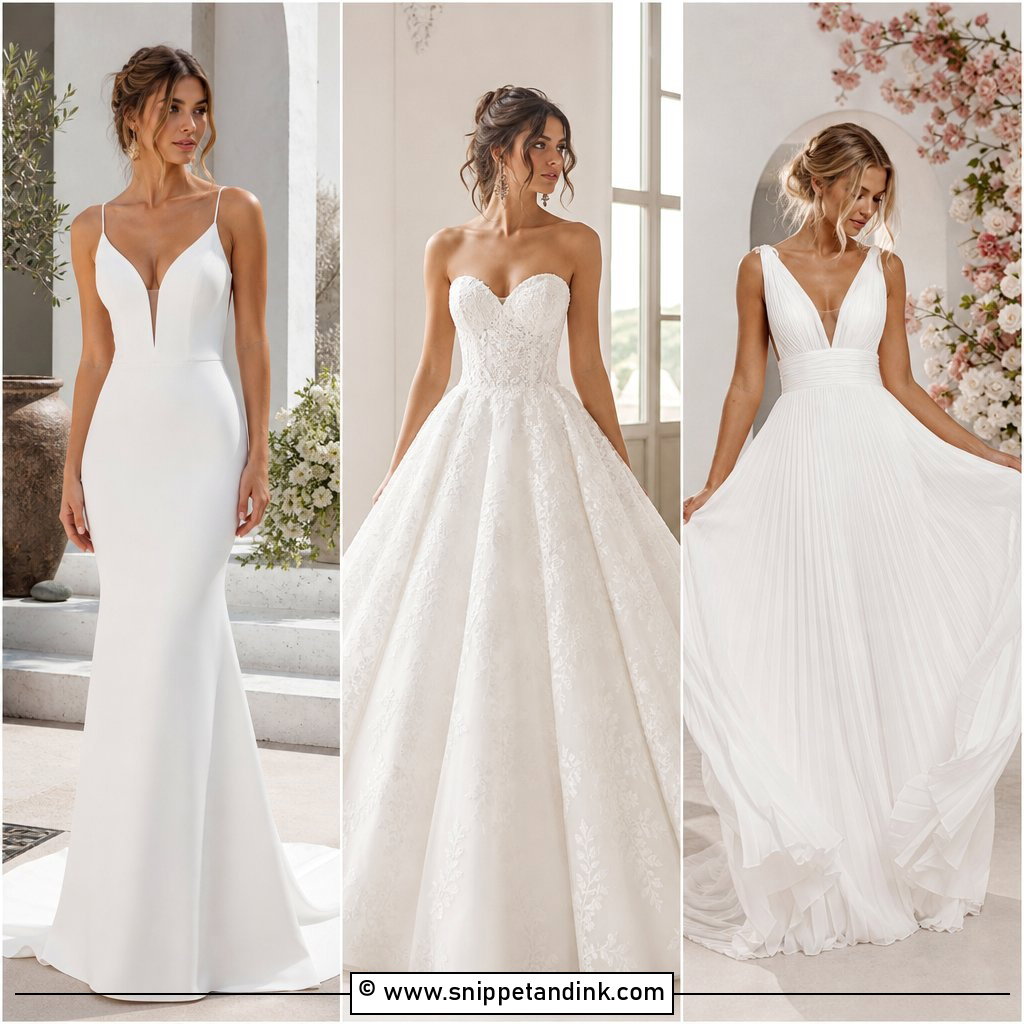
6. Strapless Column Wedding Gown
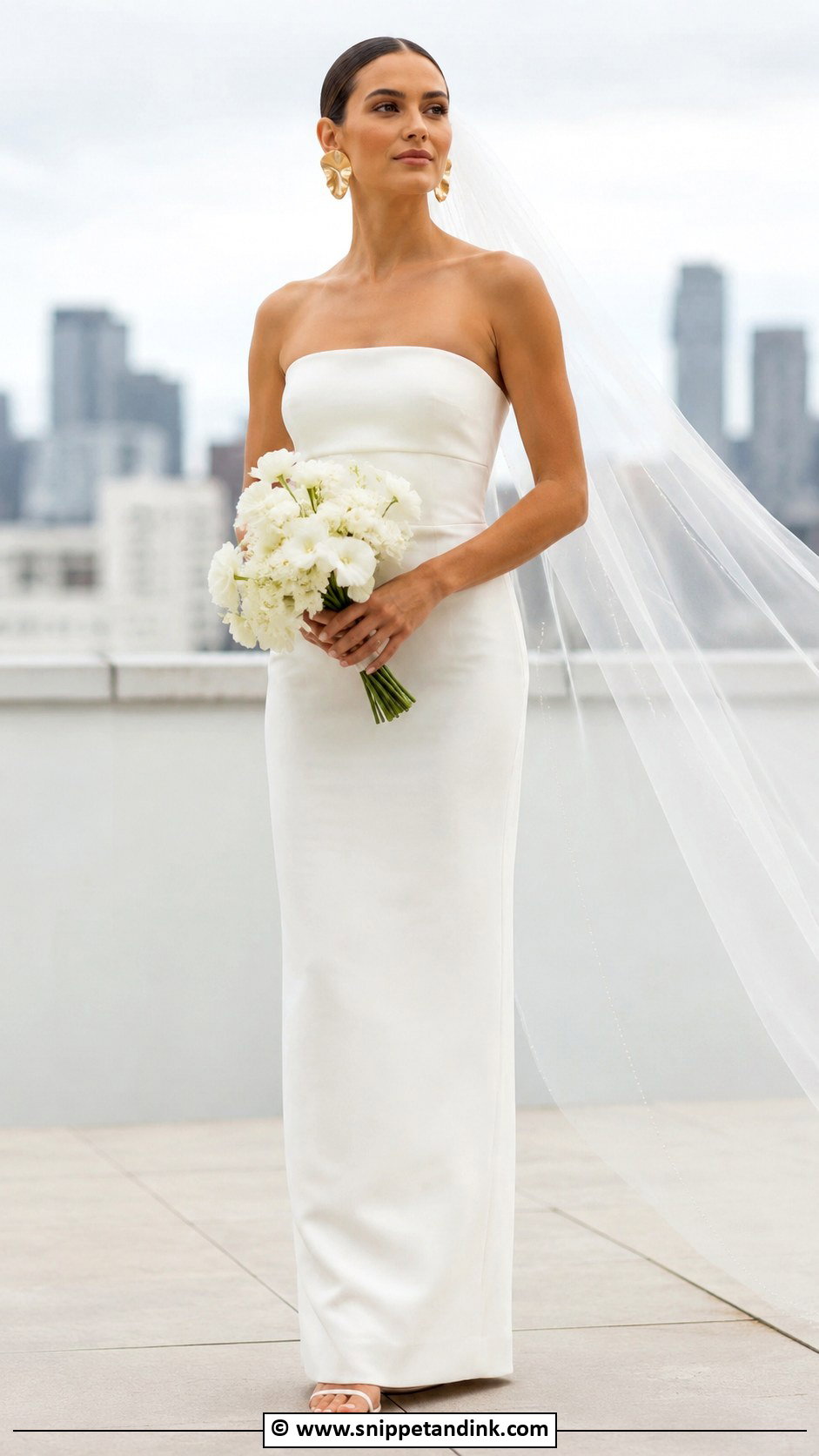
A strapless column stays put because of what’s inside it, not the outside. I always check for an internal corset or waist stay before a bride falls in love with one, since a straight silhouette with no grip will slide down by the first dance. In crepe, satin or heavy silk it reads sleek and modern, and the open neckline makes space for sculptural earrings. Add a clean veil, heeled sandals or pointed pumps and a white bouquet. Rooftops and city venues suit it best.
7. Pearl Embellished Wedding Gown
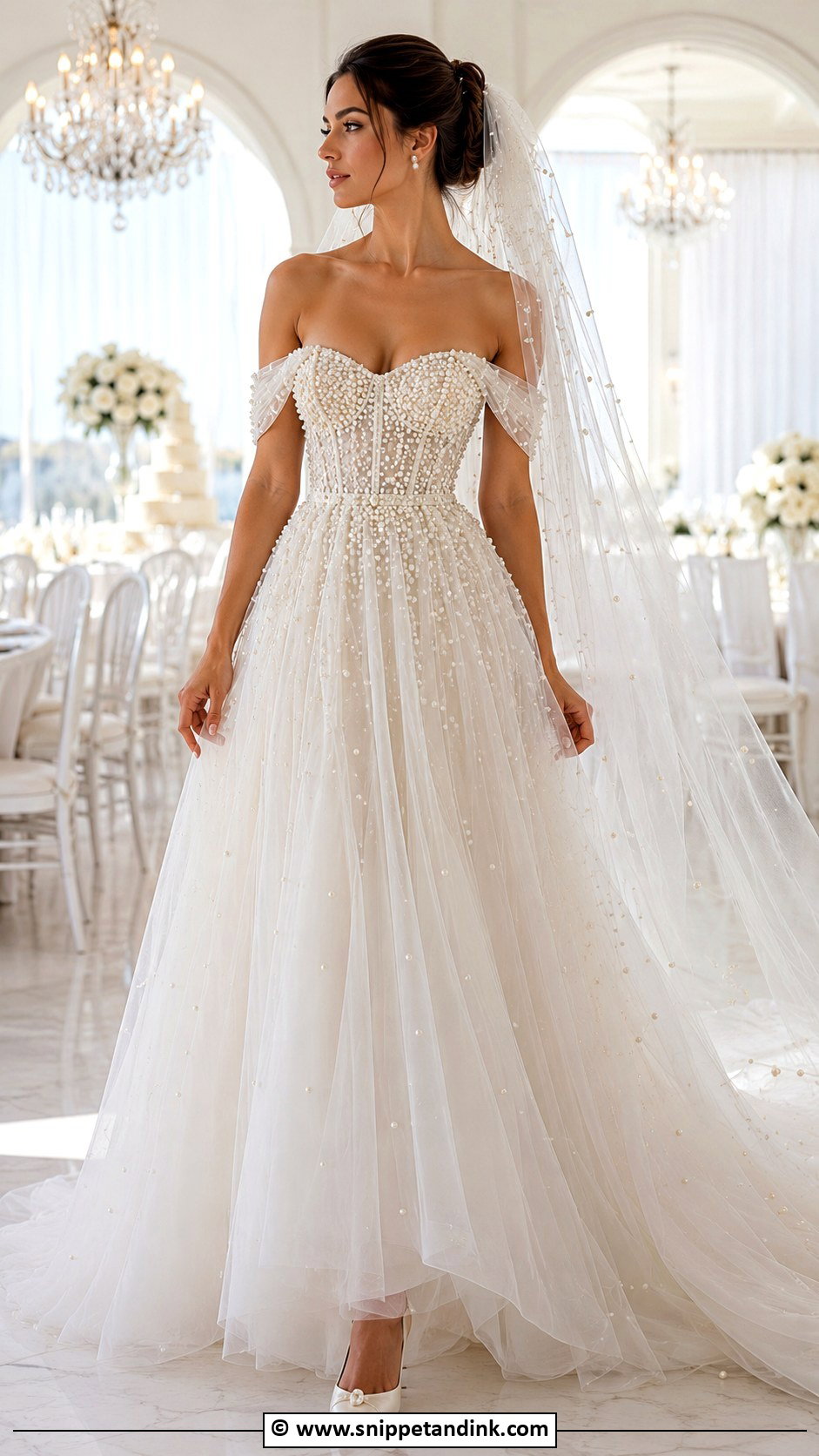
Pearls glow rather than glitter, which is why I recommend them to brides who are nervous about sparkle. Scattered pearls on tulle, crepe or lace stay subtle; a pearl-trimmed neckline gives more impact. One practical thing: hand-sewn pearls are heavier than they look and can snag lace on a seated bride’s arms, so check where they sit on the sleeve. Keep accessories quiet with pearl studs, a slim bracelet and satin heels. A sheer veil with tiny pearls can tie it together, as long as you stop there.
8. Square Neck Wedding Gown
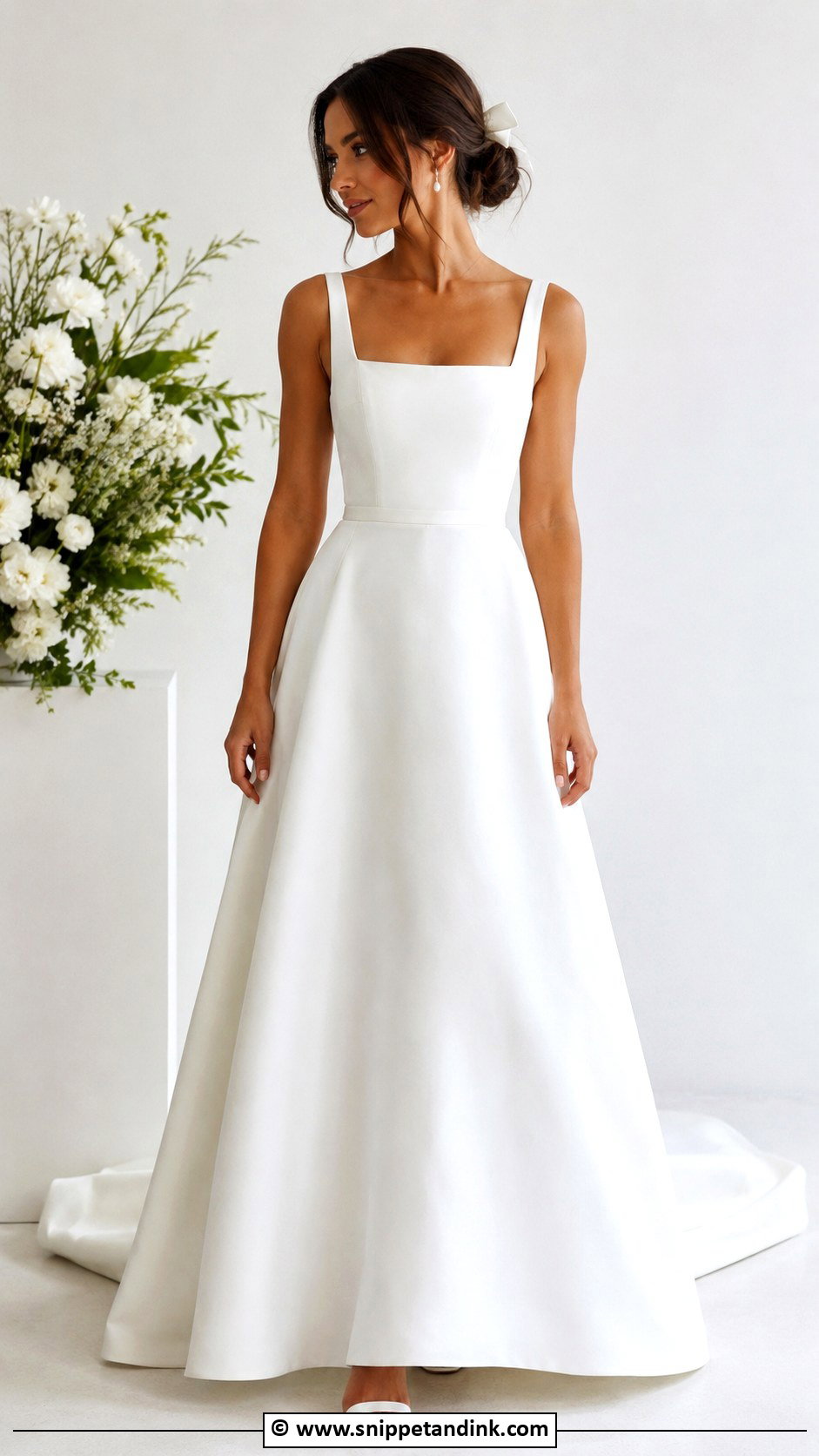
Square necklines give the upper body clean architecture and draw the eye up to the face without showing much skin. Wide straps support a fuller bust; delicate straps look lighter on a smaller frame, and I’ll often have a bride try both before ordering. It pairs with an A-line, a column or a fitted crepe skirt. A low bun, pearl earrings and simple white heels are all it needs, plus a sheer veil or a satin bow at the nape. This one sits comfortably in almost any venue.
9. High Neck Lace Wedding Gown
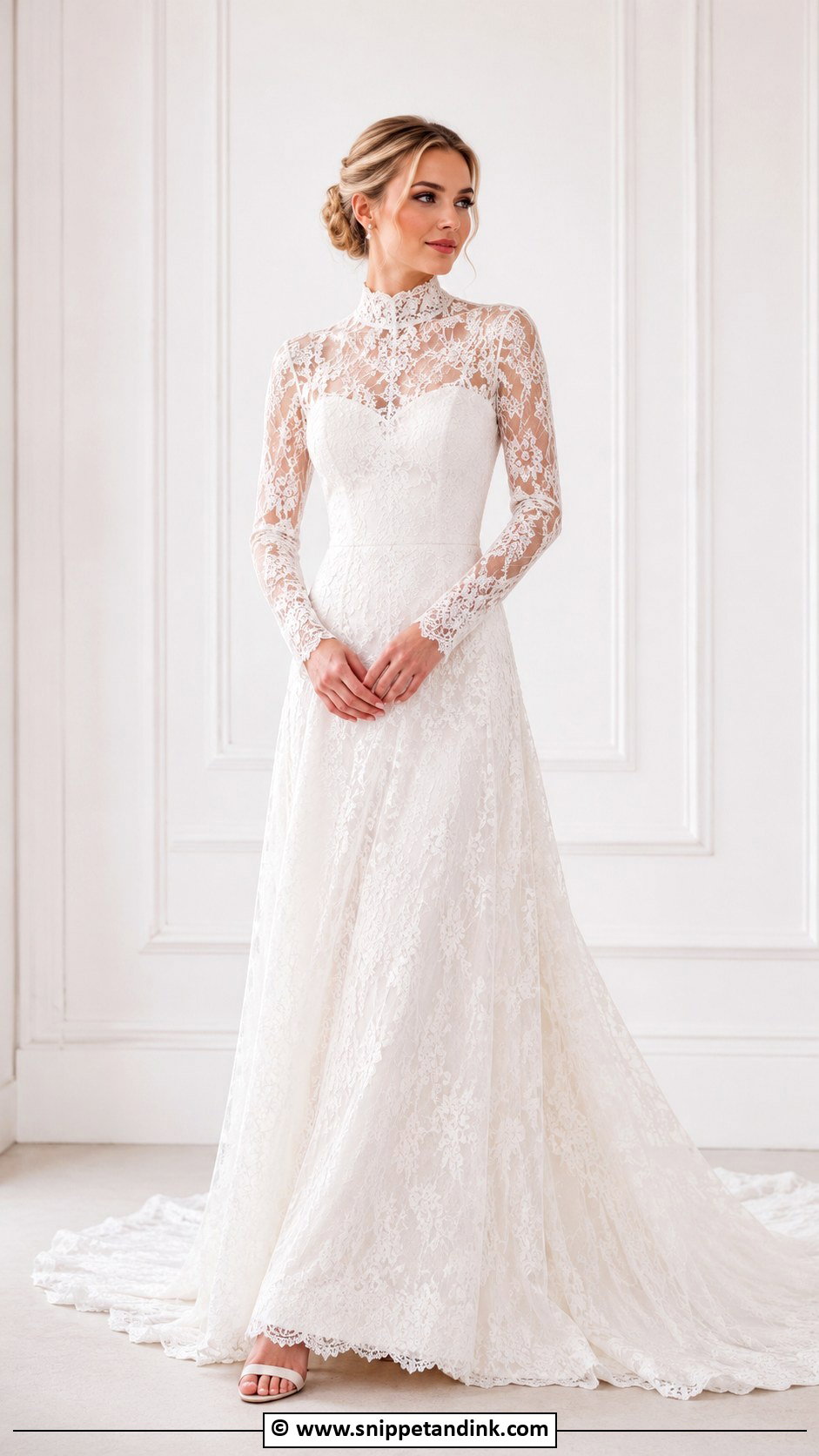
Coverage up to the neck can feel closed in, so the trick is opening something else. A fitted waist, a keyhole or open back, or a skirt with real movement balances the high lace. At fittings I check the collar height while seated, because a neckline that sits well standing can press under the jaw once you sit for dinner. Small pearl earrings, a smooth updo and simple heels keep the focus on the lace. Use a fingertip or long sheer veil only if the lace pattern is light enough not to fight it.
10. Mikado A Line Wedding Gown
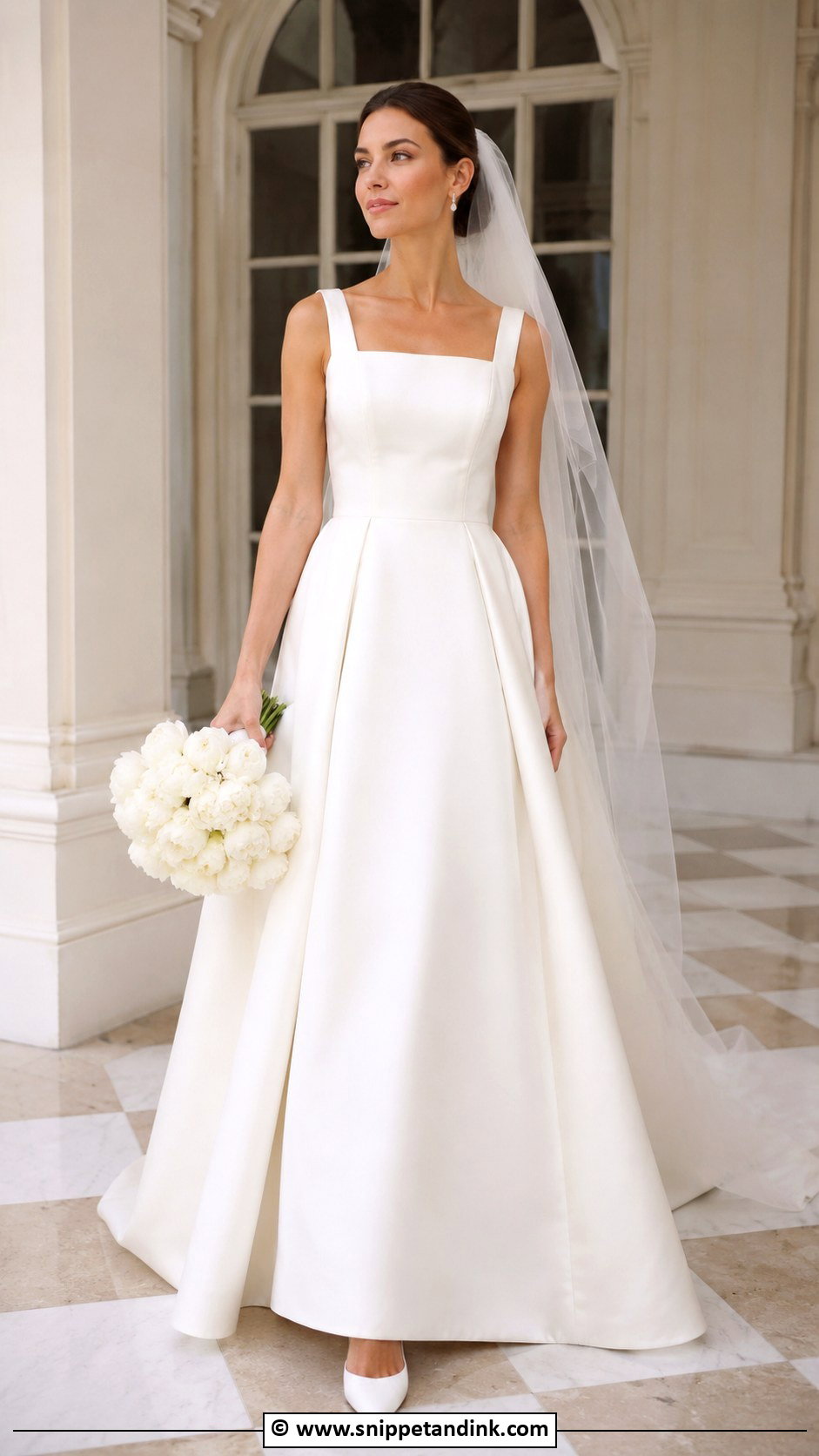
Mikado is a silk or poly blend with a slight sheen and enough body to hold a shape on its own, so an A-line in it looks crisp without needing a huge skirt. The waist is defined and the skirt floats away from the hips, which most brides find comfortable all day. My one warning: mikado creases sharply at the hip when you sit in a car, so I tell brides to travel standing the skirt up or sit on the edge. Satin pumps, pearl earrings and a smooth veil finish it.
11. Draped Wedding Gown
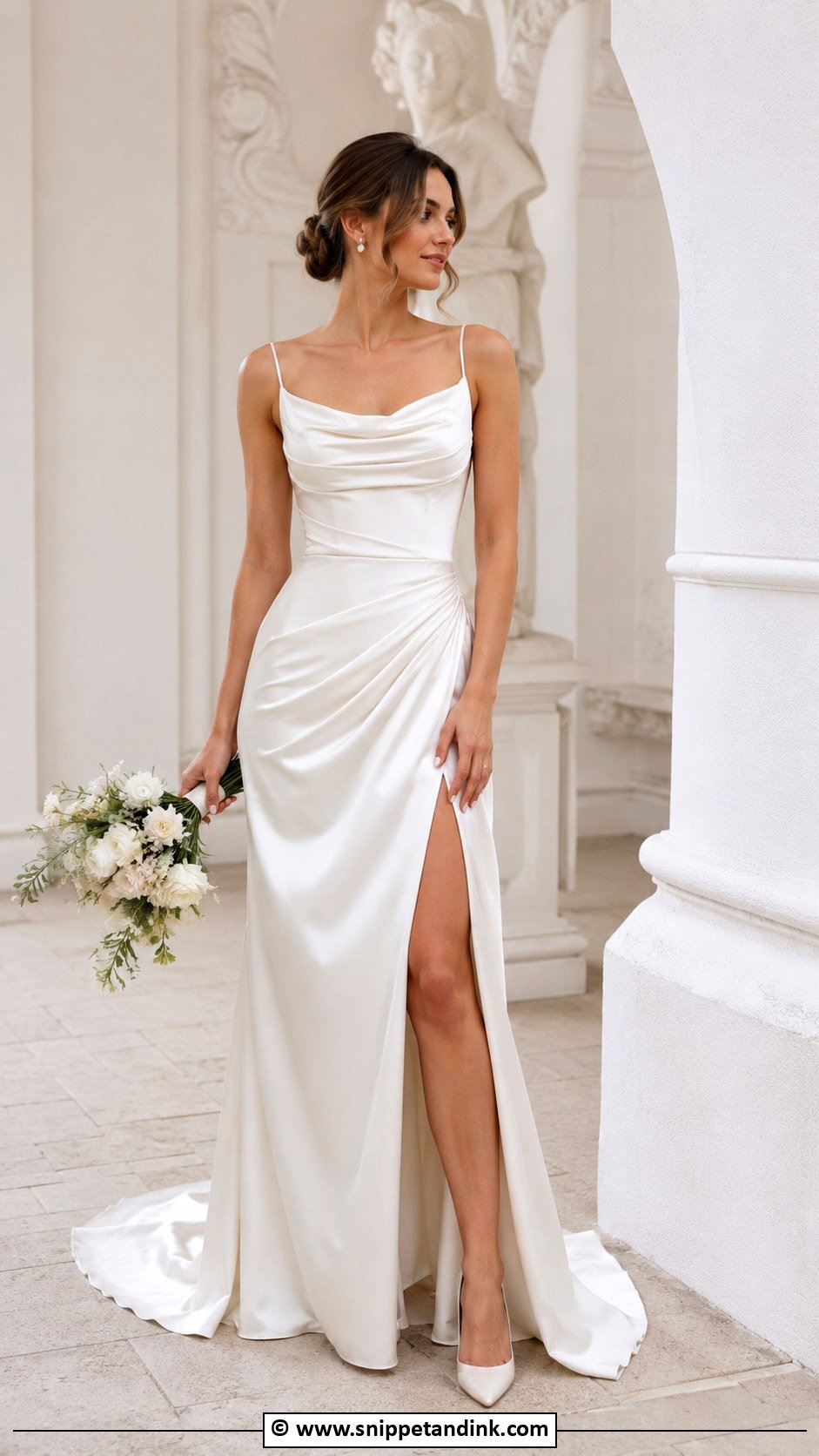
Drape is tailoring disguised as softness. Folds across the bodice or waist flatter because they redirect the eye, but they must be stitched down inside; loose drape shifts as you dance and ends up lopsided in photos. Satin, silk or crepe flow best. A draped neckline wants minimal jewelry, while a draped waist looks right with a sleek veil and clean heels. Keep the hair soft but secure, such as a low bun or tucked waves.
12. Sweetheart Neck Wedding Gown
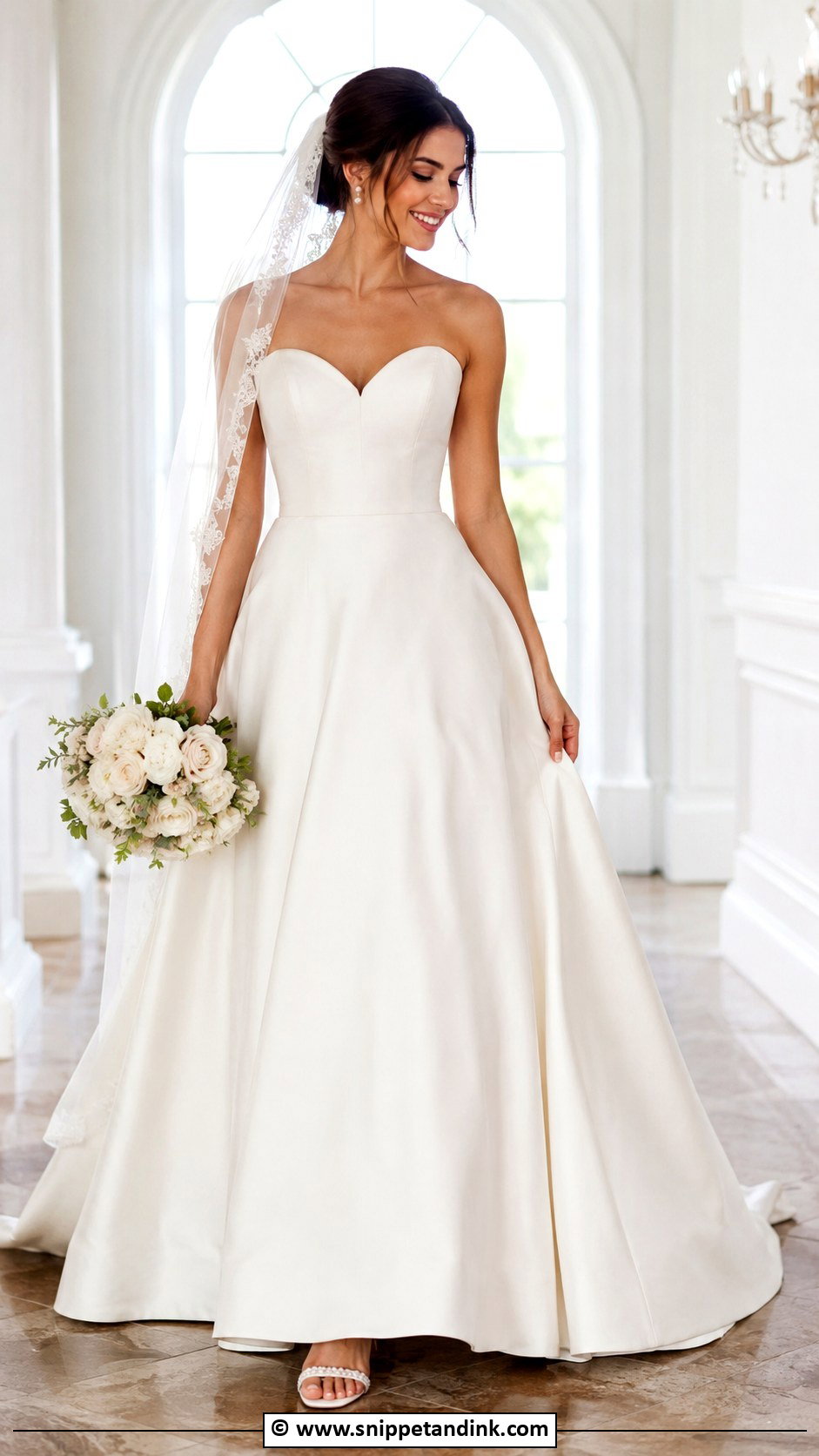
The curved top line of a sweetheart neck wedding gown frames the chest and shoulders and sits happily on ball gowns, mermaids and A-lines alike. For a classy version I’d steer you toward smooth satin, clean crepe or restrained lace appliqué over busy beading. The fit through the bodice decides everything: if the sweetheart dips gape when you lean forward, ask your seamstress to take in the top edge rather than the side seams. A delicate veil, pearl earrings and comfortable heels finish it.
13. Cape Sleeve Wedding Gown
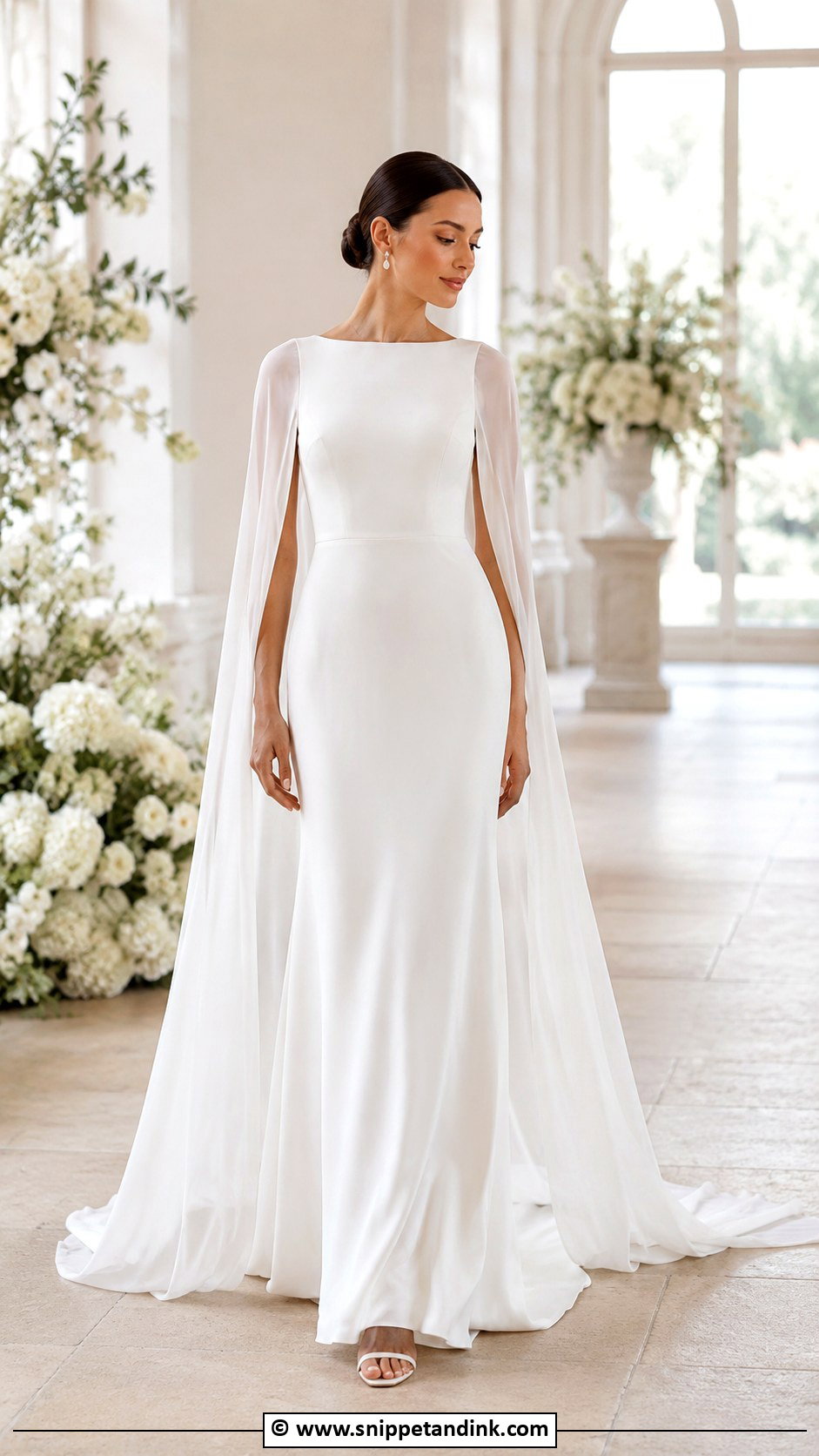
Brides often ask me whether a cape can replace a veil, and on this gown it can. The cape sleeve gives soft coverage and moves behind you as you walk, in sheer tulle, lace, chiffon or crepe depending on formality. Check where it attaches: a cape stitched at the shoulder seam stays put, while one fastened with buttons can drag the neckline backwards. Keep earrings simple and hair smooth so the cape stays the feature. It gives drama without the weight of a long train.
14. Bow Back Wedding Gown
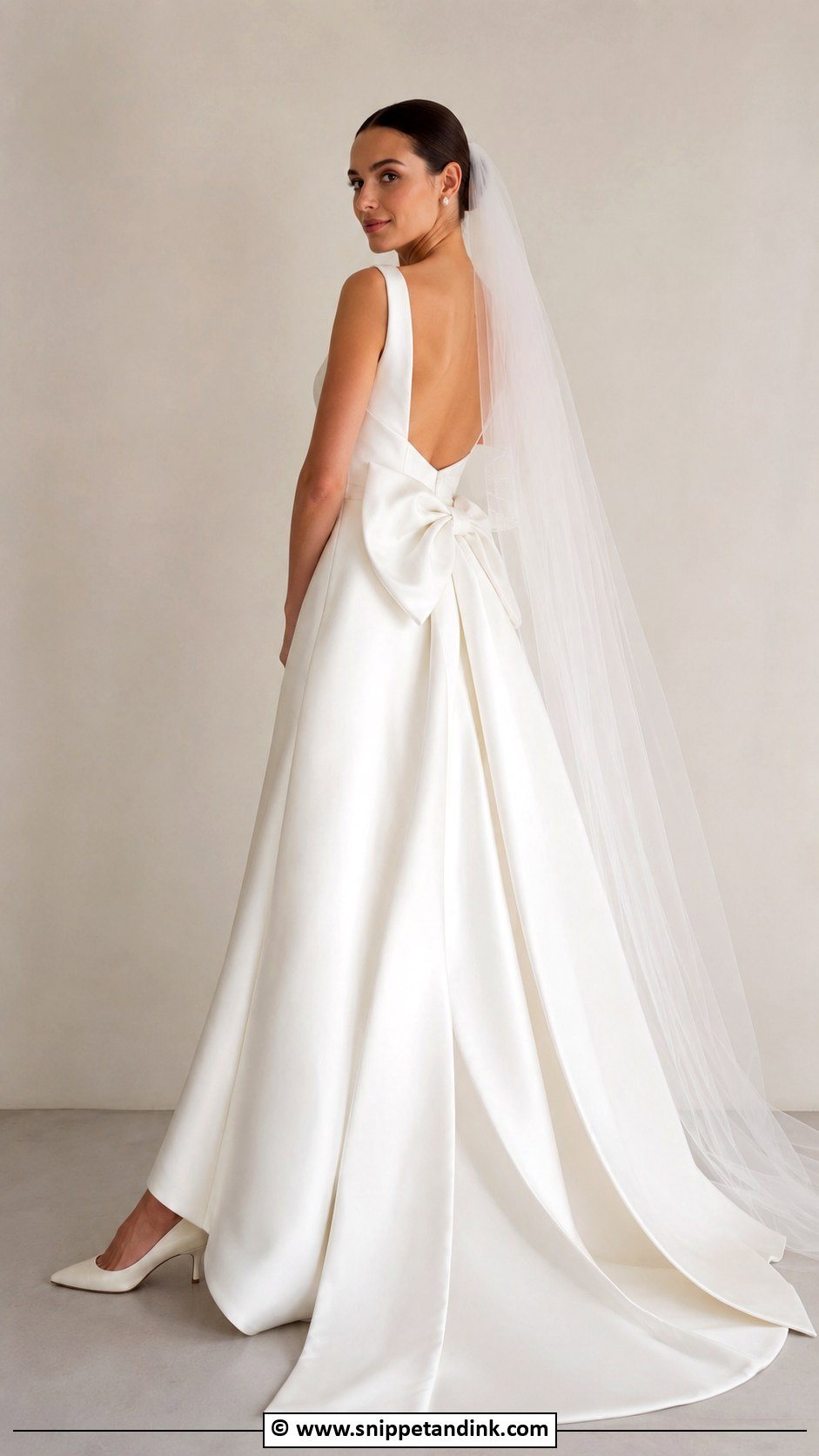
A bow at the back is what guests see for most of the ceremony, which is why I like it so much. In tulle it’s soft and sweet; in satin or mikado it holds a crisp shape. A plain front makes the back read stronger. Wear your hair up or pulled back if the bow is large, or it will disappear under waves. Pearl studs, a clean veil and classic pumps keep the rest calm, and ask how the bow is attached, because a sewn-in bow survives hugs far better than a clipped one.
15. Mermaid Lace Wedding Gown
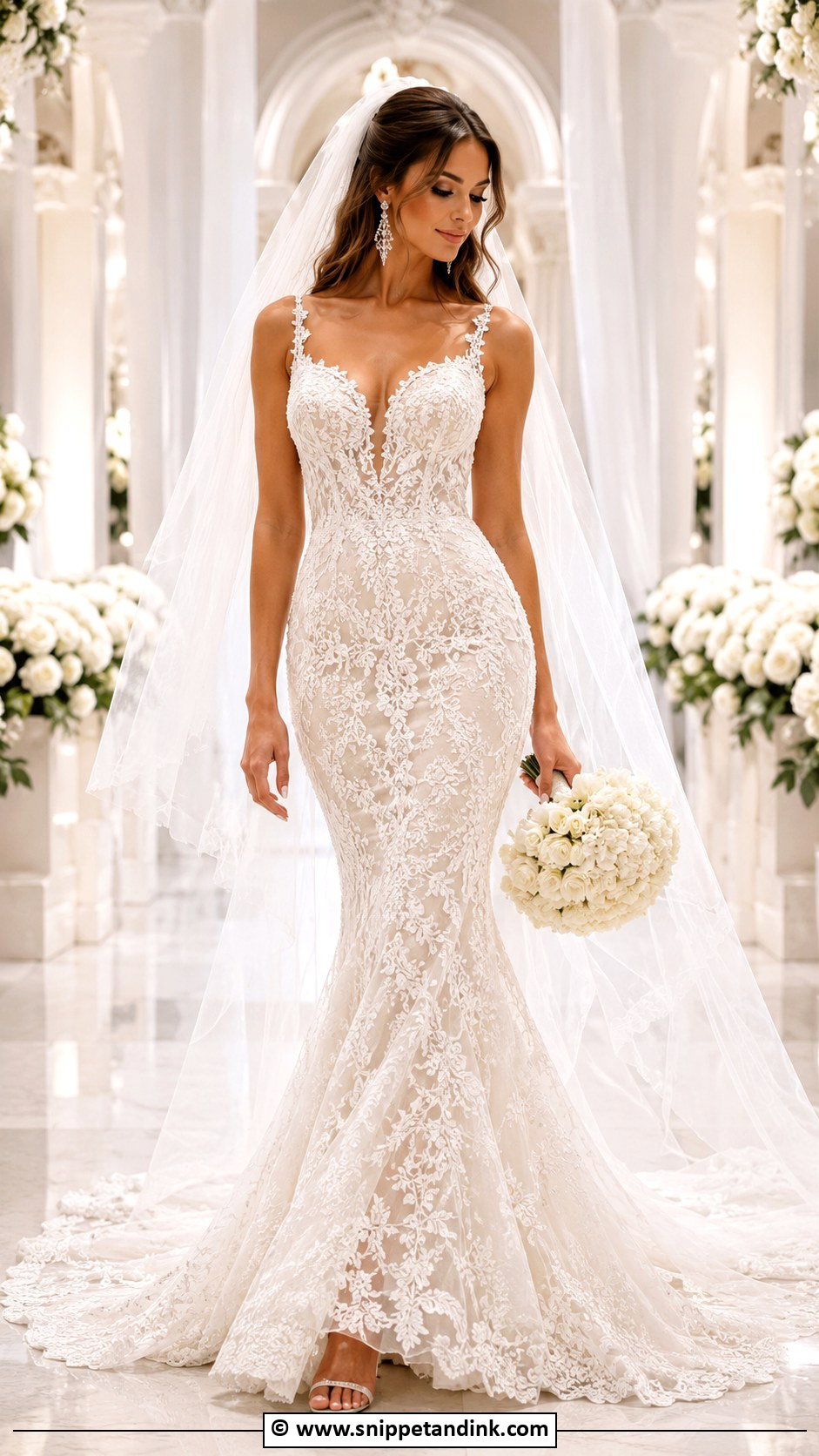
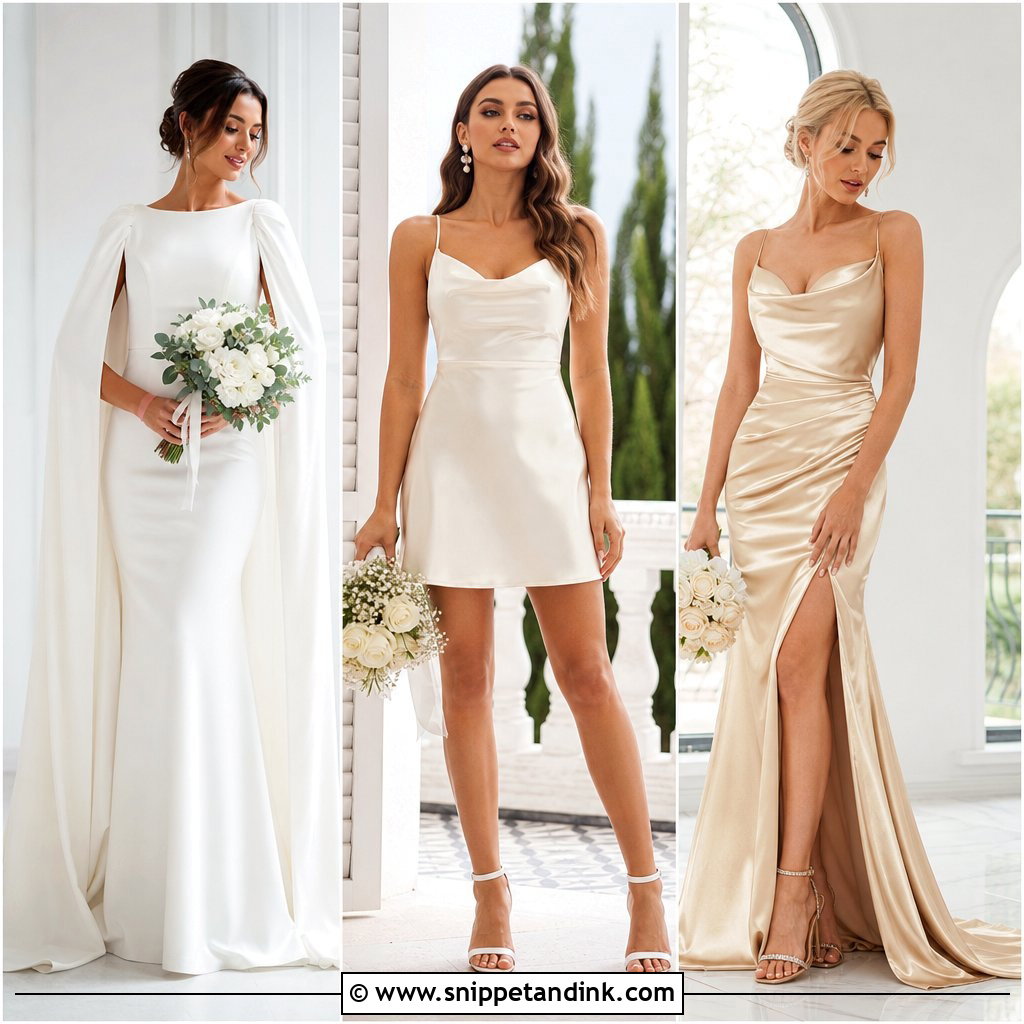
Mermaid gowns follow the body to the knee or lower thigh before flaring, and where that flare starts changes everything. Too high and you’ll be shuffling; too low and the skirt can’t move. I always have brides walk up and down stairs at the fitting. Choose lace placed softly rather than dense heavy patterning, and expect a structured bodice to carry the support. Heeled sandals, drop earrings and a long veil that reaches past the train keep the line glamorous and refined.
16. Simple Slip Wedding Gown
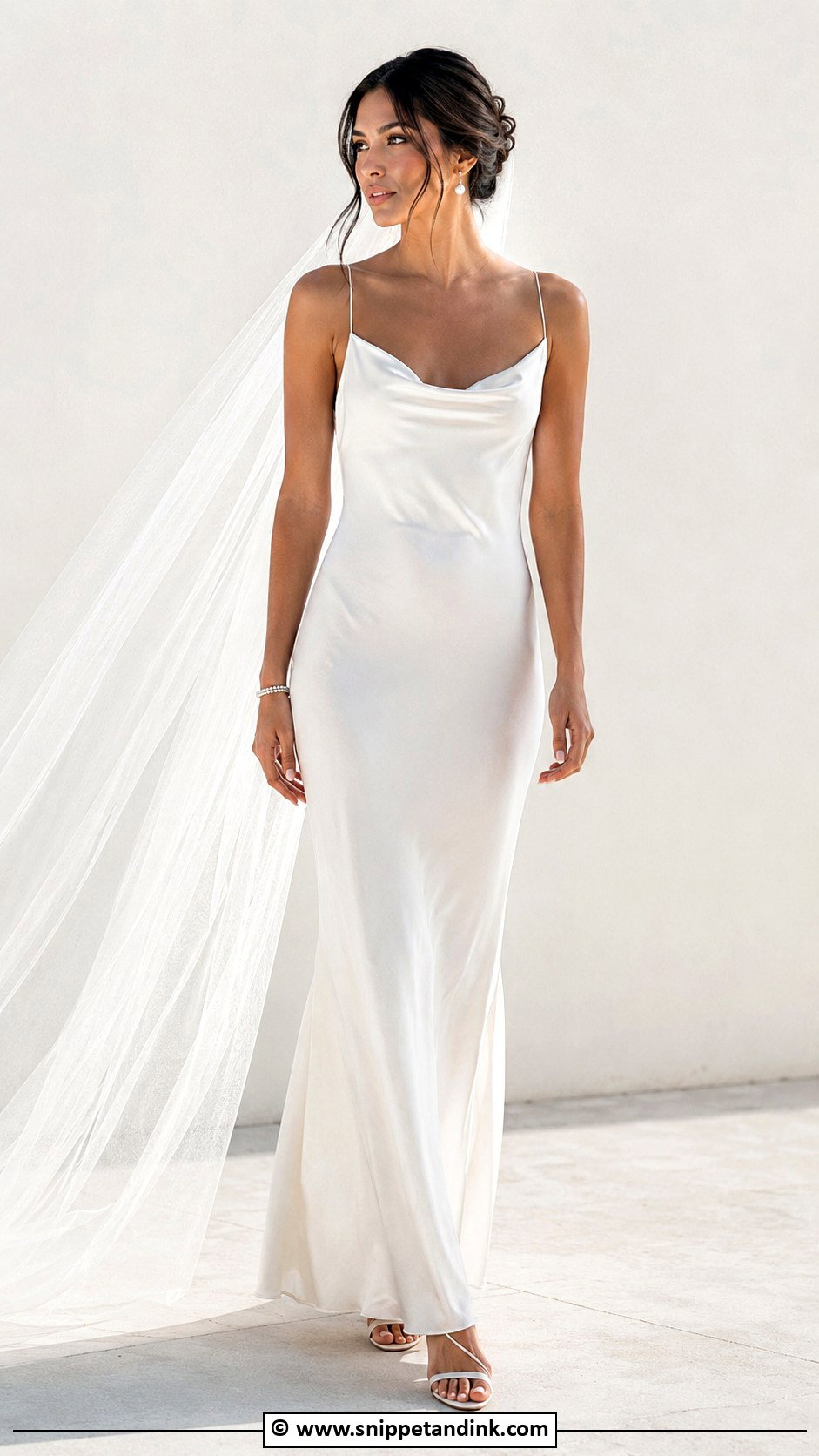
Bias-cut silk, satin or charmeuse gives the slip dress its fluid fall, and the same cut that makes it look easy also makes it unforgiving. It should skim, not cling, so plan on a fitting focused purely on how it sits over the hips. This is a 1990s minimal shape at heart: strappy heels, pearl earrings, a fine bracelet and a soft veil for the ceremony. A sleek bun or loose waves keeps it relaxed. I suggest it often for beach ceremonies and small city weddings, and as a change for the party.
17. Floral Applique Wedding Gown
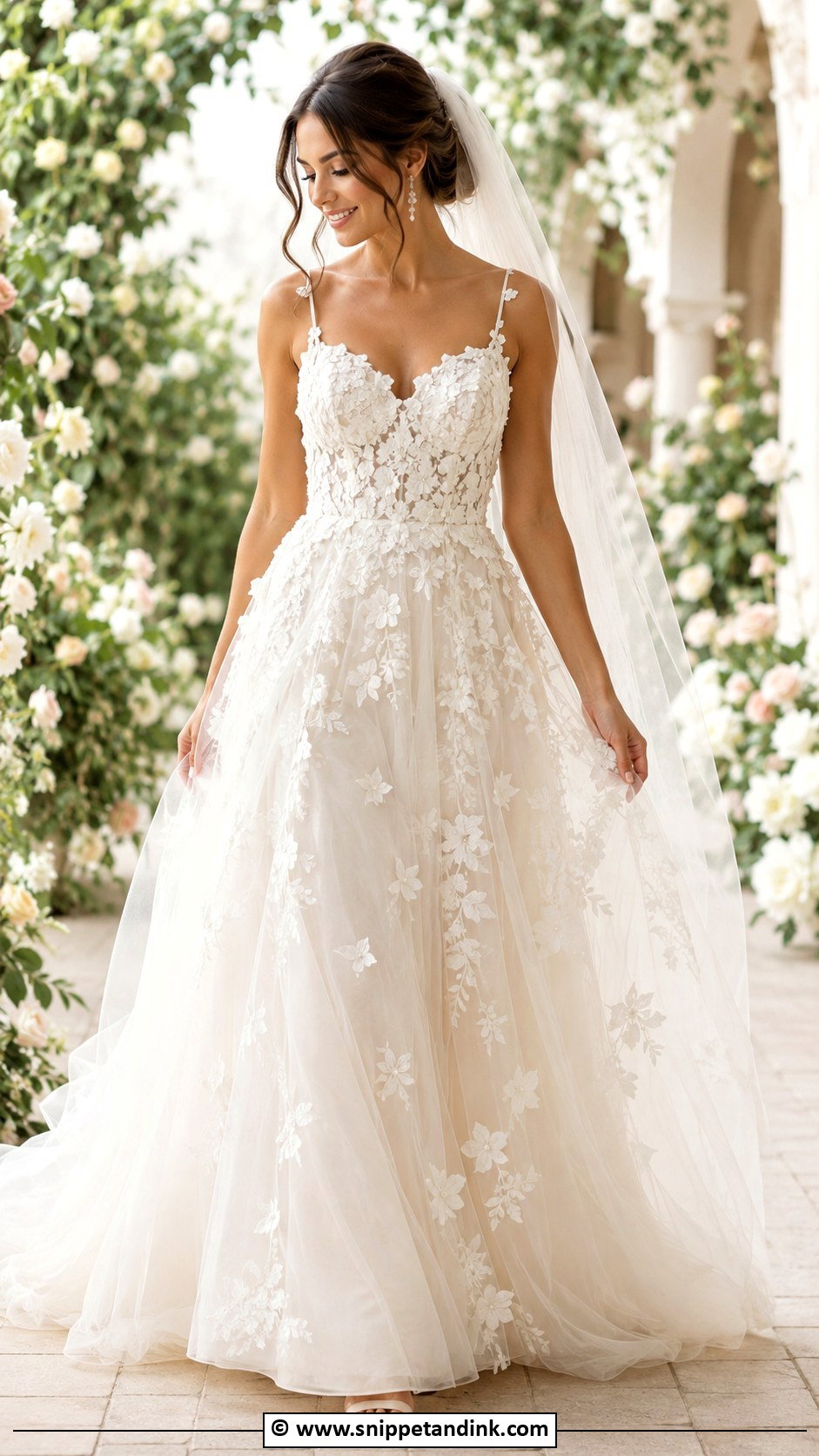
Appliqué adds depth by sitting on top of the fabric, which is why it looks dimensional in daylight. Flowers can cover the bodice, scatter over a tulle skirt or gather along the train; on the classiest versions they thin out as they travel down. Pick soft ivory motifs on an ivory base so the contrast stays gentle. Simple heels and delicate earrings keep it calm, and a plain veil avoids two textures competing. I tend to suggest this for spring garden ceremonies.
18. Bateau Neck Wedding Gown
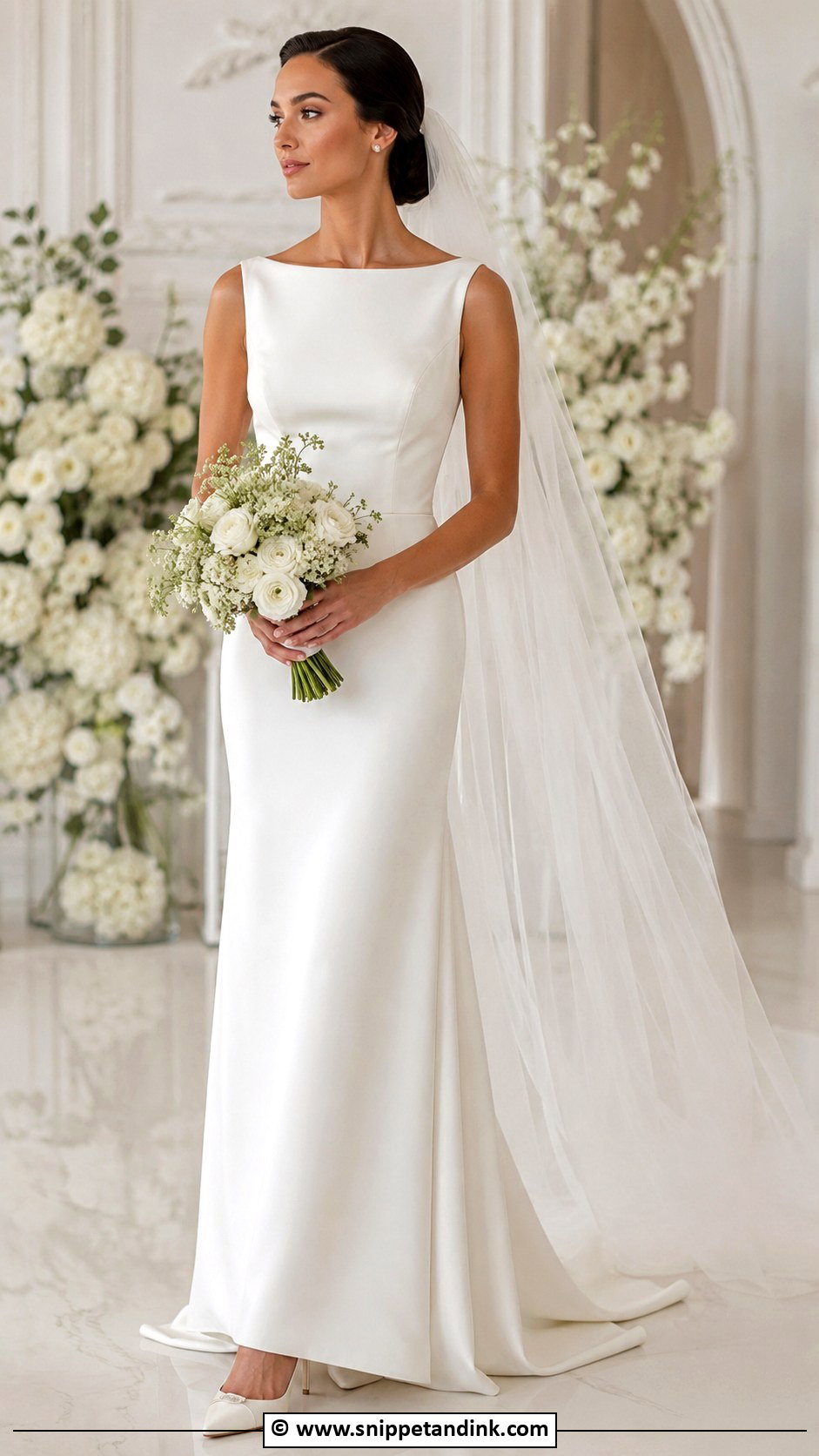
A bateau neckline runs straight across from shoulder to shoulder, just over the collarbone, and it looks regal with no decoration at all. Long sleeves, cap sleeves or sleeveless cuts all work. Crepe makes it modern, satin keeps it traditional and lace softens it. Since the neck is framed so cleanly, I keep jewelry to pearl studs with a low bun and pointed heels. A long veil for the ceremony and a simple hair comb afterward is my usual swap.
19. Pleated Skirt Wedding Gown
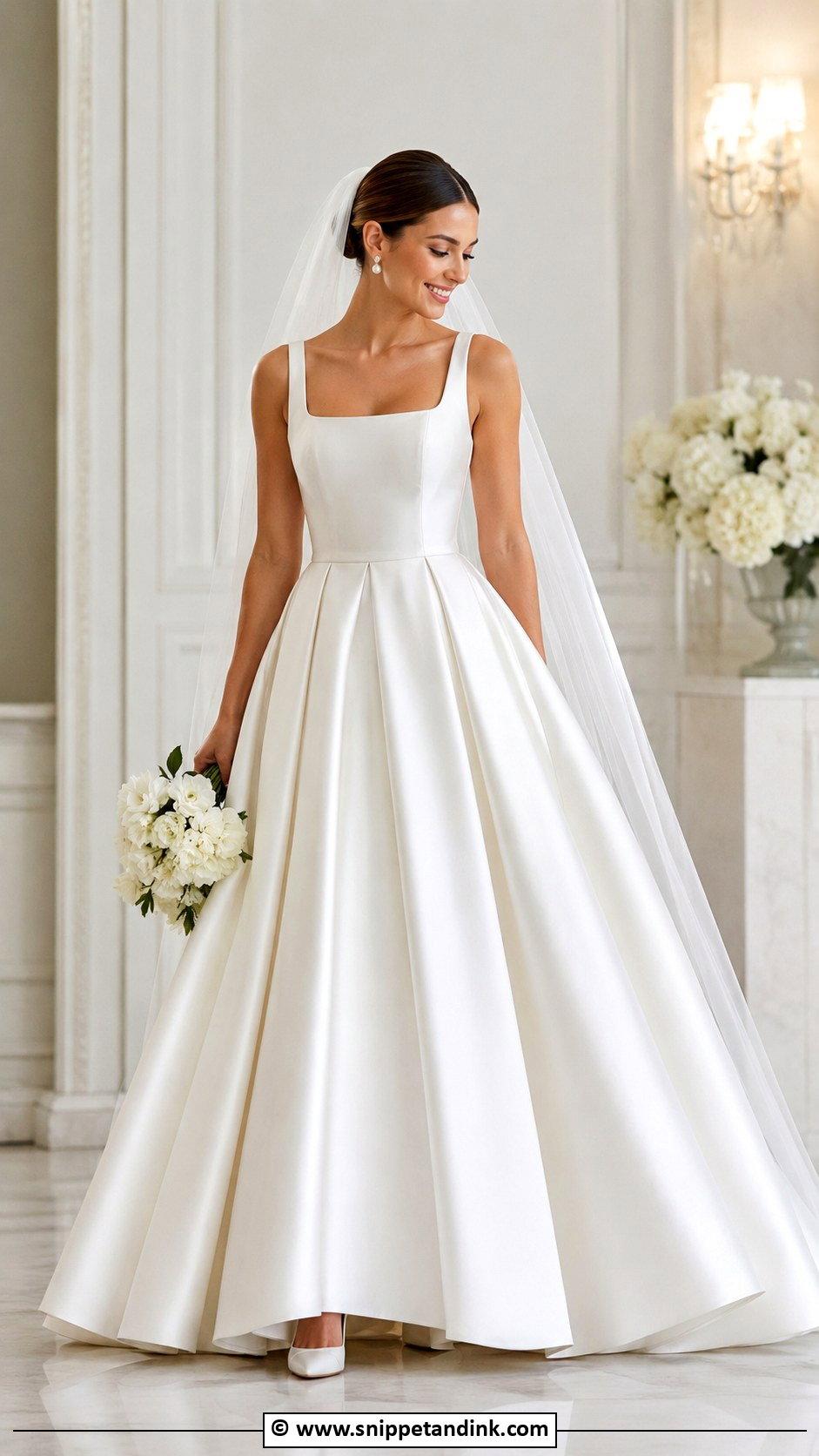
Pleats give a skirt volume through folding rather than layering, which is the reason I suggest them to brides who hate the scratch of tulle. A fitted bodice over a full pleated skirt looks classic; soft chiffon pleats are lighter. The downside is pressing. Pleats need steaming on the morning, ideally by someone who knows not to flatten them, so put that on your timeline. Satin heels, pearl earrings, a neat updo and a plain veil let the folds lead in a ballroom or museum.


20. Corset Bodice Wedding Gown
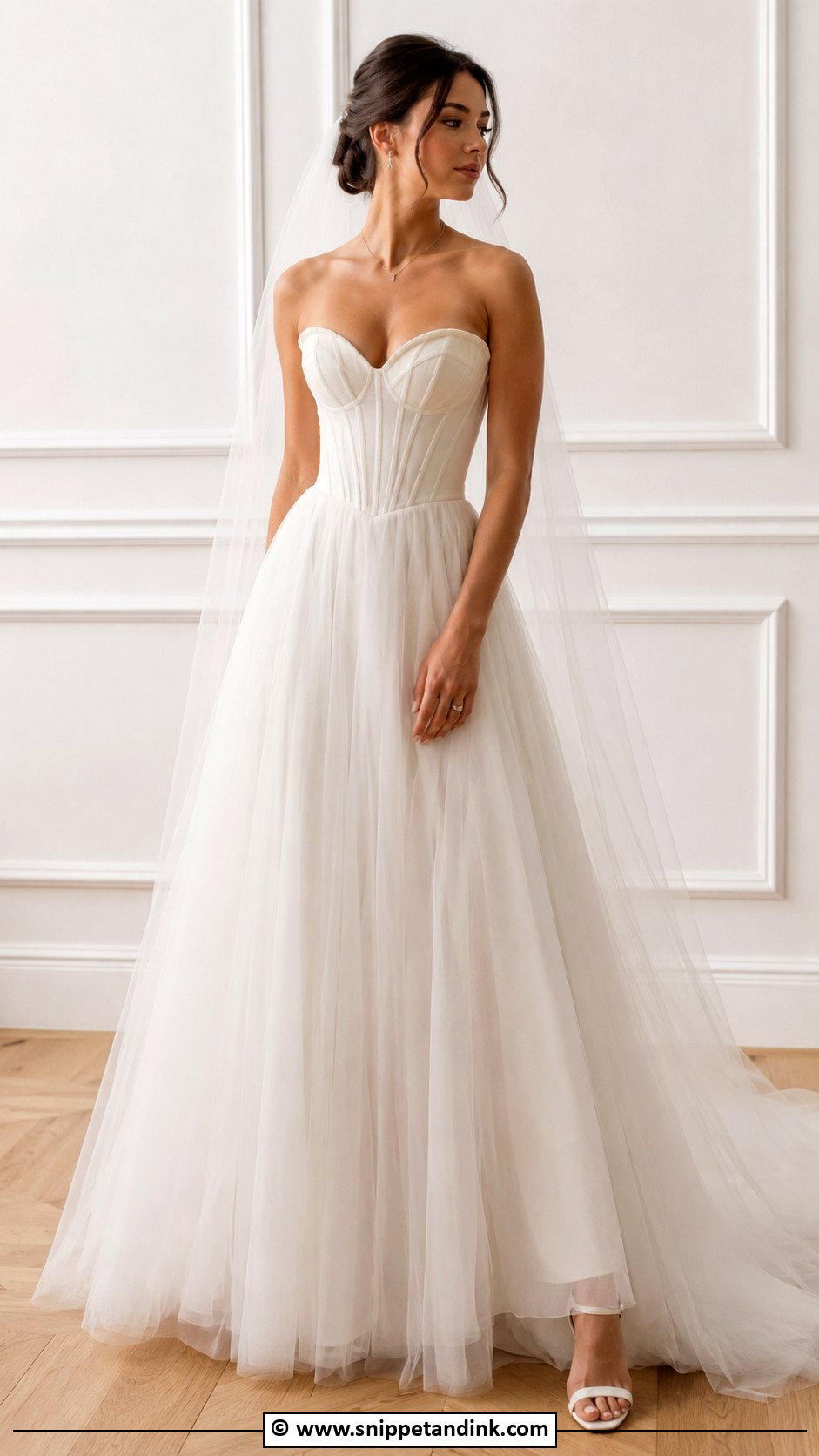
Real boning is what separates a classy corset bodice wedding gown from a costume one. Spiral steel or quality synthetic bones shape the waist without digging; cheap plastic bones warp in heat and poke by evening. Look for smooth fabric and a balanced skirt in satin, lace or tulle, and avoid cut-outs that fight the structure. I always lace a corset back with the bride sitting down, then stand her up, so it isn’t too tight at dinner. Simple jewelry, a soft veil and heels in the gown’s tone finish it.
21. Tulle Ball Gown Wedding Gown
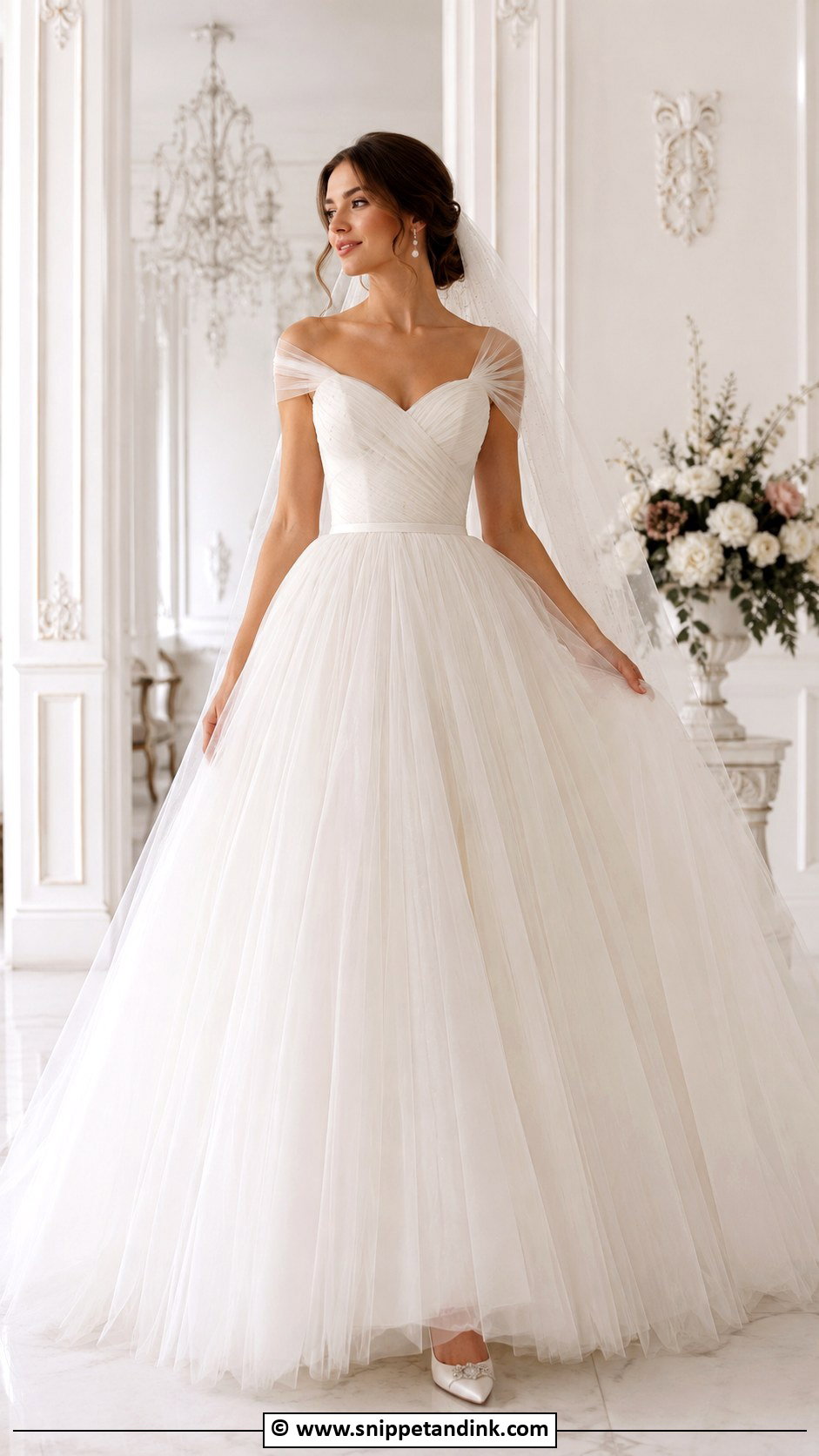
Fine tulle in many layers gives volume that floats rather than stands stiff, as long as there’s a crinoline or a firmer under-layer to stop it collapsing. A fitted bodice keeps the shape polished. For the classy end of this look I avoid heavy glitter tulle and lean on delicate lace. A ballerina bun or soft waves suit the airy skirt, with pointed heels, pearl earrings and a simple veil. Warn your guests near the aisle: tulle catches on chair legs and bouquets.
22. One Shoulder Wedding Gown
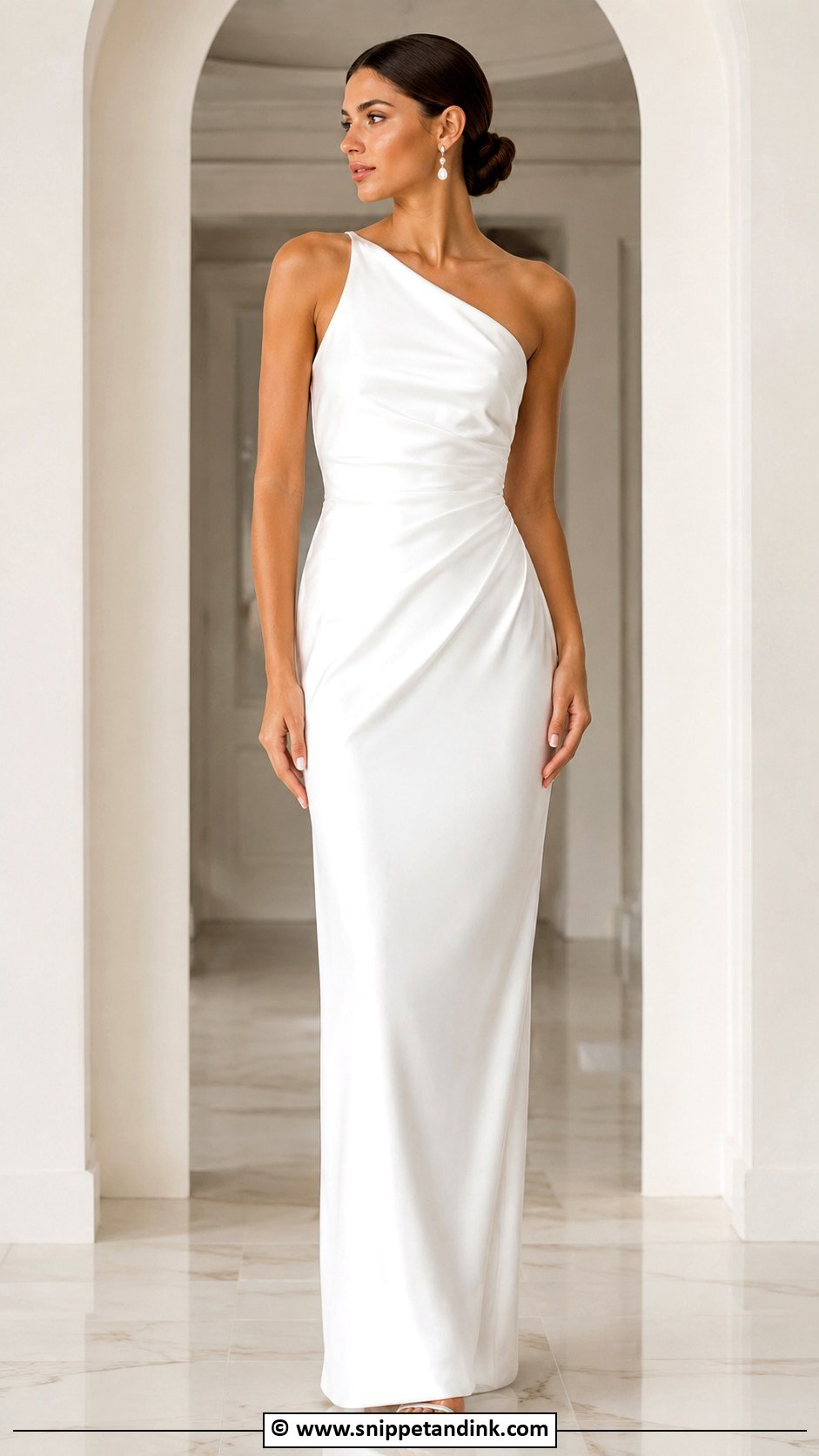
The asymmetry of a one-shoulder neckline does the work a necklace would usually do, so I always skip one. Crepe, satin and mikado hold the angle cleanly; softer fabrics can let the strap slide. A fitted column skirt looks current, an A-line softer. One statement earring on the bare side, or balanced drops, sleek heels and a smooth low bun complete it. Check the strap at the fitting with both arms raised, since the single strap carries more load than you’d expect.
23. Tea Length Wedding Gown
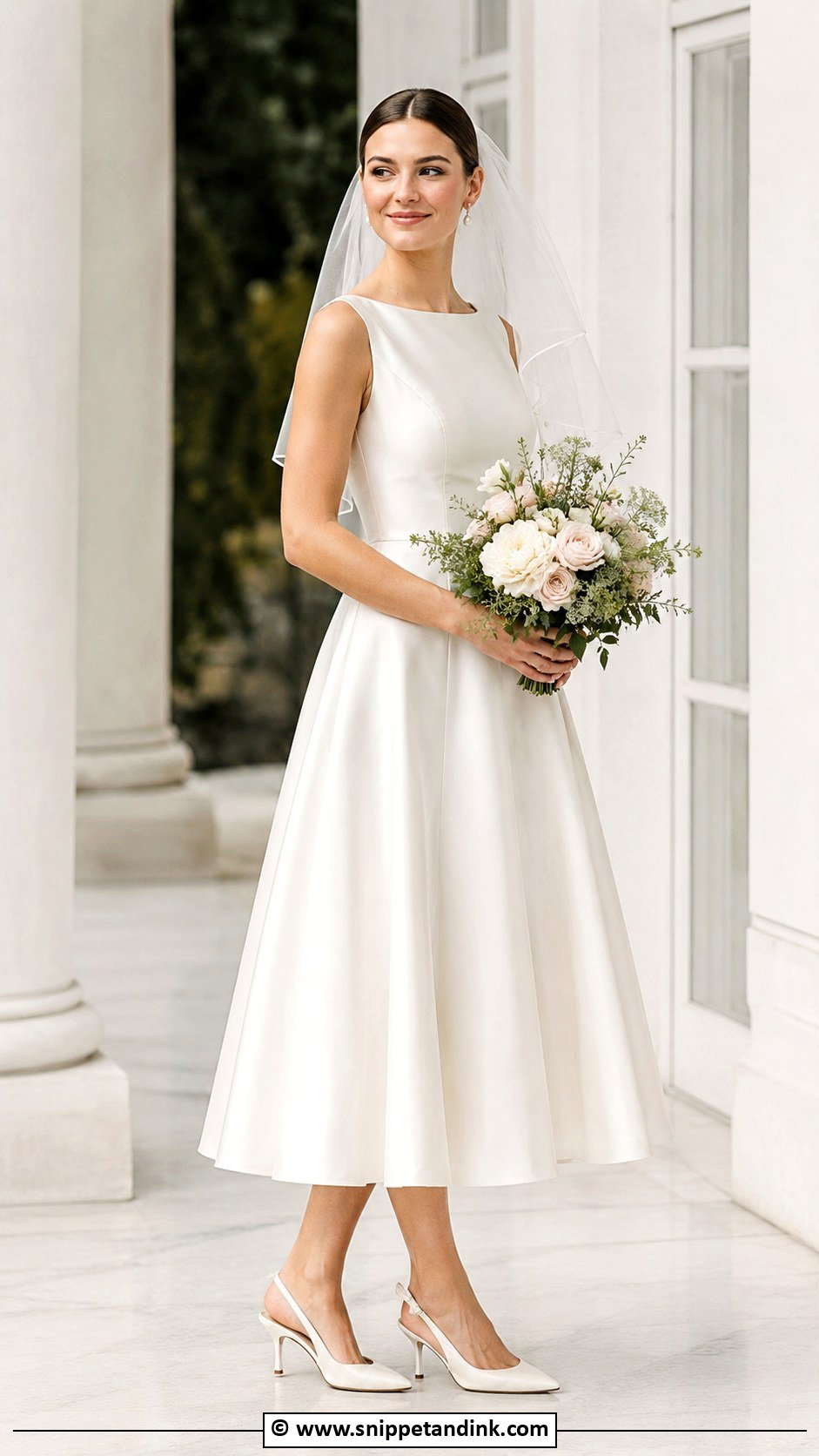
Hems on a tea length wedding gown land between knee and ankle, and that exact spot matters more than the fabric. I hem to the narrowest part of the calf where possible, because that’s what flatters most heights. Satin, lace or organza keeps it refined. Your shoes are on show, so this is where pumps, slingbacks or embellished heels get to shine. Pearl earrings and a short veil or hair bow suit courthouse weddings and garden parties.
24. Drop Waist Wedding Gown
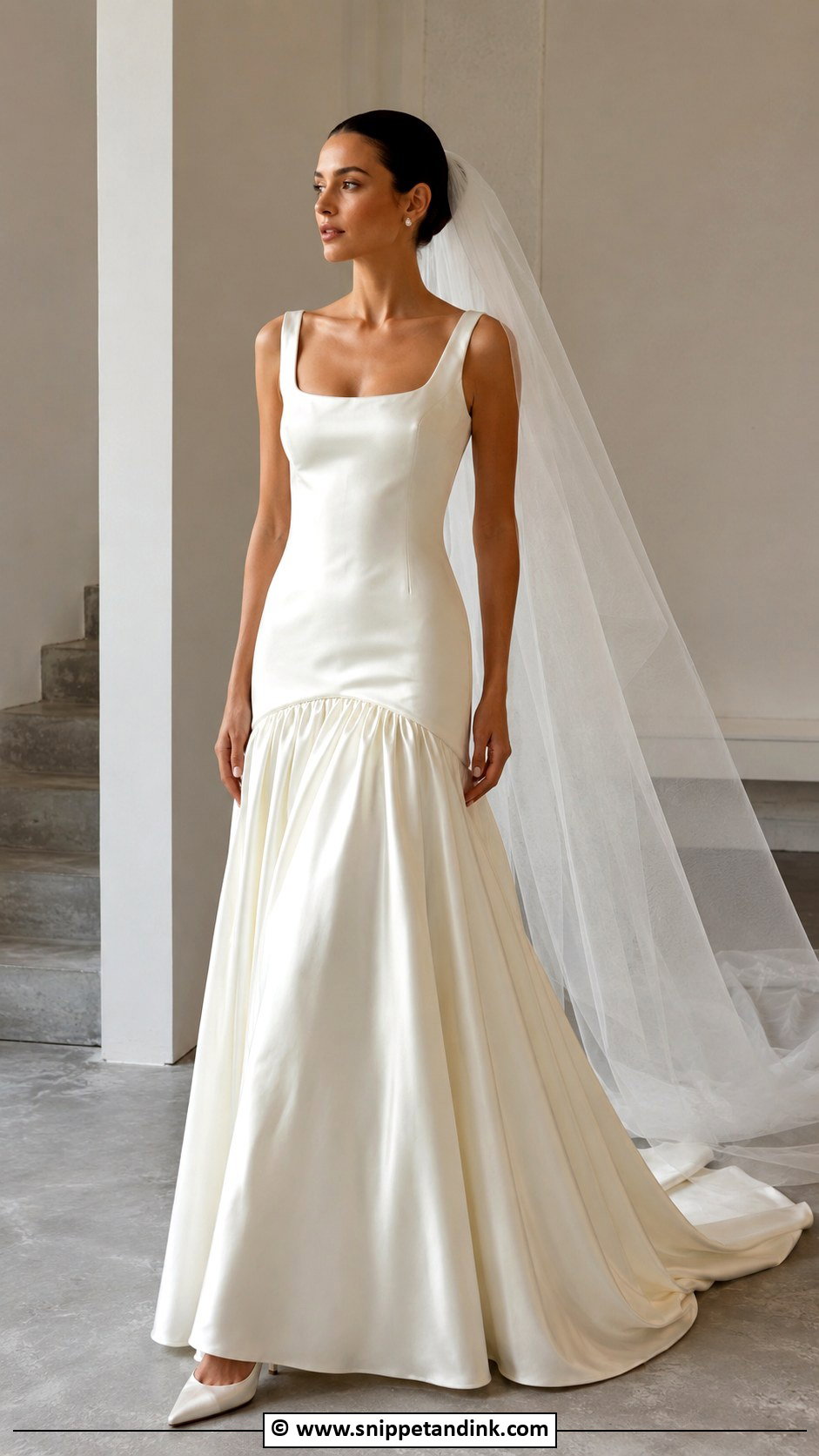
A drop waist moves the seam below your natural waist, which lengthens the bodice and can make a petite frame look taller. It can also shorten the legs on some brides, so I watch the overall proportion in a full-length mirror before ordering. In satin, mikado or lace it looks current with a classic mood. A fitted top with a soft flare or full skirt keeps it balanced. Pulled-back hair shows the bodice seams, with pointed heels, simple earrings and a clean veil.


25. Organza Wedding Gown
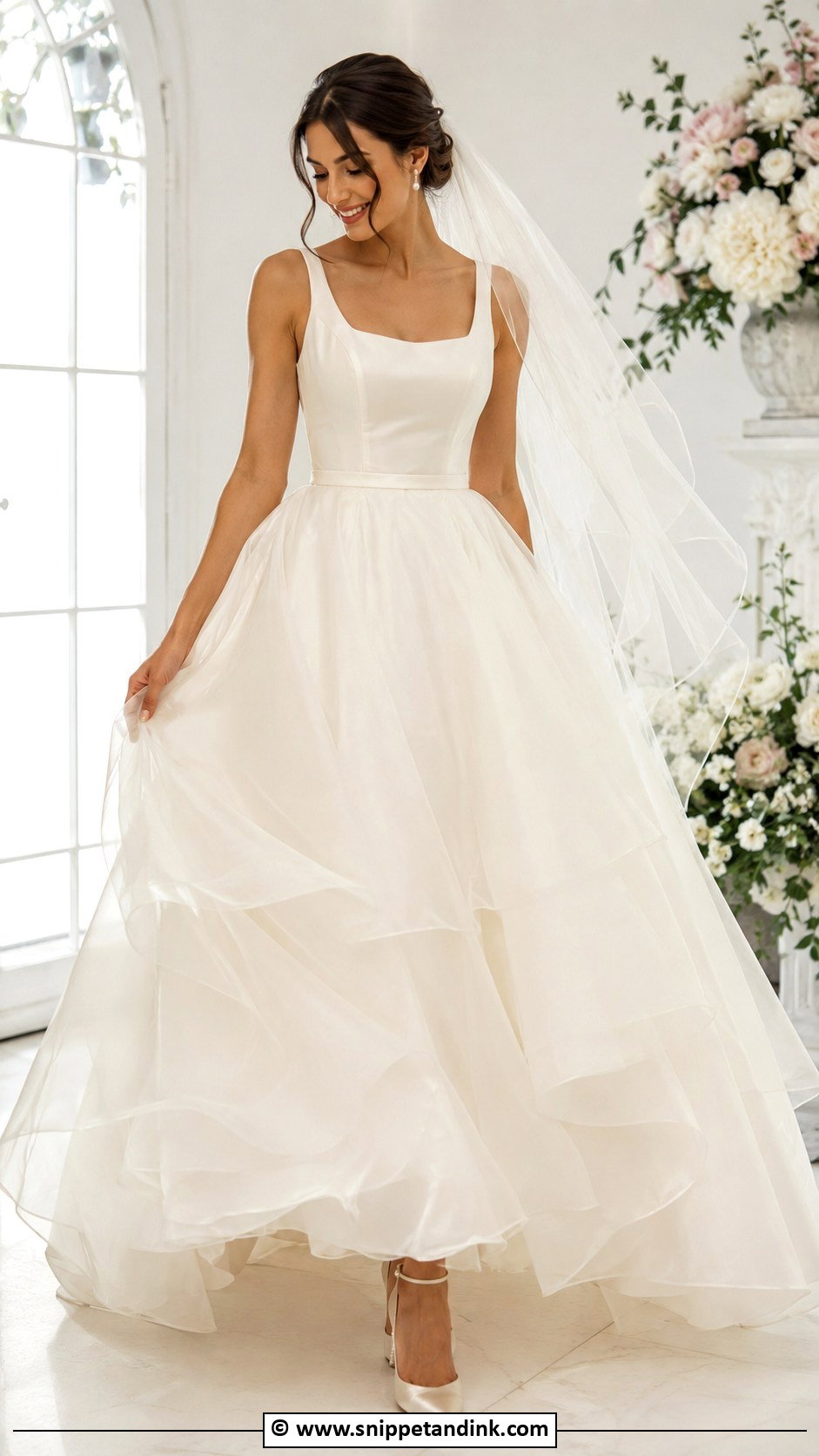
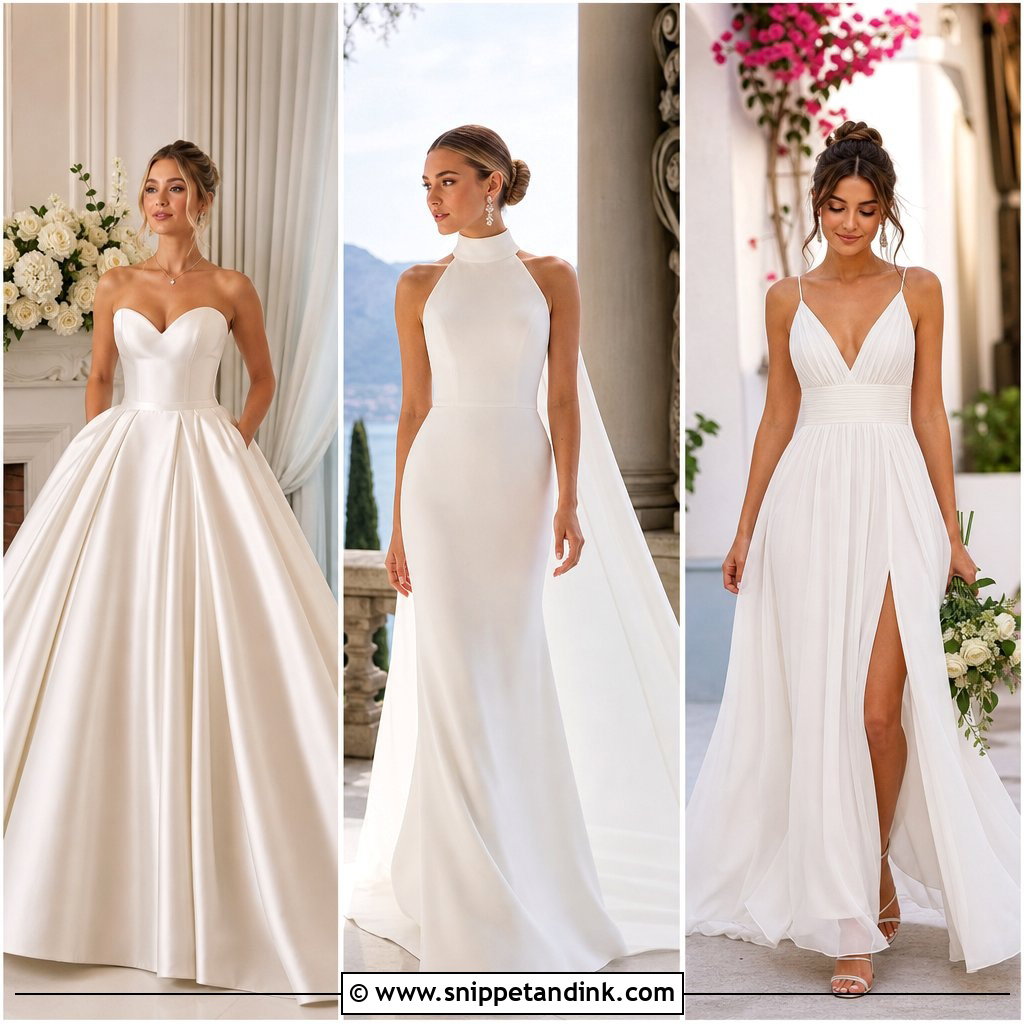
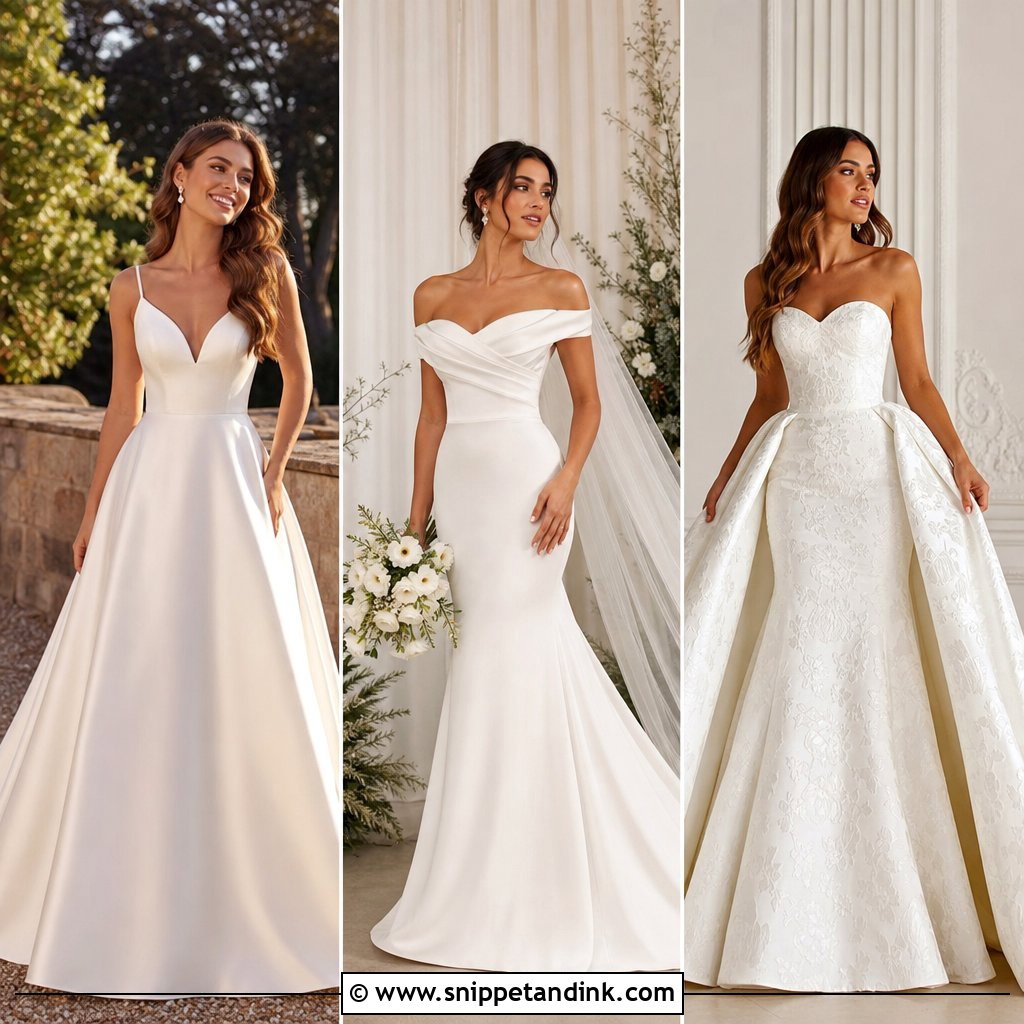
Organza is woven from tightly twisted yarn, so it’s crisp enough to hold volume yet sheer enough to feel light. That makes it my usual answer when a bride wants a full skirt in summer heat. It suits A-lines, ball gowns and layered skirts with a clean bodice, soft appliqué or subtle pleating. Expect it to wrinkle if crushed, though it steams out quickly. Satin heels, pearl earrings, a sheer veil and a soft bun or half-up hair finish it.
26. Beaded Sheath Wedding Gown
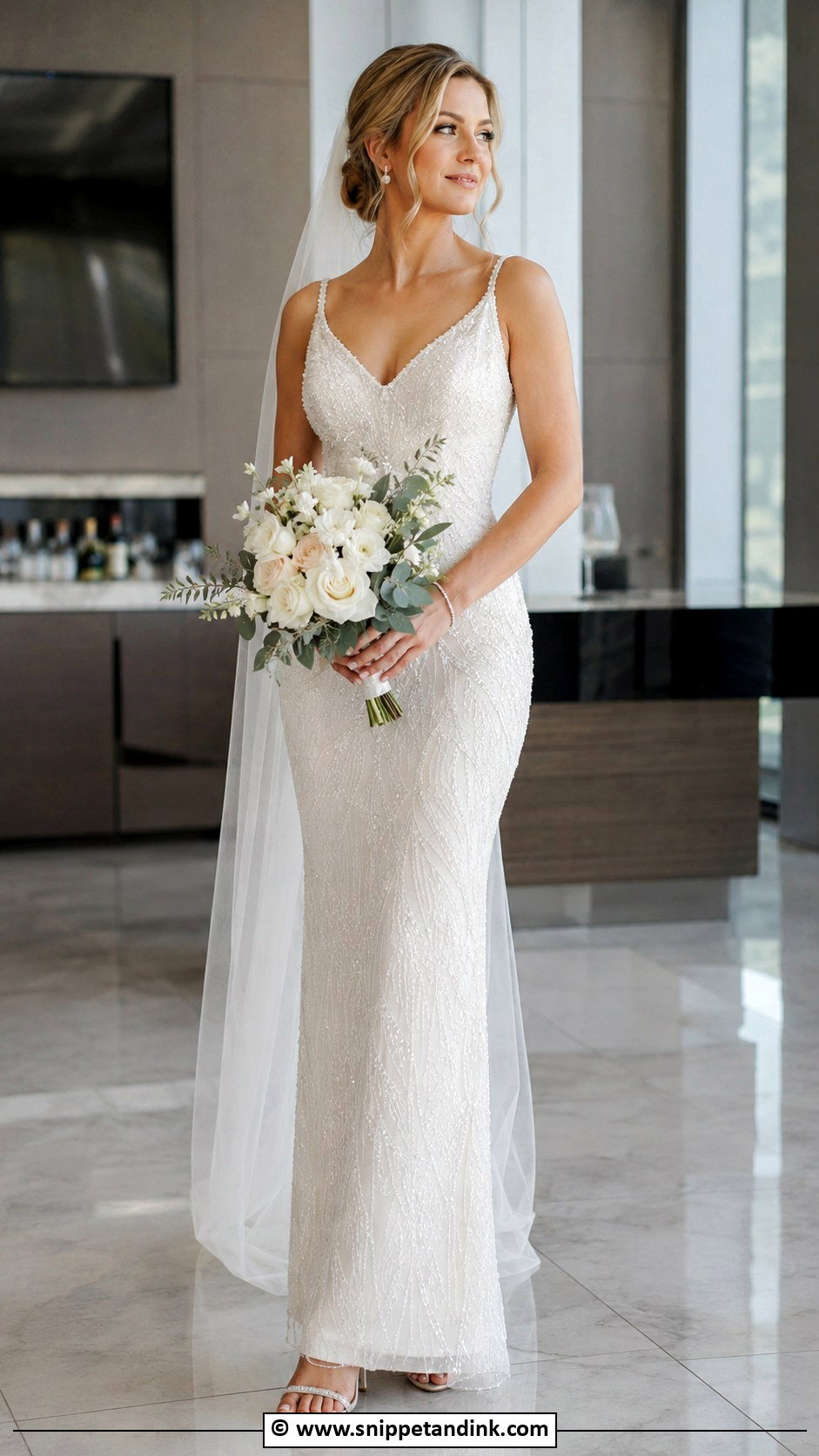
Beadwork on a sheath only looks expensive when it’s placed with restraint. I look at the inside of the bodice: beads hand-sewn through to a lining hold up, glued ones shed. Ivory, champagne or soft white beading stays elegant. The slim shape needs careful tailoring through waist and hips with enough ease to sit and dance. Keep heels simple, earrings small and the veil smooth, and save it for evening receptions where the shimmer catches candlelight.
27. V Neck A Line Wedding Gown
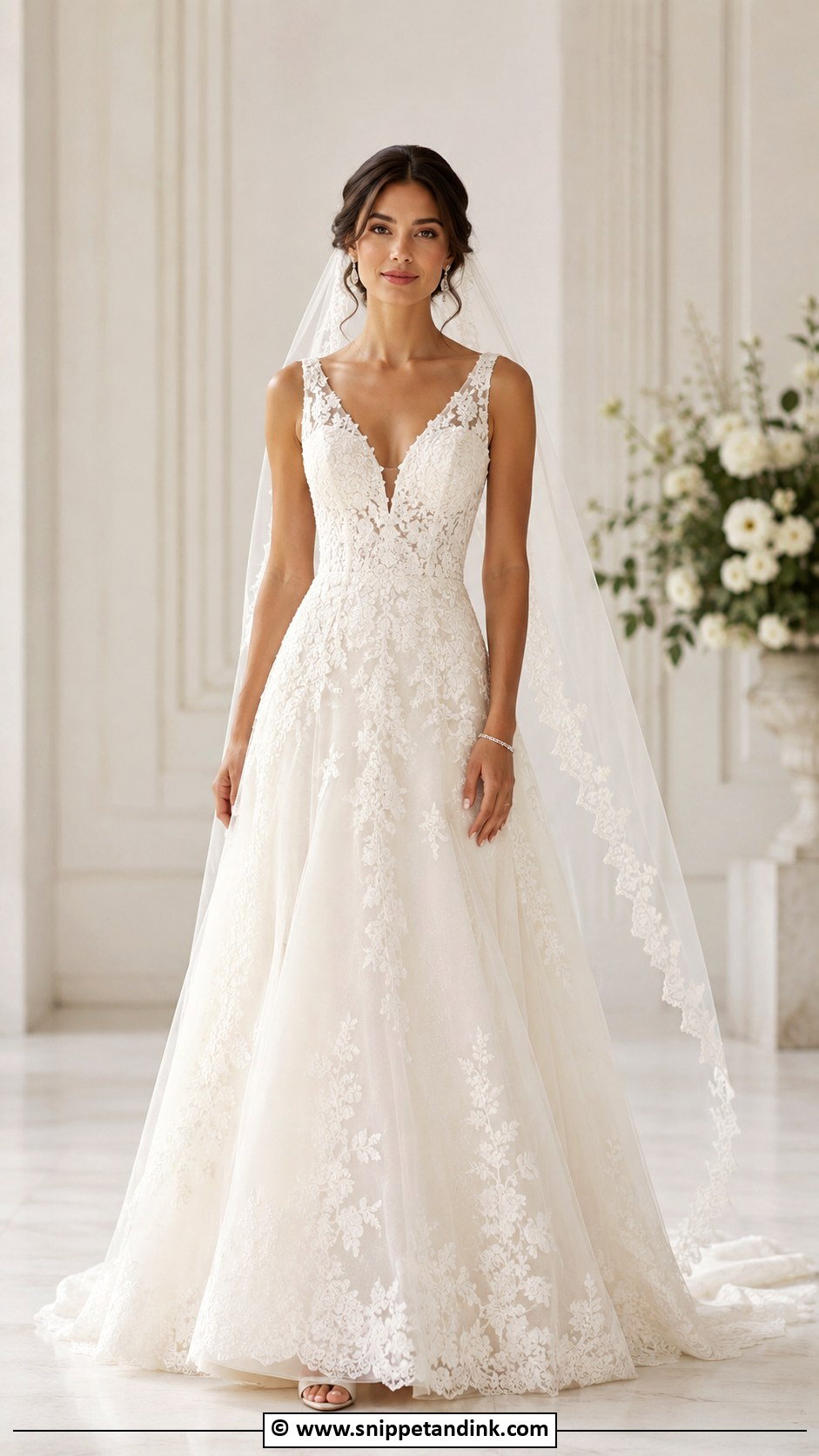
A V neckline lengthens the upper body, and the A-line skirt moves without clinging, which is why so many brides end up here after trying everything else. Soft lace, satin, chiffon or crepe with minimal embellishment keeps it classy. Depth of the V is the fitting question: I pin it with the bride leaning forward to make sure it stays put. Drop earrings, a delicate bracelet and heels you can actually walk in finish the look, with a fingertip or plain cathedral veil to suit the venue.
28. Satin Fit And Flare Wedding Gown
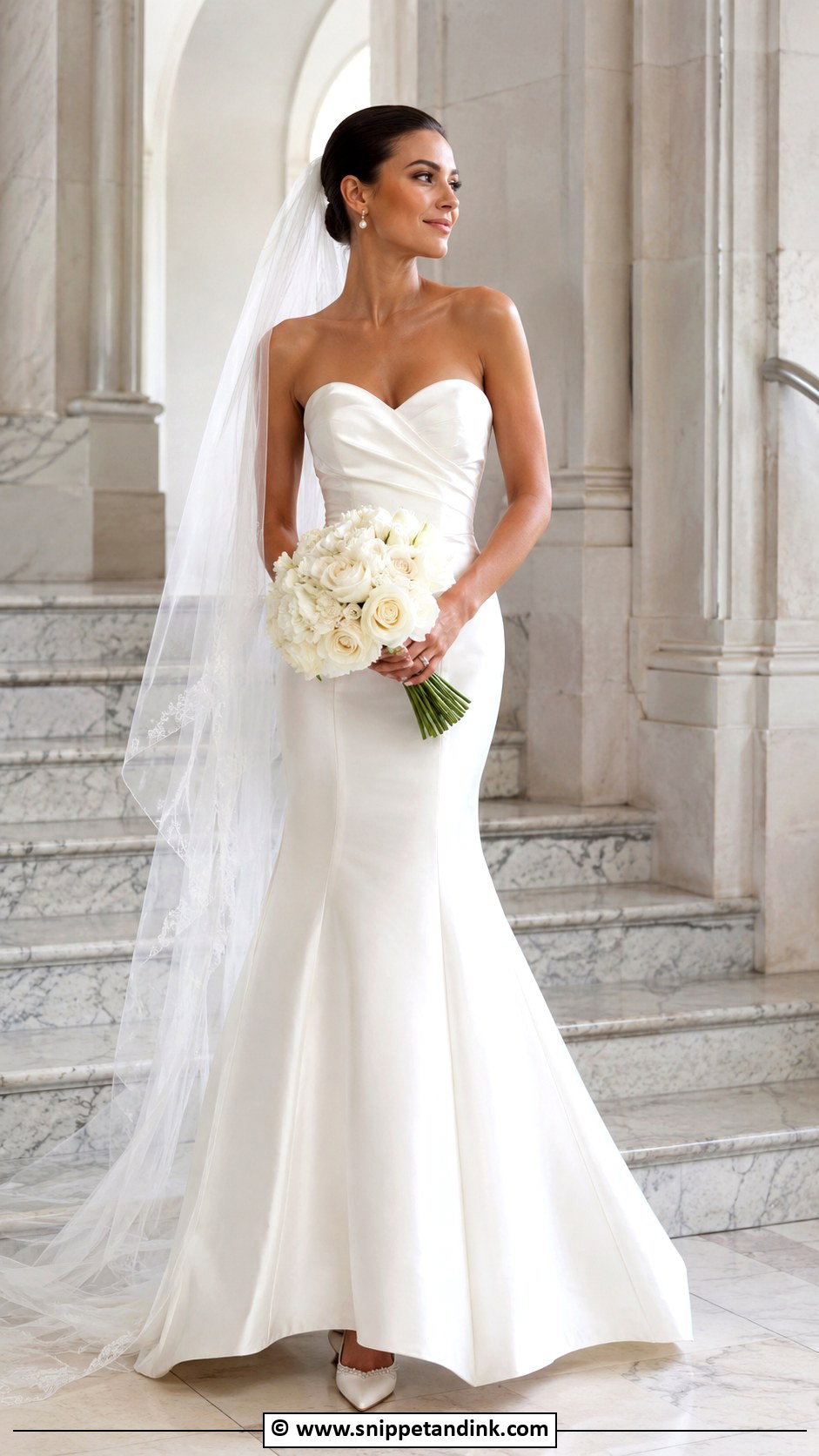
Fit and flare hugs the bodice and hips but opens higher than a mermaid, usually around mid-thigh, so you get shape without the shuffle. It’s my compromise suggestion when someone loves a mermaid but have to dance for five hours. Sweetheart, square or off-shoulder necklines all suit it. Satin keeps the line smooth. Pearl earrings, a long veil, pointed heels, a structured bouquet and a low bun round it out.
29. Detachable Overskirt Wedding Gown
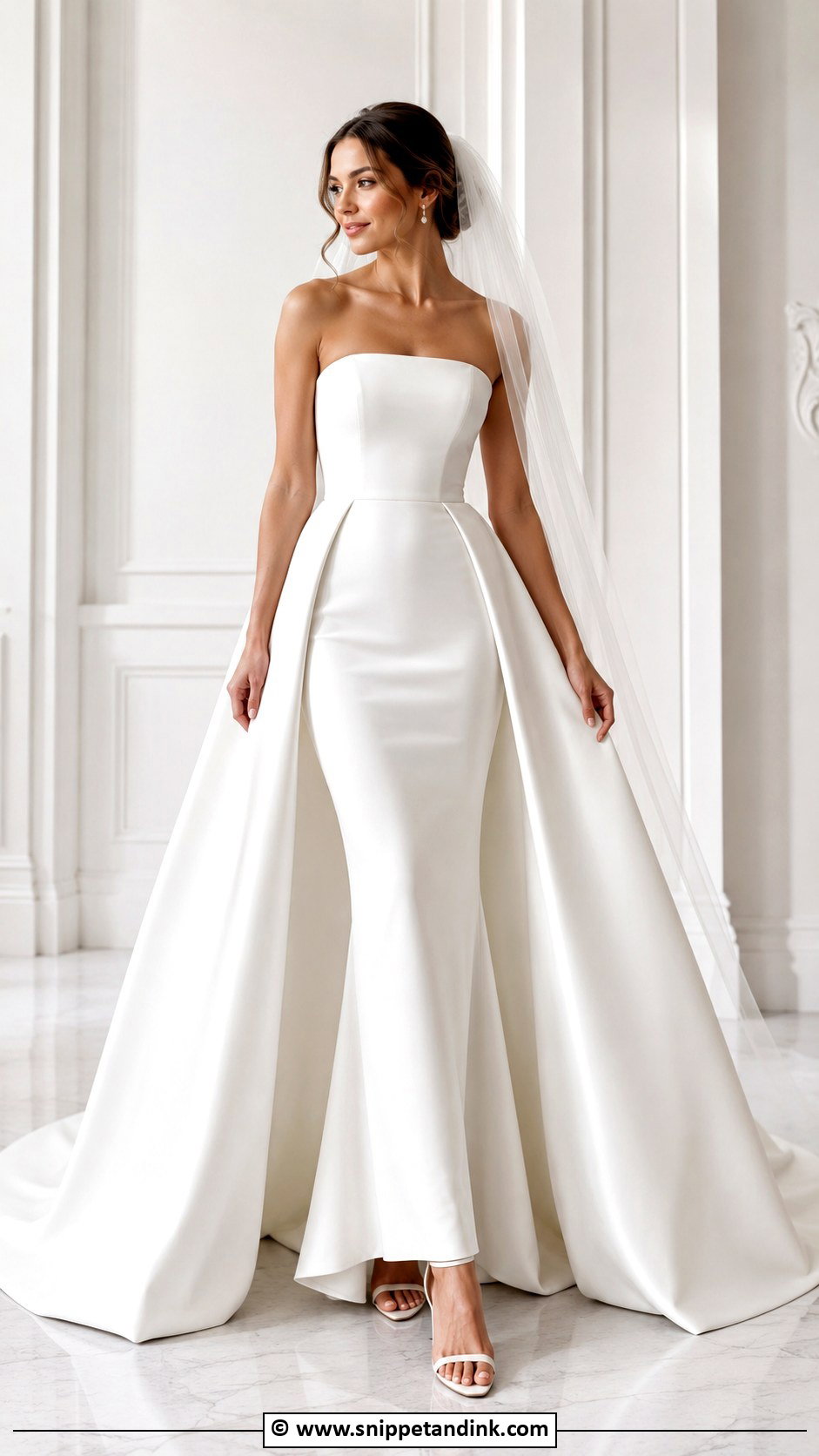
An overskirt gives you two looks without a second dress. It usually fastens at the waist with hooks, hidden buttons or snaps over a fitted crepe, satin or lace base. Practise taking it off before the day, because the person helping you won’t know where the fastenings hide, and it should take minutes, not half an hour. Wear elegant heels, simple earrings and a ceremony veil, then add a bracelet or a hair accessory once the skirt comes off for the reception.
30. Reception Mini Wedding Gown
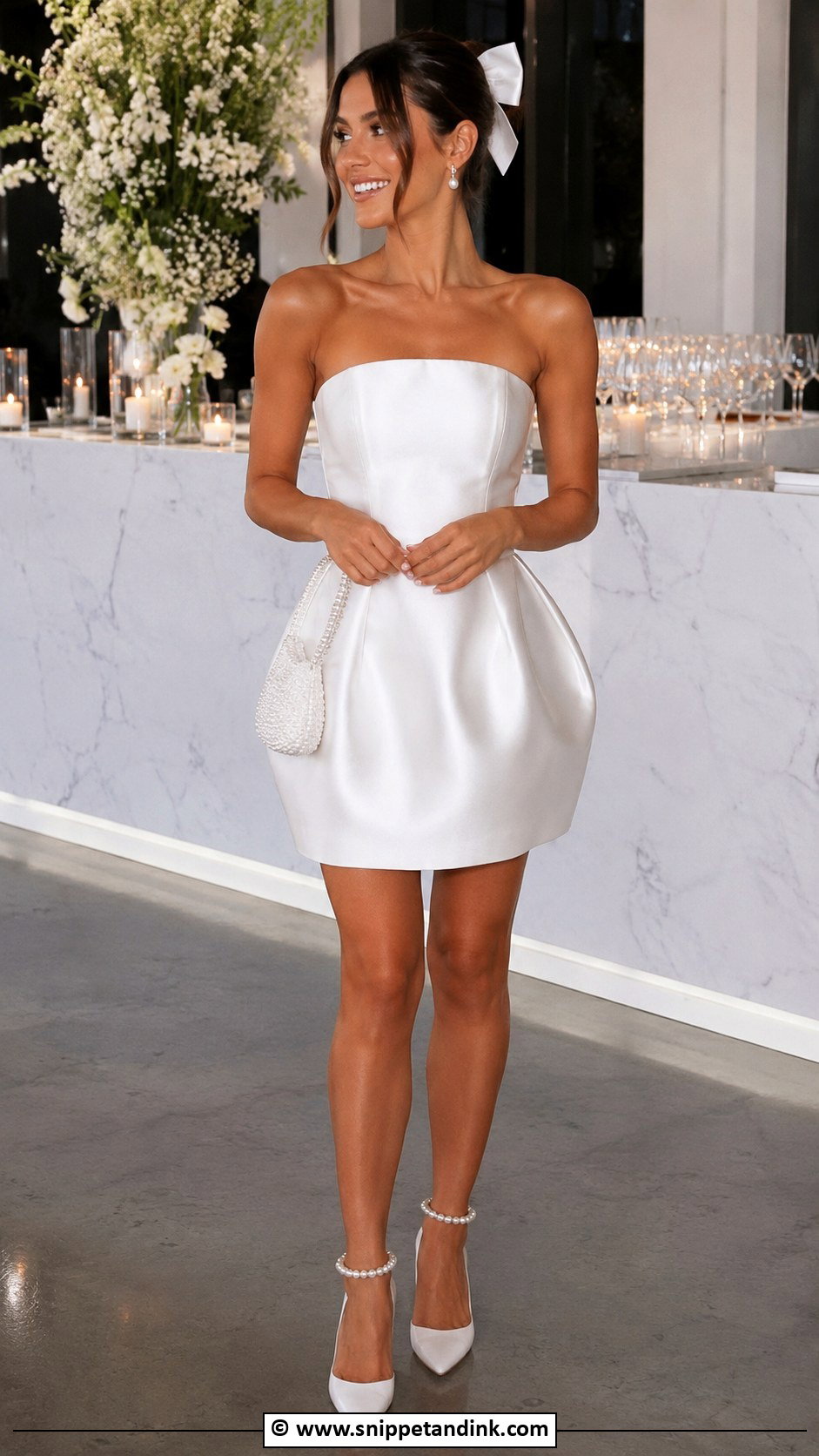
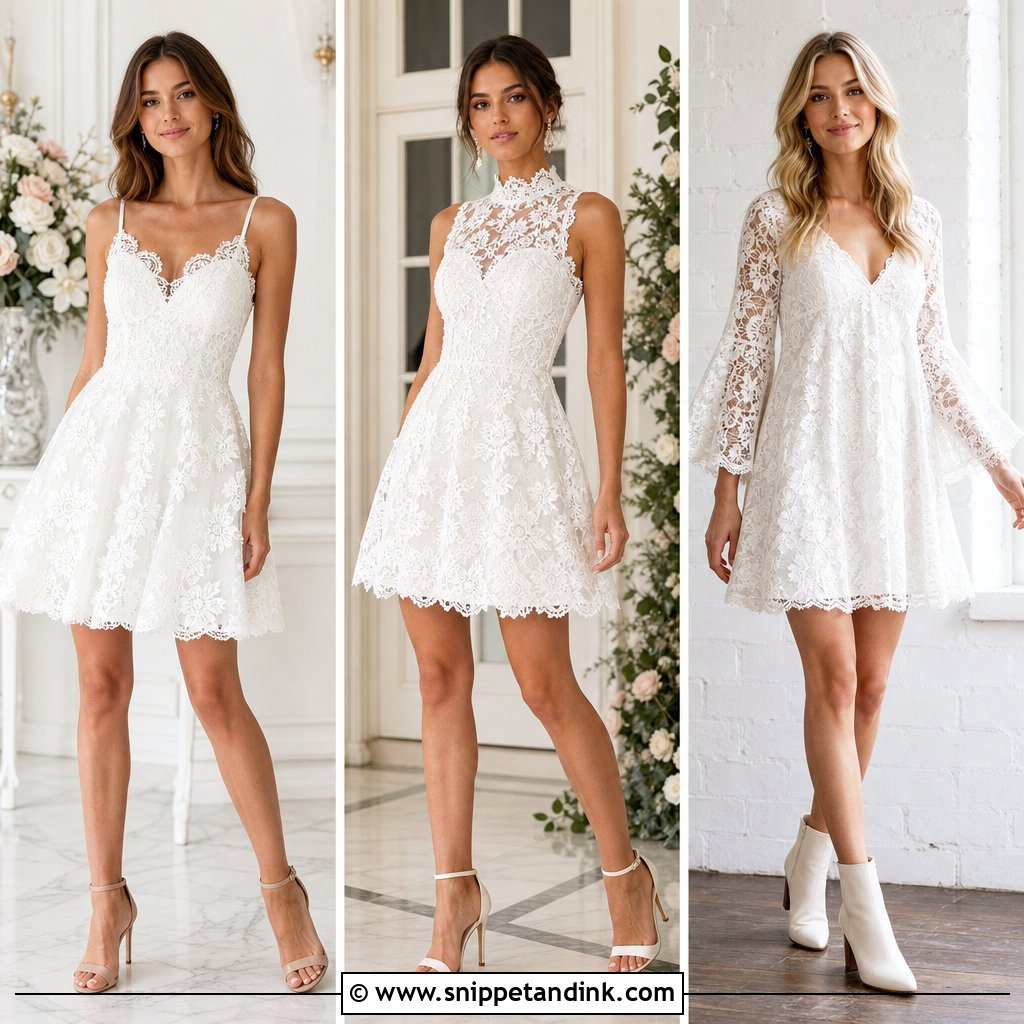
Most brides who come to me for a reception mini wedding gown want to dance, and a short dress lets you do that without bustles or train-carriers. Structured satin, a feather hem, a long-sleeve lace mini or a crepe shift all read bridal. Since your legs and shoes are now the focus, wear heels you love, pearl earrings and a small white bag. A hair bow, short veil or sleek headband keeps it from looking playful. It also suits courthouse ceremonies and rehearsal dinners, as long as the fit is tailored.
Sit, Dance and Bustle Before You Sign Off
A gown that looks perfect on the fitting platform can still fail by ten in the evening. At the last fitting I put brides through a short routine that mimics the day, because standing still in front of a mirror tells you almost nothing.
- Sit down on a hard chair for two minutes. Watch for the bodice digging in under the ribs and for boning pressing into the hip.
- Raise both arms as if hugging someone taller. Sleeves and straps should not pull the neckline up or sideways.
- Walk up and down a few steps. Mermaid and fit and flare skirts need enough room at the knee for stairs.
- Bustle the train and dance for a minute. If a hook pops now, it will pop at the reception.
Bustles come in two common styles. An over bustle lifts the train with hooks or buttons onto the back of the skirt; a French or under bustle tucks it beneath with ribbon ties. Heavier satin usually needs more pick-up points than lightweight tulle, so ask your seamstress how many she plans.
After the Wedding: Cleaning and Storing the Dress
Get the gown to a specialist cleaner within a few weeks. Sugar from champagne or cake can dry invisible on satin, then oxidize into a yellow-brown mark months later, and that is much harder to remove once it sets.
For storage, I prefer a breathable cotton garment bag or an acid-free box with acid-free tissue folded into the creases. Plastic traps moisture and can yellow fabric over time. Don’t hang a heavy beaded or ball gown by its shoulders for years, because the weight stretches the seams; fold it flat or use the inner hanging loops. Keep it somewhere cool, dark and dry, which usually means a bedroom closet rather than an attic or a basement.
One Gown, Fitted Properly, Beats Five Trends
Every gown here works for someone, and none of them works for everyone. Satin ball gowns, lace sleeves, minimal crepe, pearl details or a reception mini all succeed when the dress fits your body, suits your venue and lets you move. Spend your energy on tailoring and fabric, then keep accessories quiet so they support the dress rather than shout over it. A simple veil, good heels, pearl earrings and a hairstyle that won’t fall will finish almost any of them.
You'll Like These Ideas:










Leave a Reply