
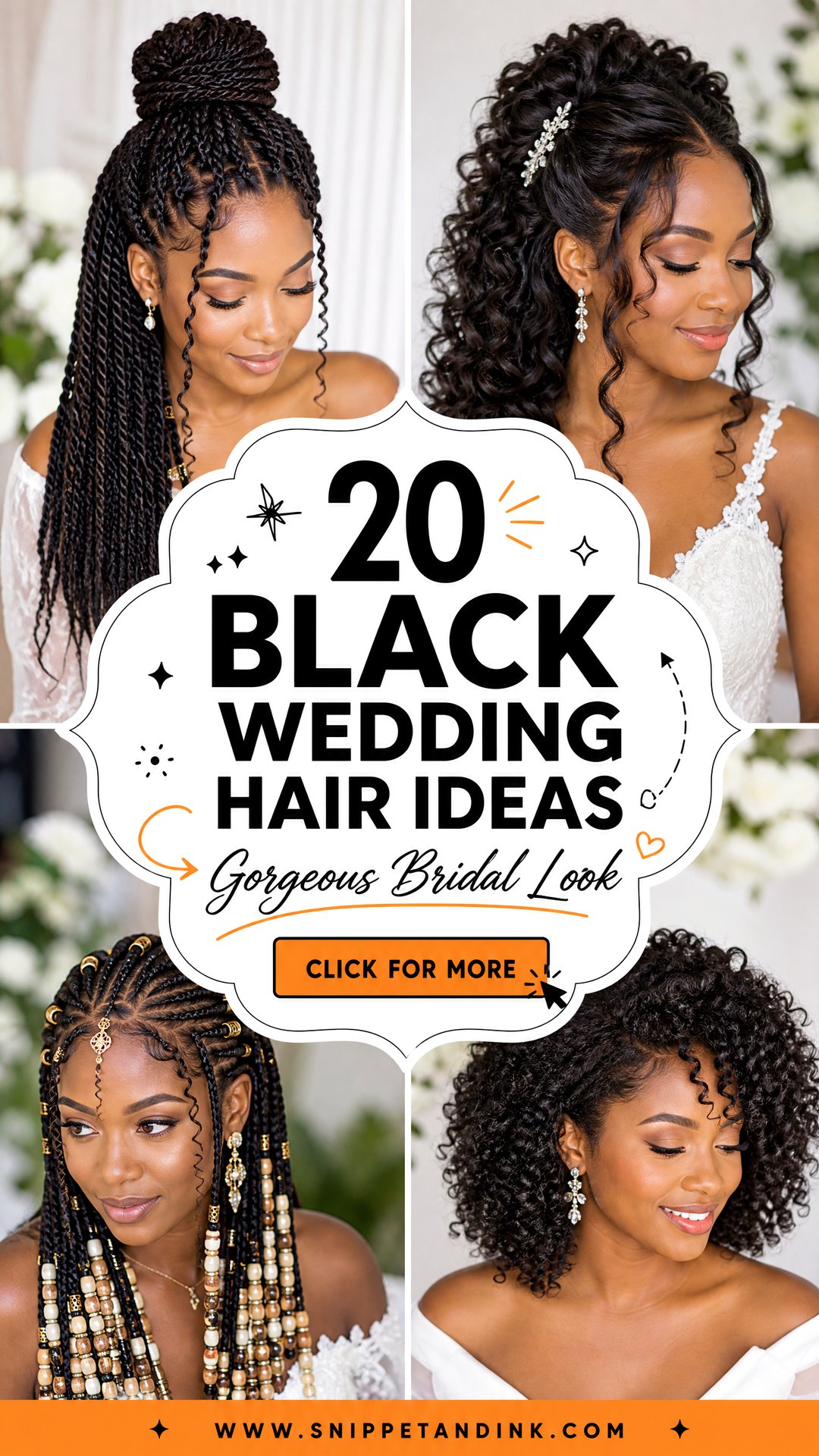
Most of the brides who sit in my chair with coils, locs or braids already know their hair well. What they want from me is a plan: which style will still look right after a long ceremony, a sweaty dance floor and a hundred hugs, and how to get there without stressing the hairline. Textured hair gives you more range than almost any other hair type, from a full afro with gold pins to a sculpted loc updo or beaded Fulani braids. Below are twenty looks I’d put in front of a bride, each with what I’d actually watch for when doing it.
Counting Back From the Date for Braids, Locs and Press-Outs
Timing is where textured bridal hair goes right or wrong, long before the morning itself. Each kind of style has its own sweet spot, and getting it wrong usually means a sore scalp in photos or a press that has already reverted.
- Braids, twists and Fulani styles: install three to seven days before. Fresh braids feel tight and can leave the scalp tender, and a few days lets the roots relax while everything still looks crisp.
- Loc retwists: one to two weeks out, so new growth has softened and doesn’t look glossy or stiff.
- Tapered cuts and line-ups: about a week ahead for the cut, with a light tidy closer to the day if needed.
- Silk presses and press-outs: two or three days before at most, and only if you can protect them from steam, rain and sweat in the meantime.
- Wash and go or twist-out: set the night before or on the morning, never days ahead.
I always tell brides not to try a brand-new product in the final week. A gel or edge control your hair hasn’t met before can flake, leave a cast or react with humidity in ways you only find out at the reception. Use what you already know works.
1. Natural Afro With Gold Hair Accessories
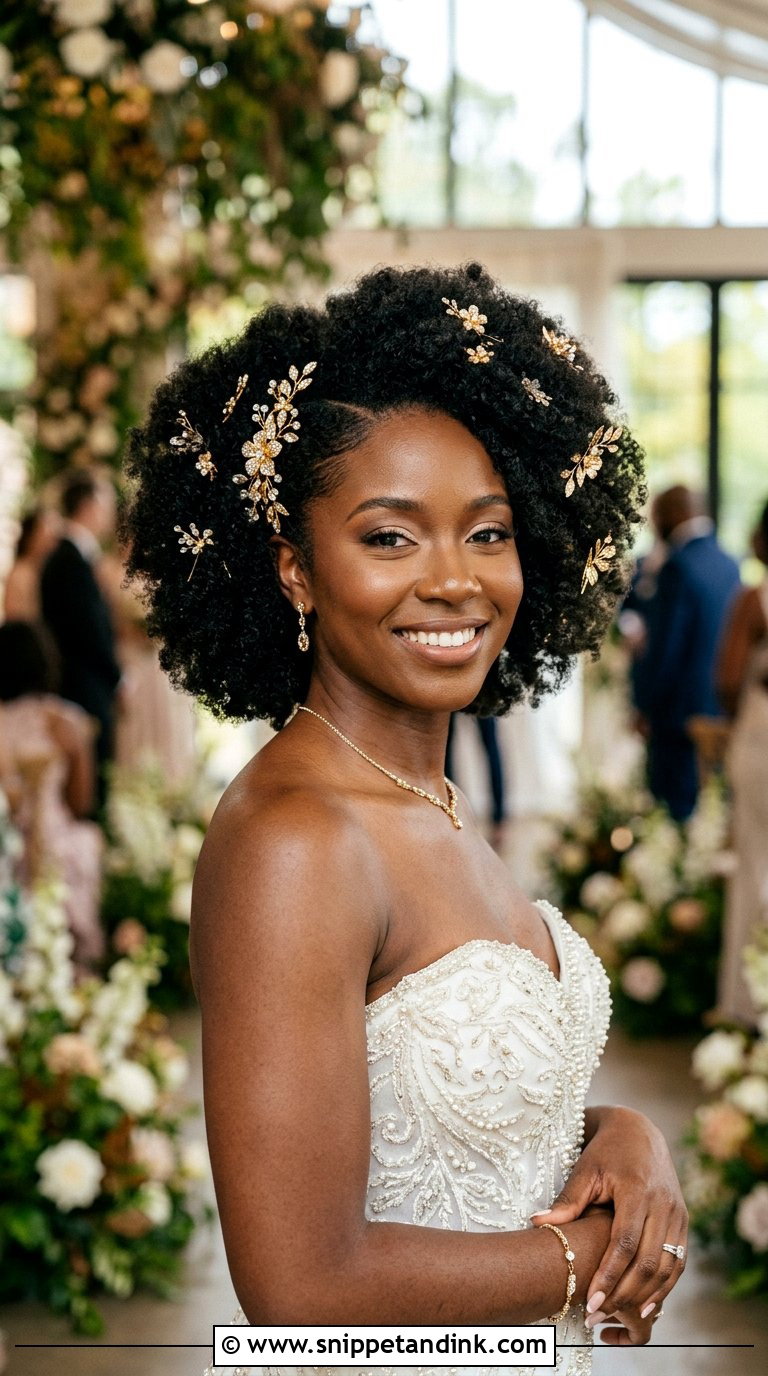
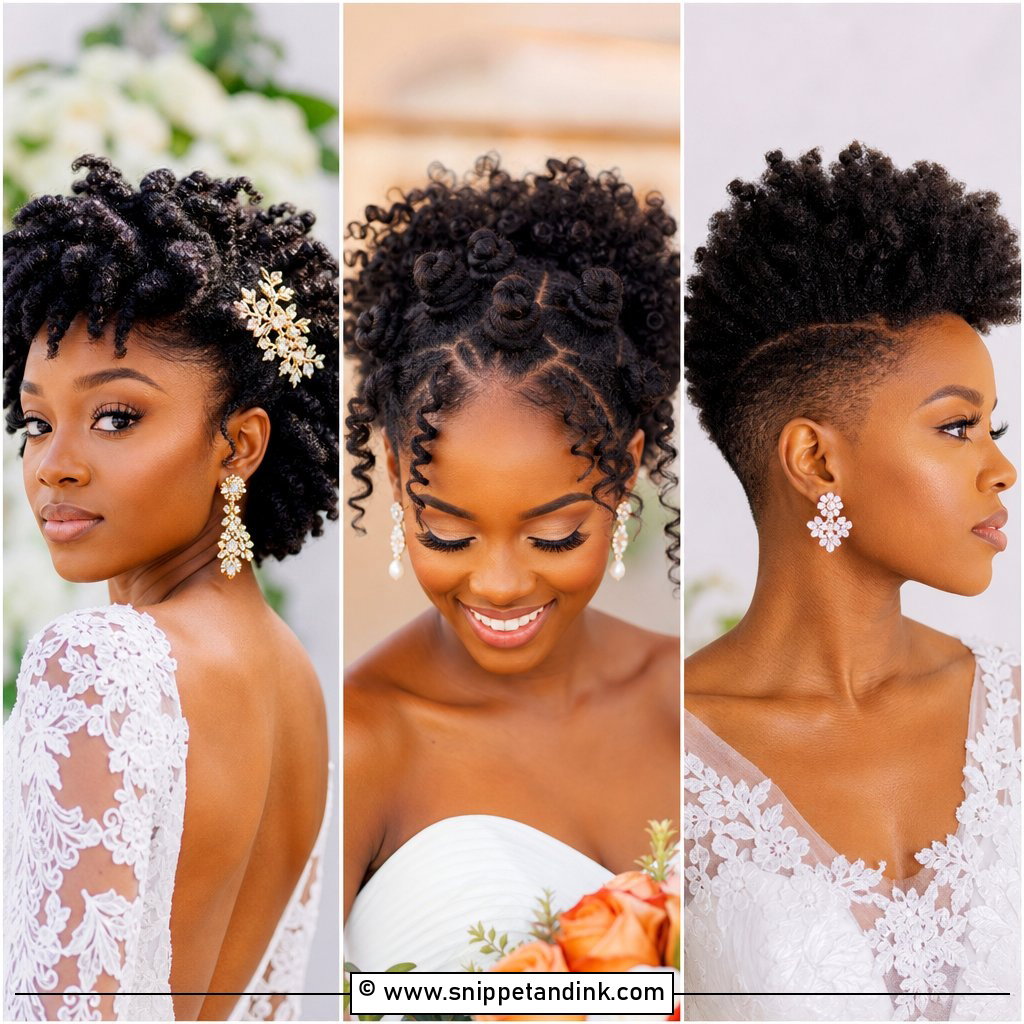
A natural afro on its wedding day doesn’t need changing, it needs shaping. I pick it out from the root, set the outline with a light hand and decide on the part early so the volume falls the way the dress neckline wants. Gold hairpins, delicate clips or one embellished barrette are enough to make it bridal; slide them in at an angle so they grip the coils instead of resting on top. A deep conditioning treatment the week before really does show, because hydrated coils clump and reflect light. It suits a strapless or beaded gown especially well, since nothing competes with the shape of the hair.
2. Sleek Low Bun With Dutch Braid Crown
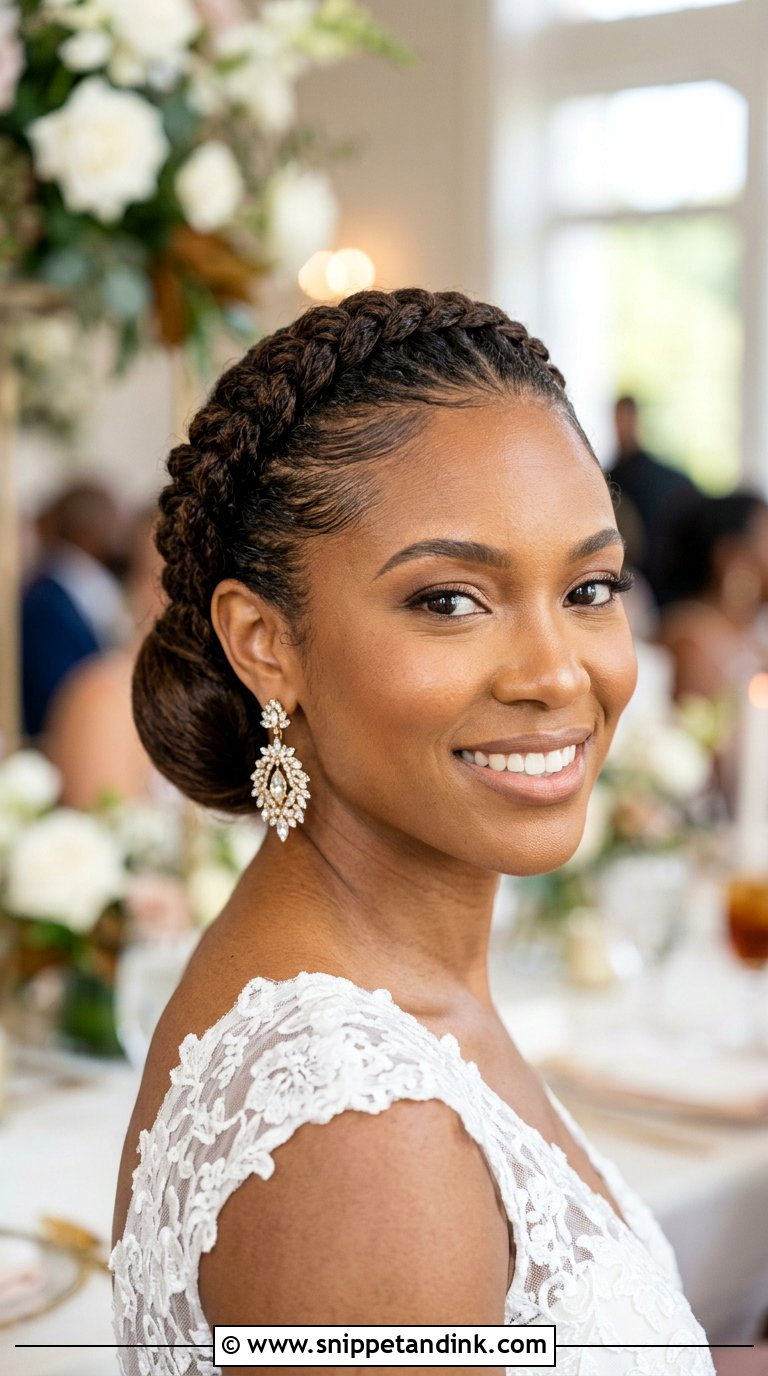
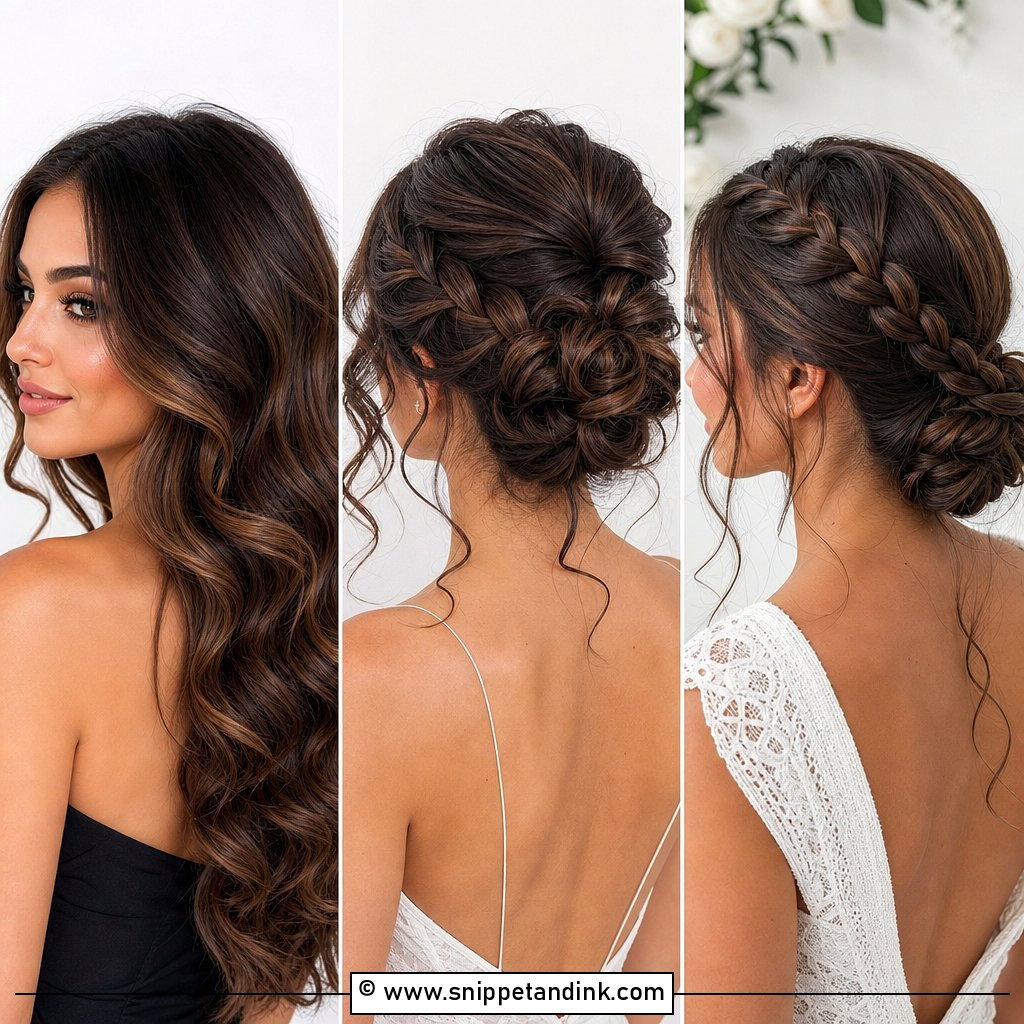
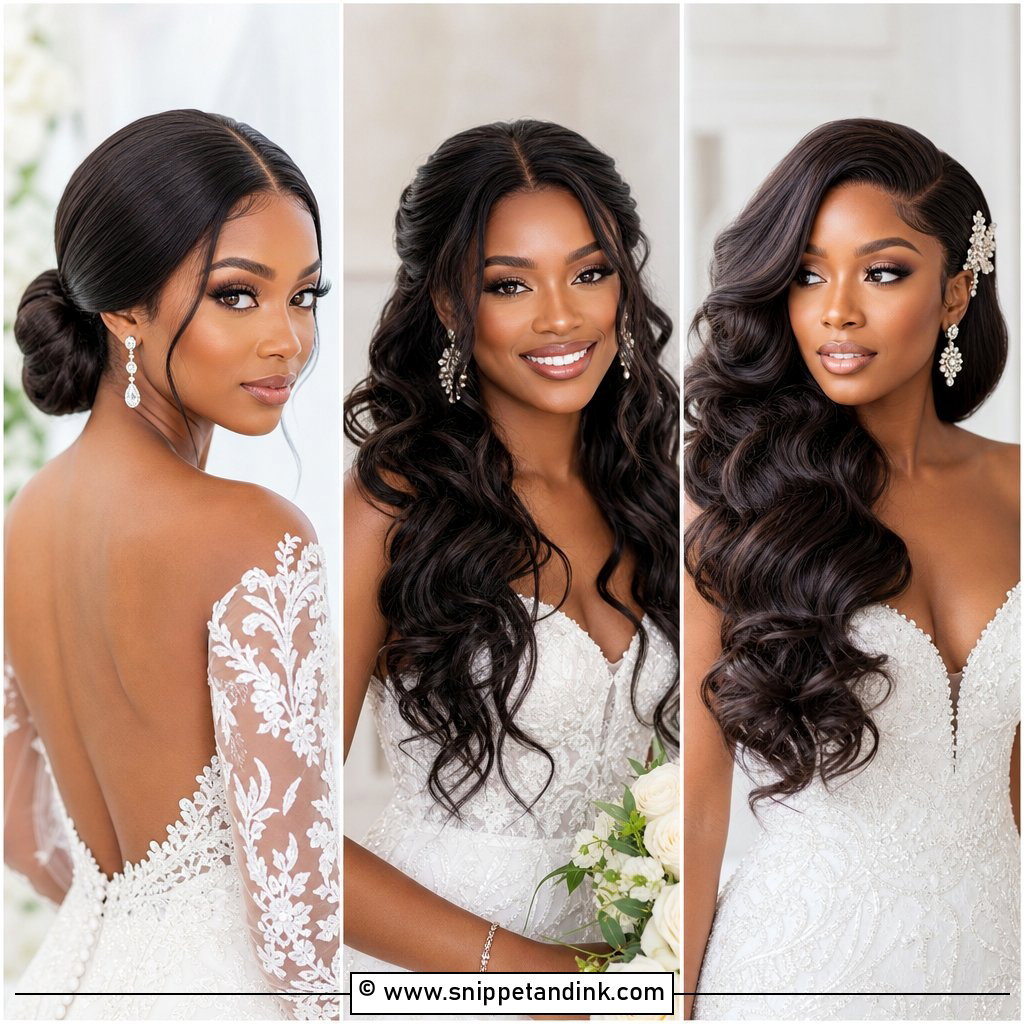
The sleek low bun with a Dutch braid crown is one of my most requested looks, and the braid is doing a structural job as well as a decorative one. It locks the front hairline down, so the bun behind it stays tidy from every side, including in back-of-the-head ceremony photos. I lay edges with a soft-hold gel rather than a heavy wax, because heavy products can go white and flaky under humidity by the reception. Pull the bun too tight and you’ll feel it within hours; I leave a little give at the nape. It takes a veil comb well, just above the bun.
3. Loose Twist-Out Updo
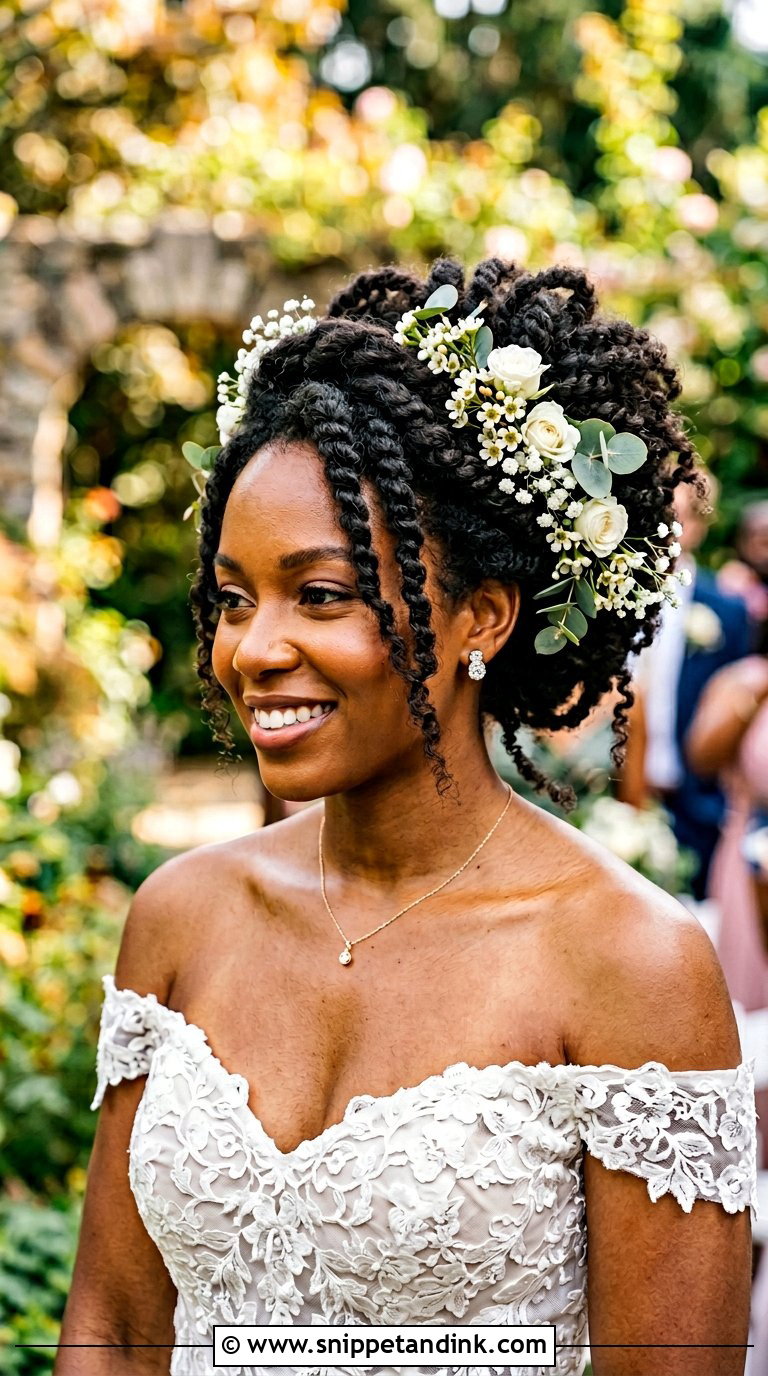
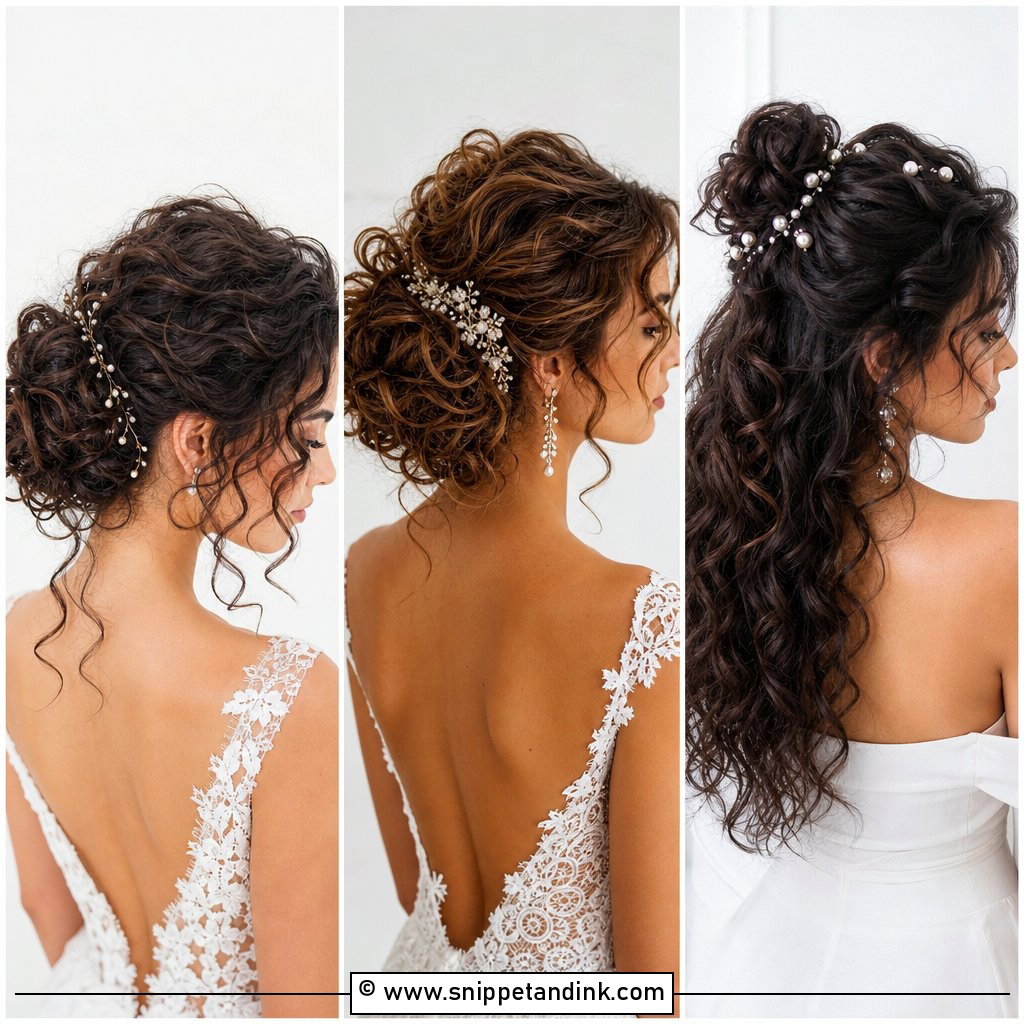
A twist-out updo depends on how the twists were set. I want them done on damp, moisturized hair the night before, fully dry by morning, then unravelled with oiled fingers so the pattern separates without frizzing. From there the hair is gathered loosely and pinned into a full, curly shape. Fresh flowers sit nicely in it. Humidity is the risk, since a twist-out softens and loses definition the longer the day runs, so for an outdoor summer wedding I’d pin it a little more securely than looks necessary.
4. Senegalese Twists Half Bun
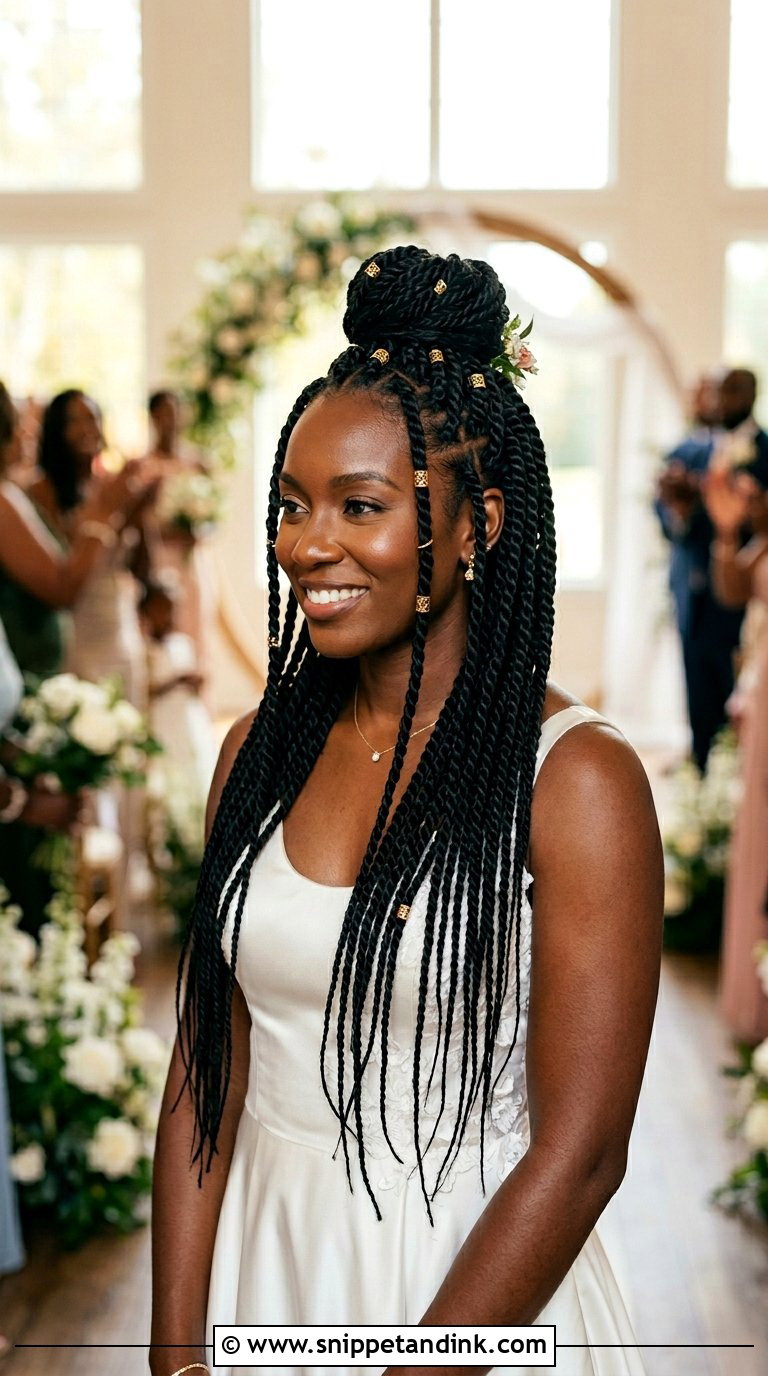
Long Senegalese twists swept into a half bun give you length down the back and a clean face at the front. I gather the top section with a soft band rather than tight pins, because twists at full length are heavy and that weight pulls on the crown. Gold cuffs or beads look rich against the sleek rope texture. Book the install a few days before the wedding so the roots relax and your scalp isn’t tender during photos.
5. Flat Twist Bun
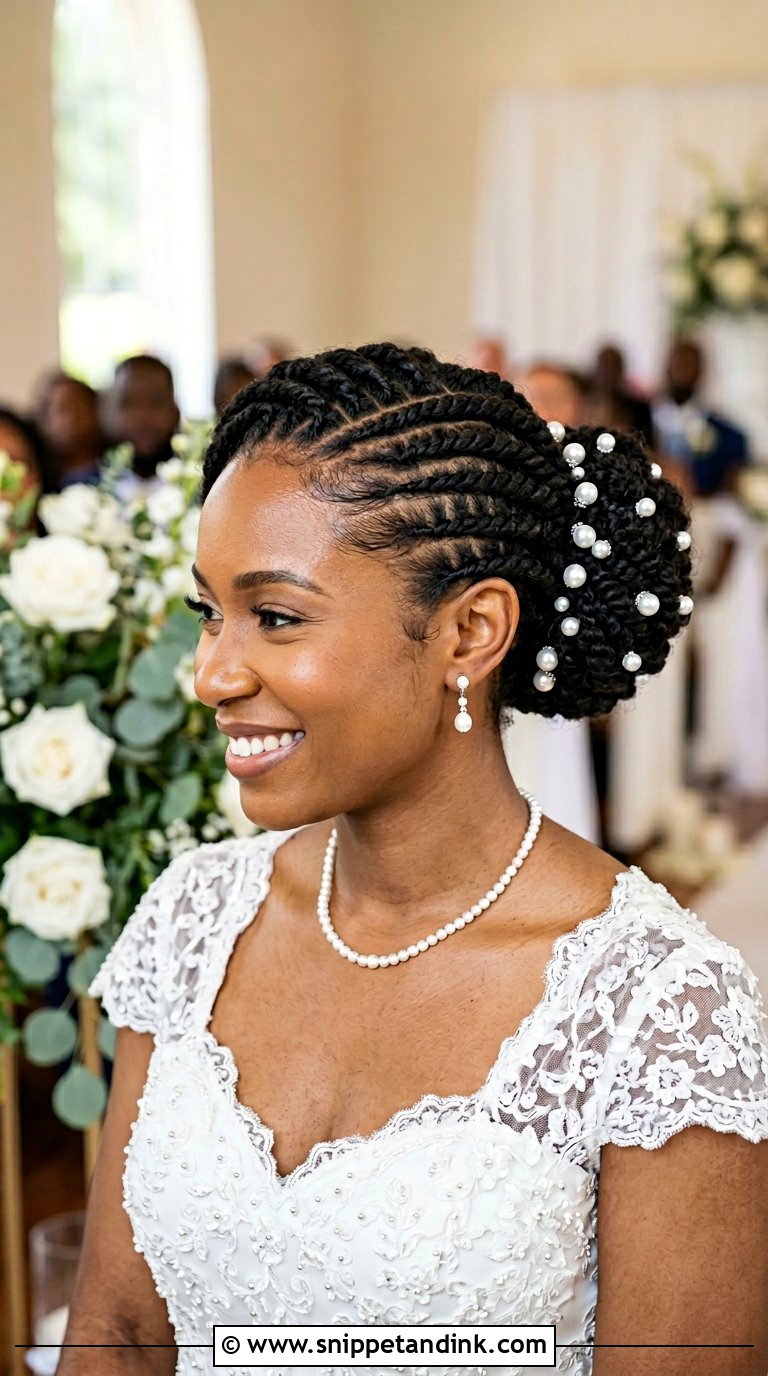
Flat twists into a bun is the style I’d trust a bride to do herself or with a friend’s help. The twists lie flat against the scalp and lead the eye into a neat bun at the crown or nape, so your face is open for close-ups. Practice the parting at least twice before the day, because uneven sections show far more in flat twists than in a curly style. Pearl pins dress it up if you like; it’s just as convincing left plain.
6. Loc Updo
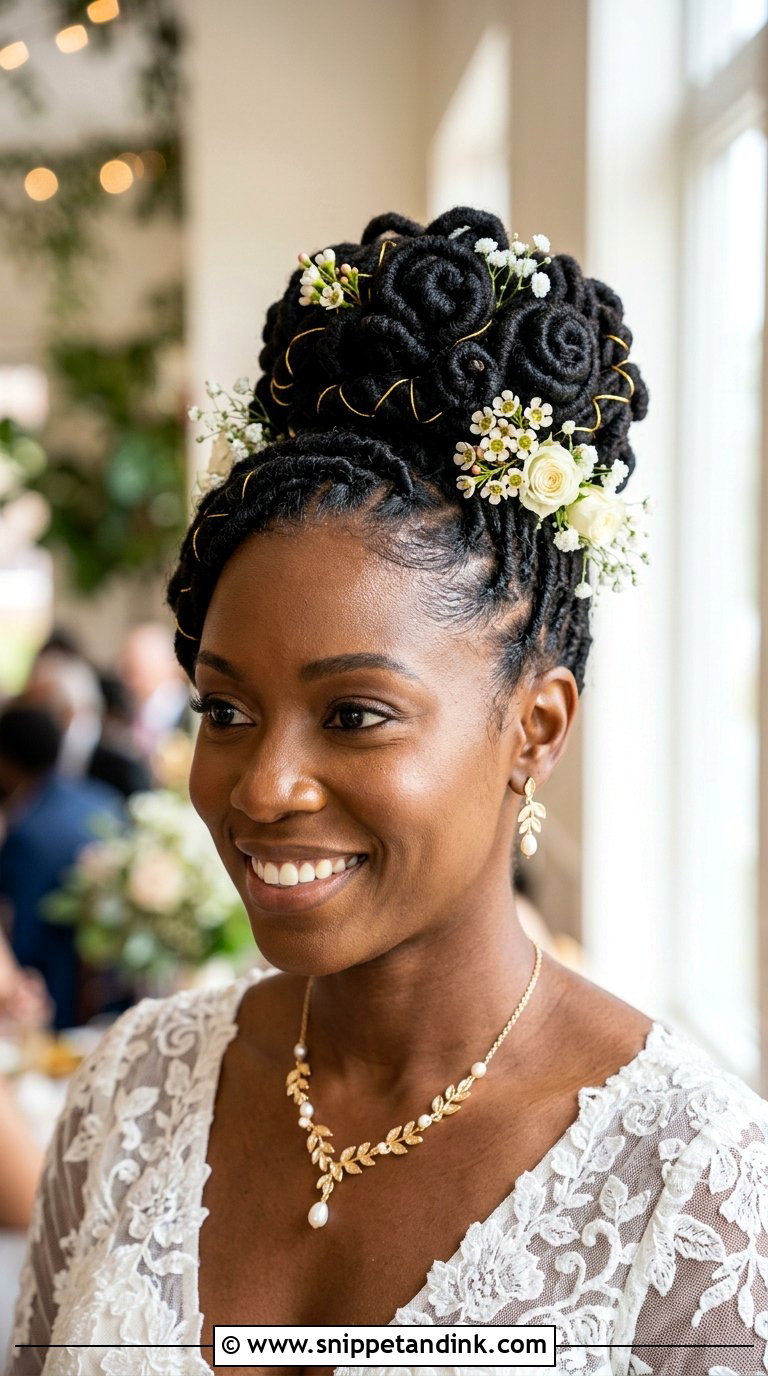
Locs are one of the easiest bases I get to work with, because they already hold shape. I coil them into a sculptural bun, pin them in soft loops or stack them for height, depending on length and how much weight the scalp can comfortably carry. Retwist or maintenance should happen a week or two before, not the day before, so the new growth isn’t stiff and shiny in photos. Gold thread, beads or flowers woven through finish it. Use pins sized for locs; standard bobby pins slip on them.
7. Side Swept Locs
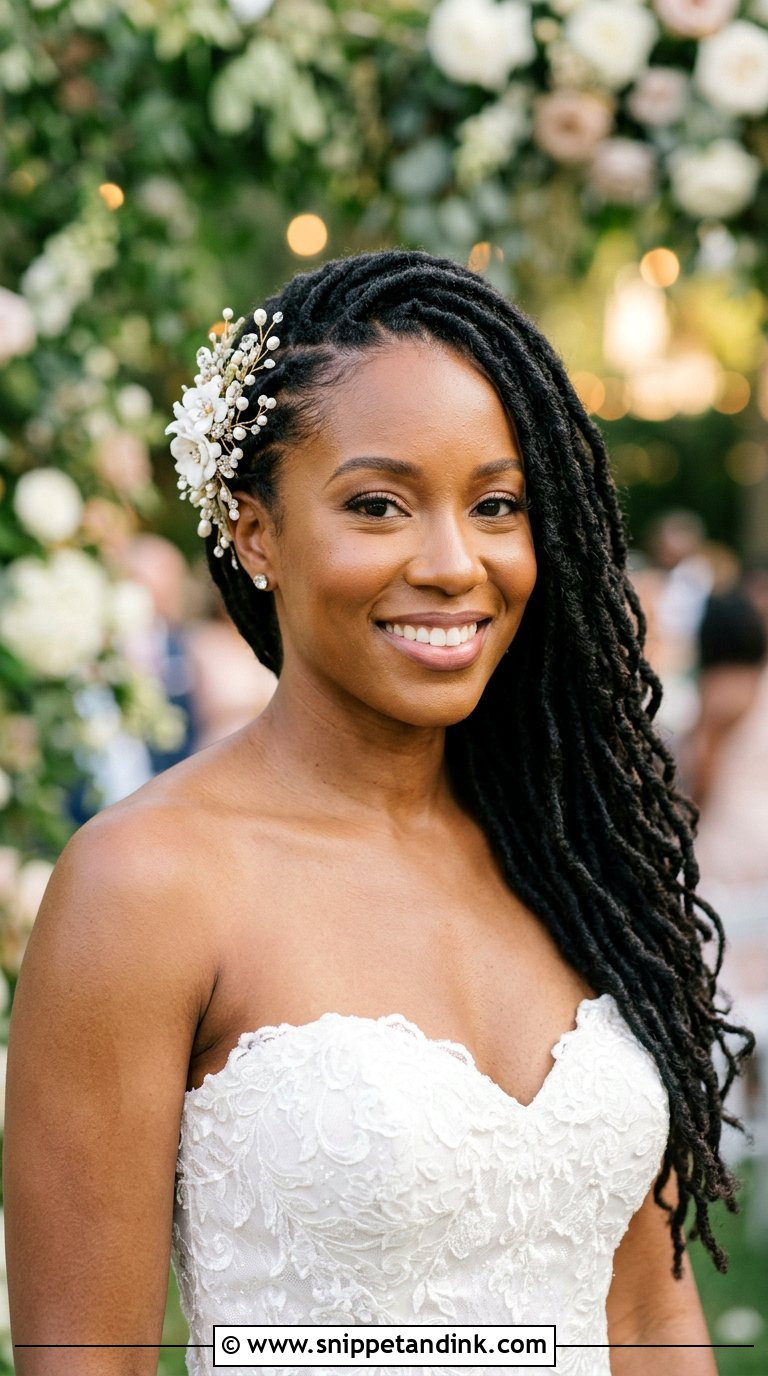
Side-swept locs need one secure anchor point behind the ear, where everything gathers and the weight sits. Without it, the locs drift back to center within an hour. This look draws attention to the neck and earrings, so it works with off-the-shoulder and sweetheart necklines and less well with a high collar. A decorative pin or small floral piece can hide the anchor. Decide which side early, because the photographer will want you positioned so the locs fall toward camera.
8. Braided Crown Updo
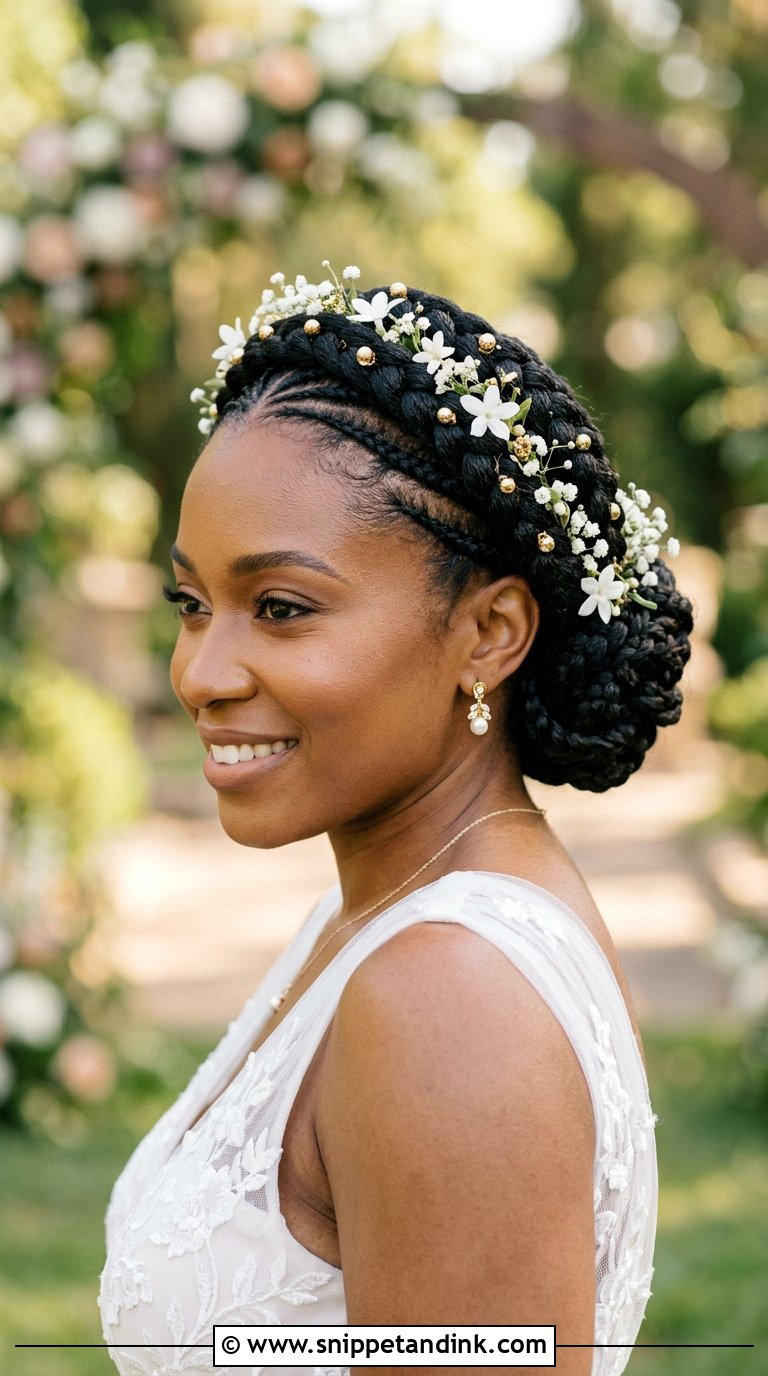
A braided crown wraps the head like a halo, and I can build it from feed-in braids or your own hair. Feed-ins give the crown a consistent thickness all the way around, which matters if your hair thins at the temples. The shape draws the eye upward and frames the face from every angle. Tiny flowers or gold beads tucked along the braid add detail without weight. Once it’s in, it barely moves, so touch-ups during the reception aren’t really a concern.
9. Half-Up Half-Down With Curls
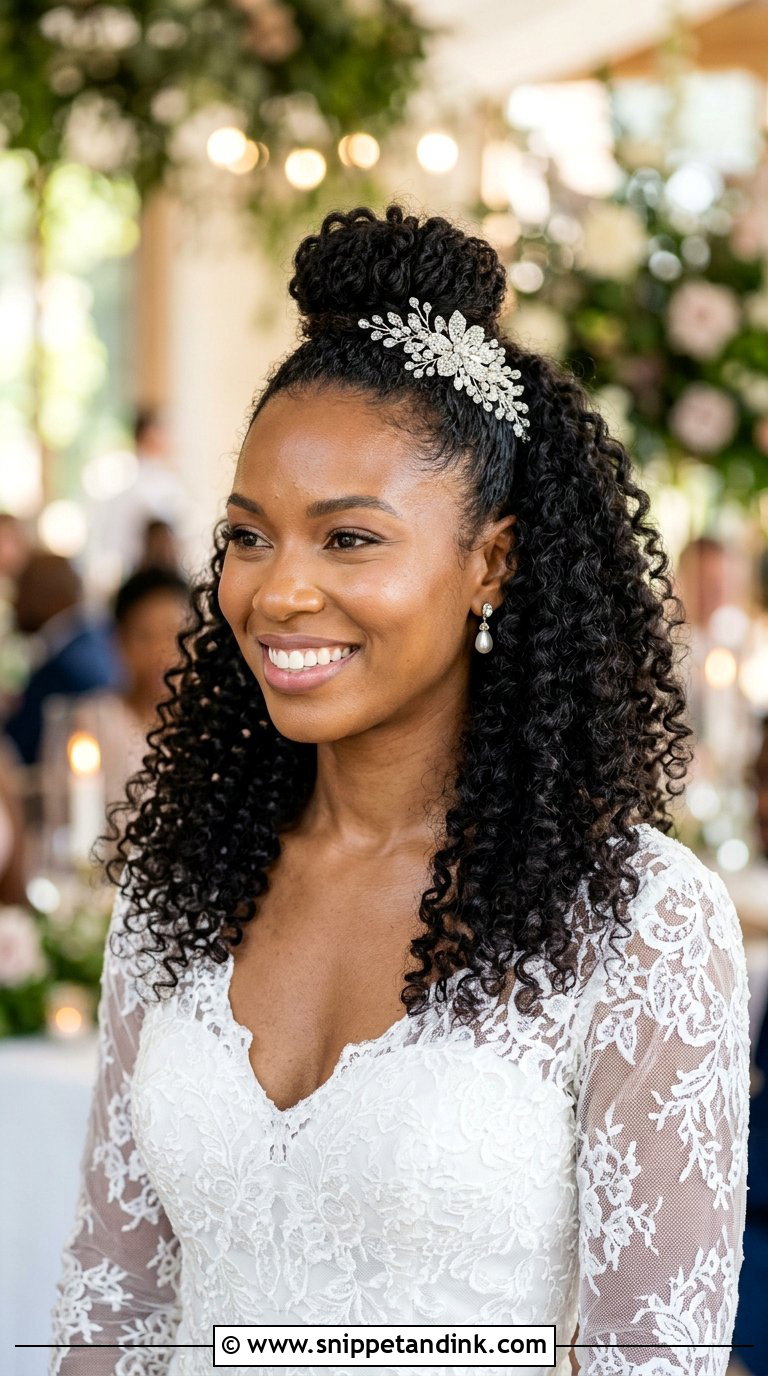
Half-up, half-down with curls lets you keep the length while getting hair off your face. The top section is pulled into a small bun or a couple of twists, and the rest falls in defined curls. I position that top bun a little higher than many brides expect, so it’s visible from the front rather than hiding behind the head. Put a clip or a few small blooms at the part. Shrinkage is the thing to plan around: curls that sit at your shoulders in the morning may sit at your jaw by the evening if it’s humid.
10. Sleek High Bun With Baby Hairs
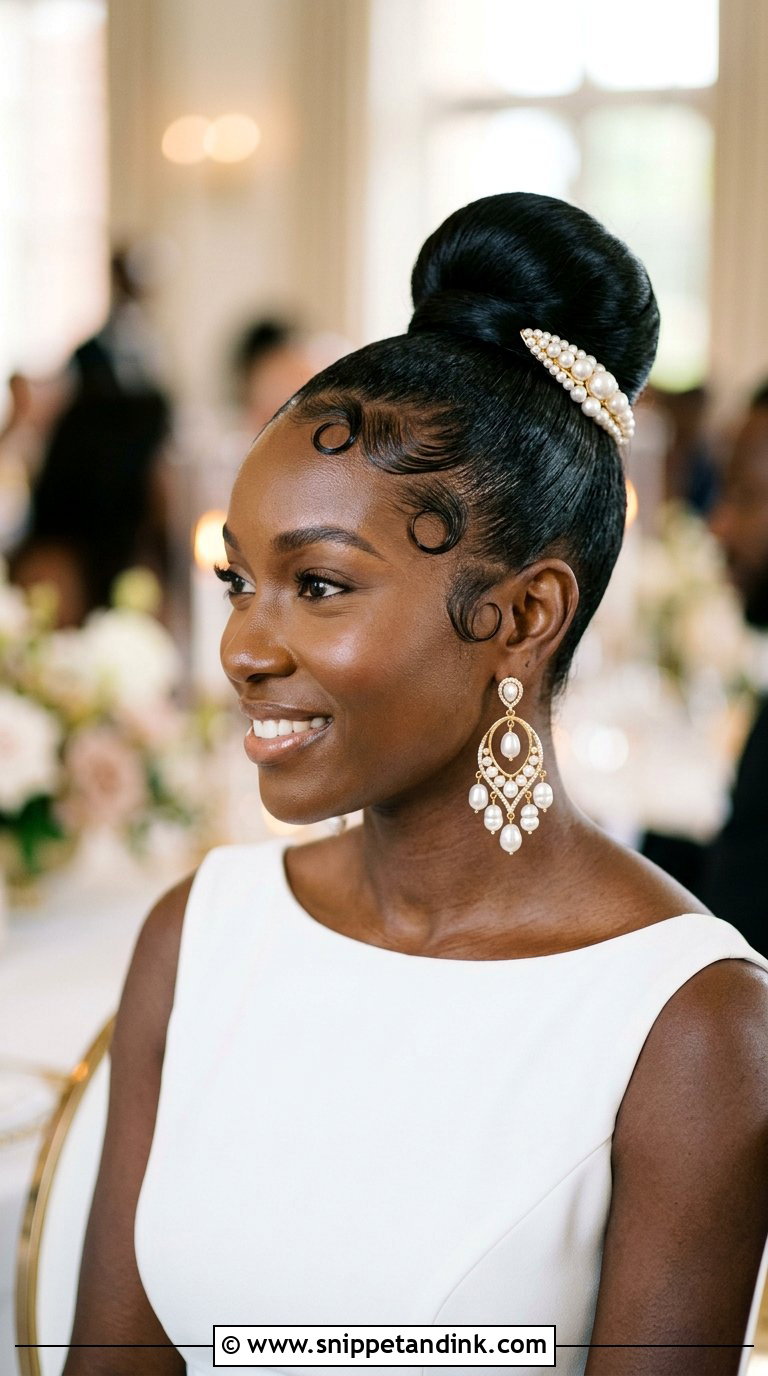
A sleek high bun lengthens the neck and puts the earrings on display. It also puts more tension on the hairline than any other style here, so I’m careful with how tightly I brush the hair up and I won’t do it on edges that are already thinning. Baby hairs are laid in soft swoops with a small brush and a light gel. A decorative comb or pearl pins finish it. It works with a structured or minimalist gown, and it holds its shape from ceremony to last song.
11. Fulani Braids With Beads
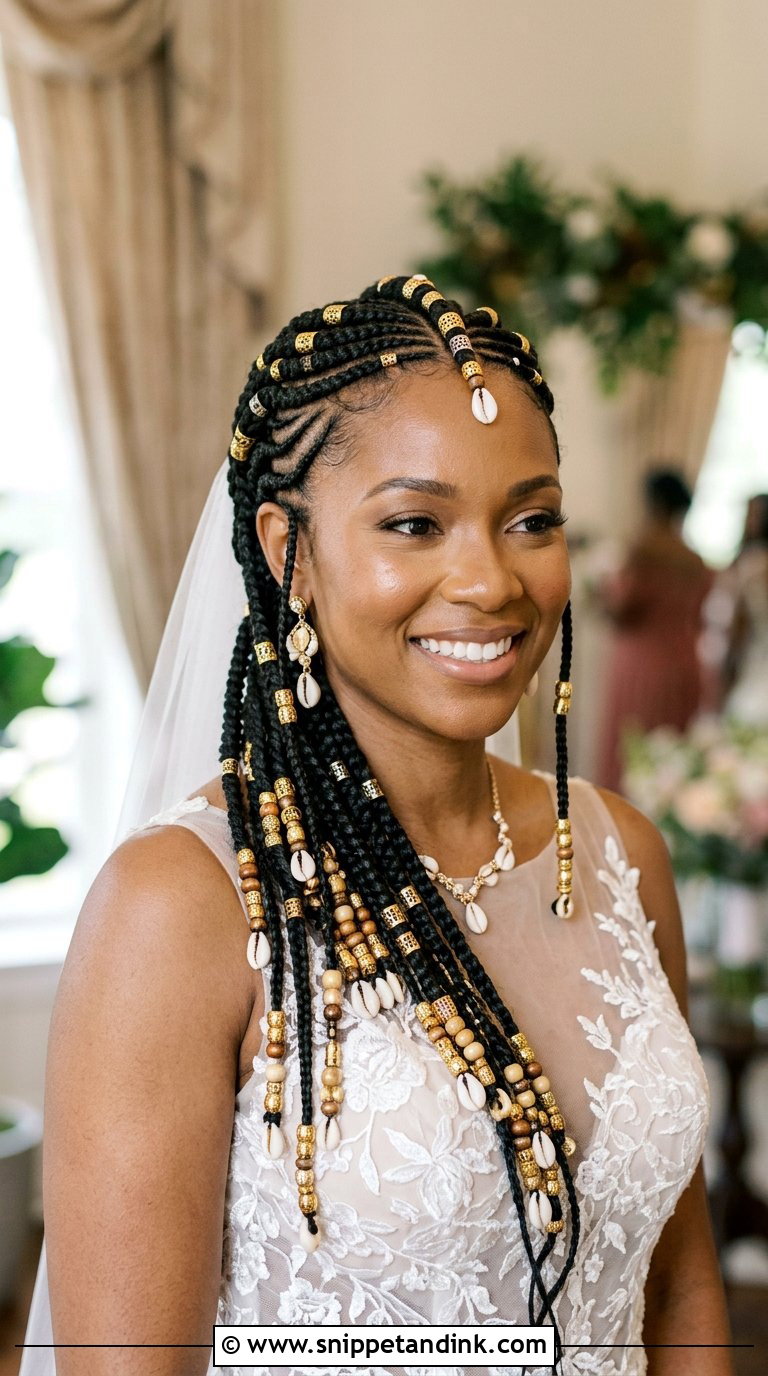
Fulani braids carry a lot of meaning and a lot of detail: braids that flow back, a signature center braid and beads or cowrie shells threaded through. Gold beads make them feel distinctly bridal. I’d count the beads honestly, though, since a full head of them adds weight and clicks with every turn of the head, which some brides love and some don’t. They can be worn long or gathered up. Have them installed by a braider who does this style regularly, as the parting pattern is half the look.
12. Curly Bob Press Out
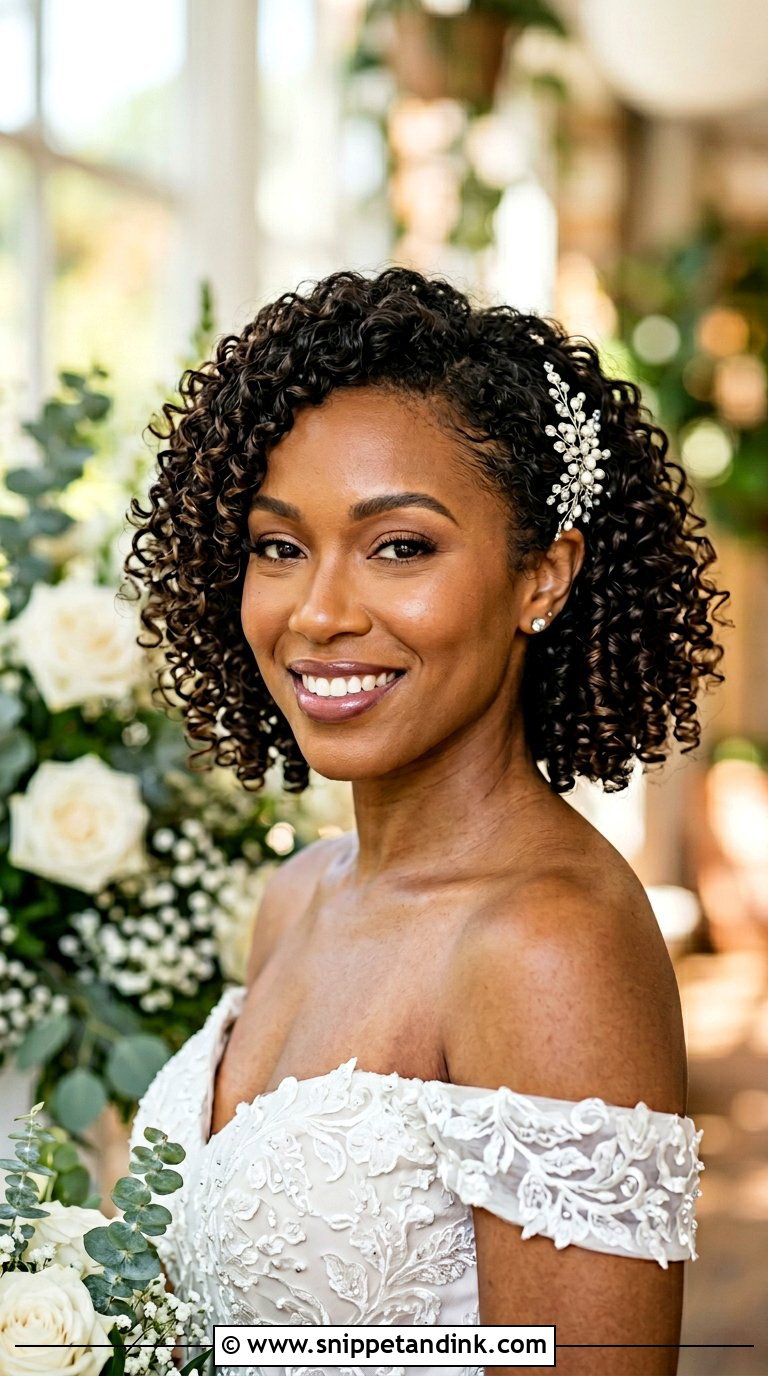
A press-out gives smooth, swinging volume with a soft bend at the ends. A curly bob press out frames the face and is easy to carry through a long day. The catch is moisture: pressed hair reverts with humidity and sweat, so I’d keep it away from a beach ceremony in August and pack a satin scarf for any dancing. A delicate headband or sparkling pins add the bridal touch. Shorter hair here is a strength, not a compromise.
13. Goddess Braids Updo
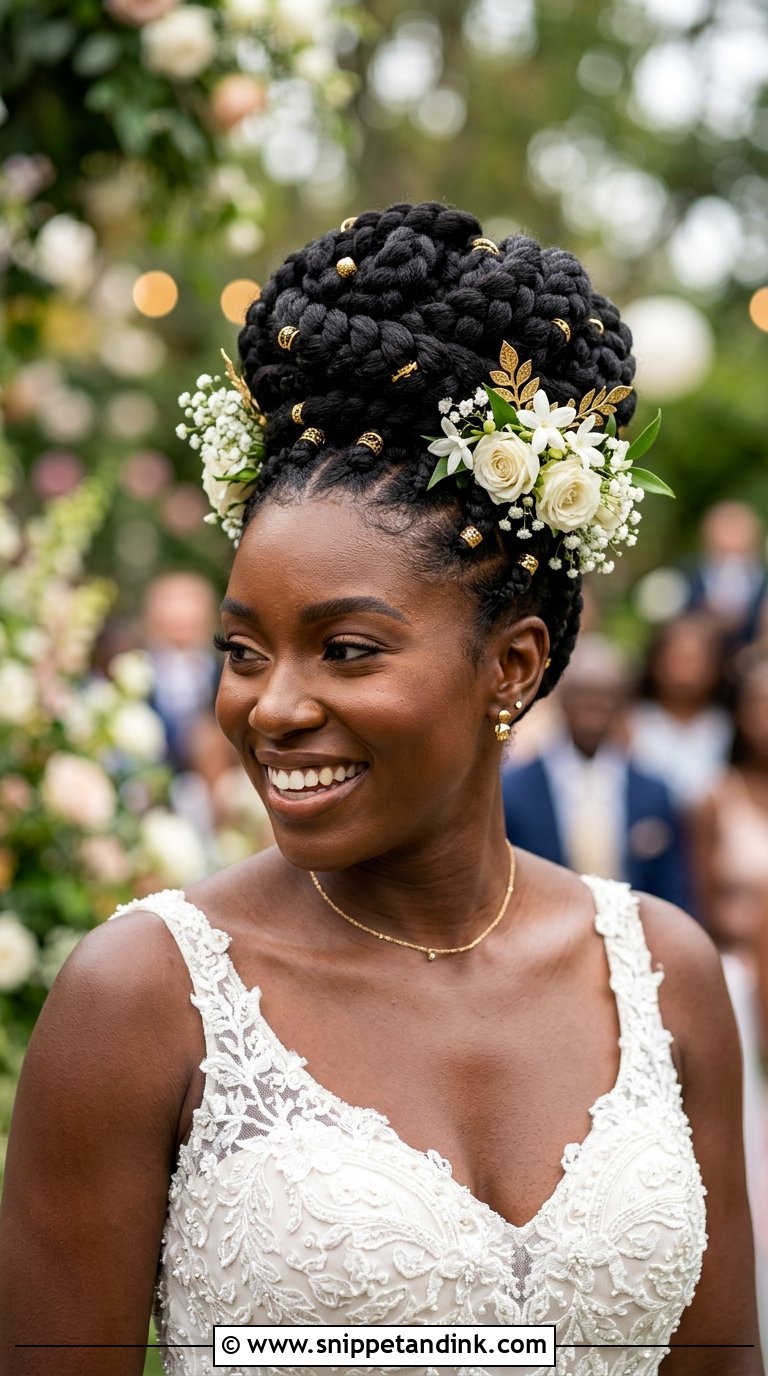
Goddess braids are thick, bold braids, and swept into an updo they form a sculpted shape at the crown or nape. The scale reads clearly in photos, even from the back of the venue. Because each braid is large, the updo can get heavy, so I keep the bulk low and close to the head where the neck can support it. Gold accents and fresh flowers tuck in easily between the braids. As a protective style it lasts well past the wedding, which is a bonus if you’re flying off on honeymoon.
14. Defined Wash And Go
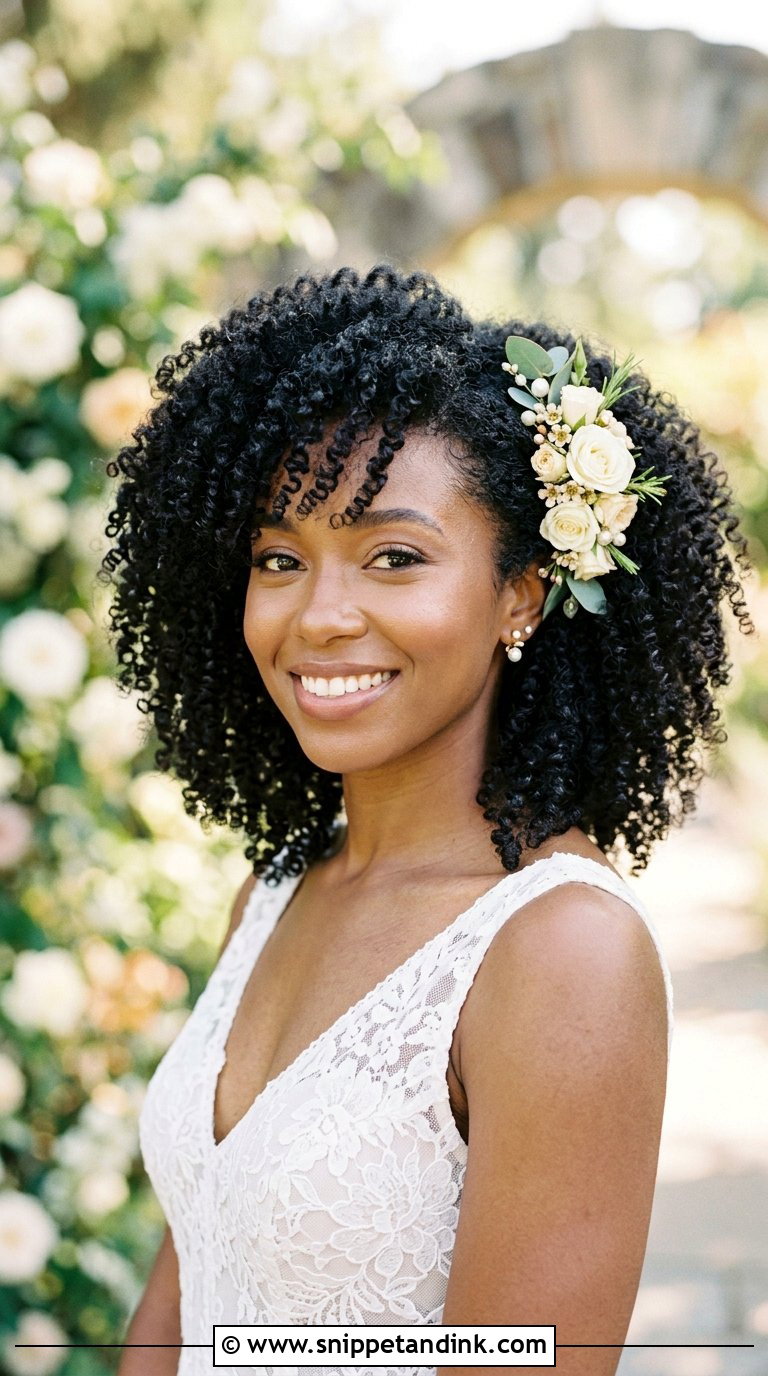
A defined wash and go is the most honest version of your hair. I apply a curl cream, then a gel on soaking wet hair, and let it dry with as little touching as possible, because handling while damp is what creates frizz. Once it’s dry I scrunch out the cast and the curls are soft and separate. Add a clip or floral pin on one side. If it’s set a day early, a mist of water with a little product on the morning brings it back. It isn’t my pick for a muggy outdoor ceremony unless you’re fine with extra volume.
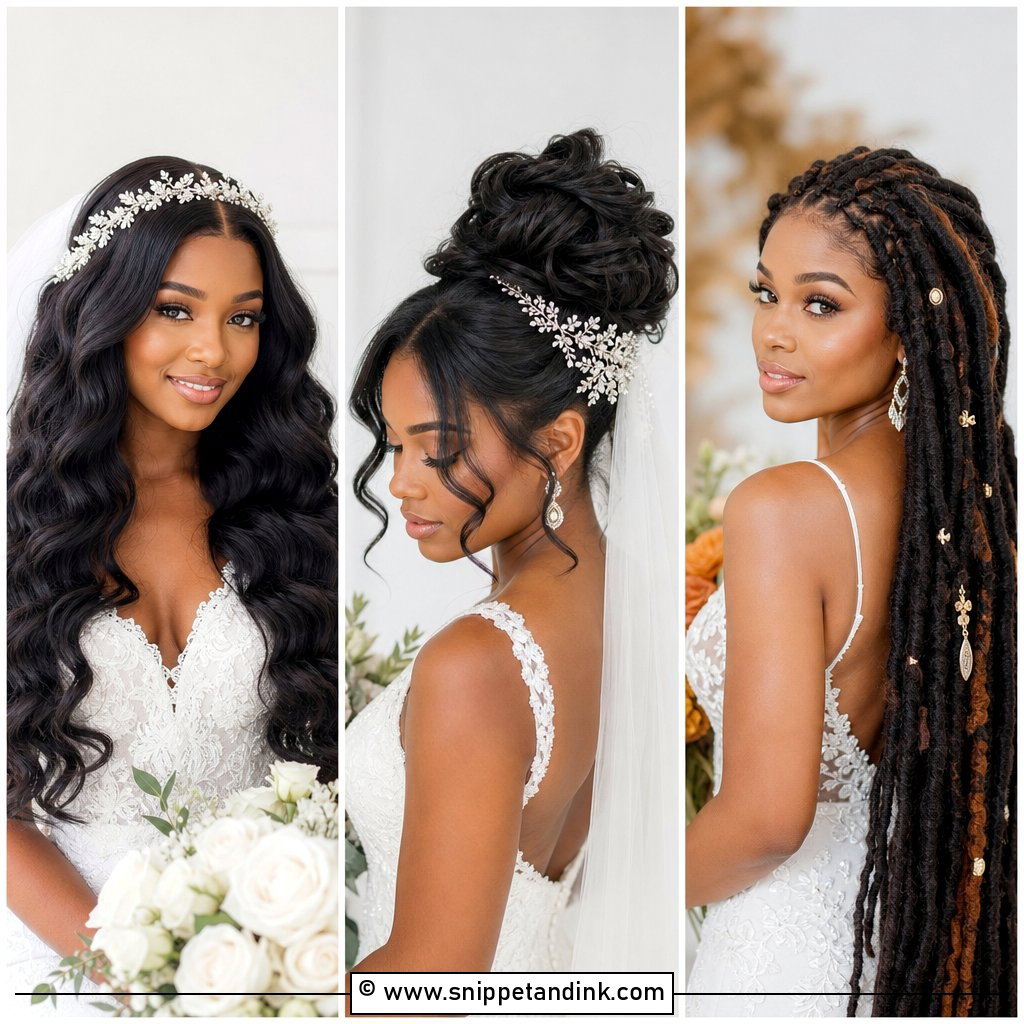
15. Low Bun With Swooped Bangs
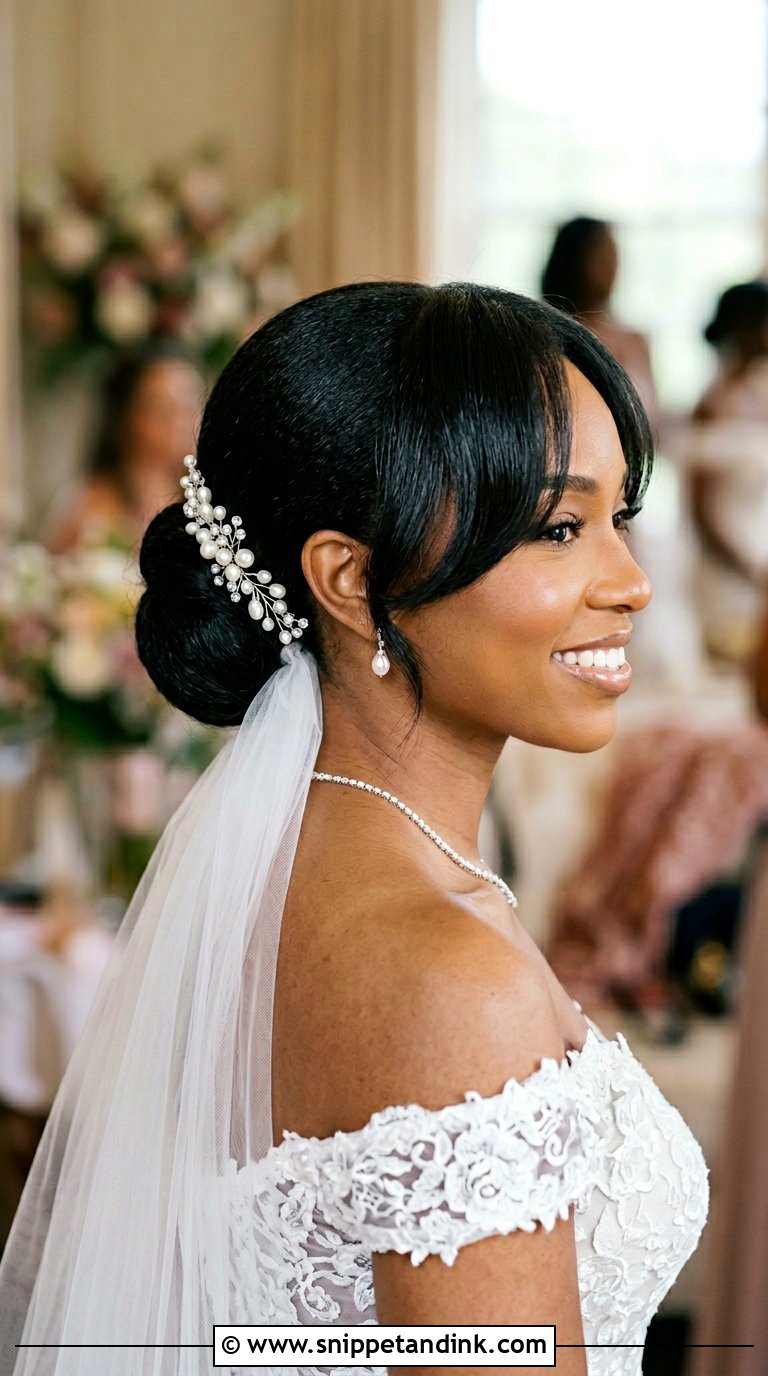
A low bun with a swooped bang softens a polished updo, and the swoop is where the skill shows. I set the bang with a flat iron or a small roller and pin it invisibly at the temple so it stays in place without lacquer. Smooth edges and a pearl comb finish the look. It sits comfortably under a veil and looks just as good with statement earrings. If you have a cowlick at the front hairline, tell your stylist early, because it decides which side the swoop can go.
16. Knotless Braids Ponytail
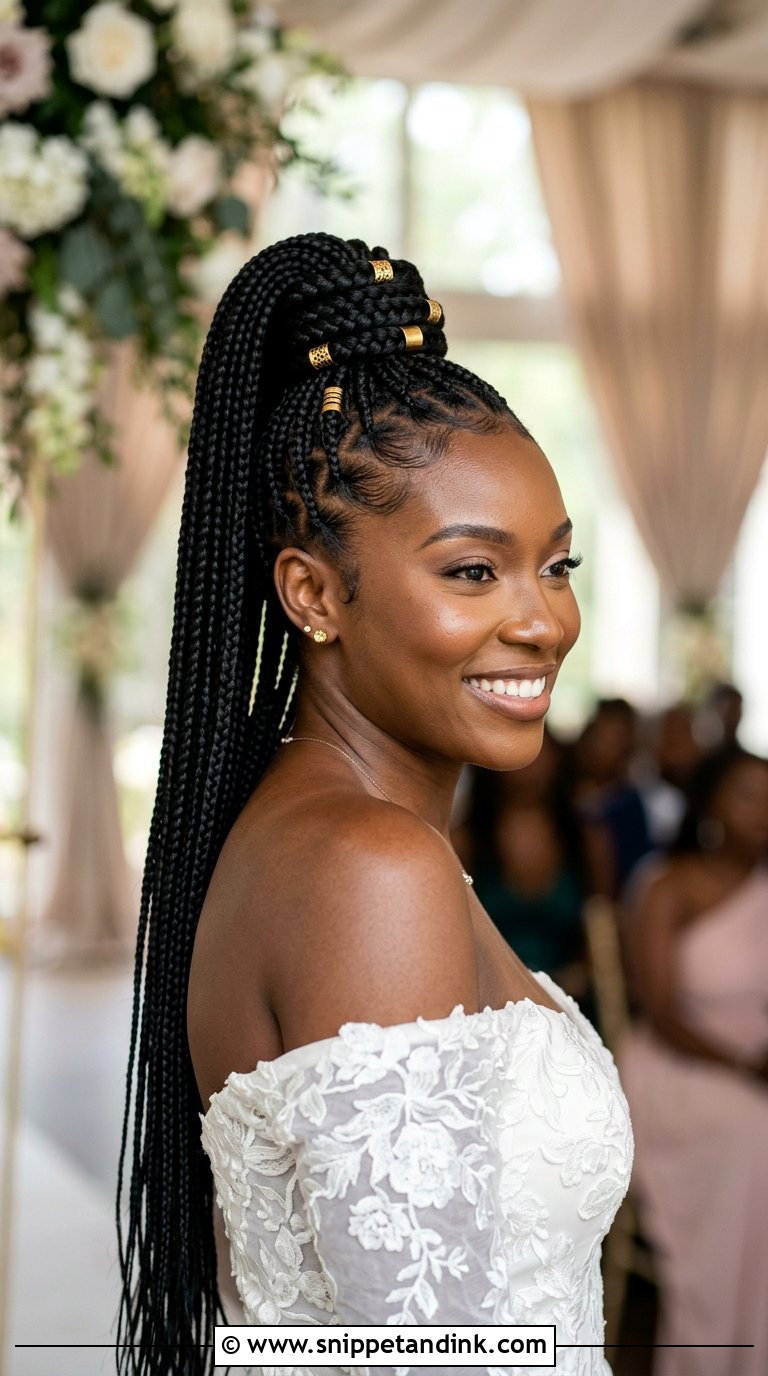
Knotless braids are gentler on the edges than traditional box braids because they start with your own hair and build gradually. Gathered into a high ponytail they swing as you move and keep your neck cool. I wrap one braid around the base to hide the band and secure it with a pin. Gold cuffs add shine. Watch the total weight, though, since a long, full ponytail pulls at the crown after several hours, and I’d go a little shorter or thinner for a twelve-hour day.
17. Bantu Knots Bridal Look
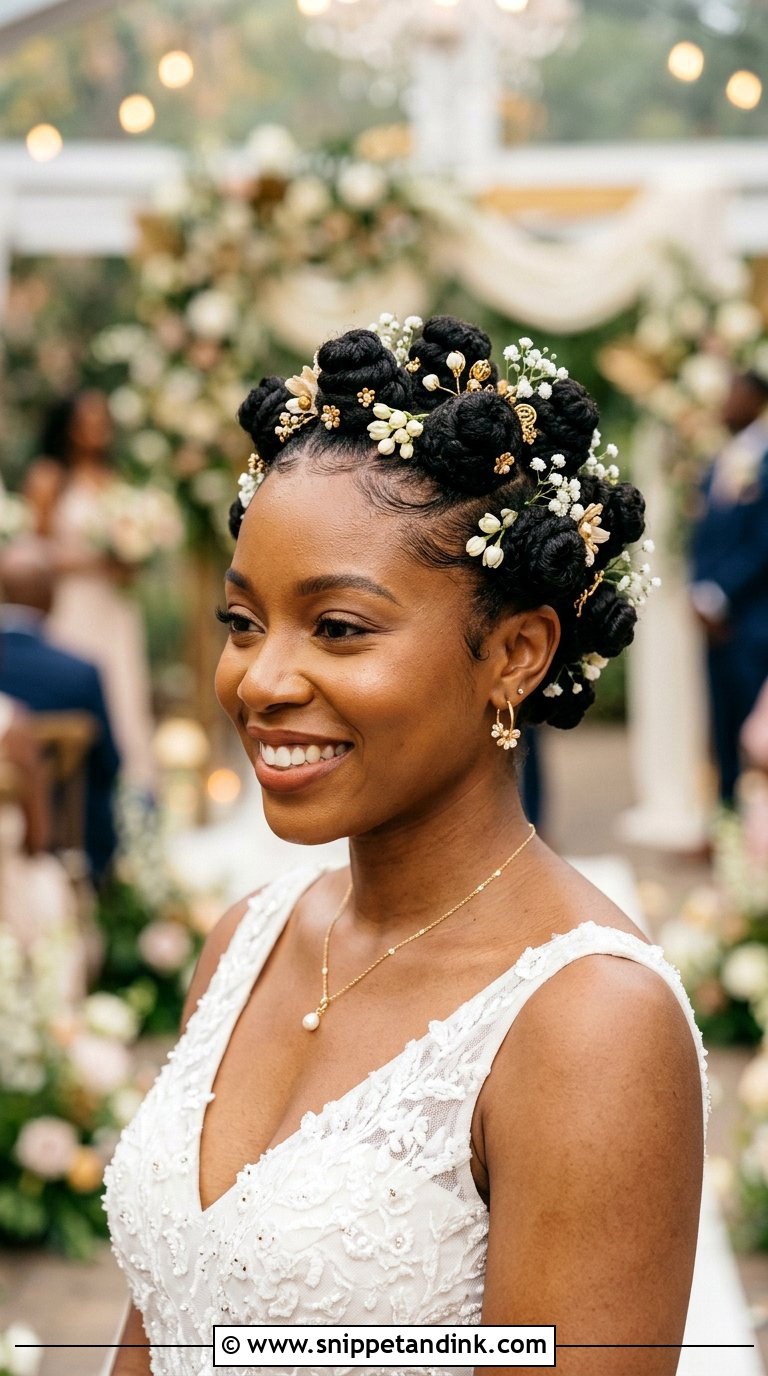
Bantu knots make a graphic statement, with coiled knots arranged in geometric sections across the head. Worn as they are, they’re bold and celebratory; unravelled partly, they give you a mix of knots and curls. I’d test this one first, because knot size and spacing change the whole look and are hard to adjust on the morning. Gold pins or small flowers fit between the knots. It’s a style for a bride who wants her hair to be a talking point.
18. Curly Updo With Face Framing Pieces
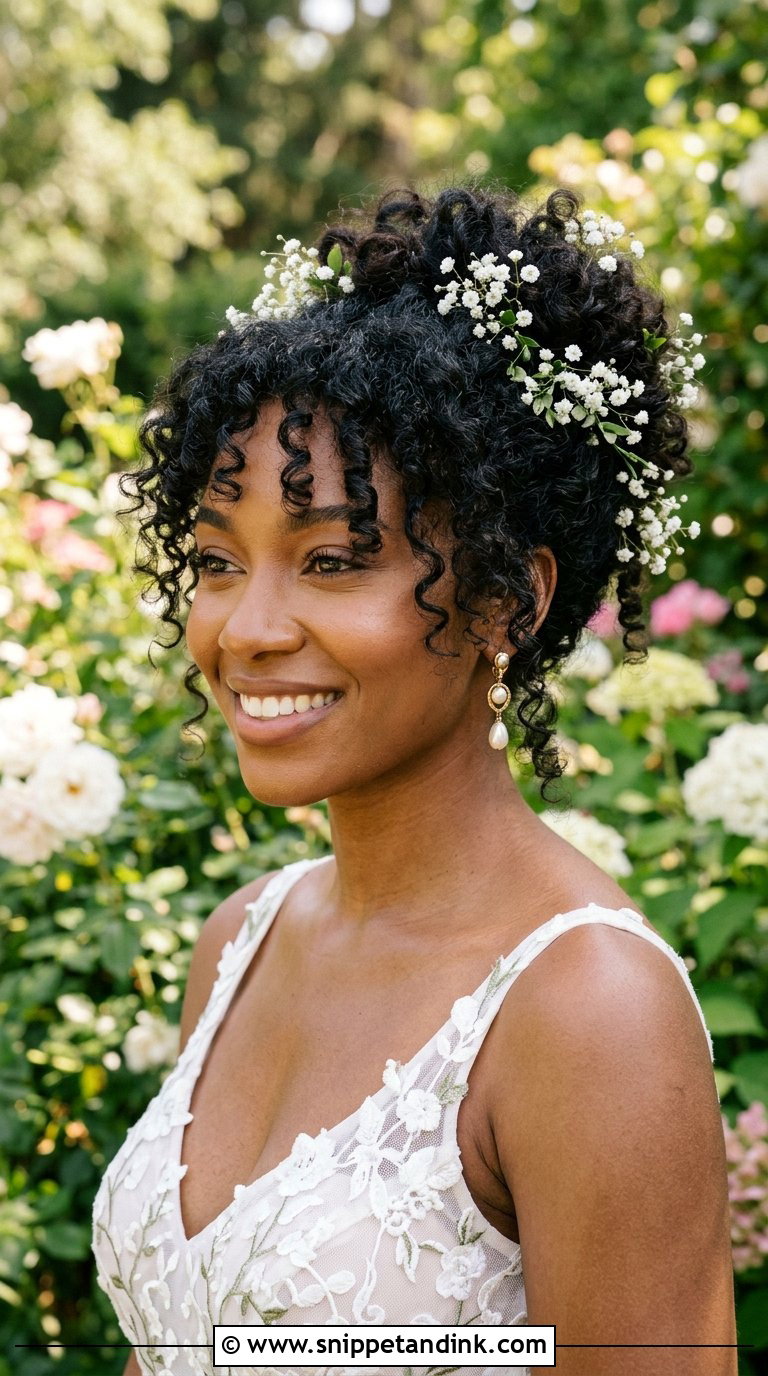
A soft curly updo with a few loose pieces at the front is the forgiving option here. The bulk of the curls are gathered up, and the face-framing tendrils draw attention to your eyes and smile. I cut those pieces from the front hairline sparingly, two or three per side, because more than that tends to drift into the face during dancing. Baby’s breath or small blooms give it a garden feel. It suits boho through classic gowns.
19. Cornrows Into High Bun
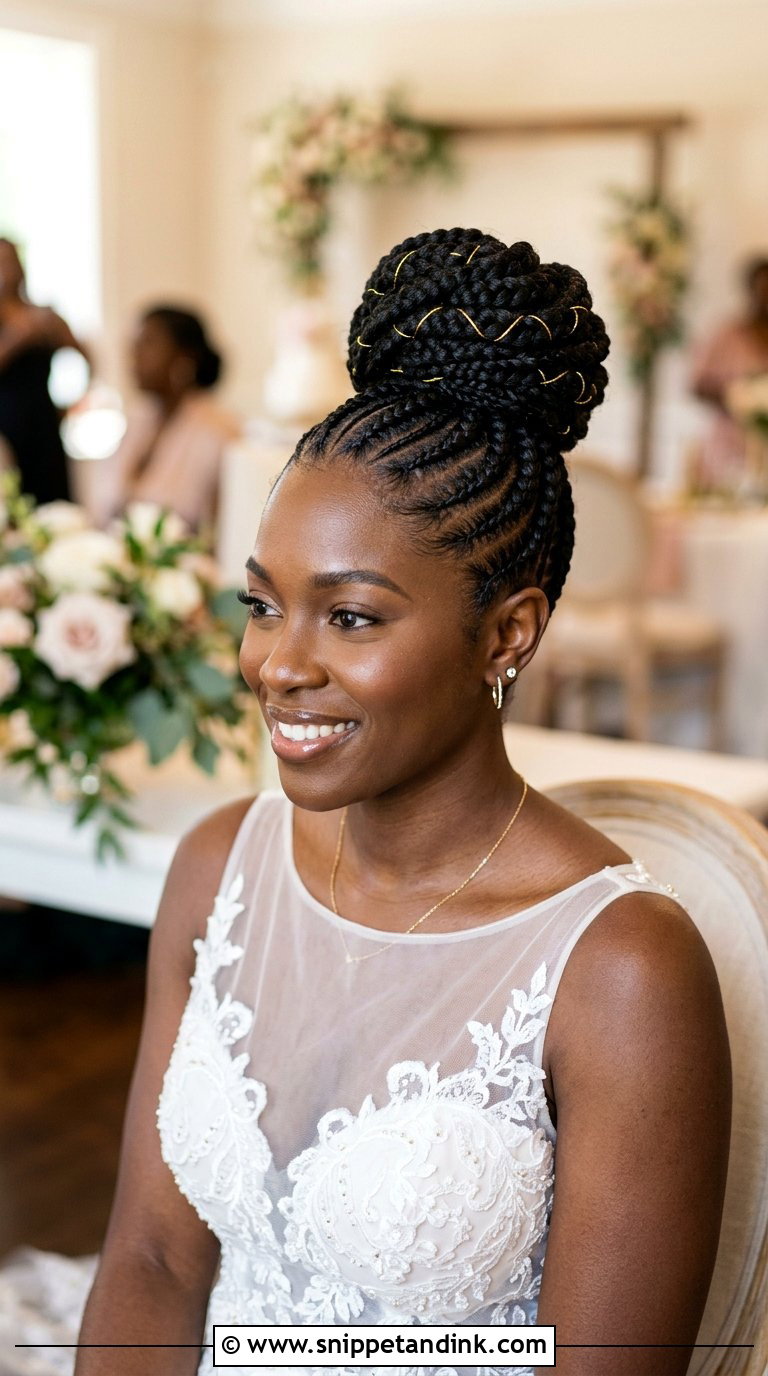
Cornrows into a high bun is a clean, structured look with defined braid lines leading up to a full bun at the crown. It keeps your face open and makes room for statement earrings. Gold thread through the cornrows adds a quiet glint. Tension is my main check here, because cornrows plus a high bun both pull upward; a good braider keeps the rows firm without whitening the scalp. Once installed, it stays put through the whole celebration.
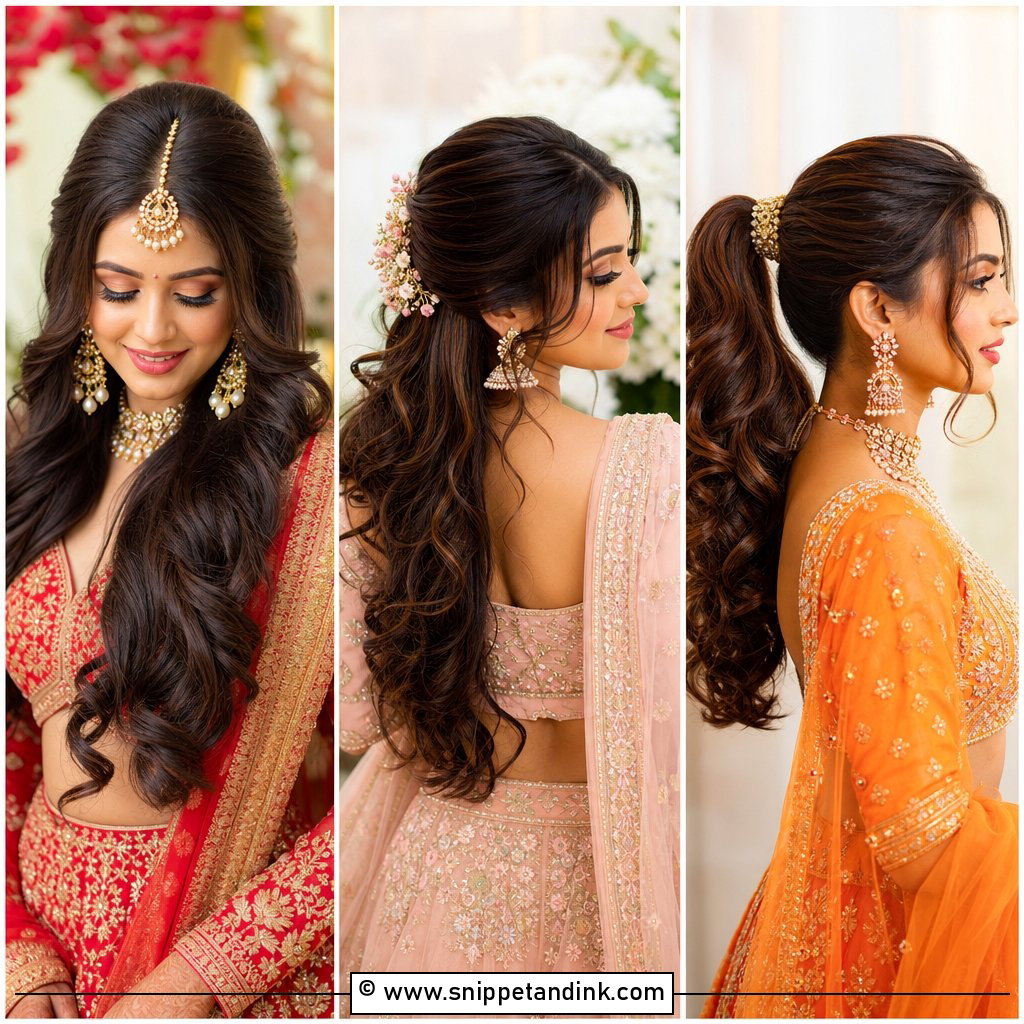
20. Tapered Cut With Defined Coils
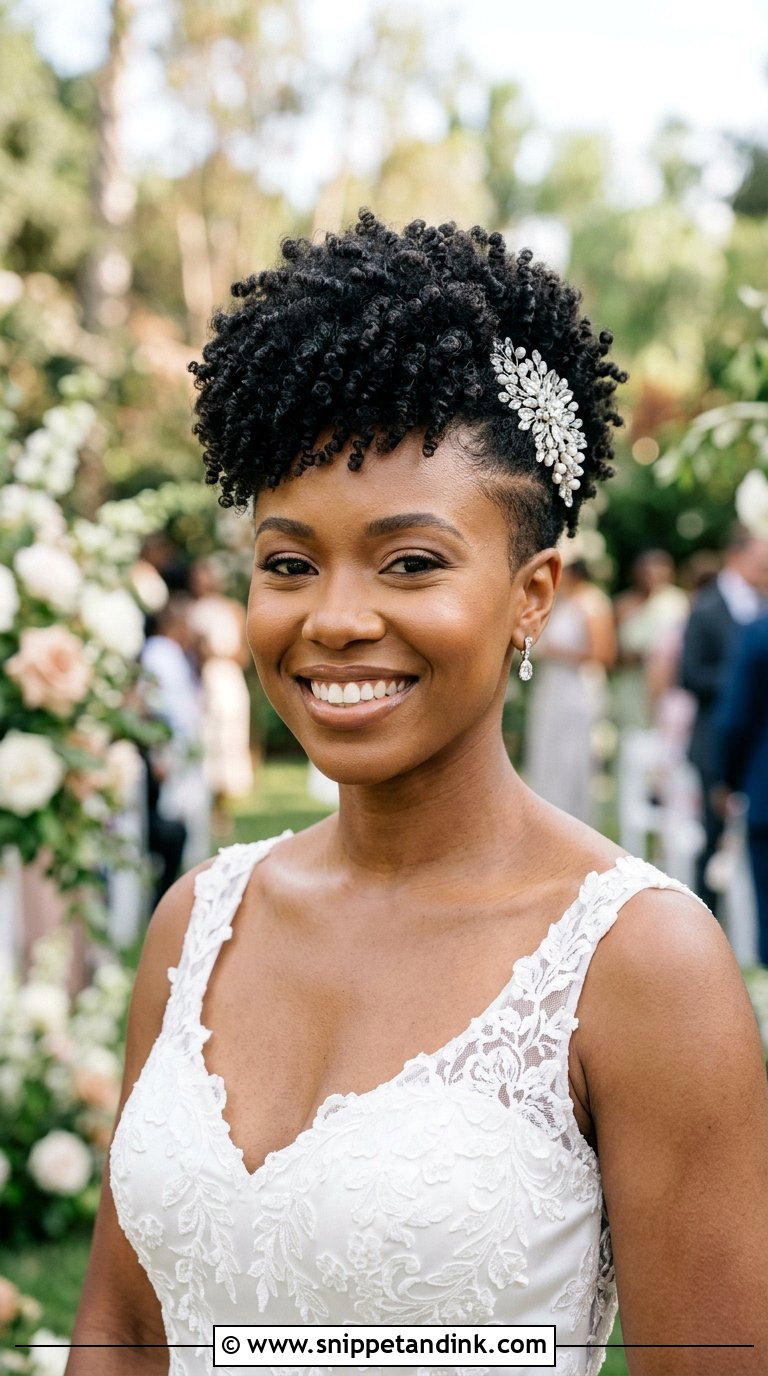
A tapered cut keeps the sides close and lets defined coils sit on top. It puts your face front and center, which means makeup and earrings matter more than with long hair. Get the cut done about a week before the wedding so the line has softened slightly and doesn’t look freshly clipped. I define the coils with a curl cream and finish with a small clip, headband or fresh flower. There’s nothing to fall, so you can forget about your hair after the first look.
Veils Sit Differently on Coils, Locs and Braids
A standard veil comb is designed for straight hair, and that’s why it slips out of an afro or slides along locs. On coily hair I either push the comb in against the direction the hair grows and then flip it, or build a small hidden braid or flat twist under the area where the veil sits and anchor the comb into that.
What works on each base
- Afro or wash and go: a veil on a wide headband or a comb sewn onto a small hidden twist, so you don’t crush the volume.
- Locs: pins sized for locs placed in a crisscross pattern, with the comb positioned below a bun rather than on top of one.
- Braids and cornrows: the comb hooks neatly under the braids themselves, which makes these the easiest base of all.
- Press-outs: a lighter, single-tier veil, since heavy tulle flattens the volume and pulls the bend from the ends.
Bring the actual veil to your trial. Weight, length and how the comb is attached change everything, and a borrowed sample rarely behaves the same way. Plan to take it off before the dancing starts; it’s kinder to your edges and easier on the pins.
Hire Someone Who Already Works With Your Texture
There’s no single right way to wear textured hair to your wedding, from a natural afro or a wash and go to elegant loc updos and Fulani braids. What matters more is the person doing it. Look for a stylist or braider whose portfolio shows your hair type, and book a trial in similar weather if you can. Deep condition the week before, settle the install dates early and keep a satin scarf in your bag for the evening. Then you can trust the hair and enjoy the day.
You'll Like These Ideas:


Leave a Reply