
Brides who don’t want an updo but don’t trust their hair down for twelve hours usually end up at a low ponytail, and it’s a good place to land. It keeps hair secure, shows off earrings, takes a veil and leaves the back of the dress visible. It can go sleek, waved, braided or full, and with the right parting and a few front pieces it suits most textures and face shapes. Below are fifteen versions, with notes on how I’d build each one so it still sits where it should by the last dance.
The Elastic, the Wrap and the Pin Nobody Sees
An everyday ponytail slides down because the elastic is holding a lot of weight on smooth hair. A wedding ponytail needs a little more engineering, and it’s worth knowing how it’s done so you can ask for it.
Two elastics, not one
I gather the ponytail with one elastic, then add a second just below it. The second takes some of the weight and keeps the first from loosening. Clear or hair-coloured elastics disappear; fabric scrunchies add bulk under a wrap.
A pin that props it up
A bobby pin or two slid under the ponytail, pointing up into the base, keeps it lifted off the neck. Without it, a low ponytail on heavy hair droops and starts to look tired by the afternoon.
The wrap
A small section from underneath is wrapped around the elastic and pinned through the base. Spray it lightly first so it grips. If your hair is fine, a matching extension piece makes a thicker, neater wrap than your own hair can.
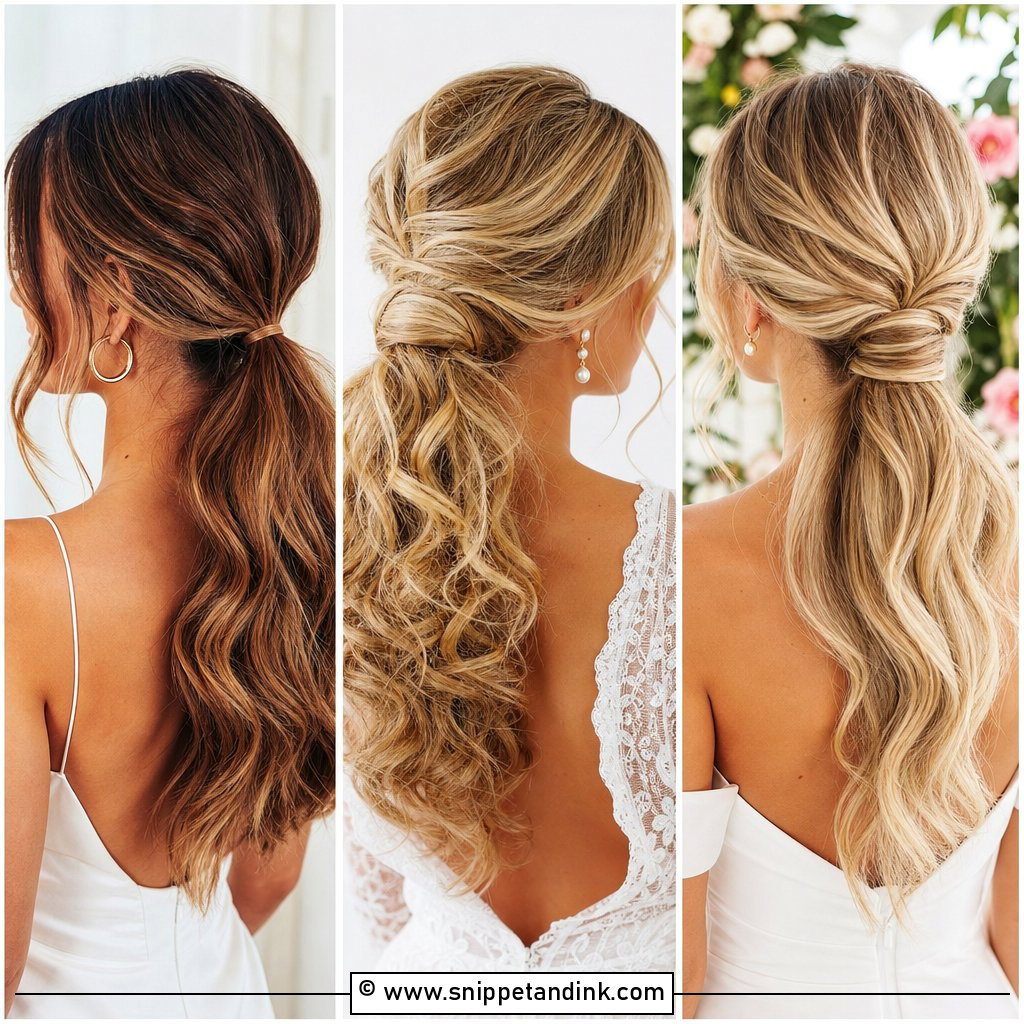
1. Sleek Low Ponytail Bridal Hair
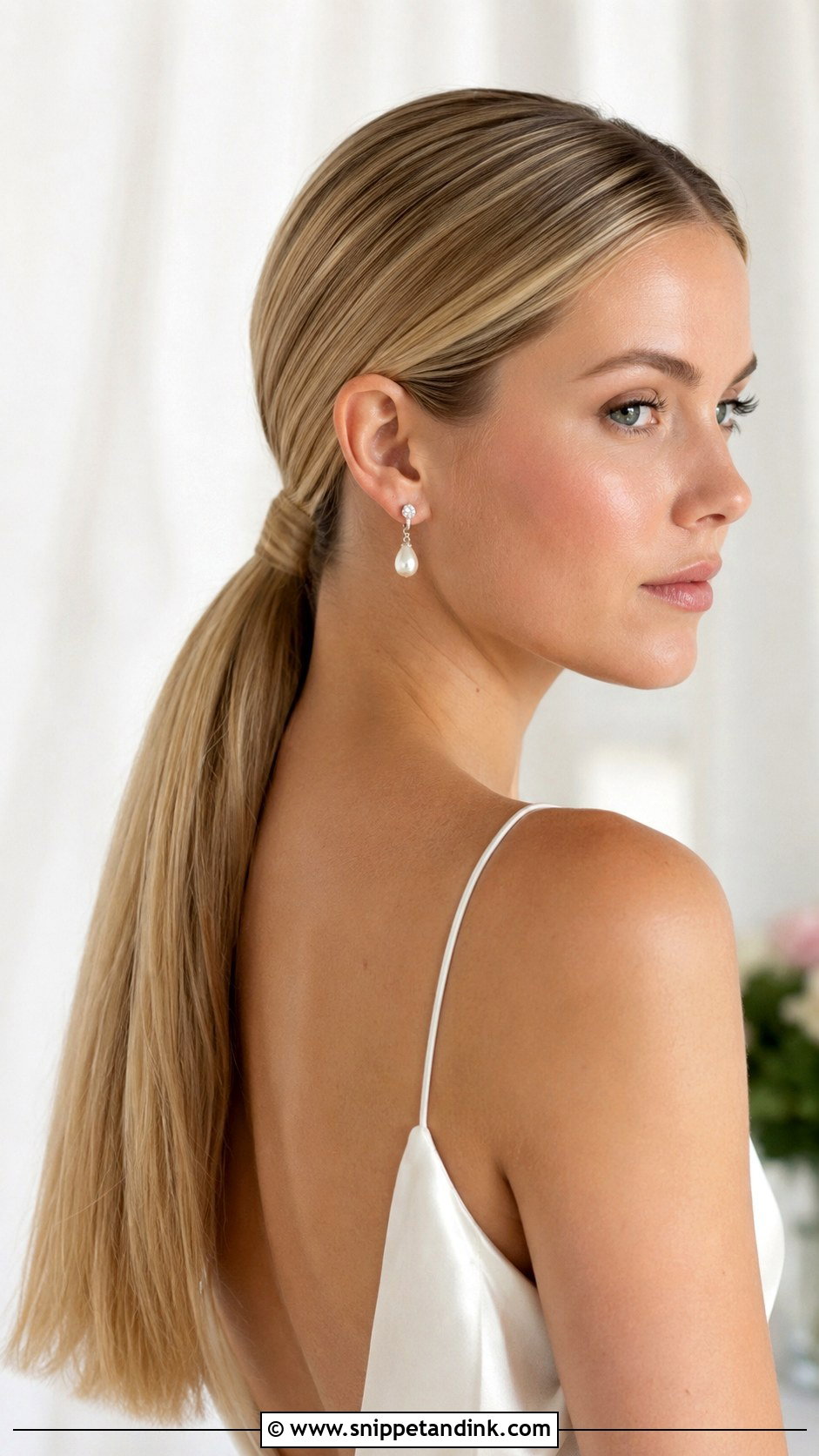
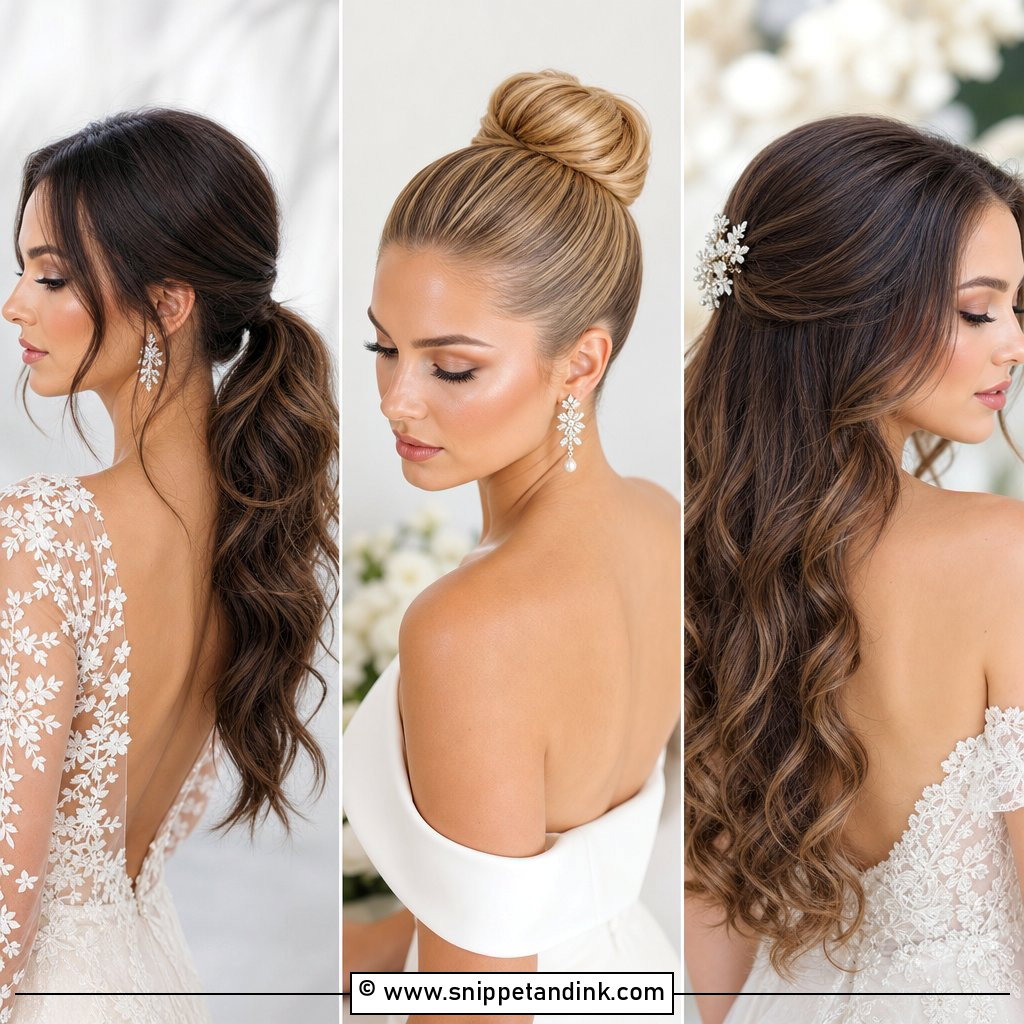
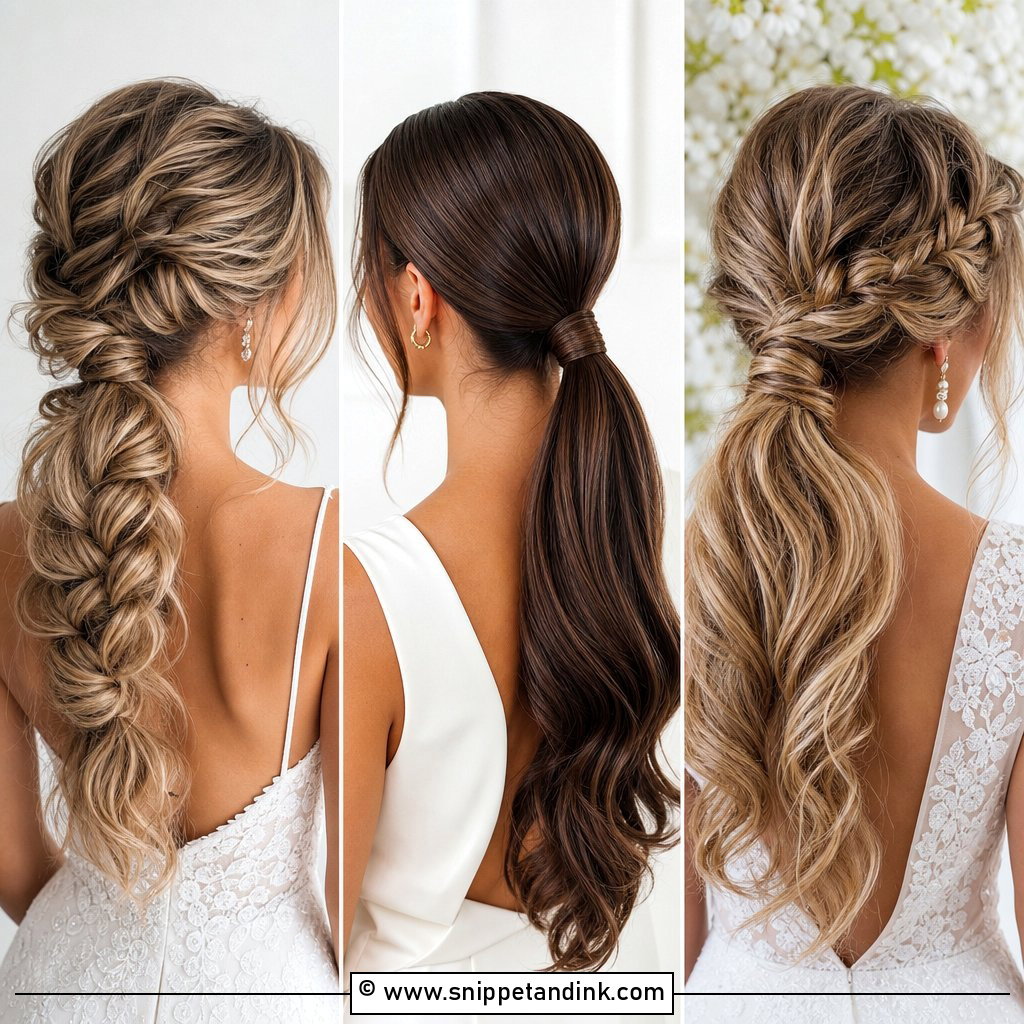
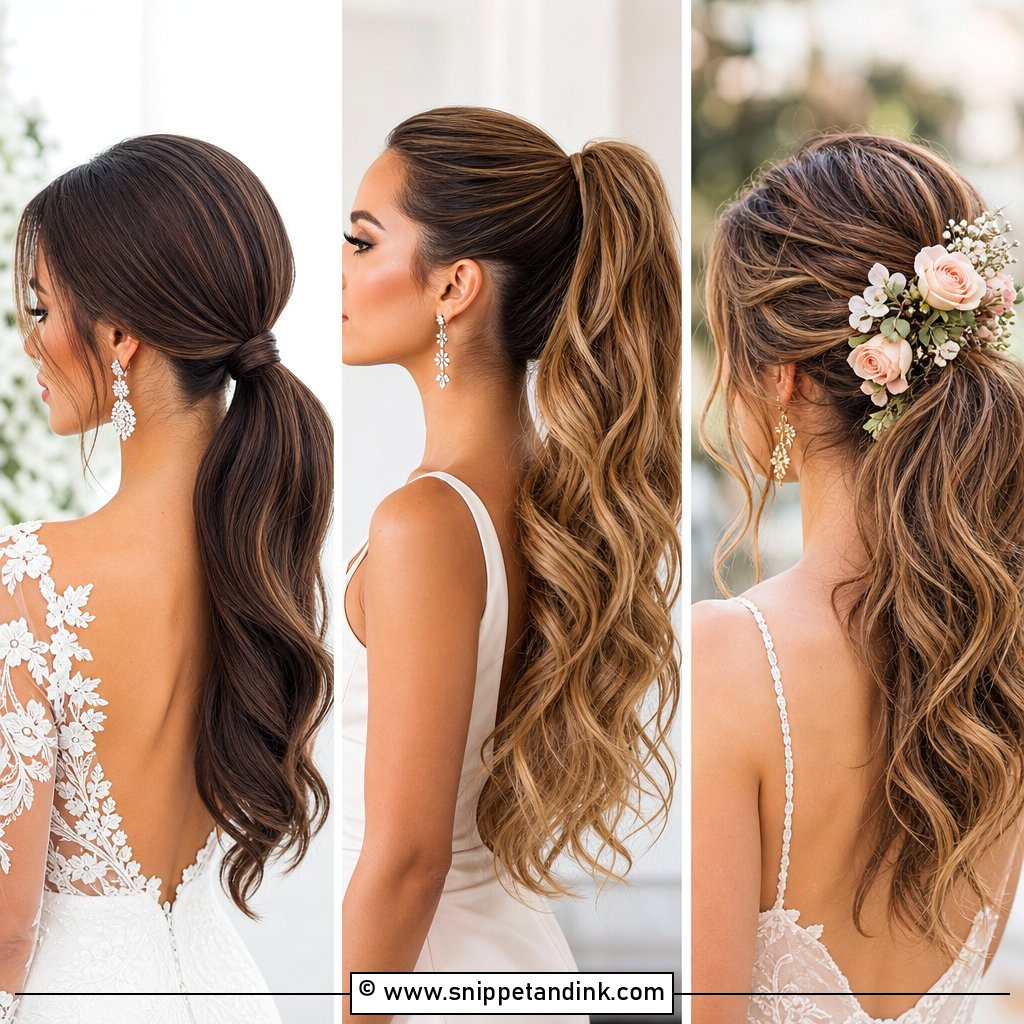
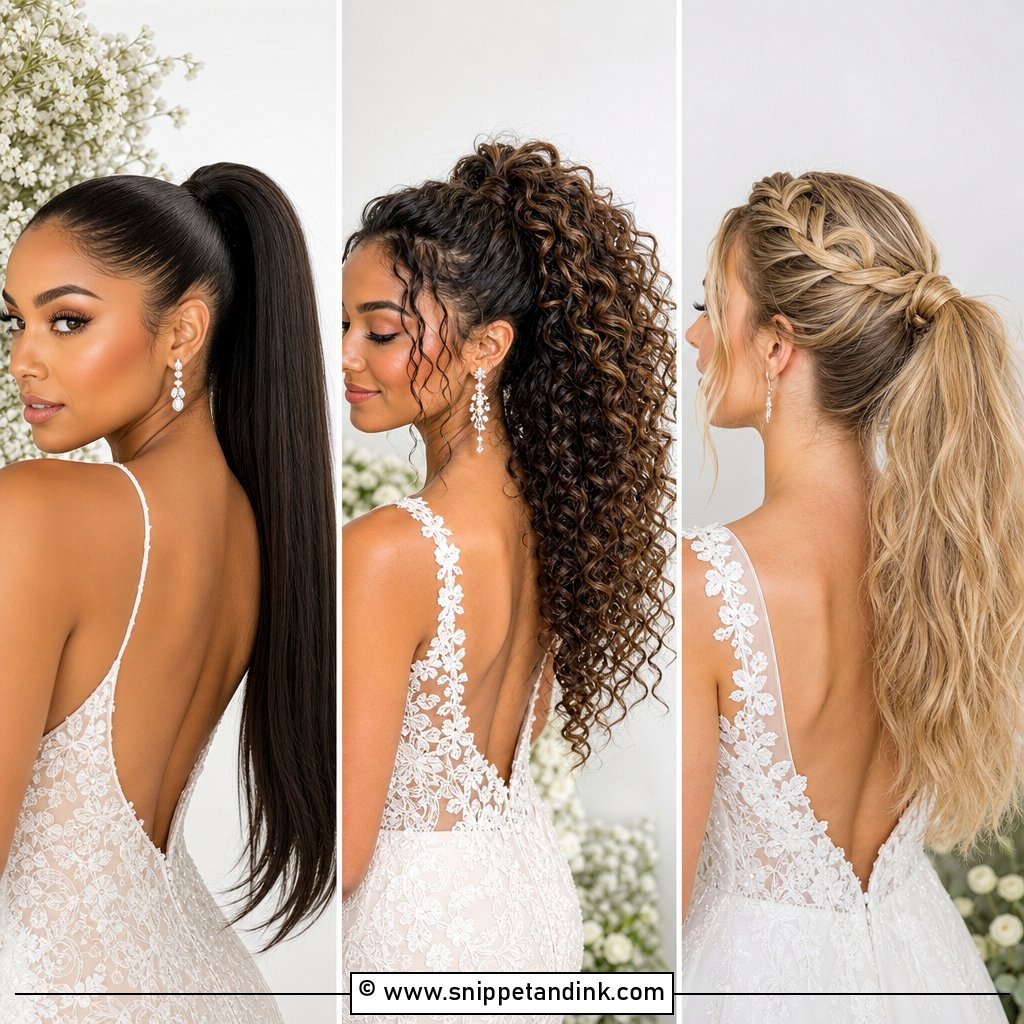
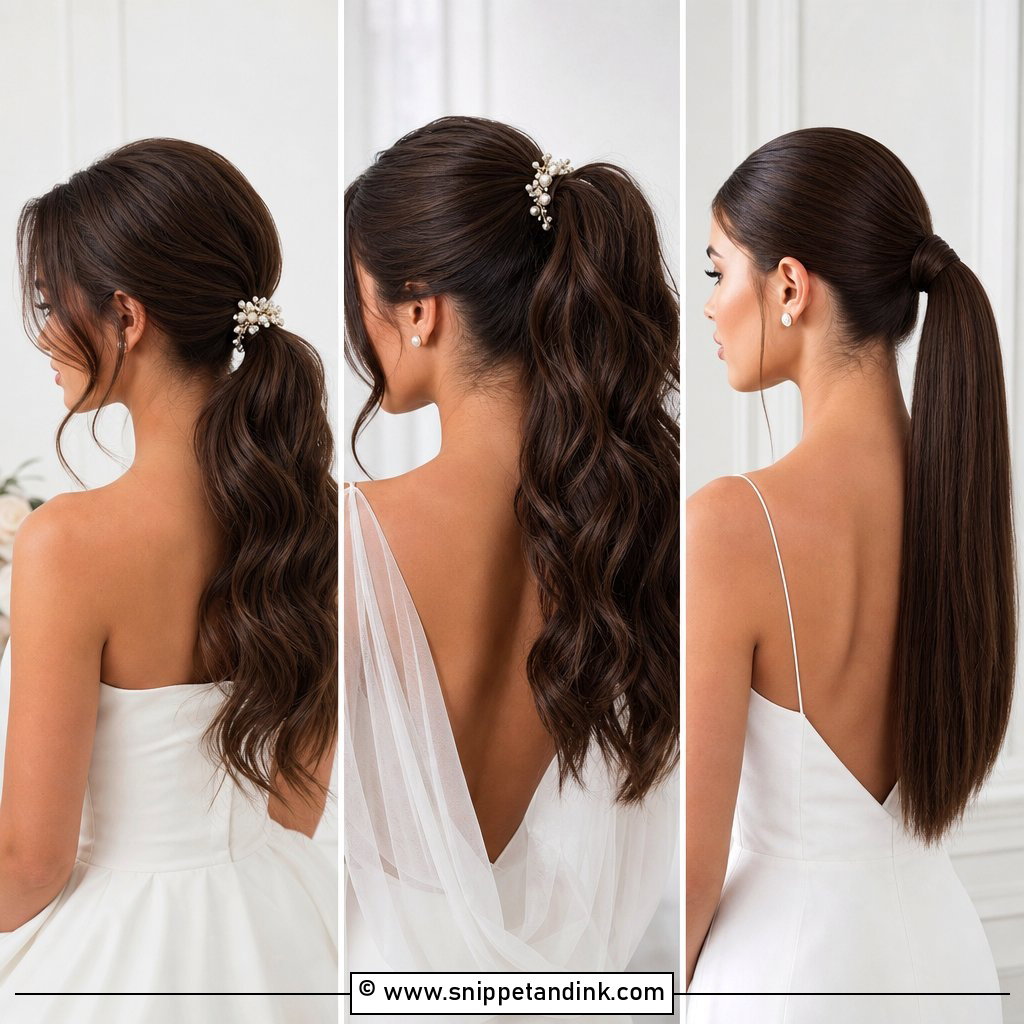
Sleek is the ponytail that shows every mistake, so it’s the one I take slowest. The parting goes in first, centre or just off, and the hair is smoothed flat to the head with a little cream before it’s gathered at the nape. A wrapped hair base hides the elastic and makes it look finished rather than gym-ready. Minimal gowns, satin, structured necklines and big earrings suit it. Ask for firm hold without crunch; in humid weather it outlasts nearly everything else because no section is left loose.
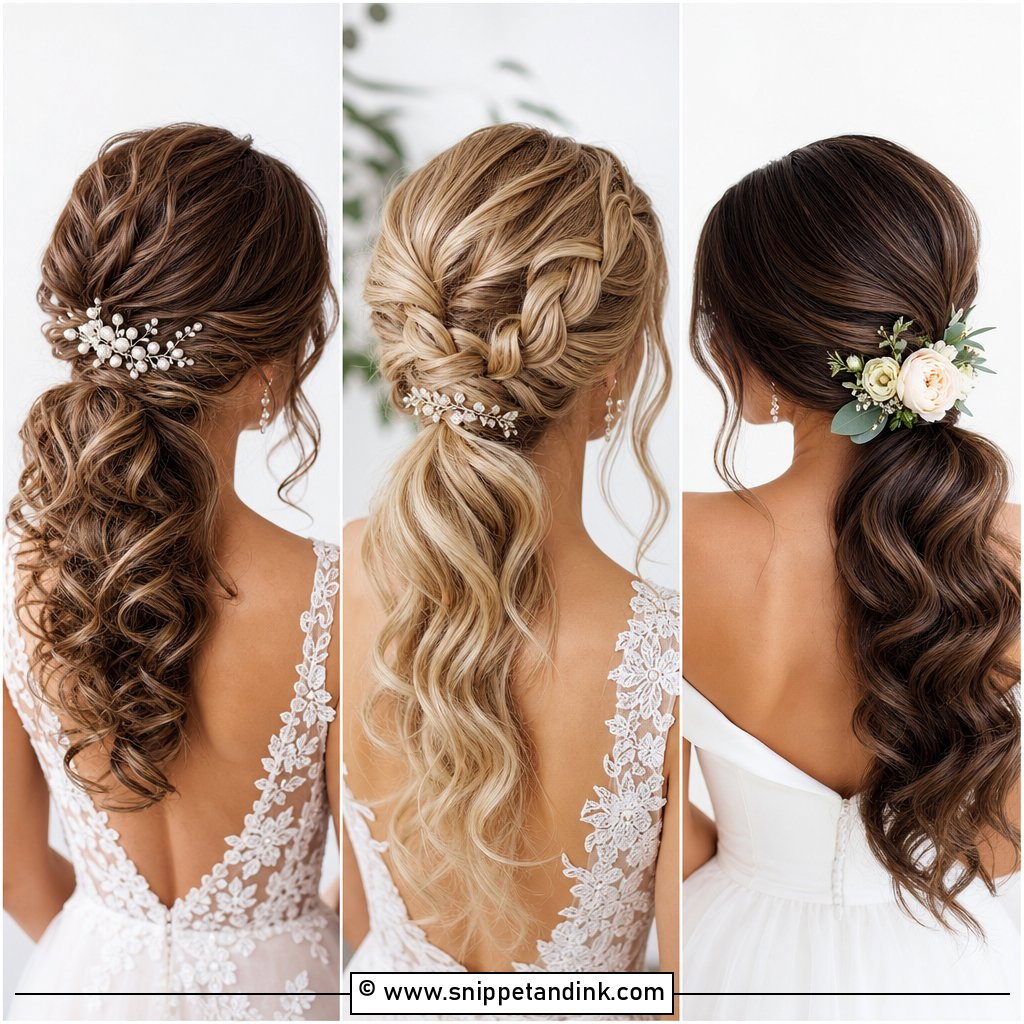
2. Wavy Low Ponytail Bridal Hair
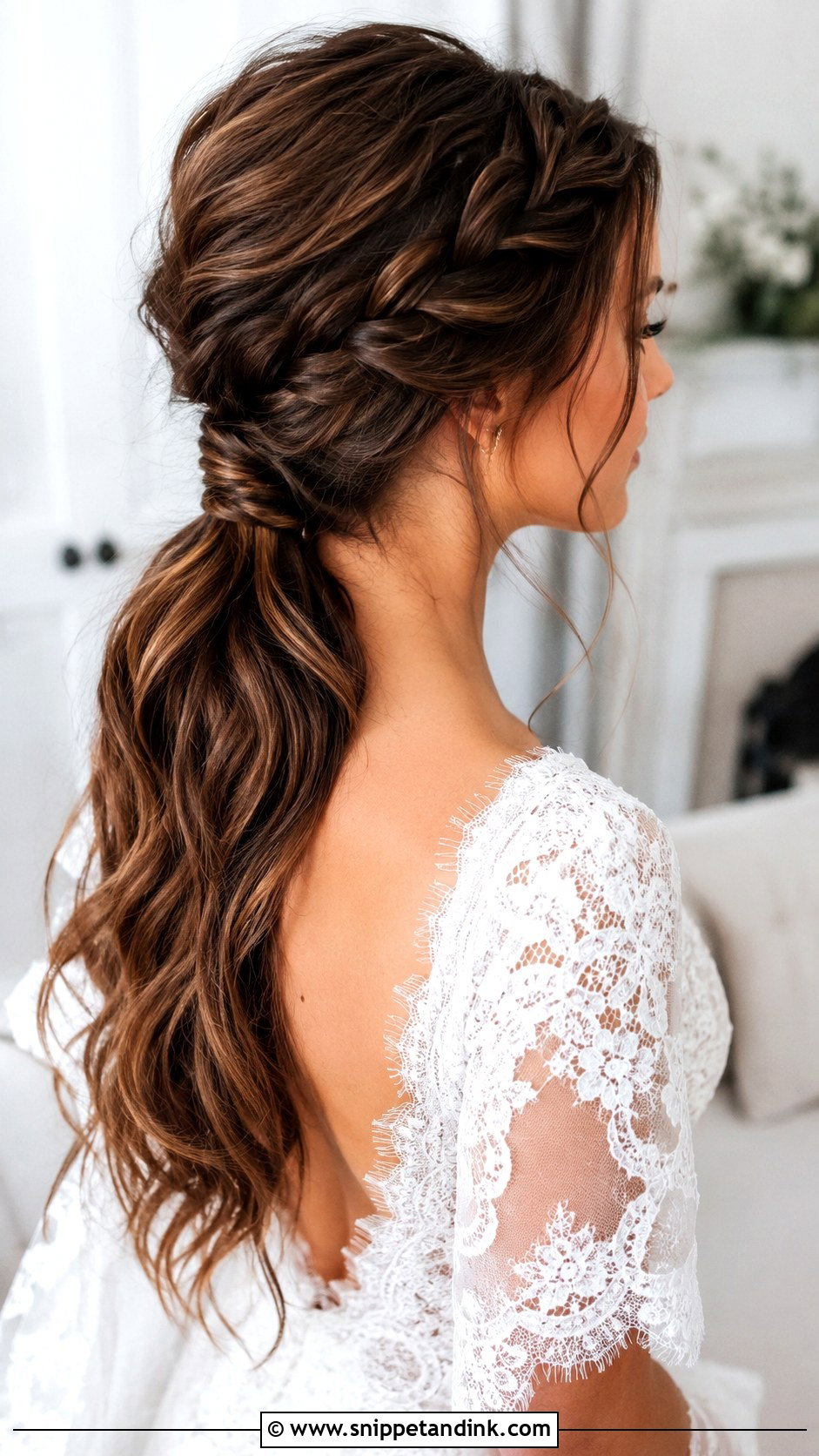
Waves make a low ponytail softer, and the crown can be lifted slightly so the shape isn’t flat on top. Medium to long hair suits it, and a clip-in or two will add fullness if the ends look thin. I curl before gathering, then brush the waves out once they’ve cooled, which gives a looser bend that still holds through photos and dancing. Leave a piece at each cheekbone. Lace gowns and garden ceremonies are natural matches.
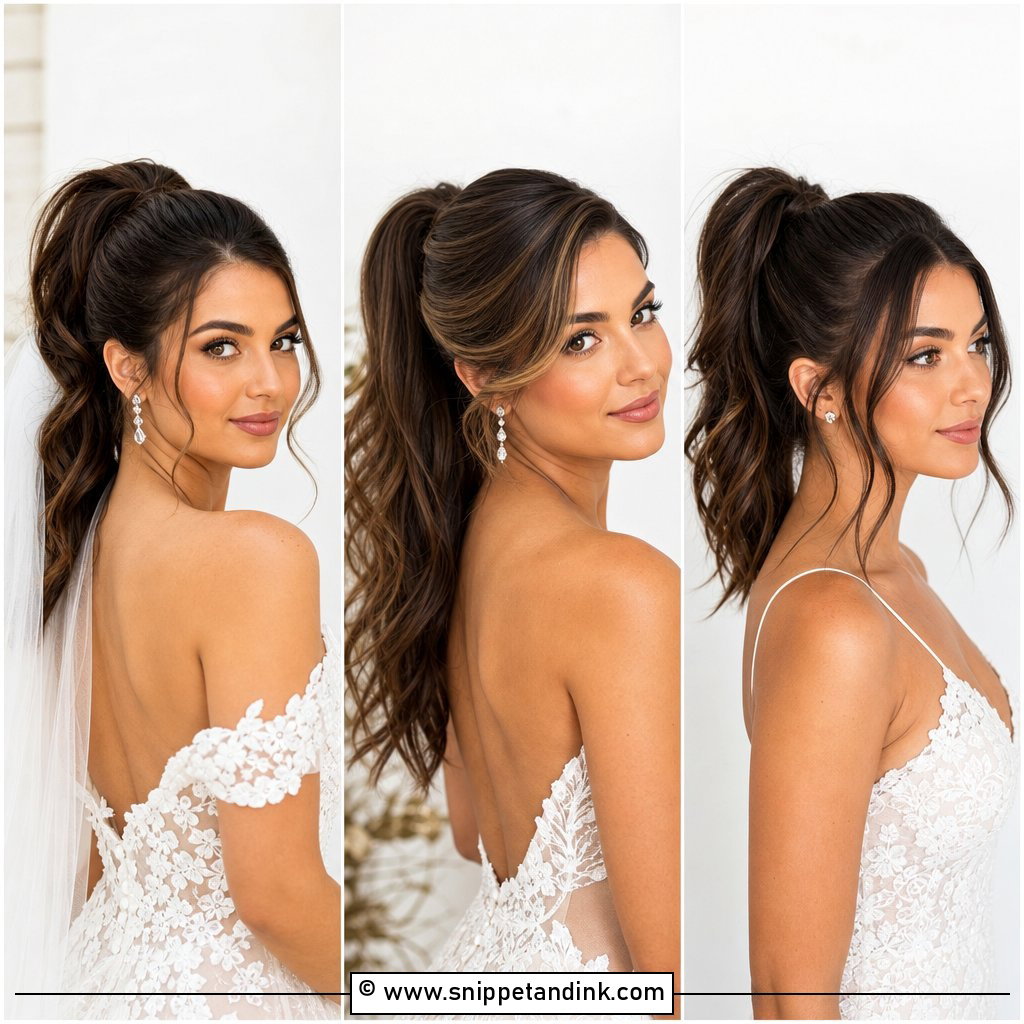
3. Low Ponytail Bridal Hair With Veil
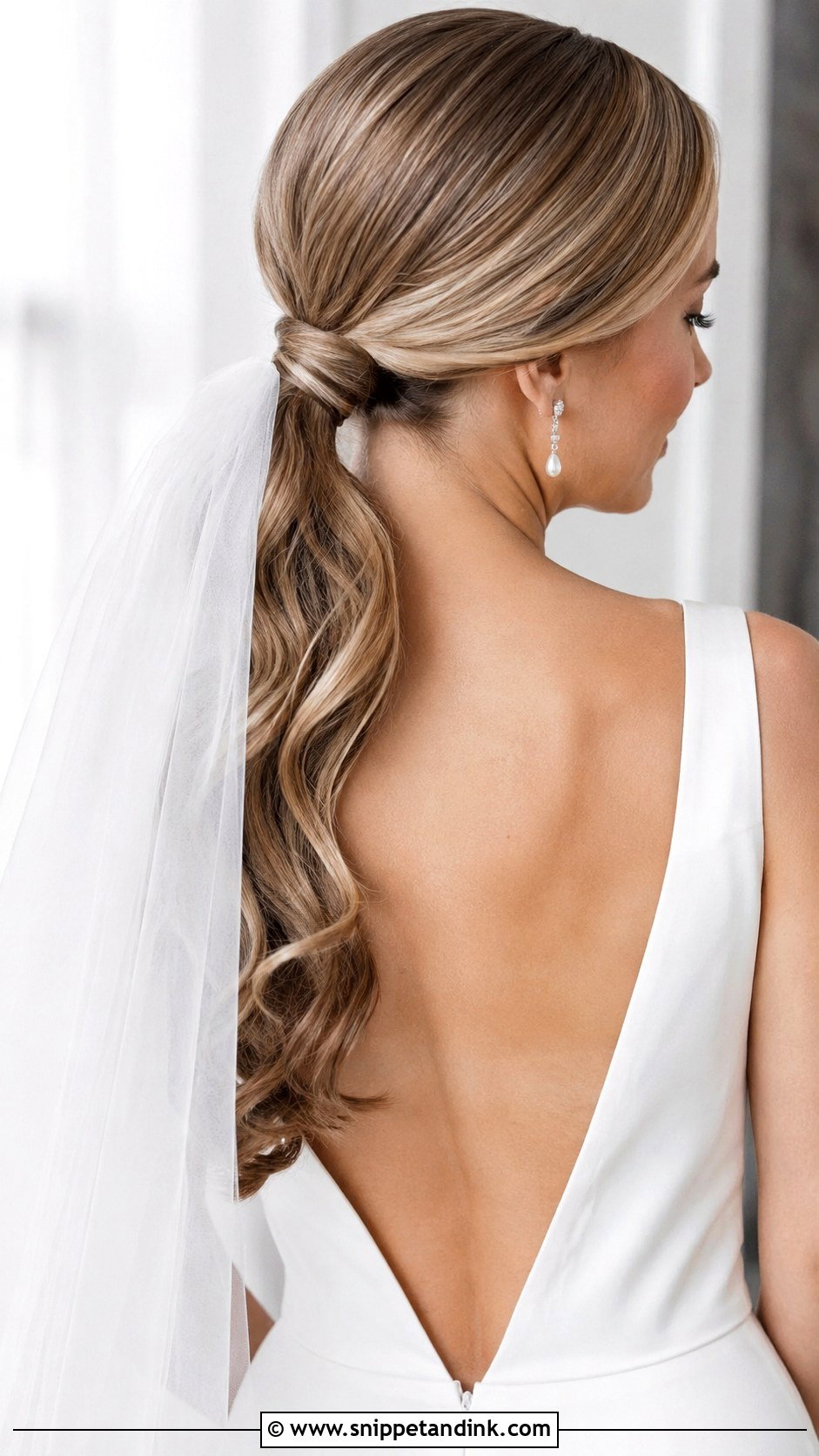
A ponytail has no bun for a veil comb to bite into, and that’s the problem I solve first. I build a small, firm section at the crown or just above the elastic, sometimes with a hidden pin cross, and slide the comb into that. The veil can sit above the ponytail for a traditional outline or underneath so the length stays on show. Sleek, waved or wrapped bases all work. Open-back gowns look good with it, since the hair stays low and the tulle moves behind you.
4. Low Ponytail Bridal Hair With Pearls
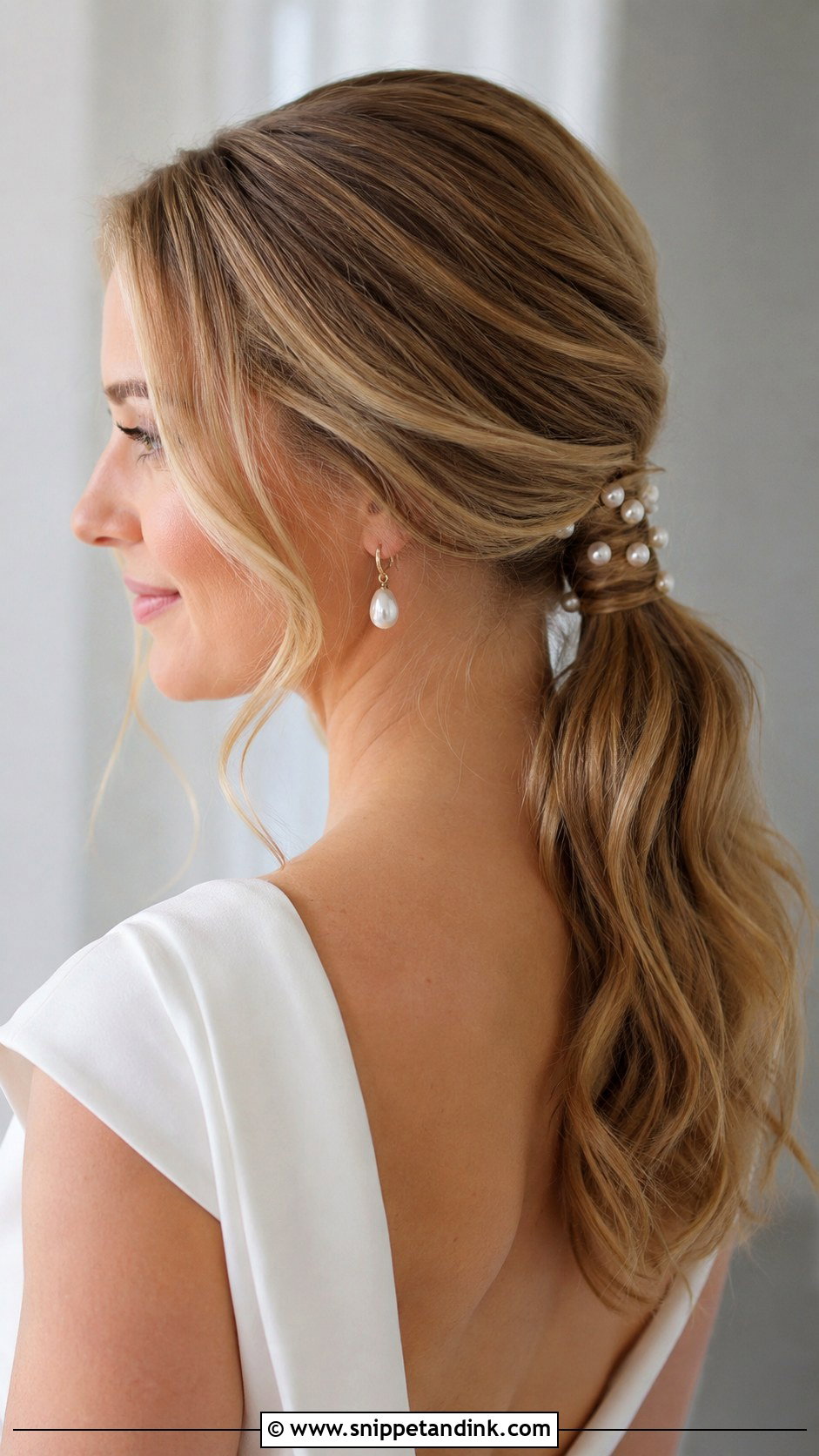
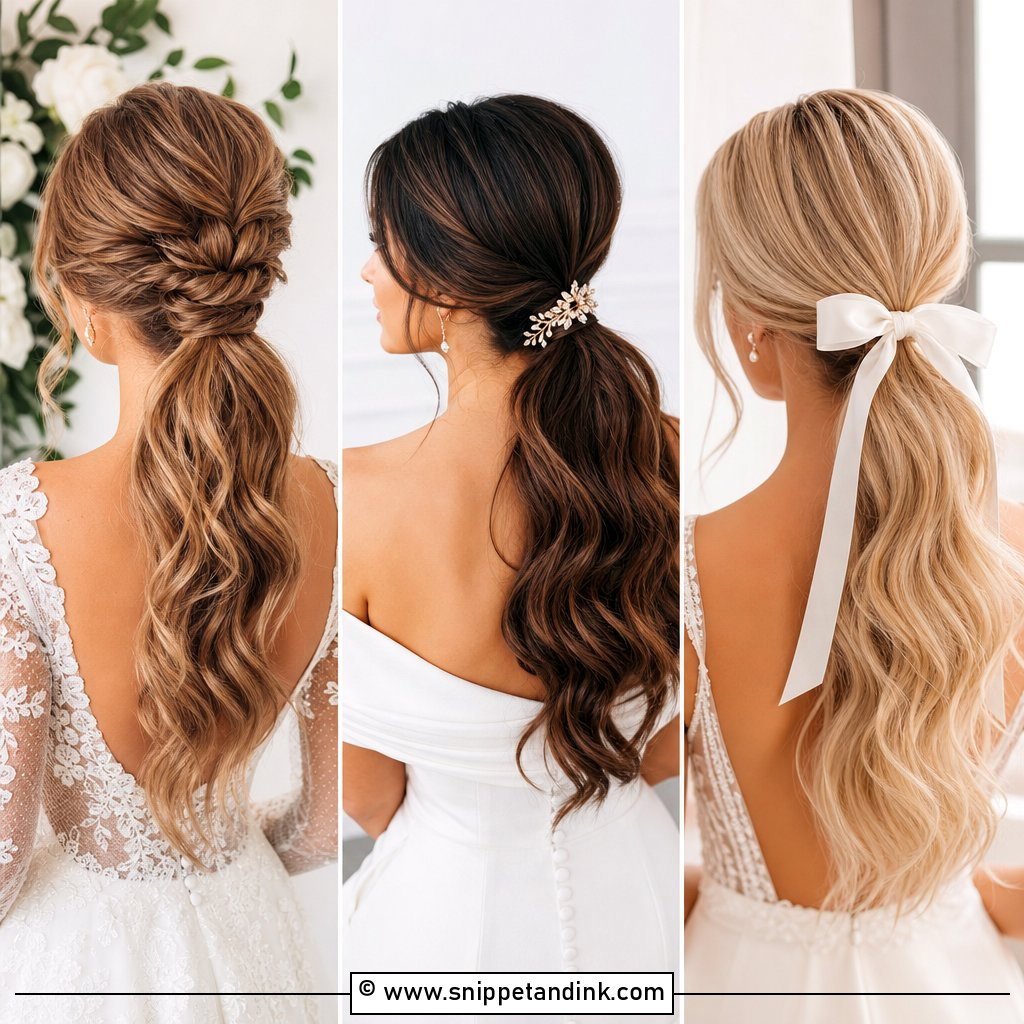
Pearls soften a sleek ponytail more than anything else I can add. Pin them around the base, scatter tiny ones through waves, or place a pearl comb to one side. Brides who want detail without a big headpiece tend to like it, especially with a plain gown. On very smooth hair, single pearl pins can slide, so I set them into a lightly textured section or a crossed bobby pin underneath. Up close, they catch light near the face in a way a camera picks up nicely.
5. Low Ponytail Bridal Hair With Braid
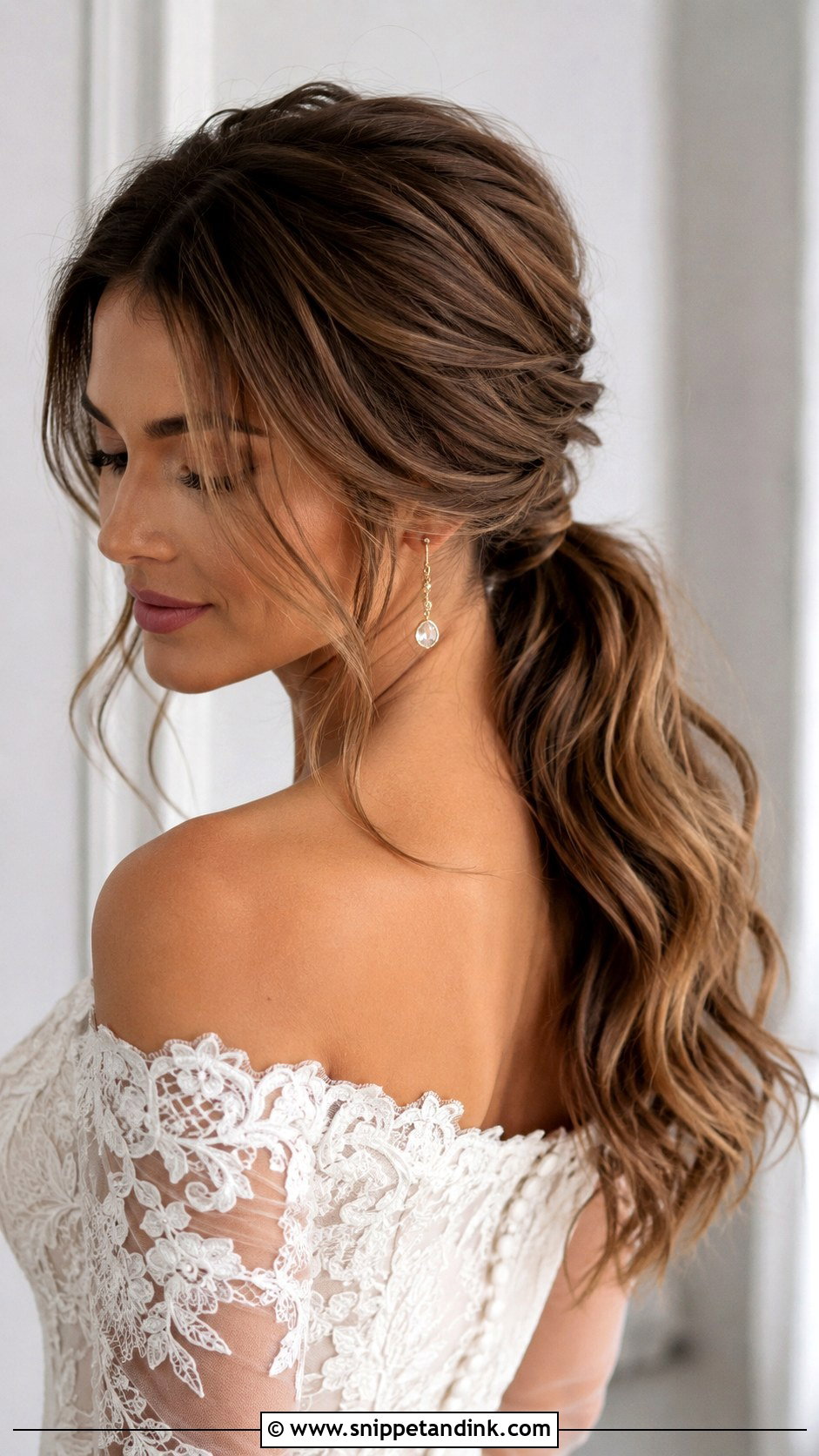
A braid gives the ponytail detail from behind and has a practical job too: it catches short layers that would otherwise poke out of a plain ponytail. Start it at one side, run it through the crown or wrap it round the base. Outdoor, rustic and beach weddings suit it. I braid firmly and then pull it wide so it looks full rather than tight, and leave a few soft tendrils at the front.
6. Textured Low Ponytail Bridal Hair
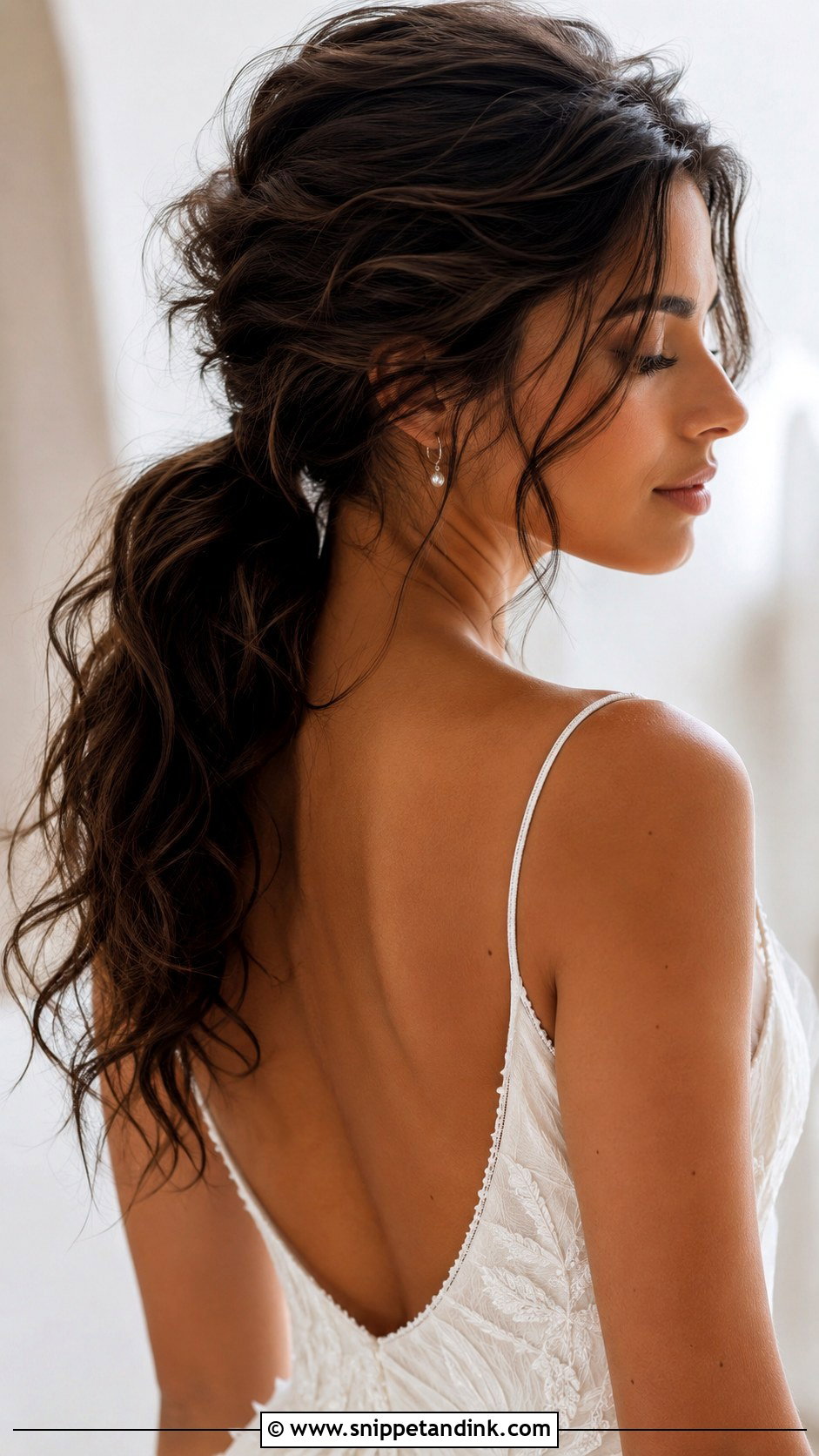
A textured ponytail is built from airy waves and lifted roots, finished with a deliberately slightly undone shape. It looks polished without looking perfect. Fine hair gains apparent thickness from the texture, and thick hair gets a more defined shape. A couple of hidden pins under the elastic prop the ponytail up from below, so it keeps its lift instead of drooping against the neck. Daylight and outdoor portraits show off the texture best.
7. Low Ponytail Bridal Hair With Side Part
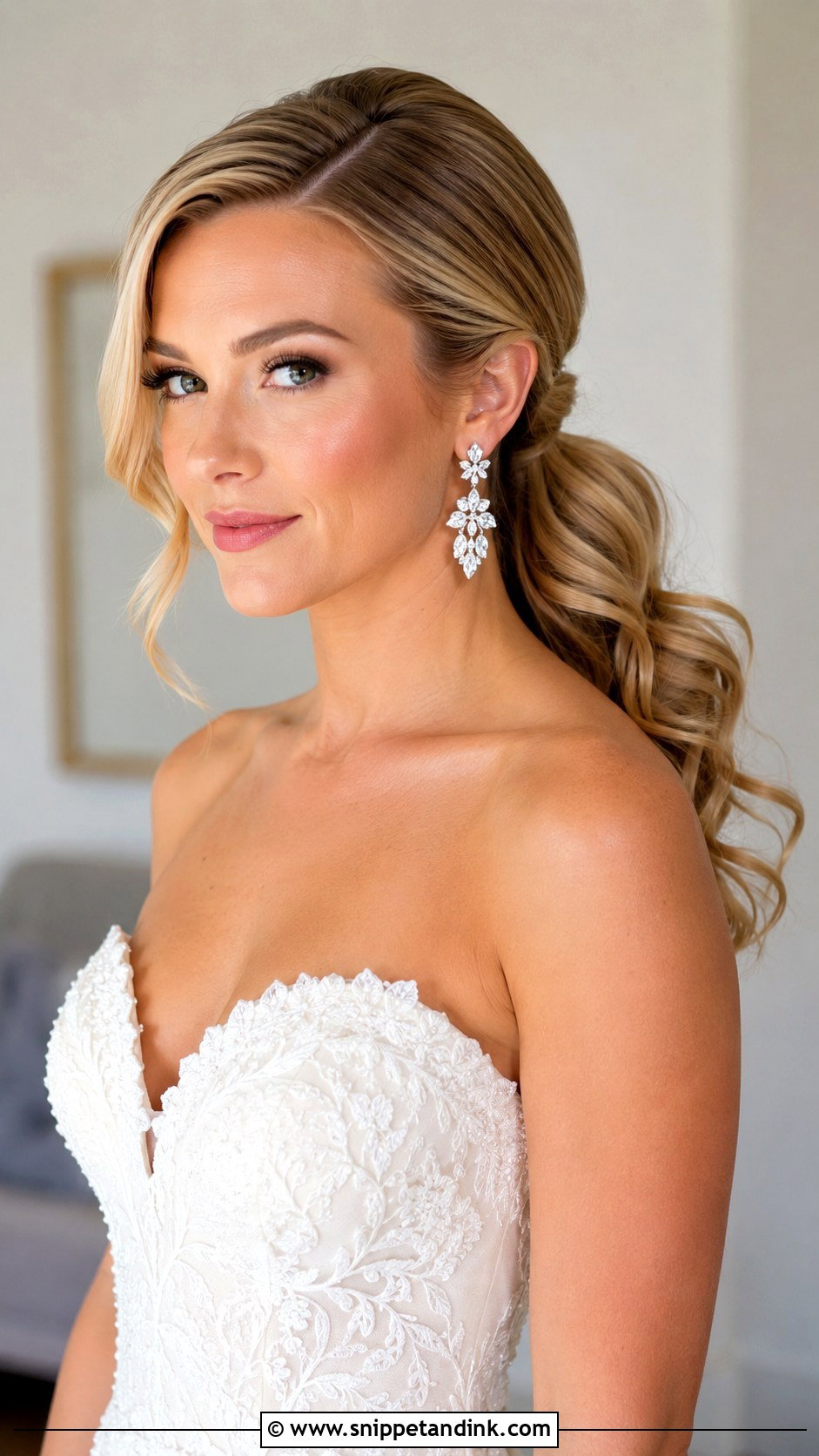
A side part changes the front of a ponytail more than any accessory. A deep part with smooth waves gives an old-Hollywood feel and suits statement earrings; a softer one with loose tendrils feels gentler. It’s also my go-to for balancing a face, since the extra volume on one side can soften a strong jaw or a high forehead. The ponytail itself can be sleek, curled or textured. The heavy side of the part tends to fall forward over the day, so I pin it discreetly behind the ear.
8. Low Ponytail Bridal Hair With Middle Part
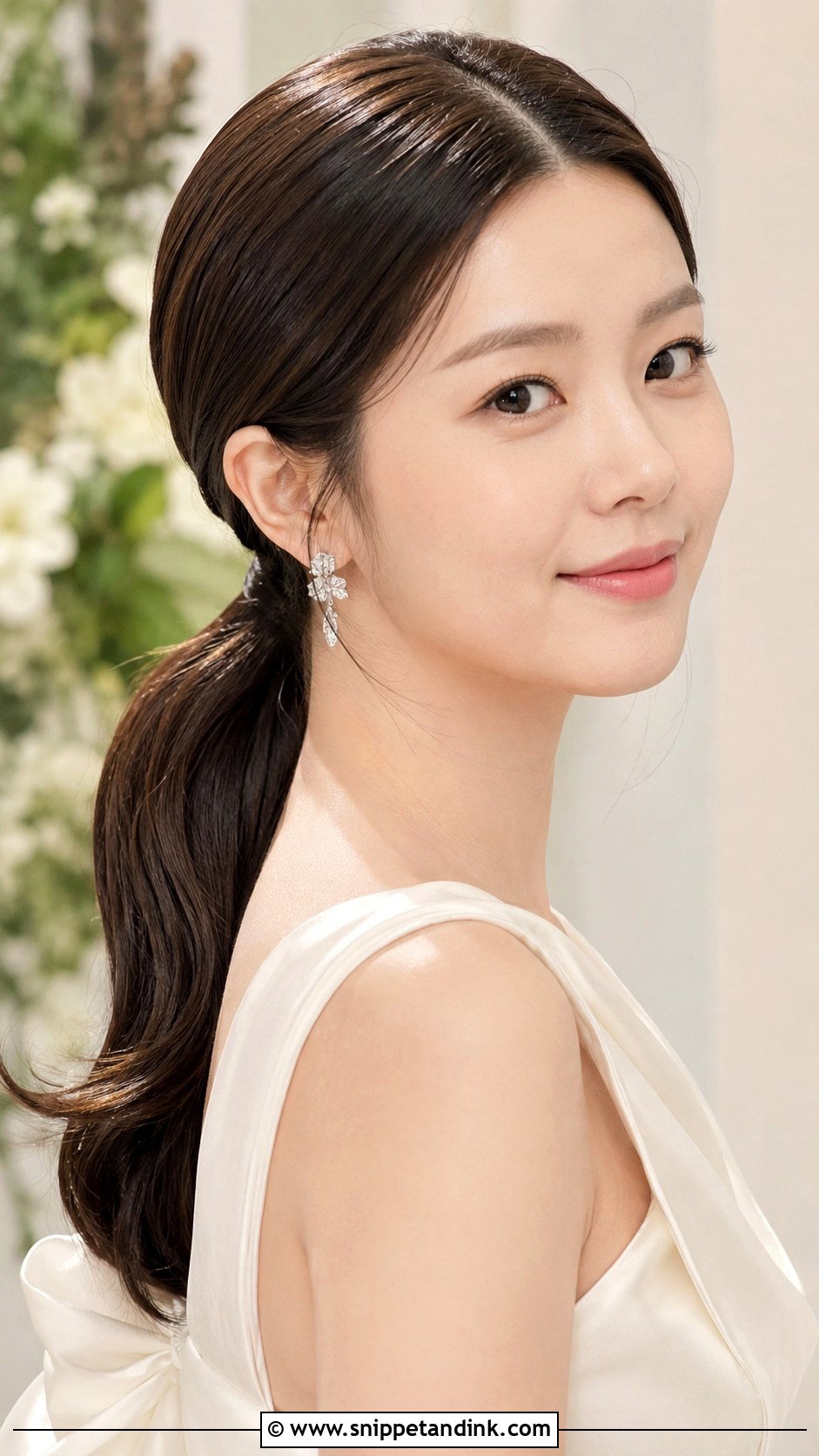
A middle part is clean and symmetrical, and it’s the current look for a reason. Simple beauty, soft glam makeup and modern silhouettes suit it. The front can be slicked flat for a sharp line or left slightly soft. Because it pulls the eye straight to the face and neckline, it’s ideal if your dress has detail at the shoulders. A centre part is unforgiving, though: if your hair naturally falls to one side, it will fight it all day, so test it at the trial.
9. Curly Low Ponytail Bridal Hair
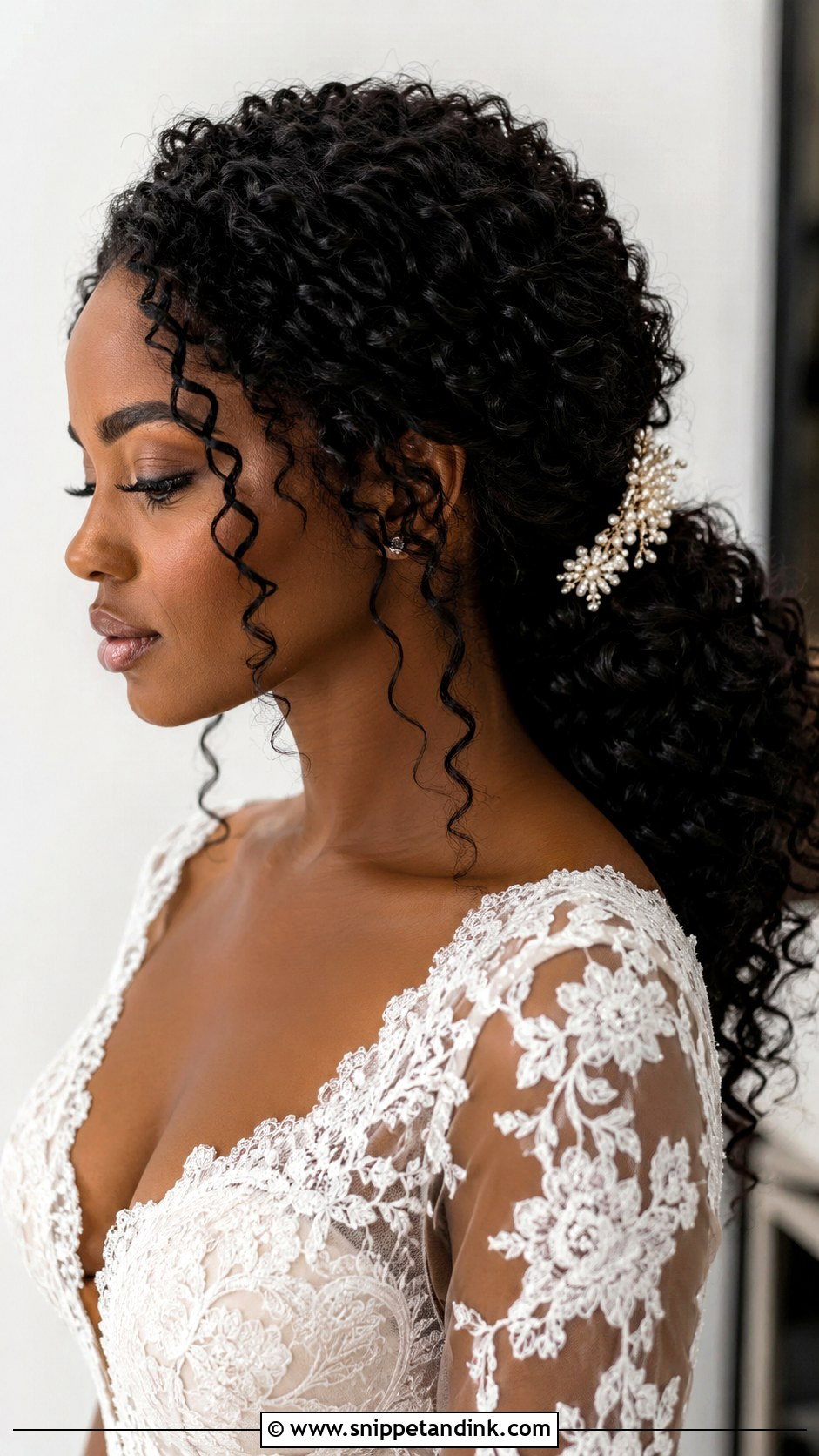
Natural curls gathered low at the nape make a full, defined ponytail, with a few soft pieces left around the face. Prep decides everything. Curls need moisture the day before and a defining product before styling, and a trial is the time to test which products and how much hold your curls can take without frizzing. I gather curls with my hands, not a brush. A comb, floral pin or pearl detail near the base finishes it while keeping the curl pattern the star.
10. Low Ponytail Bridal Hair With Flowers
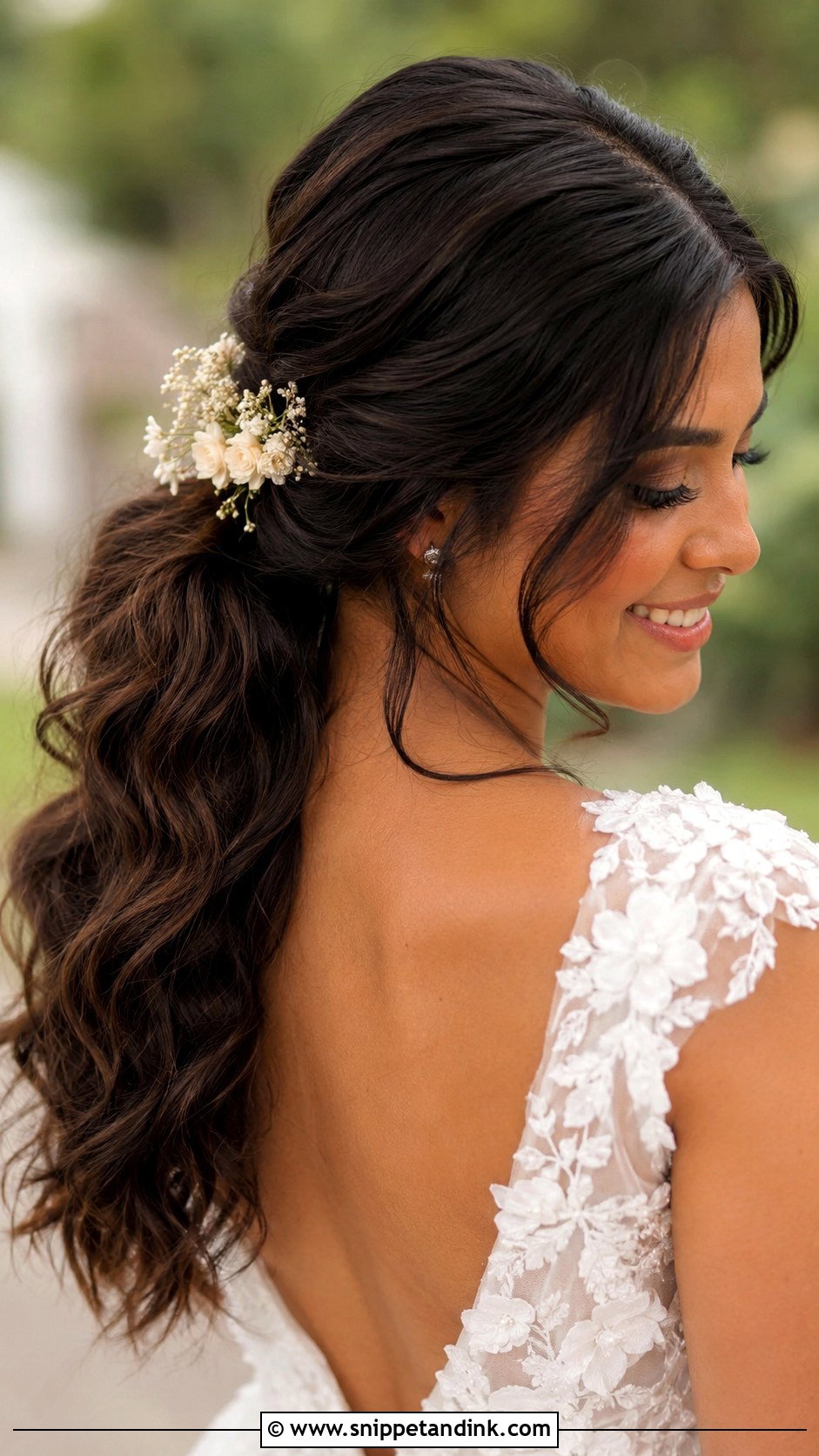
Small blooms tuck neatly around the ponytail base, into a braid or along one side of the head. Garden, spring and outdoor weddings suit them. Match the flowers to the bouquet, but keep them smaller; several little pieces photograph better than one large cluster on the back of the head. Faux flowers are worth considering for a long day in heat, since fresh stems wilt against a warm neck. If you go fresh, get your florist and stylist talking before the week of the wedding.
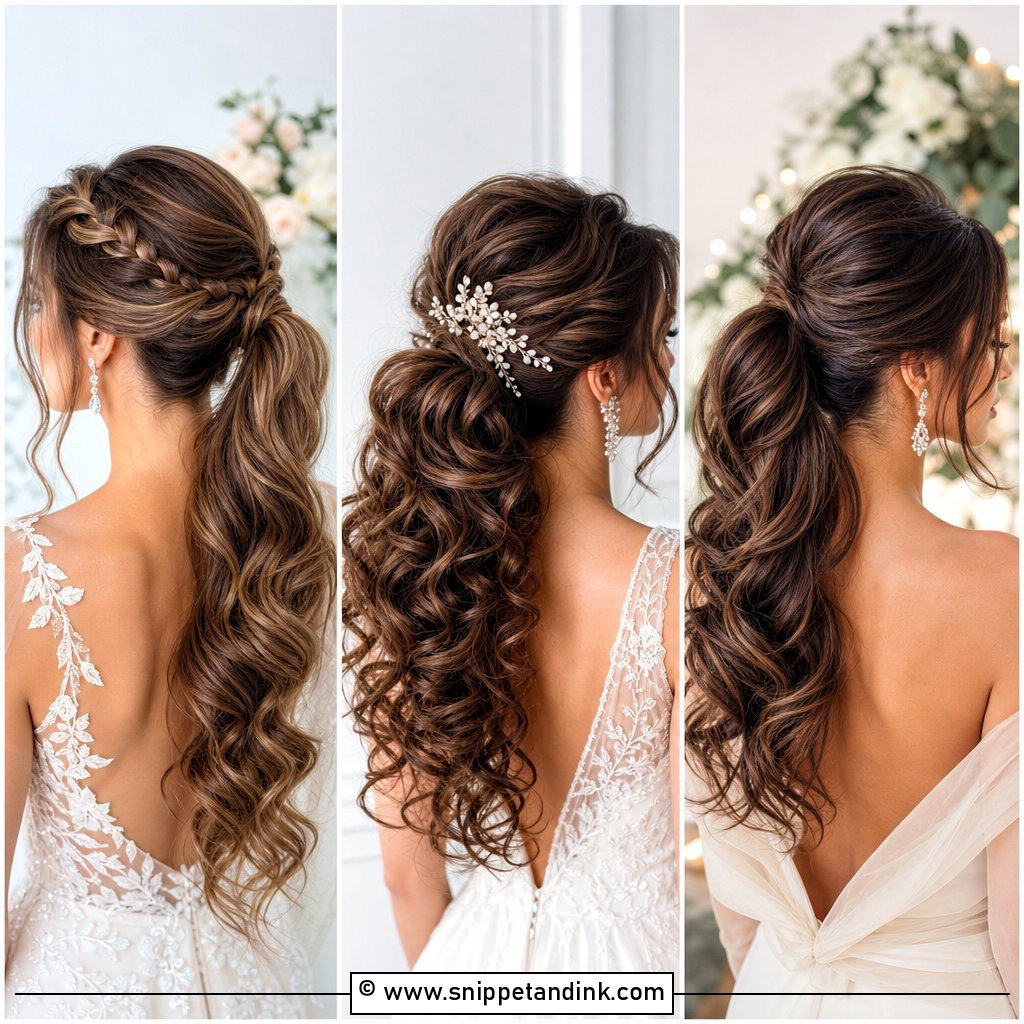
11. Voluminous Low Ponytail Bridal Hair
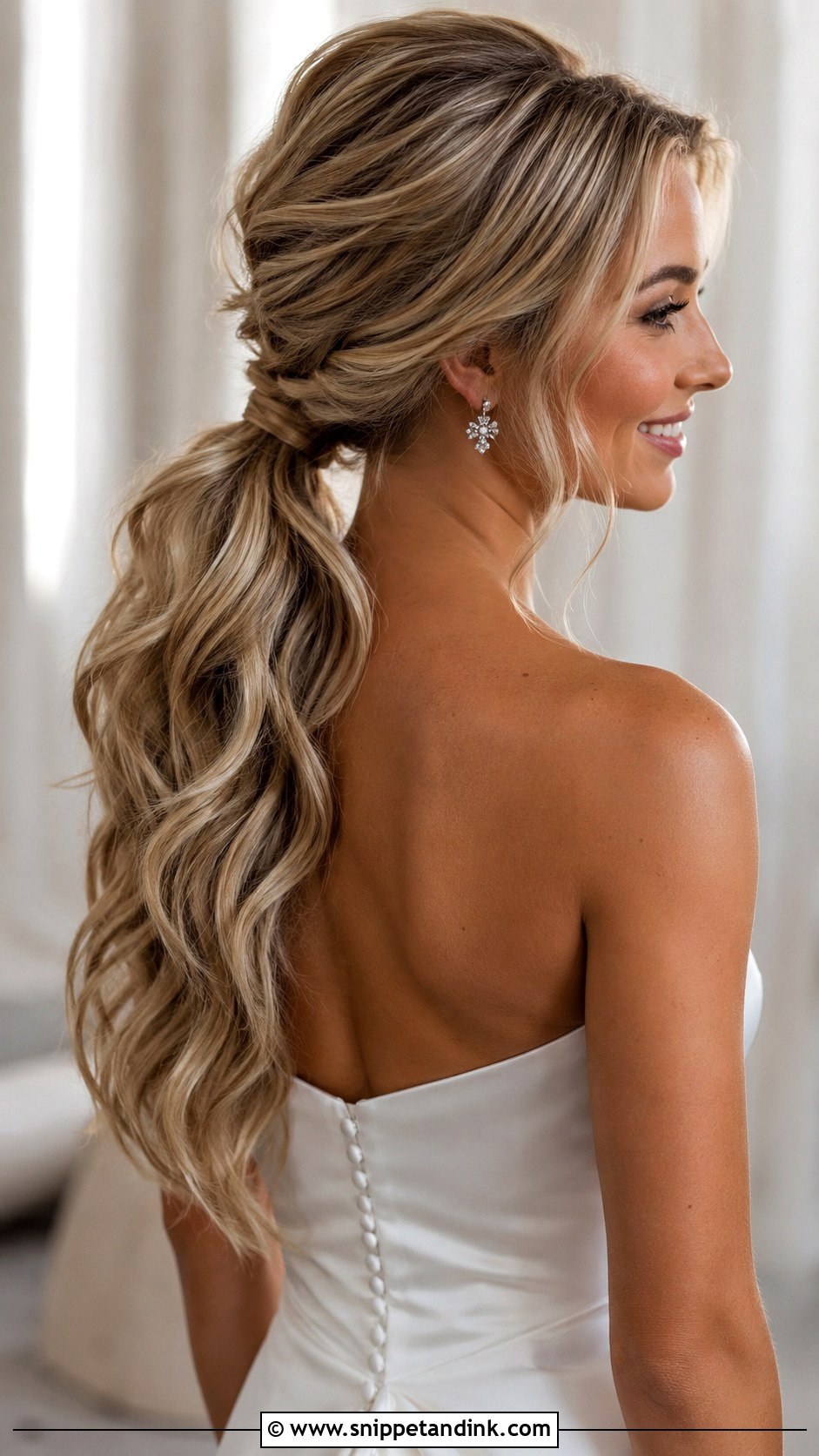
Volume makes the ponytail the main event: lifted crown, full length, a soft rather than tight shape. Brides who love glamorous hair but don’t want an updo like it. On fine or layered hair, extensions are usually what makes it possible, and a clip-in weft wrapped around the ponytail adds more thickness than teasing alone. Part it in the middle, sweep it to the side or frame the face with waves. Keep the volume in proportion with the dress. A fuller ponytail sits well with clean gowns and simple jewellery.
12. Low Ponytail Bridal Hair With Hair Bow
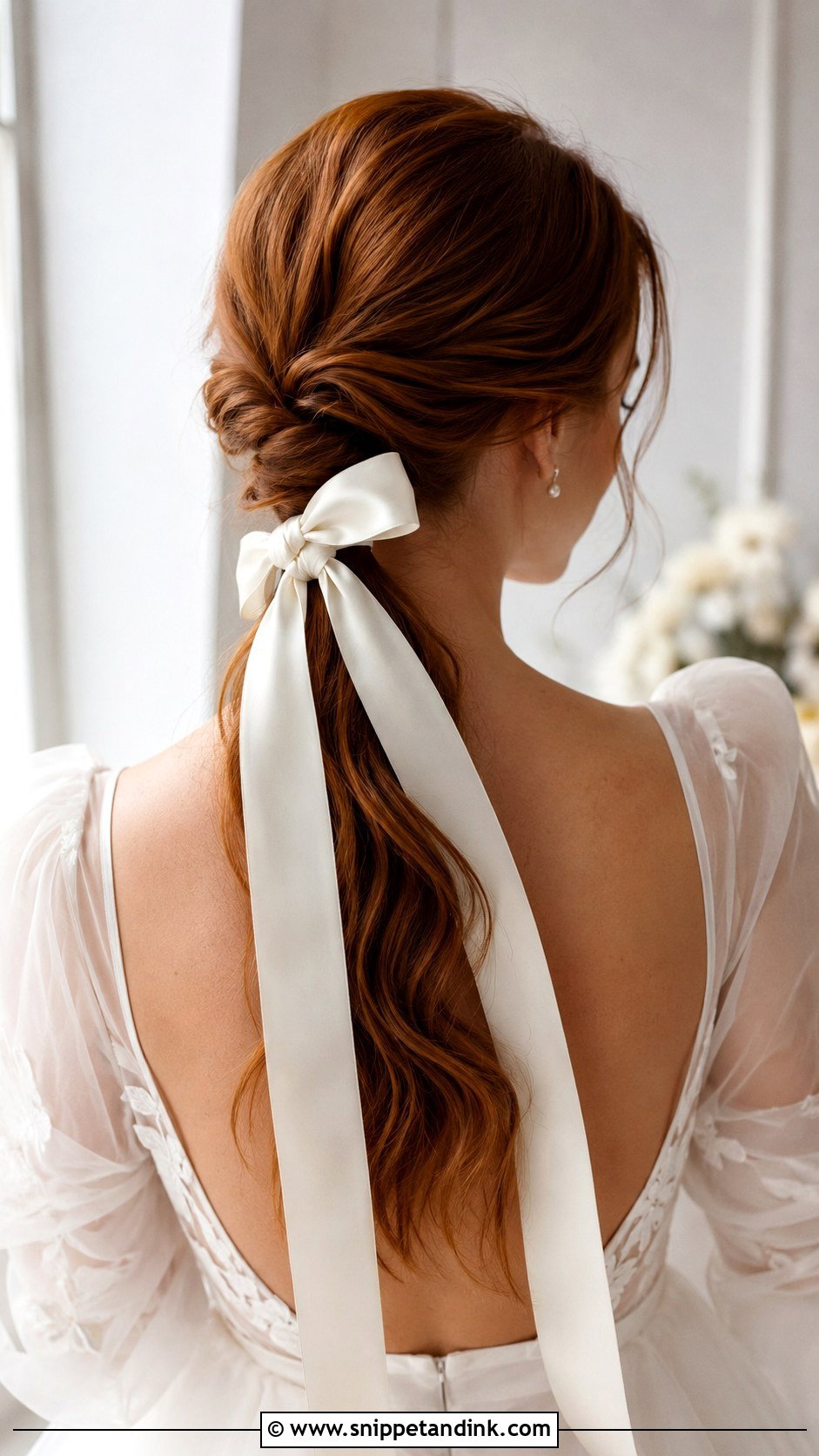
A bow adds detail without sparkle, which suits brides who don’t want crystals near their face. Satin, silk and organza all work; pick the fabric closest to your dress. A small bow looks classic, while long ribbon tails add movement down the ponytail. Bows are heavier than they look and tend to tilt, so I pin through the knot into the elastic rather than just tying it on. Pick a bow color that matches the gown closely; bright white next to an ivory dress makes the dress look yellow.
13. Low Ponytail Bridal Hair With Face Framing Pieces
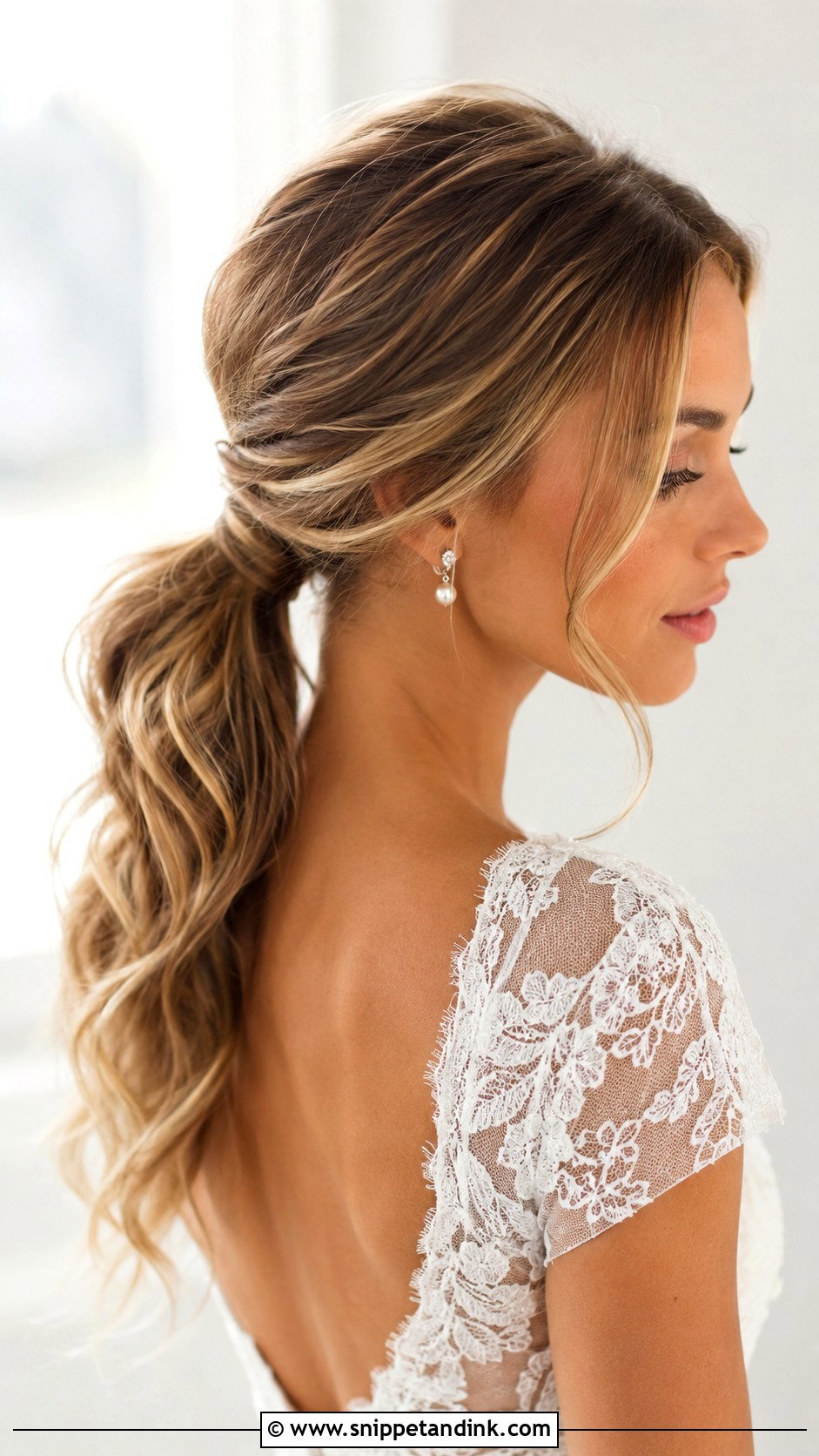
Face-framing pieces matter most in close-ups, where a fully pulled-back ponytail can look severe. Depending on your cut, I wave them around the cheekbone, jaw or collarbone. The ponytail can be sleek, wavy, textured, or curly behind them. If you feel exposed with everything pulled back, this is the fix. Keep them controlled, though. Shape them at your trial, because a centimetre of length difference changes where they land on your face.
14. Low Ponytail Bridal Hair For Long Hair
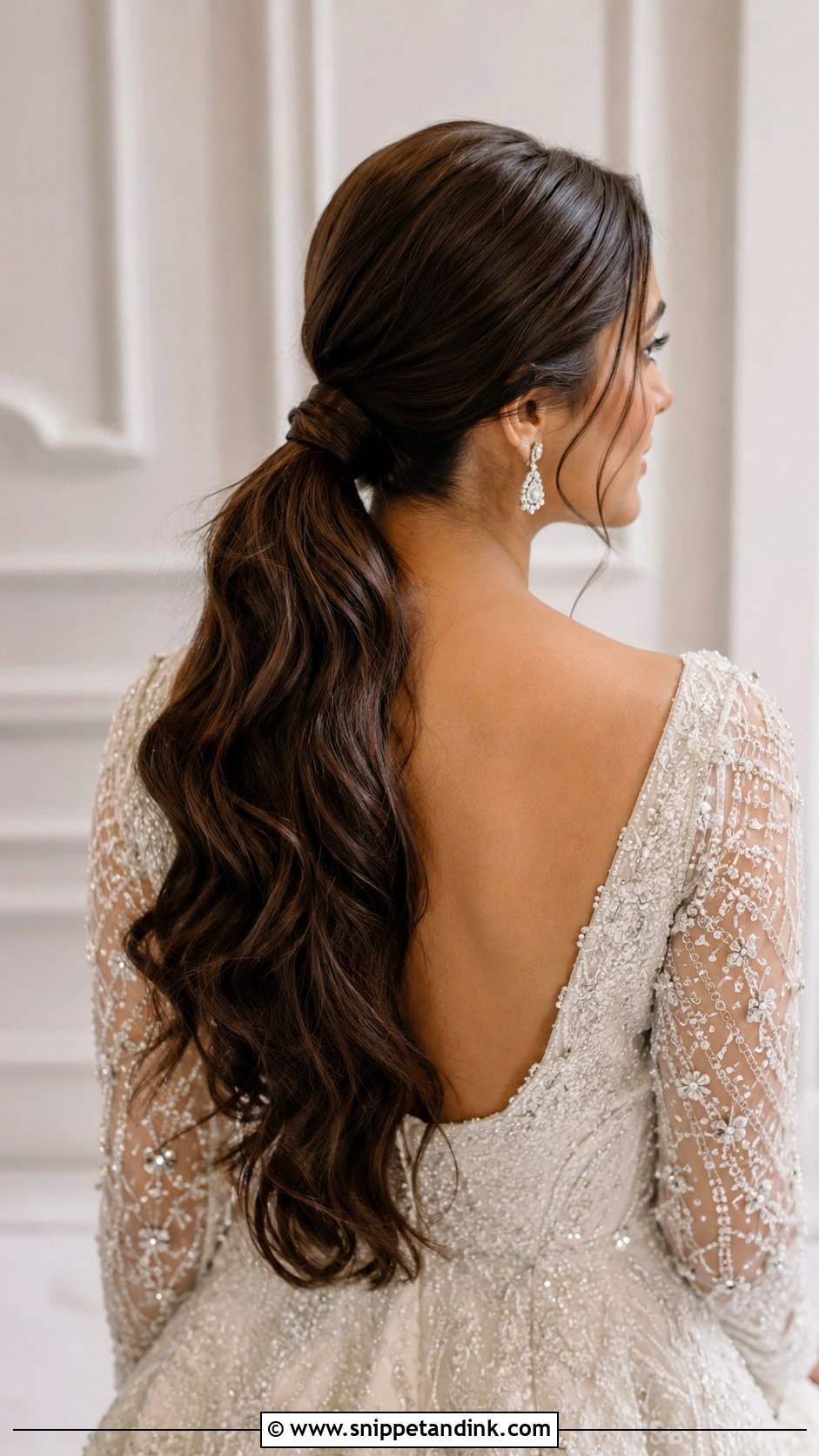
Long hair gives a low ponytail natural movement, with soft waves, glossy straight ends or big brushed curls running down the back. Brides who want to show off their length without wearing it down love it. Swing it over one shoulder for photos with a backless or detailed gown. The base is everything here, because long, heavy hair drags a ponytail down within hours. I use two elastics and a hidden pin to hold it up, so it stays lifted and doesn’t pull on the scalp.
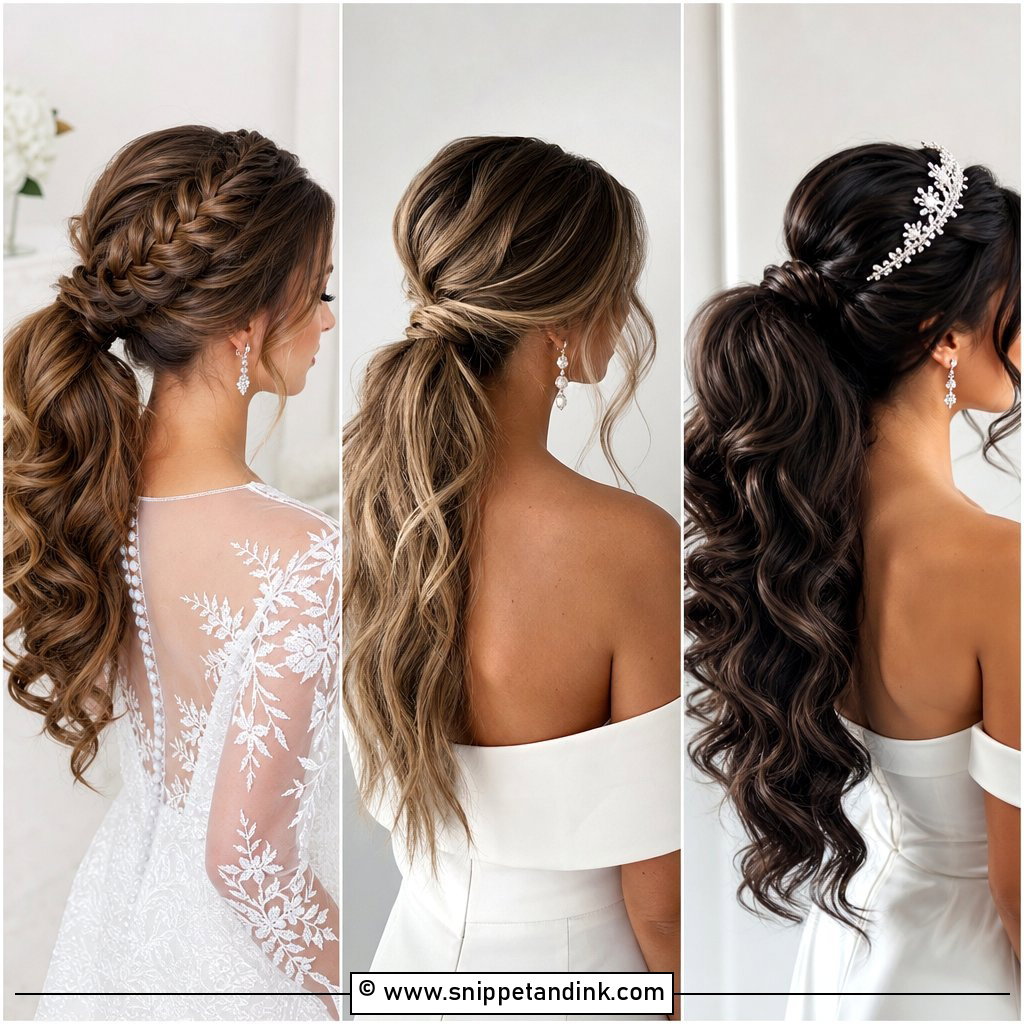
15. Low Ponytail Bridal Hair For Thin Hair
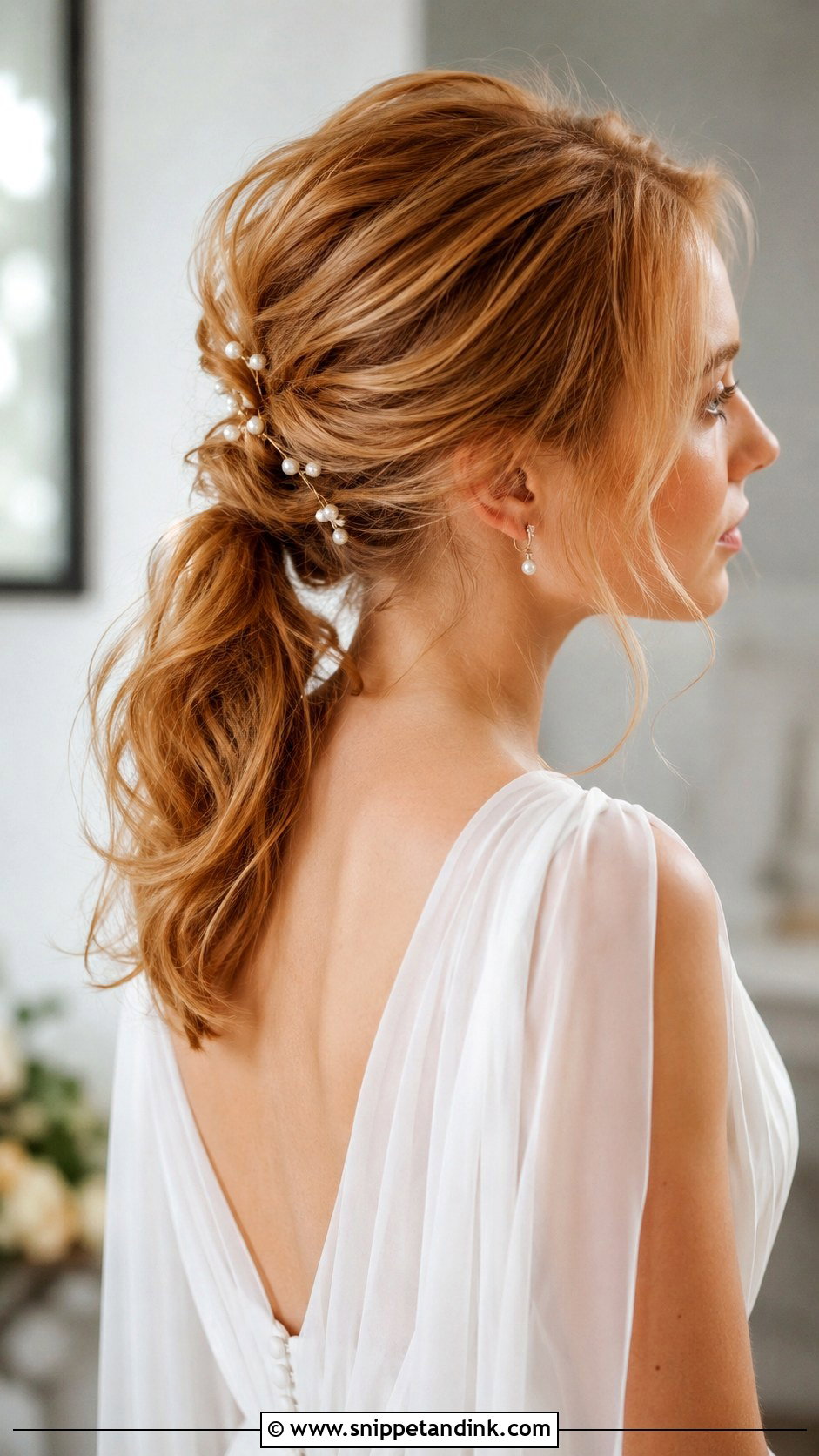
Thin hair can carry a low ponytail with some help. Soft waves, a little backcombing at the crown and a slightly wider base all make the hair look fuller. Clip-in extensions add length or density, but colour-match them in daylight, not under salon lights. Don’t pull the front too tight unless you want a sleek finish, since looser front pieces give more apparent volume. A pearl comb, a small bow or a wrapped base adds interest without dragging the hair down.
Ponytails, Beaded Backs and Silk Dresses
A ponytail spends the whole day lying against your dress, which an updo never does. That contact is worth thinking about at your final fitting.
Beaded and sequinned backs catch hair. Every time you turn, strands snag on the beading and pull, and by the end of the night the lengths look frizzy. Smoother, glossier ends snag less, so ask for a light serum on the lengths, or wear the ponytail over one shoulder for part of the evening.
Silk and satin show marks. Hairspray, oils and shine serums can leave darker spots on pale silk where wet hair touches it. Let all products dry fully before you put the dress on, and spray with the dress well out of the way.
Lace and open backs are easy partners, but check where the ponytail ends. If it stops exactly on the edge of a cut-out, it draws the eye to that line. A slightly higher or lower placement, or longer curls, fixes it.
For the first dance, think about your partner’s jacket too. Cufflinks and buttons on a sleeve resting at your back catch long hair surprisingly easily, so sweeping the ponytail forward over one shoulder before you start saves a painful tug mid-song.
A Bridal Ponytail Is Only as Good as Its Base
A low ponytail moves easily from sleek to soft to boho, and it works with veils, pearls, flowers, bows, braids and curls. It also keeps hair controlled while still moving. Bring a few saved photos to your trial and talk through your neckline, veil placement, the forecast, your texture and how much pulling you can tolerate. Then wear it for a few hours. If it hasn’t slipped and your scalp isn’t sore, you’ve found it.
You'll Like These Ideas:


Leave a Reply