
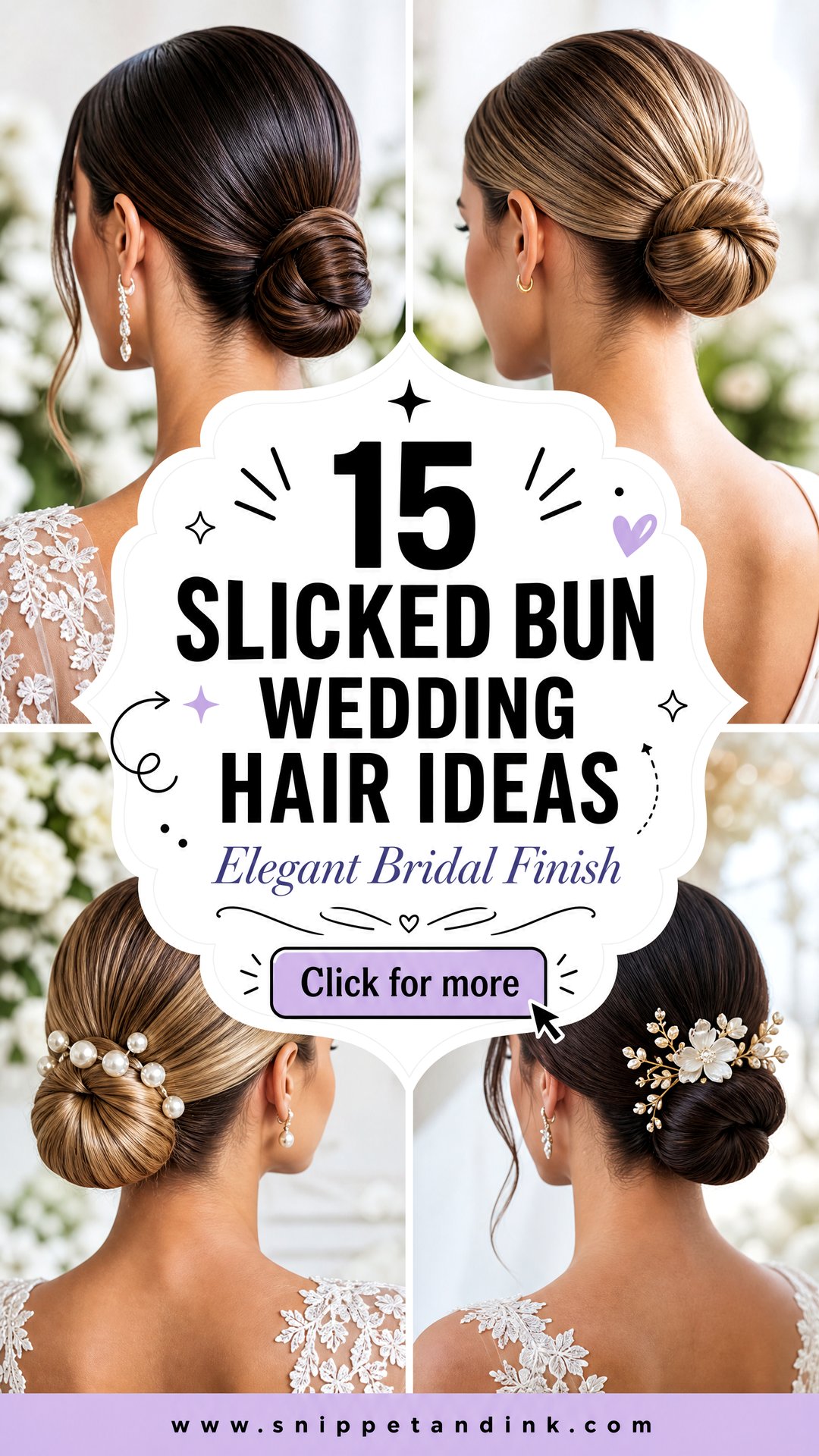
A slicked bun is the style I trust most when a bride tells me she has a long day, a heavy veil and no interest in touching her hair after nine in the morning. It keeps the face and neckline open, it barely reacts to wind, and it sits comfortably under almost any headpiece. What changes from one bride to the next is the finish: high gloss or soft shine, a sharp part or none, a plain coil or something folded and dressed with pearls. Below are fifteen versions I’d actually put in front of a client, with notes on what each needs from your hair and where it tends to go wrong.
What Makes a Slicked Bun Hold From Ceremony to Last Dance
Most of the hold in a slicked style is decided before I pick up a pin. If hair is blow-dried in every direction and then brushed back, it fights to return to where it was dried, and the crown lifts within a few hours. So I blow-dry it flat in the direction it will finally sit, with a smoothing cream worked through while it’s damp. By the time I brush it back, the hair already wants to lie that way.
Hair that’s been washed that morning is often too slippery to grip, especially fine or silky hair. I prefer it washed the night before, or I’ll add a little texture spray at the roots before slicking. Very coarse or thick hair is the opposite case; it needs more product and more time under the brush to lie flat.
- Brush: a boar bristle brush for the final smoothing, because it lays the cuticle down and moves product evenly. A paddle brush leaves channels.
- Product: cream or light gel on damp hair, a firm wax stick or pomade for flyaways at the end. Heavy gel on dry hair tends to flake.
- Elastic: a thin, strong one, doubled, placed exactly where the bun will sit. If it slides, everything above it loosens.
- Pins: U-pins for shaping the bun, bobby pins pushed through to the elastic for anchoring, crossed in pairs where the weight is.
One honest warning. A very tight slick on hair that has recently been bleached or relaxed can stress the hairline, and so can repeating the look several days running for a multi-day wedding. On those clients I keep the tension lighter and let the gloss come from product rather than pull.
1. Slicked Low Bun Wedding Hair
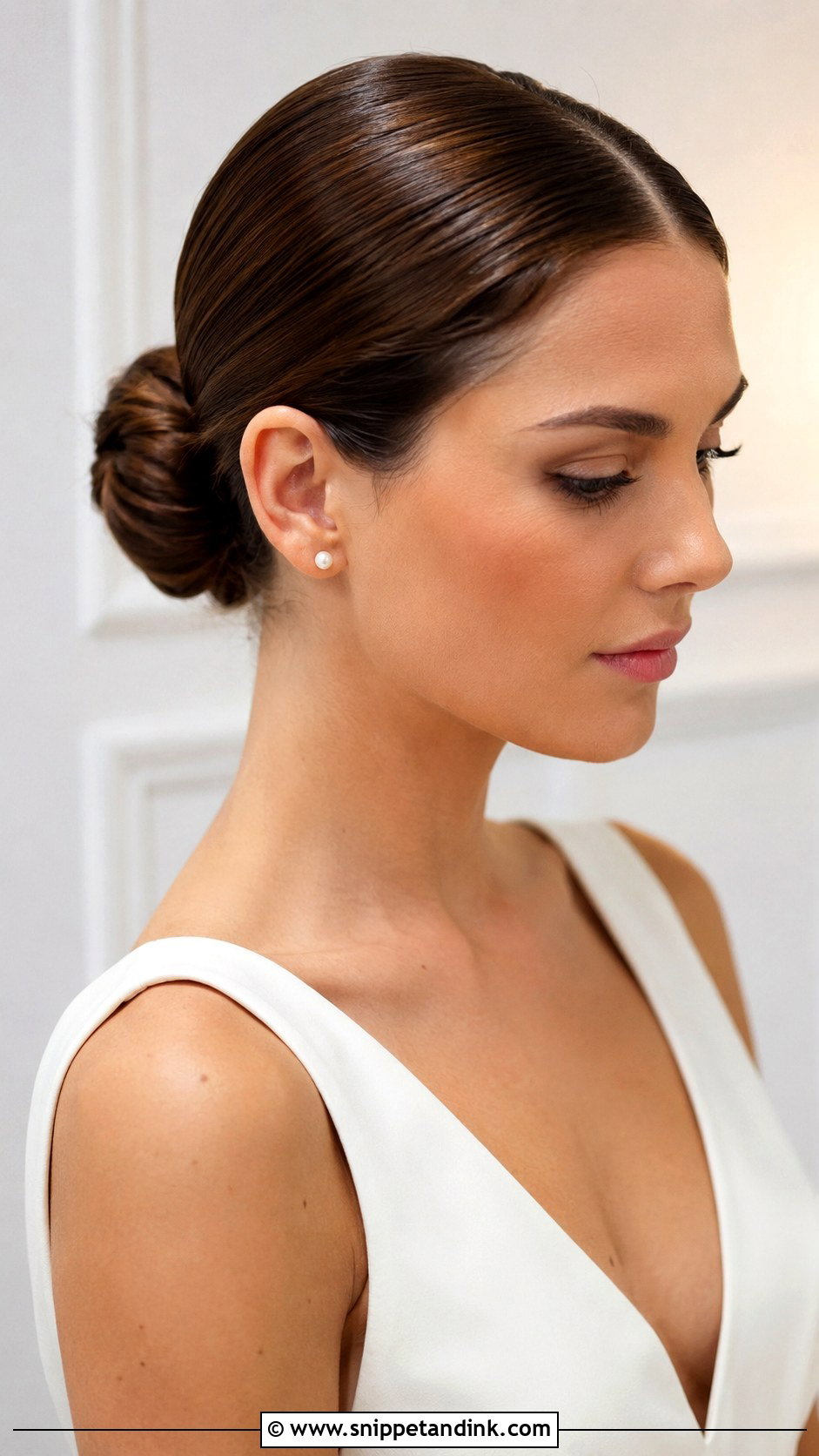
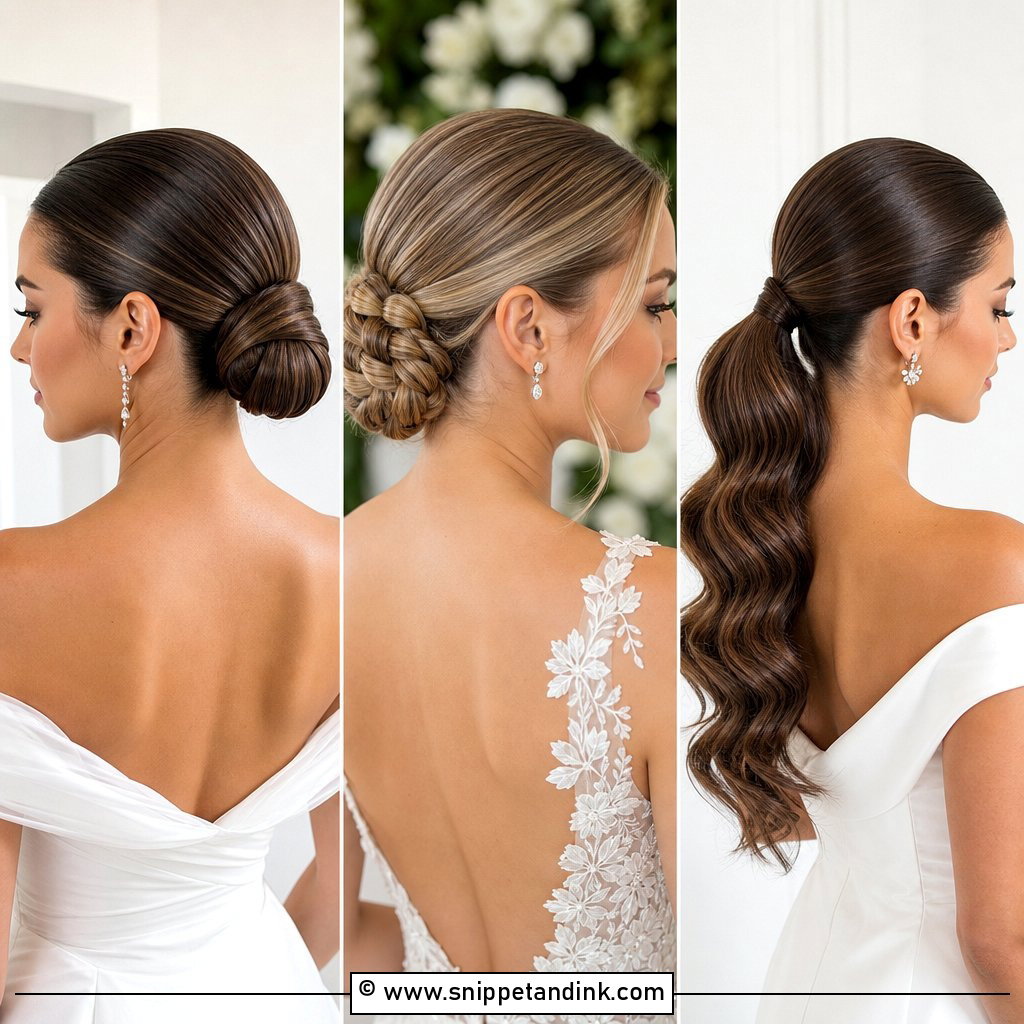
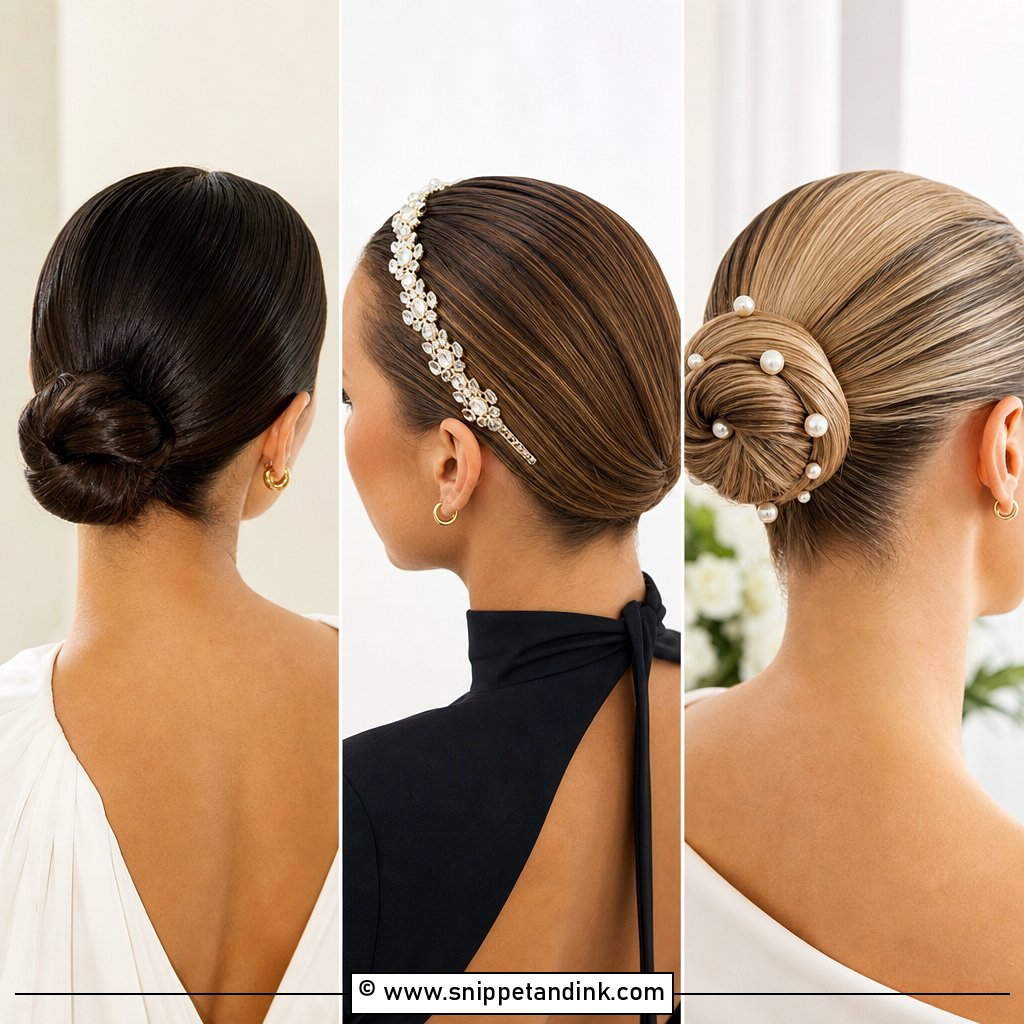
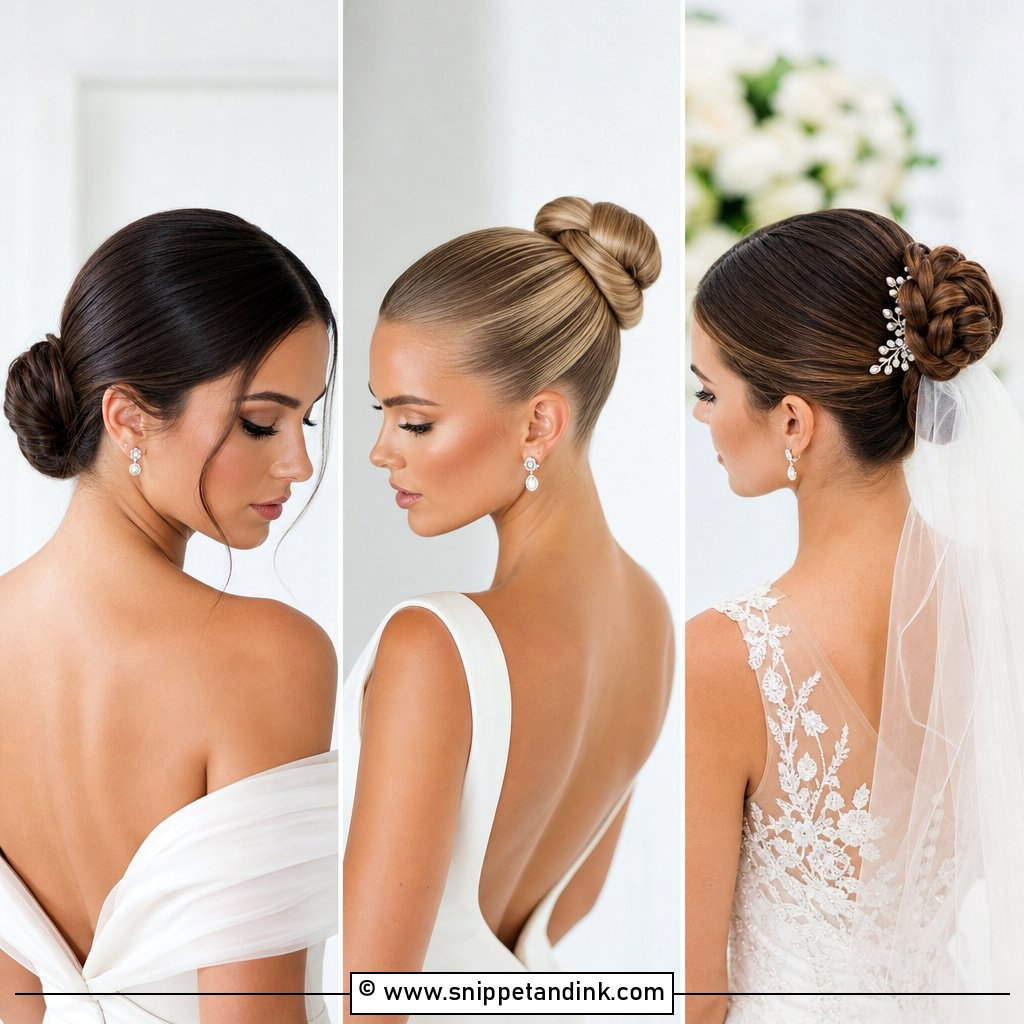
The slicked low bun wedding hair look is the one I’d call the safest. Everything is brushed toward the nape and wound into a neat bun that sits low, so a long veil comb has a solid base to grip and the shoulders stay clear for a strapless or square neckline. I ask brides whether they want shine or wet-look before I pick a product, because a gel finish can read harsh in daylight. A middle part makes it current; no part at all keeps it plain and classic.
2. Slicked Middle Part Bun Wedding Hair
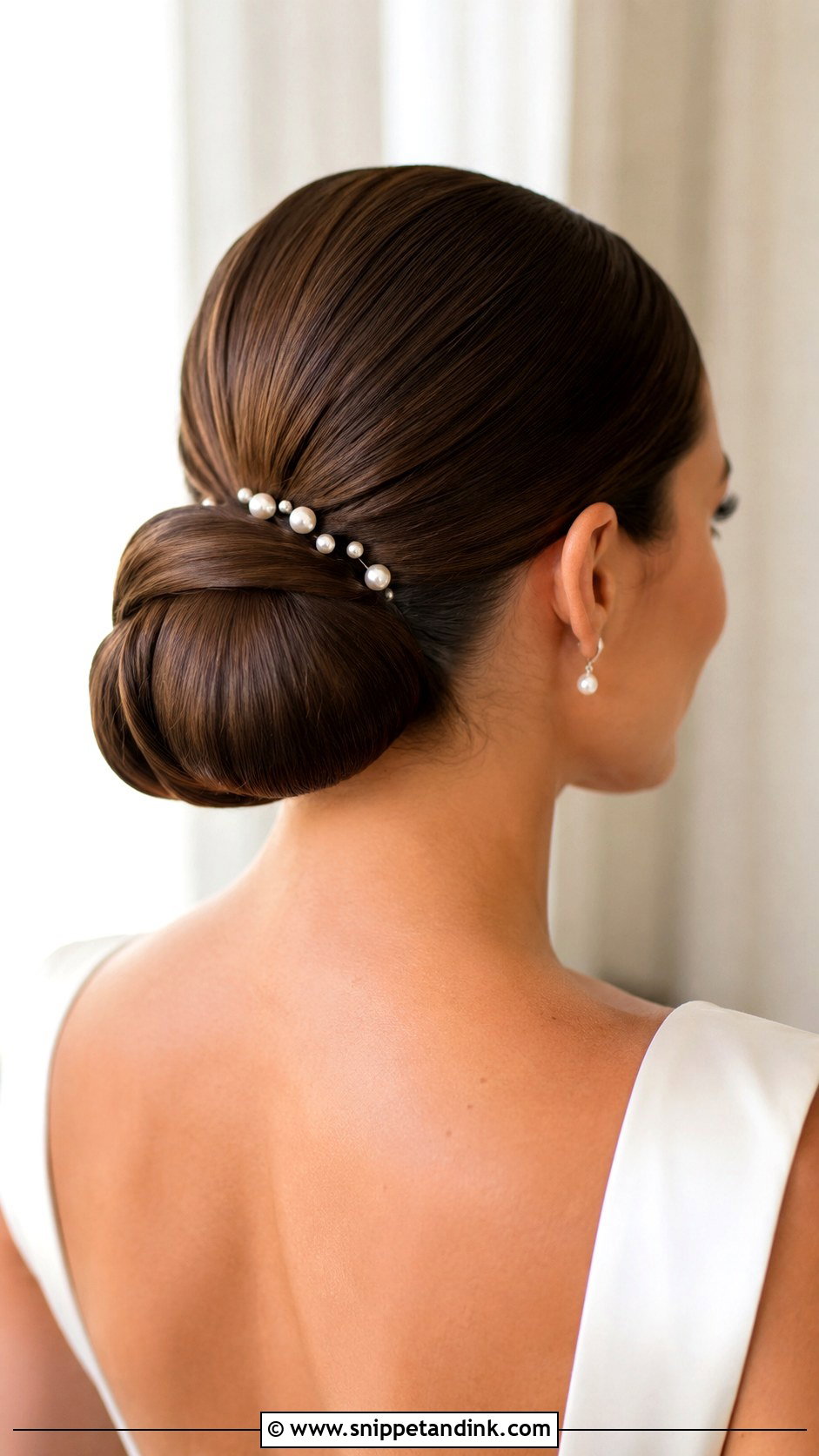
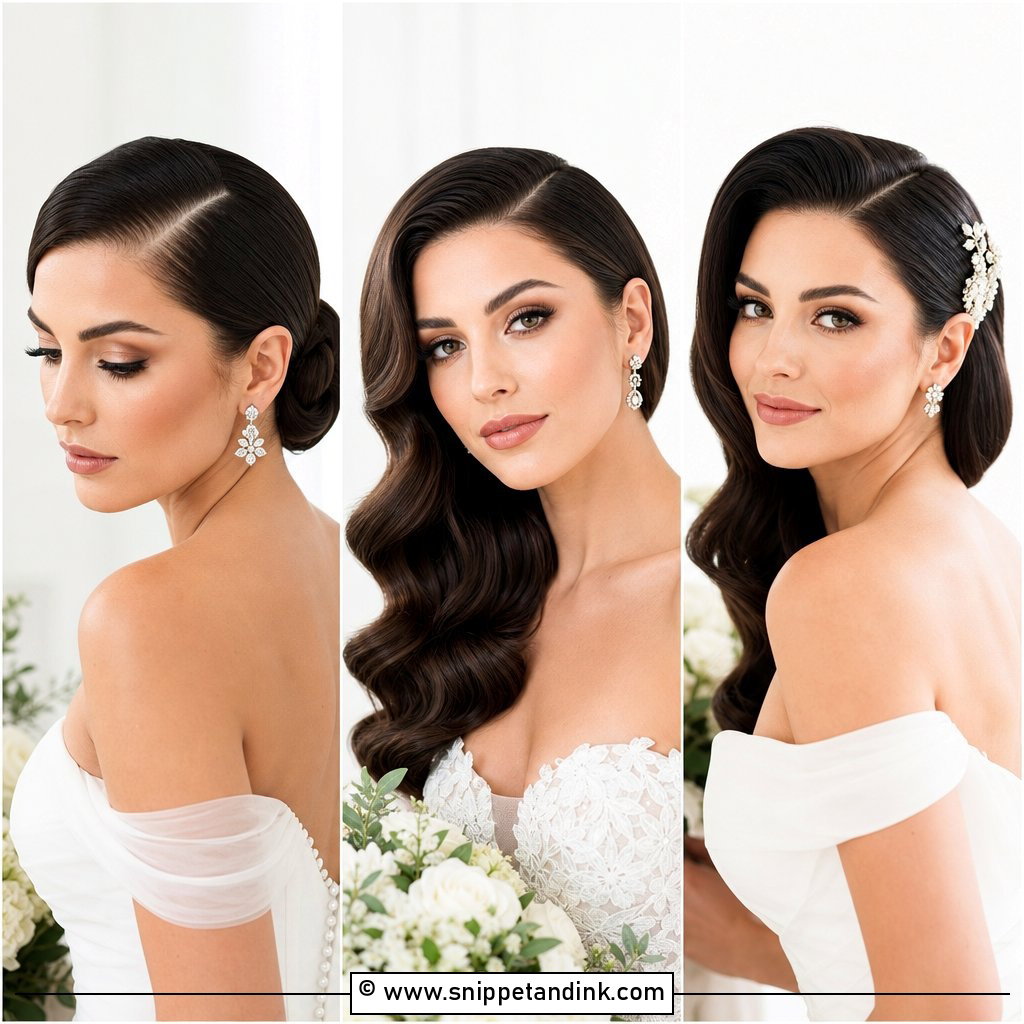
A middle part is honest. It shows exactly how symmetrical your face and hairline are, so at the trial I find where your hair naturally splits and work from there rather than forcing a ruler-straight line down the center. The sides should melt into the bun without ridges, which means brushing each side separately before joining them at the nape. This version sits low enough for a veil and leaves room for statement earrings, so it suits a dress that already has lace sleeves or a busy bodice. I keep shine spray to a light mist held well back from the head; too close and it spots.
3. Slicked Side Part Bun Wedding Hair
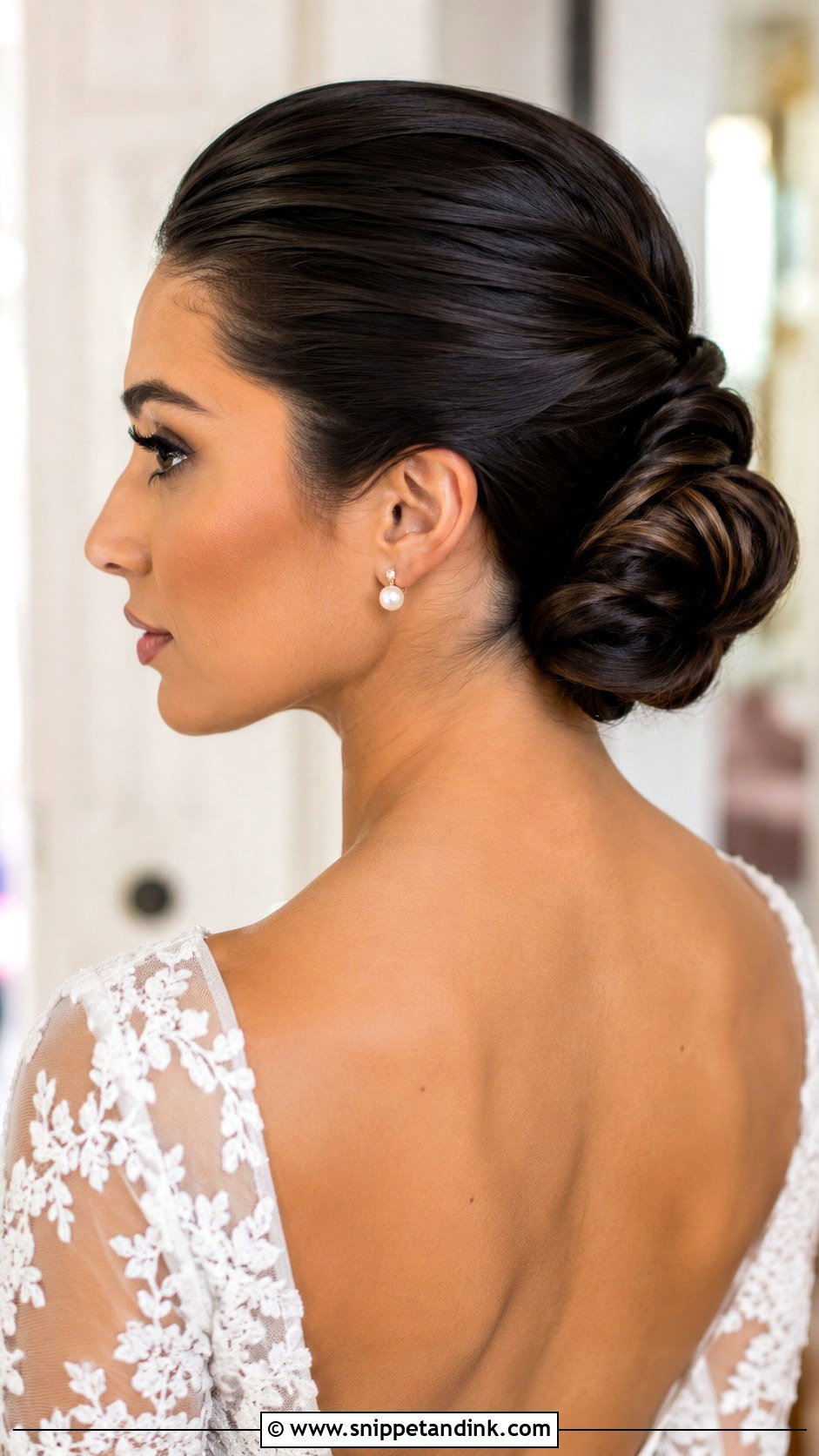
A side part is my answer for the bride who feels exposed with everything dragged straight back. The deeper side sweeps across the forehead and softens the whole look, and I set that sweep with a couple of flat clips while it cools so it keeps its curve after the hugging starts. Depending on length and density the bun can be round, twisted or slightly oval. Drop earrings sit nicely against it. The one mistake I watch for is pressing the sweep too flat, which makes thin hair look sparse at the part.
4. Slicked High Bun Wedding Hair
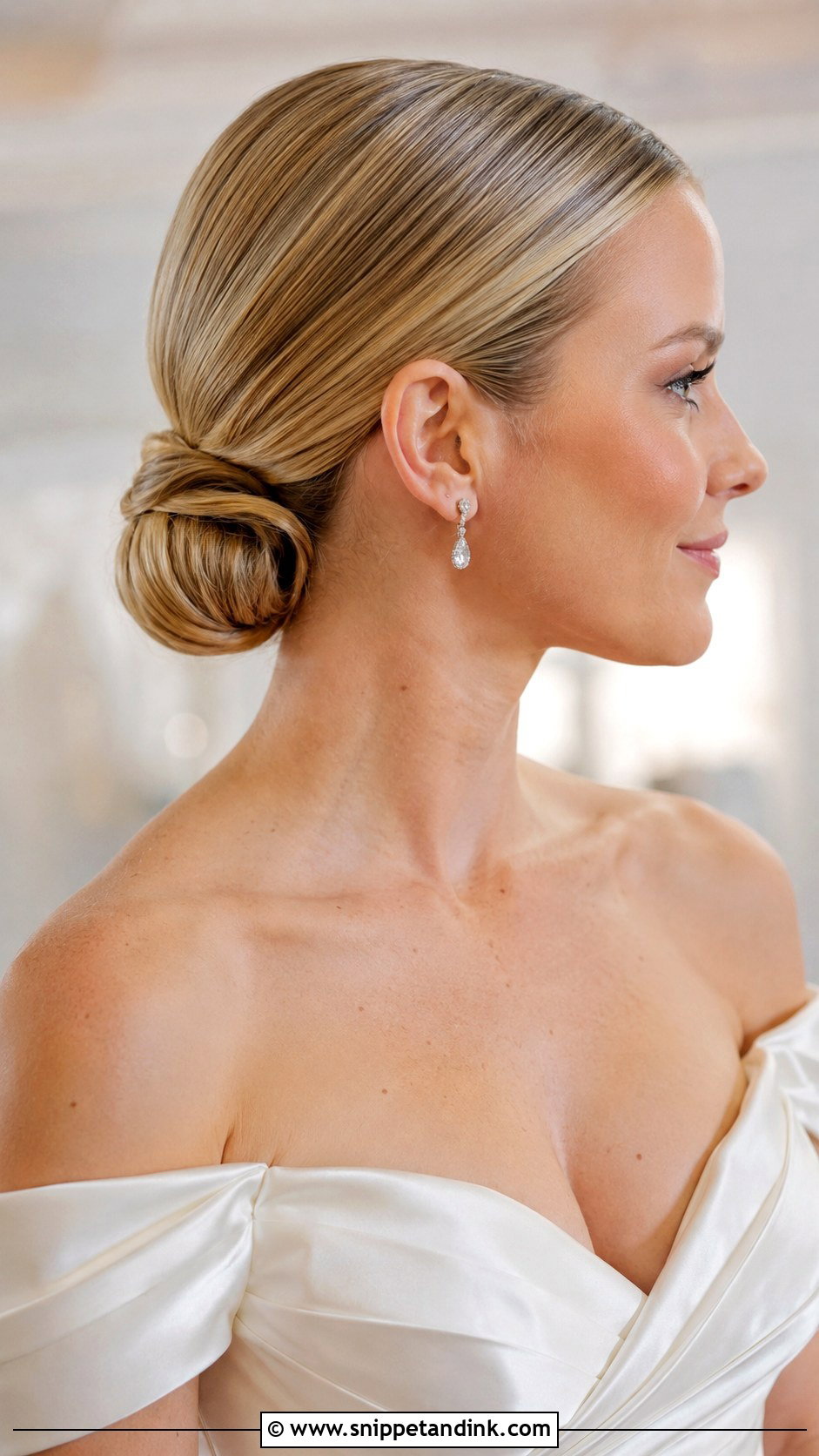
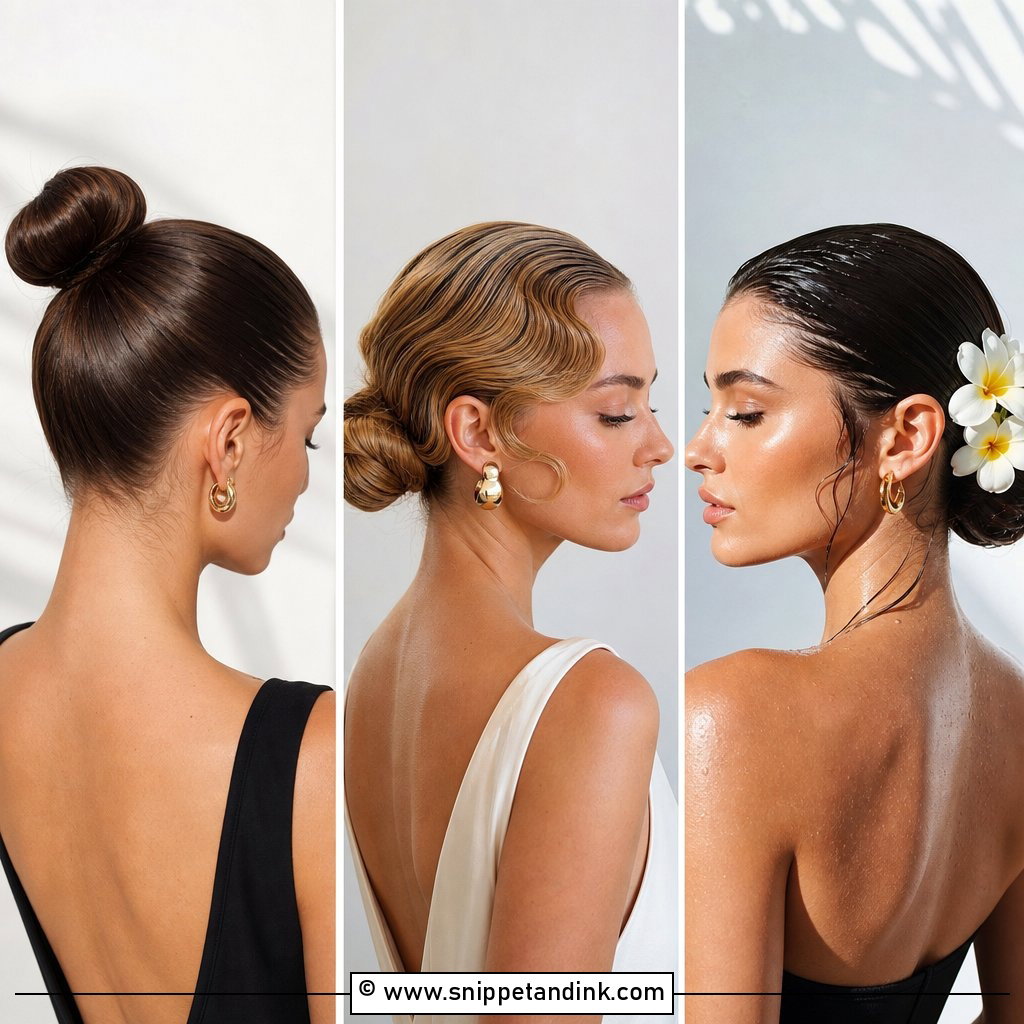
Height changes everything about this style. A high slicked bun lifts the eye, lengthens the neck and shows off a halter or off-the-shoulder gown better than any low shape. It’s also the version that gives headaches, because the hair is pulled upward against its natural fall. I gather it in two stages, first into a loose ponytail and then tightened at the crown, so the tension spreads across the scalp. Wrapping a section around the base hides the elastic, and a light veil can slide in underneath.
5. Slicked Ballerina Bun Wedding Hair
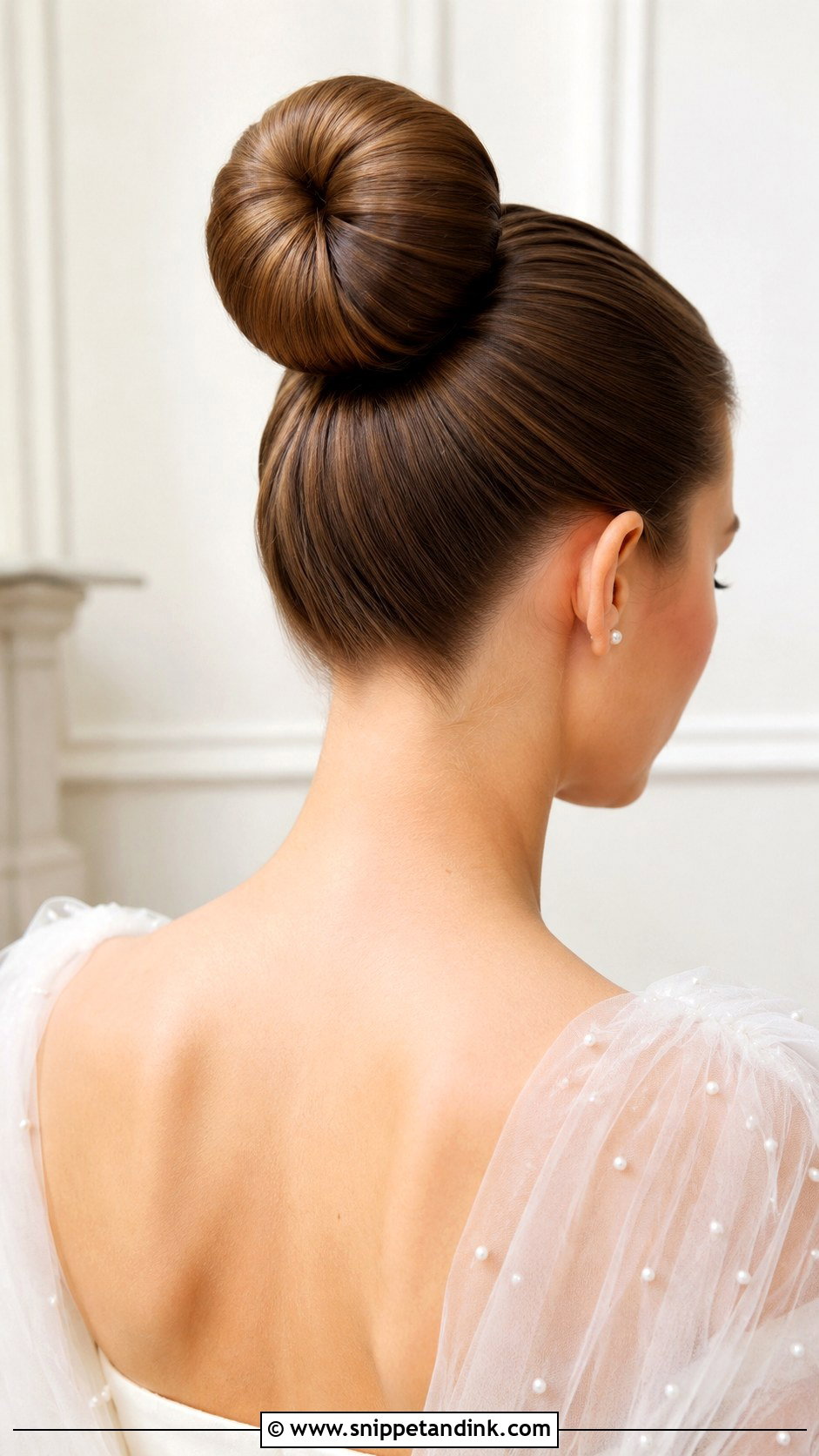
The slicked ballerina bun is round, centered and very controlled, the shape dancers rely on because it doesn’t move. That makes it a quiet ally for fine hair: a bun form or a small donut underneath builds a fuller shape, and once the hair is wrapped over it nobody can tell. I stop short of pulling the hairline tight, since that strain shows as little bumps along the temples by the afternoon. A satin bow or pearl studs are about as much decoration as it needs.
6. Slicked Chignon Wedding Hair
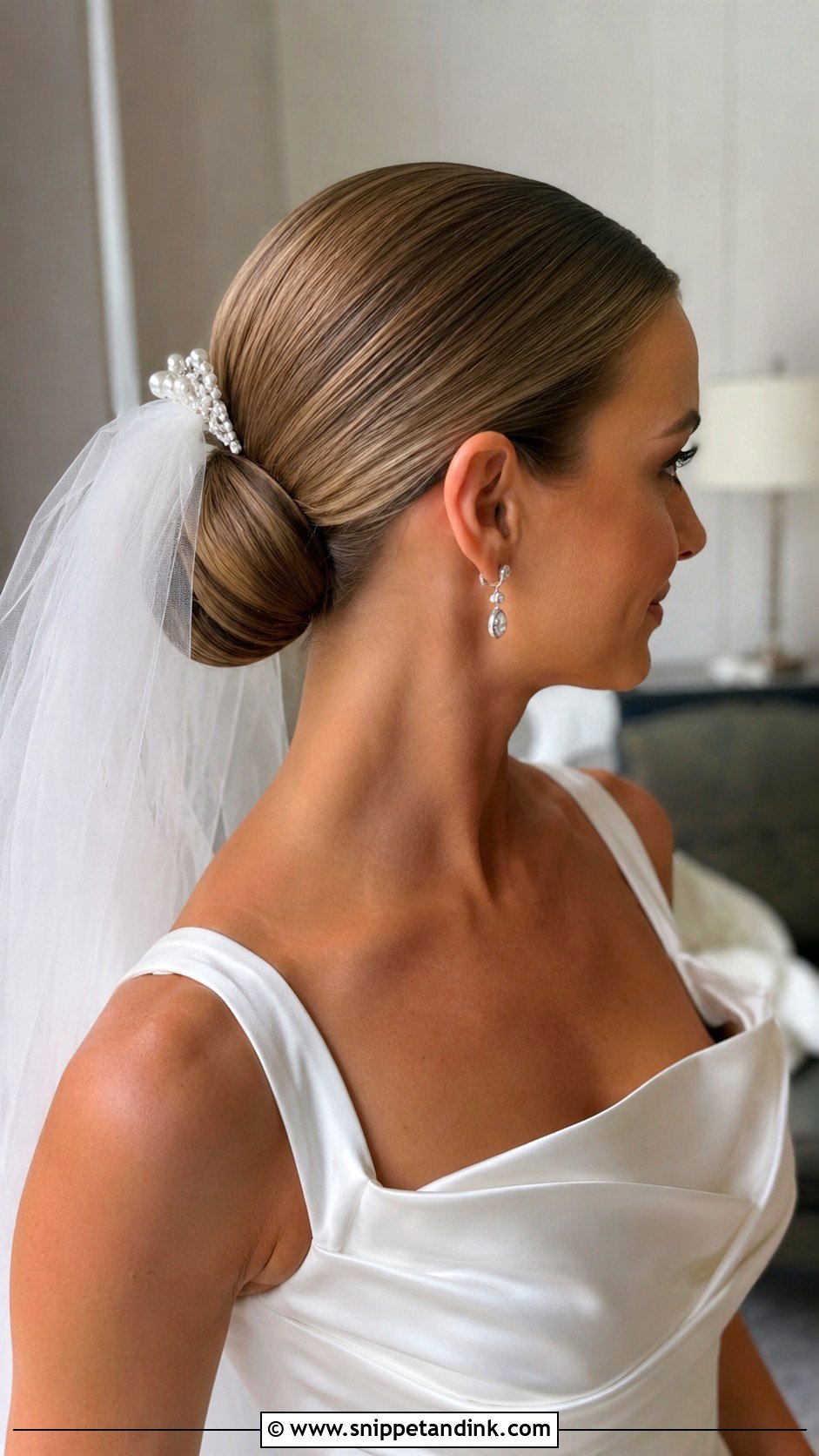
Instead of a coil, a chignon is folded or rolled at the nape, which gives a longer, flatter profile. That profile is the reason to choose it; side shots and close portraits pick up the shape of each fold. I pin every fold through to a small elastic base underneath rather than into the loose hair around it, otherwise the roll slowly drops through the evening. The front can take a center part, a side part or a touch of lift at the crown, and a cathedral veil anchors well into its dense base.
7. Slicked Twisted Bun Wedding Hair
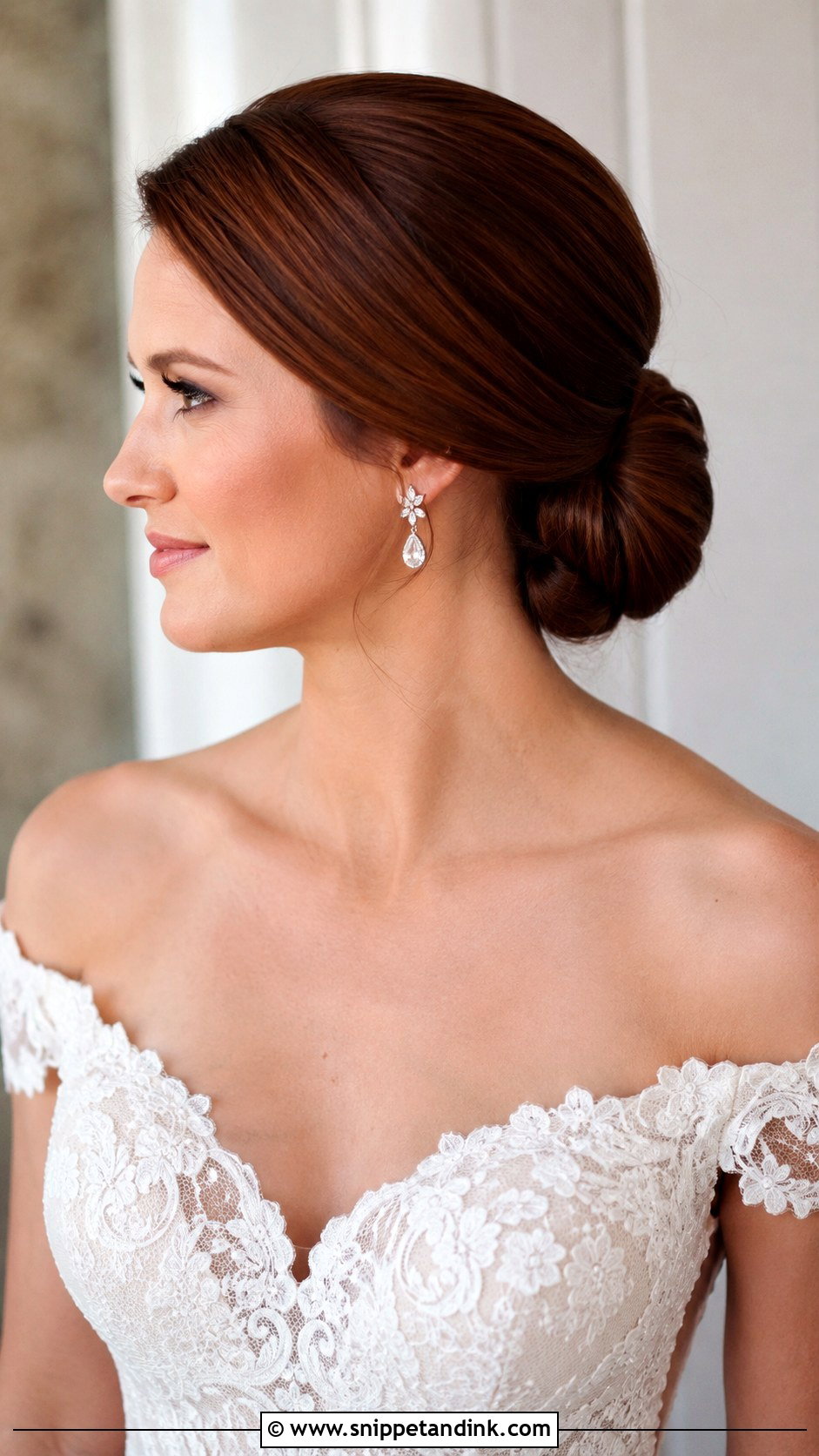
Twisting the bun adds texture while the front stays flat and clean. I split the length into two or three ropes, twist each in the same direction and wrap them so the twists read clearly from behind. Medium to thick hair suits it best; the ropes break up the bulk so a big bun doesn’t look heavy. On very fine hair the twists come out thin and slightly stringy, so I’d point you toward the ballerina shape instead. Twist firmly enough that it holds, but stop before the ropes go wiry.
8. Slicked Knot Bun Wedding Hair
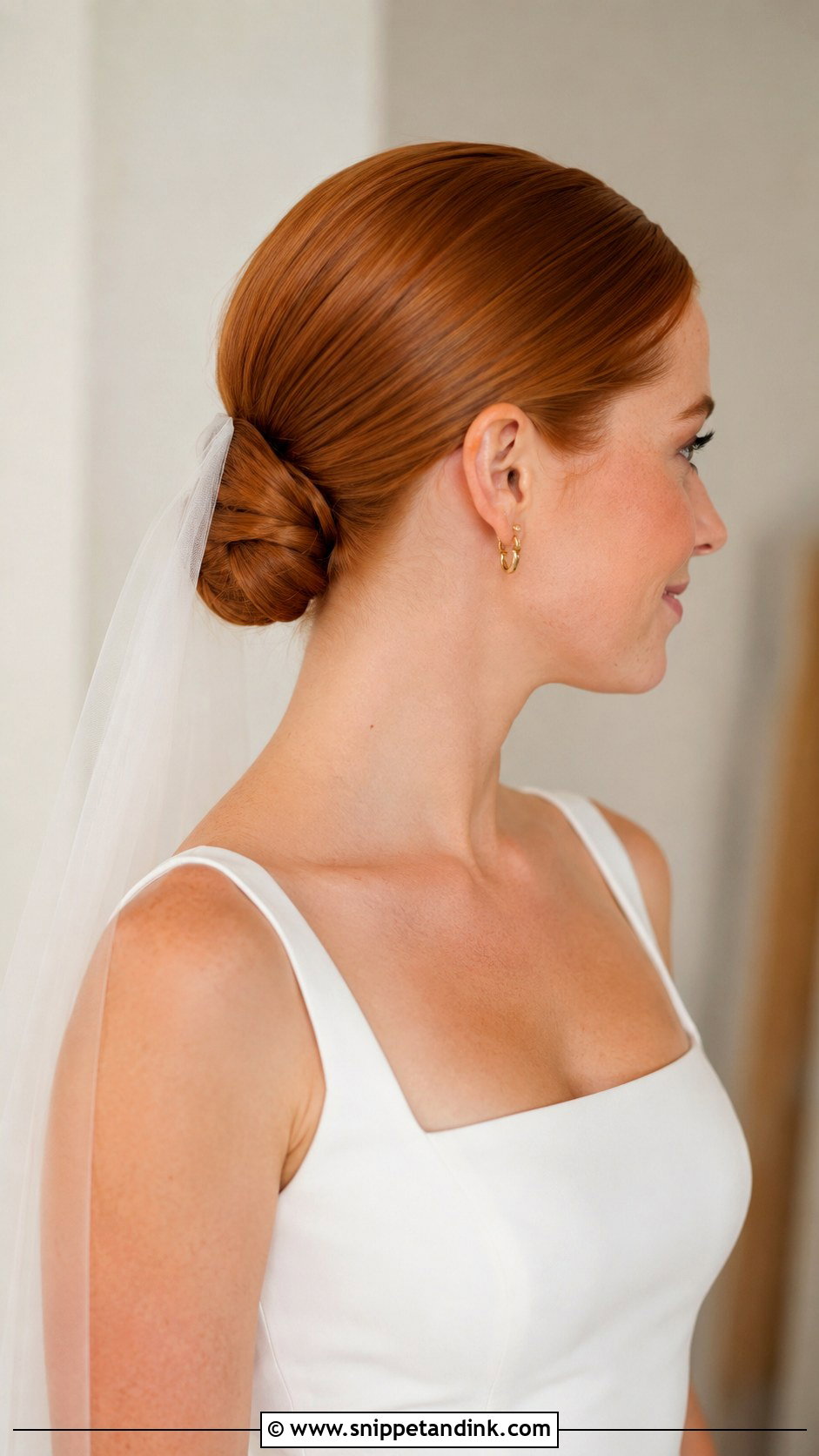
A knot bun is the most graphic of these shapes. The hair is smoothed back and tied into a compact knot shape, usually low at the nape or centered at the back of the head, and it’s less round than a ballerina bun and simpler than a chignon. Satin gowns, square necklines and minimal jewelry are its natural company. The work is in the ends. I tuck and pin them inside the knot so nothing pokes out at the side, because a stray end is all anyone sees in a profile shot.
9. Slicked Bun With Veil Wedding Hair
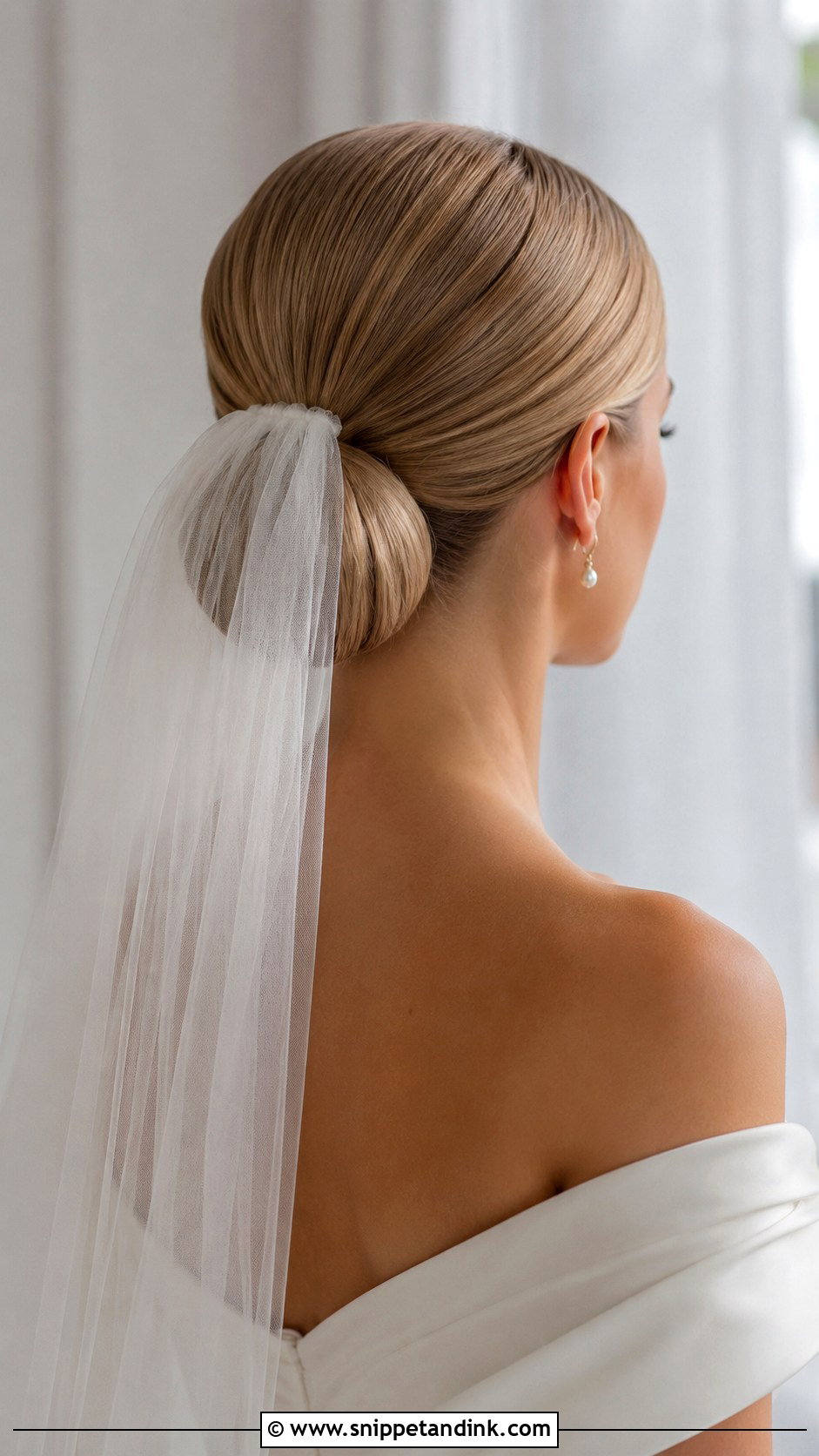
A bun gives a veil the firmest base you can ask for. The comb slides into the dense hair at the bun rather than into smooth hair that it can slip on, and the flat top keeps the outline clean. Above the bun gives the traditional bridal silhouette; tucked underneath it falls more softly. Low buns let the tulle drop straight down your back without bunching. Bring the actual veil to your trial, not a borrowed one, because combs differ in width and weight and I pin each one differently.
10. Slicked Bun With Pearl Pins Wedding Hair
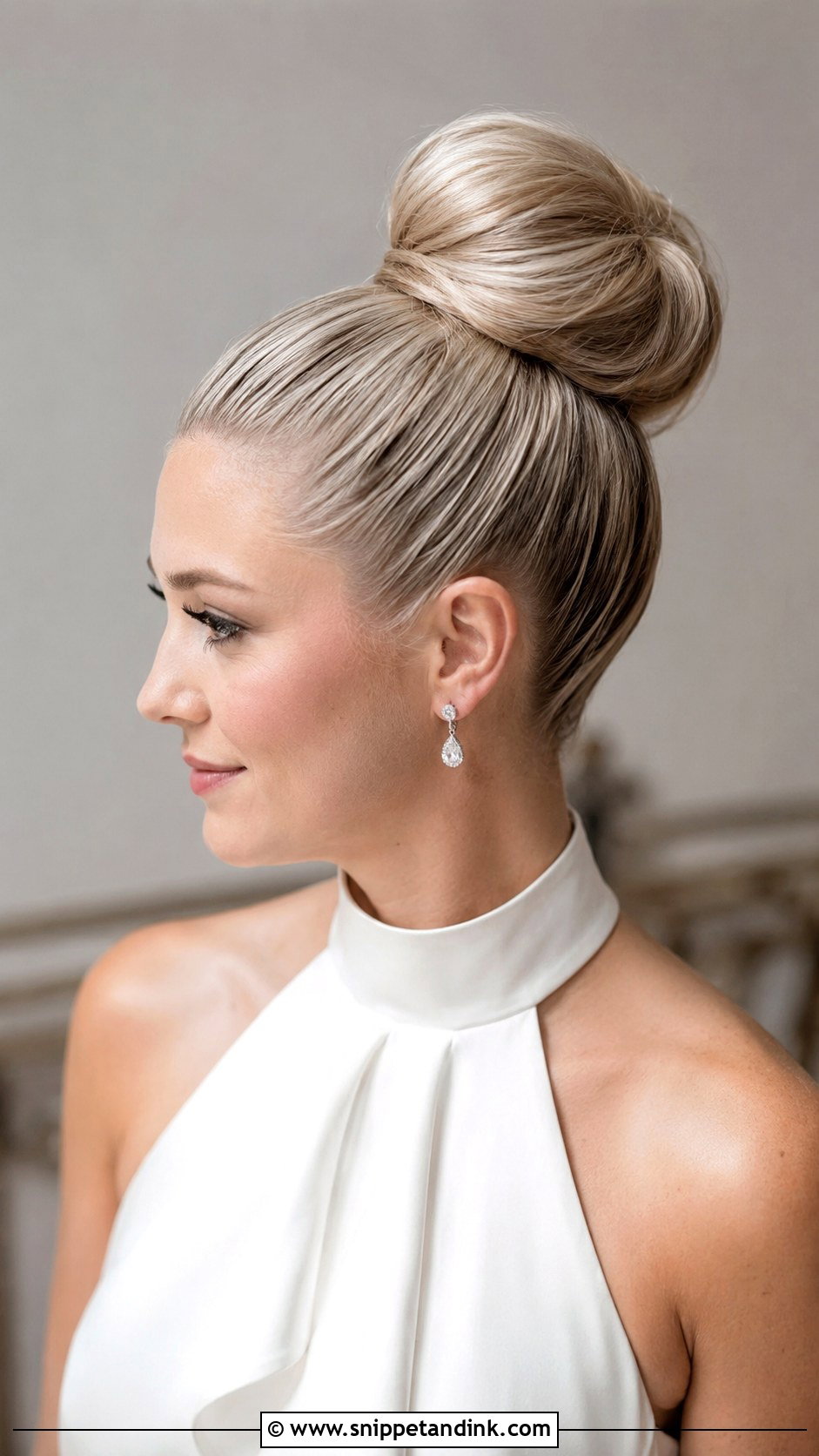
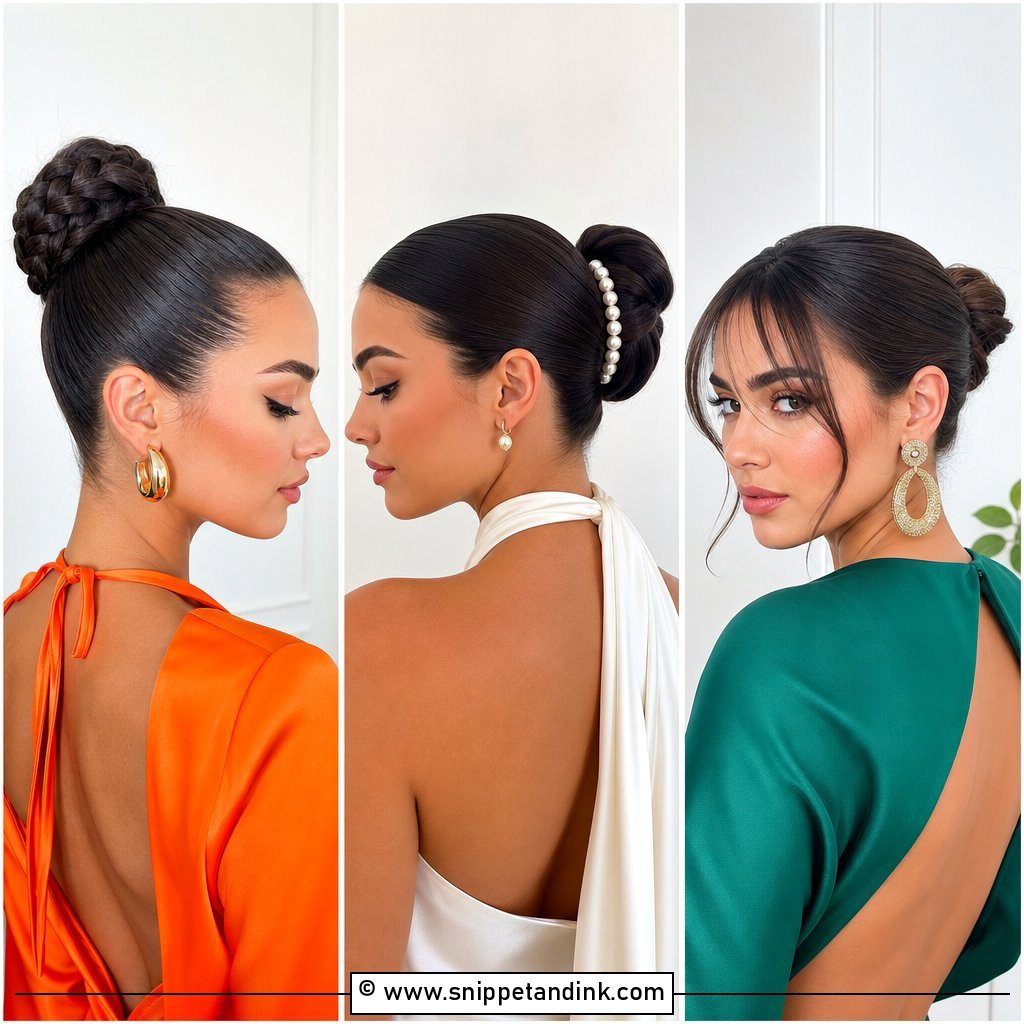
Pearl pins give a slick surface something to catch the light. I add them only after the bun is set and sprayed, sliding each one in along the direction of the hair so it doesn’t lift a section. A cluster above the bun, a line down one side or a scatter all work, but they need to look placed rather than dropped. Simple dresses benefit most, and they tie in neatly with pearl earrings or a pearl-edged veil. Five or six pins usually do it; past that the eye stops reading the shape of the bun.
11. Slicked Bun With Face Framing Pieces Wedding Hair
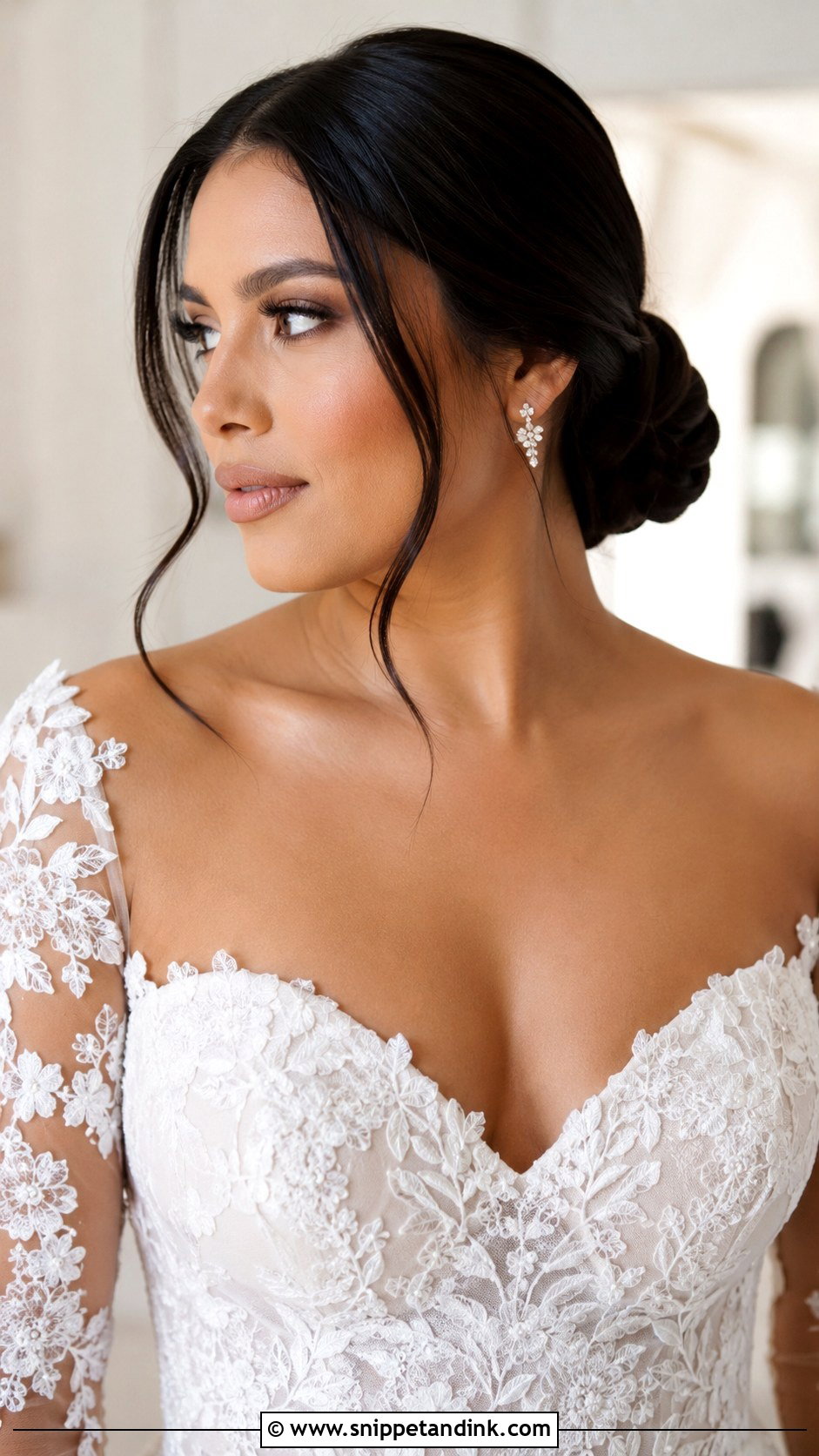
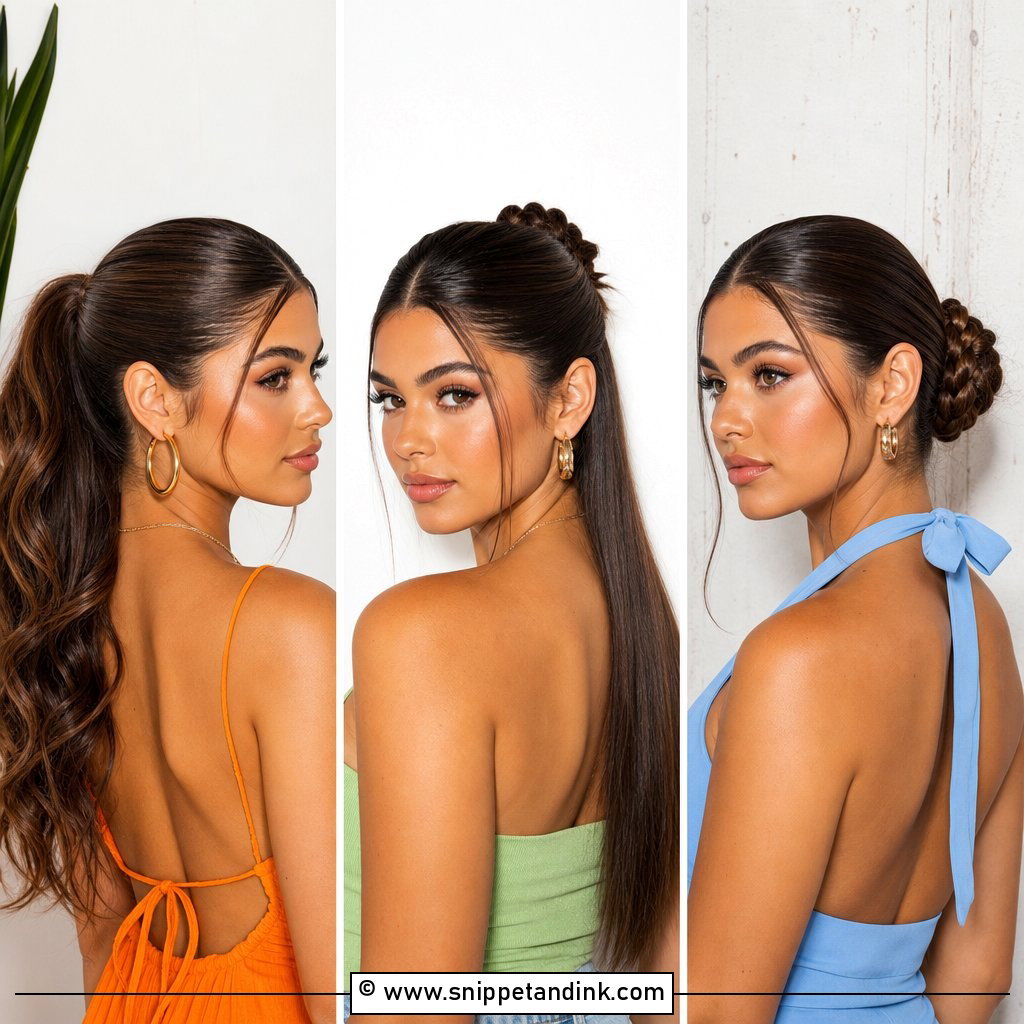
Not every bride wants every strand pulled back. Leaving a few slim pieces out at the front softens a strong middle part and gives portraits some movement while the crown and sides stay smooth. I cut them out of the section before slicking, so the slicked hair doesn’t have a gap where they came from. They should be bent with a flat iron, never curled into tight ringlets, and kept thin. Thick face-framing chunks fight the clean lines of the bun and end up tucked behind the ears by the first dance.
12. Slicked Bun With Baby Hairs Wedding Hair
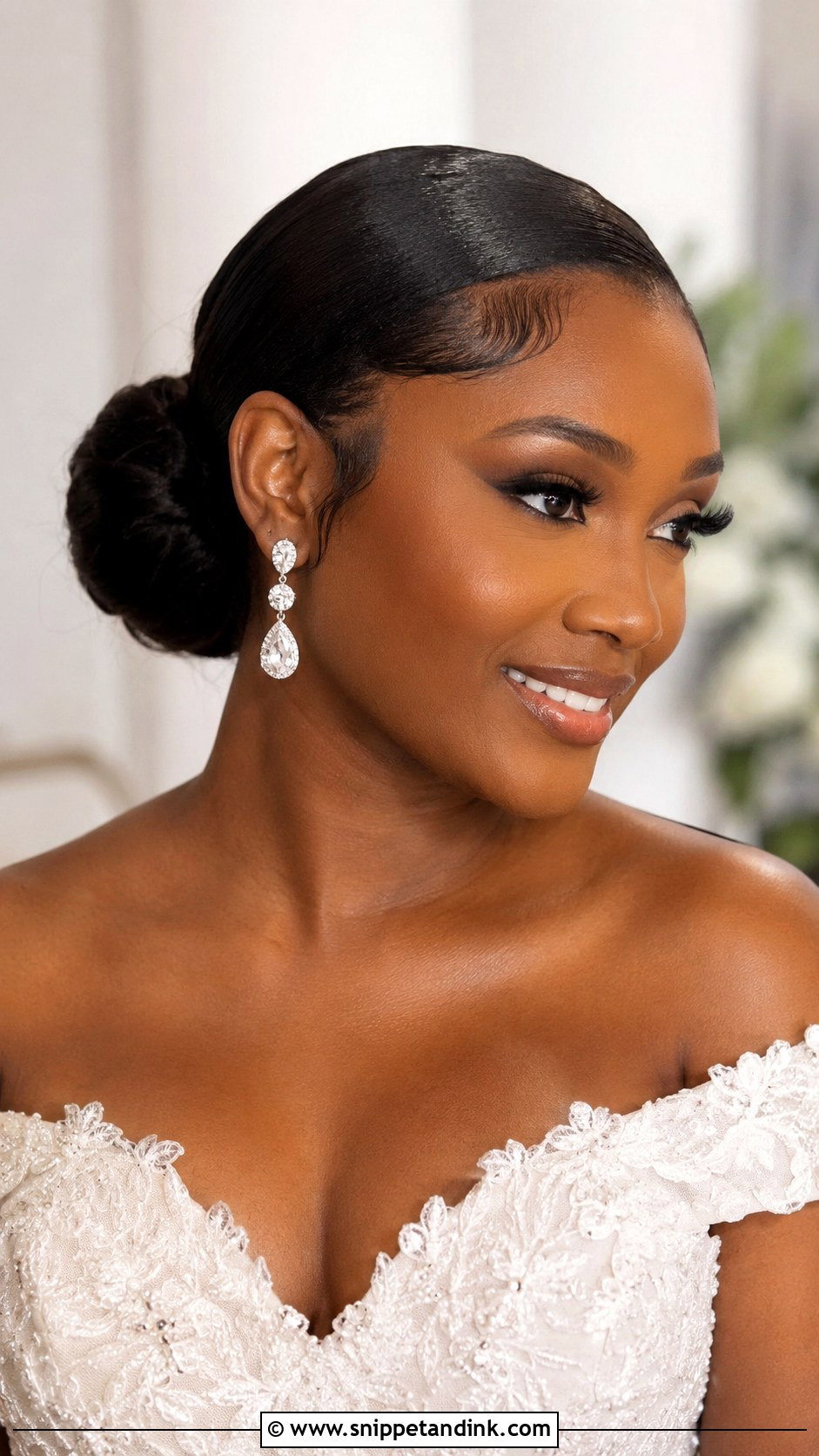
Laid edges make this version personal, and they show off natural, coily, or textured hair instead of hiding the hairline. The bun stays smooth and secure while the edges are shaped in soft swoops along the front. I lay them last, after makeup, so foundation and setting spray don’t soften the edge control. Choose a product that holds without drying white, because flaking along the hairline is very visible in close photos. A low or mid bun keeps the attention on your face rather than on the edges.
13. Slicked Bun For Curly Hair Wedding Hair
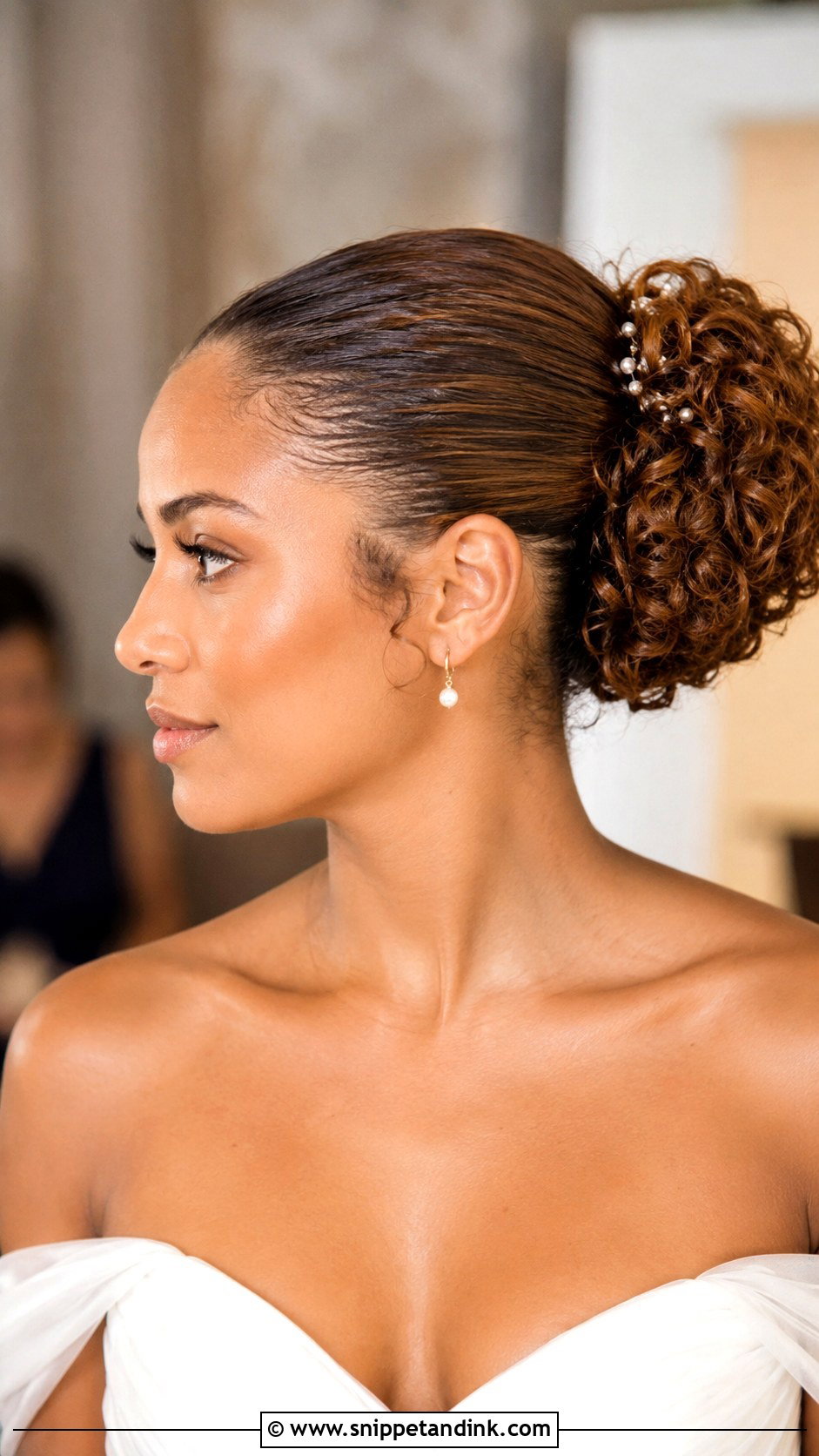
On curly hair the contrast is the point: a smooth crown and a bun that still shows your natural curl or coil. I brush the front and sides into place with a curl-friendly gel or cream on damp hair, then leave the length to form the bun in its own texture rather than stretching it straight. That keeps the hair healthier and the bun fuller. It’s a practical warm-weather choice, since nothing sits on the neck. What I avoid is cramming a lot of curly hair into a small bun; it ends up compressed and looks smaller than the head it sits on.
14. Slicked Bun For Short Hair Wedding Hair
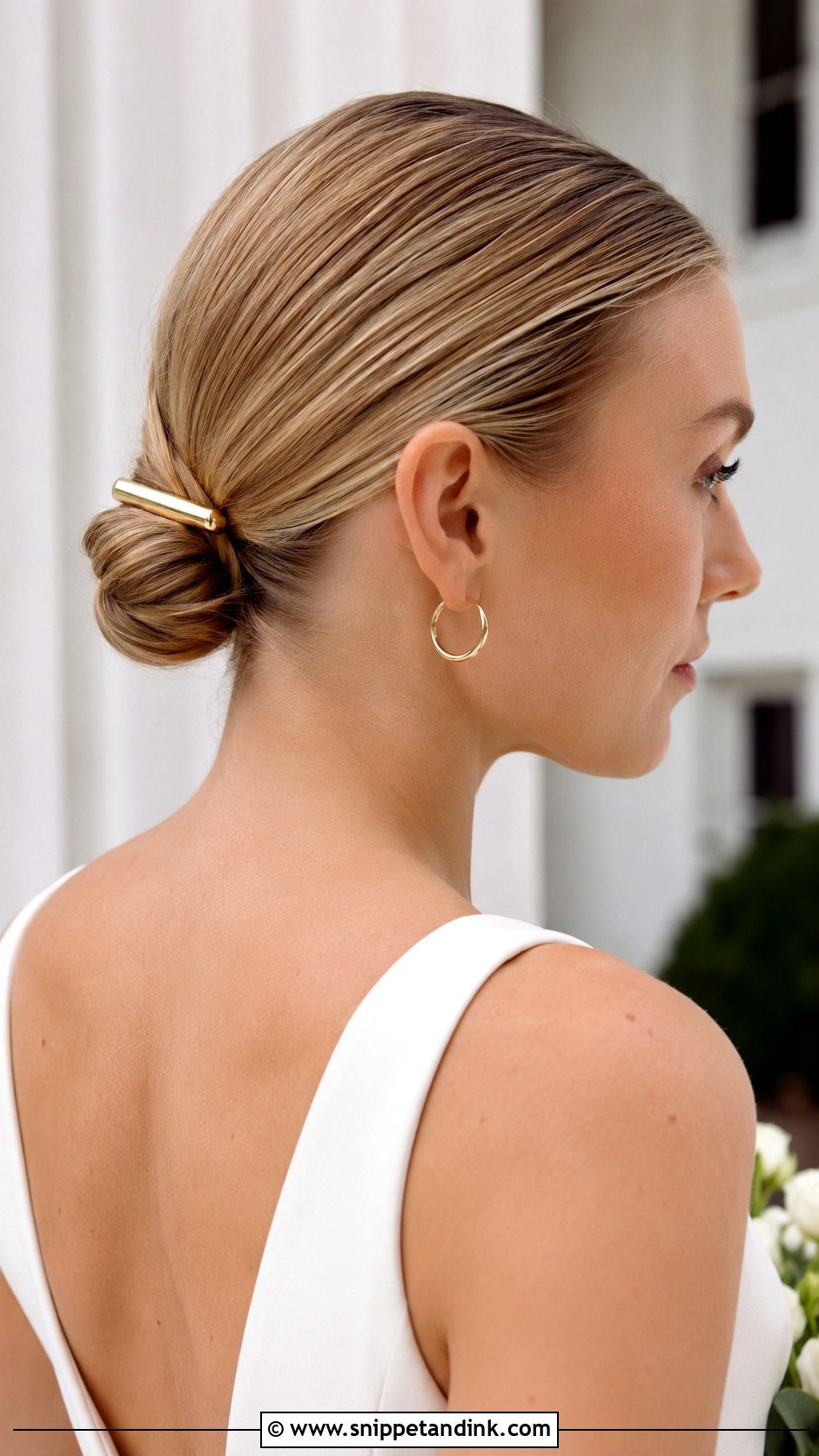
Short hair can still be slicked into a bun, it just needs support. With shoulder-length hair or a little less, I build a small low bun, a tucked knot, or mini chignon, and the shorter layers at the nape usually need fine pins or a little gel to stay in. Padding or a few clip-in extensions can bulk out the shape if needed. The slicked finish makes a compact bun look deliberate. Keep accessories small, such as tiny pearls, a slim barrette or a short veil, because a big piece overwhelms a bun this size.
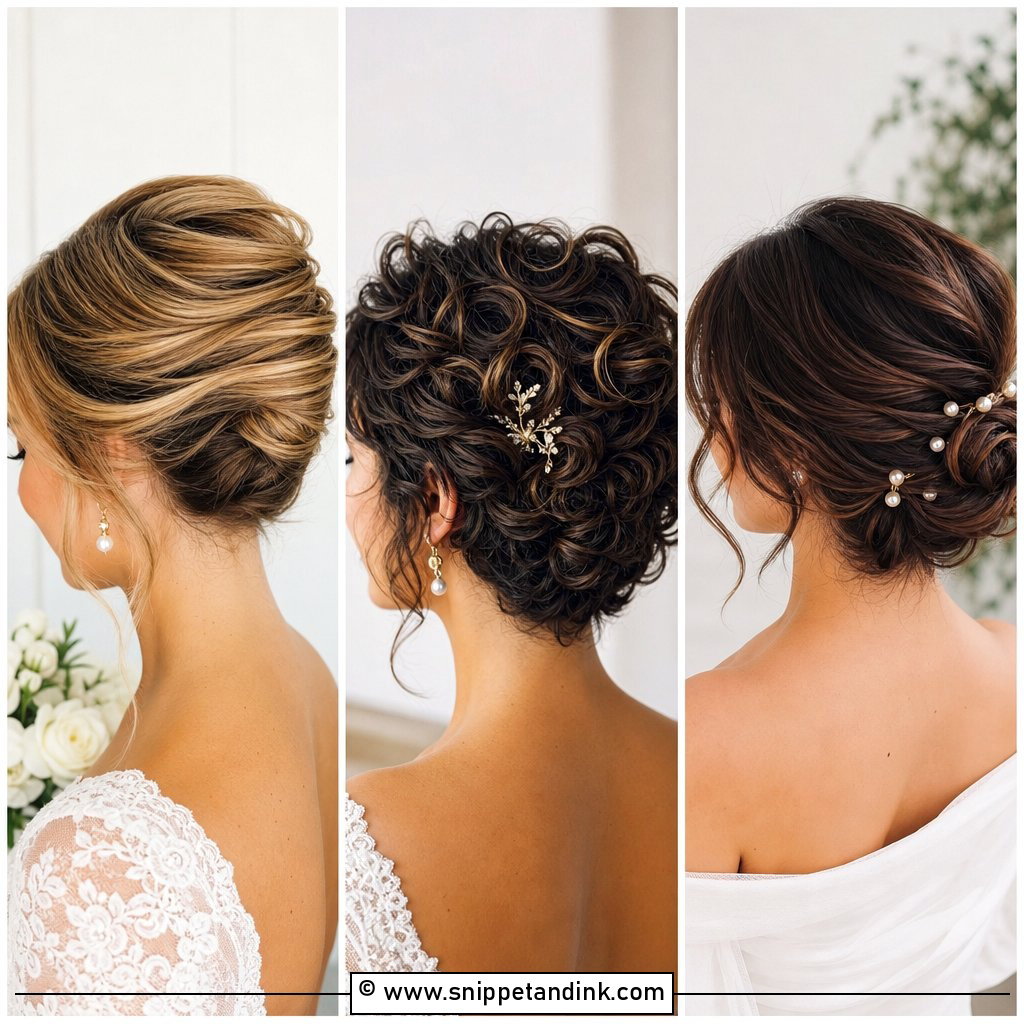
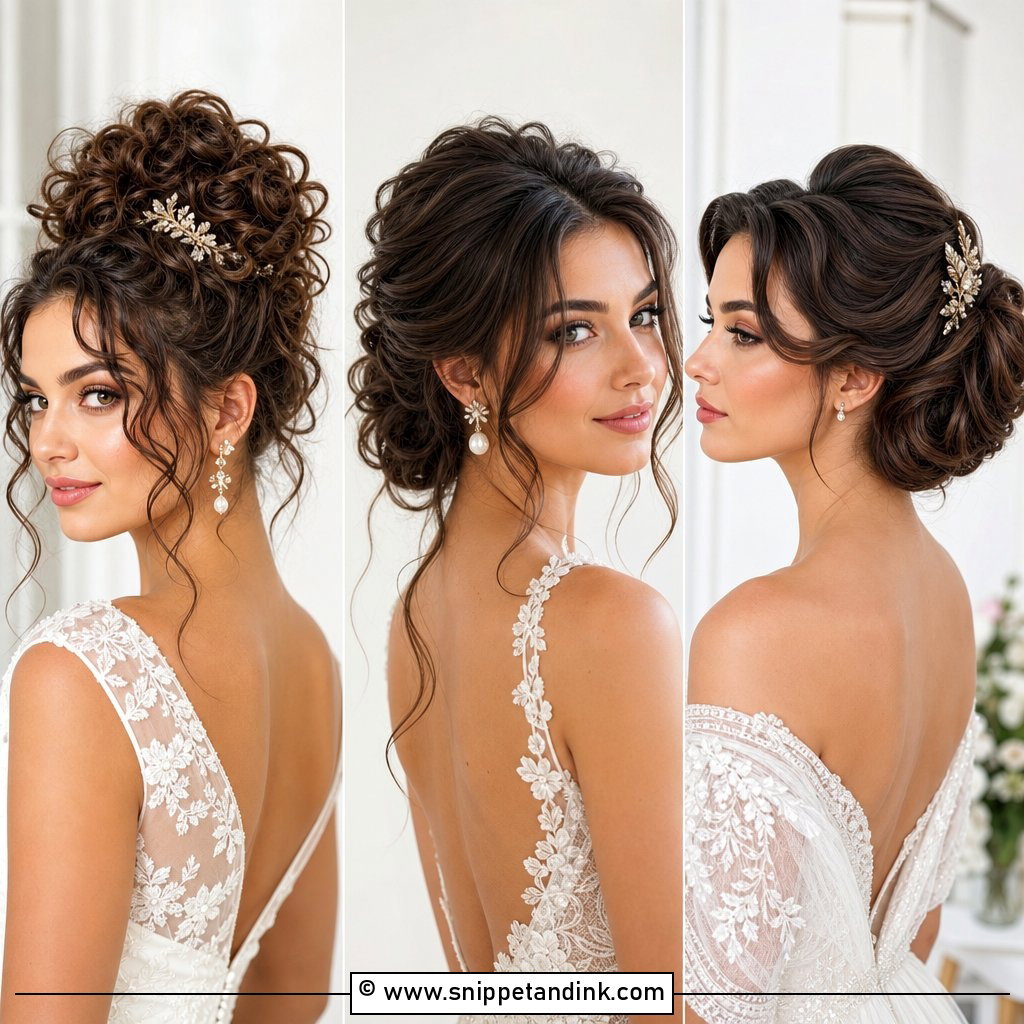
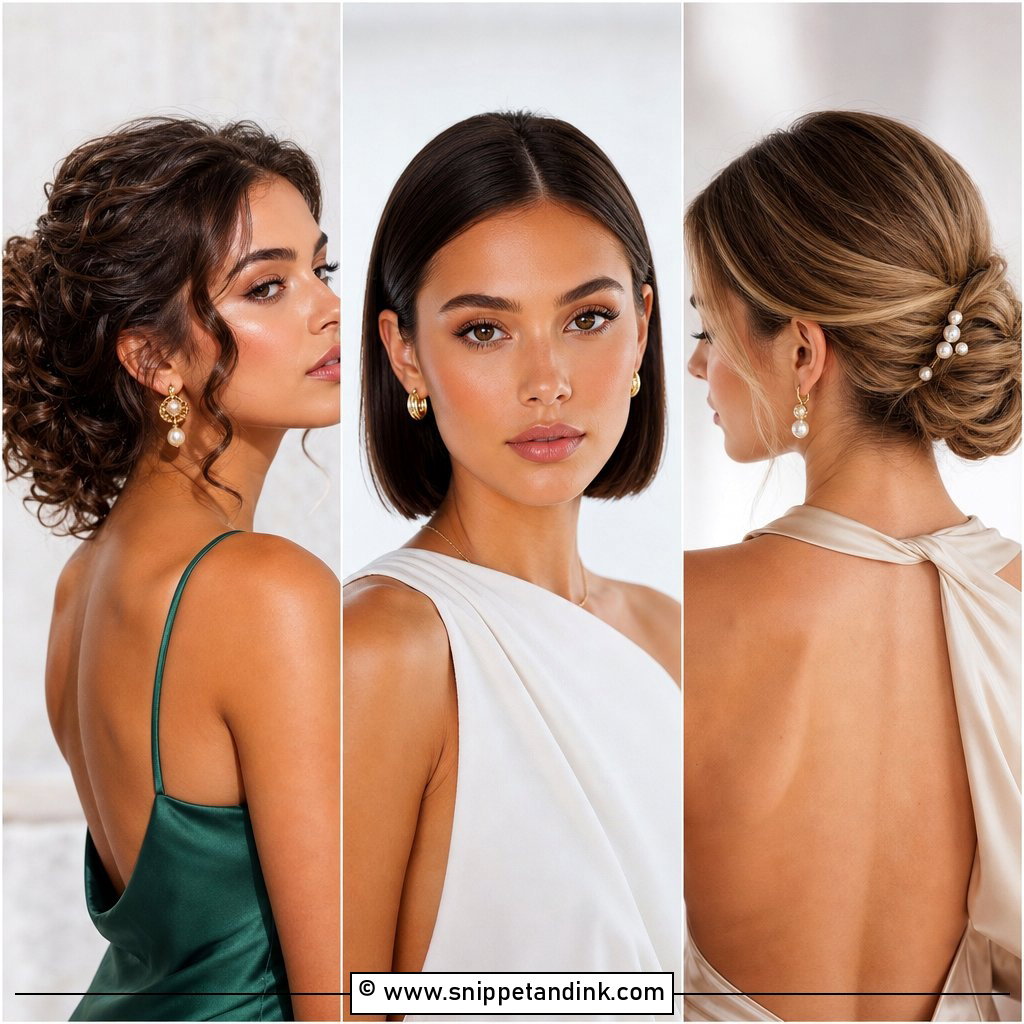
15. Slicked Bun With Floral Pins Wedding Hair
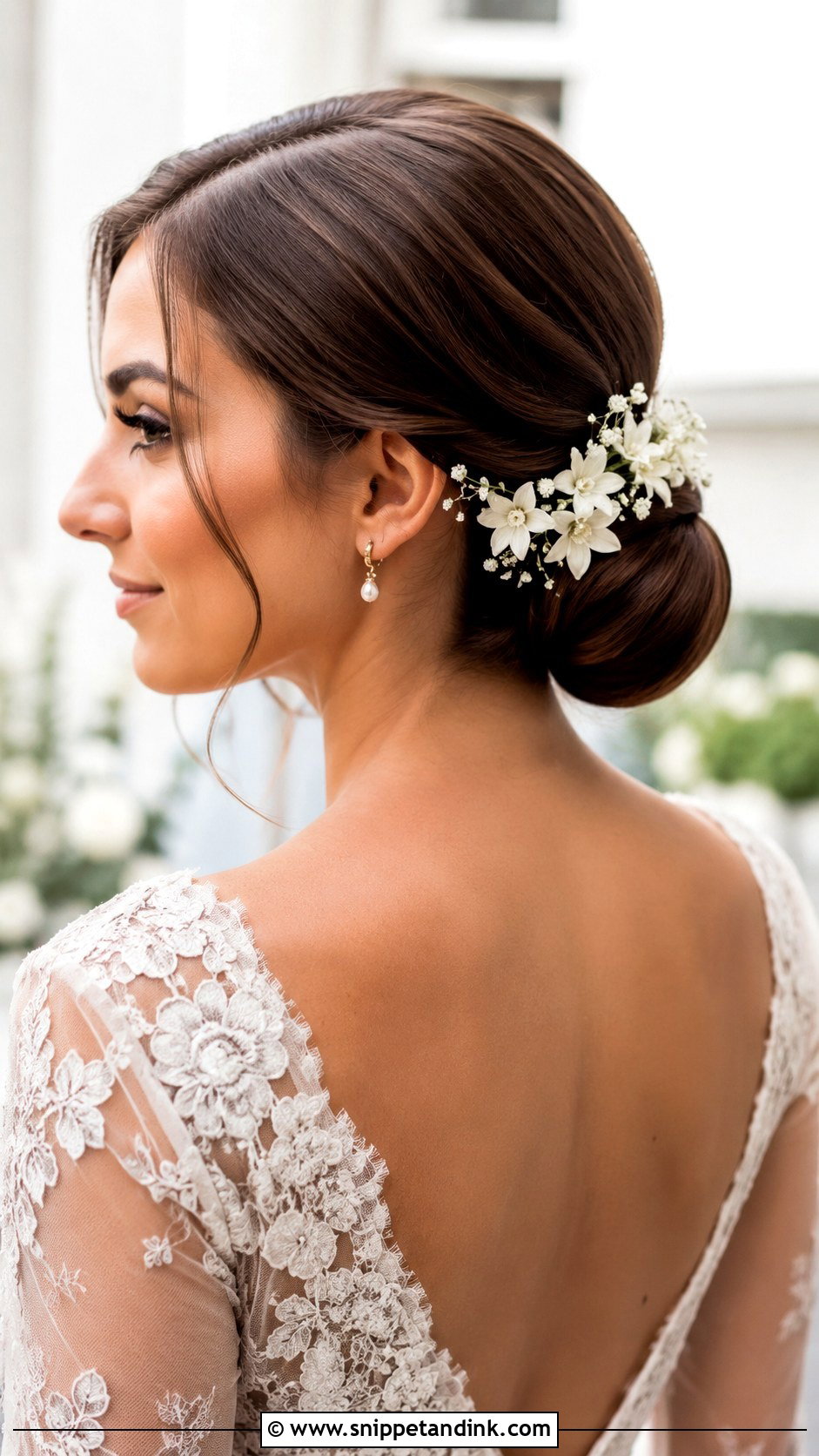
Floral pins soften a sleek updo without loosening it. Small blooms, enamel flowers or a delicate floral comb suit the scale of a bun; oversized pieces swamp it. I place them to one side or just above the bun, which balances the shape. Spring, summer and garden weddings are where they fit most naturally. If you want fresh flowers, I’ll ask your florist for heat-tolerant stems and wire them with a pin, because soft petals bruise and wilt against warm hair by the reception.
Does a Slicked Bun Hurt by Hour Six?
It can, and it’s usually avoidable. The ache comes from three things: an elastic pulled too tight, pins scraping the scalp, and the weight of a veil hanging from one small spot. At the trial, wear the style for a few hours afterwards rather than taking it down in the car. If your head is throbbing by dinner, tell me, because I’d rather loosen it then than find out on the day.
- Ask for the bun slightly lower than your first instinct; a nape bun puts far less strain on the crown than a high one.
- Sensitive scalps do better with fewer, well-placed pins than with dozens of shallow ones.
- Have the veil removed after the formal photos. Even a light veil adds weight that you’ll notice by the reception.
Small Repairs Your Bridesmaid Can Handle
The usual problems later in the day are minor: fuzz rising at the crown, a pin working loose, or a fine halo of flyaways after the dancing starts. A slicked bun is easier to rescue than loose curls, as long as someone has the right things in a small bag.
- Put a little wax stick on a clean toothbrush or spoolie and brush the flyaways back in the direction of the slick. Don’t spray first; spray on top of frizz just sets it.
- Push a loose bobby pin back in at an angle so it catches the elastic, and add a second one crossing it.
- If the bun itself has slipped, don’t try to pull it tighter. Add two U-pins from opposite sides to push it back toward the head.
- Finish with a light mist of hairspray held at arm’s length, then press it down with a flat palm.
That small kit fits in a clutch and covers almost everything I’m called back for.
A Slick Finish Built Around Your Dress and Veil
The slicked bun earns its place because it stays put, and it can be dressed up or down. Keep it minimal with a low bun and middle part, soften it with face-framing pieces, add pearls, or twist it for detail. The right version comes down to your dress, veil, texture and how much tension your scalp tolerates. Bring front, side and back photos to the trial, wear something with a similar neckline, and tell me honestly if anything pulls. That’s the information I need to build one that still looks this neat at midnight.
You'll Like These Ideas:


Leave a Reply