
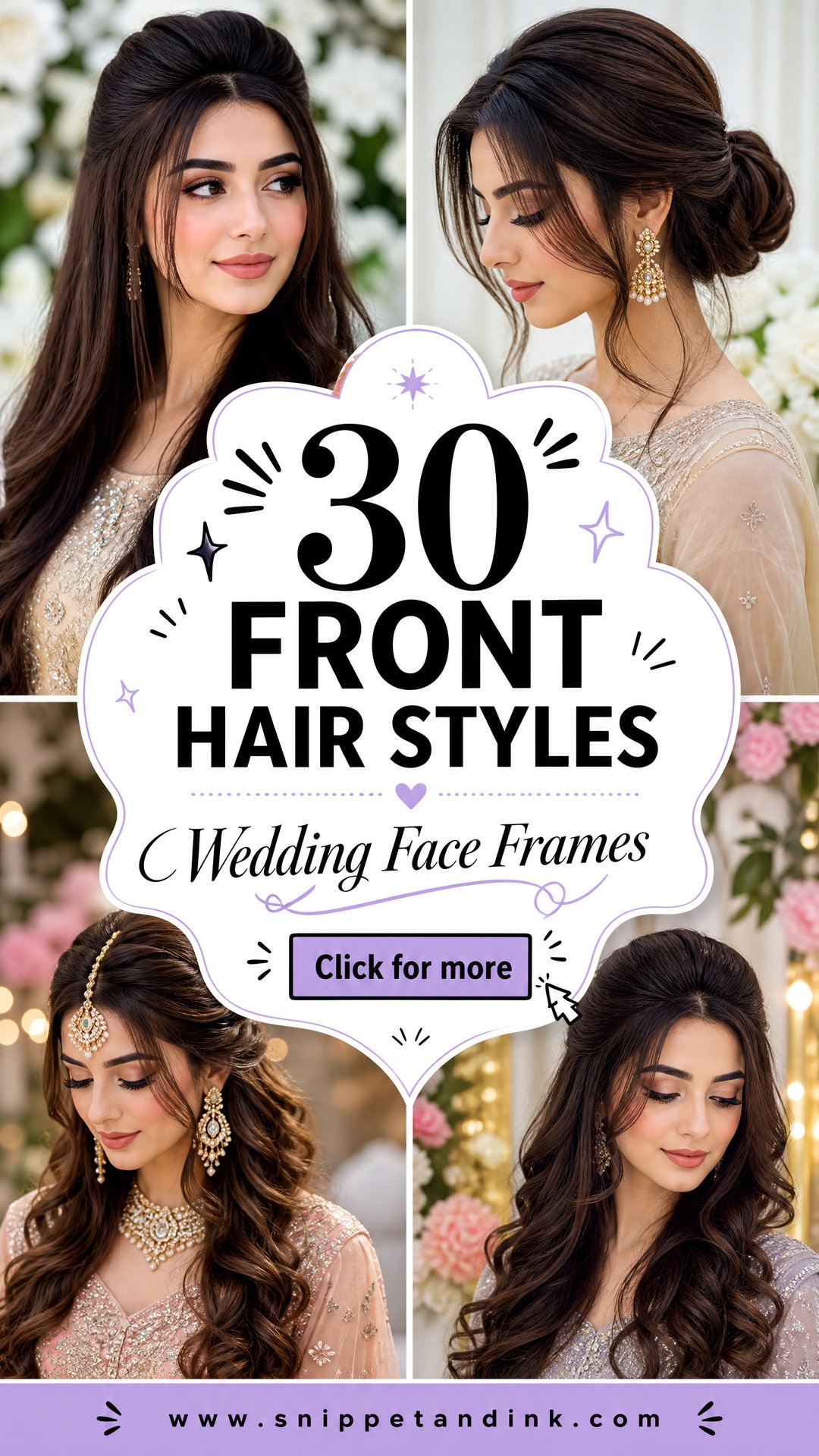
Guests see the front of your hair first, and the camera sees it in nearly every frame. The way it frames your face changes how your makeup reads, how a veil or tikka sits and how relaxed you look in candids. When I plan a bridal style I usually start at the hairline and work back, not the other way around. Here are thirty front styles I use, from side sweeps and puffs to braids, bangs and traditional accessories, with notes on what each needs from your hair and where it tends to slip. Pick the two or three that feel closest to you and take them to your trial.
Your Hairline Matters More Than Your Face Shape
Face shape charts are a useful starting point, but in practice the hairline decides which front styles work. A strong cowlick at the front will push a slicked-back style up within hours. A widow’s peak looks sharp under a middle part and softer with a side sweep. Fine or thinning temples show through a tight pull-back, especially under flash.
At the trial I check those things first, before we talk about accessories. I look at where your hair naturally parts, how the baby hairs grow, and whether any section has been weakened by tight styles or regular braiding. That tells me how much tension the front can take and whether a puff or a softer sweep is the better choice.
If your bangs are growing out
Bangs in between lengths are common before weddings. Don’t fight them. Curtain-style shaping, a side sweep or a front twist can hide awkward lengths, and they look intentional on the day. Tell your stylist early so the plan works with your hair rather than against it.
1. Side Swept Front Hair for Wedding
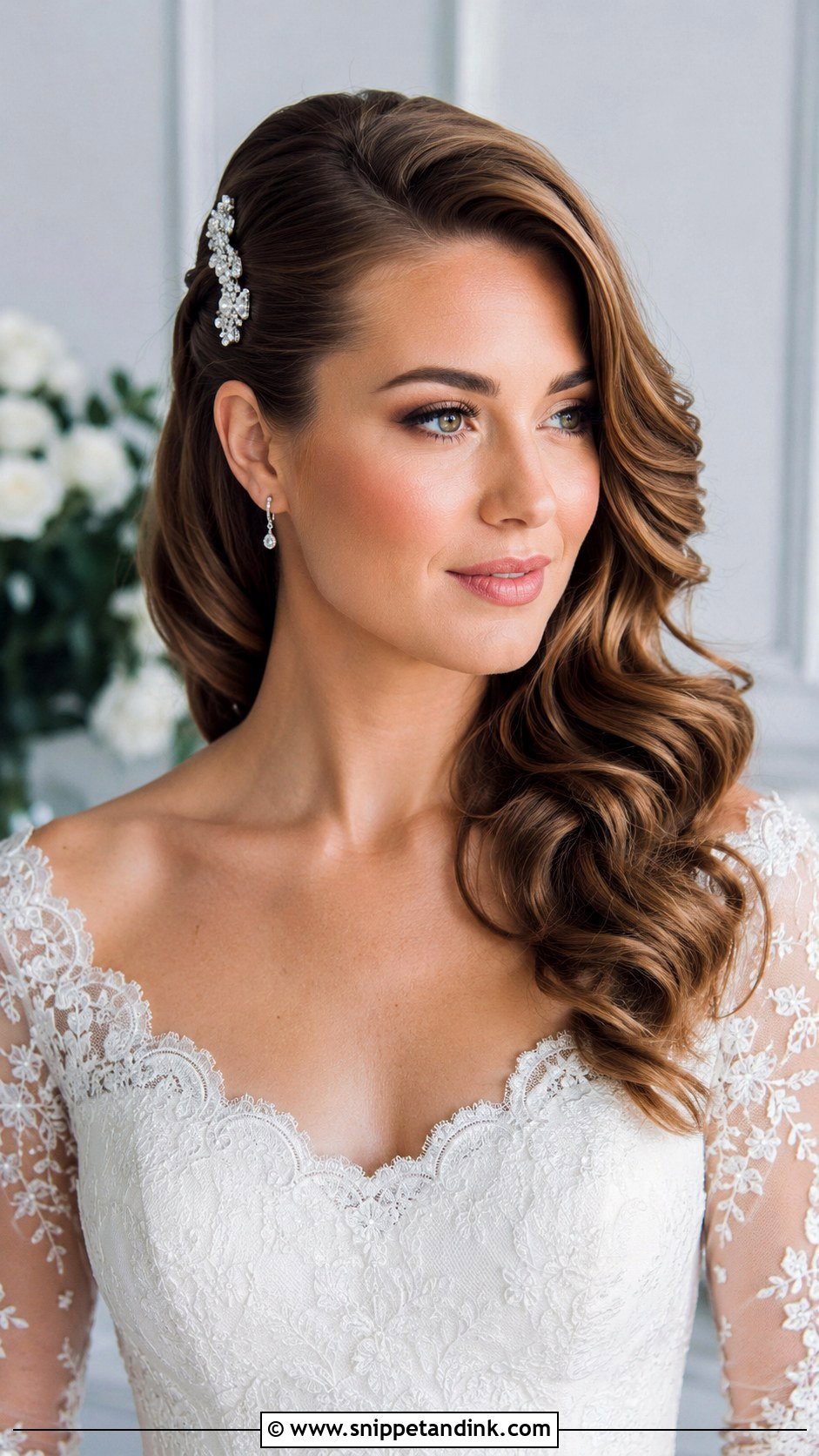
A side sweep is the quickest way to add a bit of glamour. I take the front section, set it on a large round brush or a big barrel so it has a soft bend, then brush it over to one side and let it fall toward the shoulder. The asymmetry softens round and heart-shaped faces. It works with a low bun, loose curls or a sleek chignon, and a small clip near the part adds shine. The weak point is the anchor behind the ear; I hide two crossed pins there so the sweep doesn’t creep forward into your eyes during the vows.
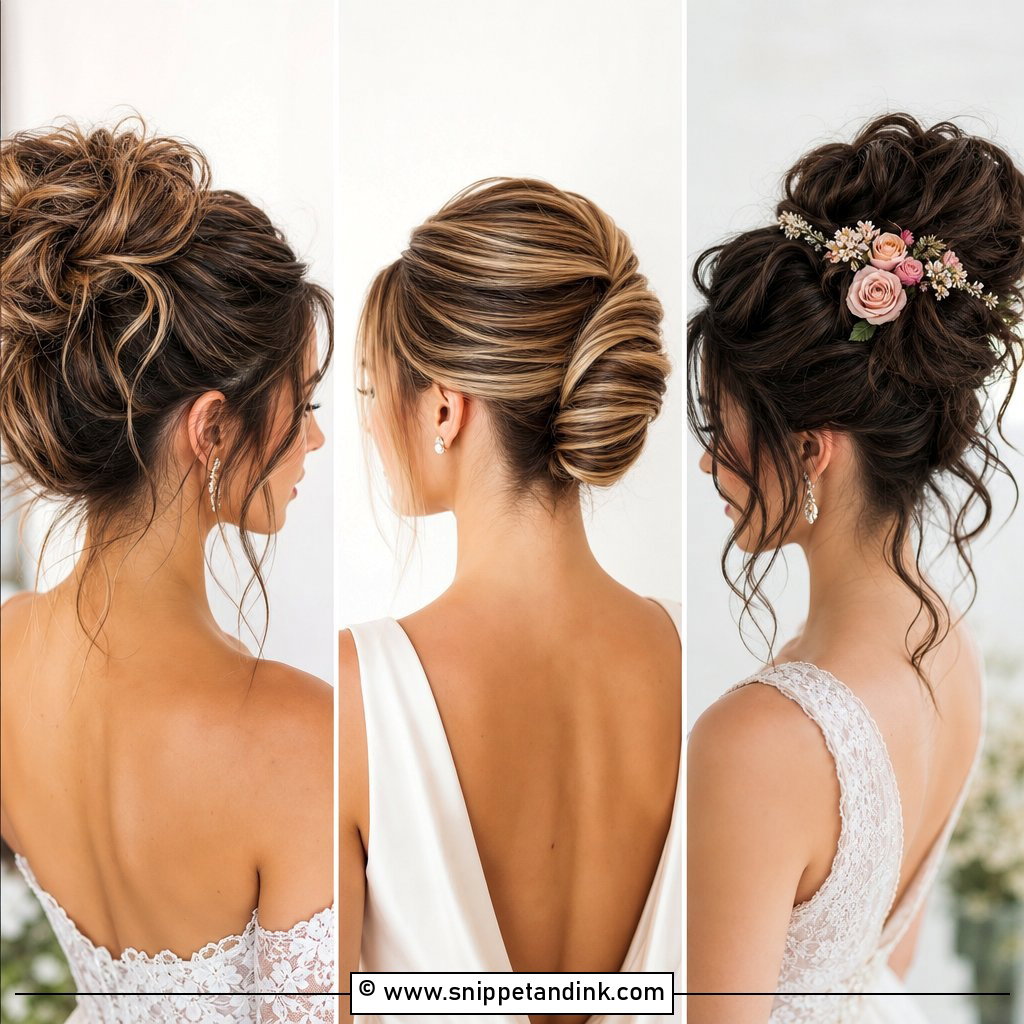
2. Front Puff Hairstyle With Bun
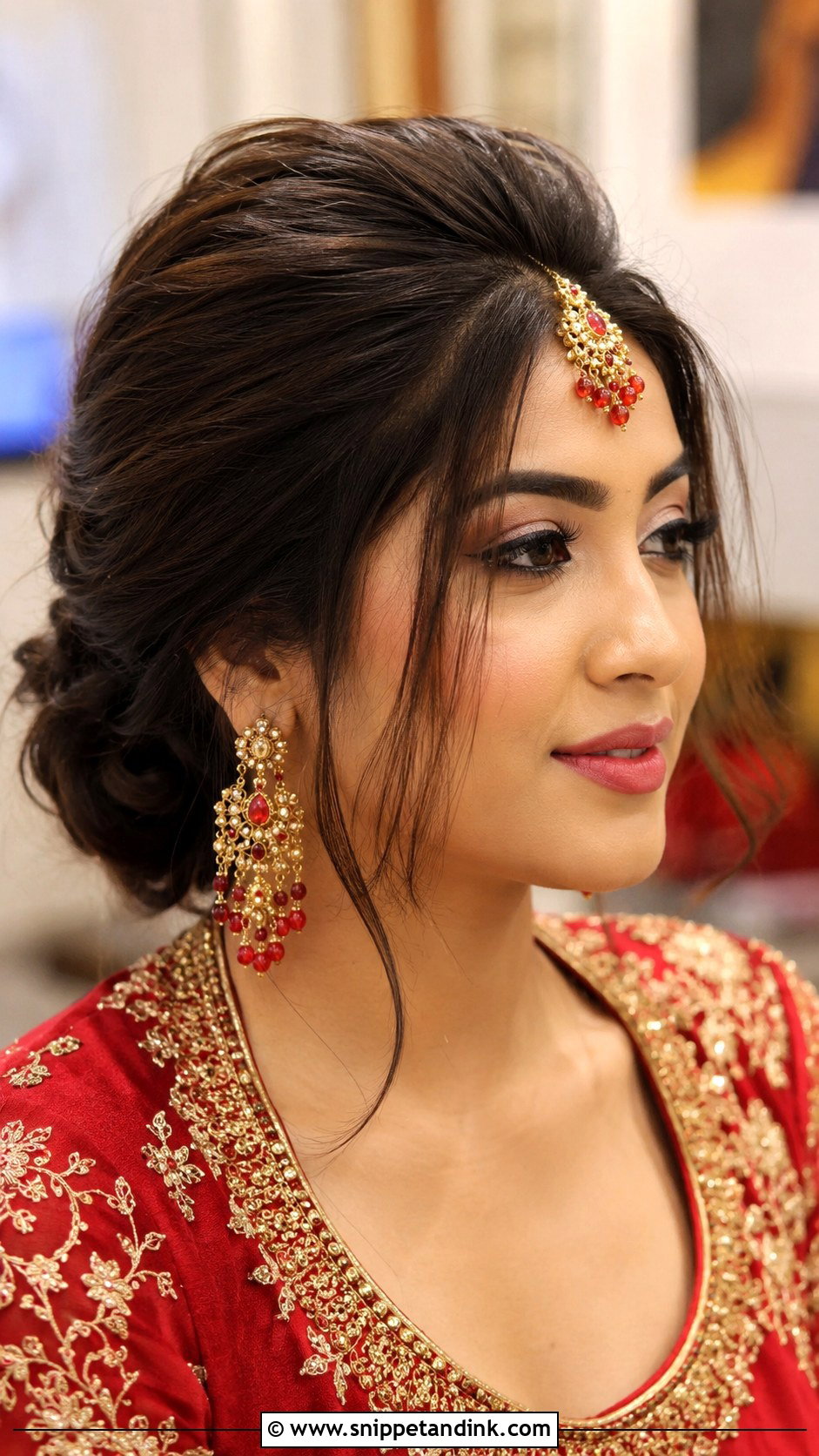
The front puff gives instant height, and it’s the base I build most South Asian bridal looks on, because heavy jewelry and dupattas need something to sit against. I tease the crown in thin sections at the root, smooth the top layer over it so no backcombing shows, then pin it with crossed bobby pins before the bun goes in at the back. The height lengthens the face and balances statement pieces. Loose strands near the ears keep it soft. Done properly, it lasts through a long ceremony, but a puff teased only on the surface collapses within the hour.
3. Half Up Half Down Wedding Hairstyle
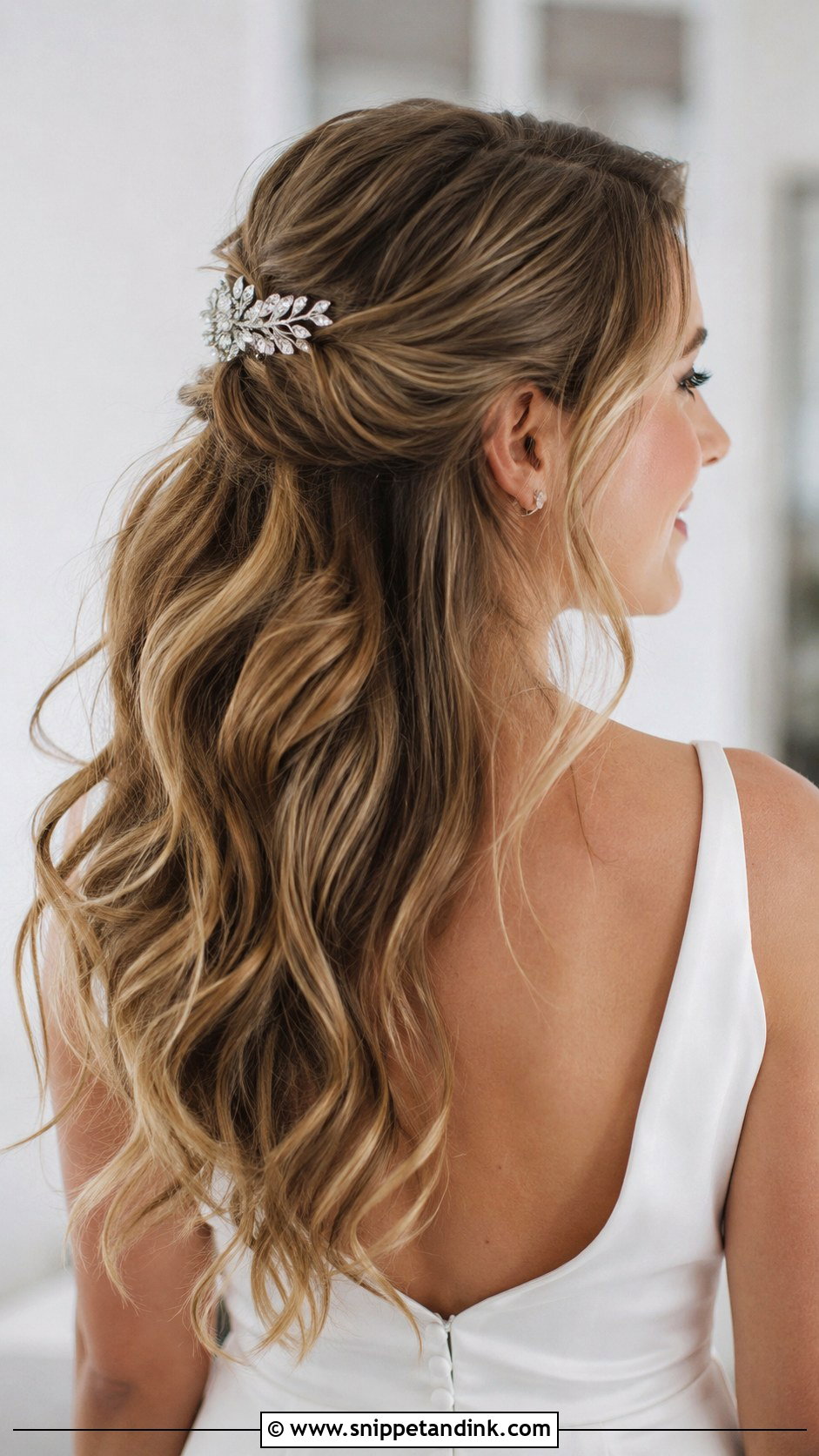
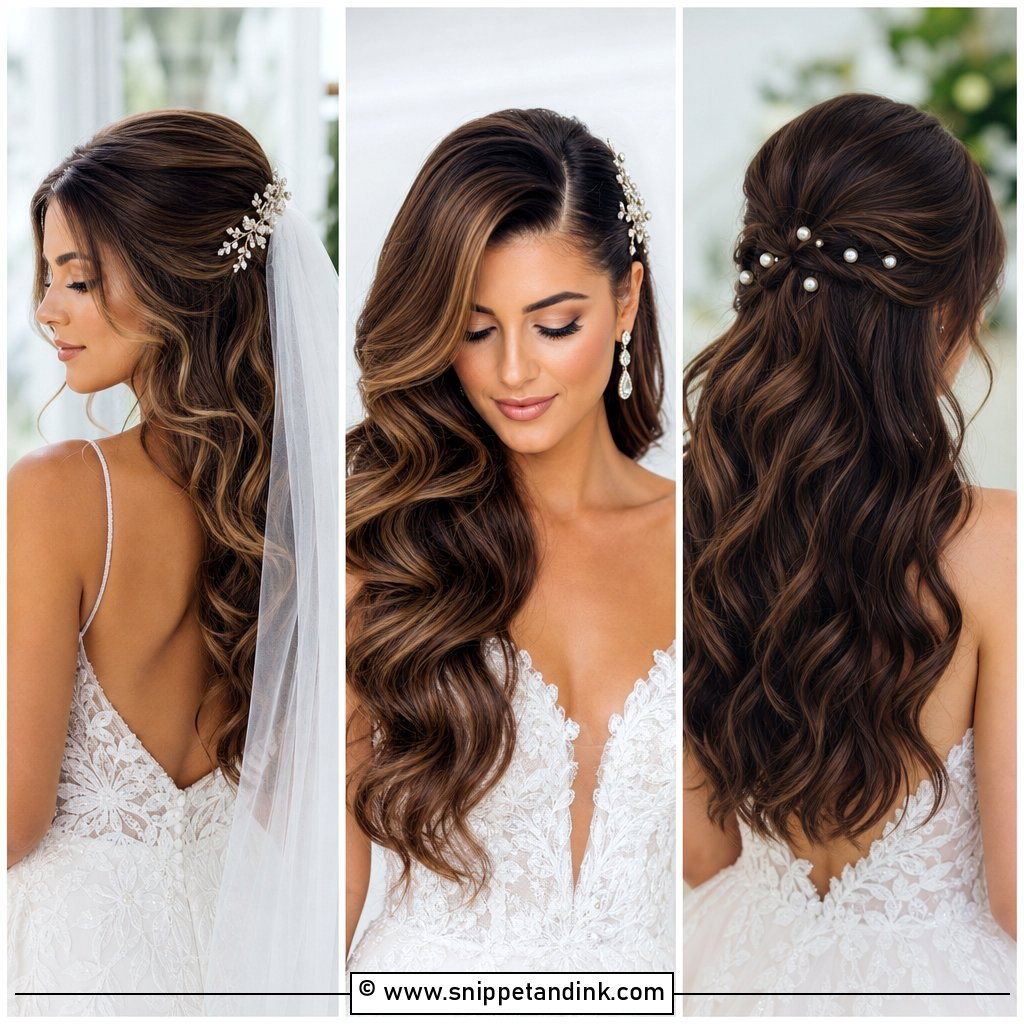
Can’t choose between an updo and open hair? Half-up gives you both. I pull the front and crown back and secure them, and the rest falls in waves. Underneath the secured section is the right spot for a veil comb, which sits much more securely there than in loose hair. A braid, twist or jeweled clip at the join adds detail. Long curly or wavy hair suits this best. On very fine, straight hair I’d add a little texture first, or the secured section slips down by evening.
4. Front Braid Wedding Hairstyle
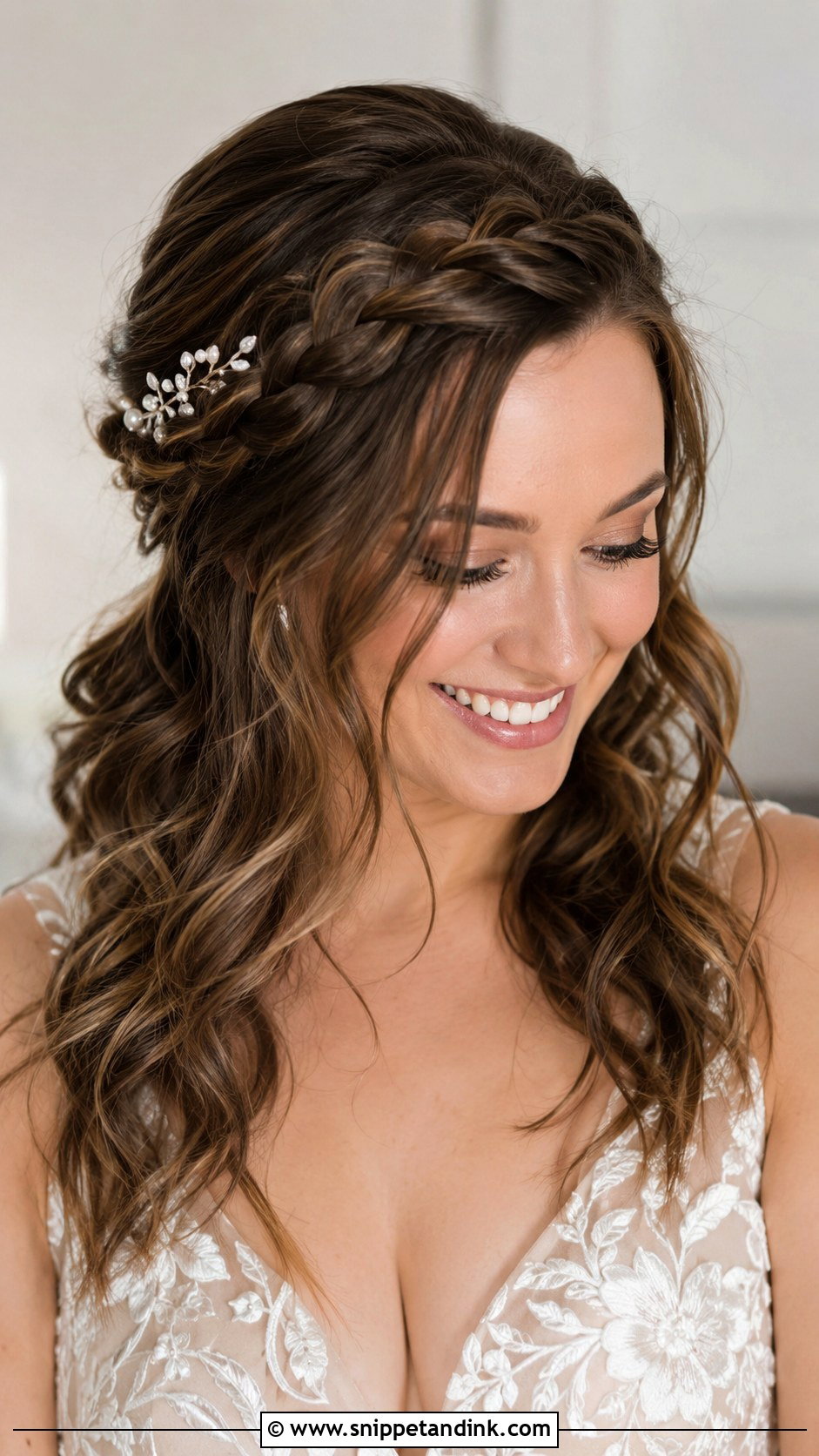
A braid at the front adds detail and keeps short front pieces in place, which is often why I suggest it. I start near the hairline and braid back, then pin the tail into the rest of the style. French braids lie flatter, Dutch braids stand out, and fishtails look more intricate. Pull the edges gently to loosen it, then tuck in small flowers or pearl pins for a boho feel. It works with updos and loose waves.
5. Front Bangs With Wedding Bun
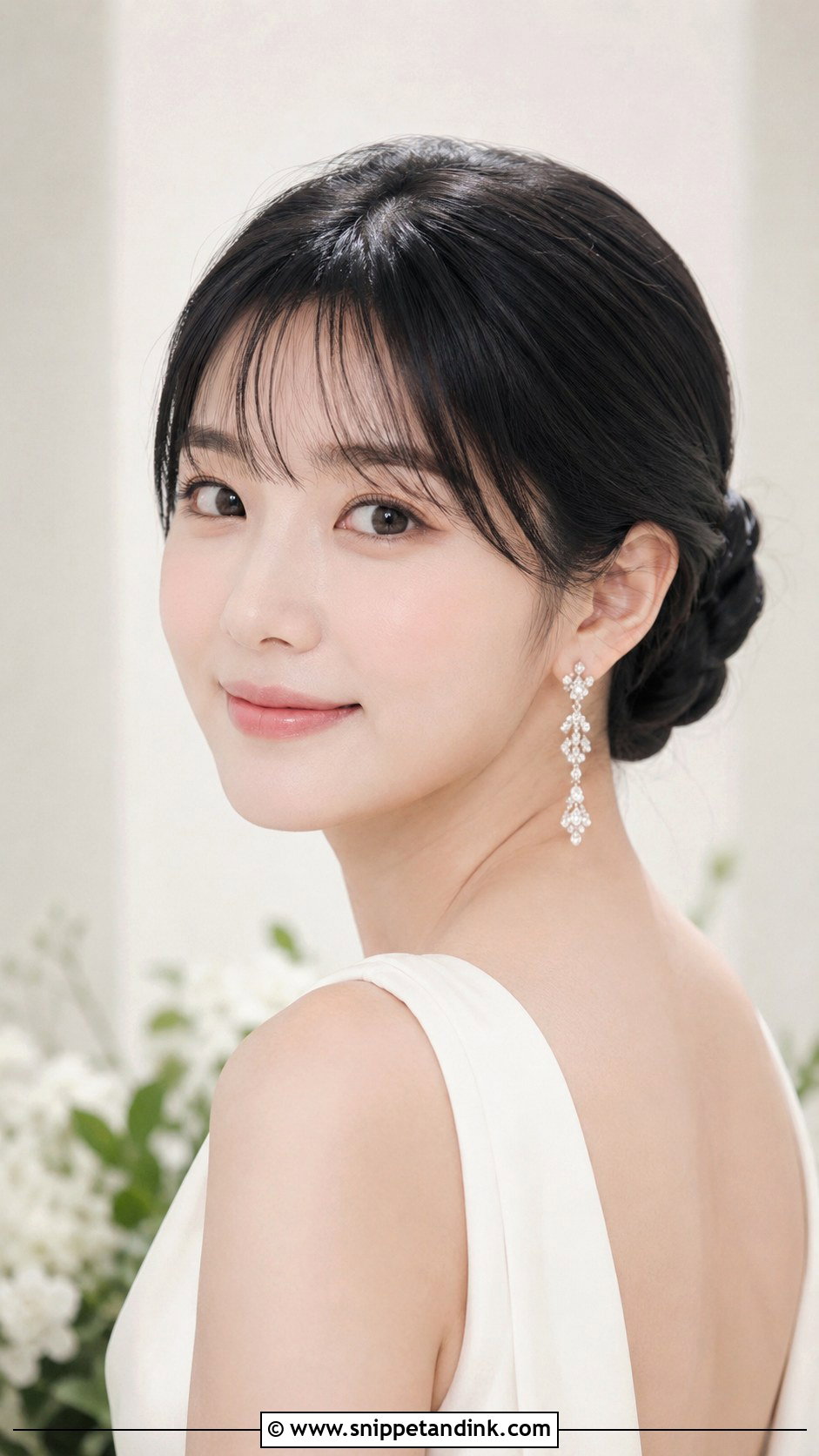
Bangs and a bun are a clean, classic pairing. I straighten or lightly bend the bangs so they frame the forehead, while the rest goes into a smooth bun that leaves the neck clear for statement earrings. Blunt bangs look modern, wispy ones softer. If you have a fringe already, I’d style what you have rather than cutting new bangs close to the date; a fresh fringe takes a couple of weeks to settle and lie the way you want.
6. Front Twist Hairstyle for Bride
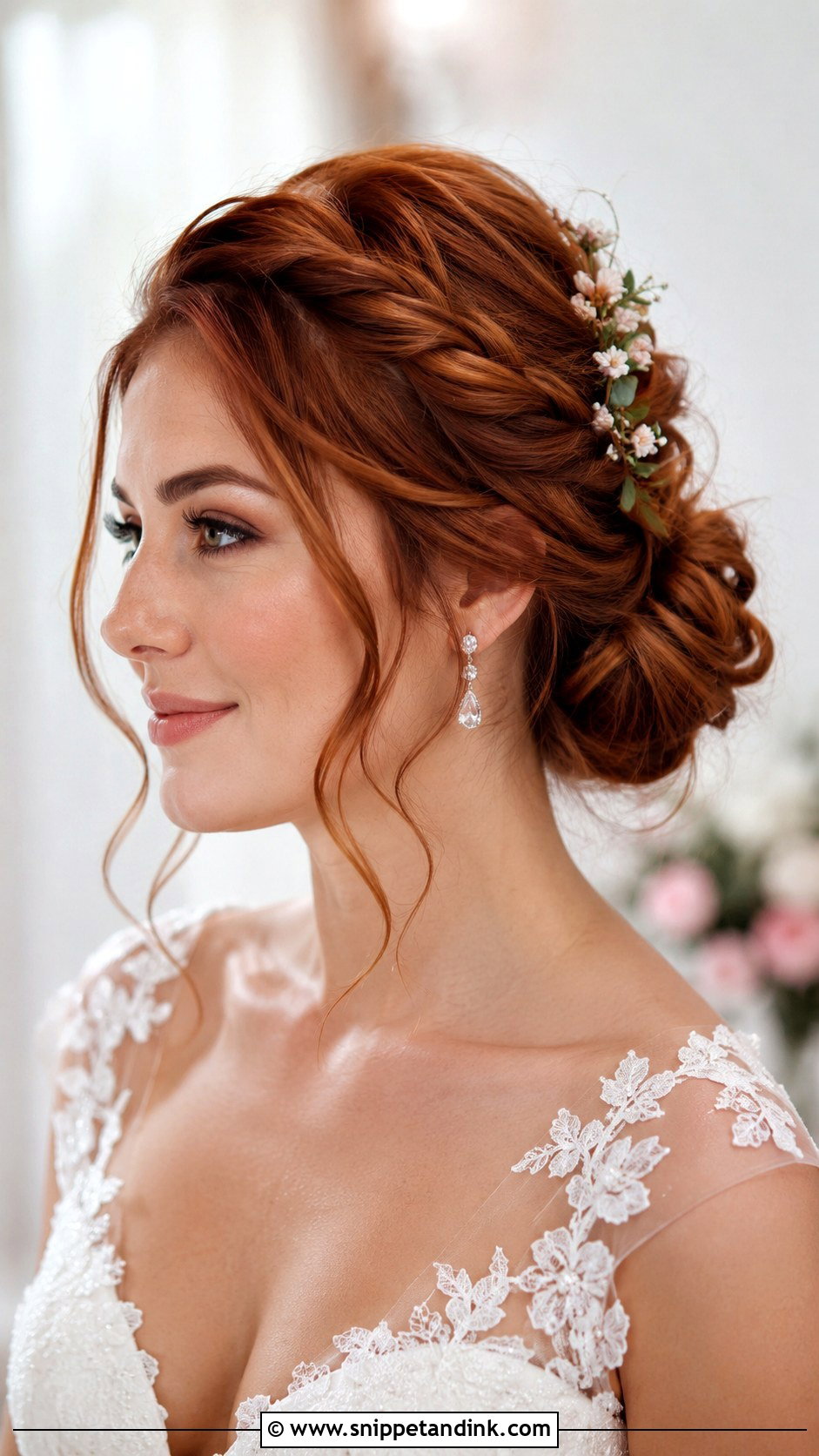
Twists give the effect of braiding in a fraction of the time. I take a section from each side, twist it back away from the face and pin the two together at the crown, so the face is framed softly. It works with curls, straight hair or a low bun behind. Small floral pins where the twists meet finish it. On slippery hair the twists can unwind, so I spray each section before twisting and pin along the twist, not only at the end.
7. Front Pouf With Open Hair
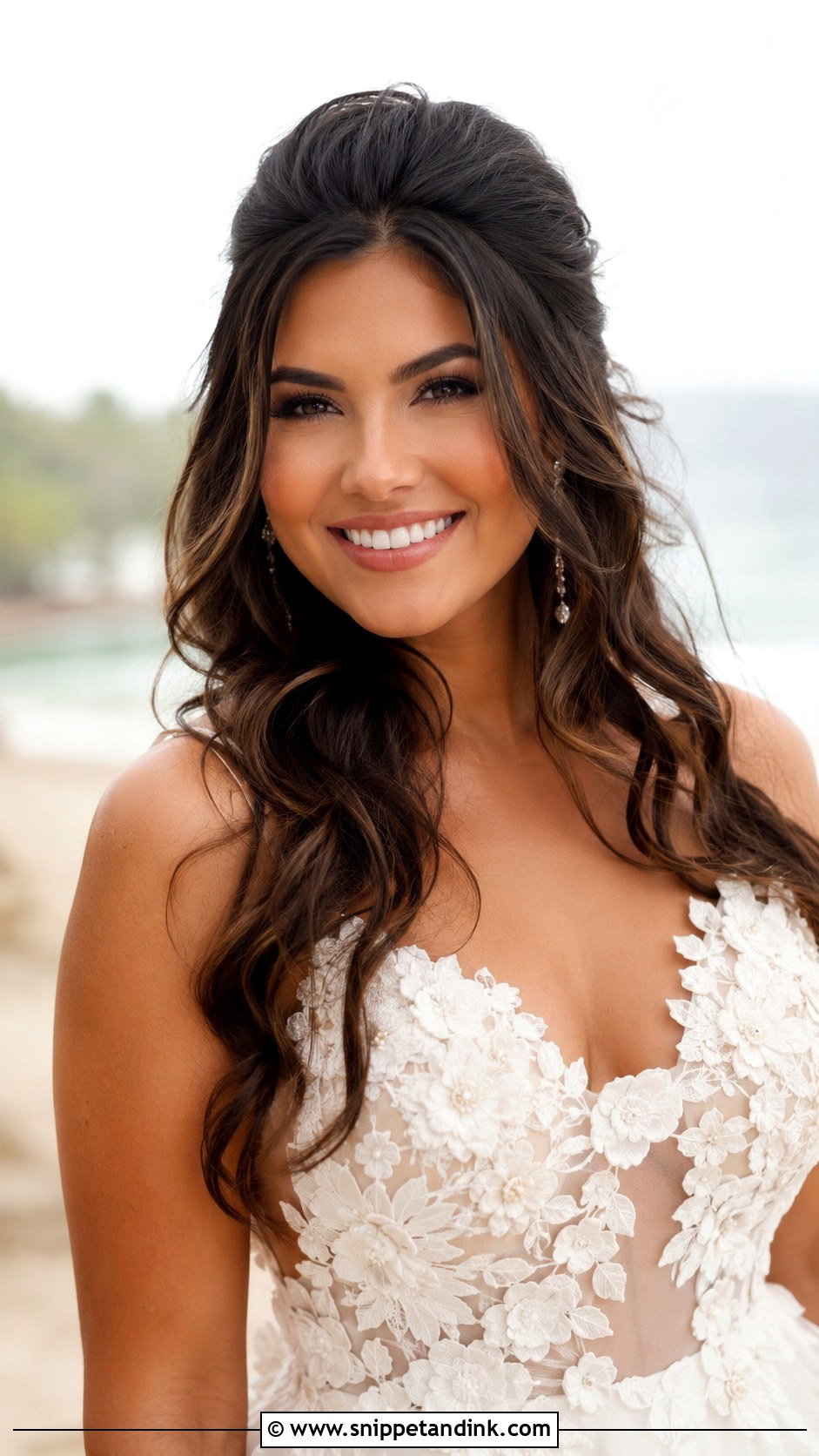
If you’re keeping your hair down, a front pouf gives the open look some structure. I tease the crown gently, smooth it over and pin it back, then curl the lengths so they fall in soft waves. The lift at the top balances the volume below and shows off long hair. Outdoor and beach weddings suit open hair, but wind is its enemy, so I’d keep the curls a little tighter than you think and use a flexible spray. Delicate pins near the crown add a finish.
8. Sleek Back Front Hairstyle for Wedding
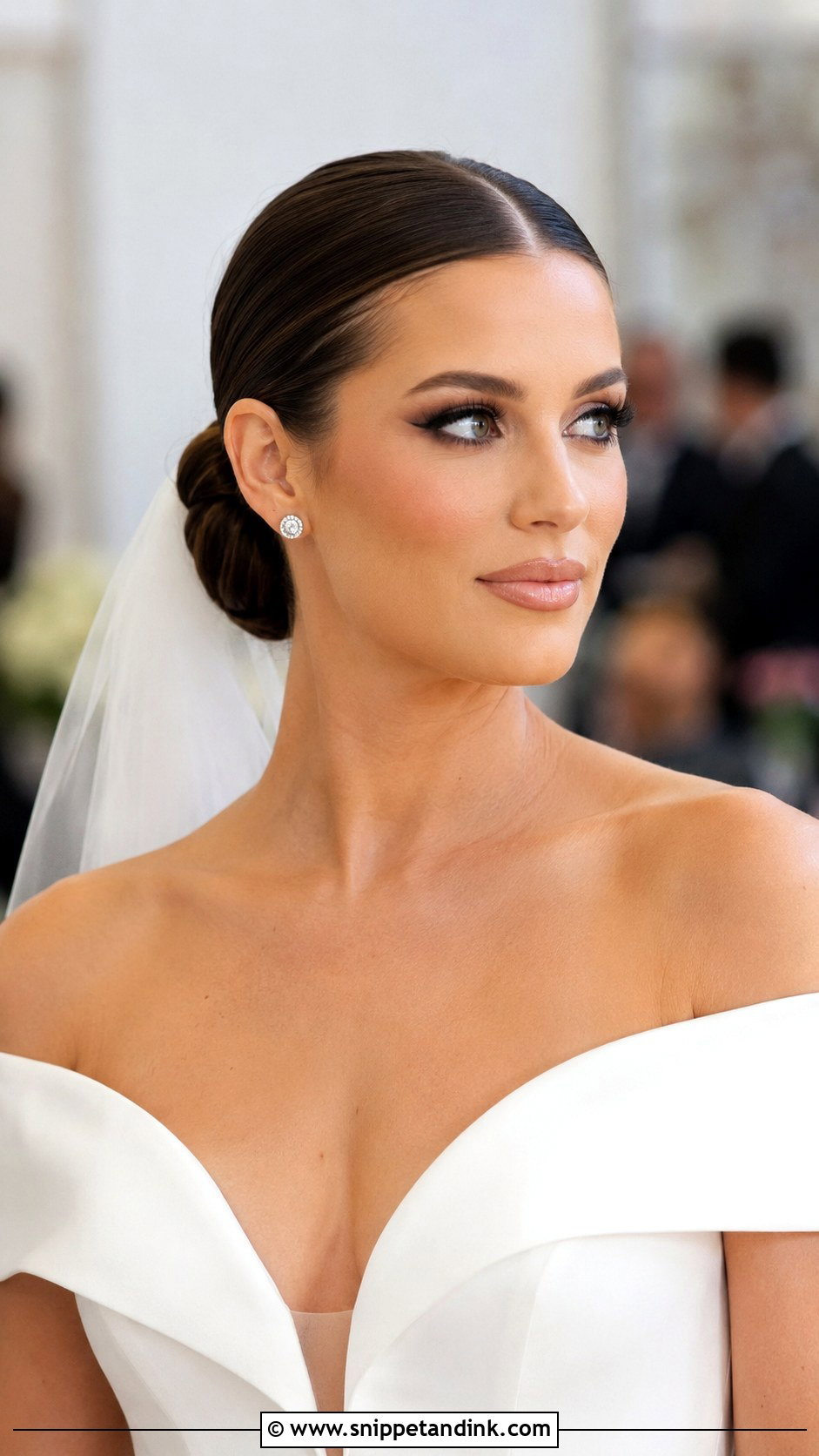
Slicked-back fronts suit the clean, minimal bridal look. I smooth the front straight back with a firm gel or a cream, comb it flat while it’s still damp, and set it with a fine-tooth comb and a light spray. It shows your features clearly, so it’s better with confident makeup and statement jewelry. A low bun or sleek ponytail completes it. It’s the most hug-proof style in this list, but it’s unforgiving of a cowlick or thinning at the temples, so test it at the trial before committing.
9. Front Hair With Side Bun
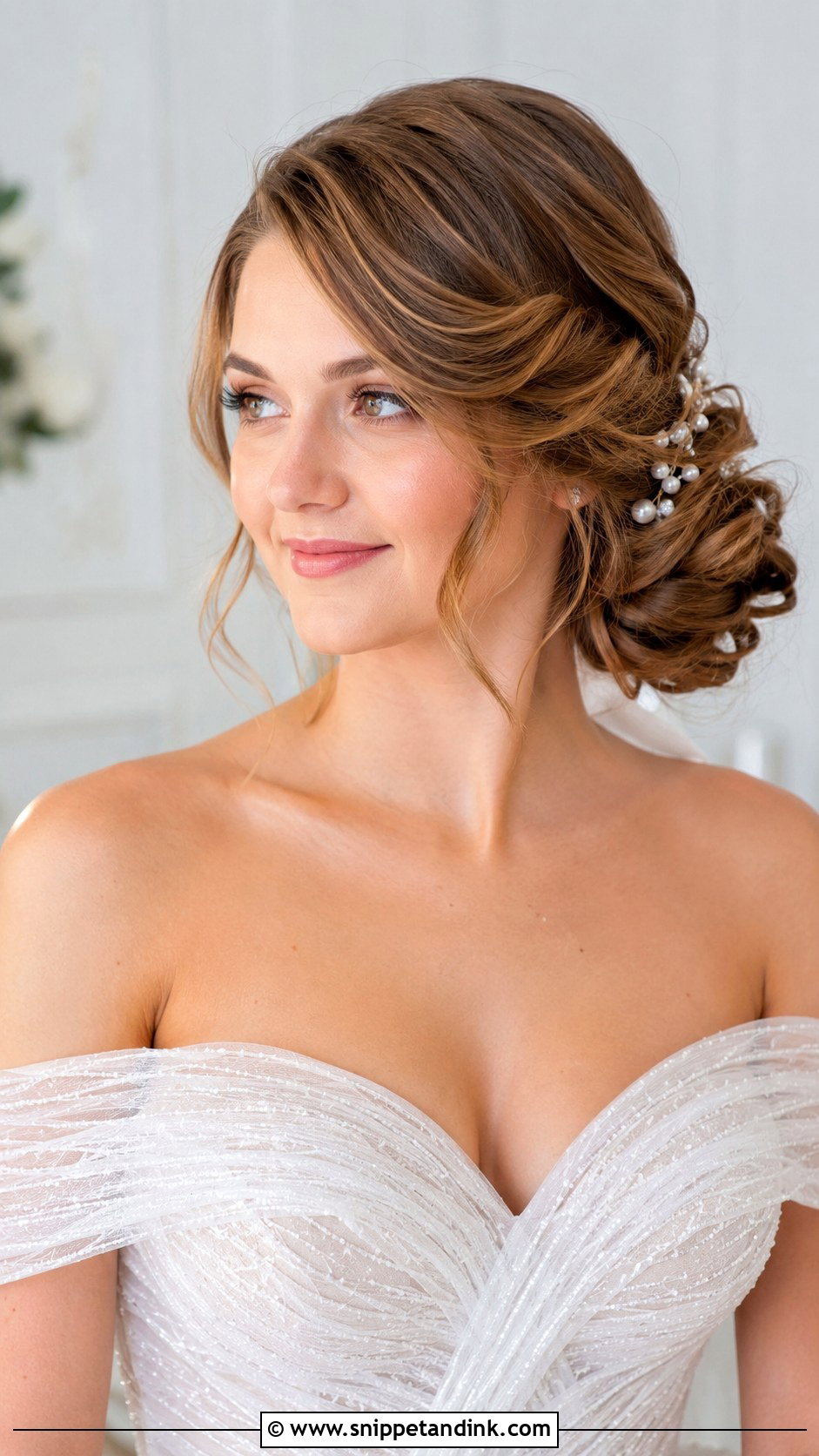
A soft front with a side bun balances the face in an asymmetric way. I sweep the front to one side and gather everything into a low bun resting toward one shoulder, leaving a few loose tendrils. Off-shoulder gowns and statement earrings suit it. Because the weight sits to one side, the bun needs a solid anchor of crossed pins, especially on medium hair. It photographs well in profile, and pearls or fresh flowers around the bun give a romantic finish.
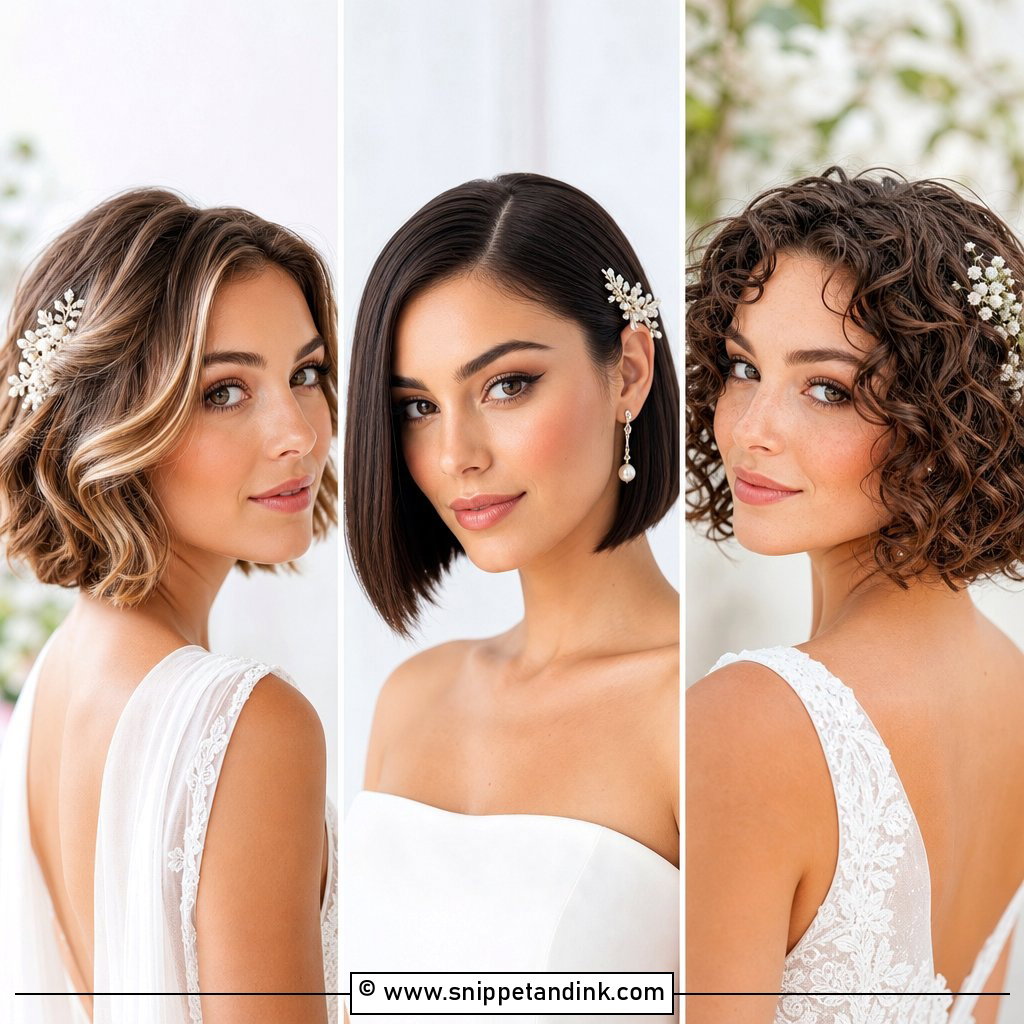
10. Curtain Bangs Wedding Hairstyle
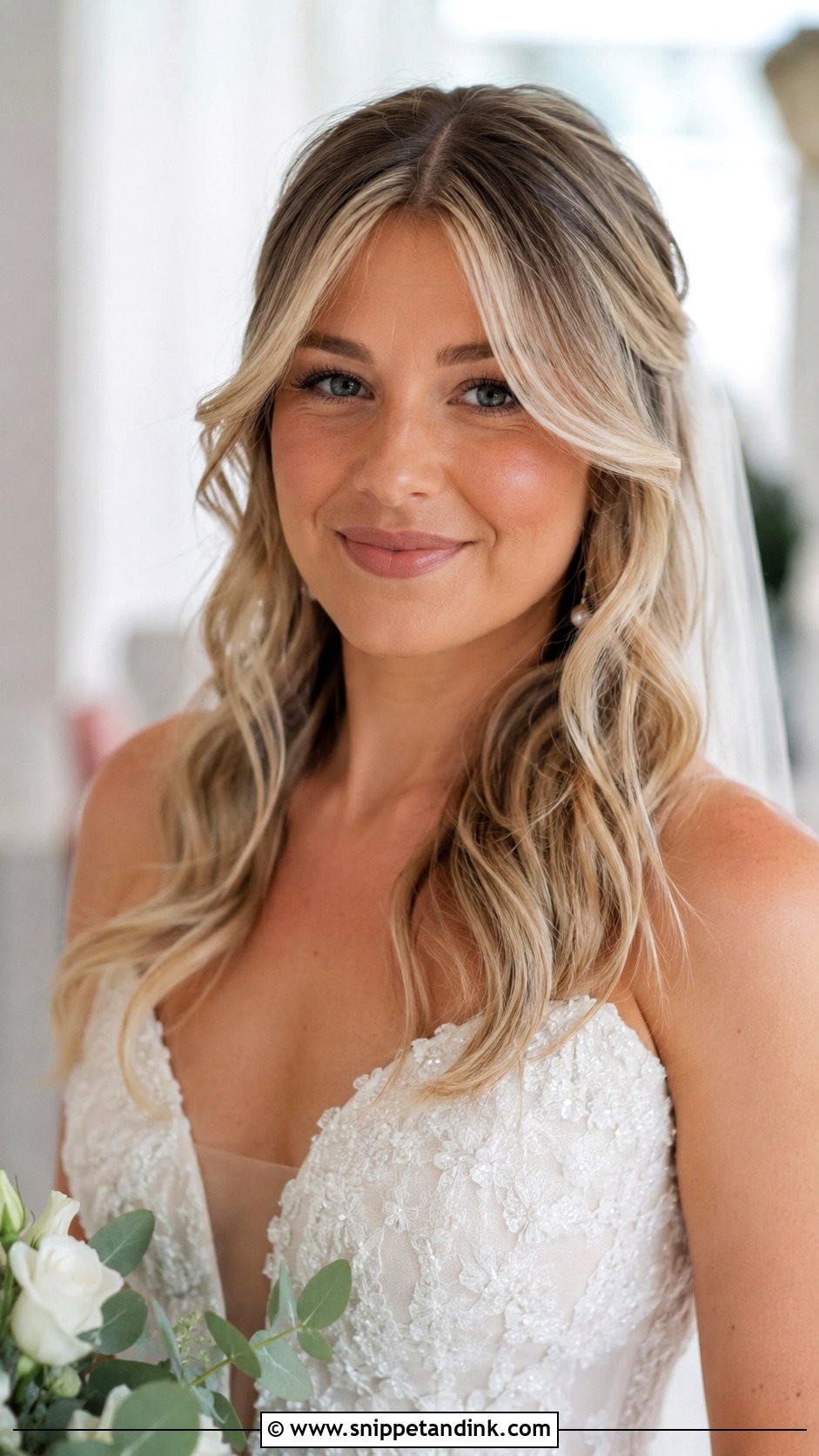
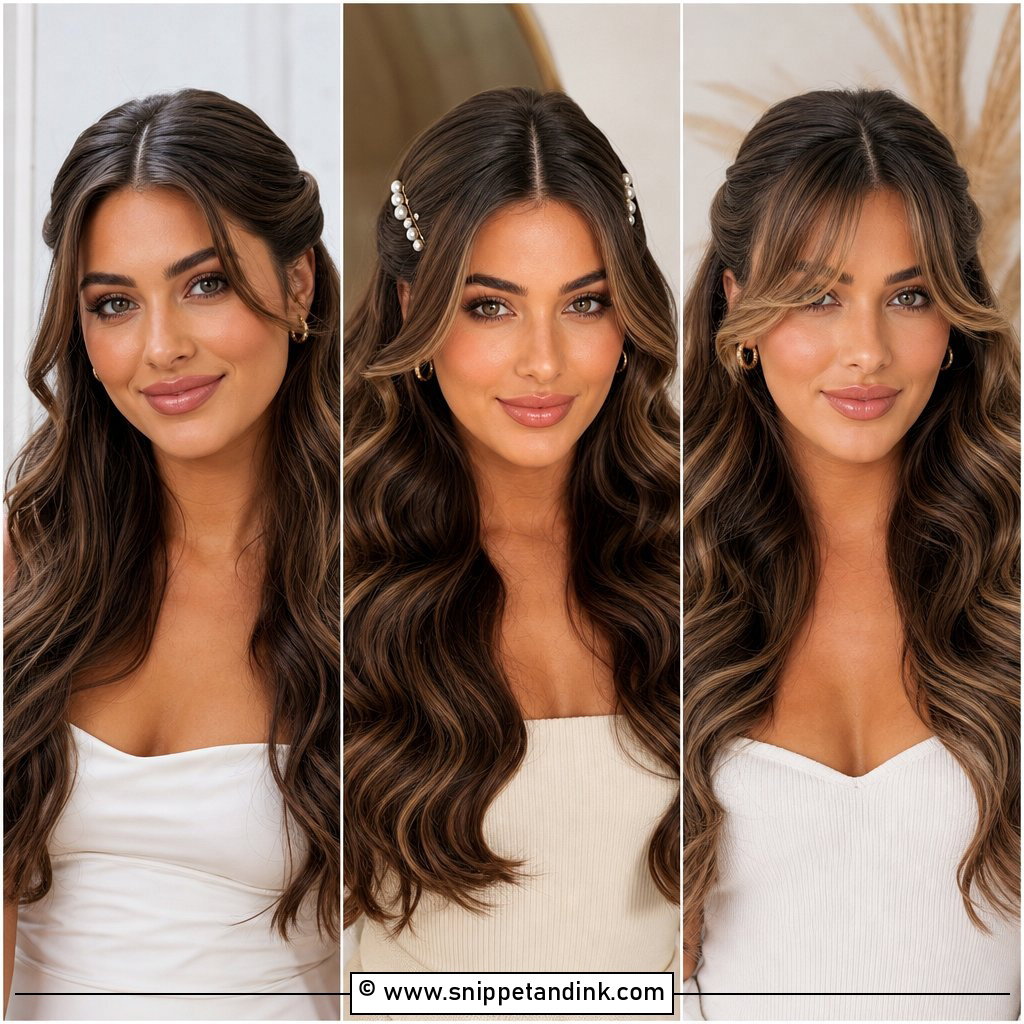
Curtain bangs part in the middle and sweep outward on each side, so they blend into the rest of your hair whether it’s up or down. I style them with a round brush and a slight bend so they flip away from the eyes. They flatter most face shapes and pair well with loose waves or a textured updo. Fresh curtain bangs can be awkward for a week or two after cutting, so if you want them for the wedding, cut them at least a month ahead.
11. Front Hair Puff With Curls
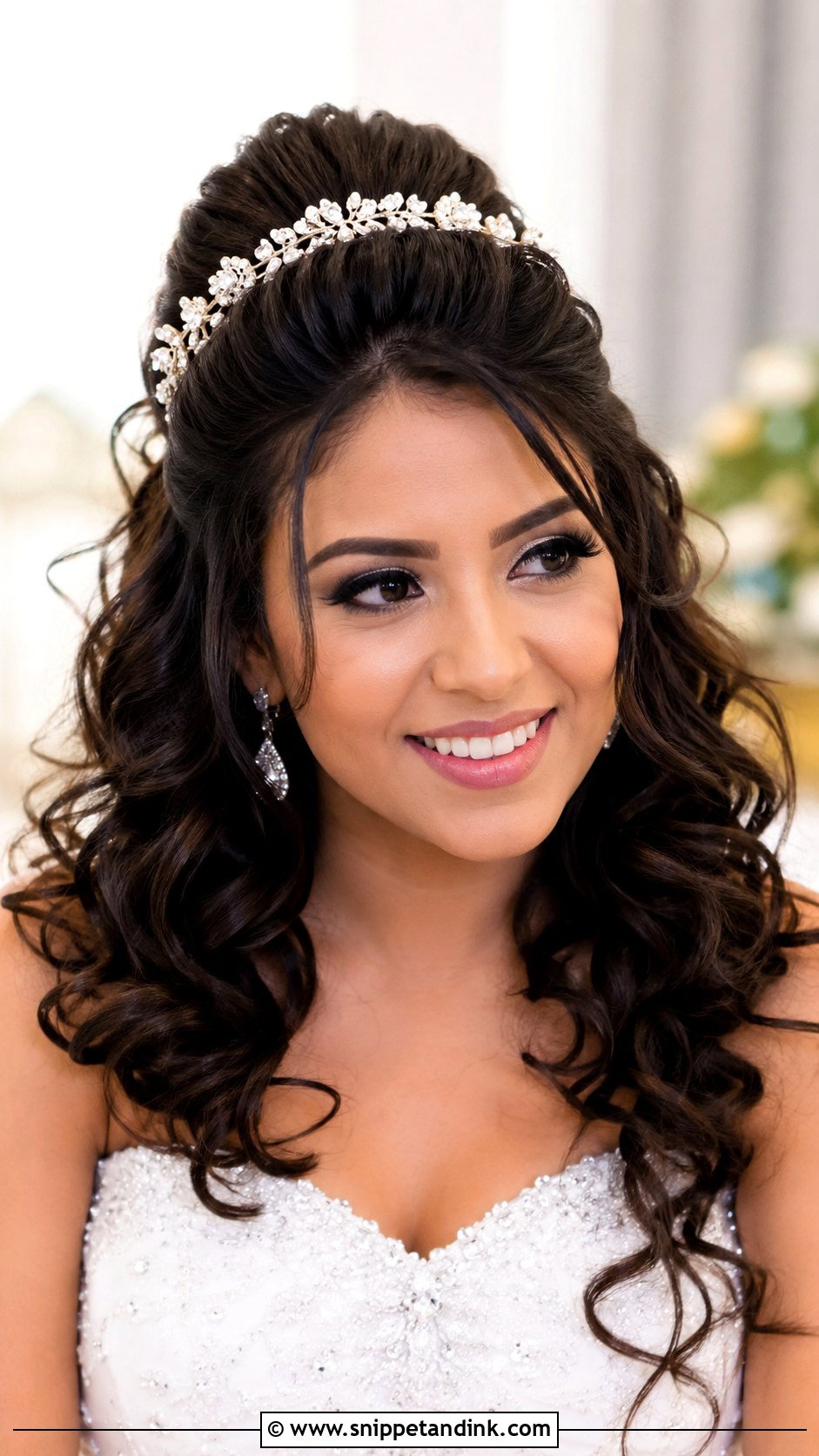
A teased puff above cascading curls puts drama and softness in the same look. I build the height first, then set the lengths with a curling wand or hot rollers for curls that last. The puff lengthens the face while the curls add movement. Long hair carries it best, and it pairs with floral crowns or jeweled headbands. If your hair drops curl quickly, pin the curls up in clips while they cool; that small step adds hours to their life.
12. Low Bun With Front Layers
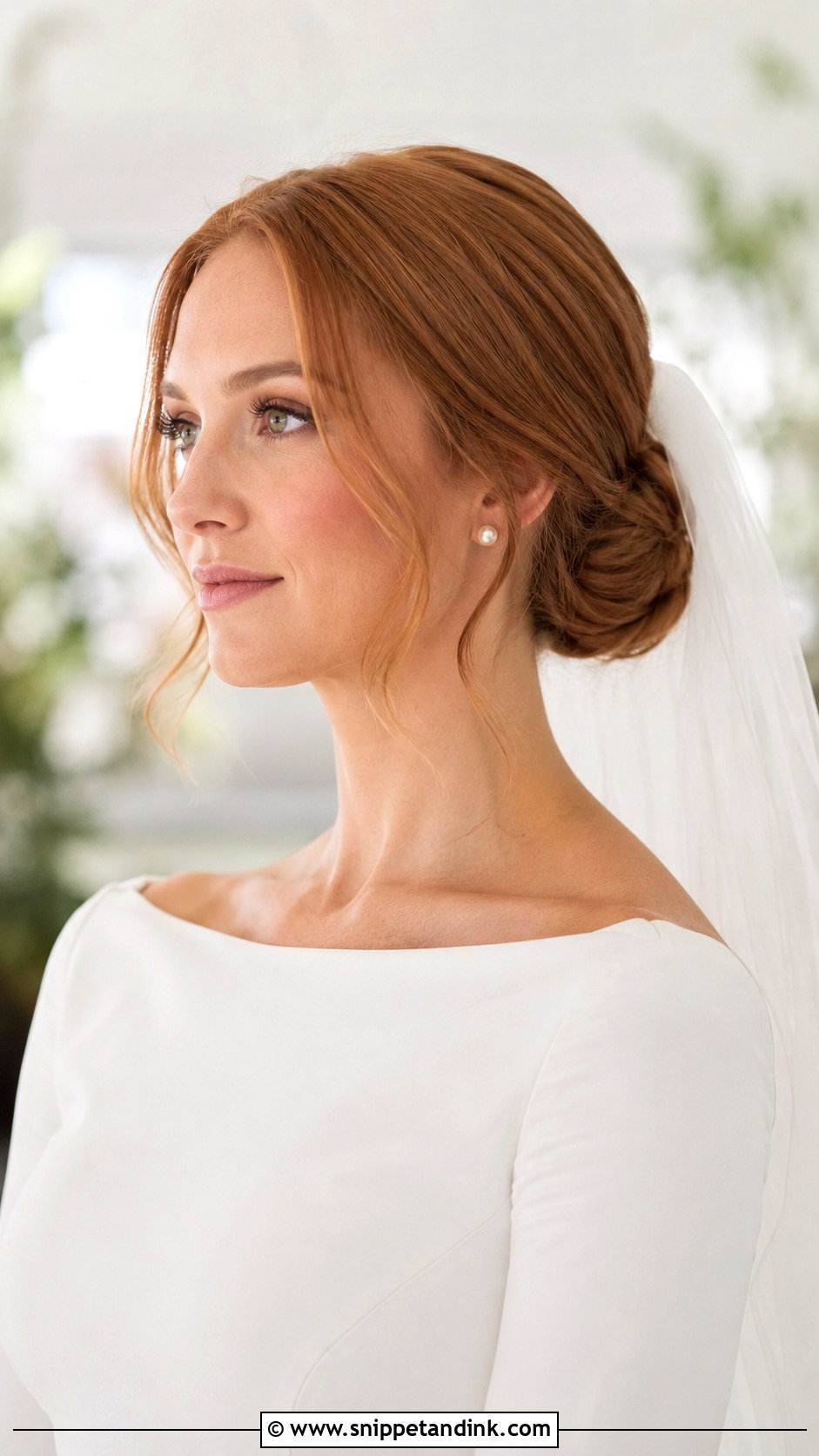
Soft front layers with a low bun is the style I’d call quietly classic. Face-framing layers stay loose while the rest goes into a smooth bun at the nape, and they soften the features without fuss. It works well with veils and tiaras, and especially with high collars and boat necklines where open hair would be lost. I curl the front layers slightly away from the face so they don’t fall into the eyes.
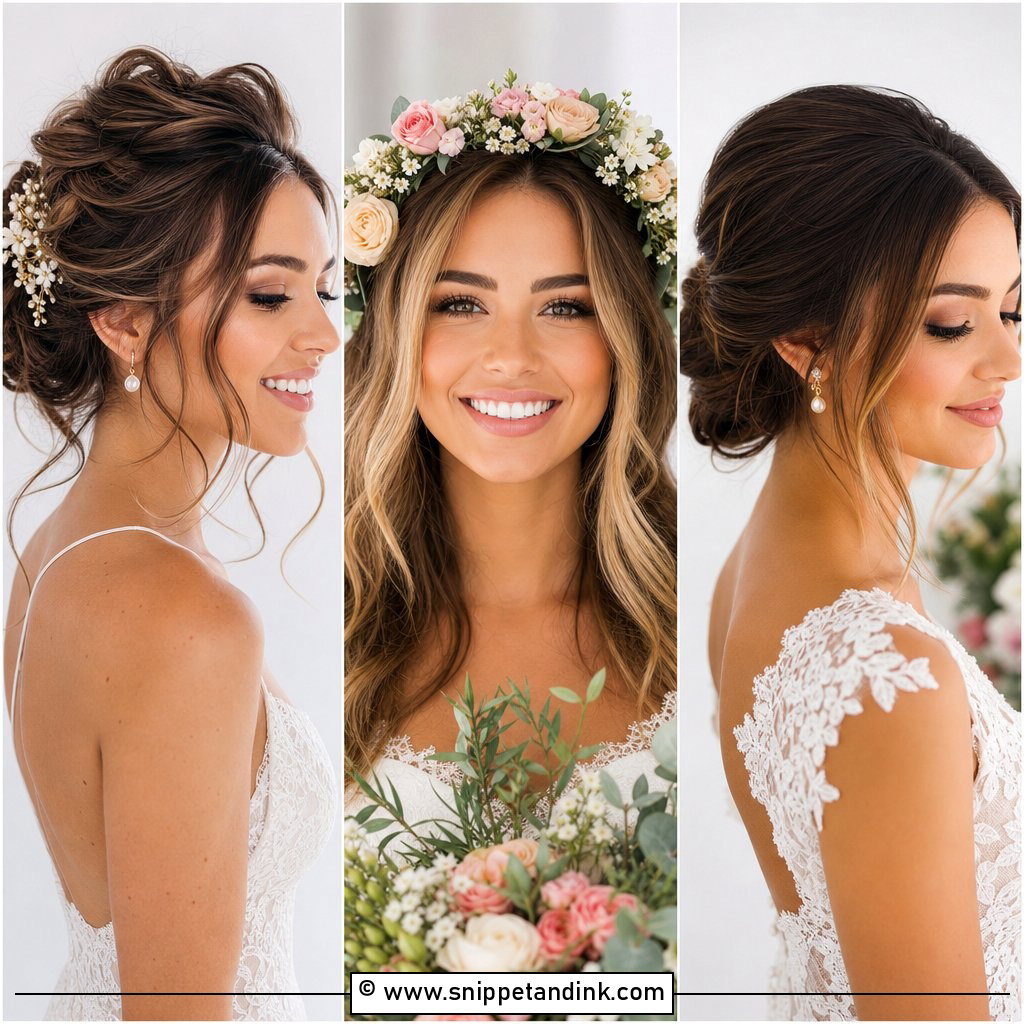
13. Front Hair With Floral Accessories
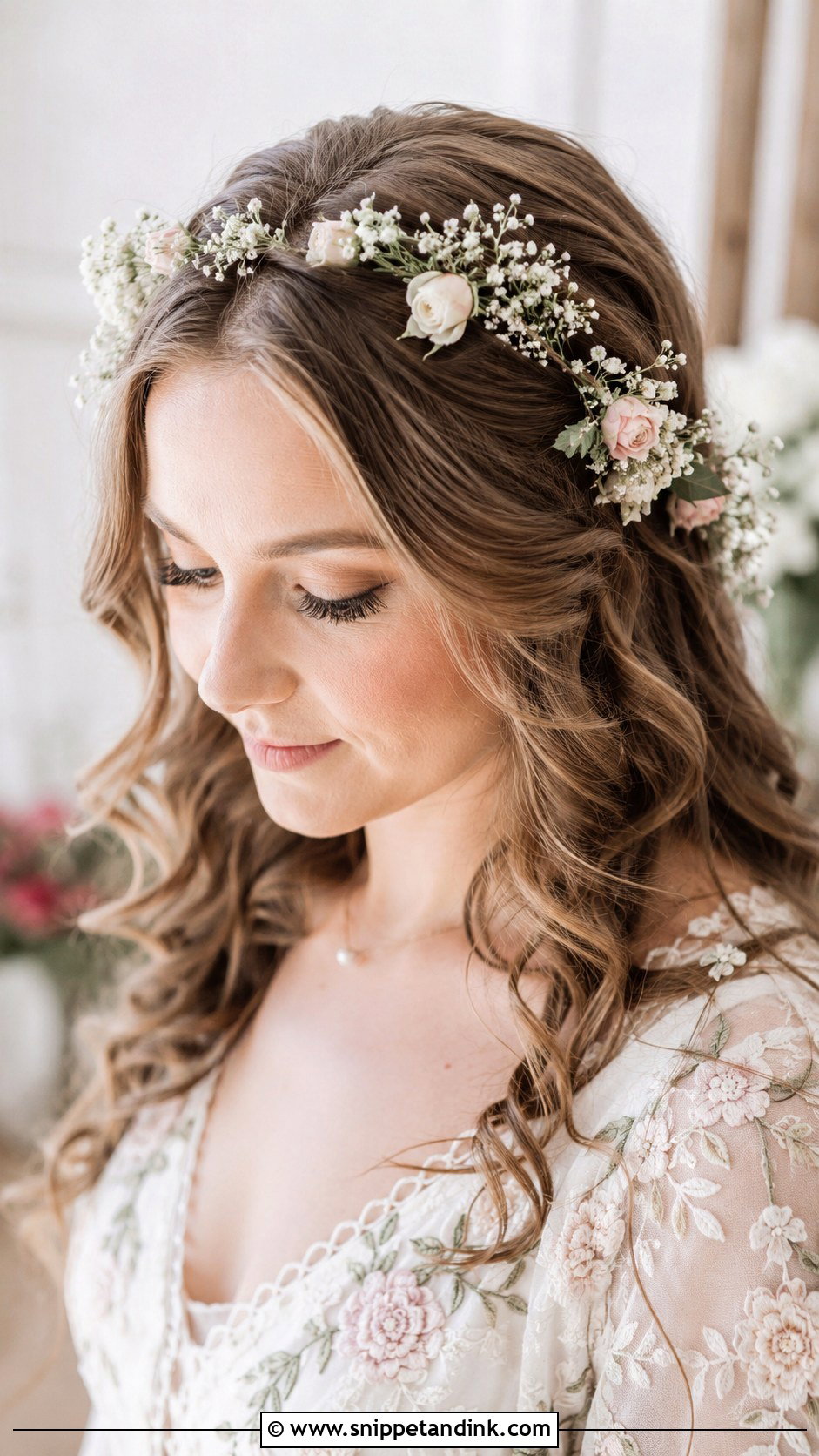
Fresh flowers or pearl blooms along the hairline give a garden feel to spring and outdoor weddings. I style the front in soft waves or a gentle sweep, then place small blooms along the part or hairline. Baby’s breath and spray roses hold up well out of water; softer blooms wilt fast. Match them to the bouquet and ask the florist to wire them so I can pin them in like accessories. They suit loose curls, braids and half-up styles, and they draw the eye straight to your face.
14. Front Fishtail Braid for Wedding
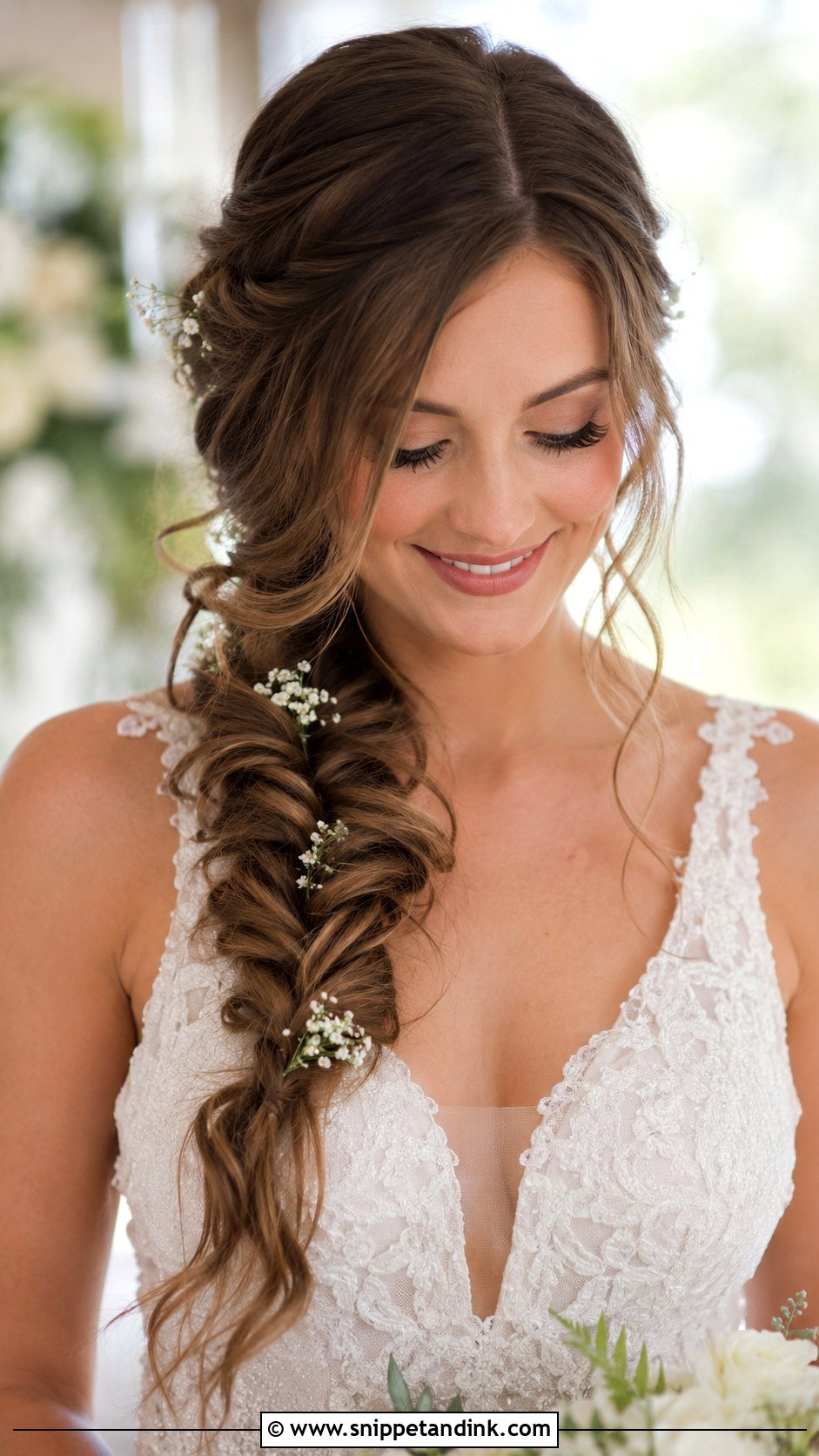
A fishtail is more intricate than a standard braid because it’s built from two sections crossing thin pieces over each other. I start at the temple and braid back, then blend it into waves or a bun. Loosening it slightly gives a relaxed feel. Tiny flowers or pearls in the weave add detail. It needs longer hair, because short front layers pop out of a fishtail more than any other braid. Boho and rustic weddings suit it.
15. Front Hair With Veil
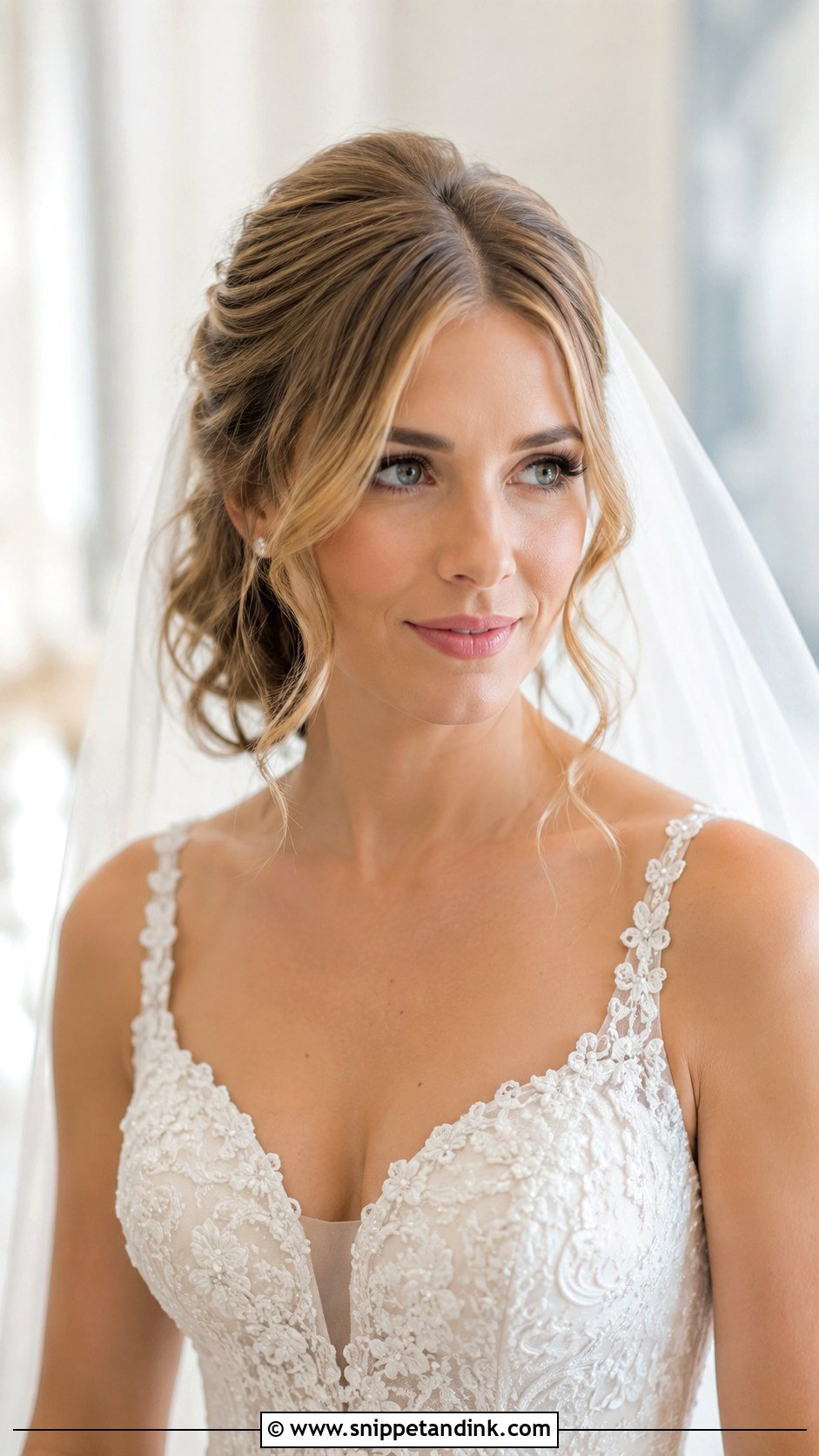
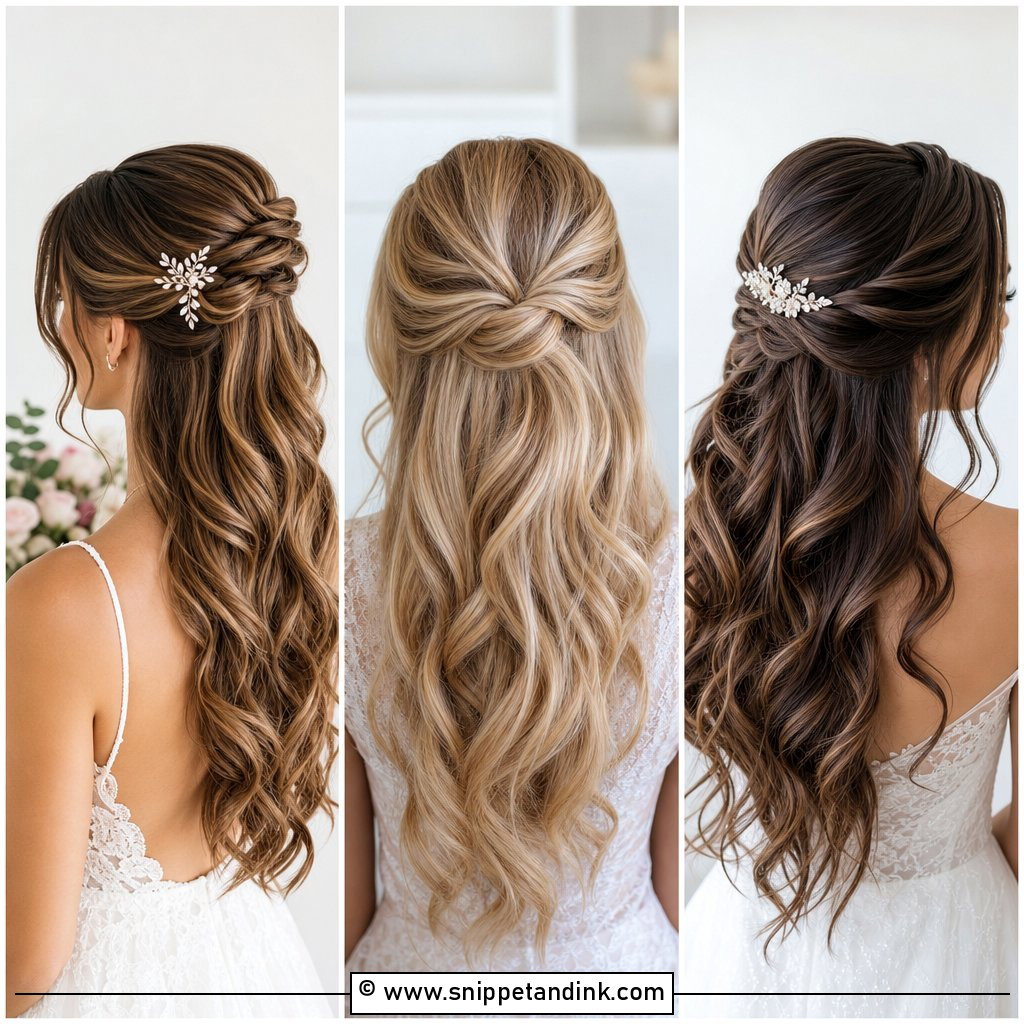
The front and the veil should be planned together. I style the front in waves or a gentle twist, then place the veil behind it, either low or at the crown depending on hair length. A few tendrils peeking out soften the edge of the veil. The front still looks finished after the veil comes off, which matters for the reception photos. For traditional ceremonies with a long veil, I’d always position the comb into a secured section rather than loose hair.
16. Front Twisted Crown Hairstyle
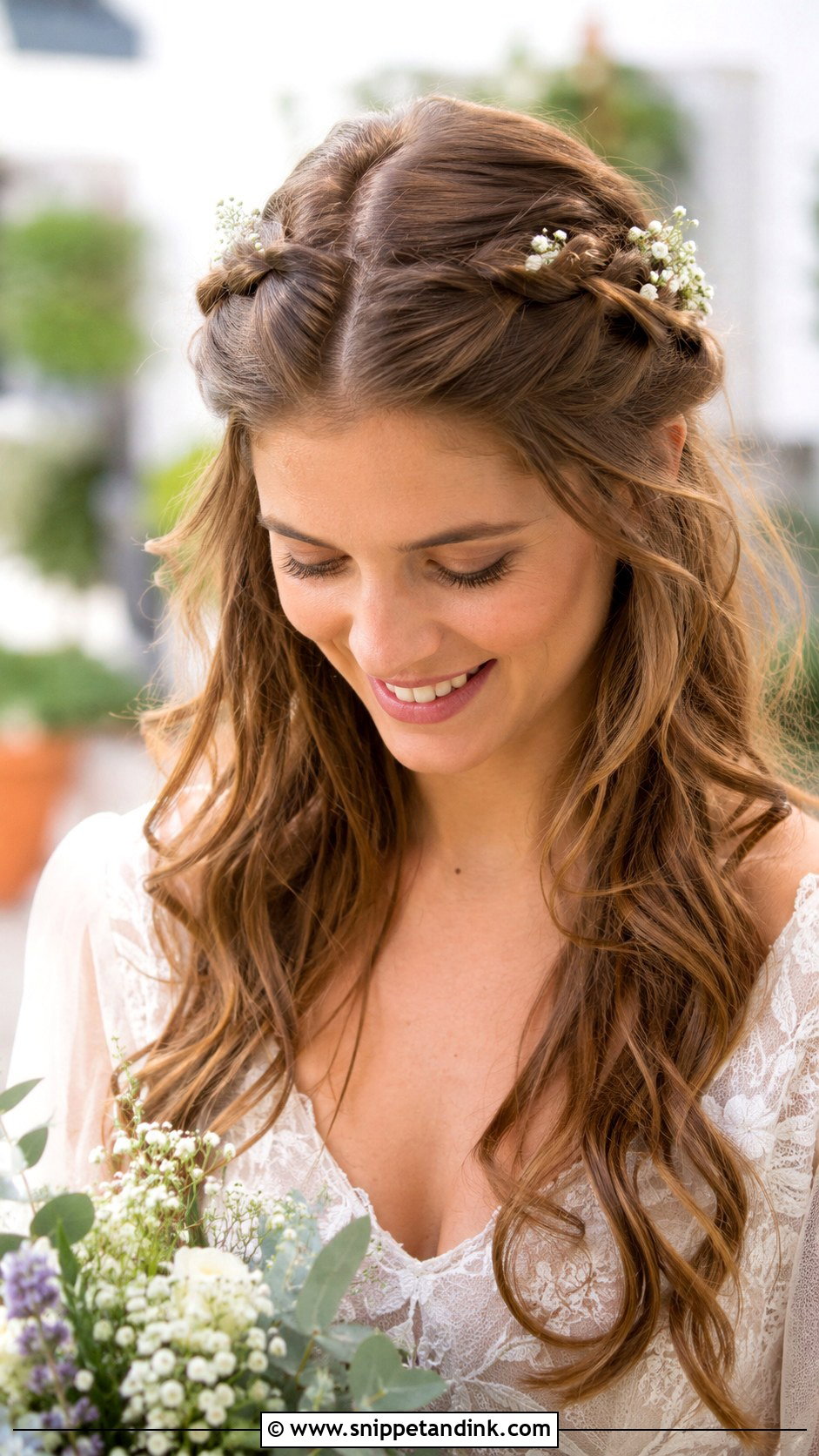
A twisted crown wraps around the head like a halo. I take sections from both sides at the front, twist them back and join them at the crown, sometimes continuing the twist around the back. Loose hair can flow behind it, or it can lead into a soft bun. Small flowers or pearls along the twist add sparkle. It keeps hair off the face and suits outdoor and garden weddings, especially with delicate gowns.
17. Front Hair With Pearl Pins
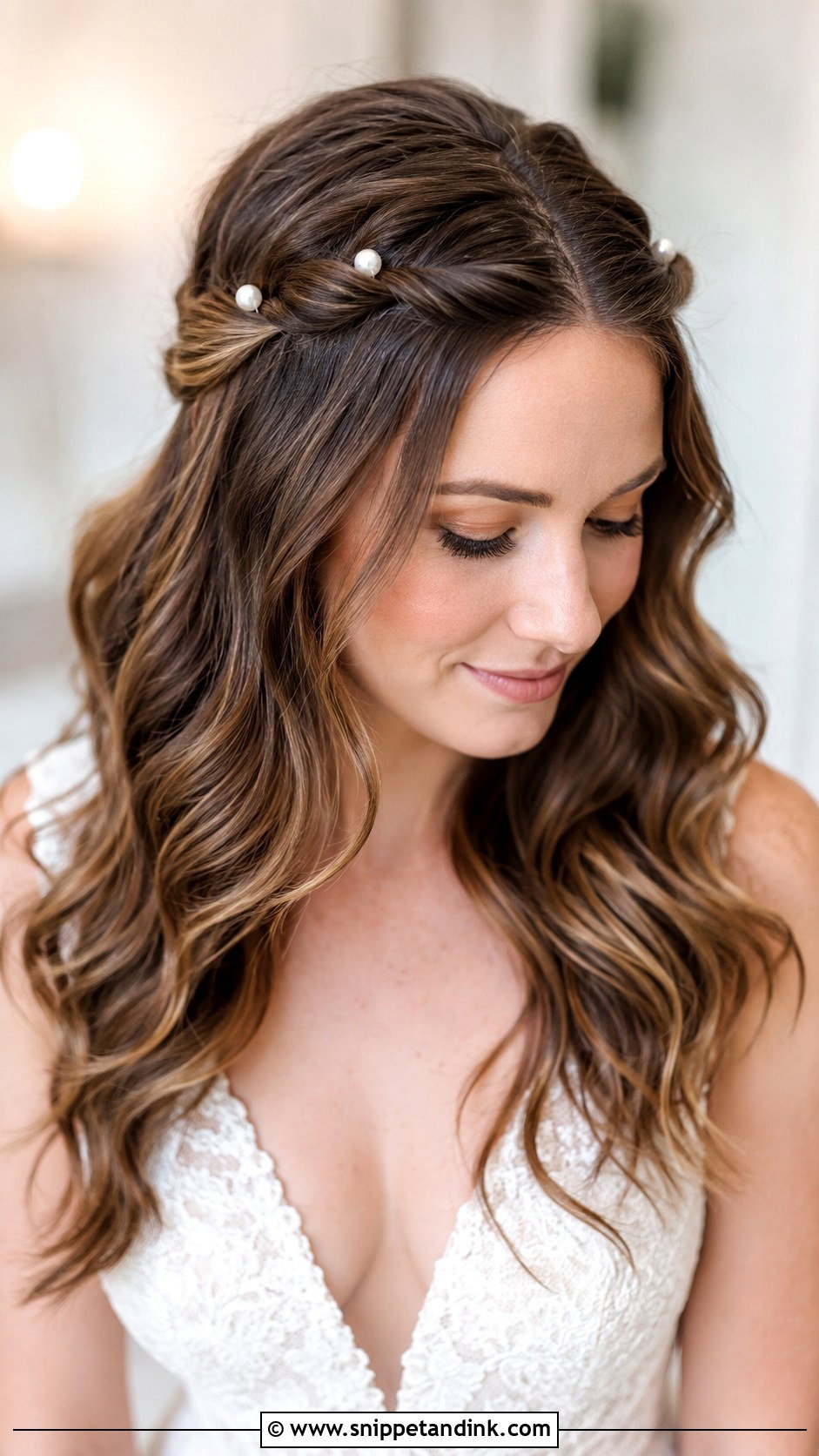
Pearl pins along the hairline and part add subtle shine. I place them after the front is styled in waves, twists or a sweep, clustering them near the temple or scattering them evenly. Pearls show up in photos without overwhelming the look and pair well with sleek or textured styles. Each pin needs to catch hair underneath, not just sit on top, so I slide them in at an angle against a small pinned section. They’re a simple way to make a plain front look finished.
18. Front Hair Puff With Ponytail
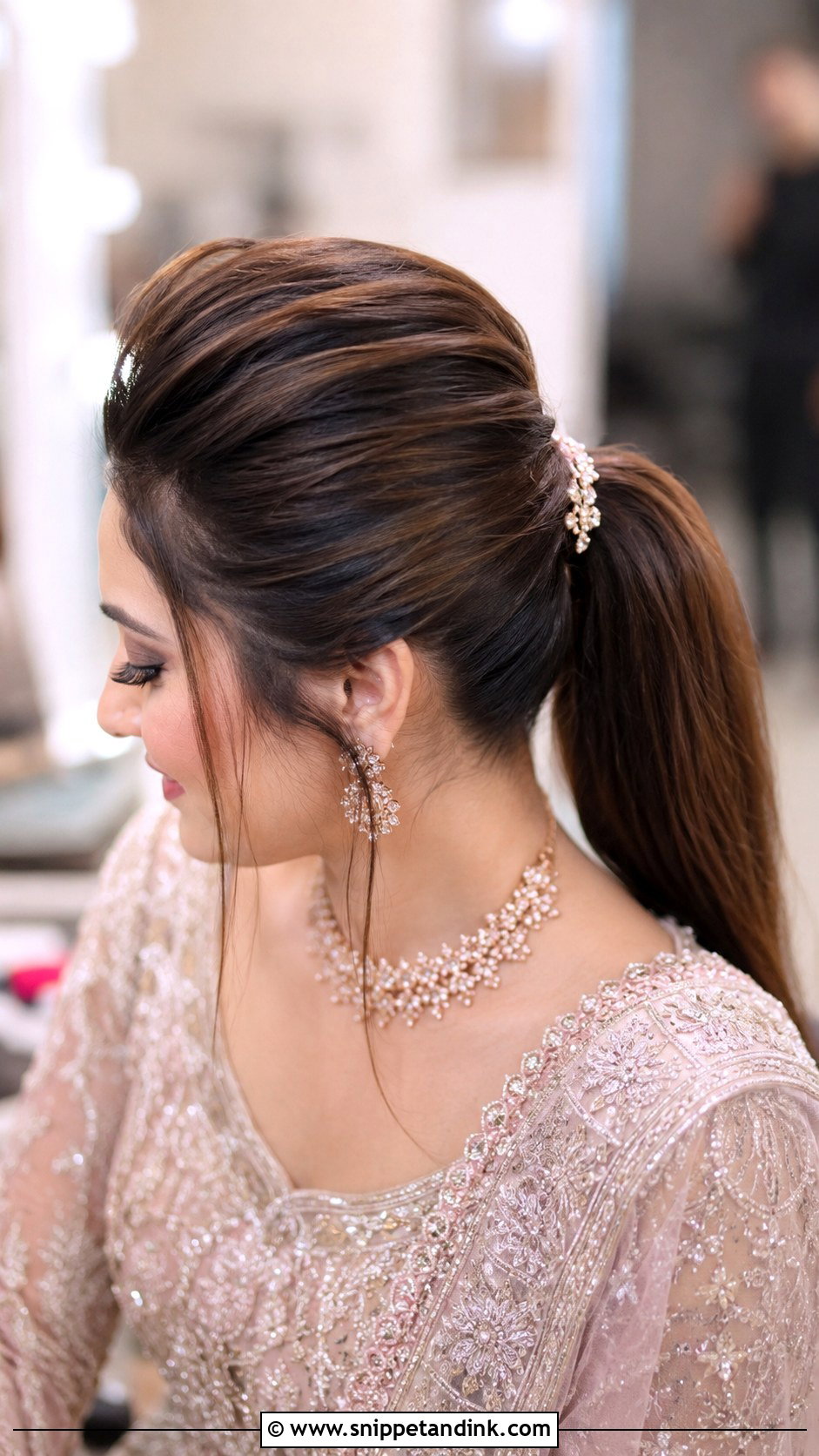
A voluminous front puff over a sleek ponytail balances volume and polish. I tease the crown for height, smooth it back, then gather everything into a ponytail and wrap a strand around the elastic to hide it. A jeweled clip at the base adds shine. Medium and long hair work best. A long ponytail is heavy, so I secure it with two elastics, one tight and one slightly lower, which stops it drooping through the dancing.
19. Soft Waves Front Hairstyle for Wedding
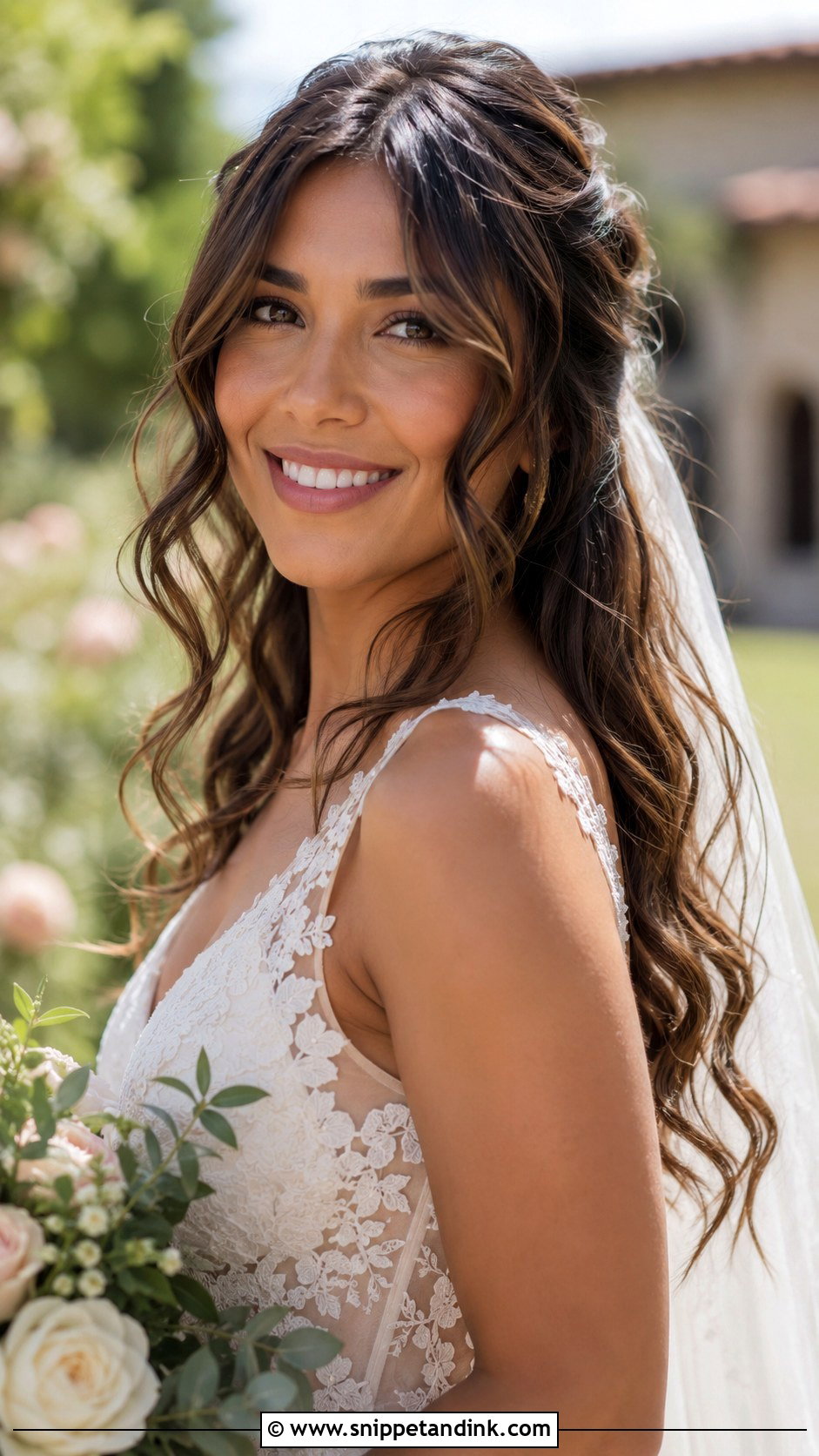
Soft waves around the face suit nearly everyone. I curl the front sections loosely with a large barrel, then brush them out so they fall around the face without looking overly done. They pair with half-up styles, updos or open hair, and they’re at their best outdoors in natural light. The catch is humidity: waves drop fastest at the front, where your hands and the air touch them most, so I set them a touch tighter than the final look.
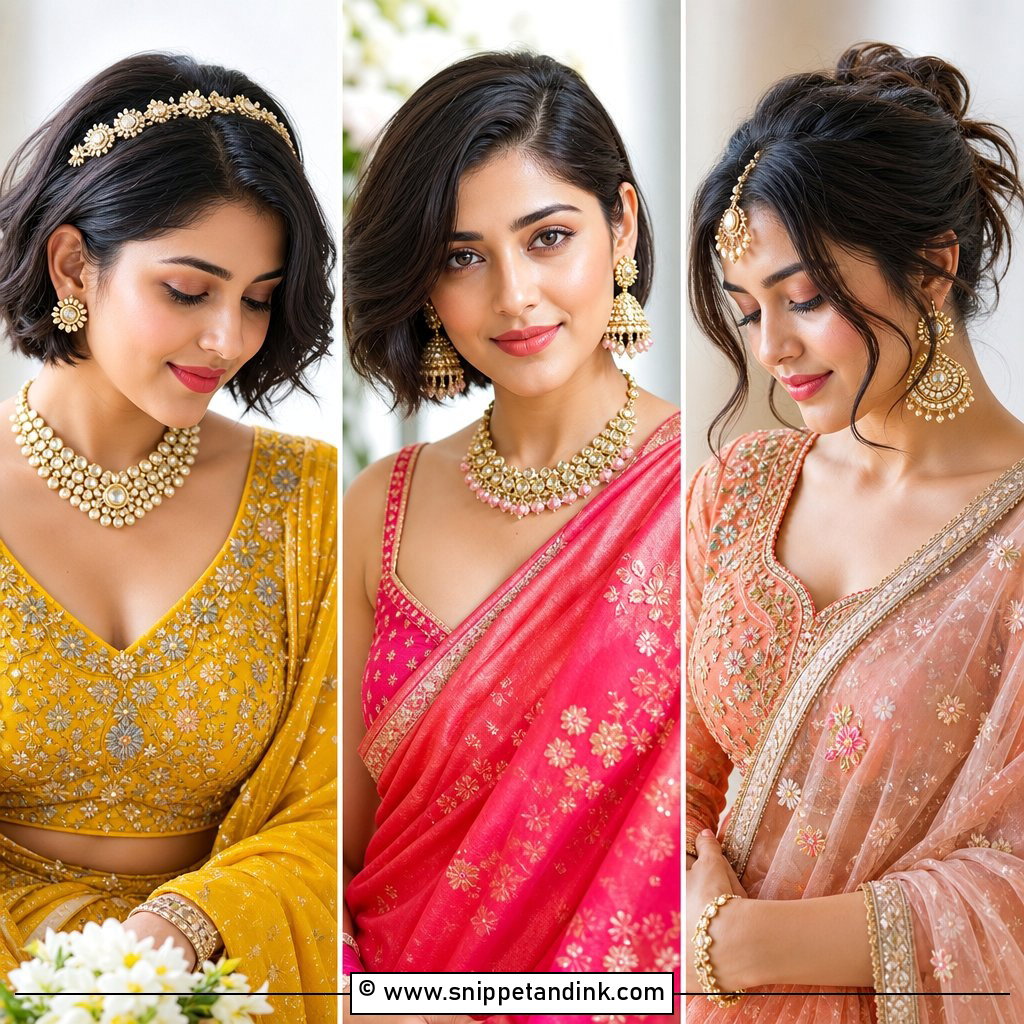
20. Front Hair With Gajra
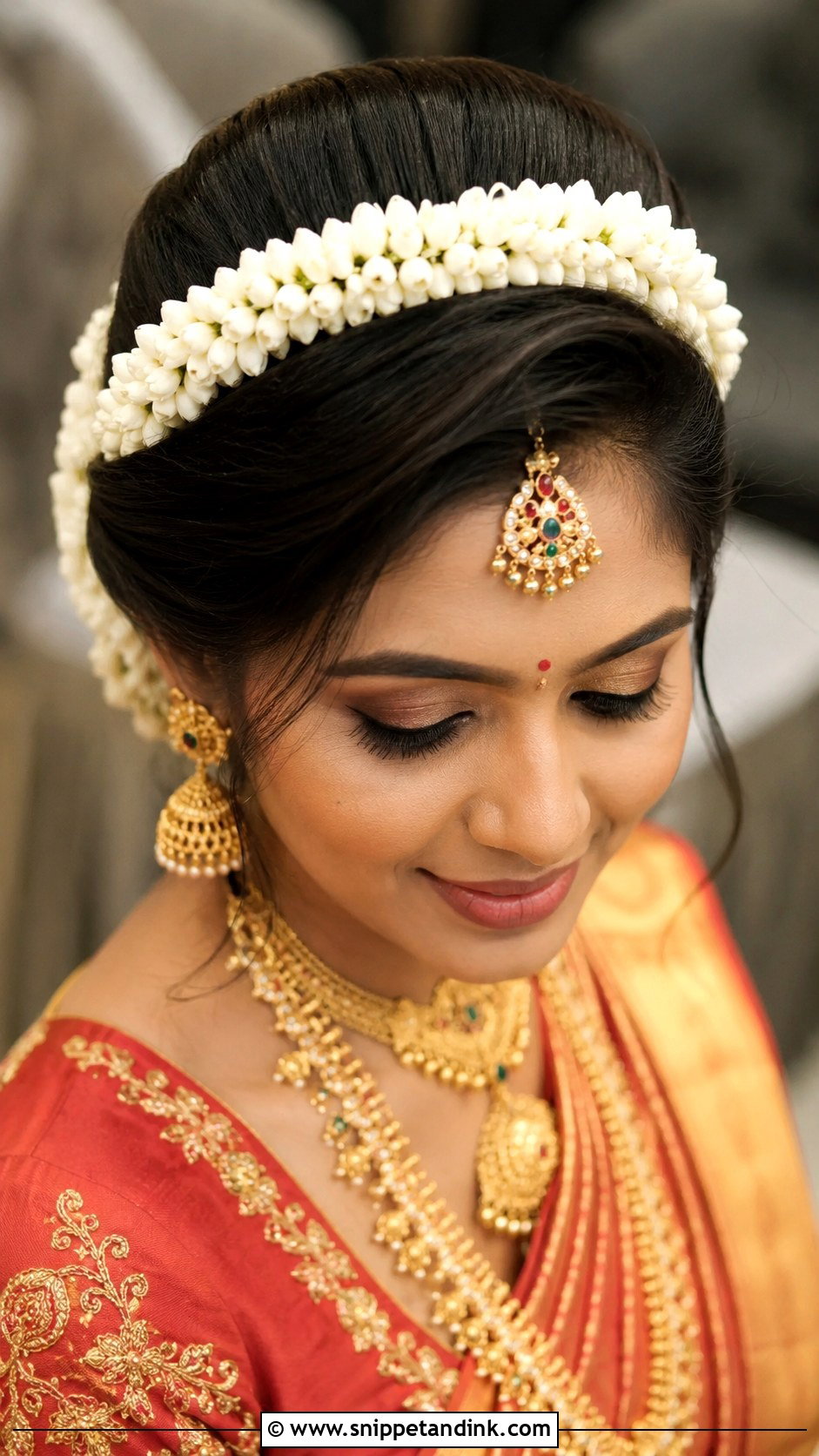
A gajra of fresh jasmine flowers brings fragrance and tradition to the front. I style a smooth sweep or puff, then pin the gajra along the hairline or around a bun or braid. The white blooms stand out against dark hair. Fresh jasmine is delicate, so I keep the strings wrapped in a damp cloth in the fridge until they go in, and add them as late as possible. It pairs with buns, braids and side sweeps, and with heavy jewelry and traditional outfits.
21. Middle Part Front Hairstyle for Wedding
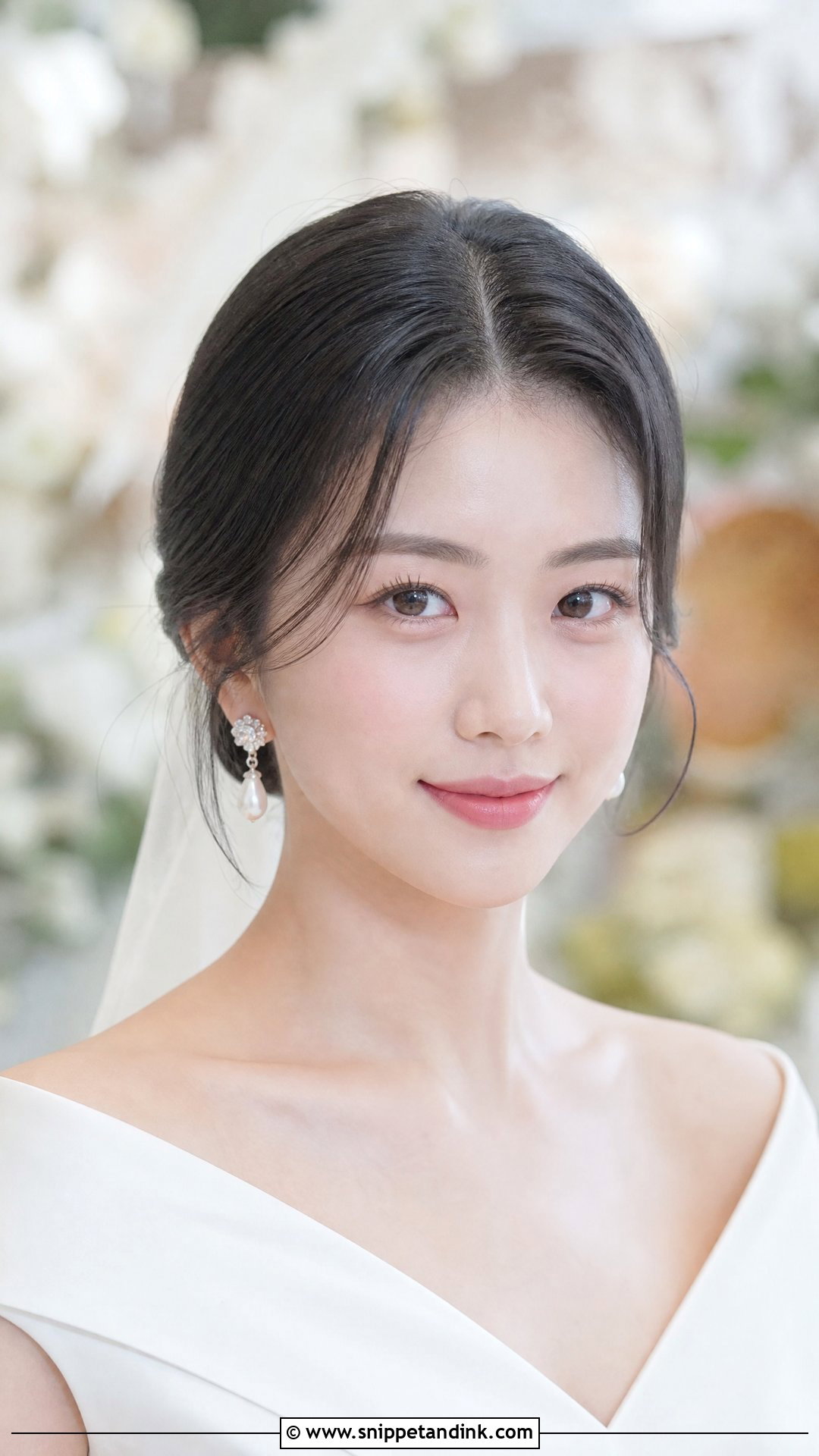
A middle part brings symmetry to the front. I divide the hair evenly down the center and let both sides frame the face. It suits oval and heart-shaped faces and the current minimal bridal style. Low buns, sleek ponytails or soft waves all work, and serum keeps it polished. A center part shows any thinning or uneven growth at the part line, so I sometimes zigzag the very start of it to soften the line.
22. Front Hair With Maang Tikka
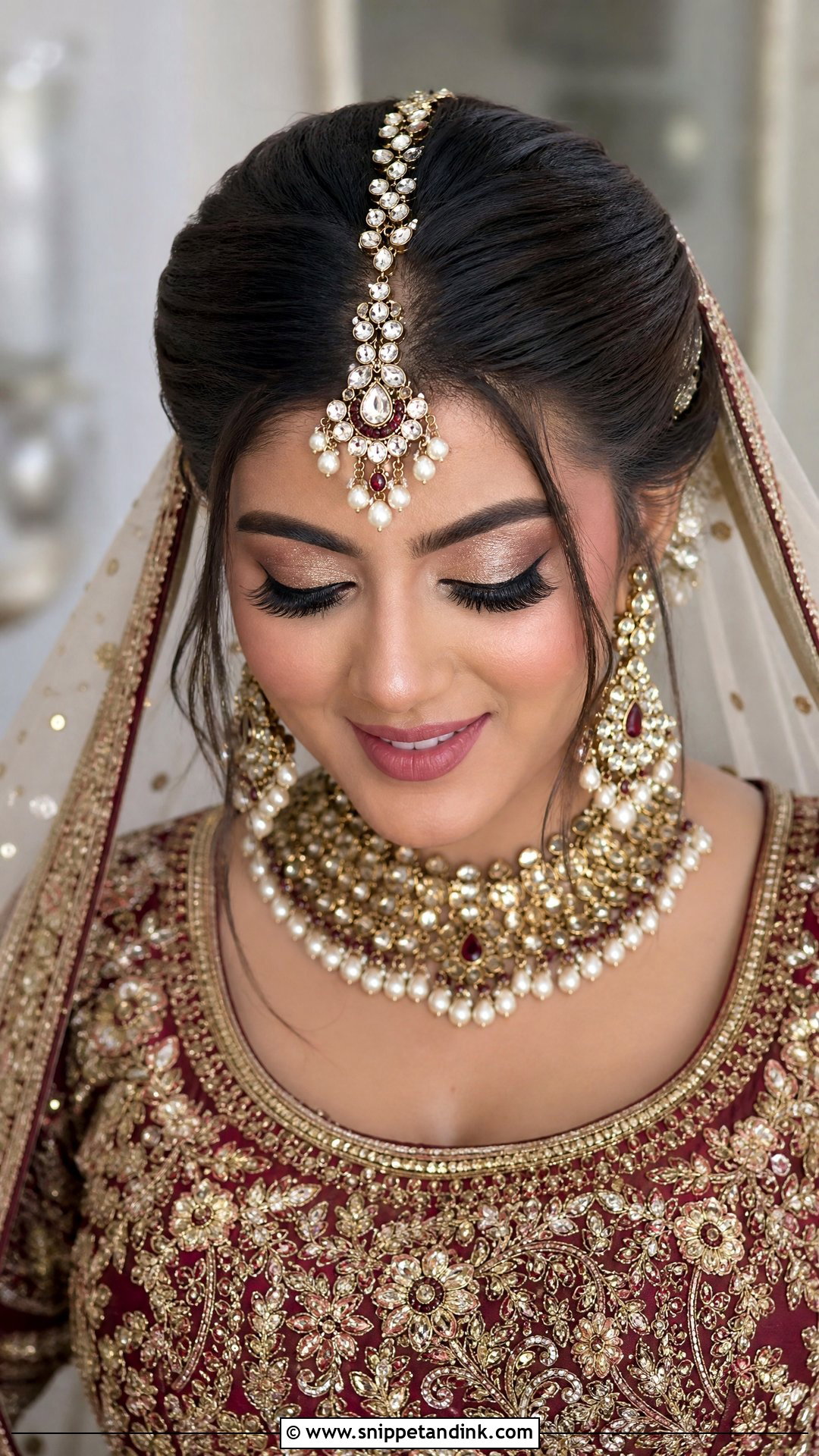
A maang tikka sits on the forehead and draws attention to the face, which makes the front style underneath it matter. I style a smooth puff or sweep, then work on positioning the maang tikka along the center part, so the pendant sits just below the hairline. Keep the front neat or the chain will sit crooked. It pairs with buns, braids and side sweeps at Indian and South Asian weddings. Put the tikka on before the dupatta, so it isn’t pulled out of place later.
23. Front Hair With Headband
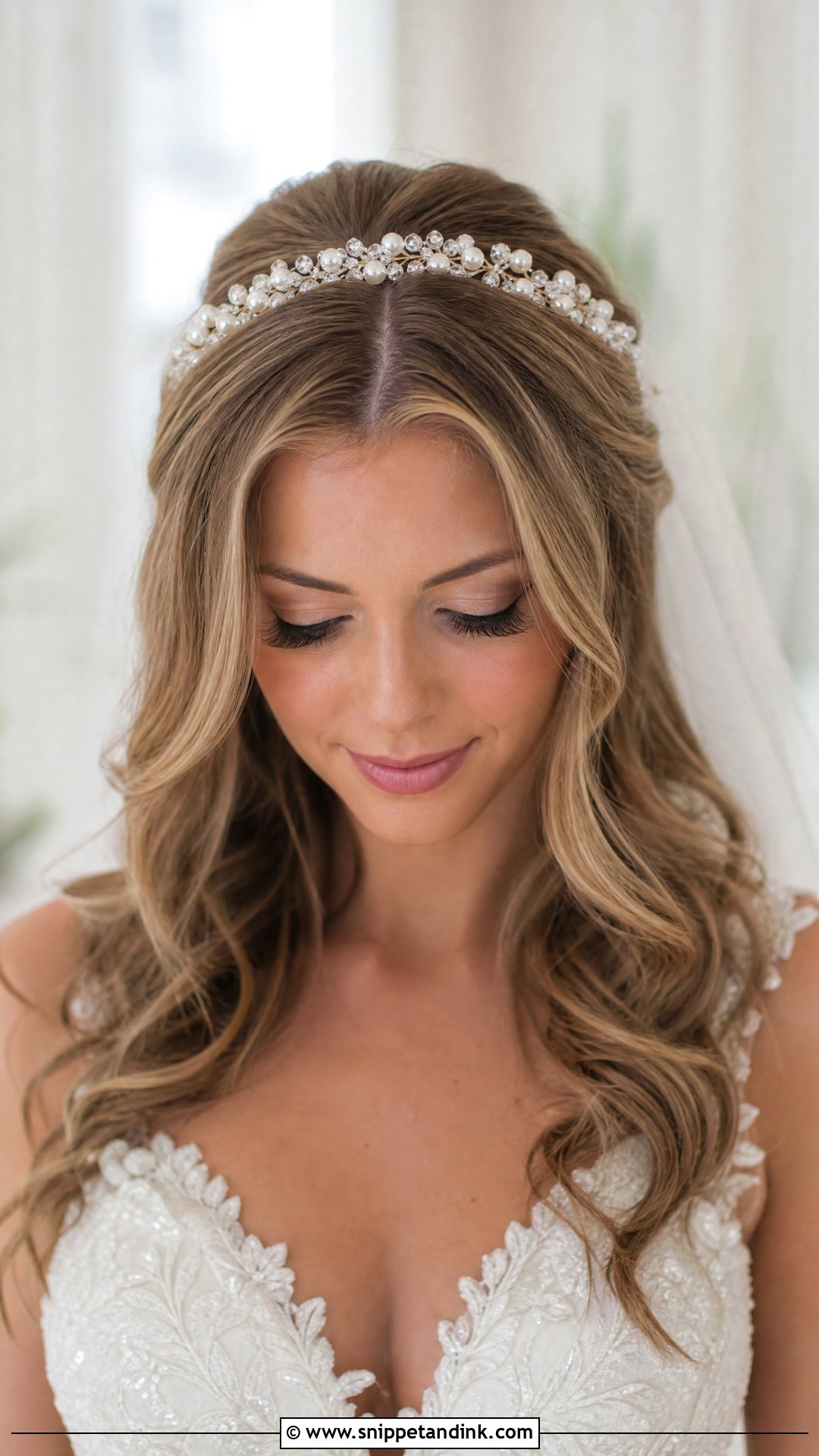
A jeweled or pearl headband across the crown keeps the front off your face with almost no styling. I wave or sweep the front first, then place the band and secure it with hidden pins behind the ears. Embellished bands look glamorous, delicate ones subtle. They work with updos or open hair. Headbands press behind the ears, so I bend the ends slightly to fit your head before the morning.
24. Front Hair With Loose Tendrils
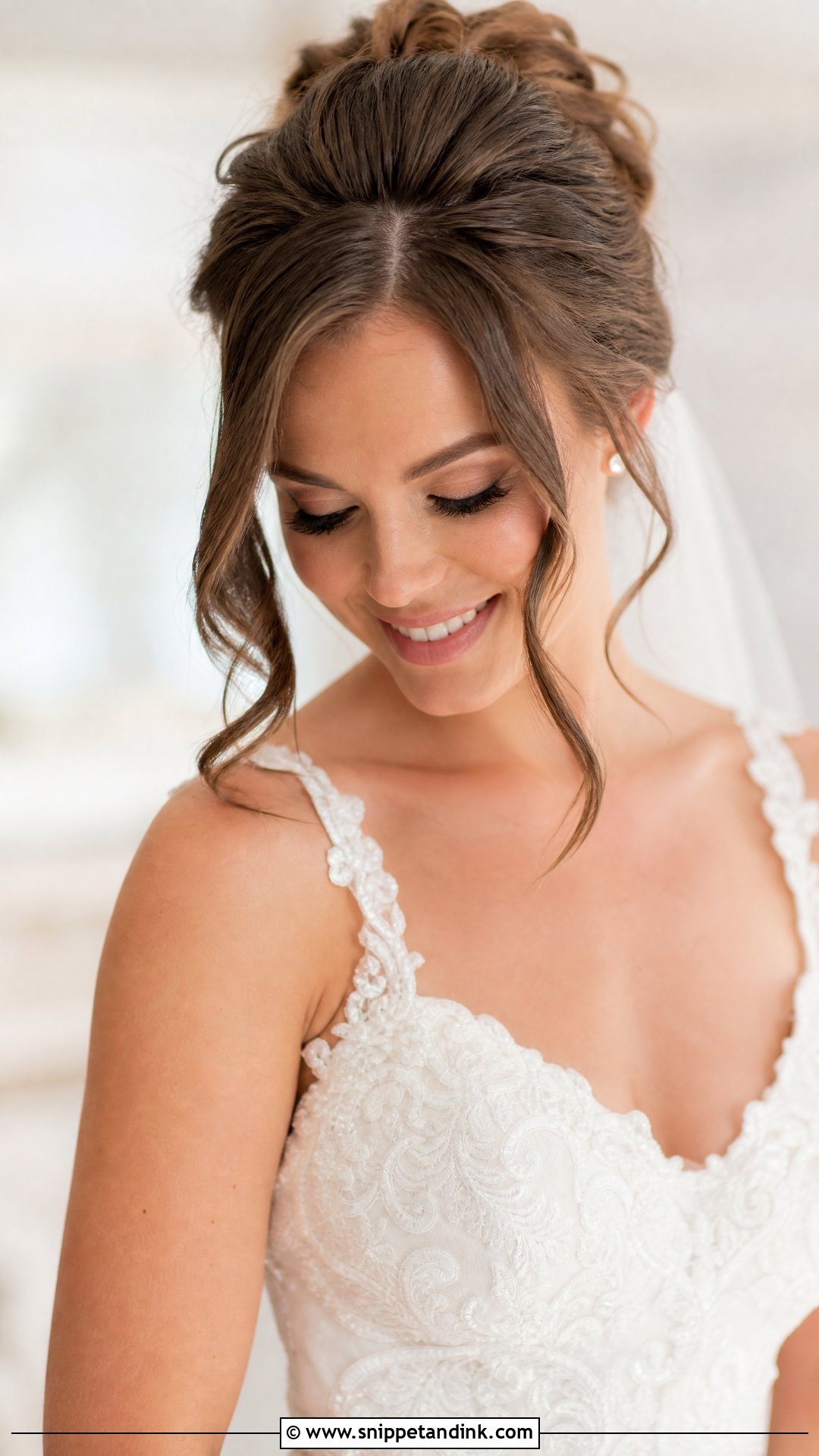
Loose tendrils soften a structured updo. I pull most of the hair back into a bun, then leave a few strands near the front and curl them slightly. Chosen carefully, they look intentional; random ones look like the updo is coming down. They flatter most face shapes and suit any theme. They can catch in lip color, so I keep them short enough to clear the mouth.
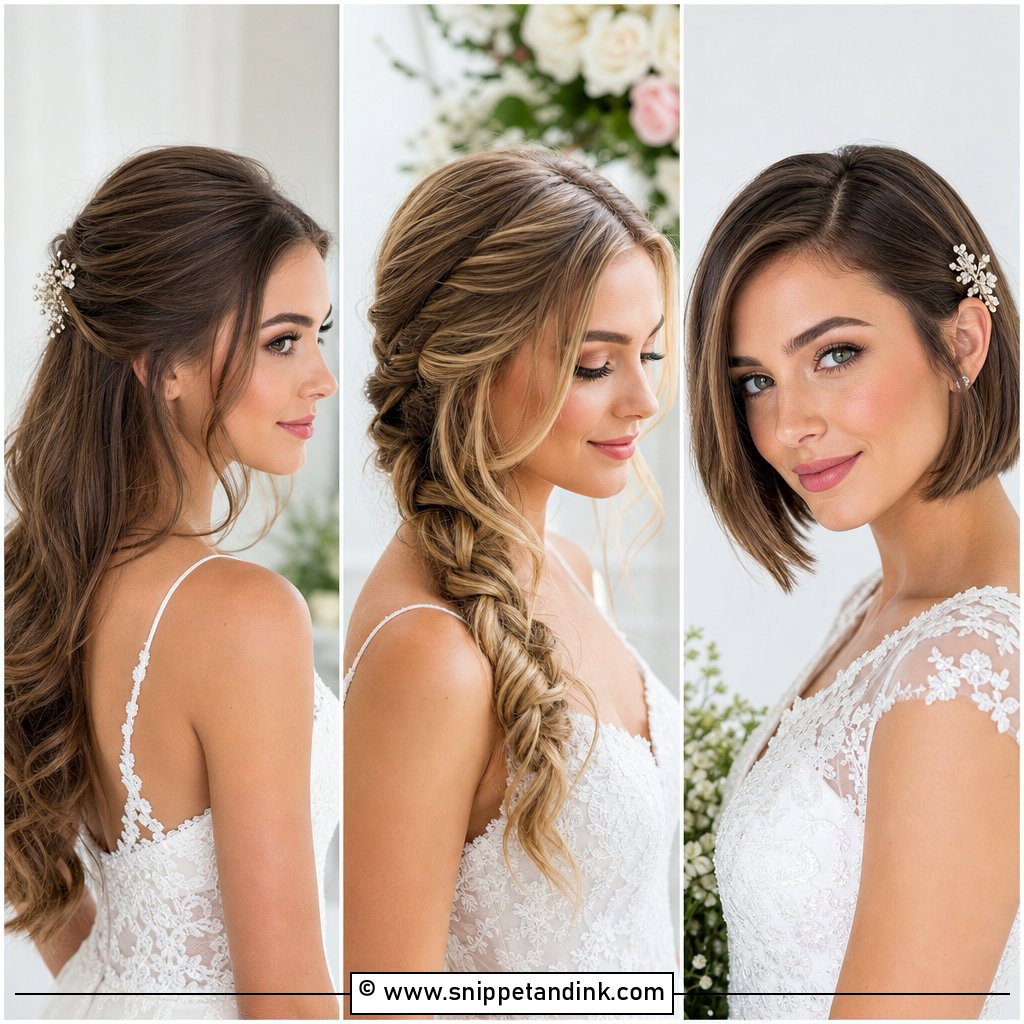
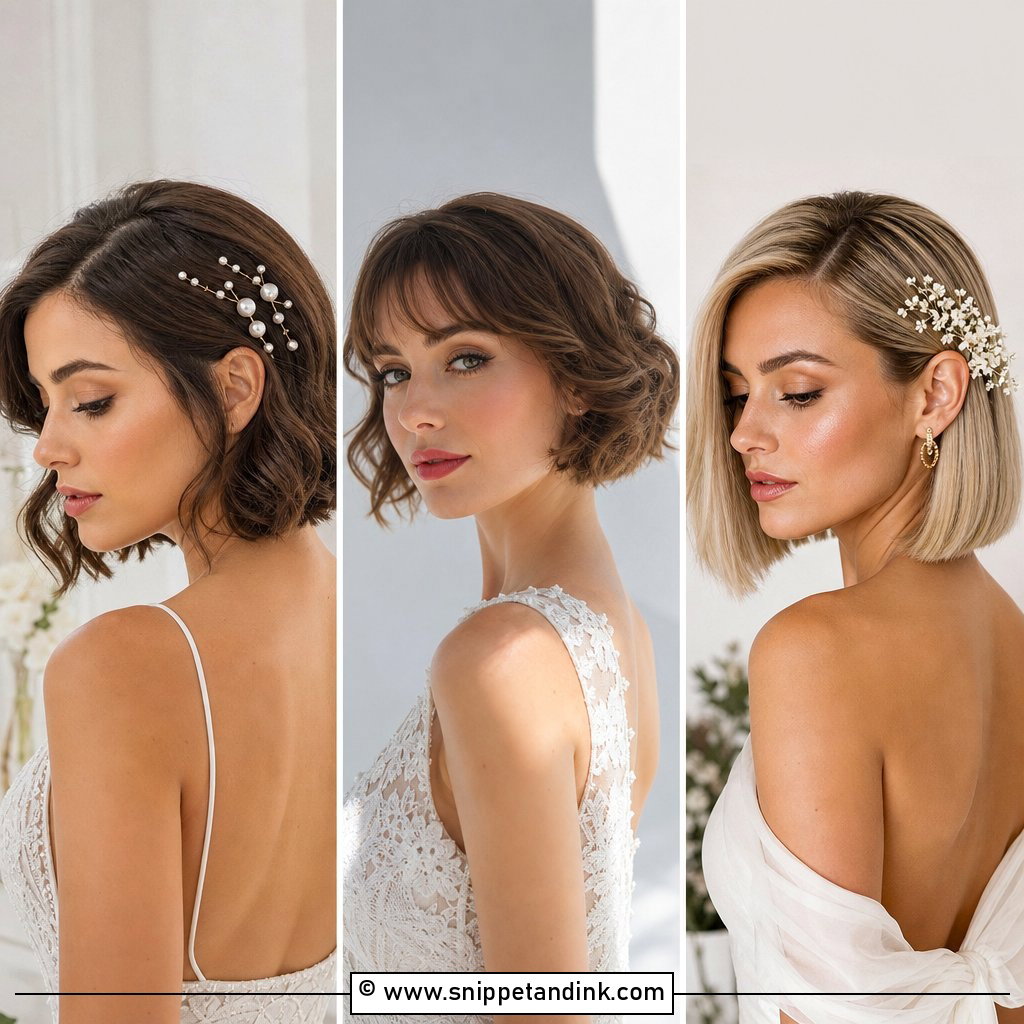
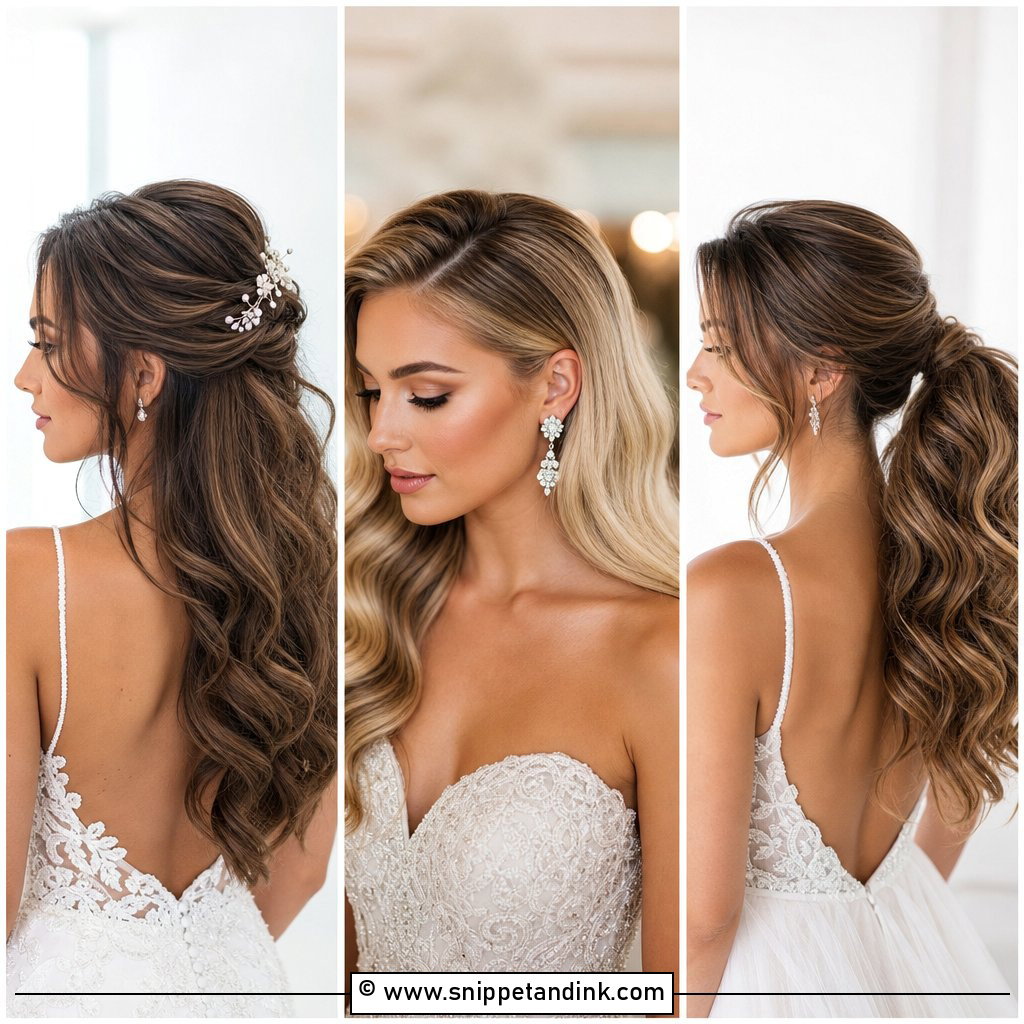
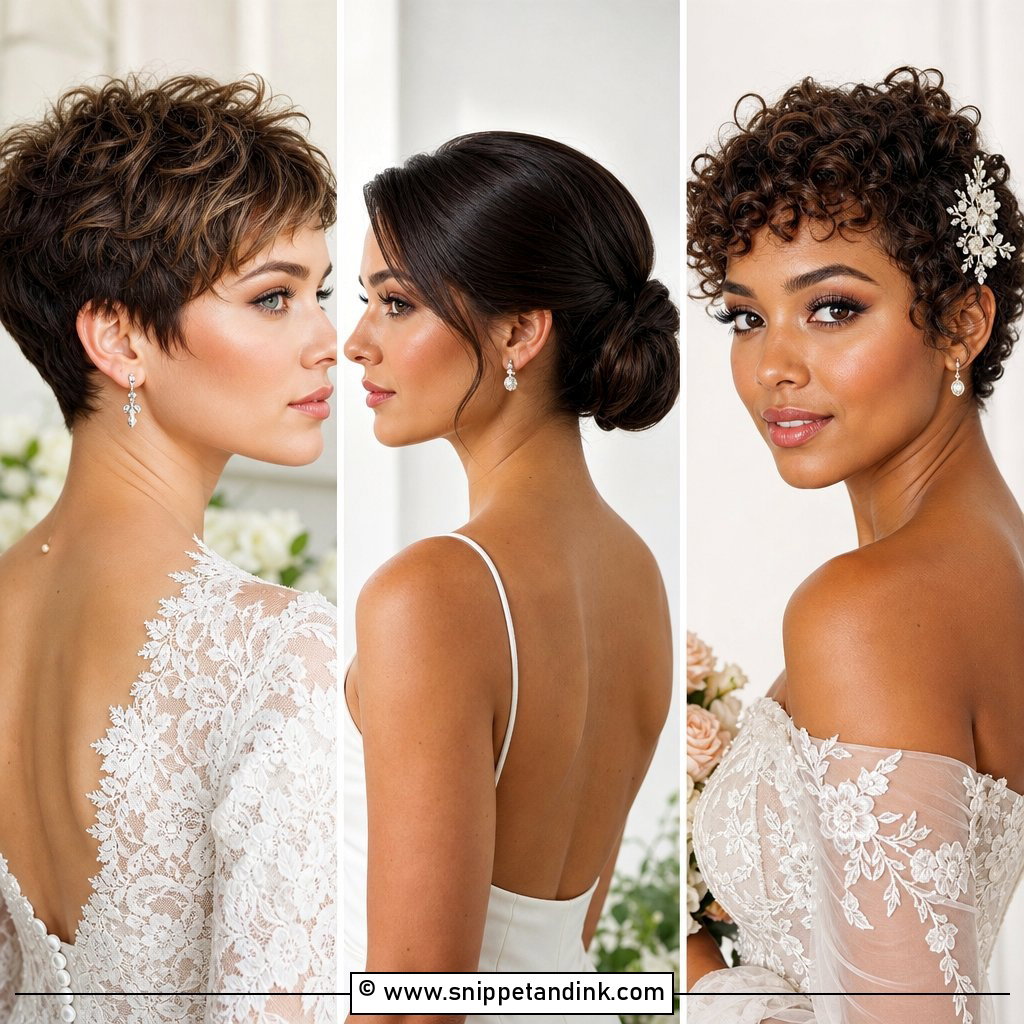
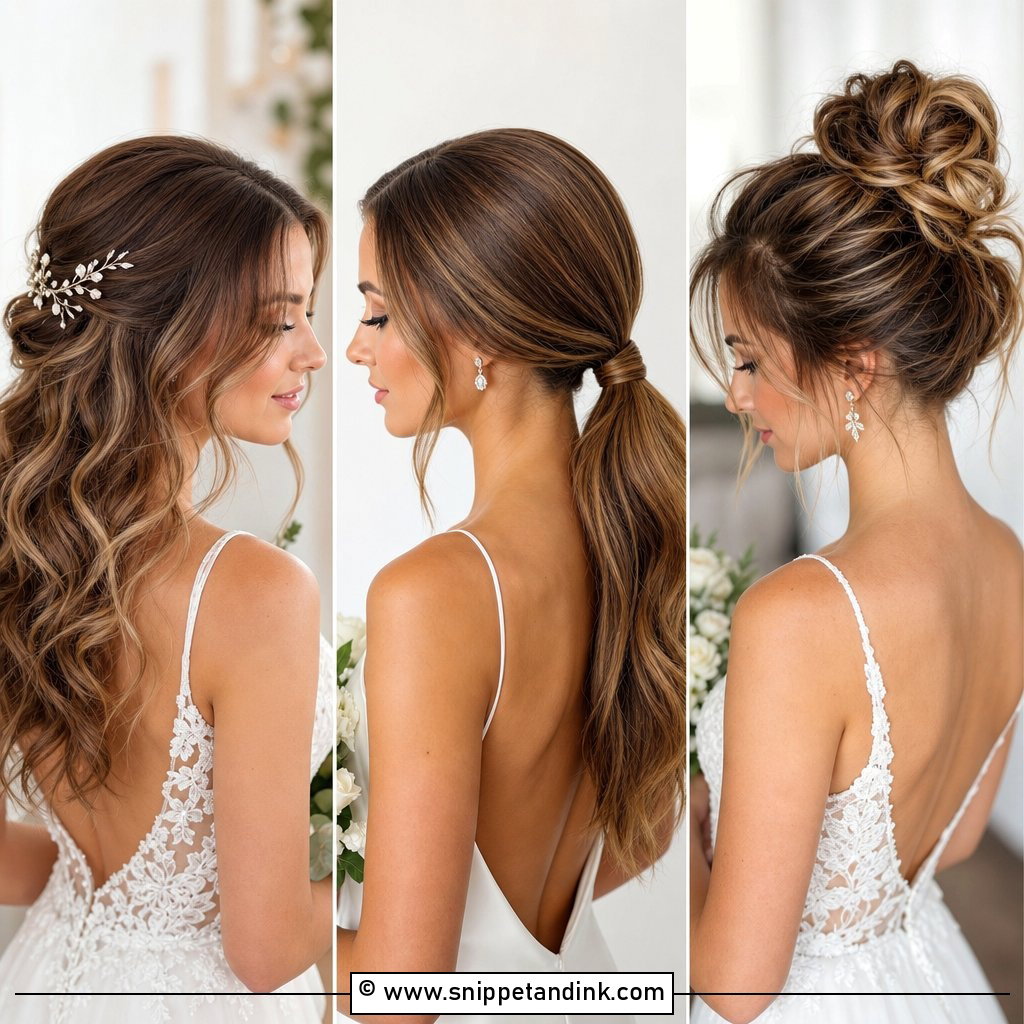
25. Front Dutch Braid Wedding Hairstyle
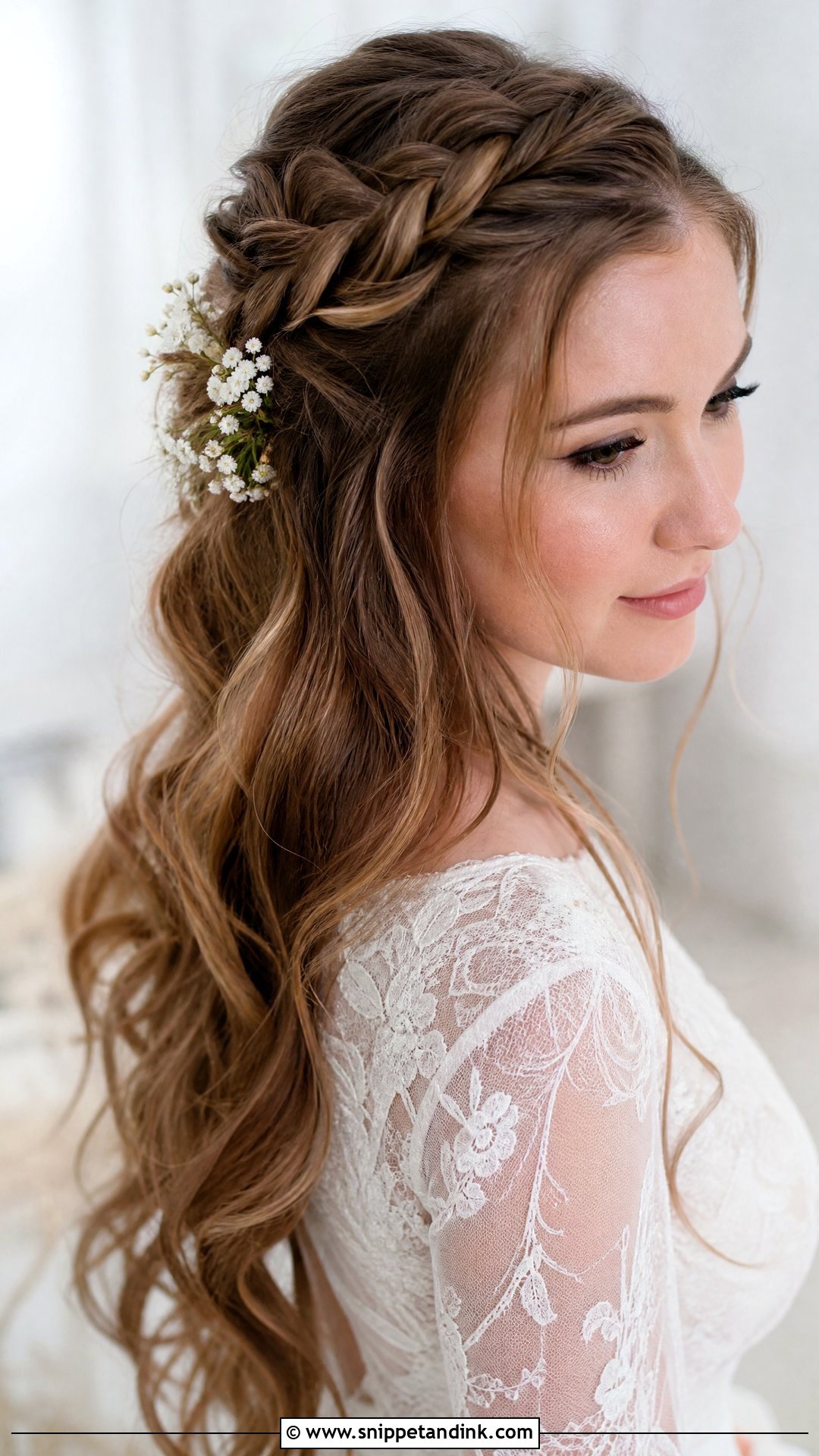
A Dutch braid sits raised on top of the hair, because the sections cross under rather than over. I braid the front and weave it back into the style, so it frames the face with a defined pattern. It pairs with buns, ponytails and waves, and suits boho and rustic weddings. Loosen it slightly for softness, and add small flowers or pearls to the weave. Longer hair gives a more even braid.
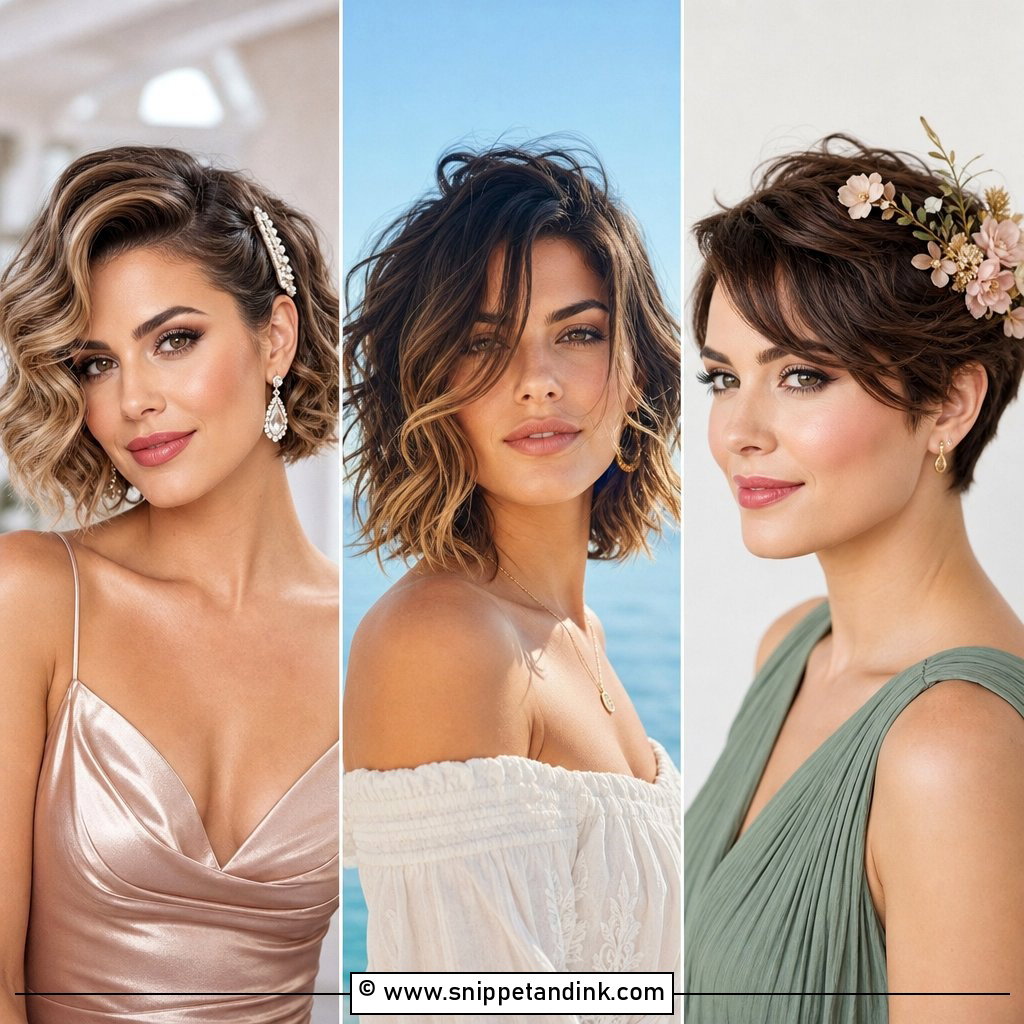
26. Front Hair With Side Part
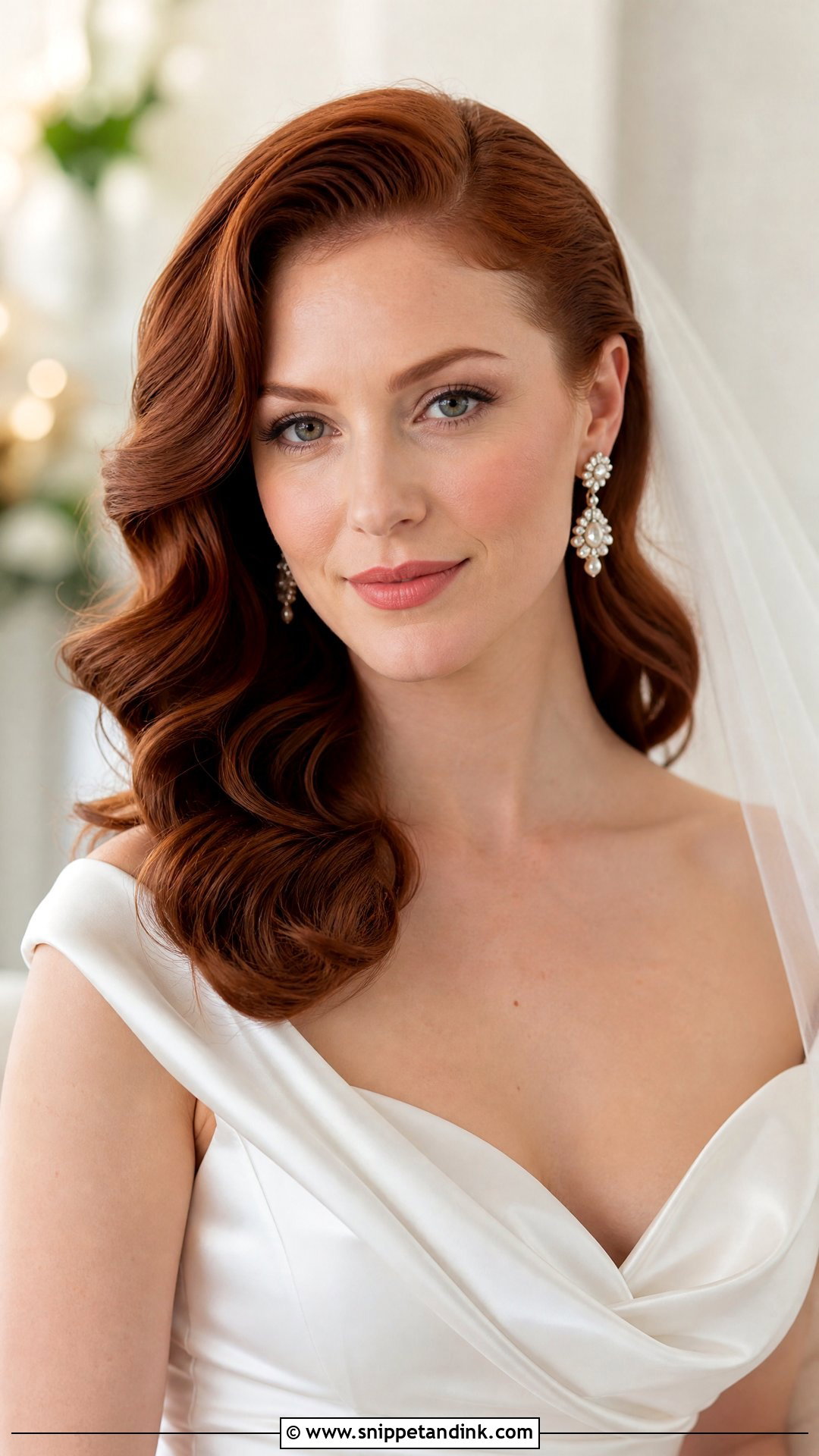
A deep side part sweeps the heavier section across the forehead for an old Hollywood feel. It flatters round and square faces by breaking up symmetry. Sleek reads sophisticated, curls more romantic. It pairs with waves, buns and vintage styles, and with statement earrings on the open side. If your natural part is on the other side, I’d move the part a day ahead and set it with a clip overnight so it doesn’t spring back.
27. Front Hair Puff With Open Curls
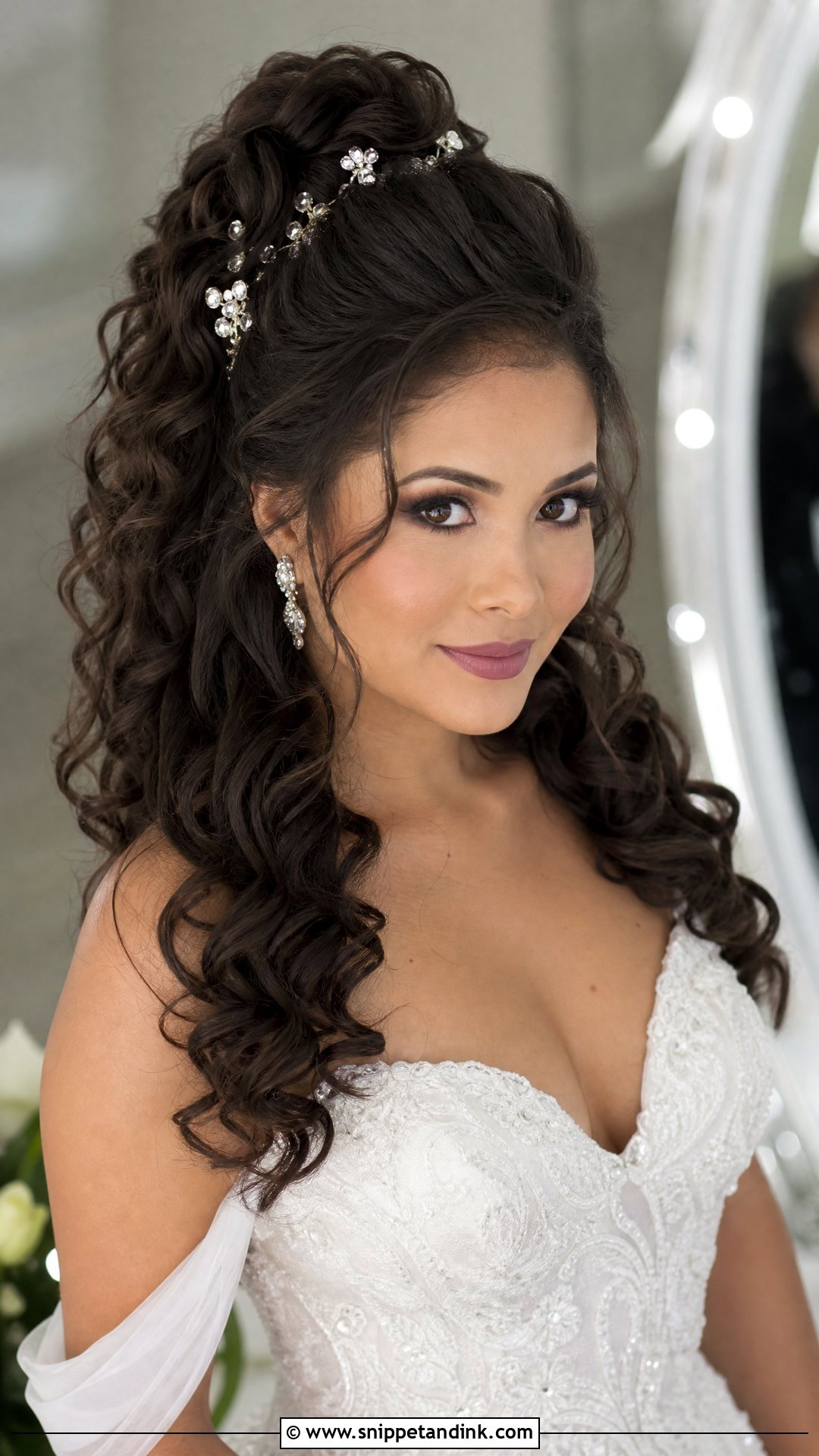
A front puff with open curls is the fullest look here: structure on top, curls cascading around the shoulders. I tease gently at the crown and smooth over it, then curl the lengths with a wand for defined waves. Jeweled pins near the puff add sparkle. Long, thick hair carries it best. It suits traditional and modern outfits, and it gives a regal outline in photos.
28. Front Hair With Bridal Tiara
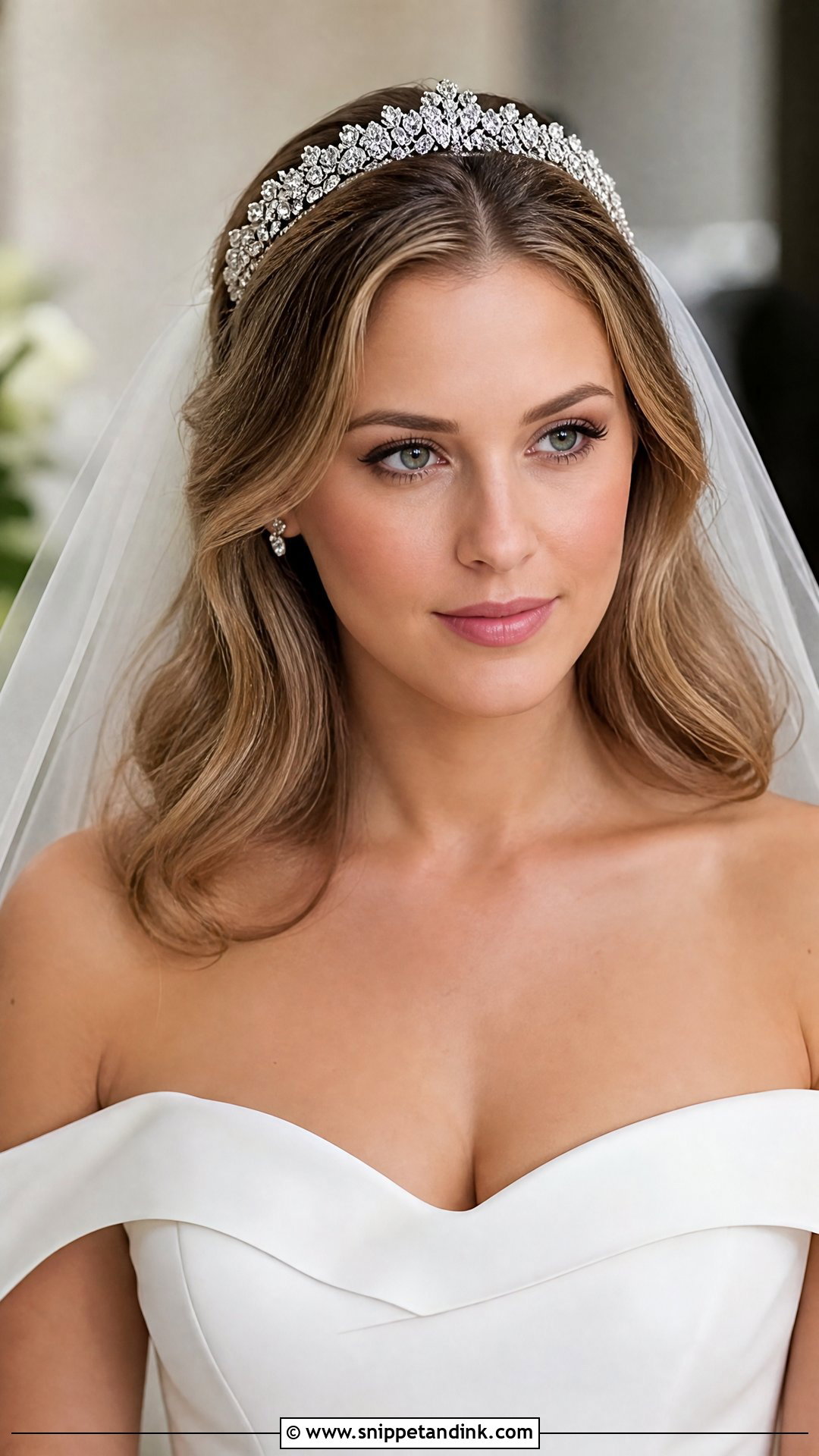
A tiara needs a polished front to sit on. I style the front in soft waves or a sleek sweep, then position the tiara along the crown and pin it through its end loops into a teased base so it doesn’t slide forward. It works with updos, half-up styles and open hair, and a veil can sit behind it. The tiara draws attention upward and suits classic, structured gowns.
29. Front Hair With Wavy Bangs
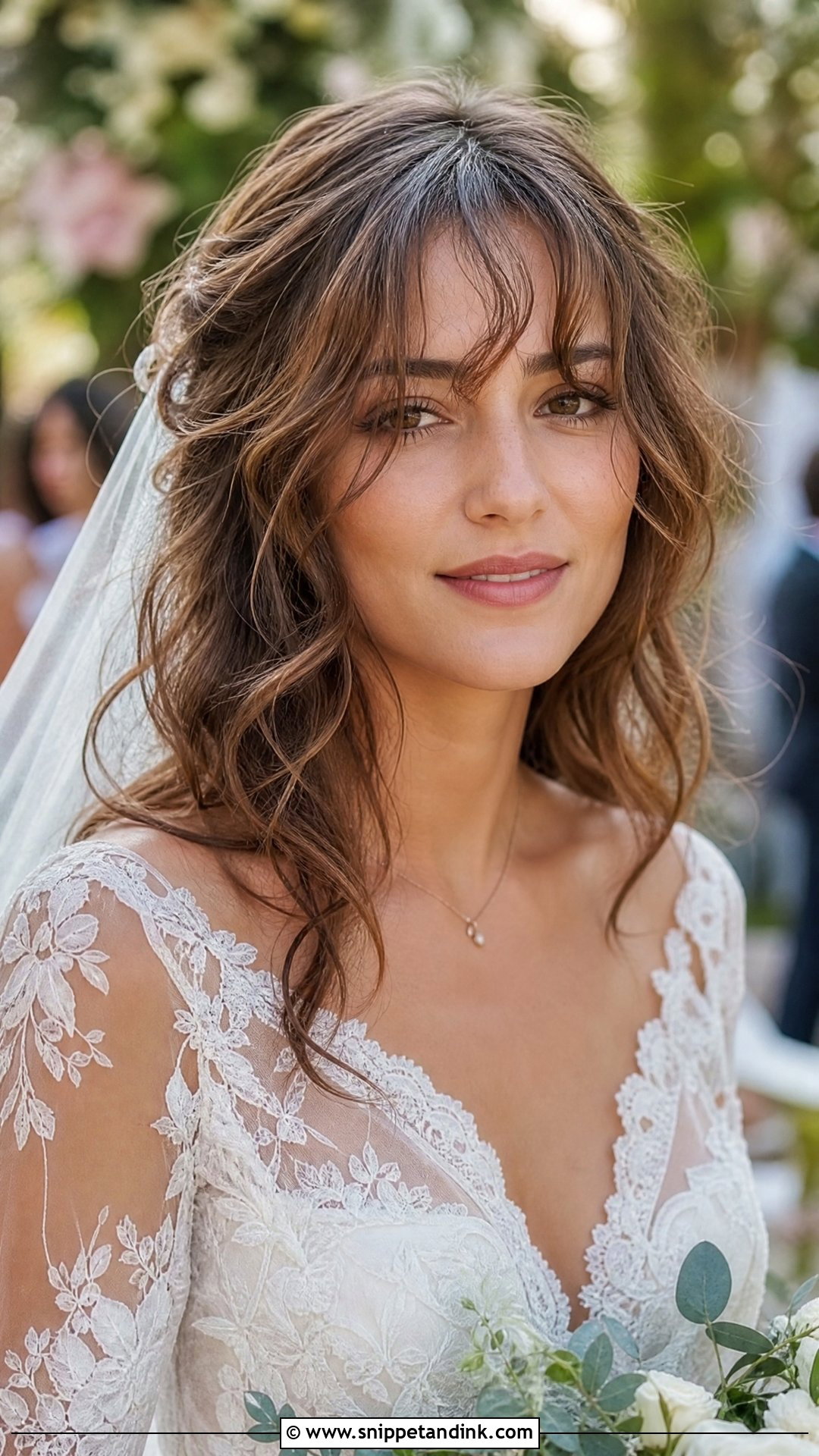
Soft waved bangs frame the forehead with subtle texture. I curl them gently on a small round brush, then break them up with fingers so they don’t sit as one block. Wavy bangs blend into loose waves or textured updos and suit boho and garden weddings. Keep them light rather than blunt. They separate in heat and humidity, so a little powder on the forehead helps them hold.
30. Front Hair With Low Knot Bun
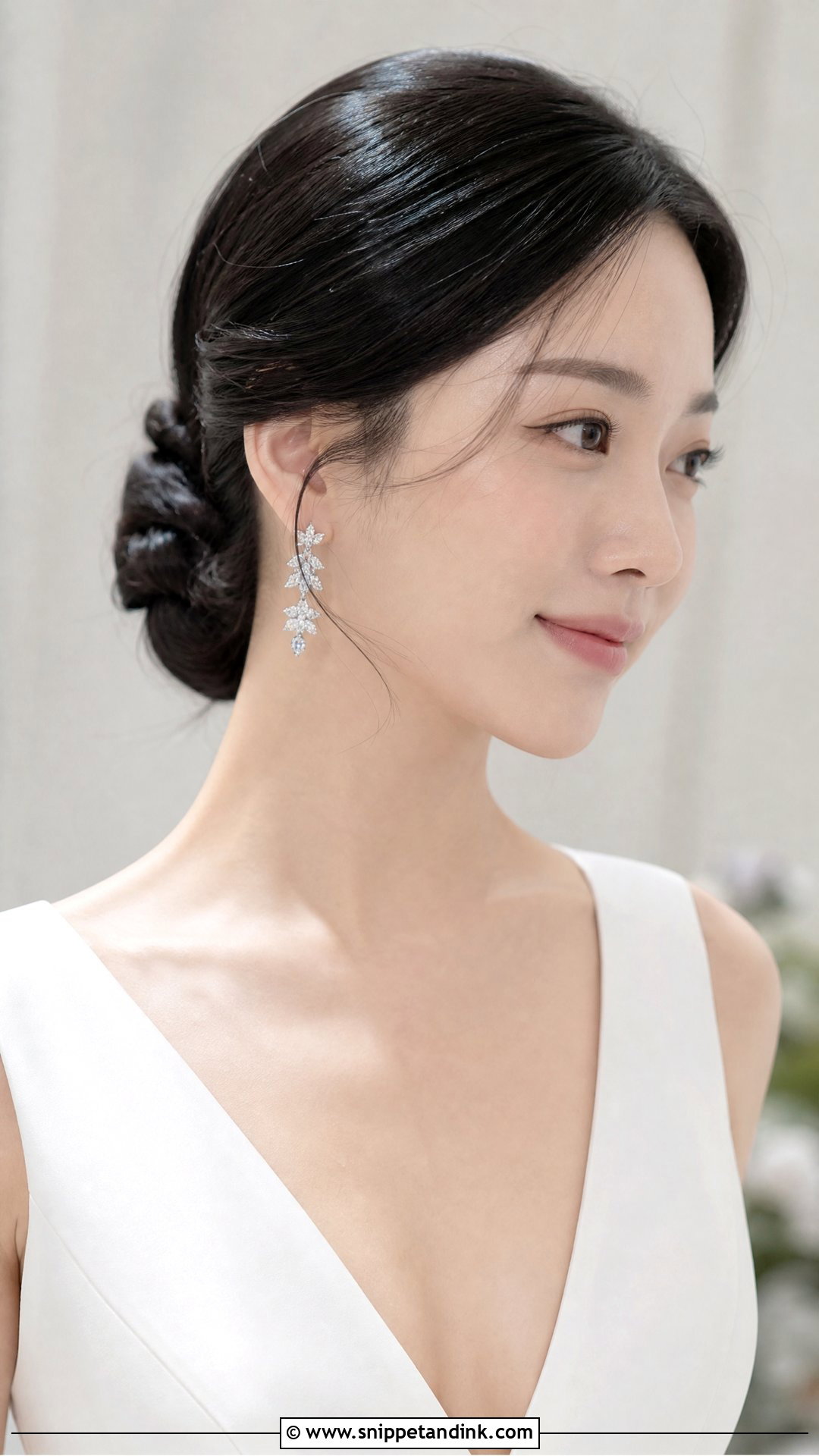
A low knot bun with a smooth front is the most minimal style in this list. I sweep the front cleanly back or to one side, then twist the rest into a knotted bun at the nape. A touch of serum keeps the front sleek. It suits statement earrings and clean makeup, flatters most necklines and sits comfortably under a veil. Because the knot holds itself, it needs fewer pins than most buns, and it stays secure all night.
Where the Tikka Chain, Dupatta and Veil Pins Actually Anchor
Front accessories are heavier than they look, and most problems on the day come from pinning them into styled hair that wasn’t built to carry them. A tikka chain hooks into the part and needs a small clip behind the puff. A dupatta or veil should be pinned into the bun or a hidden braid, never into the puff itself, or it drags the height down.
Order matters too. I set the front first, then the tikka or headpiece, then the dupatta or veil, then fresh flowers last. Putting everything on in that order means each piece rests on something secure. When it’s time to change outfits, take them off in reverse.
Checks before you leave the chair
- Turn your head side to side and look down; nothing should shift or pull.
- Ask for a few spare pins in your hair color for whoever is helping you.
- Make sure the tikka sits straight when you’re seated, not just standing.
- Agree who will help you remove the dupatta or veil, so the front isn’t pulled apart.
What to Bring So Your Stylist Can Plan the Front
The front of your hair frames your face in almost every photo, so it deserves the most attention at your trial. Side sweeps, braids, slicked-back fronts and puffs each suit different hair, faces and accessories. Bring your veil, tikka or headpiece, a photo of your neckline and two or three styles you like. Book the trial several weeks ahead, wear your makeup if you can, and adjust tendrils, flowers or pins until the look feels like your own.
You'll Like These Ideas:


Leave a Reply