
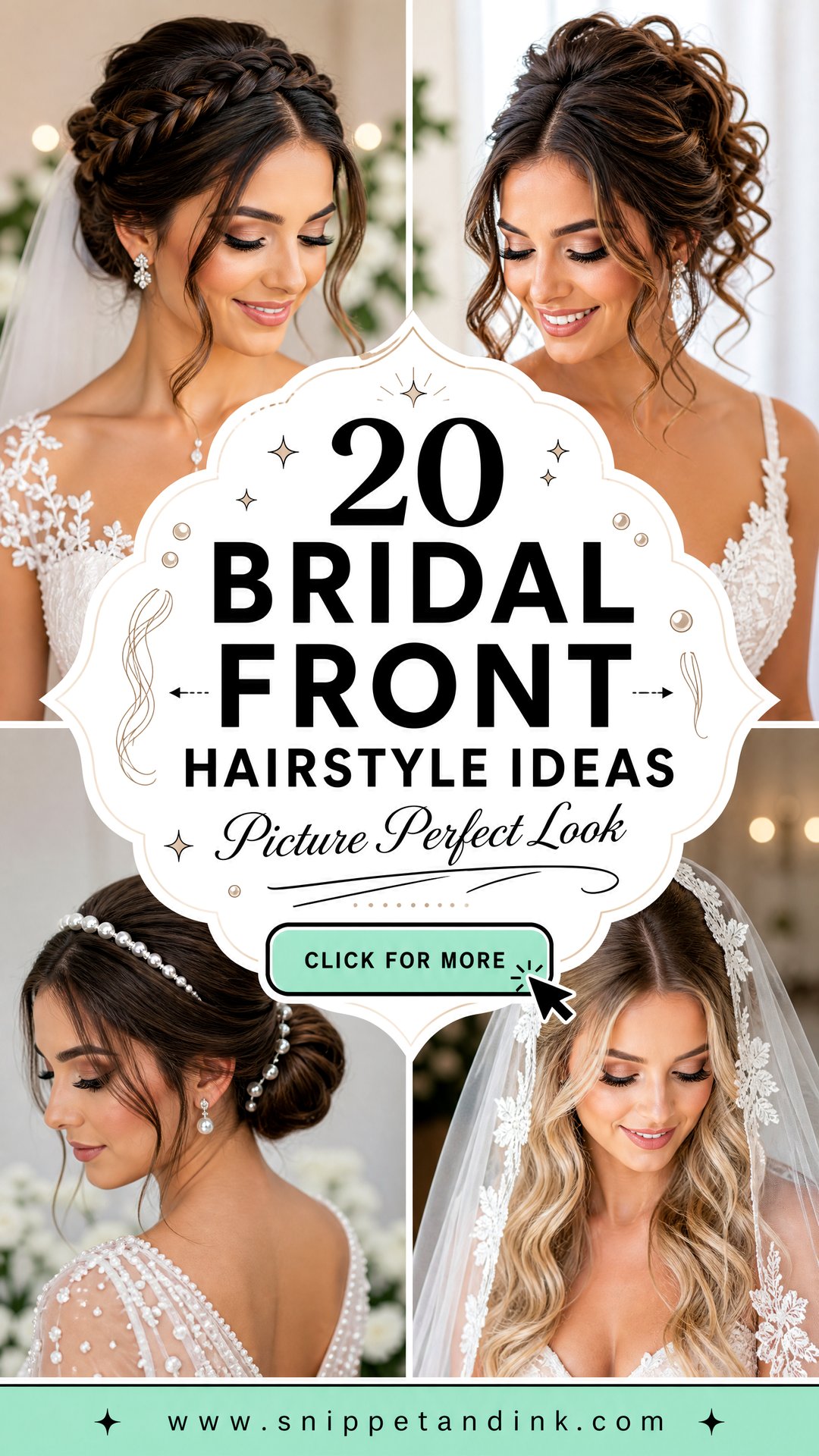
Most of your wedding photos are taken from the front. The officiant sees the front, your partner sees it, and the camera spends the ceremony looking straight at your face. Yet brides often choose hair from a photo of the back of someone’s head. At a trial, I always finish by standing in front of the bride and judging the style from where the guests will see it. The ideas below are all judged that way, from low buns with airy tendrils to sleek middle parts and braided crowns, with notes on hairlines, partings and which faces each one flatters.
Hairline Quirks That Shape the Front of Any Style
The front of a hairstyle depends less on the style and more on your hairline. I look at it carefully at the start of every trial, with the hair pulled straight back, because that’s where most front-view problems begin.
- Cowlicks: hair grows in a swirl that fights any part placed against it. I work with the direction of the swirl rather than flattening it with heat.
- Widow’s peak: a centre part draws attention to the point. A soft side part or face-framing pieces balance it.
- Thin temples: tight sleek styles show the scalp. Softer, looser fronts hide sparse areas better.
- Baby hairs and regrowth: these stick up under flash. A toothbrush with a little gel or wax lays them down.
If you’ve had hair loss after illness, stress or pregnancy, mention it early. There’s usually a style that works around it, but it changes which of the ideas below I’d recommend.
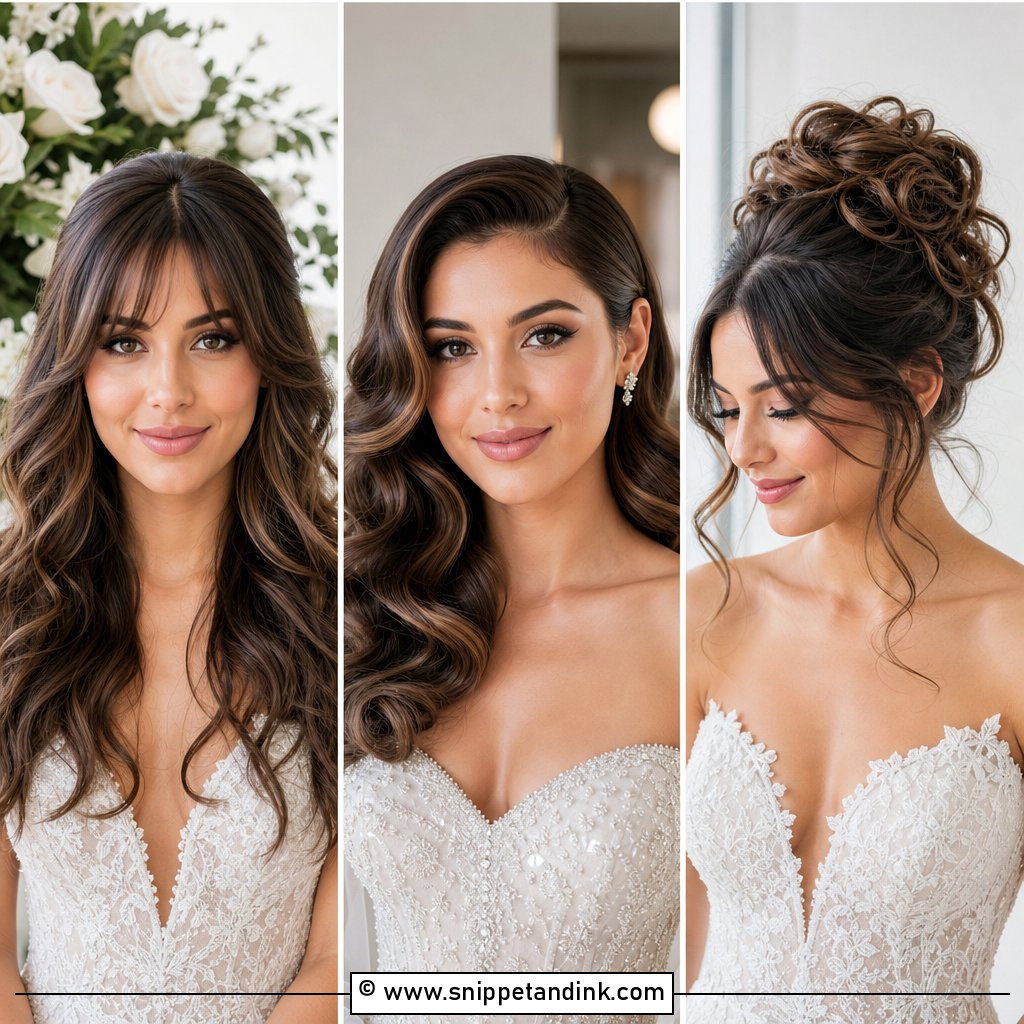
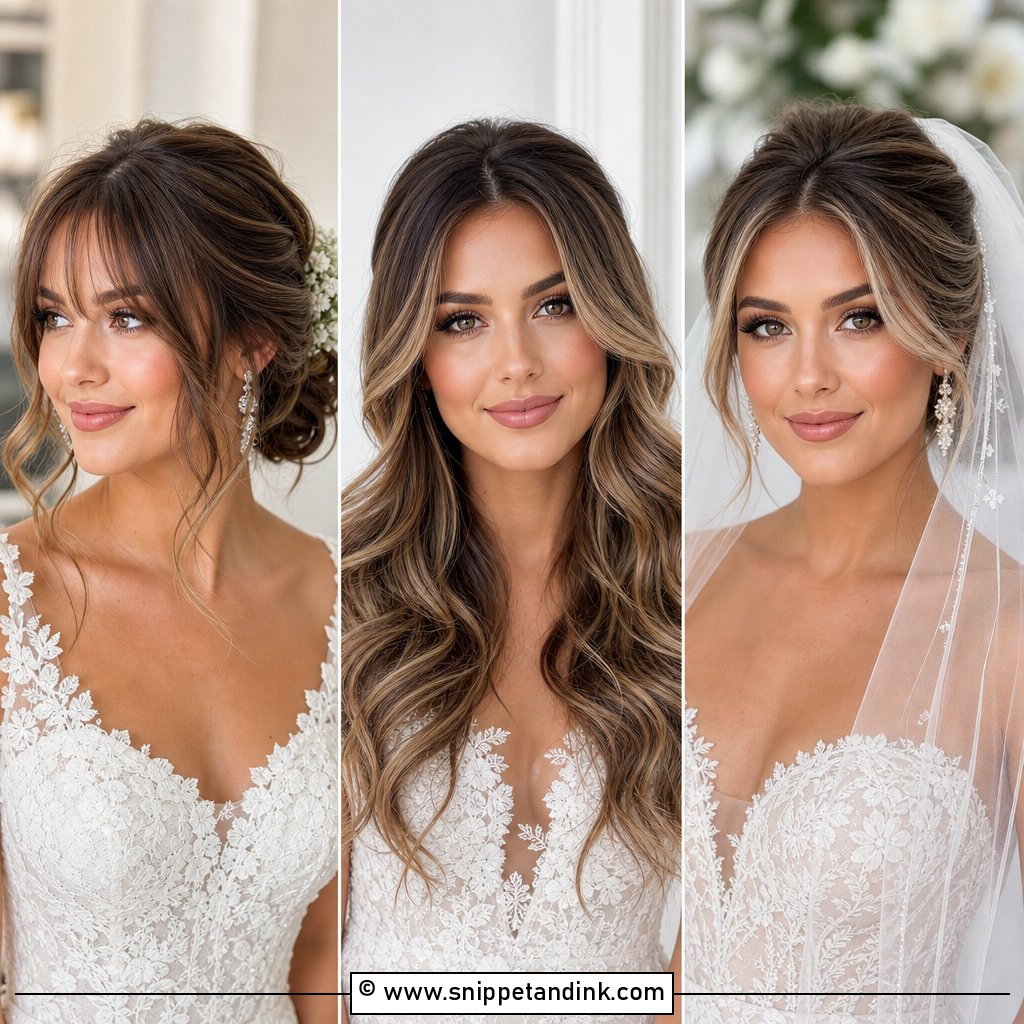
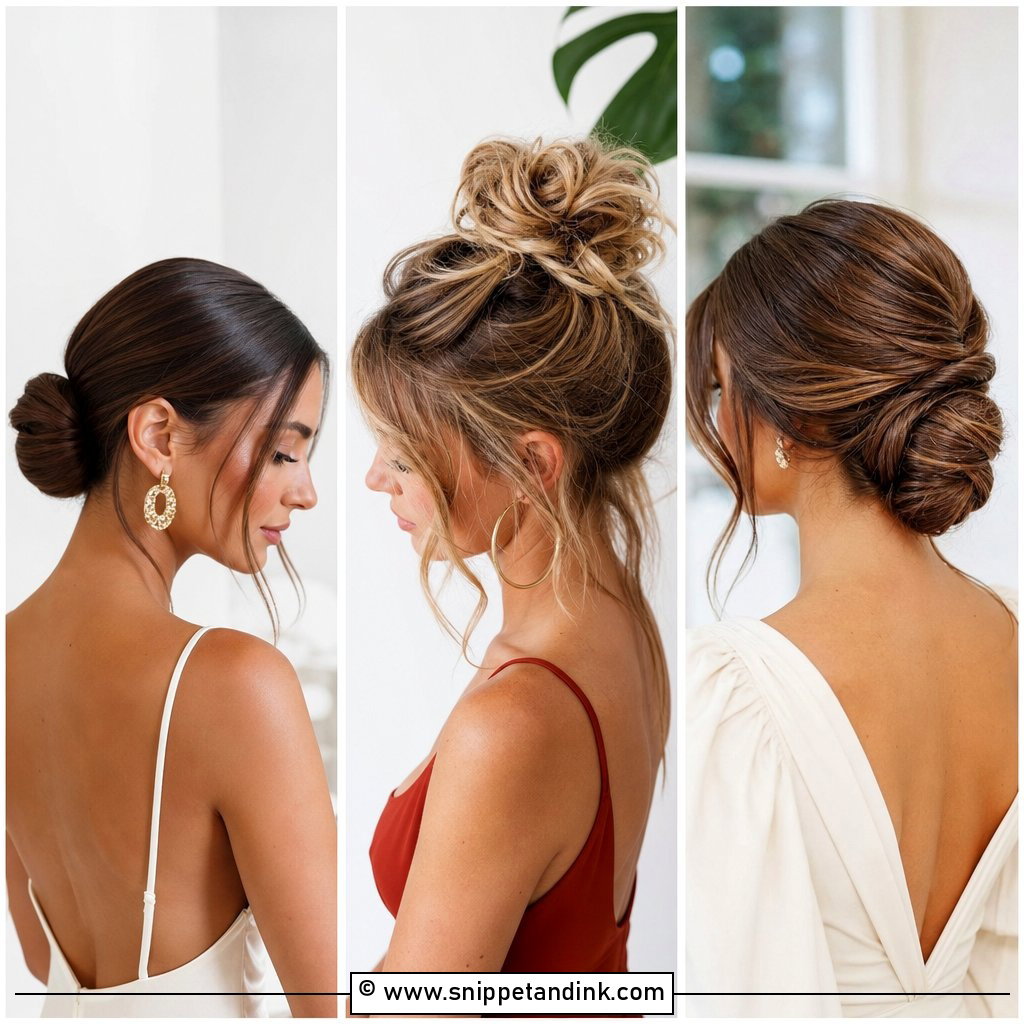
1. Bridal Front Low Bun With Face Framing Pieces
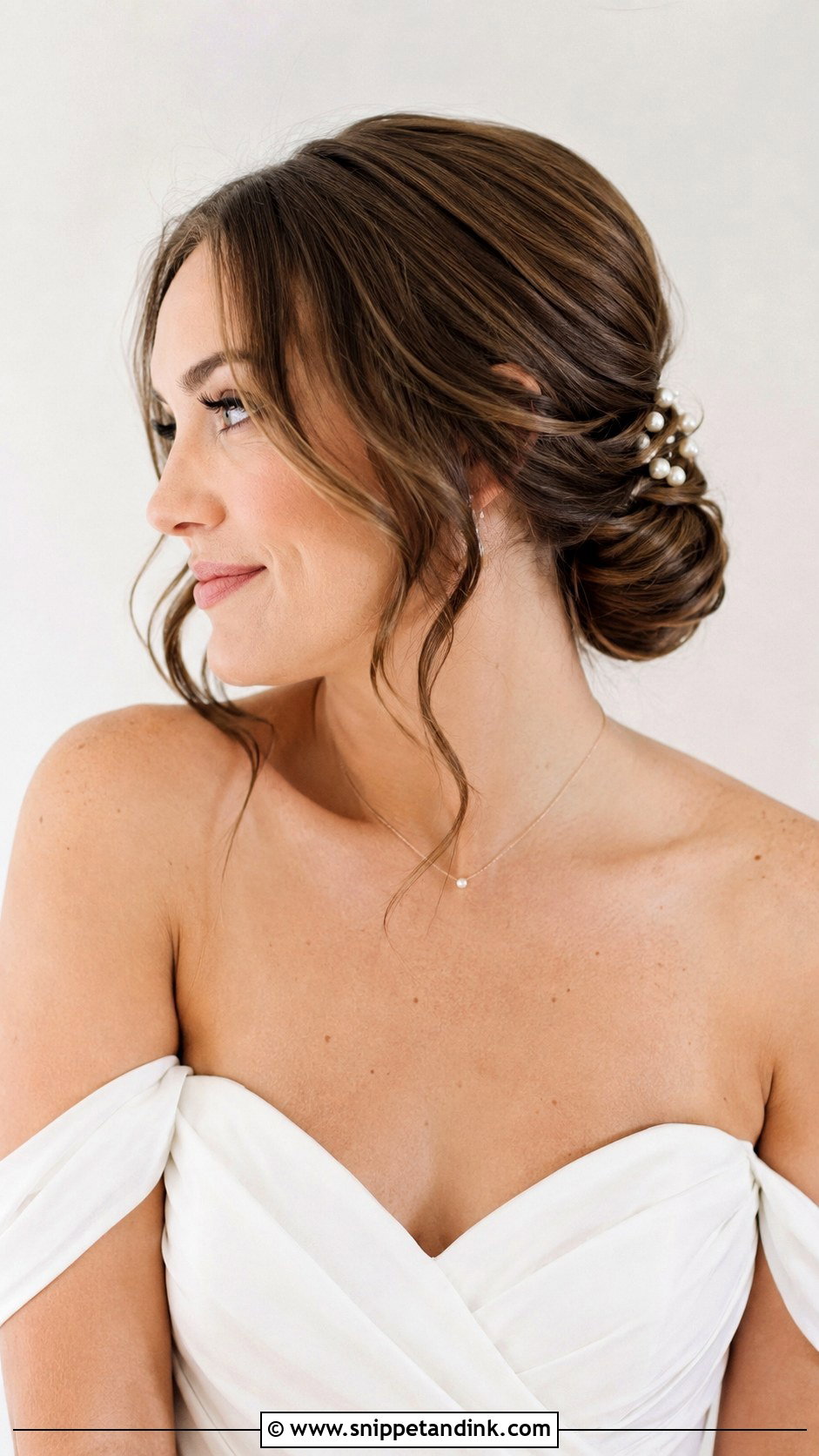
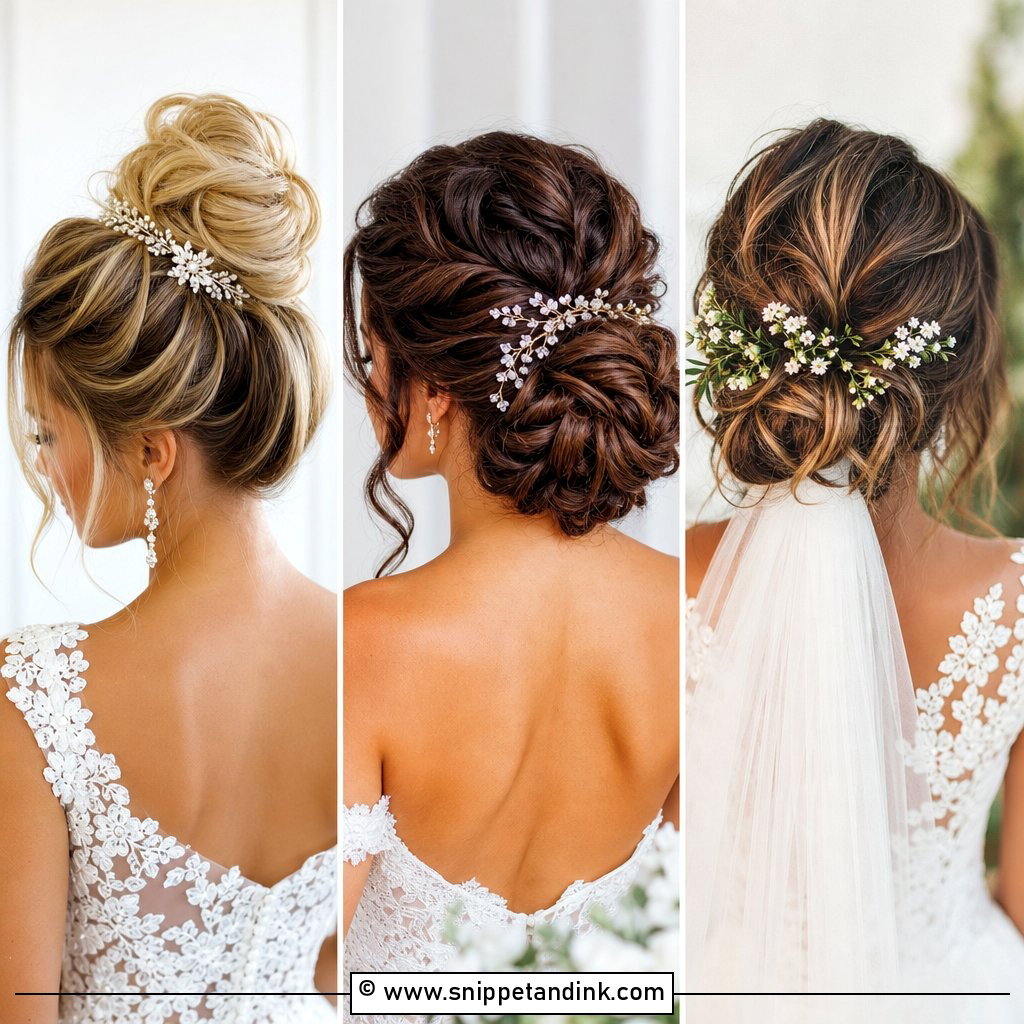
Seen from the front, a low bun with face-framing pieces is mostly about those pieces. They soften the cheeks and jaw, but only if they fall in the right place. I cut nothing at a trial. Instead I pull out a few strands, curl them away from the face, and watch where they settle when the bride talks and smiles. Too many pieces and the face disappears behind hair in candid shots. Strapless and off-shoulder necklines suit it, since the eye moves up to the earrings.
2. Bridal Front Middle Part Bun
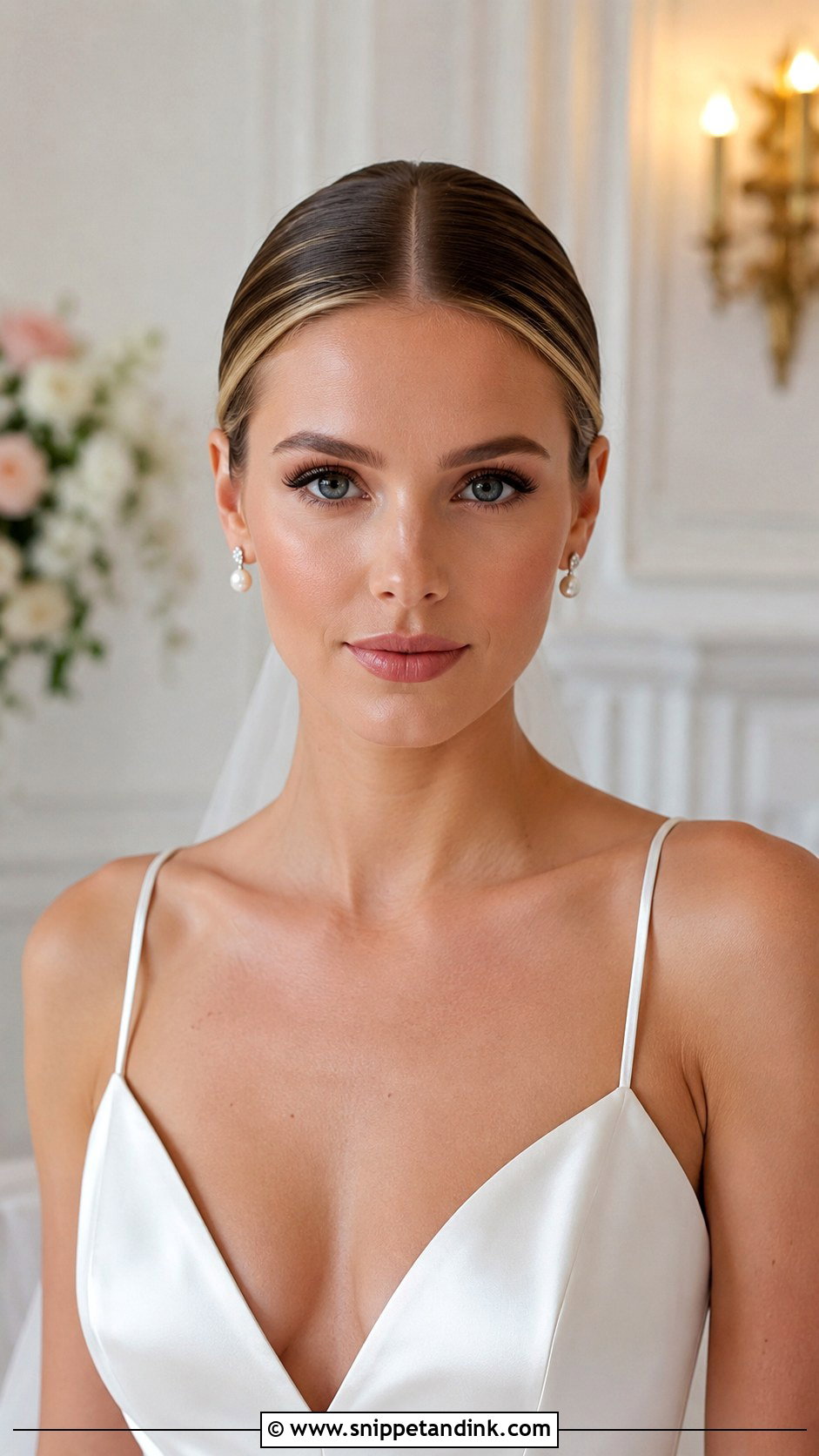
A middle part is the most symmetrical front you can wear, which is why it photographs so cleanly, and also why it shows any imbalance. If your face or hairline is a little uneven, a centre part points straight at it. I check by parting wet hair down the middle and letting it fall naturally before I commit. Worn with a low smooth bun or chignon, it keeps the front quiet when the dress has lace sleeves or a high neck.
3. Bridal Front Side Part Chignon
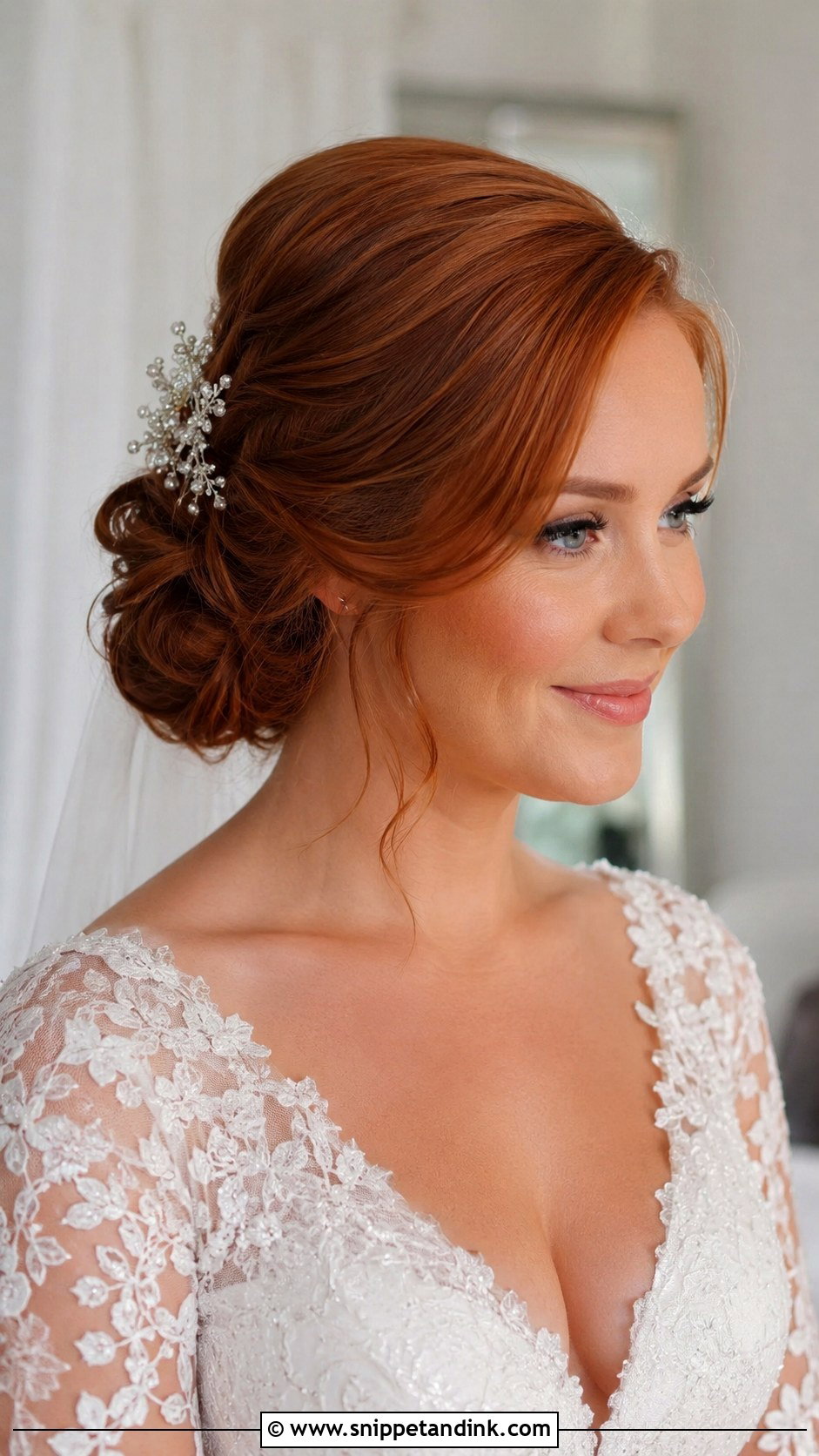
A side part gives instant lift at the front without backcombing, because hair flipped against its natural fall stands up at the root. That’s useful for brides whose hair lies flat. The chignon behind can sit low and smooth or be pinned with a little texture. Pick the side by looking at photos of yourself: most people have a side that photographs better, and the part should open toward it. Side veils and statement earrings work well here.
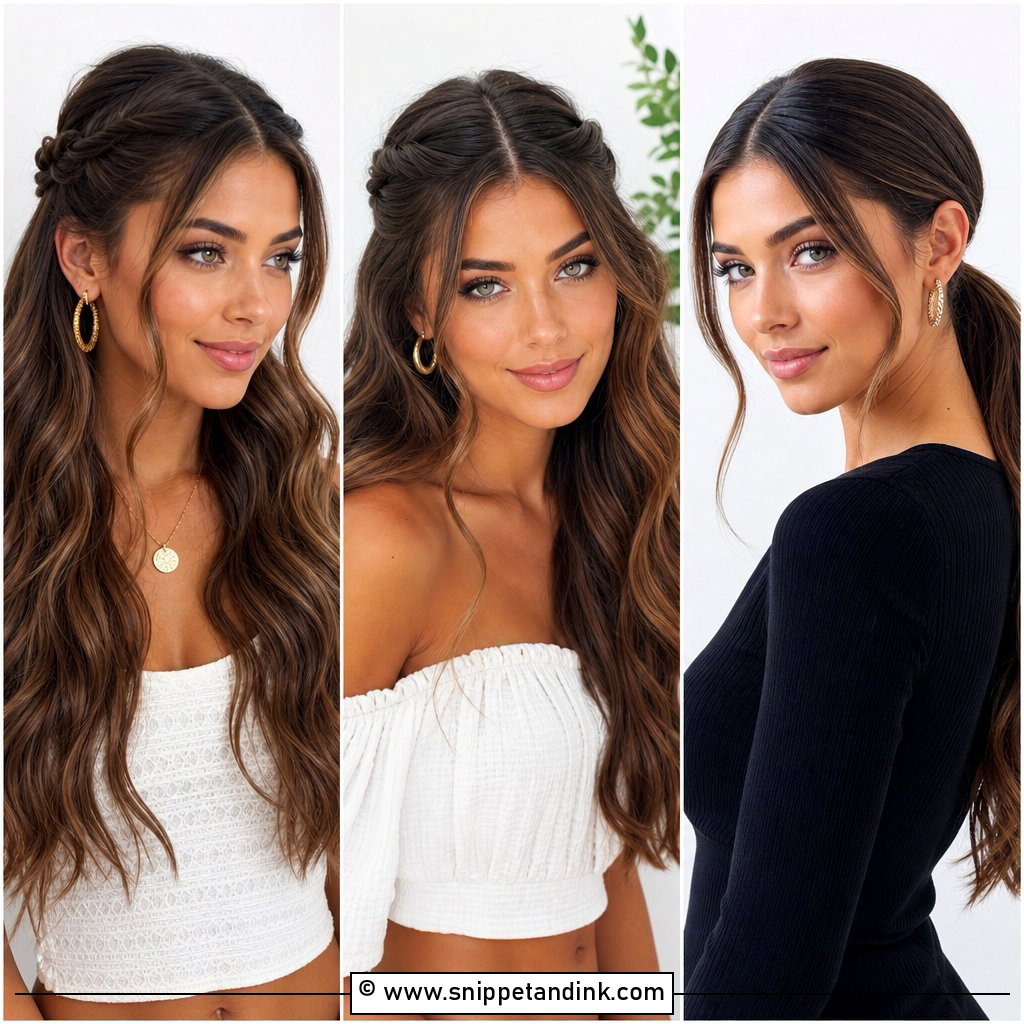
4. Bridal Front Half Up Waves
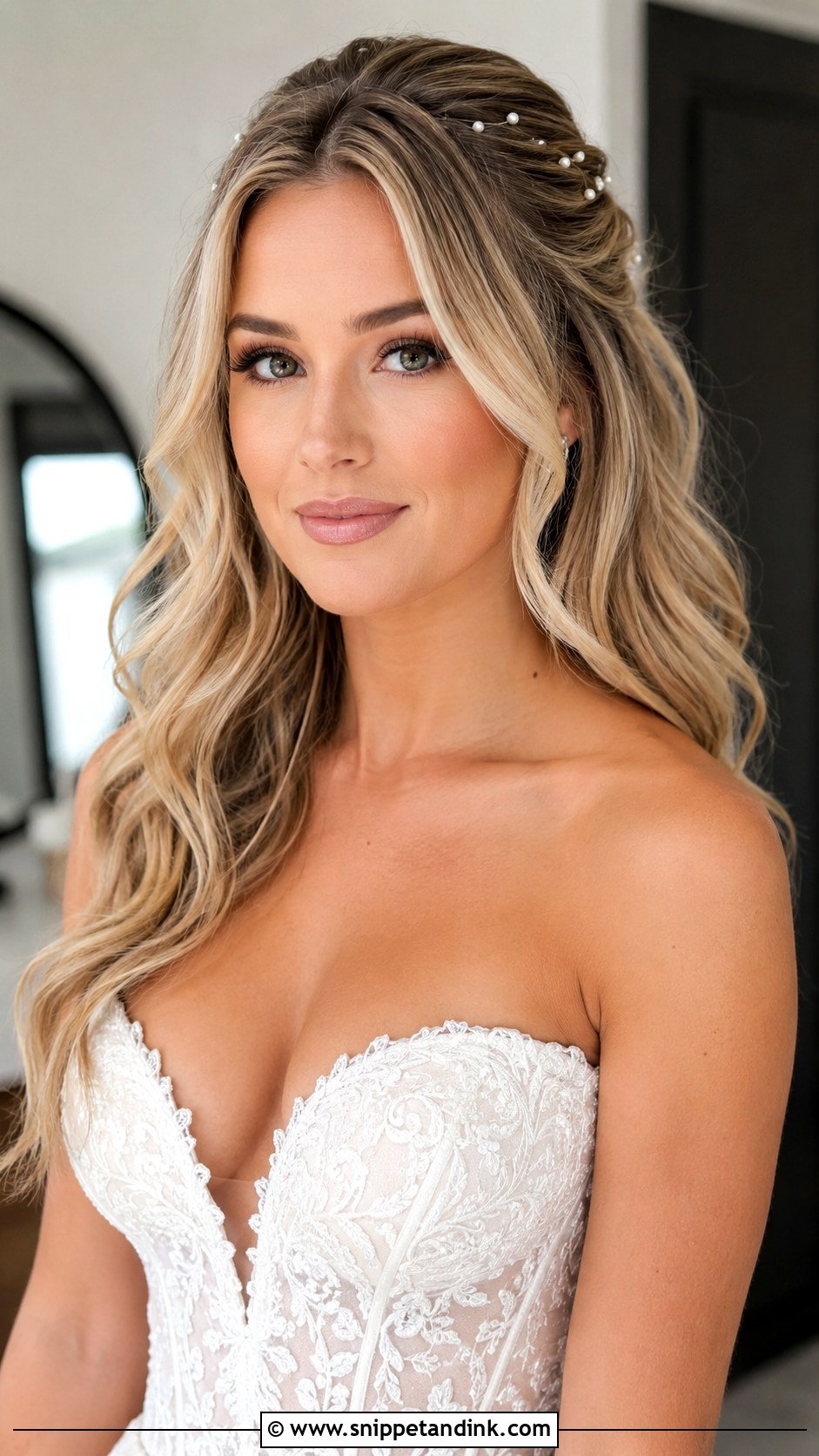
Half-up waves keep the front pieces pinned back so hair doesn’t fall into your face during the vows, while the waves below still move. From the front, the face stays open and the volume sits at the sides. The risk is a flat top, which happens when the crown is pinned too tight. I lift the crown slightly before securing the half-up section. Medium to long hair suits it, and clip-in extensions add fullness if your hair is fine.
5. Bridal Front Hollywood Waves
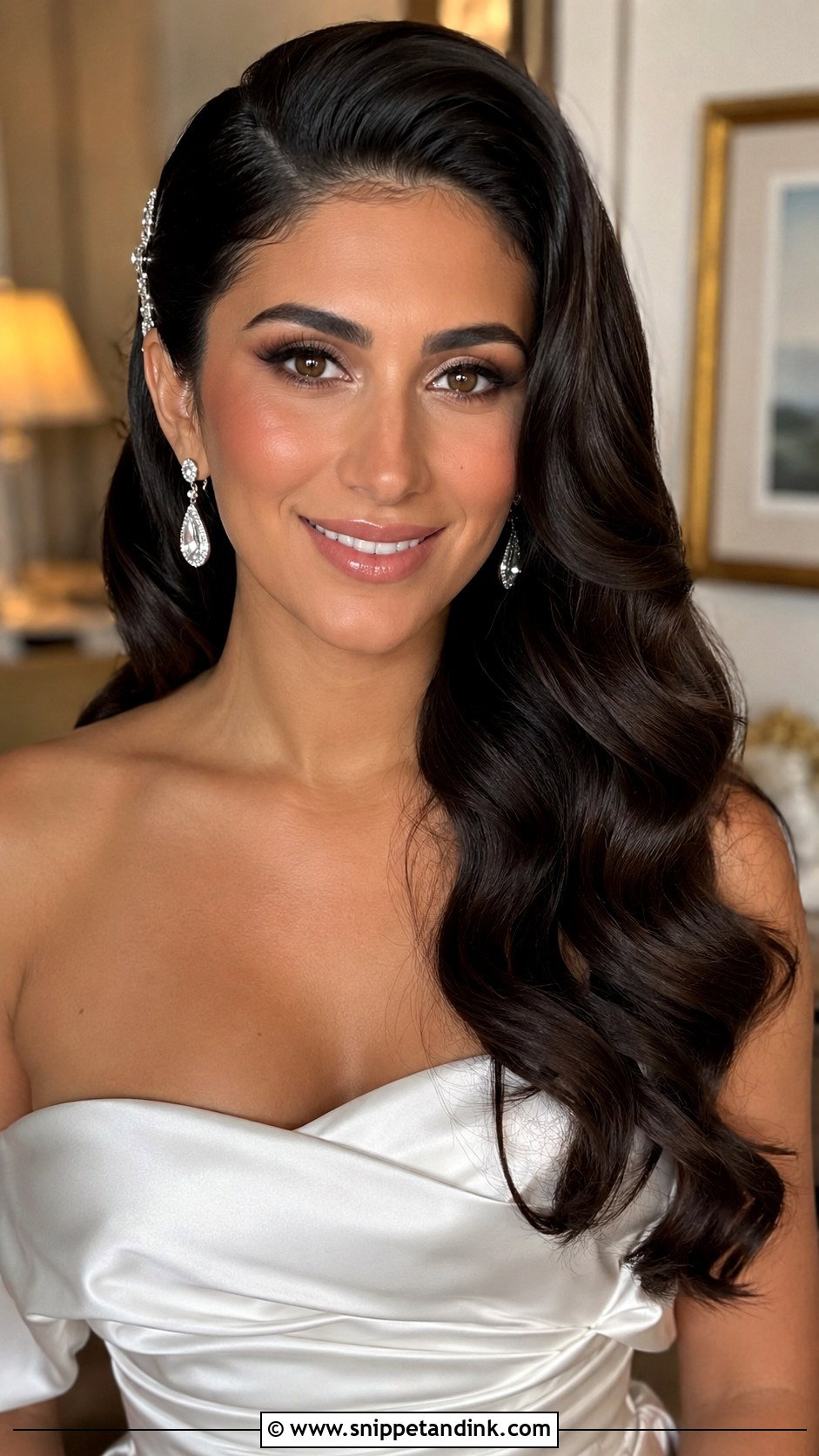
Hollywood waves work from the front because one side is swept back and the other falls in a single sculpted curve. A deep side part does the dramatic work. Satin gowns and formal ceremonies suit them. The one front-view problem: on the heavy side, the wave can drift over your eye during the ceremony. I set a small hidden pin just behind the temple to hold the curve in place. Glossy close-ups are where this style earns its place.
6. Bridal Front Soft Curtain Bangs Updo
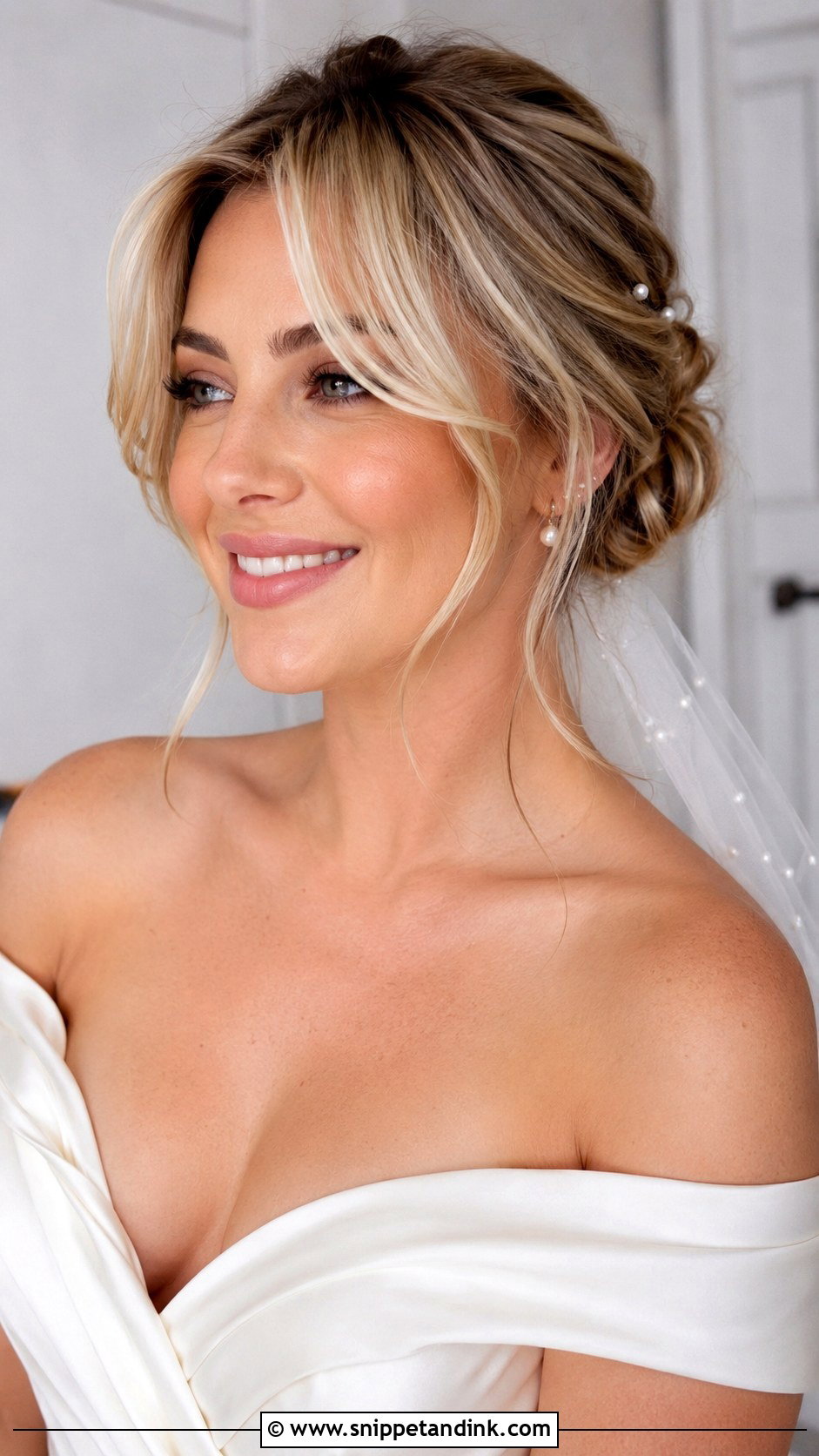
A soft curtain bangs updo only makes sense if you already have curtain bangs or face-framing layers. Don’t cut them new for the wedding. Freshly cut bangs rarely sit right for the first couple of weeks. I blow-dry them over a round brush, parting near the centre and sweeping outward, then gather the rest into a low bun or loose twist. Keep product light; heavy spray makes bangs separate into stiff strips by the afternoon.
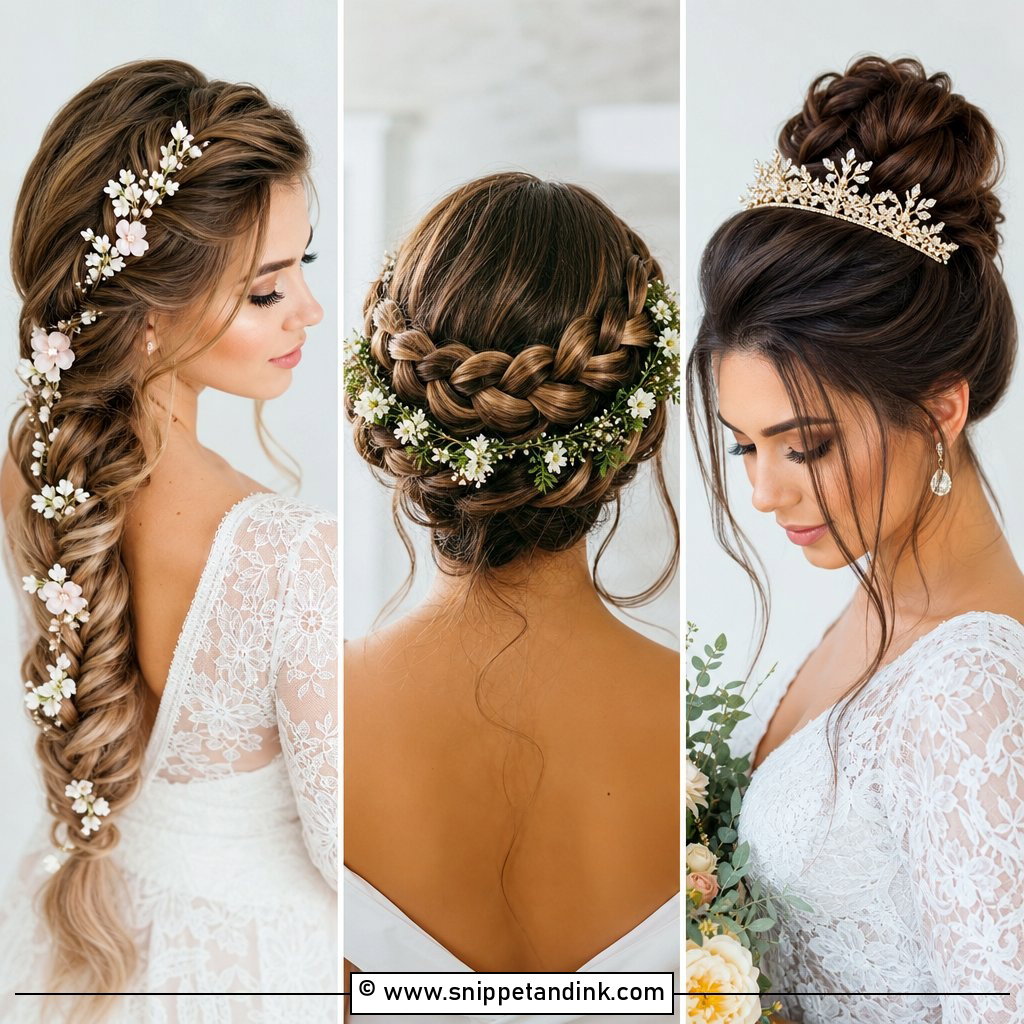
7. Bridal Front Braided Crown Updo
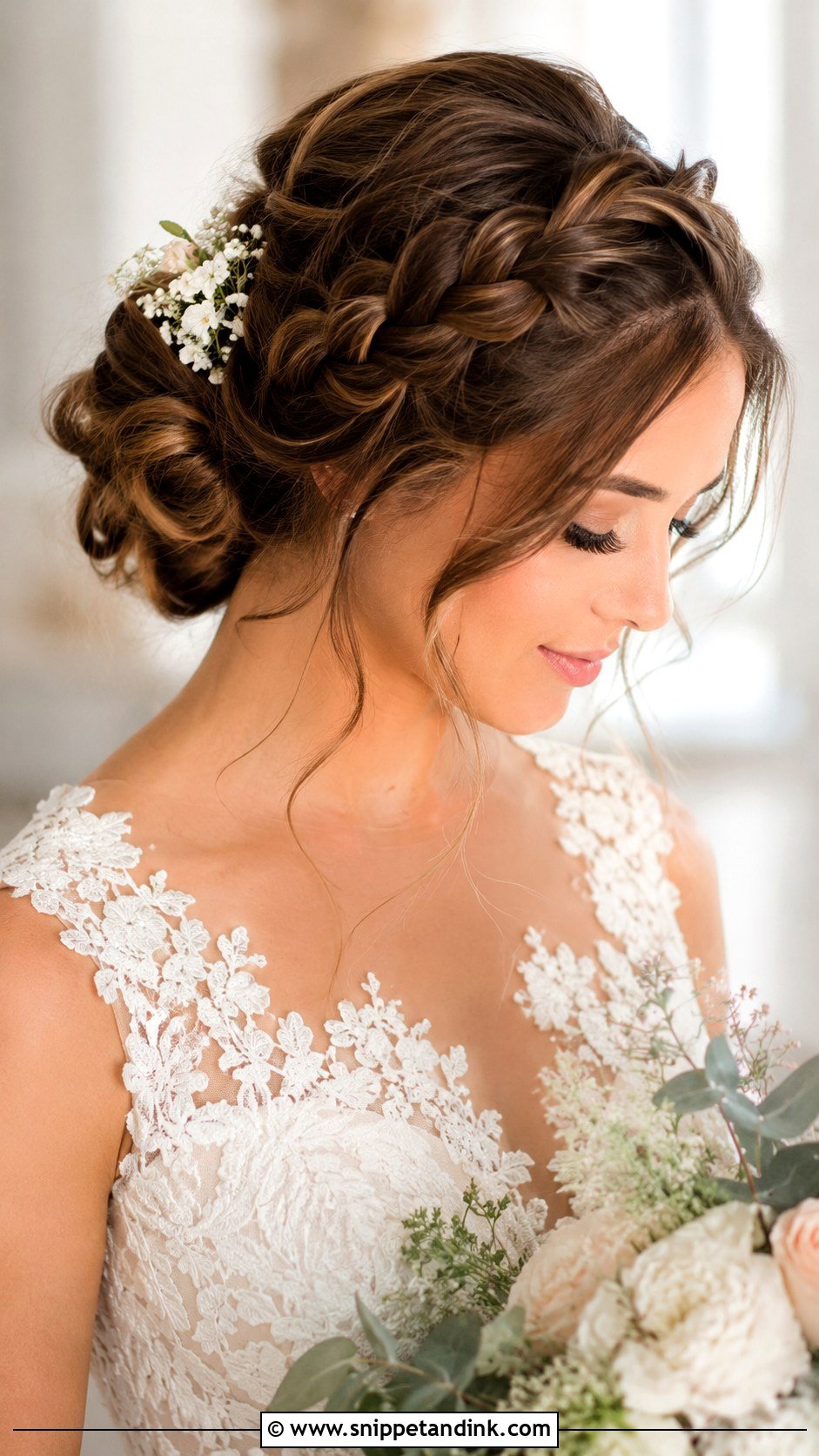
A braided crown along the front hairline frames the face with detail and keeps everything off it. It handles wind better than almost any front style, so I suggest it for outdoor ceremonies. The braid has to be planned around your hairline. With fine or thinning hair at the temples, I start the braid slightly back from the edge so the scalp doesn’t show through. Small flowers or pearl pins tuck into it easily.
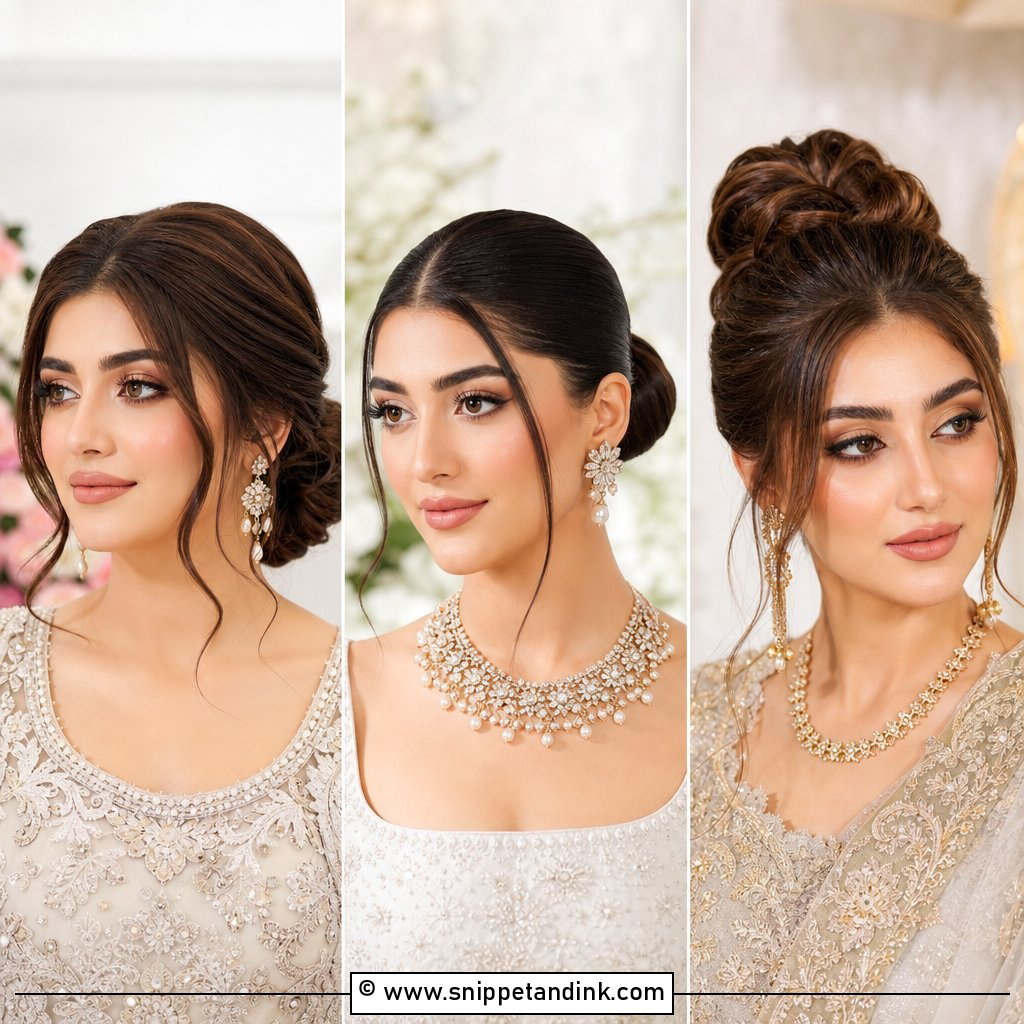
8. Bridal Front Sleek Low Bun
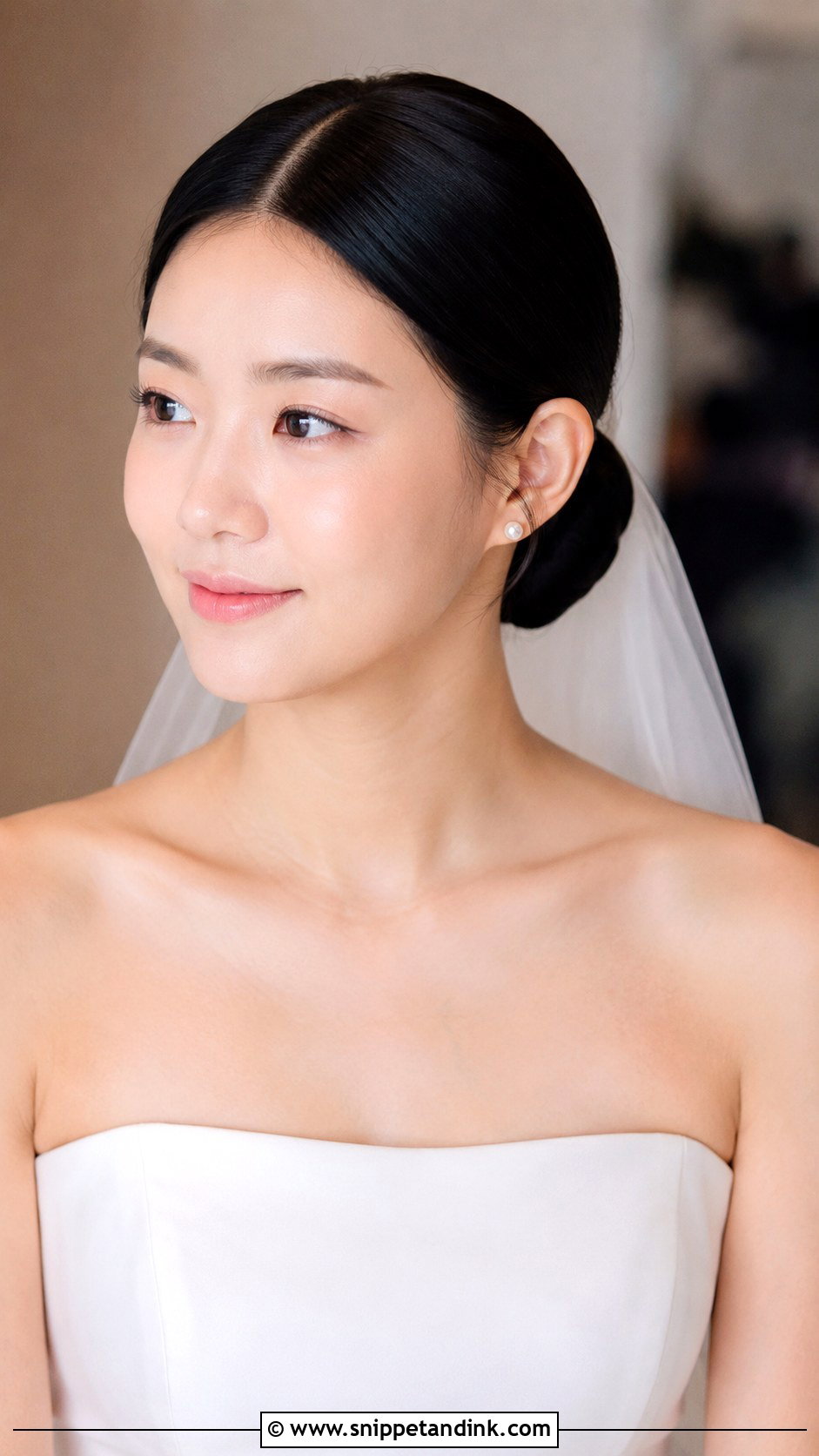
A sleek low bun from the front is all hairline. Every bump, kink or uneven part is visible, so I smooth the front with a brush and a little cream before I even think about the bun. Minimal makeup and a clean dress suit it best. If you have a strong cowlick at the front, a side part is kinder than trying to force a centre one flat. Choose a flexible hold spray over a hard one so the front doesn’t look shellacked in close-ups.
9. Bridal Front Loose Curly Updo
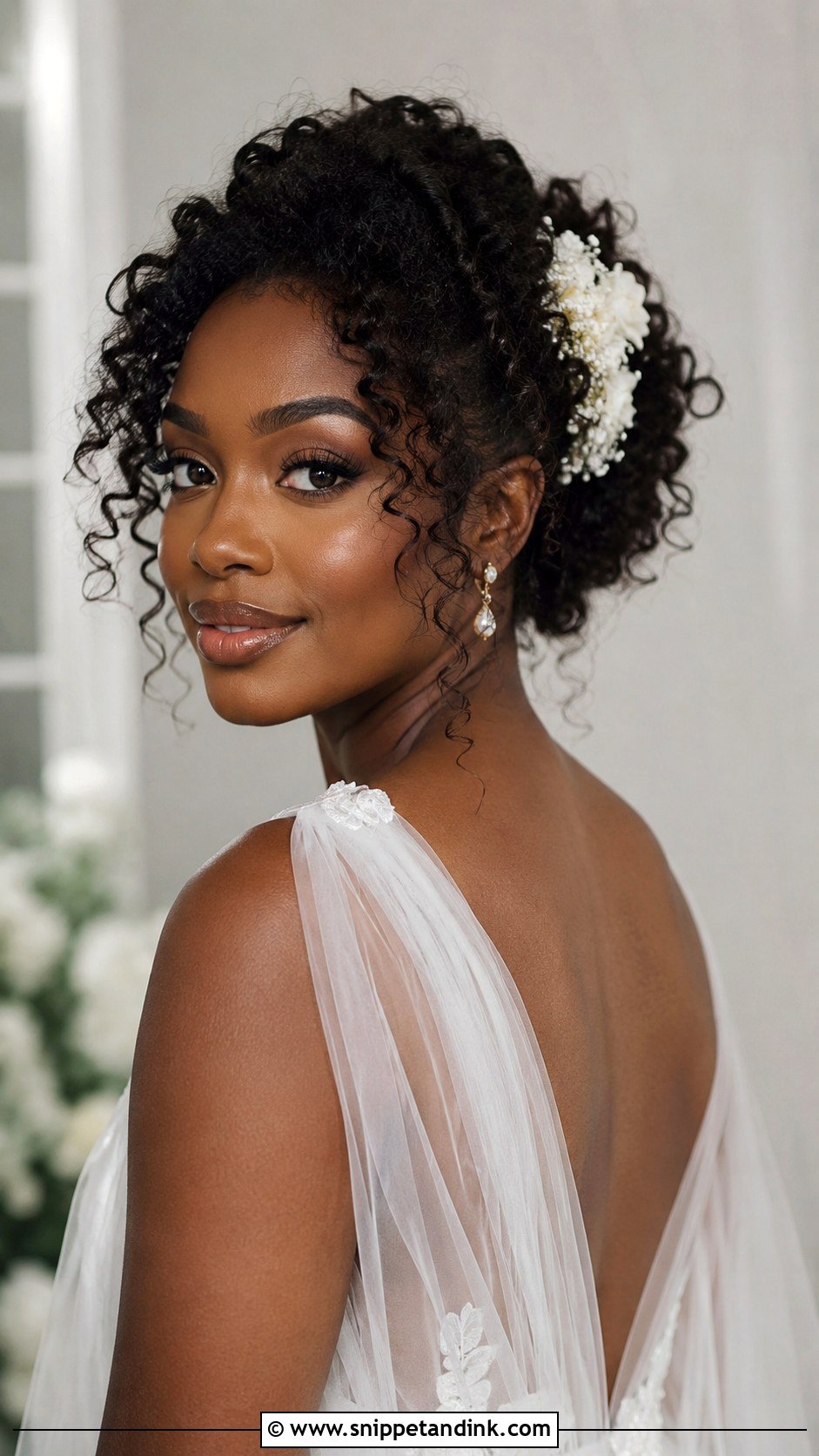
A loose curly updo works from the front when curls frame the temples and cheeks without covering them. Natural curls should be defined on damp hair and left to dry before pinning, or they’ll frizz once handled. I pin the back loosely and leave a few curls near the face. The goal is shape, not perfection. Light floral pins or a sheer veil suit the softness.
10. Bridal Front High Bun With Tendrils
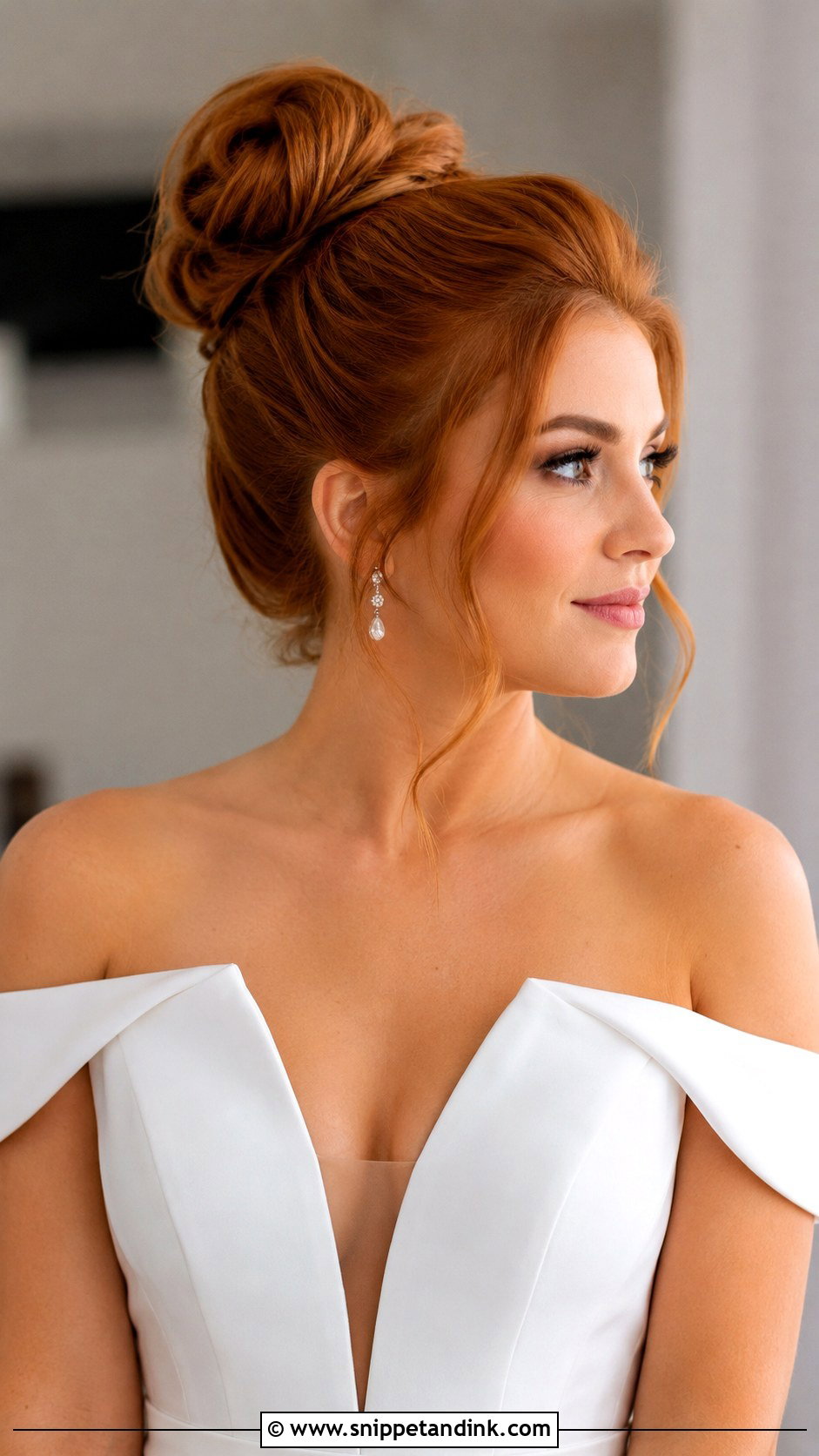
A high bun with tendrils draws the eye upward and can lengthen a round face. High-neck gowns and bold earrings both benefit from it. From the front, the height should look balanced: a bun too high reads as a ballet bun, while a little lower and slightly back looks more bridal. I keep tendrils to two or three per side, curled lightly. Anything more competes with the shape.
11. Bridal Front Textured Low Updo
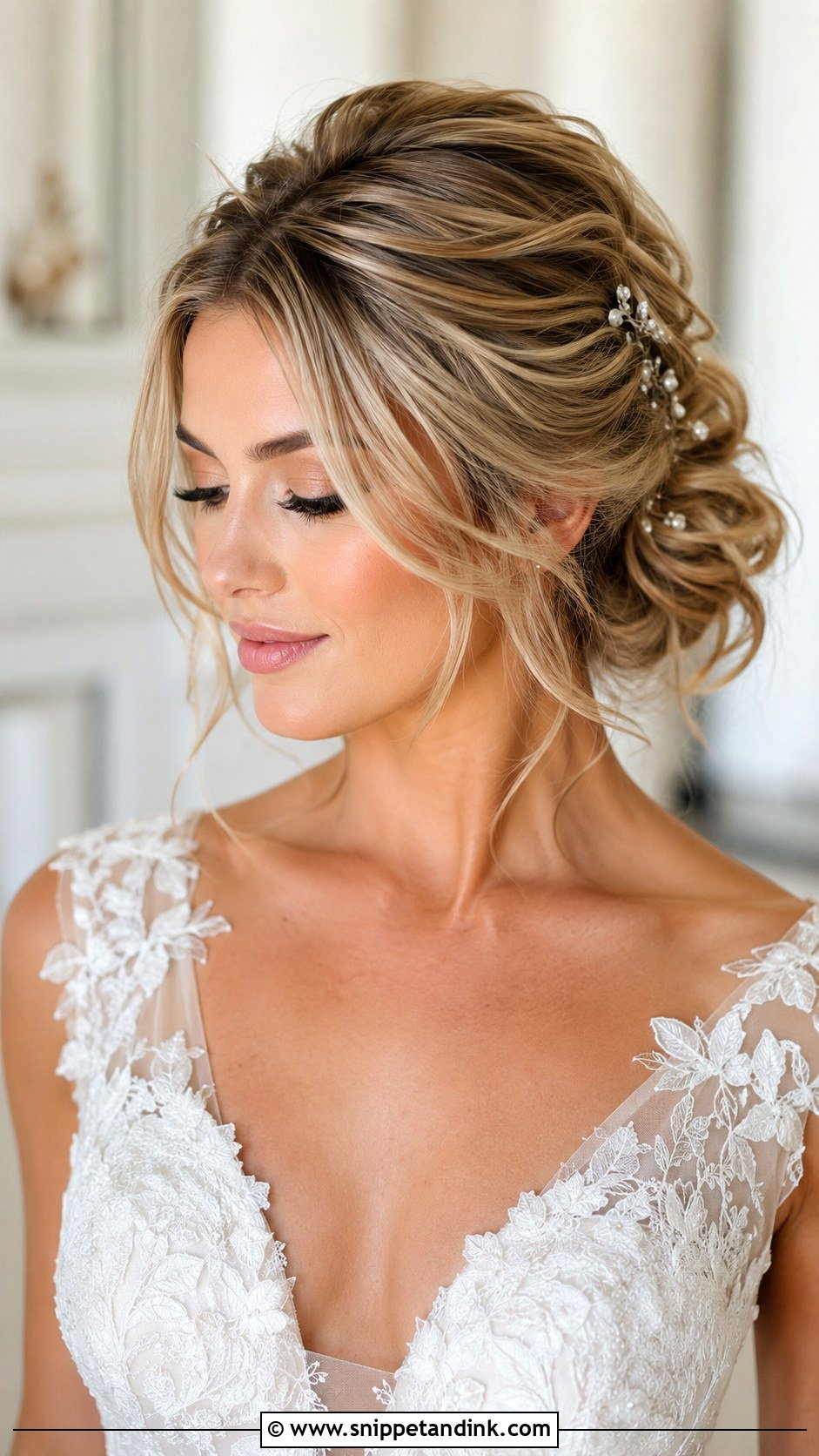
A textured low updo gives softness without hair down. From the front, gentle volume at the root and loose sections near the cheeks stop it looking pulled back. I ask brides to bring hair that was washed the day before, since a bit of grit lets texture hold. Pinning the front too tight is the most common mistake. A little lift at the crown and a soft section near each cheek make it feel relaxed.
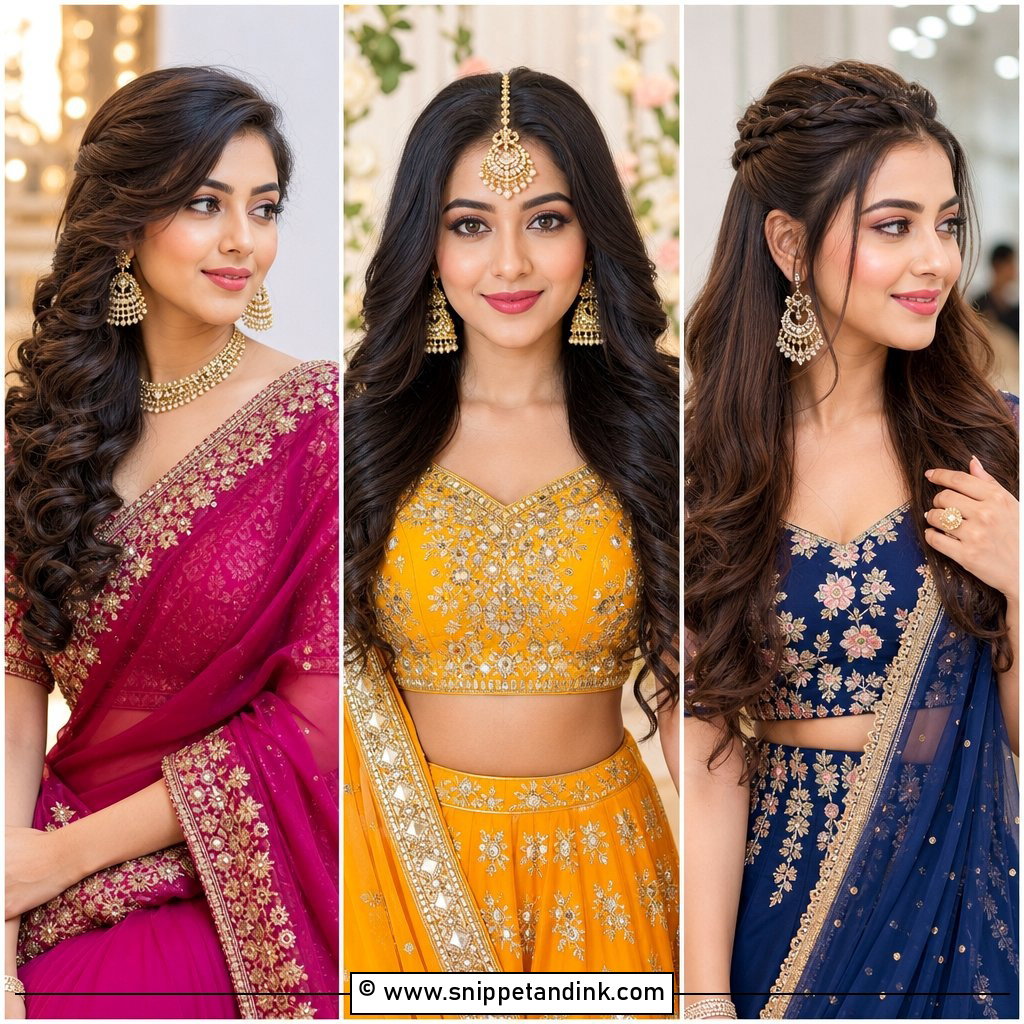
12. Bridal Front Side Swept Curls
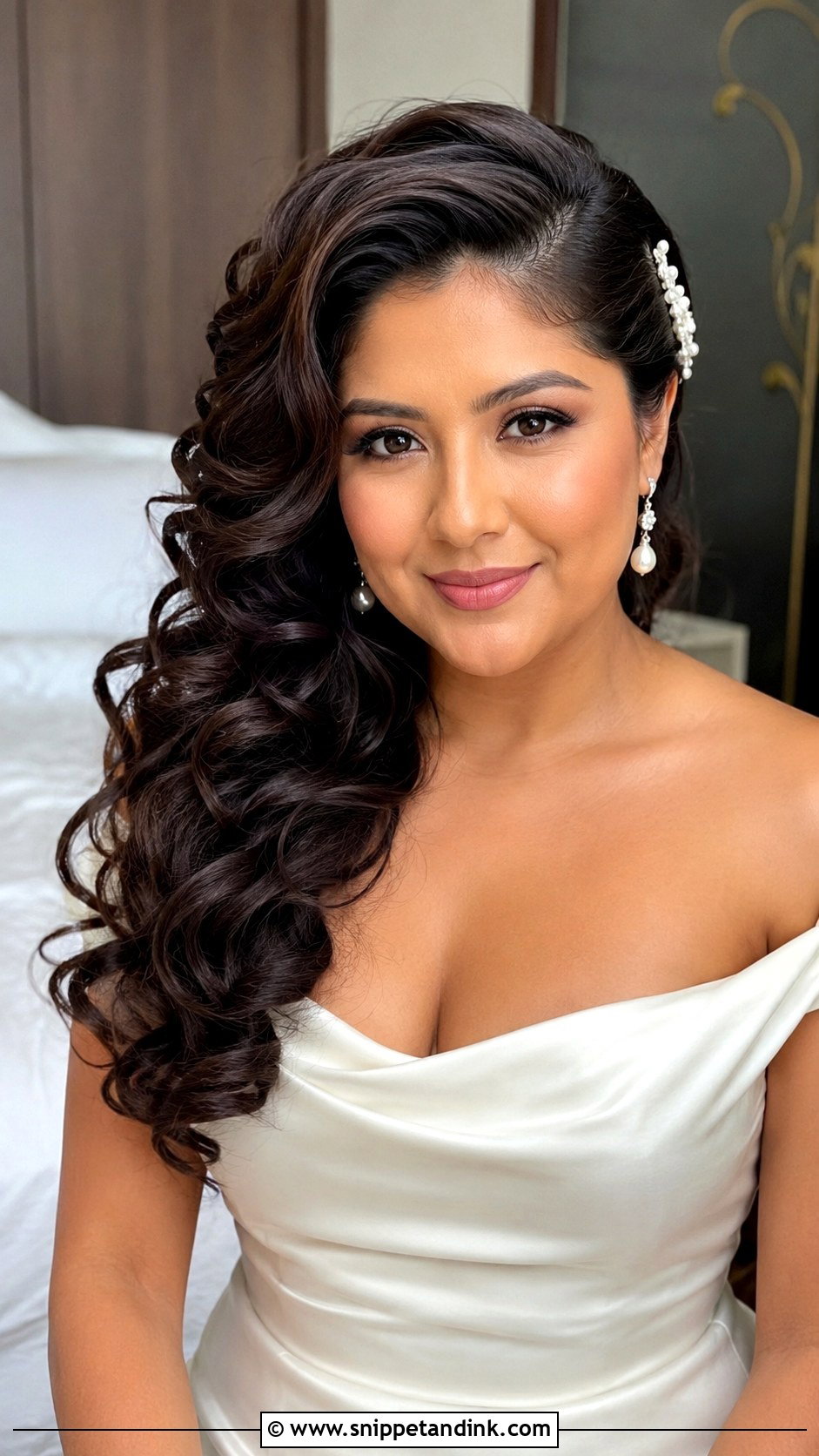
Side swept curls give the front an asymmetrical shape, with fullness over one shoulder and the other side pinned back with a comb or clip. Long hair, layered cuts and extensions hold the curls best, because the weight keeps the shape. From the front, one ear and earring will show and the other won’t, so choose the sweep side based on which earring and which profile you want photographed most.
13. Bridal Front French Twist
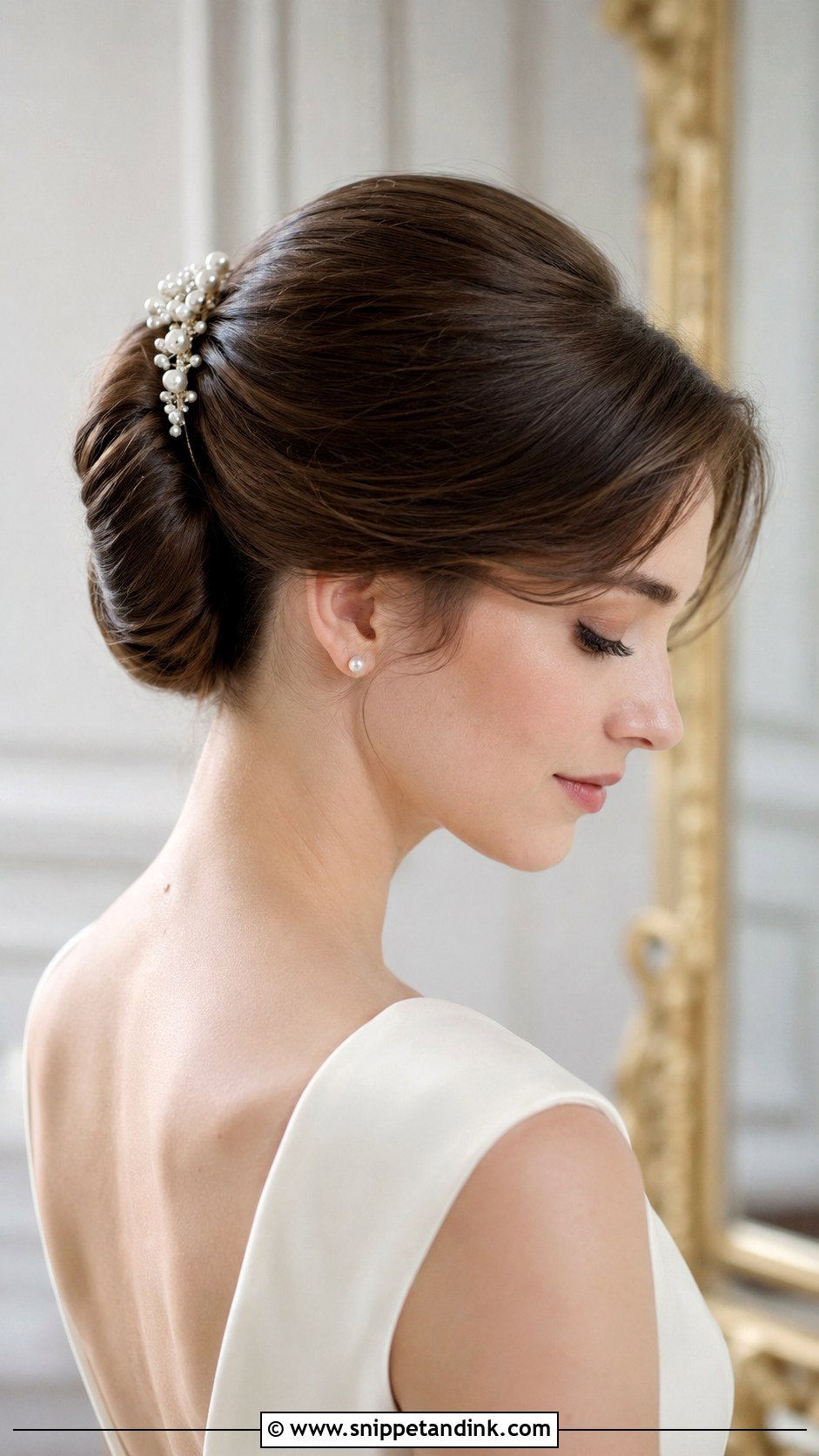
A French twist is classic and gives a clean silhouette. From the front it can be smooth with a side part or softened with a couple of pieces near the face. Bateau necklines and tailored dresses suit it. The twist needs grip, so I prep with texture spray if your hair is very silky. Ask for a modern, slightly relaxed version; a twist that’s too tight from the front can look severe in photos.
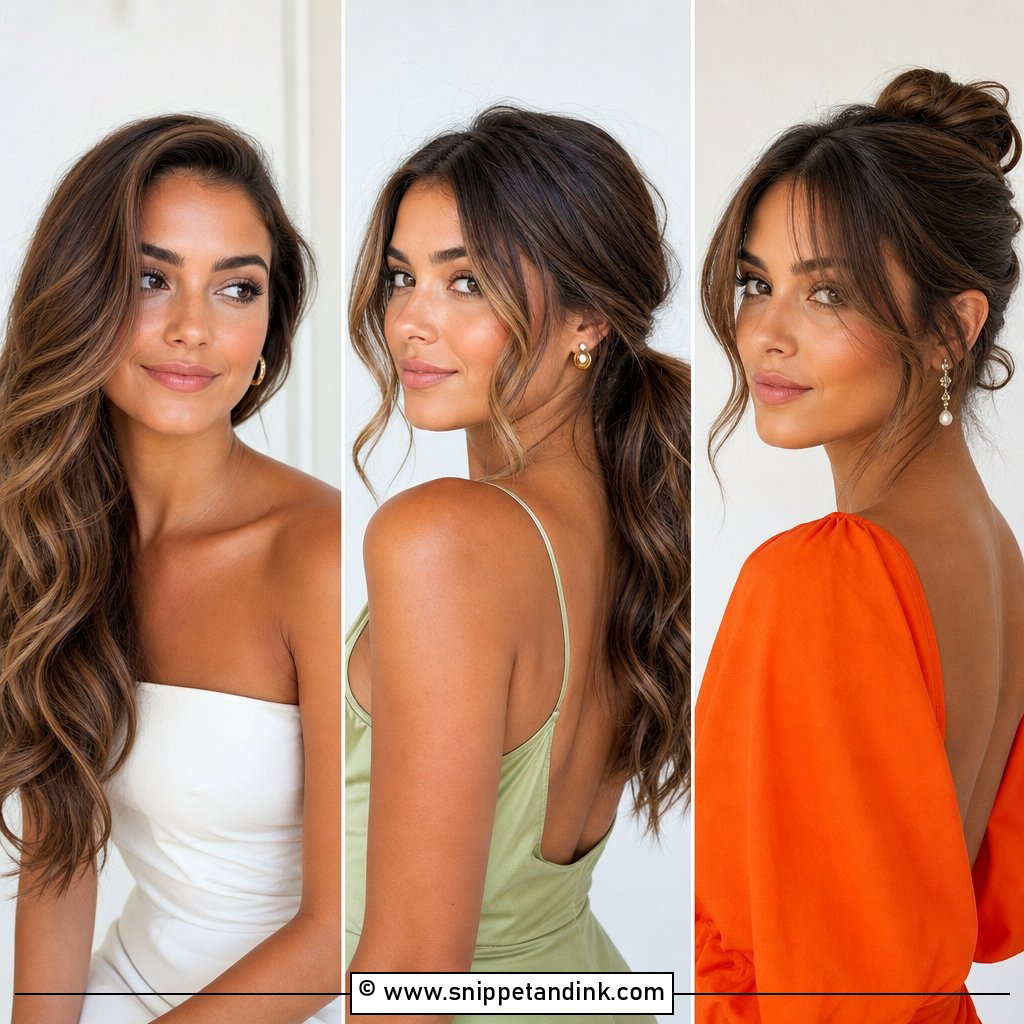
14. Bridal Front Ponytail With Waves
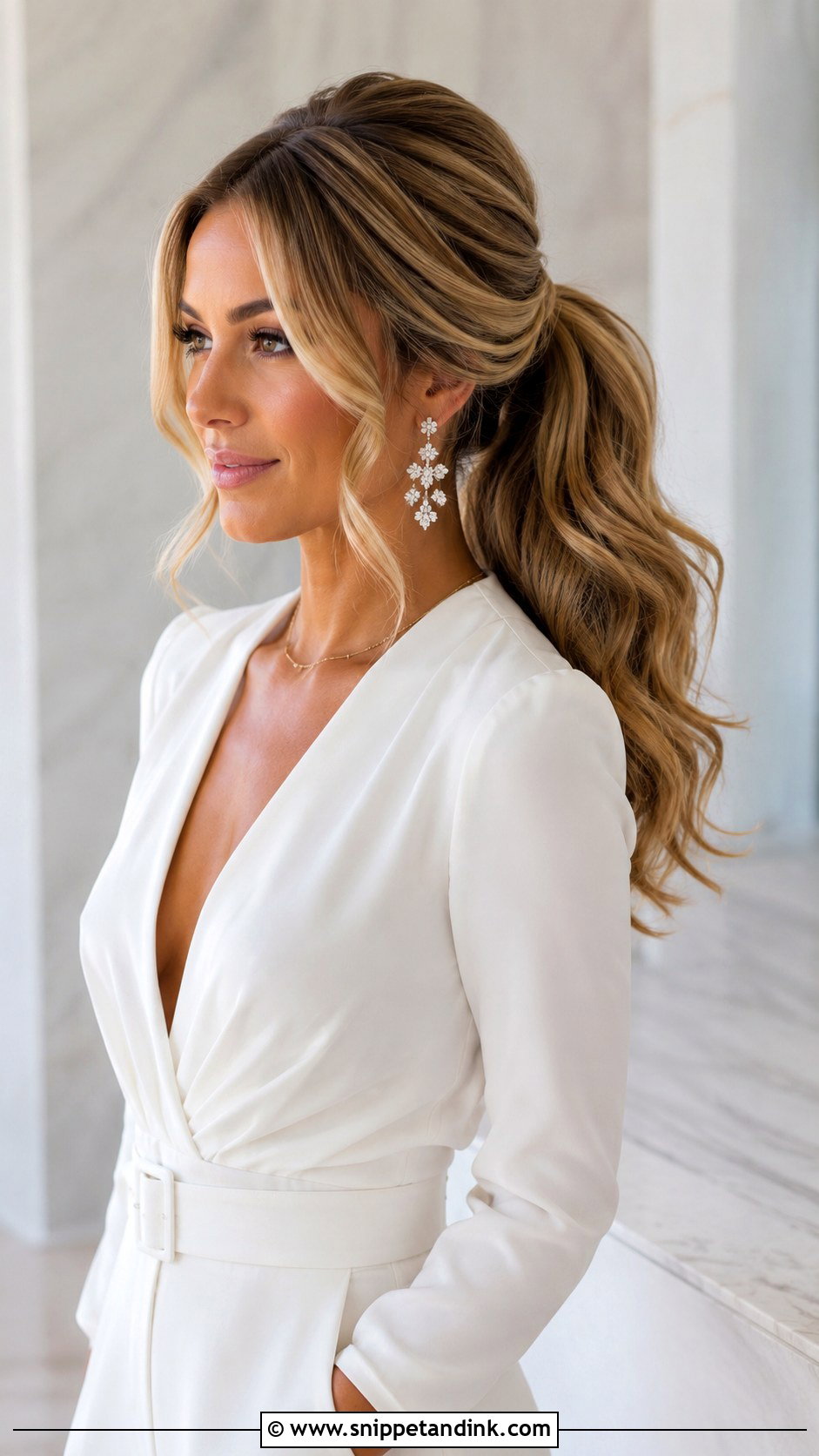
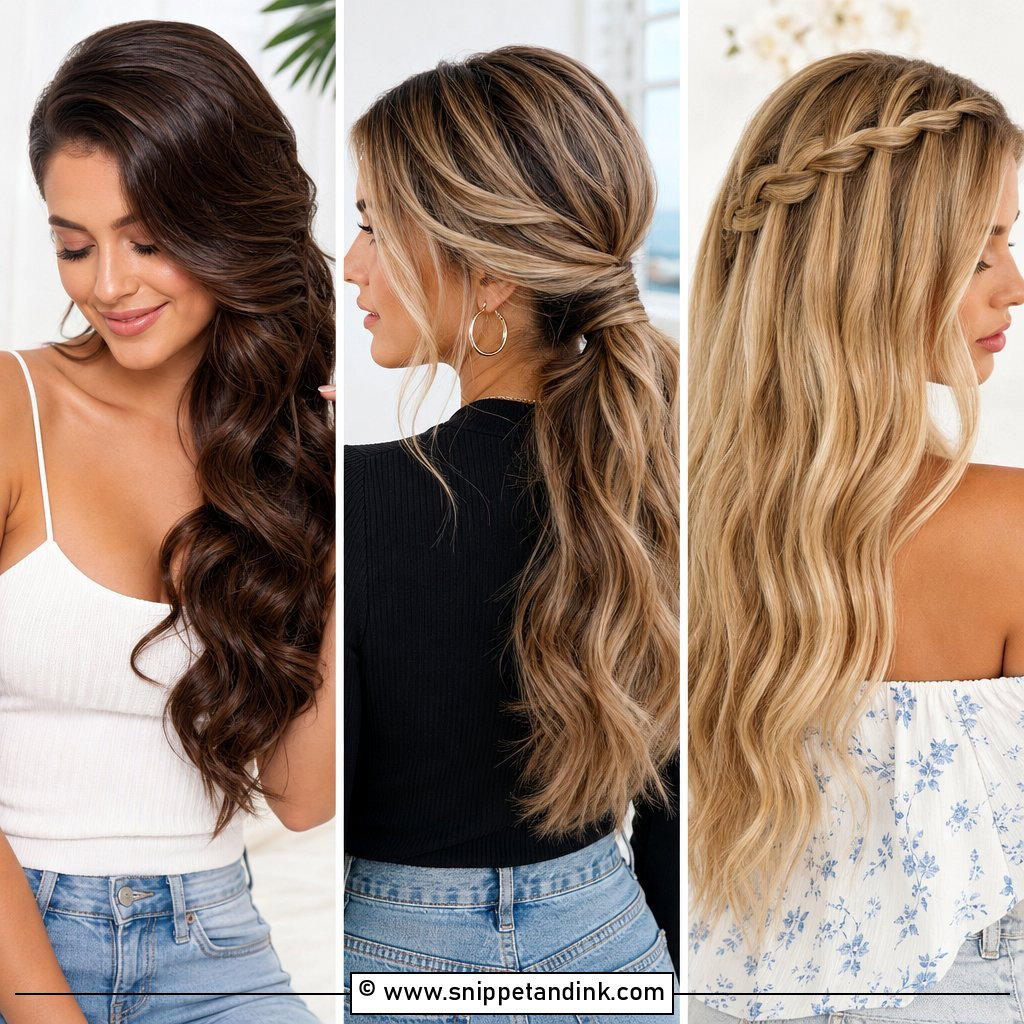
A wavy ponytail is more bridal than people expect and very comfortable for dancing. From the front, the crown can be lifted, softly parted or smoothed back. A strand wrapped around the base hides the elastic. I like this for brides who don’t want hair moving into their face but find updos too formal. A veil can sit just above the ponytail, anchored with a comb.
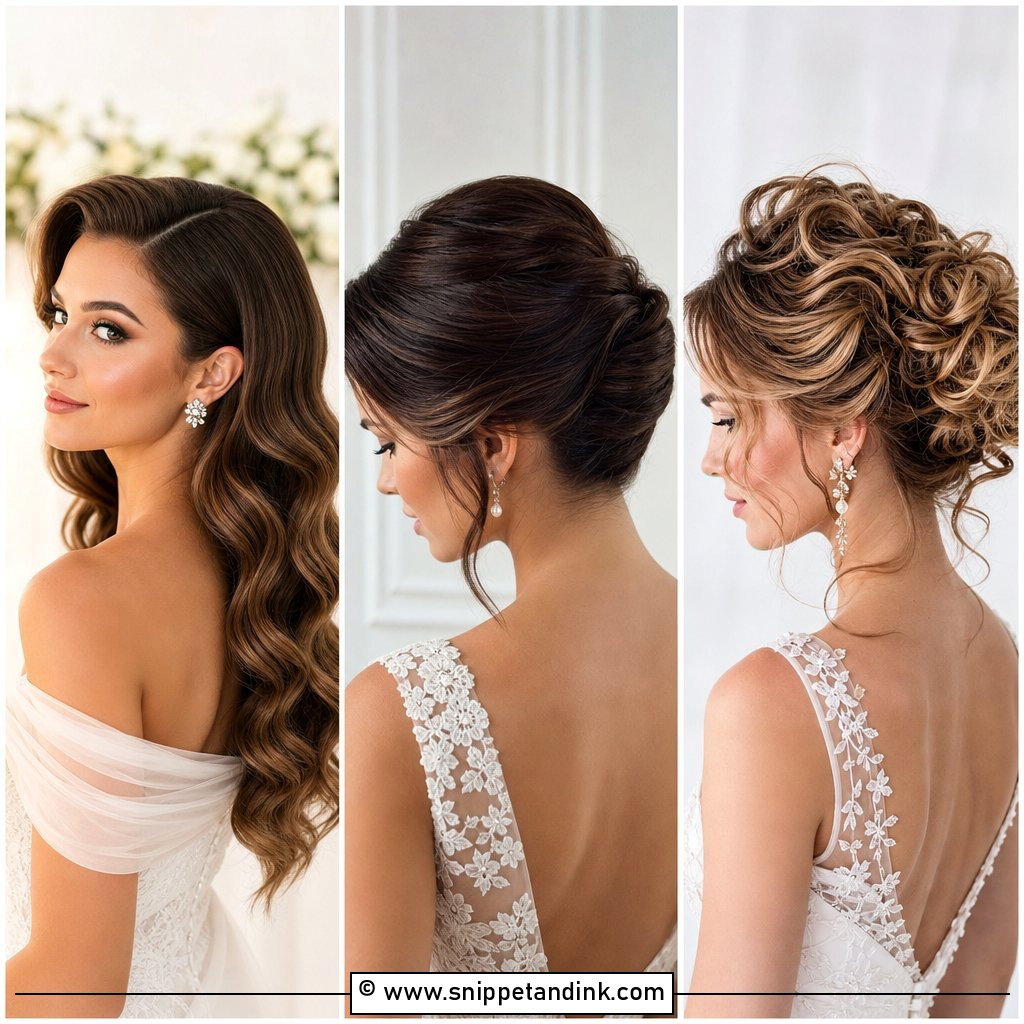
15. Bridal Front Twisted Half Up Hairstyle
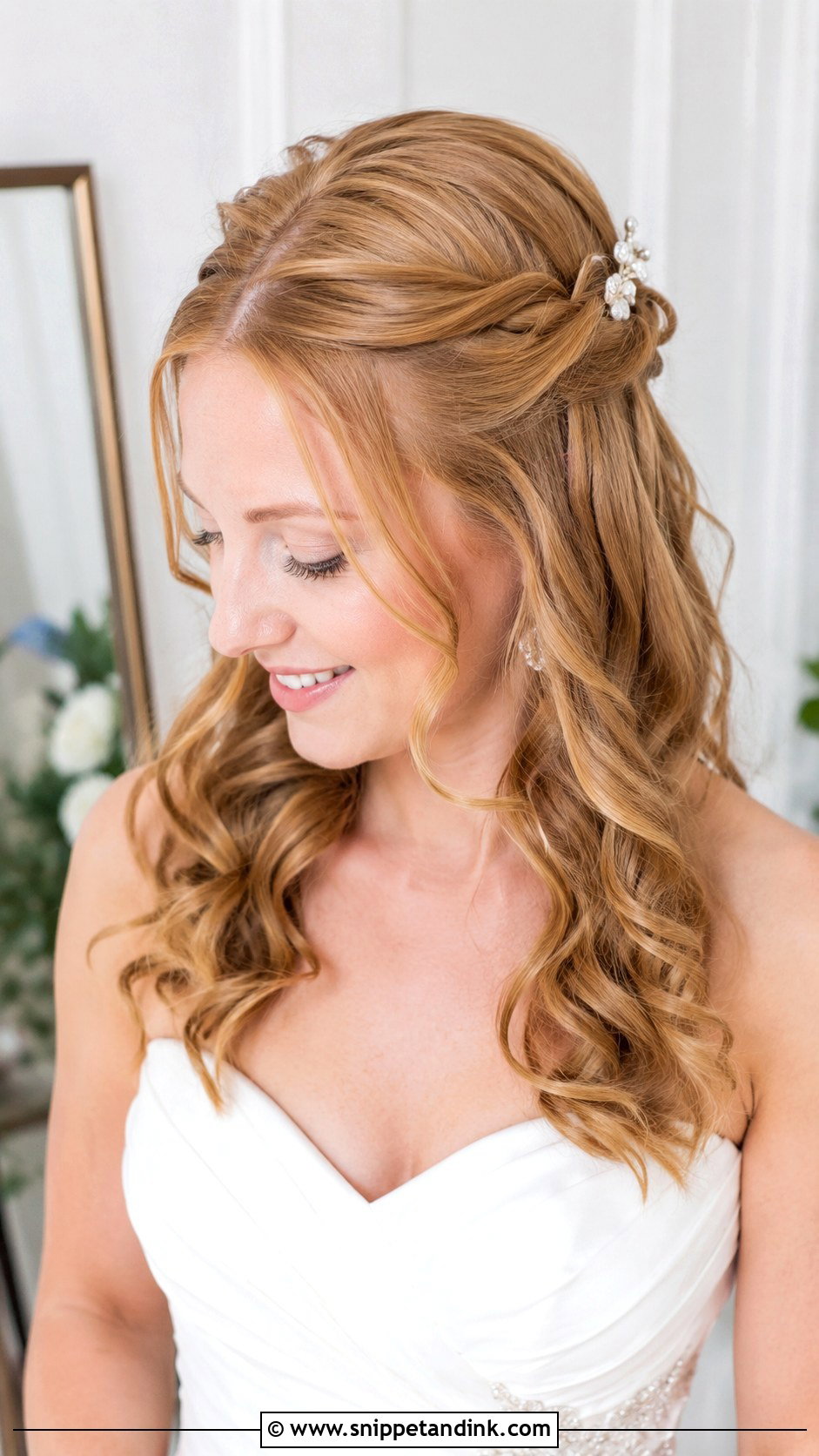
A twisted half-up style pulls the front pieces back in small twists, leaving the rest in waves. It gives lift and keeps the face clear without a full updo. Twists can be smooth or loosened a little with the fingers after pinning. I pin each twist at an angle under the one above it, so no pins show from the front. Small pearls or crystal pins can be added along the twists.
16. Bridal Front Messy Bun With Soft Bangs
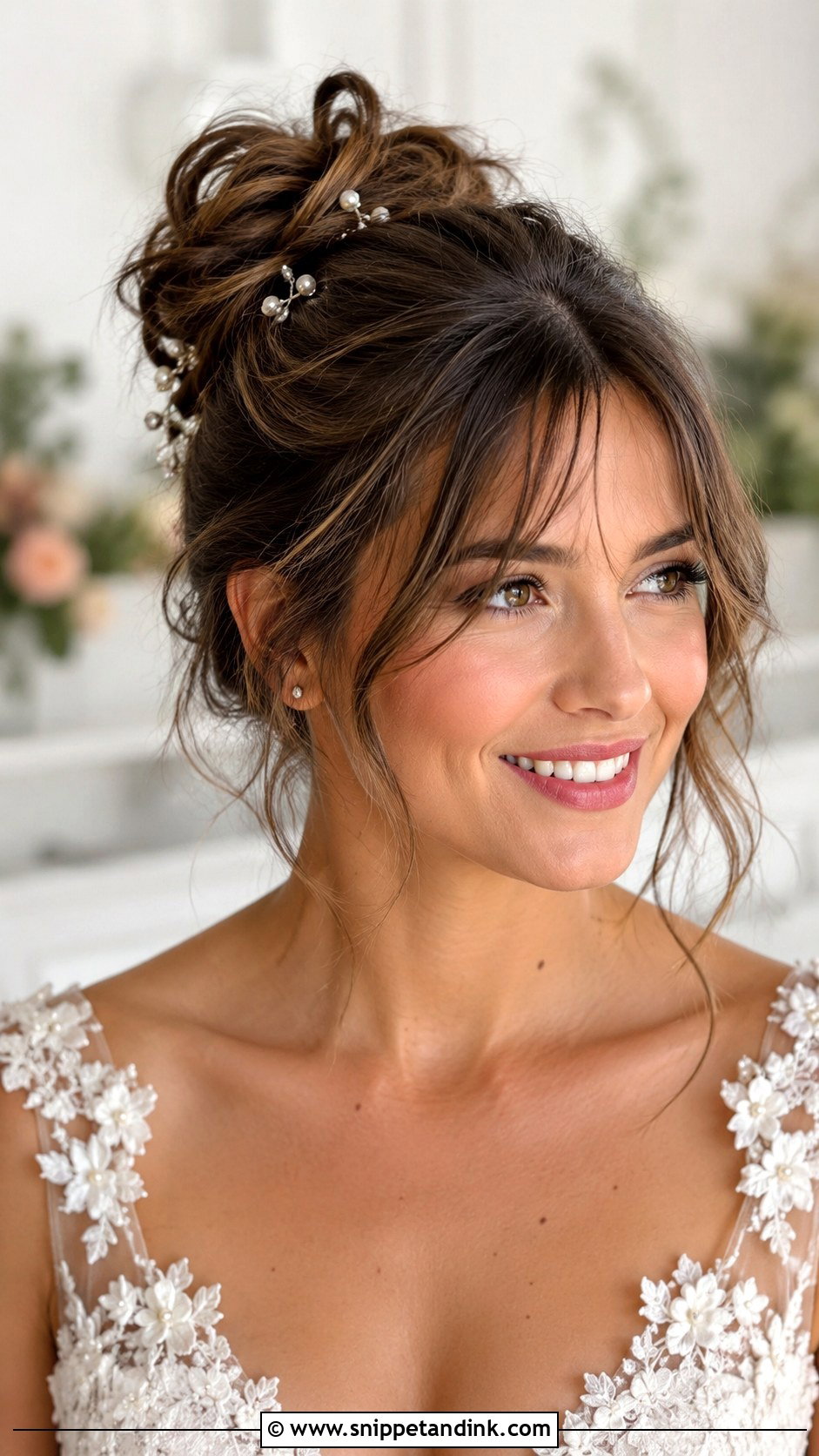
A messy bun with soft bangs depends on the bangs. The bangs frame the forehead and eyes while the bun keeps everything else lifted. Wispy bangs, curtain bangs or longer face-framing layers all work. The bun should look deliberate, not rushed, so I build it in sections. Low or mid-height depends on your veil. Oily foreheads can separate bangs by midday, so a little dry shampoo at the root helps.
17. Bridal Front Boho Braid Hairstyle
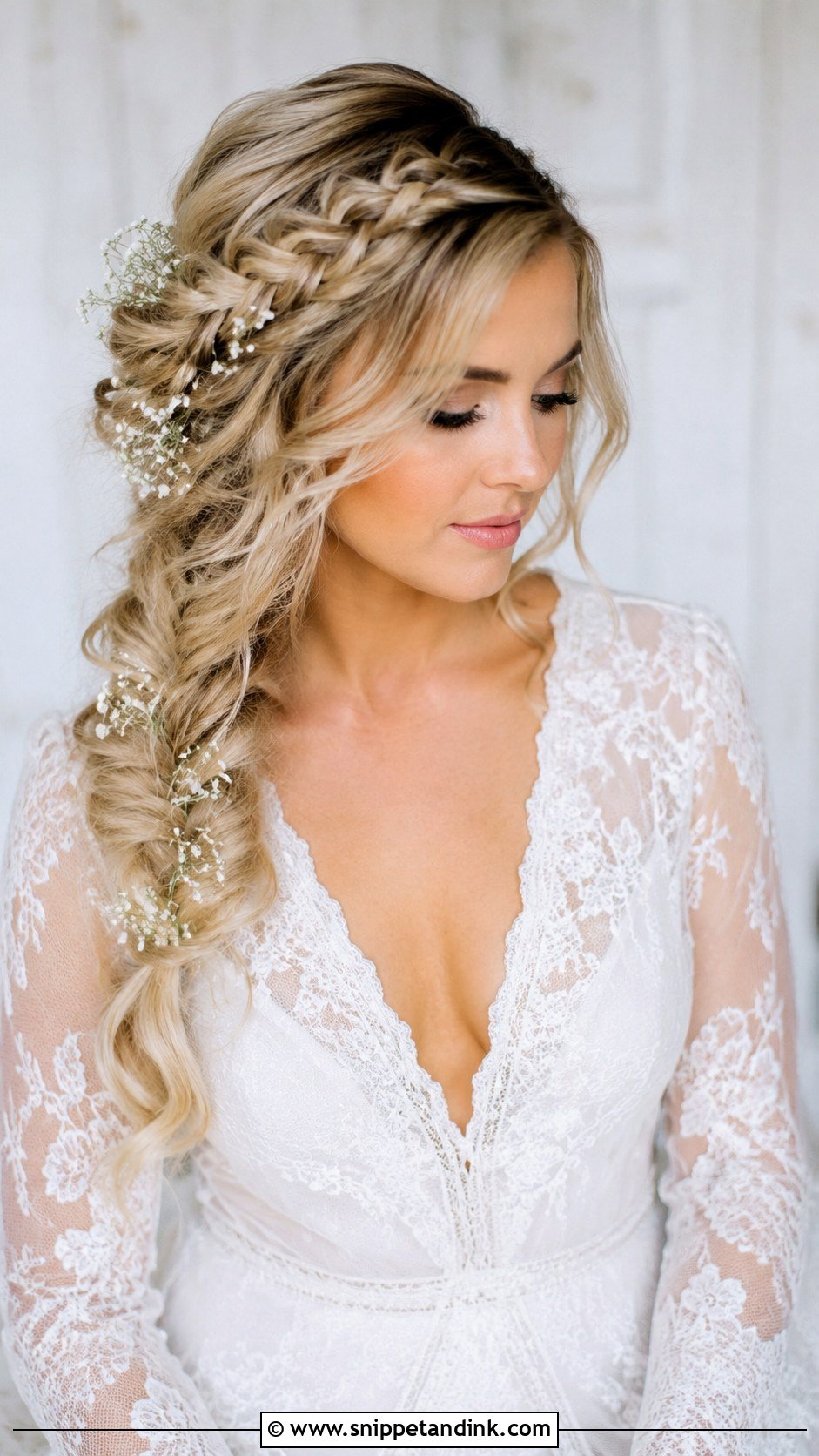
A boho braid can start at the hairline, wrap to one side, or blend into loose waves. Outdoor and beach ceremonies and flowing lace dresses suit it. I keep the braid slightly loose and curl the face-framing pieces lightly. A hair vine or a few small flowers woven in can finish it. On short layers, I braid closer to the scalp so pieces don’t escape at the front.
18. Bridal Front Natural Curly Half Up Hairstyle
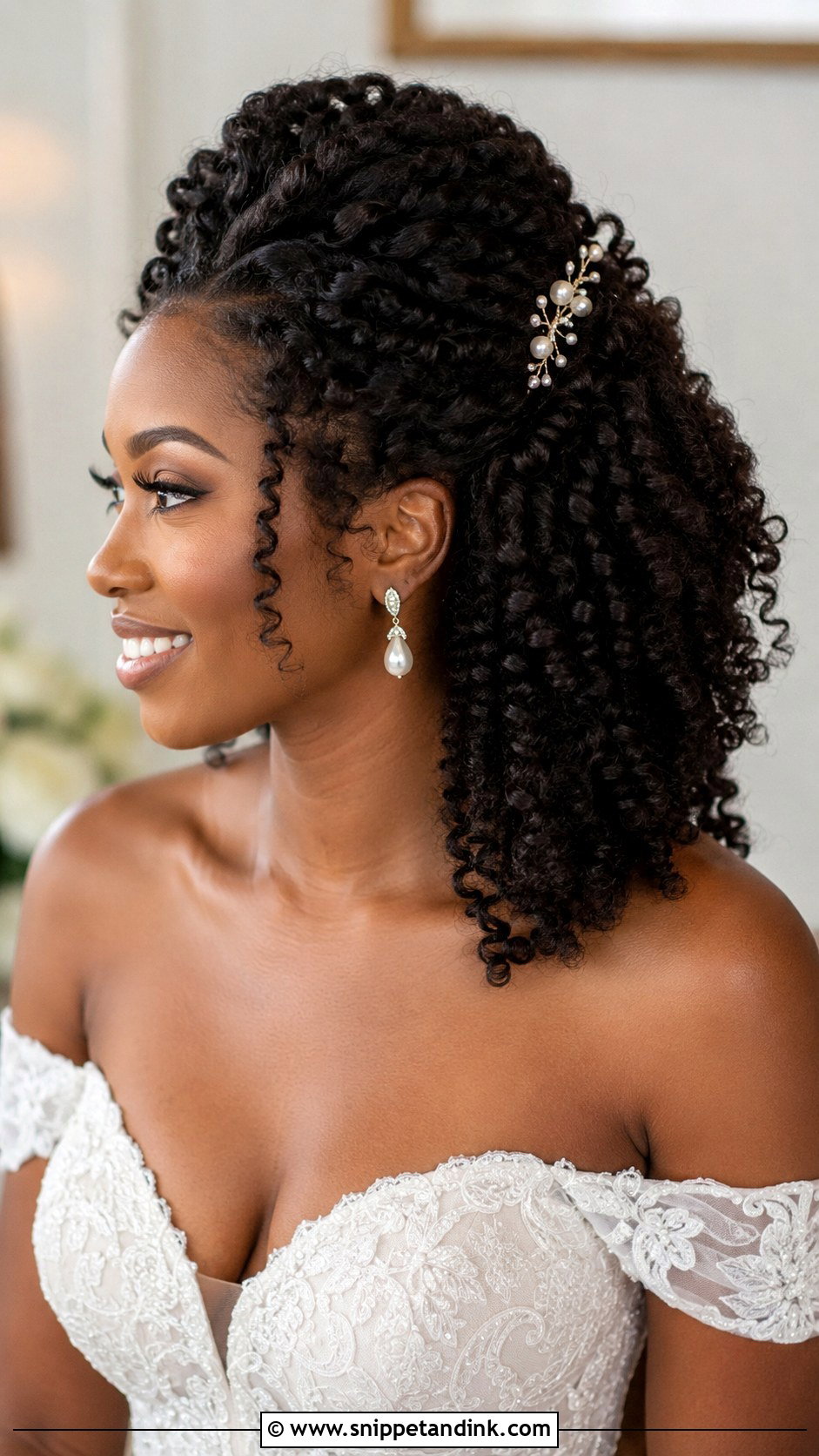
A natural curly half-up style keeps your texture as the focus. Front curls can be lifted, pinned back, or arranged around the hairline to show the eyes and cheekbones. Curl-defining products without stiffness are key; I apply them to wet hair and avoid touching the curls once they’ve set. A pearl comb or floral pins add bridal detail without hiding texture. The front view feels joyful and full.
19. Bridal Front Pearl Bun Hairstyle
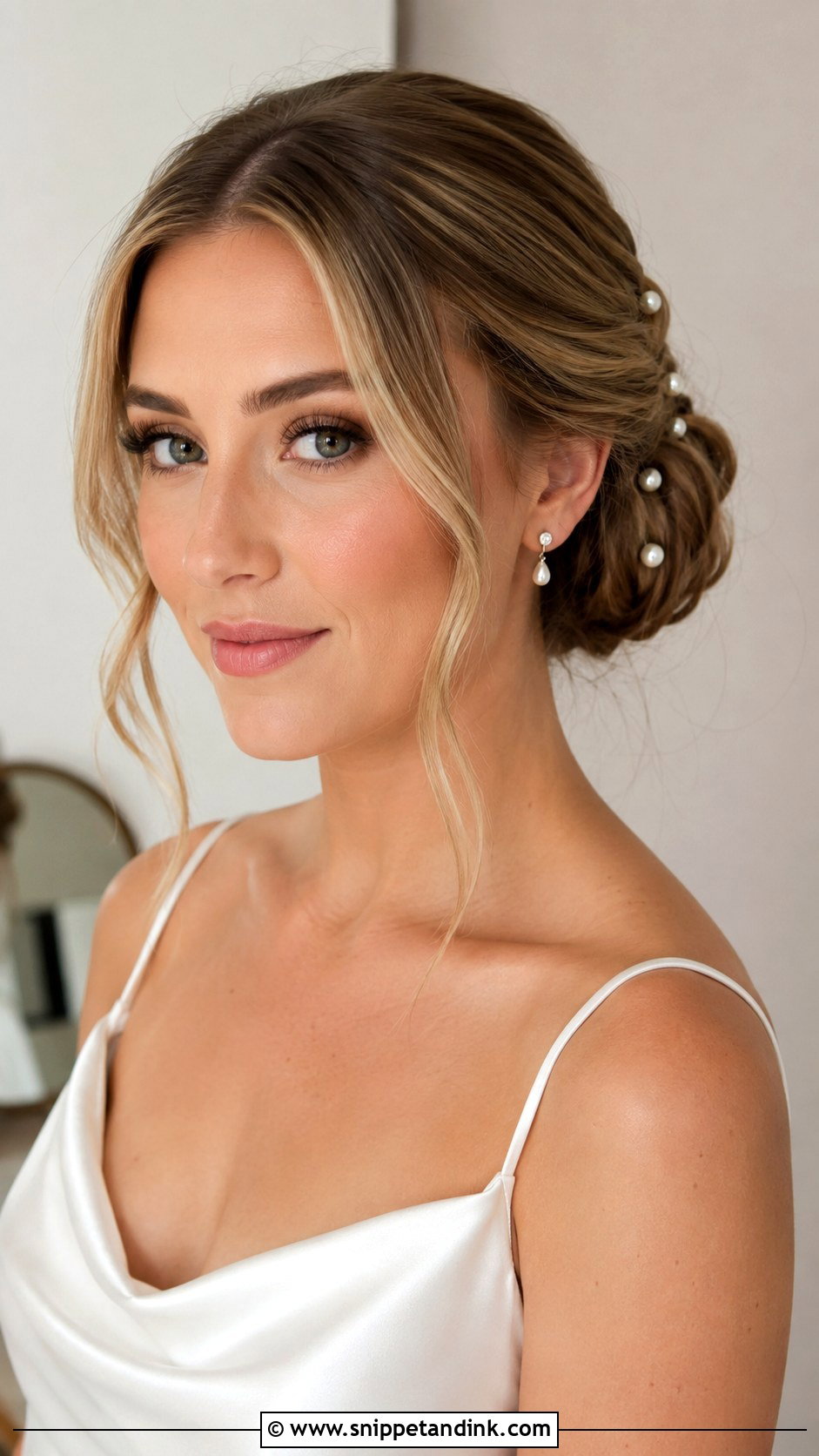
A pearl bun adds light near the face. Pearls are placed around the twist or scattered through the hair, so from the front you’ll see a few at the sides rather than the whole arrangement. I place them where they’ll peek out around the head in a front photo, not just at the back. The bun sits low or mid-height. Simple gowns benefit most from this added detail near the face.
20. Bridal Front Veil Hairstyle With Soft Waves
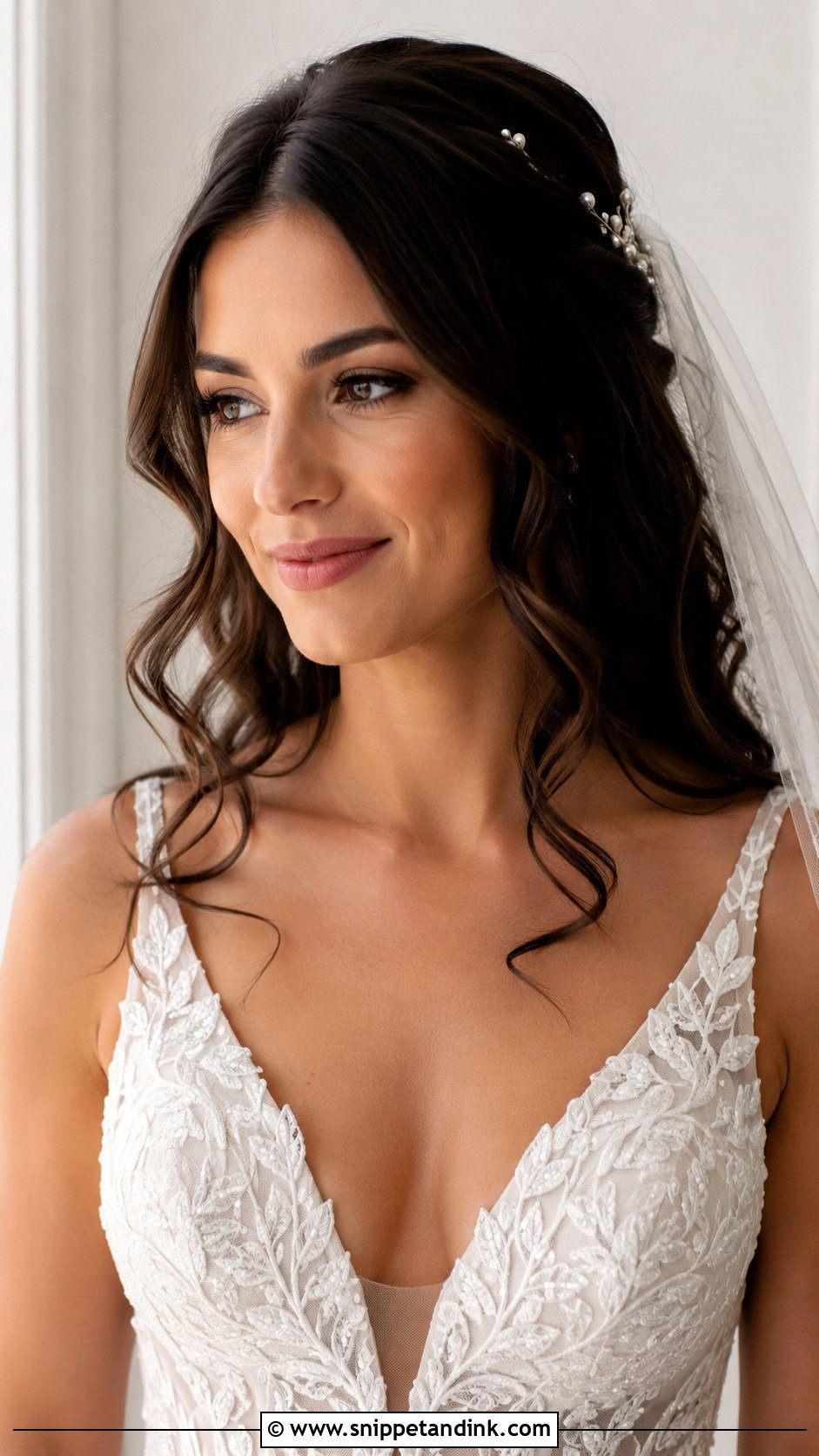
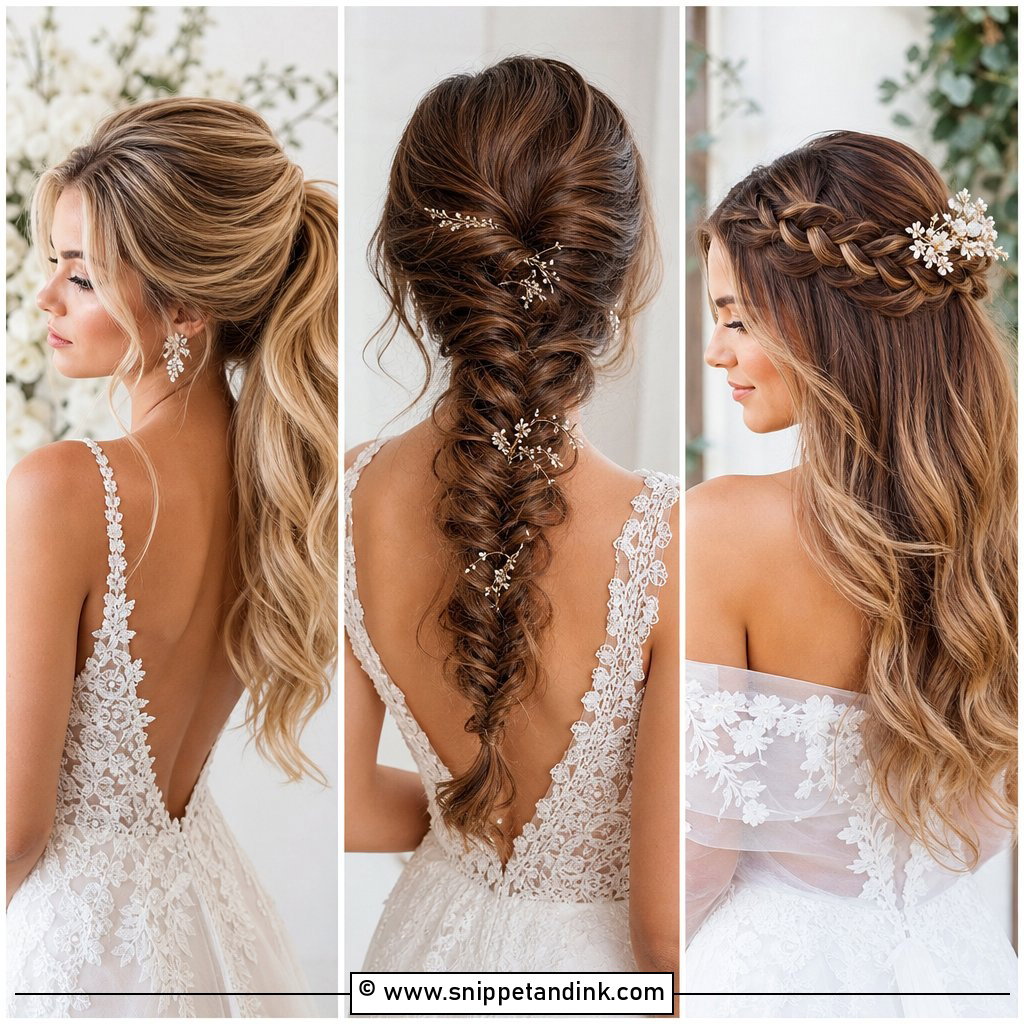
A veil style with soft waves is a classic. The front can be parted in the middle, swept to the side or lightly pinned back so the veil sits comfortably. I place the veil comb only after the style is finished and test it by having the bride turn her head quickly. If the front shifts, the comb needs to go lower or under a pinned section. Waves near the face keep close-ups soft.
Bangs and Face-Framing Layers Run on Their Own Timeline
Front styles depend on whatever is cut around your face, so the timing of your haircut matters more than for a plain updo. A fresh fringe rarely sits right for a week or so, and face-framing layers cut too short can’t be pinned back.
- Two to three months out: decide whether you’ll grow out or keep bangs. Growing them out takes far longer than most brides expect.
- At the trial: bring your hair in the state it’ll be on the day, with bangs at their usual length.
- About a week before: trim bangs and layers lightly, by the stylist who will style you if possible.
- On the morning: style bangs first, while hair is fresh, and finish them after makeup in case foundation lifts them.
Three photos I take at every trial
I photograph the bride straight on, then at a three-quarter angle, then straight on again with her smiling widely. The smiling shot reveals whether tendrils stick to lip gloss and whether bangs drop into the eyes when the cheeks lift. Take the same three on your phone and compare them at home in daylight.
Stand in Front of a Mirror Before You Commit
The right front style frames your face and completes the whole look. Before deciding, think about your neckline, veil placement, earrings, the weather and how you normally wear your hair. A sleek bun can suit a modern bride; soft curls, curtain bangs or half-up waves can feel more natural to someone else. Bring front-view photos to your trial, not only back views, and test the style when you smile, talk and turn. If the front shifts, tell your stylist then, not on the morning.
You'll Like These Ideas:


Leave a Reply