
In Pakistani wedding hair, the front does most of the work. It’s what the camera sees in every portrait, it’s where the tikka hangs and the dupatta lands, and a well-placed part can change the shape of your face more than any contour. When I style for a wedding, I settle the front first and build everything else behind it. These twenty front styles cover brides and guests across mehndi, nikah, baraat and walima, with notes on the jewelry each one carries and how it holds up once the dupatta goes on.
Your Hairline Picks the Part More Than Your Face Shape Does
Face-shape charts are a starting point, but the first thing I look at is how the hair actually grows at the front. A strong cowlick at the crown or a widow’s peak will push back against a part placed in the wrong spot, and by the second hour the hair has quietly moved to where it wants to be.
To find your natural part, comb wet hair straight back and let it fall. Wherever it splits on its own is the part that will behave best. If the look you love needs a different part, start training it a few weeks before by blow-drying it in that direction.
Thinner temples and a visible scalp
Years of tight ponytails and heavy buns often leave the temples and front part thinner than the rest of the hair. That shows most on a sharp center part and under bright stage lights. A few things help:
- A tinted root powder or hair fibers matched to your hair color along the part line
- A slightly zig-zagged or softened part instead of a ruler-straight one
- A side part, which hides more scalp than a center part
- Tikka chains that rest over the thinnest stretch of the part
1. Pakistani Front Puff Bridal Bun
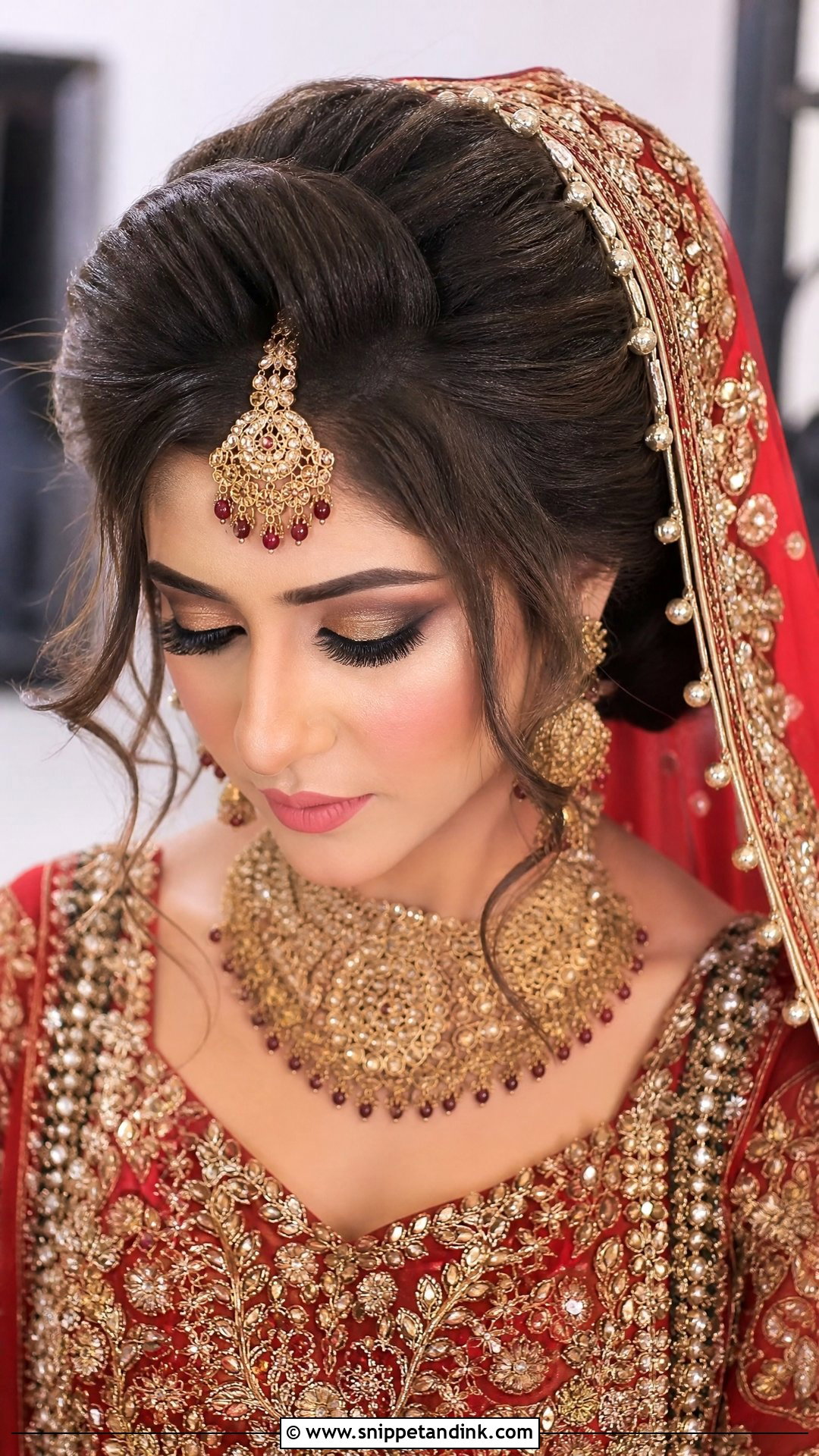
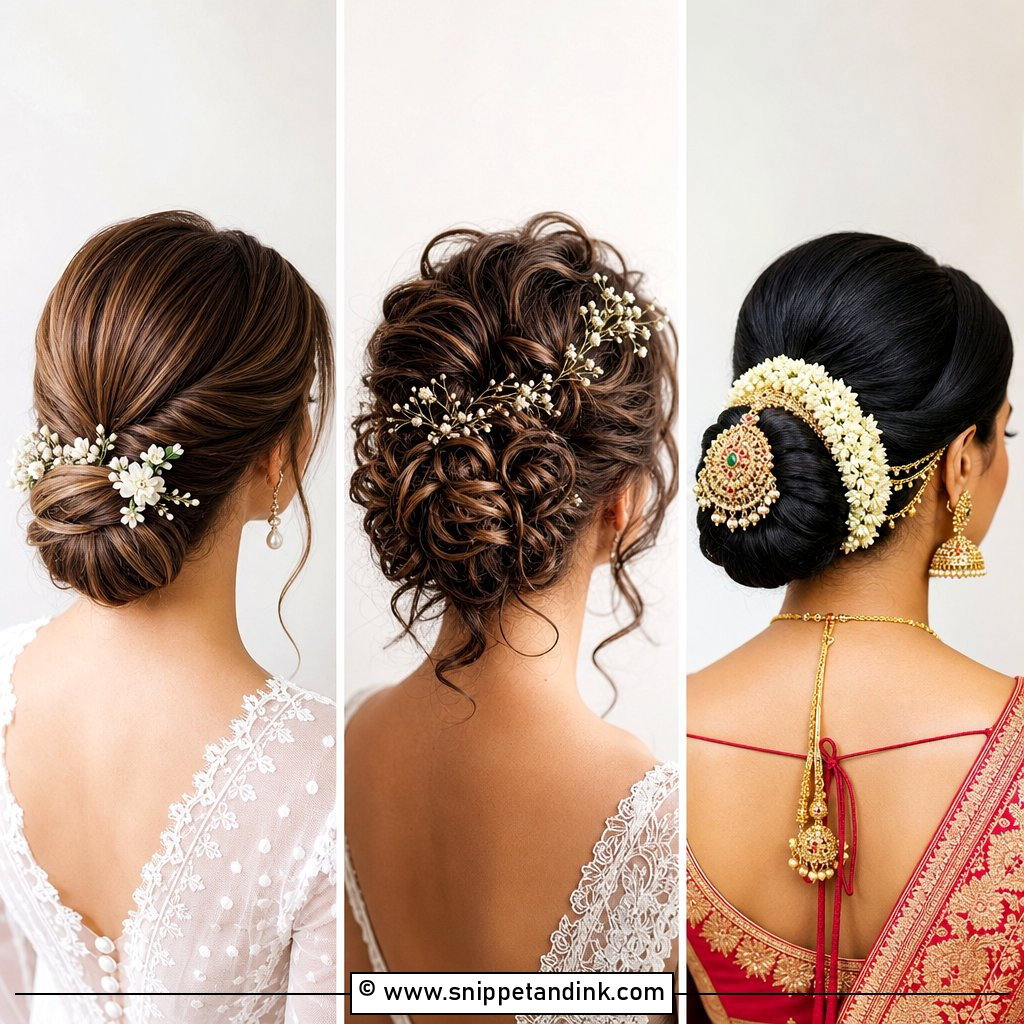
The puff gives height and a clear bridal shape under the dupatta. I tease the front section gently at the root, smooth the top layer over it and pin it into a rounded lift before securing the rest into a Pakistani front puff bridal bun. That lift keeps the dupatta from pressing the hair flat and gives a matha patti or bold tikka something to sit against. Keep it soft rather than tall; a high puff dates a photo instantly. Fresh flowers or a jeweled bun pin finish the back.
2. Pakistani Center Part Bridal Bun
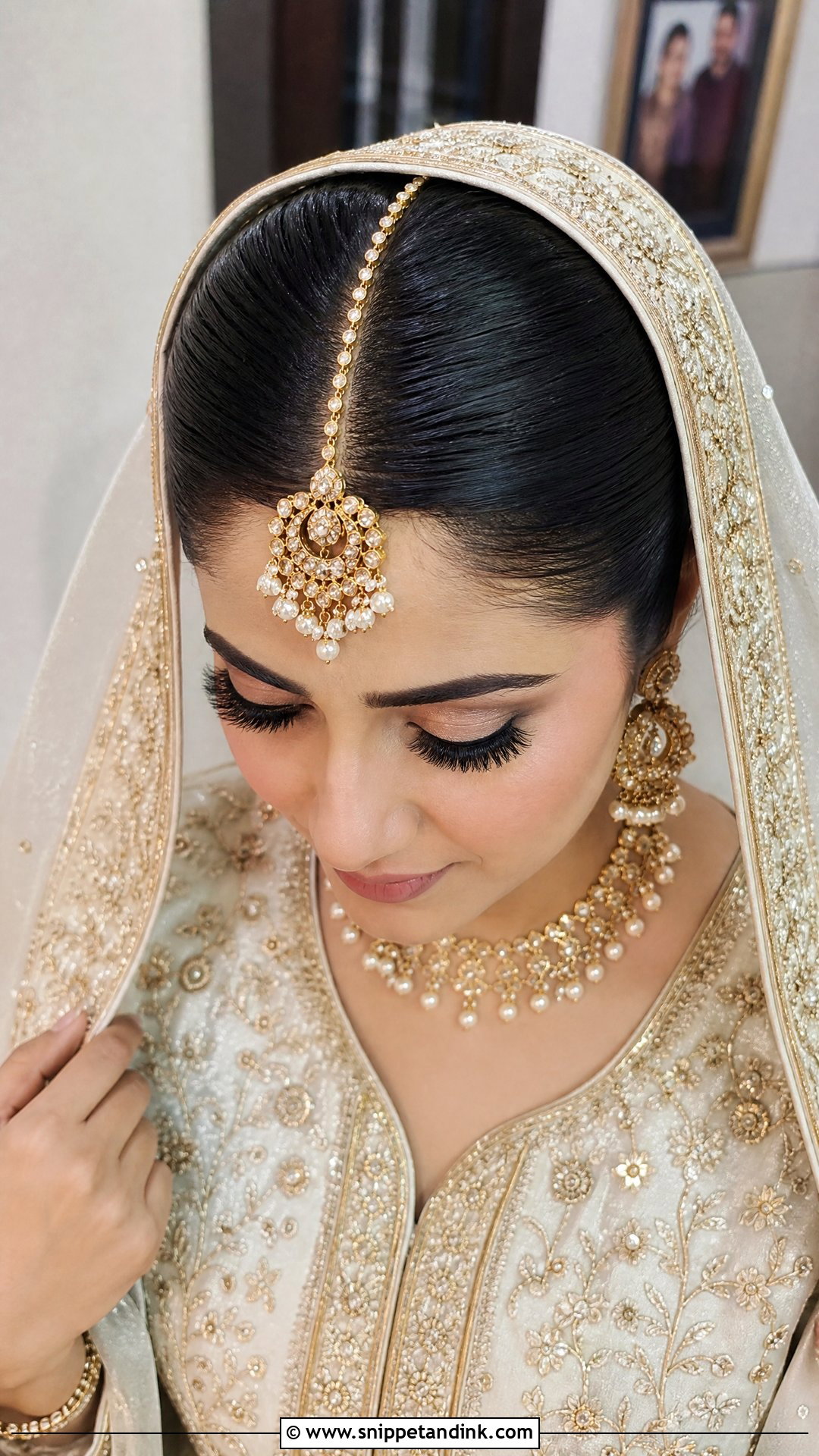
A sharp center part is the most traditional front there is, and it guides a maang tikka straight into place. The sides are smoothed and gathered into a low or medium bun, and the front stays controlled under even a heavy dupatta. The catch is that a center part shows every gap. If your scalp is visible along the line, or your hair grows unevenly at the front, I’d test it at a trial before committing. A couple of very fine curled strands by the ears take the edge off.
3. Pakistani Side Part Bridal Bun
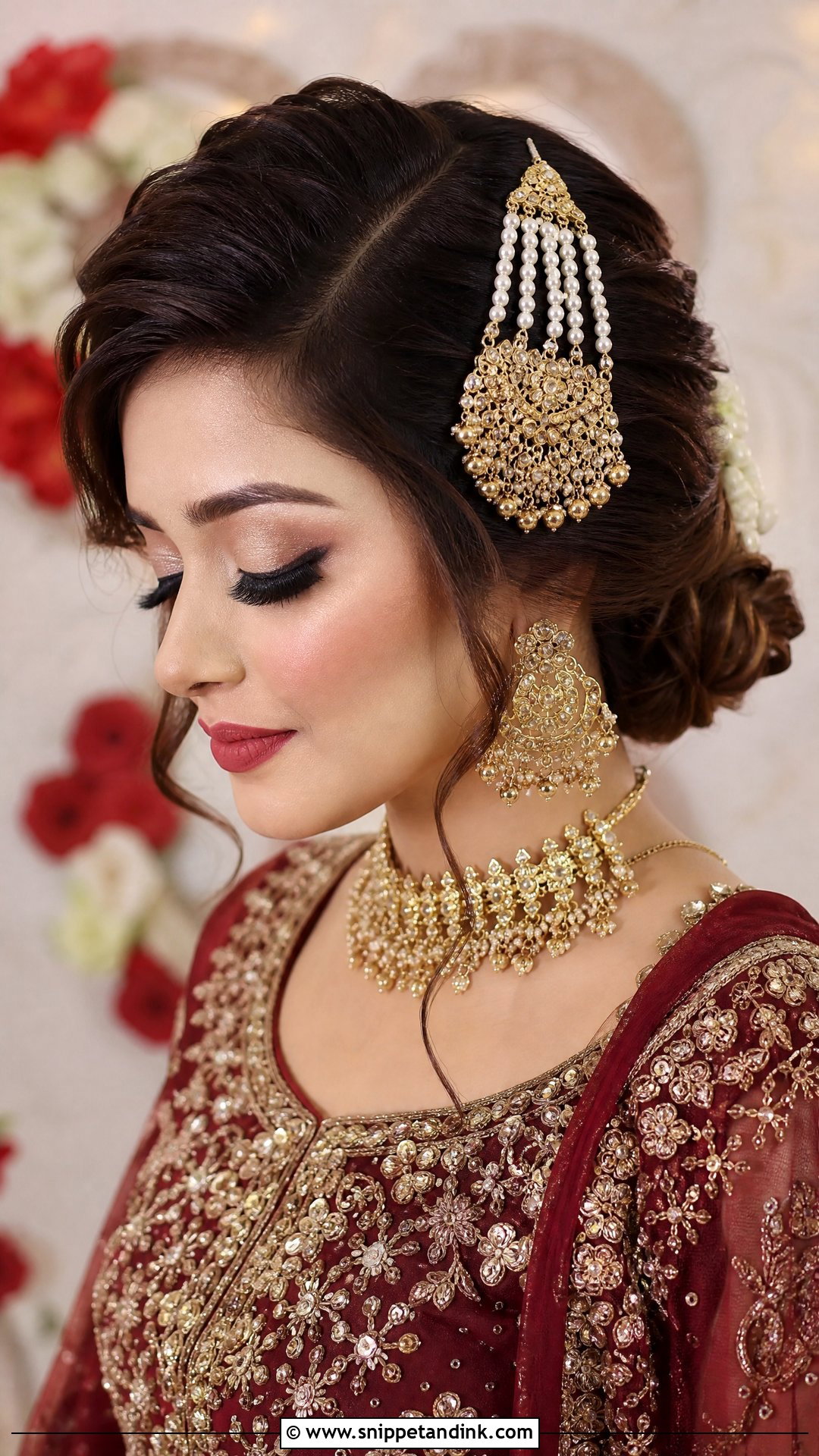
Moving the part off-center softens the forehead and gives the front some natural movement. I can keep the front sleek, put a light wave through it or sweep it before it travels back into the bun. A jhoomar or passa sits naturally on the deeper side, framed by the sweep. Many brides find a center part looks too severe on them, and this is usually the fix. Low and polished for nikah, more volume and flowers for a grand baraat.
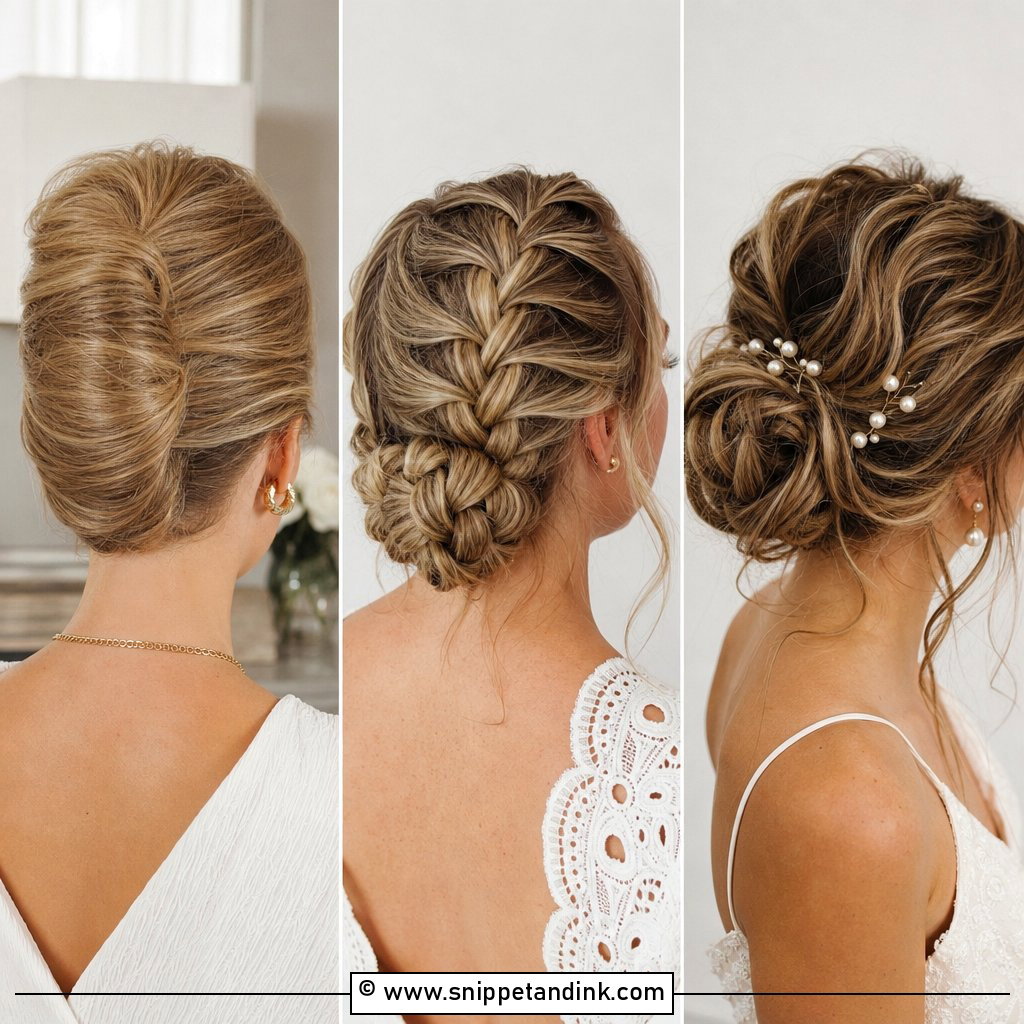
4. Pakistani Front Twist Low Bun
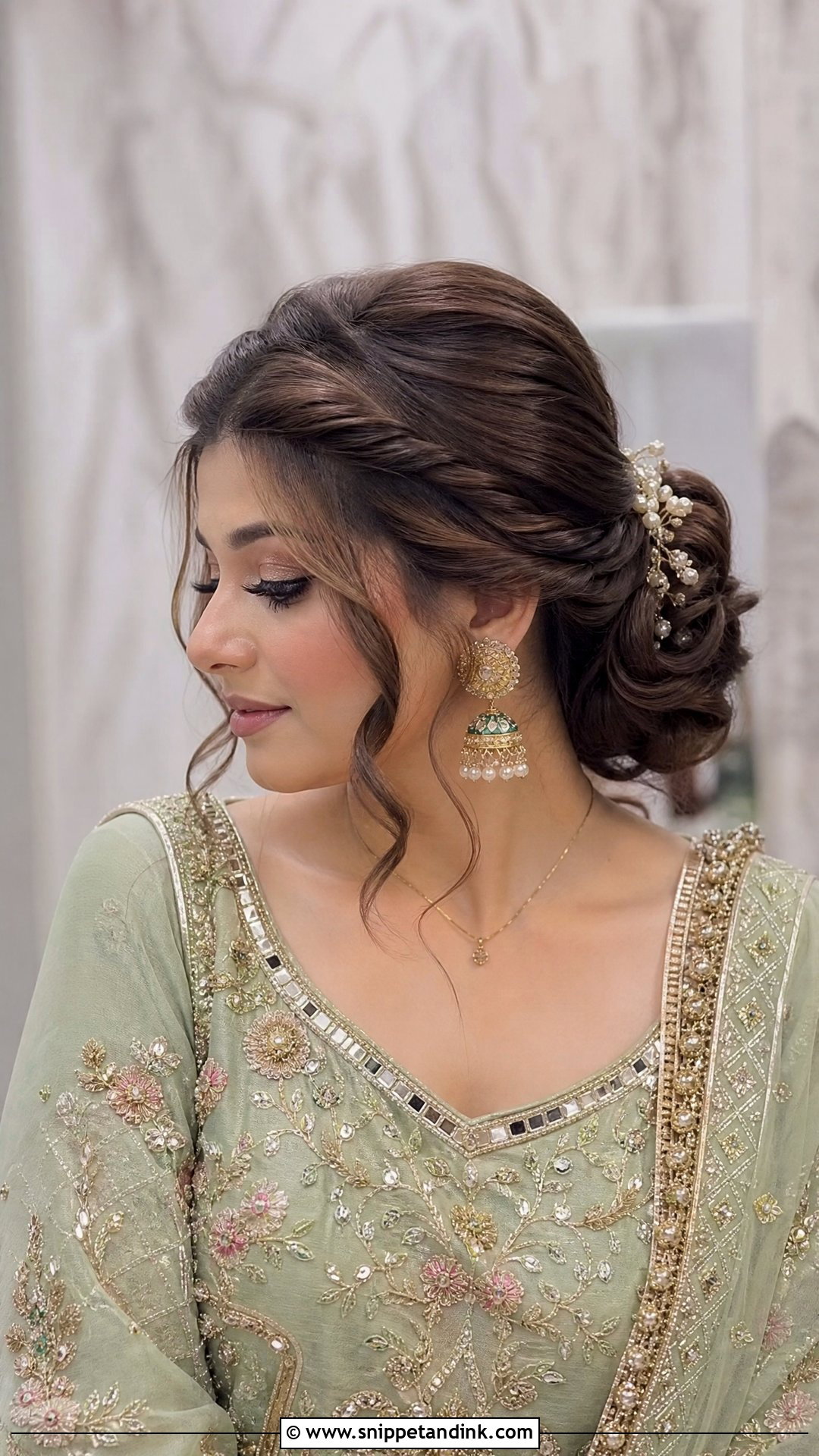
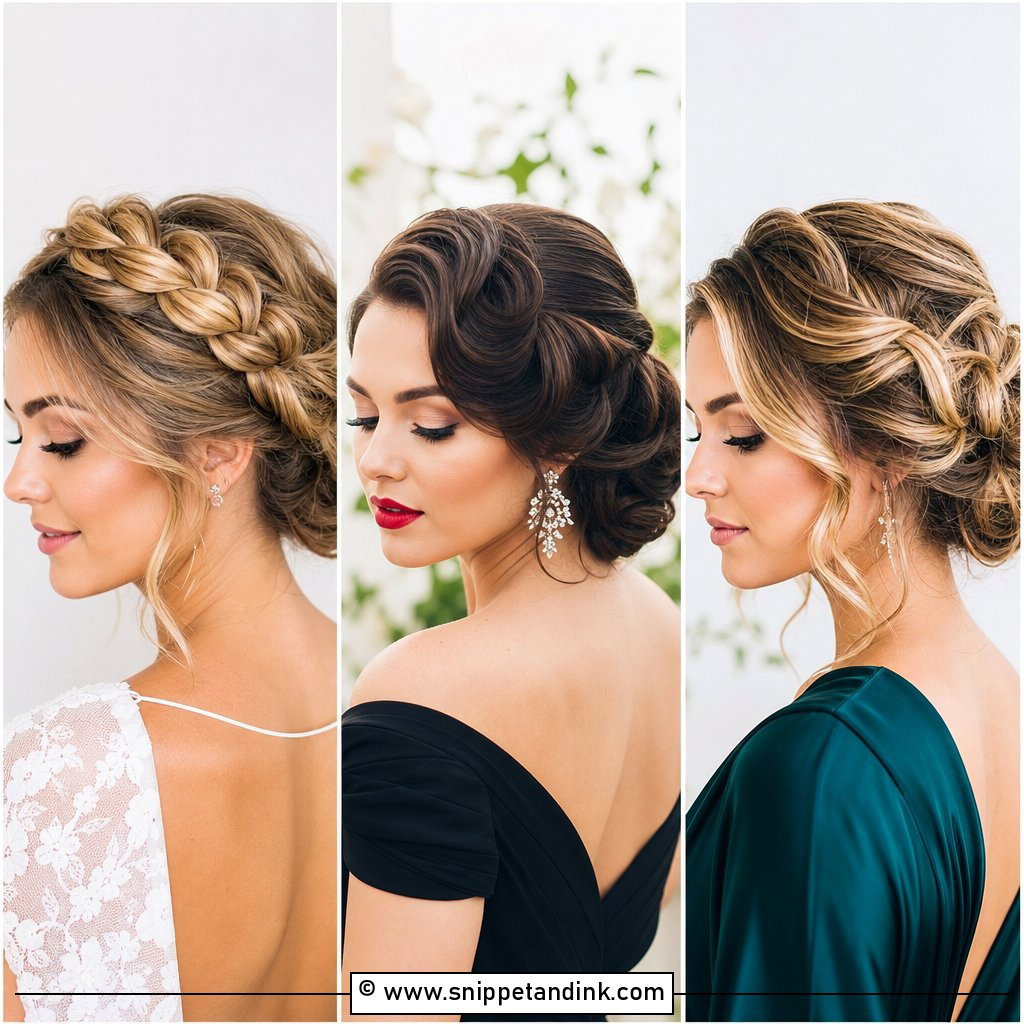
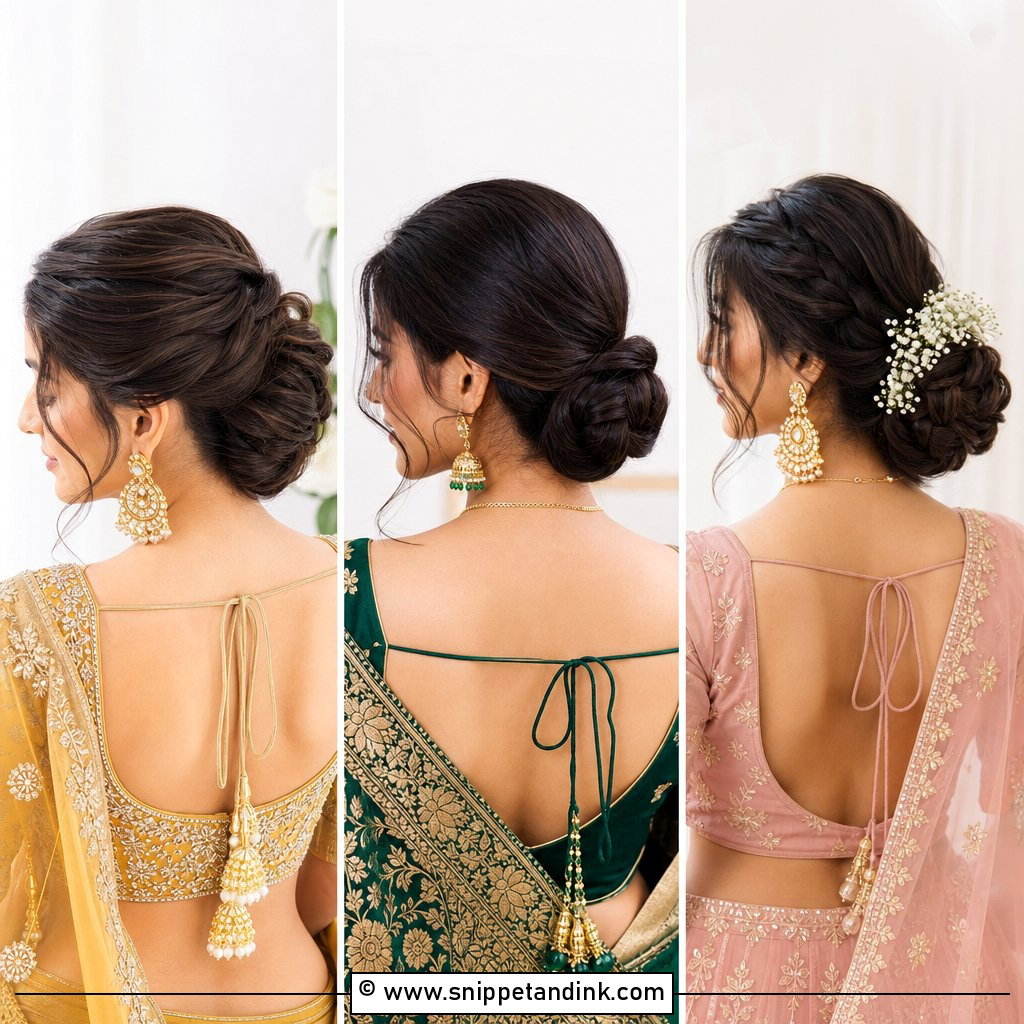
Twisting the front sections away from the face adds detail without clutter, which matters when the outfit is already heavily embroidered. I section the front, twist each piece back toward the nape and pin it along the twist so it locks against the head before blending into a low bun. It holds far better than loose front curls through a long function, and it’s a good choice for sisters and bridesmaids who’ll be on their feet all night. Pearl pins or tiny flowers make it festive.
5. Pakistani Front Braid Bridal Bun
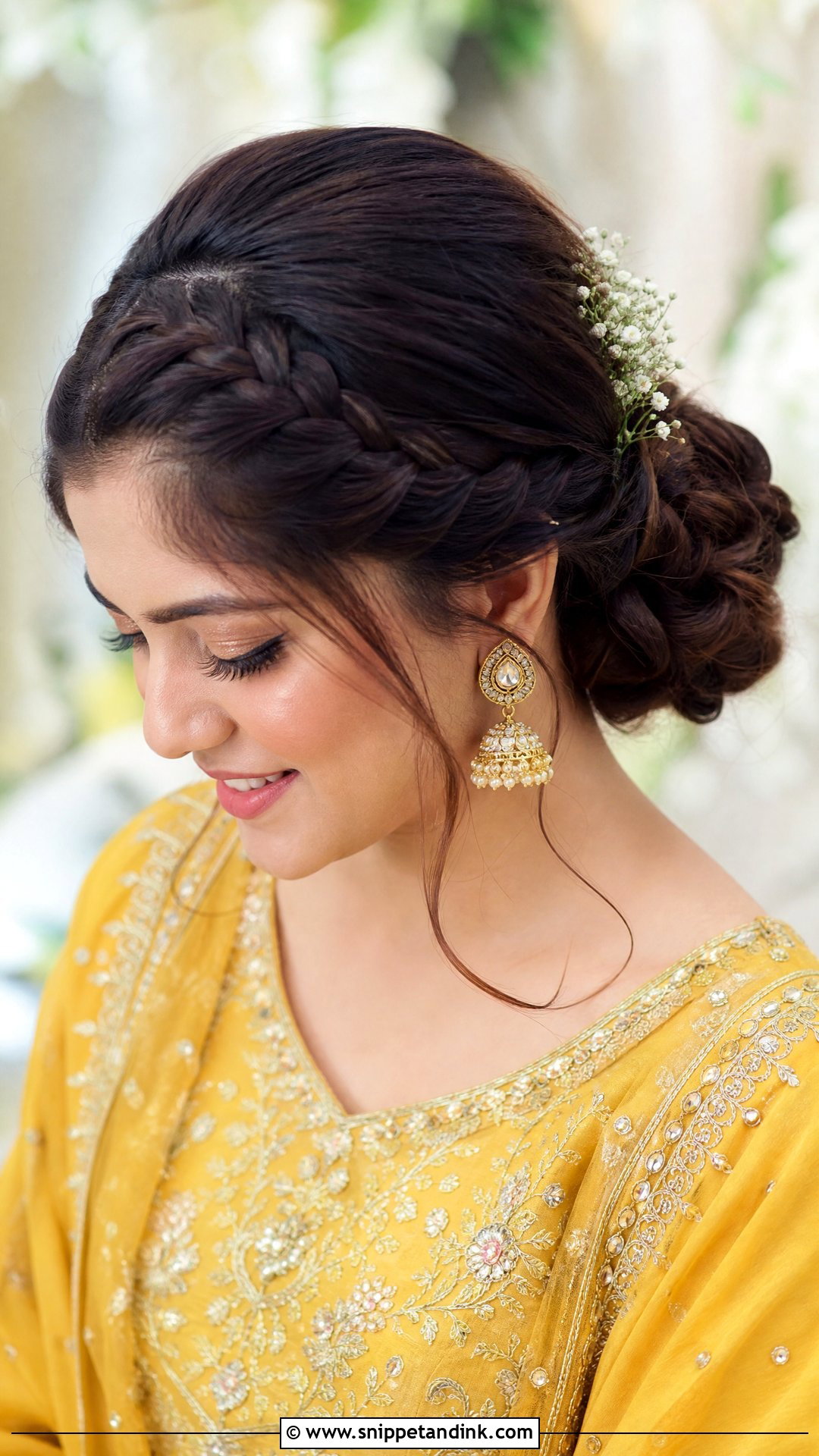
A braid along the hairline or across one side keeps the front controlled during dancing and outdoor mehndi or dholki functions. It joins into the bun at the back. Slim braids look more polished on brides, while guests can carry a thicker, more visible braid. I always loosen the edge of the braid a little after pinning, otherwise it pulls at the hairline and looks tight in photos. Paranda details, a fresh gajra and lighter jewelry all sit well with it.
6. Pakistani Sleek Front Low Bun
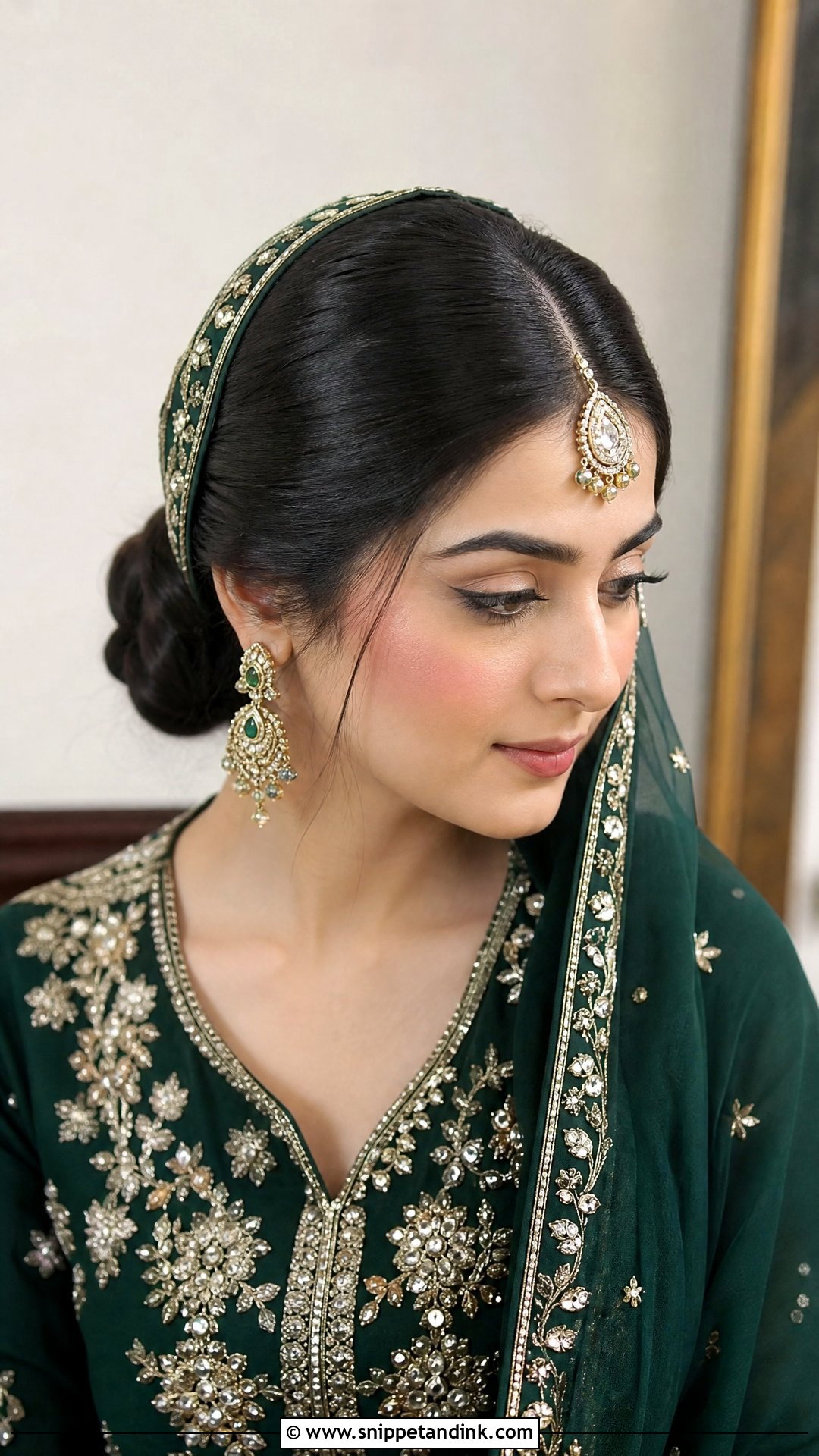
Sleek fronts let the jewelry, dupatta border and makeup carry the look. The hair is smoothed down along a precise center or side part and pinned into a low bun. Statement earrings, a choker or a heavy matha patti show off best when the hair hugs the head. Shine spray and firm pins keep flyaways down, and in humid weather sleek hair outlasts curls every time, since there’s no curl to drop.
7. Pakistani Soft Curl Front Bun
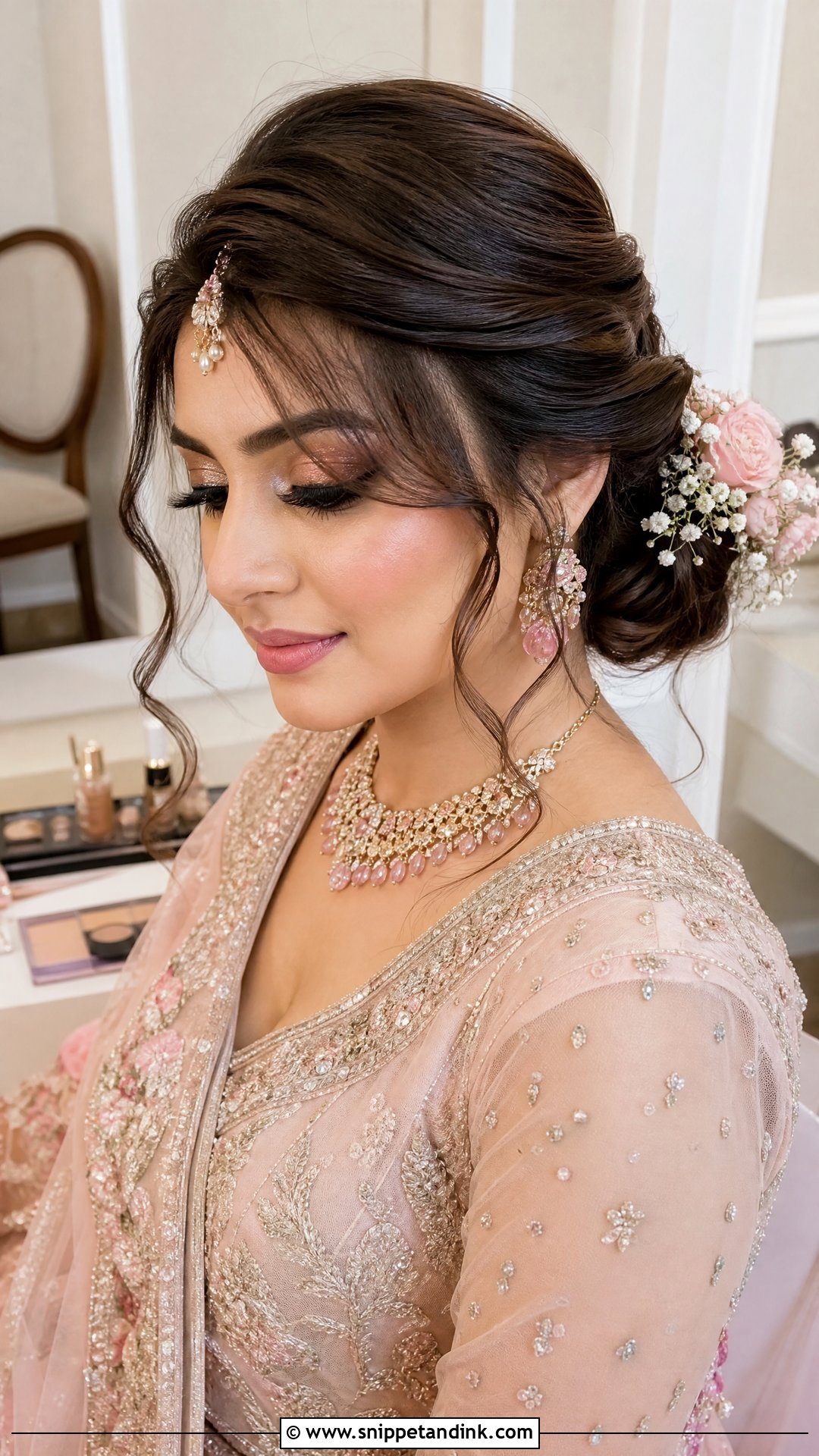
Loose curls around the front soften the cheeks and jaw, which is why I suggest this for round and square faces. I curl the front sections, shape them toward the face, then pin the rest into a bun dressed with roses, baby’s breath or a gajra. Nikah and walima, with their lighter mood, suit it best. The curls need to be set and controlled, not pulled into stray wisps; stray wisps stick to lip gloss within the first hour.
8. Pakistani Middle Part Open Curls
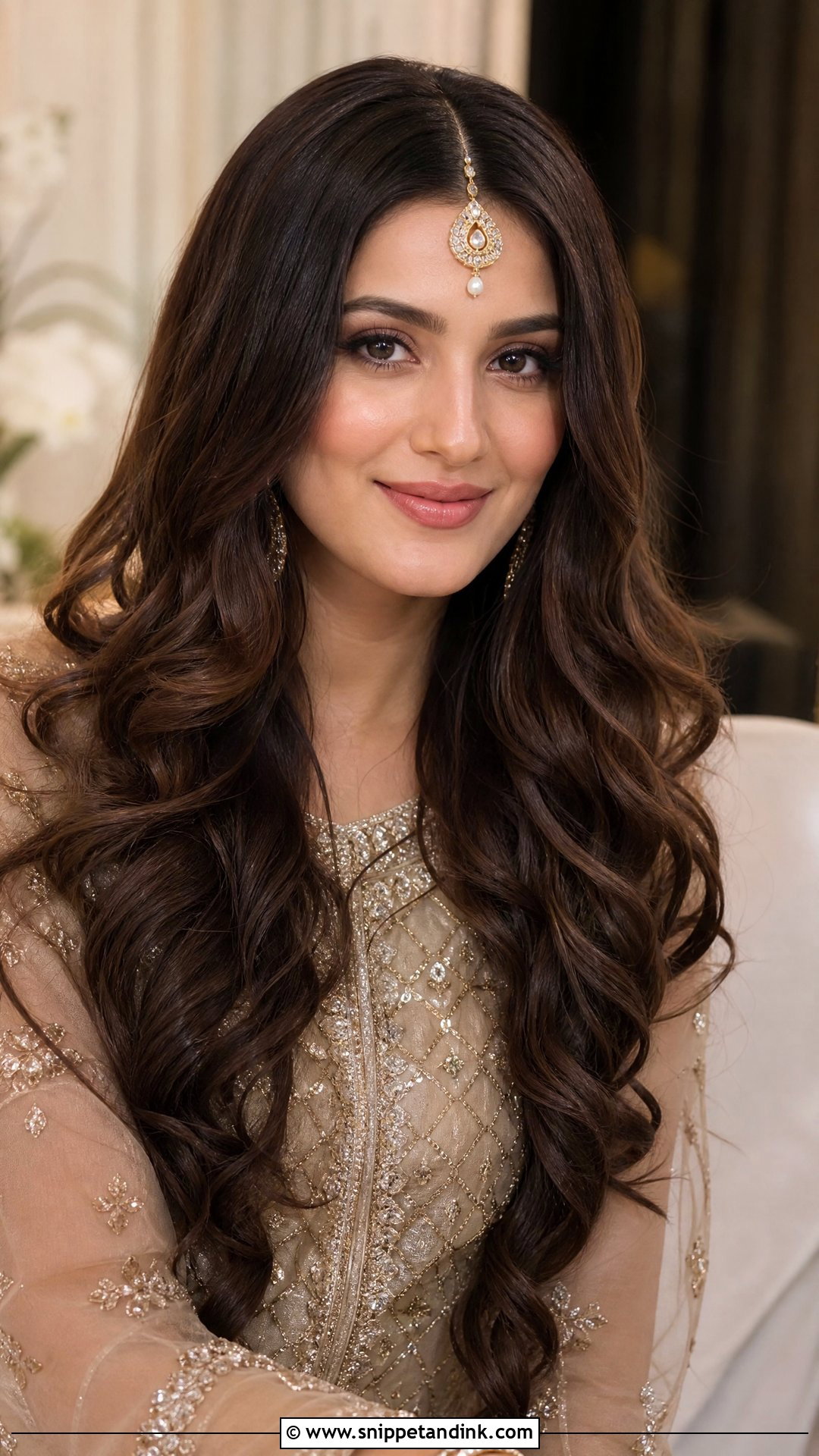
Pakistani middle part open curls belong to the walima, engagement or a lighter function. The front is parted in the center, smoothed at the roots and blended into loose curls over the shoulders. A tikka works if the part is crisp and the front sections are pinned just behind the ears. Under a heavy head dupatta it struggles, so drape the dupatta back or over one shoulder instead. A long-hold curl spray keeps the shape through the photos.
9. Pakistani Side Swept Open Curls
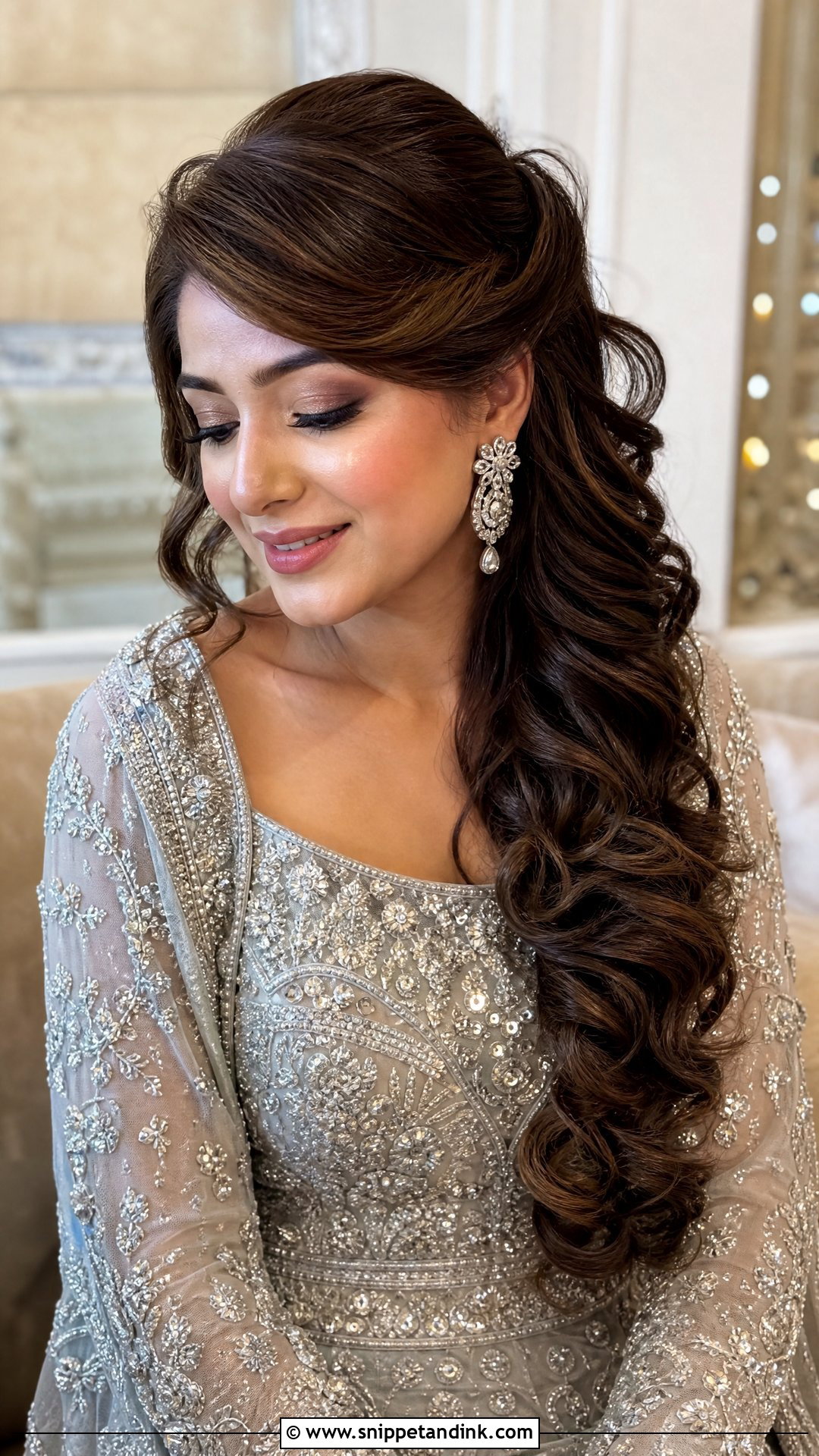
A deep side part with the curls swept over the opposite shoulder gives a dramatic front view and shows off the neckline of a worked shirt or lehenga blouse. With one side of the face open, a passa, jhoomar or statement earring gets real attention. I pin the heavy side underneath with a hidden row of pins so the sweep doesn’t slide back during the evening. It’s a strong look for walima brides, engagements and guests. Keep the curls glossy and defined.
10. Pakistani Front Puff Open Hair
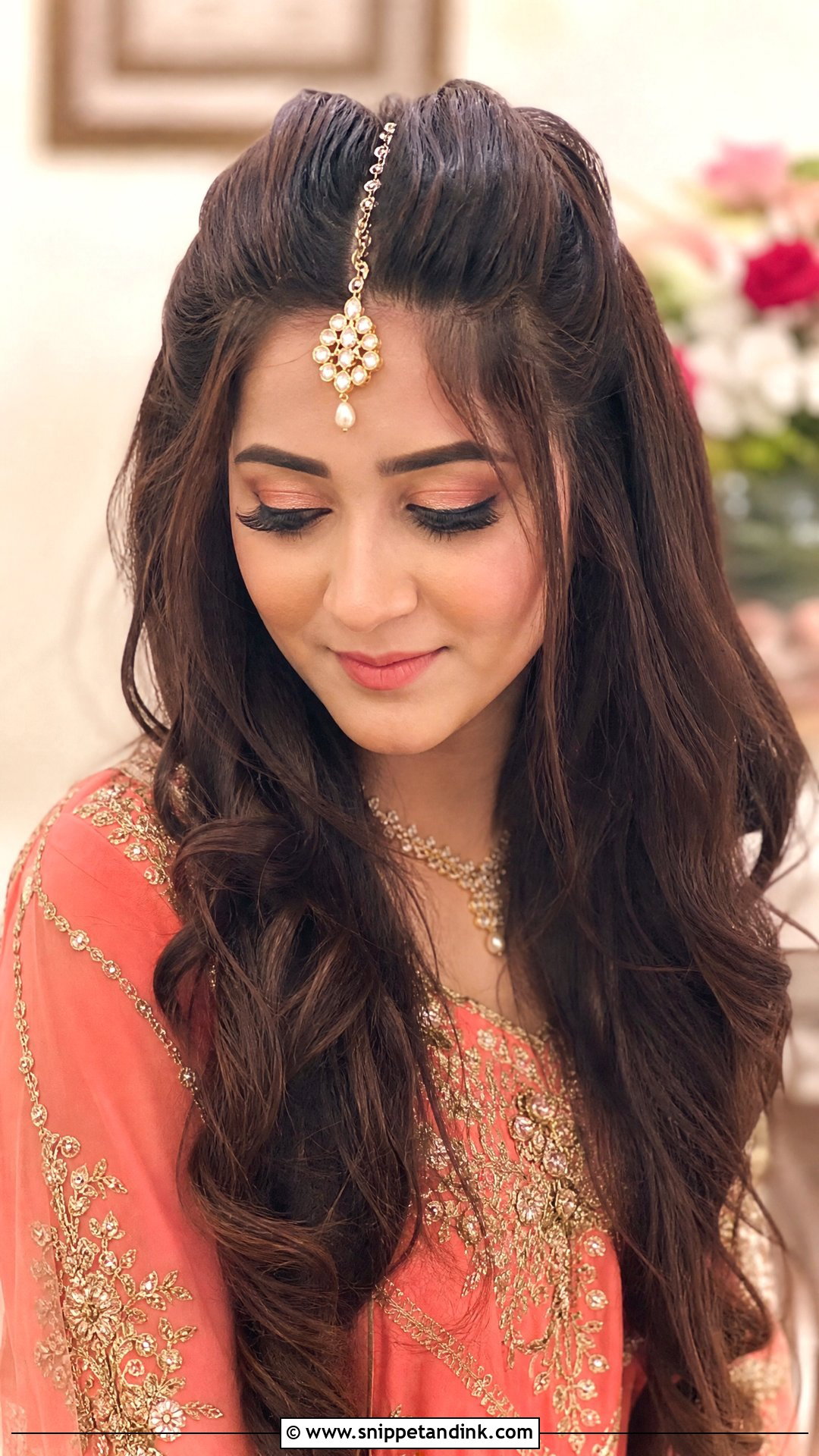
Lift at the crown with the length left open is festive without feeling heavy, which suits mehndi, engagement and reception events. I tease the front lightly, smooth it back and pin it, then put waves or curls through the rest. Height on top balances a round face. If you’re wearing a tikka, hang it just in front of the puff so it reads clearly. A medium puff blended into the length looks current; anything bigger looks like a different decade.
11. Pakistani Half Up Front Puff Curls
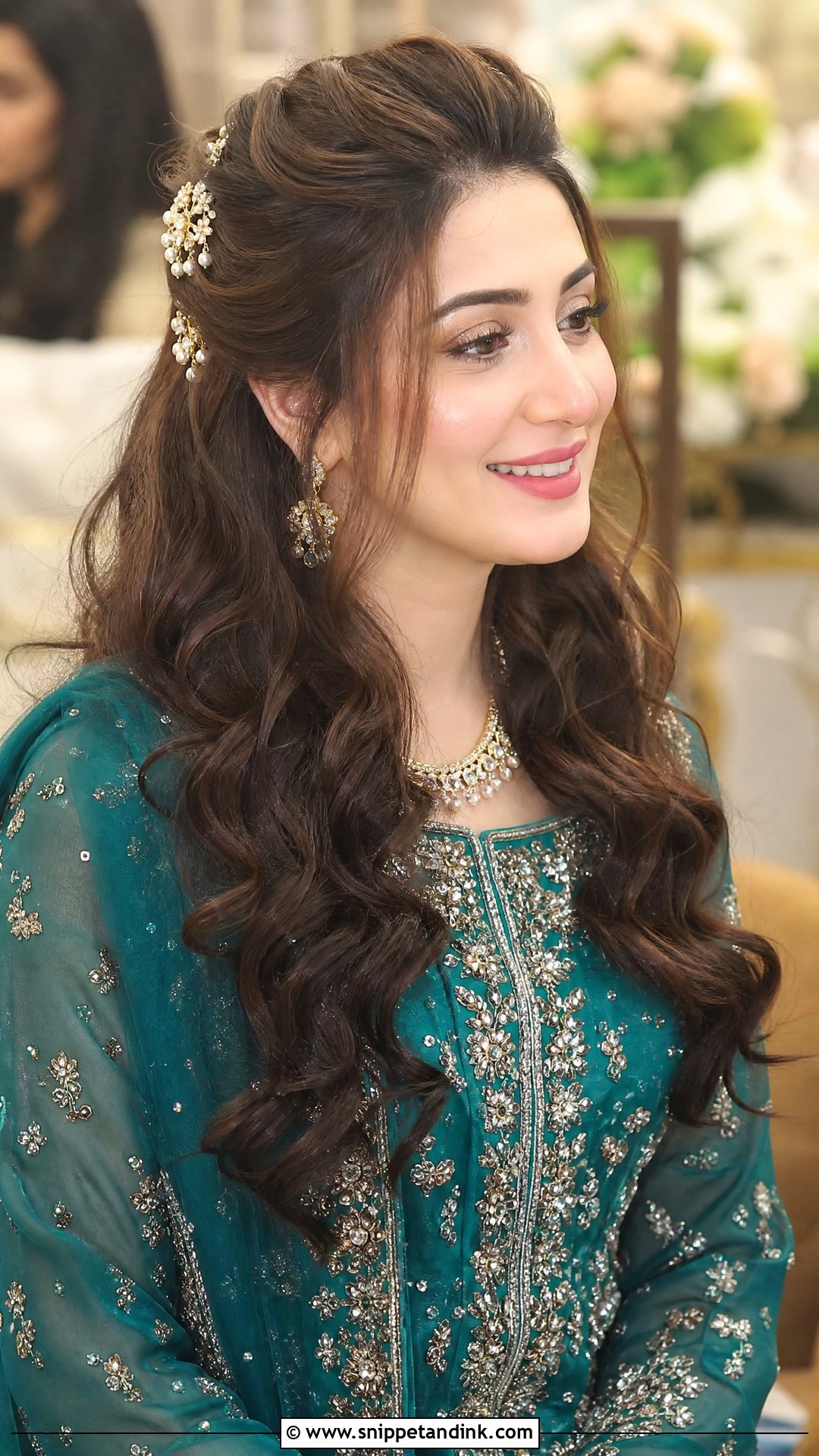
Half-up with a small front puff gives you volume at the front and movement through the length. The top section is lifted and pinned firmly, the rest curled. Sisters, cousins and bridesmaids ask for this one constantly, and brides like it for lighter events. The open front leaves room for jhumkas, a tikka or delicate pins, and the pinned section keeps hair out of your face. Brush the curls out loosely rather than leaving them in tight ringlets.
12. Pakistani Half Up Center Part Curls
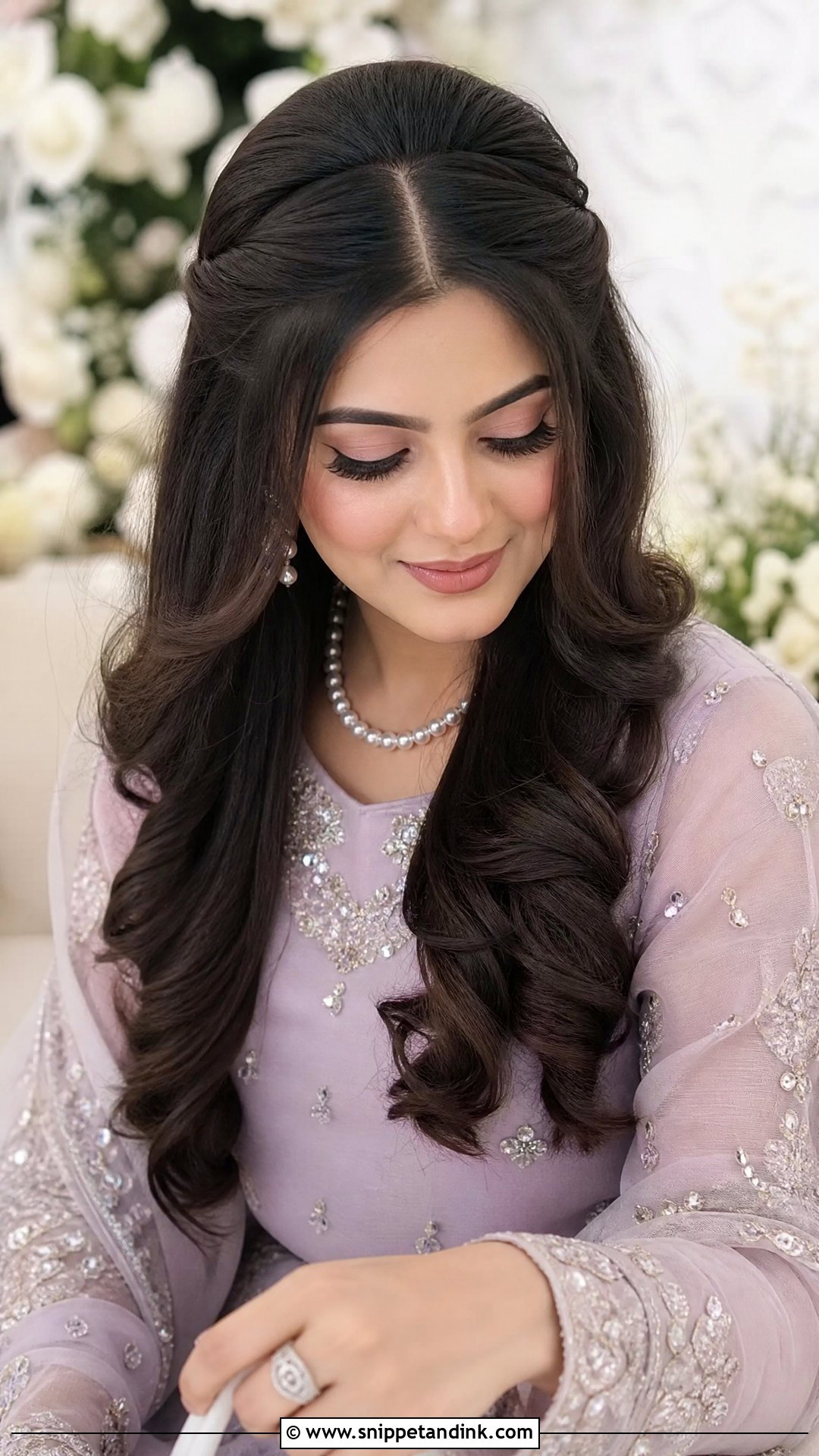
With a center part and both front sections pinned softly toward the back, the face is framed evenly and a tikka has a neat line to follow. The rest of the hair falls in curls. It’s open without being loose, and it suits nikah, walima and engagement looks with pastel outfits. Ask your stylist to keep volume at the crown, because a flat top on a center part makes the face look longer in pictures.
13. Pakistani Front Jhoomar Side Bun
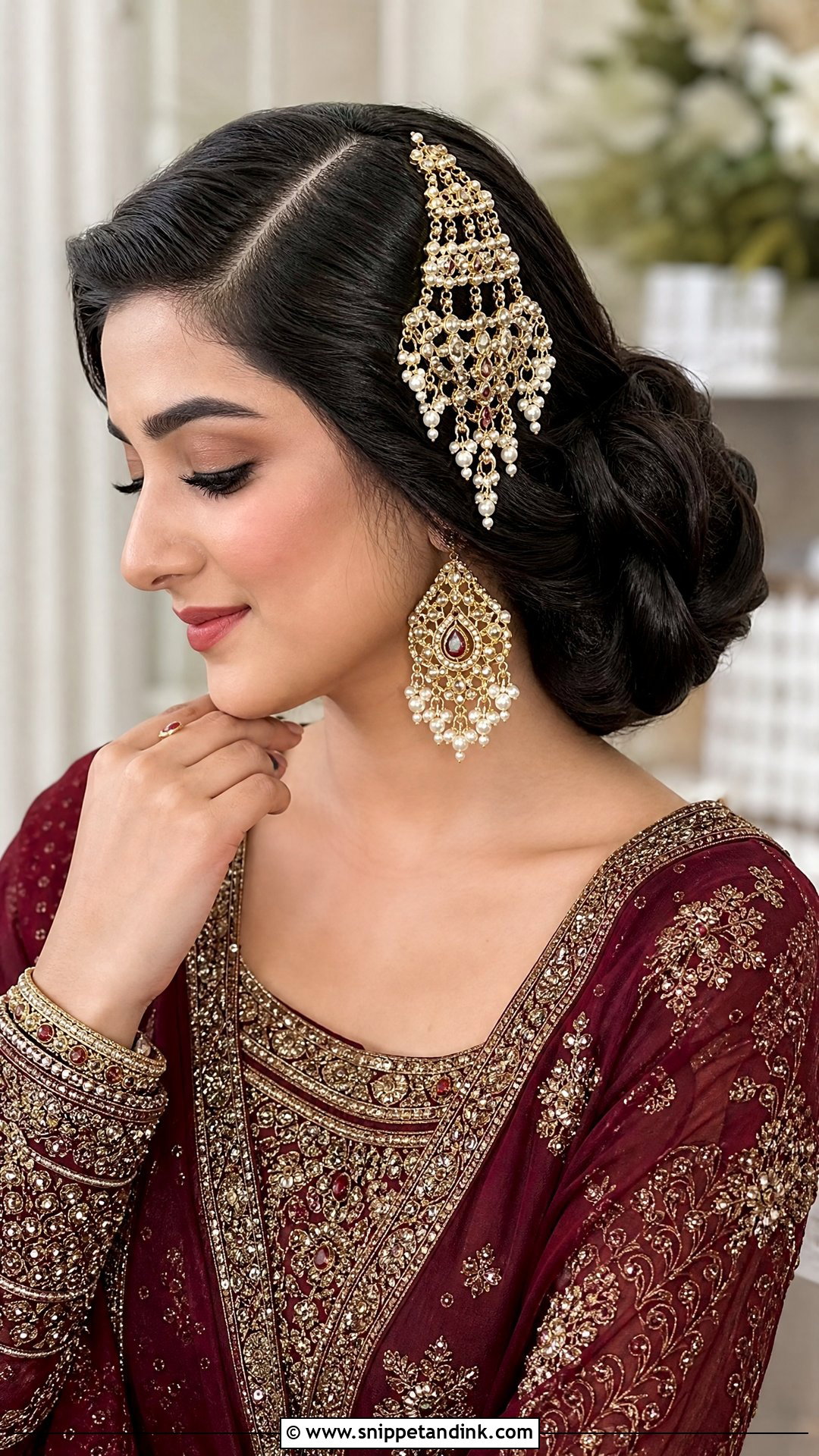
When the jhoomar is the star, the front has to make room for it. I part on one side or sweep the hair across, then gather the bun low at the back or slightly to one side, so the jhoomar sits on the fuller side. Shararas, ghararas and heavily embroidered outfits suit it. Keep that side smooth; flyaways tangle in jhoomar chains and pull every time you turn your head. A few soft curls near the temples relax it.
14. Pakistani Matha Patti Front Bun
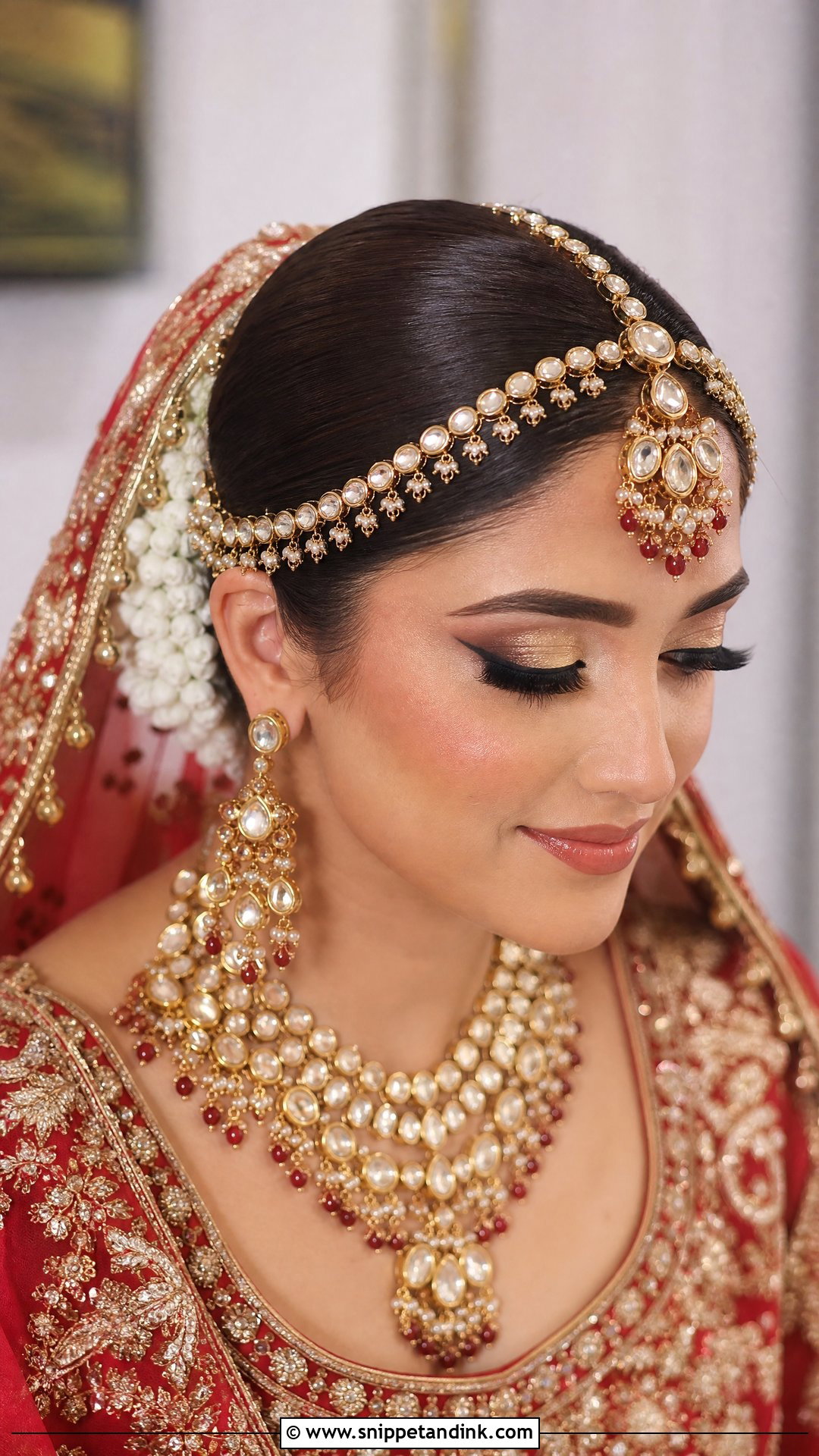
A matha patti needs a smooth, firm front with no bumps underneath, or it tilts. A center part lets it sit evenly across the forehead, and the bun at the back supports the dupatta. It’s one of the most reliable baraat fronts I know, built for heavy accessories and long ceremonies. I pin the matha patti chains into the hair along the part rather than relying on the hook alone. Keep the bun firm but not painful, and only add padding if your hair needs it.
15. Pakistani Maang Tikka Front Bun
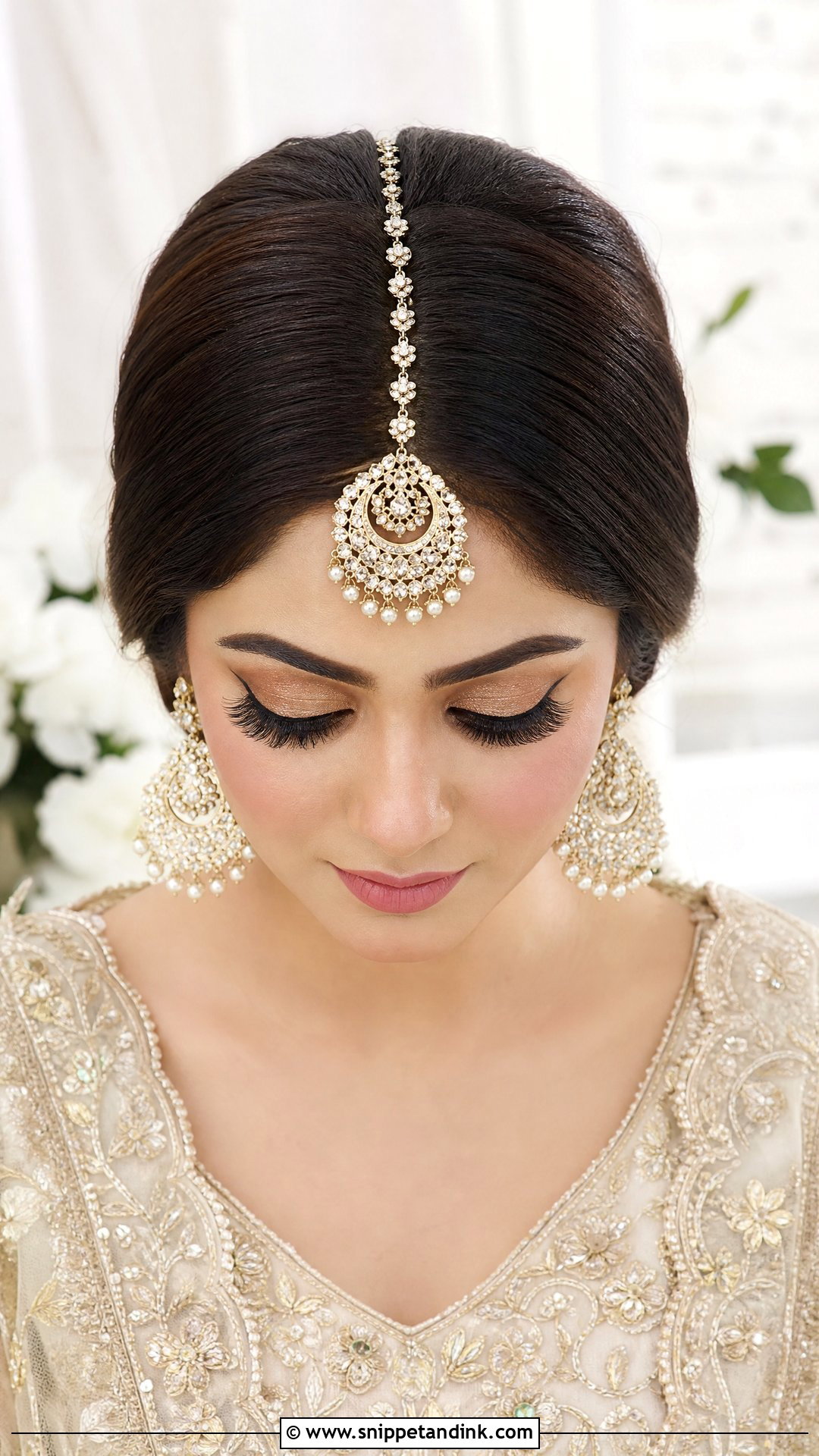
A tikka bun is one of the quickest ways to look polished, which is why mothers and aunts ask for it too. It starts with a defined part, usually central, so the tikka can sit straight. The sides go back into a bun, low for a classic feel or higher for more height. I hide two small pins under the tikka’s chain where it meets the part, otherwise it drifts sideways the moment you bend to greet someone.
16. Pakistani Passa Front Hairstyle
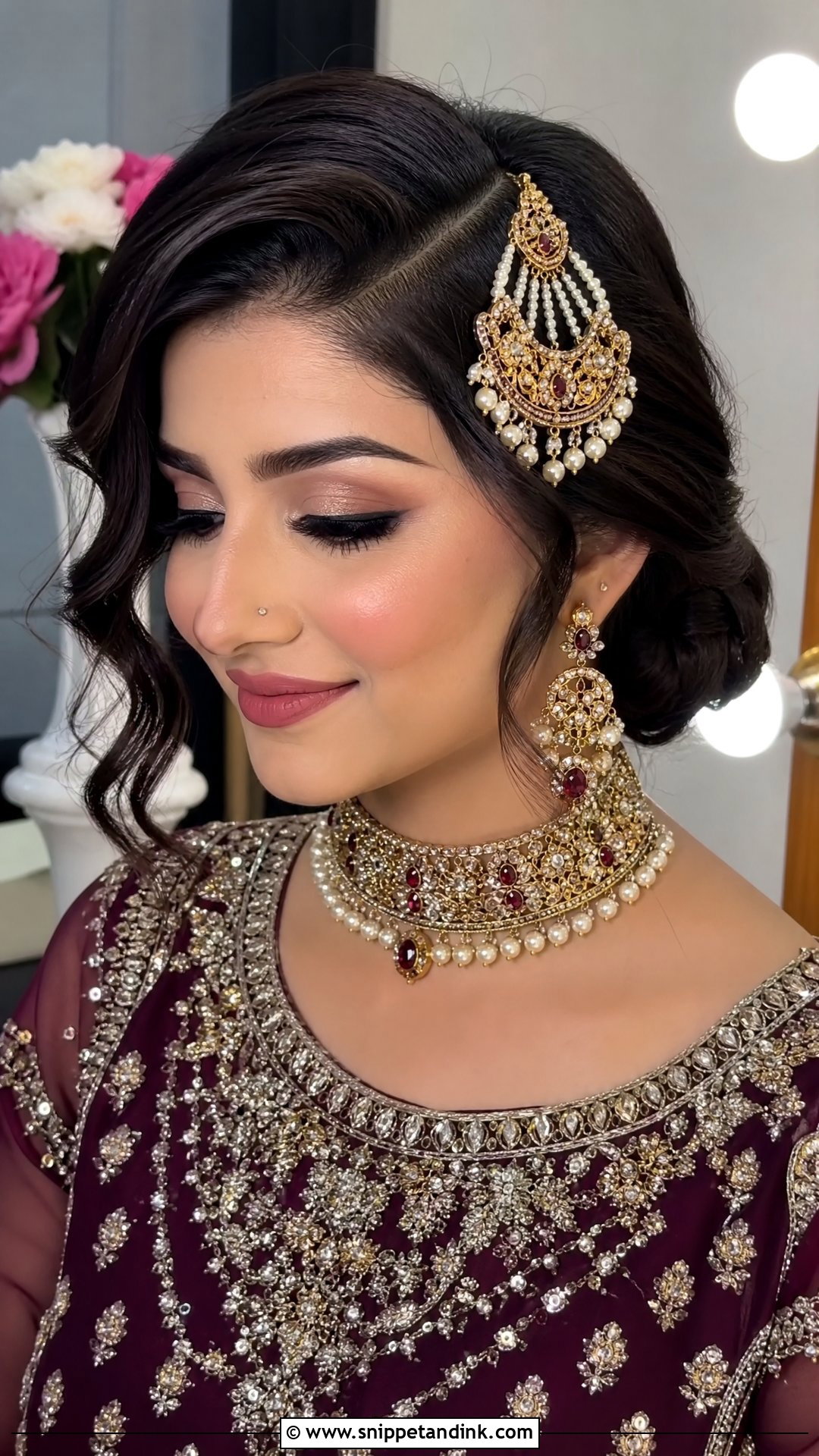
A passa sits on one side, so the hair on that side has to stay flat enough for it to lie properly. A side part, a soft sweep or a low side bun gives it room. Too much curl near the accessory hides the design, so I keep that side sleek and lift the other side gently for balance. It suits mehndi, nikah or baraat with traditional outfits, and it shows best in three-quarter angled portraits where the passa faces the camera.
17. Pakistani Gajra Front Bun
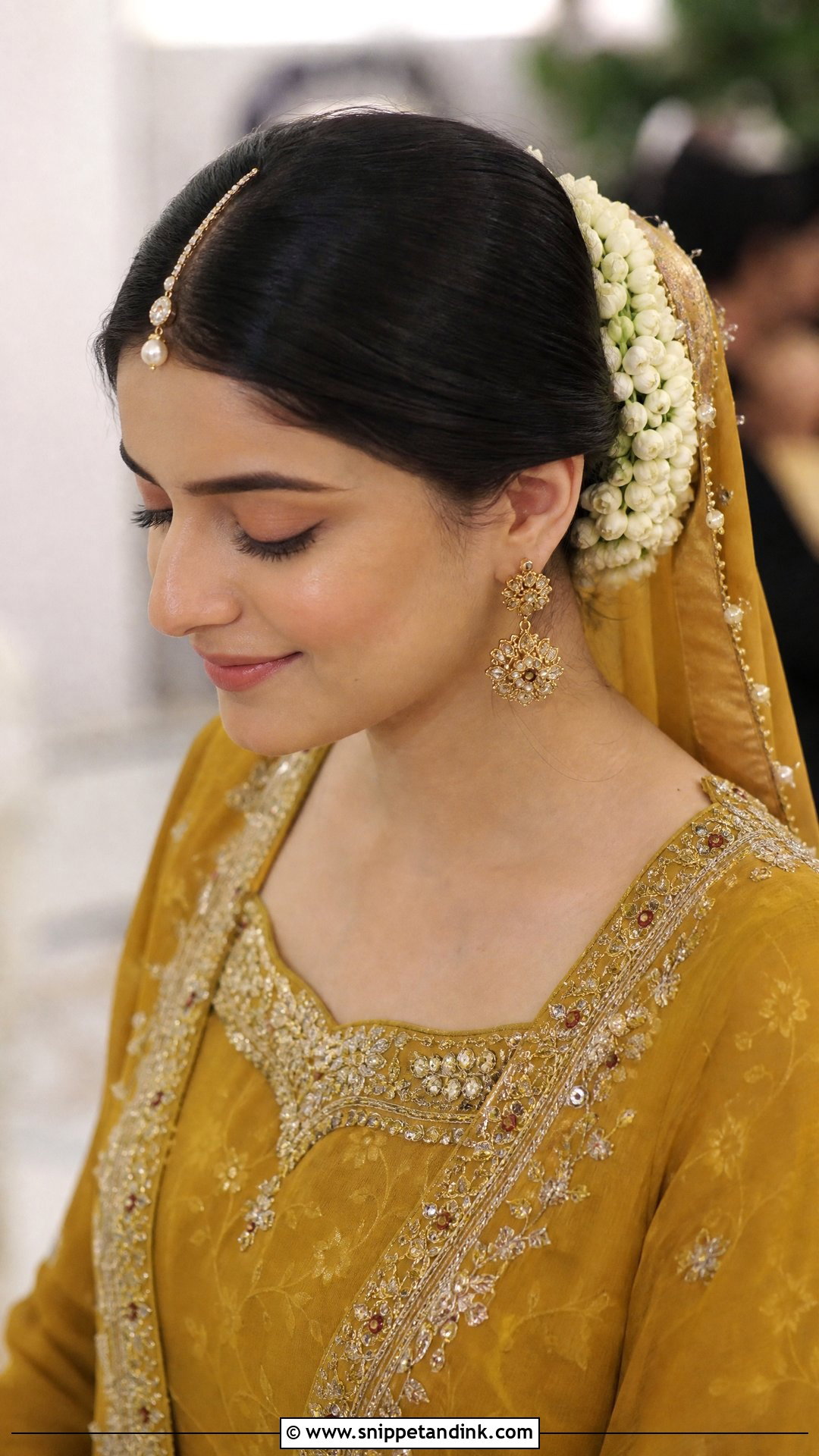
A Pakistani gajra front bun pairs a neat front with a decorated back. The front can be center-parted, side-parted or lightly puffed to suit your face and jewelry, and the bun is wrapped in fresh jasmine. It works for mehndi, nikah and classic baraat looks. If the dupatta is pinned slightly behind the crown, the flowers still show in side and back photos. Keep the front plain so the gajra does the decorating.
18. Pakistani Front Bangs Wedding Bun
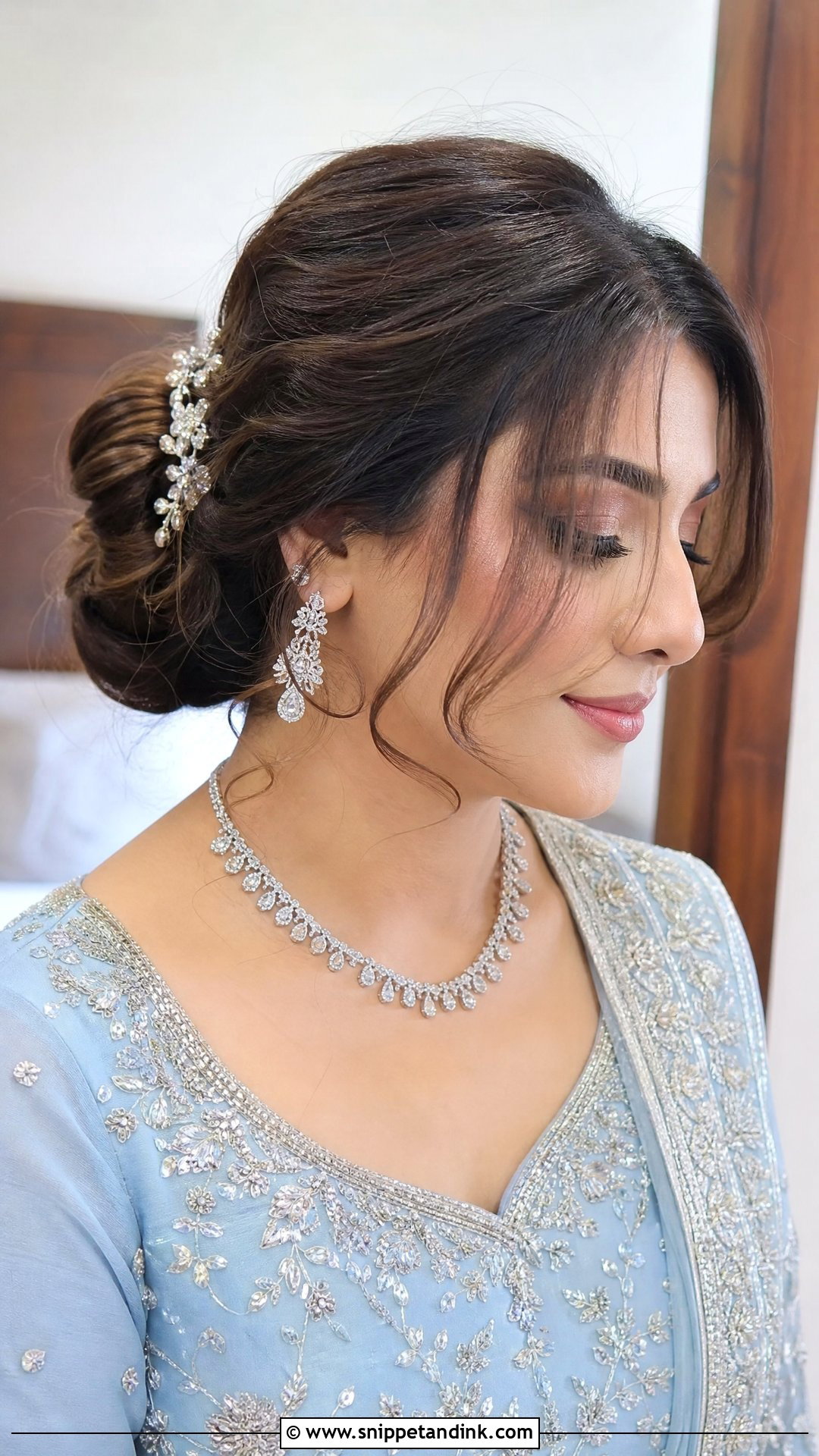
Bangs soften a wide forehead and add movement around the face. Curtain bangs, side-swept fringe or lightly curled pieces sit in front of a pinned bun. They need control: I set them with a round brush and a flexible spray so they move but don’t separate. If your fringe is freshly cut, wait a week or two before the wedding, since new bangs rarely sit right at first. Lighter jewelry and delicate tikkas suit it best, at walima or engagement events.
19. Pakistani Front Layers Open Waves
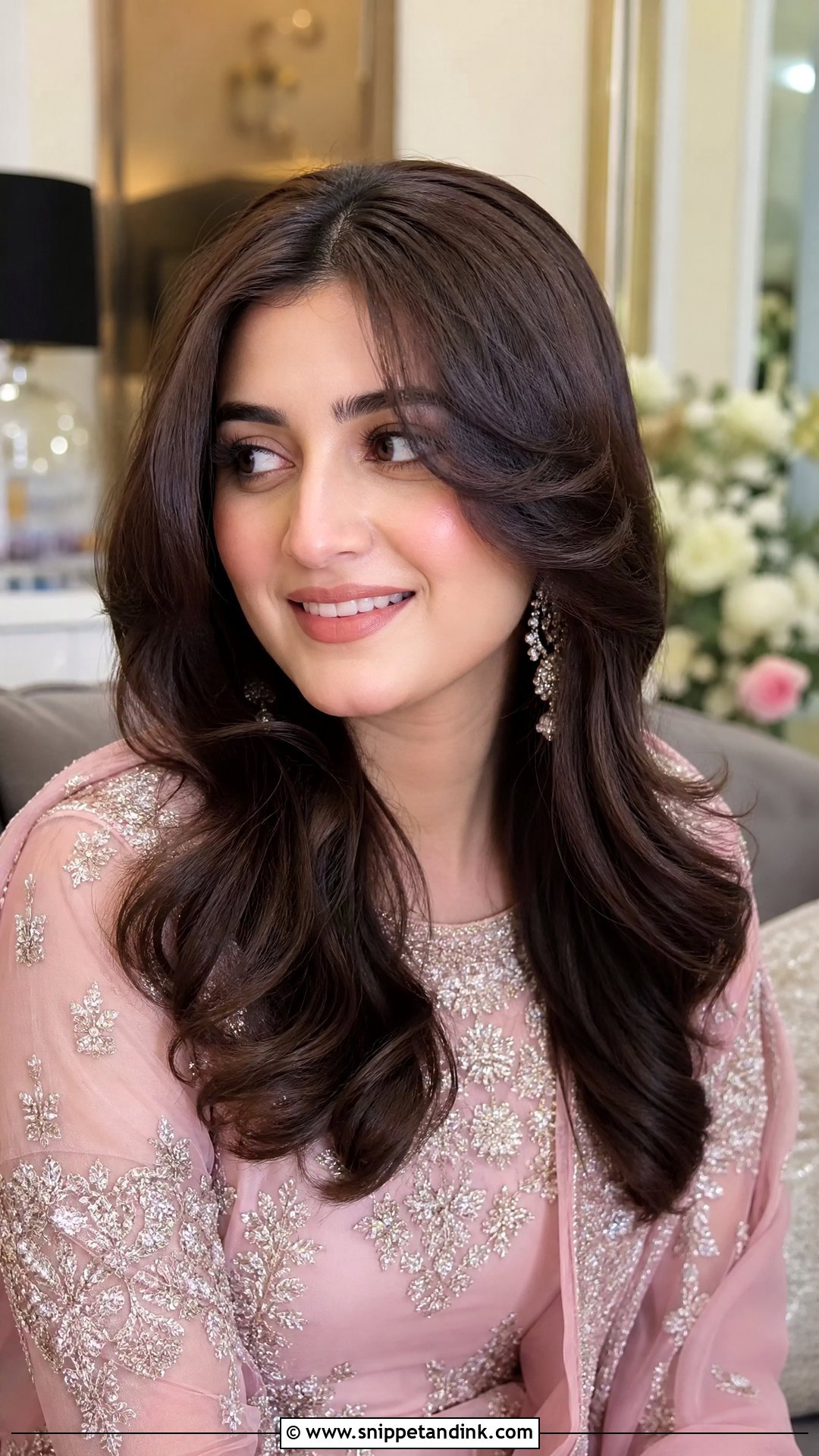
Front layers blow-dried away from the face give movement around the cheekbones and make the hair look fuller in portraits. The rest gets loose waves. It’s for walima brides, engagement parties and guests without a heavy head dupatta. A tikka works on a clean center part, though plenty of people wear this with just earrings and a necklace. Keep the waves glossy and set, because unset layers drop flat by dinner.
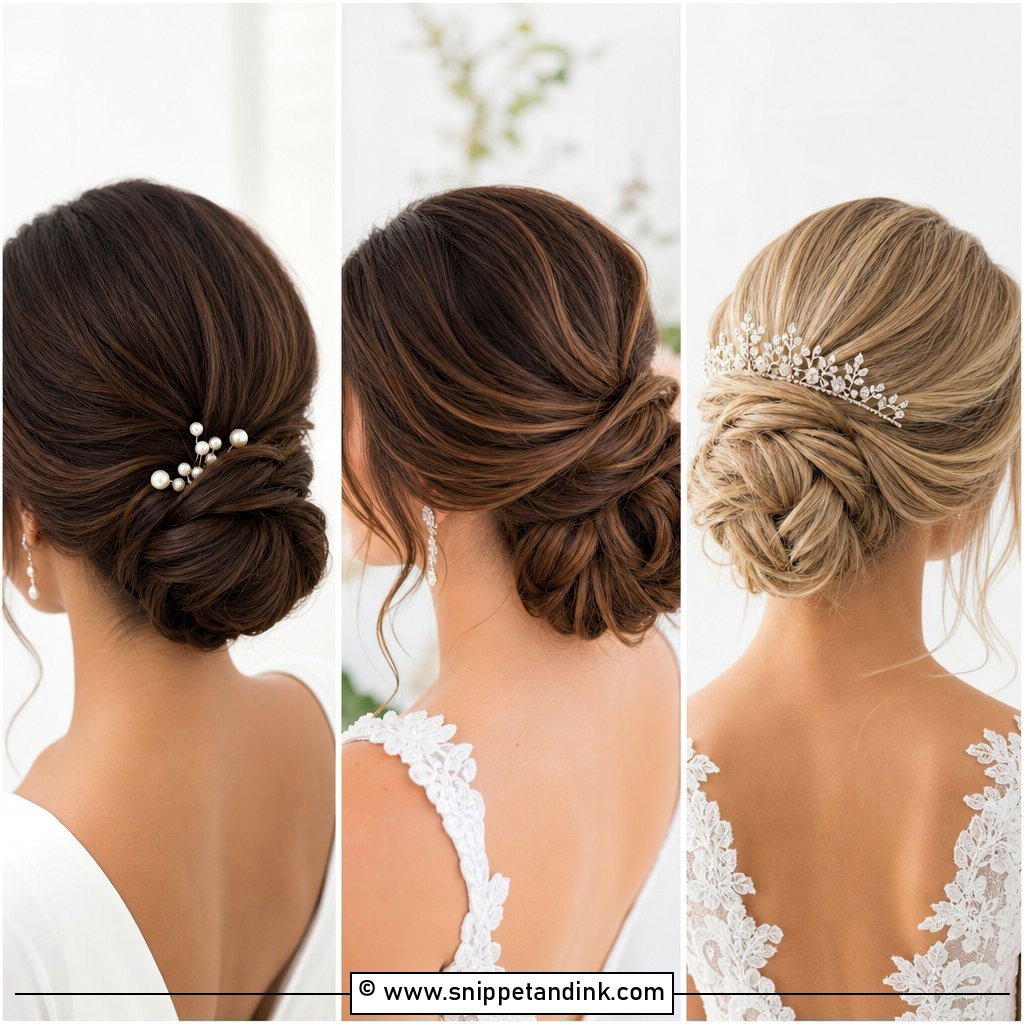
20. Pakistani Front Paranda Braid
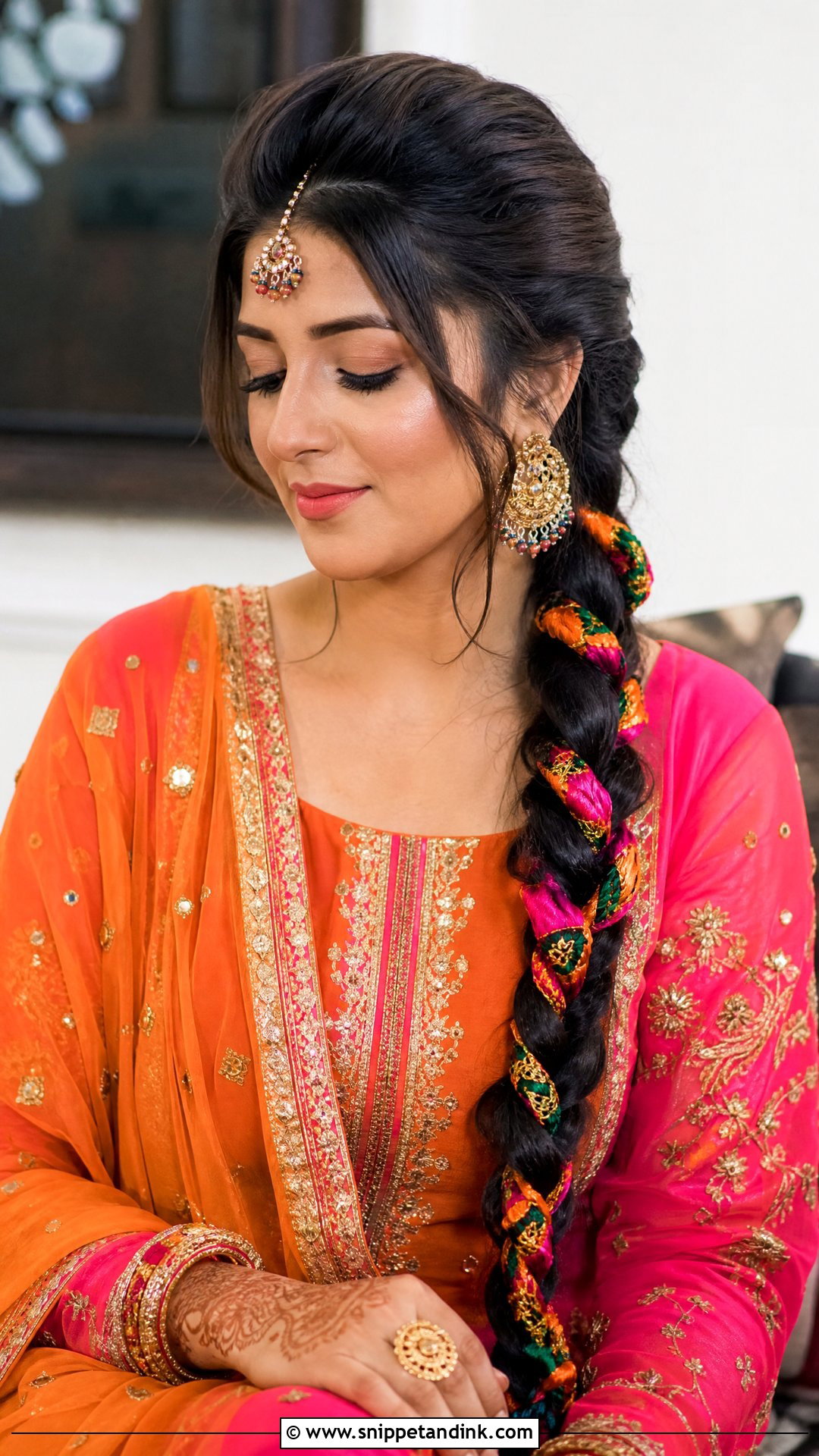
For mehndi and dholki, a Pakistani front paranda braid keeps the hair secure for dancing and looks festive in every photo. The front can be parted or softly puffed before the length is braided with the paranda. Bright outfits, gota jewelry and bangles suit it. Brides can add a tikka and passa; guests can leave it simpler. Match the paranda to the outfit or pick a contrasting color, and tie it off tightly, since the tassels swing hard on the dance floor.
If You’re the Sister, Not the Bride
Guests and family get more freedom than the bride, since most aren’t wearing a heavy dupatta over the head. That opens up half-up styles, open curls and side sweeps that a baraat bride usually can’t carry. The one courtesy I’d keep is not matching the bride’s exact front, especially at the baraat, where a near-identical puff and tikka can look like competition in group photos.
If you’re doing your own hair, sleek fronts and twisted low buns are the most forgiving at home. Puffs and polished open curls are the ones worth paying someone for.
When the Front Collapses Halfway Through the Evening
Humidity, a crowded hall and a dupatta pulled on and off all flatten the front first. Keep a tail comb, six or seven bobby pins and a travel hairspray in someone’s bag. To revive a fallen puff, lift the top layer, re-tease just underneath it, smooth back over and pin. For a dropped curl, wrap it around two fingers, pin it flat against the head for ten minutes and release it before the next photo.
The Front Is What the Camera Gets
Every angle counts, but the front decides how portraits, jewelry and dupatta placement look. Sleek center parts, side sweeps, puffs, open curls, decorated buns and paranda braids all have their place; match the front to your outfit, face shape and the event. Heavy dupattas want firm buns underneath, while walima and engagement looks can carry softer open hair. If you can, do a trial wearing your actual tikka, matha patti, passa or jhoomar, so nothing slips or pulls once the day begins.
You'll Like These Ideas:


Leave a Reply