
A Hindu bridal hairstyle does more work than most. It carries a maang tikka or matha patti, anchors a dupatta that pulls on every pin, holds fresh jasmine through hours of heat, and still has to look right from behind while you sit for the pheras. So I start with the outfit and the rituals, and only then pick a shape. Below are 25 Hindu bride hairstyle ideas I’d genuinely put on a bride, with notes on the hair each one needs and where each tends to struggle.
How Your Dupatta and Jewelry Rule Out Half These Styles
Before I look at a single inspiration photo, I ask three things. Will a dupatta be pinned on your head? How heavy is your tikka or matha patti? Are you wearing fresh flowers? Those answers decide more than face shape does. A heavy dupatta needs something solid at the back to pin into, which is why low buns and braided buns dominate traditional ceremonies, and why open hair and side curls rarely work for the main rituals.
When the dupatta goes over your head
I pin it into the bun with U-pins inserted from behind, not into flat hair at the scalp. Please bring the actual dupatta to your trial. Net and georgette slide forward, while a heavy embroidered or velvet dupatta drags backward, and each needs a different pinning plan that I can only judge with the real fabric in my hands.
When you’re wearing a matha patti or heavy tikka
These hook into the hair along the part and at the temples. Fine hair often can’t hold them on its own, so I build tiny pinned anchors or mini braids exactly where the hooks will land. That only works if I know the piece in advance, so tell your stylist which jewelry you’ve chosen when you book, not on the morning.
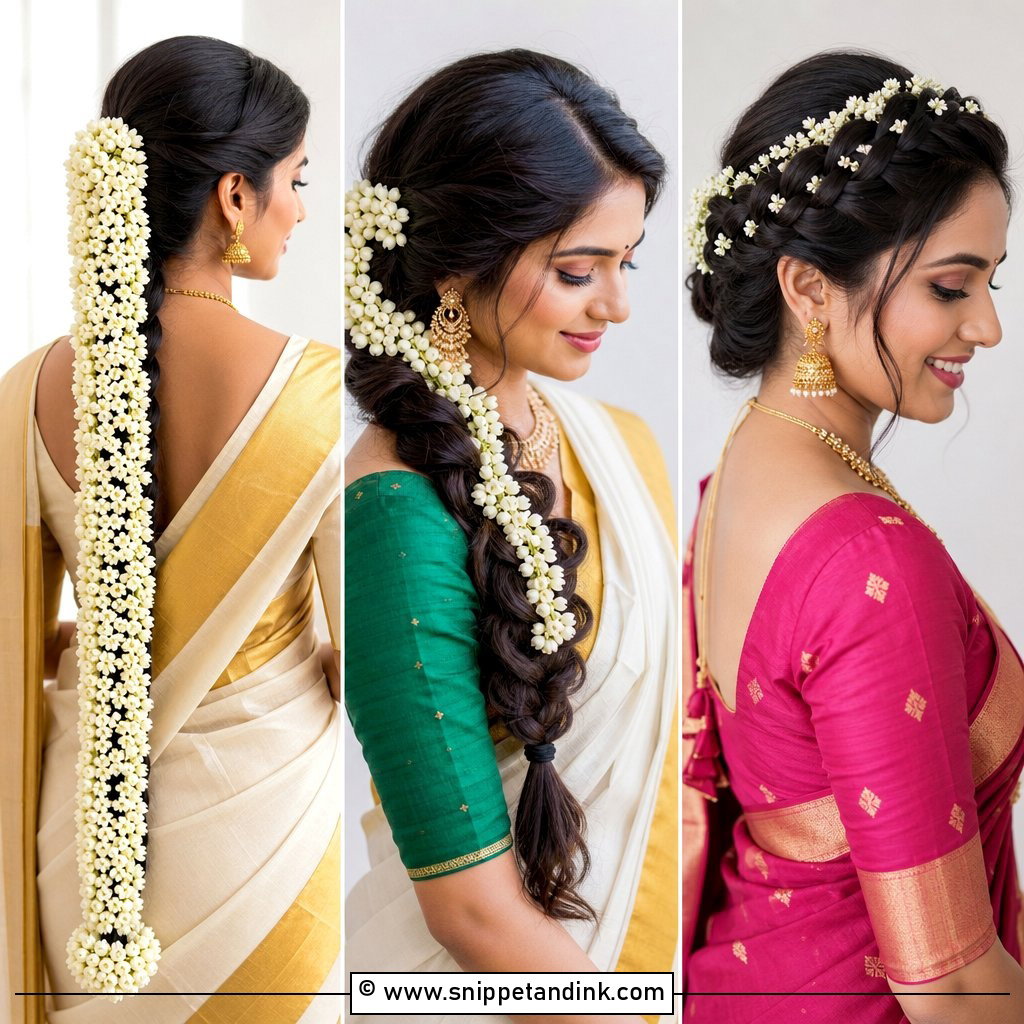
1. South Indian Bridal Braid With Flowers
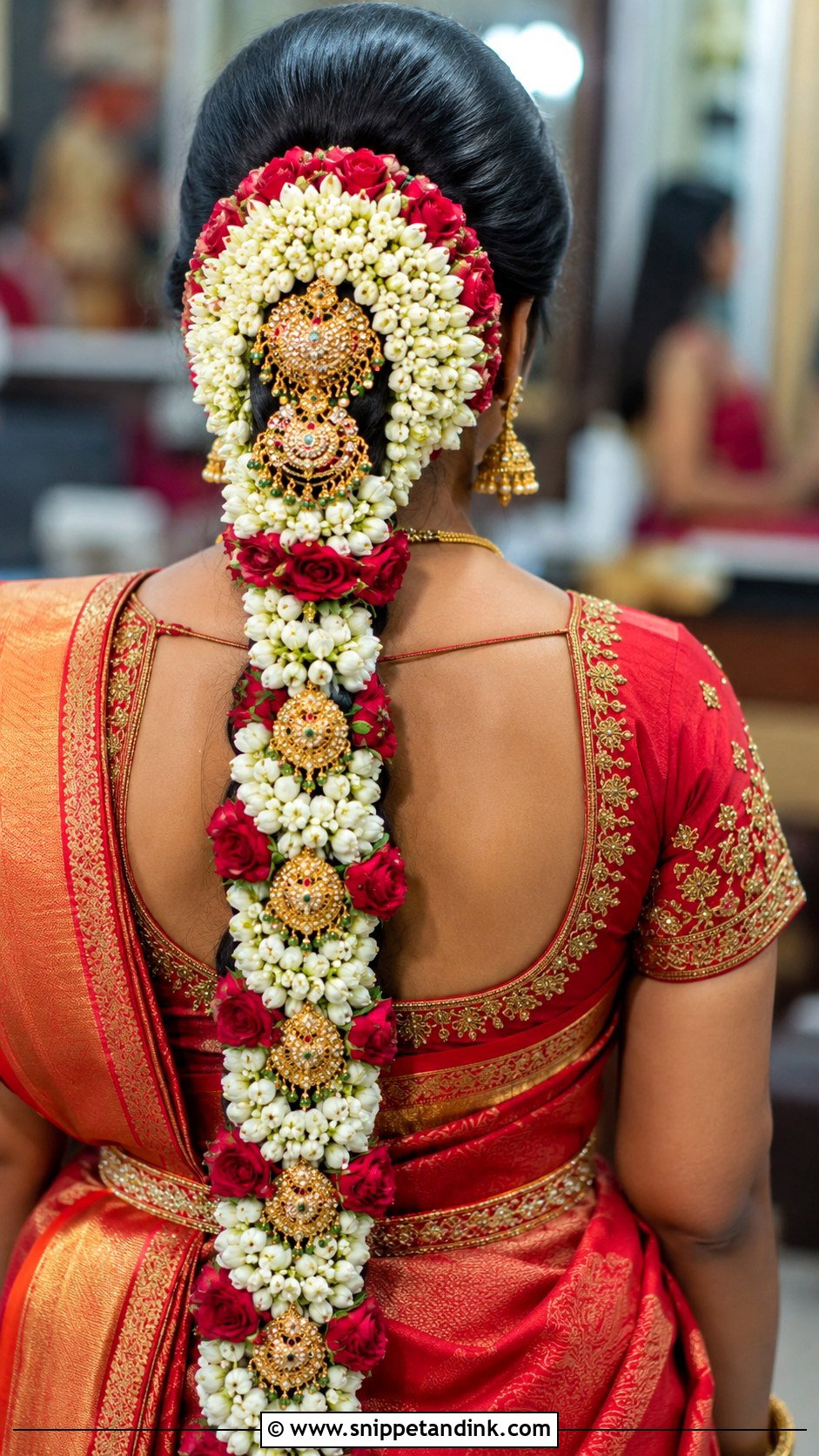
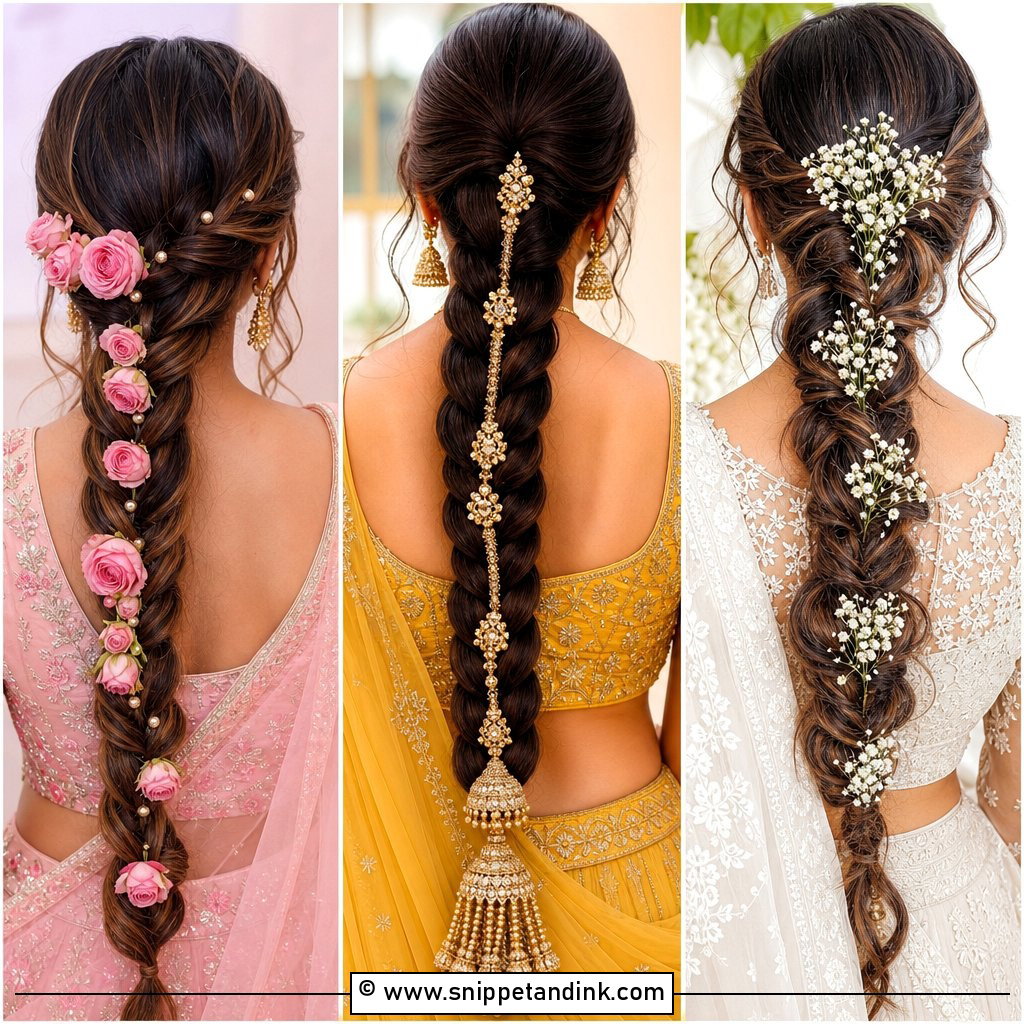
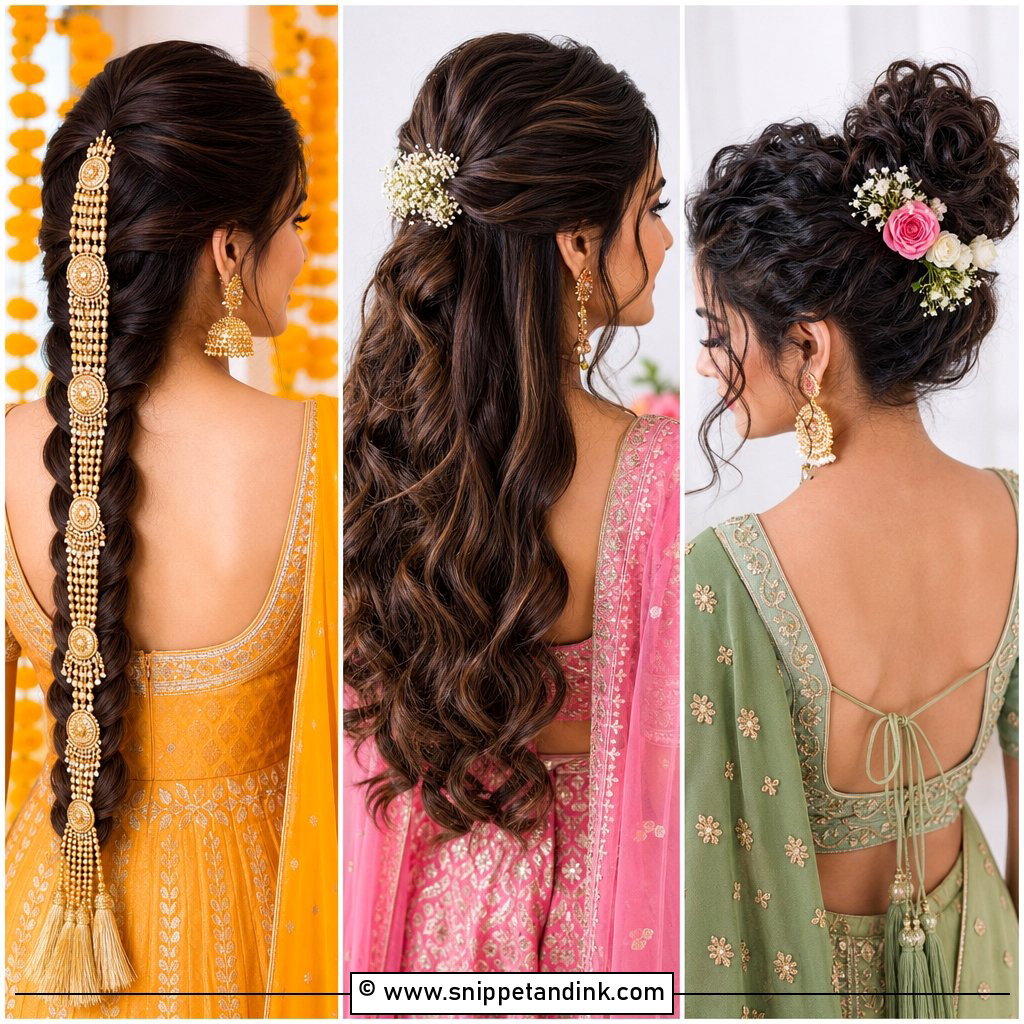
The South Indian braid is built for the back view, which is what guests see for much of a South Indian ceremony. It runs long and thick, covered in rows of jasmine with roses or marigolds tucked between, and gold jadai billalu fixed along its length. Those gold pieces are heavy. I braid tightly at the top and stitch or pin the jadai to the braid itself, never to loose hair. If your hair stops at the shoulder blades, a clip-in braid extension matched to your shade carries the weight far better than stretching your own length. It belongs with a Kanjeevaram silk and temple jewelry.
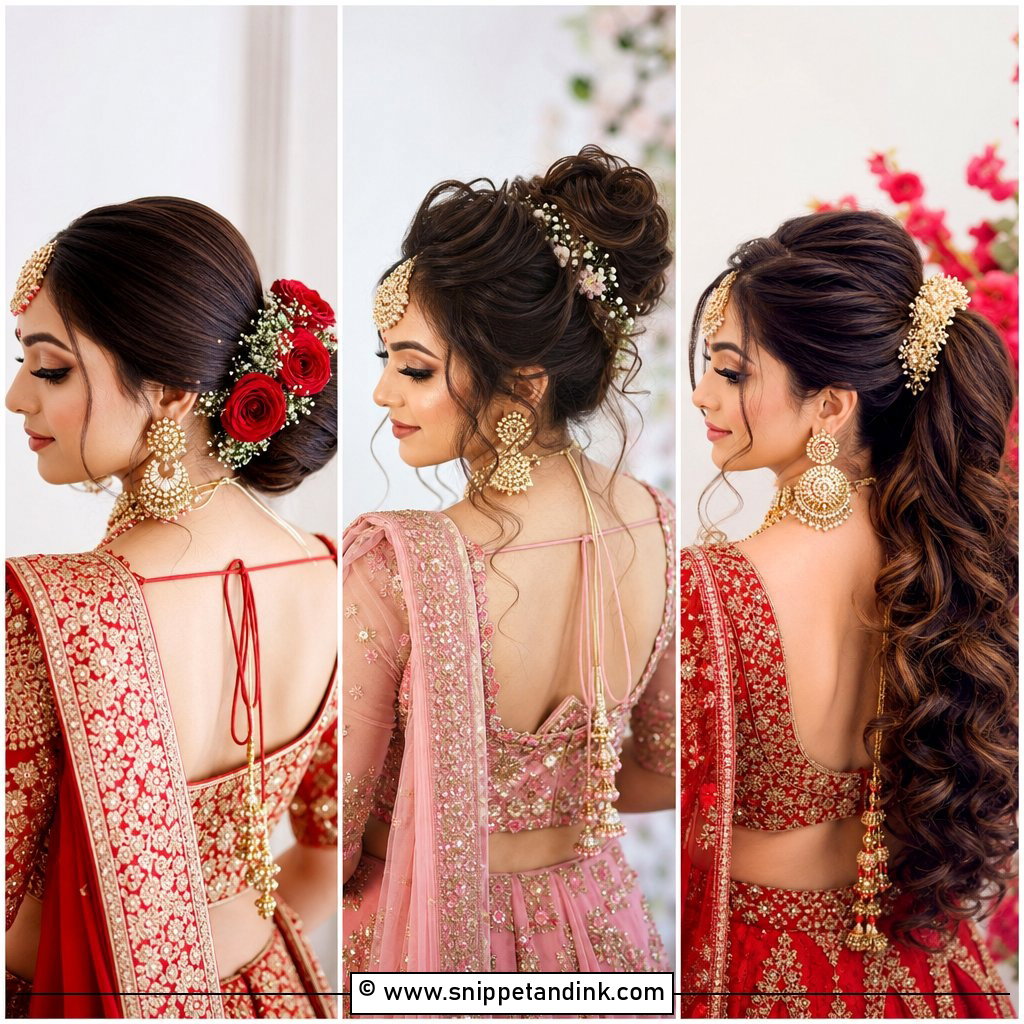
2. Classic Low Bun With Gajra
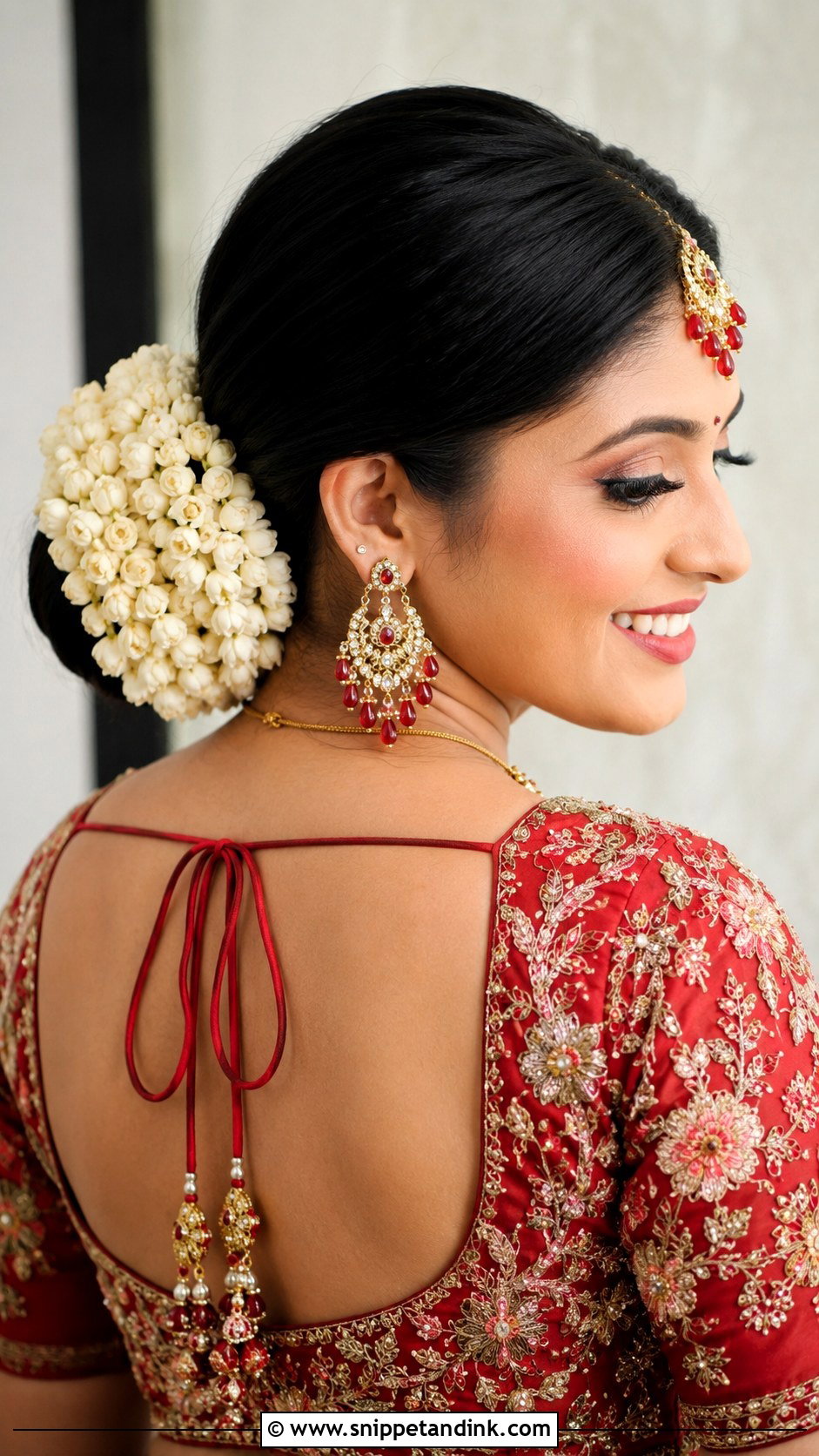
A low bun wrapped in gajra is the style I reach for most, because it survives everything a long ceremony throws at it. Sitting at the nape, it gives a heavy dupatta something solid to pin into just above. On fine hair I build it over a padded donut, then wire the jasmine strings around it in two or three loops. The low placement leaves the hairline clear for a maang tikka or matha patti. Nearly every face shape carries it, so it’s my default when a bride can’t decide.
3. Floral Updo With Maang Tikka
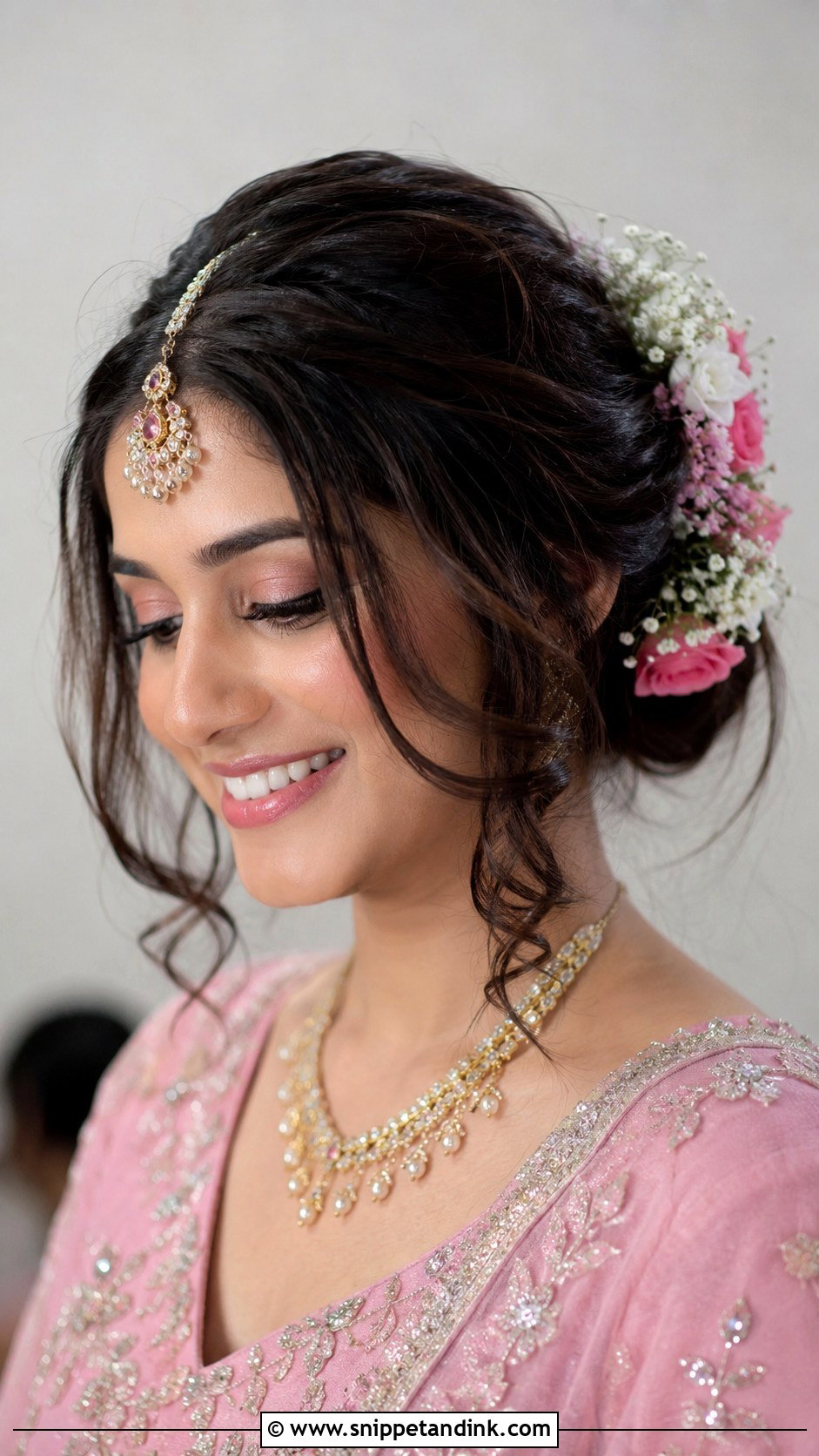
A loose updo with small blooms tucked through it looks soft, but it needs more structure underneath than people expect. I set the hair with heat, let it cool, and cross-pin every section into a firm base; otherwise the texture slackens by afternoon. The maang tikka sits on the center part. I leave two face-framing tendrils at most, because extra strands end up tangled in earrings. Choose small, sturdy flowers like spray roses for this one with a pastel daytime lehenga, since big petals bruise wherever a pin presses them.
4. Rose Twist Bun for Reception
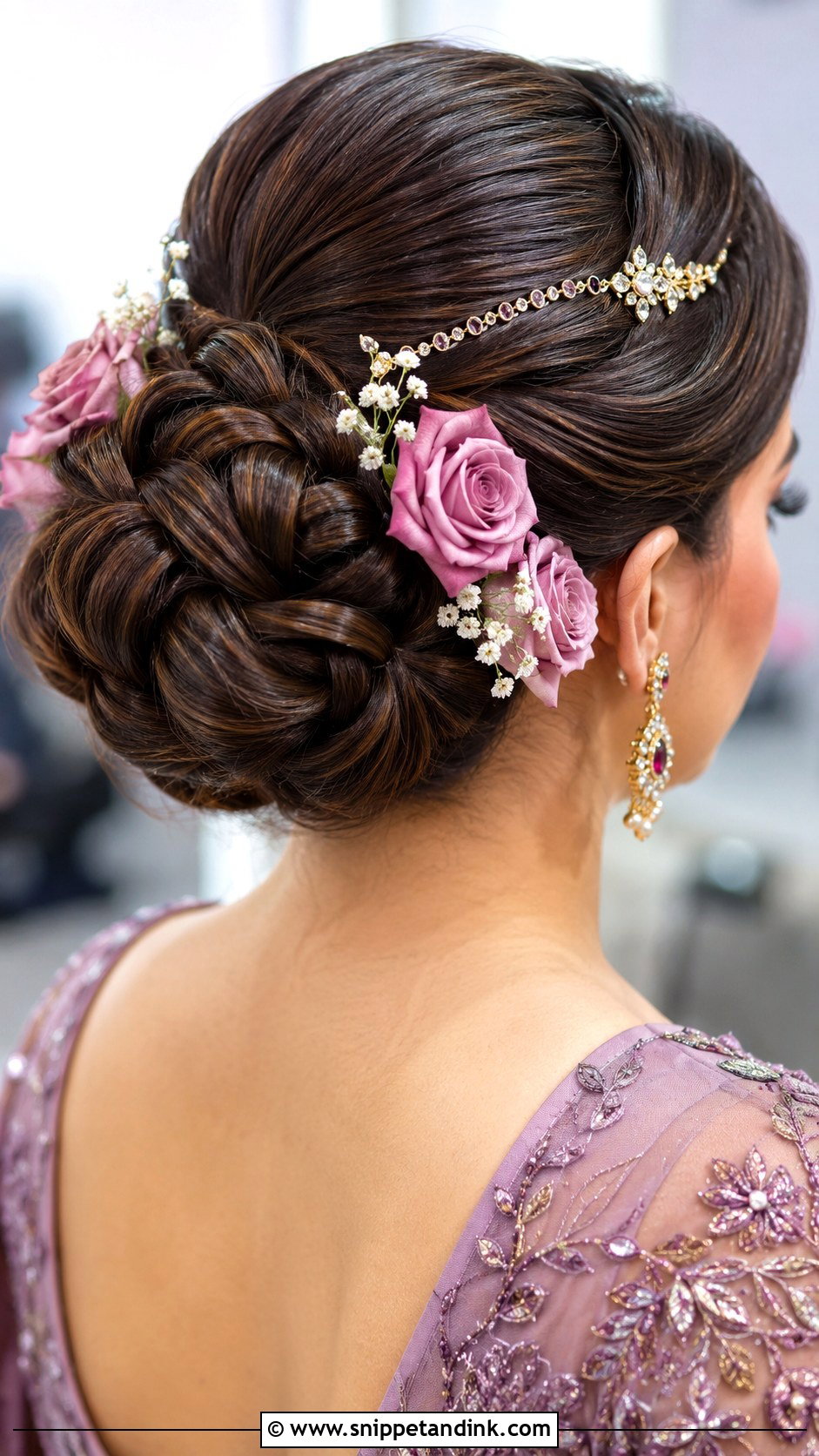
For a reception, the rose twist bun gives a sculpted shape that reads clearly from across a hall. Sections are twisted and pinned into a rosette, then fresh or fabric roses go around the edge. If the party runs late, I usually suggest fabric or preserved roses, since fresh ones droop after several hours under hot lights. A slim hair chain or passa suits it, and the cleaner lines sit well with jewel-tone lehengas or a modern gown.
5. Messy Curly Bun With Loose Strands
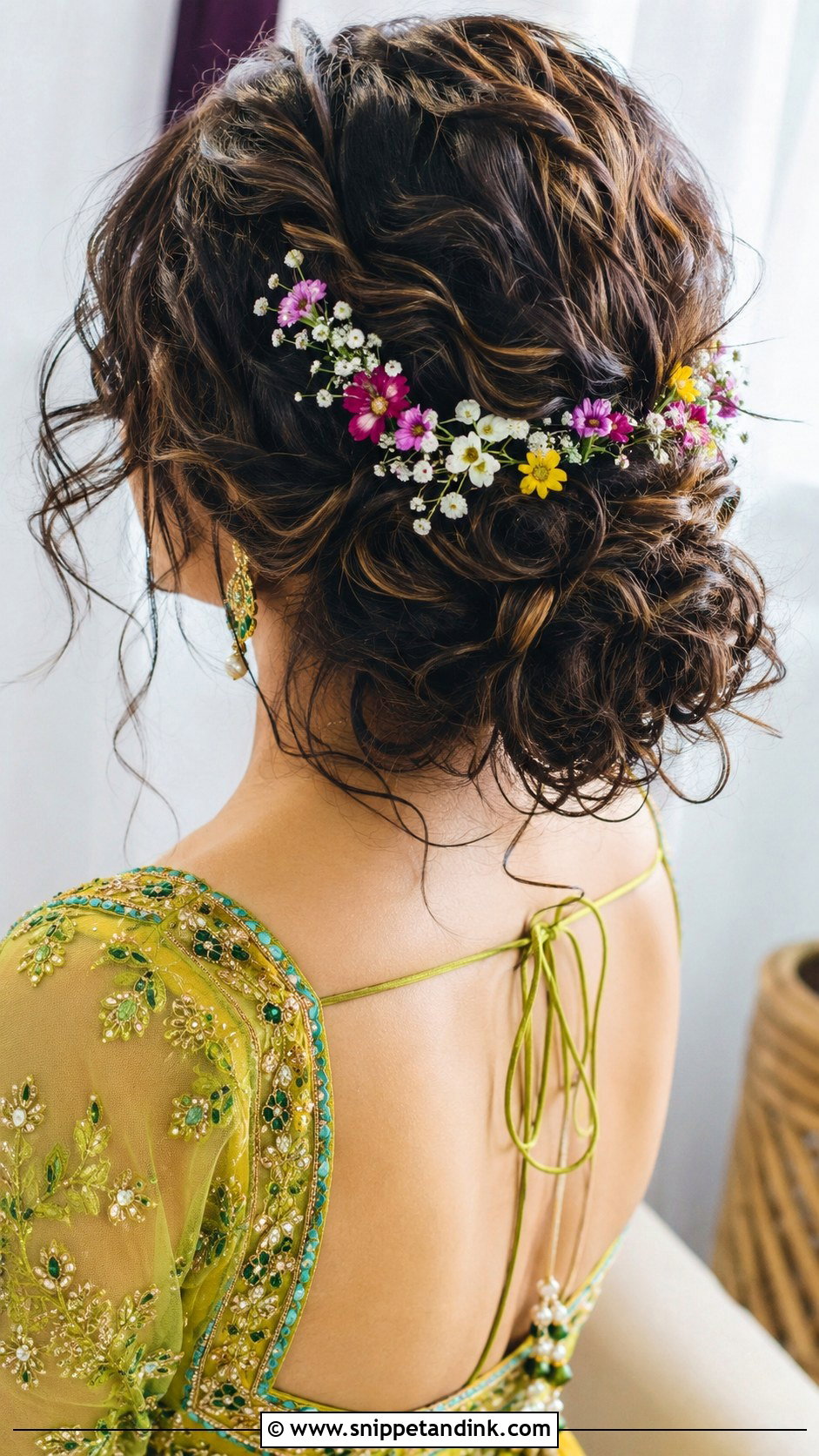
I’d save the messy curly bun for a mehendi or sangeet, where you’ll sit cross-legged for hours and then dance. Curls are gathered into a relaxed knot with a few wavy pieces left out at the front, and small colored flowers go along one side. “Messy” still has to be pinned firmly. I curl, let the curls cool completely, pin the knot tight underneath and loosen only the surface with my fingers. Naturally wavy or curly hair is the best match, because it keeps its pattern without a hot tool fighting the humidity.
6. Fishtail Braid With Jewelry
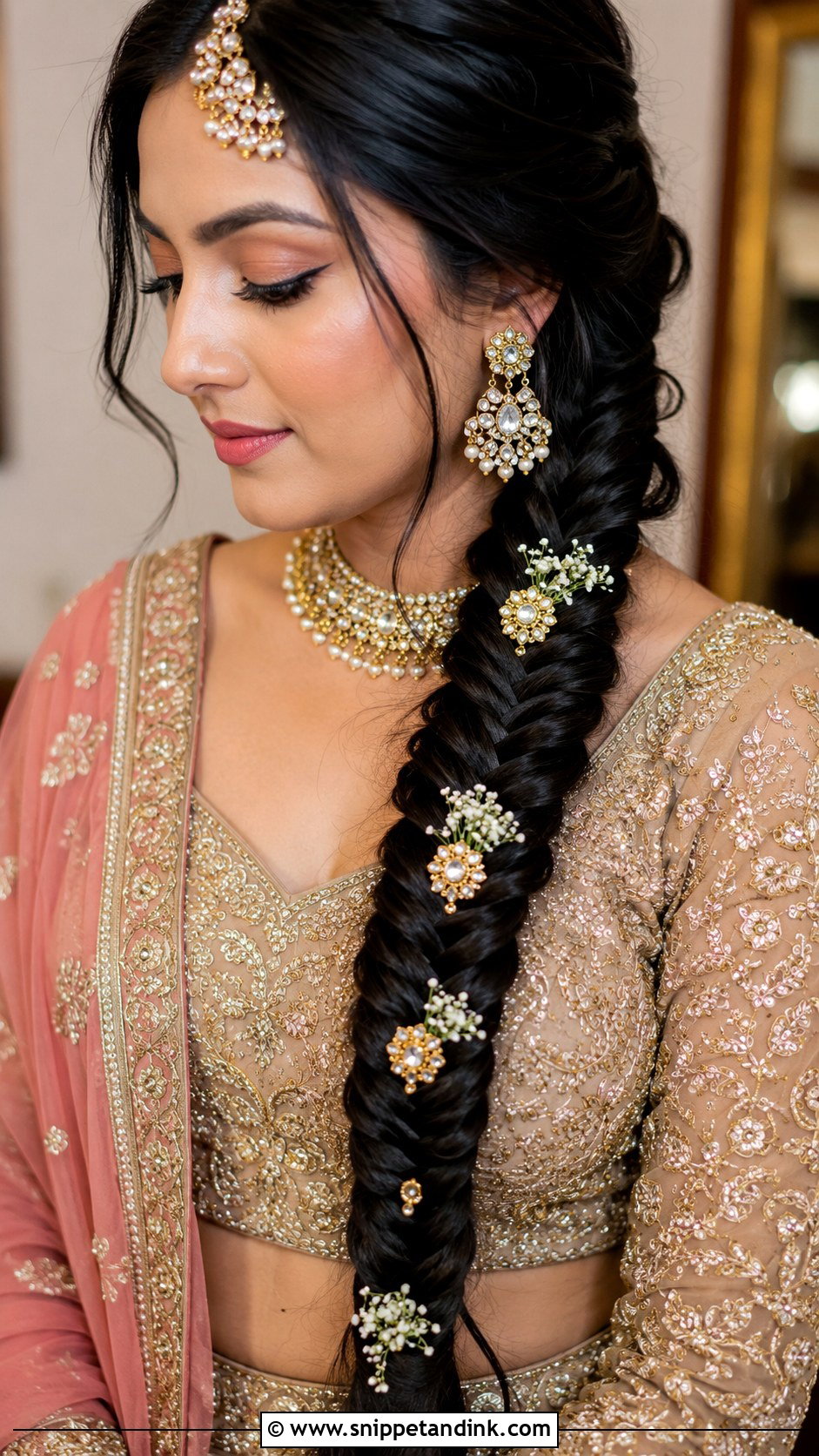
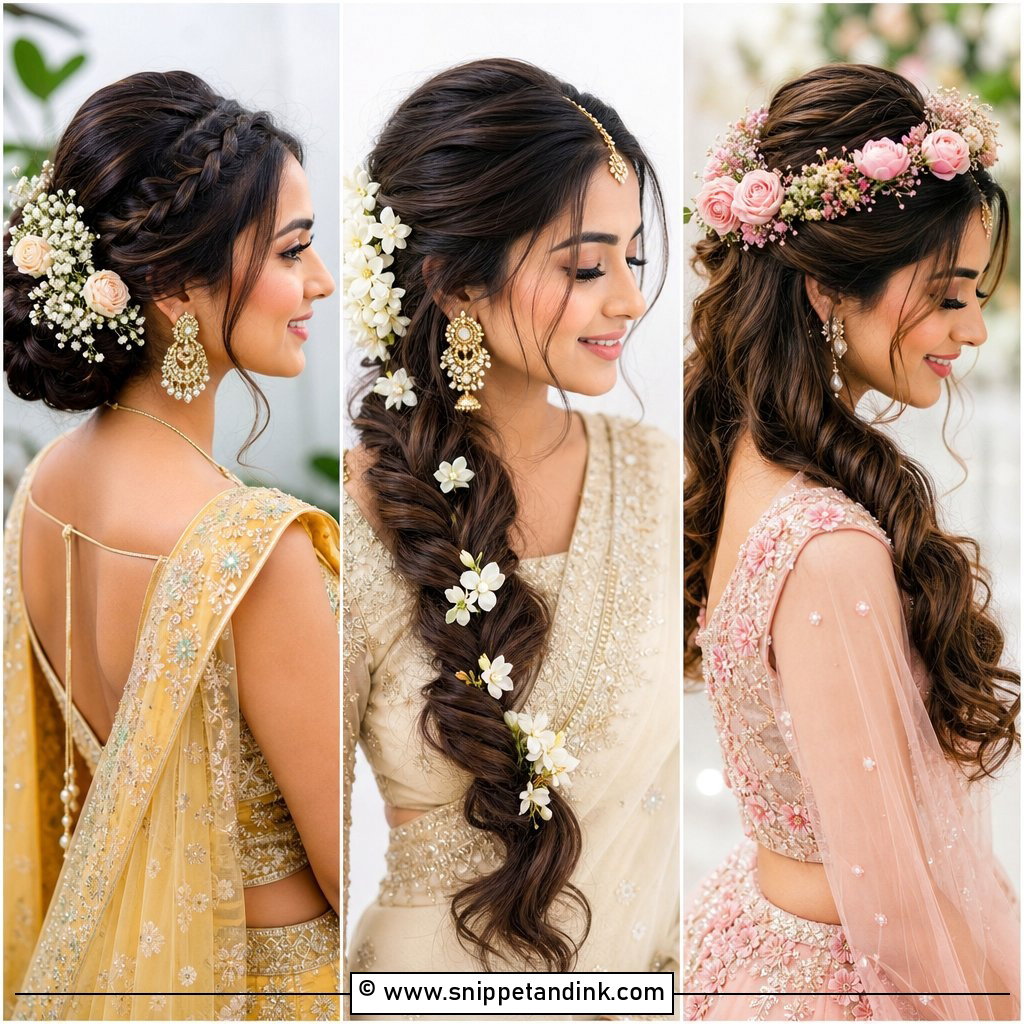
A fishtail takes longer to plait than a three-strand braid, and that extra time shows in the close-ups. It can run down the back or over one shoulder, with gold braid jewelry or tiny flowers threaded through the outer loops. Layered hair is the problem here: short layers poke out of the narrow fishtail sections, so I smooth them with a wax stick before I start. Keep it sleek with a saree, or pull it gently looser with a lehenga.
7. Half Up Half Down Bridal Style
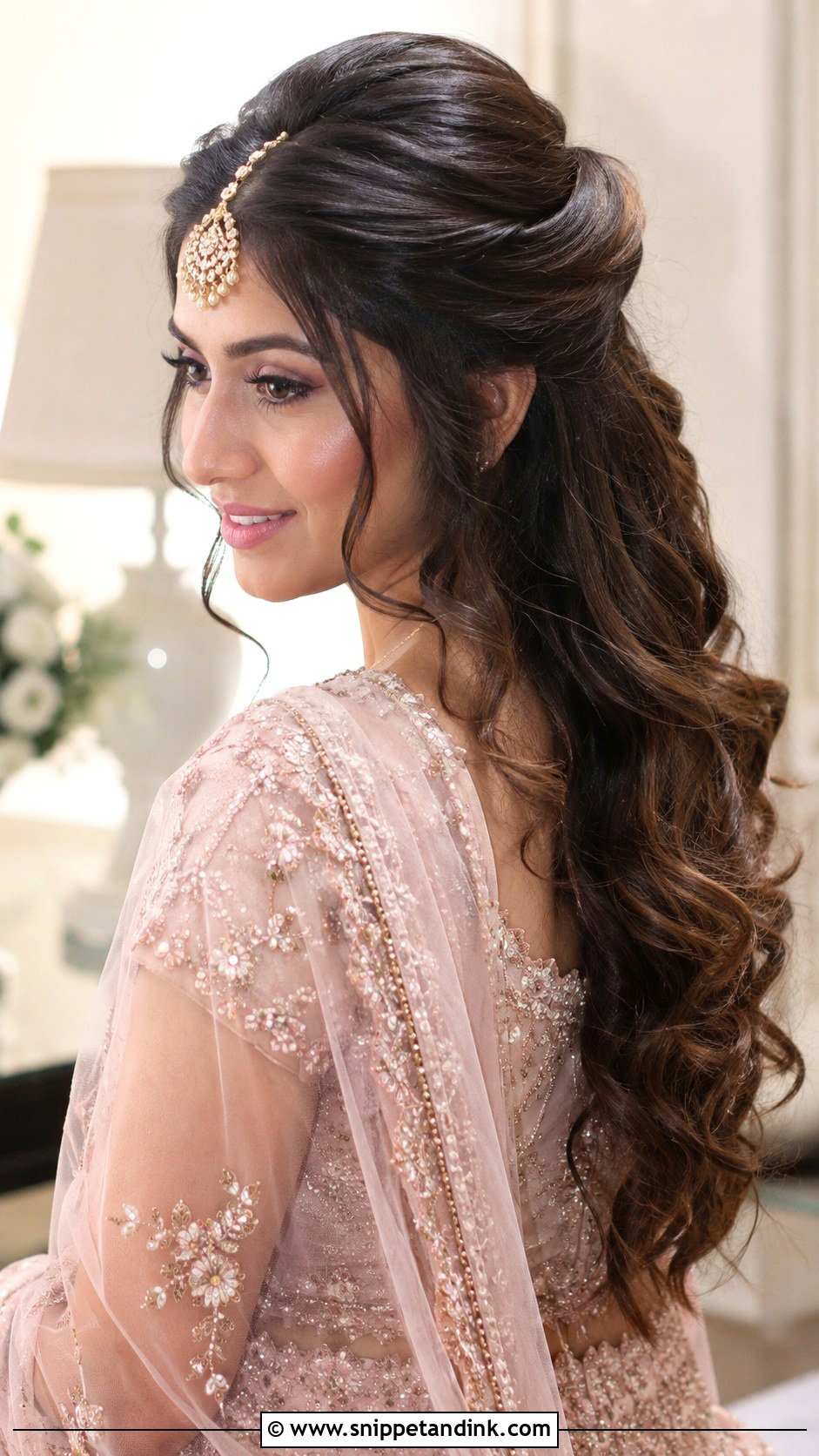
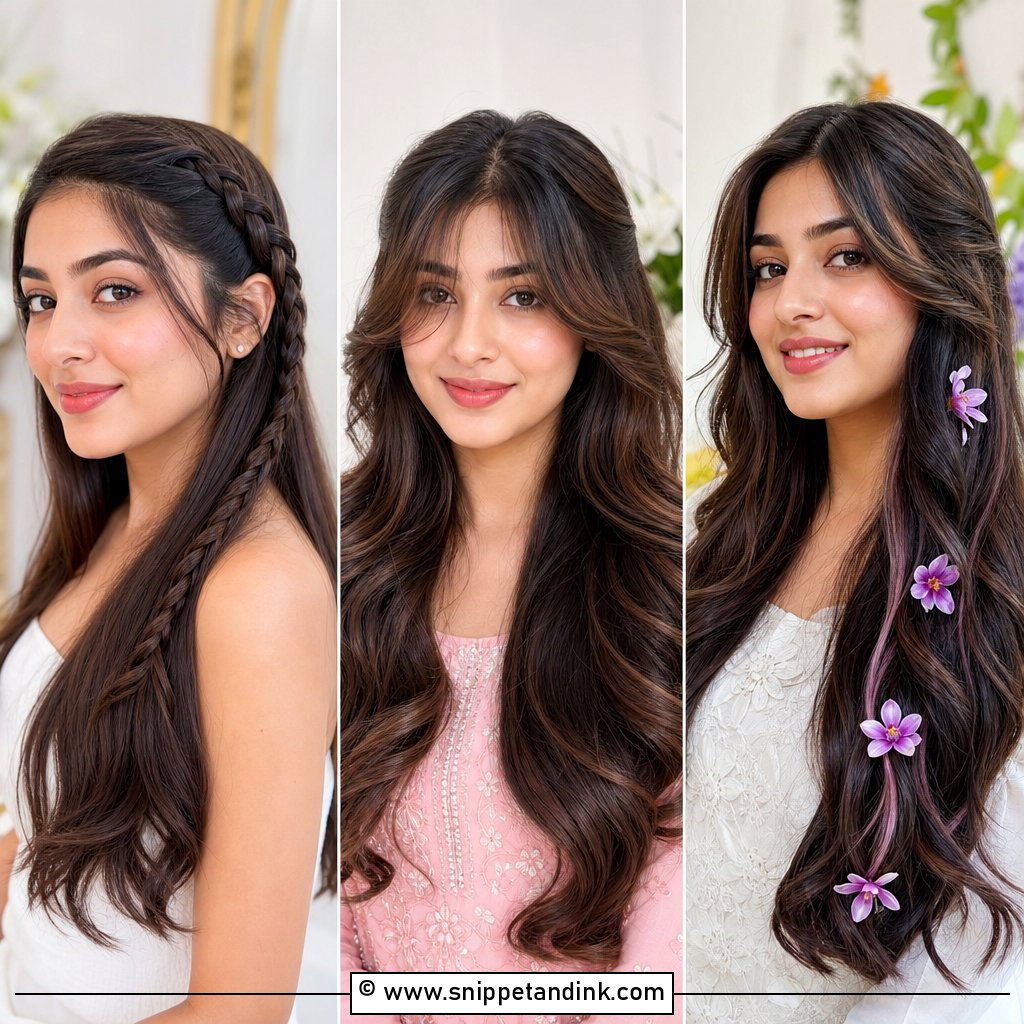
Half up, half down keeps your length on show while the top section, pulled back into a twist or small bun, holds a tikka steady. I’d use it for lighter functions like an engagement or roka rather than the main ceremony, because the loose lengths tangle in heavy necklaces and get flattened under a pinned dupatta. Waves set with a curling iron and sprayed hold much longer than a blow-dried wave. Put any flowers at the twist, not down the lengths, where they’d only be crushed against your back.
8. Side Swept Curls With Hair Accessories
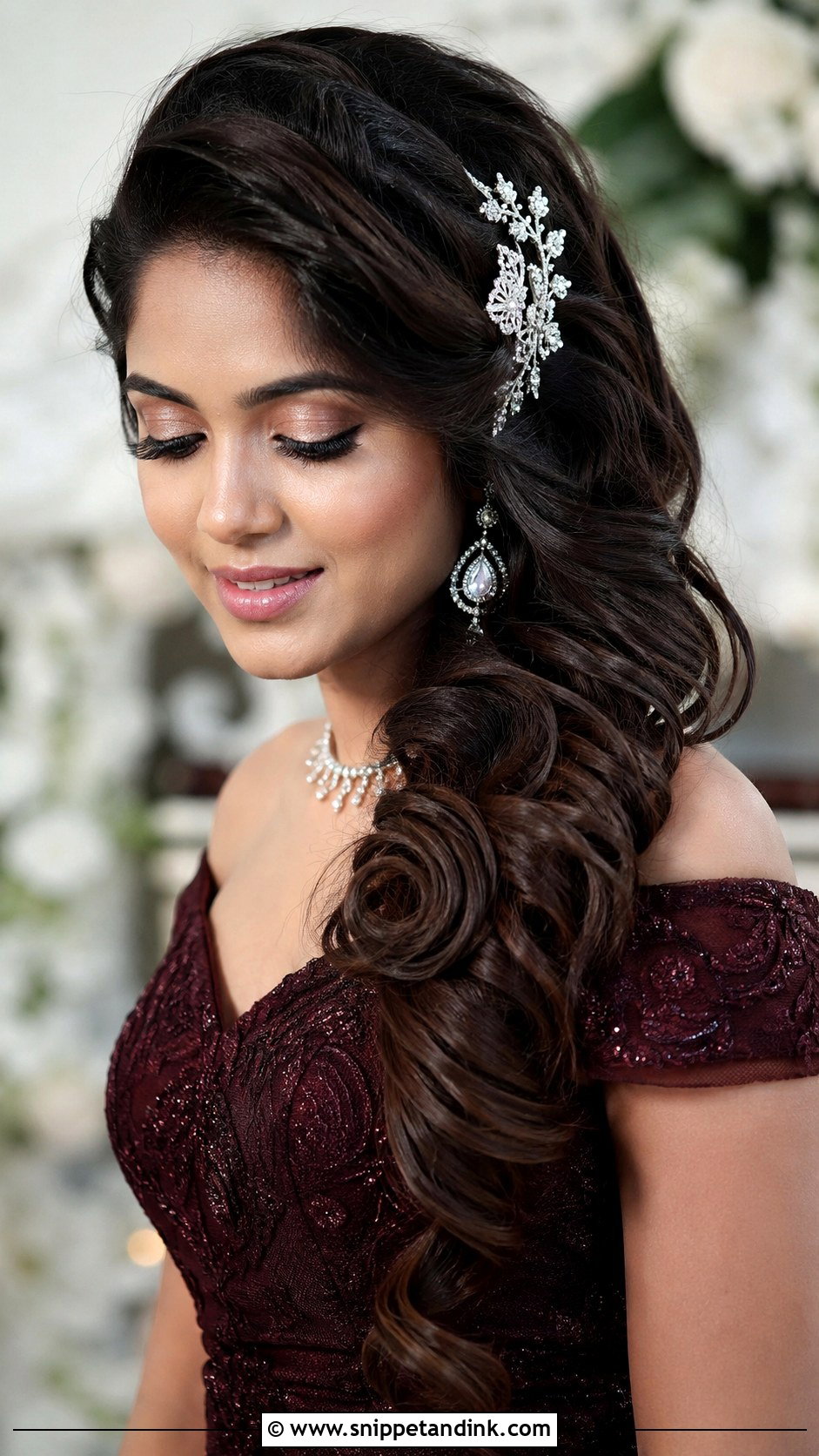
Side-swept curls gathered over one shoulder borrow from old Hollywood, and they suit a reception better than a ceremony. The secret is a row of crisscrossed bobby pins behind the opposite ear; that hidden anchor stops the curls sliding back. A passa or jeweled clip goes over the pins. One thing I always check: if your necklace or earring is heavy on one side, wear the curls on the other, or they’ll catch on it all night. Medium to long hair works, and extensions fill out shorter lengths.
9. Braided Bun With Jasmine
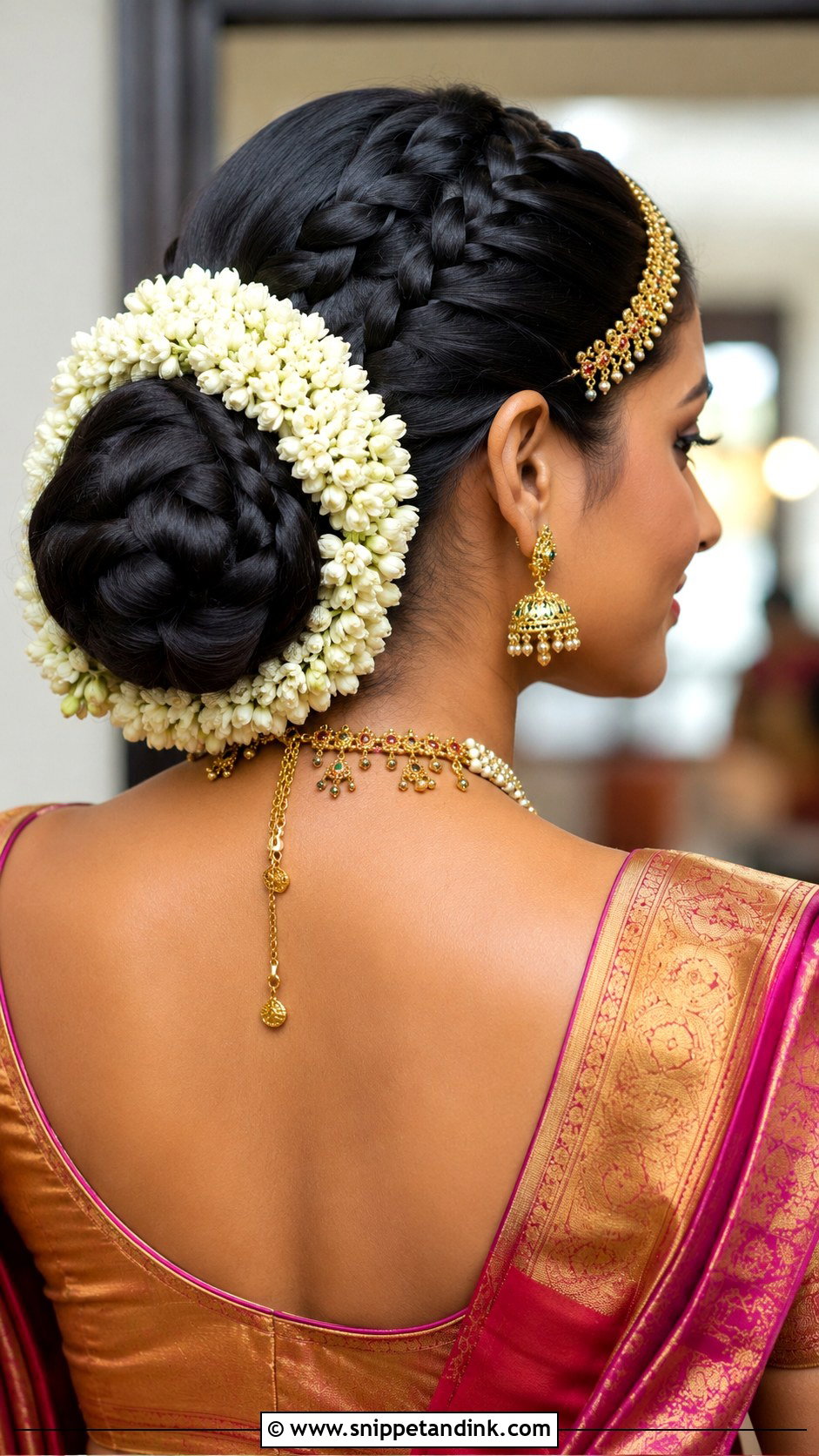
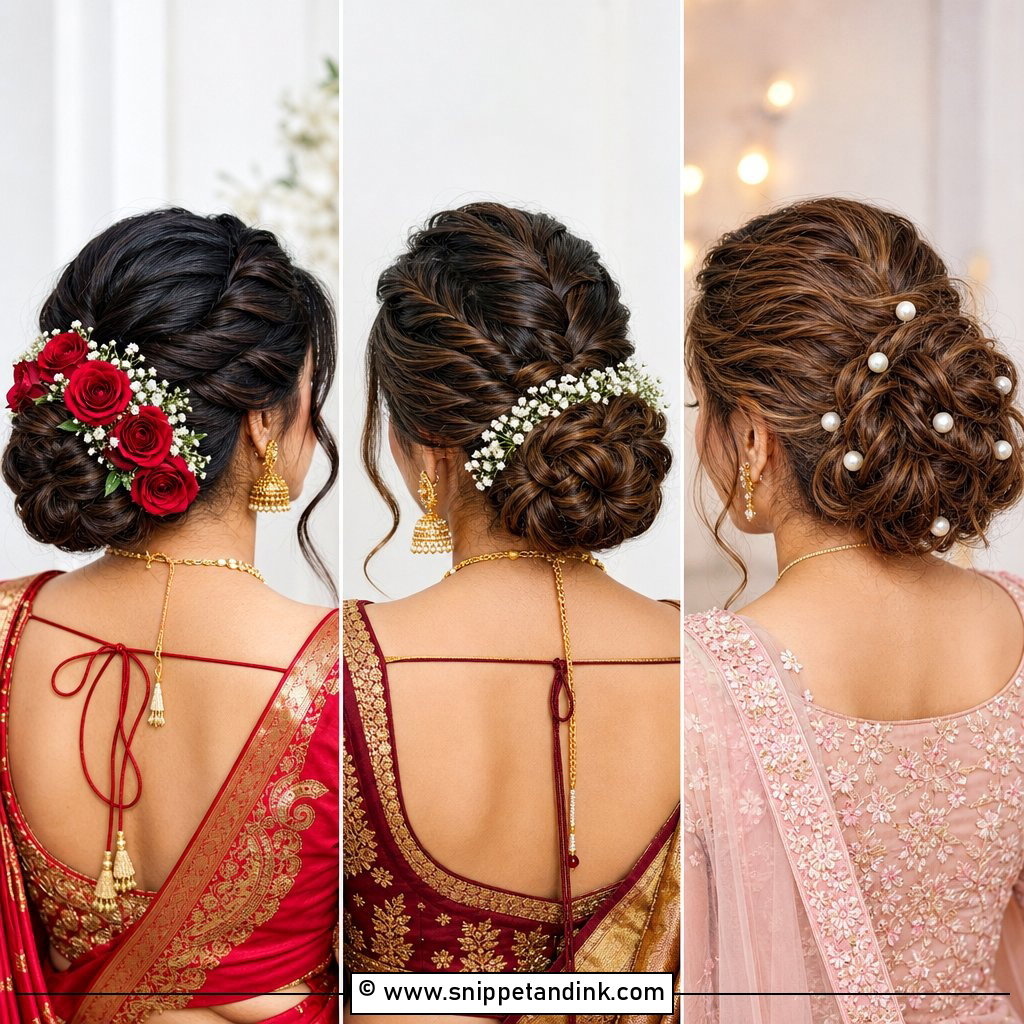
Braiding the sections before wrapping them into a bun gives a woven texture, and it makes the bun much sturdier, because every braid becomes a pinning point. Jasmine circles the finished bun. With a silk saree, temple jewelry and a matha patti it reads properly traditional. This is the one I suggest to a bride who’s anxious about her hair coming apart during a long ritual. Thin hair needs a filler inside, or the bun looks small next to heavy jewelry.
10. Sleek Low Ponytail for Modern Brides
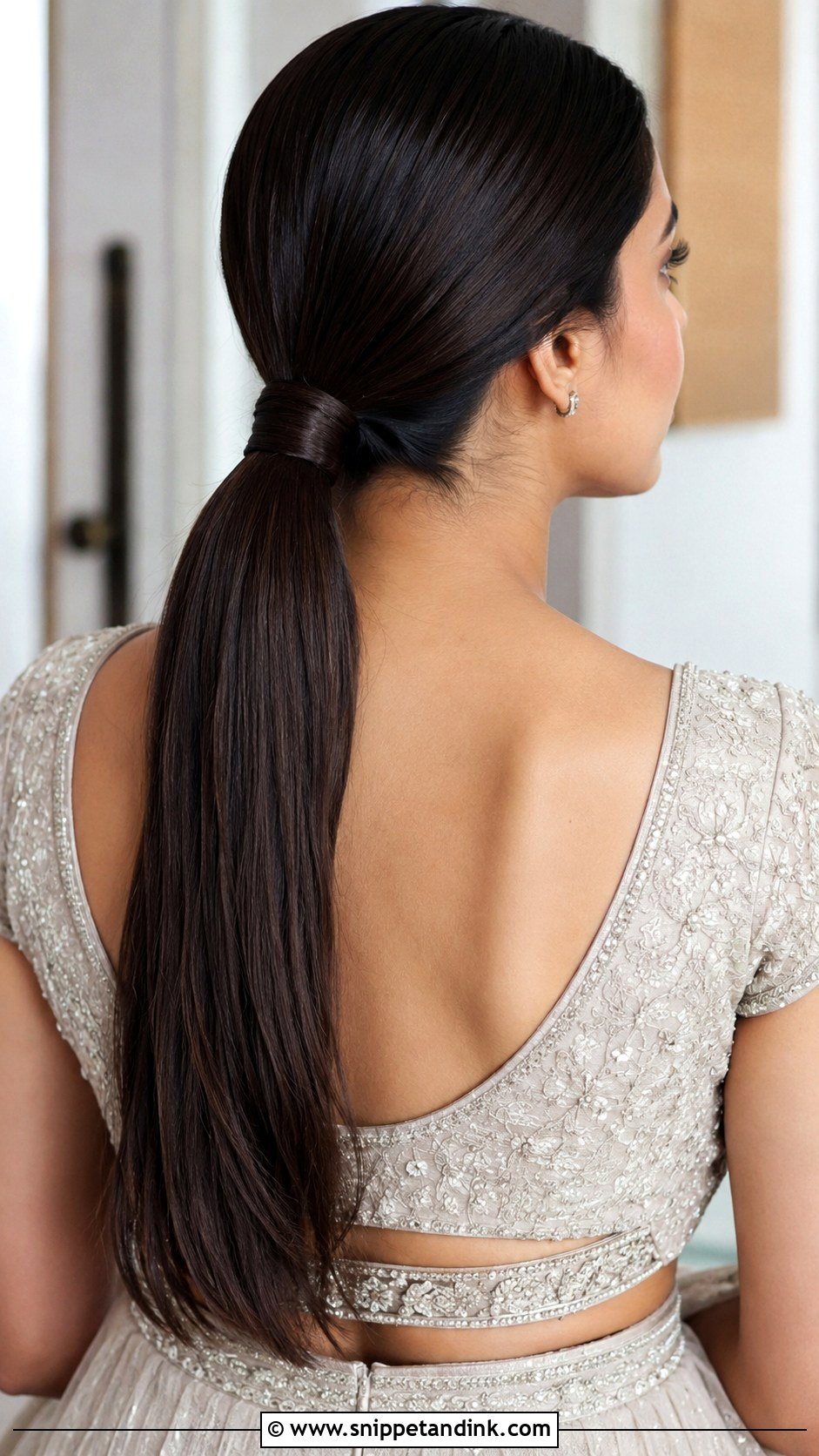
A sleek low ponytail looks modern against bridal wear, and I like it for a cocktail night or a fusion reception. All the polish comes from prep: smoothing serum, a careful flat-iron pass and a fine-tooth comb, then an elastic hidden under a wrapped strand of your own hair or a slim accessory. Frizz is its enemy. In humid weather I’d steer you toward a bun instead. With a structured lehenga the clean line puts your earrings front and center.
11. Floral Crown Bun for Mehendi
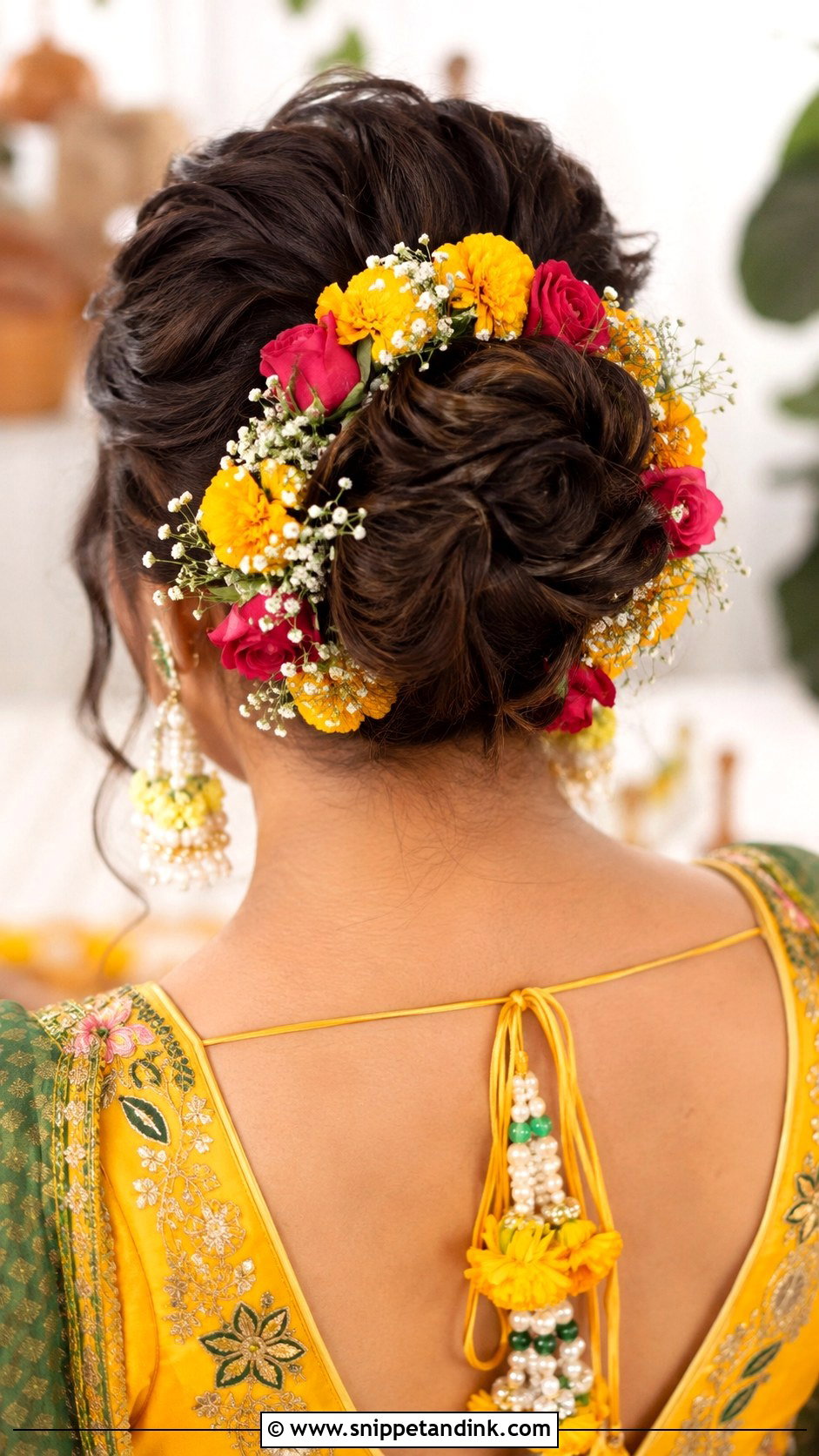
This one is pure mehendi color: a soft bun circled by marigolds, roses and baby’s breath. Because your hands will be covered in wet henna for hours, the style must need no adjusting at all, so I fix the flowers to a wired band and pin the band rather than placing each bloom separately. Yellow and green outfits suit it. A few loose strands at the front are fine, as long as they’re too short to fall into drying mehndi.
12. Bouffant Bun With Veil
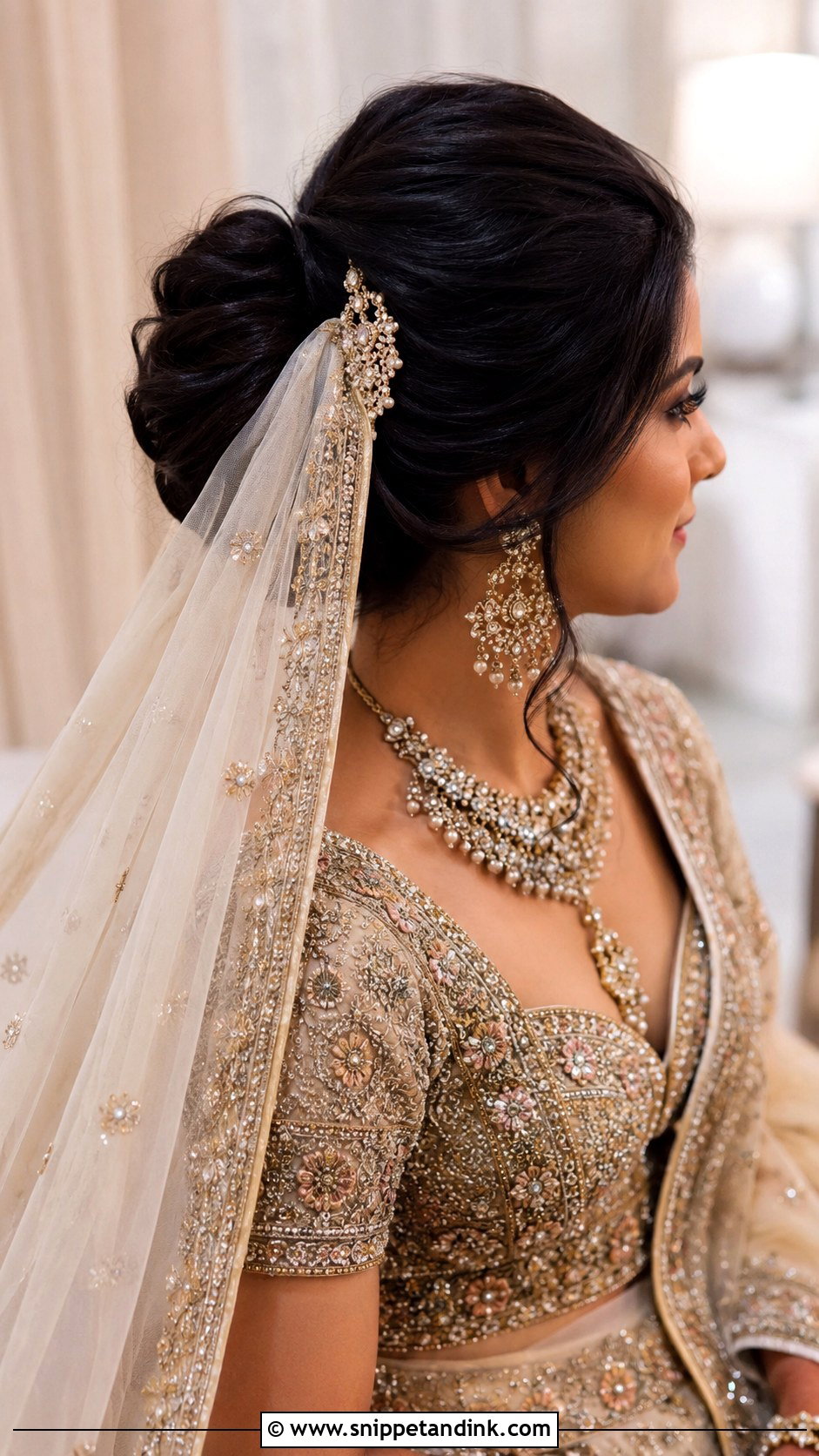
Height at the crown is what gives a pinned veil or dupatta something to rest on. I backcomb only at the roots, smooth the top layer over it, and gather the rest into a bun at the back. The lift flatters round and heart-shaped faces. It’s my pick for a grand entrance in a heavily embellished lehenga, finished with a matha patti or jeweled pins. On very fine, slippery hair I add a small padding insert, because teasing alone collapses under a heavy dupatta within an hour or two.
13. Loose Waves With Maang Tikka
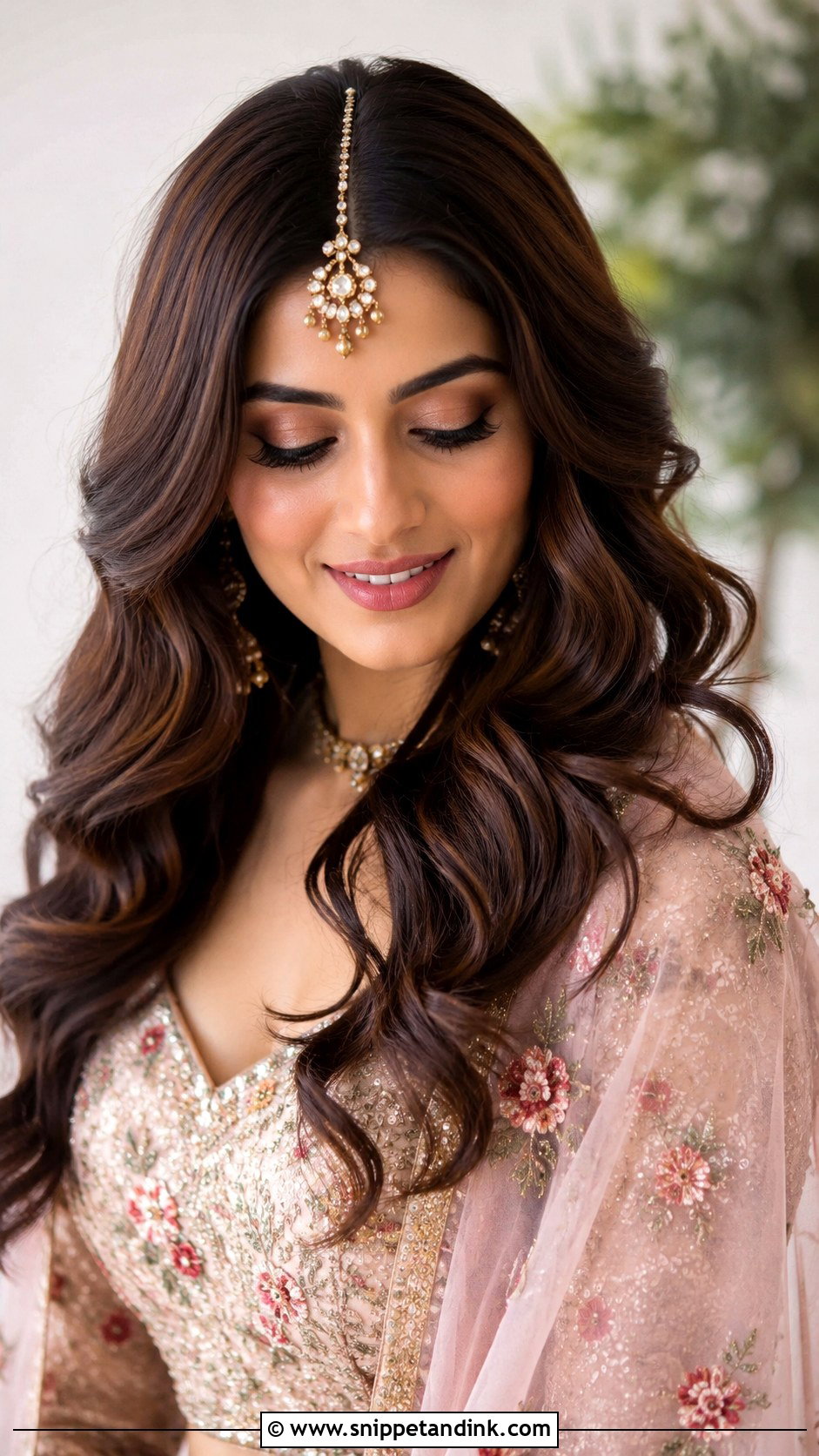
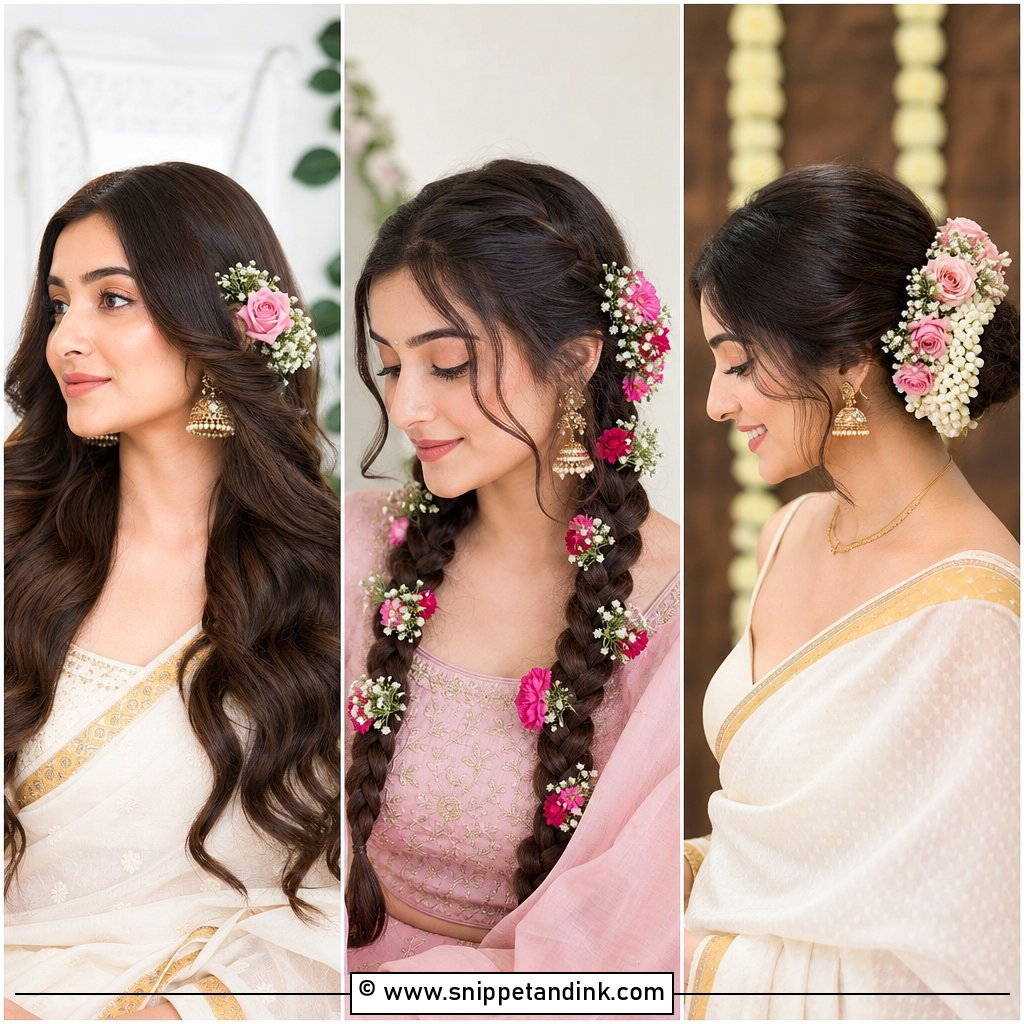
Open waves with a maang tikka suit an engagement party or an intimate ceremony, when you’d rather show your length than hide it. The tikka chain needs something to hold, so I pin a tiny hidden anchor along the part and hook the tikka into that. Loosely set waves drop fast in heat. I curl in smaller sections than the finished look suggests, then brush them out. A couple of small flowers near the ear are optional.
14. Traditional Temple Bun With Gold Accessory
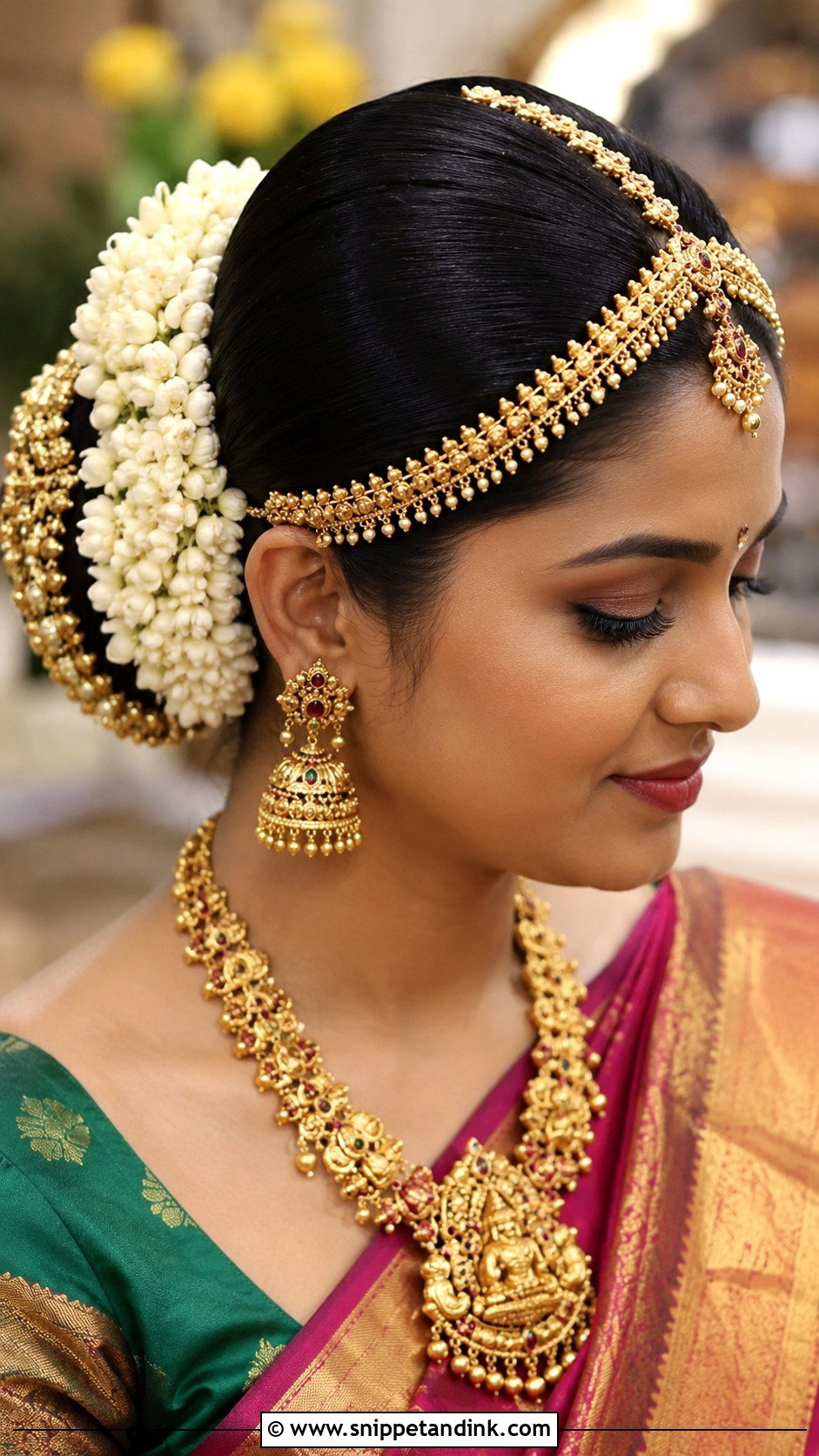
The temple bun belongs to South Indian ceremonies, and the gold temple accessory running from the forehead to the back of the head is its centerpiece. That gold is heavy. I build a firm bun first, then secure the piece both to the bun and to a small braided anchor at the crown, never to loose hair. Jasmine around the base finishes it. With a Kanjeevaram silk and heavy temple jewelry it stays put through long rituals, provided the base underneath is solid.
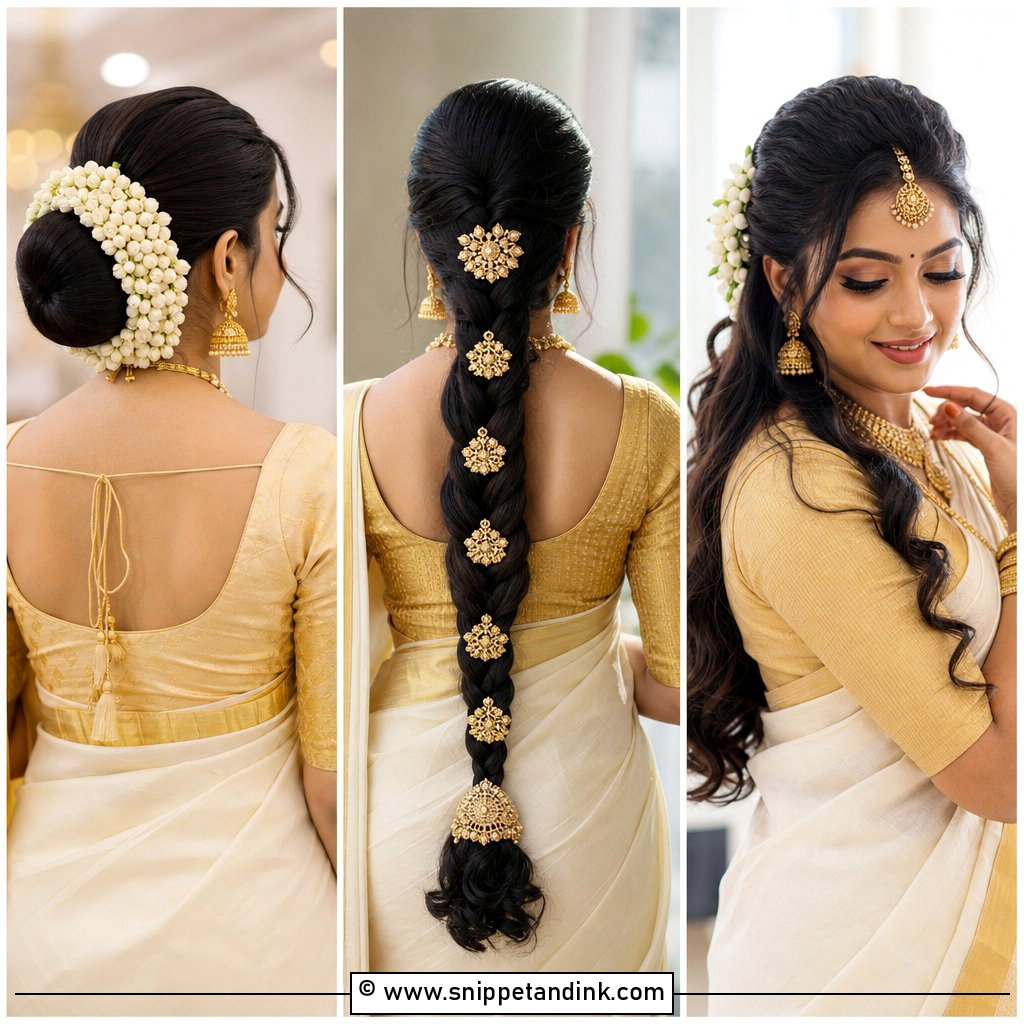

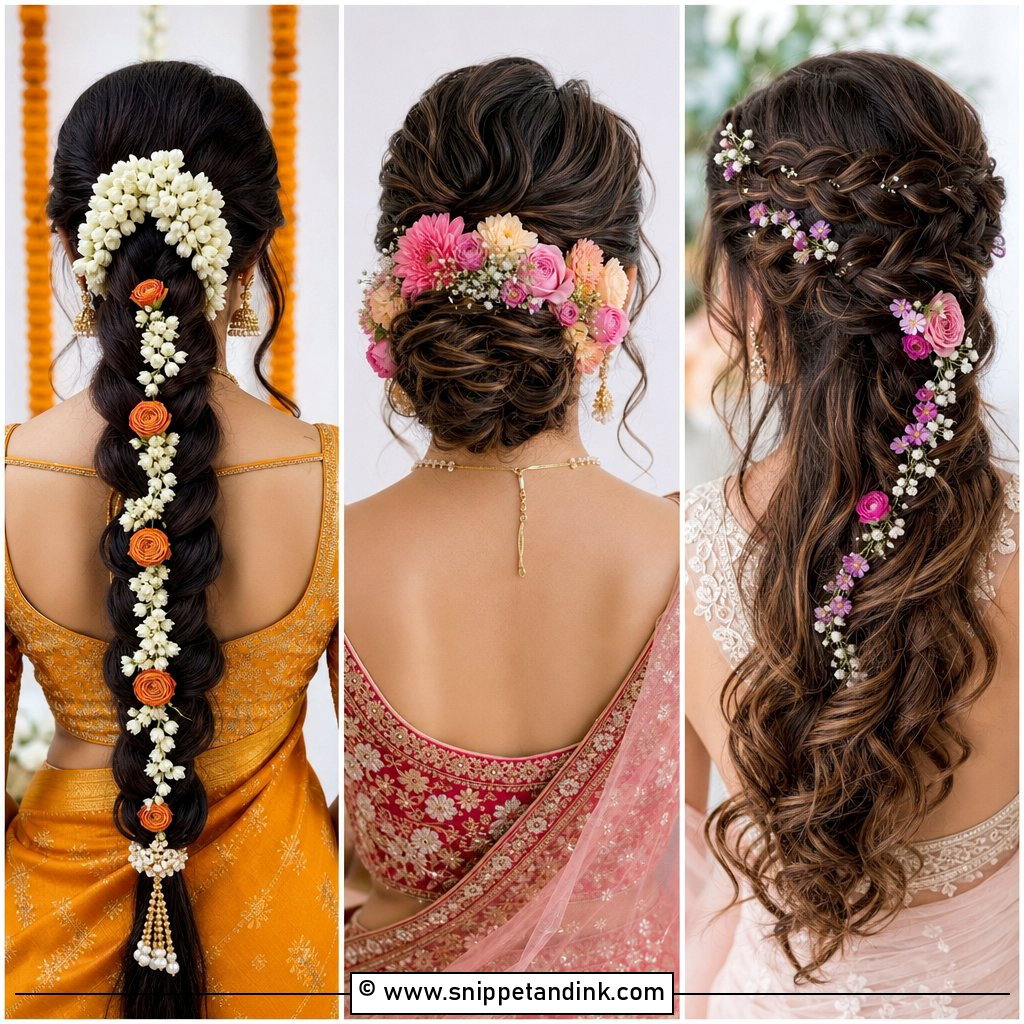
15. Twisted Updo With Pearls
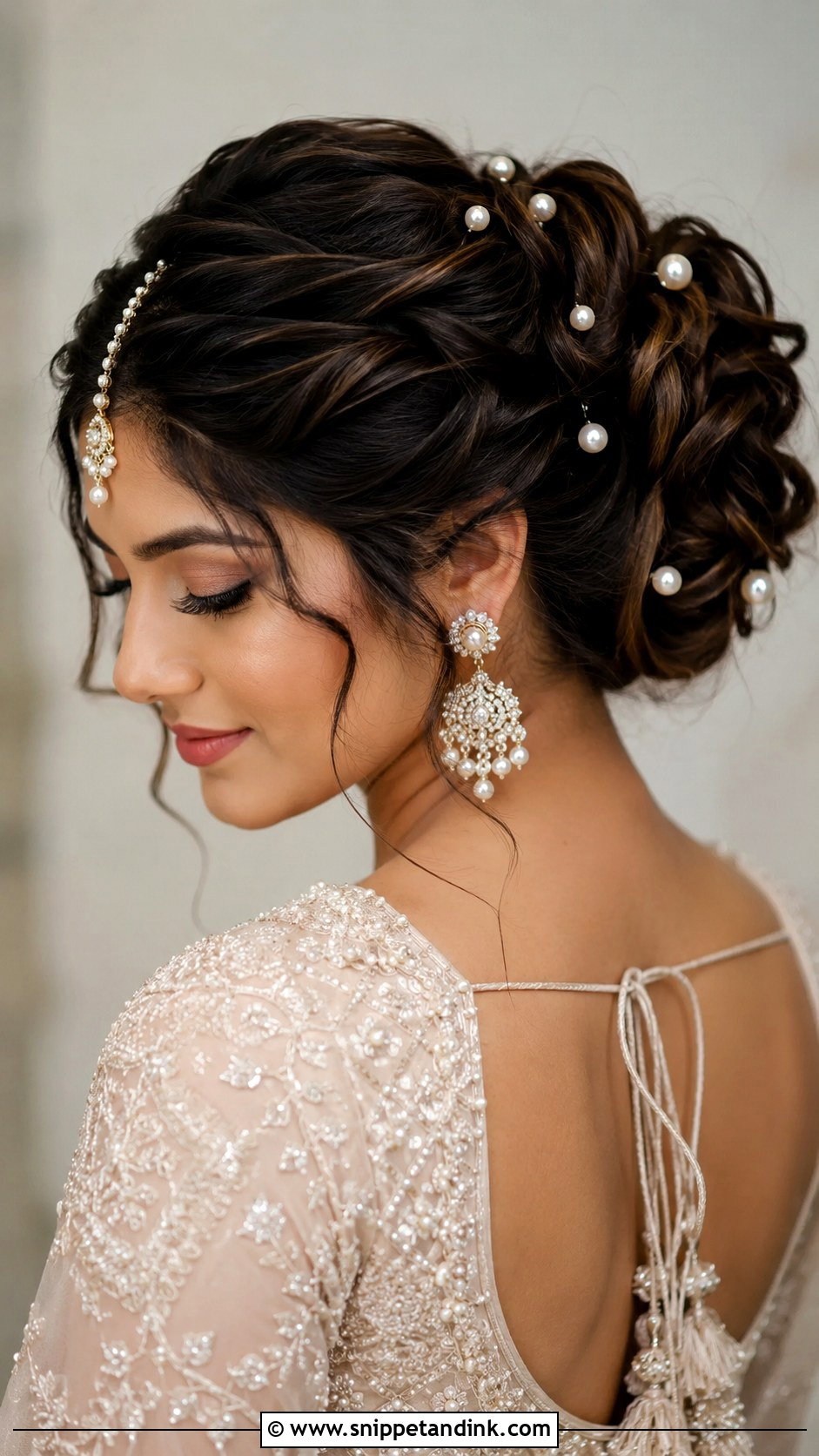
Pearl pins catch light softly, which is why I choose them for ivory or pastel lehengas, where gold can look heavy. The updo itself is a series of twisted sections pinned into a sculpted shape. Scatter the pearls rather than lining them up; a straight row looks mechanical in photos. A matching pearl maang tikka ties it together. Test your pearl pins at the trial, too, because cheap ones have glued heads that pop off when pushed through thick hair.
16. Side Braid With Flowers for Sangeet
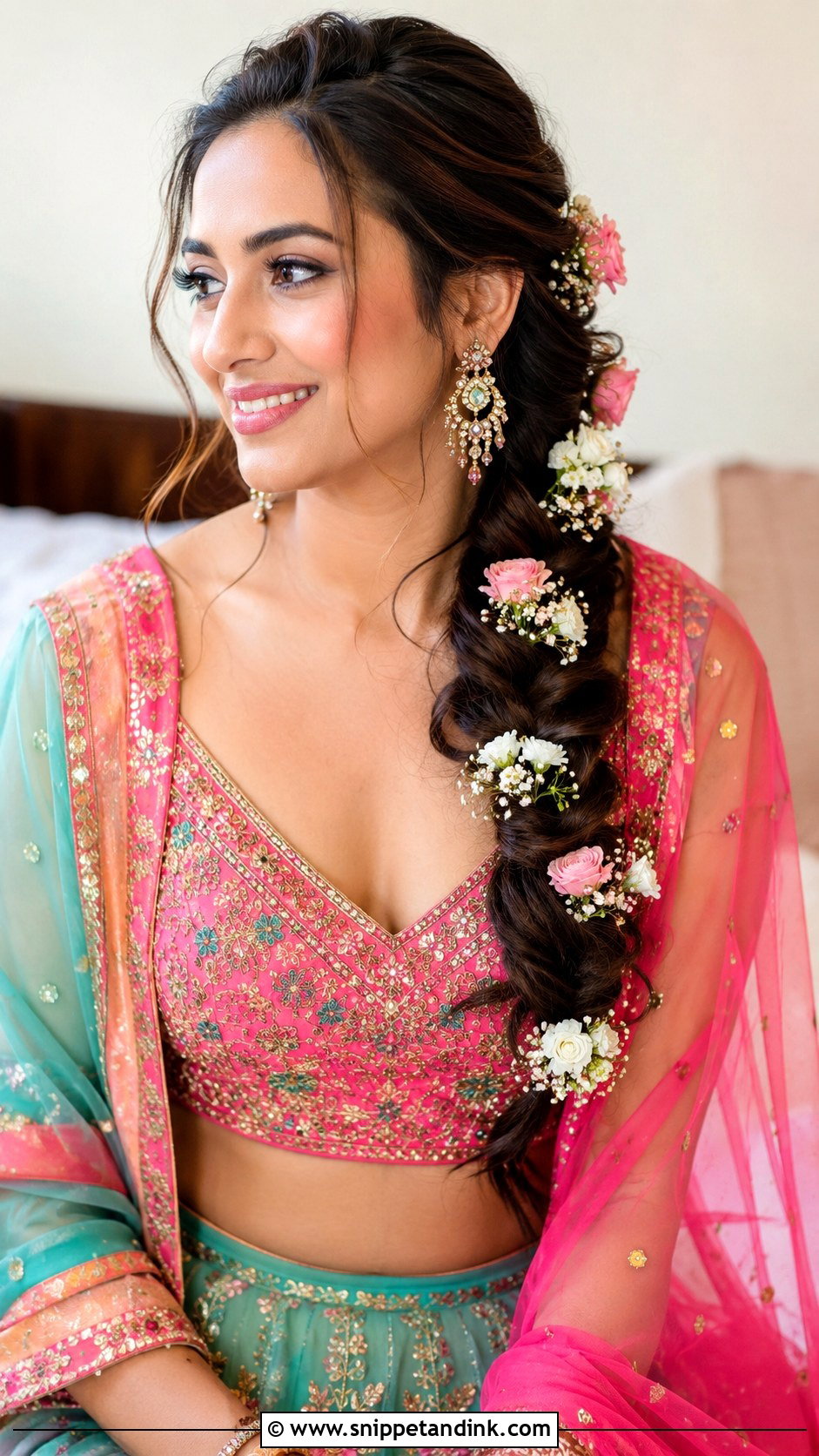
A relaxed side braid with flowers woven in is made for dancing at the sangeet. I braid it loosely, pull the loops wider, then push flower stems into the braid and secure each with a pin through the stem. Bright lehengas in pink, orange or teal suit it. If you plan to dance hard, ask for a clear elastic hidden under the last loop, since blooms at the tail are always the first to fly off. A few face-framing pieces can stay loose.
17. Bridal Bun With Matha Patti
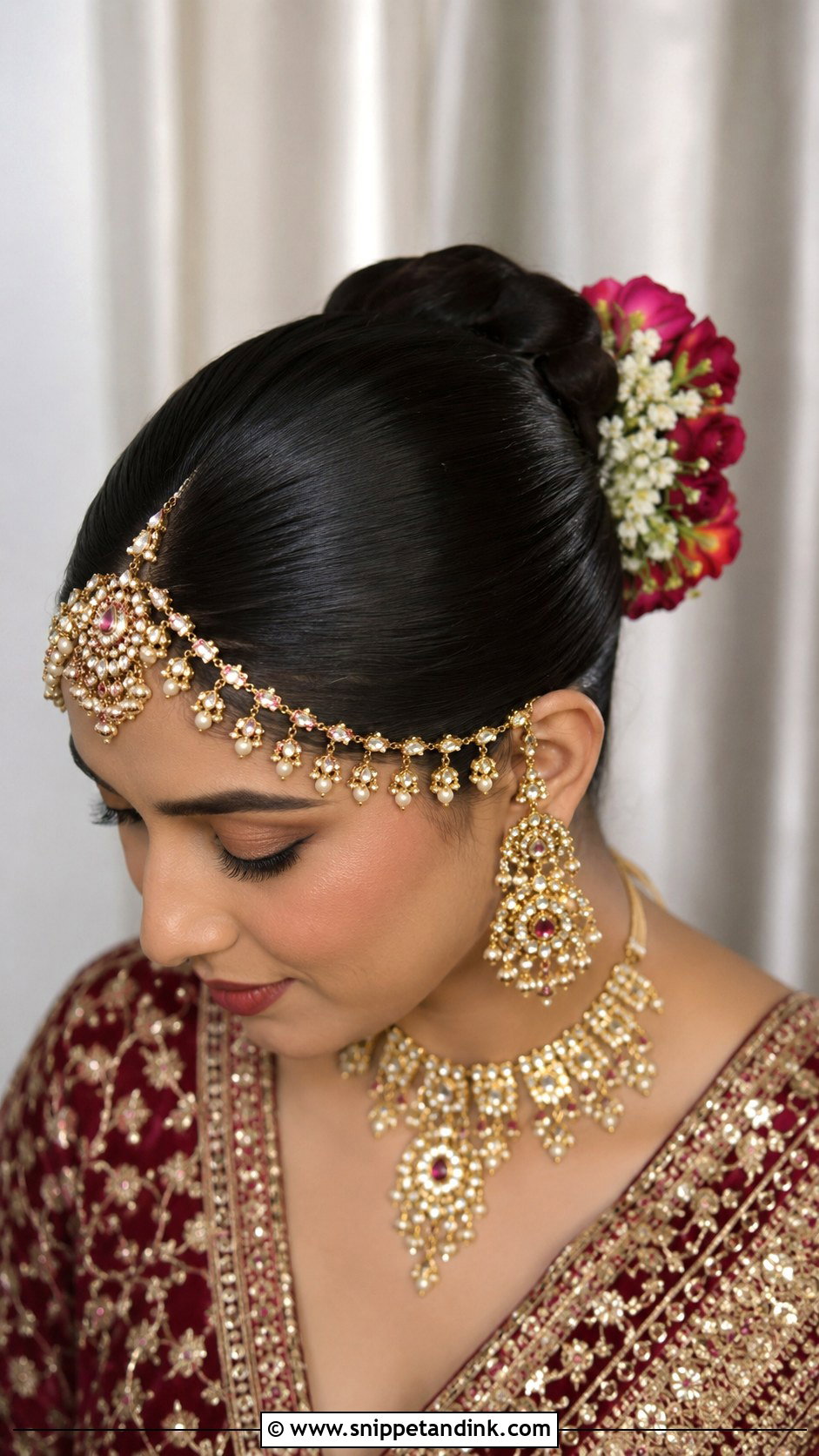
A neat bun lets a matha patti take over the hairline and forehead, which is the whole point with a heavy piece. I place the bun just high enough that the patti’s back chain clips into it without strain. Rich red or maroon lehengas carry this best. Fresh flowers around the bun are optional, but I keep them small so they don’t compete with the jewelry. Ask your jeweler how the patti fastens before your trial: some use hooks, others need a pinned anchor, and I plan the base differently for each.
18. Curly High Bun for Receptions
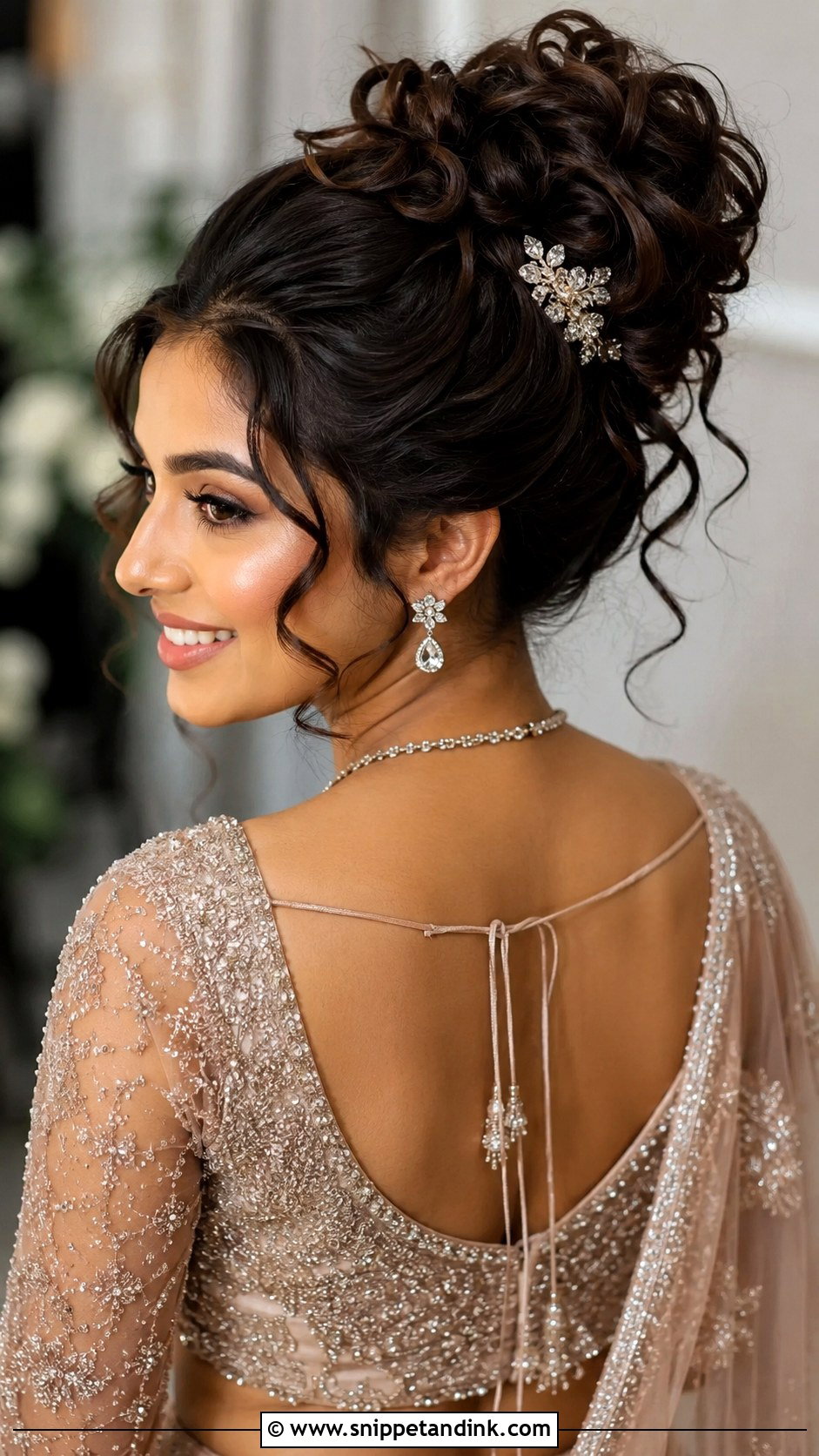
Natural curls piled into a high bun give volume without much teasing at all. I smooth the hairline with a little gel, gather the curls at the crown, and pin them loosely on top so they keep their shape. A few curls stay out around the face. The height shows off your neck and jawline, and a sparkling pin finishes it for a reception. With tight curls, never brush them out; I shape with fingers and curl cream so the definition survives.
19. Mermaid Braid With Butterflies
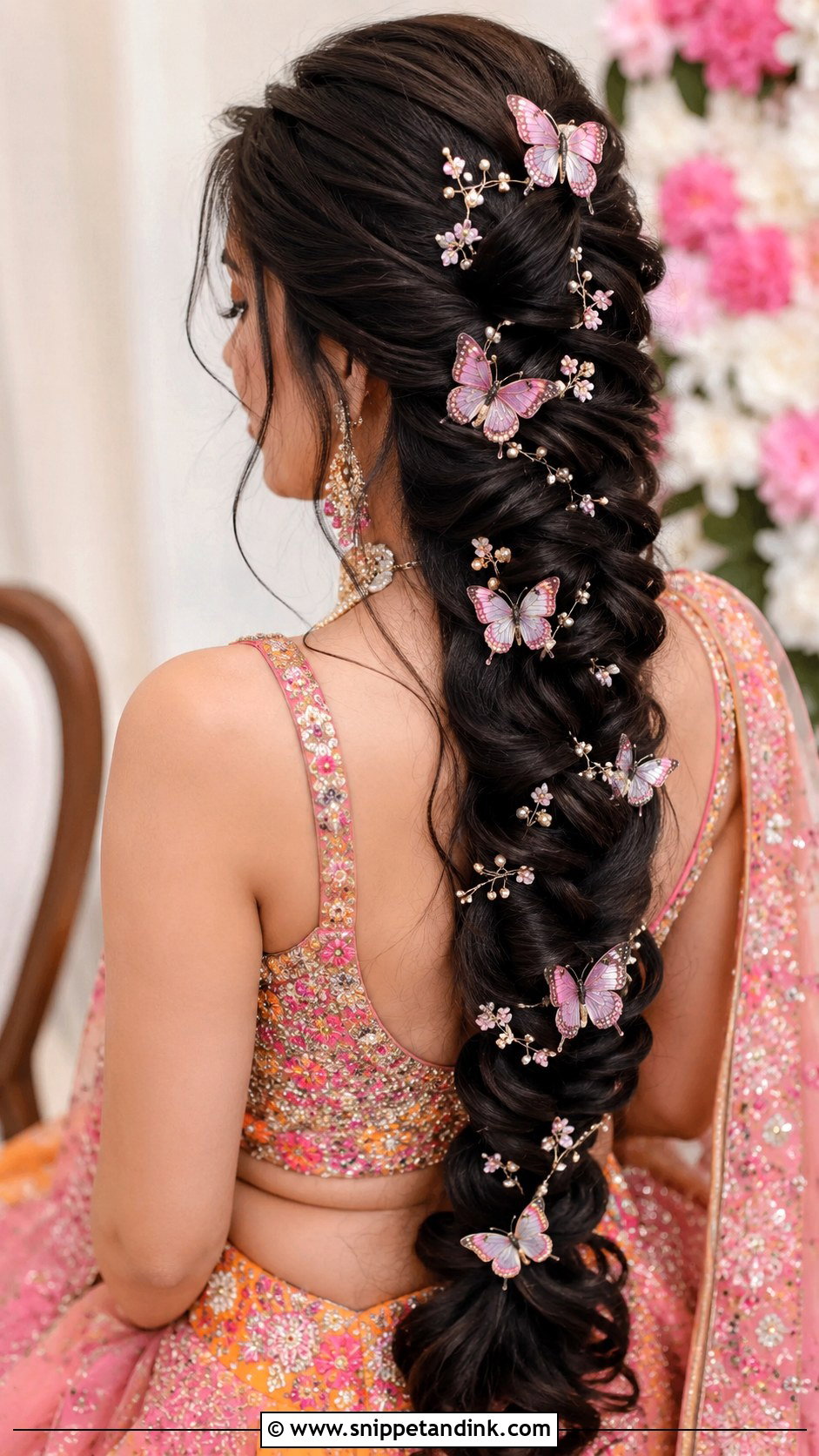
The mermaid braid is a wide, flat braid pulled out at the edges, and it only looks right on long, thick hair or with extensions added. Tiny butterfly clips or flowers sit along the woven sections. It’s a pre-wedding look for colorful lehengas, seen mostly from behind, so I take a back-view photo at the trial to check its balance. Keep it sleek or loosen it gently, depending on how relaxed the function is.
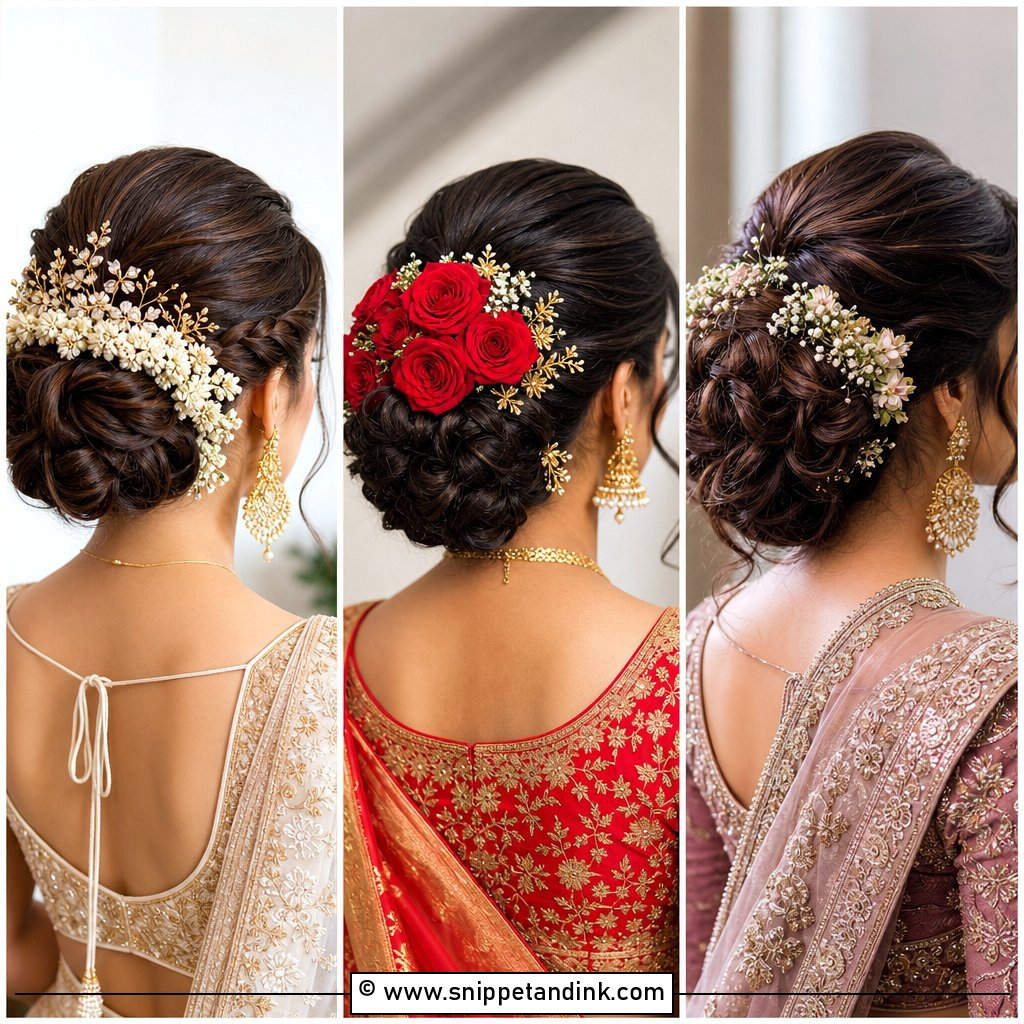

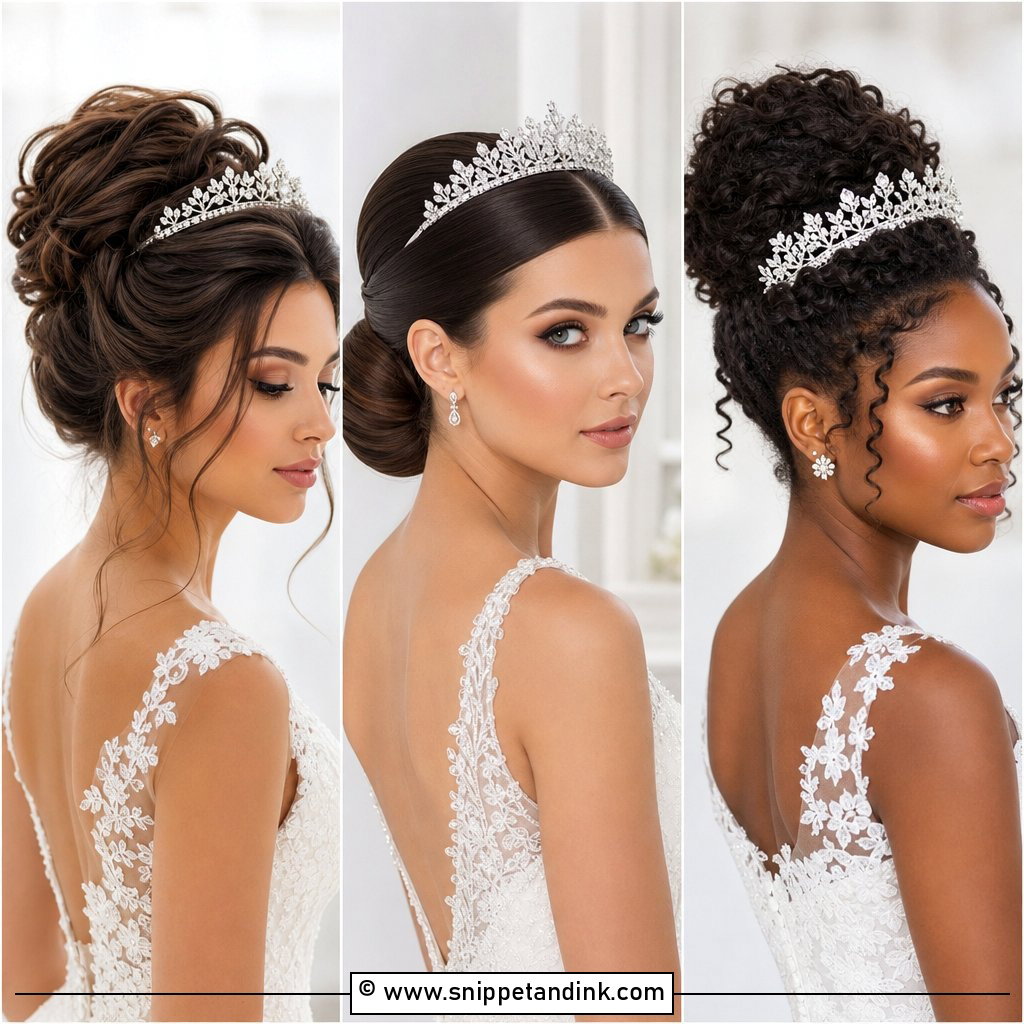

20. Open Hair With Floral Pins
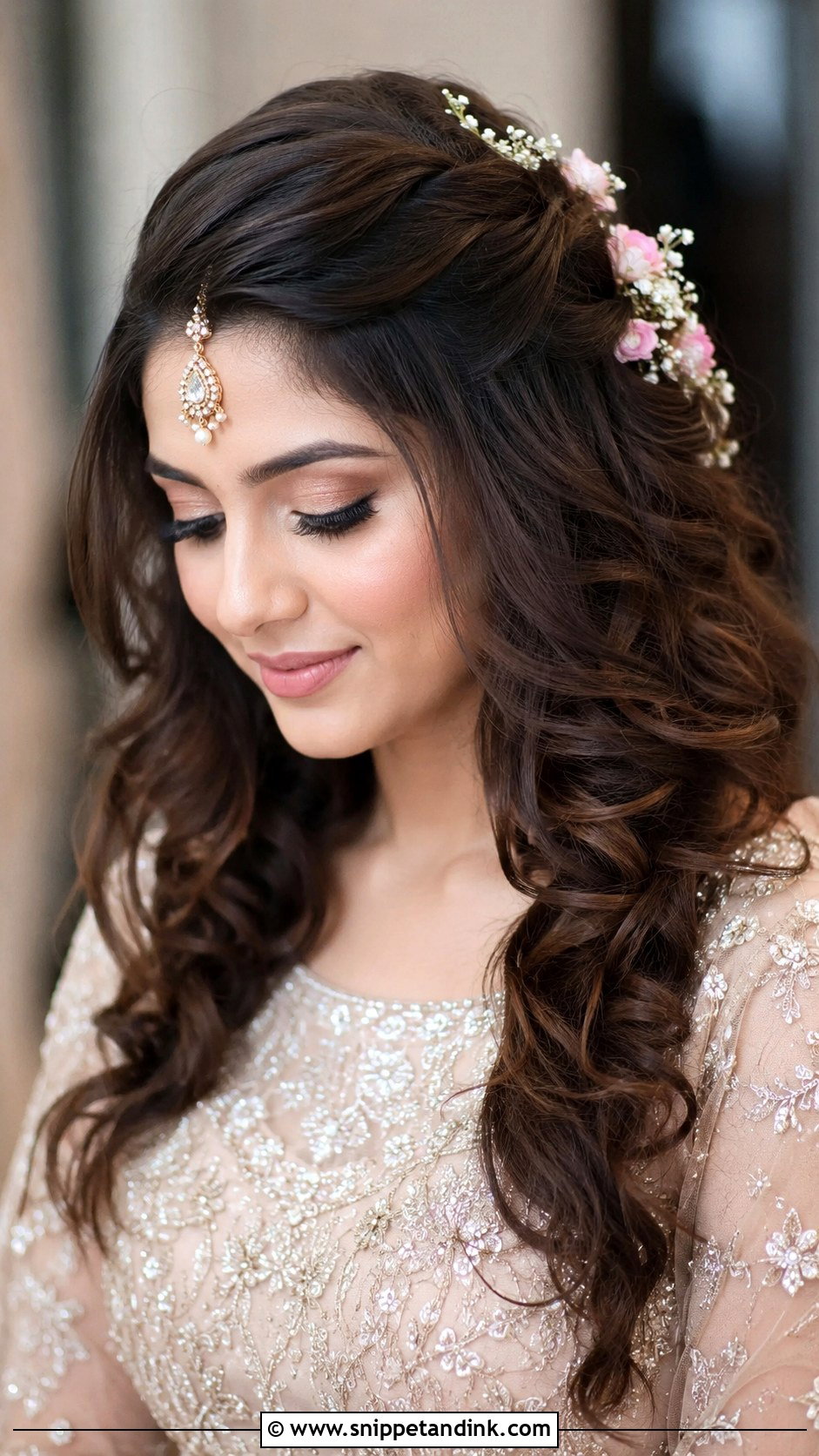
Sometimes the simplest look is the right one. Open hair, waved or straight, with a few small flower pins suits a roka or engagement, where nothing is pinned on your head. Keeping it neat for hours is the challenge. I set it with a light-hold spray and anchor the flower pins into small hidden braids behind the ears, which grip far better than loose strands. A delicate maang tikka works with it too.
21. Braided Crown With Gajra
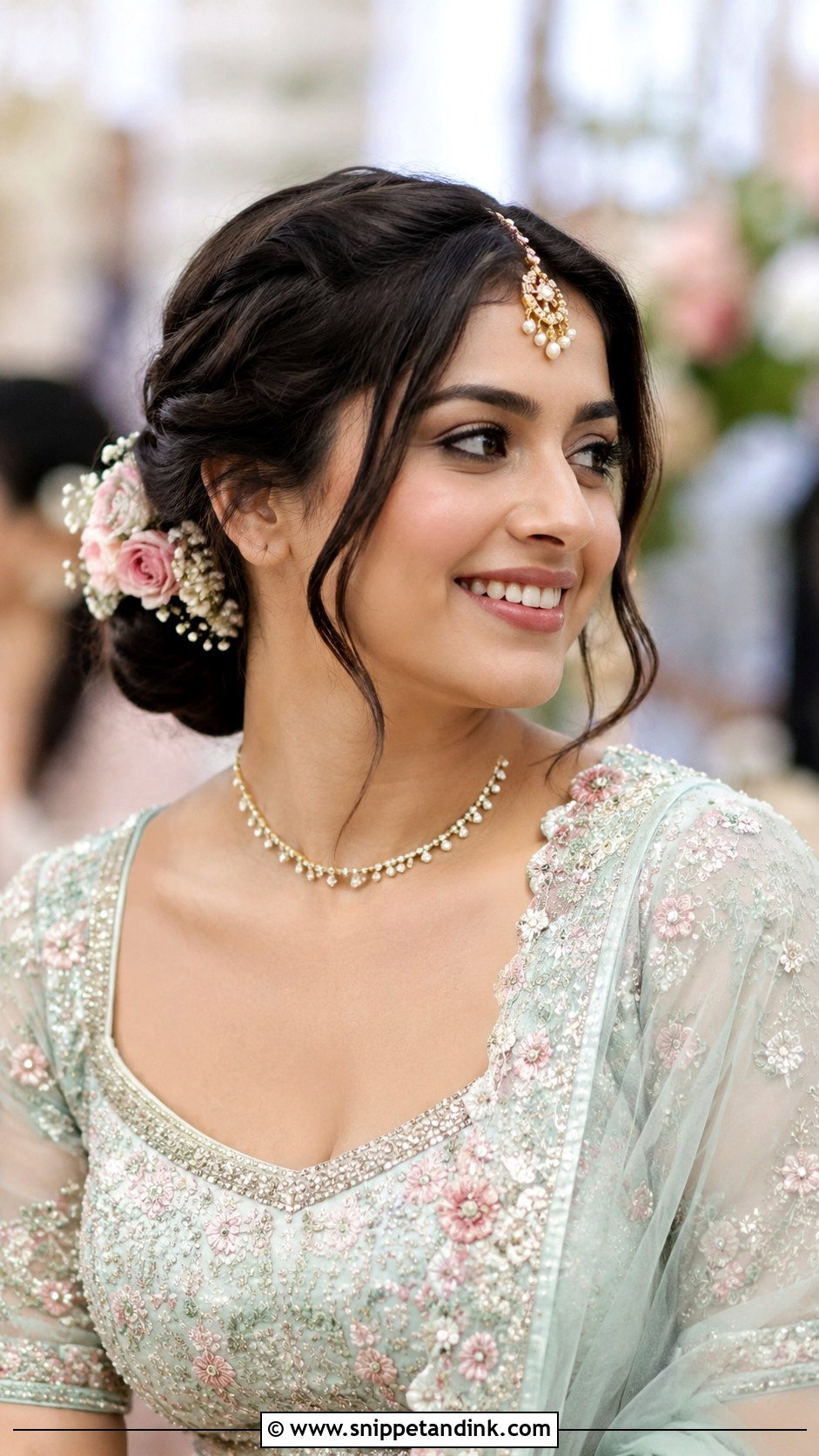
A braided crown wraps sections over the top of the head like a halo, and gajra circling it adds fragrance. It keeps every strand off your neck, which makes it my suggestion for warm-weather weddings. I’d skip it if you’re wearing a dupatta pinned over your head, though, because the fabric hides the crown work completely. It sits well with silk sarees and temple jewelry.
22. Vintage Roll Updo for Brides
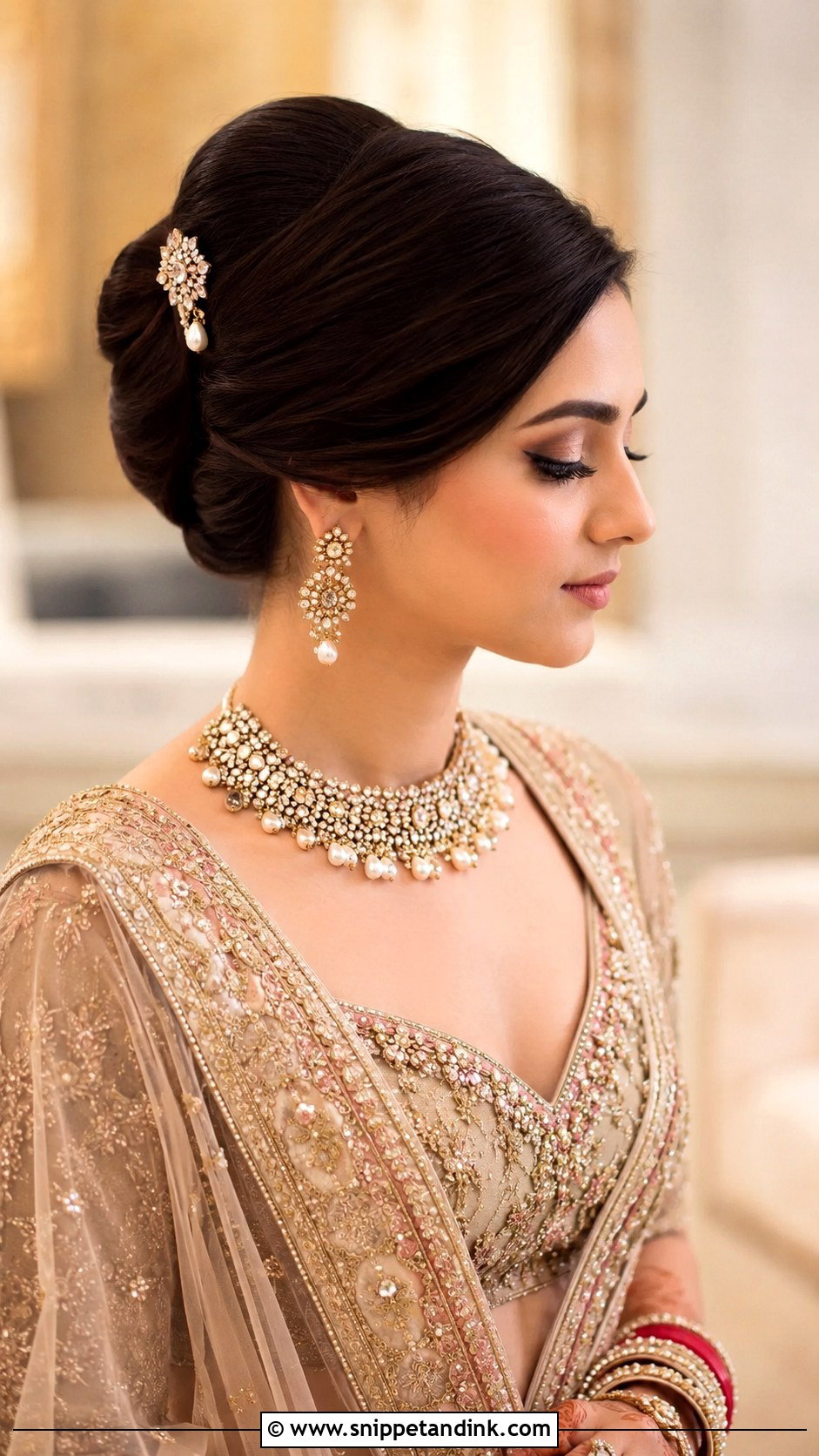
A vintage roll updo is all clean lines: hair rolled and tucked into a structured shape, with a jeweled pin or a few small flowers for a traditional note. It needs smooth hair with a little grip, so I prep with a setting lotion and roll over hidden padding when the hair is thin. I’d avoid it on freshly washed, very silky hair, which slips out of the roll. It’s a reception look for regal lehengas and statement jewelry.
23. Soft Bun With Side Flowers
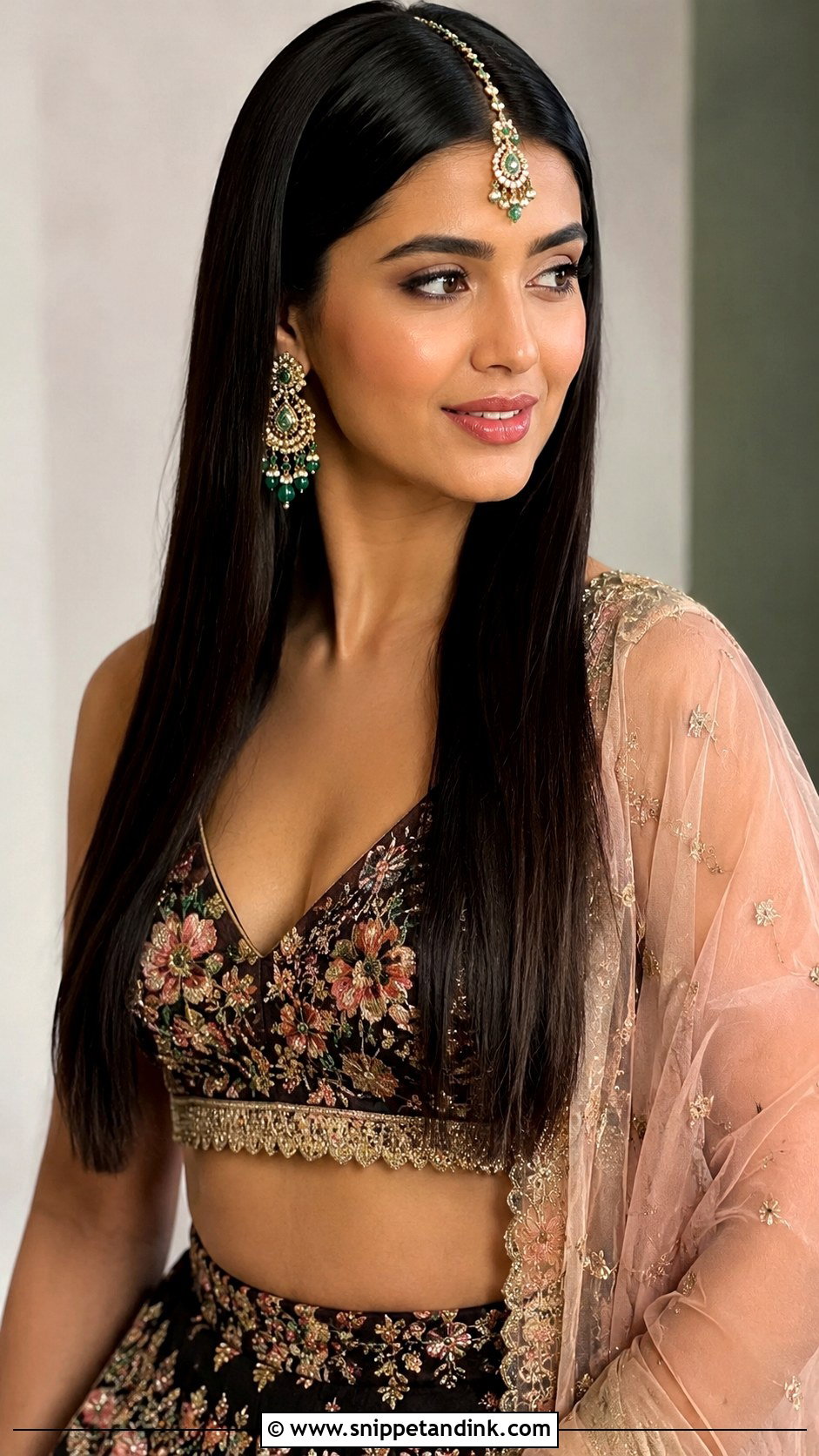
Clustering flowers on one side of a soft low bun gives an asymmetry that feels fresh with pastel lehengas or light sarees at a daytime ceremony. I put the blooms on the side you’ll be photographed from most, so ask your photographer where they’ll stand during the rituals. The bun keeps a little texture rather than a sleek finish. A delicate maang tikka balances the side-heavy flowers.
24. Sleek Straight Hair With Center Part
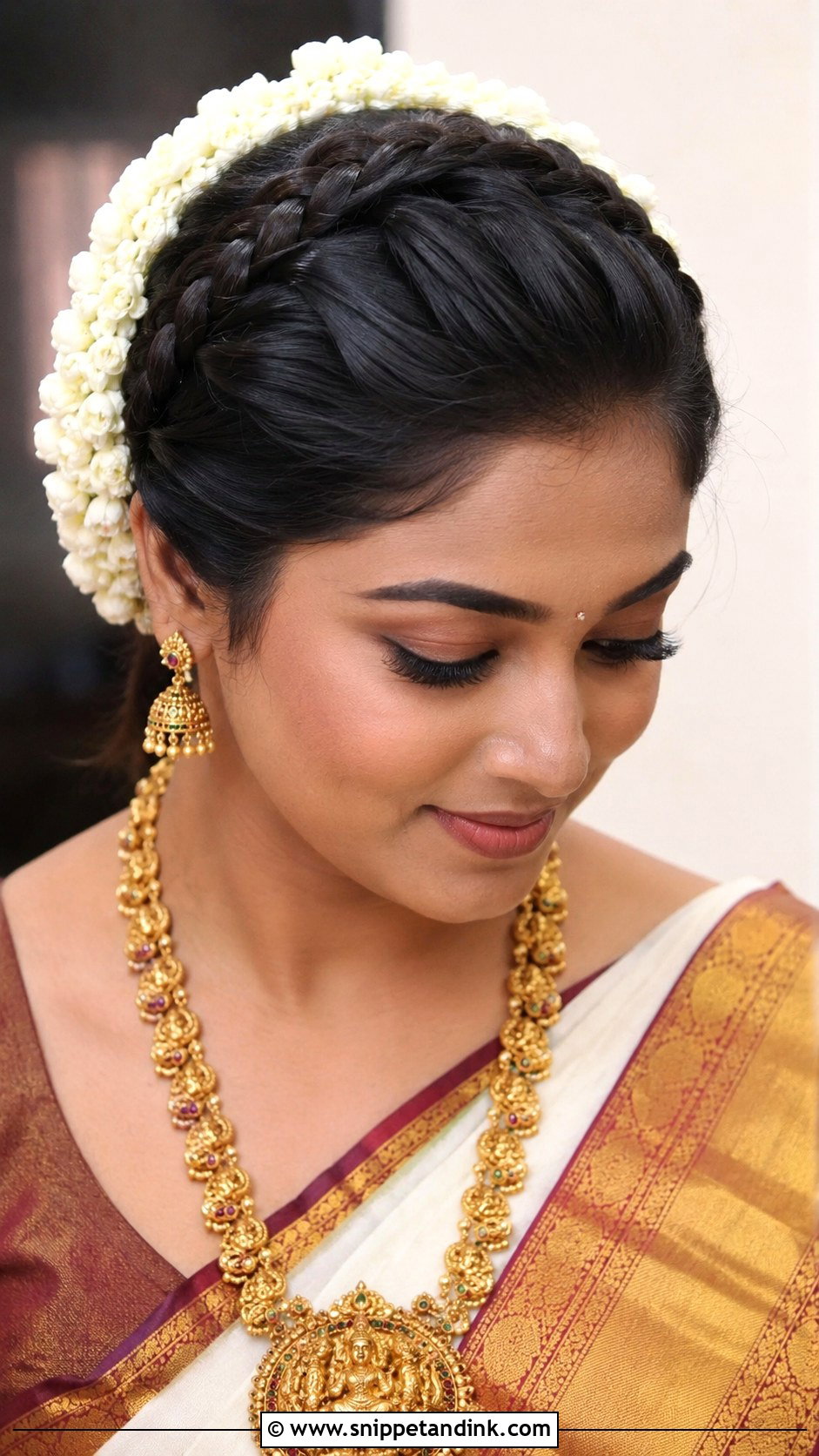
Glass-straight hair with a center part puts all the attention on your jewelry, and it suits fusion outfits and modern lehengas. It’s harder to keep than it looks. Humidity makes straight hair puff within an hour, so I use a heat protectant, flat-iron in thin sections and finish with an anti-humidity spray. Add a maang tikka or matha patti, and wear it down or half pinned back.
25. Floral Bun With Trailing Veni
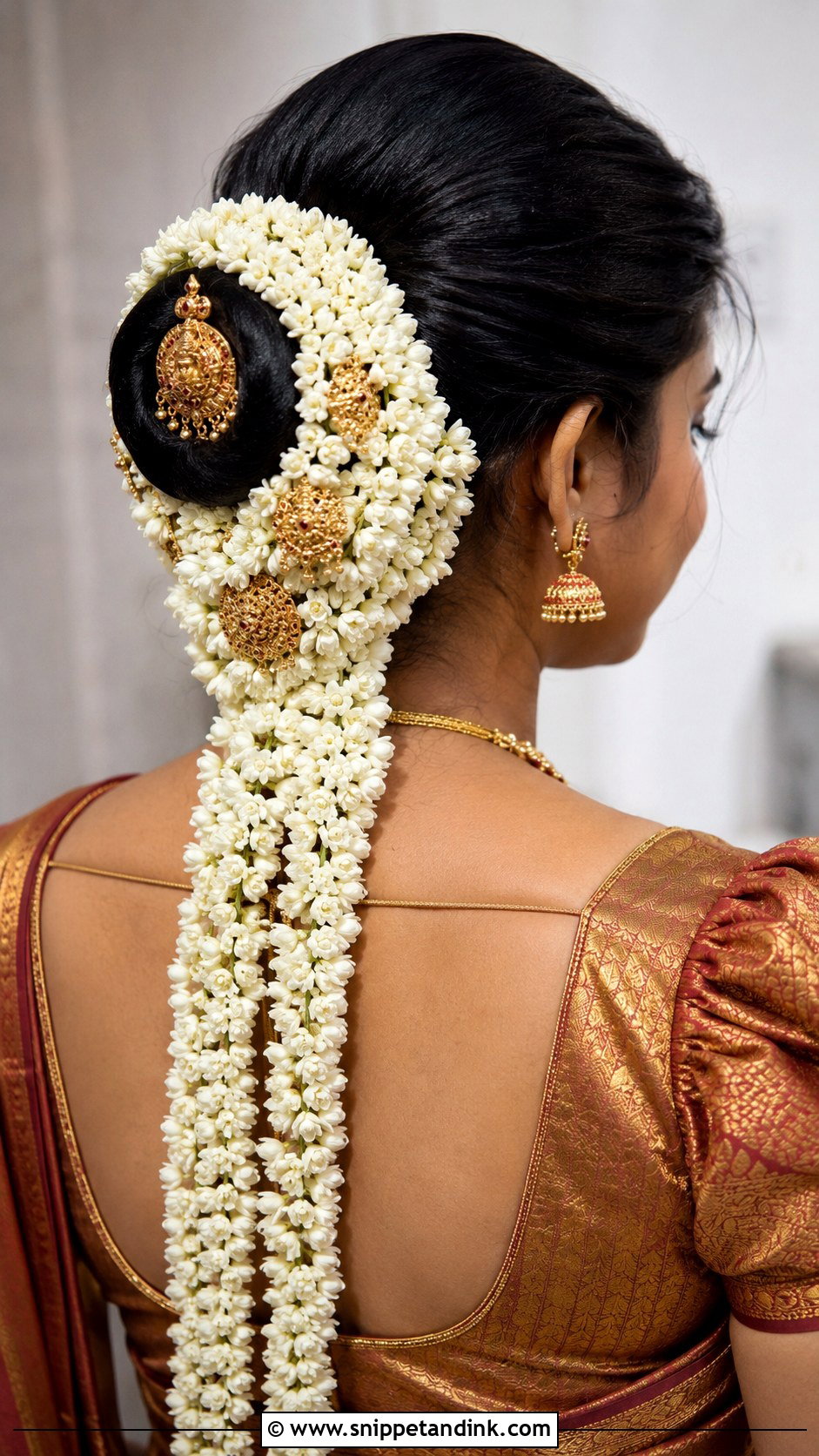
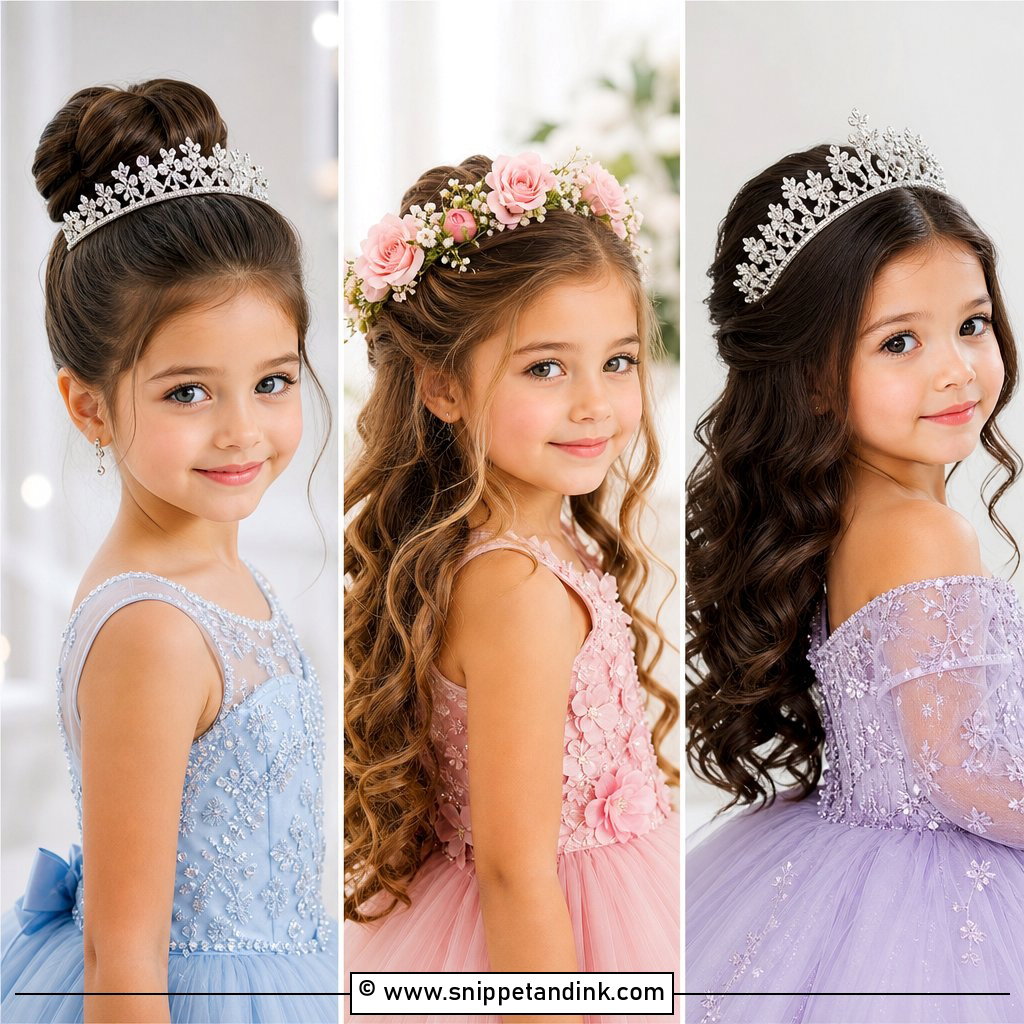
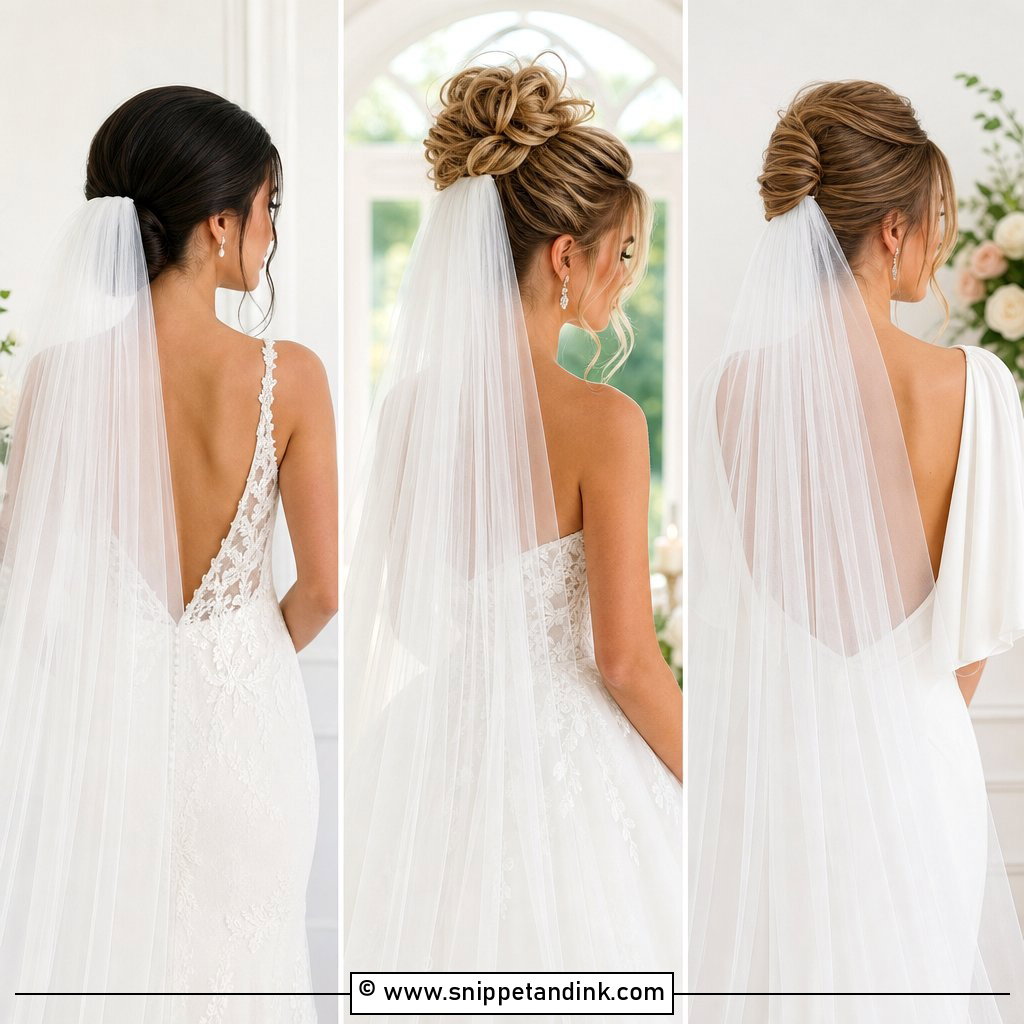
A floral bun with a trailing veni is classic South Indian bridal dressing: a structured bun with long strings of jasmine attached so they fall down your back. A fresh veni is heavy, so I fix it to the bun with long U-pins plus a hidden elastic loop. It sways as you walk, which looks wonderful on camera. Silk sarees, gold temple jewelry and gold hair accessories all suit it. Order a spare string or two; jasmine bruises in transit.
Ordering Jasmine That Still Smells Fresh at the Pheras
Jasmine buds open over a few hours and then start to brown, so timing matters more than quantity. I ask brides to have the florist deliver the strung gajra or veni on the wedding morning, with the buds still mostly closed so they open on your head rather than in the box. Until I pin it, keep it in a closed container wrapped in a damp cloth, somewhere cool and away from direct sun.
- Tell the florist which style you’re wearing, since a bun needs short loops while a trailing veni may need to reach your waist.
- Order one or two spare strings for touch-ups between the ceremony and photos.
- Agree a delivery time at least an hour before your hair appointment ends.
- If anyone in your family reacts to strong scents, try a short string near your face a week before.
The Last Week, From Oil Champi to Haldi Paste
Plenty of families do a hair oiling before the wedding, and I’m all for it, as long as a proper wash follows. Oil makes hair slippery, and pins slide straight out of it. Oil two or three days before, wash the day before the wedding with a gentle shampoo, and keep heavy conditioner off the roots. Day-old hair holds a bun far better than hair washed that morning.
Haldi paste nearly always ends up in someone’s hair. If your haldi falls the day before the wedding, wash it out that same day, and cover highlighted or light-colored hair with a scarf, because turmeric can leave a yellow tint. And skip any new color, keratin or smoothing treatment in the final week. Both change how hair takes heat and pins, and there’s no time left to correct a surprise.
One Style per Function Usually Beats One Style for Everything
Many brides end up wearing two or three of these across their functions, and that’s usually smarter than forcing one style to cover haldi through the reception. Start with your hair length and what will sit on your head, then match the outfit and jewelry. A maang tikka, matha patti or fresh flowers changes how any of these styles sits, so bring them to your trial. Shortlist the looks that suit your hair as it really is, not as it looks in someone else’s photo.
You'll Like These Ideas:




Leave a Reply