
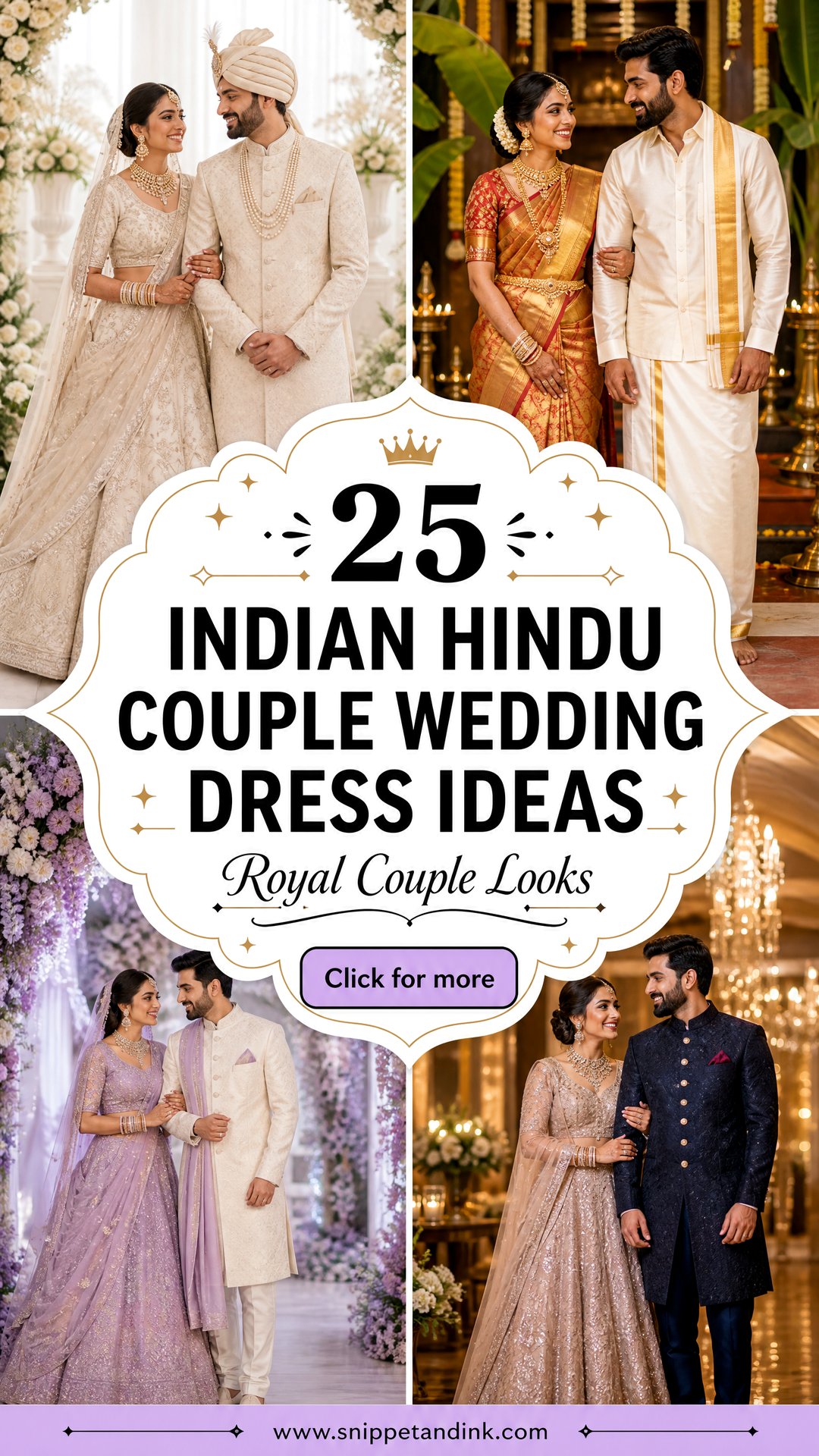
Couples dressing for a Hindu wedding today rarely stop at the red lehenga and cream sherwani. I style couples in royal velvet, Banarasi silk, Kanjeevaram sarees and temple jewellery, and just as often in pastel lehengas with ivory sherwanis. The pair has to read as one picture in the mandap, but each outfit still has to survive the jaimala, the pheras and an hour of blessings on its own terms. Below are 25 couple pairings, North and South Indian, ceremonial and reception, with what I’d watch for in each.
How Two Outfits Talk to Each Other Without Matching
I always build the bride’s outfit first and the groom’s second. Her lehenga or saree usually takes longer to make and carries more colour, so his outfit is easier to tune to hers than the other way round. Once her fabric is chosen, I ask for a swatch of the border or dupatta and take it to his fitting.
Then I connect them in one or two ways, never all of them:
- Metal: if her embroidery is gold zari, his should be gold too. Gold next to silver looks like a mistake.
- Border colour: his stole or safa repeats her border, not the main body of her outfit.
- Depth: a deep lehenga with a pale sherwani, or two mid-tones. Two very dark outfits disappear against a dark mandap at night.
- Texture: one heavily worked outfit, one calmer. Two loud outfits fight in wide shots.
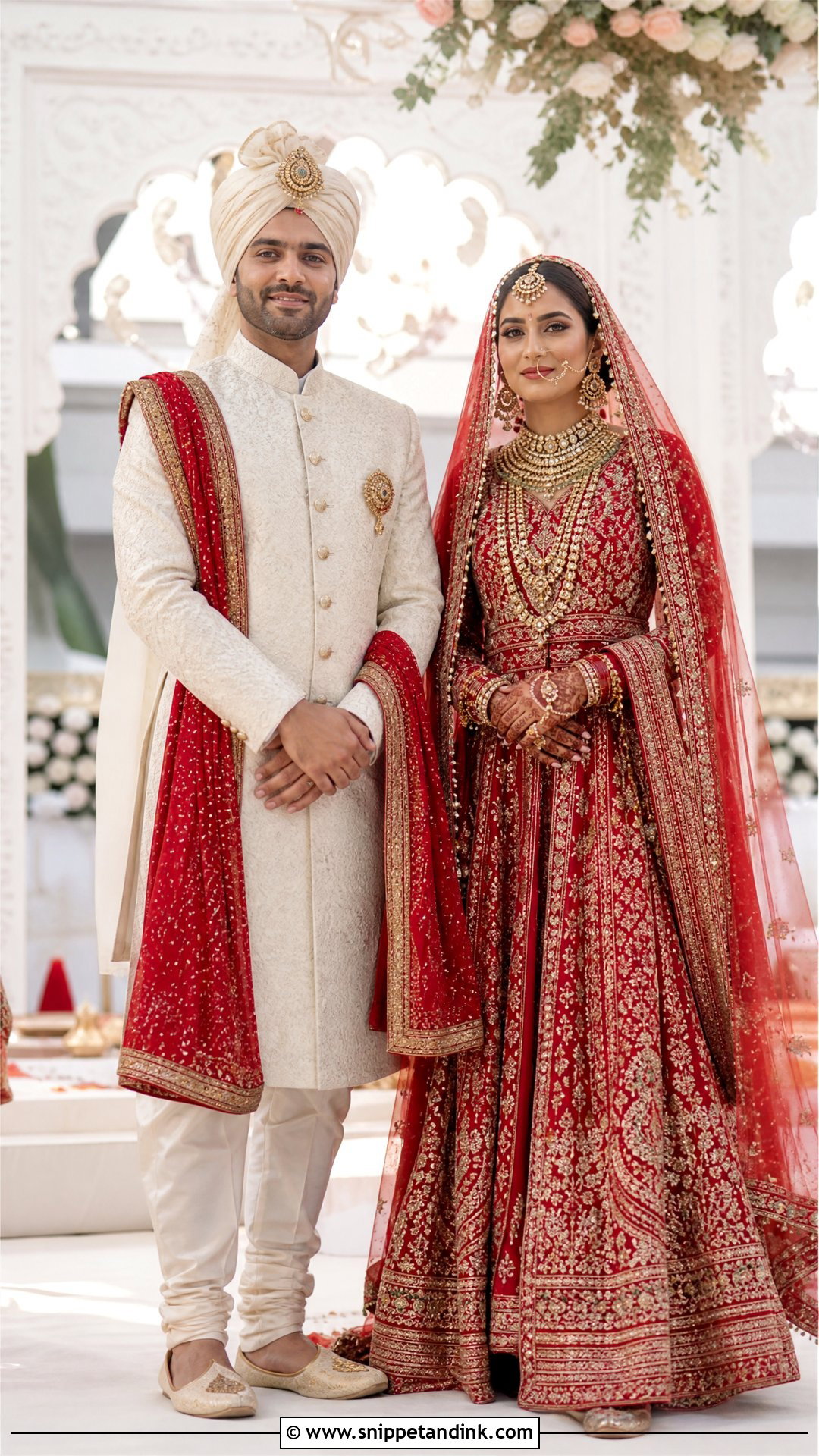
1. Red Bridal Lehenga With Ivory Sherwani
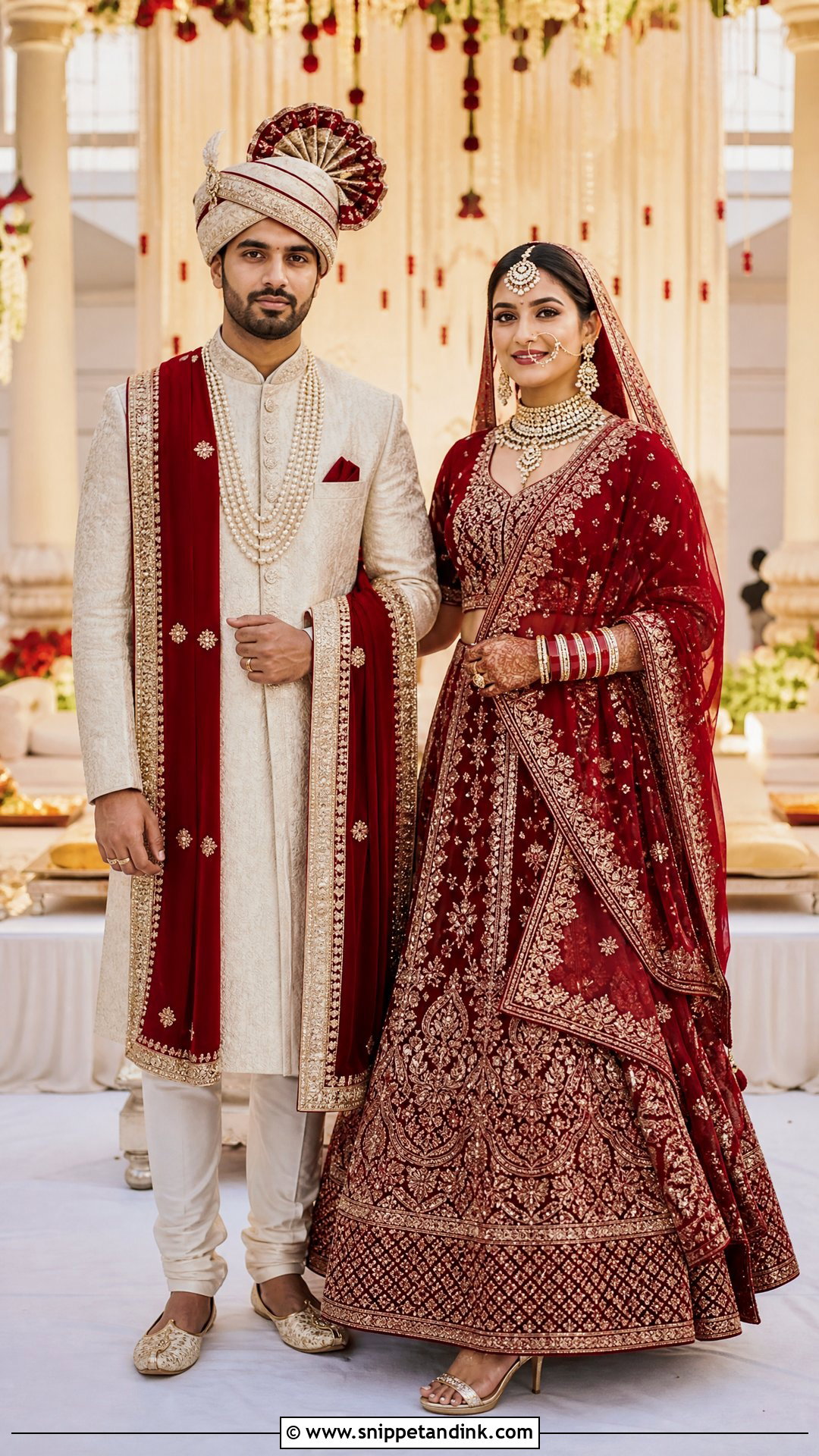
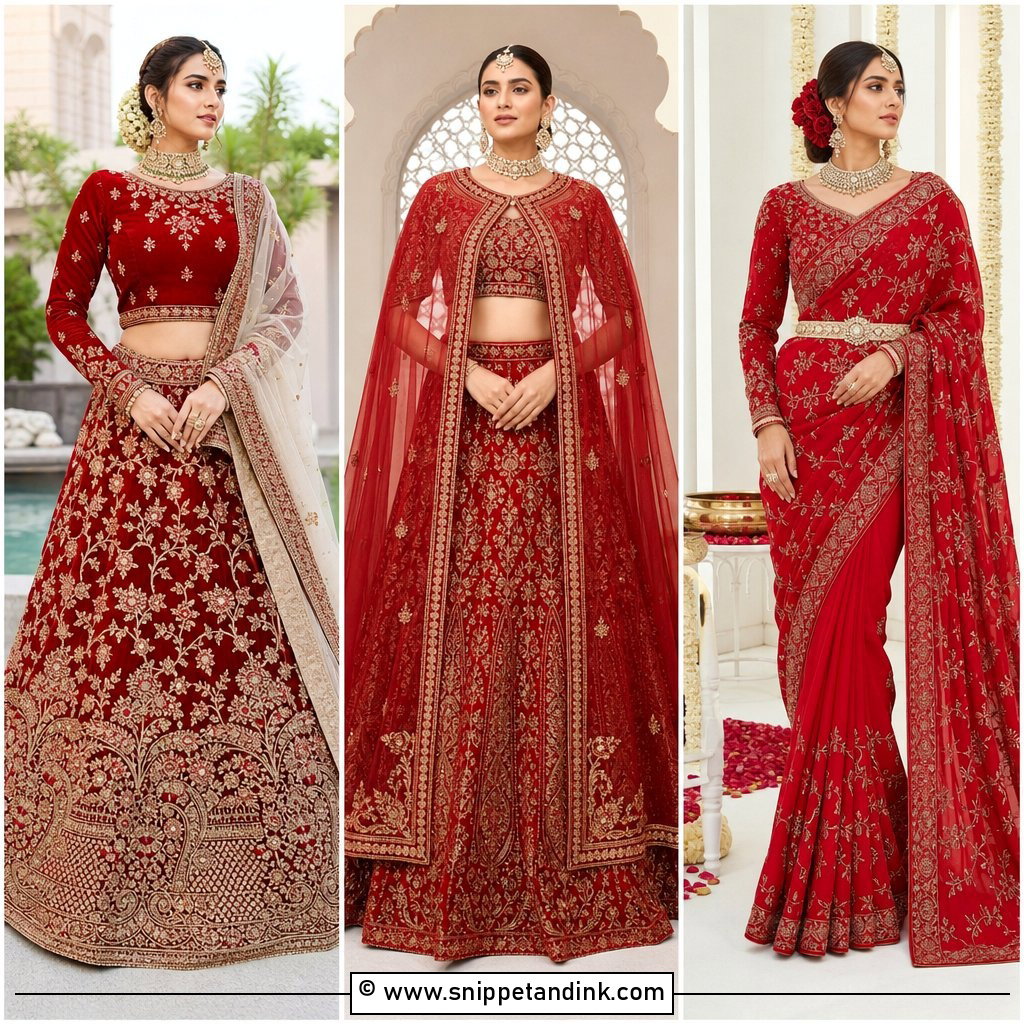
Red with ivory is the pairing families ask for most, and it works because the groom’s pale outfit frames the bride rather than competing with her. Deep red with zari or zardozi, dupatta over the head for the mandap. I link the two through one shared detail: a red stole or maroon safa for him, cut from a fabric that echoes her border. Kundan jewellery and gold mojaris finish it. It suits Punjabi, Marwari and Gujarati ceremonies equally.
2. Maroon Velvet Lehenga With Gold Sherwani
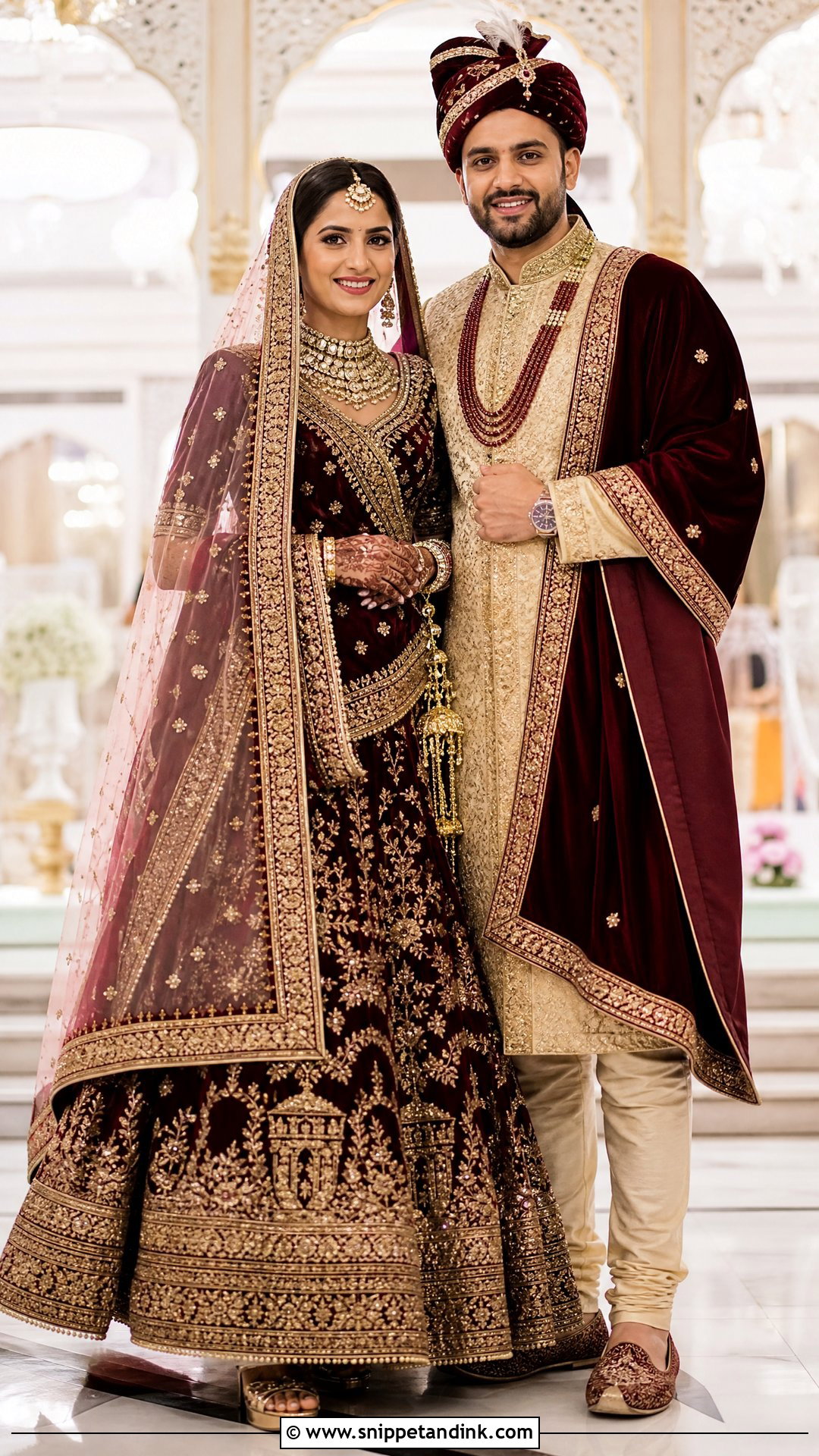
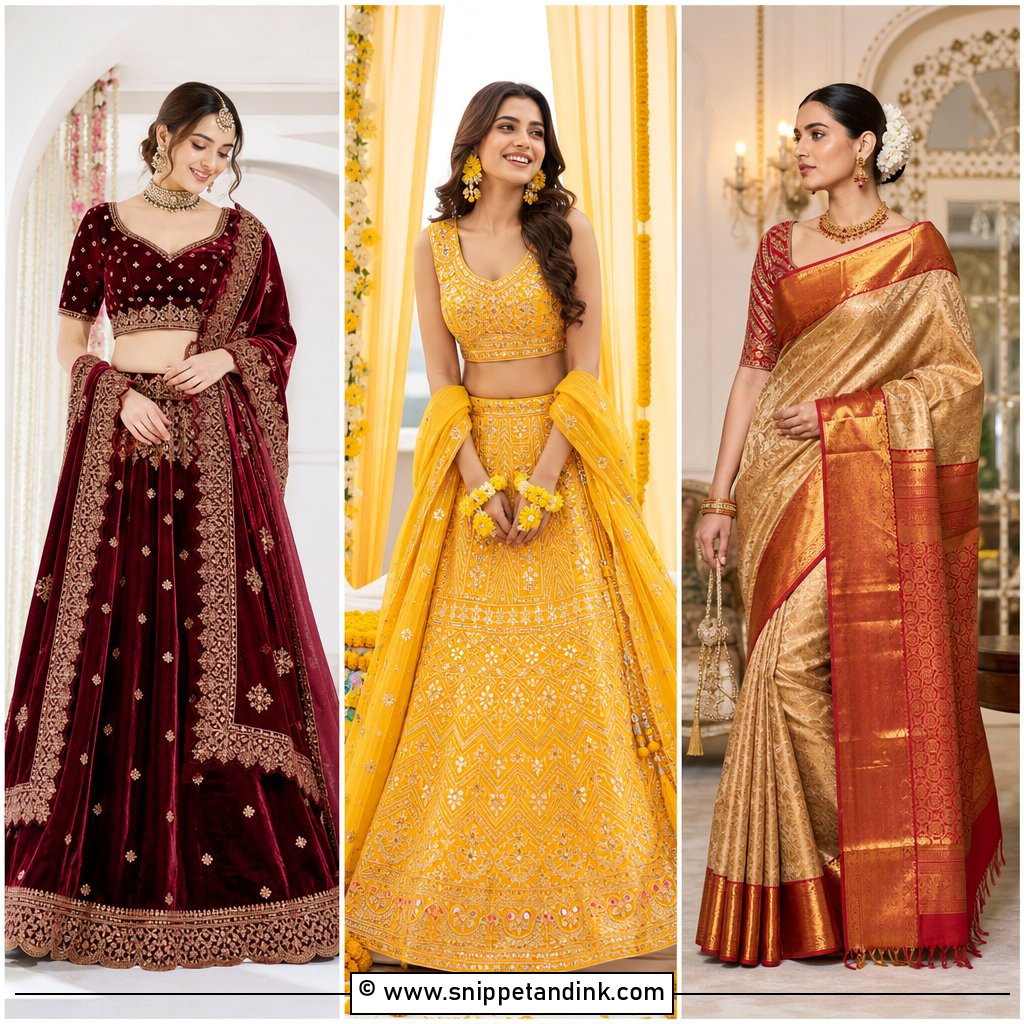
Maroon velvet is for winter and evening only; in a warm outdoor mandap it becomes unbearable within the hour. Under strong lights, the pile gives antique gold embroidery real depth. A double dupatta, one as a veil and one on the shoulder, makes a grand entry but adds weight, so pin both well. He wears gold with maroon detailing and a maroon stole. She wears polki jewelry and a matha patti; he adds a pearl mala.
3. Pastel Pink Lehenga With Cream Sherwani
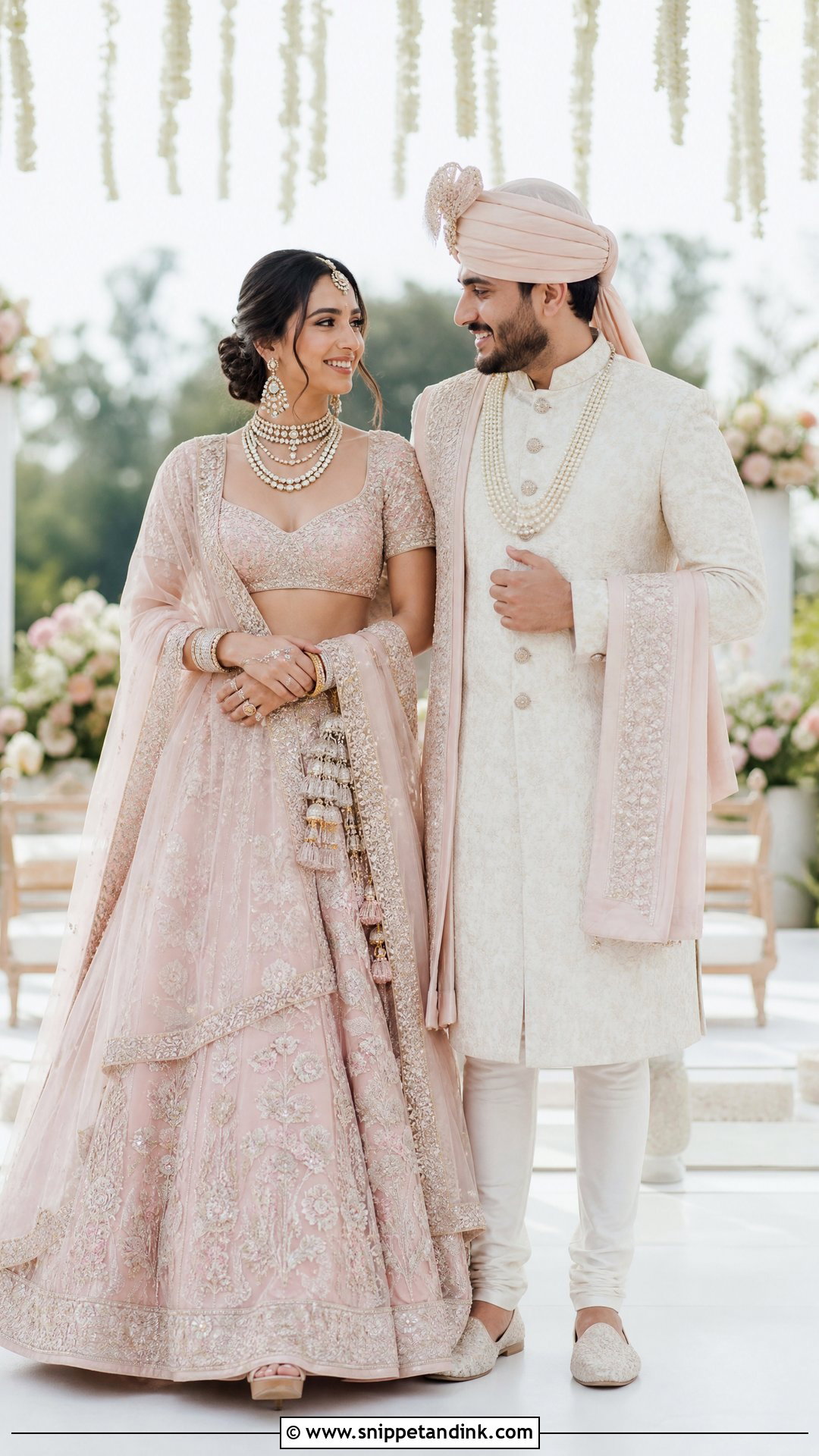
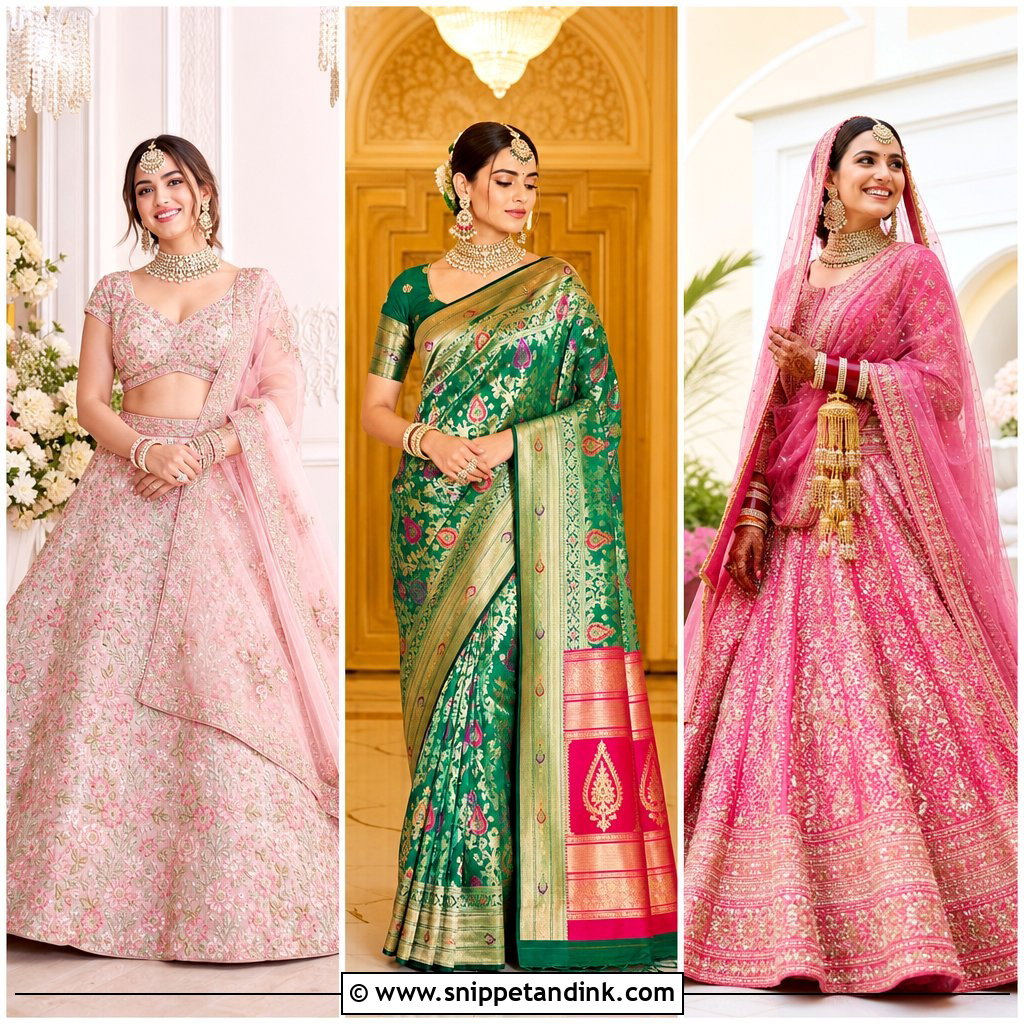
With pastels, the rule I hold couples to is matching intensity. Blush pink with silver or champagne embroidery next to a cream sherwani with pale pink accents looks unified. Put that same pink next to a dark navy sherwani and she looks washed out. This pairing belongs to daytime pheras and garden mandaps. Rose-toned jewellery and a pastel safa tie it together.
4. Ivory Lehenga With Ivory Sherwani
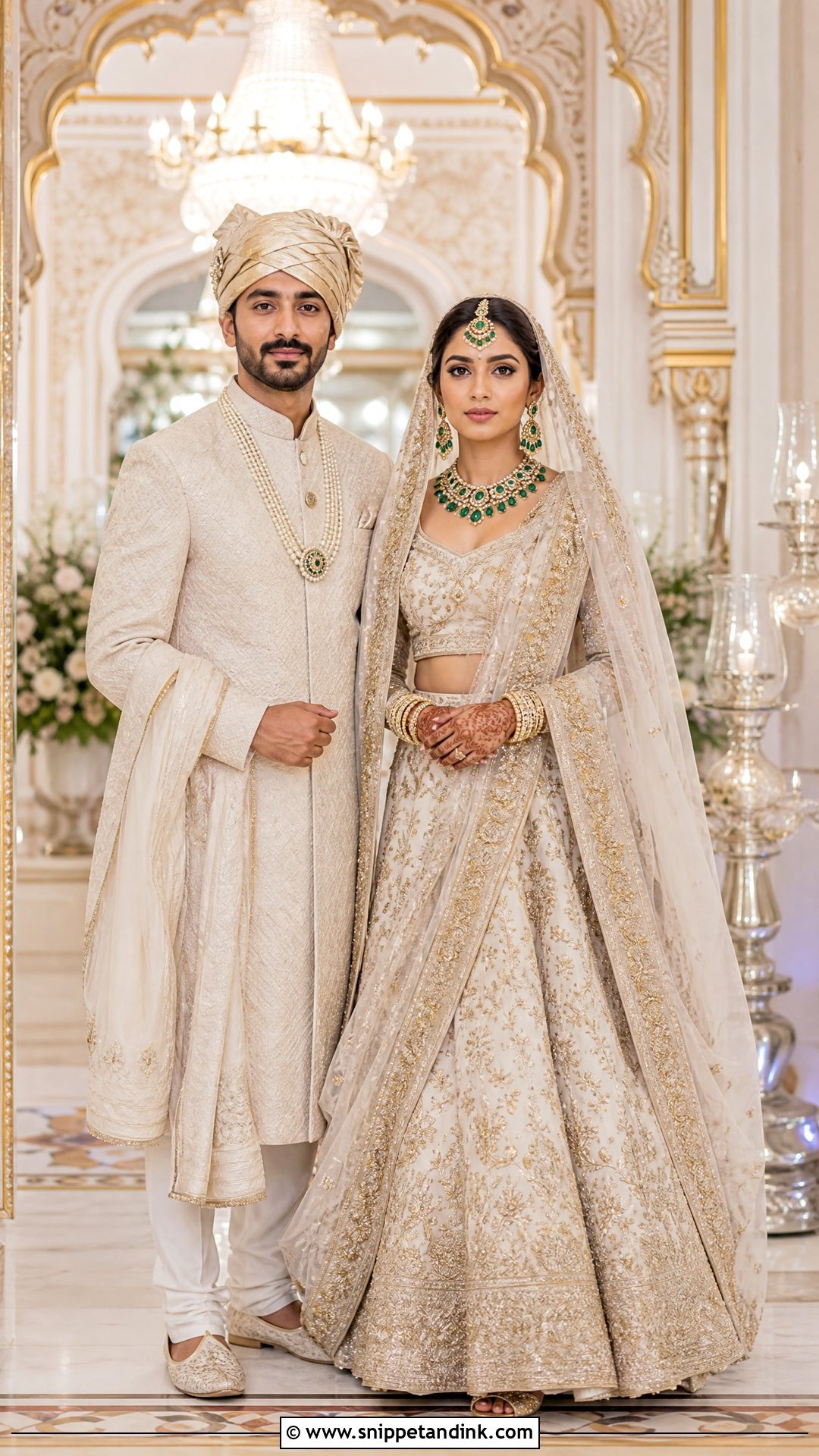
Ivory on ivory can look bland unless you add contrast somewhere. I do it through jewellery: emerald, ruby beads or antique gold on her, a gold safa or pearl strand on him. Give the two outfits different textures, chikankari or pearls on her and a woven texture on his sherwani, so they don’t merge into one pale block in wide shots. It suits palace venues and couples who like understated looks.
5. Kanjeevaram Saree With Silk Kurta And Veshti
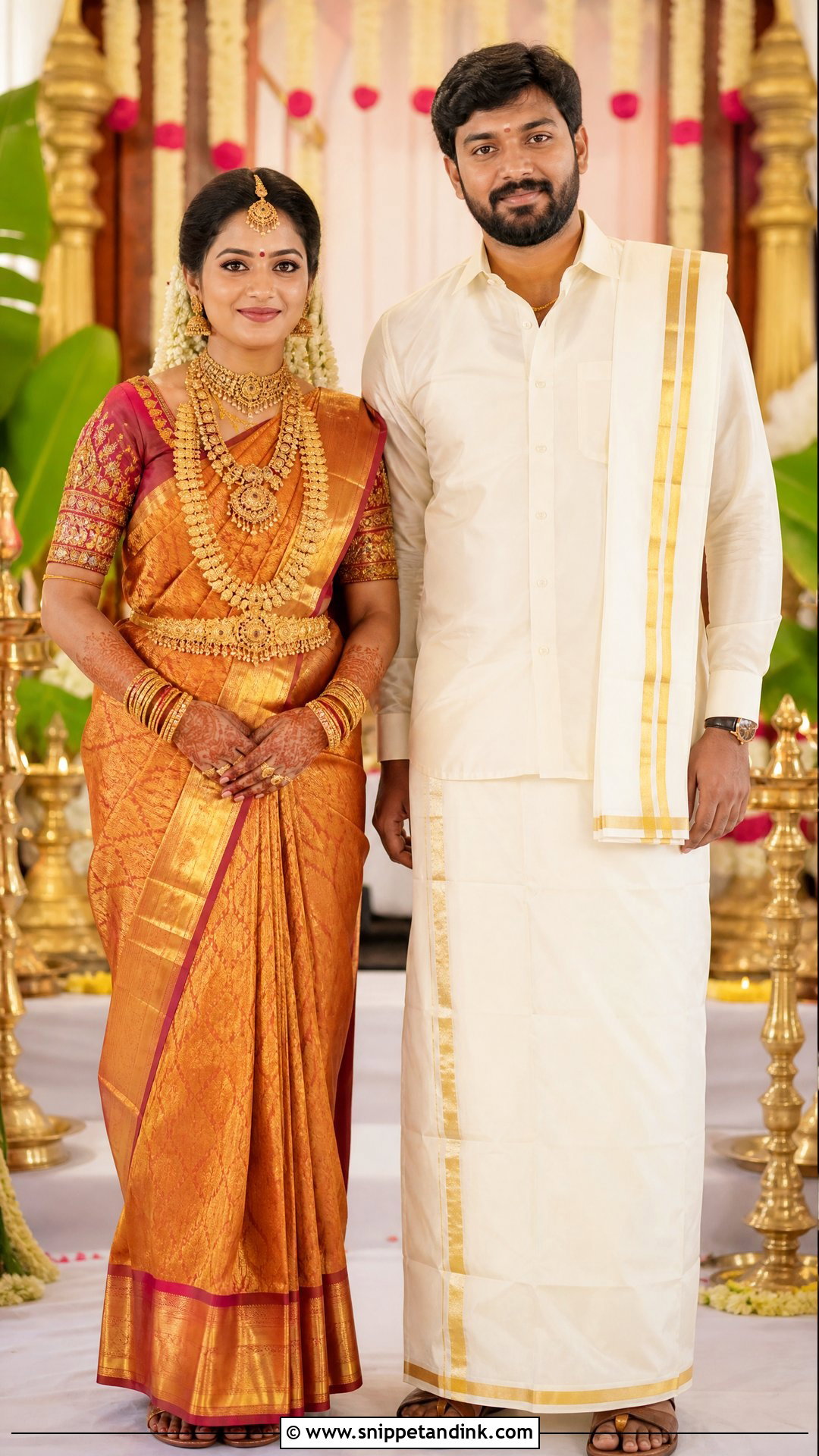
For a South Indian ceremony, a Kanjeevaram saree with a silk kurta and veshti is correct and needs no reinvention. She wears red, mustard, green or gold with a contrast border and temple jewellery; he picks up that border colour in his veshti and angavastram. Kanjeevaram silk is heavy, so a well-pleated drape pinned at the shoulder and waist matters through a long muhurtham. Fresh jasmine, an oddiyanam waist belt and layered necklaces for her.
6. Banarasi Saree With Embroidered Sherwani
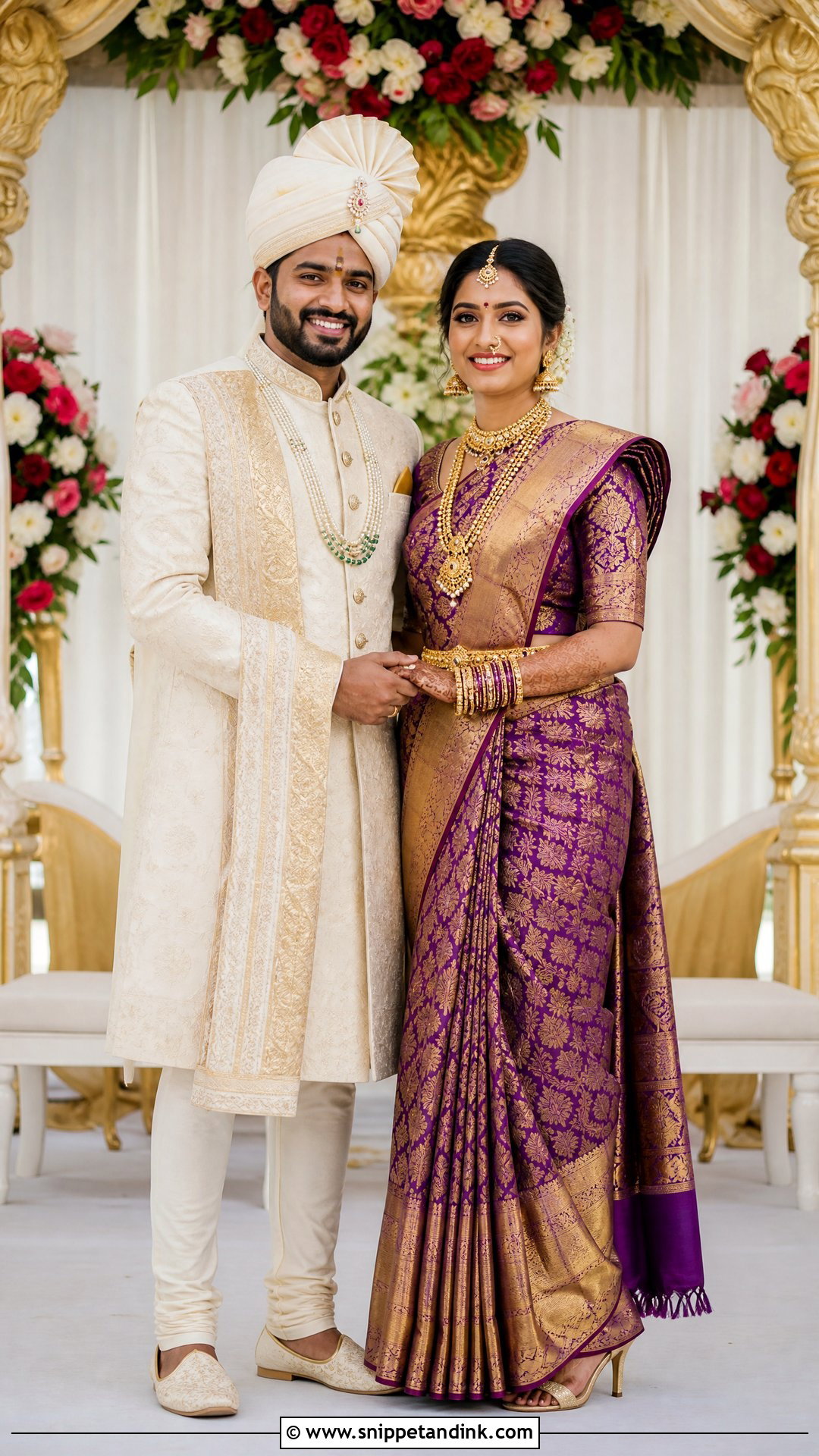
When a family prefers a saree over a lehenga, Banarasi is often the choice. Red, magenta or emerald with heavy zari motifs. His sherwani should pick up the saree’s border colour, not its body, which keeps him from looking like a matched set. A traditional bun with gajra and a nath if she wants one. A safa, stole and brooch complete his side.
7. Red Banarasi Lehenga With Cream Sherwani
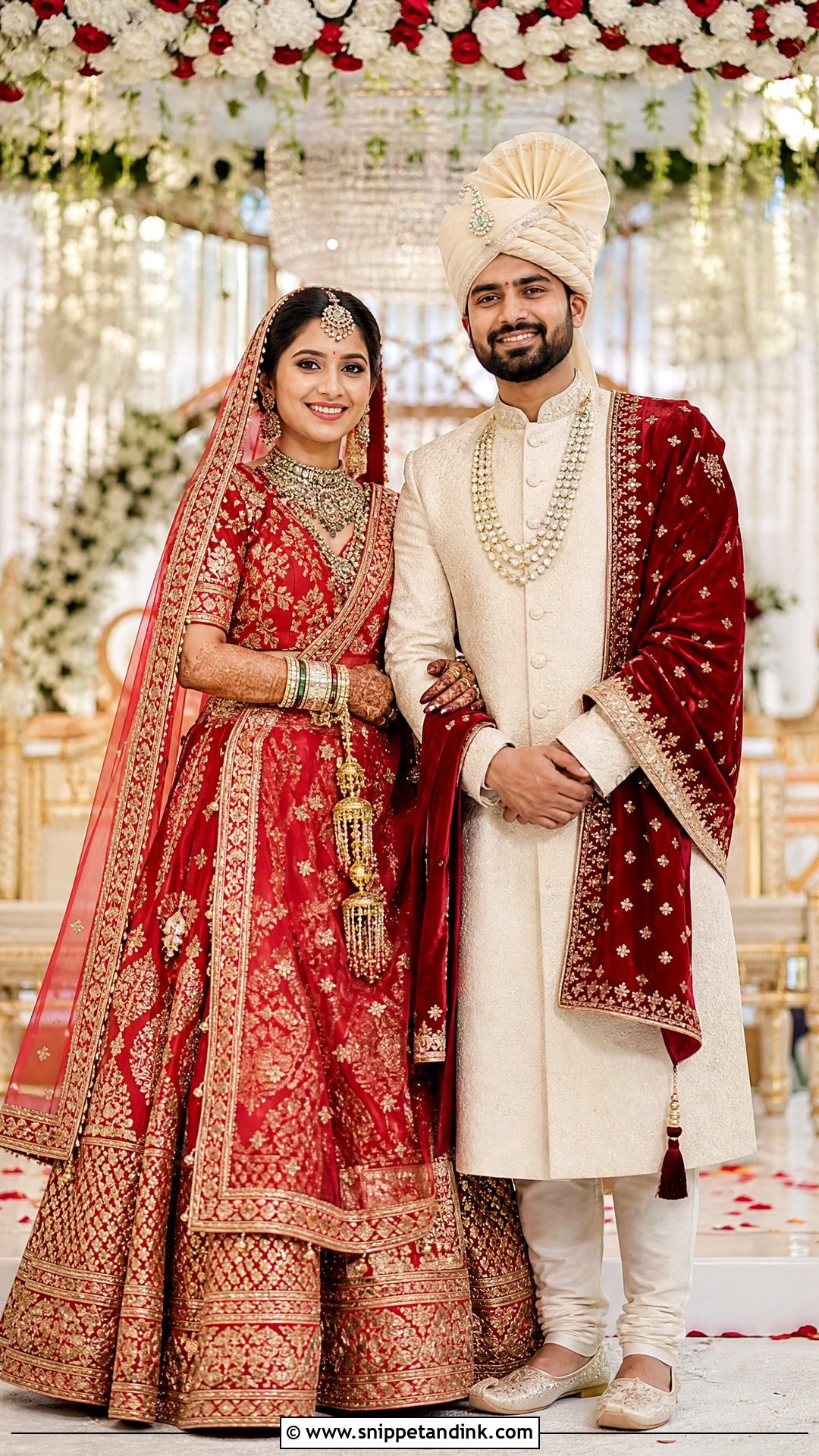
A Banarasi lehenga gives the woven richness of a saree with easier movement, which is why I suggest it to brides who want tradition but worry about pallu slips during the pheras. The weave carries itself, so very little embellishment is needed. A cream sherwani with subtle gold and a red stole for him. Pin her dupatta at two points so she can walk the saat phere without stopping to fix it.
8. Green Bridal Lehenga With Beige Sherwani
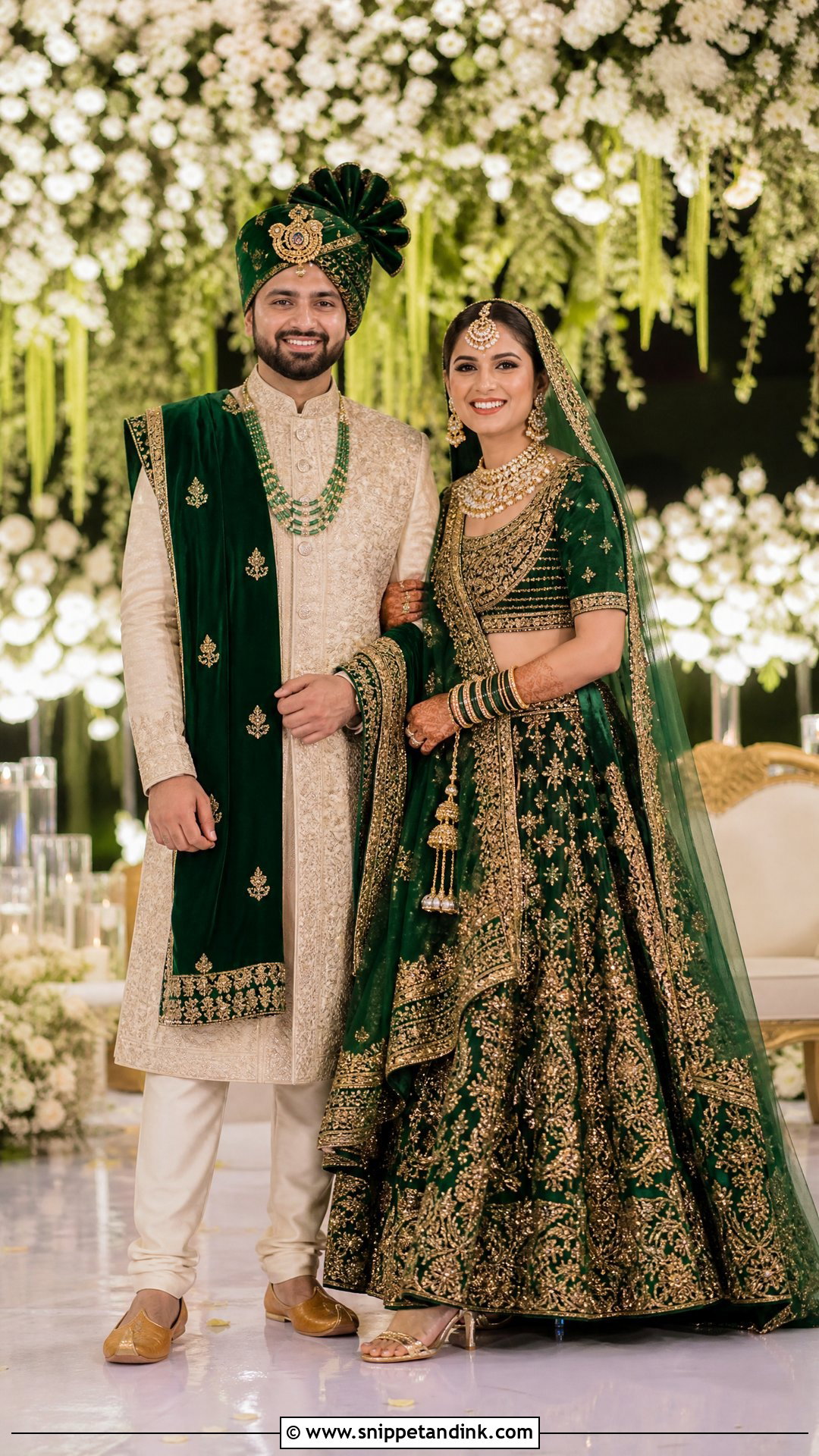
Green is considered auspicious in many communities, and it’s a strong choice for a bride who wants tradition without red. Emerald, bottle or mehendi green with gold embroidery looks rich against marigold decor. He softens it in beige or champagne, connected through a green stole or safa. Keep his sherwani textured but matte; shiny beige next to green looks cheap in photos.
9. Gold Lehenga With Maroon Sherwani
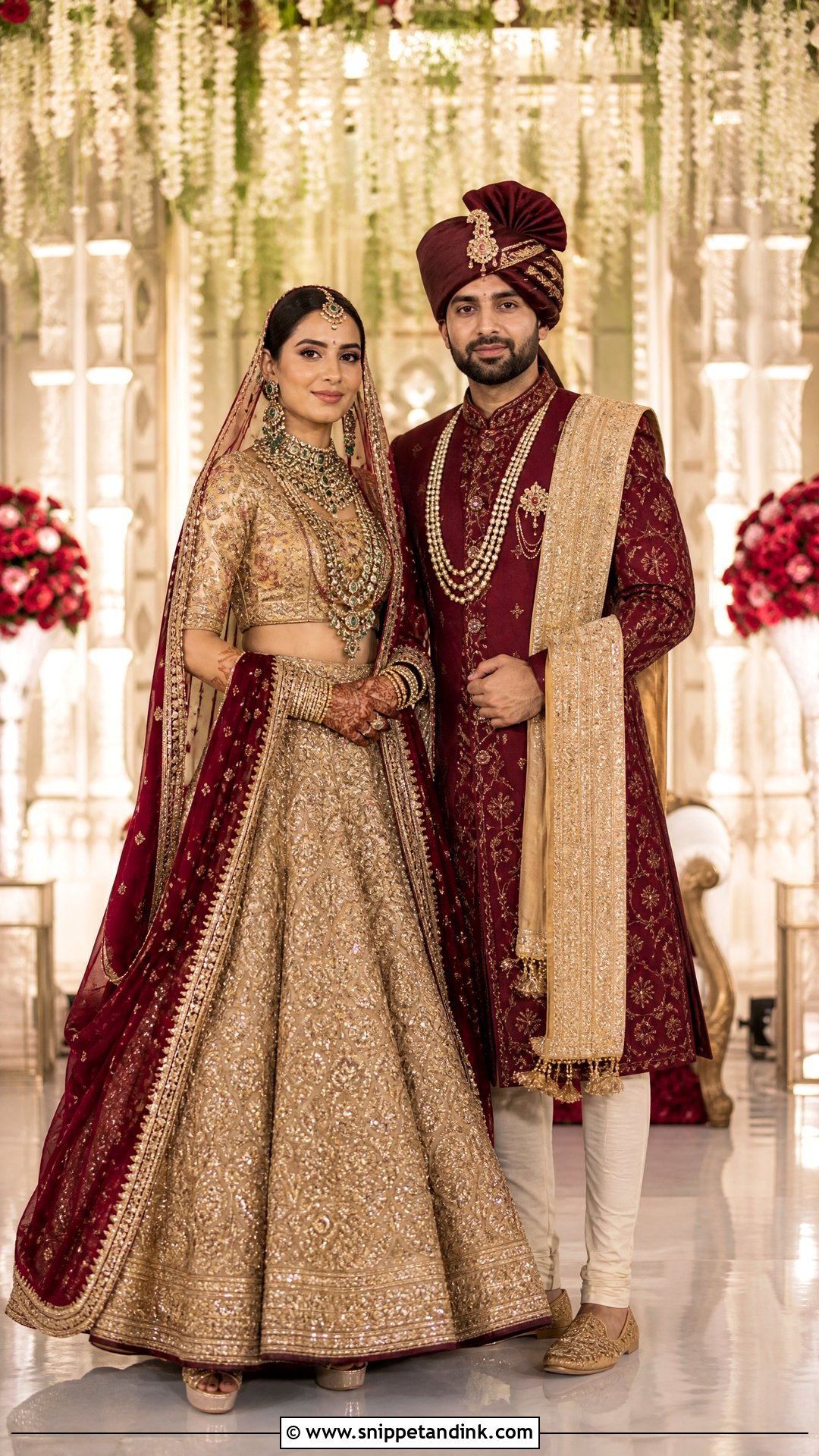
Gold on the bride and maroon on the groom is a reversal of the usual, and it gives him real presence. Zari, sequin or brocade lehenga for her, maroon sherwani for him. To balance it, he wears a gold stole and she picks up maroon in her dupatta or jewellery stones. It belongs to evening weddings and big hotel venues, where the gold can catch light.
10. White And Red Bengali Wedding Saree With Dhoti Kurta
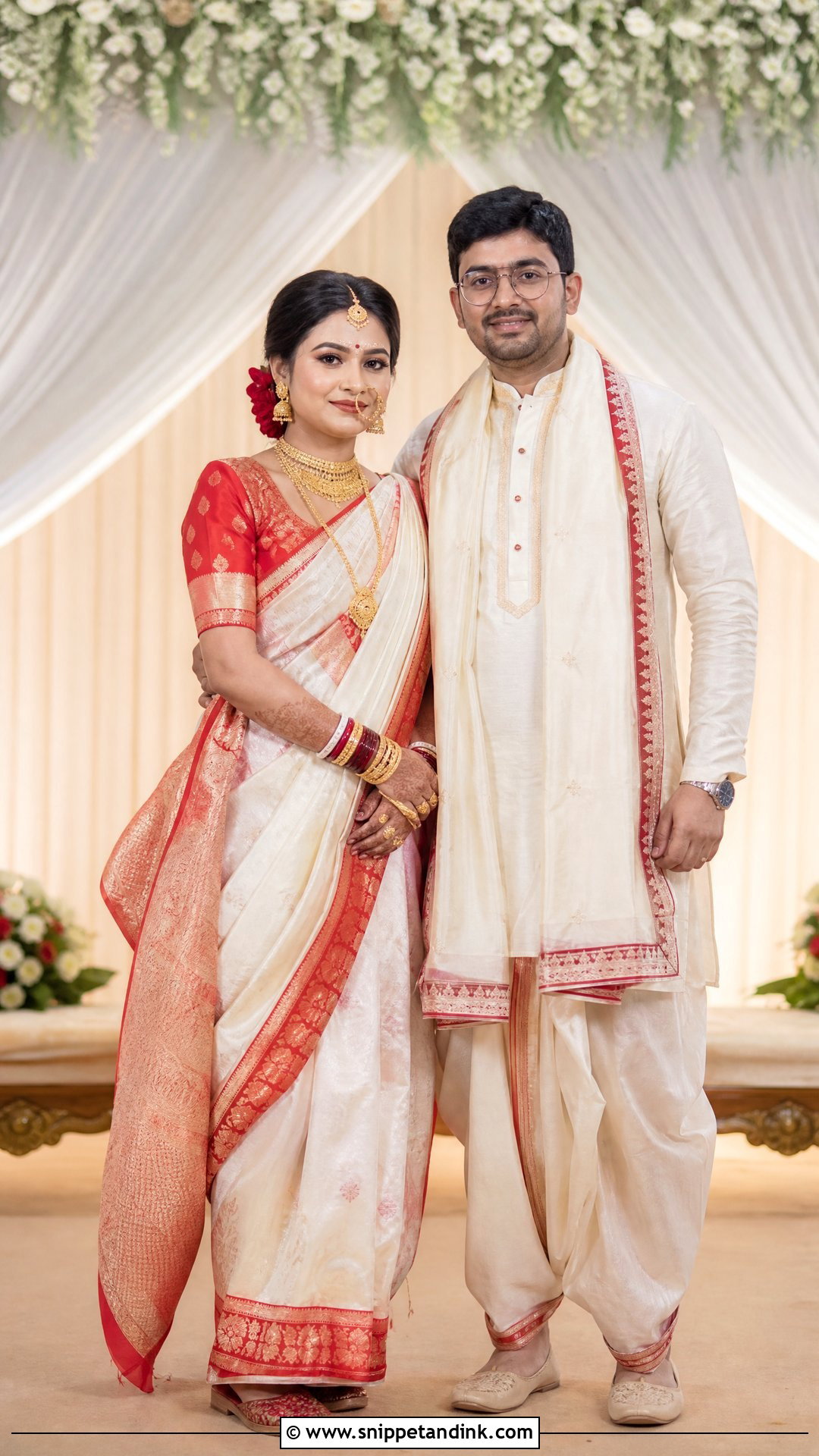
The Bengali bride traditionally wears red Banarasi, often with gold jewellery, shakha-pola bangles and a classic bun; the groom wears a white or cream dhoti with a kurta and a shawl. The white and red saree with a red border is also worn in many families. The simplicity of his outfit keeps the focus ceremonial. Practise the draping well; Bengali rituals involve a lot of sitting, and a dhoti tied by someone inexperienced loosens.
11. Gujarati Panetar Saree With Ivory Sherwani
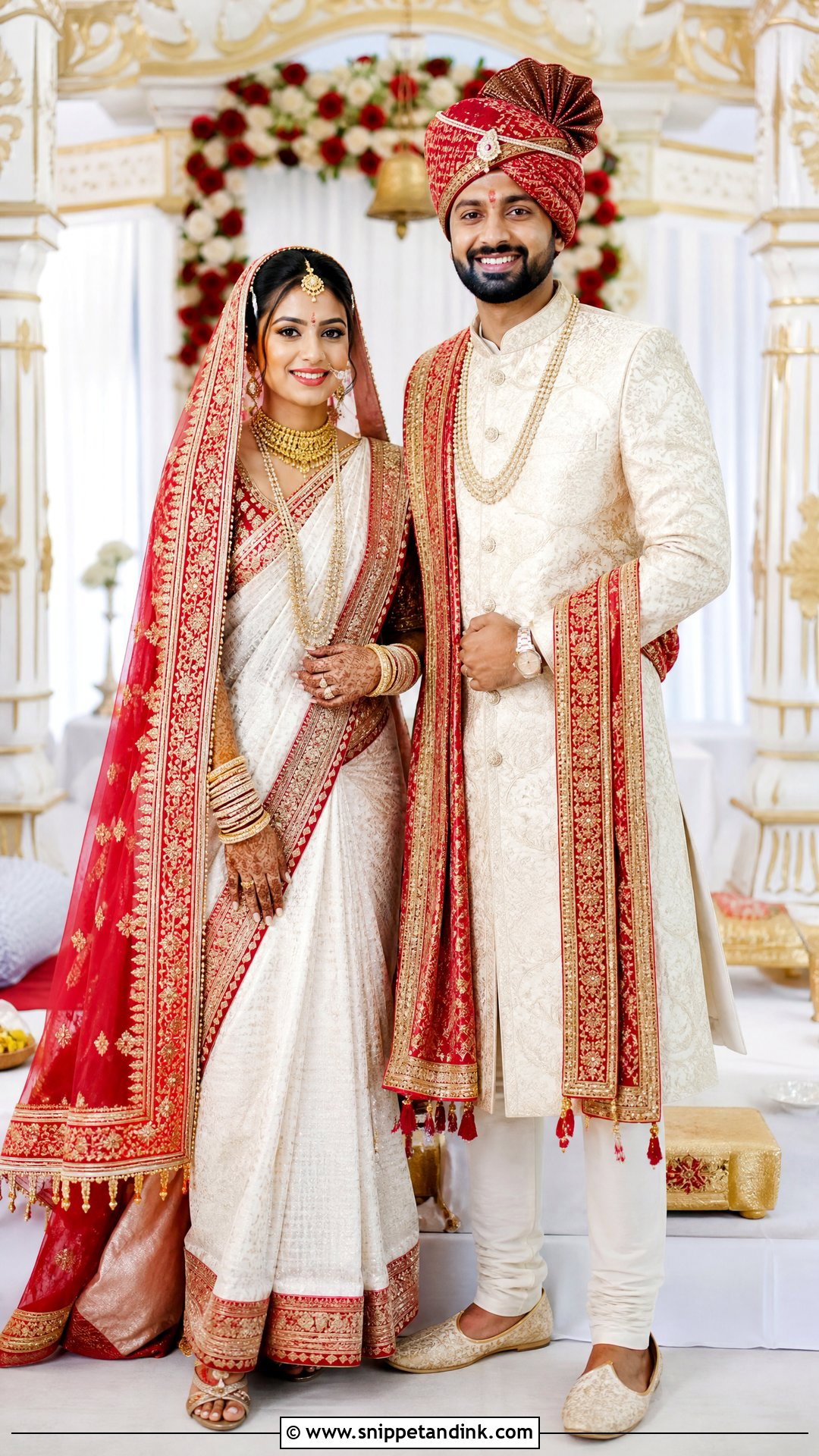
In many Gujarati families the panetar, a white or ivory saree with a red border, is gifted by the bride’s maternal uncle and worn for the first part of the ceremony. His ivory sherwani with red and gold accents echoes that border. A red odhni over her head and a red safa on him complete the pairing. Check family custom first: some brides change into a gharchola during the ceremony.
12. Bandhani Lehenga With Jodhpuri Sherwani
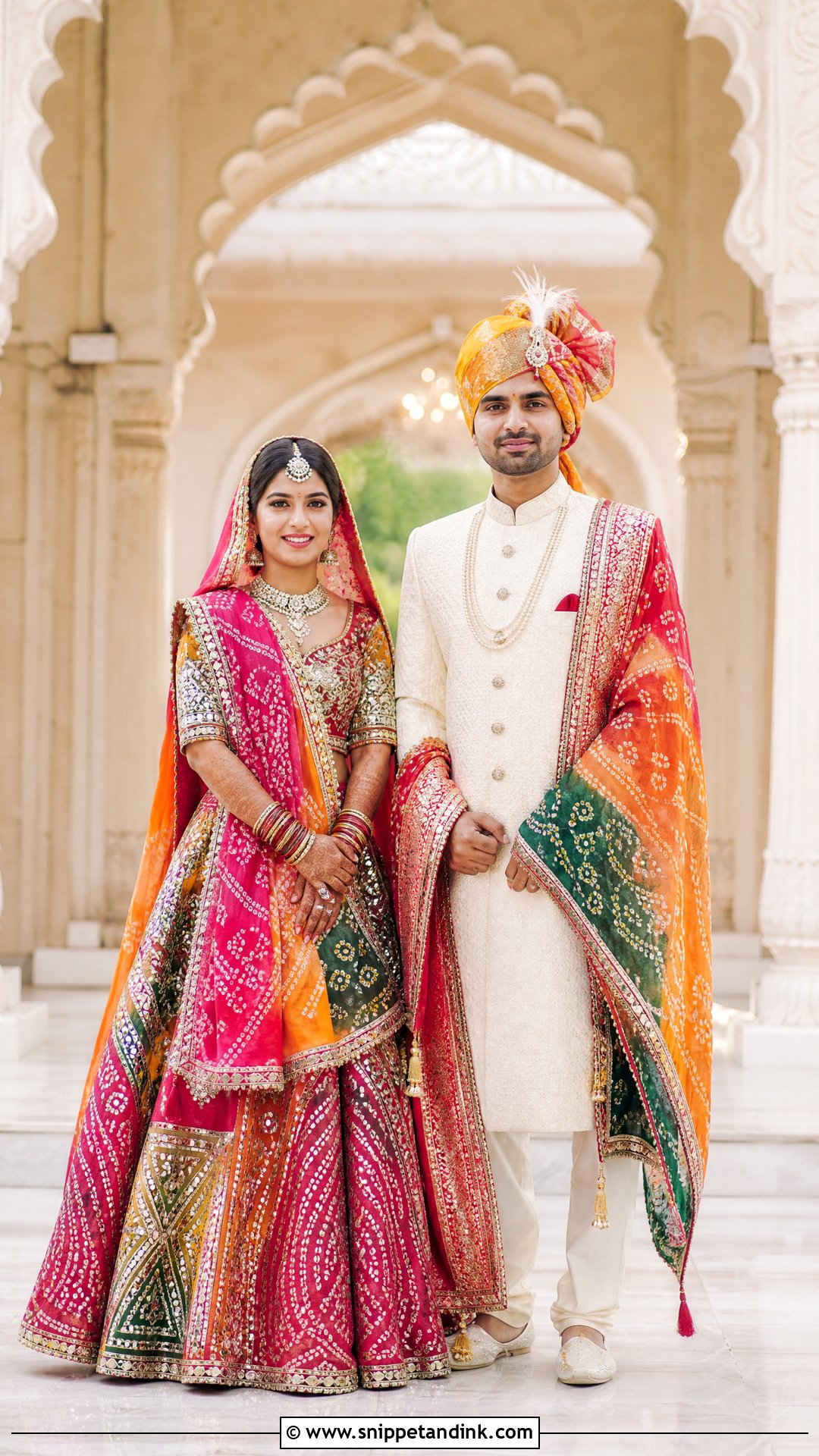
Bandhani brings colour and pattern without weight, which suits an outdoor Rajasthani or Gujarati wedding. Red, pink or orange bandhani with mirror work or gota borders for her. A structured Jodhpuri sherwani in ivory, navy or maroon gives him a clean line that sharpens her busy print. Jhumkas, bangles and a maang tikka keep her accessories traditional.
13. Maharashtrian Paithani Saree With Dhoti Kurta
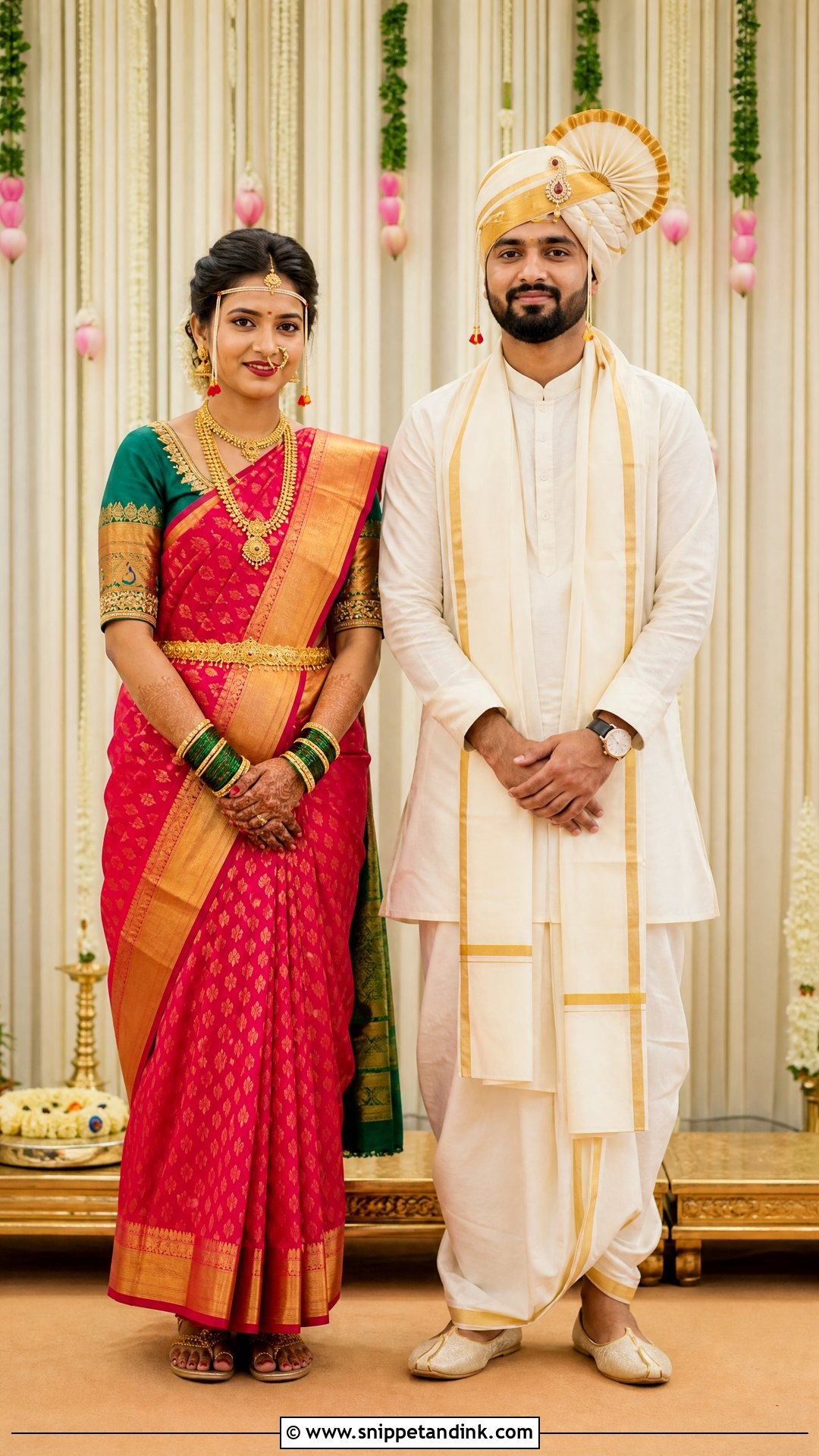
A Paithani saree is woven with a rich border and a peacock or floral pallu, and it carries a Maharashtrian Hindu wedding couple look on its own. Purple, green or magenta for her, often in the nine-yard nauvari drape; cream or white dhoti kurta for him. A nath, green glass bangles and a neat bun. He adds a pheta. The nauvari drape needs an experienced draper on the morning; it’s not something to learn from a video.
14. Rajasthani Bridal Lehenga With Achkan
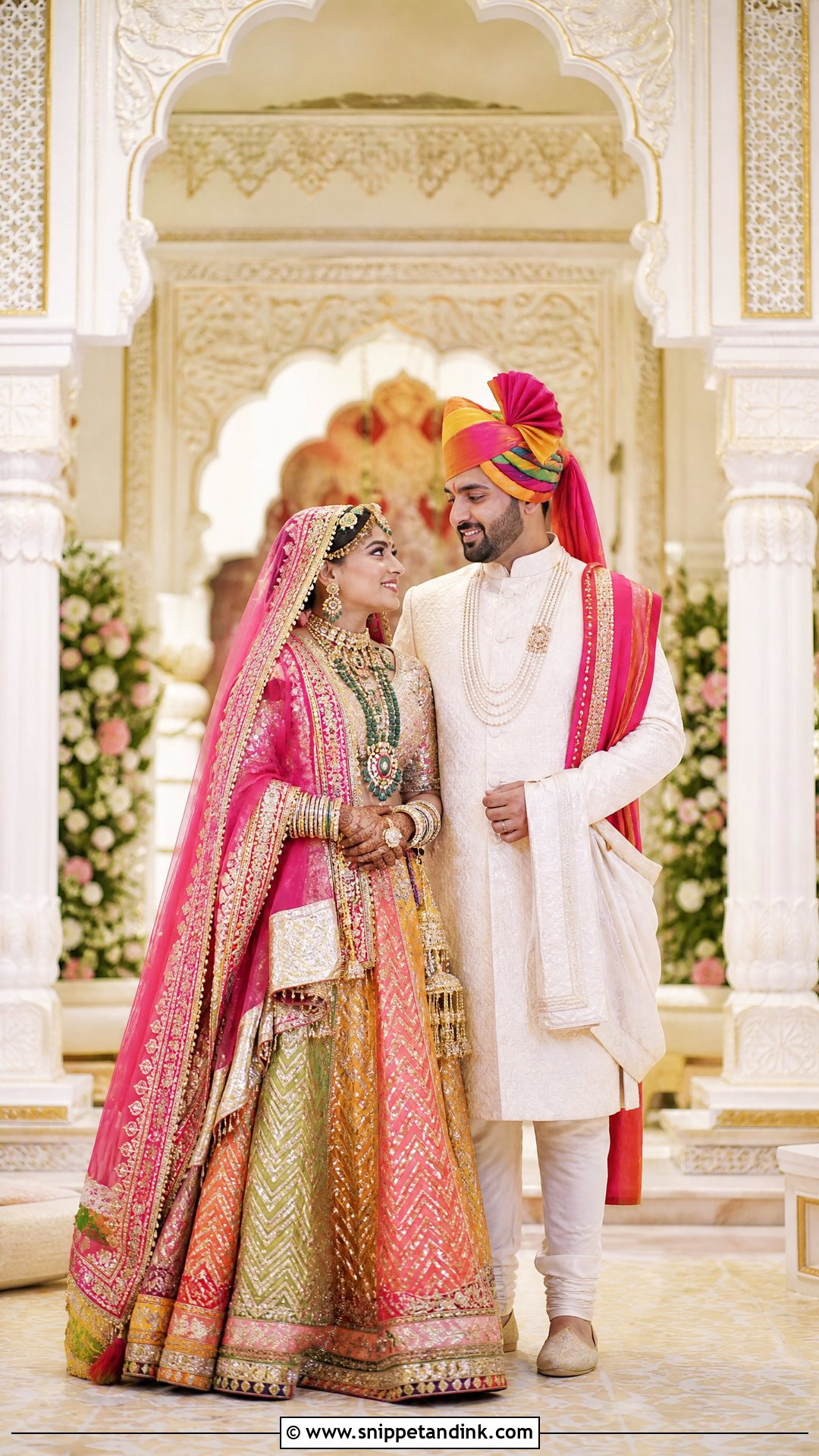
A Rajasthani bridal lehenga carries gota, mirror work, bandhej or leheriya in reds, oranges or royal blue, and the achkan gives the groom the right formality beside it. A bright safa ties him into her colour. Borla, layered necklaces and a traditional dupatta drape for her. The achkan should be closely tailored; loose achkans look borrowed next to a heavily worked lehenga.



15. Punjabi Bridal Lehenga With Heavy Sherwani
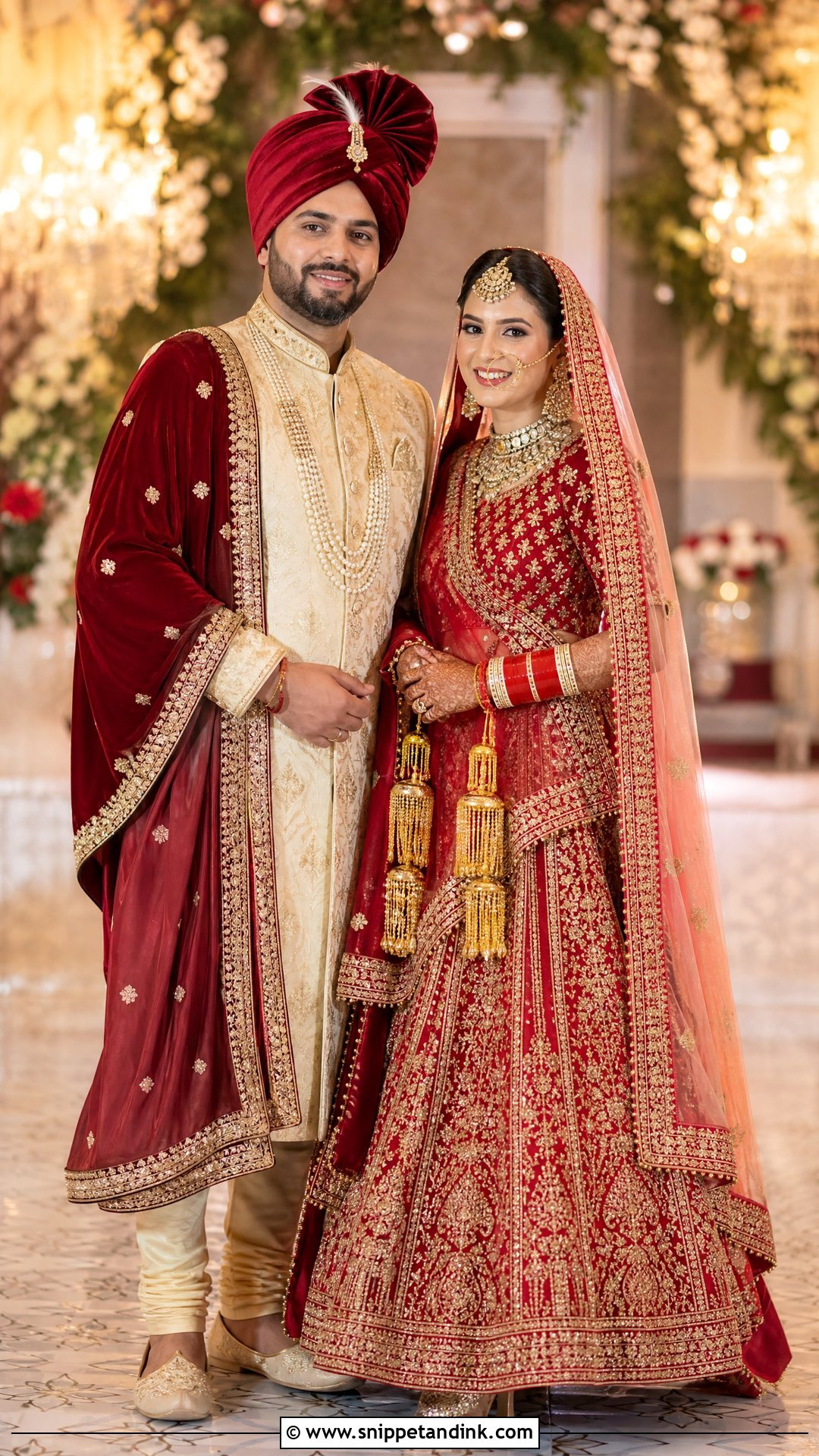
Punjabi weddings are loud and festive, and the outfits should match. A Punjabi bridal lehenga in red, coral or pink with heavy embroidery, chooda and kalire. He matches the energy with a heavily worked cream, gold or maroon sherwani. A double dupatta looks full but is heavy, so pin both properly. A brooch and statement mala finish his look.
16. Peach Lehenga With Light Gold Sherwani
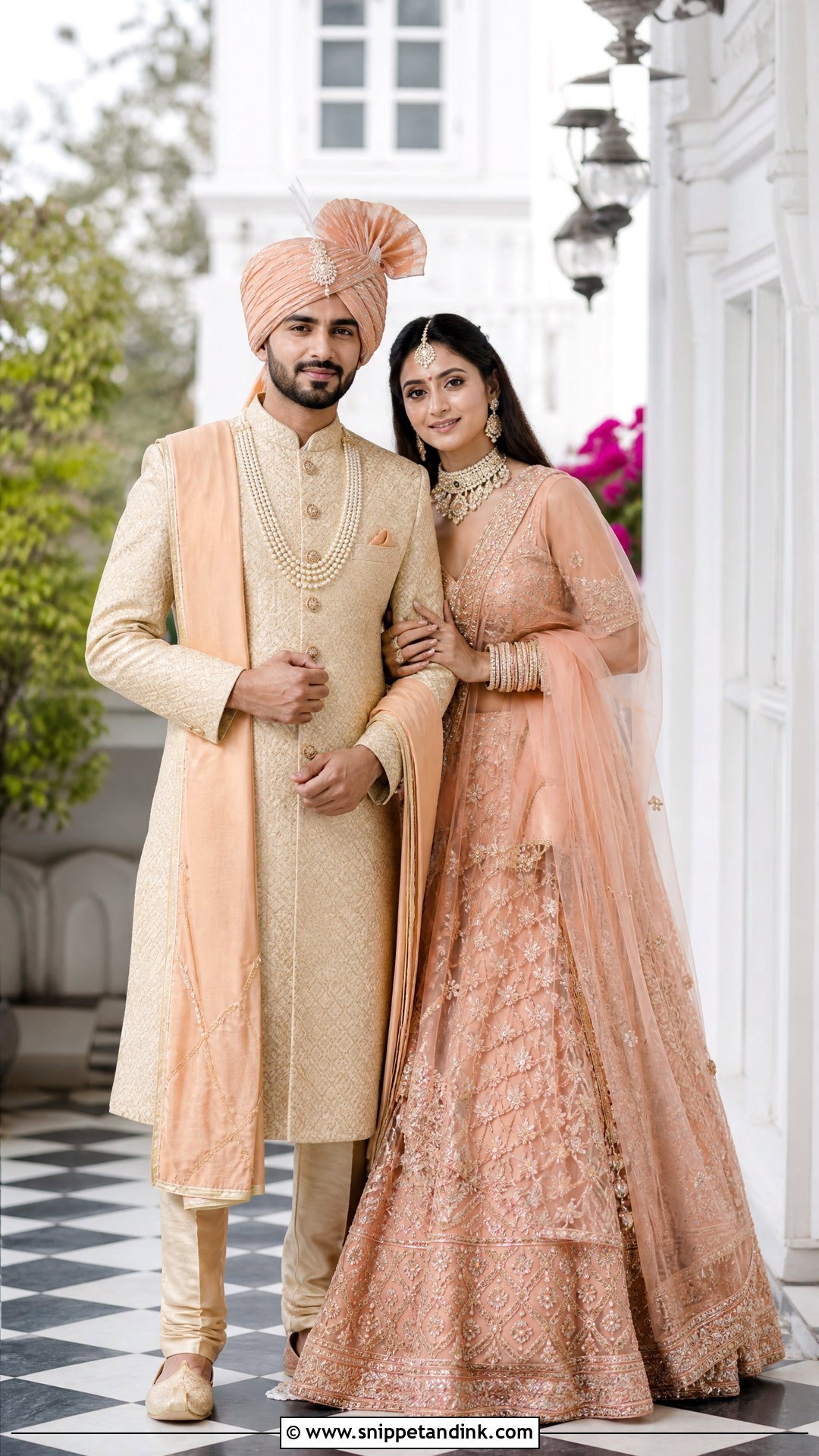
Peach is warmer than blush and flatters more skin tones in daylight. Threadwork or floral embroidery for her, a light gold sherwani with a peach stole for him. It suits spring weddings and outdoor mandaps. Pearls or soft kundan, a sheer dupatta, and block heels on grass. A peach safa or pocket square for him connects it all.
17. Royal Blue Lehenga With Silver Sherwani
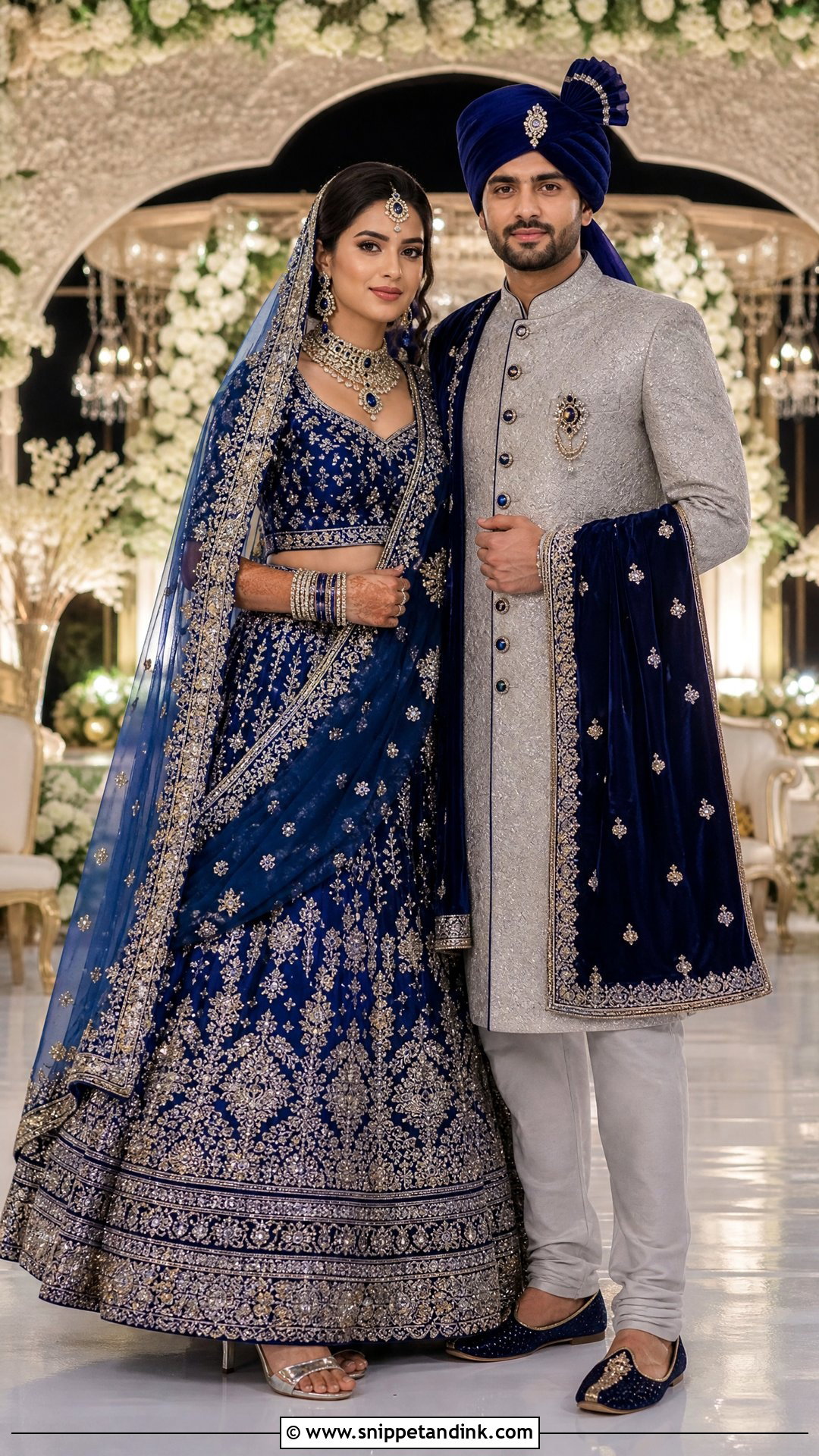
Royal blue with silver is the pairing I’d suggest to a couple who want rich colour without red or maroon. Silver embroidery, crystal work or zari on her lehenga; a silver or light grey sherwani with blue accents for him. Diamond-style or sapphire jewellery suits silver tones. Silver and gold should never mix in one couple, so check every button and brooch.
18. Lavender Lehenga With Ivory Sherwani
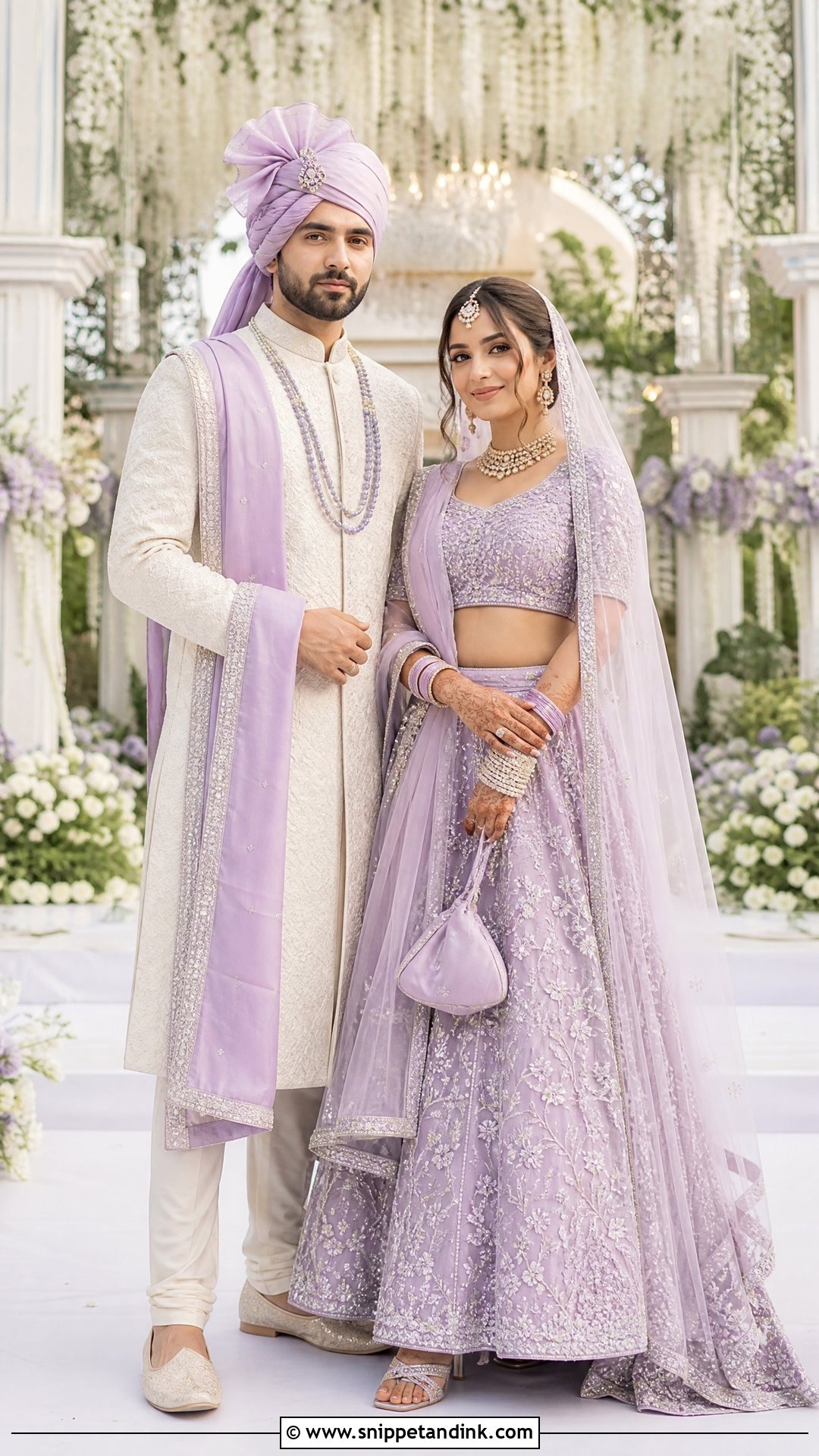
Lavender is delicate and can go grey under yellow evening lights, so it belongs to morning pheras and well-lit garden weddings. Silver, pearl or tone-on-tone embroidery for her. An ivory sherwani with a lavender stole or safa for him keeps it simple. Pearl jewellery and soft makeup. I’d test it with flash photos at the trial.
19. Orange Lehenga With Cream Sherwani
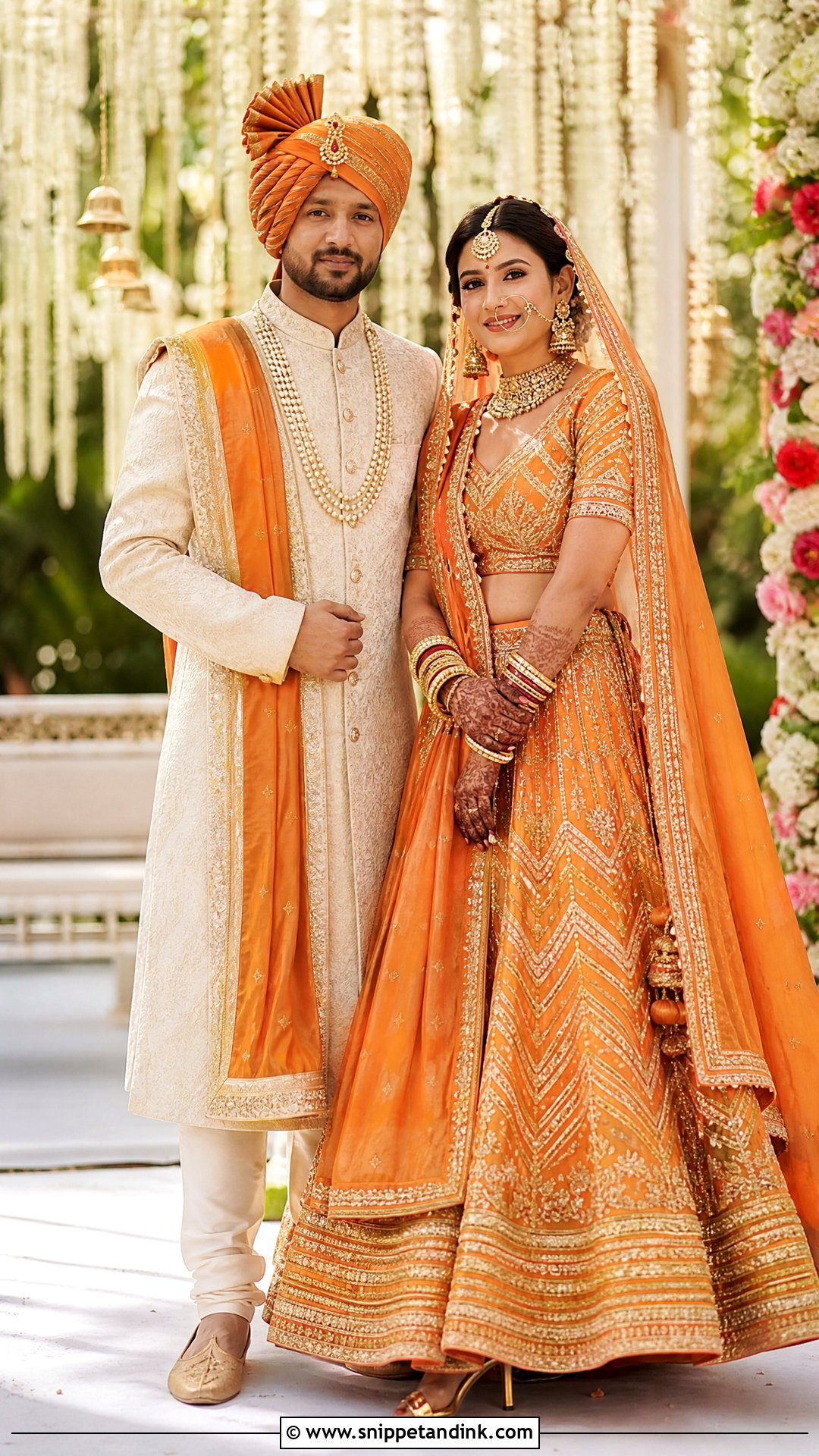
Orange, rust and saffron carry energy around the sacred fire, and they’re among the most traditional colours for a Hindu ceremony. Gota patti or mirror work for her, a cream sherwani with orange accents for him. Gold jewellery warms it further. He adds a matching safa and pearl mala. It works especially well in daylight at temple weddings.

20. Wine Lehenga With Black Jodhpuri Sherwani
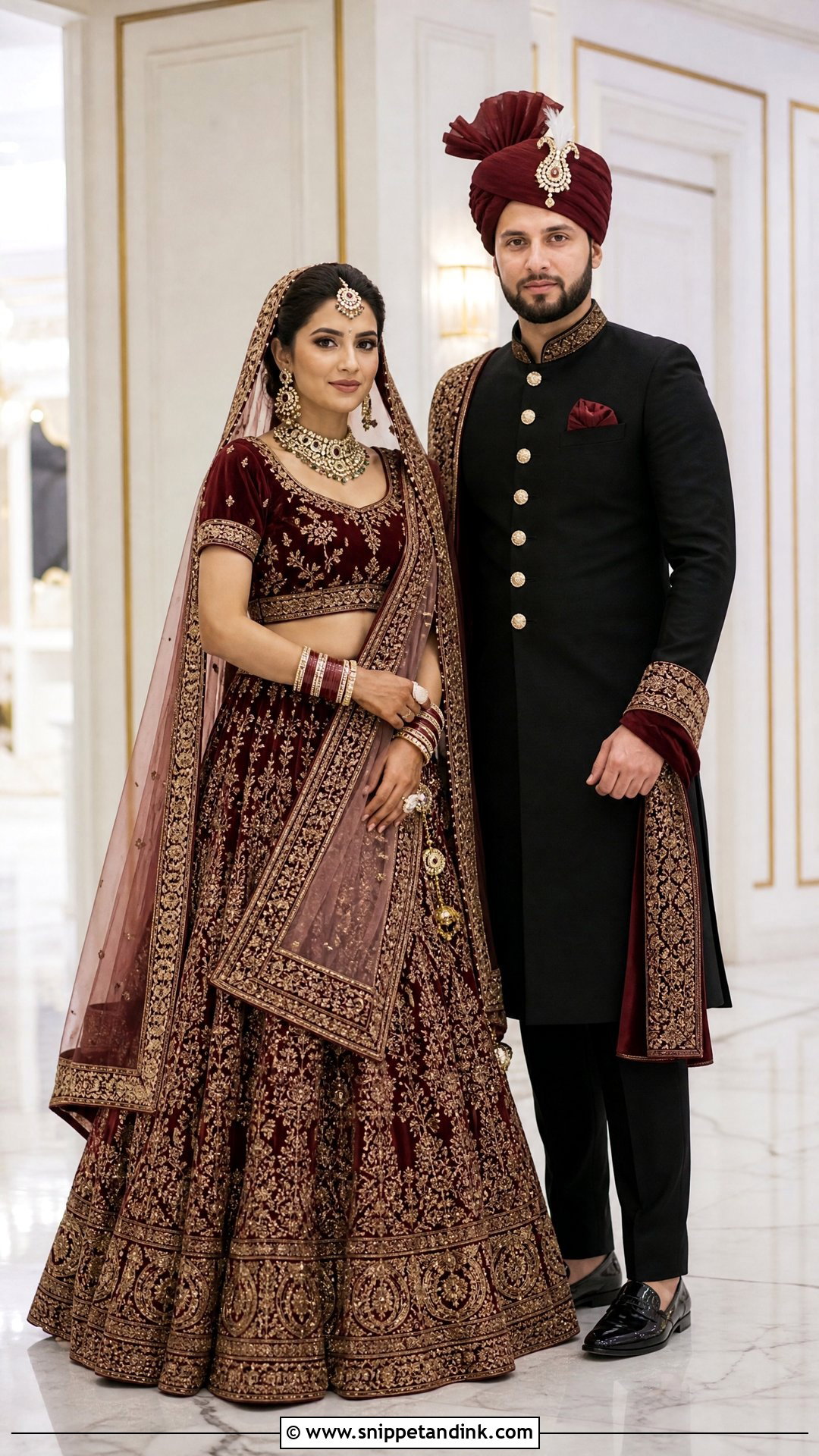
Wine with black is the most dramatic pairing here. Plum or berry with antique gold or champagne embroidery for her; a black Jodhpuri sherwani with gold details for him. Some families avoid black for the ceremony itself, so I’d ask before suggesting it and keep it for the reception if there’s hesitation. A wine pocket square or safa links him to her. Polki jewellery suits it.
21. Yellow Silk Saree With Cream Kurta Pajama
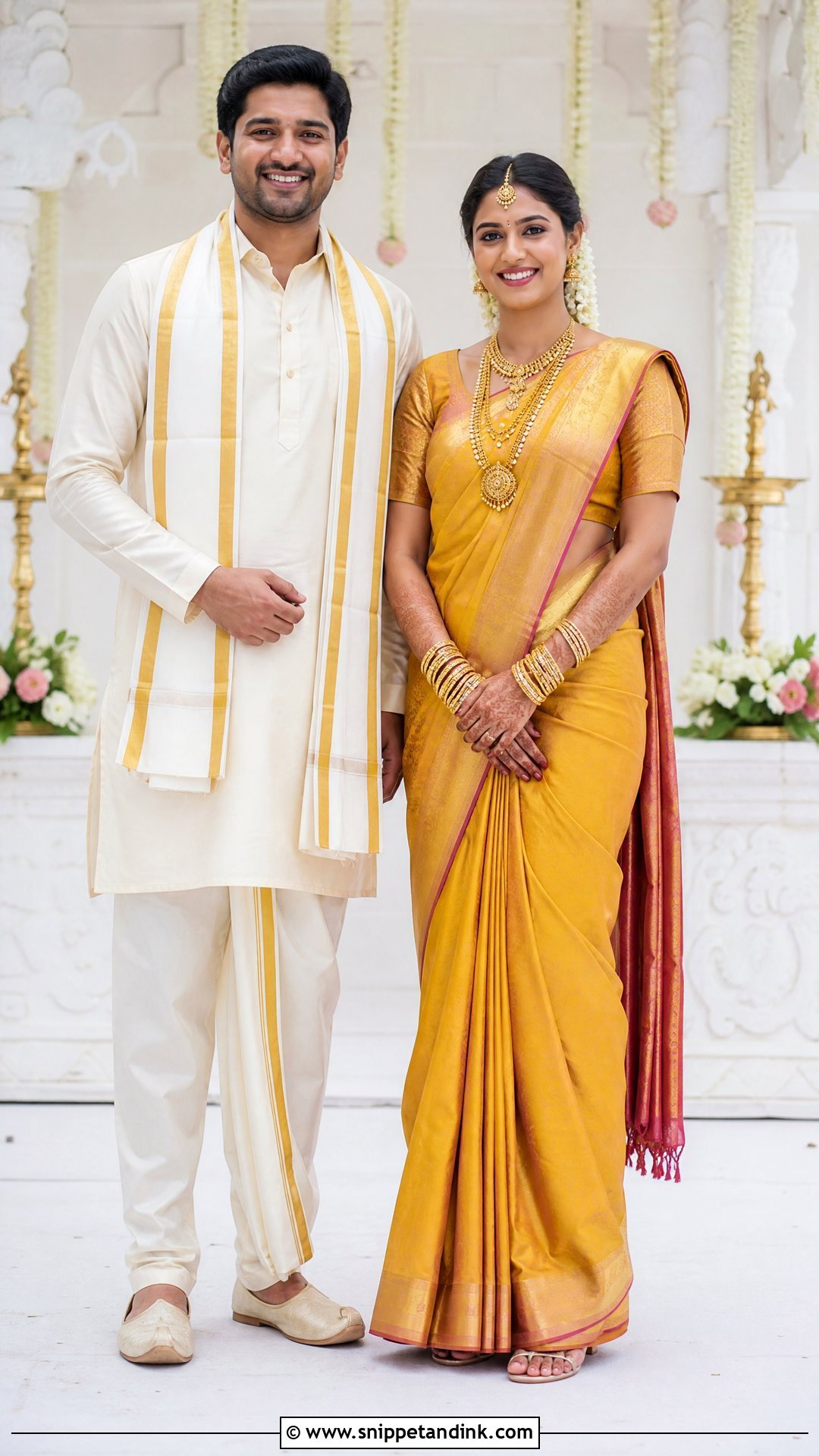
A yellow silk saree with a cream kurta pajama is bright and light, and it’s practical for long seated rituals. Mustard or golden yellow with a red, green or gold border. His stole picks up that border colour. Gold jewellery, flowers in her hair and bangles. He keeps it plain, which suits a daytime temple ceremony.
22. Floral Lehenga With Pastel Sherwani
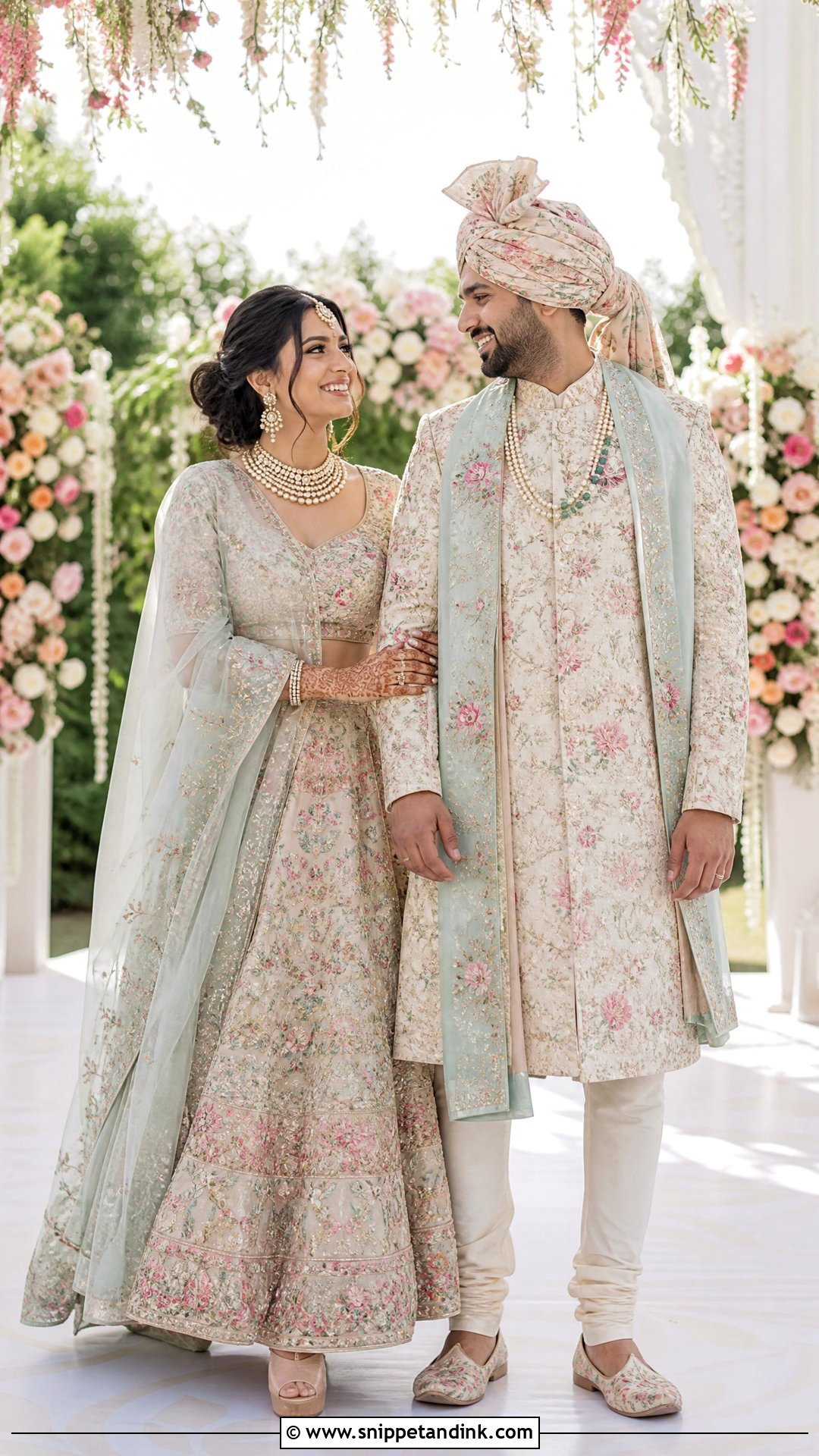
Floral lehengas in embroidery, print or appliqué suit garden and destination weddings. Pink, peach, mint or ivory for her; a pastel sherwani for him chosen from the lehenga’s flowers, not its base. Pearl jewellery and a soft dupatta. A floral safa or pastel stole makes them cohesive.
23. Mirror Work Lehenga With Plain Sherwani
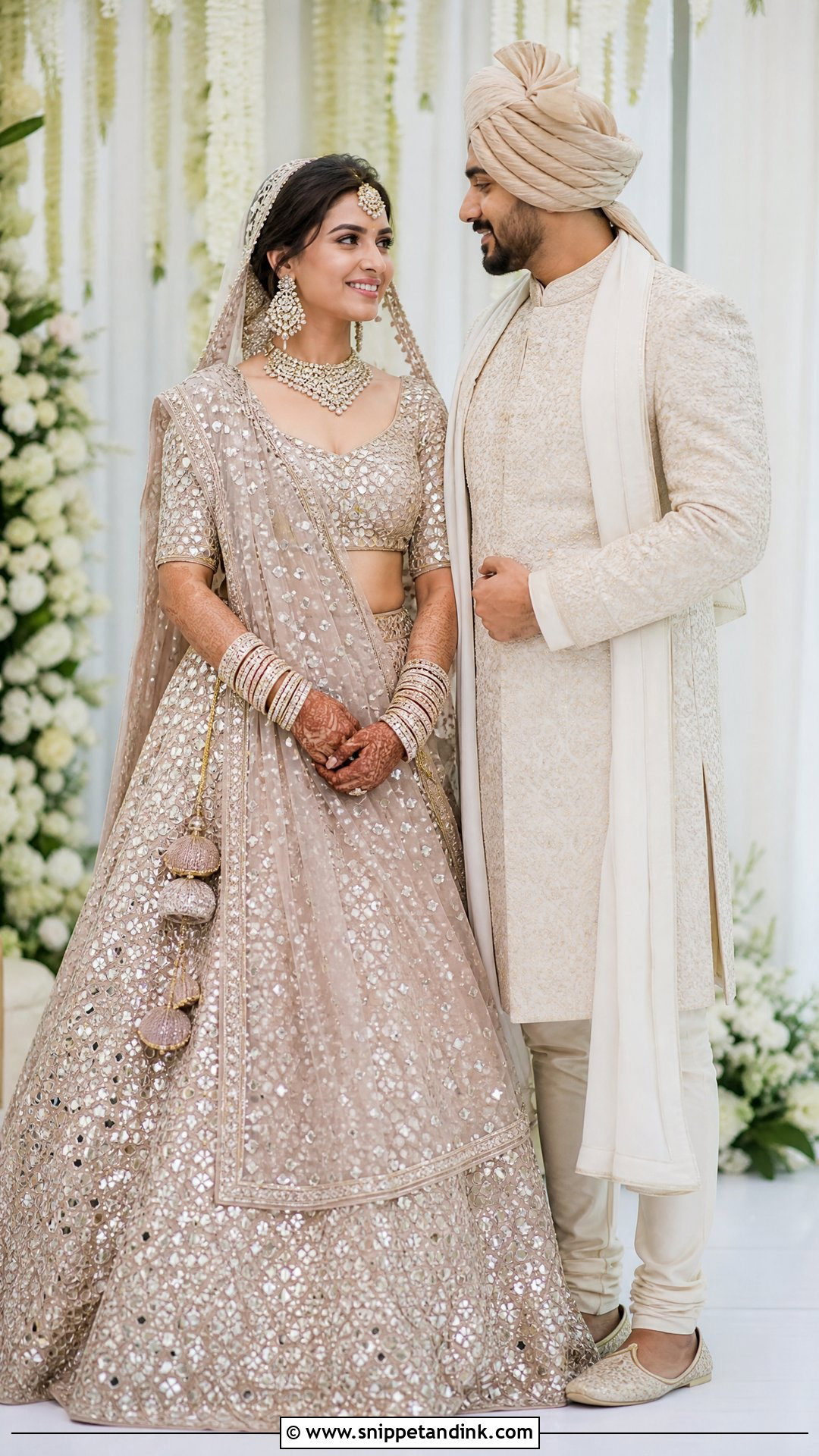
When one outfit is heavily mirrored, the other should be calm. Mirror work catches every light, and two sparkling outfits side by side look busy in photos. Her lehenga can carry the shine in ivory, pink, orange or red; his sherwani stays in ivory, beige or muted gold, linked through a stole or buttons. Statement earrings and a neatly draped dupatta for her.
24. Anarkali Bridal Outfit With Sherwani
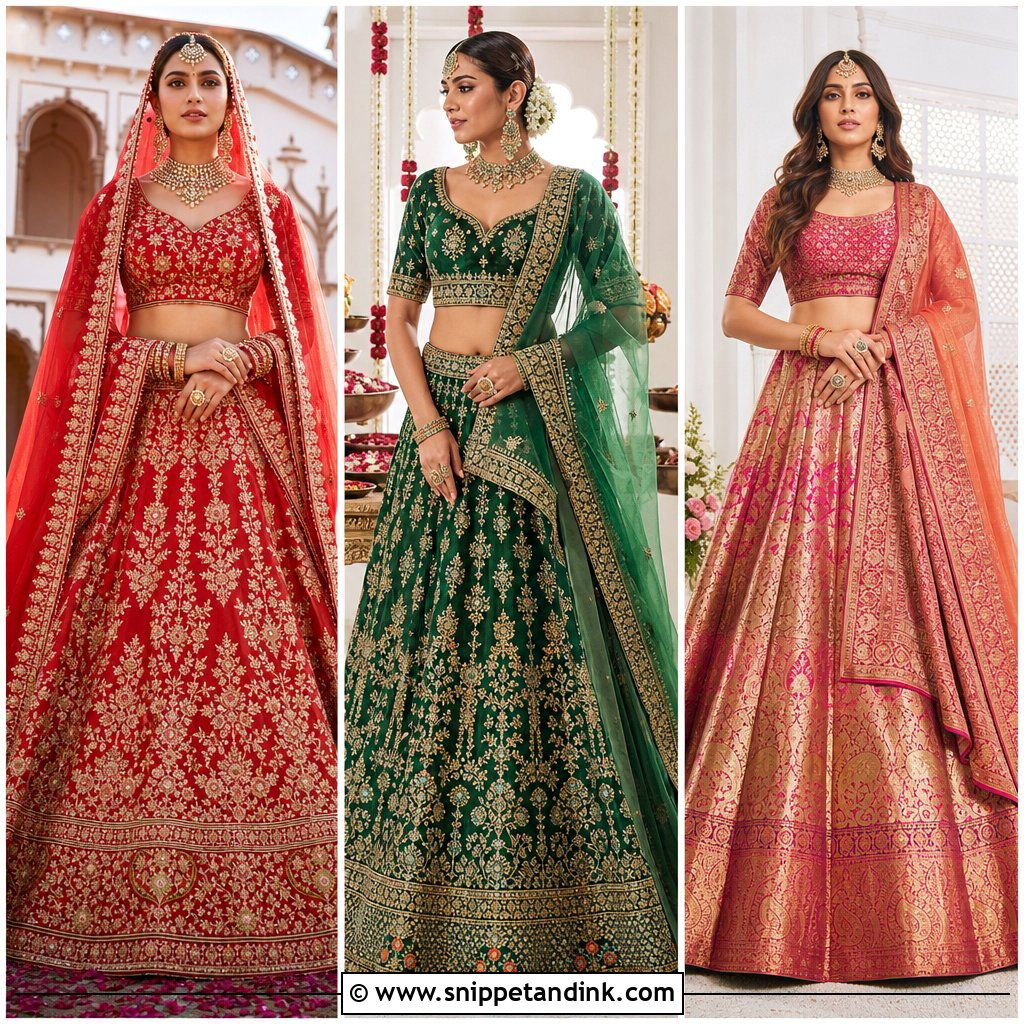
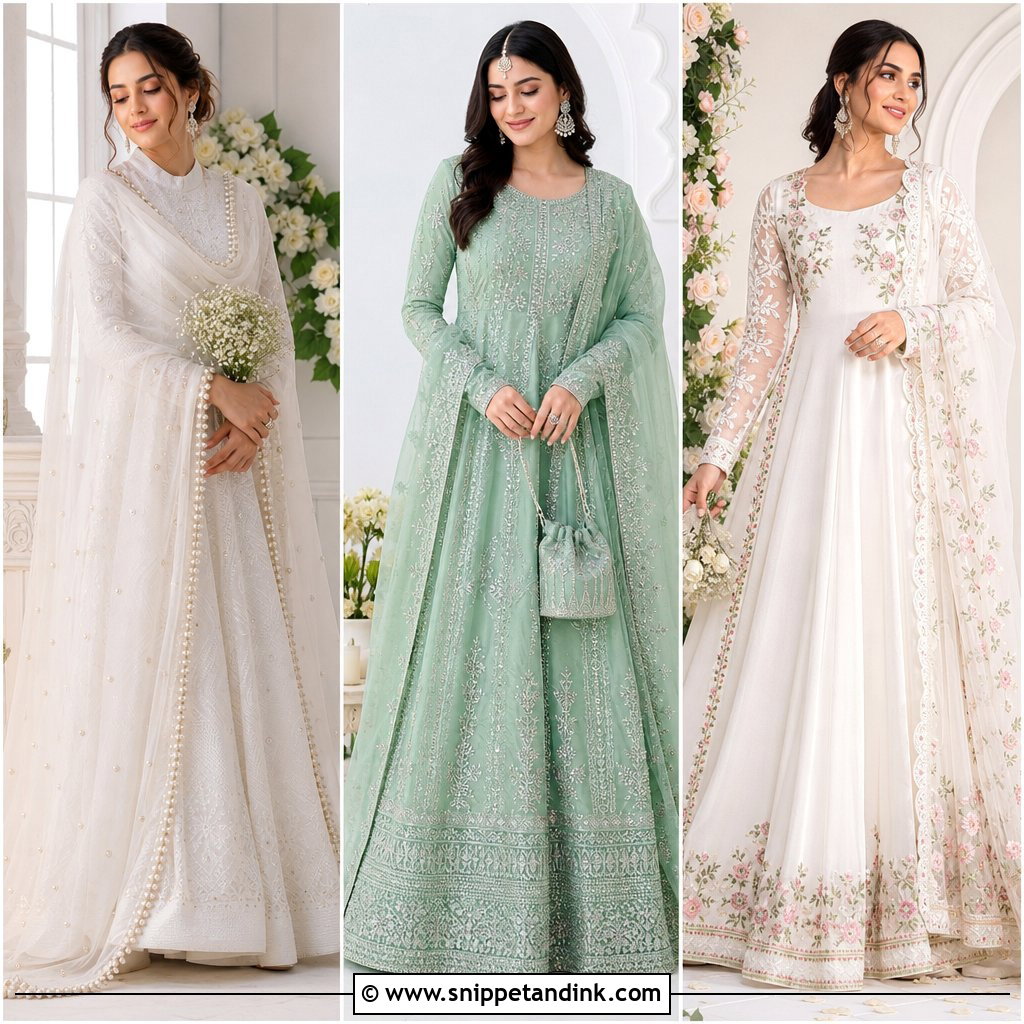
An Anarkali takes the weight off the waist, which is why I suggest it to brides who find heavy lehengas uncomfortable. A heavily embroidered bridal Anarkali in red, maroon or ivory with a veil-style dupatta looks just as ceremonial. He wears a coordinated sherwani in cream or gold. Juttis and layered jewellery for her; a safa, stole and brooch for him.


25. Reception Lehenga With Bandhgala Suit
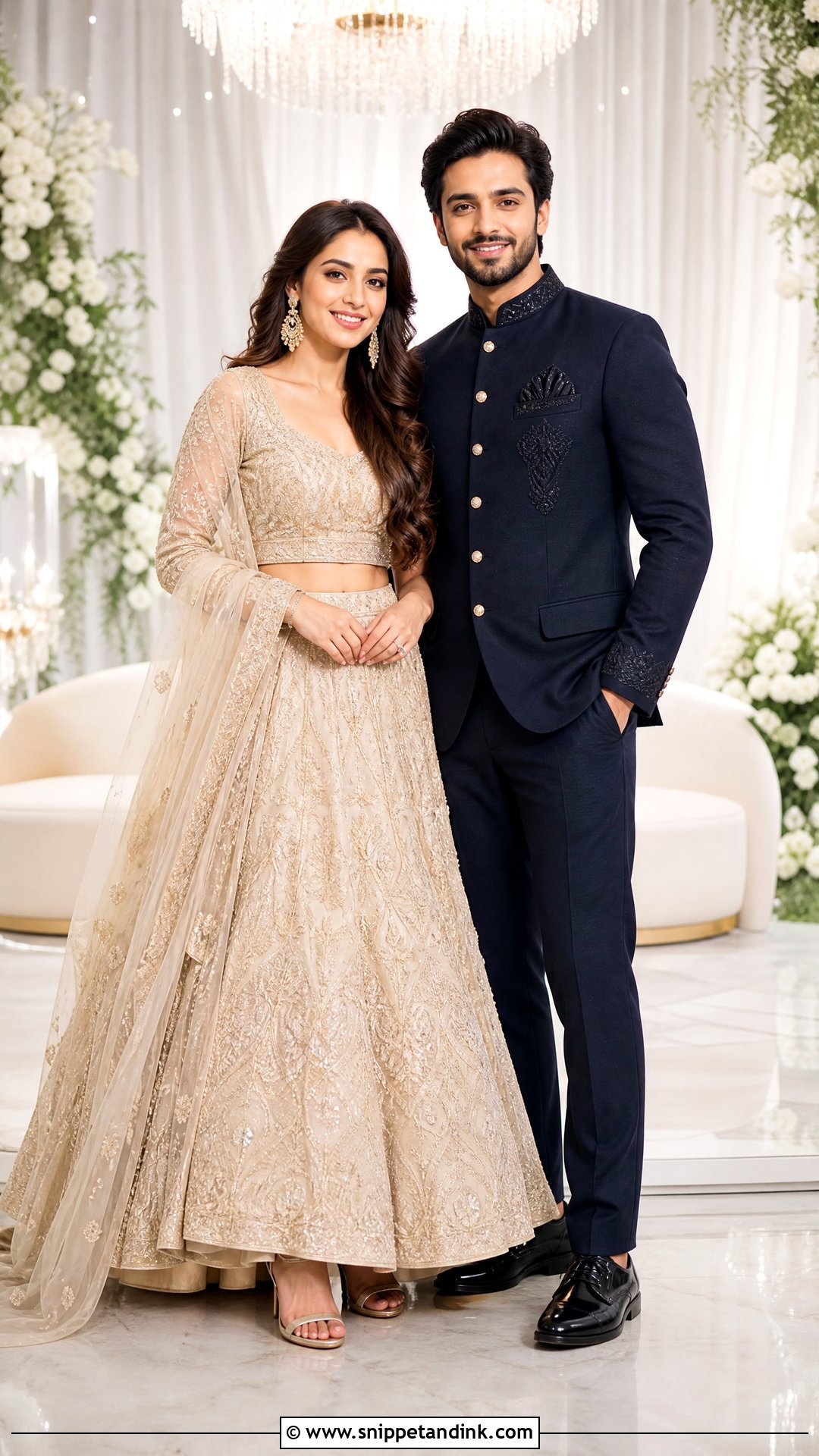
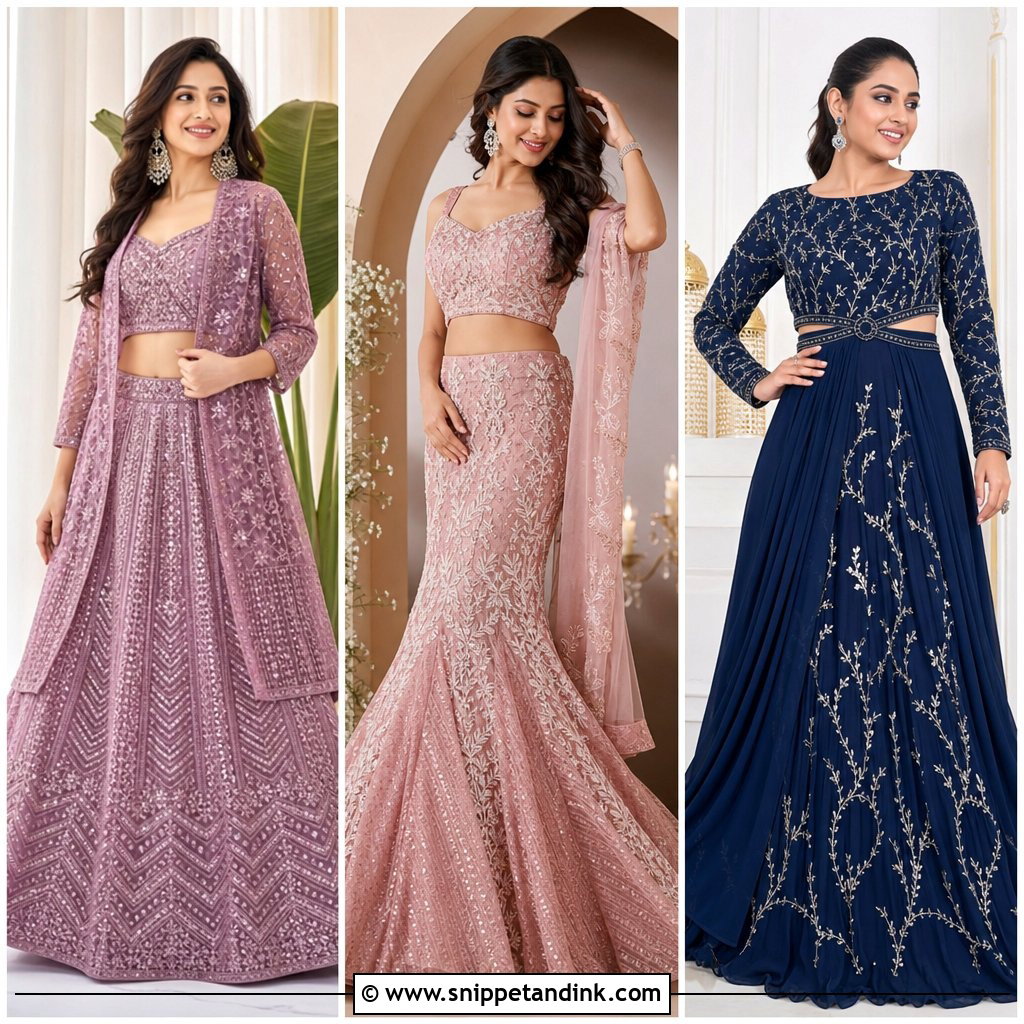
The reception is where the couple can go sleeker. A metallic, emerald or navy lehenga with modern embroidery and a lighter dupatta, beside a tailored bandhgala suit in black, ivory or charcoal. Statement earrings and soft waves for her, formal shoes or embroidered loafers for him. This works best when the ceremony outfits were very traditional, so the change feels deliberate.
Settle These With Your Families and Pandit Before You Order
Many couple outfit problems are about ritual, not fashion, and they surface on the morning when nothing can be changed. A short conversation with both families and the priest saves a lot of stress.
Who provides which outfit
In several communities, an outfit is gifted rather than chosen. The Gujarati panetar from the maternal uncle is one example, and some brides change into an outfit from the groom’s family partway through the ceremony. Ask early, so your own lehenga or jewellery is planned around it.
The gathbandhan knot and the fire
During the gathbandhan, his stole is tied to her dupatta, and you then walk around the fire joined together. A stiff, heavily embroidered stole won’t knot neatly, and a heavy knot drags her dupatta off her head. I’d choose a stole in soft silk with the work concentrated at the ends. Also remember the havan: loose net or synthetic dupattas near an open flame need care, so pin trailing fabric back and keep the veil short enough to stay clear when you sit.
Two Outfits, One Photograph
The couple looks that work honour tradition and still feel like the two people wearing them. Red and ivory will always be right, but sarees, pastels, regional weaves, velvet and modern bandhgalas can be just as strong. I’d settle ceremony time, venue, rituals, weather and family custom first, then look at both outfits side by side in a full-length photo before committing. Matching doesn’t mean identical. A shared border colour, the same metal in the embroidery, or one fabric repeated in his stole will connect you more quietly than matching colours ever could.
You'll Like These Ideas:









Leave a Reply