
Wedding hair has two jobs that rarely get along: it has to hold up in a close-up at noon, and it has to still be there when the last song plays. The shapes I’m being asked for most right now are polished without being stiff, so think low buns, glossy waves, sculpted ponytails, braids with some give and half-up styles that still show your length. Each of the fifteen below can be worn by a bride, a bridesmaid, a mother of the couple or a guest, because each one can be built heavier or lighter depending on the dress, the venue, your hair and the forecast. Save the ones you like from the side and back as well as the front, then bring them to your trial so we can see how they behave on your own hair.
Your Neckline and the Forecast Narrow This List Fast
Before I talk about style at a consultation, I ask three things: what the dress does at the neck and back, whether you’ll be inside or out, and what the weather usually does that month. Those answers rule out more looks than taste does.
- High necks and halters want the hair up and away. Hair worn down bunches against the fabric and hides the detail you paid for.
- Open backs and plunging V shapes look finished with a low bun or ponytail that sits just above the bare skin and leads the eye down.
- Strapless and sweetheart shapes take almost anything, which is why Hollywood waves and side swept curls show up with them so often.
- Humid or coastal venues are hard on loose curls. Sleek and braided styles keep their shape far longer once the air turns sticky.
- Windy outdoor ceremonies favour half up styles and crown braids, because the top section stays put while the length moves.
Then factor in your own hair. Fine, slippery hair usually needs padding, extensions or a braid underneath to anchor anything ambitious. Very thick hair can make a high bun heavy enough to ache by evening, so I’d ask for it to be pinned in sections rather than wound into one coil.
1. Wedding Low Bun
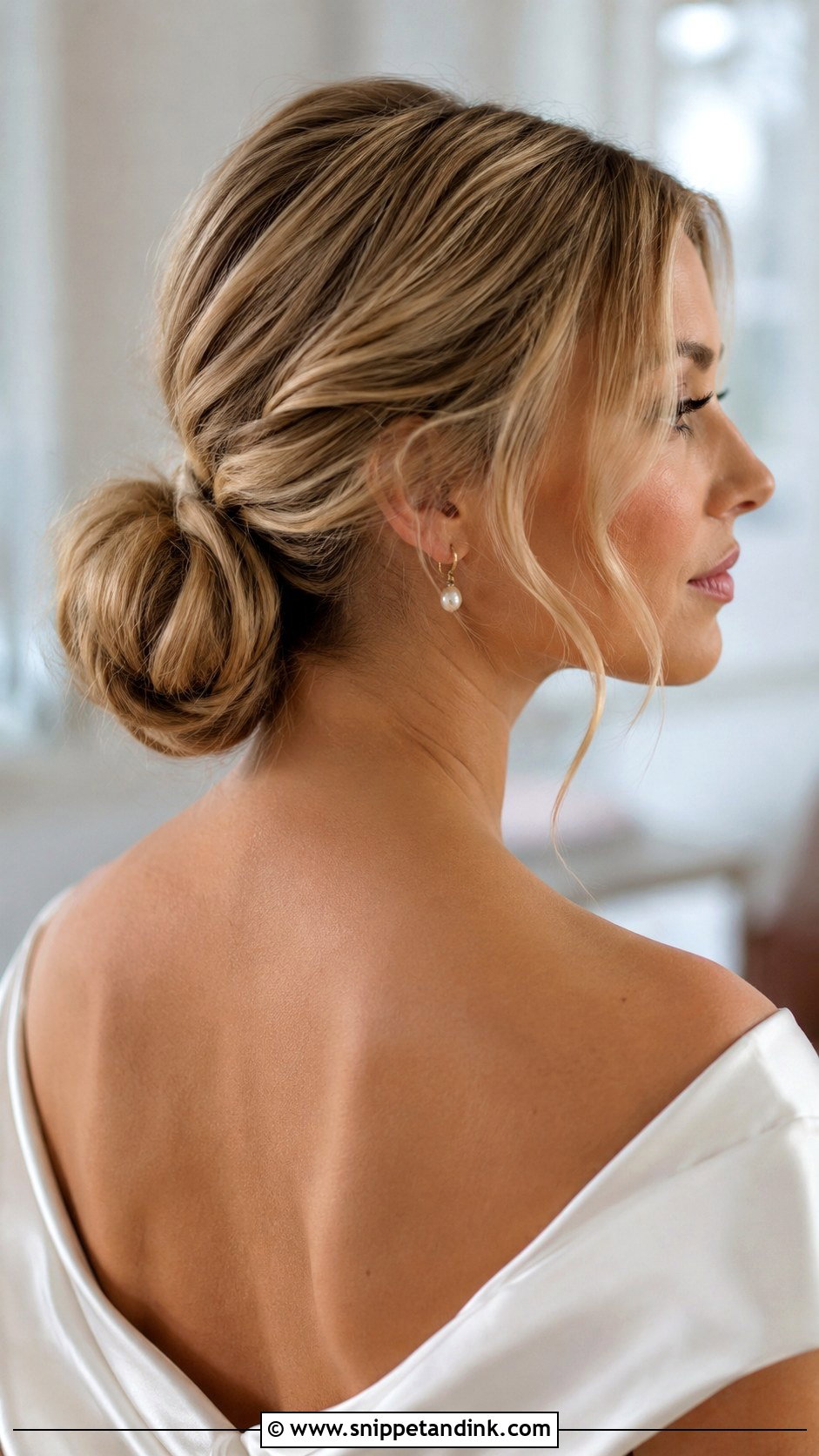
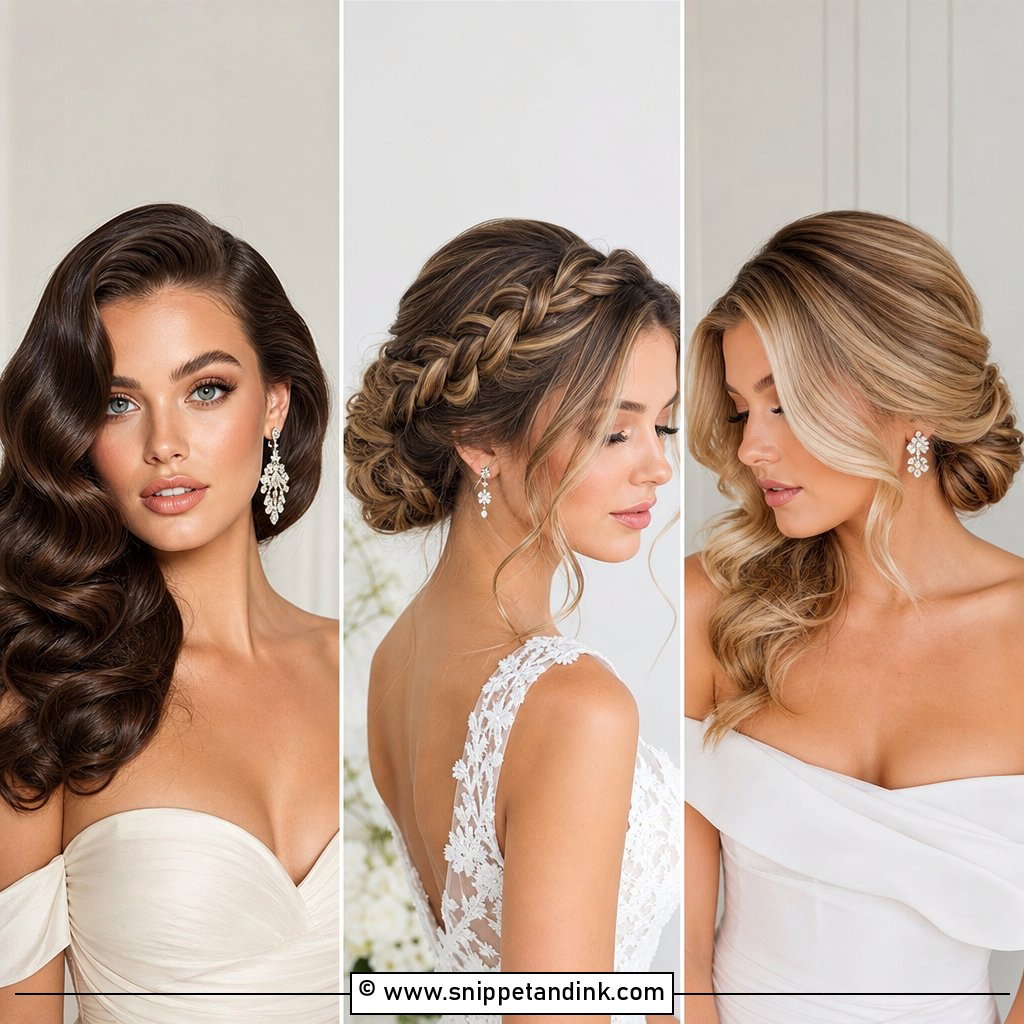
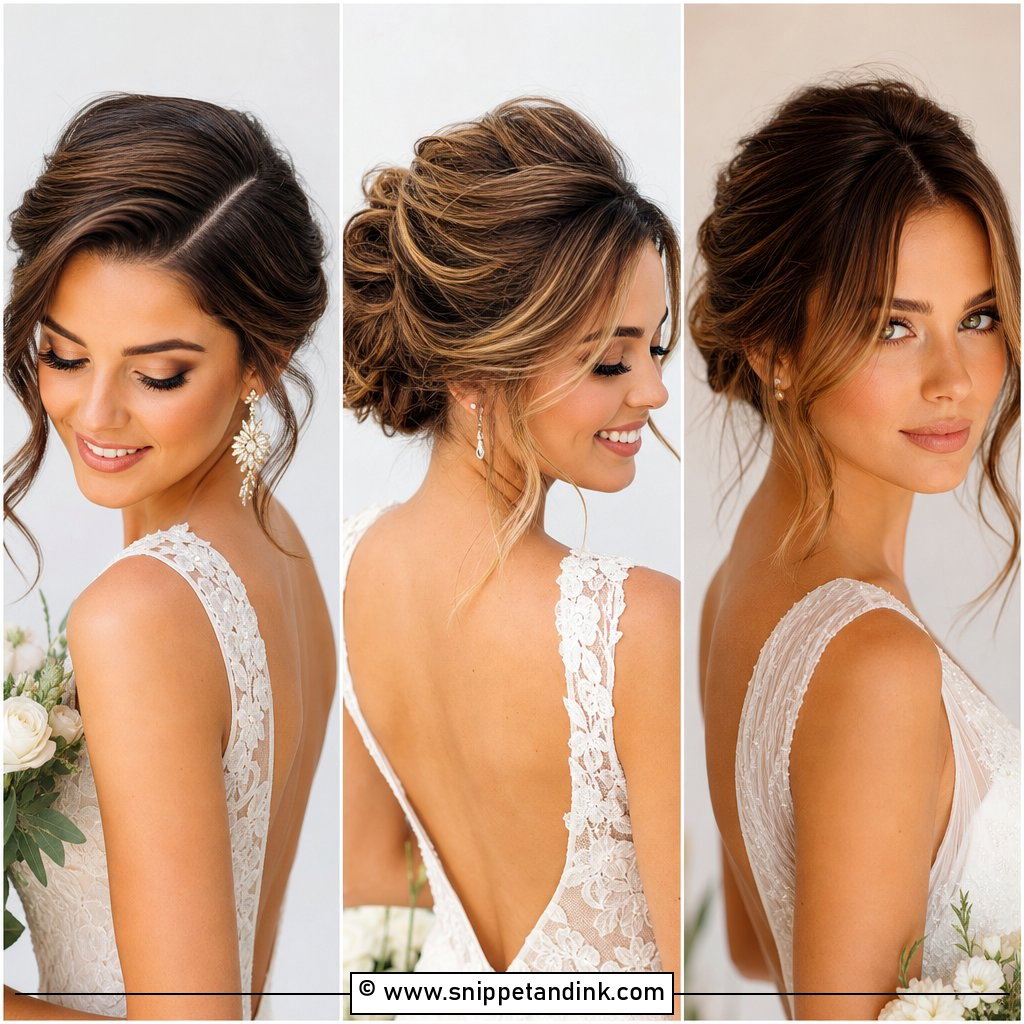
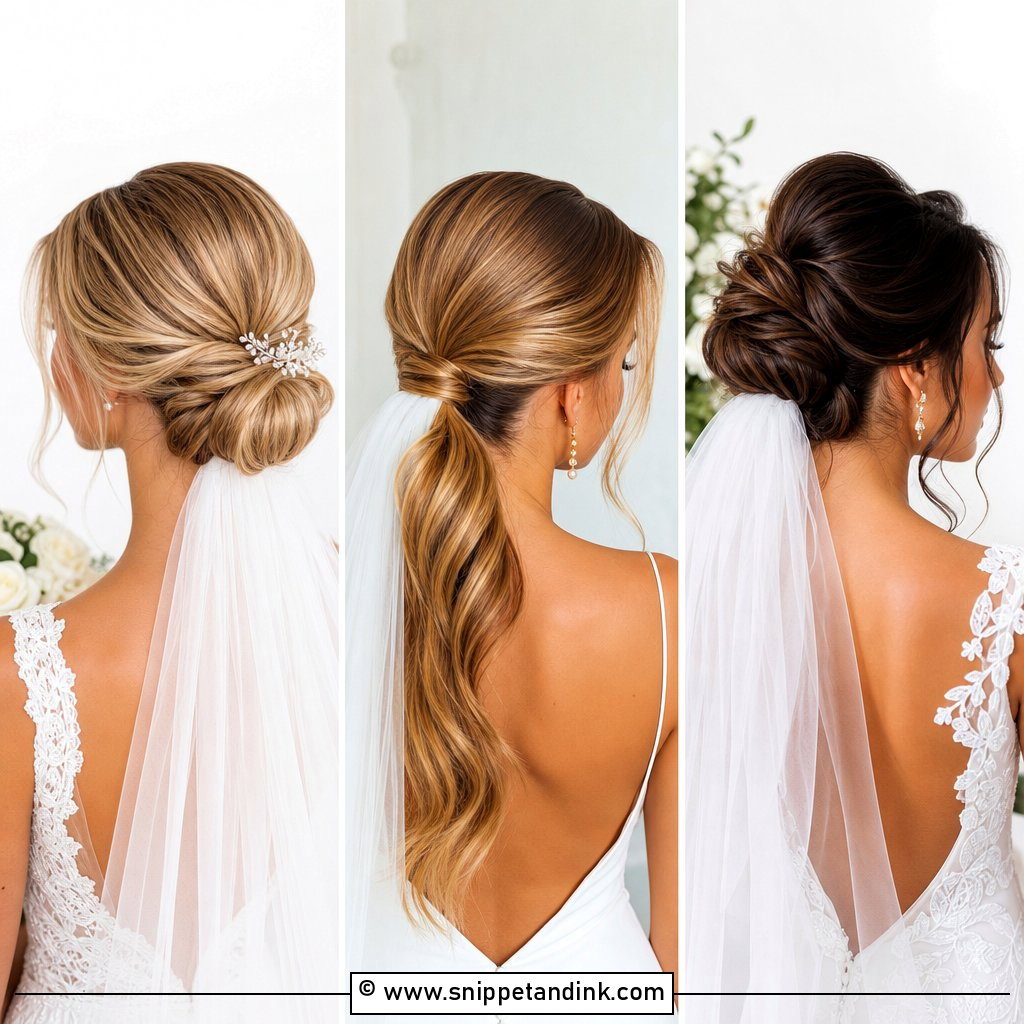
If a bride can’t decide, the low bun is where I usually start the trial, because it fails less than anything else on this list. Sitting at the nape, it stays out of the way of a veil comb, a backless gown and a high collar alike. On fine hair I build a small padded base or add padding or extensions so the bun has body without looking like a hairpiece. Thick hair gets the opposite treatment: I split it into two or three sections and pin each one separately, so the weight is spread across the head instead of dragging on one anchor. In heat, it’s the style I trust most for a long day.
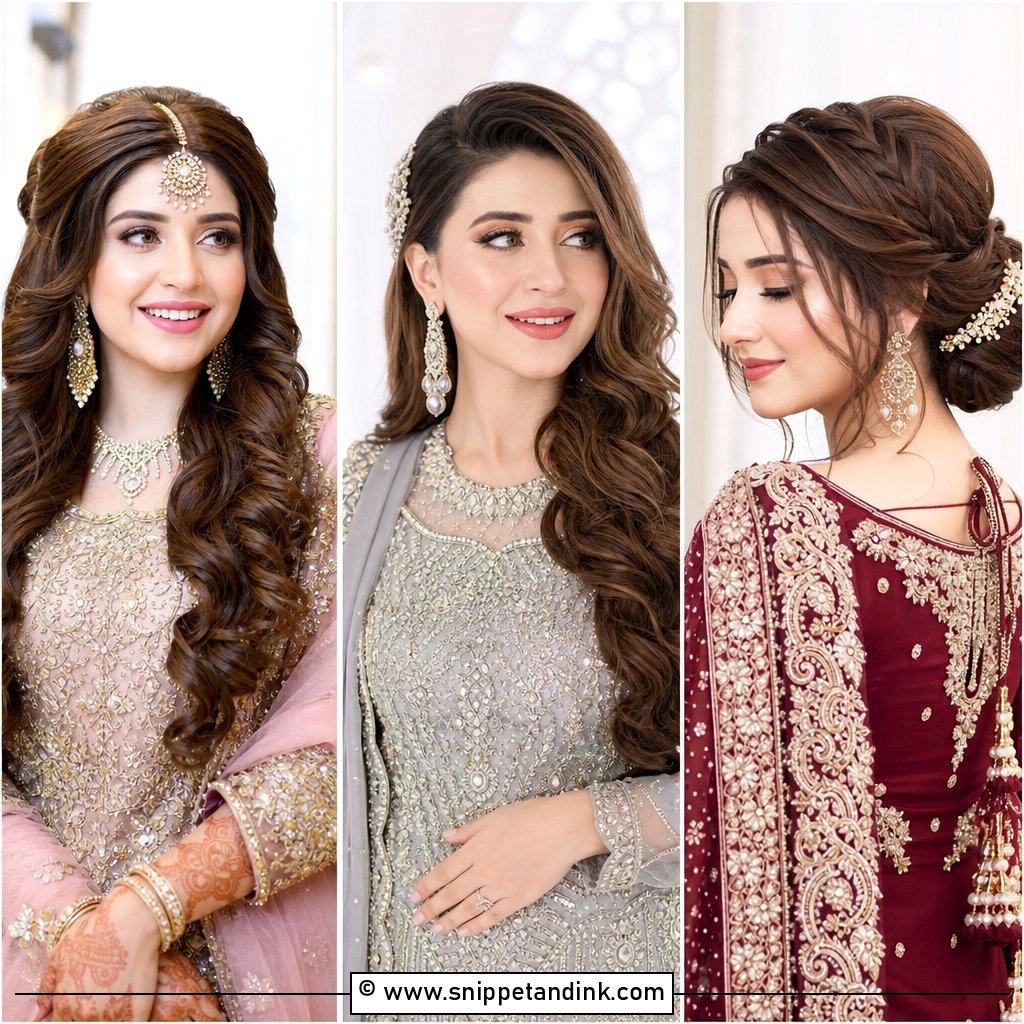
2. Wedding Half Up Half Down Hair
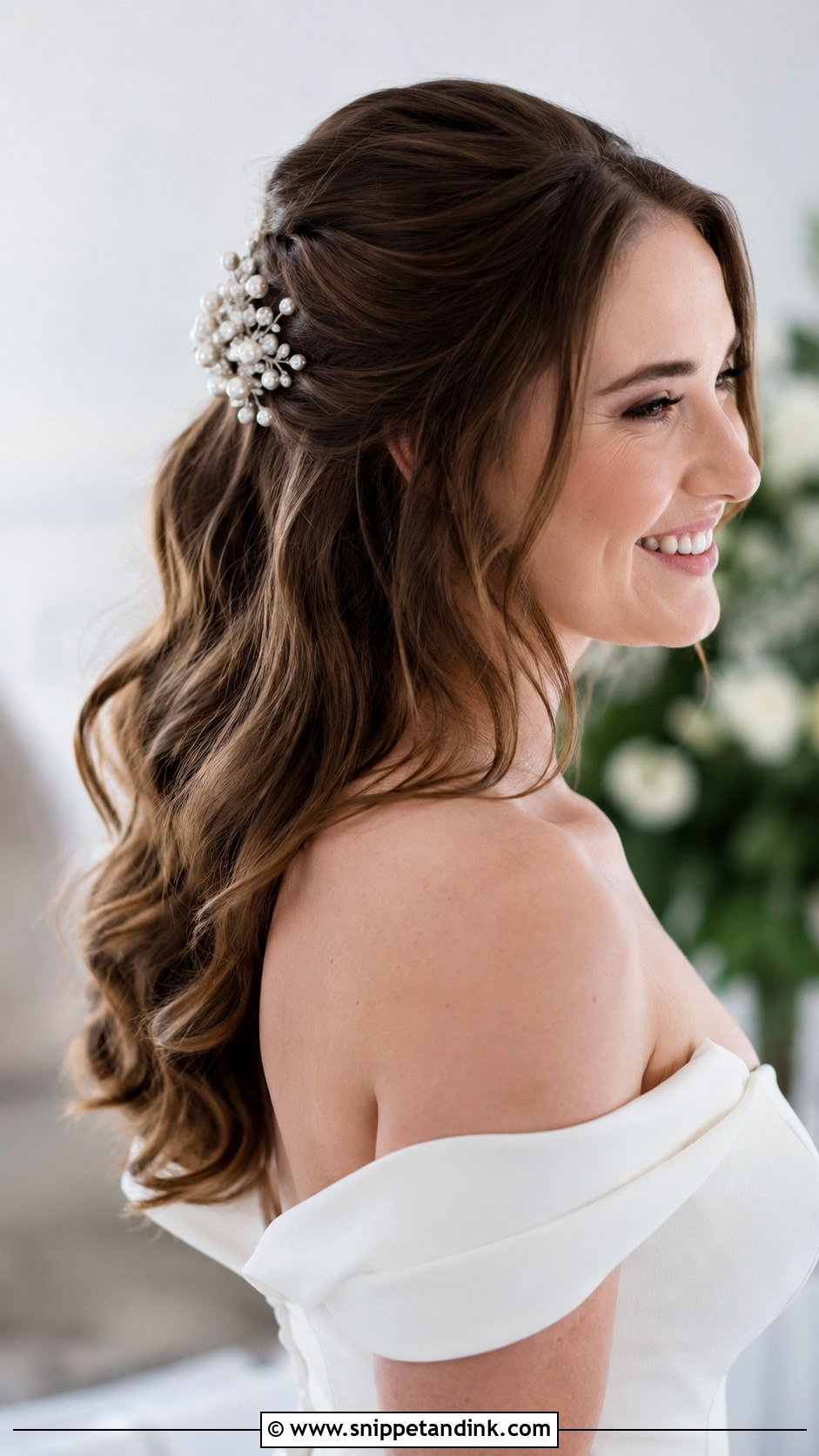
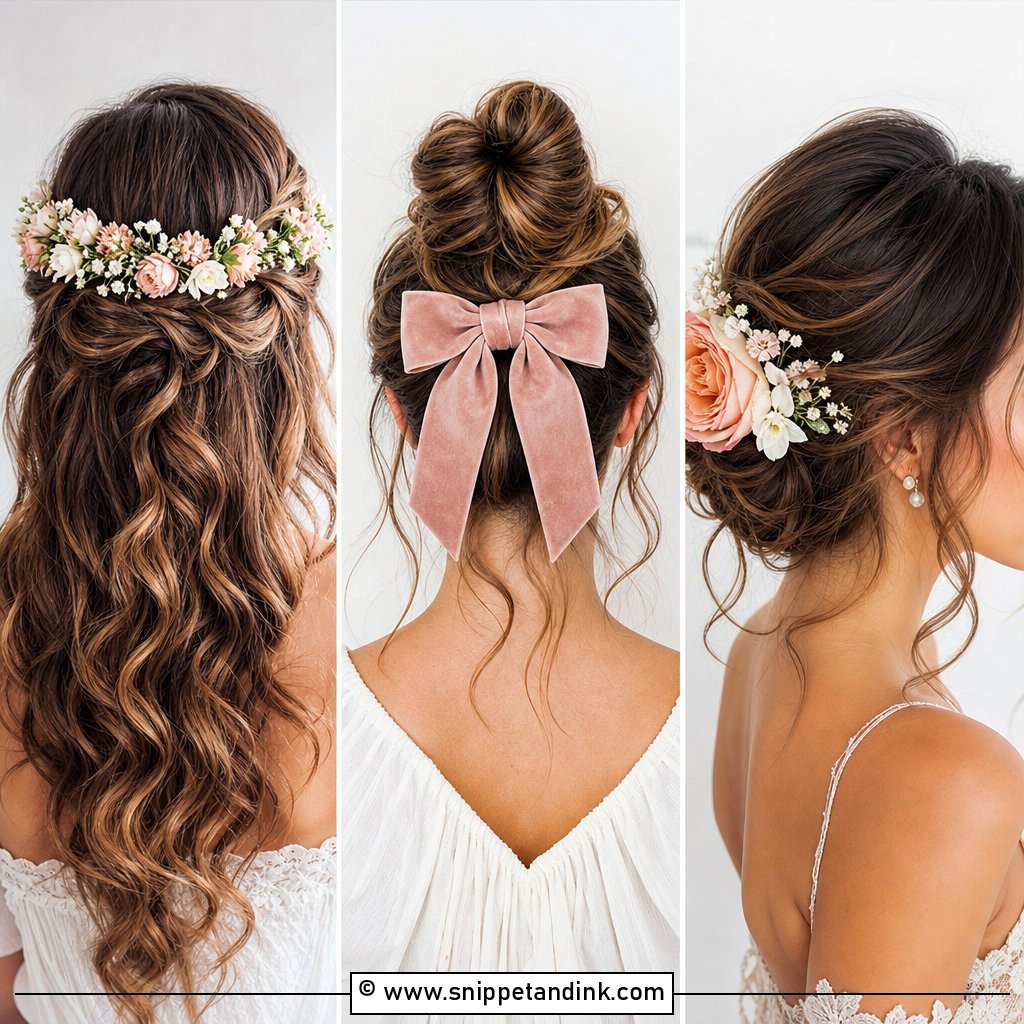
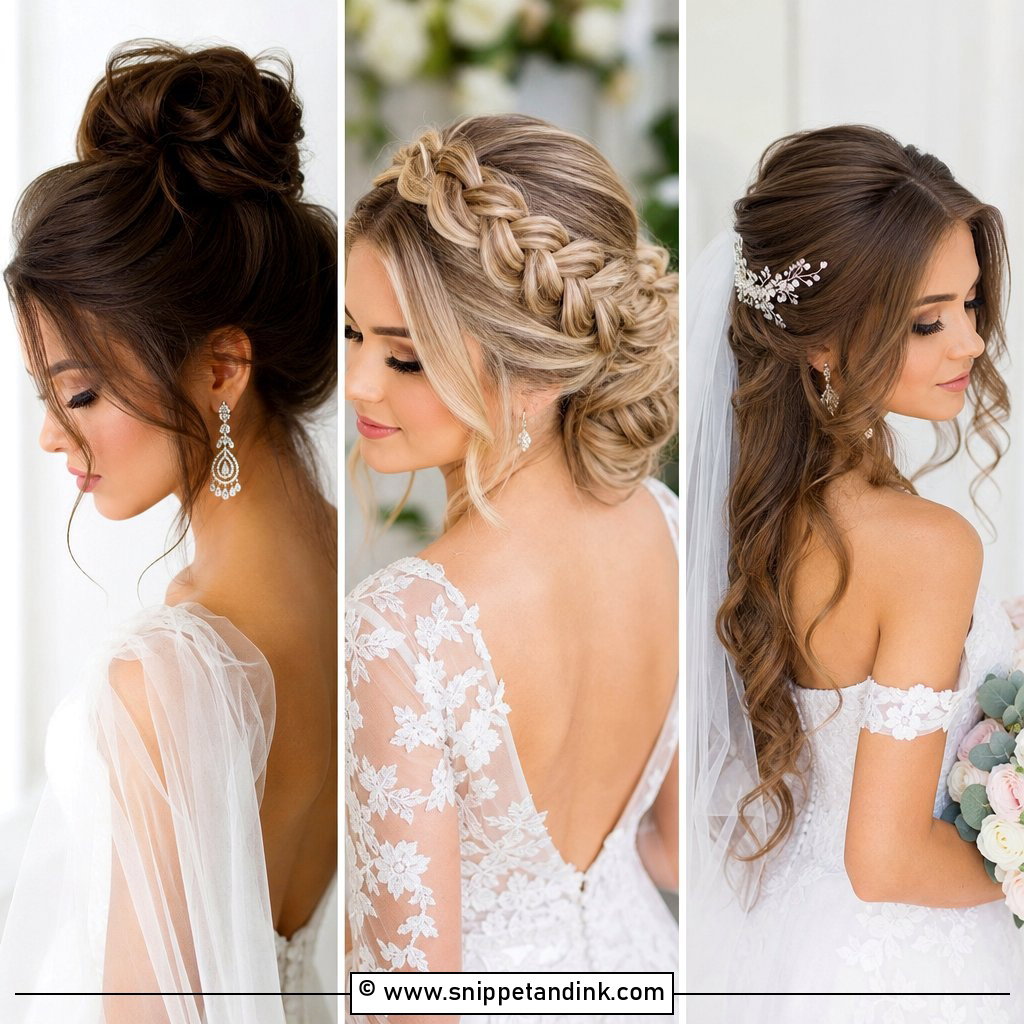
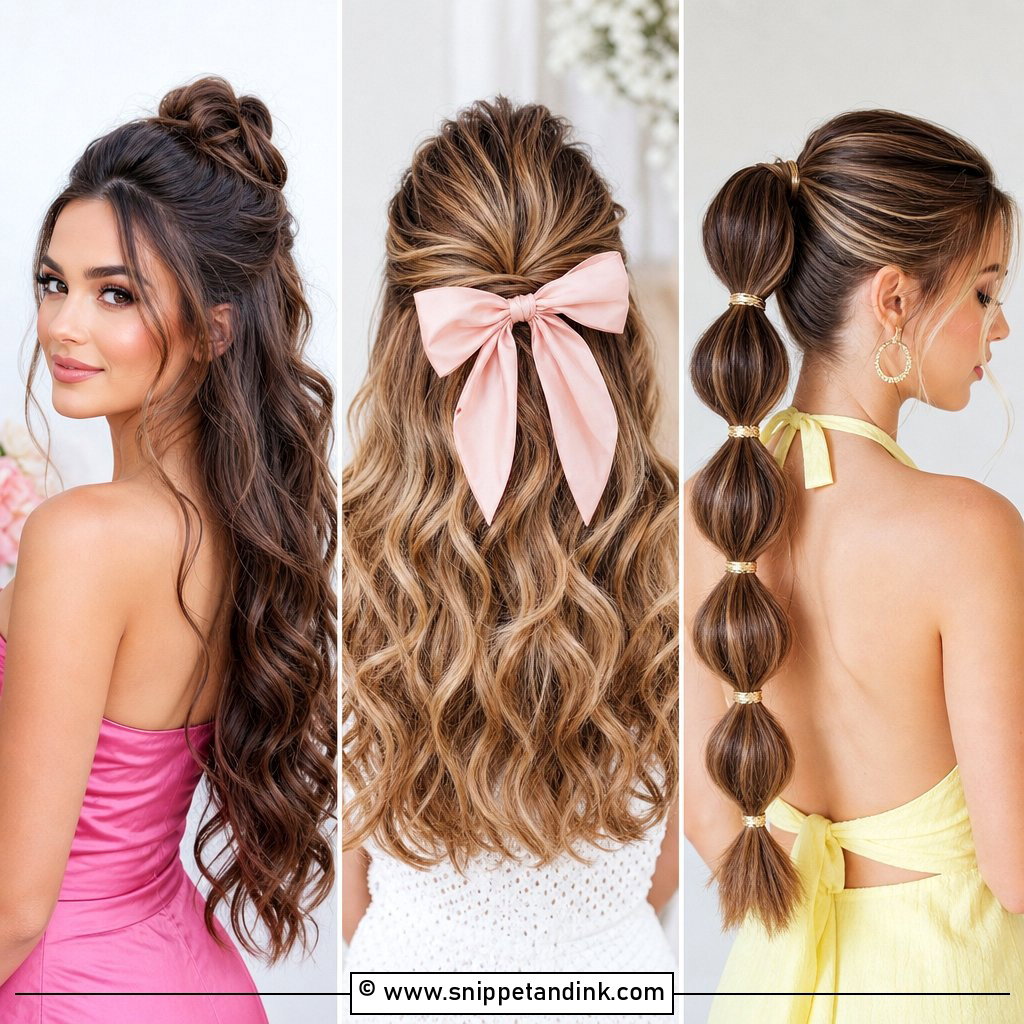
Half up, half down keeps the length on show while the crown does the structural work. The top section is where I put all the hold: a little backcombing at the root, then crossed bobby pins hidden under the section so a comb, floral pins or pearls have something solid to grip. The loose length can be waved, curled or left as a smooth blowout. My one warning is about face-framing pieces. They look sweet at 10am and limp by the reception if they’re left too long or curled too loose, so I keep them short and set them tighter than the rest.
3. Wedding Hollywood Waves
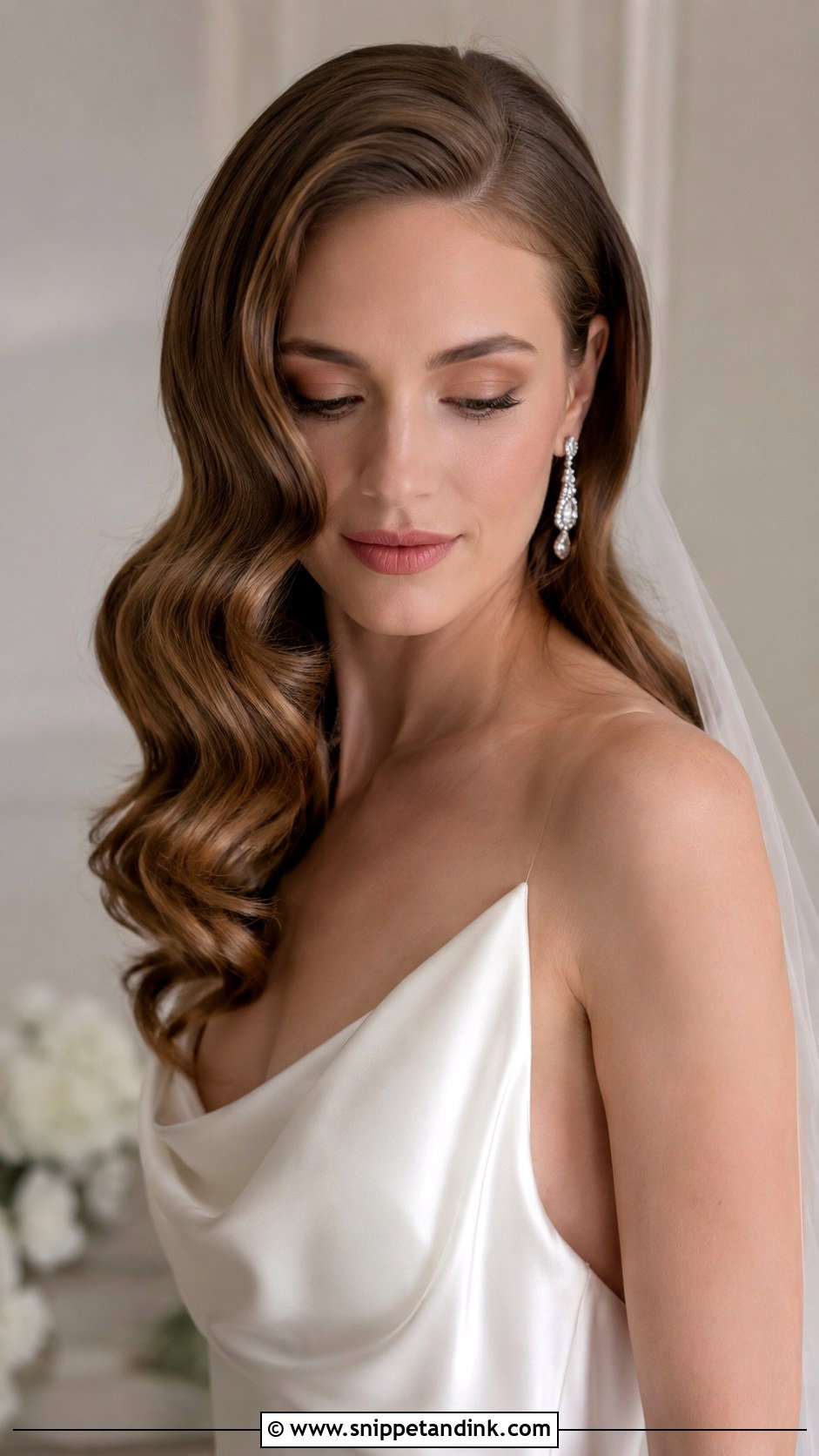
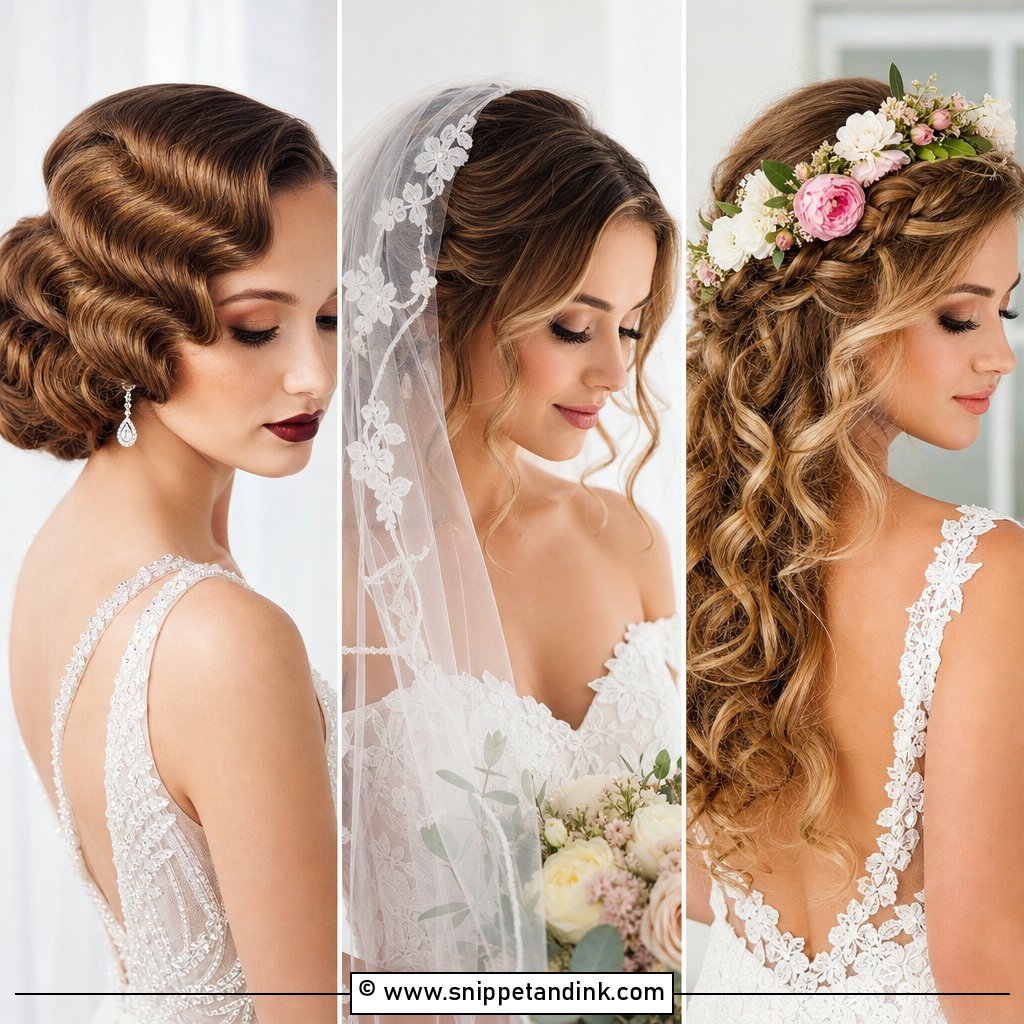
Hollywood waves are the most technical look here, and they show every shortcut. Every curl has to be wound in the same direction, pinned flat while it cools, then brushed into one continuous S-shaped ripple. Skip the cooling time and the pattern breaks apart. I treat a trial as non-negotiable for this one if your hair drops curls quickly, since some hair simply won’t hold a wave this defined without a setting lotion and a long set. It sits best with a deep side part and a clean neckline, such as a strapless gown or plain satin. Finish with a shine spray and a humidity-resistant hold, applied lightly.
4. Wedding Sleek Bun
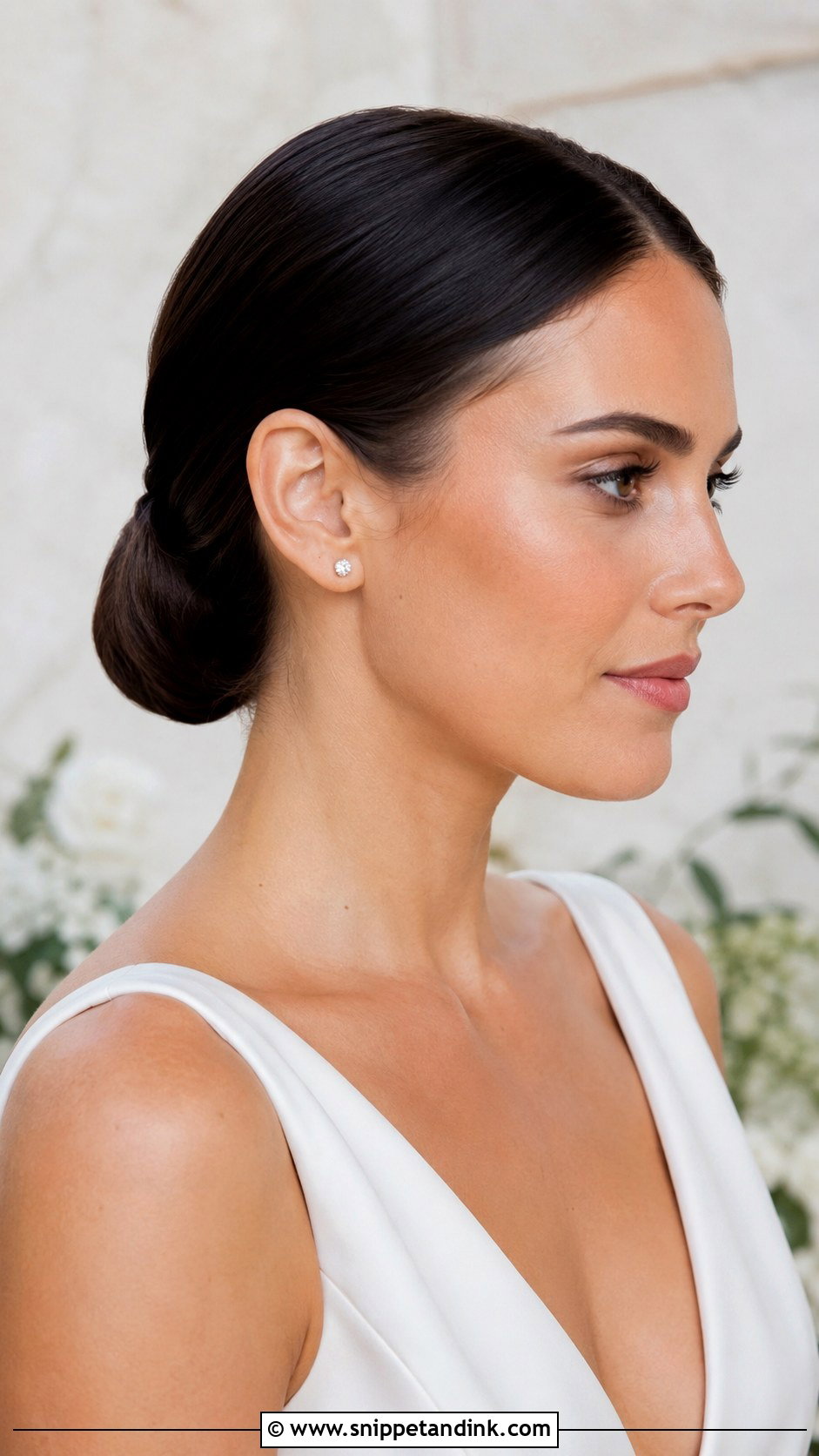
A sleek bun leaves nothing to hide behind, so the prep is the whole job. The roots have to be smoothed flat with a firm cream or gel, the parting has to be straight, and the bun has to look balanced from the side as much as the front. It can sit low, at the middle of the head, or as a tighter ballerina-inspired shape. I reach for it at humid venues where loose curls would collapse within the hour. Go easy on product, though: too much gel reads as greasy in flash photos. A row of pearl pins or a simple veil is enough to make it bridal.
5. Wedding Soft Waves
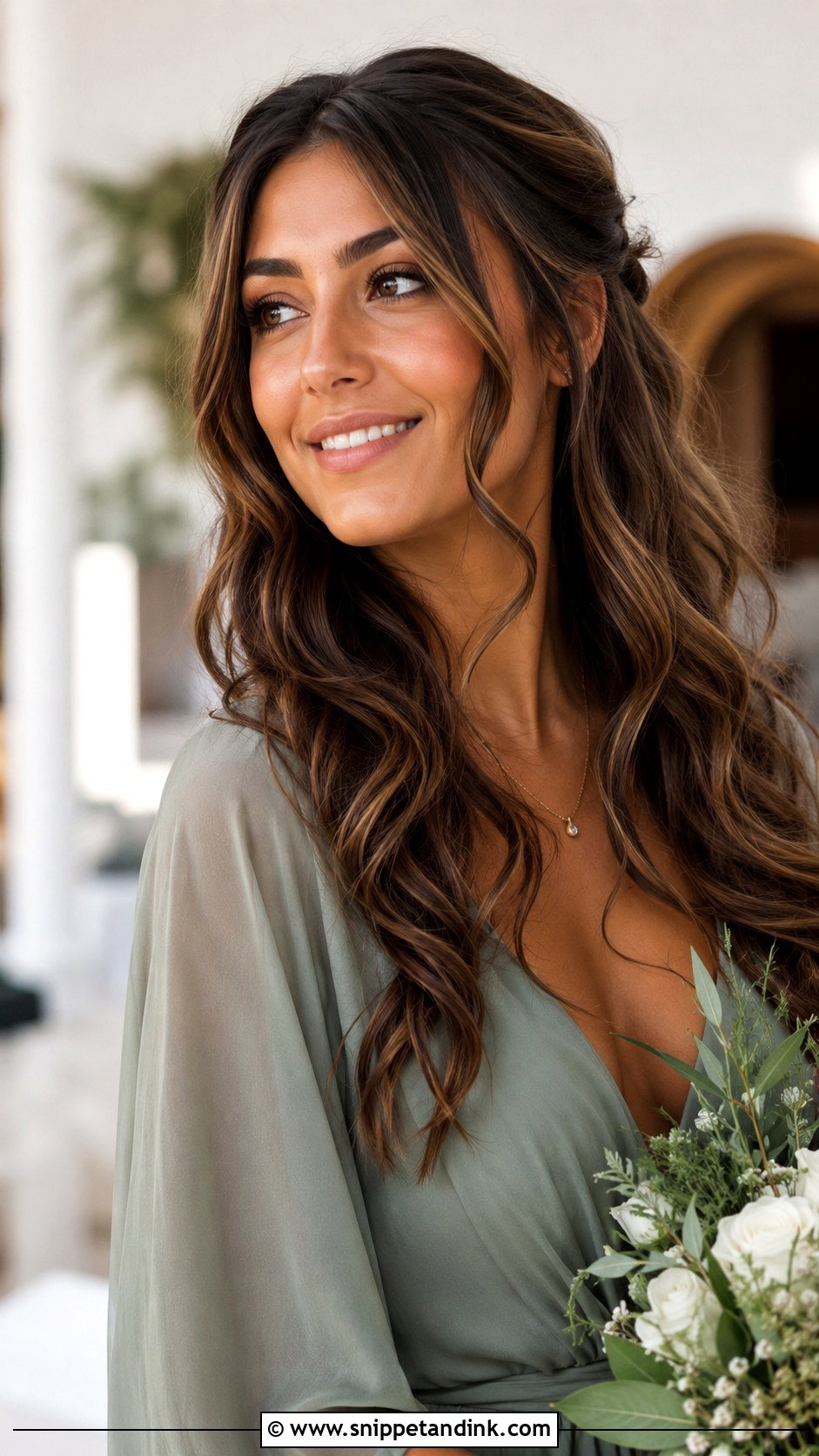
Wedding soft waves sit between Hollywood glamour and everyday curls, which makes them easy to coordinate across a bridal party with mixed hair types. They suit a middle part, curtain bangs or long layers. Outdoors, I start the wave a little higher than you want the finished look to sit, because it will relax and drop over a few hours, and a wave that begins too low turns into straight hair by the speeches. A dusting of texture spray at the roots and a drop of serum on the ends is all the finishing it needs.
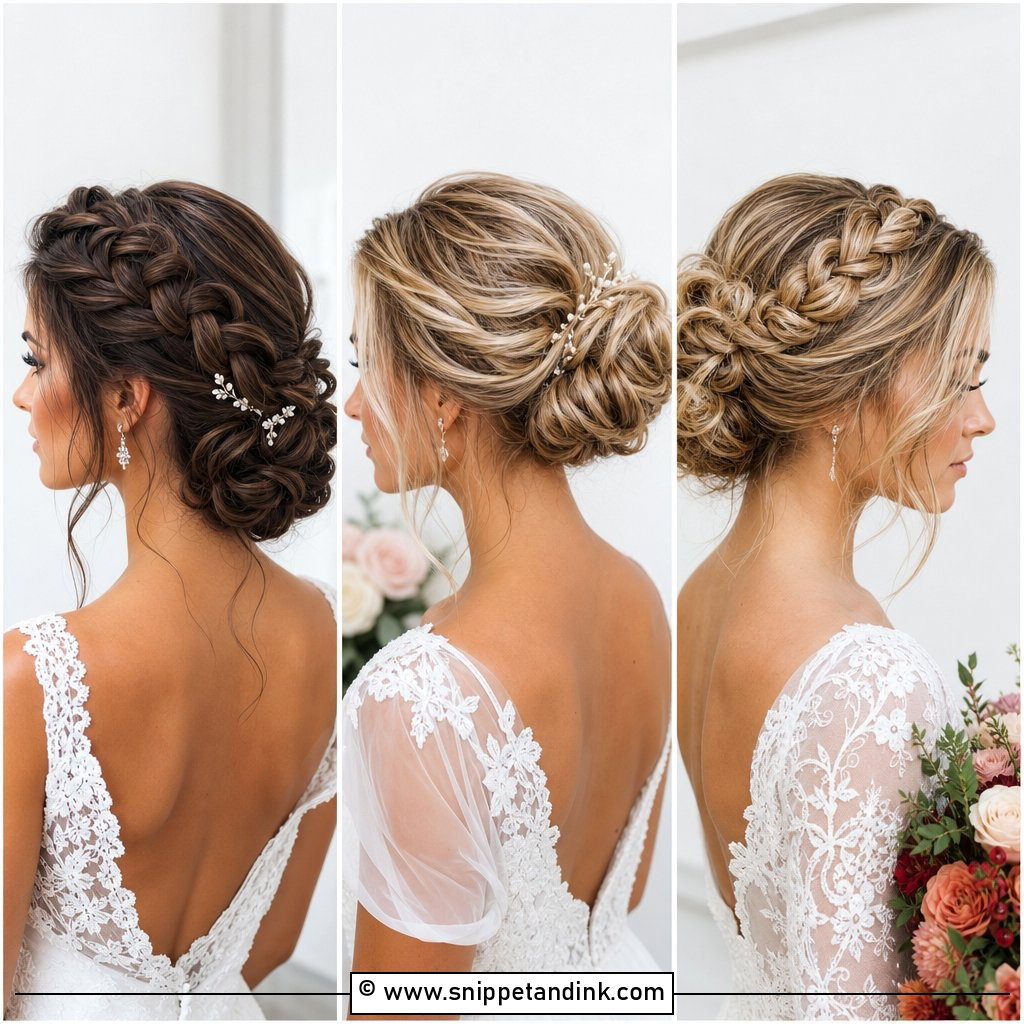
6. Wedding Textured Updo
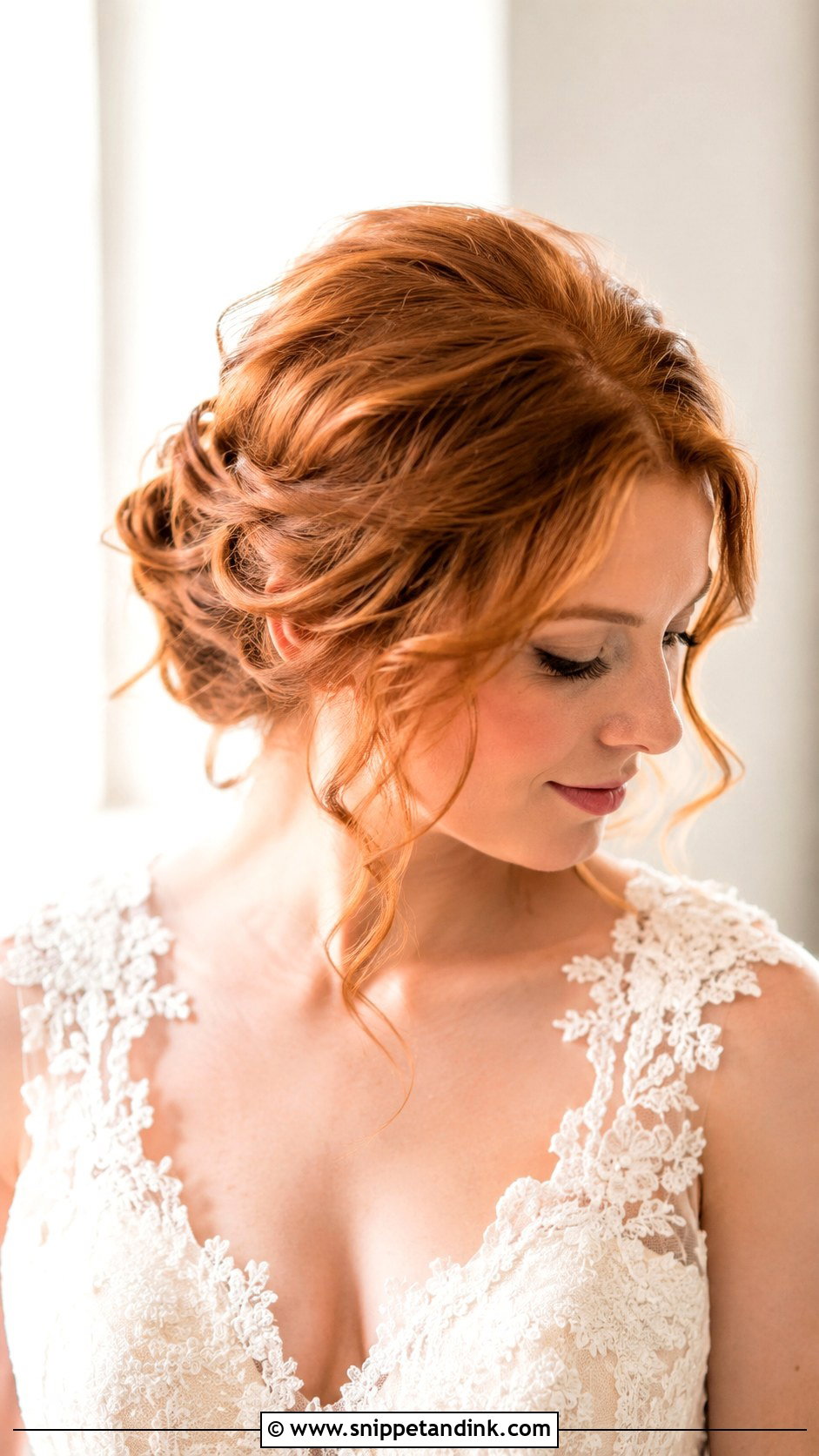
Hair with natural wave or a bit of frizz is often happiest in a textured updo, because the texture becomes the design instead of something to fight. The shape is built from twists, pinned curls and loose sections rather than a smooth wrap, and it needs medium to long hair to have enough to work with. Here’s what most people don’t see: the soft, undone look on top depends on a tight, secure base underneath. I anchor that base first and only then pull pieces loose, so the style can look relaxed without actually coming apart.
7. Wedding French Twist
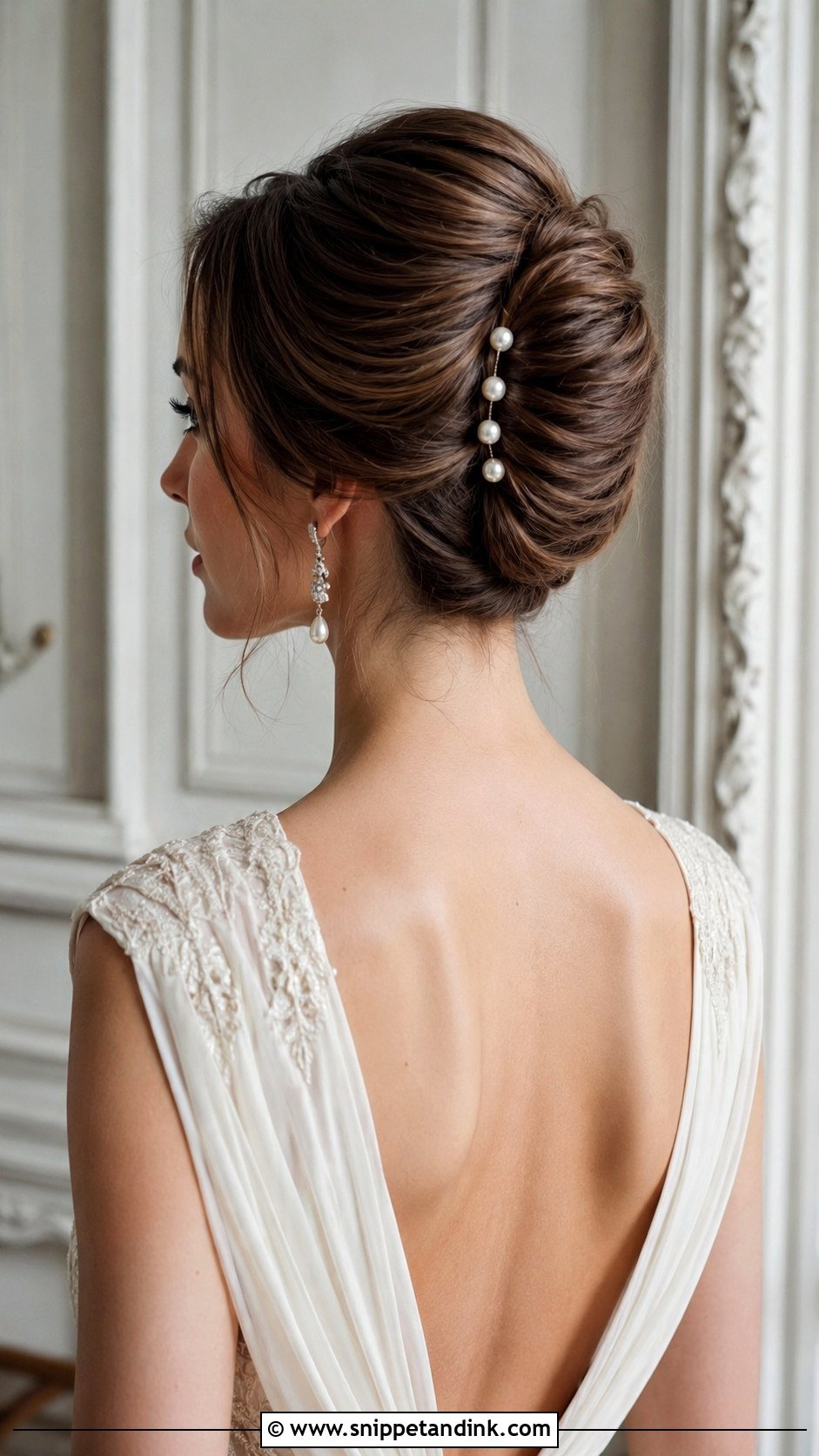
The French twist rolls the hair up and inward into a vertical seam, which lengthens the neck and looks clean from behind. Done softer than the 1990s version, it suits formal weddings, vintage dresses, courthouse ceremonies and evening receptions. It needs at least shoulder-length hair to close properly; shorter layers tend to poke out of the seam, so I’ll often braid or pin those underneath first. A side fringe, a few pearl pins or a small comb tucked along the fold keeps it from feeling severe.
8. Wedding Braided Bun
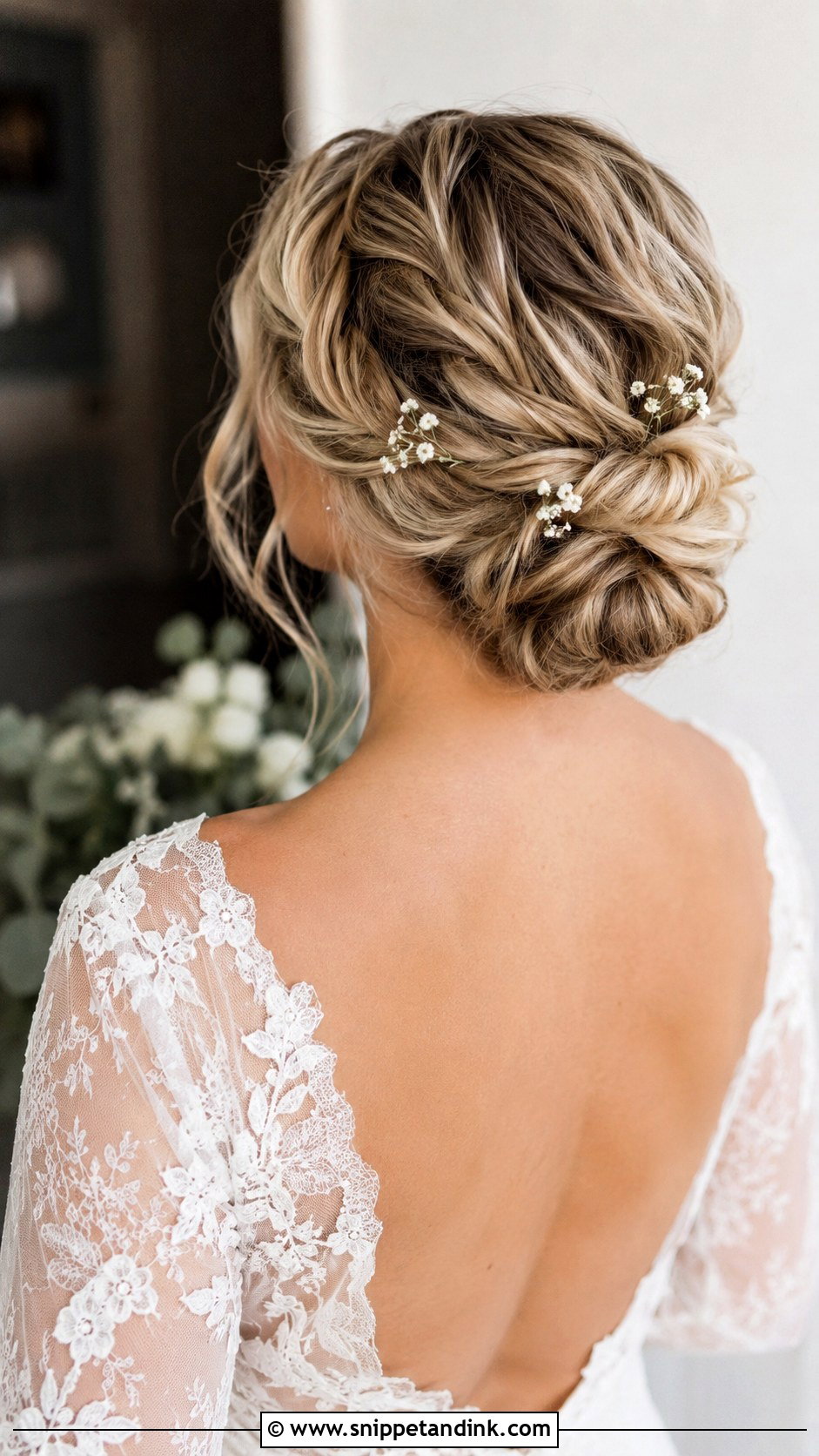
Layers that slip out of every updo you’ve tried are the reason I reach for a braided bun. Feeding a braid into or around the bun locks those shorter lengths in place far better than pins alone. The braid can wrap the bun, sit along the crown, or run from one ear into a low knot. Garden weddings, beach ceremonies and lace dresses are where I see it most. I gently pull the braid apart once it’s pinned so it looks fuller, and I’m cautious with tiny flowers, since fresh blooms wilt fast in sun and real stems add weight.
9. Wedding High Bun
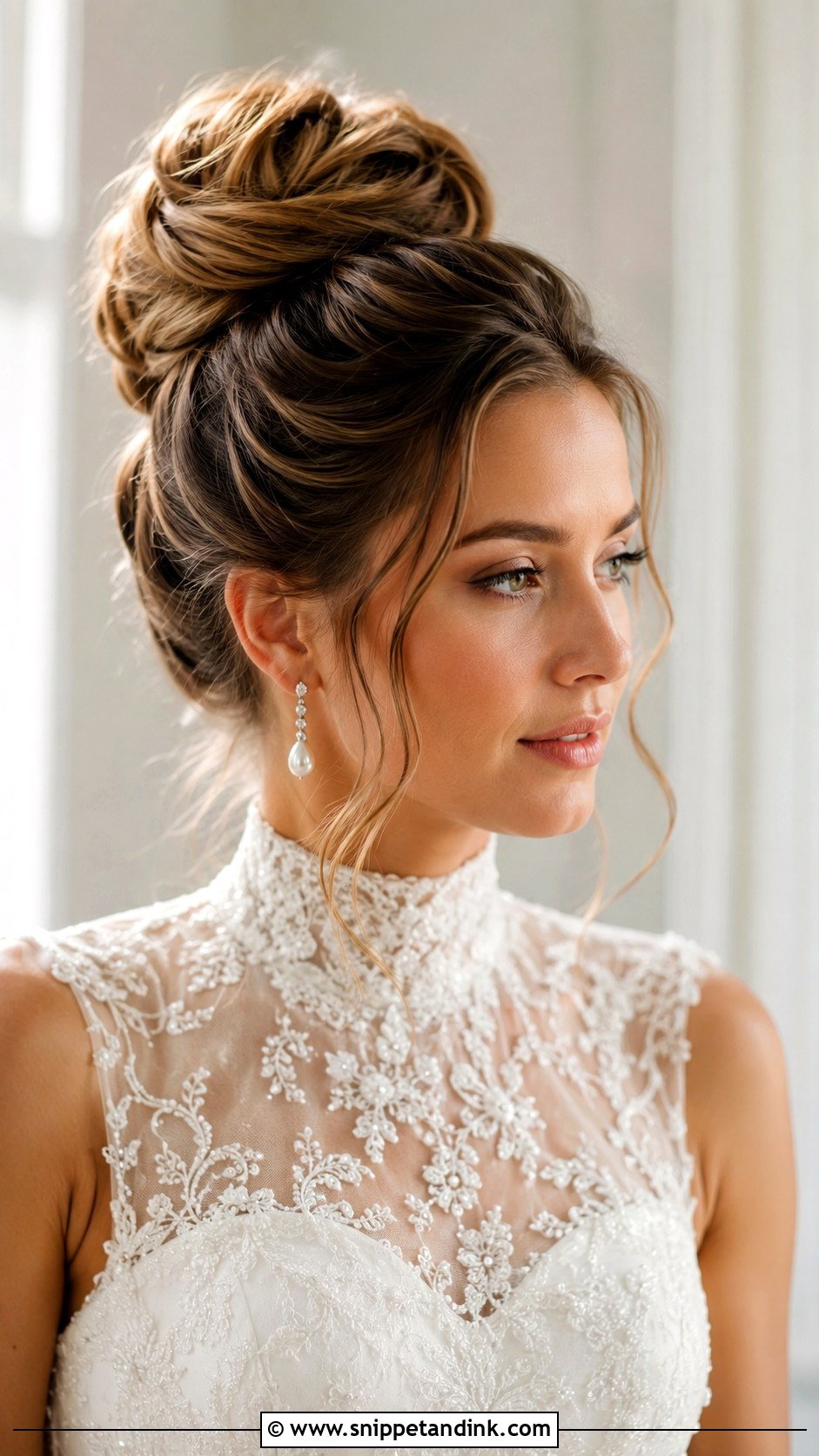
A high bun gives the most lift of any style here and clears the neck and shoulders completely, which is why it pairs so well with halters, high necks and off-the-shoulder gowns. It’s also the coolest option for a summer reception with a lot of dancing. The catch is weight. A large bun sitting high pulls on the scalp all day, and some brides get a headache by mid-afternoon, so on thick hair I pin it in sections and keep the anchor close to the head. Fine hair needs a bun form or extensions to get the size. A couple of loose pieces near the face soften it.
10. Wedding Side Swept Curls
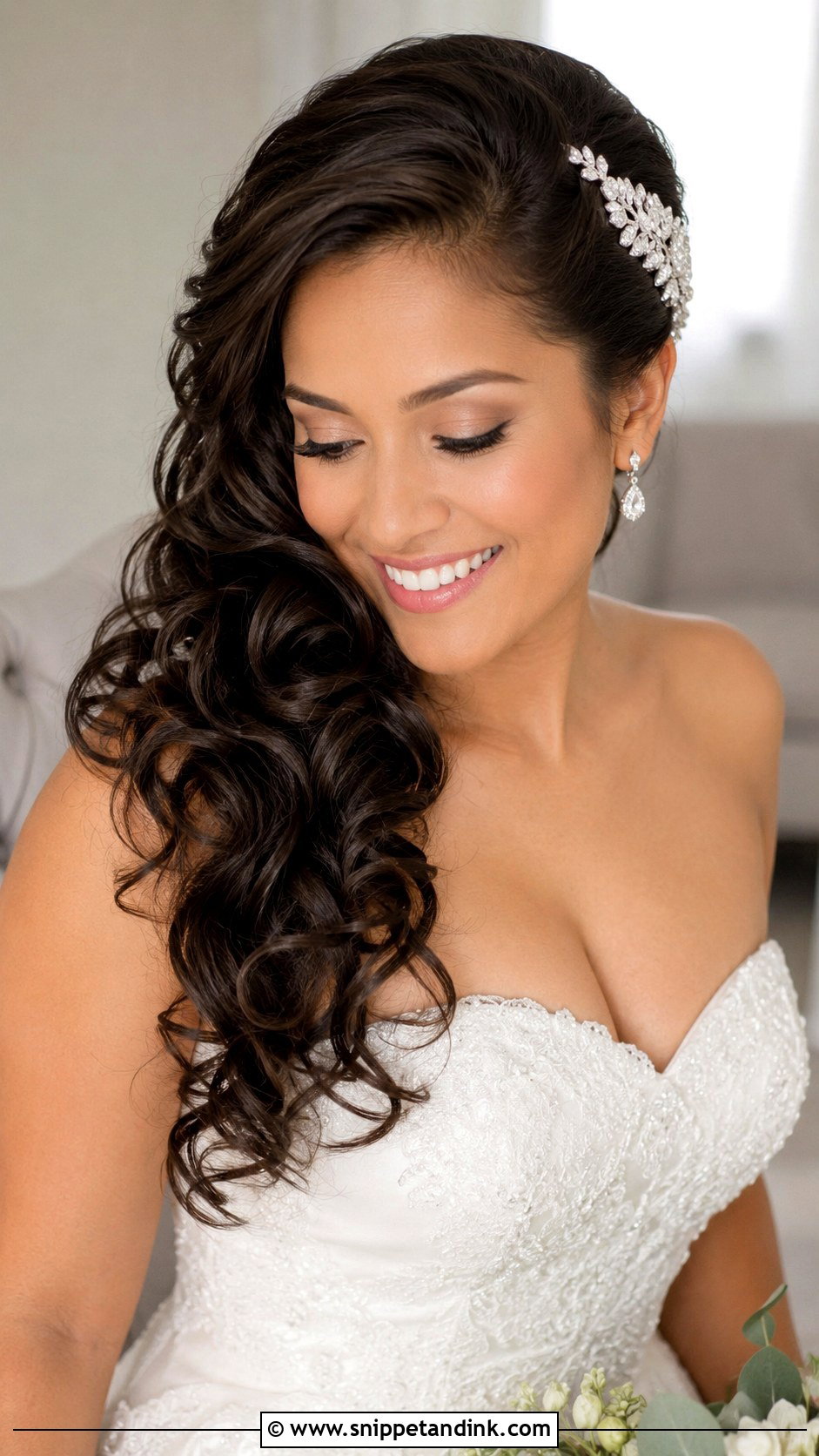
Side swept curls keep your hair down while still leaving one side of the neckline open, so one-shoulder gowns, sweetheart necklines and detailed backs all show. The curls are brushed together and swept over one shoulder in a single direction, which is why they read so clearly in pictures. What holds the sweep in place is a row of crossed pins hidden at the nape on the tucked side. Without them, the first long hug undoes it. I usually place a decorative comb over those pins for balance and to hide them.
11. Wedding Ponytail
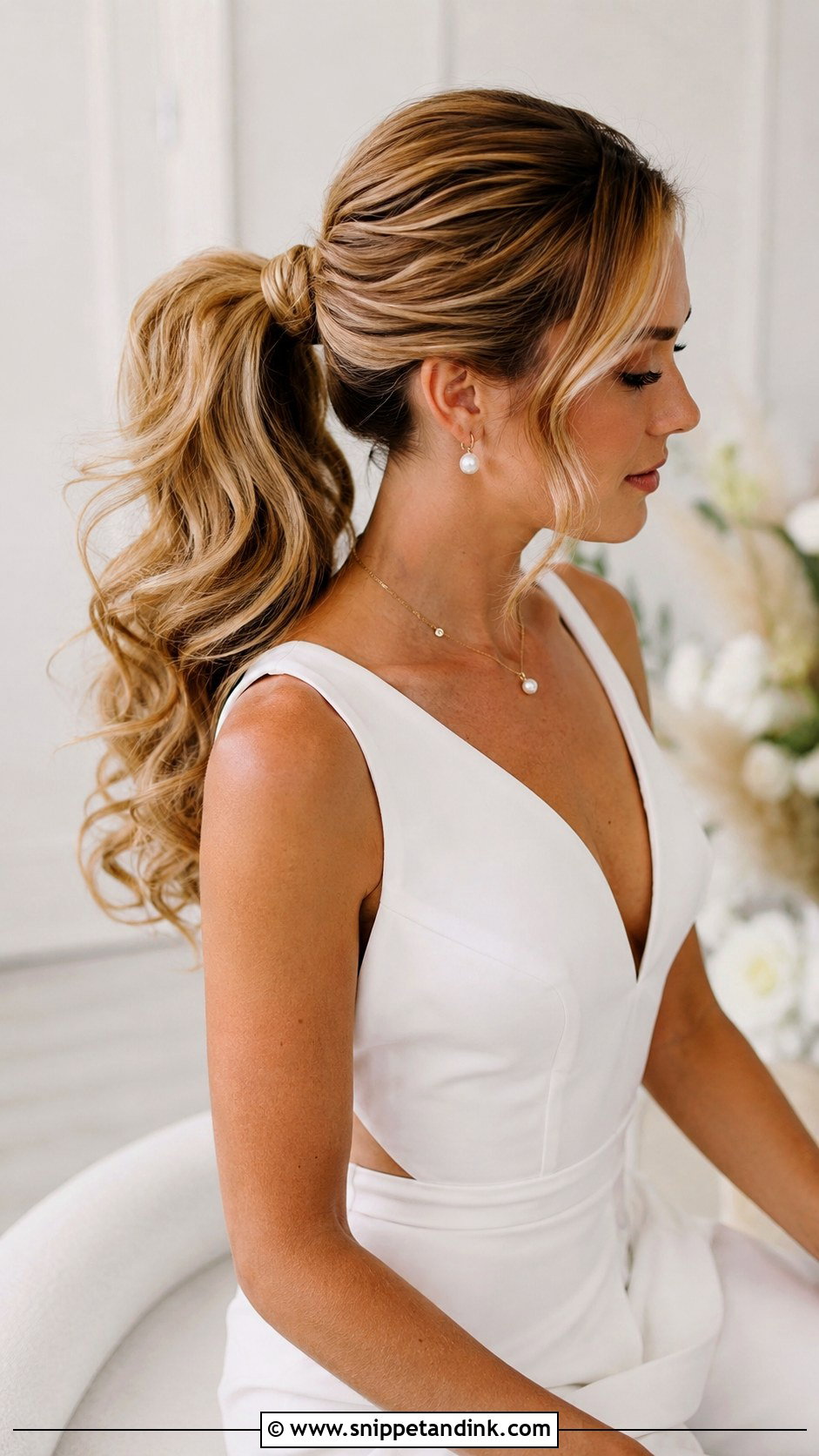
A wedding ponytail is not an everyday ponytail with a bow on it. The crown needs either deliberate lift or very smooth control, the elastic gets wrapped with a strand of hair and pinned underneath, and the length is waved, curled or polished. Thick hair is where it really pays off, because the length stays on show without crowding the face. It suits modern gowns, jumpsuits and reception outfits, and bridesmaids like it because it’s hard to ruin. A veil slides in neatly just under the base, and I always secure the tie with two elastics in case one snaps mid-dance.
12. Wedding Crown Braid
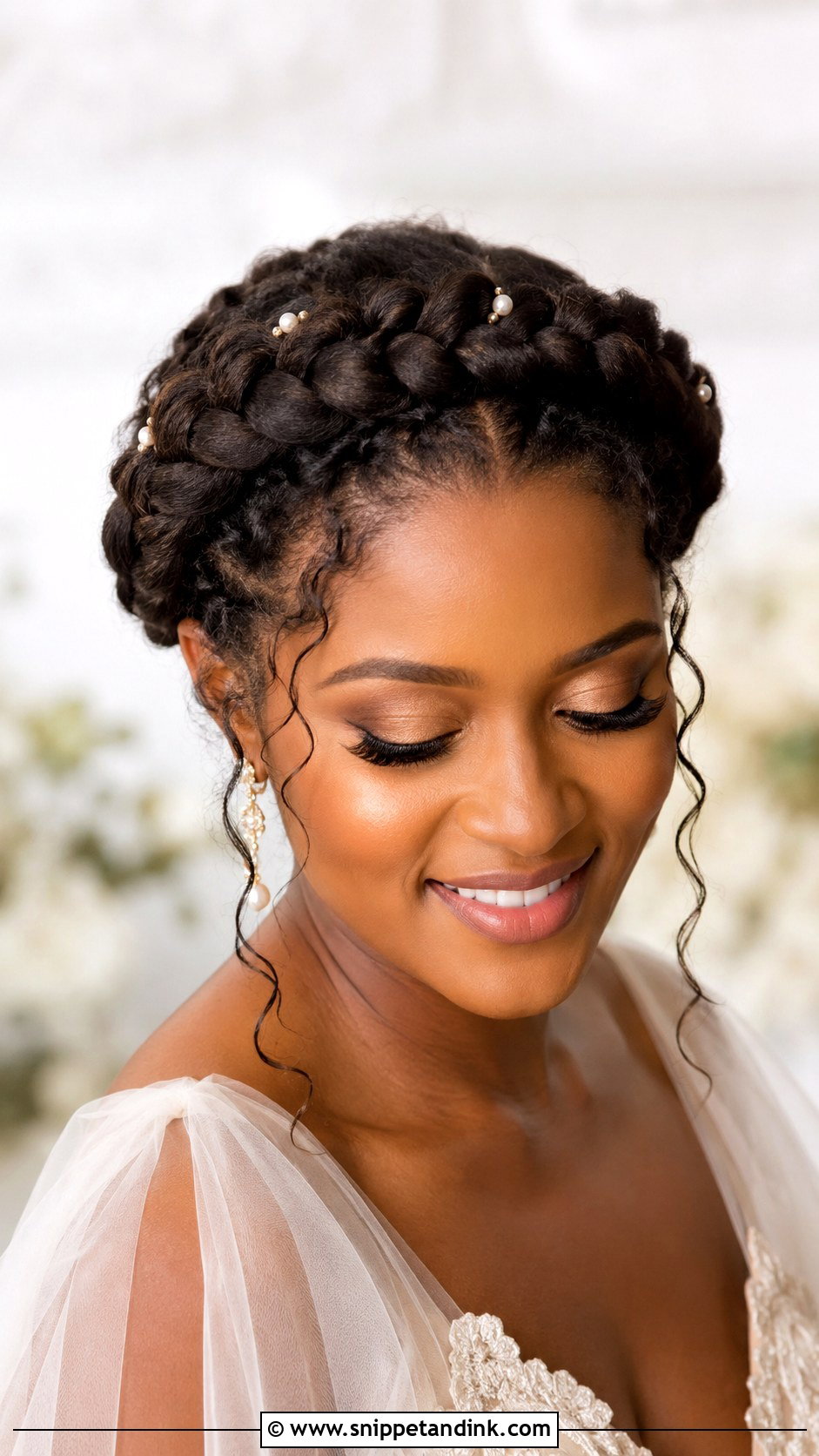
A crown braid wraps the head like a halo, and the rest of the hair can be pinned up or left in soft curls. It’s one of the most secure styles I do, which makes it a good call for outdoor ceremonies in wind. On naturally textured hair it holds shape well with the right prep, since coily hair grips a braid better than slippery straight hair does. The usual mistake is braiding too tightly. A flat, tight braid looks thin from a distance, so I braid it firmly and then gently pancake each loop wider. Small florals or pearl pins finish it.
13. Wedding Short Hair Waves
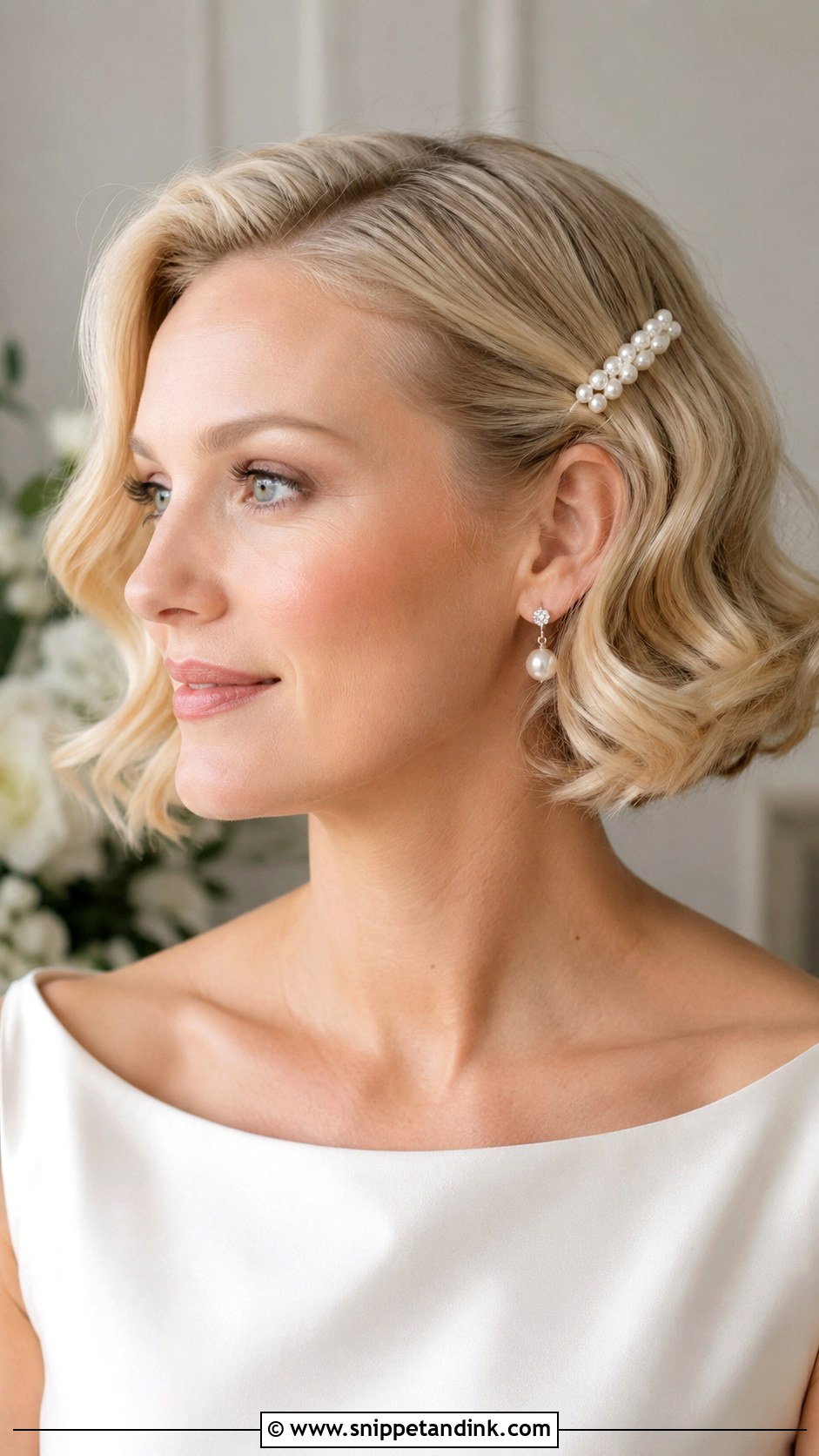
Short hair works for a wedding when it’s shaped with intent rather than just curled. A bob, lob or short layered cut looks polished with soft waves, a deep side part or pieces tucked behind the ear. On short hair I alternate the curl direction from section to section, otherwise the waves merge into one solid shape, and I let every section cool fully before I touch it. Keep products light so the hair doesn’t go stiff. For a bridal finish without needing length, I add hair clips, mini combs, pearl barrettes or a short veil, placed on the side with the deeper part.
14. Wedding Natural Curls
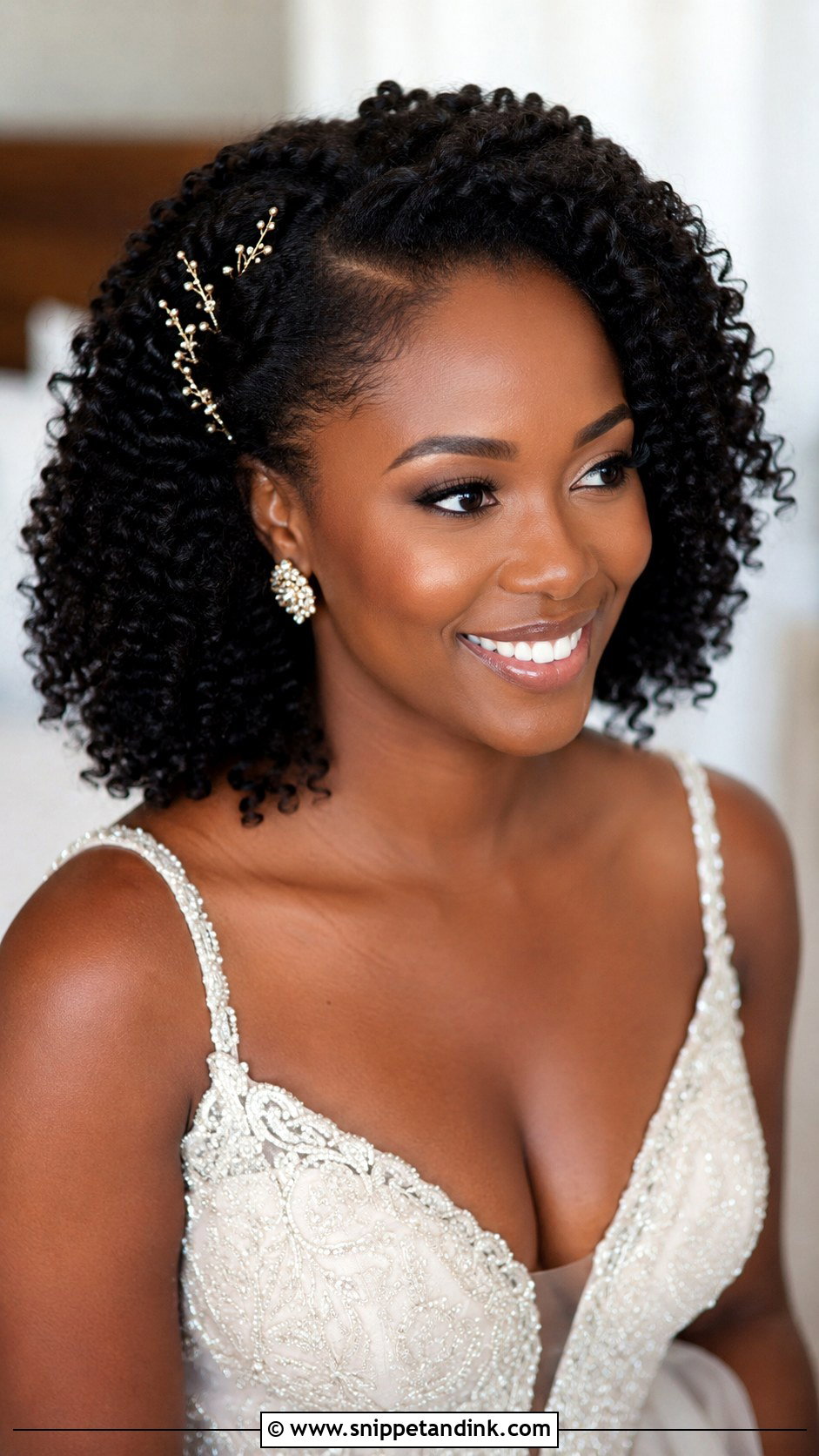
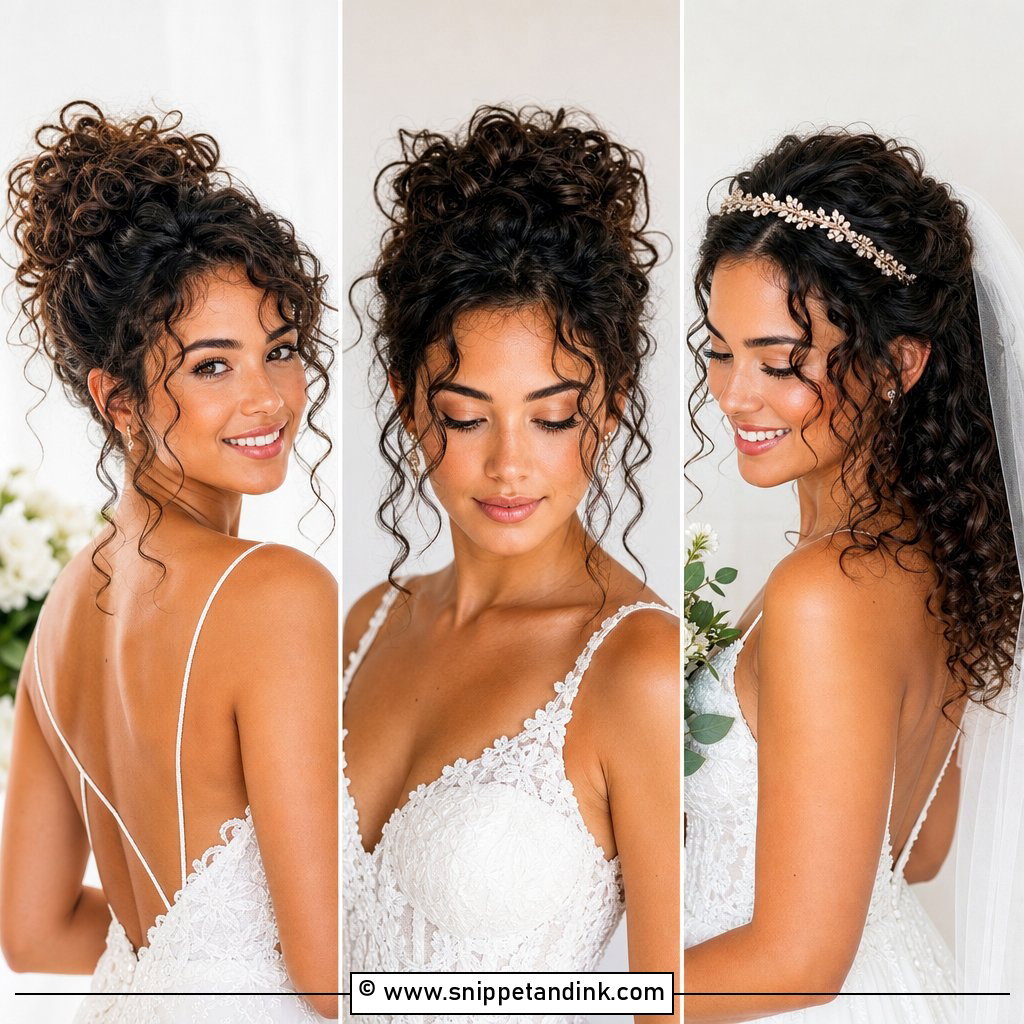
Natural curls look their best when they’re defined, hydrated and styled on purpose, rather than forced into something they’re not. They can be worn down, half up, pinned to one side or shaped into a soft updo. Most of the work happens the day before and the morning of: moisture, a styler with real hold, and enough drying time that the curls aren’t damp when the dress goes on. I don’t brush through the pattern; I shape it with fingers and clips. If someone tries to brush your curls out at a trial, that’s a sign they’re the wrong stylist. Choose accessories that grip without flattening volume.
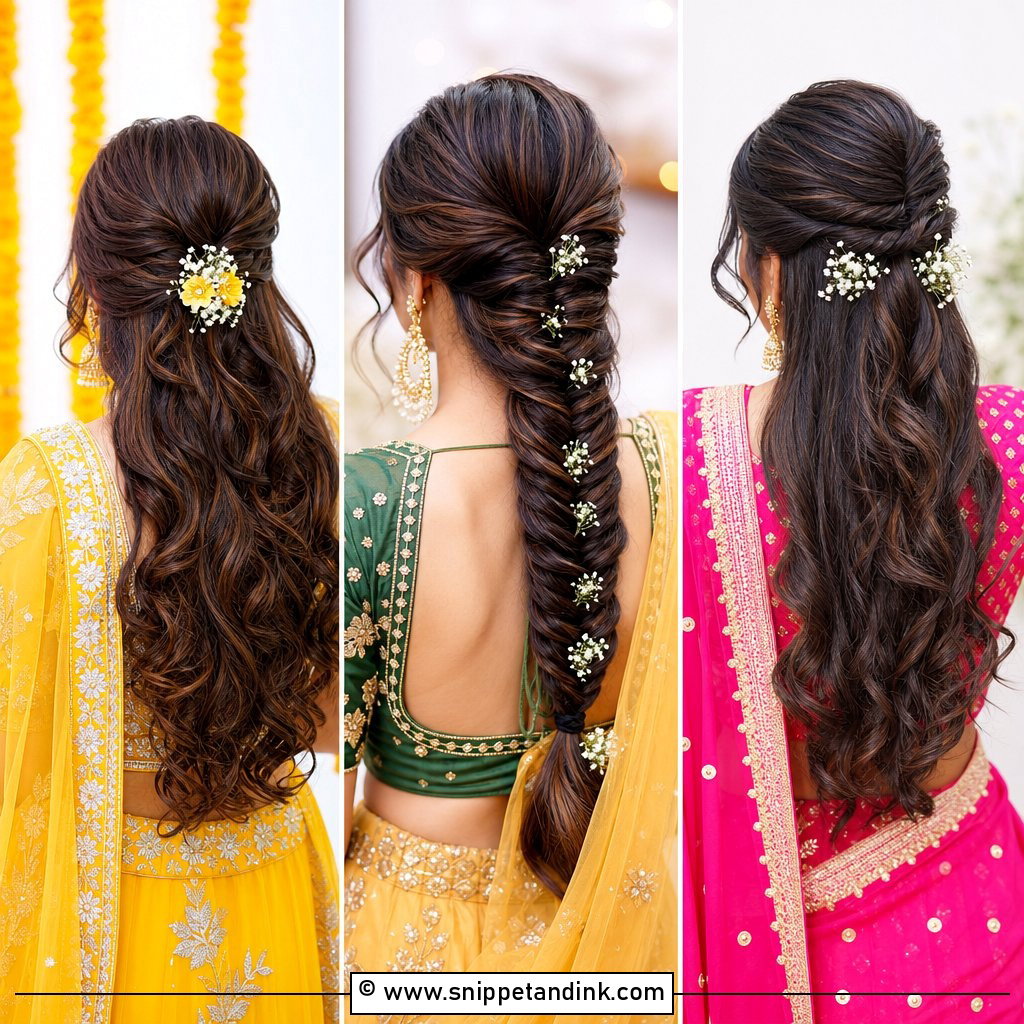
15. Wedding Bubble Ponytail
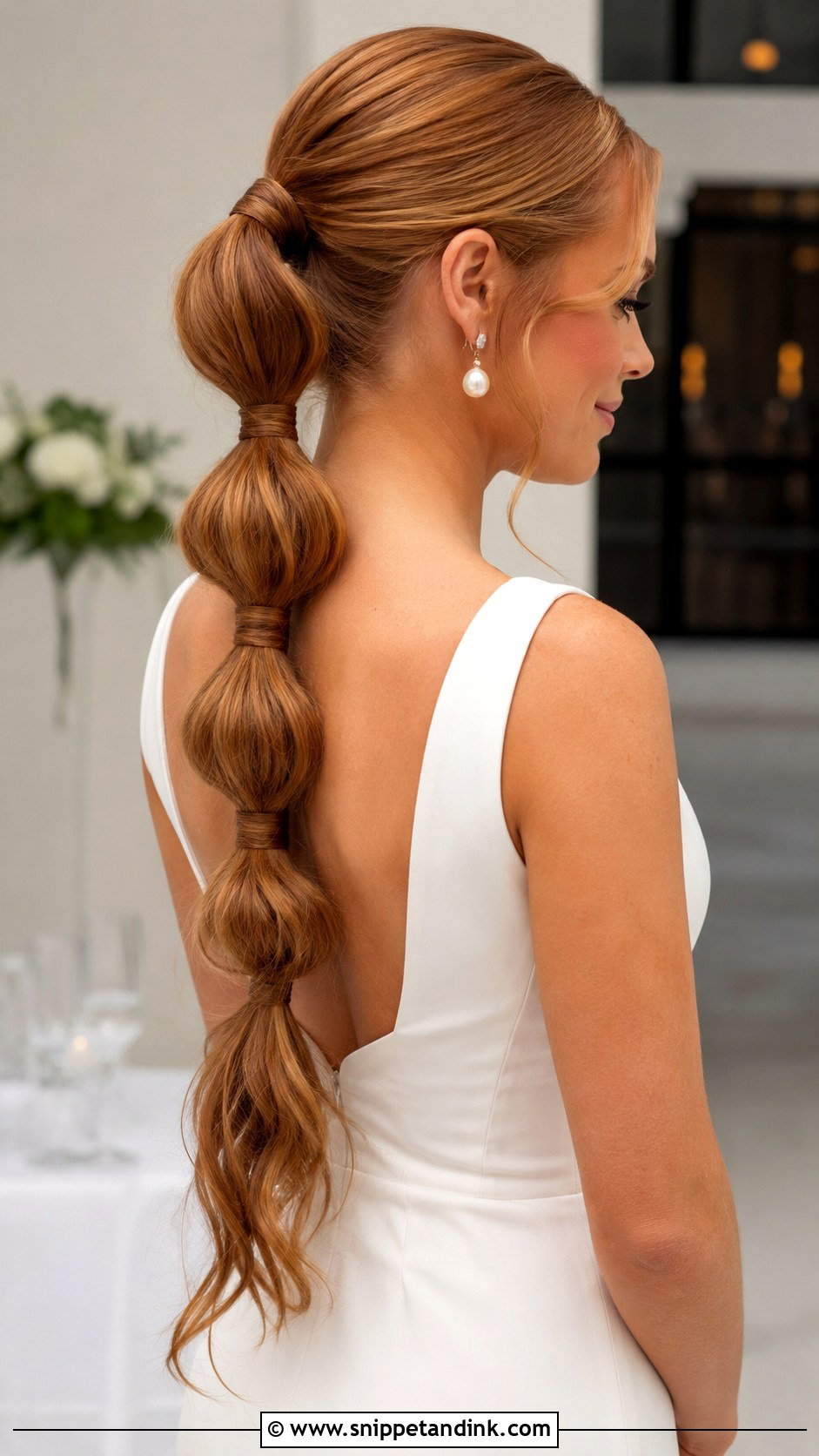
A wedding bubble ponytail is the playful one of the group. The hair is pulled into a ponytail, then tied at intervals down the length so each section can be teased out into a rounded bubble. You need medium to long hair, and extensions make the bubbles fuller if your length is thin at the ends. It’s hard to dislodge, so it works for receptions, bridesmaids and guests who’ll be dancing. I use clear or hair-coloured elastics and wrap each one with a thin strand, because dark ties on blonde hair show up in every photo.
Why Cameras Catch What the Mirror Misses
You’ll spend the morning looking at your hair from the front. Everyone else, including the photographer, sees it from the side and behind, often under flash or hard midday sun. A few things show up in pictures far more than in a mirror.
- Flyaways at the crown glow when the sun is behind you. I smooth them with a touch of cream on a spoolie at the very end rather than a cloud of hairspray, which flattens the shape.
- Pins that match your hair colour disappear; silver ones on dark hair catch the light in every aisle shot.
- Very tight, flat roots make a face look harder on camera than in person. A little lift at the crown softens almost every style.
- Glossy finishing sprays can look wet under flash, so on waves I prefer a matte texture spray.
Three Reference Photos Beat Thirty
Bring three or four images to your trial. Include one front view, one back view, and at least one on someone with hair close to your own length and texture, because a wave on waist-length extensions will never sit the same on a shoulder-length bob.
Tell me what you love in each picture, whether it’s the height of the bun or the softness around the face, and what you can’t stand on yourself, like a centre part or hair touching your neck. At the end of the trial, take photos in daylight from both sides and look at them the next morning with fresh eyes. If something bothers you then, it will bother you in the album, and that’s the moment to change it.
One Last Look at the Back of Your Head
If you’re torn between two of these, stop looking at the hair on its own. The neckline, the venue, the weather and your texture usually decide it for you. A sleek bun earns its place at a city ceremony, while soft waves sit naturally in a garden. Half up feels comfortable; a ponytail or braid is hard to wreck on a dance floor. save reference photos from the side and back as well as the front, book a trial, and let the pins do their work. Done properly, any of these will still look intentional at midnight.
You'll Like These Ideas:


Leave a Reply