
Soft waves are the style I get asked for more than any other, and they are also the one most likely to disappoint if nobody plans for how they will hold. A wave is only a curl that has been brushed out, so the real work happens in the setting, not the brushing. Done properly, they suit a beach aisle as easily as a ballroom, and they work on a lob as well as on hair that reaches your waist. Below are 25 versions I’d happily recreate, each with notes on what makes it hold, who it suits and where it tends to go wrong.
Why Waves Drop by the Reception, and How I Stop It
Most failed wedding waves were never set properly. A curl that falls off the iron hot is still soft, and if it gets brushed out right away it has nothing to hold its shape. I pin each curl flat against the head while it cools, usually for fifteen to twenty minutes, and only brush once the whole head is cold. That cooling step is what separates waves that last into the evening from waves that are gone by the first dance.
Your hair also has to arrive in the right state. Wash it the day before or the morning of, skip heavy conditioner on the lengths and come with it completely dry. Very clean, very silky hair can be slippery, so I often add a texture spray before curling to give it some grip.
Adjusting for your hair type
- Fine hair: smaller barrel, thinner sections and a light-hold spray between curls. Expect the waves to relax by about a third over the day, so set them tighter than you want them.
- Thick hair: larger sections take longer to heat through, so the iron stays in place longer. Brush out gently or the waves turn into frizz.
- Naturally curly hair: a smooth blow-dry first, then waves on top. Humidity will pull the curl pattern back, so a humid venue calls for a stronger finishing spray.
- Freshly coloured hair: lighter hair can be more porous and drop faster. A heat protectant with some hold helps.
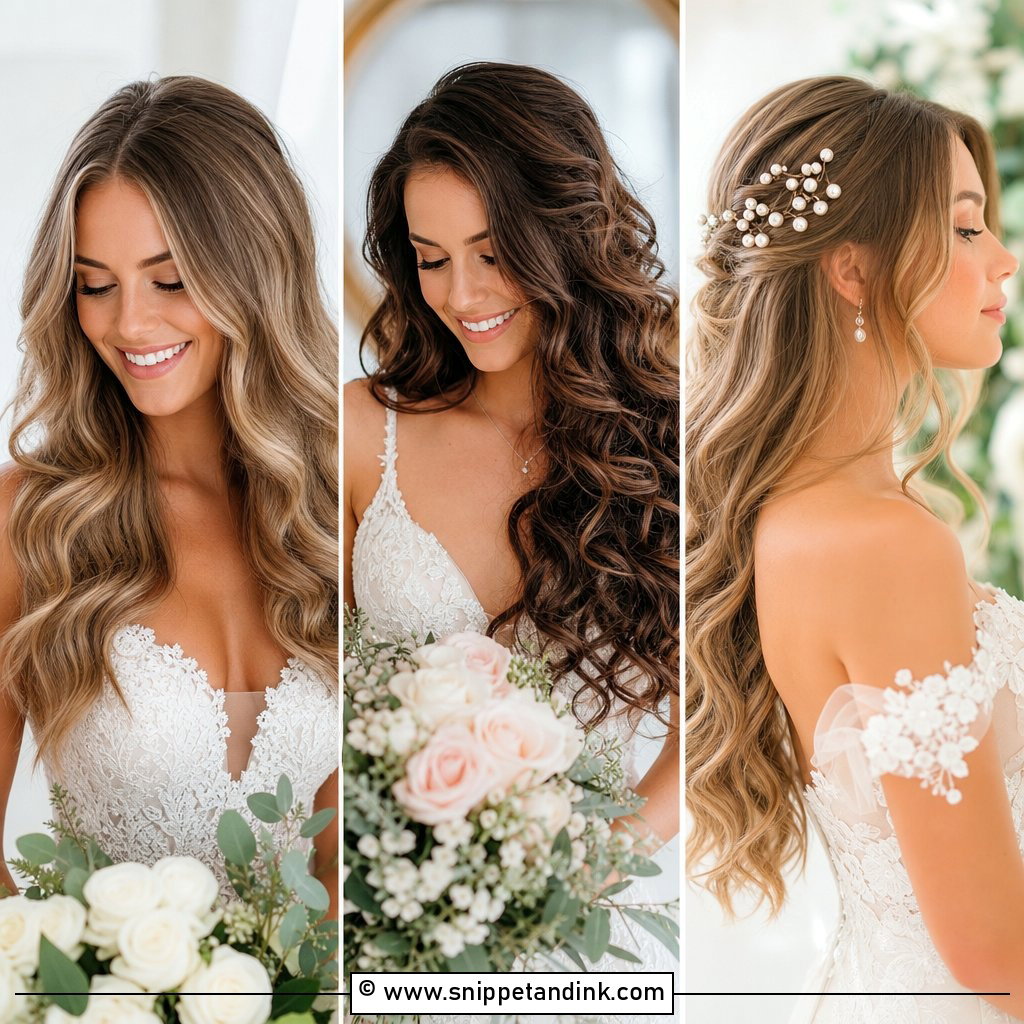
1. Classic Hollywood Soft Waves
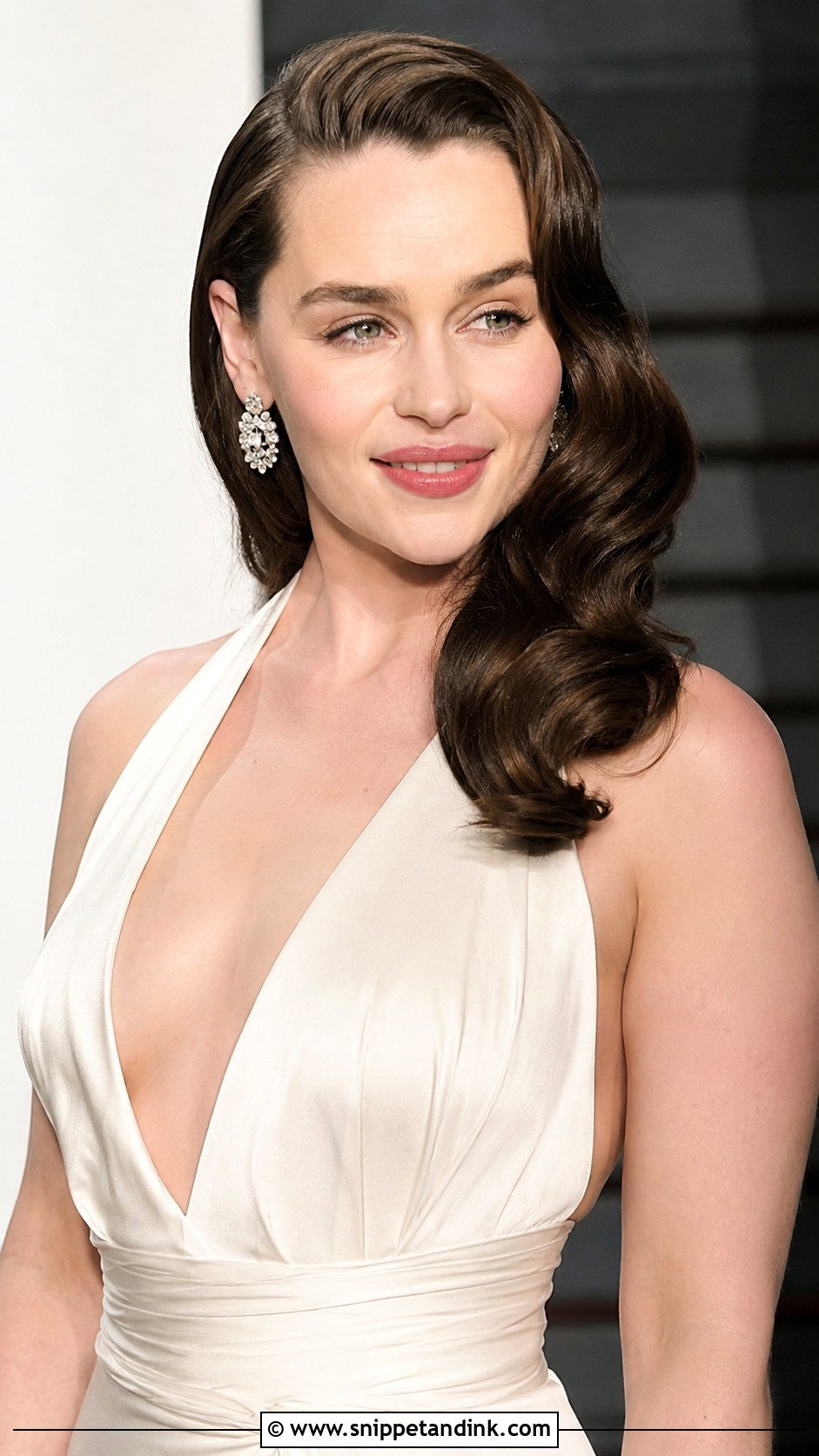
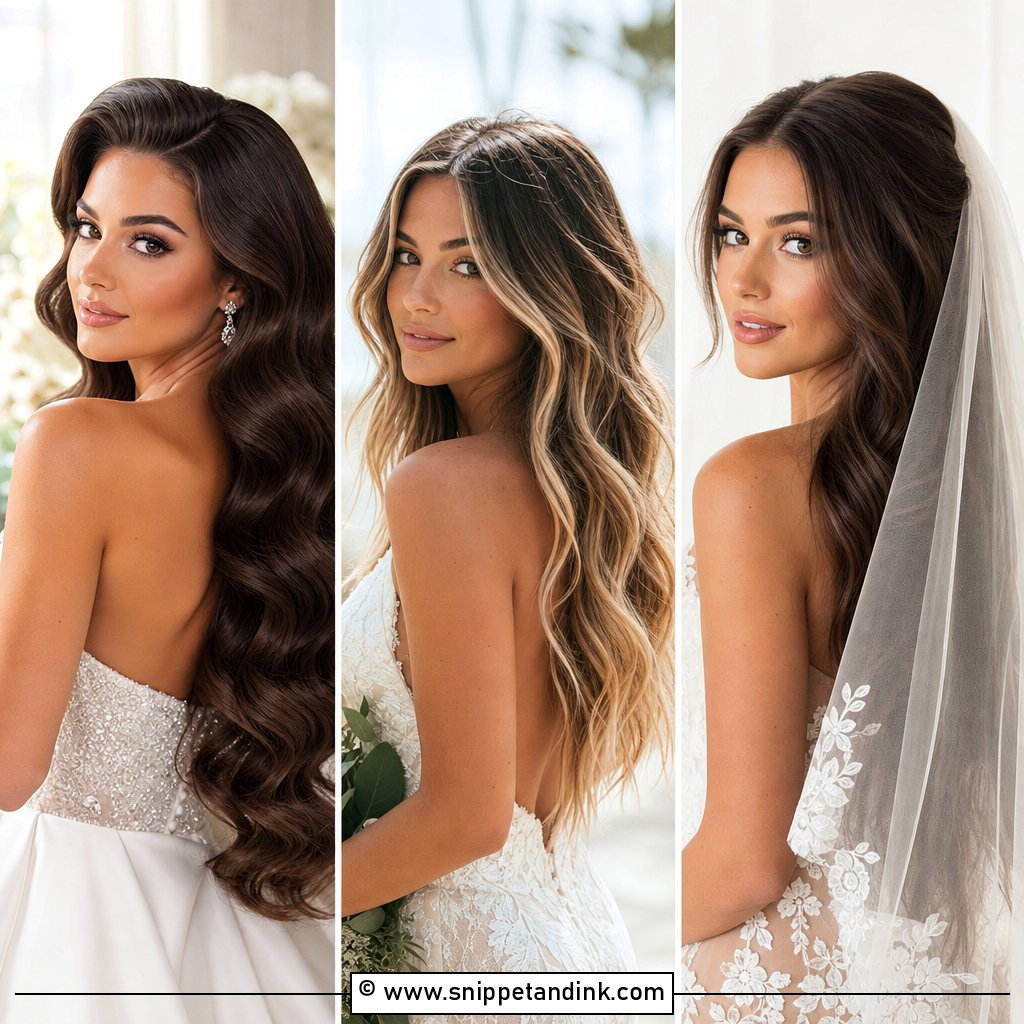
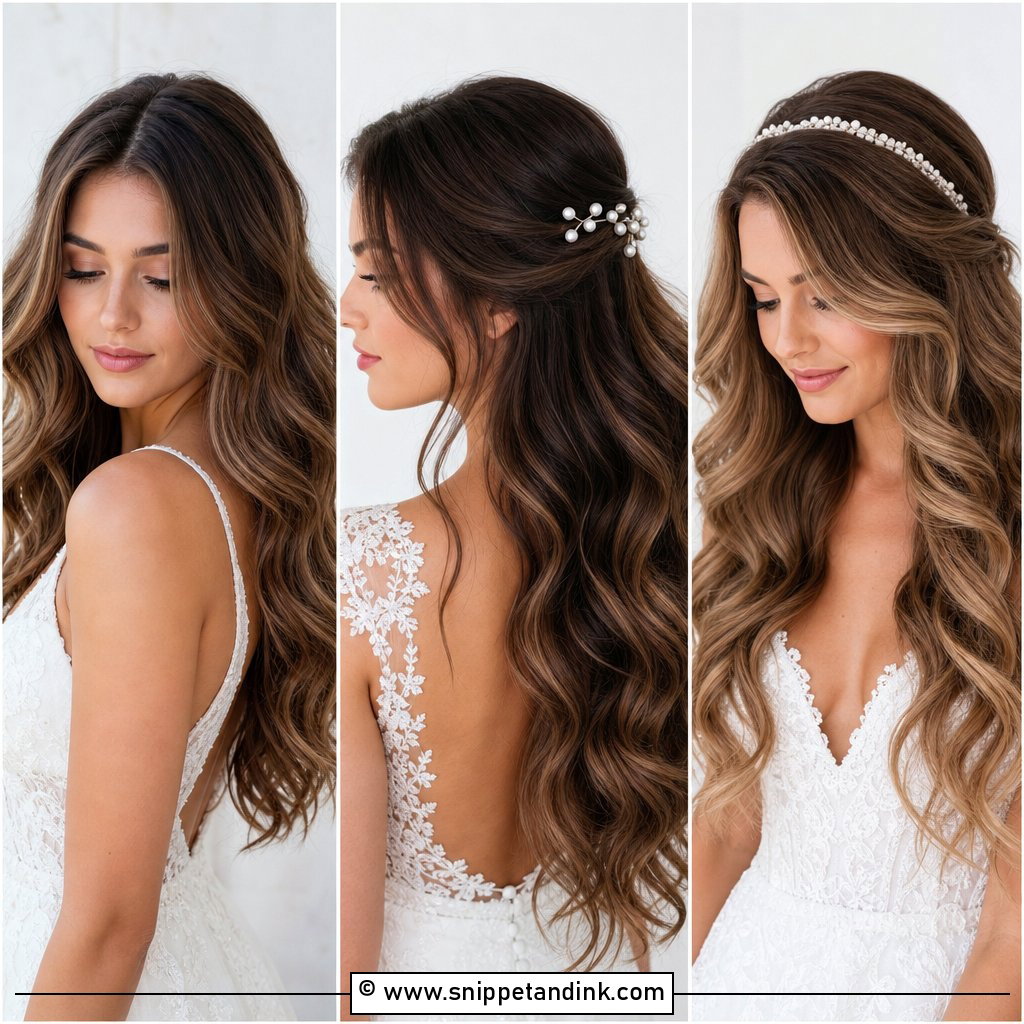
This is the sculpted, one-direction wave that ripples from the part to the ends in a single S-shape. I set every curl in the same direction, pin each one to cool, then brush the whole lot together with a boar bristle brush until the curls merge into one ridge. A deep side part is non-negotiable here, and so is length: below the collarbone, otherwise the S has nowhere to travel. A drop of shine serum on the brush, never on the roots, keeps it glossy without making fine hair separate into strands.
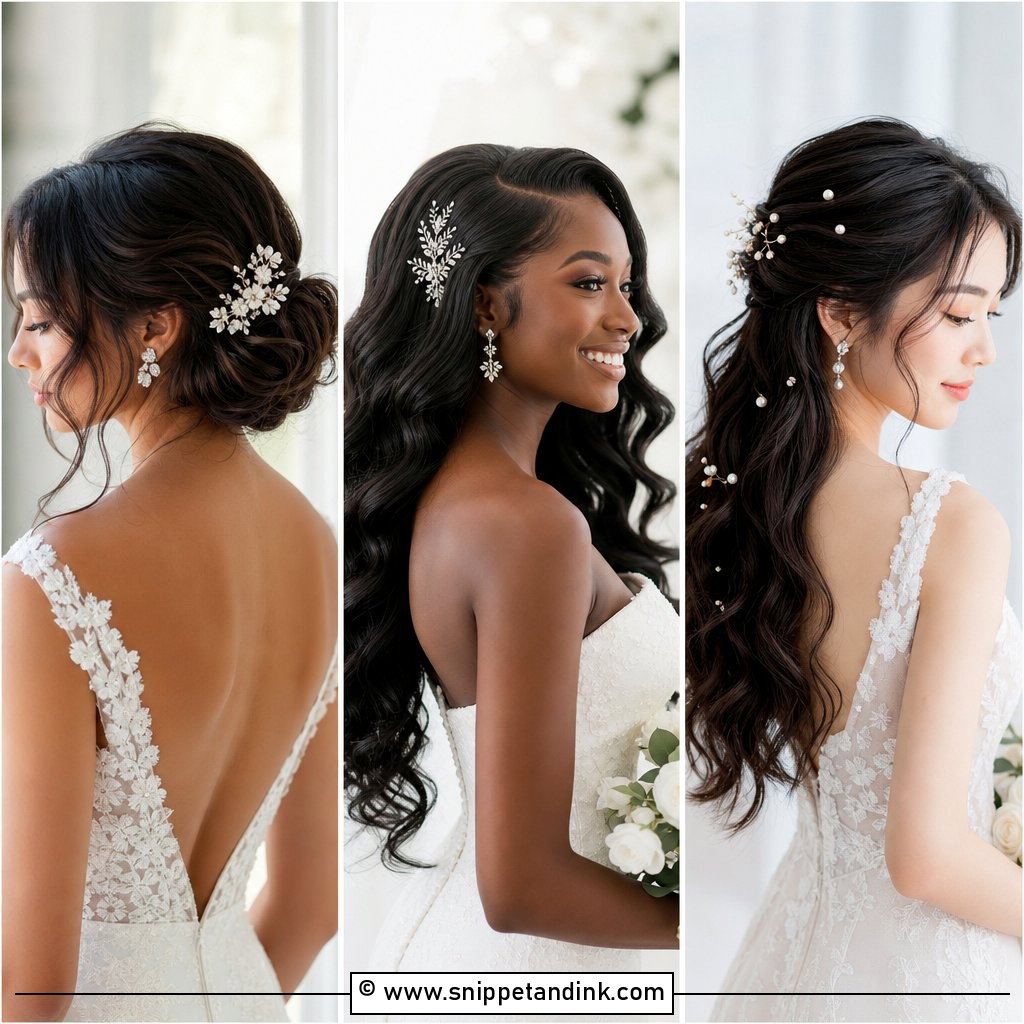
2. Half-Up Soft Waves With Pearl Pins
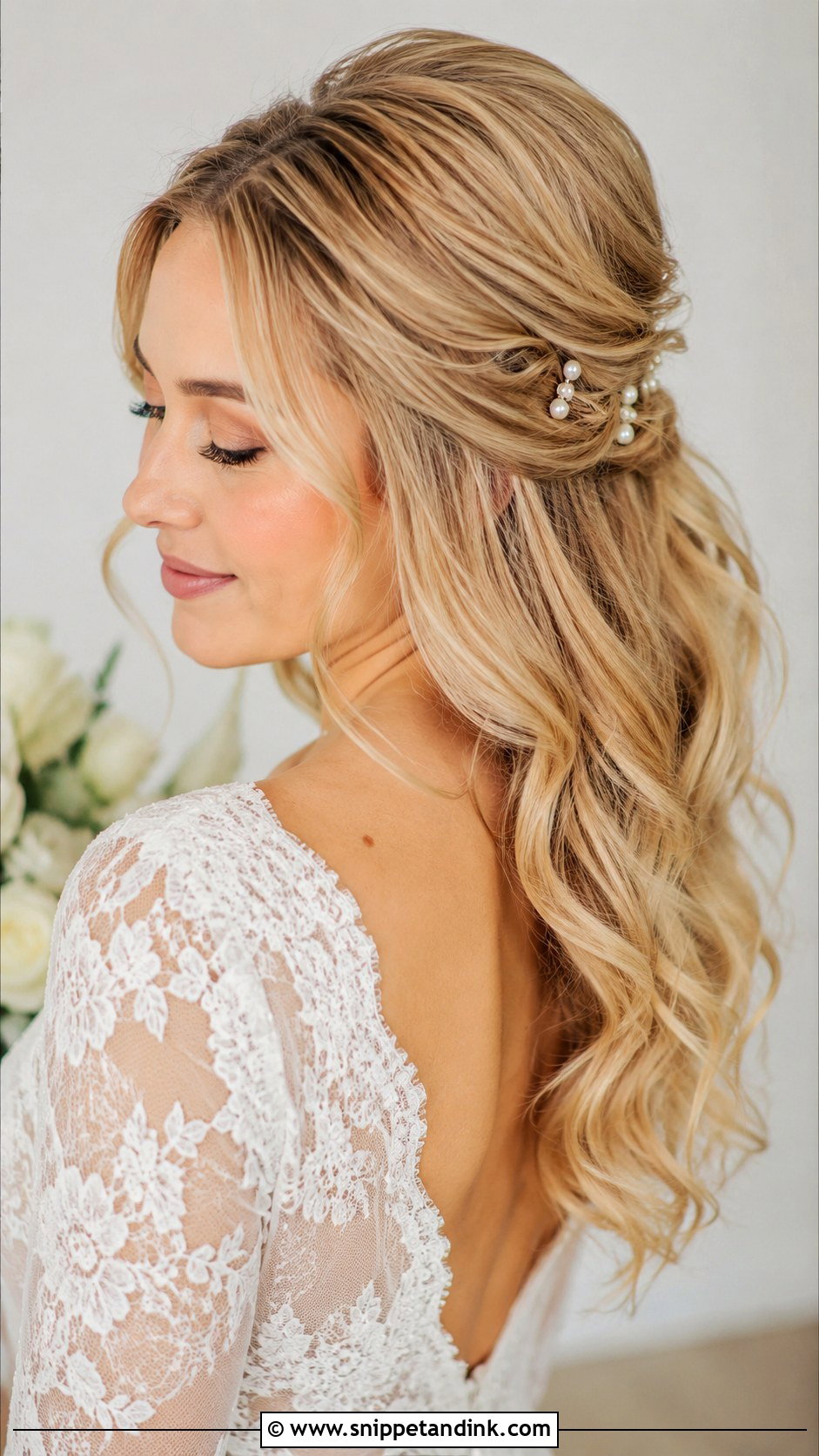
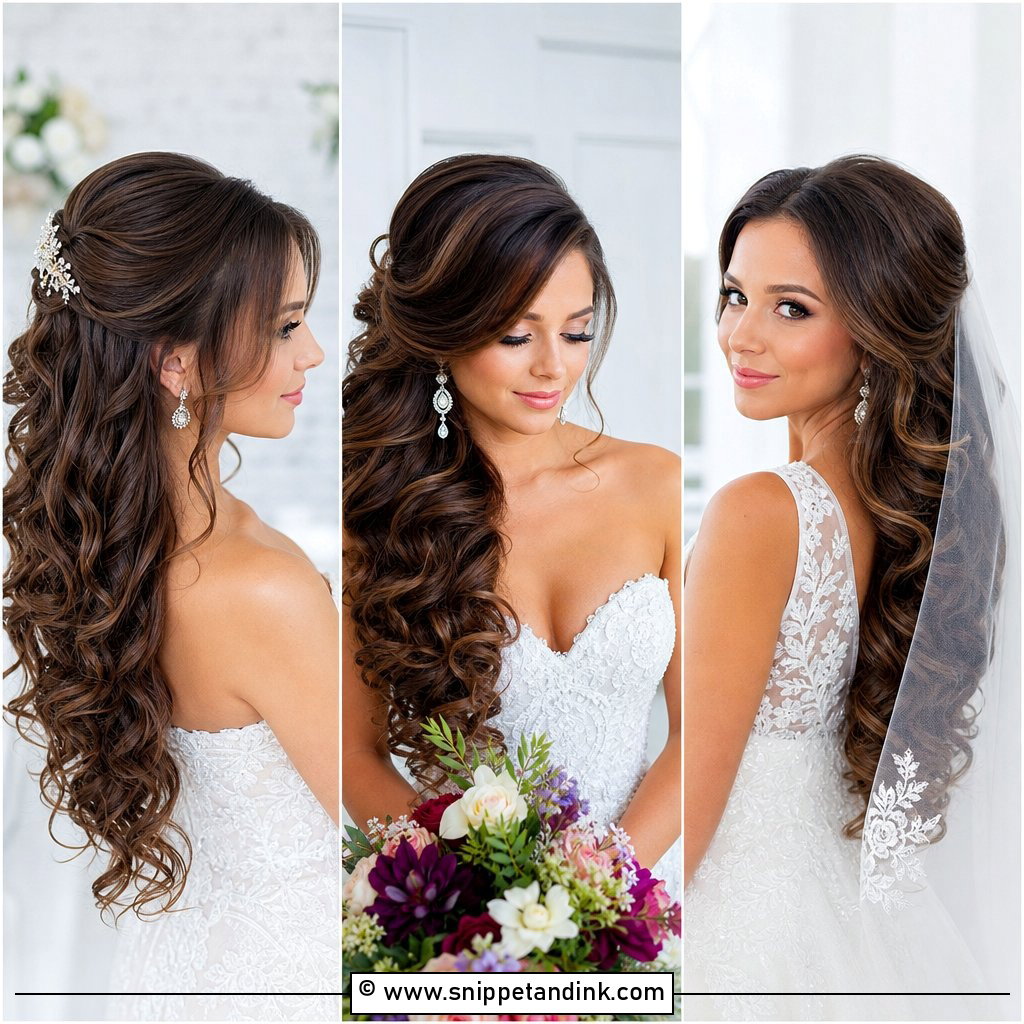
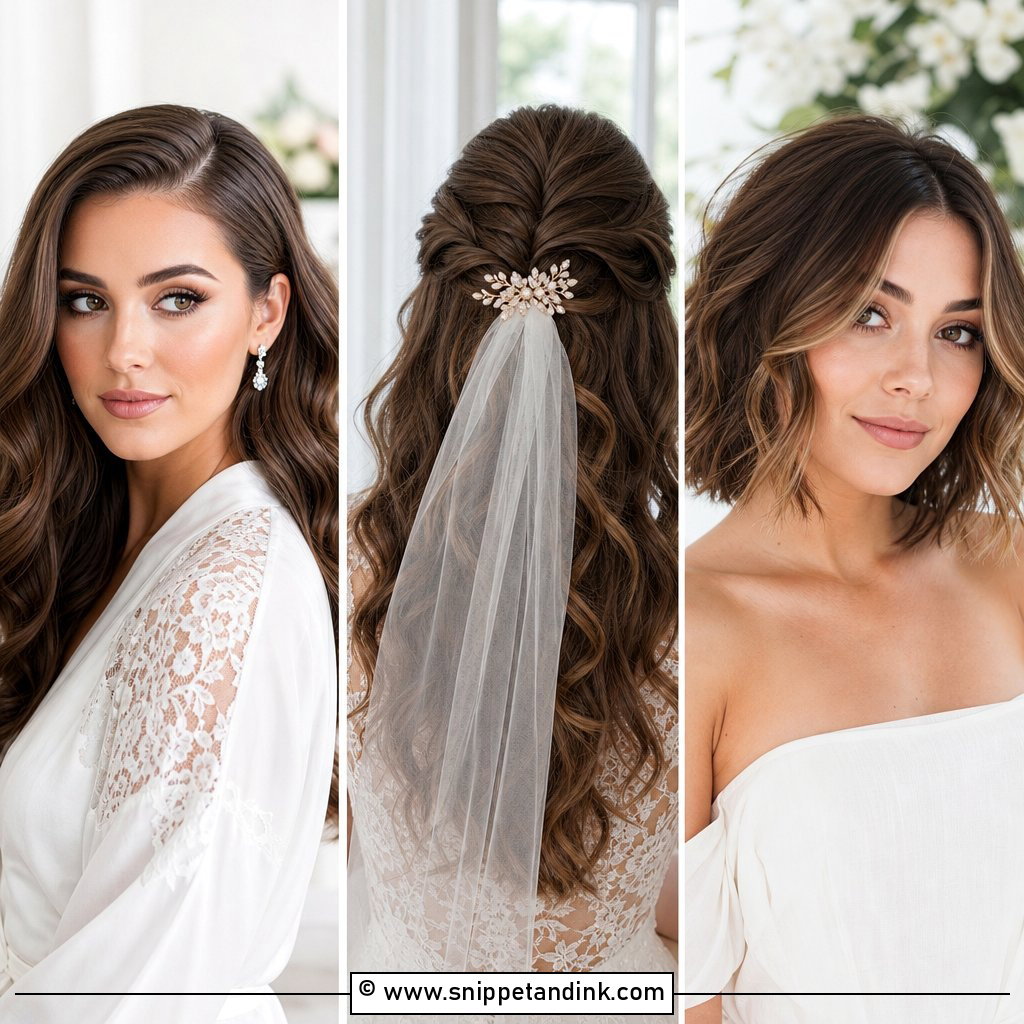
Half-up is my usual answer for a bride who wants her hair down but has a long night of dancing ahead. I lift the crown section, backcomb lightly at the base so the pins have something to grip, then cross two bobby pins in an X under the twist. Pearl pins go in last and are purely decorative; they don’t hold anything. It sits well on round and heart-shaped faces because the lift adds height. If you’re wearing a veil, ask your stylist to slide the comb in beneath the twist, where it has a firm anchor and won’t drag the waves flat.
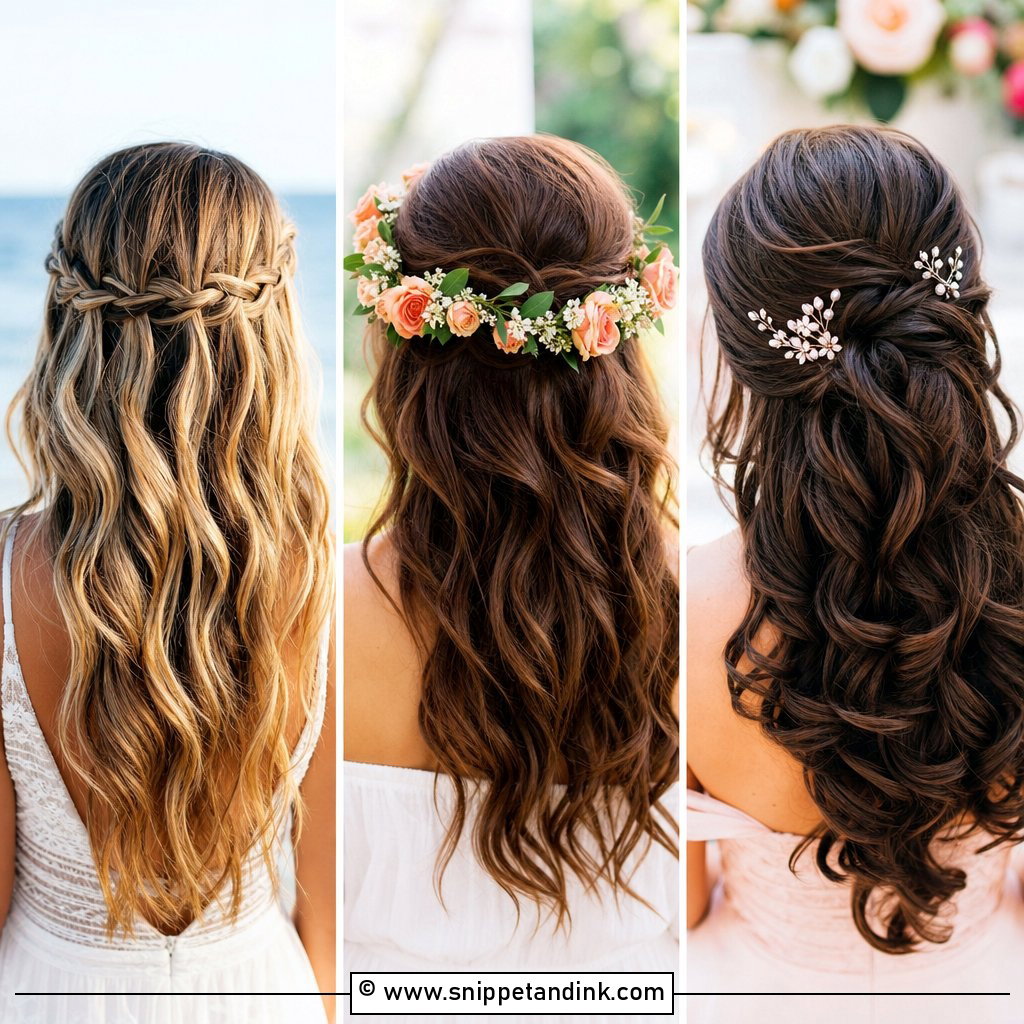
3. Soft Beach Waves For An Outdoor Wedding
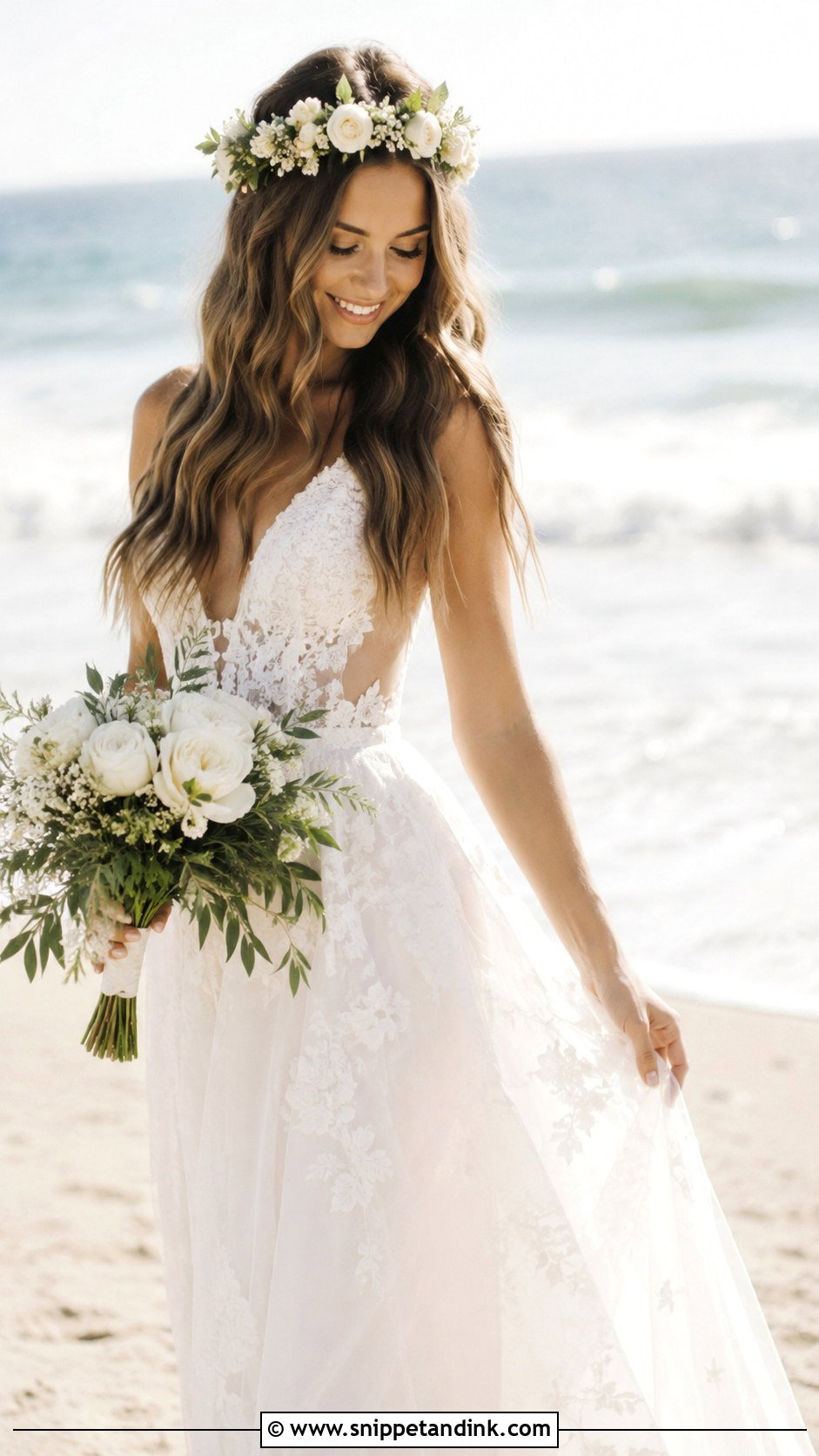
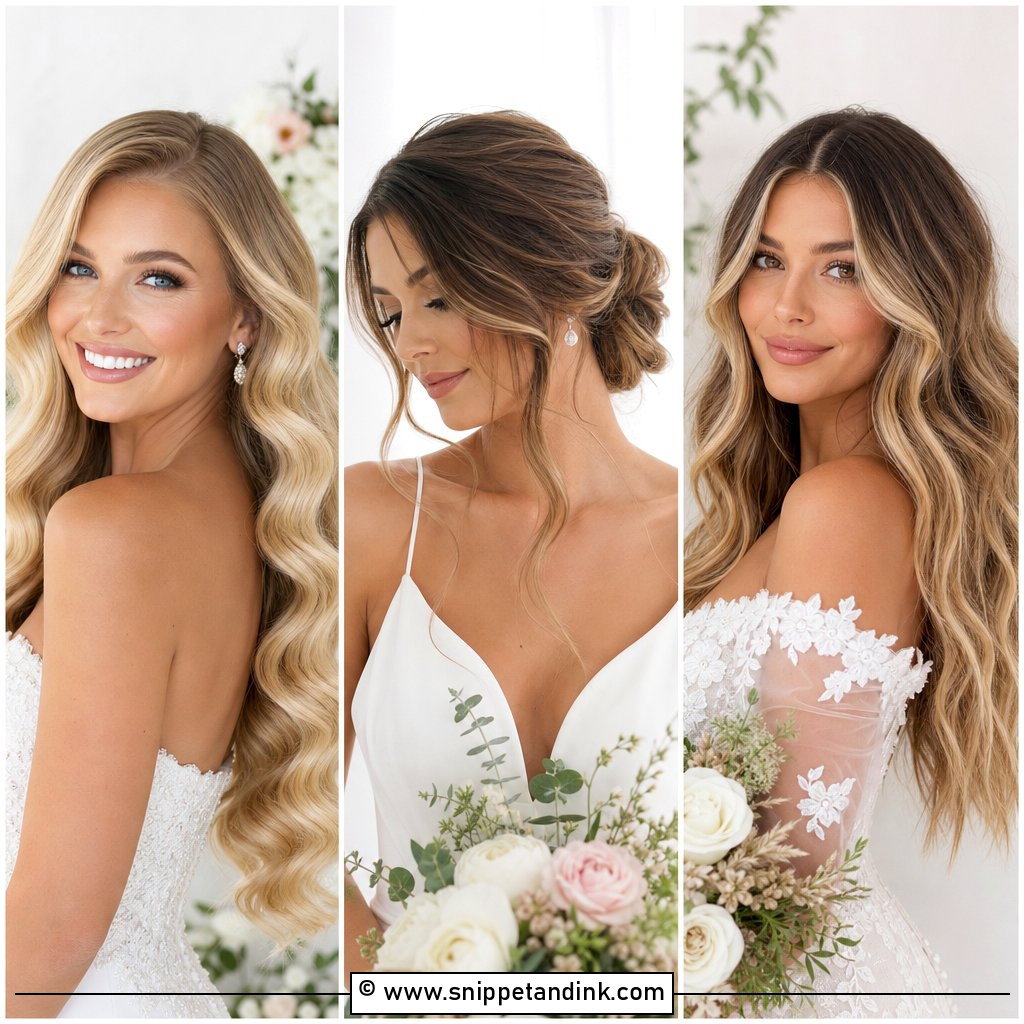
Beach waves are the relaxed version: airy, slightly piecey and meant to move. I use a large-barrel curling wand, wrap flat sections and leave the last inch or so straight, which is what stops them looking like a prom curl. A texture spray between curls gives grip, and a flexible-hold spray at the end keeps them soft. The honest warning is wind and sea air. On a coastal ceremony this look loosens faster than anything else on this list, so I’d only choose it if you’re happy with it getting messier as the day goes on.
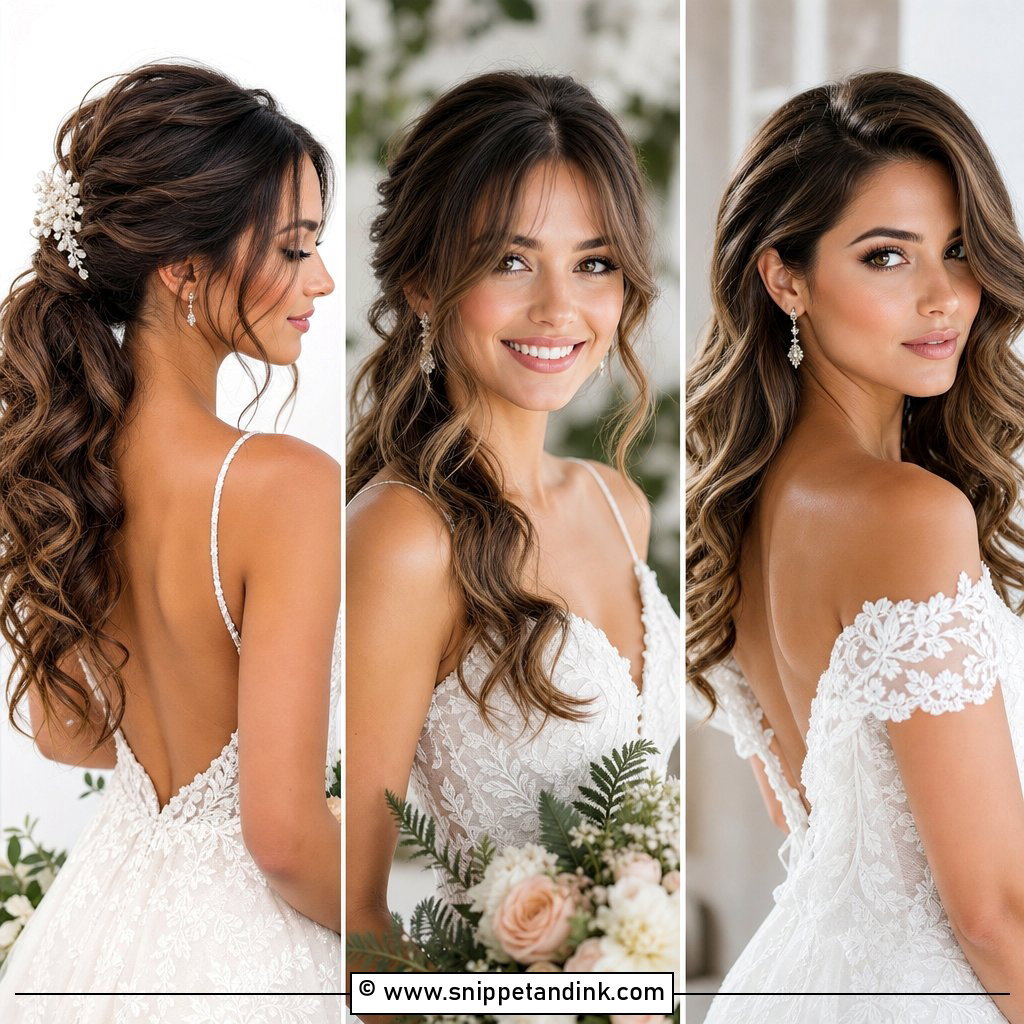
4. Center Part Soft Waves
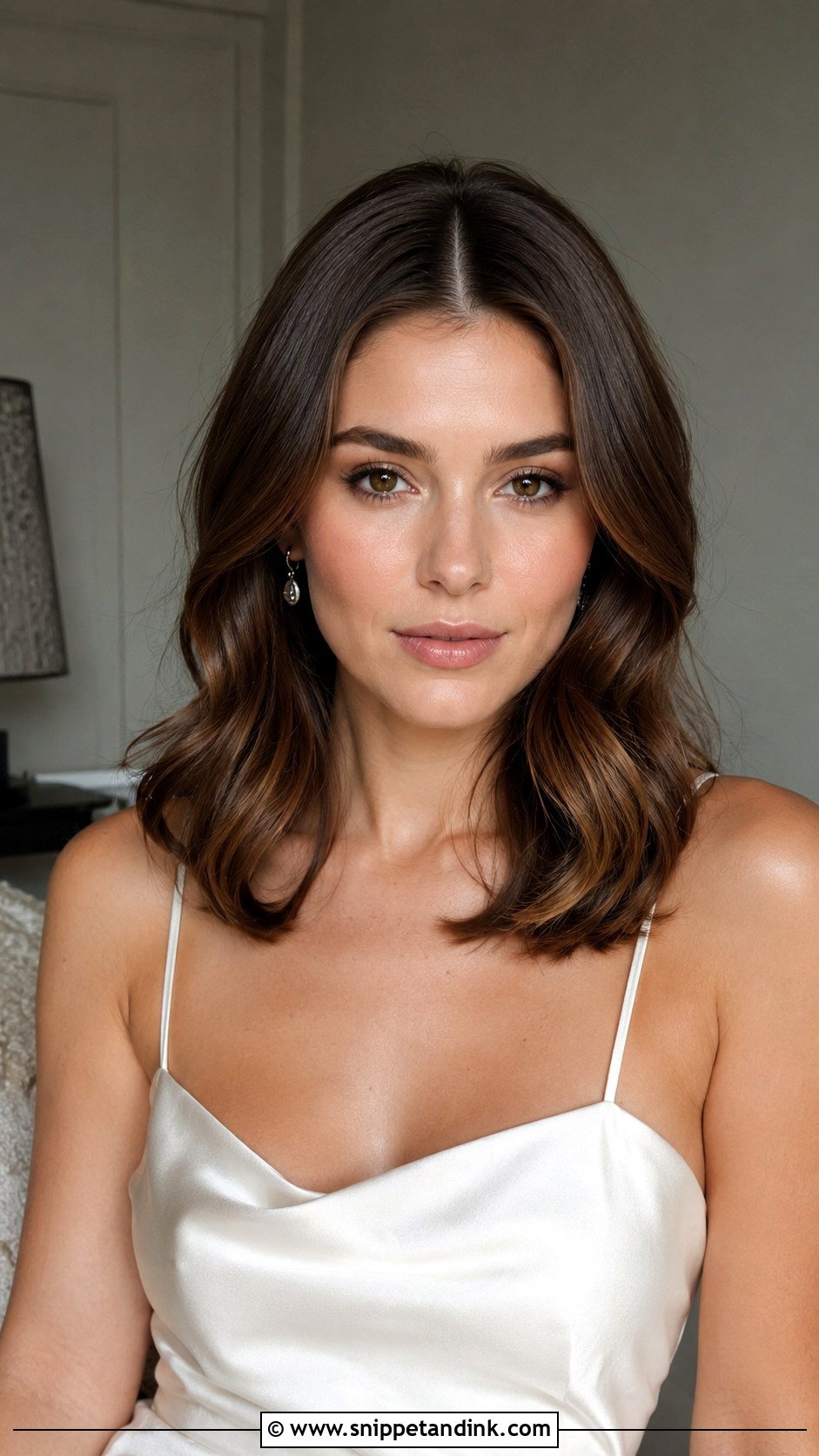
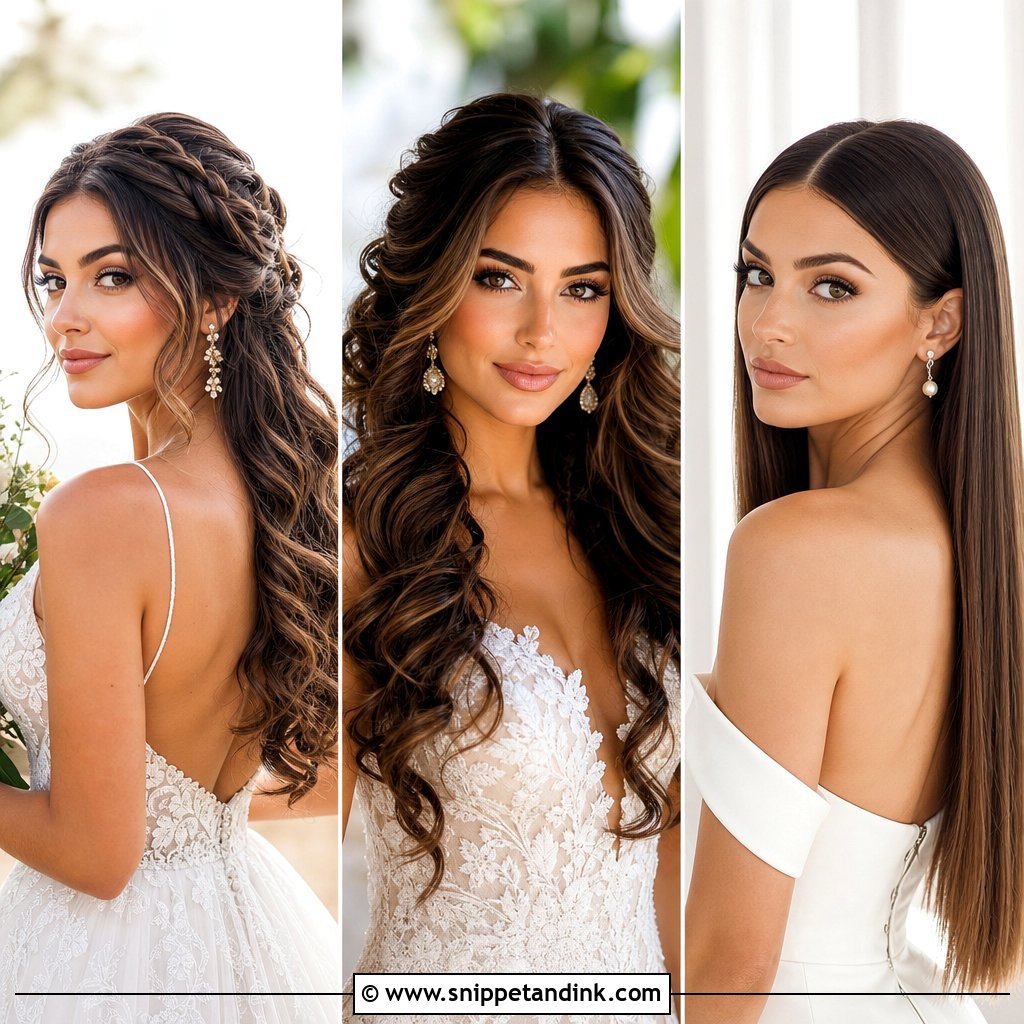
A centre part is less forgiving than it looks. Because both sides frame the face equally, any difference in how the waves fall shows straight away, so I curl the two front sections away from the face on both sides and check them in a mirror together. Keeping the roots smooth and starting the bend at ear level gives that clean contrast. Oval and longer faces suit it best. On a very round face I usually nudge the part a few millimetres off centre, which softens things without anyone noticing.
5. Soft Waves With A Side Part
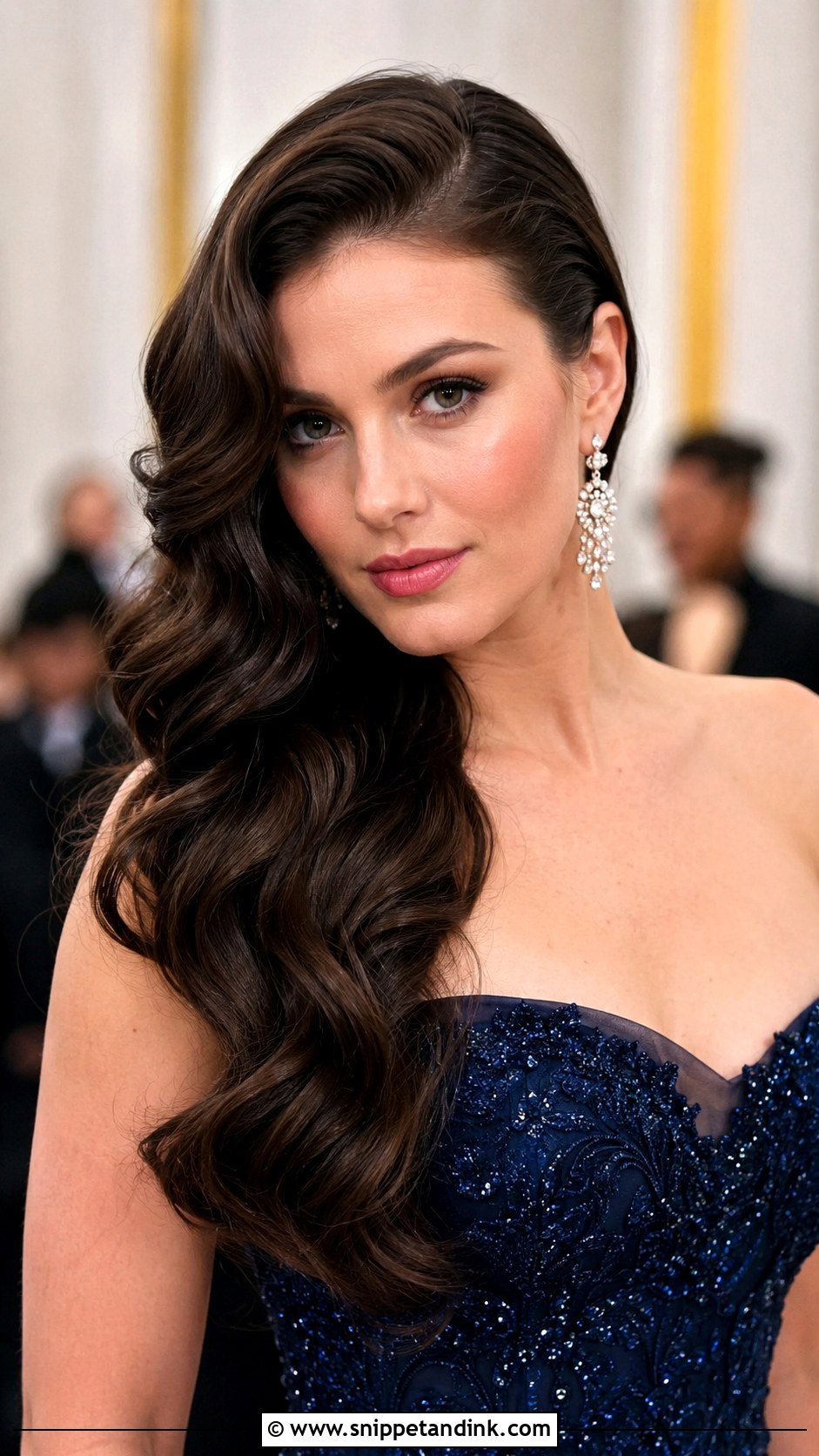
Flipping everything to one side builds volume at the part and lets the heavier side spill over a shoulder. To stop it creeping back, I pin the hair behind the ear on the short side with two crossed pins hidden under a top layer, and a jeweled pin can cover the spot if you like. It balances rounder faces and shows off cheekbones well. It pairs naturally with off-shoulder necklines, though a high halter can fight it, because the hair keeps catching on the strap.
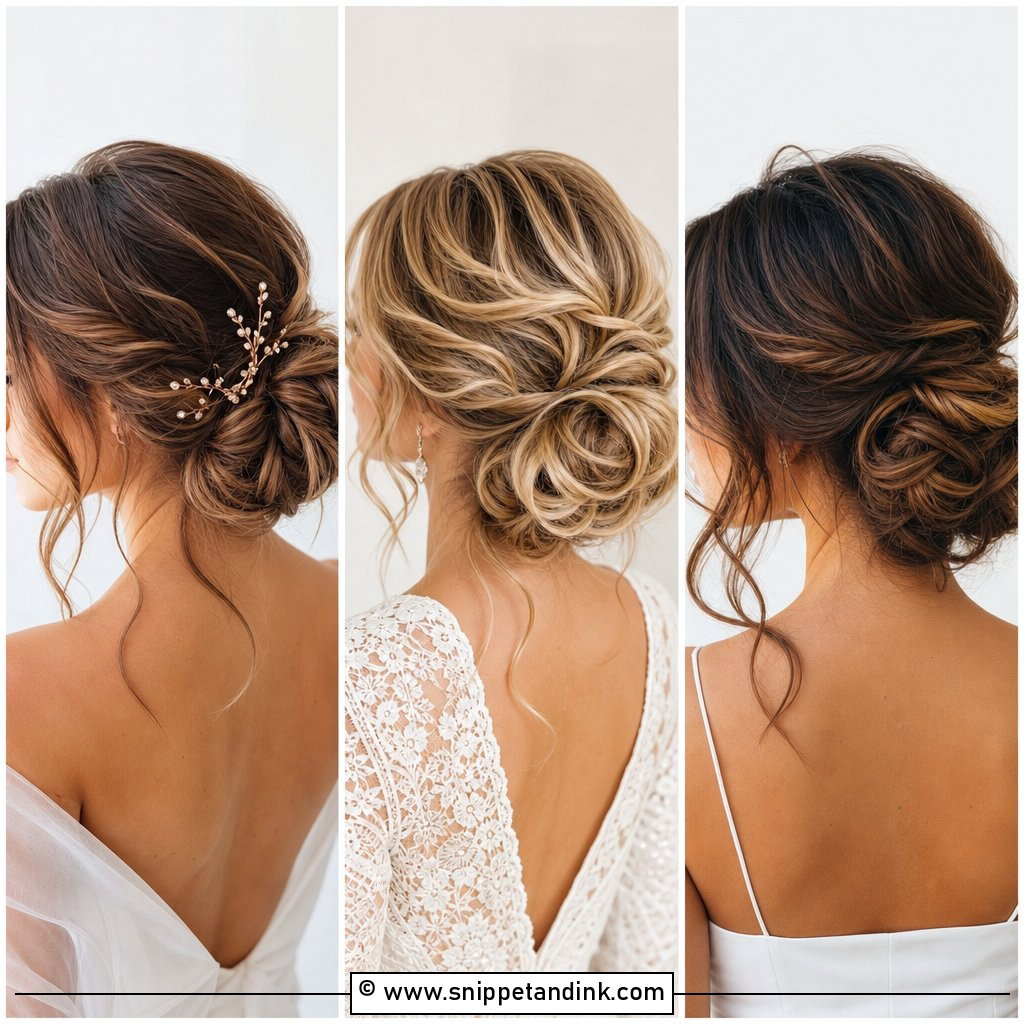
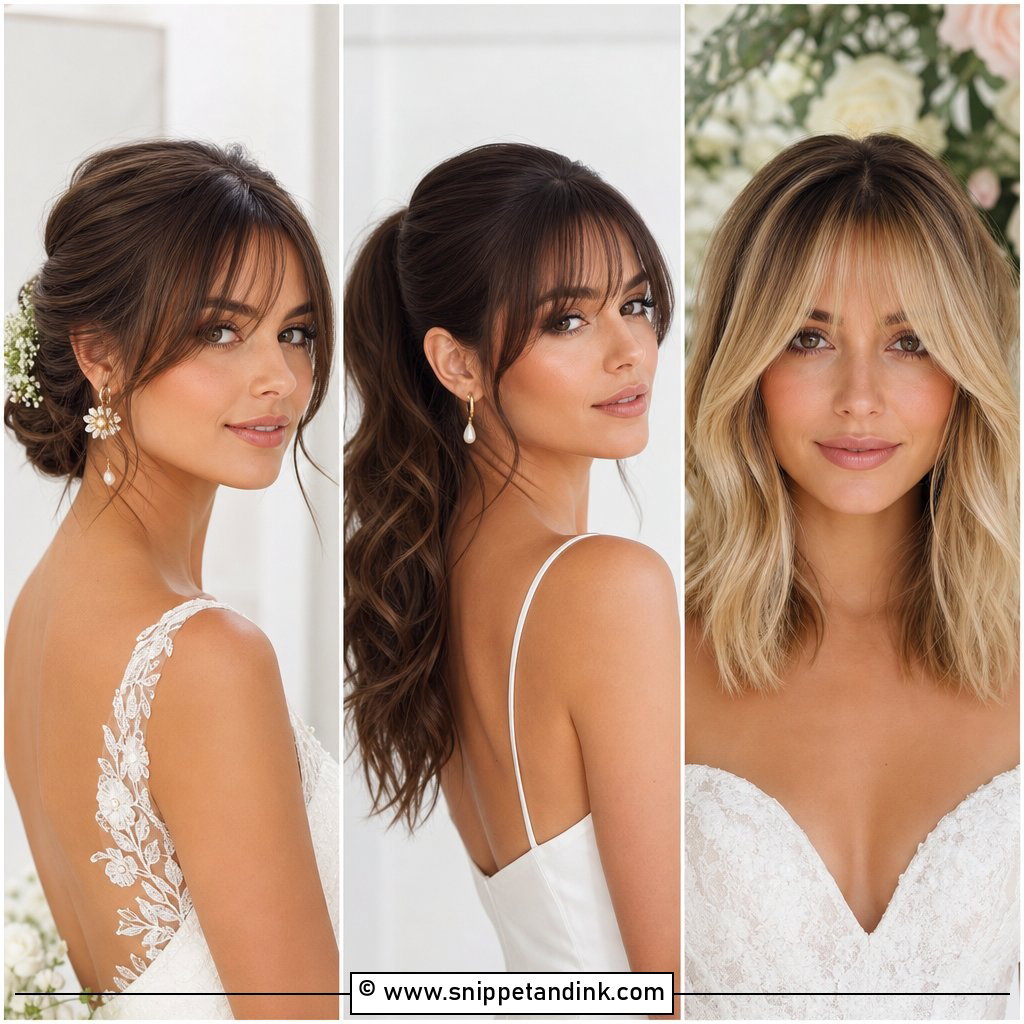
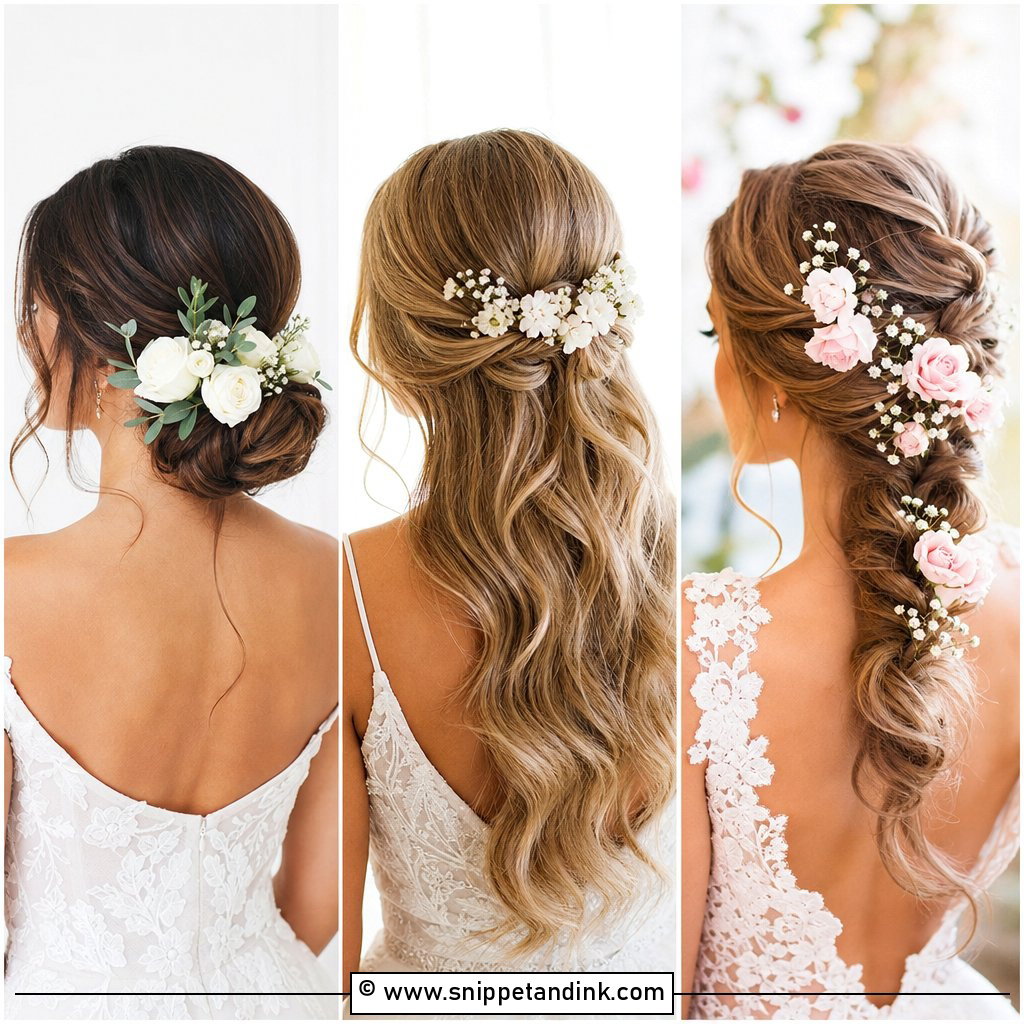
6. Low Bun With Soft Waves Around The Face
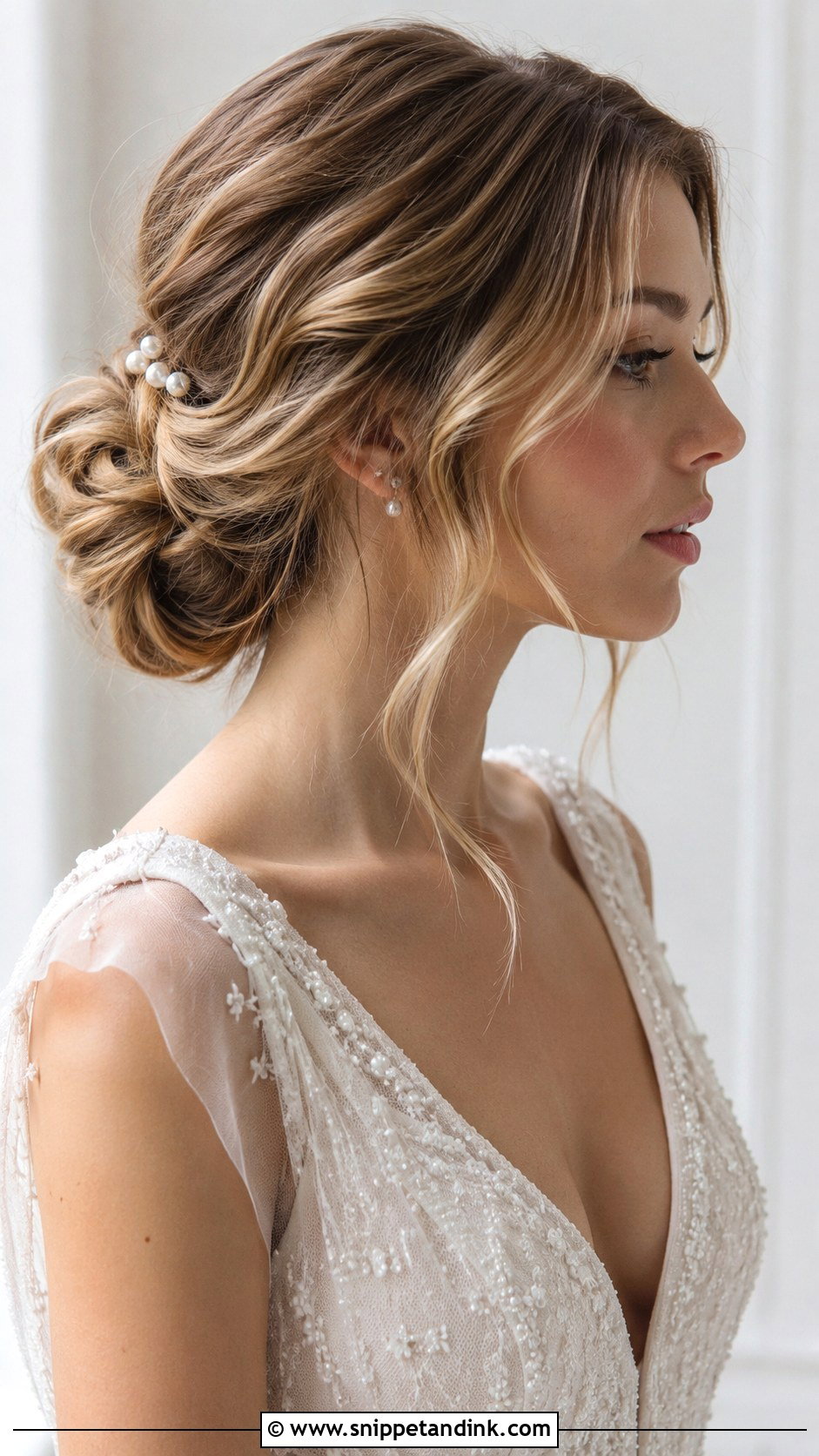
This is the compromise I suggest when someone wants an updo but worries about looking severe. Most of the hair goes into a loose low bun at the nape, and I leave two or three pieces out at the front, curled away from the face. The trick is to curl those front pieces before the bun goes in, so they have time to set. In summer heat it keeps hair off your neck, which matters more than people expect by the fourth hour. Pearl pins or a small floral piece near the bun finish it without much fuss.
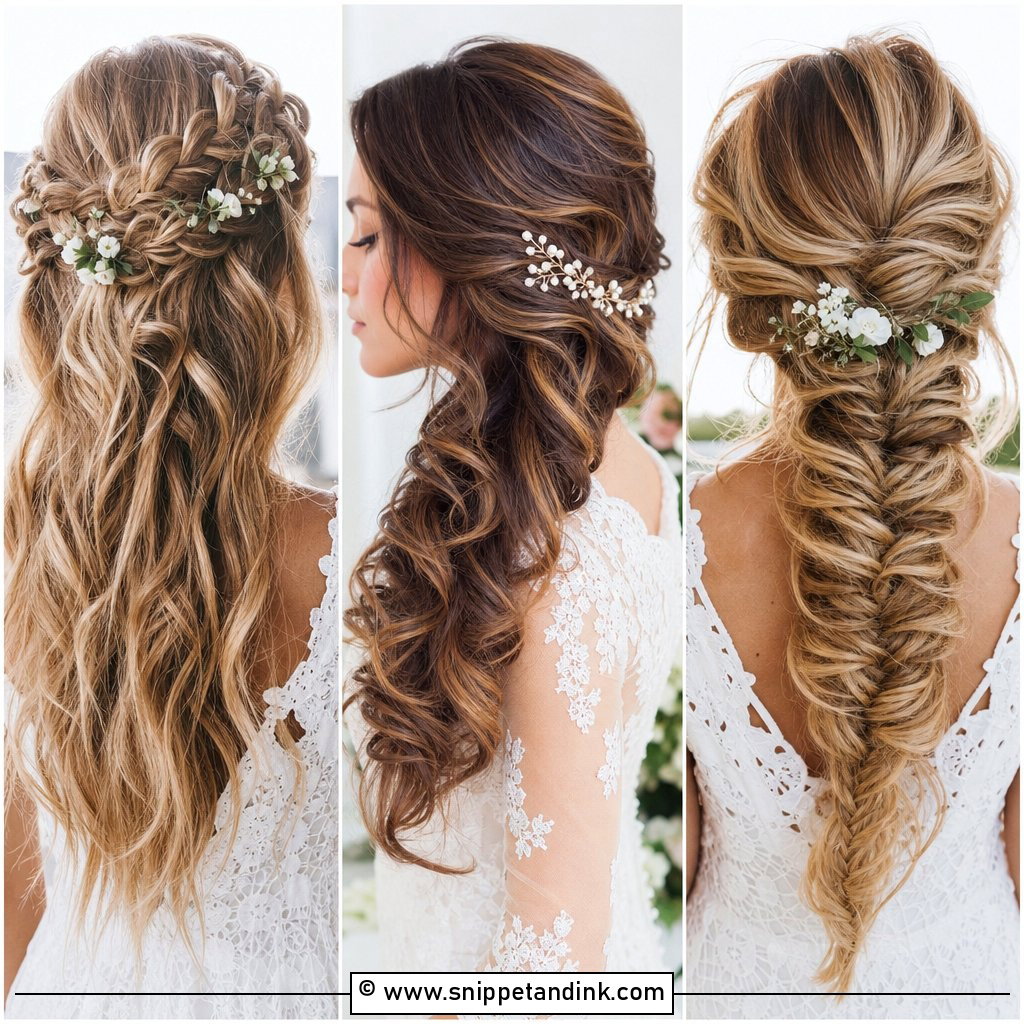
7. Soft Waves With A Braided Crown
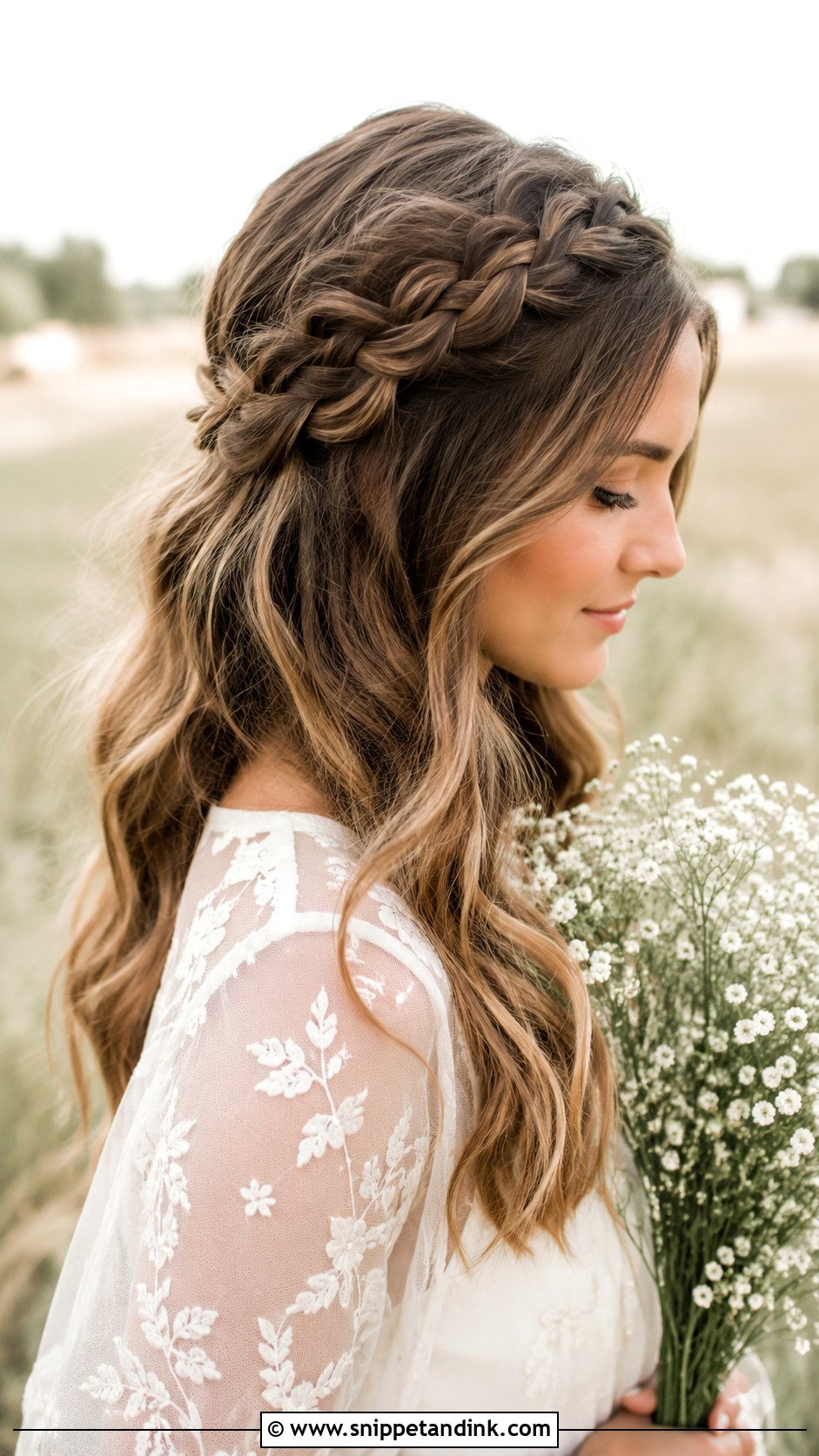
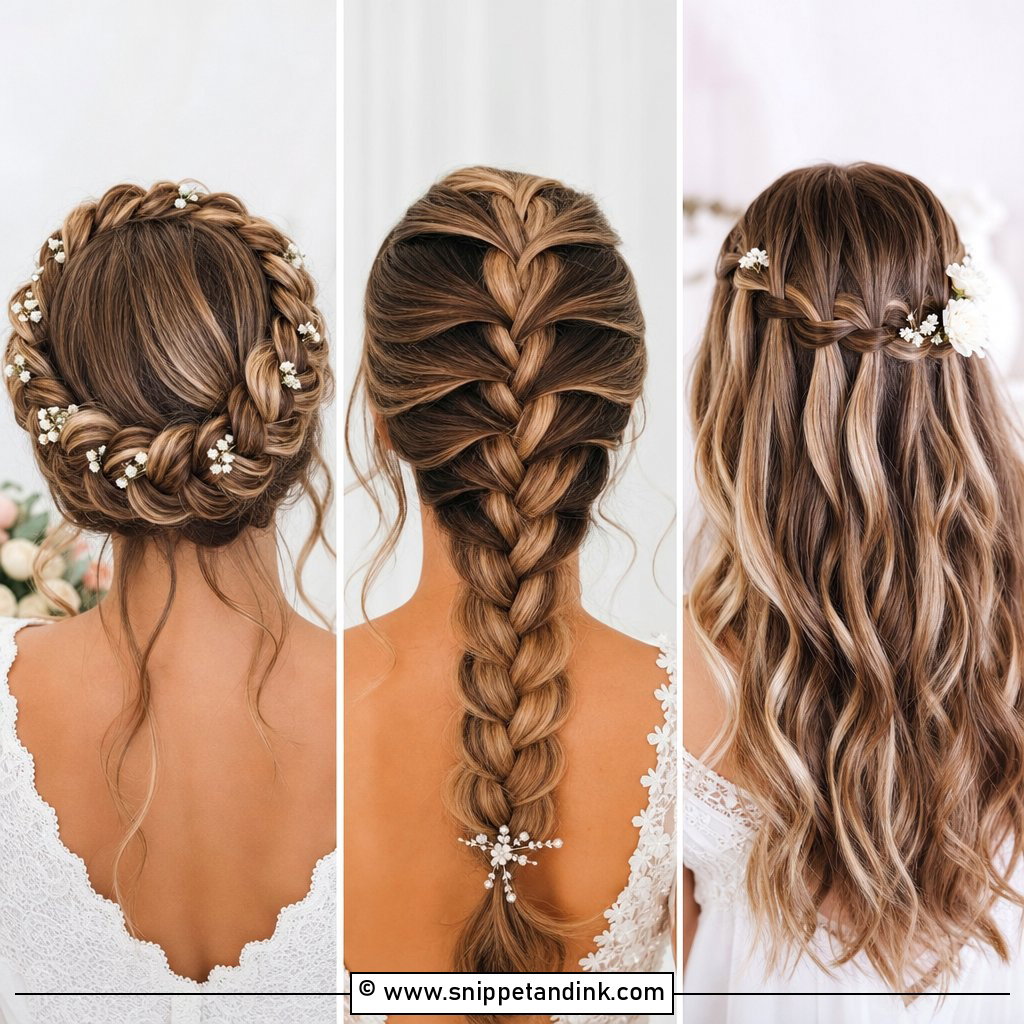
A braided crown works like a soft headband, wrapping from one ear to the other with waves left loose underneath. I braid it fairly tight first, pin it, and only then pull at the edges to loosen it; braiding loose from the start gives you a braid that falls apart by the speeches. It needs thick, long hair to look full. On finer hair I’ll often hide a thin clip-in piece inside the braid so it doesn’t look sparse. Baby’s breath tucked into the plait holds up well because it barely wilts.
8. Glam Waves With A Deep Side Sweep
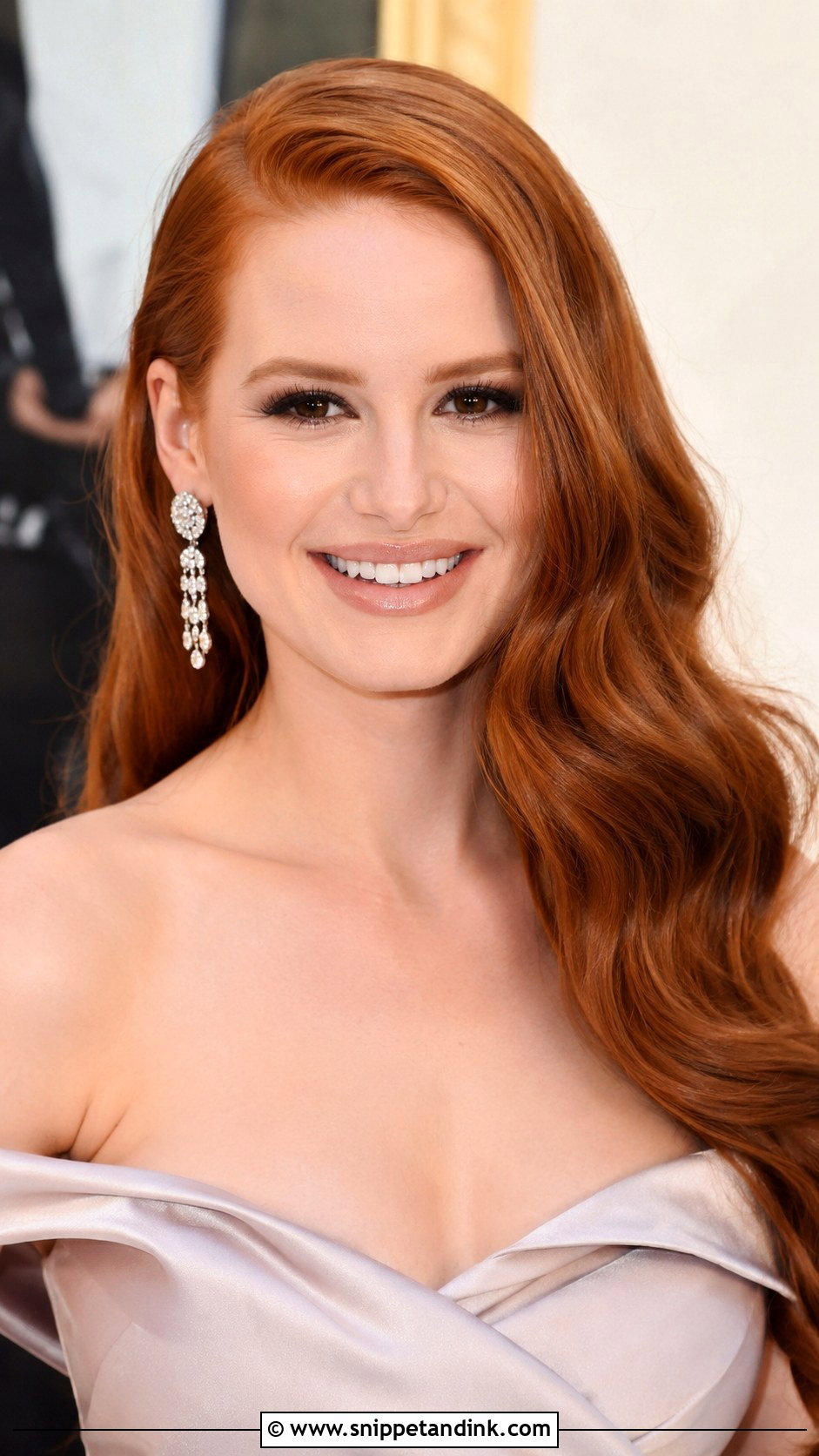
Pure glamour, and the version with the most volume at the part. Everything is swept over one shoulder and anchored behind the opposite ear with crossed pins, then the waves are brushed into defined ridges with plenty of shine. It needs medium to long hair with real density; on thin hair the sweep exposes the scalp at the part. I keep earrings bold and the neckline clean, since a ruffled collar and this much hair fight for the same space.
9. Soft Waves With A Birdcage Veil
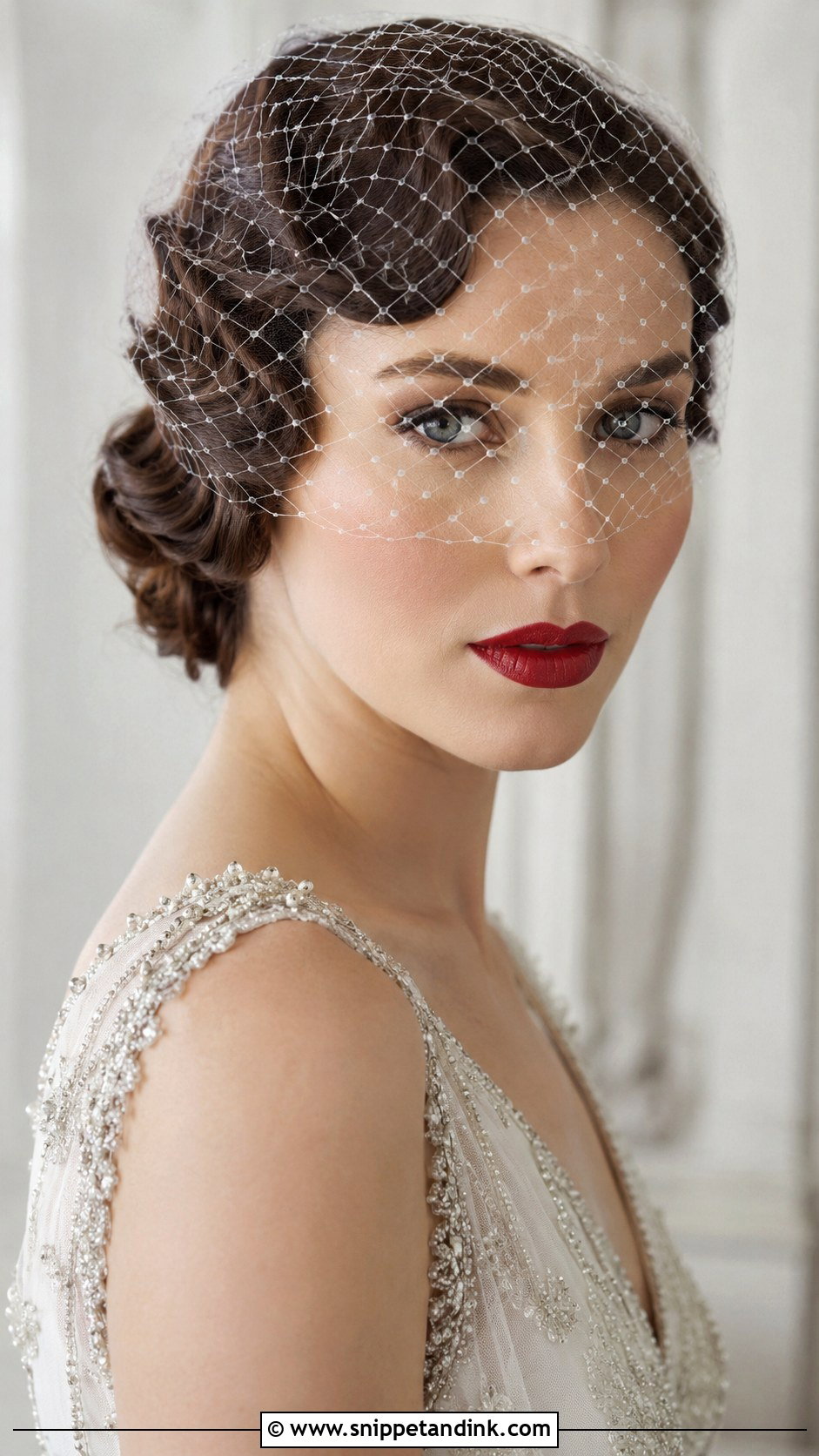
This one leans fully vintage: glossy, finger-waved sections close to the head with a birdcage veil pinned to one side. Finger waves are set wet with a firm gel and left to dry completely, so plan extra chair time, or ask for a hot-tool version that imitates the shape faster. The short veil sits on the side opposite the deep part, which keeps the waves visible. I’d add a bold lip to finish the period feel. It suits elopements and courthouse ceremonies where the whole look can be a little theatrical.
10. Long Soft Waves With Layers
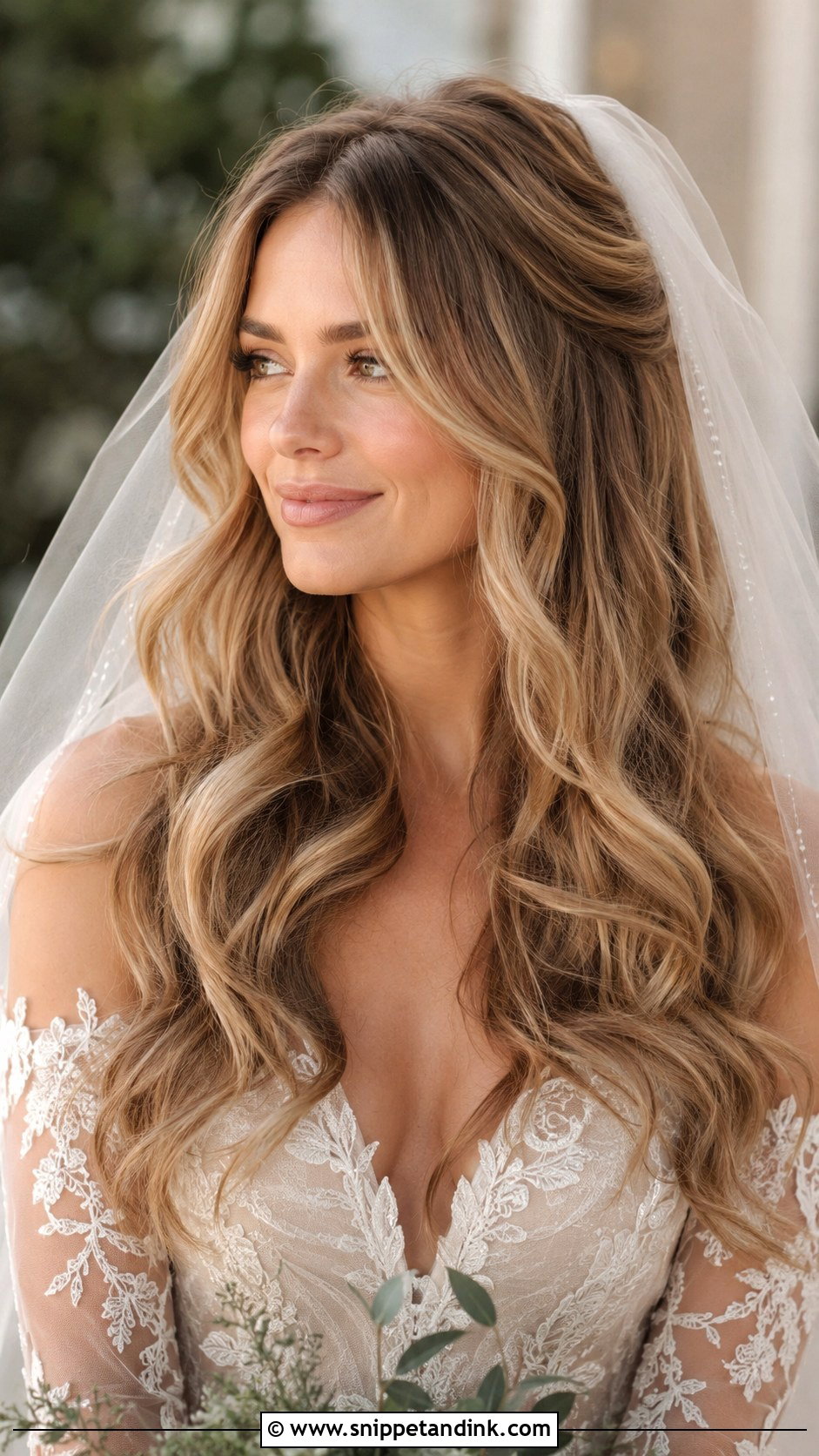
Layers do half my job for me here. Because the lengths already sit at different points, waves fall into place without looking like a row of matching curls. On thin hair, the layers make it look fuller; on very thick hair they take some weight out, which helps the waves keep their shape. I alternate the curl direction on the back sections so the pieces don’t clump together. Flexible-hold spray, never a firm one, keeps the bounce.
11. Soft Waves Half-Up With A Twist
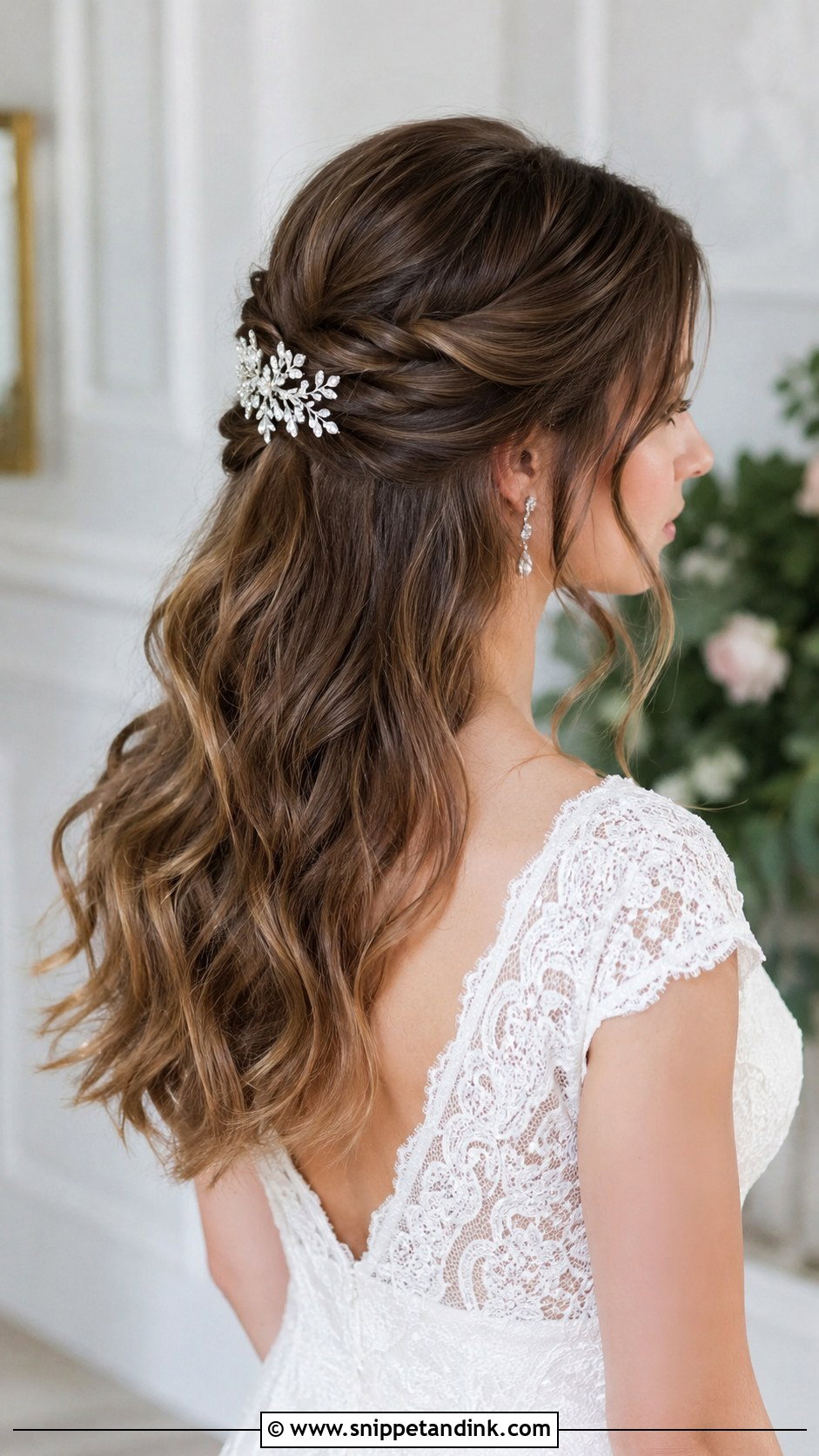
Two small sections are twisted back from each side and pinned where they meet, which looks intricate but is quick to do. I twist each section away from the face and tighten it slightly before pinning, because a slack twist sags once you start hugging people. A jeweled clip can sit right over the join. It works from a lob to very long hair, and it’s one of the few half-up styles where the back view matters as much as the front, so check it in a hand mirror at your trial.
12. Soft Waves With Curtain Bangs
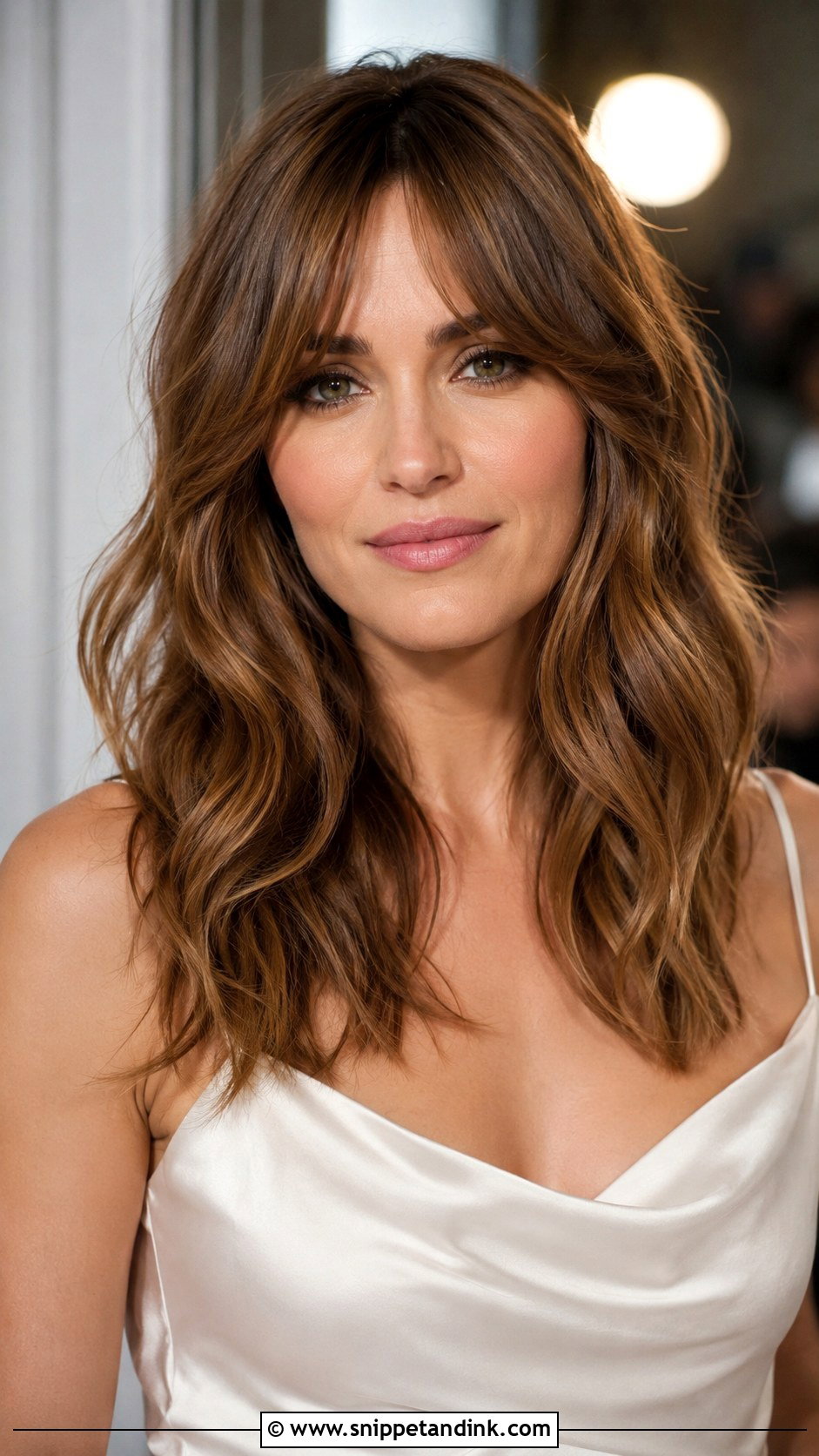
Curtain bangs need to be part of the wave pattern, not styled separately. I blow-dry them over a round brush away from the face, then give them a single bend with the iron so they match the lengths. Curtain bangs flatter most face shapes because they soften the forehead and draw focus to the eyes. My one caution: don’t cut them for the first time in the week of the wedding. Get them trimmed two to three weeks ahead so they have settled.
13. Soft Waves With A Floral Crown
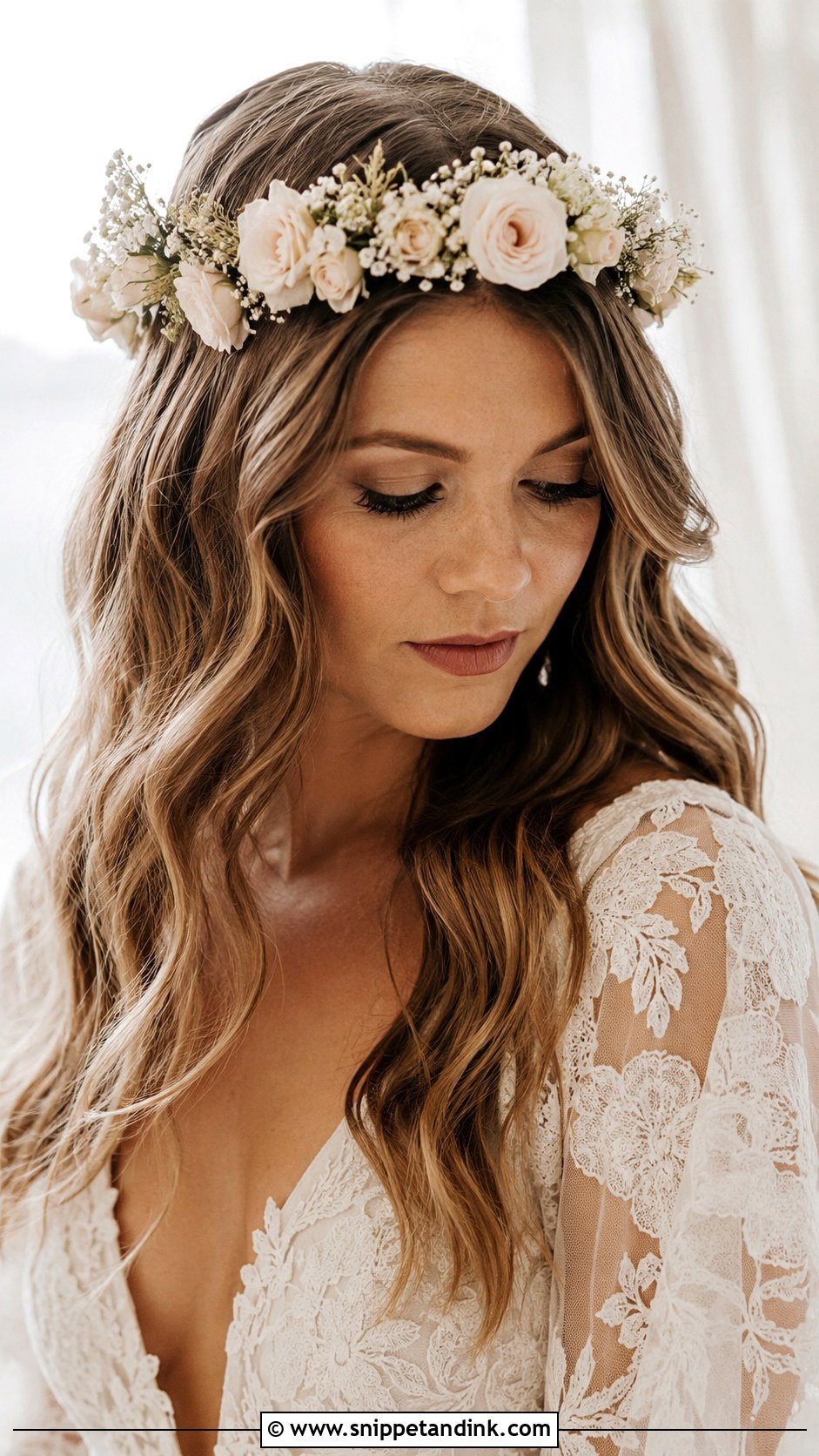
Florals change the whole feel of soft waves, making them lighter and more garden-like. I always ask what the bouquet contains so the crown can repeat one or two flowers. The practical issue is wilting. Delicate blooms like gardenias brown fast once out of water, so for a long outdoor day I prefer sturdier choices like spray roses, waxflower or baby’s breath. The crown sits better on loose, airy waves than on tight ones, because looser hair gives the wire base something to nestle into.
14. Sleek Roots With Soft Wave Ends
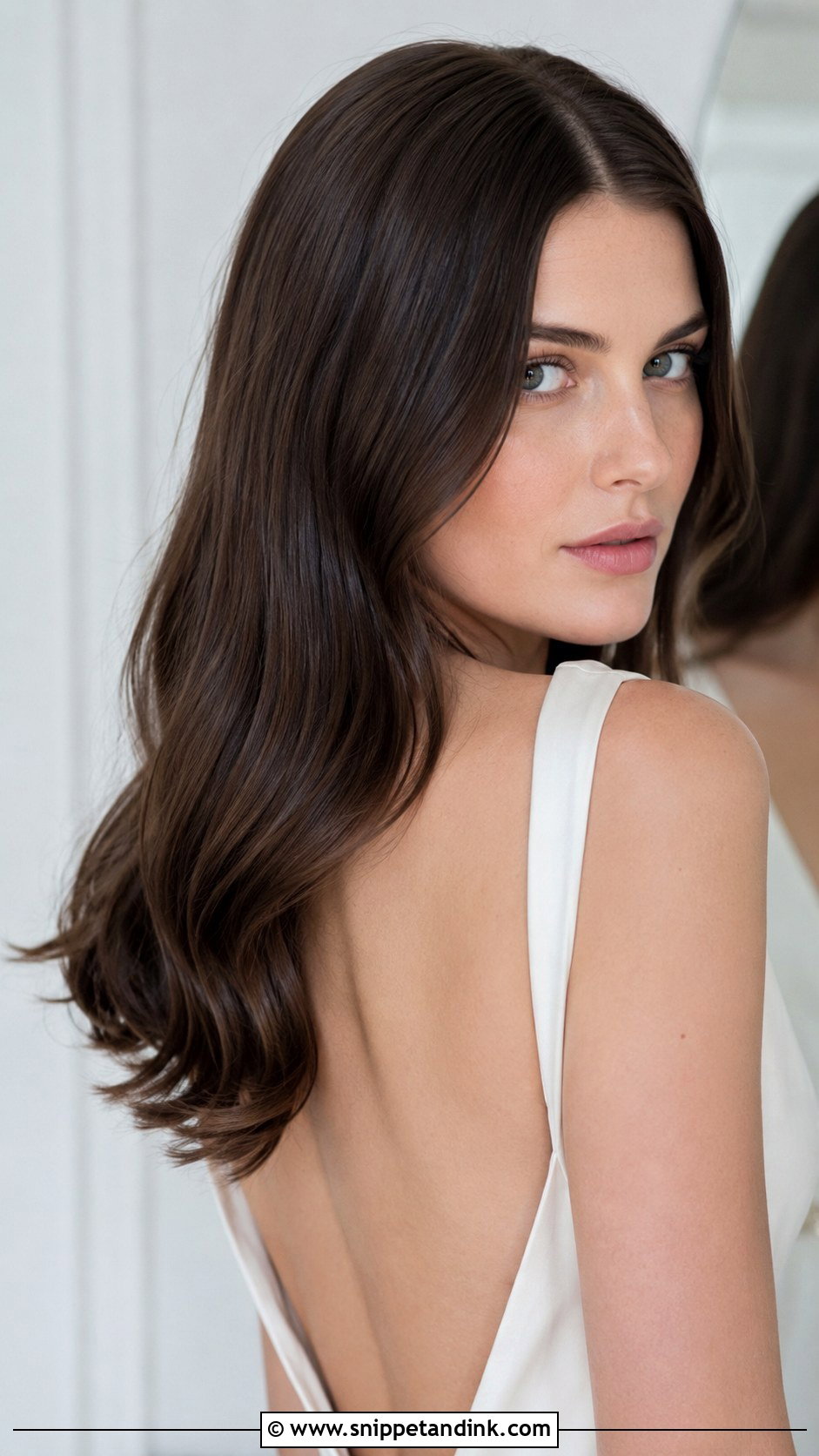
Smooth roots and soft ends is the most modern-looking version here. I keep the top flat with a little smoothing cream and start the bend from mid-length, which leaves a clean outline around the face. It holds well because there is less curl to drop at the crown. Medium to long hair suits it. On naturally curly hair I’d need a full blow-dry first to get the flat crown, so add time for that.
15. Soft Waves In A Side Ponytail
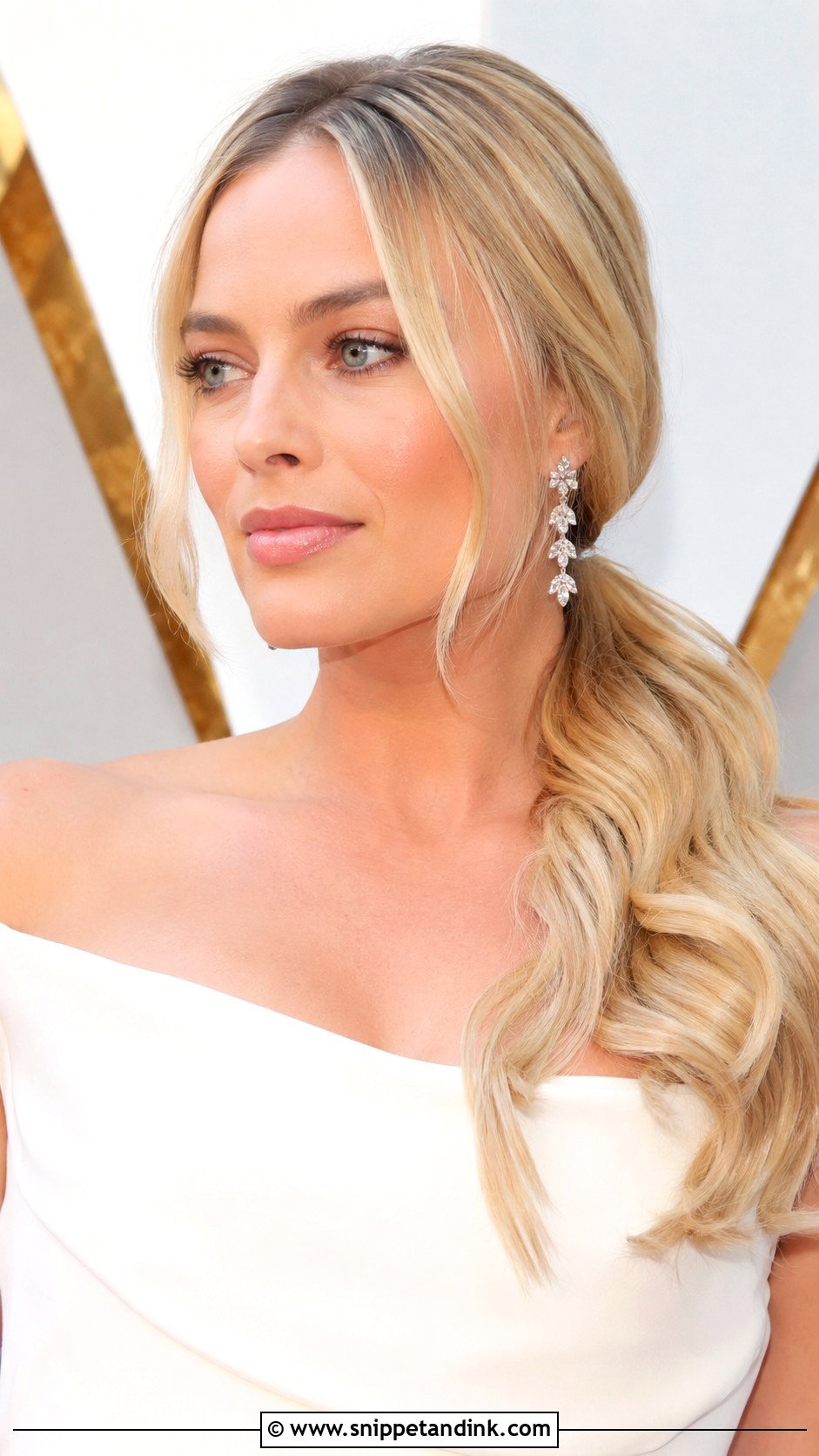
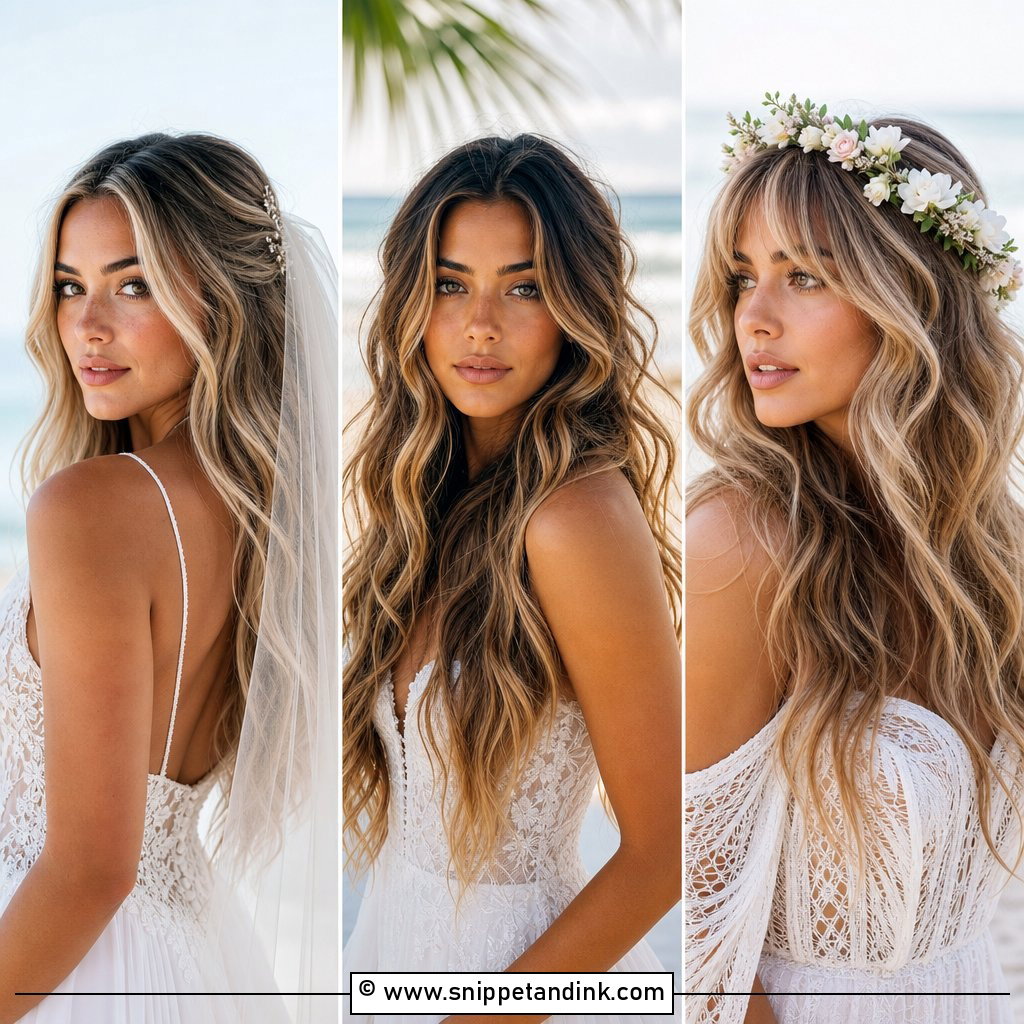
A low side pony over one shoulder looks relaxed but is very secure. I gather it loosely, tie it with a clear elastic, then wrap a small strand around the base and pin it underneath so the elastic disappears. It keeps everything contained through a long day while still showing the waves. Long, thick hair suits it best; on fine hair the ponytail can look thin, so I’d add a hidden extension. A couple of loose face-framing pieces stop it reading as a gym pony.
16. Soft Waves With A Jeweled Headband
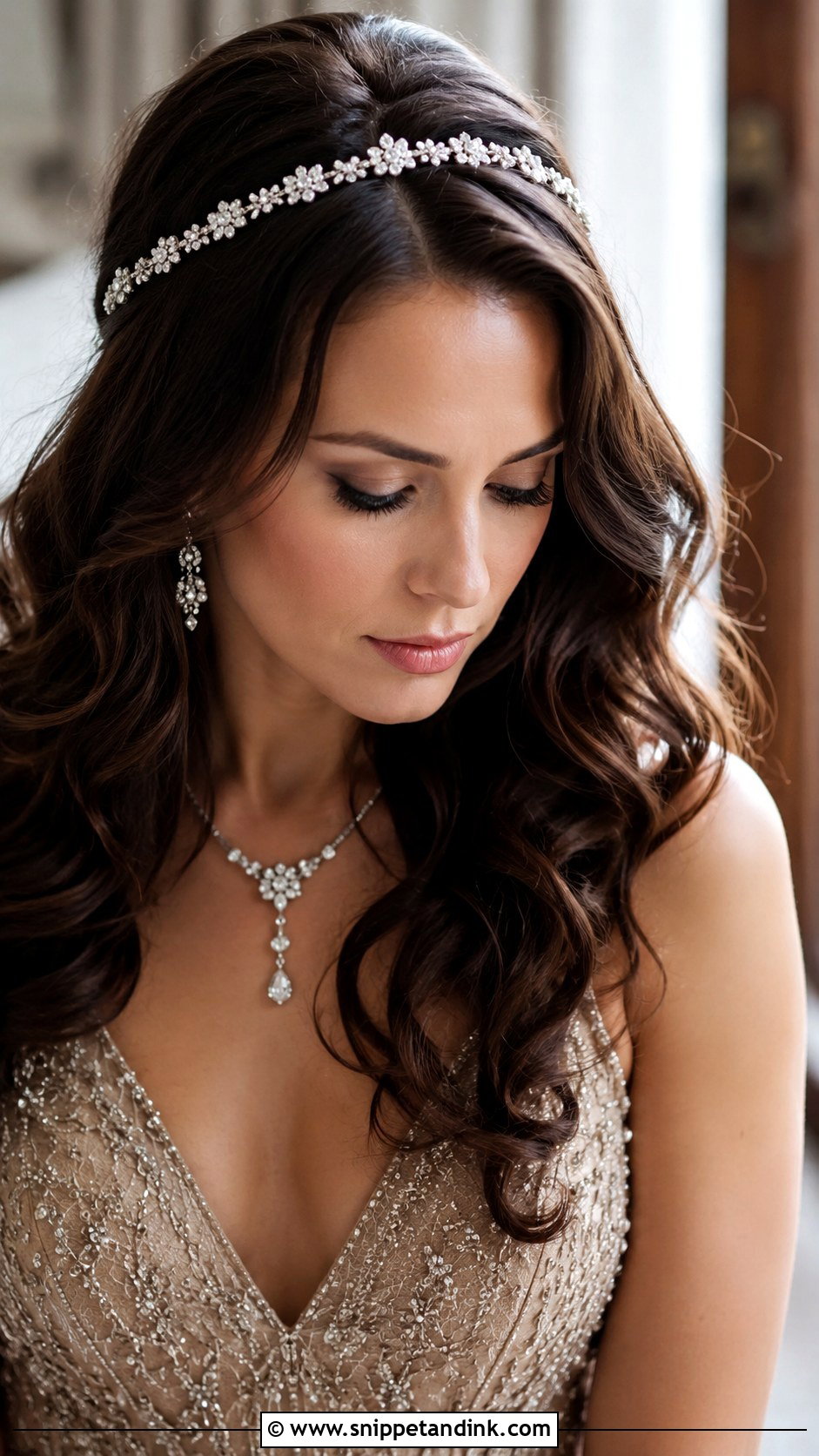
A sparkling headband turns simple waves into something much more formal. I place the band just behind the hairline, never pressed flat against the forehead, and hide a pin on each side under the hair so it doesn’t slip back. Match crystal or pearl to the rest of your jewelry. Hard metal bands can pinch behind the ears after a few hours, so wear it at your trial for the full session before committing.
17. Soft Waves With A Low Chignon
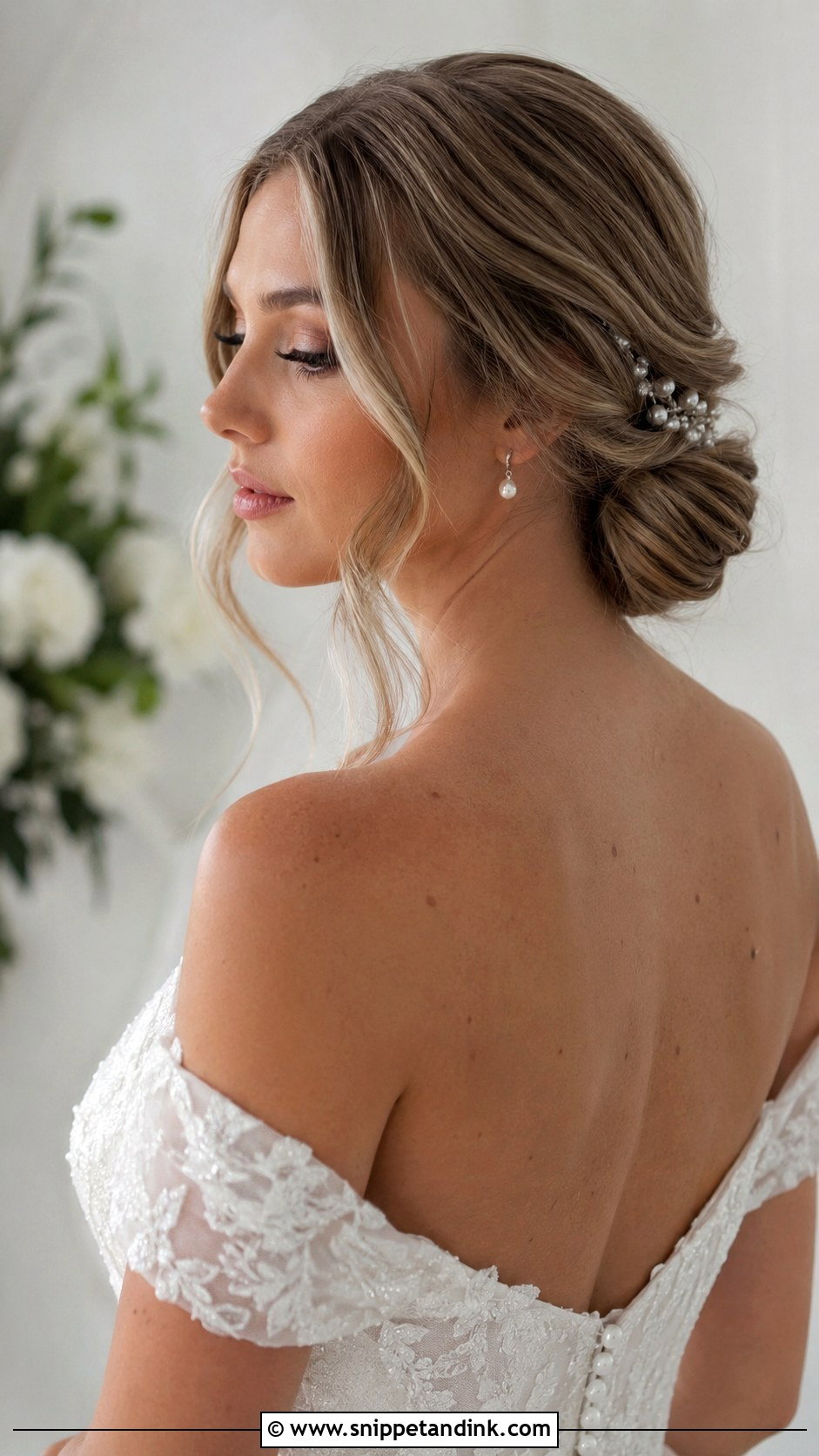
The chignon here is smooth and structured at the nape, with a couple of waved pieces left free at the front. I twist the bulk into a low roll and pin it from both sides so it stays put under a veil comb. It’s the formal option on this list and handles a long day well, because the weight is distributed close to the head. A small comb or a few pearl pins add detail without competing with statement earrings.
18. Soft Waves For Short Bob Hair
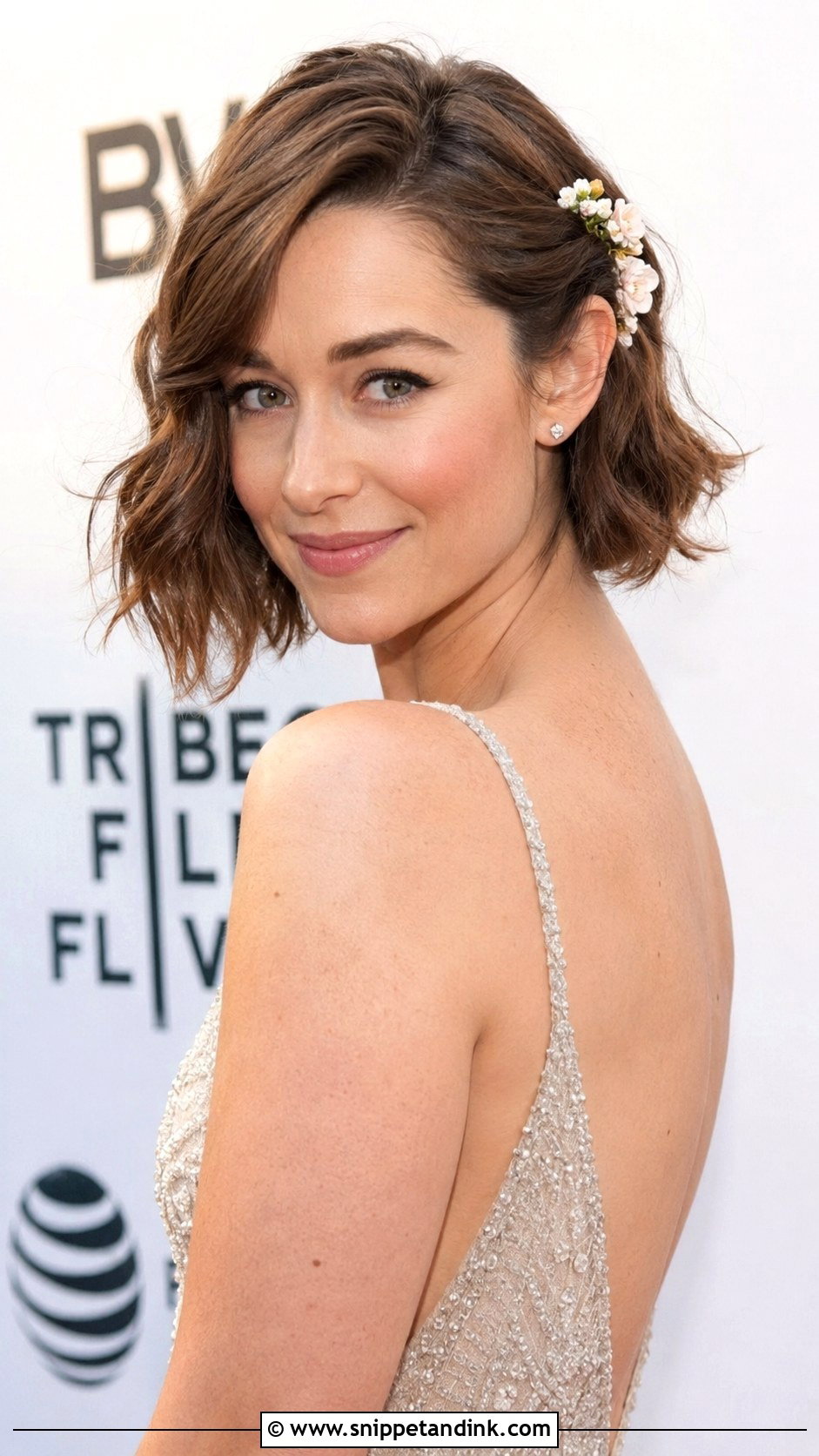
Short hair takes waves well, often better than long hair, because there is less weight pulling the bends out. On a bob I use a small-barrel wand and alternate the direction of each section so the volume looks natural rather than uniform. A sparkling clip or a small floral piece on one side adds the bridal note. Waves on bob or lob cuts also keep your neck cooler on a hot day, which is a real advantage.
19. Soft Waves With A Bohemian Braid
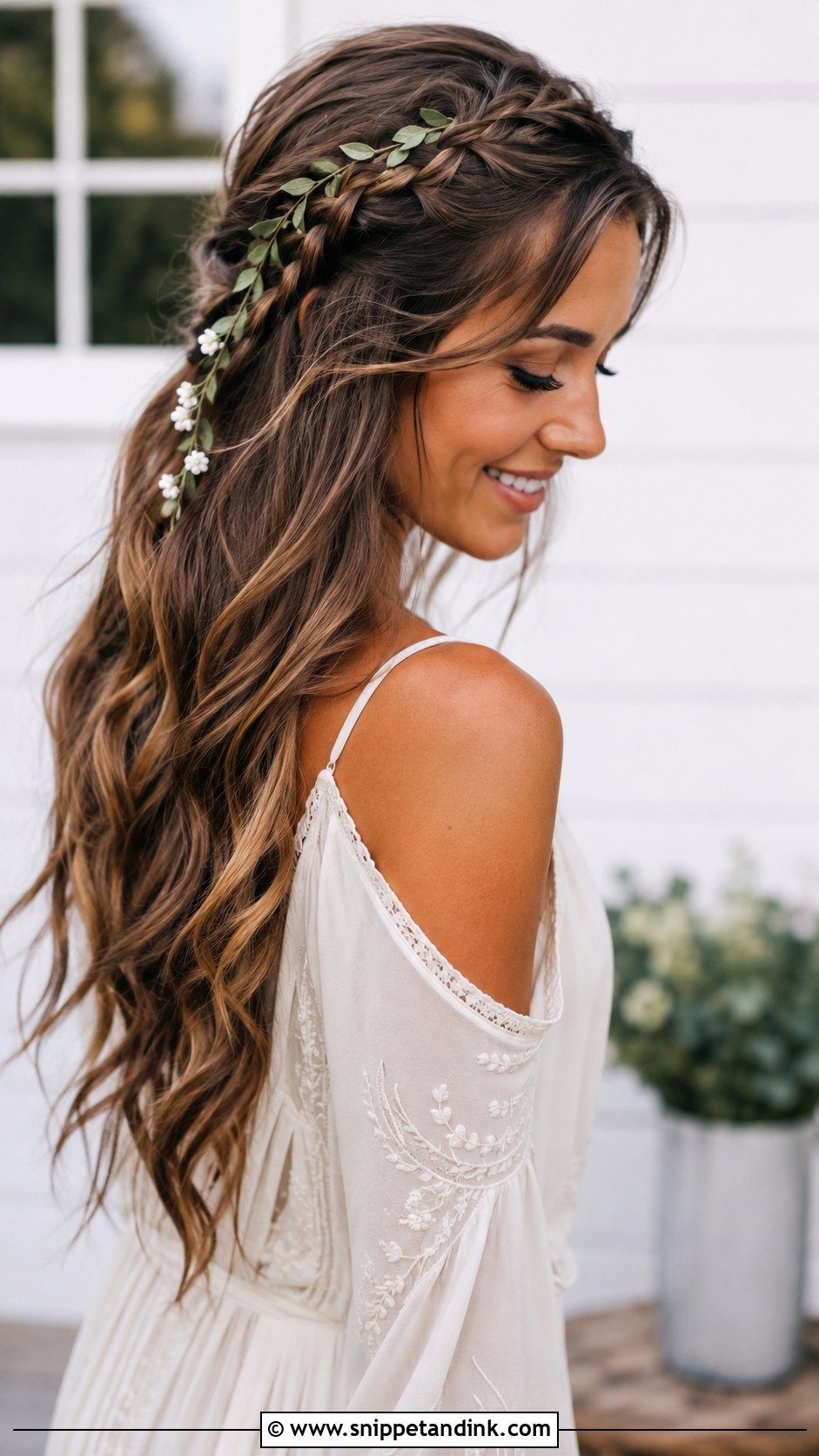
One side braid or a few slim plaits woven through the waves gives this its relaxed outdoor mood. I braid before I curl, so the waves fall around the braids instead of being pulled apart by them. Then I loosen the plaits by pulling at the outer loops. Long, thick hair suits it best. Small flowers or a delicate vine can be tucked in, but go light; too many and it reads as a costume.
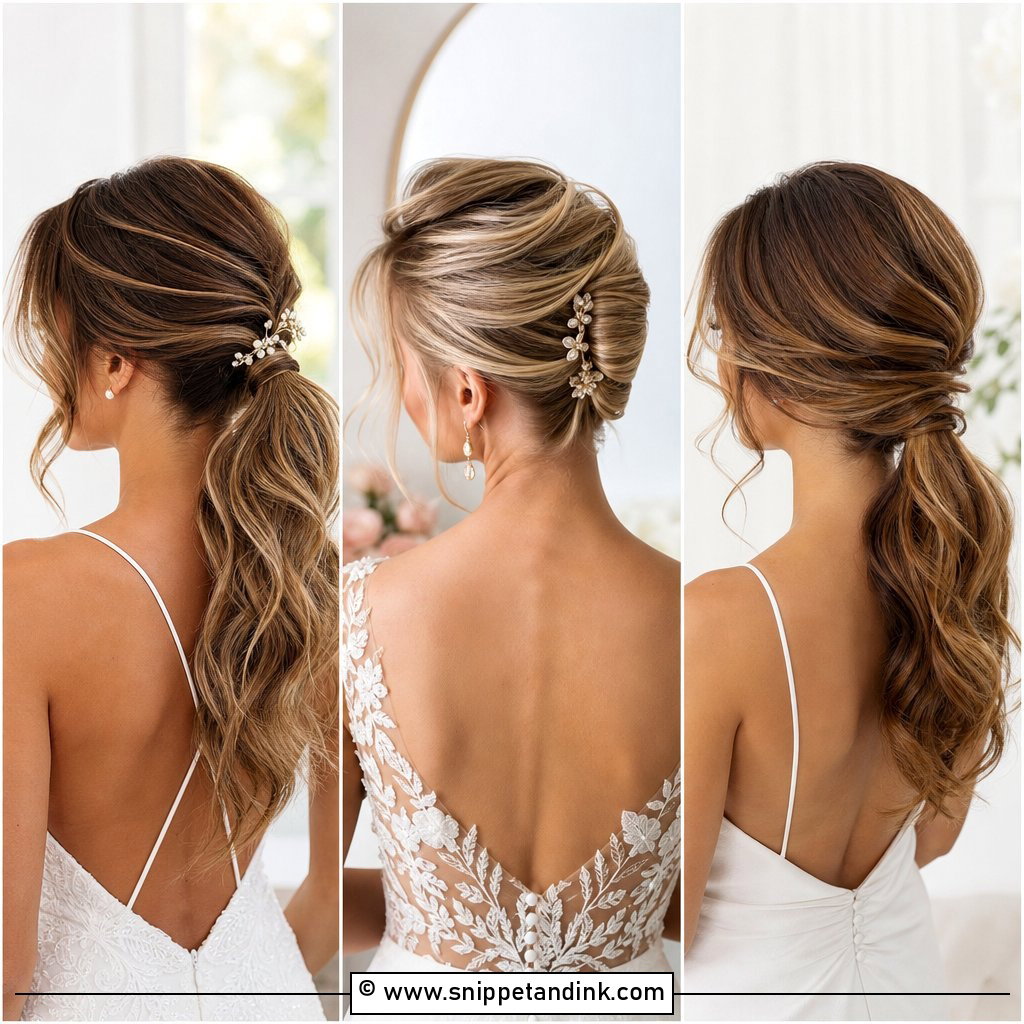
20. Voluminous Soft Waves With A Bouffant
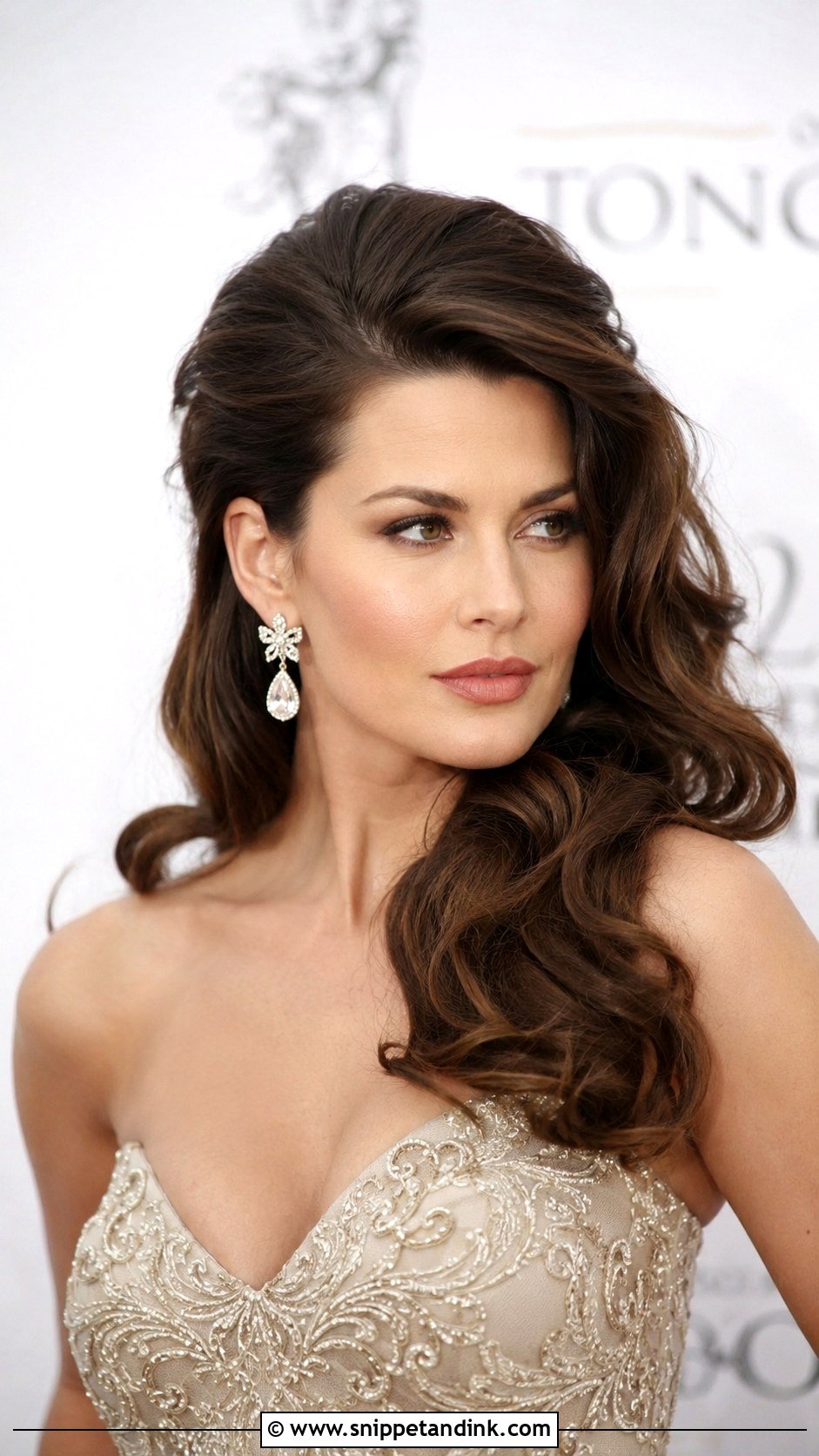
A bouffant gives real height at the crown. I backcomb small sections close to the root, smooth a top layer over the teased area with a soft brush, and pin it from beneath. The waves then run through the lengths. It needs medium to long hair with good thickness; fine hair can be teased, but it will show the backcombing under flash. It sits naturally with vintage and formal weddings and pairs well with a deep part and big earrings.
21. Soft Waves With A Delicate Hair Vine
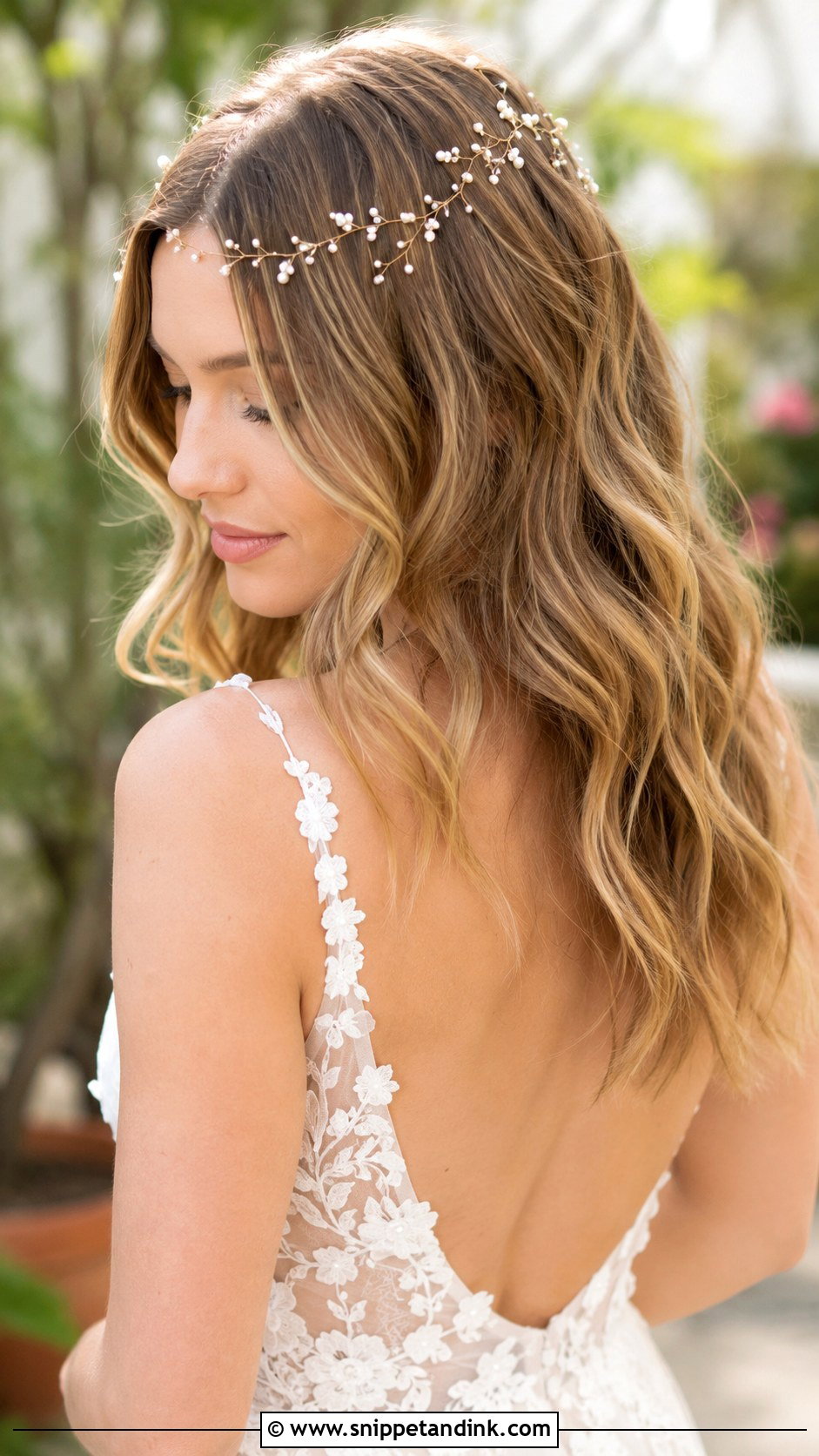
A hair vine is a long flexible wire, often set with tiny pearls or crystals, woven through the waves rather than placed on top. I pin it at each end and at two points in the middle, hiding each pin under a wave so the vine looks like it is floating. Keep the waves loose, otherwise the vine gets lost in tight curls. It works worn down or half-up. Ask for a vine with soft wire, since stiff ones poke out once your hair relaxes.
22. Soft Waves With A Middle Part And Tucked Sides
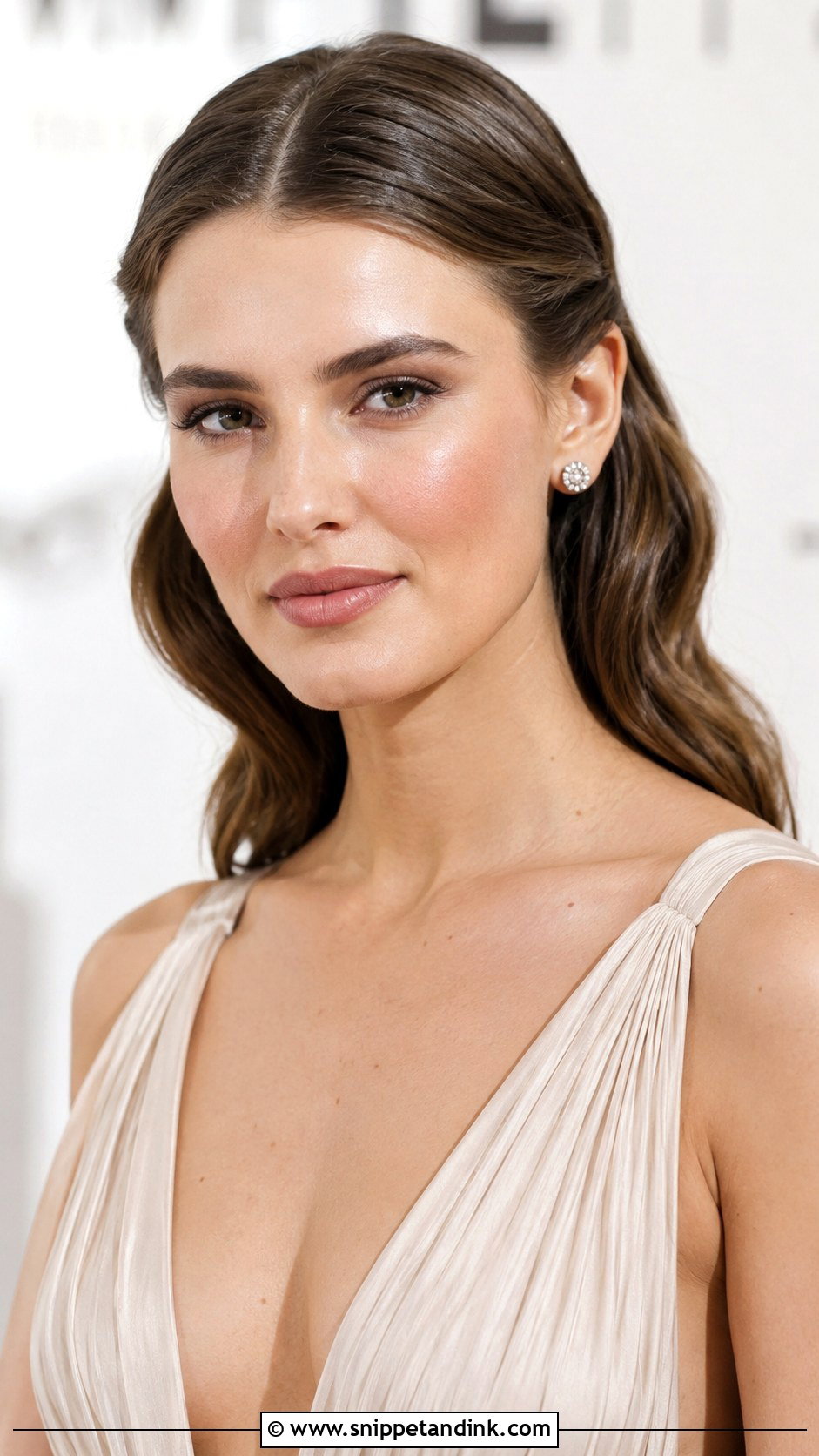
Tucking the front sections behind the ears creates a clean outline that puts the focus on your jawline and earrings. With a centre part, the tucked sides need anchoring: I slide a small pin vertically behind each ear so it’s invisible from the front. It’s a quiet, contemporary look. It works on sleek modern gowns, and studs or drop earrings fill the space the tuck opens up.
23. Soft Waves Half-Up With A Bow
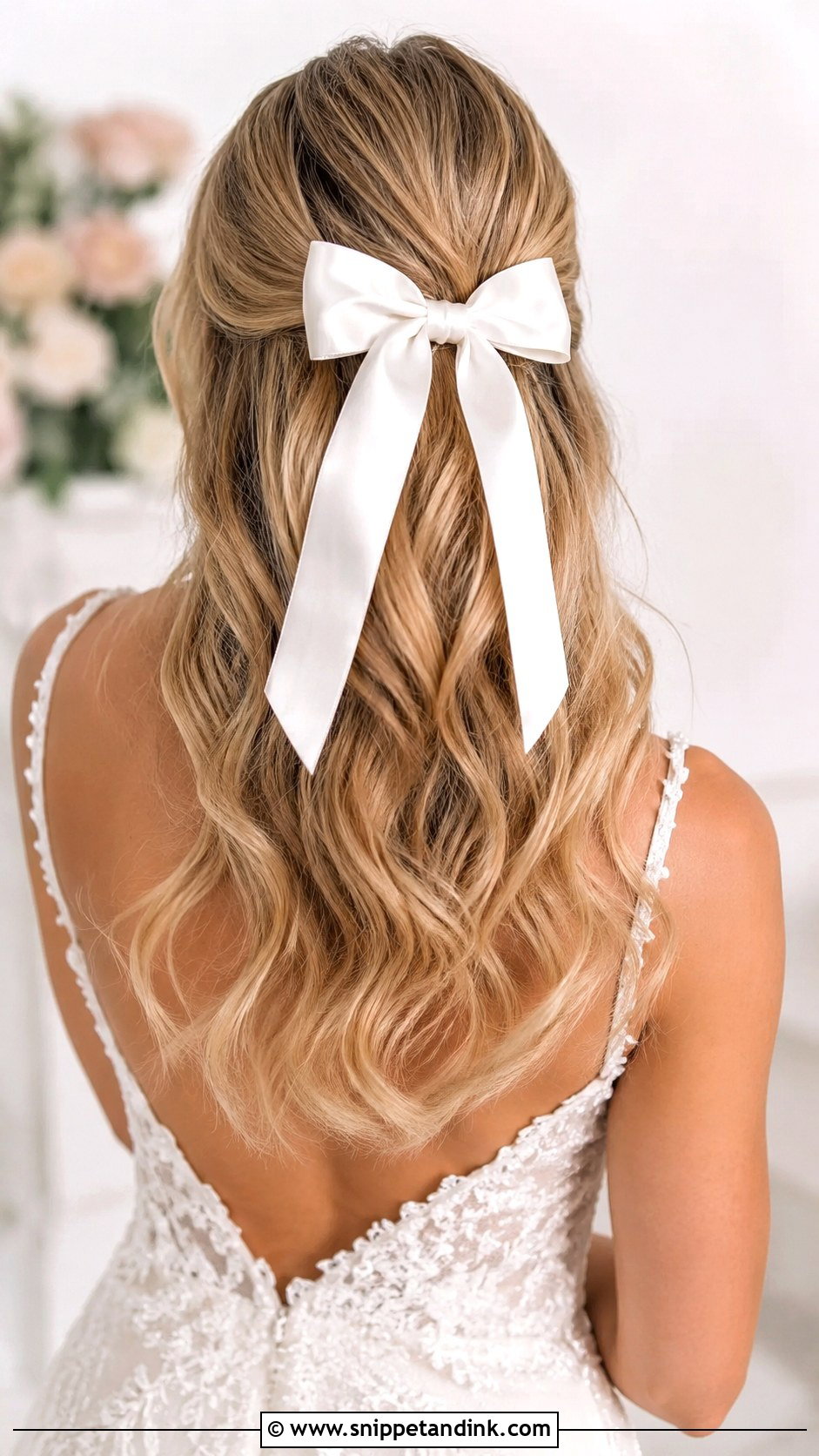
The bow trend has moved into bridal hair, and a bow is an easy way to secure a half-up section. I pin the half-up first with crossed bobby pins, then clip or pin the bow over the join; the bow should never be what holds the hair. Satin bows look best matched to the gown’s fabric, while beaded ones read more formal. A bow suits any length and almost any face, but on very fine hair, keep it small so it doesn’t slide.
24. Soft Waves With A Maang Tikka Or Forehead Accent
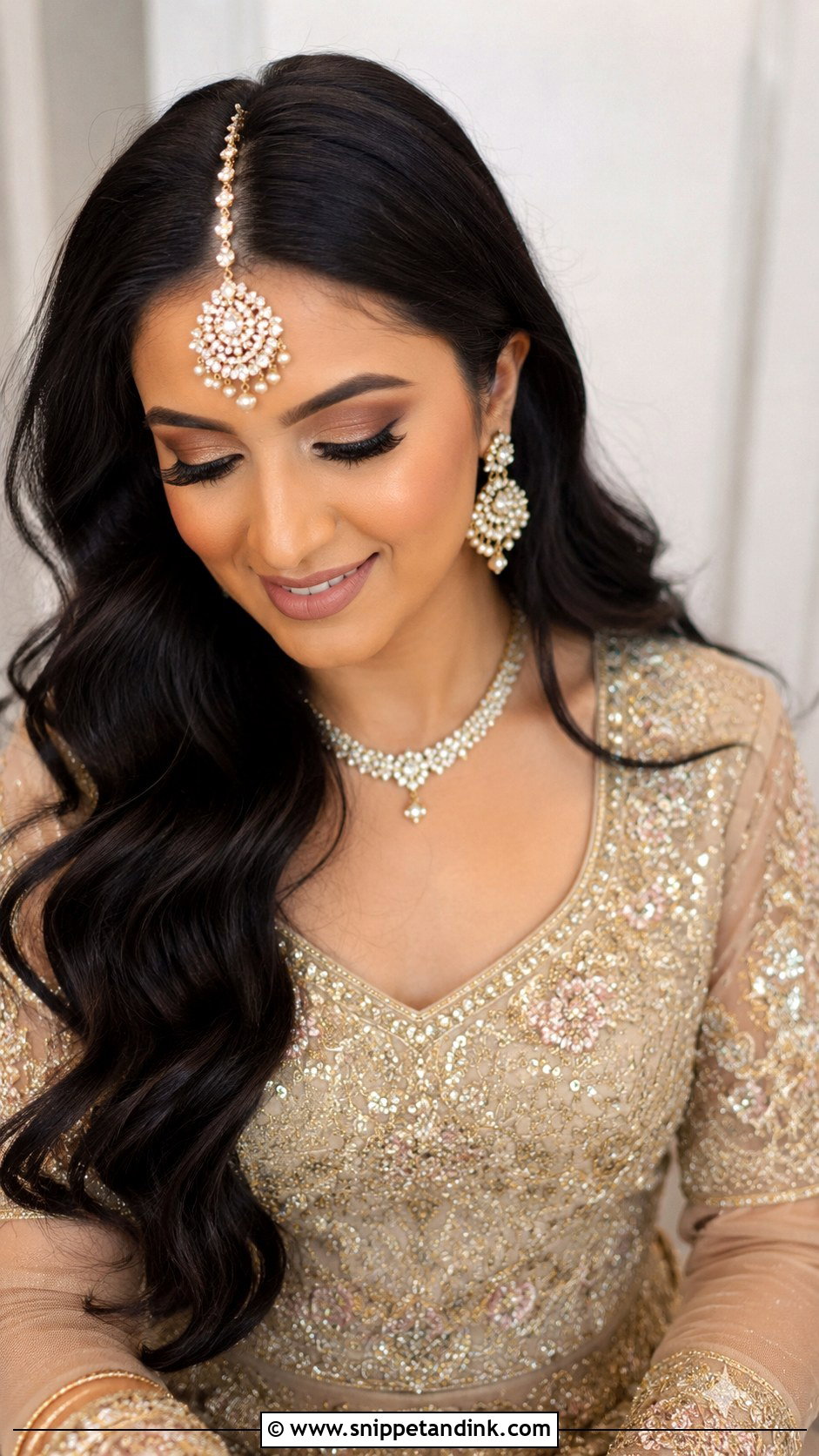
A maang tikka or forehead accent sits at the hairline, with the waves framing the face below it. I pin the chain along the part at the crown and anchor it underneath the hair, so the pendant settles centre-forehead without swinging. The waves need to be glossy and controlled near the face so they don’t tangle in the chain. A centre part is the classic placement, though a slight offset works with a smaller piece. It suits fusion weddings and anyone who wants jewelry to be the focal point.
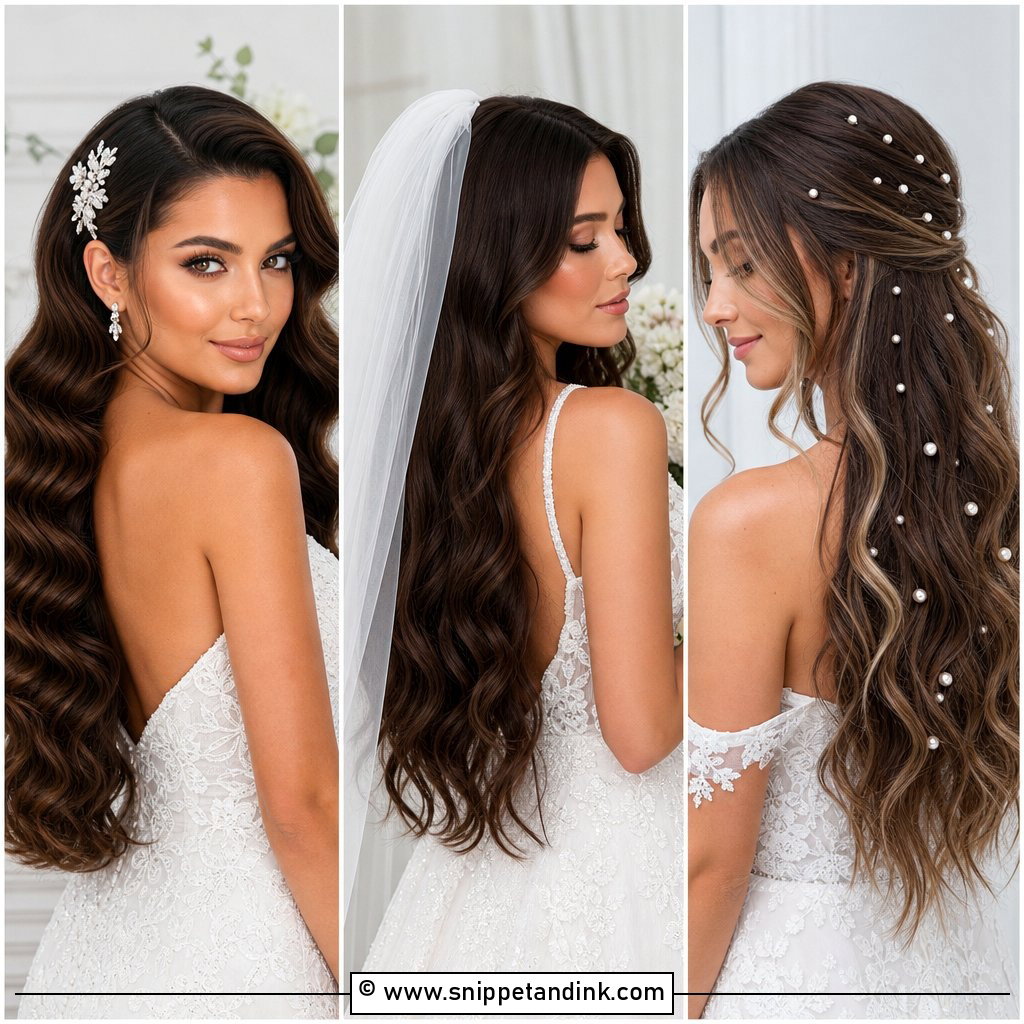
25. Soft Waves With A Long Cathedral Veil
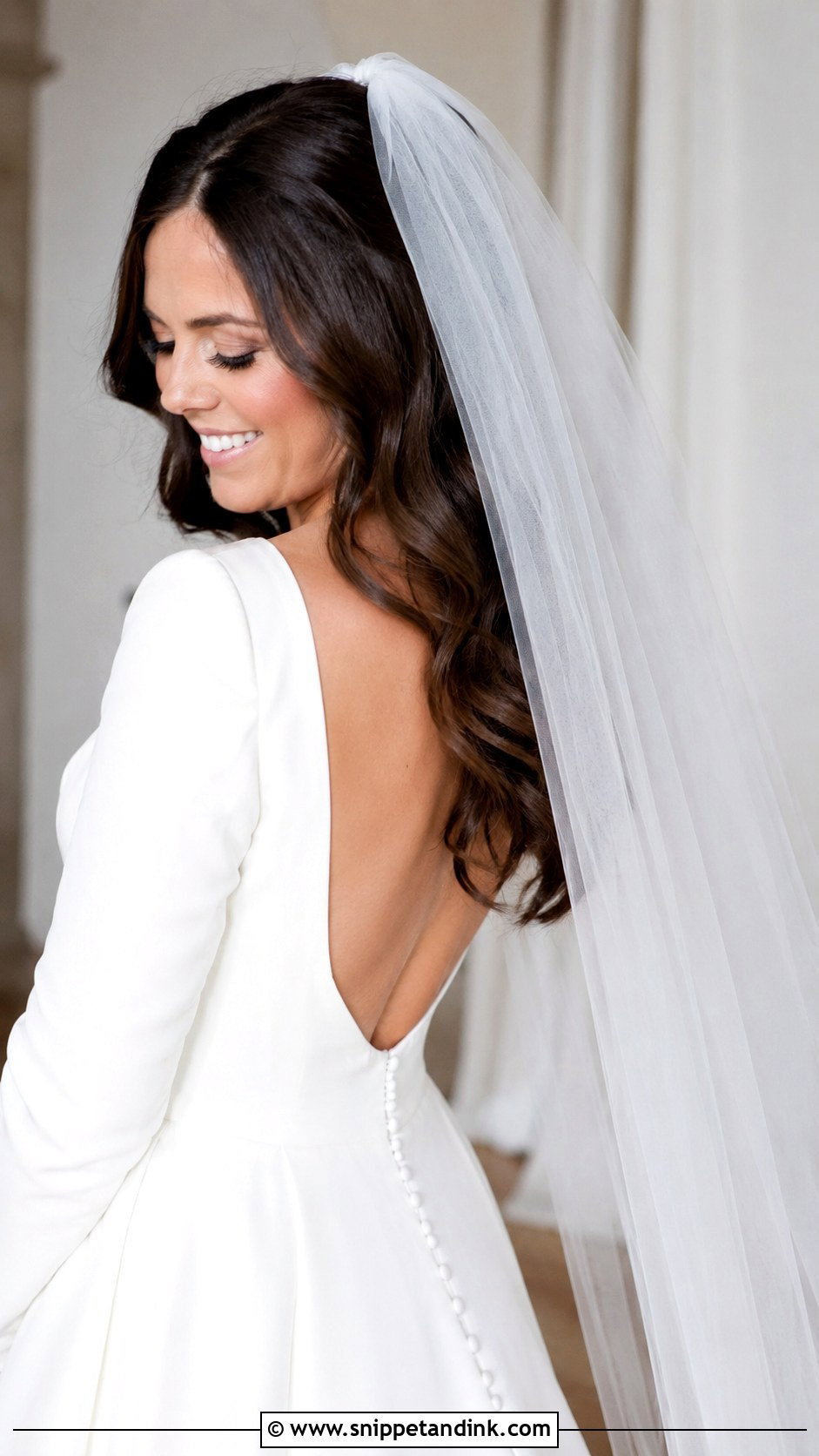
A cathedral veil adds drama, and soft waves look right underneath it. The comb is the part I take seriously: a long veil is heavy enough to pull waves flat, so I anchor it beneath a small pinned section at the crown or under an updo, never just slid into loose hair. Keep the waves soft and loose so they move with the veil. It suits traditional and formal ceremonies, and it looks at its most dramatic in outdoor portraits.
How Much Brush-Out Do You Want? Decide It Before the Morning
The same curls can end up as defined ringlets, loose S-waves or a smooth Hollywood ridge, depending only on how much I brush them. Brides often bring photos of one finish and expect it without saying so. At your trial, ask your stylist to brush half the head and leave the other half curlier, then look at both in daylight and on your phone camera. It sounds fussy, but it settles the question in five minutes.
Remember the waves will relax through the day. If you love the trial result as soon as it’s done, ask for it a little tighter on the morning, so that by the reception it has settled into what you actually liked.
A Small Touch-Up Plan for the Afternoon
Waves can be revived without an iron if someone in the bridal party knows what to do. I leave a small kit with the maid of honour and show her where the key pins are.
- Twist a dropped section around a finger, pin it flat for ten minutes, then release and finger-comb.
- Mist a little flexible-hold spray on the inside of a section, never sprayed straight onto the surface, which leaves a crunch.
- Carry spare bobby pins in your hair colour and two or three clear elastics for a quick switch to a low pony if wind or humidity wins.
- Blot oil at the hairline with a tissue rather than adding powder, which shows up grey in flash photos.
A Wave Is Only as Good as the Way It Was Set
Soft waves are a request I’m happy to get, because they adapt to almost any dress or venue. What makes them last is unglamorous: clean, dry hair, curls pinned to cool, and a brush-out that happens at the right moment. Save the versions above that you like, take them to your stylist, and ask how she plans to set them for your hair type. The answer will tell you a lot about whether your waves will still be there at the last dance.
You'll Like These Ideas:





Leave a Reply