
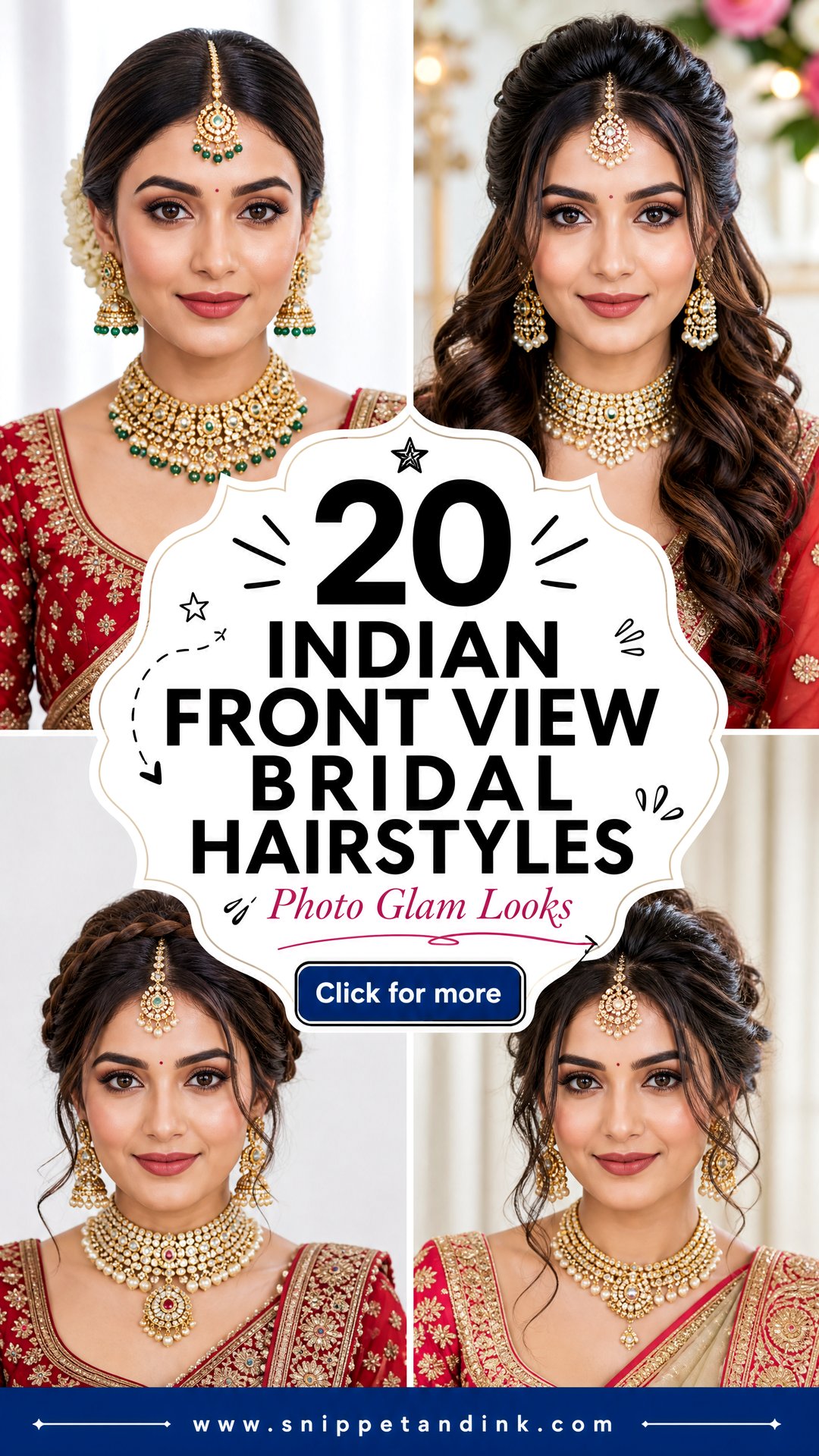
Most bridal photographs are taken from the front, yet most hairstyle inspiration shows the back of the bun. That’s backwards for an Indian bride. Under a dupatta, the only hair anyone sees in the pheras photos is the parting, the crown and the few centimetres around the face. That is where I spend most of my time on a wedding morning. These Indian front view bridal hairstyles are judged from the front: how the part sits, how the crown carries jewellery, and how the hairline looks in a close-up under warm lights.
What the Camera Catches at Your Hairline
A close-up portrait shows things a mirror hides. Under a photographer’s flash, flyaways glow white, a wide parting shows scalp, and any bump along a sleek crown casts a shadow. At every trial, I take a straight-on phone photo with the flash on, because that is the closest I can get to how the wedding photos will look.
Four Things I Check in That Photo
- The parting: straight, the width you want, and lined up with the tikka.
- The temples: smooth but not stretched, with no hard tension line.
- Flyaways: set with a small brush and a little gel, not a cloud of spray.
- Crown height: enough to balance the jewellery and the jawline.
If your parting shows a lot of scalp under flash, a tinted root powder in your hair colour softens it. Bring your own if you already have one that matches.
Then put the dupatta on and take the same photo again. Fabric pressed over the crown flattens volume and pushes front pieces forward, so a style that looked balanced bare can look very different once covered. If the crown disappears, I add a little more height before the dupatta goes on, not after.
1. Indian Bridal Sleek Low Bun Front View
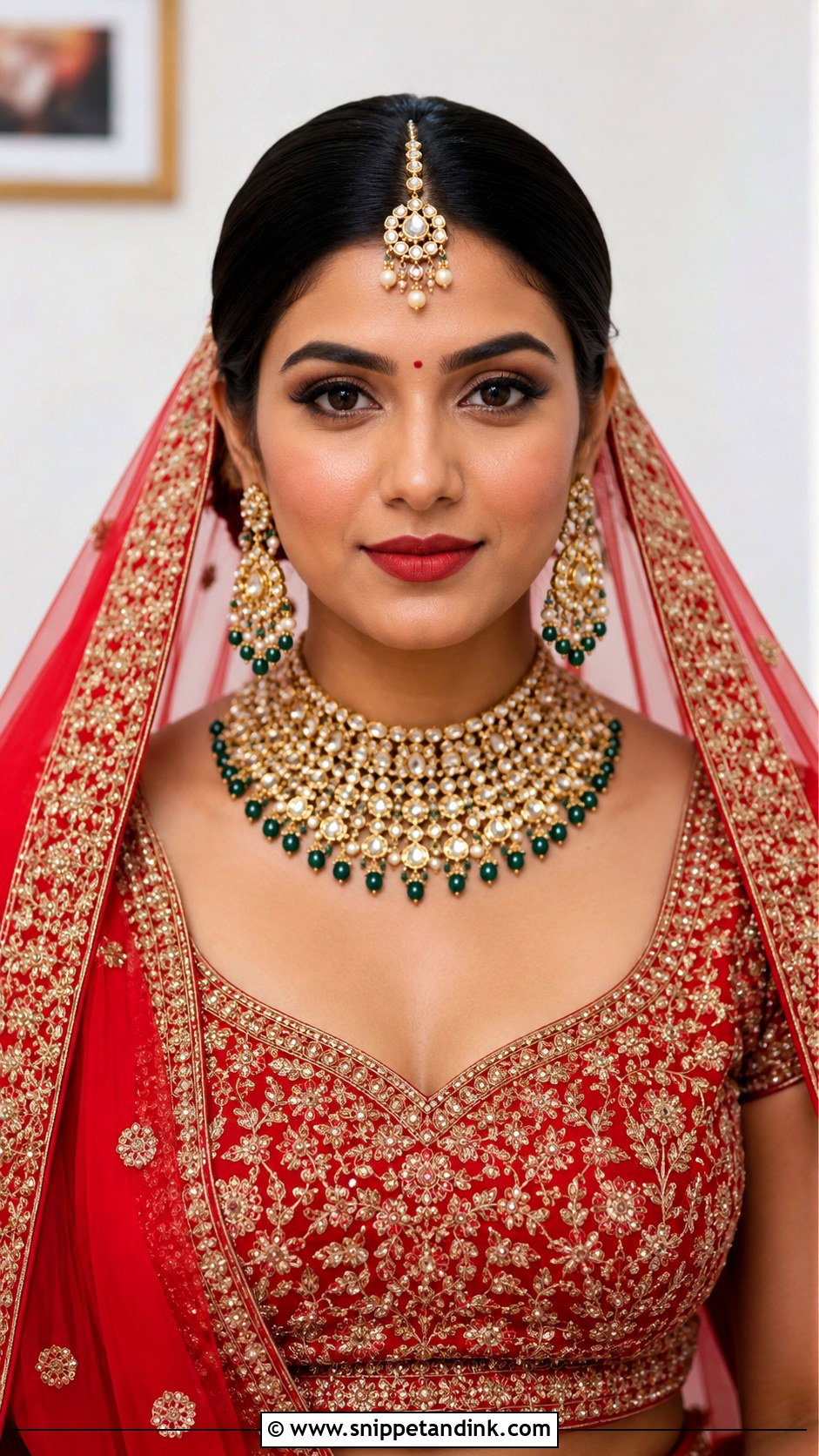
From the front, a sleek low bun is almost invisible, which is exactly the point. All you see is a clean centre part and smooth hair leading back, so the maang tikka, matha patti or passa takes over. The mistake I see is slicking the crown completely flat. Under a heavy dupatta that makes the head look small and the face look wider. I backcomb a little at the crown, smooth over it, and set baby hairs with a brow gel or edge cream rather than spray.
2. Indian Bridal Center Part Bun With Matha Patti
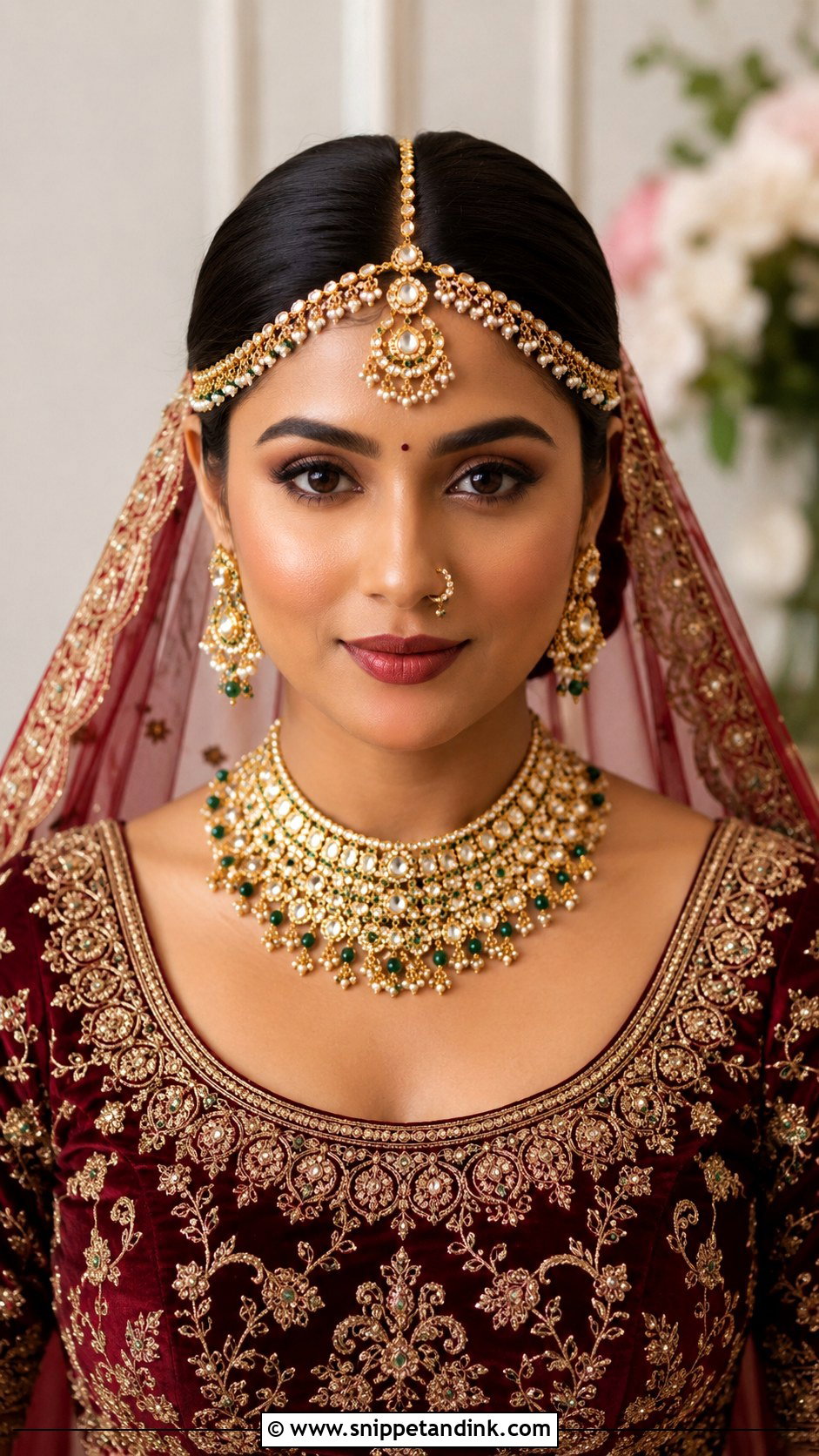
A center part bun with matha patti is symmetrical by design, so any unevenness shows immediately. I measure the parting from the middle of the brow rather than following where the hair naturally falls, because a part that drifts even slightly makes the matha patti hang crooked. The temples should be smooth but not stretched tight, since tension there shows as a hard line in photos and gives most brides a headache by lunch. The bun can sit low or mid-height depending on the dupatta weight.
3. Indian Bridal Puff Bun Front View
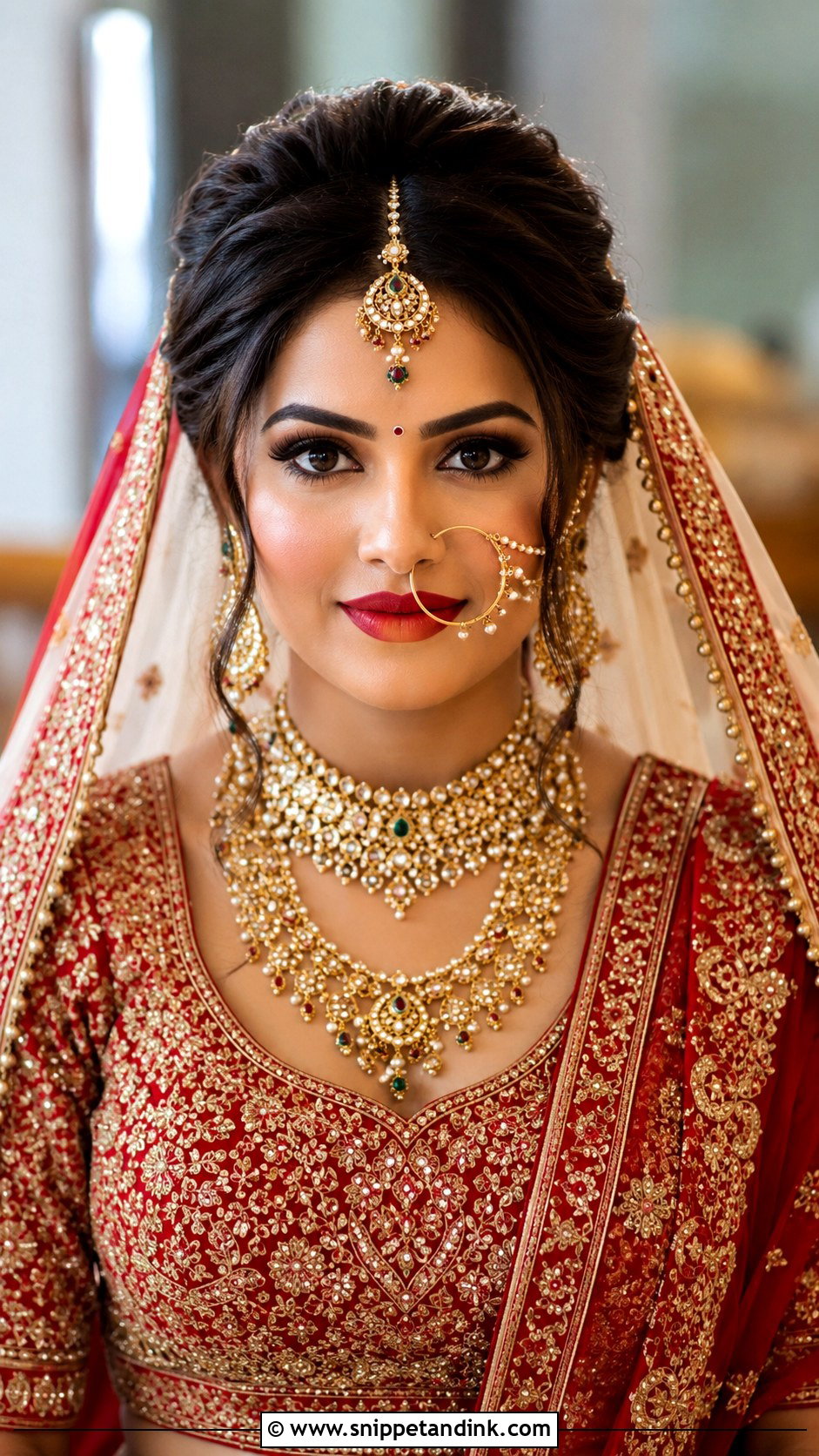
The puff adds height at the crown, which lengthens a round face and balances a heavy necklace. Under a broad dupatta border, it keeps the hairline visible instead of disappearing under fabric. I build it from a backcombed section or a small padding piece, then smooth a thin layer of hair over the top so no texture shows. The puff should be soft and rounded. Too high and it looks dated from the front; if your forehead is already long, keep it low or skip it.
4. Indian Bridal Side Part Bun Front View
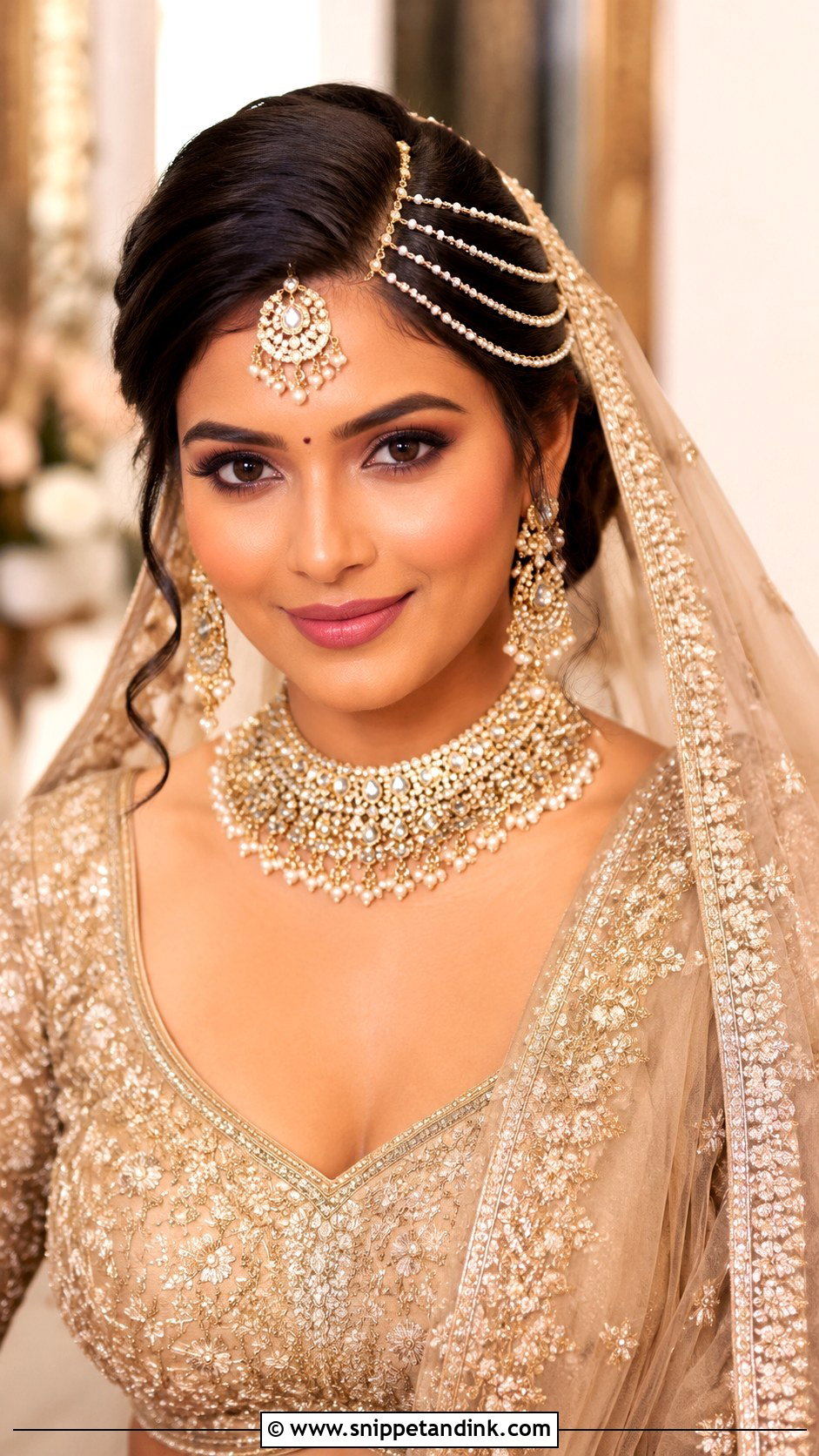
A side part throws the hair diagonally across the forehead, which breaks up a square jaw or a long face. It also gives a passa or jhumar a natural home on the heavier side. I sweep the larger side smooth and allow gentle volume there, while the smaller side lies flat behind the ear. If you’ve always worn a centre part, test a side part at your trial. It can feel strange at first, and your hair may resist lying in the new direction.
5. Indian Bridal Soft Curl Bun Front View
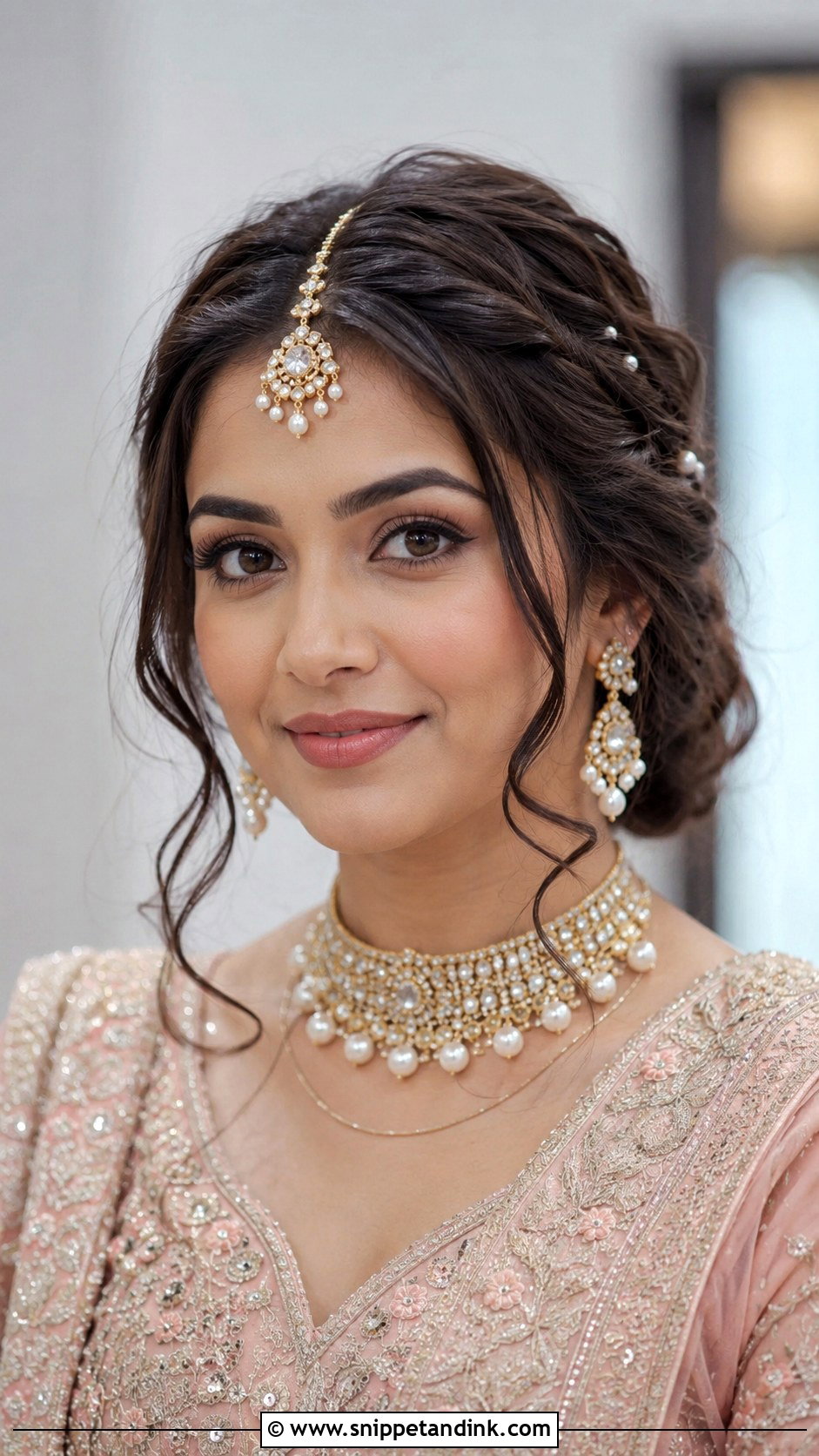
Curls at the front soften a bun without loosening it. I curl the face-framing pieces with a medium barrel and pin them to set while I finish the back, then release them last. The front view usually has a centre or soft side part with curls near the temples. In humidity or outdoors, I keep it to two or three curls. More than that and they drop and stick to foundation by the second ritual.
6. Indian Bridal Gajra Bun Front View
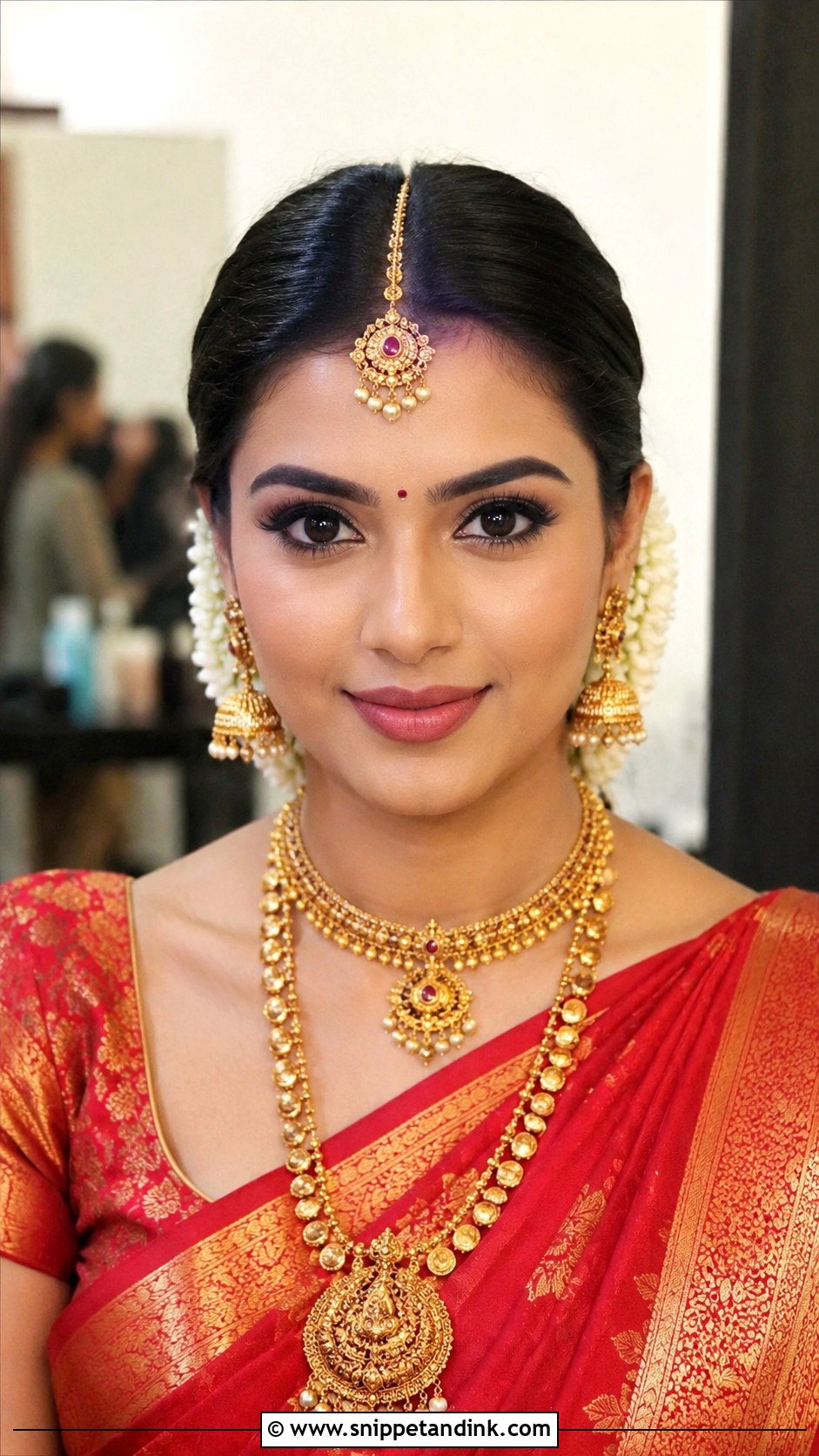
A gajra bun is mostly a back-and-side look, so the front needs to hold up on its own. I keep it neat and centre-parted with a tikka, or very slightly puffed if the bride wants more presence. Since jasmine adds texture behind the head, a busy front fights it. Temple jewellery, gold chokers and silk sarees suit this. A side part softens it if the classic version feels too formal for you.
7. South Indian Bridal Long Braid Front View
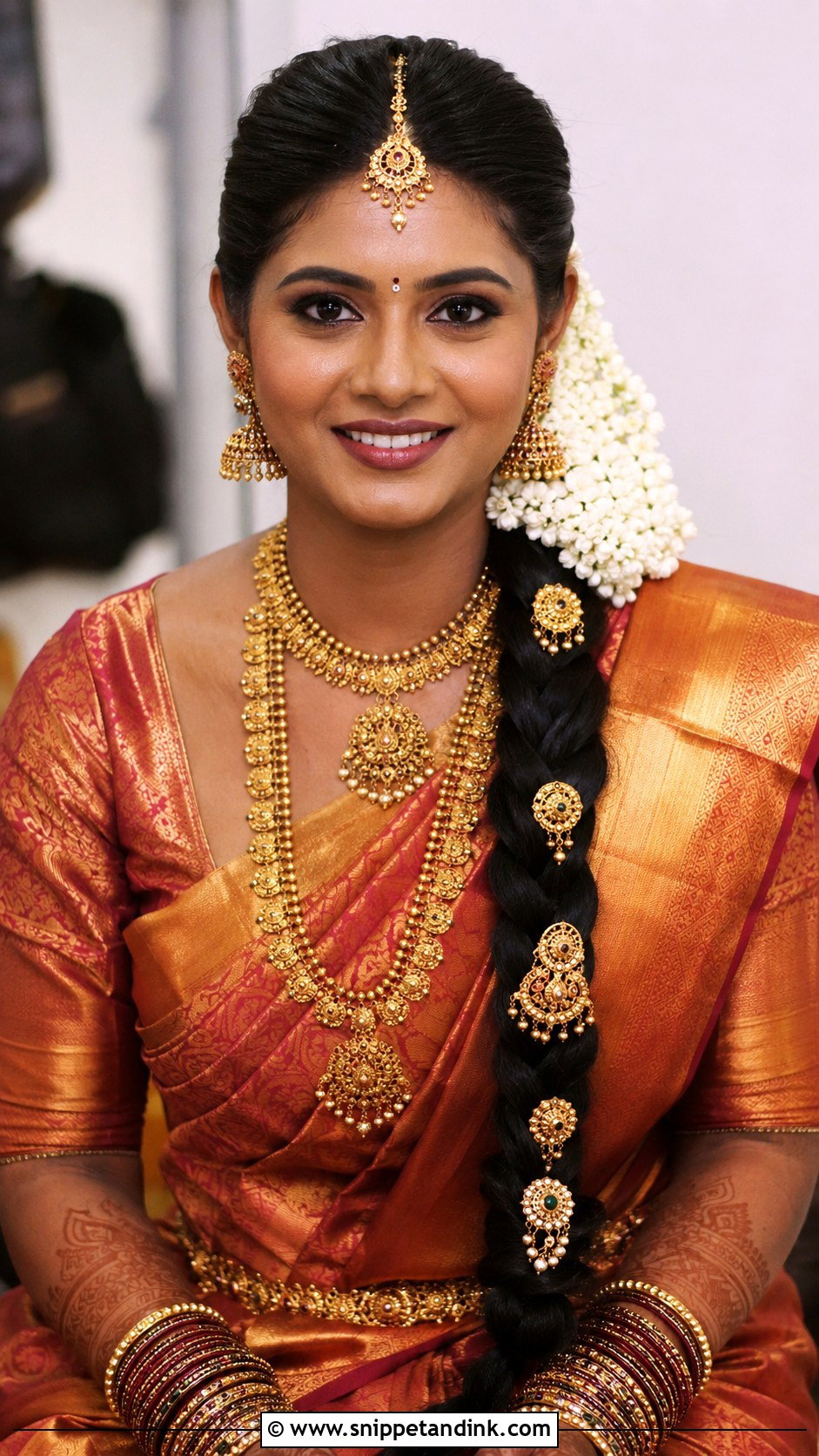
With a South Indian bridal long braid, the front is typically sleek with a centre part and a nethi chutti, plus controlled volume at the crown. The braid itself only enters front-view photos if it’s brought over one shoulder, so I ask the photographer which shots they plan and style for those. Pull the front too tight and it shows in close-ups. Smooth it with a cream and pin it where the jewellery will sit.
8. Indian Bridal Fishtail Braid Front View
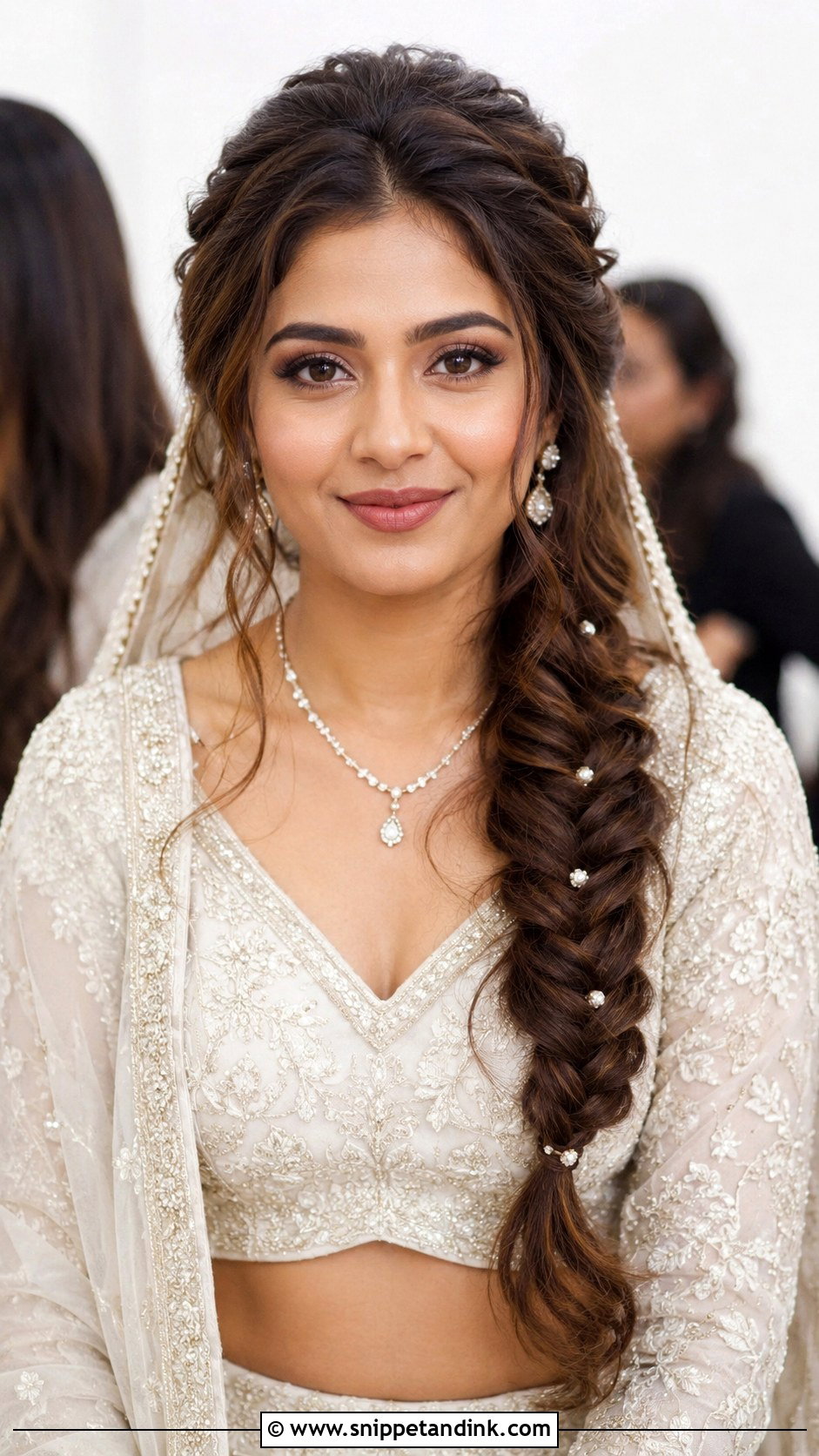
A fishtail braid looks finer and more detailed than a three-strand plait, and from the front it shows only if it’s worn over a shoulder. I’d choose it for mehendi, haldi or engagement, when hair needs to be off the face but a bun feels too formal. The top can be smooth, lifted or side-parted. Pancaking the braid gently after it’s tied makes it read fuller in photos.
9. Indian Bridal Side Braid Front View
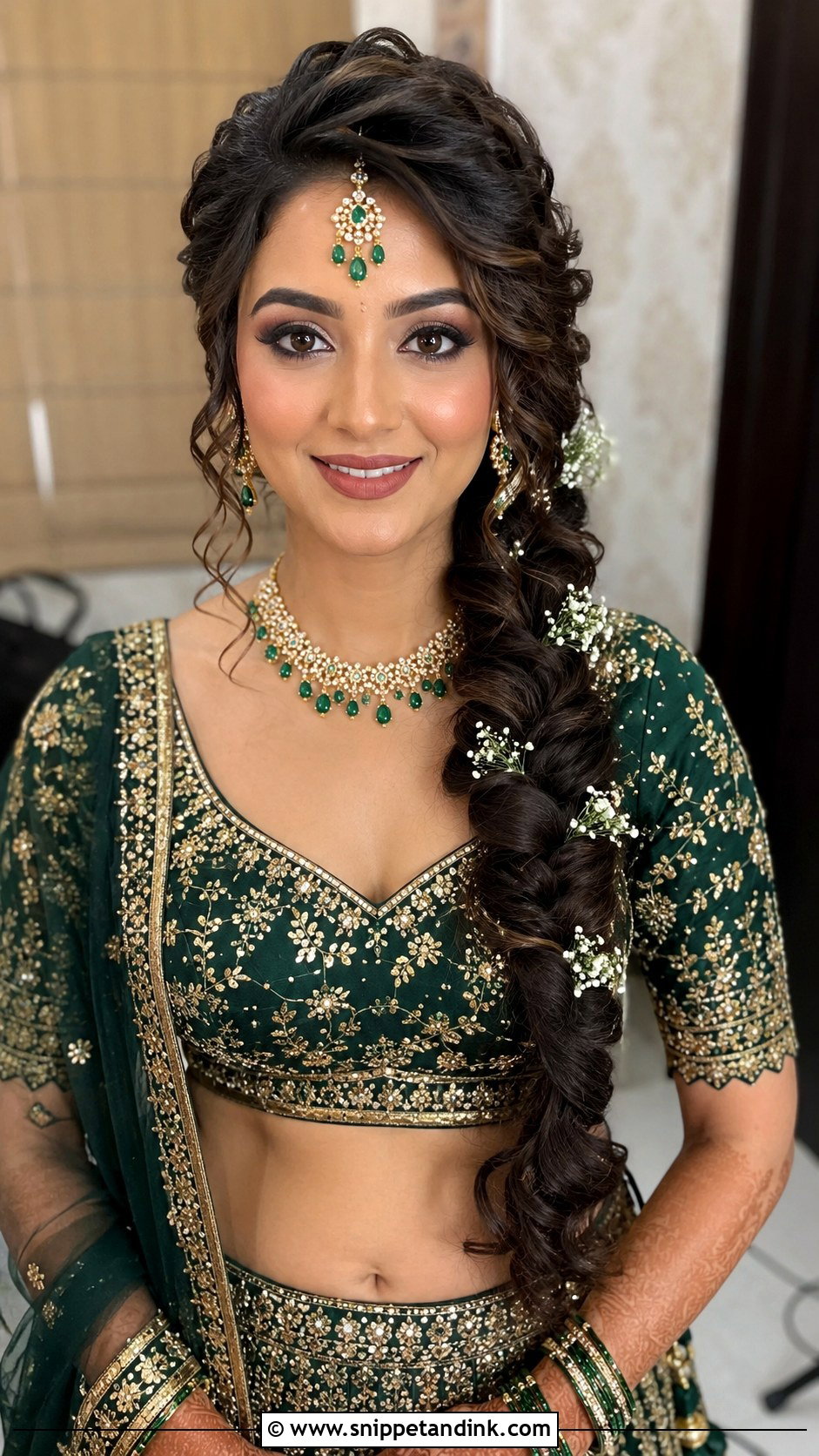
Brought over one shoulder, a side braid becomes part of every front-view photo, which is why I suggest it to brides who want their hair visible in the pheras shots. It can be sleek and traditional or soft and textured. For a festive end, a few flowers, pearl pins or a paranda near the end add weight that keeps the braid hanging straight. The front can be side-parted or softly lifted. It is comfortable and holds well through long events.
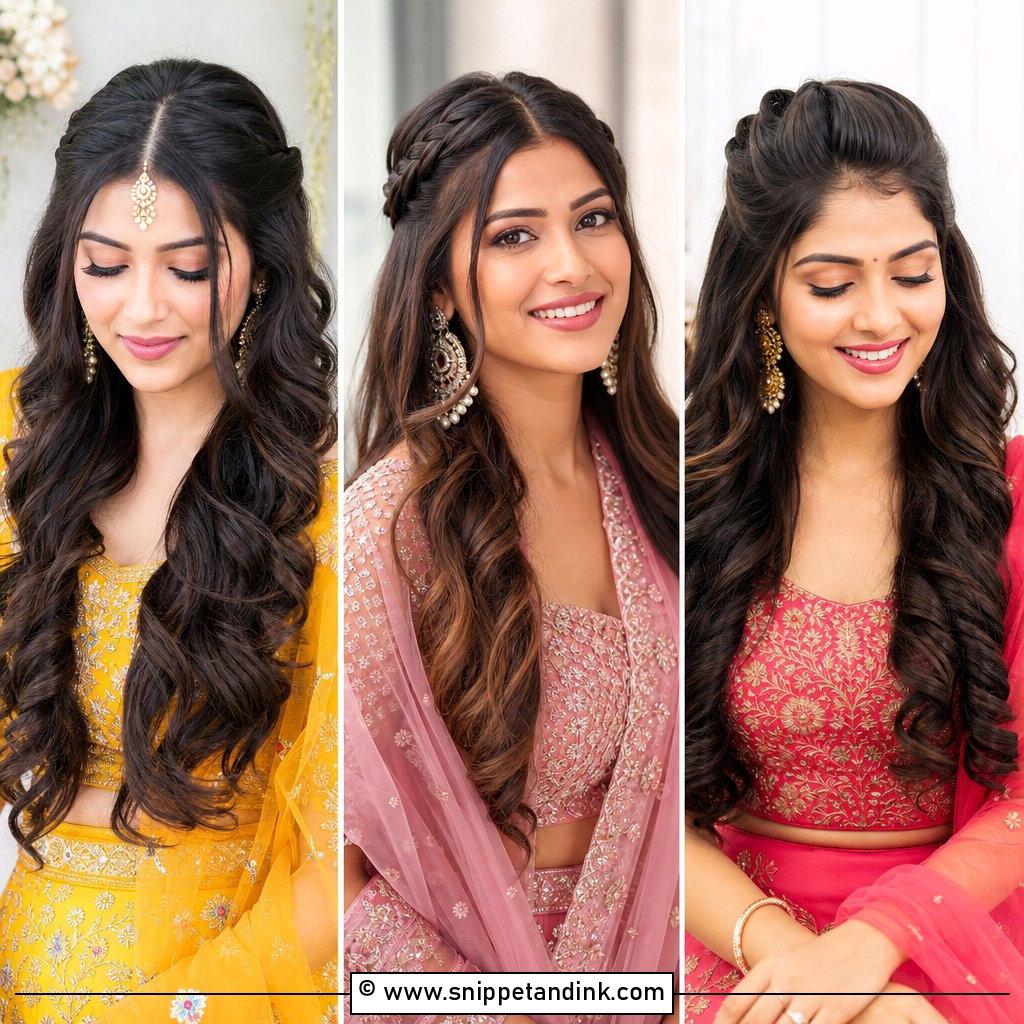
10. Indian Bridal Open Curls Front View
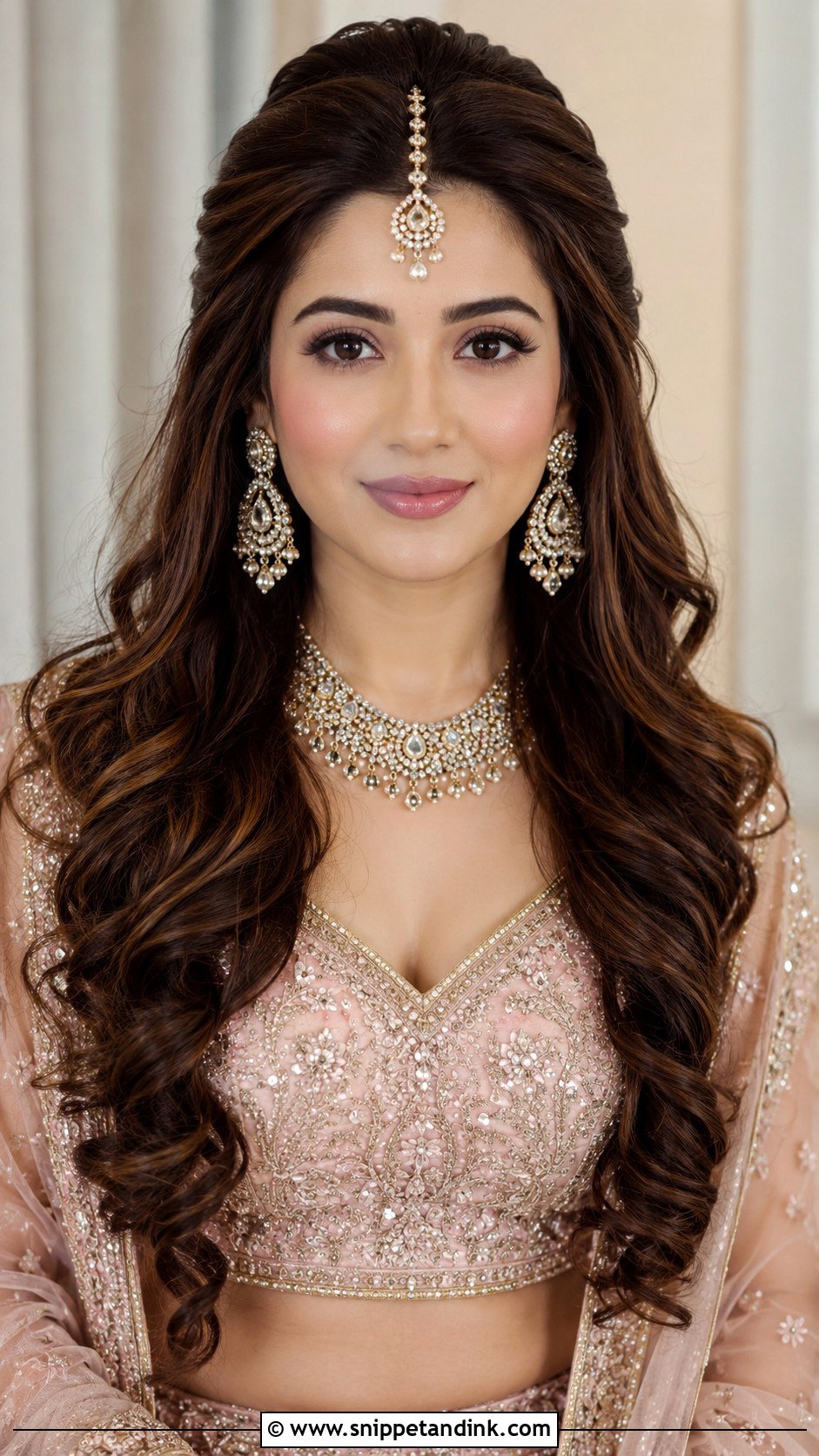
Open curls are a reception or sangeet look in my book. Under a heavy head dupatta for hours, they flatten and frizz. From the front they show off length and shine, and they suit lighter veils, gowns and statement earrings. I start the curls below the cheekbone so they don’t crowd the face, and I lift the root at the crown. Centre parts look modern; side parts look softer and suit side jewellery.
11. Indian Bridal Half Up Curls Front View
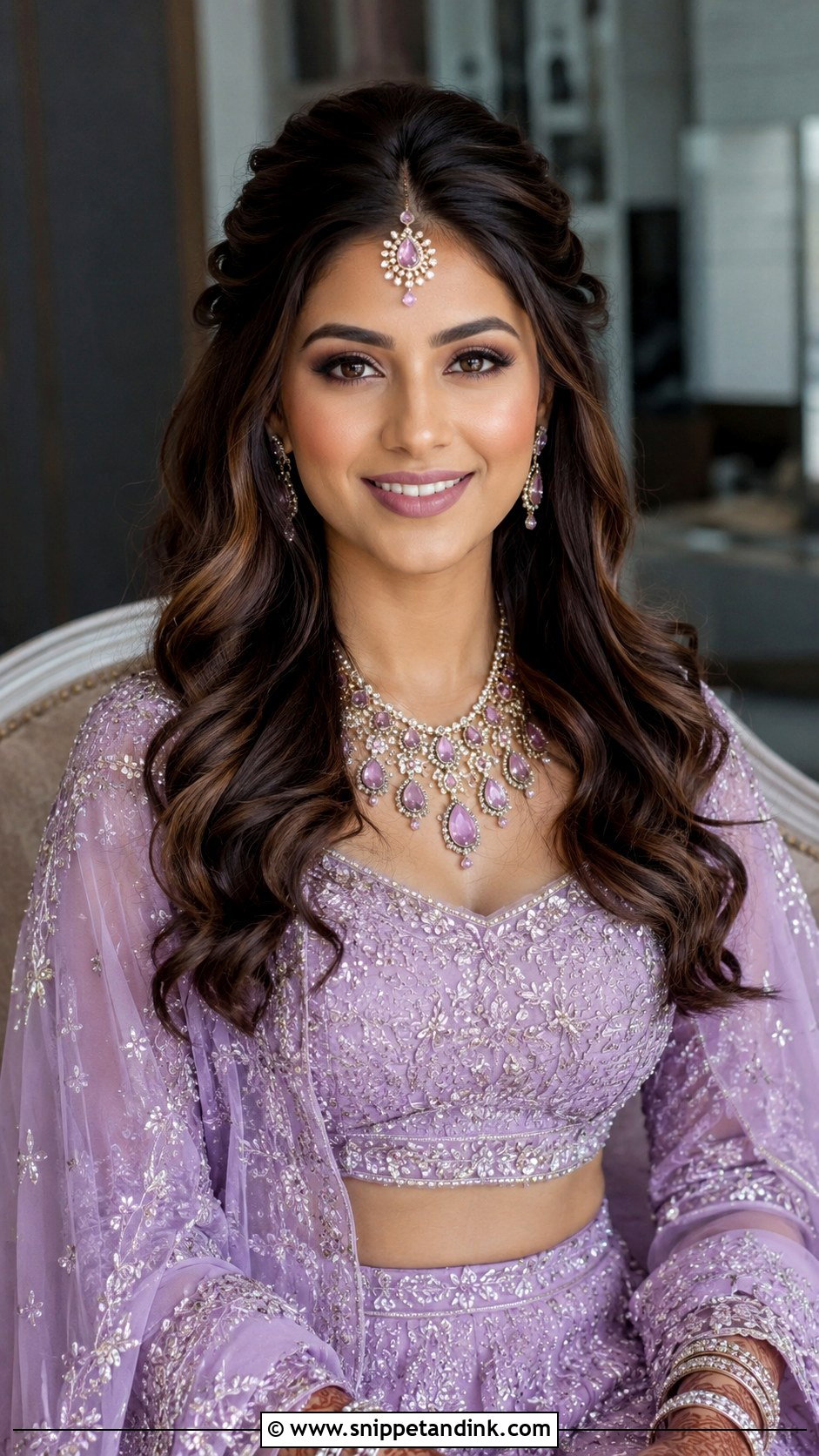
Pinning the top section back keeps the face clear while the lengths fall loose. That pinned section is also where a tikka anchors, so I twist or braid it rather than clipping it, which gives the jewellery a firm base. From the front, the crown should have a little height. This suits engagement, reception and sangeet looks better than a long ceremony under a dupatta.
12. Indian Bridal Braided Crown Bun Front View
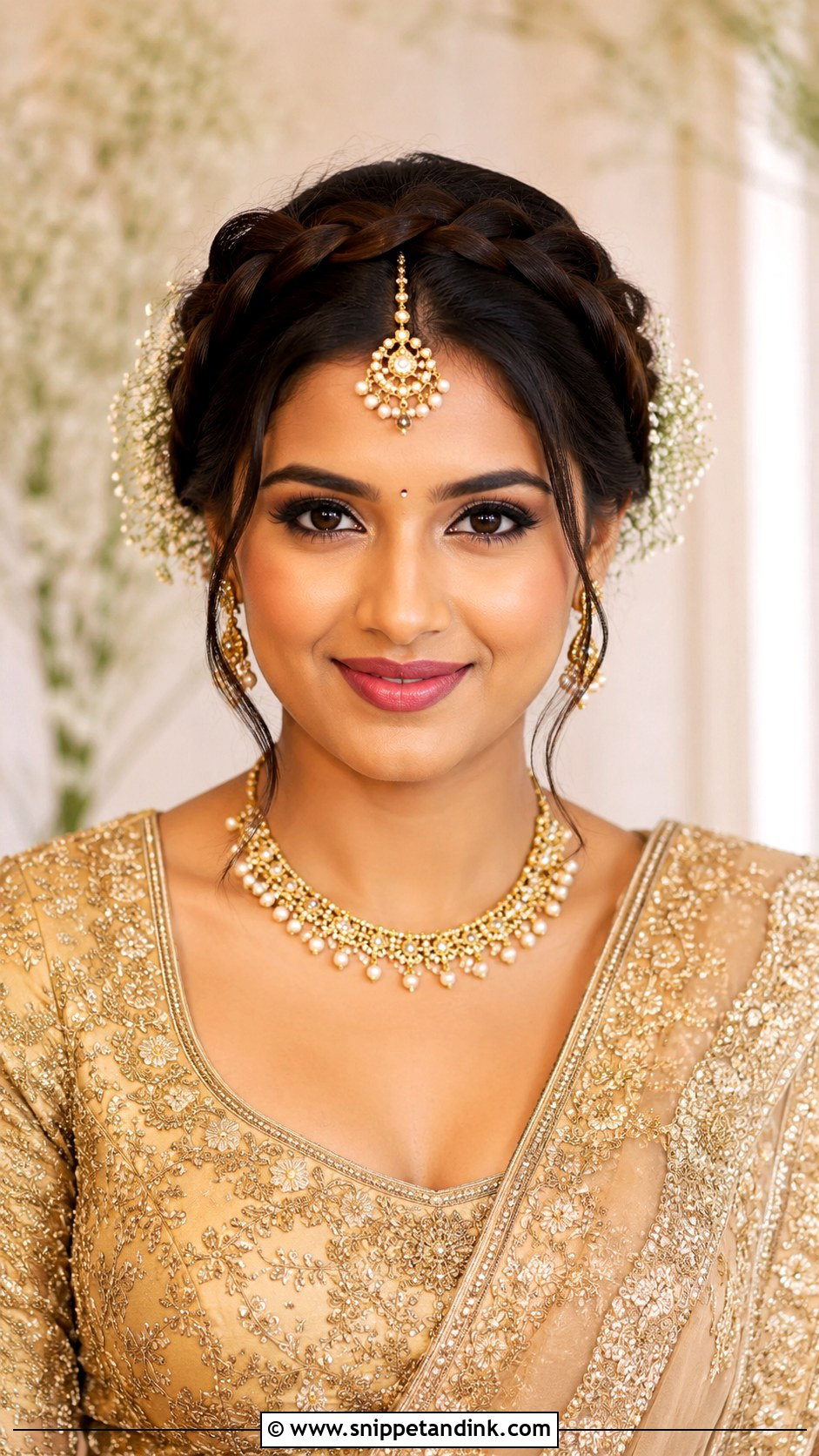
Seen from the front, a braid running across the crown frames the face and can disguise a wide forehead by cutting across it. It then blends into a bun at the back. I keep the braid slim near the hairline so it doesn’t fight the jewellery; a thick braid there looks heavy in close-ups. It’s secure under a dupatta and works with floral accessories and embroidered outfits.
13. Indian Bridal Front French Braid Bun
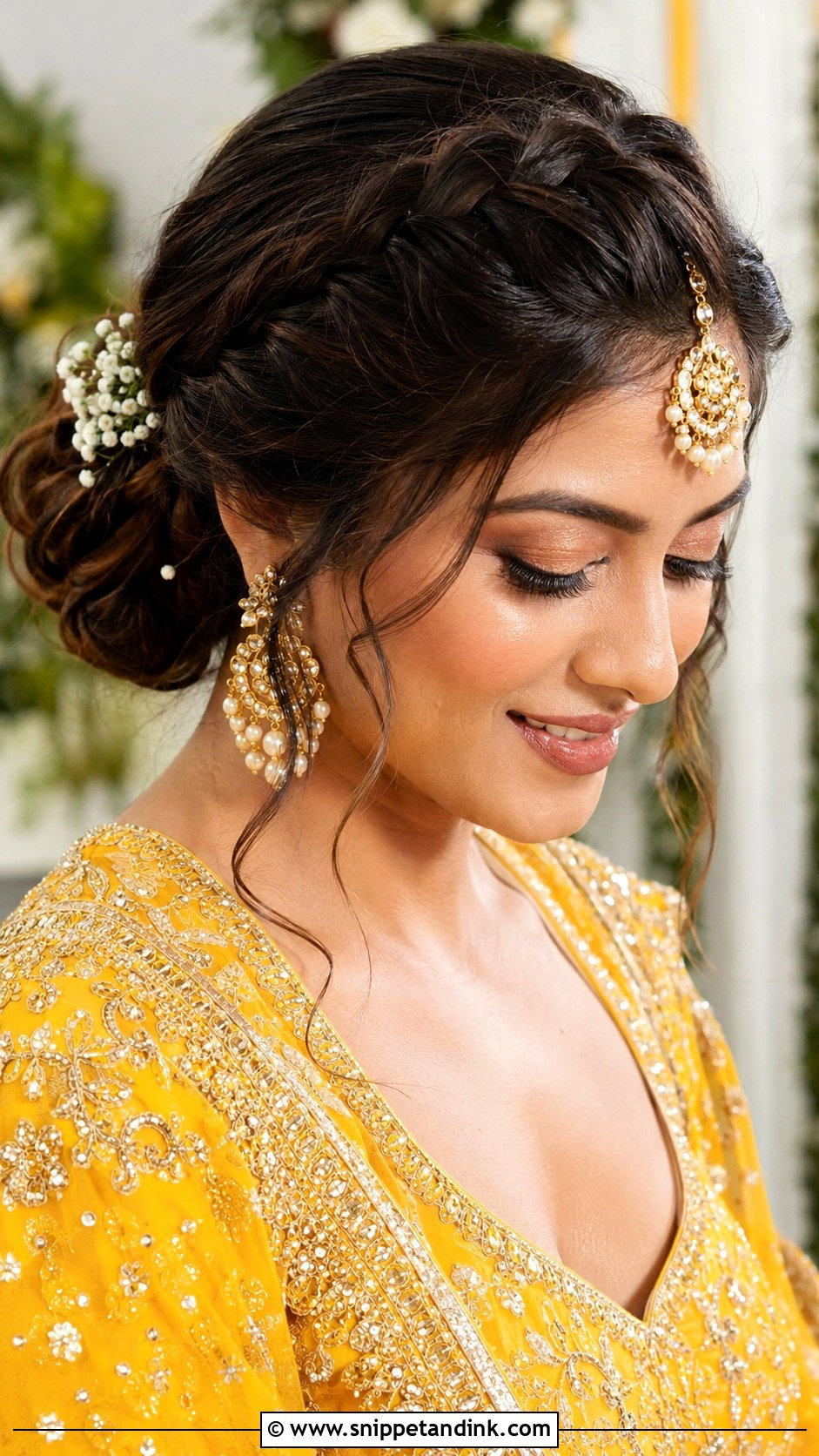
A French braid that starts right at the hairline catches every short layer and broken front piece. That makes it my practical answer for brides with growing-out bangs or layers that won’t stay in a sleek bun. The braid can run across the front like a crown or down one side into the bun. I use a little gel on the smallest pieces as I braid so they’re caught in. It holds through mehendi and haldi dancing too.
14. Indian Bridal Loose Bun With Front Pieces
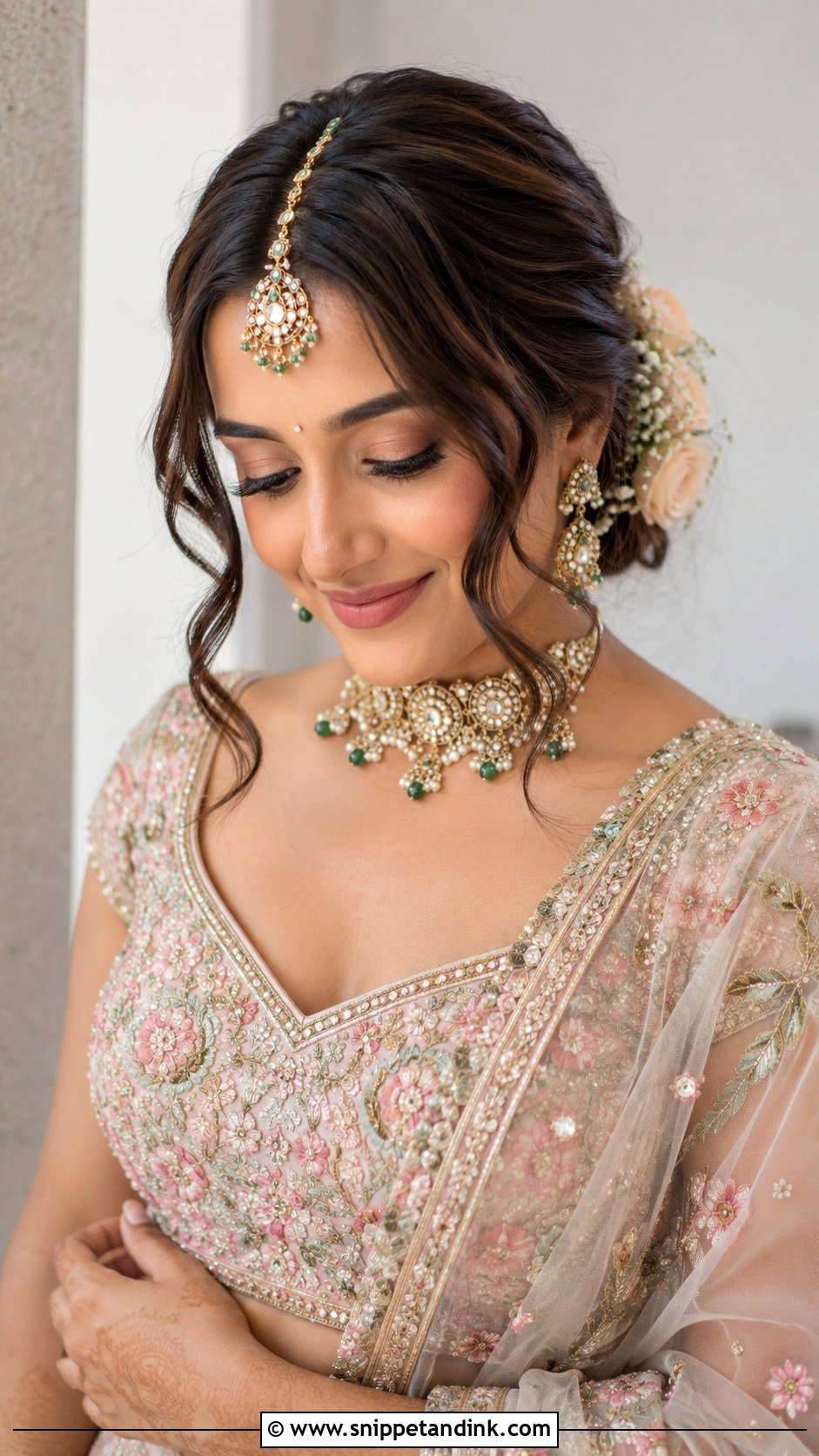
Front pieces soften the cheeks and jaw, but they have to look placed, not fallen. I cut no new pieces on the wedding morning; I only use ones that already exist, curled and set. The bun behind them must still be firmly pinned if a dupatta goes on. It suits pastel lehengas and lighter, modern makeup. If your hair is fine, a curl cream on the front pieces keeps them from separating into wisps.
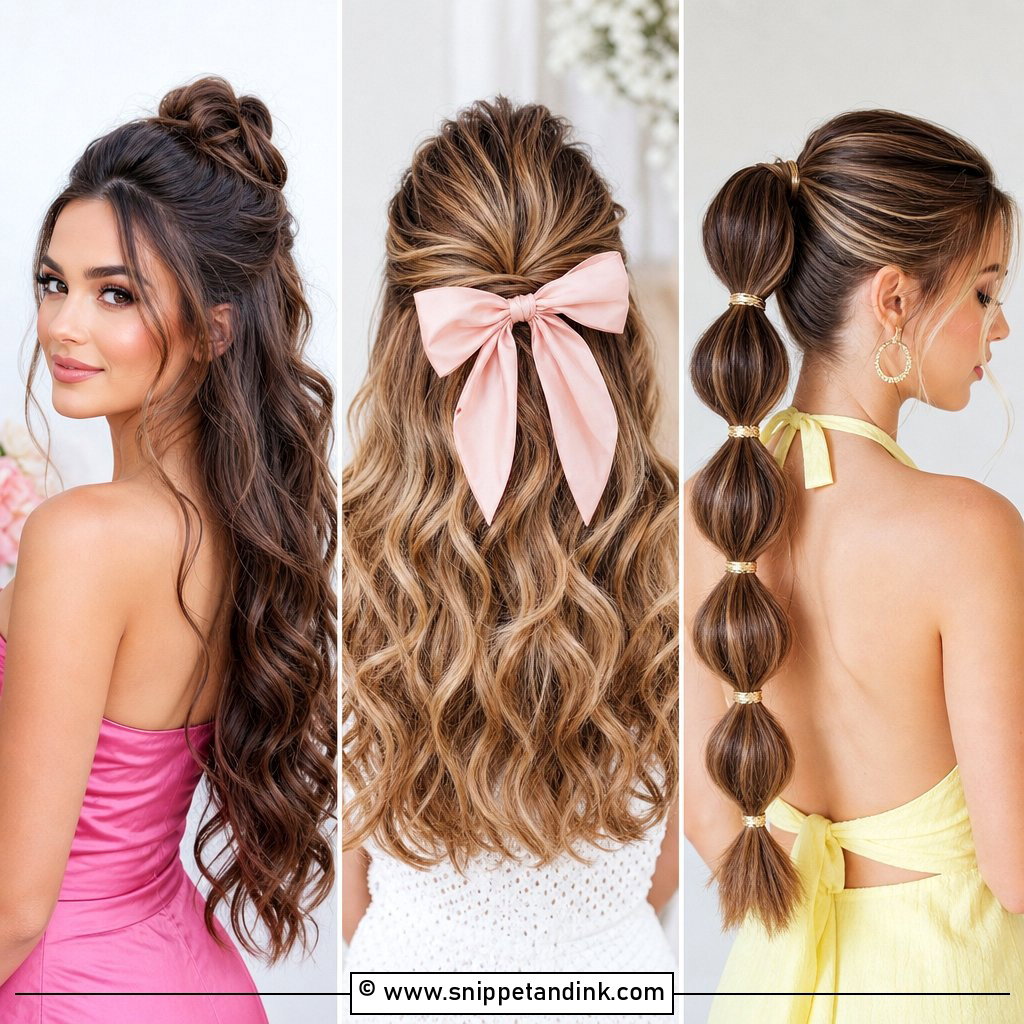
15. Indian Bridal High Bun Front View
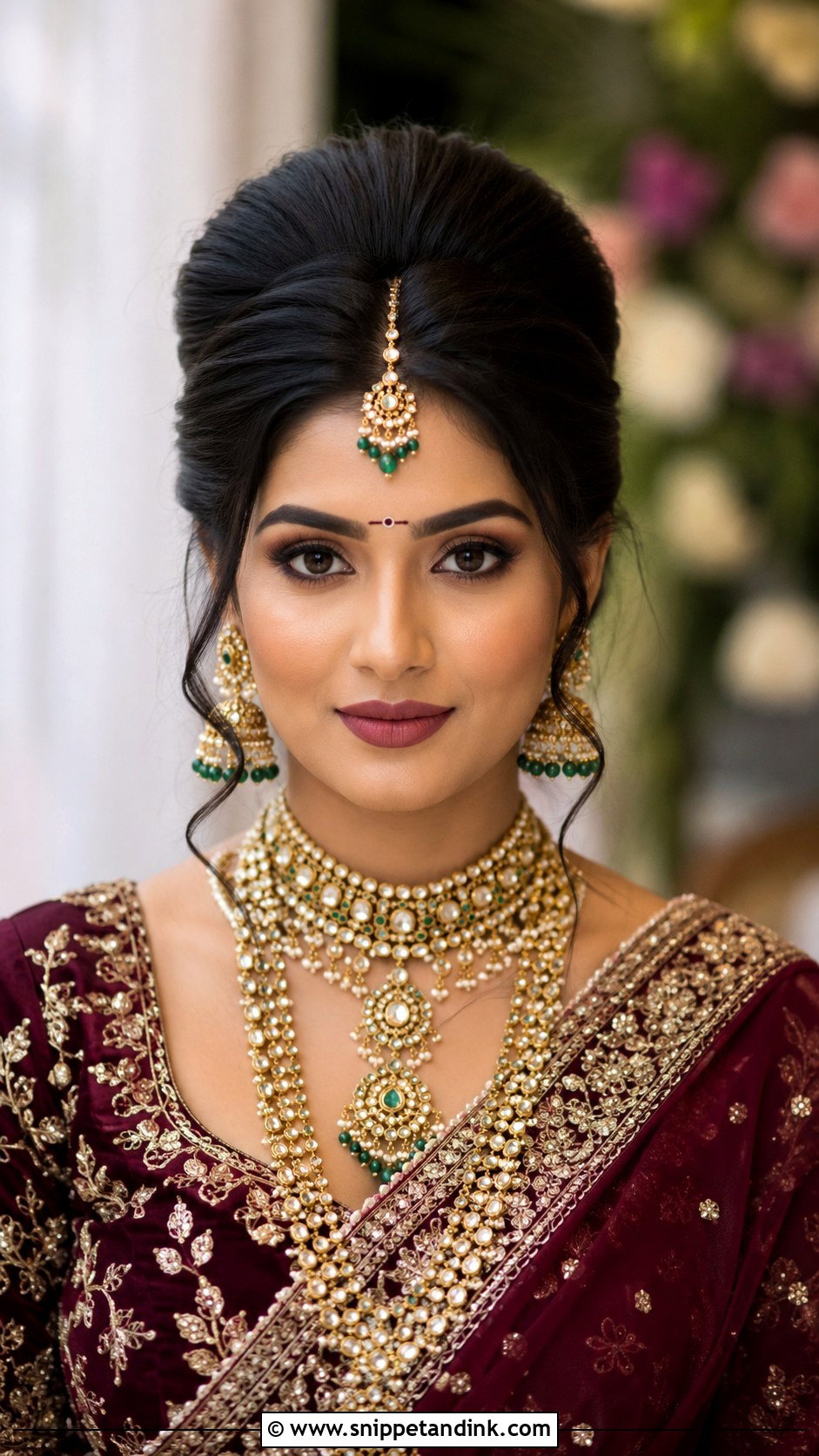
A high bun lengthens the neck from the front and lifts the eye above heavy jewellery, so earrings stand out. It is a reception or modern lehenga look. Placement matters a great deal. Too far forward and the bun looks harsh and squared off in front-view photos, so I set it at the top of the back of the head. Dupattas are best pinned behind it rather than over it.
16. Indian Bridal Textured Low Bun Front View
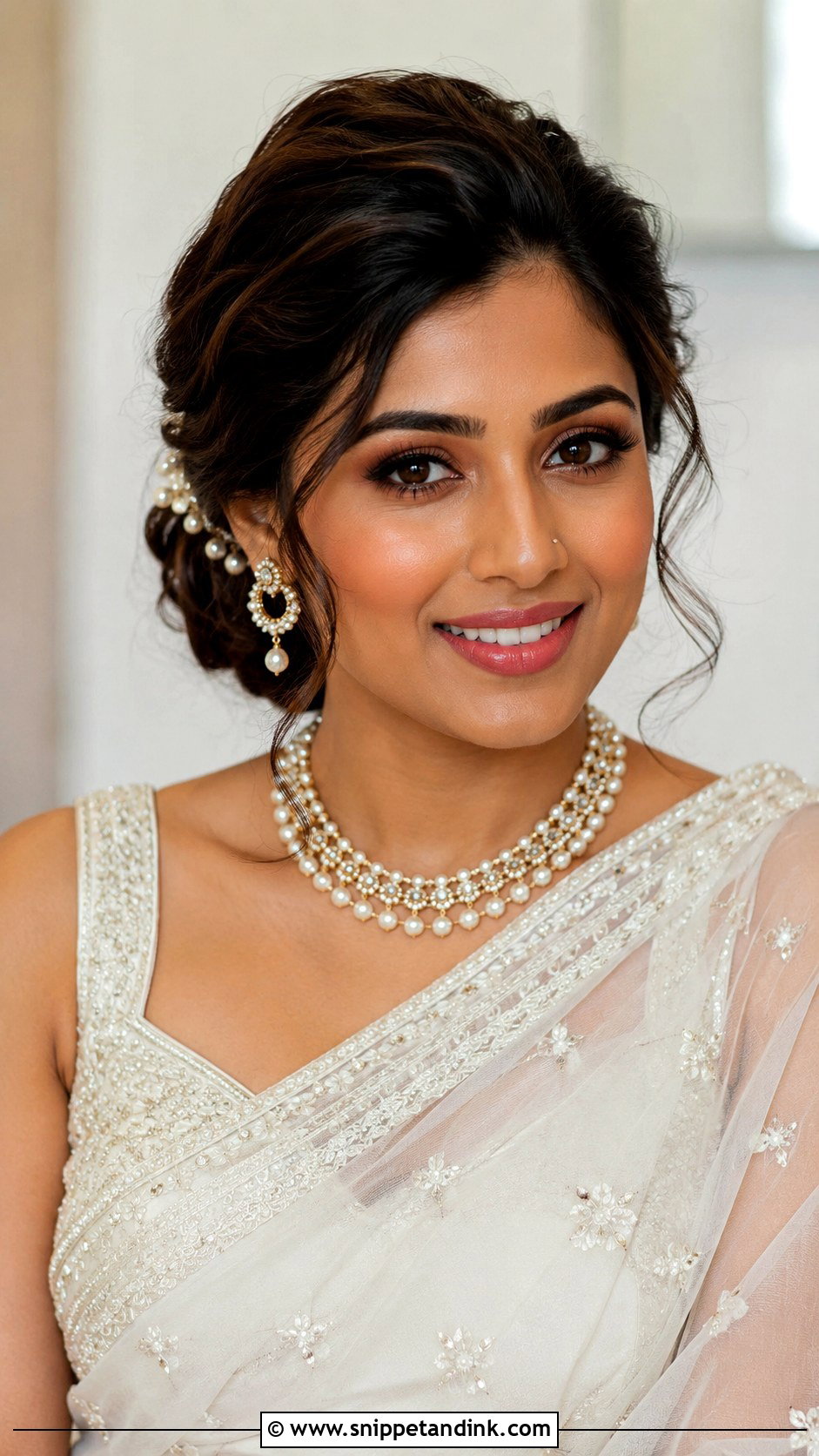
A textured low bun avoids the severe slicked look while keeping a bun’s security. From the front, the crown shows soft bends rather than a flat sheen. The trick is a firm core: I pin the inside of the bun tightly and then loosen only the outer surface with my fingers. Contemporary lehengas and organza sarees suit it. Frizz is the enemy, so on humid days I use a smoothing serum on the surface.
17. Indian Bridal Maang Tikka Open Hair Front View
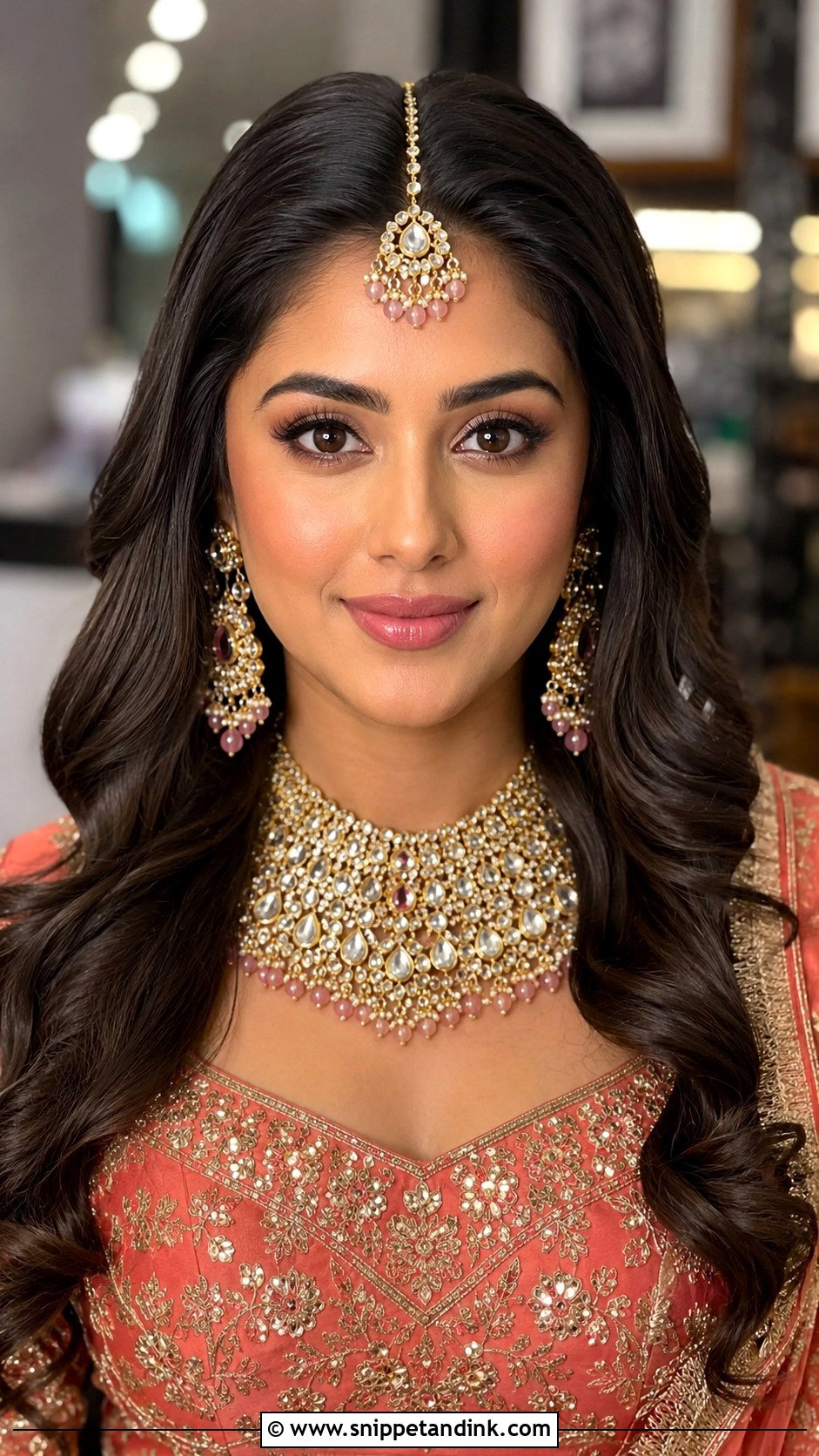
Open hair with a maang tikka needs a firm anchor under the parting, or the tikka slides as soon as you move. I make a small hidden braid behind the part and hook the tikka into it. The loose lengths are waved or curled and set to last. This suits functions where the dupatta is light or pinned back. Keep the top smooth so the tikka lies flat in close-up photos.
18. Indian Bridal Passa Hairstyle Front View
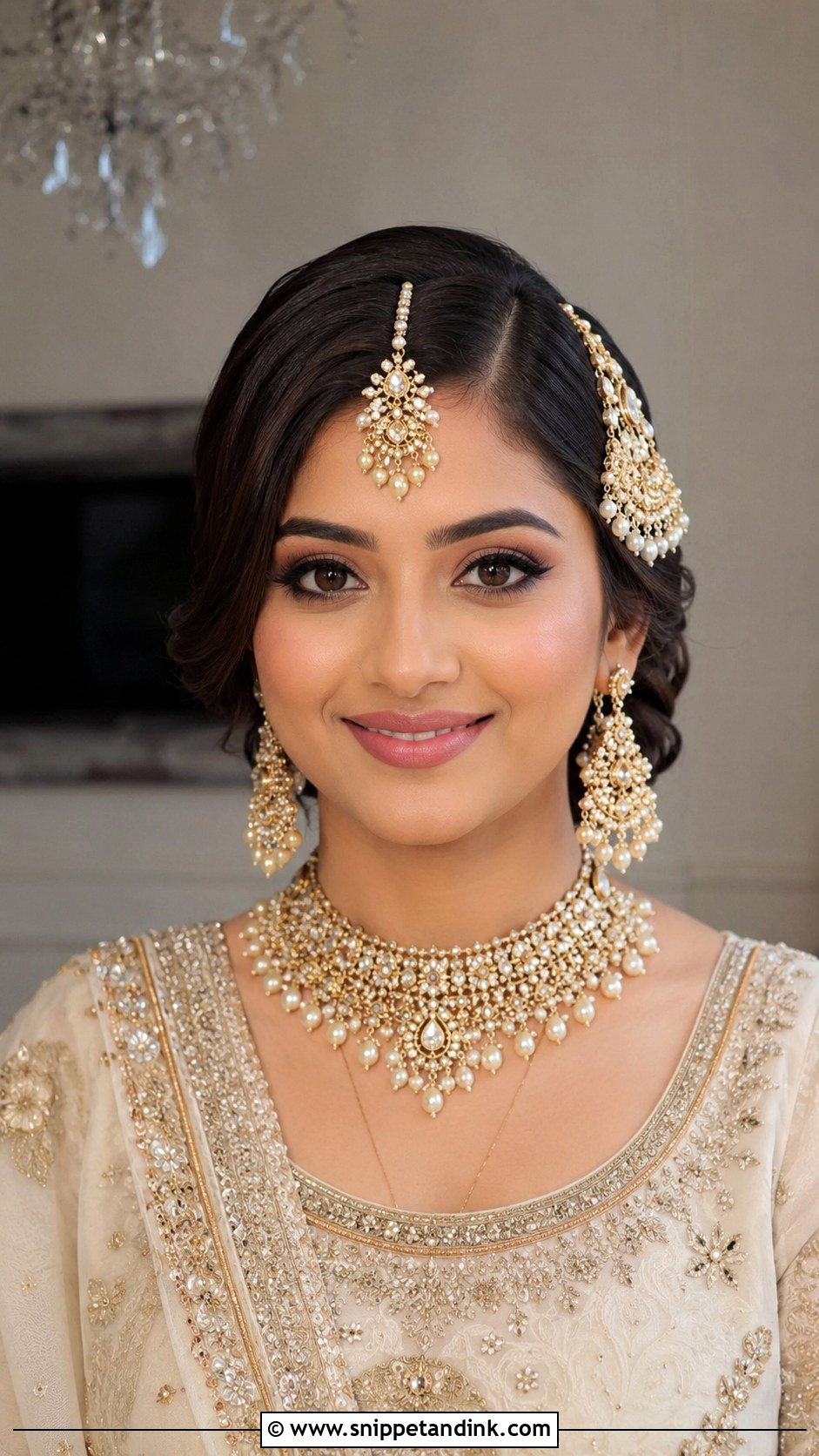
The passa sits on one side of the head, so the front view is deliberately asymmetrical. A side part usually gives it the most room. I pin a firm base under where the passa will sit, because the piece is heavier than it looks and tilts if it rests on loose hair. Shararas, ghararas and Mughal-inspired looks suit it. The opposite side stays smooth or softly curled so the face doesn’t look crowded.
19. Indian Bridal Dupatta Bun Front View
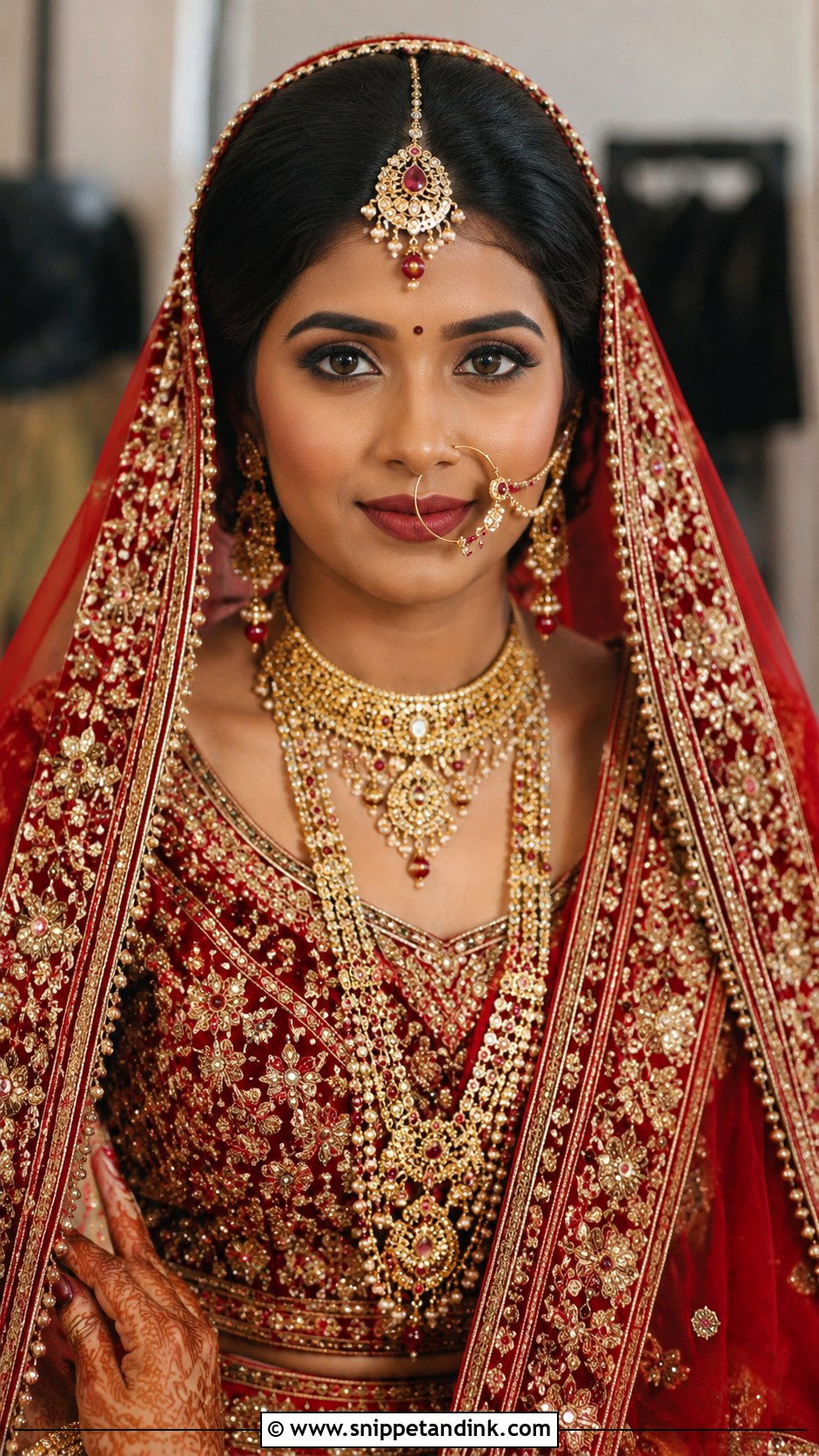
A dupatta bun is built for hours under fabric. From the front, it should still show the parting, the jewellery and the shape of the face, even with the dupatta on. A low or mid bun gives the fabric a stable base. I add padding only when the hair lacks bulk, and I place pins where the dupatta will be secured, not just where the bun needs them. Heavy borders need the most support.
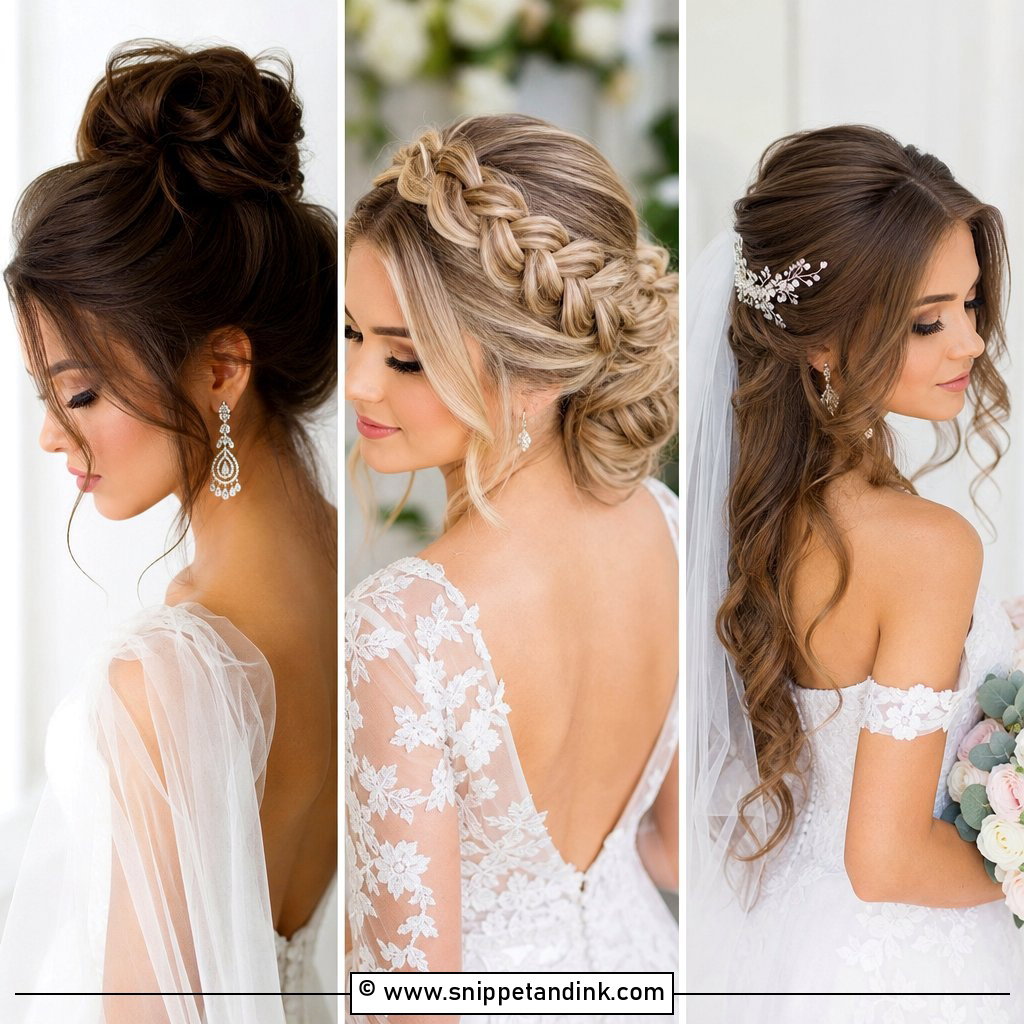
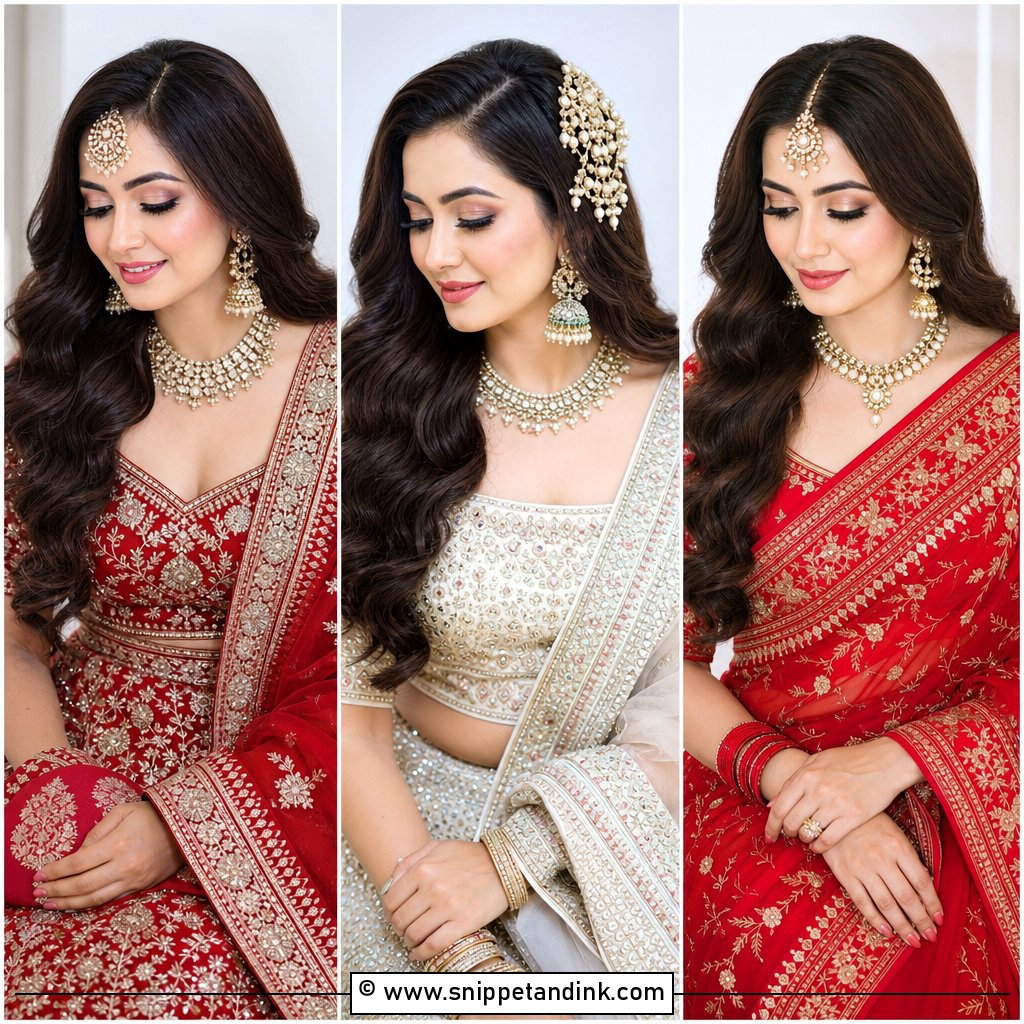
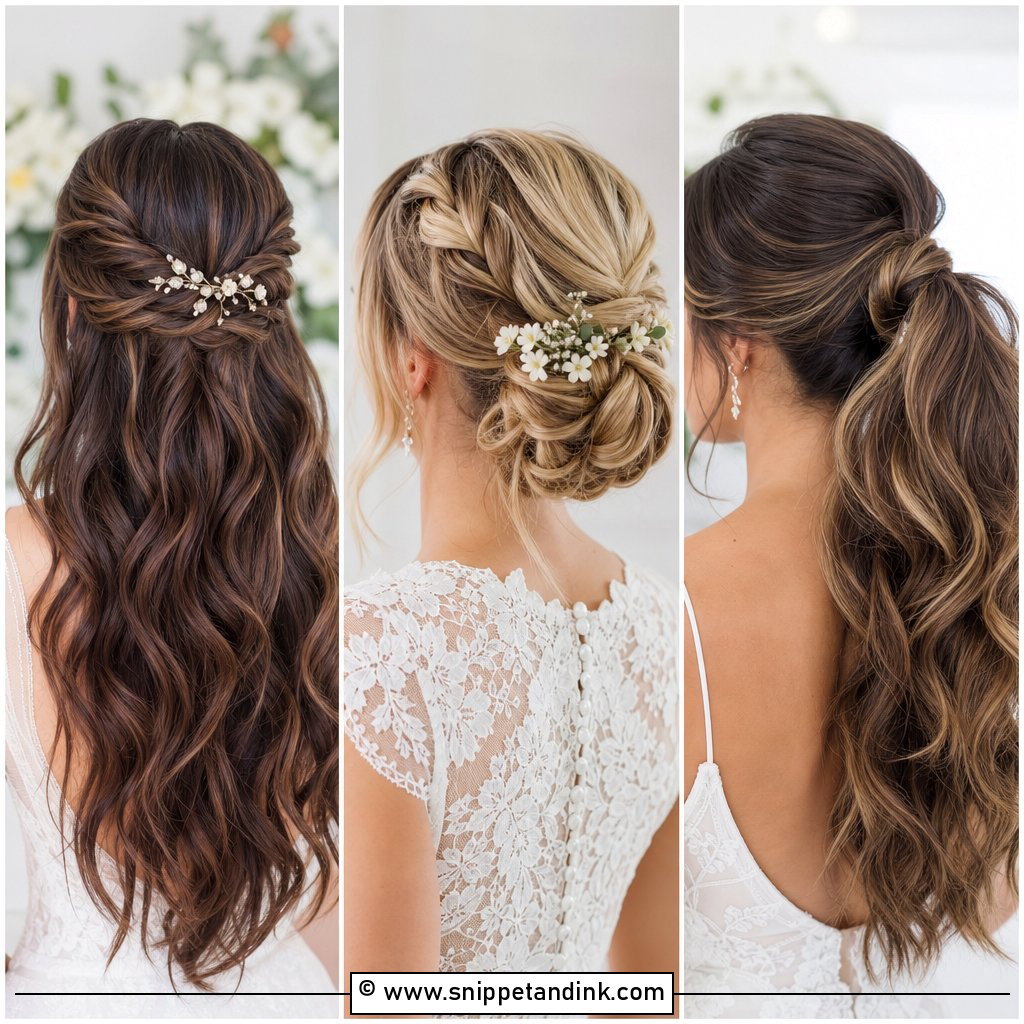
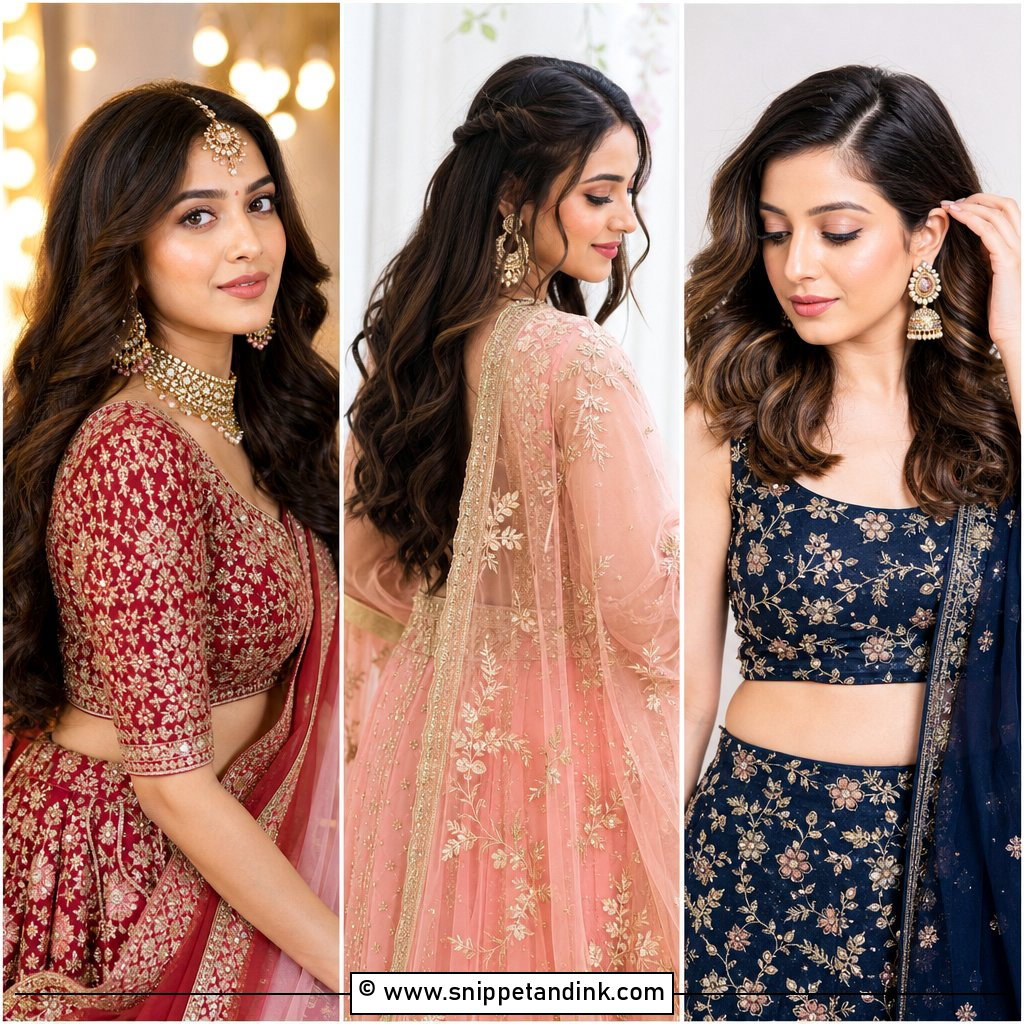
20. Indian Bridal Reception Waves Front View
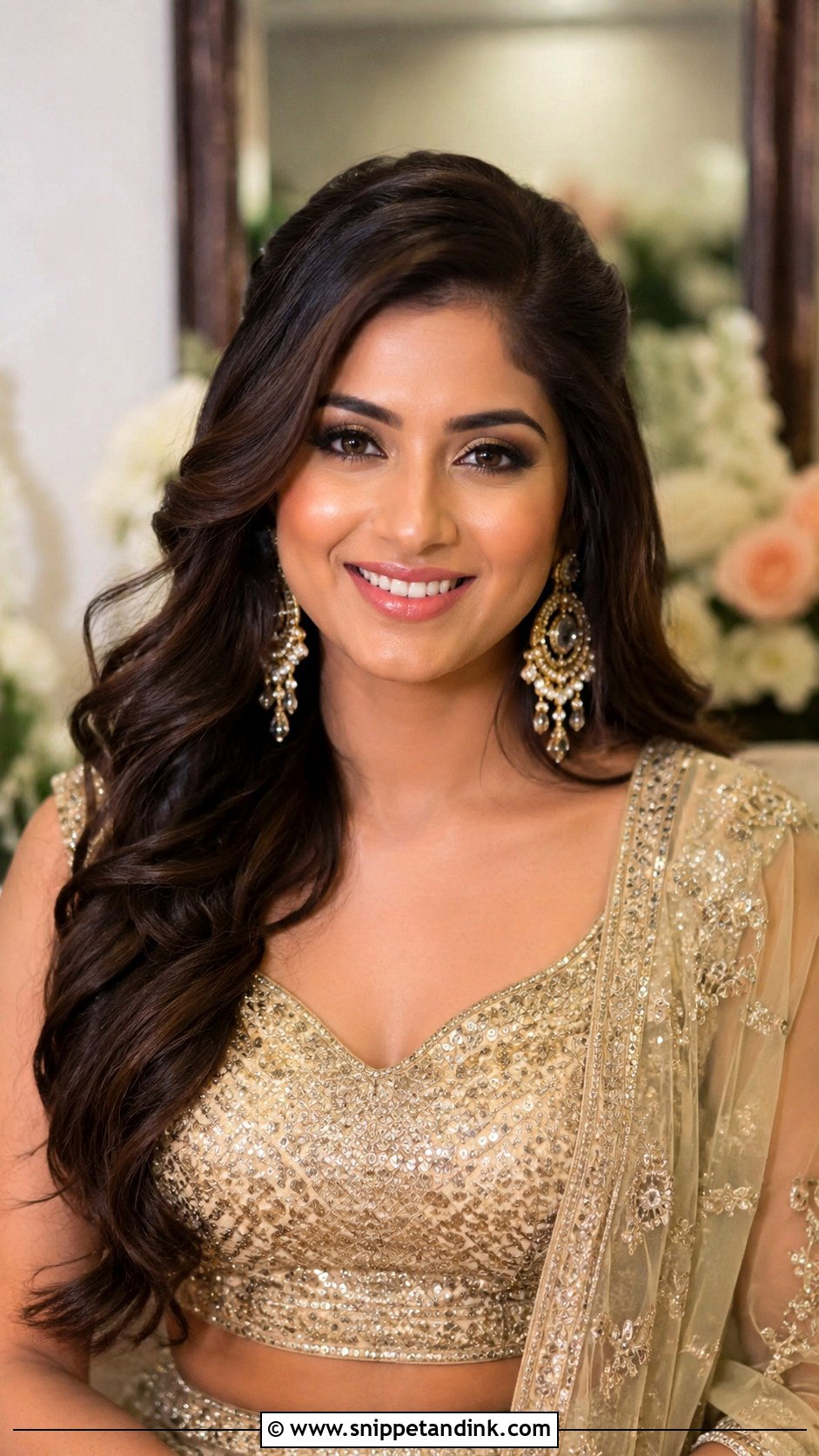
Reception waves move and catch light under stage lights, which suits evening portraits. I set the waves with a large barrel, brush them out into a polished S-shape and smooth the top, so they look formal rather than beachy. Root lift at the crown keeps them from looking flat from the front. Parting can follow the jewellery and the neckline. Gowns, modern lehengas and sarees all work.
Thin Temples, Cowlicks and Short Layers
Very few brides have a perfect hairline, and front-view styles show it all. Tell your stylist about these at the trial so the style can be adapted instead of forced.
Thinning at the Temples
Avoid any style that pulls the front back tightly. Tension at a weak hairline can make thinning worse over time, and it photographs harshly. A soft side part, a light puff or a few front pieces disguise thin areas better than slicking them back.
A Cowlick at the Front
A cowlick decides where your parting can go. I blow-dry it against its direction first and then let the part follow it, rather than fighting it with spray. A side part often suits a cowlick better than a centre one.
Short Layers and Growing Fringes
Braided fronts and soft curled pieces work with layers instead of against them. A sleek bun will lose them by noon. If you’re planning a haircut before the wedding, skip new face-framing layers unless you’ve tested the bridal style with them.
Take a Straight-On Photo Before You Commit
A front-view style has to suit your jewellery, dupatta, face shape and schedule before anything else. Sleek buns suit traditional ceremonies; open curls and waves suit lighter evening events; braids hold for hours; puffed crowns and matha patti styles frame the face strongly. Do your trial with your real jewellery and dupatta, and take a straight-on photo at the end. That photo will tell you more than the mirror.
You'll Like These Ideas:


Leave a Reply