
A Waleema is usually the first big event after the baraat, and the hair has a different job to do. Outfits drift toward pastels and champagne, jewelry gets lighter, and the dupatta placement tends to be softer, often pinned further back. When I plan Waleema hair, I want it finished enough for close portraits but able to move when you sit, hug relatives and stand through hours of photos. The fifteen styles below run from open curls to structured buns, and for each one I’ve noted what it needs from your hair and where it tends to fail. Sisters, cousins and guests can borrow most of them.
Undoing Last Night’s Baraat Hair Before Anyone Restyles It
Most Waleema brides reach my chair with the remains of the baraat still in their hair: dozens of pins, teasing at the crown and a coat of strong-hold spray. You can’t build a good style on top of that. Lacquer stops fresh curls from setting, and teased knots snap when a brush is dragged through them.
The night before, or first thing that morning
- Pull pins out slowly with your fingers rather than a comb, and check the nape and behind the ears, where most of them hide.
- Work a little oil or conditioner into the teased crown and separate it with your fingers, from the ends upward, before a brush goes anywhere near it.
- Shampoo twice if the hair was heavily sprayed. One wash rarely shifts all of it.
- Use a lightweight conditioner rather than a rich mask. Very soft, slippery hair won’t hold pins or curls.
- Dry it fully. Curling or pinning hair that is still damp at the roots is the quickest route to a style that drops before the photos.
If your scalp is tender from a heavy bun and dupatta the day before, say so at the start. I’ll move the anchor point lower or off center so the pins don’t land on the same sore spot, and that alone often decides between a high bun and a low one.
1. Waleema Open Curls
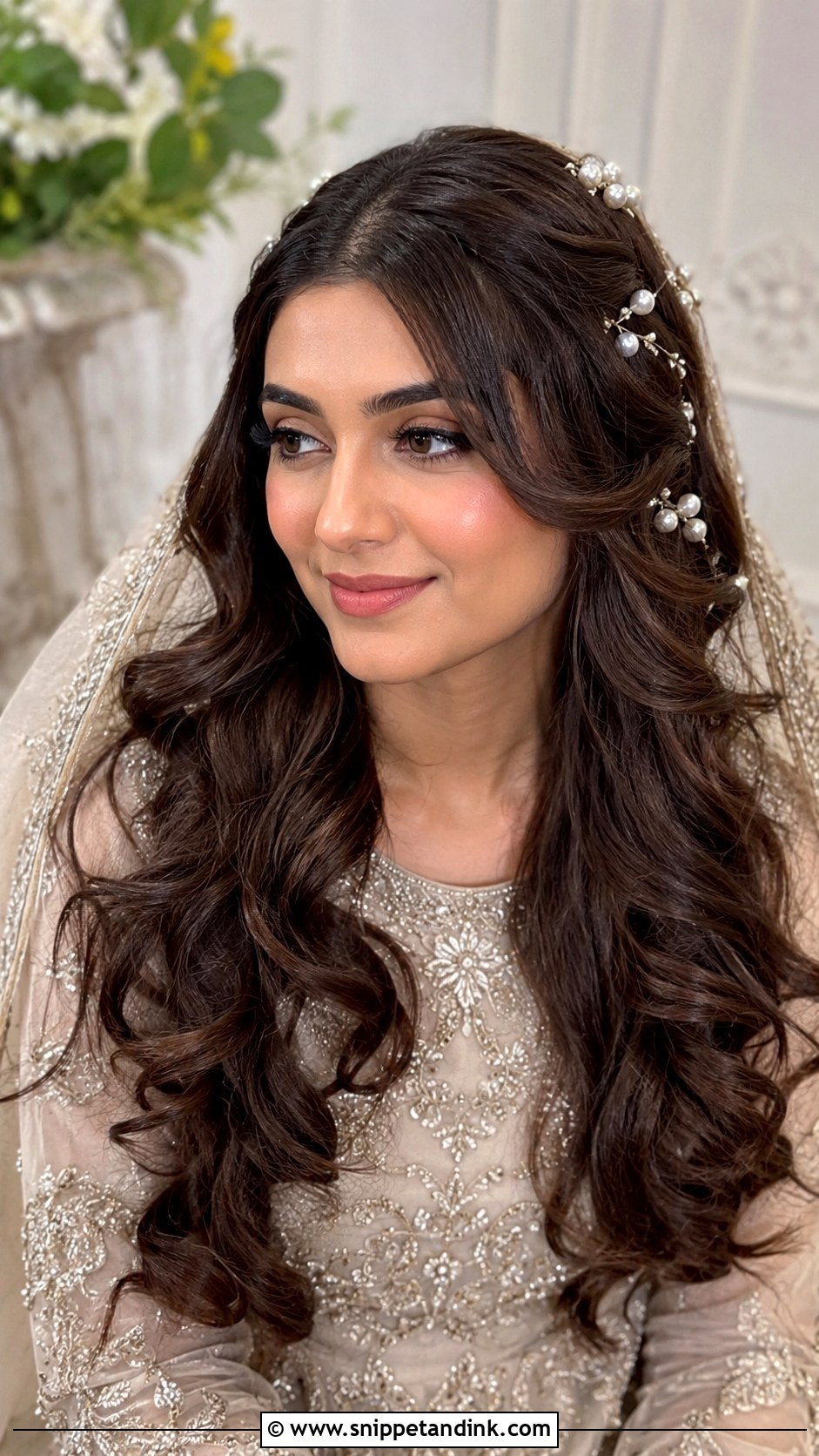
Open curls are the style I’m asked for most at Waleemas, and the one most likely to fall flat by dessert if the prep is rushed. I curl in larger sections than people expect, let every curl cool fully before touching it, then brush them out so they read as soft waves rather than ringlets. A center part gives a classic Pakistani bridal feel; a side part softens the face. With a dupatta, I keep a little lift at the crown and set two crossed bobby pins behind it as a hidden anchor. Fine, straight hair that won’t hold a curl overnight needs a trial first, because open hair shows every dropped section.
2. Waleema Low Bun
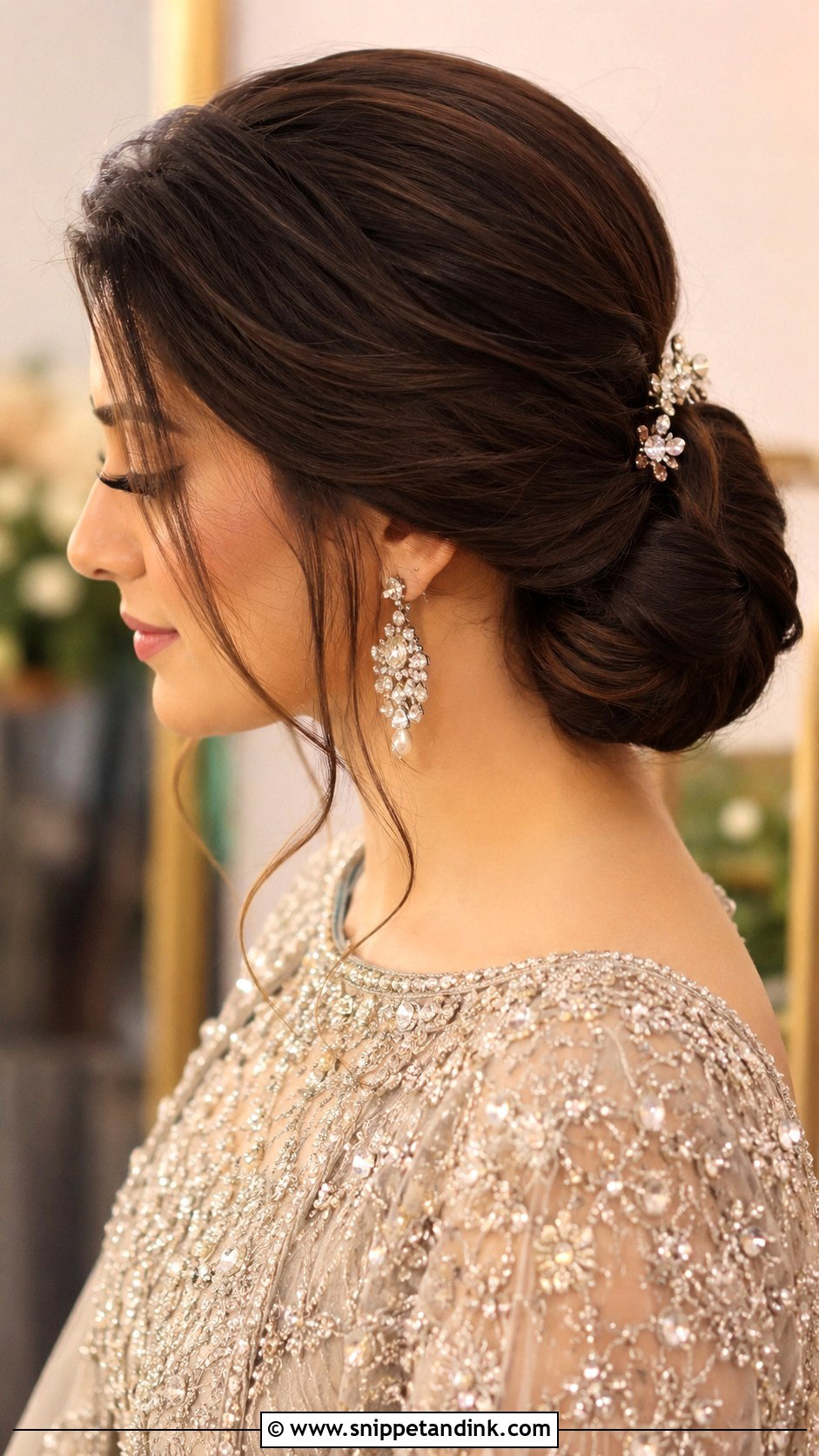
Of everything on this list, the low bun is what I’d suggest to a bride who can still feel the baraat in her scalp. Sitting at the nape, it carries a dupatta on the strongest part of the head and leaves earrings, necklace sets and embroidered necklines in full view. The mistake I correct most often is a bun pulled flat at the crown, which ages the face in photos. I leave a finger’s width of lift on top and loosen two front pieces after pinning. If your outfit is plain, fresh flowers or pearl pins tucked into the edge of the bun do the decorating for you.
3. Waleema Side Swept Curls
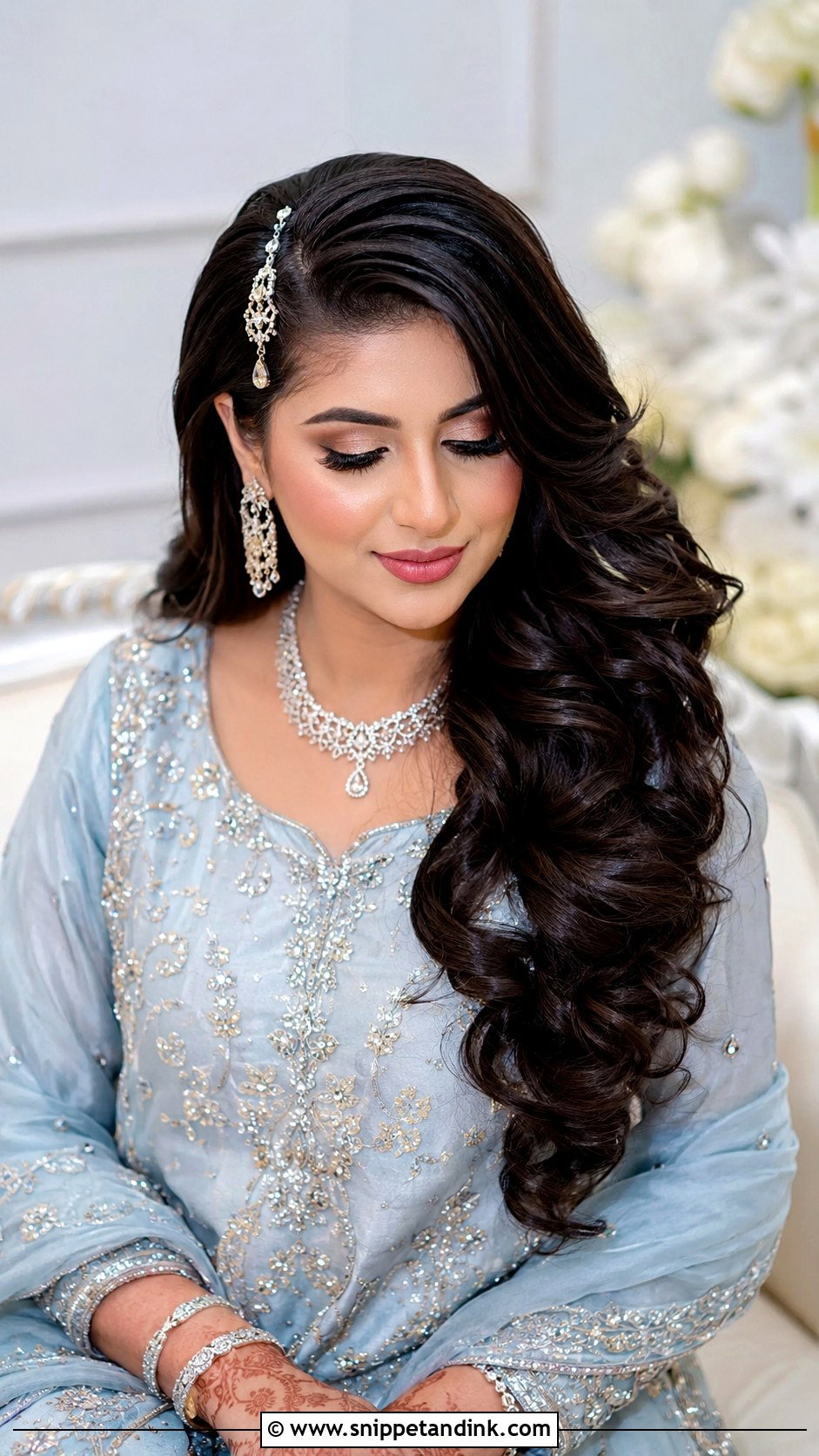
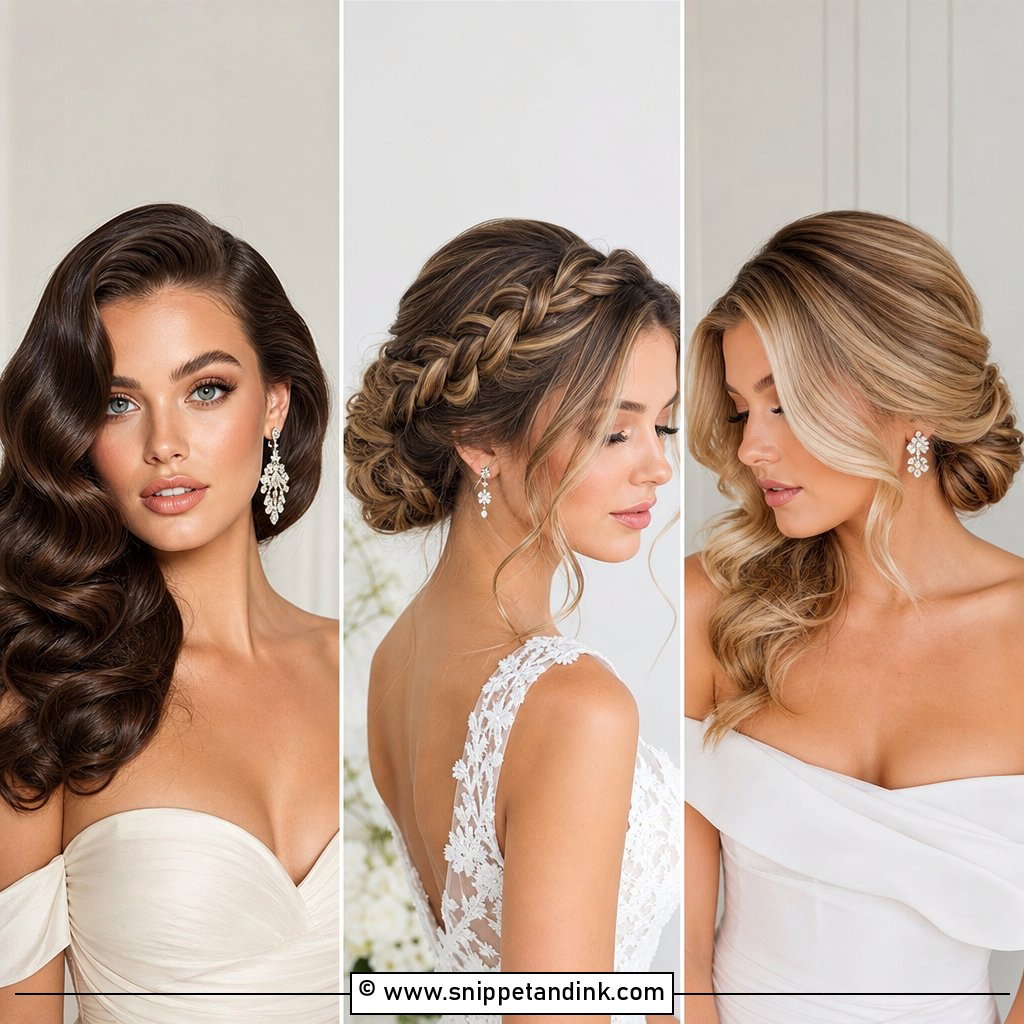
Sweeping everything over one shoulder opens one side of the neck and frames the other, which is why reception photographers love it. It also balances outfits with heavy work on one side or an asymmetric neckline. The hidden part of the job is at the back: I lock a vertical row of interlocking bobby pins behind the opposite ear so the hair can’t creep back during greetings. On smooth hair, expect the curls to relax a fair amount over the evening, so I set them tighter than the final look. Silver, champagne, powder blue and blush outfits all suit the glossy finish.
4. Waleema Sleek Bun
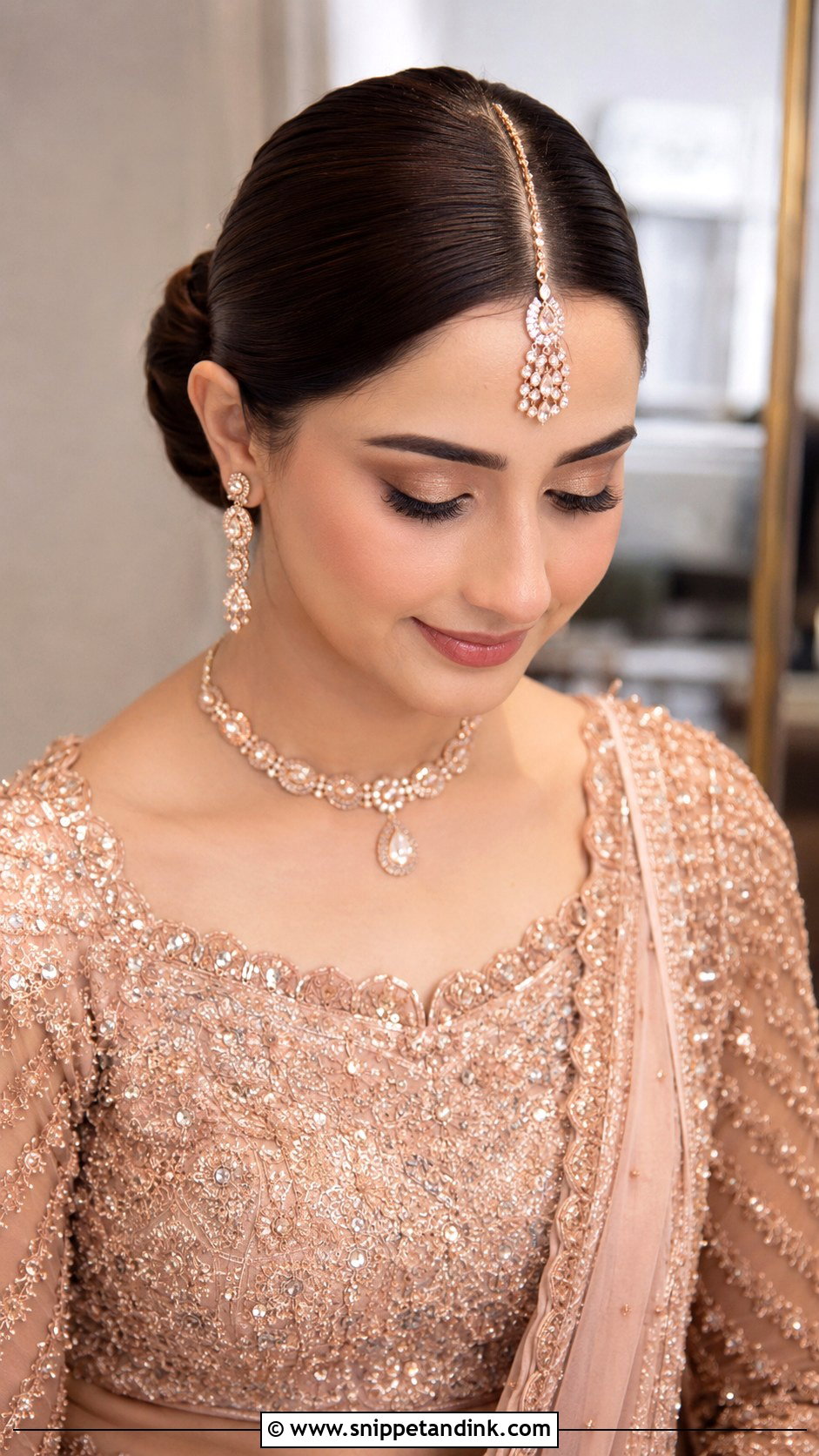
Sleek hair suits brides who like clean lines and want the face, not the hair, to carry the look. Modern gowns, structured lehengas and high necks all work with it, and so does heavy jewelry. An honest warning, though: smooth styles show every flyaway and every patch of product, and a tightly pulled bun can make a soft round face look severe. I smooth with a light cream and a boar bristle brush rather than gel, then shape the bun loosely so it still reads bridal. A maang tikka, matha patti or a single pearl piece is plenty here.
5. Waleema Half Up Half Down Hair
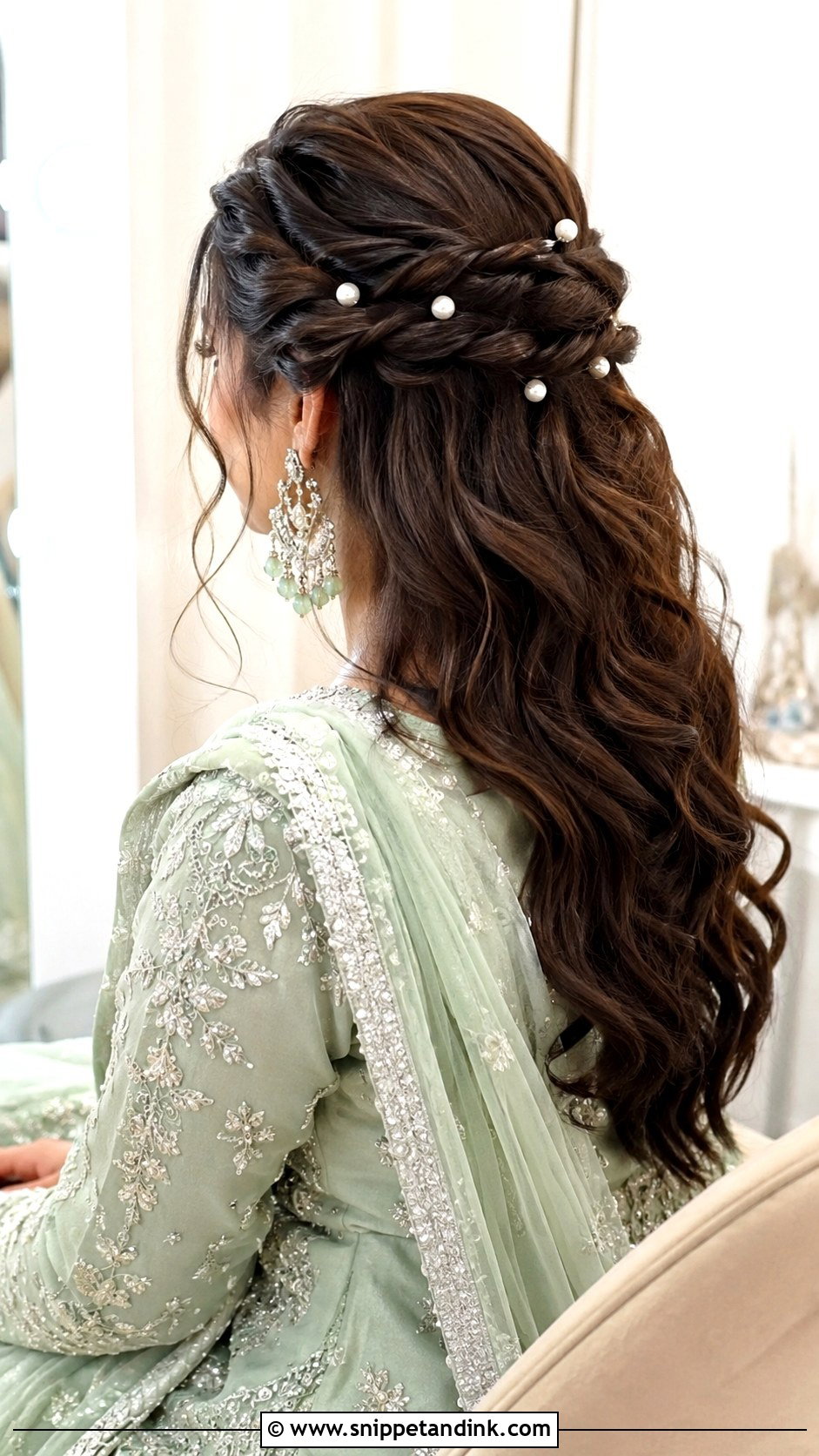
This is the compromise I suggest to brides torn between open hair and an updo. The pinned top section keeps the front tidy for photos and gives the dupatta a firm base, while the lengths stay soft. I twist or braid that top section rather than simply clipping it back, because a twist grips pins and a flat section slides. Layered long or medium hair suits it best; very blunt, one-length hair can look heavy at the back. Sisters of the bride often wear it because it feels festive without competing with her.
6. Waleema Messy Bun
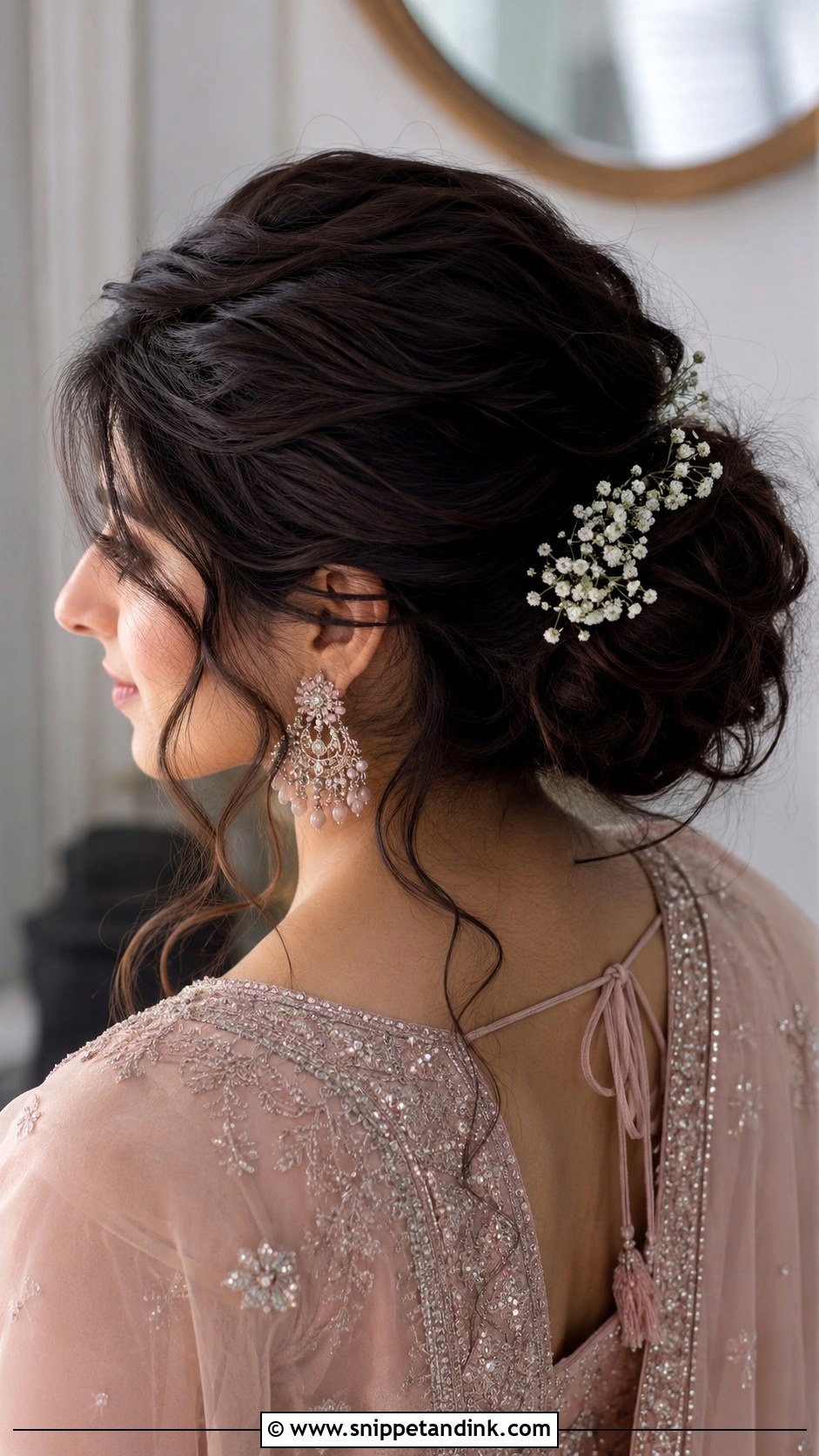
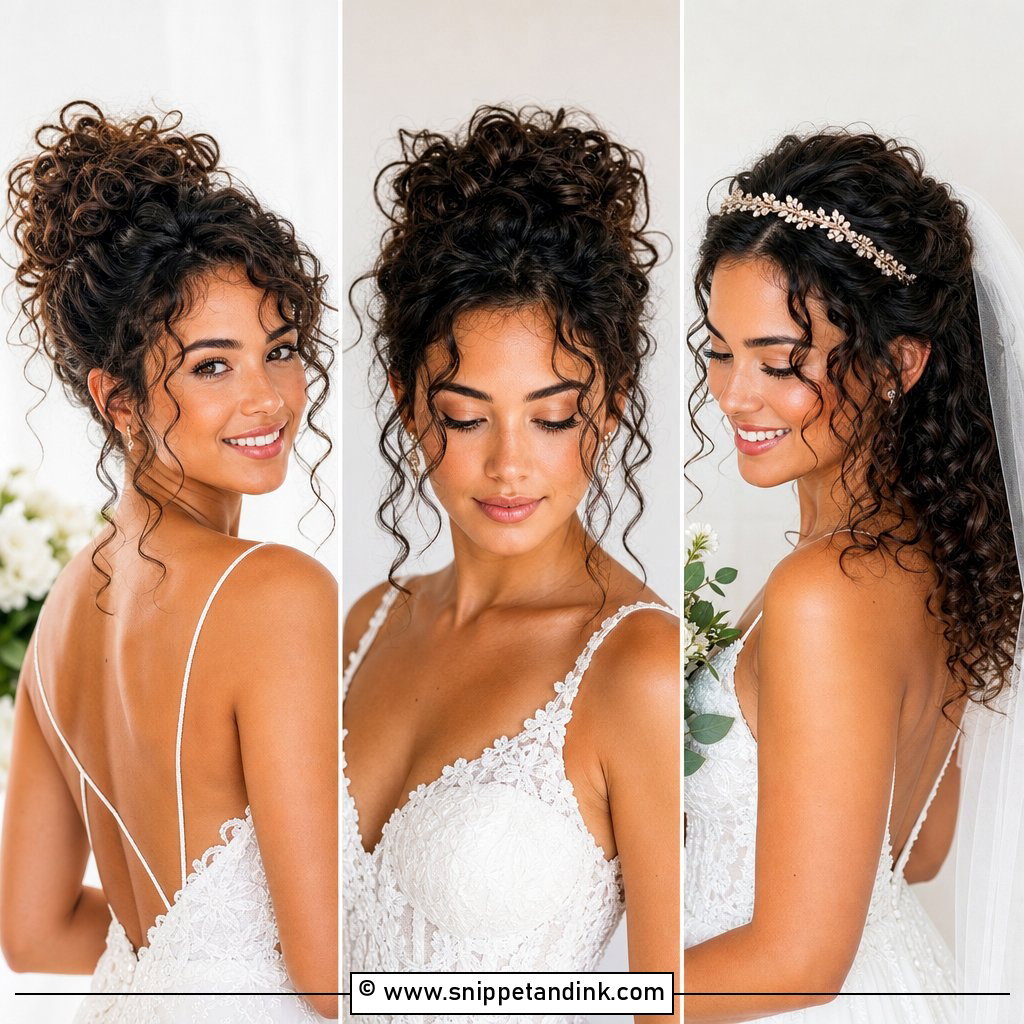
It should look relaxed and still survive a three-hour reception, which means it is anything but messy underneath. I curl the whole head first, then pin each curl into the bun individually so the texture is built in rather than pulled out at the end. Pastel outfits, floral embroidery and organza dupattas sit well with it. Where it struggles is under a heavy dupatta, which flattens the texture, so I place it slightly lower if one is coming. Scattered pearls or a few small flowers finish it without making it fussy.
7. Waleema Braided Bun
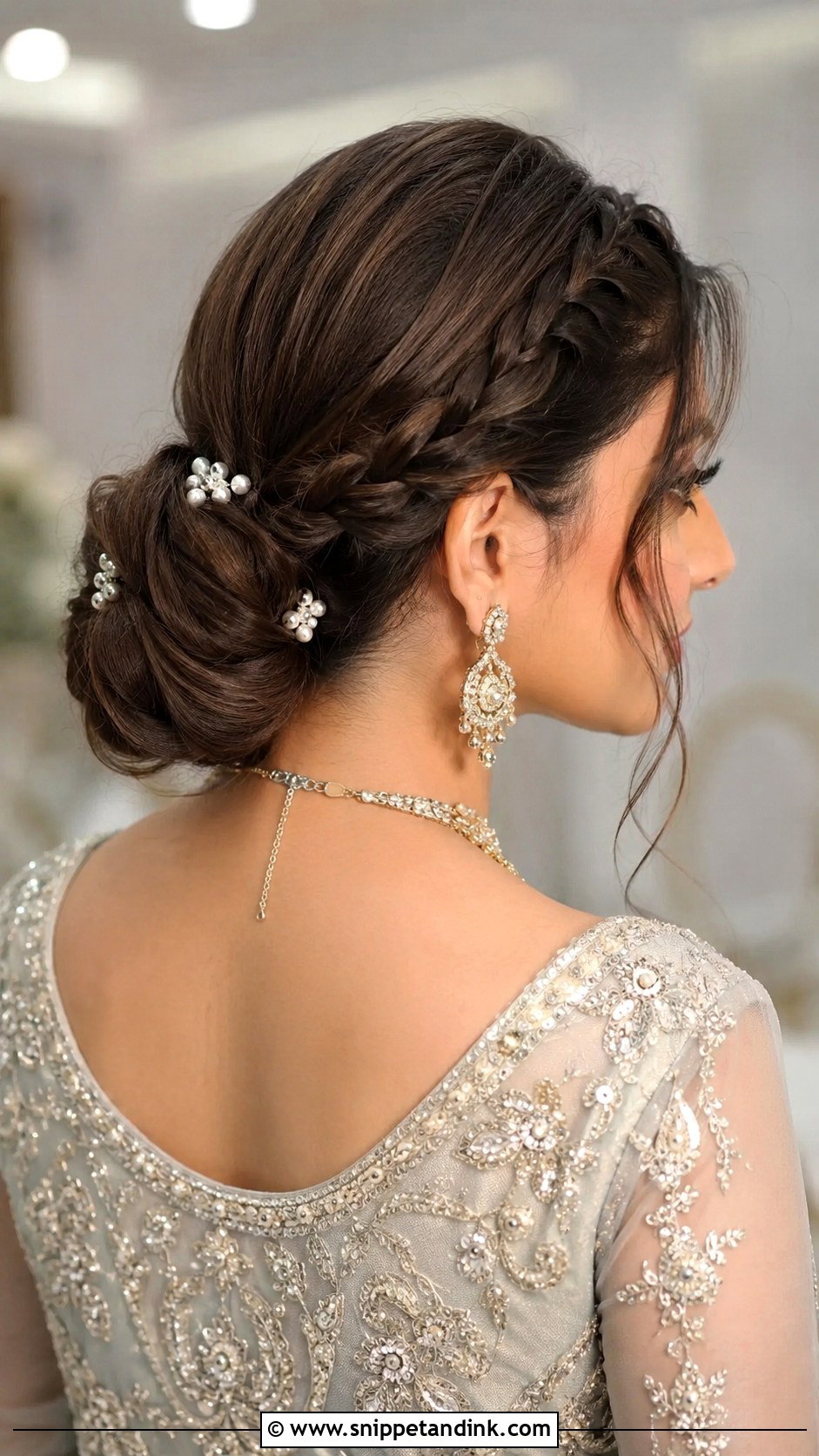
Working a braid into the bun gives texture you can see from across the hall, and it’s the most secure updo on this page. The braid can wrap the bun, cross the crown or melt into a low chignon. Thick, long hair shows the dimension best. On fine hair I’ll often add a clip-in weft before braiding so the plait isn’t thinner than the pins holding it. That braid is also the best anchor I know for a dupatta or hair jewelry, since pins lock into the weave instead of sliding through smooth hair. Keep the front soft so the whole look doesn’t turn rigid.
8. Waleema Soft Waves
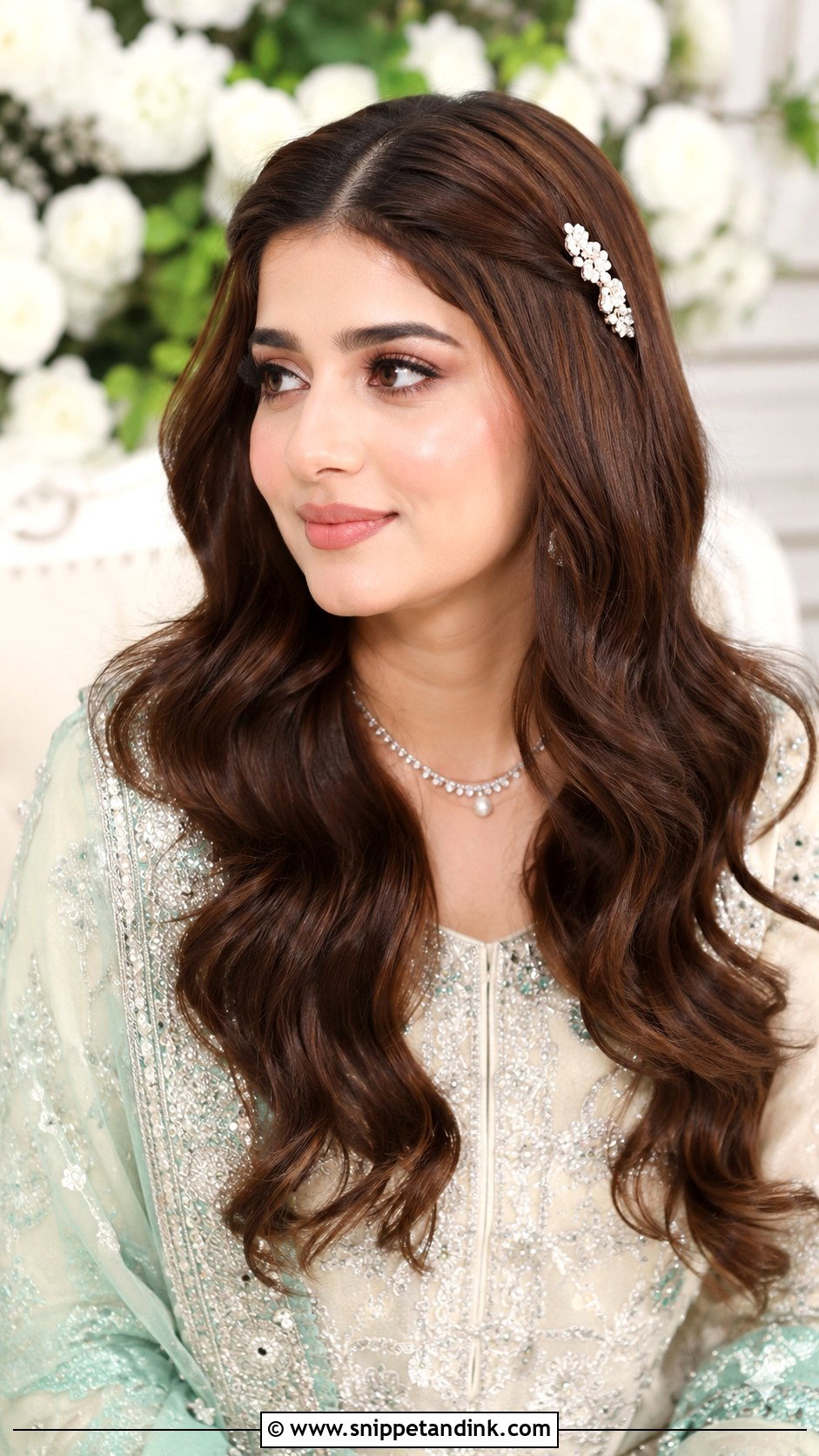
Of all fifteen, these are the least fussy and among the most forgiving on camera. I want them smooth, with a shine that catches the light, so I set them with a large barrel and brush only once they’ve cooled. They suit long layers, medium hair and even a lob with some root lift, and they sit easily with ivory, rose gold, powder blue, mint and champagne outfits. Humidity is the enemy. In a warm marquee, waves on naturally straight hair can be gone in a couple of hours, so pack a small brush and a light-hold spray.
9. Waleema High Bun
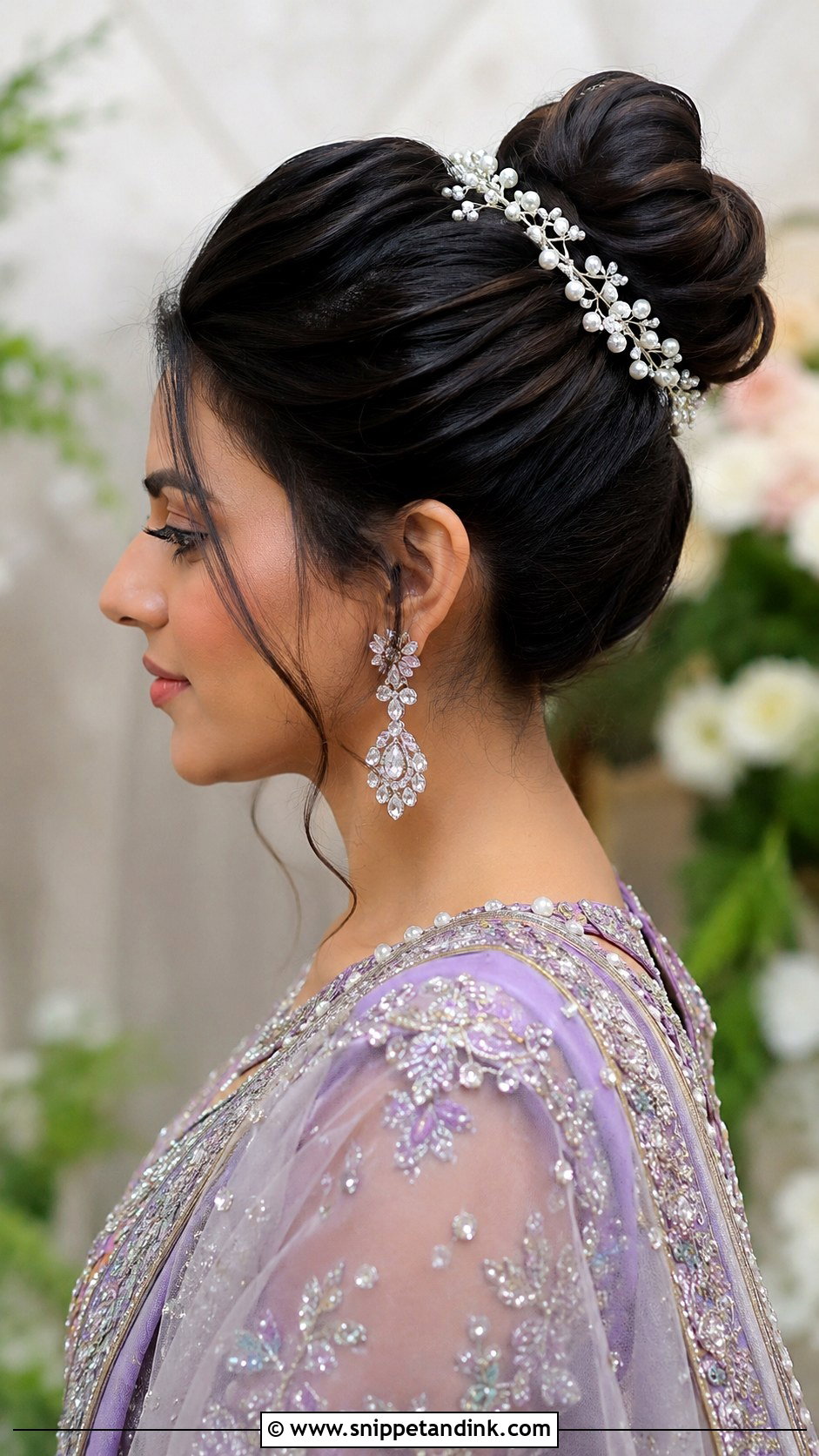
A high bun lifts the whole face and gives a regal shape, especially with heavy necklaces, high collars or bordered dupattas. It is not a casual top knot. Every section has to be smooth and balanced, and I build it on a small padded base so it doesn’t sag after an hour. Nothing touches the neck, so it’s the coolest option for warm venues. The trade-off is the dupatta: a high bun can push it backwards, so I usually pin the fabric just in front of the bun rather than over it. Keep accessories light with an embellished outfit; a few pearl pins, a small tikka or a fine hair vine is enough.
10. Waleema Fishtail Braid
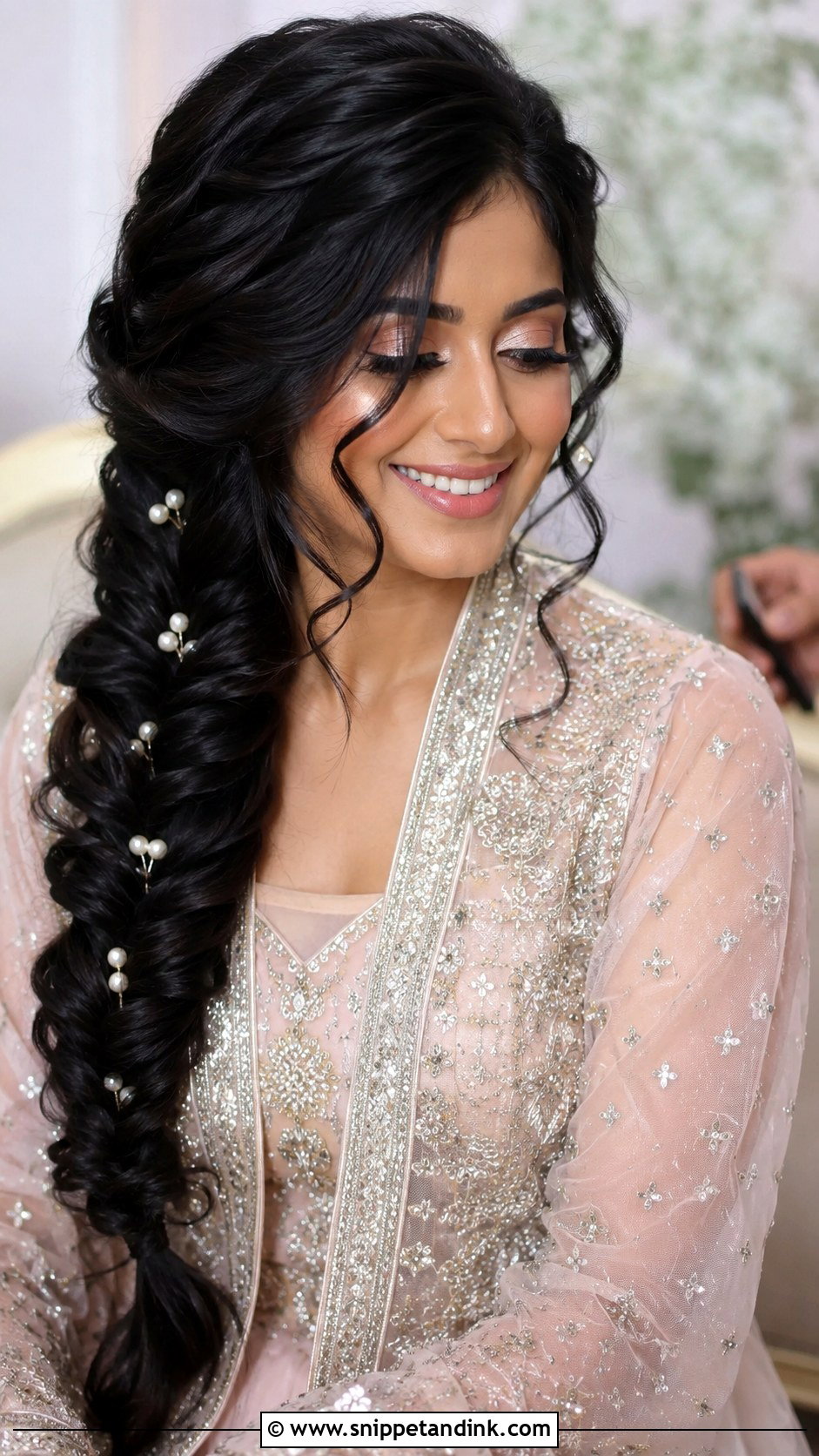
A fishtail takes longer than a three-strand braid but looks fuller and more intricate in photographs. Worn over one shoulder or down the back, it adapts to most dupatta styles. I braid it firmly, secure the end, then gently pull the edges outward to widen it. Shoulder-length hair can’t really carry one. It needs length, and clip-in extensions blend well into a fishtail because the many small crossings hide the joins. Shararas, ghararas, lehengas and flowing gowns pair well with it, and tiny flowers or crystal pins along the weave add a quiet bridal touch.
11. Waleema Front Puff Hairstyle
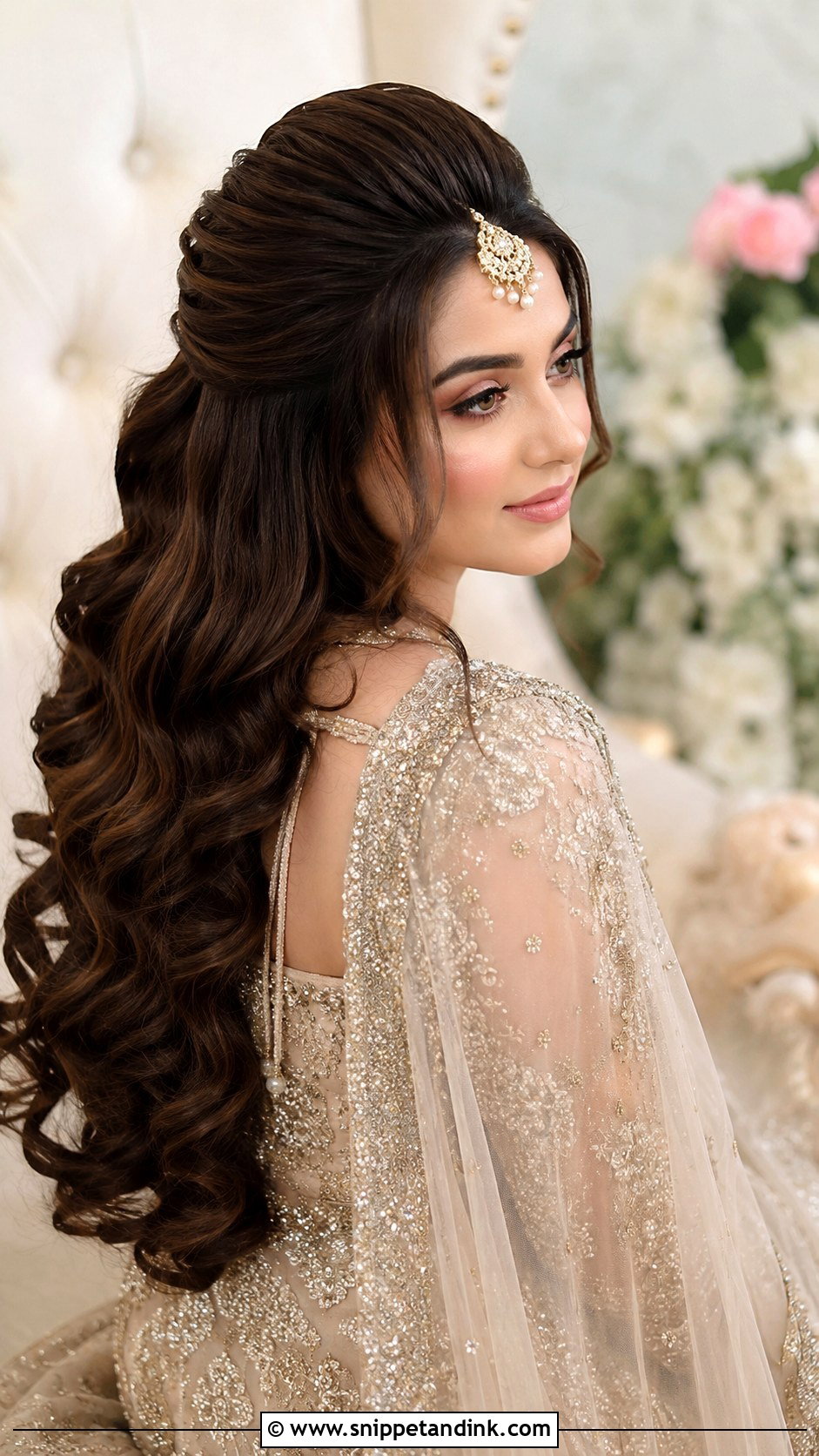
The puff is an old South Asian bridal staple, and it still earns its place when you want height under a dupatta or more definition through the face in photos. I tease only the underside of the front section and smooth the top layer over it, so the lift stays soft rather than bouffant. Keep it modest in height; a tall puff reads more mehndi night than Waleema. It can sit above a bun, open curls or a half-up style. Round, oval and heart-shaped faces carry it well, while very long, narrow faces usually look better without extra height on top.
12. Waleema Center Part Bun
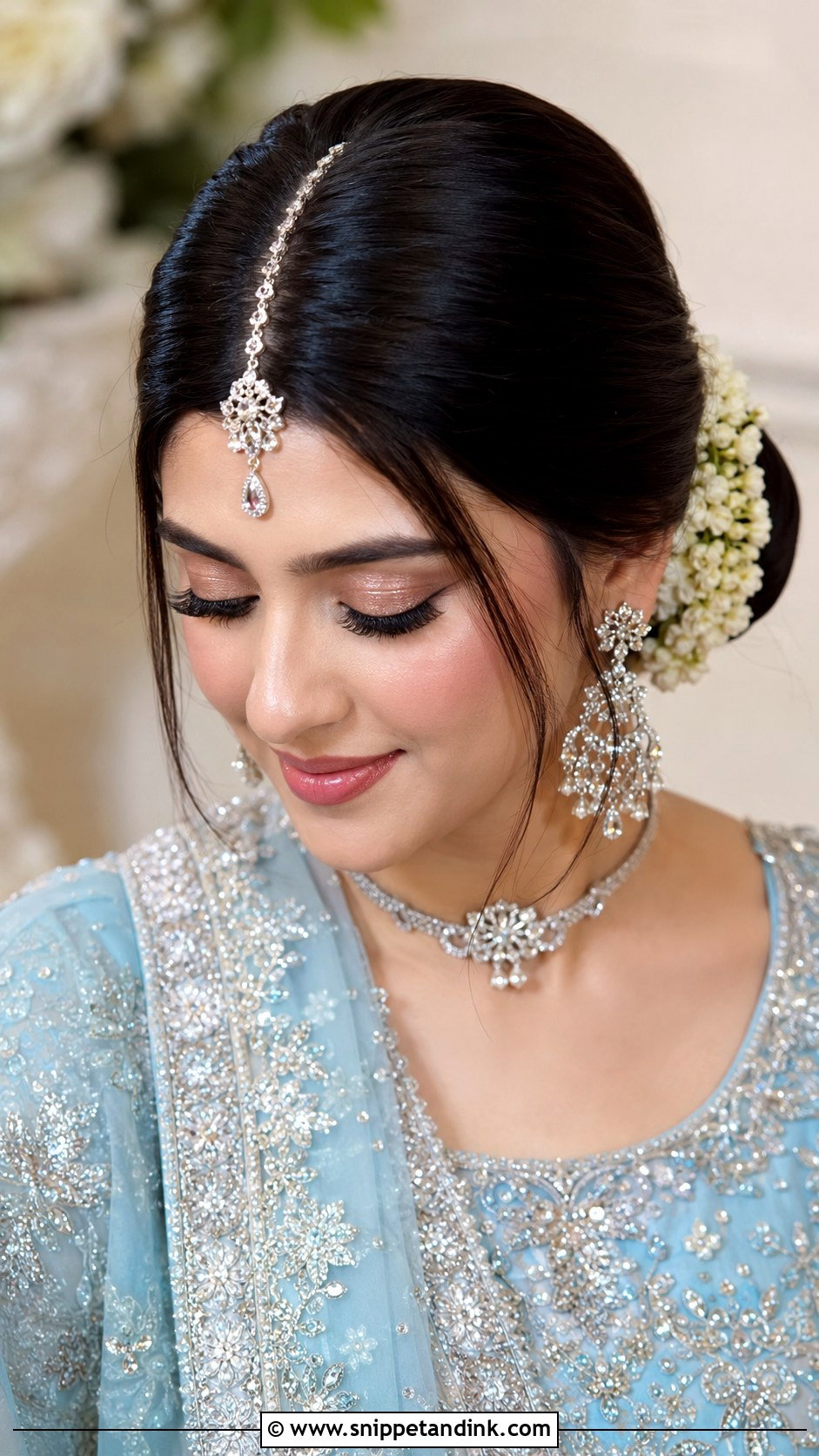
A clean middle part is the base I recommend for anyone wearing a maang tikka, matha patti, or passa, because the jewelry sits on a straight line instead of tilting. I set the part with the tail of a comb while the hair is still slightly damp so it doesn’t wander. The bun sits low, supports the dupatta and leaves the neckline visible, which suits Pakistani bridal maxis, lehengas and sarees in soft reception colours. Smooth the front but don’t plaster it. Letting the hair relax a little over the ears softens the face and keeps the style from looking severe.
13. Waleema Hollywood Waves
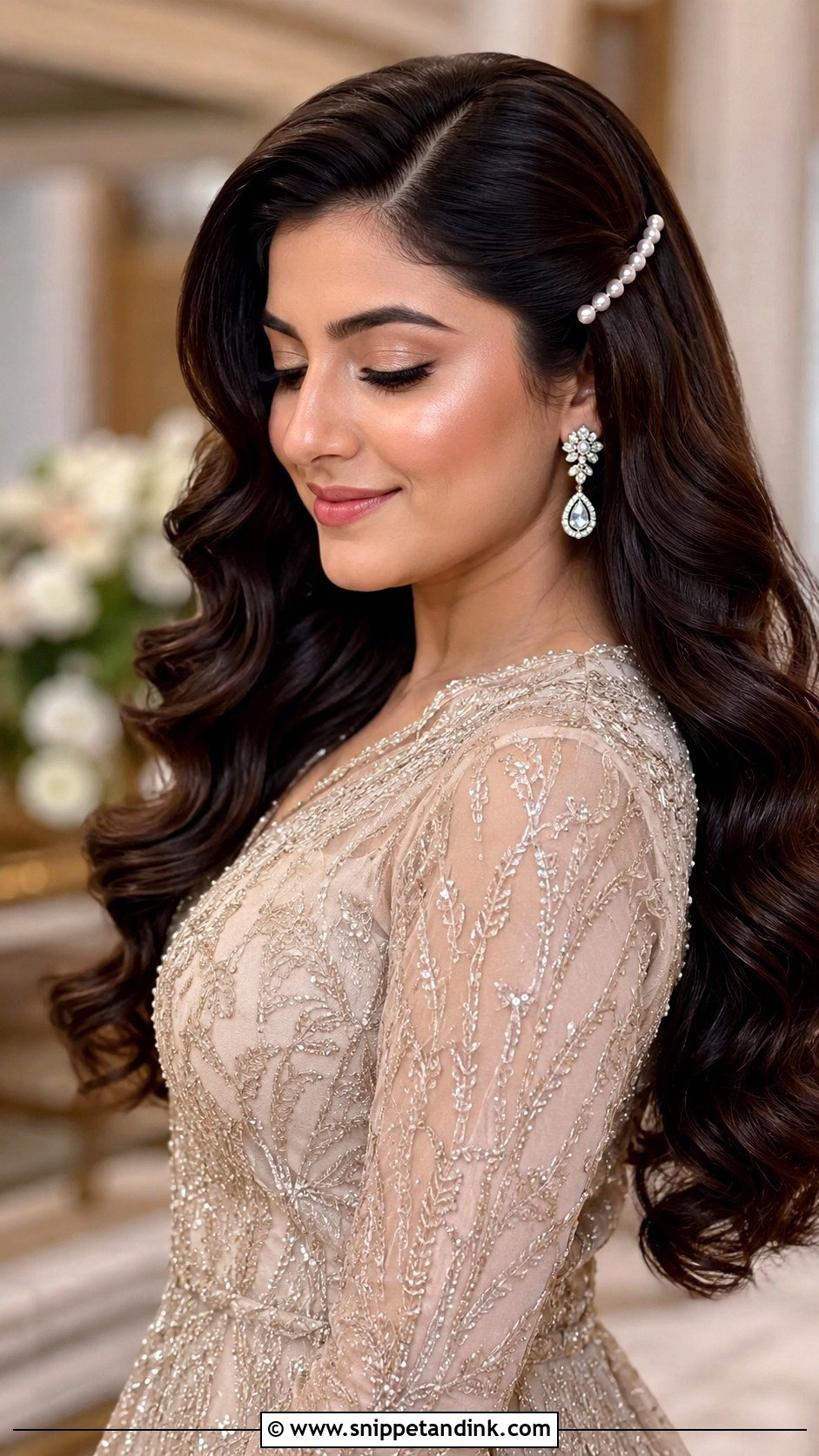
These are the most structured waves here, and I’d only promise them to hair that holds a curl. Each section is curled in the same direction, pinned to set, then brushed into one continuous S-shape that falls over the shoulders. They suit medium to long hair and look richest in deep brown and black, where the shine shows. Fitted gowns, sarees and modern lehengas carry the silhouette well, and a deep side part is the classic choice. Skip busy accessories. One side pin or two small pearl clips is all they need.
14. Waleema Loose Braid
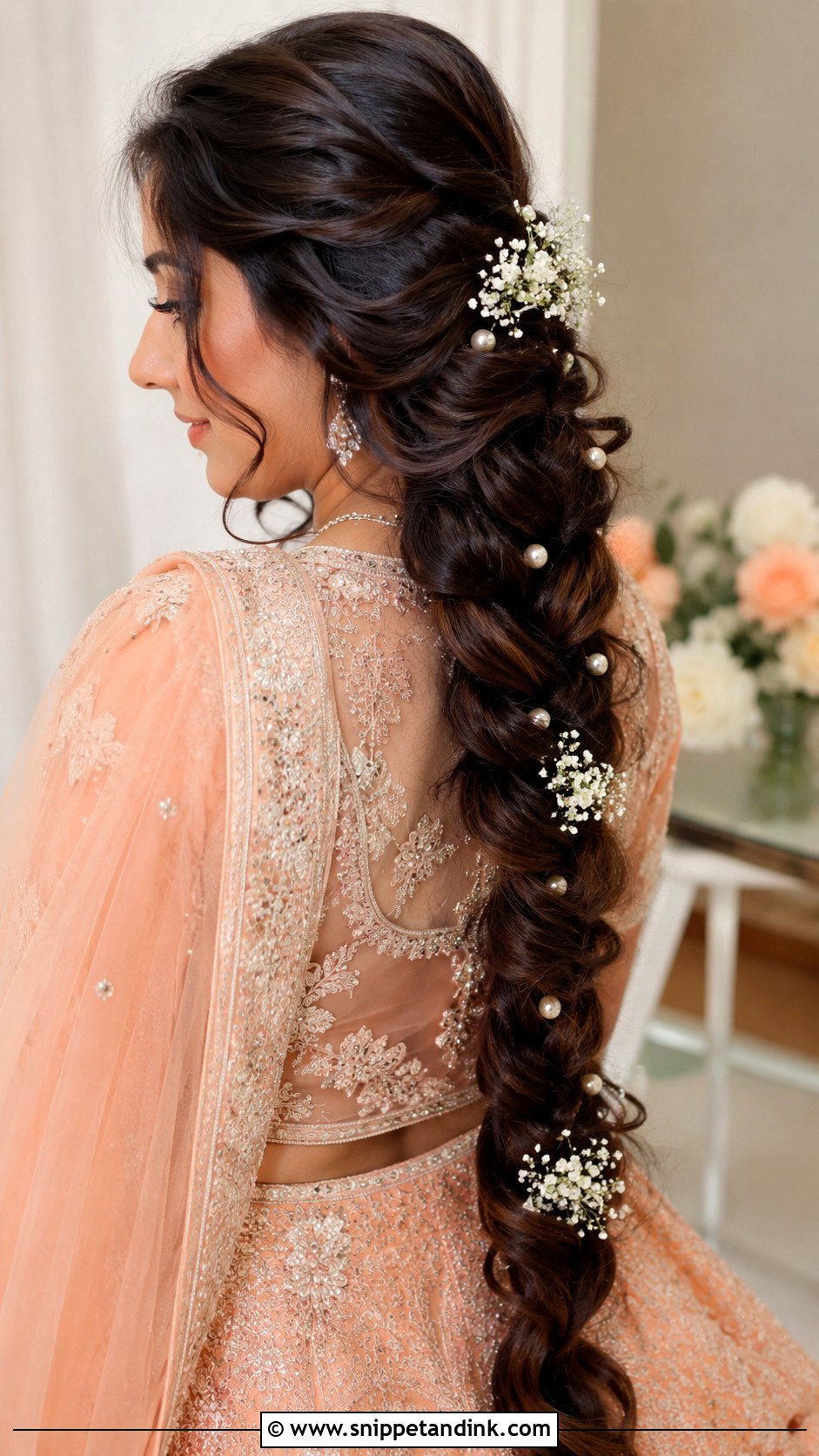
A loose braid is the comfortable end of the list, and a sensible plan if the Waleema follows a late night. It’s softer than a tight bridal plait but still finished enough for stage photos. Curling the lengths before braiding helps it hold its width, and then I pull each loop out gently for volume. Floral embroidery, pastel outfits and lighter dupattas suit it; a heavy dupatta tends to drag the braid flat. Bridesmaids and close family can wear it without looking as if they’re copying the bride. Small pearl pins or a little baby’s breath finish it.
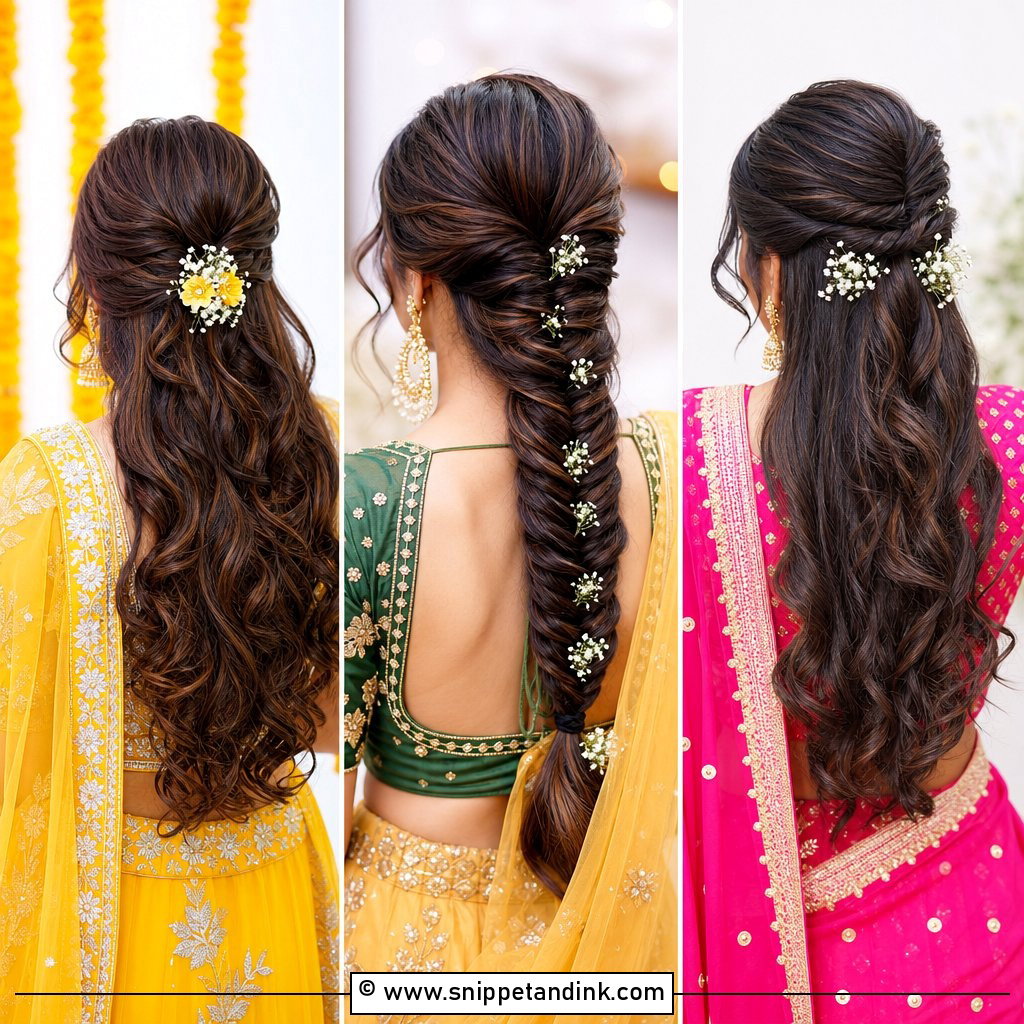
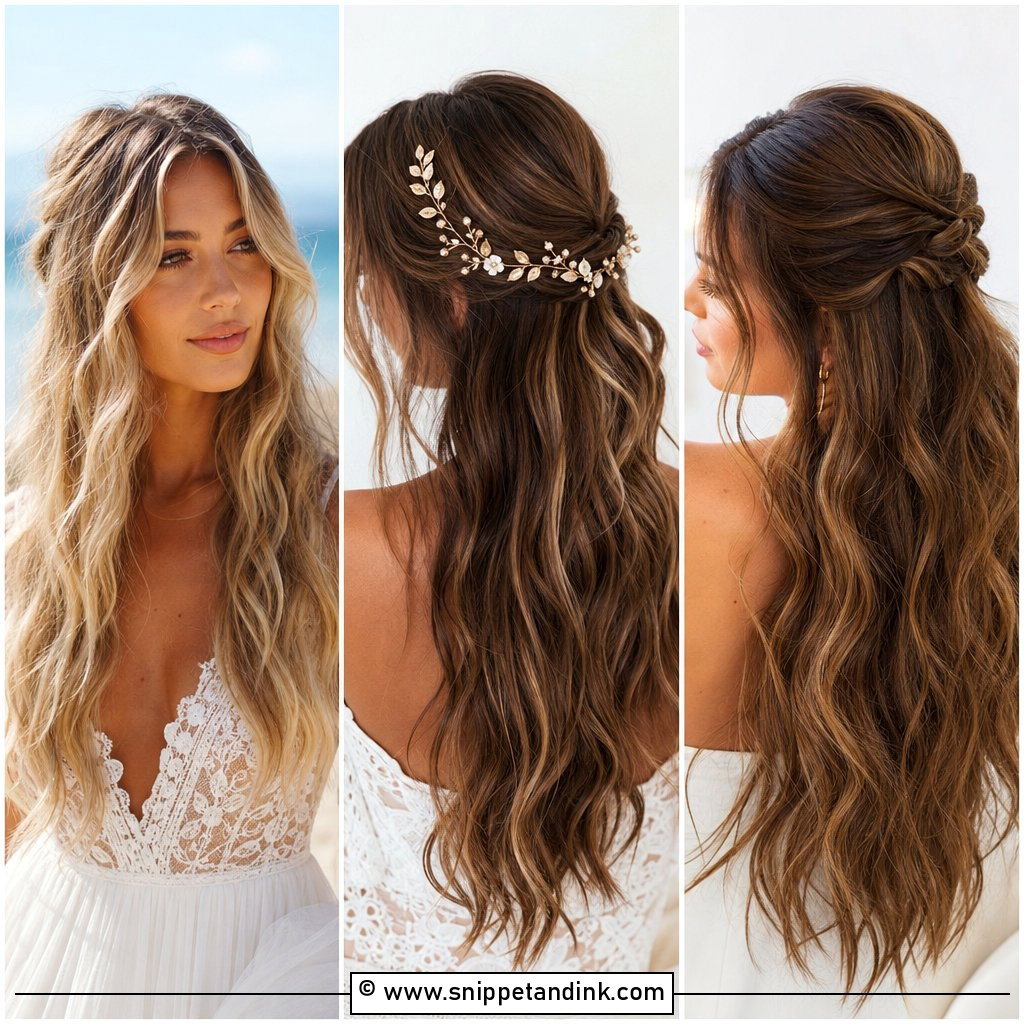
15. Waleema Curly Updo
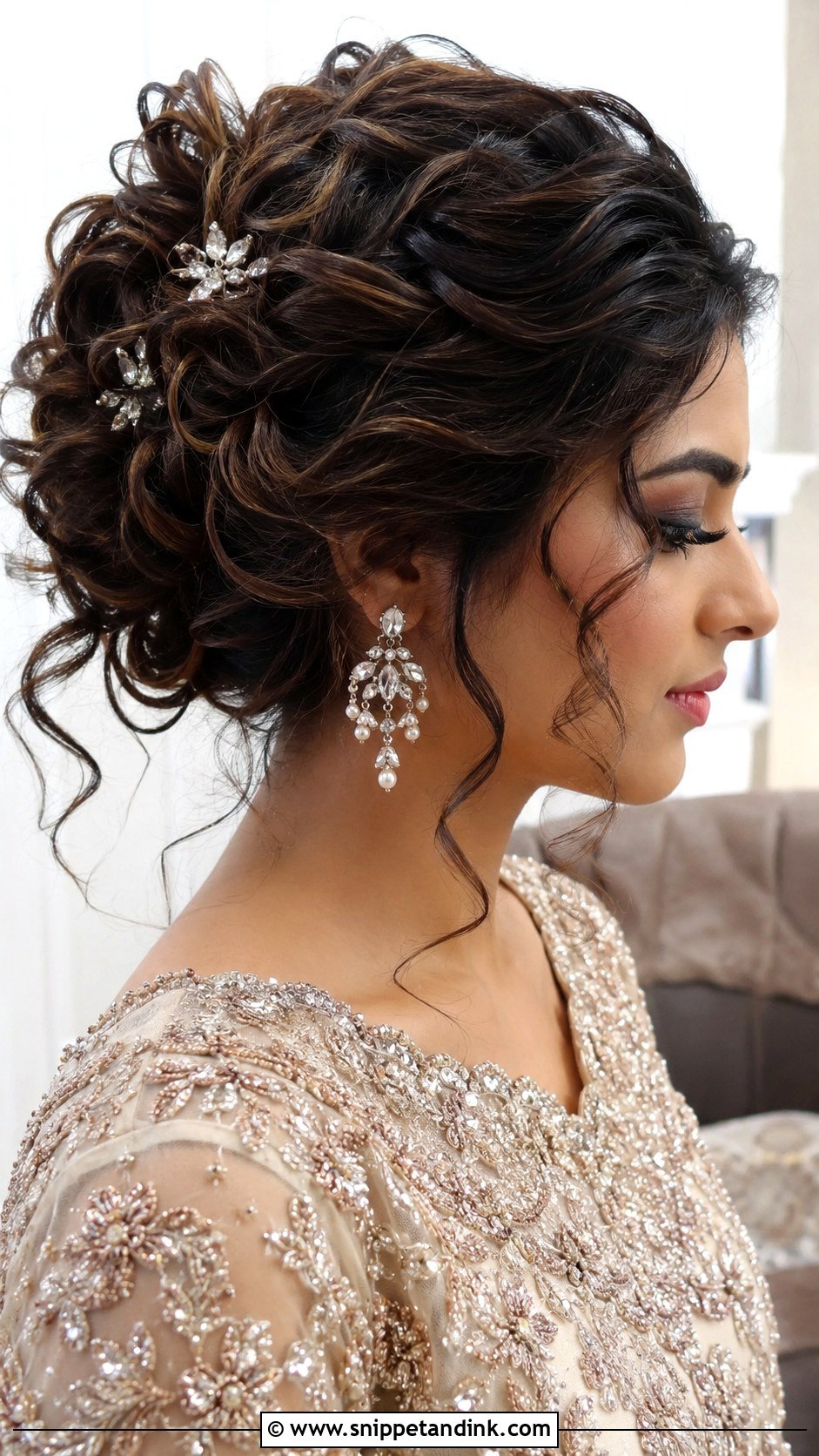
For brides with natural waves or curls, this is the updo I’d steer you toward instead of blowing everything straight. The curls build the shape themselves, so the style looks intentional and needs fewer pins. Where I can, I set curly hair with a cream rather than heat, and pin each curl at its base so the pattern isn’t stretched. It can sit low, at mid height or slightly to one side depending on your face shape and outfit. Leave a few curls loose near the face. Statement earrings and delicate dupattas both sit well against it.
Pinning a Light Reception Dupatta Without Crushing the Style
Waleema dupattas are usually lighter than the baraat one, often net, chiffon or organza, and lighter fabric slides more. How I pin it depends entirely on what’s underneath.
Over buns and braids
These are the easy ones. I pin the dupatta into the bun or braid itself, pushing U-pins in toward the scalp, so the weight hangs off the structure and not off the hair around your face. A couple of pins each side holds net; a heavy embroidered border needs more.
Over open hair, waves and half up styles
With nothing solid to grip, I make a hidden base first: a small section at the crown, twisted flat and held with two crossed bobby pins. The dupatta pins go through the fabric into that cross, and the curls are arranged over the top afterwards. The order matters. Pin the dupatta before the final brush-out, never after, or every adjustment drags the curls flat.
Before the photographer starts, sit down, turn your head both ways and lift your arms as if hugging someone. If the dupatta moves now, it will move all evening, so fix it in the bridal room rather than halfway through the receiving line.
Your Outfit Will Tell You Which One
Every style here can work at a Waleema. The right one depends on how your dupatta is pinned, how much jewelry sits on your head and how much your hair has already been through that week. For a structured, traditional finish, look at the low, sleek, center part and braided buns. For softer reception hair, open curls and the three kinds of waves are your shortlist, with half up, the two braids and the curly updo sitting in between. Whatever you go with should be secure enough to forget about and soft enough to touch, because you’ll still be posing at the last group photo.
You'll Like These Ideas:


Leave a Reply