
Wedding hair has two jobs. It has to look right in the first portrait, and it has to still be in place when an aunt hugs you hard at eleven at night. Every look below can do both if it’s built properly underneath: soft buns, clean ponytails, glossy waves, braided updos, natural curls and half-up styles that frame the face. I’ve written each one up the way I’d talk it through at a consultation, including who it suits and where it tends to let people down. Bridesmaids, mothers and guests can borrow any of them, and each can be adapted to long, short, fine, thick, curly or coily hair.
Bride, Bridesmaid or Guest: Who Each Look Suits
The same style lands differently depending on who’s wearing it. A bride can carry detail because every camera is on her. Bridesmaids and guests usually want to look polished while staying in the background, and most are either doing their own hair or sharing one stylist with several other people.
- Brides: Hollywood waves, the braided updo, pearl styles and the high bun give the most presence, and all four can be built around a veil.
- Bridesmaids: the low bun, ponytail and half-up style repeat well across a group with different textures, so the line-up looks matched without identical hair.
- Mothers of the couple: the sleek bun, side swept hair and a polished bob sit comfortably with fascinators, hats and structured jackets.
- Guests: the textured updo, ponytail and natural curls can be done at home in under an hour and won’t compete with the bride.
Bridesmaids, ask the bride early whether she wants the group up, down or mixed. One person in a half-up style beside five low buns is barely noticeable in the room and very noticeable in the group photo.
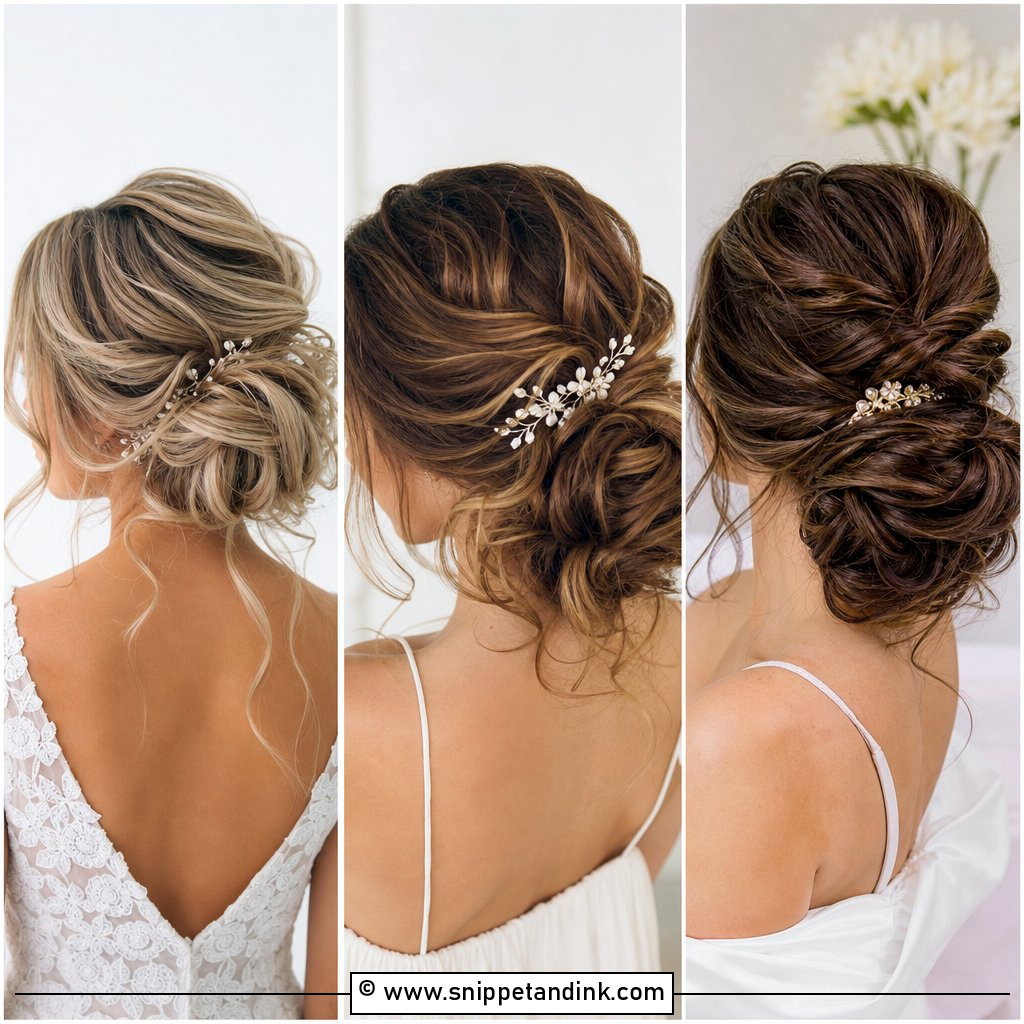
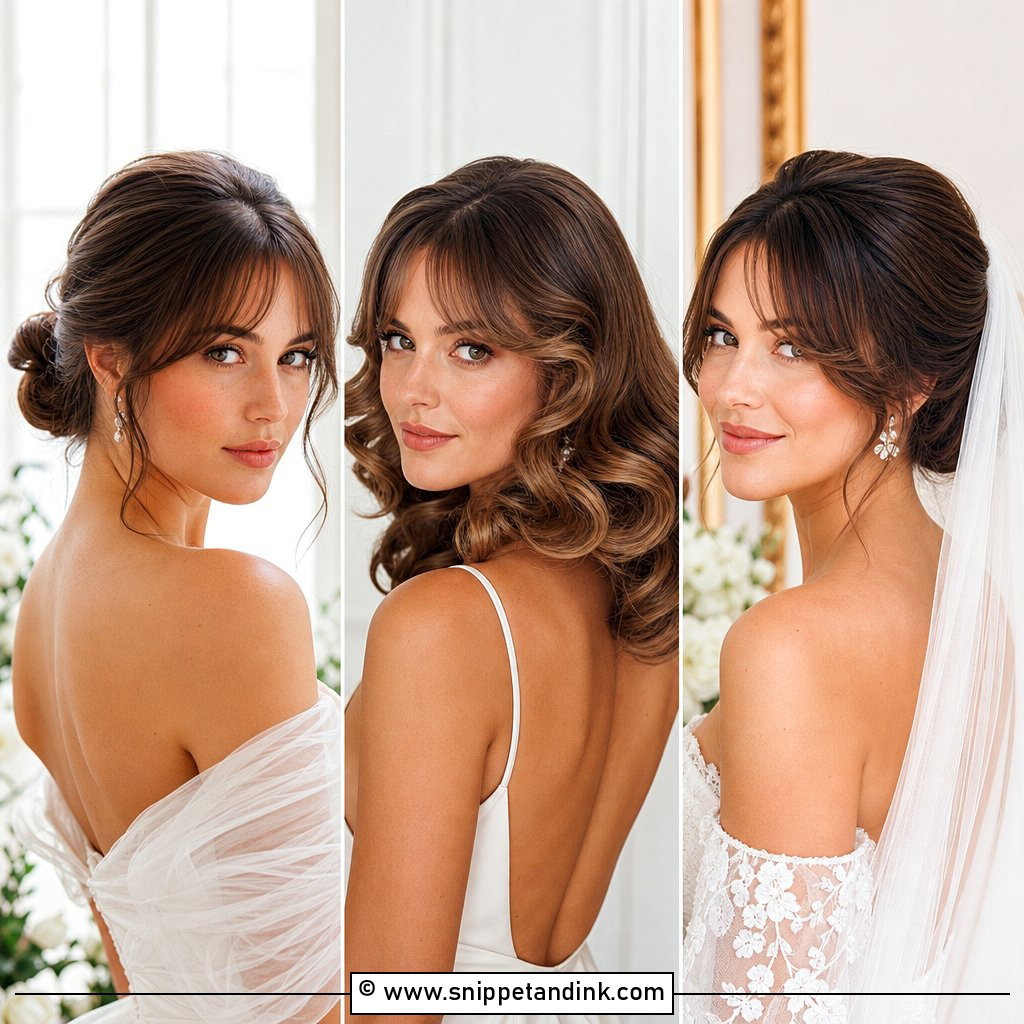
1. Low Bun Wedding Hair
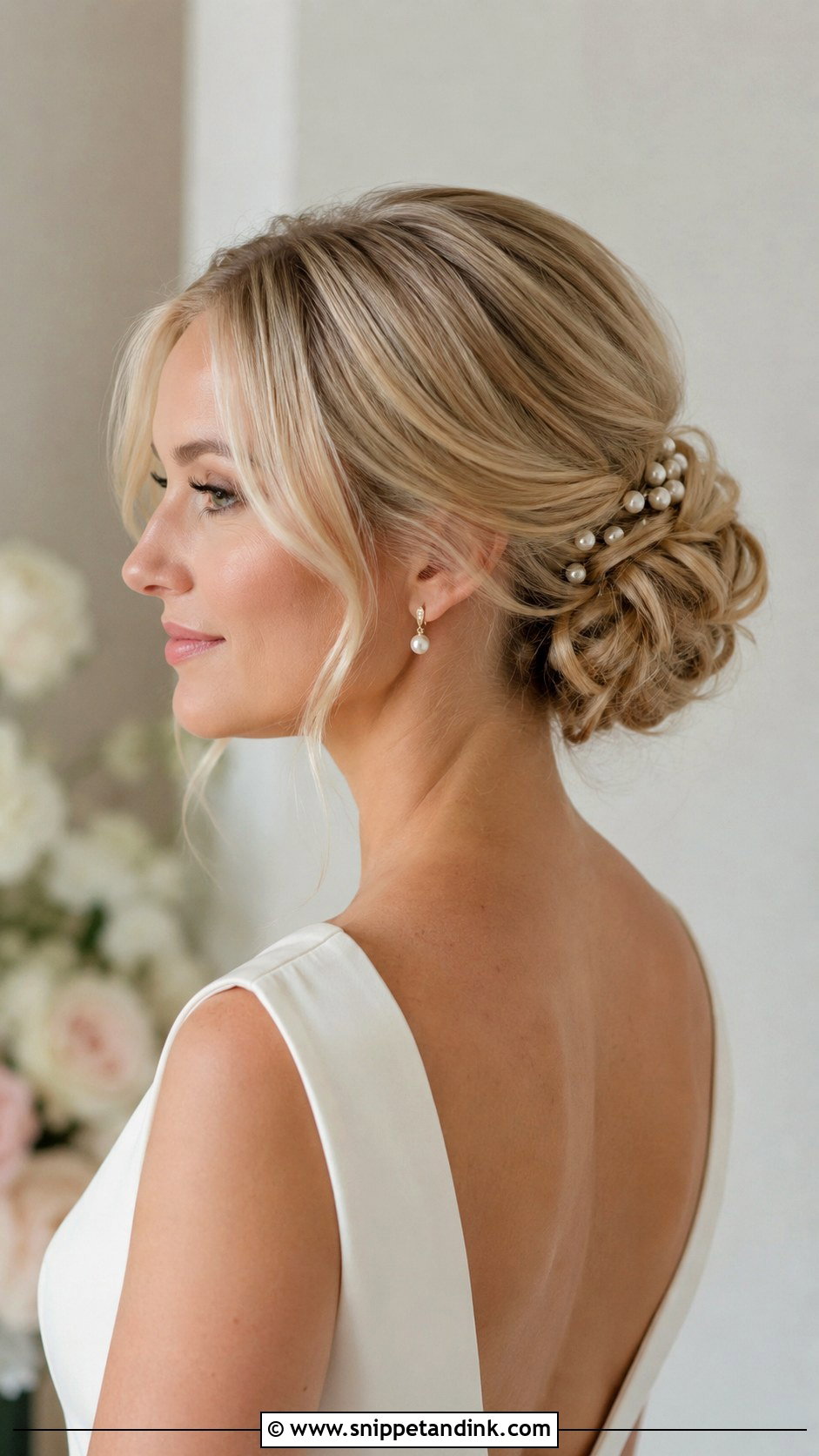
If a bride can’t decide, the low bun is where I usually start, because it’s the shape least likely to fail. It sits at the nape, so a veil comb slides in just above it and a backless or high-necked dress stays clear. I build it on a tight ponytail base or a crossed pair of anchor pins; a bun that’s just twisted and pinned into loose hair is the one that sags by the first dance. Fine hair needs a padding or a clip-in piece to give it any size at all. Thick hair is the opposite problem: I shape it wider rather than taller and use more pins than feels necessary, since the weight pulls downward all evening.
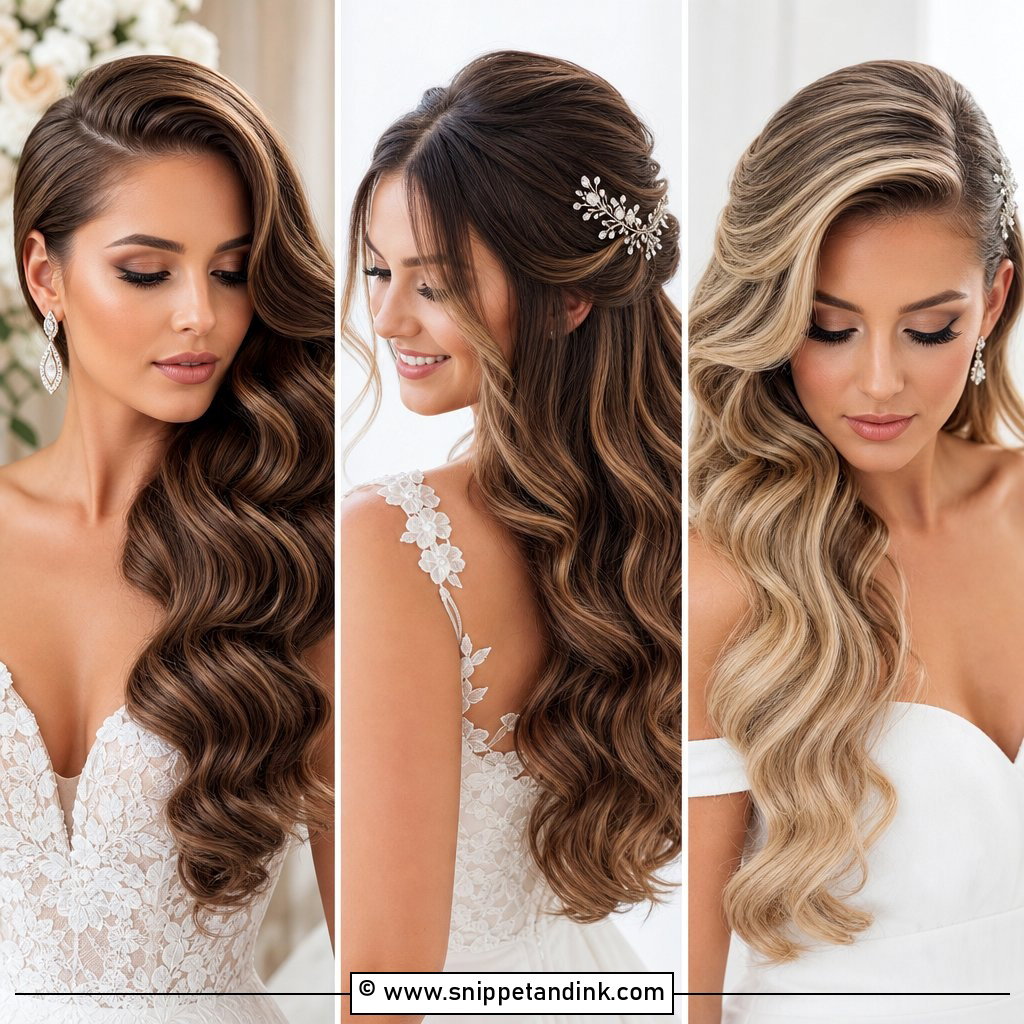
2. Half Up Half Down Wedding Hair
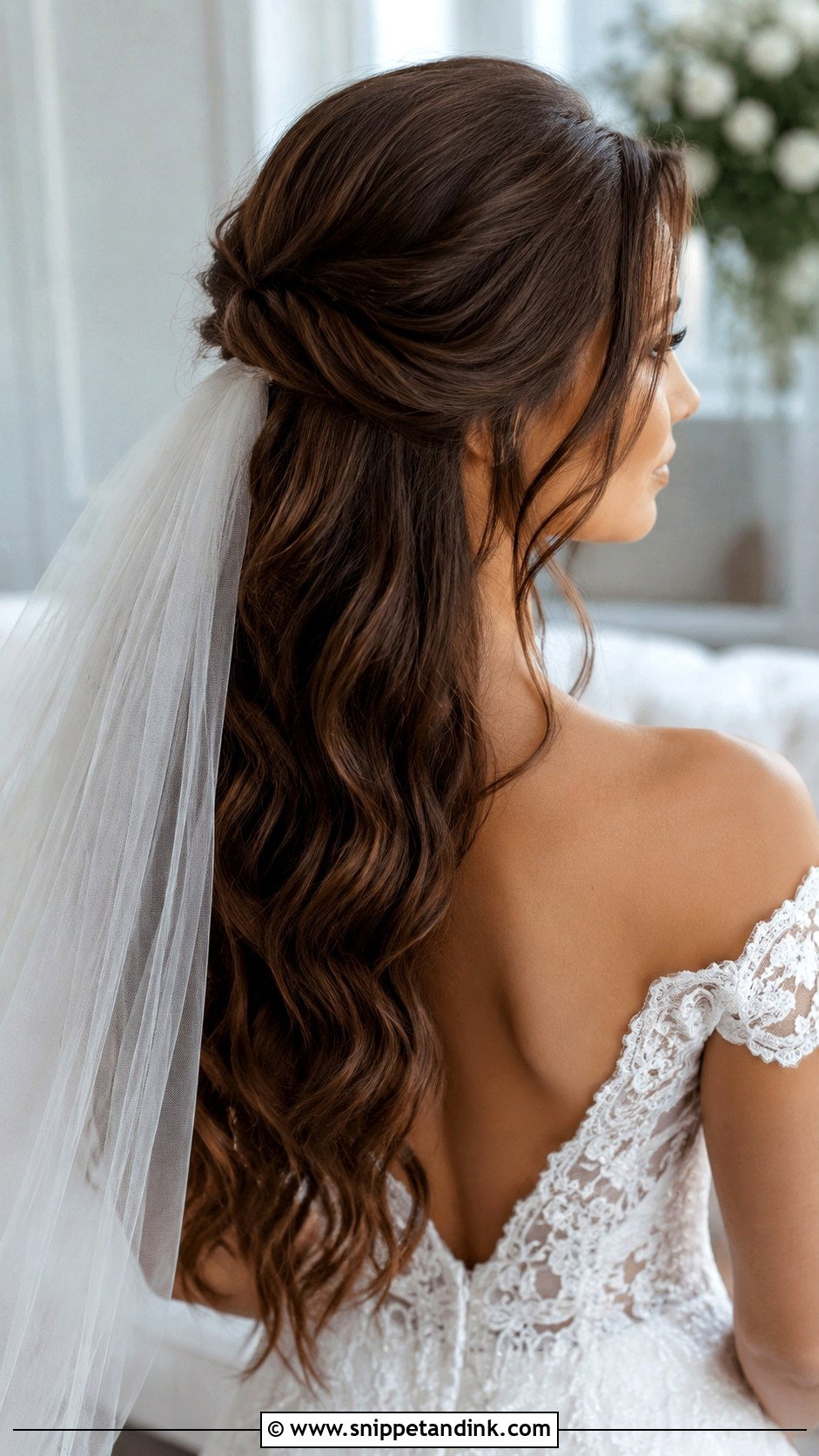
Half up half down gives you loose hair with a bit of insurance, because the top section is secured and keeps hair off your face during the vows. It needs at least shoulder length to look finished, and the lifted section can be twisted, braided or simply pinned with some volume at the crown. The lengths can be waved, curled or left as a smooth blowout. The weak point is always the loose part. If your hair drops curl within an hour on a normal day, tell your stylist, because I’d prep that hair with a setting product and pin every curl to cool rather than relying on spray at the end.
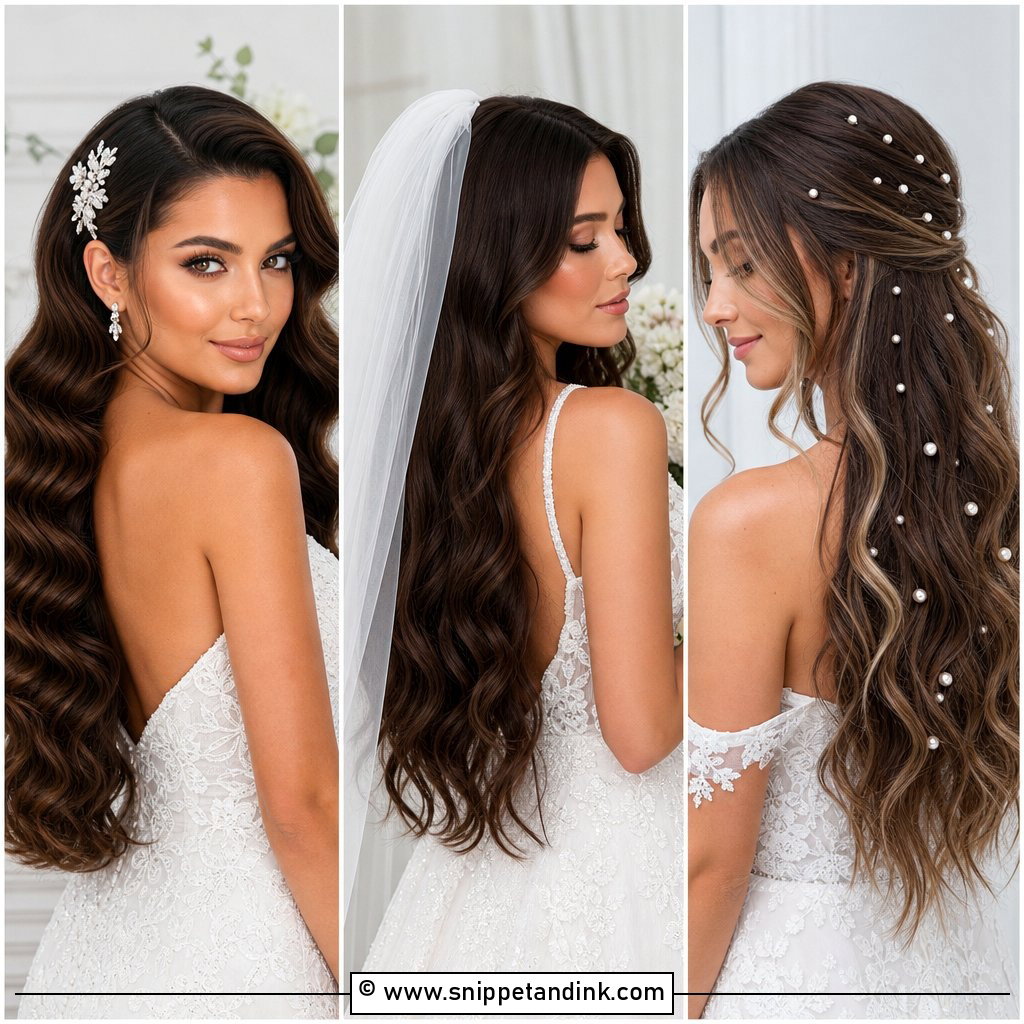
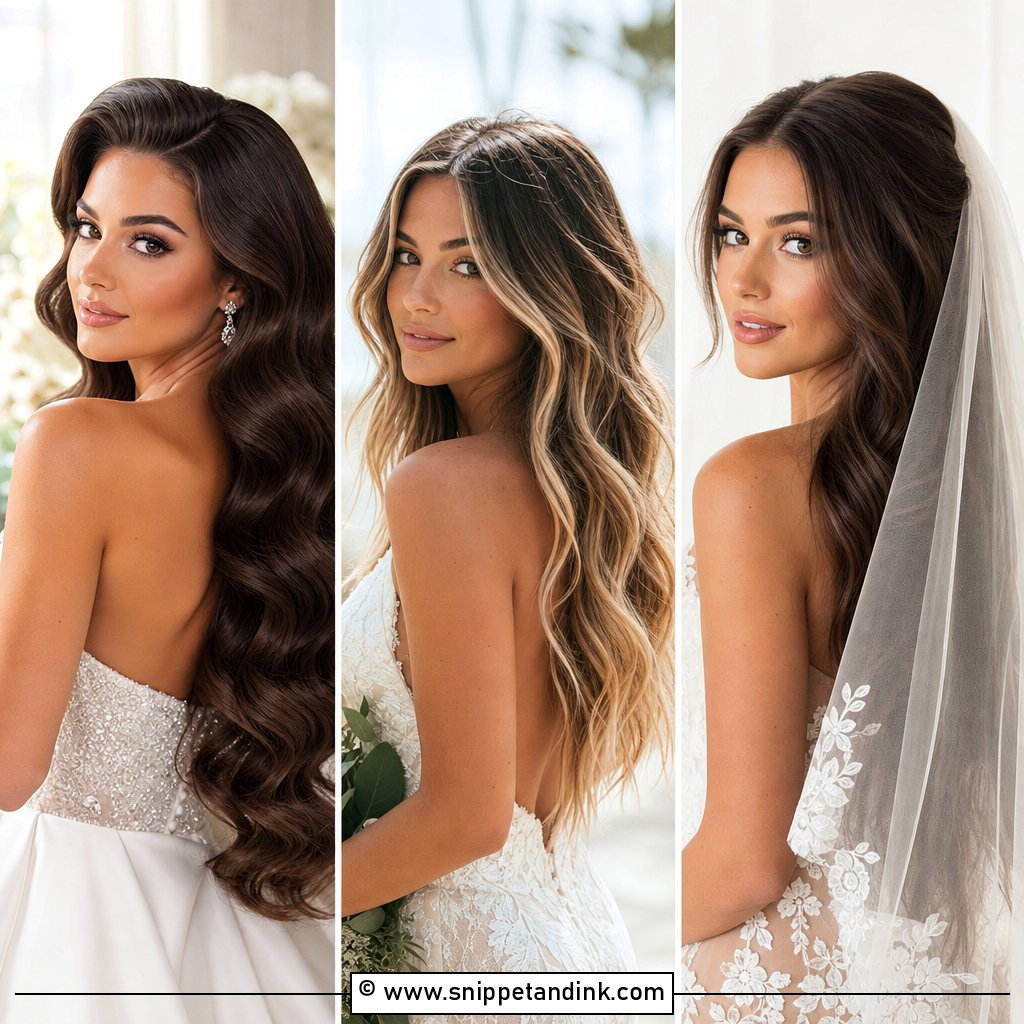
3. Hollywood Waves Wedding Hair
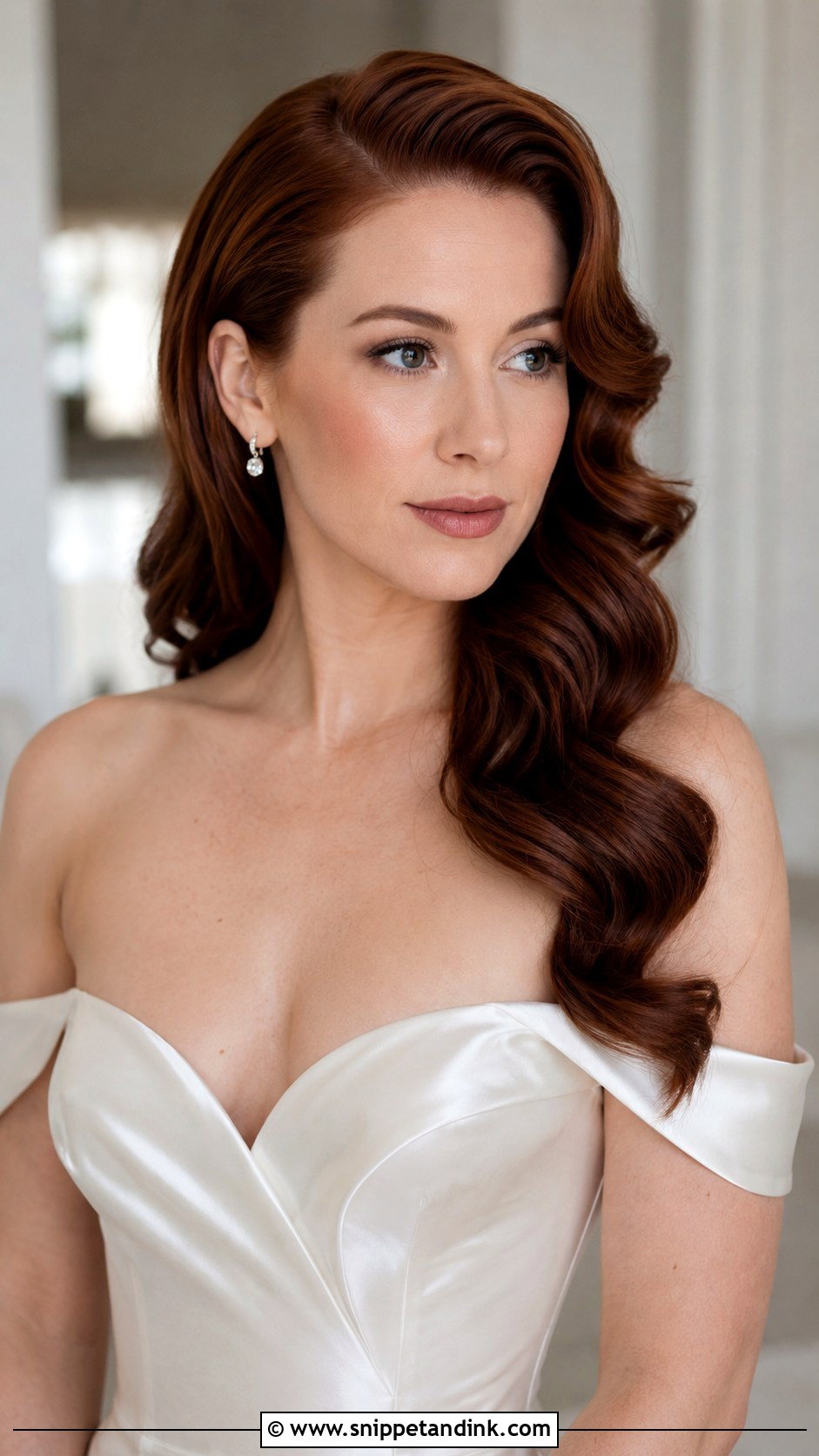
Hollywood waves are a set, not a curl. Each section is curled in the same direction, pinned while it cools, then brushed out into one continuous ripple, and skipping the cooling stage is why so many versions fall into frizz. They suit satin gowns, fitted dresses and a classic red lip. You need hair at least past the collarbone for the pattern to show; extensions help on finer hair. A deep side part gives the full old-film effect, while a centre part makes it read more current. I’d avoid this one for a humid outdoor ceremony unless you’re happy for the waves to soften as the day goes on.
4. Sleek Bun Wedding Hair
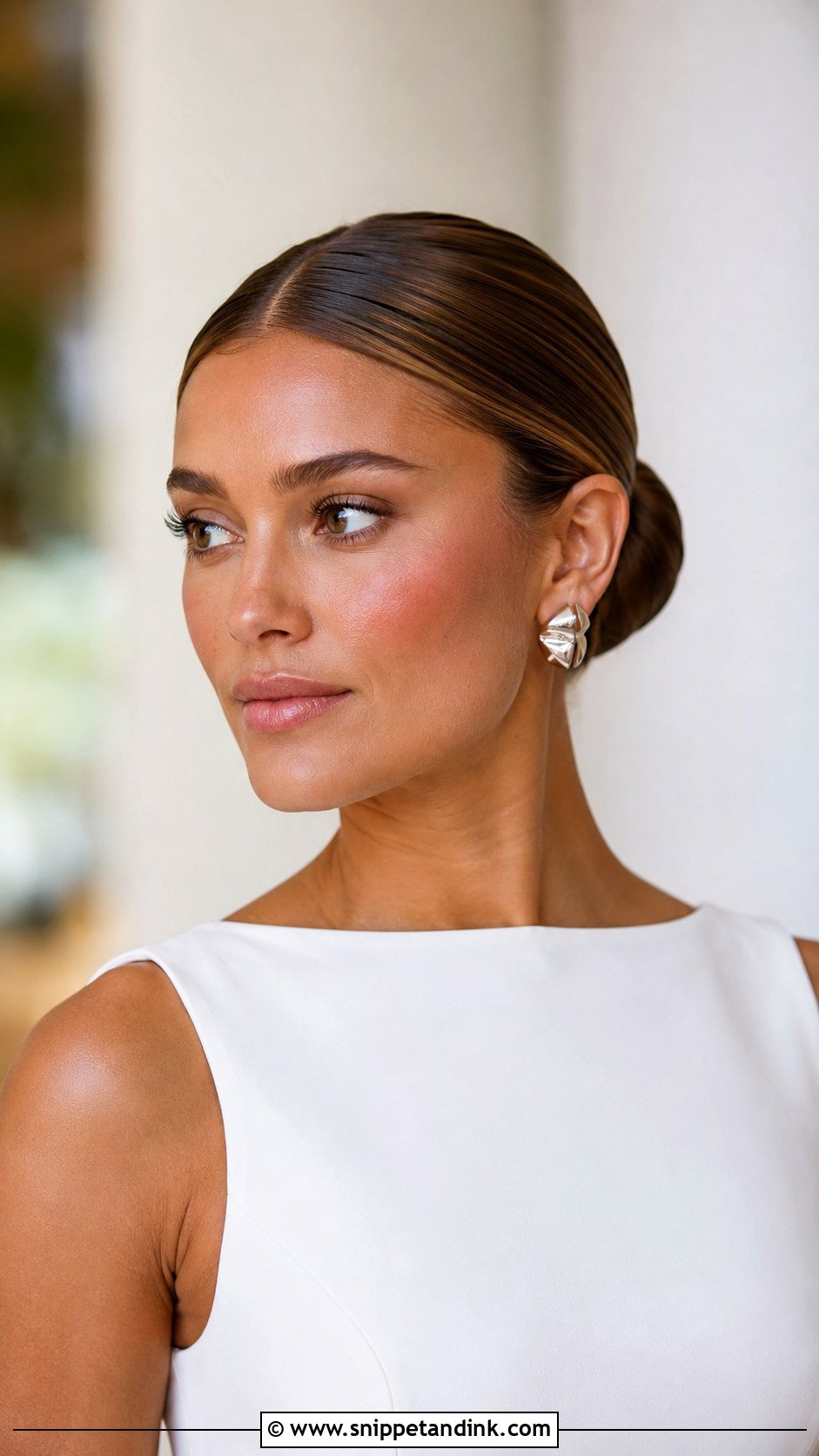
A sleek bun lets the dress, earrings and makeup carry the look. The hair is smoothed flat against the head and pinned into a tight bun at the nape, the middle or a little higher. What makes it work is the smoothing: a cream through damp hair, a fine-toothed brush and a light shine spray at the end, with a toothbrush and a little gel for the hairline. It shrugs off humidity because there’s no curl to drop. Be honest with your stylist about your hairline, though. If it’s sparse or recovering from tight styles, I’d set the parting softer so it isn’t pulled flat all day.
5. Textured Updo Wedding Hair
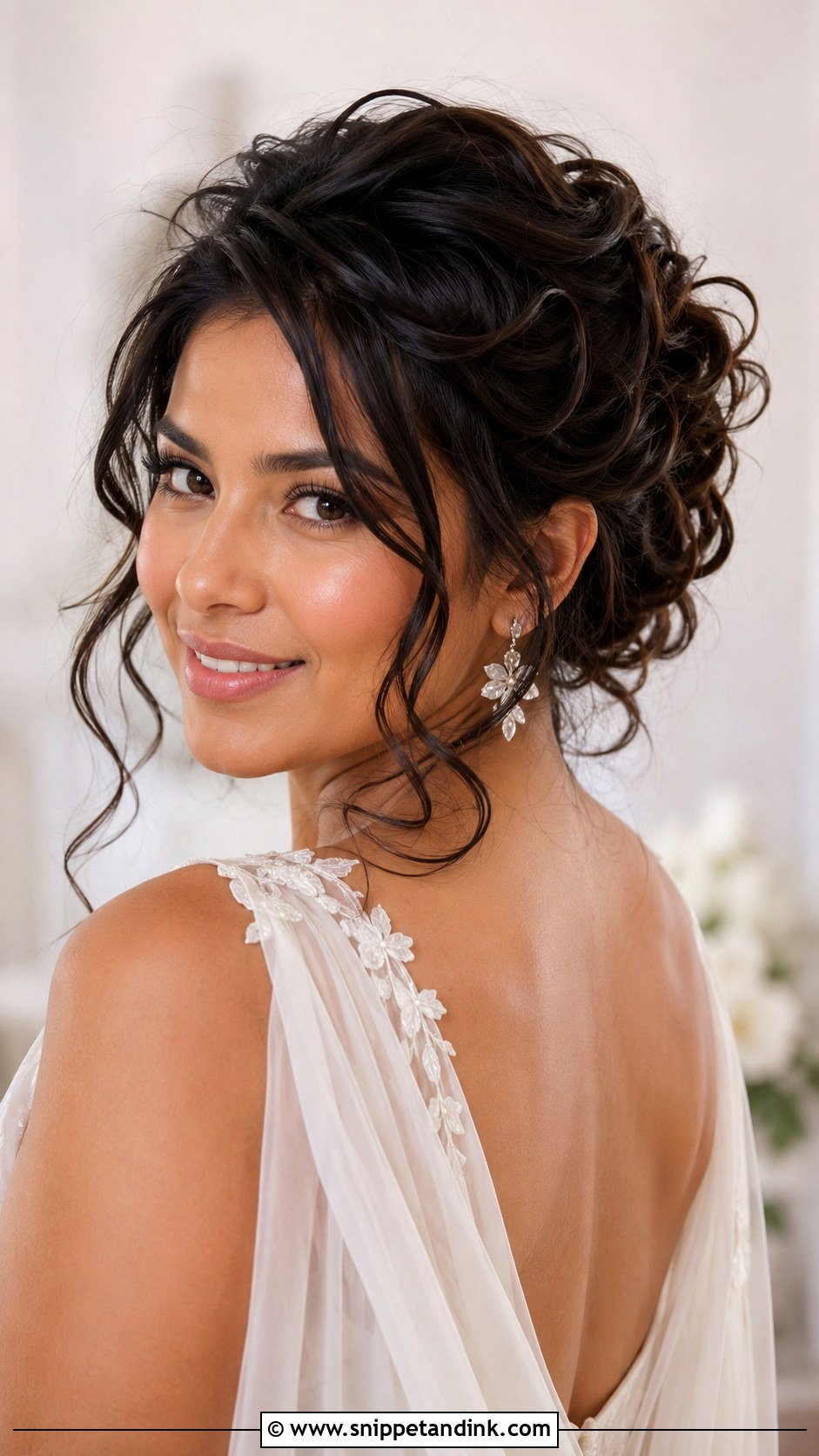
Textured updos are harder than they look. Every twist and pinned curl that appears casual has to be anchored properly, or the shape relaxes into something that genuinely is messy by the evening. I prep this one with texture spray and a light curl so the hair has grip, then pin from the underside so nothing metal shows. It sits comfortably at garden, rustic and beach venues. Keep the face-framing pieces to two or three; more than that and they start to look like the style has slipped.
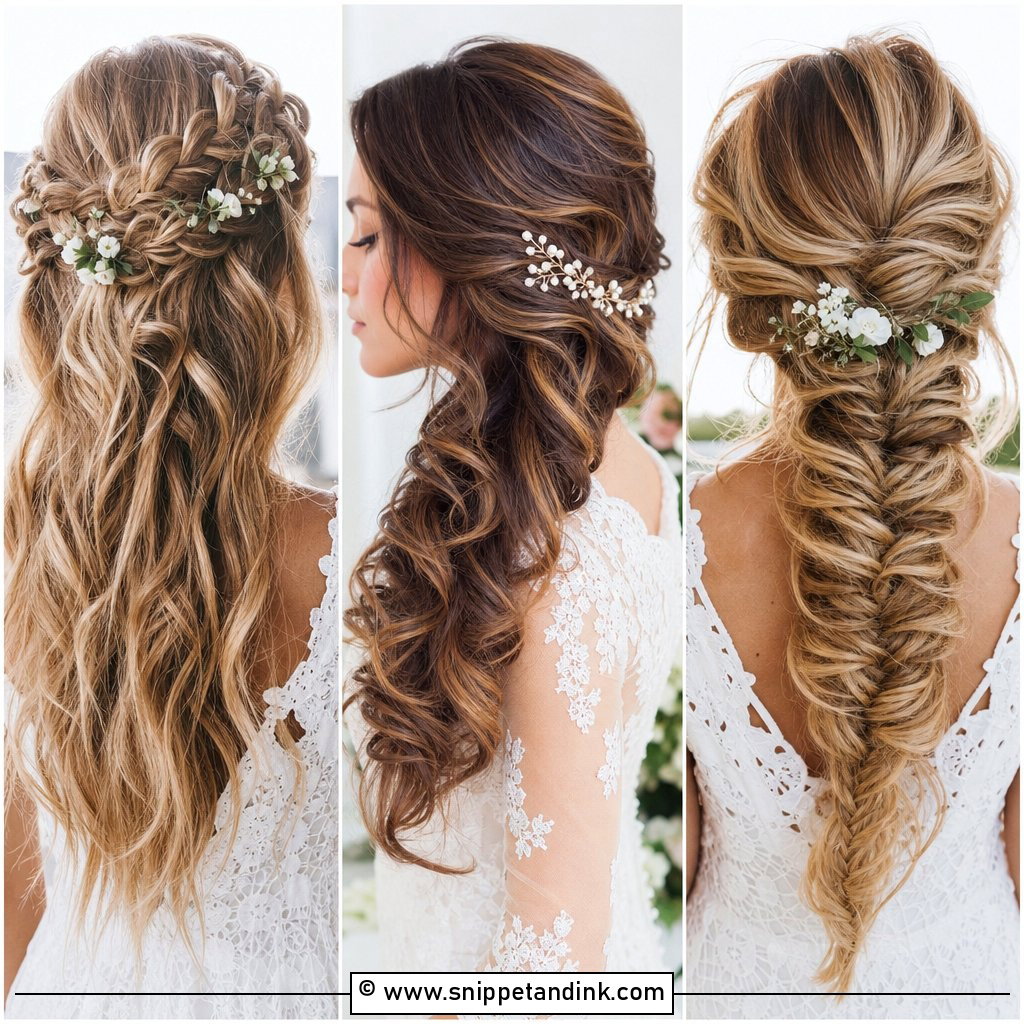
6. Braided Updo Wedding Hair
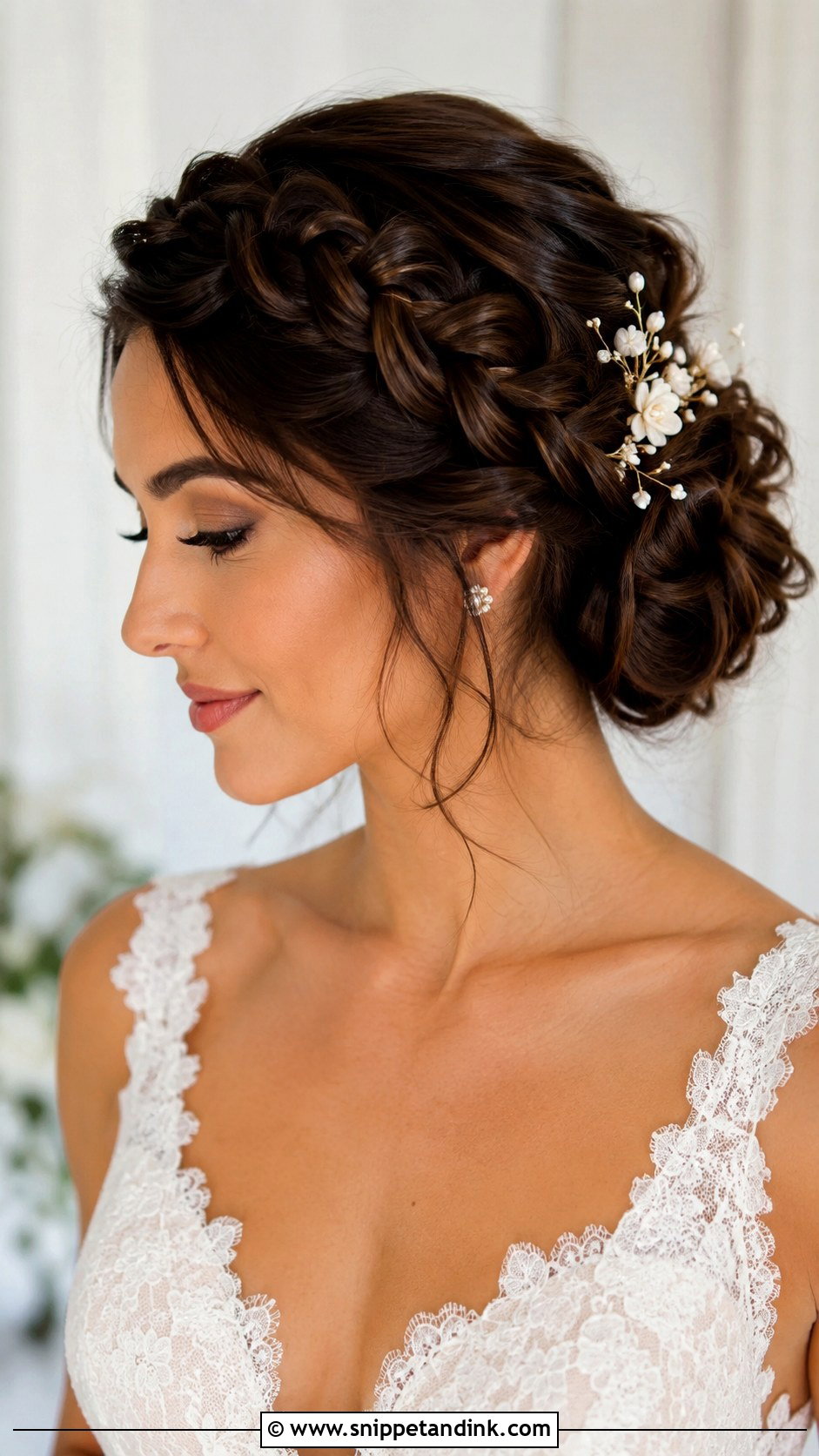
Braids are the best friend of anyone getting married outdoors. A braid wrapped around the crown or tucked into a low bun holds itself together in a way pinned curls can’t, so wind and dancing barely touch it. Loosely pulled-apart braids read boho; tighter, cleaner plaits suit a formal ceremony. Layered hair is where this style earns its place, because shorter layers that would poke out of a plain bun get woven in. I’d keep accessories to a few pearls or gold clips set into the braid itself so the pattern isn’t hidden.
7. Side Swept Wedding Hair
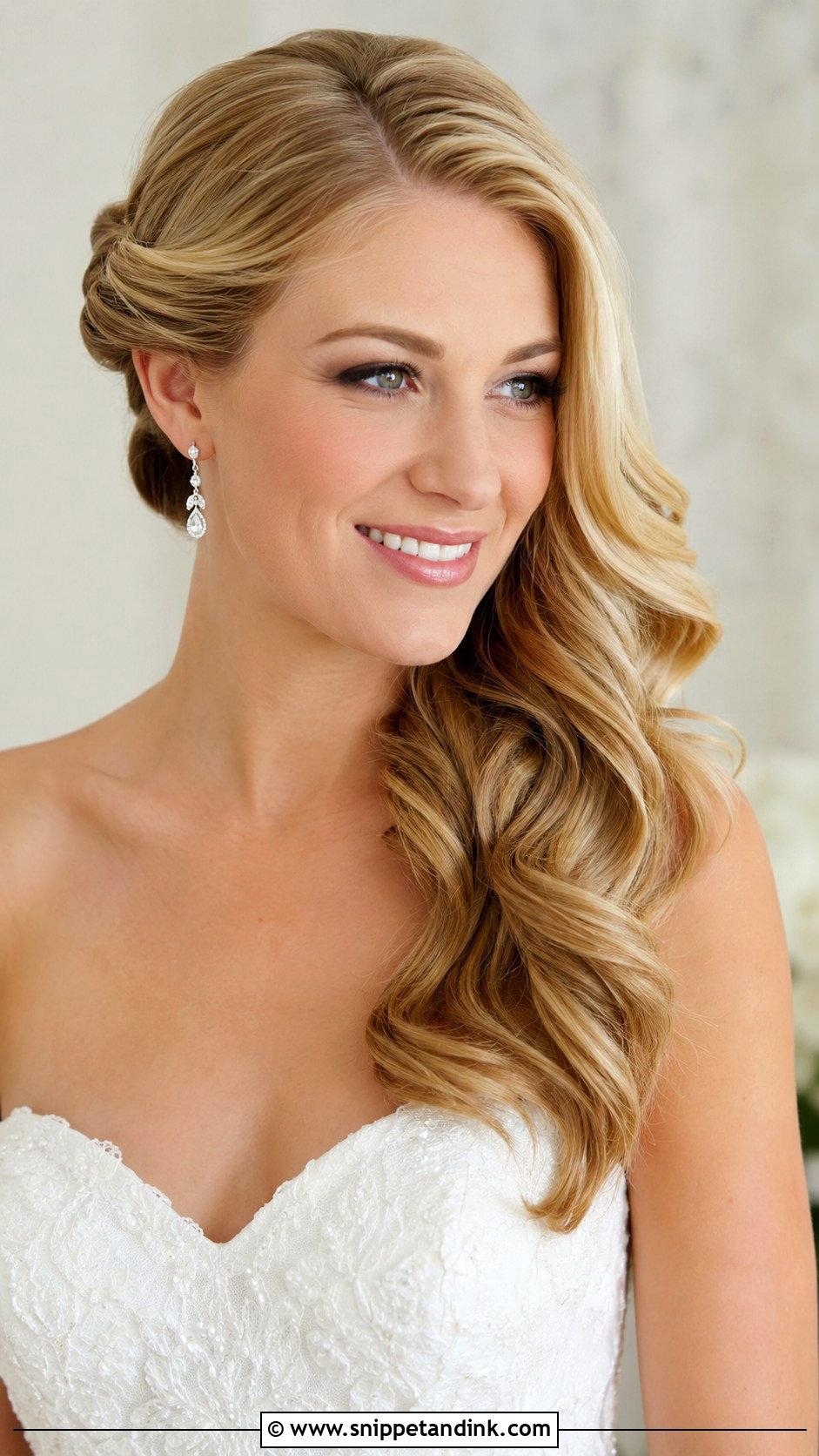
Side swept hair is curled or waved, then gathered over one shoulder with the other side pinned flat behind the ear. That hidden side is where it either holds or doesn’t. I build a small braid or twist there and pin into it, because pins pushed straight into loose hair work free within a couple of hours. It pairs naturally with one-shoulder and strapless dresses and shows off a statement earring on the open side. Medium to long hair is needed; extensions can bulk out the gathered side if yours is fine.
8. High Bun Wedding Hair
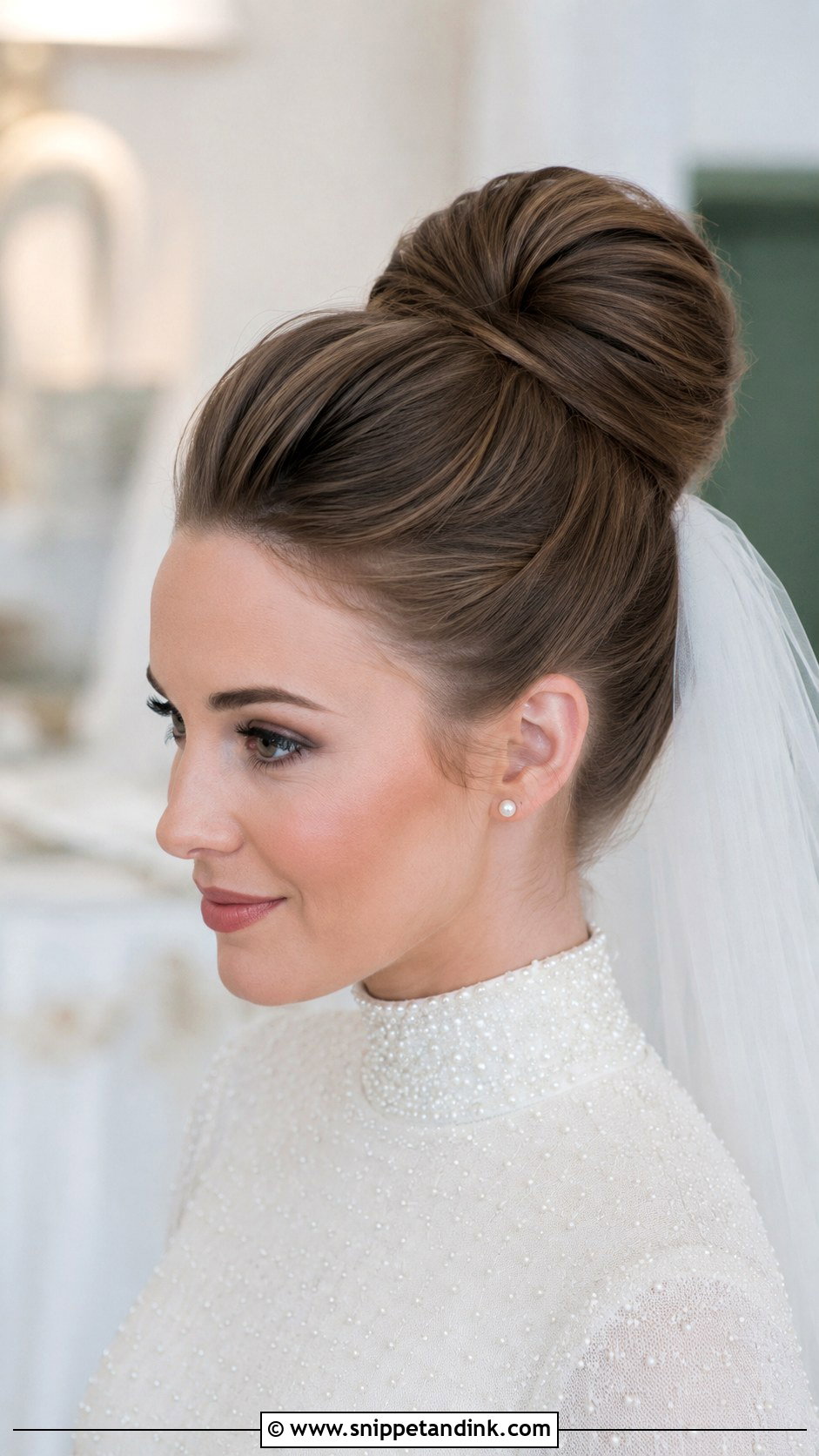
A high bun lengthens the neck and opens up the face, and it’s a useful trick for petite brides who want height without a tall headpiece. It can be smooth like a ballerina style or fuller with some texture. The veil usually goes underneath the bun rather than above it, which is worth checking with your veil supplier before you commit. It sits well with high necks, halters and detailed bodices. At a trial I always ask a bride to wear the bun for a few hours, because a high bun that pulls at the scalp can bring on a headache by mid-afternoon.
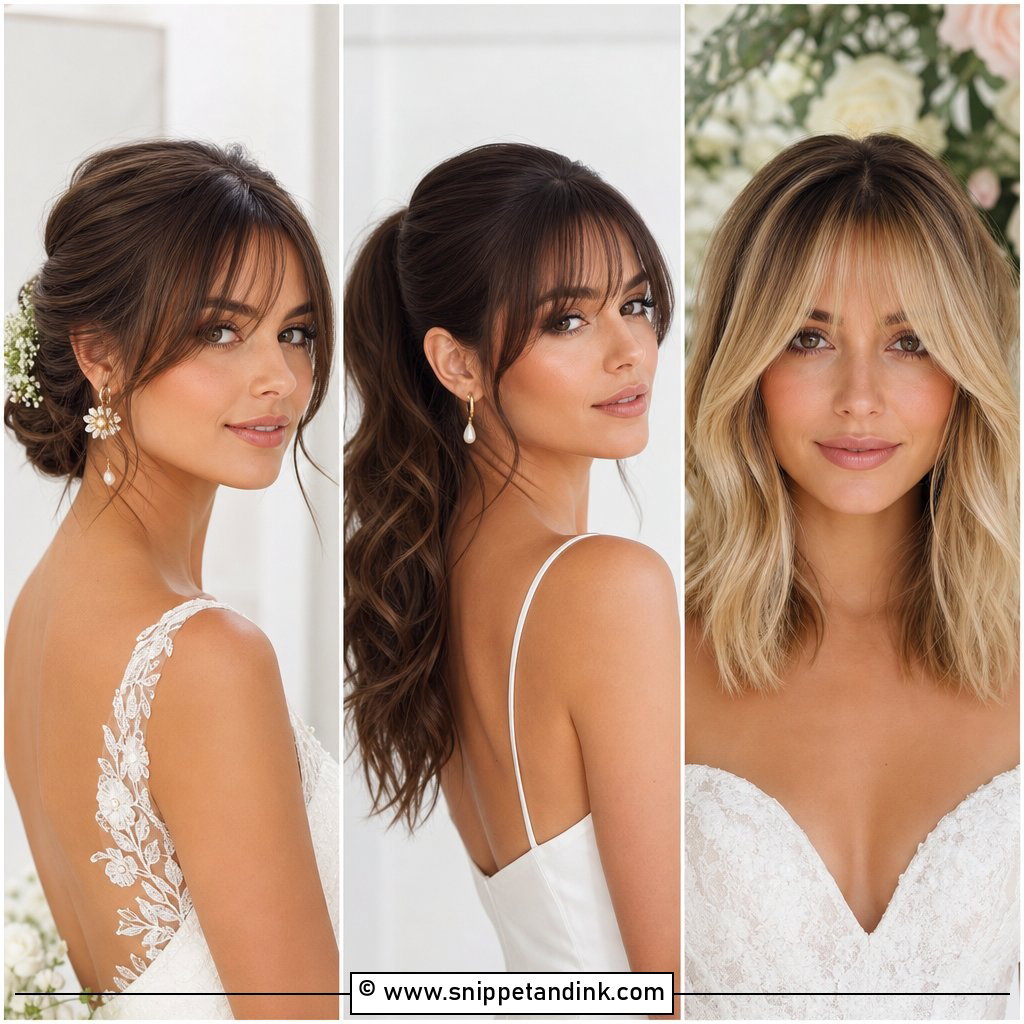
9. Ponytail Wedding Hair
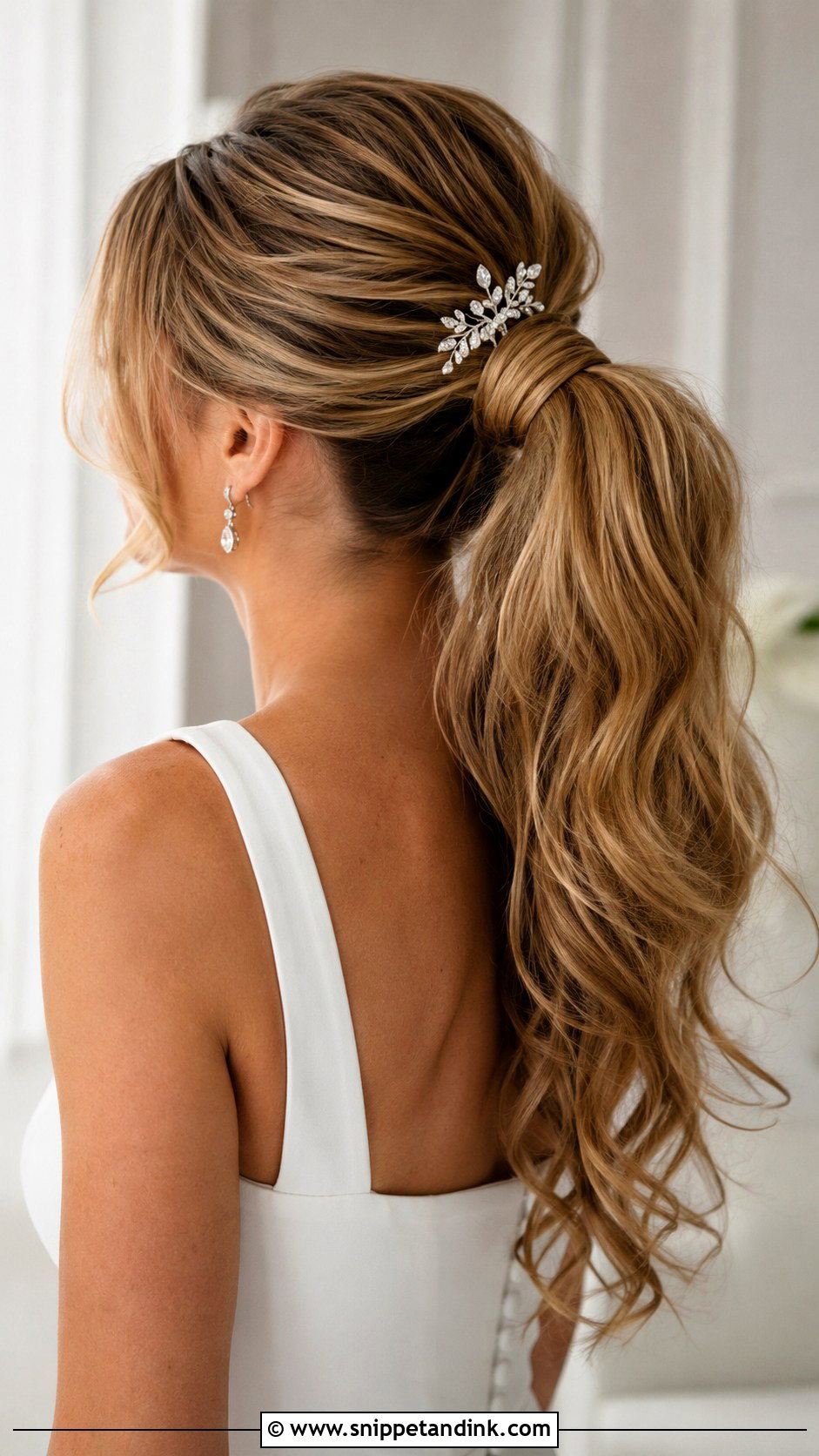
Ponytails are easier to wear than most updos and better for dancing, because the hair moves without anything coming loose. Height changes the mood: high reads energetic, mid sits neutral, low is the most formal. I always wrap a strand of hair around the elastic and pin it underneath, since an unwrapped band is the first thing a camera picks up. A heavy ponytail can also sag at the base after a few hours; two elastics stacked a little apart, or a pin pushed upward into the base, stops that. It’s also my default suggestion for bridesmaid groups with mixed hair lengths.
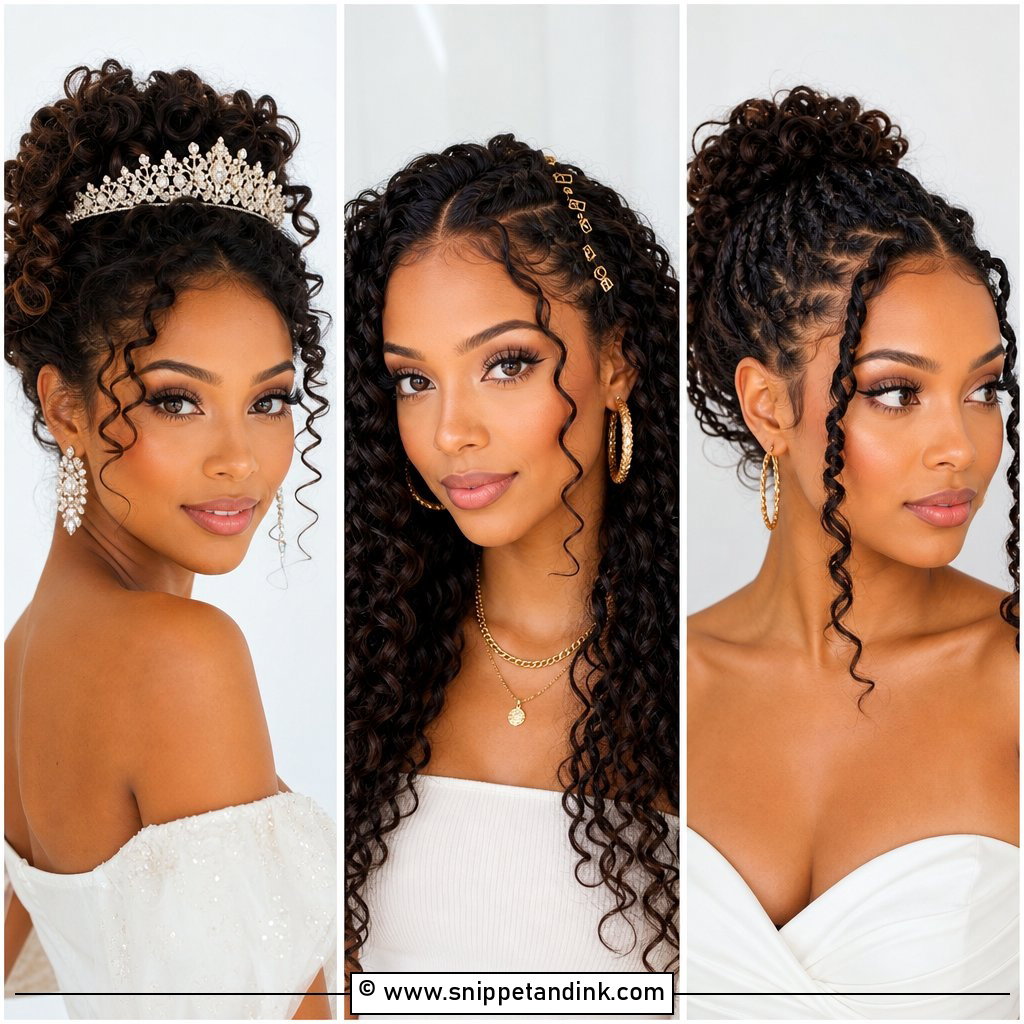
10. Curly Wedding Hair
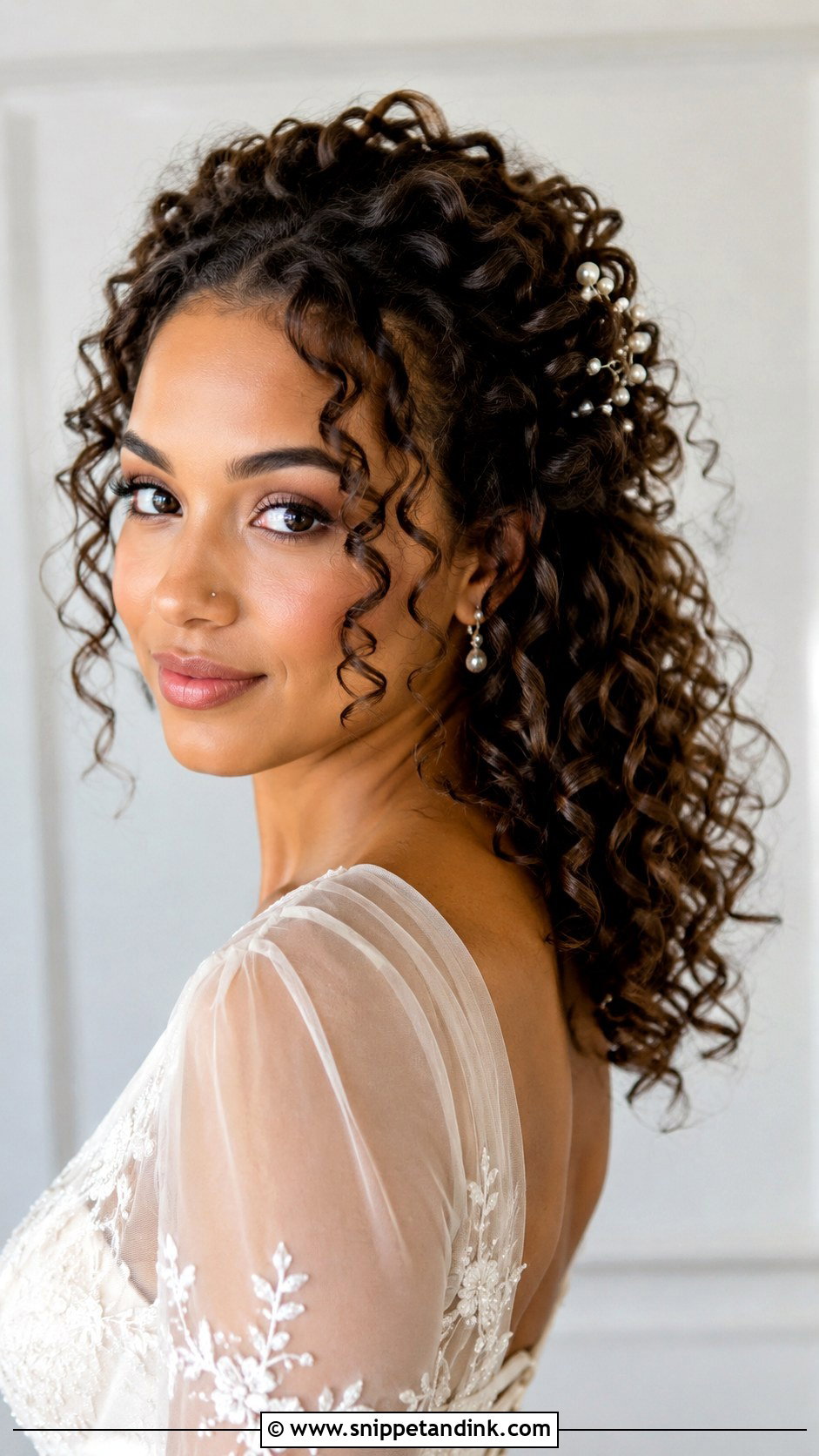
Curly wedding hair should be shaped around the curl pattern you already have, not forced into a new one. It can be worn down, half up, swept to one side or gathered into a soft updo. Nearly all of the result happens in the prep: moisture, definition and frizz control before anyone reaches for a pin. A trial matters more here than for any other look on this list, because you need to see what the curls do after six hours. I add lift at the crown with hidden pins and leave the face-framing curls alone. Floral pins or a plain veil sit nicely against the texture.
11. Short Wedding Hair
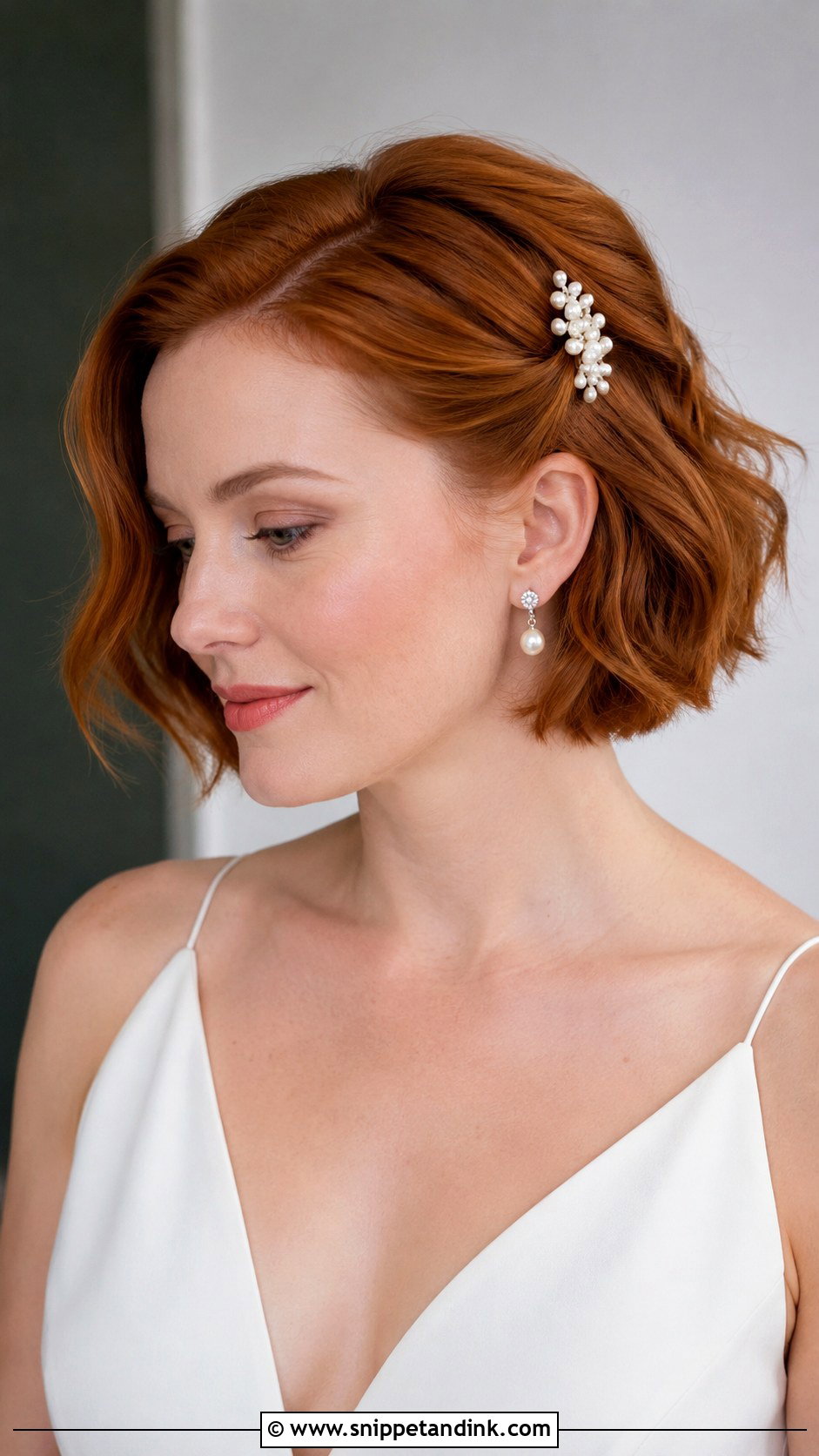
Short wedding hair has one real advantage: it’s comfortable from the first photo to the last song. A bob, lob, pixie or cropped cut can be waved, smoothed, tucked behind the ears or pinned back at one side. Finger waves give a vintage feel; a sleek side part looks sharper. On a bob I put bends through the mid-lengths and leave the ends straight, which gives movement without tipping into casual. If you’re cutting short for the wedding, book the cut two or three weeks out so any harsh lines have softened.
12. Long Wedding Hair
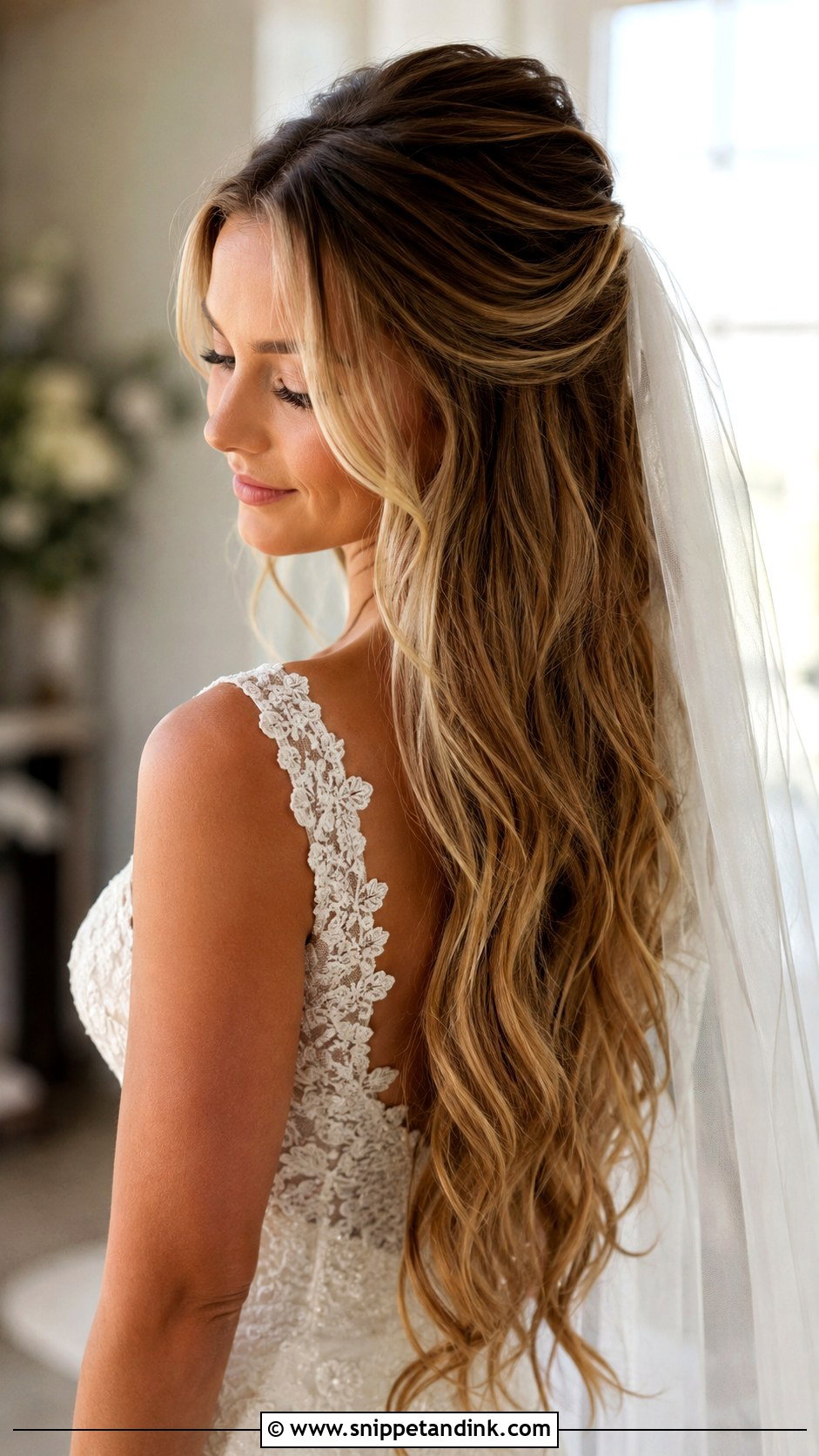
Long hair gives you the most options and the most weight to manage. Worn down, soft polished waves show off the length; if you want security, a braided ponytail, twisted half-up style or low bun keeps it under control. The thing long hair fights is gravity. Curl falls faster on very long, heavy hair, and an updo can drag at the scalp, so I use extra anchor pins and sometimes a small elastic hidden inside the shape. Face-framing layers stop it looking flat in photos. Extensions can add fullness but need to match your colour and texture closely.
13. Bob Wedding Hair
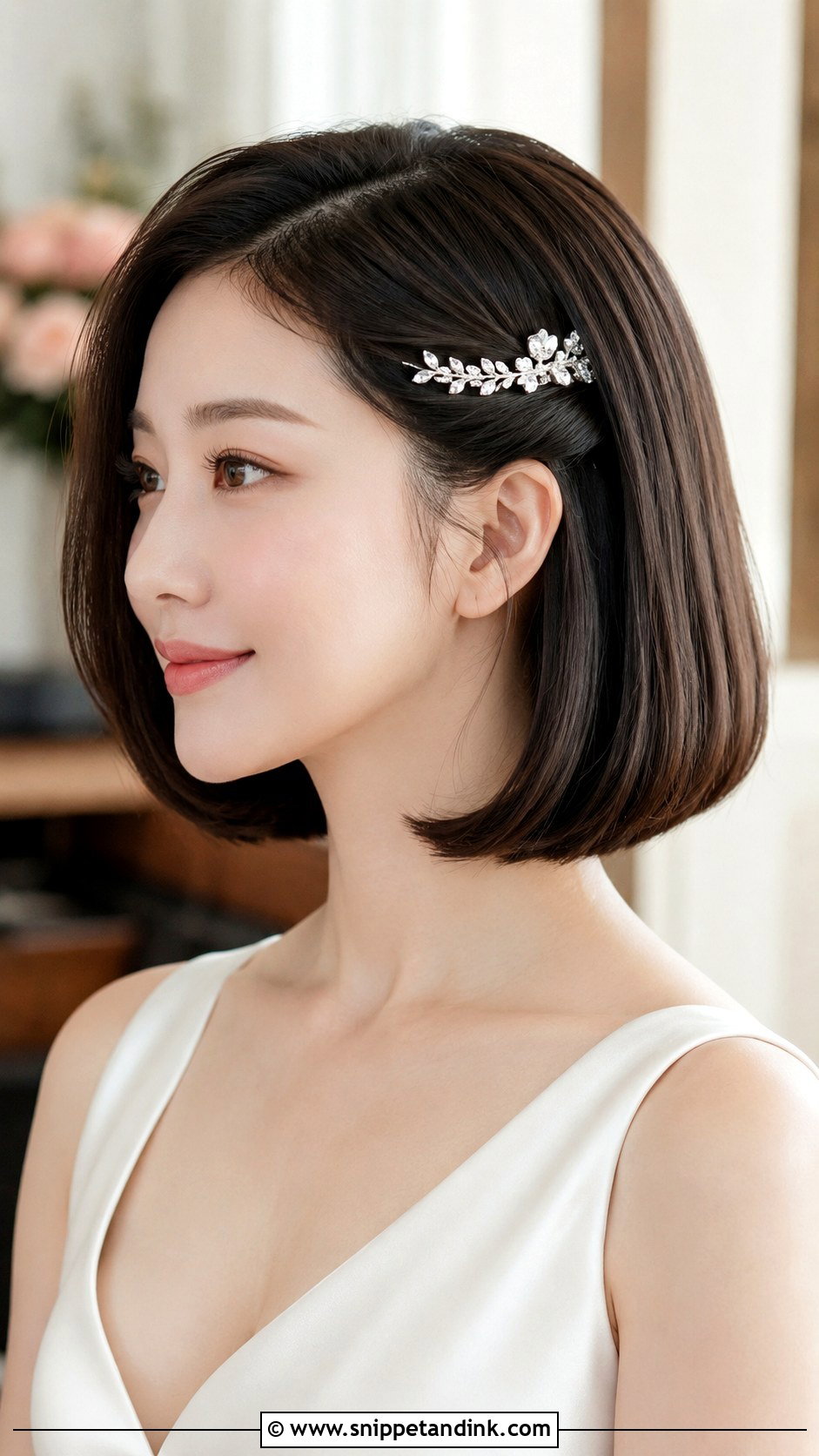
Bob wedding hair photographs crisply because the shape itself does the work. A chin or shoulder-length bob can be worn smooth with a deep side part, softly waved, tucked behind one ear or finished with a bridal clip. How I style it depends on the cut. A blunt bob wants shine and very smooth ends; a layered one wants loose bends. Veils still work with a bob, usually placed at the crown or the back of the head with a short comb, and I add a small pin base for the comb to grip.
14. Natural Hair Wedding Hair
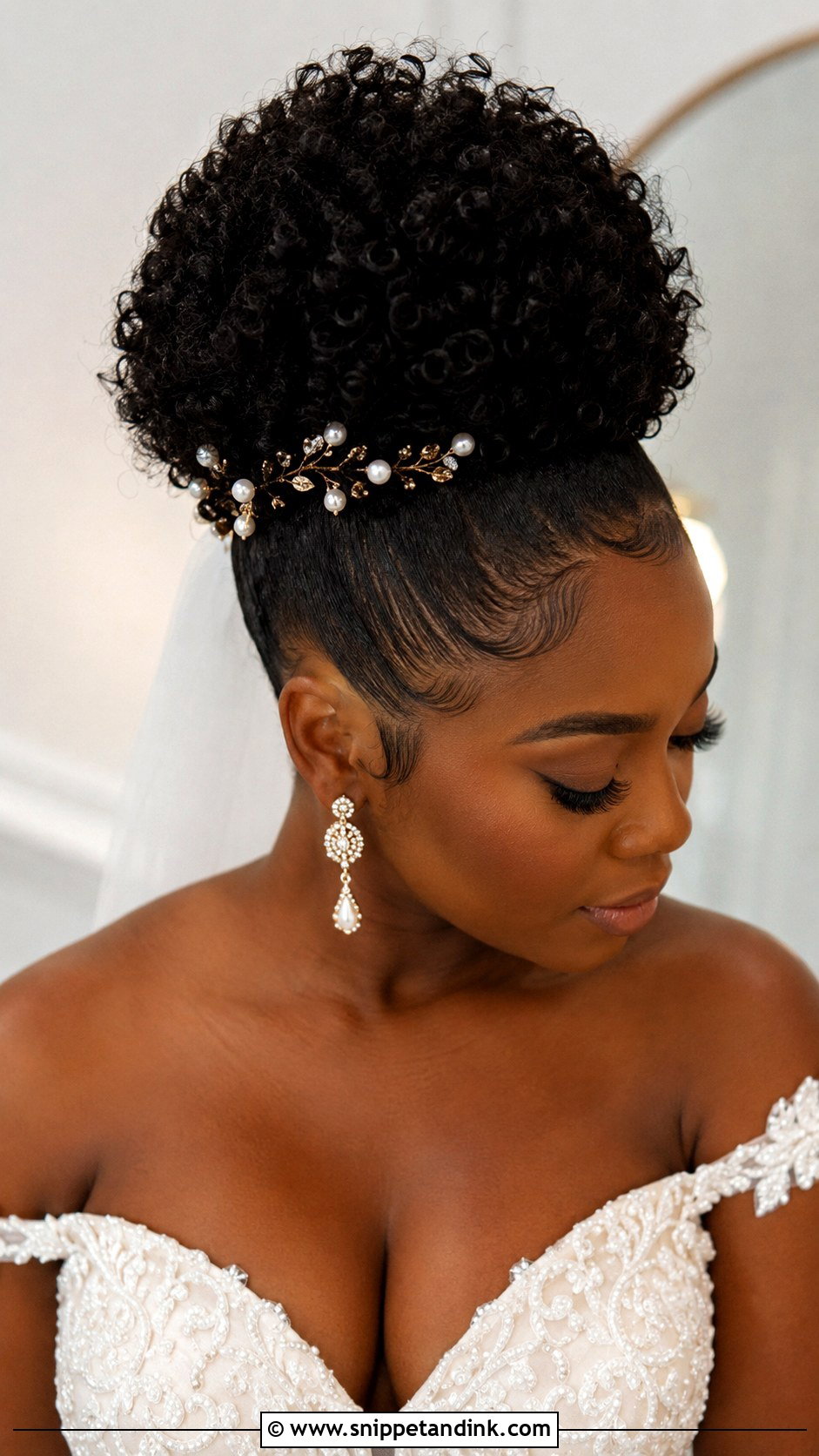
Natural hair can be shaped into twist-outs, braid-outs, afro puffs, flat twists, curly updos or sculpted buns. Which one suits you depends on texture, length, shrinkage and how much tension you’re comfortable with across a long day. A defined twist-out with bridal pins reads soft; a high puff or low bun gives a bolder shape. For multi-day celebrations I often suggest a protective style, since it means less handling between events and holds up well. Moisture, edge care and secure pinning carry the look, and I choose accessories that show off the texture rather than covering it.
15. Pearl Wedding Hair
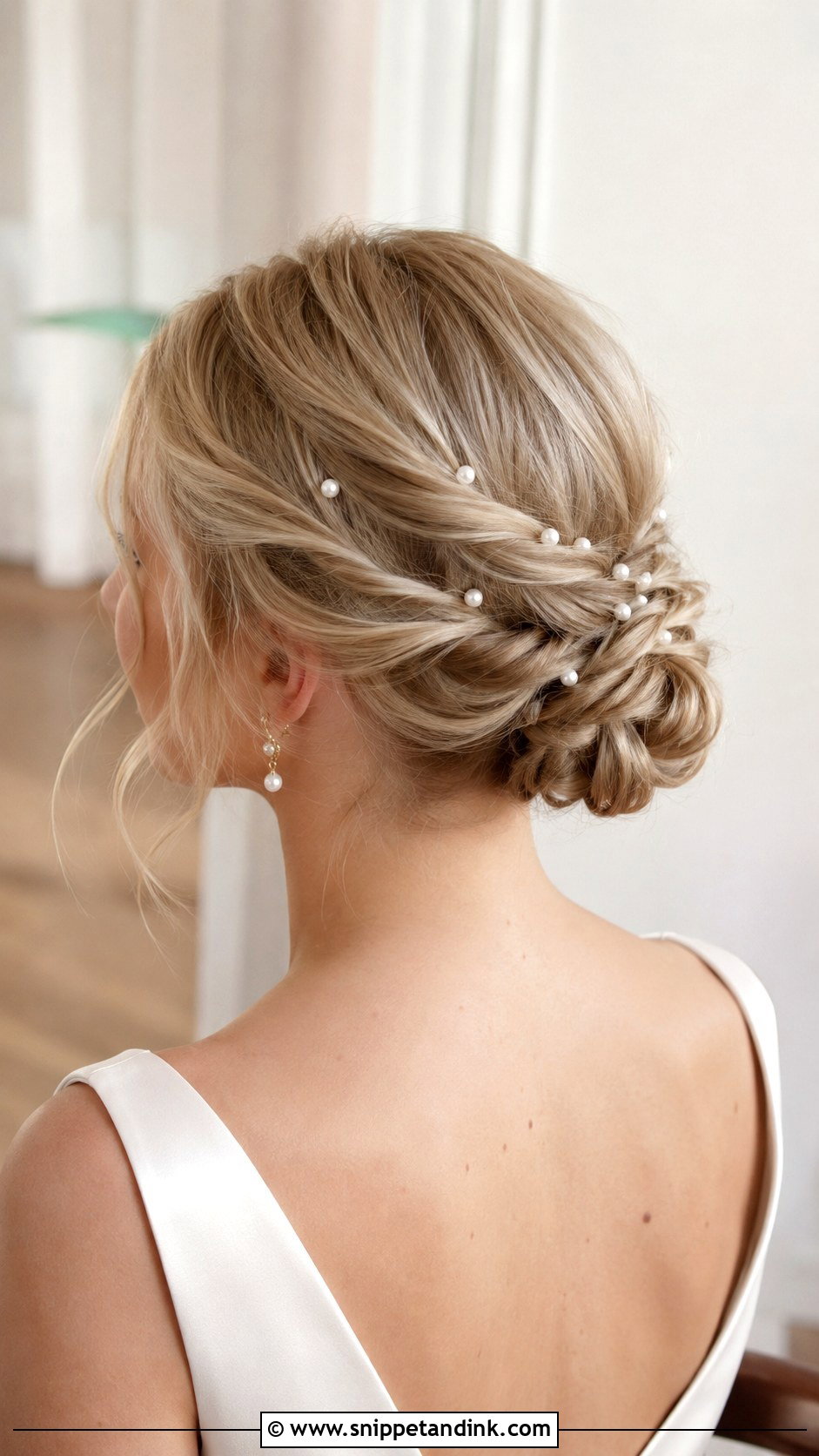
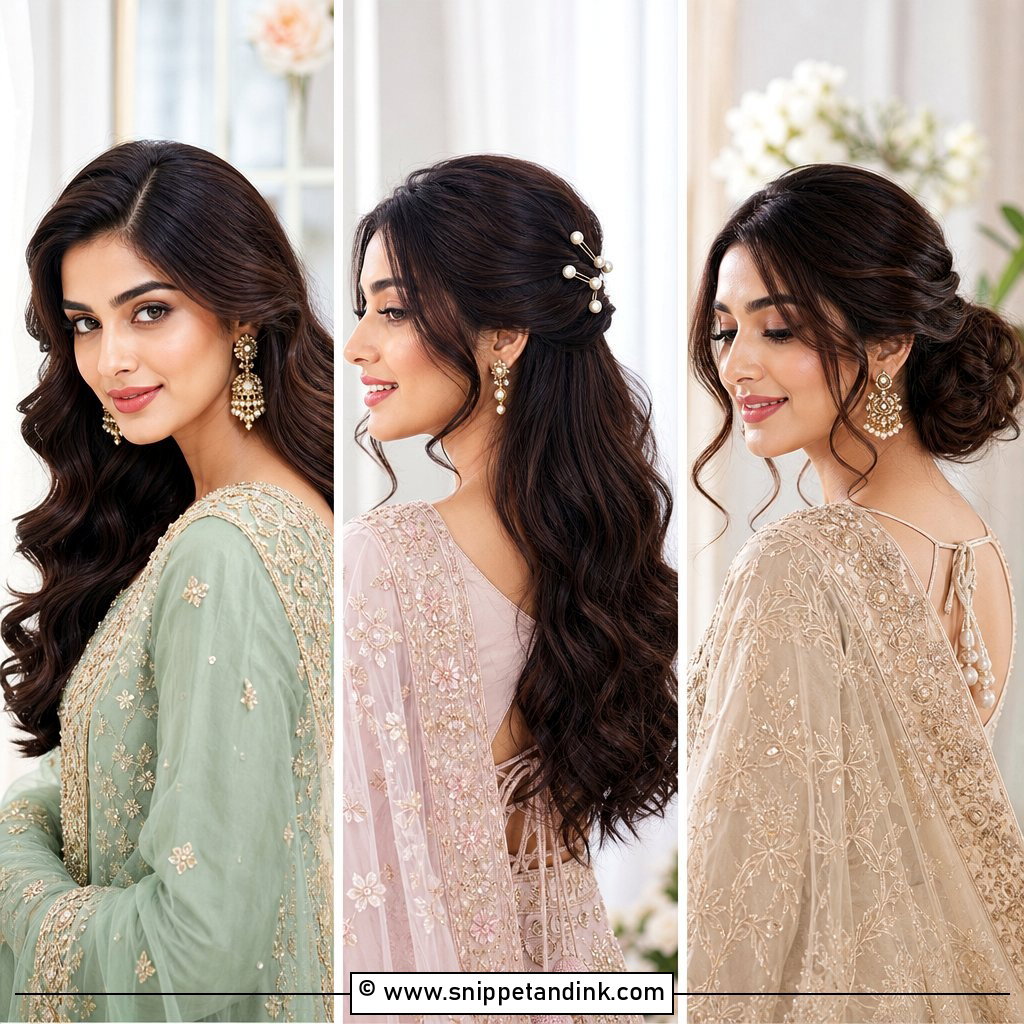
Pearls work best when they look placed, not scattered. I usually pick one area, such as along a part, around a bun or down one side of a half-up style, and cluster the pins there. They suit a low bun, half-up waves, a sleek ponytail, a braided updo or short waved hair. Small pins give a softer effect; a pearl headband is more of a statement. Keep the style underneath fairly clean so the pearls read in photos, and check the pins at the trial, since cheap pearl pins can slide out of silky or freshly washed hair.
Rain, Humidity and a Packed Dance Floor
These styles don’t age at the same rate. Some improve as the evening loosens them; others start to droop by the speeches. Roughly, from sturdiest to most fragile:
- Sleek bun and braided updo. Both sit close to the head and don’t depend on curl, so damp air has little to work on.
- Low bun, high bun and ponytail. Secure, though a ponytail drops at the base if the elastic isn’t wrapped and pinned.
- Textured updo and side swept hair. They hold, but loose pieces frizz. If rain is likely, I trim back the face-framing strands.
- Half up half down, long loose hair and Hollywood waves. These rely on curl staying in, and heavy or very fine hair can lose its pattern within a few hours.
Curly and natural styles behave differently again: moisture tends to make them bigger rather than flatter, which is fine if you’ve planned the shape with that in mind. Bobs and short cuts move least of all.
Timing the Hair Chair on the Morning
Hair is where wedding mornings usually fall behind. A sleek bun or ponytail on prepped hair takes me about half an hour. Waves, braided updos and detailed half-up styles more often run to an hour, and some natural hair styles are best set the night before.
- Wash the day before unless your stylist says otherwise. Second-day hair grips pins and holds curl better than freshly washed hair.
- Put the bride second to last in the chair, so there’s someone after her to absorb any overrun.
- Leave fifteen minutes after the final spray for the veil and photos of the finished hair.
- Pack a small pouch for later: matching pins, a mini hairspray, a comb and an elastic in case the style comes down after dinner.
Matching the Style to the Hair You Wake Up With
The right wedding hair idea is the one that suits your dress, your venue, your actual hair and how little you want to think about it once the music starts. A sleek bun fits a city ballroom; waves feel at home in a garden. A braided updo shrugs off wind, a ponytail is made for dancing, and natural curls make the whole look feel like you. Bring photos to your trial, by all means. What helps me more is hearing how your hair behaves on an ordinary day, what the forecast might be, which accessories you’re wearing and how long the day runs.
You'll Like These Ideas:



Leave a Reply