
An Indian wedding asks more of your hair than almost any other: several functions, heavy jewelry pinned straight into it, flowers, a dupatta, and hours of heat and dancing. The style is what holds all of that together, so I choose it for the function rather than the photo. Below are 25 Indian wedding hairstyle ideas, from a gajra bun to open curls, for Haldi, Mehendi, Sangeet and the wedding itself, with notes on which hair each one suits, long and thick or fine and shoulder-length.
Hair Oil, Turmeric and Five Functions in a Row
Many brides oil their hair regularly in the weeks before the wedding, and that’s good for the lengths. Oil left in on a styling day is another matter: pins slide and curls drop. I ask brides to wash out any oil treatment by the day before a big function and to arrive with clean, completely dry hair, with no conditioner near the roots.
Haldi needs its own plan. Turmeric paste stains light, bleached or highlighted hair yellow, and the tint can take several washes to fade. Wear your hair up in a braid or bun, and if you have color, coat the ends with a little oil or cover them with a scarf. Wash it out properly the same day so the next morning’s style starts clean.
Stacking the Styles So Each One Sets Up the Next
Think about the order of looks, not just the looks. A tight bun worn all evening leaves a kink, so sleek open hair the next day needs a fresh wash and blow-dry rather than a quick touch-up. Curls, on the other hand, often survive the night if you sleep on them in a loose braid, which can save time on a second-day style. I usually give the wedding day the most structured, jewelry-heavy updo and plan open or half-up styles for the events around it.
1. Traditional Gajra Bun
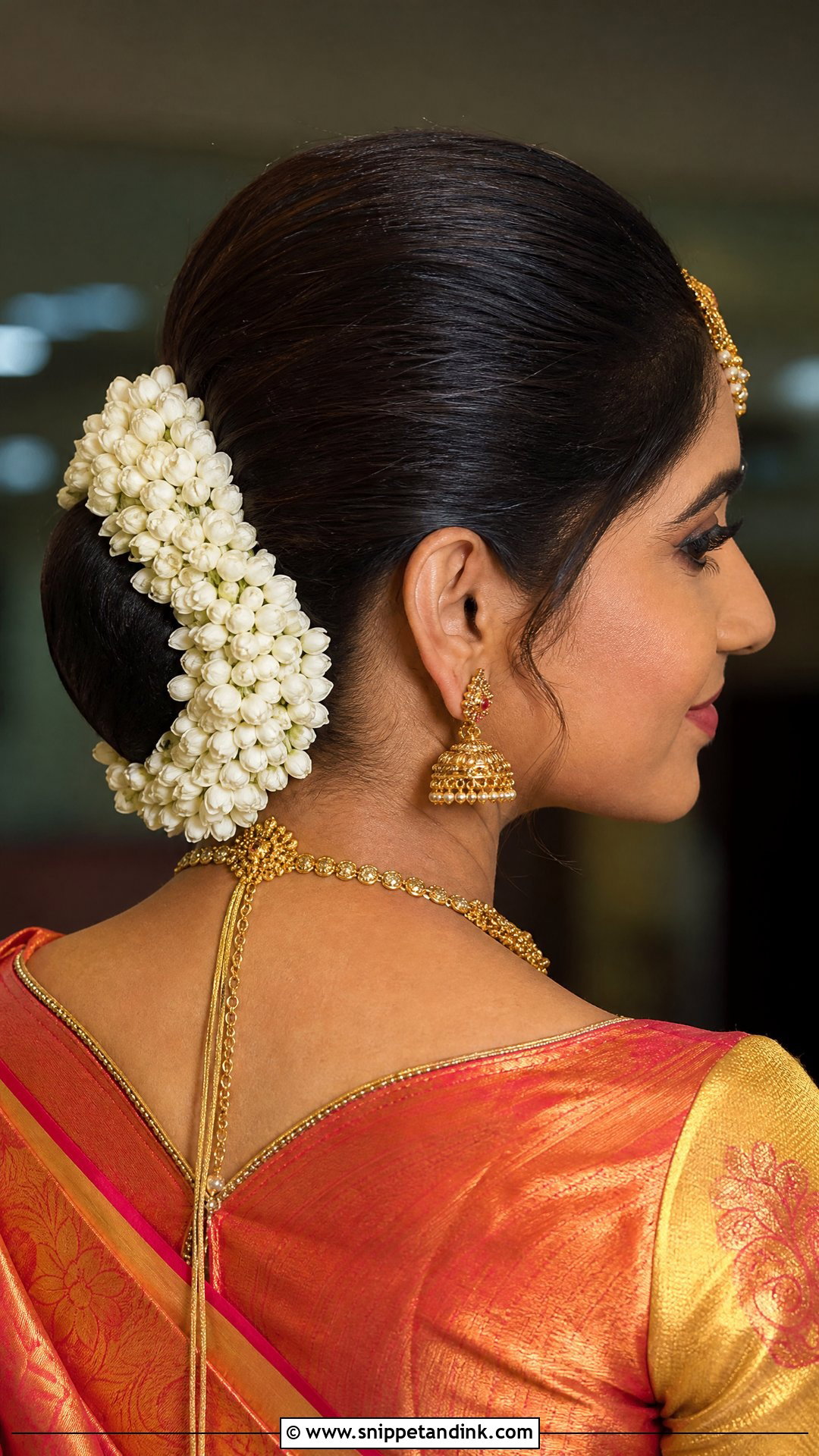
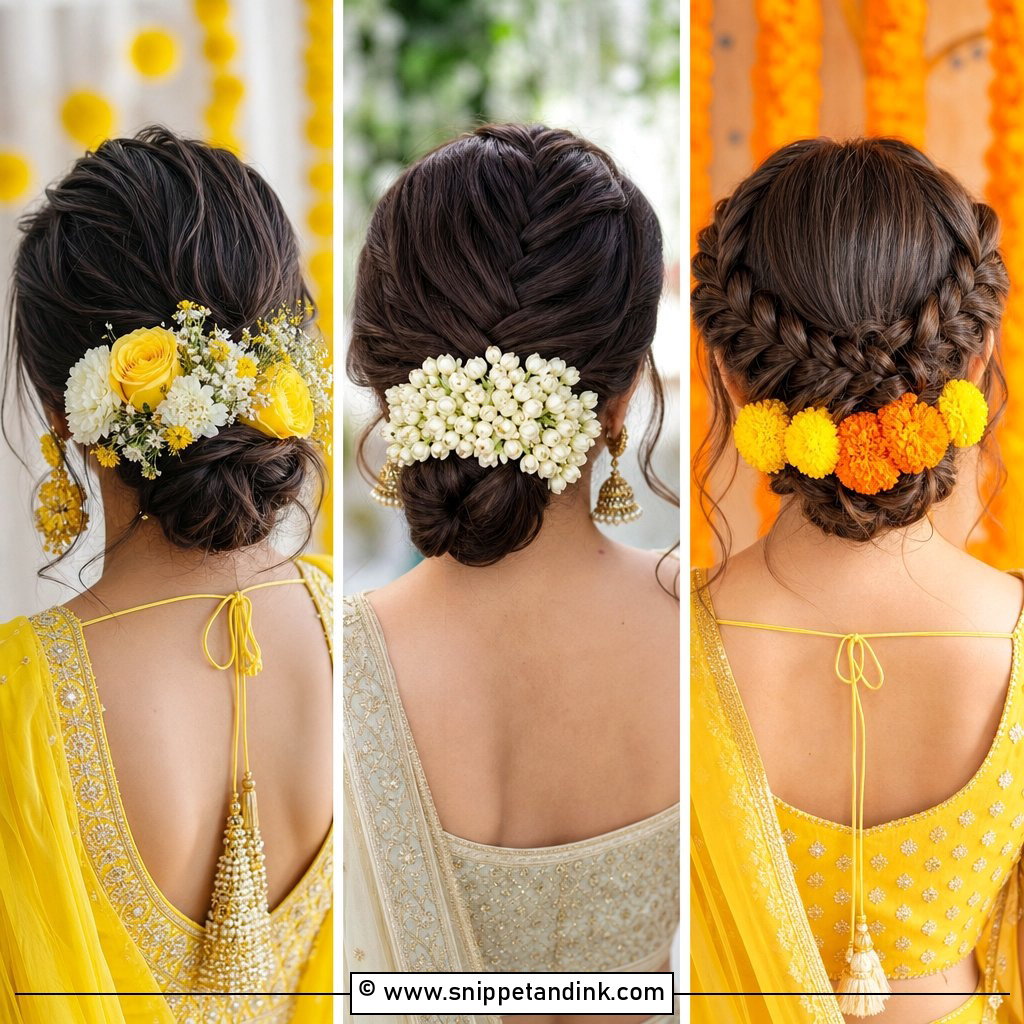
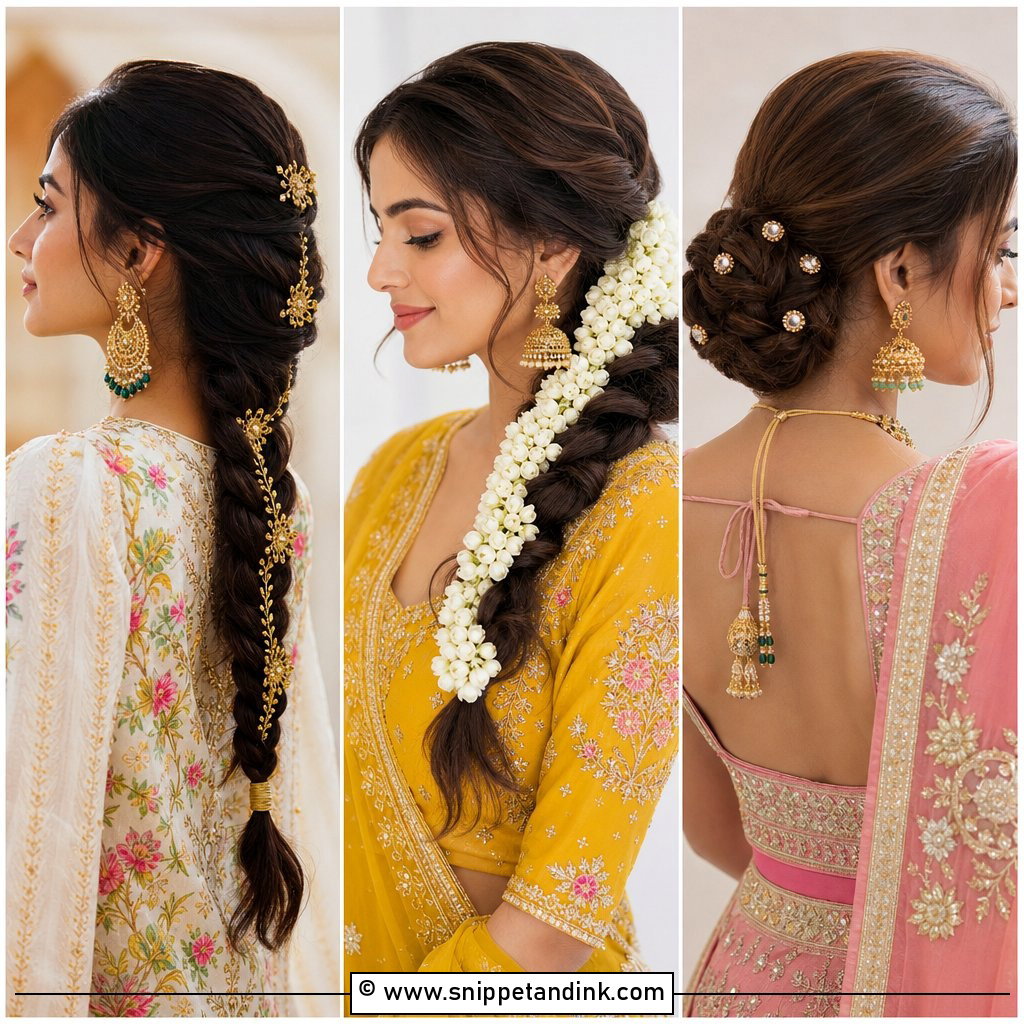
For many families, especially in the South, bridal hair starts with the gajra bun: fresh jasmine wrapped around a low, neat bun. White flowers against dark hair read clearly from the back row and in photos. On long, thick hair I build it as is. On fine hair I add clip-in extensions at the nape first, because a thin bun lets the gajra slip down. With a silk saree or heavy lehenga and a gold maang tikka, your other jewelry can stay lighter, since the flowers carry the back view.
2. Fishtail Braid With Flowers
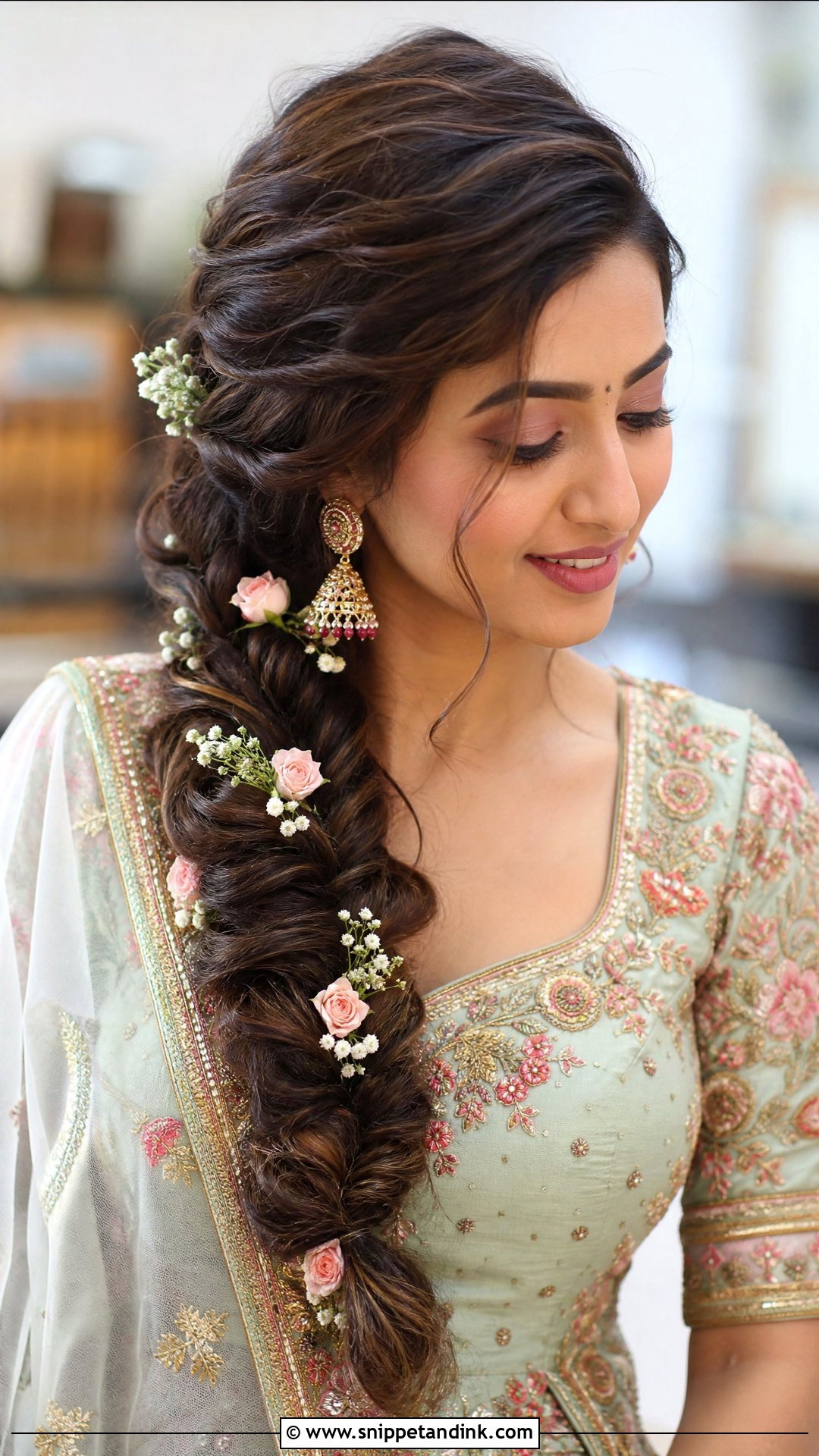
A fishtail is woven from two strands in tiny sections, which is why it looks so intricate. I braid it tight, then pull the edges outward to widen it, and that loosening is what makes long hair look so full. Mogra buds or small roses tucked along the length add the Indian touch. I’d keep it for Mehendi and Sangeet functions rather than the pheras, because a dupatta laid over a side fishtail crushes the loosened texture. Draped over one shoulder, it leaves the other ear clear for a statement earring.
3. Floral Side Bun
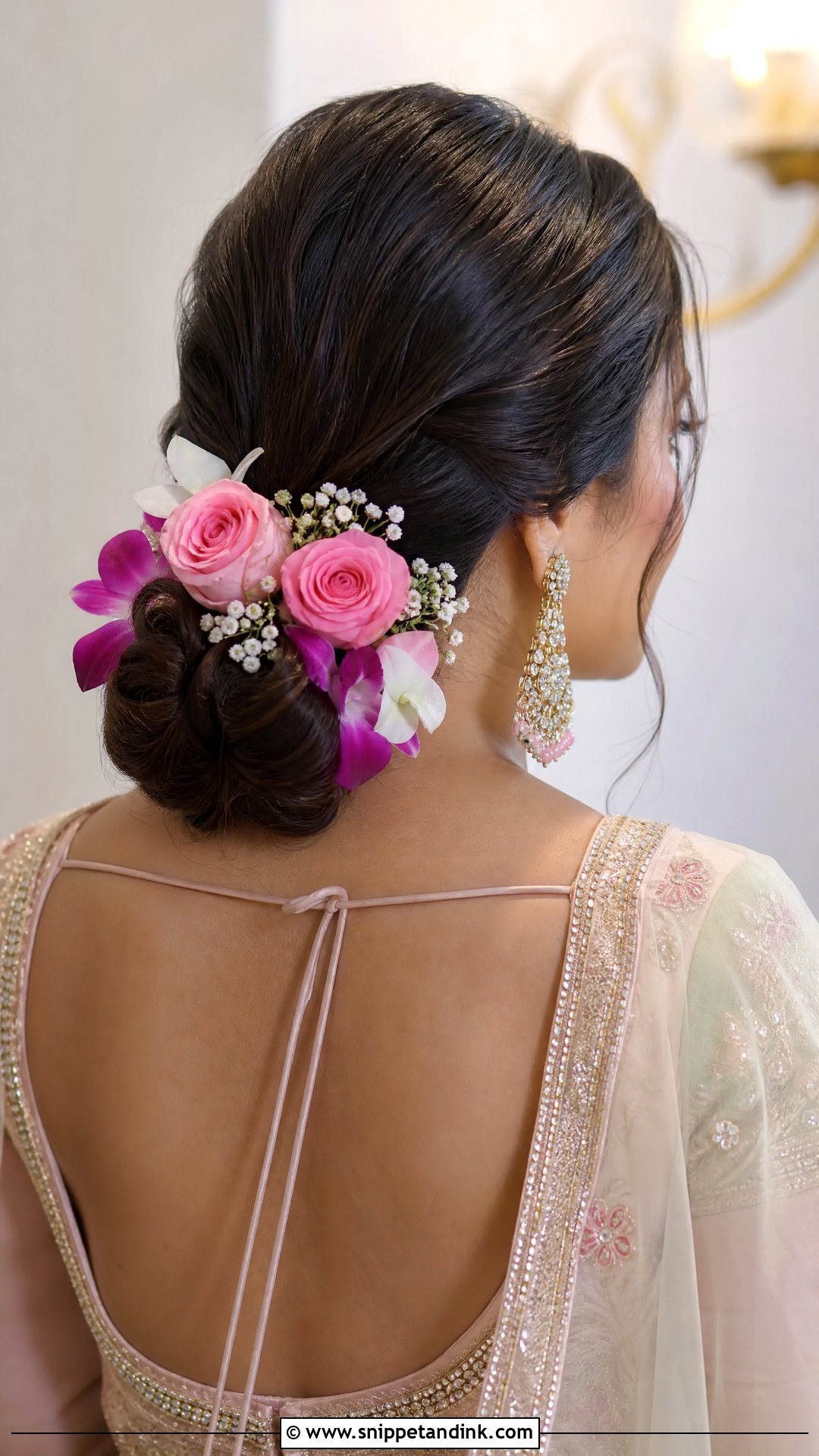
Placing the bun just behind one ear moves the weight onto one shoulder and opens the other side of the neck for a chandelier earring. One caution: on the bun side, the bun can press against a heavy earring, so I set it slightly lower and further back than brides expect. Roses or orchids tucked around the twist pick up your outfit colors. Reception and Sangeet suit it, and a couple of loose face-framing strands soften the asymmetry.
4. Messy Bun With Side Braids
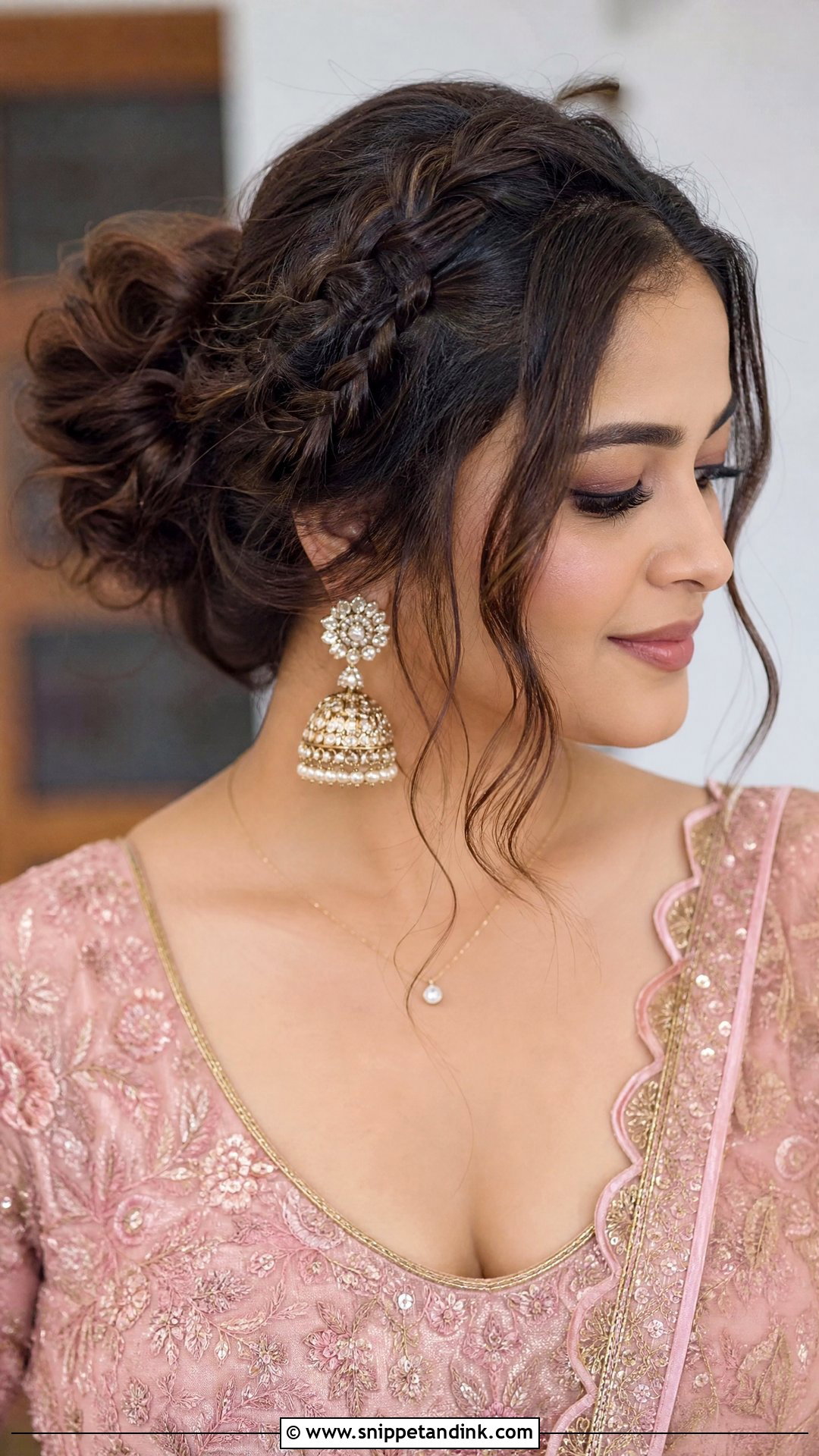
A couple of braids run along one side and twist into a loosely gathered bun. The braids are the anchor and the messiness is styled: I curl the hair first, pin the bun, then pull pieces loose with my fingertips. Fine hair needs a faux bun or clip-ins for fullness, otherwise messy just looks thin. Sangeet and cocktail nights suit its relaxed mood, and jhumkas or a maang tikka bring the sparkle back.
5. Half-Up Half-Down With Maang Tikka
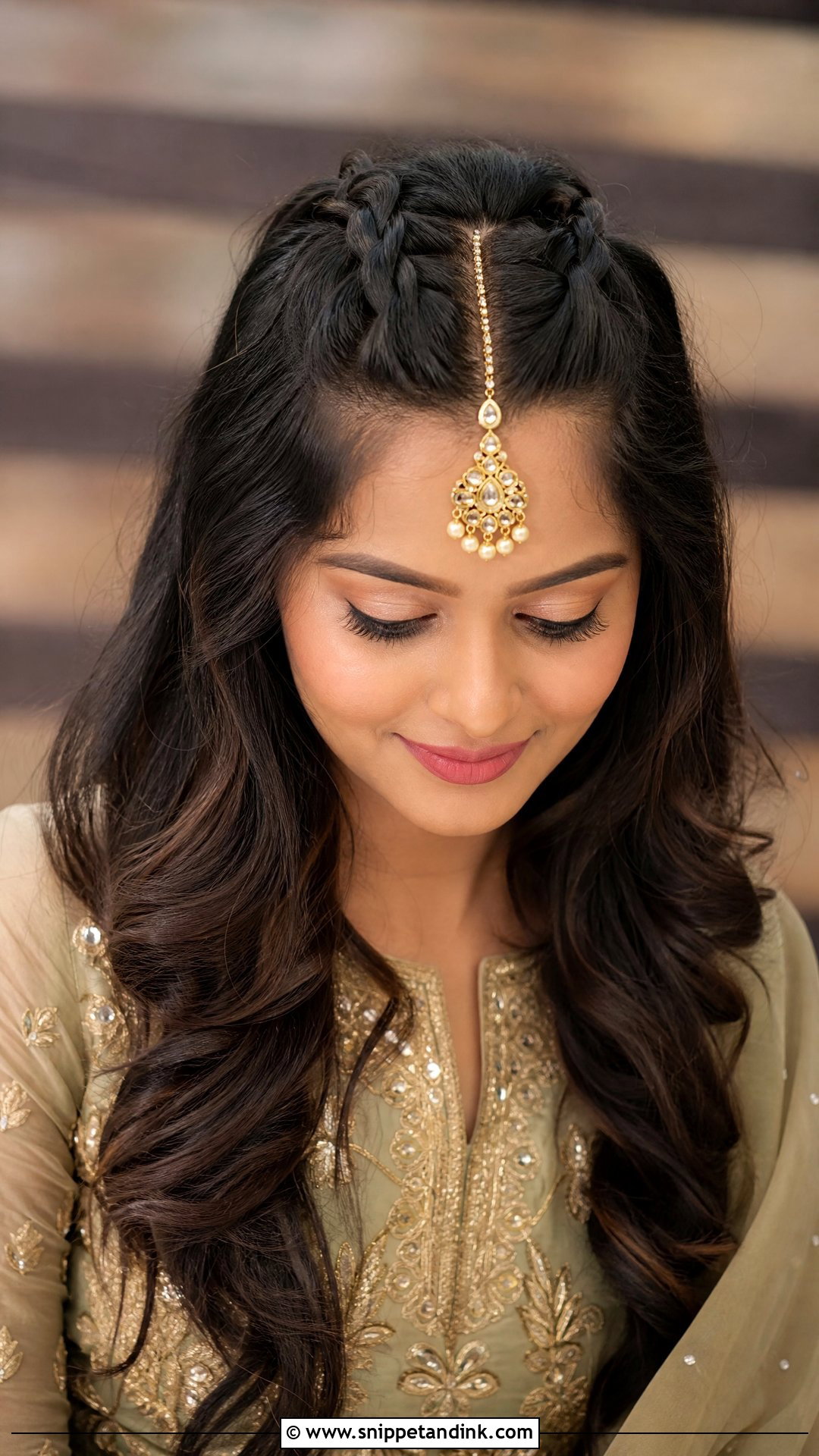
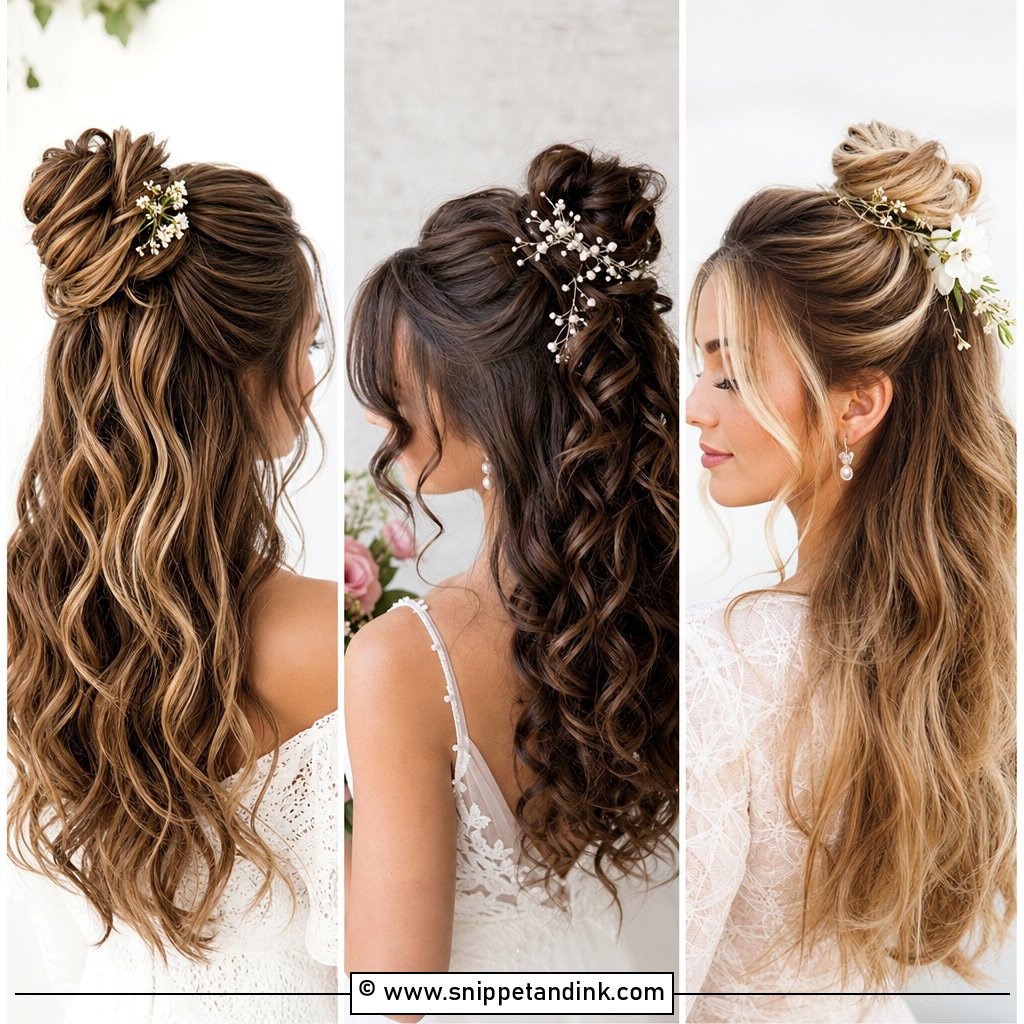
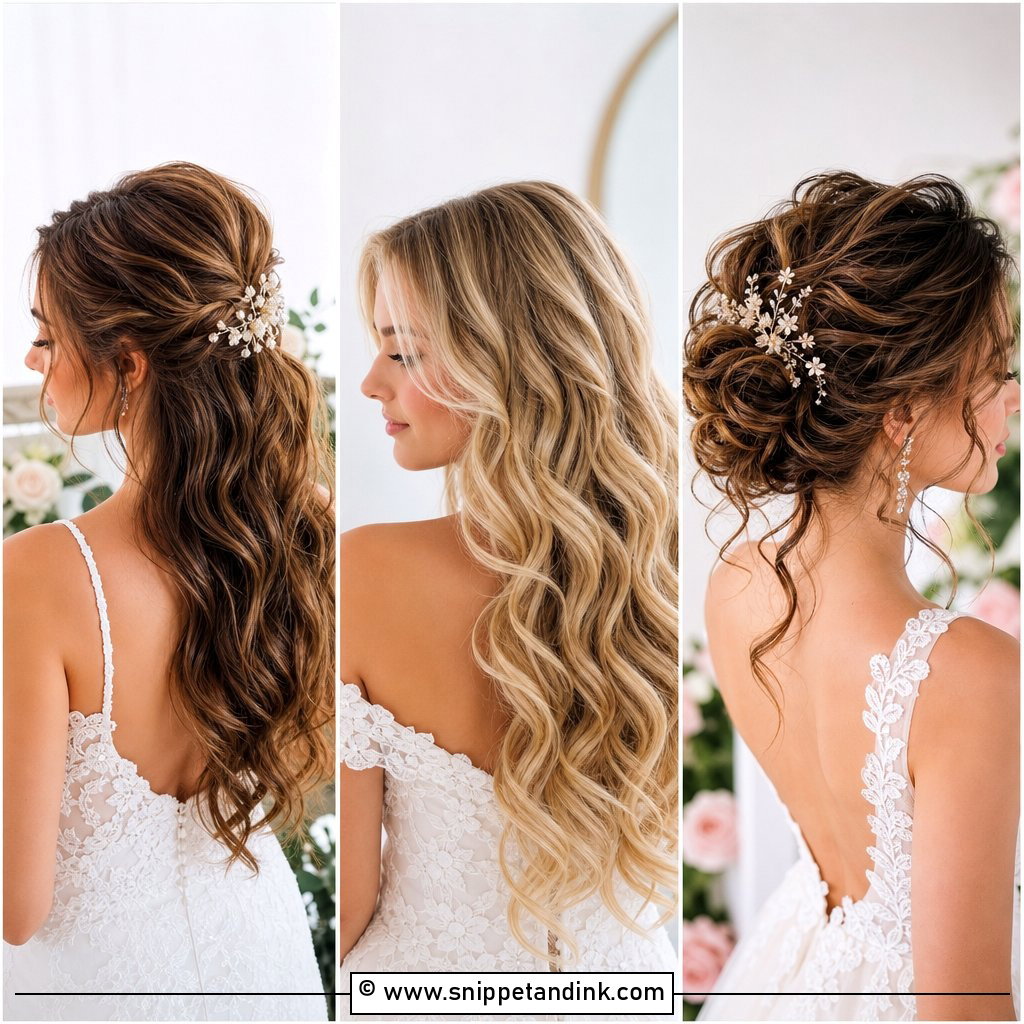
Half up solves the updo-or-open-hair question, and it’s also the best base for a maang tikka, because the pulled-back crown section gives the hook something to grip. The rest falls in soft waves. The top section can be braided or twisted, with small pins or pearls for detail, and it’s light to wear at Mehendi or a daytime ceremony. Over a long day the open half is what frizzes, so I finish the lengths with an anti-humidity spray instead of heavy hairspray.
6. Dutch Braid Updo
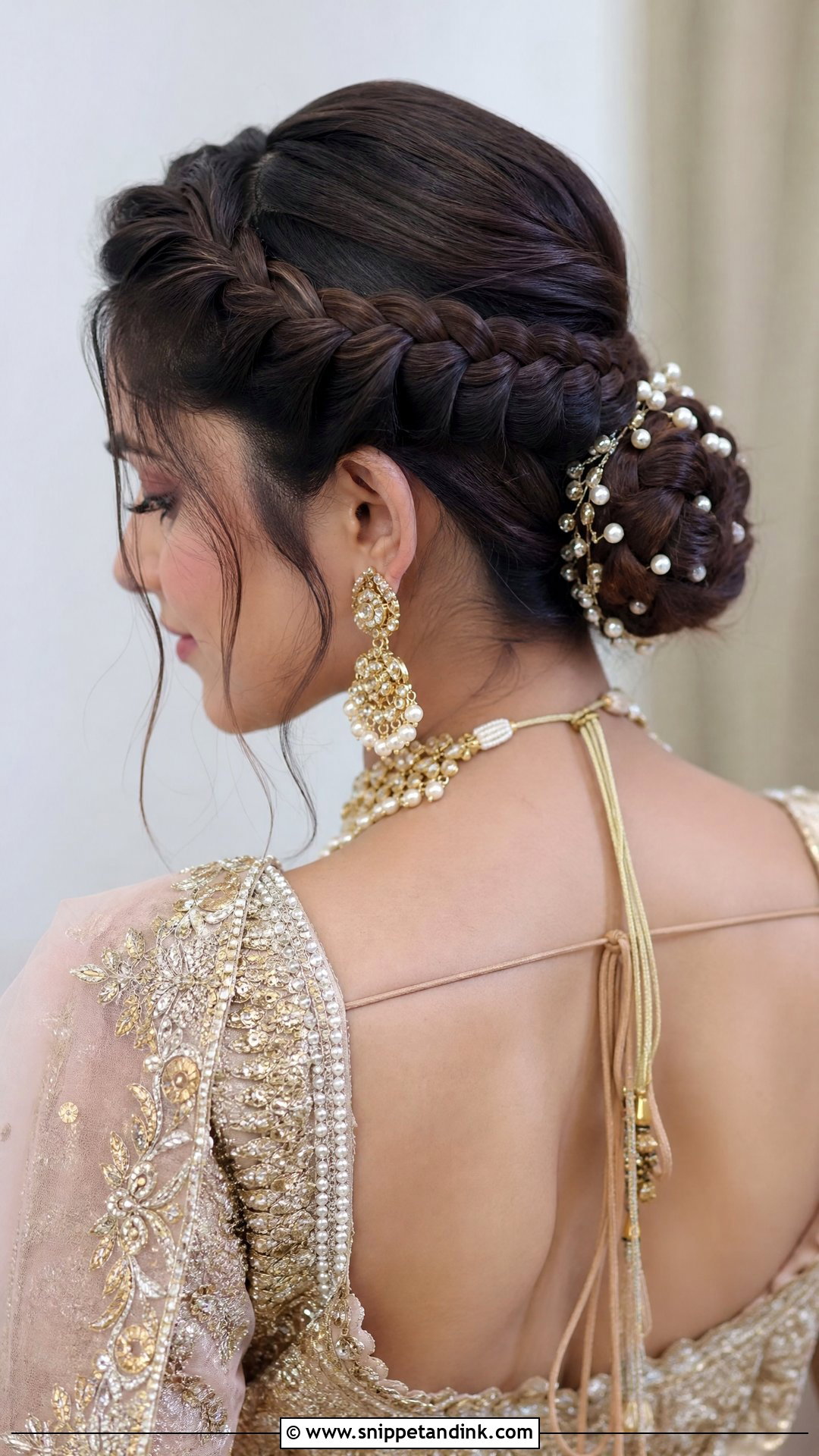
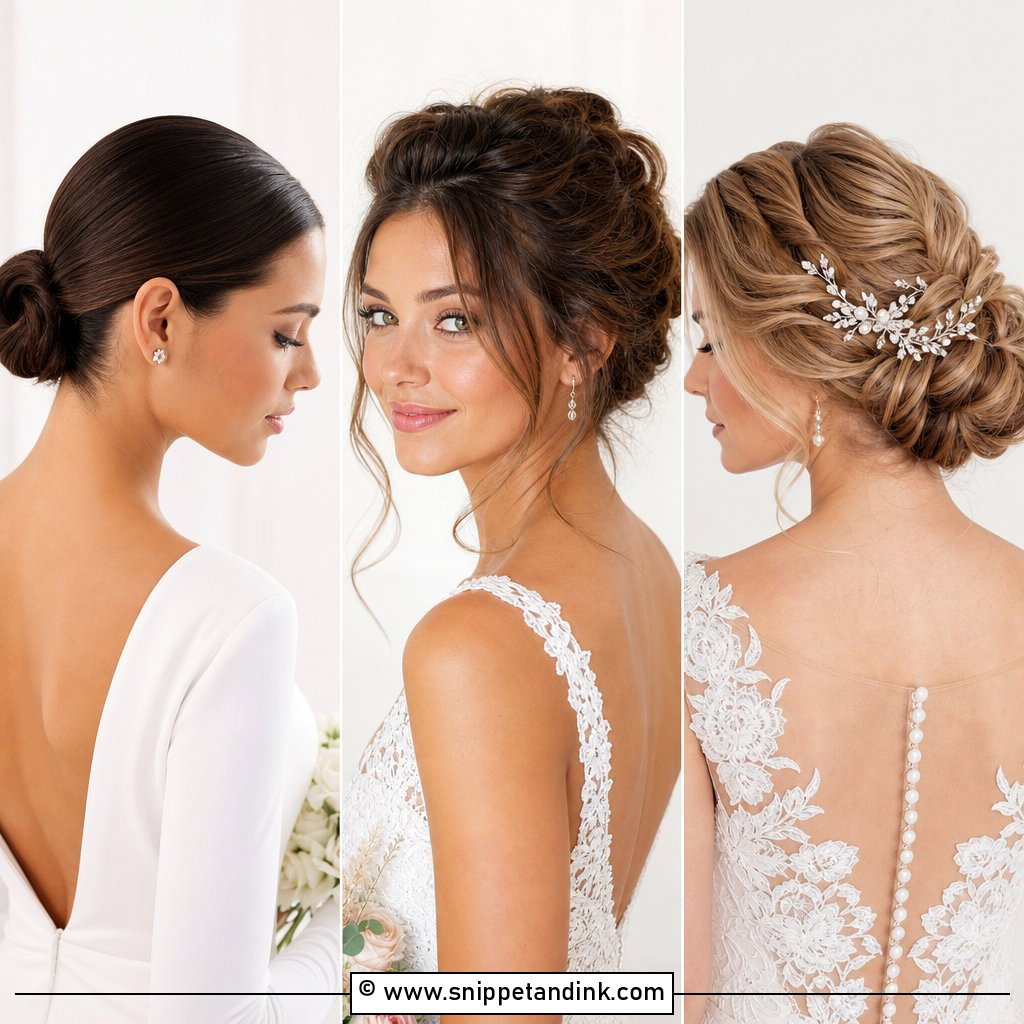
A Dutch braid is an inside-out French braid: the strands cross under instead of over, so it sits raised on top of the hair. Two of them from the front, meeting in a bun or twist at the back, give clean lines with no flowers needed. Since each braid grips hair all the way along, this is one of the sturdiest updos on the list for Sangeet dancing, and pearls or gold thread woven through dress it up for the wedding. I’d skip it if your hairline is sparse at the temples, where the braid’s tension shows the scalp.
7. Hollywood Waves
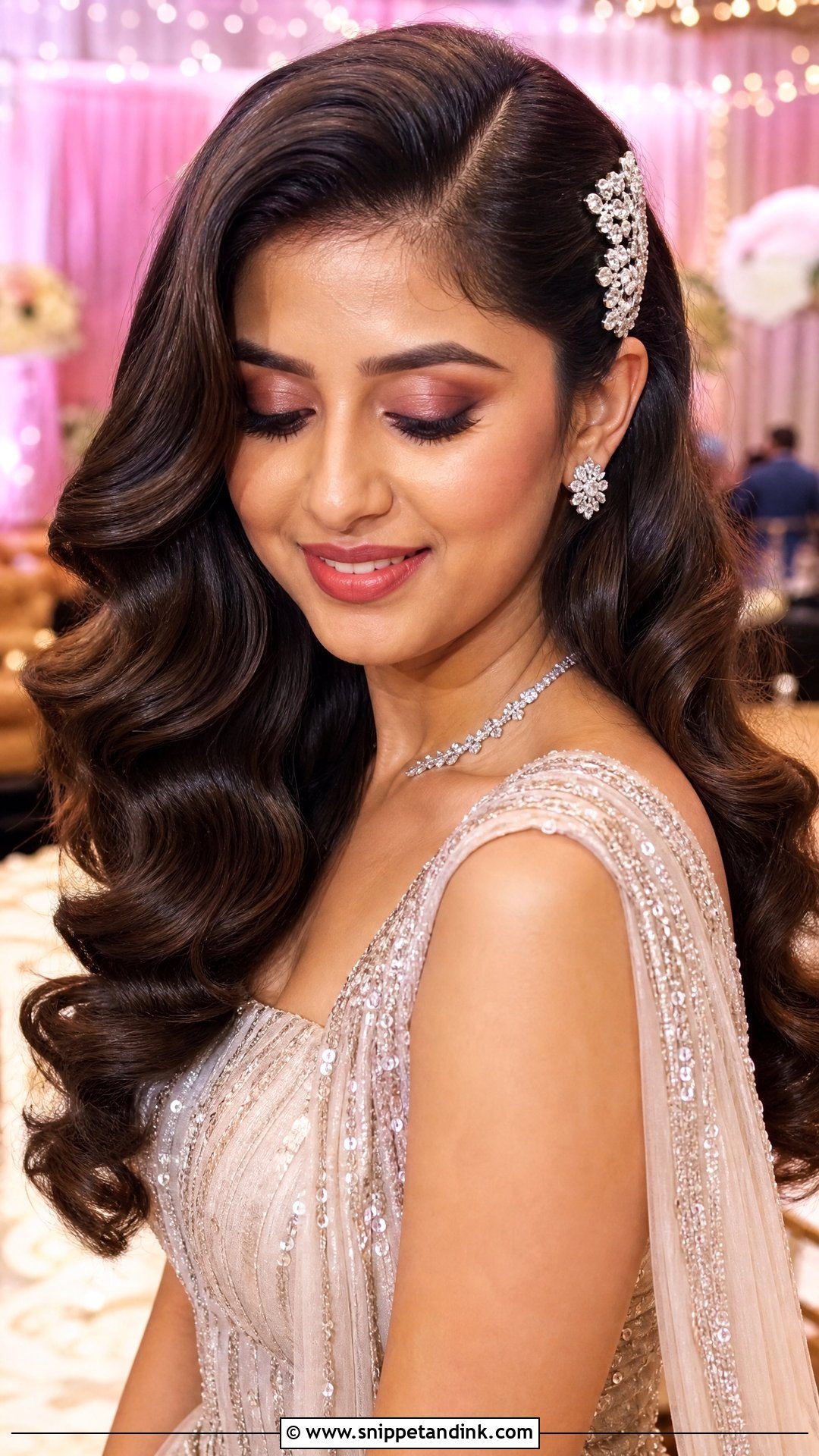
Hollywood waves are curls brushed out until they join into one smooth, sculpted ripple. I curl every section in the same direction, let them cool pinned, then brush with a boar bristle brush; curling in alternate directions gives beachy texture instead. A deep side part adds the vintage note, and a diamond-accented hair clip or delicate maang tikka adds sparkle. Reception gowns and Indo-Western outfits suit it on long and medium hair. Humidity flattens the ripple fast, so for a monsoon or outdoor evening I’d move you toward a sleek updo.
8. High Bun With Matha Patti
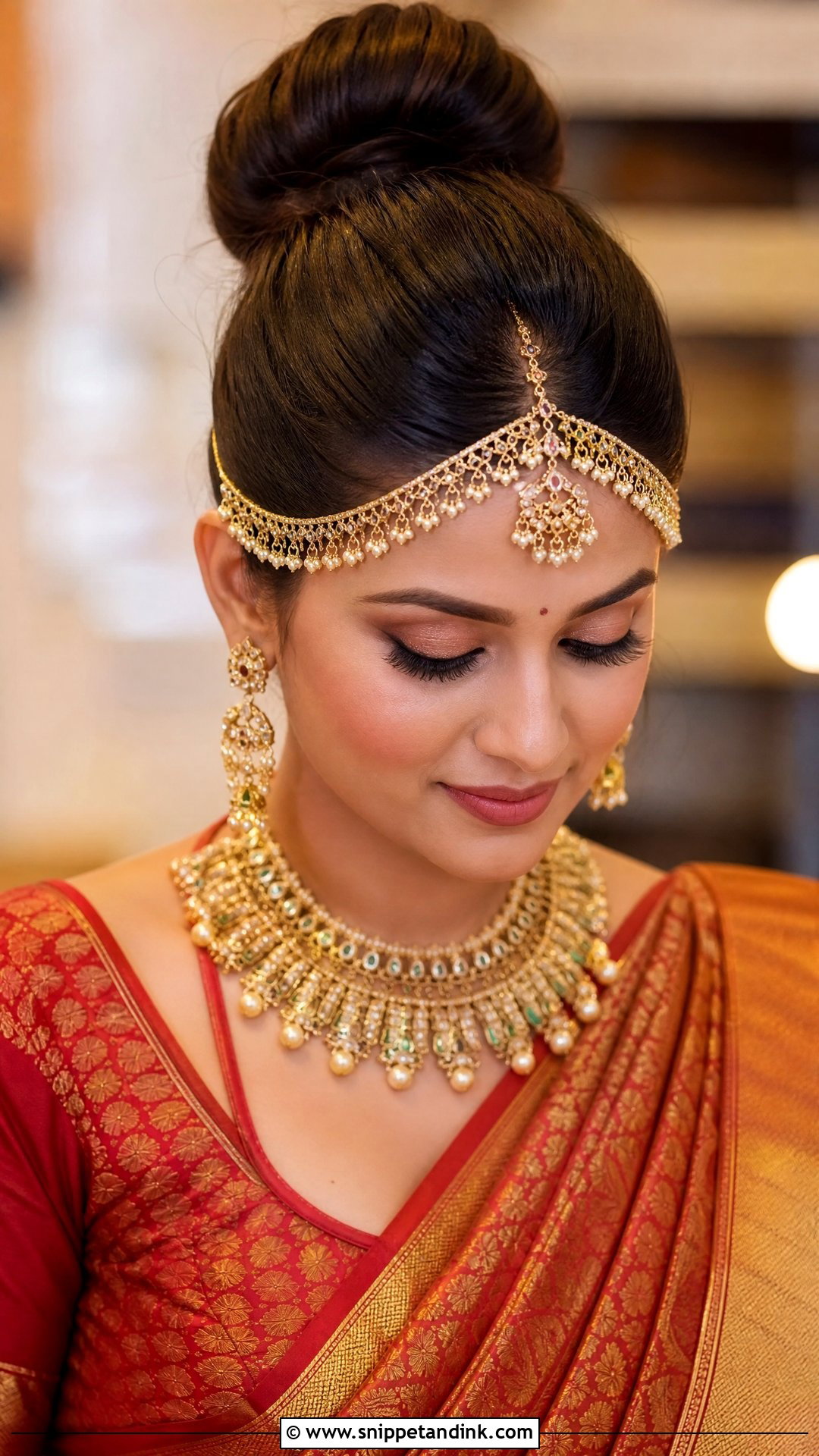
Sitting on the crown, the high bun leaves your neck and shoulders clear for a heavy necklace, which is why it’s so common with South Indian bridal sets. With a matha patti, placement matters: the bun has to sit far enough back that the center chain lies flat along the part, because set too far forward it bunches the chain. A faux bun helps if your hair needs volume. Gajra around the base keeps it traditional, or leave it clean for a modern finish.
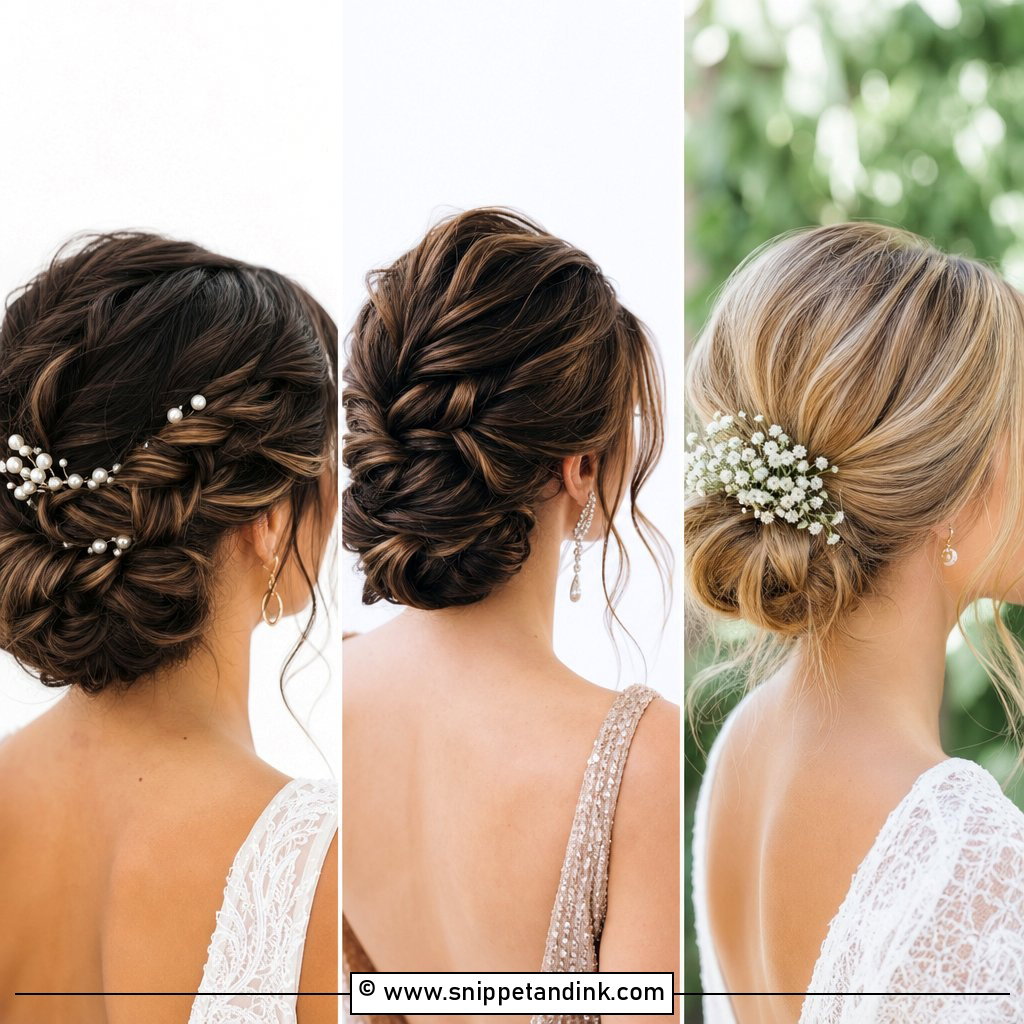
9. Braided Bun
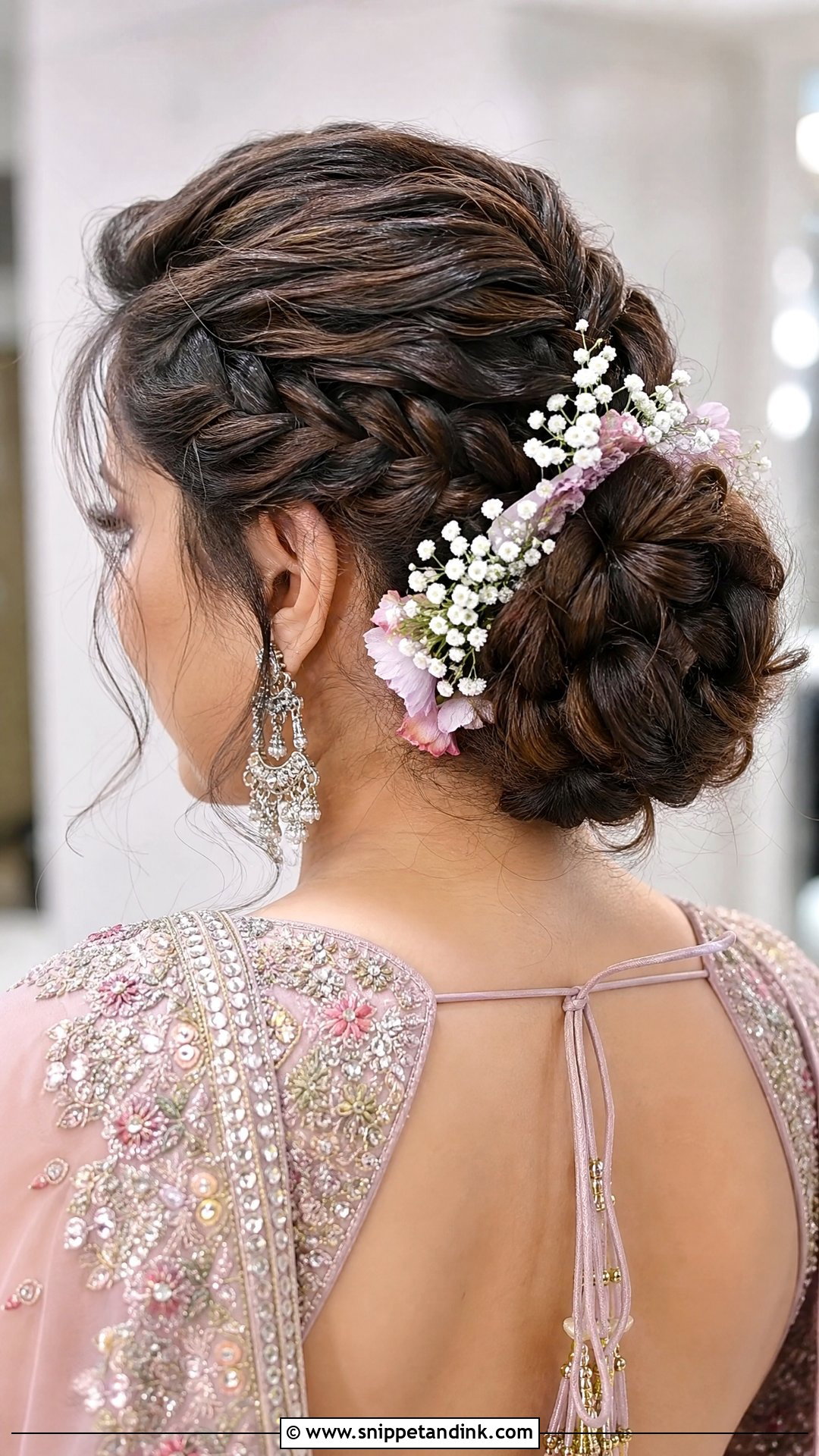
Braids coiled into a bun look fuller and more textured than a plain twisted bun, and they’re far more secure, because each braid holds its own hair. I usually mix French and fishtail braids for contrast. Small flowers or pearls tucked between the coils add detail. Long, thick hair suits it best; on fine hair the coils look thin unless I braid in a weft. It goes with lehengas and sarees and holds through long events and plenty of dancing.
10. Open Curls With Side Part
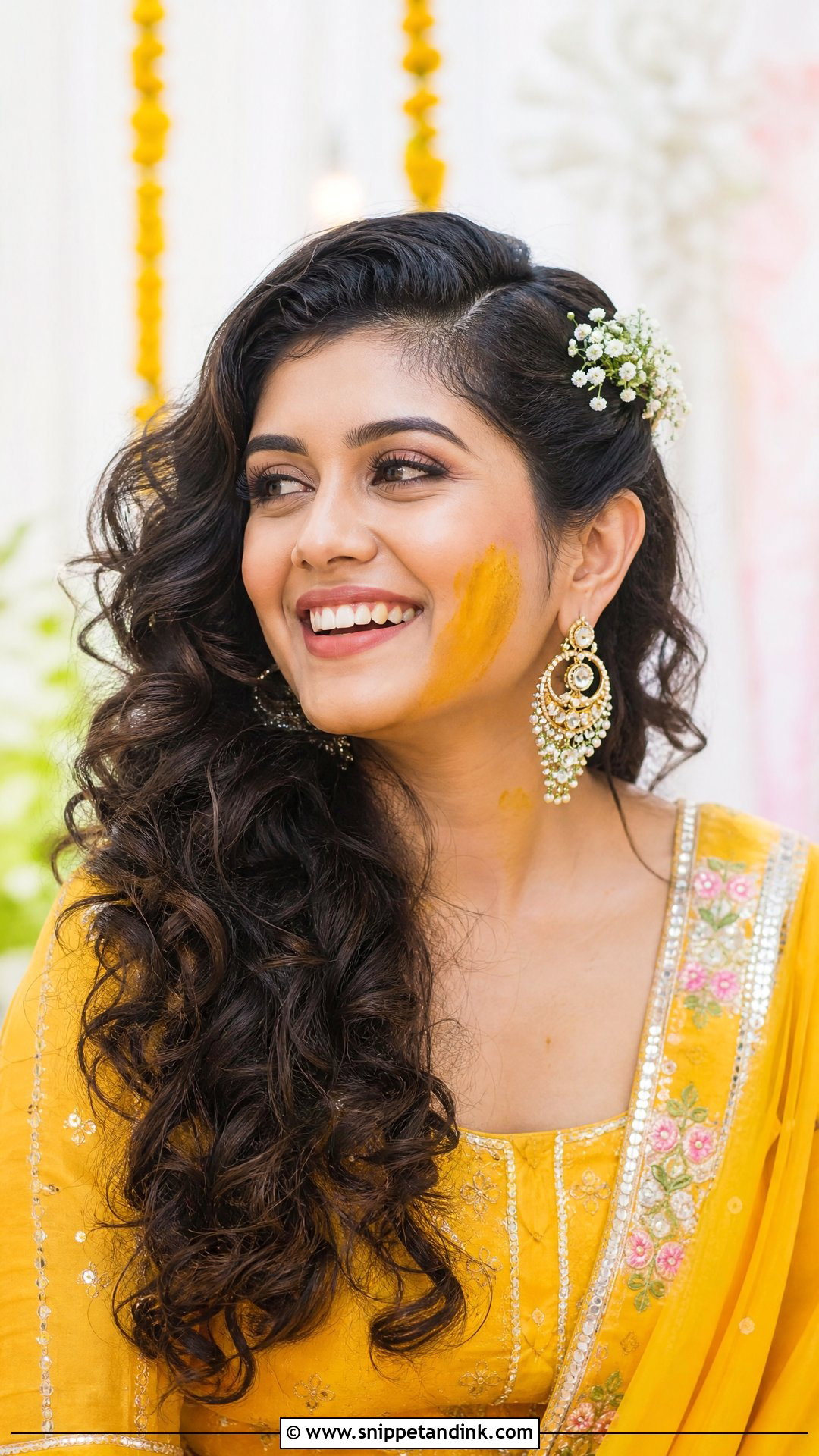
Open curls with a deep side part feel relaxed but still bridal at Mehendi or a destination wedding. They need real setting time. I curl larger sections, pin each curl up to cool, and release them last, so they keep their shape for hours instead of dropping by dinner. Tuck one side behind your ear to show an earring and add a small floral clip or maang tikka. Medium to long hair works best.
11. Low Bun With Gajra
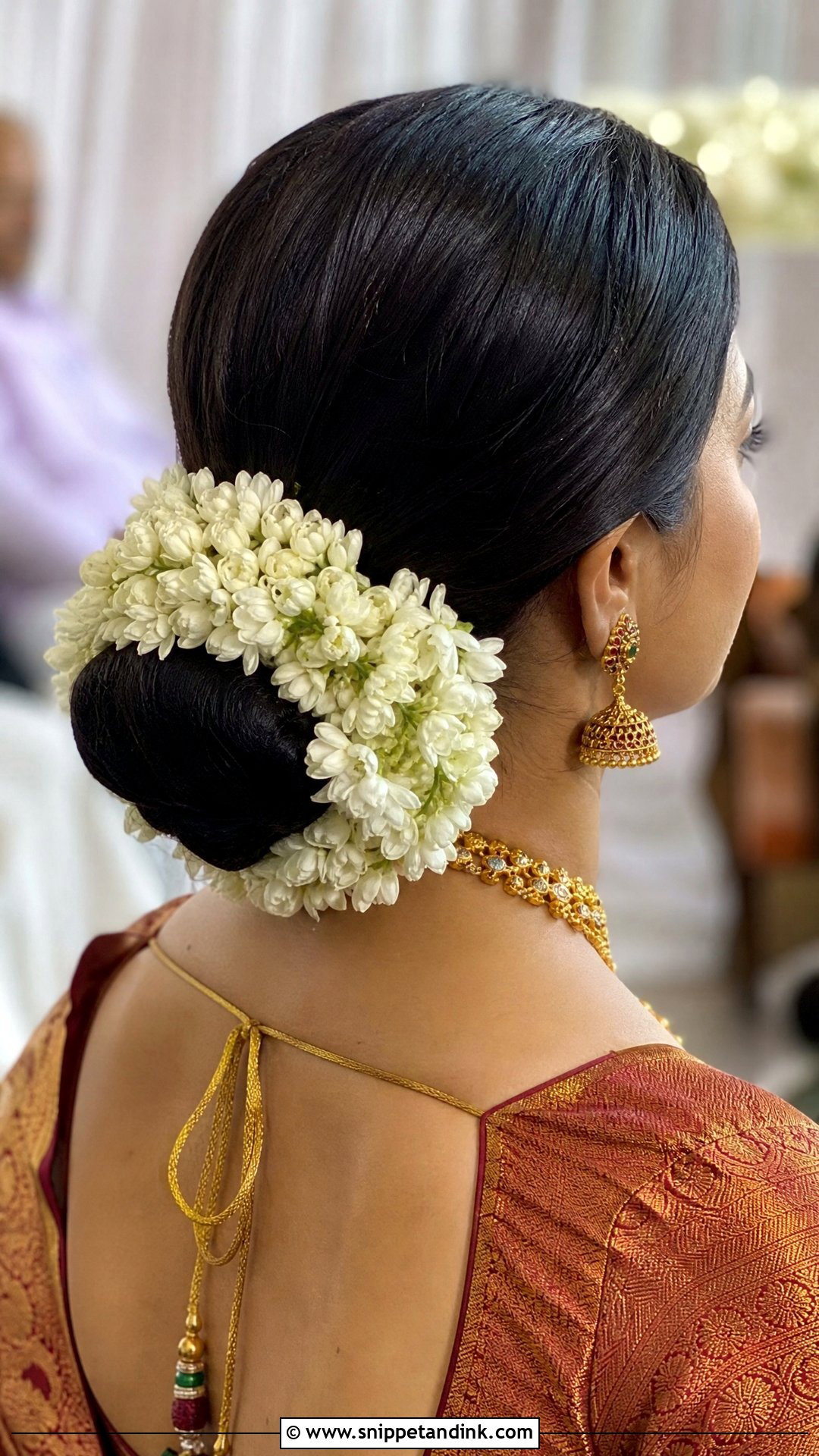
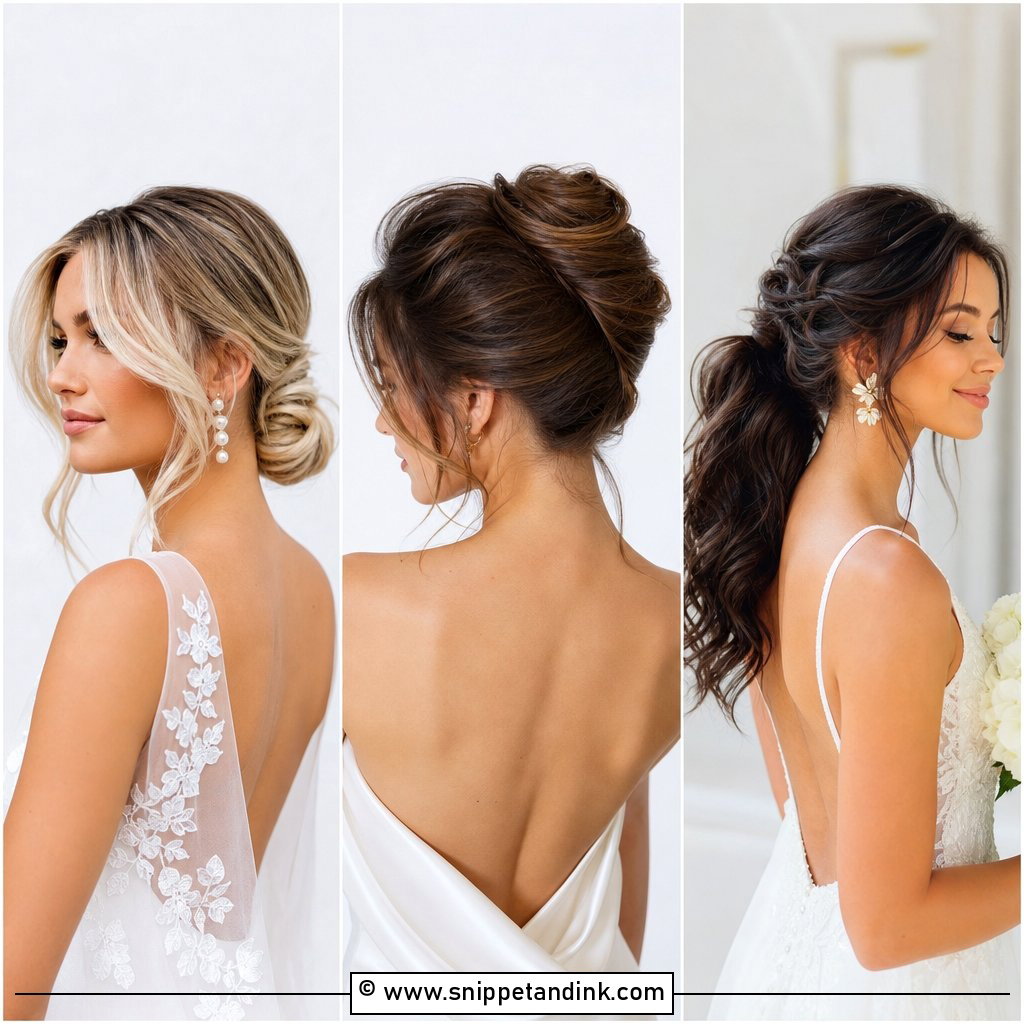
A sleek low bun wrapped with a long jasmine gajra is my default for brides wearing silk sarees with heavy temple jewelry. The low placement matters if you’ll be seated through a long ceremony, since a bun at the nape doesn’t knock against a chair back or tip your head forward. Keep your earrings light so the gajra stands out. I smooth the hair with a cream or gel rather than lots of spray, which looks dull beside white flowers.
12. Twisted Crown Braid
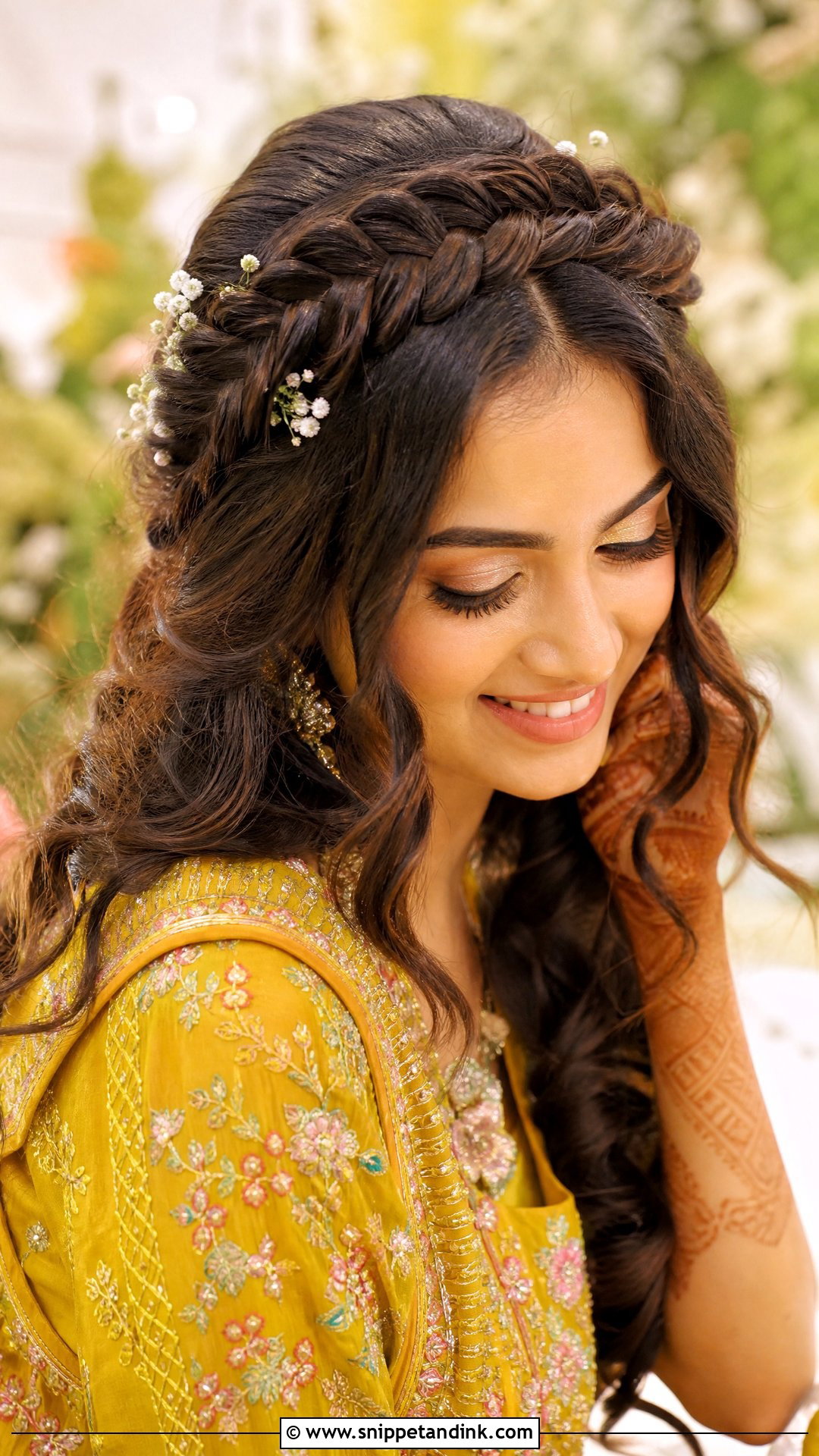
A crown braid circles the head like a halo, with the rest of the hair in a bun or loose waves. To make it sit flat, I start behind one ear and braid along the hairline to the other ear, adding hair only from the inside edge. Tiny flowers along it suit daytime ceremonies and Mehendi, and it keeps hair neatly off your face. A dupatta over the head hides most of it, though, so save it for functions where your head stays uncovered.
13. Side Swept Curls
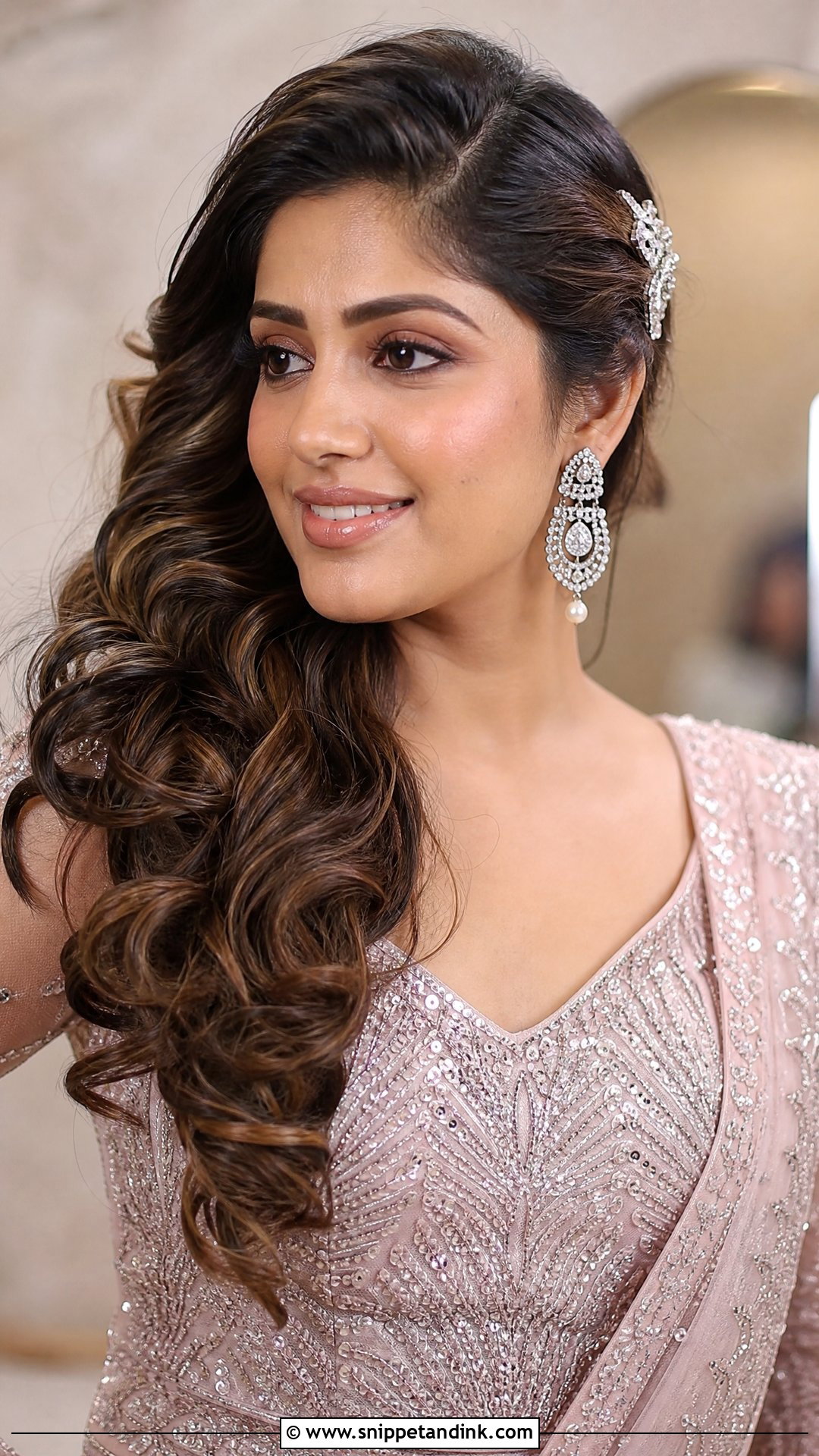
Sweeping every curl over one shoulder puts the drama on one side and lets a single statement earring show on the other. The pinned side does the real work. I tuck it flat with crossed pins behind the ear, then hide them under a sparkling clip or small flowers, and a deep side part adds volume at the root. It suits medium and long hair for a reception or Sangeet evening. Expect to flip the curls back over your shoulder all night; that’s part of wearing it.
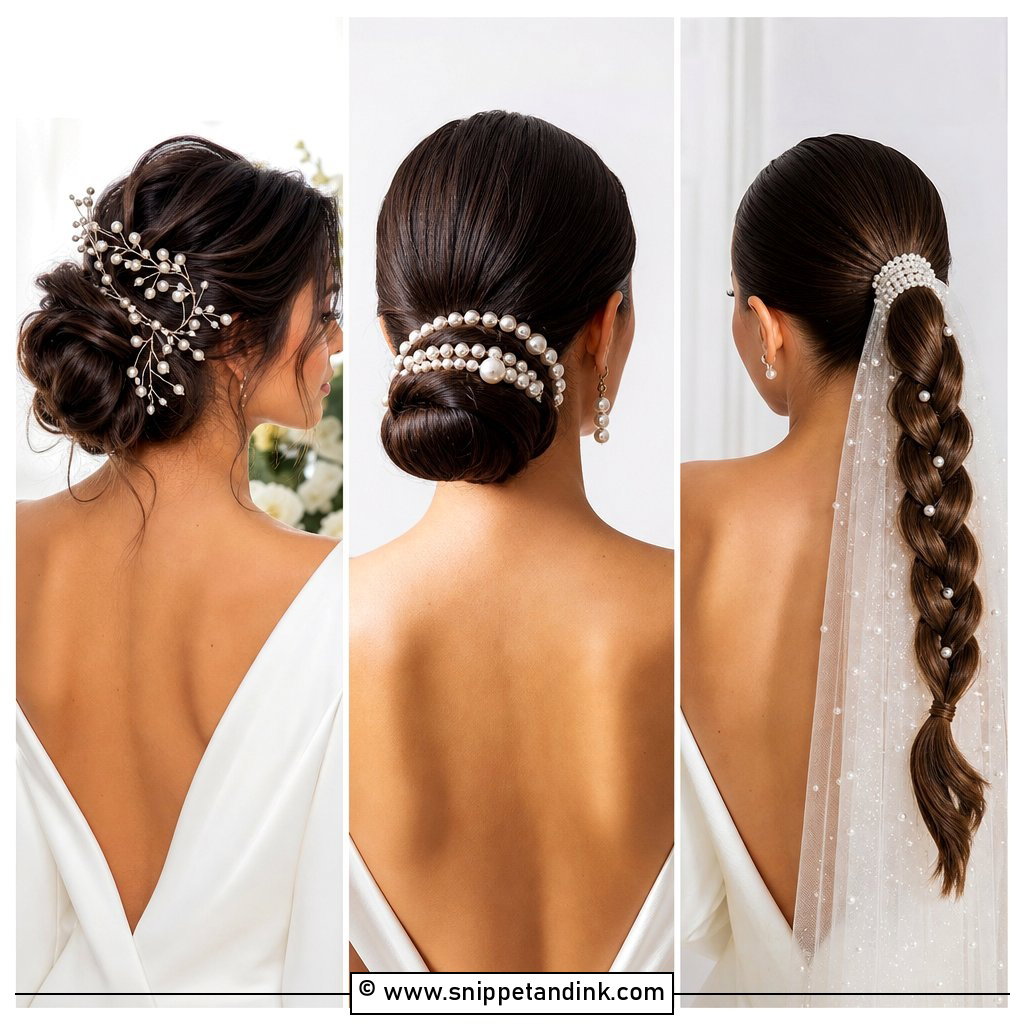
14. Pearl Embellished Braid
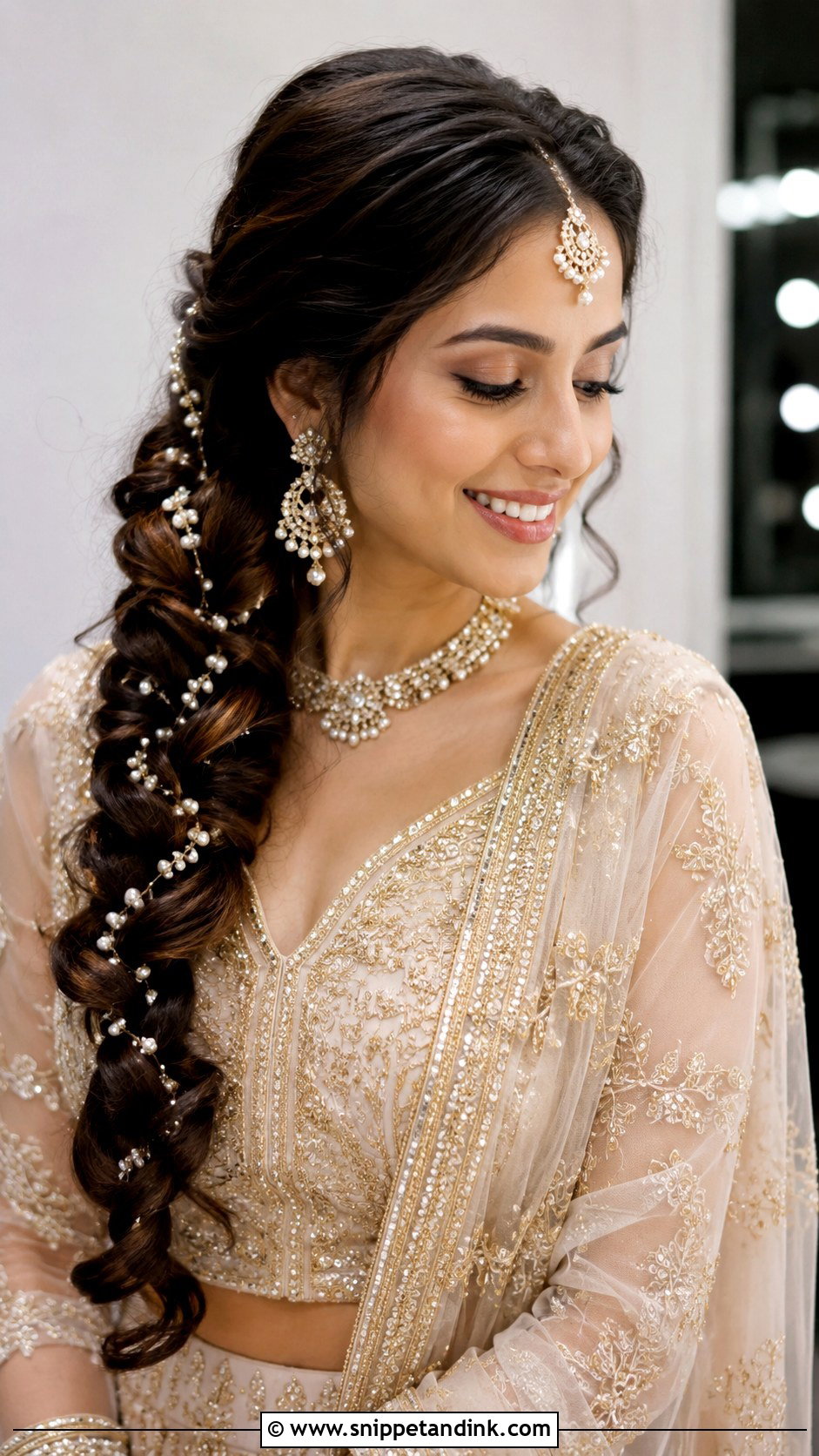
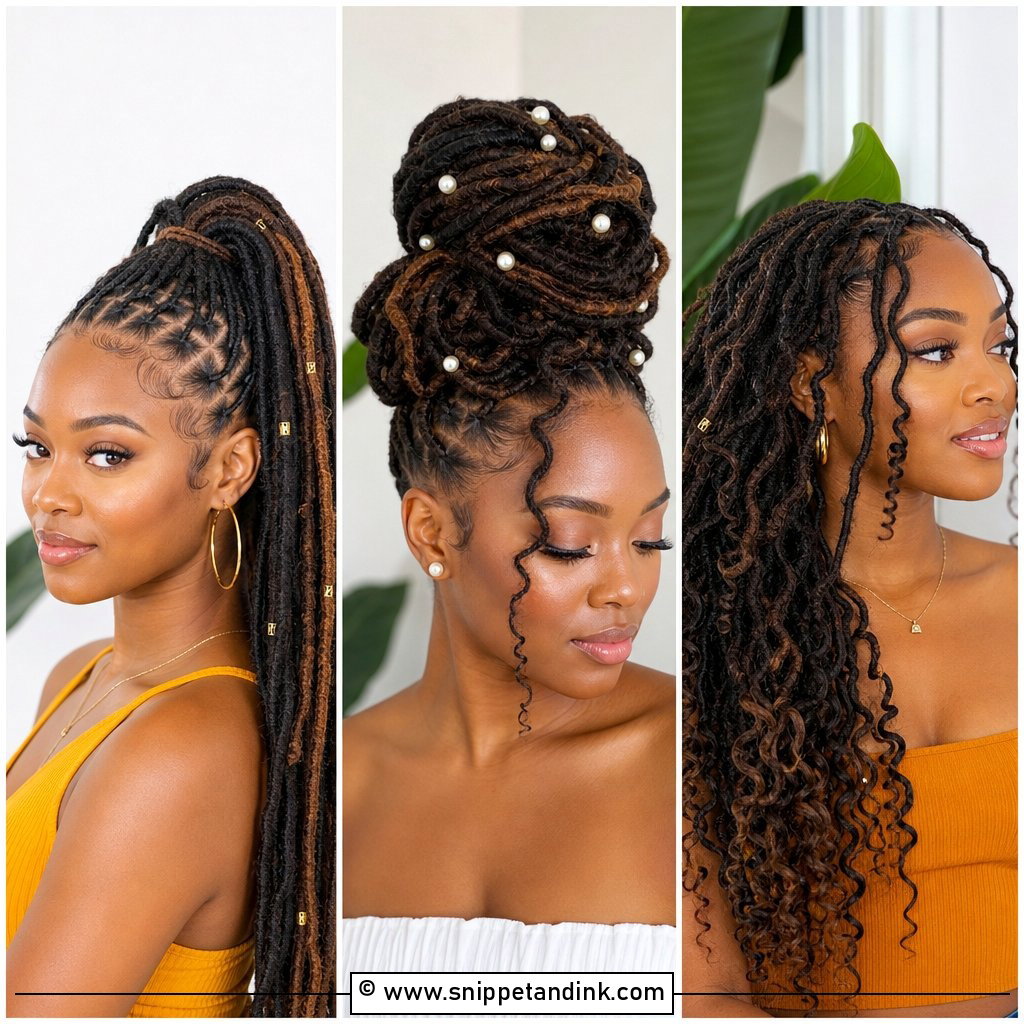
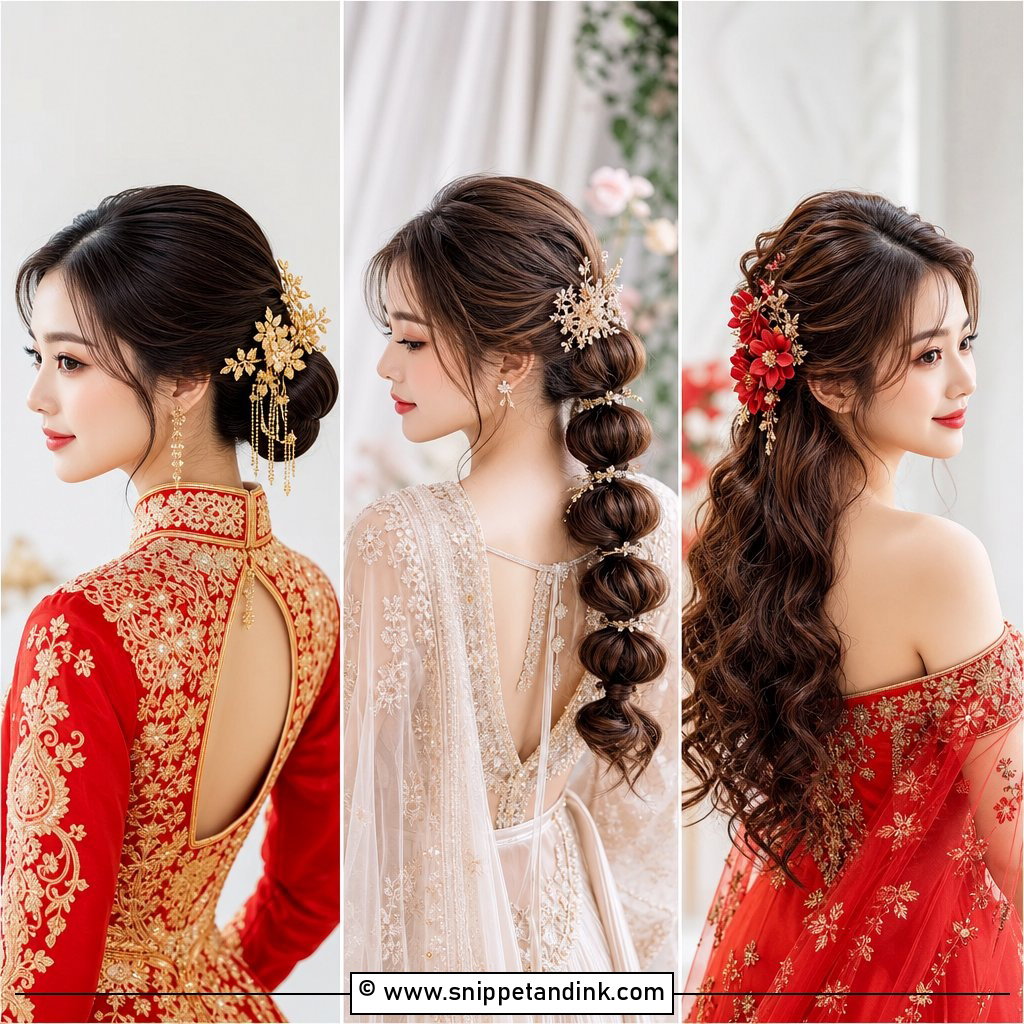
A single long braid down the back, lined with pearl strands or pins, gives sparkle without fresh flowers, which helps in heat or wherever flowers are hard to source. I prefer pearl pins pushed into the links of the braid over strung pearls woven through, since strings can catch on blouse hooks and dupatta embroidery. Loosening the braid slightly makes it fuller. A maang tikka and matching jewelry keep it coordinated for traditional or contemporary outfits.

15. Bun With Fresh Roses
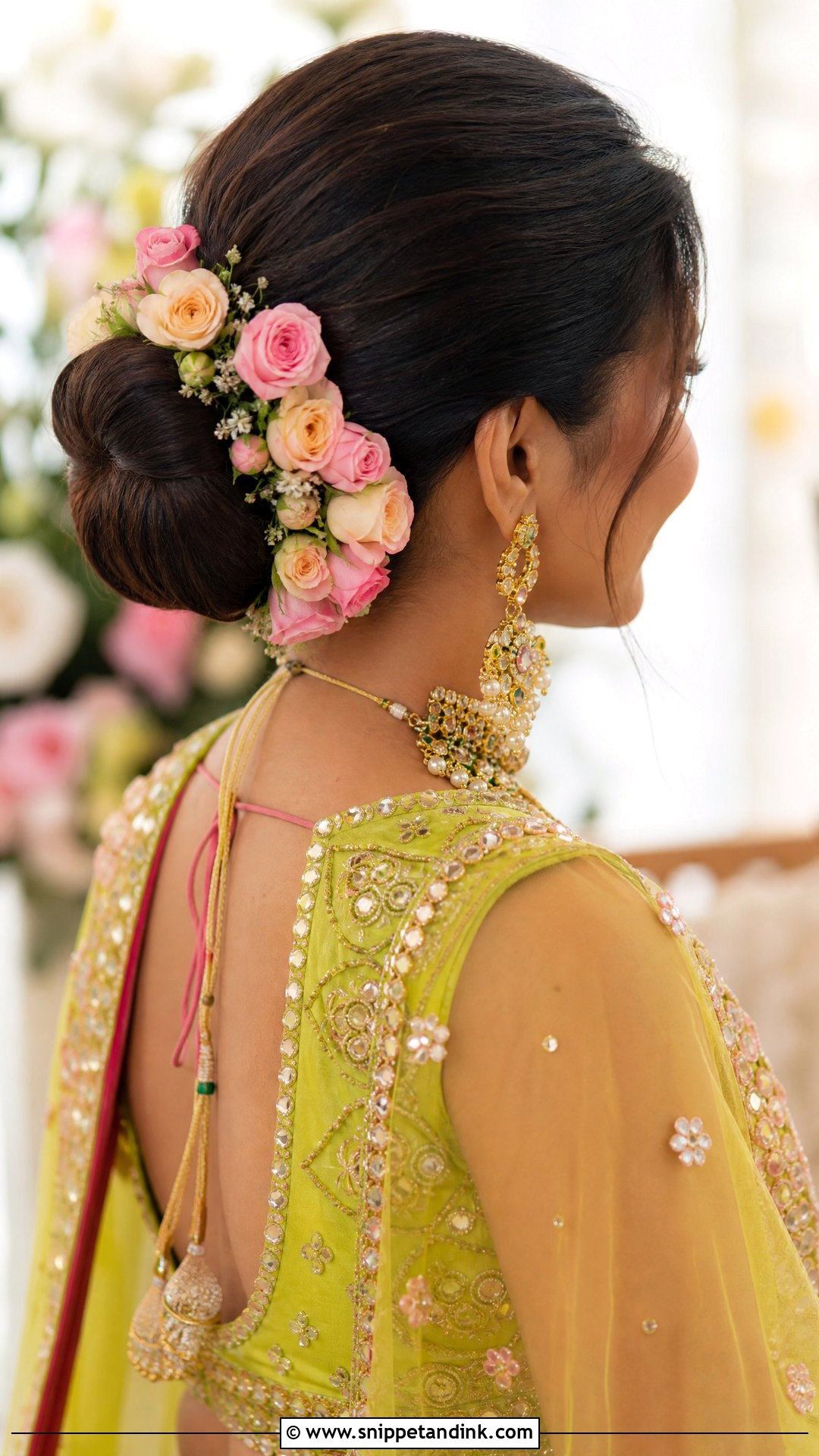
Roses around the base of a neat bun, or a few scattered across the top, bring in color from your lehenga. Smaller spray roses hold up better than big hothouse heads, which bruise where they’re pinned. I cut each stem short and push it into the bun at an angle so the bloom sits snug instead of wobbling. Mehendi and daytime functions suit it, with the bun sleek or slightly textured to match the outfit.
16. French Braid Into Bun
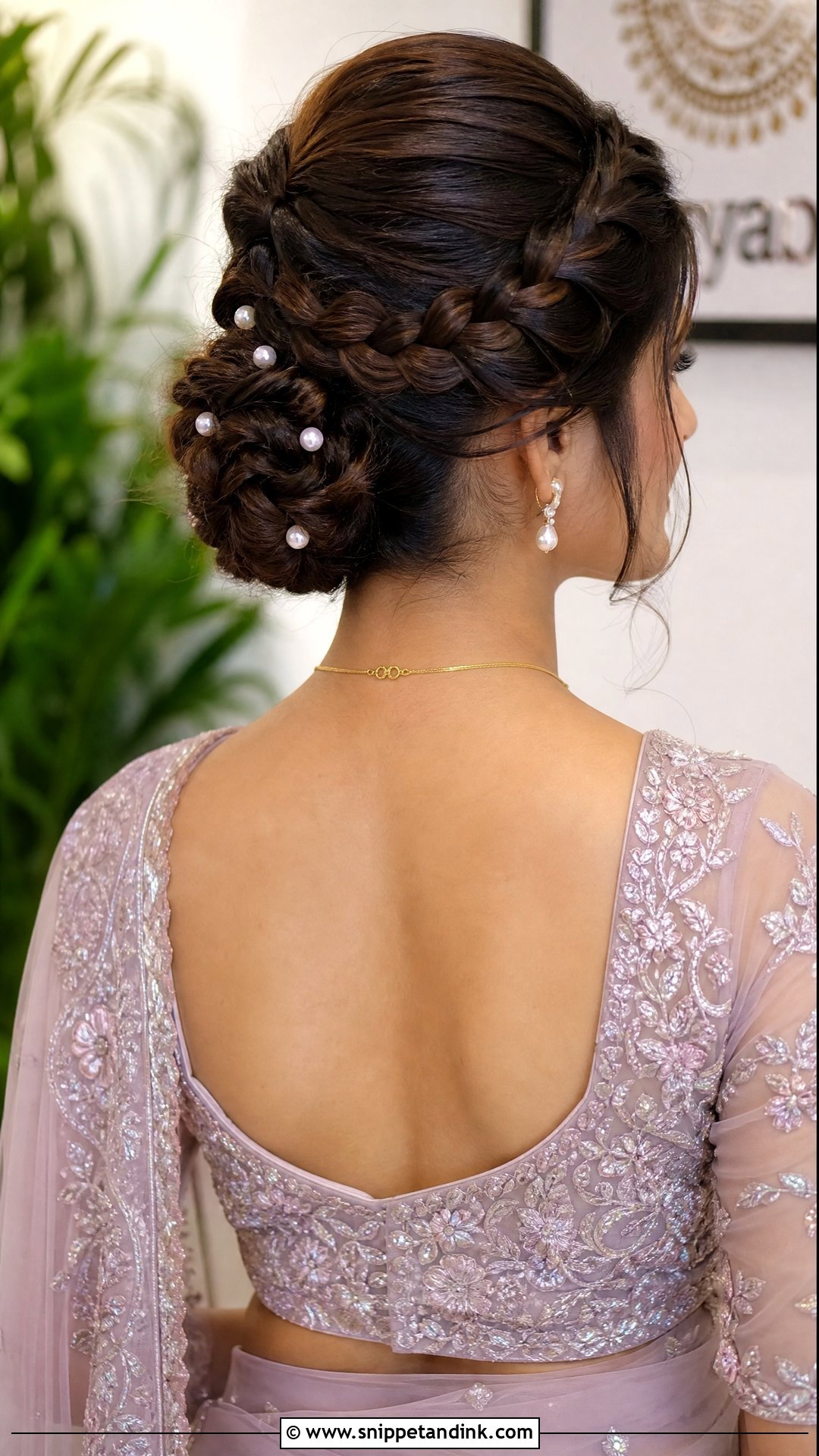
A French braid along the crown, finished in a gathered bun at the back, gives structure for brides moving between rituals for hours. I tie off the braid’s tail before coiling it, so the bun doesn’t unravel when you’re hugging relatives. Small flowers or pearls on the braid add detail, and the clean lines keep your jewelry visible at ceremony and reception alike. Medium to long hair works; layered cuts may need a little gel along the braid so short ends don’t poke out.
17. Loose Beachy Waves
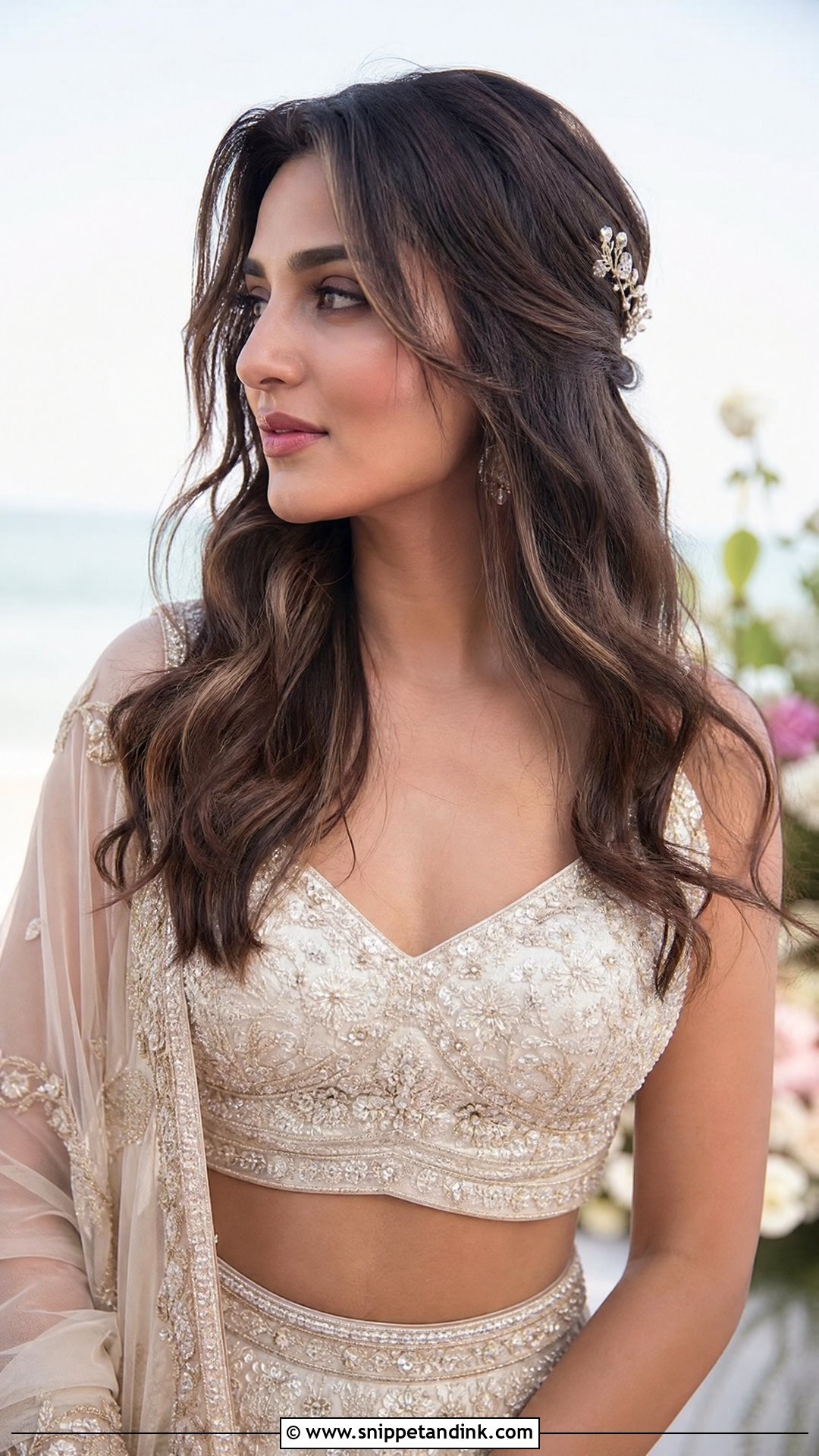
Beachy waves come from a flat iron twisted half a turn or a large wand, with the ends left straight. They suit Haldi, destination weddings and daytime parties, where formal curls can look out of place, and sit well with light lehengas and Indo-Western outfits. Tuck one side behind your ear and add a small flower or pin. On very straight, silky hair they can fall flat by afternoon, so I prep with a salt or texture spray first.
18. Power Bun With Volume
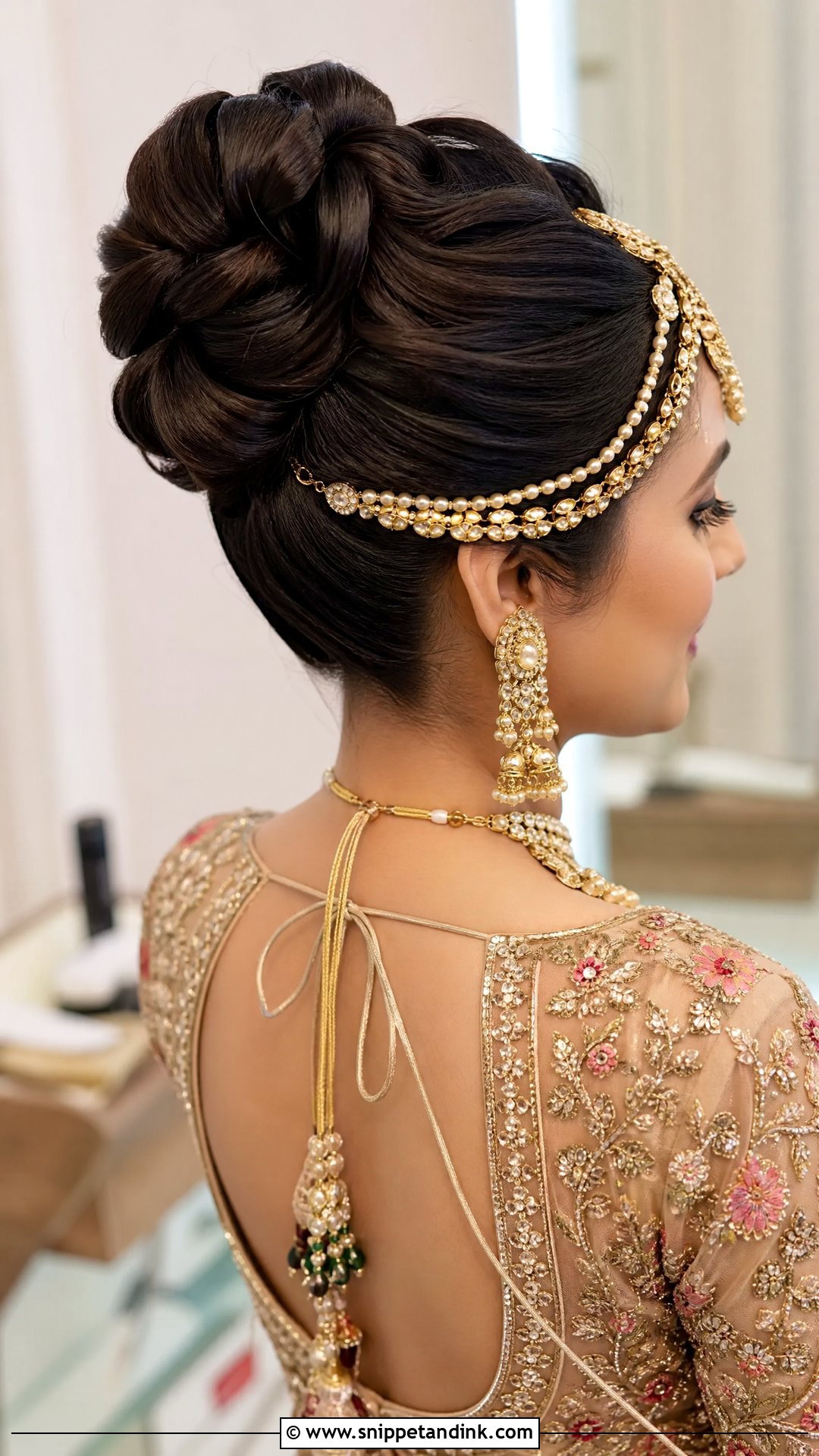
A power bun sits high, with braids or twisted coils built into it and plenty of body, and with the neck fully bare it shows off a statement necklace. All that volume comes from padding or a faux bun underneath, with your own hair wrapped over it. It’s heavy. I anchor it on a tight base ponytail with spiral pins and ask brides to wear it at the trial long enough to feel the weight. A matha patti or maang tikka finishes it, and it holds firmly through dancing.
19. Floral Crown Updo
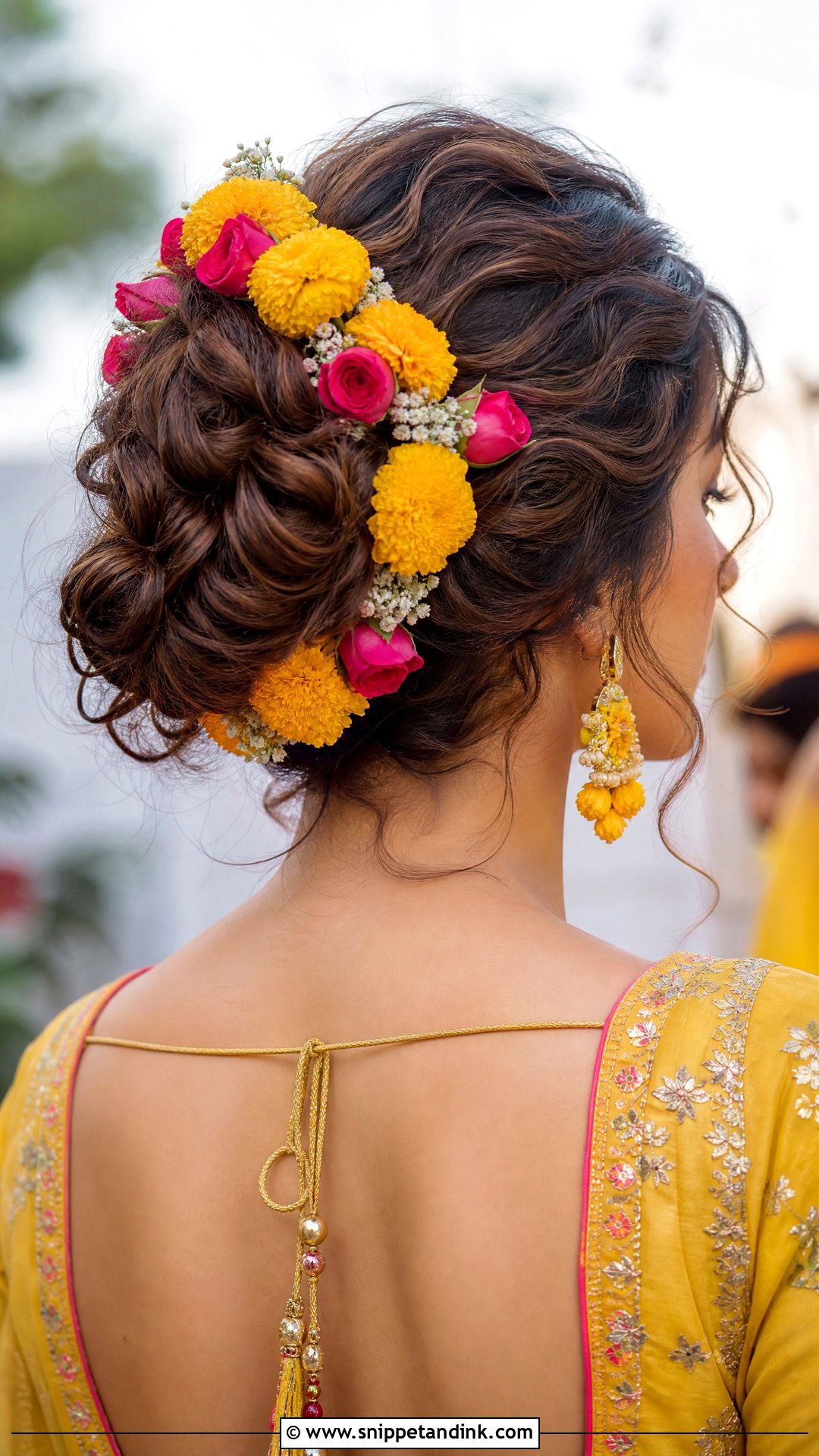
Fresh flowers wrapped around an updo make a halo of color for Mehendi, Haldi or an outdoor wedding. Marigolds take heat well, while roses and orchids look richer but wilt sooner, so I match the flower to the weather as much as to the theme. The updo underneath is pinned neatly first and the flowers go on top, never woven in, so a drooping bloom can be swapped in seconds. It’s lighter to wear than it looks.
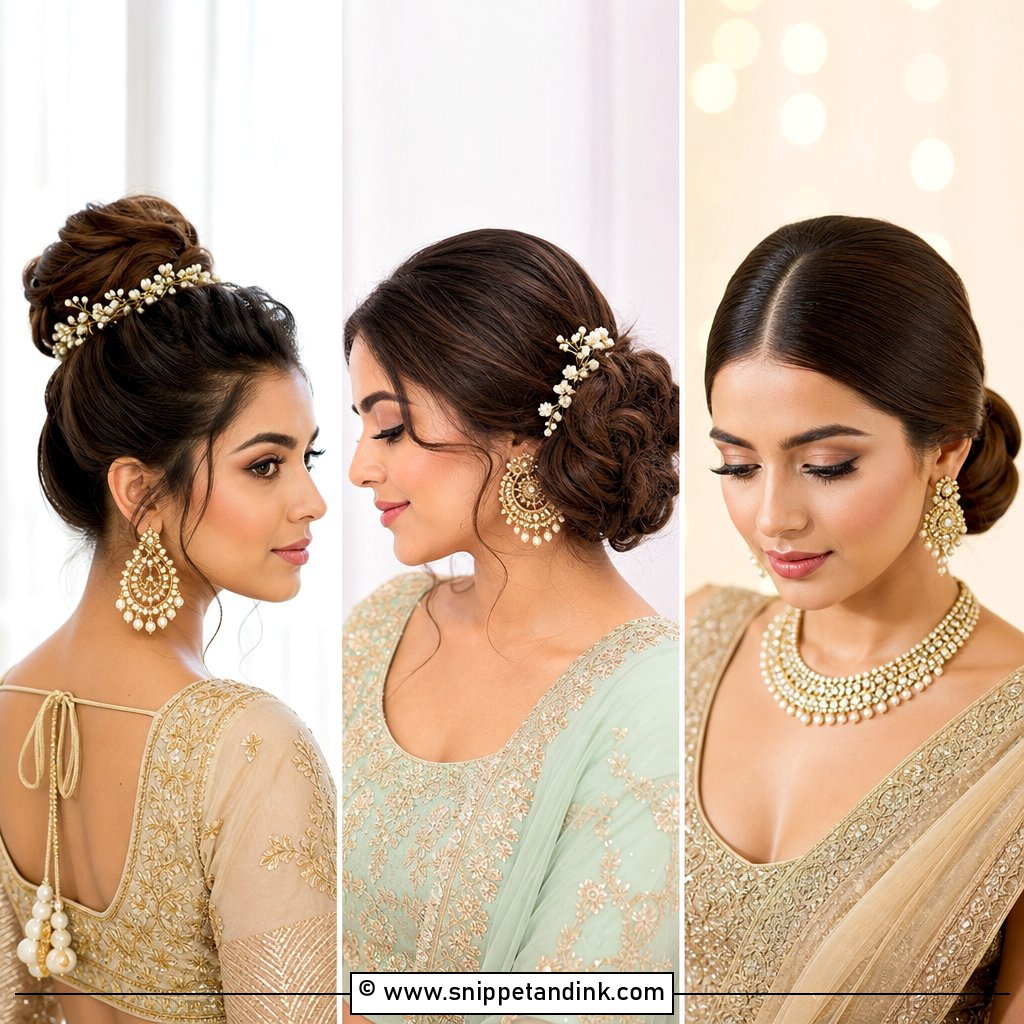
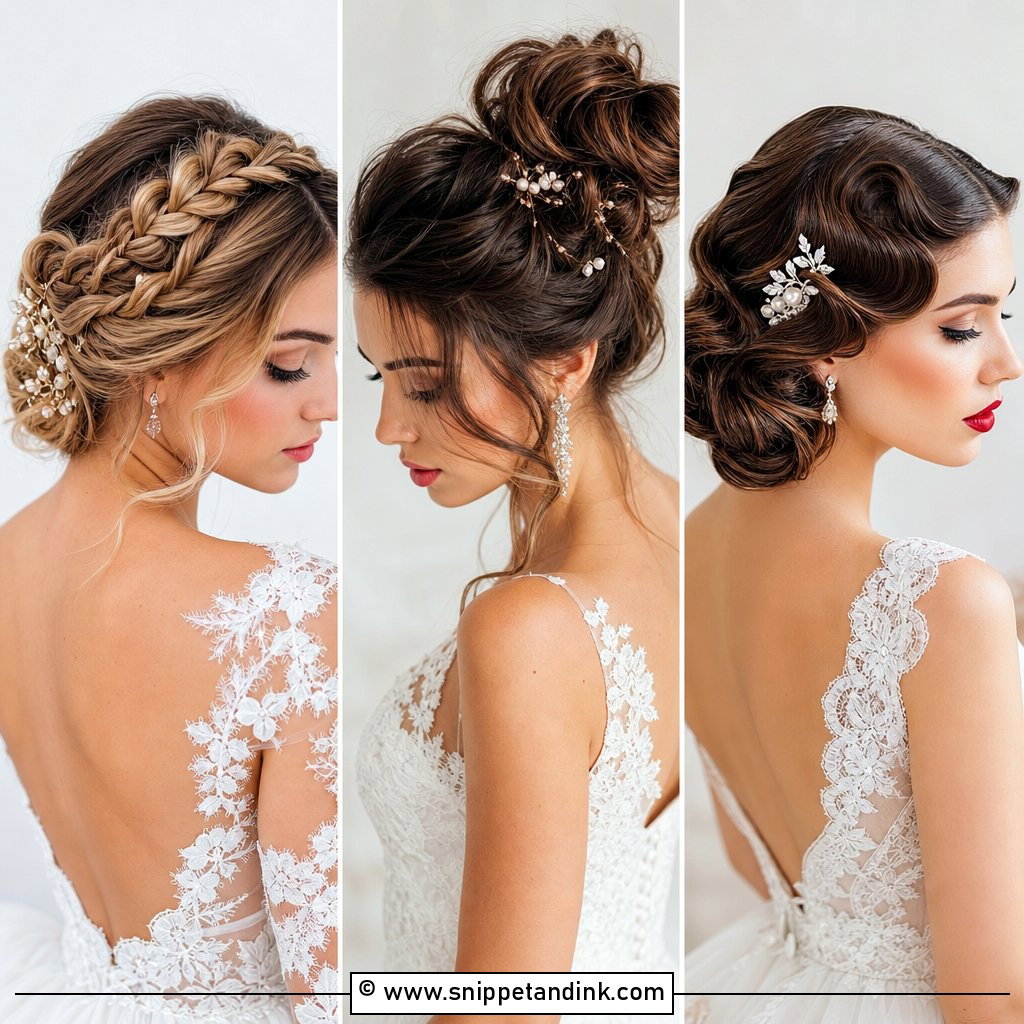
20. Sleek Straight Open Hair
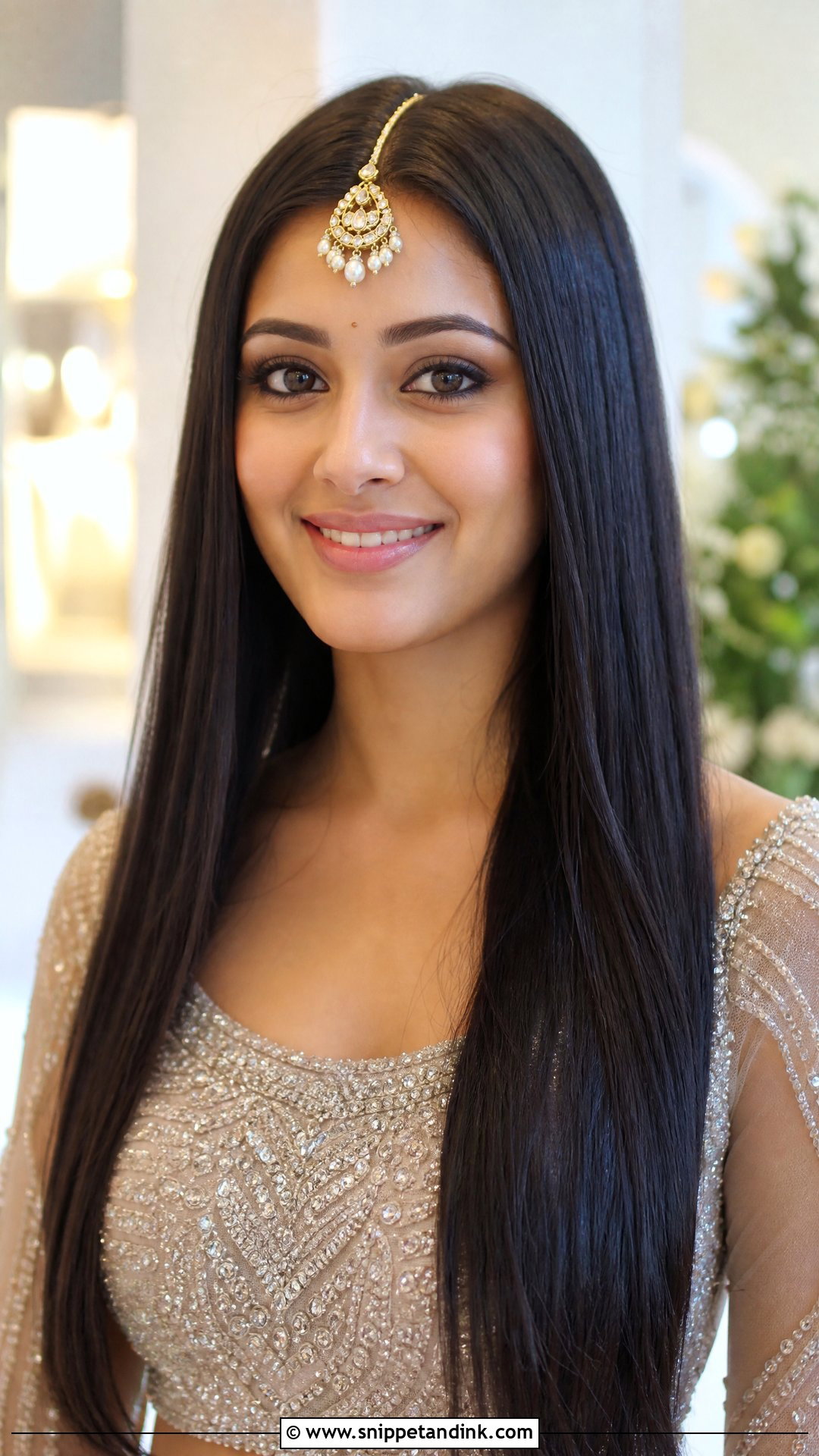
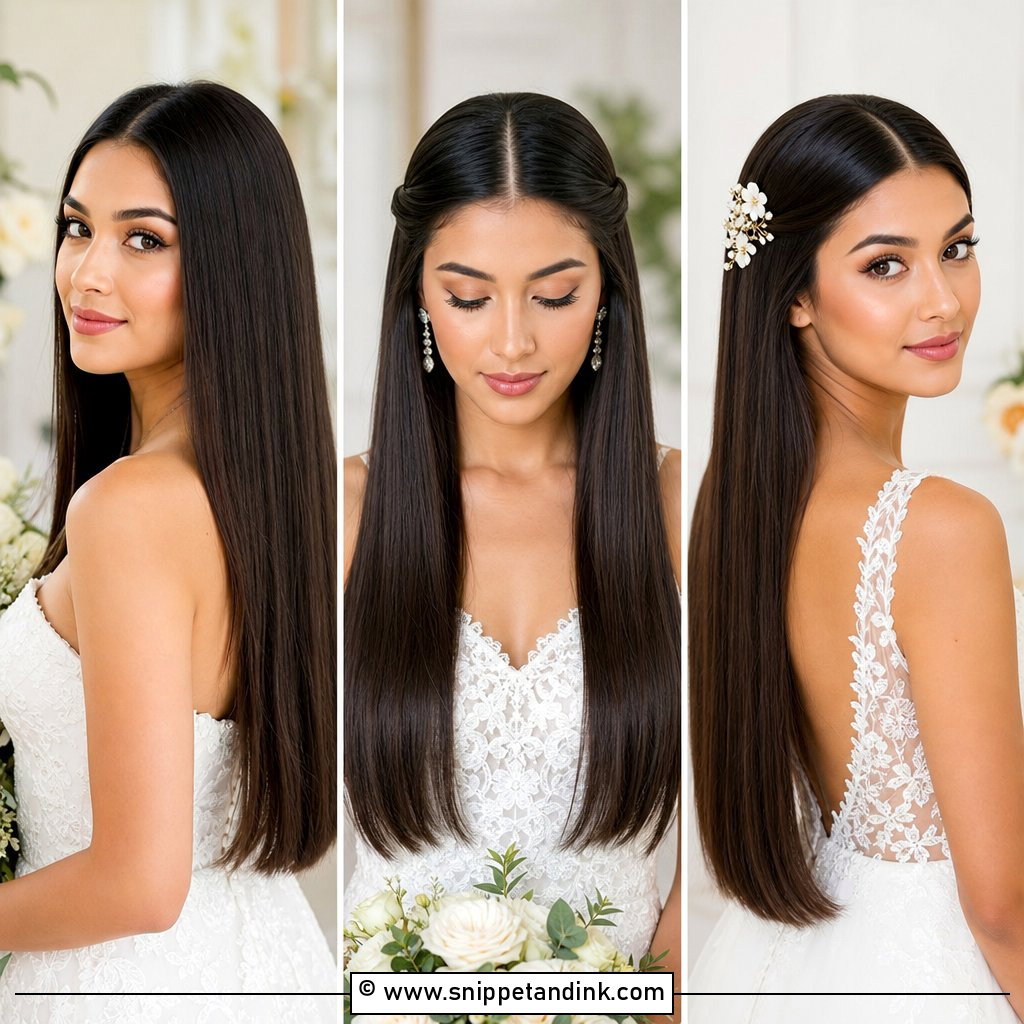
Sleek, straight open hair is the simplest look here, and it shows everything: your features, your jewelry and any frizz. It goes with traditional and Indo-Western outfits, with a center or side part. Healthy long hair carries it best, because split ends show clearly in close-ups, so a trim a few weeks before the wedding helps. A delicate maang tikka or clip adds sparkle at a reception or cocktail night.
21. Braided Half Updo With Pearls
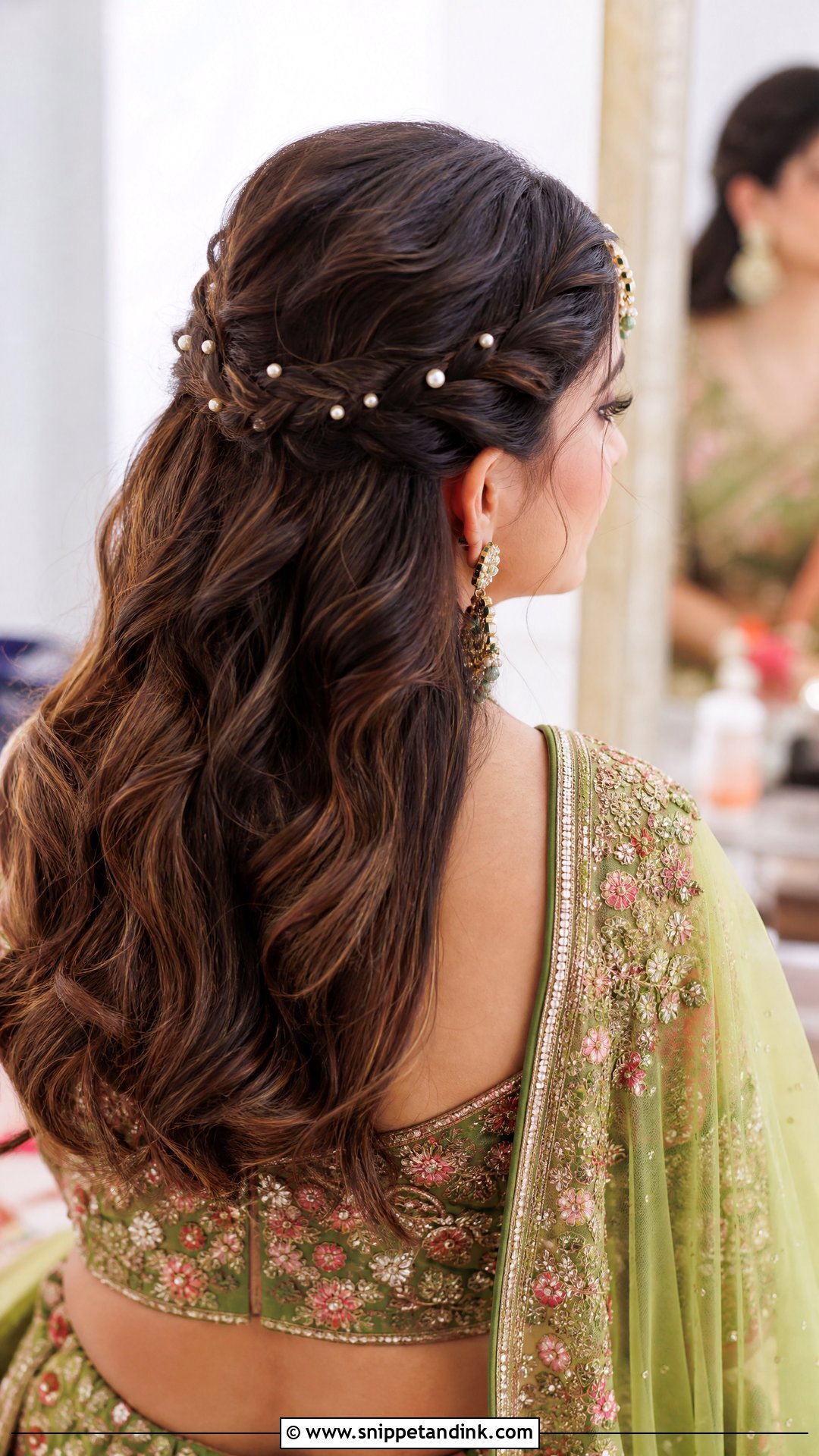
Delicate braids across the top section, dotted with tiny pearls, and the rest left in gentle waves. You keep hair off your face but still show your length, which works for Mehendi and daytime ceremonies. I put each pearl on its own small pin, so they come out in seconds at the end of the night instead of being picked out of the braids. A maang tikka sits well in front of the braided section, and most lengths suit it.
22. Curly Bun With Tendrils
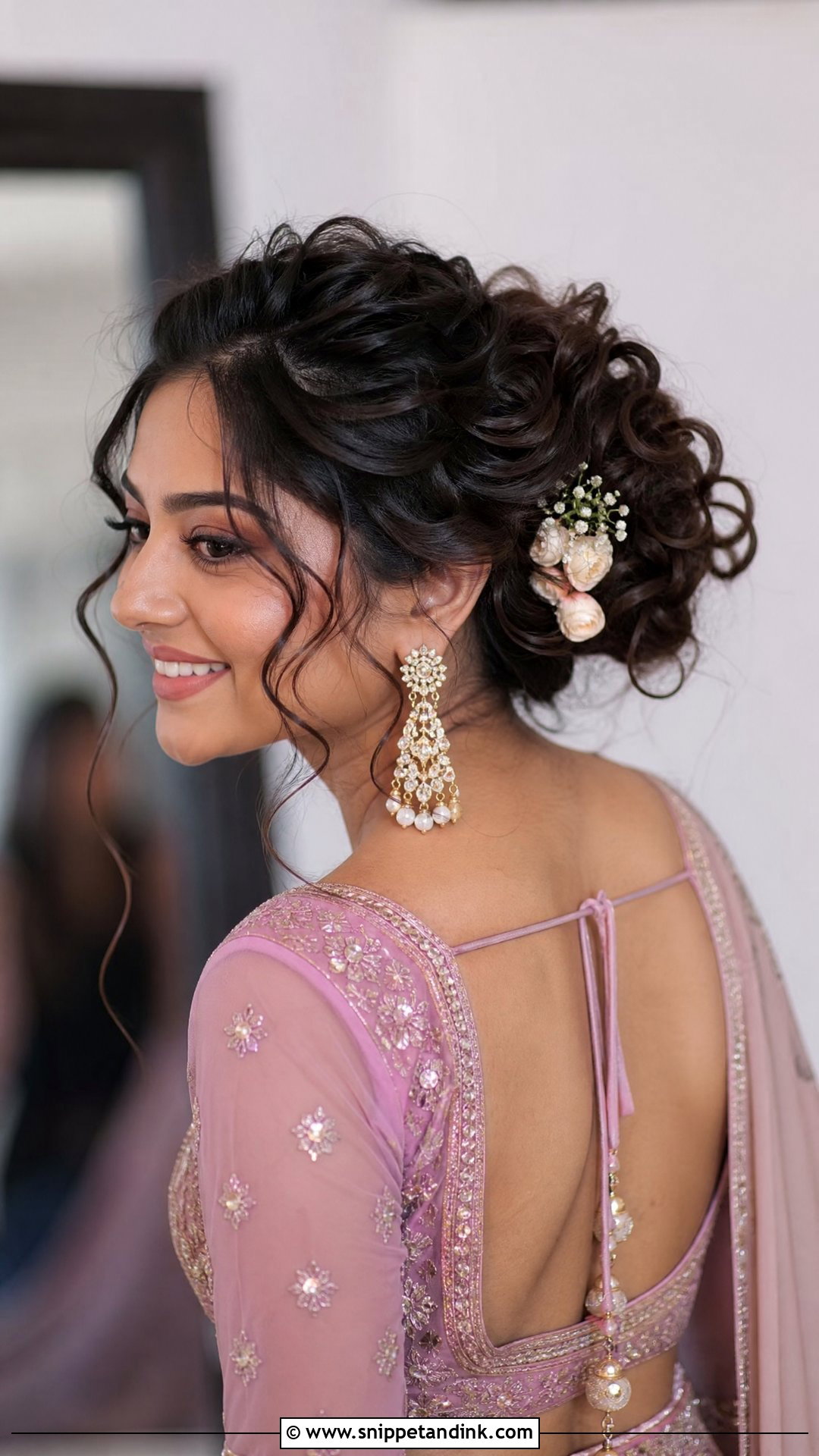
Natural curls or waves suit this best, gathered into a loose, voluminous bun with tendrils falling around the face. The tendrils need their own attention. I curl them separately with a small iron, because loose pieces left out of a bun tend to go straight and limp by evening. Small flowers or pearls tuck into curly hair easily, and its relaxed mood fits Sangeet and reception nights.
23. Maang Tikka With Open Waves
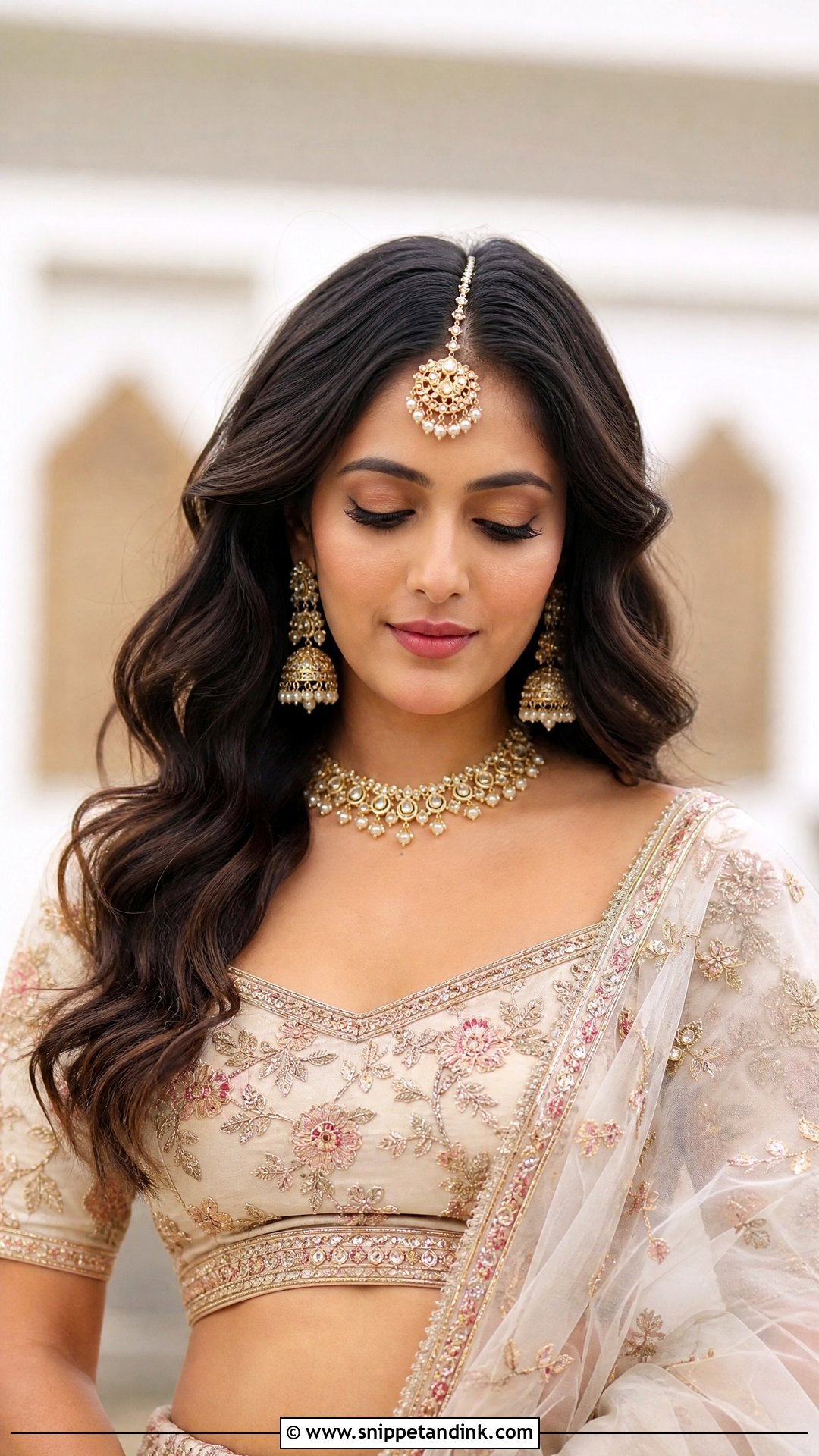
Open waves with a statement maang tikka in a center part let you wear your hair down and still look traditionally bridal. A heavy tikka drags on loose hair, so I clip a small hidden pin cluster under the part for the hook to catch. Tucking one side behind the ear shows your earrings. Medium to long hair suits it with lehengas or sarees.
24. Low Chignon With Veni
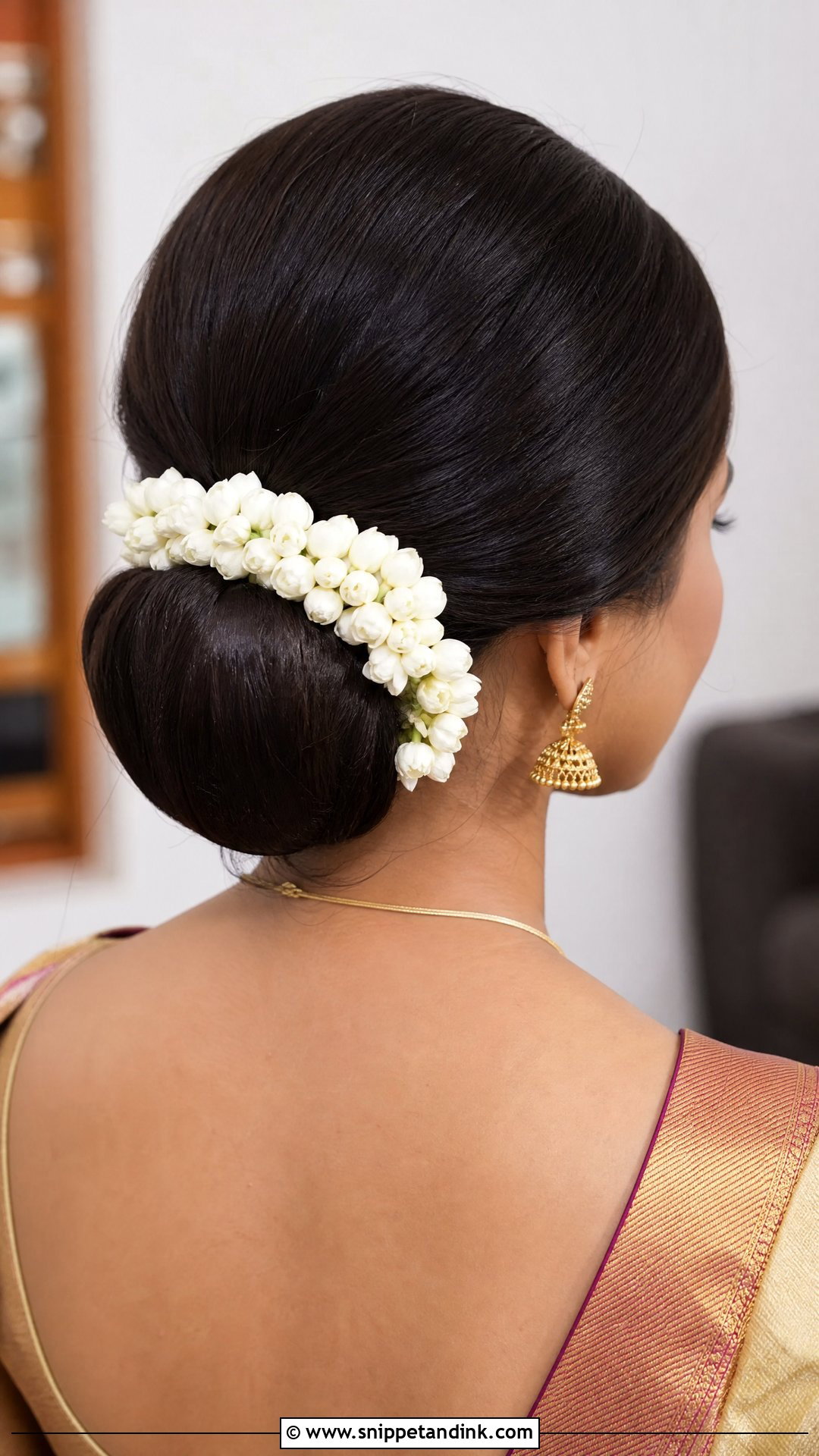
A chignon is hair rolled rather than twisted into a coil, and it sits low and neat at the nape. Wrapped with a jasmine veni and worn with a silk saree and classic jewelry, it’s understated and very secure through long ceremonies. I keep the roll smaller than brides expect, so the veni frames it instead of disappearing into it. Minimal accessories let the flowers stand out.
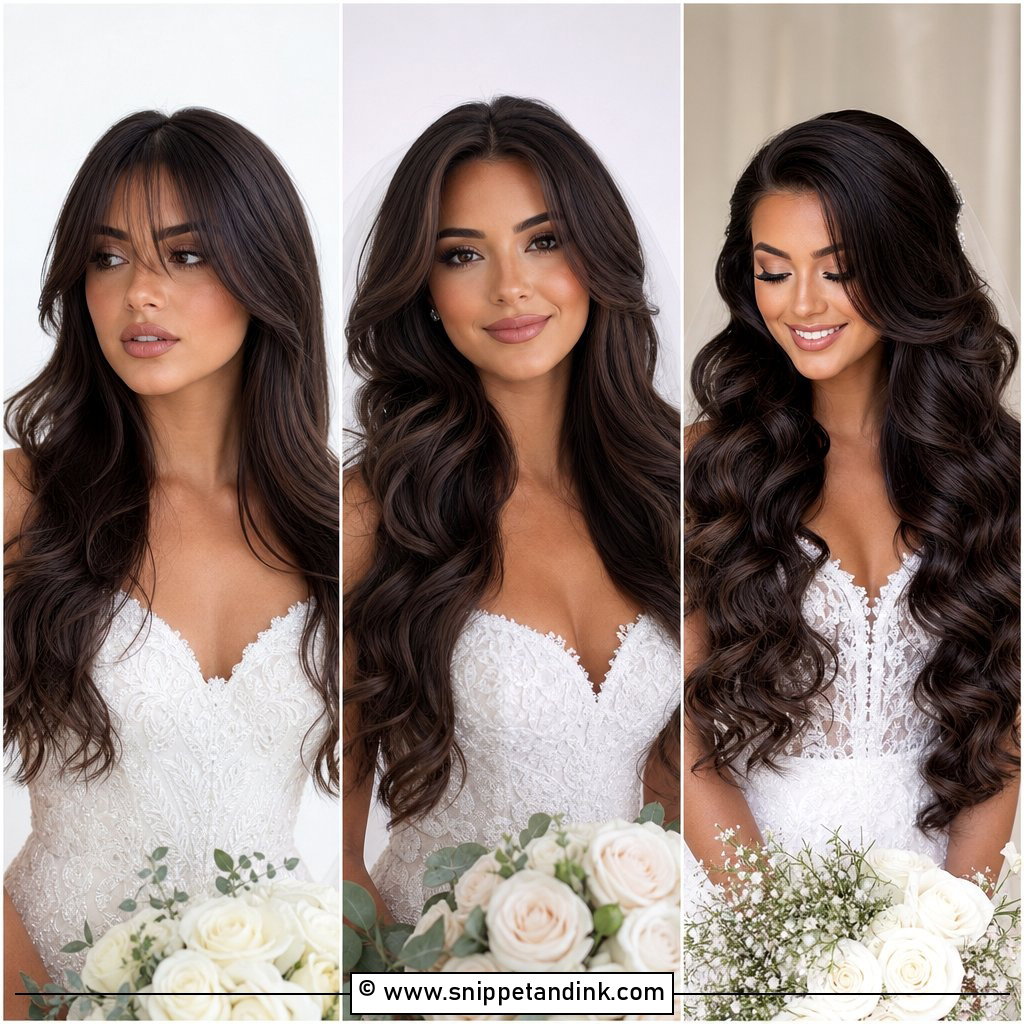
25. Combination Braid With Bun
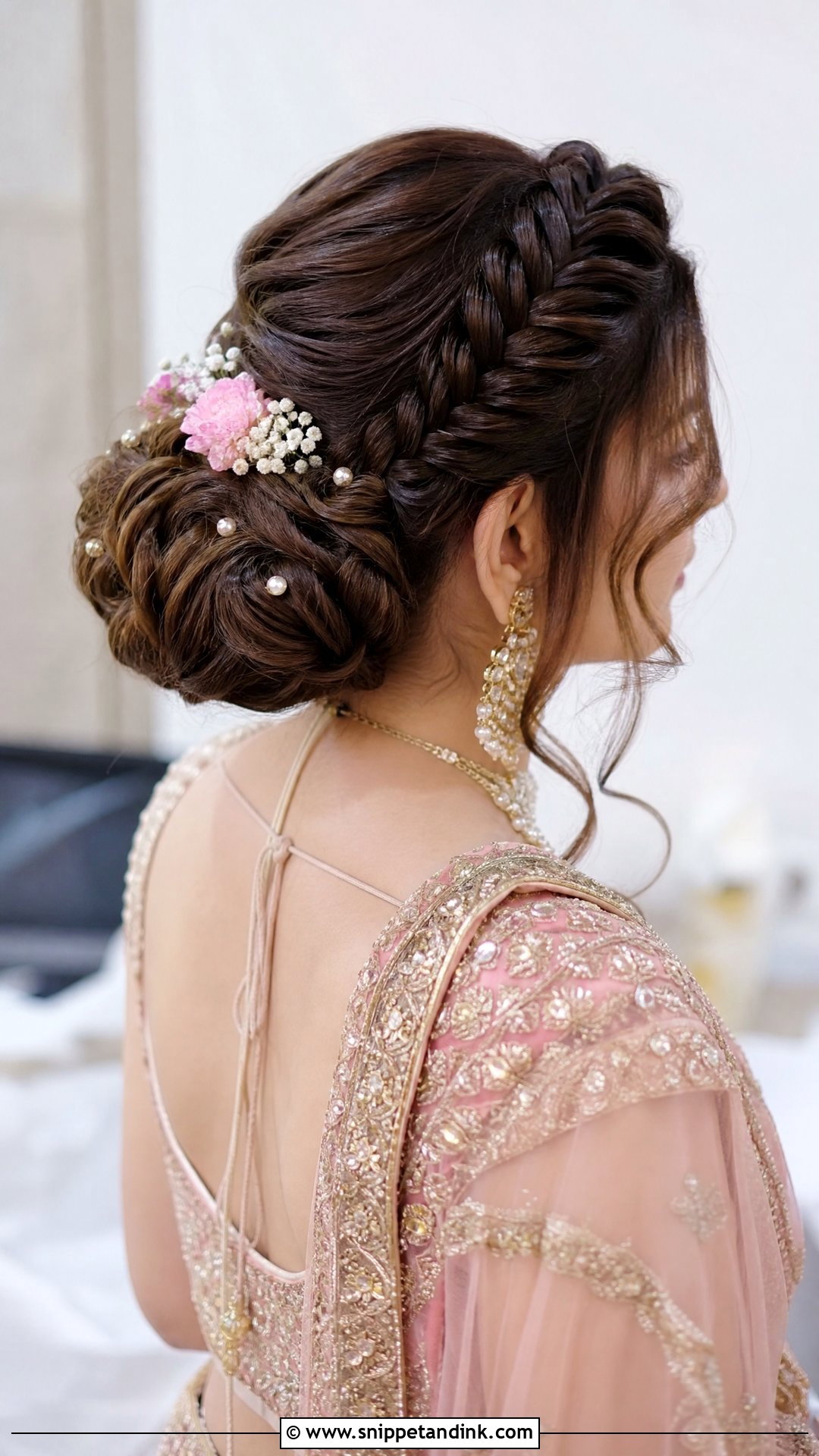
This one starts with Dutch or French braids at the top, flows into a fishtail and then twists into a bun, so you get several braid textures in one style. It’s slow to build, often the longest style on this list, so I only plan it when the morning schedule genuinely allows. Long, thick hair shows the layered texture best, and it holds firmly through long events and dancing. Small flowers or pearls along the braids are all the decoration it needs.
Getting Every Pin Out After the Reception
Nobody warns brides how long their hair takes to come down. A heavily pinned bun with spray, flowers and jewelry can take half an hour or more, and tugging at it, tired, at midnight is how hair snaps. Remove the jewelry first, then the flowers, then work the pins out from the outside of the bun inward, finding each one by feel rather than pulling the hair loose.
Once the pins are out, don’t brush through stiff, sprayed hair. Coat the lengths with conditioner or a little oil, wait a few minutes, then finger-detangle from the ends upward before using a wide-tooth comb. It helps to count the pins at your trial so you know roughly how many to look for; one left behind will scratch your scalp all night.
Taking Your Shortlist to the Trial
Your hair has to look right in the mirror and also hold through several functions, heavy jewelry and hours of dancing. From fragrant gajra buns to fishtail braids and Hollywood waves, the styles above suit very different ceremonies and outfits. Start from your hair length and texture, then match each style to the function’s mood and to the jewelry it has to carry. Mixing tradition with modern touches works well, pearls in place of flowers or a maang tikka with open waves. Take your top choices to your stylist and test them at the trial with the real jewelry in place.
You'll Like These Ideas:


Leave a Reply