
In Indian bridal work, the bun does a structural job. It’s what the dupatta is pinned to, what the matha patti hooks lean against, and what holds a gajra through hours of rituals, so I treat it as the foundation before it’s a style. A sleek finish keeps the whole look clean around maang tikka placement, flowers and heavy jewellery, and it reads clearly in photos. A classic gajra bun, a sharp middle-parted bun or a soft low bun with pearls all sit well with lehengas, sarees, shararas and reception gowns. The same base can stay traditional for the pheras and turn minimal for the sangeet or reception. Here are fifteen I use, with what each one needs.
The Bun Goes In First, the Dupatta Last
When I set a bride for the ceremony, the order matters as much as the style. Get it wrong and the dupatta tugs the bun loose halfway through the pheras.
- Smooth the hair and build a firm ponytail base, then the bun on top of it. Everything that follows is pinned into this.
- Place the maang tikka and matha patti, fixing their hooks into pinned sections.
- Add gajra or flowers around the bun.
- Drape and pin the dupatta last, pinning through the fabric into the bun base and at the shoulder so the weight is shared.
Bring the actual dupatta and jewellery to your trial. A light net dupatta and a heavy velvet one need different bun heights, and I can only judge that with the real pieces in my hands. If your makeup artist is setting the dupatta, make sure she knows where the bun base is.
1. Sleek Low Bun With Gajra
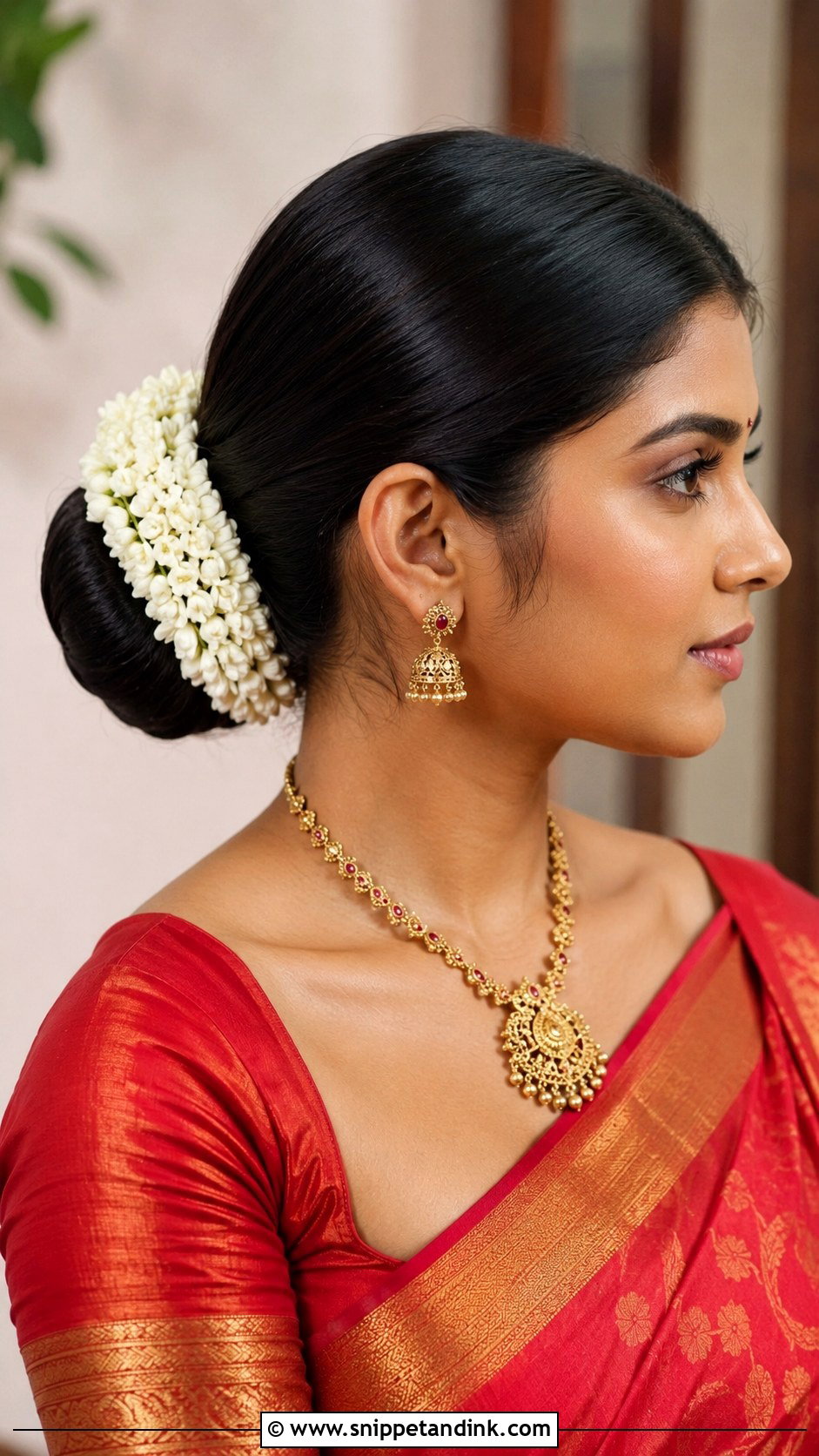
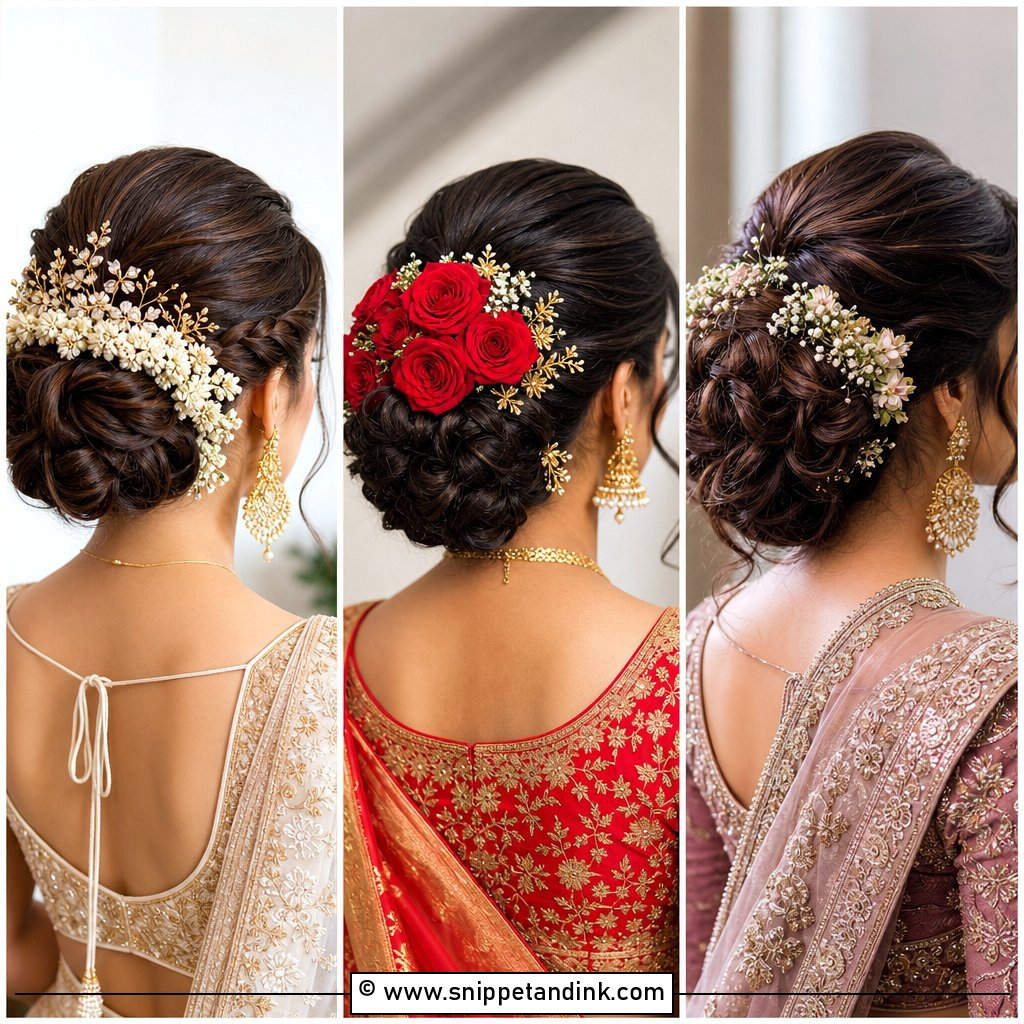
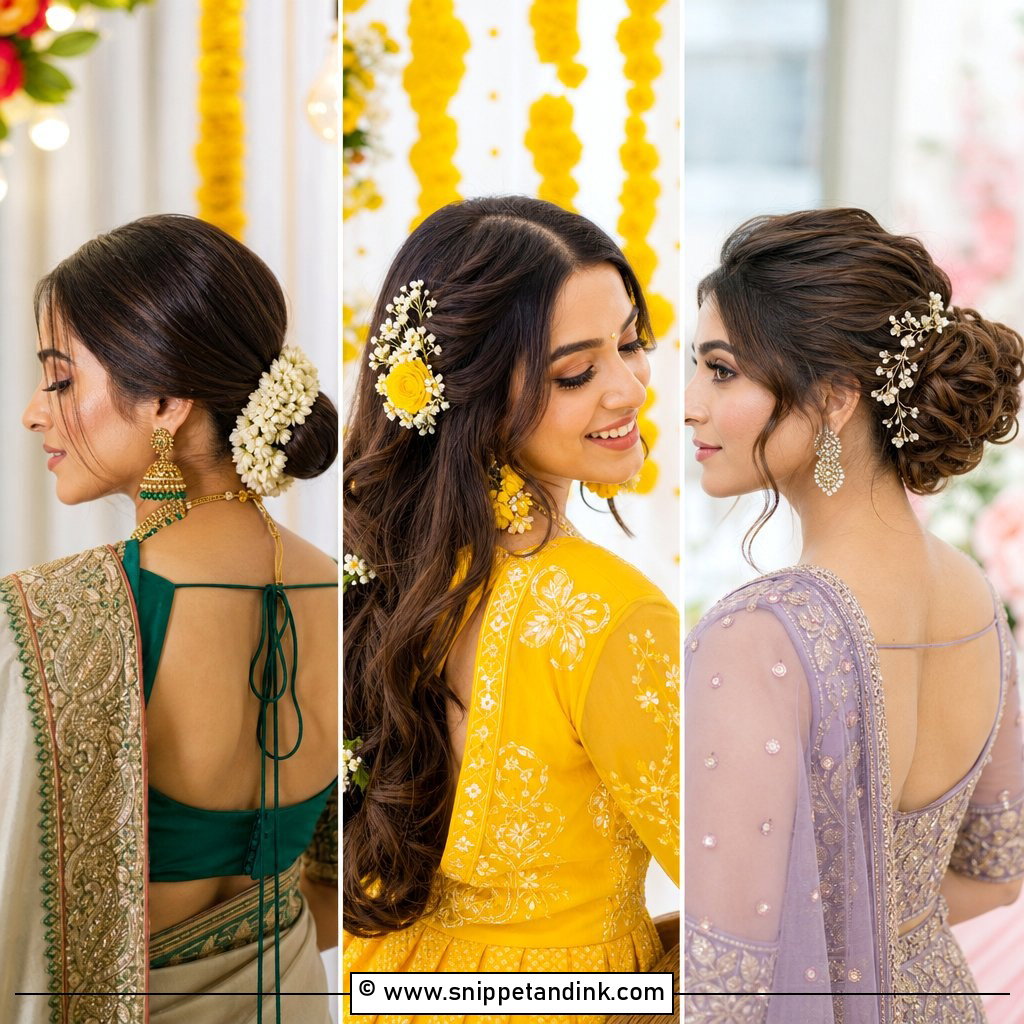
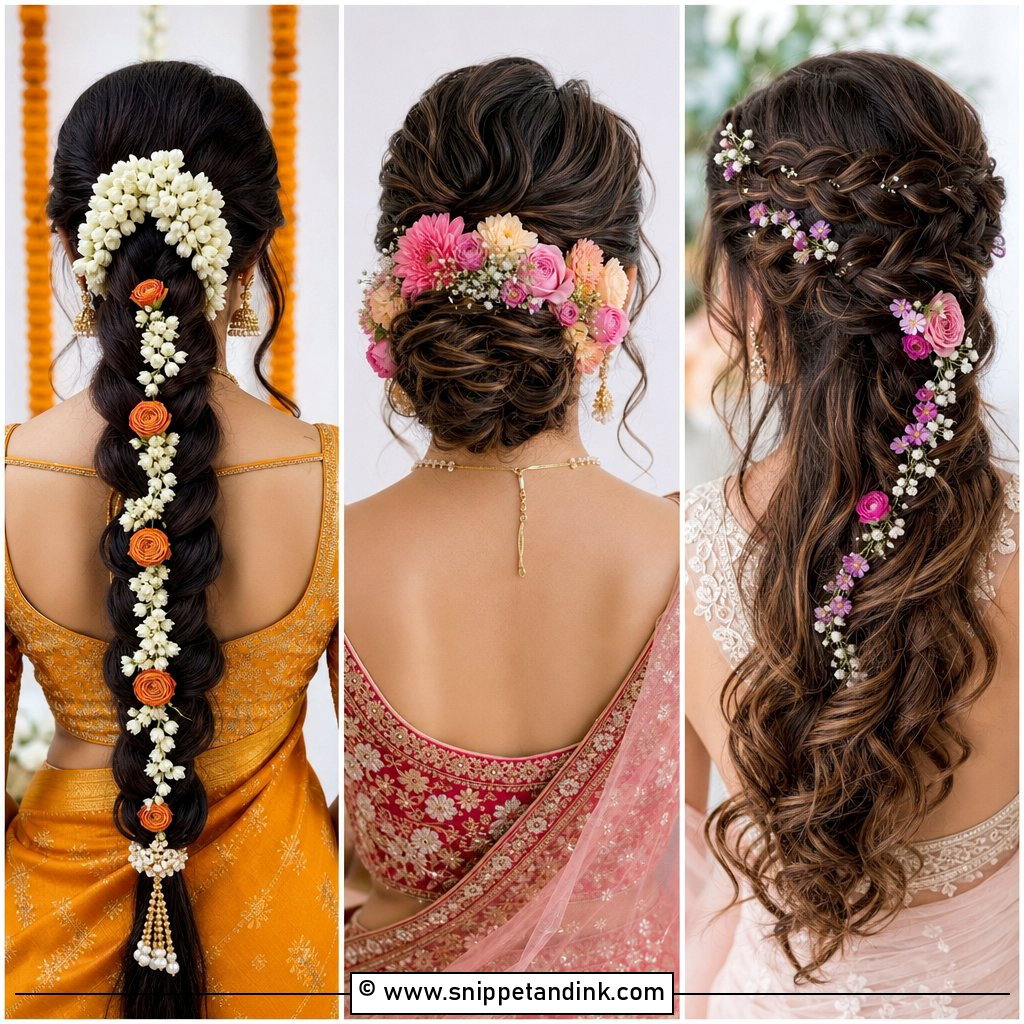
This is the bun I set most often for a South Indian or traditional ceremony. A centre part, hair smoothed toward the nape, and a round bun pinned into a firm ponytail base. A jasmine gajra wrapped around it draws the eye to the back of the outfit, and it sits naturally with silk sarees, Banarasi lehengas and temple jewellery. I control flyaways but keep the bun generous, because a small bun looks lost under a heavy dupatta and between large jhumkas. Pin the gajra into the base, not the bun surface, or it slides down by the first ritual.
2. Sleek Middle Part Bun
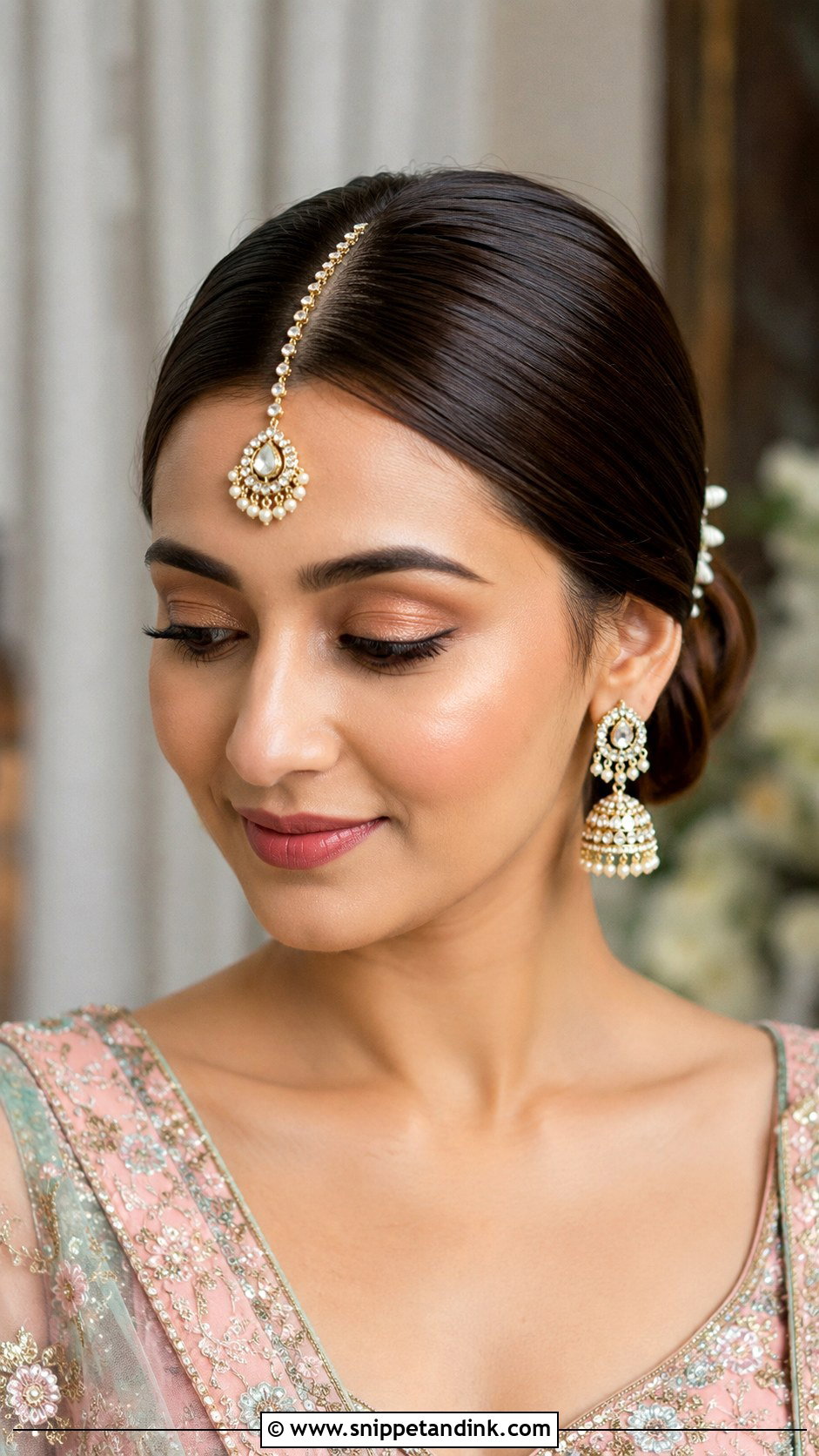
A middle-part bun gives the face symmetry and gives a maang tikka, matha patti or passa a clear runway. I set the bun low or just above the nape depending on the blouse neckline and where the dupatta will drape. Structured lehengas and bold jewellery suit it. The part must be dead straight, so I draw it with a tail comb from the tikka’s position at the forehead to the crown, not by eye. A smoothing serum on the lengths and a firm, flexible spray keep it neat through a long ceremony.
3. Sleek High Bun
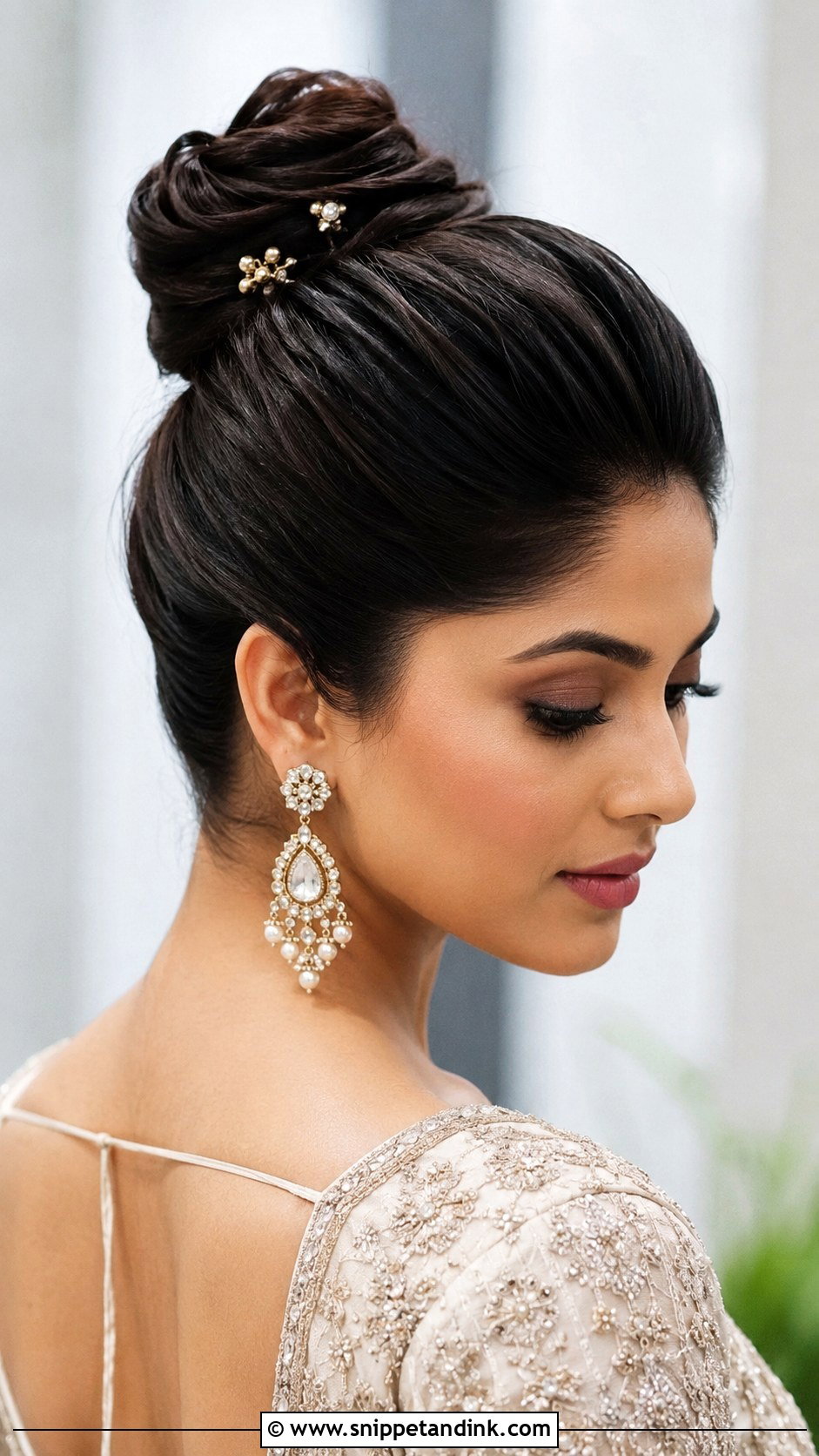
Lifting the bun to the crown gives height, which helps petite brides and round faces, and keeps the neck and shoulders clear for a high-neck blouse or big earrings. It takes a tiara-style piece, fresh flowers or gold pins well. The trade-off with a heavy dupatta is real: a high bun pushes the drape up and back, so I only suggest it when the dupatta will be pinned at the shoulder, not over the head. Keep the front smooth and the base comfortable rather than tight, since you’ll wear it for many hours.
4. Sleek Bun With Kundan Pins
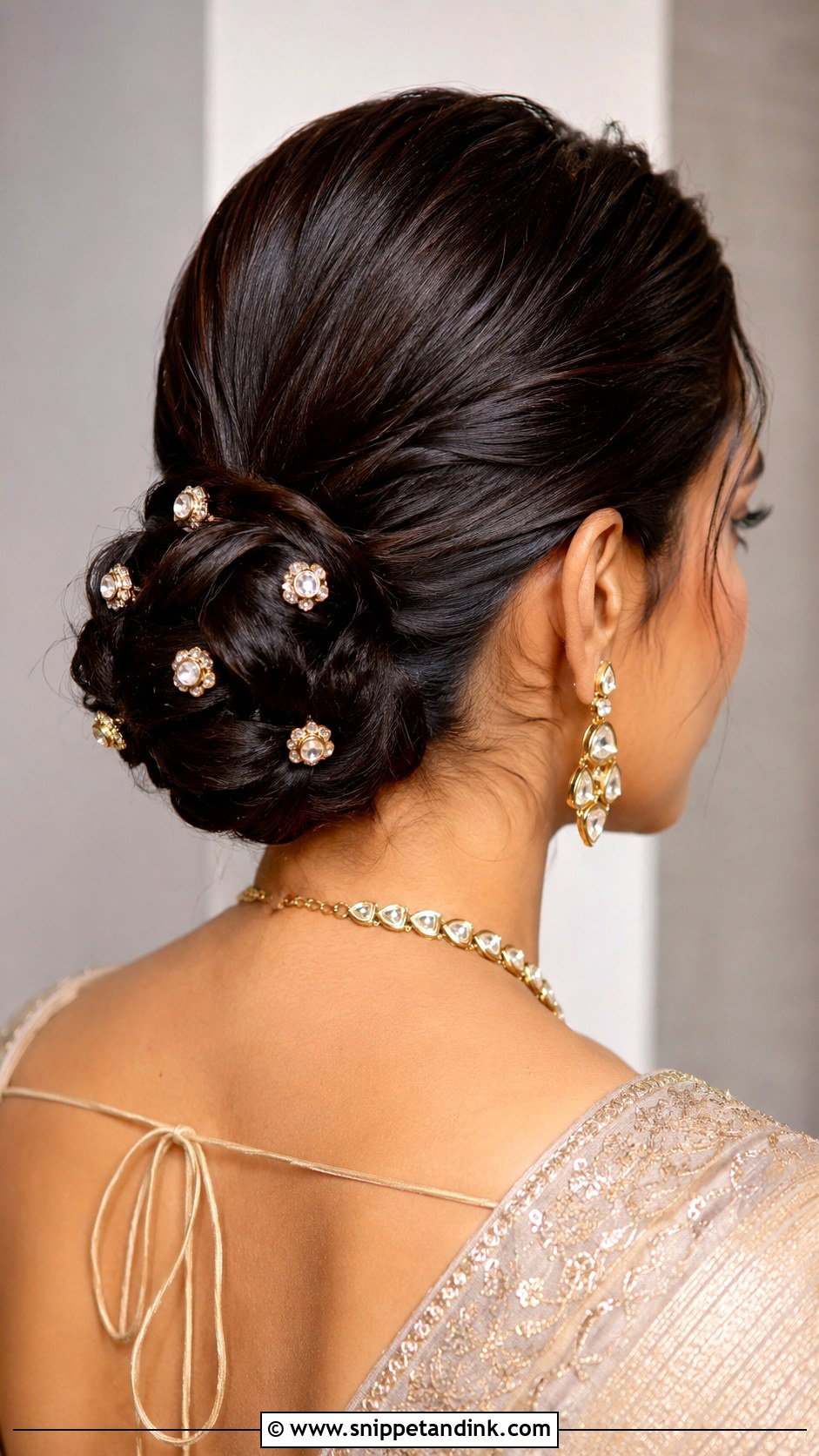
Kundan pins give a bun bridal sparkle without the weight of a full hair accessory. I smooth the hair into a neat low or mid bun and place small pins around it or along one side. They match kundan necklaces, polki, ivory lehengas and pastel sarees, and they’re a good route for bridesmaids who’d rather skip flowers. Spacing is everything; I place them at even intervals by eye from the back mirror, and push each one into the pinned layer underneath so the stones sit flat rather than tilting outward.
5. Sleek Bun With Fresh Roses
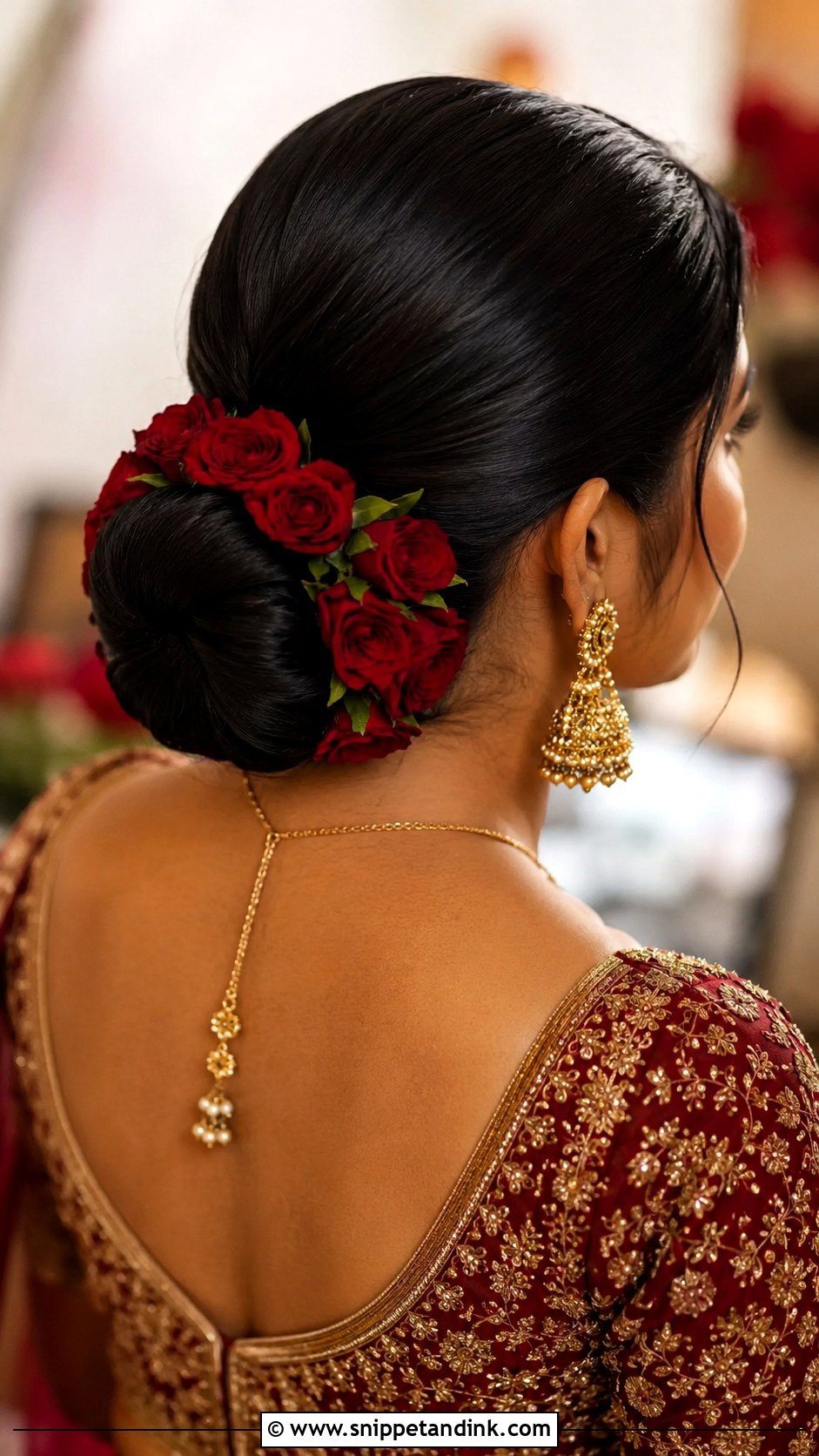
Roses give a sleek bun colour and softness. Deep red roses pick up a red or maroon lehenga; blush, peach and ivory sit better with pastels. I place them around one side of a low, round bun or tuck them at its base. They suit the pheras, an engagement or a reception. Ask your florist for spray roses or small heads, wired and taped, because full-size roses look top-heavy on a bun and their weight drags it down over a long evening.
6. Sleek Donut Bun
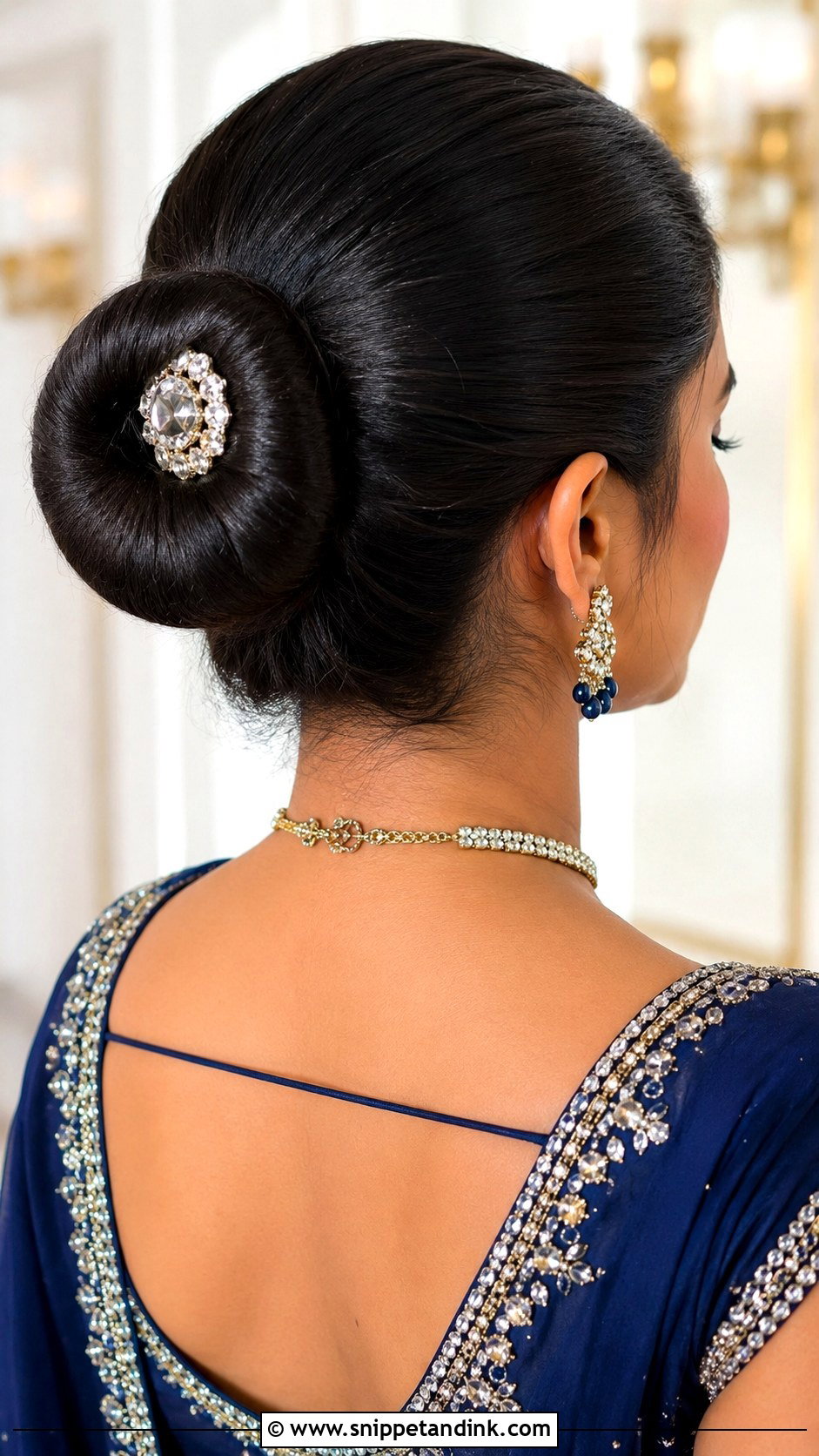
A sleek donut bun is built over a padded ring, which gives a perfectly round, full shape even on fine or medium-density hair. That volume makes it a strong base for pins, gajra and dupatta clips, and its size balances a heavy lehenga or saree. I match the donut to your hair colour and wrap your own hair over it completely; a padding edge showing through in close-ups is the most common flaw I fix. Keep the front simple and add one statement accessory at the back.
7. Sleek Braided Bun
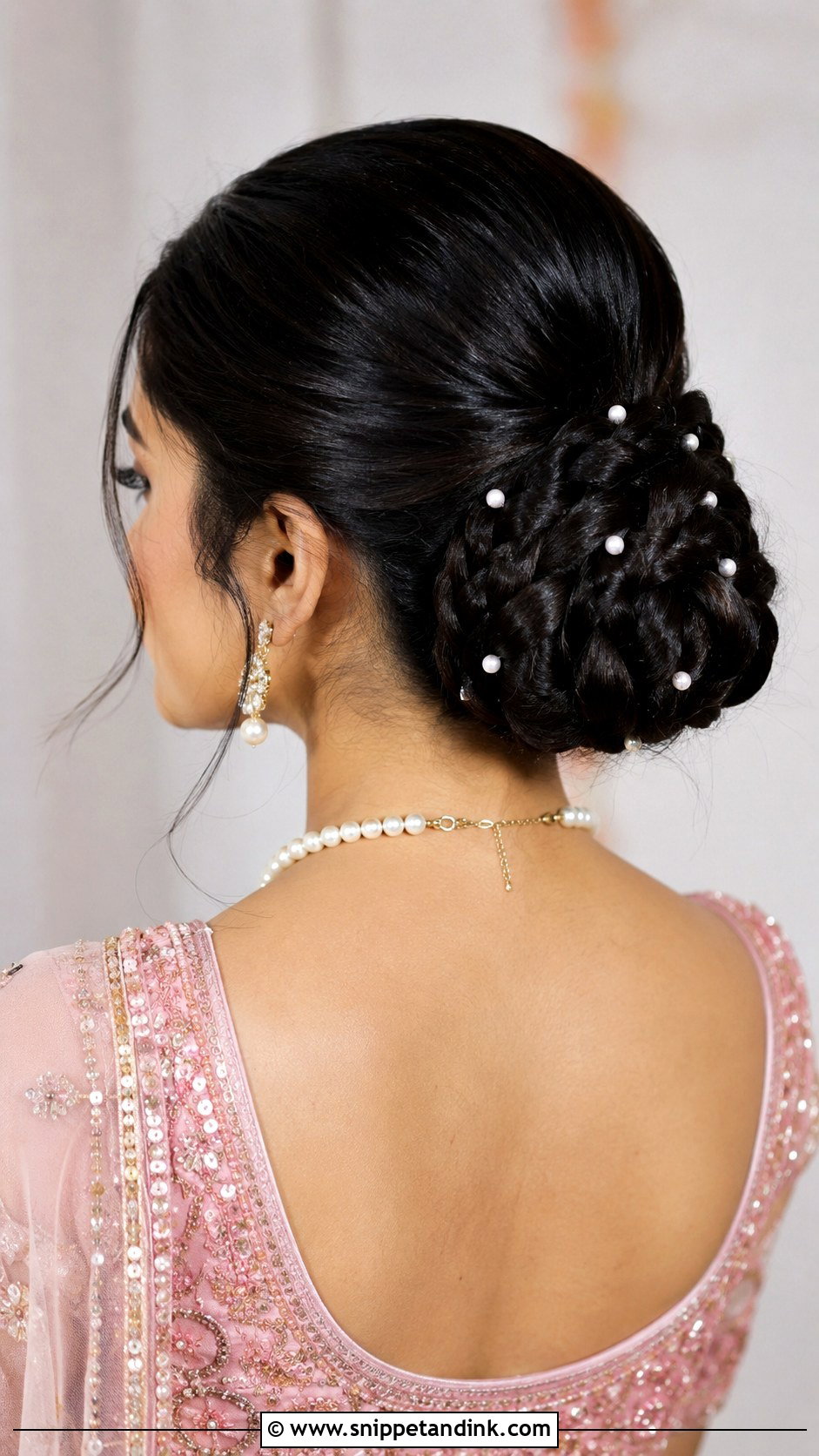
Braiding the length before wrapping it gives the bun texture and, importantly, grip. A braided bun holds pins far better than a smooth coil, so it stays secure through long rituals and a late baraat dance. Centre or side part both work. I’d suggest it for a bride who wants something traditional but not a plain bun. Very long hair makes a big braided bun quickly, so I sometimes braid only part of the length and tuck the rest inside. A thin gajra or a few pearl pins along the braid finish it.
8. Sleek Side Part Bun
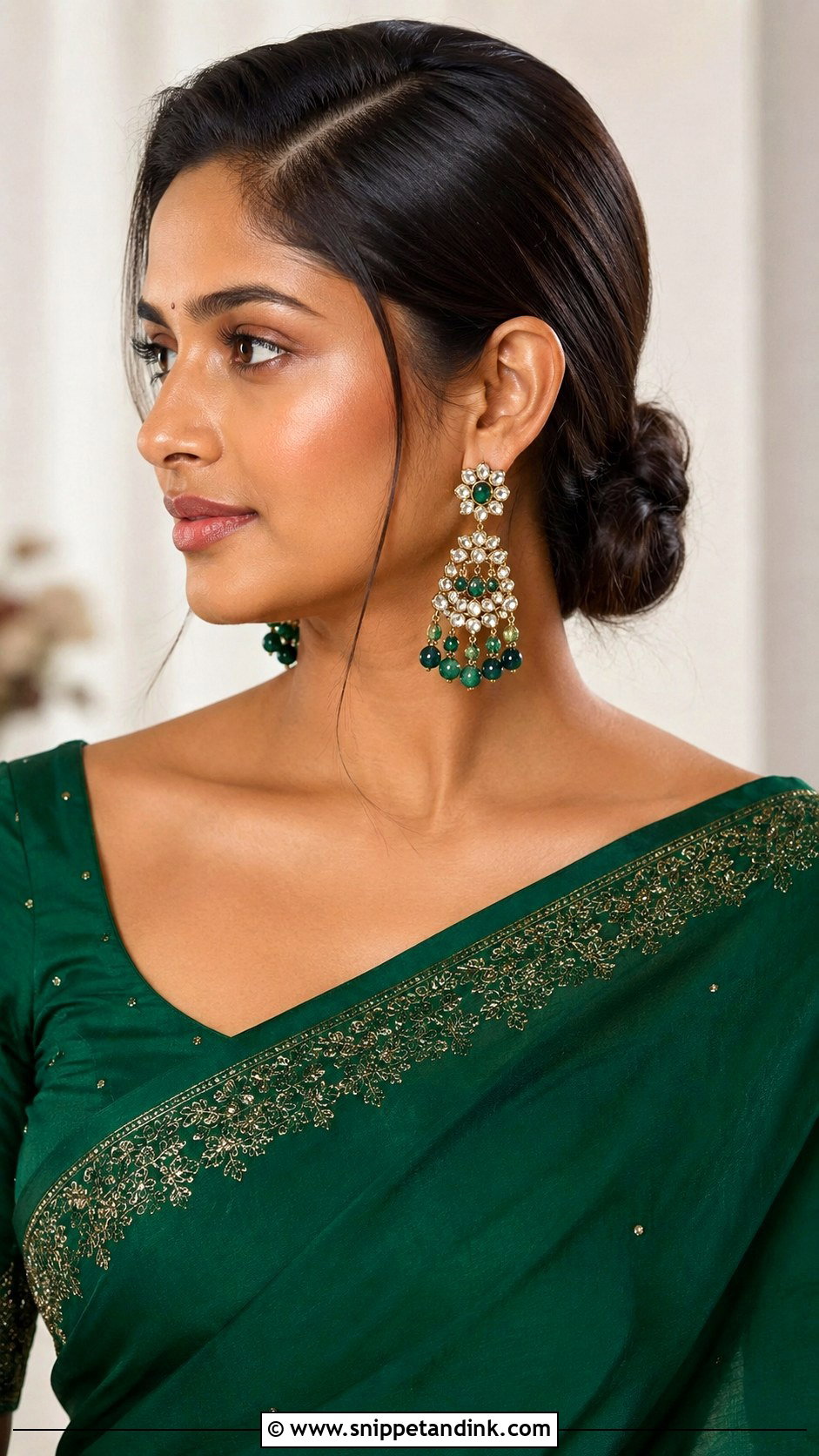
A deep side part gives a softer face frame than a centre part, with movement at the front while the rest stays smooth. It pairs with side passa jewellery, statement earrings and reception sarees. The bun sits low at the nape. I tuck and pin the front section behind the ear in two places, because a heavy side-swept front tends to slide forward once the dupatta’s weight presses on it. It softens a strong forehead and suits heart, oval and square faces.
9. Sleek Bun With Matha Patti
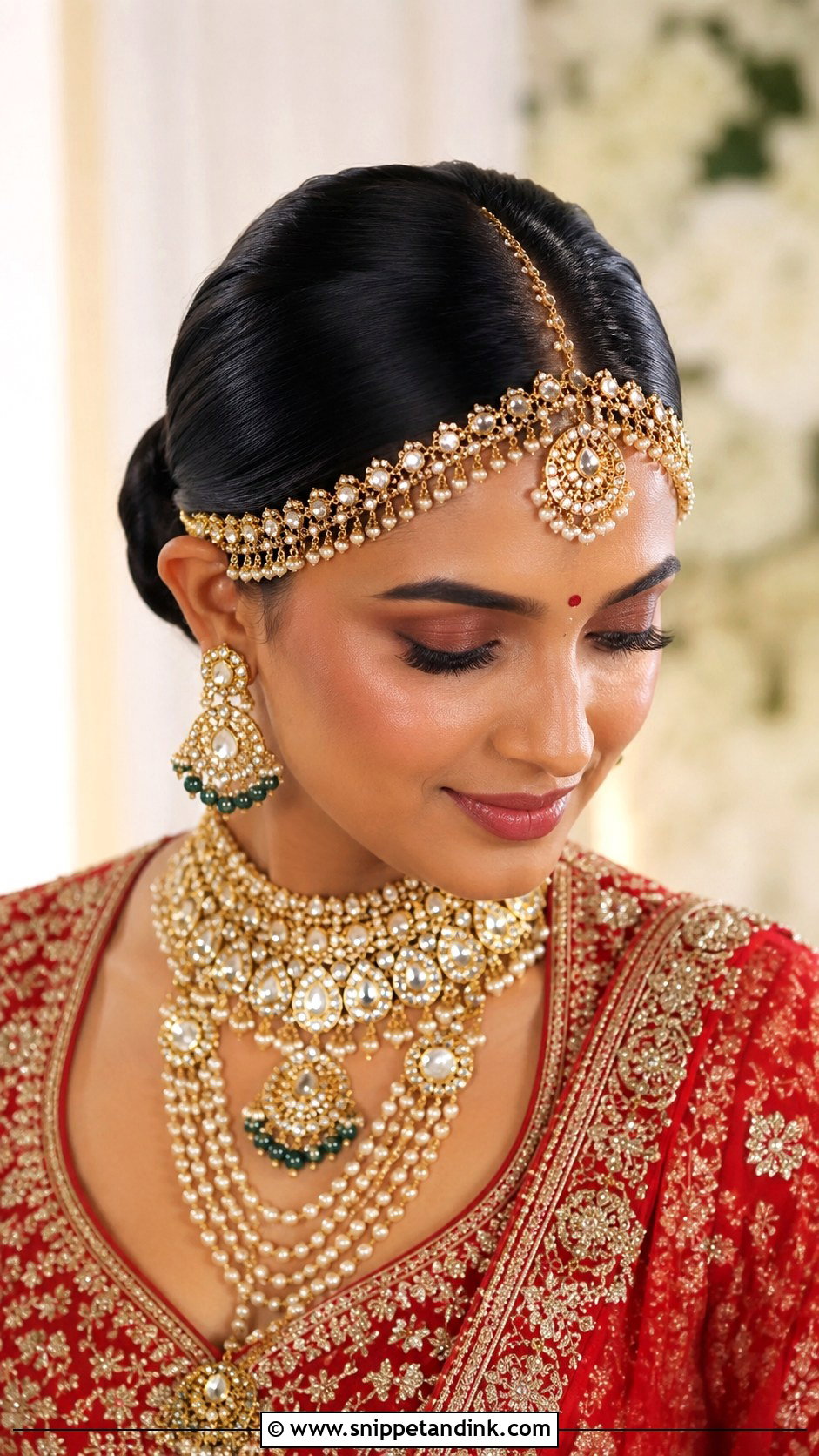
With a full matha patti, the hair underneath has to be flat and even, or the chains sit crooked. I centre-part and smooth the hair back so the piece lies along the hairline, then fix its side hooks into pinned sections near the temples rather than loose hair. A low or mid bun keeps attention on the face, neckline and jewellery, and it suits heavy lehengas and full bridal makeup. A sleek base also reduces bulk at the crown under a dupatta. Pin the bun firmly, since jewellery and dupatta together add real weight.
10. Sleek Bun With Pearl Accessories
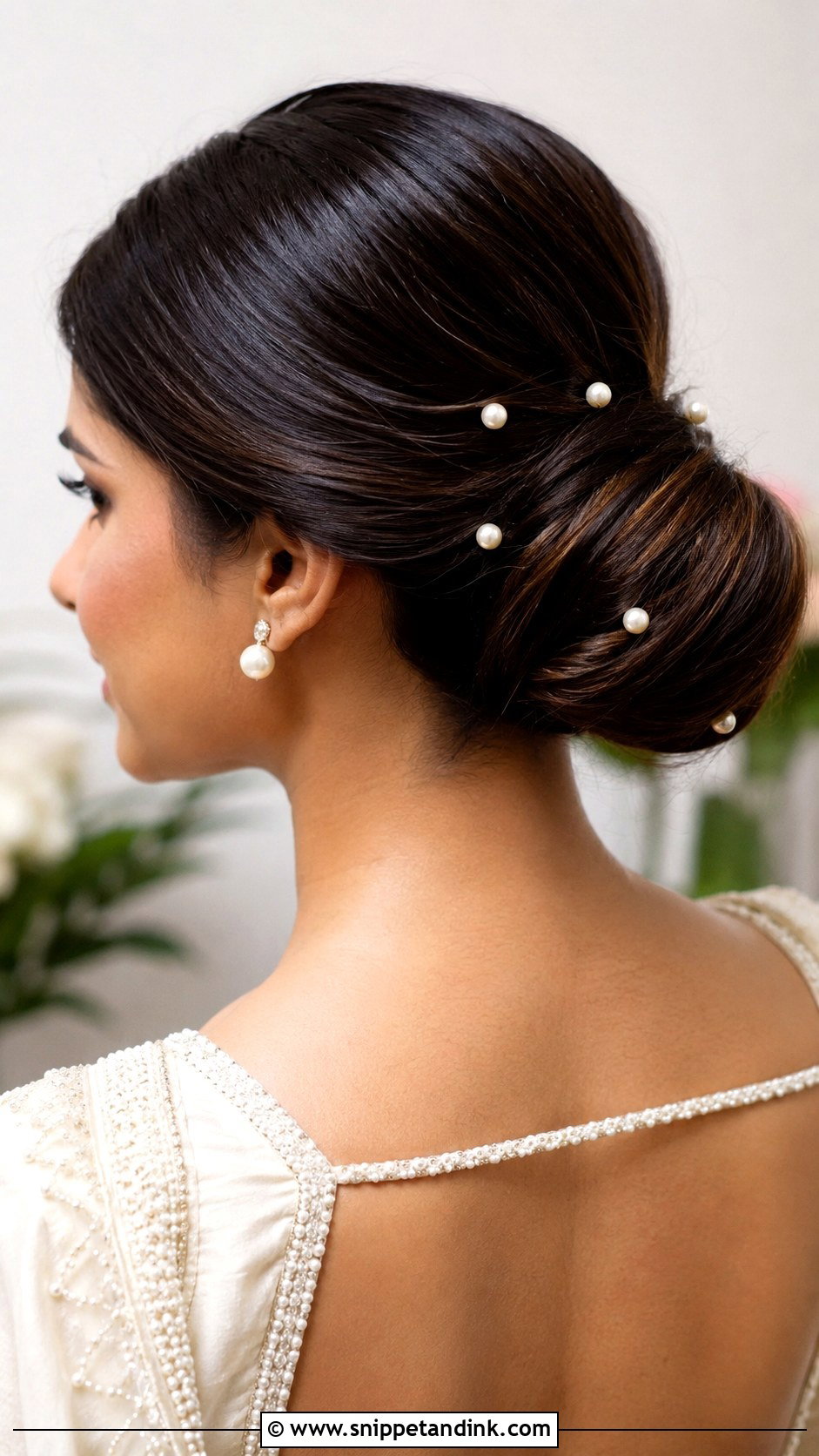
Pearls give a sleek bun a soft glow, and they sit easily with ivory, gold, champagne, blush and pastel outfits. I ring a low round bun with pearl pins or scatter a few across the crown. They suit engagements, receptions and smaller weddings where heavy flowers would feel too much, and they’re easy for sisters and bridesmaids to wear too. Restraint makes it look expensive. Five or six well-placed pearls look deliberate; twenty start to look crowded.
11. Sleek Floral Bun
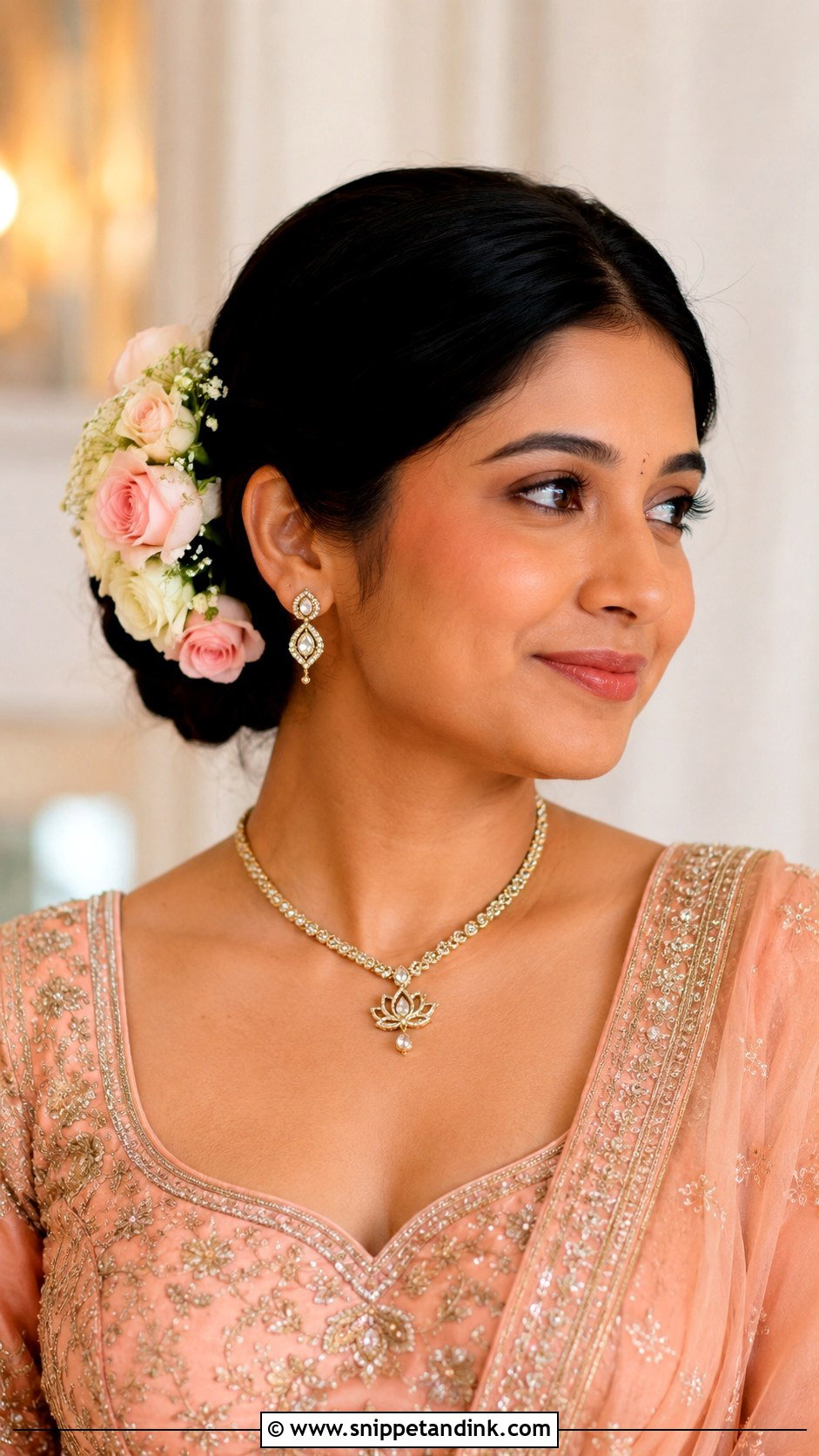
A floral bun doesn’t have to stop at jasmine or roses. Baby’s breath, orchids, mogra, marigold accents and pastel blooms all work, chosen to match the outfit and the mood of each event. The front stays smooth and the bun clean, with flowers creating the festive finish. It suits haldi, mehendi, the pheras and daytime weddings. Keep the flowers close to the bun’s outline. For haldi, choose flowers you don’t mind losing, since the paste and turmeric water stain everything they touch.
12. Sleek Bun With Maang Tikka
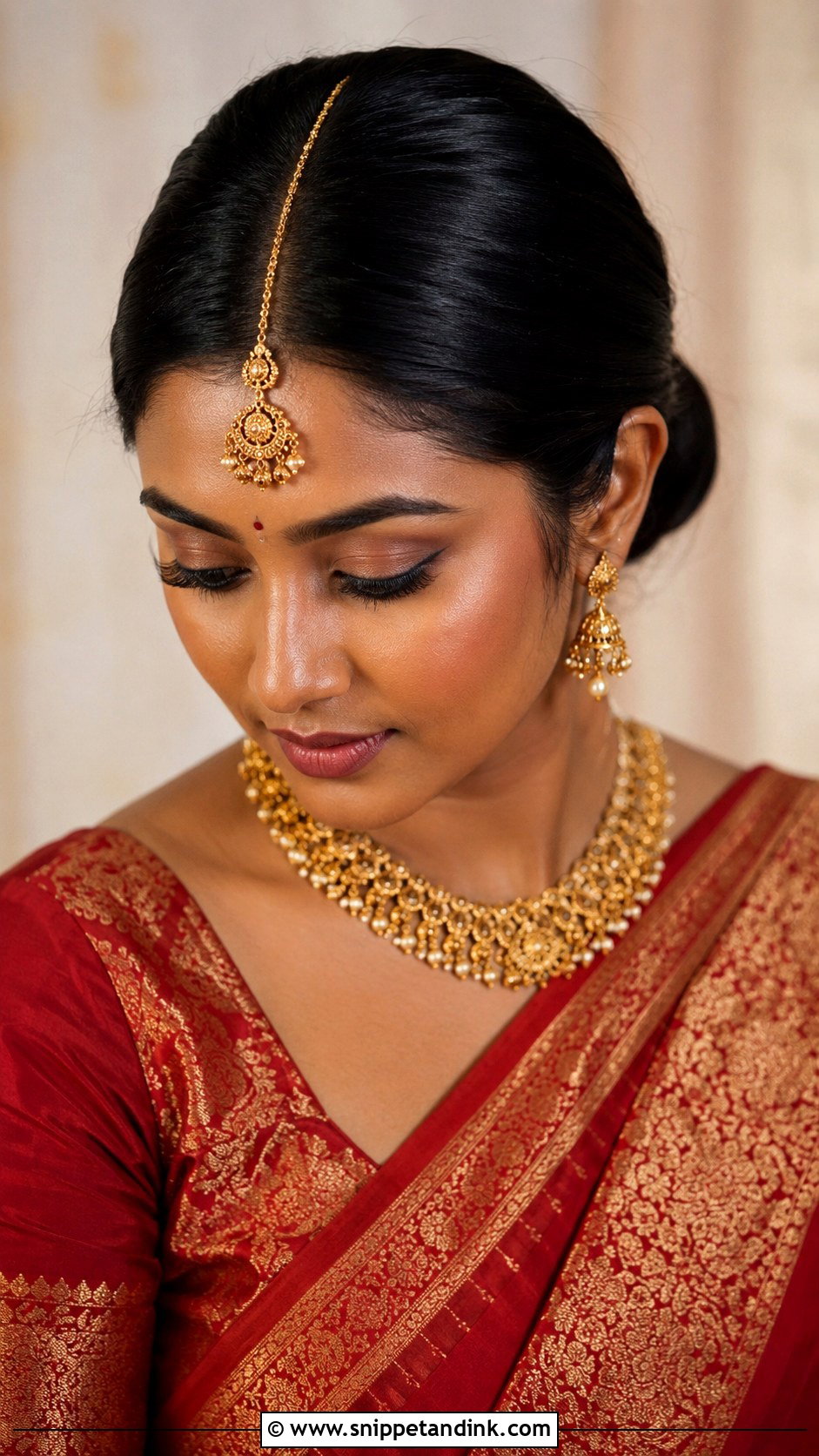
A maang tikka needs a clean centre path, and a sleek bun keeps everything else out of its way. Under a dupatta worn over the head, the smooth hair lets the fabric sit flat. Decorate the bun with flowers or pins, or leave it plain when the jewellery is already heavy. It suits lehengas, anarkalis and sarees. I clip the tikka’s chain into the hair just behind the part line with a small hidden pin, because otherwise it drifts sideways every time you bow your head during the rituals.
13. Sleek Twisted Bun
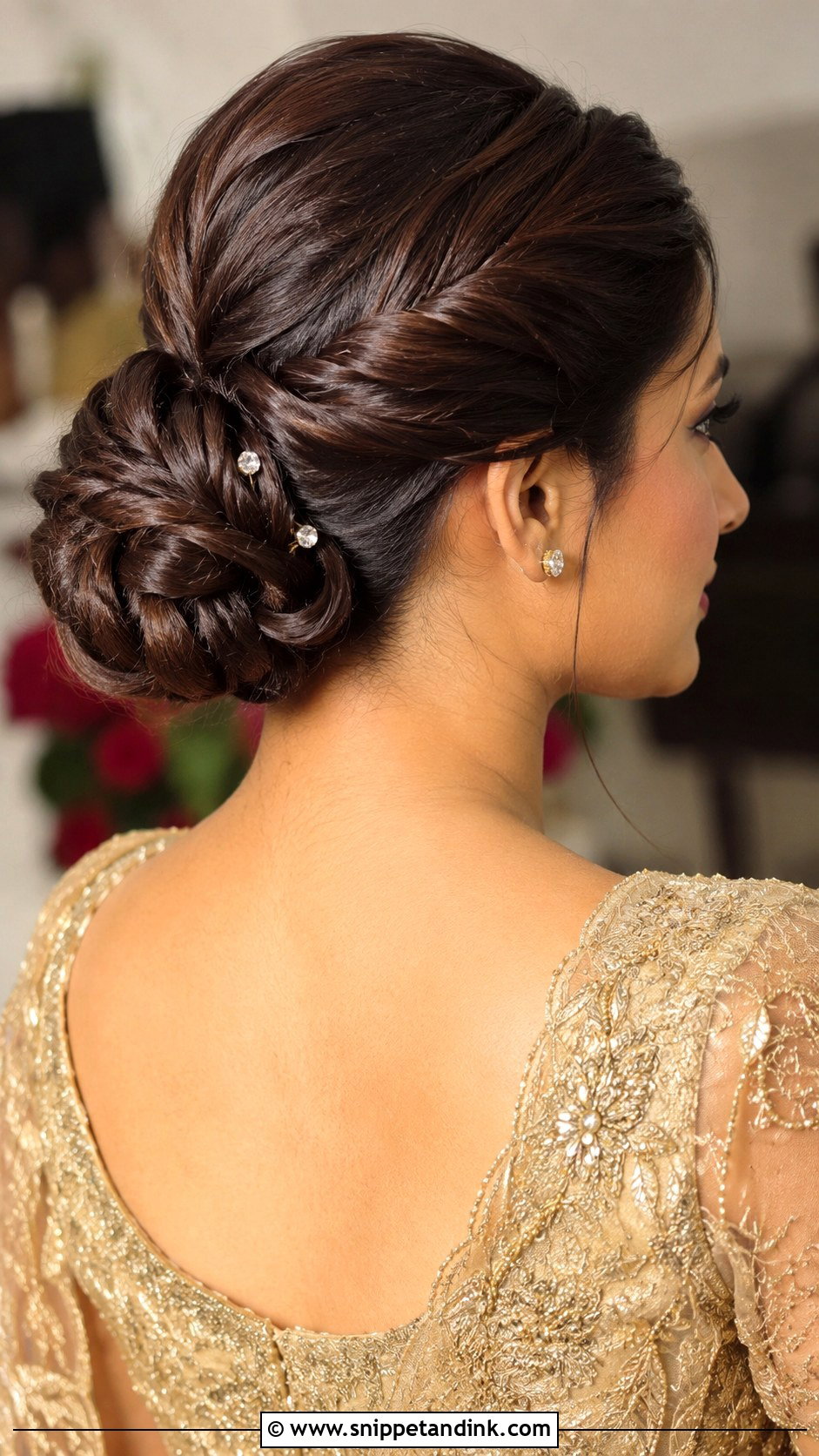
Twisting sections before wrapping them builds shape and dimension into the bun without any loose texture. The bun becomes part of the styling, which is why I like it with minimal jewellery and an embroidered blouse. Twisted sections hold pins better than smooth hair, so this bun is very secure. A few floral accents or crystal pins add detail. I keep the front sleek so the twists stay the focus.
14. Sleek Bun With Dupatta
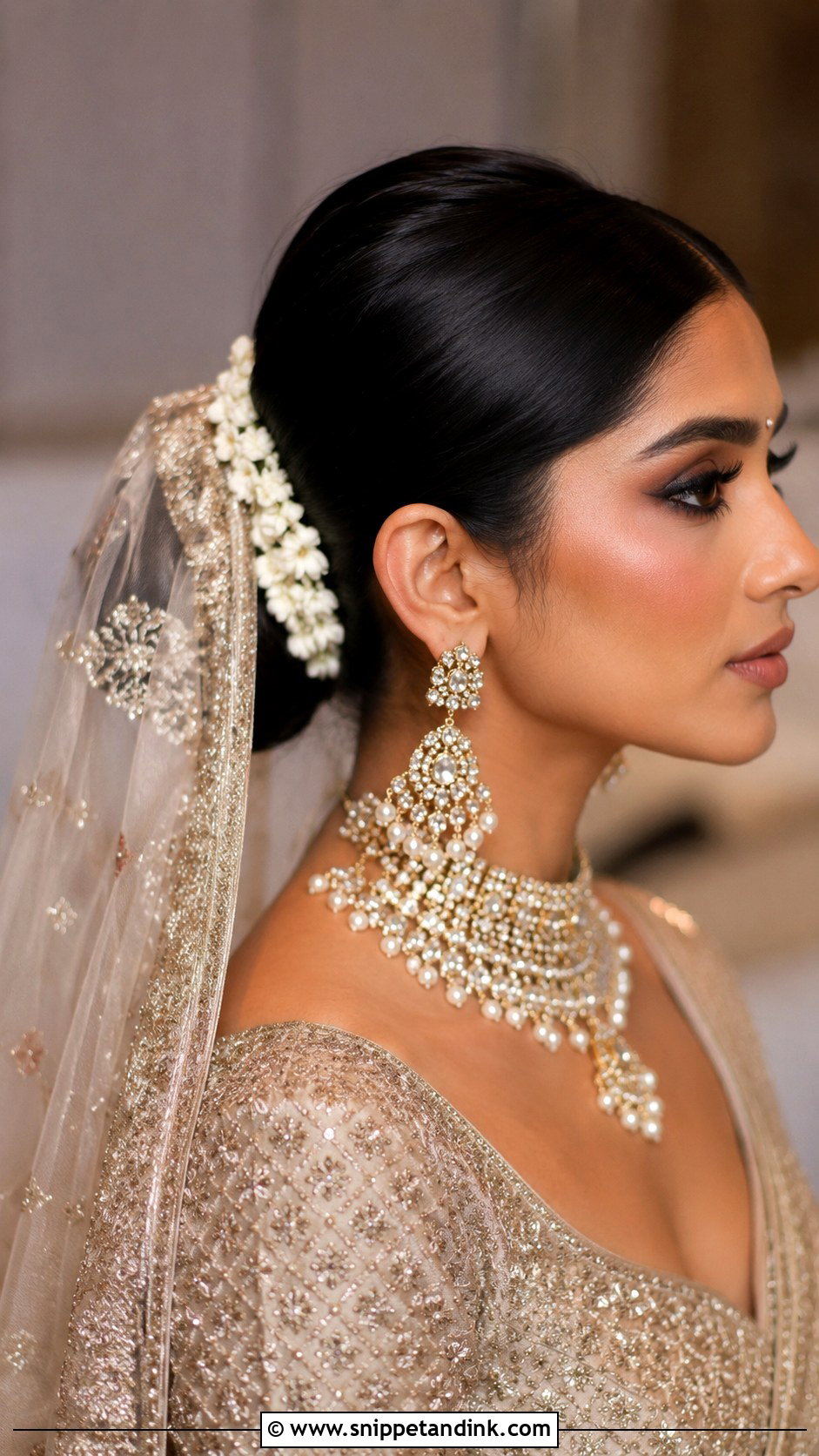
A sleek bun with dupatta setting is mostly about the anchor. The bun gives me a solid base to pin the veil into, instead of tugging on loose hair at the crown. A low bun sits comfortably under or just below the dupatta, depending on the drape. I decorate the bun with gajra, roses or pins before the dupatta goes on, then pin the dupatta through the fabric into the bun at several points so the weight spreads. A heavily embroidered dupatta can weigh a lot, so tell your stylist if it’s a heavy one.
15. Sleek Reception Bun
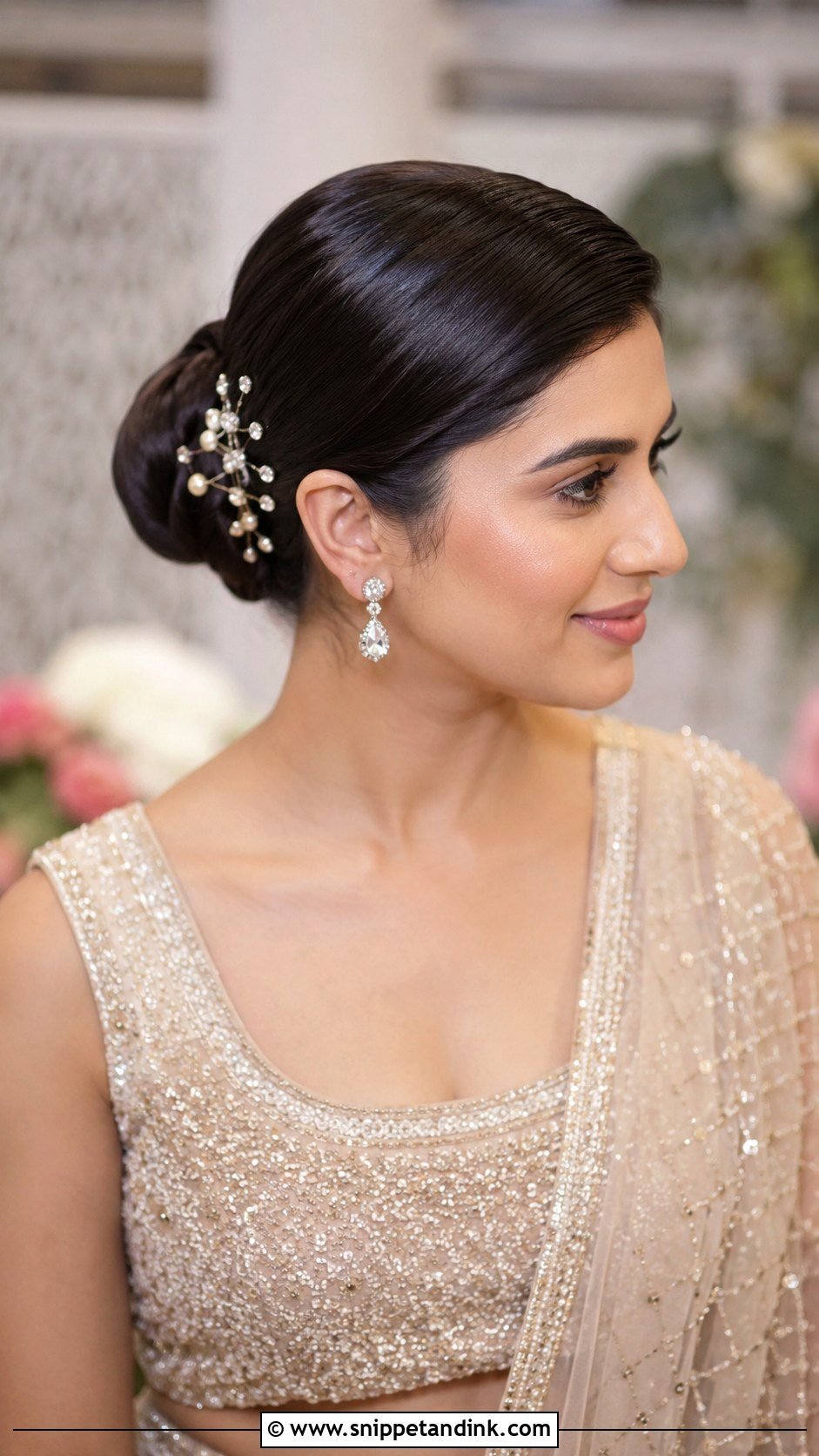
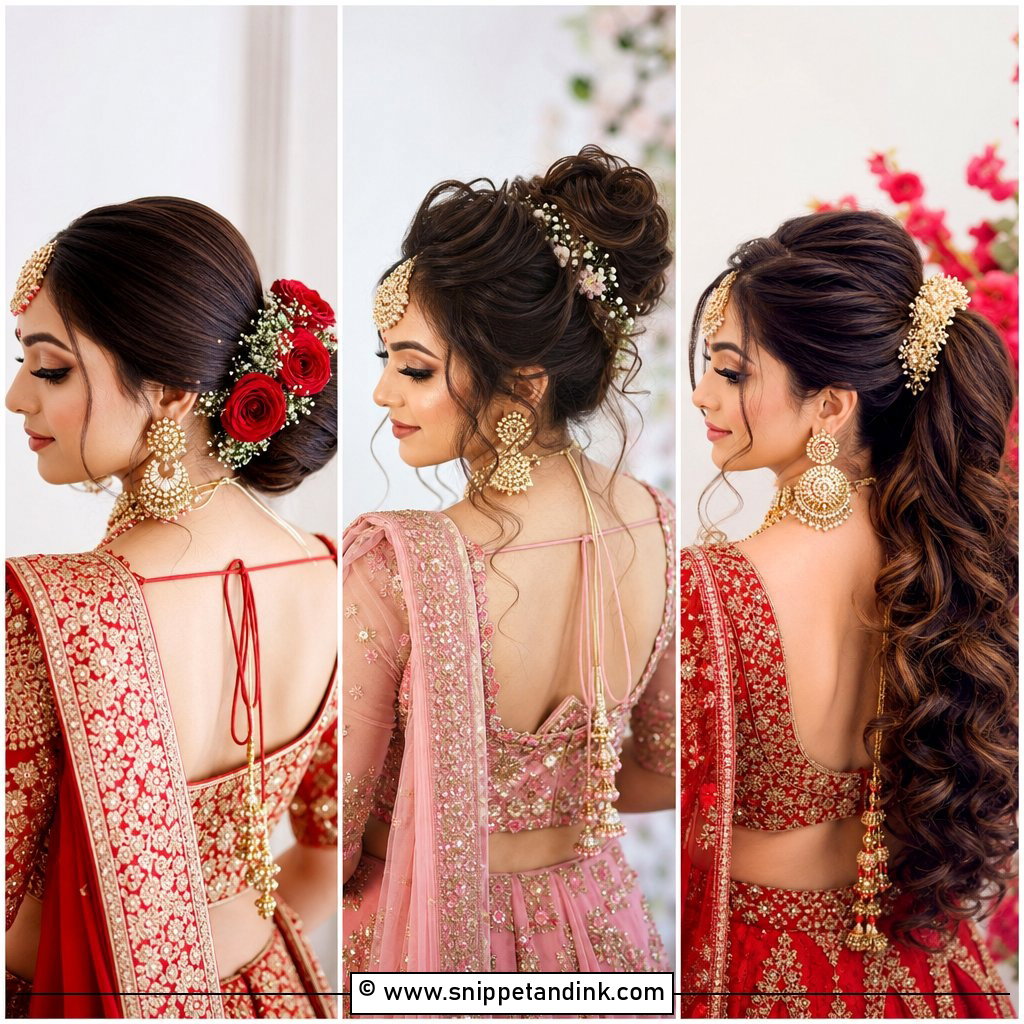
The reception bun is where I let the shine take over. A glossy finish, a clean part and a smooth low or mid bun go with gowns, sarees or contemporary lehengas. Compared with the ceremony bun, it carries fewer flowers; pearl pins, metallic clips or a crystal accent give enough detail. If you’re changing from a ceremony look, I re-smooth the front with a little serum and a fine comb rather than starting over. An anti-frizz spray keeps the surface smooth under hot reception lights.
Gajra That Still Smells Fresh at the Pheras
Jasmine is delicate. The buds open and brown within hours in heat, and most Indian ceremonies run long. Order the gajra for the morning of the event, not the night before, and keep it wrapped in a damp cloth in a cool spot until it goes on. Ask for some tight buds mixed in with the open flowers so it keeps opening through the day. For an evening muhurat, I’d hold a second gajra in reserve and swap it in.
Keep the flowers away from the hair itself where you can. Fresh jasmine and roses release moisture as they warm, and on a very smooth bun that dampness can soften the spray underneath and lift flyaways. I pin the gajra so it rests on the bun’s surface rather than pressing into the front sections. If you have sensitive skin or a pollen allergy, mention it at the trial; good silk or fabric flowers are a sensible swap, and nobody notices from the back row.
Taking the bun down after midnight
A bridal bun can hold dozens of pins, and pulling it apart quickly tears hair. Remove the jewellery and the dupatta pins first, then work around the bun in a circle, sliding each pin out in the direction it went in. Don’t brush until every pin is out. A little oil or conditioner worked through the lengths, then a wide-tooth comb from the ends upward, loosens the spray without breakage.
One Bun Base, Several Outfits and a Long Wedding Week
These buns earn their popularity: they stay secure and suit nearly every outfit, from silk sarees to heavy lehengas. Gajra and roses keep them traditional, pearls and crystal pins make them modern, and matha patti and kundan accessories make them regal. Settle the details by neckline, jewellery, dupatta drape, face shape and event. For a bride wearing several looks across several days, a well-built sleek bun is the most dependable starting point I know.
You'll Like These Ideas:







Leave a Reply