
An Indian wedding hairstyle has a harder job than most. It has to carry a dupatta pinned at two or three points, sit under a heavy maang tikka without slipping, and stay put through a pheras ceremony, a long baraat wait and a reception where you finally dance. A North Indian juda and a South Indian decorated braid are built in completely different ways, and I plan them differently from the very first trial. Below are 20 styles I’d consider across haldi, mehndi, sangeet and the main wedding, with notes on how each one holds up once the jewellery and flowers go on.
Matching a Style to Each Function and Its Dupatta Drape
Most Indian brides wear three to five different looks across the wedding events, and I plan them as a sequence, not as separate ideas. Each style has to suit the outfit, but it also has to suit what the hair went through the day before. Heat styling every single day, followed by heavy pinning, leaves hair brittle by the reception, so I alternate demanding looks with gentler ones.
- Haldi: a braid or a high, simple bun you don’t mind getting turmeric paste on. Skip fresh jasmine here; the paste stains it yellow.
- Mehndi: something off the neck and shoulders, finished before the henna starts, since you’ll have no use of your hands for hours.
- Sangeet: the event for open curls, half-up styles or side sweeps, because you’ll be dancing and there’s usually no dupatta pinned on the head.
- Main wedding: a low bun or a decorated braid that can anchor a dupatta at the crown and both sides.
- Reception: sculpted waves or a twisted updo that matches a gown, saree gown or lighter lehenga.
The dupatta deserves its own conversation. A heavy embroidered net or velvet dupatta needs firm pinning points, which means a solid bun or the braided base of a jada. A light chiffon one can sit on open hair, but it will still slide unless I add a hidden pin at the parting. Bring the actual dupatta to your trial if you can, or at least one of similar weight.
1. Floral Bun Hairstyle for Indian Bride
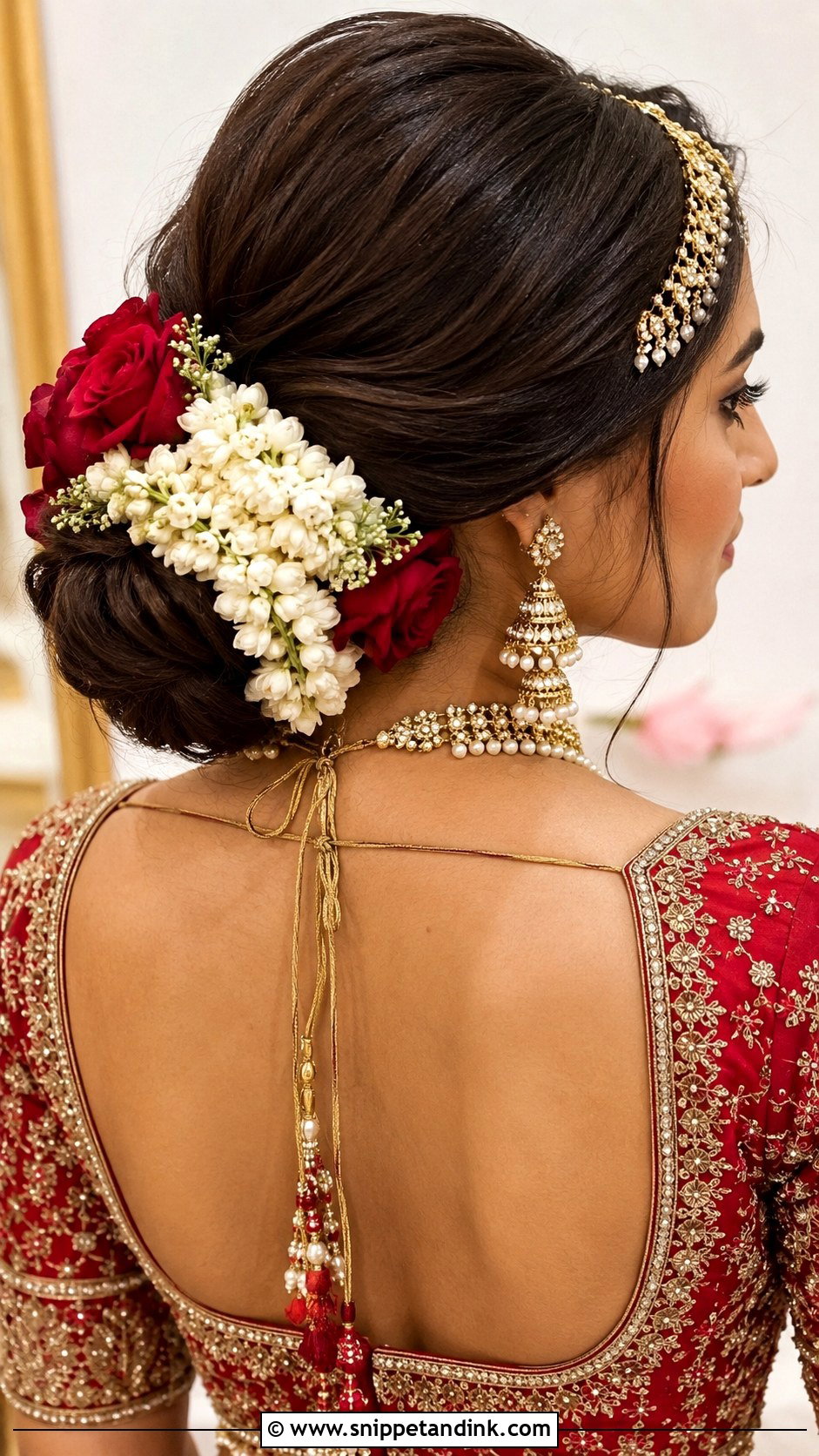
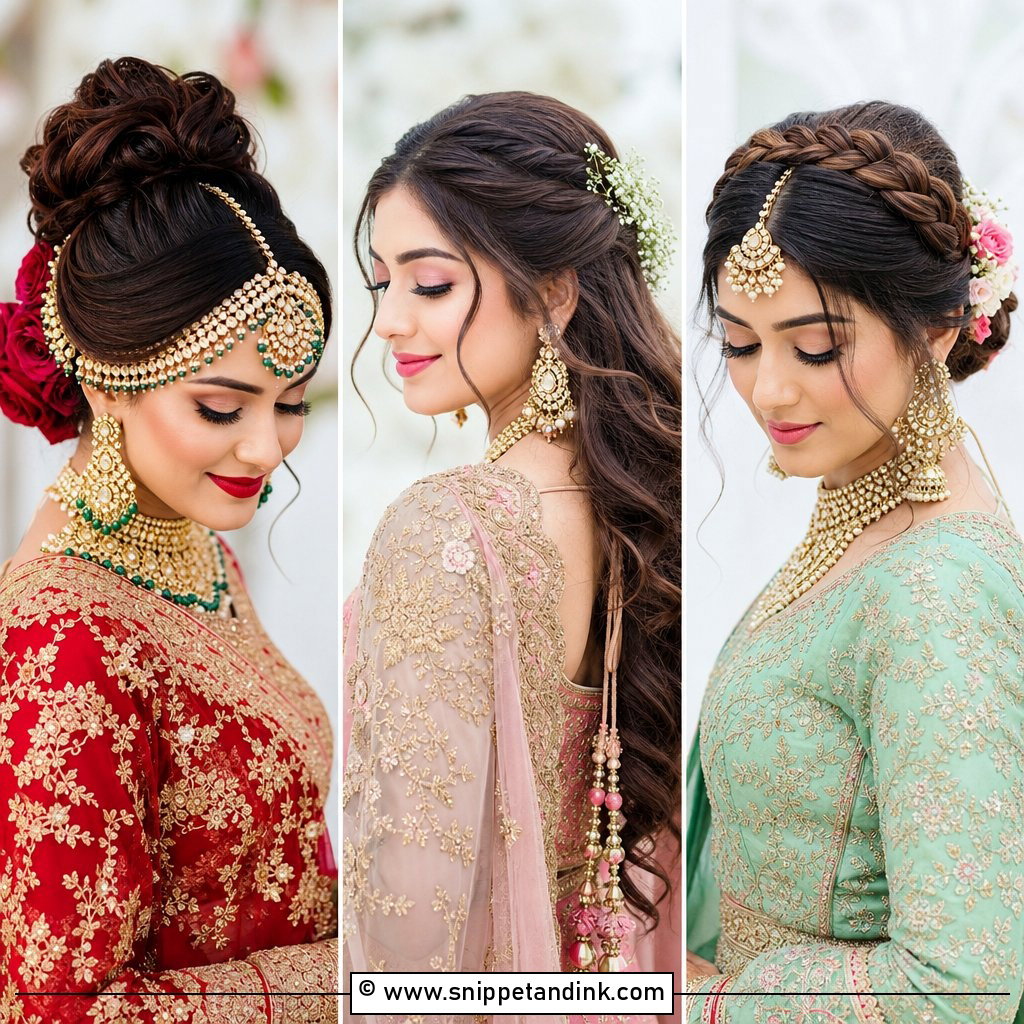
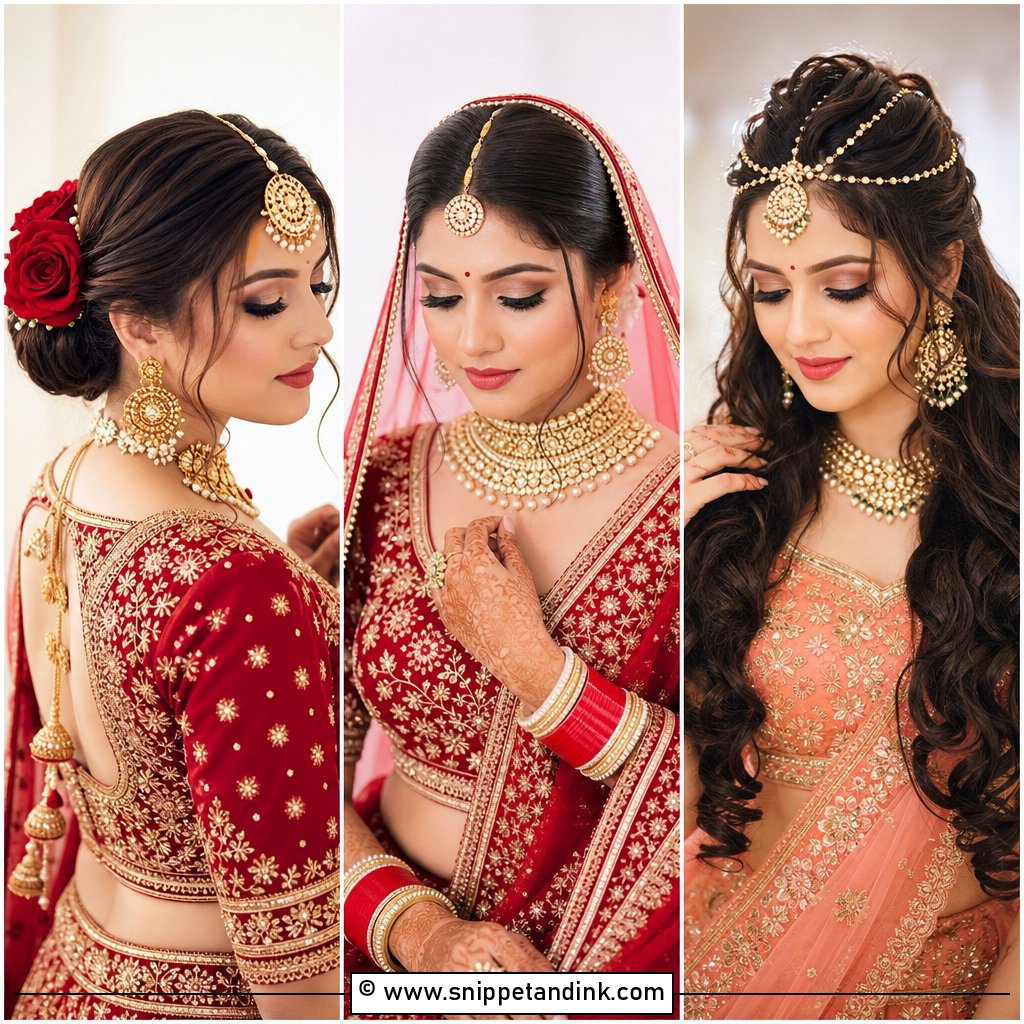
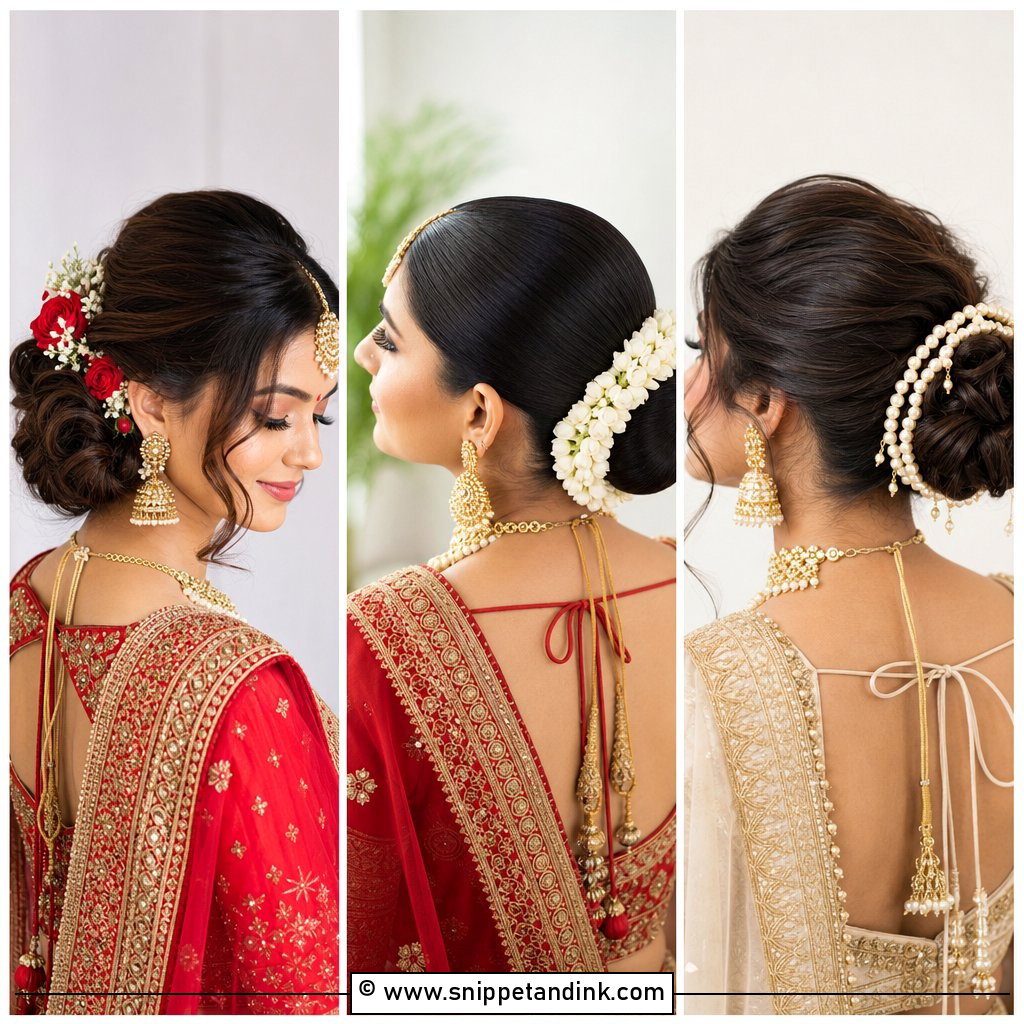
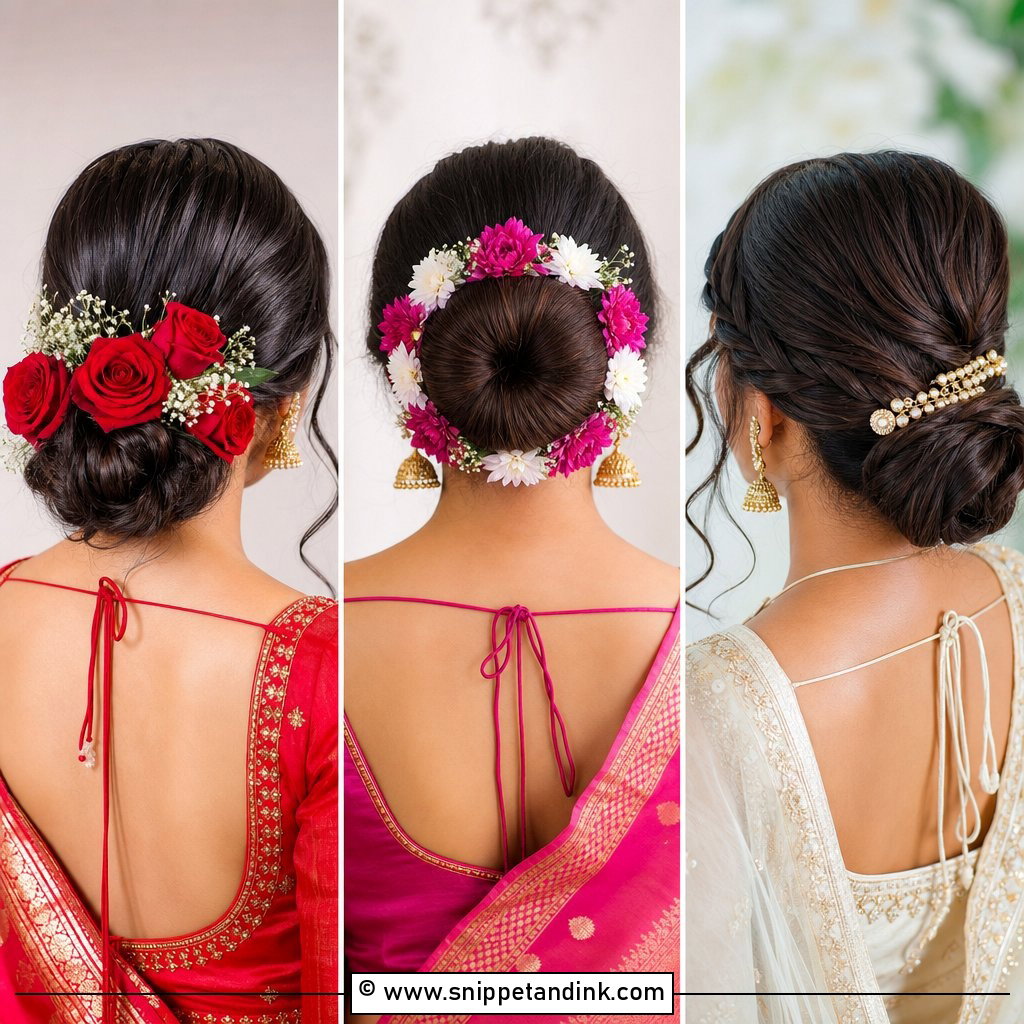
A low floral bun is the style I reach for most often on the main wedding day, because it sits right where a dupatta wants to be anchored. I build the base with a padded doughnut or a small bun filler so the roses or mogra have something firm to be pinned into, rather than relying on hair alone. Fresh flowers add real weight, so I place the heaviest stems close to the base pins and the lighter buds toward the outer edge. Pair it with a maang tikka and matching earrings and the whole head reads as one piece. It suits round and oval faces well, and it stays secure through the dancing and the emotional moments if the foundation is solid.
2. Gajra Bun for South Indian Bride
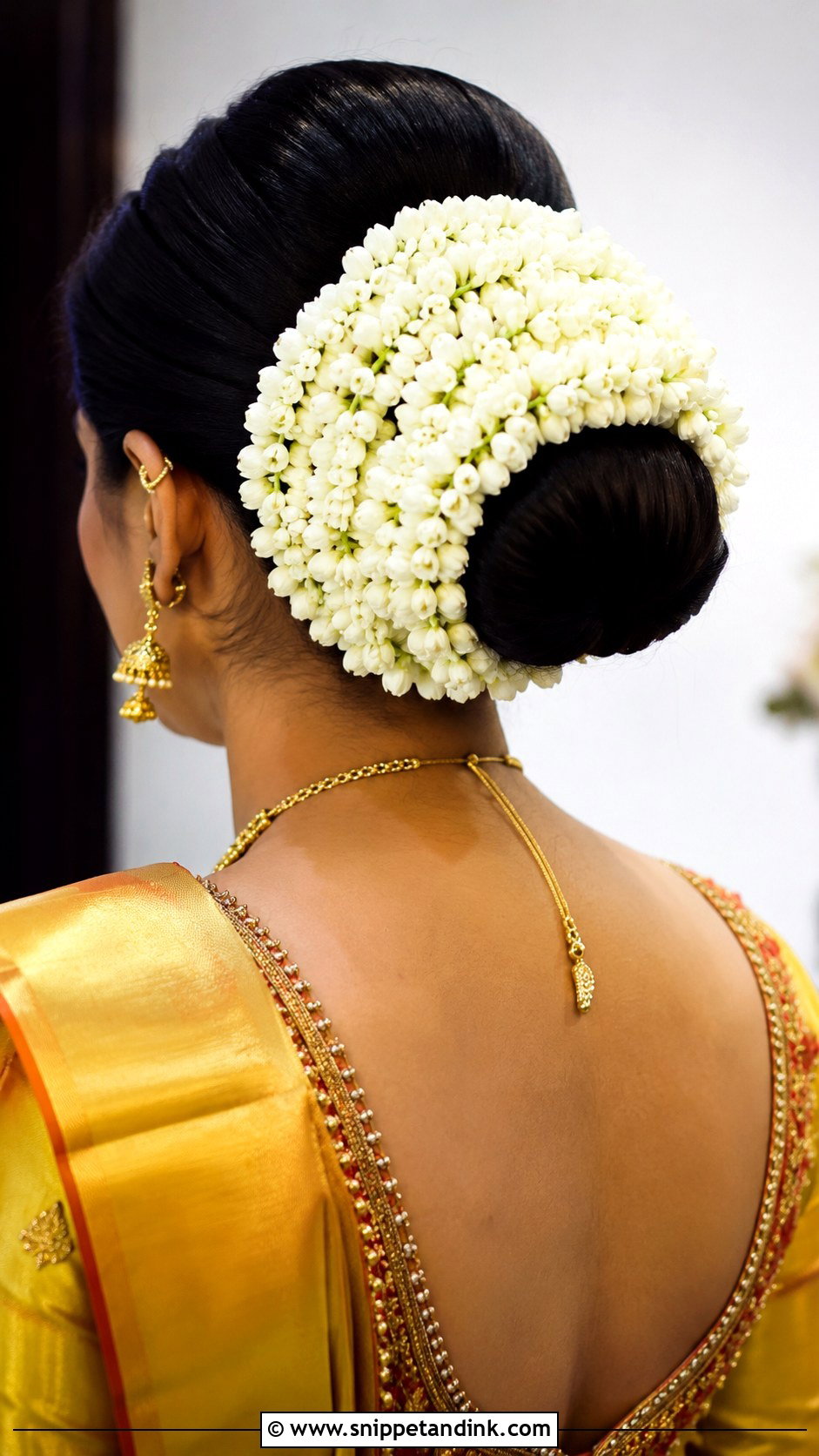
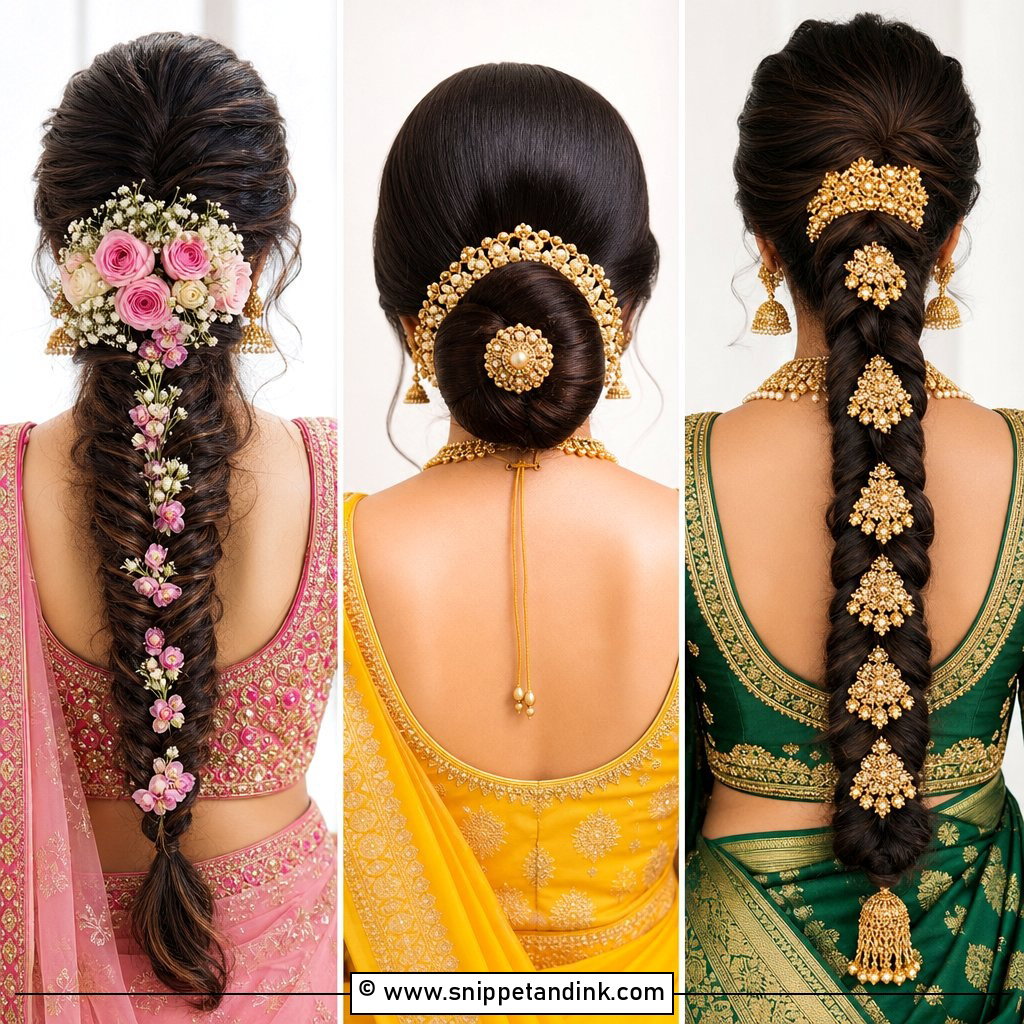
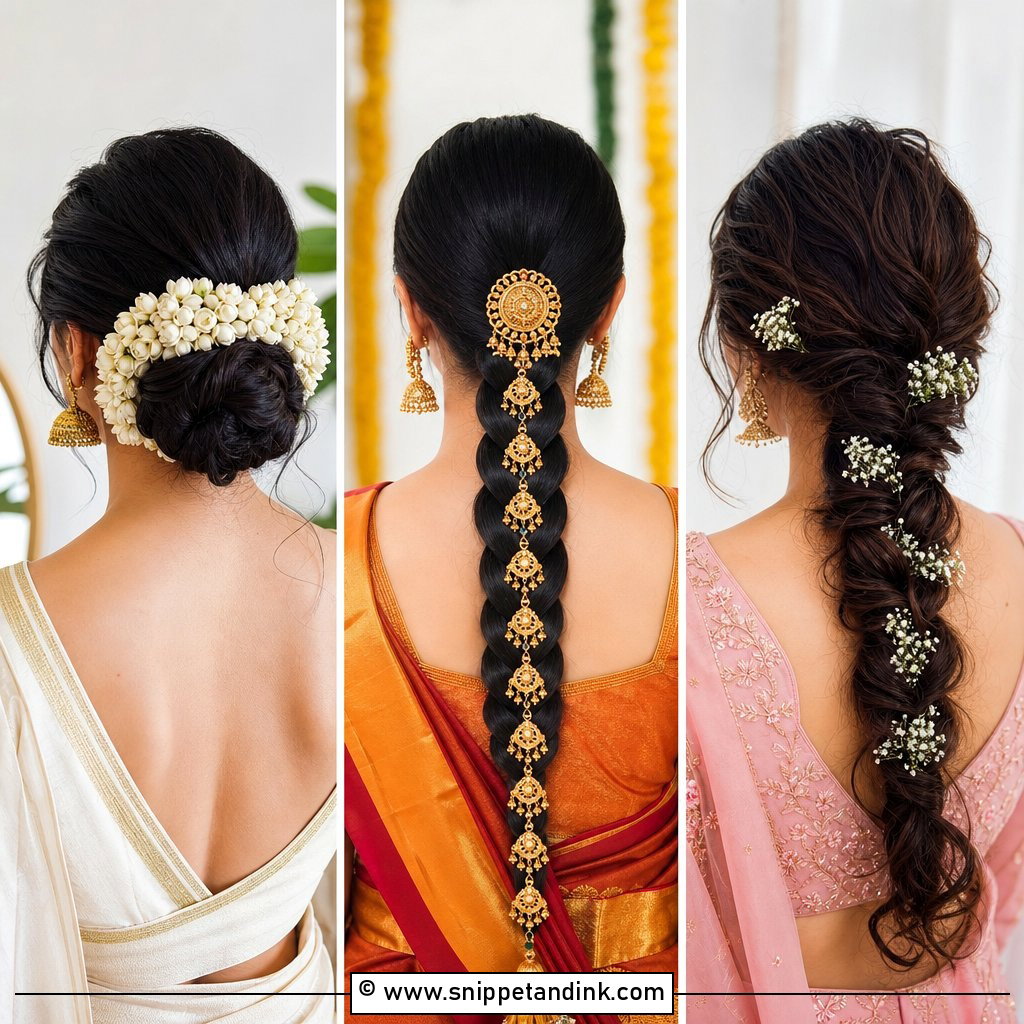
The gajra bun holds a special place in South Indian wedding traditions, and its success depends on the bun underneath being sleek and tight. I wrap the jasmine strands in layers, crossing each one over the last so no hair shows between them, then secure every crossing with a U-pin pushed in at an angle. The white flowers carry meanings of purity and good fortune, and against dark hair and a silk saree they give a crisp contrast. A few orange kanakambaram flowers tucked between the layers are traditional in Tamil, Telugu and Kannada weddings. One thing I warn brides about: jasmine opens and browns over several hours in heat, so a second gajra for the evening rituals is worth arranging.
3. Braided Bun Hairstyle for Bride
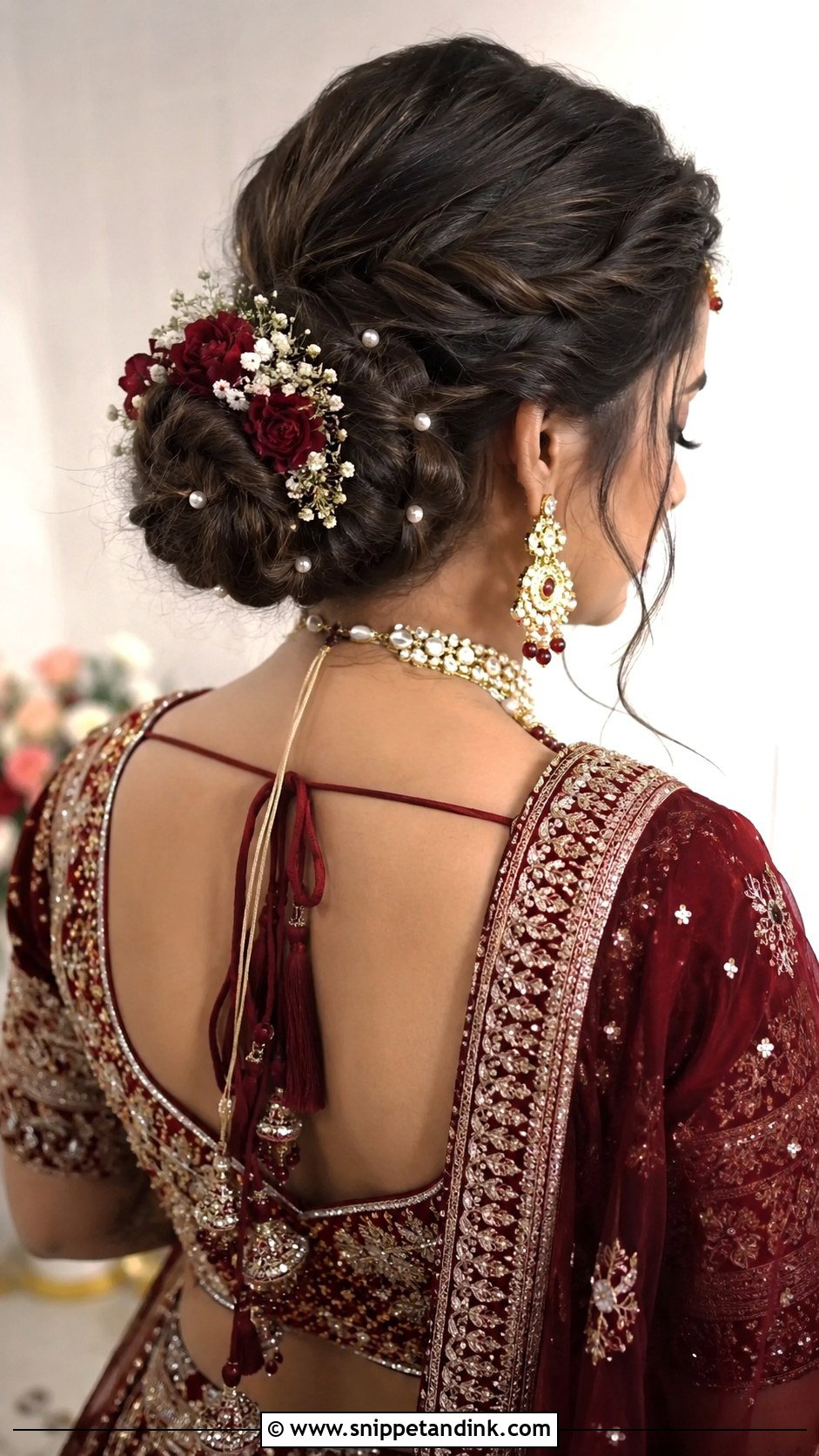
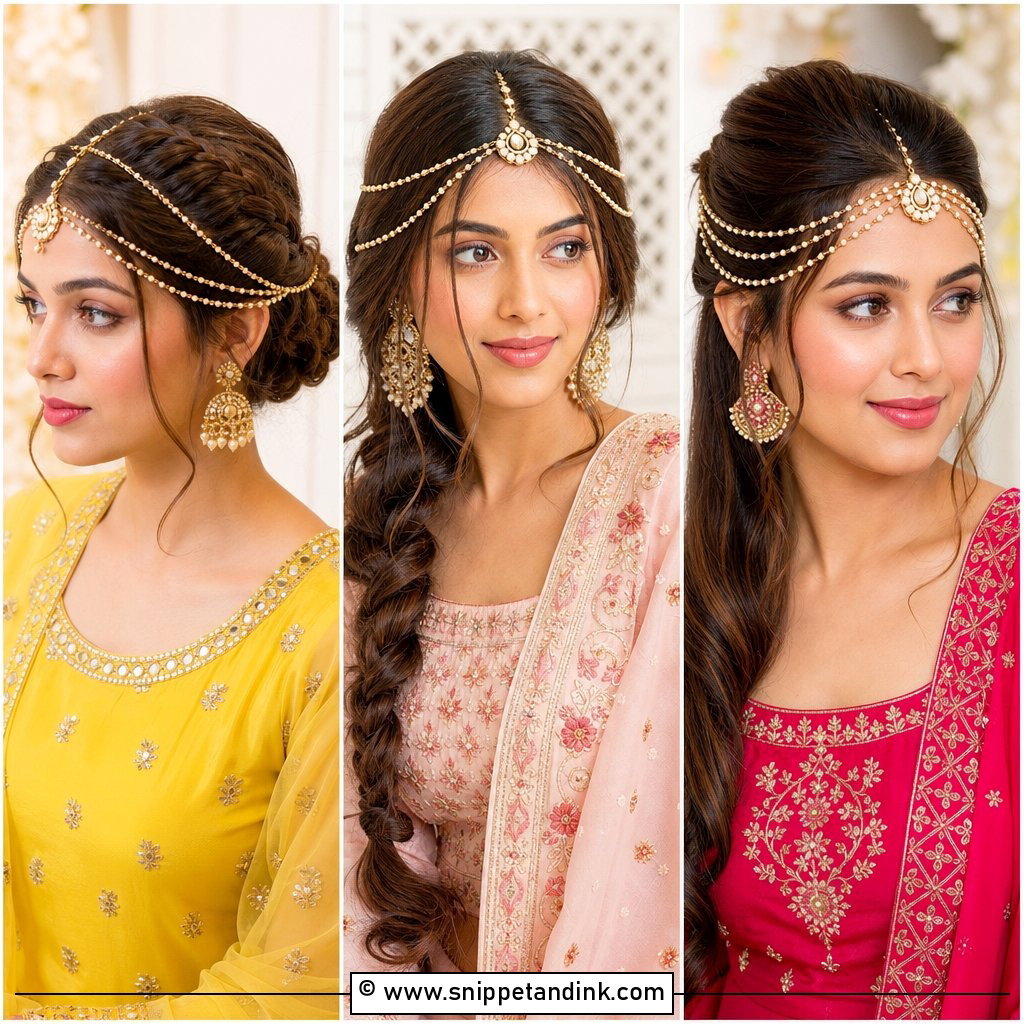
A braided bun gives you the texture of a braid with the security of a bun. I braid first, pancake the braid gently so it widens, then coil it low and pin through every loop. That widening step matters more than people expect, because an unpulled braid coils into a small, tight knot that disappears under a dupatta. Pearl strings, floral pieces or a short jada billai can all be threaded through the coils. Thick, long hair does this best; on shoulder-length hair I usually add a clip-in piece so the coil has enough length to wrap twice.
4. Maang Tikka Open Hair for Bride
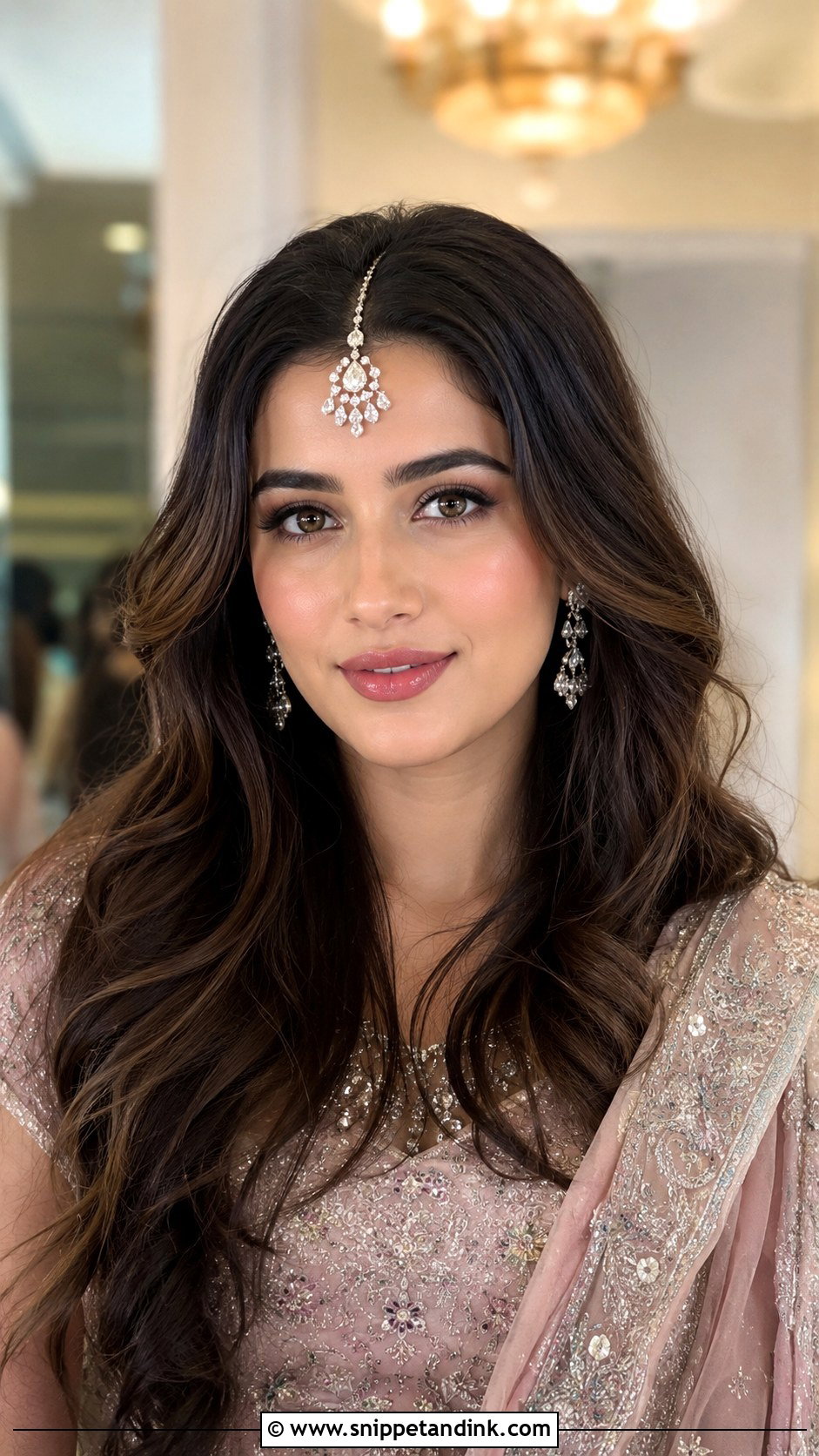
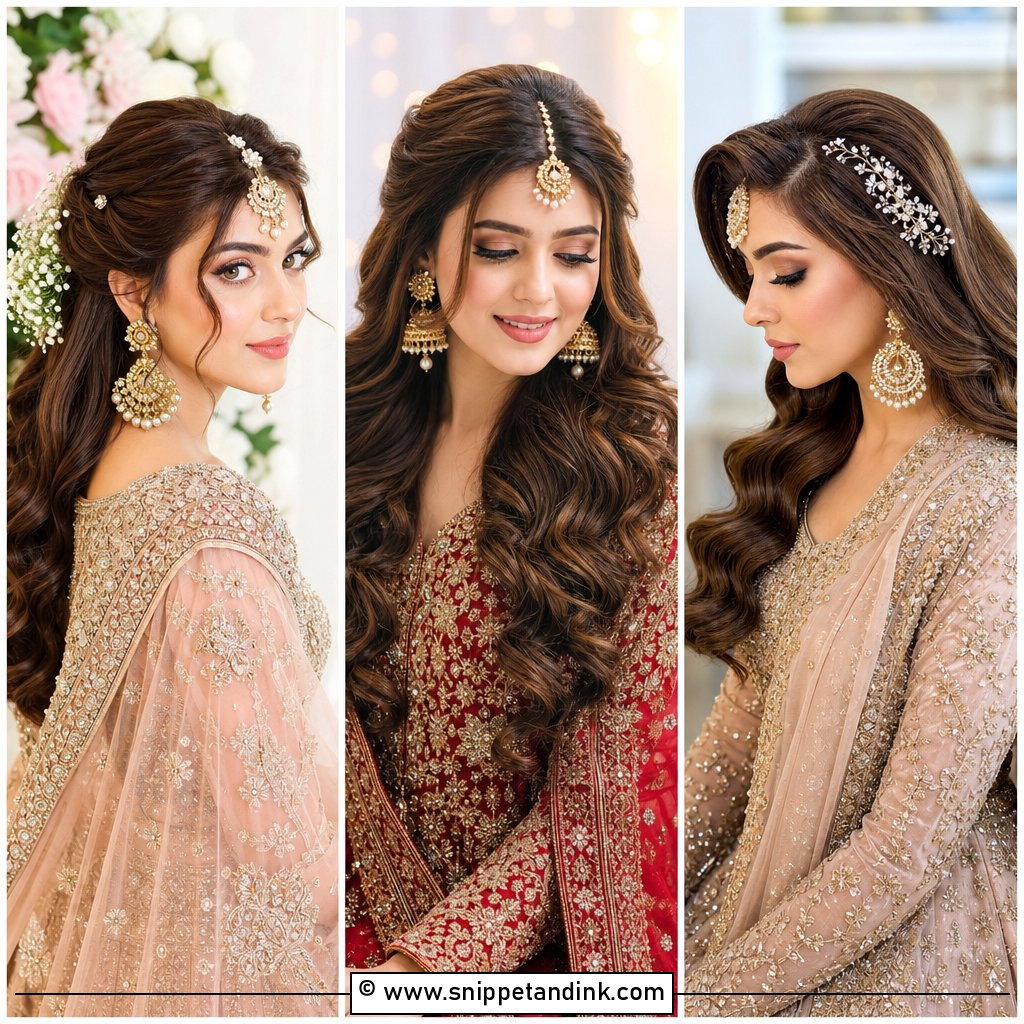
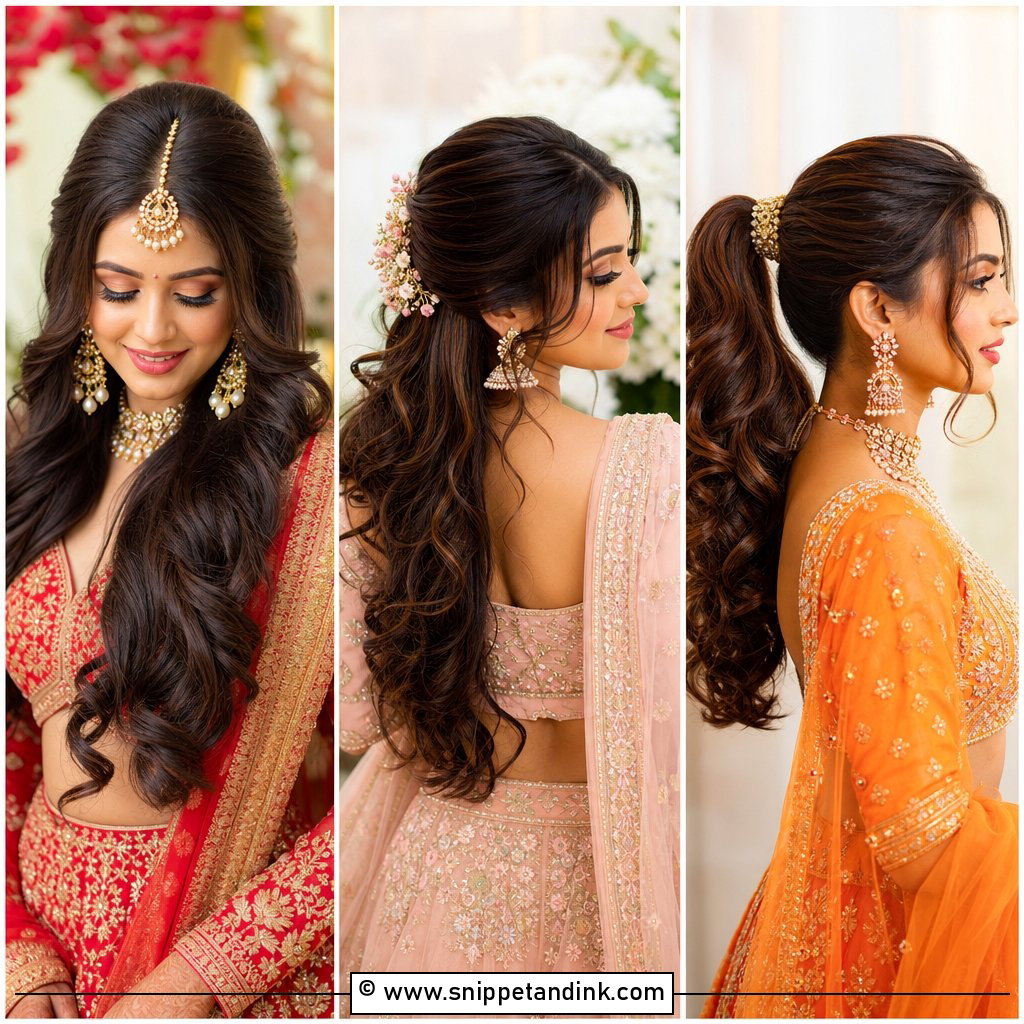
Open hair with a statement maang tikka is the softest option here, and it’s the one I’m most cautious about for the main ceremony. Loose hair tangles in a heavy dupatta, sticks to the neck in a warm hall and loses its curl faster than any updo. For a reception or cocktail evening, though, it works well: I set waves with a large barrel, let them cool pinned up, then brush them out just before you walk in. The tikka chain needs a small hidden pin at the parting or it will slide sideways as the hair moves.
5. Side Swept Curls for Indian Bride
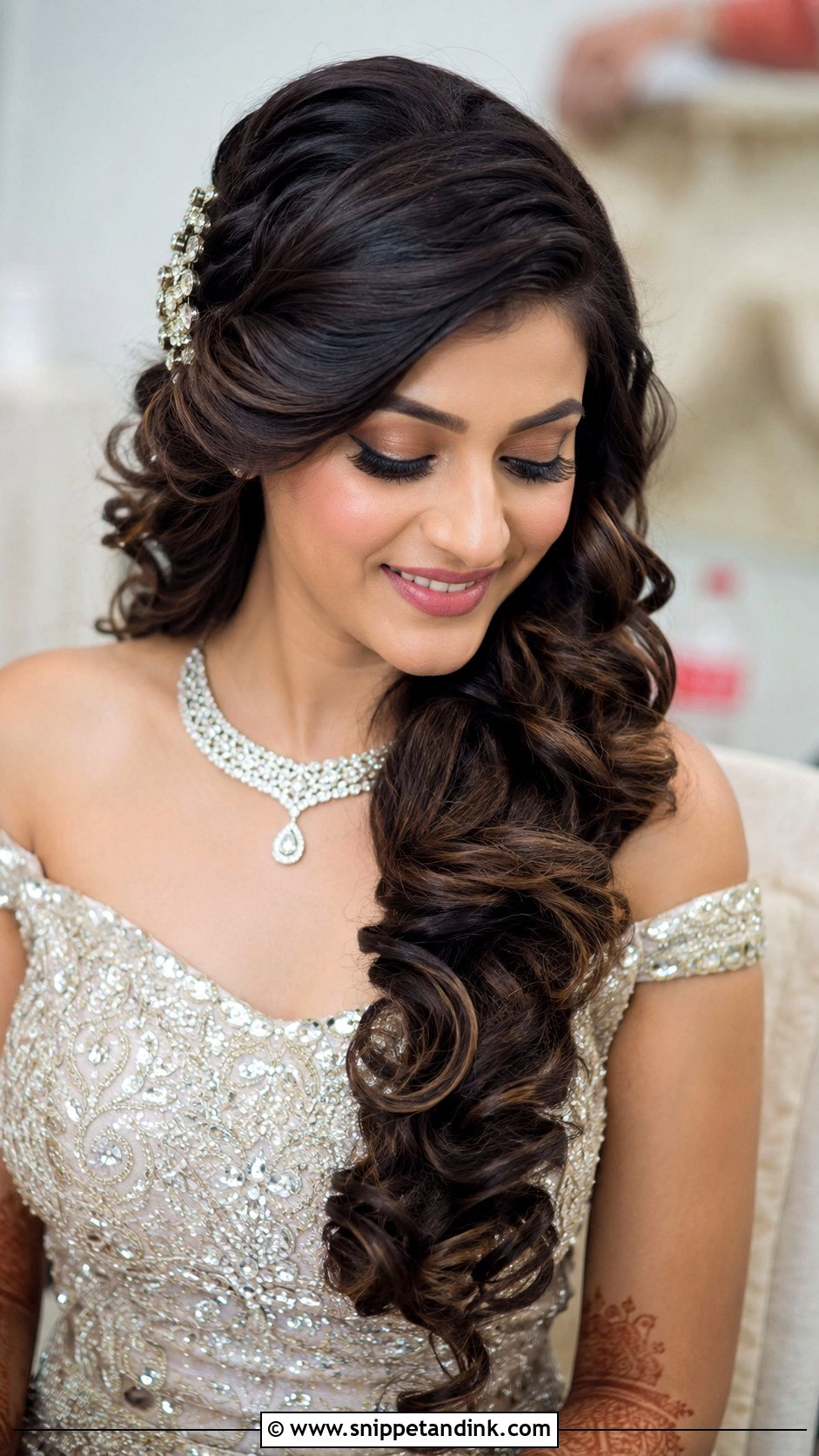
Side swept curls frame one side of the face and leave the other shoulder clear, which suits an off-shoulder blouse or a statement necklace you want seen. The trick is a hidden anchor. I cross-pin a small section behind the ear on the far side so the weight of the curls has something to hold onto, otherwise they creep back to the centre within an hour. A jeweled clip or a few flowers can cover that anchor. Medium to long hair works; very layered cuts tend to break up into separate pieces rather than one smooth sweep.
6. Fishtail Braid for Indian Bride
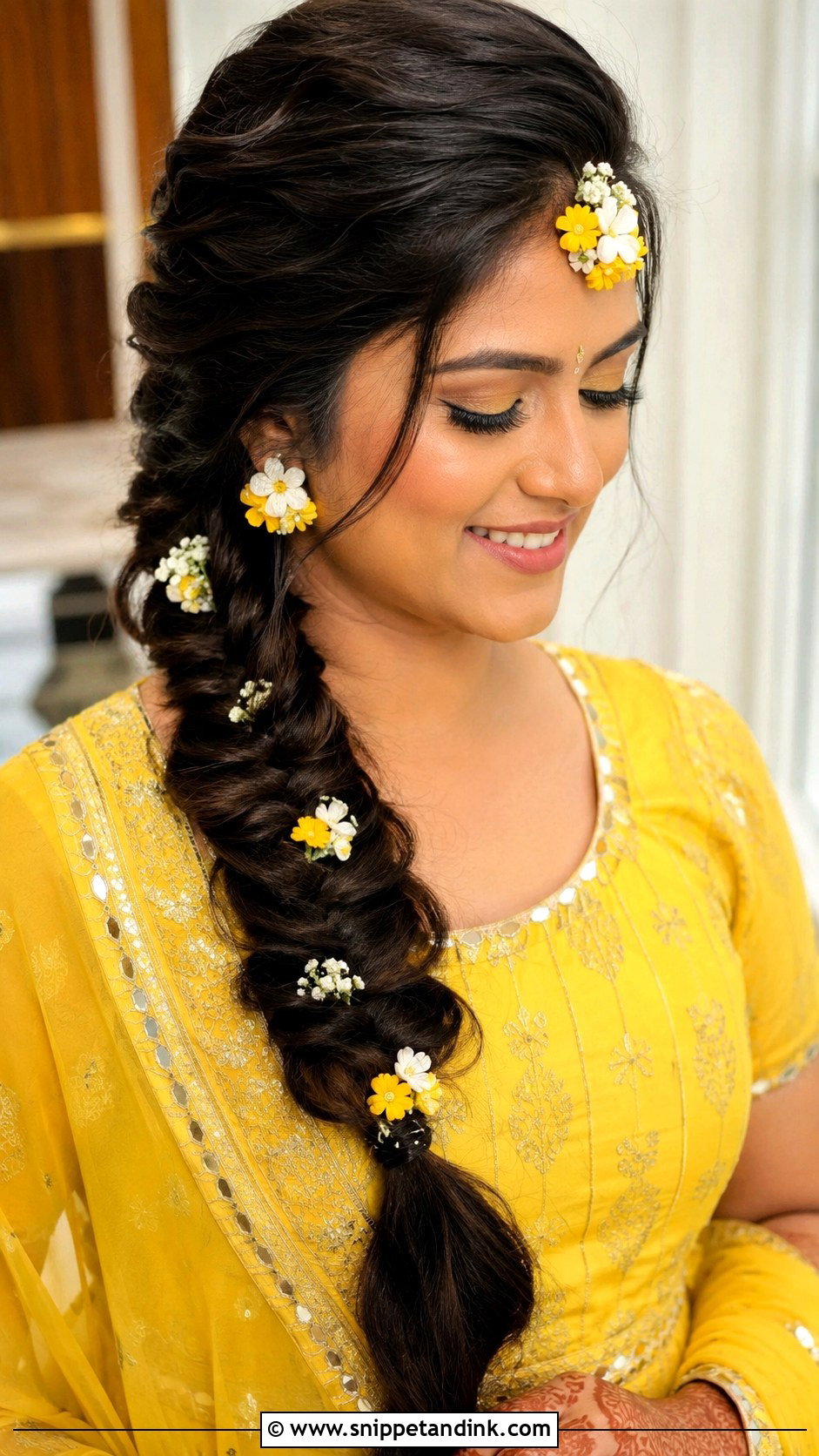
A fishtail braid looks complicated, but it’s simply two sections with small pieces crossed from the outside, and that fine weave is why it holds up so well. For a mehndi or haldi, I’d pull it loose and drape it over one shoulder, because it keeps hair away from wet henna on your hands and arms. Small flowers, pearls or tiny butterfly pins tuck neatly into the crossings. The fuller “mermaid” version needs thick, long hair or a few extension wefts; fine hair gets a thin tail that looks unfinished in photographs.
7. Pearl Embellished Bun for Bride
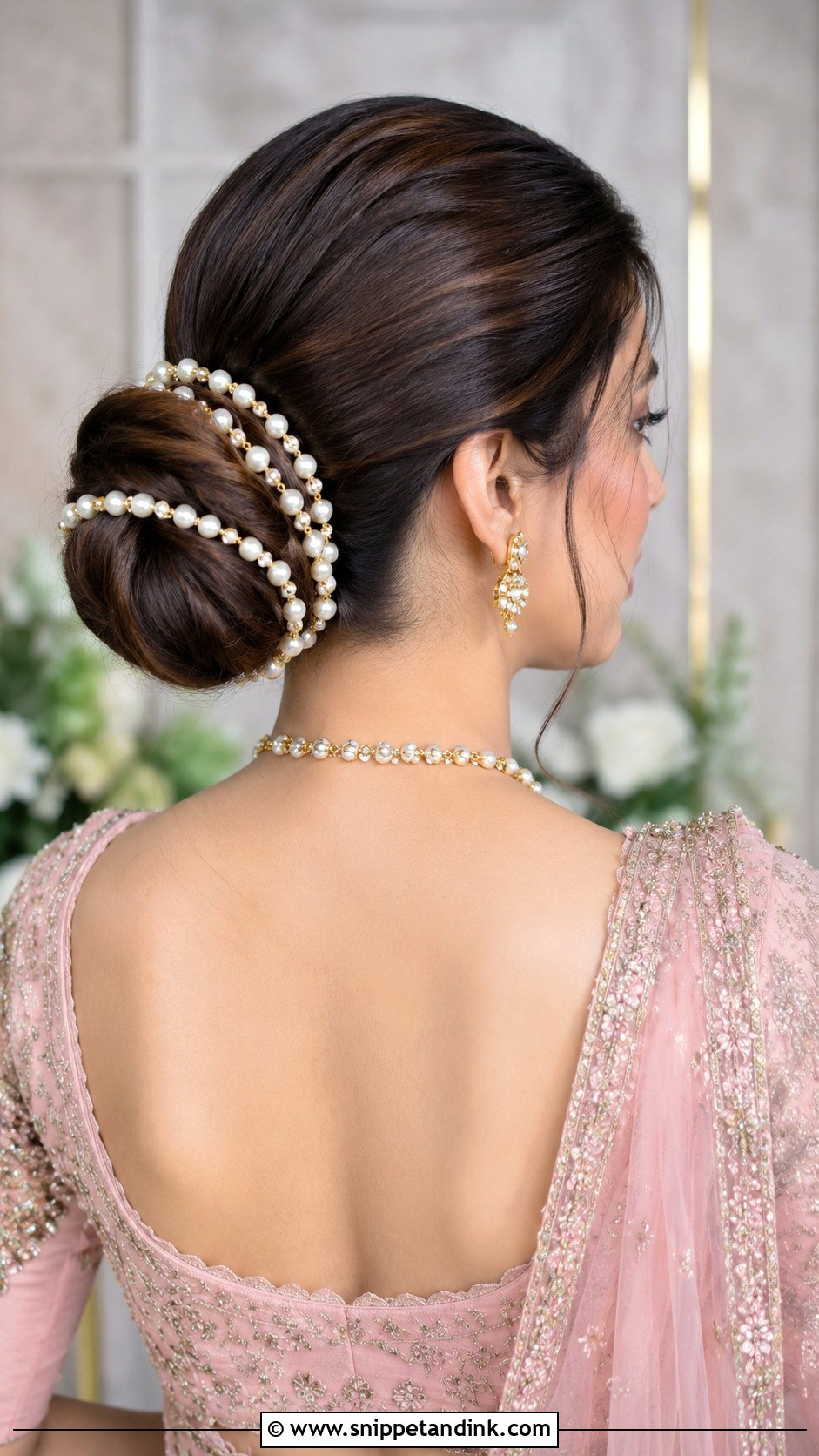
A pearl embellished bun is mostly about restraint. I keep the bun itself smooth and slightly lower than usual, then place pearl strings in curves that follow the shape instead of wrapping them round and round. Pearls are heavier than they look, so I sew or pin each strand at both ends and at the middle. This one sits well with pastel lehengas, minimalist jewellery and daytime or intimate weddings. A small floral cluster at one side breaks up the symmetry if it starts to look too formal.
8. Jada Billai Braid for South Indian Bride
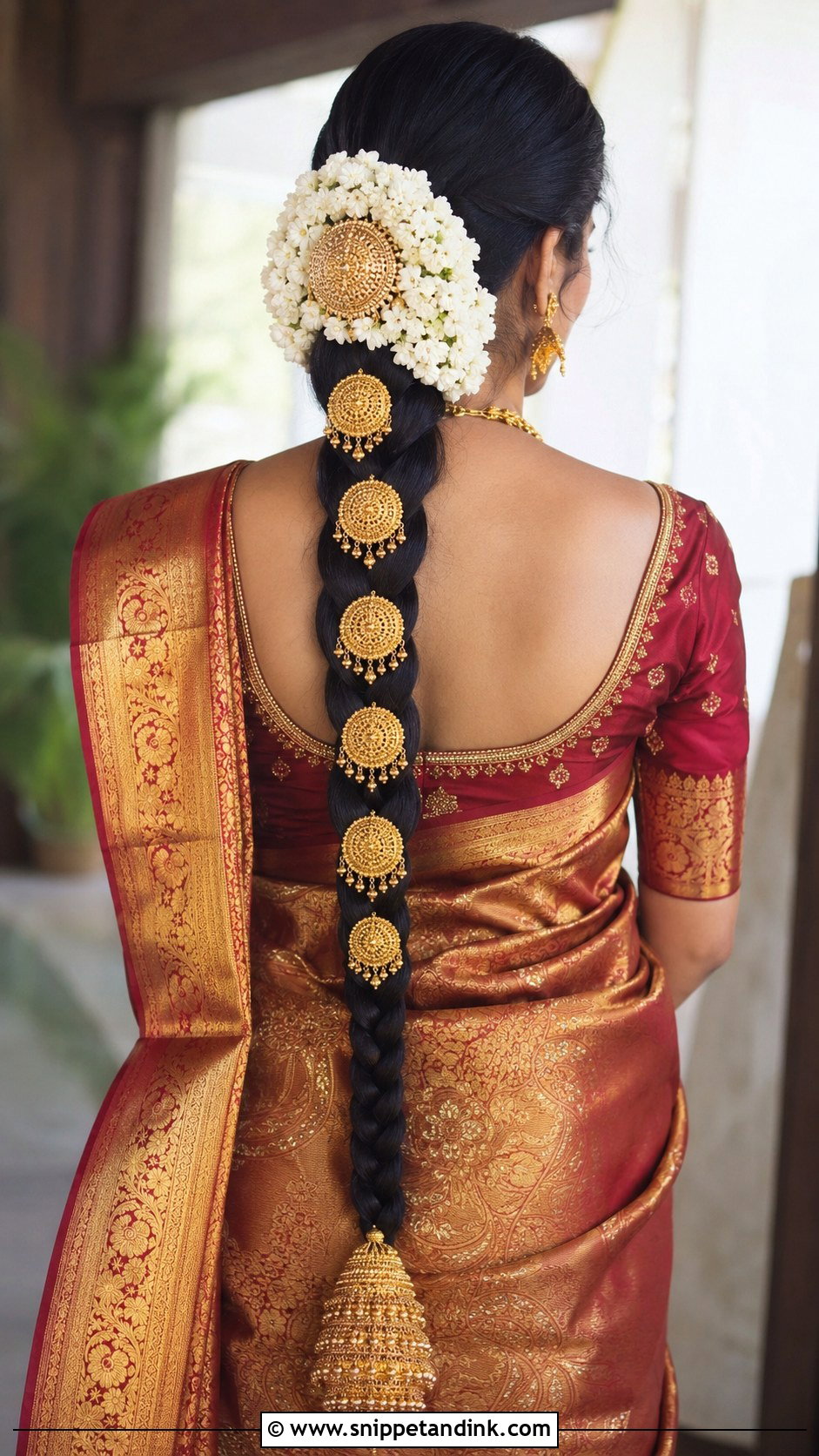
The jada billai braid is one of the richest pieces of South Indian bridal tradition, and it is genuinely heavy. The gold or gold-plated discs run down the full length of a long braid and usually finish in a kunjalam, the decorative tassel at the end, with jasmine framing the top. I always sew the jada onto the braid with thread at several points rather than trusting clips, because the weight pulls at the crown for hours. If your own hair stops above the waist, an extension braid underneath gives the ornament the length it was made for. It pairs naturally with a Kanchipuram silk saree and temple jewellery.
9. Half Up Half Down Bridal Hairstyle
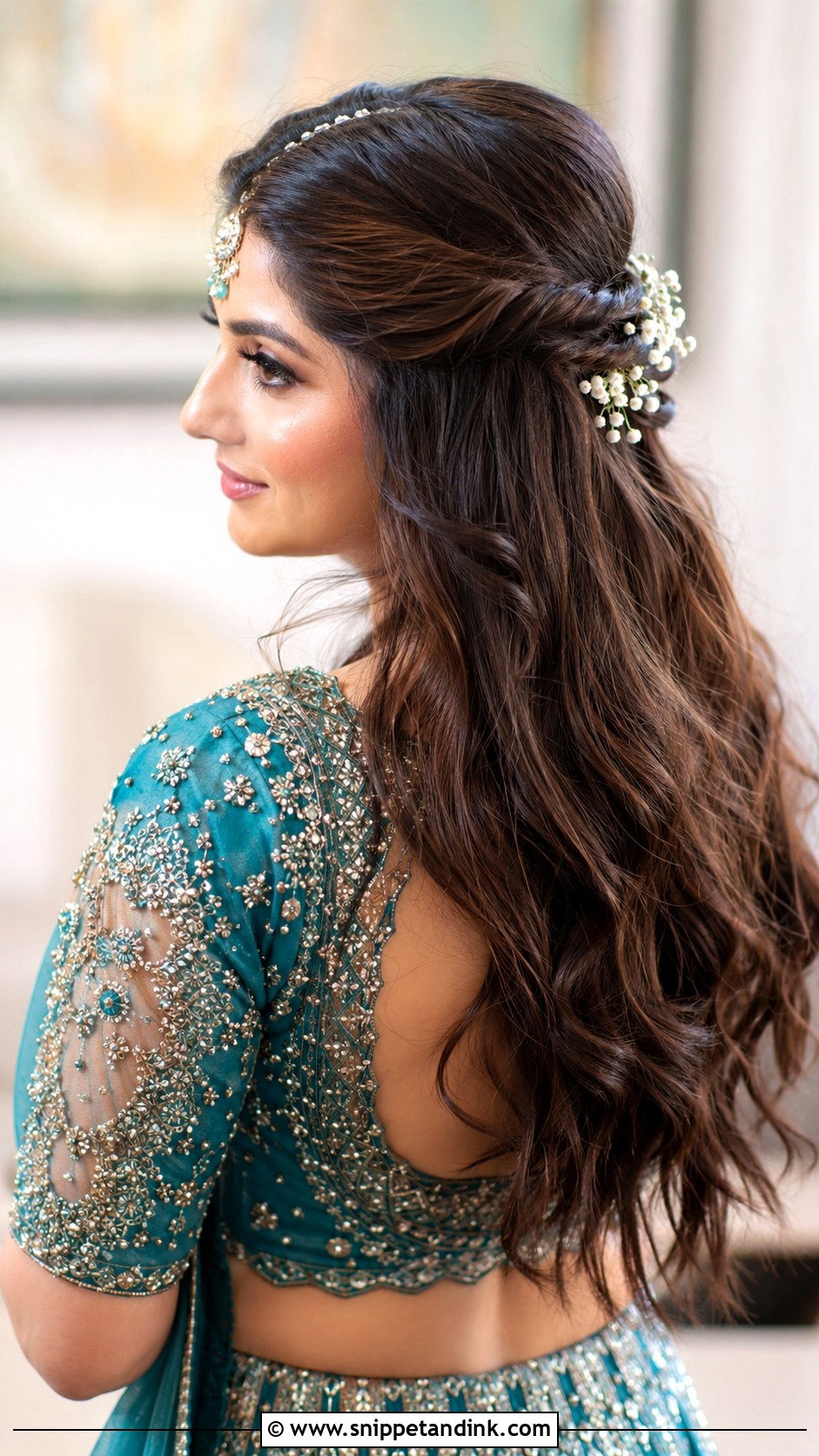
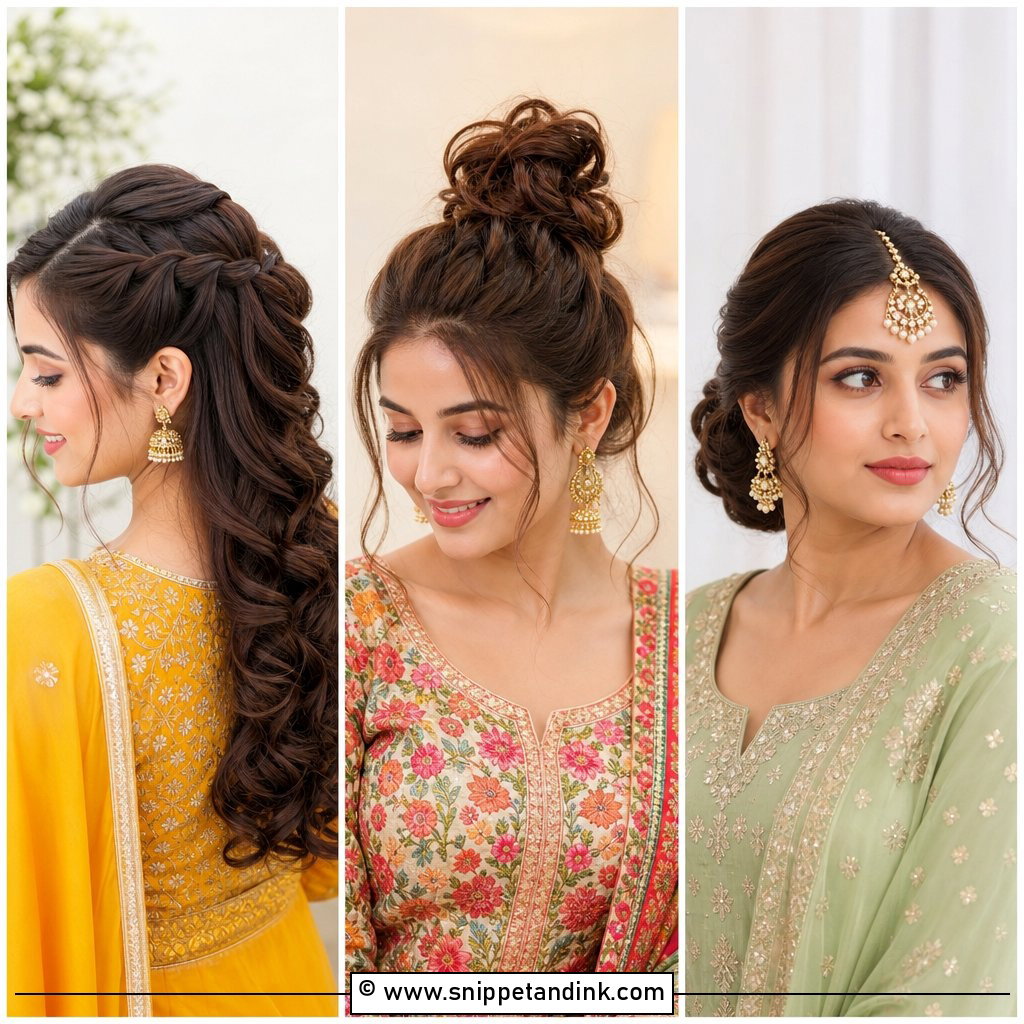
Half up, half down is the compromise style, and it’s a good one for sangeet and reception events. I secure the top section with crossed bobby pins under a small twist or braid so the decoration has a firm base. The loose lengths underneath are where things can go wrong: they need a curl set with heat and a light hold spray, or they flatten within a couple of hours of dancing. A maang tikka or floral pins finish it. Most face shapes and lengths can wear it.
10. Rose Twist Hairstyle for Bride
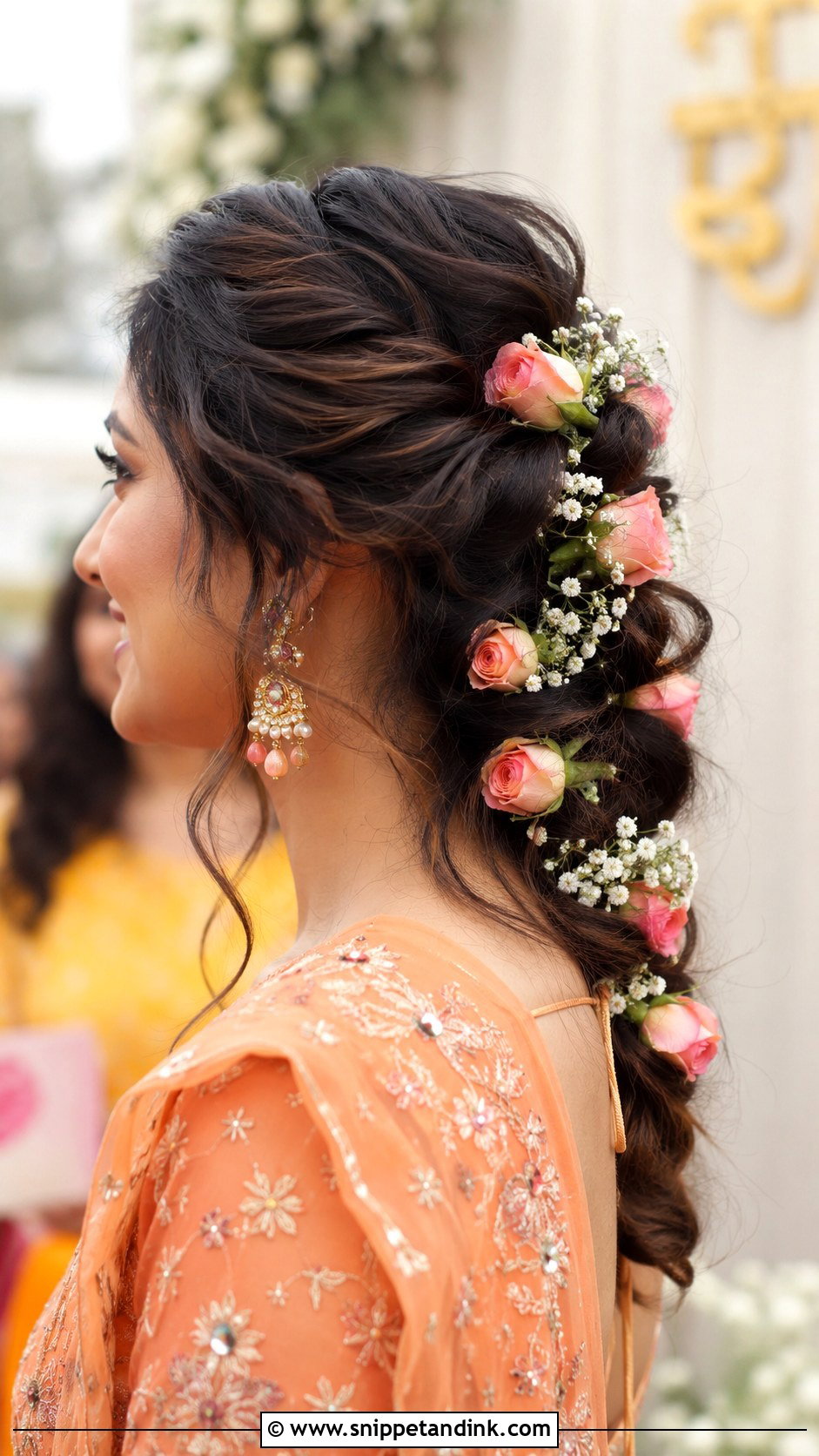
A rose twist puts fresh roses directly into twisted sections, either finishing in a low bun or left partly loose. Roses bruise easily, so I ask for tight buds rather than fully open blooms; they open naturally through the afternoon and still look fresh in the last photographs. Short wired stems pinned into the twists hold far better than glue. I’d use this for haldi, mehndi or a daytime ceremony, and pair it with dewy makeup so the softness carries from hair to skin.
11. Sleek Low Bun for Indian Bride
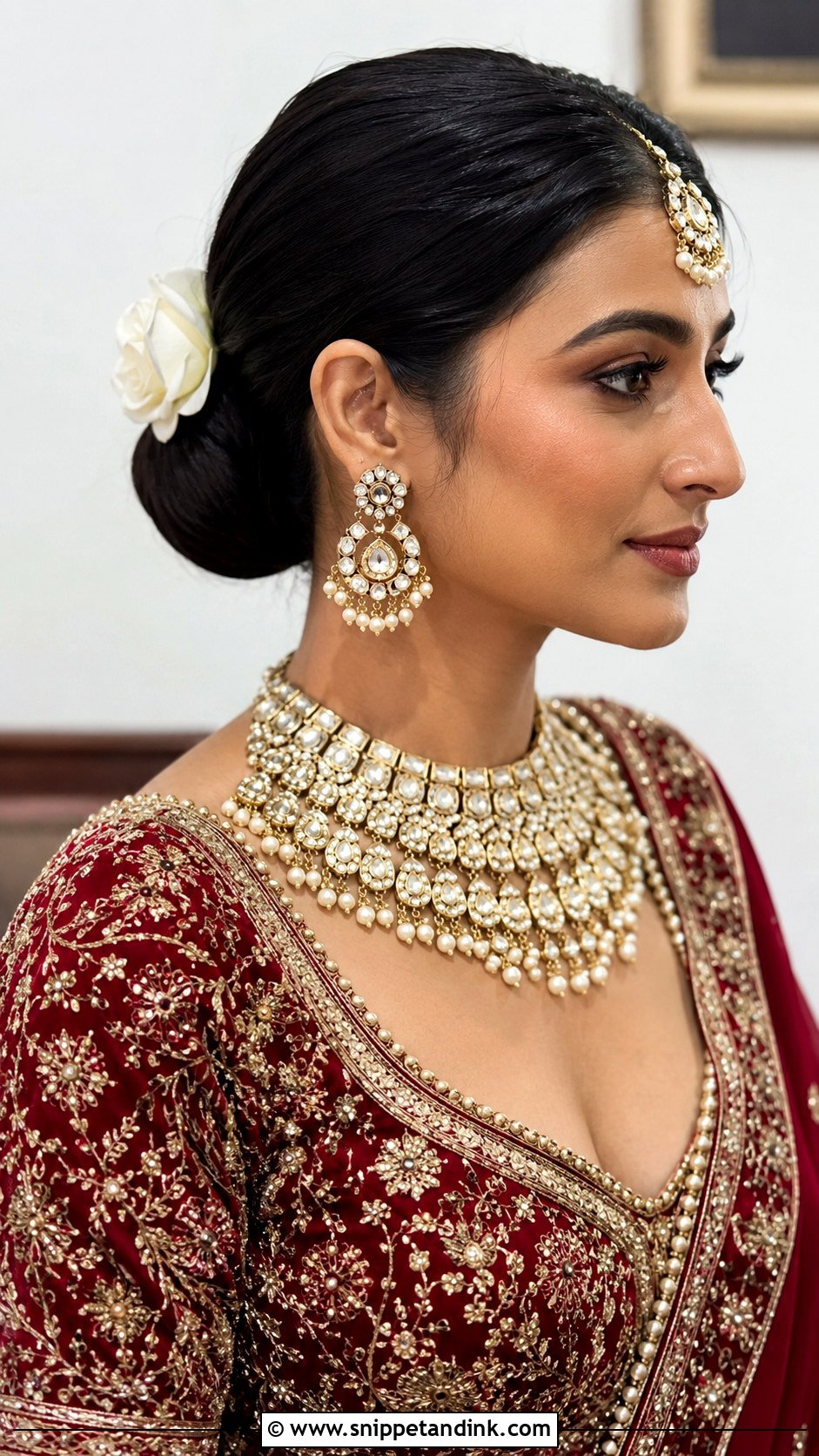
A sleek low bun lets heavy jewellery and a bold lehenga do all the talking. It sounds simple, but a truly smooth finish takes a firm brush, a bit of gel along the hairline and a tight elastic before any shaping starts. Bridal hair that is very layered or has short baby hairs at the nape will need extra care to keep it clean at the back. Once it’s in, it stays secure for hours and suits nearly every face shape. A maang tikka or one fresh flower is enough decoration.
12. Messy Bun for Mehndi Function
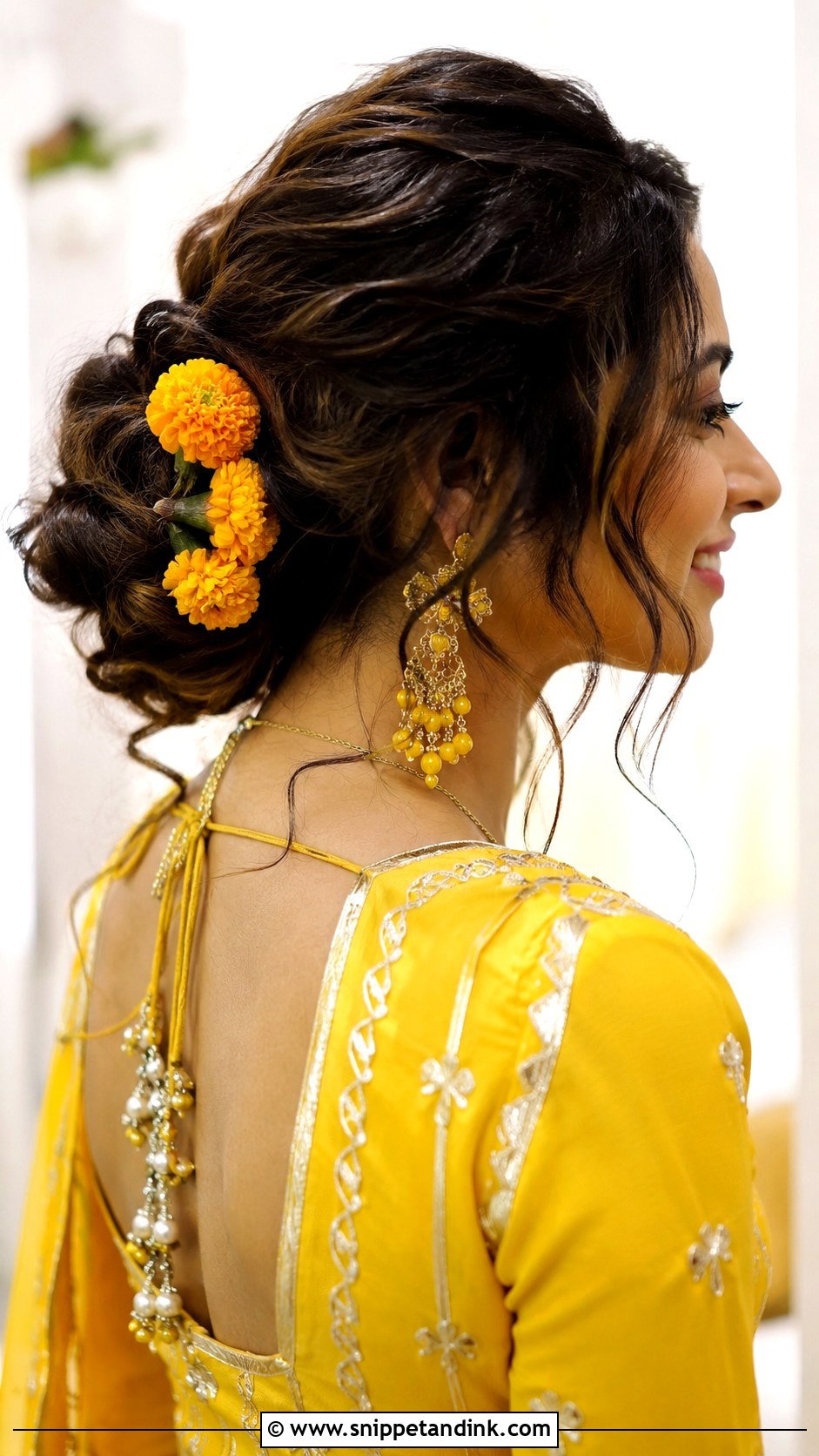
The mehndi function calls for something you can sit still in for hours, and a messy bun does that job. I place it slightly higher than a ceremony bun so it doesn’t press against a cushion or chair back while your henna dries. The face-framing tendrils are curled first, then loosened with fingers. Marigold flowers or gota accents tie in well with yellow and orange mehndi outfits. Make sure it’s finished before the artist starts, because you won’t be able to touch your hair once both hands are covered.
13. Bouffant Bun Hairstyle for Bride
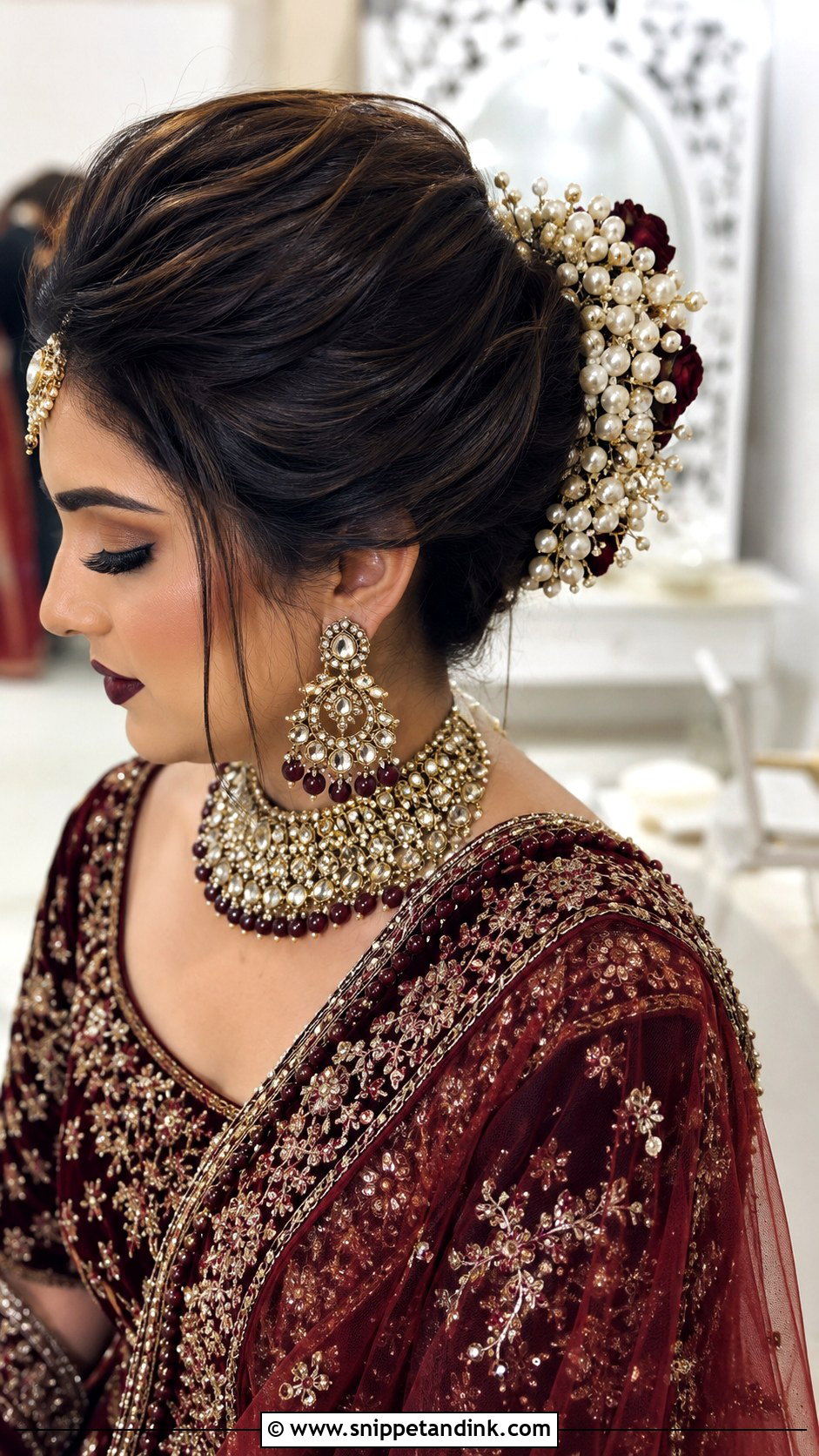
A bouffant bun adds height at the crown, which lengthens a round face and gives a heavy lehenga and dupatta something to balance against. I backcomb only the root of the crown section, smooth the top layer over it and lock it with pins before forming the bun. Fine hair benefits most from this style, because the lift creates fullness the hair can’t produce on its own. The one thing to check at your trial: if your dupatta pins near the crown, the bouffant needs to be firm enough to take that pin without collapsing.
14. Curly Open Hair for Bride
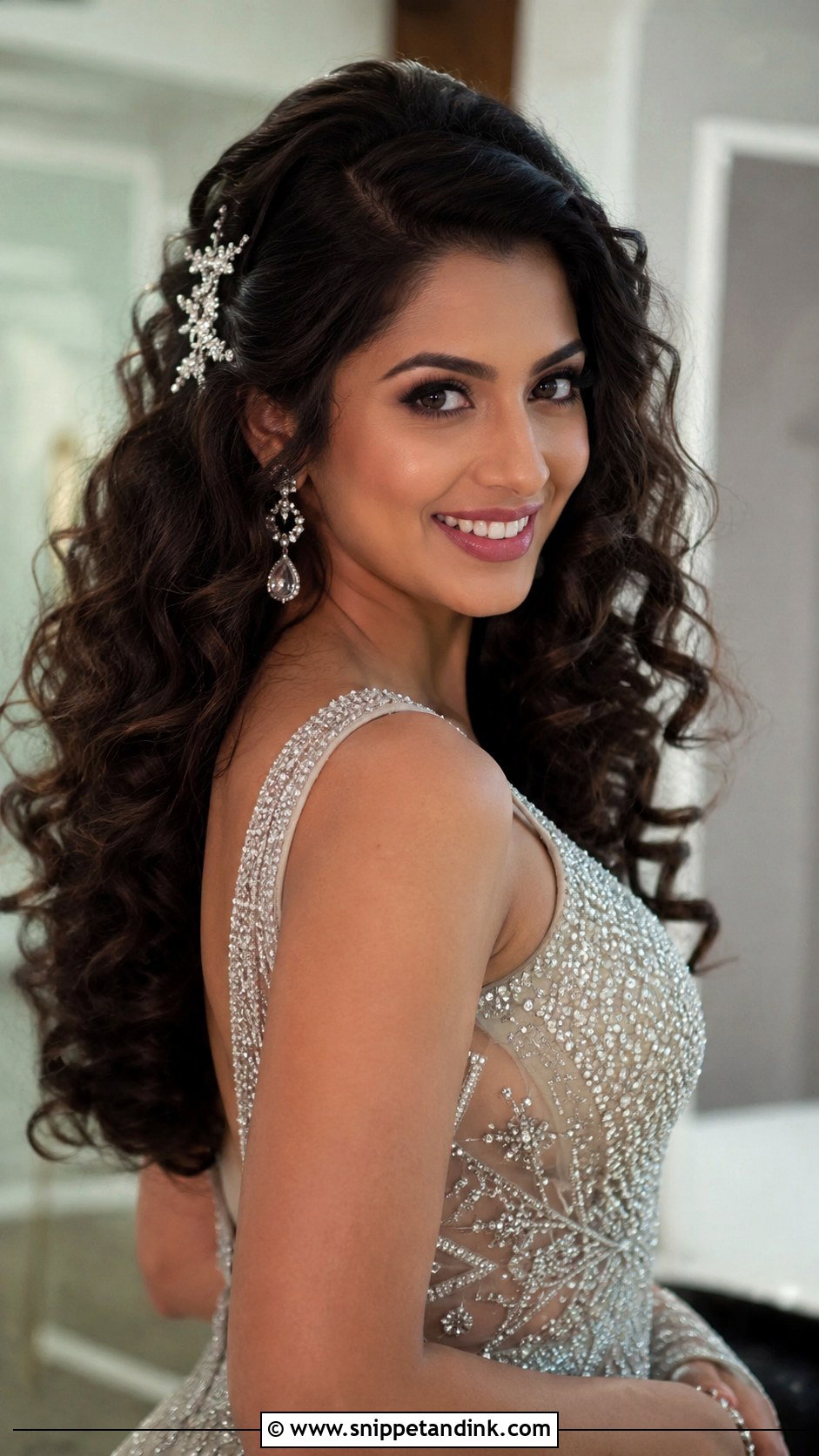
Curly open hair works best when the curl is already there or holds well with heat. I curl in smaller sections than you’d expect, let each one cool in a pin curl and only brush out at the last minute, because a curl that is touched while warm drops fast. Healthy, thick hair keeps its shape longest. For a reception gown or cocktail lehenga, a sparkly clip or maang tikka is plenty. In a humid summer venue, I’d honestly suggest a half-up version instead so the curls have a pinned section supporting them.
15. Marathi Bun Hairstyle for Bride
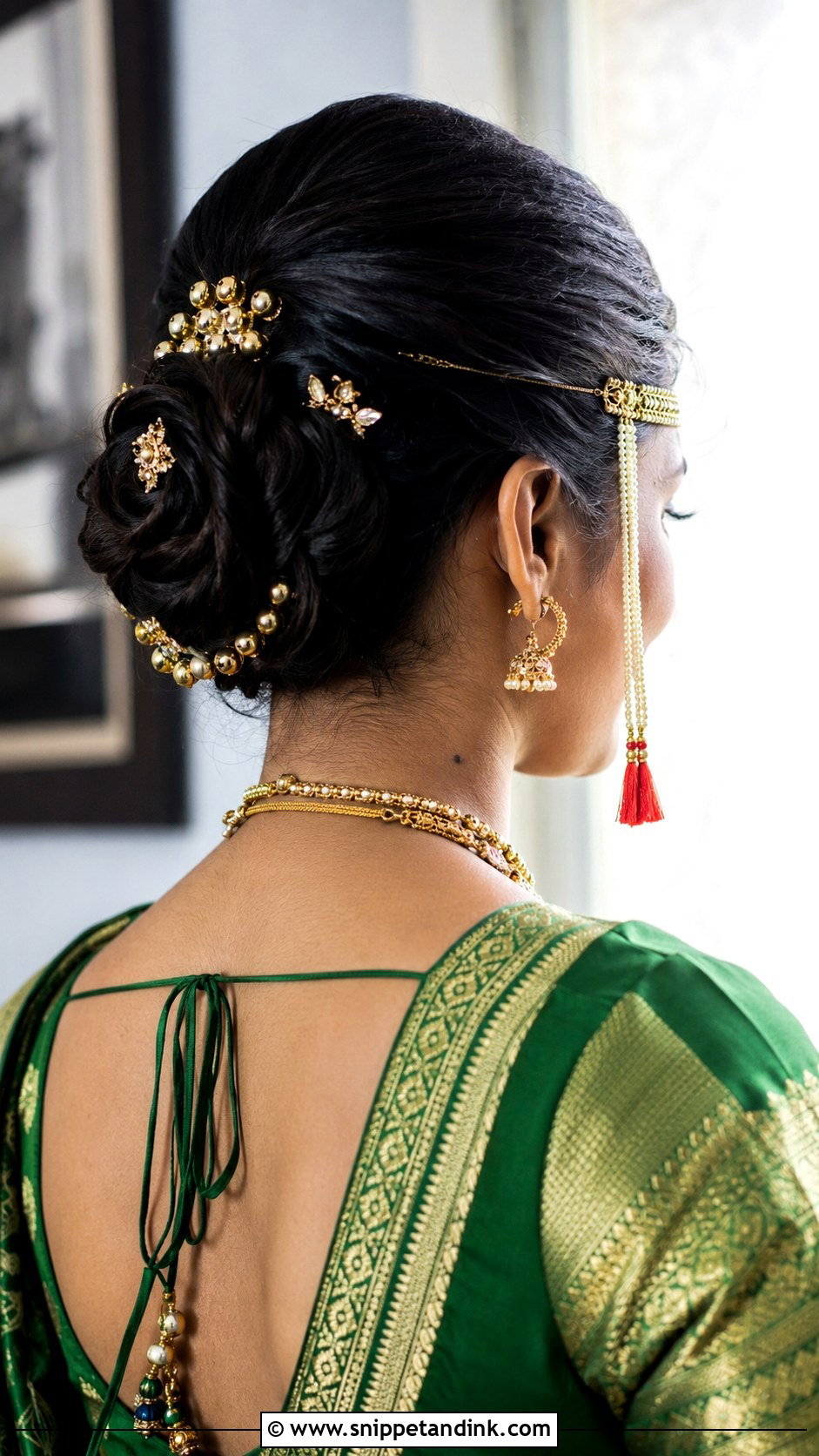
The Marathi bun is a regional style with its own set of ornaments. The bun is decorated with gold hairpins called vaki, sometimes covered with an ornate thaushi, and finished with a mundavalya of pearls or flowers tied across the forehead. Because so many pieces attach to it, I build this bun firmer and slightly smaller than a modern juda so the gold sits on top instead of sinking into soft hair. It belongs with a Nauvari saree and the Maharashtrian nath.
16. Flower Crown Hairstyle for Bride
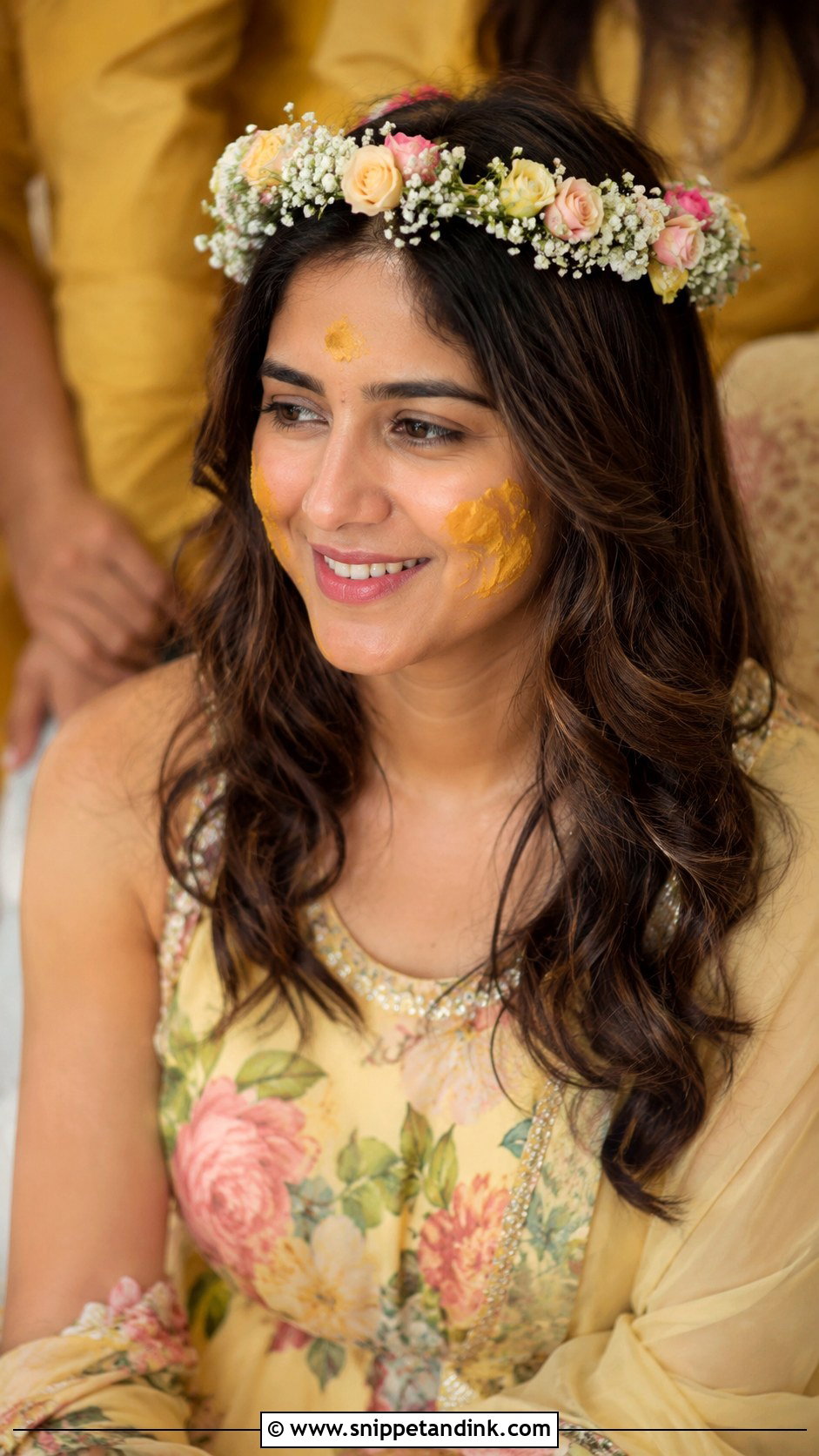
A flower crown works best on haldi, mehndi and outdoor daytime events, and less well on the main wedding day, where it competes with the dupatta. I have the florist build it on a flexible wire so I can shape it to your head before pinning it at four points. Open hair, a loose braid or a soft bun underneath all suit it. Choose flowers that will last in heat; small chrysanthemums and baby’s breath hold far better than delicate petals that wilt by noon.
17. Braided Crown for Indian Bride
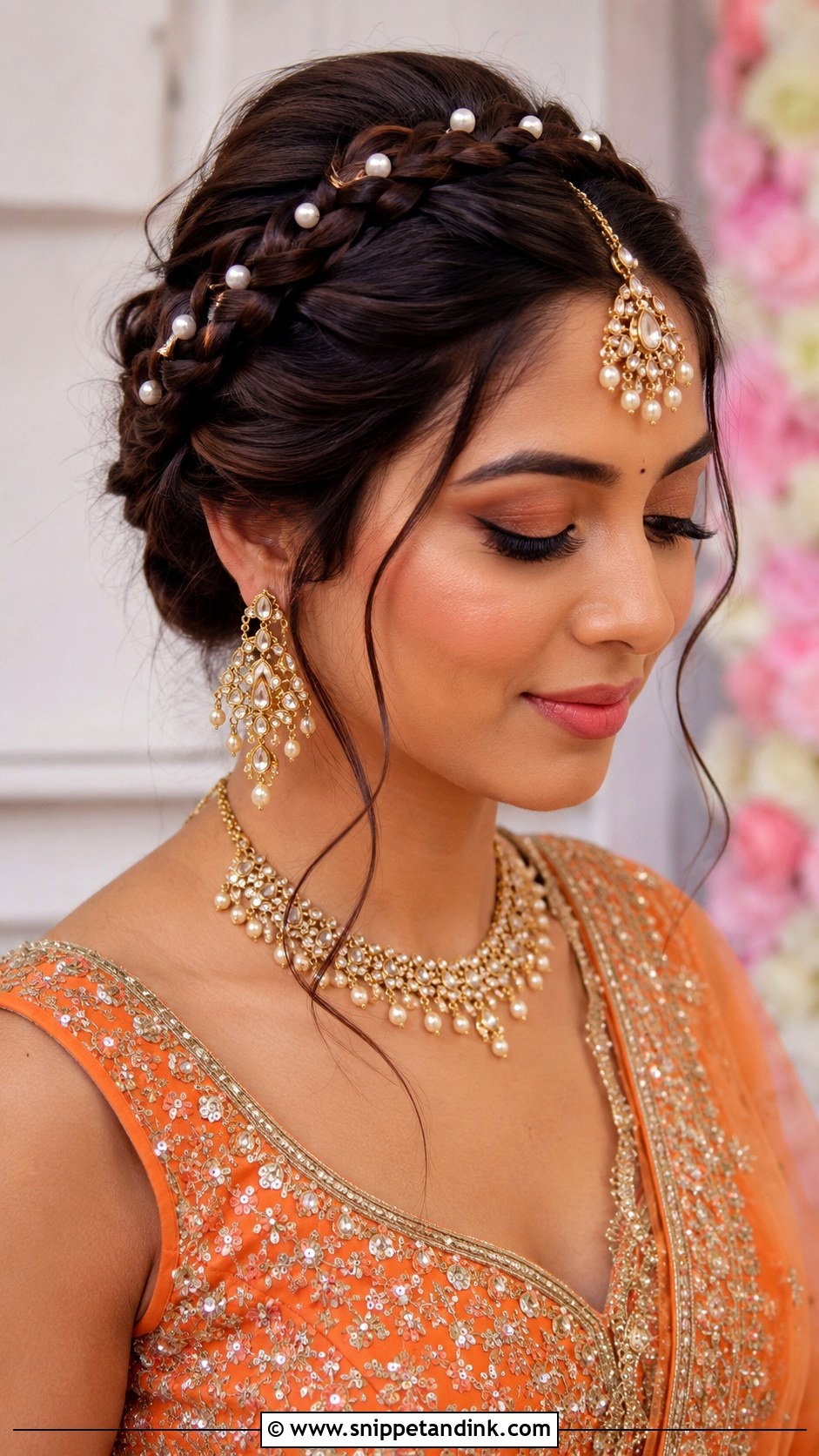
A braided crown keeps every strand off your face, which is useful if you’re wearing a heavy nose ring or statement earrings that catch in loose hair. I braid two sections from behind the ears and wrap them over the top, pinning each braid underneath so the pins don’t show. Small flowers or pearls can be tucked along the braids. The crown is very secure, but if your hair is shorter than shoulder length the braids won’t meet at the top without added hair. Most face shapes can wear it.
18. Hollywood Waves for Indian Bride
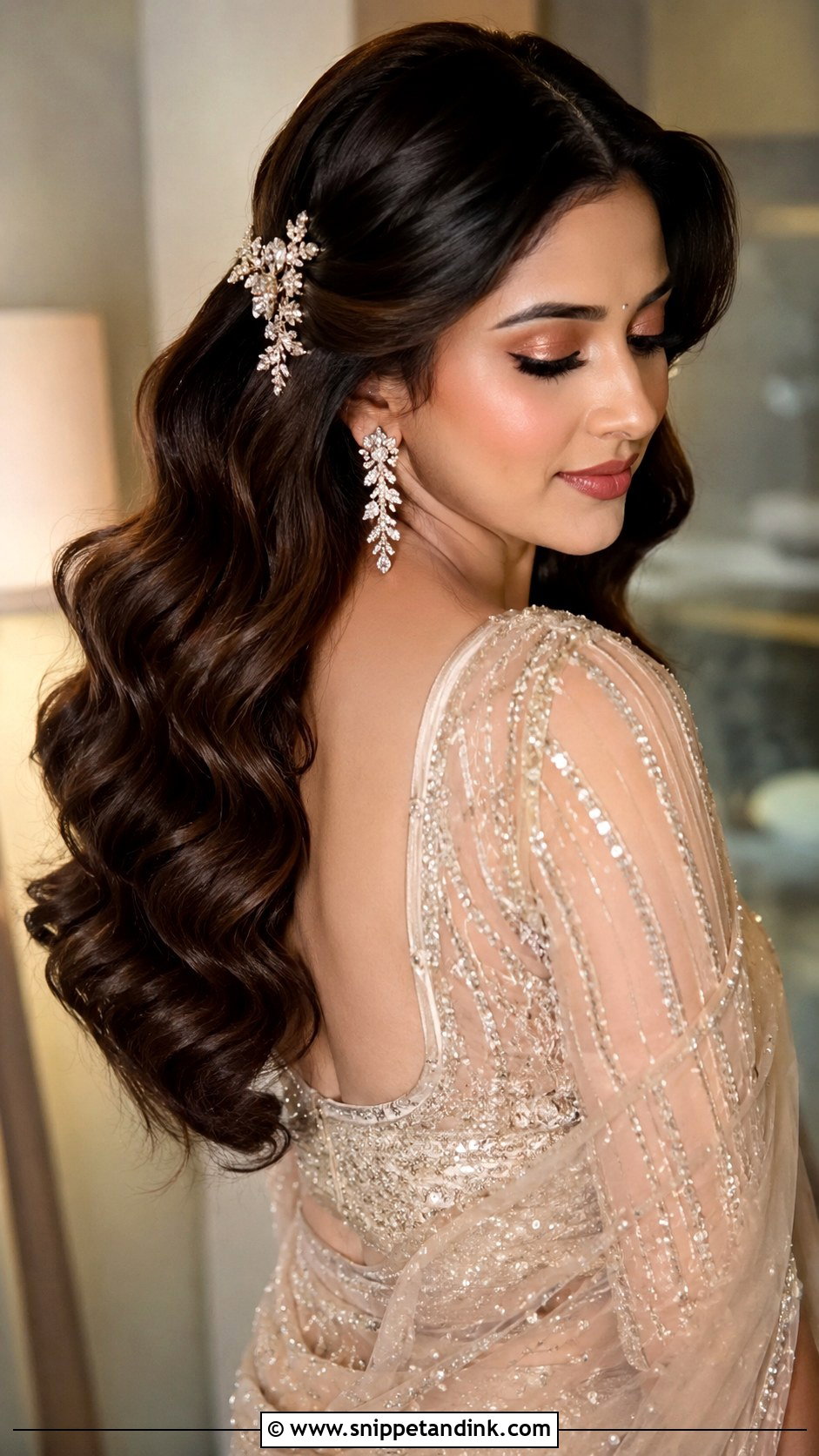
Hollywood waves bring old-cinema glamour to a reception, and they demand a lot of preparation. Every curl is set in the same direction, pinned to cool, then brushed together so the waves join into one smooth ripple. Long, healthy hair gives the clearest result. I’d keep this for a cocktail evening or a reception gown or saree gown, rather than for a ceremony with a dupatta, because the dupatta flattens the pattern. A single sparkly clip or statement earrings is all it needs.
19. Floral Veni Braid for Bride
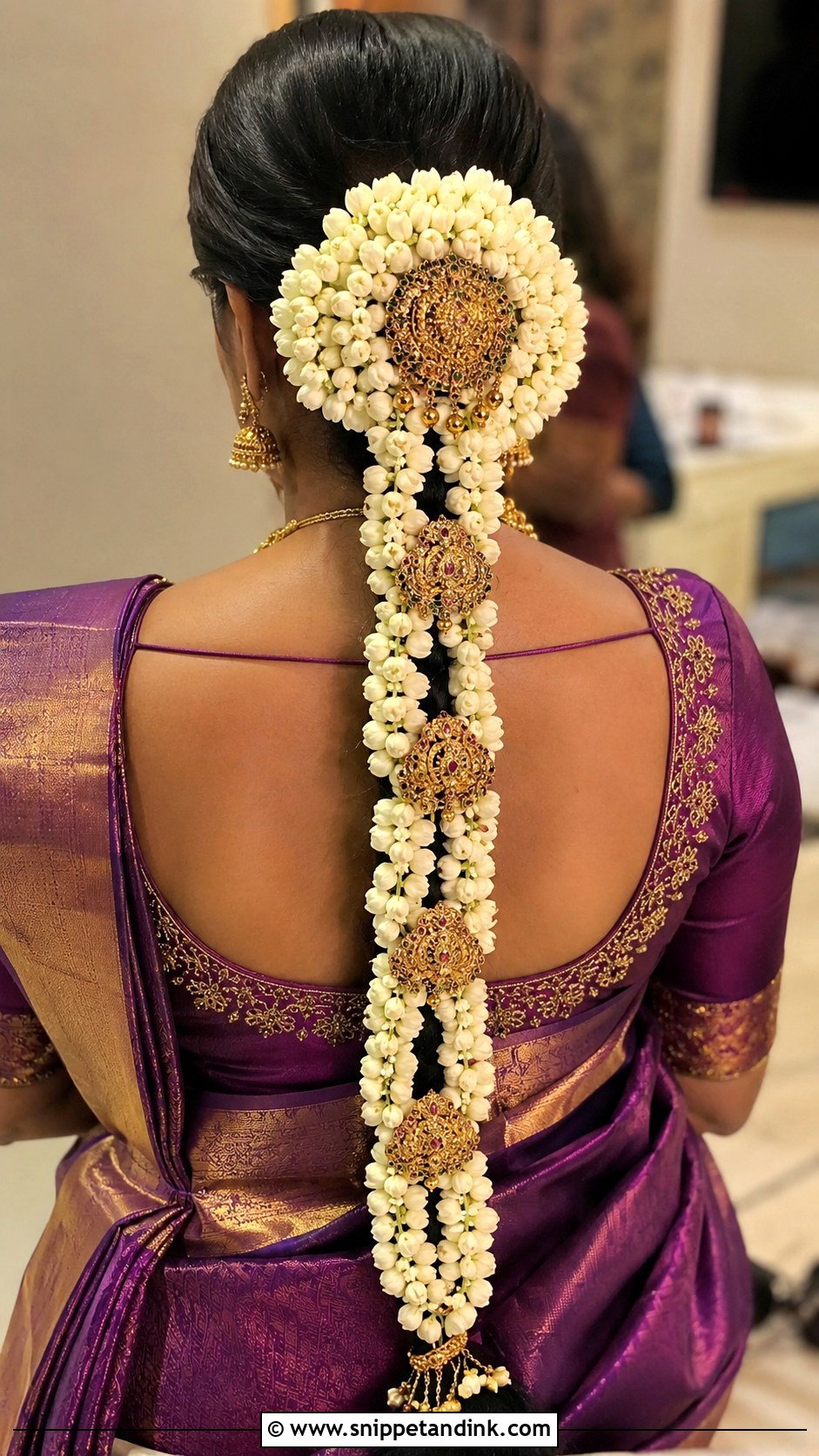
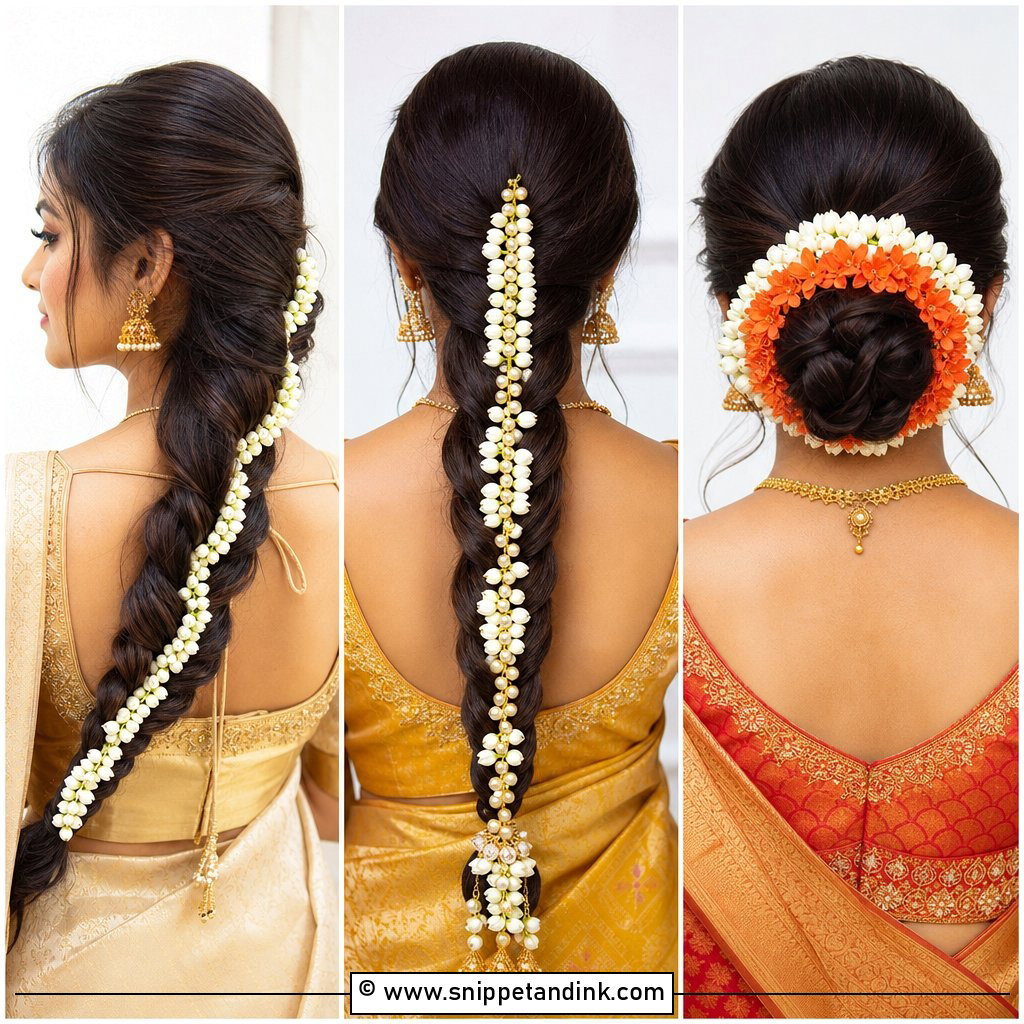
The floral veni braid weaves fresh jasmine strands into the length of a long braid, a South Indian tradition I love for pooja rituals and daytime ceremonies. I attach the veni at the top of the braid first, then wrap or weave it down so the weight is spread rather than hanging from one point. Jasmine against dark hair gives a clean contrast, and the scent stays with you for hours. Silk sarees and temple jewellery suit it naturally. Keep the veni in a damp cloth until you’re ready, because the buds bruise quickly when handled dry.
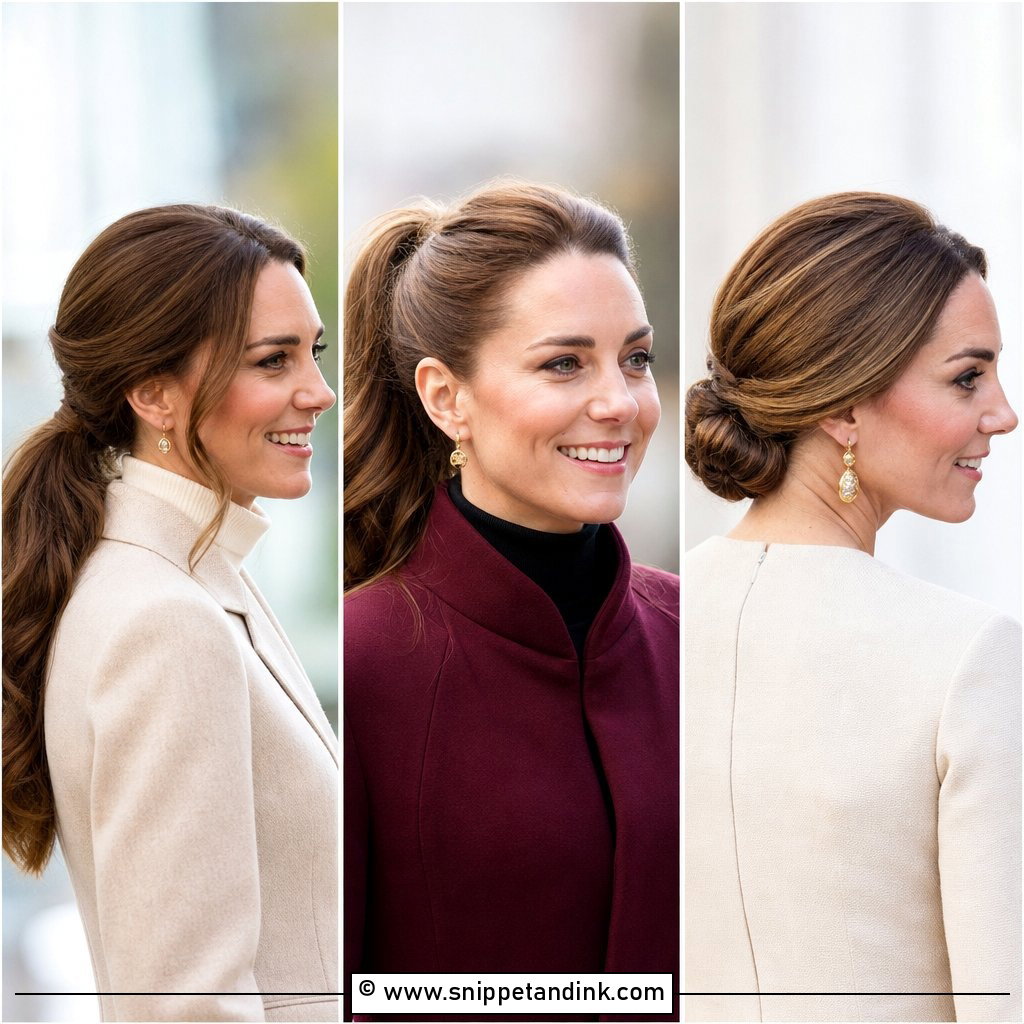
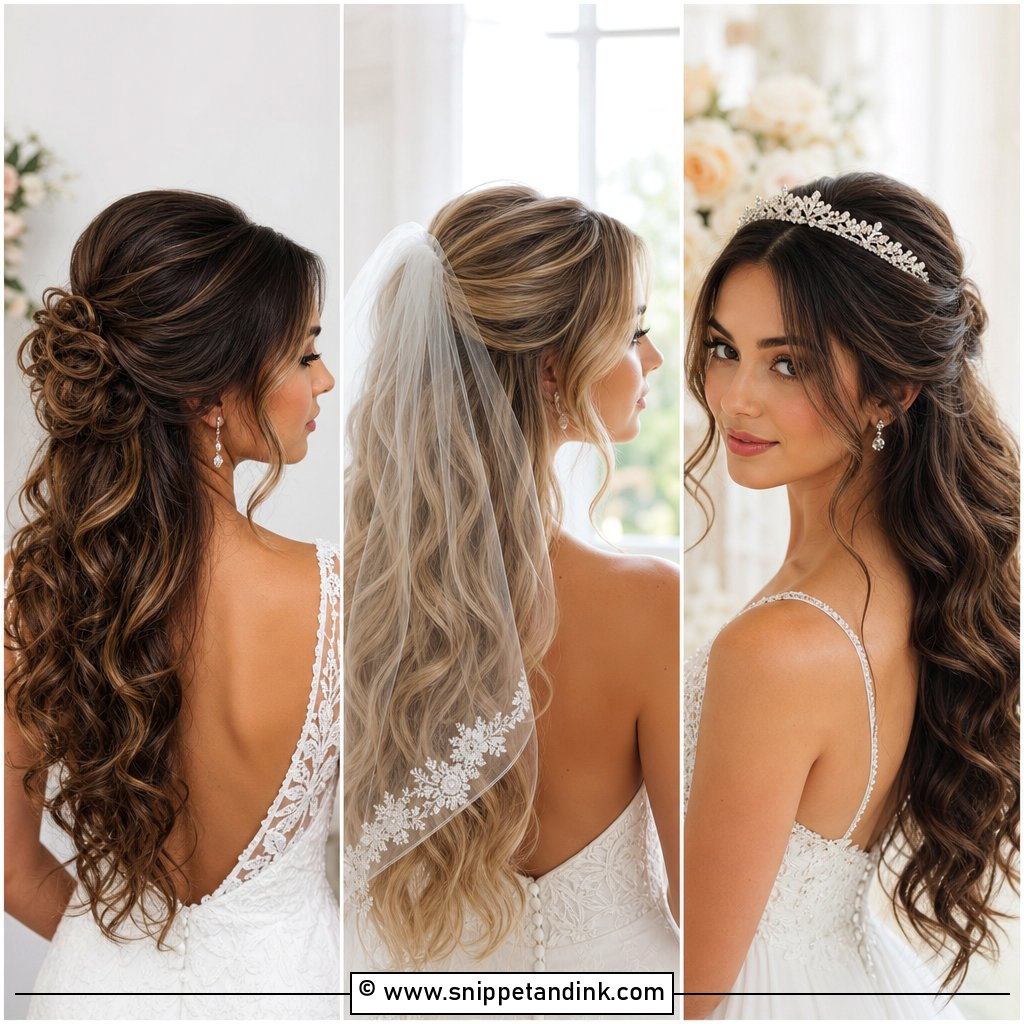

20. Twisted Updo for Reception
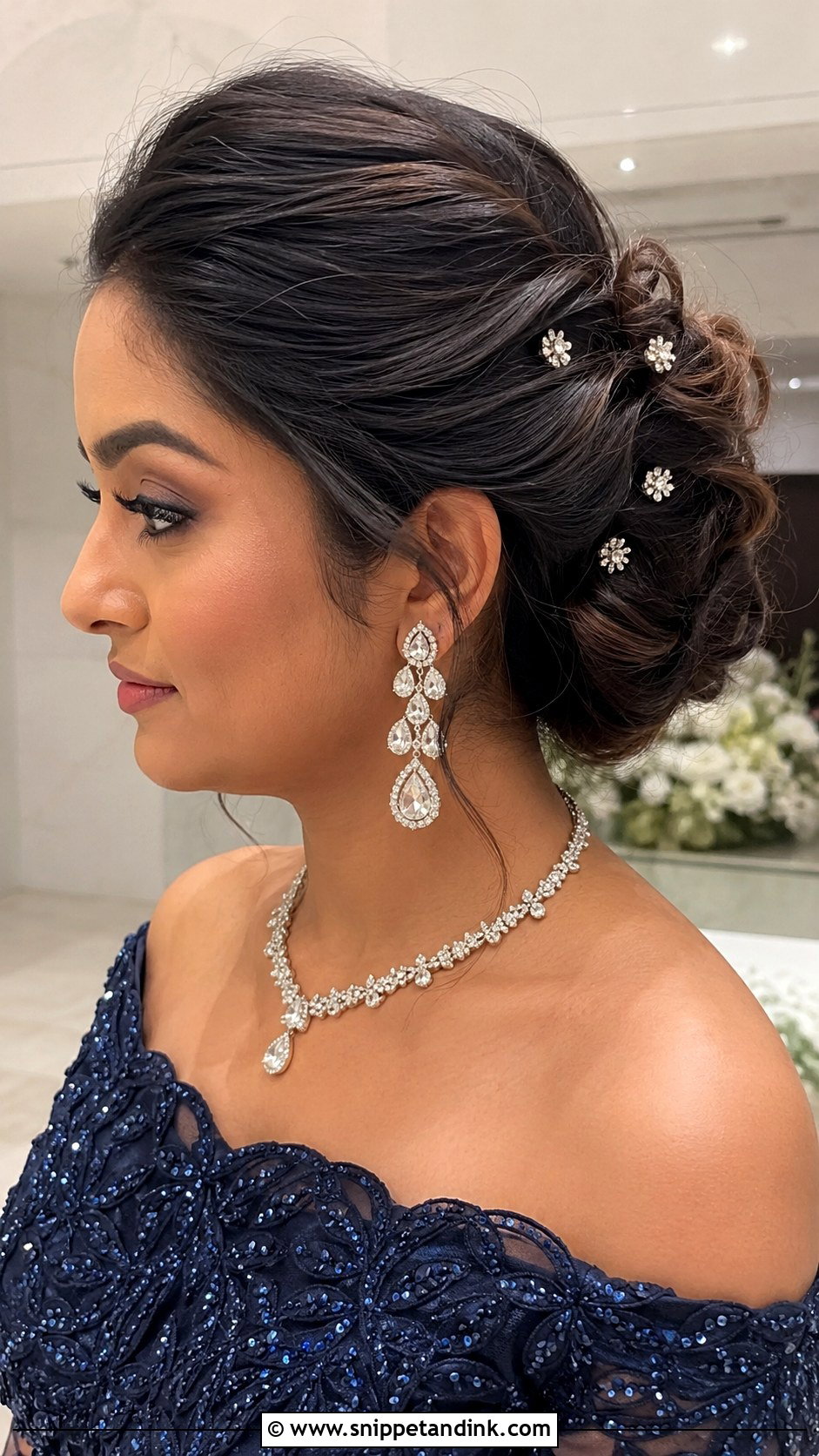
A twisted updo is my choice for a modern reception where the outfit has a strong neckline. Sections are twisted and pinned into a sculpted shape, and because each twist is pinned separately it’s quite forgiving if one piece loosens. It keeps hair off your face, so makeup and jewellery stay clear. Jeweled pins or one larger accessory finish the look. Medium to long hair works; very fine hair can be prepped with a texturising spray so the twists grip.
Carrying Jasmine and Gold Jada Through Hours of Rituals
Traditional South Indian and Maharashtrian looks carry real weight, and a headache halfway through the muhurtham is common if that weight isn’t planned for. A full jada billai, several gajra strands and a gold maang tikka can put strong pressure on a few pins at the crown. I spread the load across as many anchor points as I can.
- Sew heavy ornaments onto the braid with thread instead of hanging them from clips.
- Build a firm base with a bun filler or extension braid so pins grip something solid.
- Order flowers for the morning of the wedding and keep them wrapped in a damp cloth in a cool place until styling.
- Ask for buds rather than open flowers; jasmine opens and browns as the day warms up.
- Plan a second, lighter look or fresh gajra if the reception follows the ceremony on the same day.
Oil, Washing and Extensions in the Final Week
Many families oil a bride’s hair in the days before the wedding, and I’m all for it, but timing matters. Oiled hair is slippery, so pins slide and curls drop. I ask brides to finish oiling at least two days before a heavy styling day and wash thoroughly the day before or that morning, without a heavy conditioner on the roots.
If you’re planning a long braid or a full jada and your hair is shorter than you’d like, buy clip-in extensions or a ready braid weeks ahead and bring them to your trial so I can colour-match and cut them. Last-minute extensions rarely blend well under bright mandap lights. Finally, don’t schedule a fresh cut or colour in the final days; give it at least a couple of weeks to settle so any surprise has time to be corrected.
Testing Your Shortlist with the Real Dupatta and Jewellery
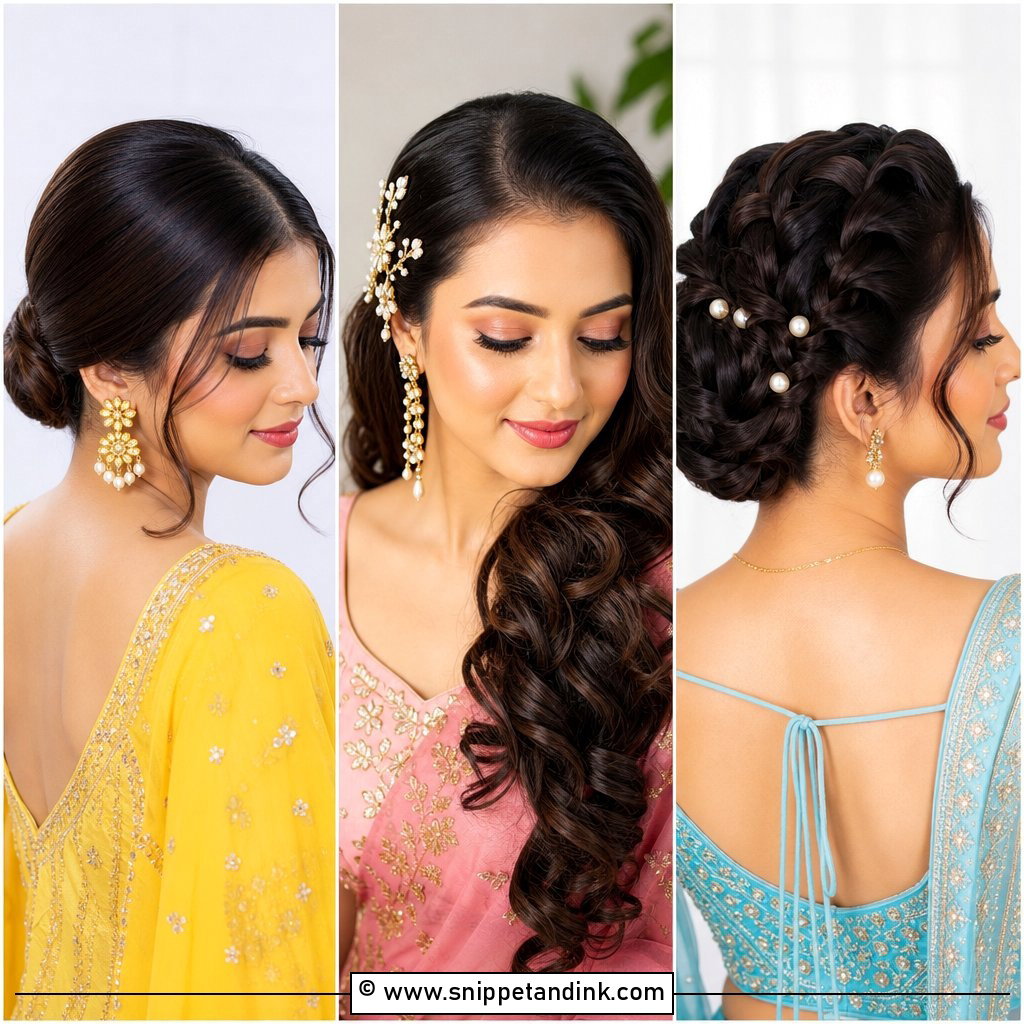
From traditional gajra buns and jada billai braids to modern Hollywood waves and twisted updos, this list has a lot of range. Start with the events, then the outfit, then the jewellery you’ll wear, and finally your hair length and texture. Soft braids and messy buns suit mehndi, while sculpted buns and polished waves suit the main day and the reception. Book a trial with the real jewellery and dupatta, because that’s where you discover what holds and what doesn’t. Wear what lets you forget about your hair once the ceremonies begin.
You'll Like These Ideas:




Leave a Reply