
A braid is the hardest-working hairstyle at an Indian wedding. It carries flowers, gold ornaments, extensions or a paranda, sometimes all at once, and still has to hang straight after five hours of rituals. I love braiding brides because the back view matters so much here; for most of the ceremony, that’s what the guests are looking at. The fifteen styles below run from classic South Indian looks to floral, modern and jewelry-heavy braids, and I’ve added what each one needs underneath to stay put.
Readymade Jadas, Clip-In Plaits and How Much Length You Really Need
Brides often think a long bridal braid is out of reach because their hair stops at the shoulder blades. It isn’t. For a South Indian jada or a jada billai braid, the plait has to reach at least the waist to look right, and very few people grow that naturally. What changes is how the length is added.
Hair below the shoulder blades
I braid a clip-in weft or a false plait in from the nape so it becomes part of the braid. Match the colour in daylight; most Indian hair is deep brown, and a jet-black extension shows a line where it joins.
Hair at the shoulder or shorter
A readymade jada, already braided and decorated, is pinned to a small bun or a short anchor braid at the nape. It looks complete from behind, and the bride carries far less tension than with a fully braided-in extension.
Either way, bring the extension or jada to your trial. I need to cut, blend and test it on your head, not unpack it on the morning.
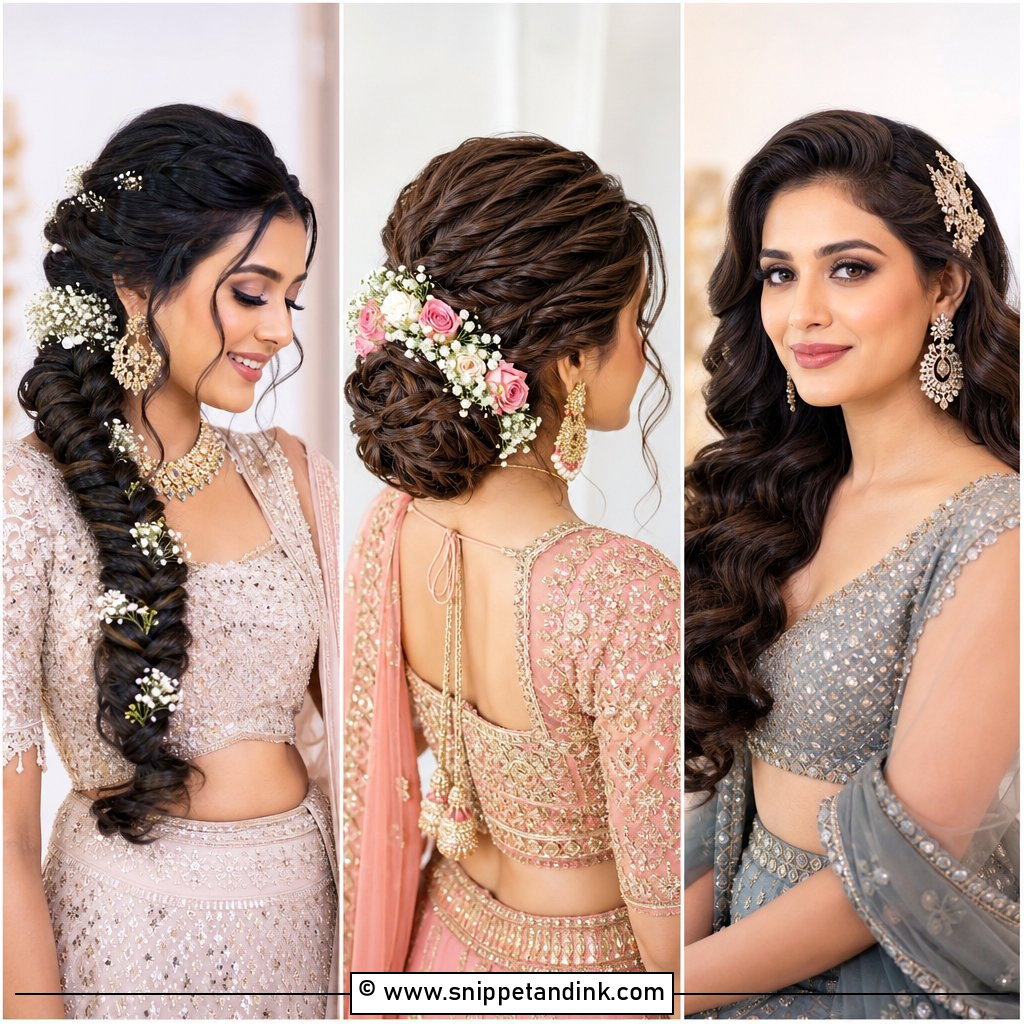
1. South Indian Bridal Braid
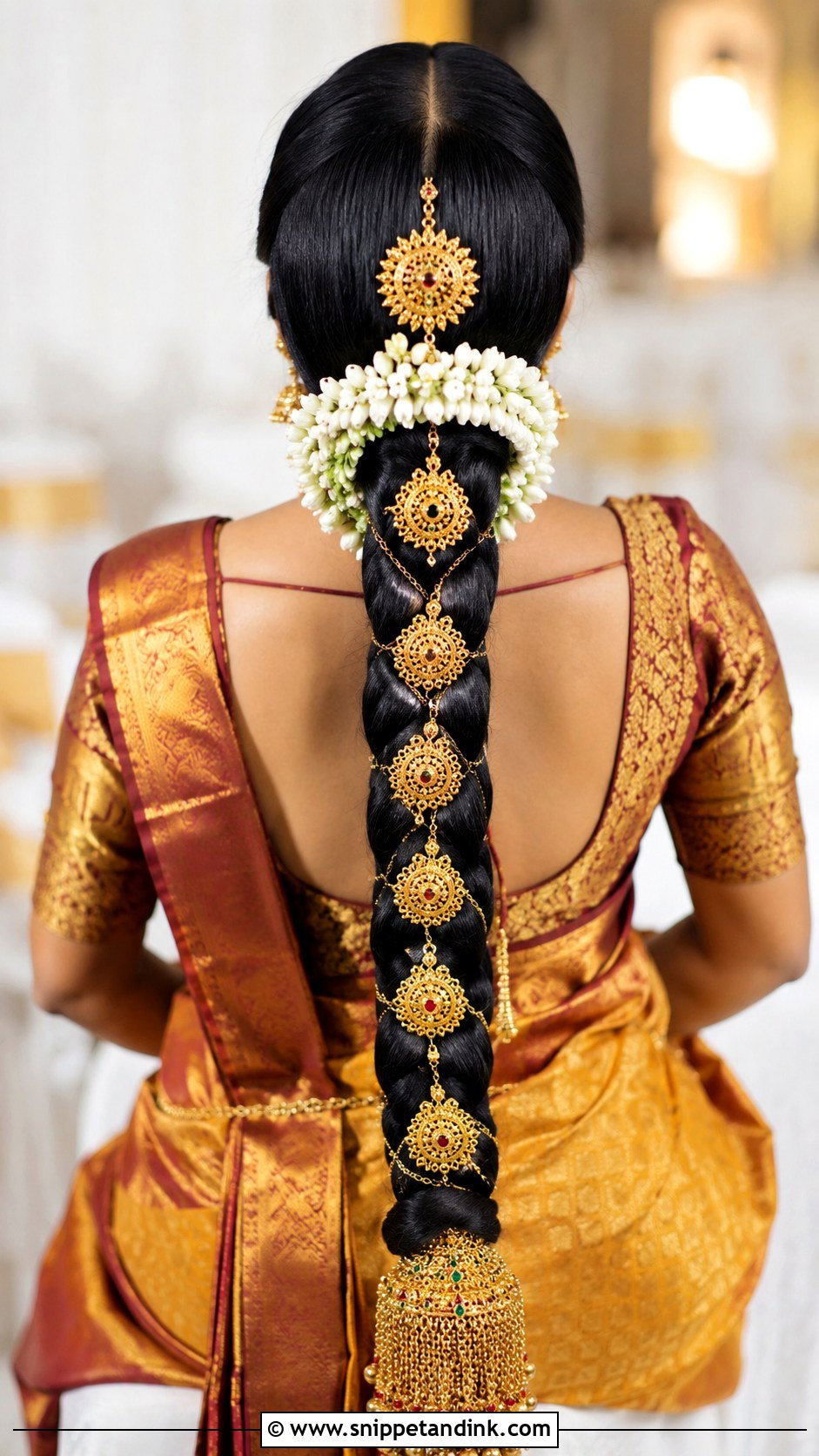
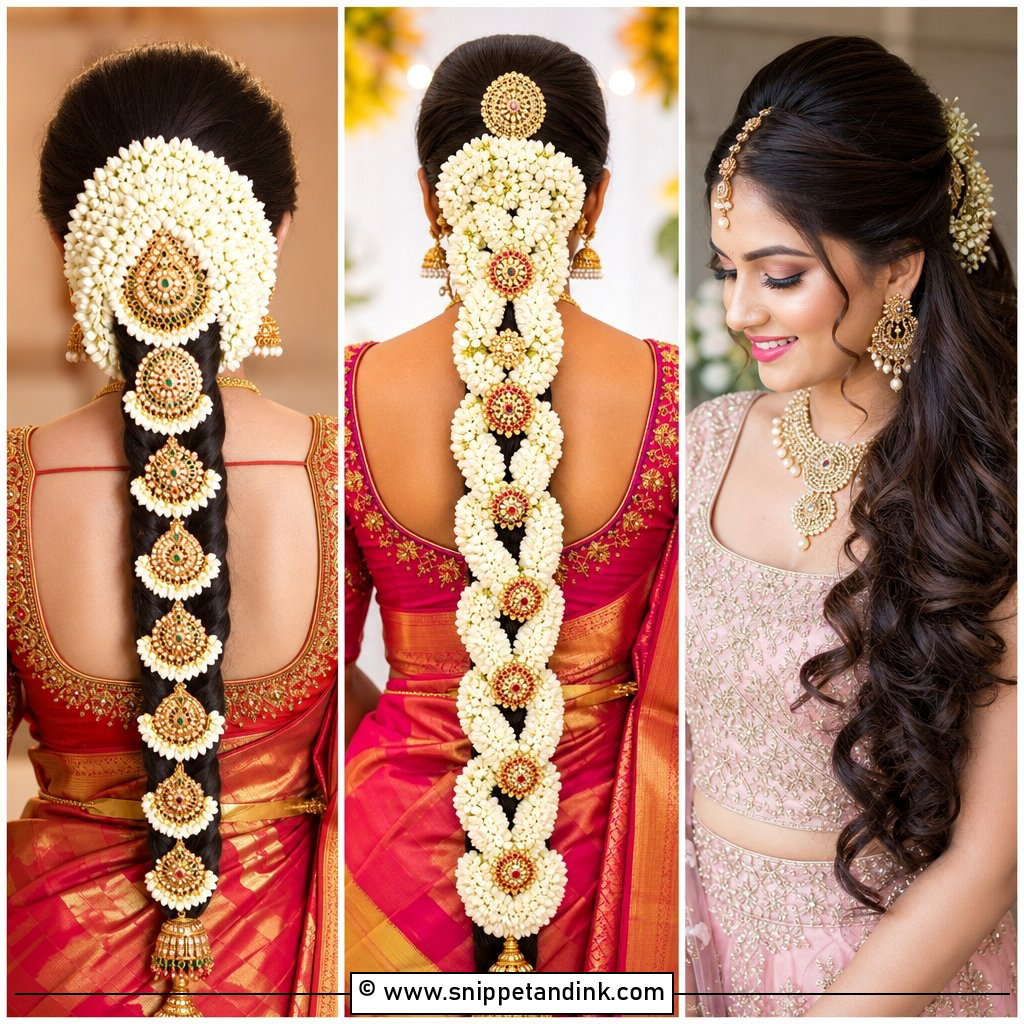
The South Indian bridal braid starts with a clean center part, a smooth crown and one long, thick plait down the back. Very few brides have the natural length and density for the full version, so I usually braid an extension in from the nape; it also keeps the plait straight, which the gold work needs. Jada billai run down its length, jasmine frames it and a kunjalam finishes the end. Tie the base tightly. A loose first inch makes the whole braid swing and tilt under ornament weight.
2. Indian Bridal Braid With Gajra
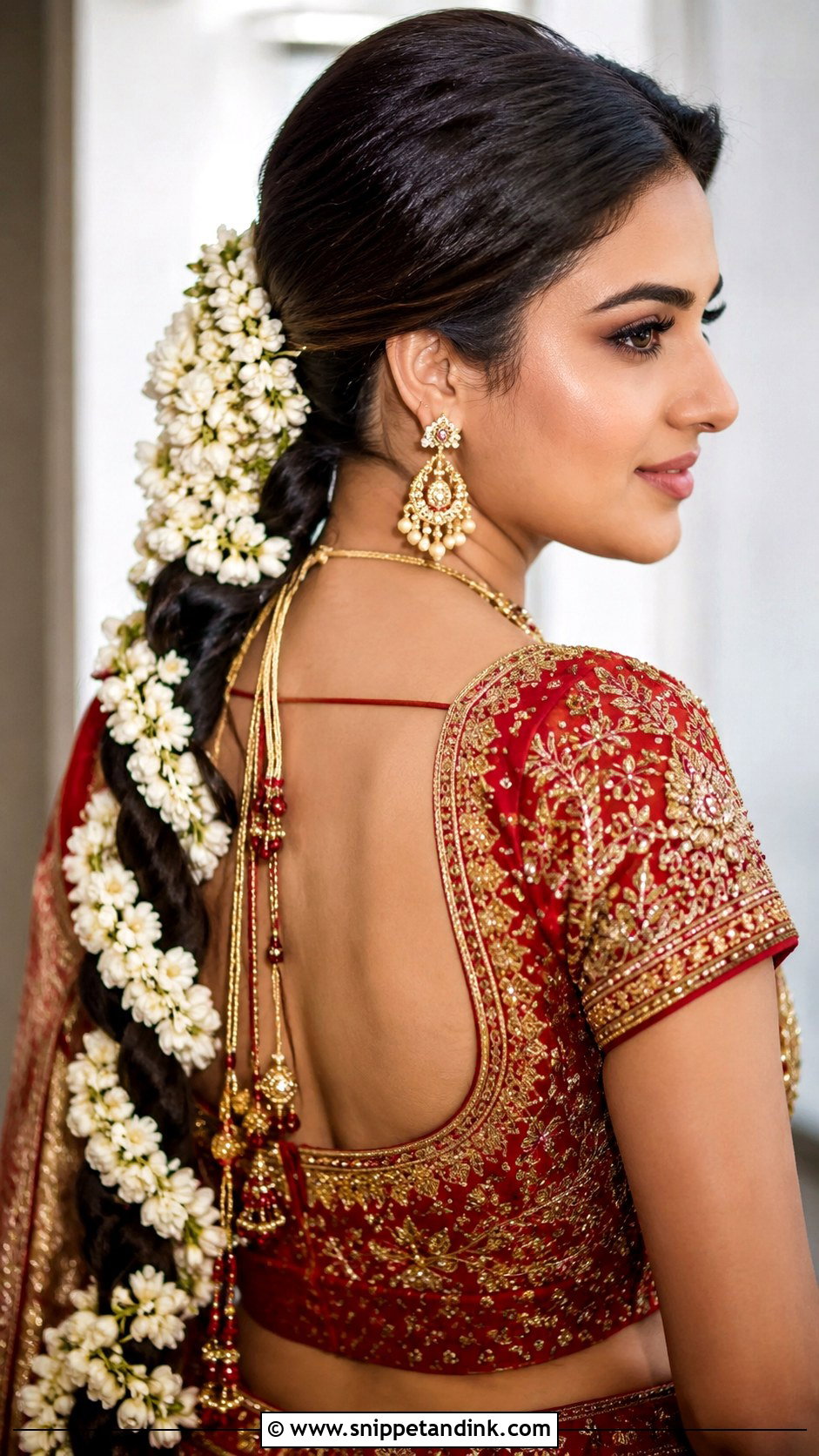
Gajra turns a plain plait into a ceremonial one. The braid itself can be simple, because the jasmine garland does the work, wrapped around the length or laid in loops and rows so white flowers stand out against dark hair. I secure each loop with a U-pin through the thread and into the braid, every few inches. Pin it more loosely and the gajra slides to the bottom of the braid by lunchtime. It sits well against red, gold, green or ivory.
3. Poola Jada Bridal Braid
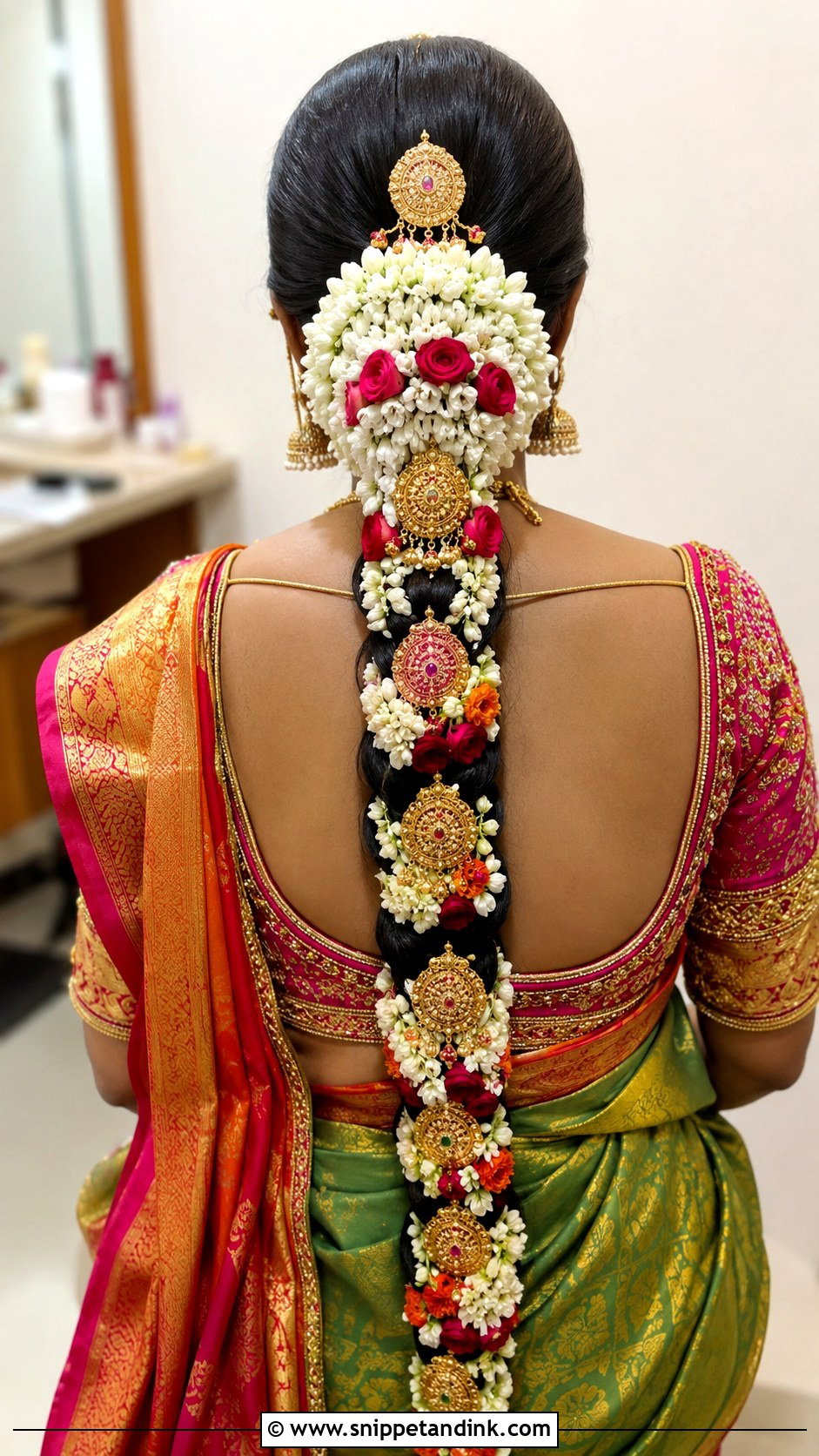
Here the braid becomes almost a floral garment. A poola jada is decorated in layers of jasmine, roses, marigolds or artificial flowers, often built on a backing that’s pinned along the plait. Fresh versions are heavy and get heavier as the flowers absorb moisture, so I’d only put one on a braid with a firm base and an extension through it. Many brides now match the colours to the sari border or the blouse. Keep the front quiet, a sleek part and a maang tikka, so the back carries the drama.
4. Indian Wedding Fishtail Braid
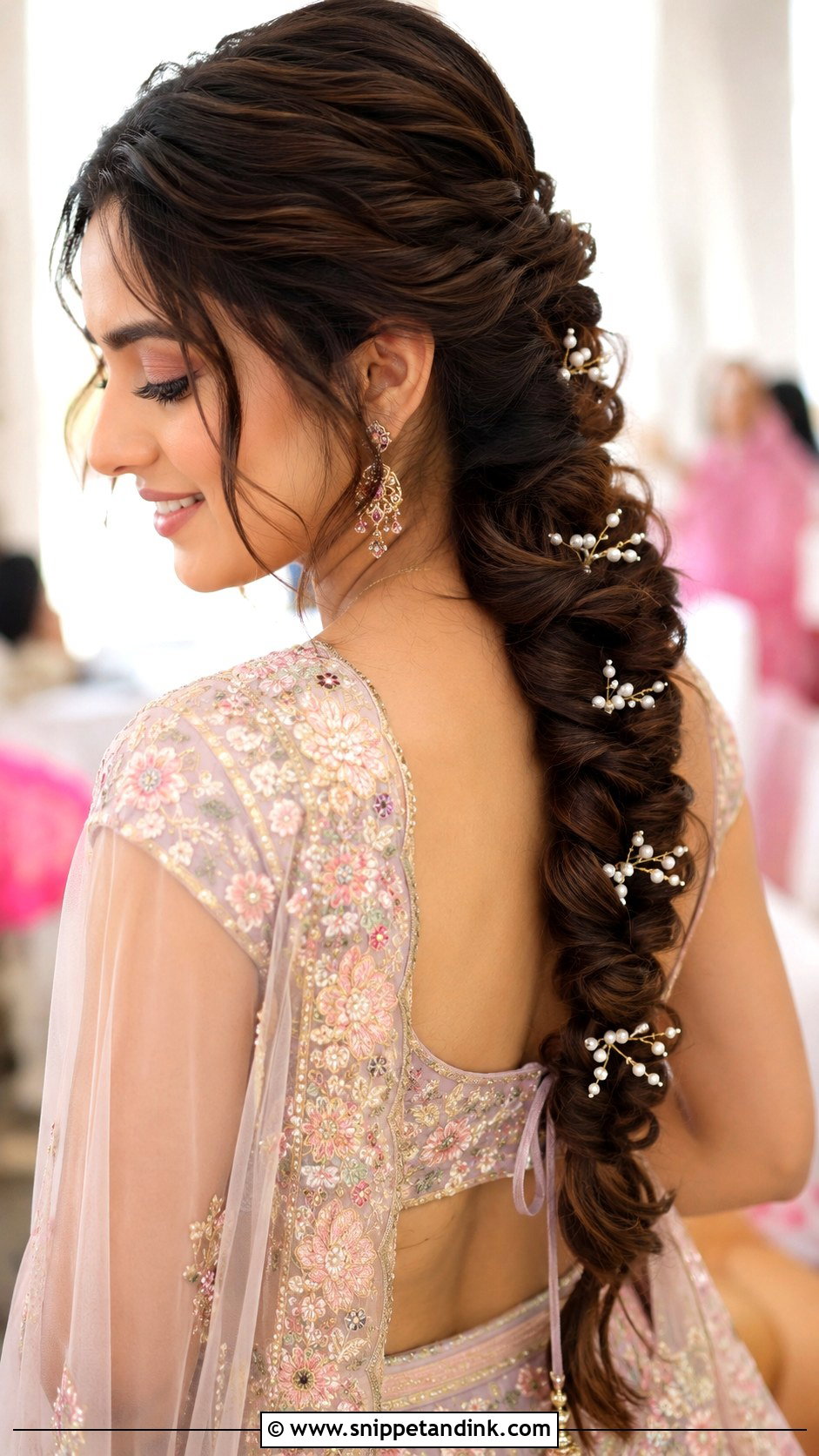
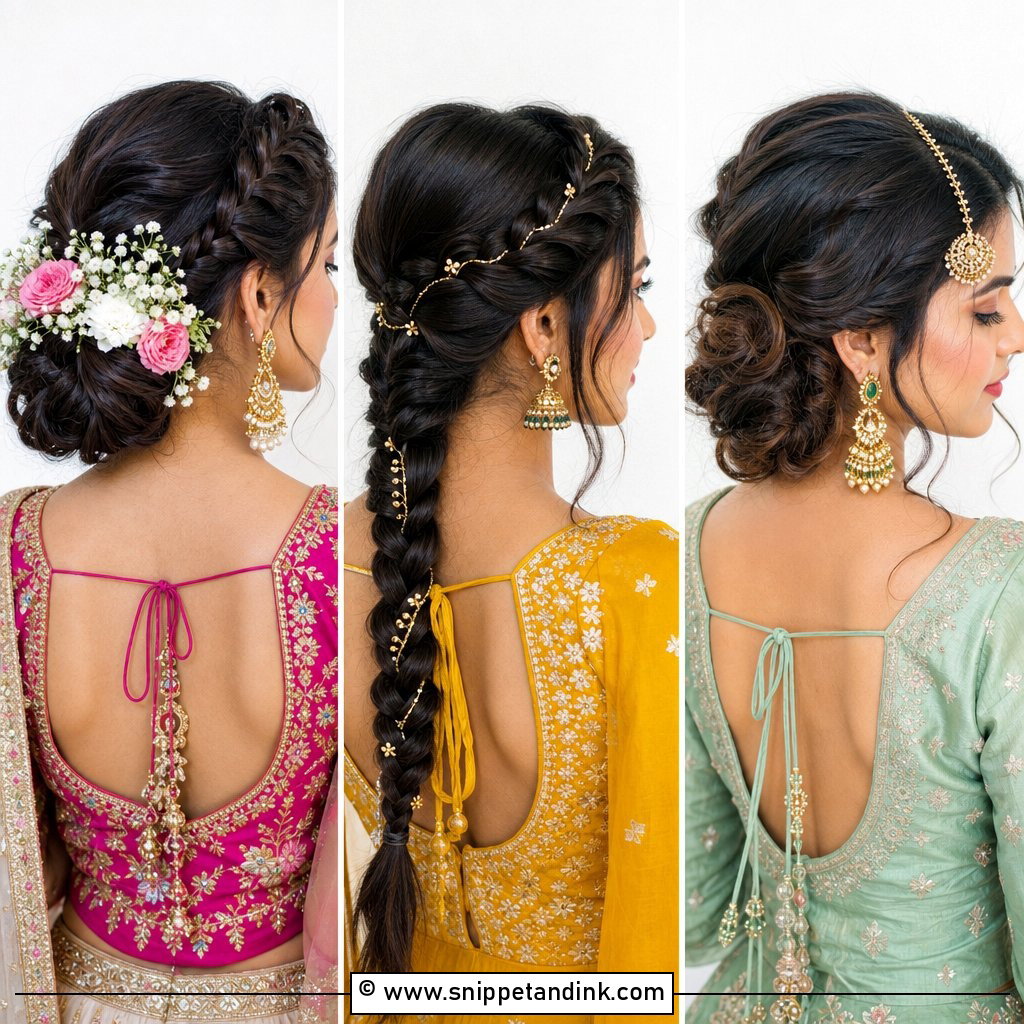
Fishtail is softer and more detailed than a three-strand plait, and it looks finished even with no accessories. For a wedding I braid it firmly, then ease the outer edges out for width; loosening a braid that was loose to begin with just makes it fall apart. Pearl pins, tiny flowers or fine gold accents suit it. With highlights or balayage, the small woven sections show off every tone, which is a nice bonus in photos. It works well with lehengas, pastel saris and reception outfits.
5. Indian Wedding Braid With Maang Tikka
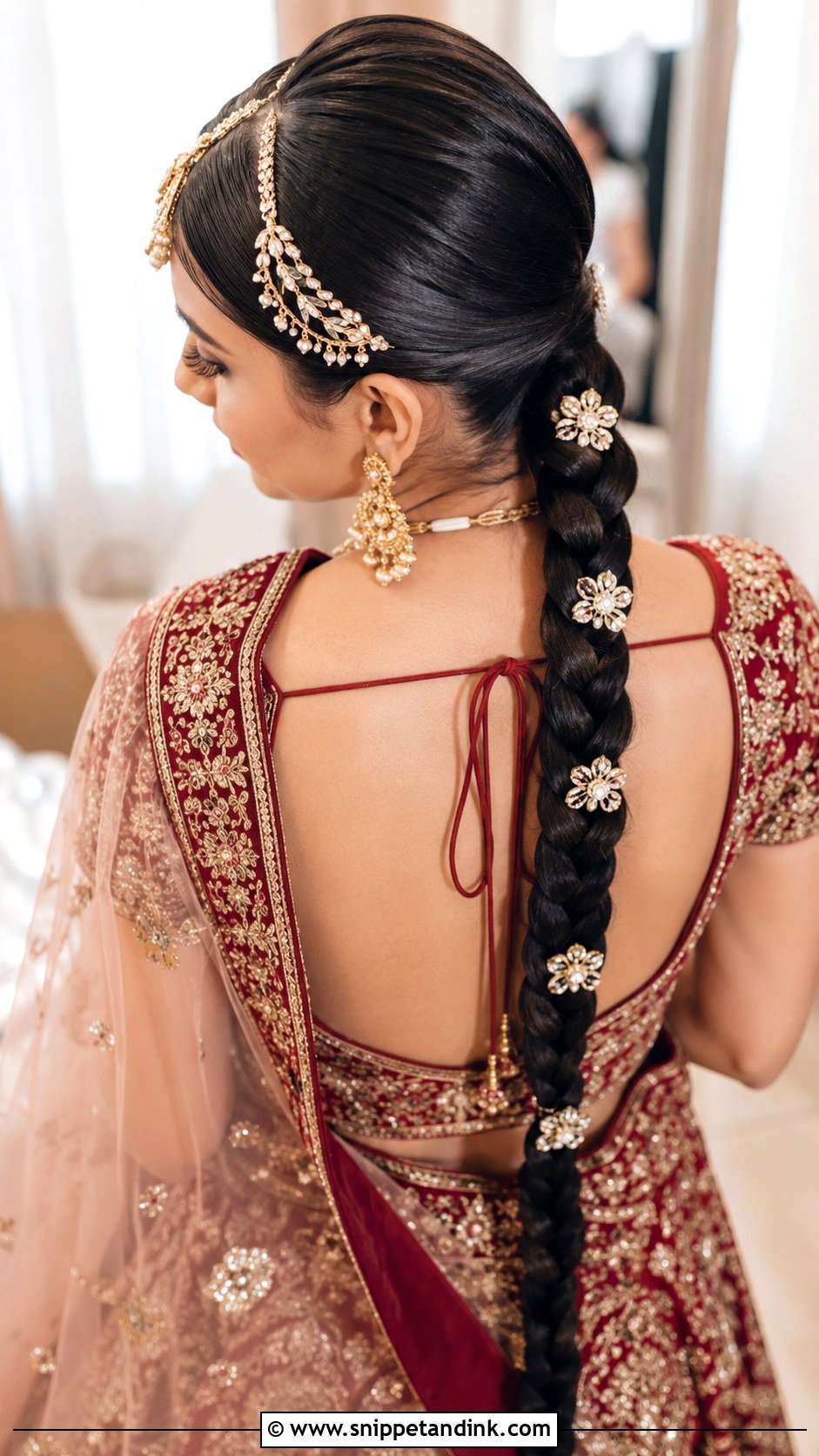
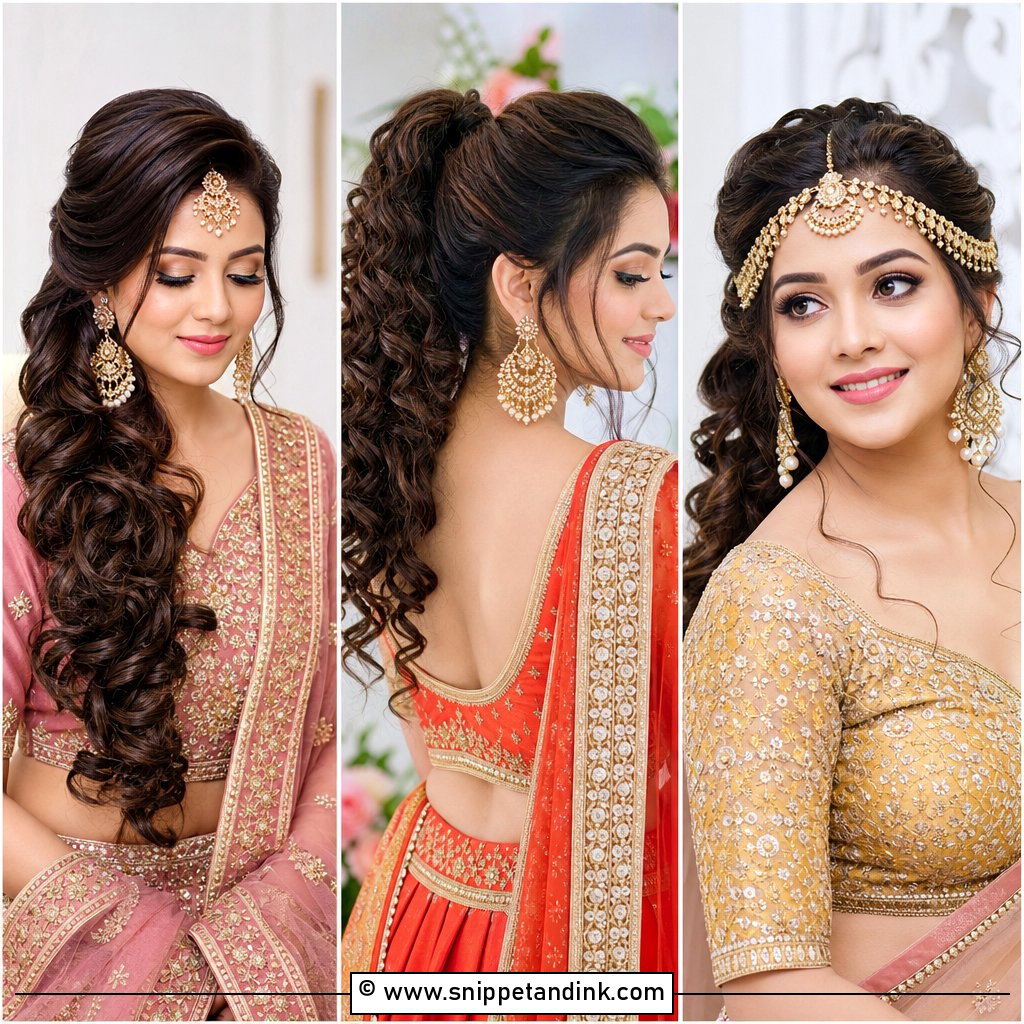
Pairing a braid with a maang tikka is about keeping the face tidy. With a center part, the tikka runs straight down the middle of the forehead, and the braid can be plain, fishtail or flower-trimmed behind it. I keep the crown smooth and put any volume into the braid itself, because a puffed crown lifts the tikka chain off the hairline. Heavy earrings stay in view, since there’s no loose hair hanging around them.
6. Indian Wedding Braid With Matha Patti
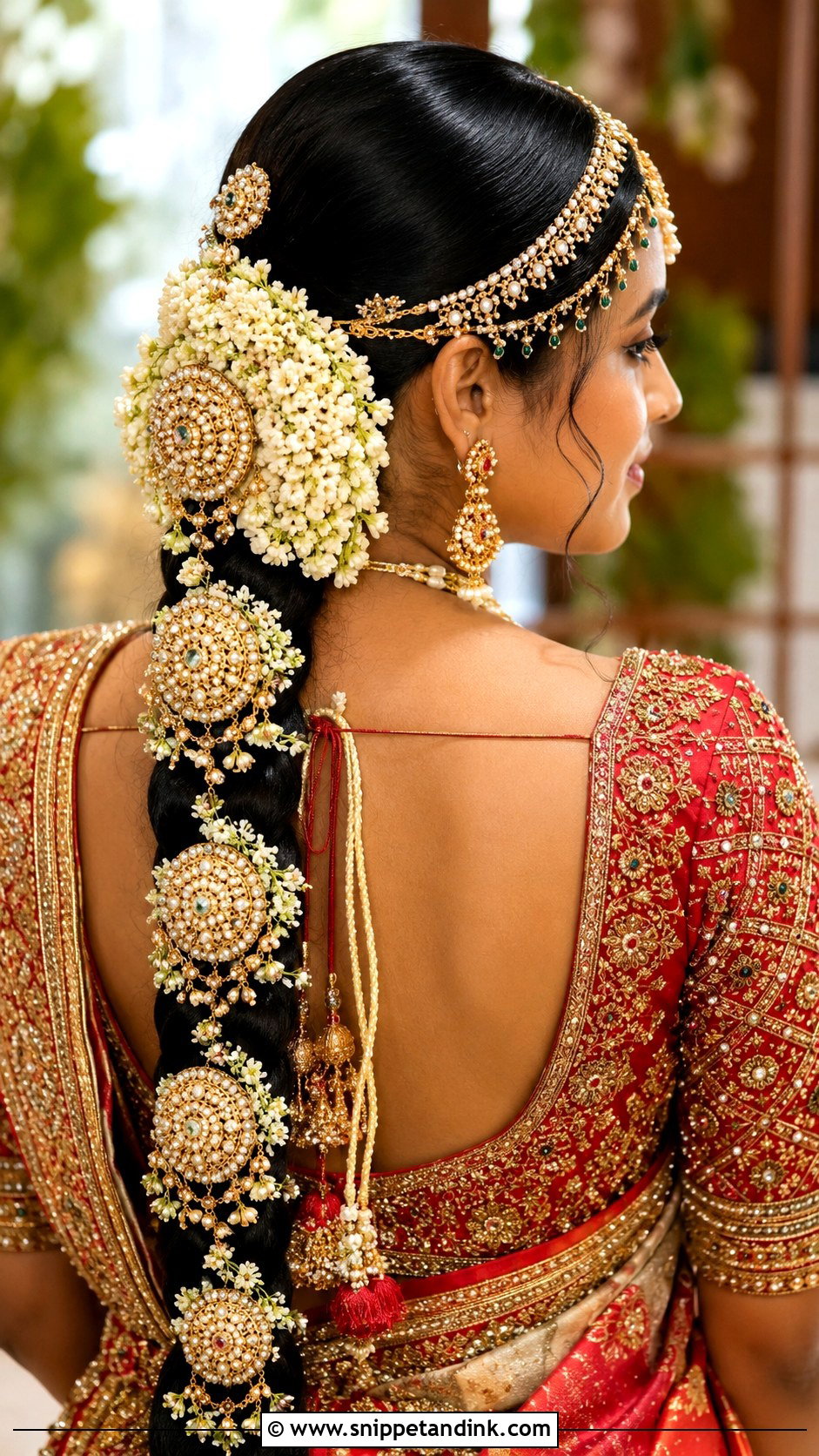
A matha patti adds a royal feel to a braid by framing both the forehead and the side hair. The side chains are usually hooked into the hair behind the ears, so the braid needs to start low enough to give them an anchor. I smooth the temples completely, because any bump shows under the chain. With a matha patti, a long plait with gajra or gold ornaments is plenty. If the blouse and dupatta are heavily worked, a sleek braid is the calmer choice.
7. Indian Wedding Braid With Jada Billai
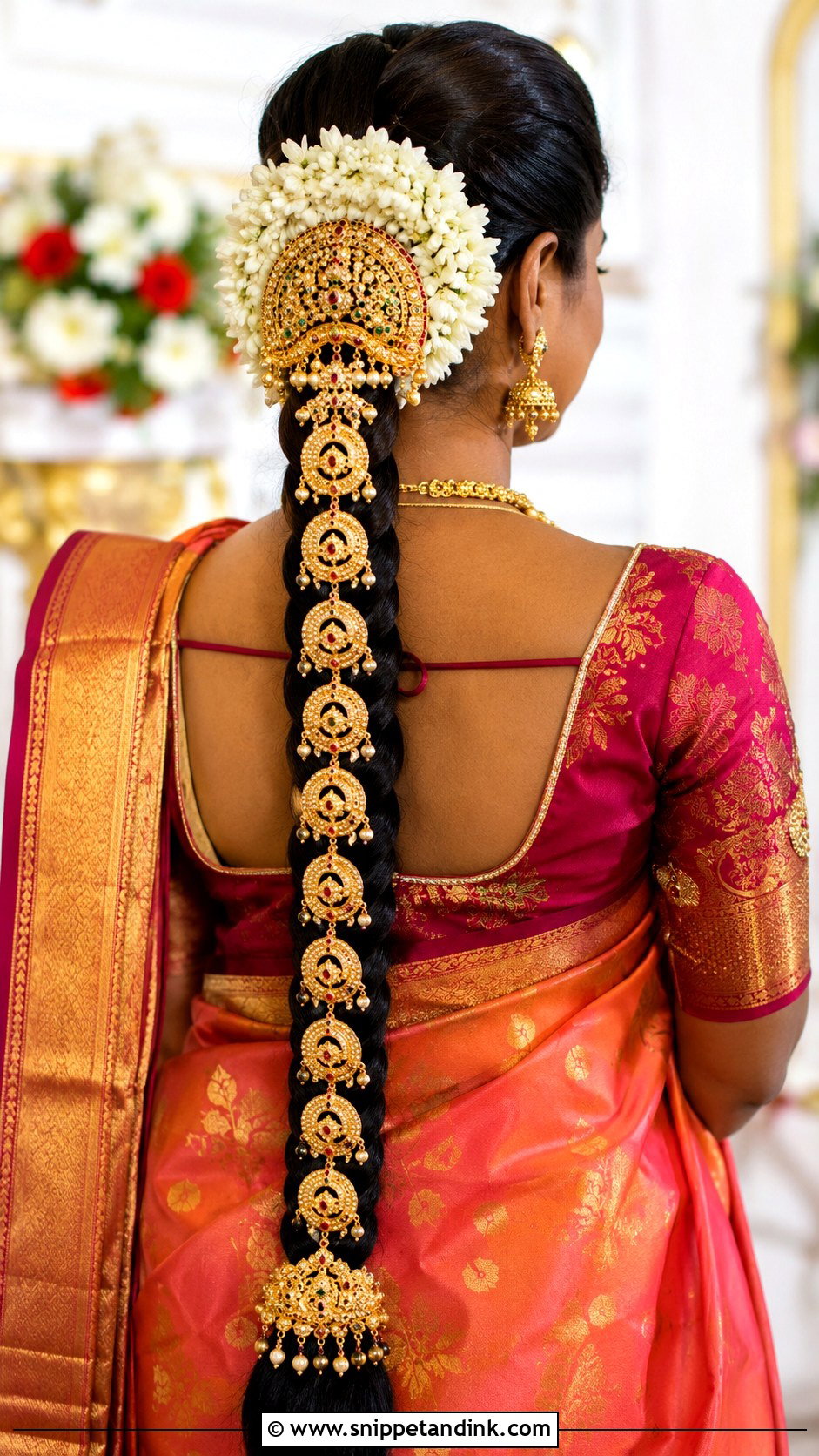
Jada billai are the round gold ornaments set down the length of the braid, and they need a firm, even plait to sit straight. That usually means an extension, both for length and so the plait tapers evenly to the end; a thin tail makes the last billai flap. They’re sewn or clipped on, and I check each one is level before the bride stands up. The look belongs with temple jewelry, silk saris and strong makeup, and it’s at its best from the back during rituals.
8. Indian Wedding Braid With Flowers
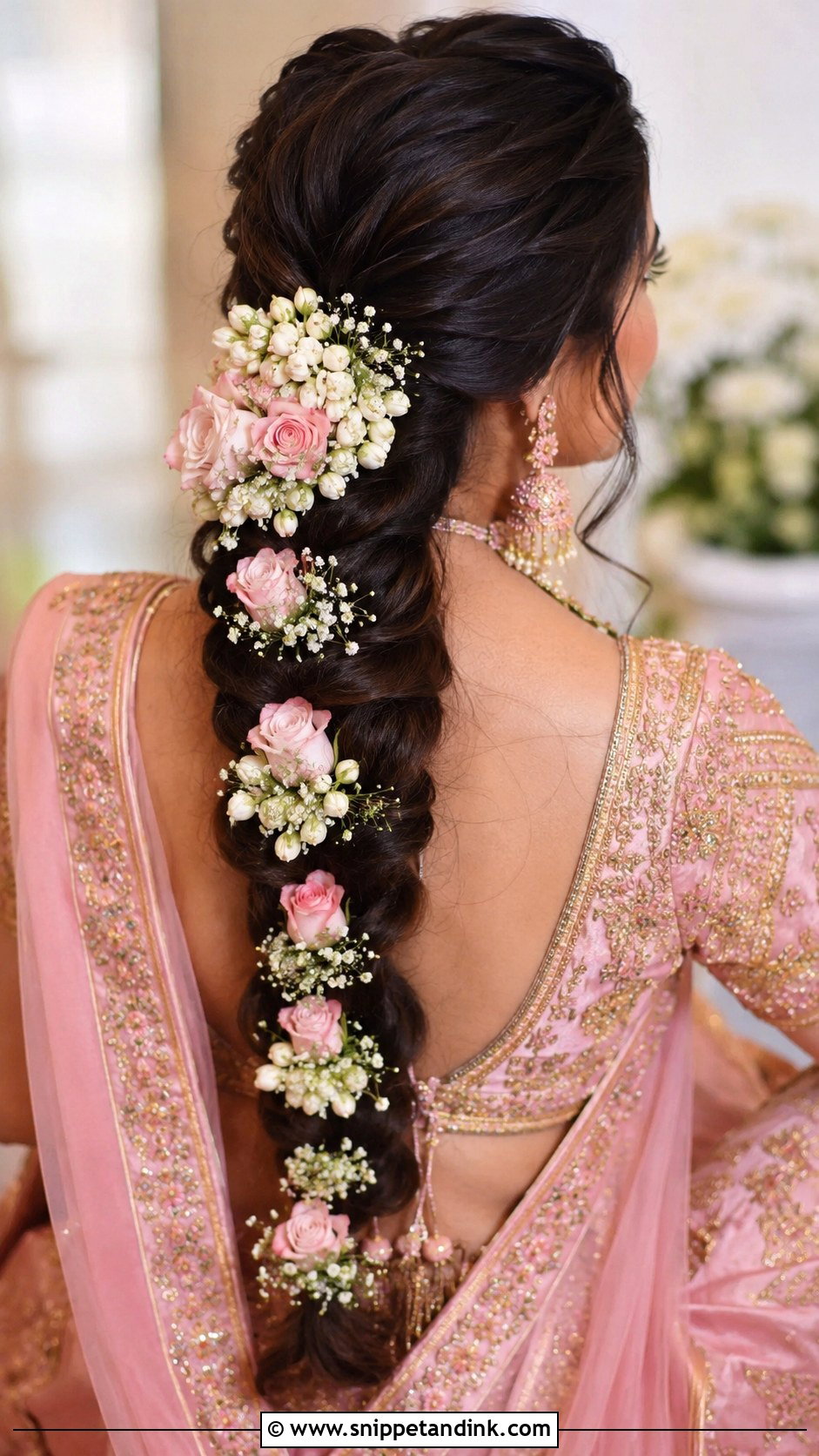
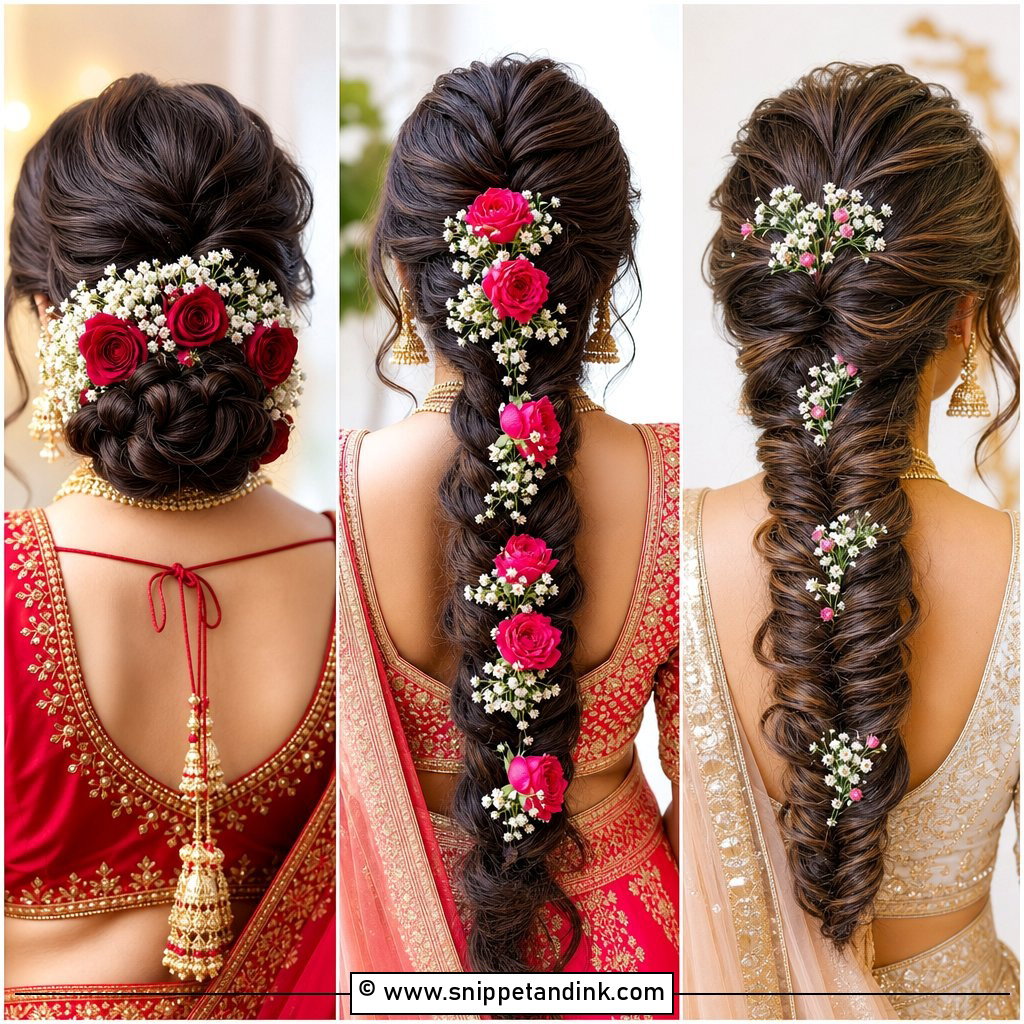
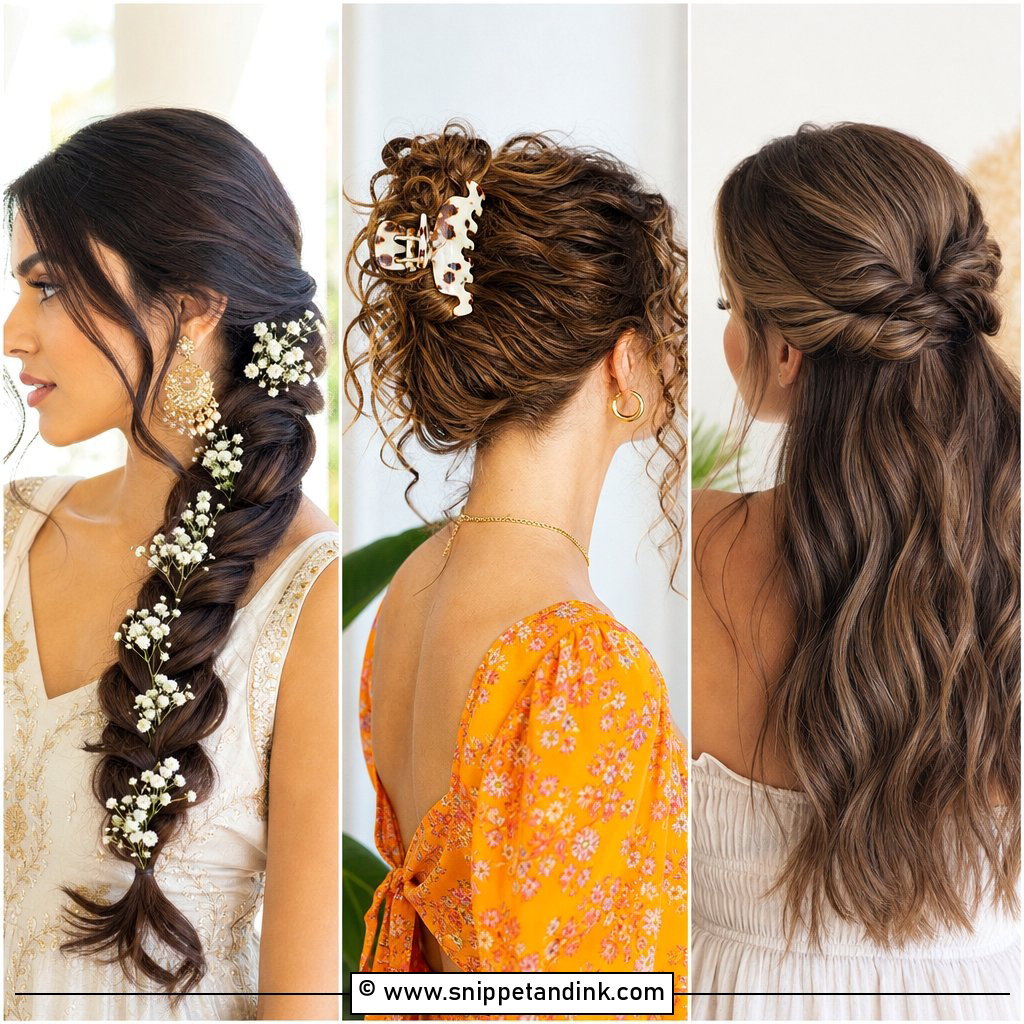
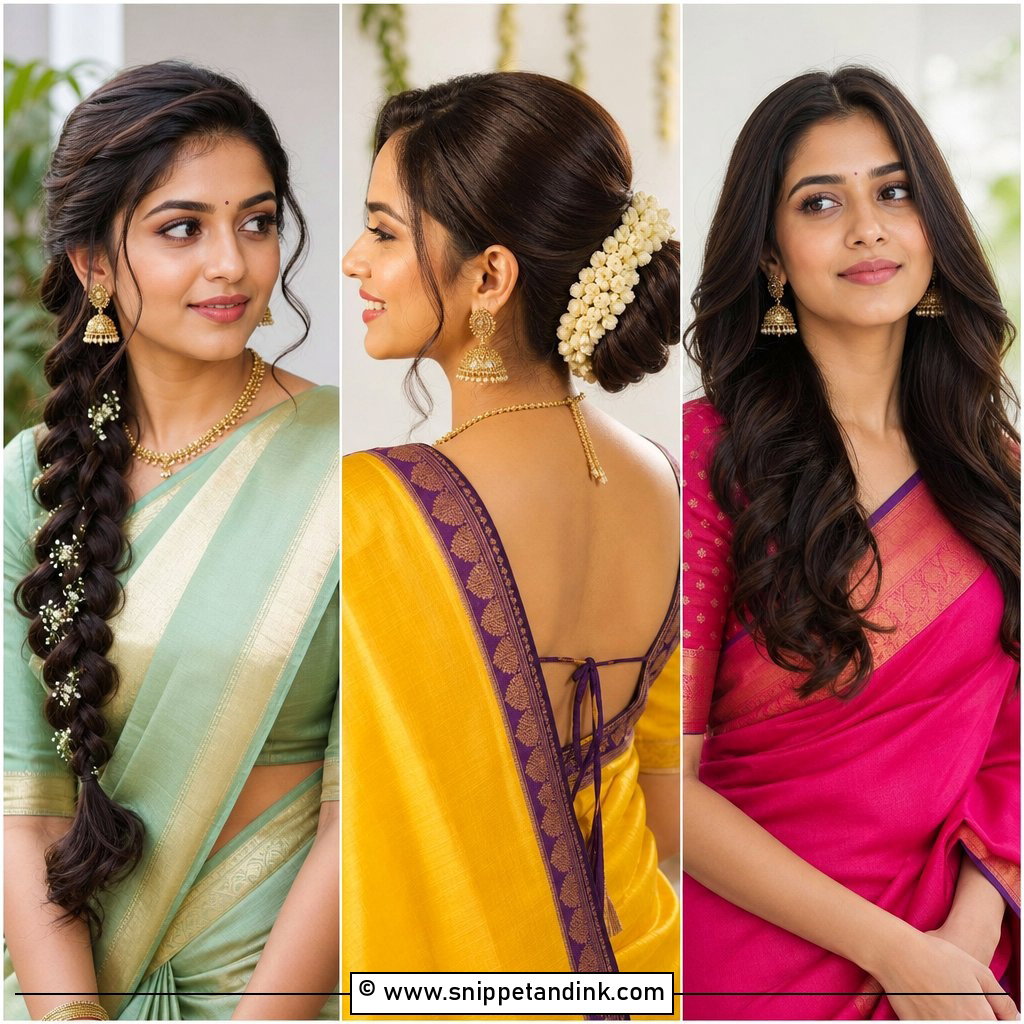
A flower braid can be adjusted to almost any function, and choosing the flower decides the mood. Jasmine is the classic, roses add colour and baby’s breath keeps it light. You can tuck blooms into each section, wrap the full length or dress only the crown and the end. I tell brides to pick flowers from the outfit’s palette rather than adding new colours, and to leave gaps so the braid still shows. It suits bridesmaids and guests as easily as the bride.
9. Indian Wedding Side Braid
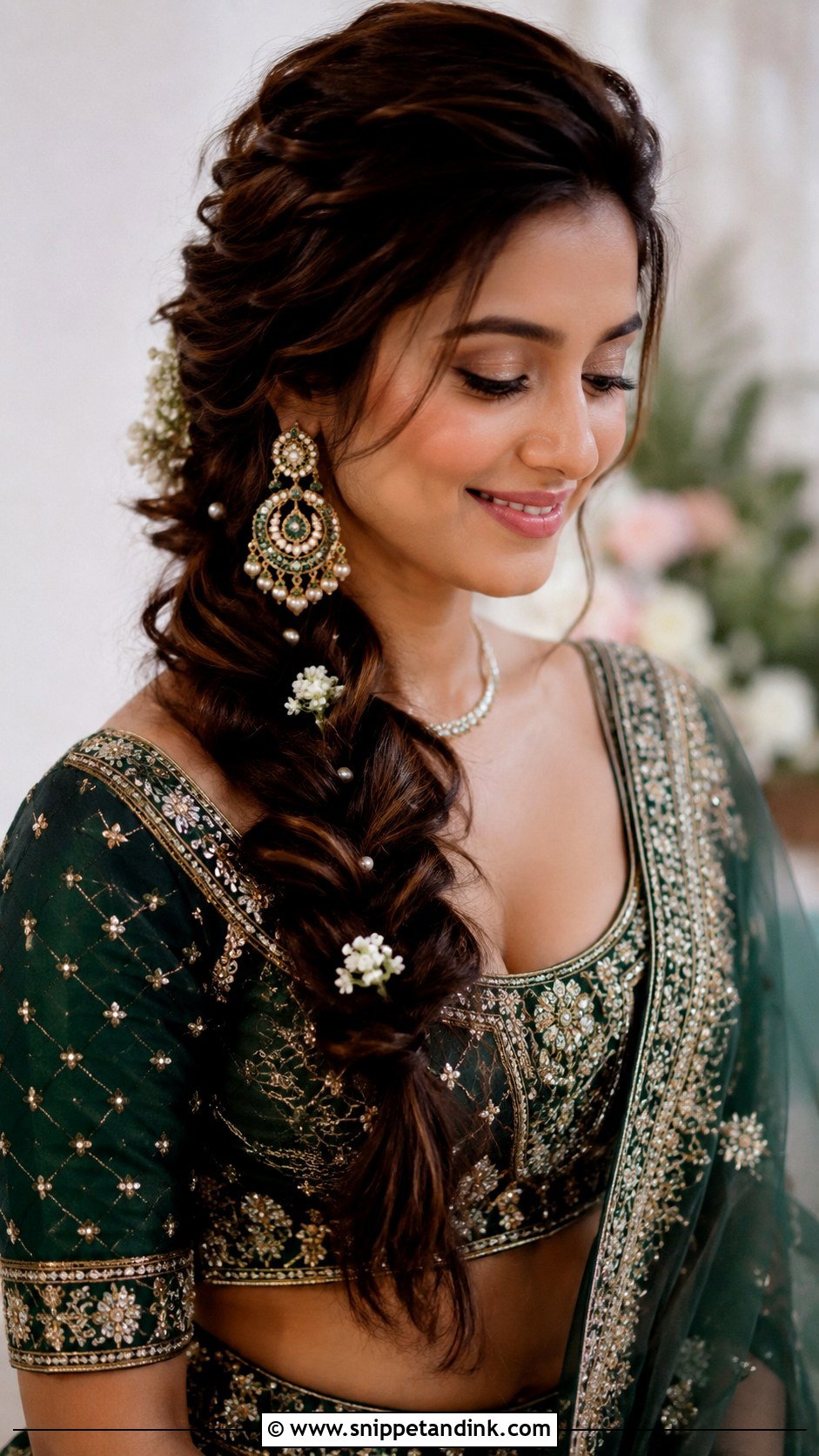
Moving the braid over one shoulder brings it to the front of your portraits. Flowers, pearls or braid jewelry are visible from the camera, and the blouse back is left clear. I start the braid behind the ear on the side it will fall, not at the center back, so it sits flat against the neck instead of twisting round. It suits a lehenga, a pre-draped sari or any outfit with a detailed blouse back. With a dupatta, keep the braid on the opposite side to the drape.
10. Indian Wedding Dutch Braid
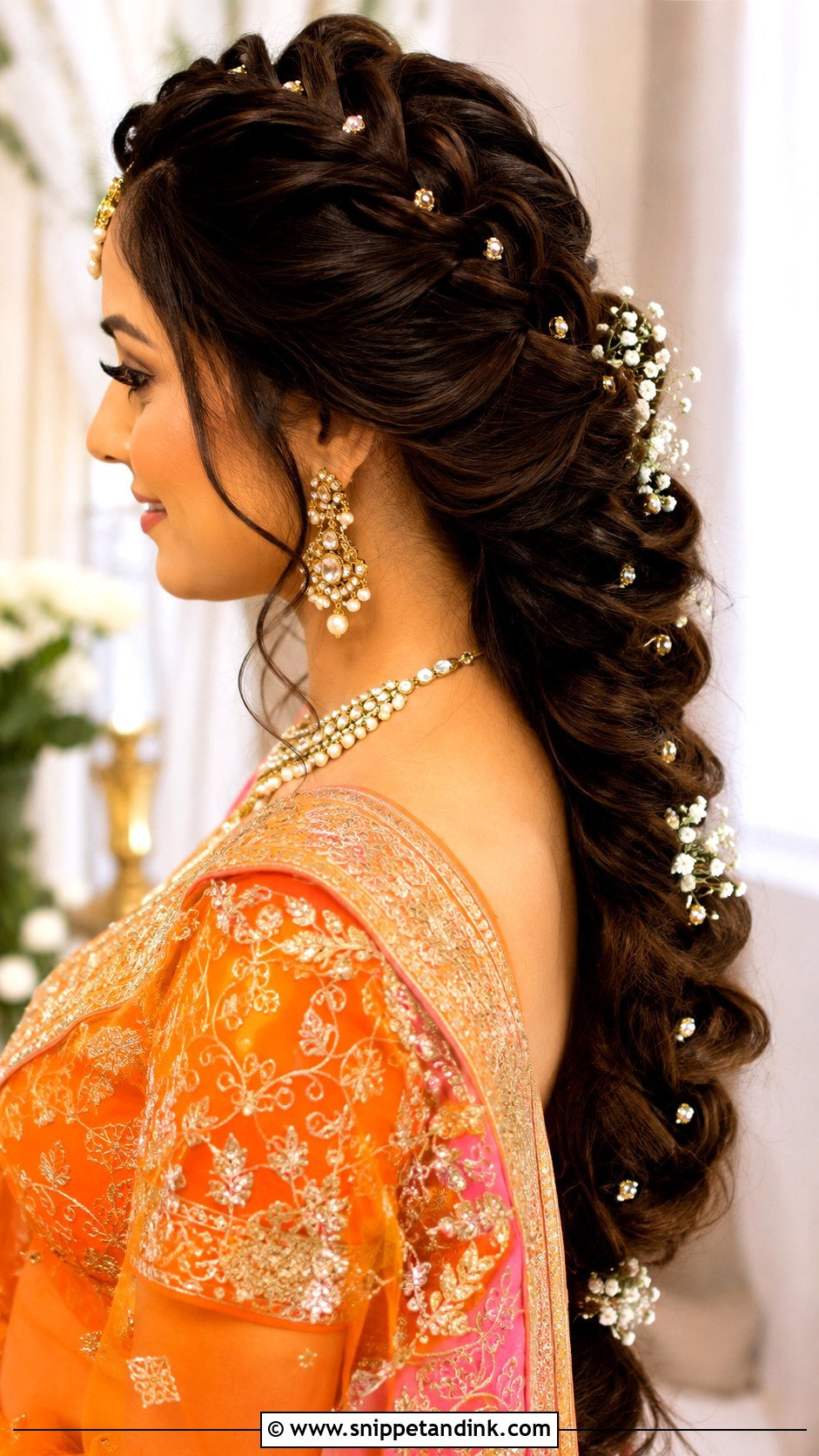
A Dutch braid is braided under rather than over, so it stands up off the head and gives height from crown to ends. Face-framing pieces, pearl pins, flowers or a paranda all soften it for a wedding. It’s youthful, and I use it most for mehendi, haldi and sangeet. Thick hair is where it shines, as the raised pattern controls bulk. On very fine hair, the raised section can look thin, so I pancake the loops carefully after braiding.
11. Indian Wedding French Braid
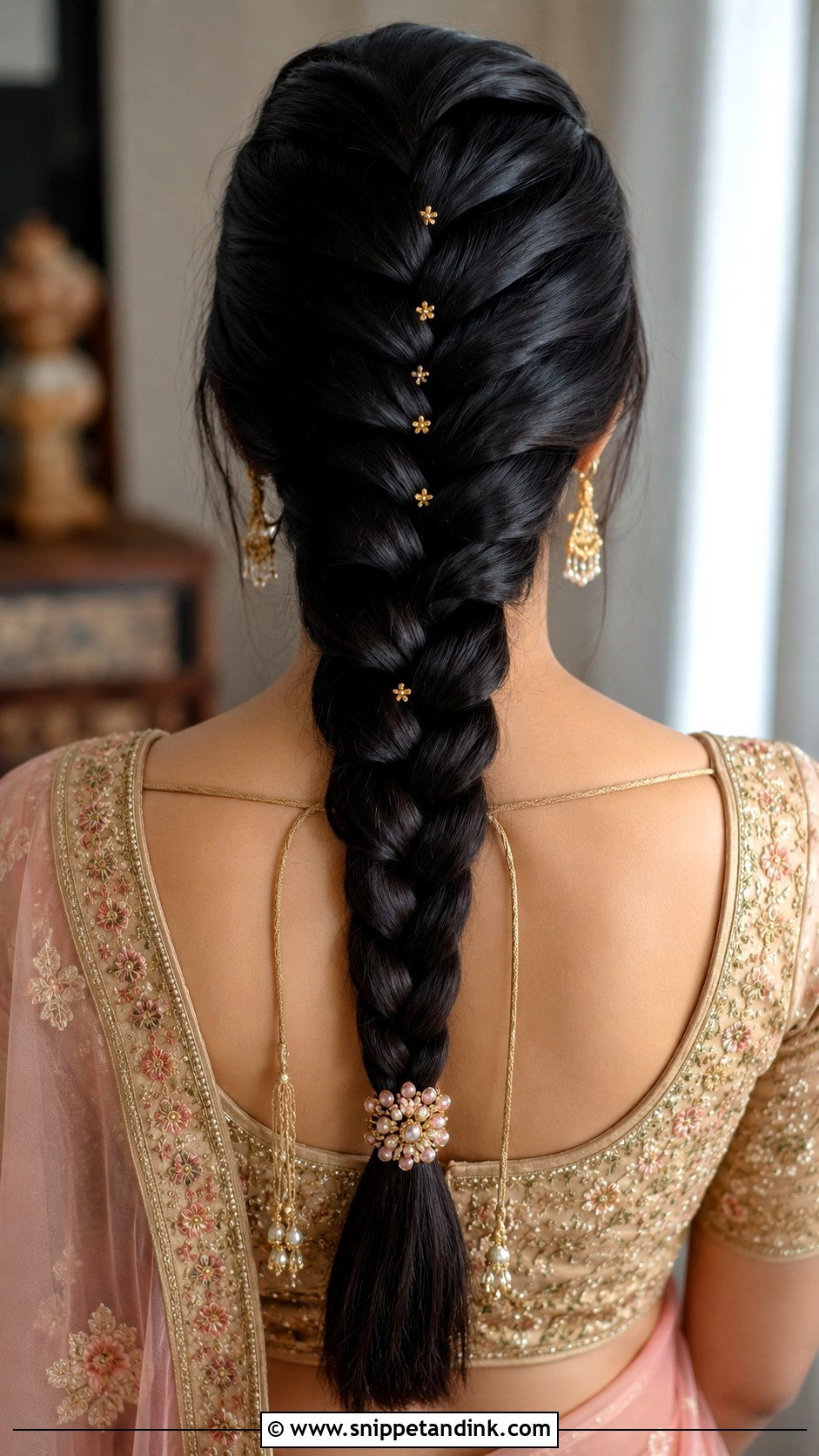
The French braid is the plain, reliable one. It starts close to the crown and gathers hair as it goes, so nothing can fall out. Widen it slightly for volume and finish with flowers, pins or a jeweled tie. Outdoors it handles frizz and wind far better than open hair. For guests and bridesmaids who want something festive but quick, it takes a stylist only a few minutes.
12. Indian Wedding Braid With Paranda
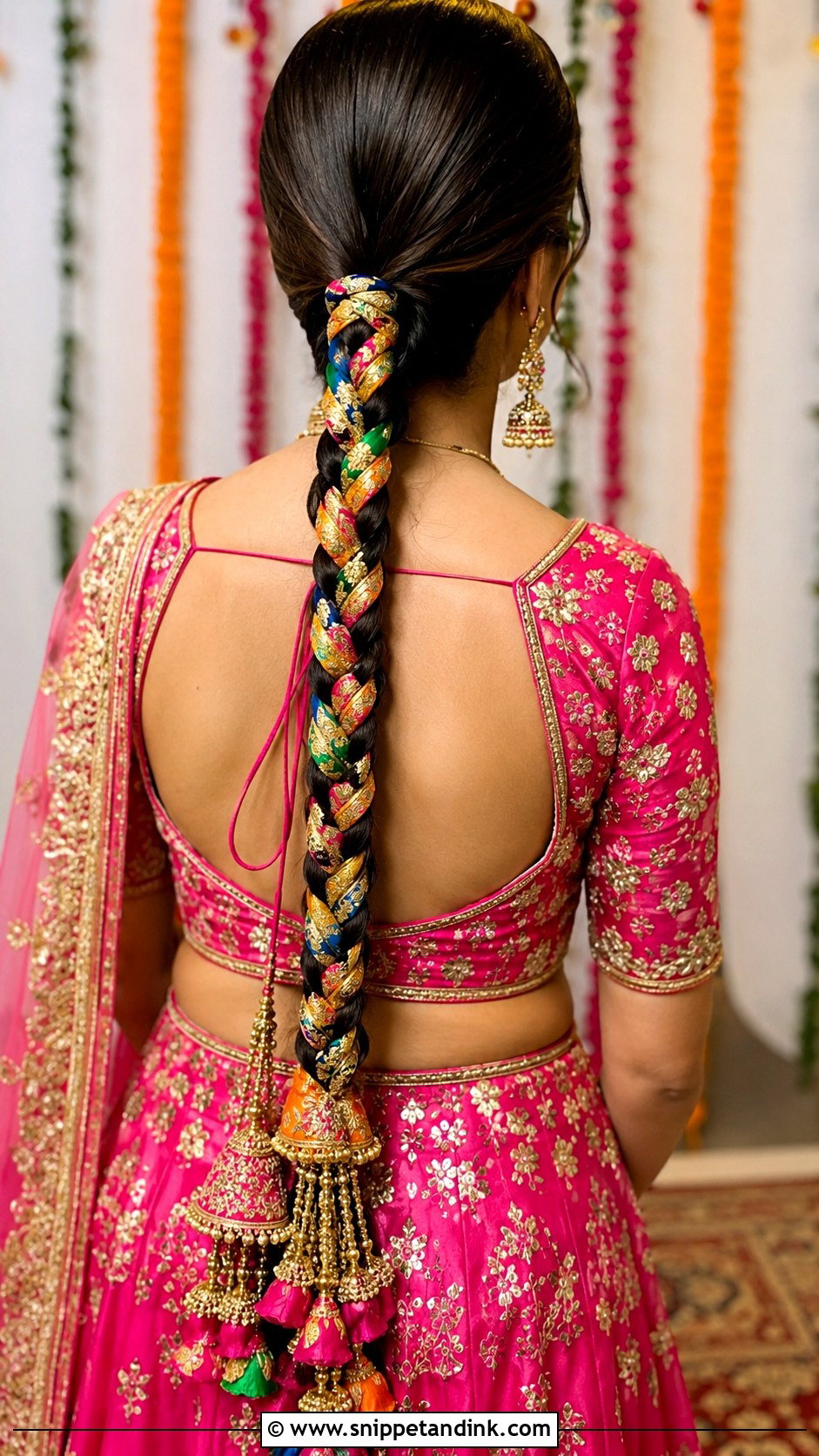
The paranda adds colour, length and swing. It’s woven in with the hair and ends in tassels, so you get a fuller braid without relying entirely on extensions. Bright, playful parandas suit mehendi, while silk, gold or pearl versions are better on the wedding day. Start weaving it in near the nape, not halfway down, or there’s a visible break where your hair stops and the cord begins. It goes naturally with Punjabi suits, lehengas and shararas.
13. Indian Wedding Bubble Braid
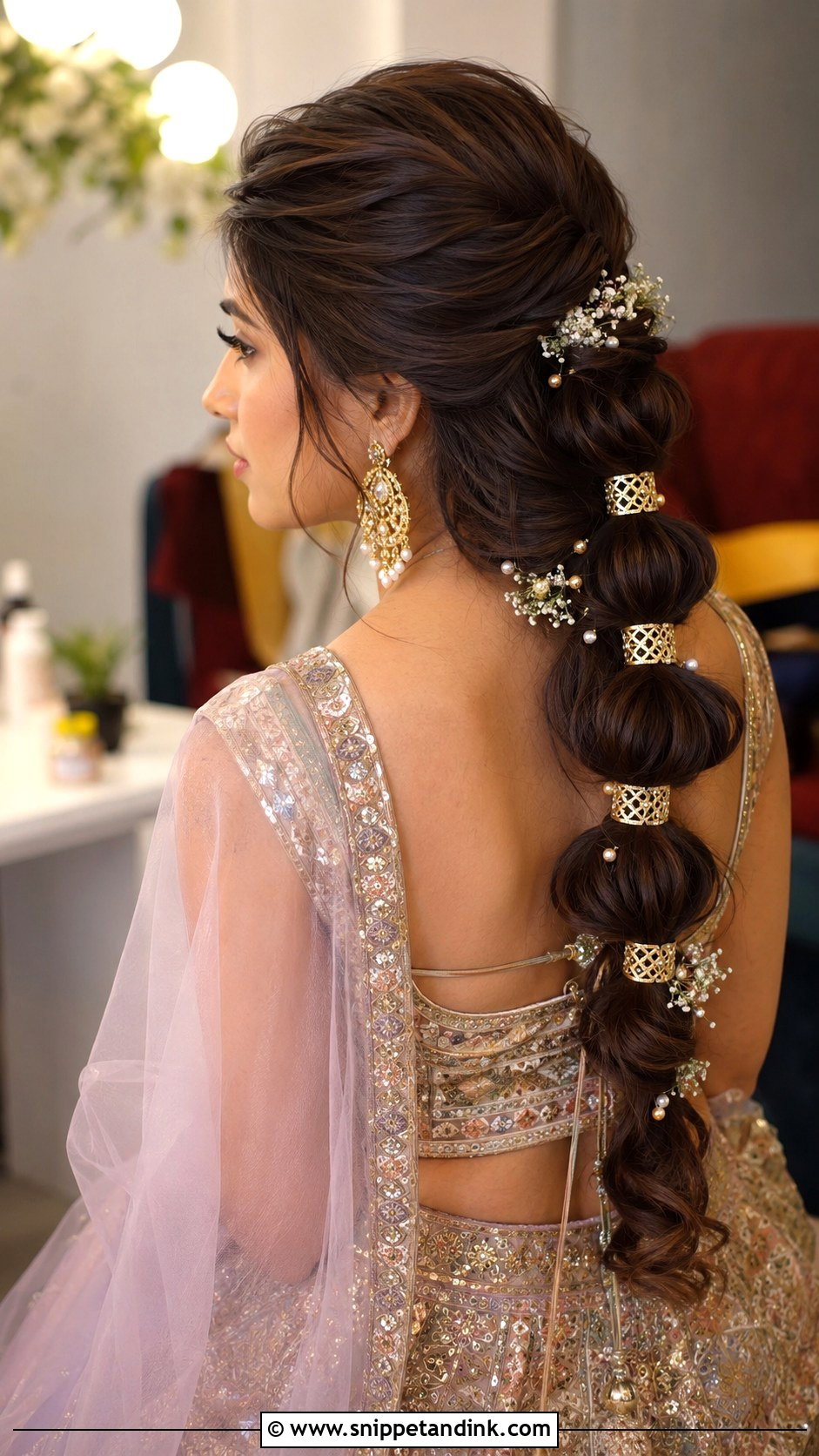
Instead of weaving, a bubble braid ties the hair in sections with clear elastics, and each section is pulled out into a rounded bubble. It’s a modern, playful look for sangeet, mehendi or a reception. The elastics are the weak point. Use small, strong ones and pull the bubbles open gently, or the bands show. Small flowers, pearls or gold cuffs over each tie hide them, and long extensions give you more bubbles to work with.
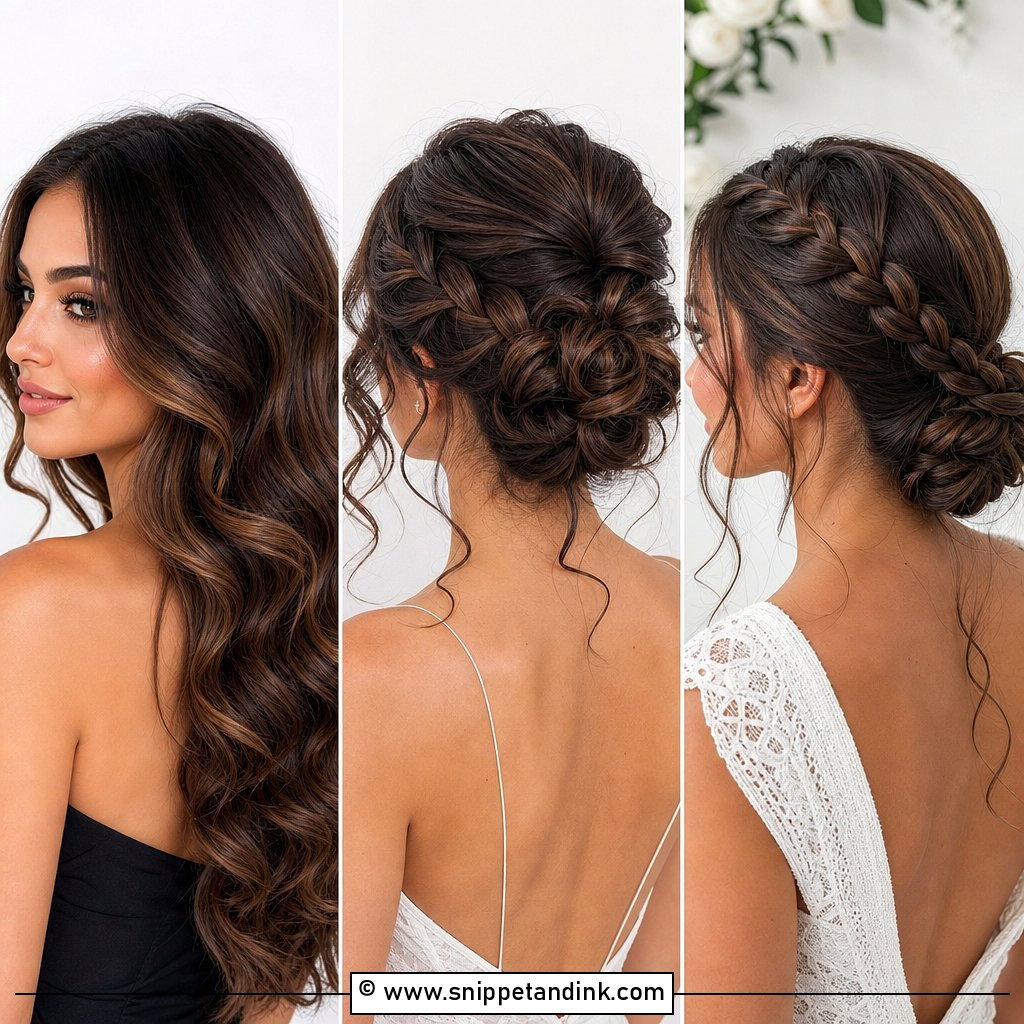
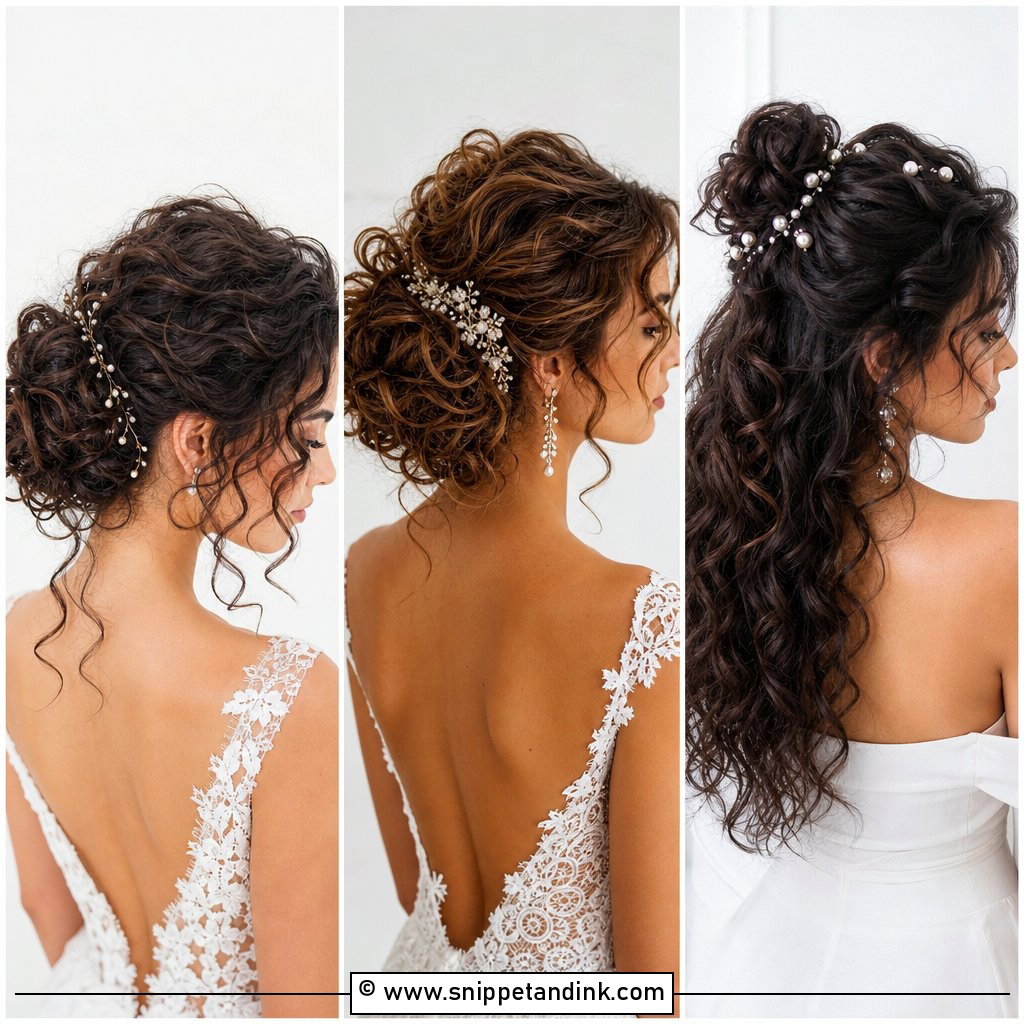
14. Indian Wedding Half Up Braid
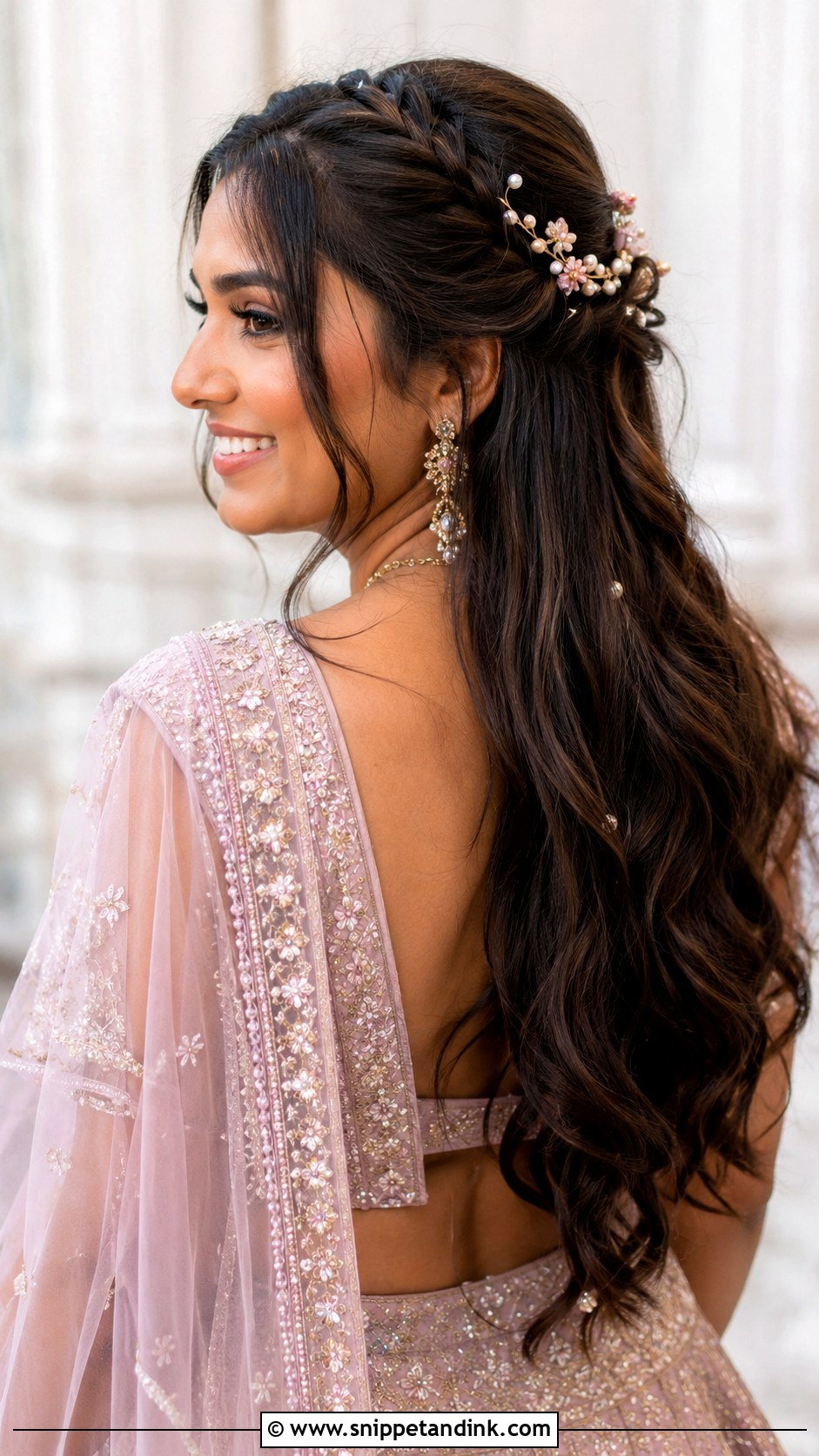
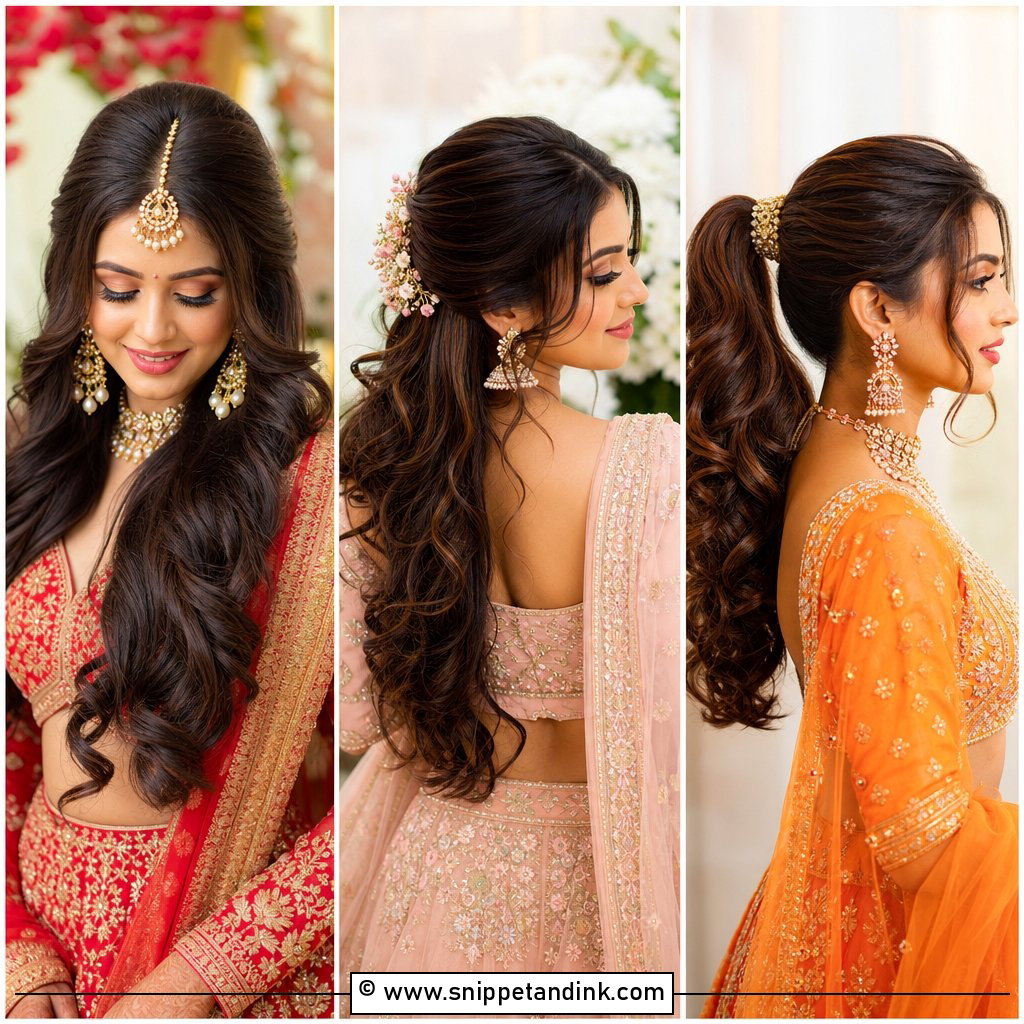
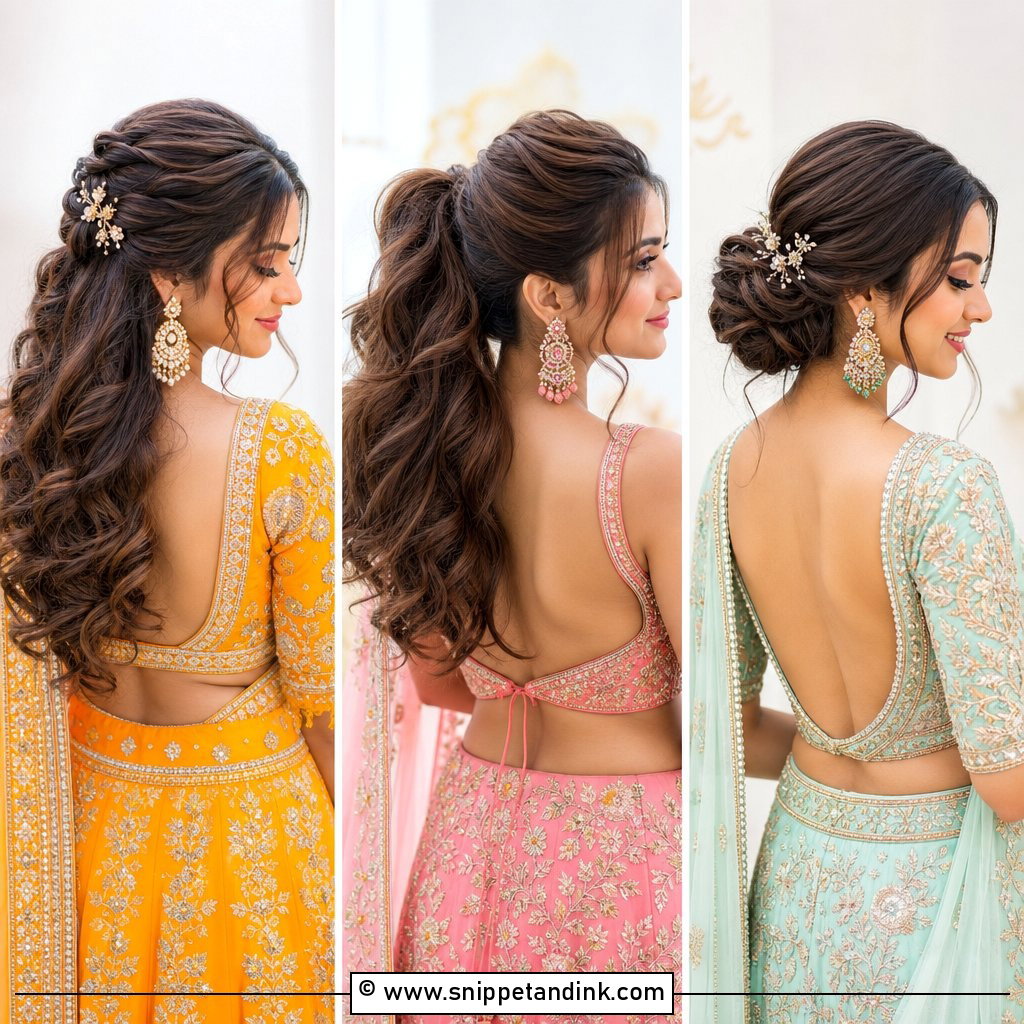
A half-up braid gives you a secure braided detail on top and loose hair below. The top section is braided into a crown, a fishtail or a soft twist, while the rest falls in waves. I like it for engagements, receptions and bridesmaids. It keeps the front out of your face while dancing and still shows your length. A maang tikka, tiny flowers or pearl pins finish it. The one caution: under a heavy dupatta, the loose lengths get flattened, so save it for lighter drapes.
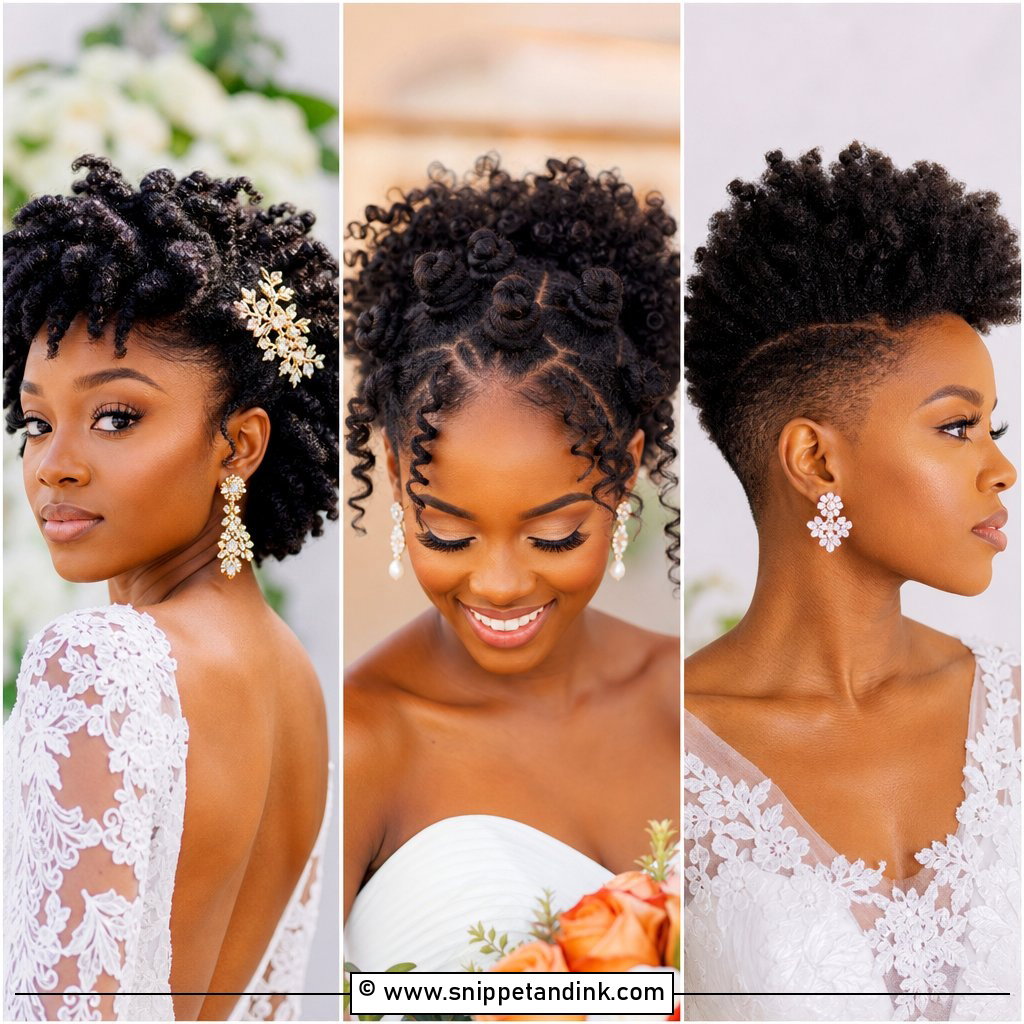
15. Indian Wedding Mermaid Braid
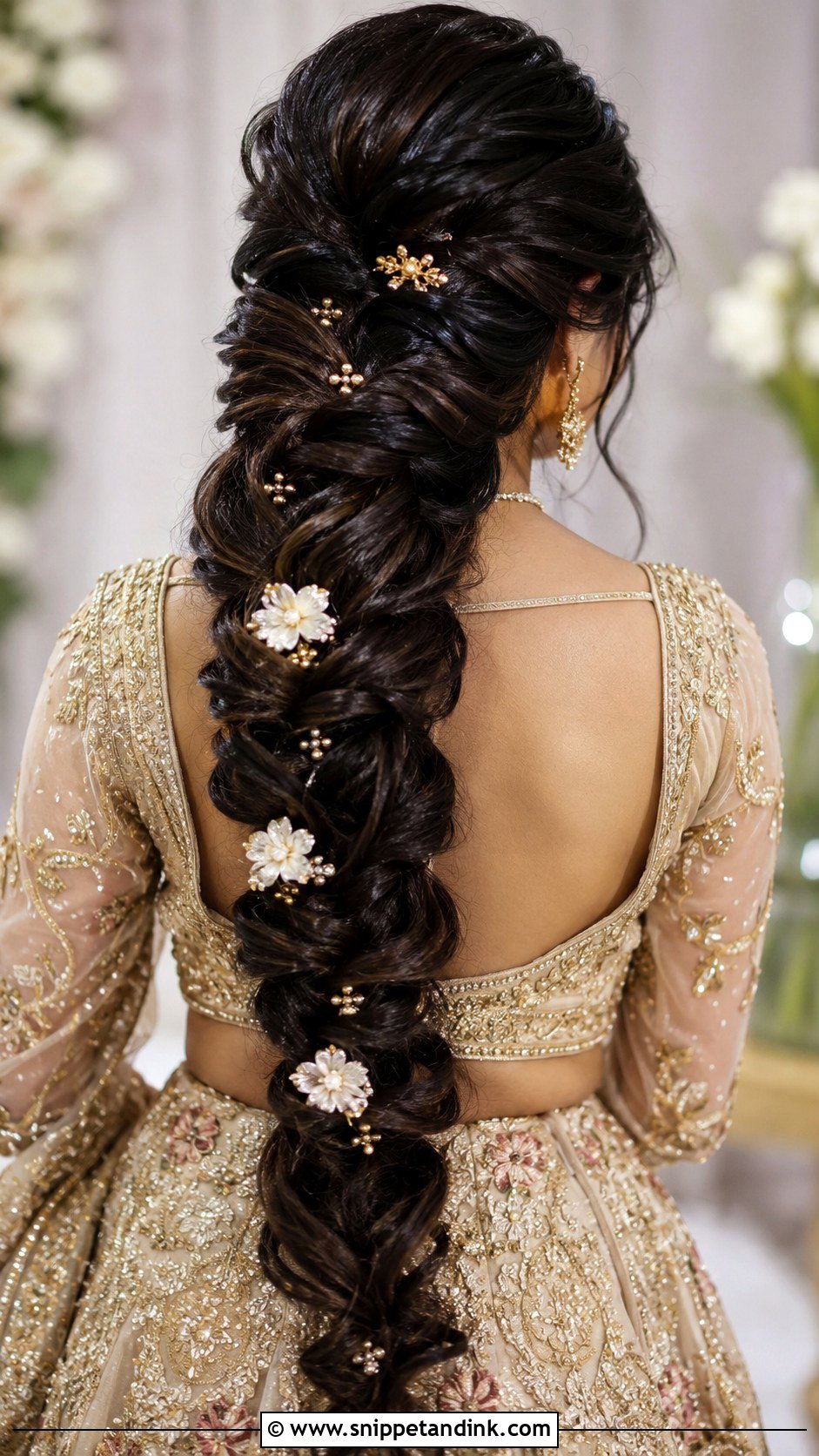
A mermaid braid looks wide and dramatic because it’s built from many small sections, then loosened piece by piece. It takes longer than any other braid here and needs plenty of length or extensions to show its shape. Worn down the back or slightly to the side, it can carry flowers, pearls or small gold pins without hiding the pattern. It’s less formal than a classic bridal plait. Expect it to soften through the evening, which suits a reception.
Carrying the Weight of Flowers and Gold Through a Long Muhurtham
A fully dressed bridal braid is heavy, and the weight falls on the base at your nape. If that base is tied too tight, you’ll have a headache by mid-morning; too loose and the braid sags. I aim for snug but not pulling, and I ask the bride to nod and turn her head before I add a single flower.
When you sit for the rituals, bring the braid forward over one shoulder or let it rest along the seat rather than sitting on it. Sitting on a jada bends the ornaments and crushes the flowers. Jasmine buds also open and start to brown within several hours, especially in heat, so order them as tight buds for that morning.
At the end of the day, take the braid down in this order:
- Unclip the kunjalam and the billai first, and wrap each ornament in soft cloth.
- Unpin the flower backing or gajra from the top down.
- Find and remove every U-pin before you unbraid.
- Loosen the plait with your fingers and condition the hair before brushing.
A Plait for Every Function From Mehendi to Muhurtham
A braid can be as traditional or as playful as you want. A South Indian plait with jada billai is regal, while a gajra braid brings scent and an old-fashioned charm. Fishtail, Dutch, bubble, and mermaid braids give more texture and movement for pre-wedding events and receptions. Match the braid to your outfit, jewelry, ceremony and comfort, then test it at a trial with every ornament attached. Stand, sit, turn your head. If nothing pulls or slides in that half hour, it will last the day.
You'll Like These Ideas:


Leave a Reply