
A fishtail is the braid I reach for when an Indian bride needs her hair to hold through the pheras, an outfit change and a night of dancing. It’s woven from two sections instead of three, crossing a thin piece from the outside of one half to the inside of the other, and that’s what gives the scale-like pattern and a flatter, wider shape than a regular plait. The width matters under a lehenga dupatta or beside a saree pallu, because the braid still reads from behind when part of it is covered. Jasmine, pearls, kundan pins, jhumka chains and maang tikka strands all sit well in it, since every crossing is a natural slot for a pin. Below are twenty versions, from a gajra-wrapped South Indian braid to a quiet guest plait, with what I watch for in each.
What a Fishtail Asks of Your Hair Before the First Cross
Because each crossing takes only a thin piece, a fishtail uses up length faster than a three-strand plait and shows every weakness in the hair’s condition. It also takes longer to weave, so it needs a proper slot in the getting-ready schedule. These are the things I check before I start.
Length and layers
Mid-back length or longer gives a hanging braid that clearly reads as a fishtail from behind. Shoulder-length hair works well for side, half-up and bun versions, but a long hanging braid will look stubby. Heavy layering is the bigger problem, since short pieces escape at every crossing. If you’re getting a trim before the wedding, ask to keep the layers long.
Day-old hair grips better
Squeaky-clean hair is slippery, and the crossings slide apart within hours. I prefer hair washed the day before, then prepped with a texturizing spray or a little dry shampoo through the lengths so the pieces grip each other. Very oily scalps are the exception: wash those on the morning itself and let me add the grip with product.
Bring the extensions and the dupatta to your trial
Clip-in extensions are common in these braids because jasmine strings and heavy jewelry look thin on a short braid. Bring them already color-matched so they can be cut and blended into the weave. Wear a blouse with a similar neckline and bring the dupatta too. I need to see where the fabric will land on the braid before deciding how high to start it and where the pins can go.
1. Indian Bridal Fishtail Braid With Flowers
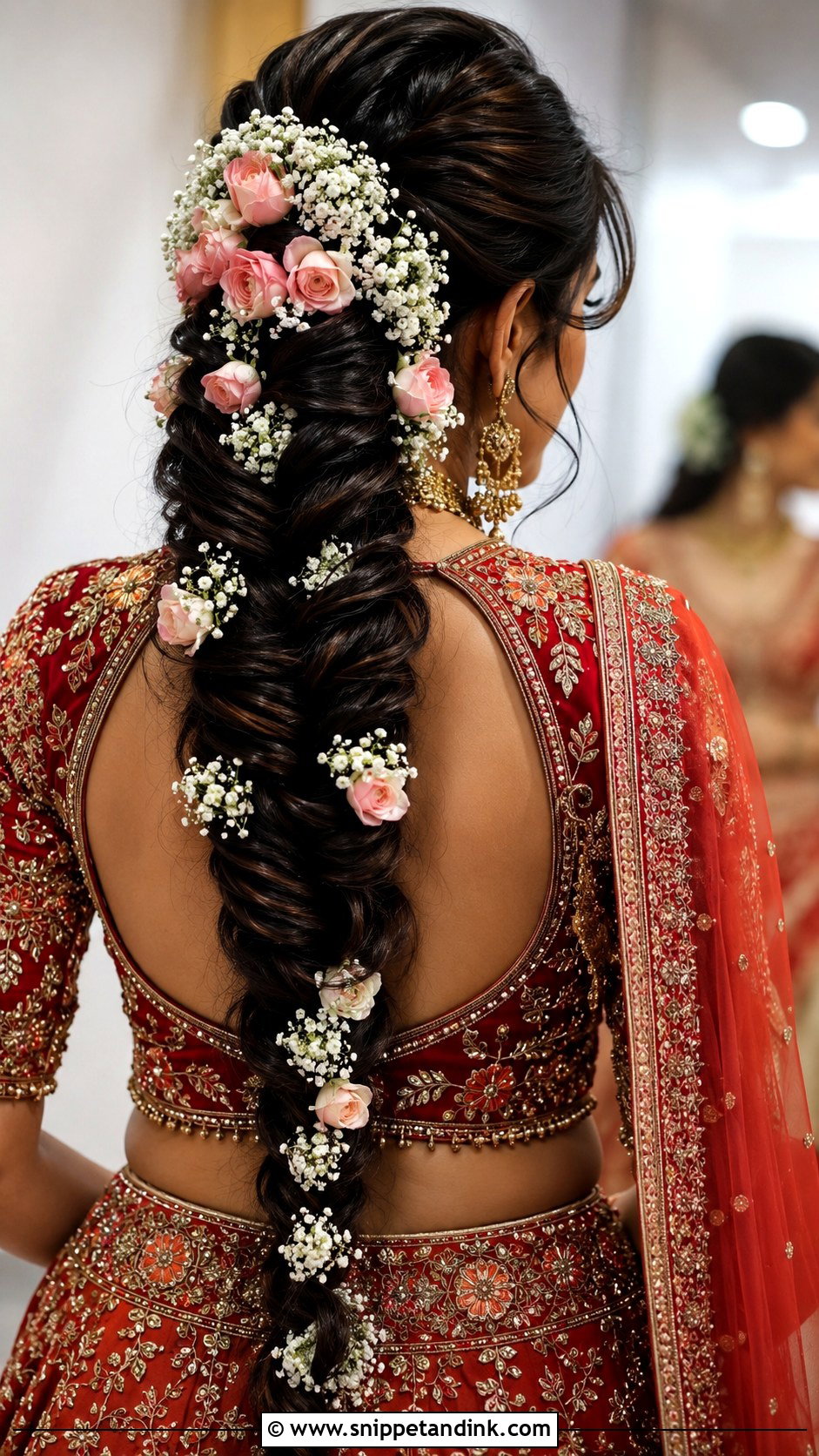
Flowers go in last, after the braid is finished and gently loosened. Pin them in first and you pull the weave tight around the stems and lose the scales. I usually start this one from a softly puffed crown or a clean middle part and let the fishtail run the full length, then set jasmine, roses, baby’s breath or short mogra strings through the outer edge of each crossing so the pattern still shows between blooms. With a heavily embroidered dupatta, I keep the flowers to a single line down the center; two lines plus zari work looks busy from behind. Bold jewelry wants a smooth front, while a lighter set can take a couple of loose face-framing strands.
2. Side Fishtail Braid For Indian Wedding
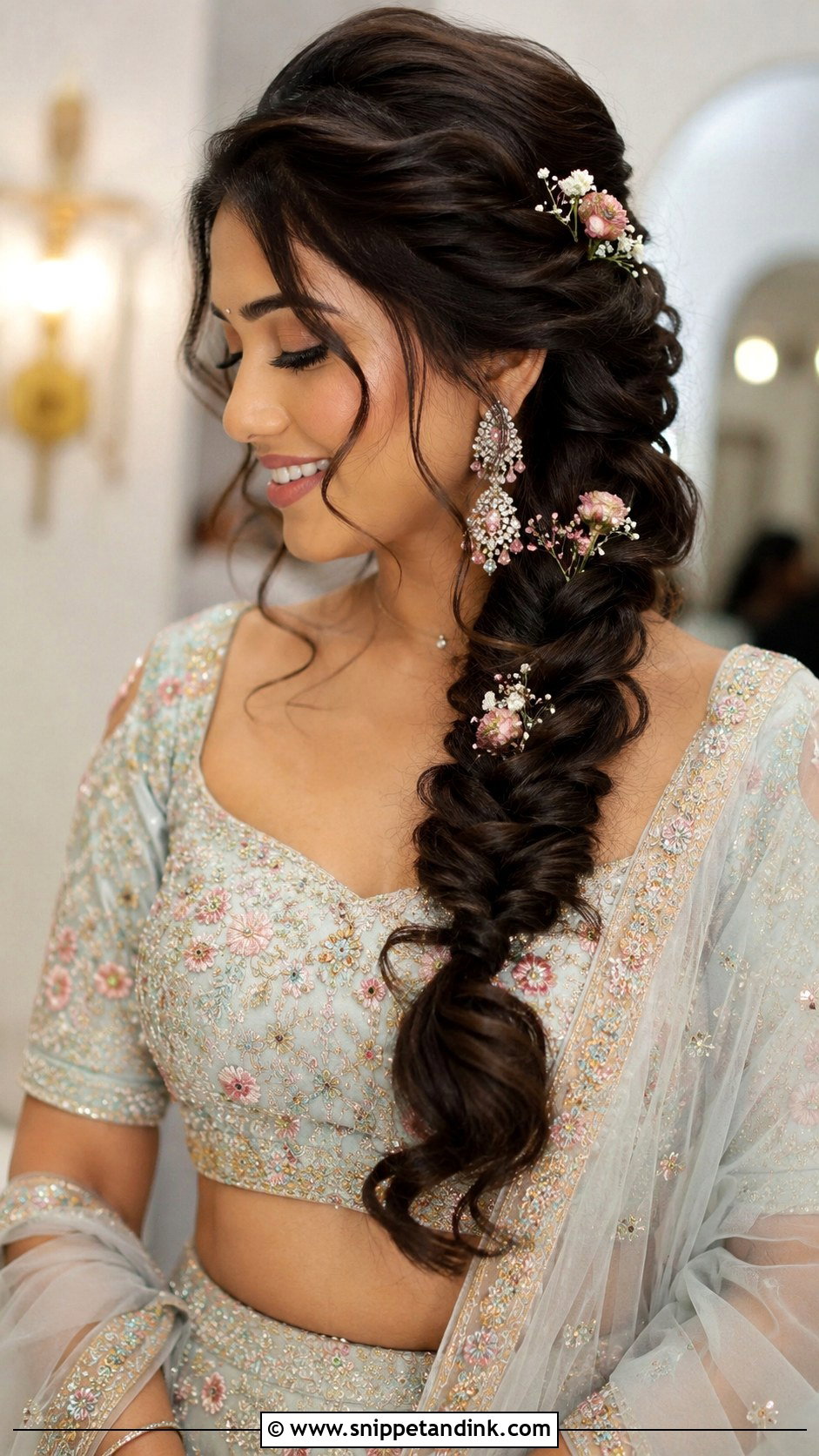
Pulling the braid over one shoulder keeps the weaving in every front-facing photo and leaves the other side of the neckline clear. The tricky part is the nape. Hair has to travel across the back of the neck, so I set a hidden row of crossed bobby pins there first, or the braid slowly drags back toward the center as you move. Off-shoulder blouses, deep-neck cholis and a dupatta draped on the opposite shoulder suit it. A little crown height balances the face. For mehndi, sangeet or a daytime function, it looks dressed up without the weight of a full bridal set.
3. Indian Fishtail Braid With Maang Tikka
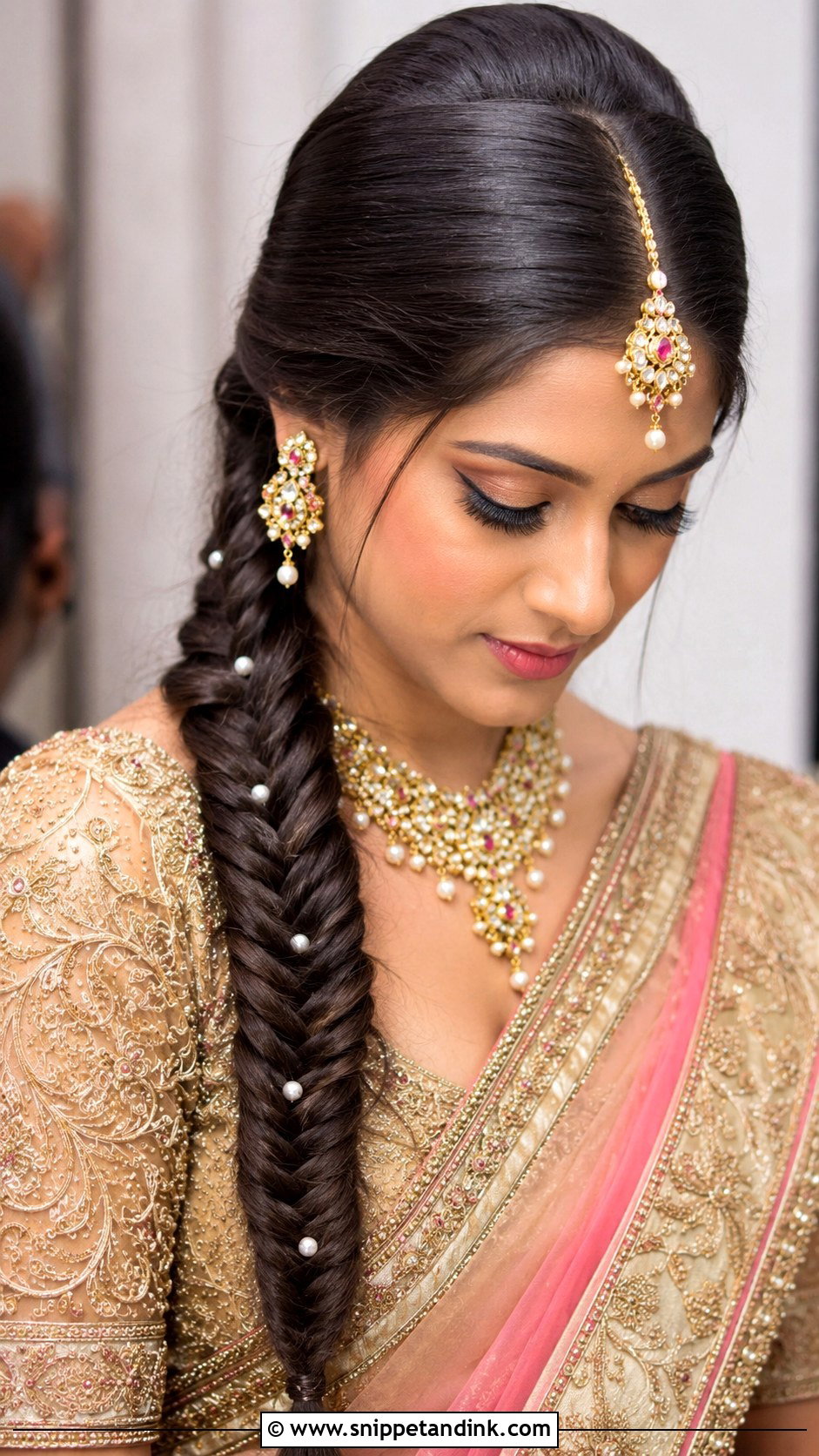
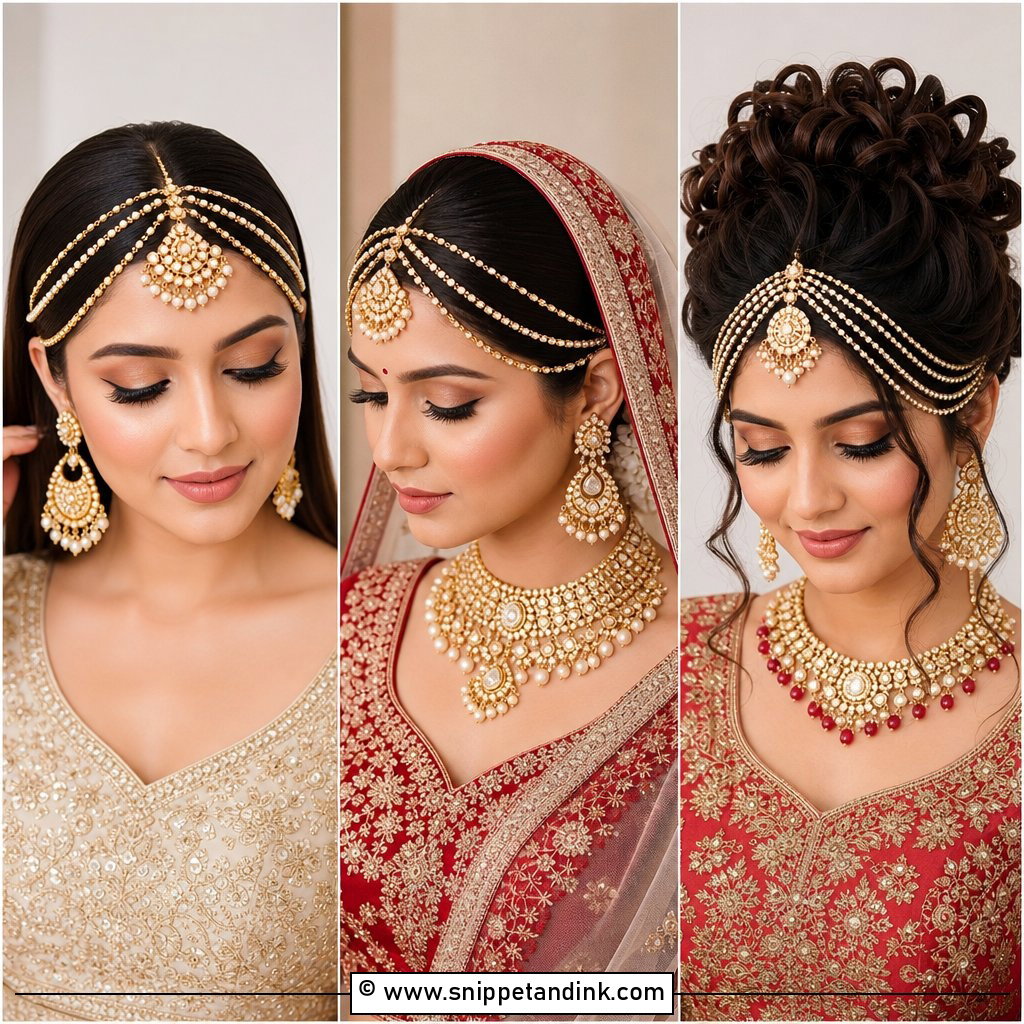
In an Indian fishtail braid with a maang tikka, the tikka gets placed before any braiding starts, because the part has to sit exactly under the chain. A sleek center part gives it that base, and the braid behind is widened gently so there’s fullness without competing with the forehead piece. I hook the tikka’s chain onto a pin hidden under the crown rather than trusting the clip alone, which tends to slip on smooth hair within the first hour. Small pearls or flowers in the braid can echo the jewelry. Go this way when you want your face and makeup to carry the front view.
4. South Indian Fishtail Braid With Jasmine
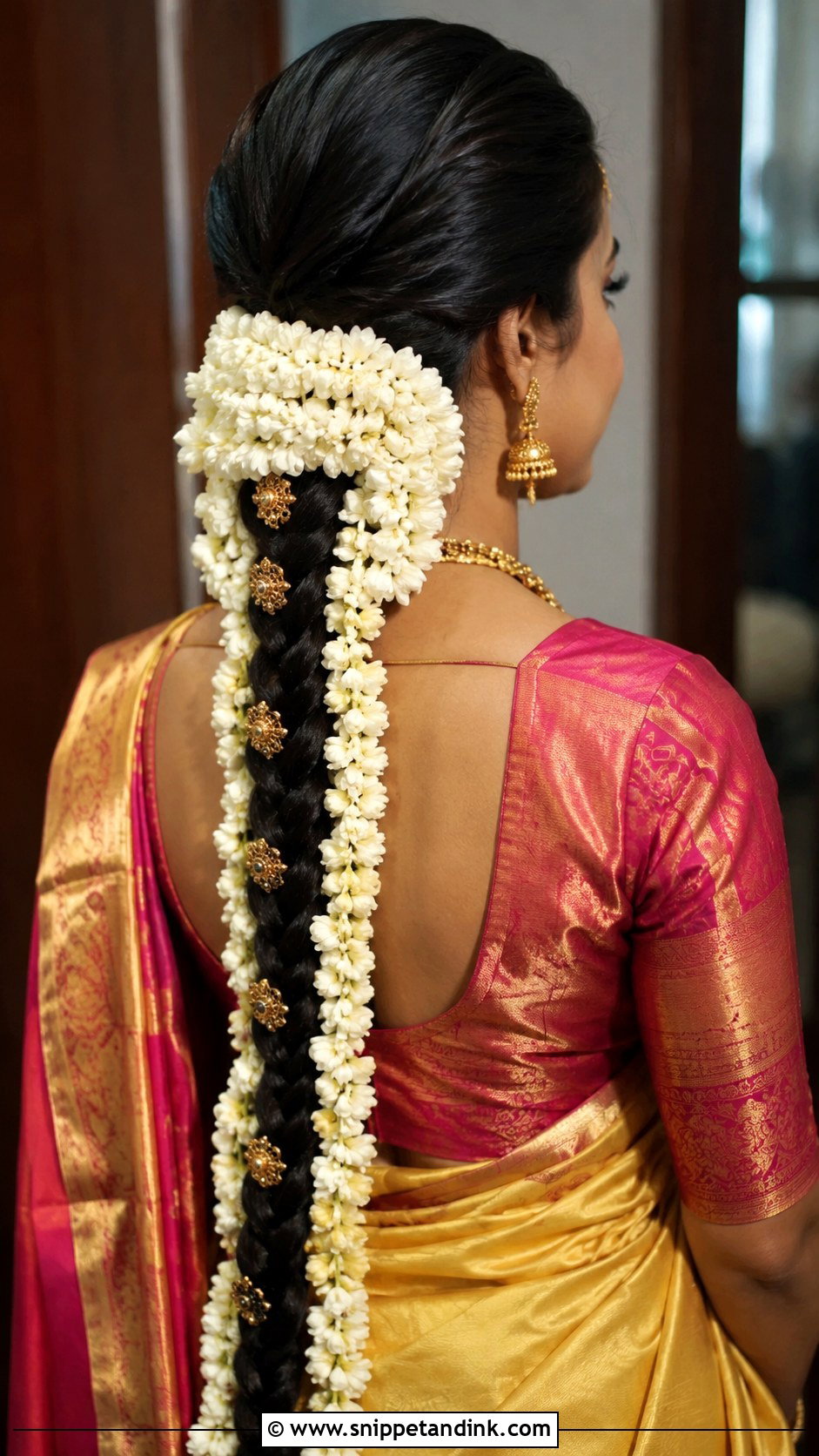
A South Indian fishtail braid with jasmine swaps the classic long plait for a woven fish braid, then dresses it with jasmine strands or a floral jada accent. Several rows of jasmine are heavier than they look, so I weave the top tight and only loosen the braid below the shoulder blades, where the weight can’t drag it down. Silk sarees, temple jewelry and a straight middle part are its natural partners. Locked into the weave, the hair stays put through long rituals of sitting, standing and bending. Gold pins or small floral clusters add a richer finish if you want one.
5. Loose Fishtail Braid For Indian Wedding
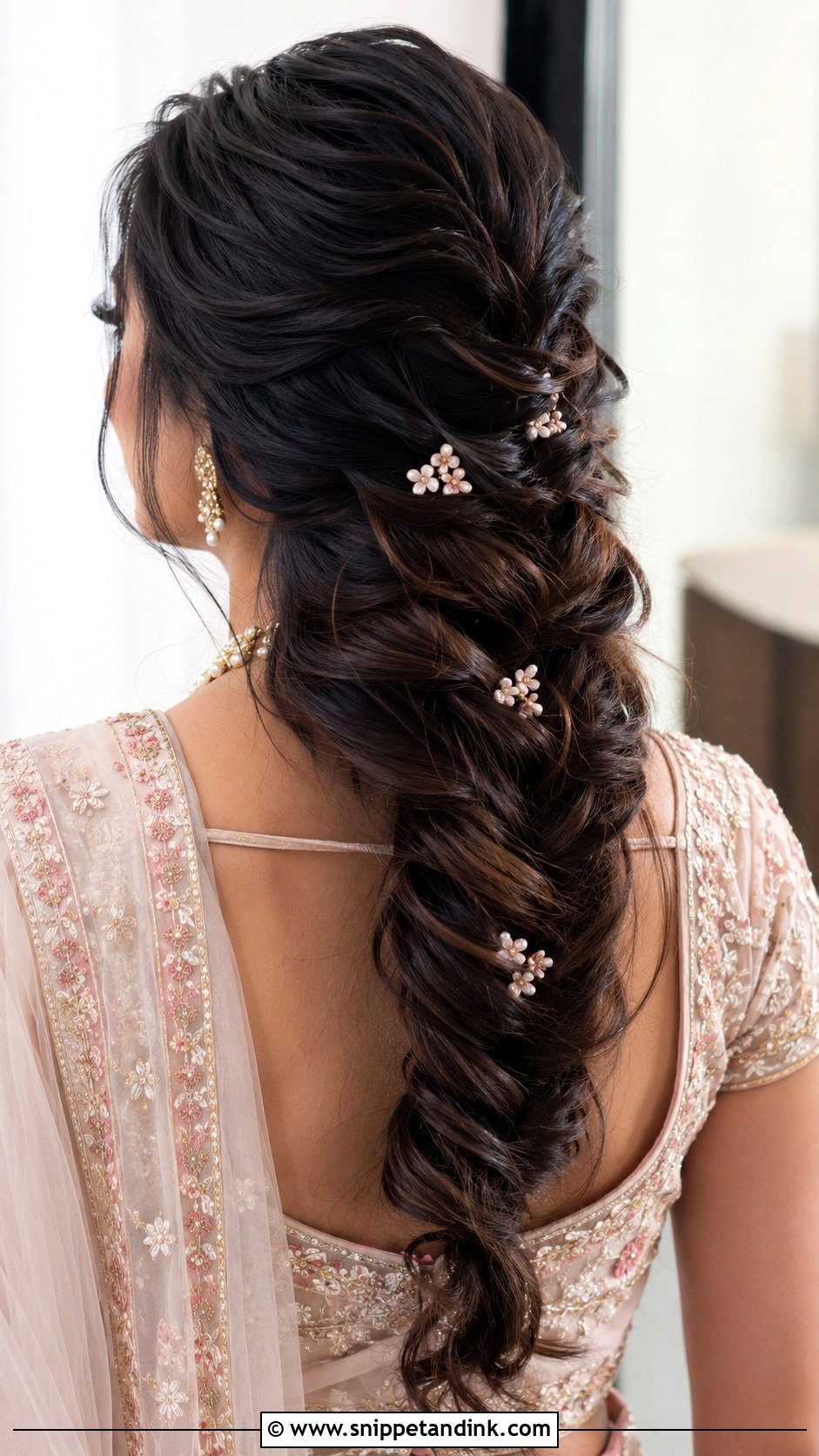
Loose doesn’t mean unpinned. I weave this braid firmly, secure it, and only then pull it apart edge by edge, so the shape looks soft and full while the core stays tight. Wavy front pieces, a light crown puff and delicate floral pins suit mehndi, haldi and outdoor functions. Layered hair is the risk: short layers pop out of the crossings once the braid is pancaked. Ask for hidden pins and a flexible spray on those ends so they stay in while the braid still looks airy.
6. Indian Wedding Fishtail Braid With Pearls
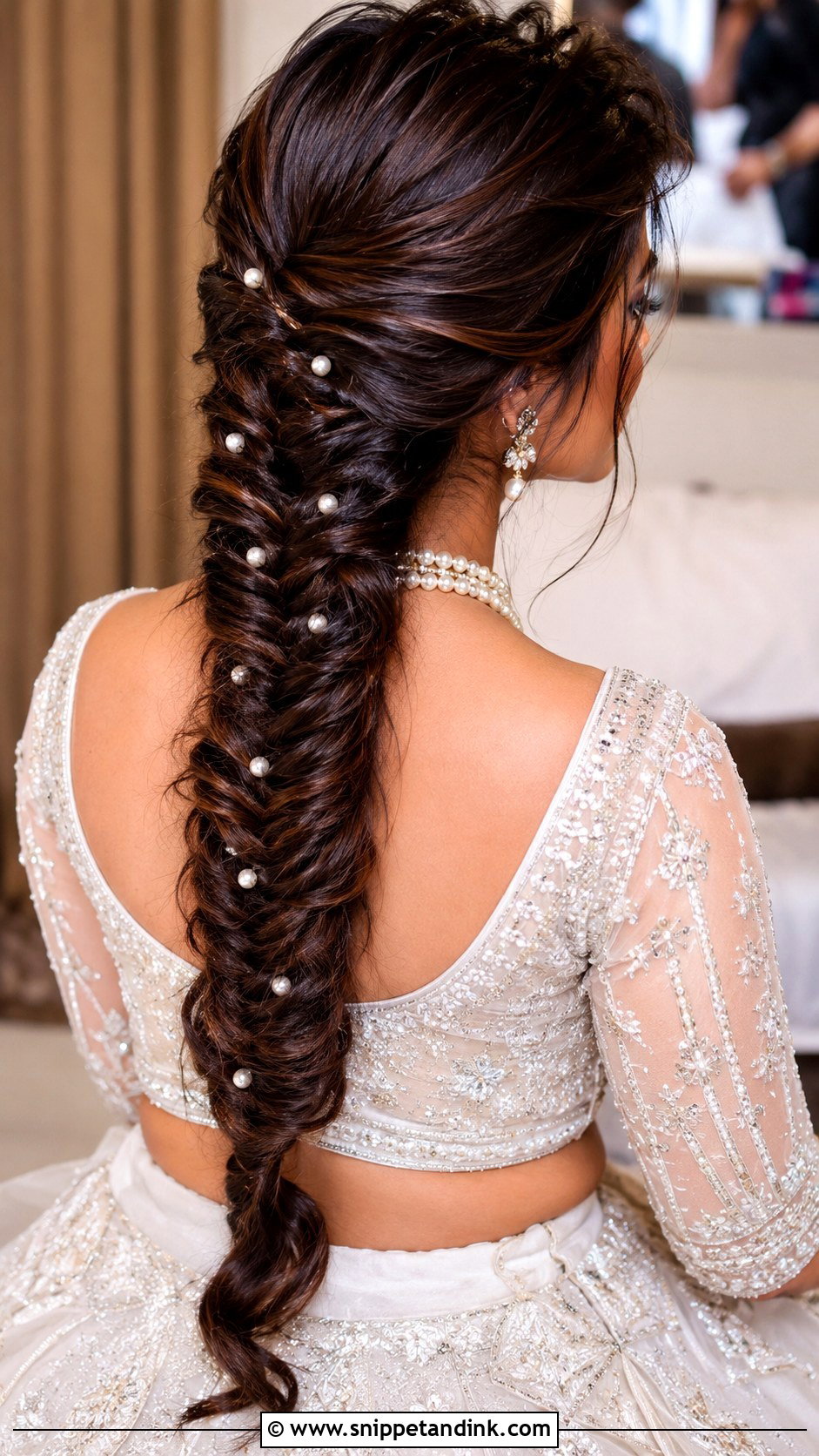
Pearl pins weigh less than flowers and don’t wilt, so this is my answer for a bride who wants decoration that will look the same at midnight as it did at the ceremony. I scatter tiny pins through the crossings or slide a thin pearl chain under each outer piece along one edge as I weave. Pastel lehengas, ivory sarees and shimmery reception outfits suit it best. A braid that’s tighter at the top and fuller toward the ends keeps the shape balanced. Sleek or softly waved front hair is the only real decision left, and that depends on how formal the evening is.
7. Front Puff Fishtail Braid For Indian Bride
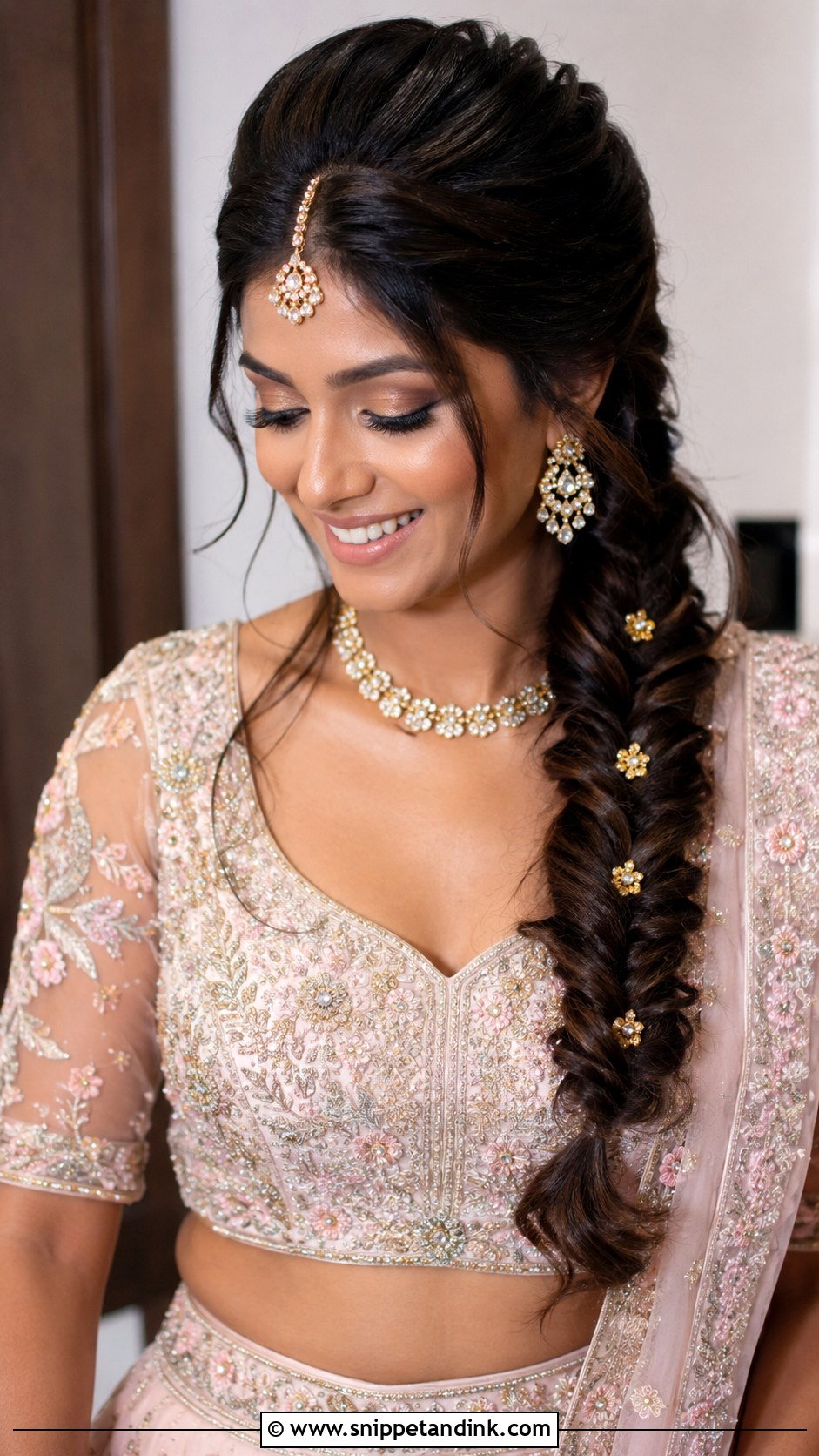
The puff should be built on lightly teased roots and smoothed over, not stacked high. Under a heavy dupatta, a modest lift is plenty, since the fabric flattens anything taller anyway. That height lifts the face and balances big earrings or a strong bridal neckline. From the puff, the hair is gathered into a long fishtail and finished with flowers, pearls or gold pins. Round, oval and heart-shaped faces all suit the crown volume. Very fine hair needs a small padding insert under the puff, or it sinks by the second ceremony.
8. Half Up Fishtail Braid For Indian Wedding
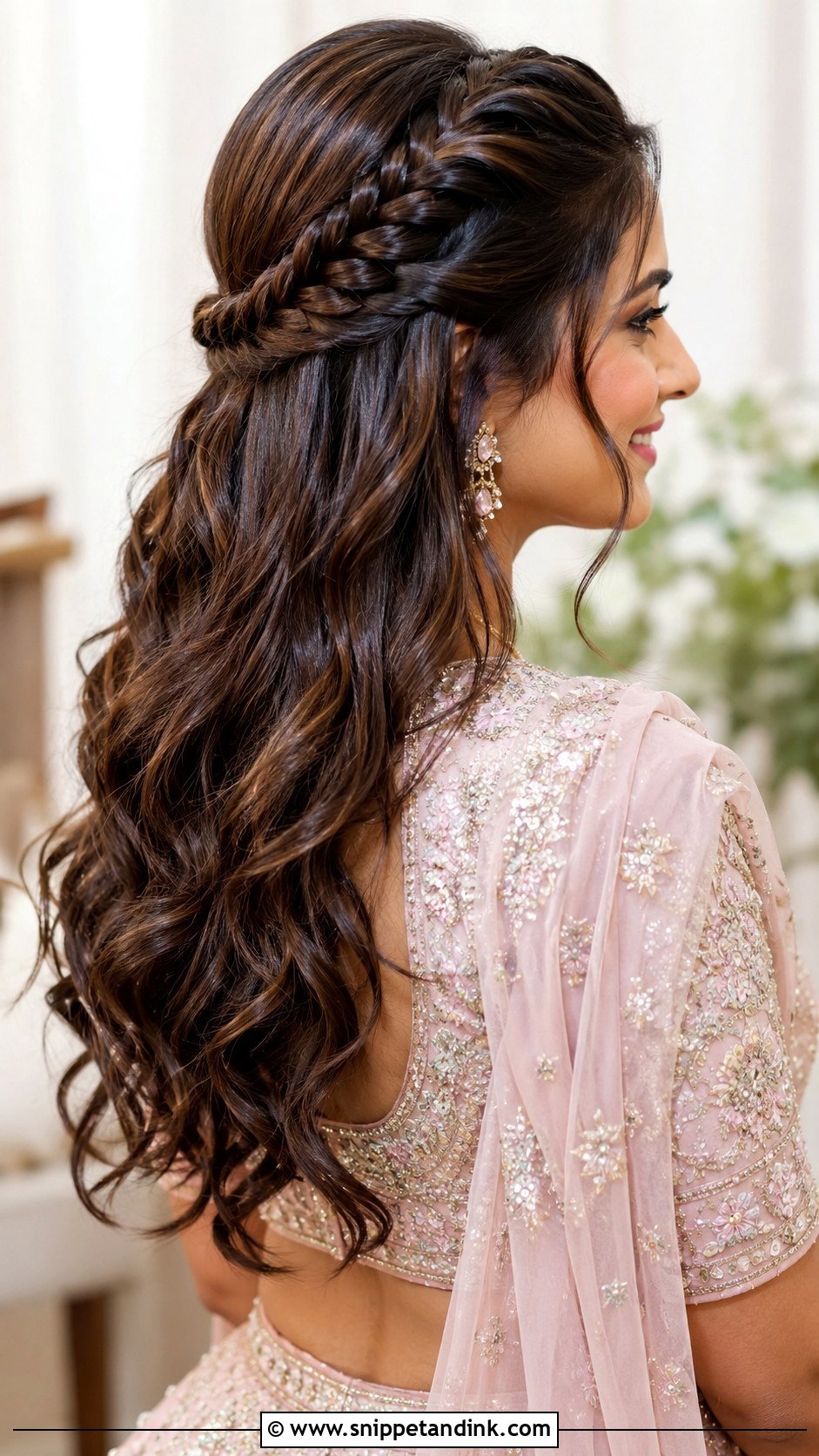
Only the top section is woven here, and the rest falls in curls or waves, which suits engagement, reception and sangeet outfits, gowns, lehengas and lighter sarees. My honest caution: open hair is the first thing to give up in heat and on a dance floor. I curl those lengths and let each curl cool while pinned before releasing it, which buys hours. Small flowers, pearl pins or a dainty hair chain can trim the braid. You get volume at the back and a tidy face without committing to a full updo.
9. Messy Fishtail Braid For Mehndi
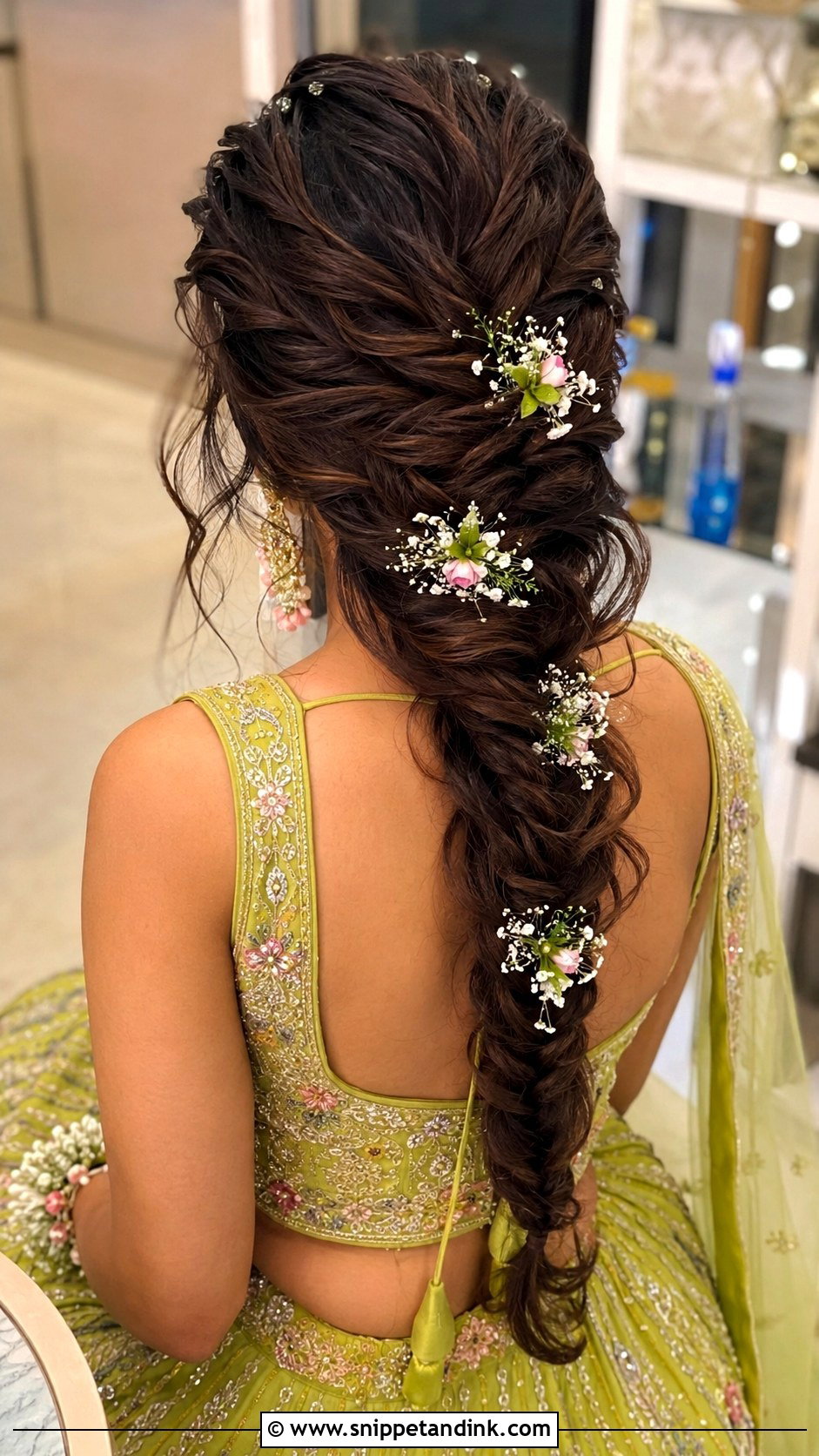
Mehndi is the one function where I build mess into the braid on purpose, pulling it loose with soft tendrils at the face and natural volume through the crown. It sits well with floral jewelry, mirror work outfits and bright lehengas. The practical reason matters more than the look. You’ll sit with your hands out for hours while the paste dries and you can’t touch your hair, so it all has to stay off your face and shoulders. Fresh flowers, small clips or thread details can pick up the outfit colors. I pin under every loosened section so dancing doesn’t finish the job for you.
10. Sleek Fishtail Braid For Indian Reception
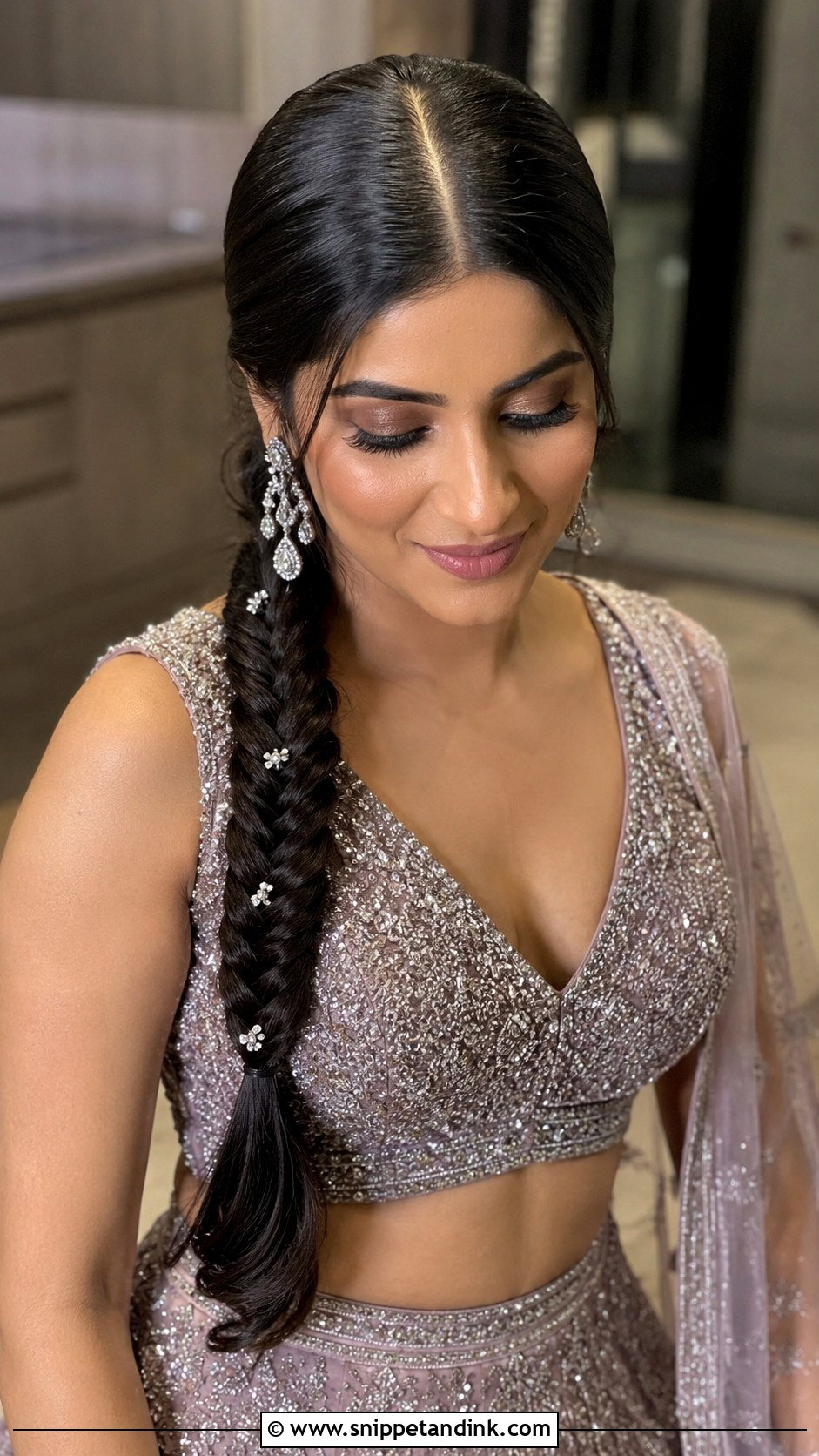
Sleek is less forgiving than it looks. Any bump at the crown or flyaway near the part shows under evening lights, so I smooth the hair with a fine-tooth comb and a drop of serum before the weave starts, usually over a center or deep side part. Metallic lehengas, satin sarees and modern gowns suit the glossy finish, and statement earrings get room. Accessories stay minimal: a few pearl pins, a crystal clip or one jeweled piece at the base. Even tension on every crossing matters most in this version, because uneven pulls show as a wobbly line down the back.
11. Crown Fishtail Braid For Indian Wedding
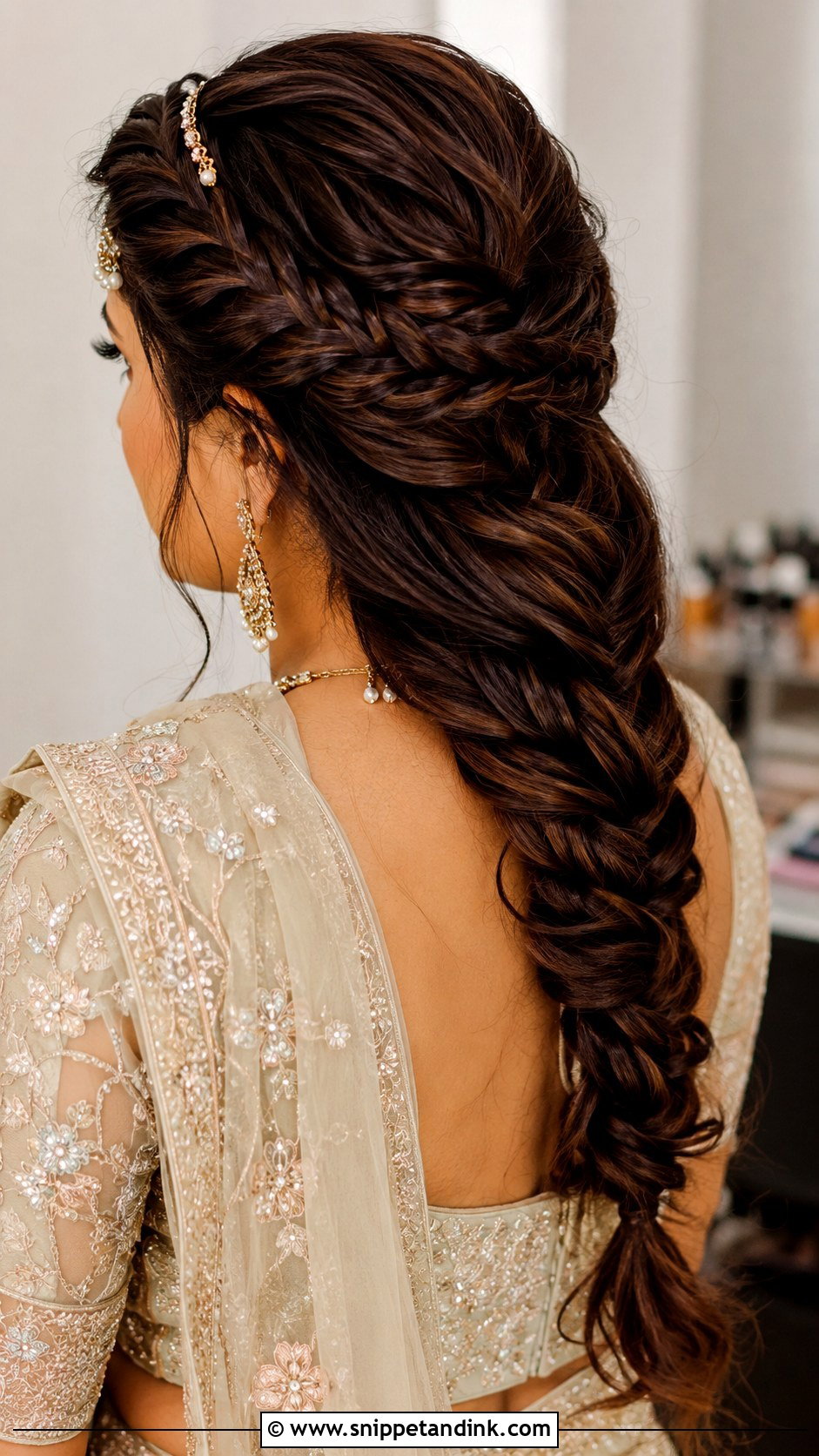
A crown fishtail can wrap across the front like a headband or circle the head before joining a longer braid or bun. Bridesmaids, sisters and brides who are tired of the standard long braid tend to like it. If you plan to wear a maang tikka, matha patti, or floral hairpiece, say so early, because the braid has to sit behind the jewelry line rather than under it, or the matha patti rides up through the evening. Keep it neat with a heavy outfit and loosen it slightly for a softer feel. A full wrap needs roughly shoulder-length hair or longer; shorter hair can manage a half crown.
12. Dutch Fishtail Braid For Indian Bride
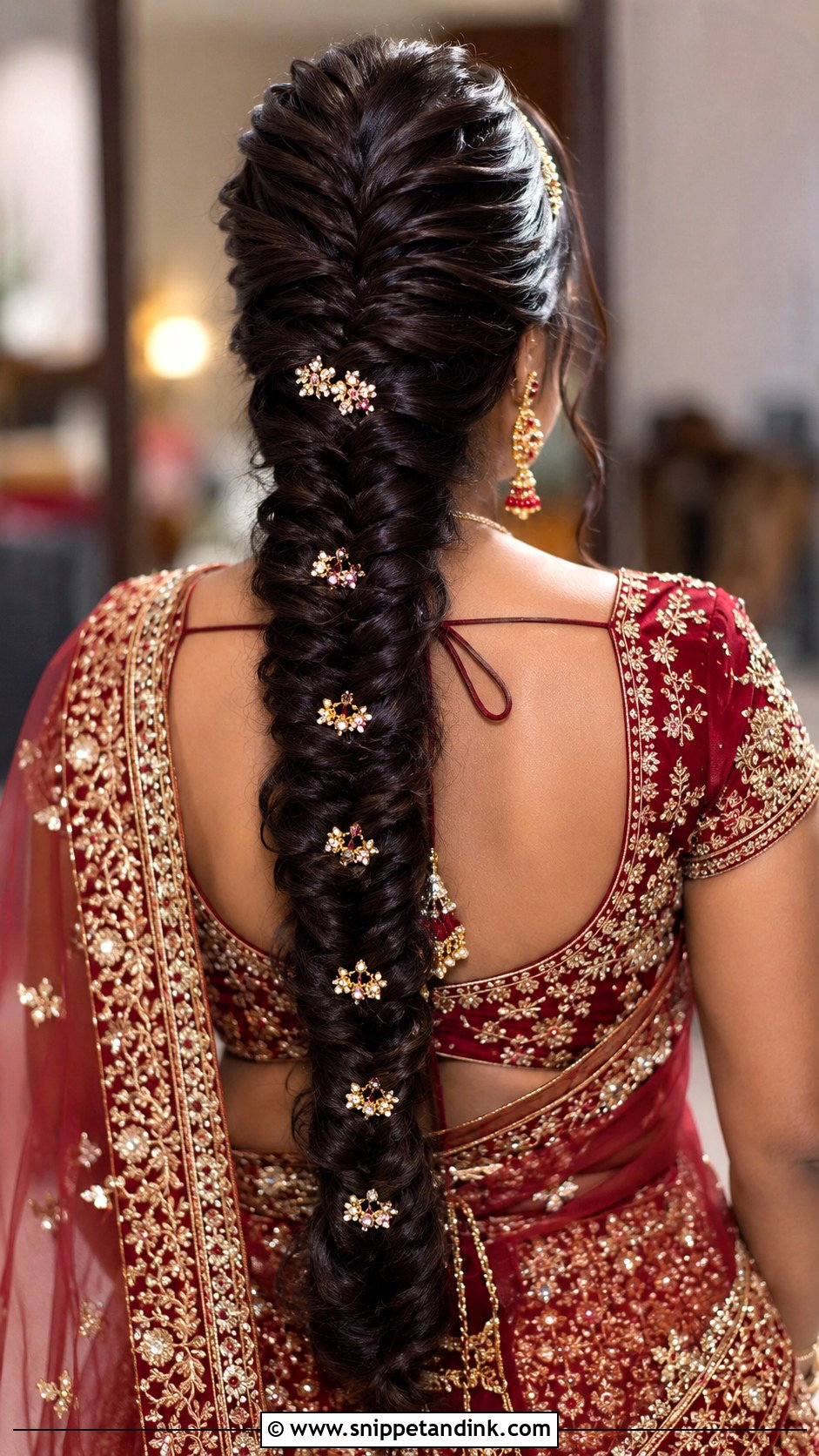
In a Dutch fishtail, the pieces pass under rather than over, so the braid rises off the scalp instead of sinking into it. That raised texture holds up in photos from behind and stays visible even with accessories, which is why I use it on thick hair and long extensions. Flowers down the center, gold pins along the sides or pearls between sections all work. Because it hugs the head along its length, it’s secure under a heavy dupatta and through dancing. On fine hair it can look thin unless every crossing is pancaked carefully.
13. Fishtail Braid Bun For Indian Wedding
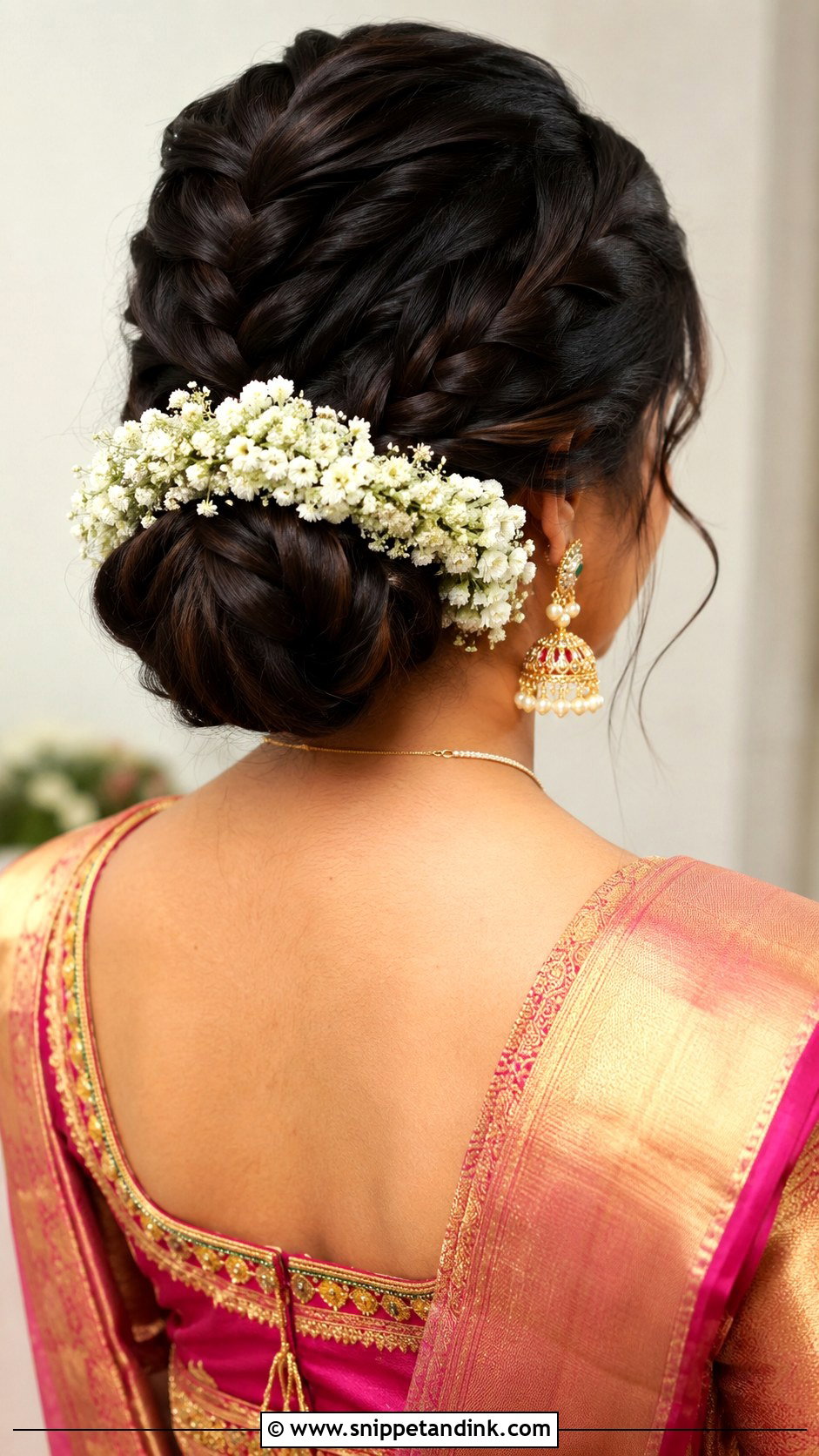
Braiding first and then coiling the fishtail into a low or side bun gives a sculpted, textured shape that a smooth bun can’t match. Since the hair stays off the neck, this is the version I suggest for heavy dupattas, layered necklaces and summer ceremonies. Flowers wrapped around the bun suit it, and mothers of the bride, bridesmaids and guests who want something secure often choose it too. I fix the coil with U-pins pushed back into the bun; bobby pins alone tend to walk out of a braided coil.
14. Long Fishtail Braid For Indian Bride
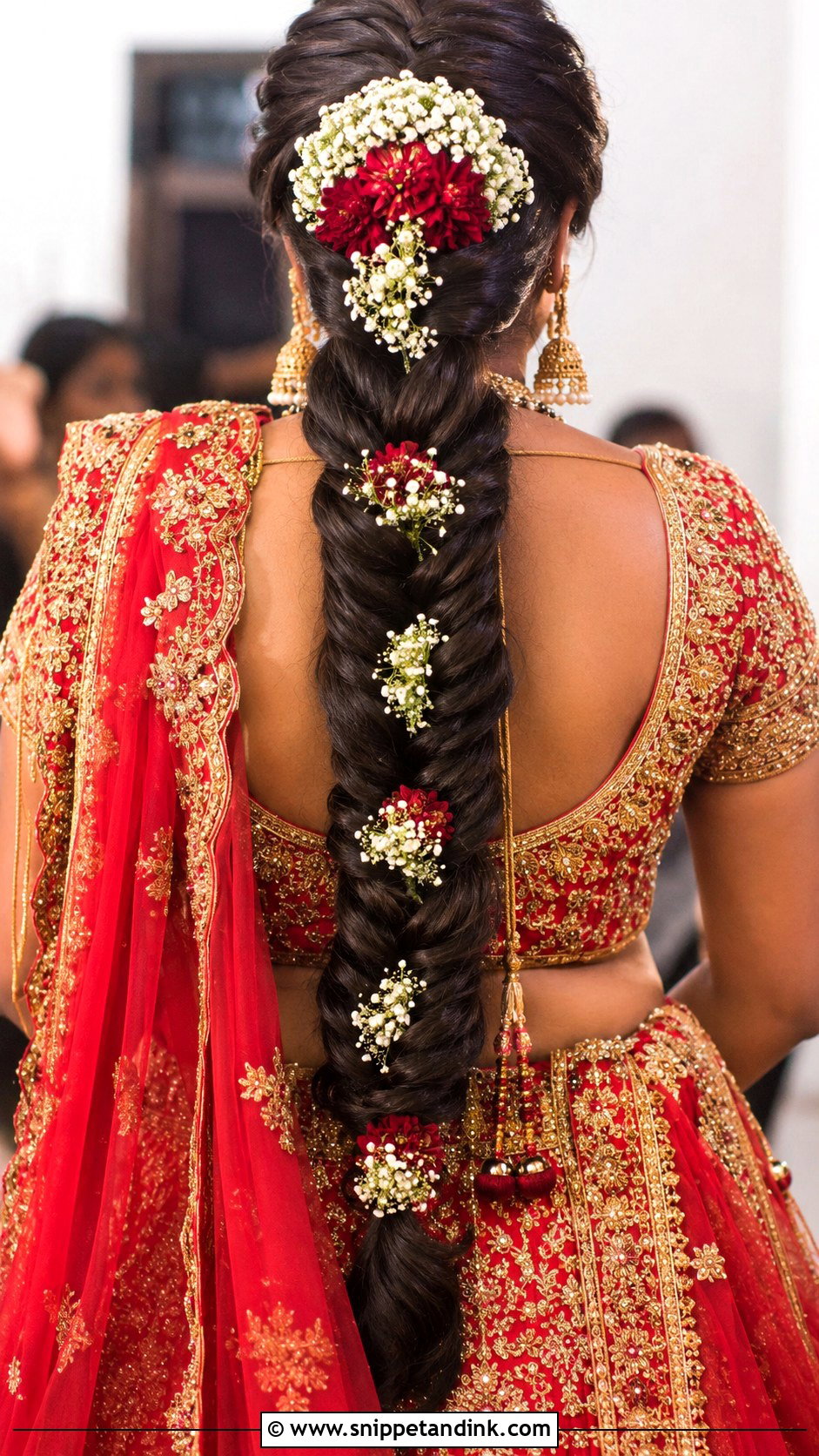
When length is the point, the braid becomes part of the outfit, especially alongside a lehenga, saree, or traditional bridal dupatta. Extensions can add fullness or length. I clip them in before braiding so the weave hides the wefts; added afterward, they never quite blend at the ends. Flowers, gold chains, pearl pins or small jeweled pieces can decorate it, and the top stays smooth with soft crown volume. In portraits, the braid draws one long line down the back.
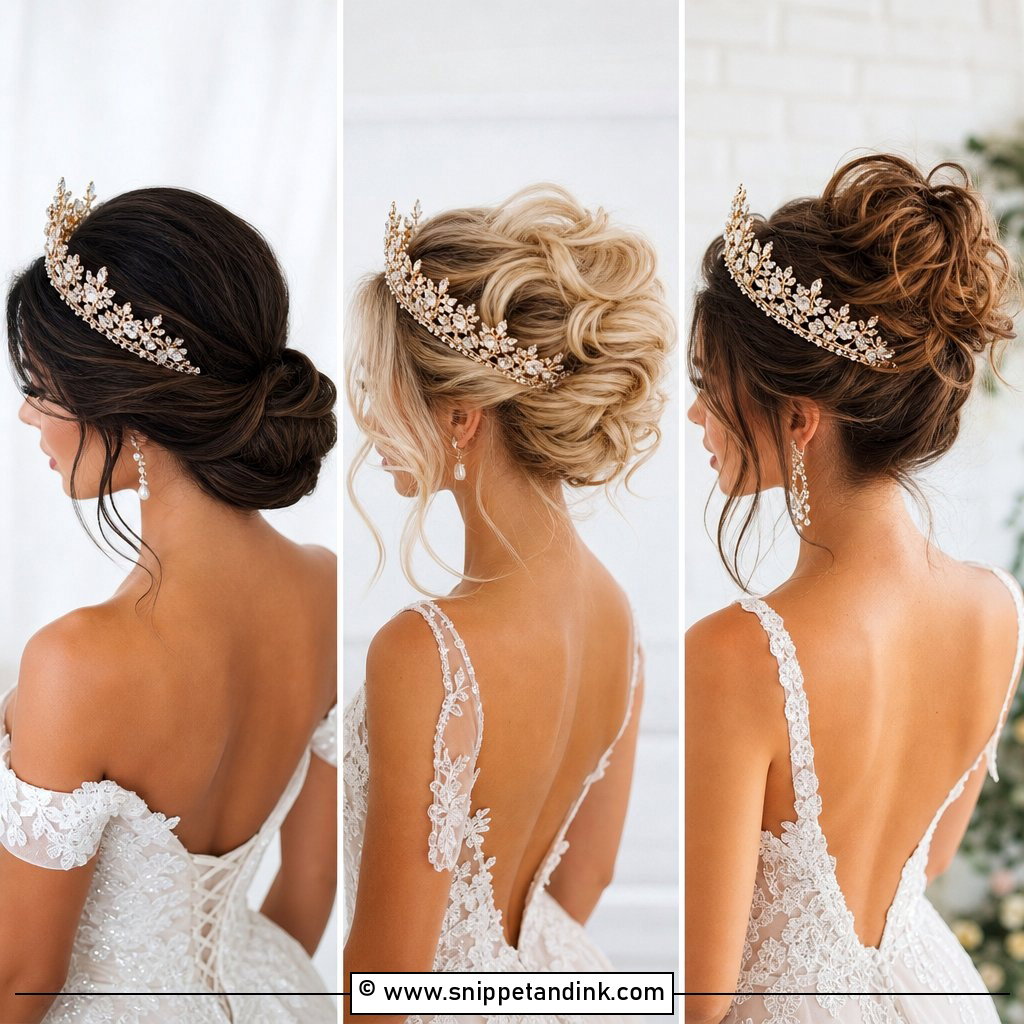
15. Fishtail Braid With Gajra For Indian Wedding
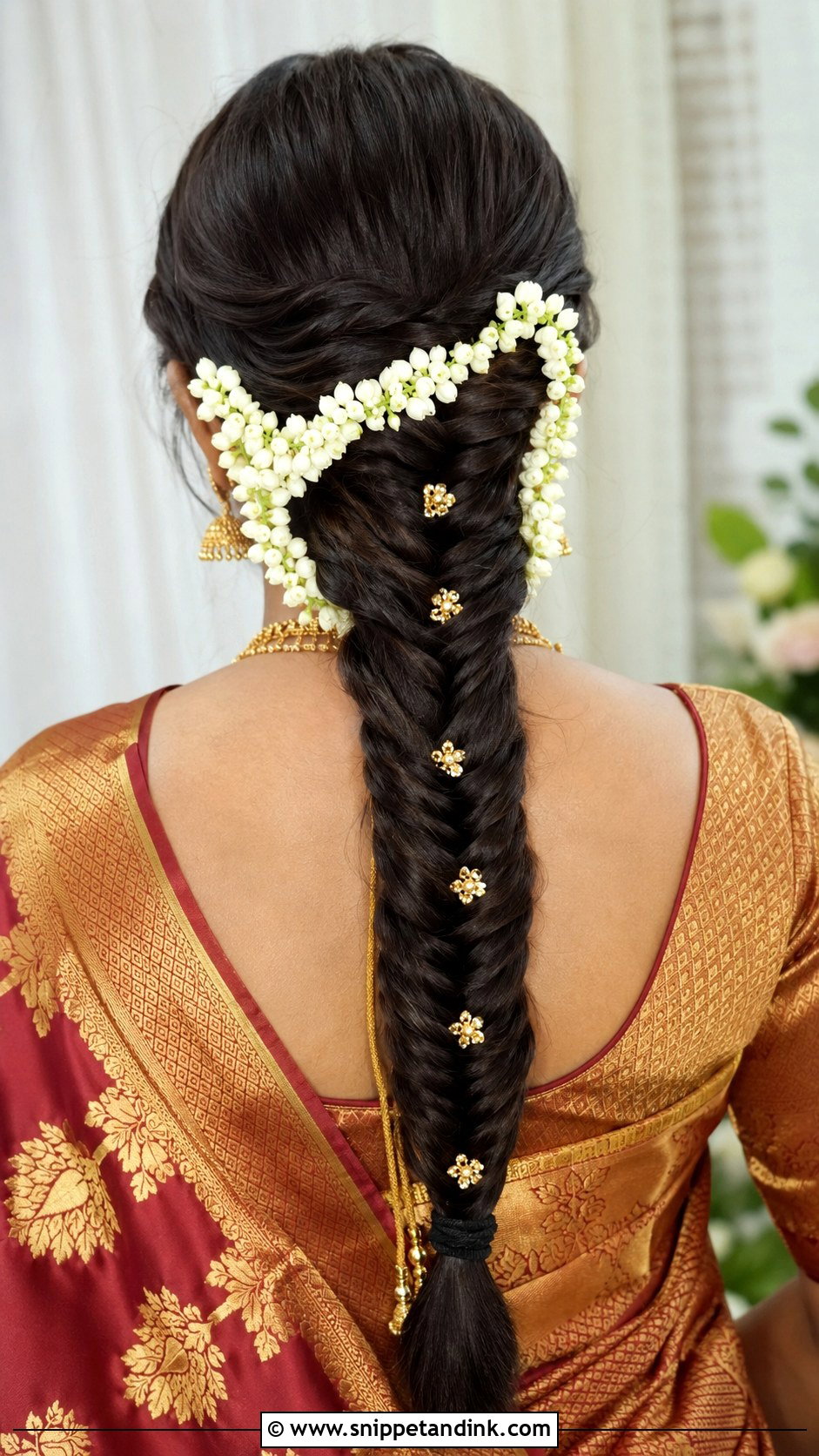
A gajra can go around the base of the braid, along its length or as a floral border at the crown. Jasmine reads well beside almost any color, so it suits South Indian, North Indian and fusion outfits. Two things to know about the flowers themselves: buds that are still closed in the morning open and scent the air by evening, and petals bruise brown wherever a pin pierces them. I order the strings for same-day delivery and pin through the thread, never the blooms. Spaced evenly, with gold jewelry and a silk saree, it’s the most traditional look on this list.
16. Fishtail Braid With Lehenga
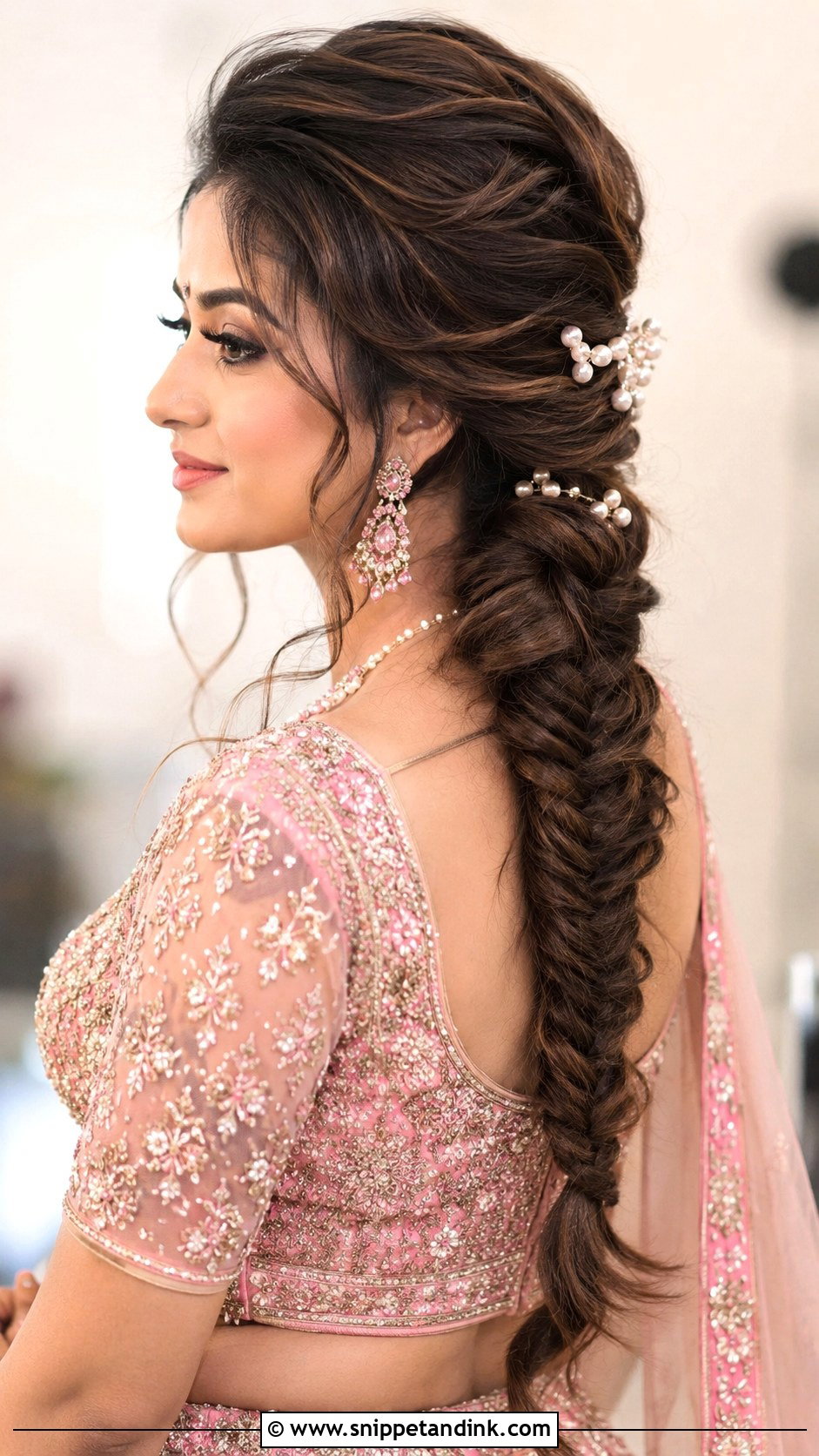
Read the embroidery first. A heavily worked lehenga wants a softer braid with simple flowers or pearls, while a minimal one can carry a fuller braid and statement accessories. A middle part reads bridal; a side part relaxes it. The same braid adjusts across functions for brides, bridesmaids and guests alike. It also keeps long hair off the blouse back, which matters when the back has work you want people to see.
17. Fishtail Braid With Saree
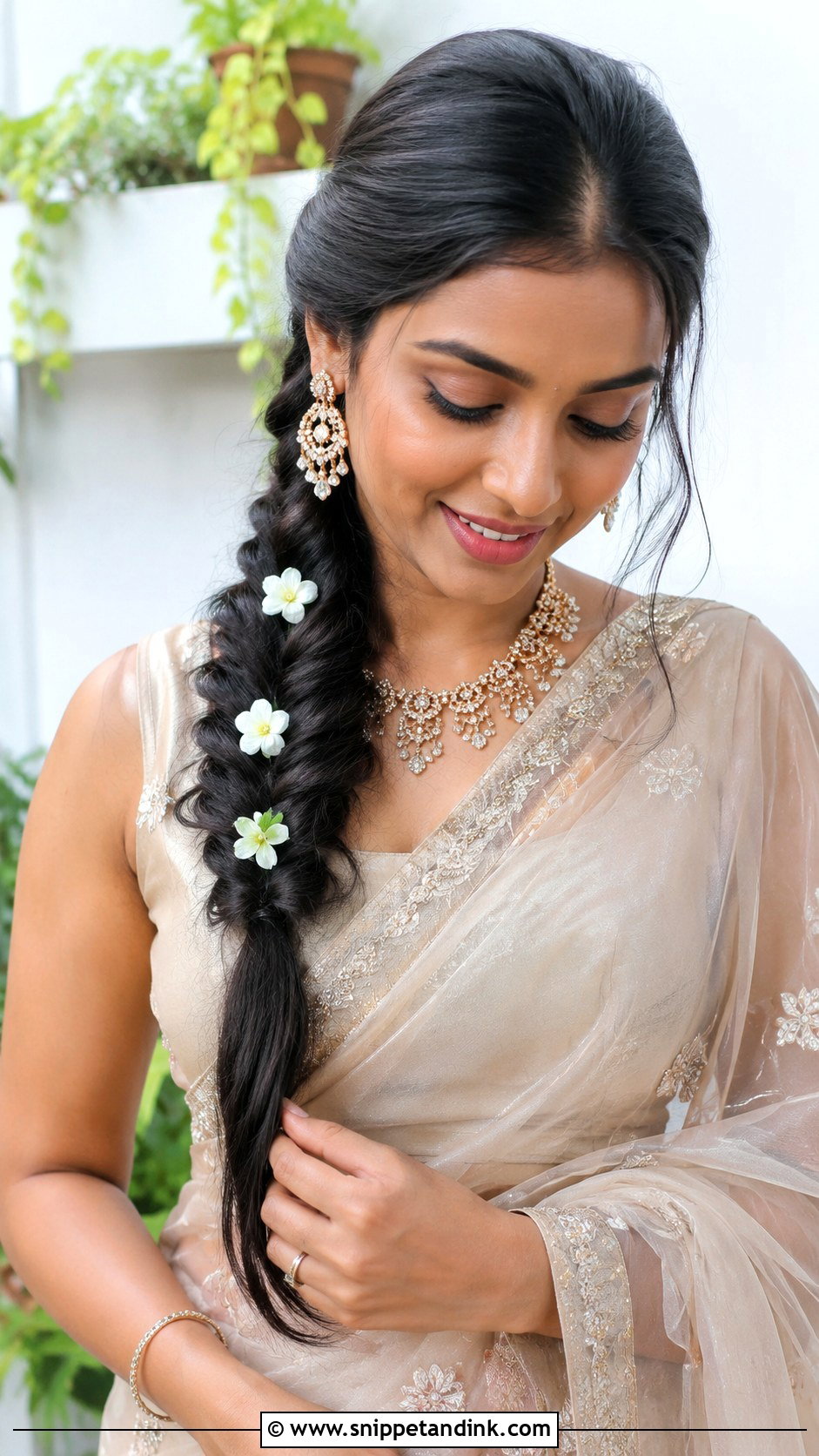
Worn down the back, the braid follows the line of the drape; pulled to one side, it shows off more of the weave. Silk, chiffon, organza and embroidered sarees all suit it, and jasmine, pearls or gold pins each shift the mood. If your blouse has a detailed back, I’d move the braid to the side so it doesn’t cover the work. With the pallu pinned at one shoulder, I put the braid on the other, so the two don’t tangle every time you turn.
18. Fishtail Braid With Hair Accessories
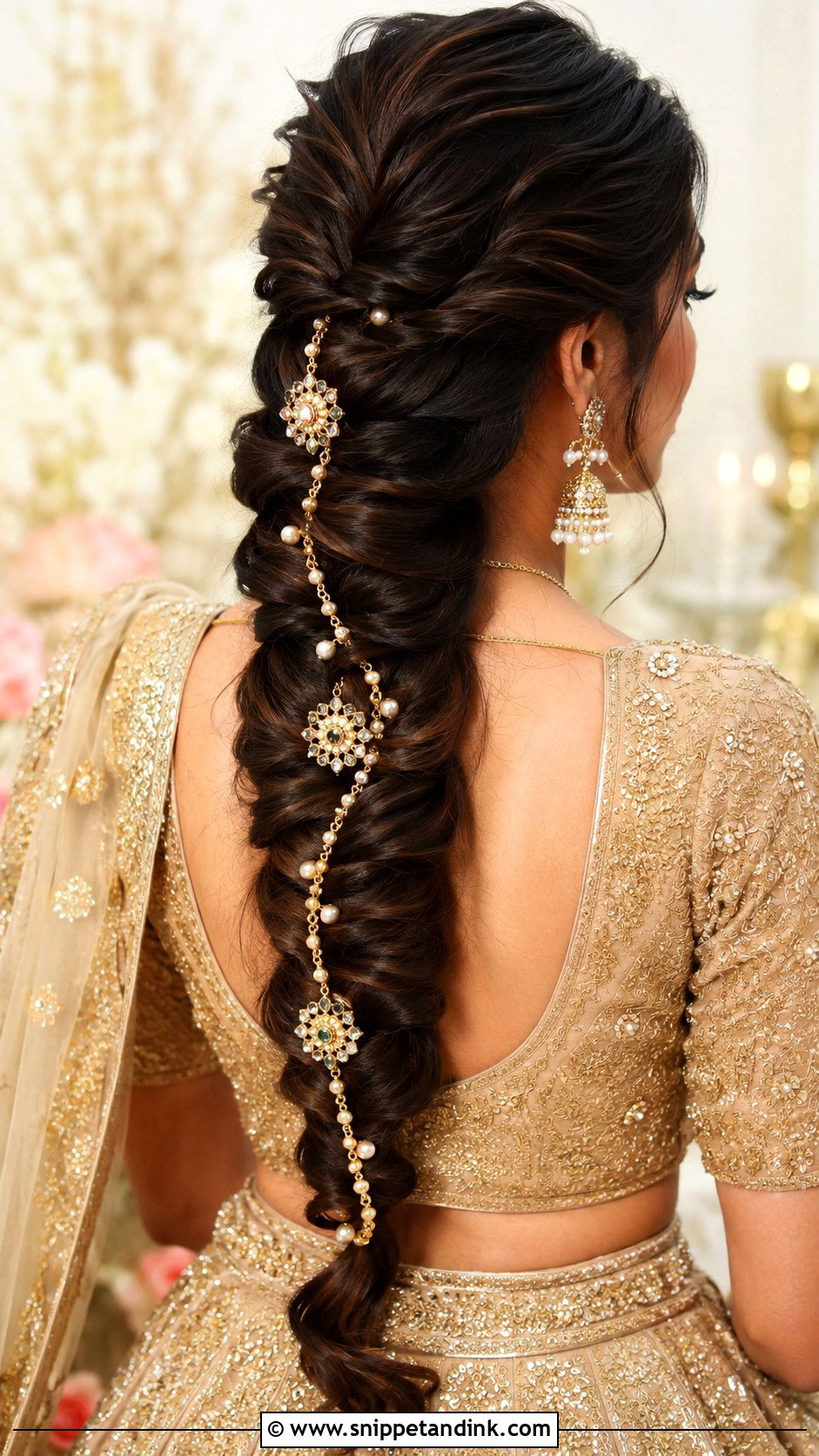
A fishtail has more crossing points than any other braid, which means more places to anchor detail: pearl pins, kundan clips, floral pins, gold chains, small charms or crystal pieces. Match accessory weight to the outfit. Heavy kundan needs a firm braid and spiral pins or doubled bobby pins, while lighter guest looks can take softer accents. Ceremonies, receptions, mehndi and sangeet all suit it. I space pieces evenly and stop well before the weave disappears; you should still see braid between them.
19. Curly Fishtail Braid For Indian Wedding
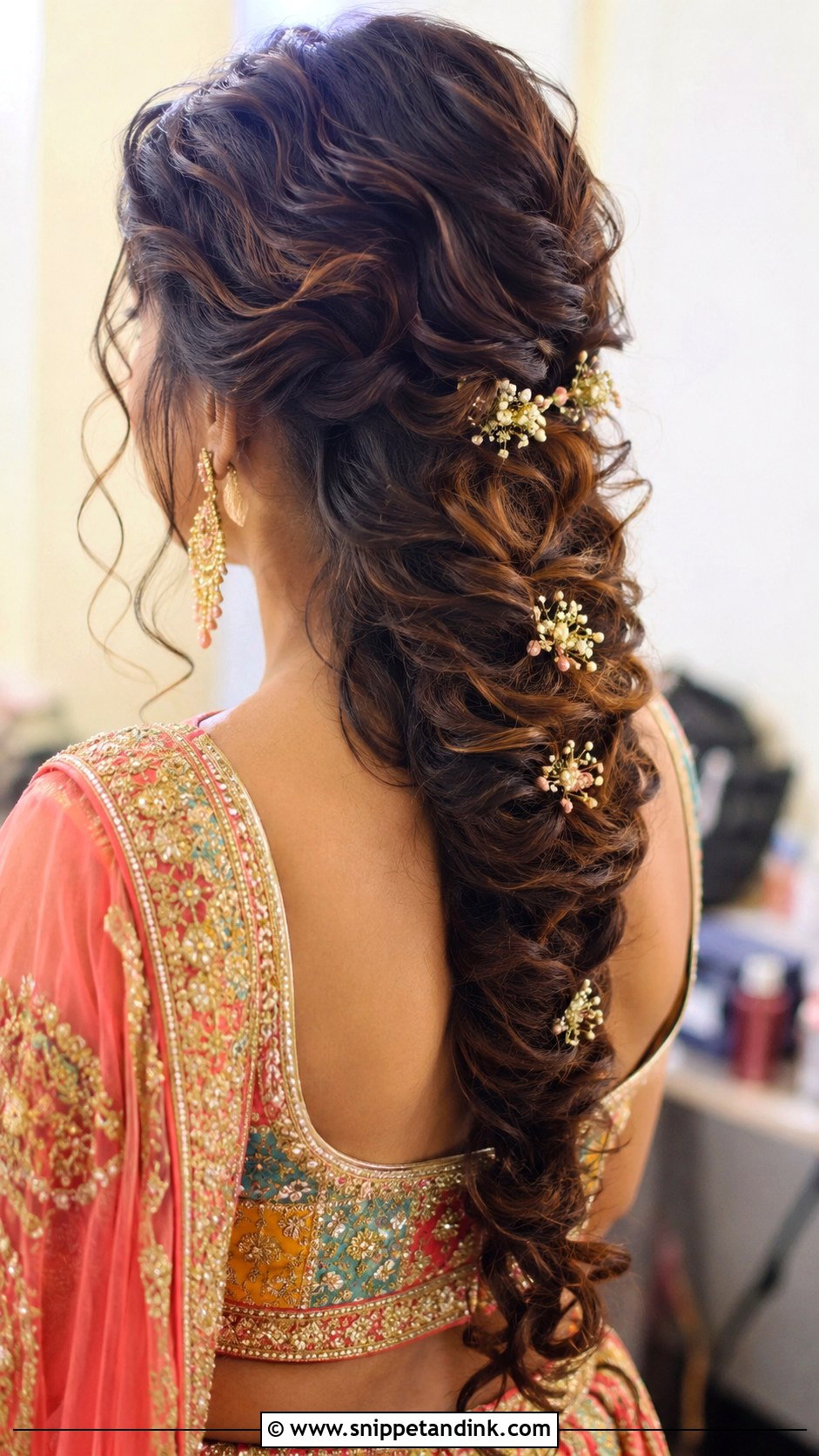
Curls go in before braiding, so the fishtail comes out fuller and more textured. A few loose curls near the face soften it while the braid keeps the length tidy. Naturally wavy or curly hair is the best candidate because the braid uses that texture instead of fighting it, and I’d rather work in a curl cream than flat-iron it straight first. Flowers or pearls dress it up for a bride; left plain, it suits a guest. Light-hold products keep curls defined but still soft to touch.
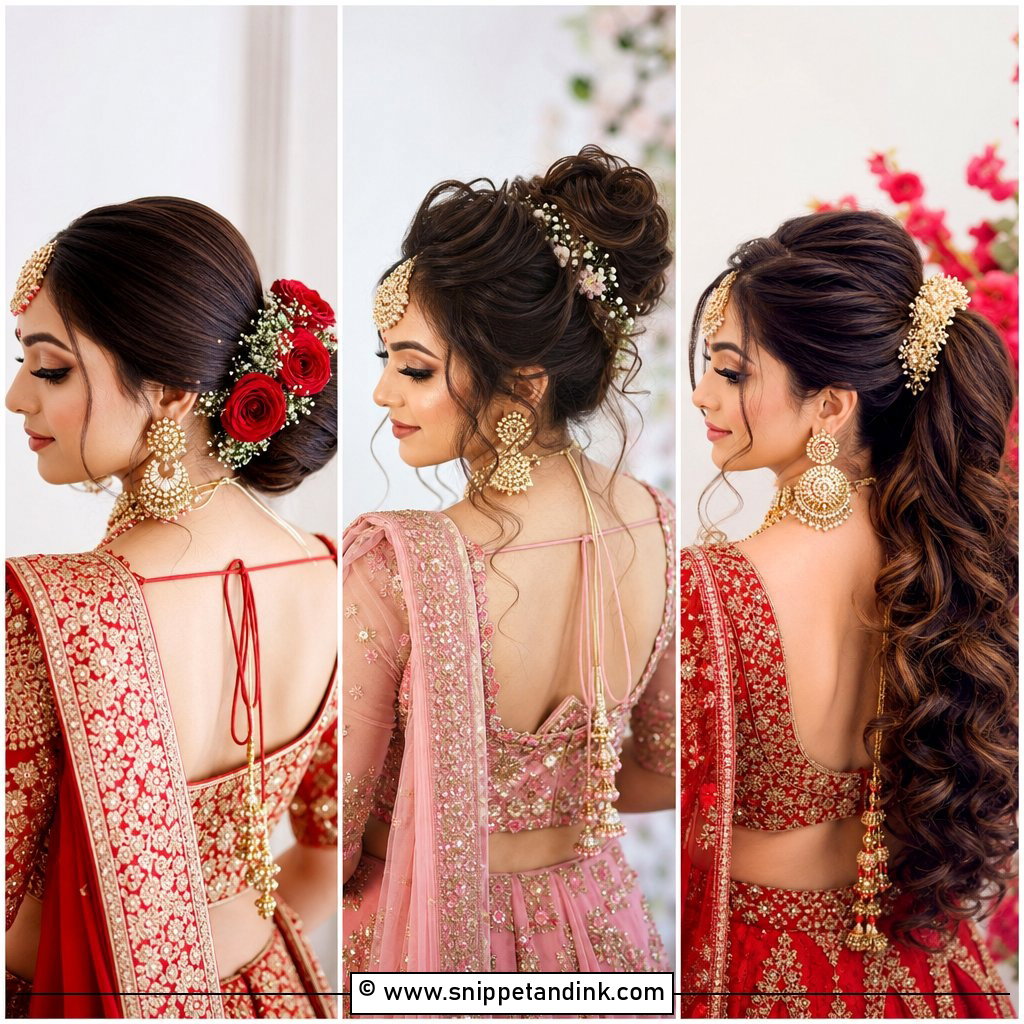
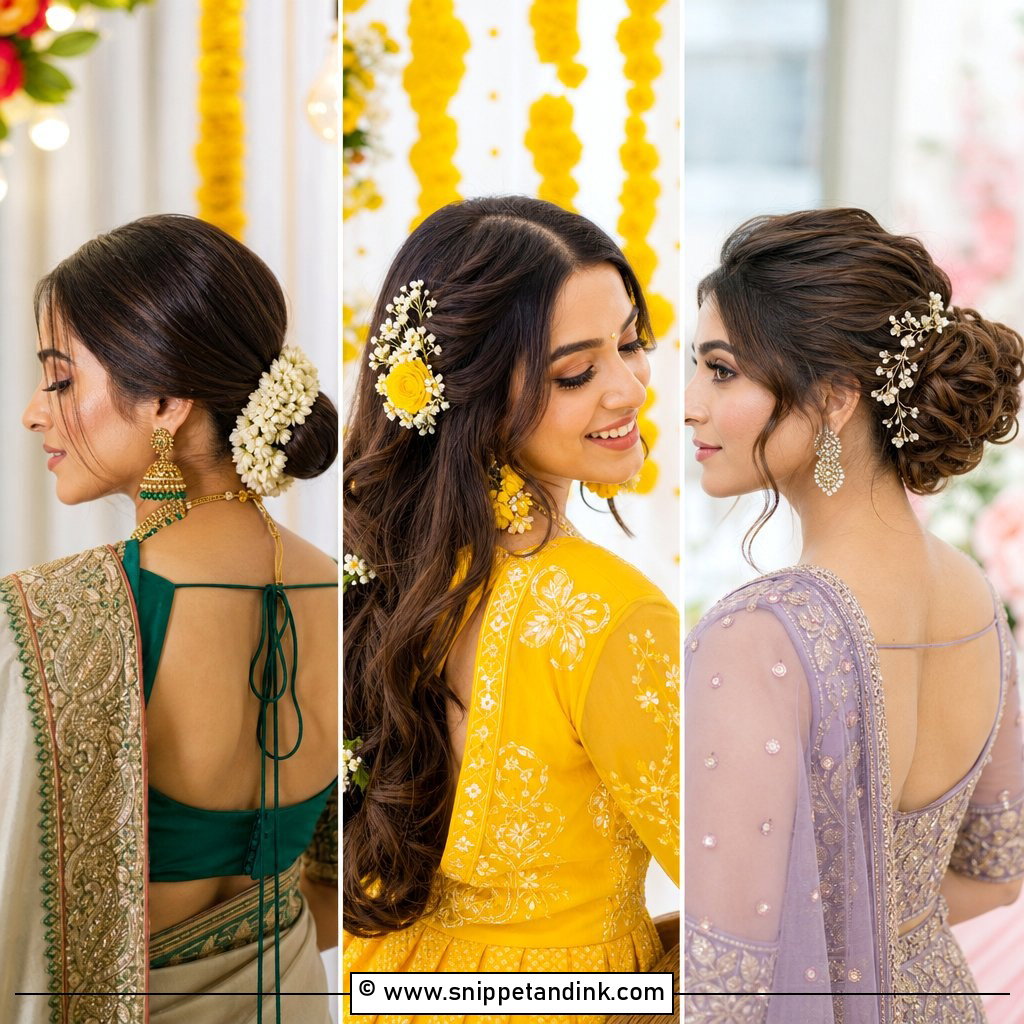

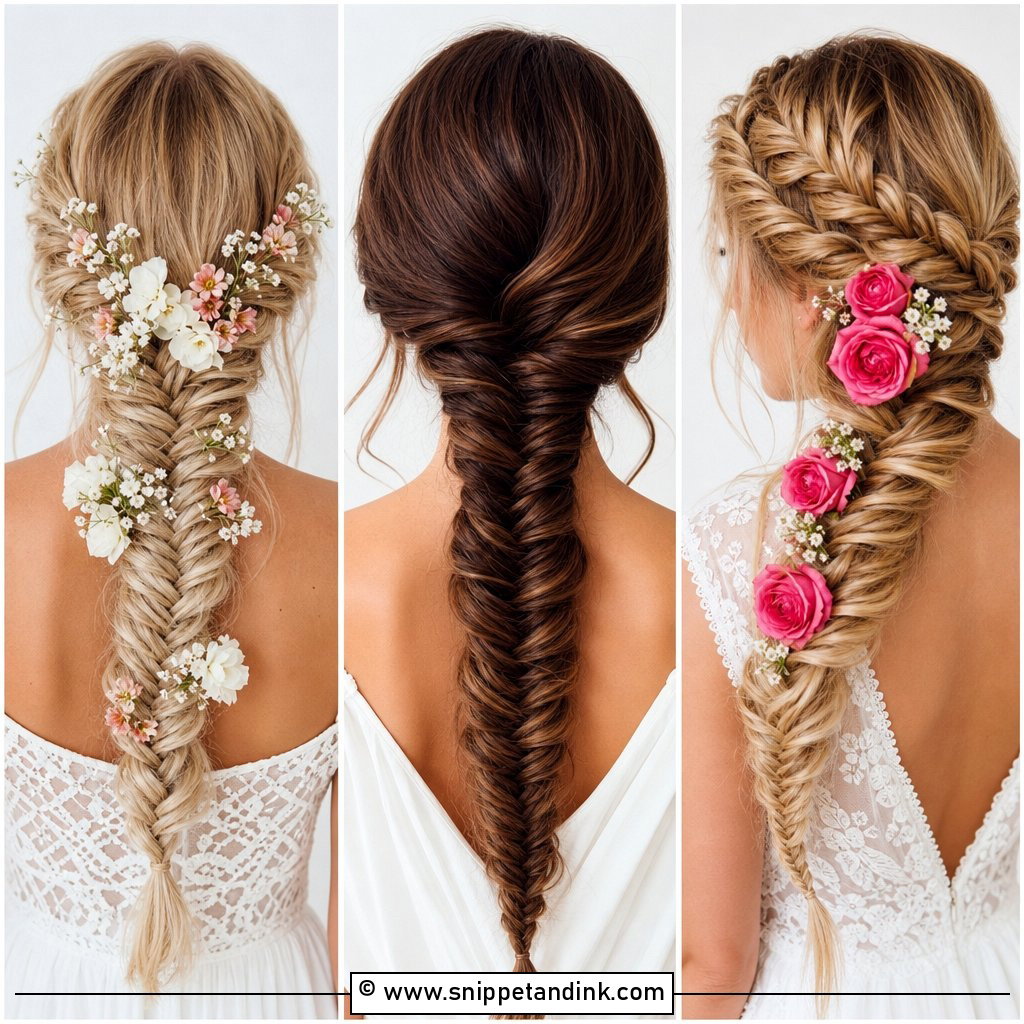
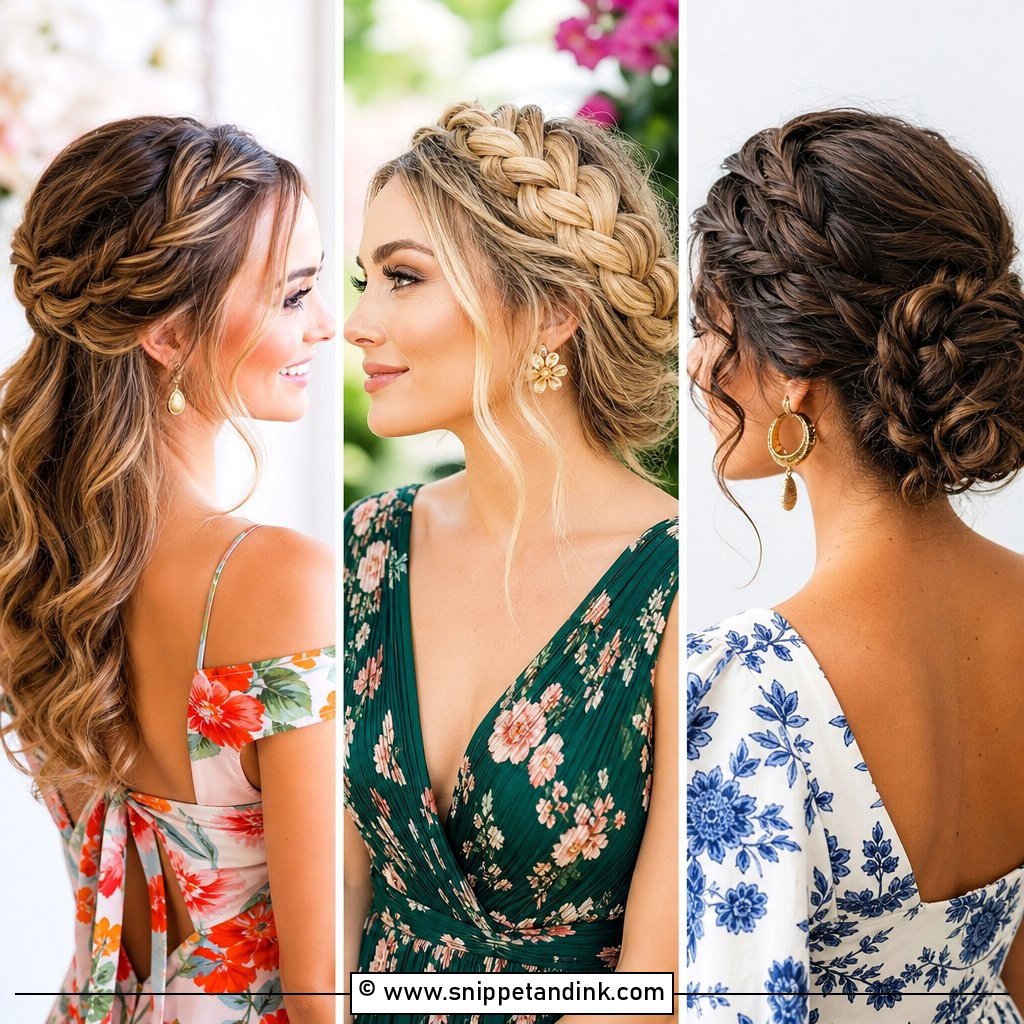
20. Simple Fishtail Braid For Indian Wedding Guest
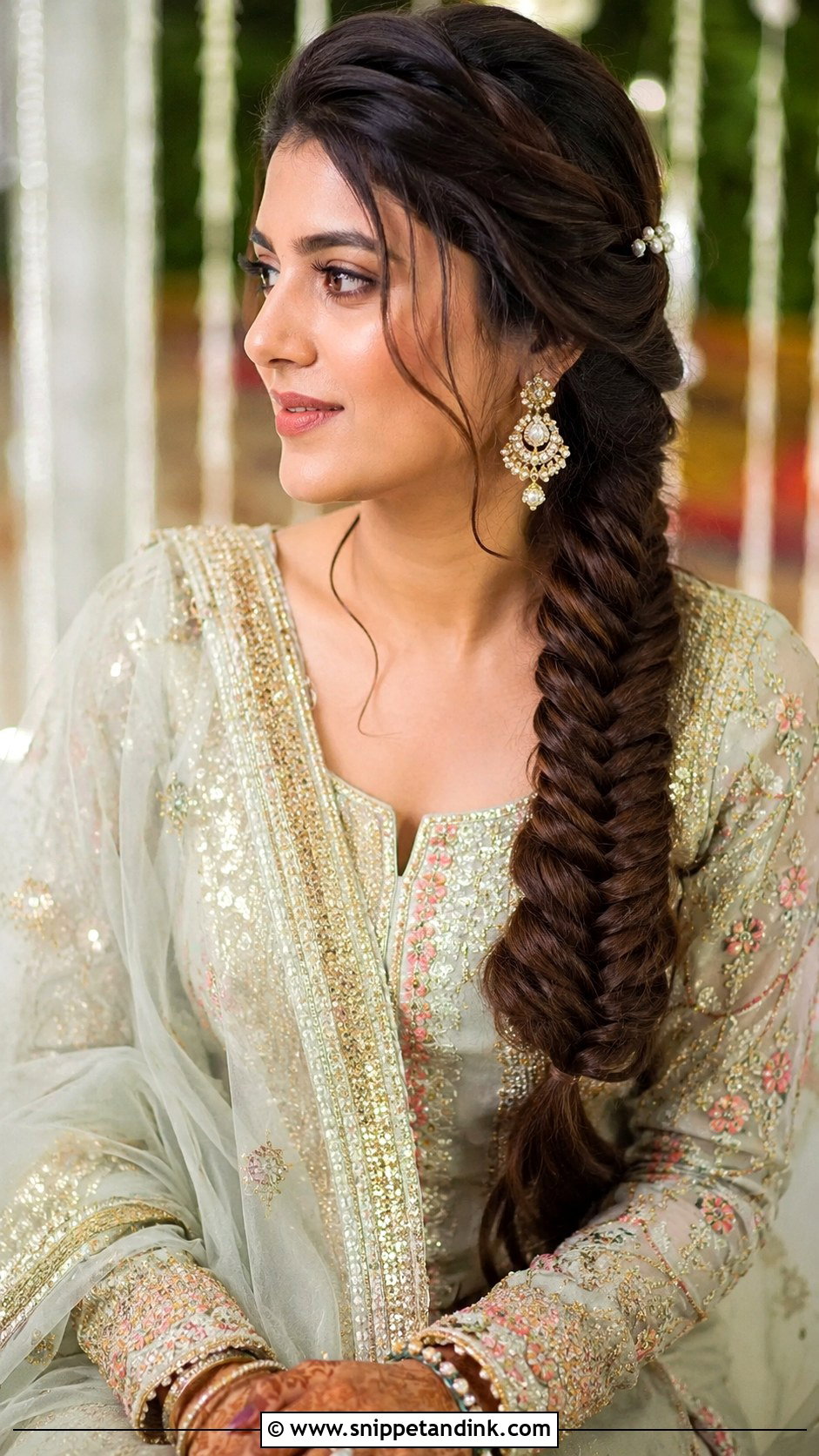
For an Indian wedding guest, a simple fishtail is comfortable for long celebrations and doesn’t need heavy flowers or bridal jewelry. A clean side or back fishtail with soft face-framing pieces goes with a saree, anarkali, lehenga or sharara. One small clip, a few pearl pins or a tiny floral accent is enough for a festive event. It handles warm weather and dancing well. Keeping the decoration light also keeps you clear of the bride’s look, which families notice.
Once the Dupatta Goes On and the Dancing Starts
Most of the damage to a wedding braid happens after the stylist leaves the room. A few habits keep it looking the way it did in the morning.
- Pin the dupatta into anchor pins, not the braid. I set a few crossed pins at the crown before the dupatta goes on and fix the fabric to those. Pinning straight into woven sections pulls them apart every time the fabric shifts.
- Lift heavy fabric off, don’t drag it. Zari and sequins catch on the loosened edges of a fishtail and pull out loops, so whoever helps with an outfit change should raise the dupatta clear of your head.
- Carry a tiny repair kit: a few bobby pins in your hair color, a travel-size hairspray and a tail comb. A loop that pops out can be tucked back into the nearest crossing and pinned in under a minute.
- Refresh the flowers on a long day. Jasmine that looked fresh at a morning ceremony will have browned by night, and swapping in a new strand is quick.
At the end of the night, take out every pin before you try to undo the braid, then unweave from the bottom up and brush only once the hair is free. A fishtail that has been sprayed and pinned for hours knots quickly if you tug at it, and a little oil on the lengths first makes the brushing far gentler.
One Braid, a Different Mood at Every Function
What I like most about the fishtail is how little it takes to change its mood. Jasmine makes it classic, pearls make it quieter, a side placement is easier to photograph and a sleek finish belongs at the reception. Brides can build it up with extensions, flowers and jewelry, while guests can keep a clean weave. Start from your outfit, the event, your hair length and how many hours you’ll be wearing it. With the right pins and enough grip in the hair, a fish braid will see you through every ceremony.
You'll Like These Ideas:









Leave a Reply