
Wearing your hair down on your wedding day sounds like the easy option, and it is the one I have to plan hardest. Pinned hair is held by pins; loose hair is held only by how well the curl was set and how much the weather fights it. Below are thirty-five ways to wear it open, from cascading waves to sleek straight lengths, half-up twists and vintage sets. For each one I’ve added what I actually check before I agree to it: your texture, your density, the veil, and whether the look will still be there when the speeches start.
Why Curls Worn Loose Give Up Sooner Than Pinned Ones
When hair goes up, pins carry the shape. When it stays down, the curl has to hold itself for ten or more hours, through hugs, a veil and a warm room. That’s why I spend more prep time on down styles, not less.
- Wash timing: I ask for hair washed the night before or the morning of, fully dried, with no conditioner on the roots. Squeaky clean hair slides; very dirty hair goes limp. Somewhere in between holds best.
- Cooling: every curl gets pinned flat while it cools. Heat shapes the hair, cooling locks it in.
- Weather: humidity relaxes curls on fine hair fastest. For a humid outdoor ceremony I’d curl tighter than you want and let it drop into the shape by the photos.
- Touching: running fingers through your curls all day is the quickest way to lose them. Pick one side to fiddle with and leave the rest alone.
If your hair has never held a curl, tell your stylist at the booking. It doesn’t rule out a down style, but it changes the method: a roller set, a firmer product, or a half-up shape that keeps some of the hair pinned.
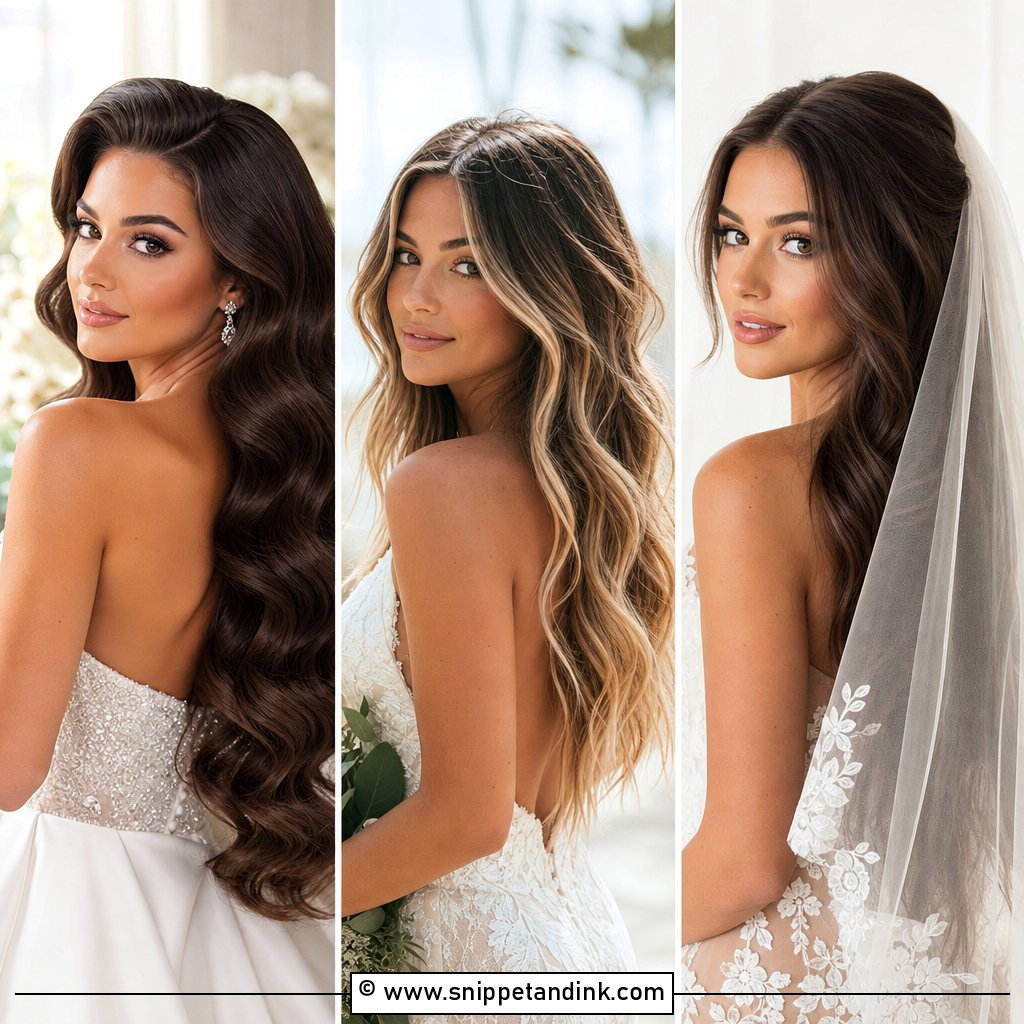
1. Loose Romantic Waves
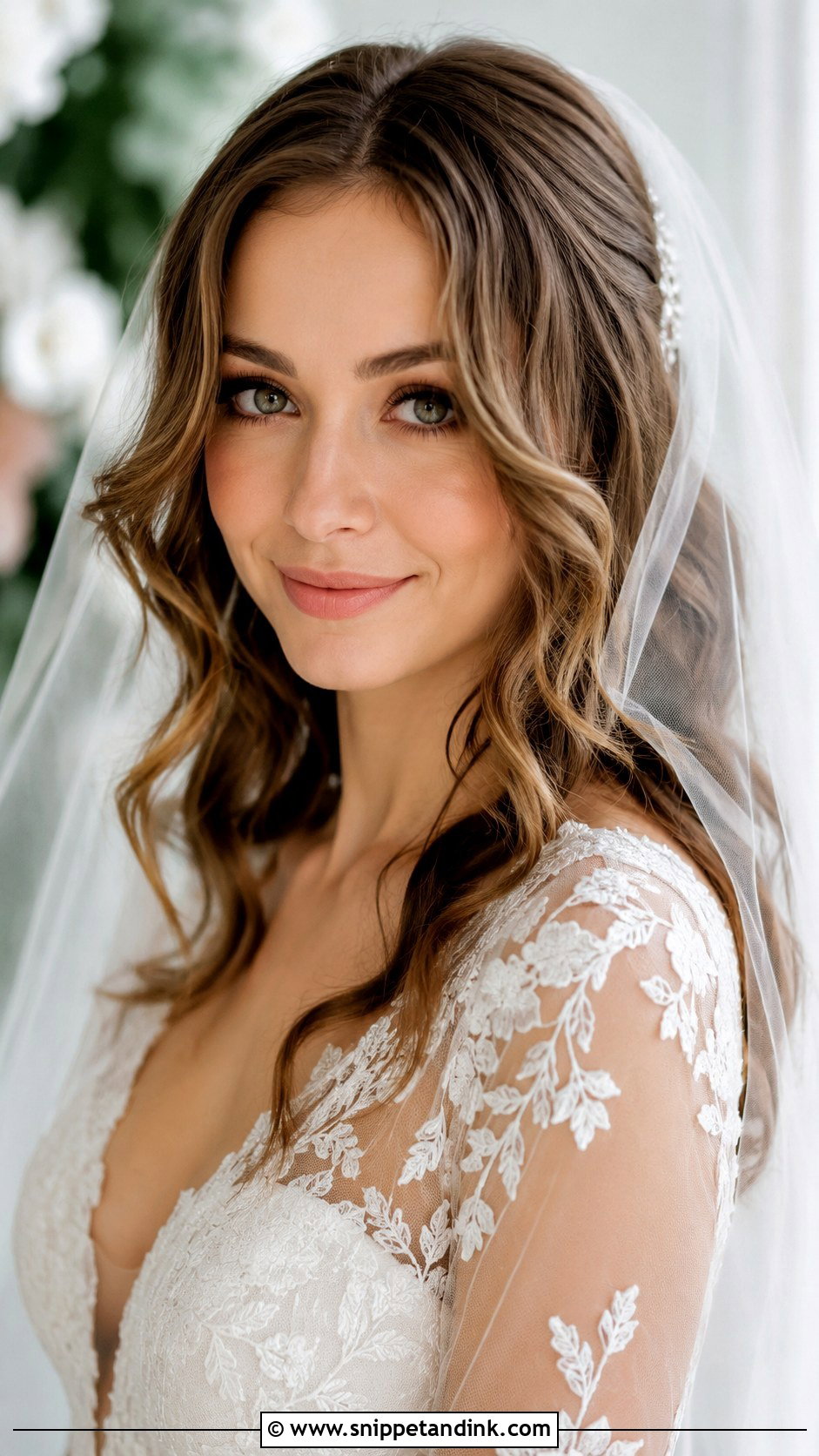
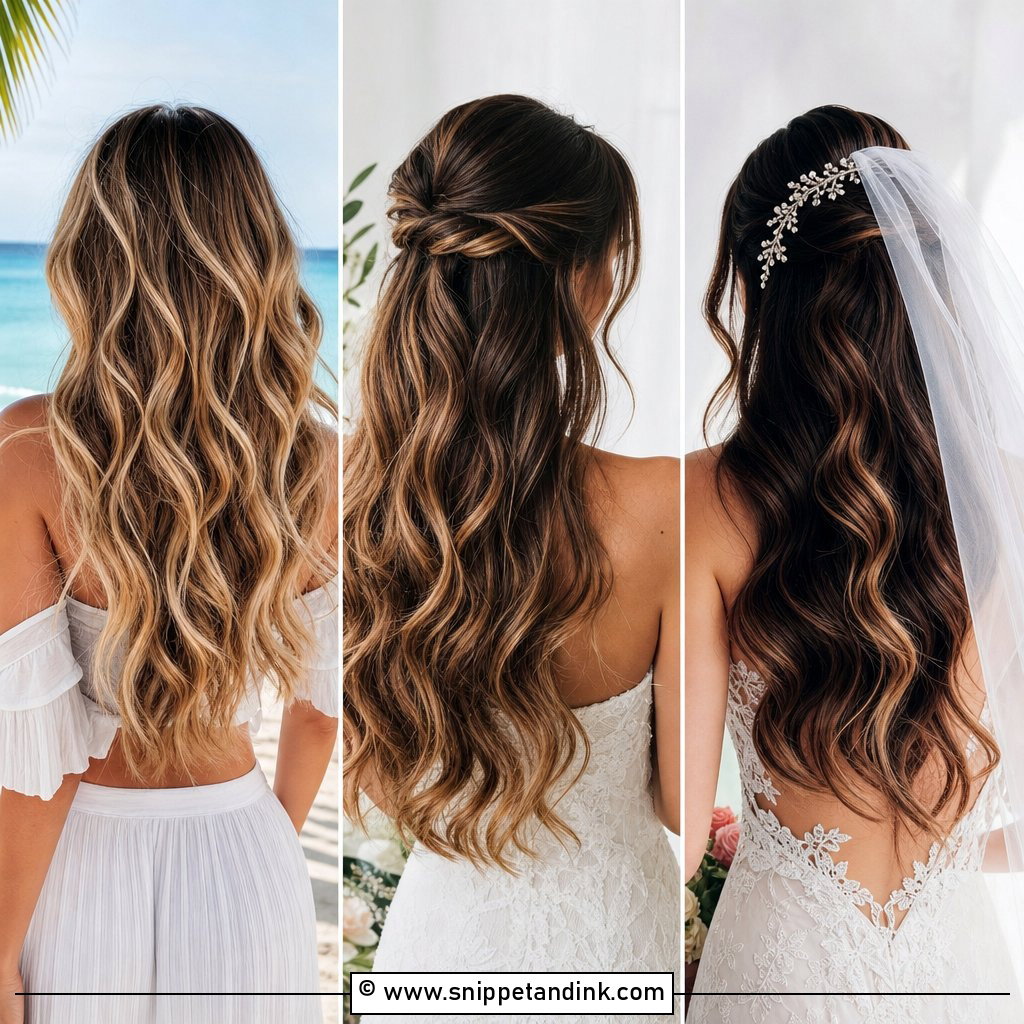
This is the style most brides bring me, and the one that drops fastest if it’s rushed. I curl with a 1.25 inch barrel, pin every curl flat to the head while it cools, and only brush it out once the whole head is cold. Skip the cooling and the wave relaxes into a bend within a couple of hours. On fine hair I use a larger barrel than you’d expect and a firmer setting spray, because a tight curl brushed out holds longer than a loose curl left alone.
2. Hollywood Glam Curls
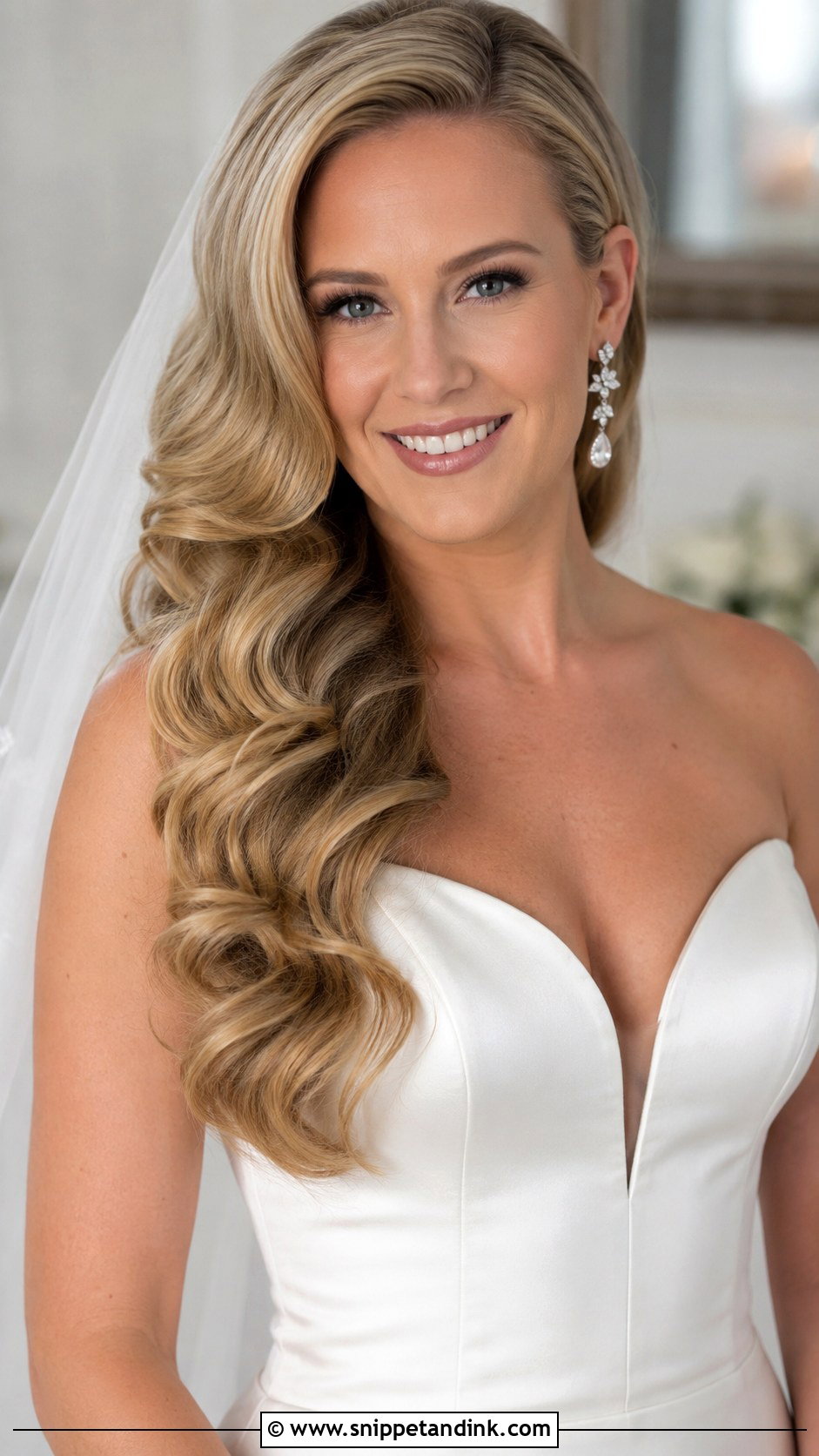
Real Hollywood waves are a roller set, not a curling iron job. I set the hair in hot rollers all going the same direction, let them cool completely, then brush out with a boar bristle brush until the curls join into one ridge. The deep side part matters: flipping it to the side your hair doesn’t naturally fall gives the root lift that holds the sweep. It needs a polished face and a gown with clean lines to make sense. Bring statement earrings to the trial, because this shape puts one ear fully on show.
3. Beachy Tousled Waves
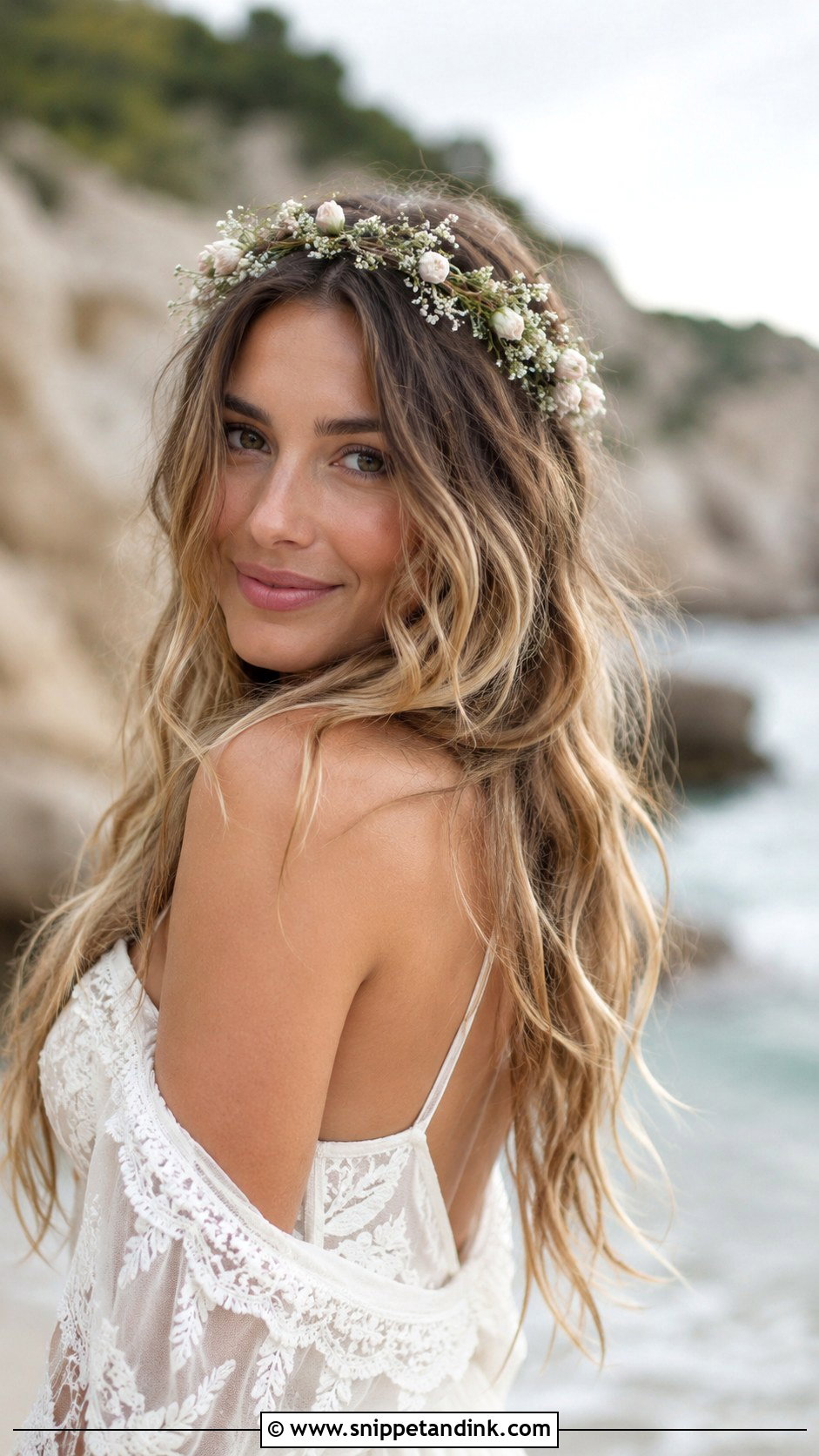
Beachy waves are flatter, rougher curls, and I make them with a flat iron rather than a wand. I twist the iron through the mid-lengths, leave the last inch or two straight, and work in a salt or texture spray once it cools. The straight ends are what stop it reading as a prom curl. A word of caution for very dry or porous hair: salt spray can make it look frazzled by evening, so on those brides I swap to a dry texture spray instead. Flower crowns and simple pins both sit well in this kind of grip.
4. Sleek Straight Hair
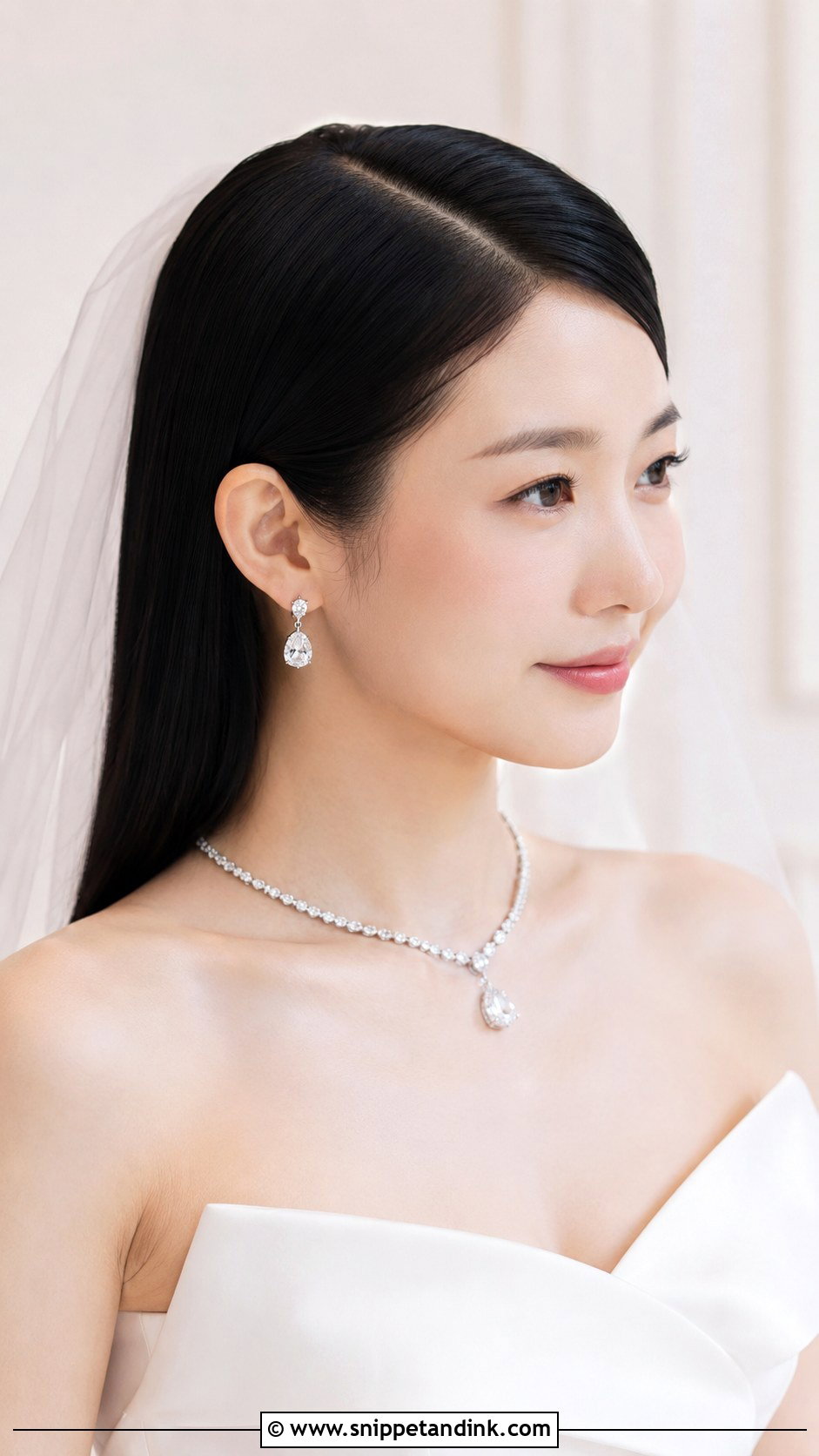
Sleek straight hair looks simple and is the least forgiving style on this list. Every flyaway, kink from a hair tie and patch of frizz shows, so I prefer to blow it out smooth the night before or the morning of, then flat iron in thin sections with a shine serum used sparingly. Humidity is the real enemy; a sticky outdoor ceremony can puff the lengths in under an hour. A center or deep side part both work, and a structured gown with strong jewelry gives the sleekness something to play against.
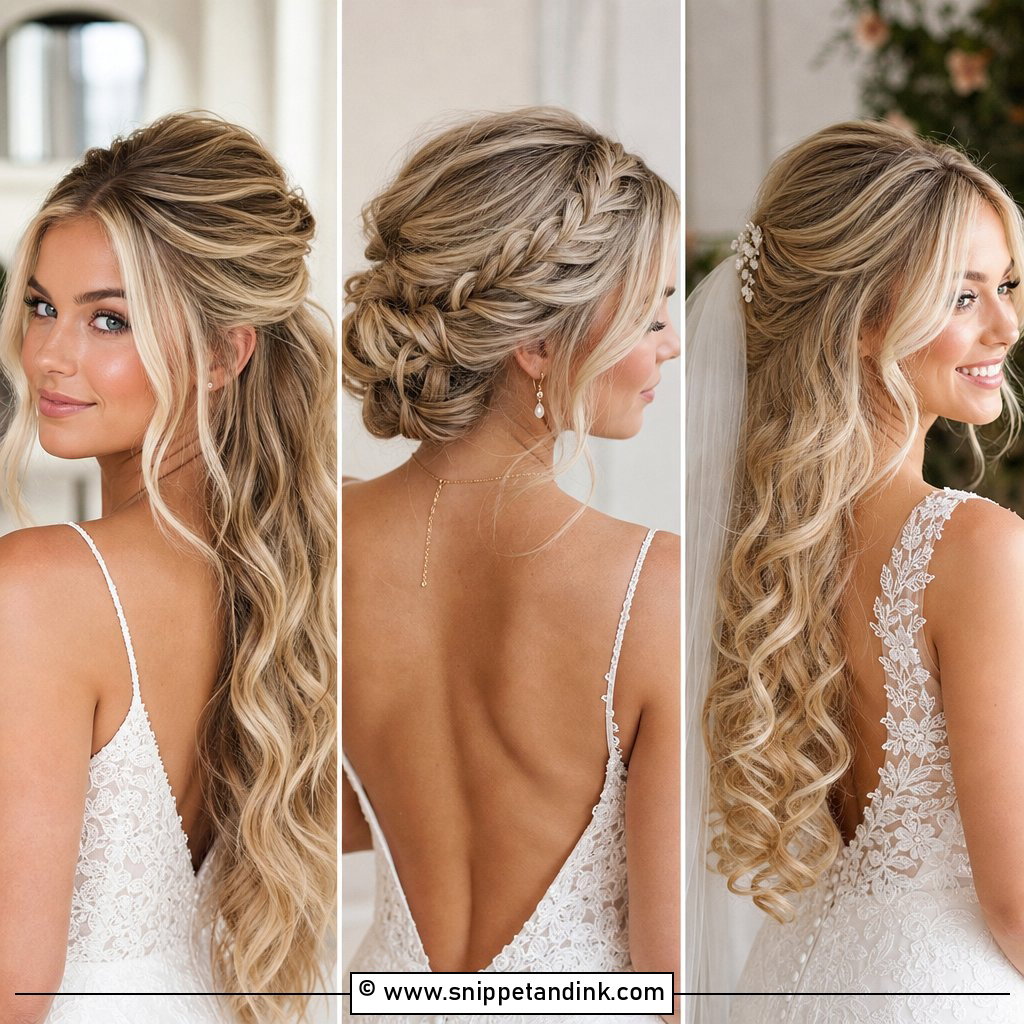
5. Half-Up Half-Down with Curls
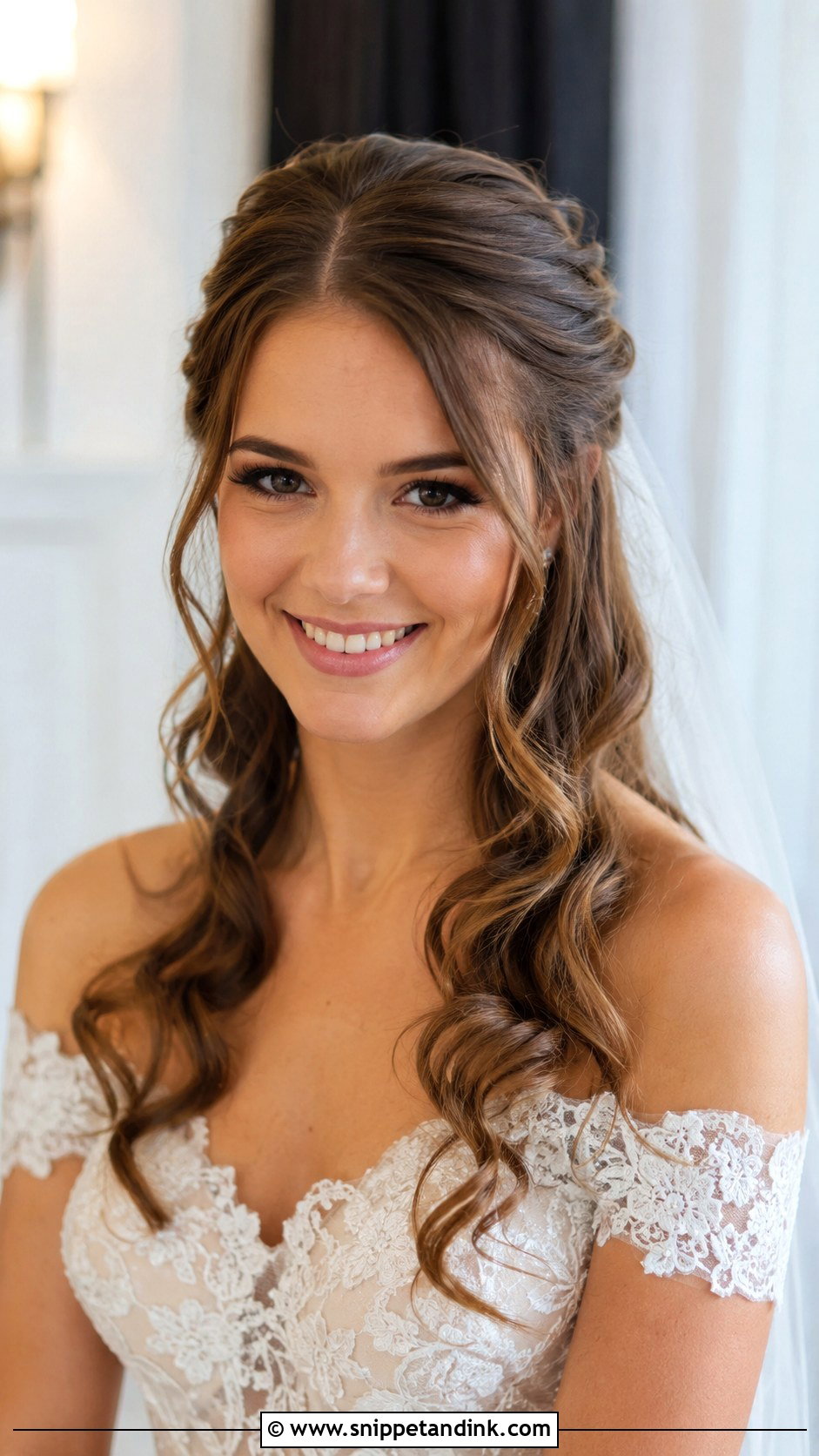
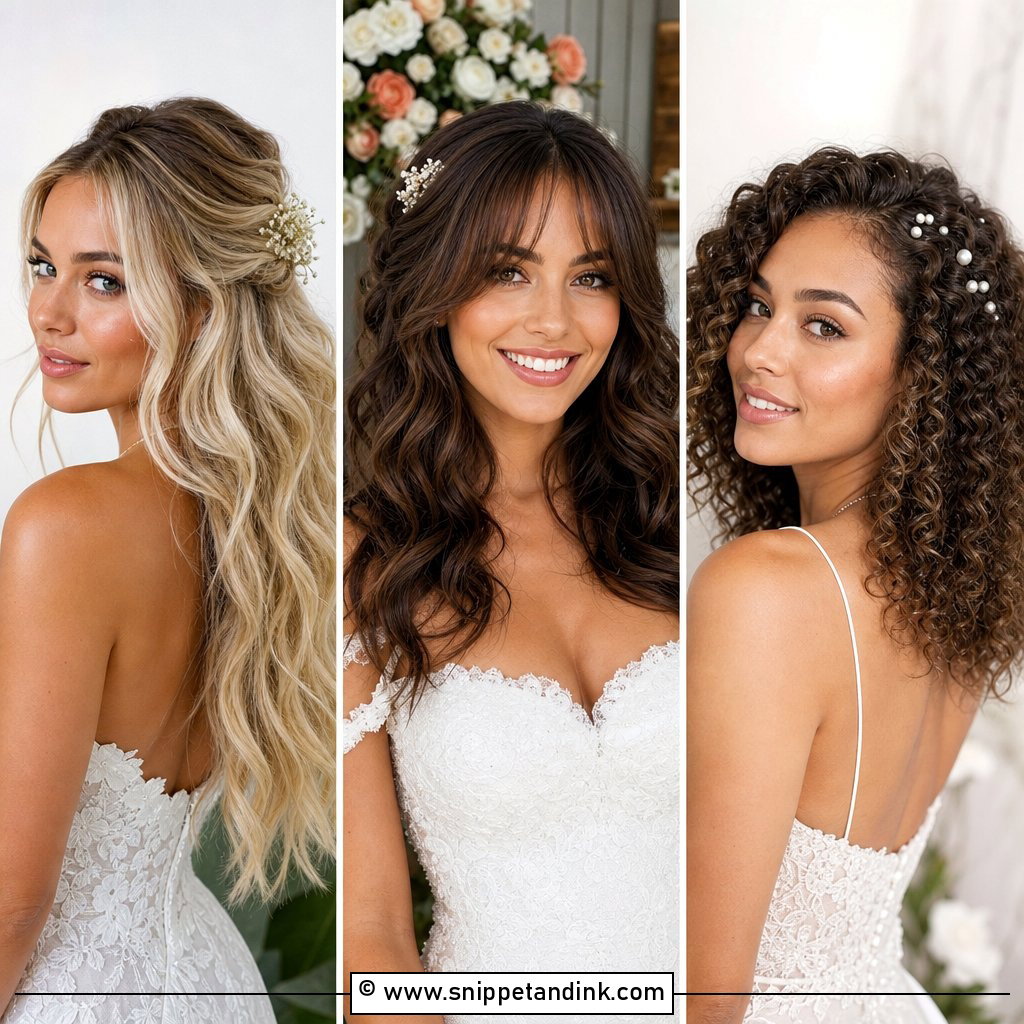
Half-up, half-down keeps hair off your face while the length still moves, which is why I recommend it to brides who touch their hair when nervous. I take the top section back, twist or braid it, and lock it with two bobby pins crossed in an X, which grips far better than a single pin. A pearl clip or small braid at the crown can cover the anchor. That anchor is also where a veil comb slides in, so a veil sits securely without dragging the curls flat.
6. Boho Braided Half-Up
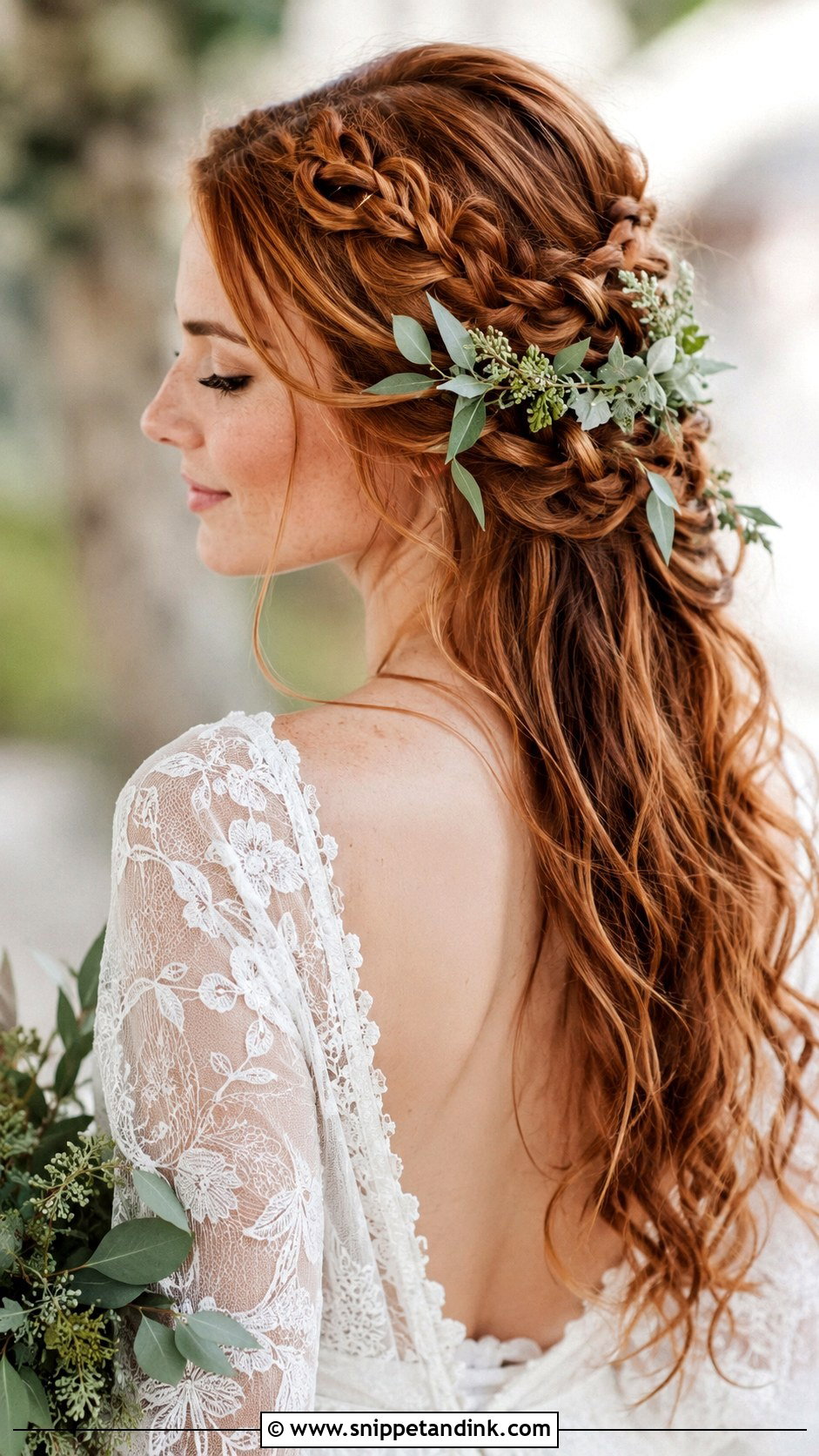
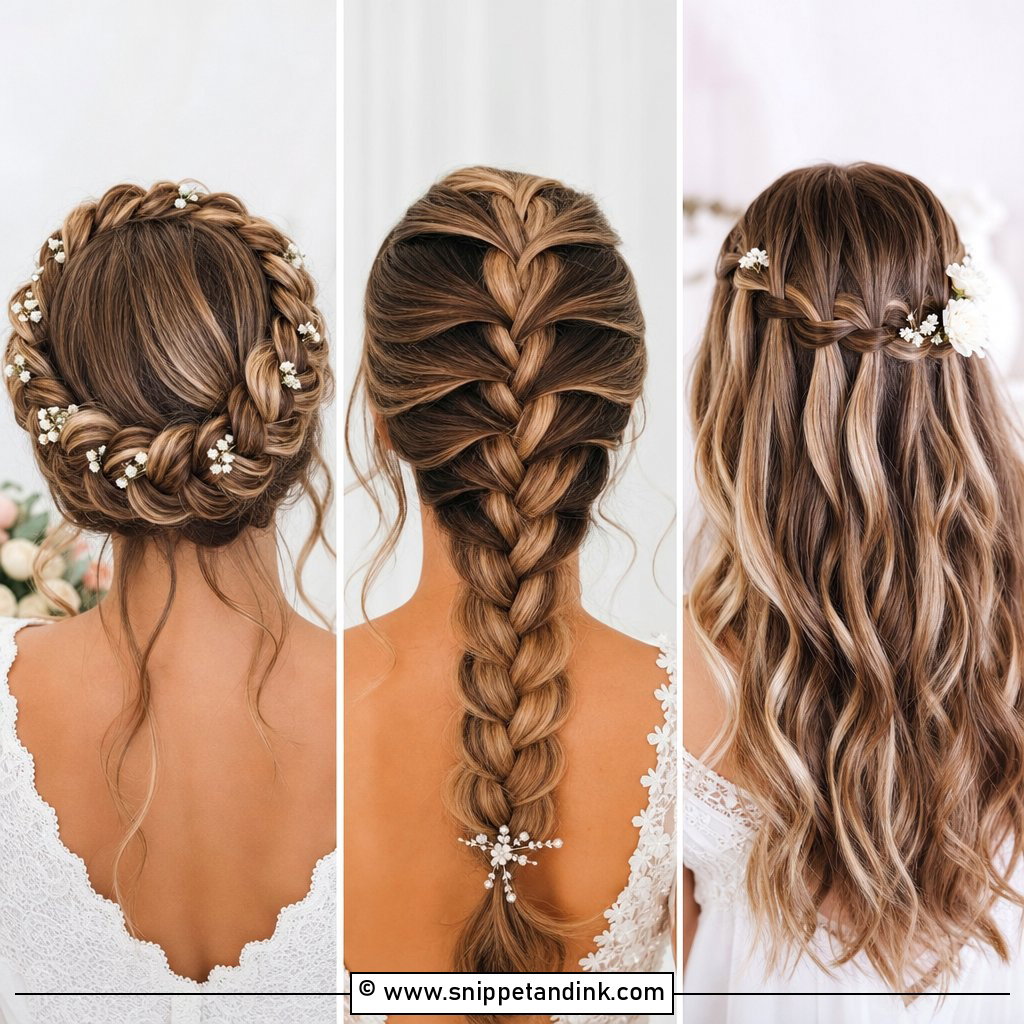
Boho braids need to look loose without being loose. I braid the top sections tightly first, pin them, and only then pancake them by pulling the edges of each loop outward, so the braid looks full while the base stays firm. If you want small flowers or greenery tucked in, ask your florist for wired stems rather than cut blooms; a bare stem slides straight out of a braid. This pairs naturally with lace or airy gowns and holds up well in a barn or garden.
7. Side-Swept Waves
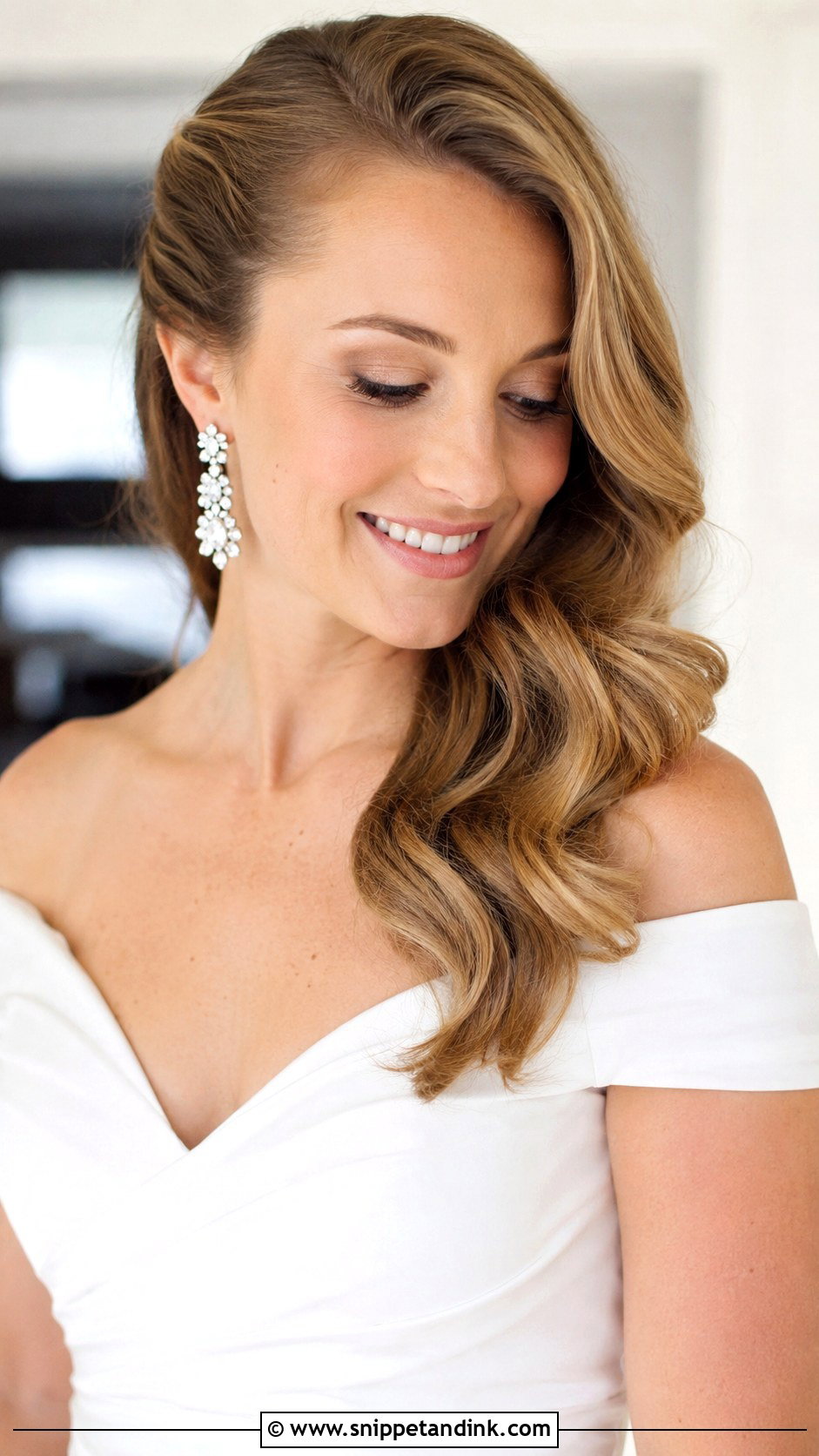
Hair swept over one shoulder looks relaxed in photos but needs hidden support. I curl everything away from the face, then pin an anchor behind the ear on the far side with crossed pins, so the weight can’t swing back as you turn your head. It shows off the opposite earring and the neckline, which makes it a natural partner for off-shoulder gowns or an open back. It does need medium to long hair; on a lob the sweep barely reaches the collarbone.
8. Long Layered Waves with Veil
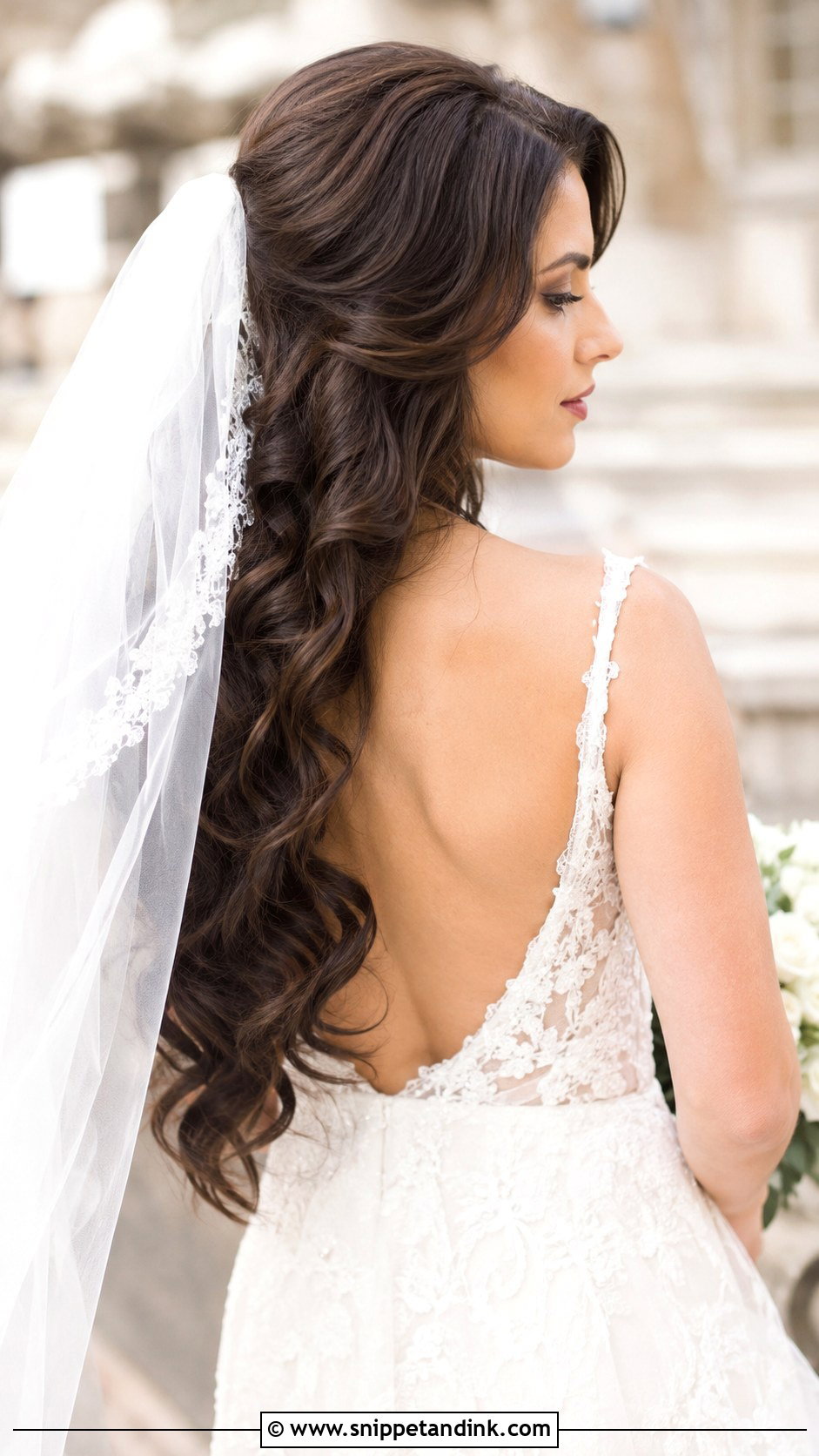
A veil over layered waves is a weight question. A long cathedral veil on a comb pulls downward on loose hair all ceremony, so I set the comb under a small hidden braid or a pinned twist rather than straight into the curls. The layers keep the waves bouncing above the veil line instead of being pressed flat against your back. When the veil comes off for the reception, the curls underneath are usually fresher than the top layer, because the tulle protected them.
9. Half-Up with Pearl Accents
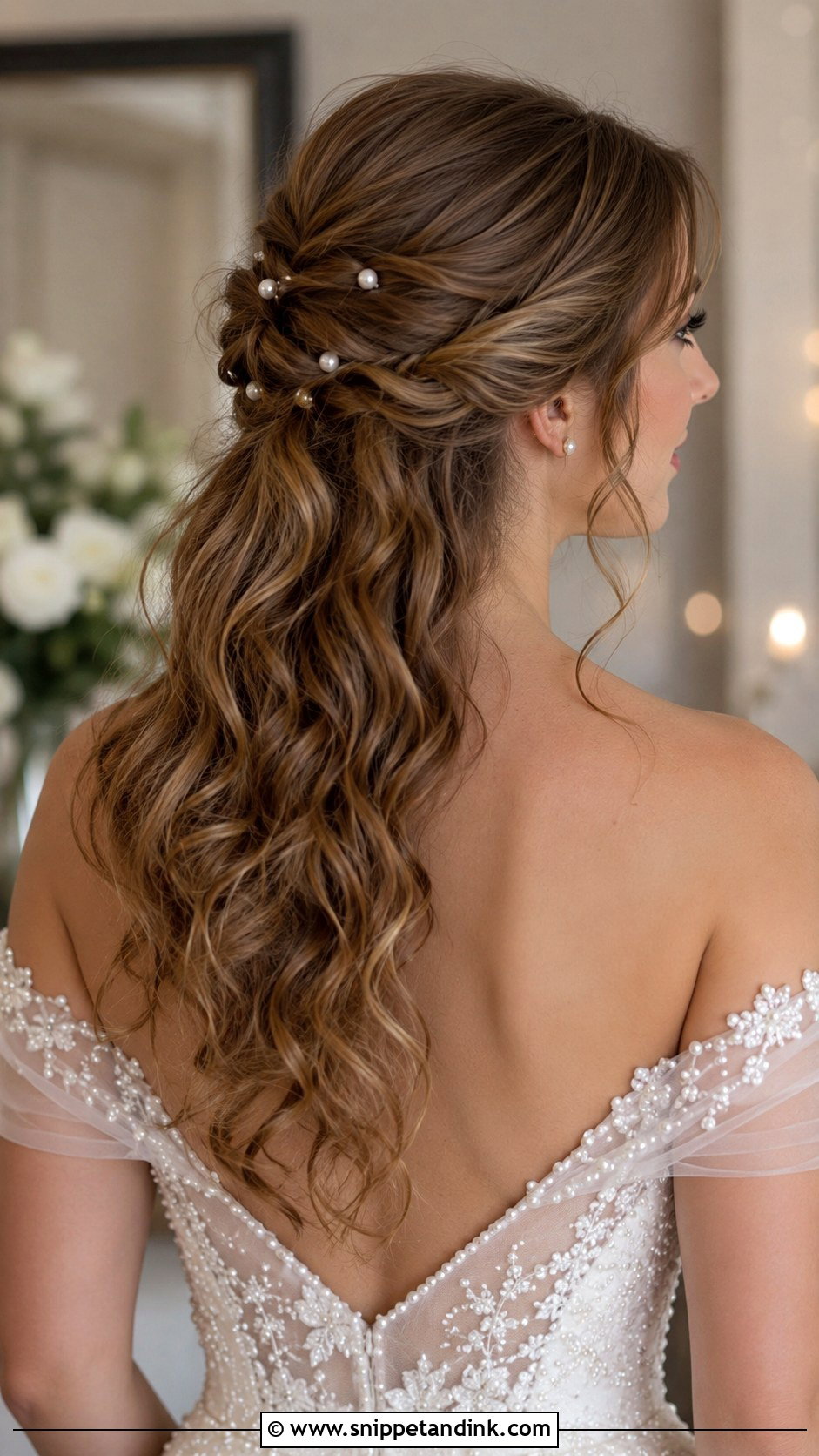
Pearl pins look delicate and are surprisingly easy to lose. I slide each one in against the direction of a twist or braid so the hair locks it, and on very silky hair I mist the section with a grippy spray first. I keep the pearls to the crown and back, where they catch light in close shots without competing with your earrings. Matched with pearl jewelry and a classic gown, this is one of the quieter accessories that still reads clearly in photos.
10. Boho Waves with Flower Crown
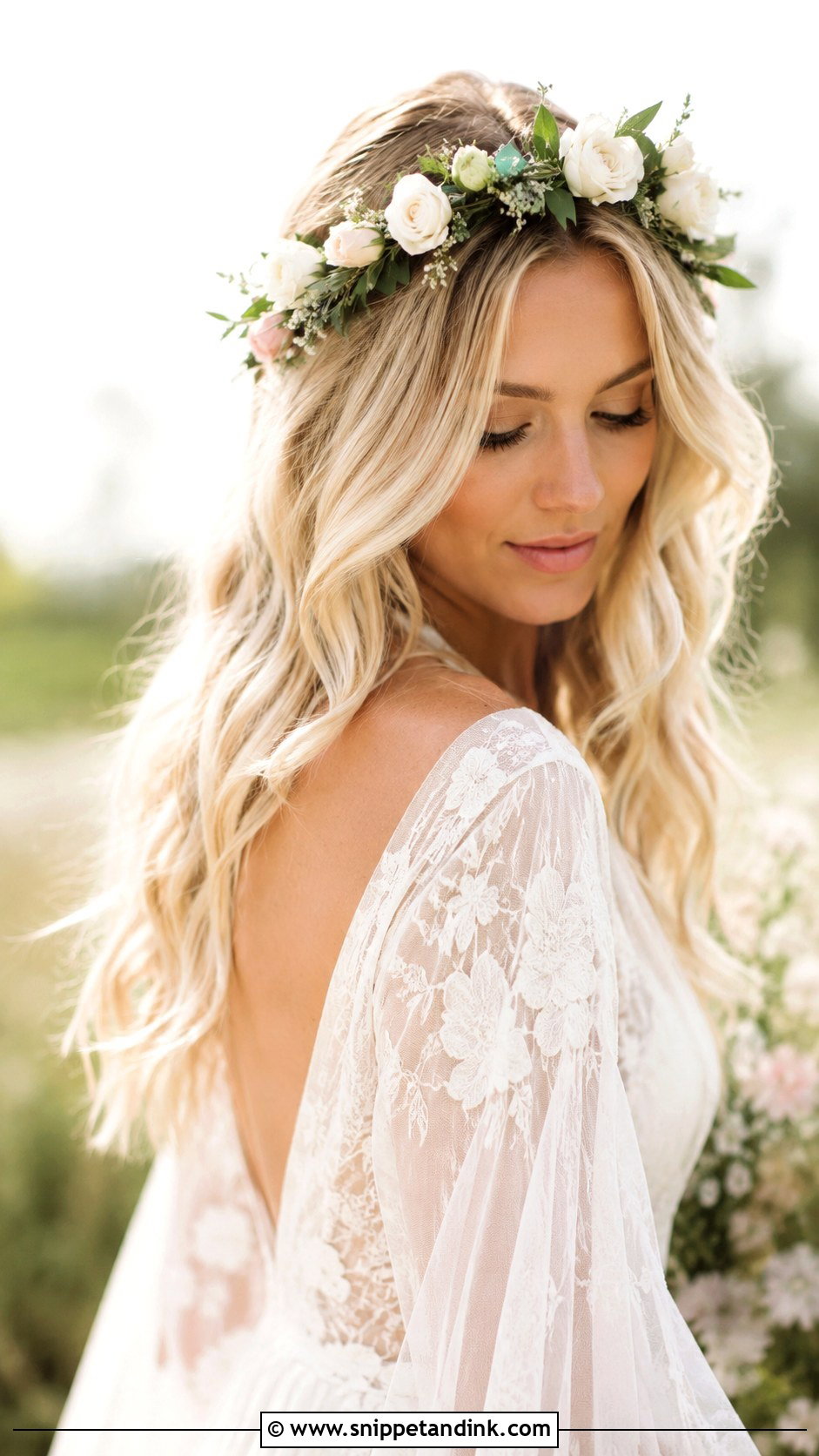
A fresh crown over loose waves is pretty and needs planning with your florist. This look pairs soft, tousled texture with a delicate floral halo, and I always ask for it to be built on a wire base with sturdy blooms; soft petals bruise and wilt within hours in summer heat. A crown has nothing to hold onto in freshly curled hair, so I braid a thin band underneath and pin the crown to that. Matching a few blooms to the bouquet keeps it cohesive without copying it.
11. Deep Side Part with Soft Curls
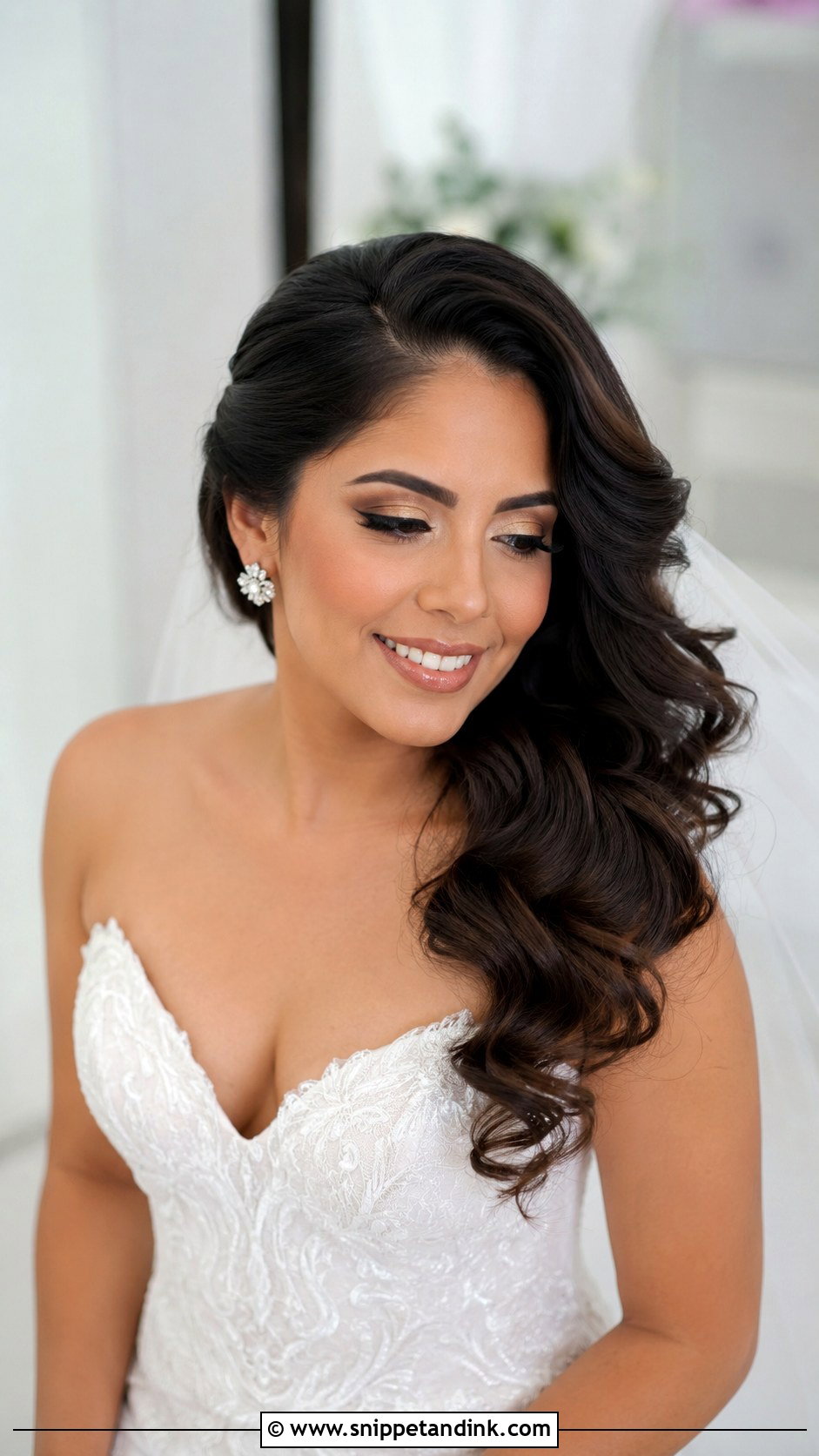
A deep side part is the quickest way to add height without teasing. The trick is to part against your natural fall so the roots stand up instead of lying flat. I curl loosely, then sweep the bulk to the heavier side. It flatters round and heart-shaped faces because it breaks the symmetry, and it pairs with bold accessories on the open side. If your hair has a strong cowlick at the front, show me at the trial; it decides which side we can use.
12. Long Bohemian Braid
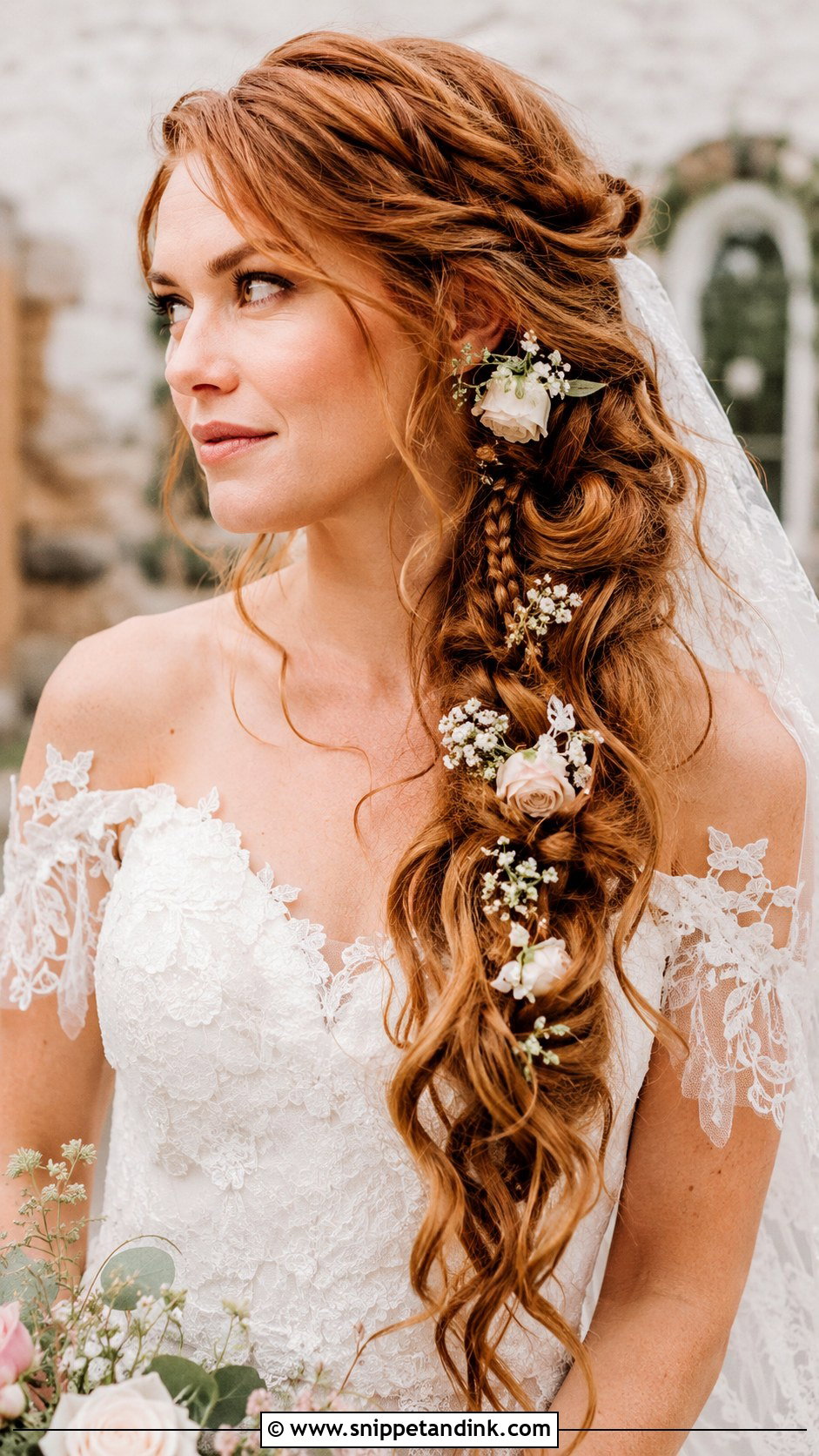
One loose braid running through the waves gives structure without pinning anything up. I build it from about ear level so it rests on the shoulder, secure the end with a tiny clear elastic, and hide that under a strand wrapped around it. Pulling the braid wider makes it look thicker than your hair really is, which helps on fine hair. It sits well at beach and outdoor weddings because a braid frizzes far less than free curls.
13. Voluminous Bouncy Curls
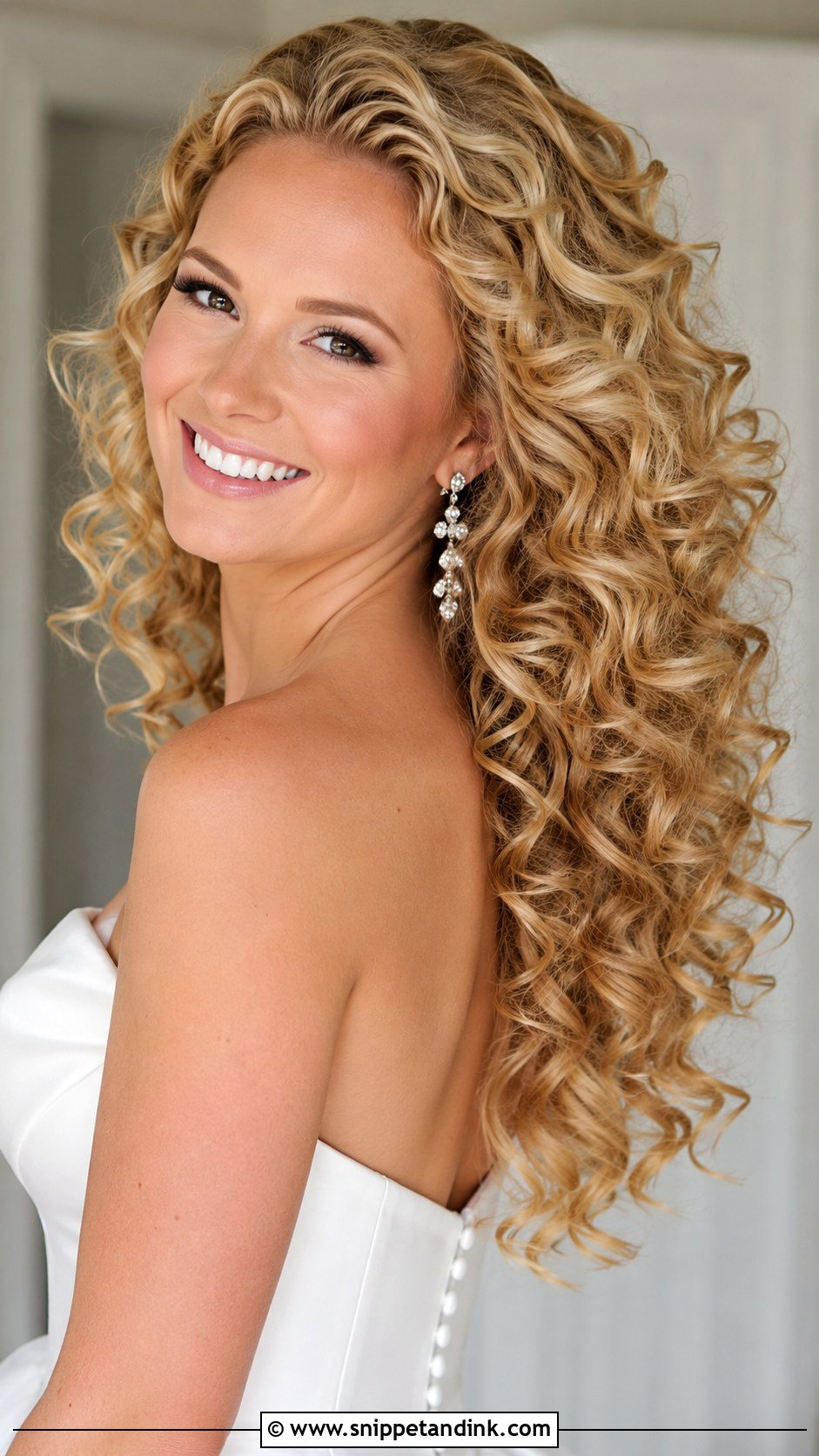
Big bouncy curls rely on rollers for real volume. I use them on thick or naturally curly hair, which already has the density to carry the shape; on very fine hair the same set can look sparse once it’s shaken out, so I’d add clip-in wefts first. After cooling, I shake the curls loose with my fingers rather than a brush, which keeps the bounce defined. Structured gowns and statement earrings balance all that fullness.
14. Half-Up Braided Crown
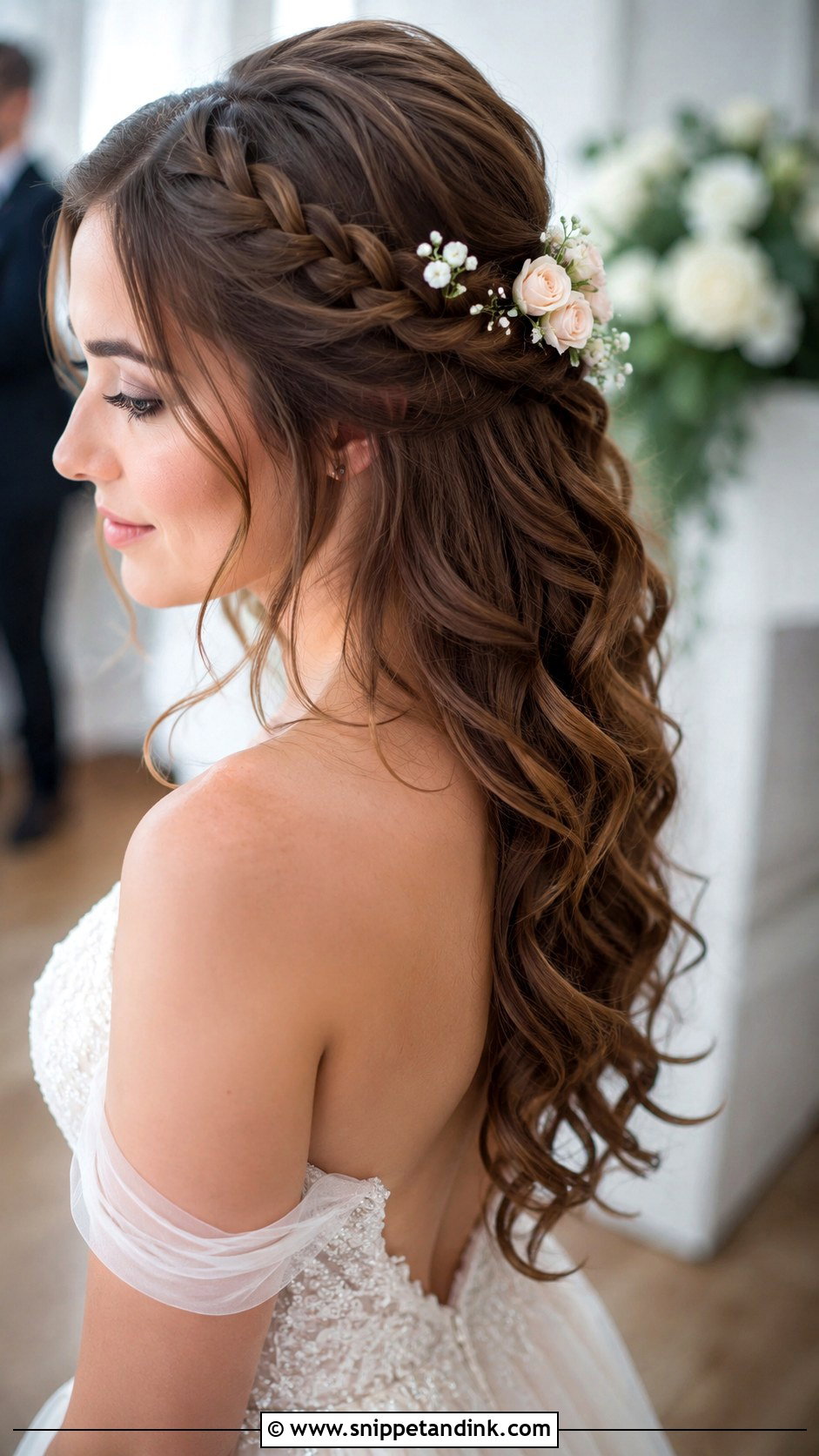
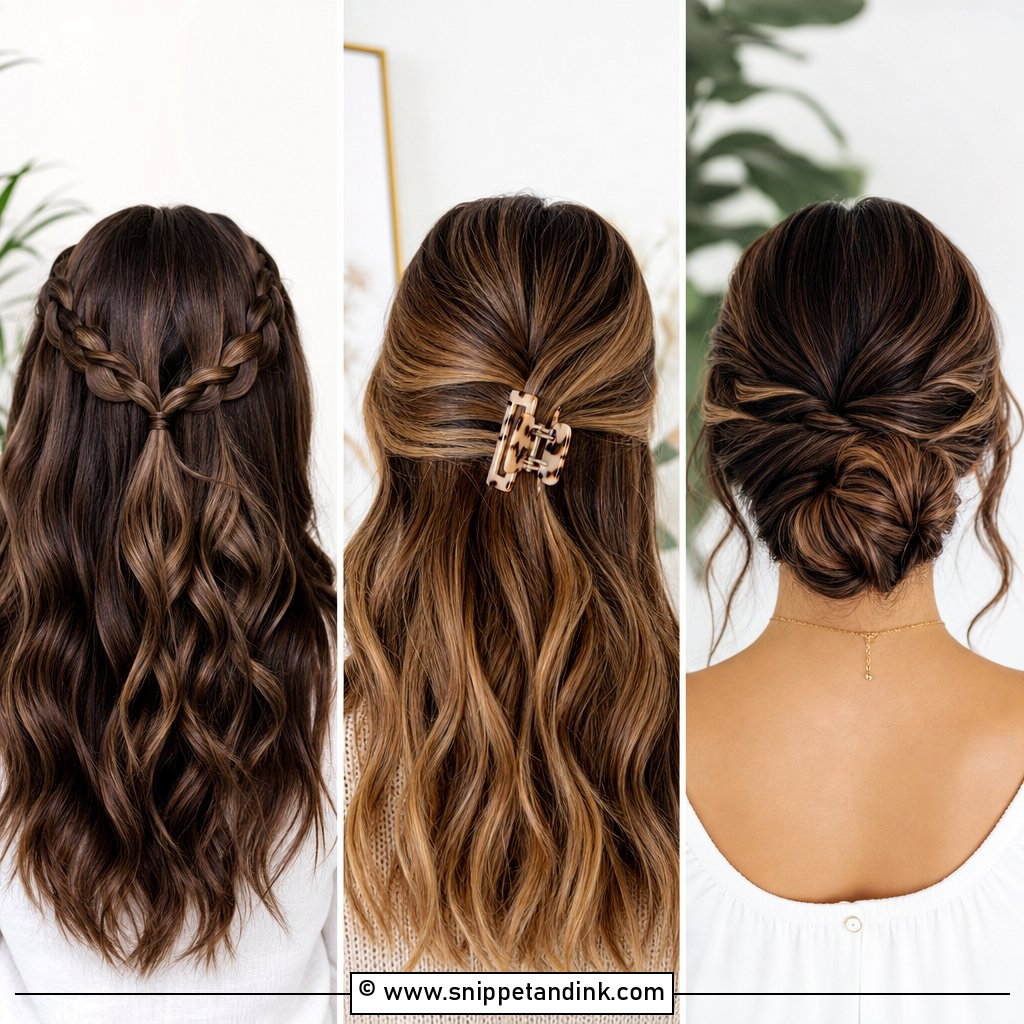
A braided crown is the most secure half-up shape I do, because the braid is pinned along its whole length rather than at one point. I braid from each temple and meet at the back of the crown, then hide the ends under each other. Keep the braids loose and soft at the front so they don’t look severe. Small flowers or pearls tucked along the line read well from the front and from the back, where most of your ceremony photos are taken.

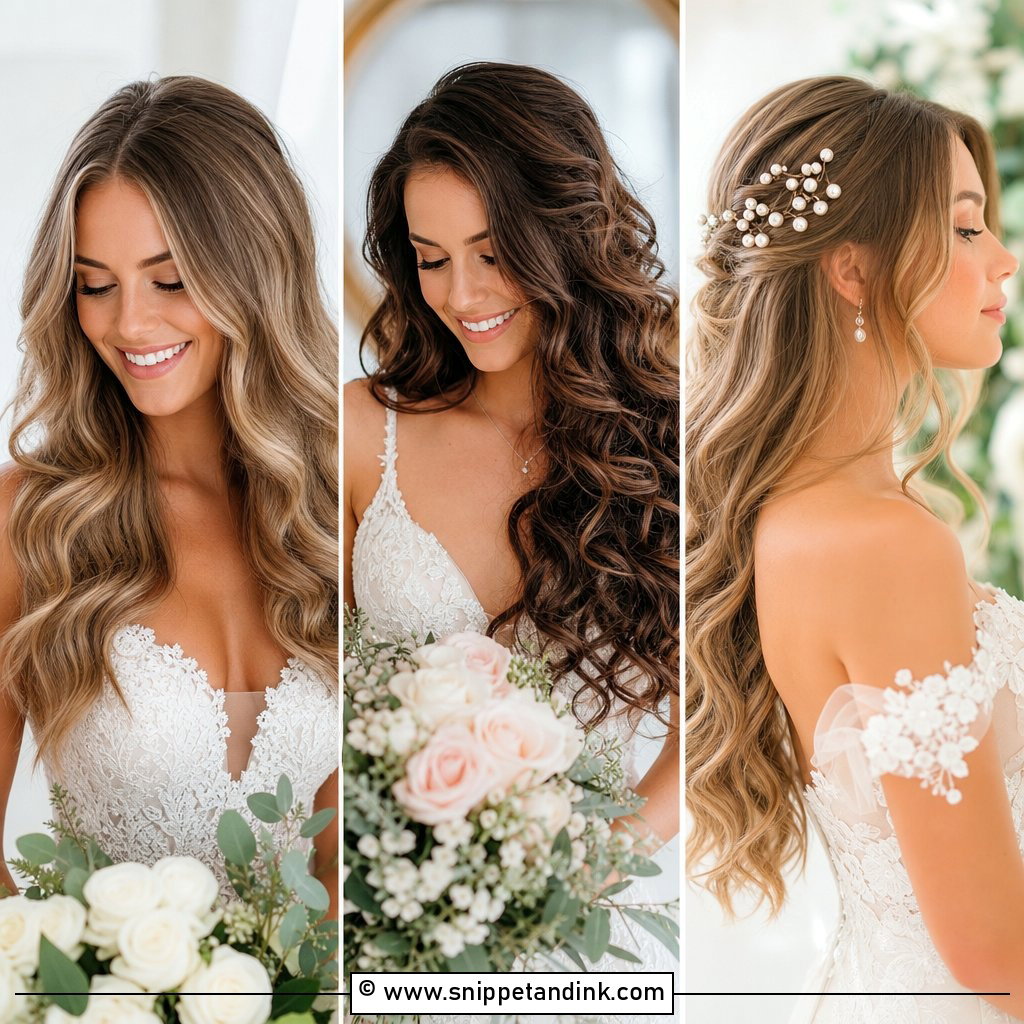
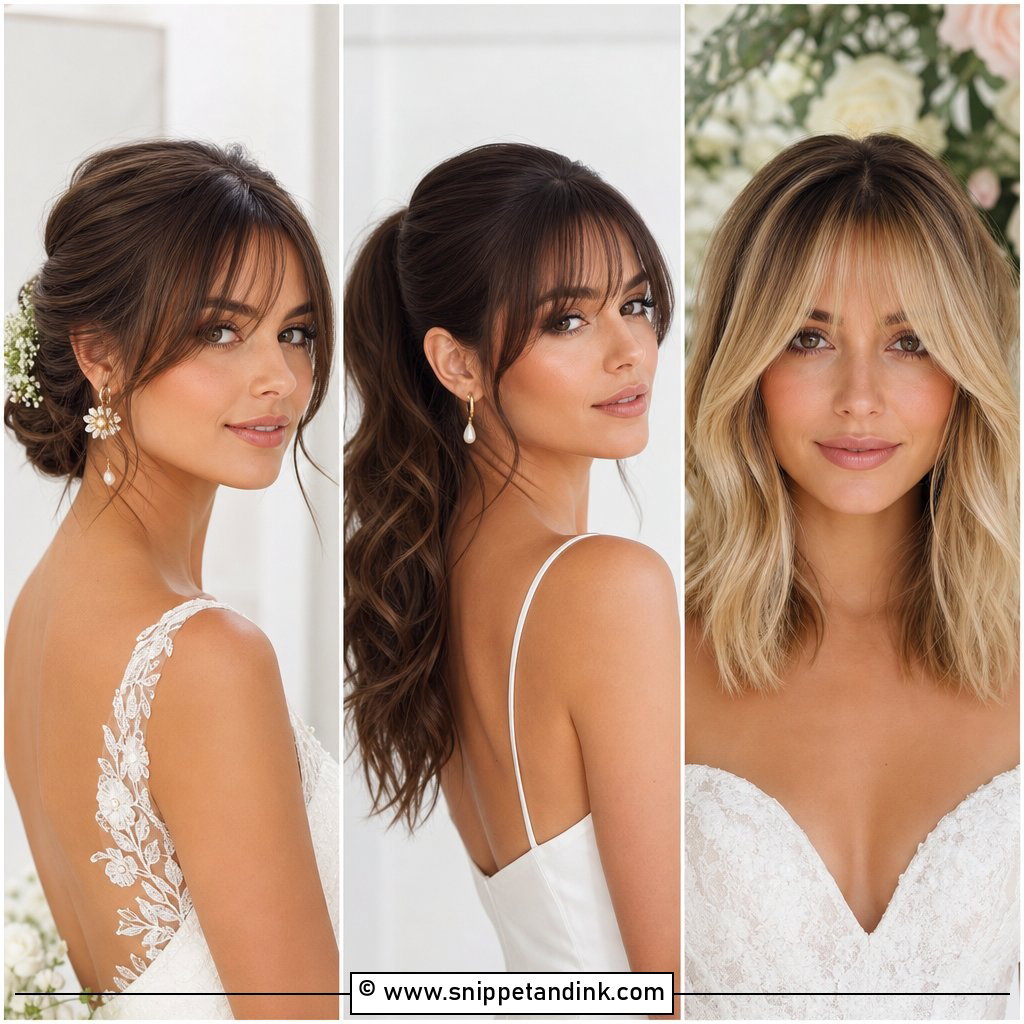
15. Sleek Middle Part with Waves
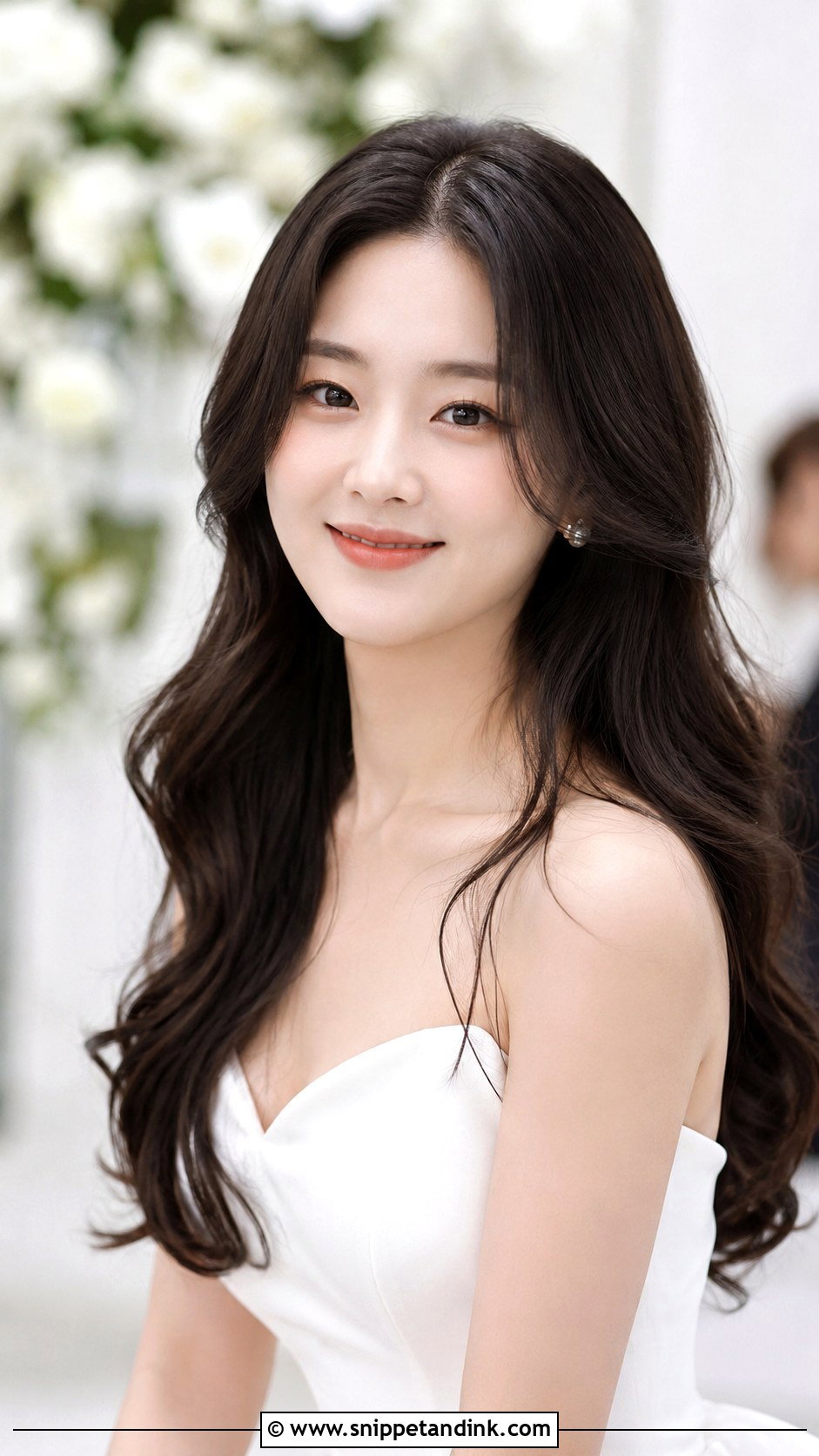
The sleek middle part with waves underneath is a contrast style: smooth at the top, movement below. I flatten the crown with a little smoothing cream and a flat iron at the roots, then curl from the ear down. A center part shows any asymmetry in the face or hairline, so I look at it under daylight at the trial before we commit. Oval and heart-shaped faces carry it easily, and minimal gowns let the clean line stand out.
16. Vintage Finger Waves
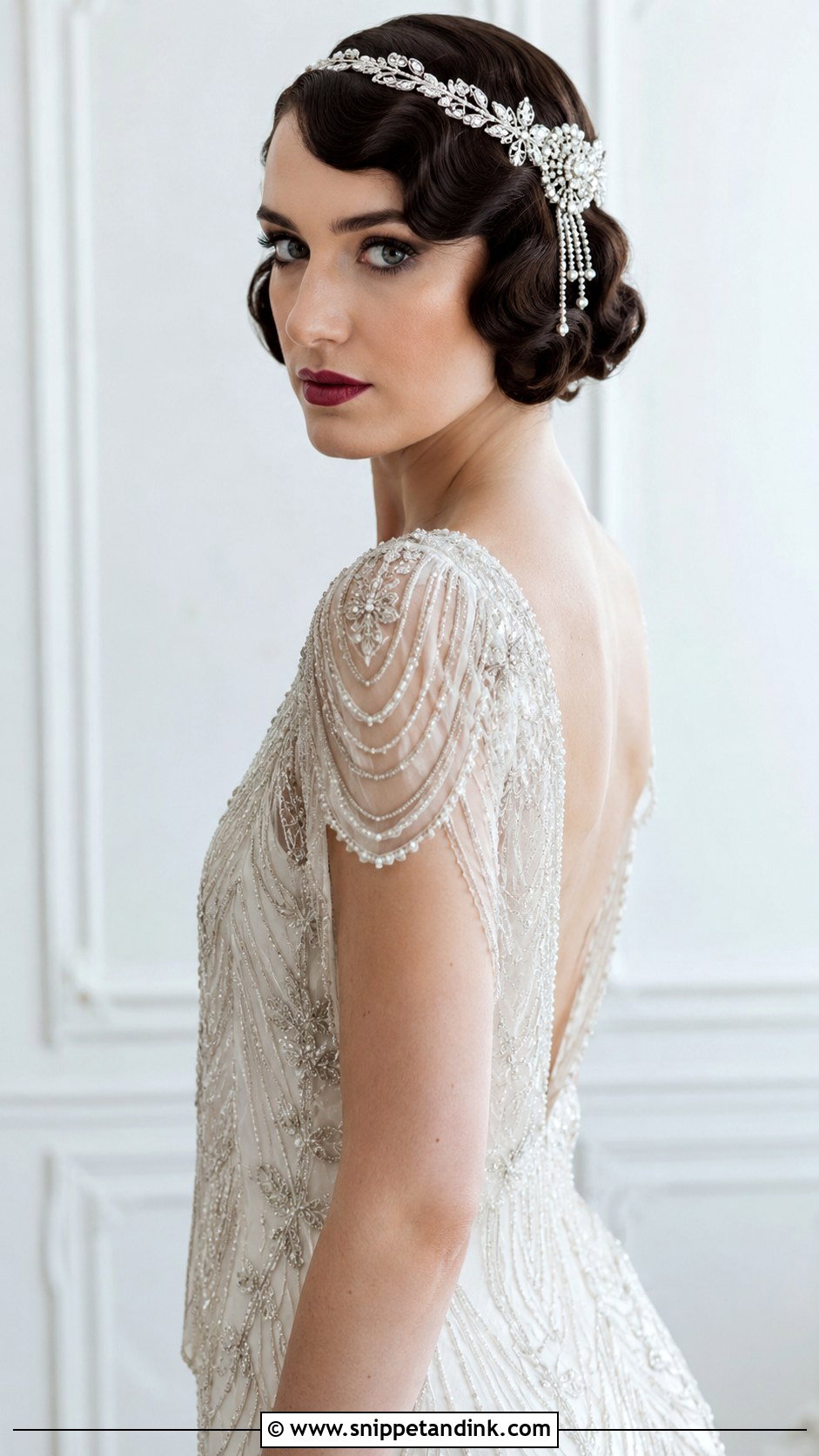
Finger waves are a wet set, and they have to be planned like one. I comb setting lotion or gel through damp hair, push each ridge in by hand, clip it, and dry it fully under a hood or diffuser before the clips come out. That takes real time, so the appointment runs longer than a curl set. They suit shorter to medium hair best; on longer hair I sculpt the waves near the face and let the lower lengths fall in softer curls. Art deco themes and beaded gowns are where this belongs.
17. Curtain Bangs with Loose Waves
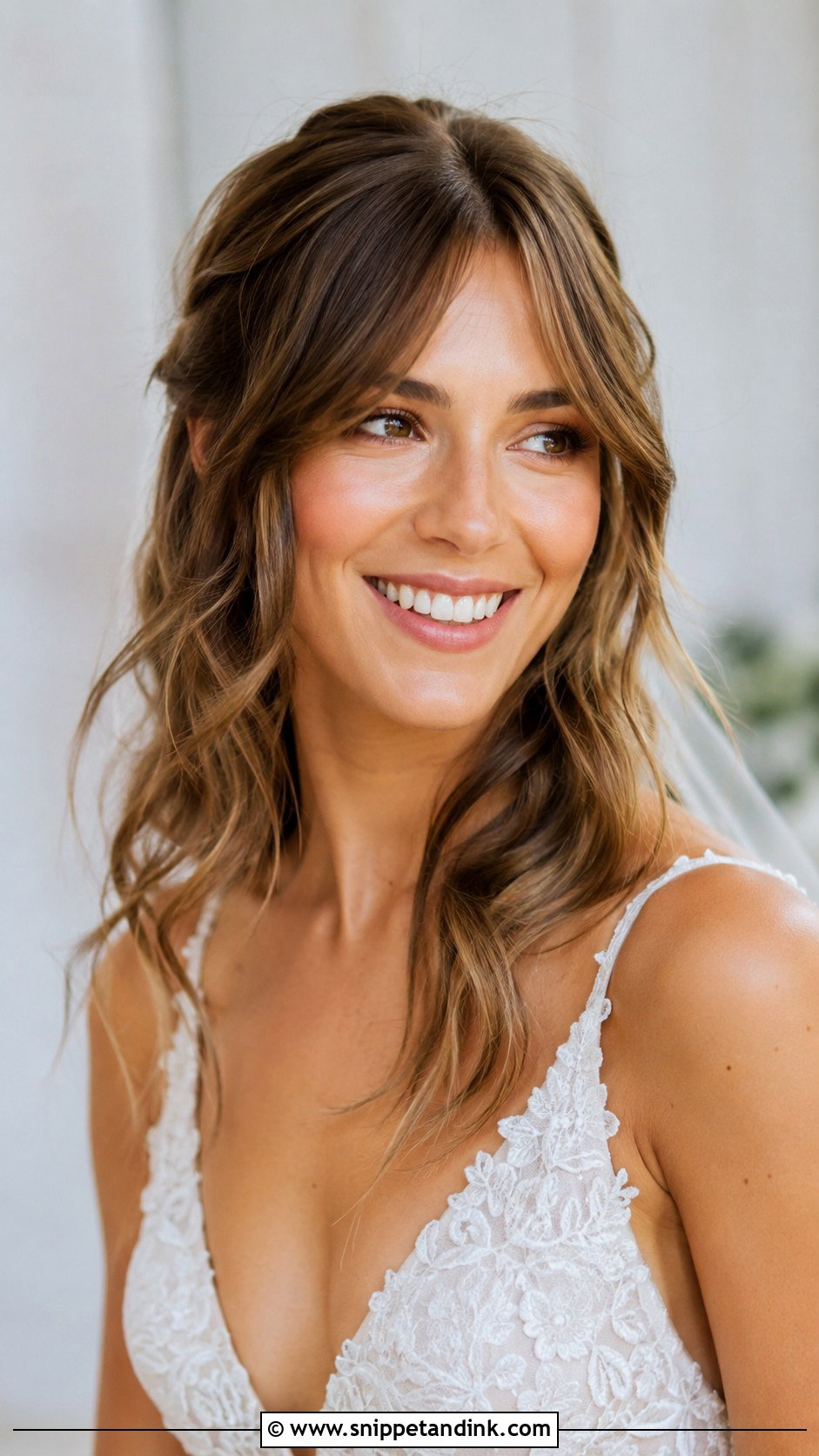
Curtain bangs only work if they’re cut at the right time. I tell brides to get them trimmed two to three weeks before the wedding, never the week of, so the ends settle and lose that freshly cut bluntness. On the day I round-brush them away from the center and curl the lengths to match. If your bangs are growing out, this is a kind way to blend them in. For brides who like a softer frame around the face, curtain bangs with waves pair well with boho or classic gowns.
18. Long Mermaid Waves
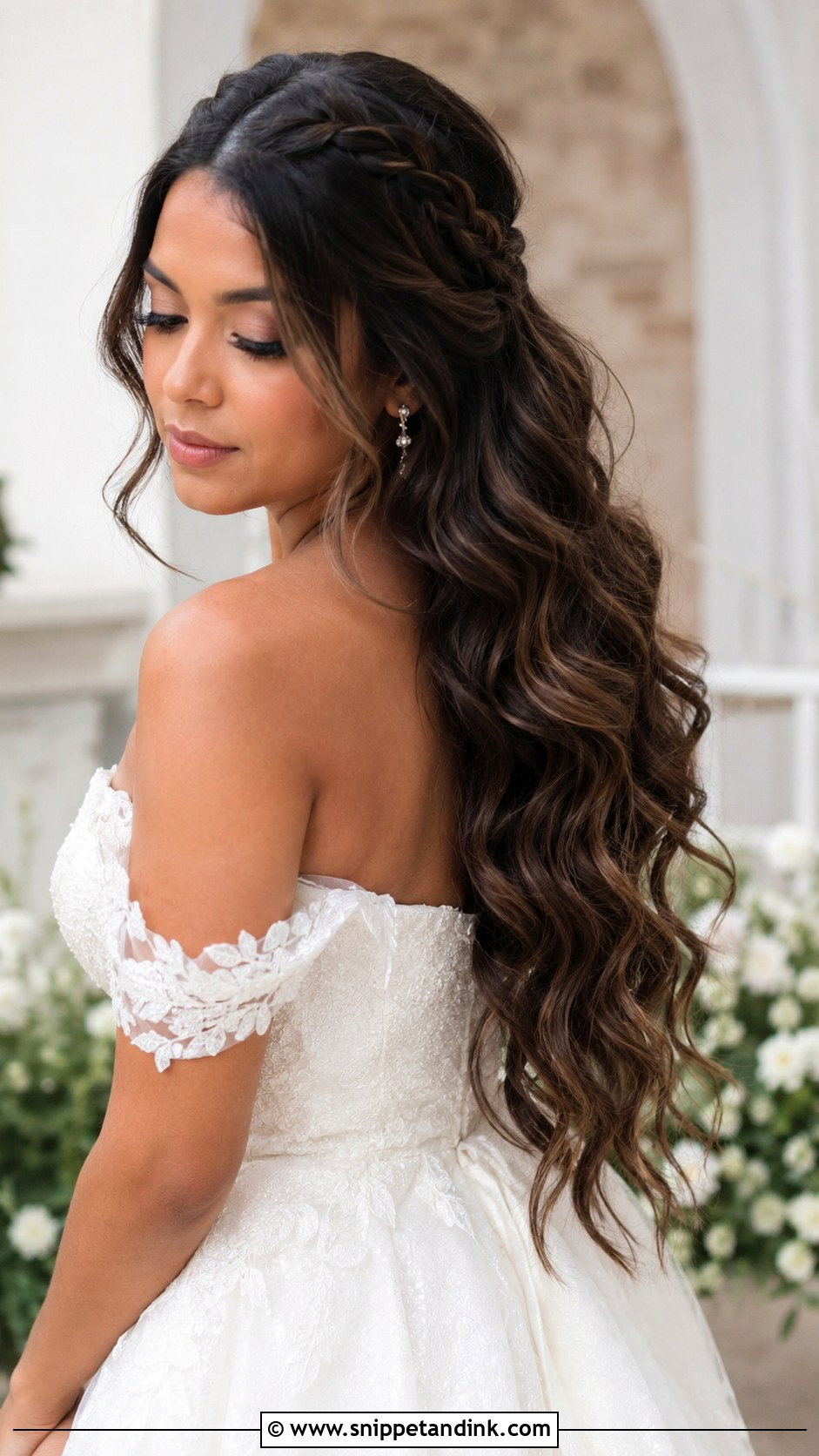
Mermaid waves are deep, even ripples from root to end, and they suit long, thick hair that can carry the pattern. I either use a wide waver iron or braid the hair while damp the night before and finish over the top with a flat iron. The braid method gives a more natural ripple; the waver gives the crisp version. On fine hair the ripples can make the ends look thin, so I’d keep them looser. Beach and garden weddings with flowing gowns are a natural home for it.
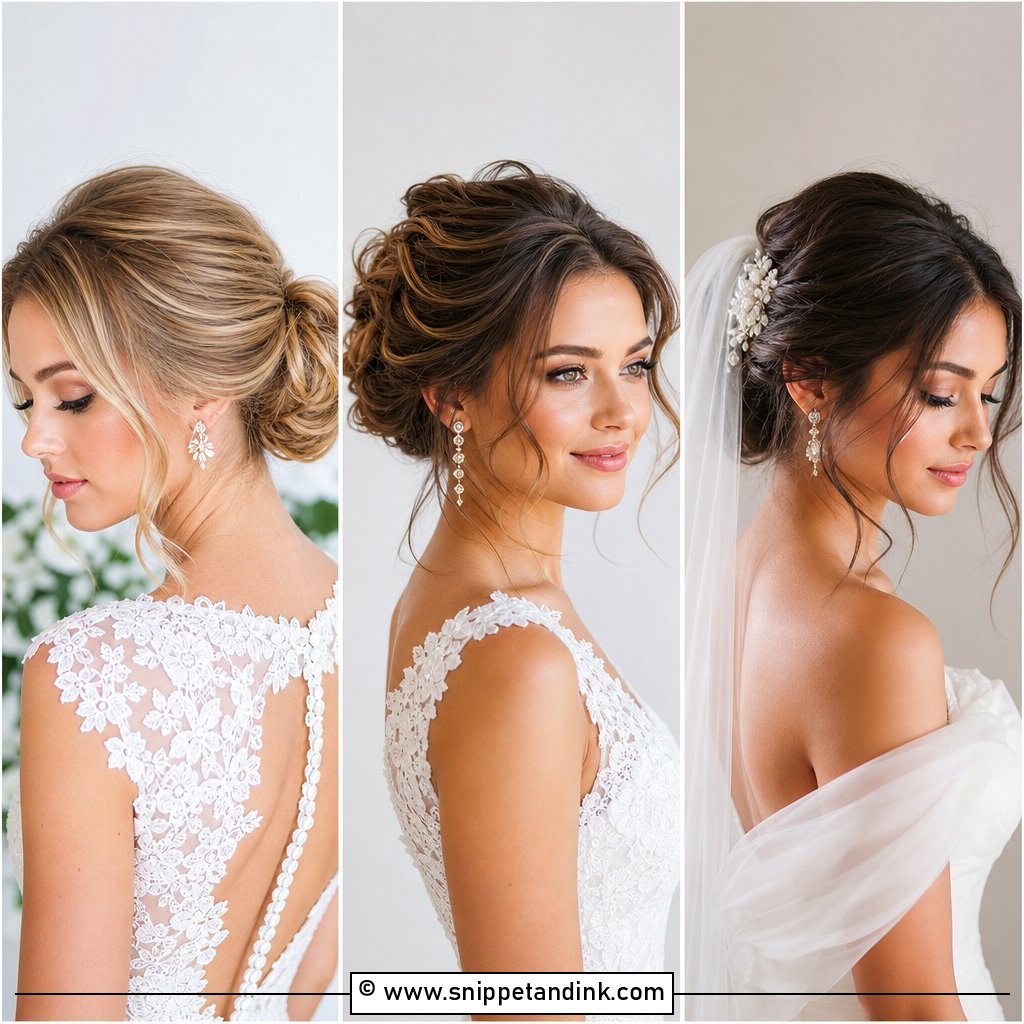
19. Half-Up Twisted Updo
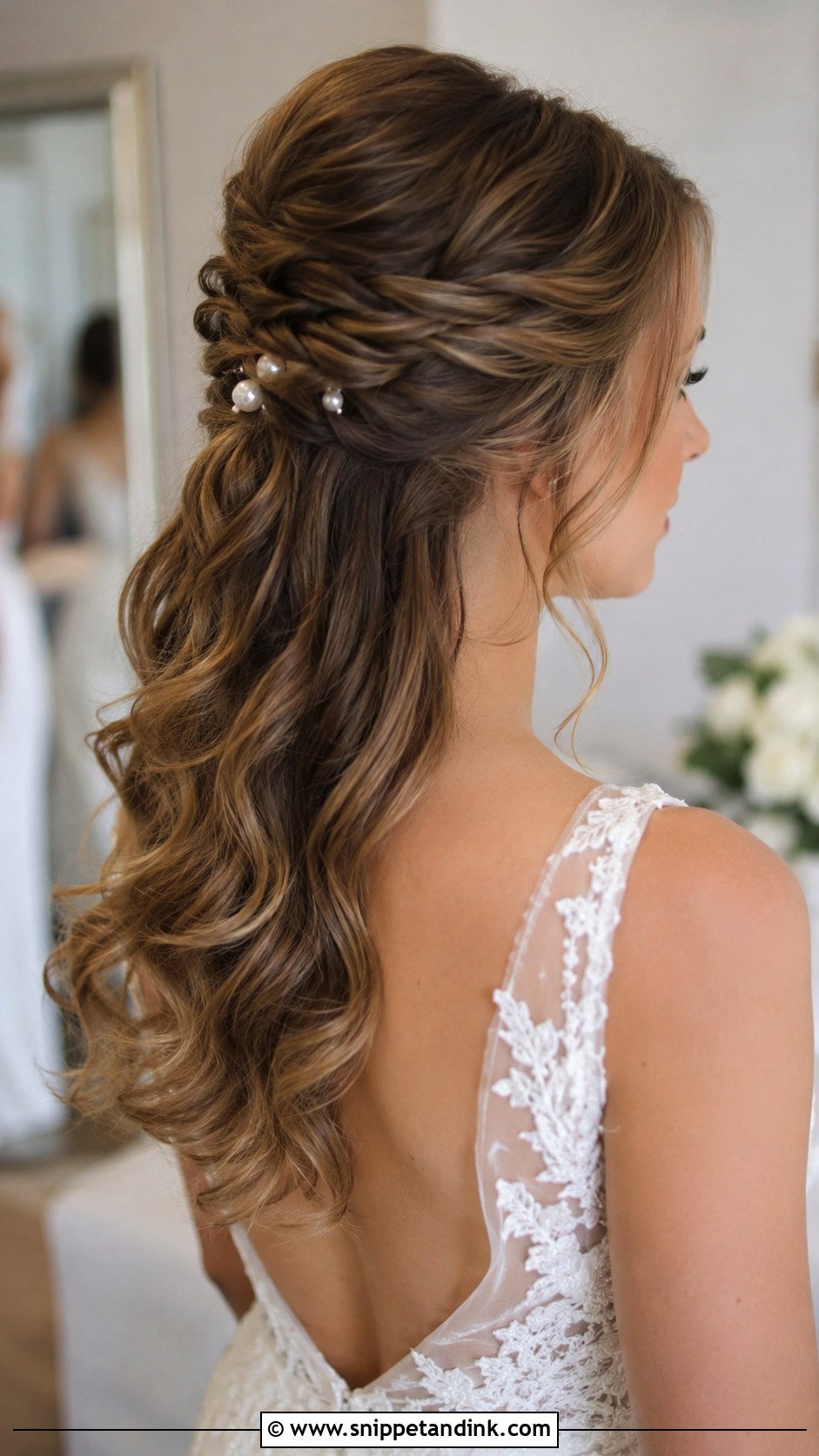
Twists at the crown add some structure without the commitment of a full updo. I twist each top section back toward the center and cross-pin it where it meets the others, then leave the rest in loose waves or curls. Twists unravel more easily than braids, so I set each one with a light spray before pinning. Pearl pins or small blooms can sit in the twist itself. It holds well through a long day, which is why I suggest it to brides who plan to dance.
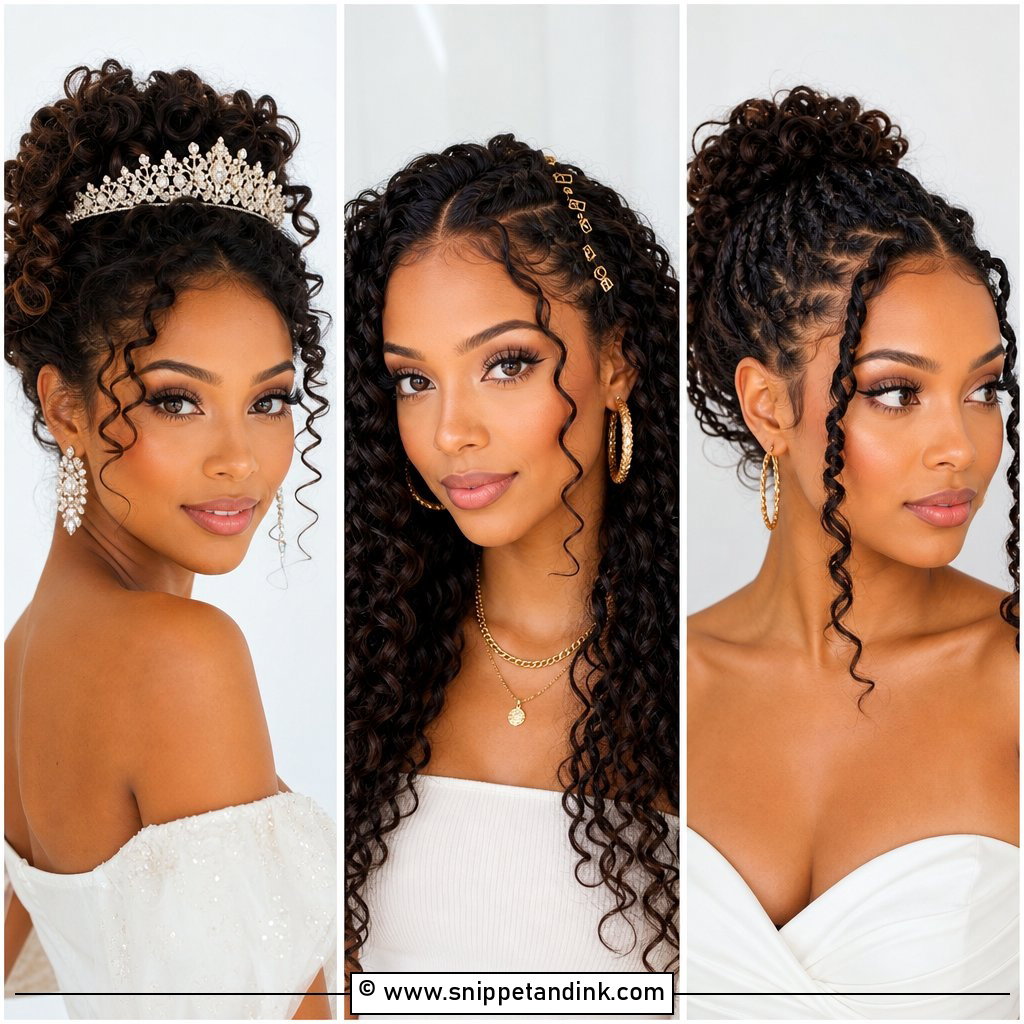
20. Natural Curly Hair Down
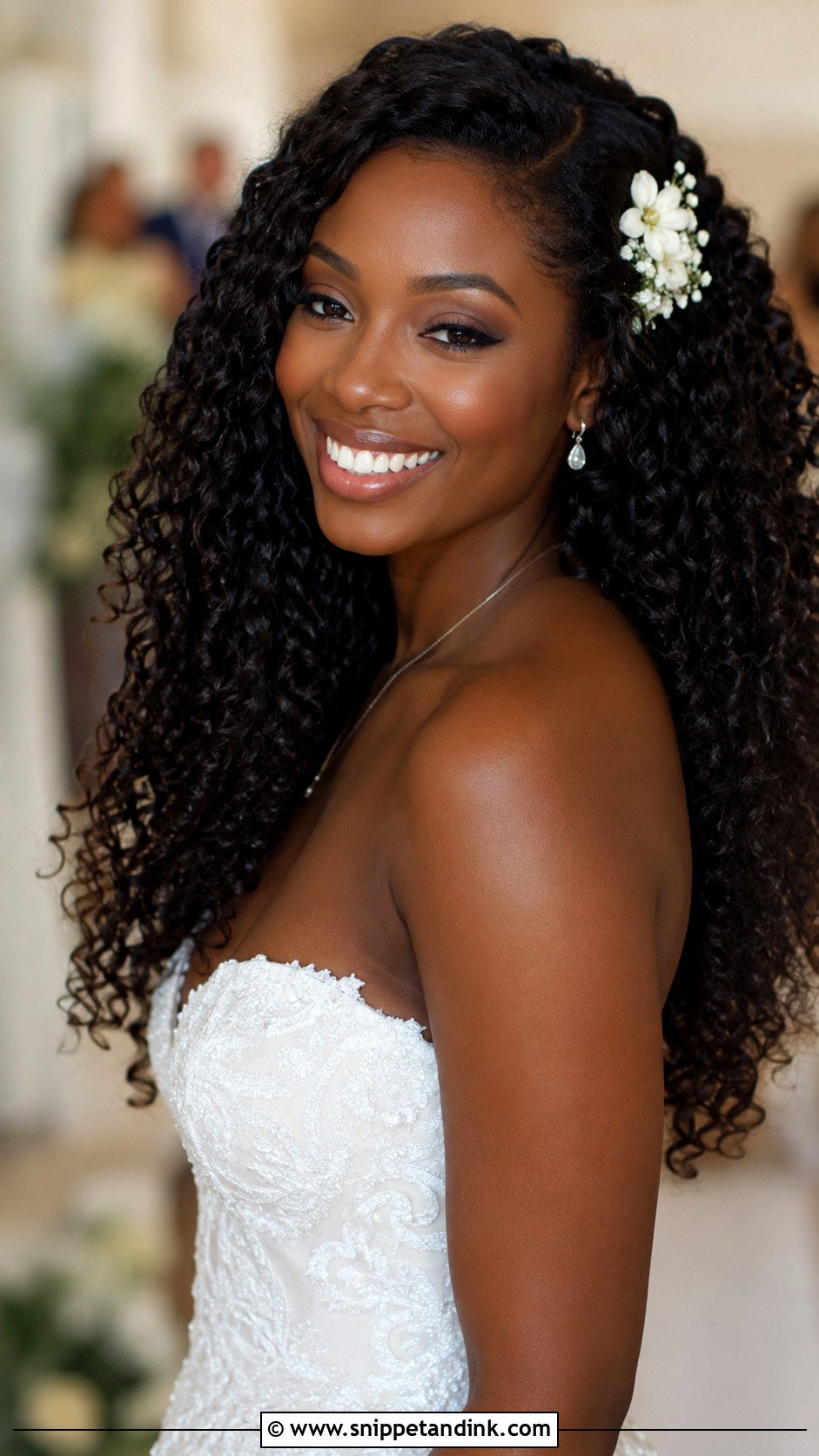
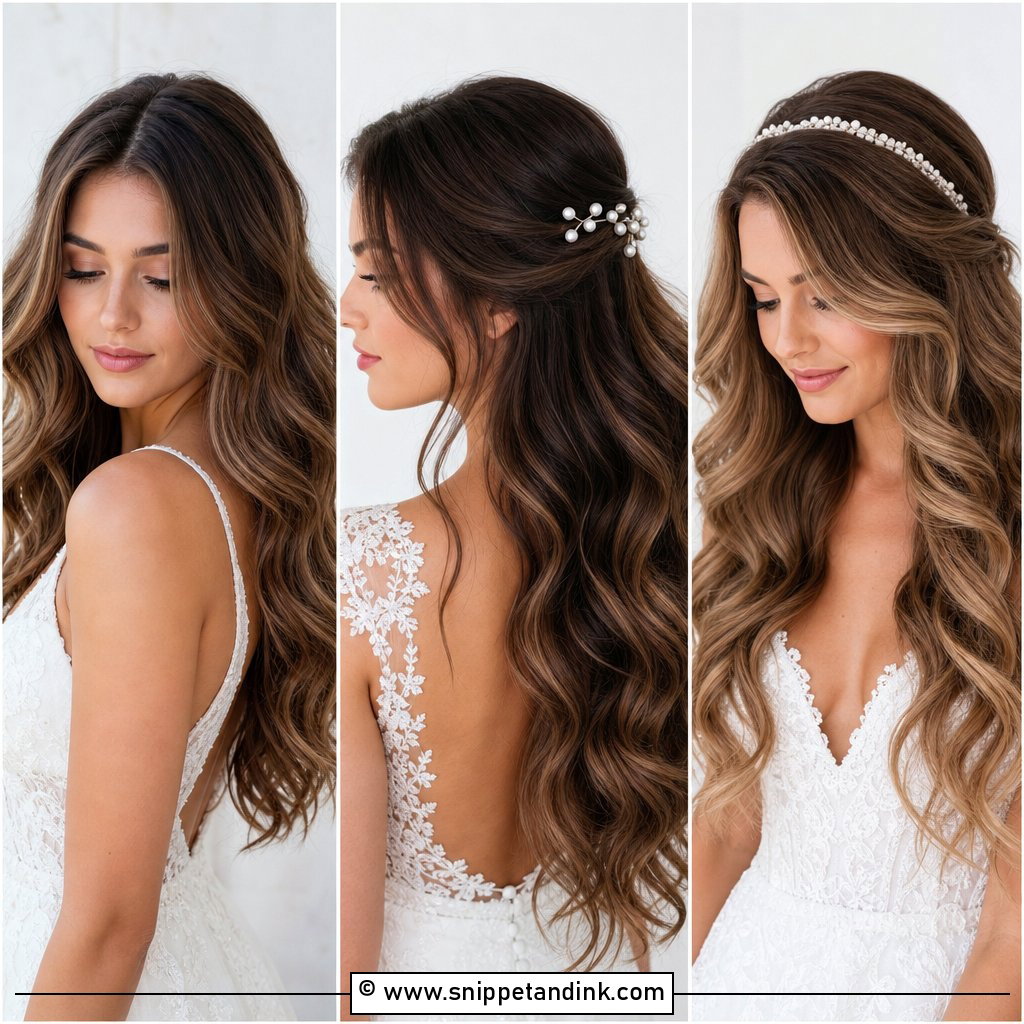
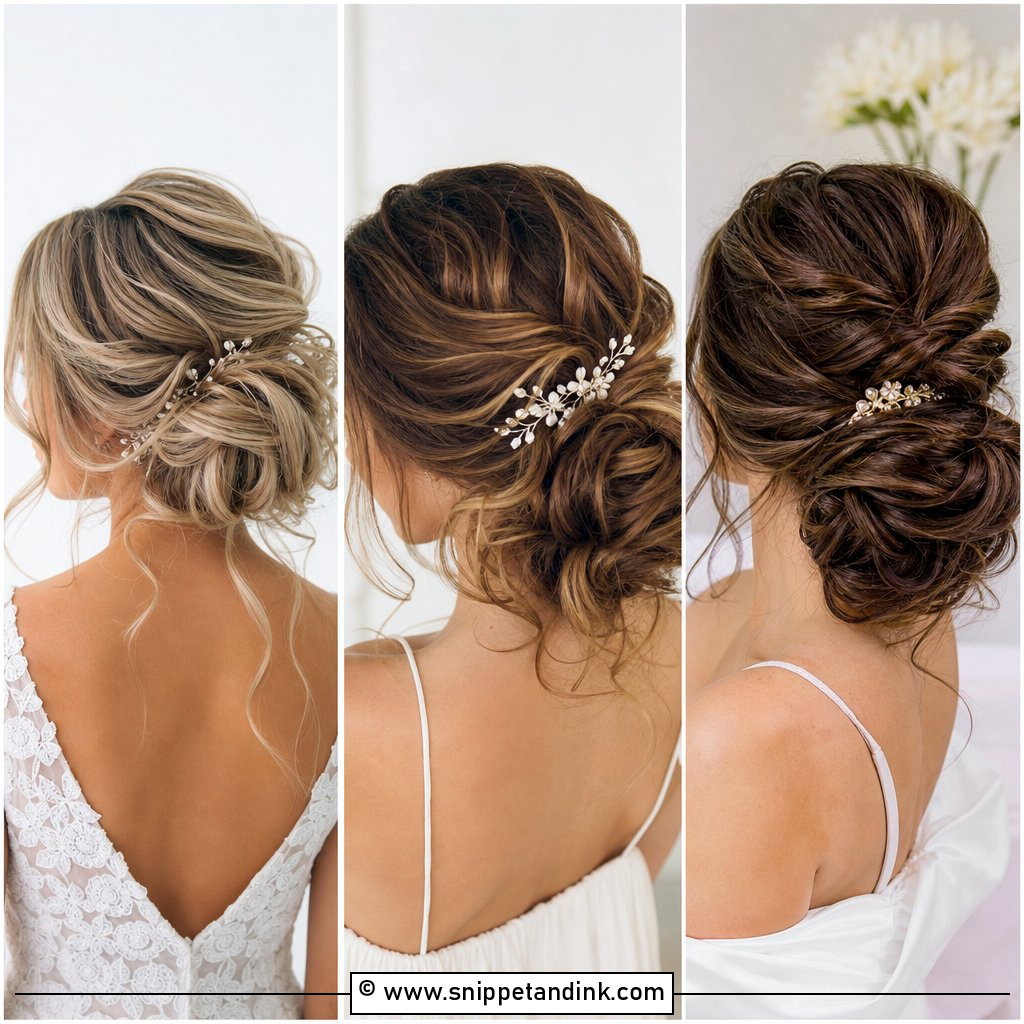
Your natural curls should look like your best curl day, not a different texture. I prefer to style them the way you already do on a good day, with a wash and your usual leave-in and gel applied on soaking wet hair, then diffuse or air dry without touching. I avoid introducing a new product at the trial, because curly hair can react unpredictably. After that, it’s just shaping: lifting the roots with a pick and adding a flower or accessory where the curls part. Coily and curly brides often find this the most comfortable look of all.
21. Side Braid with Loose Waves
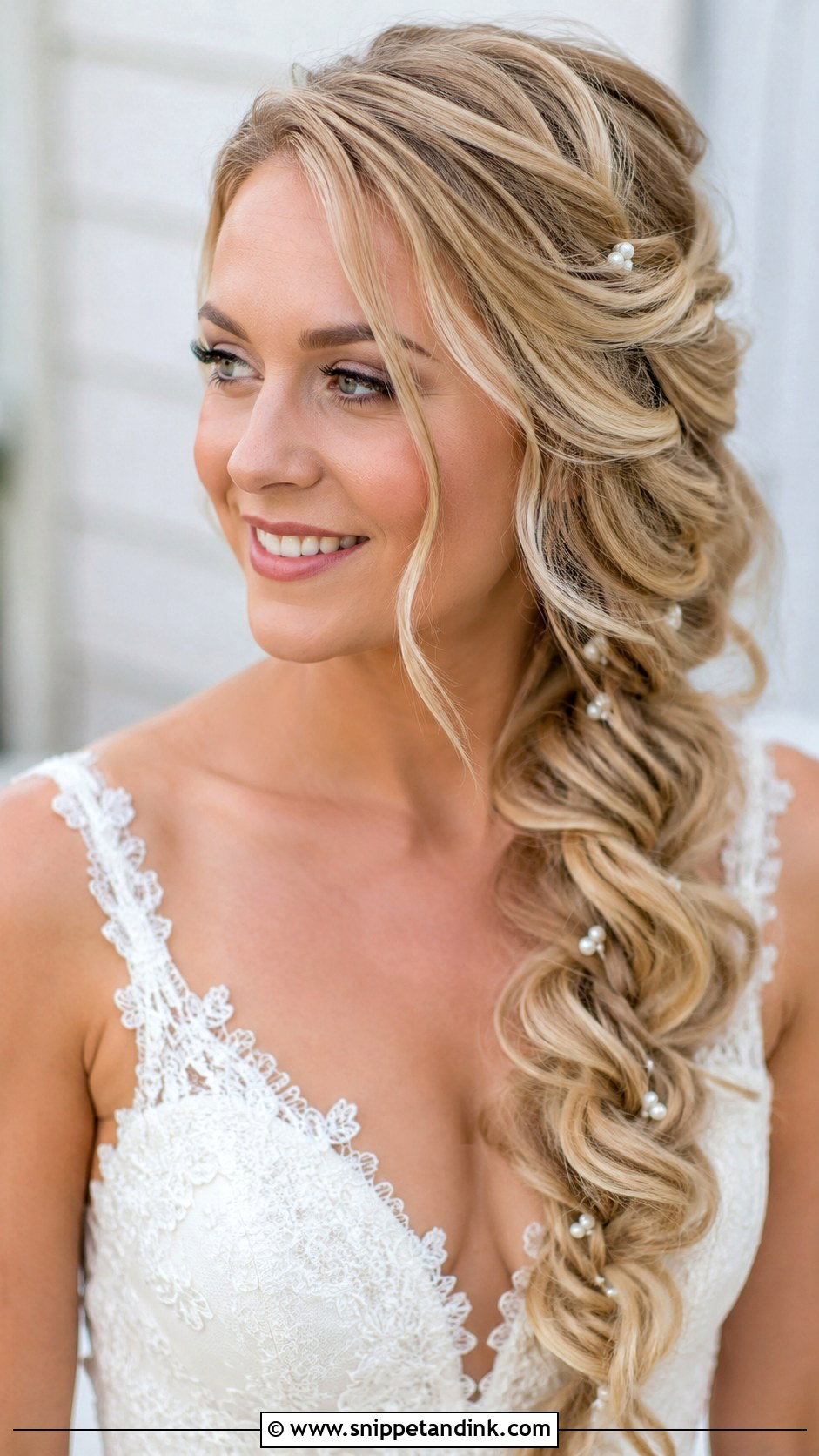
A side braid with waves around it is two textures in one style. I braid from behind one ear, loosen the braid only after the end is secured, and let the curls fall over and around it. The braid holds its shape in wind, so it’s a sensible choice for beach and outdoor ceremonies where free curls would tangle. Pearls or tiny flowers tucked down the braid add detail, and the open side shows your neckline and earrings.
22. Glossy Blowout
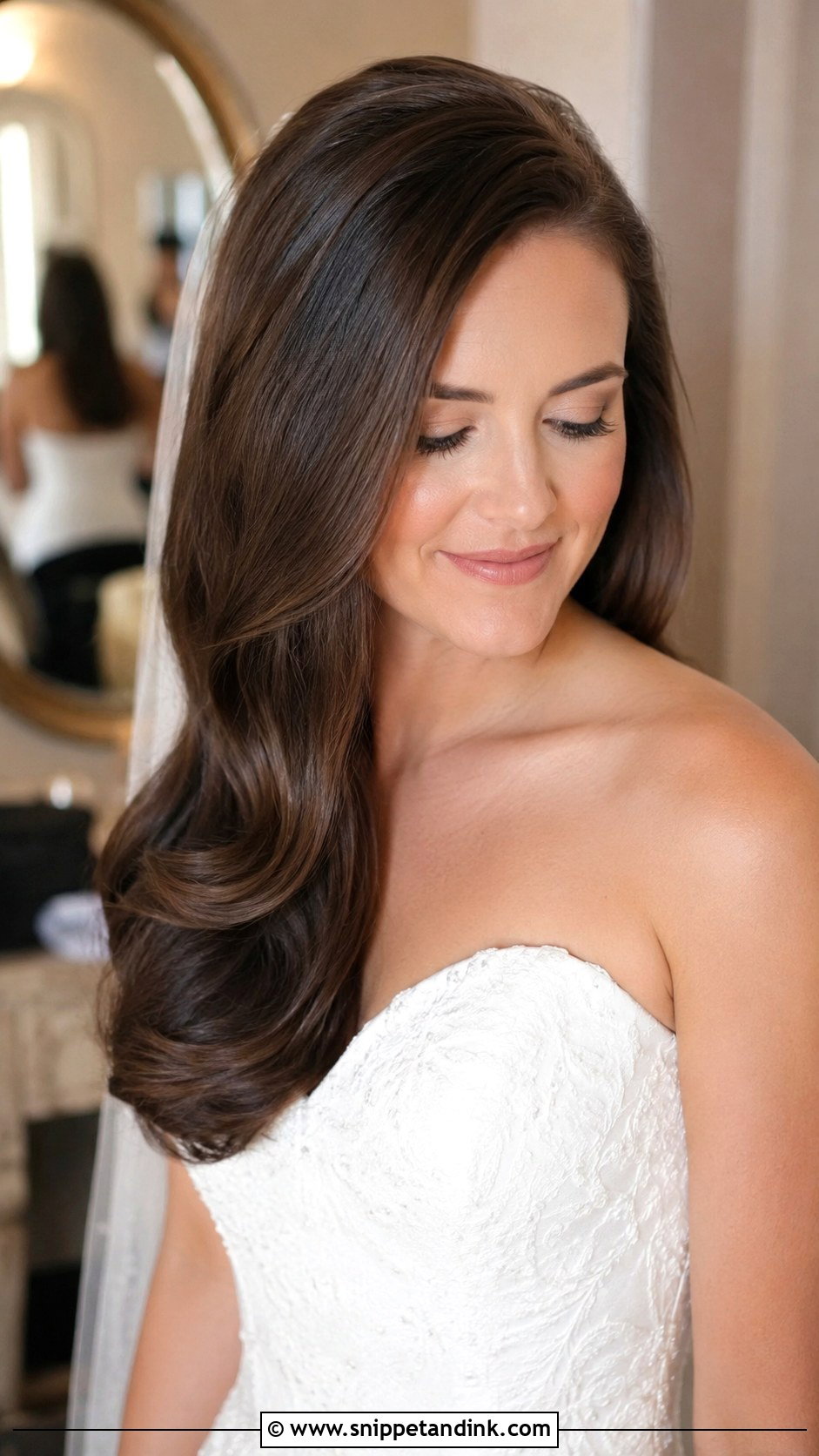
A great blowout is a round brush and patience. I dry the hair in sections over a large round brush, then set each warm section in a velcro roller to cool, which gives the body far more staying power than brushing alone. It suits brides who want smooth volume without obvious curls. The trade-off is humidity: a blowout drops faster than a curl set in damp weather, so for an outdoor summer wedding I’d add a light wave at the ends as insurance.
23. Half-Up with Floral Pins
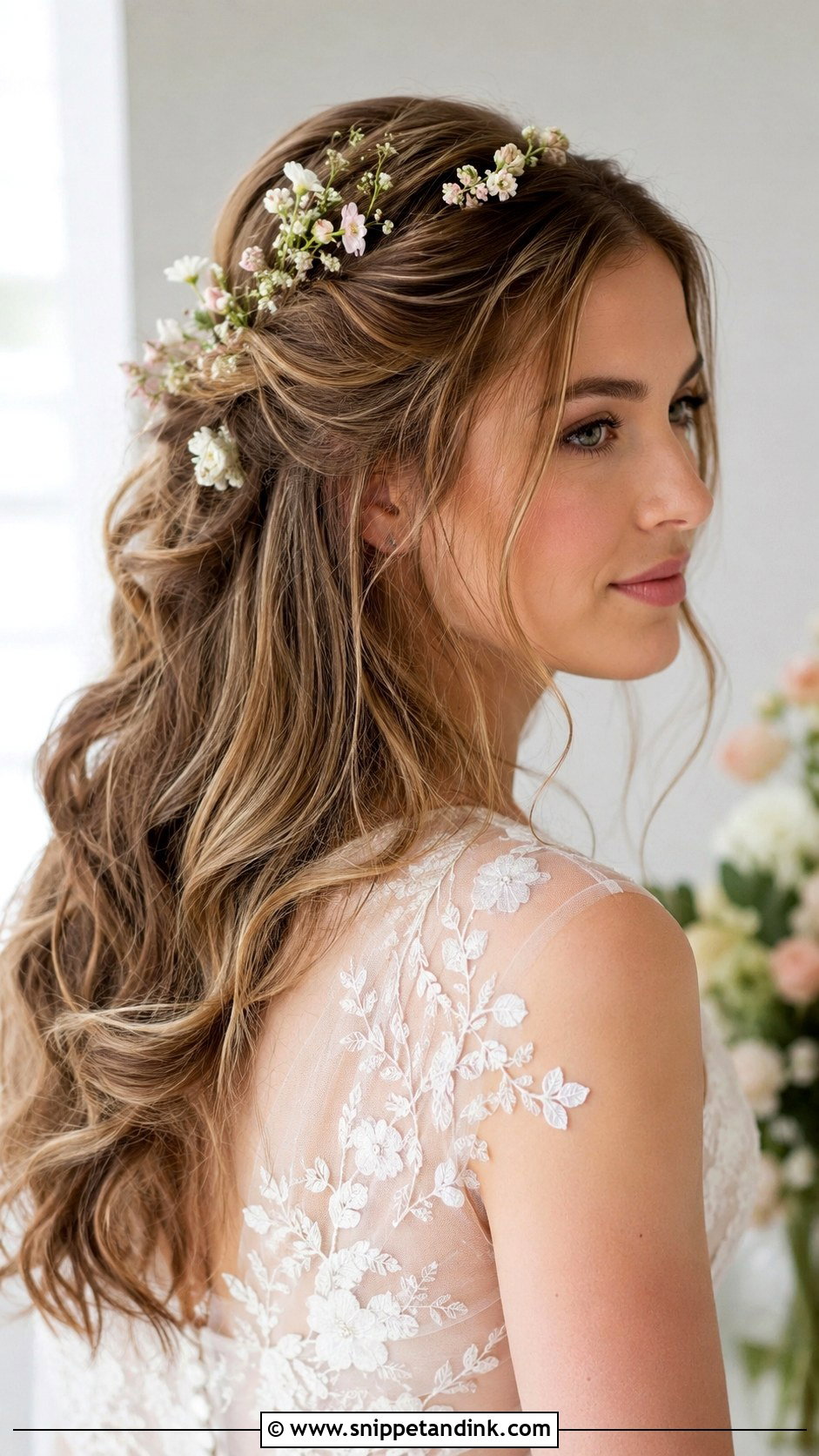
Floral pins are the flower crown’s quieter cousin. I place small silk or fresh flower pins along a half-up anchor rather than scattering them through loose curls, where they slip. If you want fresh, your florist should prepare small wired blooms; silk pins survive the whole day and can be kept afterward. Spring and summer weddings suit them best, and matching them to the bouquet keeps everything feeling connected.
24. Long Waves with Hair Vine
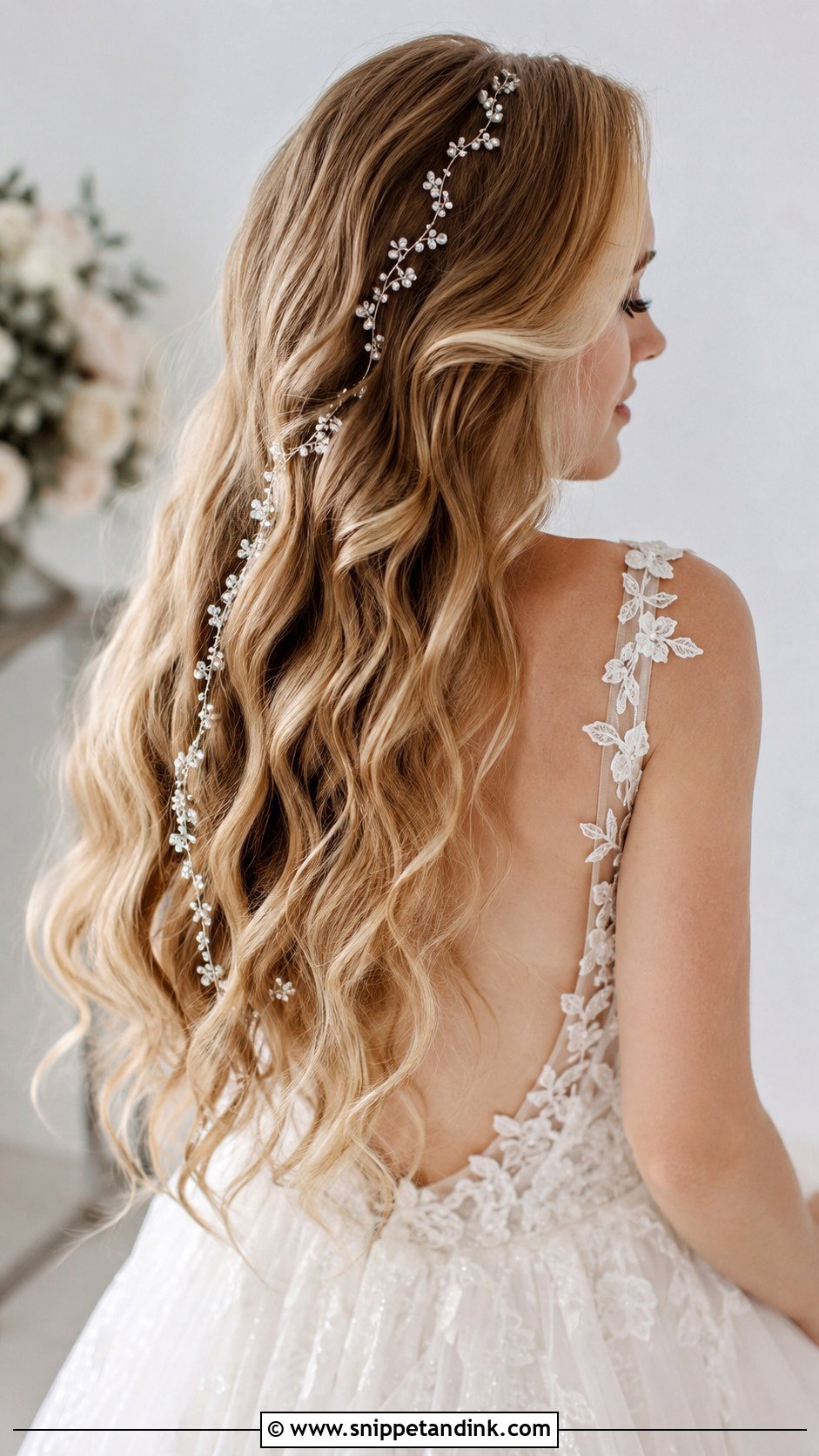
A hair vine is a bendable wire with crystals or pearls, and its flexibility is what makes it work in loose hair. This look weaves a thin, jeweled vine through softly curled lengths, and I pin it at several points along its path with bobby pins hidden behind the wire. Placed along the crown, it reads like a delicate headpiece; woven down through the waves, it catches light as you move. Keep the rest of your jewelry simple so the vine stays the focus.
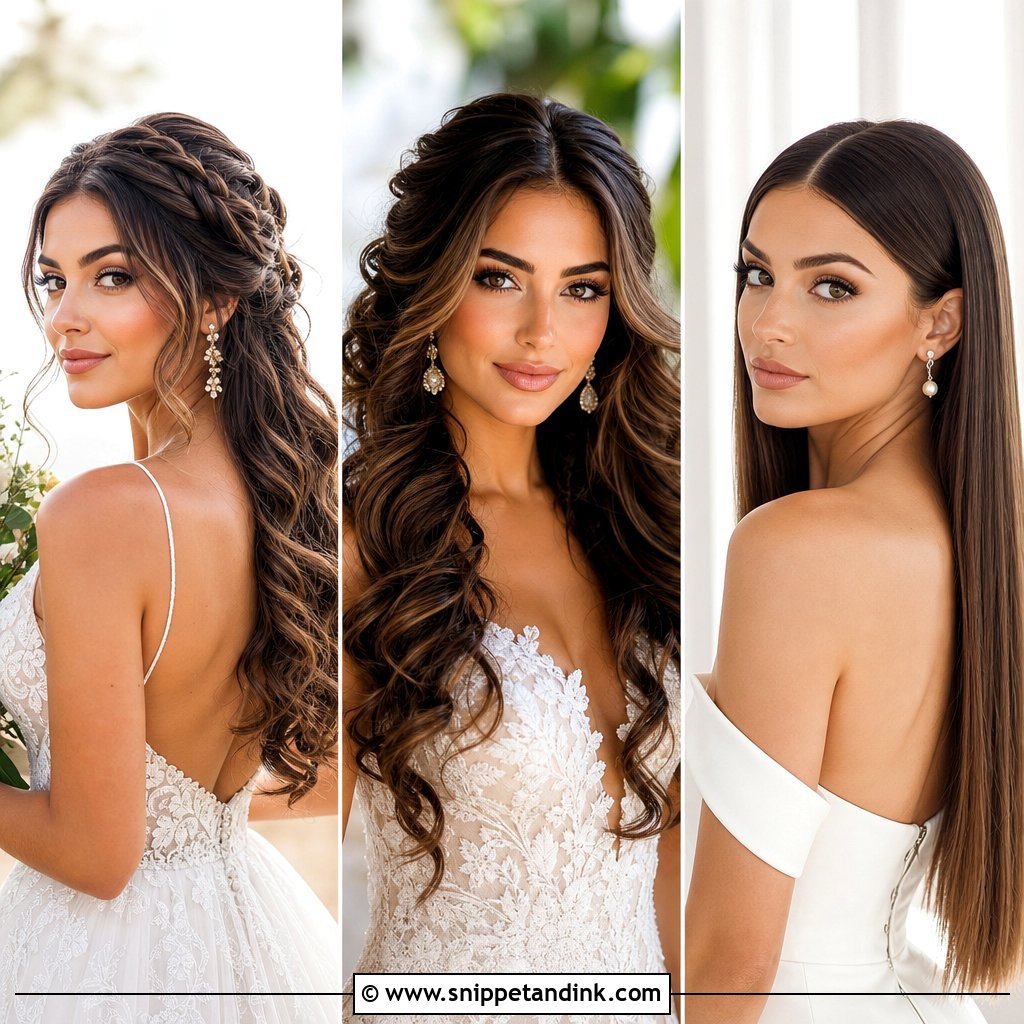
25. Soft Curls with Deep Part
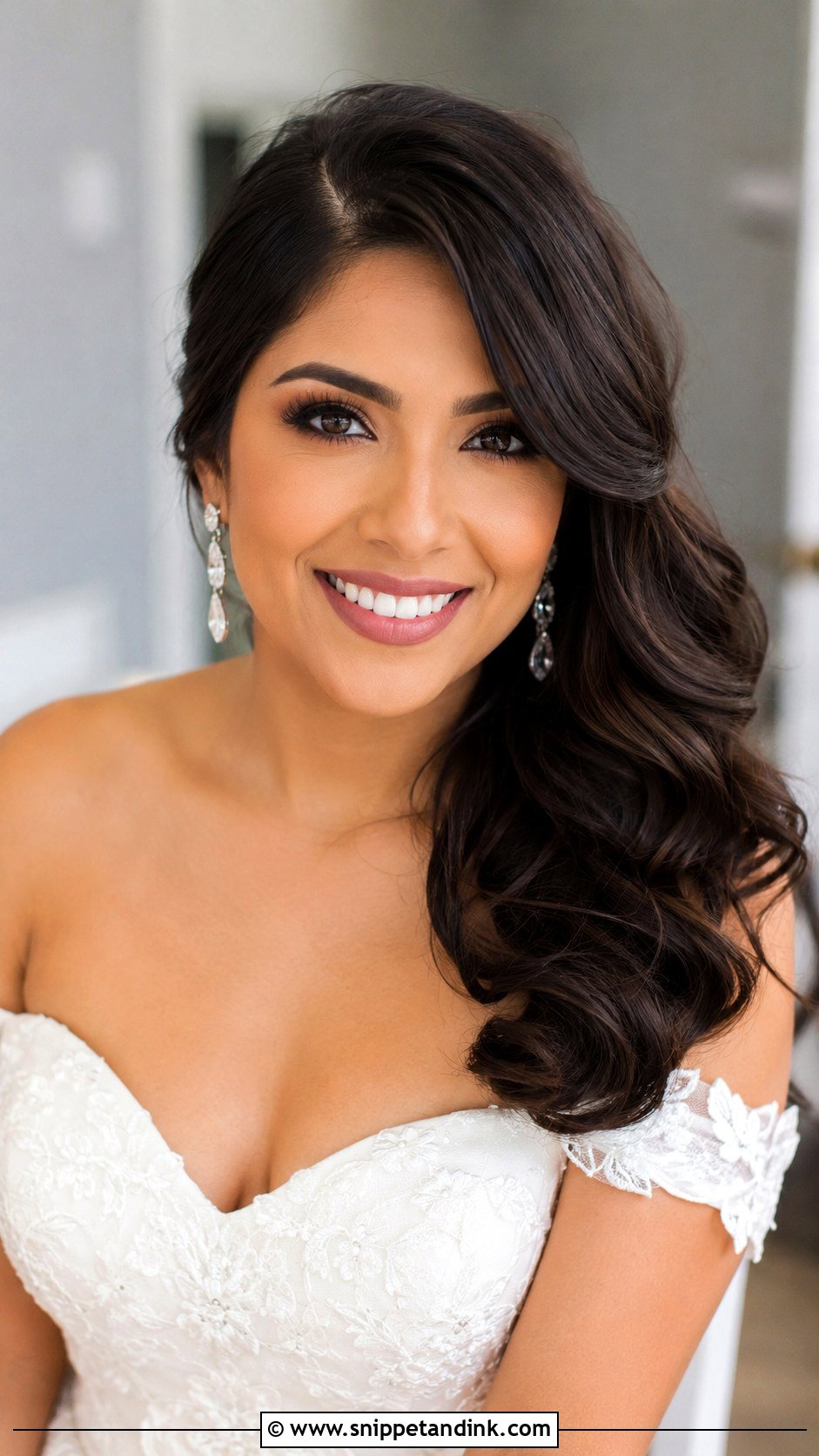
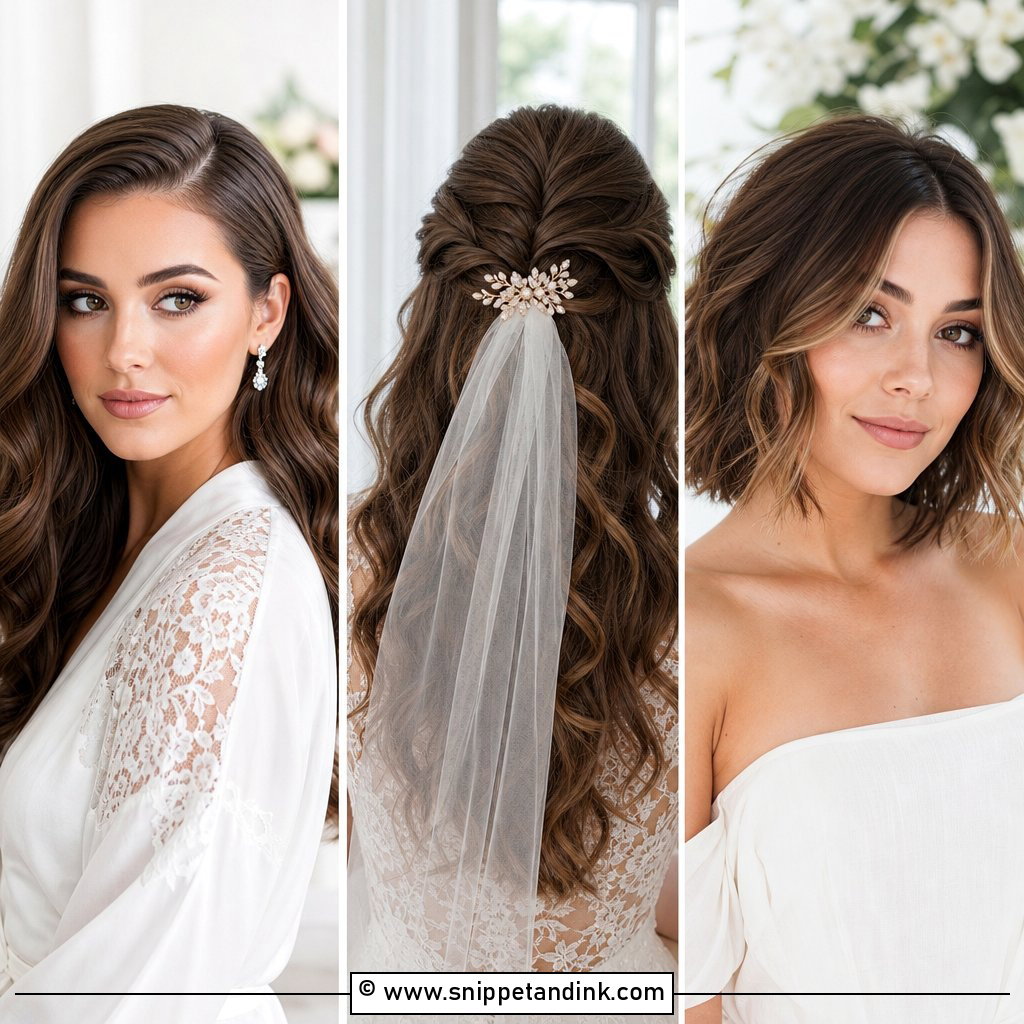
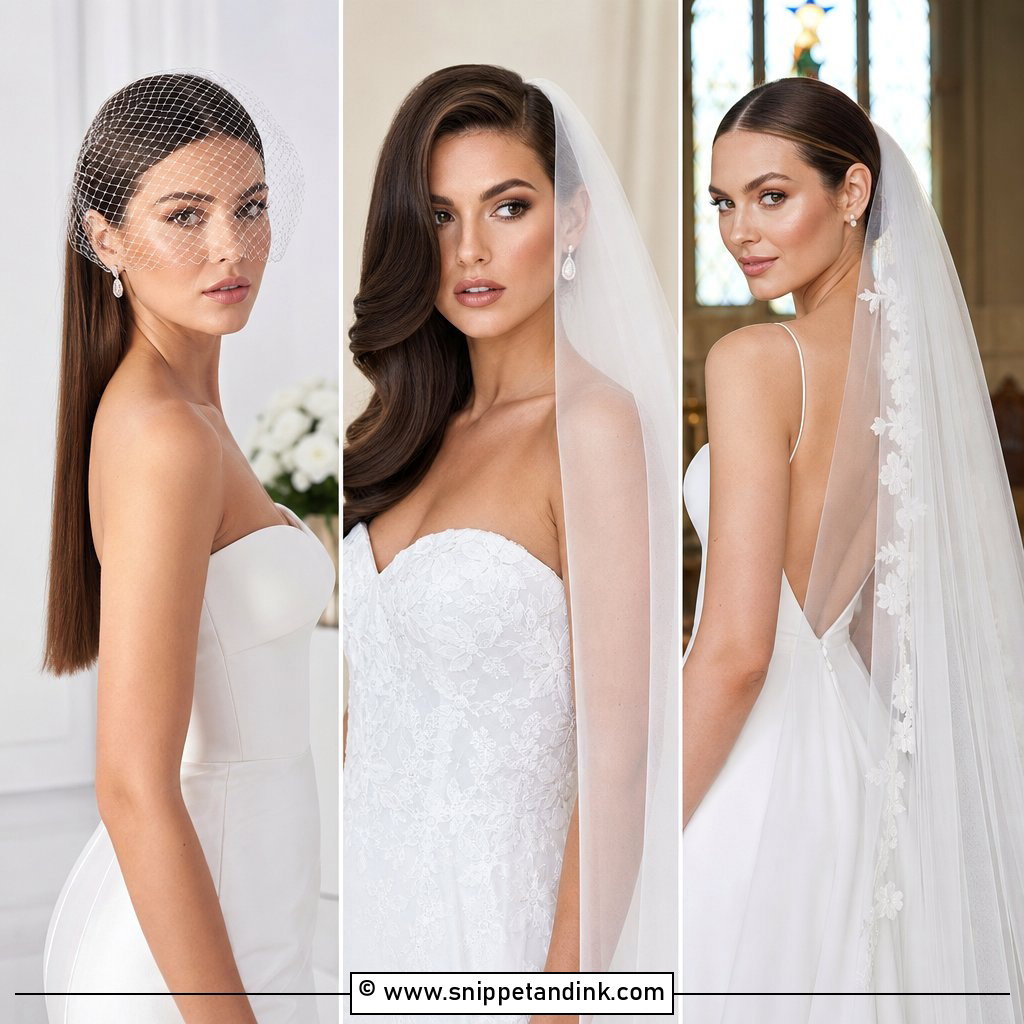
Soft curls from a deep part bring volume to one side and leave the other side cleaner. I’d suggest this for round and square faces because the asymmetry softens the jaw and adds height. I curl loosely and pin the heavier side’s weight behind the ear so it stays put. Off-shoulder gowns and statement earrings both work well with the exposed side, and the deep part reads as vintage without needing a full Hollywood set.
26. Beach Waves with Headband
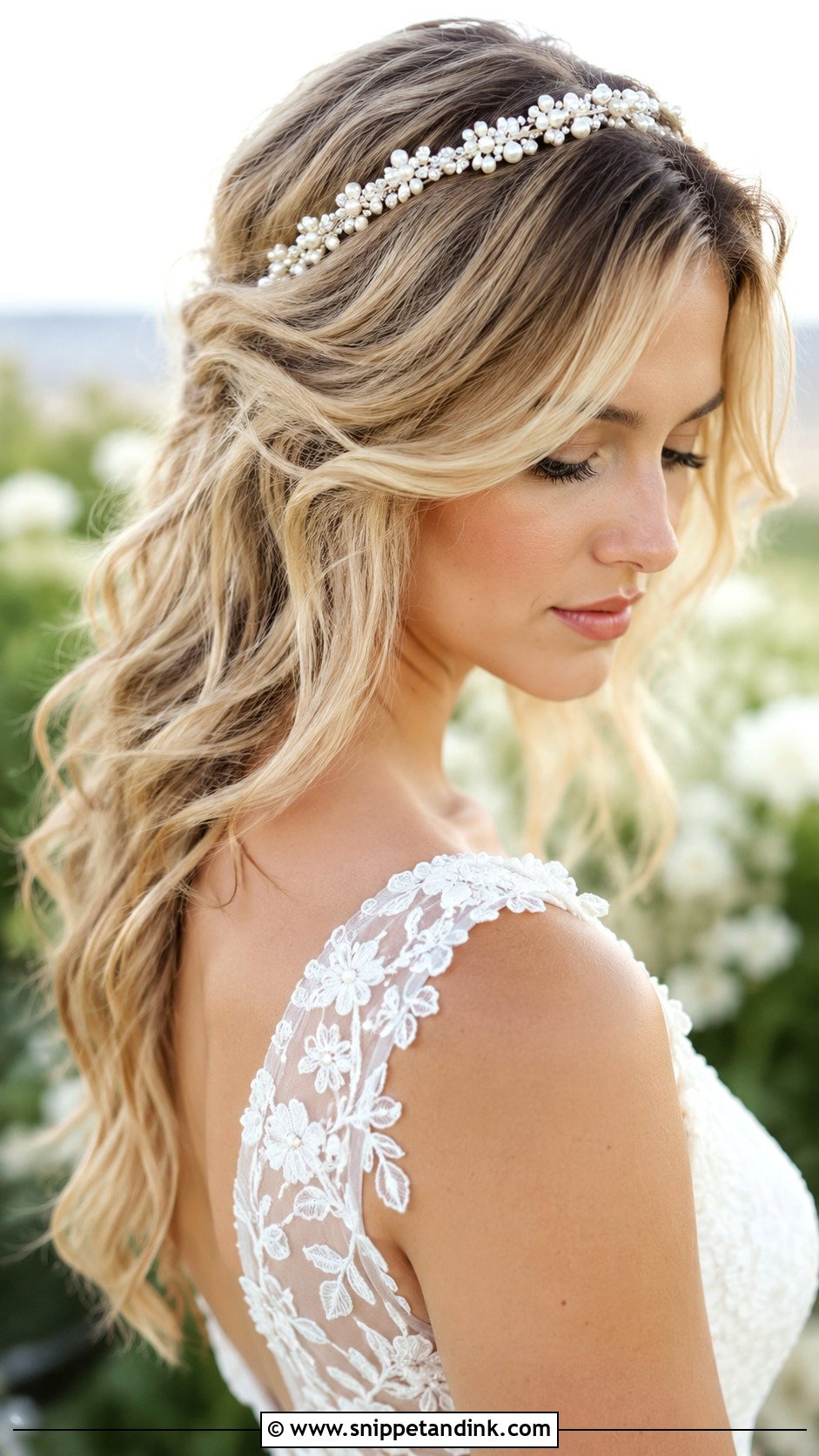
A headband over beach waves gives loose hair a clear focal point. This look pairs tousled, undone texture with a pretty embellished band, and I always check at the trial how it feels after an hour, because a rigid band behind the ears can start pressing long before the reception. I hide a couple of pins at each end to stop it sliding forward. Pearl and crystal bands are the easiest to coordinate with jewelry, and boho, garden and destination weddings are where this shape fits most naturally.
27. Long Sleek Hair with Center Part
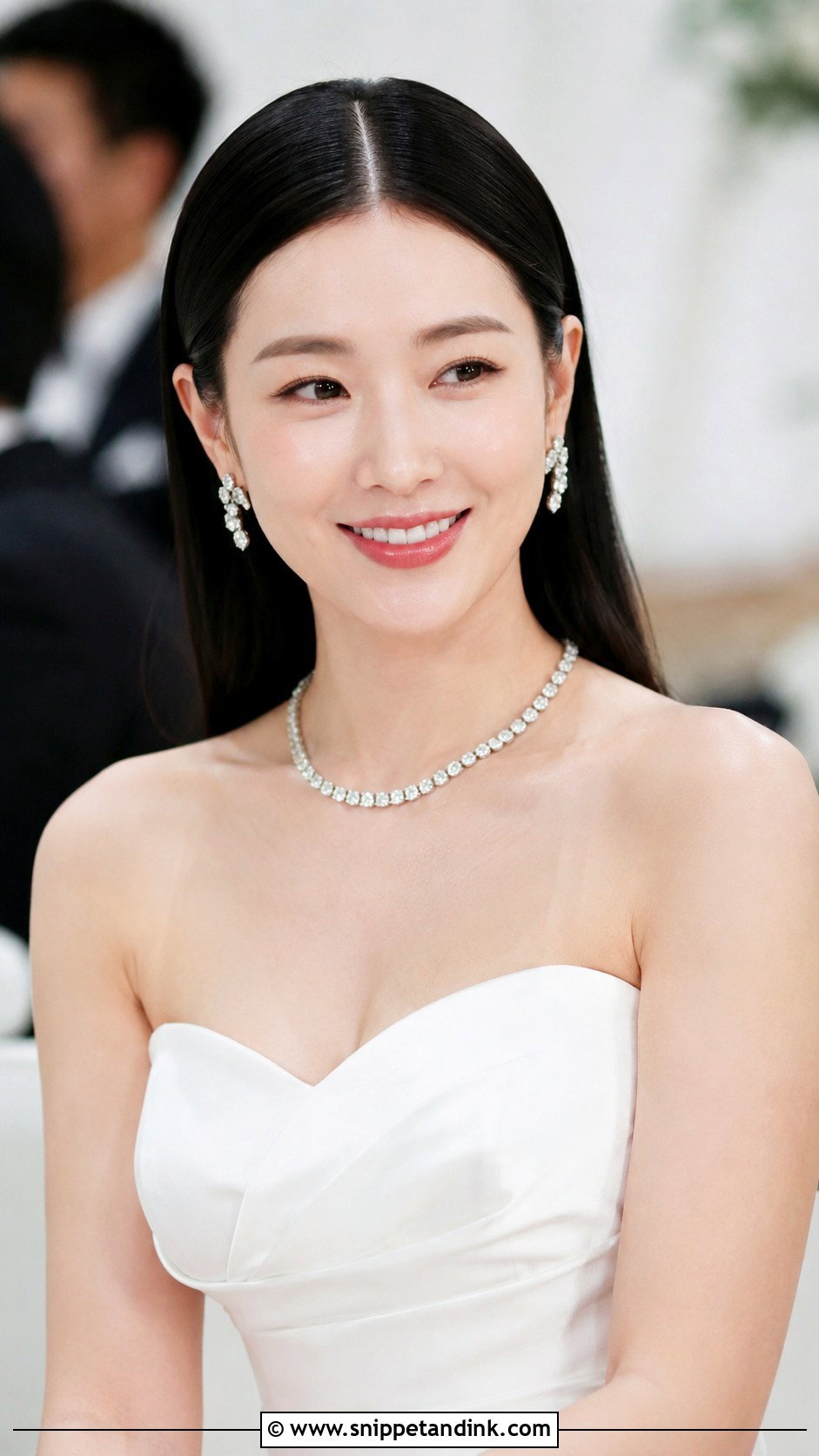
Long, sleek hair with a sharp center part is a modern look that relies on your hair’s condition. Split ends and dryness show more in straight hair than anywhere else, so I suggest a trim six to eight weeks before. I flat iron in small sections and finish with a drop of shine serum through the ends, not the roots. Structured, minimalist gowns and bold jewelry give it context; with a very romantic gown it can look unfinished.
28. Twisted Half-Up with Curls
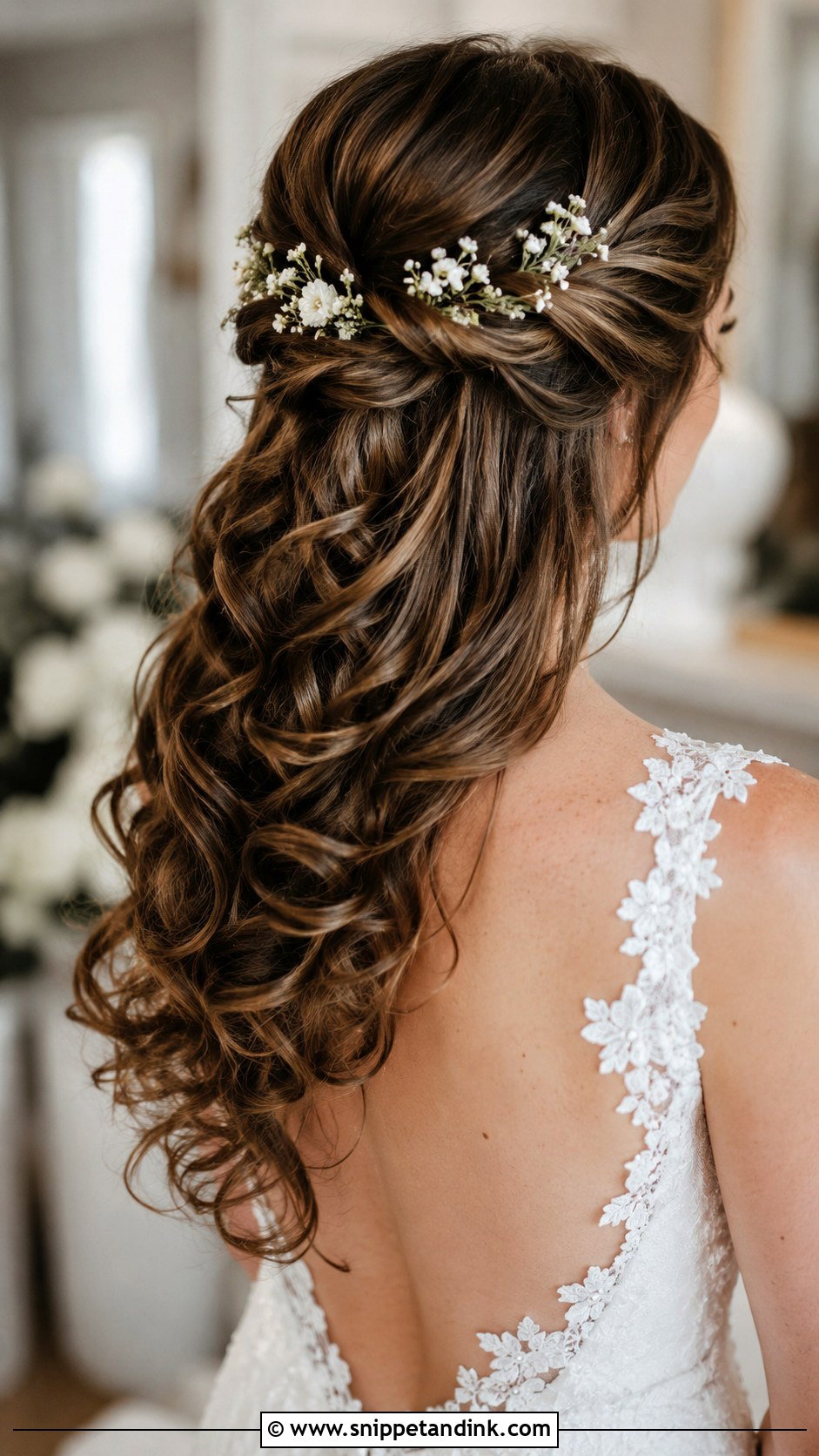
This twisted half-up has more curl underneath than the earlier version, so it needs a slightly firmer anchor. I twist the top sections, pin them at the crown, and then add curls through the whole length afterward so the iron doesn’t loosen the twists. Small pearls or flowers sit neatly in the twist. It suits brides who want romance without loose hair falling forward when they lean in for a kiss or a hug.
29. Waves with Birdcage Veil
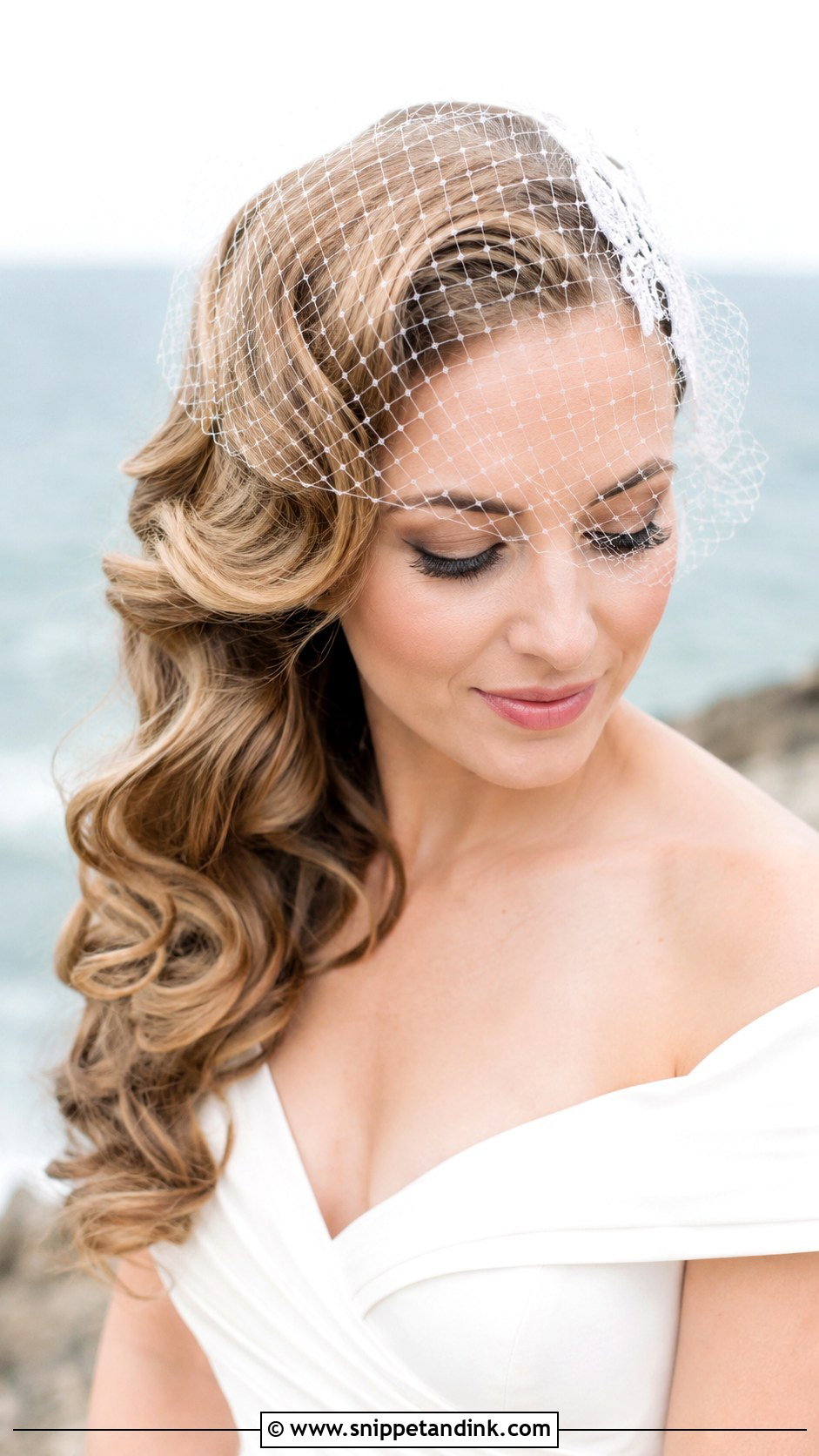
A birdcage veil is short and stiff, so it sits on a comb or small pin rather than covering the hair. I keep the waves full and slightly glossy so the netting has volume to rest against, and I angle the comb just above one ear for the classic tilt. This look works best with vintage and art deco themes, a structured gown and a strong lip. Test the netting at the trial; some nets catch on eyelash extensions.
30. Long Layers with Face-Framing Pieces
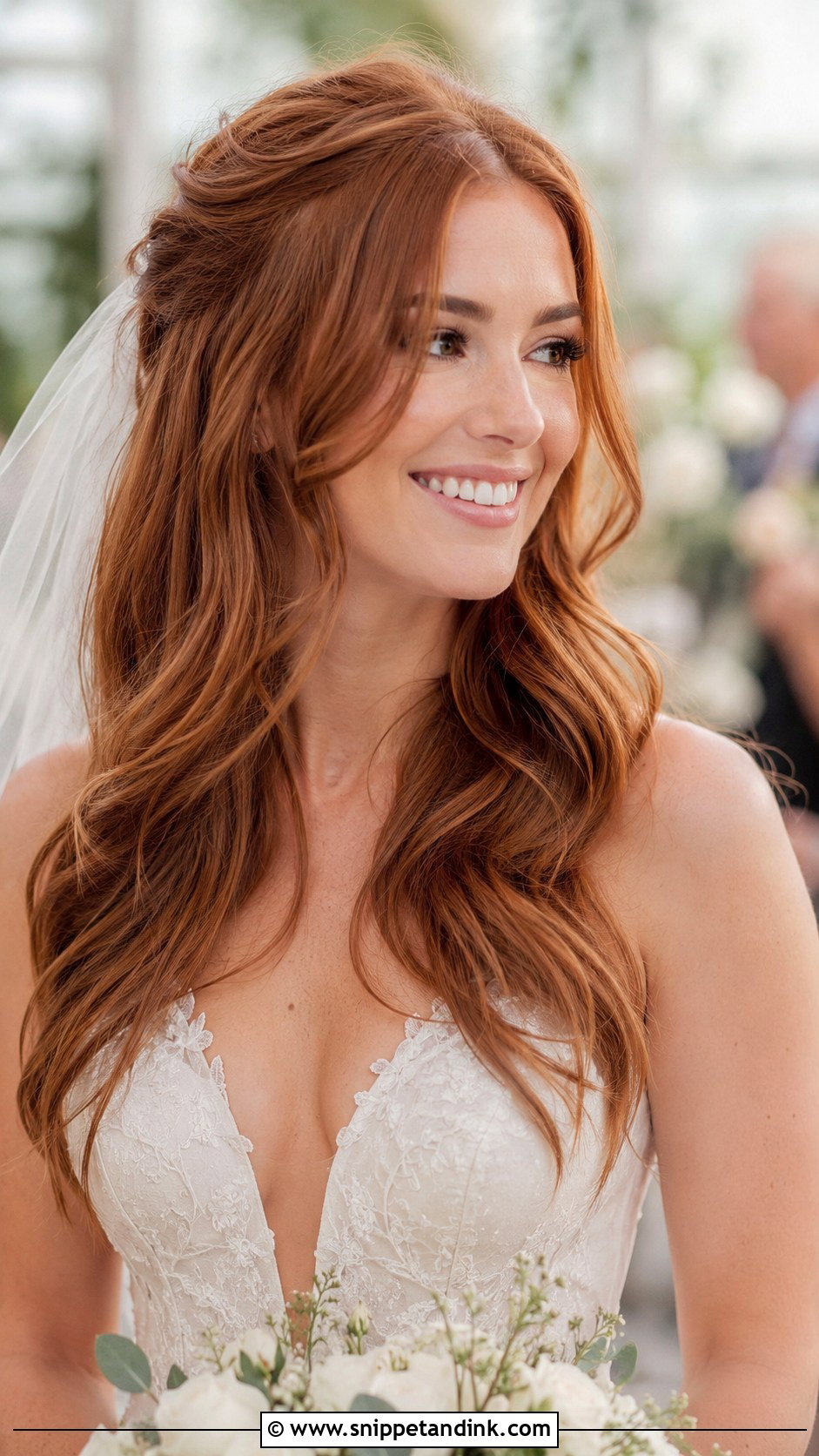
Long layers with face-framing pieces give the style shape around the face that one-length hair can’t. I curl the front pieces away from the face first, because they’re the ones the camera sees in every close-up. Short layers can poke out of curls, so I usually curl them in a slightly smaller barrel than the lengths. This suits brides with long hair who want movement without a structured finish, and it works with classic and boho gowns alike.
31. Tousled Curls with Side Part
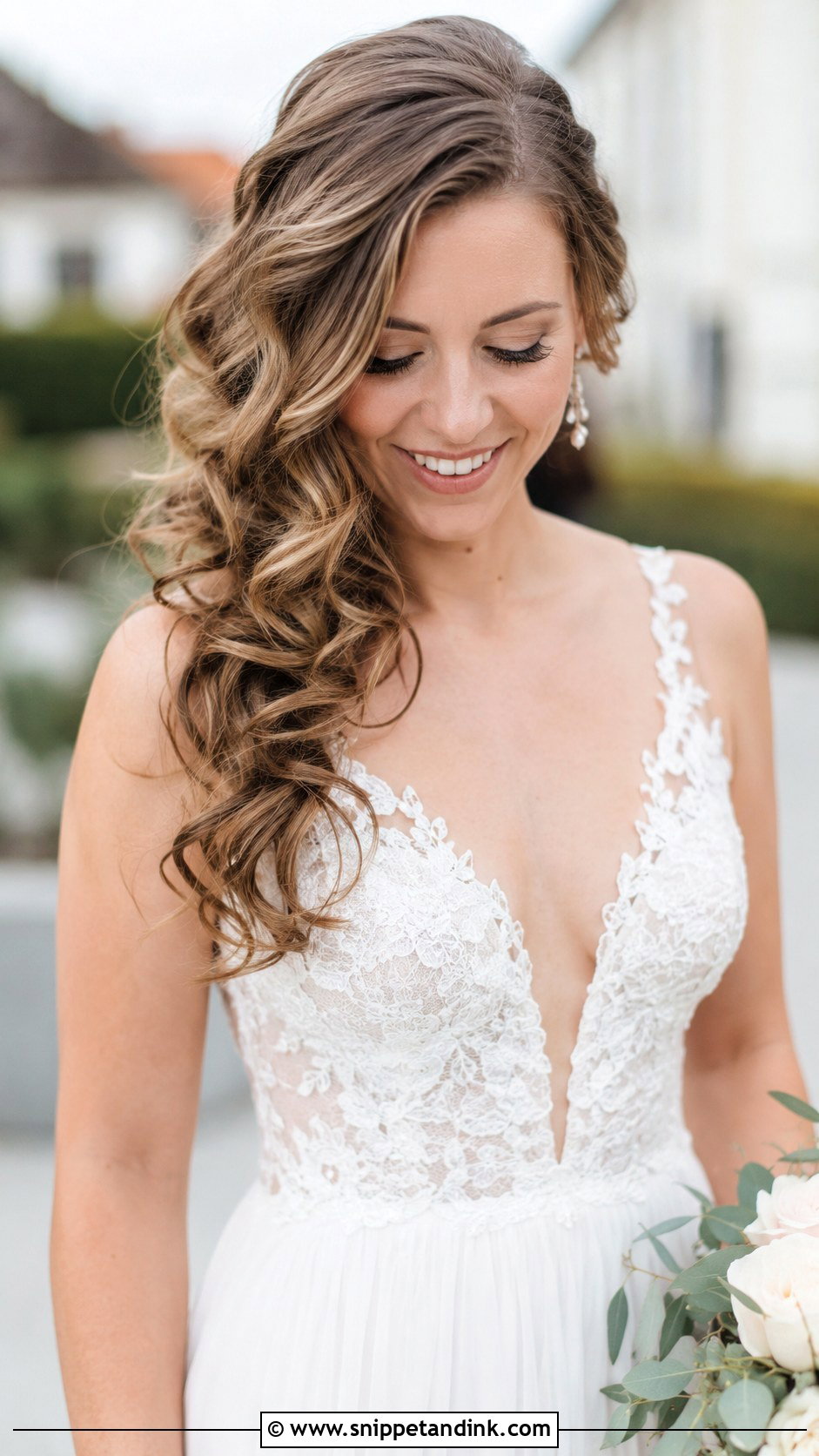
Tousled curls swept to one side should look lived in, not messy. I curl loosely, let them cool, then break them up with my fingers and a dry texture spray. The side part adds a flattering asymmetry. In my experience this survives an outdoor day better than a polished curl, because the texture is already relaxed, so a breeze doesn’t ruin it. Flowing gowns and simple accessories keep the mood consistent.
32. Half-Up Bow Hairstyle
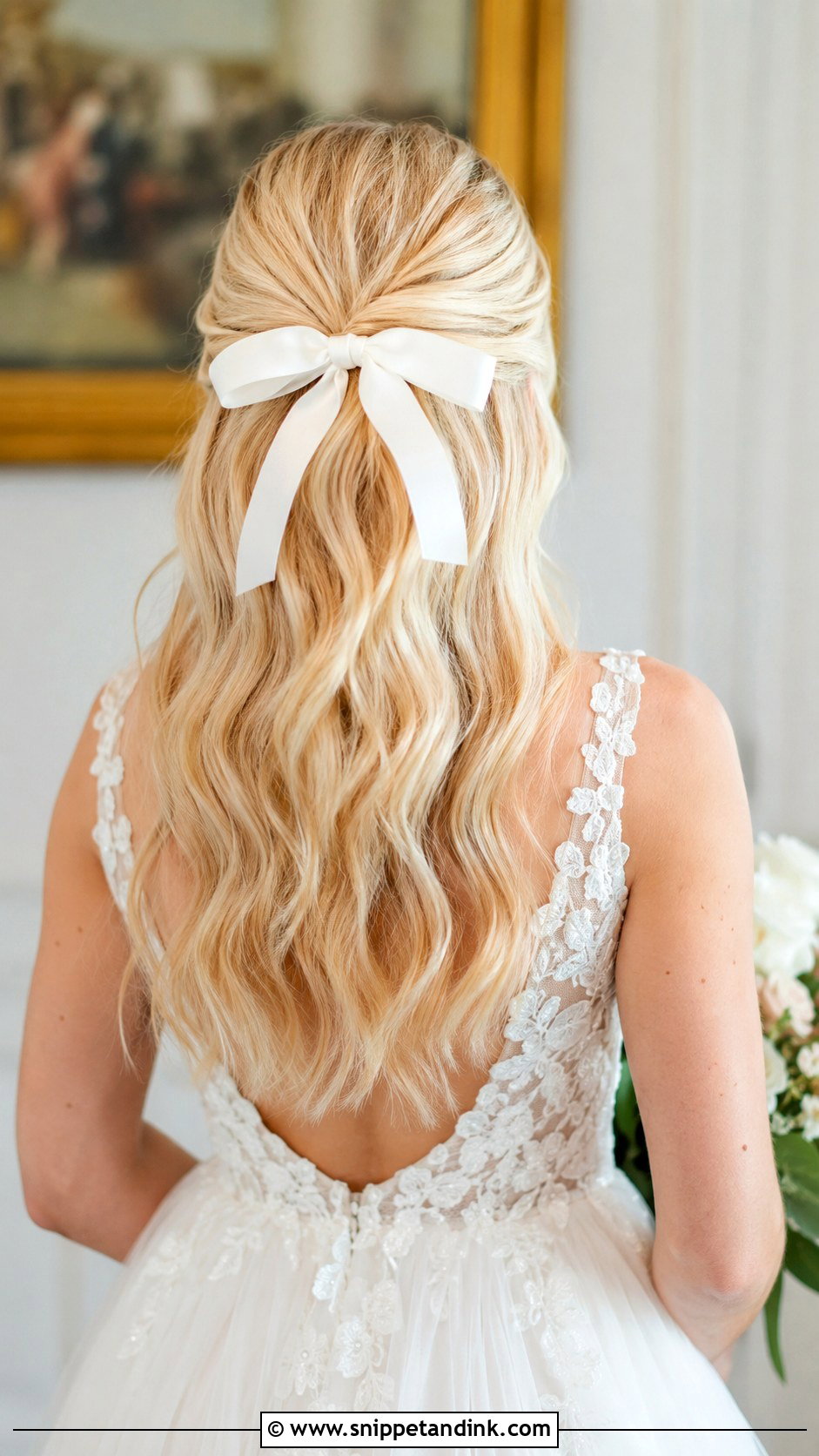
A bow made from your own hair needs a thick top section; on fine hair it can look small and flat. I gather a ponytail at the crown, loop it into two halves, wrap the center with the tail and pin it from underneath. If density is limited, I add a clip-in weft hidden beneath the bow. It photographs as a playful focal point and suits modern weddings and romantic gowns. Ask your stylist to show you the bow from behind at the trial; it’s the angle your guests will see.
33. Long Waves with Gold Accessories
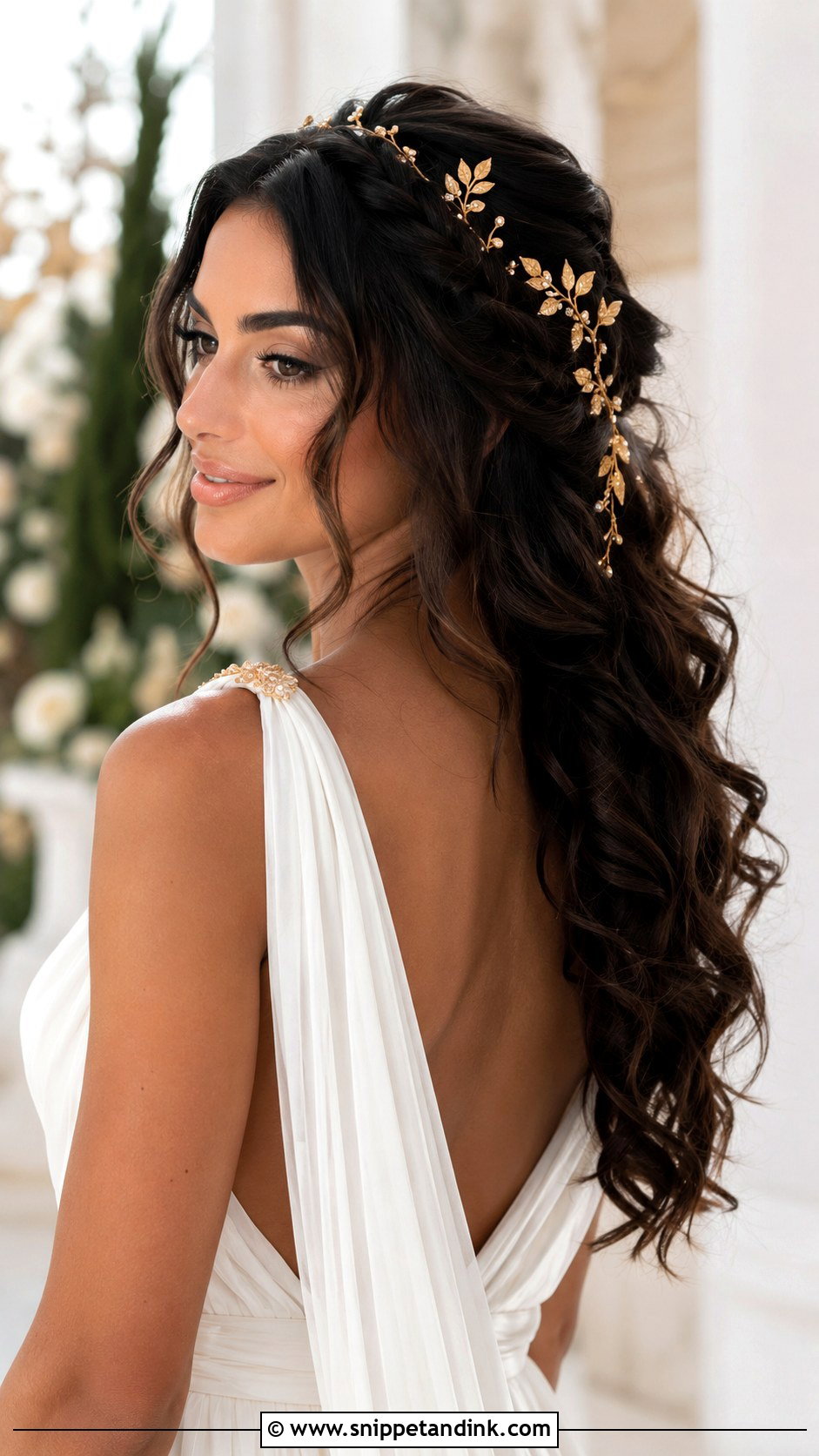
Gold pins, leaves or vines give waves a warm, polished shine. I match the metal tone to your jewelry; mixing yellow gold in the hair with silver earrings is the clash I see most often. On blonde hair gold accessories can disappear, so I place them where they sit against darker lowlights or roots. Grecian, garden and glam weddings suit this look, and a flowing gown keeps it soft rather than heavy.
34. Soft Waves with Low Volume Crown
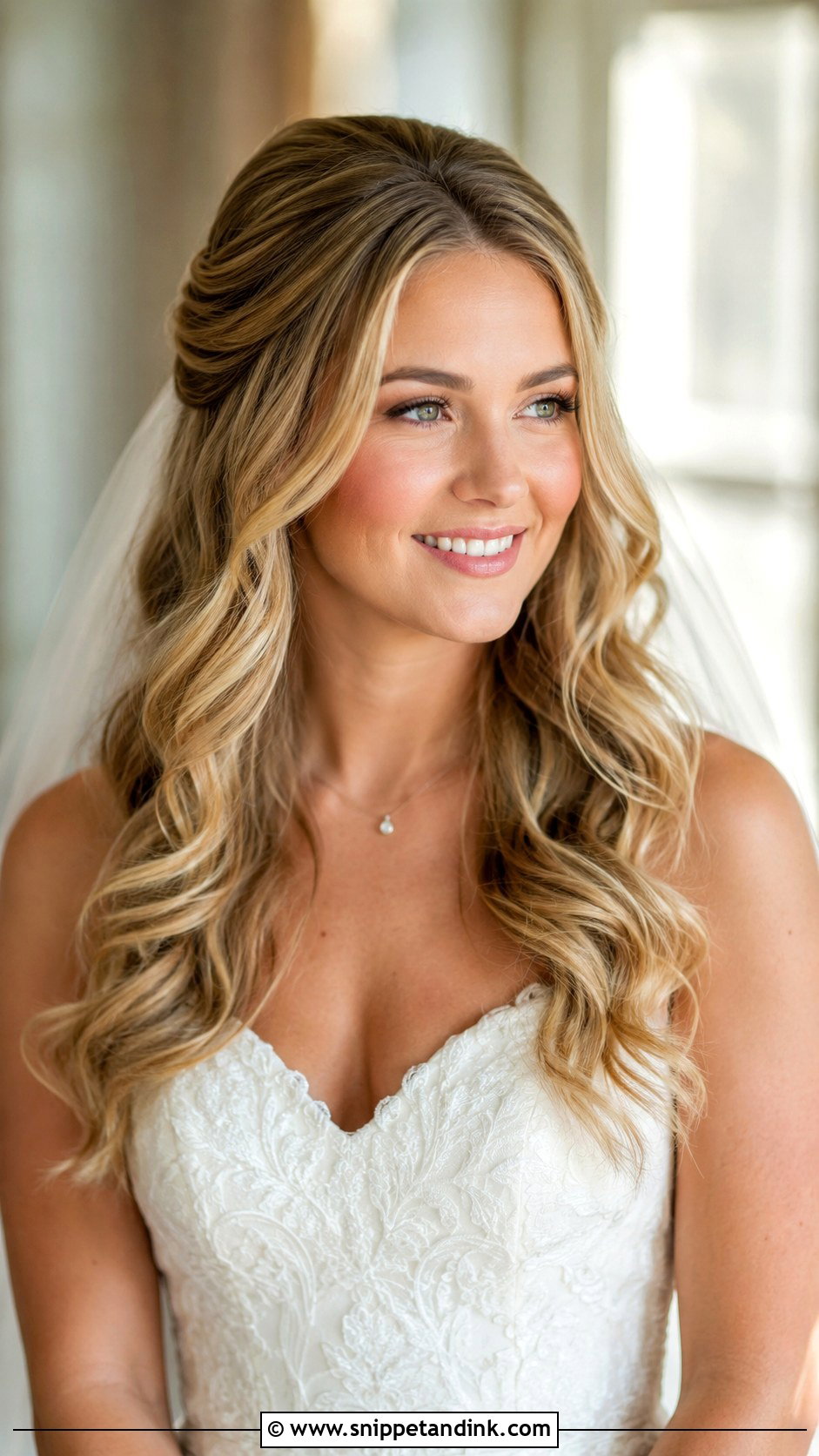
A little crown lift keeps waves from looking flat on top, especially under a veil. I backcomb only the underside of the crown section at the roots, then smooth the top layer over so the teasing never shows. The waves underneath stay soft and loose. This is one of the safest styles on the list for classic and formal weddings, and it’s my usual fix for brides whose hair sits flat on the crown in photos.
35. Wavy Hair with Lace Veil
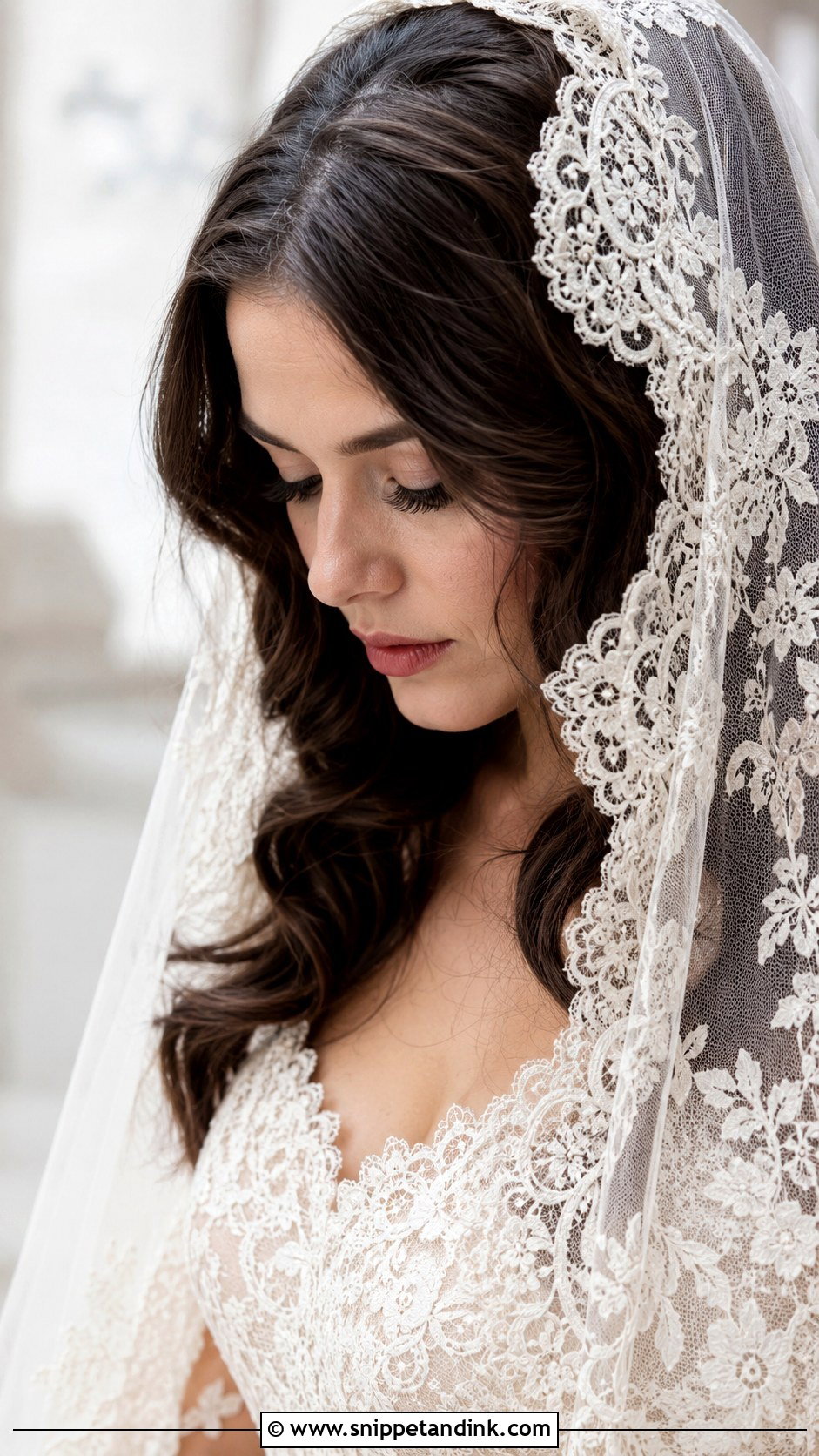
A lace-edged veil over soft waves is classic, but lace adds weight to the veil’s edge. I anchor the comb into a hidden twist so the veil doesn’t drag the curls down the back, and I check whether the lace catches on the curls when you turn. Once the veil comes off, the waves underneath usually look fresh for the reception. Pairing a lace veil with a lace gown ties the two together; with a plain gown, the veil becomes the main detail.
Extensions Can Fill Out a Thin Down Style
Thin or shoulder-length hair can look sparse once curls are brushed out, especially from behind. A few clip-in wefts placed below the crown fix this quietly. I prefer human hair wefts because they can be curled with the same iron as your own hair and take the same products.
- Buy them before your trial so your stylist can color-check and blend them.
- Match the darkest and lightest tones of your hair, not the middle; a two-tone set often blends better than one shade.
- Wear them at the trial for the full afternoon to check weight and comfort at the clips.
Reviving Waves Halfway Through the Reception
Even a well-set style softens by evening. I usually send brides off with a small pouch: a travel hairspray, a handful of bobby pins matched to your hair color, and a mini dry texture spray. If the waves flatten, lift a few sections at the crown, mist the roots with texture spray, and scrunch upward. If one side has fallen, twist that section loosely and pin it back behind the ear for an instant half-up. Ask a bridesmaid to carry the pouch so you’re not hunting for it.
Your Texture Decides More Than the Photo You Saved
Every down style here depends on the same few things: how your hair holds a curl, how much density it has, what the weather will do, and what has to sit on top of it. Bring two or three of these looks to your trial, along with your veil or accessories, and wear the trial style for a full afternoon before deciding. If it still looks like you by evening, you have your wedding hair.
You'll Like These Ideas:



Leave a Reply