
A Nikah look has to do something a reception look doesn’t: sit comfortably under a dupatta for the length of the ceremony, then still look finished when the dupatta slips back for photos. That one fact shapes almost every choice below. Low buns, soft curls, braids wrapped in jasmine, sleek centre parts: each of the 20 styles here comes with my notes on how it holds jewelry, how it copes with a covered head, and which hair it genuinely suits, so you can walk into your trial knowing what to ask for.
Your Dupatta Decides More Than You Think
At a Nikah, most brides keep the dupatta over the head for at least part of the ceremony. That means the hairstyle is partly hidden and partly pressed flat for an hour or more. Before I suggest any look, I ask three things: will the dupatta go over the head, how heavy is the fabric, and will it be pinned to the hair or simply draped?
- A heavy, fully embroidered dupatta needs a low, firm base like a bun or braided coil. Anything with height at the crown gets crushed and pushes the fabric up.
- A sheer net or chiffon dupatta can sit over open curls or a half-up style, because it barely flattens them.
- If the dupatta is pinned, I need a braid or a tight section near the crown to pin into. Pins pushed into loose curls pull out within an hour.
Hair accessories follow the same logic. A passa usually sits on one side, so the dupatta should drape back on that side or it will cover it completely. Plan this with your stylist and the person setting the dupatta, ideally at the same trial.
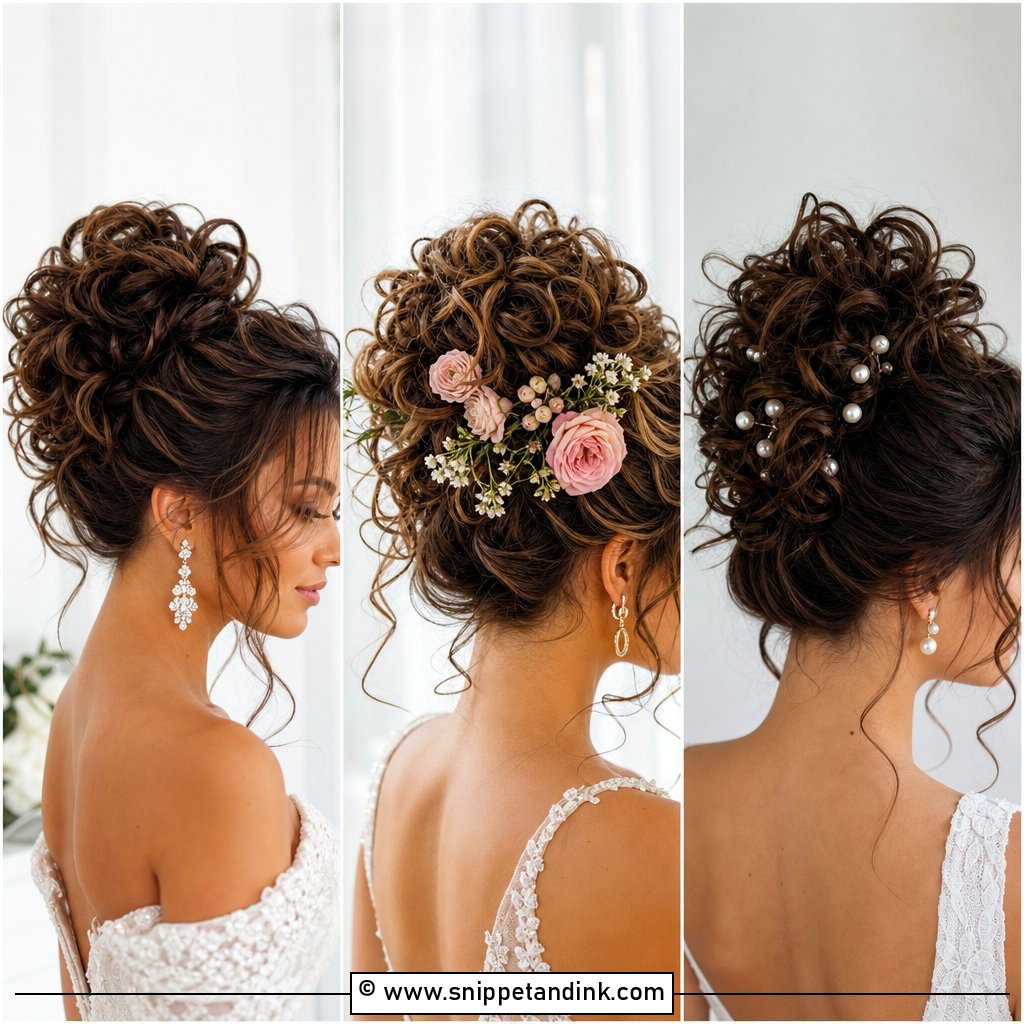
1. Low Floral Bun With Maang Tikka
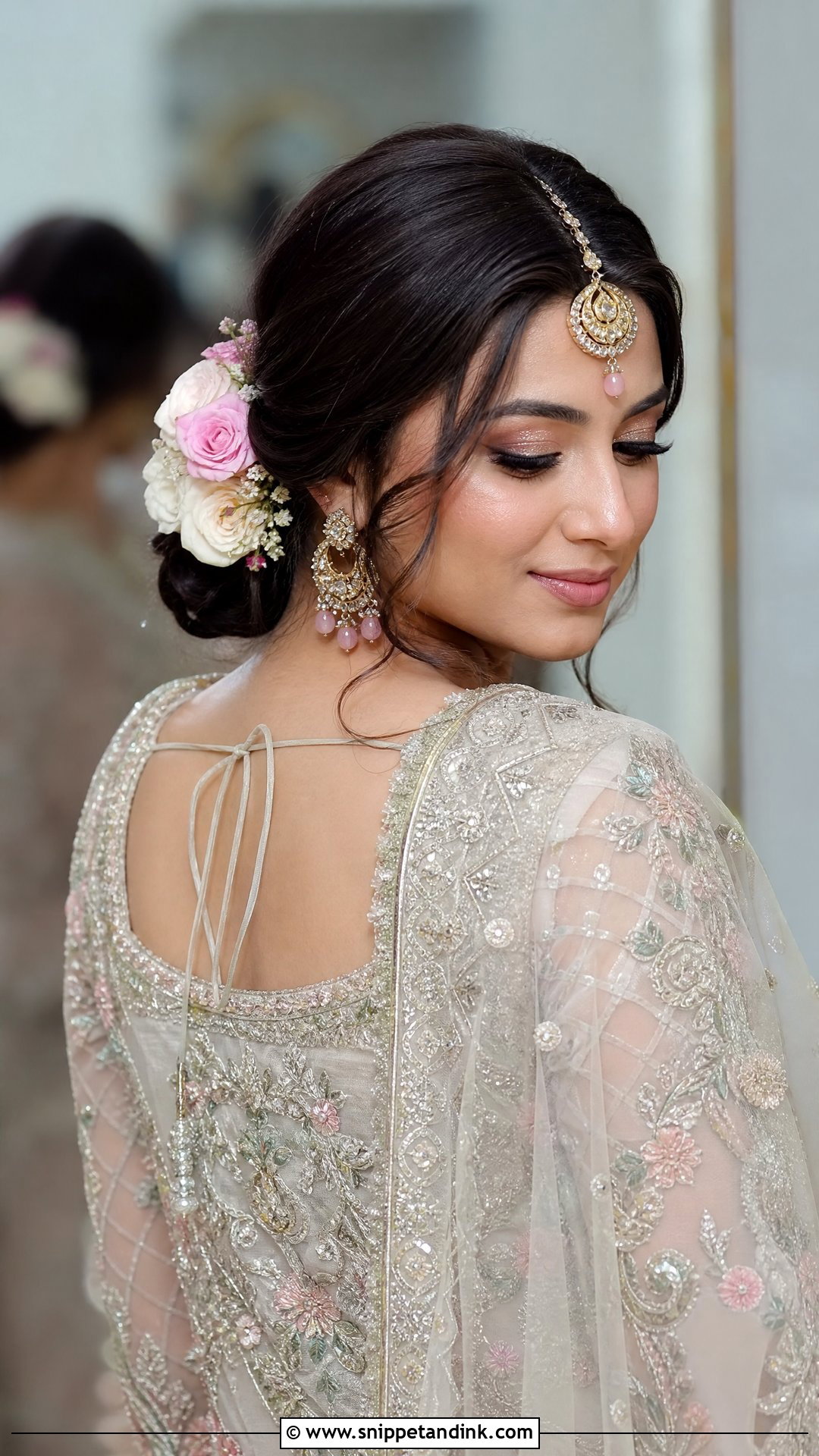
I start most Nikah brides with a low bun at the nape because it leaves the crown flat enough for a dupatta to sit without lifting into a tent shape. Fresh roses or jasmine pinned around the coil give it that classic Pakistani bridal touch, and a maang tikka hangs cleanly on a centre or soft side part. I anchor the bun on a small elastic base rather than pins alone, since a bun that sags halfway through the Nikah is hard to fix under fabric. Leave two thin face-framing pieces, no more; thicker ones get flattened by the dupatta edge.
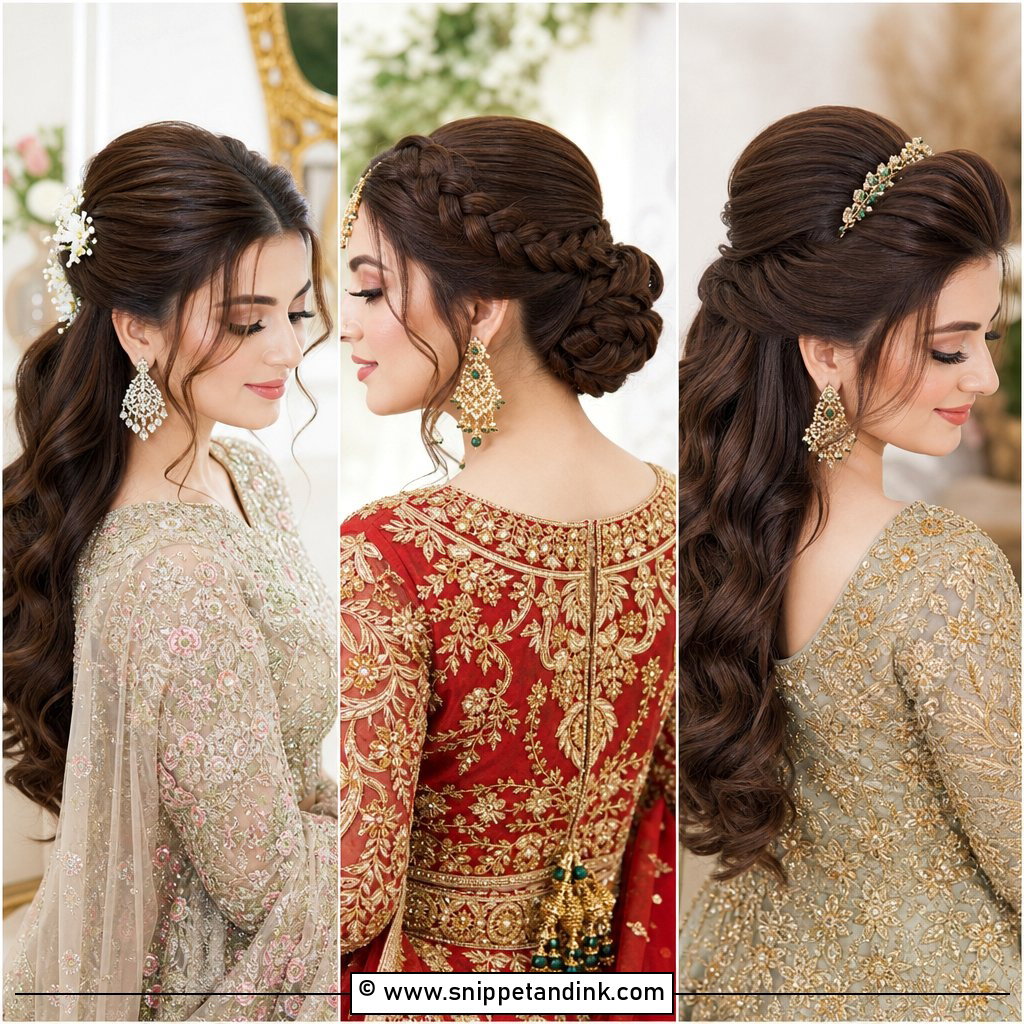
2. Open Curls With Passa
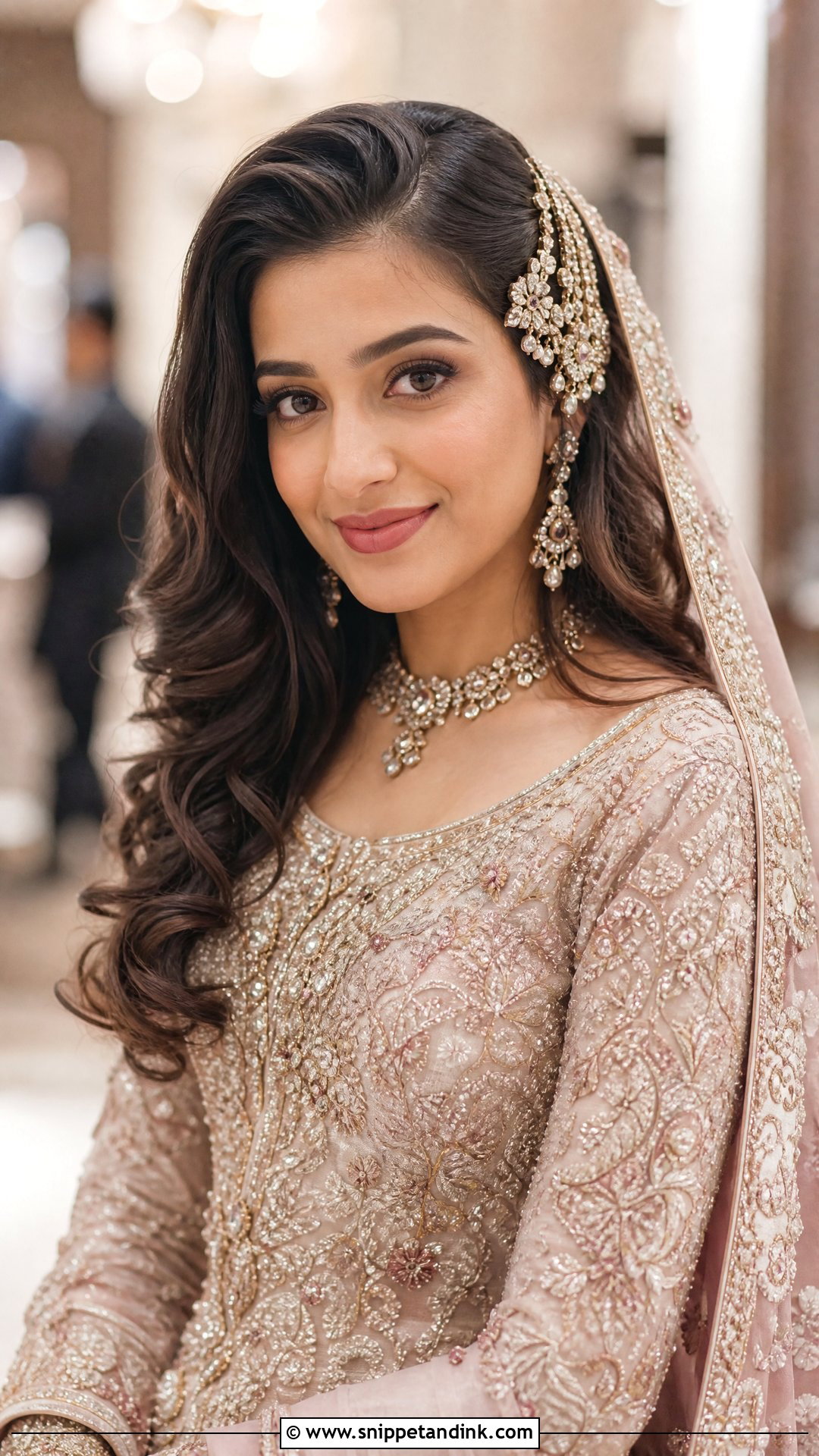
Loose curls on a Nikah bride look soft, but they are the most fragile option on this list. I set them with a large iron, pin each curl to cool, and only brush them out at the very end, because the passa on the side needs a firm braided anchor hidden behind the ear to hang straight. With a sheer dupatta over the head, the curls from the ears down stay visible and the passa catches light near the temple. Humid summer Nikahs are where this one struggles; if your hair drops curl within an hour, choose a half-up version instead.
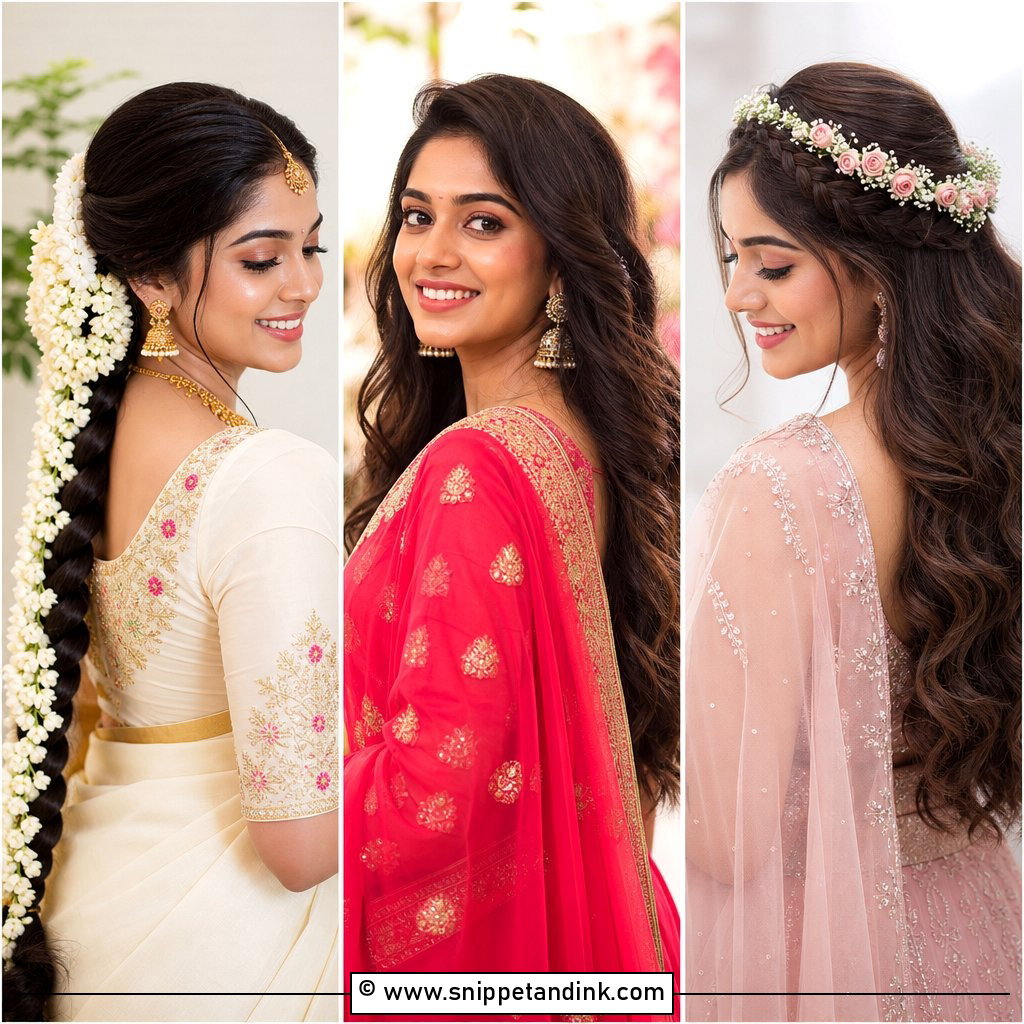
3. Half-Up Half-Down With Braided Crown
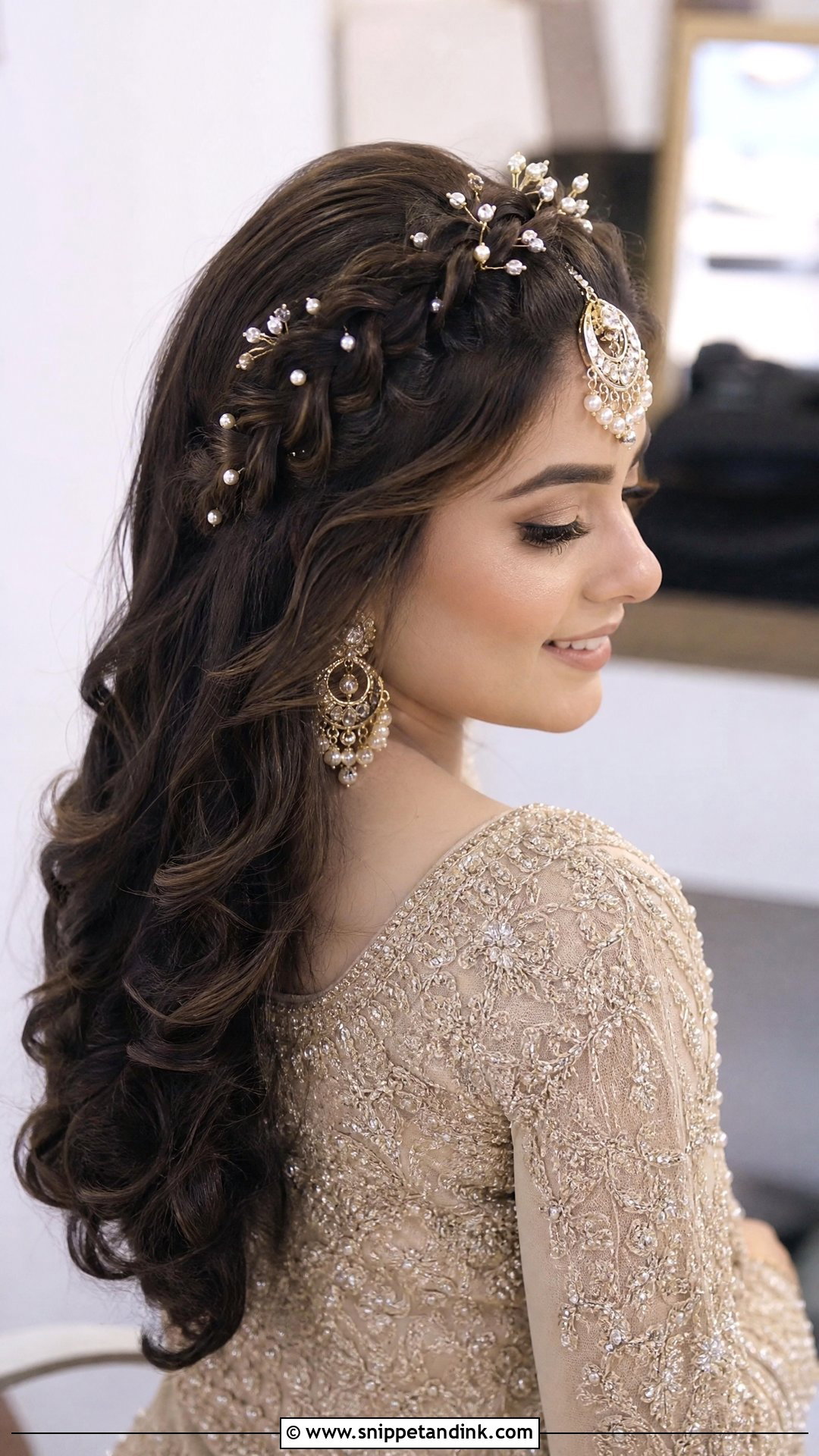
Can’t decide between an updo and open hair? The half-up style with a braided crown solves a practical problem too: the braid gives me something solid to pin a dupatta into. I braid the top section, keep it fairly flat over the crown, and leave the lengths curled below so your earrings and the back of your outfit both show. Tiny pearl pins or single blossoms tucked into the braid read well up close. It needs at least shoulder-length hair; shorter than that and the curls underneath look thin once the top section is taken.
4. Sleek Bun With Jhoomar
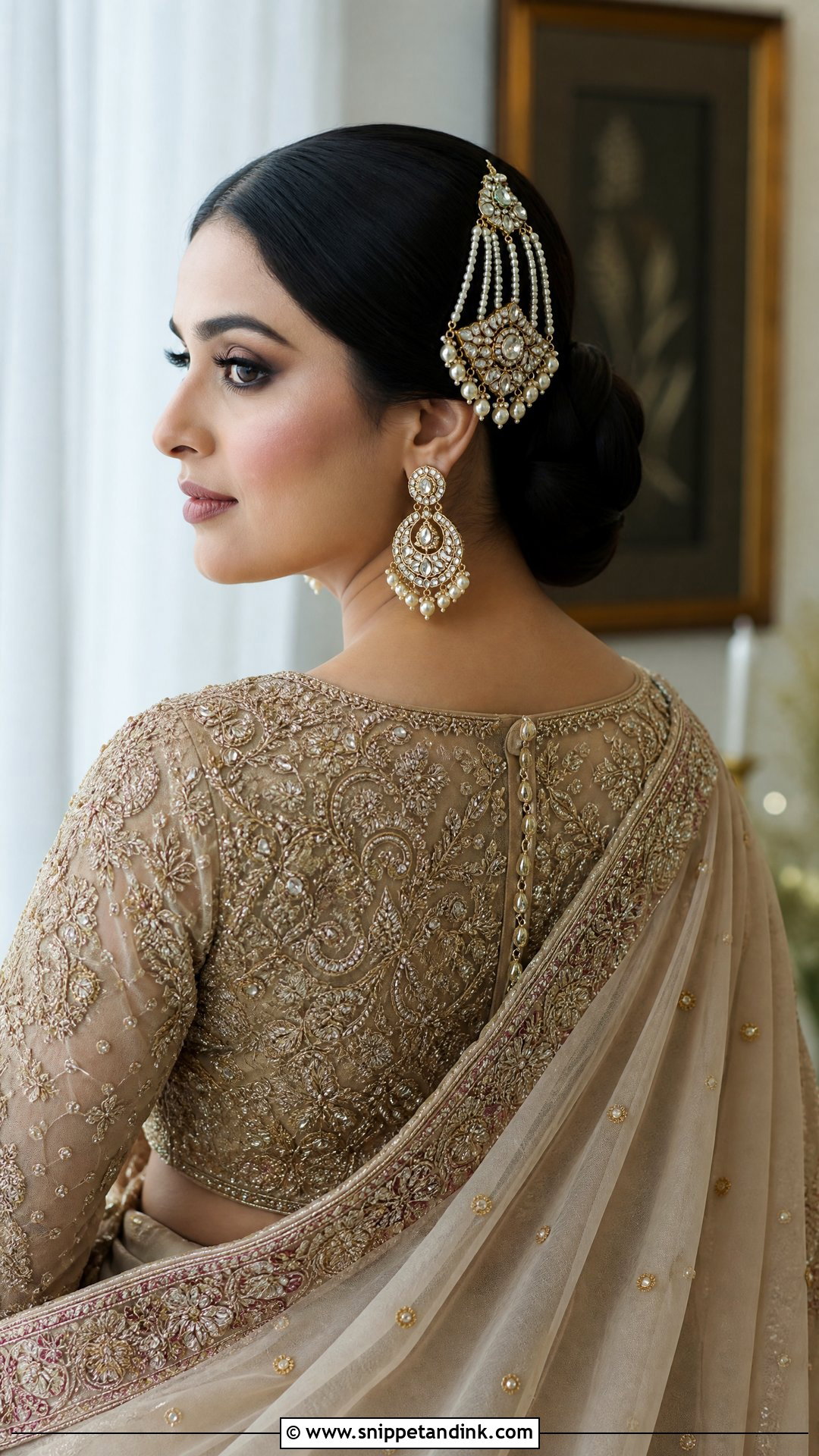
A sleek low bun is the style I trust most for fine or thinner hair, because it relies on smooth tension rather than volume. I work a little cream through, brush the hair back with a boar bristle brush and finish with a light hold spray so flyaways don’t fight the dupatta all day. A jhoomar on one side looks deliberate against all that smoothness. With heavy earrings and a draped dupatta it can feel almost architectural. The one thing to watch: a very tight pull can give you a headache by the end of the ceremony, so tell me if it feels sore at the trial.
5. Messy Fishtail Braid With Flowers
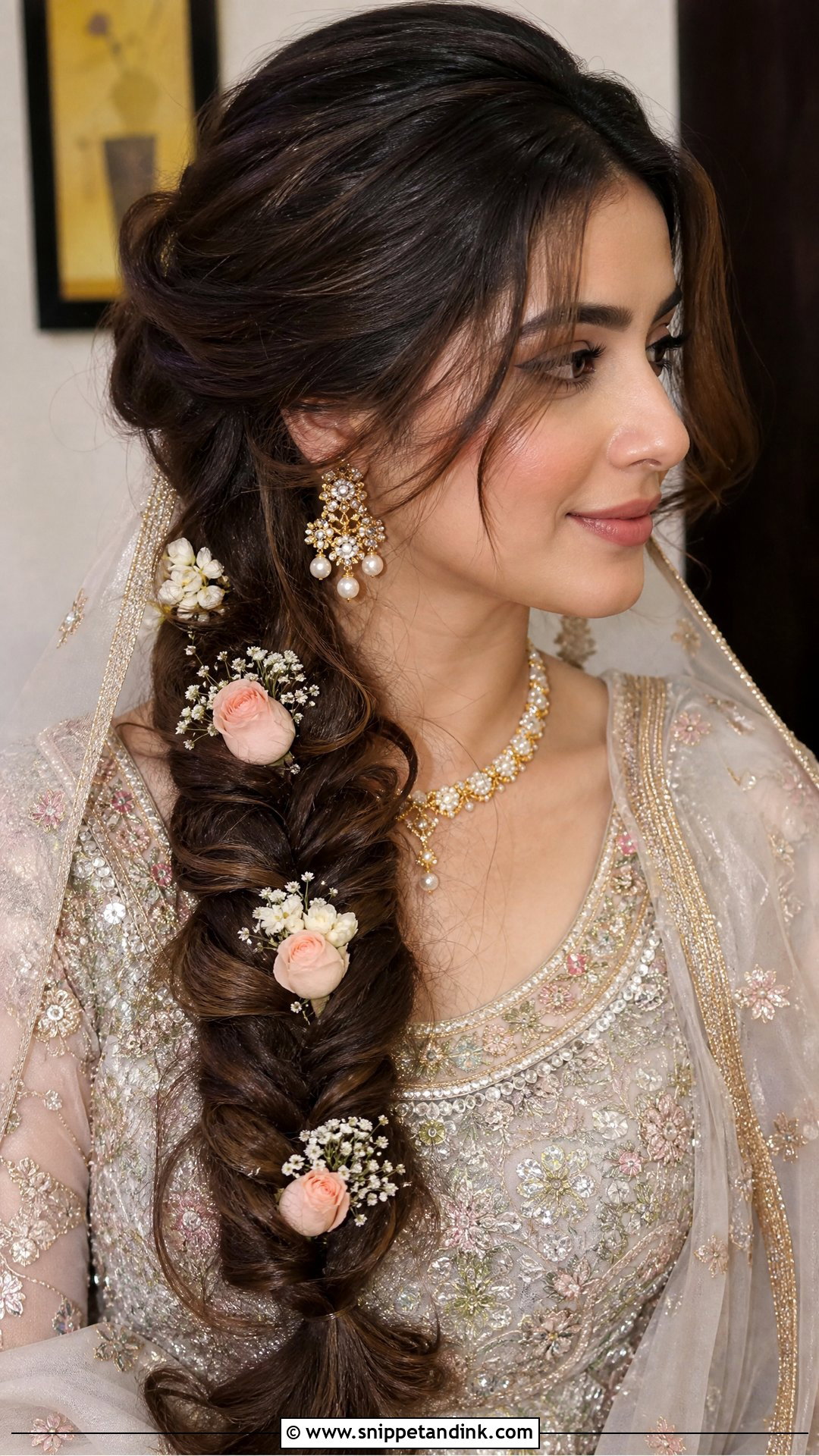
A fishtail is quicker to do loosely than people expect, and I like it for small, intimate Nikahs at home where nobody wants a stiff updo. The trick is to braid it firmly first, secure the end, and only then pull the edges apart; pulling while braiding makes it uneven. Jasmine or baby roses tucked between the sections sit well over one shoulder. It needs long hair with some grip, and very silky hair tends to slide out of the pancaking, so I add texture spray at the root of each section first.
6. Voluminous Curls With Side Dupatta
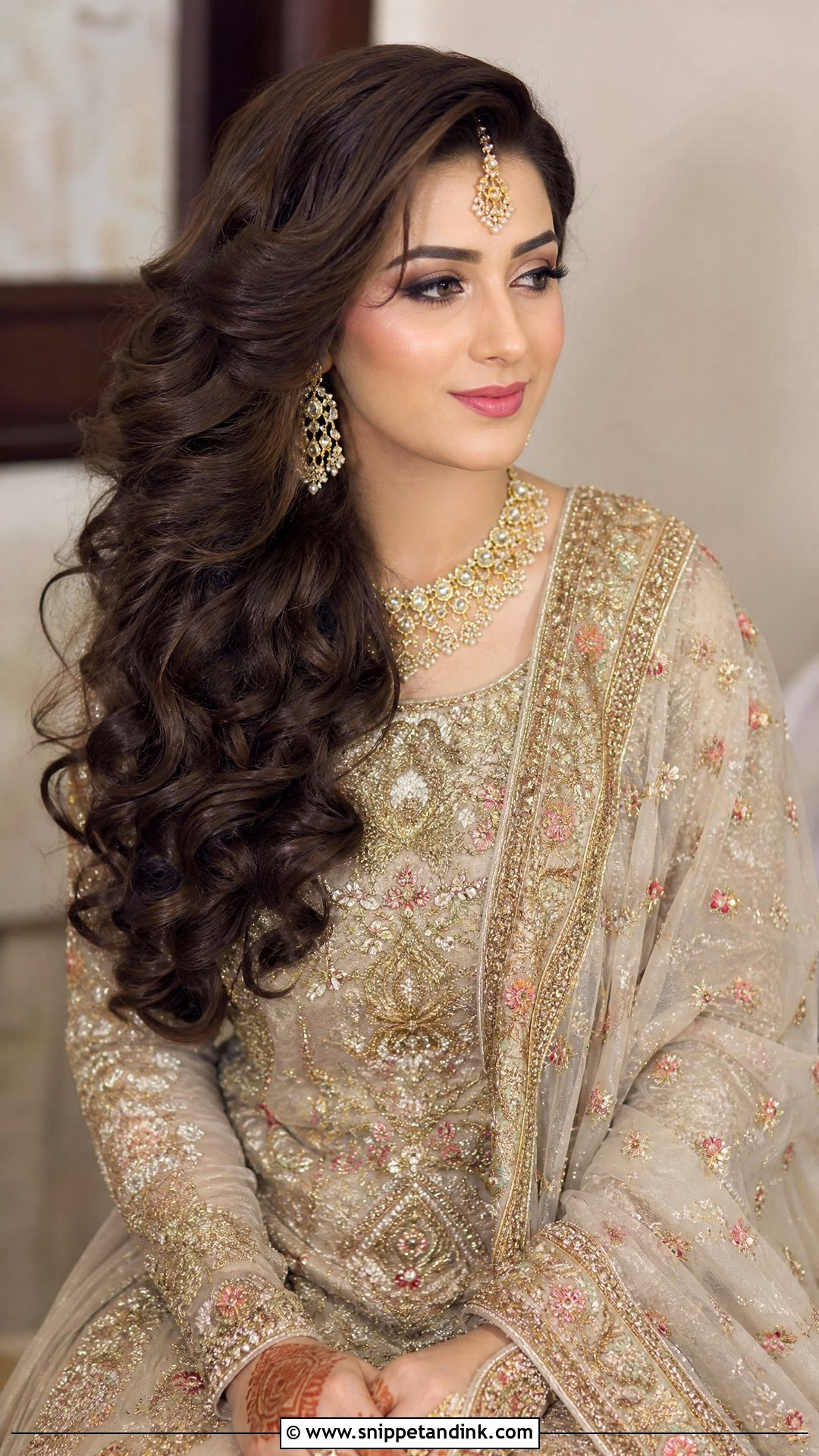
Big curls carry a heavy lehenga or gharara better than a small bun does, because the volume balances all that embroidery. I curl in larger sections, let them cool fully, then brush through for a blended finish rather than separate ringlets. The dupatta goes to one side so the curls fall forward over the other shoulder. Be honest with yourself about your hair: thick hair holds this happily, while fine hair often needs clip-in wefts to look full in photos.
7. Braided Bun With Pearls
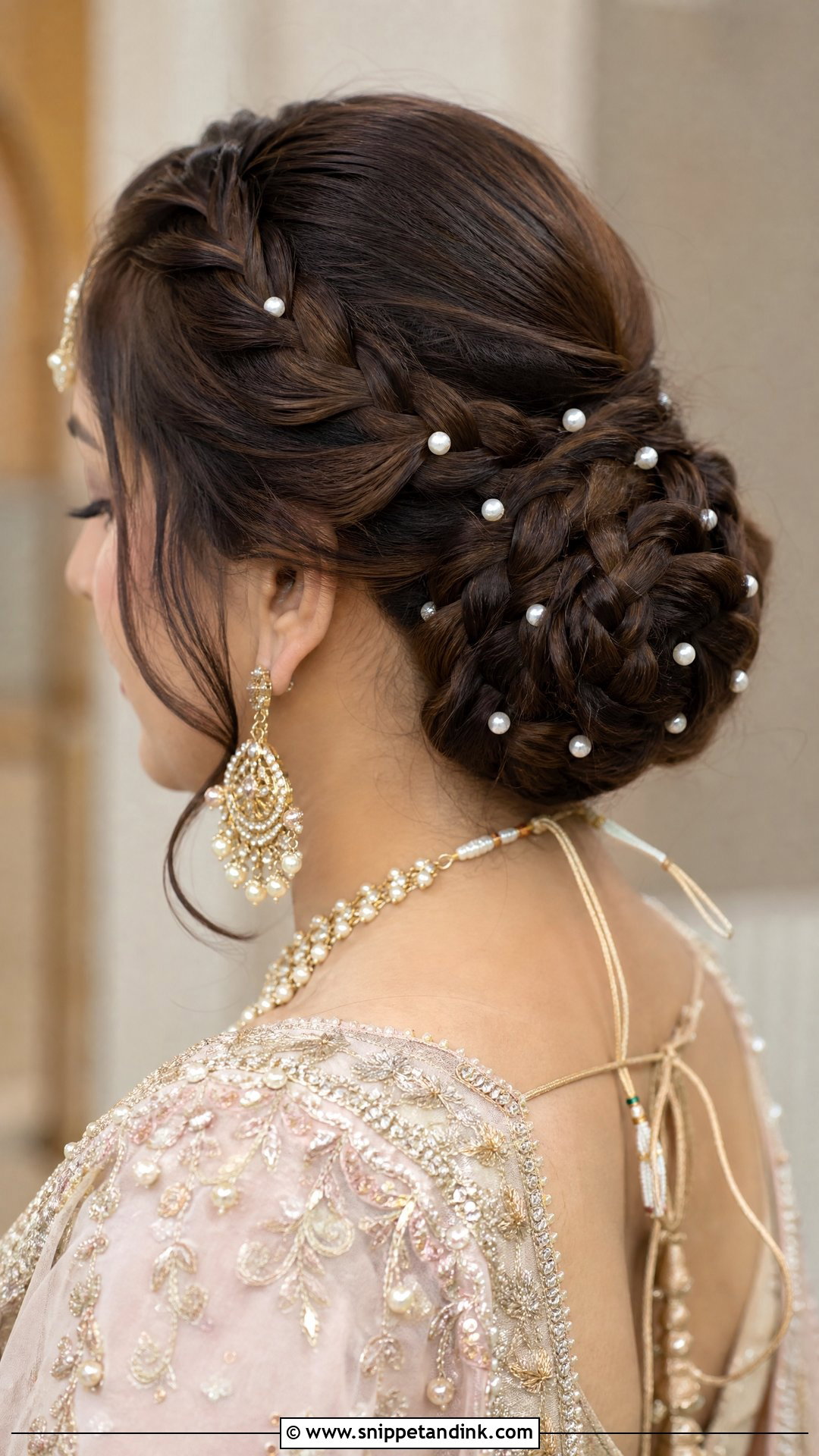
When a bride asks for detail and absolute security in one style, I reach for braids coiled into a bun. Each braid is pinned as it wraps, so nothing moves even when the dupatta is lifted on and off for photos. Small pearls dotted along the plaits pick up flash nicely without competing with the jewelry. Go for this with pearl sets and pastel outfits. With very short layers it can look patchy, since short ends poke out of the braids.
8. Loose Side Braid With Maang Tikka
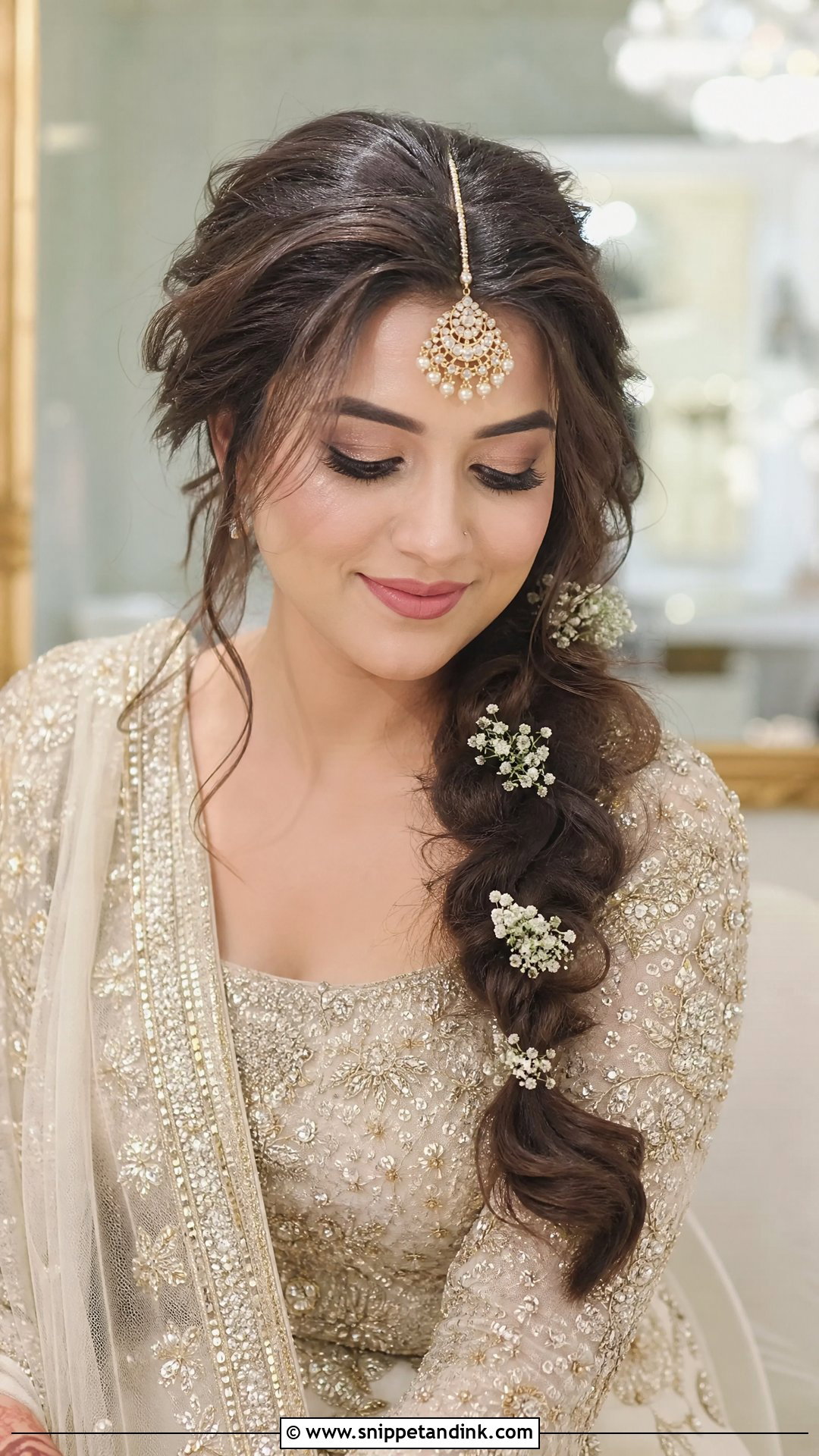
A side braid is comfortable for a long sitting, which matters more than brides think when the Nikah, photos and family greetings run for hours. I keep it loose and slightly tousled, then pin a maang tikka on a soft side part so the two balance each other. It flatters oval and heart-shaped faces. The weak point is the back: when you sit against a sofa or a chair, a side braid can twist forward, so I pin the start of it firmly behind the ear.
9. Twisted Low Bun With Rose Accents
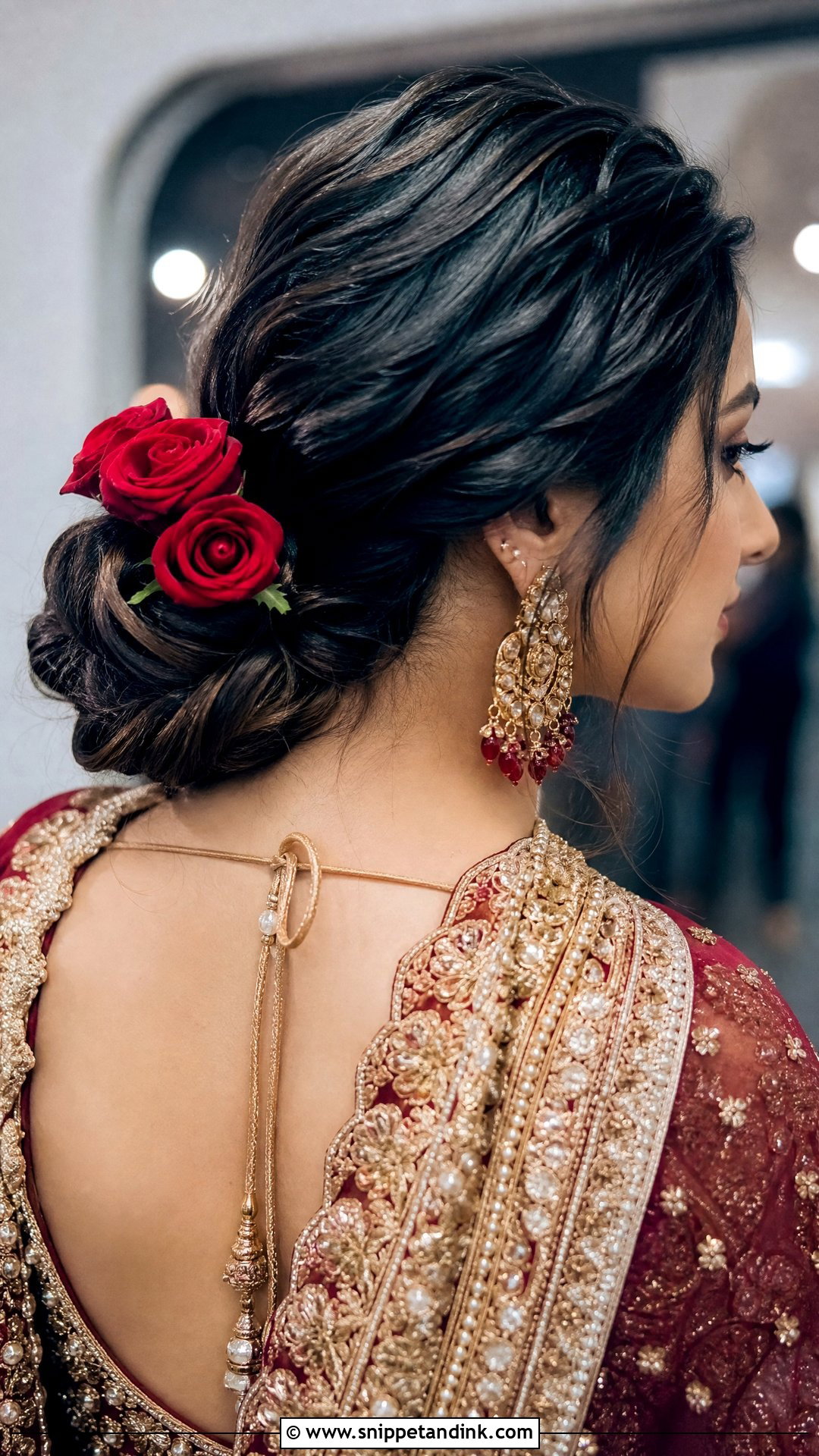
Twisting the sections into a low bun gives more texture than a smooth coil, and the twists hide the pins well. Red roses against dark hair are bold and very traditional, and I wire them rather than just tucking them so they don’t drop when you bow your head. Statement earrings and a draped dupatta sit happily with it. If your hair is very fine, I usually pad the bun with a small donut so the twists have something to wrap around.
10. Curly Half-Up With Pearl Hair Chain
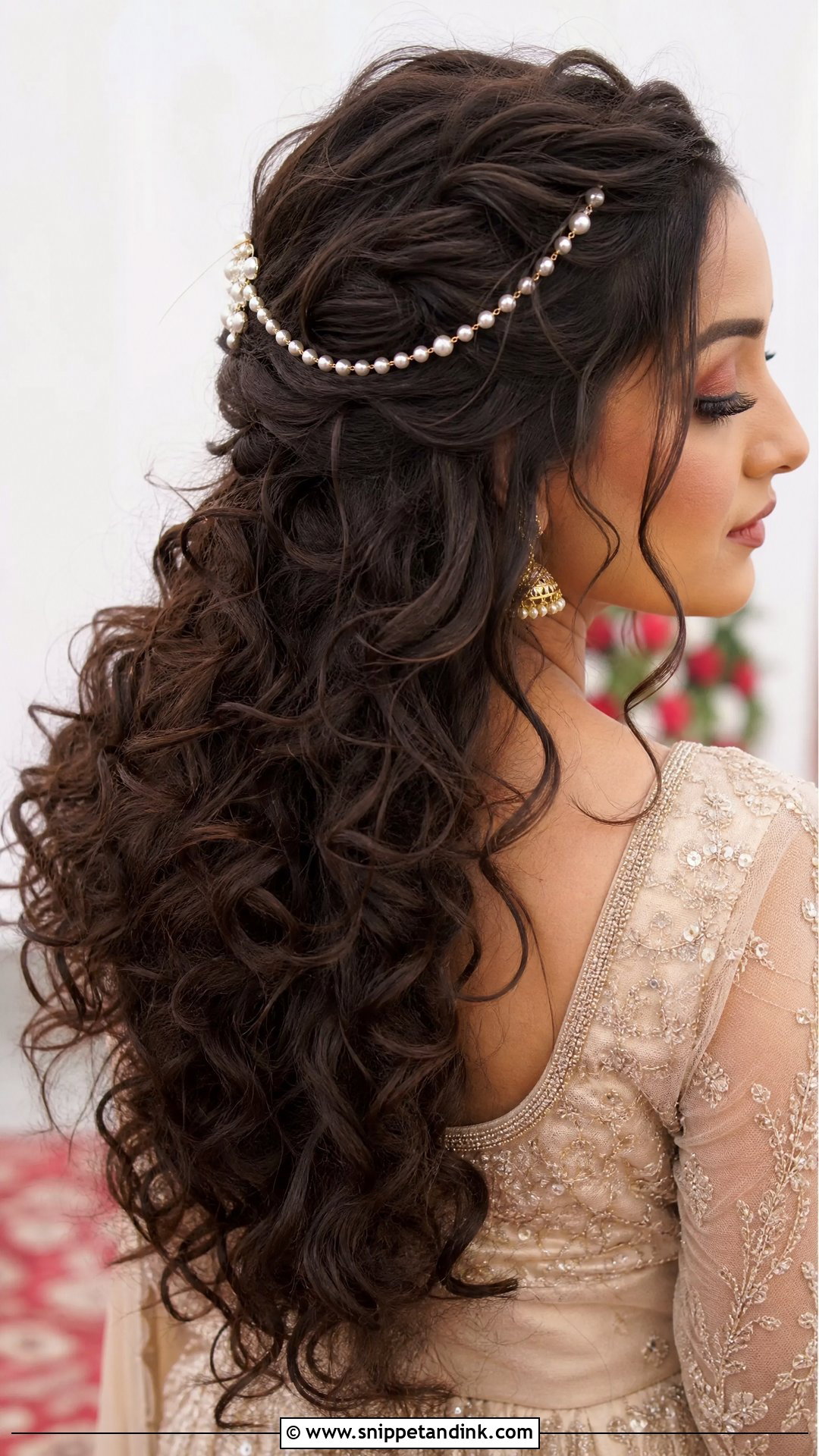
Naturally curly hair should be styled with its texture, not against it. For this half-up look I define the curls with cream while the hair is damp, let them dry without touching, and pin back only the top section so the rest keeps its shape. A pearl hair chain across the pinned section adds detail without the weight of a passa. I avoid brushing curly hair once dry, as it turns to frizz within minutes. It suits round and oval faces, and you don’t need a single heated tool.
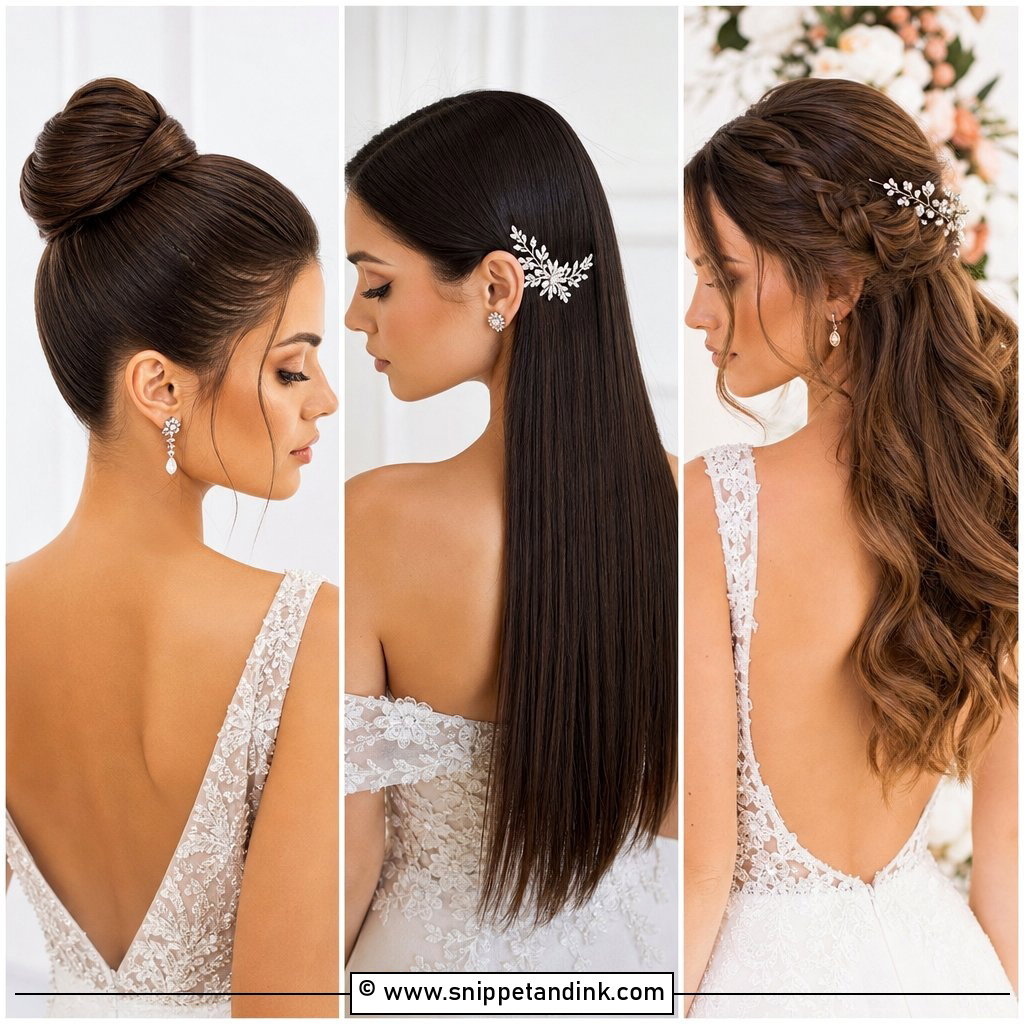
11. Sleek Center-Parted Bun
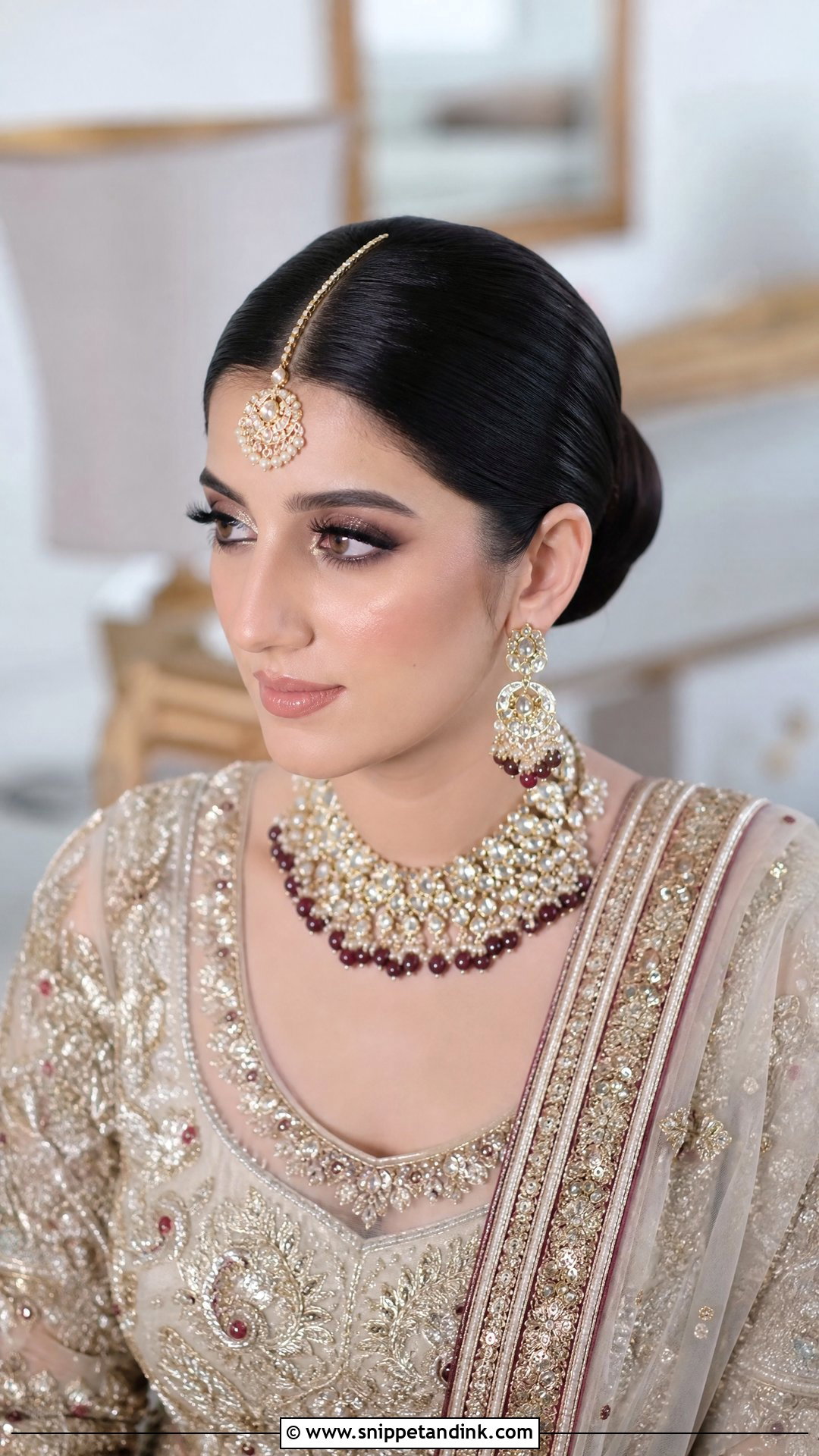
A sharp centre part is unforgiving, so I check your natural parting at the trial before committing to it; a cowlick at the hairline can push the part off line by lunchtime. Once it’s right, the bun sits low and neat, and a simple maang tikka follows the part line. It flatters oval and heart-shaped faces and suits any length that reaches the nape. Bold jewelry looks even stronger because nothing else is competing for attention.
12. Soft Waves With Floral Crown
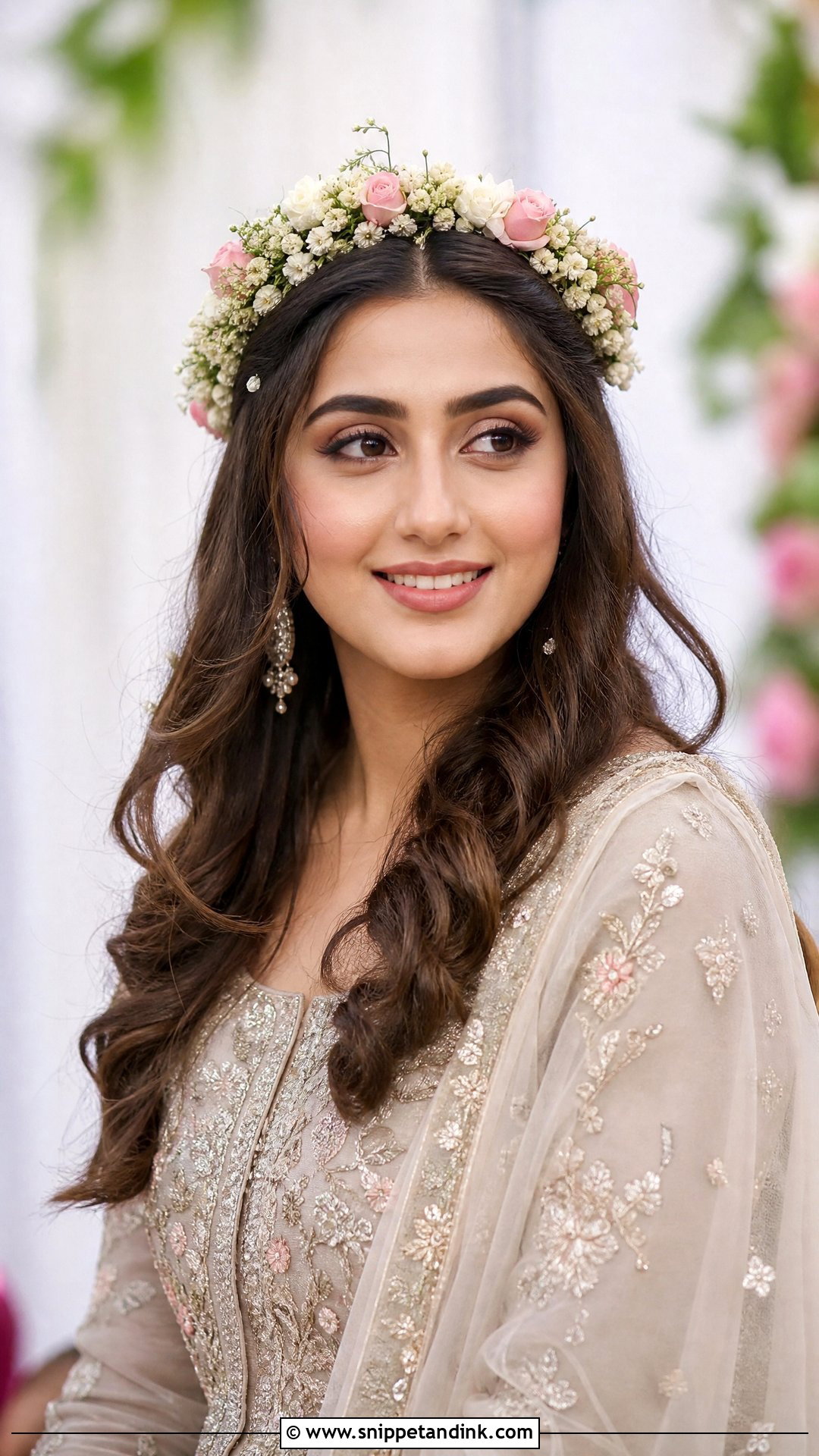
Soft waves under a floral crown suit lighter pastel outfits and daytime Nikahs. I make the waves with a large barrel and keep them loose, then place a crown of jasmine or small roses. Here’s my honest caveat: a full crown and a dupatta over the head rarely work together, so this style suits brides who plan to wear the dupatta on the shoulders or pinned further back. Medium to long hair works; on very short hair the crown can look like a headband.
13. Dutch Braid Updo With Gajra
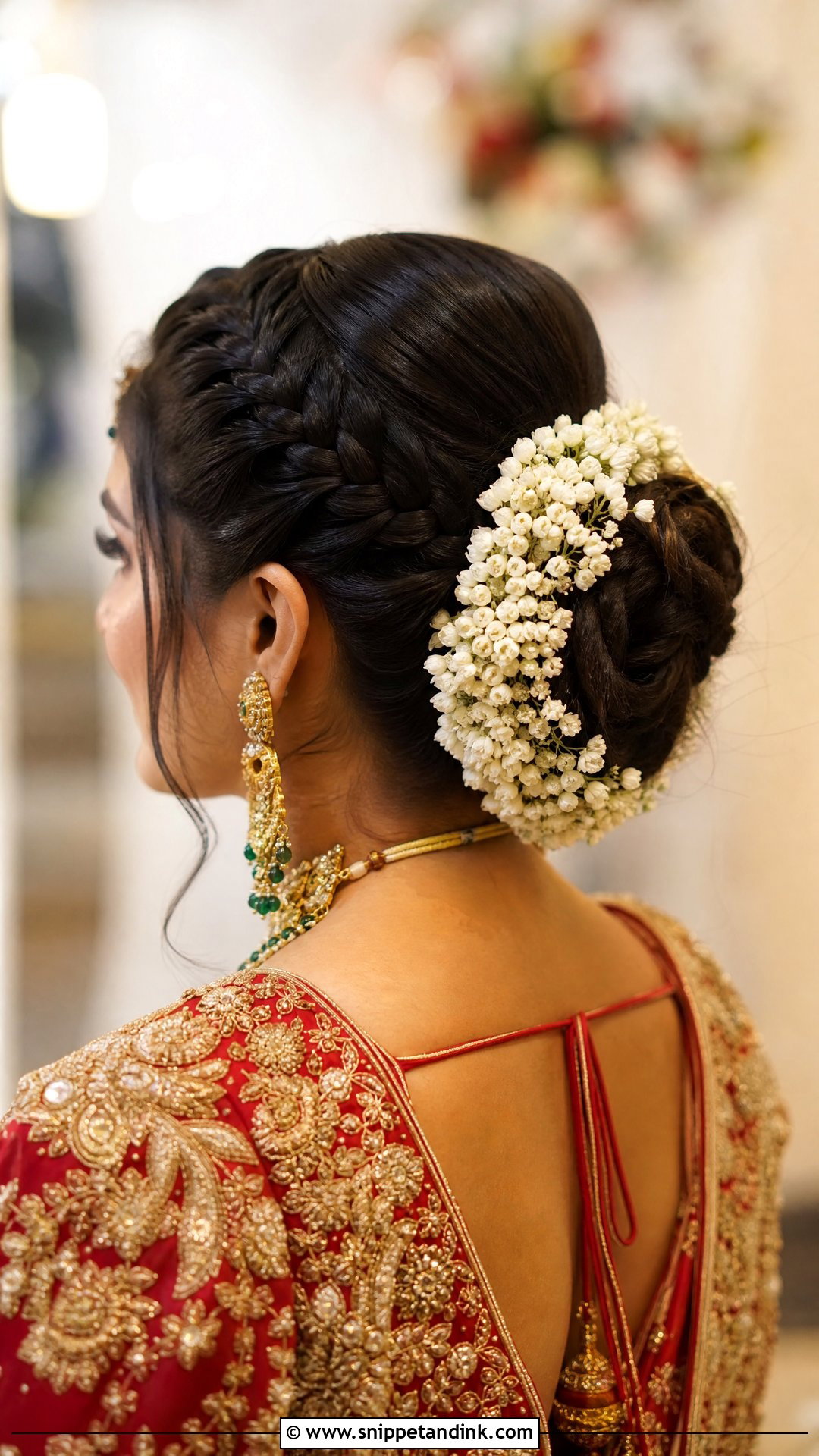
A Dutch braid updo is braided under rather than over, so the plaits sit raised on the scalp and keep their shape through a long day. I coil the ends into a structured updo and wrap a gajra around it last. Long, thick hair suits it best; it needs enough length for the braids to reach the back of the head and still form a decent coil. Heavy jewelry and rich fabrics sit well with it, and the flowers bring scent into the room as well as colour.
14. Half-Tied Curls For Short Hair
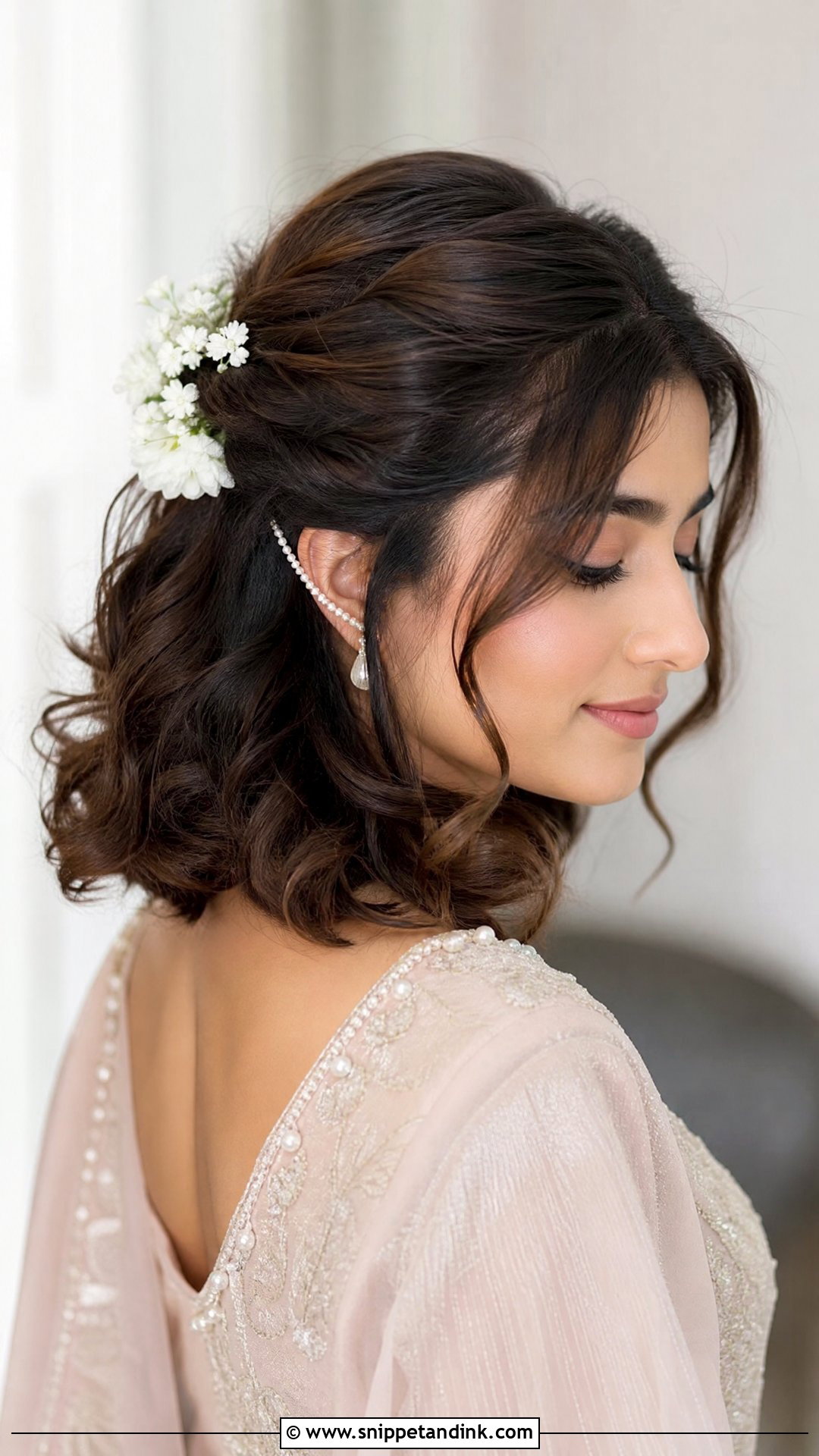
Short hair can absolutely carry a Nikah look; it just needs a different plan. I curl a bob or lob in small sections so the curl holds, then pin back the top with two crossed pins hidden under the curls. A pearl ear chain and a few white flowers add detail at the sides. It flatters round and heart-shaped faces. If your hair is above the jaw, I’d skip a gajra entirely, since there isn’t enough hair for the weight.
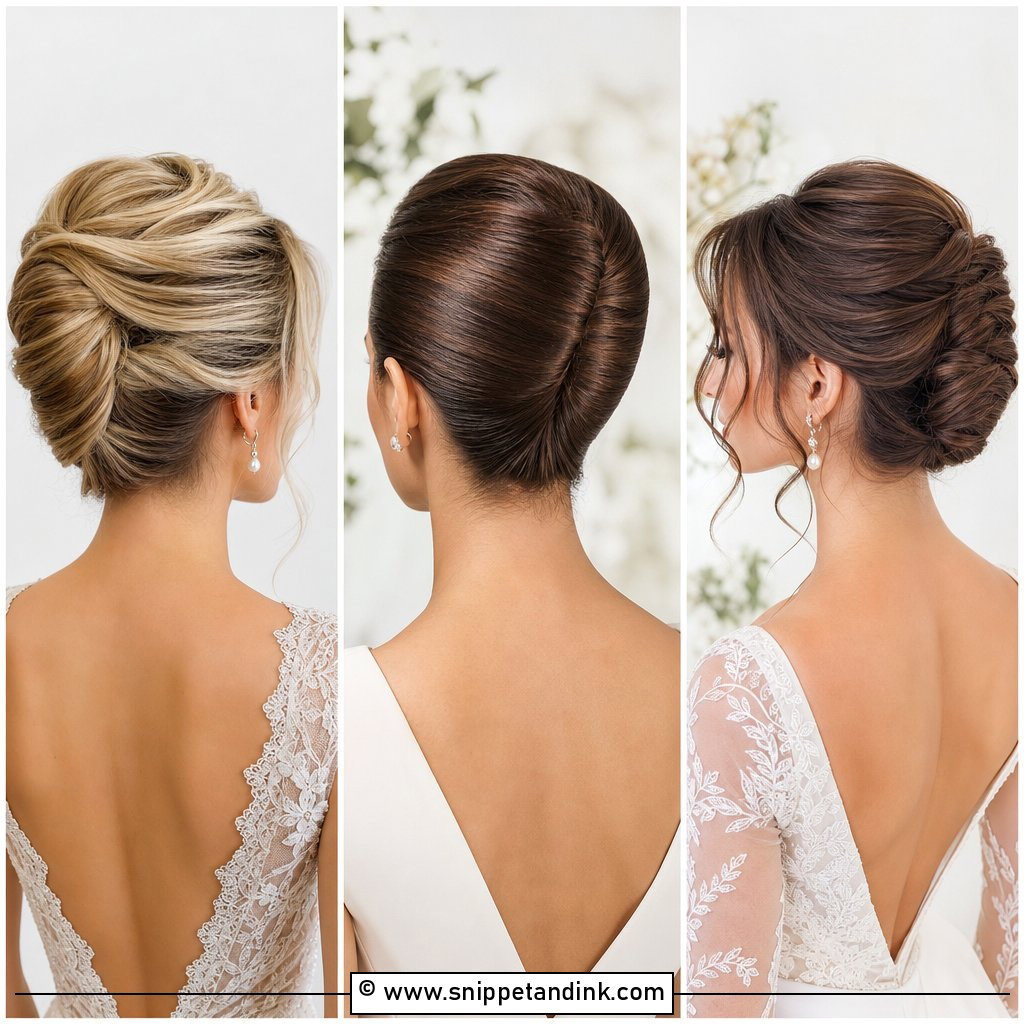
15. Embellished Bun With Maang Tikka And Passa
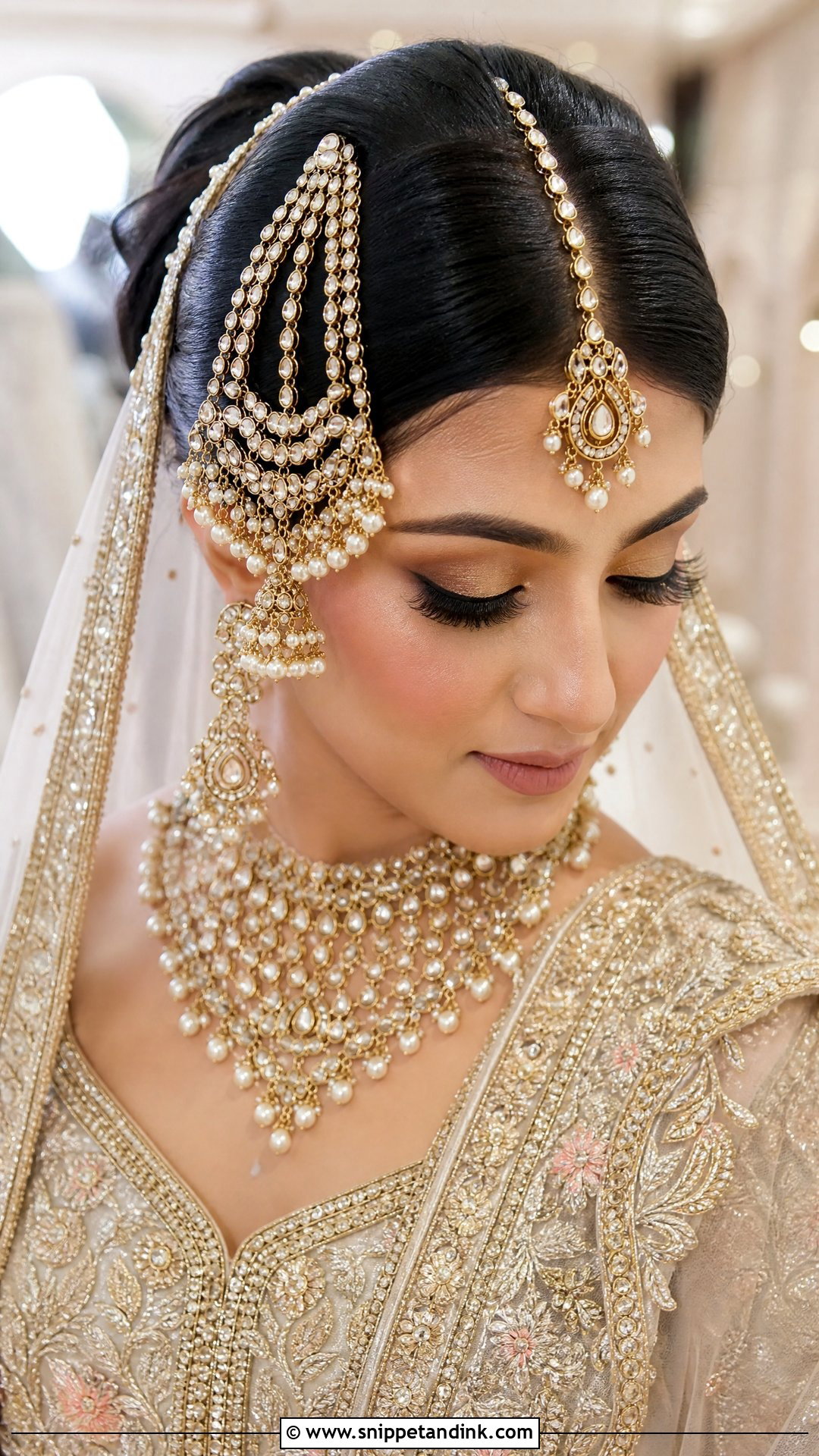
This is the jewelry-forward option. The bun is kept neat so the accessories carry the look: a maang tikka along the part plus a passa on one side. The more pieces you wear, the more the base matters, so I build a firm bun on an elastic and pin every accessory to hair, never just to other pins. Expect it to feel heavier than you think after a few hours. Medium to long hair is needed to anchor it all.
16. Loose Low Ponytail With Curls
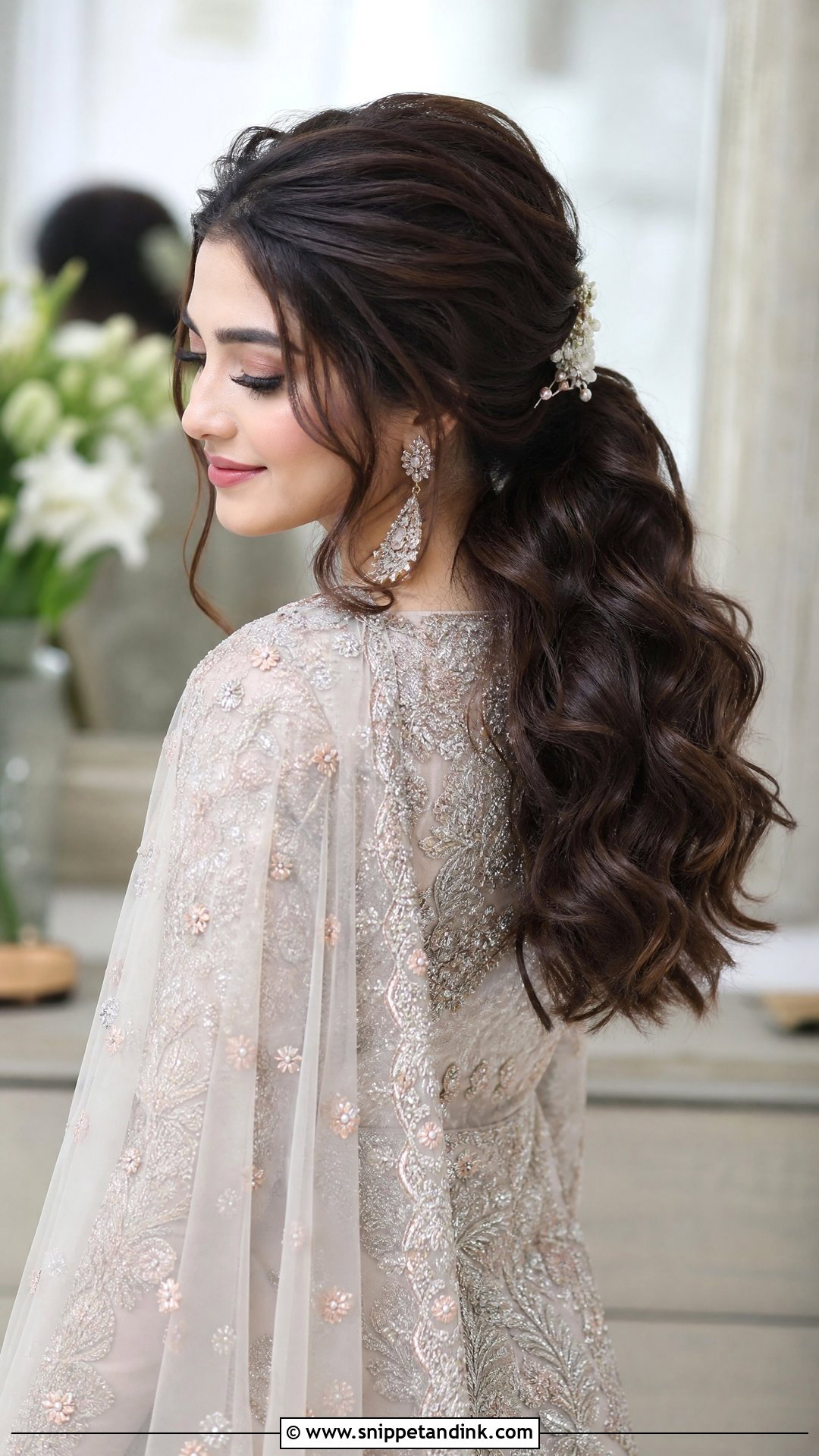
A low ponytail is the most comfortable style here, and comfort counts when you’ll be greeting relatives for hours. I gather the hair at the nape, wrap a strand around the base to hide the elastic, and curl the lengths for movement. A small floral pin or tikka gives the bridal detail. It flatters oval and square faces and suits medium to long hair. With a dupatta on the head, the ponytail sits under it neatly instead of creating a bump at the back.
17. Braided Crown With Open Curls
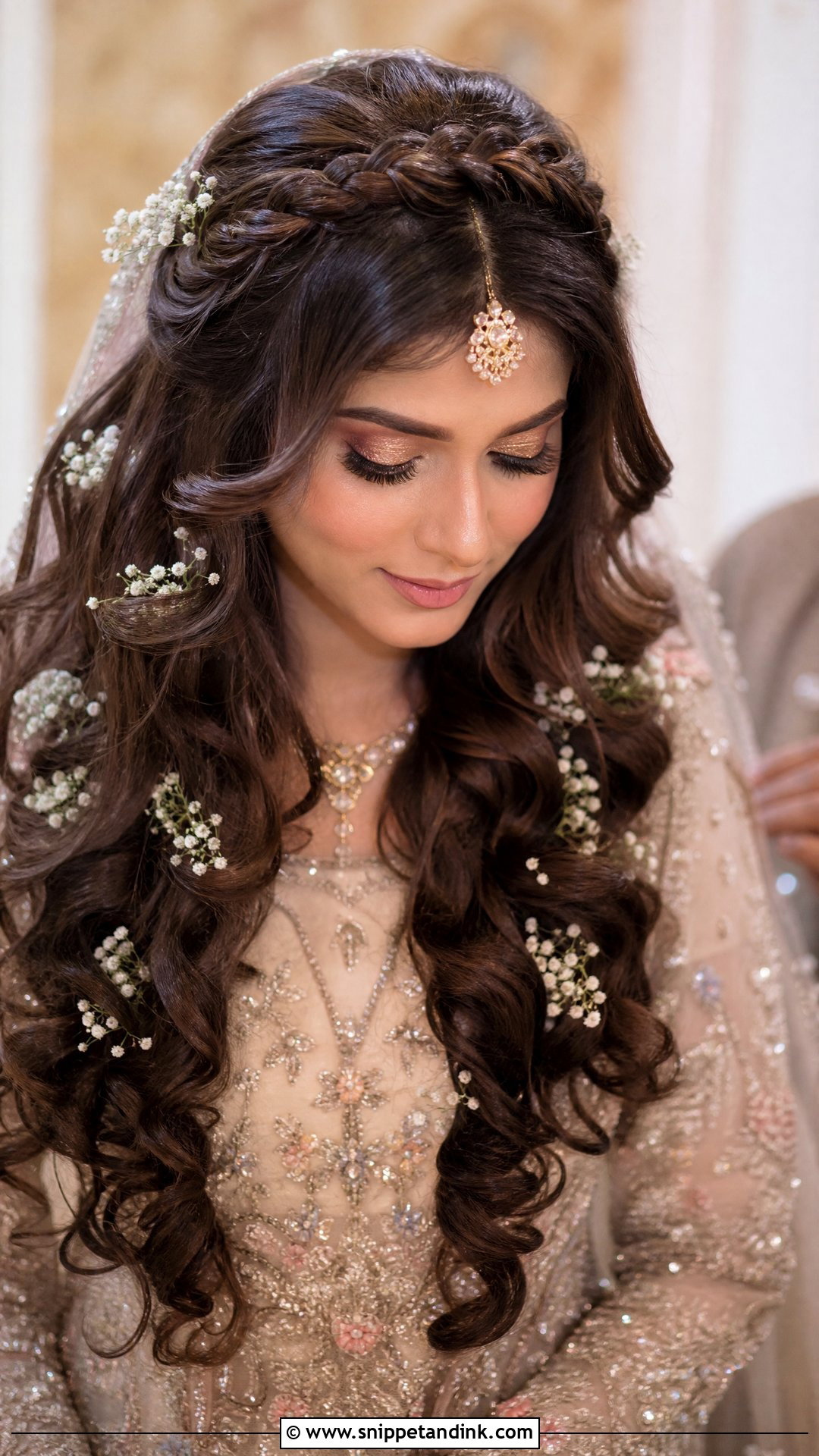
A braided crown works like a built-in headband, and I find it the easiest base for pinning flowers or pearls because there’s always a braid to anchor into. The rest of the hair falls in open curls below. Most face shapes suit it, and medium to long hair is enough. If you plan to cover your head, keep the crown braid flatter than you’d see in photos online, or the dupatta will sit high and wobble.
18. Vintage Curls With Side Part
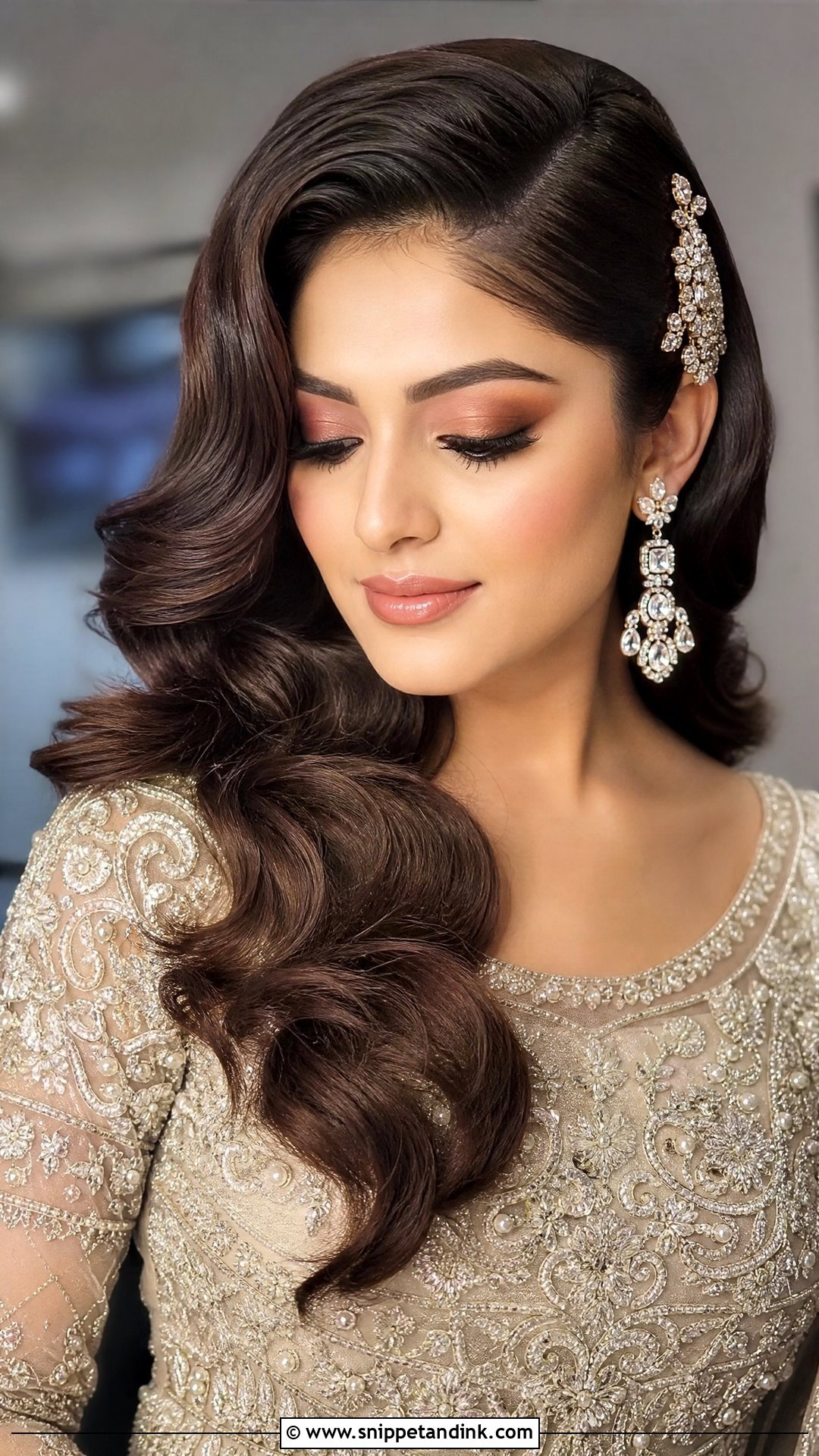
Old Hollywood waves meet Pakistani bridal tradition in this one. I set the curls in the same direction from a deep side part, pin them to cool, then brush them into connected waves. A jeweled pin or maang tikka near the part finishes it. This style takes time, around an hour more than a bun, so build that into the morning schedule. It suits oval and heart-shaped faces and pairs well with statement earrings.
19. Messy Bun With Front Twists
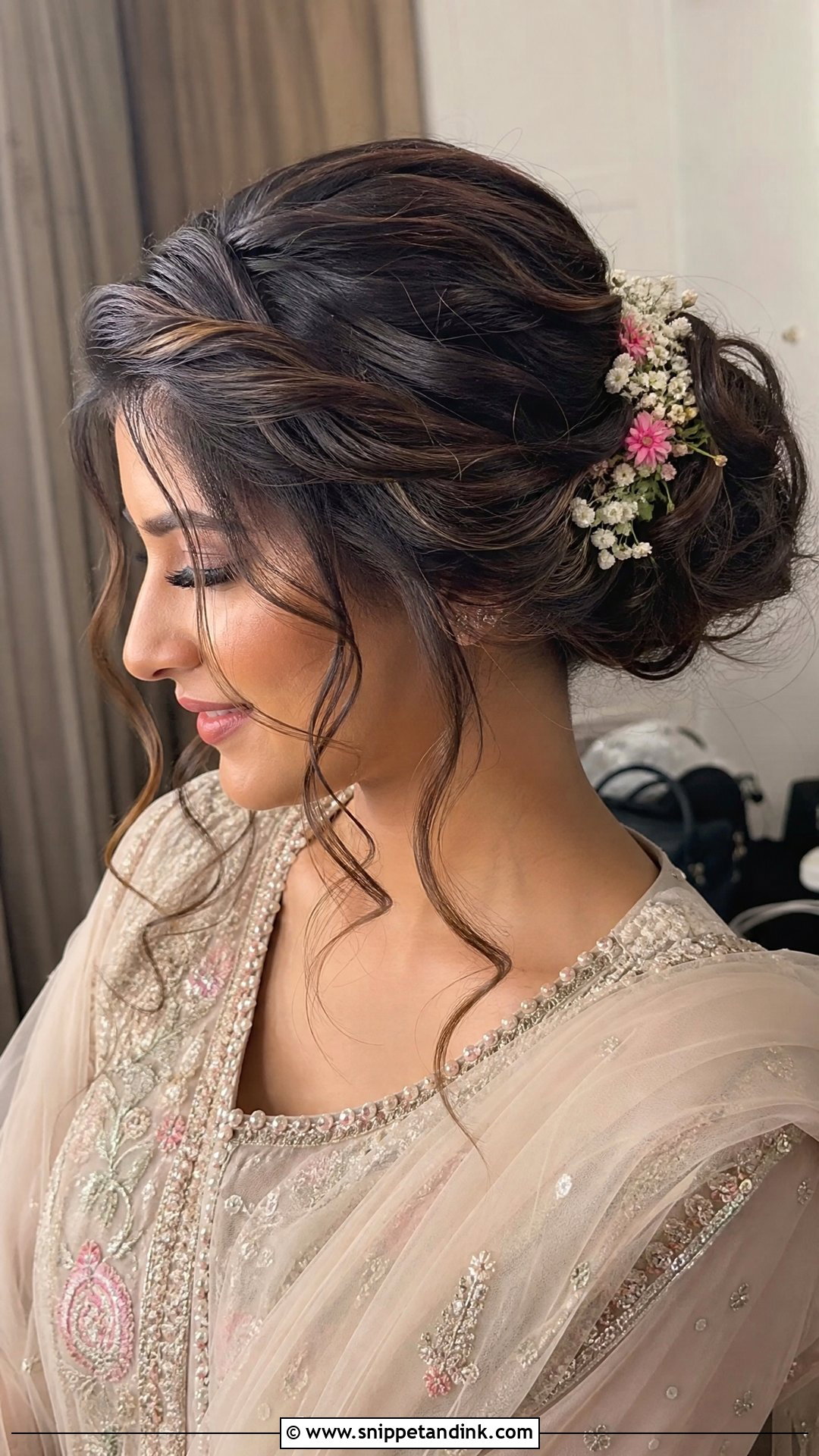
A messy bun looks casual, yet it takes more control than a neat one; undone texture has to be placed, not left to chance. I twist the front sections back into the bun so the face stays clear for makeup and photos, then pull a few pieces loose around the hairline. Small flowers or pearls finish it. It is my pick for relaxed home Nikahs and lighter pastel outfits, and it forgives a dupatta being moved around more than any sleek style.
20. Sleek Bun With Center Part And Gajra
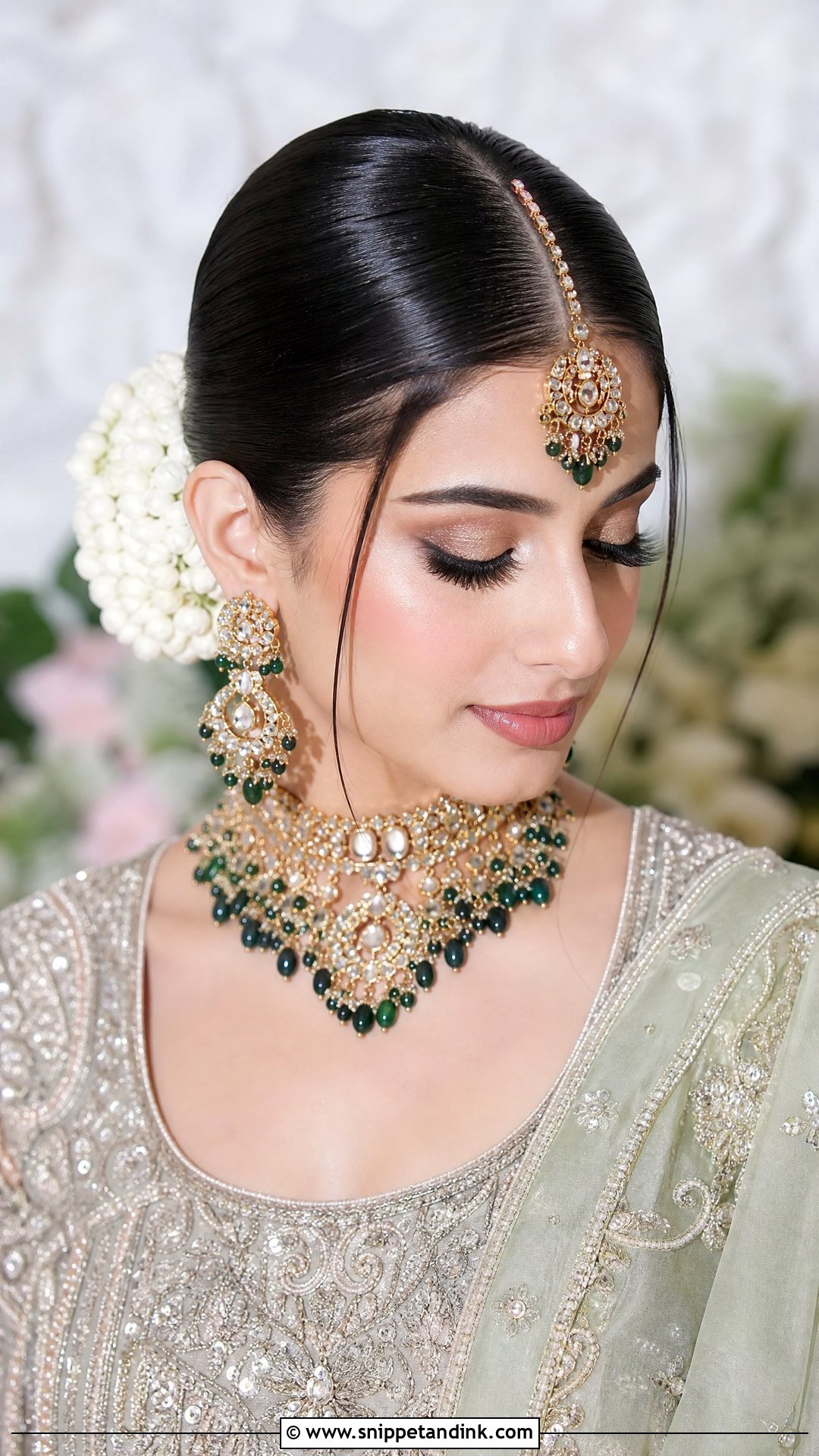
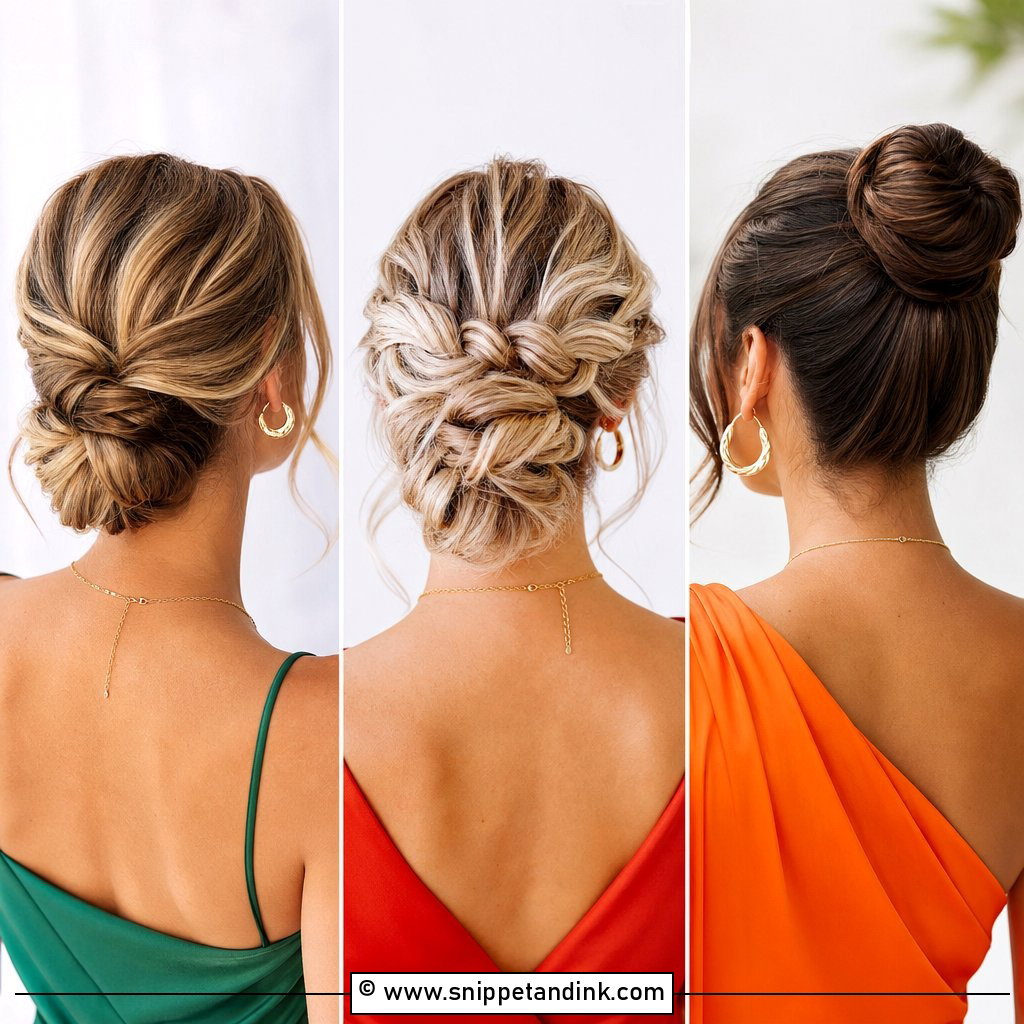
Sleek centre part, tight low bun, and a gajra wrapped all the way around: this is probably the most recognisable Nikah look in Pakistani weddings. The smoothness does all the work, so it suits any length that can reach the nape. White jasmine against dark, polished hair makes a strong contrast in photos. Ask your florist for a gajra with a firm thread base so it can be pinned flat rather than drooping off the bun.
Jasmine Wilts Faster Than Most Brides Expect
Fresh motia and rose gajras are part of the charm of a Nikah look, and they are also the first thing to fade. Jasmine starts to brown at the edges within a few hours in heat, and a warm room full of guests speeds that up. I ask families to collect gajras as late as possible, keep them in the fridge wrapped in a lightly damp paper towel inside a container, and bring them to me only when the hair is finished.
Fresh flowers are also heavier than they look. A long gajra wrapped twice around a bun pulls downward, so I pin it in several places to the bun itself, not to the hair around it. If you’re allergic or sensitive to strong scent, say so early; good silk or fabric jasmine is a perfectly honest substitute and stays white all evening.
Wearing a Jhoomar and Passa Without a Headache
Pakistani hair jewelry is weighty, and a jhoomar or passa hanging from one side pulls on the scalp all day. The way to make it comfortable is to spread the weight. I build a small hidden braid behind the ear as an anchor and pin the piece into that braid at two or three points, so no single pin is carrying it.
- Wear your jewelry for at least half an hour at the trial. Soreness shows up after about twenty minutes, not in the first five.
- Check the hooks before the day; some pieces arrive with tiny hooks that slip off hair.
- Keep two spare bobby pins in your matching colour with whoever is helping you, for quick fixes after hugs and photos.
Bringing Your Nikah Hair Into the Trial Chair
Bring your actual dupatta, or at least one of similar weight, and your main jewelry to the hair trial. Most problems I see on the day come from a style chosen from a photo that never had fabric or a heavy passa on top of it. Start from how you’ll wear the dupatta, then think about your hair texture and how many hours you’ll be sitting, and the right style from this list usually becomes obvious within a few minutes of trying it on.
You'll Like These Ideas:


Leave a Reply