
Straight hair is honest. It shows the line of every part, every pin and every piece of jewelry, which is why it suits a maang tikka or matha patti so well and why it punishes a rushed blow-dry. The look you pick should follow the function: open hair for a reception, a bun or braid for long rituals under a dupatta. I’ve written each style below with the prep it needs and the point in the day where it usually starts to fail, for brides as well as sisters and guests.
Why Glossy Straight Hair Lets Pins Slide Out
The smoother the hair, the less a bobby pin has to grip. That’s the trade-off with straight Indian hair: it looks polished from the first minute, and it’s also the texture most likely to drop a maang tikka or loosen a bun by the second ritual. Here is the order I prep it in.
- Wash out any oil at least a day ahead. Oiled hair is a lovely tradition before the wedding week, but residue left in the lengths stops pins and spray from holding at all.
- Blow-dry with a volumizing mousse at the roots, even if the finished look is sleek. It gives the base grip that a flat iron alone can’t.
- Flat iron only the lengths that need it, at the lowest heat that works for your hair. Over-pressed hair turns limp and shows every crease from a clip.
- Pin with the ridged side of the bobby pin facing the scalp, and cross pins in an X wherever jewelry or a dupatta will pull.
Fine straight hair needs all four steps. Very thick straight hair is more forgiving, though it takes far longer to blow-dry, so build that time into the morning schedule.
1. Indian Straight Hair With Maang Tikka
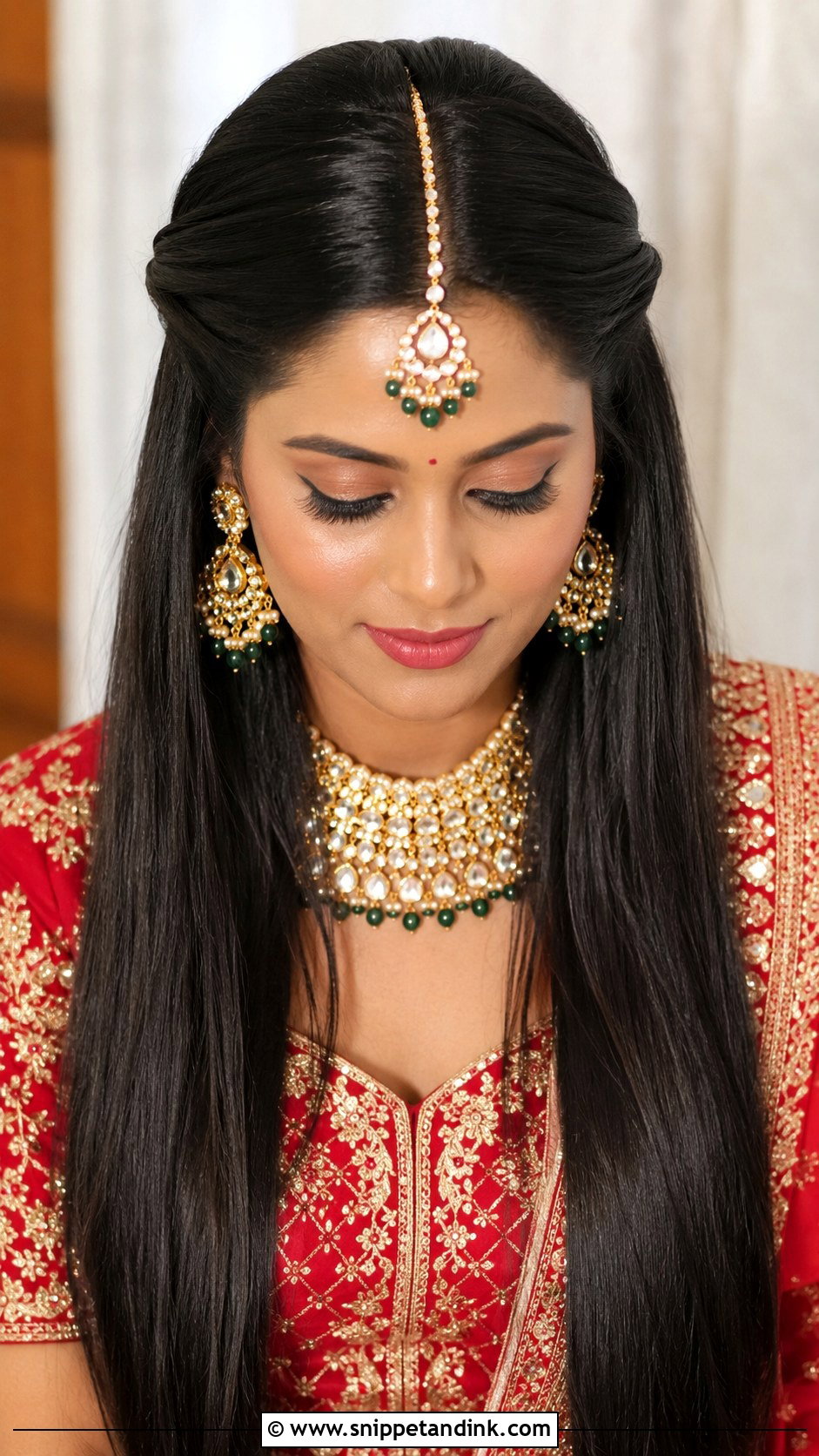
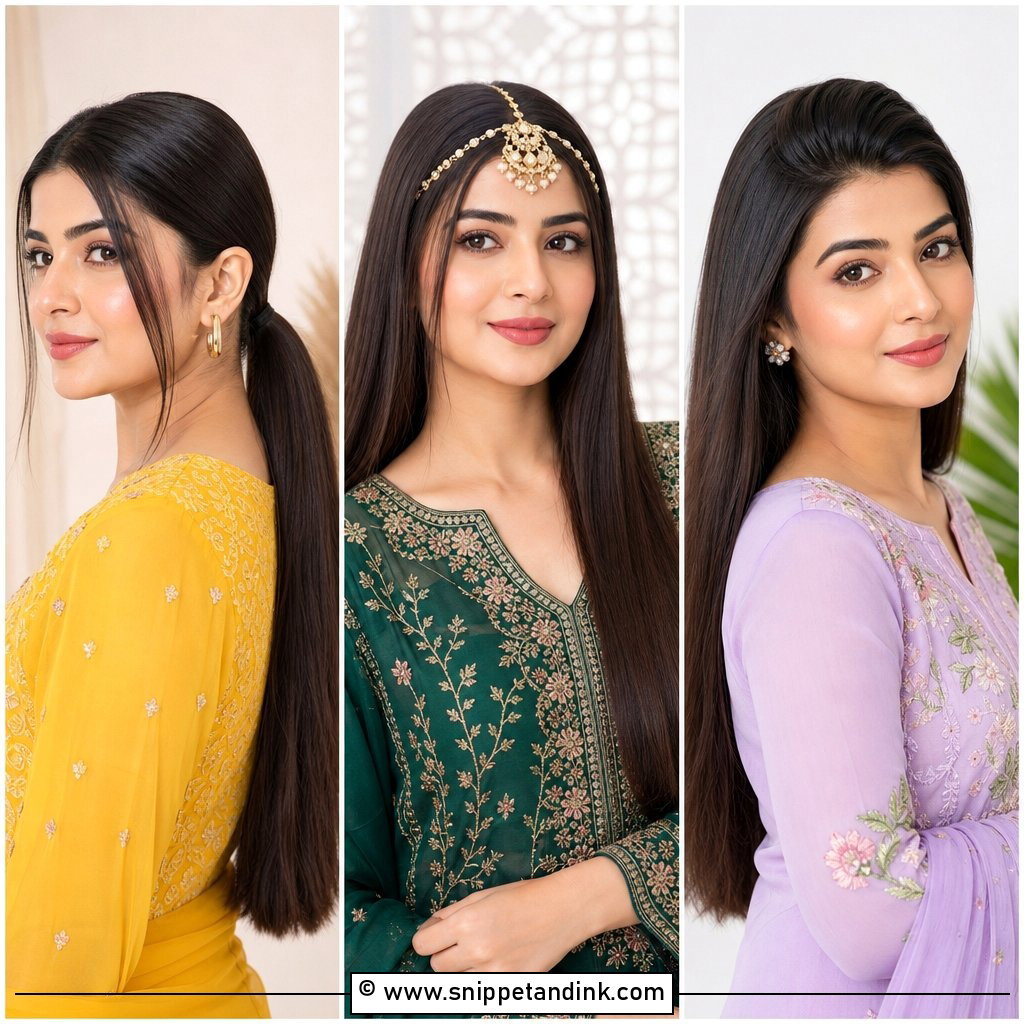
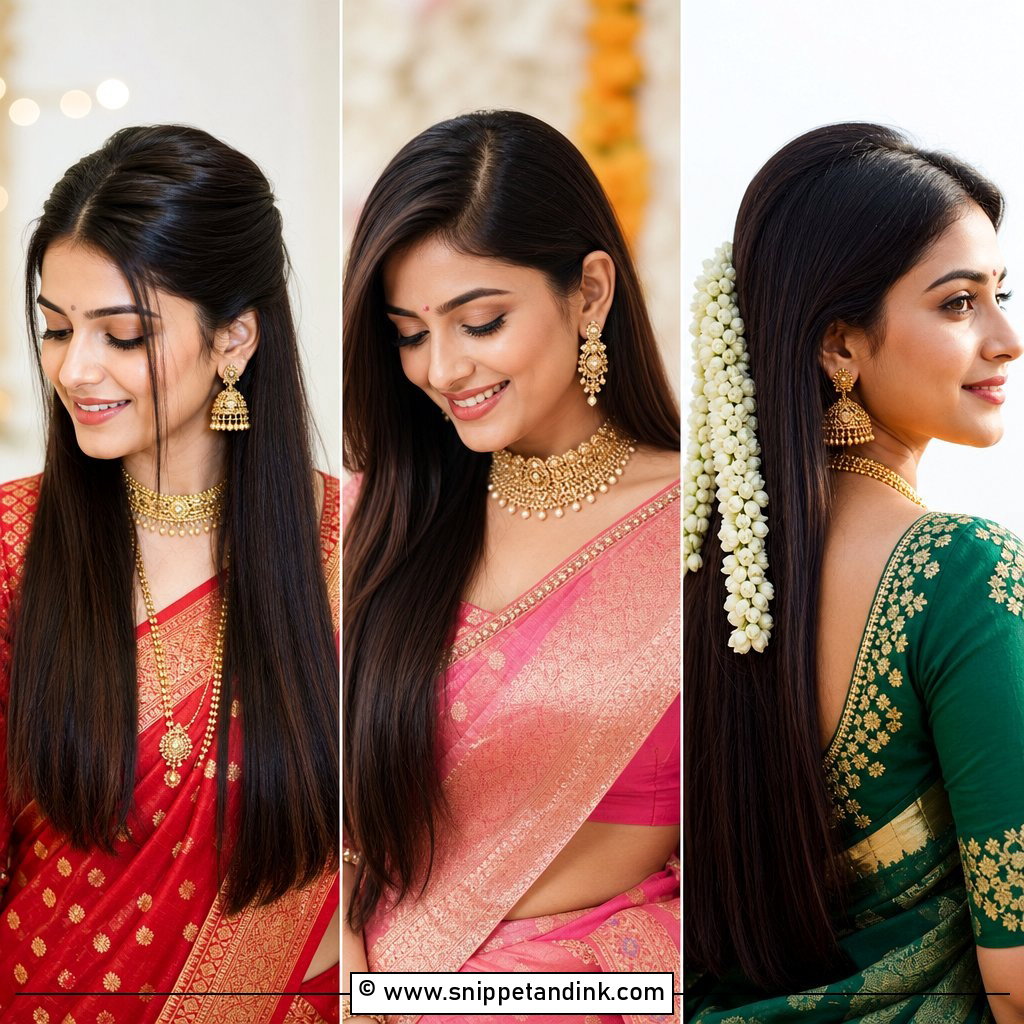
A center-parted maang tikka on smooth hair is the most requested look on this list, and it holds up well as long as the tikka isn’t relying on the part alone. I pin a small base under the top layer and hook the chain into it, then tuck the sides behind the ears so the length frames the face rather than covering the earrings. Medium and long hair both work. If a heavy dupatta is going on top, I pin small sections behind each ear to carry the fabric’s weight, otherwise it pulls the part crooked within an hour.
2. Indian Straight Hair With Matha Patti
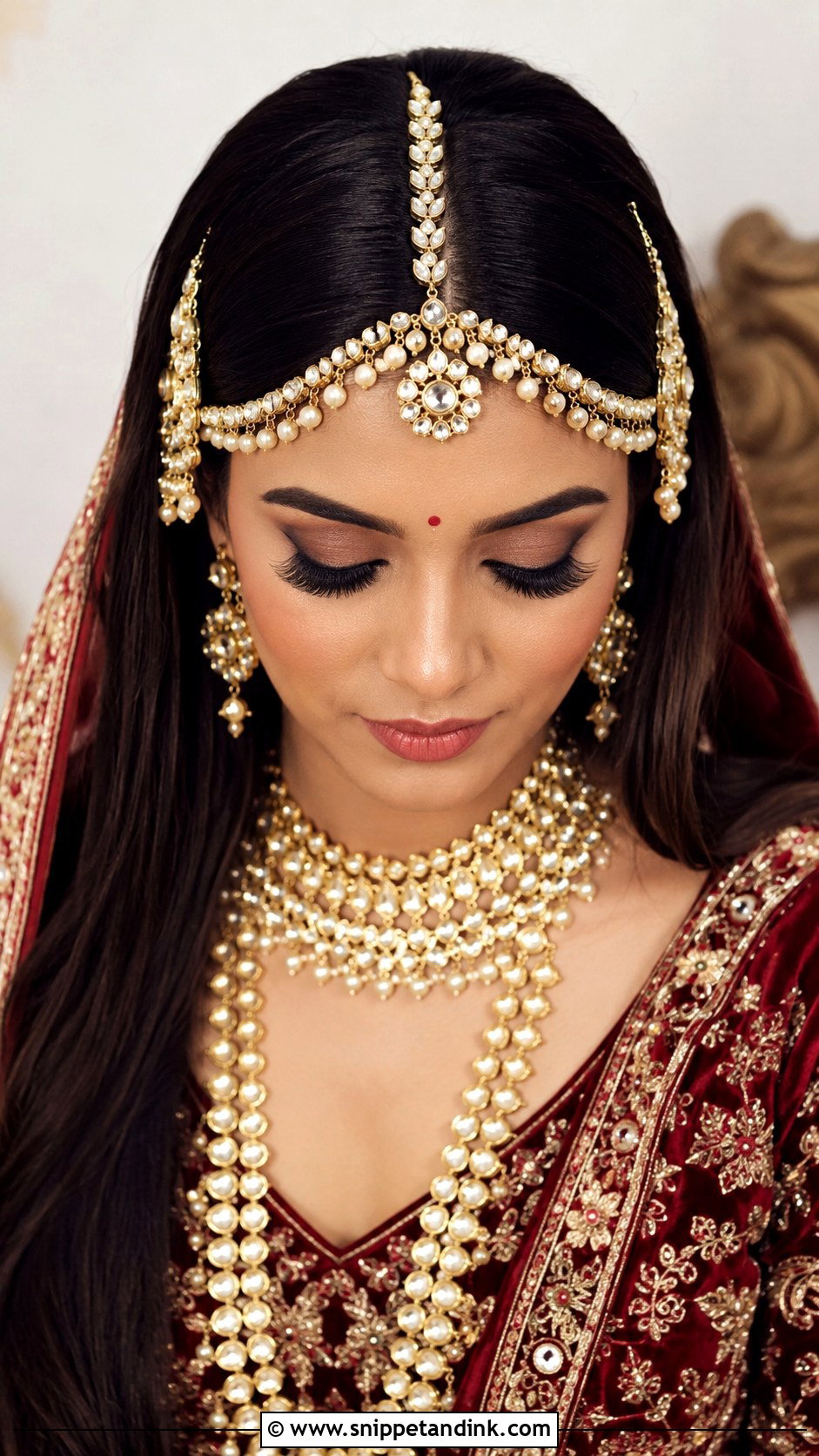
A matha patti needs a flat, smooth crown to sit on, and straight hair gives it exactly that. The center part becomes its spine. I keep the crown sleek, then secure each side chain with a pin hidden near the temple, angled back so it doesn’t show in profile. I wouldn’t add curls here; the headpiece already carries the drama. A light mist of shine spray lets the hair pick up light in photos, and it balances heavy bridal lehengas with layered necklaces well.
3. Indian Straight Hair Low Bun
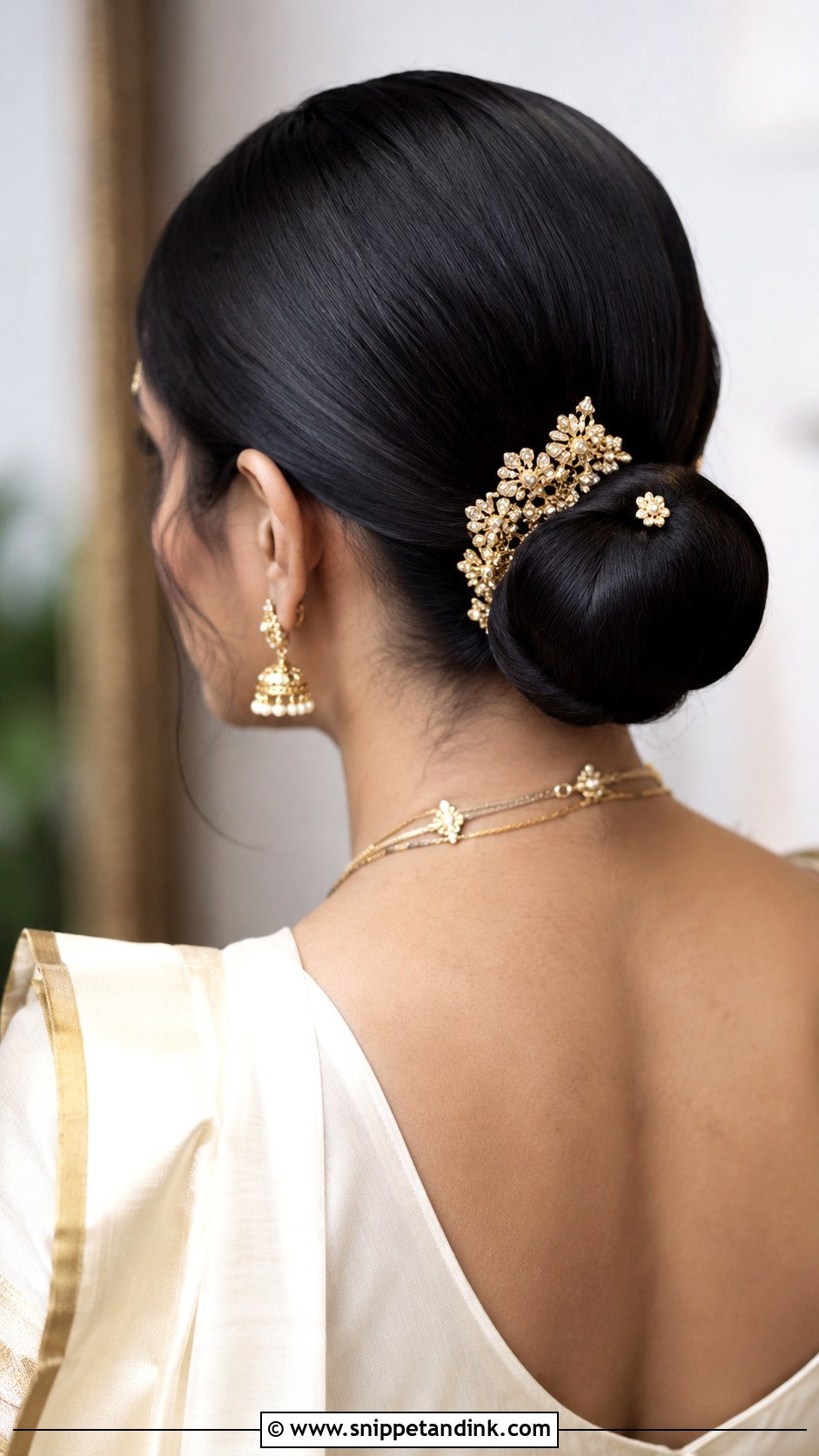
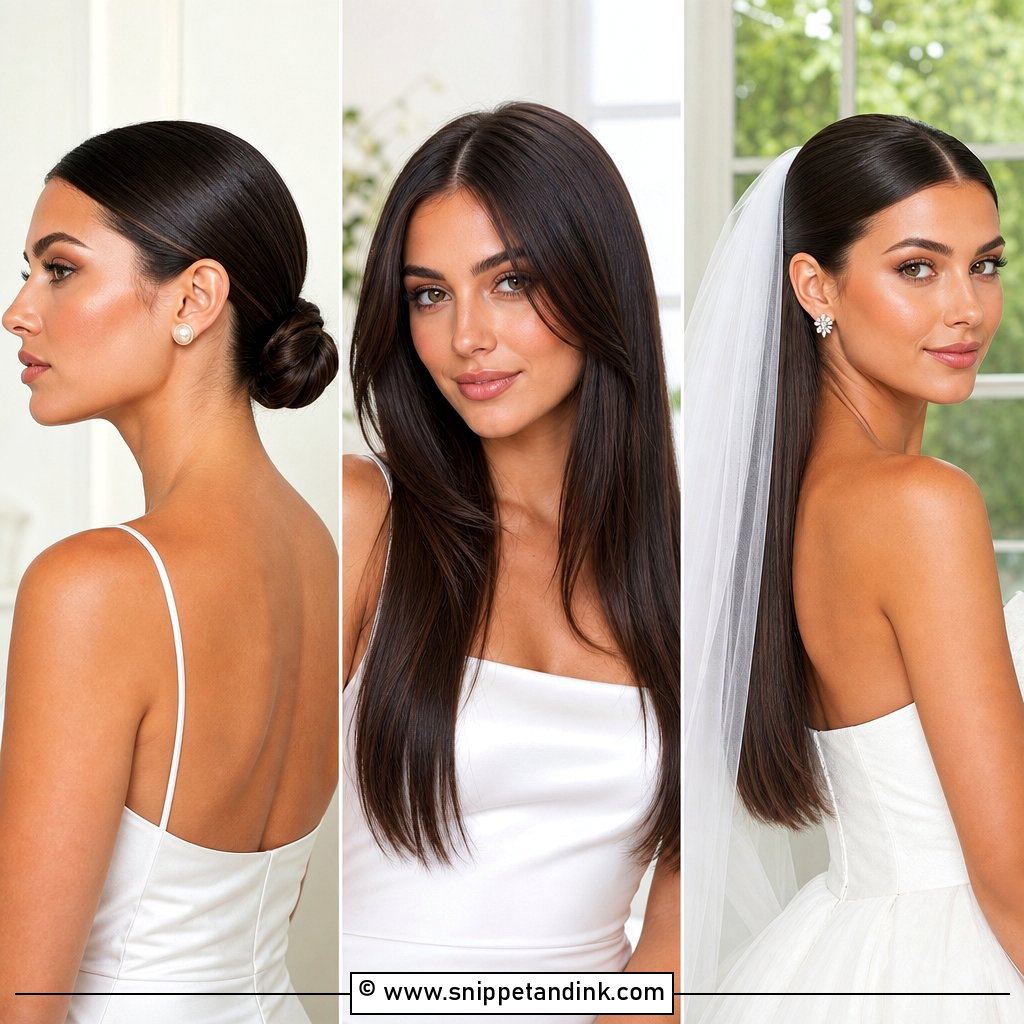
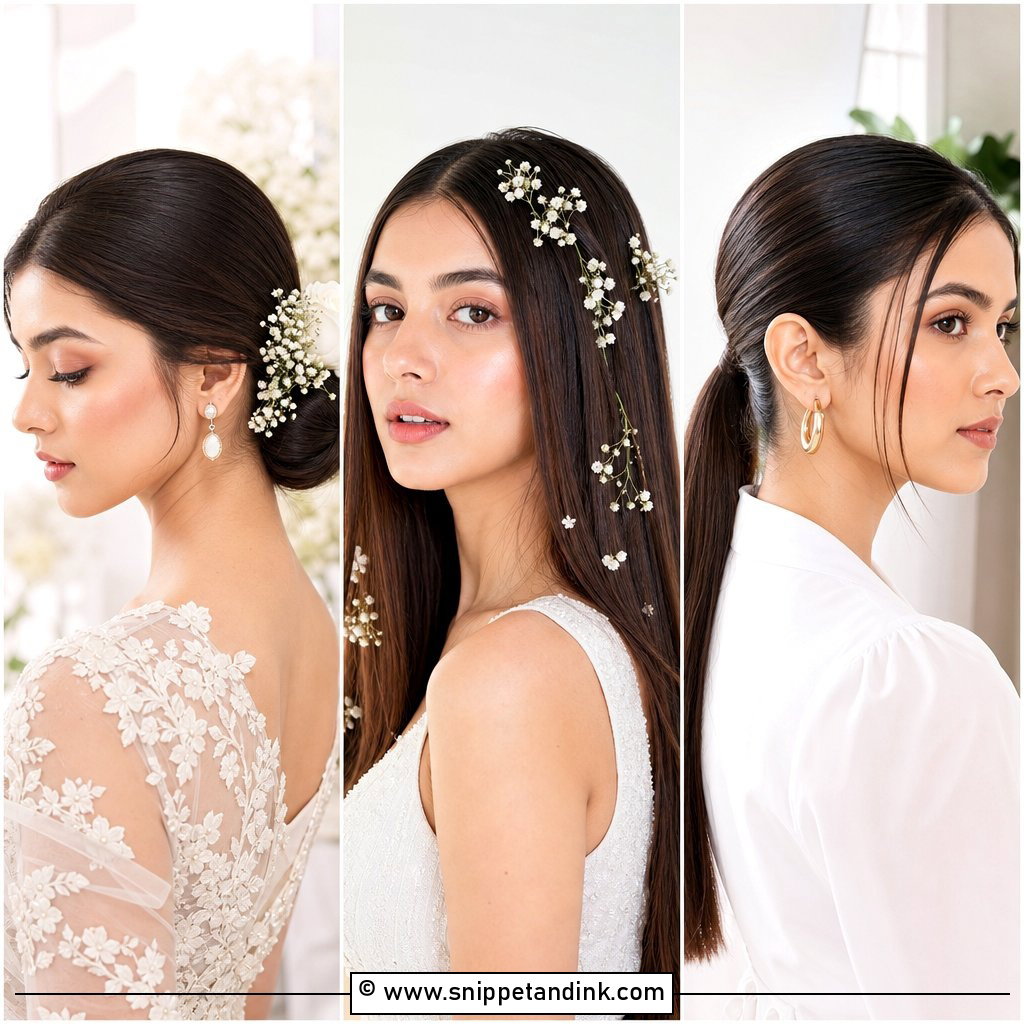
Smoothed back and wrapped at the nape, a low bun is the style I trust most for pheras on straight hair. It supports a dupatta, a veil or a gajra without strain. The catch is that very smooth hair lets pins slide straight out of a bun, so I put a little texture spray through the lengths before wrapping and pin into the elastic base rather than only into the hair. Keep the surface sleek but not lacquered stiff. Pearl pins or jasmine around the bun complete it.
4. Indian Straight Hair Bun With Gajra
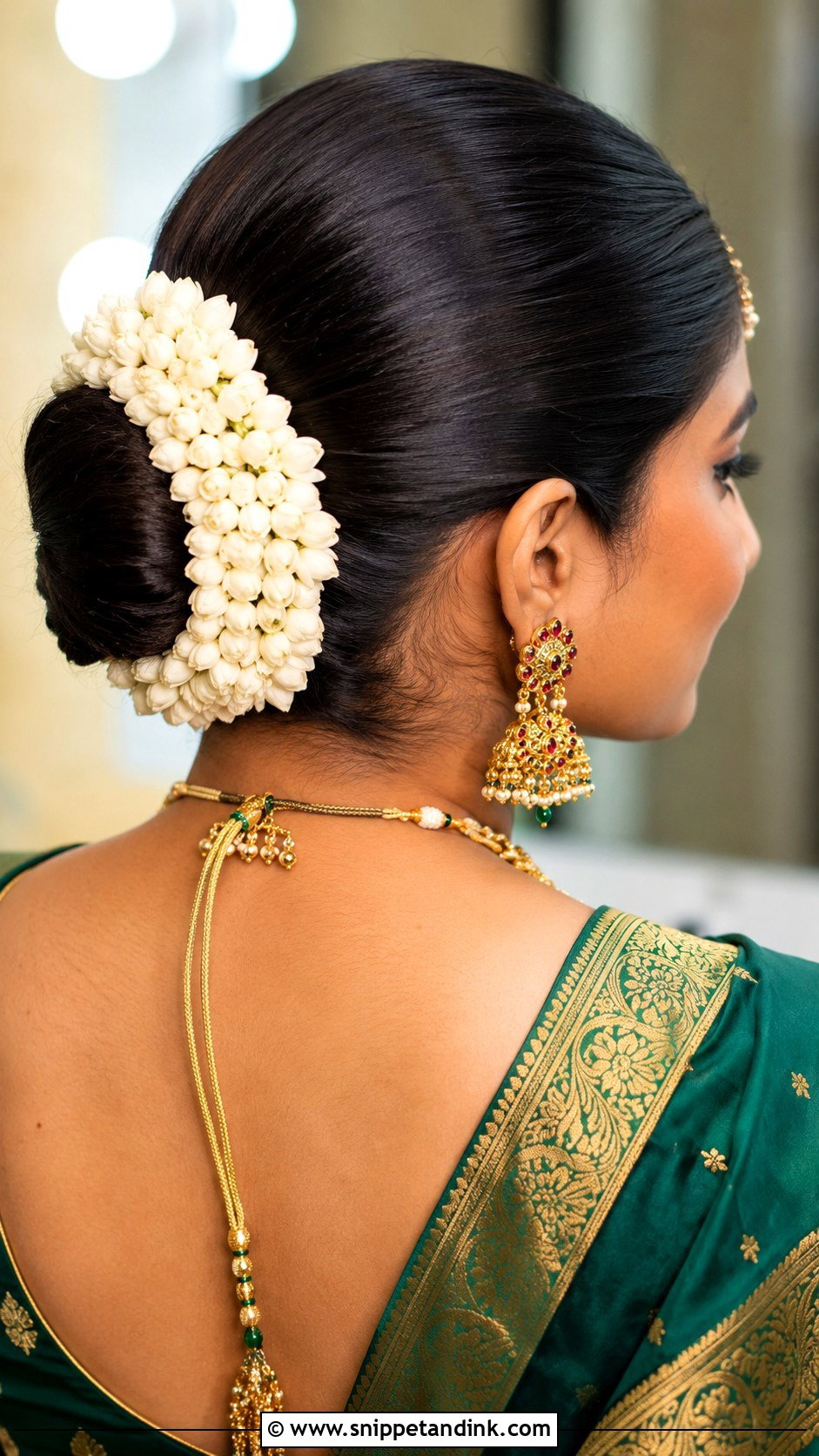
The scent of jasmine changes how a simple bun feels on the wedding morning. An Indian straight hair bun with gajra belongs with silk sarees and South Indian bridal looks, and the straight texture gives the flowers a smooth base to wrap around. A center part with a maang tikka makes it bridal; a side part softens it for a bridesmaid. Gajra gets heavier as the day goes on, so I pin it at four or five points under the flowers, never just at the ends.
5. Indian Straight Hair Open Look
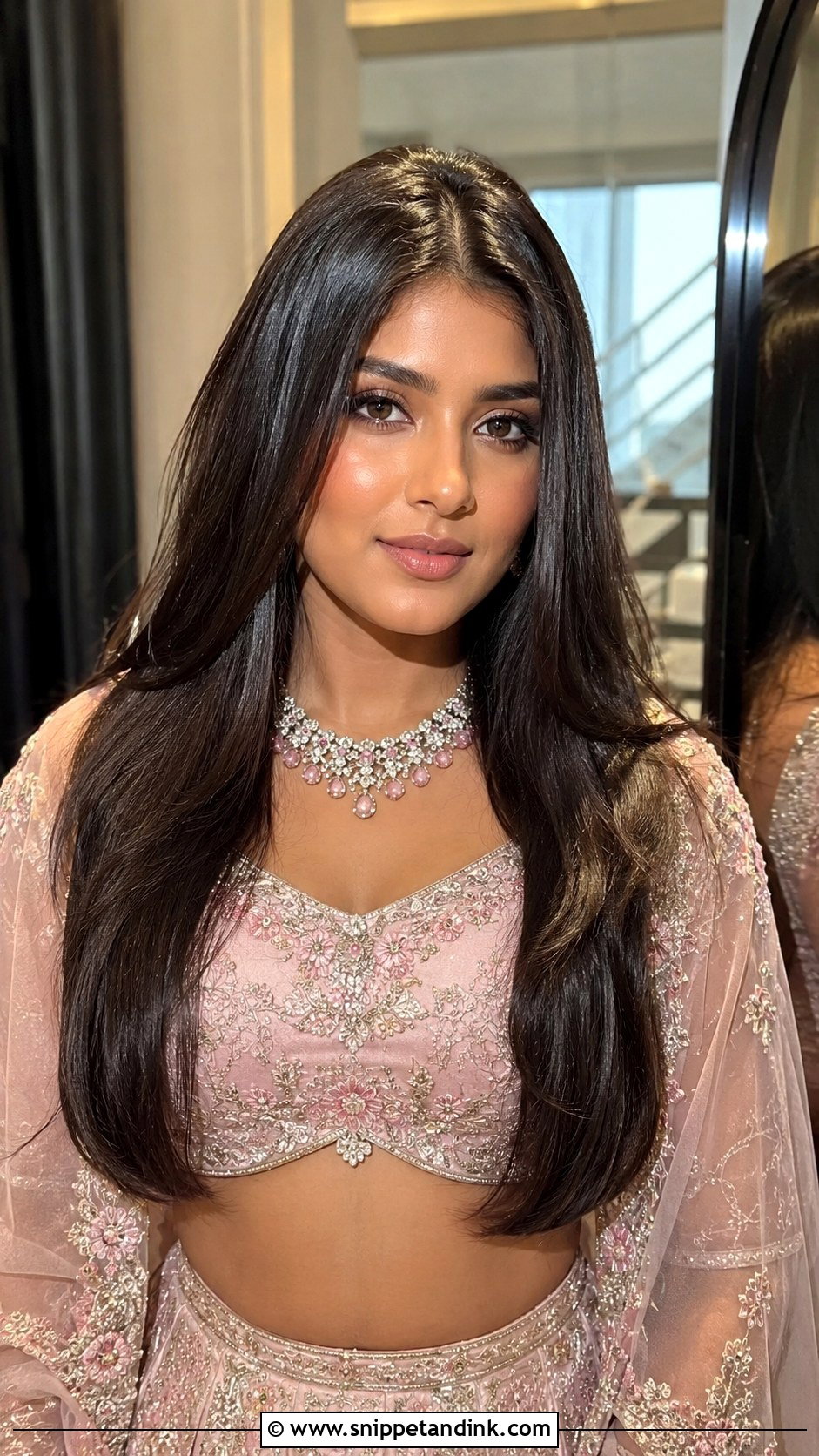
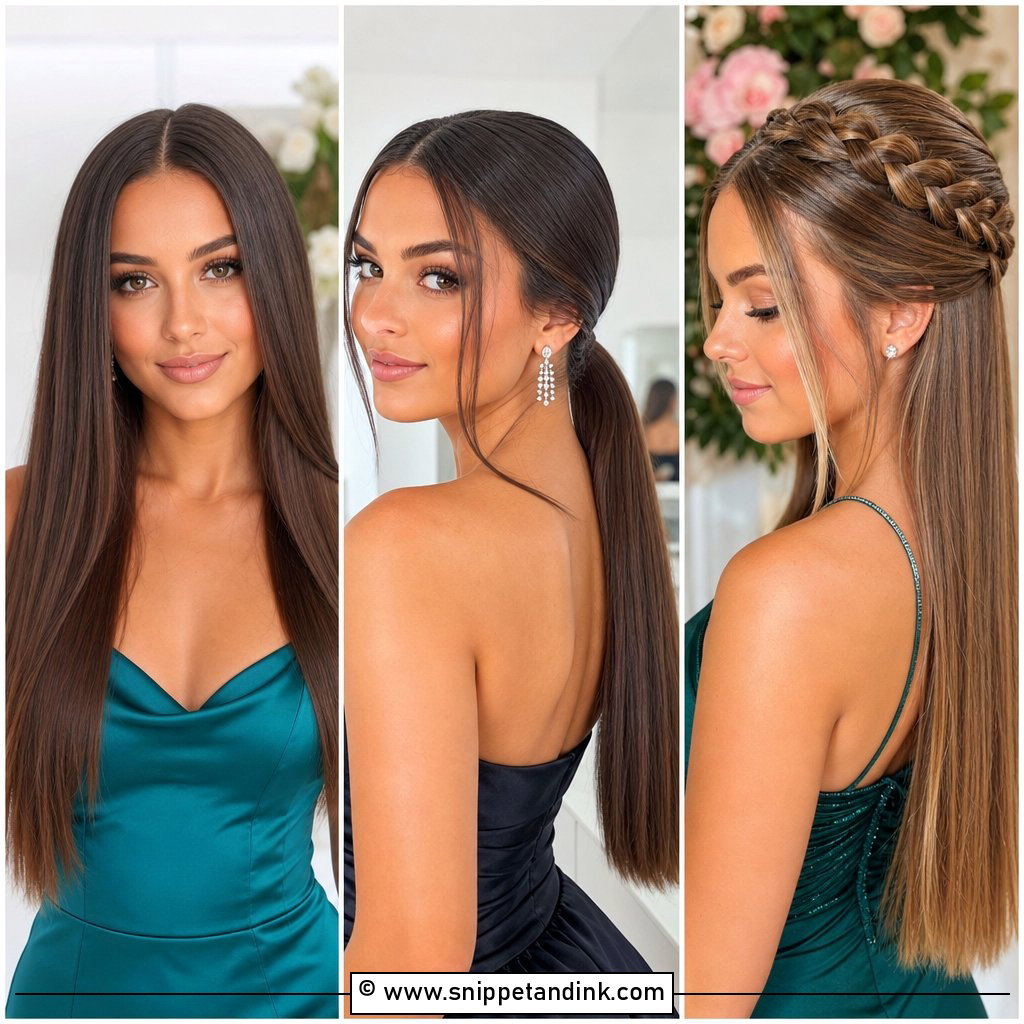
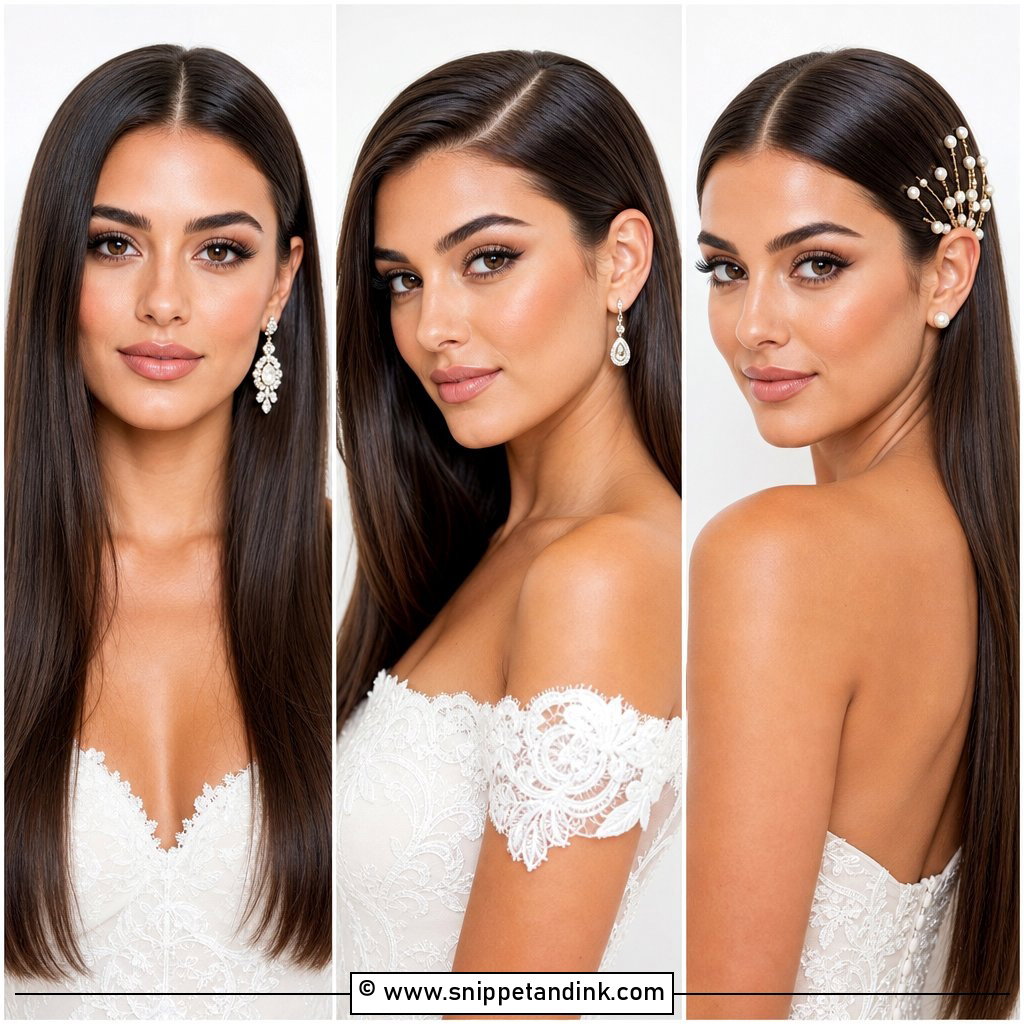
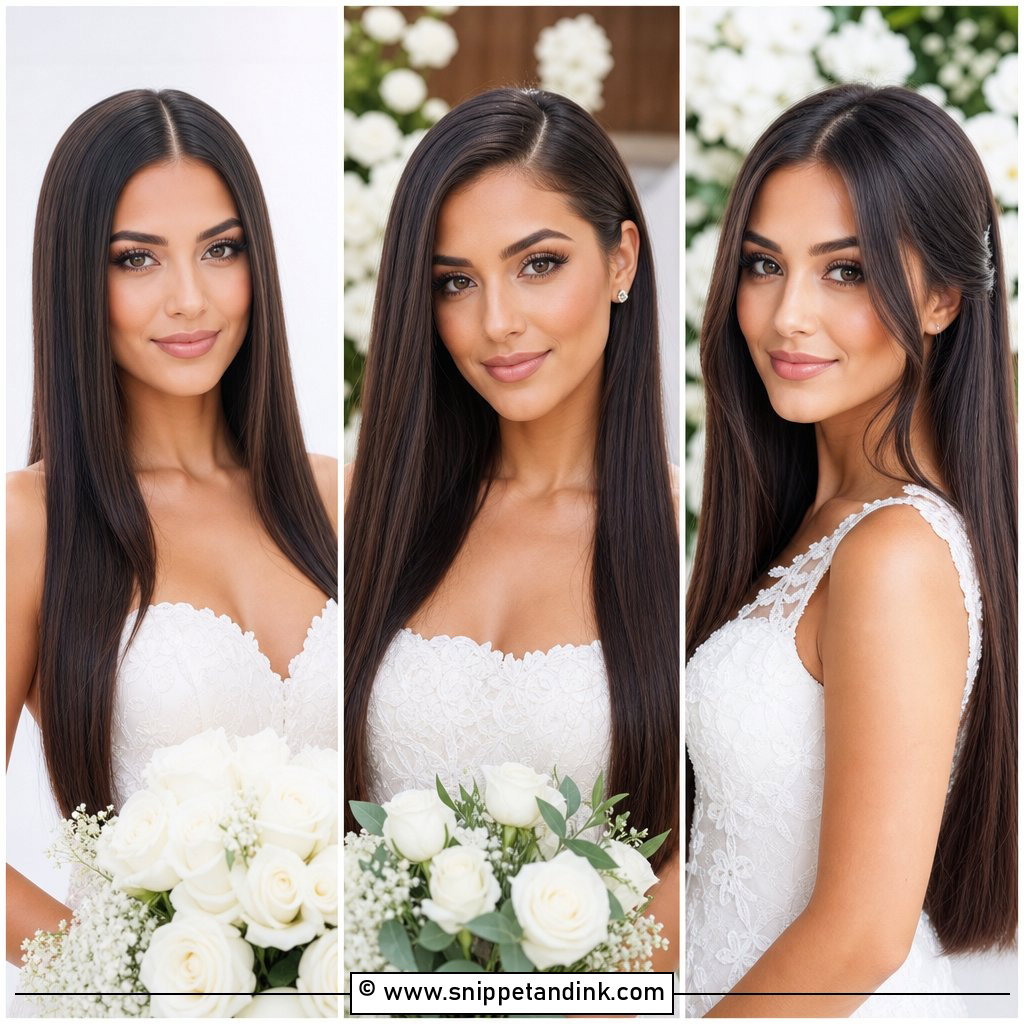
Open straight hair looks easy in pictures and is the hardest of these to get right on the day, because there is nothing to hide behind. The difference between bridal and everyday is a full round-brush blowout first, then a flat iron only where it’s needed, with the ends bevelled slightly inward so the hair moves. I leave a couple of face-framing pieces and keep the part razor sharp. It’s my pick for an engagement or cocktail function with a dramatic neckline, since smooth hair doesn’t compete with heavy embroidery. In real humidity, though, open hair will puff by evening, and I’d plan a backup.
6. Indian Straight Hair Half Up
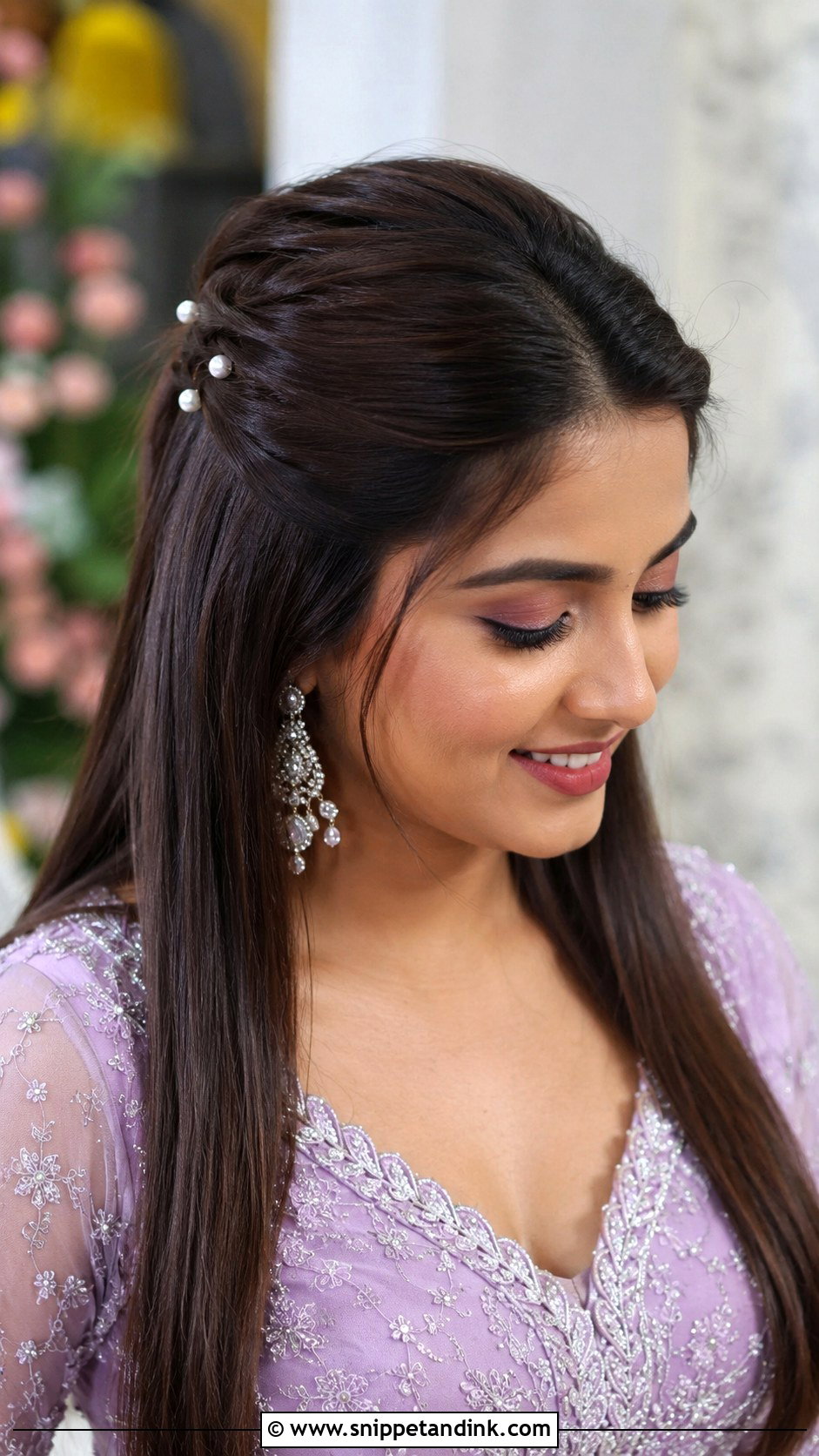
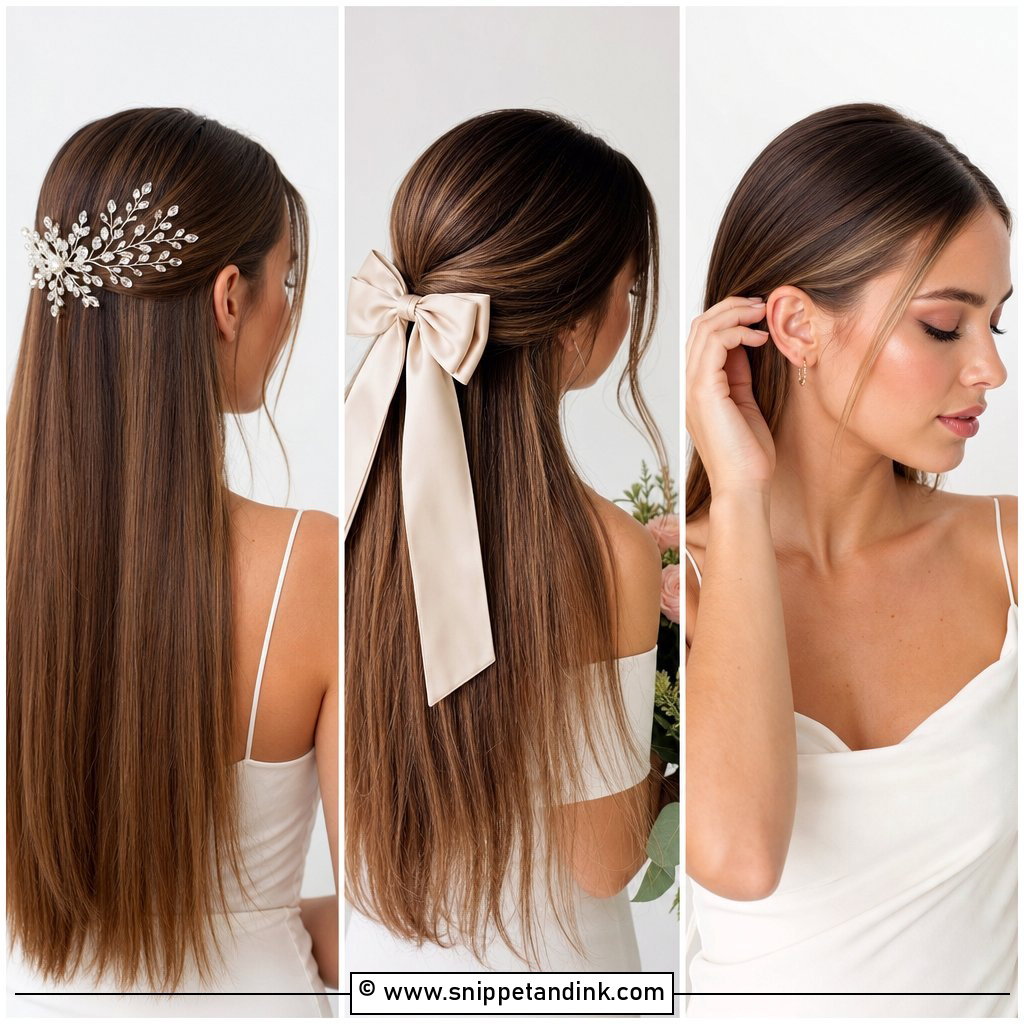
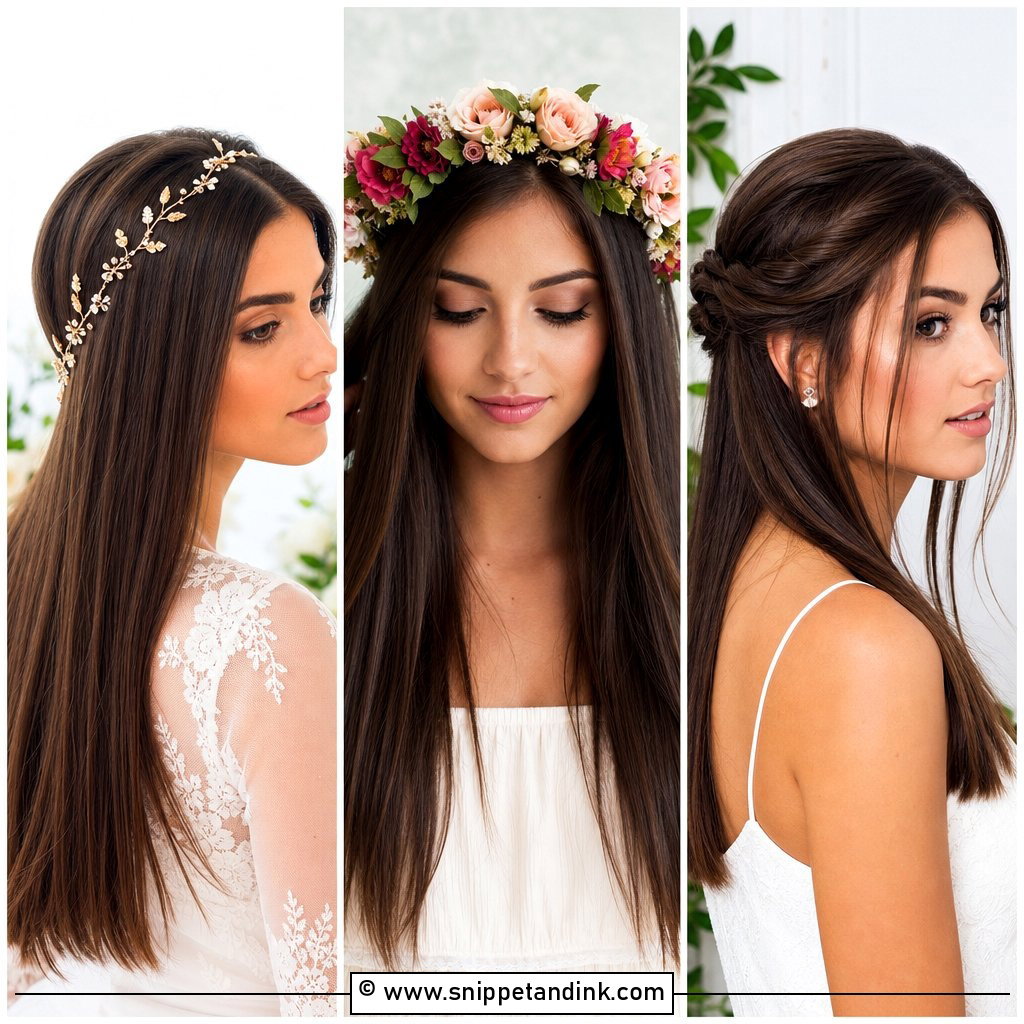
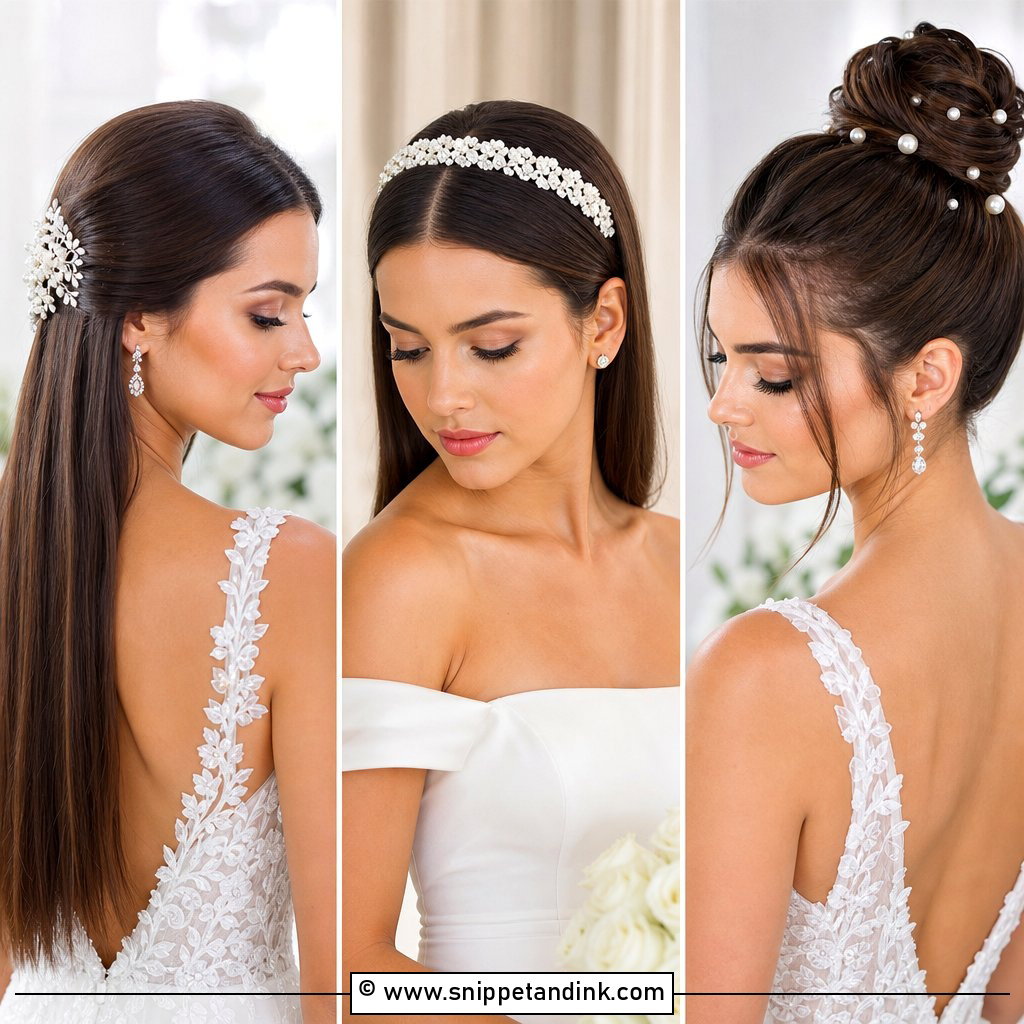
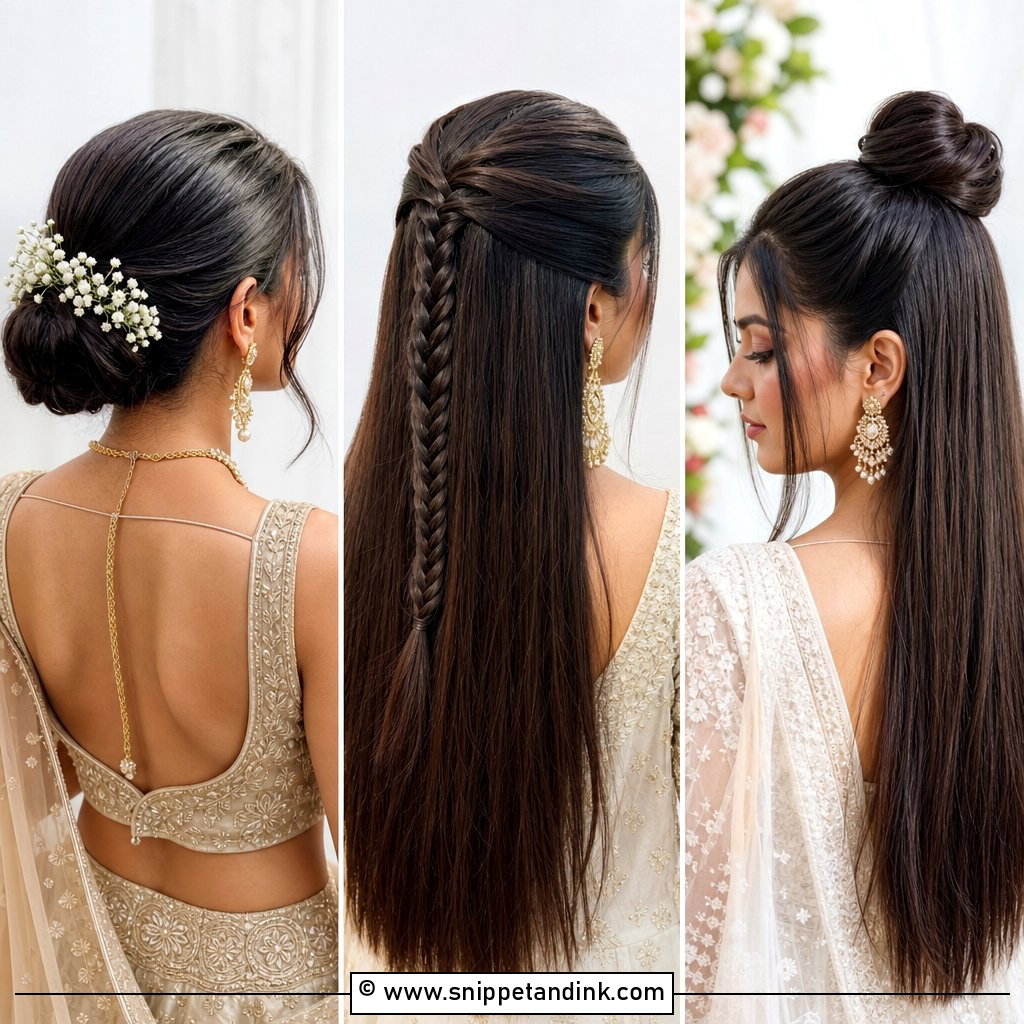
Half up suits a long day better than full open hair because the front stays put around the face. I pin or twist the top section back and keep the lower lengths sleek and shiny down the back. Sisters of the bride tend to like it with lehengas, since it looks finished without feeling bridal. Straight fine hair can slide out of the clip by mid-evening, so I set a small hidden braid as an anchor and attach the gold clip or baby’s breath to that.
7. Indian Straight Hair Half Up With Maang Tikka
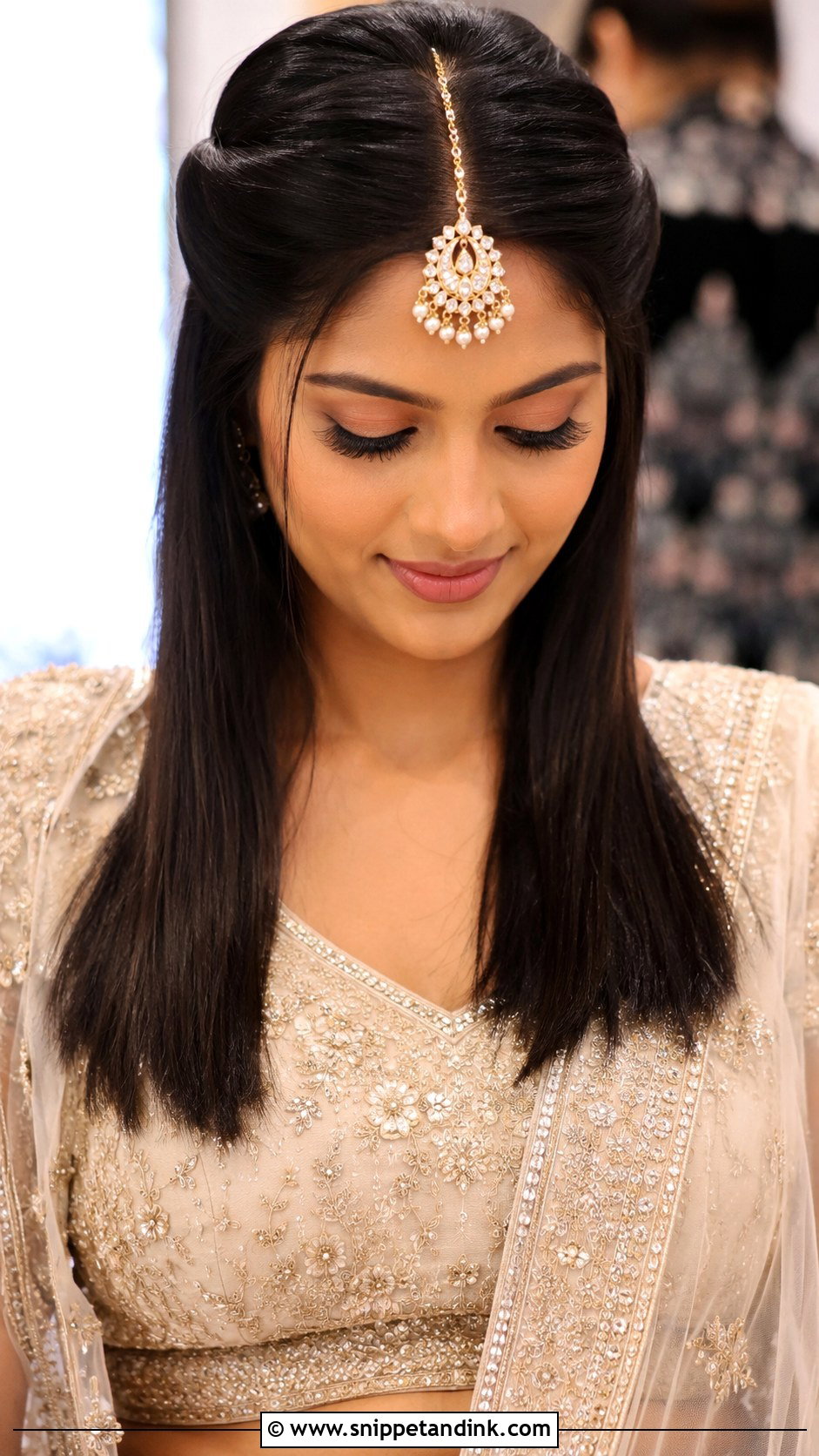
Adding a maang tikka to a half-up style gives open hair the structure bridal jewelry needs. The middle part holds the tikka, and the pinned section at the crown carries some of its weight. I like this one most for fine hair that falls flat, because a small bump at the back lifts the profile without turning into a high puff. Keep the bump modest; on straight hair any backcombing shows through if the top layer is too thin. Chandelier earrings balance it.
8. Indian Straight Hair Side Part
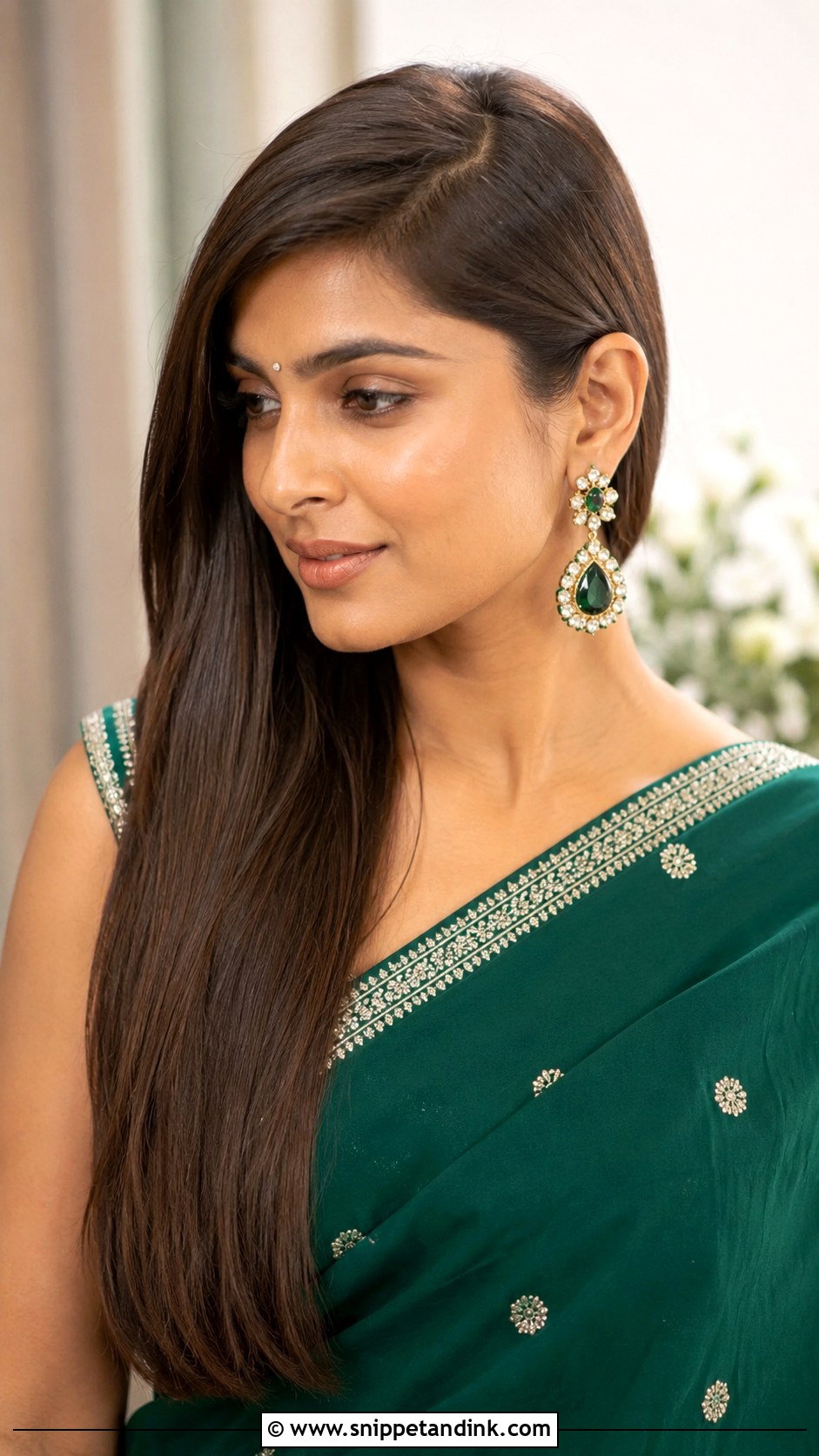
A side part is the quickest way to soften straight hair. The angled front frames round, heart and square faces kindly, and it can be worn open, tucked behind one ear or held with a jeweled clip. I usually suggest it for guests and reception brides rather than for the pheras, since a side part sits awkwardly under a centered maang tikka. A deep side part works well with statement earrings and a modern saree. Use a light anti-frizz serum on the mid-lengths only; at the root it flattens the lift that makes a side part look deliberate.
9. Indian Straight Hair Sleek Ponytail
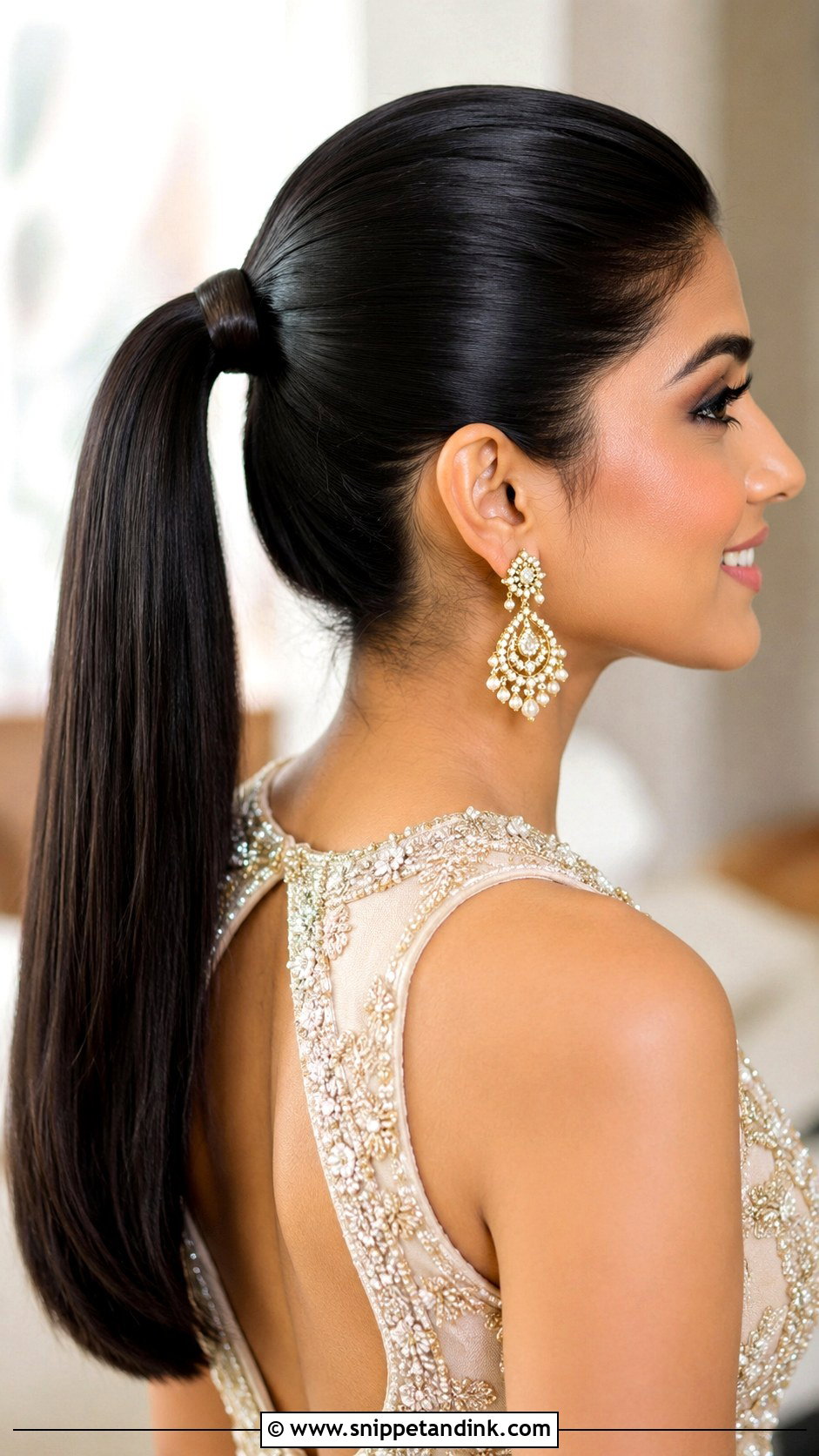
Pulled back and glossy, a sleek ponytail is my favorite answer for receptions, sangeet nights and cocktail events. I tie it at the middle or low crown, smooth the sides with a boar-bristle brush and a little gel, then wrap a small section of hair around the elastic. The face stays fully open, which gives bold eye makeup and heavy earrings room. One warning: a tight high ponytail starts to ache after a few hours. If you’re sensitive to that, tie it a touch lower and use a spiral band.
10. Indian Straight Hair Low Ponytail
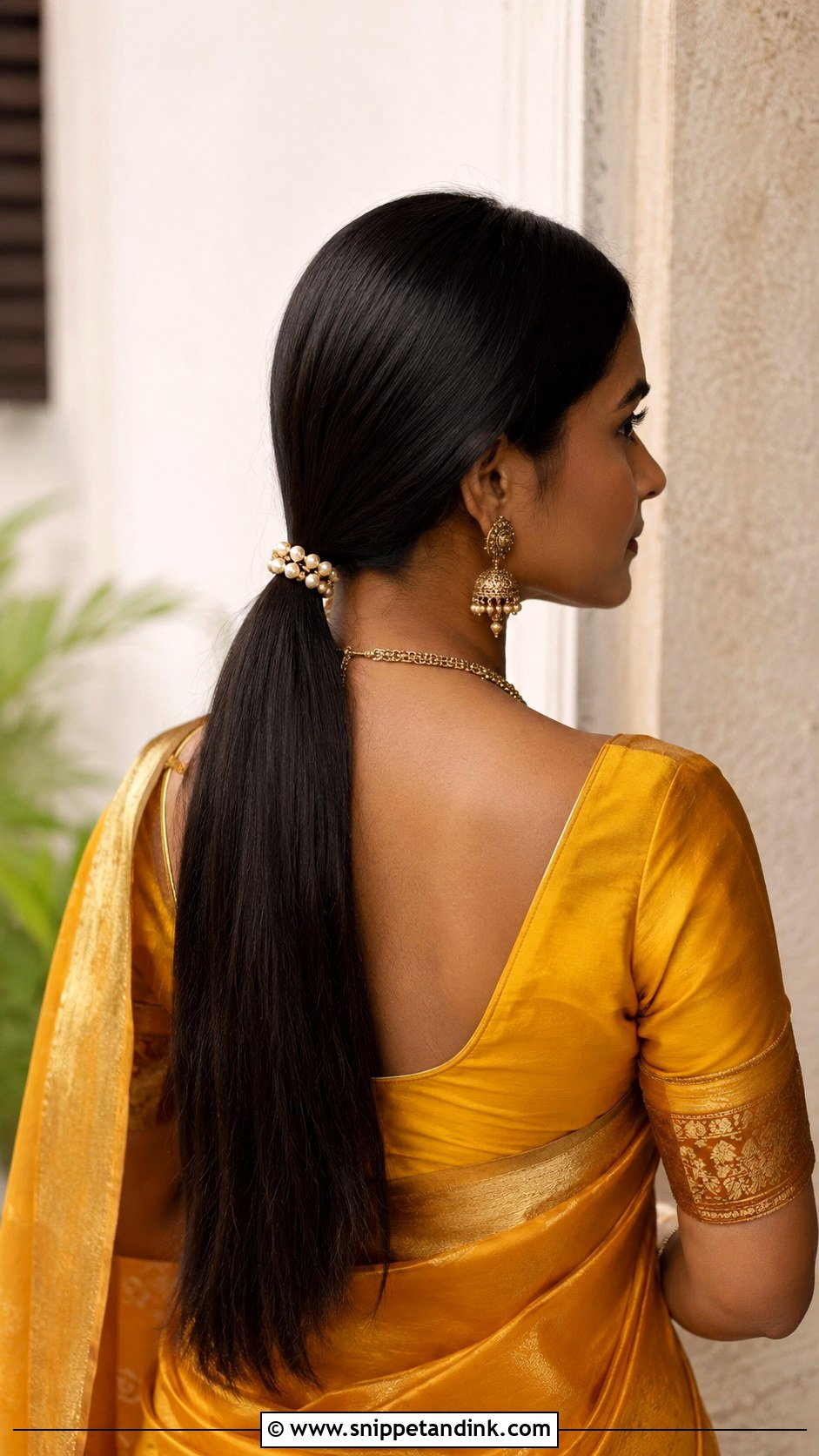
Sitting at the nape, a low ponytail is softer and more traditional than a high one, and on thick straight hair the length becomes the whole feature. I tuck the front pieces behind the ears and smooth the crown, then hide the elastic under a gold cuff or a few fresh flowers. It’s comfortable enough to wear all night, which is why guests love it. On thinner hair I’d add a clip-in weft under the tie, or the ponytail can look sparse from behind.
11. Indian Straight Hair Bubble Ponytail
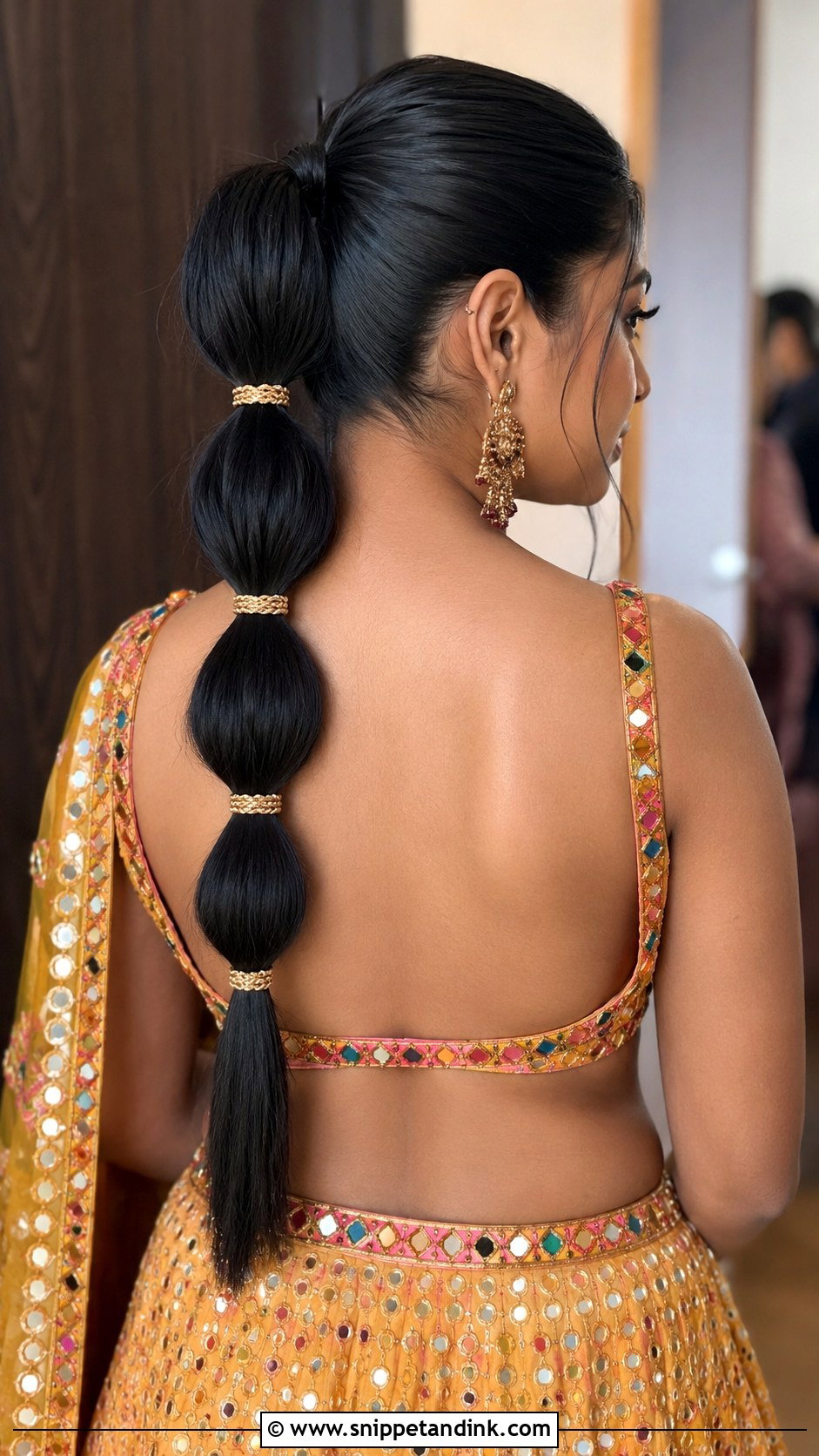
Bubble ponytails belong to mehendi, haldi and sangeet, where the mood is playful. Straight hair makes each bubble look clean and defined. I start with a mid or low ponytail, add small clear elastics every few inches down the length, then gently pull each section wider for volume. Gold thread or tiny flowers wrapped over the elastics turn it festive. It shows off long hair while keeping it secure for dancing, and it goes well with colorful lehengas and mirror work. Don’t overpull the bubbles on fine hair or you’ll see gaps.
12. Indian Straight Hair Braid With Flowers
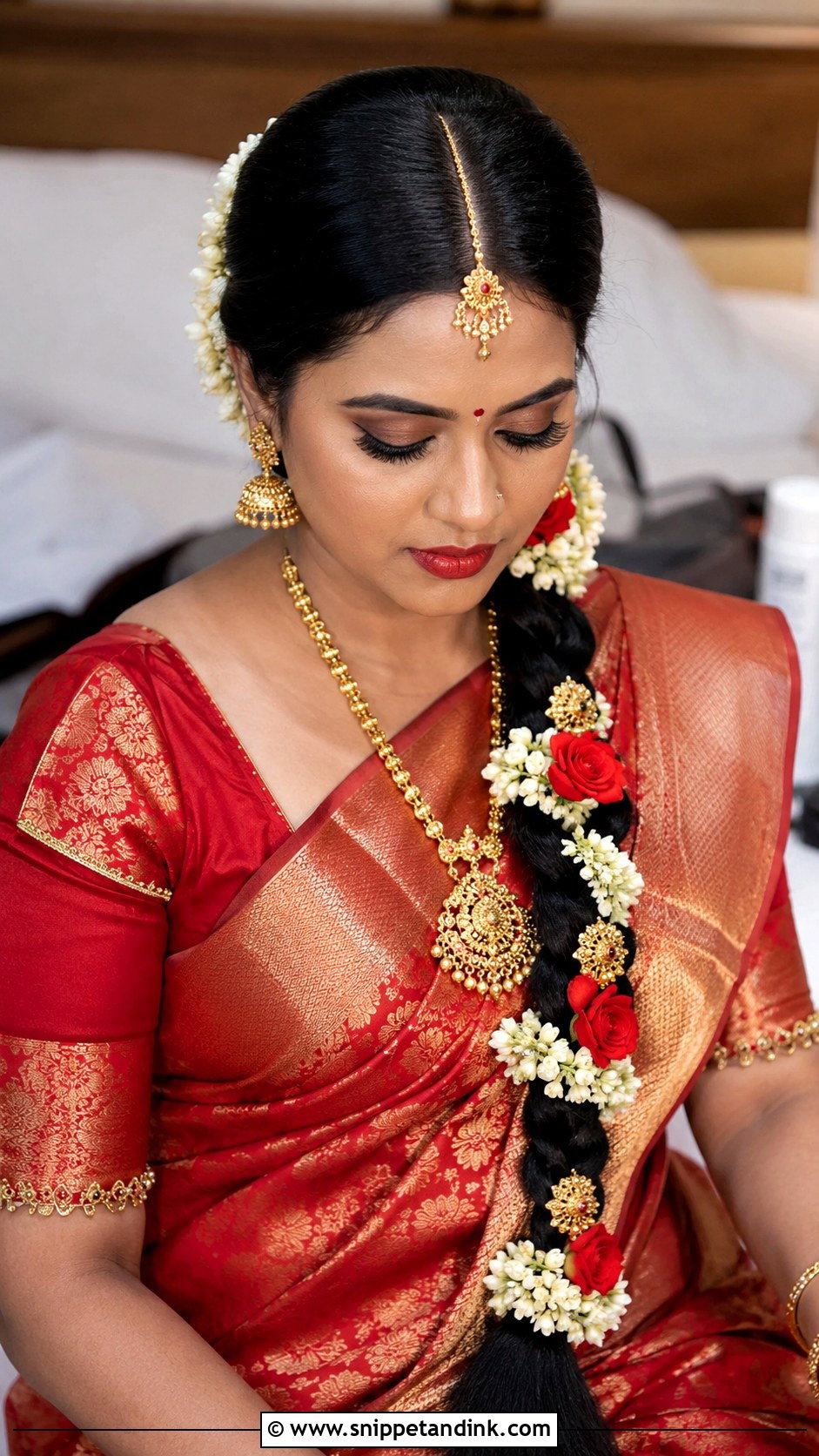
Flowers on a long straight braid have a long history at South Indian and temple weddings, and the look still makes sense today because it holds all day. The straight texture weaves neatly. I part it cleanly at the center, braid firmly from the crown, and decorate from top to tip with jasmine or roses matched to the outfit. With a silk saree this is hard to beat. If your hair is very slippery, a light hold cream before braiding stops the lower half from loosening.
13. Indian Straight Hair Fishtail Braid
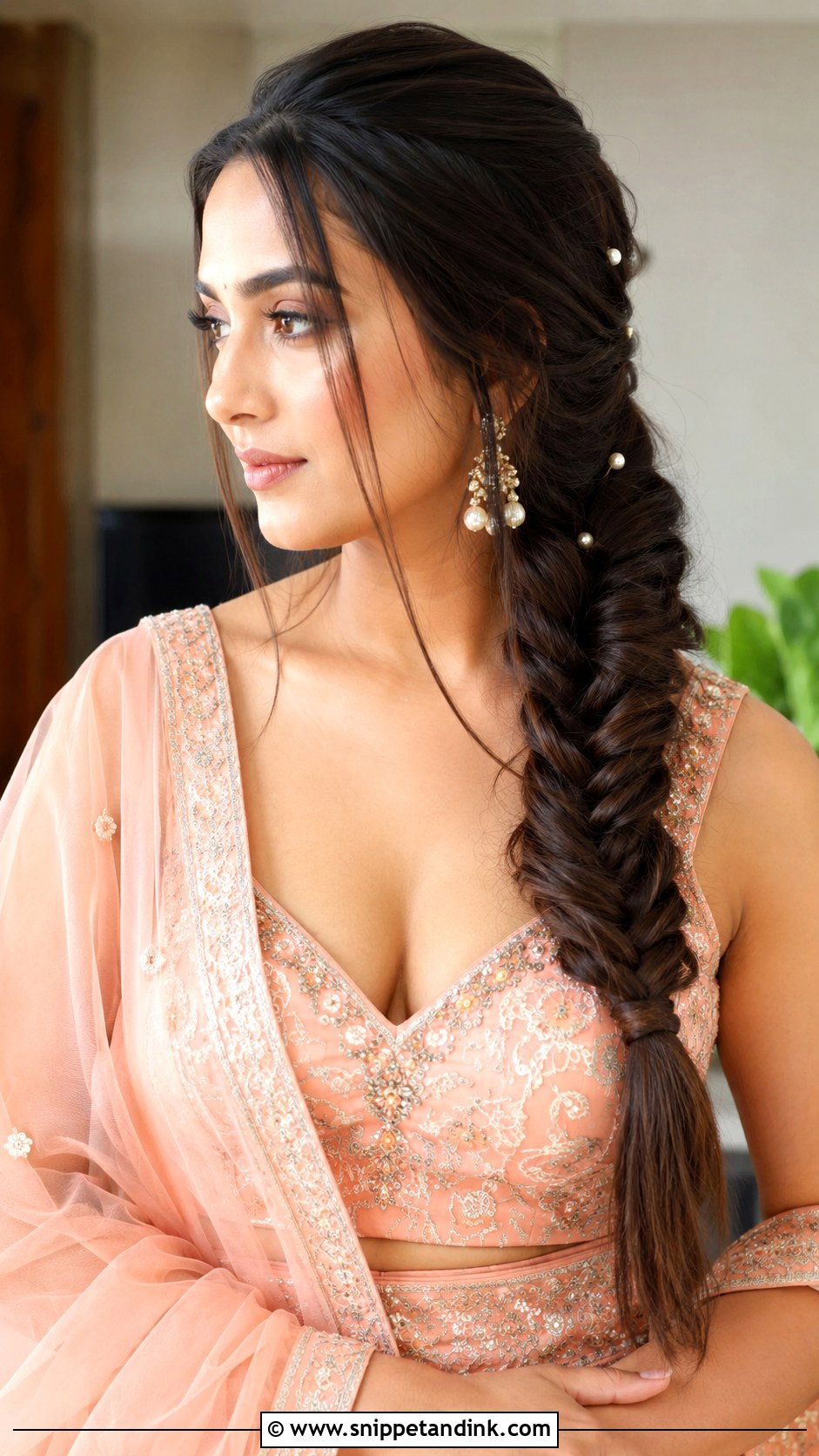
A fishtail braid is detailed but forgiving, and on straight shiny hair the weave shows up crisply in close photos. I braid it tight first, secure the end, then gently pull the edges apart so it looks fuller without losing its line. It can sit down the back or over one shoulder. Tiny pearls or gold pins slot into the weave easily. For a bride, I’d keep it to a lighter function; it doesn’t carry a heavy dupatta as well as a bun does.
14. Indian Straight Hair Side Braid
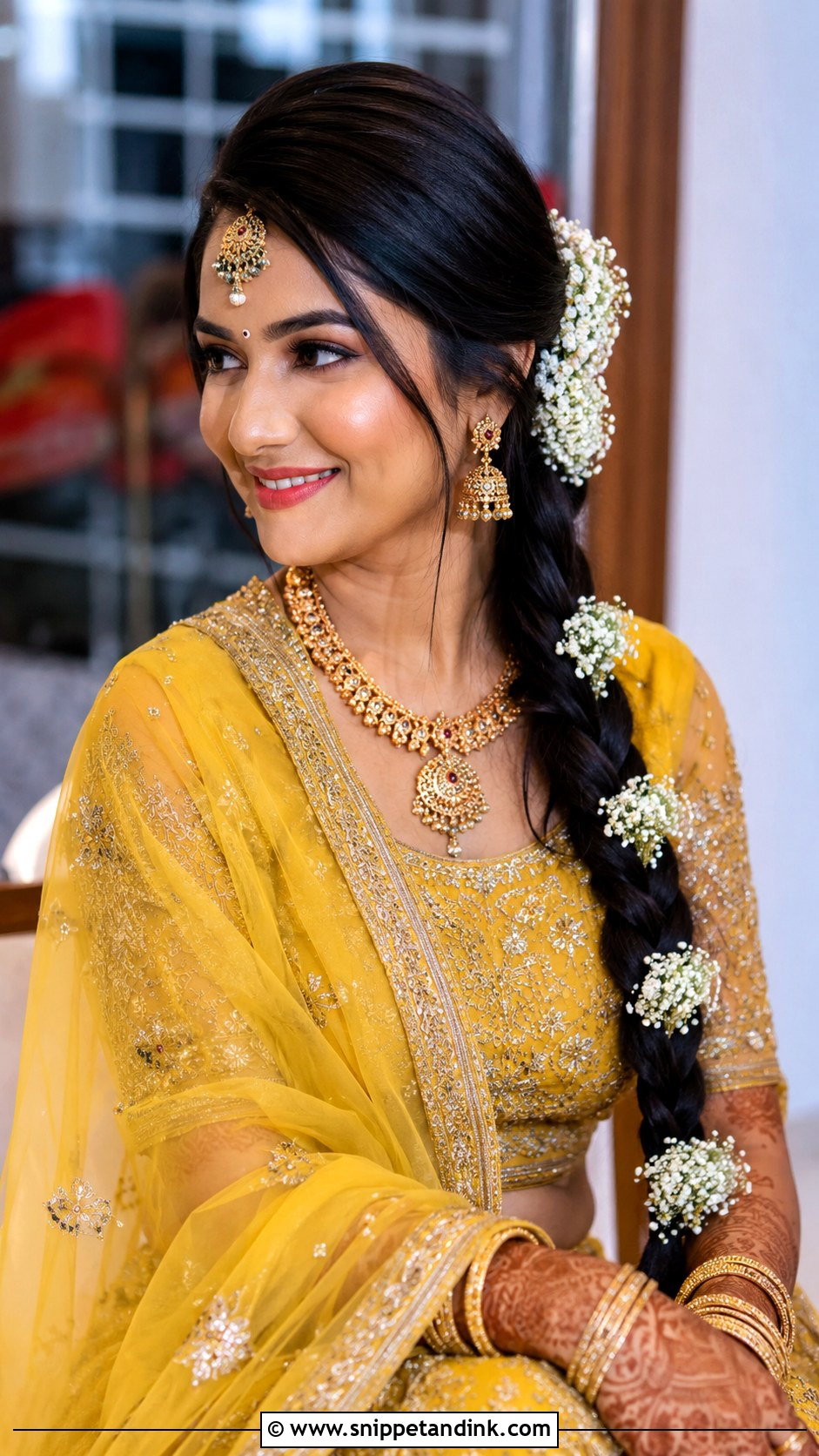
Bringing the braid over one shoulder puts it in every portrait, which is why I like a side braid for daytime and mehendi. It pairs well with lehengas, sarees and shararas. Straight hair keeps the plait neat, and a couple of soft front pieces keep the face gentle. A decorative paranda tied at the end adds weight that actually helps the braid hang straight. Use a light styling cream so it stays polished; heavy oils make straight hair look flat and wet in flash.
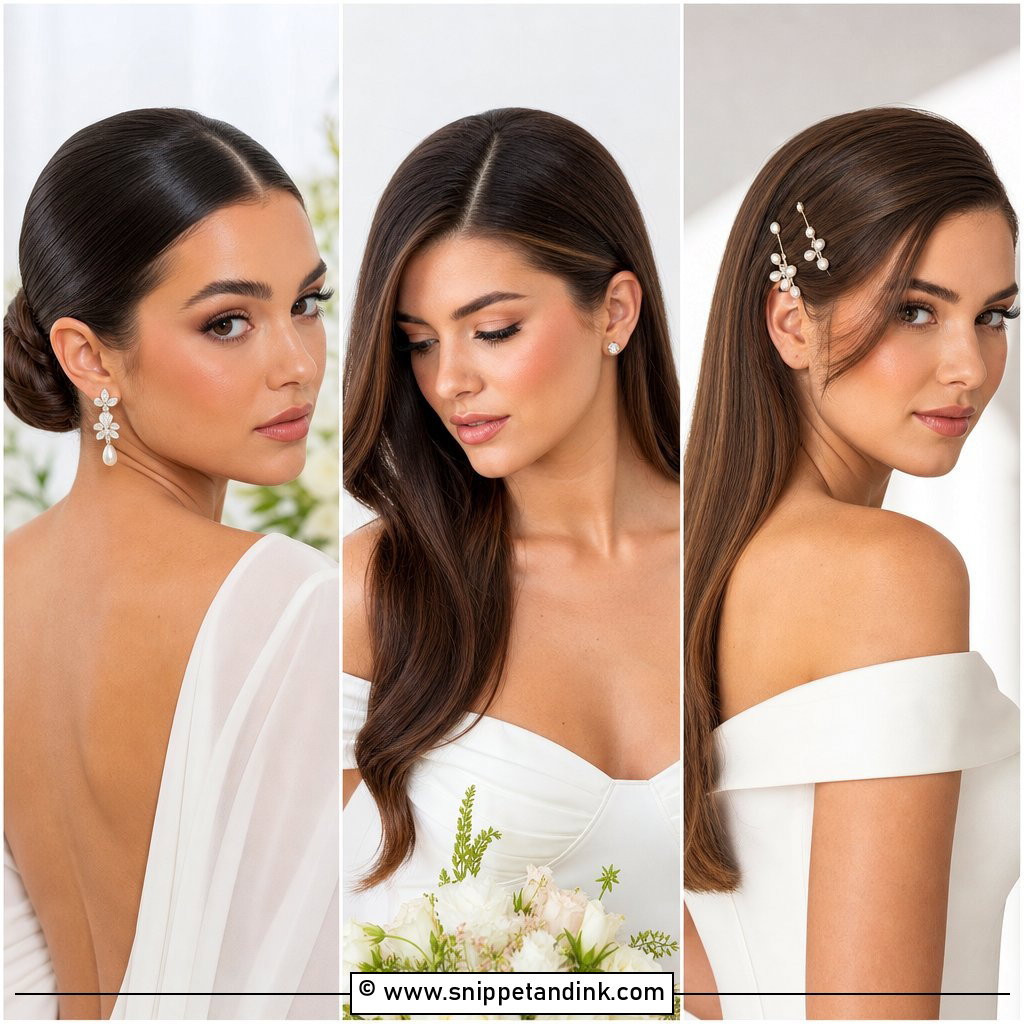
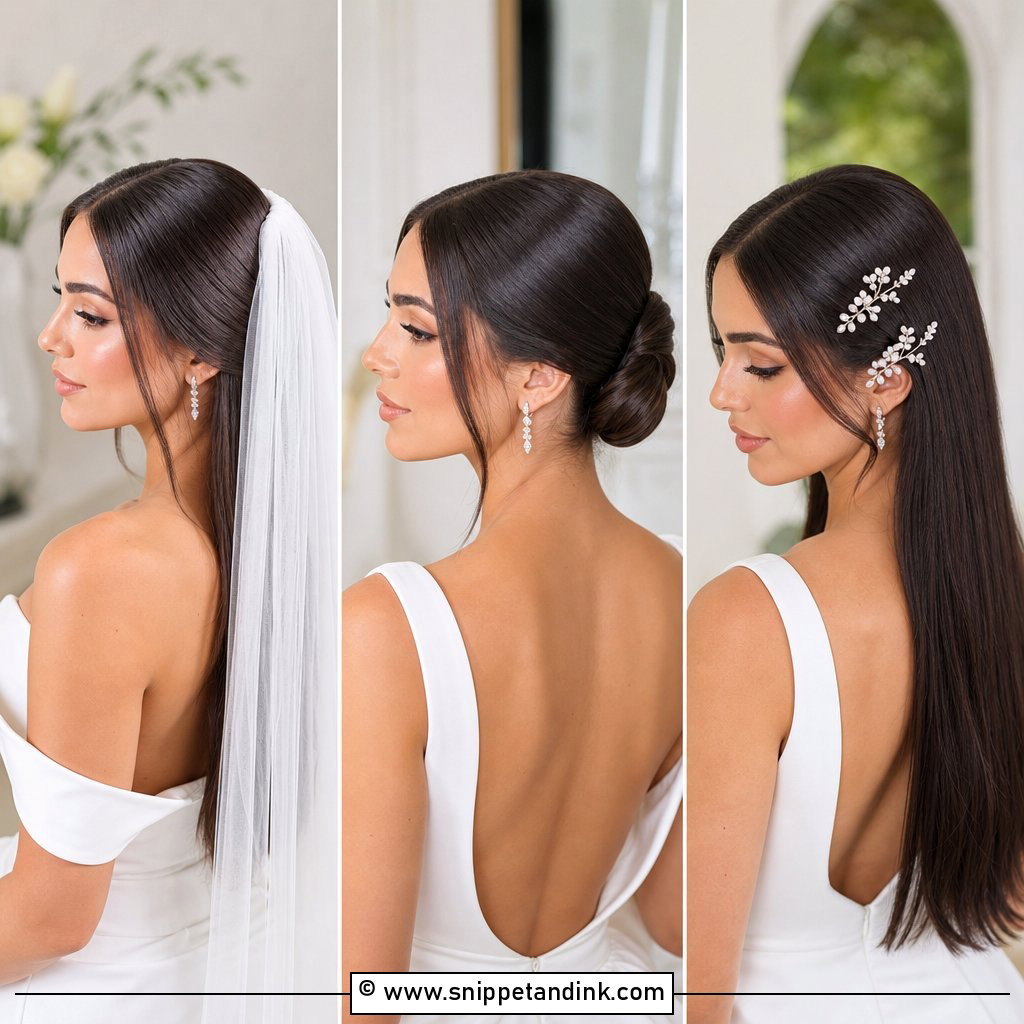
15. Indian Straight Hair Poola Jada
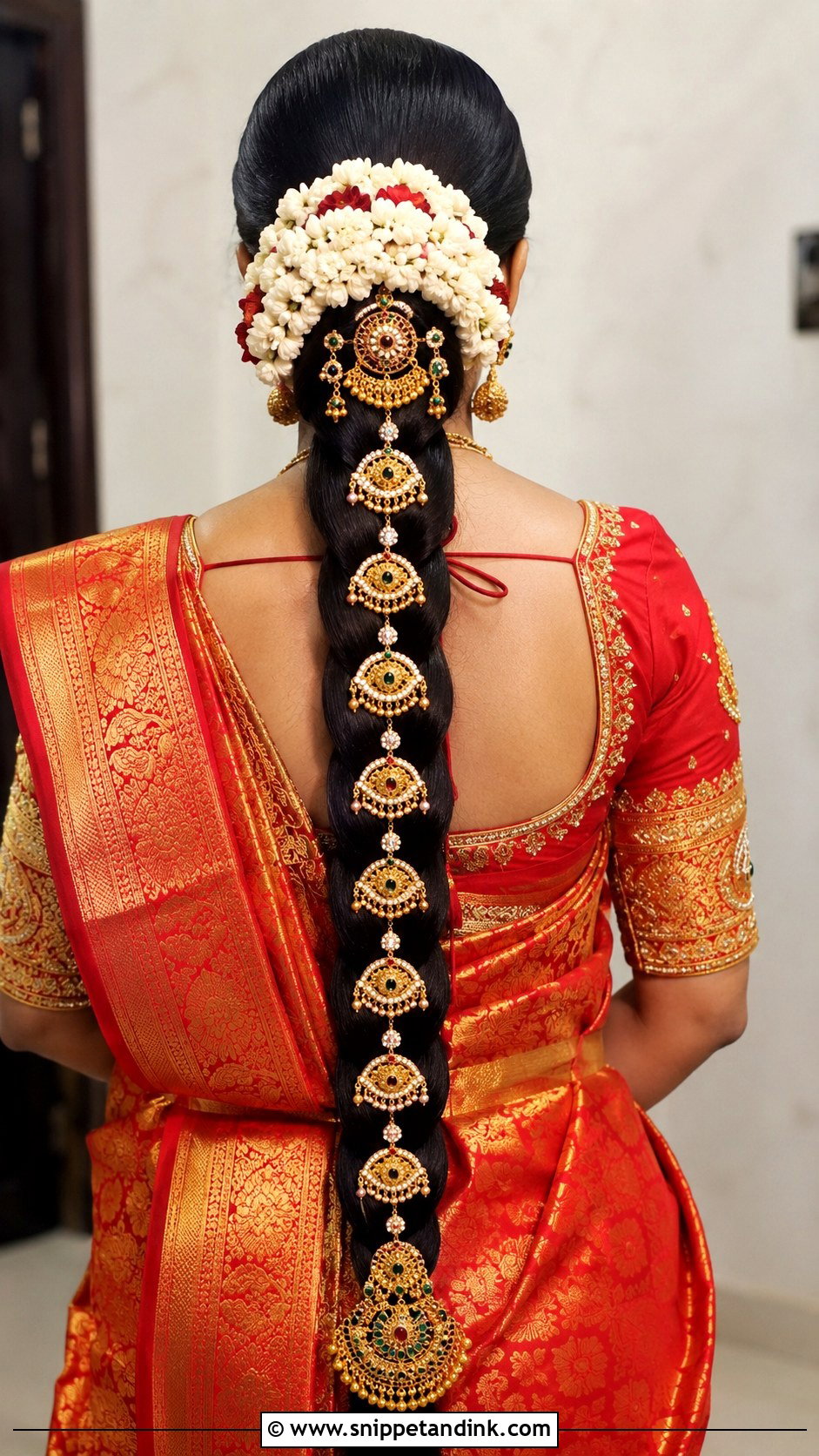
Poola jada is the South Indian bridal braid decorated with flowers and traditional ornaments, and it’s one of the heaviest hair looks a bride wears. Straight hair helps create a firm, even braid that can support the floral structure. Most brides wear it with silk sarees and temple jewelry, with a center-parted maang tikka at the front. What I check first is balance: the flowers must be attached evenly down both sides, or the braid twists and pulls at the scalp. If your hair is short of the length the jada needs, a braid extension underneath is common and nobody sees it.
16. Indian Straight Hair With Dupatta
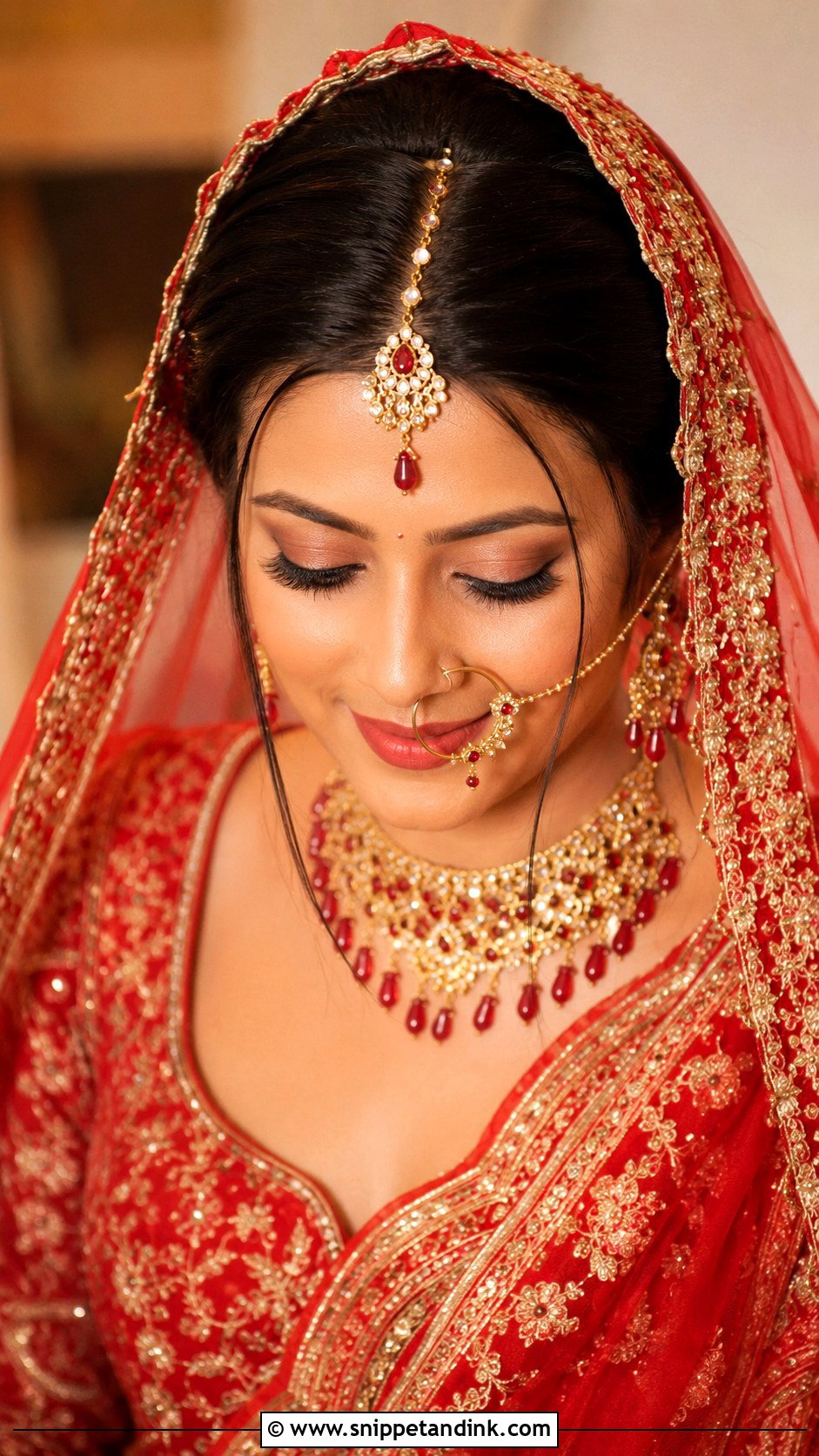
Some wedding looks have to be planned around the dupatta, not the hair. When the fabric covers the head for the ceremony, I keep the front sleek and pin the dupatta through hidden pins set close to the part, so it doesn’t drift back. The rest can be open, in a low bun or in a braid. Flyaways at the forehead are the main enemy, because the dupatta edge catches them and lifts them. A maang tikka or matha patti still sits well over the center part for a traditional covered look.
17. Indian Straight Hair With Pearl Pins
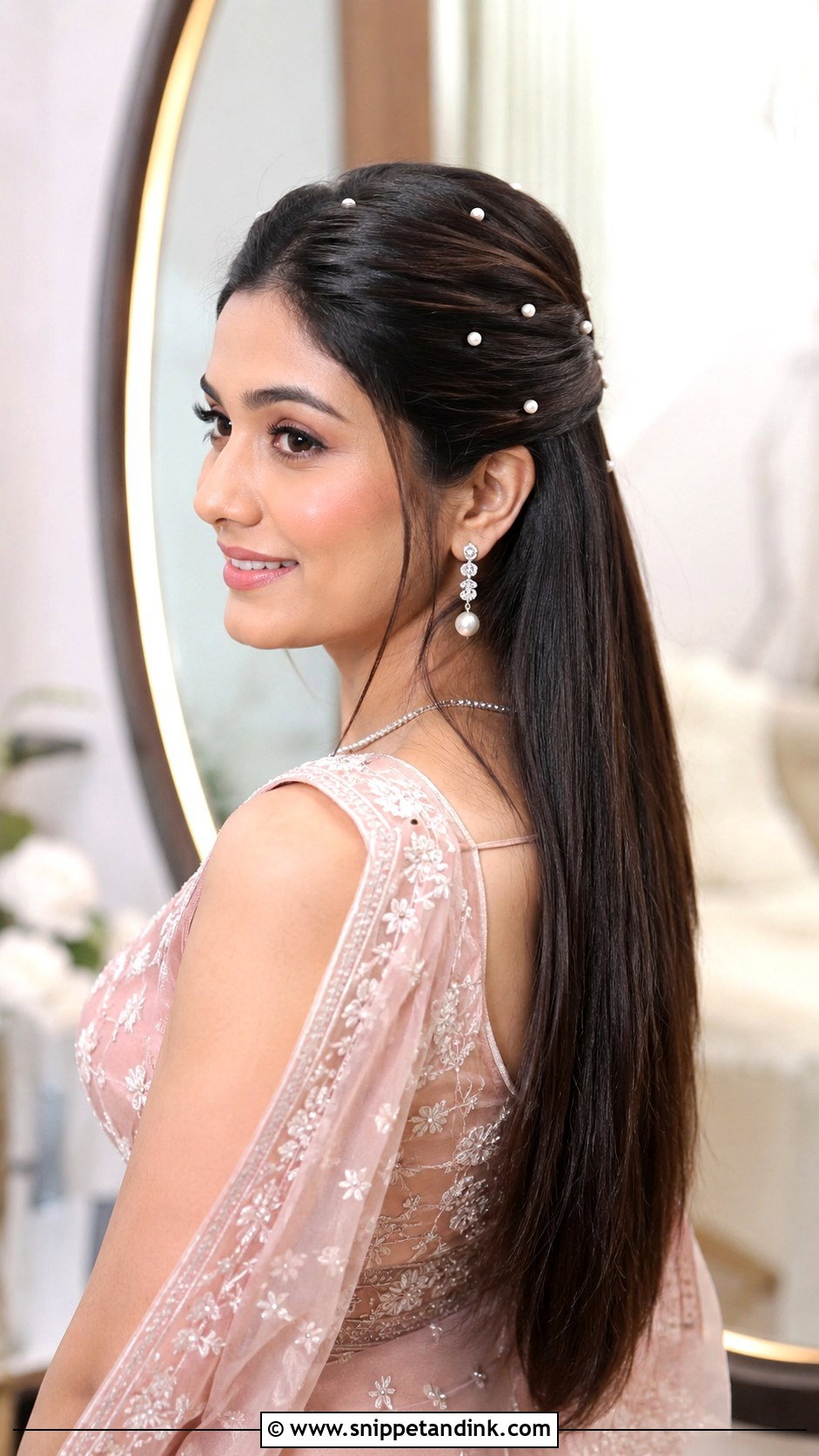
Pearl pins add detail without any weight, which makes them my choice for a bride who finds jewelry on her head tiring. They work on half-up hair, low buns, open hair and sleek ponytails, and against straight glossy hair each pearl stands out in close-up. Small single pins read delicate; clusters read bolder. Placement is the skill. I set them in a loose line or curve rather than scattered at random, so they look planned. Bridesmaids in pastel lehengas suit these well.
18. Indian Straight Hair With Hair Chain
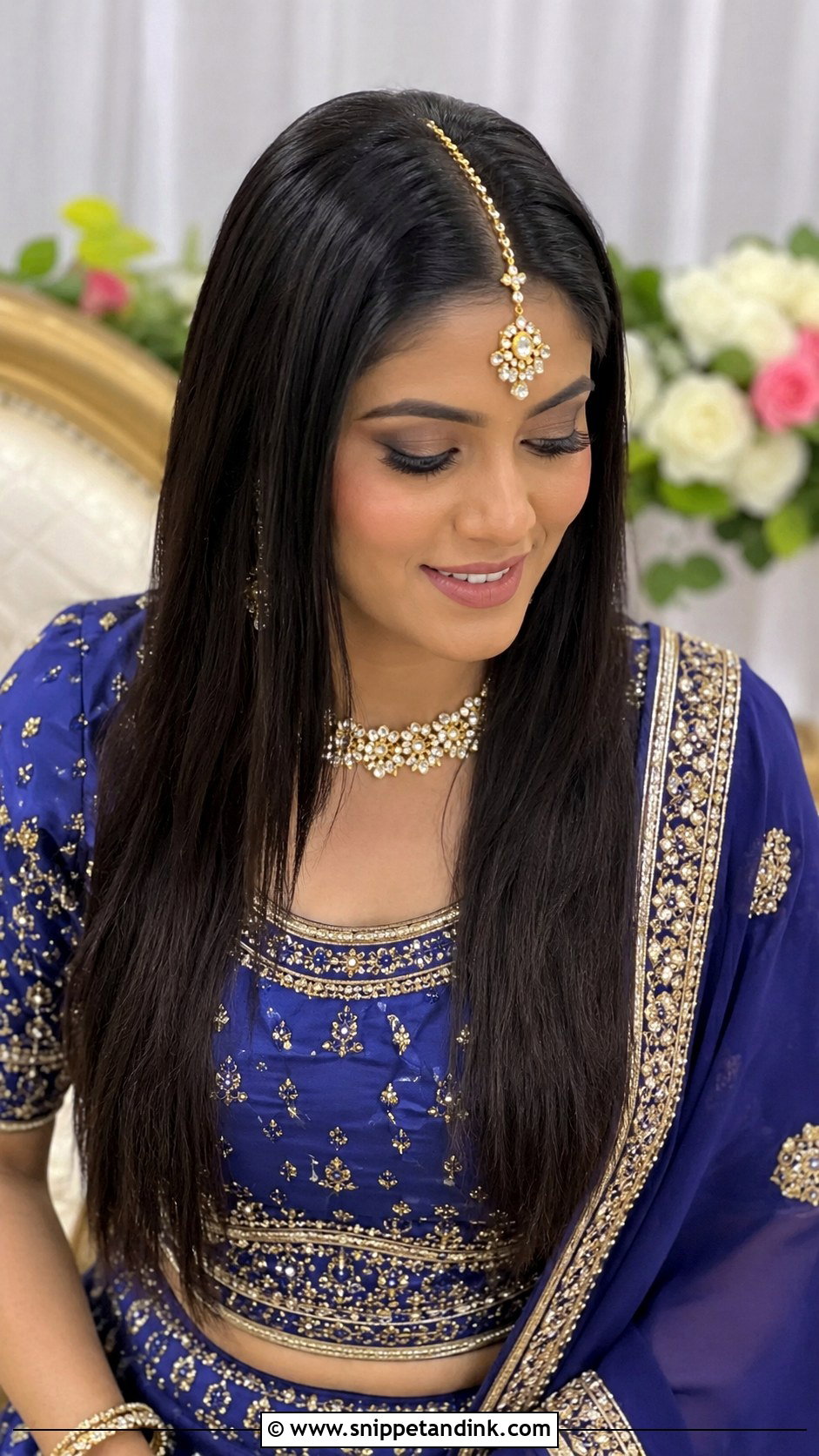
A hair chain needs a stable base, so it works best with braids, low buns and half-up styles rather than loose open hair, where it slides with every head turn. Choose gold, kundan or pearl to match the rest of your jewelry. The hair underneath should be sleek enough for the chain to sit flat. I anchor it with hidden pins at both ends and once in the middle before the event begins, never after the dupatta is on.
19. Indian Straight Hair With Front Puff
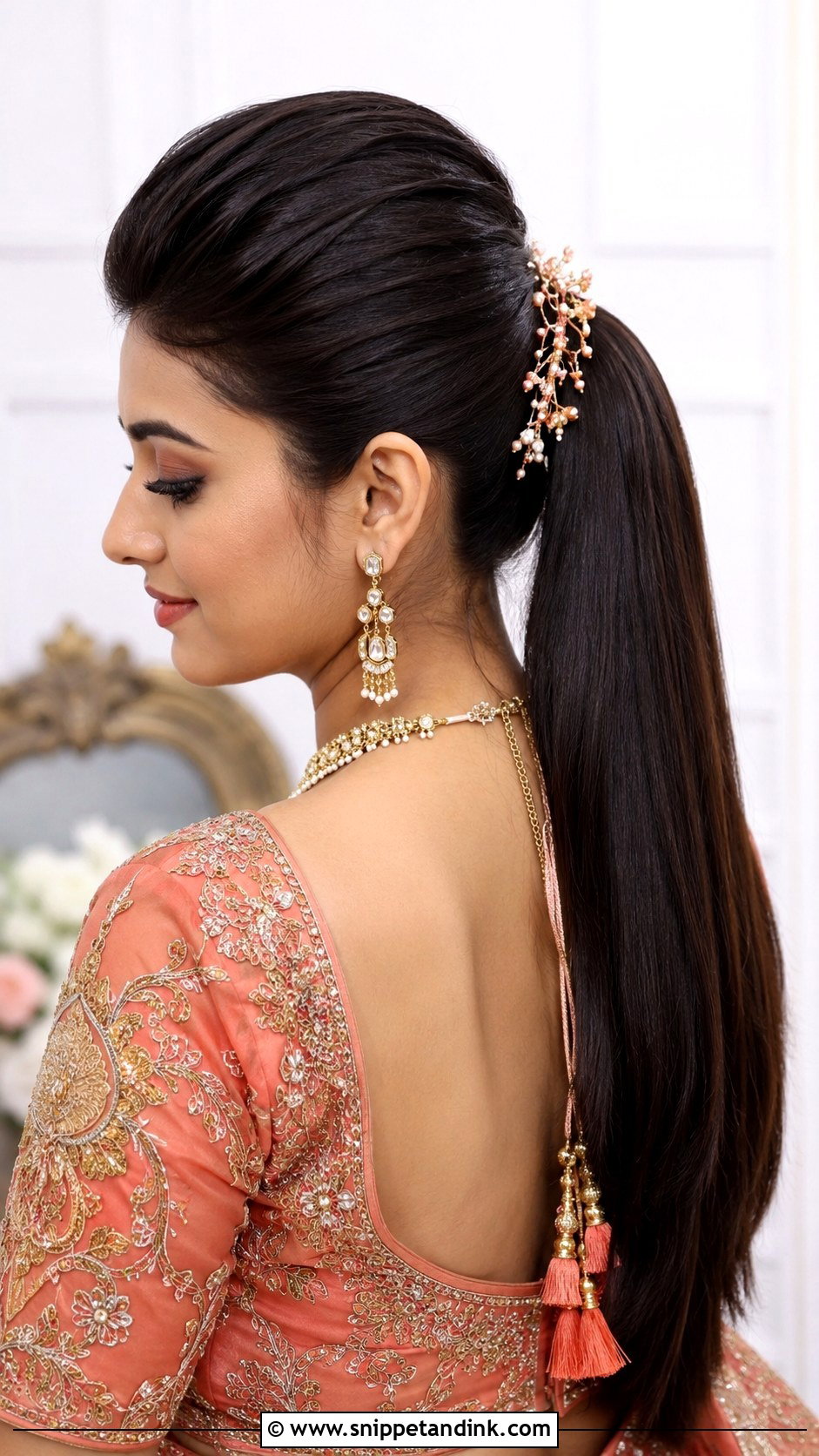
A flat crown is the most common complaint with straight hair, and a front puff fixes it. I tease gently under a section at the crown, smooth the top layer over it and pin it back, then carry on into a ponytail, braid or bun. Keep it low and soft; a tall puff ages the look quickly. It flatters a round face by adding length at the top and gives bridal accessories something firm to sit against.
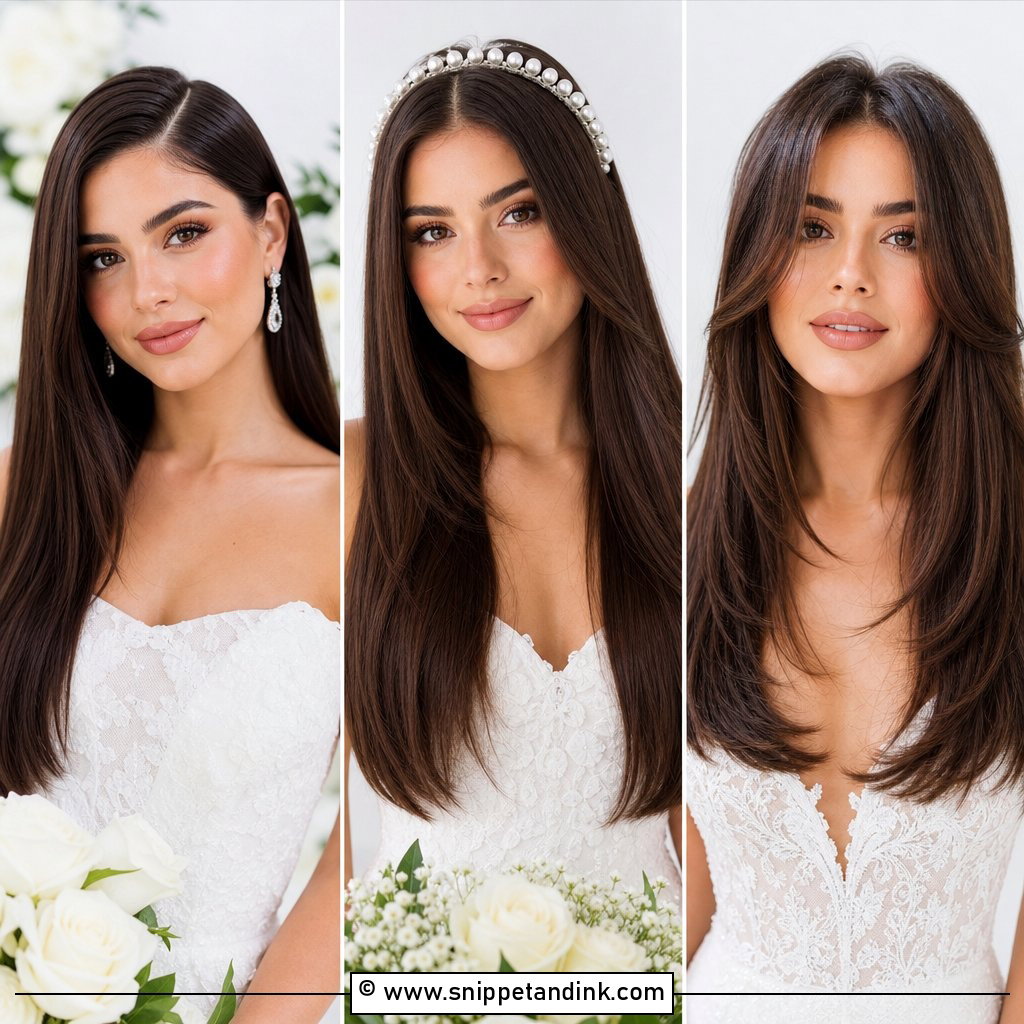
20. Indian Straight Hair Reception Look
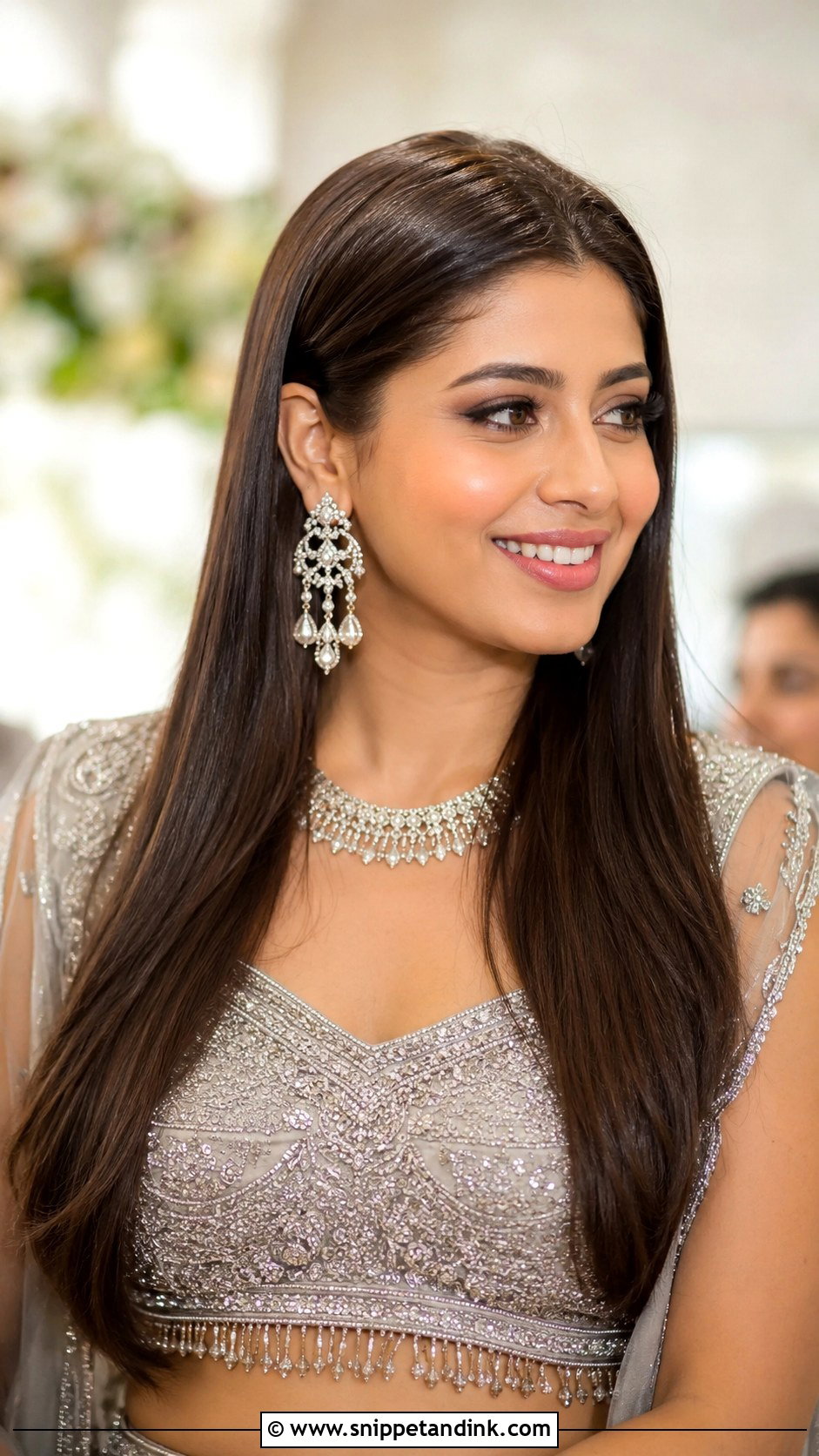
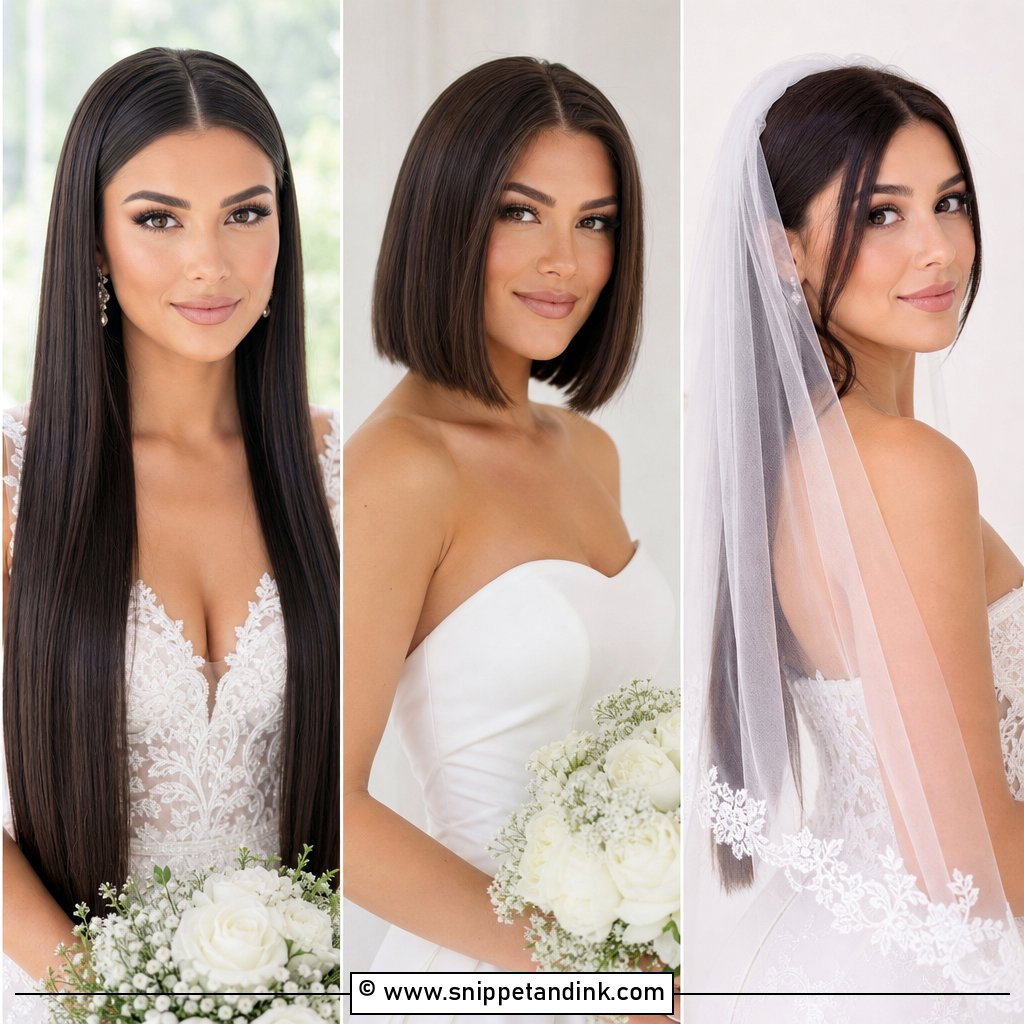
The reception is where straight hair really shines, quite literally, under evening light. I usually go sleeker and more modern than the ceremony look: a sharp side part with glossy open length, a polished ponytail, or a low bun with one bold accessory. Match the choice to the outfit, gown or saree. For product, shine spray goes on the lengths and anti-frizz serum on the ends; keep both away from the roots or the hair goes flat by the time the portraits start.
How Much Serum Is Too Much Under Flash
Shine is the point of straight hair, and it’s also where I see the most damage done on the morning itself. A camera flash exaggerates product, so hair that looks glossy in the mirror can look wet or greasy in photographs. I warm two or three drops of serum in my palms and smooth them over the ends and outer layer, never at the part, then finish with a light shine mist from arm’s length.
When humidity gets in anyway
Monsoon weddings and outdoor mehendi will test any blowout. Put blotting papers and a pea-sized amount of anti-frizz balm in whoever is carrying your touch-up kit. Press the balm onto frizz with flat palms; brushing straight hair mid-event only raises more of it. If the forecast looks heavy, I’d move the open-hair look to the indoor reception and wear a braid or bun outdoors.
Rituals Need Hold, Portraits Need Shine
Straight hair covers the whole wedding, from traditional jasmine buns for the ceremony to sleek reception ponytails. For long rituals, a bun, a braid or a low ponytail holds best. For lighter events and portraits, open or half-up hair gives you movement. The jewelry and flowers make it festive, and the prep makes it last. Bring the real accessories to your trial so I can pin around them, and leave time for a full blowout on the day.
You'll Like These Ideas:



Leave a Reply