
At an Indian wedding the outfit, the jewelry and the makeup are already doing a lot, and straight hair gives all of it a clean frame. It suits brides, bridesmaids, sisters, cousins and guests, and it saves you the disappointment of curls that drop within an hour in humid weather or a long ceremony. The catch is that straight styles here have to carry real weight: tikkas, matha pattis, gajra, dupattas pinned at the crown. So in the looks below I’ve balanced shine against hold and comfort, from sleek open hair with a maang tikka to a low bun with gajra or a ponytail worn with a lehenga, across mehendi, haldi, sangeet, the wedding itself and the reception.
One Blowout Won’t Last From Haldi to the Reception
Indian weddings run across several days, so straight hair has to be planned function by function rather than styled once and hoped for.
Haldi resets everything
Turmeric paste ends up in the hair at almost every haldi, and it can tint light or highlighted hair yellow. Wear your hair in a loose braid with a little oil through the lengths, which makes the paste easier to rinse out, and wash it afterward. Anything you straightened before haldi will need redoing, so book your styling for the function that follows it.
Mehendi means sitting still
You’ll be seated for hours with wet henna on both hands and no way to touch your hair. Choose something that needs no fixing, a braid or a low ponytail, and have someone tie your hair back before the artist starts.
Nights between functions
To keep a straight finish overnight, wrap the hair loosely around your head and pin it flat, or sleep in a loose low braid on a silk pillowcase. A tight bun leaves a dent that means another round with the iron. In a summer or monsoon wedding, damp air undoes straight hair faster than anything, so keep an anti-humidity spray with you.
1. Straight Hair With Maang Tikka
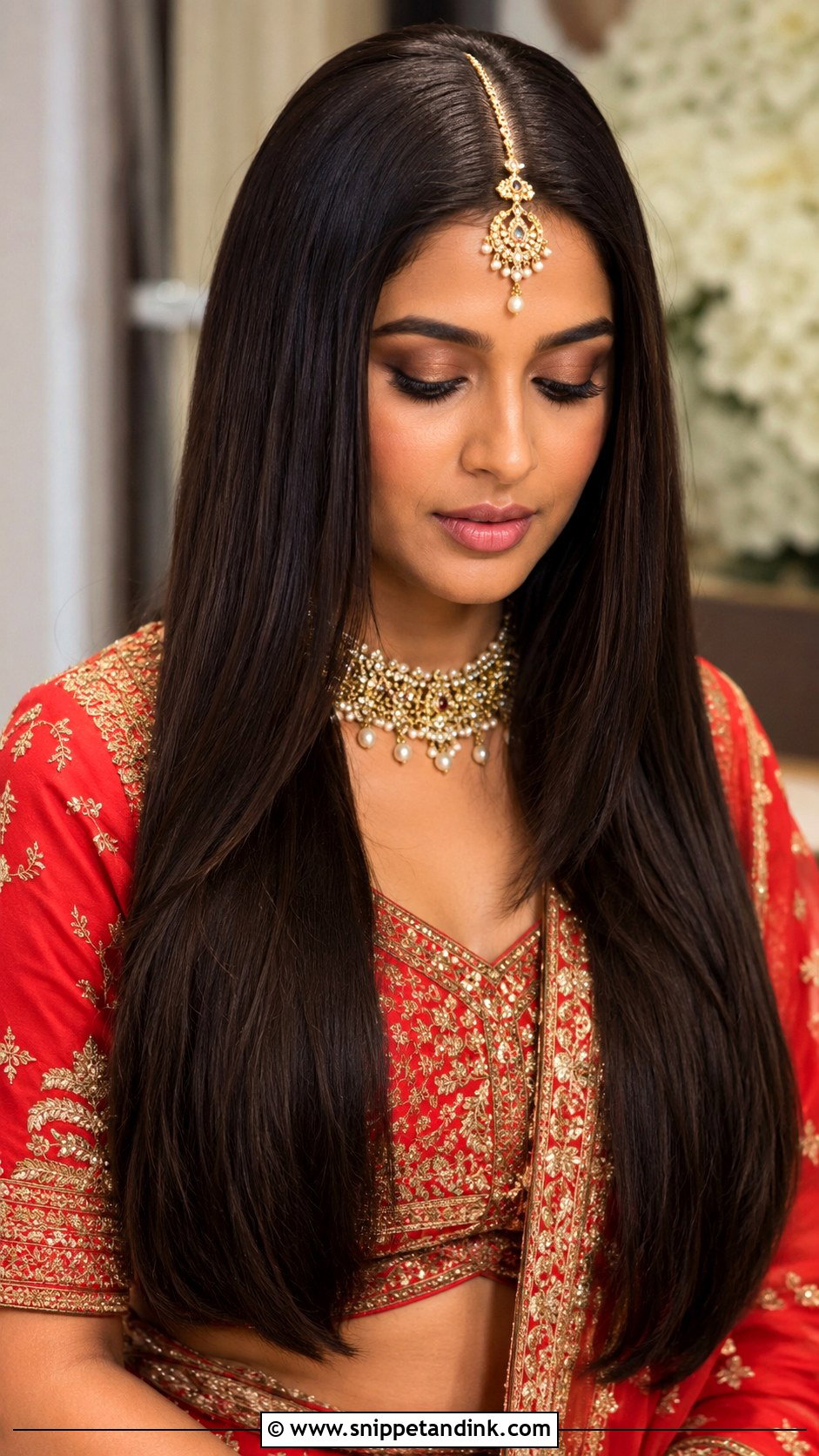
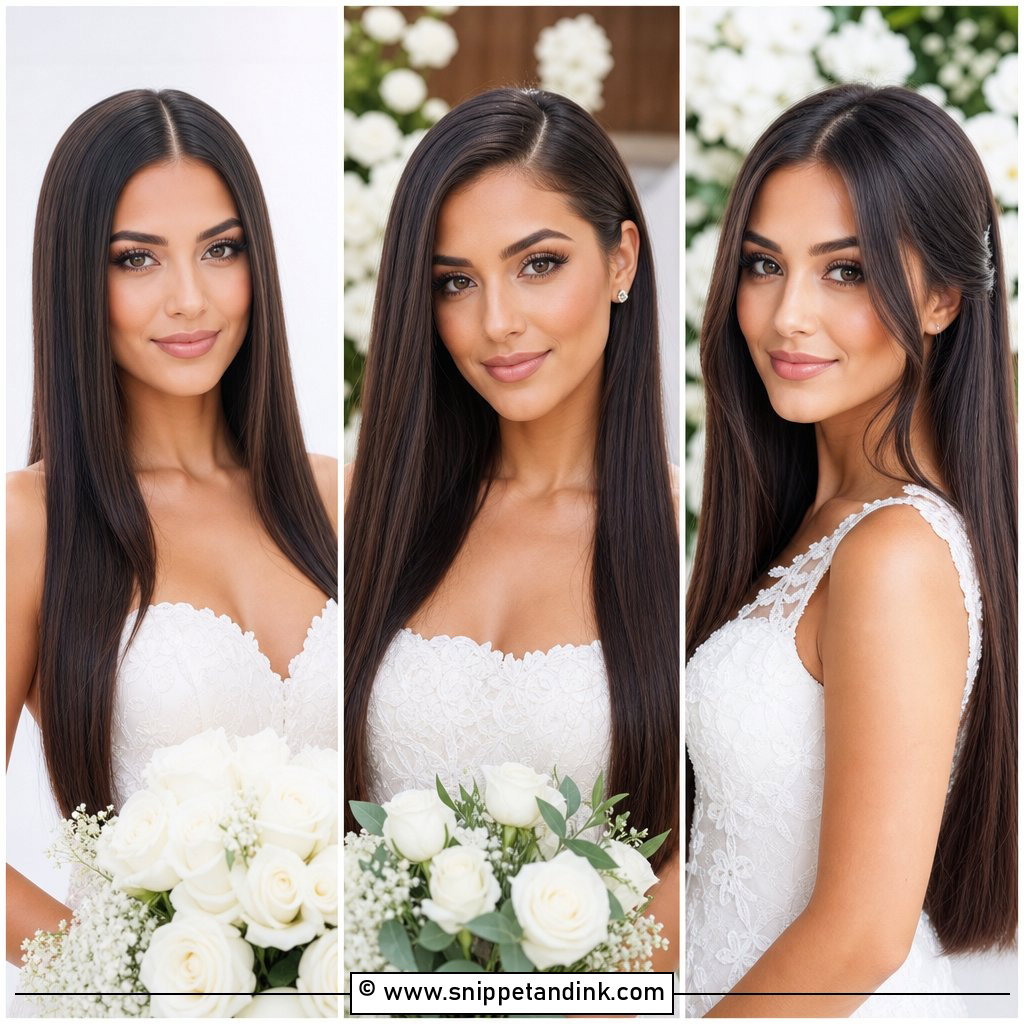
Straight hair with a maang tikka is the pairing I’m asked for most, and it feels traditional without being heavy. The center part is the tikka’s track, so I draw it dead straight from the hairline back to the crown. The chain hooks under a small section at the crown, and on smooth hair I lock that point with crossed pins hidden underneath, otherwise the tikka drifts off-center as the evening goes on. Long or medium lengths with the ends turned softly under finish it, with lehengas, sarees and anarkalis alike. Serum goes on the lengths only, never at the part, so the jewelry doesn’t sit on a greasy line.
2. Sleek Straight Open Hair
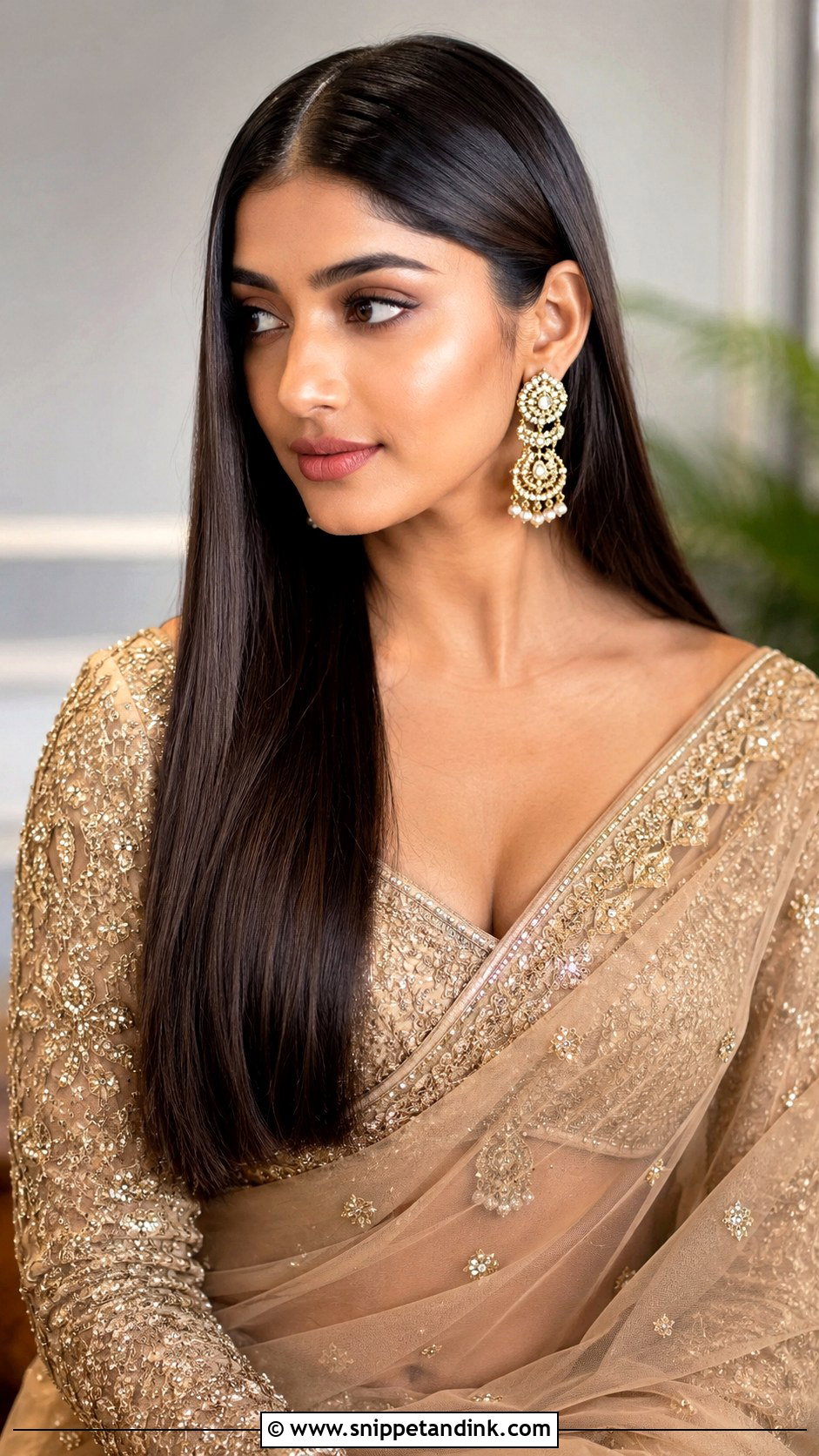
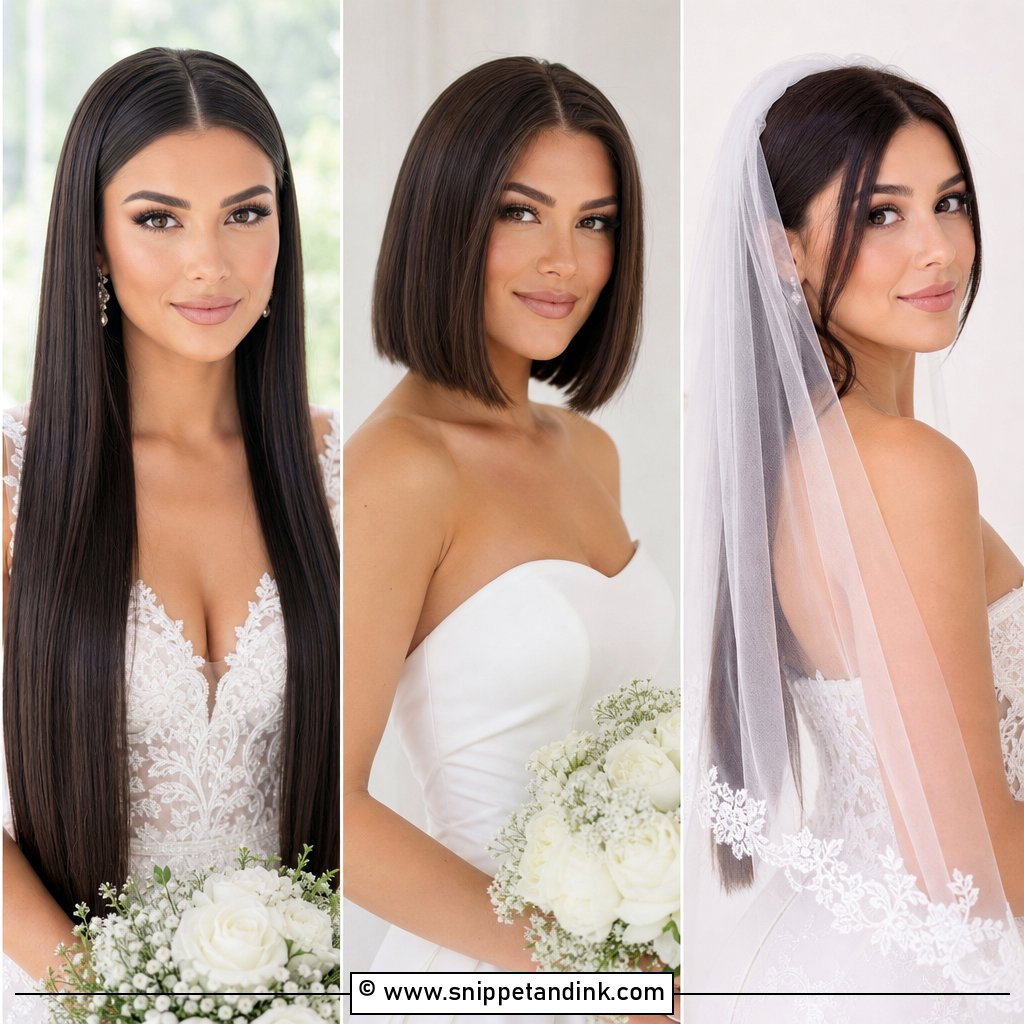
Open hair is the right call when the outfit already carries heavy embroidery, bold jewelry or a dramatic dupatta. It keeps your face fresh and lets the clothes lead. A middle part feels bridal, a side part softer. The prep is what gets it through hours of ceremony: heat protectant, a flat iron in small sections and a light anti-frizz spray. Tuck one side behind the ear to show off jhumkas or chandbalis. In monsoon humidity, though, open hair is the first style to puff up, so I’d quietly plan a half-up version as the backup.
3. Straight Half Up Half Down Hair
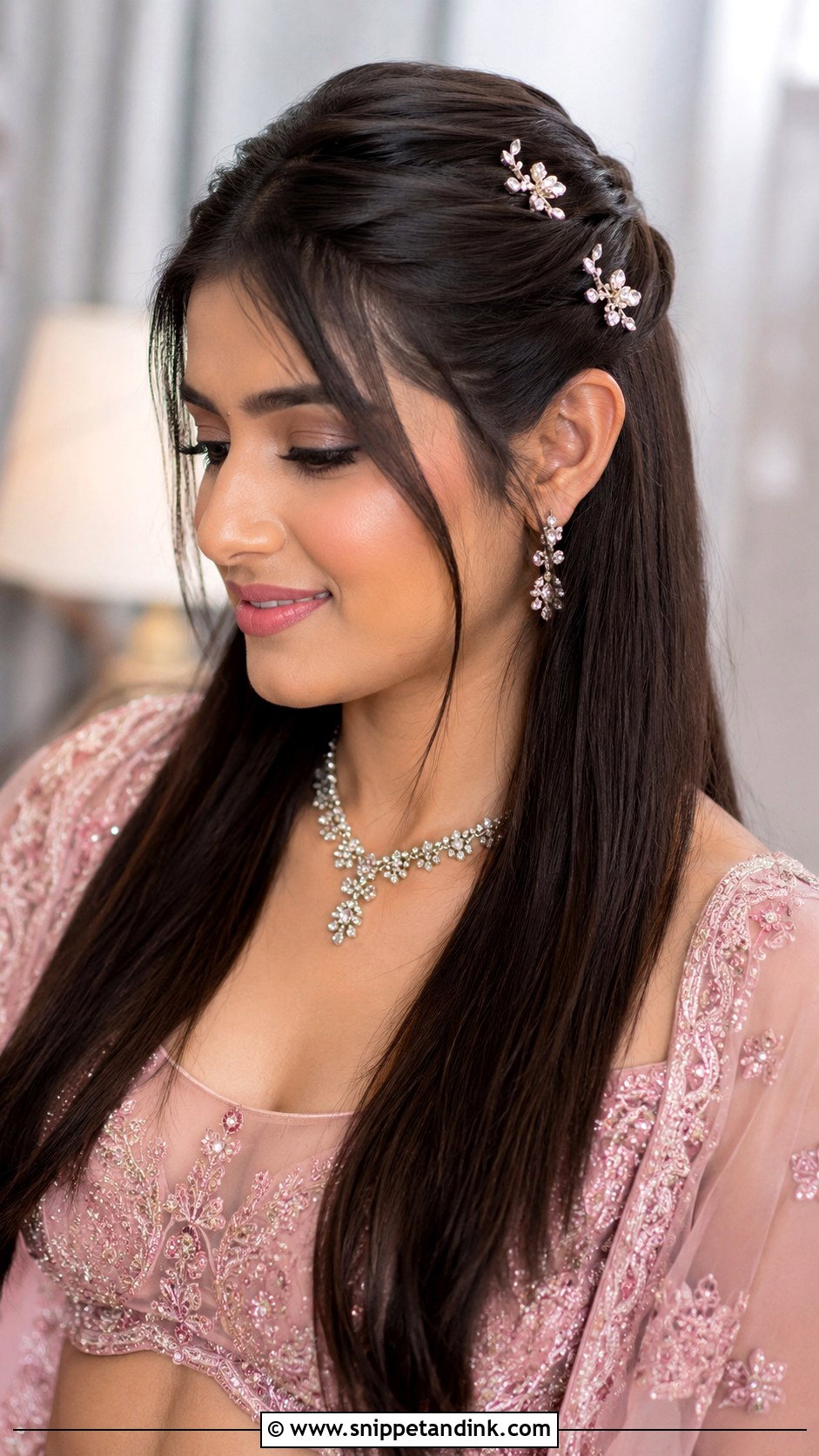
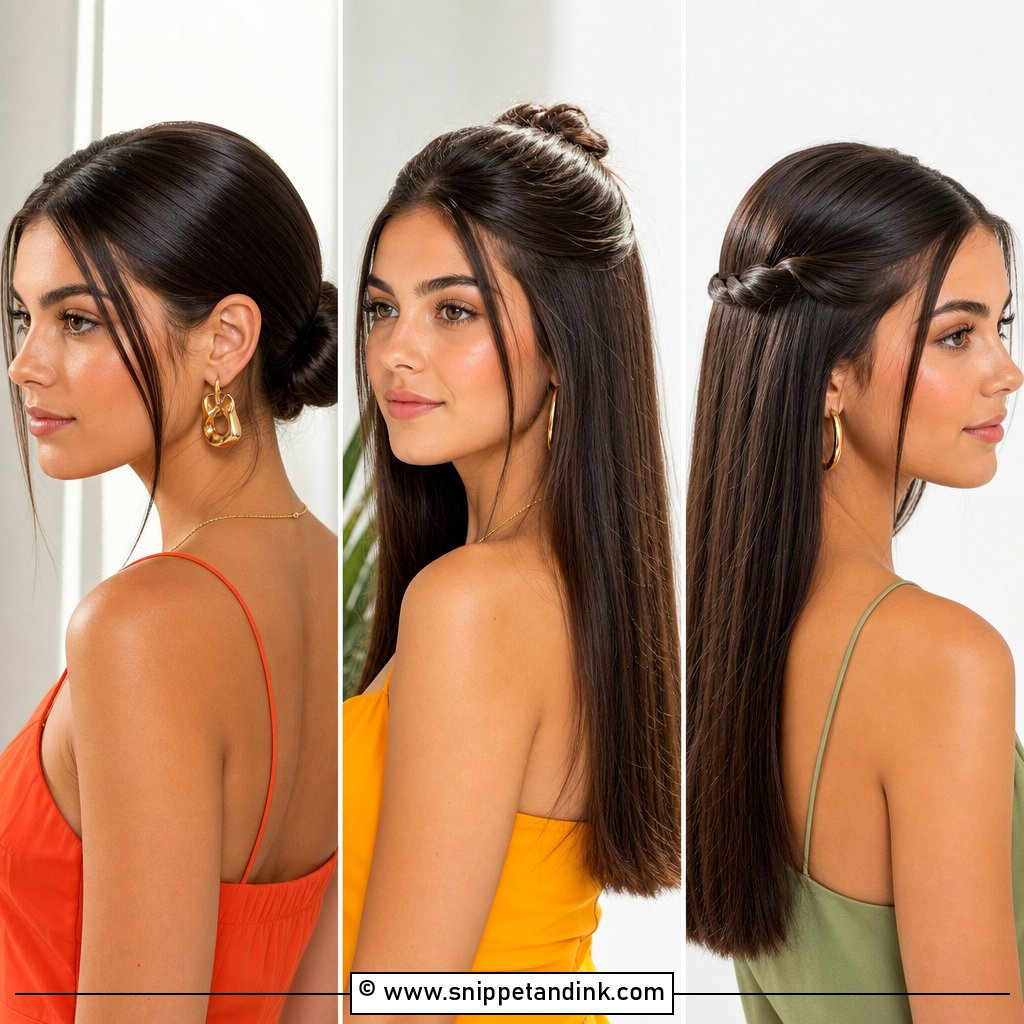
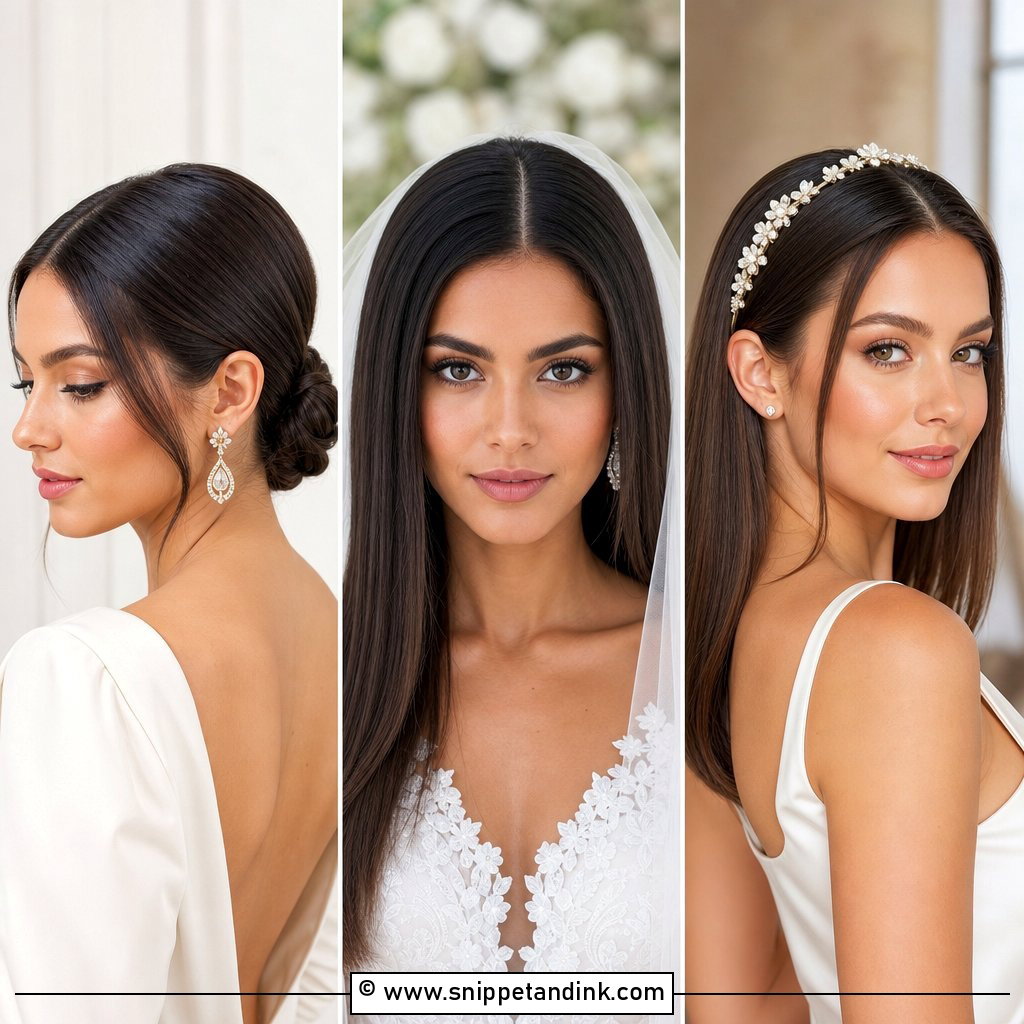
Half up gives you open hair with control around the face, which matters at a sangeet, an engagement or a reception where you’ll be dancing. The top can be pinned, twisted or lightly puffed, and it holds a maang tikka, matha patti or small floral pins comfortably. I keep the lifted section soft rather than stiff. With a heavy lehenga blouse or a saree pallu over one shoulder, a little extra height at the crown balances the volume below.
4. Straight Low Bun With Gajra
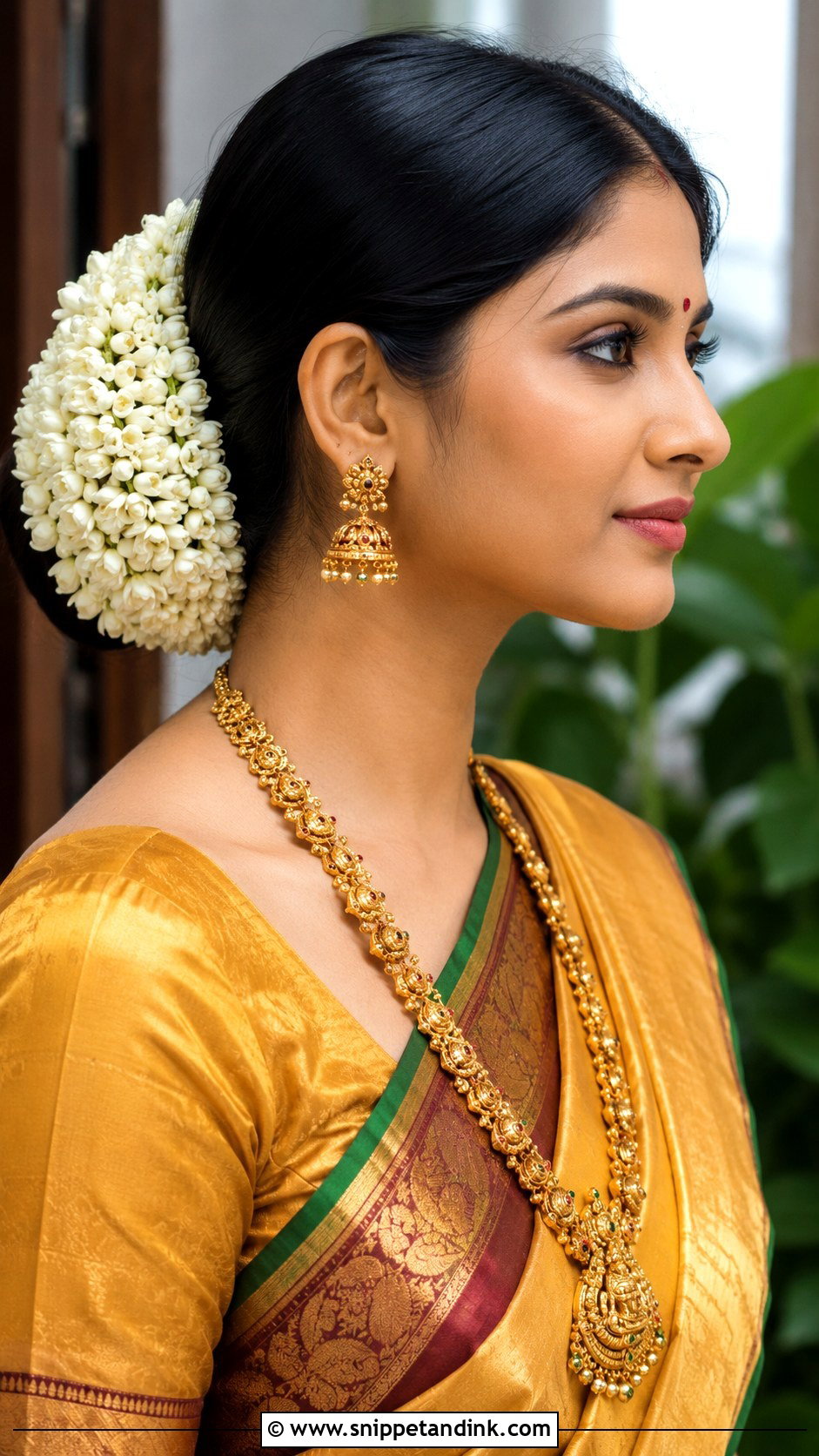
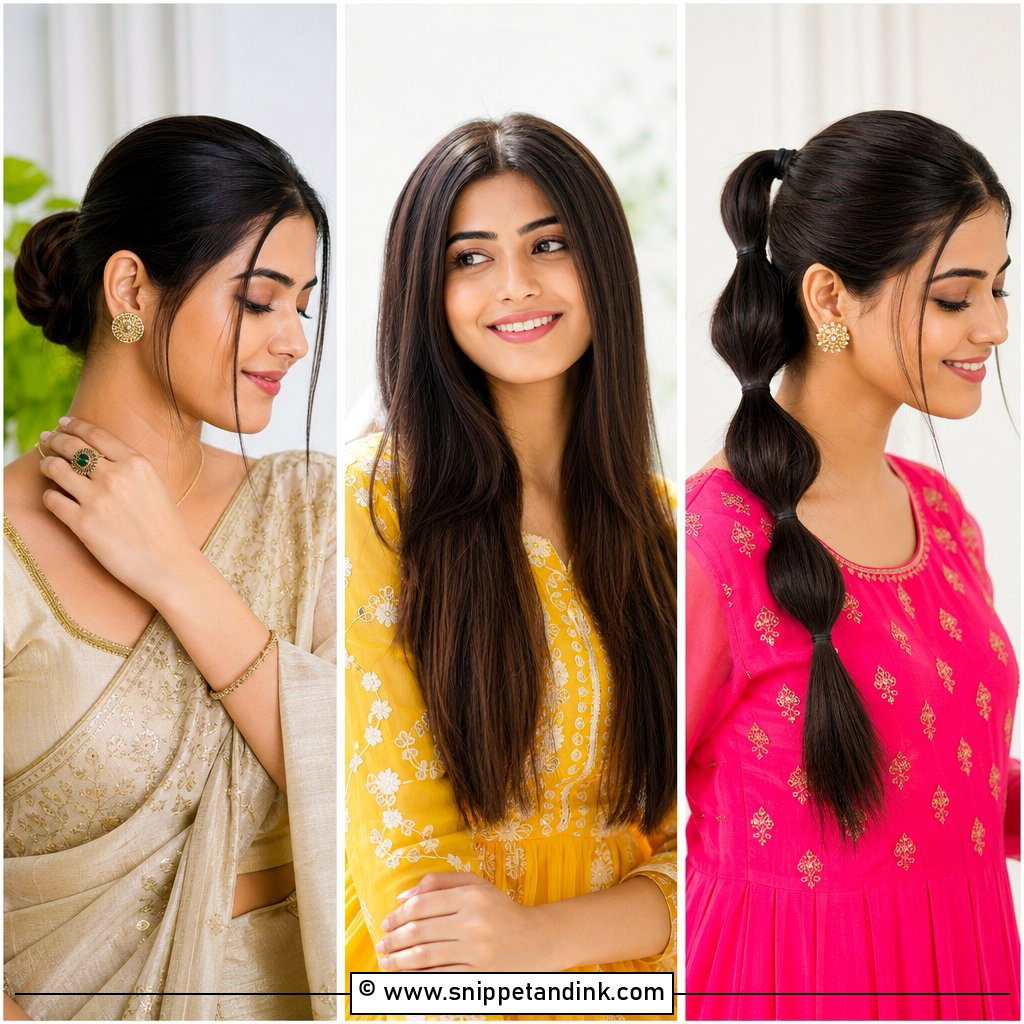
A straight low bun with gajra is the traditional look I still reach for most on ceremony days. Smooth hair gives the jasmine a clean base, so every bud reads clearly, and with sarees, silk lehengas and temple jewelry the look feels complete. Gajra is heavier than it looks once it’s wrapped two or three times, so I pin the strand through the bun itself at several points rather than just around it. Sit the bun at the nape if a dupatta goes over the head; placed higher, it pushes the fabric up into an odd peak.
5. Straight High Ponytail
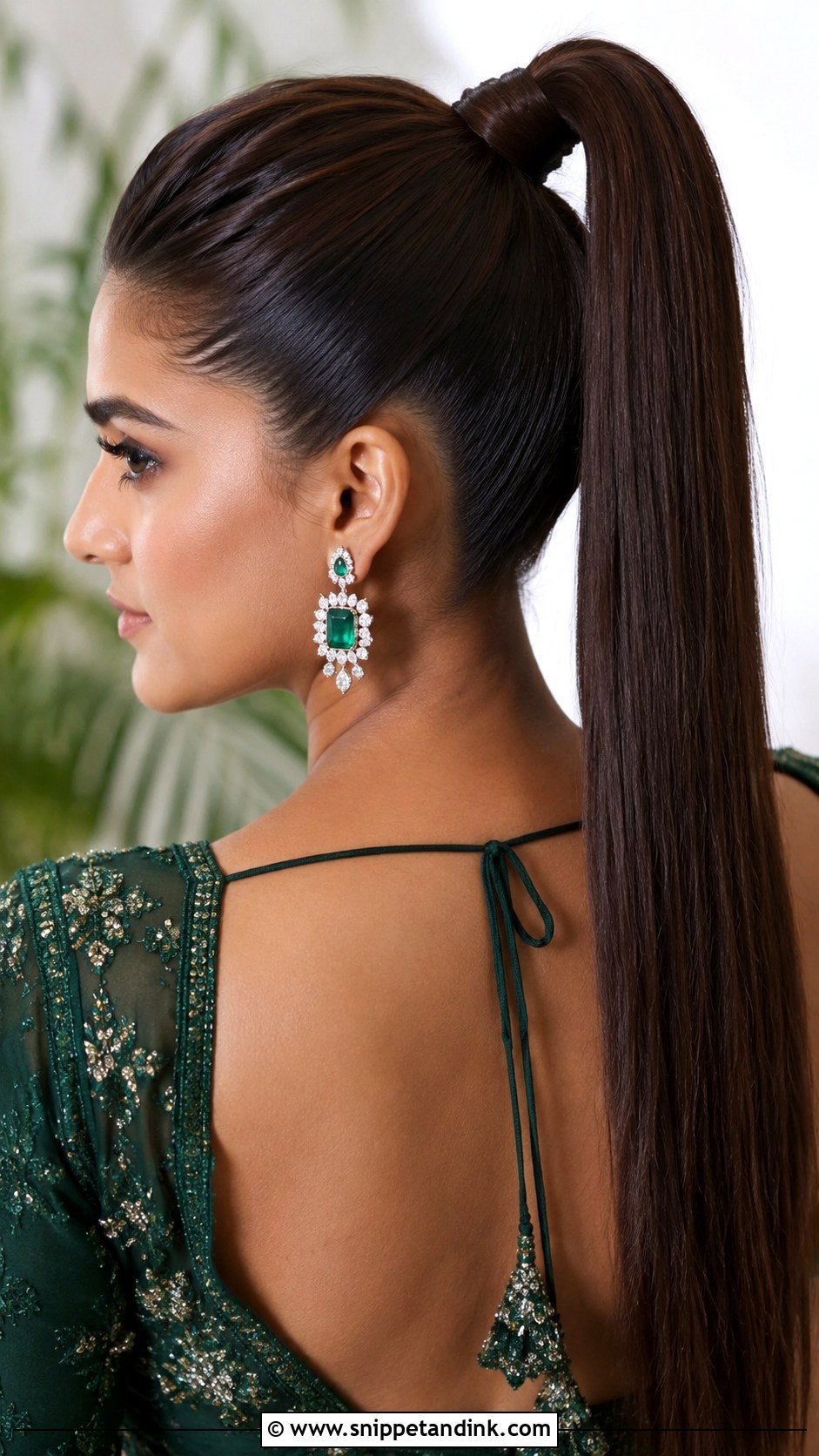
The high ponytail belongs to the modern nights: sangeet, cocktail, reception. It shows your length while keeping hair off your face for dancing. I smooth and lift the crown, wrap a strand around the elastic and let the tail fall in one glossy sheet. Structured lehengas, gowns and embellished blouses suit it, and bold earrings get the whole open neckline. A strong-hold spray at the roots controls flyaways. Skip it on any function where a dupatta goes over the head, because there’s simply nowhere for the fabric to sit.
6. Straight Low Ponytail
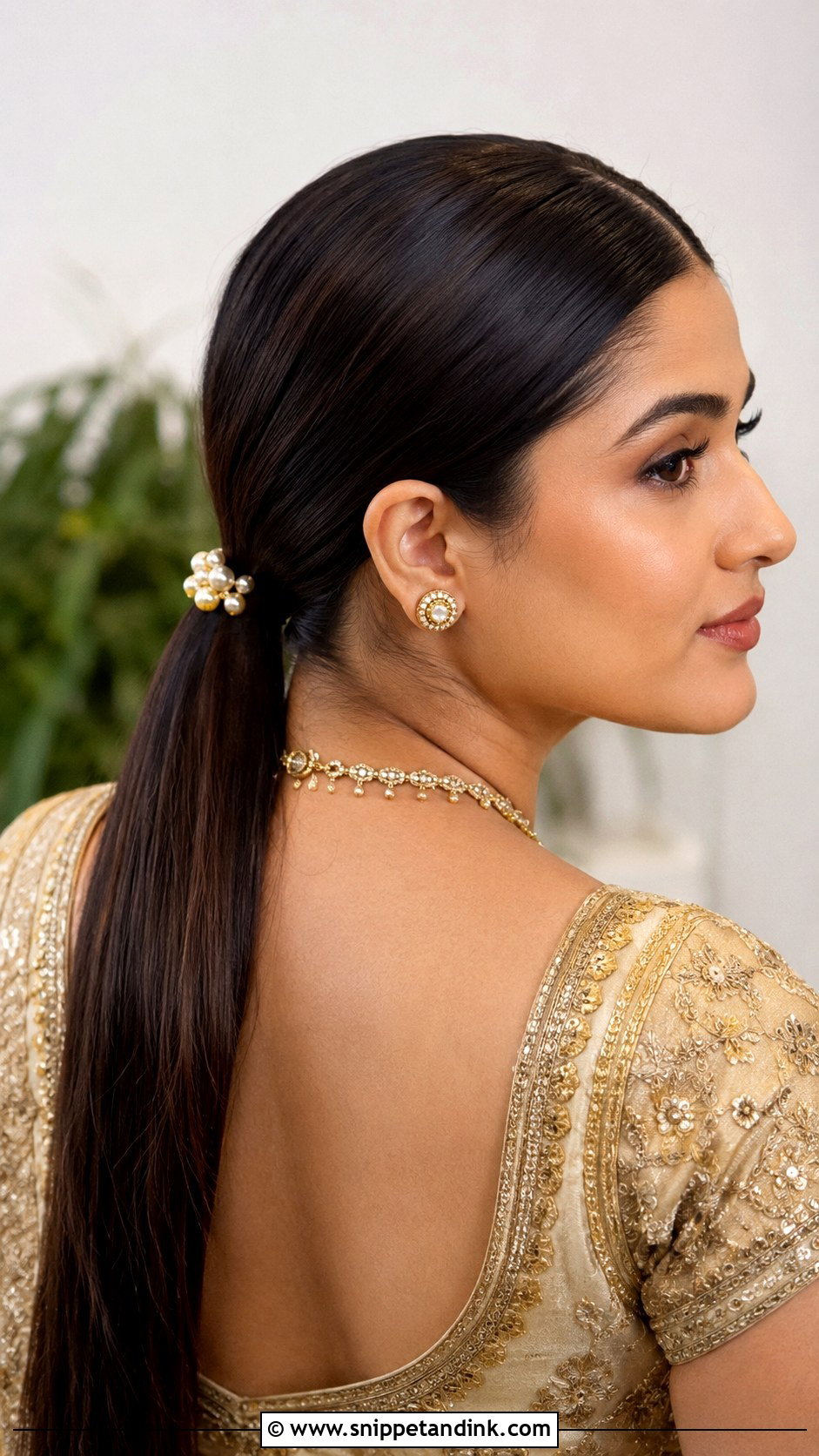
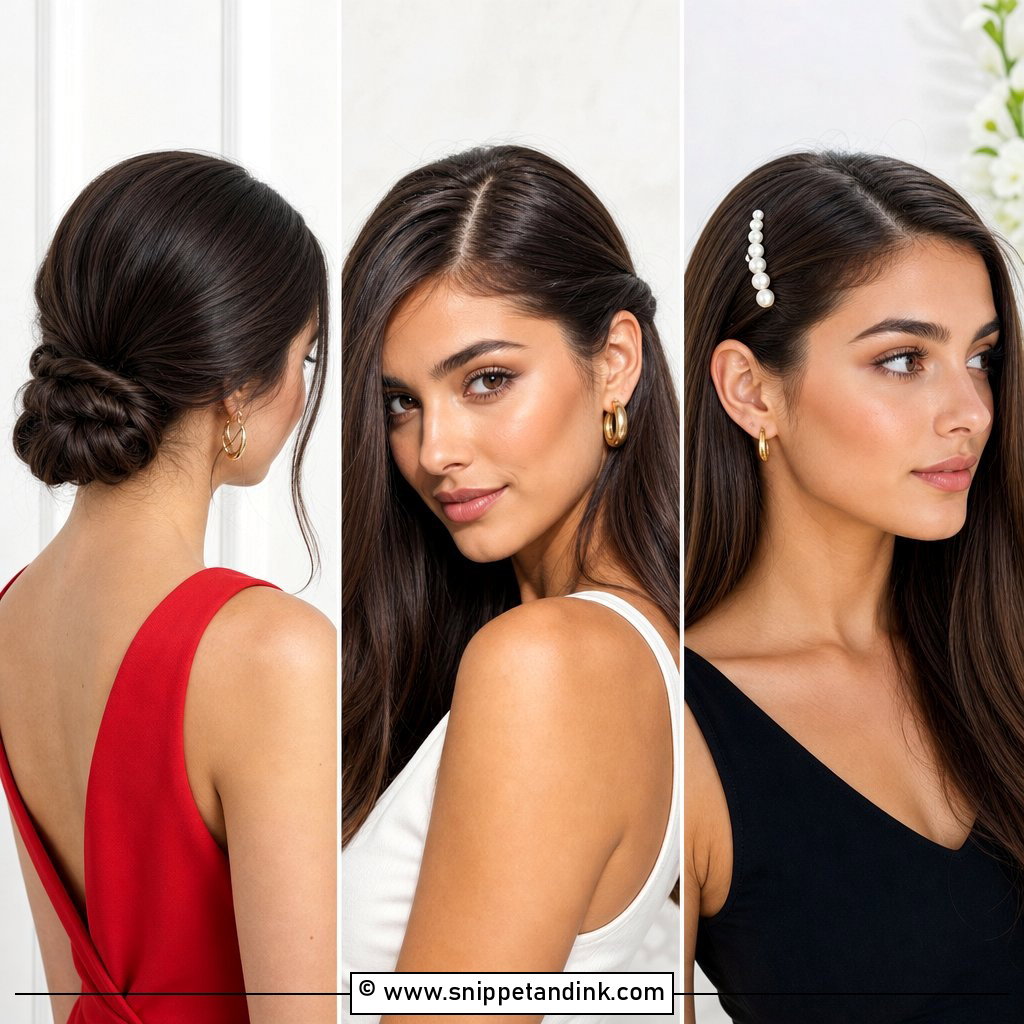
A low ponytail is the quiet middle ground between a bun and open hair. Part it in the center for a classic feel or deep to one side for a reception, keep the lengths smooth and set the base at the nape. If the outfit is plain, a jeweled clip, pearl pin or small floral detail at the base is enough. It sits comfortably under a dupatta, and between functions it’s the easiest style to refresh: take out the elastic, comb through, add a little serum and tie it again.
7. Straight Hair With Matha Patti
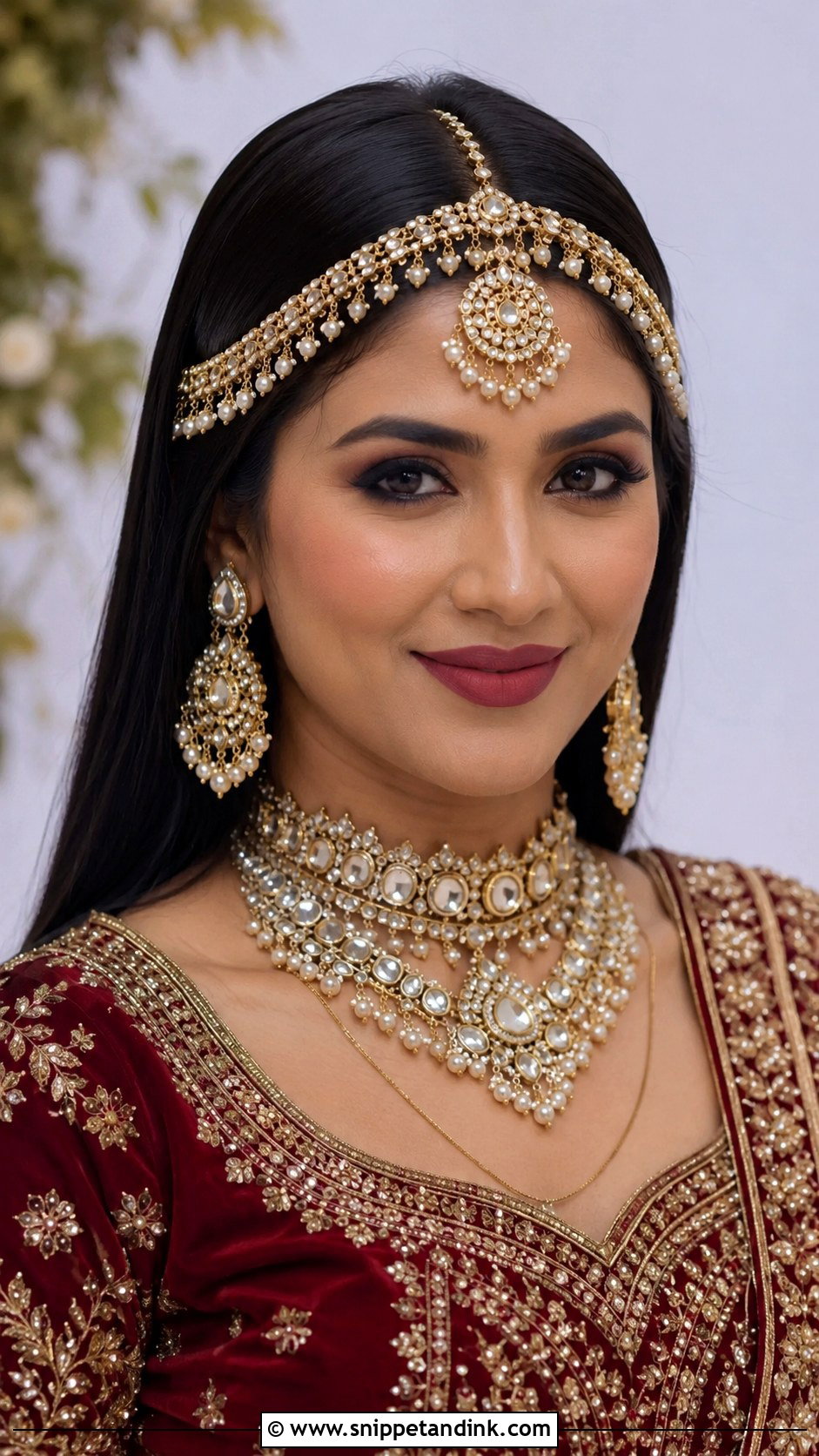
A matha patti runs along the hairline and down the part, so it needs smooth roots and a perfectly straight middle part to lie flat. Volume or frizz at the front pushes it up and makes it look borrowed. I pin it behind both ears and again at the crown, hiding the pins under small sections that drop back over them. The lengths can stay open, half pinned or tucked behind the shoulders. If your scalp is sensitive, wear the piece for an hour at home first, since the side chains press on a spot that can ache by the end of a long evening.
8. Straight Side Part Hair
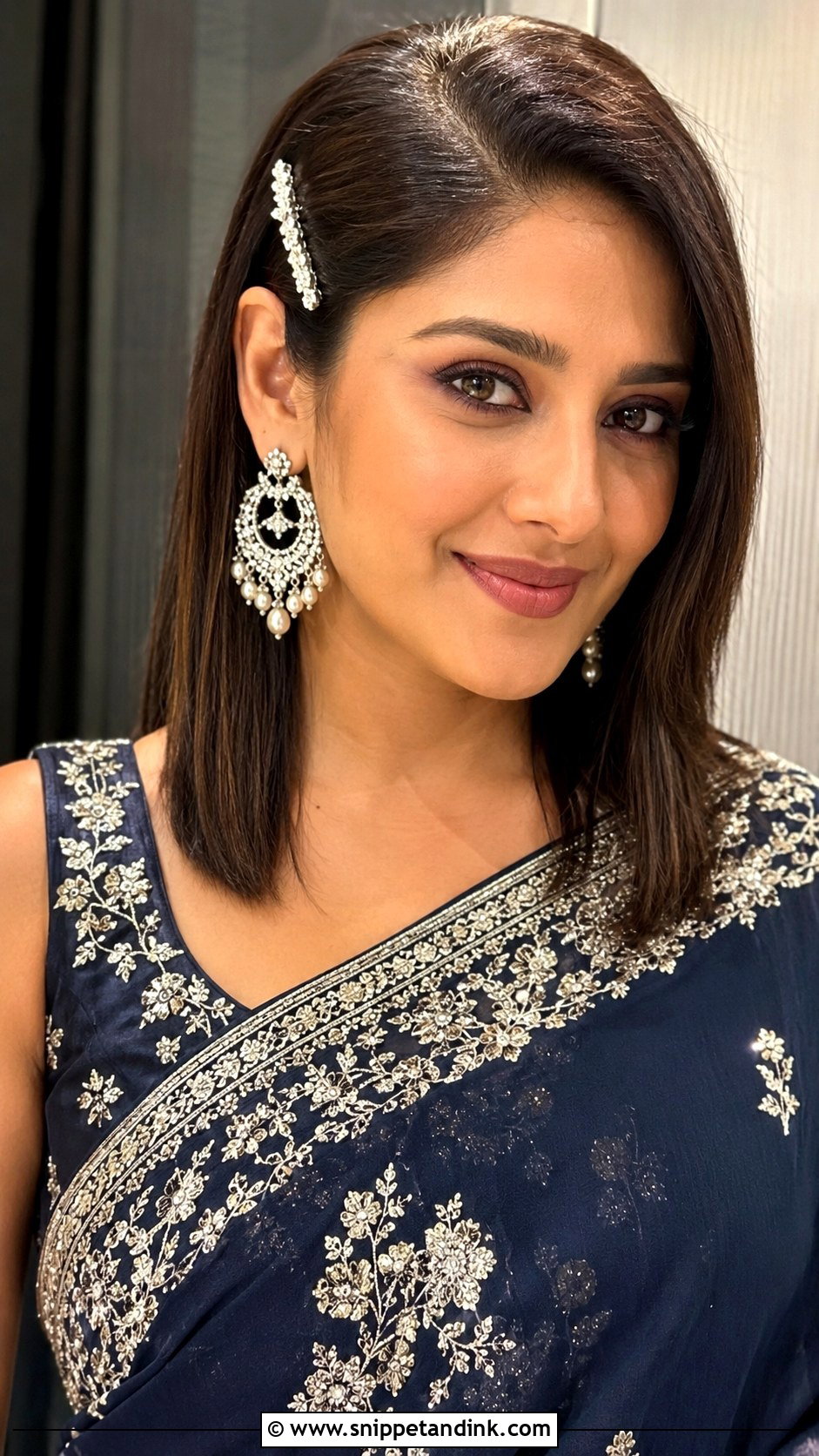
A deep side part makes straight hair look fuller at the crown and suits anyone who finds a middle part too severe. Worn open, tucked behind one ear or pinned with a jeweled clip, it goes with sarees, shararas, lehengas and Indo-western gowns. I bevel the ends slightly inward so they don’t hang flat. One thing to plan around: a maang tikka needs the center line, so if you’re switching jewelry between events, plan the part to match.
9. Straight Hair With Dupatta
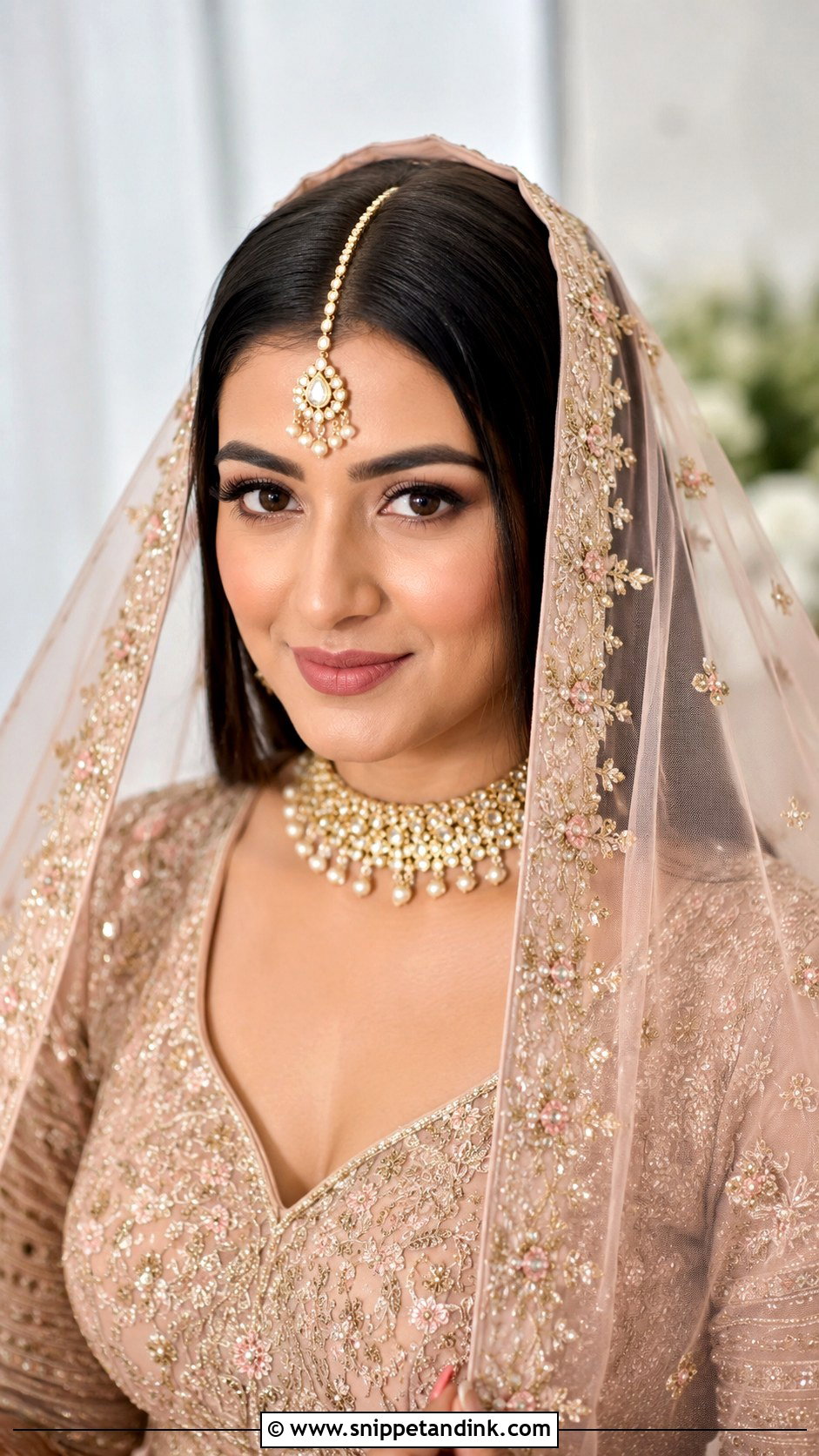
Under a dupatta, straight hair has to look sleek even when half of it is covered. Open under a sheer dupatta, half up, or gathered into a low ponytail are the shapes I use most for rituals. Smooth sides stop the fabric from bunching around the face. Use pins matched to your hair color, and keep shine spray on the lengths only. Product near the roots transfers onto silk and net and leaves marks that show in daylight photos.
10. Straight Braided Ponytail
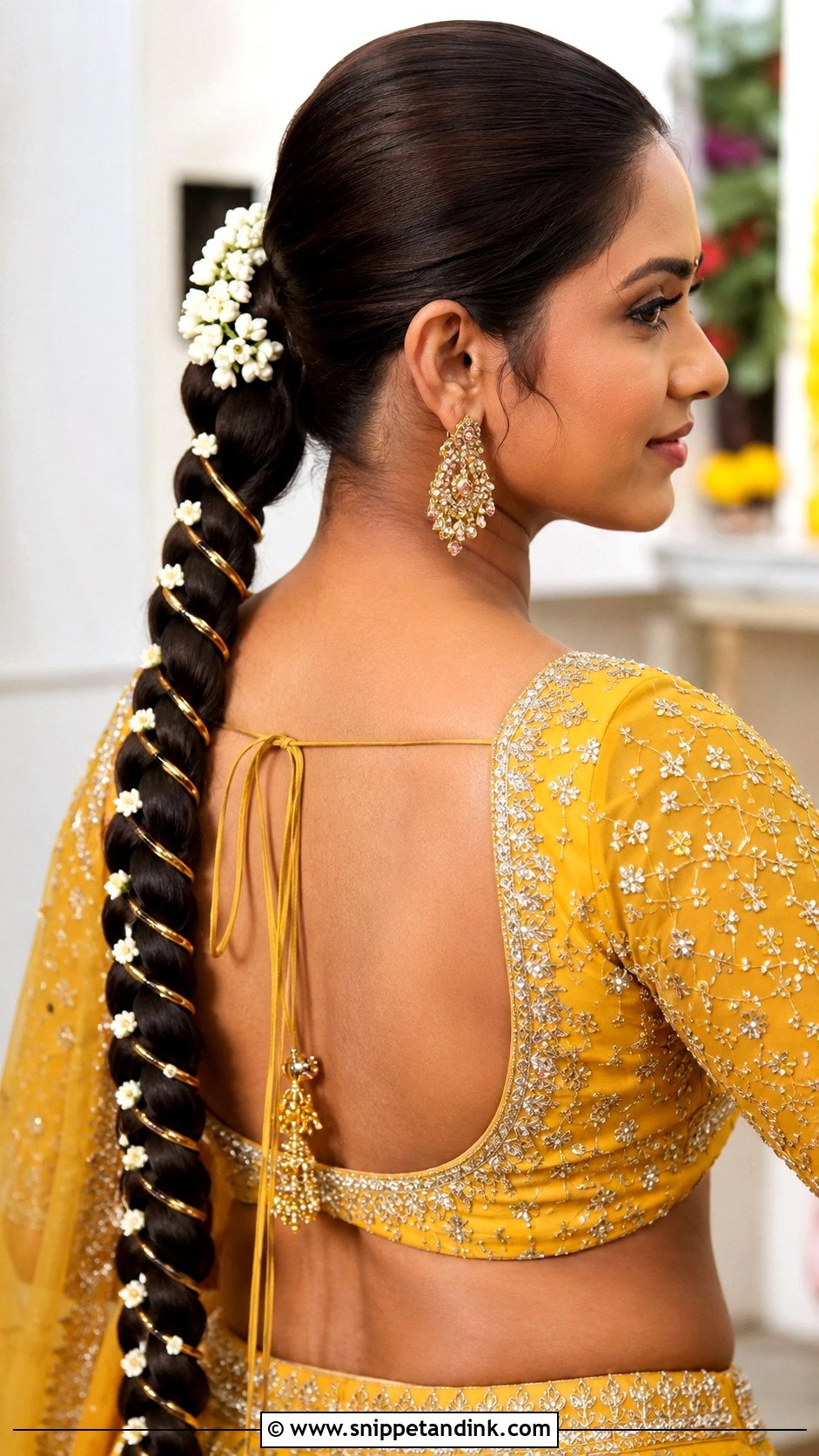
A braided ponytail gives you a braid’s structure with straight hair’s polish, and it stays put through mehendi, haldi, or sangeet. Start with a smooth crown, then braid the tail neatly down the back. Small flowers, pearls or gold thread woven through make it festive, and long hair or extensions carry it best. It keeps your neck cool at a daytime function, and because you’ll sit still for hours at mehendi, it’s one of the few styles that won’t need fixing afterward. A light serum over the braid surface finishes it.
11. Straight Hair With Front Puff
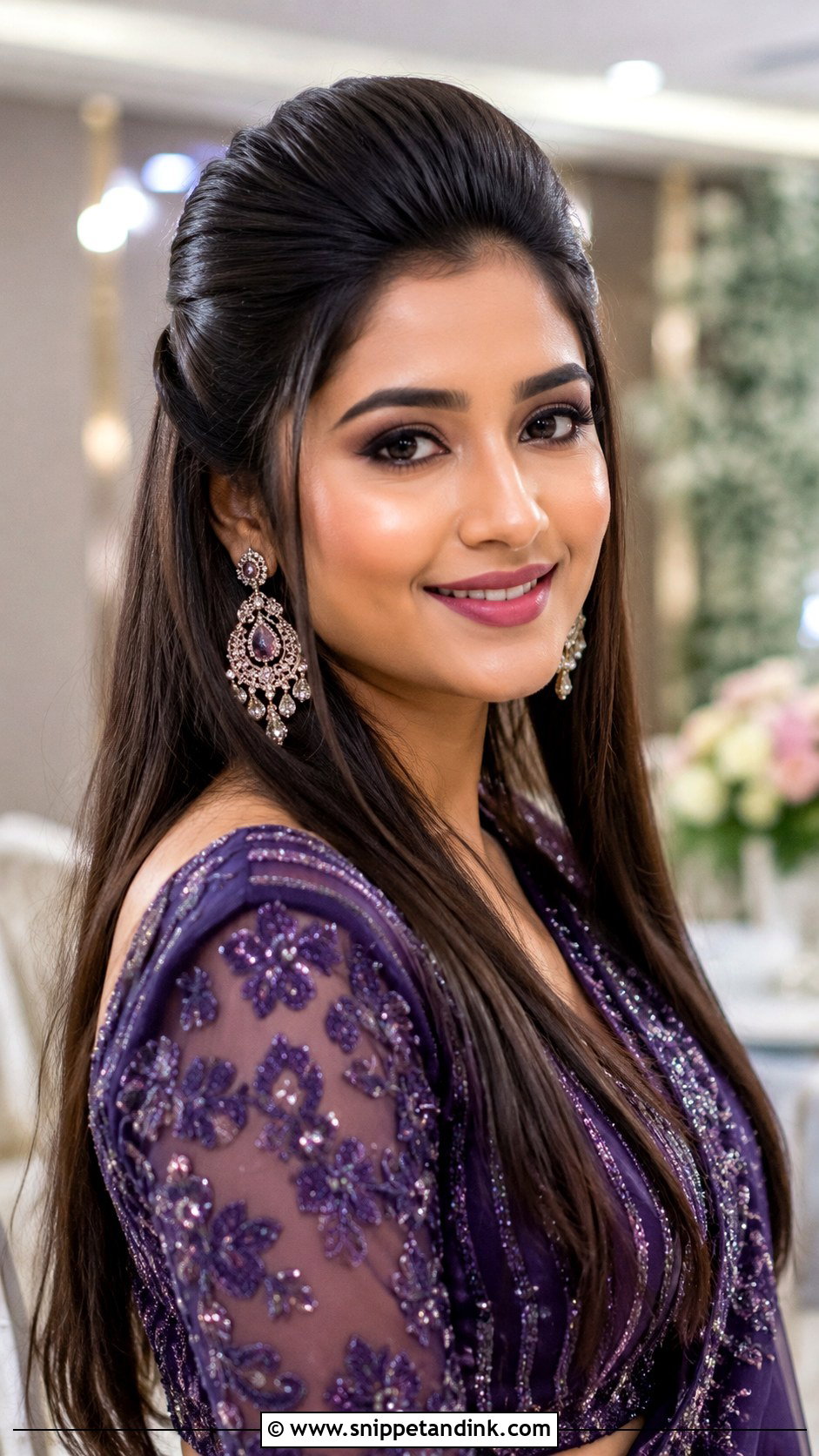
A front puff adds height when the outfit is heavy below it, with a big dupatta, a high neckline or a detailed blouse. The lifted crown balances all of that. It should be soft and smooth, not a teased mound. I backcomb lightly underneath, lay the top layer over it and pin from below so no pins show. The rest can stay open or half up. On very fine straight hair, a small puff insert gives the height without endless backcombing.
12. Straight Layered Hair
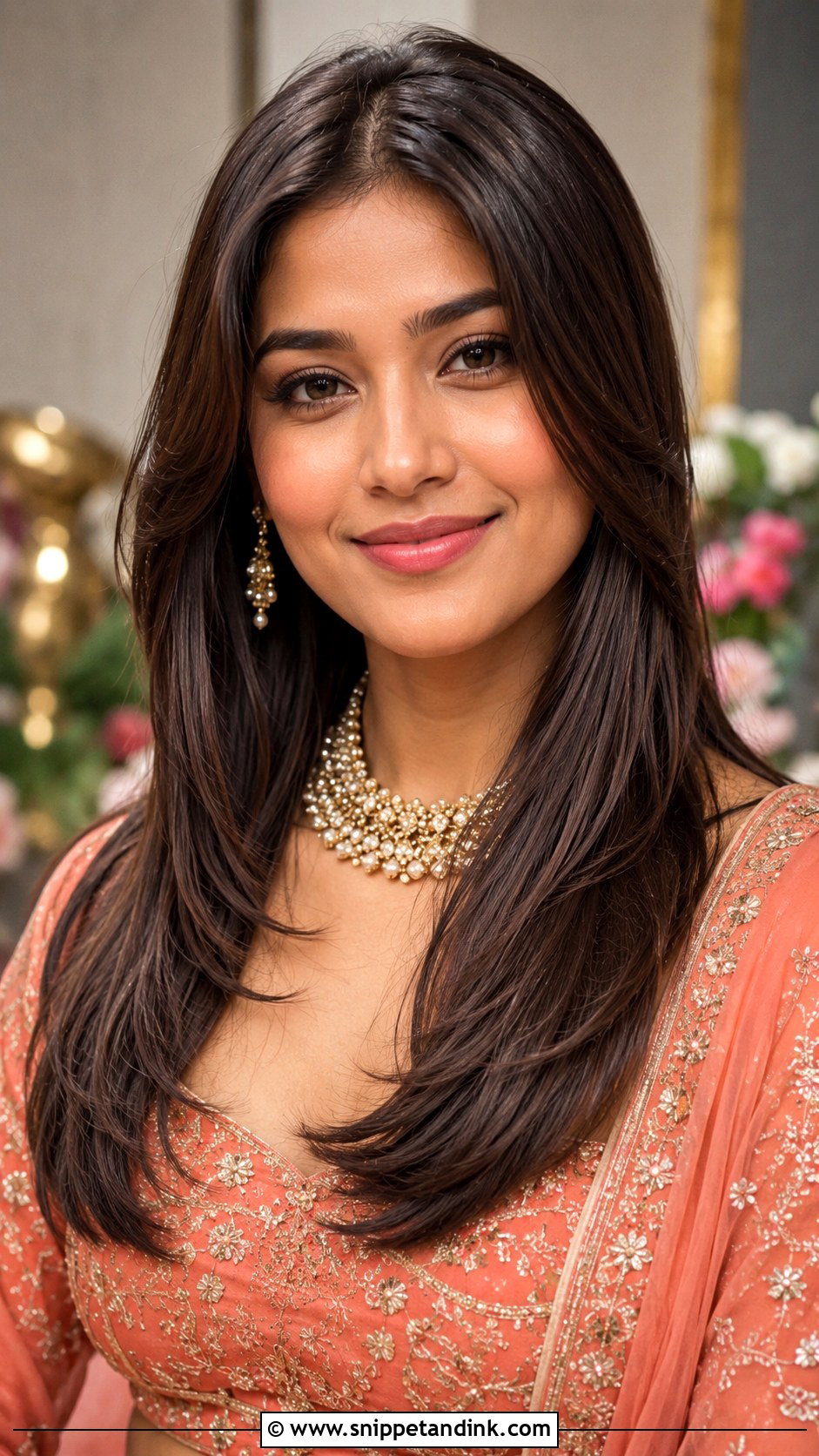
Layers give straight hair movement without curls. Long face-framing layers soften the jaw and show off earrings, and longer back layers make the length look fuller. I blow-dry them with a round brush first and use the flat iron only where they need it, so they move instead of looking pressed. A small clip adds a festive note with a lehenga, saree or gown.
13. Straight Bob Hair
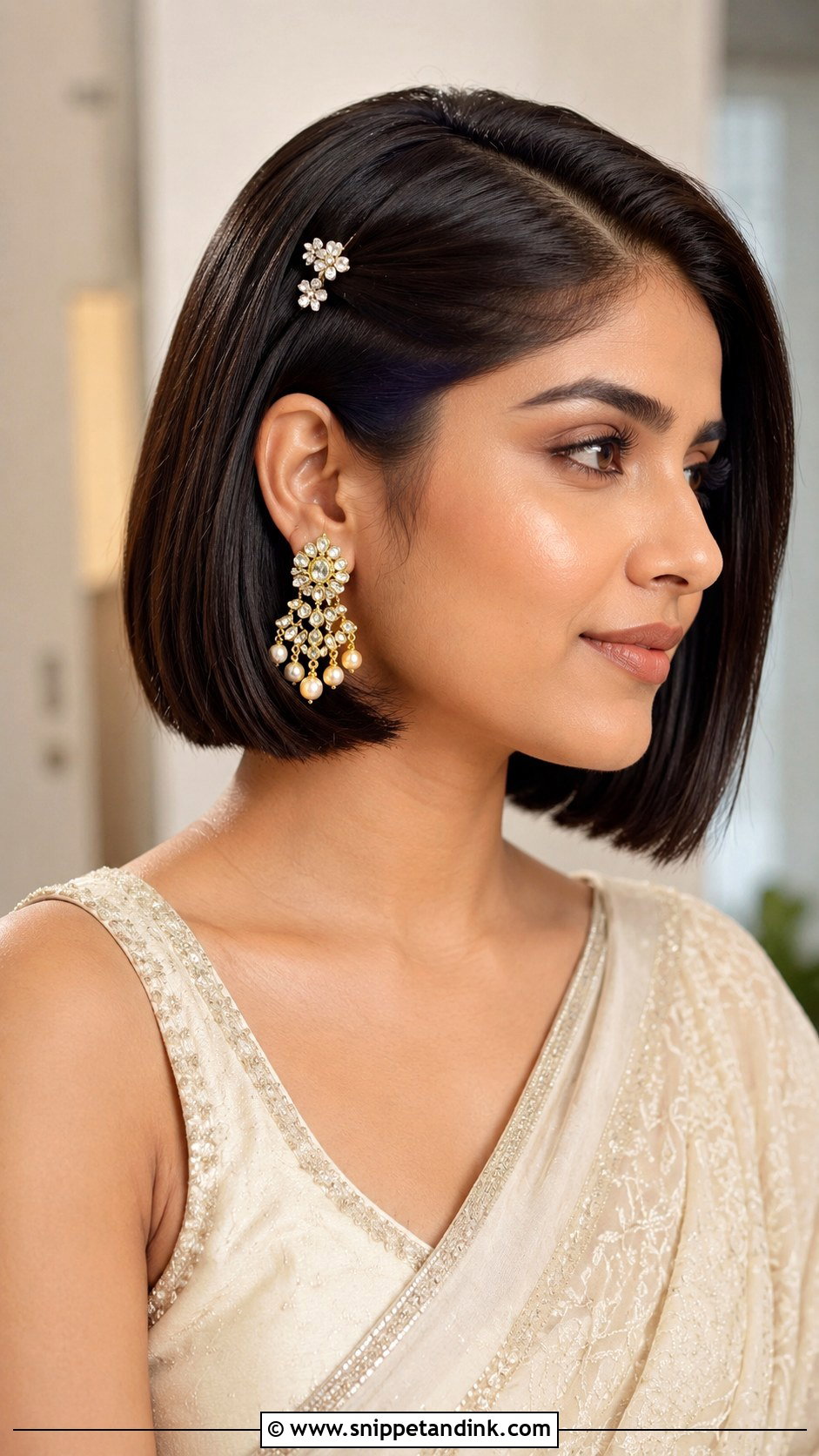
A straight bob is a sharp, modern choice for guests or brides with short hair. Blunt reads fashion-forward; angled is softer near the face. With statement earrings, embellished blouses and modern sarees, the open neckline does a lot of the work. Keep the finish glossy and the ends sharp, and use a side part if you want more volume. A small tikka still works if I clip it to a tiny hidden section at the crown, since a bob gives the chain very little hair to hold.
14. Straight Hair With Floral Pins
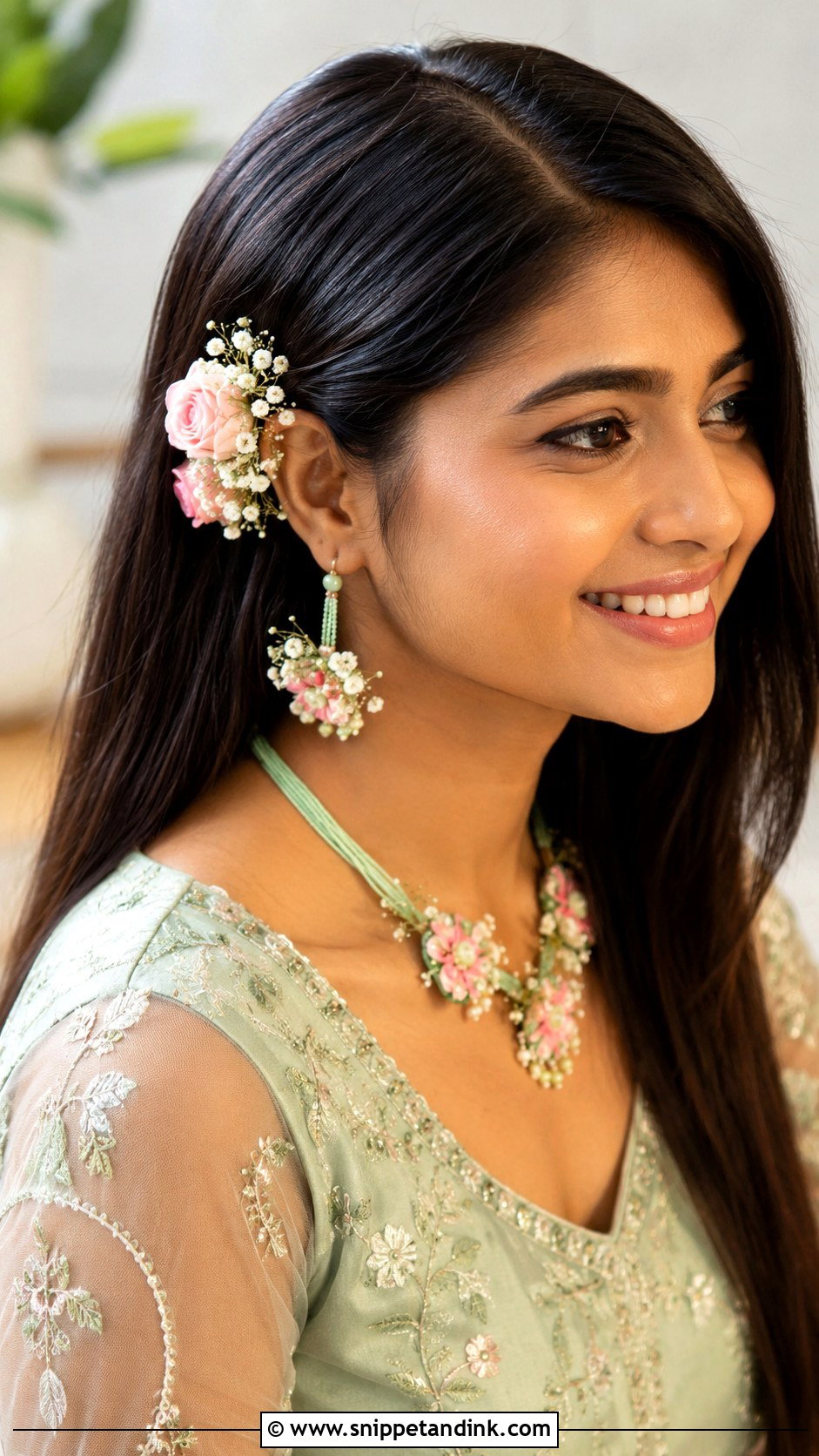
Floral pins suit the daytime functions, haldi, mehendi, or a garden ceremony, where fresh color looks natural. Smooth hair keeps the flowers visible along one side, behind the ear or around a half-up twist. Jasmine, baby’s breath, roses and marigold accents each suit different outfits. Fresh flowers wilt in heat, so I pin them in last, just before you step out, and keep a few spares wrapped in a damp paper towel. Match them to the lehenga or saree rather than introducing a new color.

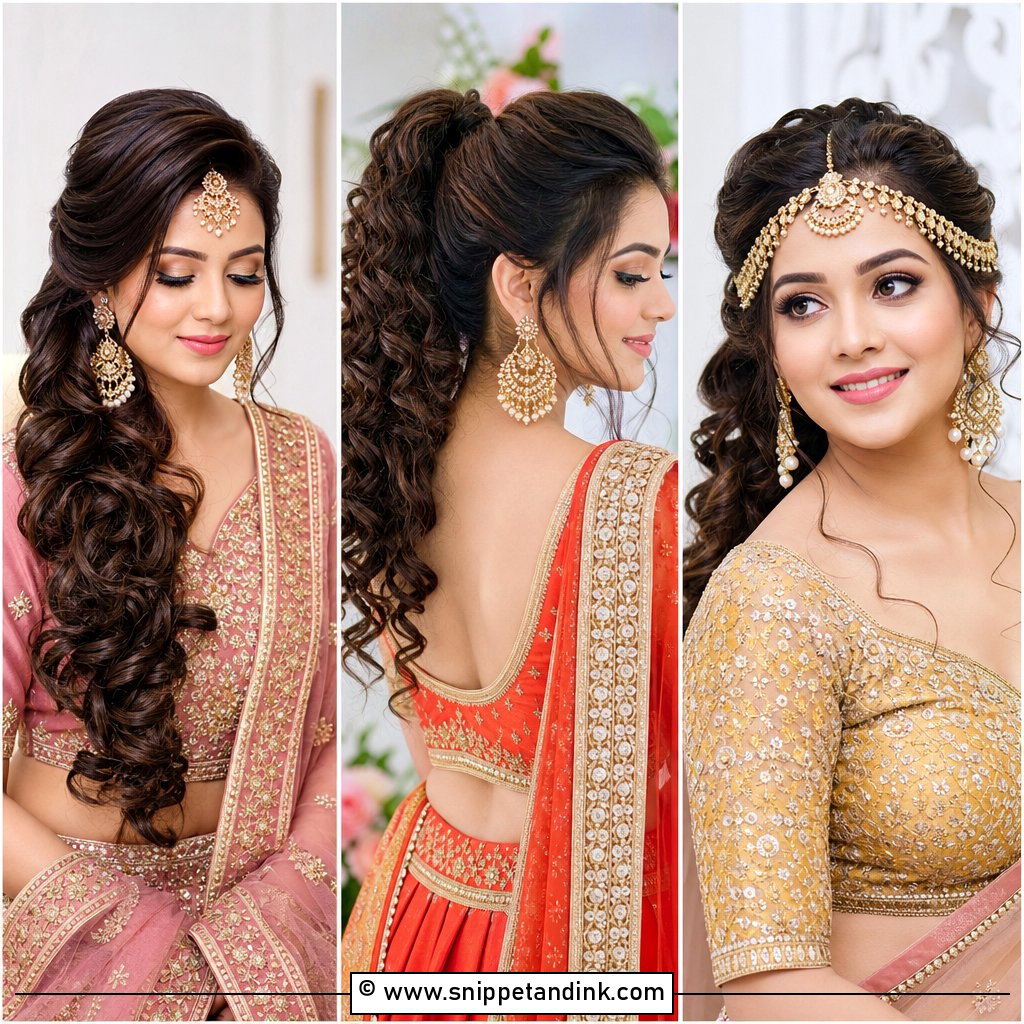
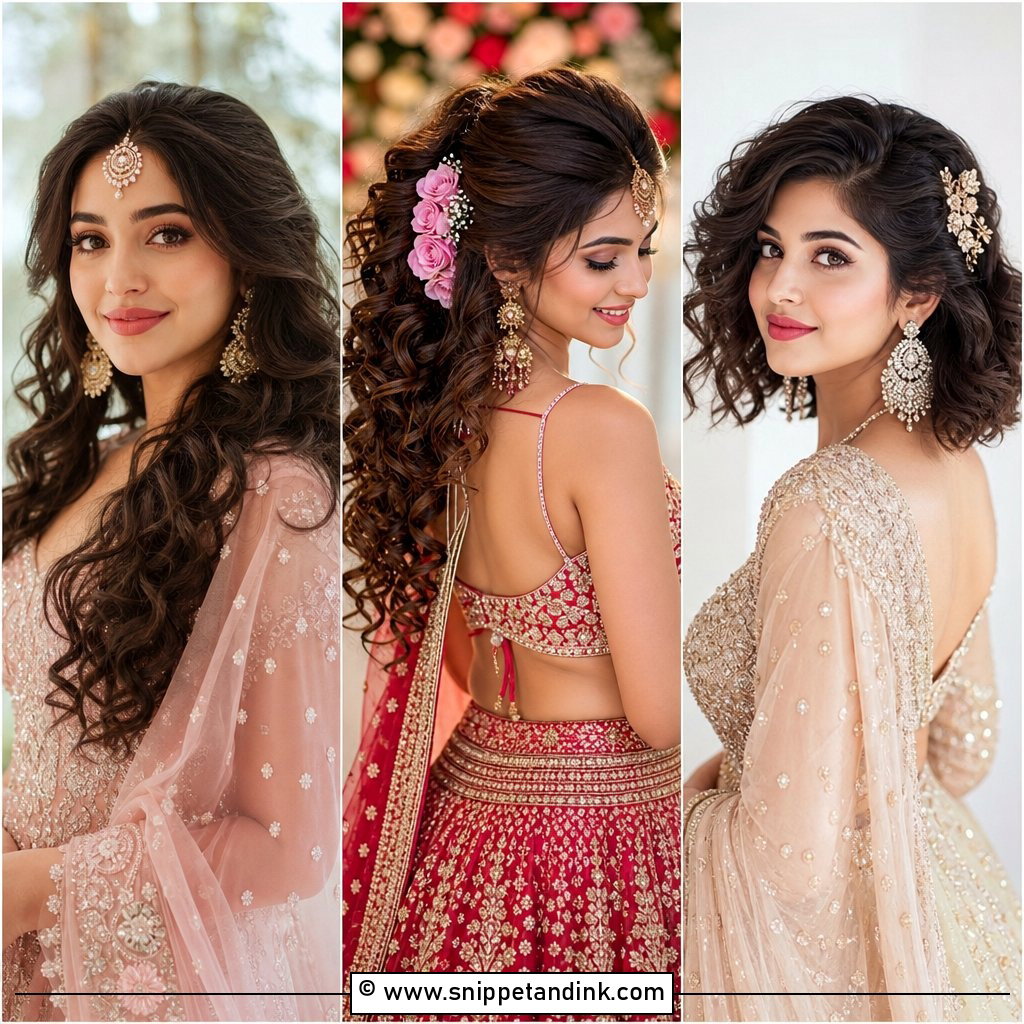
15. Straight Hair With Pearl Headband
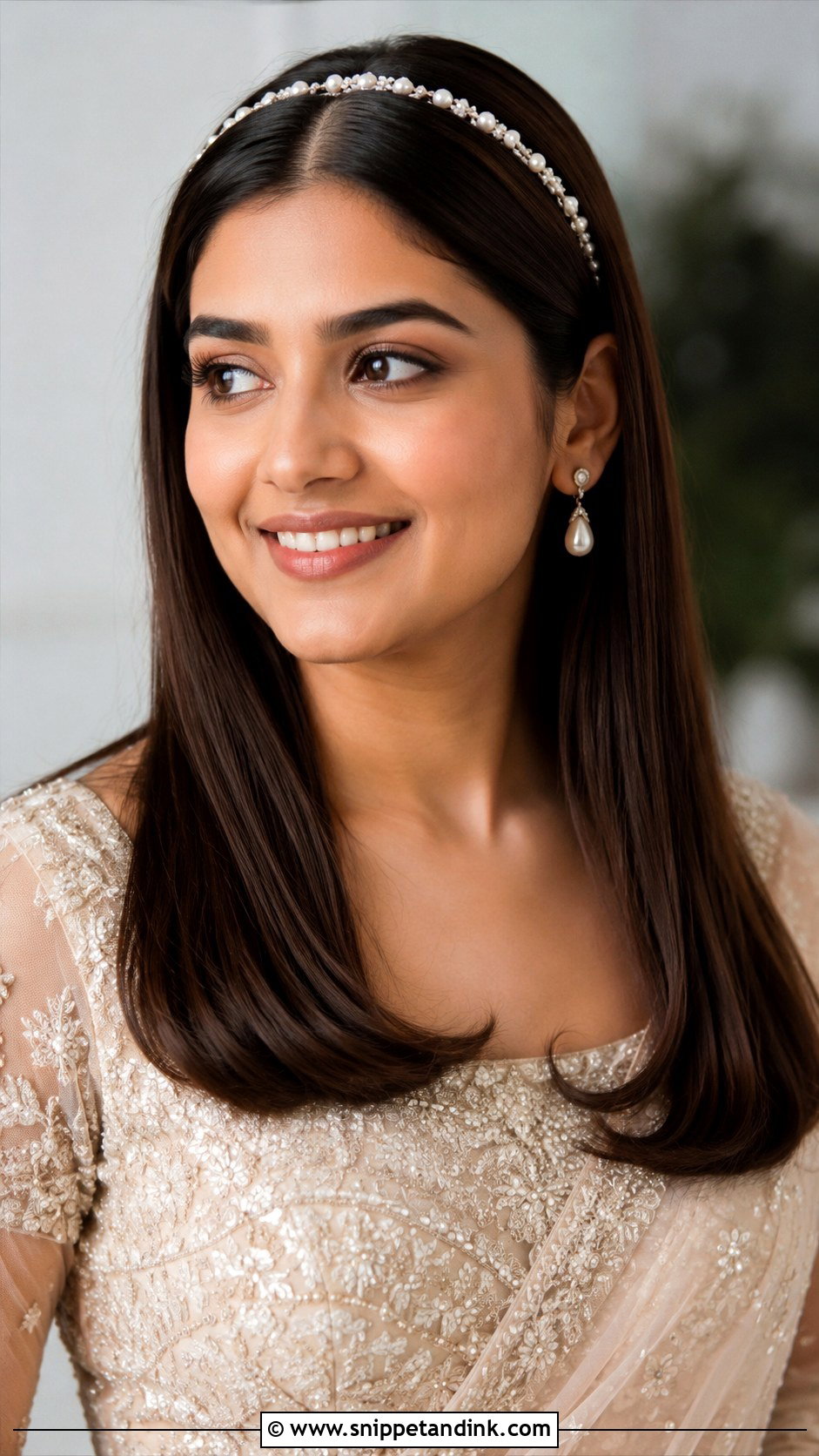
A pearl headband is a lighter alternative to a tikka for a reception, an engagement or a bridesmaid look. It wants smooth open hair, softly tucked ends and a clean part. Pastel lehengas, ivory sarees and embroidered gowns pick up the pearl tone. Keep the crown sleek so the band lies flat and doesn’t slide. On fine straight hair it’s especially handy, adding interest without needing any volume, and a light mist sets it.
Anchoring a Heavy Dupatta and Bridal Jewelry on Slippery Hair
A bridal dupatta pinned at the crown, a tikka, a matha patti, maybe a passa and a gajra can add up to real weight, and straight hair gives pins very little to hold. My answer is a hidden base. Before any jewelry goes in, I make a small flat braid or a tight twisted section at the crown, and sometimes one behind each ear. The dupatta and jewelry pins go into those, never into loose hair, and the smooth top layer covers them.
- Pin the dupatta through its edge in three or four places, angled toward the back, so the fabric pulls against the pins rather than along them.
- Use U-pins for fabric and bobby pins for jewelry chains. U-pins grip a dupatta without crushing it.
- At the trial, walk, sit and turn your head with everything on. If the dupatta tugs at your scalp, the pins need moving before the day.
At the end of the night, take the dupatta off before the jewelry and lift each pin straight out. Pulling a heavy piece off in one go yanks at the hair around the crown, which is the last thing you want after a full day in pins.
Open Hair, Low Bun or Ponytail, Event by Event
Straight hair can be every bit as festive at an Indian wedding as curls or a heavy updo, as long as each look is planned around the outfit, the jewelry and the event. Open hair suits a maang tikka or matha patti, low buns and ponytails give more control through long ceremonies, and floral pins, pearl headbands or gajra dress up even the simplest straight style. Prep with heat protectant, iron in small sections, and keep a small comb and serum in your potli for touch-ups between functions.
You'll Like These Ideas:


Leave a Reply