
Ask a bride what she wants from her wedding hair and the answer is nearly always the same: it has to still be there at midnight. That’s the main reason I steer so many people toward a bun at the nape. It keeps weight low on the head, it leaves the crown free for a tiara or veil comb, and it stays clear of almost every neckline. The 25 styles below run from glassy and sleek to soft, braided and dressed with flowers. With each one I’ve noted the hair it suits, how it holds and the small thing that usually goes wrong.
What I Need From Your Hair the Morning I Arrive
A low bun holds best on hair that has a little grip. Squeaky-clean, freshly conditioned hair slides out of pins; very oily hair collapses. Here’s what I ask brides to do.
- Wash the evening before or the morning of, and skip heavy conditioner or oil at the roots. Conditioner on the ends only.
- Dry your hair completely. Damp hair under a bun stays damp for hours and the style drops.
- Wear a button-up shirt or robe so nothing has to come over your head once your hair is done.
- Have your veil, accessories and any hair flowers ready and unpacked.
- Tell me about anything new: a fresh colour, a cut, extensions or a sore scalp.
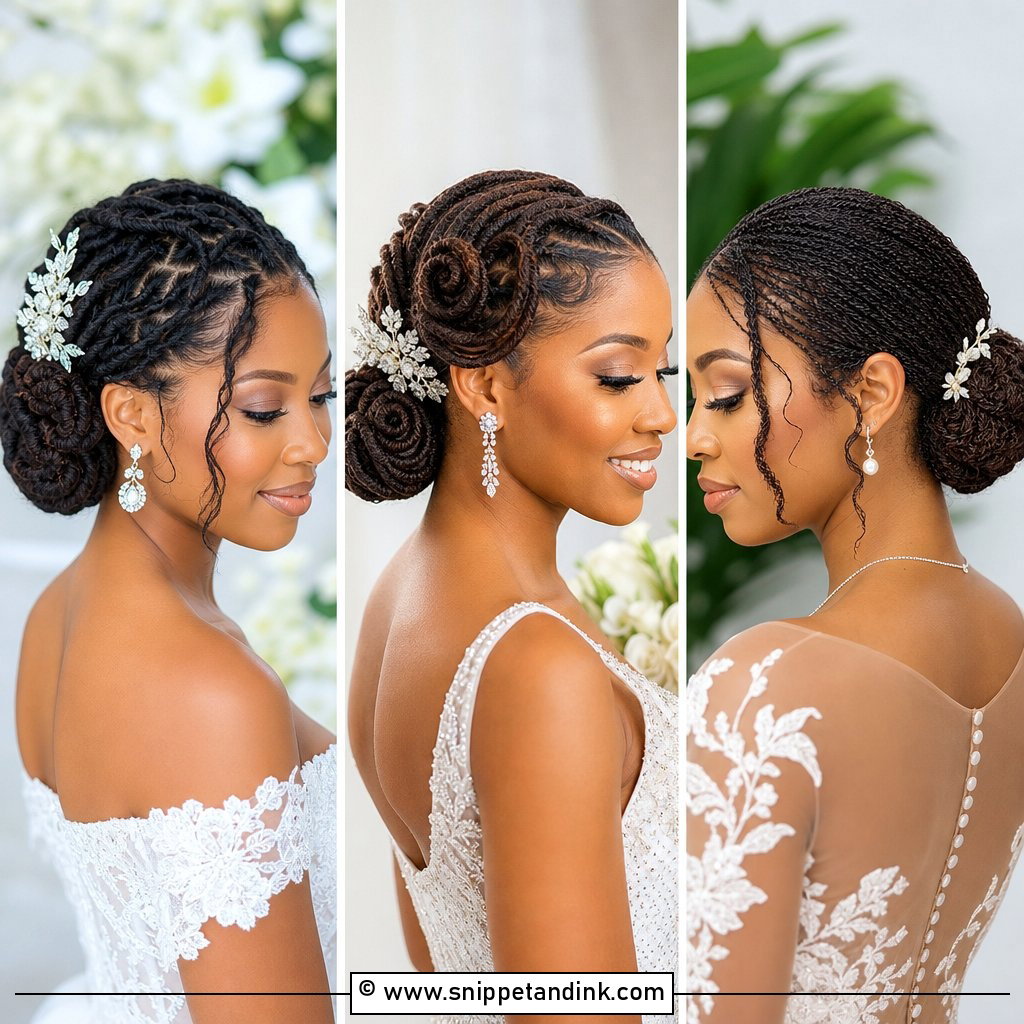
If you have curly or coily hair, follow your normal wash routine the day before rather than the morning of, so your curls have time to settle. Avoid trying a new product in the last week.
Colour, toners and gloss treatments
Book colour about one to two weeks before the wedding, not the day before. Fresh colour and gloss treatments leave the hair extra slippery for a few washes, and a toner can shift slightly in the first days. A week of normal washing gives the shade time to settle and the hair some of its grip back, which makes the bun hold far better.
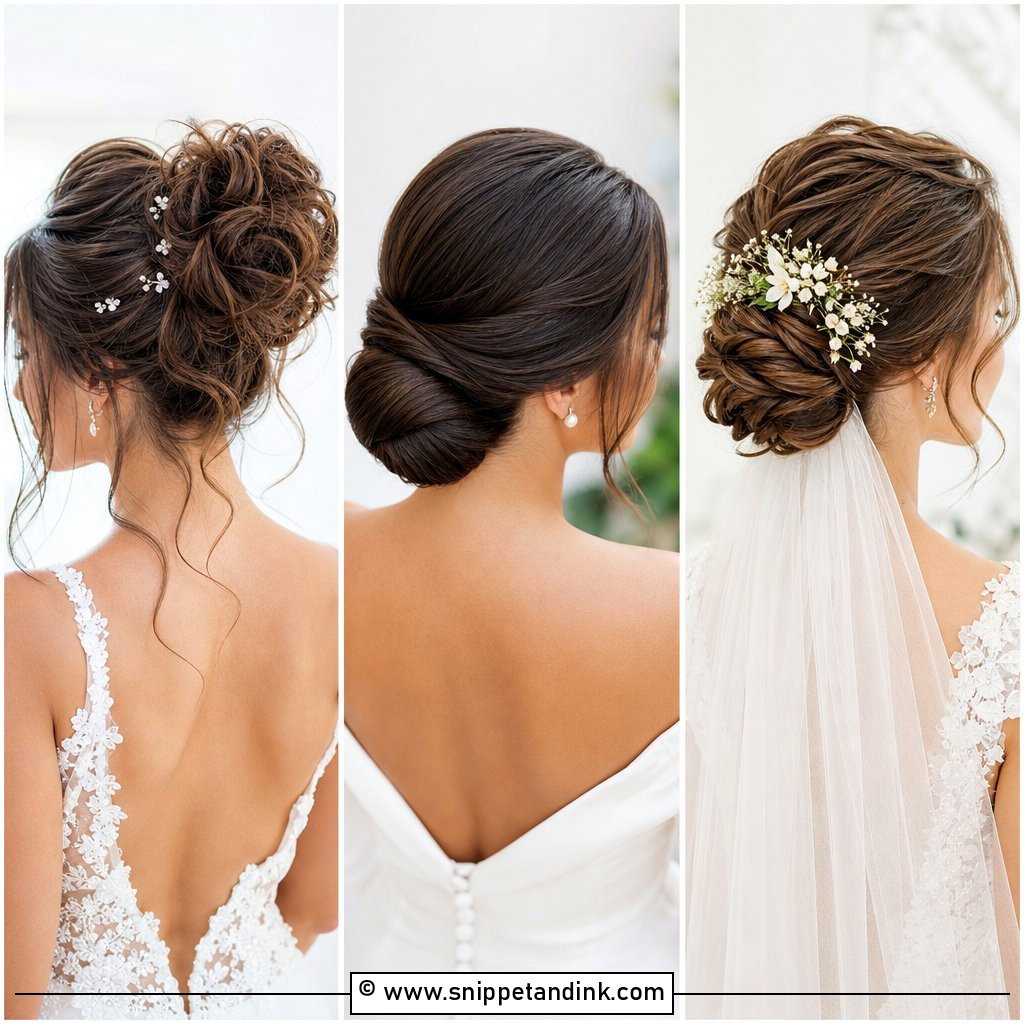
1. Sleek Low Bun Wedding Hairstyle
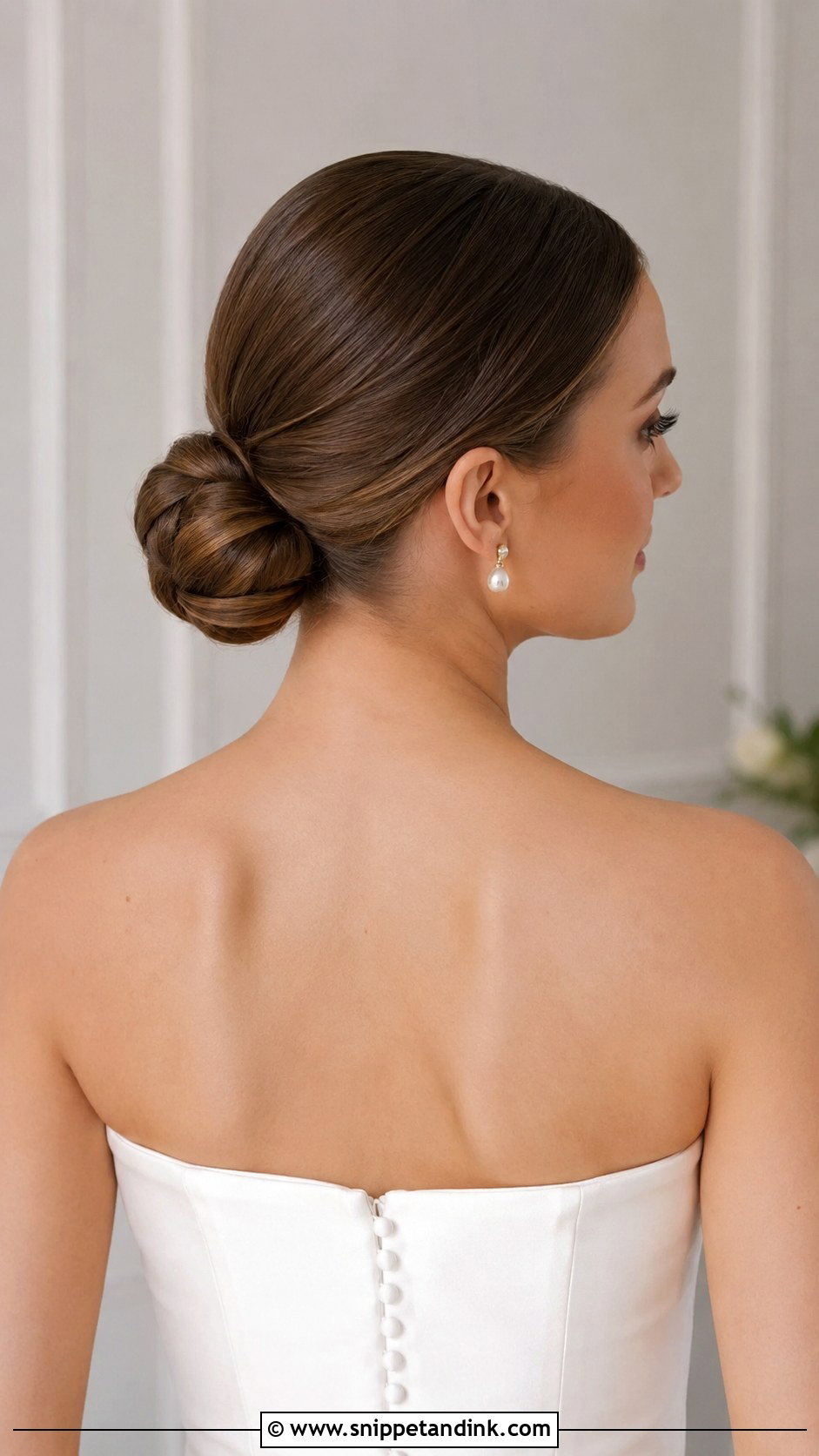
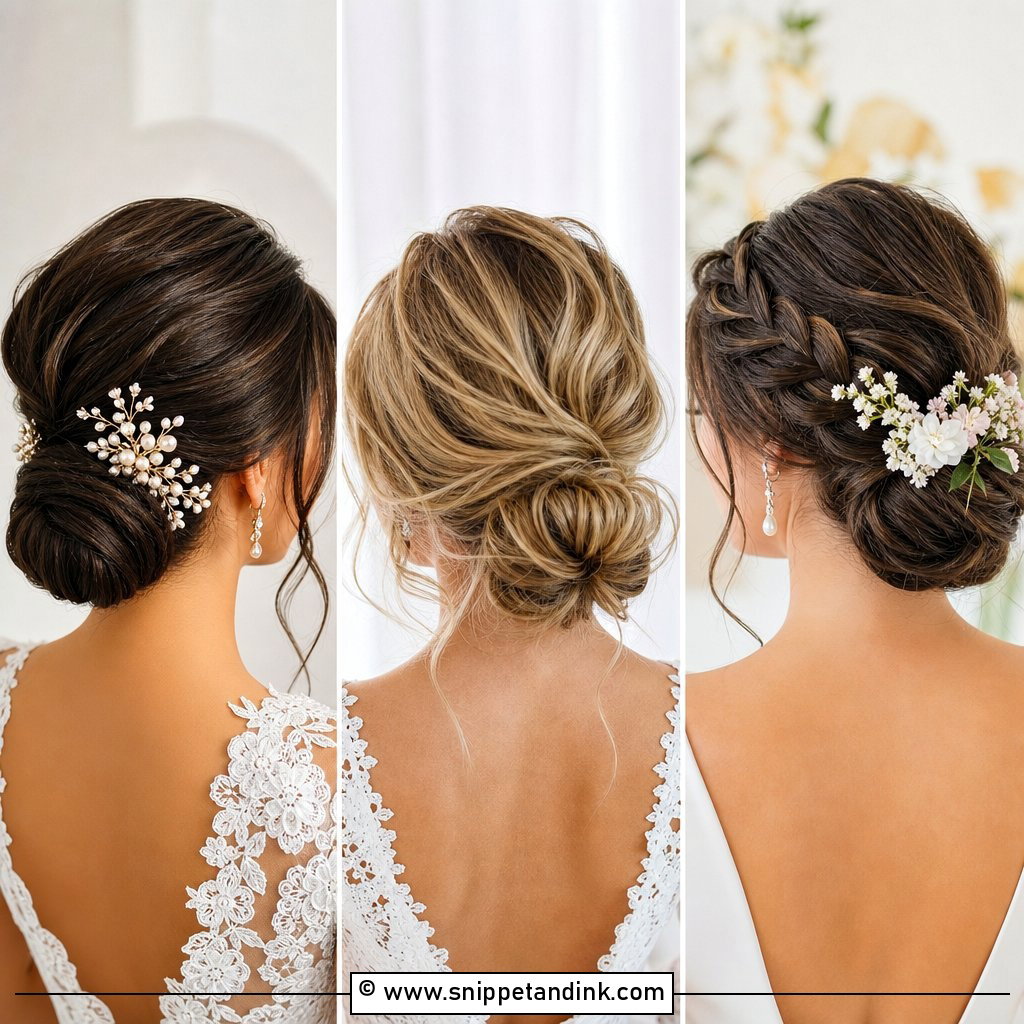
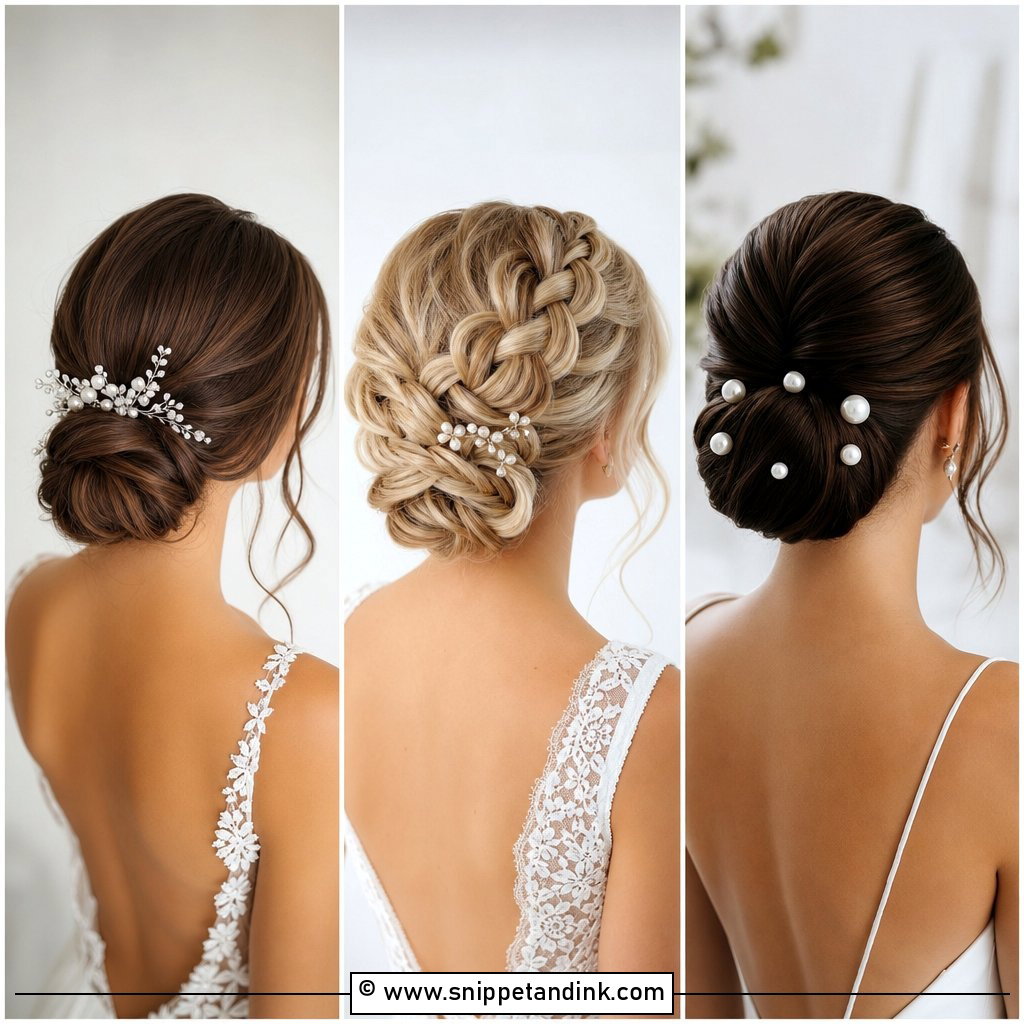
Sleek styles depend on the prep, not the pinning. I blow-dry the hair completely straight with a paddle brush first, because any leftover bend at the root shows as ripples once the hair is pulled back. Then a flat iron, a smoothing cream, and the knot at the nape. A middle part reads modern; a side part is kinder to a high forehead. Add pearl pins or a crystal comb if you want a little shine. Go light on serum near the hairline, since oily edges look wet next to matte skin in photos.
2. Classic Ballerina Low Bun
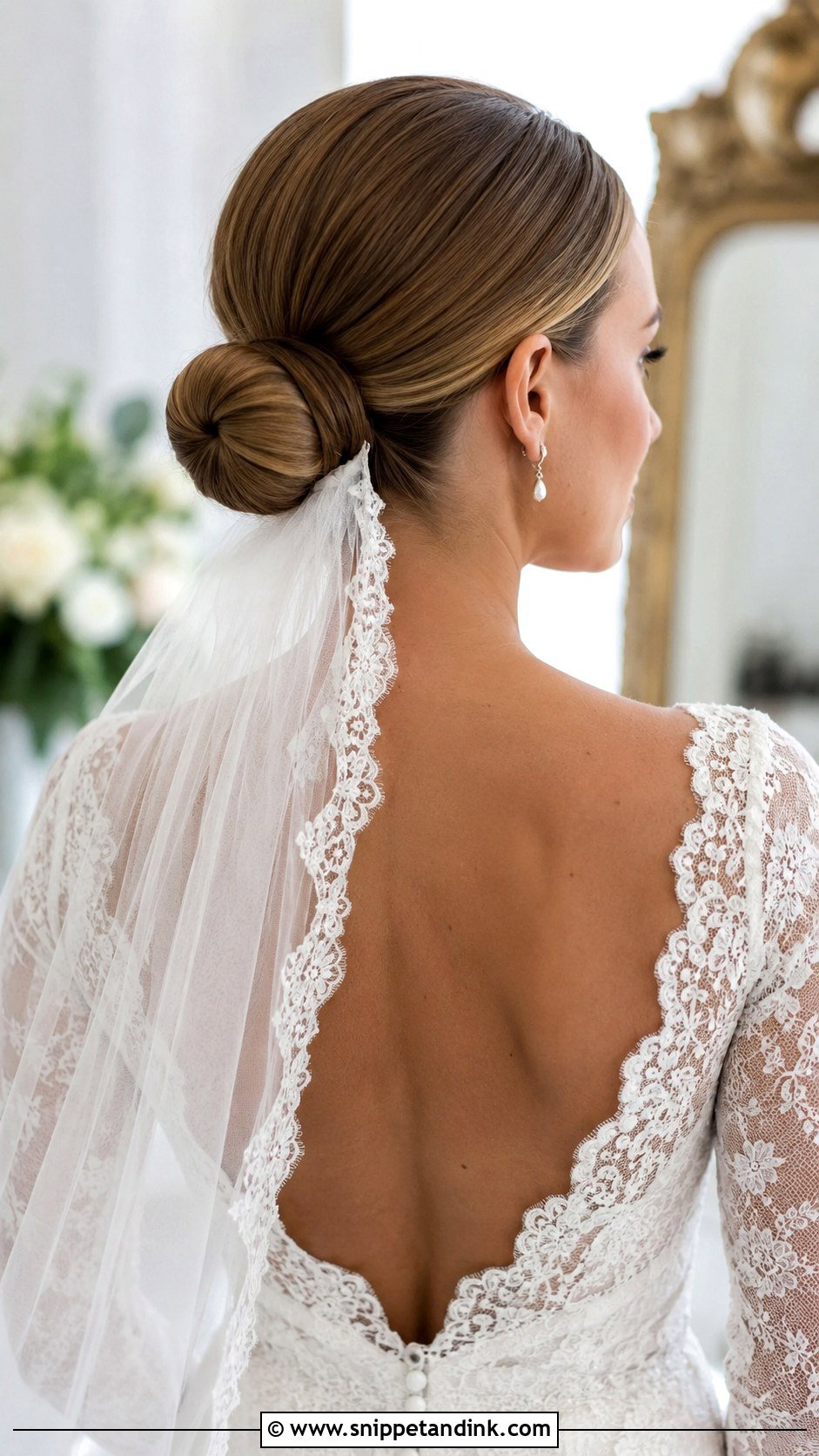
The ballerina bun is a neat, rounded knot, and its secret is tension that’s even all the way round. I gather the ponytail with a brush, secure it with a thin elastic, then wrap the hair around the base and pin it with U-pins, which sink into the bun instead of sitting on top like bobby pins. It sits well under a cathedral veil and with statement earrings. Polished or softened at the edges, it suits nearly any face and dress, and it’s one of the longest-lasting styles I do.
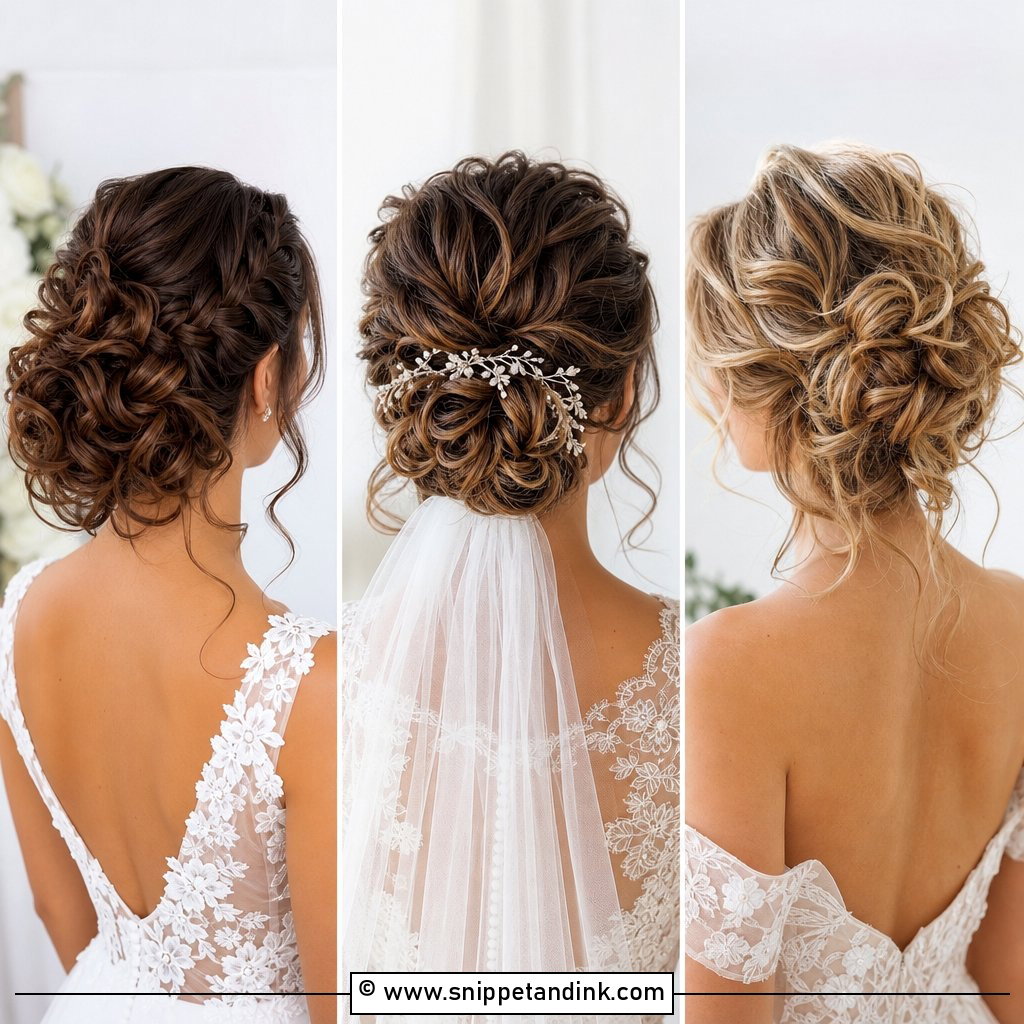
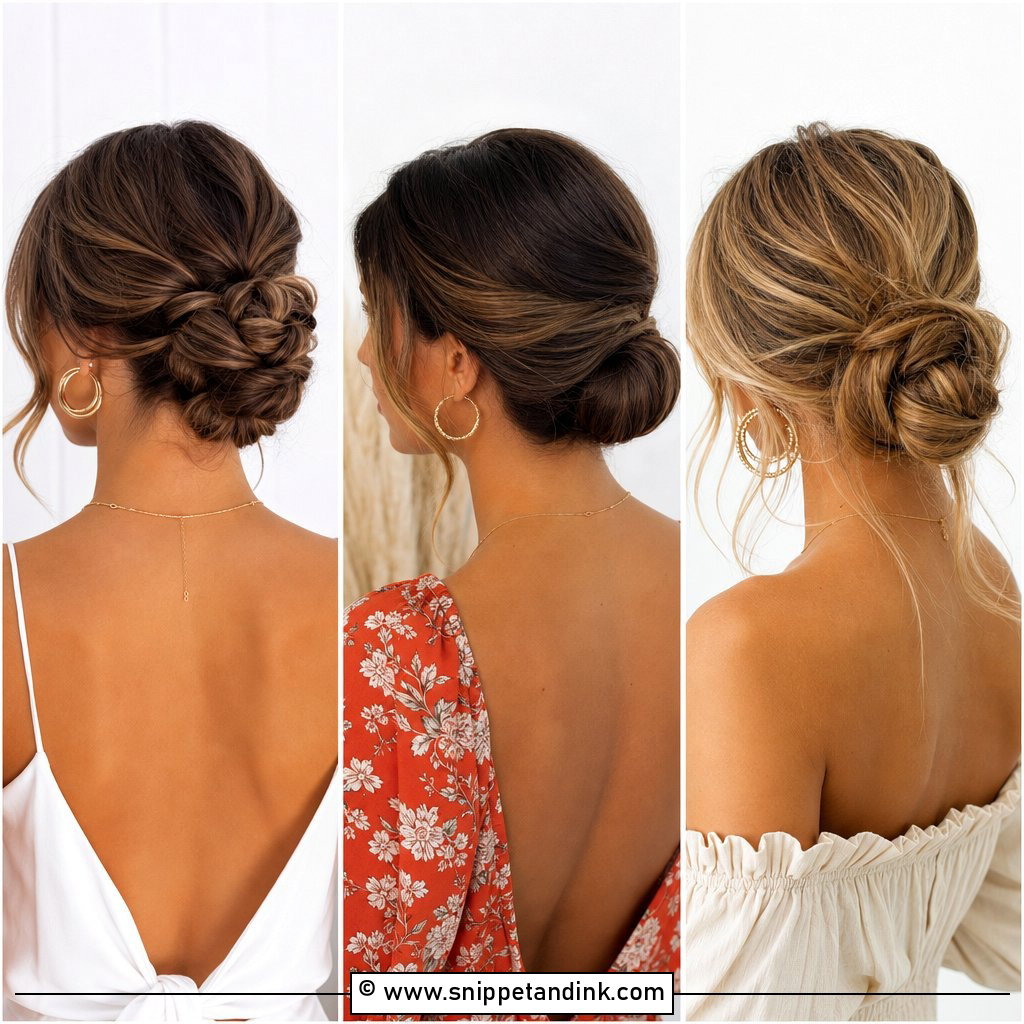
3. Messy Low Bun Wedding Updo
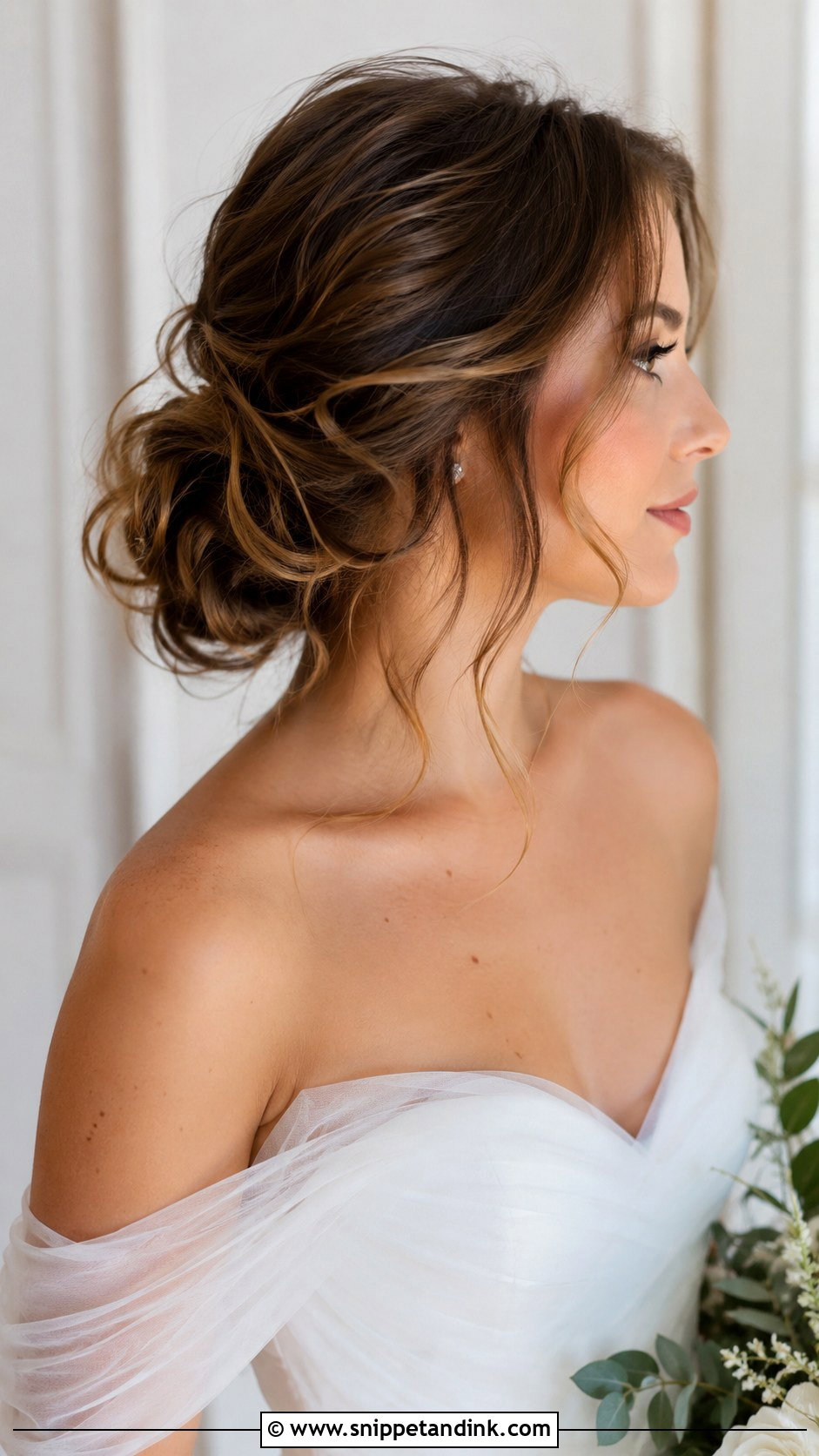
Wavy and naturally textured hair makes the best messy bun, because the texture is already there and won’t fall flat by dinner. On straight, silky hair I curl first, let it set, then brush it out with my fingers and add texture spray before gathering it loosely at the nape. Pieces at the face fall where they naturally want to. It suits rustic and outdoor weddings, but it shouldn’t look scruffy at a formal one; I keep the back tidy even when the front is loose. Tiny blooms or scattered pins finish it.
4. Low Bun With Face-Framing Tendrils
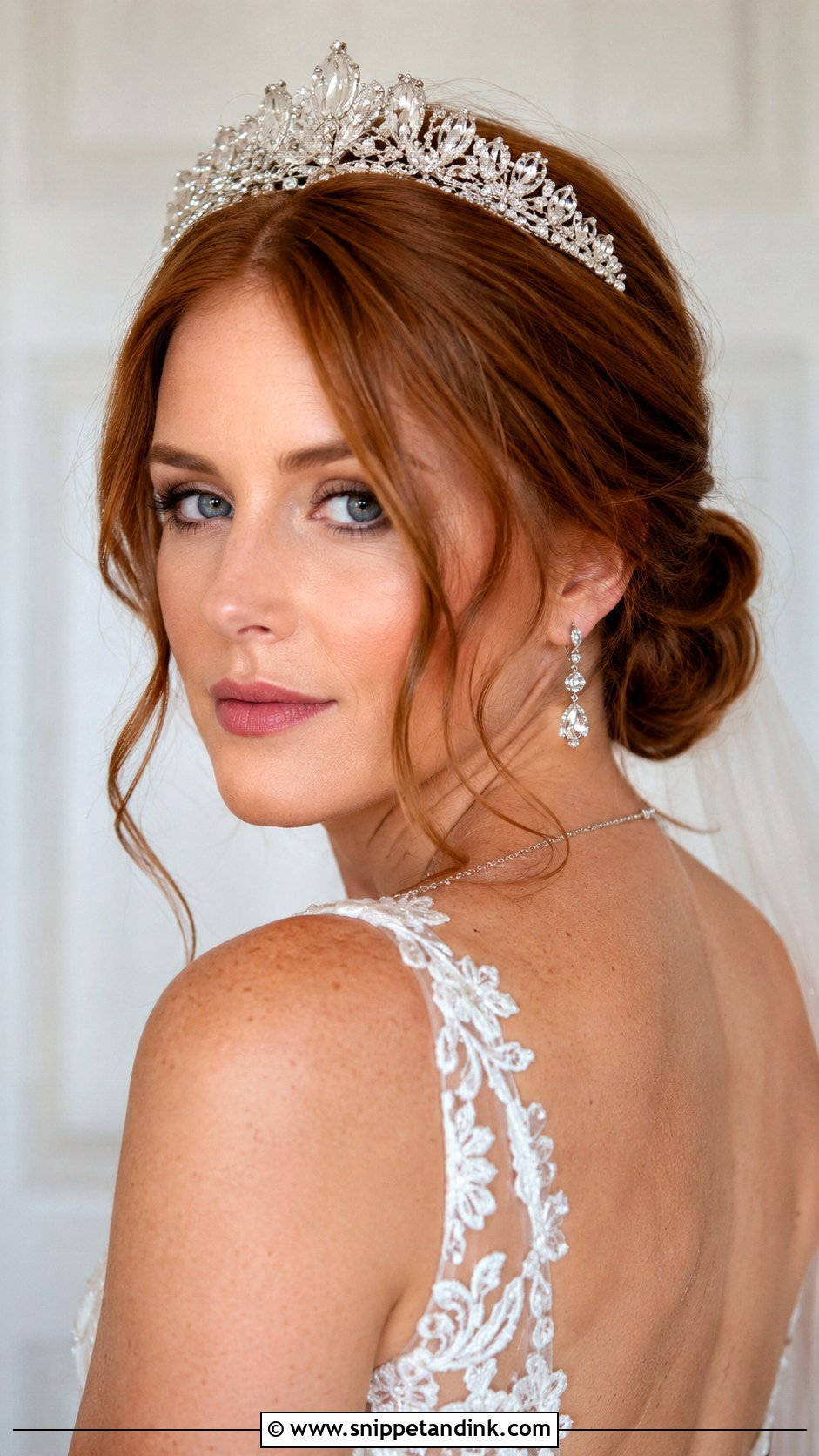
Tendrils are the detail I adjust most at trials, because two pieces too many and the style starts to look unfinished. I take them from the temples and just in front of the ears, curl them with a small wand, and leave them long enough to clear the jaw. They soften a strong jawline and frame the face in close-ups. A crystal crown or dramatic gown suits them. On humid days I pin tendrils up during makeup and release them at the very last minute so they’re fresh for the ceremony.
5. Twisted Low Bun Wedding Hairstyle
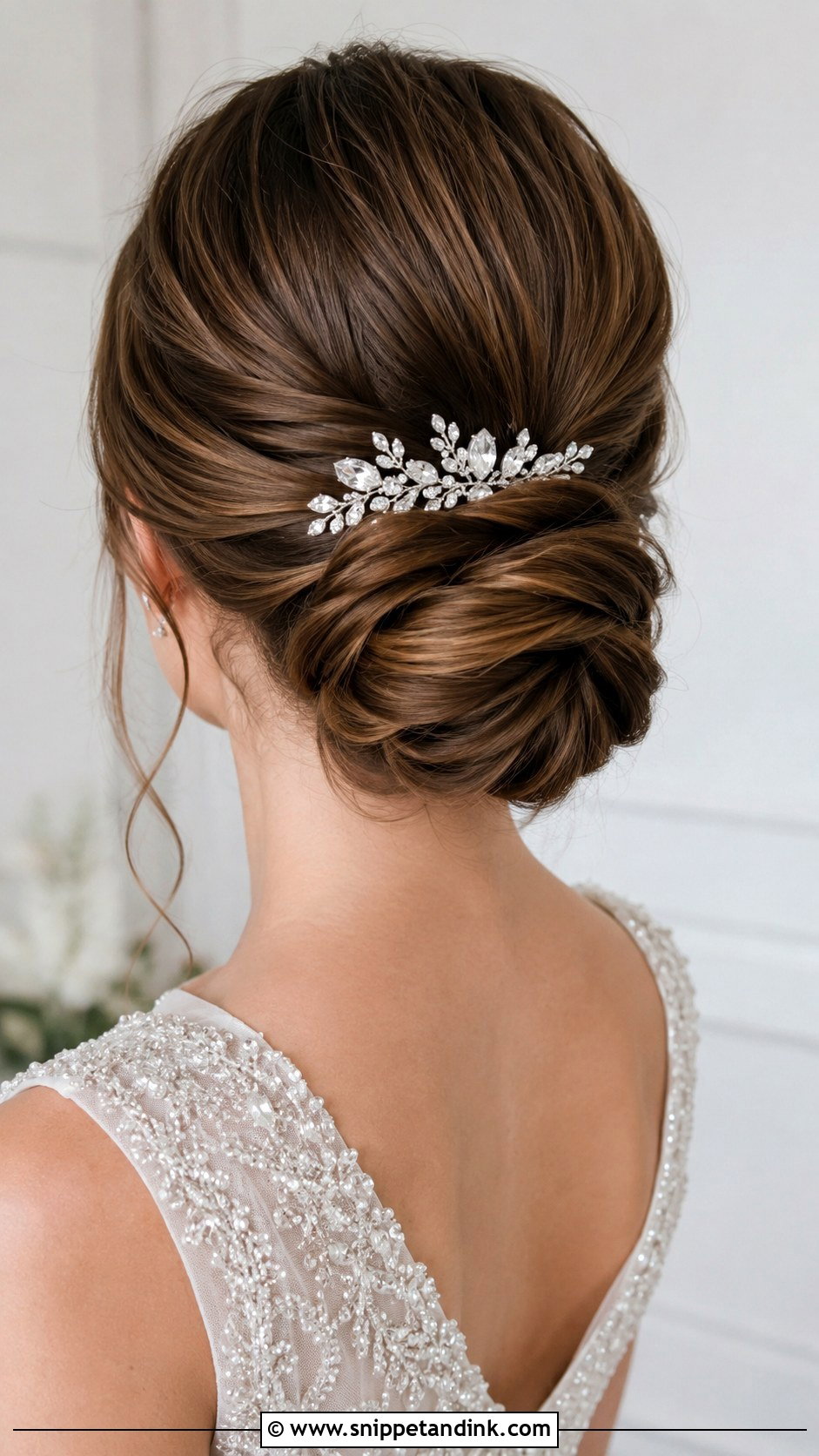
Twists give the classic chignon dimension without the time a braid takes. I divide the hair into four or five sections, twist each one away from the face, wrap it and pin it into the knot, so the shape is built from several small pieces. That also makes it secure: if one section loosens, the others hold. Jewelled combs and pearl pins slide easily into the grooves. Medium to long hair gets the fullest result; very layered hair can poke out of the twists and needs extra spray.
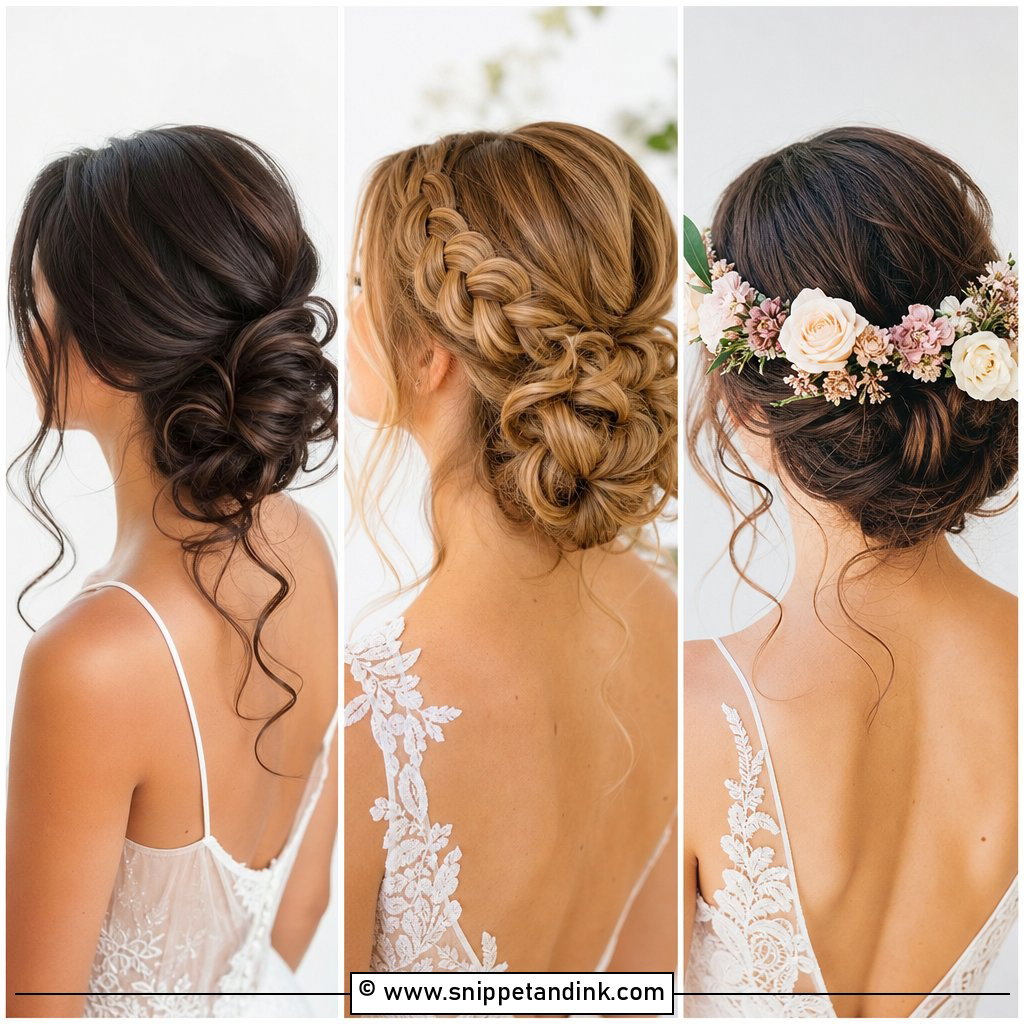
6. Low Bun With Dutch Braid
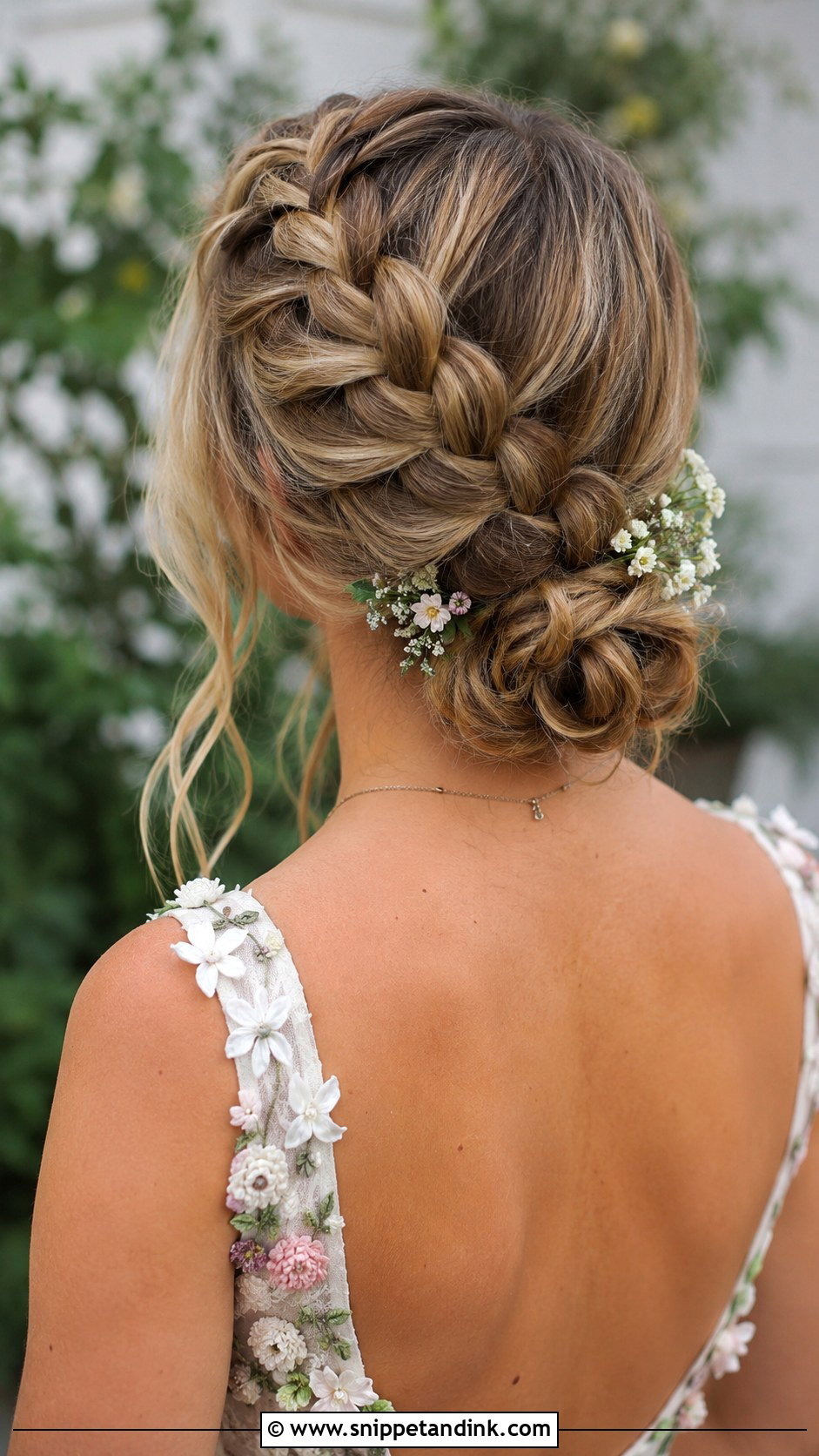
The Dutch braid is woven underhand, close to the scalp, so it stands out from the head with a raised, three-dimensional look. It leads into a low knot and keeps the hair locked in place, which is useful if you’ll be outdoors in wind. Tiny pearls or flowers can sit along the braid. I tell brides with a sensitive scalp to say so, because a braid this close to the head can feel tight after several hours if it’s pulled too hard at the start. It suits garden and classic weddings alike.
7. Low Chignon Wedding Bun
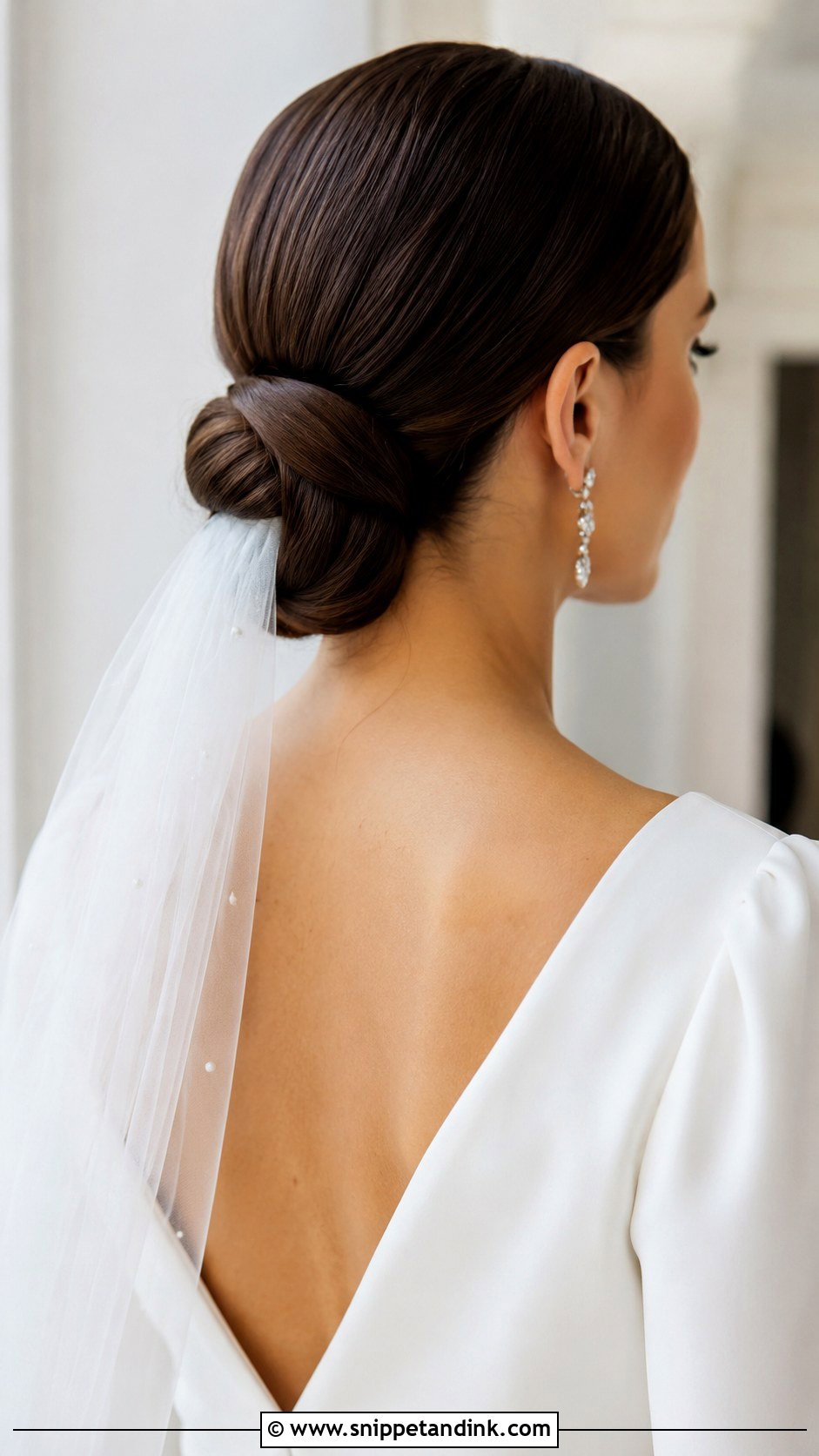
The French chignon folds and pins the hair into a smooth roll at the nape, and it’s been the formal wedding updo for decades for good reason. It works at black-tie events and in gardens, with veils, tiaras and big jewellery. Sleek and tight or slightly loosened both suit it. The fold needs hair that’s at least shoulder length; shorter hair can’t wrap far enough to hide the ends. A single decorative pin or bloom is all it needs.
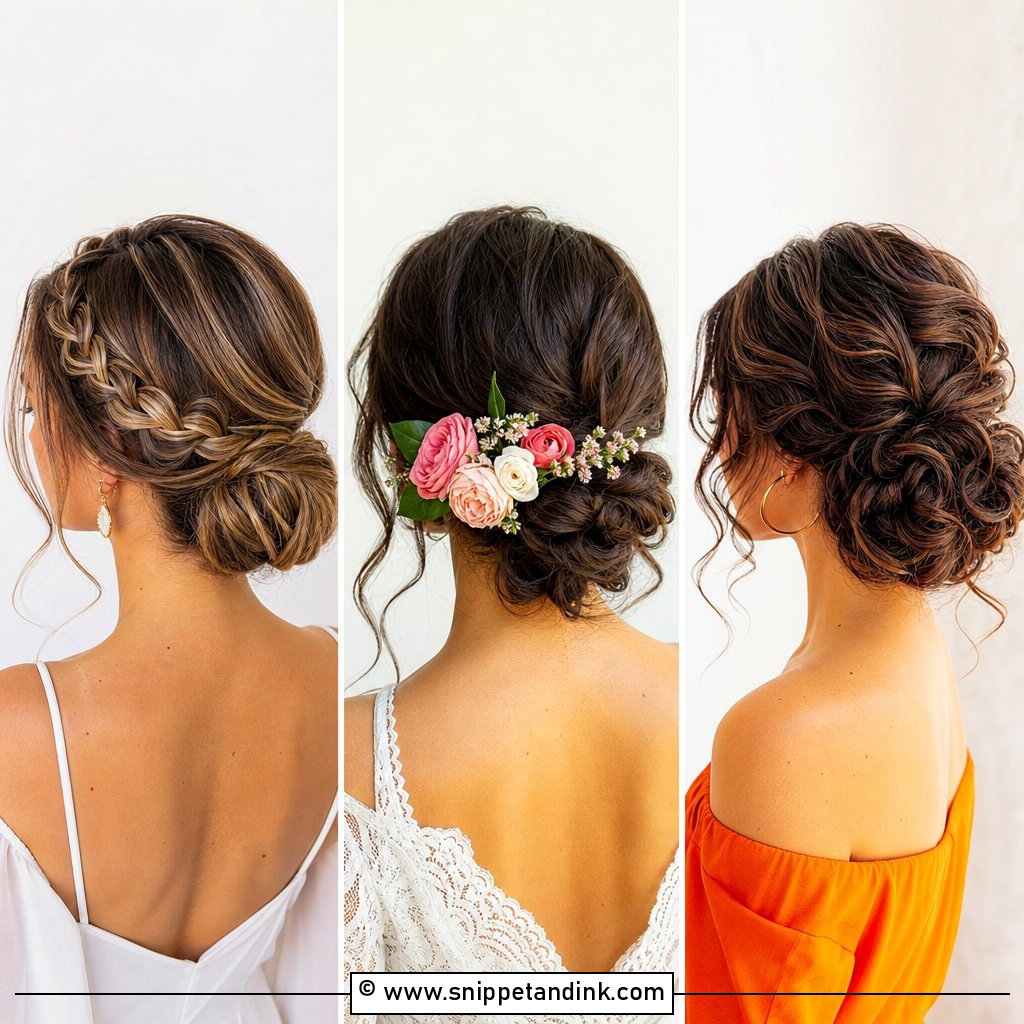
8. Braided Low Bun Wedding Updo
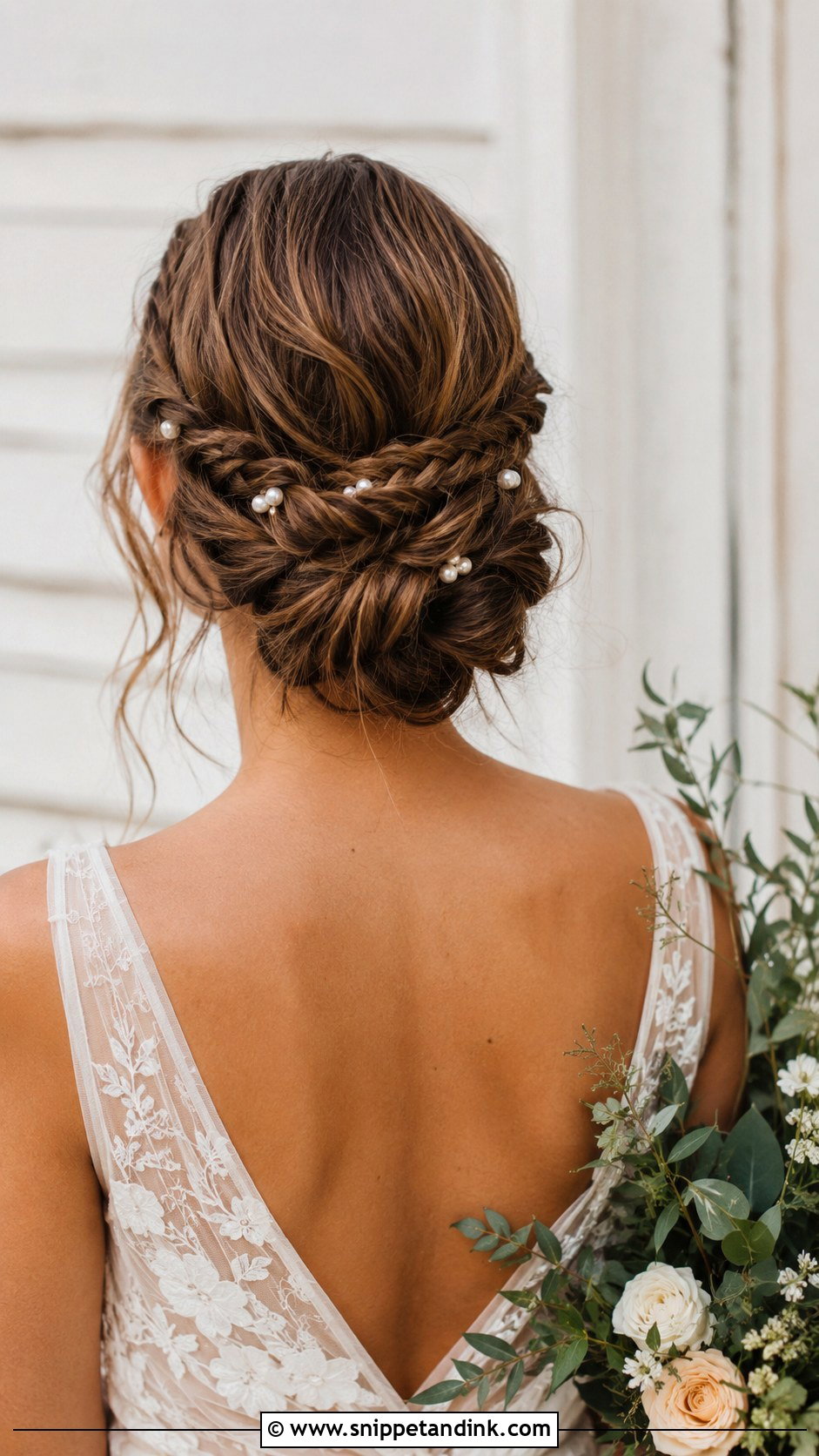
French, fishtail or Dutch braids can be coiled into the bun itself, giving texture that holds well because the braid grips the pins. I braid the hair first, then wrap each braid around a central elastic and pin it in place. Thick or long hair gives the most volume; finer hair can look sparse once braided, so I sometimes add a clip-in weft at the nape before braiding. Fresh flowers, pearl pins or jewelled accents along the braid suit rustic, garden and boho weddings.
9. Low Bun With Veil
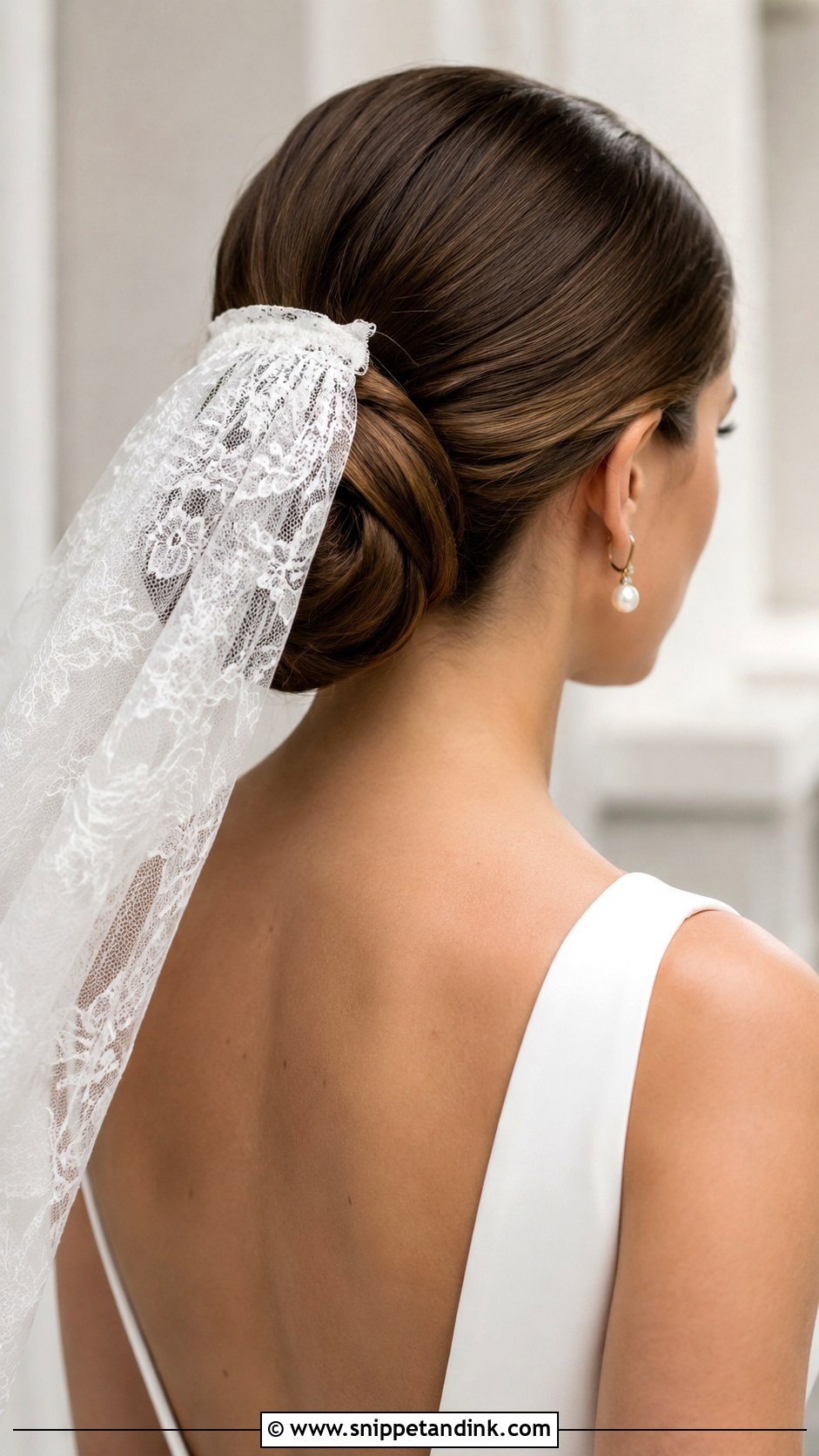
A veil can sit over the bun, tucked under it, or as a drop veil with no comb in the bun at all. A mantilla is usually pinned at the crown and looks especially good with a smooth chignon, since the lace lies flat over it. I sew or pin the veil comb into a hidden base of crossed pins, so it doesn’t drag down the hair during a long ceremony. When the veil comes off, the bun has to look finished on its own, which is easier with a low bun than a high one.
10. Low Bun With Fresh Flowers
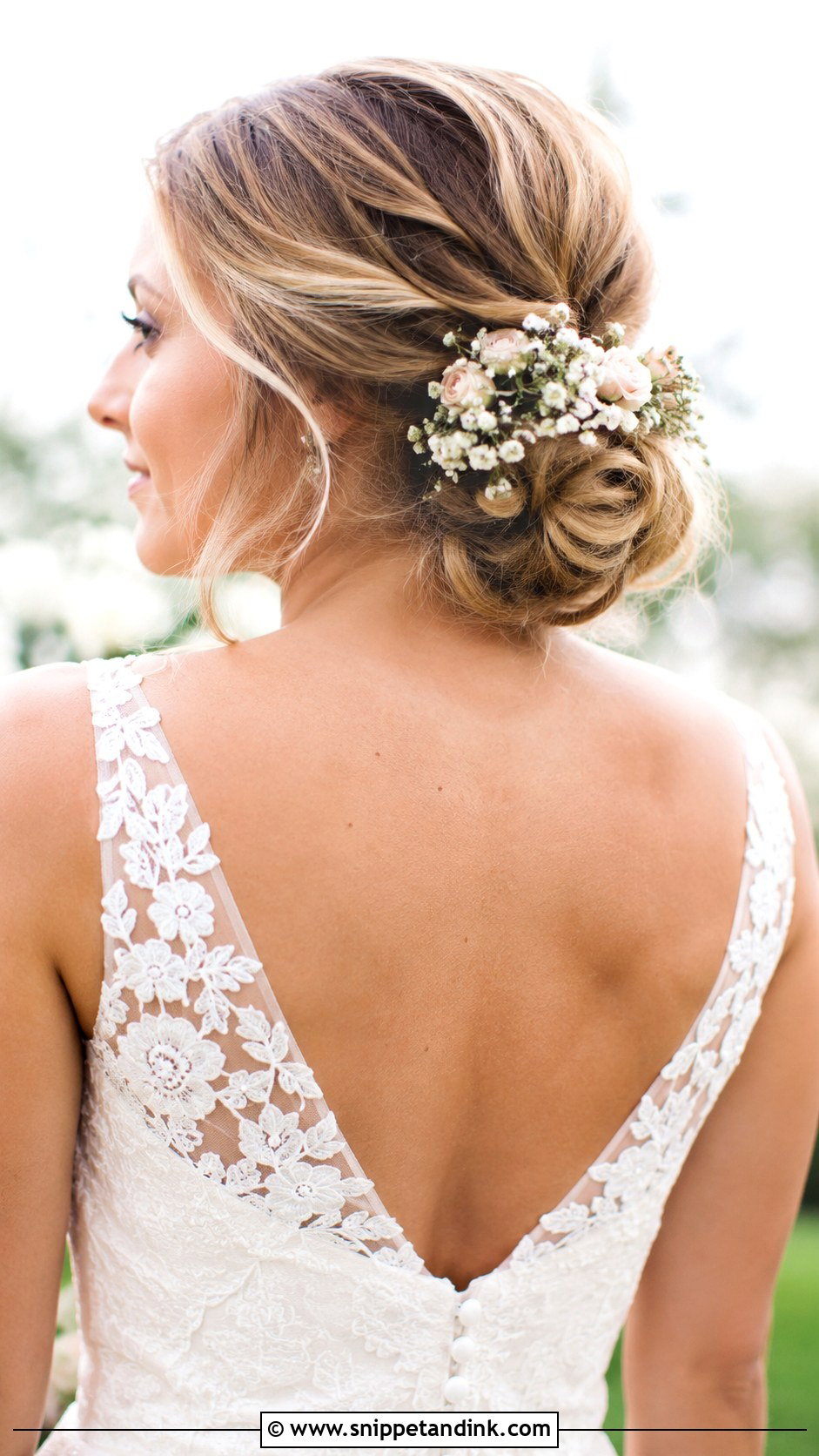
Small blooms like baby’s breath, spray roses and wildflowers can be tucked into the knot or clustered on one side. Match them to the bouquet so the hair and flowers look like one plan. Any fresh flowers that go into hair need to be chosen for stamina, though. Delicate wildflowers can wilt within an hour in summer heat, so ask your florist which stems will last out of water. A structured bun gives the flowers something firm to sit in. It suits garden, boho and spring weddings.
11. Low Bun With Side Part
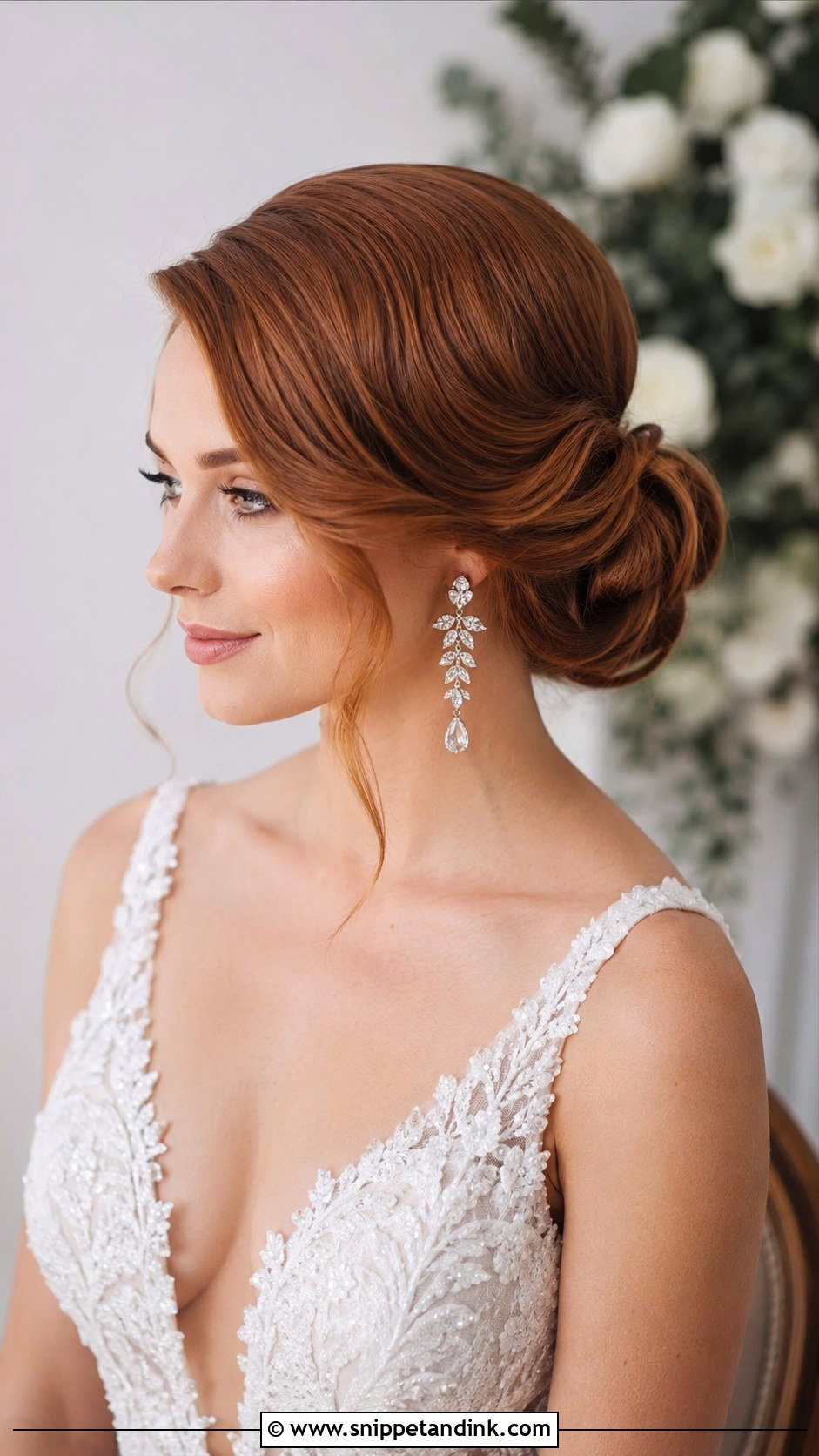
A deep side part sweeps across the forehead and adds volume on one side, a classic Hollywood detail that gives even the simplest chignon more shape. It’s a good choice for a round or square face, since the diagonal line softens width. Smooth waves leading back into the bun give a vintage feel. Before committing, I check where your hair naturally parts, because a part forced to the wrong side lifts out of place during the day. Statement earrings suit the open side.
12. Bohemian Low Bun Wedding Hairstyle
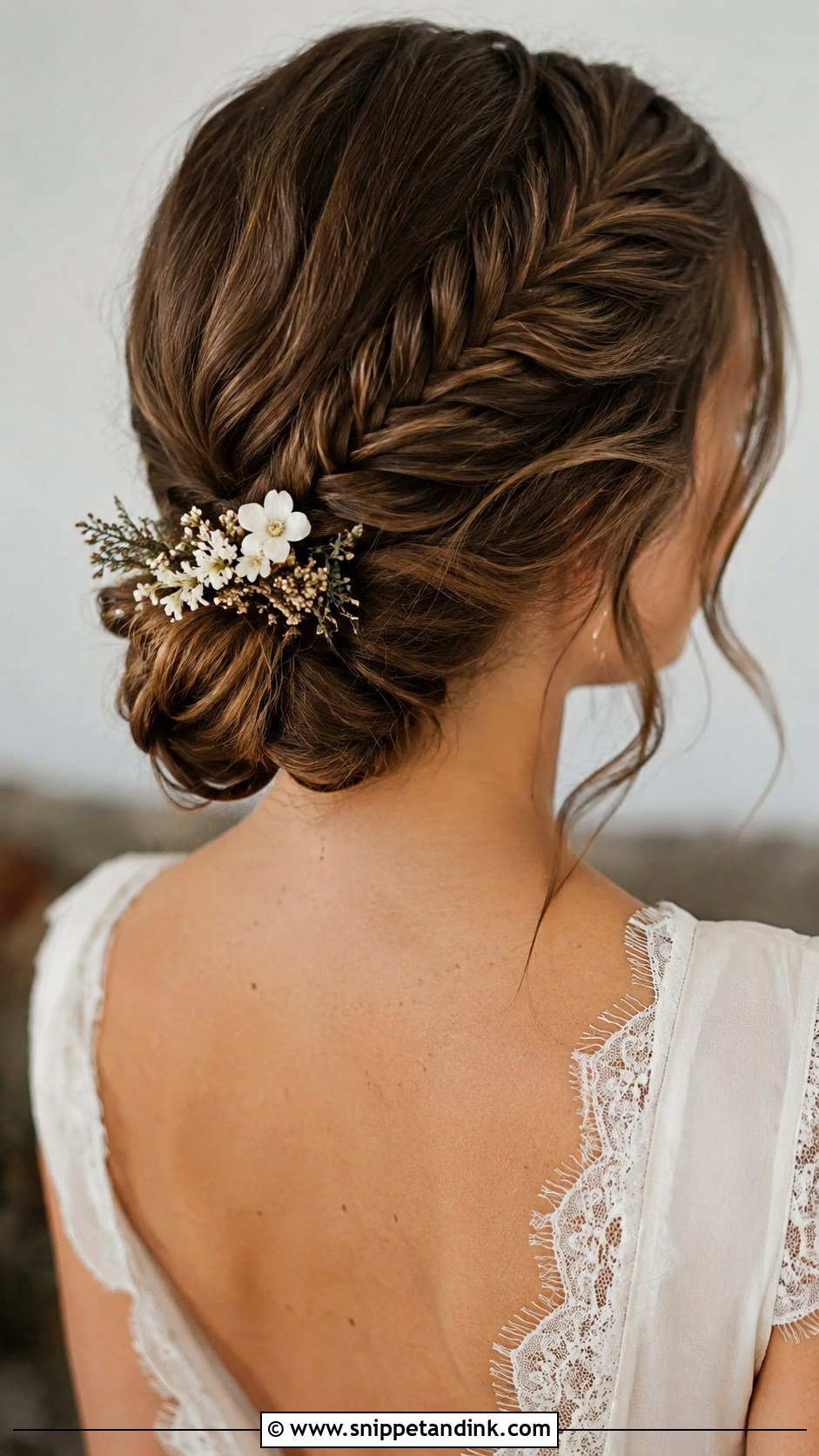
Boho buns are loose by design, with waves, escaping tendrils and plenty of texture, sometimes with braids on one or both sides. Dried flowers, greenery or fine gold pins suit them. They’re at home on a beach or at a festival-style wedding with a flowing gown. The risk is that a loose bun keeps loosening; I build a secure base underneath that you never see, then pull the outer layer apart. Naturally wavy or curly hair suits this look best because the texture lasts.
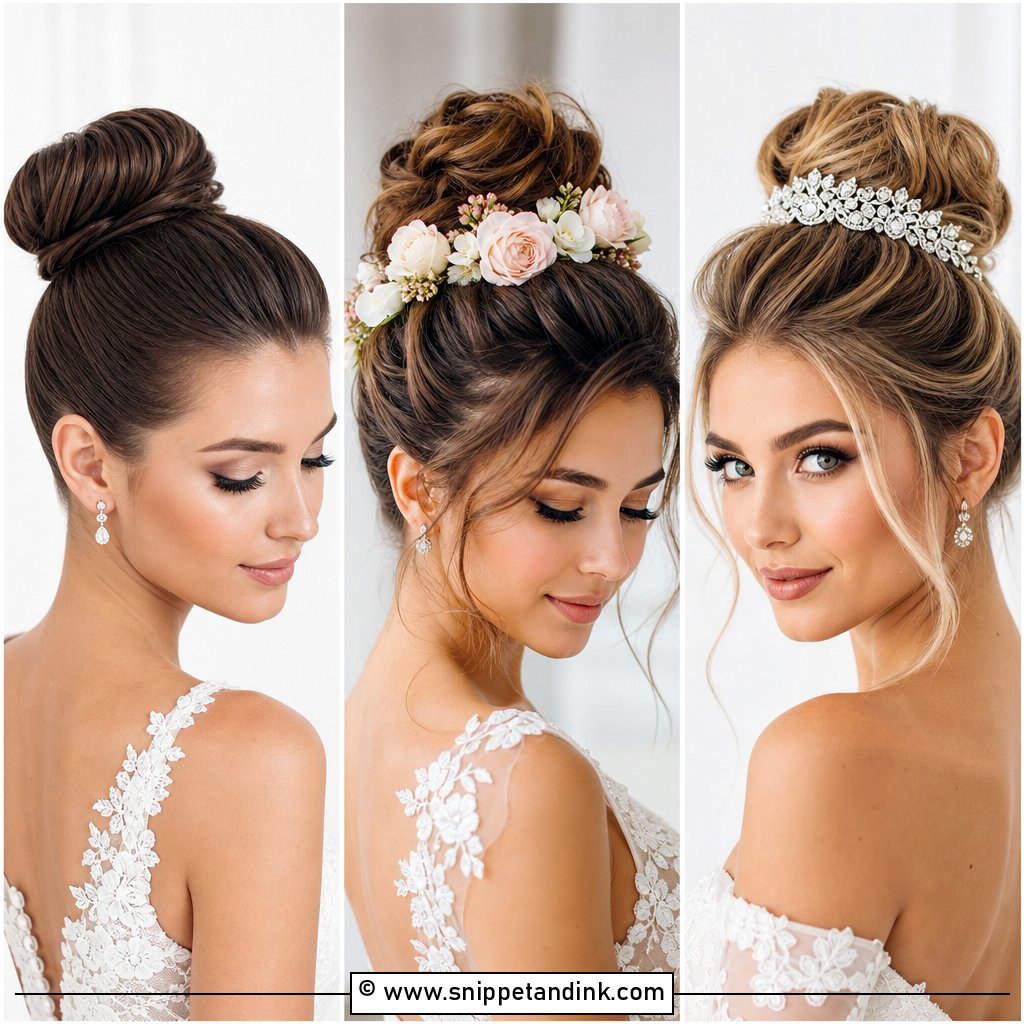
13. Low Bun With Tiara
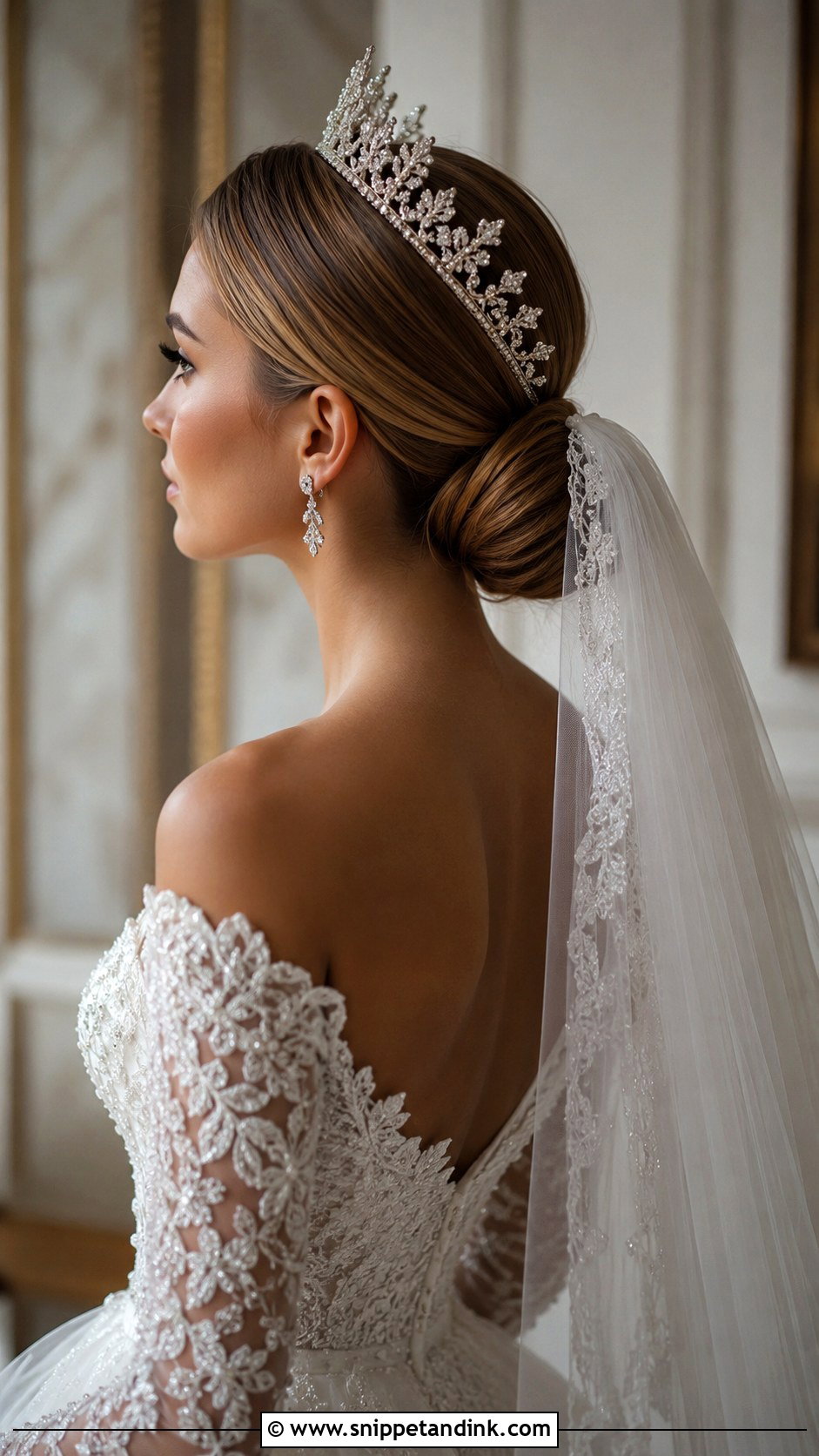
Pairing a low bun with a tiara works because the bun gives the tiara a steady base at the back. I set the tiara at the crown, a little behind the hairline, with some lift underneath so it doesn’t sit flat on the scalp. Then I thread pins through the tiara’s end loops and cross them. A sleek chignon shows off the sparkle best. It suits cathedral veils, ballgowns and grand formal weddings. Try the tiara on at your trial, since some tiaras press behind the ears after an hour.
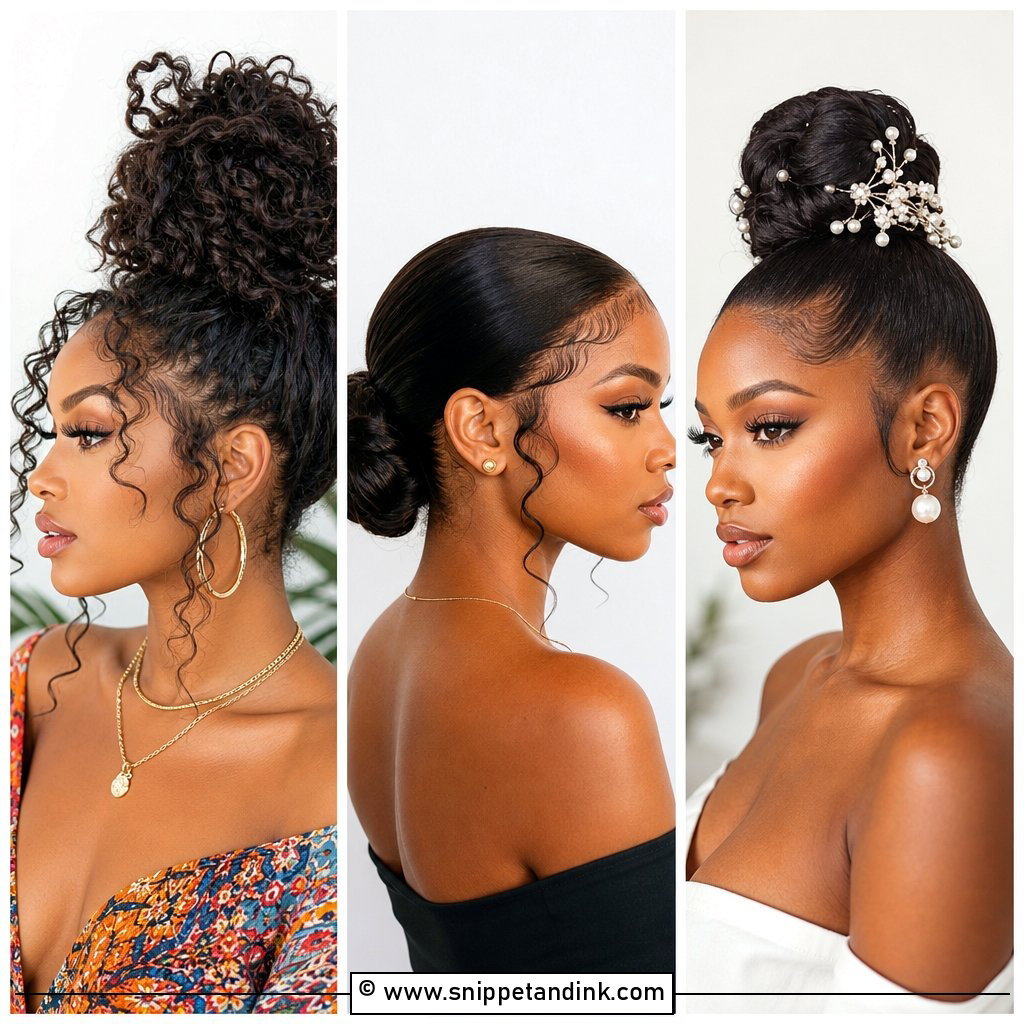
14. Loose Curly Low Bun
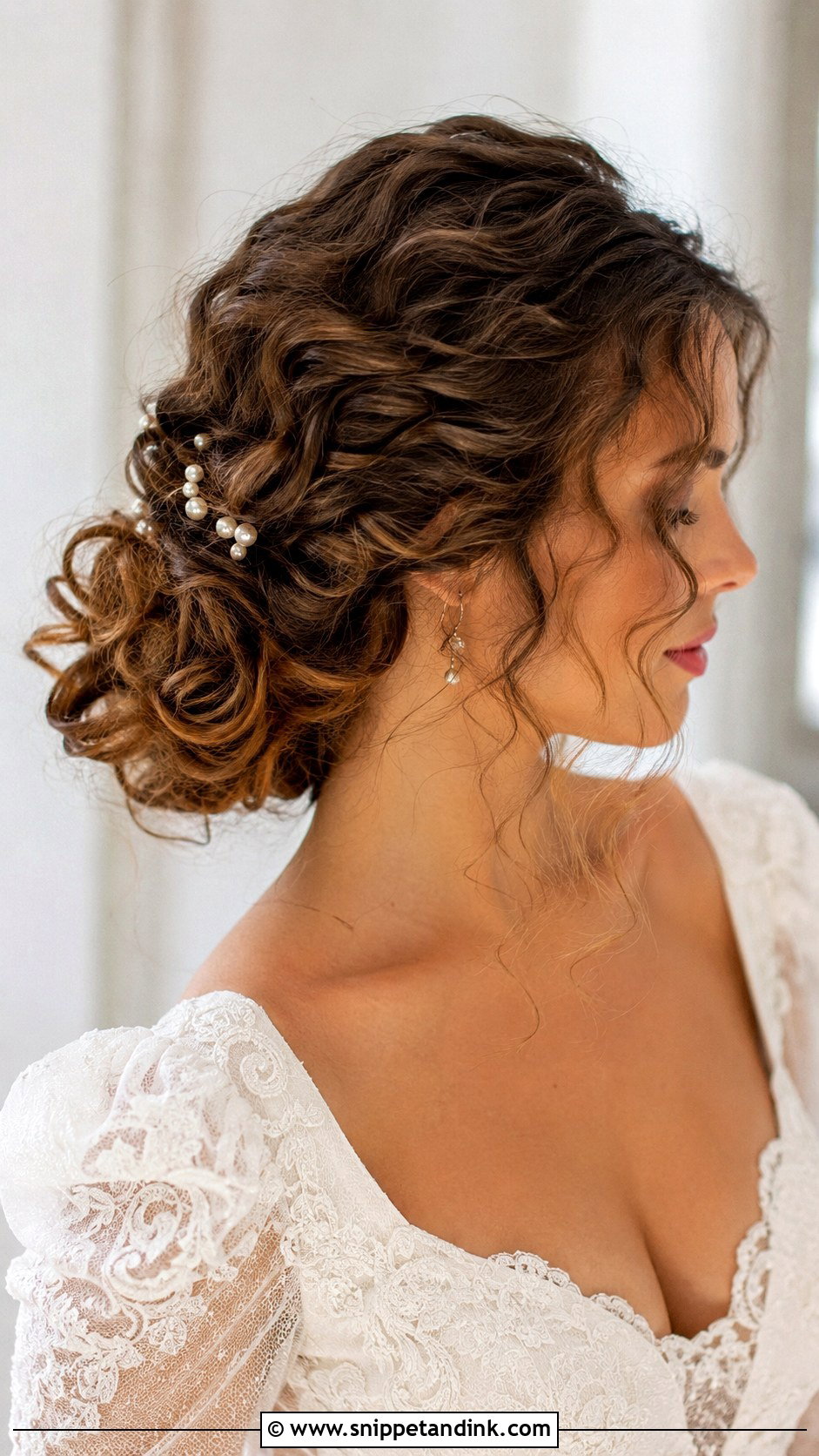
Curling the hair before gathering it gives a loose curly bun its volume and soft dimension. On naturally curly hair, I work with your own curl pattern, defining it with a cream rather than re-curling with heat, then gathering it loosely so the curls stay springy. Pieces fall around the face. Pearl pins or small flowers finish it. It suits romantic, vintage and garden weddings. Avoid brushing curly hair dry before styling; it turns curls into frizz in minutes.
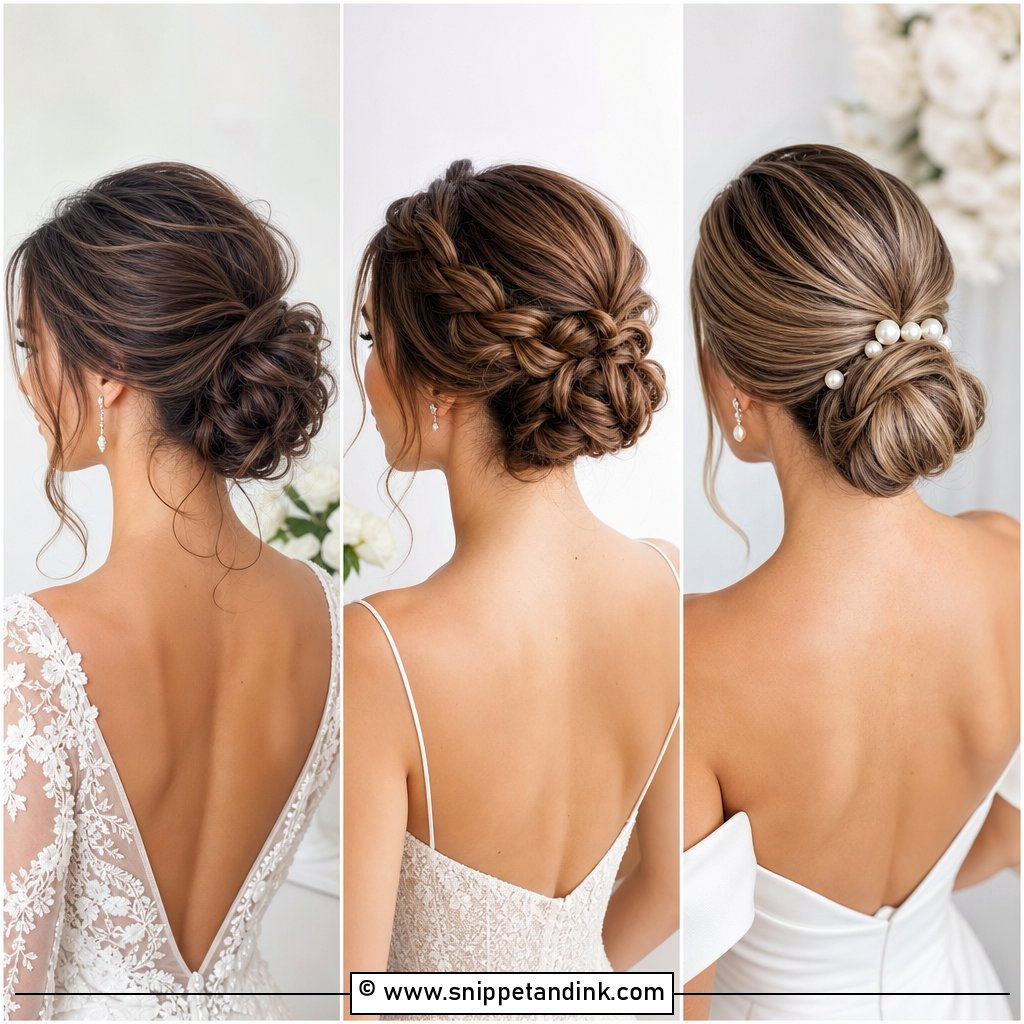
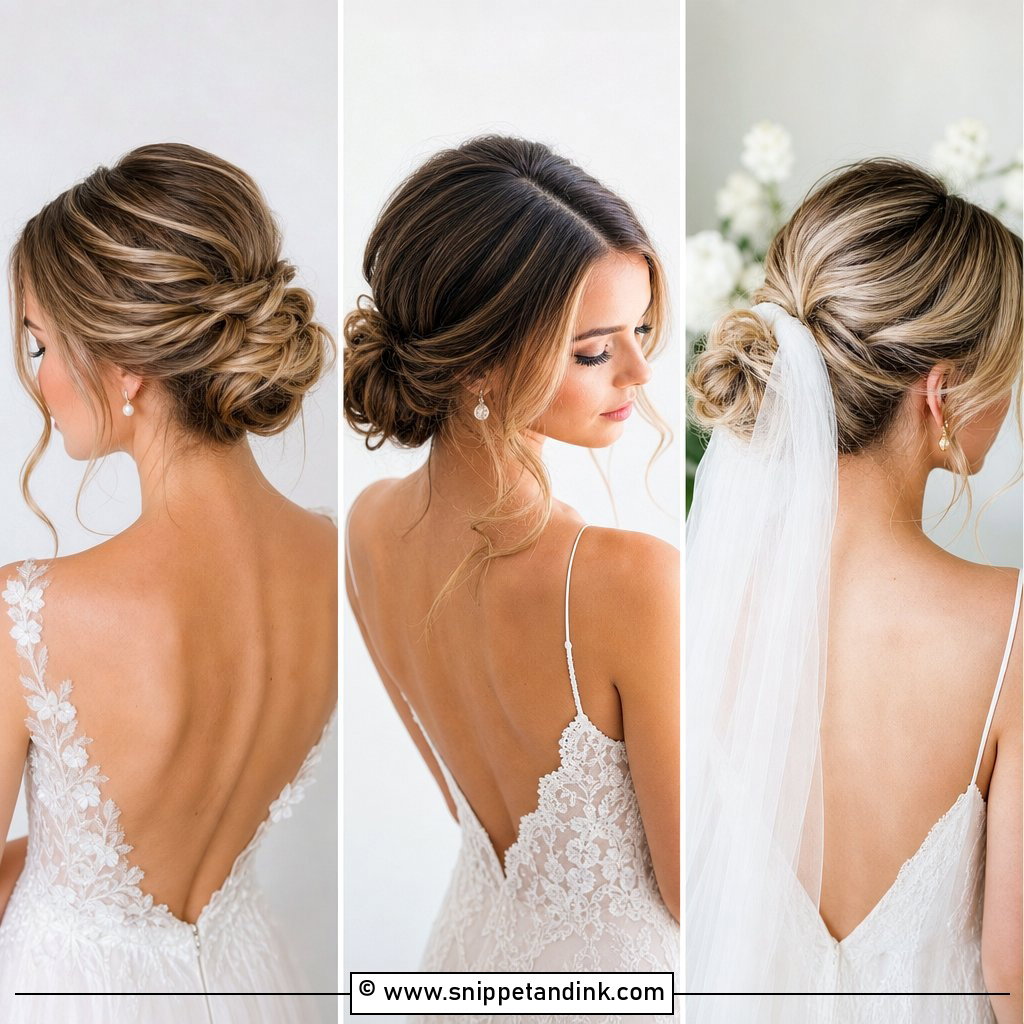
15. Low Bun With Headband
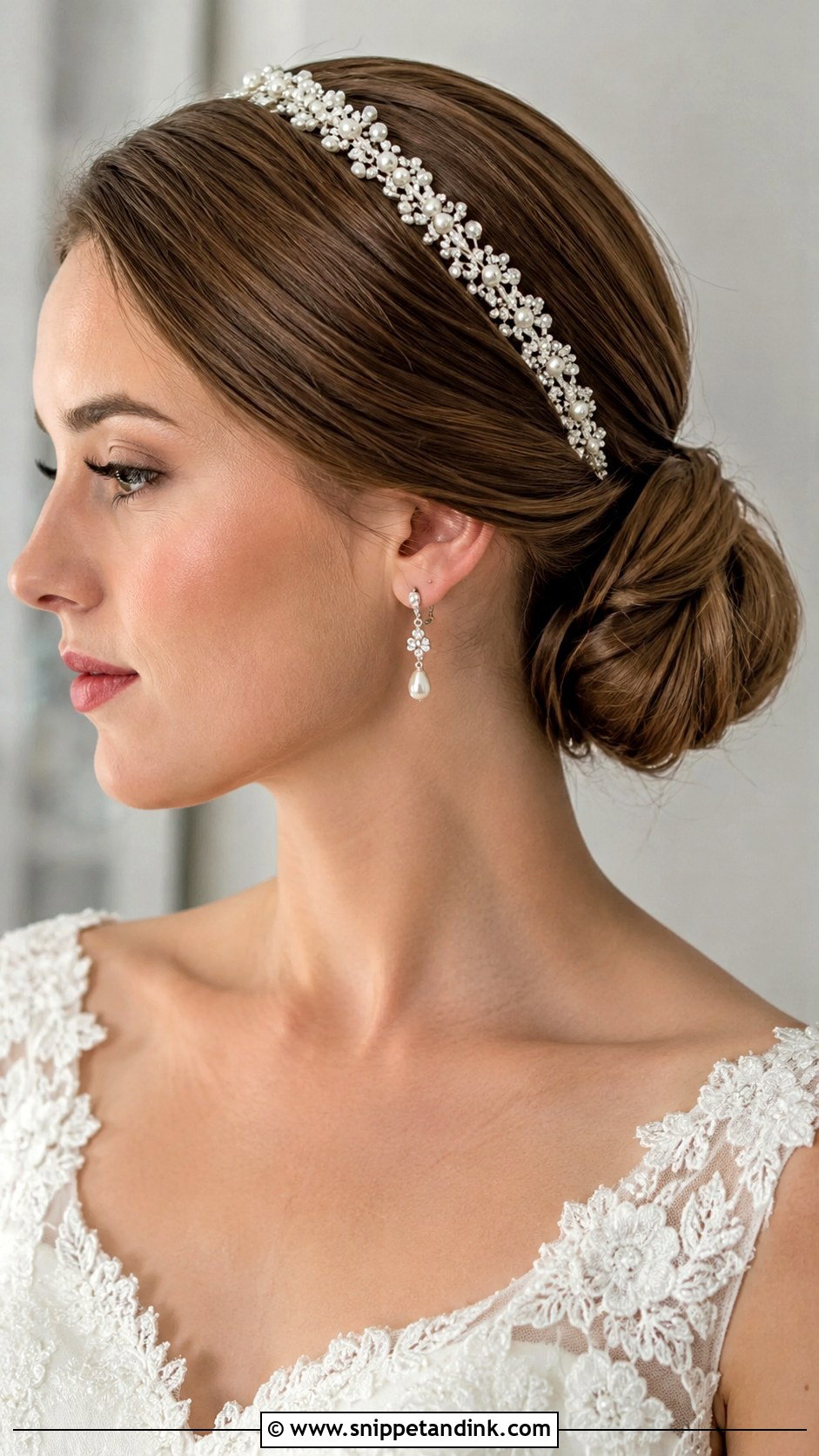
Pearl, crystal or floral headbands sit across the crown in front of the knot, framing the face. They’re one of the easiest accessories to wear, but hard plastic or metal bands can press behind the ears after a few hours. I try headbands on brides for at least twenty minutes at the trial. A band with small teeth on the inside stays put without pins. It works with sleek or textured buns and suits modern, vintage and boho weddings. Choose one that fits the gown’s detailing.
16. Vintage Low Bun Wedding Updo
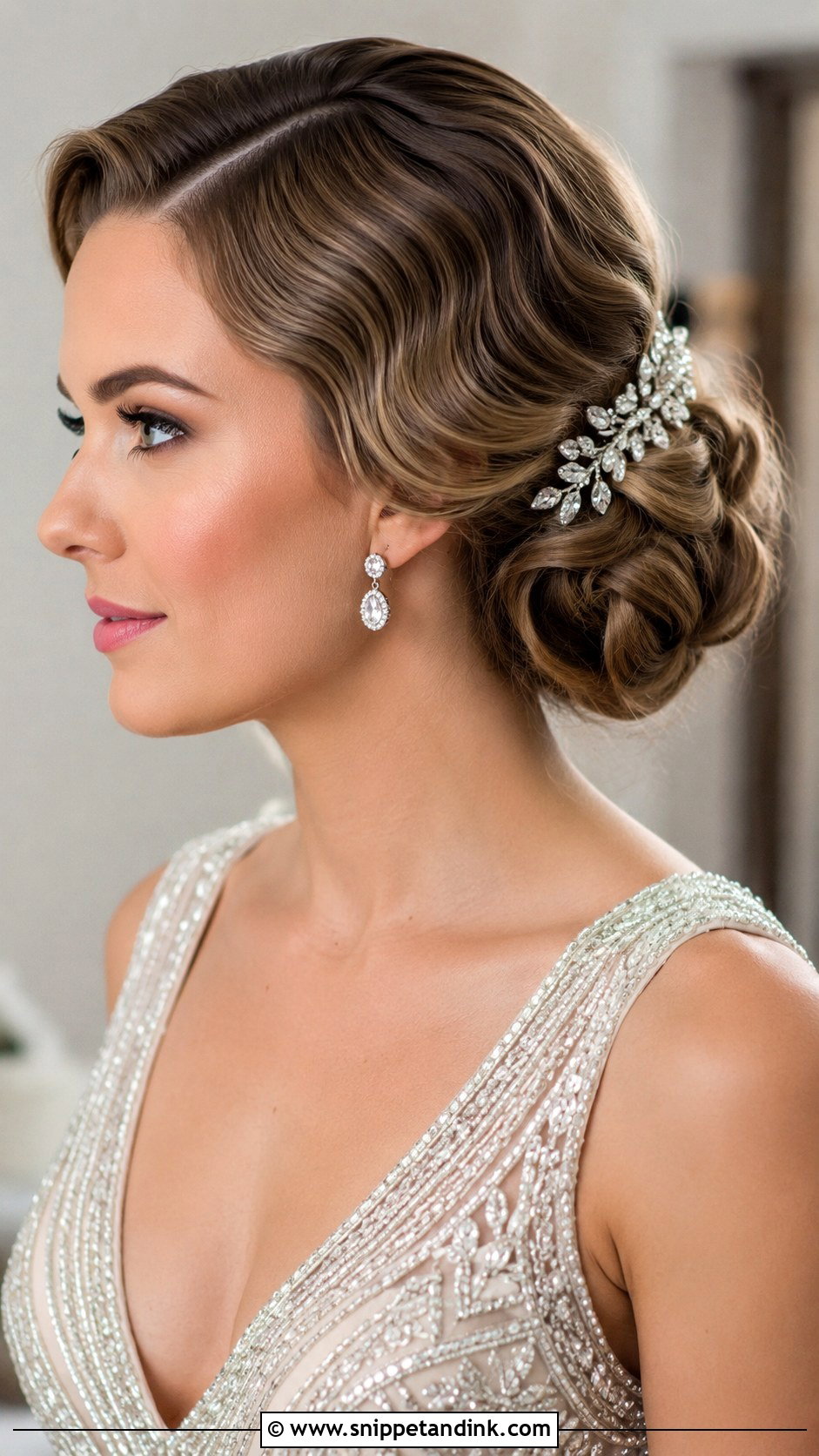
A vintage-inspired low bun usually has soft finger waves or pin curls at the front leading into a polished knot. Pin curls are set in small coils, held with clips, and brushed out once cool, which gives the rounded, glossy waves of old Hollywood. A deep side part strengthens the look. A jewelled comb or birdcage veil suits it, along with classic gowns and elegant jewellery. Allow extra time in the morning; vintage sets can’t be rushed.
17. Low Bun With Curtain Bangs
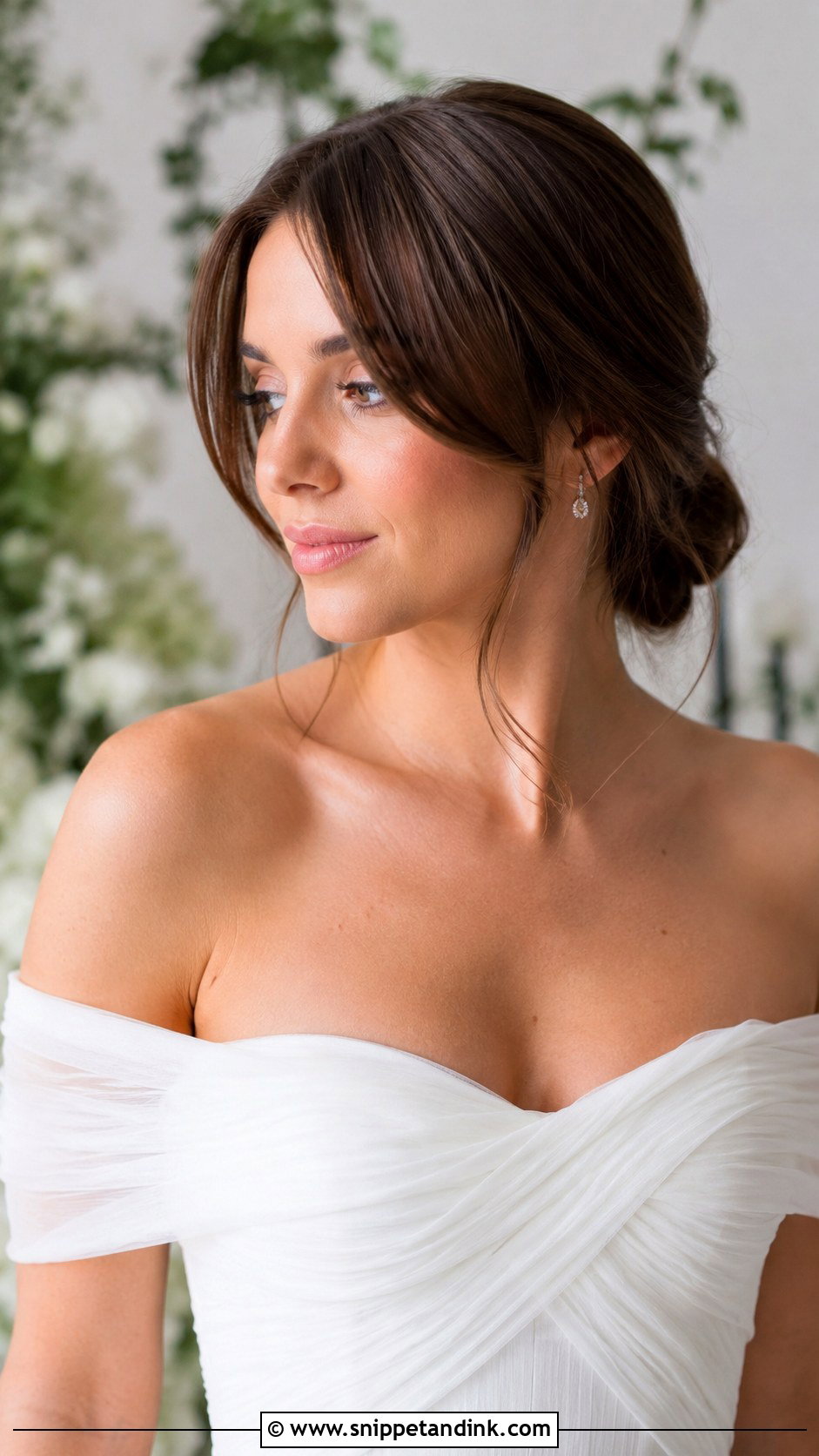
Curtain bangs part gently in the centre and sweep outward along the cheeks, softening the forehead. I blow-dry them over a round brush, lifting at the root, and set them with a light spray. They suit a smooth or textured bun and most face shapes. If you already wear bangs, keep your usual trim schedule and have the last cut about a week before, so they’ve settled. Don’t try them for the first time just before the wedding.
18. Low Bun With Pearl Pins
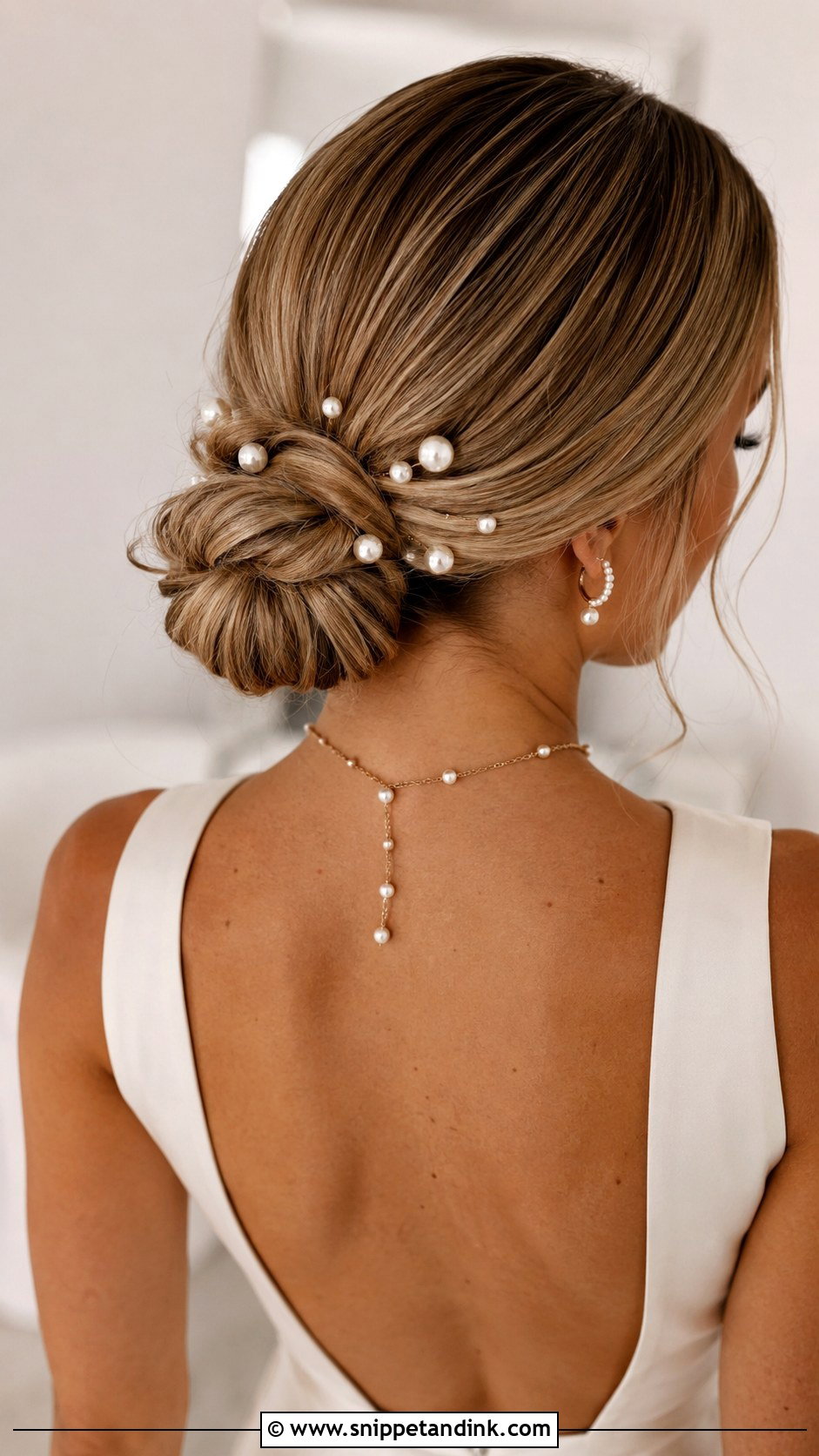
Pearl pins slide into a finished bun and add a soft glow. Spread them in an even arc or bunch them in clusters; either works, but random scatters look accidental in photos taken from behind. I push each pin into the bun at an angle so it grips several strands instead of sitting on top. They suit sleek and textured buns and pair well with pearl jewellery. Classic, vintage and modern weddings all suit them, and they’re light enough that you’ll forget you’re wearing them.
19. Low Bun With Fishtail Braid
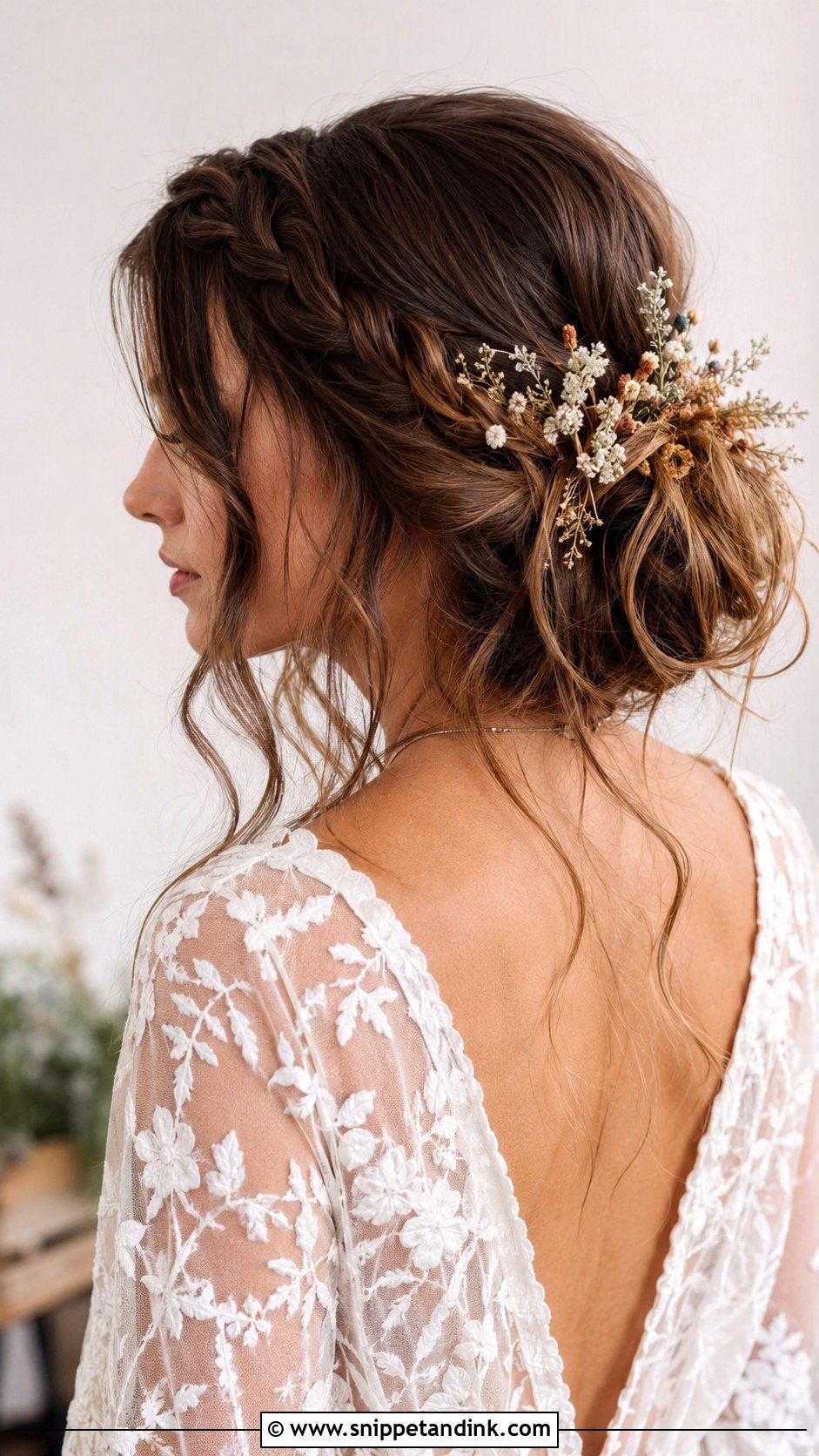
A fishtail is woven from two sections, giving a fine, intricate texture. It can run along one side or across the crown into the knot. I loosen it slightly for softness, then add tiny flowers or pearl pins. Longer hair gives the most impressive result, since a fishtail is narrower than a regular braid. Fishtails are slow to braid on a busy wedding morning, so if you have several bridesmaids also having hair done, tell your stylist about this choice early so the schedule allows for it.
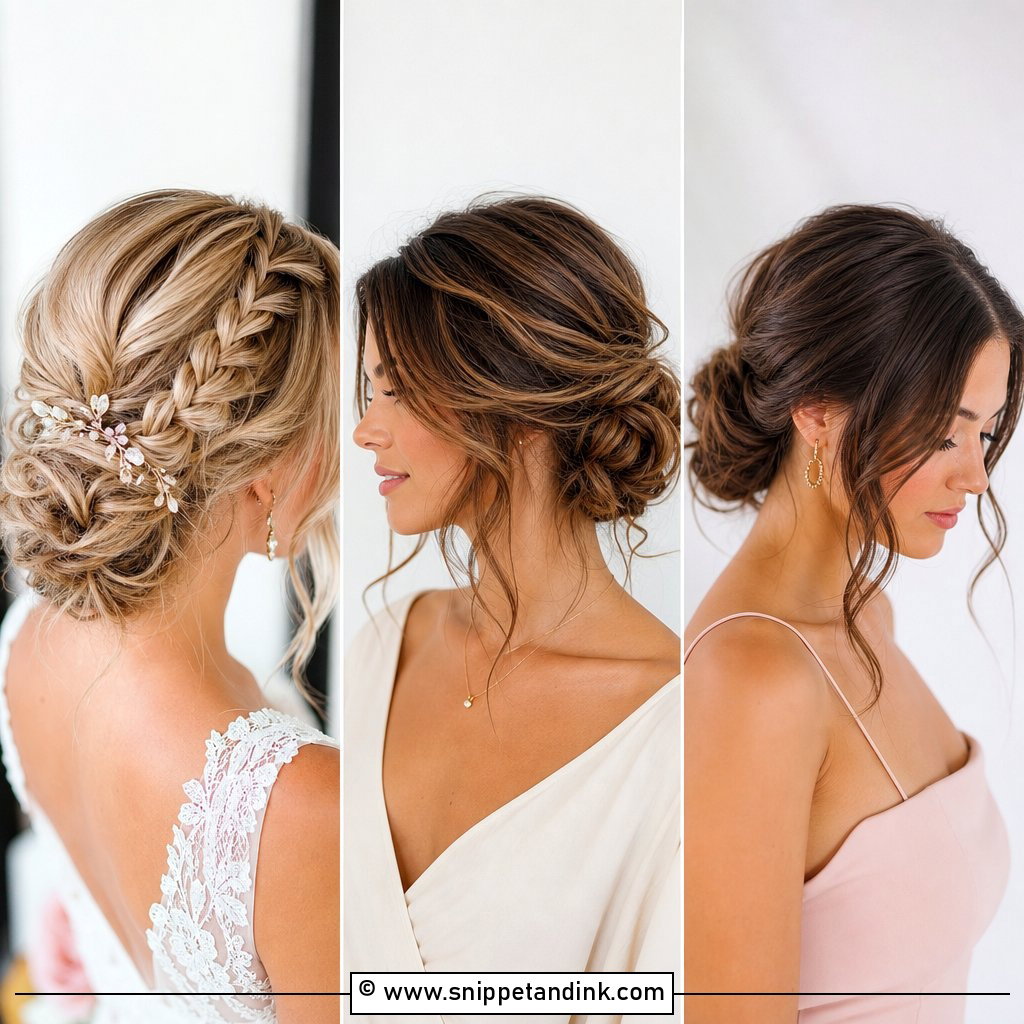
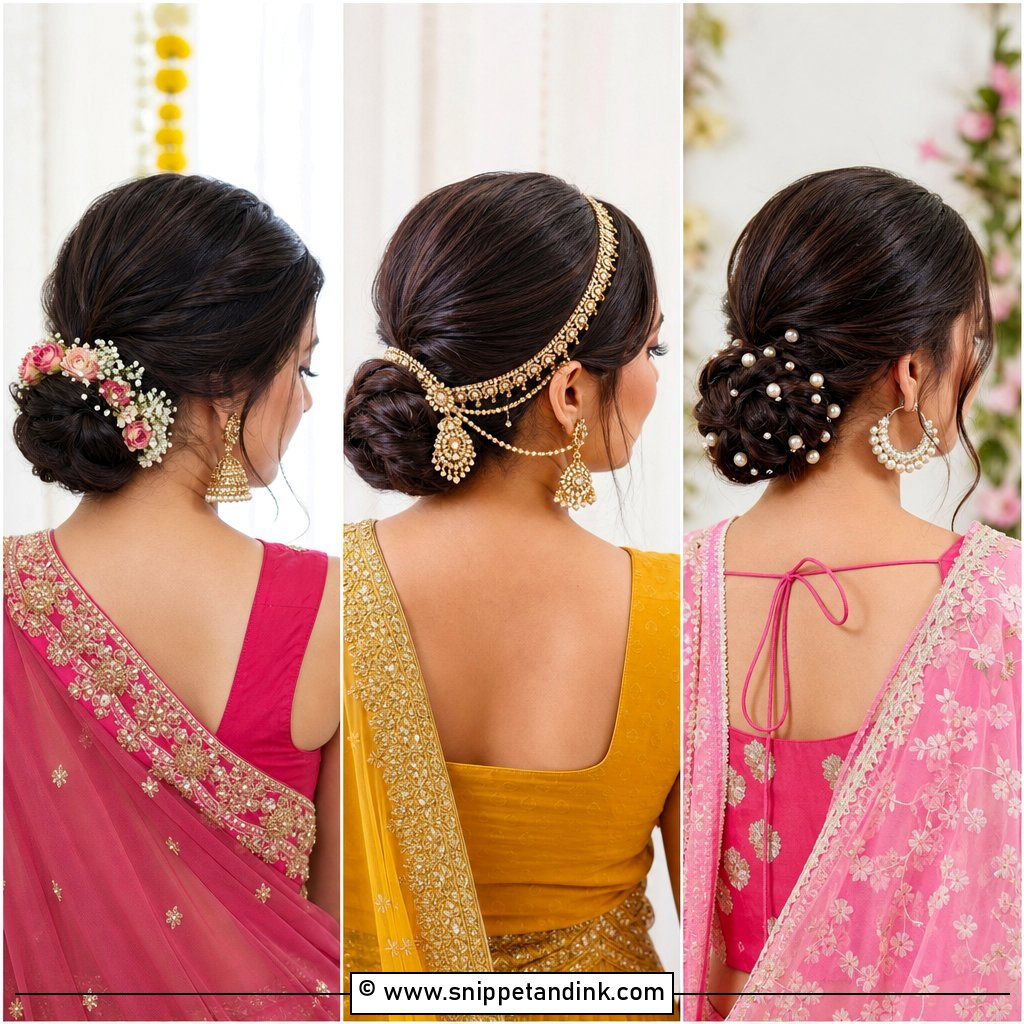
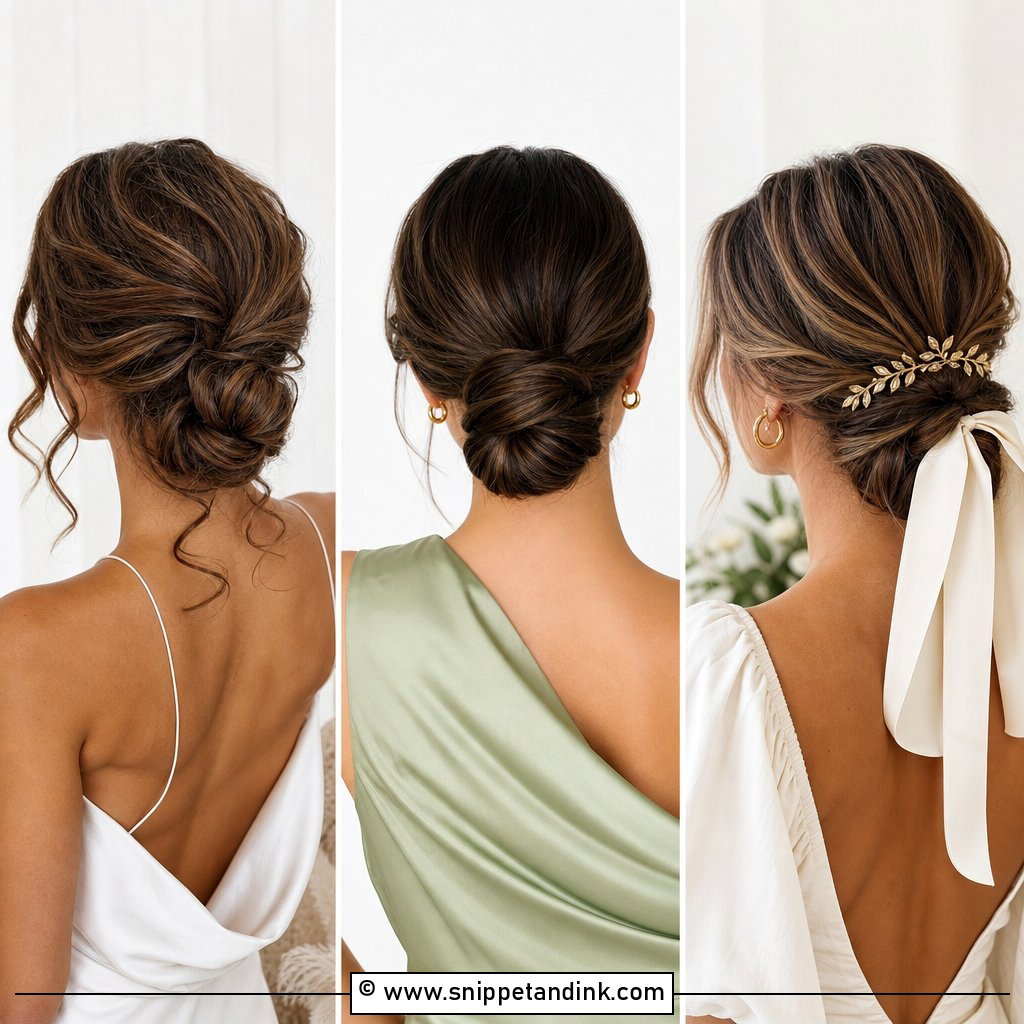
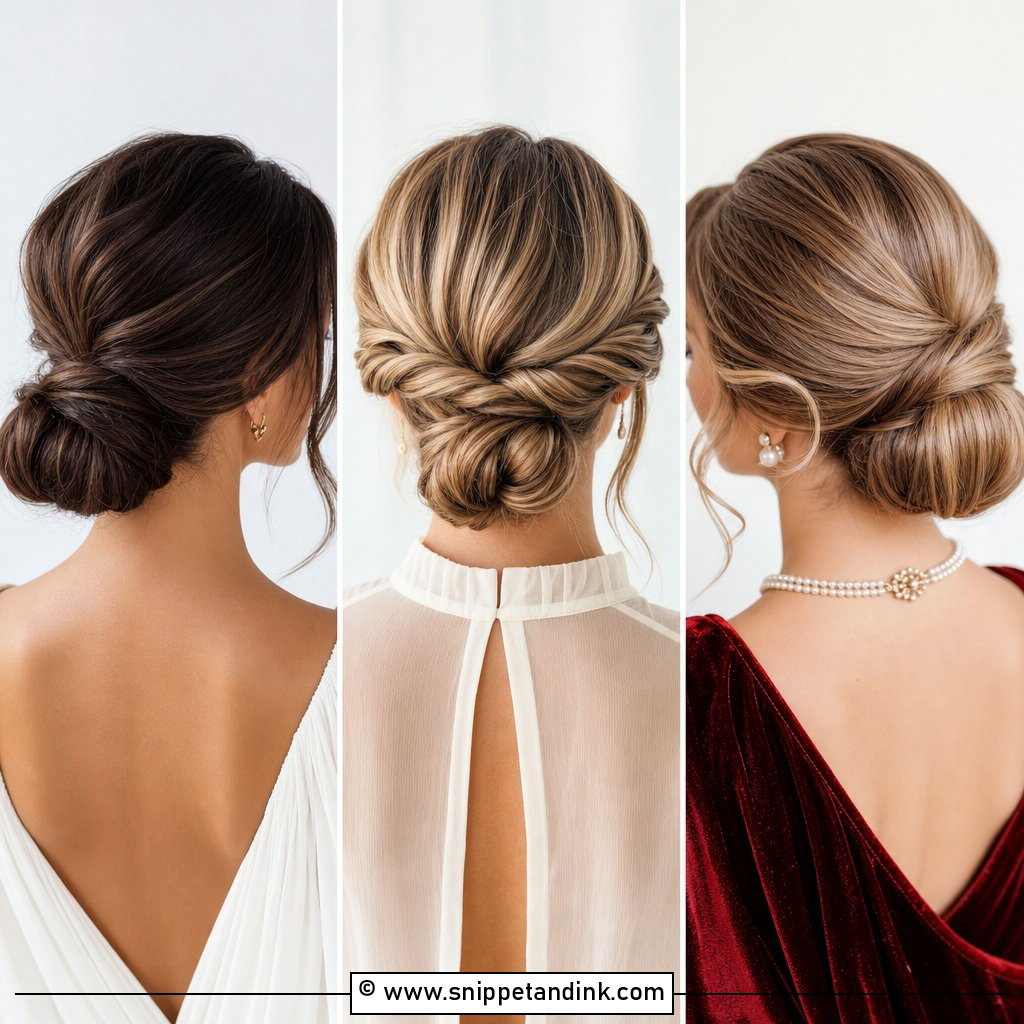
20. Sleek Low Bun With Middle Part
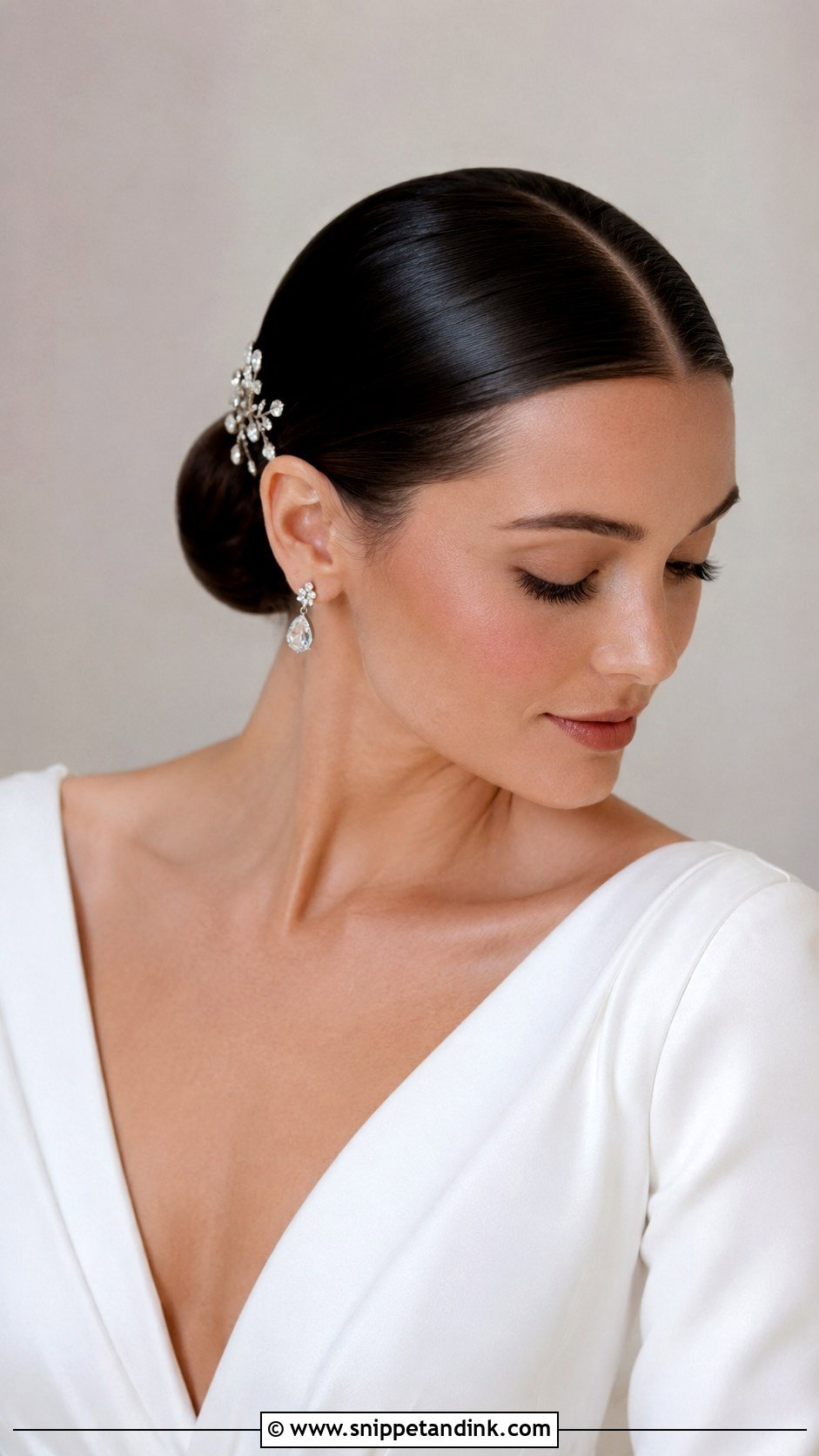
A sharp middle part with hair smoothed flat into a tight knot is the most modern bun on this list, and the least forgiving. Uneven density on either side of the part shows instantly. I use a tail comb to draw the part and check it in the mirror from the front, then smooth each side separately before joining them. Glossy products give a mirror finish. Small crystal pins add a little shine. It suits a city venue, a minimalist wedding and a sleek gown.
21. Low Bun With Greenery
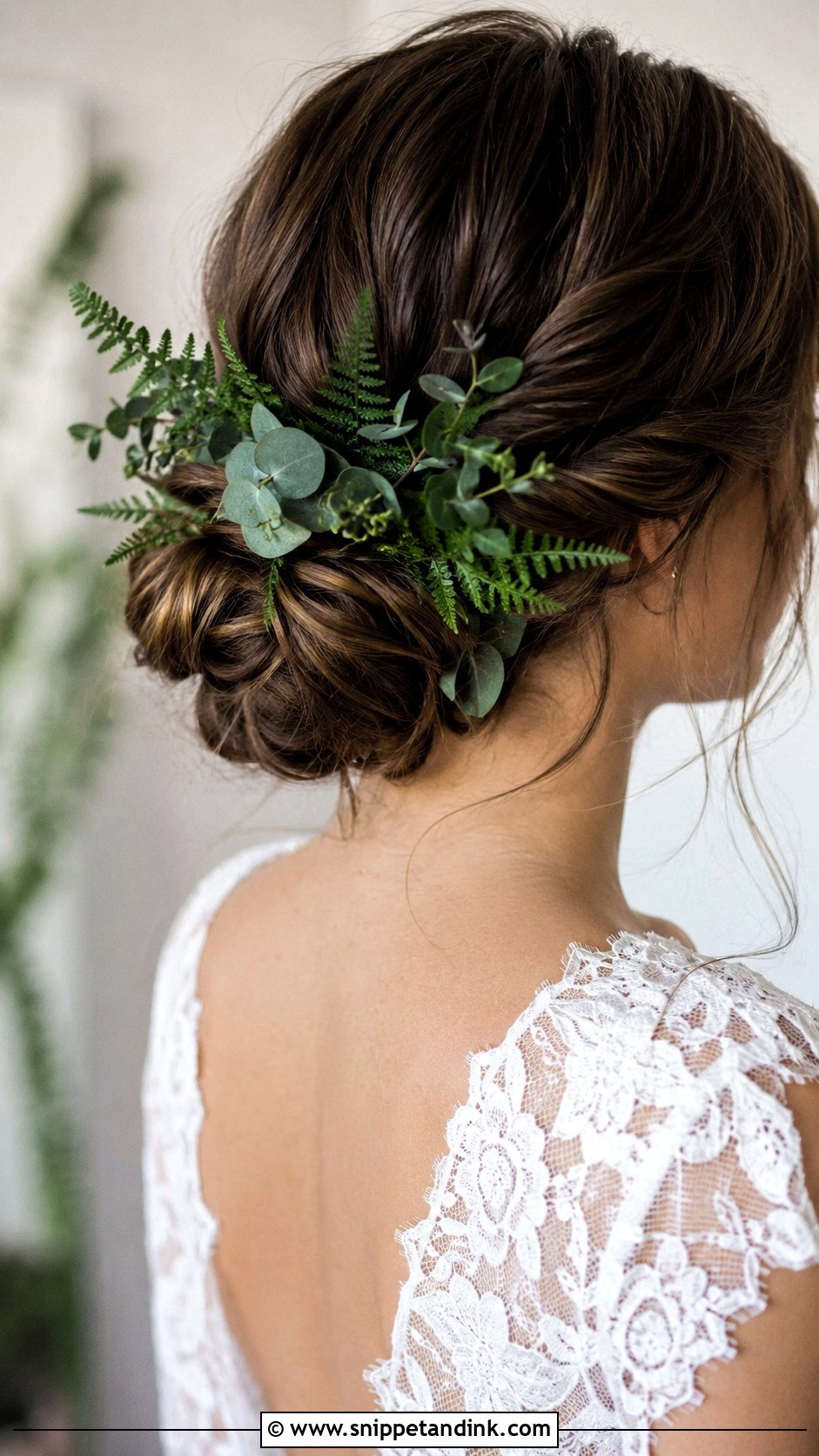
Eucalyptus, ferns or olive branches tucked around the knot add natural texture. Eucalyptus and olive hold up well out of water; delicate ferns can curl in a few hours. Ask your florist to prepare small sprigs that are already conditioned and sealed. Greenery is lighter than flowers, so it suits a low bun without pulling. It pairs with flowing gowns, minimal jewellery and outdoor or woodland settings. A few small blooms mixed in soften it.
22. Low Bun With Wavy Texture
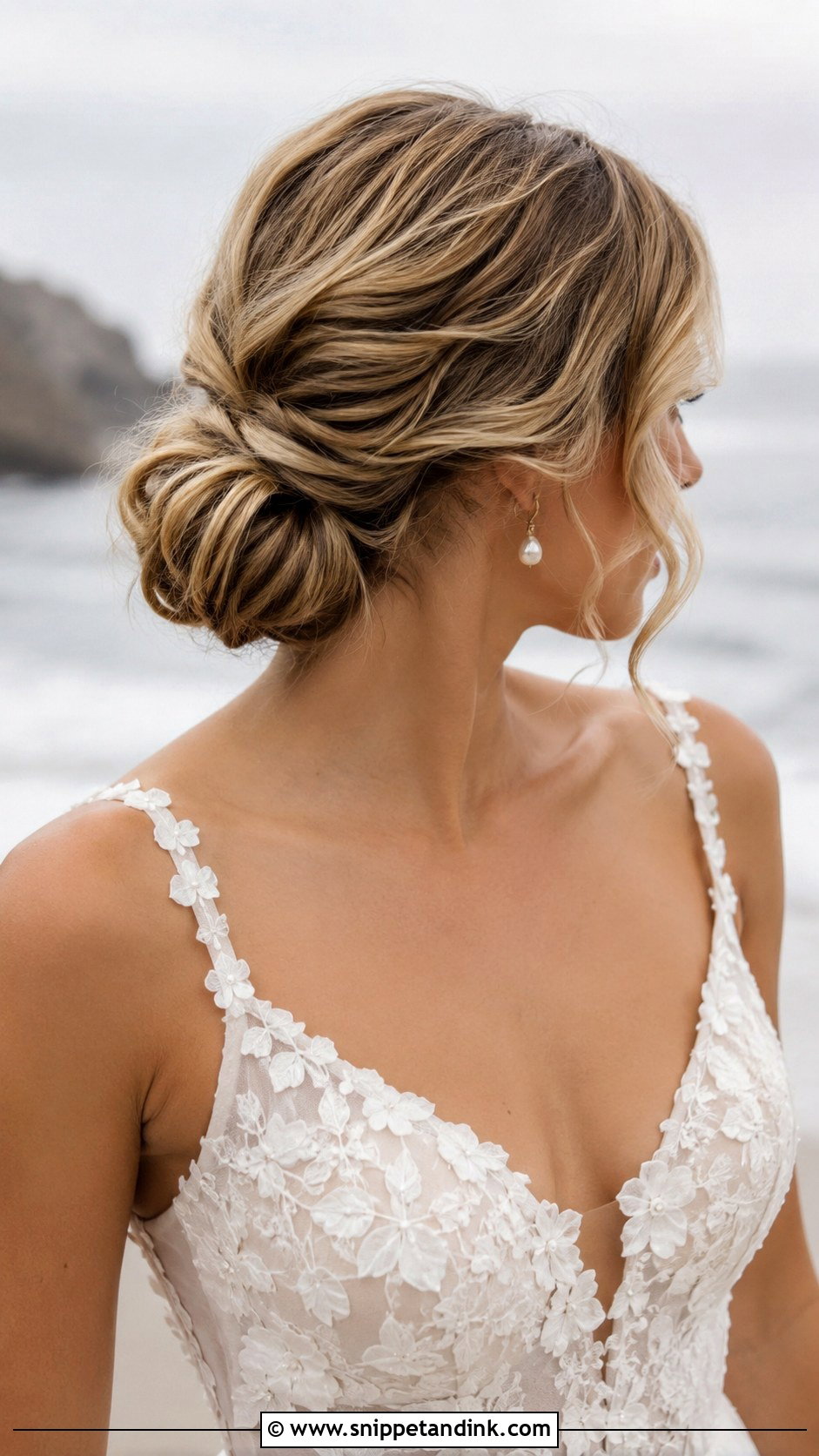
Waves give a low bun fullness and movement, especially on naturally wavy hair. I wave the hair with a large barrel iron, let it cool, then gather it into a relaxed knot with soft pieces at the face. Humidity relaxes waves quickly, so for a beach or garden I set them with a firmer spray than usual. Tuck in pins or flowers. It suits boho, beach and garden weddings where structure would feel too strict.
23. Low Bun With Crystal Comb
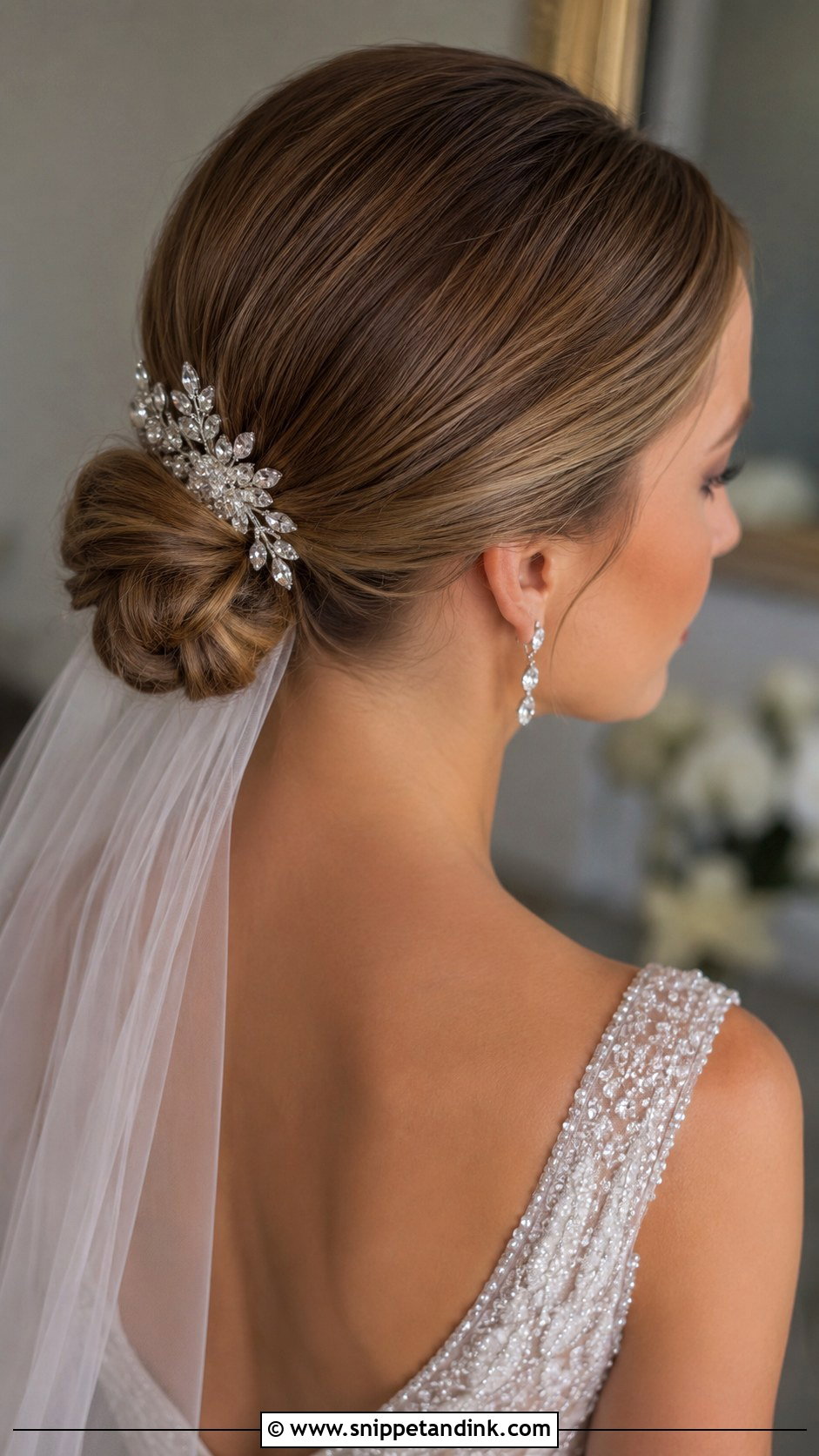
A crystal comb can sit beside or above the knot. Place it on the side that faces your guests during the ceremony, since that’s the side they’ll see. Combs grip best in textured hair; on silky straight hair I build a row of crossed pins and push the comb in against them. Position it so it won’t clash with your veil comb. Sleek and textured buns both suit it. It’s a formal, glamorous accent for an evening wedding.
24. Low Bun With Wrapped Braid
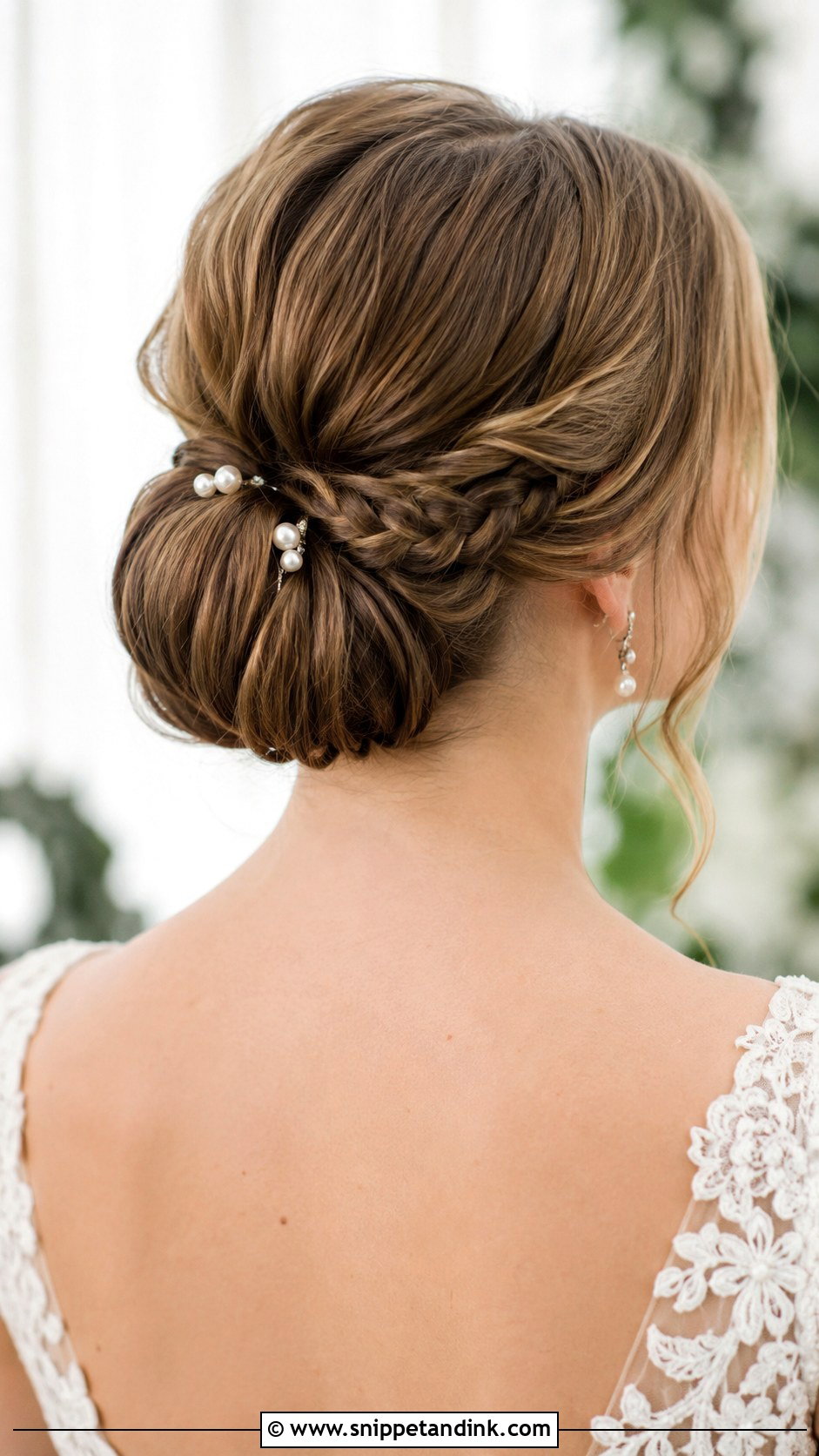
A single braid wrapped around the base of the knot frames the bun and hides every pin underneath. I braid a section taken from under the ponytail, wrap it once or twice around the base, and pin the end out of sight. Loosen it slightly for a softer look, and add pearl pins or small flowers. Medium to long hair gives the best results. It’s a neat finish that suits classic, boho and garden weddings, and it’s a good fix for a bun that looks plain.
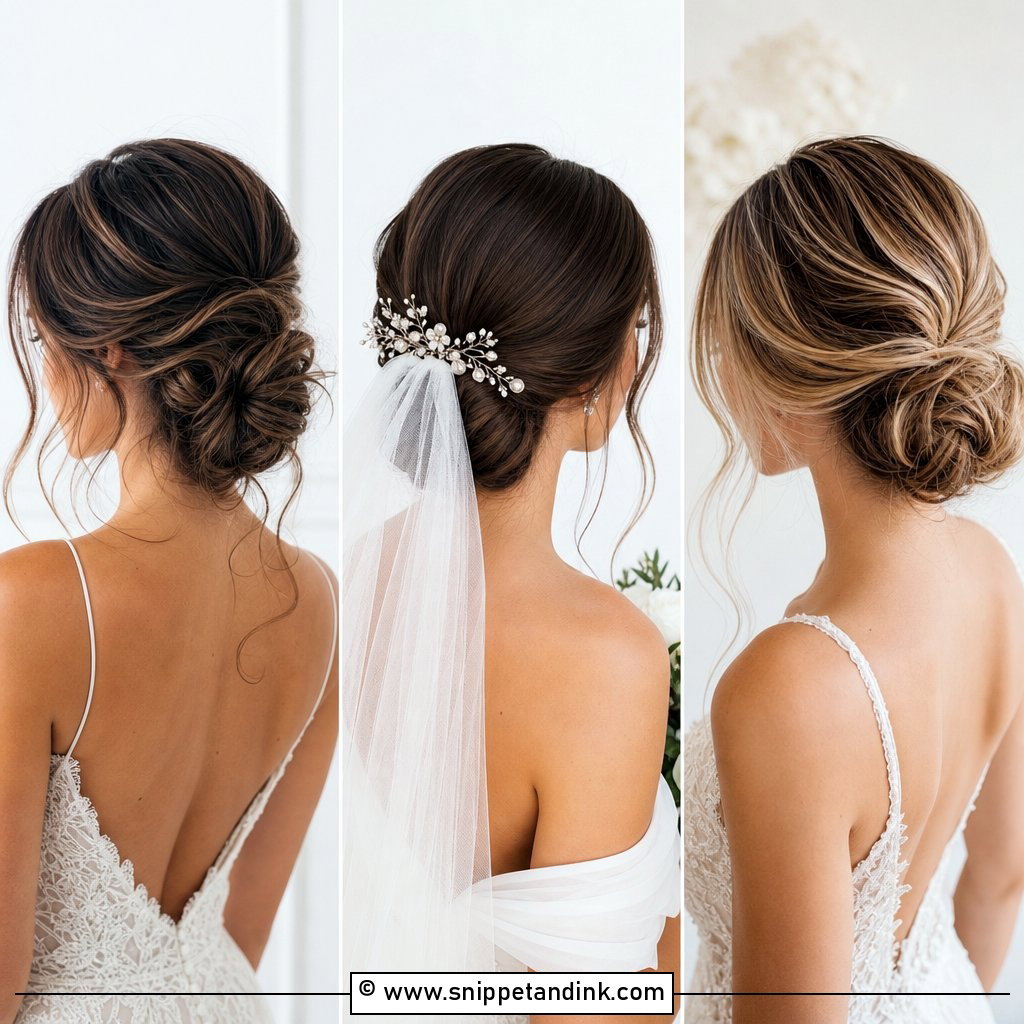
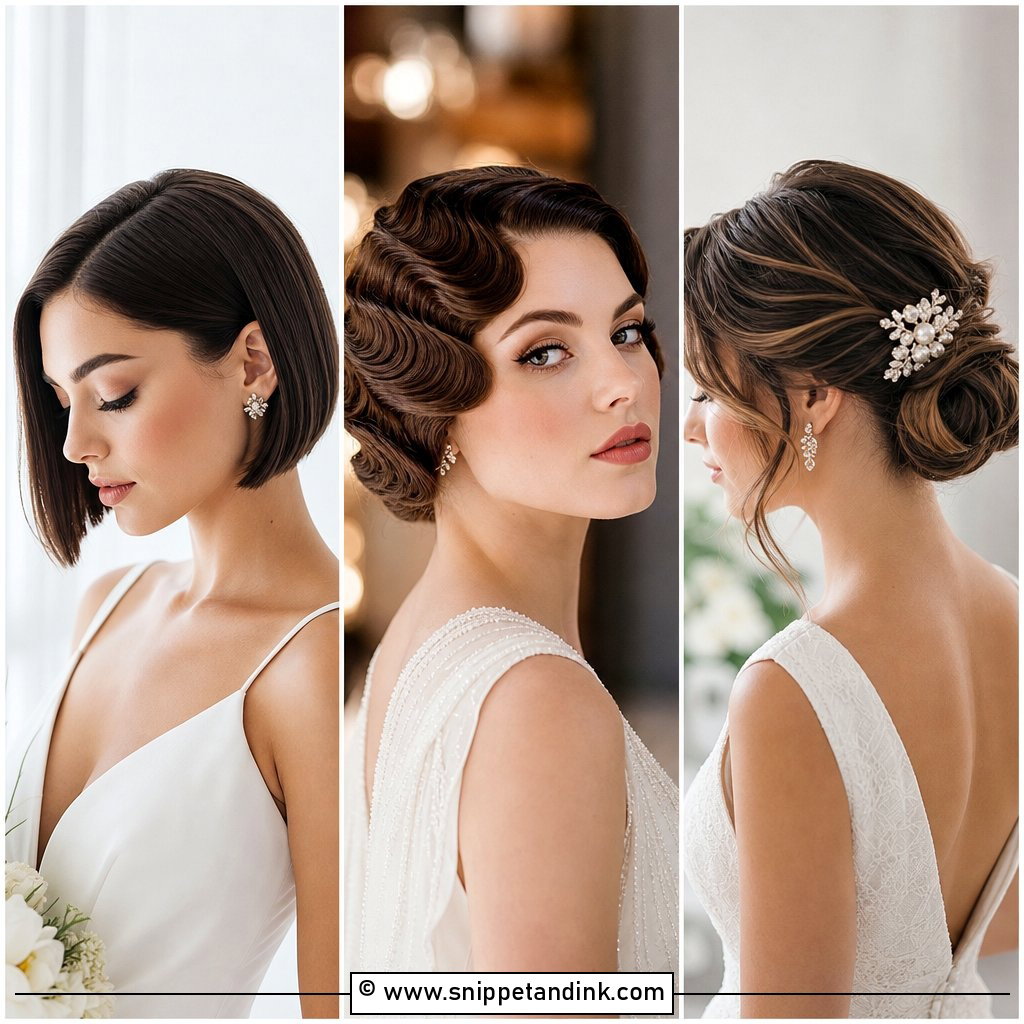
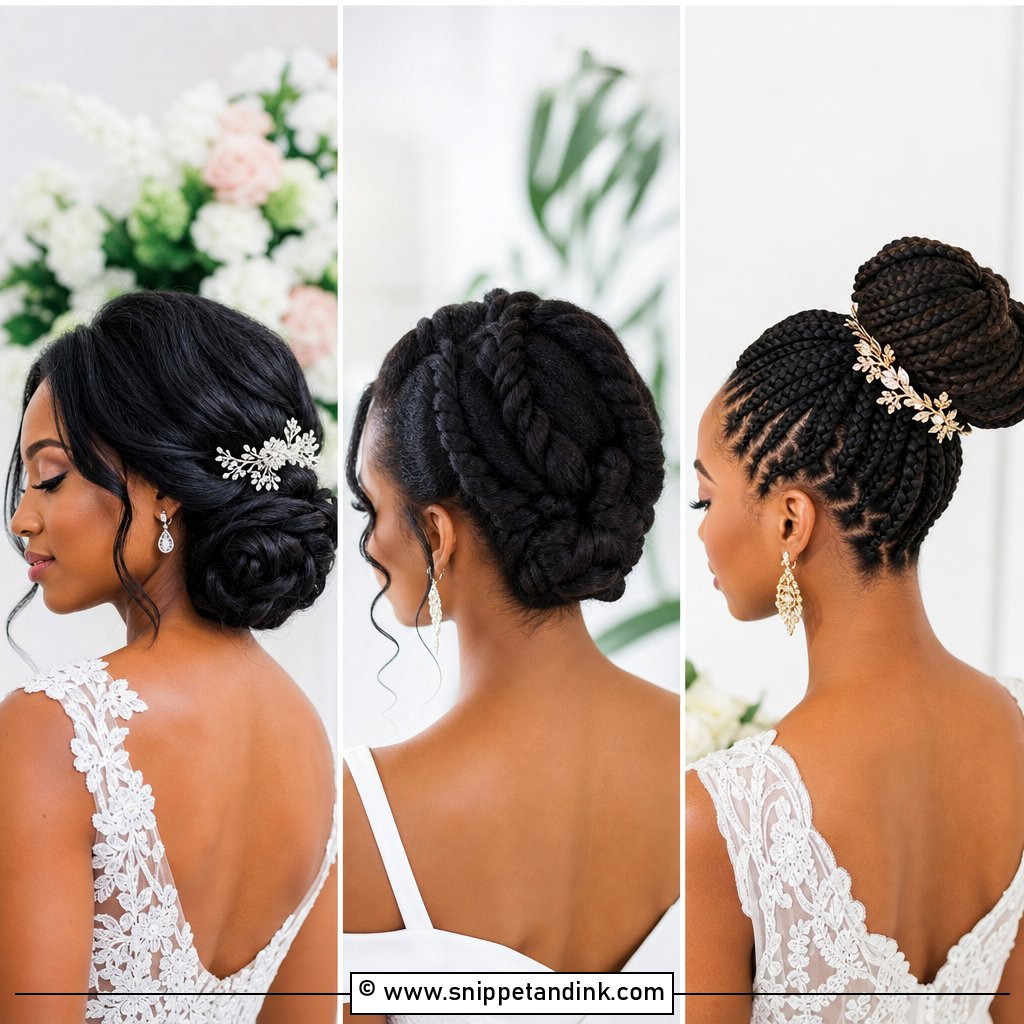
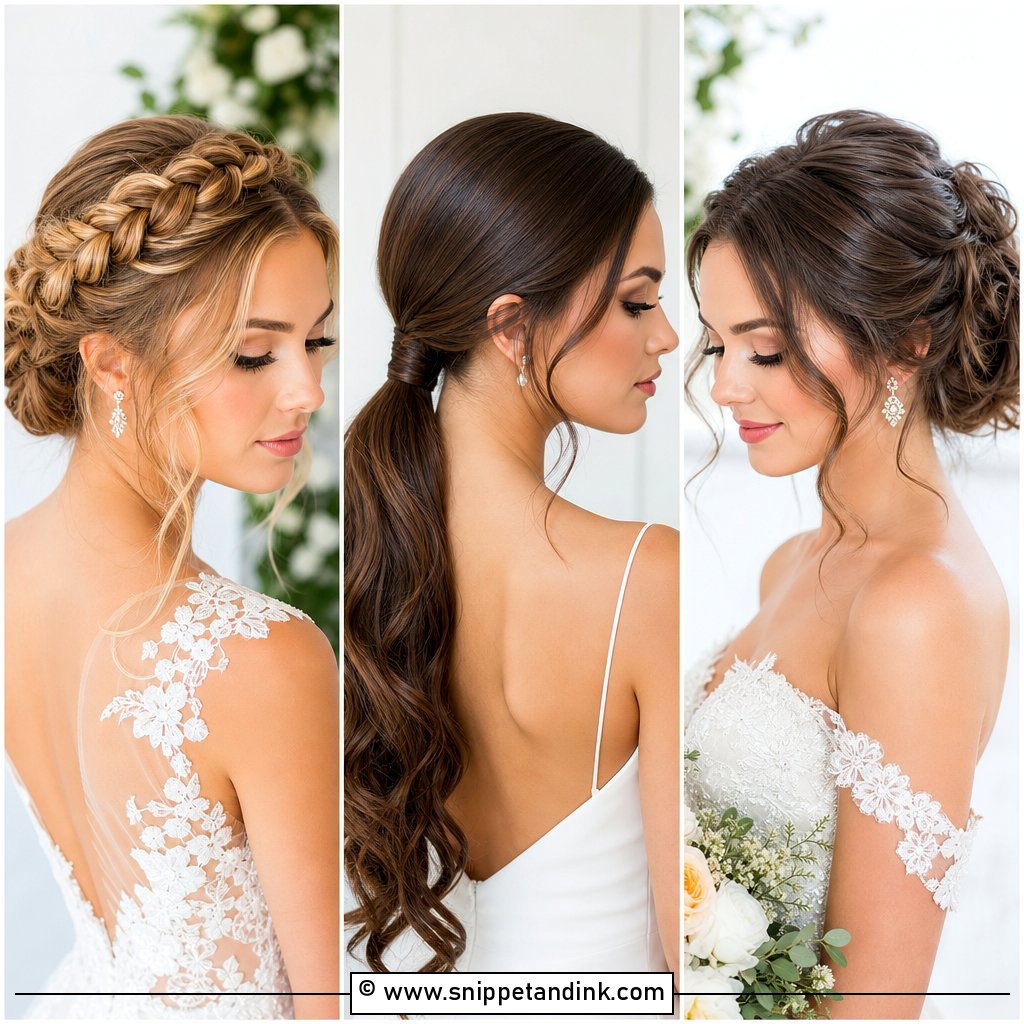
25. Low Bun With Knotted Detail
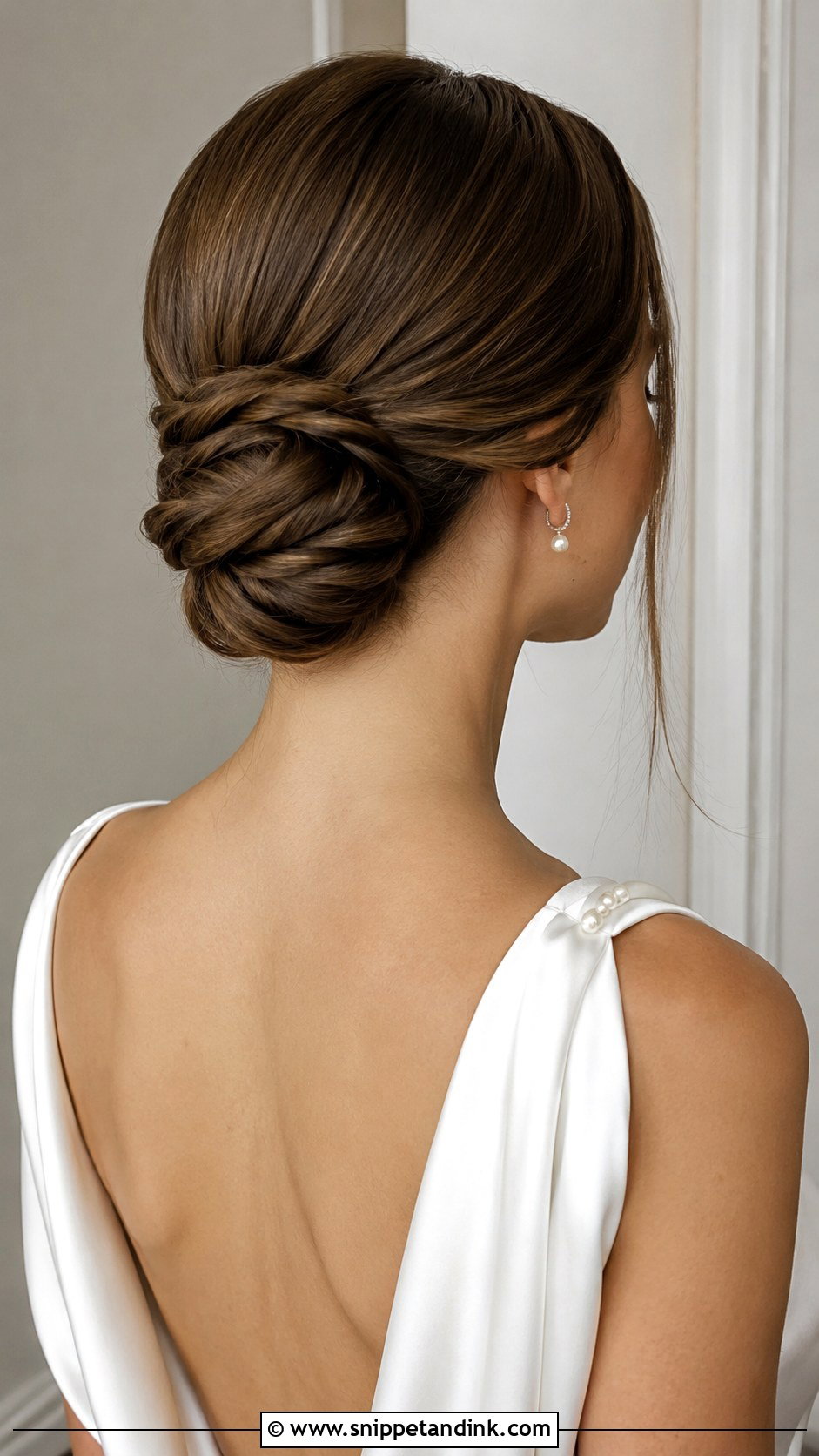
Sections of hair are tied or knotted, then pinned into place. The knots add texture and natural volume without much product. Thick hair knots best; fine hair can look thin when knotted, so I add a little volume powder at the root first. It pairs with sleek gowns and minimal accessories, and a few pearl pins sit well between the knots. It suits modern, editorial weddings. Medium to long hair gives the fullest result.
Flowers and Greenery That Last Pinned in a Bun
Hair flowers live without water, close to body heat, for eight hours or more. Some stems cope; many don’t. I talk to the florist before the day about which ones we’ll use.
- Hold up well: spray roses, waxflower, baby’s breath, orchids, eucalyptus, ruscus and dried flowers.
- Wilt or bruise quickly: peonies, hydrangeas, gardenias, sweet peas and most wildflowers.
- Heavy single blooms pull at the bun; several small heads spread the weight.
Ask for stems to be conditioned the night before, cut short and taped or wired, and delivered in a cool box. I add them last, after the veil is set, so they’ve had the least time out of the fridge. Keep a couple of spare stems in the cool box for touch-ups after photos.
If you’re allergic to pollen or have a sensitive scalp, mention it early. Dried or silk flowers look close to real in photos, weigh less and won’t wilt, and a florist can mix a few of them in with fresh greenery so nobody notices.
Screenshot the Back View Before You Decide
Most guests see your hair from behind during the ceremony, which is why I always tell brides to look at the back view of any style before falling for it. A sleek chignon, soft tendrils, braids or flowers each change that view. Think about your veil, your neckline and how much detail is already on the dress. Save the photos that show the back and sides of a style, not just the front, and bring them to your trial. Your stylist can then adapt the look to your own hair.
You'll Like These Ideas:


Leave a Reply