
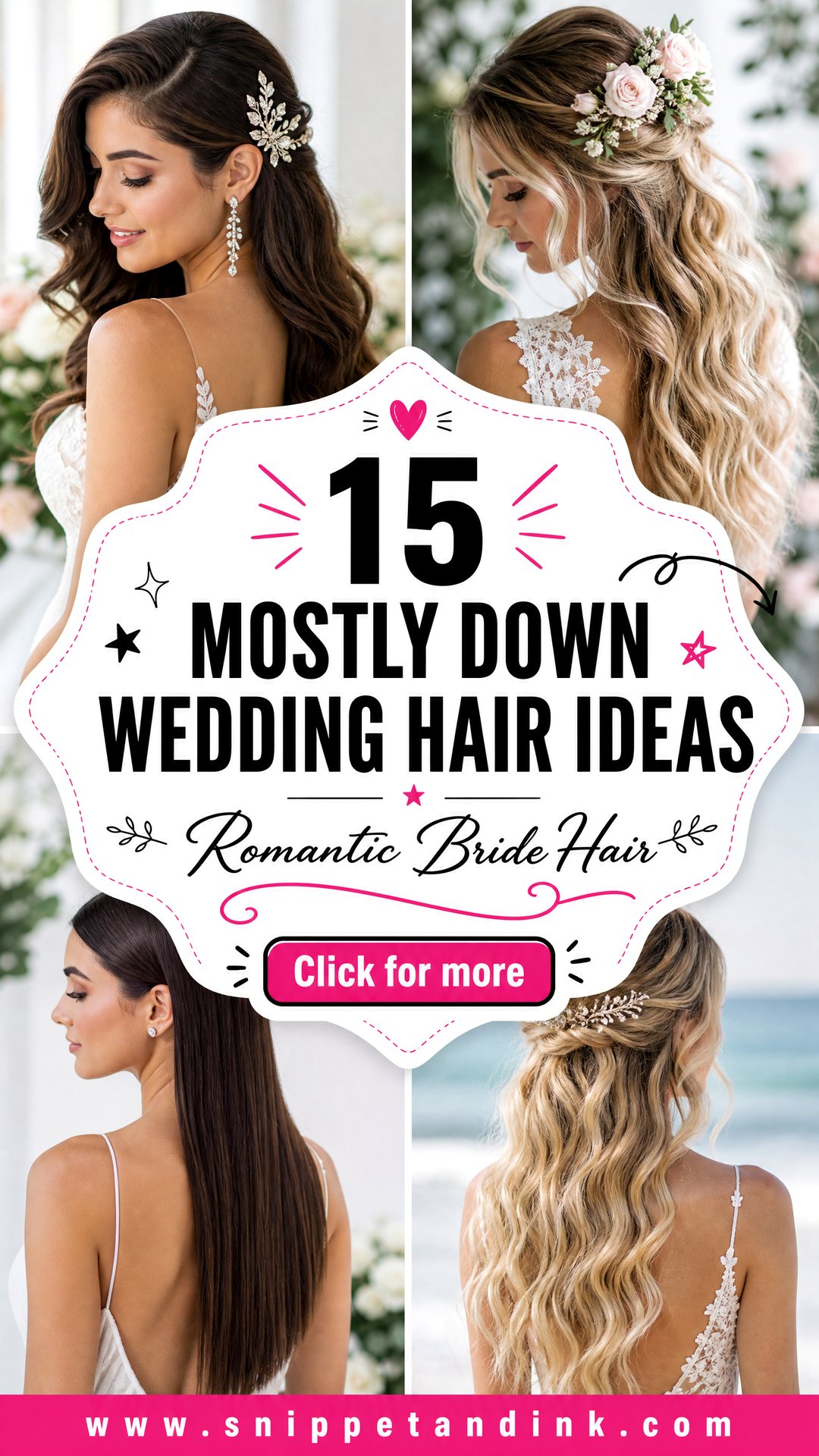
Wearing your hair mostly down is the option brides choose most for feeling like themselves, and it is also the one that needs the most planning to last. An updo is held by pins; down hair is held only by the set of the curl, the products and the weather. Waves, glossy curls, pinned-back sections and half-up details all fall under this heading. In my chair, the questions are always the same: how much of the hair goes up to carry the veil, what sits on the shoulders, and what happens to it by the first dance. Here are fifteen ways to do it, with my honest notes on each.
Prep That Makes Waves Last Until the Last Song
Most of the reason down hair drops happens before I ever pick up a curling iron. These are the steps I ask brides to follow for a down style:
- Wash the night before or the morning of, depending on your hair. Very fine hair holds curl best freshly washed with a light volumising product; thick, coarse hair often grips better on day two.
- Skip heavy conditioner and hair oil through the roots that day. Slippery hair releases curl fast.
- Blow-dry fully. Even slightly damp hair inside a curl will drop.
- Let me pin each curl to cool. It takes longer, but it is what makes the shape set.
- Brush out last, with a wide brush, once everything is completely cool.
If the wedding is humid or by the sea, tell your stylist early. I’d curl tighter, use a humidity-resistant spray and suggest at least a little of the hair goes up.
1. Half Up Half Down Wedding Hair
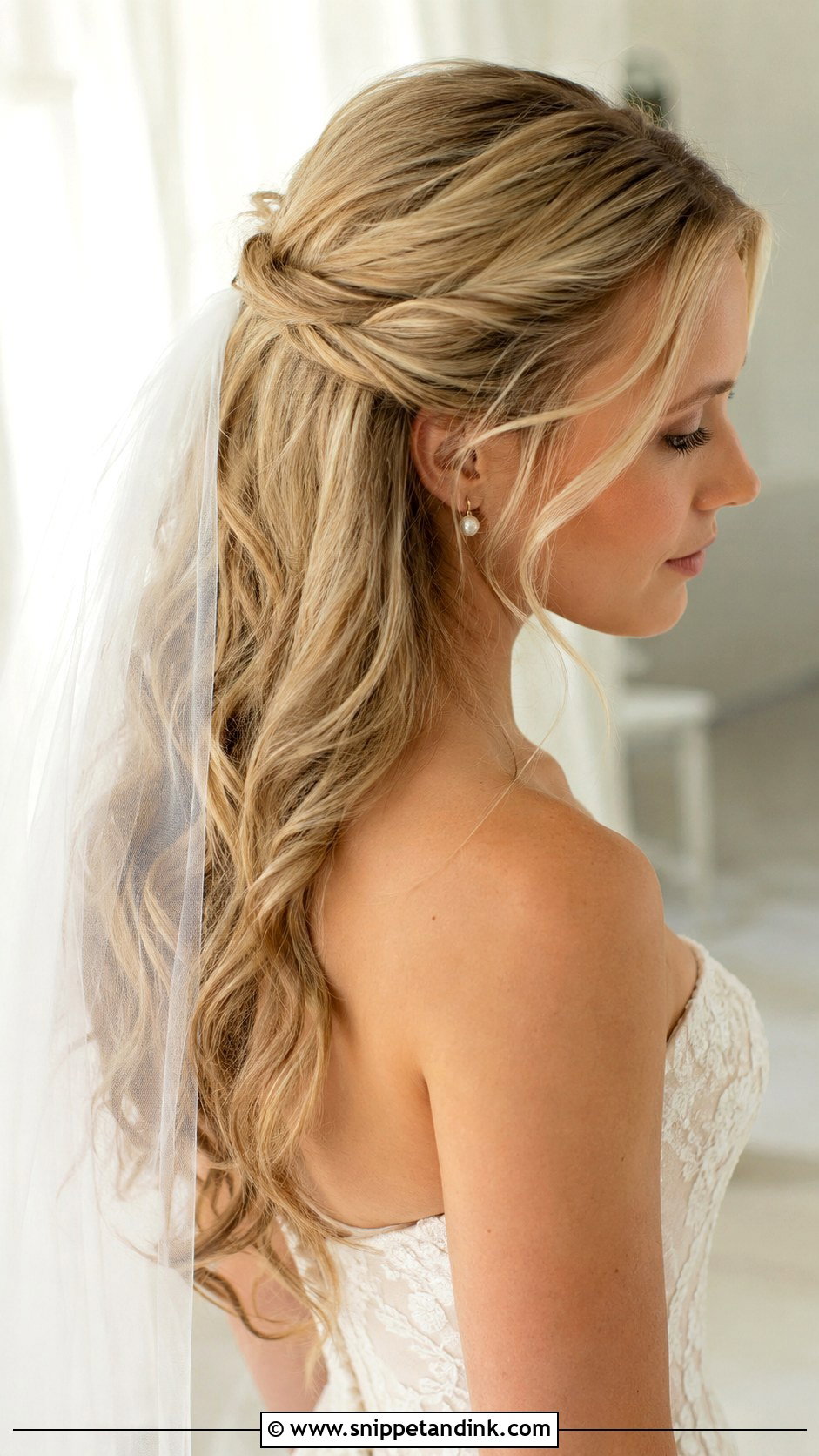
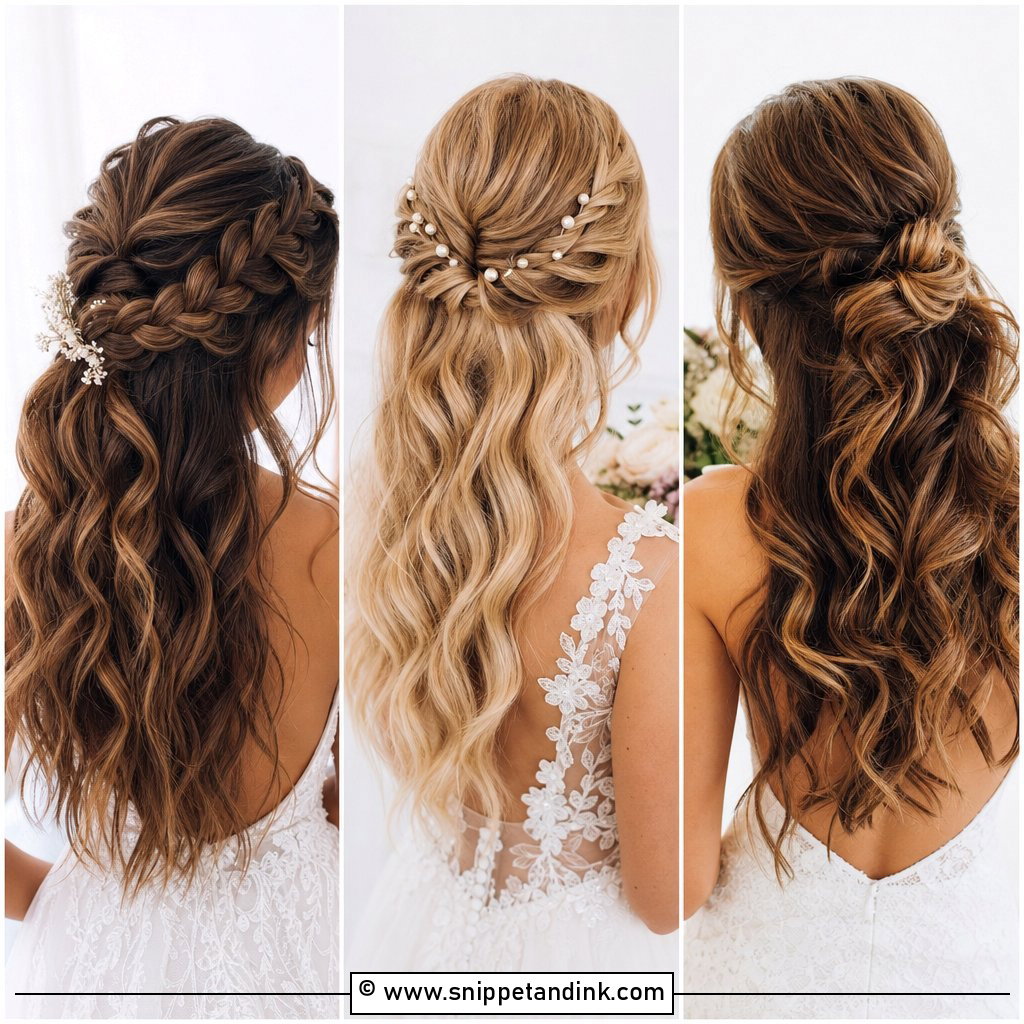
If you want the softness of down hair with real security, half up is where I start. The top section gets lifted, twisted or braided at the crown and locked with a small elastic hidden under it, while the rest falls in curls. That locked section is the reason I like it with veils: the comb has something solid to bite into. It also keeps the front off your face through an outdoor ceremony and long photo sessions. The mistake I see is pinning the top section too flat; a little lift at the crown keeps it looking modern.
2. Hollywood Waves Wedding Hair
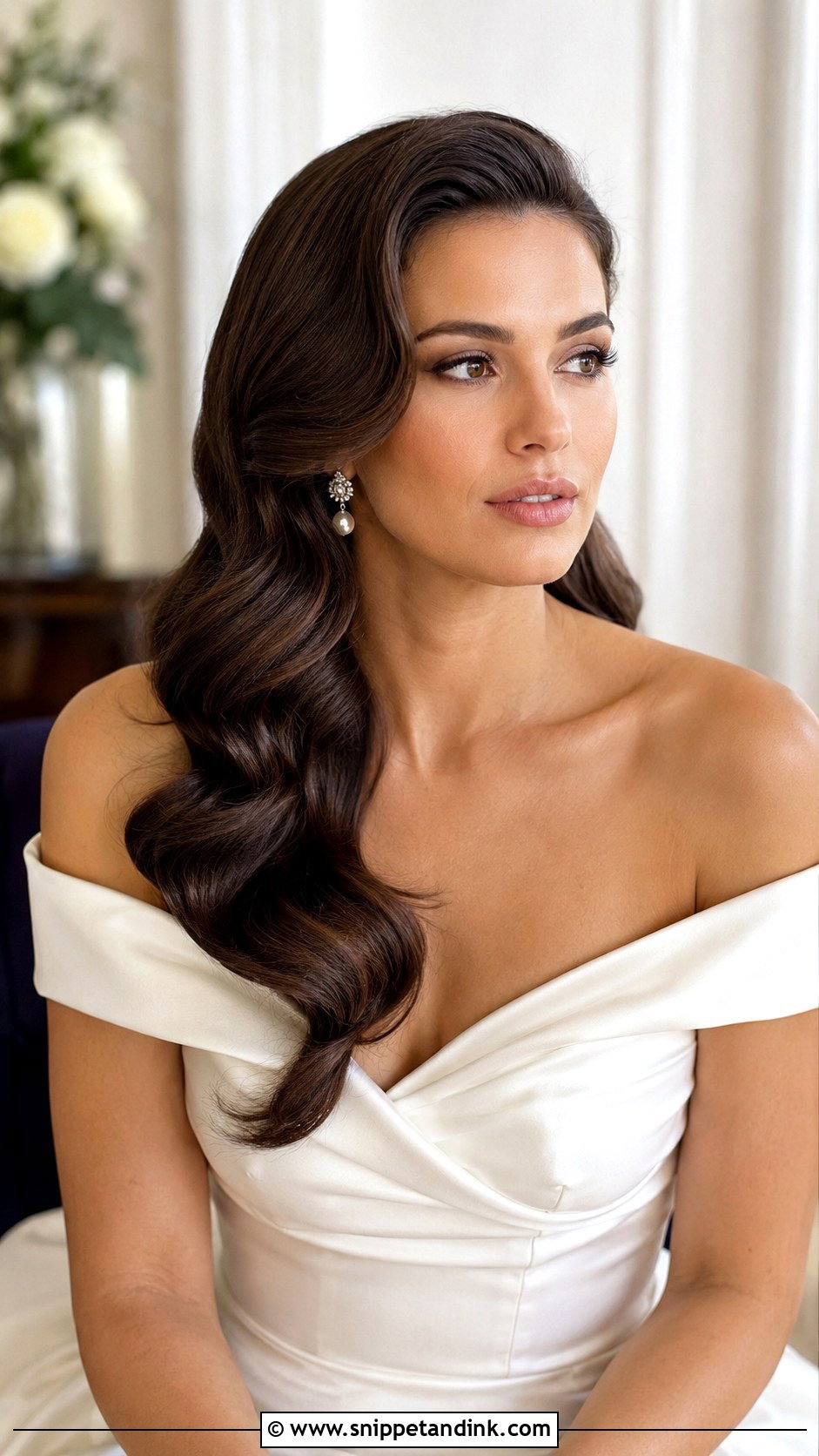
Hollywood waves wedding hair is the most structured down style on this list. Every curl is wound in the same direction, pinned to cool, then brushed until it merges into one glossy S-shape. Strapless and off-the-shoulder necklines suit it because nothing competes with the wave. It needs fullness at the ends to hold the pattern, so very thin, wispy ends often need a trim or a few wefts. Deep side part for drama, centre part for something gentler. I set it with firm spray and expect it to soften a touch by evening, which is fine.
3. Loose Curls Wedding Hair
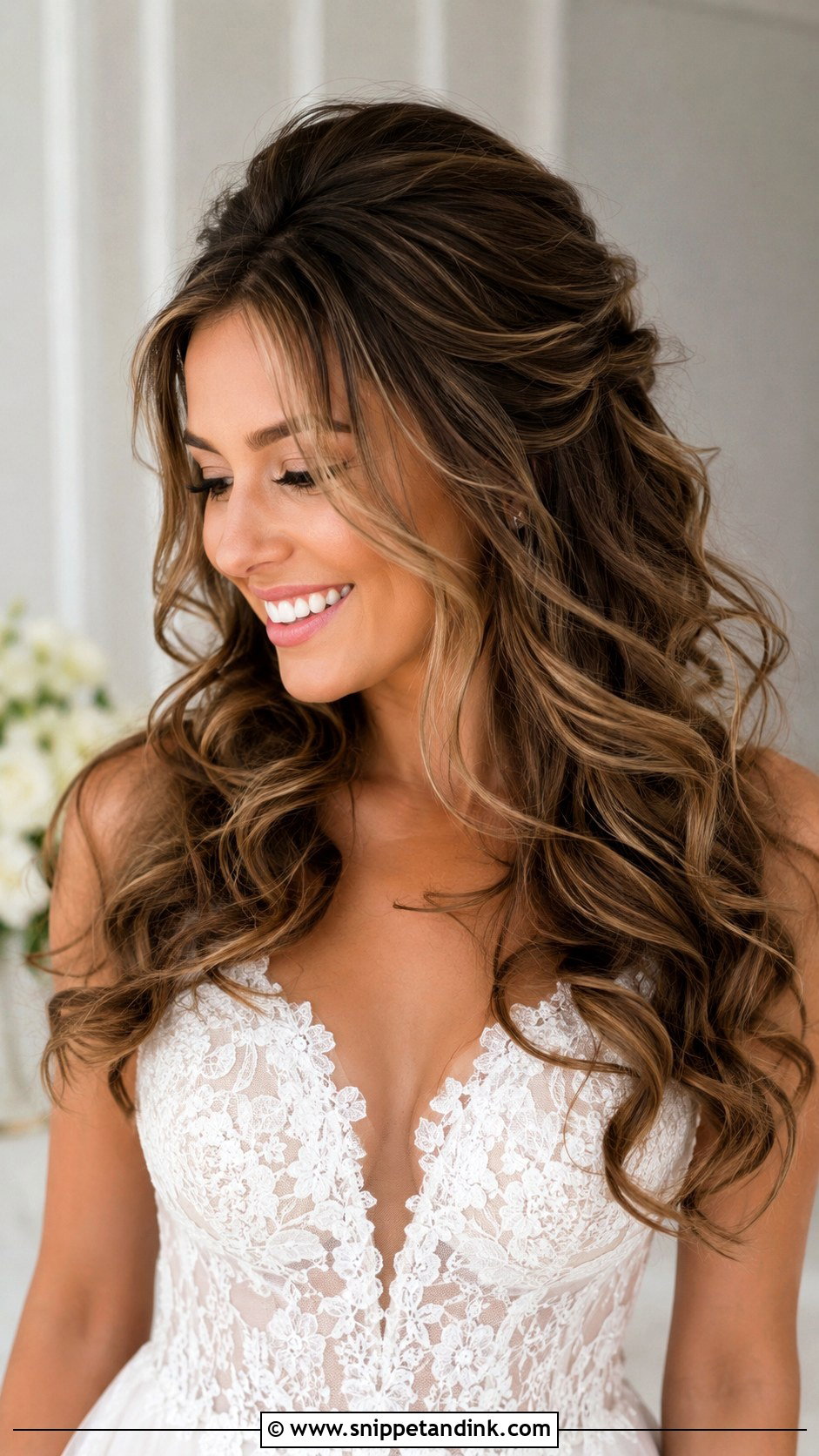
Loose curls are less about the iron and more about the cooling. I curl small sections, pin each one up while hot, and only brush them out once they’re cold; that is the step people skip at home, and it is why their curls fall in an hour. Starting the curl around the cheekbones frames the face without piling volume on top. Big airy curls look romantic on thick hair. On fine hair I go tighter than you want to see, because they will relax.
4. Side Part Wedding Hair
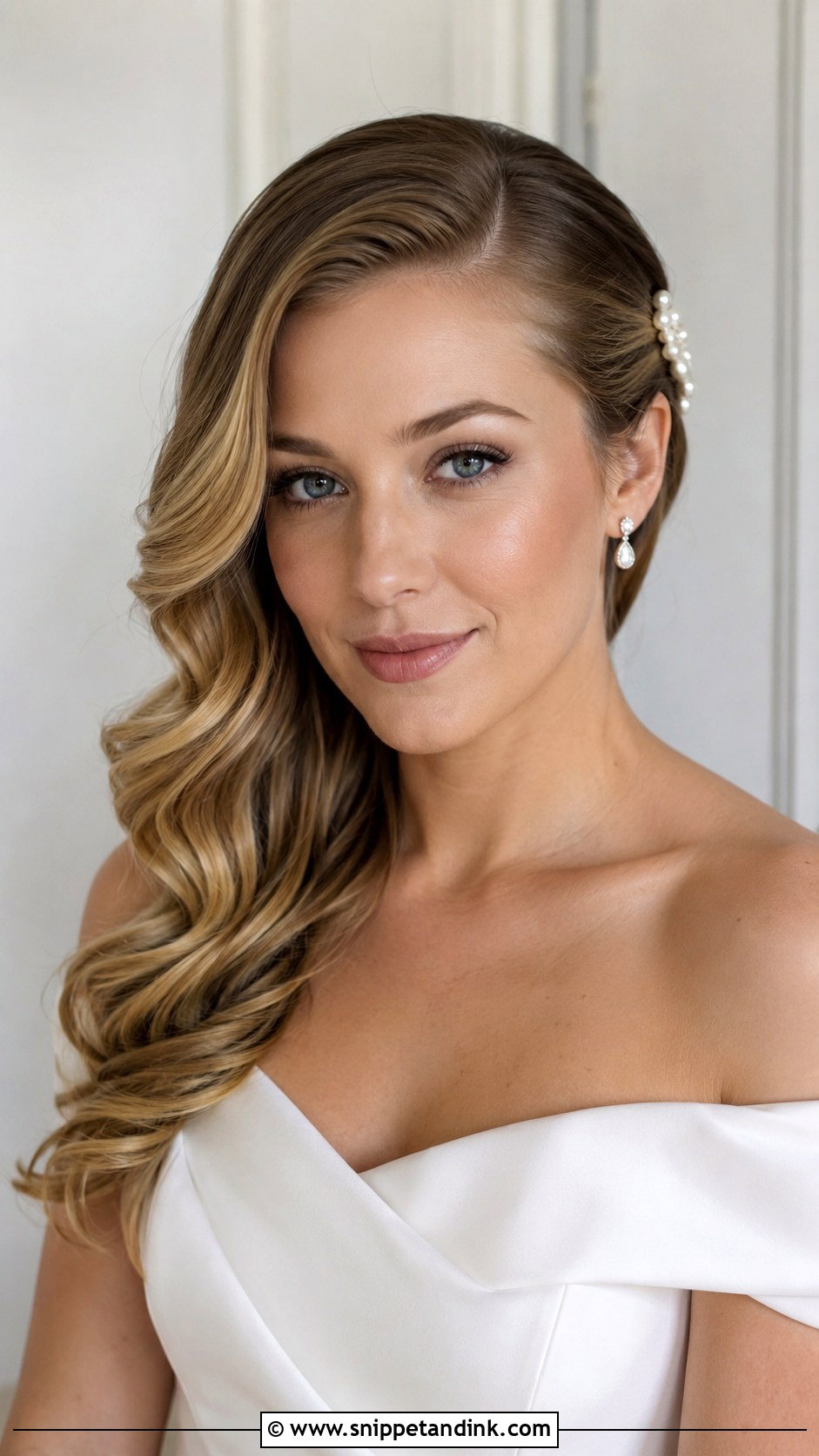
A deep side part is the cheapest upgrade in bridal hair. It lifts the roots on the heavy side, sweeps across the forehead and shows off one earring. Waves, curls or sleek lengths all take it. Tuck the lighter side behind the ear and secure it with one comb or pearl clip so it doesn’t creep forward. I’d test the part at the trial, though; if your hair grows strongly the other way, it will try to flip back by afternoon, and I need to blow-dry the roots in the new direction first.
5. Wedding Hair With Veil Down
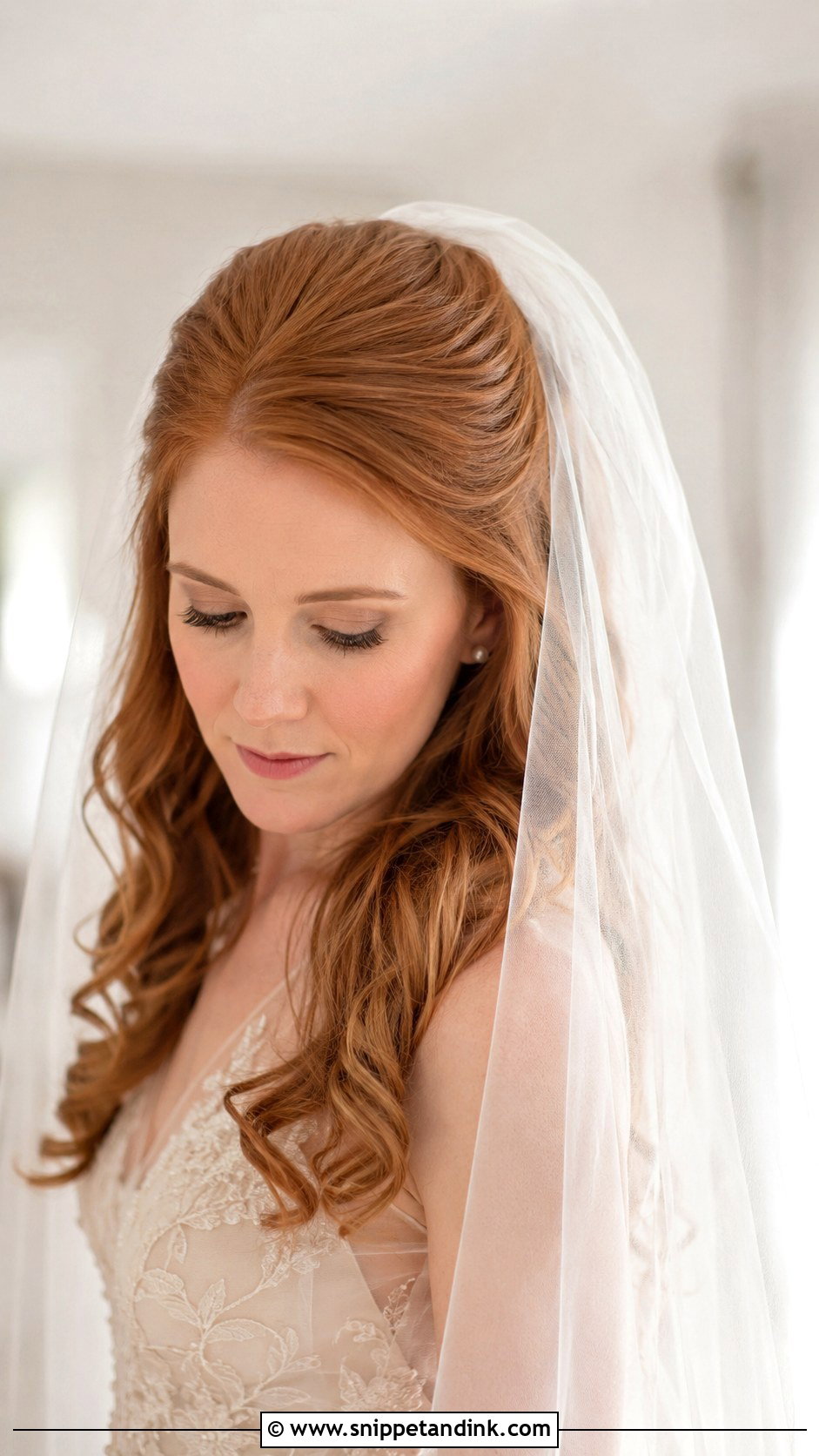
A veil over down hair needs a hidden anchor. Without one, the comb slides through the curls and drags the whole veil backward every time you turn your head. I build a small half-up twist, a little hidden braid or a teased section at the crown, and the comb goes in there. Underneath, the lengths need enough curl or wave to read through the tulle, because straight hair under a veil photographs as a flat sheet. Always bring the actual veil to your trial, not a photo of it.
6. Wedding Hair With Pearl Clips
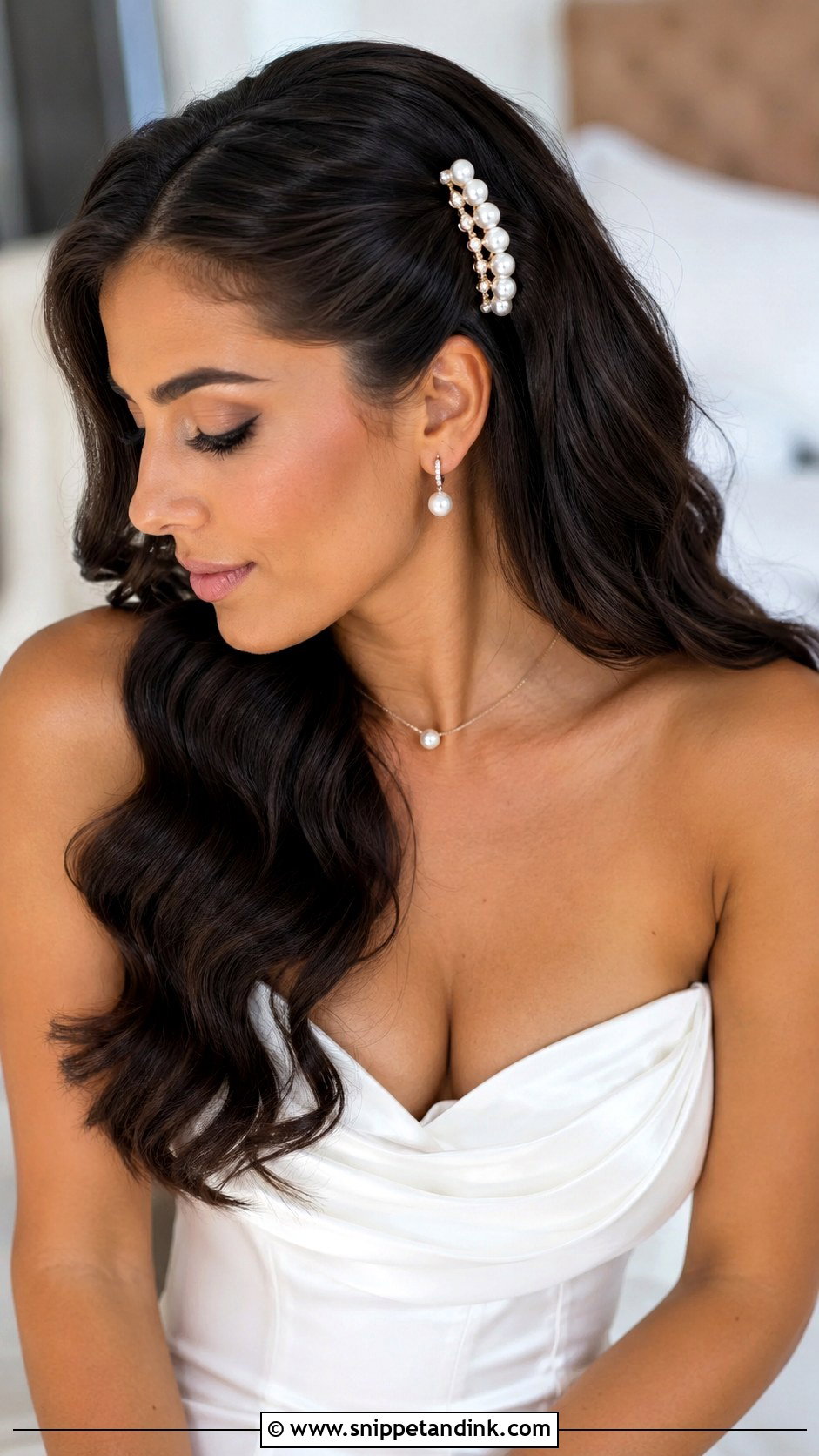
One or two pearl clips can make down hair look bridal without weighing it down. They hold back one side, decorate a half-up twist or sit just above curls. Satin, lace and minimal gowns all get along with pearls because they add a quiet sheen. Placement is everything here. Several clips in a row look crowded; one on the side facing the camera does more. I slide clips into a pinned section rather than loose hair, because a clip in loose curls will slip by the cake cutting.
7. Wedding Hair With Flowers Down
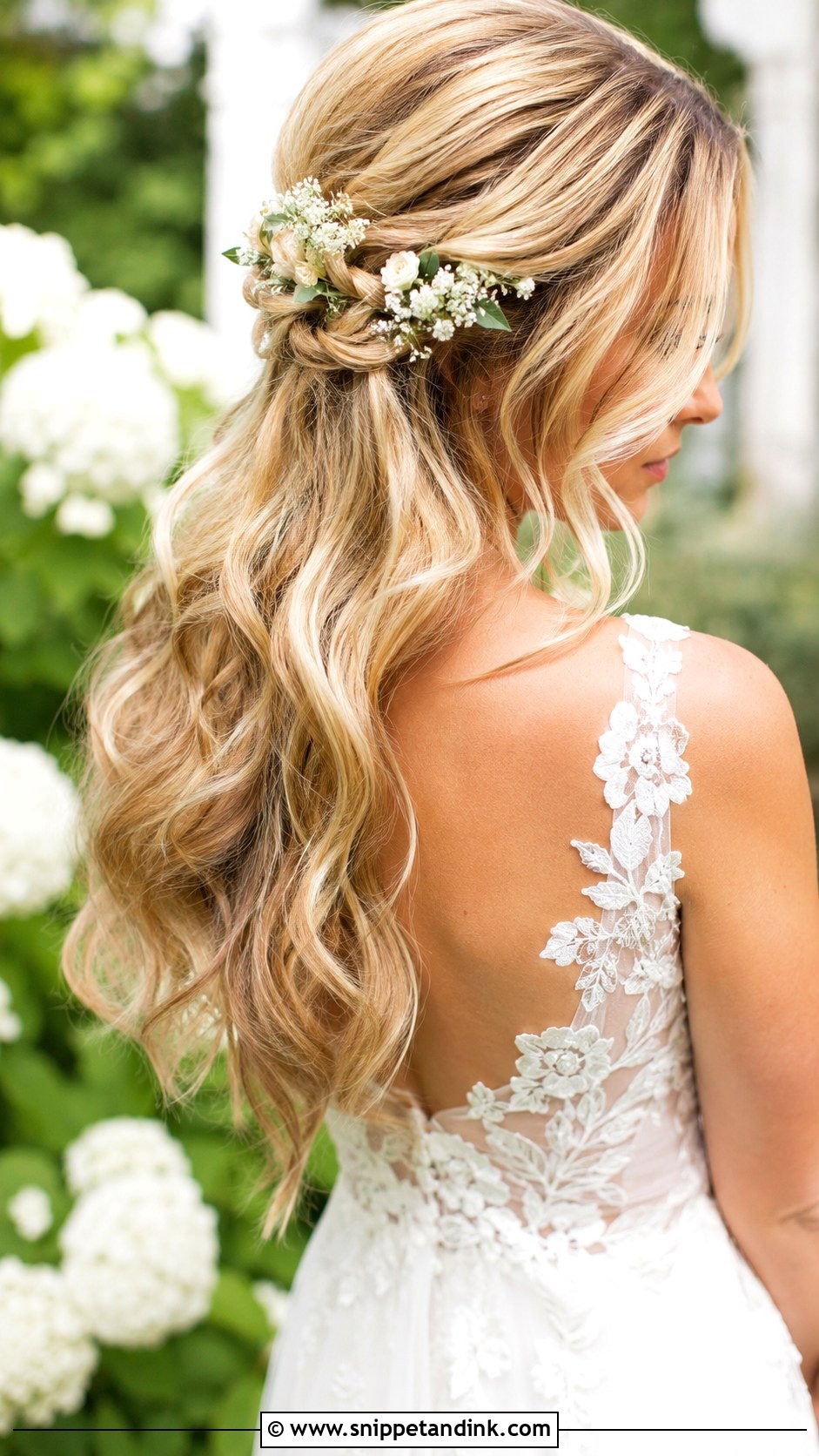
Flowers in down hair suit garden and summer weddings, but fresh stems wilt fast against warm hair. Small blooms tucked into a half-up twist or along one side look right; anything bigger than a large coin starts to compete with your face. I usually prefer silk or dried flowers for a long hot day and save fresh ones for a short ceremony or a cooler evening. Ask your florist for a few spare buds matched to the bouquet so they can be wired the same morning. Tiny white blooms, blush petals or a sprig of greenery blend most easily.
8. Braided Half Up Wedding Hair
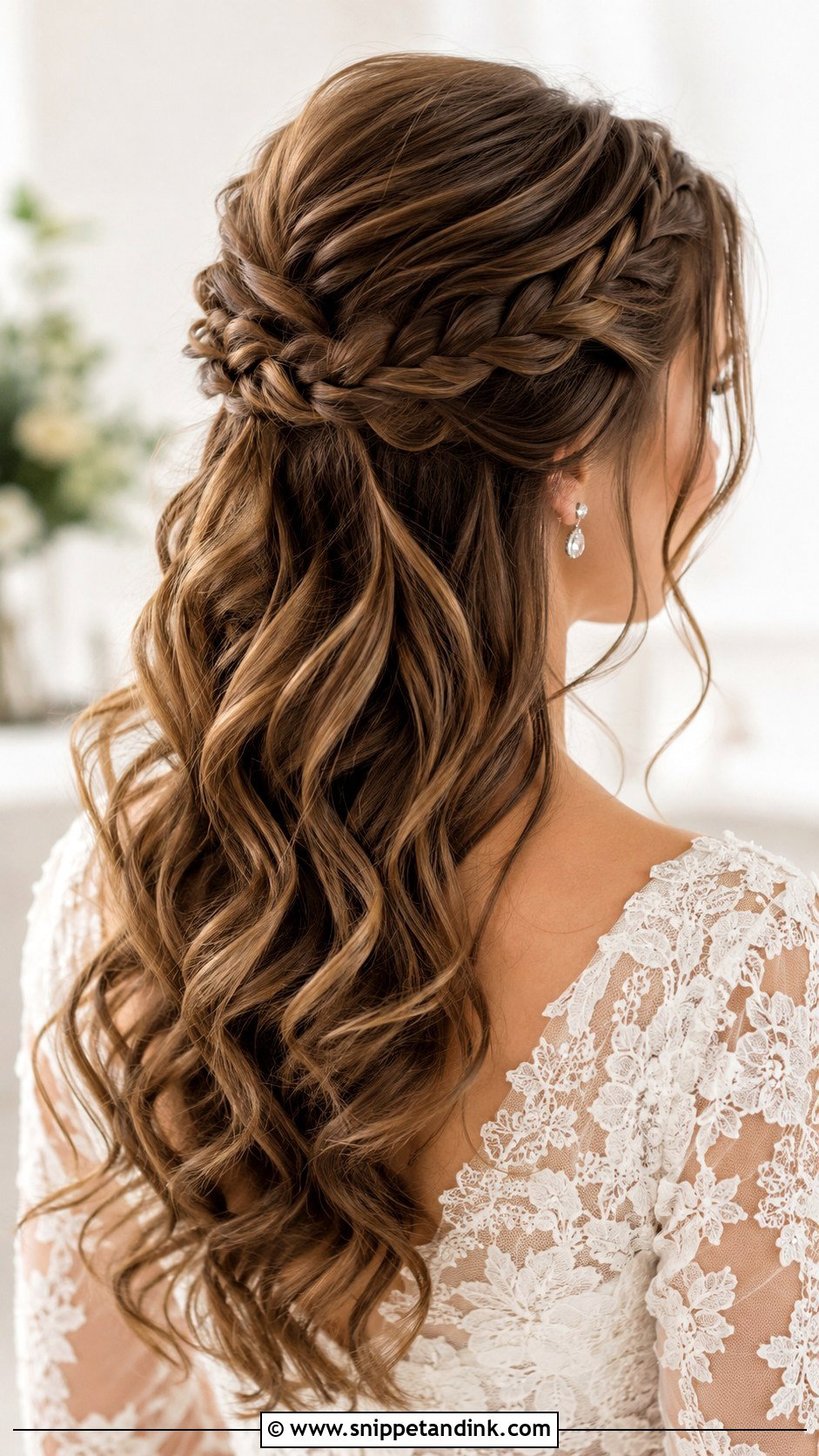
With a braided half-up, the braid does two jobs: decoration and control. It can wrap from both temples, cross the back of the head or melt into a twist at the crown, and it keeps front pieces out of your eyes. Long hair shows it off best because the lower lengths keep flowing. I braid with a little texture spray so it grips, then pull the loops gently wider. Frizz in a braid looks untidy in close-ups, so smooth each section before you cross it.
9. Twisted Half Up Wedding Hair
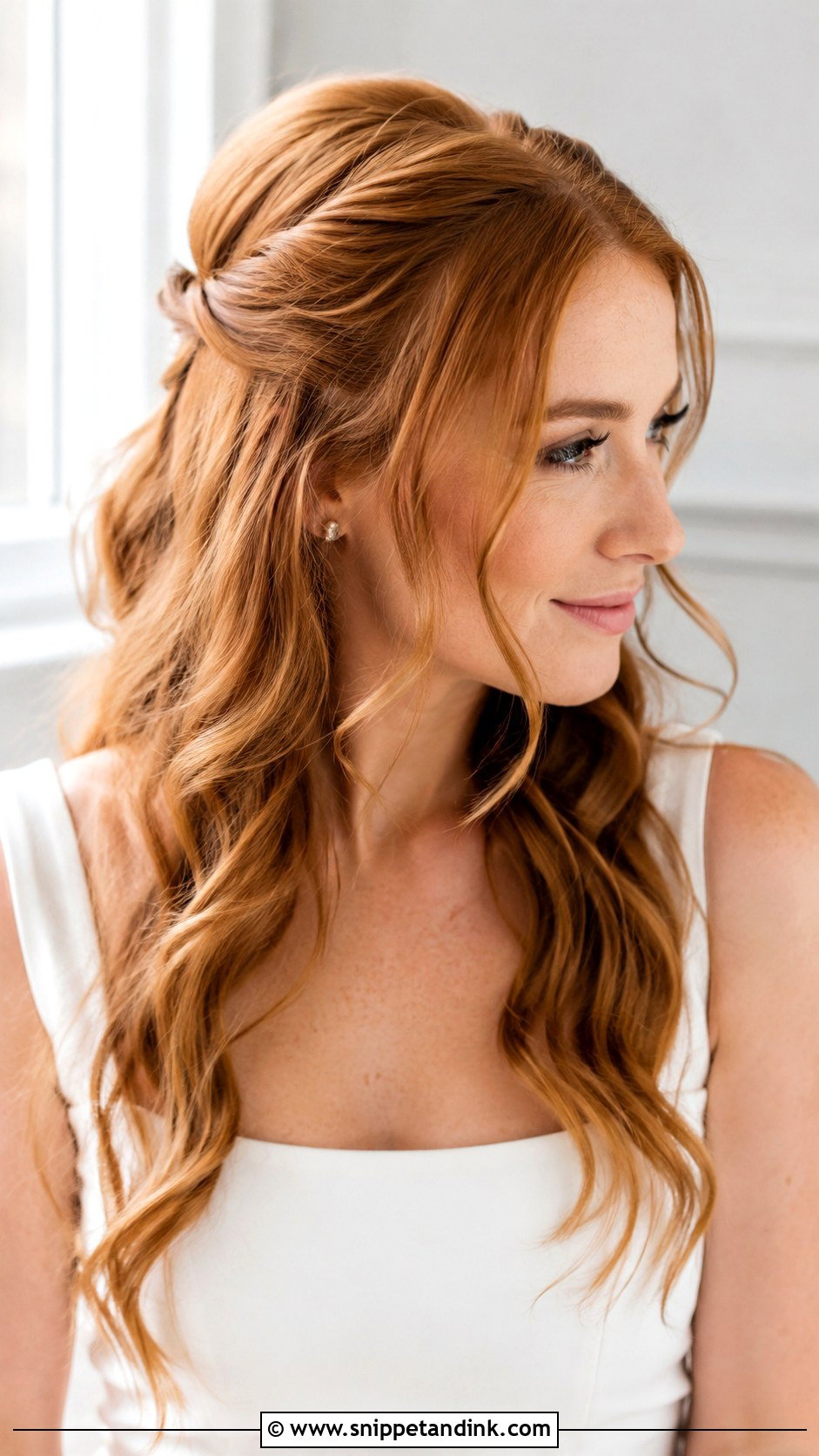
Twists are the quieter alternative when you’d rather not wear a braid. Small sections from each temple are rolled back and pinned at the crown or just below it, which frames the face and leaves the hair mostly down. They need less texture than a braid to hold, so they suit silky straight hair that refuses to braid neatly. I cross two pins under each twist where they meet, and that hidden X is what stops them unravelling. Add waves through the lengths and leave a couple of front pieces.
10. Long Wavy Wedding Hair
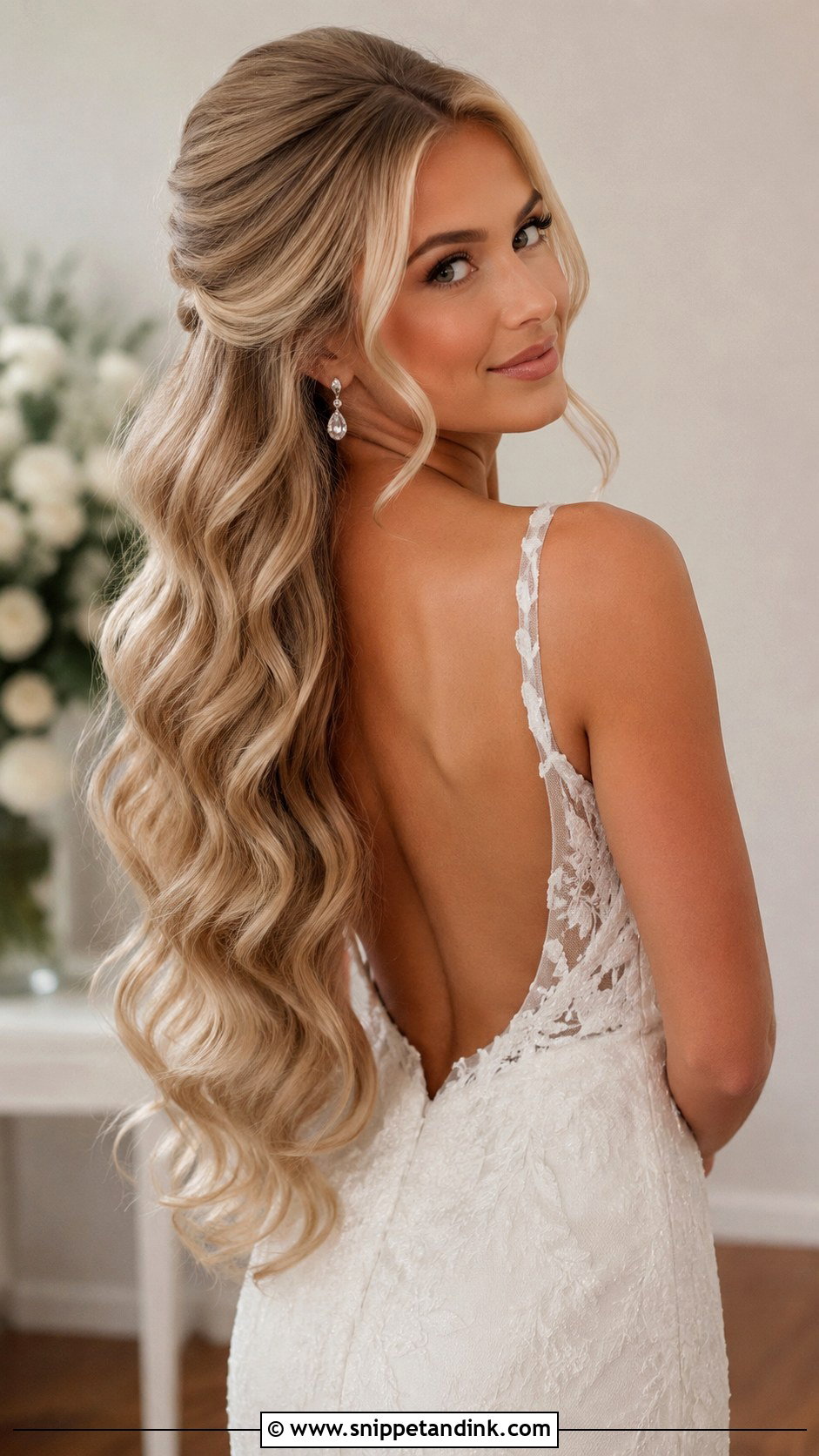
Long wavy wedding hair puts your length front and centre, and the length is also its biggest problem. Very long hair is heavy, and weight pulls curls out from the roots down. Root lift, soft layering through the ends and a curl set slightly tighter than the final look all help. It looks great with an open-back gown or a simple veil. Some brides add a few extension wefts for thicker ends, which also helps the waves last. Keep the top smooth and let the movement happen from the mid-lengths.
11. Medium Length Wedding Hair Down
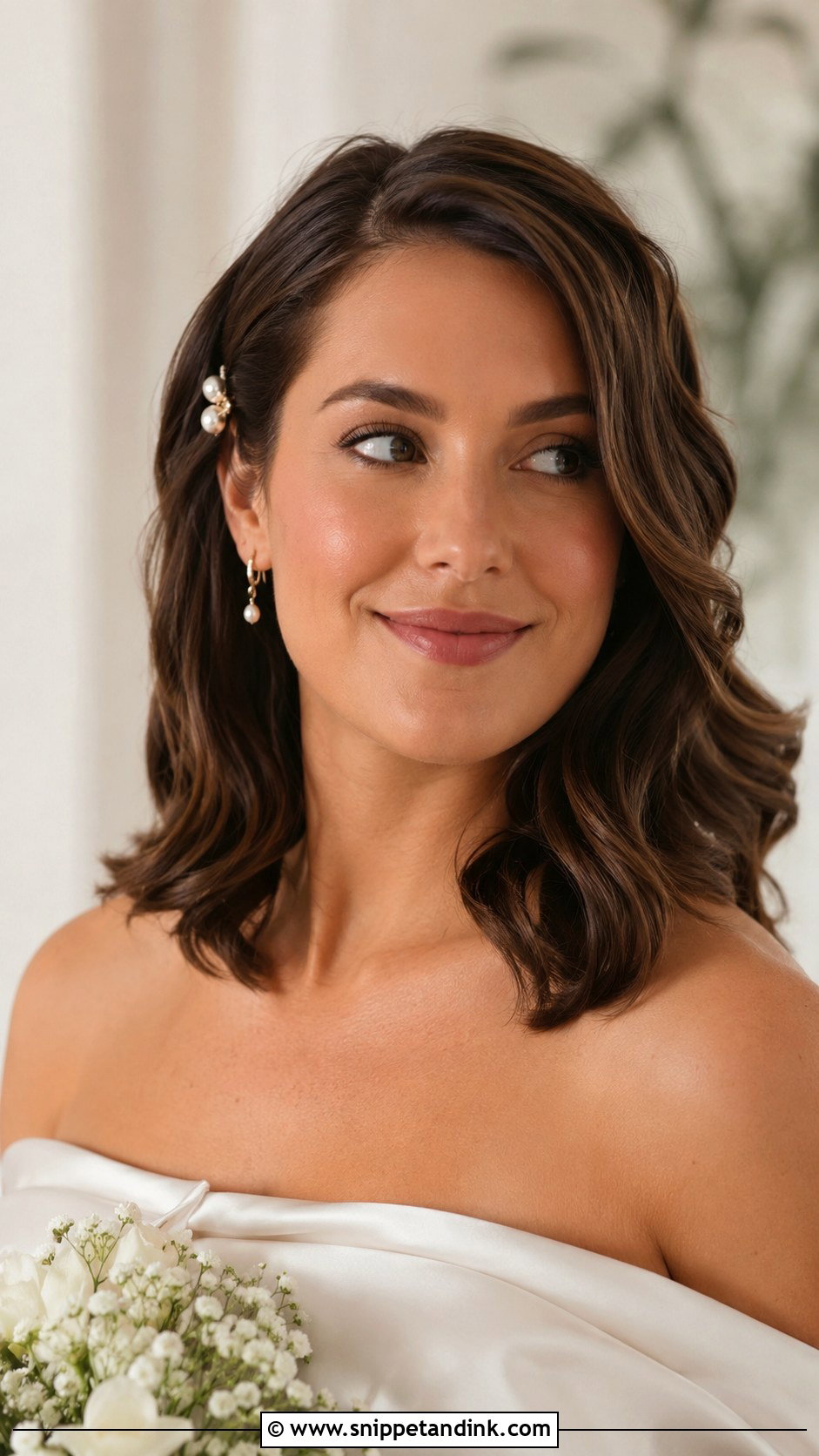
Medium length is secretly the most reliable length for down hair. Shoulder and collarbone length hair is light enough to hold a curl well into the night. Soft waves, brushed curls or a small half-up section all work, and a side tuck with a pearl pin or comb dresses it up. Square necklines and simple gowns suit it. The one trap is curling the ends under too tightly, which makes a round helmet shape; I bend the ends slightly outward instead.
12. Curly Wedding Hair Down
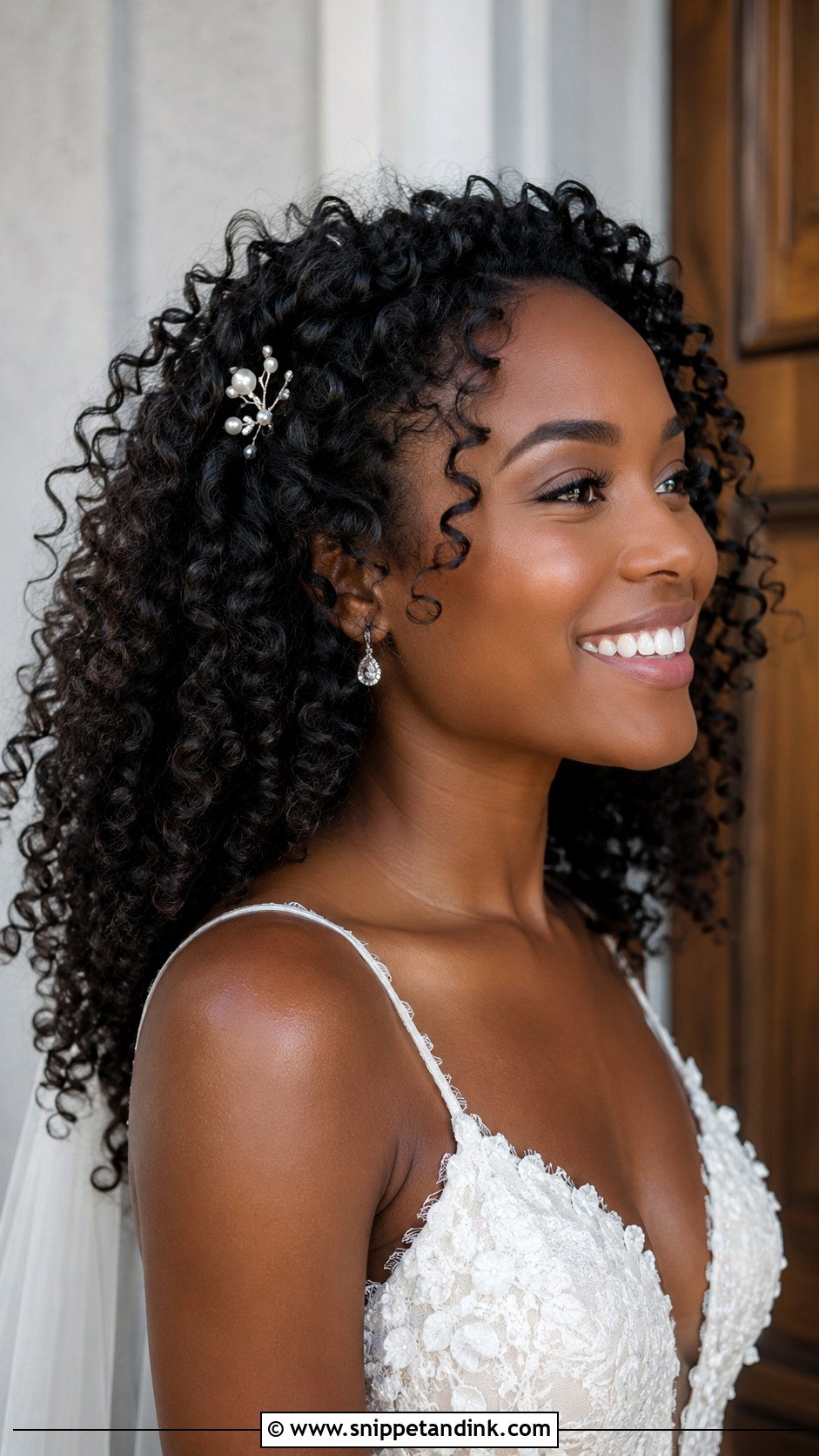
Curly hair worn down is often the most authentic bridal look I do, and I don’t try to turn it into anything else. Definition happens with your usual curl cream or gel, applied on soaking wet hair, then diffused or air dried without touching it. On the day I refresh, shape and pin back a few curls around the face or lift the crown slightly. Frizz is the enemy, so keep hands off once it’s set. Veils sit on a secured crown section, and floral or pearl pins nest easily into curls.
13. Sleek Straight Wedding Hair
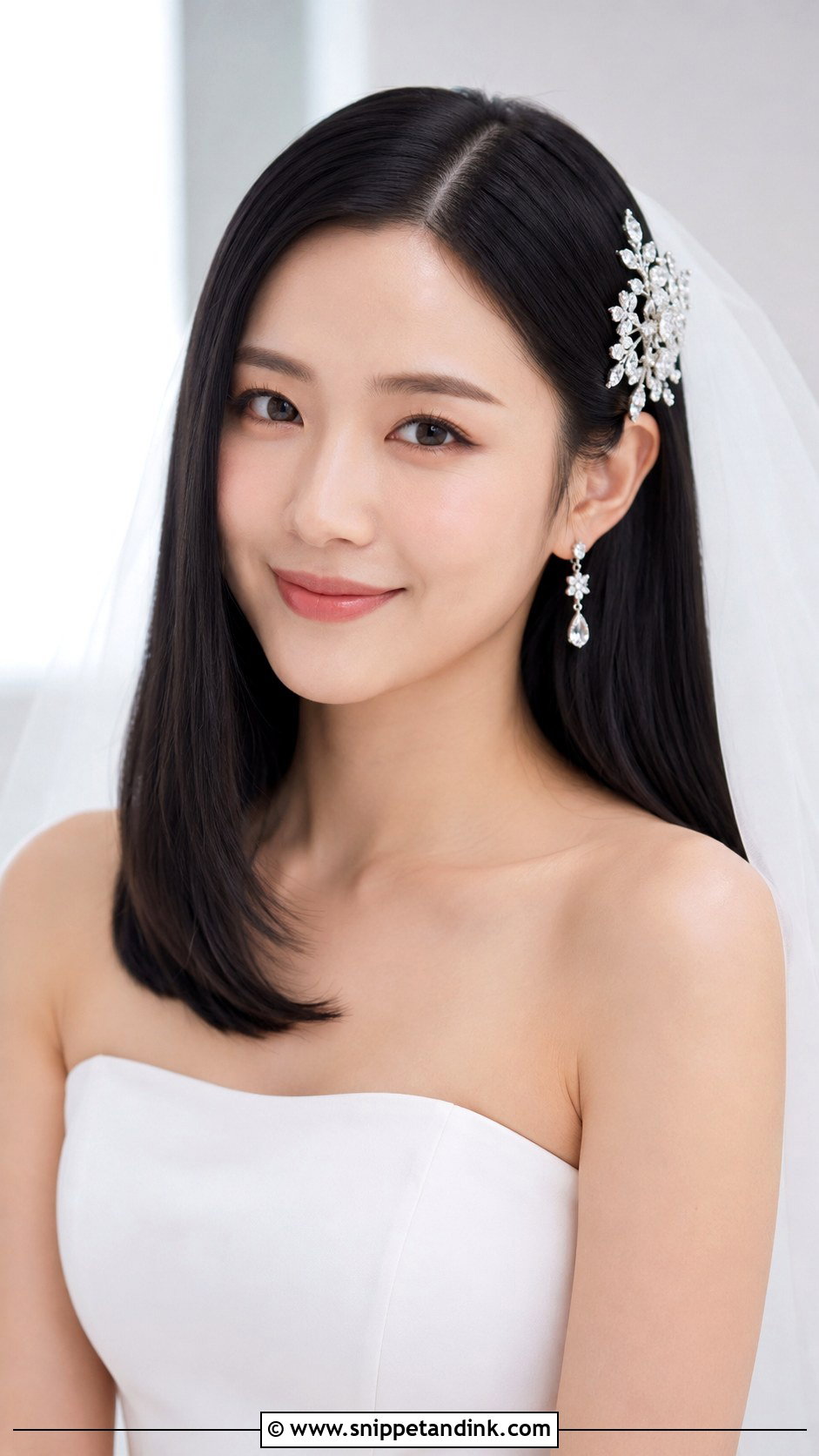
Sleek straight hair is the most modern look here and the least forgiving. Every split end and every kink from a tie shows, so a trim a week or two out matters. A middle part reads fashion-led; a side part softens it. Flat hair looks unfinished in photos, so I add root lift with a round brush and a slight bevel at the ends. Humidity is the risk, and if the venue is outdoors in summer, I’d think twice or plan a sleek low ponytail as a backup.
14. Wedding Hair With Face Framing Pieces
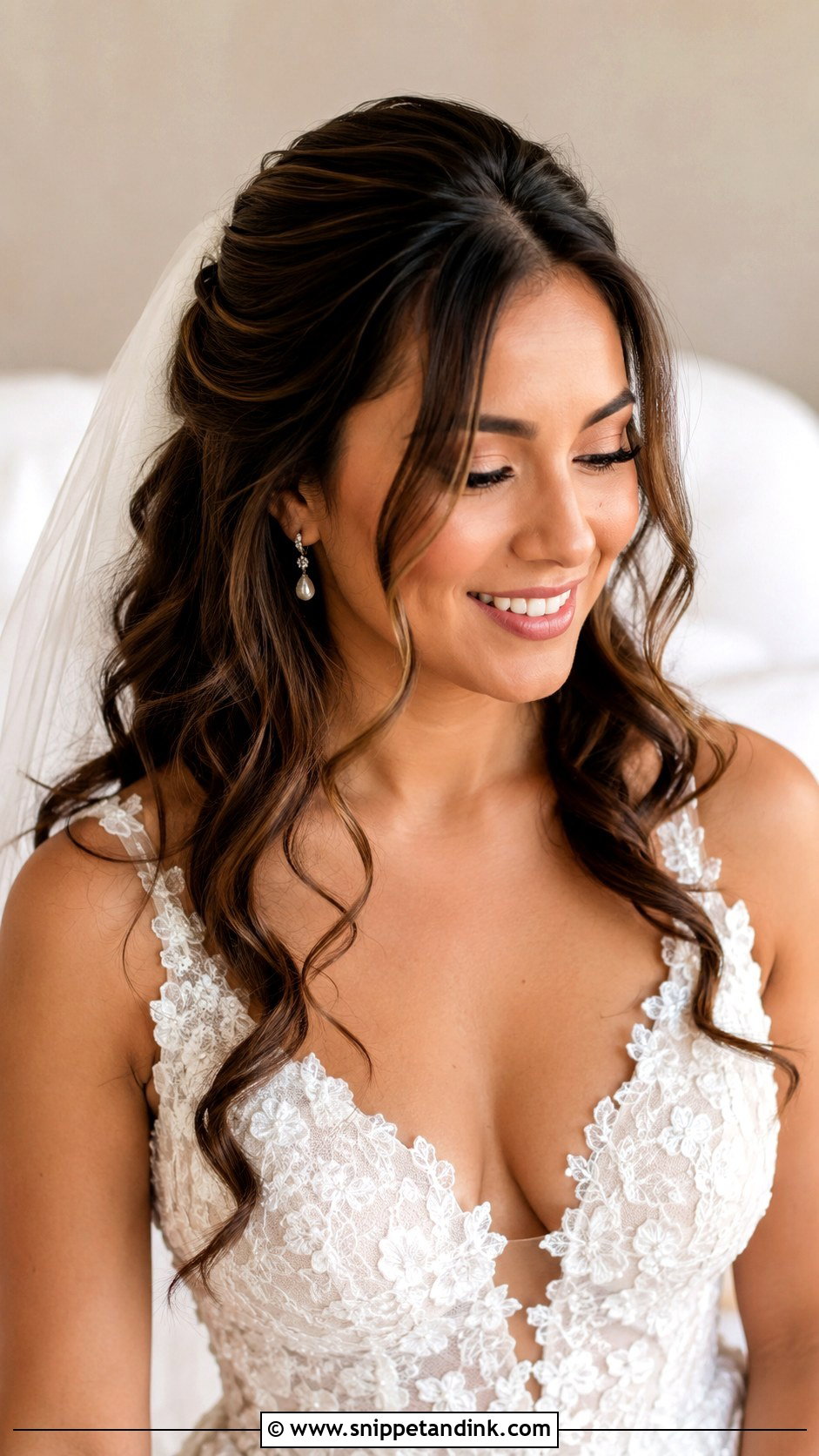
Face-framing pieces decide how soft the whole style reads. I curl them away from the face so they open up the cheekbones rather than hiding them. Length matters: short pieces look romantic but spring up in humidity, while longer ones look relaxed and lie flatter. They pair well with half-up styles, which can look tight without them. My check at a trial is a close-up photo; if the pieces cut across your eyes, I shorten the curl or pin them back a little.
15. Beach Waves Wedding Hair
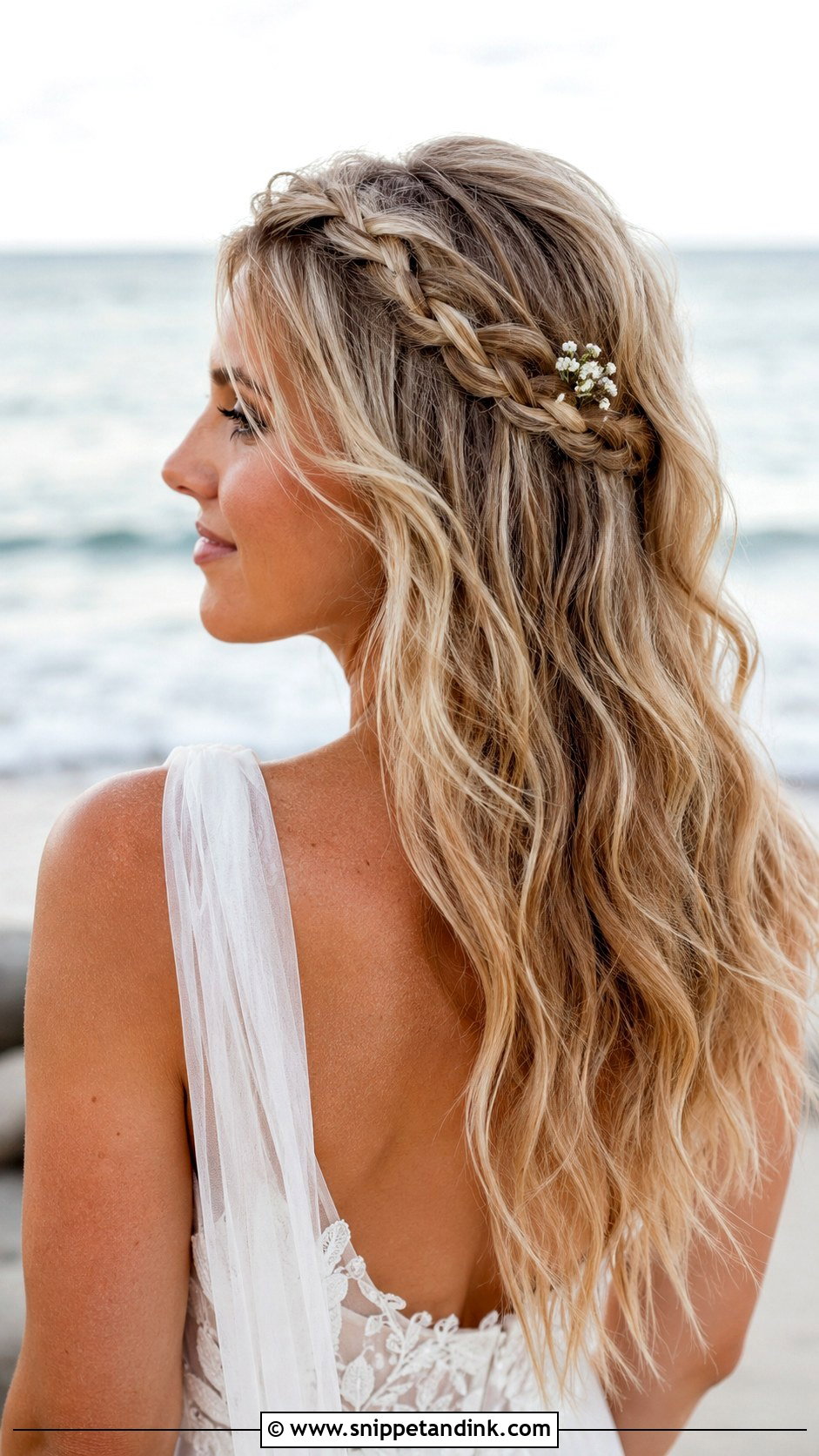
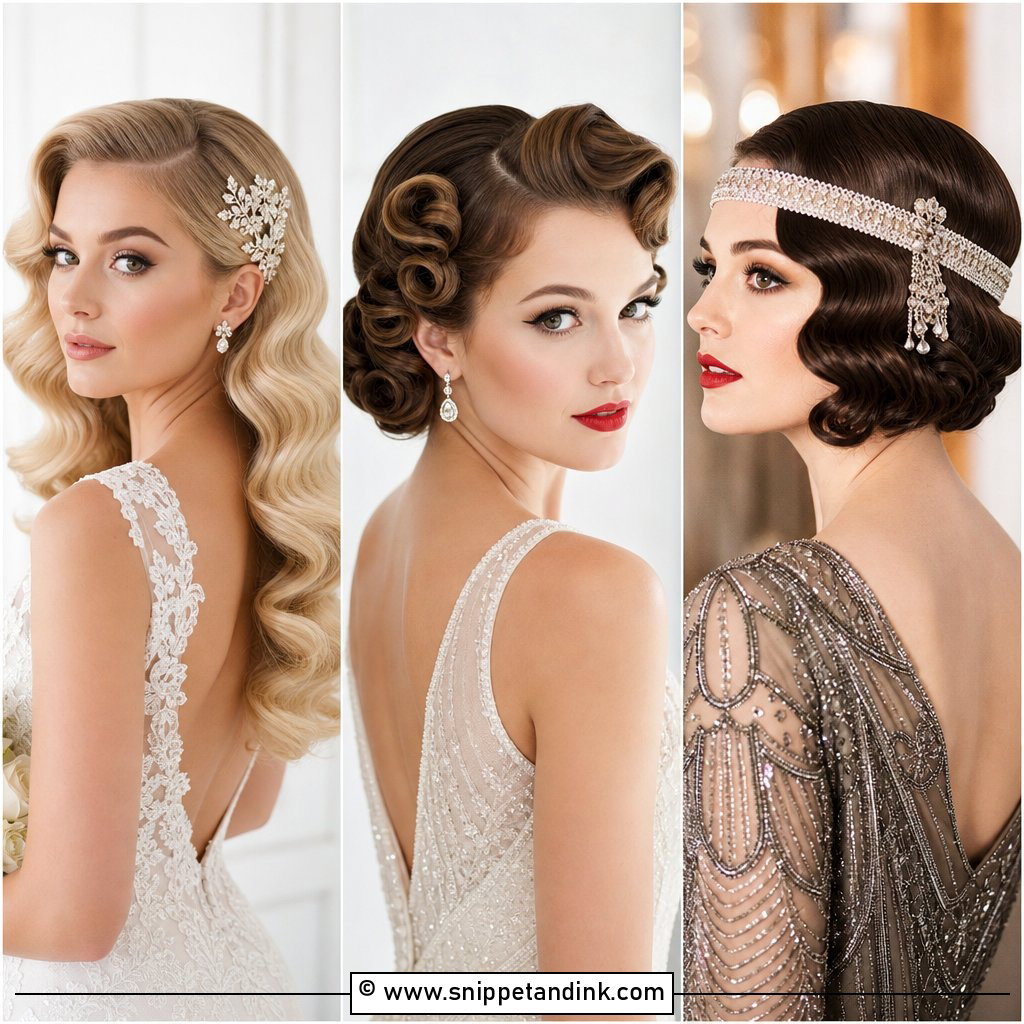
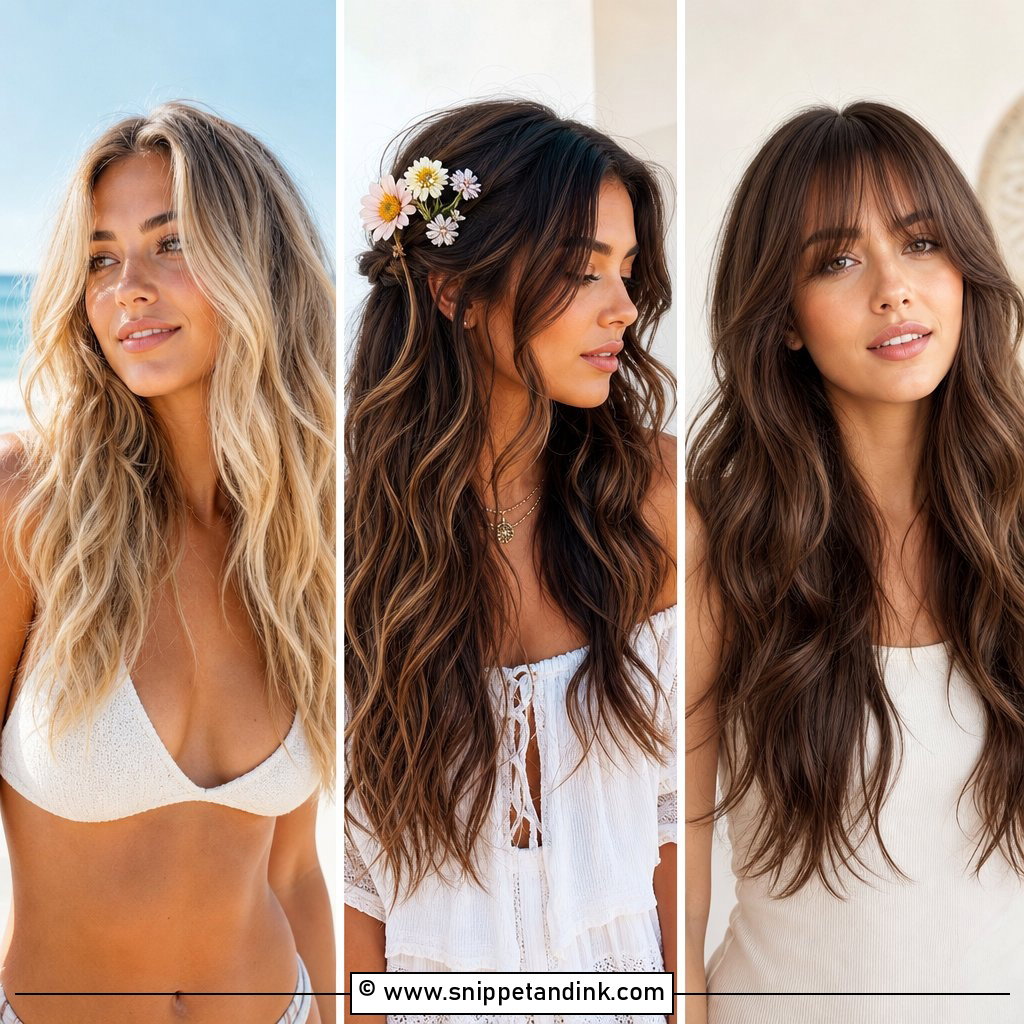
Beach waves wedding hair is meant to look undone, but it still needs control to sit next to a wedding dress. I use a flat iron or a wand to bend the mid-lengths and leave the ends straighter, which is what gives that loose bend instead of a ringlet. Texture spray, not heavy oils. Salt sprays dry out already porous hair, so I use them sparingly on coloured hair. A small braid or a flower pin dresses it up for a coastal or backyard wedding.
Lace, Buttons and Bouquets: What Loose Lengths Catch On
Long loose hair spends the day sitting on your dress, and dresses have a lot of things to snag on. Lace and beaded backs catch curls the moment you turn. A long row of buttons can trap hair when someone helps you into the gown or bustles it later. And sitting back in a car or on a chair crushes the curls you paid to have set.
I’ve got a few habits I pass on to every bride wearing her hair down. Get dressed before the final brush-out, so the hair doesn’t go through the neckline. Sweep the lengths forward over one shoulder when you sit. During portraits, ask the photographer or a bridesmaid to check that no strand is caught in the lace before each set. And pack a soft claw clip for dinner; if you overheat on the dance floor, the hair can go up for an hour and come down again with only a little lost.
Extensions for Thin Ends, Done Properly
Many brides who want long down hair have healthy roots and thin, wispy ends. Clip-in wefts fill out the bottom and help curls last, because extra hair adds grip and body. Buy them early enough to have them colour-matched and cut in at the trial, and bring them in on the day. A badly matched weft shows more in down hair than anywhere else, so I’d skip it rather than guess the shade.
Somewhere Between Fully Down and Half Up
Down hair works when the style suits your dress, your veil, the venue and the hair you actually have. Half-up gives the most security, Hollywood waves bring old-school glamour, loose curls stay soft, and sleek straight hair looks modern but demands good weather. Pearls, flowers, combs and veils personalise it. A trial is not optional with down hair; it is the only way to see whether your curls last six hours. Wear the trial style through the rest of that day and photograph it at night before you decide.
You'll Like These Ideas:


Leave a Reply