
A bridal juda does a job before it looks pretty. It’s the anchor for the dupatta, the base the maang tikka and matha patti hang from, and the thing that has to stay put through hours of rituals, photos and dancing. I plan a juda backward from that weight. The wedding juda hairstyles brides ask me for now mix tradition with lighter details: soft texture, fresh flowers, pearls, braids and very clean partings. Some want a sleek low bun from a center part; others want a full floral juda that reads from the back of the mandap. Below are twenty ideas for sarees, lehengas, gajras and statement earrings, with notes from the chair on how each one holds up.
The Order I Set the Juda, Dupatta and Jewelry
Most juda problems on a wedding day come from doing things in the wrong order. Here’s how I set a bride, and why each step comes where it does.
- Prep and base. Hair is curled or smoothed first, then tied into a firm ponytail at the height of the finished bun. That elastic carries all the weight that comes later.
- Juda. The bun is built and pinned into the ponytail base, with padding if needed.
- Maang tikka and matha patti. These go on before the dupatta, because the dupatta covers the hooks and I need to reach the part line.
- Dupatta. It’s pinned into the bun and at the sides, never only at the crown. I leave the front edge slightly loose so it frames the face instead of pressing on it.
- Flowers last. Gajra and fresh flowers go on at the very end, so they spend as little time as possible out of water.
If your makeup artist and hairstylist are different people, ask them to agree on this order. Jewelry pinned before the hair is finished almost always has to come off again.
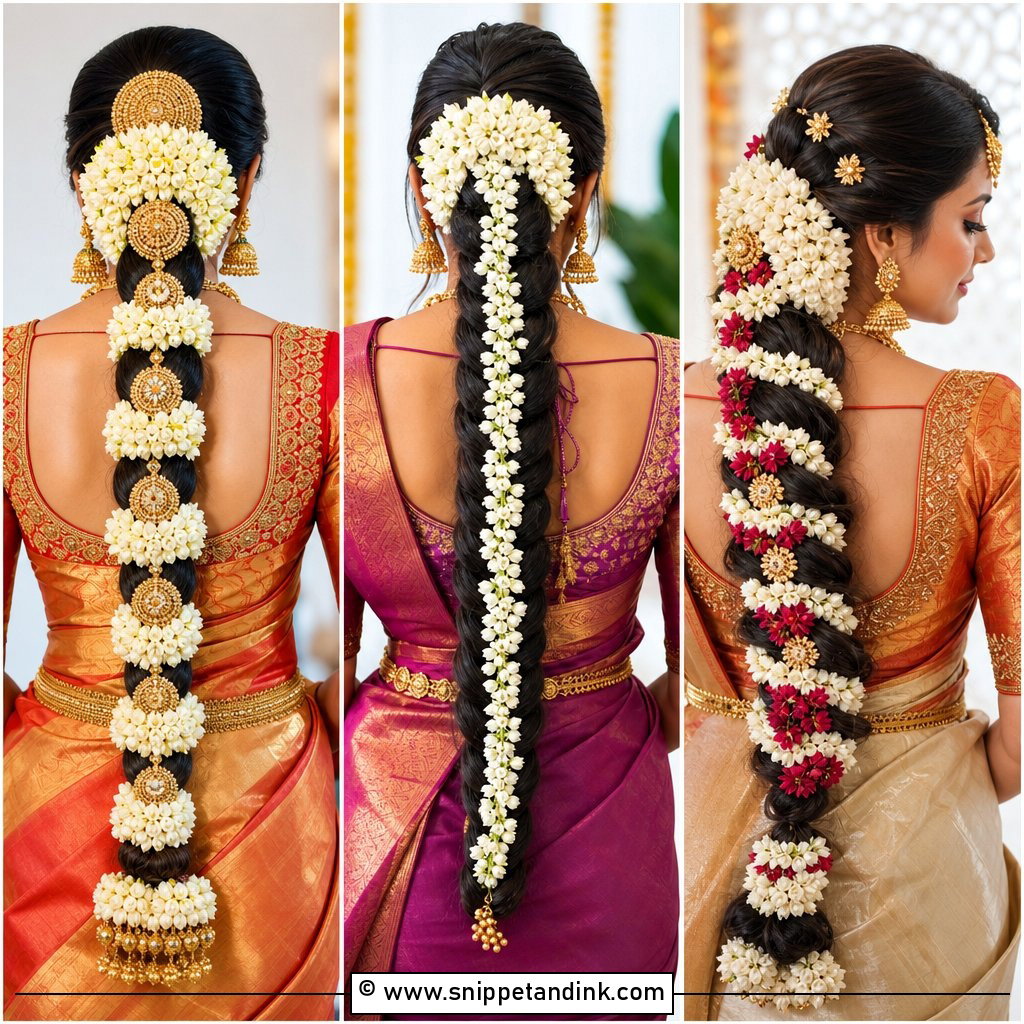
1. Classic Gajra Wedding Juda
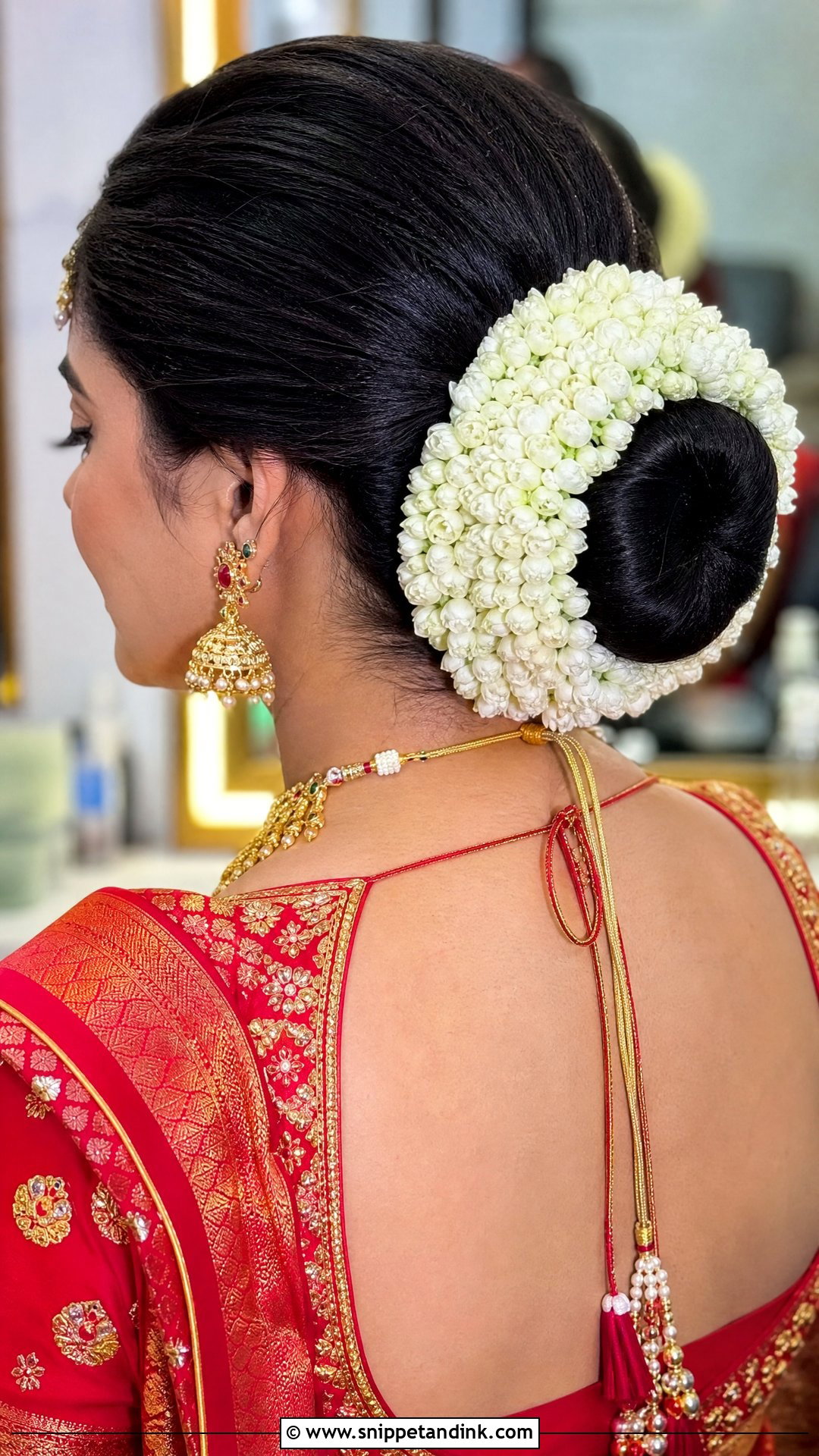
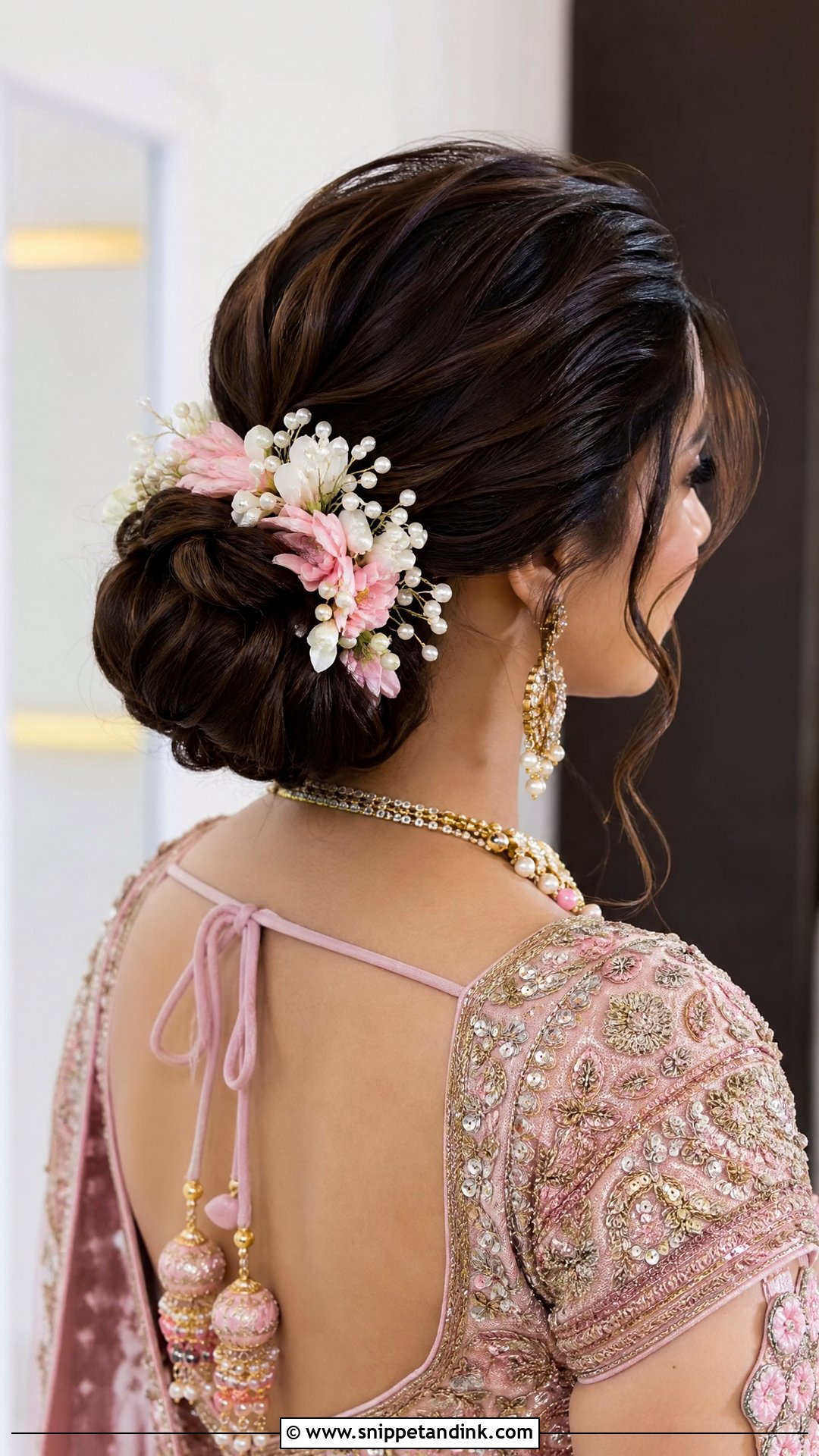
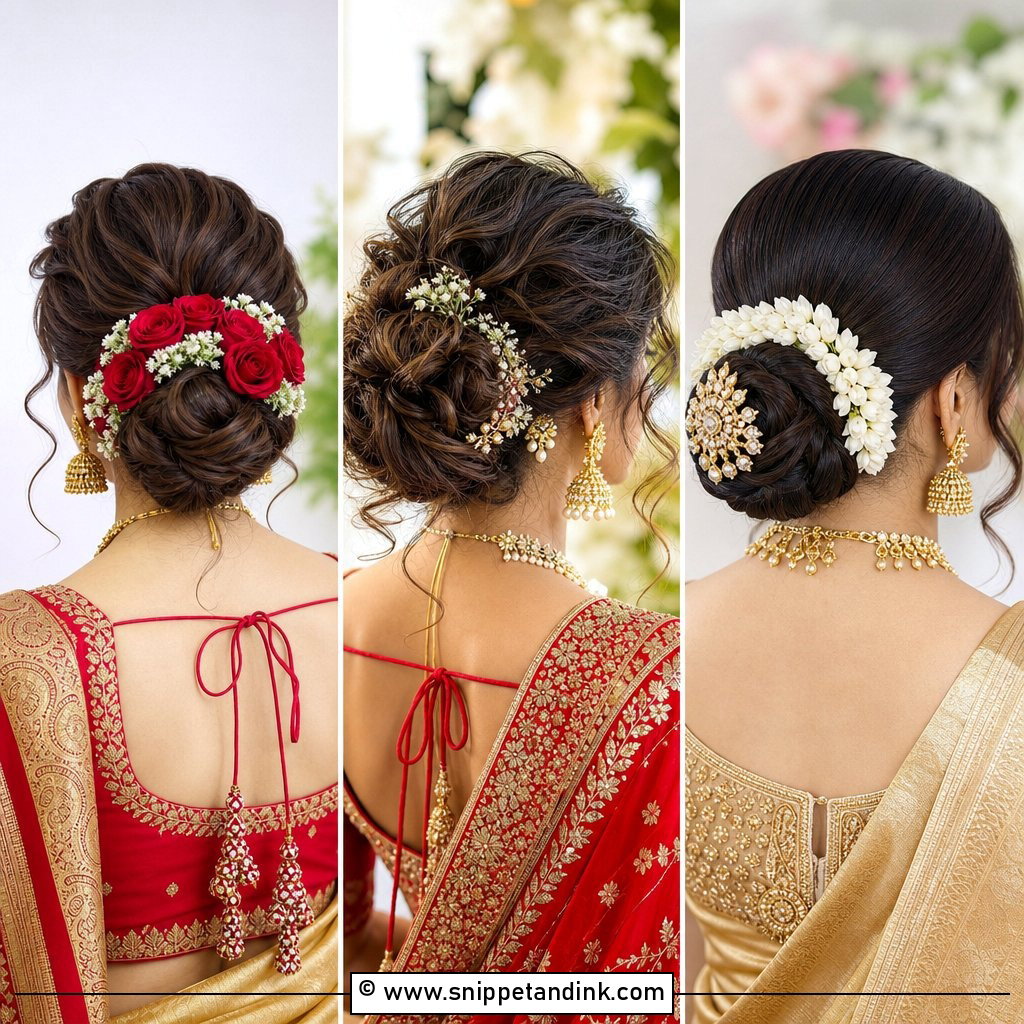
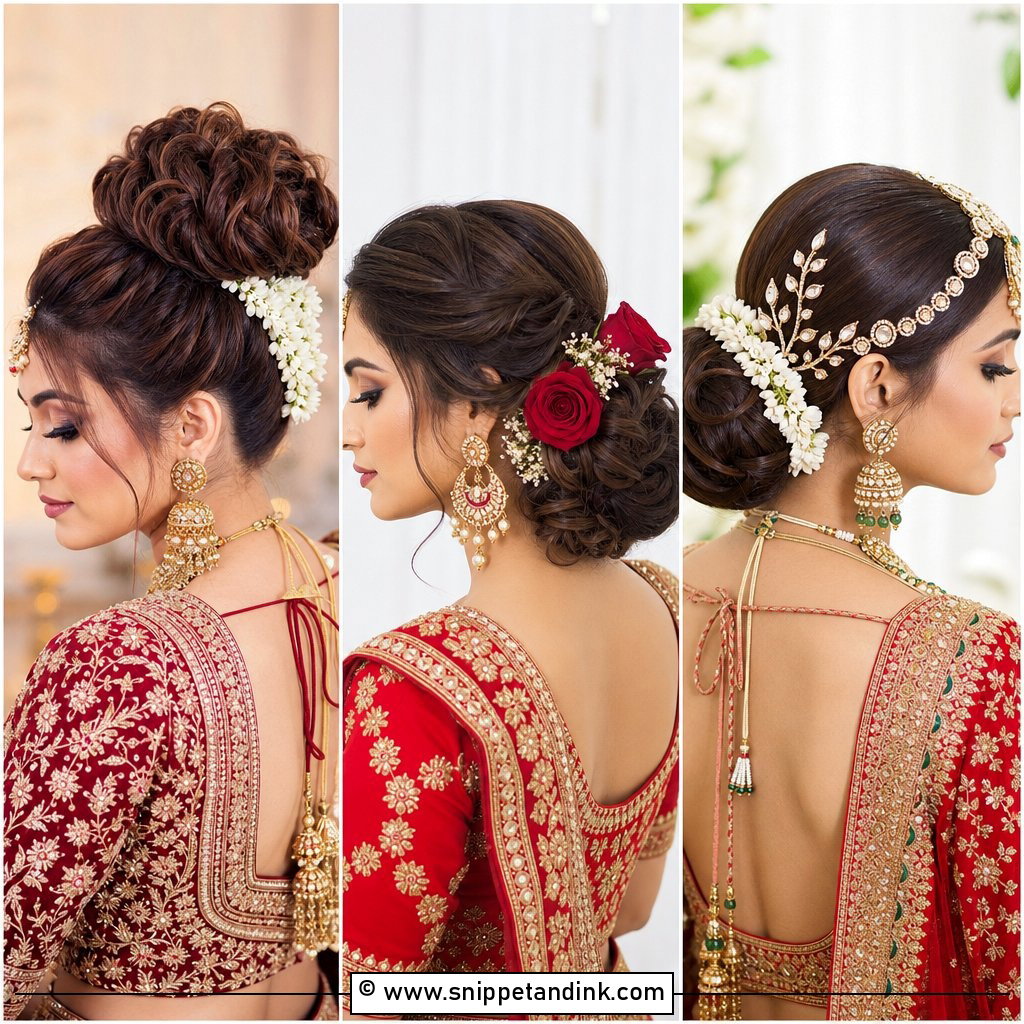
A classic gajra wedding juda is the one I’m booked for most. The hair is smoothed back into a round low bun and wrapped with fresh jasmine. It sits well with red, ivory, gold, pastel and green outfits, and it balances heavy earrings, a matha patti and a dupatta without clutter. I keep the bun firm but never flat, with a little lift at the crown so the profile has shape. The gajra goes on last and is pinned through the bun, not just wrapped around it, or it slides down to the nape halfway through the pheras.
2. Sleek Low Wedding Juda
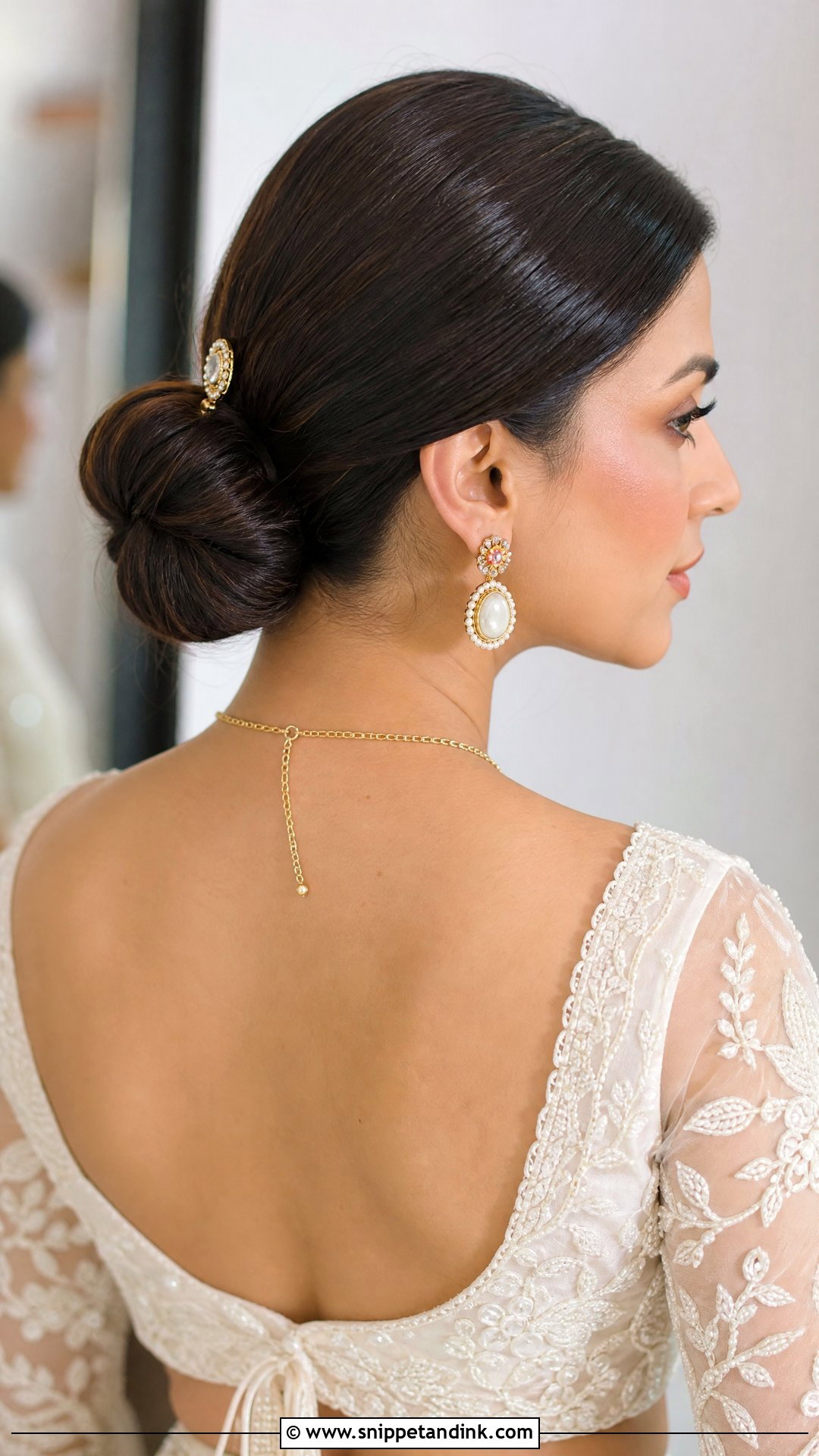
When the lehenga is heavily embroidered and the jewelry is bold, a sleek low juda gives everything else room. The center part balances the face, and the smooth sides let the makeup and earrings lead. Sitting at the nape, the bun feels secure for long rituals and doesn’t press against the back of the head when you sit. Sleek also means every bump shows, so I smooth each section with a fine comb and a little gel before tying. One bun pin, a line of pearls or a small floral accent is enough detail.
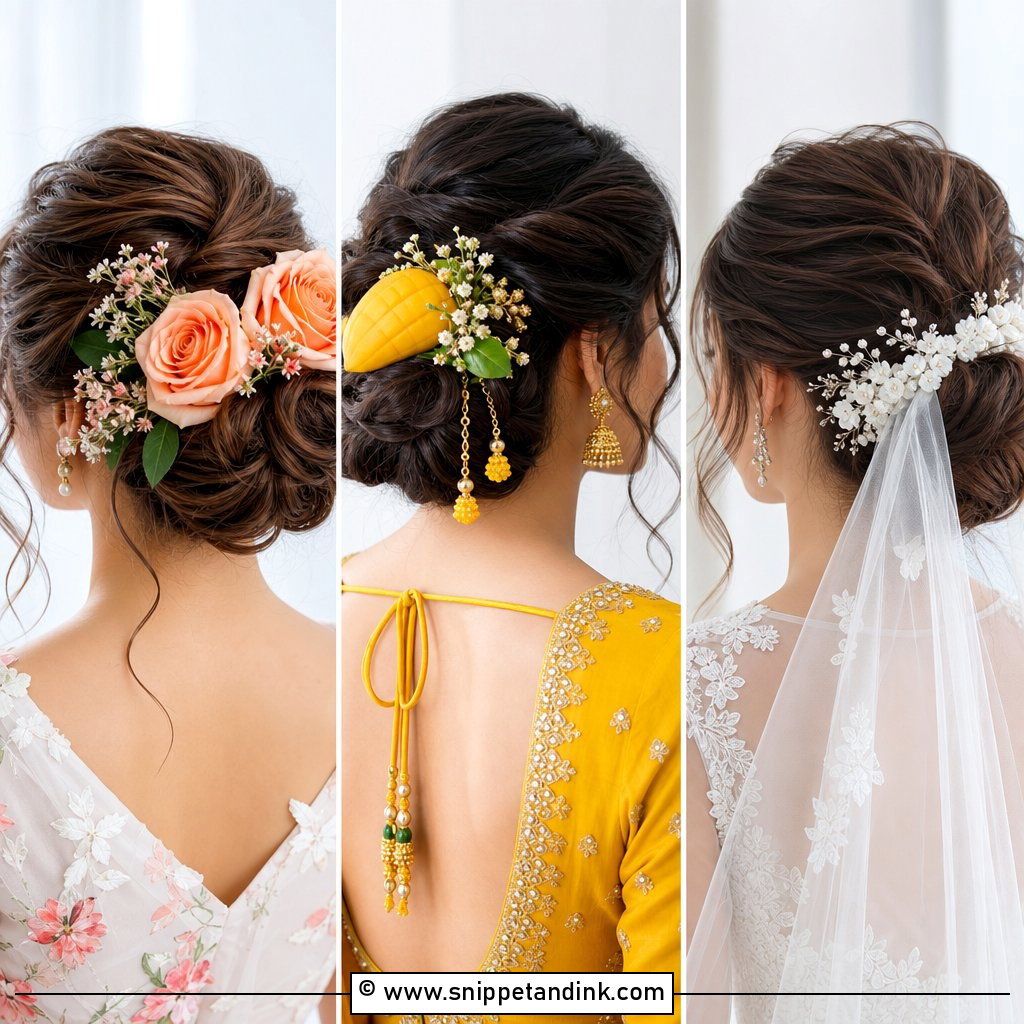
3. Floral Wedding Juda With Roses
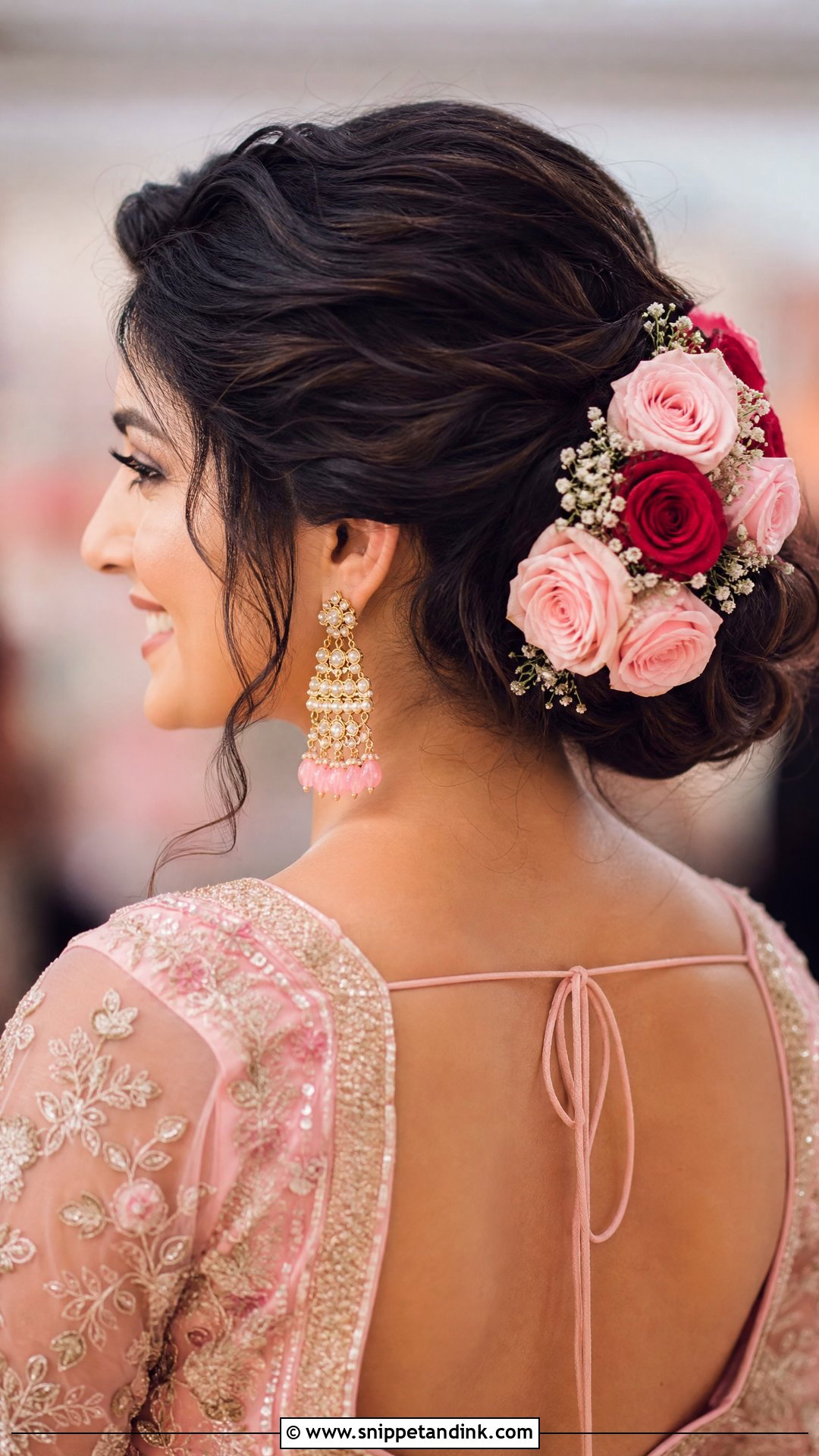
Roses make a juda look full and rich, especially in back-view portraits. The bun can be medium or low, with fresh roses circling the base or tucked into one side. Red roses suit traditional lehengas; blush, peach and ivory feel right for a daytime ceremony. Roses are heavier than jasmine and bruise where they’re pinned, so I wire the stems short and place them close to the bun. Keep the front soft. And if the flowers are large, keep the jewelry neat, or the whole head starts to look crowded.
4. Braided Wedding Juda
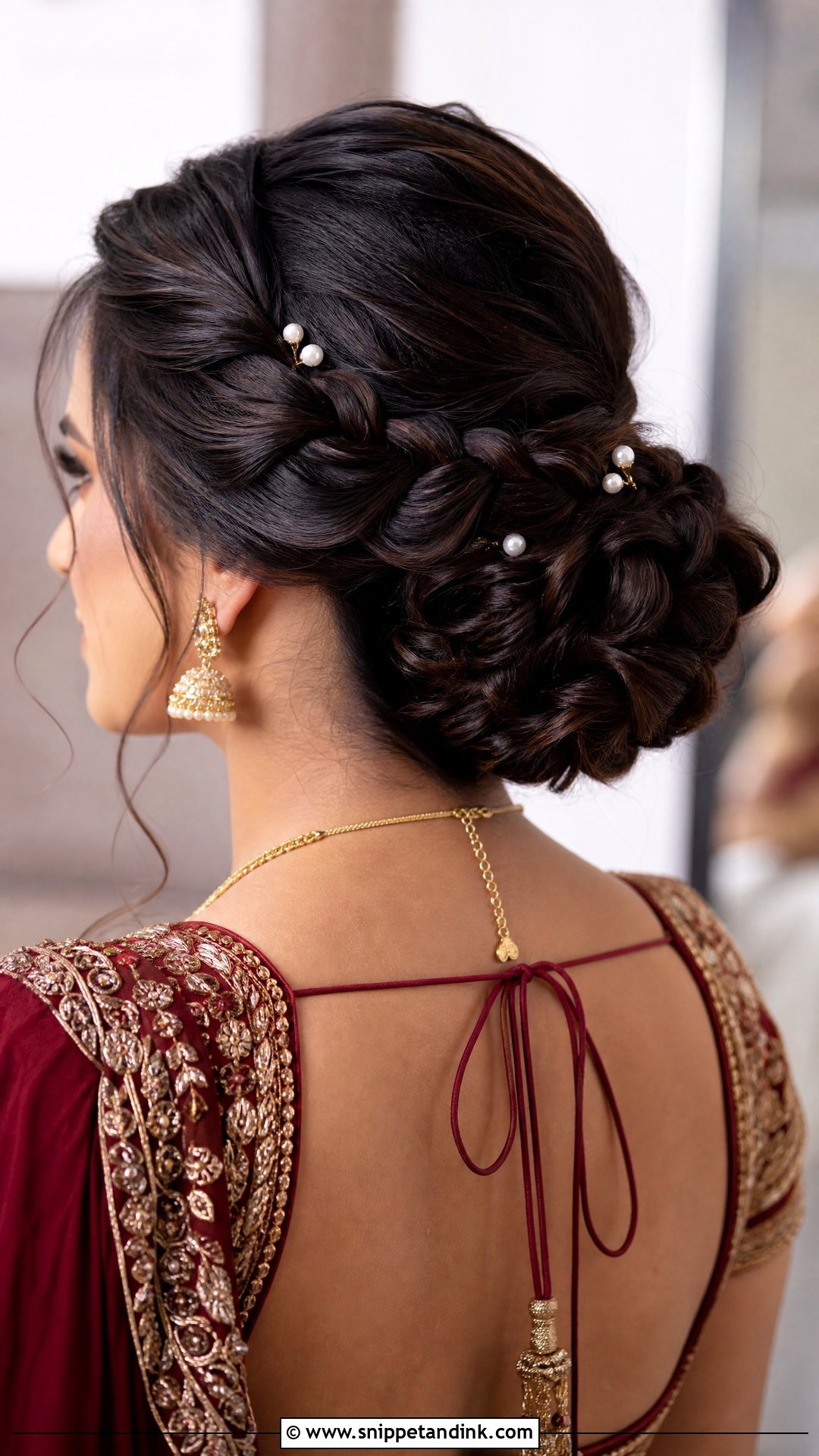
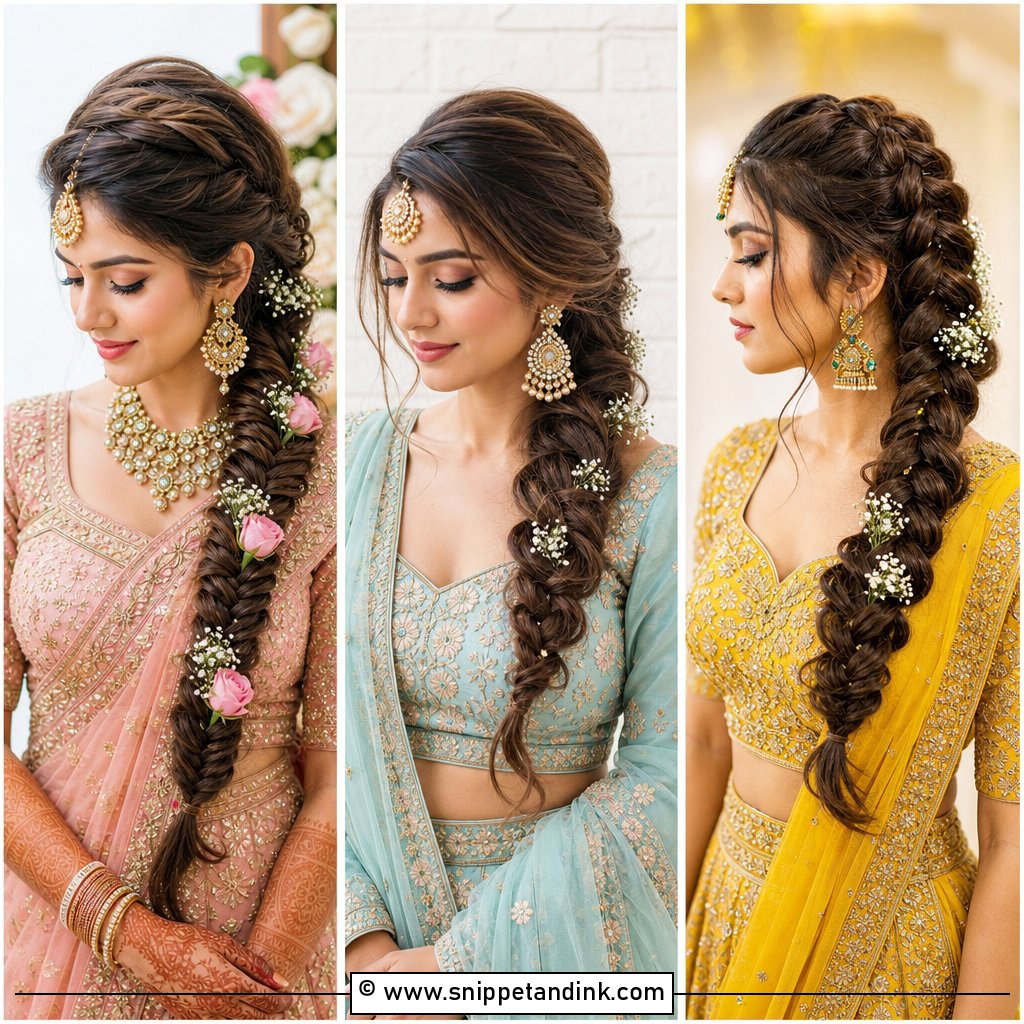
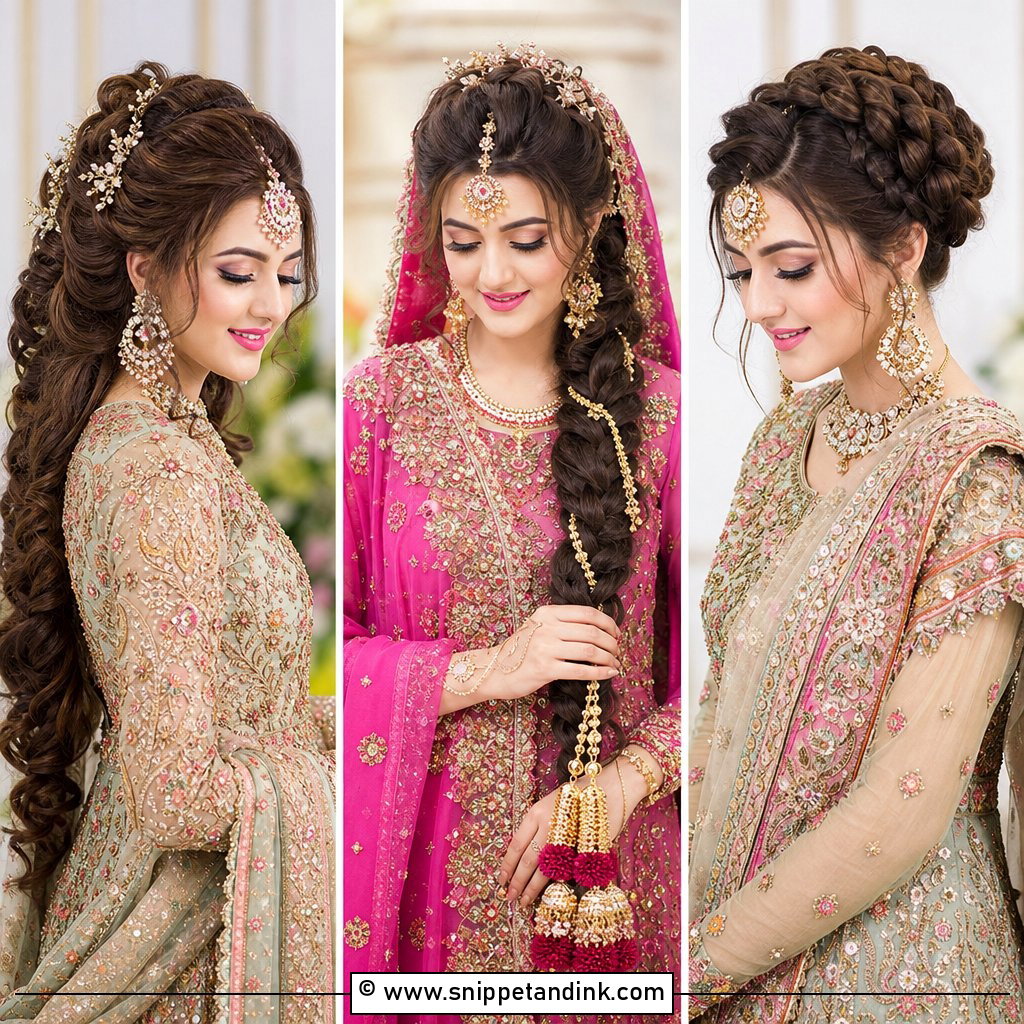
A braid gives a juda texture without making it messy. It can start at the crown, wrap around the bun or sit as a border at its edge, which adds a pattern that shows in photos. Lehengas, silk sarees and embroidered dupattas all suit it. Thick hair braids full on its own. Fine hair needs help: I pancake the braid, gently pulling the loops wider, and use padding or extensions underneath so the shape still reads under a dupatta. Finish with tiny pearls, a few flowers or gold pins.
5. Messy Wedding Juda
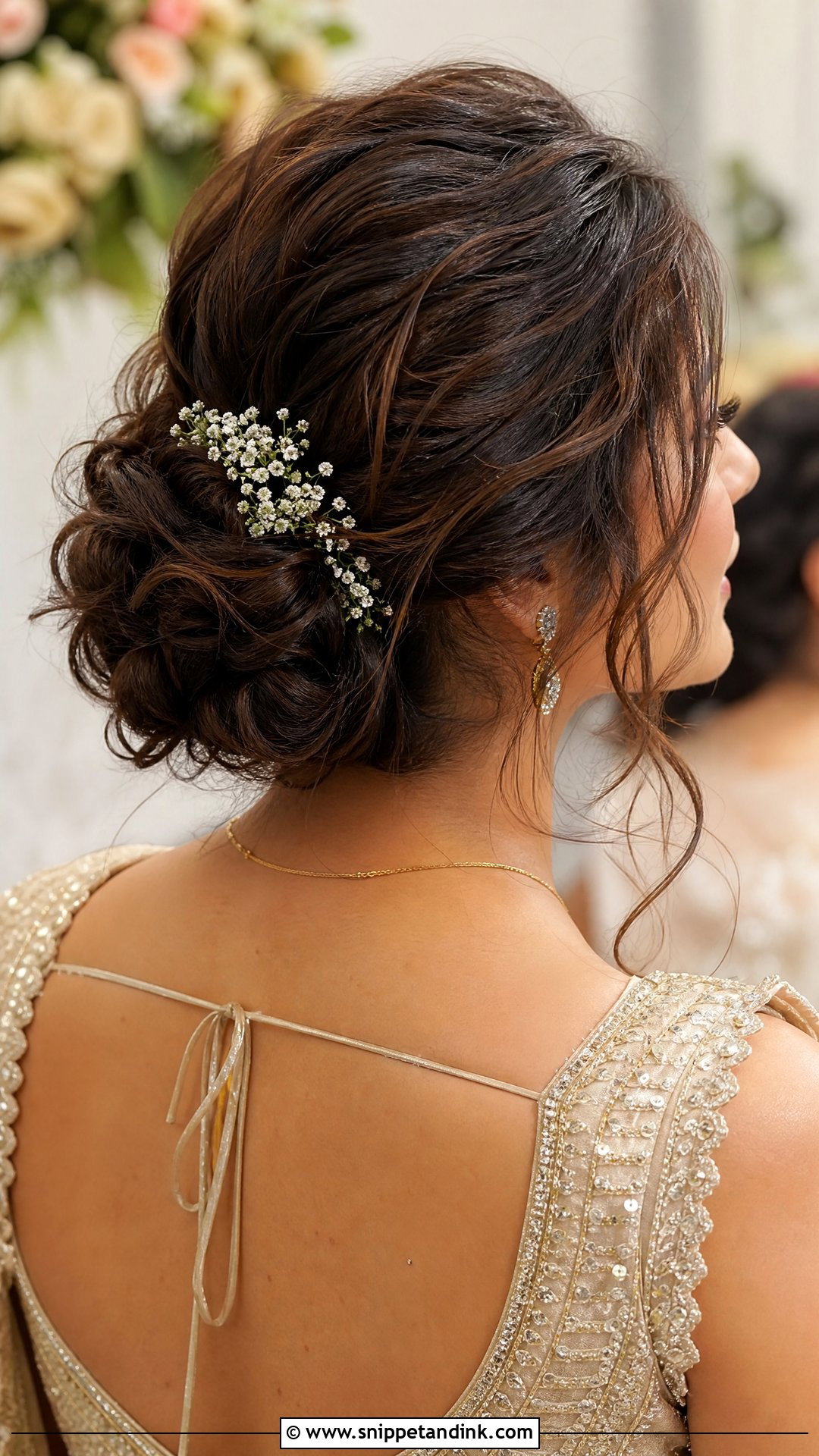
A messy juda is the one I’d suggest for a sangeet, reception or outdoor ceremony rather than the pheras. It has soft volume and loose texture, but underneath it is pinned as firmly as any sleek bun. The difference between undone and unfinished is control: I curl the hair first, then pin each piece deliberately, so the texture is placed rather than accidental. A few face-framing pieces help balance a heavy neckline. Baby’s breath, small roses or delicate pins suit it. Frizz everywhere isn’t texture, it’s just frizz.
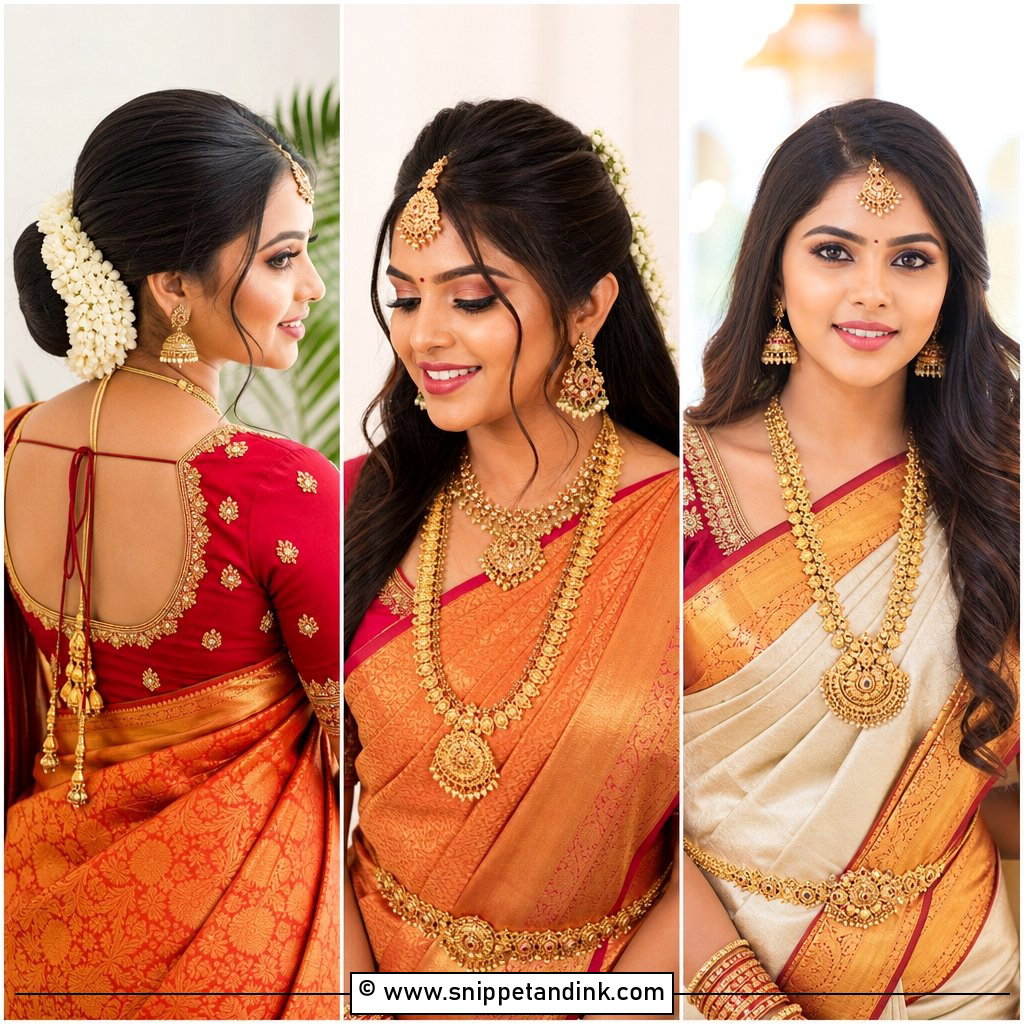
6. South Indian Wedding Juda
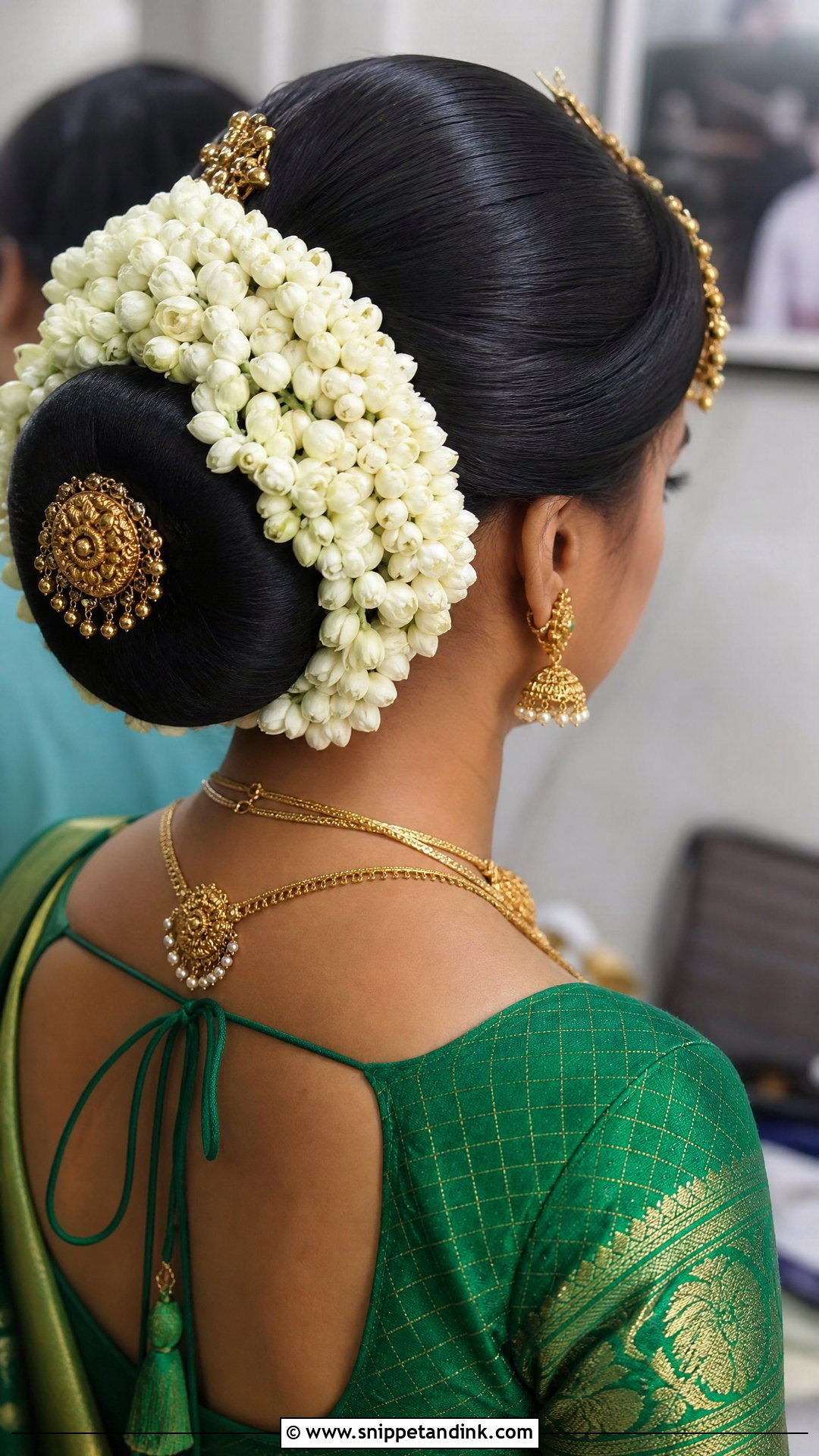
A South Indian wedding juda usually pairs a neat bun with jasmine, temple jewelry and gold ornaments, and sometimes a long braid element, depending on the family tradition and ceremony. It sits naturally with silk sarees, heavy gold sets and classic makeup. The front can be sleek from a center part, softly puffed or shaped to hold a maang tikka. Temple jewelry is heavy, so I build the bun on a strong rubber band base and pin the ornaments into it rather than into loose hair. Fresh jasmine adds fragrance, and the whole structure stays secure through long rituals.
7. Bridal Juda With Matha Patti
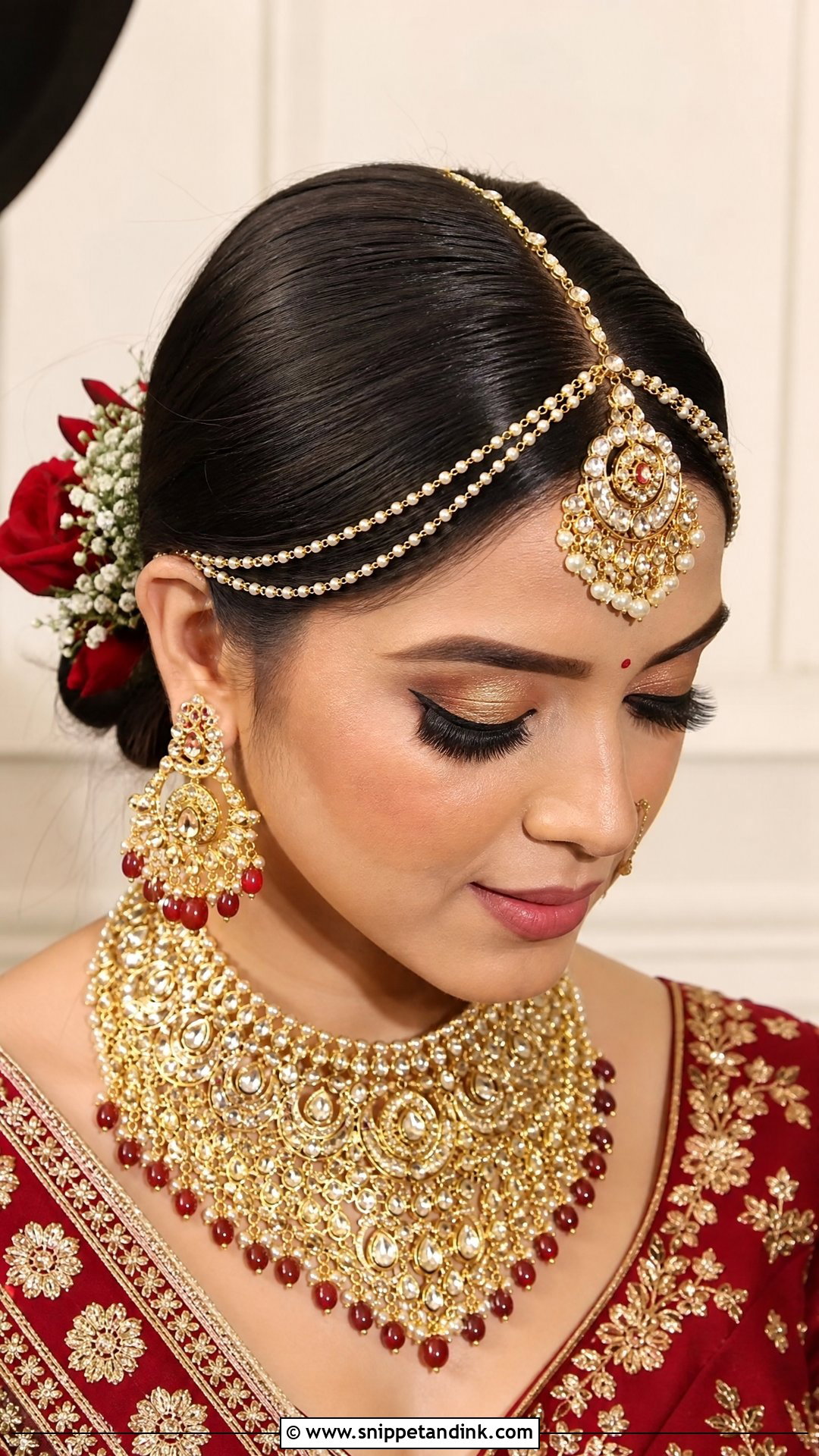
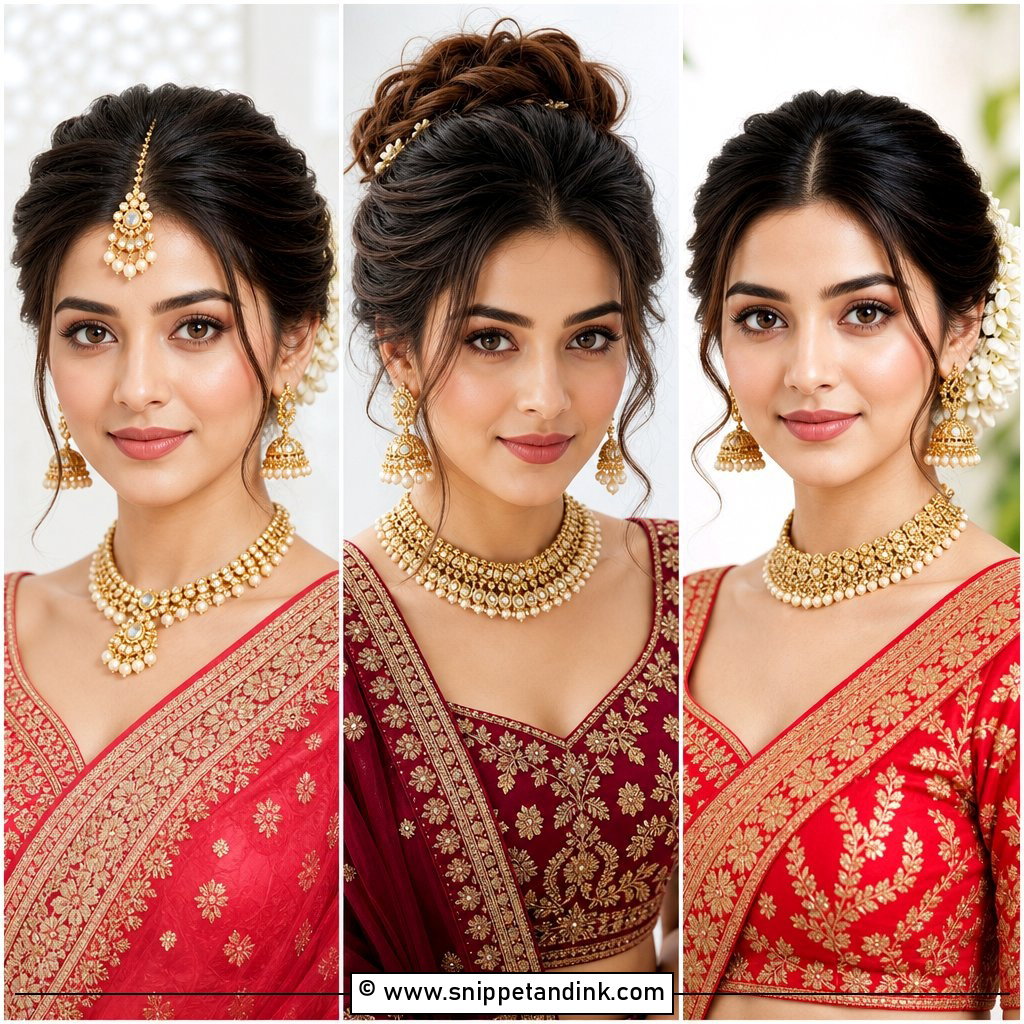
With a bridal juda with matha patti, the jewelry frames the face and the juda’s job is to hold it. I start with a center part, smooth sides and a low or mid bun. The matha patti’s side chains hook into the bun, so its height matters: too low and the chains pull downward at the temples. If the jewelry is light, add flowers or pearls at the bun. If the matha patti is grand, keep the back cleaner. Hidden pins and a firm setting spray keep the piece centered through ceremonies and photos.
8. Wedding Juda With Dupatta
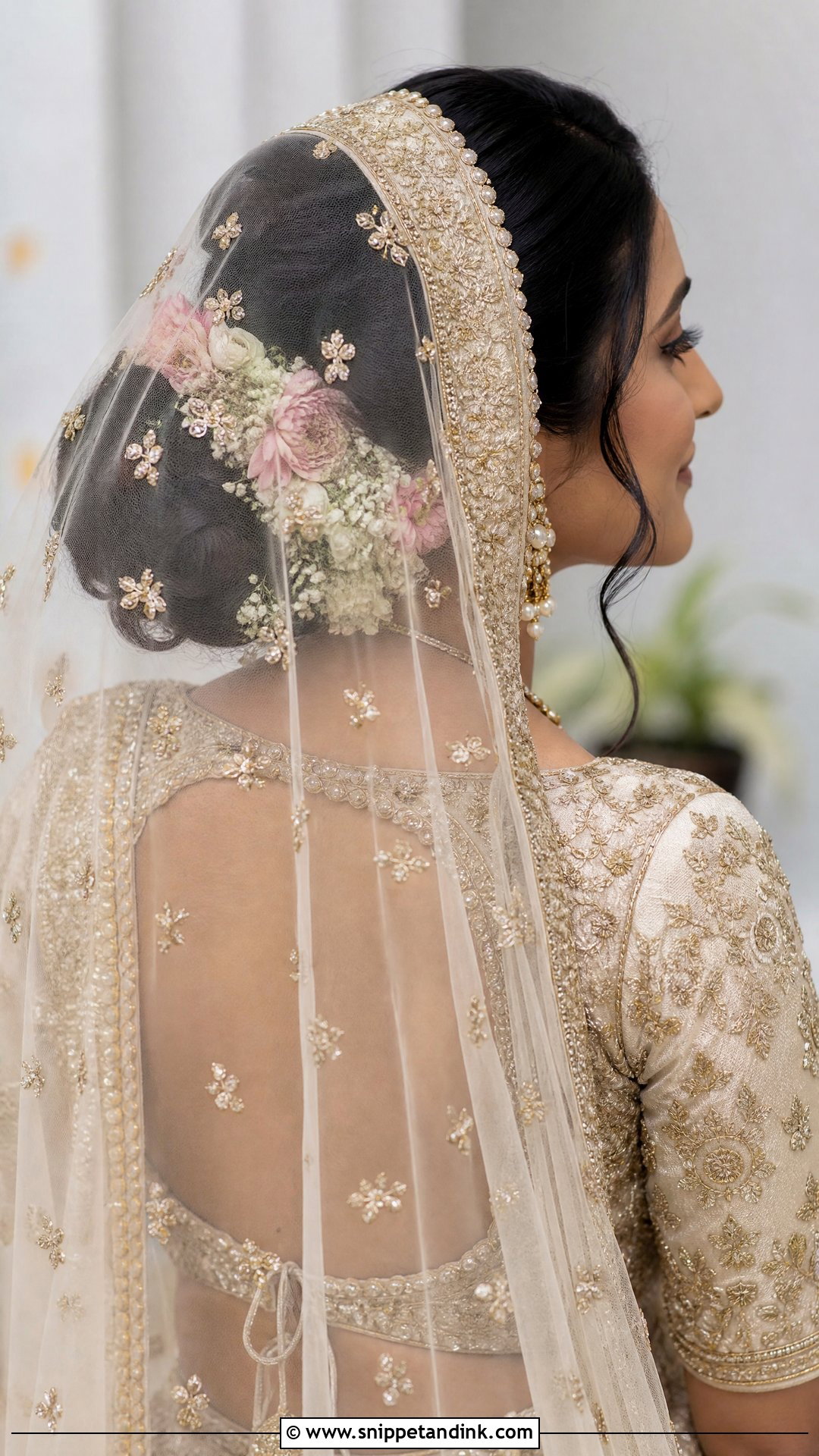
A juda under a dupatta needs structure above all. The bun has to be firm enough to take pins, yet shaped so it looks good from the side and back. A low or mid juda usually works best, because it supports the fabric without adding awkward height. Sleek, braided or floral all suit, depending on the outfit. If the dupatta is heavy, I anchor it with hidden pins into the bun itself, not just at the crown. Weight hanging only from the crown pulls on the scalp, and by hour three that’s a headache.
9. Pearl Wedding Juda
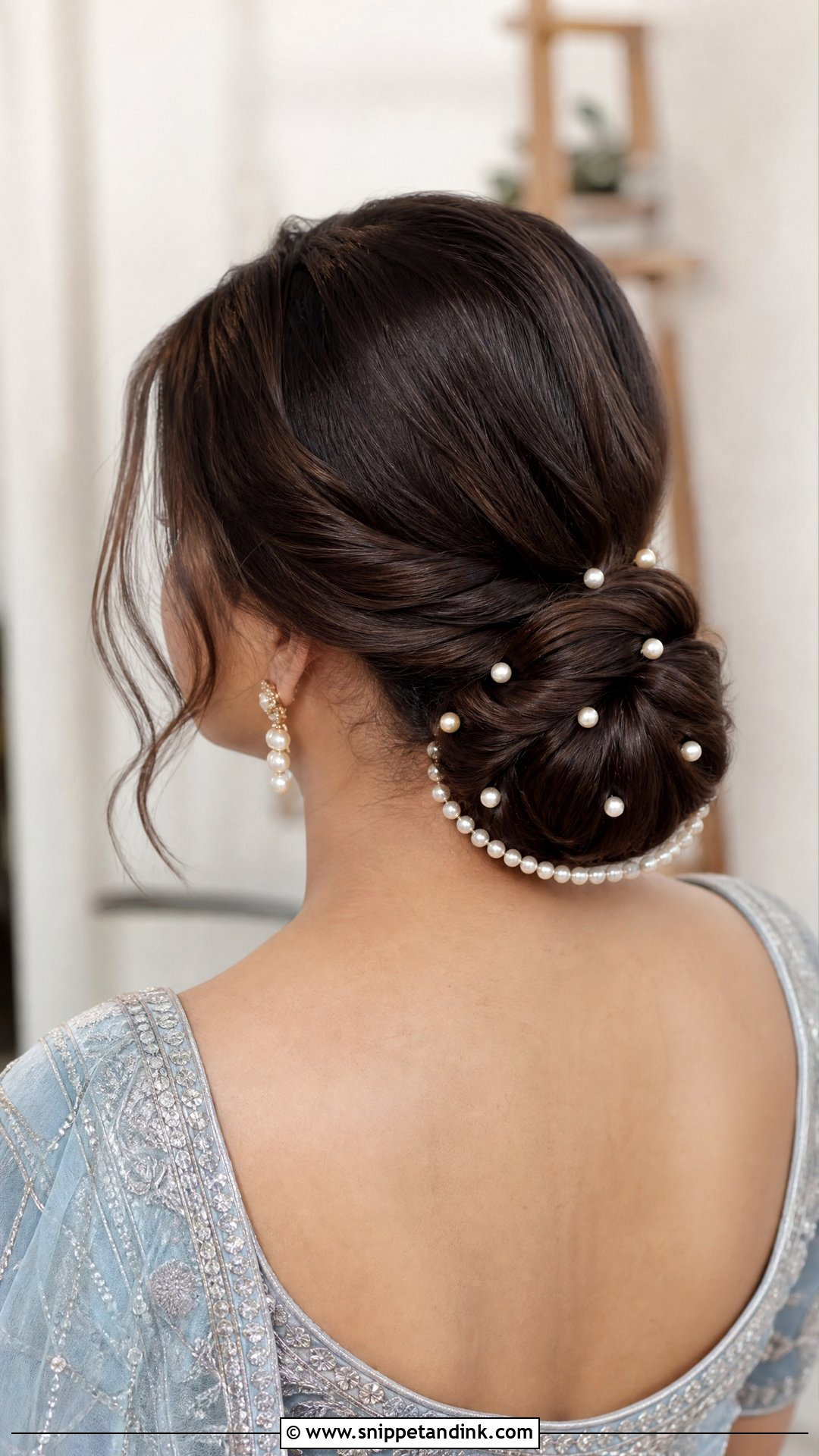
Pearls give a juda a quieter kind of richness. I place them around the bun, through a braided section or as small pins, always spaced evenly rather than scattered. Ivory, champagne, pastel pink, powder blue and gold outfits suit them, and they’re a good fit for a reception or engagement look that feels less traditional than the wedding. Pearl pins on a fine wire stay put far better than glued pearls, which can pop off when a dupatta is dragged across them.
10. Wedding Juda With Hair Chains
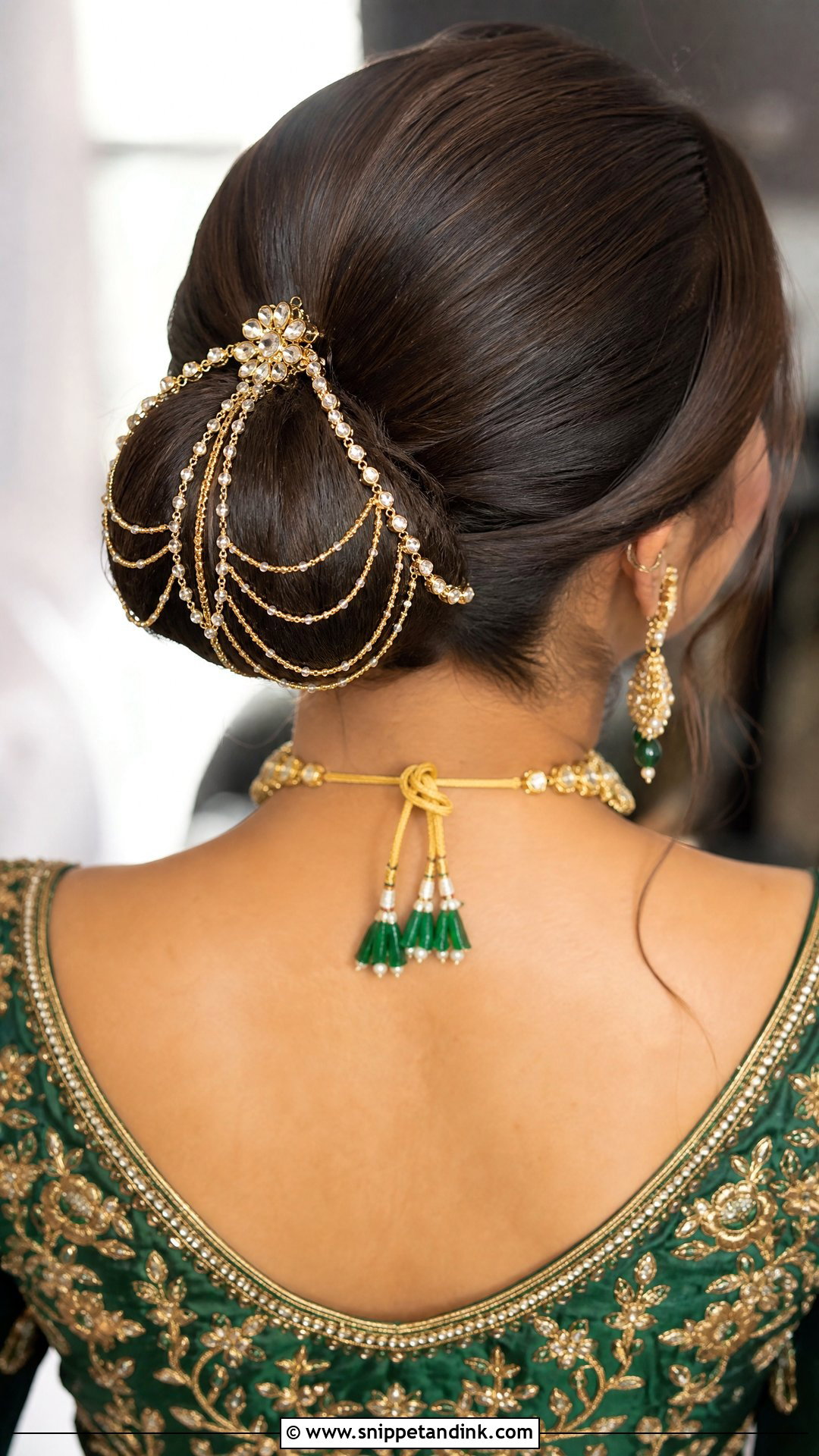
Hair chains give the back of a juda movement and jewelry-like detail. The bun can be sleek, braided or floral, with gold or pearl chains laid across it or draped from side pins. It’s a strong choice when your blouse design is the star of the back view. It suits a dupatta worn lightly over the head; under a heavy dupatta, the chains disappear. Keep the front neat so the chains lead. I pin every chain at both ends and once in the middle, because loose chains tangle during hugs and dancing.
11. Side Part Wedding Juda
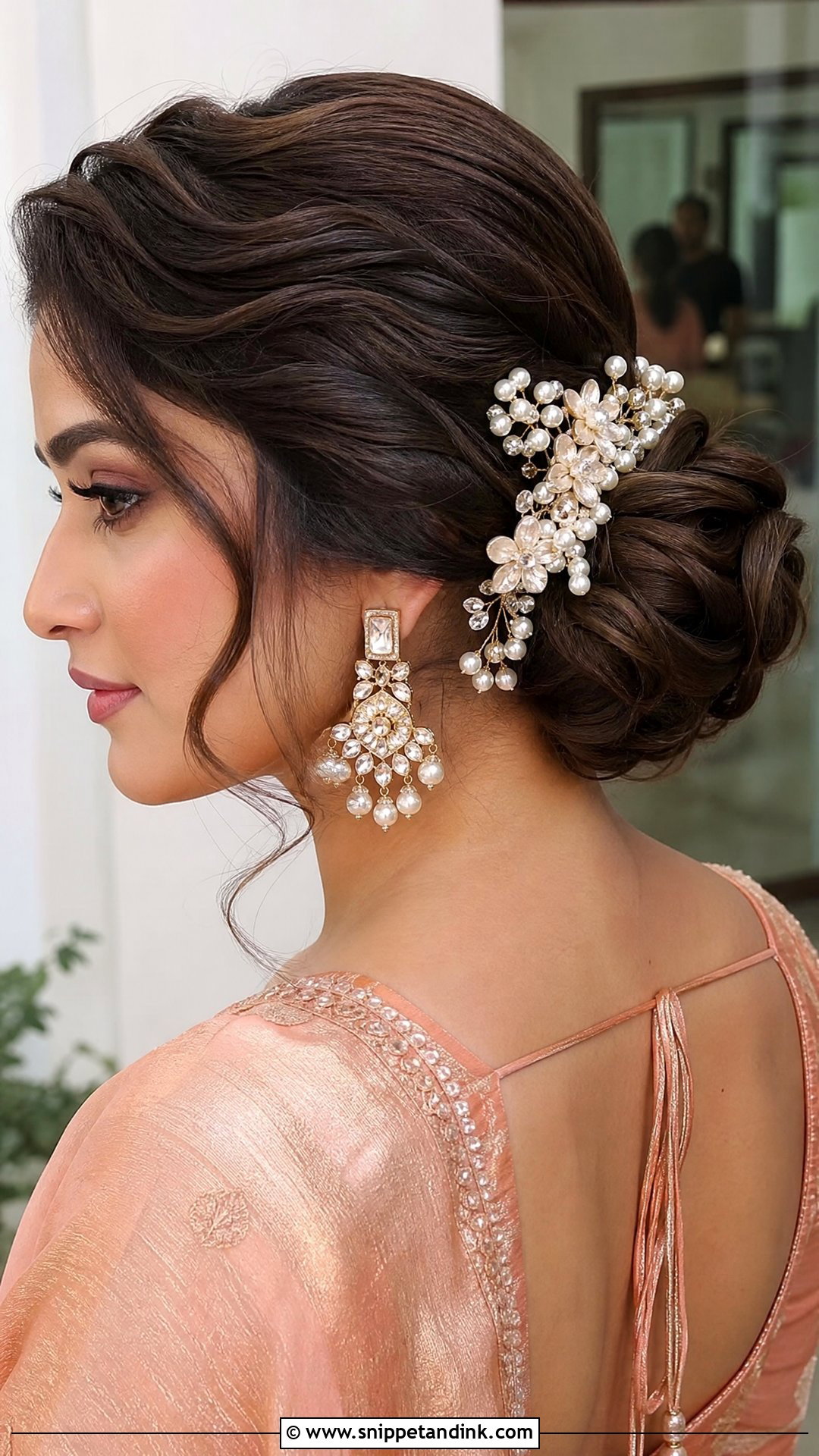
A side part softens a juda without leaving much hair loose. The part can be sleek or lightly waved near the front, and the bun can sit low at the nape or slightly off to one side. It angles the face, which suits many round, square or heart-shaped faces. The catch is a maang tikka: it wants a center part, so with a side part I’d suggest a passa on the parted side instead. Fresh flowers, pearl pins or a jeweled comb finish the bun.
12. Center Part Wedding Juda
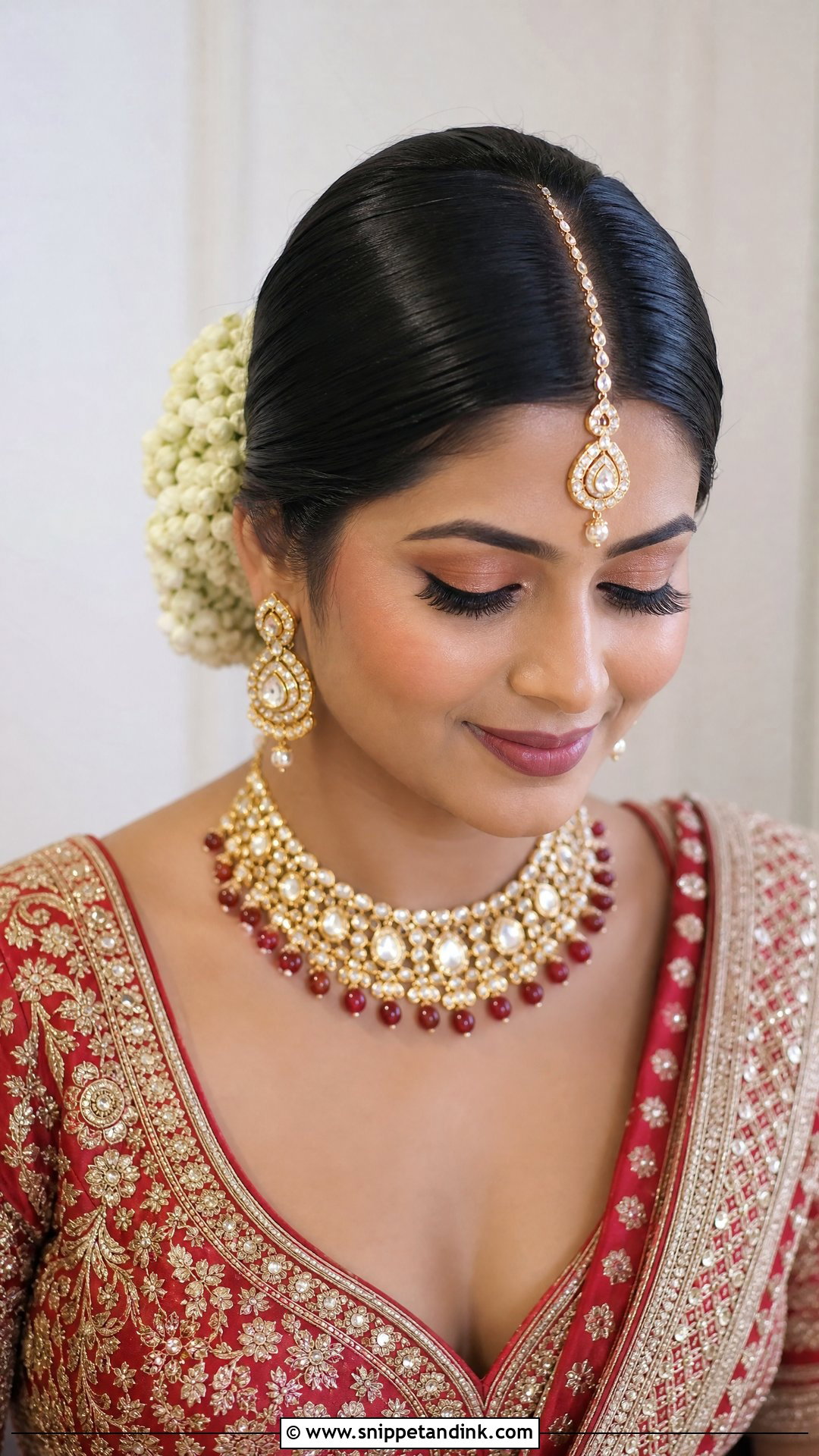
A center part is the dependable classic. The clean parting creates symmetry, which suits a maang tikka, matha patti, passa or a traditional dupatta setting. The bun can be sleek, floral, braided or pearl-detailed. It keeps the face open for close-up portraits. The part has to be straight, so I draw it with the tail of a comb from the brow arch back, and sindoor later goes neatly into that line. Smooth the sides well and add gentle crown lift if you want a softer shape.
13. High Wedding Juda
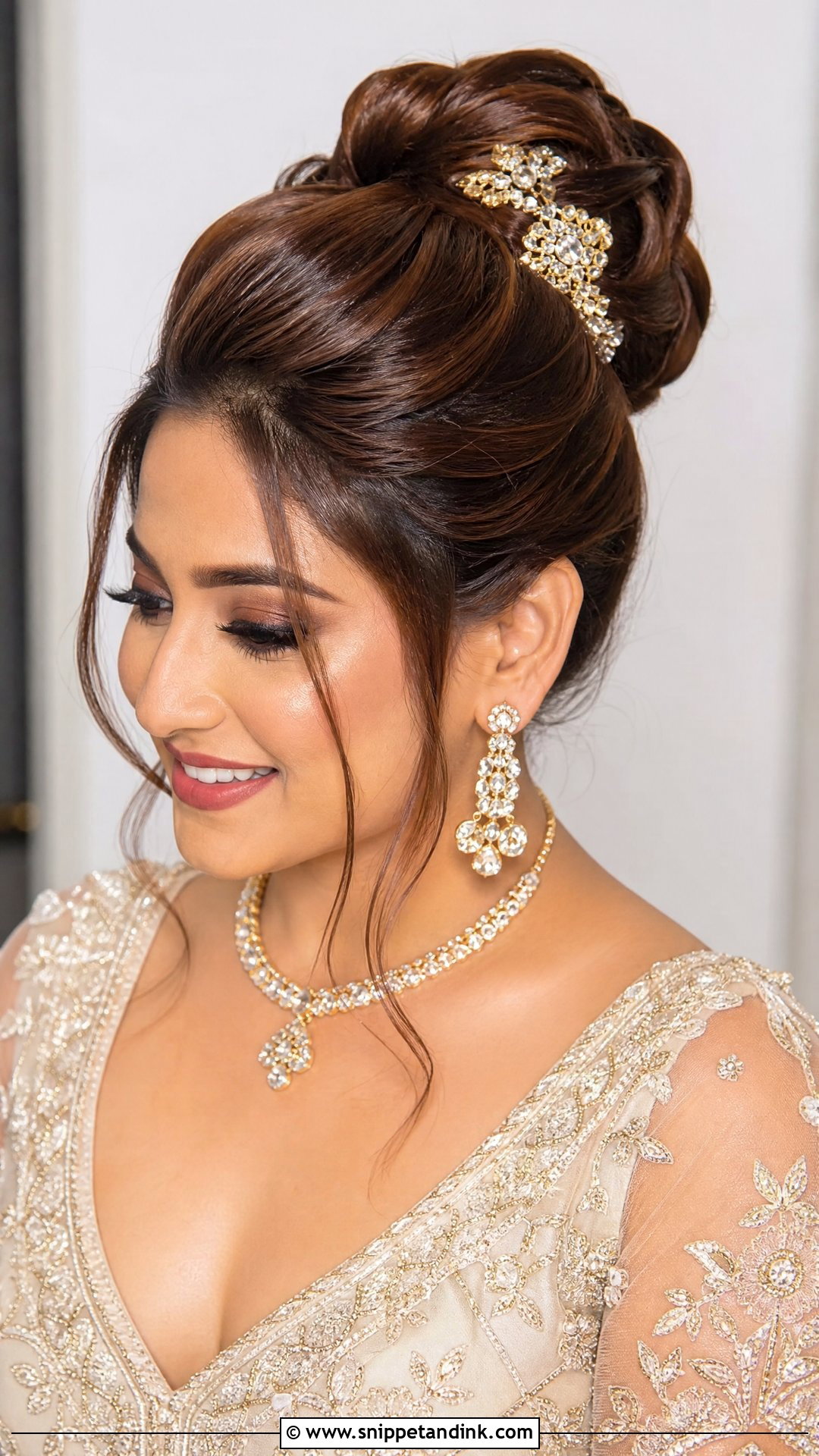
A high juda adds height and drama, and I usually keep it for the reception: modern lehengas, cocktail sarees or a gown with Indian jewelry. It lengthens the neck and shows statement earrings. It can be sleek like a ballerina bun or textured. The honest limitation is the dupatta. A high bun lifts a head-covering dupatta into an odd peak, so if your dupatta goes over the head, a lower bun is easier. With an open drape over the shoulders, the high juda looks bold.
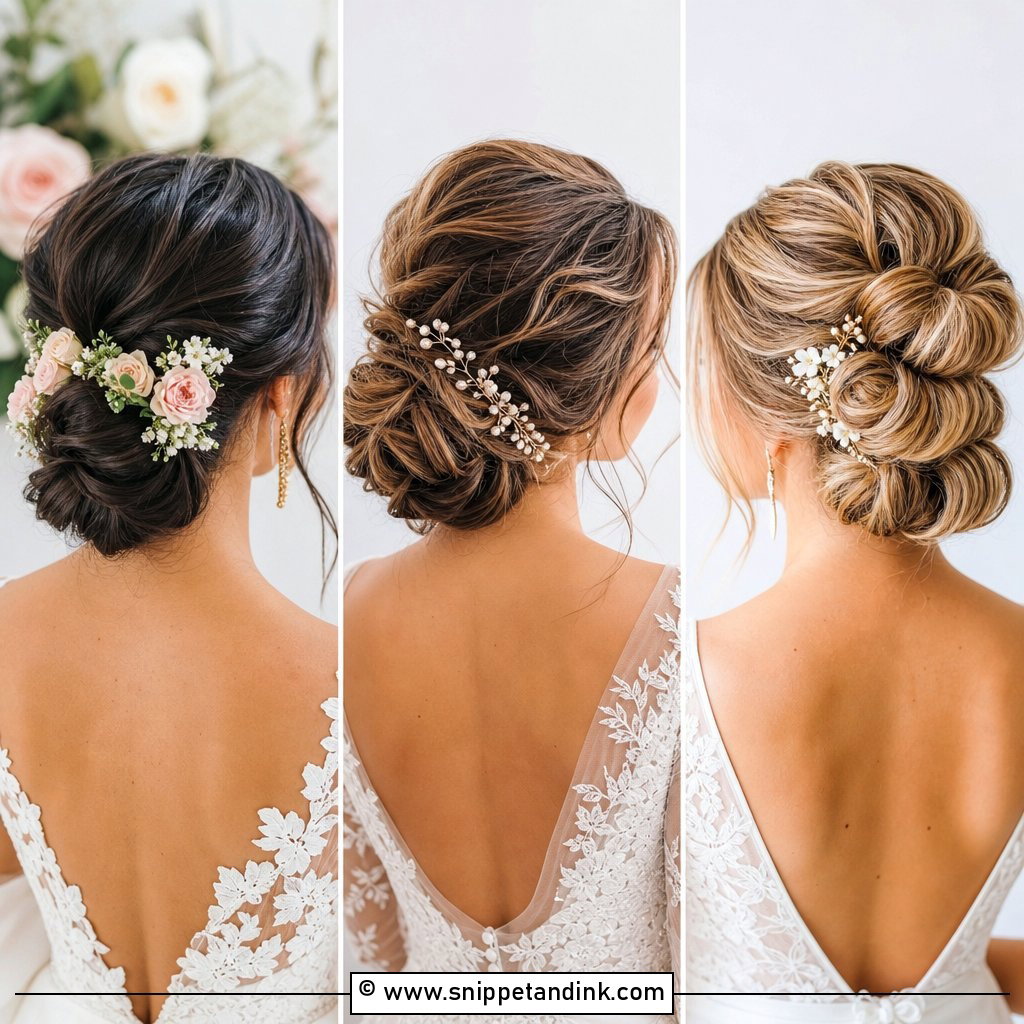
14. Low Bun Wedding Juda
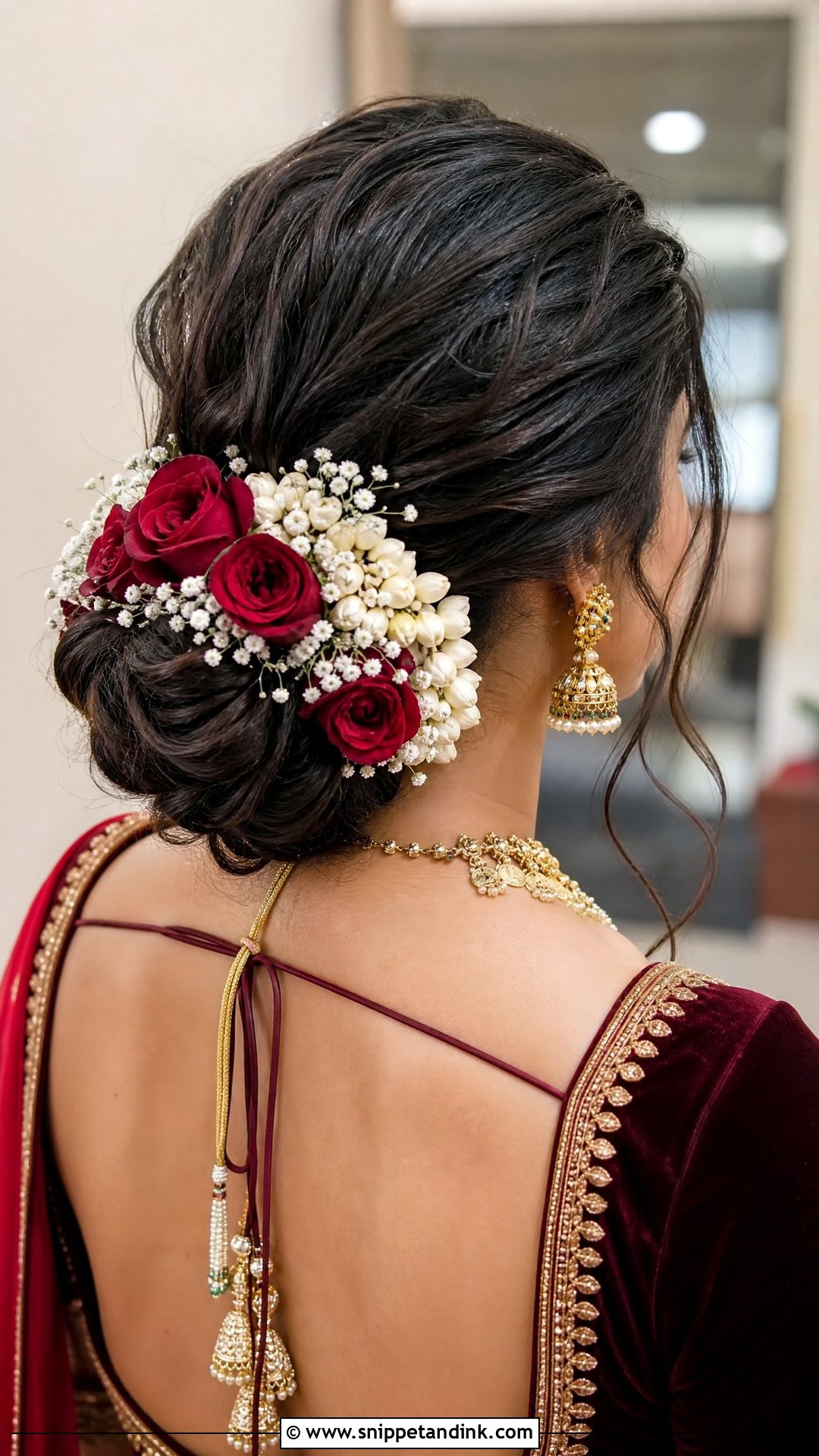
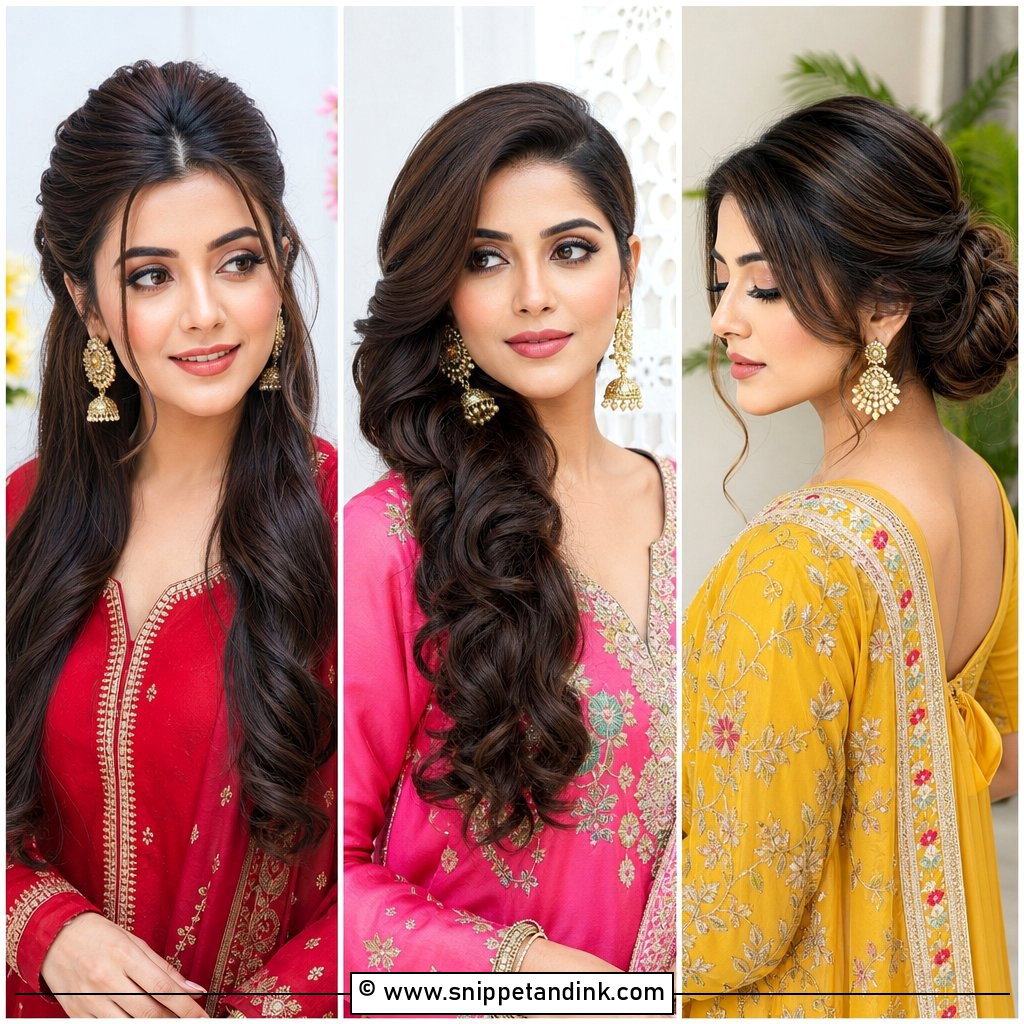
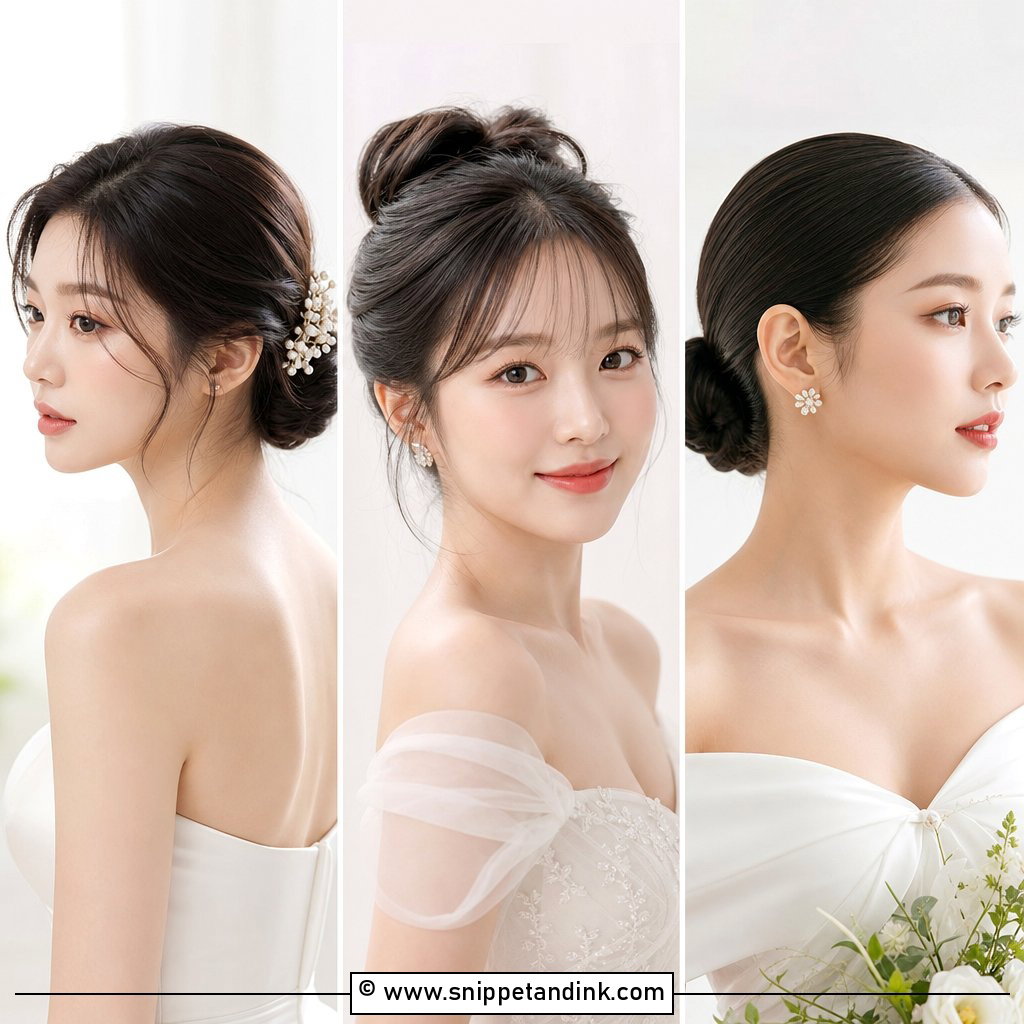
The low bun is the safest bridal juda I know. Near the nape it works with heavy dupattas, long earrings and detailed blouse backs, and it doesn’t fight a head covering. It can be sleek or softly textured. Thick hair makes a full round bun on its own; fine hair needs a padding donut, matched to your hair color so it doesn’t peek through. Jasmine, roses, pearls or a jeweled pin finish it. Sitting through pheras is comfortable because nothing presses against a chair back.
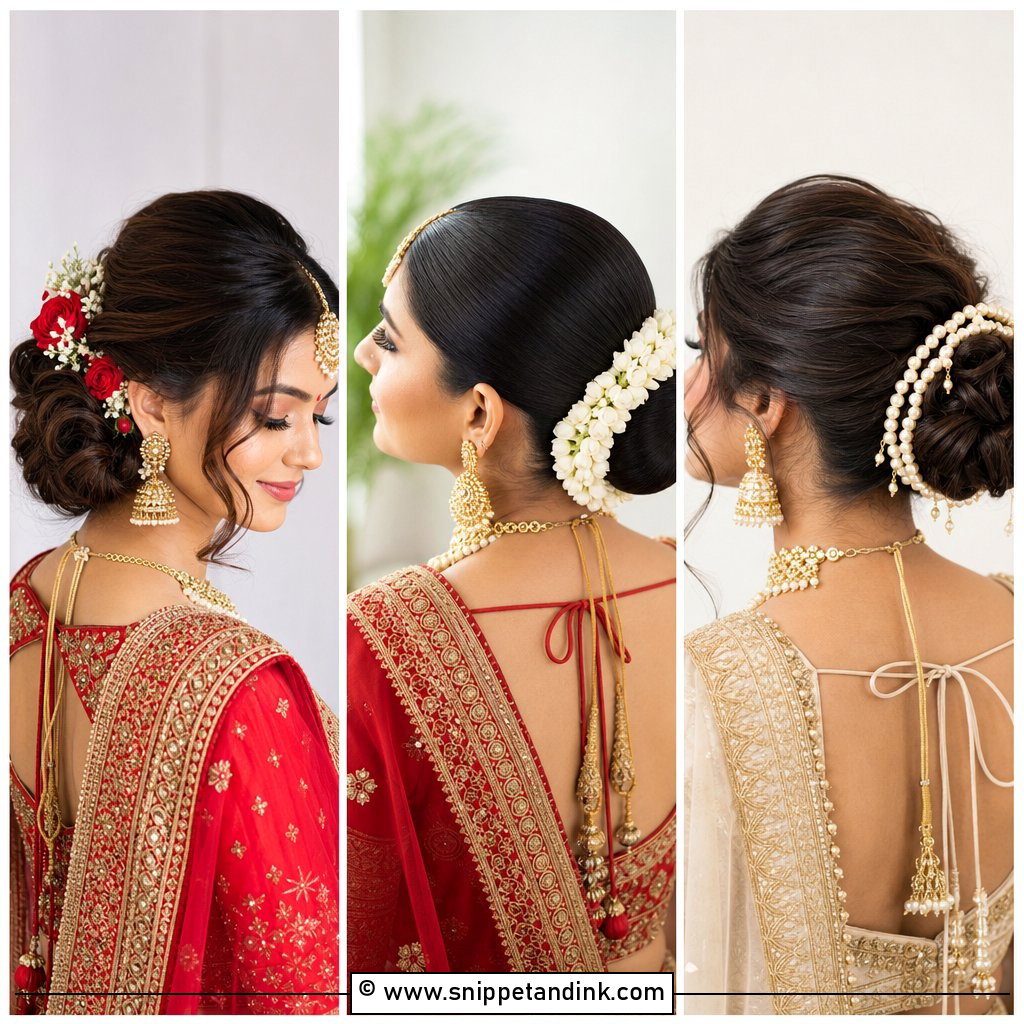
15. Twisted Wedding Juda
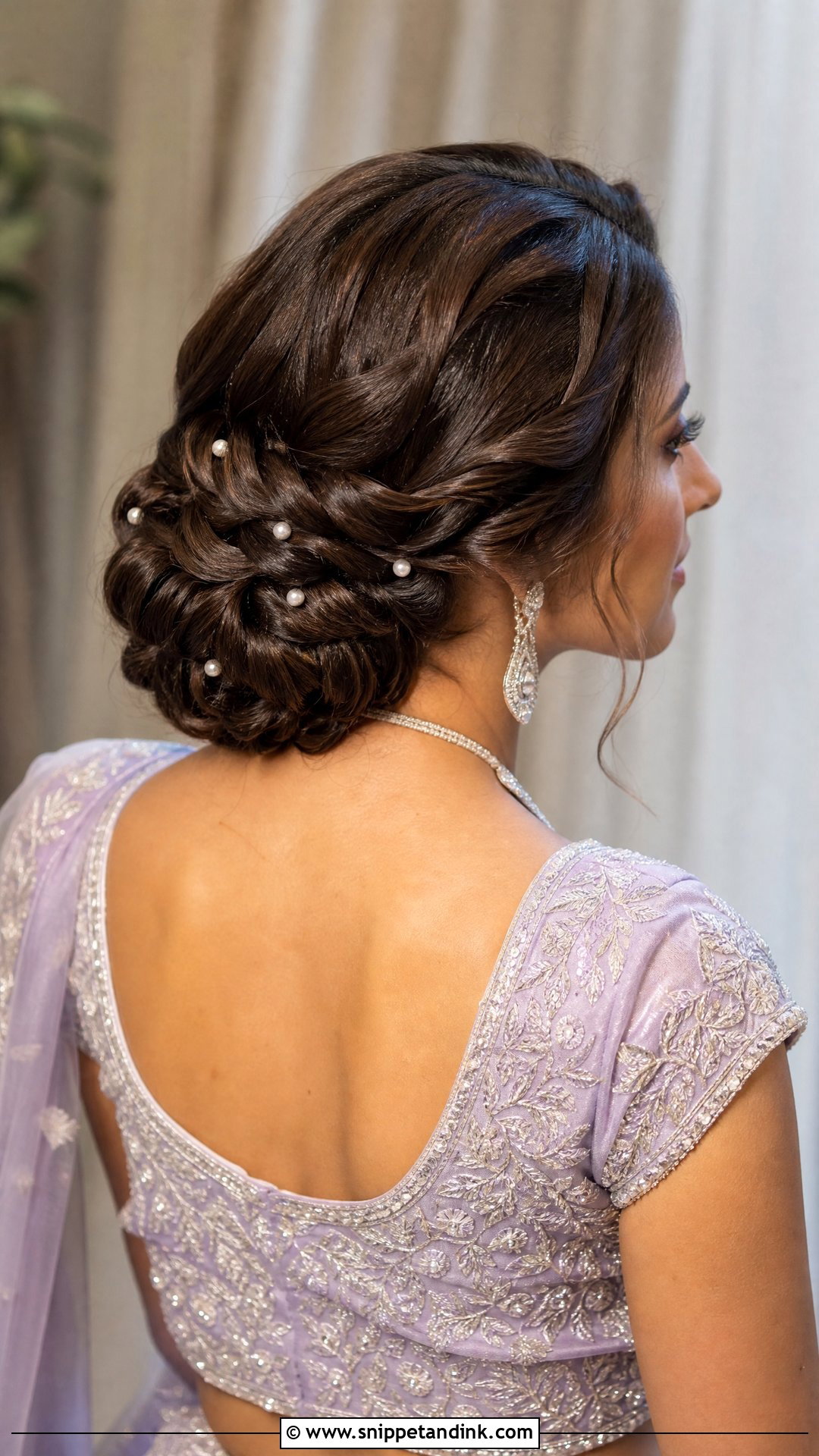
A twisted juda builds visible texture out of the hair itself. I divide the hair into sections and twist each into the bun, which makes it look fuller and more detailed without many accessories. Pastel lehengas, embroidered sarees and reception outfits suit it. Small flowers or pearl pins tuck neatly between the twists. Twists loosen on very silky hair, so I add texture spray first and pin each twist as I place it, not at the end. The front can stay sleek, side-parted or lifted at the crown.
16. Chignon Wedding Juda
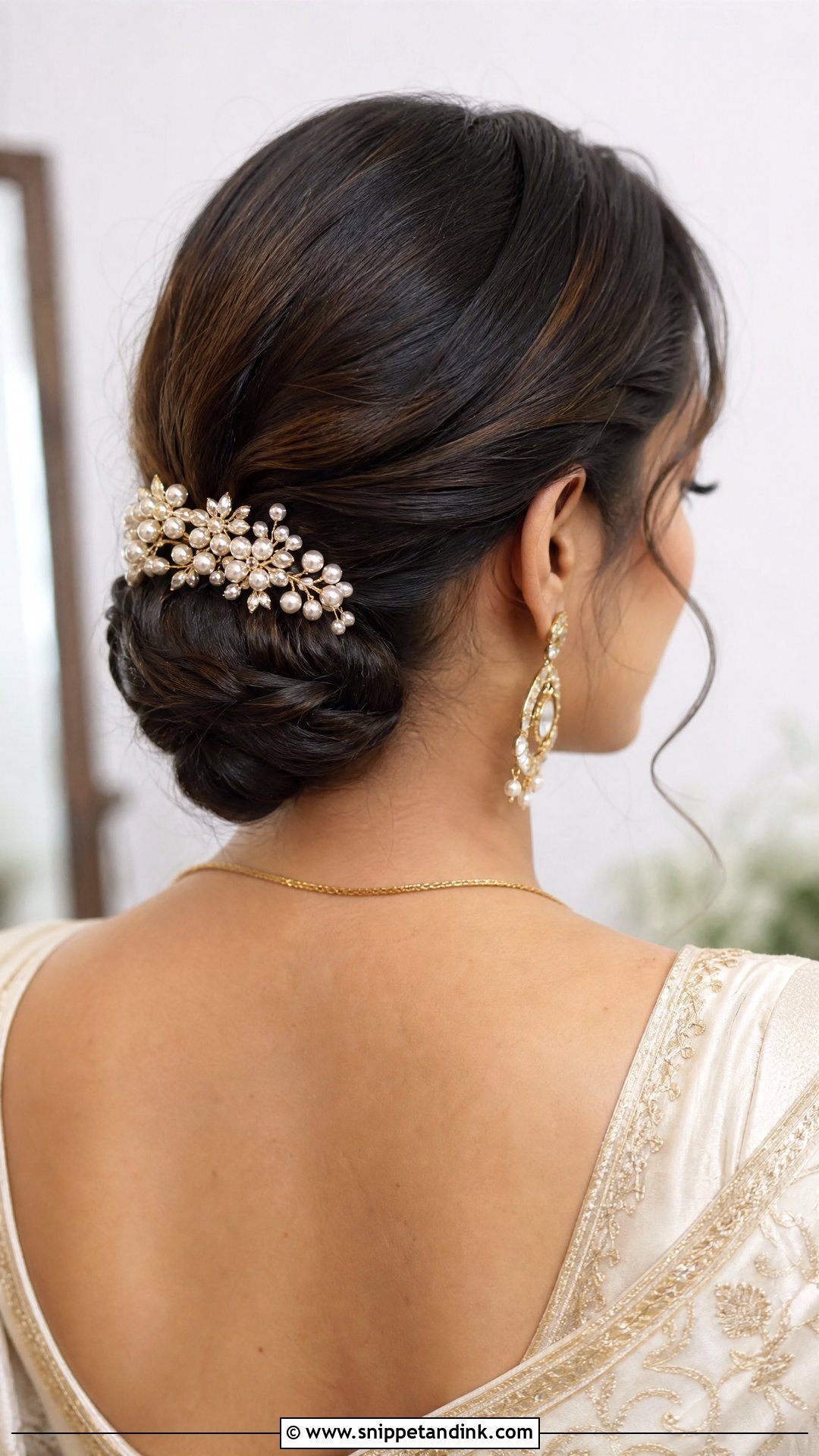
A chignon juda is low, smooth and slightly tucked, close to the nape. It suits brides who like a minimal look but still want a formal hairstyle. Finish it with a center part, side part or soft front waves. Silk sarees, designer lehengas and reception gowns all pair well. A pearl comb, gold pin or small cluster of flowers adds enough detail. Because it’s compact, it’s also the most comfortable juda to rest your head against in the car between events, which matters on a long wedding weekend.
17. Voluminous Wedding Juda
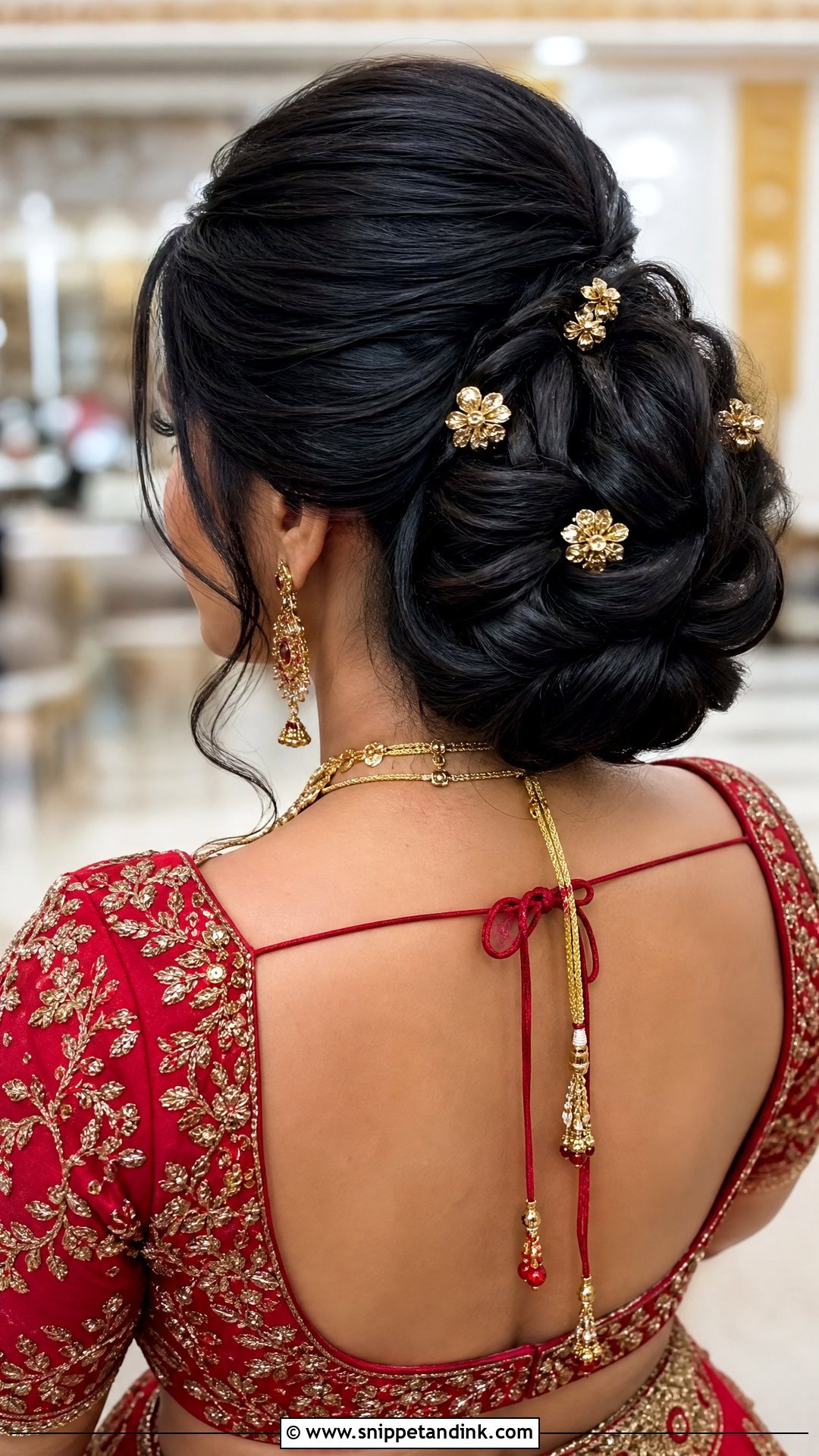
Volume makes a juda read clearly under a dupatta and in back-view portraits, which matters at grand ceremonies with a lot of guests. The fullness can come from backcombing, padding, extensions or naturally thick hair. Keep the front smooth or lightly lifted so the shape doesn’t look bulky. Choose one main accent, flowers or pearls or hair jewelry, rather than all three. Heavy extensions add weight, so I’d only use them when the bun is built on a firm base and the dupatta is pinned separately.
18. Wedding Juda With Fresh Flowers
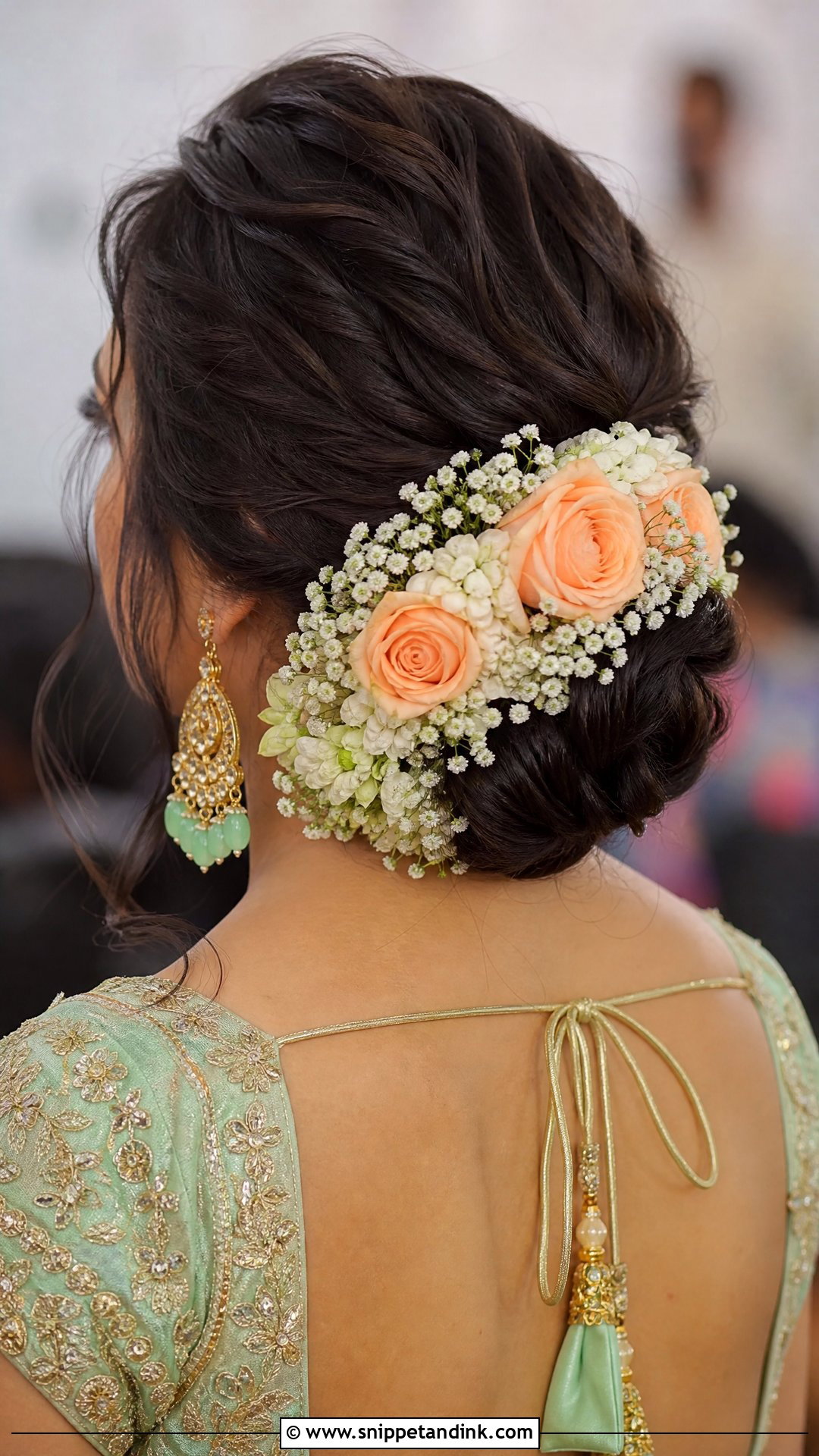
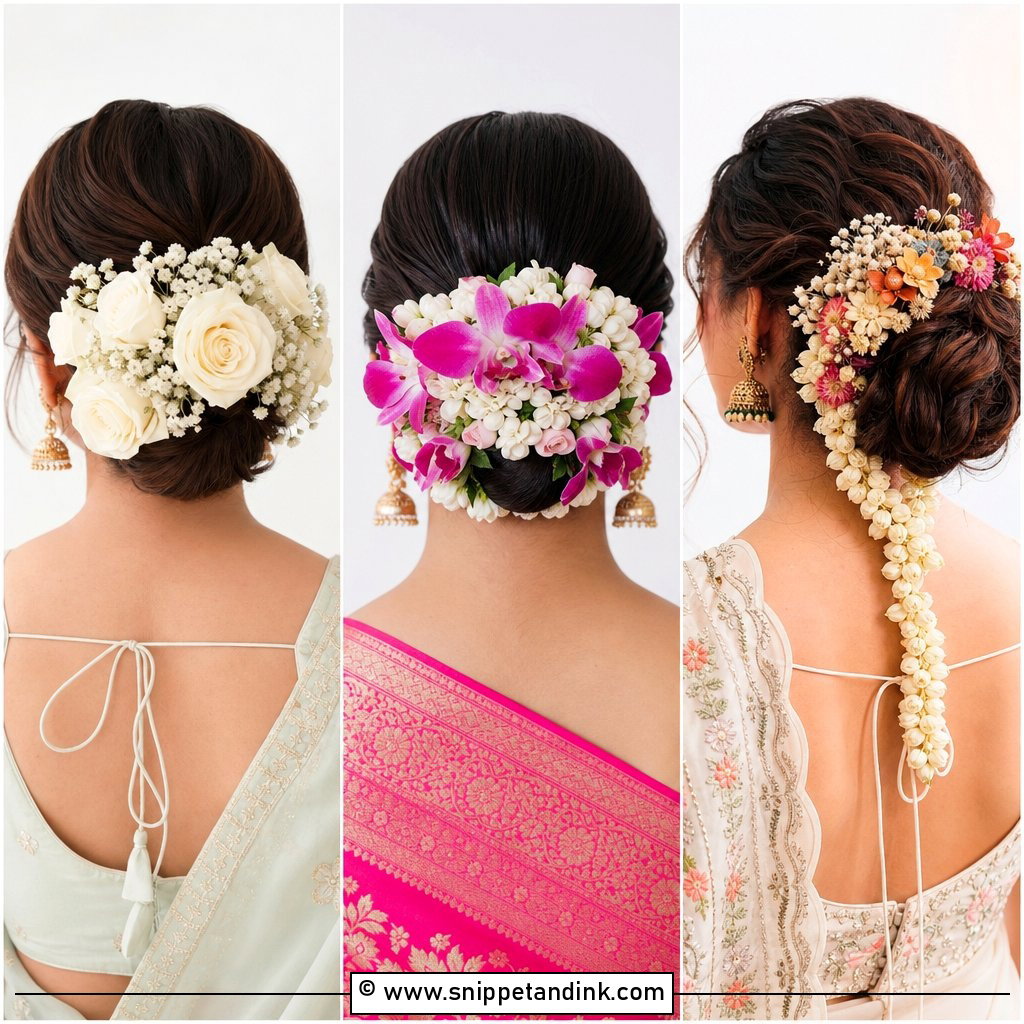
Fresh flowers change the mood of a juda more than any accessory. Jasmine and mogra feel classic, red roses feel bold, and pastel blooms suit daytime weddings; orchids, baby’s breath and marigold all have their place too. The bun underneath can be sleek, braided, twisted or messy. I place flowers to follow the bun’s curve, not at random, and pin them firmly. They also need care before they ever reach your hair, which I cover below.
19. Wedding Juda For Saree
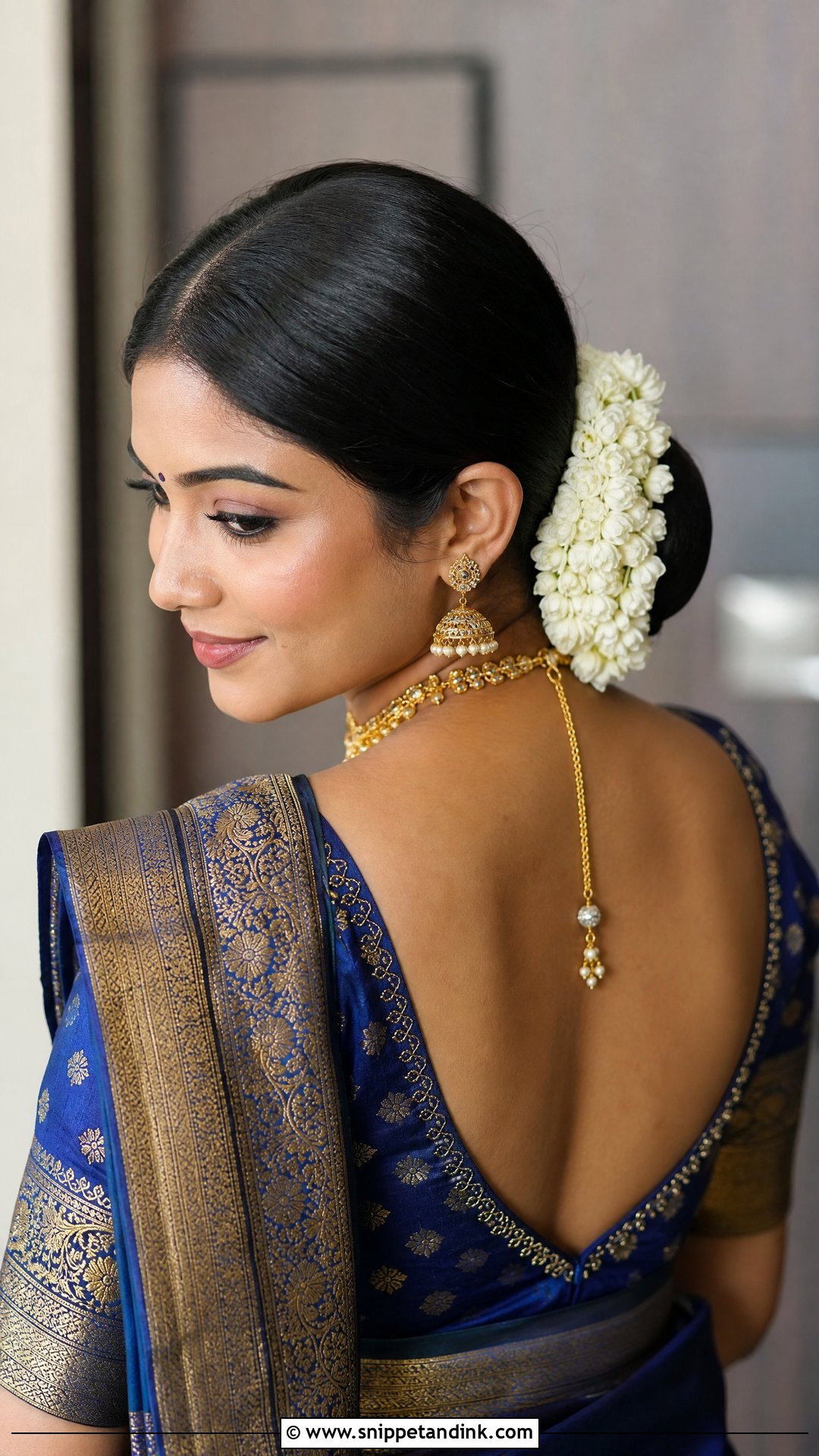
A saree shows the neckline, the earrings and the blouse back, so the juda pulls the look together. A low or mid bun usually works best with silk, Banarasi, Kanjeevaram or embellished drapes. Gajra feels traditional, pearls softer and gold pins temple-inspired. The front can be center-parted, side-parted or softly puffed, depending on the face. One practical point: the pallu often goes over the shoulder or head, so I keep the bun tucked enough that the pallu lies flat without catching on pins.
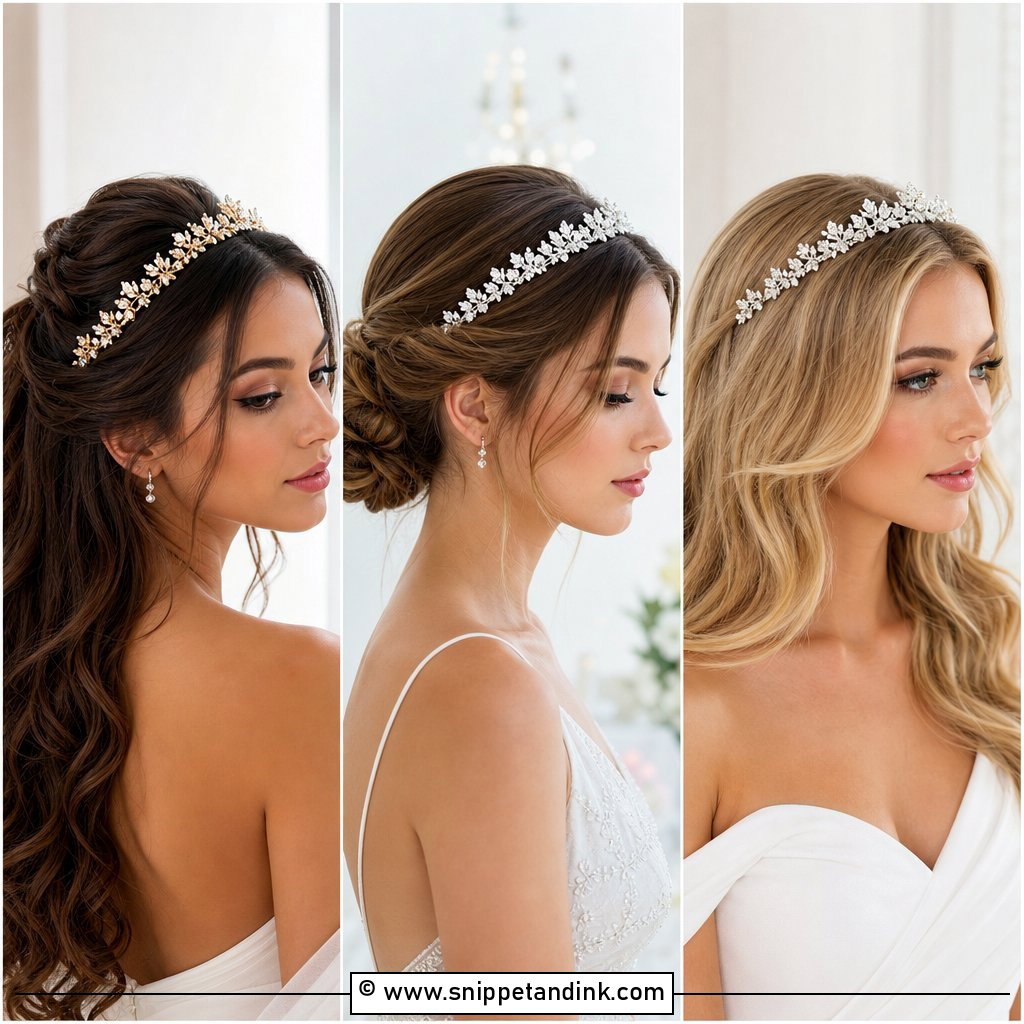
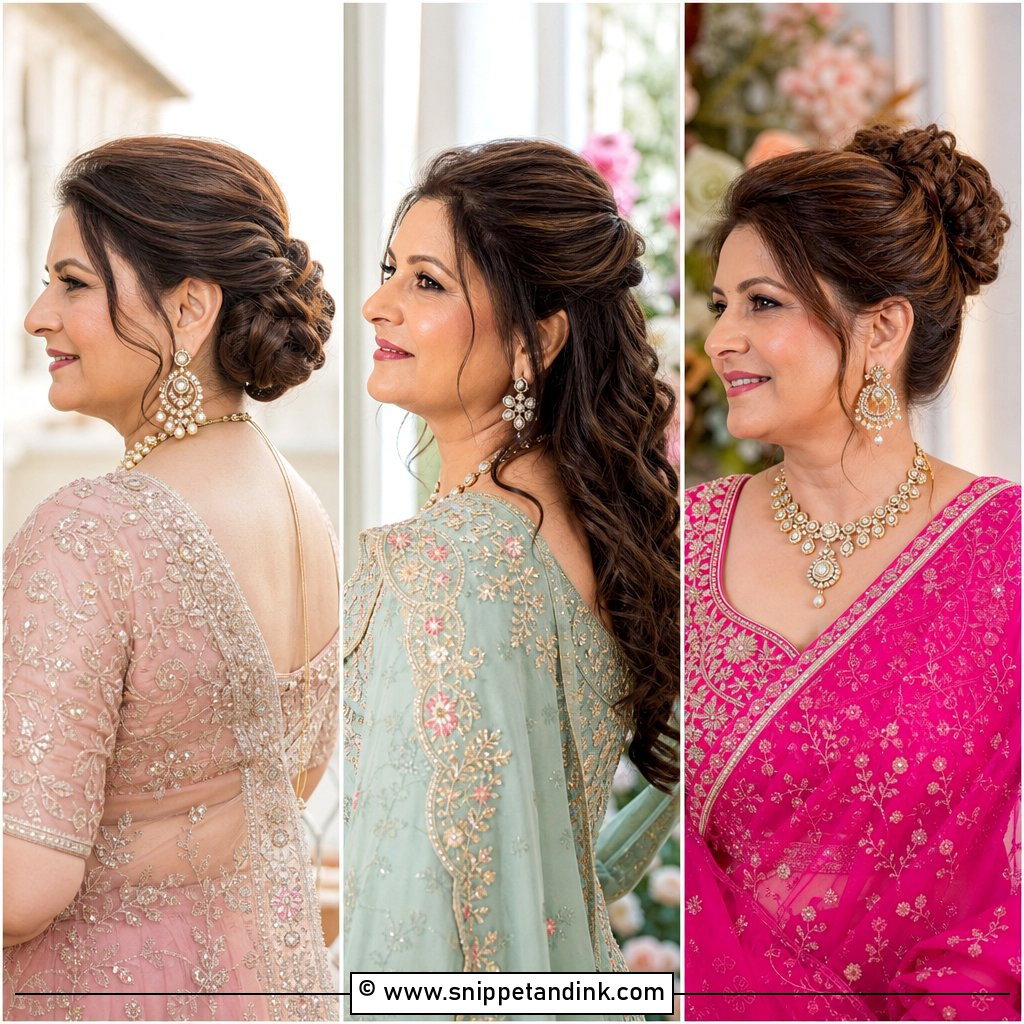
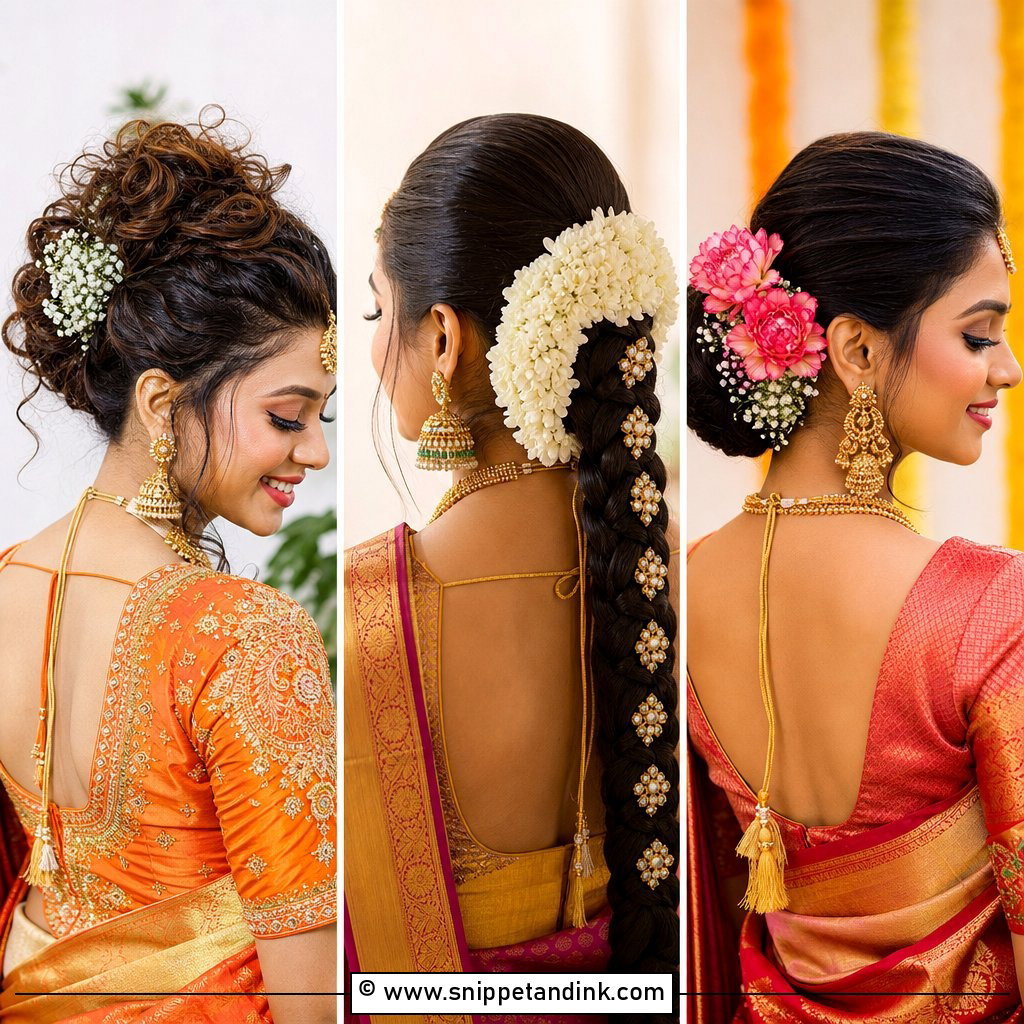
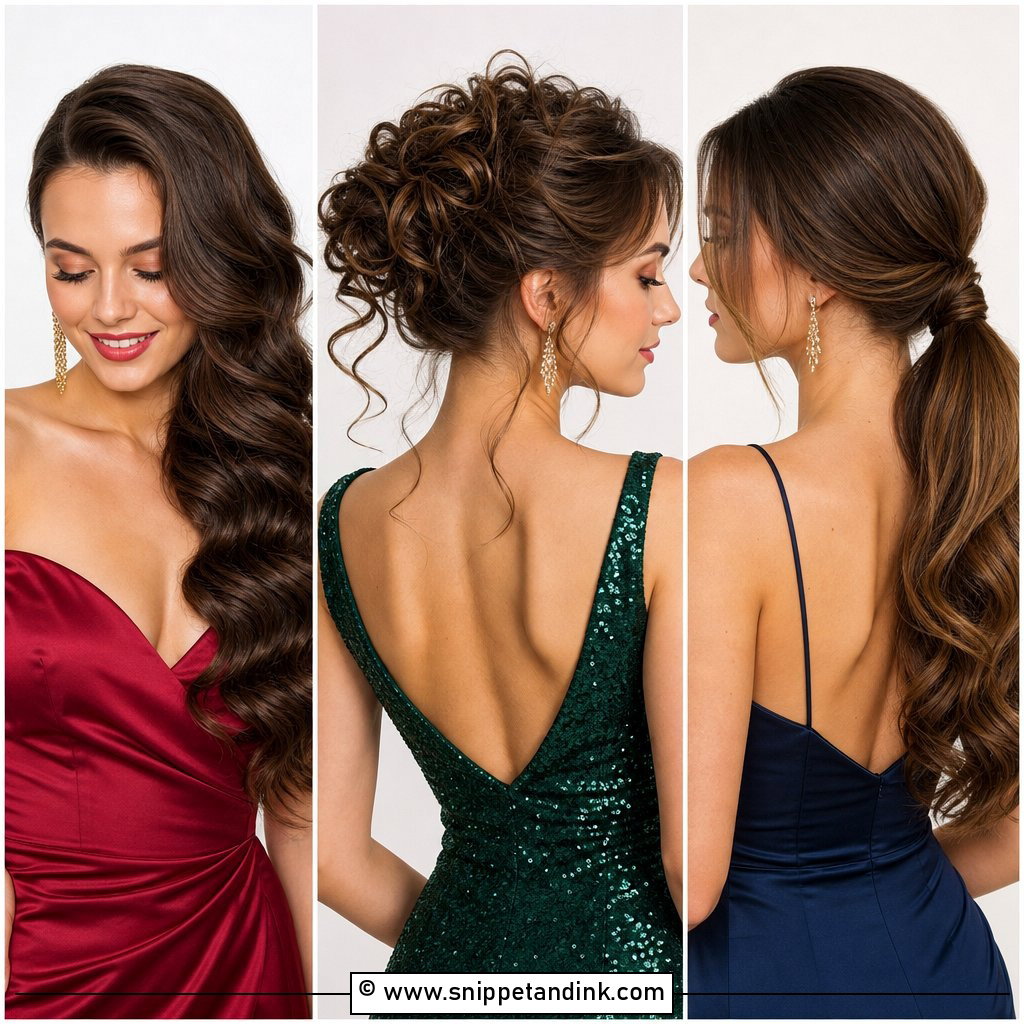
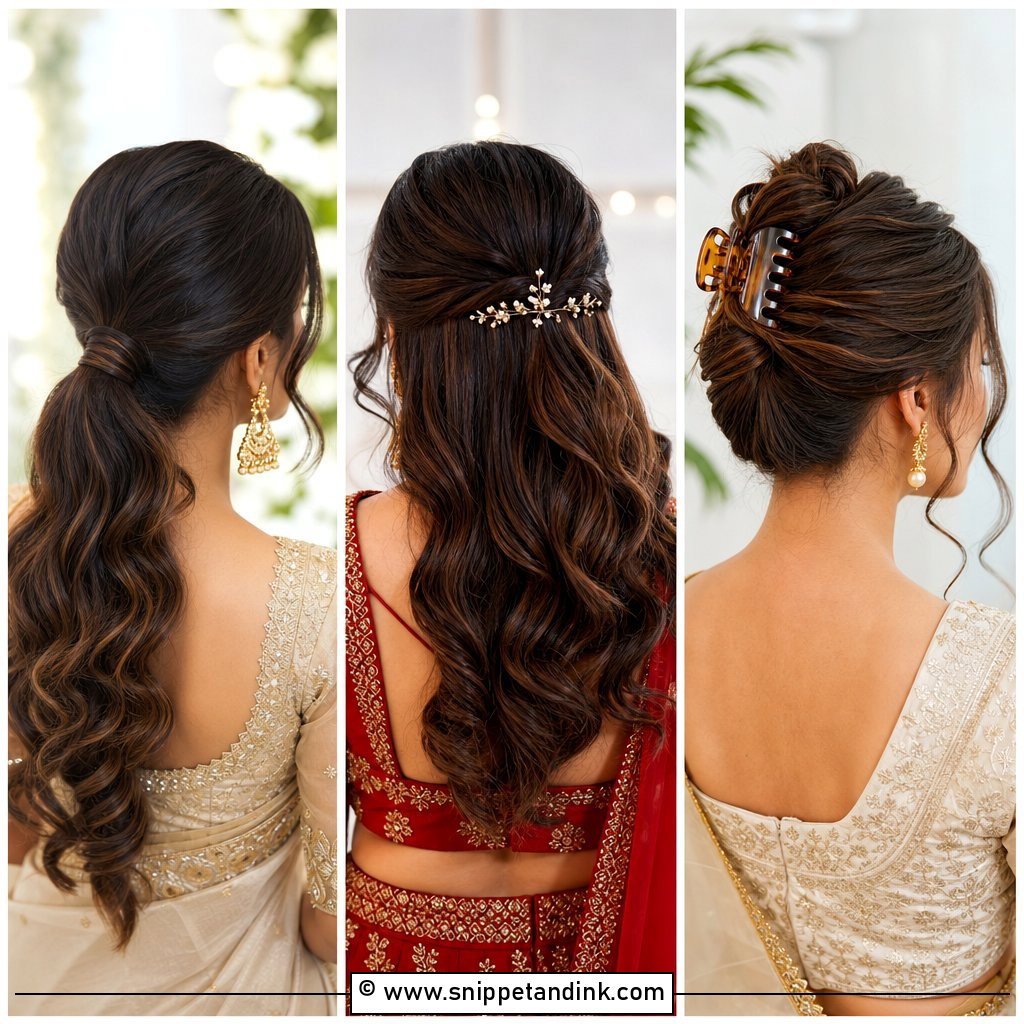
20. Wedding Juda For Lehenga
With a lehenga, the juda follows the outfit. Heavy bridal lehengas pair well with low floral buns, sleek center-part judas, braided buns and pearl-detailed styles. A deep or embroidered blouse back is best shown with a clean low juda. If the dupatta is pinned over the head, the bun has to be strong enough to hold it. Lighter lehengas suit a messy or twisted juda. Bring the actual dupatta to the trial; its weight and length decide more than the photo you saved.
Jasmine Wilts in Heat, So Plan the Morning Around It
Fresh jasmine is part of why a gajra juda feels so bridal, and it’s also the most fragile thing on your head. The buds bruise and brown where they’re handled or pinned, and in a warm room they start to soften within a few hours.
- Buy or collect the gajra as close to the morning as you can, or the evening before at the earliest.
- Store it wrapped in a damp muslin or cotton cloth in the fridge, never the freezer, and keep it away from fruit.
- Ask for a spare string. One for the ceremony, one for photos or the reception.
- Mention any pollen or fragrance sensitivity. Strong flowers right behind the ear can bother some brides by evening.
Changing the juda between ceremonies
On a day with pheras and then a reception, I rarely rebuild from scratch. A sleek low juda can come down into a softer side bun, or have its flowers swapped for pearls or a hair chain in twenty minutes or so. Keep the original elastic base in place, because that’s what makes the second look quick. Leave room in the timeline for it, and keep a small kit of pins, spray and a comb with whoever is helping you change.
Weigh the Dupatta Before You Settle on a Bun
A juda lasts as a bridal favorite because it is both practical and rooted in tradition. A gajra juda, a sleek low bun, a rose-covered bun, a braid or a pearl chignon can each be right, as long as the style supports the outfit and you feel sure of it. Weigh up the dupatta, the jewelry, your face shape, how long the ceremonies run and where the photographer will stand. A good juda feels secure without looking stiff. Share your saved ideas with your stylist and book a trial with the real dupatta and jewelry.
You'll Like These Ideas:


Leave a Reply