
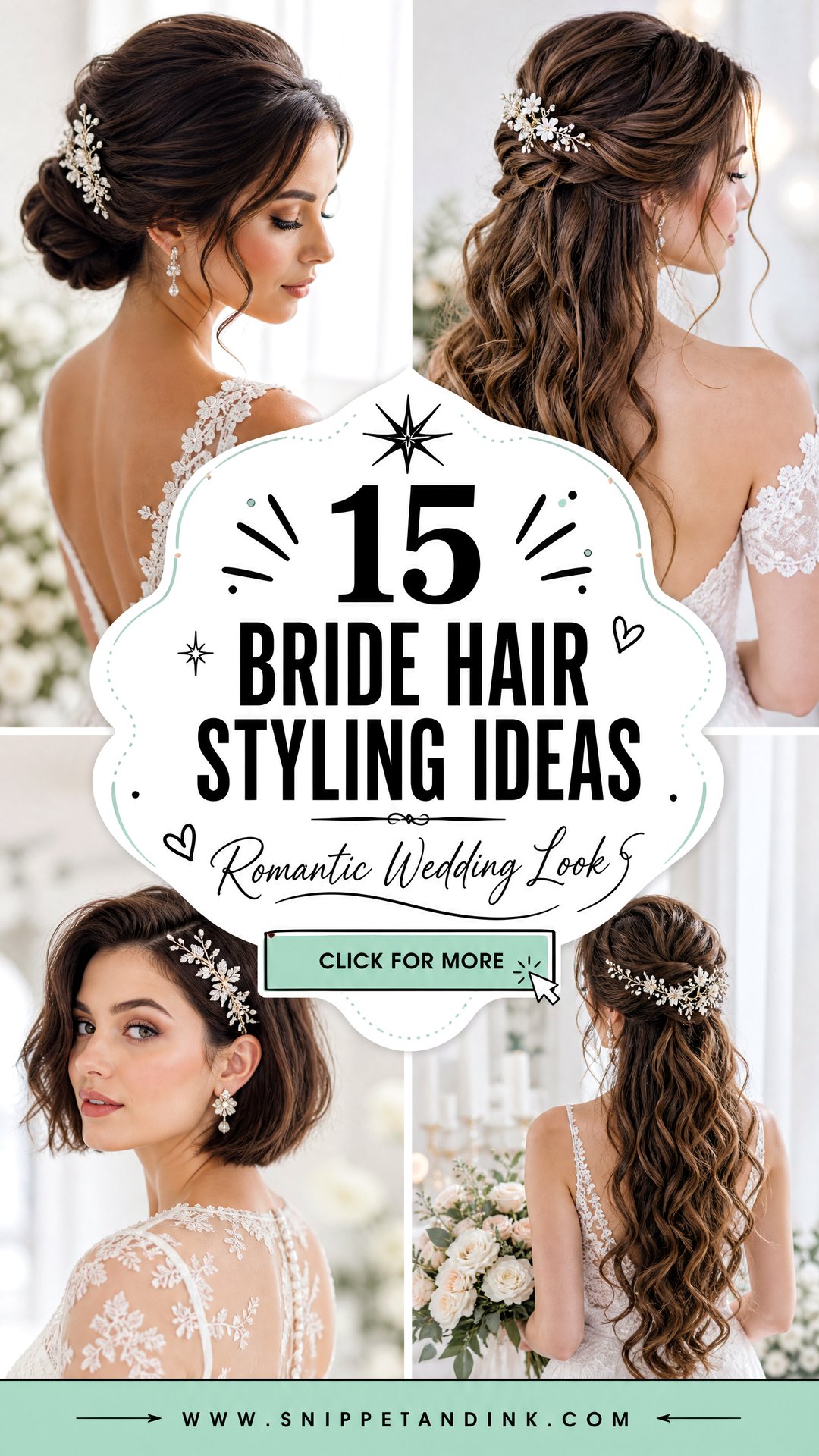
Wedding hair has a job everyday hair never does: it has to look right in the 2pm ceremony photos and still be standing at 11pm on the dance floor. What brides ask me for now is softer and more personal than the lacquered styles of a decade ago, with low buns that move a little, glossy waves, half-up curls, natural texture, modern ponytails and classic twists. Below are fifteen of them, each with the note I’d give you in the chair about what it suits and where it struggles. Save the ones that make you stop scrolling, then test them against your dress, your veil, the forecast and the hair you actually have.
Your Dress Back Matters More Than Your Face Shape
Most people pick a hairstyle from the front, but your guests spend the whole ceremony looking at the back of you. That’s where the dress and the hair either work together or fight. The first thing I ask for at a consultation is a photo of the dress from behind.
A low-cut or buttoned back usually wants the hair up or swept to one side, so the detail isn’t hidden under a curtain of waves. A plain back on a simple gown is the moment to wear hair down, or to choose a braided updo that gives people something to look at.
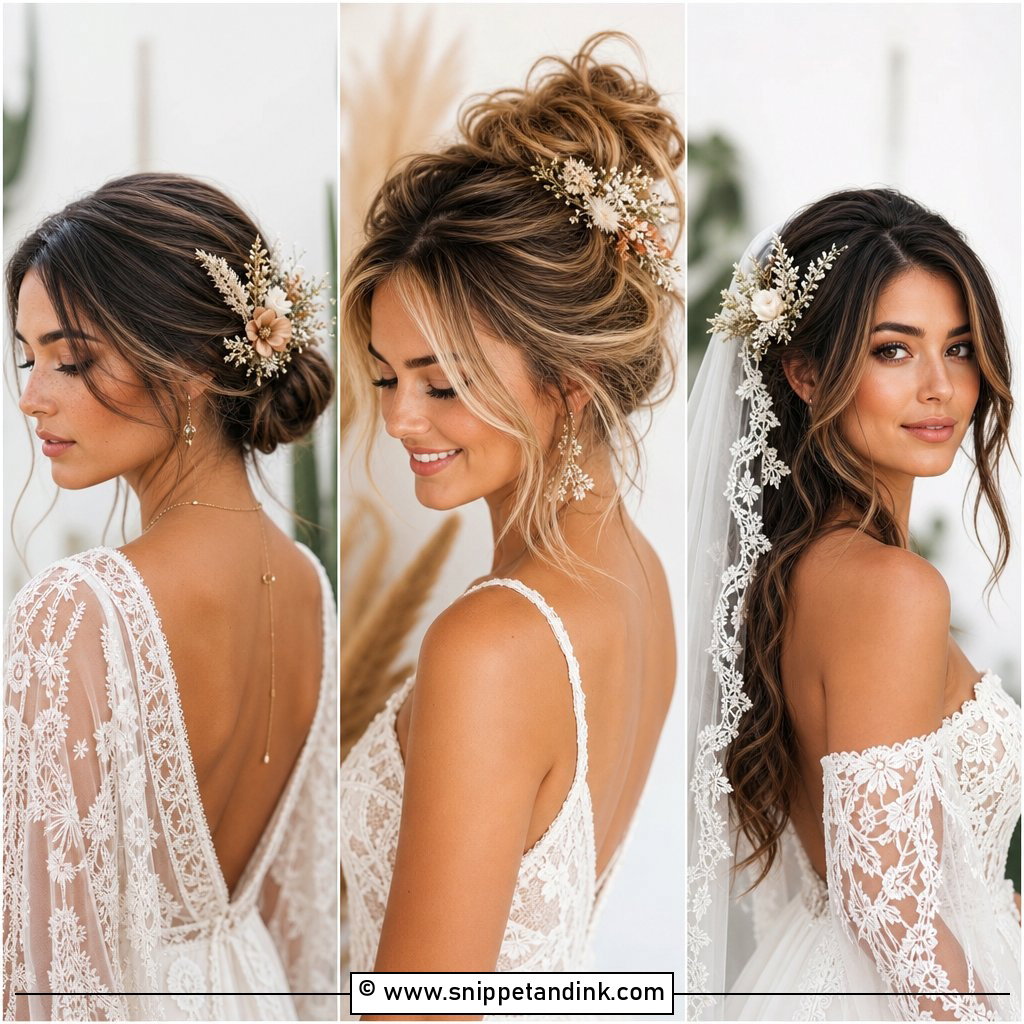
- High neck or halter: updos, sleek ponytails and French twists keep the line clean.
- Strapless or sweetheart: waves down or a side sweep softens bare shoulders.
- Off the shoulder: half-up styles or low buns that leave the collarbones visible.
- Heavy lace or beading at the shoulders: keep long hair off it, because it snags and frizzes against the texture.
The veil changes the plan too. A veil anchored above a bun needs a firm base to grip, so very loose updos can sag under a long cathedral length. A veil tucked underneath sits lower and suits chignons and nape buns. If yours comes off after the ceremony, I’ll show you where the comb leaves a dent and how we hide it.
1. Bridal Low Bun
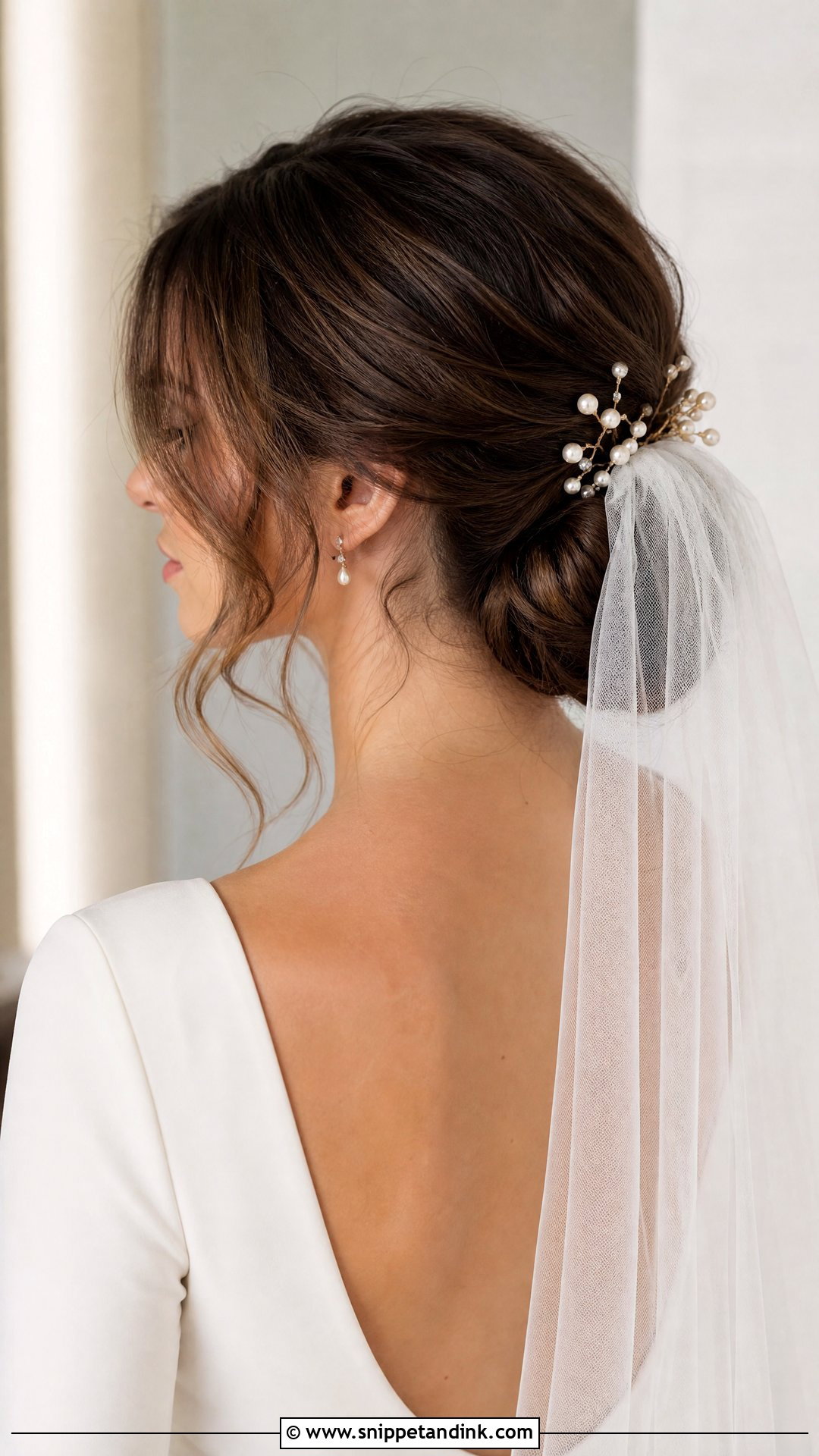
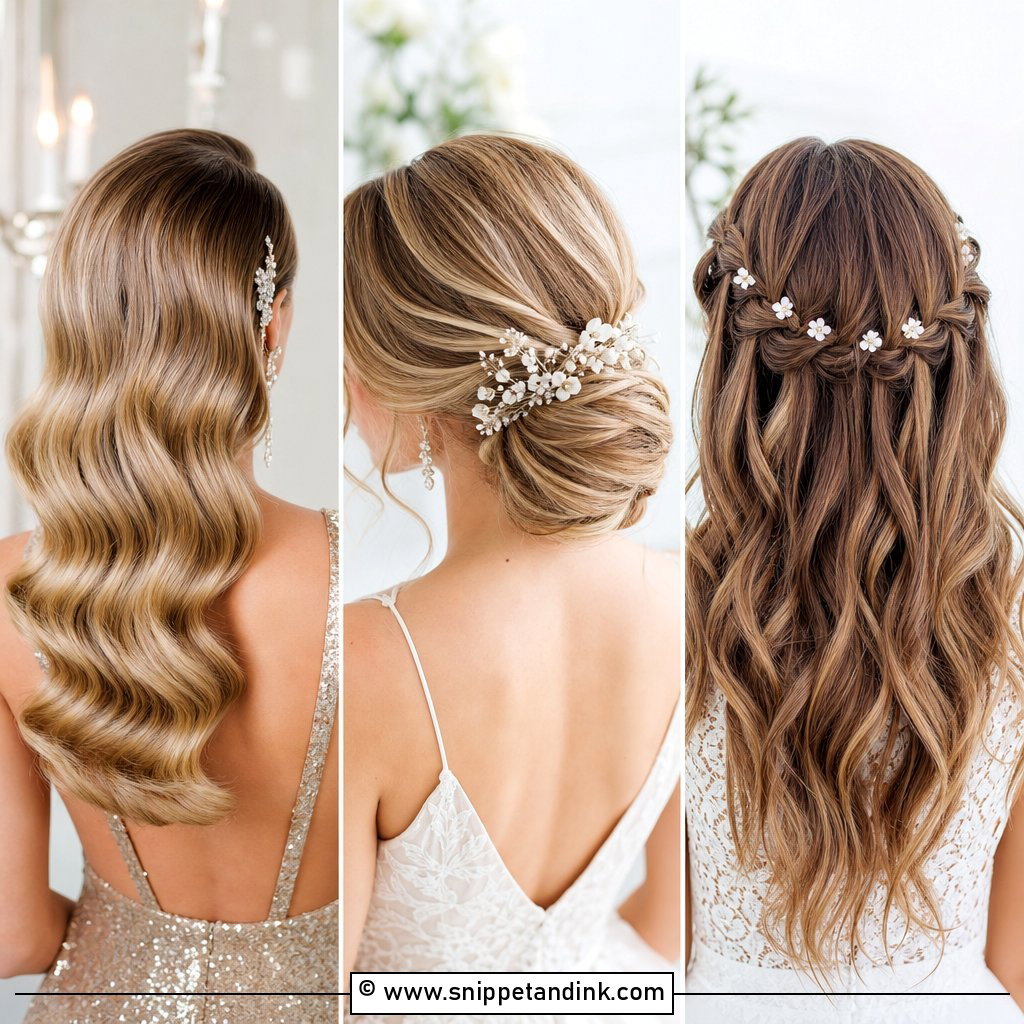
The low bun is the style I reach for most when a bride can’t decide, because it sits close to the nape and almost nothing knocks it off course. A veil comb, pearl pins or a single clip all grip it well. It suits strapless gowns, high necklines and detailed backs equally, since the hair stays tidy and out of the fabric. I build it over a small padded base on fine hair so it keeps its size after six hours instead of shrinking to a knot. Leave a couple of face-framing pieces out if you want it softer, or keep the part razor clean for a sleeker read. In summer heat it’s the kindest option for your neck.
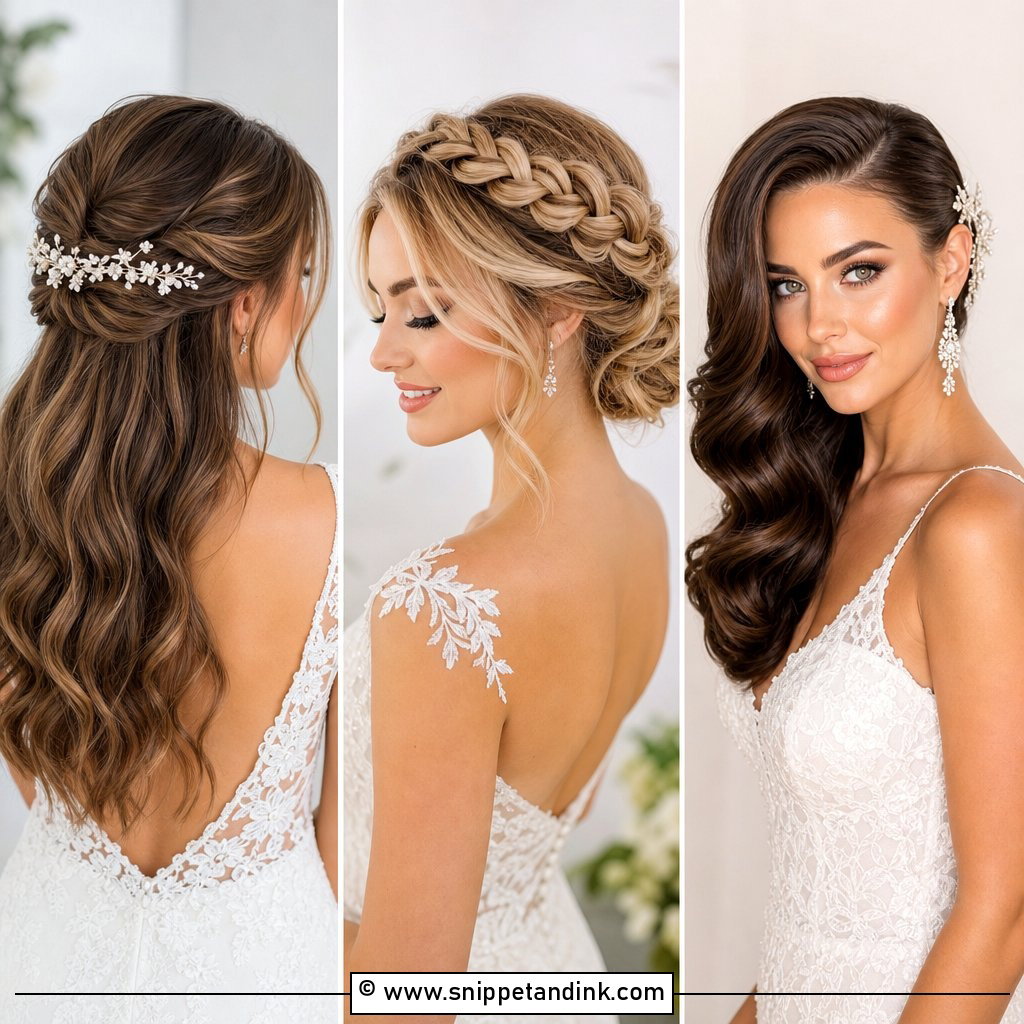
2. Bridal Half Up Half Down Hair
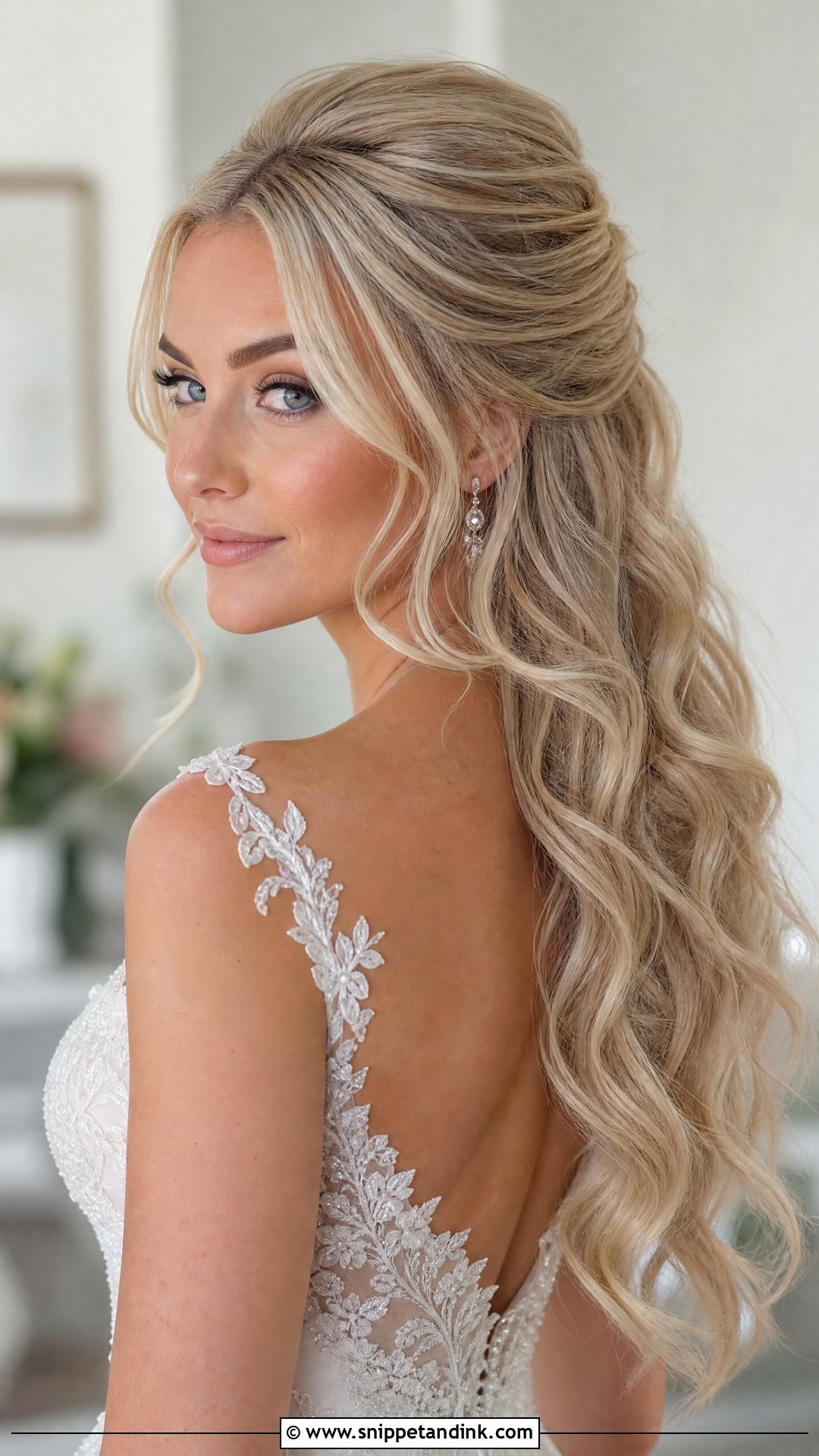
Half up, half down asks the most of the pinning, even though it looks the least structured. The top section carries all the weight of the shape, and if it’s anchored with only a couple of bobby pins it slides back by the reception. I cross-pin it into a small hidden braid or ponytail so the crown has something solid to hold. Height is the other trap. Too much and it tips into a dated bouffant, too little and it vanishes once the curls relax. A comb or barrette sits neatly at the join, and a veil slides in just under it.
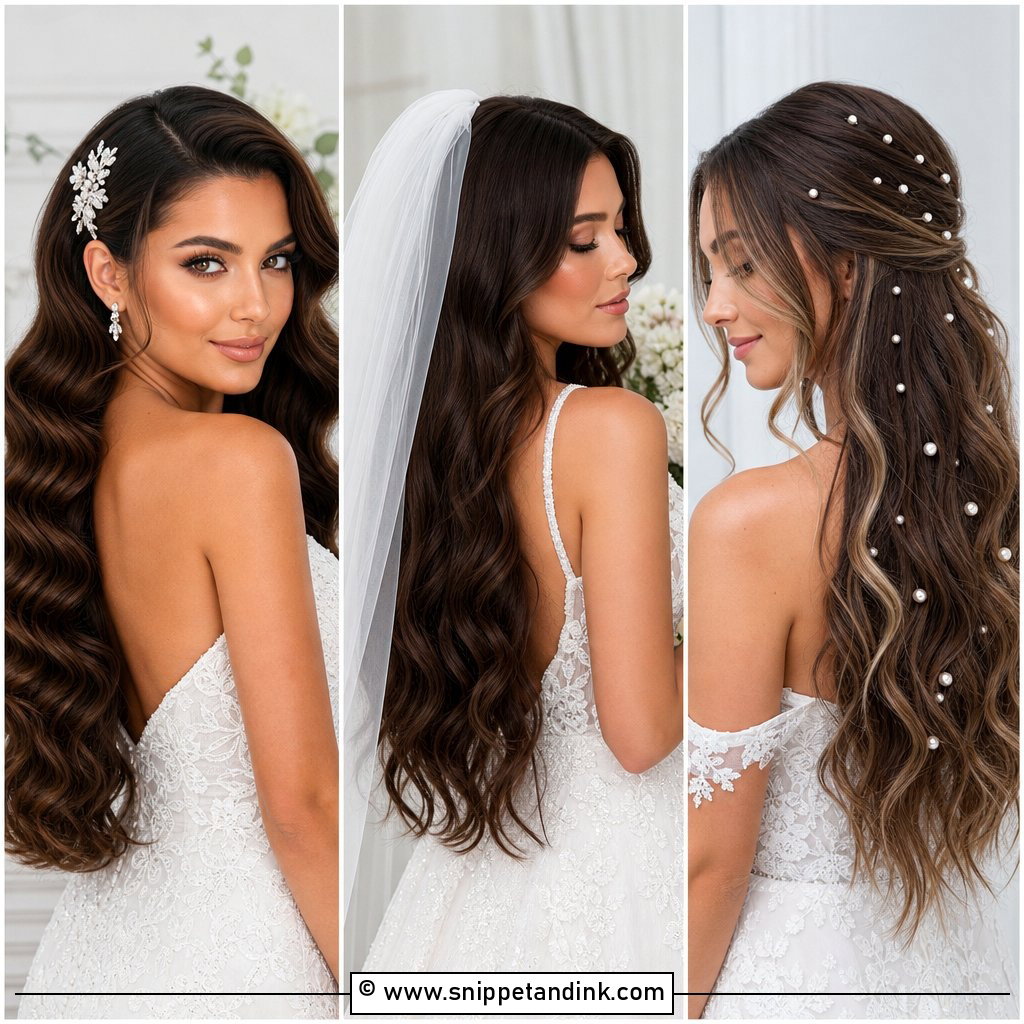
3. Bridal Hollywood Waves
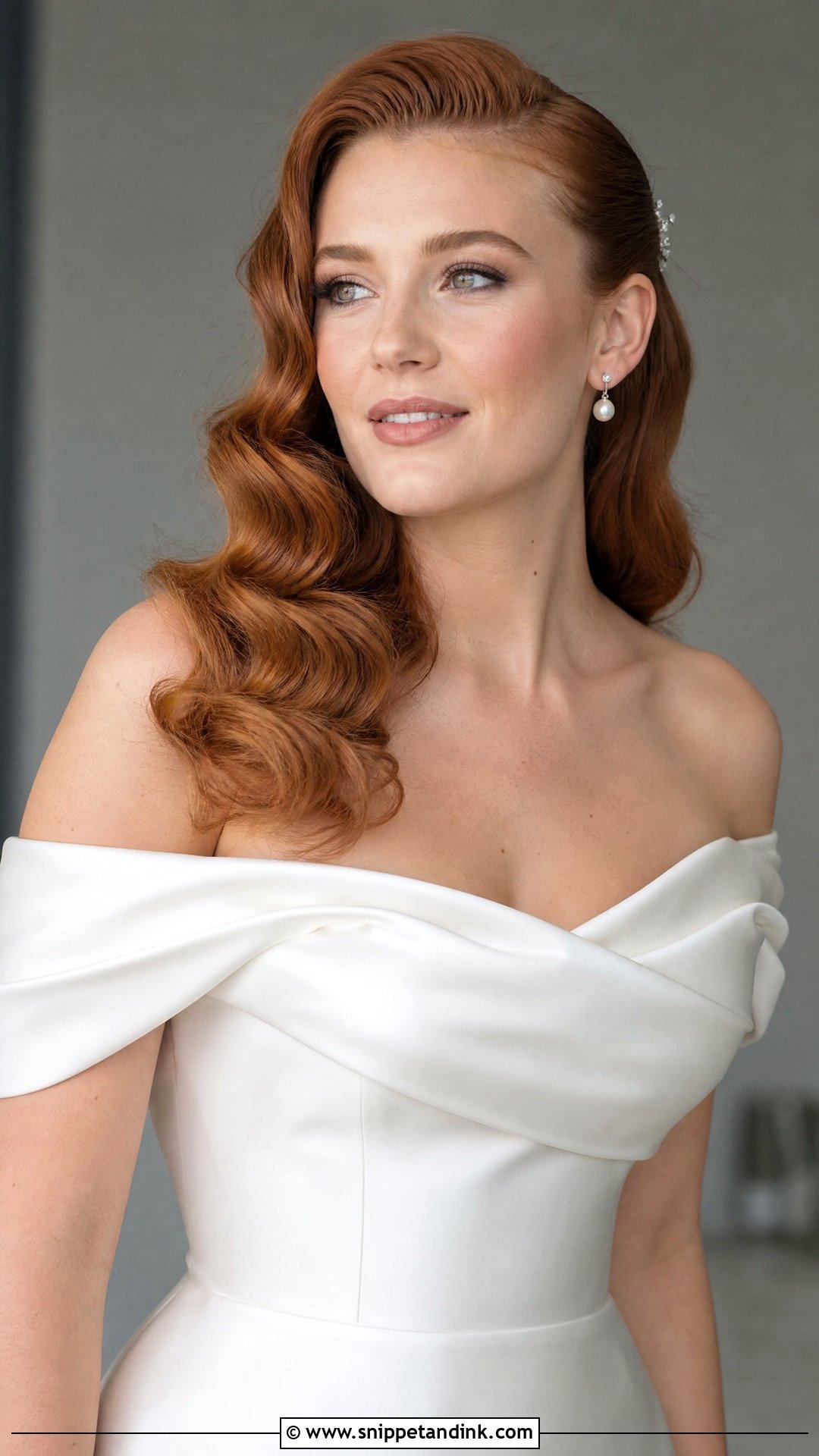
Hollywood waves are a precision style, and they need more chair time than most brides budget for. Every curl has to go in the same direction, set completely cool, then get brushed out into one continuous ripple off a deep side part. Rush the cooling and the wave breaks up into separate ringlets. They suit a plain satin gown and a statement earring, because the hair becomes the detail. I’d be cautious with them in high humidity or on very coarse hair that resists smoothing; plan a test run under the same conditions you’ll have on the day.
4. Bridal Textured Bun
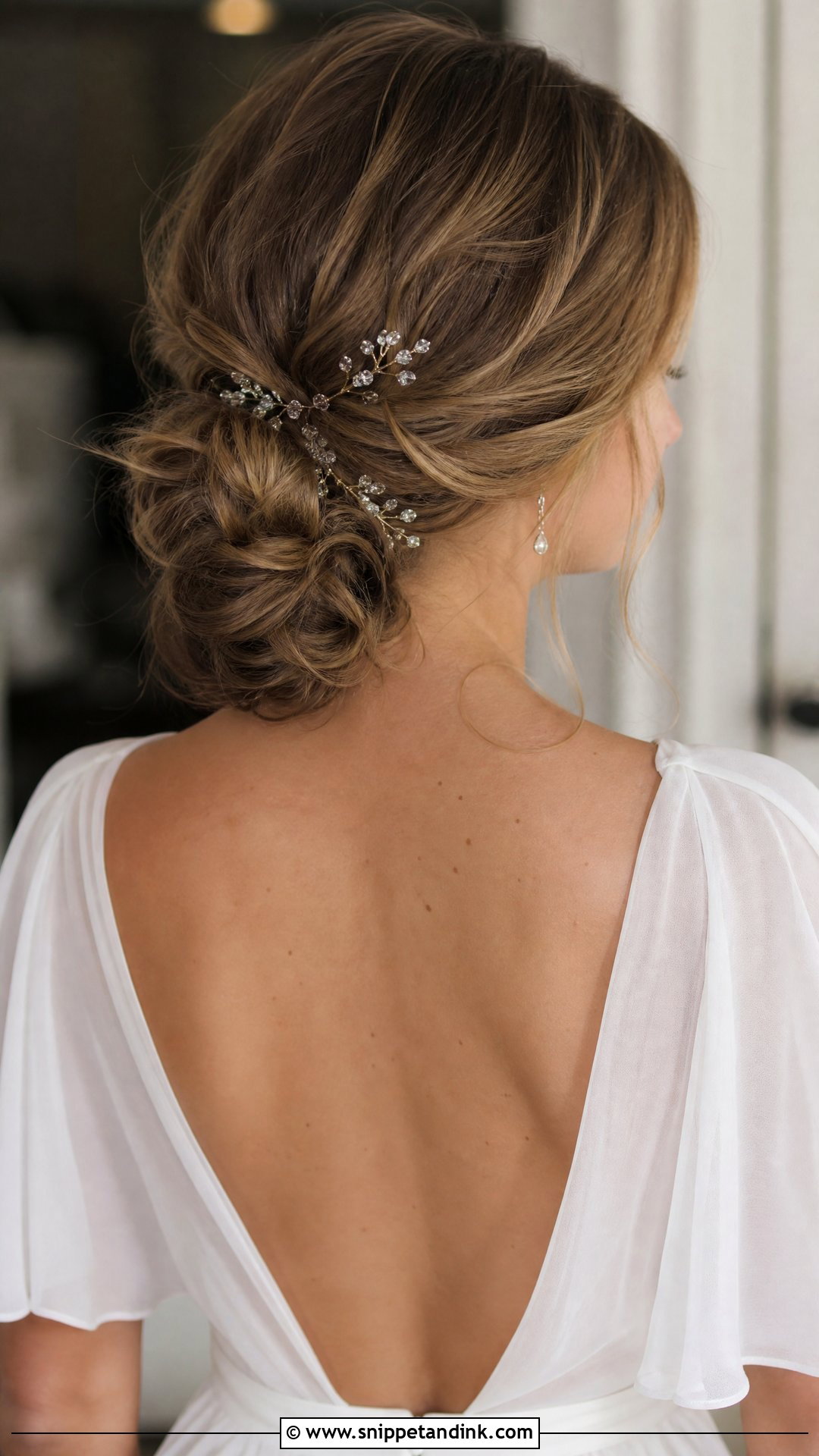
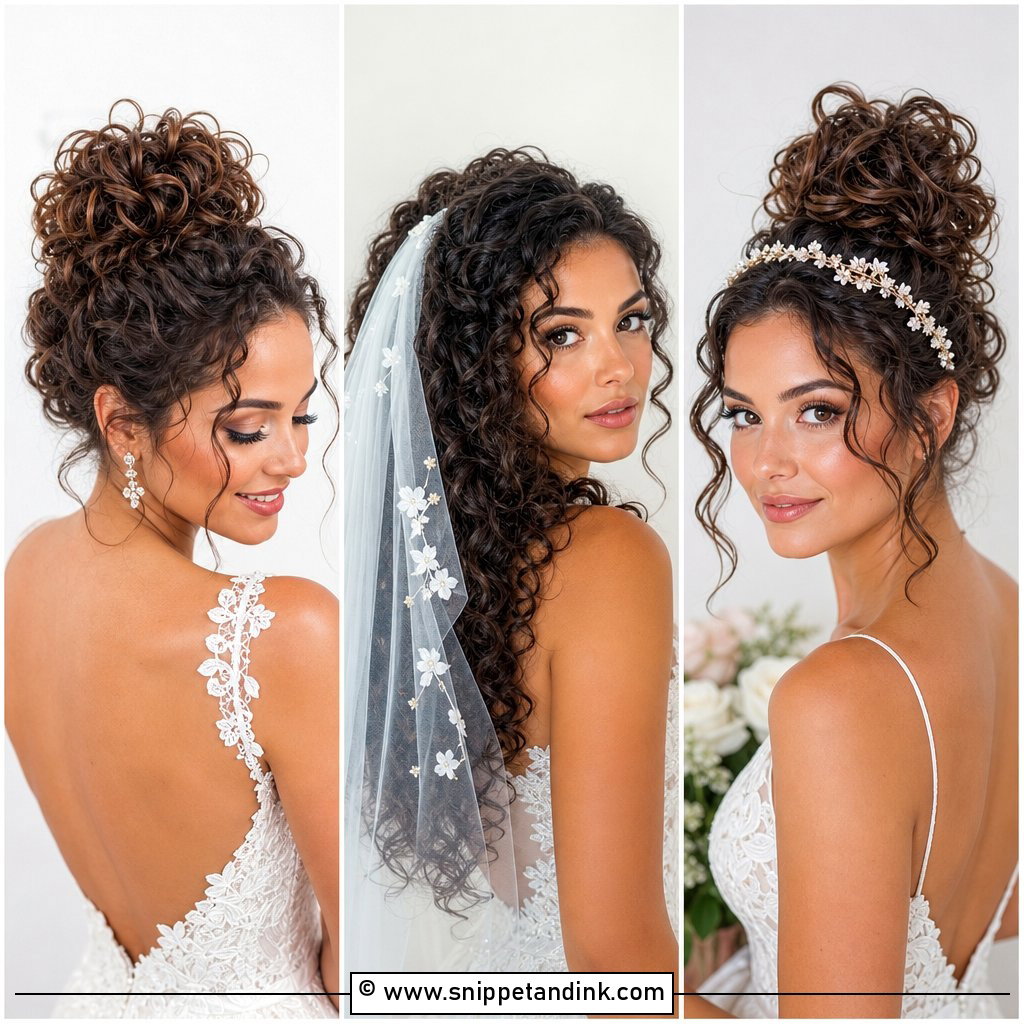
A textured bun gives you the updo without the formality. The shape comes from curls, twists or gently pulled sections wrapped around a secure center, so it looks undone while the core is pinned firmly. I always set the inside first and only loosen the outer pieces at the very end; pull too early and the whole thing drops. It sits naturally with lace, a garden setting and a soft veil. Medium to long hair works best here, since short layers poke out of the wrap rather than blending into it.
5. Bridal Sleek Ponytail
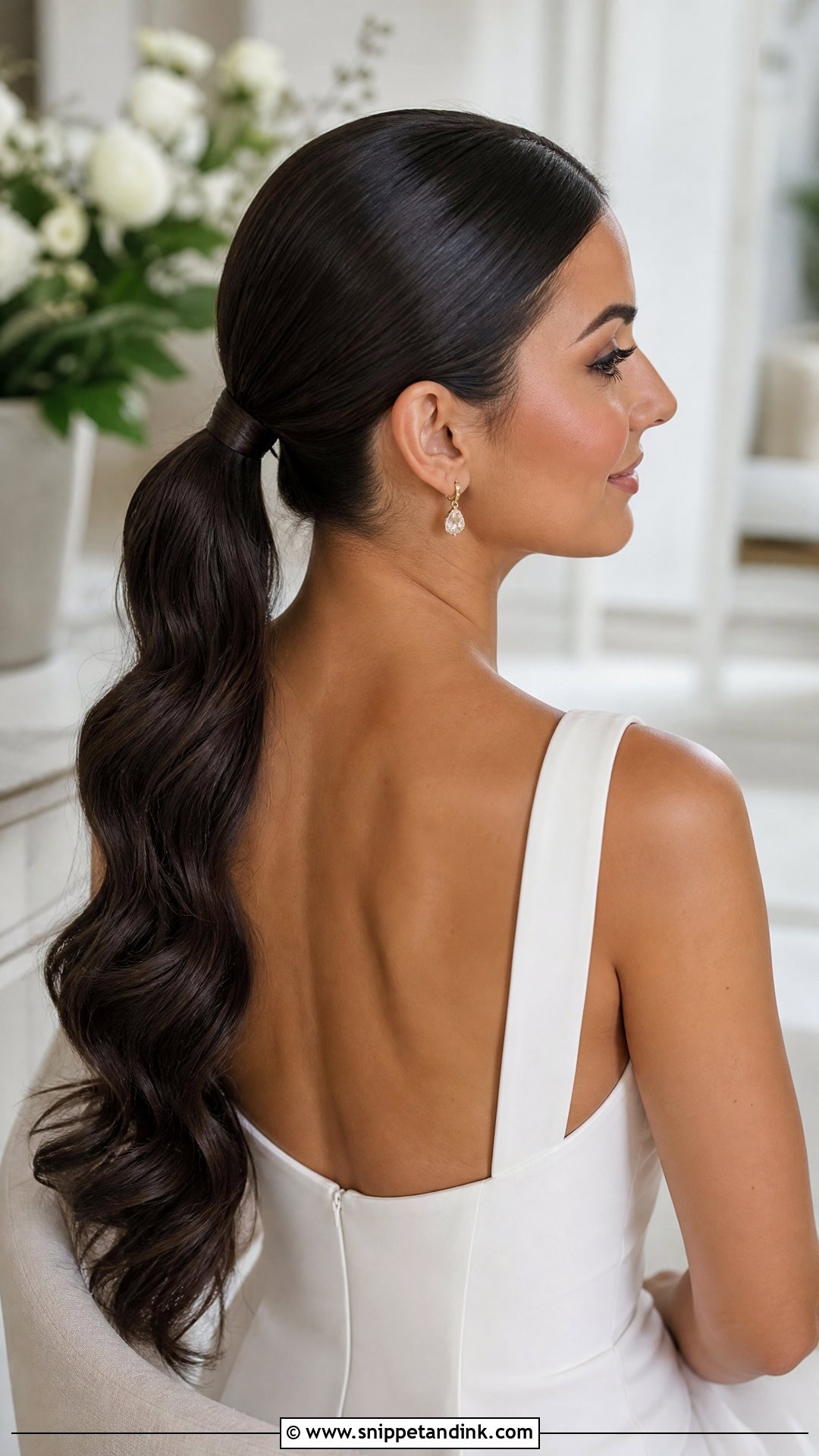
Sleek ponytails look simple and are anything but. The smooth top shows every bump, so I blow-dry the hair very straight at the root before gathering it, and I wrap a section of hair around the base to hide the elastic. A low pony reads minimal; a higher one lifts the face and suits a structured gown, square neckline, halter or bridal suit. Fine hair often needs a hidden clip-in for the length to hold a wave. The one thing I’d warn you about is a heavy veil: it can tug the base down, so we test the weight at your trial.
6. Bridal French Twist
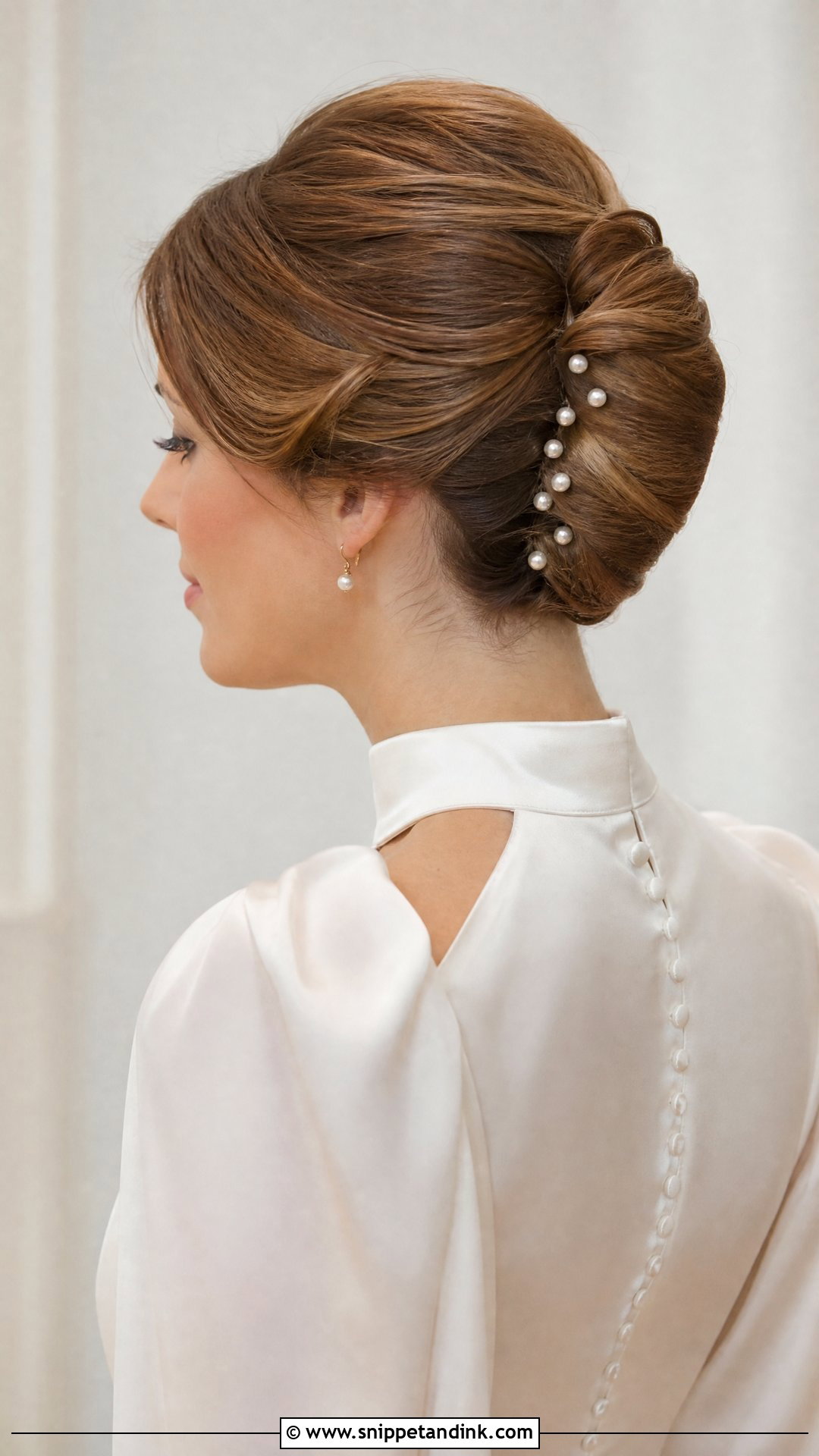
The French twist rolls the hair up vertically and tucks it into itself, which draws a long clean line down the back of the neck. It’s the updo I suggest for boat necks, high necks and open backs, where that line does a lot of work. Getting it to hold depends on texture. Very silky, freshly washed hair slides straight out of the roll, so I’d ask you to come with day-old hair or let me add a dry texture spray first. Pearl pins or a slim comb can run along the seam. A few softened pieces at the hairline stop it looking like a 1960s office portrait.
7. Bridal Loose Waves
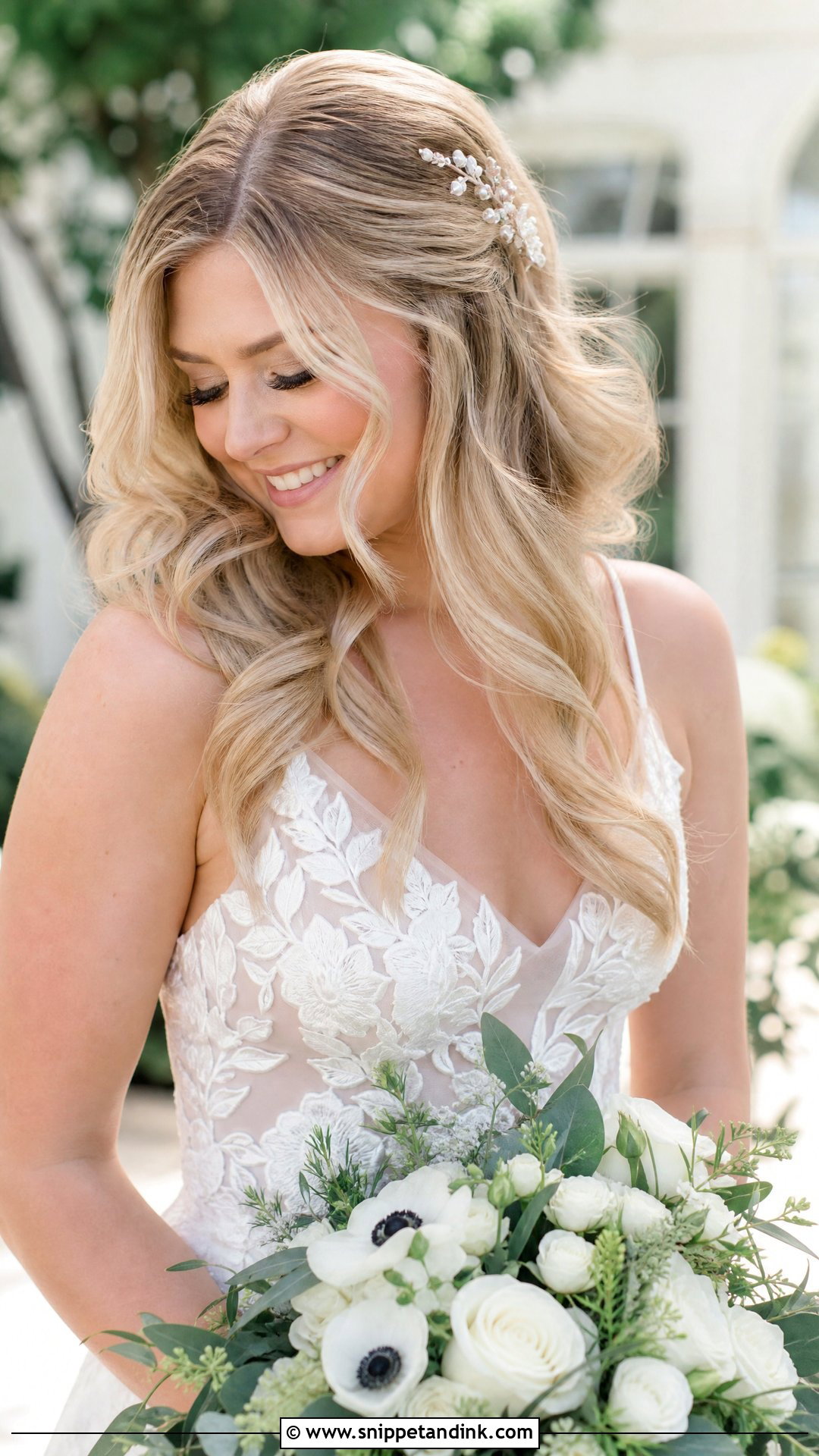
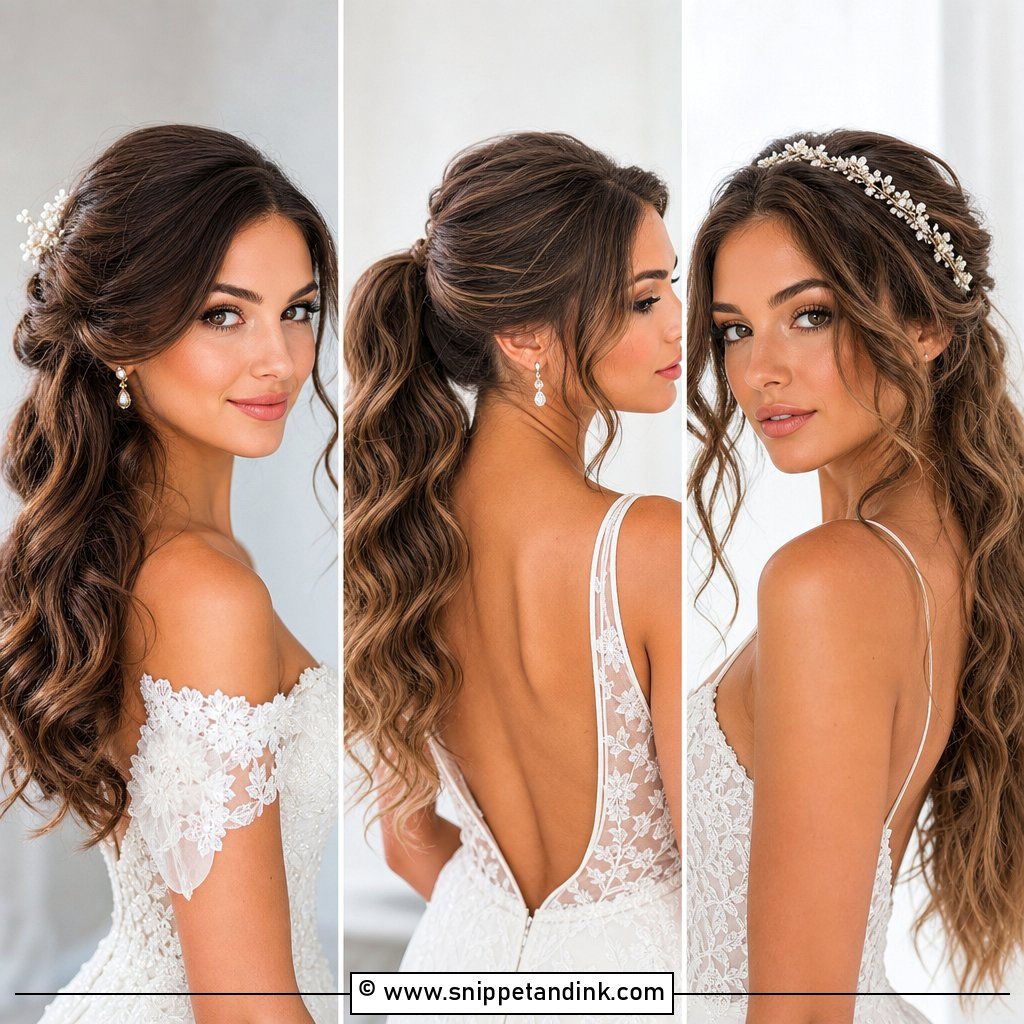
Loose waves are the style that most often disappoints by evening, so I treat them with more care than an updo. Curls on fine or straight hair tend to fall within hours, especially outdoors near water. I set them tighter than the finished look and brush them out at the last moment, knowing they’ll relax. Polished roots and smooth ends keep the look bridal rather than beachy. Extensions help if you want fullness, and they also hold curl better than your own fine hair, but blend them carefully so the length looks believable. A side clip or light veil finishes it.
8. Bridal Chignon
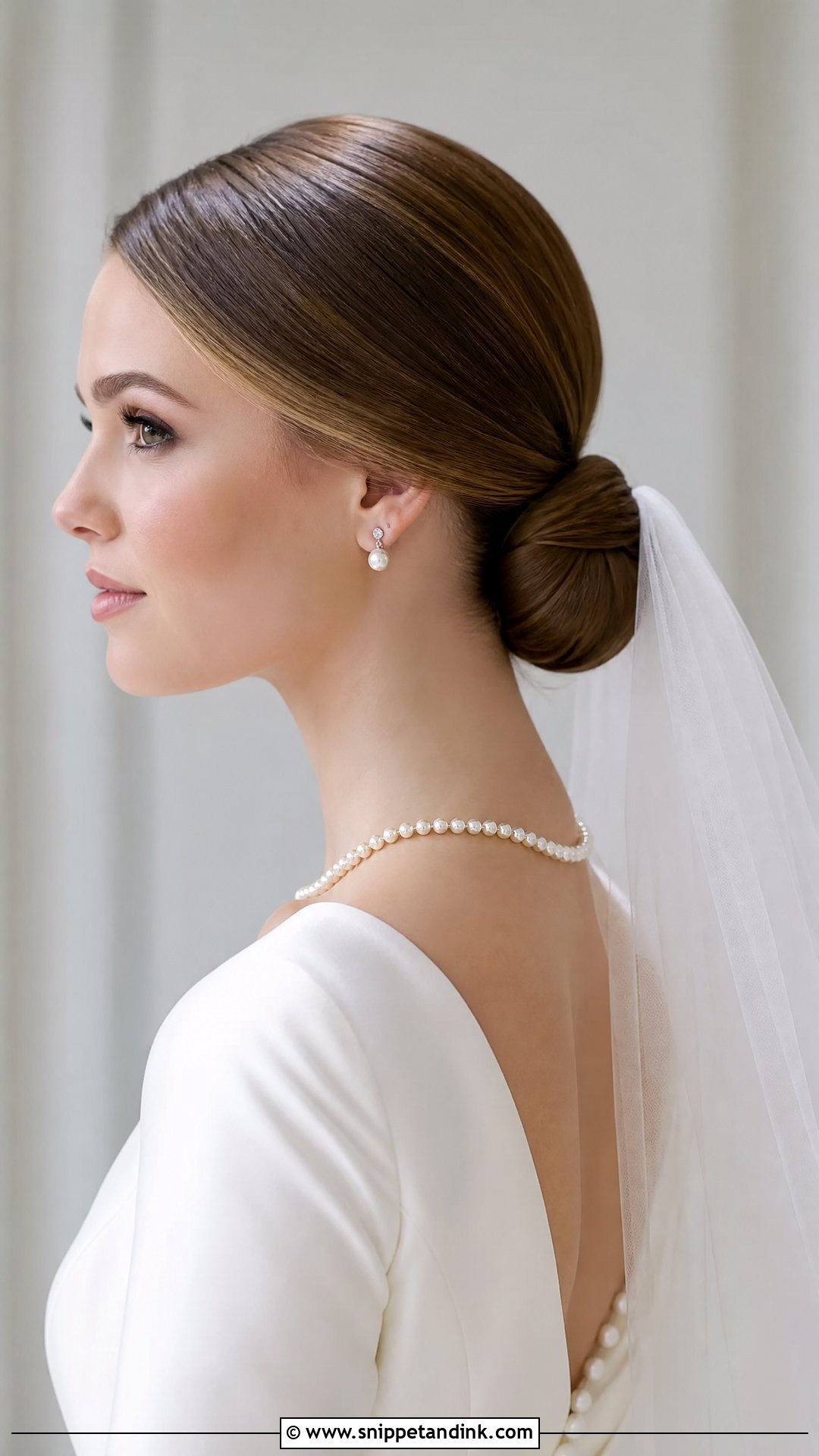
A chignon is a refined, compact bun set low against the head, and its whole effect is in the placement. I check it from the side in a hand mirror with the bride, because most of your photos will catch your profile. Too low and it disappears behind the neck; too high and it reads casual. A center part makes it feel current, a side part more traditional. It stays out of the way of beaded necklines and cathedral veils, which is why I see it chosen for formal church weddings so often.
9. Bridal Braided Updo
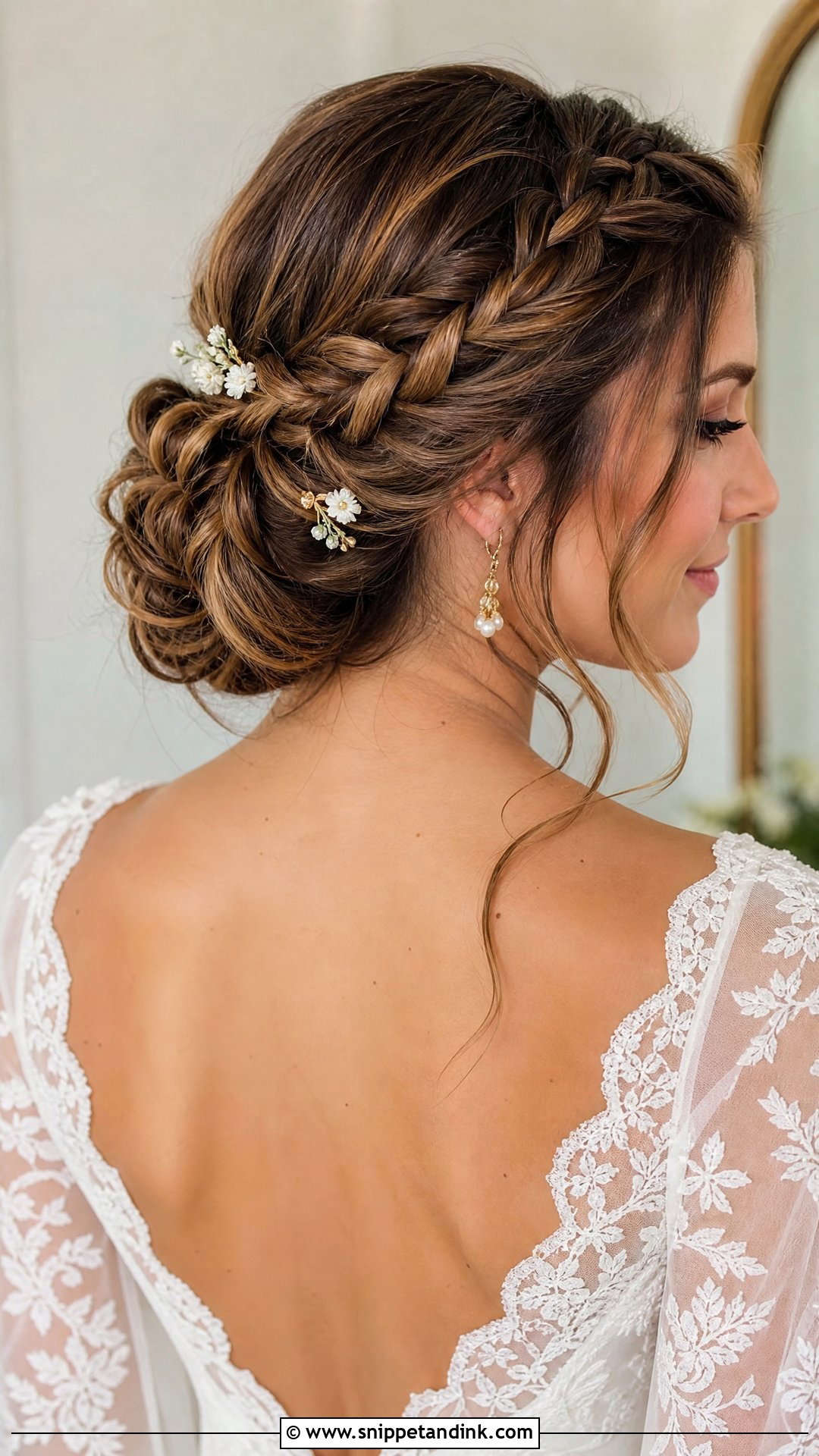
Braided updos give you detail without anything looking unfinished. The braid can wrap the bun, crown the head or melt into a twisted shape at the back. Highlighted hair shows it off best, because the plaits catch the light in two tones. On thick hair I like braids for a practical reason too: they lock big sections in place, so the style needs fewer pins and feels lighter. I pancake the braid gently at the end so it reads soft rather than schoolgirl. Finish with tiny pins, baby’s breath-inspired details, or a veil tucked under the updo.
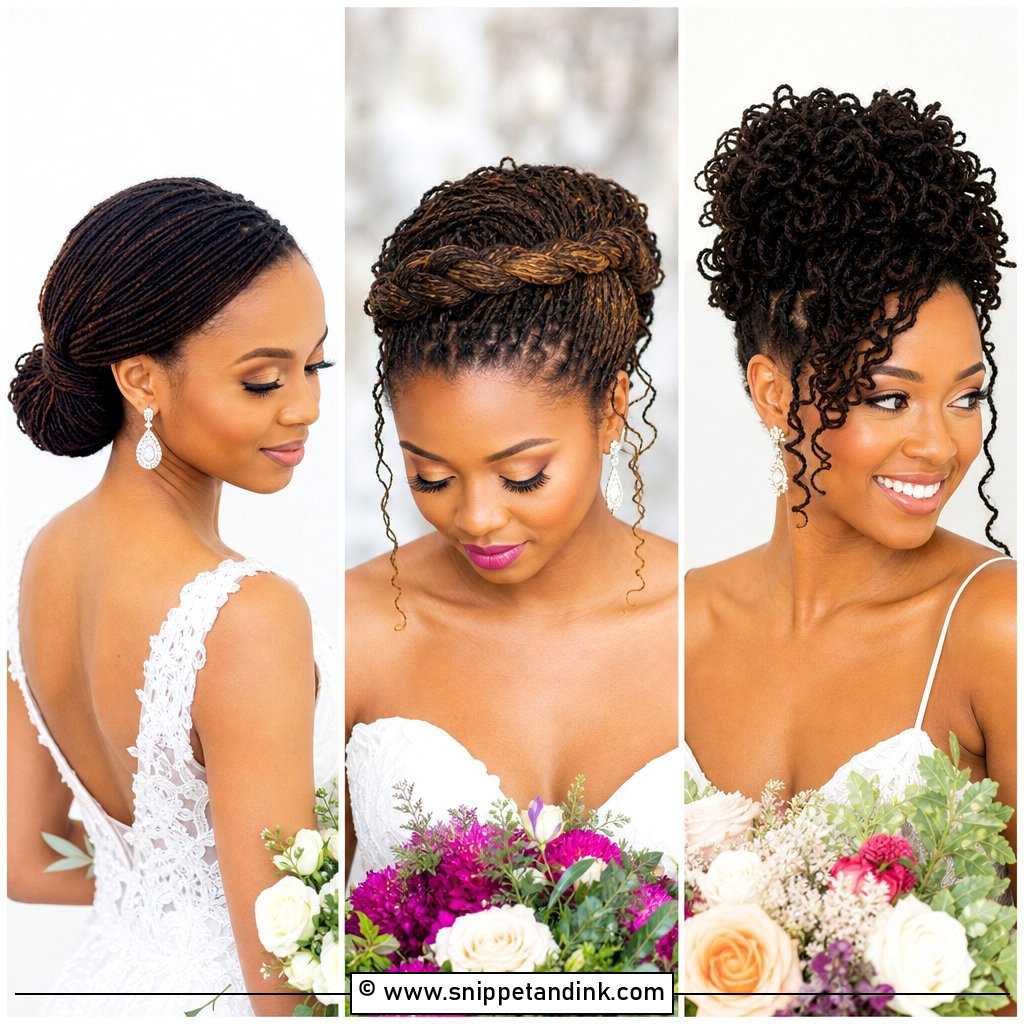
10. Bridal Natural Curls
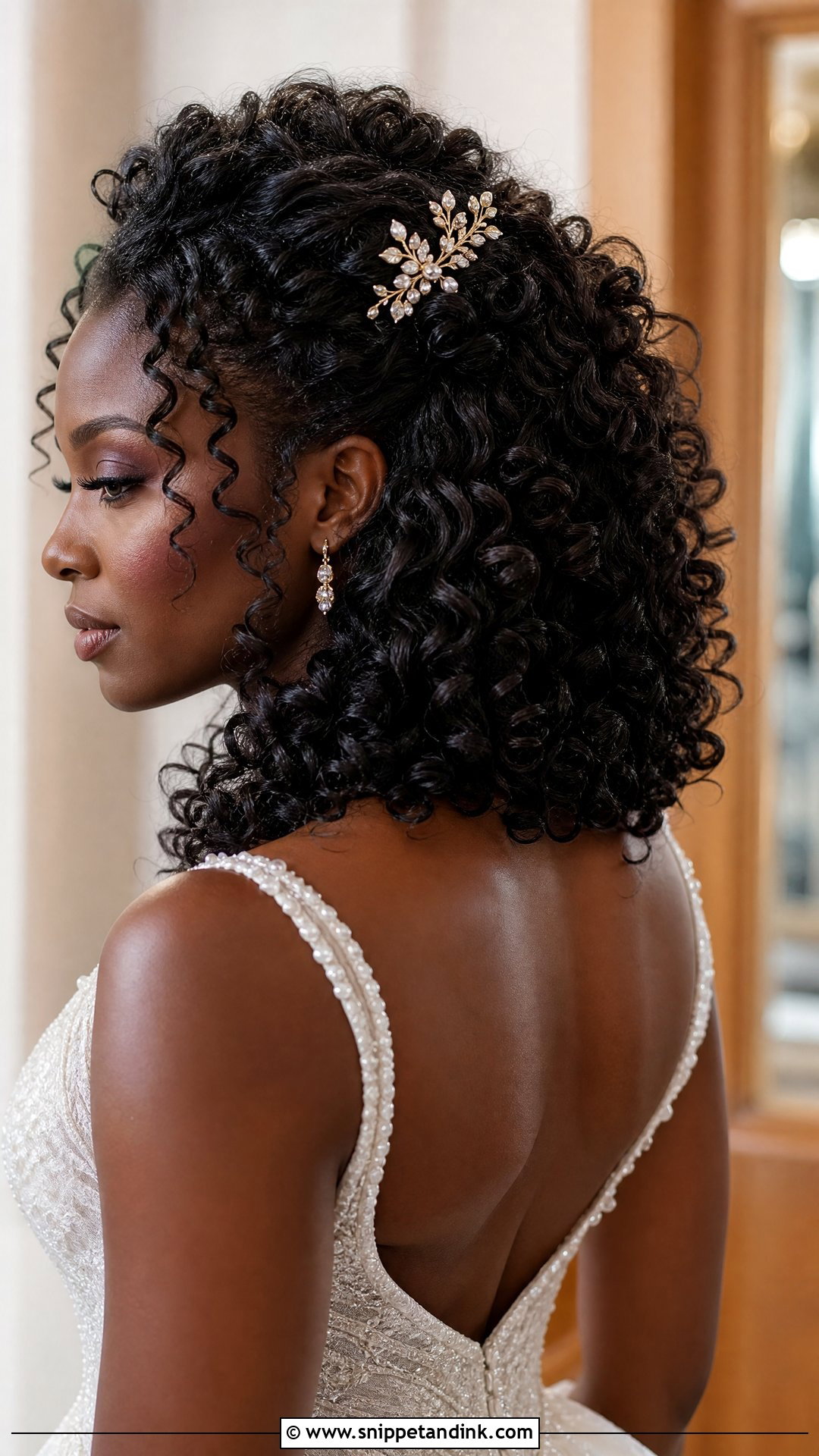
Natural curls on a wedding day depend almost entirely on the weeks before it. I ask curly brides to keep up deep conditioning, skip any new products, and come to the trial with hair styled the way they usually wear it so I can see how their pattern behaves. On the day I define curls by section rather than brushing, protect the volume at the root and balance the shape around the face. Curls can be worn down, pinned to one side, half up or gathered into a soft updo. A comb or veil sits on top without crushing the pattern if it’s placed after the curls have set.
11. Bridal Side Swept Hair
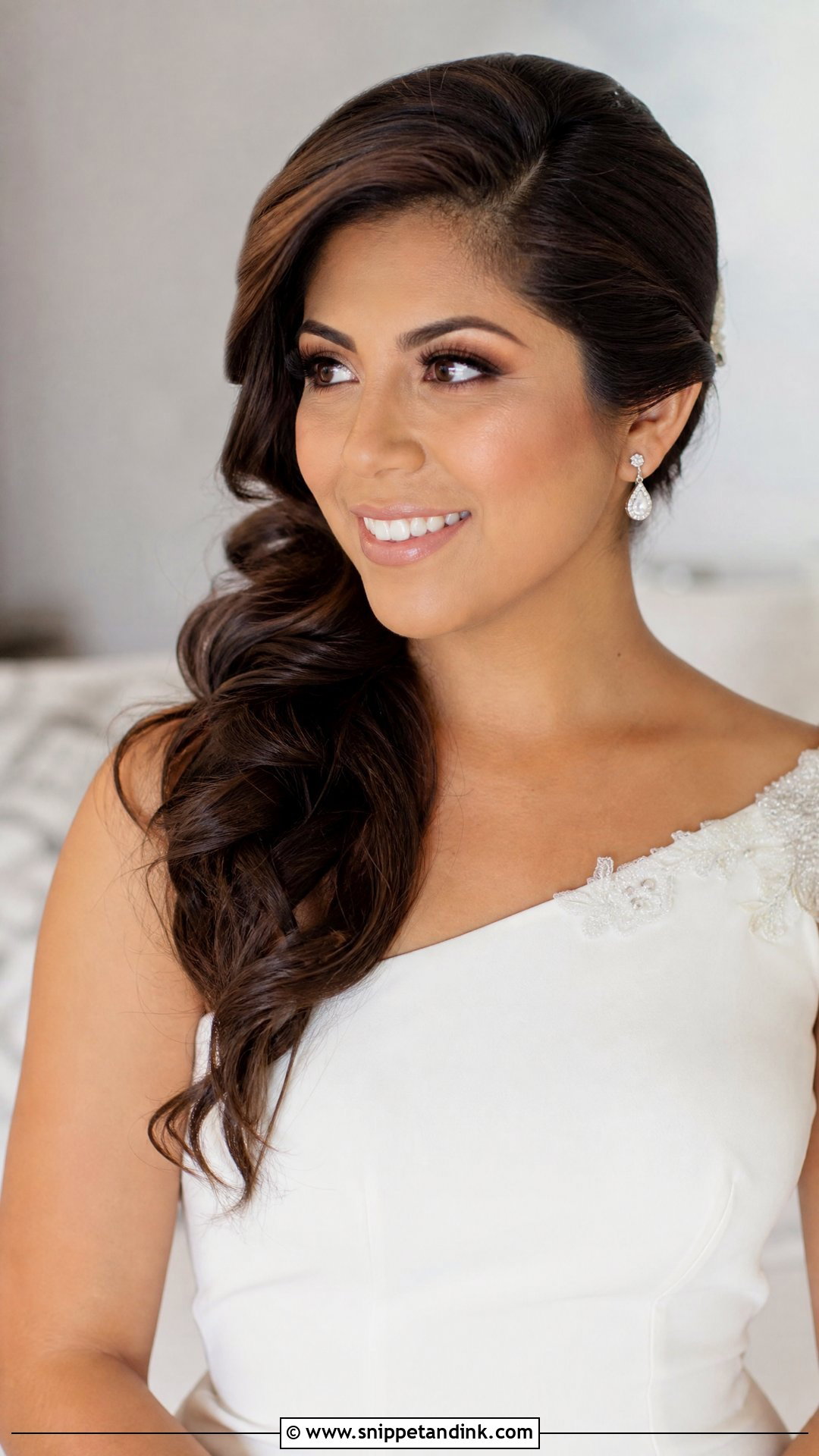
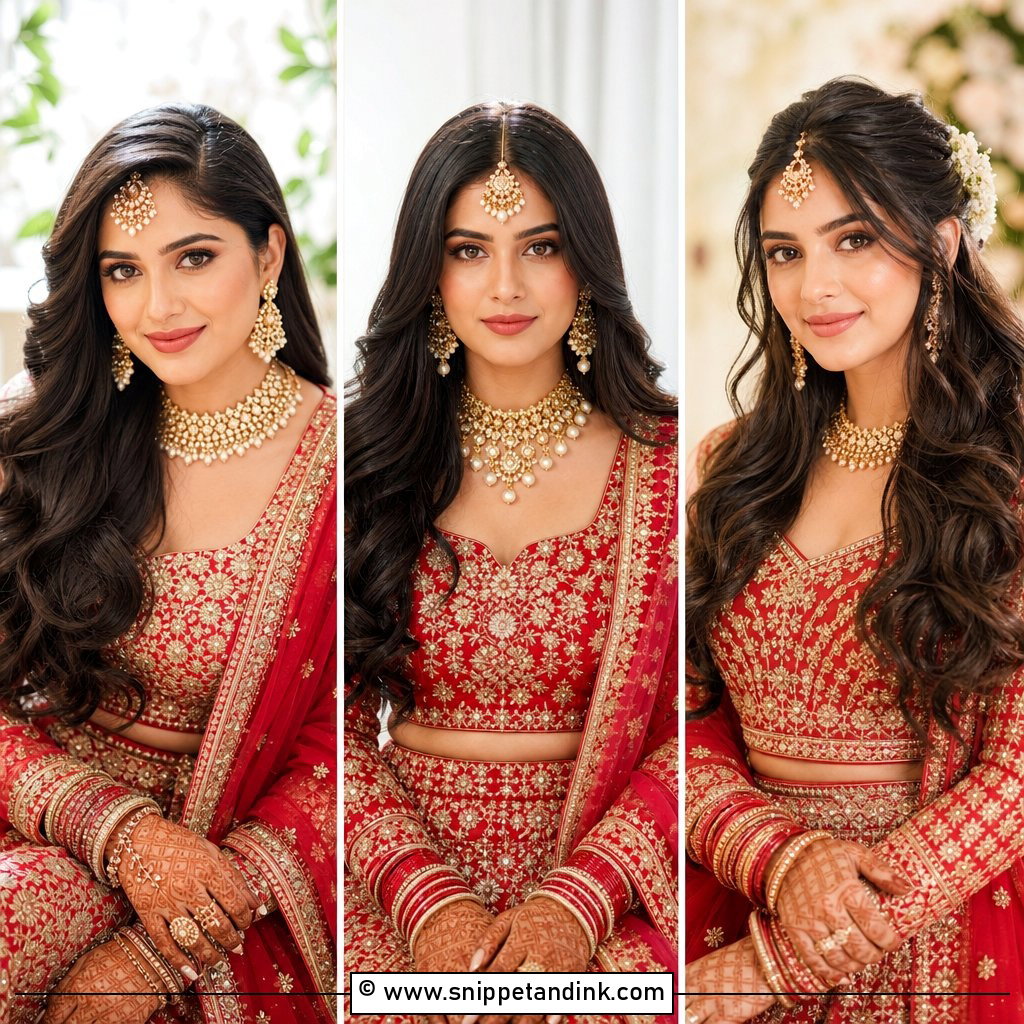
A side-swept style gathers curled or waved hair over one shoulder, and it lives or dies by the pinning behind the ear. I build a hidden anchor there, usually a row of crossed pins, so the hair doesn’t creep back to center during the ceremony. It pairs naturally with one-shoulder gowns, sweetheart necklines and a statement earring on the open side. Think about which side faces your partner at the altar; I usually sweep the hair away from them so your face isn’t hidden in the vow photos.
12. Bridal High Bun
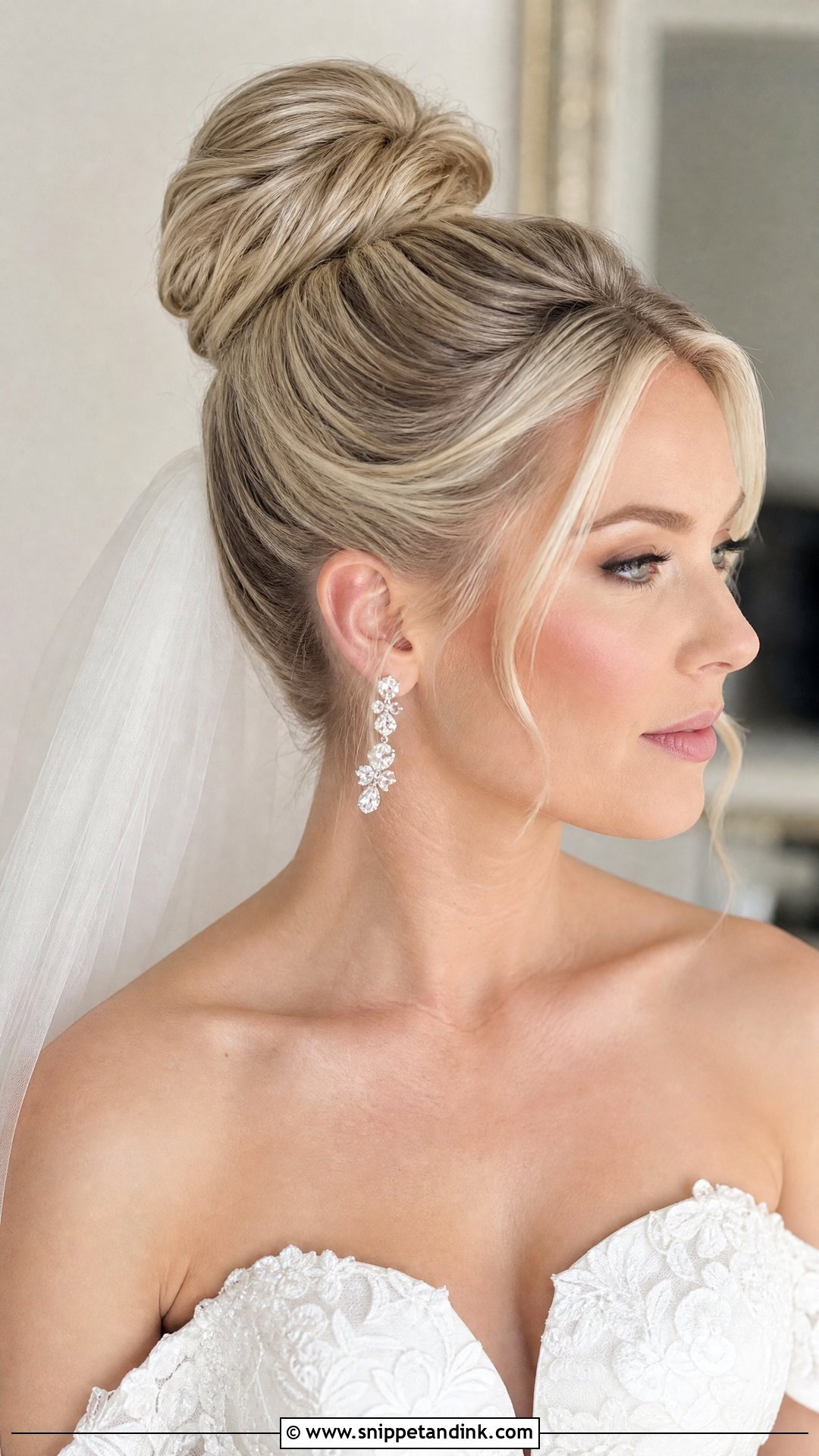
A high bun shows off everything below it: neckline, shoulders, jewelry, a detailed bodice. Placement is the whole conversation. Set slightly above the occipital bone, it lengthens the neck and looks graceful; push it to the very top and it starts to read gym-ready. It can be ballet sleek or soft and full. Tiaras sit well in front of it, and a veil can slip underneath. Heavy or very long hair gets uncomfortable up there after a few hours, so I’ll tell you honestly at the trial if the weight is going to give you a headache.
13. Bridal Soft Updo
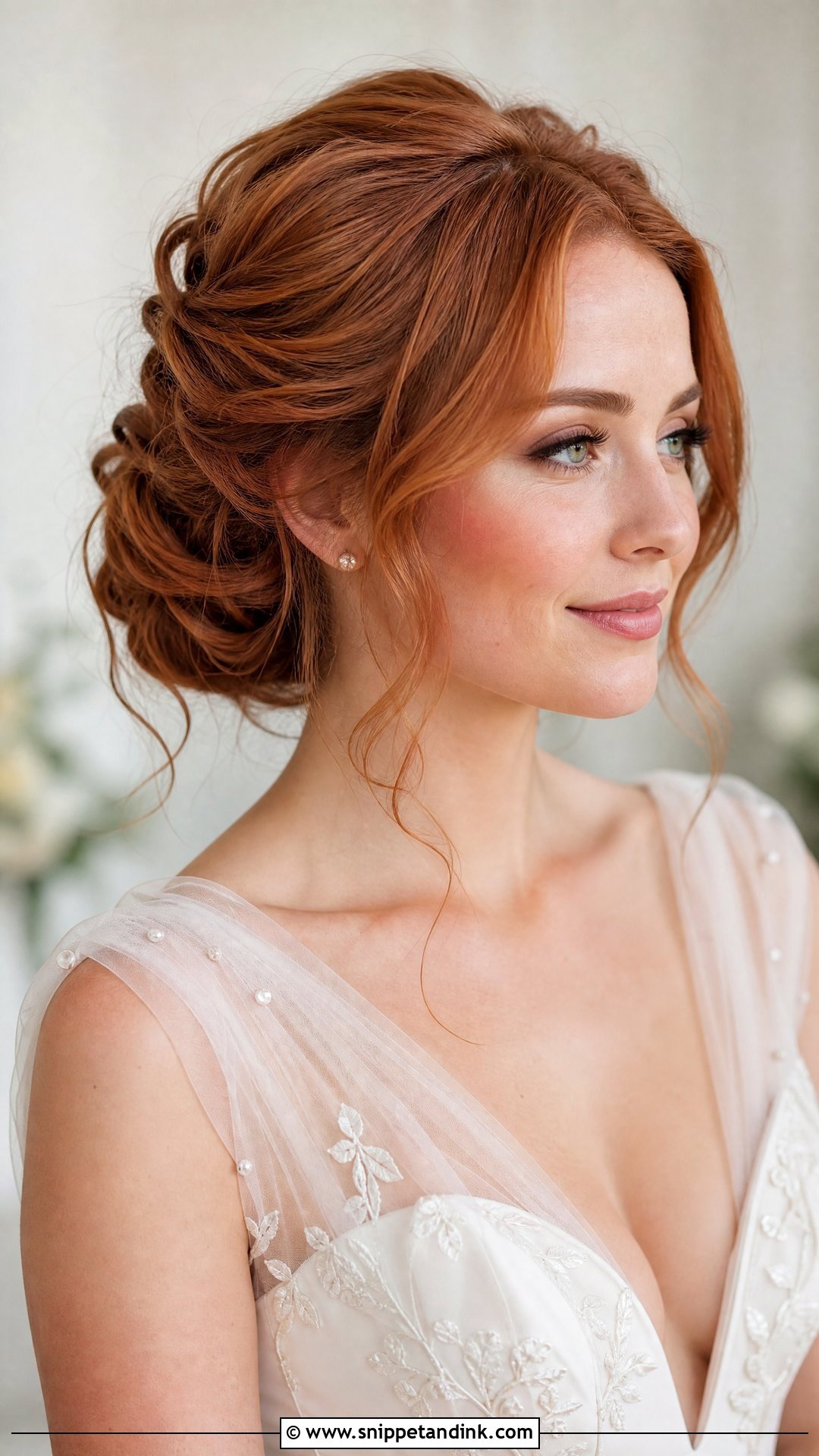
A soft updo is about controlled looseness, and the control is the part you don’t see. It combines loose twists, gentle waves, face-framing strands and a tucked shape at the back. I build the structure tightly underneath with crossed pins, then loosen only the outer layer, so it photographs airy while the core stays put through dancing. It flexes to most hair types because volume and texture can be dialed up or down. It sits comfortably with a romantic gown, simple veil, floral clip and soft makeup.
14. Bridal Short Hair
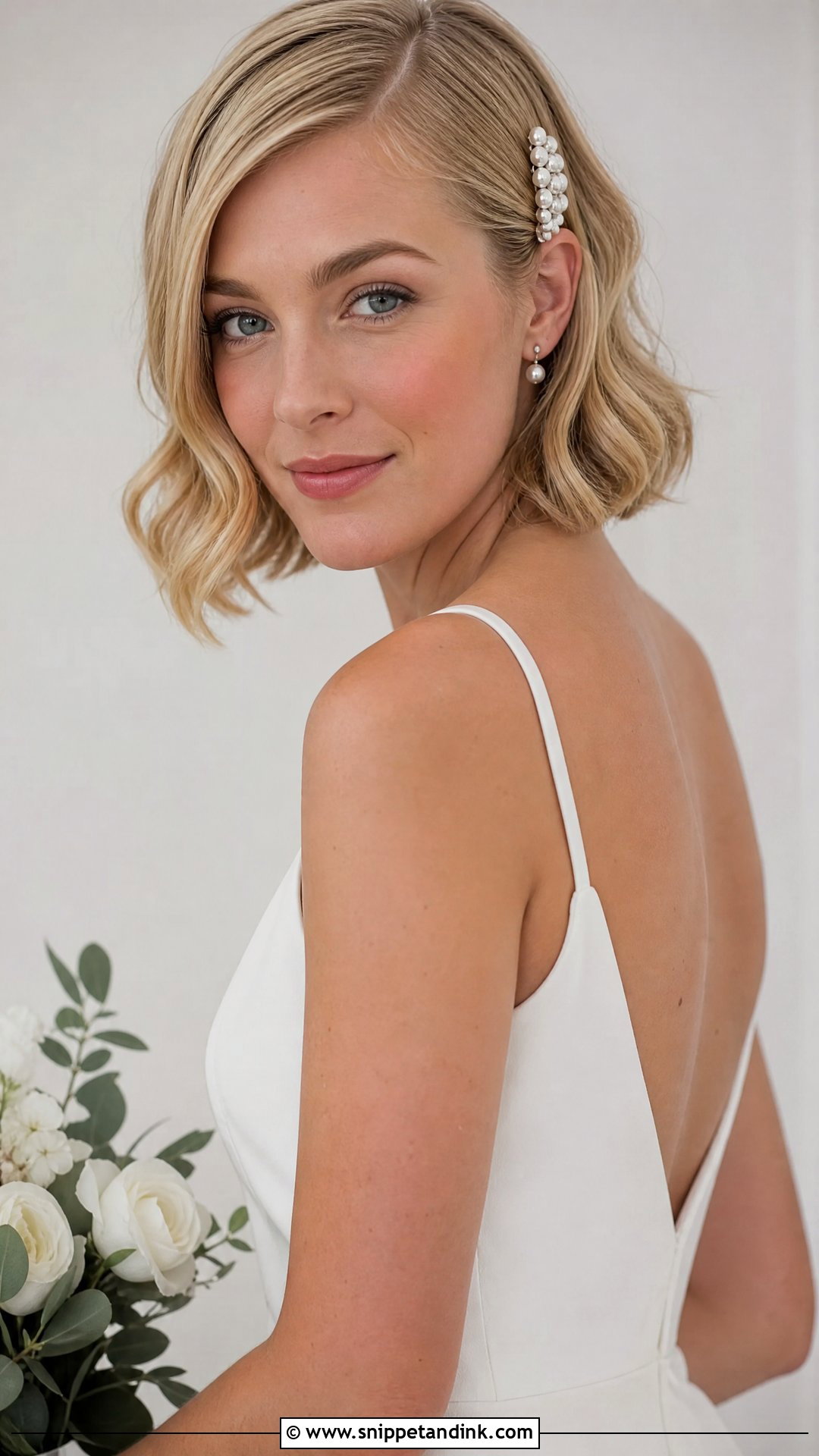
Short hair is easier to style for a wedding than most brides fear, as long as we work with the cut rather than against it. A pixie, bob, lob, or cropped cut can be shaped with soft bends, a polished side part or tucked sides that show off an earring. My advice is to get your last trim about two weeks before the wedding, so the edges have softened but the shape is still crisp. Accessories do a lot of work on short lengths: a comb at the side, pearl pins or a slim headband all anchor easily.
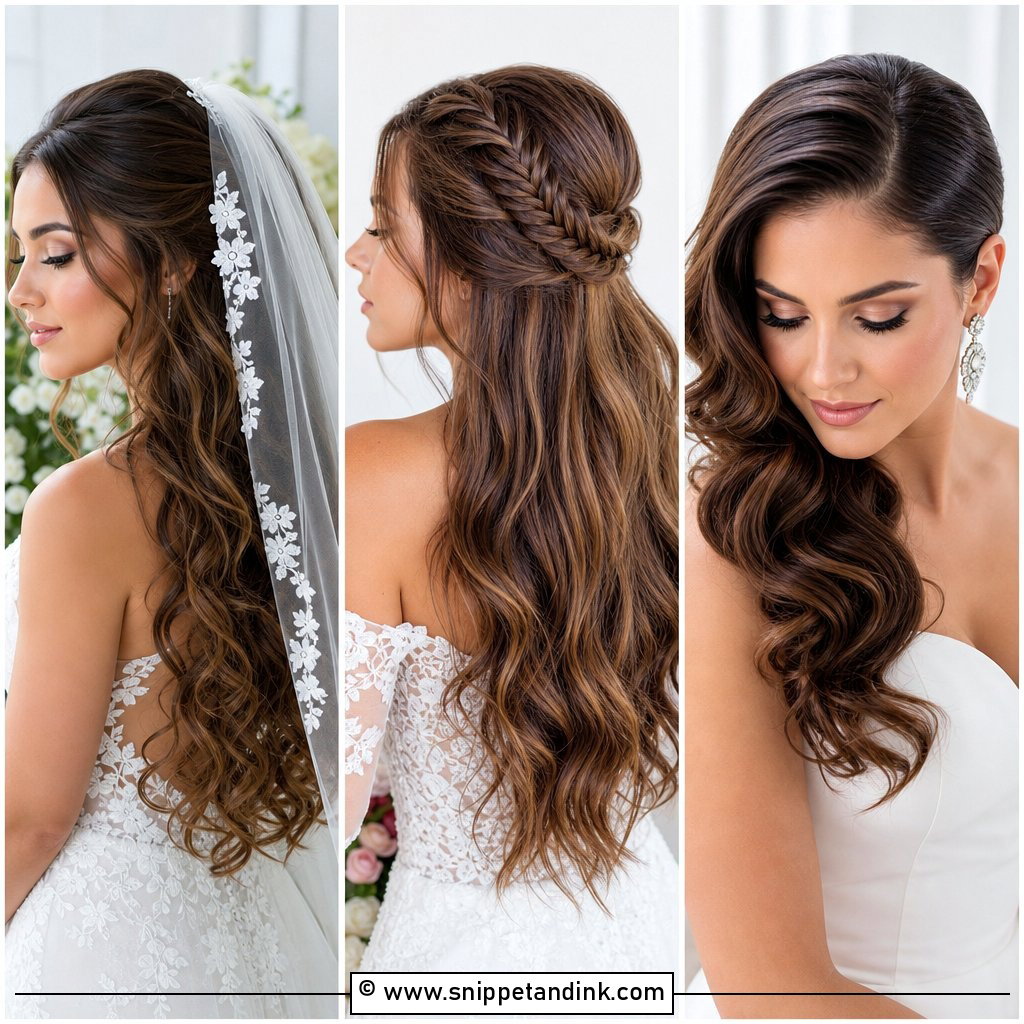
15. Bridal Long Hair
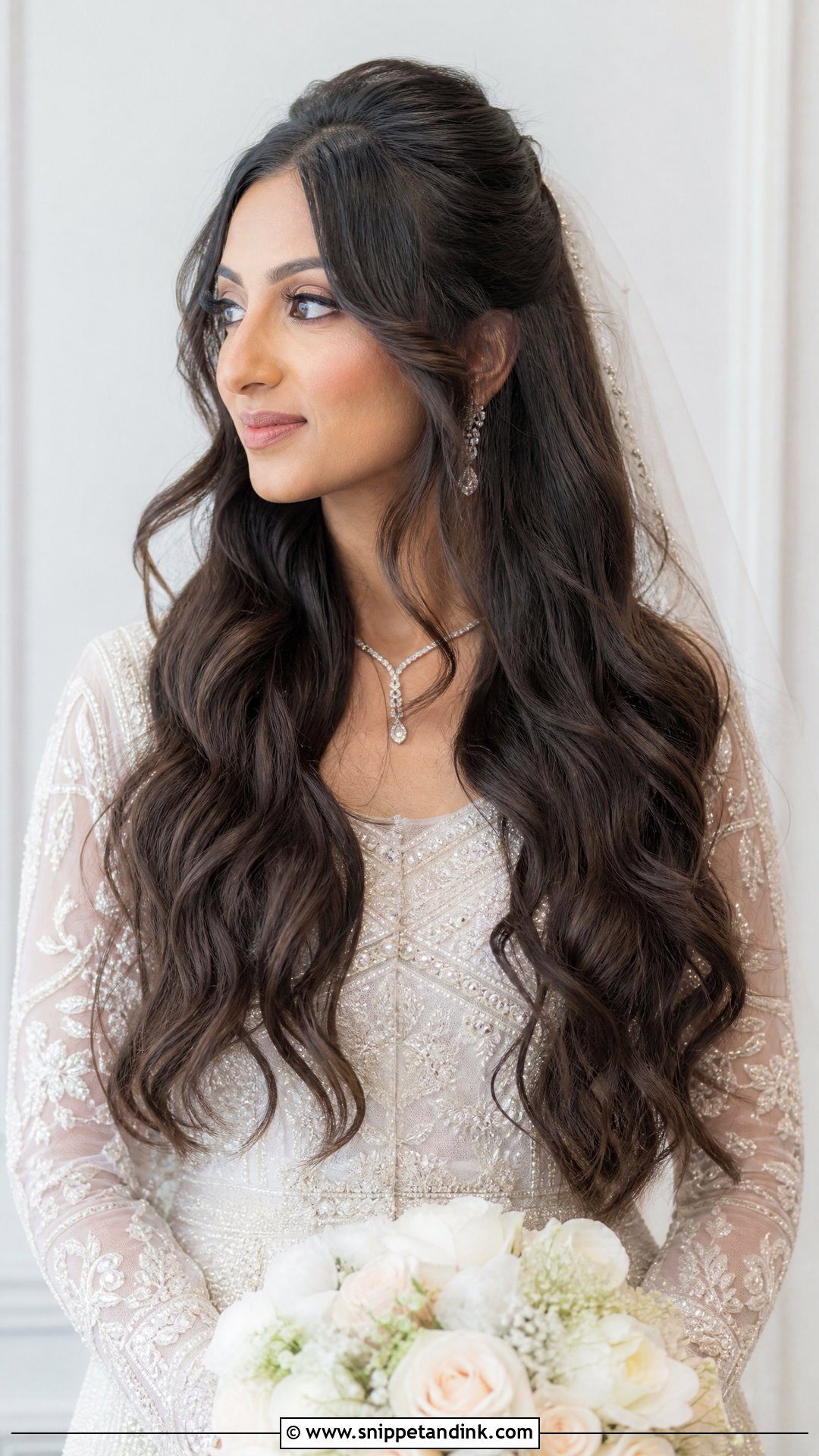
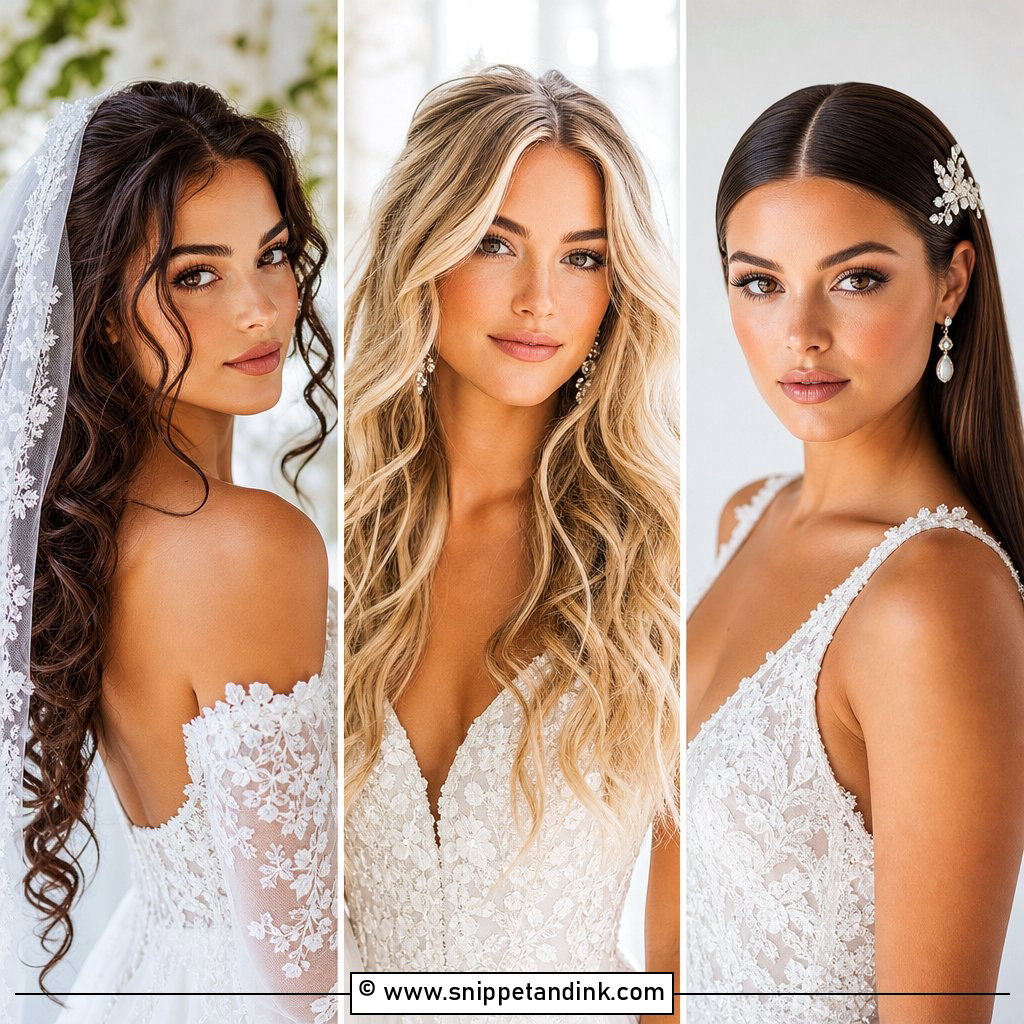
Long hair gives you every option, from flowing waves to detailed updos and full half-up looks, but its weight is the problem I’m always solving. Very long hair pulls curl out faster, so I’d rather set it with a stronger product and layer the curls in smaller sections. If your dress has a detailed back, a half-up look, low bun or side sweep keeps the design visible. Worn down, it needs lift at the root and polished ends to stay bridal. Extensions can add fullness, but they also add weight, which matters if you’re wearing it up all day.
What a Good Trial Actually Proves
A trial isn’t a preview for the salon mirror. It’s a rehearsal. I like to book it two to three months before the wedding, ideally on the same day as the makeup trial or a fitting, so you see hair, face and neckline together.
Before you leave my chair
- Turn your head fully left and right. Anything that pulls now will ache by hour six.
- Take photos with flash and without; flyaways and shine show up very differently.
- Put the veil or accessory in and walk around with it for a few minutes.
- Ask where the weakest point of the style is, so your bridesmaid knows what to watch.
- Agree how to wash and dry your hair for the morning, since day-old hair grips pins better for most updos.
Then keep the style in until bedtime. Eat lunch, put a jacket on and take it off, go outside. If the waves have dropped straight by evening or the bun has slid toward your collar, that’s exactly what I need to hear. It tells me to change the setting product, add a padded base or move you to a style with more structure.
When Pins Start Slipping at the Reception
Even a well-built style loosens after hugs, dancing and a few hours of body heat. It rarely collapses. It drifts: a front curl goes flat, a piece escapes the bun, a ponytail base starts showing its elastic. Two minutes with the right things in a bridesmaid’s bag fixes almost all of it.
- Bobby pins in your shade, plus a few U-pins for buns
- A travel-size flexible hairspray and a little smoothing balm
- A clear elastic and a spare strand of hair for re-wrapping a ponytail base
- A wide-tooth comb for curls, never a brush, which turns them to frizz
If you want a different look for the party, plan it at the trial. Taking a pinned updo down into loose waves takes about ten minutes, and without a little guidance the lengths come out kinked from the pins.
Let the Practical Details Break the Tie
If you’re stuck between two or three of these, the practical questions usually decide it. How does your hair hold a curl on a normal Tuesday? Will you wear a veil, and for how long? Is the venue humid, windy or air-conditioned to the point of chill? Bring photos of the style from the front, back and side to your trial so I can see the whole shape, then wear it for the rest of the day before you commit. The right choice is the one you forget about ten minutes after the last pin goes in.
You'll Like These Ideas:



Leave a Reply