
Sisterlocks are so fine that, once they’ve matured, they behave much more like loose hair than traditional locs do. That’s good news for a wedding. They bend into buns, crowns and ponytails, they take a curl set well, and pins and pearls slide between them neatly. What they don’t forgive is tension and product build-up, and long, dense heads of Sisterlocks are heavier than they look. I’ve kept those two things in mind with each of these fifteen styles, alongside how they sit with a veil, a neckline and a long day.
A Sisterlocks Countdown From Retightening to Rod Set
With Sisterlocks, the styling on the day is the easy part. The planning happens in the weeks before, and the order matters.
- Retightening, about one to two weeks out. Fresh roots look neat in photos, but a new retie can leave the scalp tender for a day or two, and you don’t want that under pins. Book it with your usual consultant, not someone new.
- Hair trial, ideally after the retie, so you see your locs as they’ll be on the day.
- Wash day, two to four days before. Rinse very thoroughly and let the locs dry completely, which takes longer than loose hair. Skip heavy creams and oils that week; they leave residue that dulls the locs in photos.
- Rod or pipe cleaner set, one to two days out, if your chosen style uses curls. Set on dry or barely damp locs and sleep under a satin bonnet.
On the morning, I take down the set, separate the curls gently and pin the style. There’s no heat involved and no new products, so there’s very little that can go wrong.
1. Sisterlocks Low Bun Wedding Hairstyle
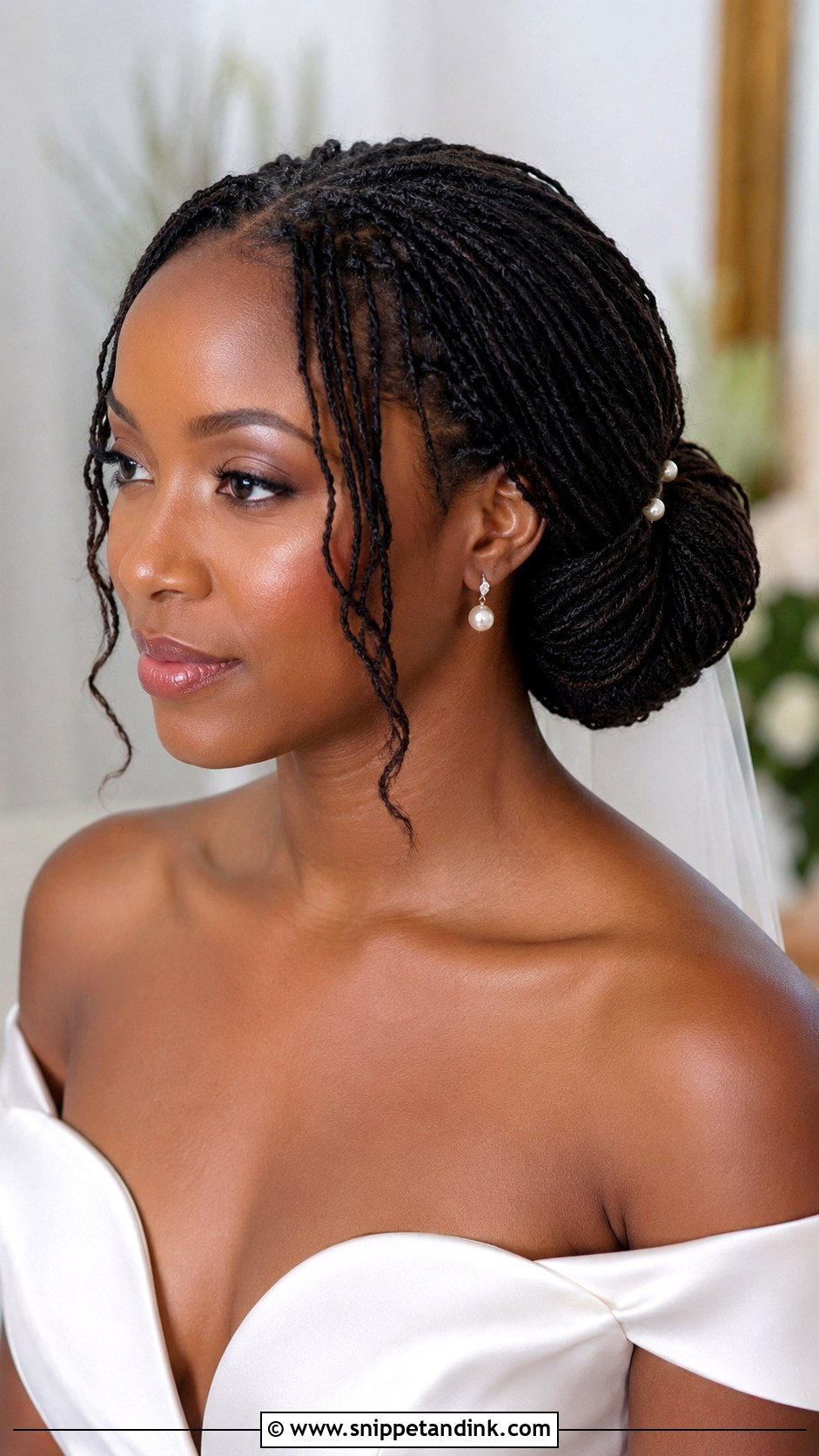
Of all the looks here, the Sisterlocks low bun wedding hairstyle is the one I’d book for a long ceremony. It sits at the nape, so the weight rests low on the head and doesn’t pull at the hairline, and a veil comb, pearl pins or a floral clip all have something solid to grip. Strapless, high-neck and lace dresses all stay visible. I smooth the front by guiding the locs back with my fingers rather than brushing them tight. A few locs left loose at the temples soften it.
2. Sisterlocks High Bun Wedding Hairstyle
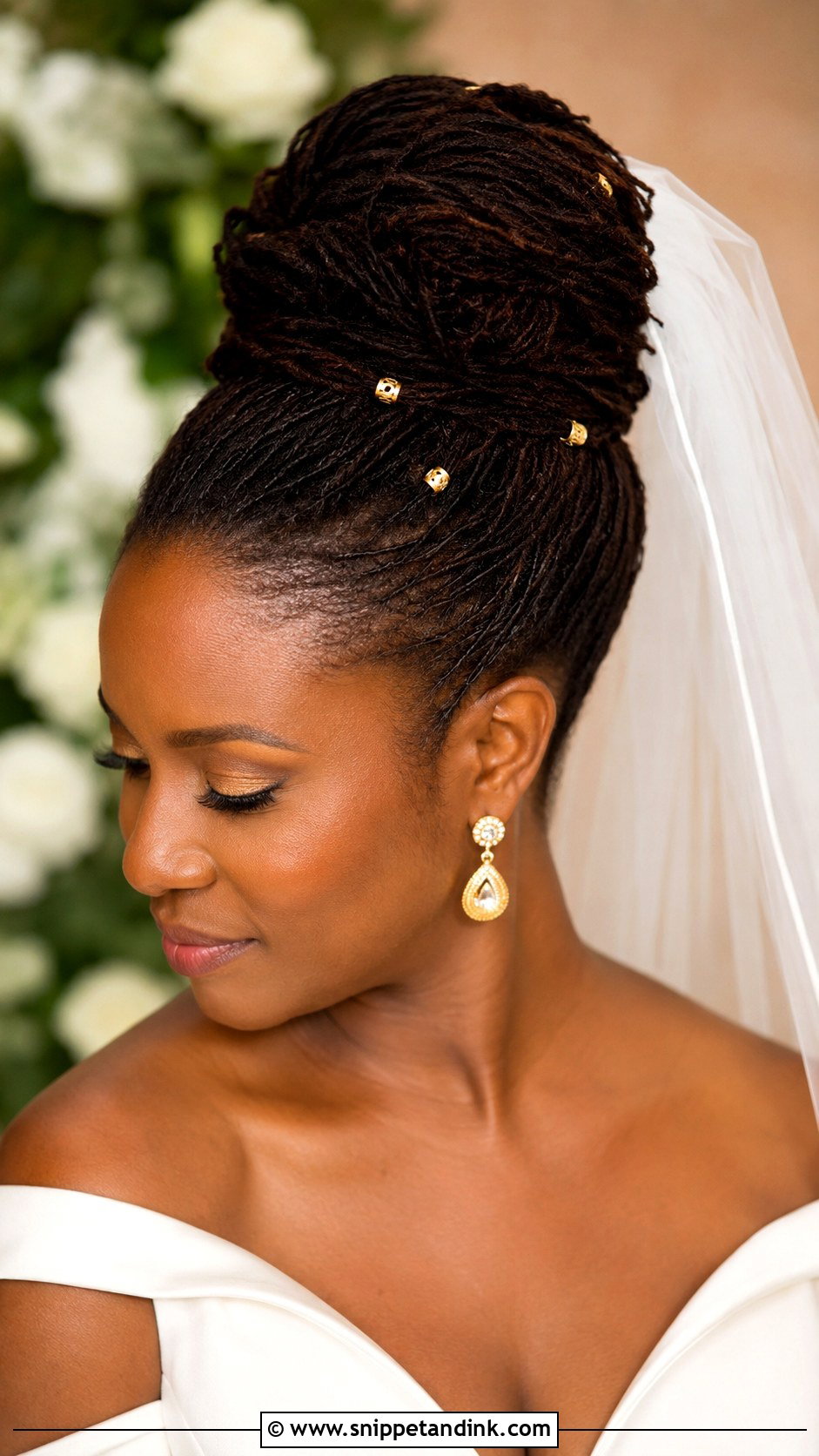
Height lifts the face and shows off earrings and the neckline, and long Sisterlocks have enough volume to make a full high bun without any padding. The problem is weight. Piled high, very long or dense locs can start to ache within a couple of hours, so I build the bun from the bottom up in two or three smaller sections pinned separately, which spreads the load. Sleek for formal, loose for a softer finish. Pearl pins, gold cuffs or a delicate tiara can circle the base.
3. Sisterlocks Braided Crown Wedding Hairstyle
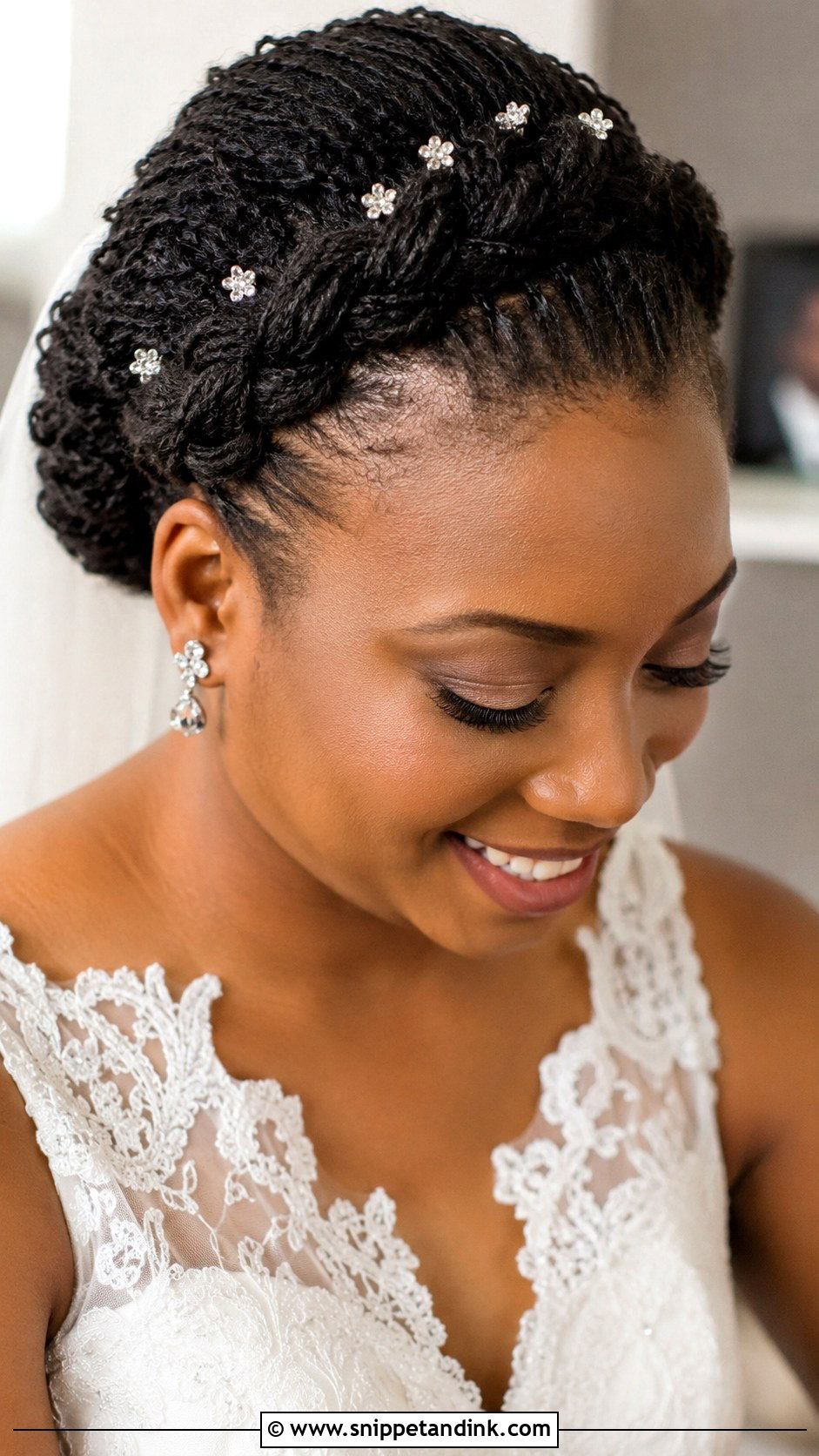
A crown frames the face from every angle, which is why I like it for church ceremonies and garden weddings where guests see you from the side. The locs are braided or twisted around the head and pinned along the way. Because the hair stays off the shoulders, beading, lace and open backs are fully visible. I keep the braid slightly raised and rounded rather than flat against the scalp, so it has shape in profile. Tuck small flowers or crystal pins into the braid for the finish.
4. Sisterlocks Half Up Half Down Wedding Hairstyle
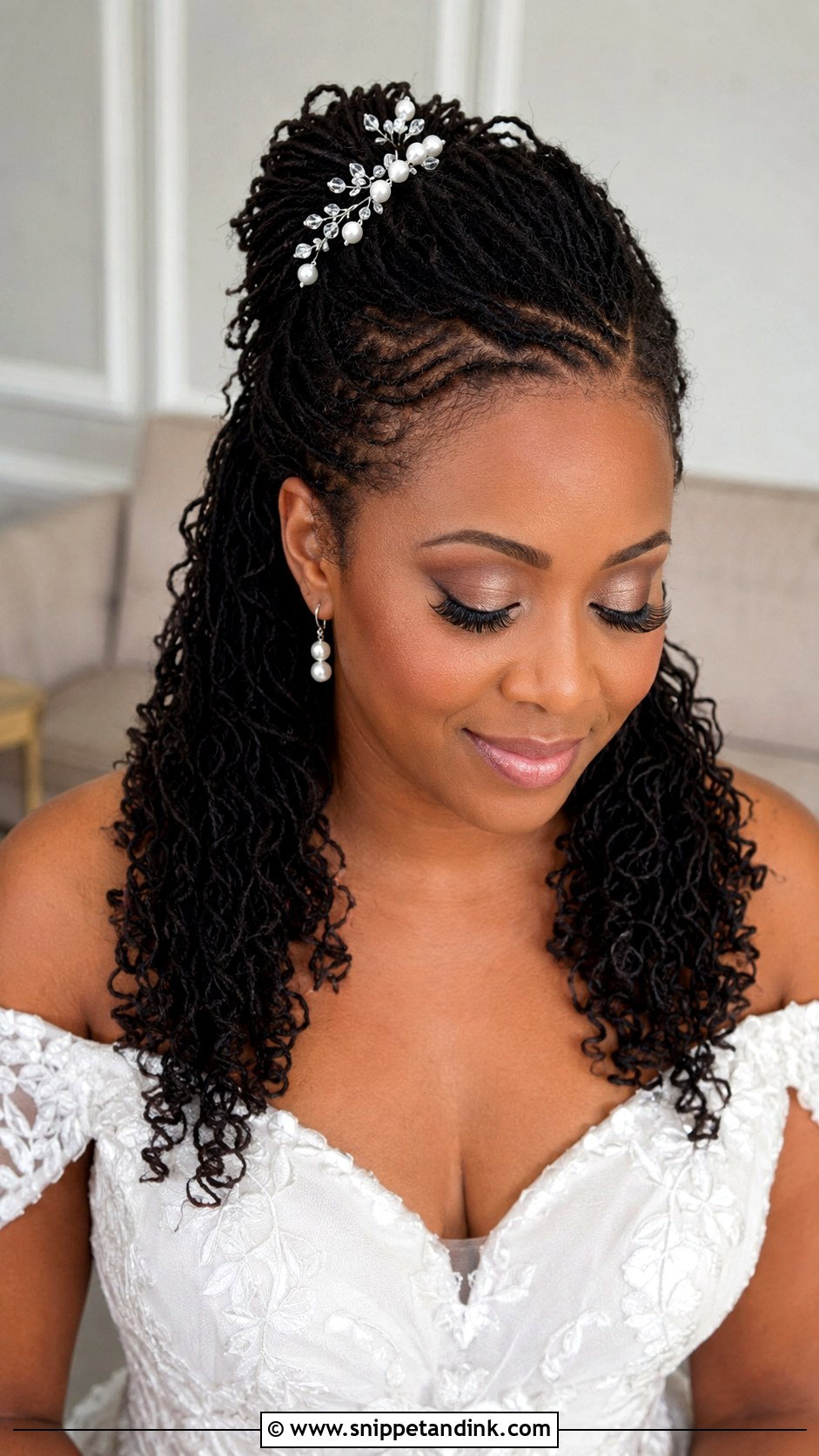
Half up shows your length while giving the crown some structure, and it’s the style I suggest to brides who never wear their locs up. The top section can be twisted, braided or simply pinned back, with the rest falling free. It’s strongest on medium or long Sisterlocks, especially when the loose lengths have been curled from a rod set. The junction where the top meets the back is where everyone looks during the vows, so I hide it under a small veil comb, a pearl barrette or a flower.
5. Sisterlocks Side Swept Curls Wedding Hairstyle
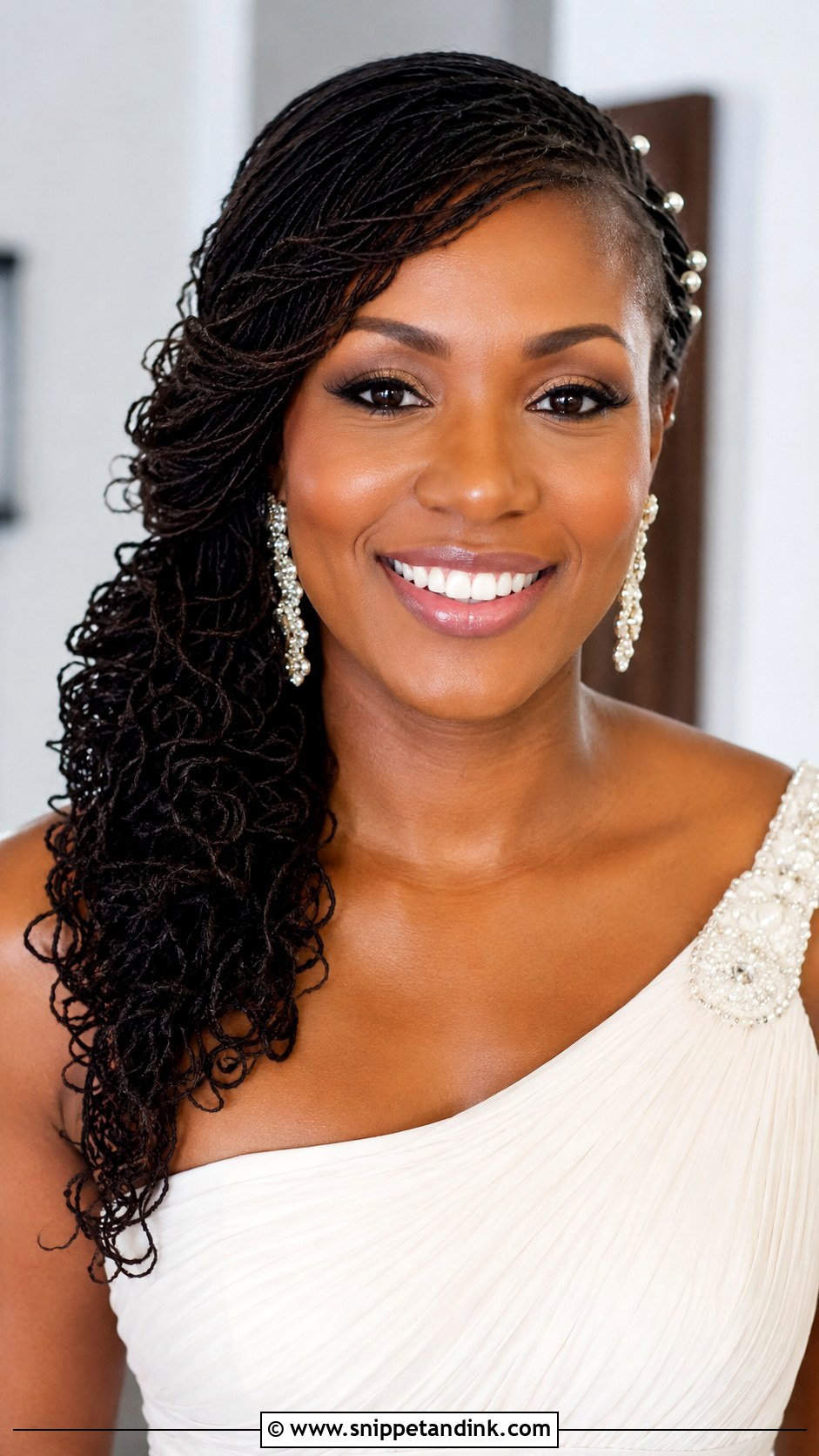
Side swept curls give drama without a full updo. The locs are set and curled first, then swept to one side and pinned behind the ear. They suit one-shoulder dresses, plain gowns and statement earrings on the open side. The curls cascade over one shoulder, which looks very full in photos because Sisterlocks are so numerous. I lift the front slightly at the root before sweeping it across, so it doesn’t lie flat against the head. Pearl accents scattered through the curls finish it.
6. Sisterlocks Chignon Wedding Hairstyle
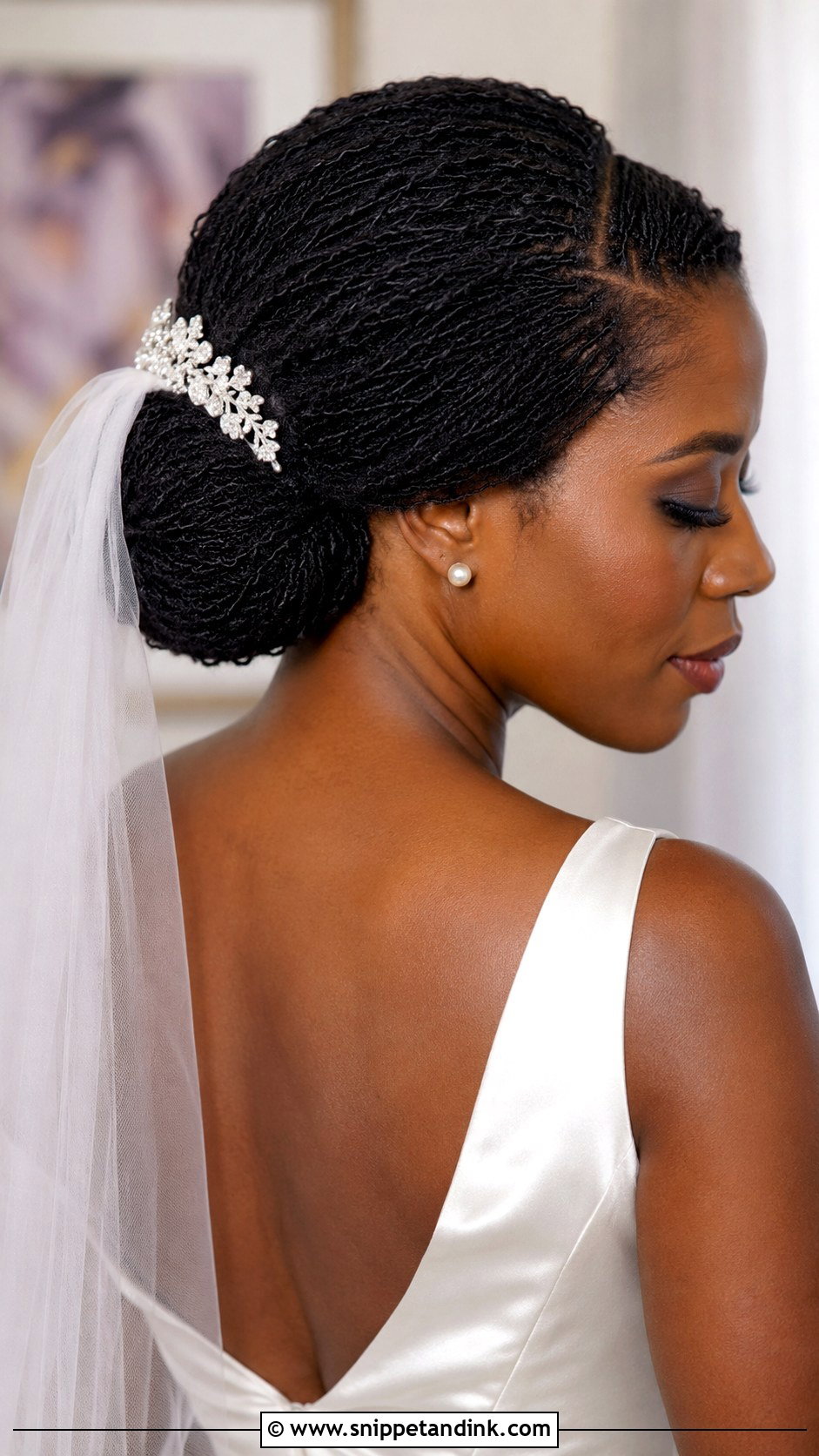
Clean lines and a quiet profile: a chignon gathers the locs low into a tucked roll or rounded knot. It makes an excellent base for a veil, since the comb can slide into the roll itself. Off-the-shoulder gowns and satin dresses sit especially well with it. Keep the front simple with a side or middle part, or one soft twist. I leave enough texture visible on the surface so the locs read as locs, not as a smooth bun from a distance.
7. Sisterlocks Twisted Updo Wedding Hairstyle
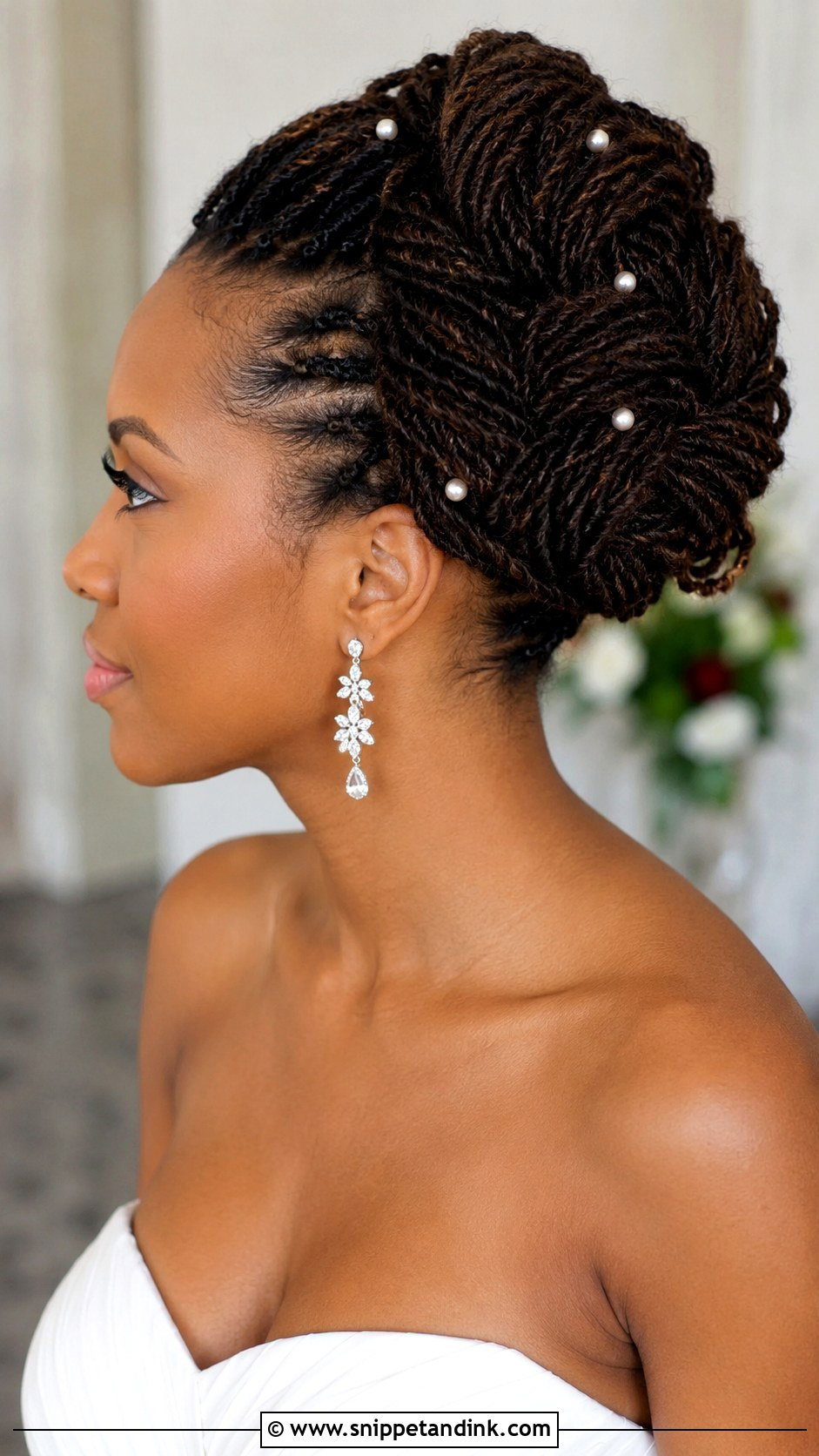
Twisting the locs in sections and pinning each one gives you an updo with detail from every angle, and it’s more secure than one bun because every section has its own pins. Hair stays off the neck, which makes it a good call for summer weddings and long reception nights. The look can be formal or soft with a few locs loose around the face. I run pearl pins or crystal clips along the twists, and if you plan to dance hard, I’ll add extra pins at the crown where the weight pivots.
8. Sisterlocks Curly Updo Wedding Hairstyle
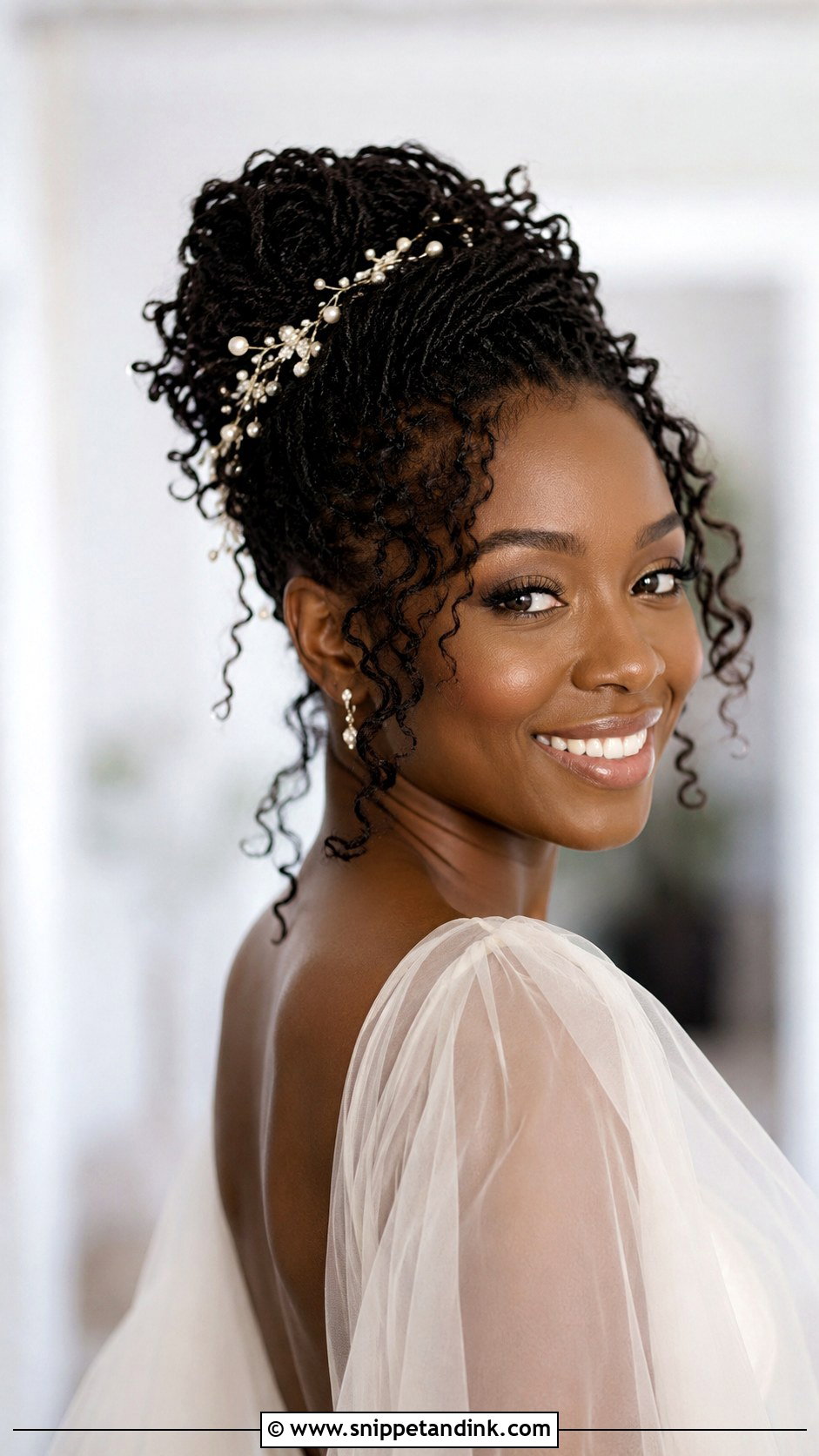
For a curly updo, the locs are set on rods first, then pinned upward into a loose shape with some curls at the crown and others falling near the ears. It gives a romantic, touchable look without much tension, because the curls create fullness by themselves. Medium and long Sisterlocks suit it best. The rod set must be completely dry before it comes down; damp locs that are pinned up can stay damp inside for hours. A veil can sit under the updo, or you can scatter decorative pins through the curls.
9. Sisterlocks Ponytail Wedding Hairstyle
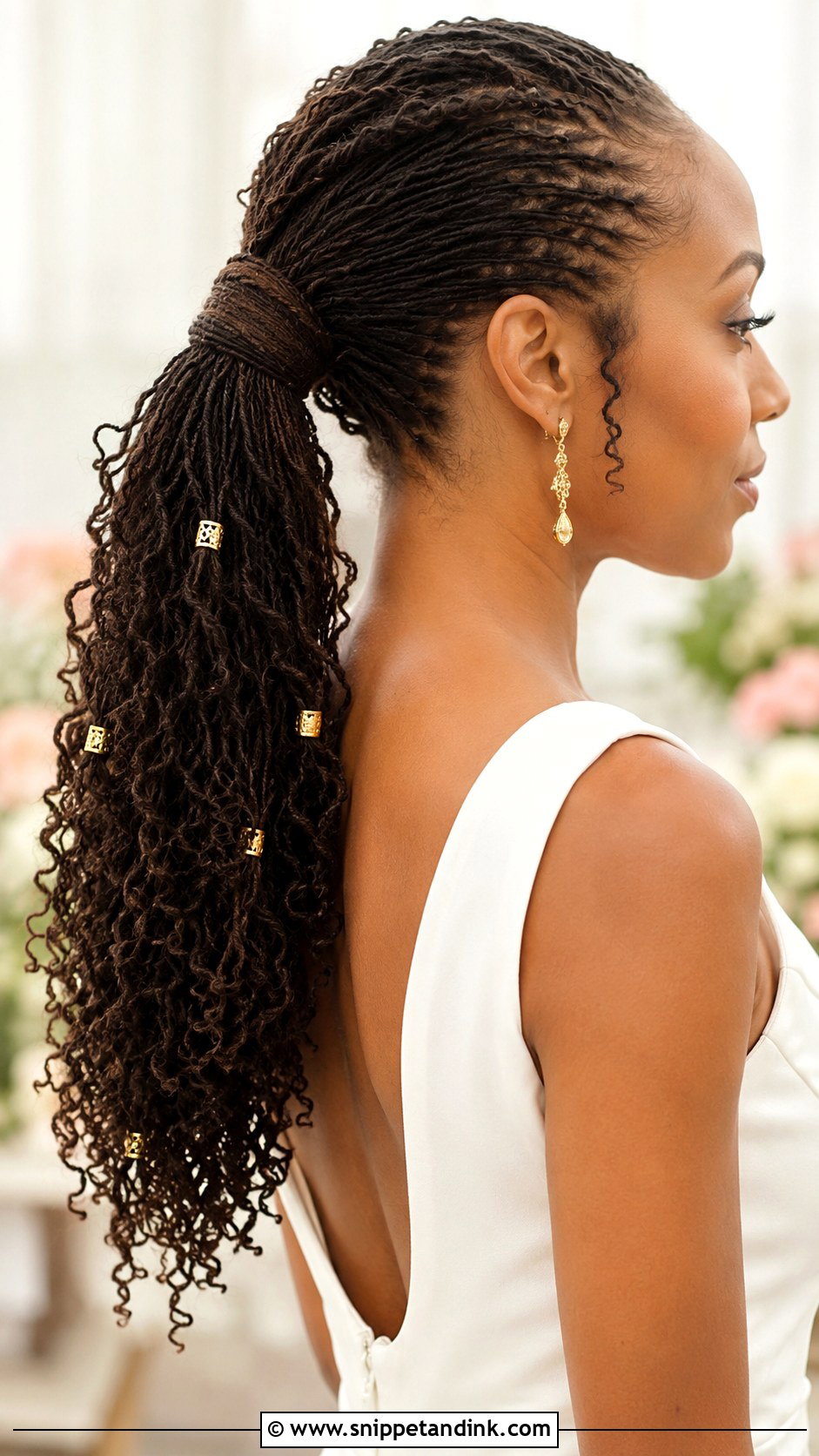
A ponytail with Sisterlocks can look sleek and modern. High is dramatic, mid-height balanced, low softer. Wrapped locs around the base hide the tie and make it look finished. The length can be curled, waved or left straight. My one firm rule is no tight tension at the hairline: gathering fine locs hard into a high ponytail stresses the edges, and Sisterlocks are only as strong as their roots. Pearl pins, gold cuffs or a small bow at the base add detail.
10. Sisterlocks Bun With Pearl Pins Wedding Hairstyle
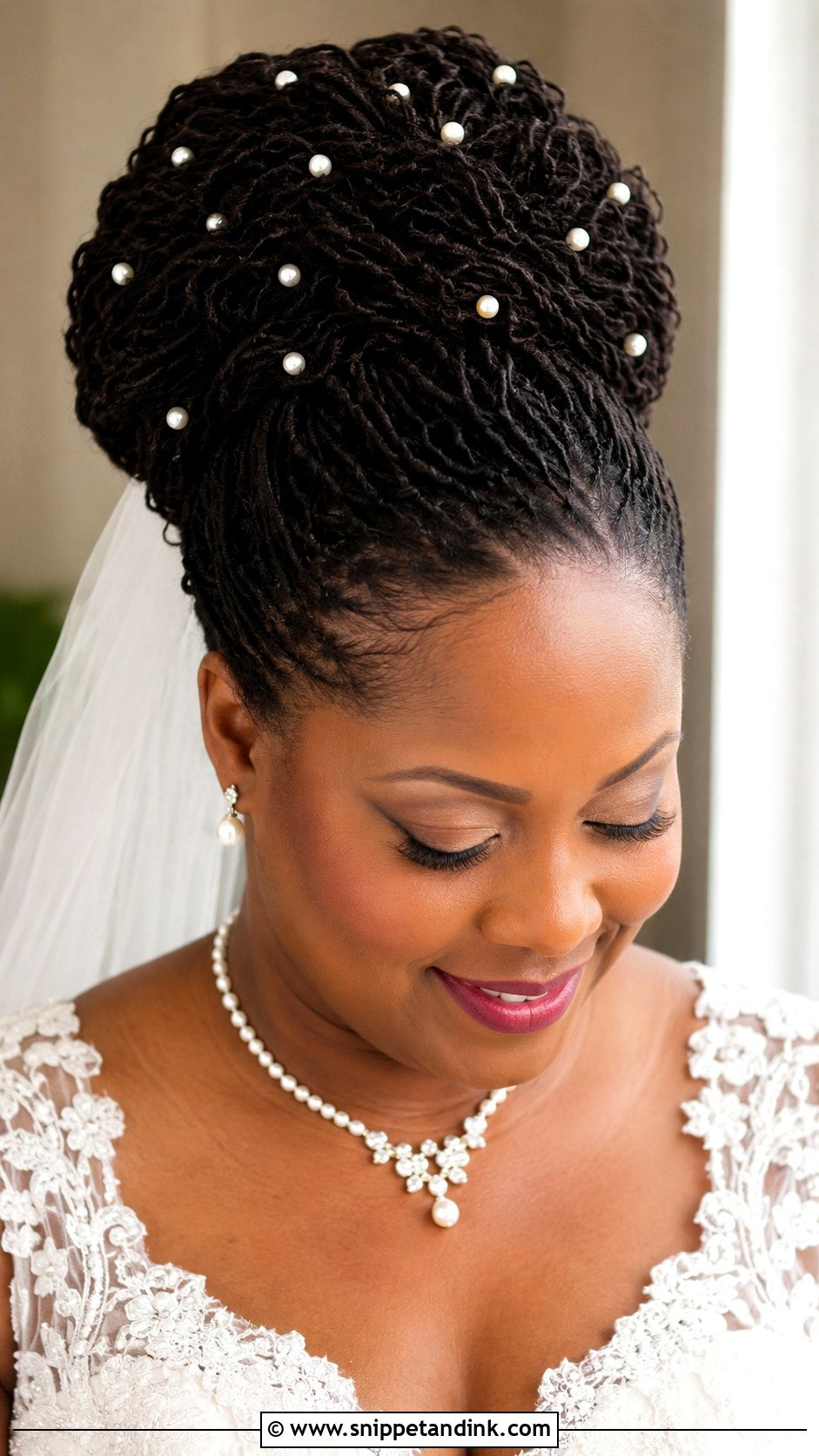
Pearls are bright, small and round, so they sit between fine locs without disappearing into the texture or competing with it. The bun can be low, high or centred at the back, with pins placed through the shape. I lay them out in a loose pattern before pinning, because in photos a cluster on one side looks accidental. Classic gowns, lace and outdoor ceremonies all suit it, and if your earrings or veil already carry pearls, the bun ties them together.
11. Sisterlocks Bob Wedding Hairstyle
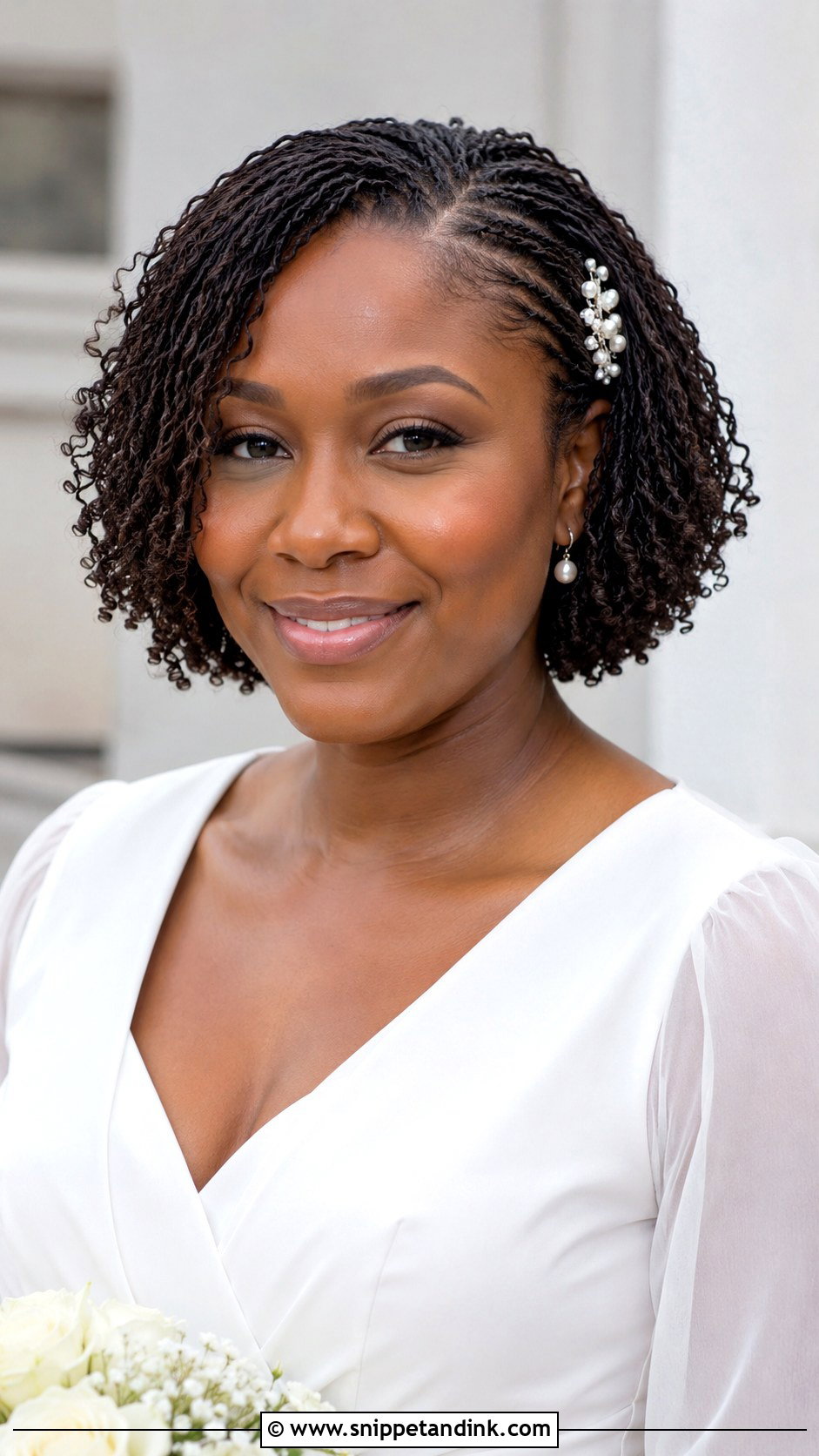
A Sisterlocks bob wedding hairstyle proves bridal hair doesn’t need to be long. For short to medium locs, I shape the bob with soft curls from a rod set, a side part or one side tucked behind the ear. A birdcage veil, a pearl headband or a delicate side clip gives the bridal touch without crowding the length. Ends need to look moisturised and defined, so a light water-based mist works far better than heavy butter, which sits on top of fine locs and shows in close-ups. It suits modern gowns and courthouse ceremonies.
12. Sisterlocks Faux Hawk Wedding Hairstyle
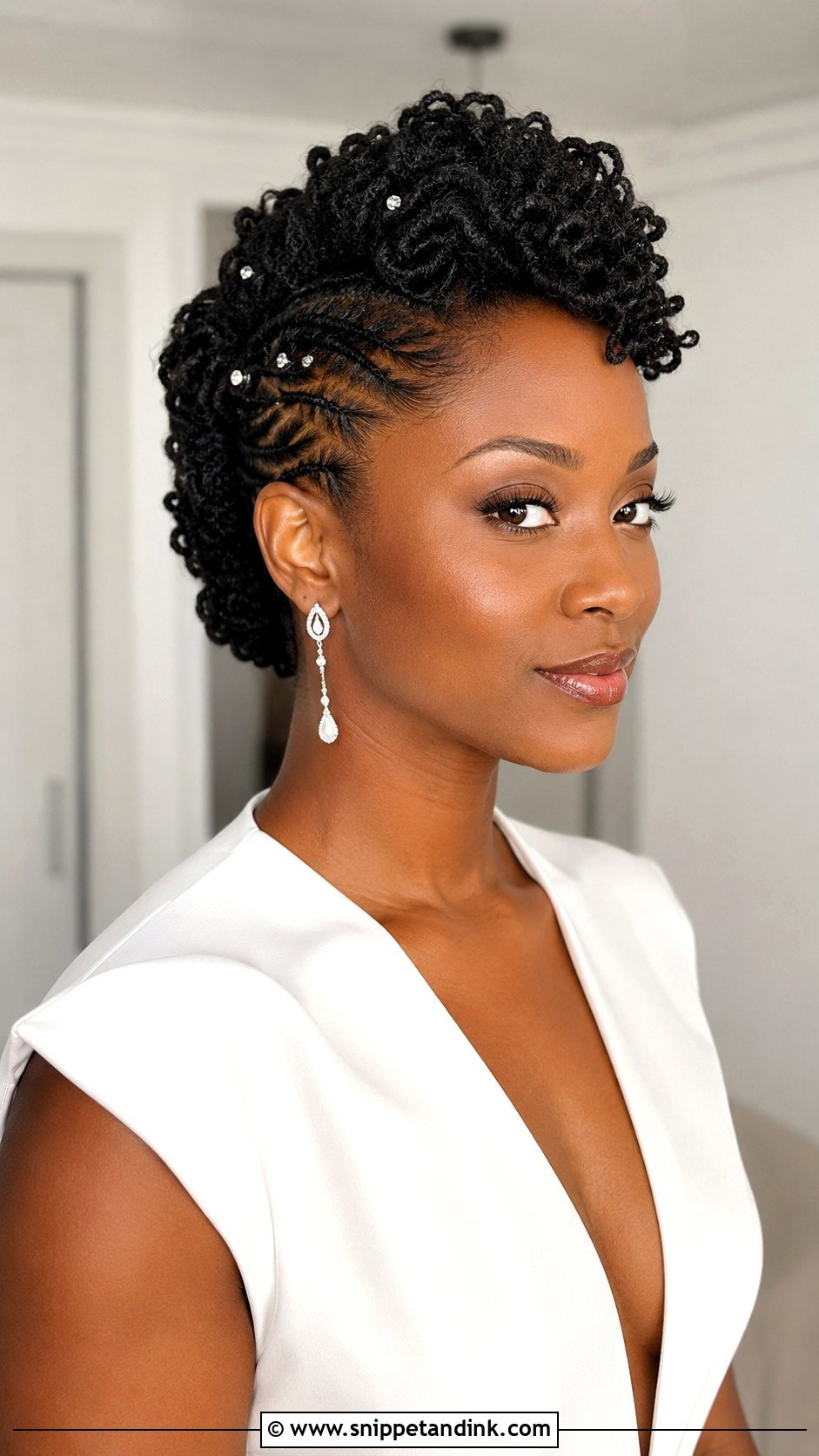
A Sisterlocks faux hawk wedding hairstyle is the most artistic look here. The sides are pinned or twisted upward while the centre is shaped into curls, rolls or lifted loc work, giving height through the middle without shaving anything. Keep the jewelry simple and the neckline clean so the hair carries the look. The sides must be smooth and symmetrical; one loose section on either side spoils the line. Small cuffs or crystal pins along the centre ridge are enough sparkle.
13. Sisterlocks Updo With Veil Wedding Hairstyle
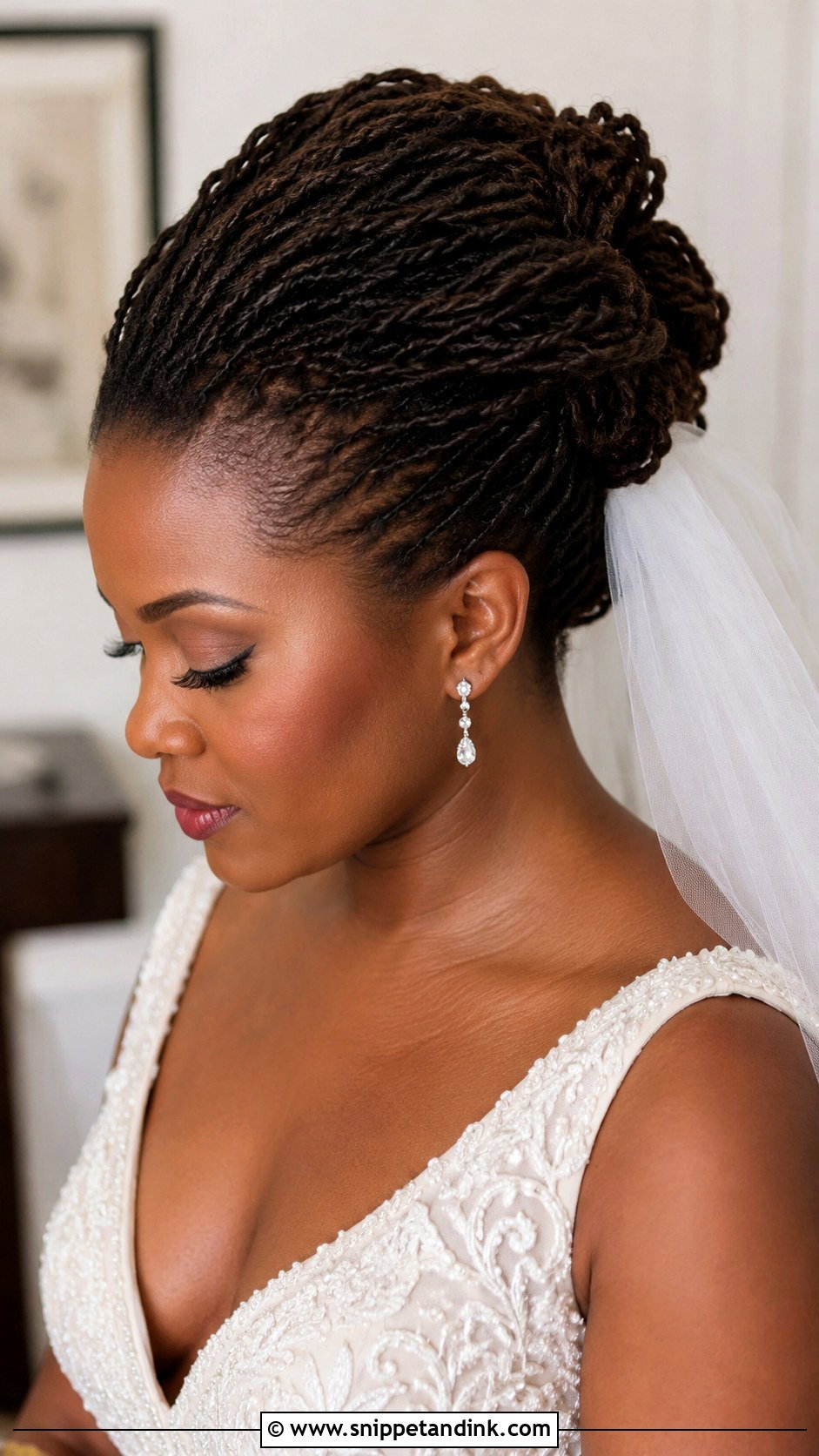
The updo has to work as an anchor for the veil comb, whether the veil sits above, below or behind it. A low bun, twisted roll or soft curly updo all hold a comb well because the comb can catch several locs at once. Bring your veil to the trial. A long or heavy veil can tug on fine locs at the comb point, and I’d rather find that out then and add a couple of pins under the comb’s teeth. The front should look finished on its own, since many brides take the veil off for the reception.
14. Sisterlocks Bun With Fresh Flowers Wedding Hairstyle
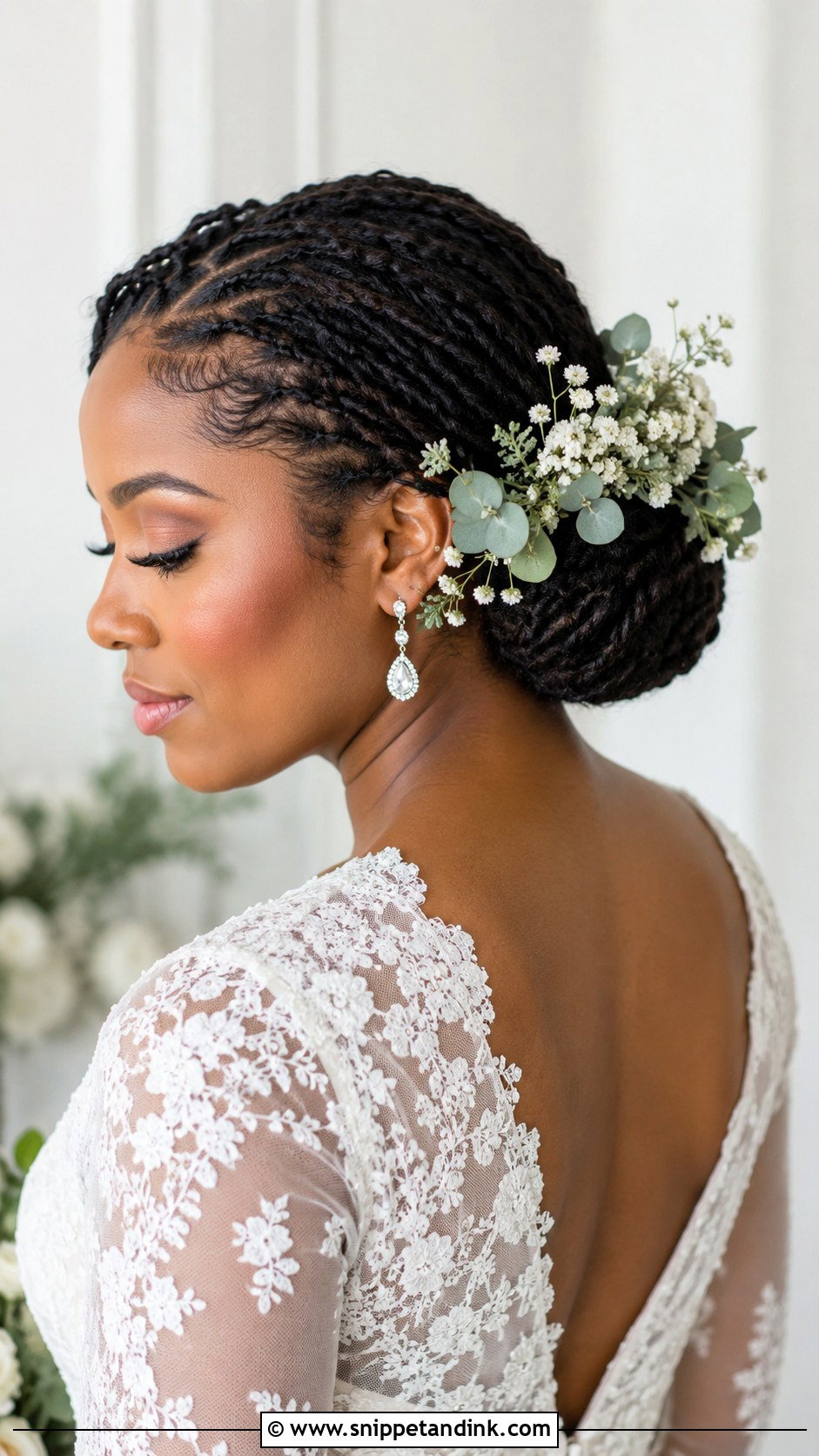
Fresh flowers add colour and softness to a bun, which gives them something firm to sit against. Small blooms sit neatly between the locs without weighing down the style; baby’s breath, spray roses, orchids and wax flowers all work, depending on your bouquet. Ask your florist and stylist to talk to each other. Florists can wire small blooms individually, which makes them far easier to tuck and secure. Lace, chiffon and flowing dresses suit it best. Spread the flowers evenly so the bun still reads as a shape.
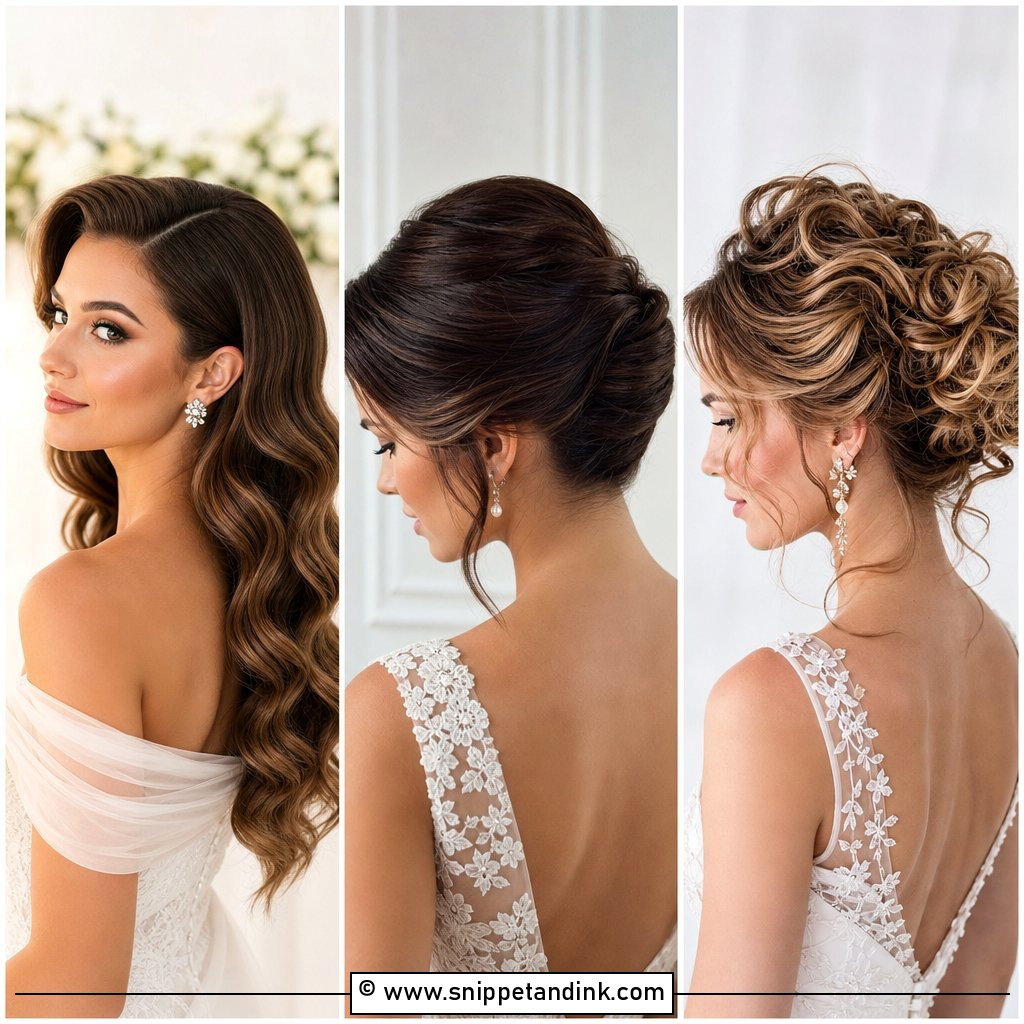
15. Sisterlocks Loose Curls Wedding Hairstyle
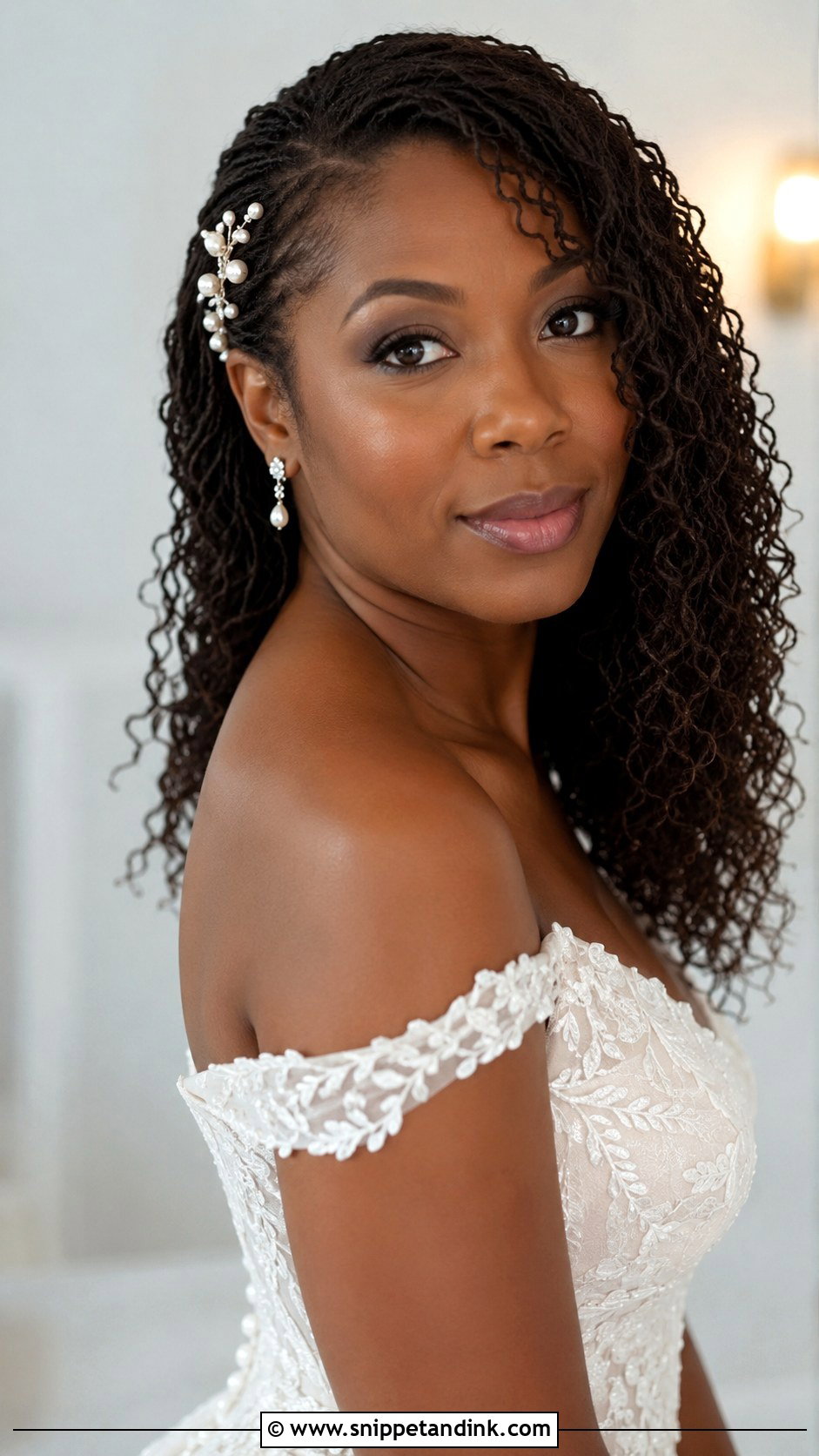
Loose curls let you wear your locs down with real movement. I set them on rods, rollers or pipe cleaners, or with a heat-free method, then separate them gently for volume once completely dry. The curls should be arranged around the face and shoulders rather than left to fall at random. A side part, middle part or a small pinned-back section adds structure. Add a veil, a headband or small clips if you want a bridal accent. It’s the most comfortable style here, since nothing is pulled or pinned high.
Weight, Tension and the Hours After the Ceremony
I get asked about headaches more than anything else by brides with long Sisterlocks. The locs aren’t heavy individually, but there are hundreds of them, and an updo concentrates that weight onto a few anchor points.
Signs the style is too tight
Small bumps along the hairline, a pulling sensation at the temples or a headache before the ceremony even starts. Tell your stylist straight away. Loosening one section is quick, and enduring the pain risks thinning at the edges over time.
Swapping styles for the reception
If you’ve worn a high bun or crown for hours, letting the locs down into curls or a low ponytail for dancing gives your scalp a break. Plan this at the trial so a bridesmaid knows which pins to take out.
Taking it down that night
Remove pins one at a time and don’t pull at locs that feel caught. Sleep under satin, and leave the next wash for a few days so the scalp can rest.
Brides, Bridesmaids and Guests Wearing Sisterlocks
From sleek buns to soft curls and twisted updos, Sisterlocks can take almost any bridal shape. Match the style to your dress, face shape, length and how much weight you’re comfortable carrying all day. Brides should book a trial and bring the veil, the accessories and photos of the dress. Bridesmaids and guests can choose something simpler that they can manage alone. Throughout, keep the locs moisturised, avoid tension and use pins that hold without dragging. That’s what lets the style last into the evening.
You'll Like These Ideas:


Leave a Reply