
Defined curls hold their shape far longer than loose waves, and that alone makes them worth considering for a wedding that runs from morning portraits to a late dance floor. The curls in these looks are either your own natural pattern or small ringlets set with heat, and the two behave differently, which I’ll explain before the list. Both can be worn half up, in buns, in ponytails, under a veil or simply down. What I care about most is that the curls stay springy and touchable rather than stiff. The right style comes down to your dress, your neckline, your texture and how much the weather is likely to fight you.
Your Own Coils or Iron-Set Ringlets?
Every look below can be done on naturally tight curls or on straighter hair curled with heat, and the preparation is completely different. Knowing which you’re working with changes what you ask your stylist for.
Natural curls
Here the pattern already exists, so the job is definition. I work on damp hair with a leave-in, a curl cream and a gel, apply in sections, and let the curls dry fully without touching them, either air-dried or under a diffuser on low. Once dry, I break the gel cast gently with my hands. Expect shrinkage, which can be dramatic on coily hair, and plan the style around the dried length.
Heat-set curls
On straight or wavy hair, tight curls come from small sections and a narrow barrel, roughly half an inch or smaller. Each curl is pinned in its coil while it cools. That cooling step is what sets them; release them warm and they drop within the hour. Hair that holds curl poorly needs a setting spray or mousse before the iron.
Mixed textures, such as natural curls at the back with a straighter front, are common. Tell your stylist so she can match the front to the rest with a small iron.
1. Tight Curls Wedding Hair Half Up Half Down
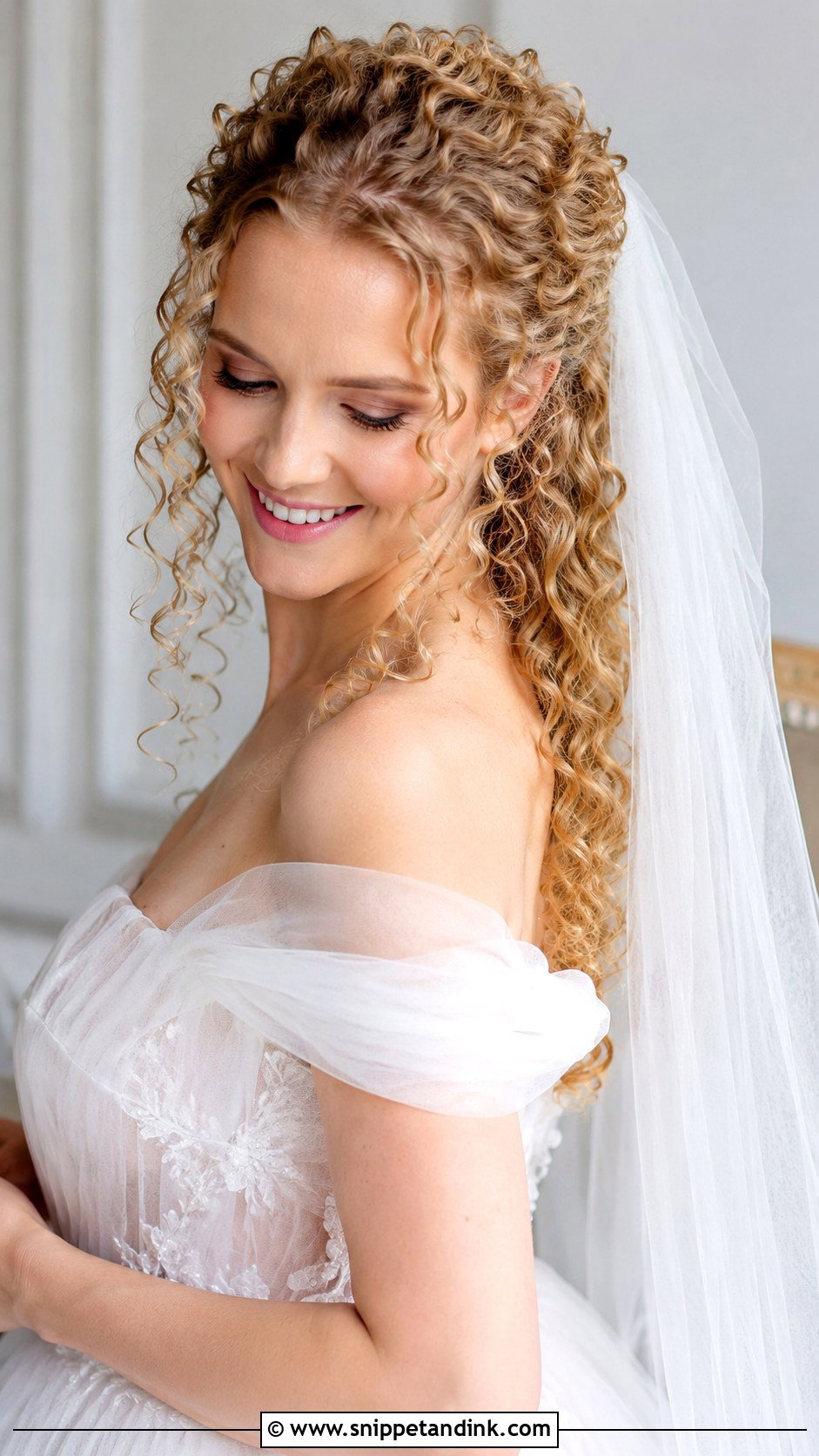
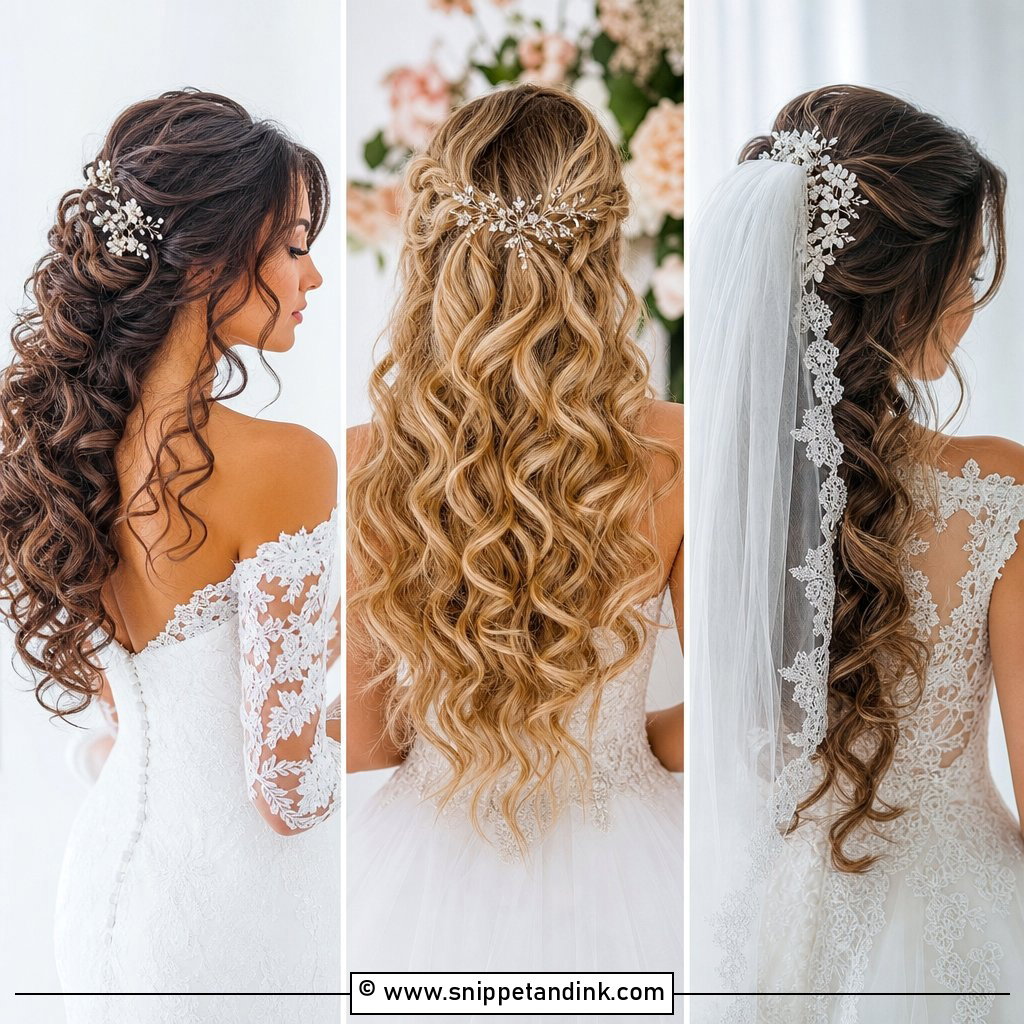
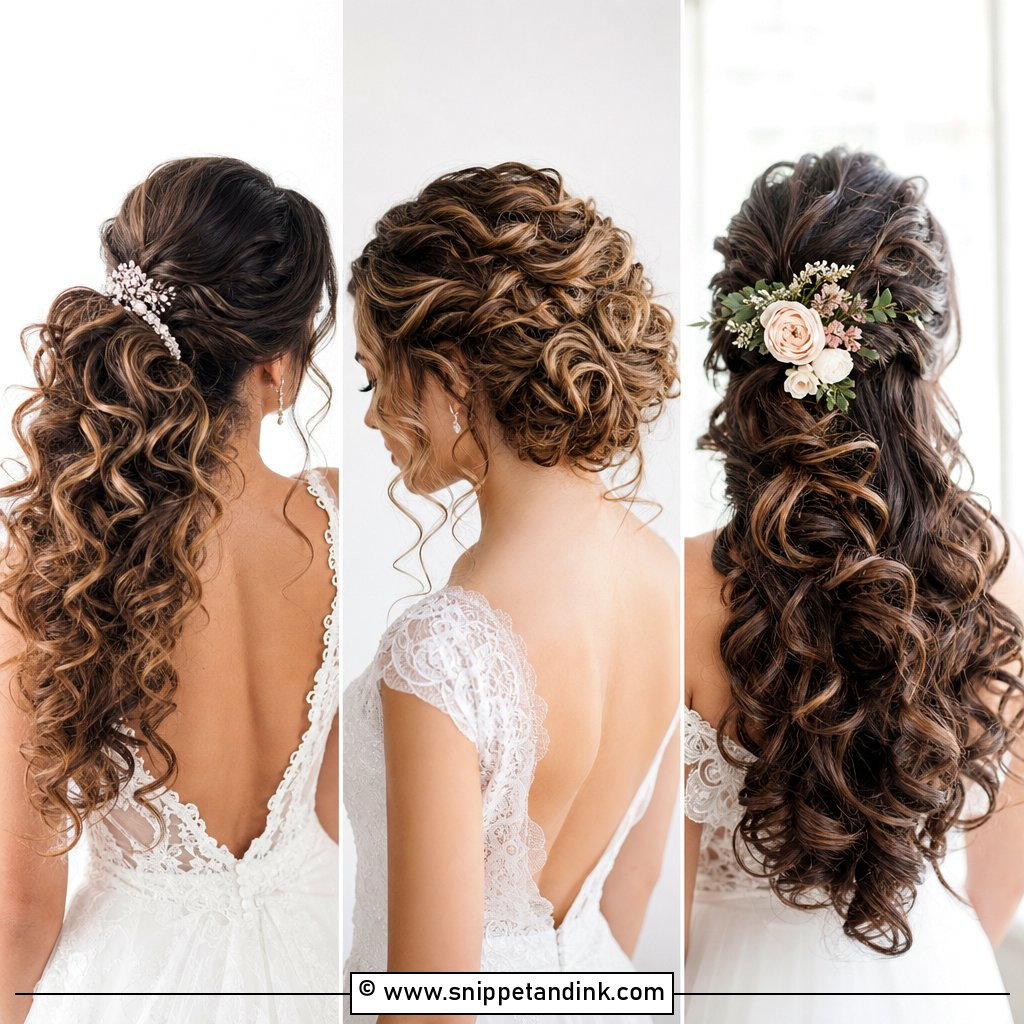
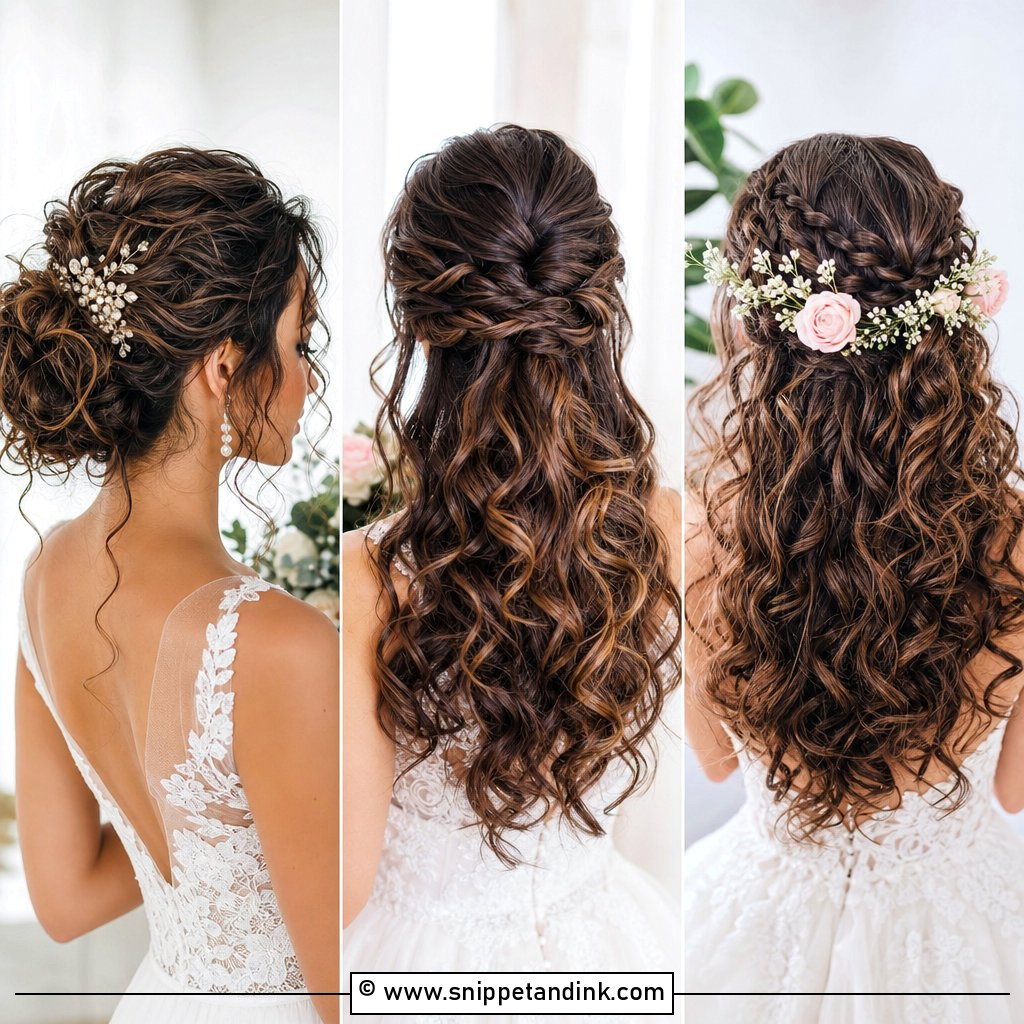
Half up is where I’d start if you’ve never worn your curls pinned before. Pinning back the top section keeps your face open for the ceremony while the length below keeps its volume. Medium to long hair suits it, and it adapts to fine, thick, natural or heat-set curls. I lift the crown softly with my fingers instead of backcombing, since a teased bump on curly hair looks dated and is hard to blend. A pearl pin, a small floral comb or a simple veil is enough decoration.
2. Tight Curls Wedding Hair Low Bun
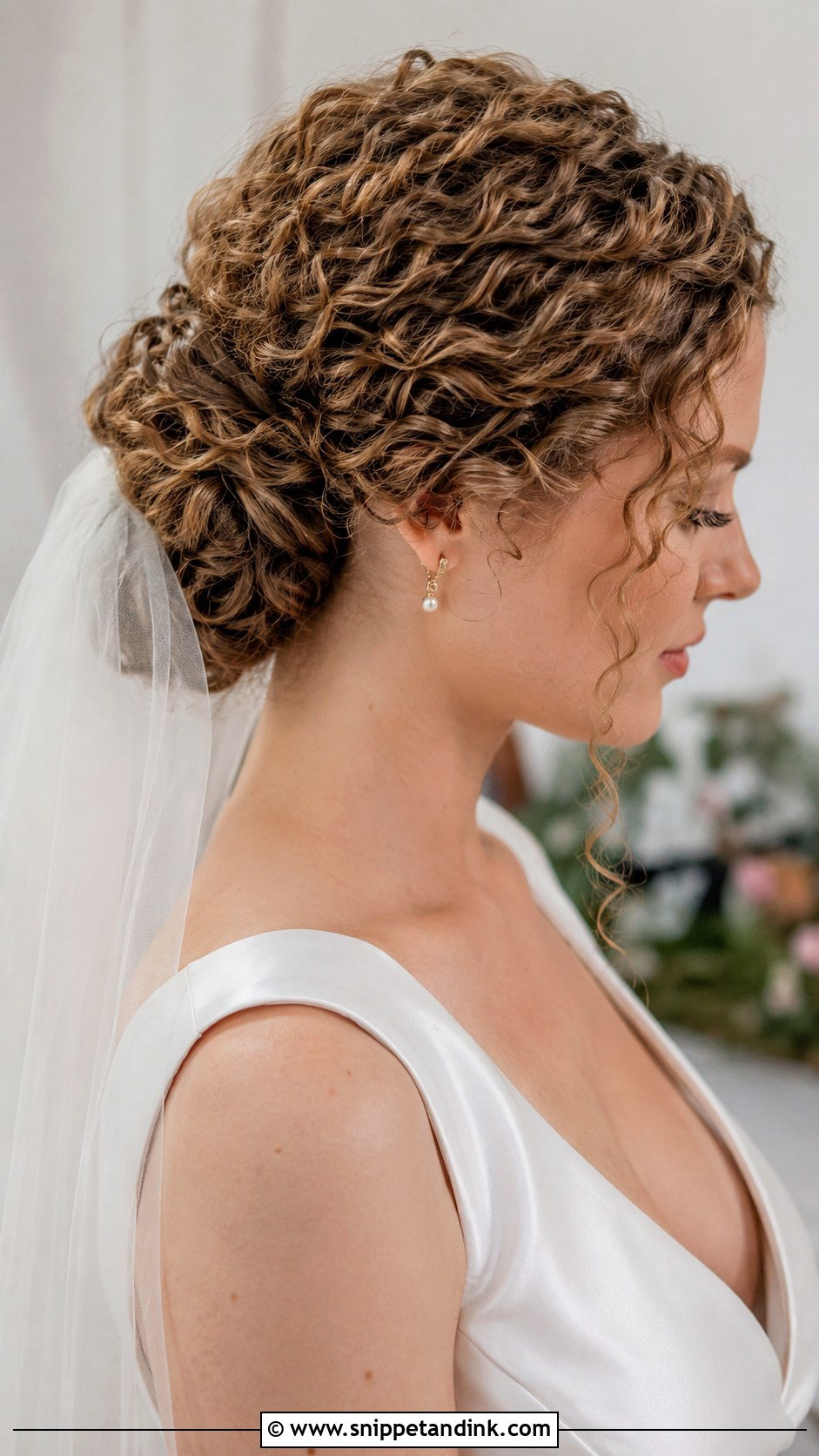
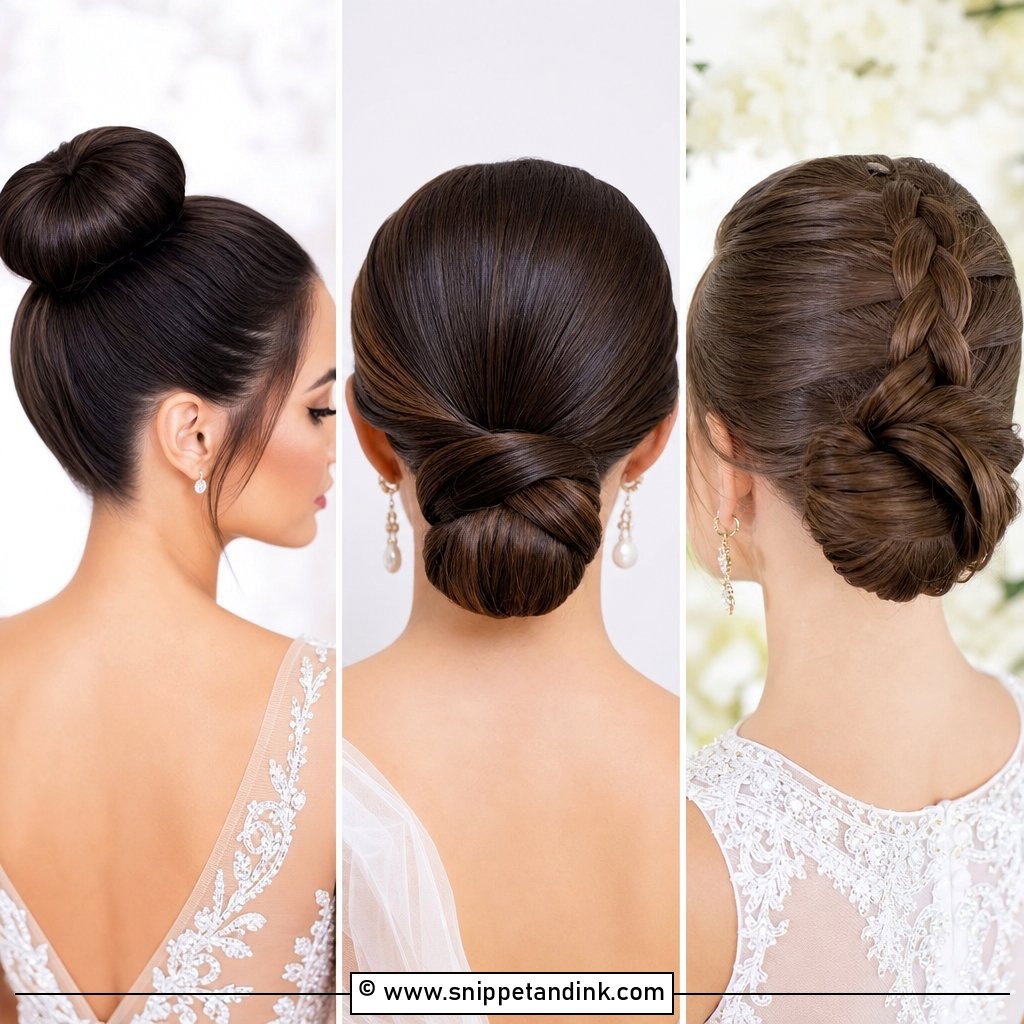
Smoothing every curl flat defeats the point. For a low bun I gather the curls loosely at the nape and pin them in a rounded, textured shape, which looks fuller than the same hair pulled sleek. A few curls at the temples and jaw soften it. It sits well under a veil and suits backless and high-neck gowns, and on a warm outdoor day it keeps the neck clear. Flexible hold spray, not a firm one, so the bun moves slightly rather than cracking.
3. Tight Curls Wedding Hair High Bun
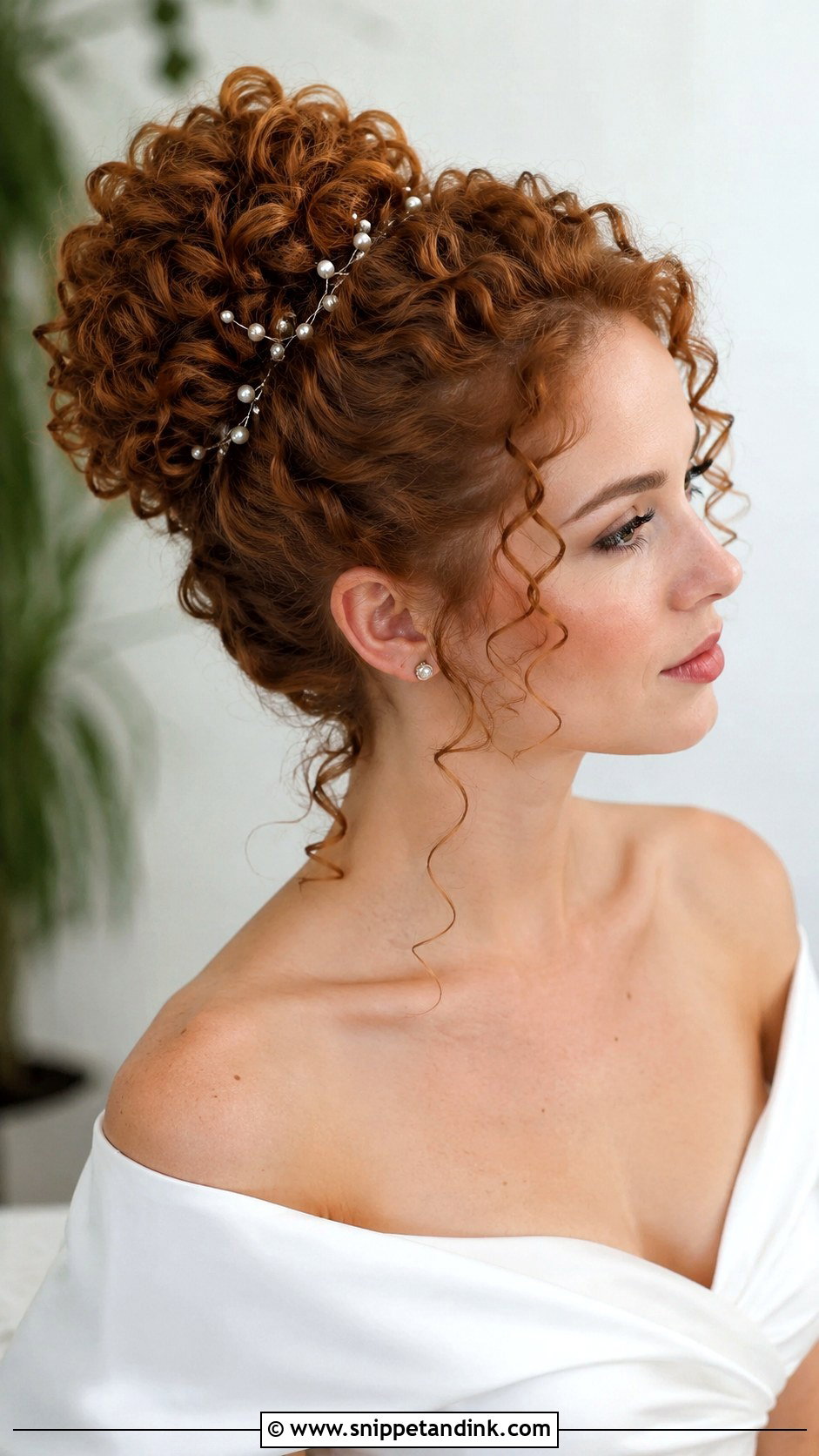
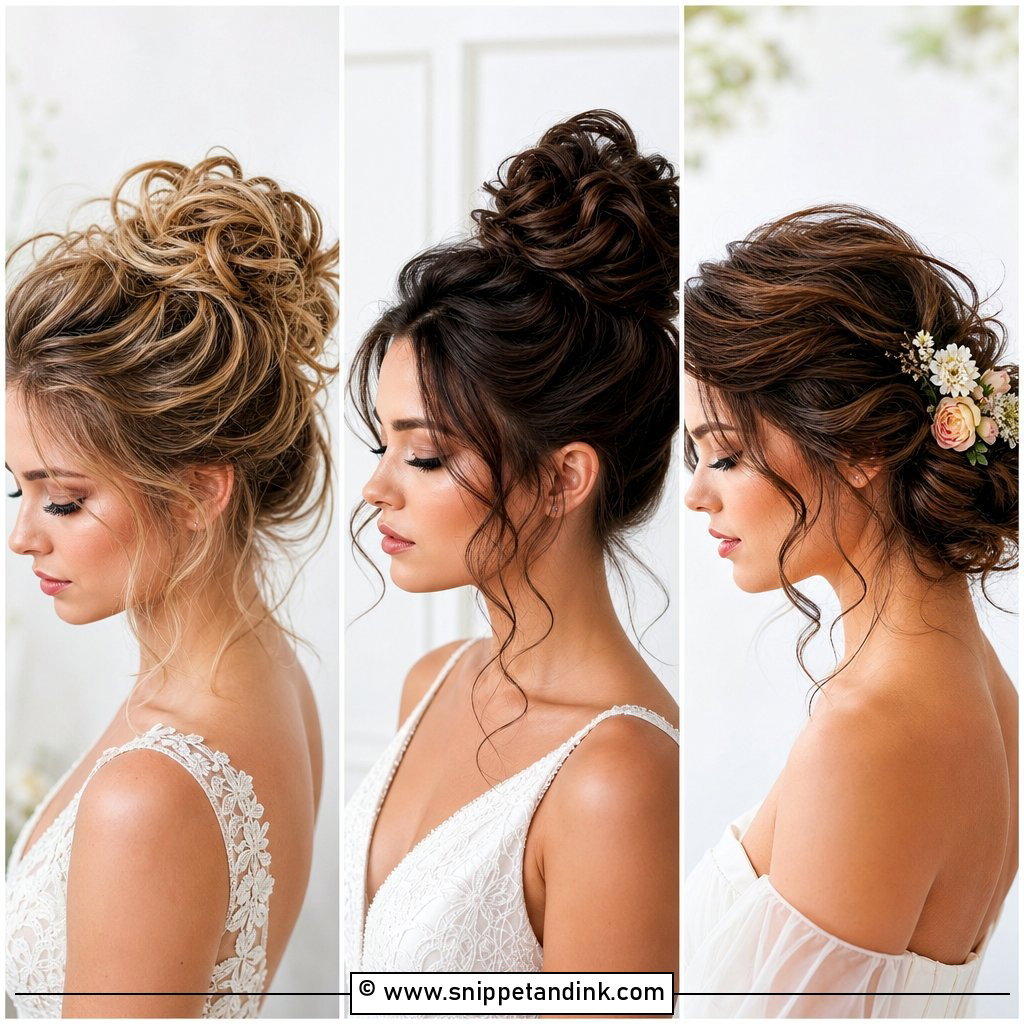
A high bun of curls gets its height from the curls themselves, so there’s no need for teasing or padding. I gather them near the crown with a soft elastic and pin outward, keeping the texture visible all over rather than smoothing it into a shell. Neckline, earrings and dress details get full attention, and your neck stays cool. A delicate hair vine or pearl pins sit easily among the curls, and a veil can go under the bun.
4. Tight Curls Wedding Hair Side Part
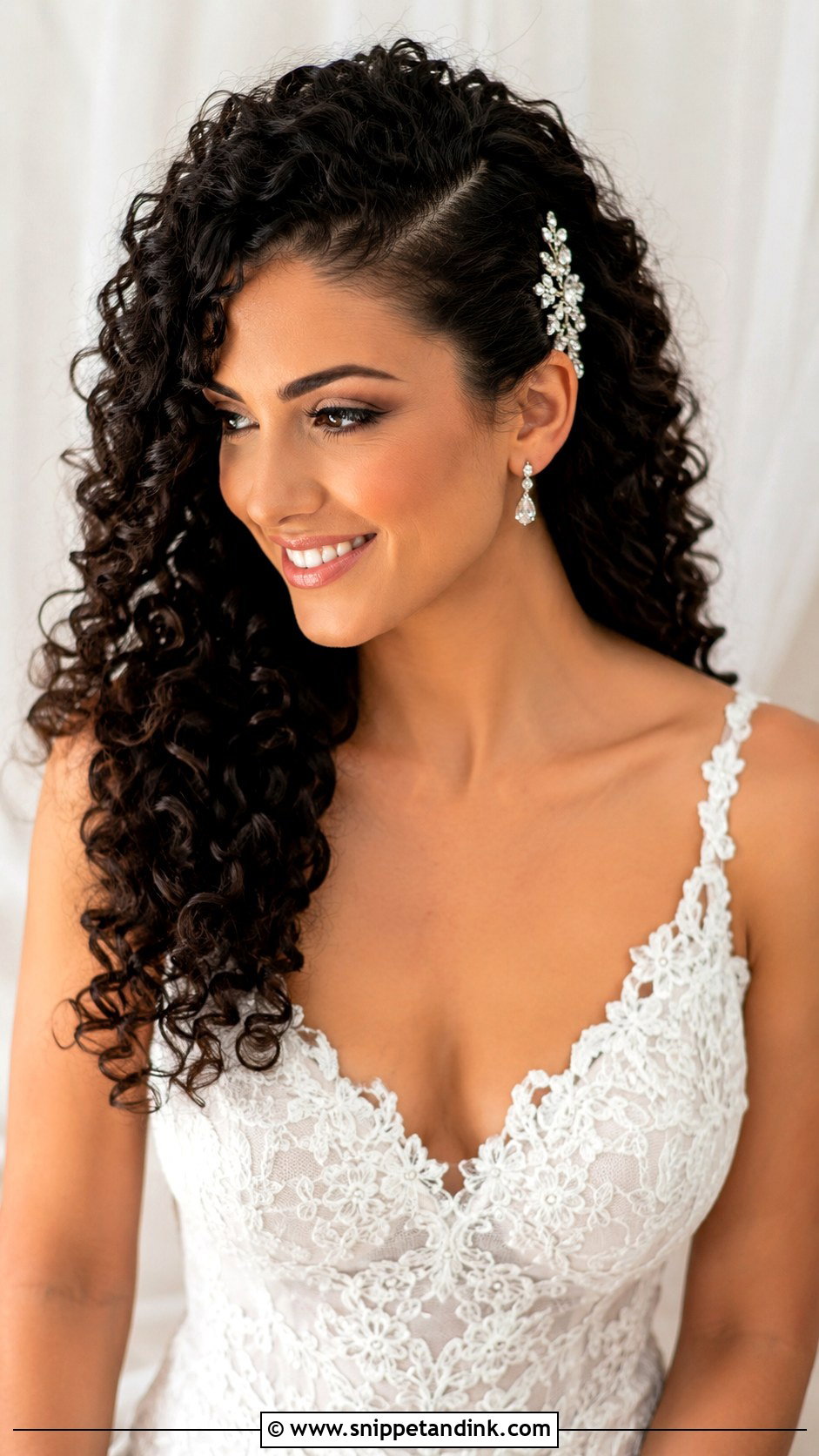
A deep side part gives curly hair a direction, which is often the thing missing when curls are worn down. One side gets tucked or pinned back with a comb or clip; the other falls fuller around the face. I define the curls from root to end and separate them gently with fingertips for volume. The pinned side should be smooth enough to look intentional without flattening the pattern. When a bride wants her hair down but polished, this is where I go first.
5. Tight Curls Wedding Hair With Veil
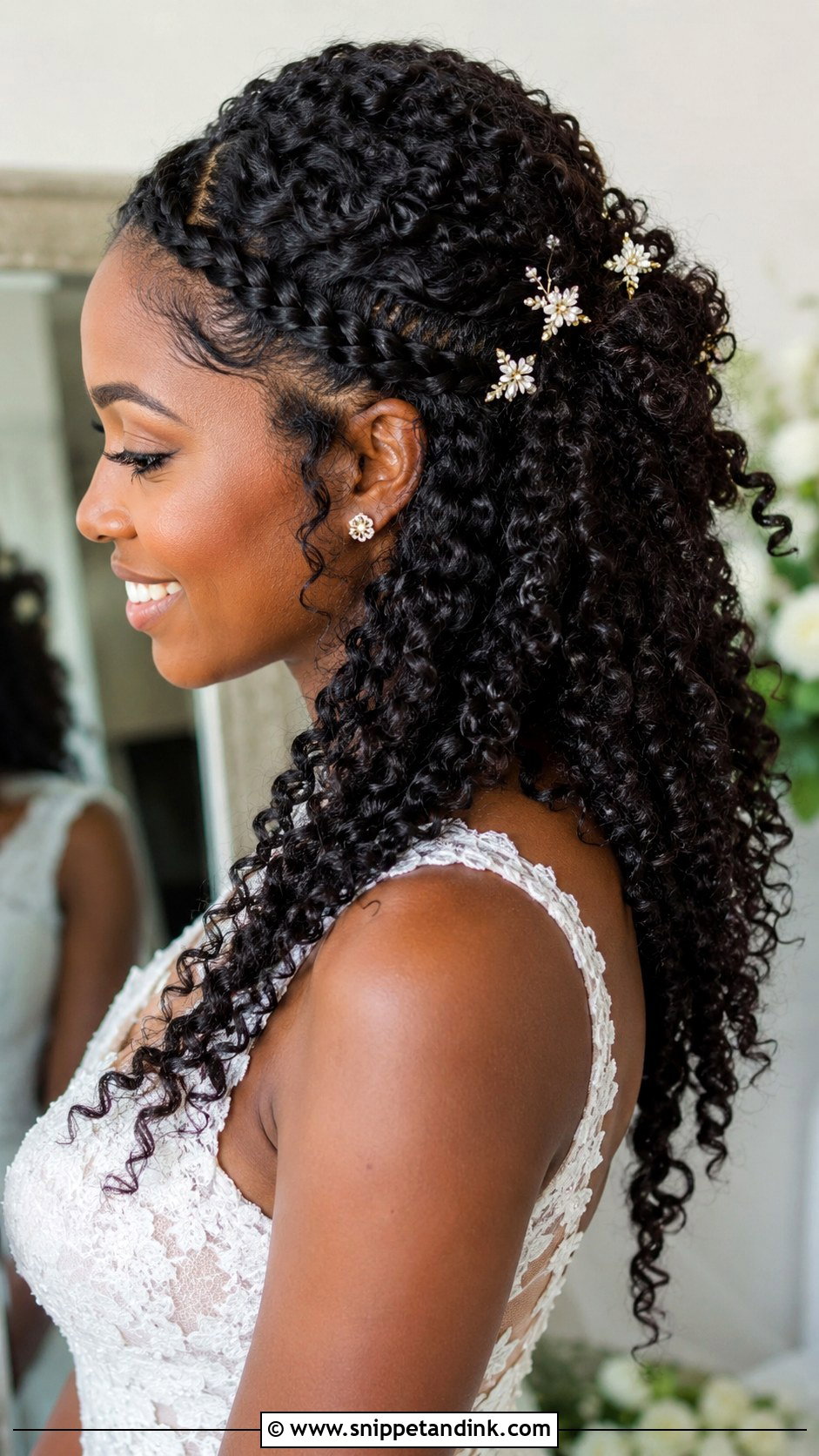
Curly hair and veils get along better than people expect, since the texture grips the comb. A half-up section, a low or high bun, or a pinned crown all give the veil a secure home. Worn fully down, the curls need a small hidden anchor: a couple of crisscrossed pins near the crown for the comb to slide into. Short, chapel and cathedral lengths all work, but a long veil is heavier, and you’ll want to feel that pull at the trial. Leaving a few curls around the face means you still look finished after the veil comes off.
6. Tight Curls Wedding Hair With Tiara
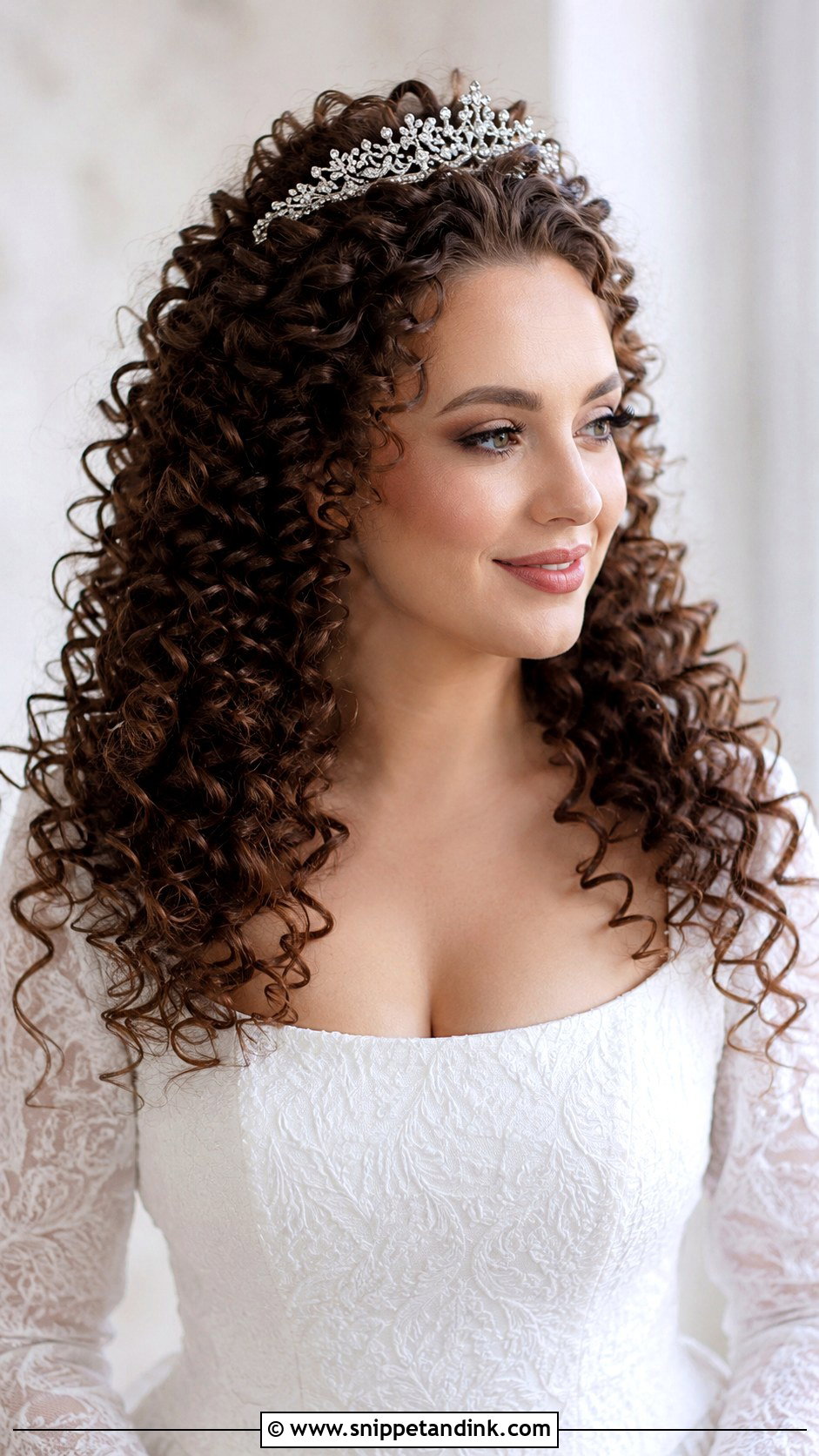
A tiara rests well on curls because the texture props it up. It can sit on a half-up crown, in front of a high bun or above curls worn down. When the tiara is bold, I keep everything else plain. A center part gives a classic princess look; a side part reads more modern. The curls nearest the face need more control than the ones at the back, which can be as full as you like.
7. Tight Curls Wedding Hair Ponytail
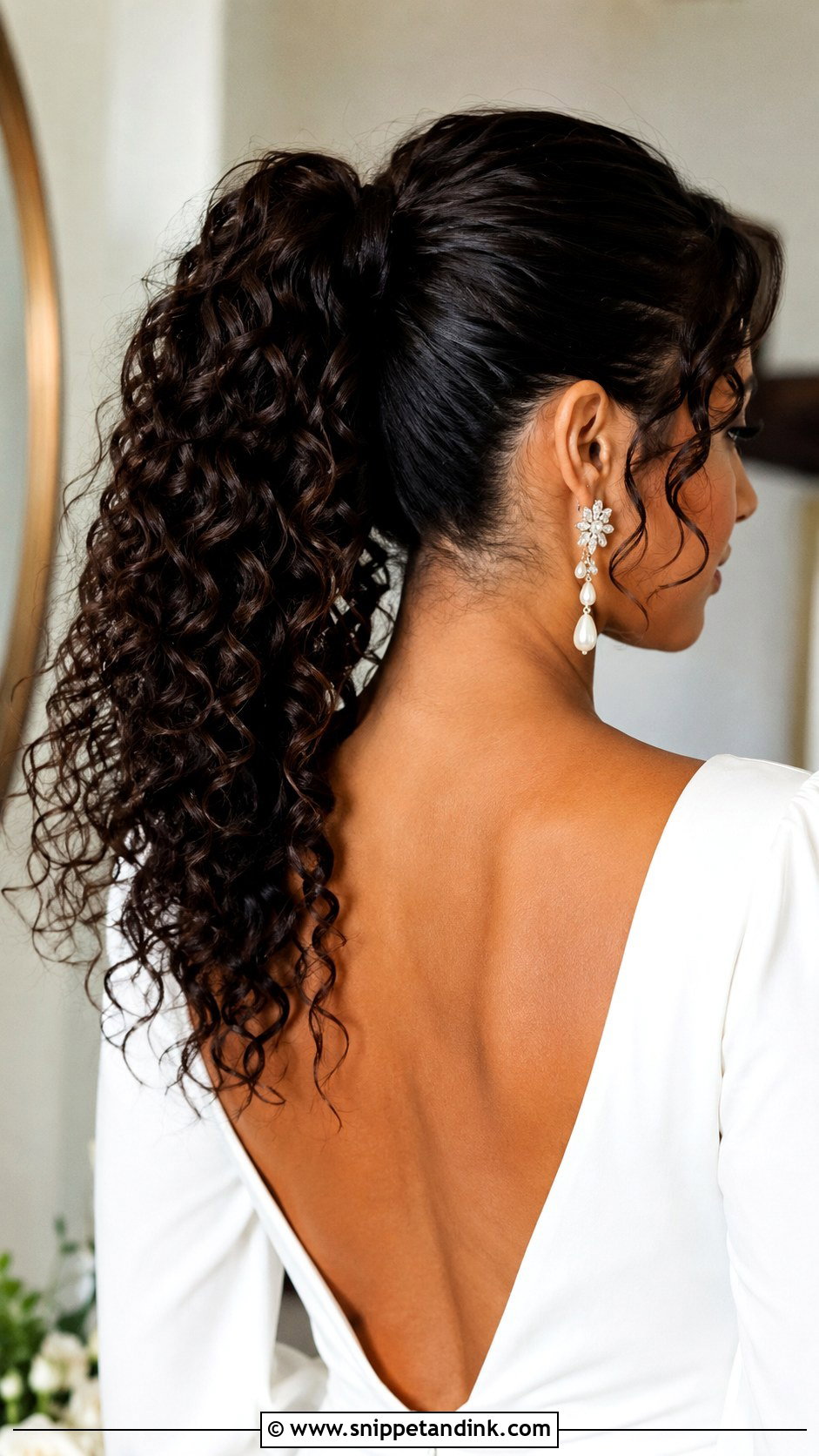
Gathered into a mid or high ponytail, tight curls fall as a cascade that swings when you walk. From the side and back, against an open back or a clean neckline, the effect is striking. A wrapped section of hair hides the elastic. The crown can be lifted or sleek. Curly ponytails are heavy because of their volume, so I use two elastics, and I ask brides to tell me immediately if the tie feels tight, since they’ll be wearing it for many hours.
8. Tight Curls Wedding Hair Updo
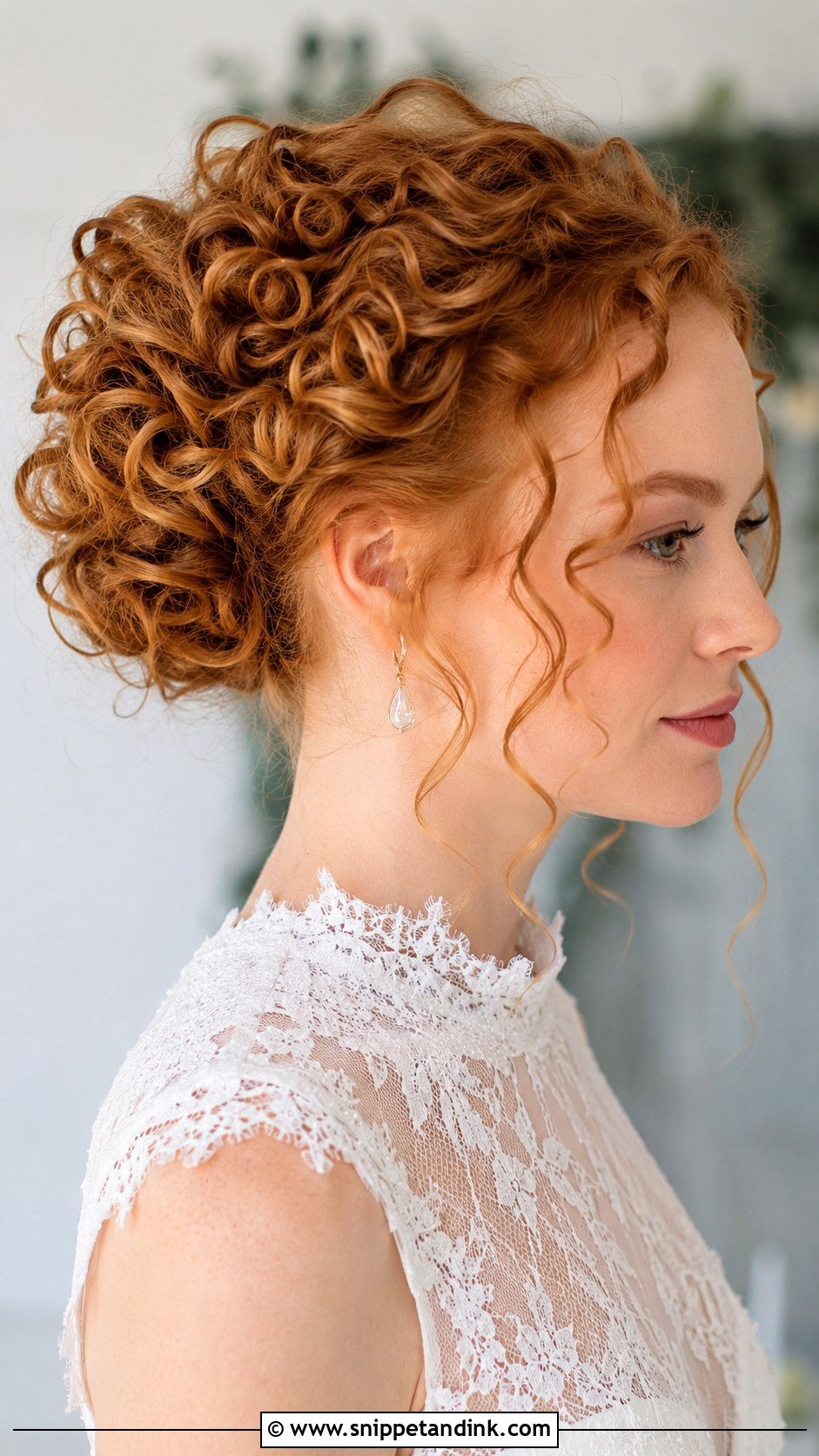
A curl-led updo keeps the pattern visible throughout, which is what separates it from a smooth formal updo. The curls are pinned into a soft shape with volume at the back and loose detail at the front. Shoulder-length and longer hair works, and fine hair looks fuller this way because every curl adds shape. Check the silhouette from three sides at the trial. Gaps between pinned curls show in back photos more than you’d think.
9. Tight Curls Wedding Hair Down
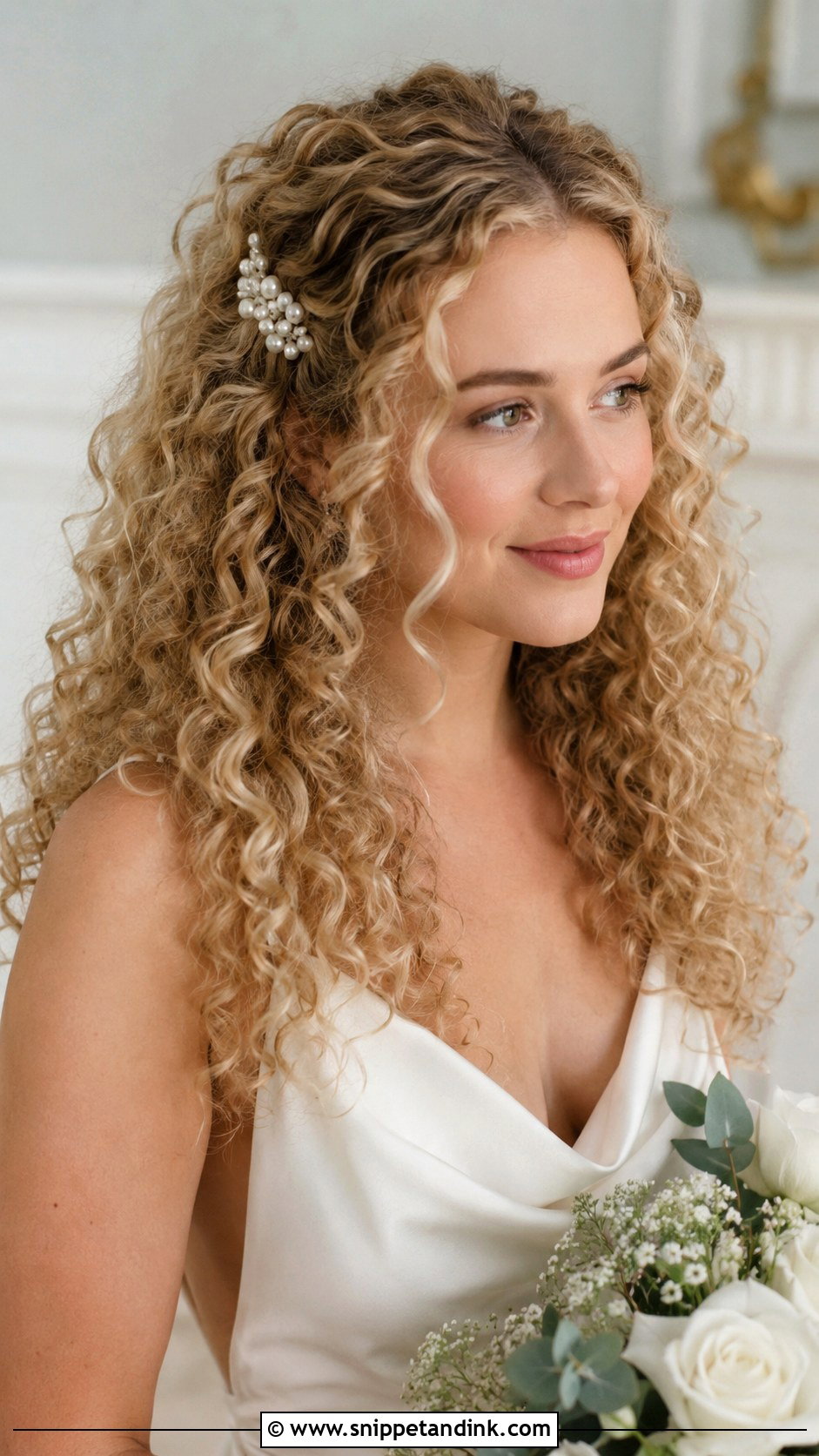
Worn down, tight curls need more prep than any other style here, not less. A soft lift at the crown, a clean part, shaped curls at the face and one small accessory make them look like wedding hair rather than a good Tuesday. Long curls fall over the shoulders; medium curls look bouncy. Humidity-resistant products help, and so does not touching them once they’re set. Natural curls shrink as they dry, so a trial tells you the real finished length.
10. Tight Curls Wedding Hair With Braids
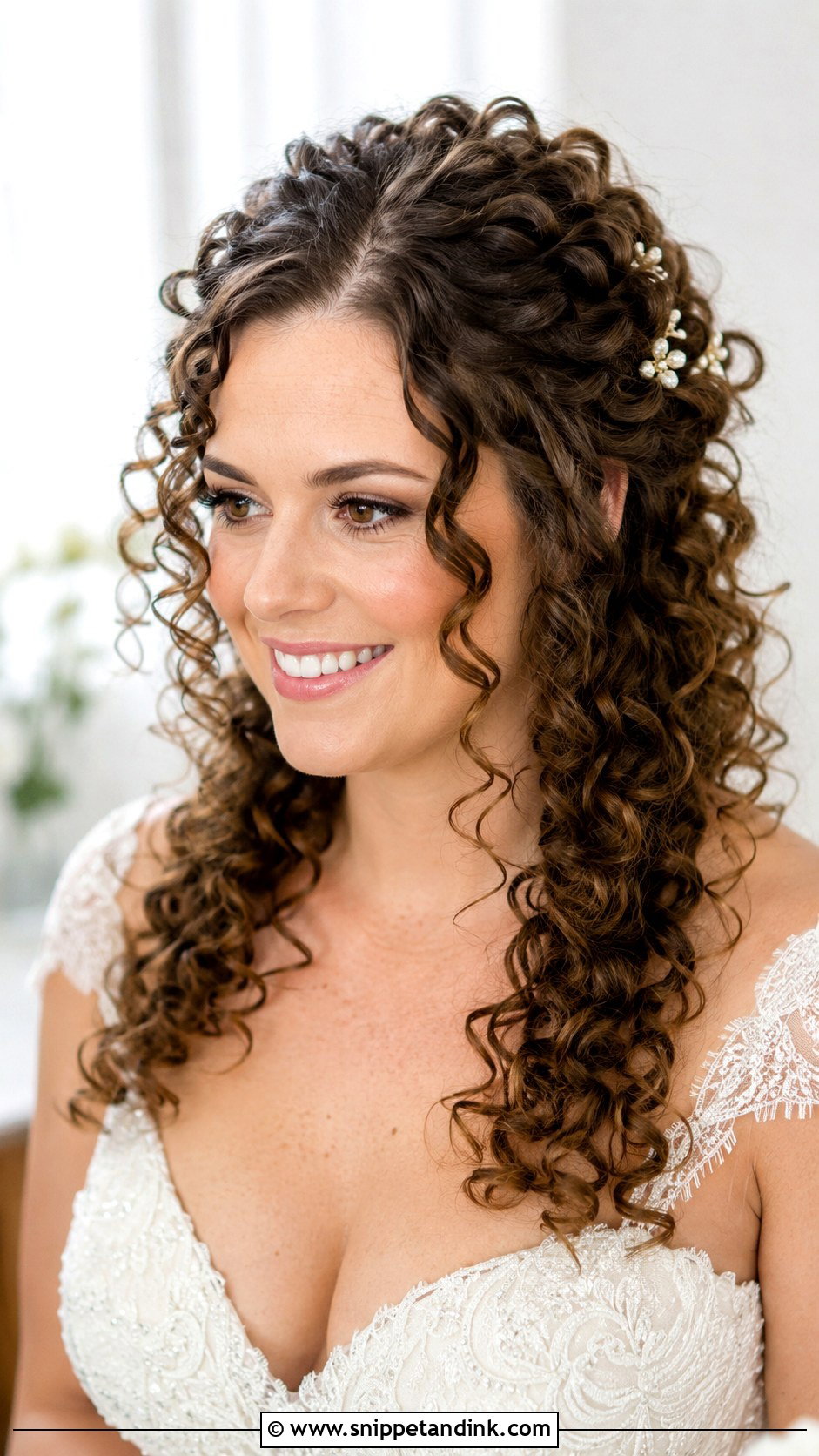
One small braid is usually all curly hair needs for detail: a crown braid, a side braid or a braided half-up section. It frames the curls without taking over. For natural curls or coily textures, braiding the front section is also practical, keeping the hairline controlled while the rest stays full. Braid firmly enough to last, then soften the edges so it blends. Gardens, rustic barns and beaches all suit it, with a few tiny pins or flowers worked in.
11. Tight Curls Wedding Hair With Flowers
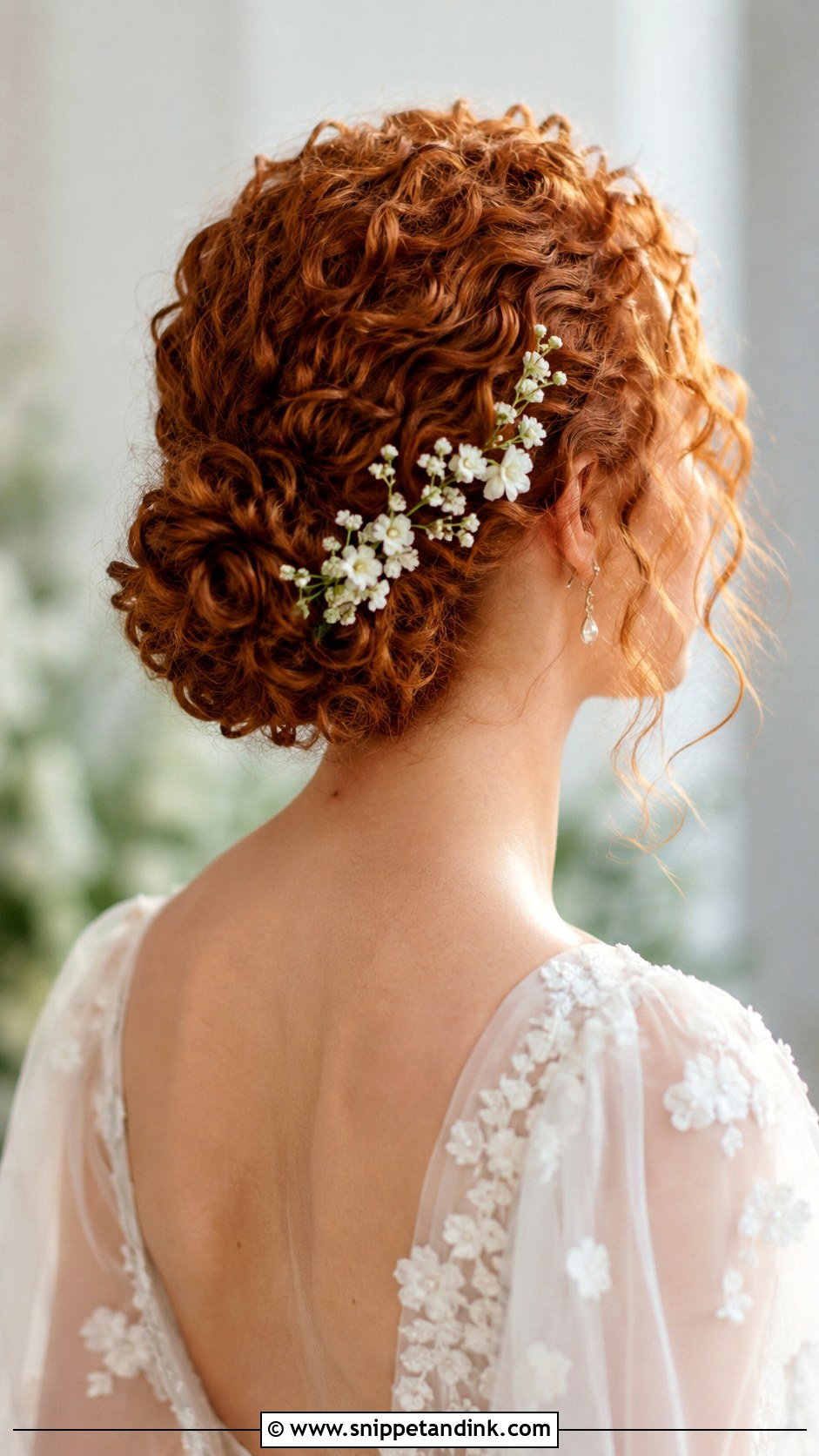
Flowers sit well in curls because the texture holds stems without much pinning. Small blooms tuck into a low bun, half-up section, braid or pinned side part, following the curl shapes rather than resting flat on top. Weight matters. Baby’s breath, mini roses and small orchids are light enough not to droop; heavier heads pull at the curls by evening. Fresh flowers should go in last, after the hairspray, so they don’t spot. Coordinate with your florist so the hair flowers echo the bouquet.
12. Tight Curls Wedding Hair For Short Hair
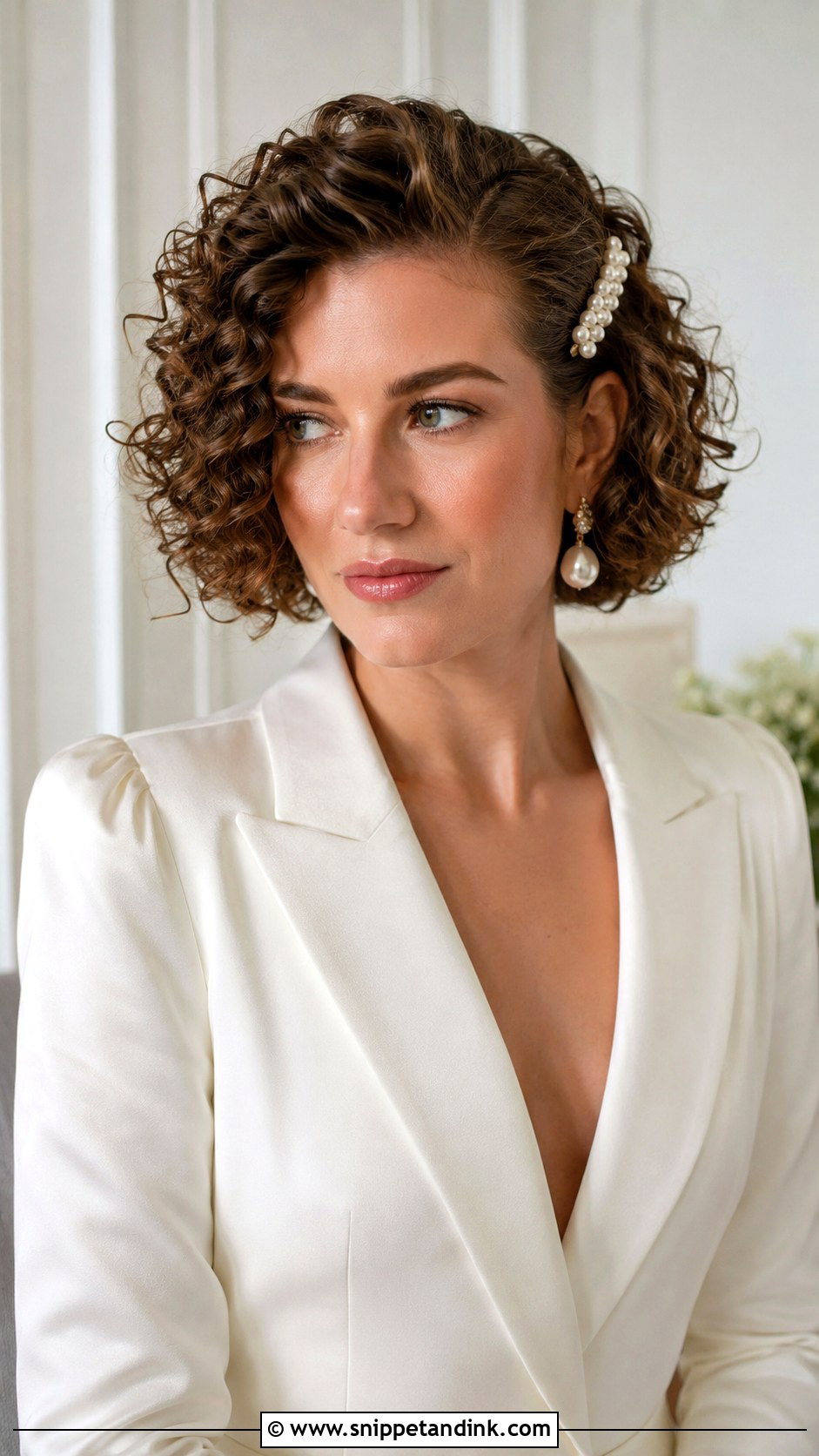
Short curls can look every bit as bridal as long ones. A curly bob, cropped curls or chin-length ringlets need a defined part, controlled volume and one accessory. Pinning a side back adds polish and shows the face. On very short curls I focus on shine and a clean outline. A birdcage veil, pearl barrette, floral pin or tiny comb gives the wedding detail. Short hair is also the easiest to refresh with a spritz of water and a little curl cream.
13. Tight Curls Wedding Hair For Long Hair
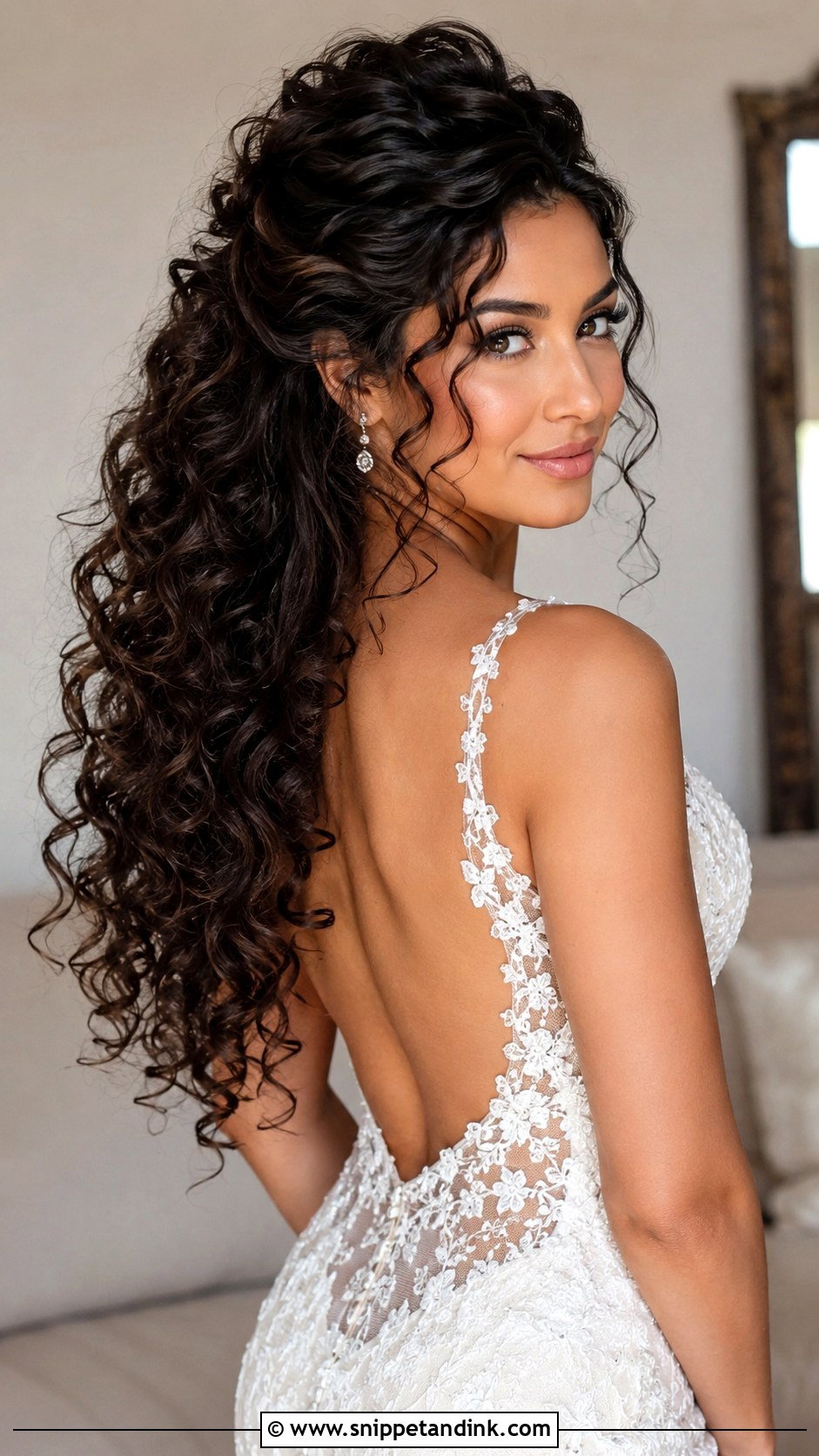
Long curls give you every option: down, half up, ponytail or a full updo. Their weakness is weight. Long hair stretches its own curls over the course of the day, so heat-set ringlets on very long hair need smaller sections and stronger setting products than usual, and pinning cooled curls until the last minute helps them last. Layers lighten the load. If your dress has a detailed back, a side-swept or half-up shape lets the curls frame it instead of hiding it.
14. Tight Curls Wedding Hair For Natural Hair
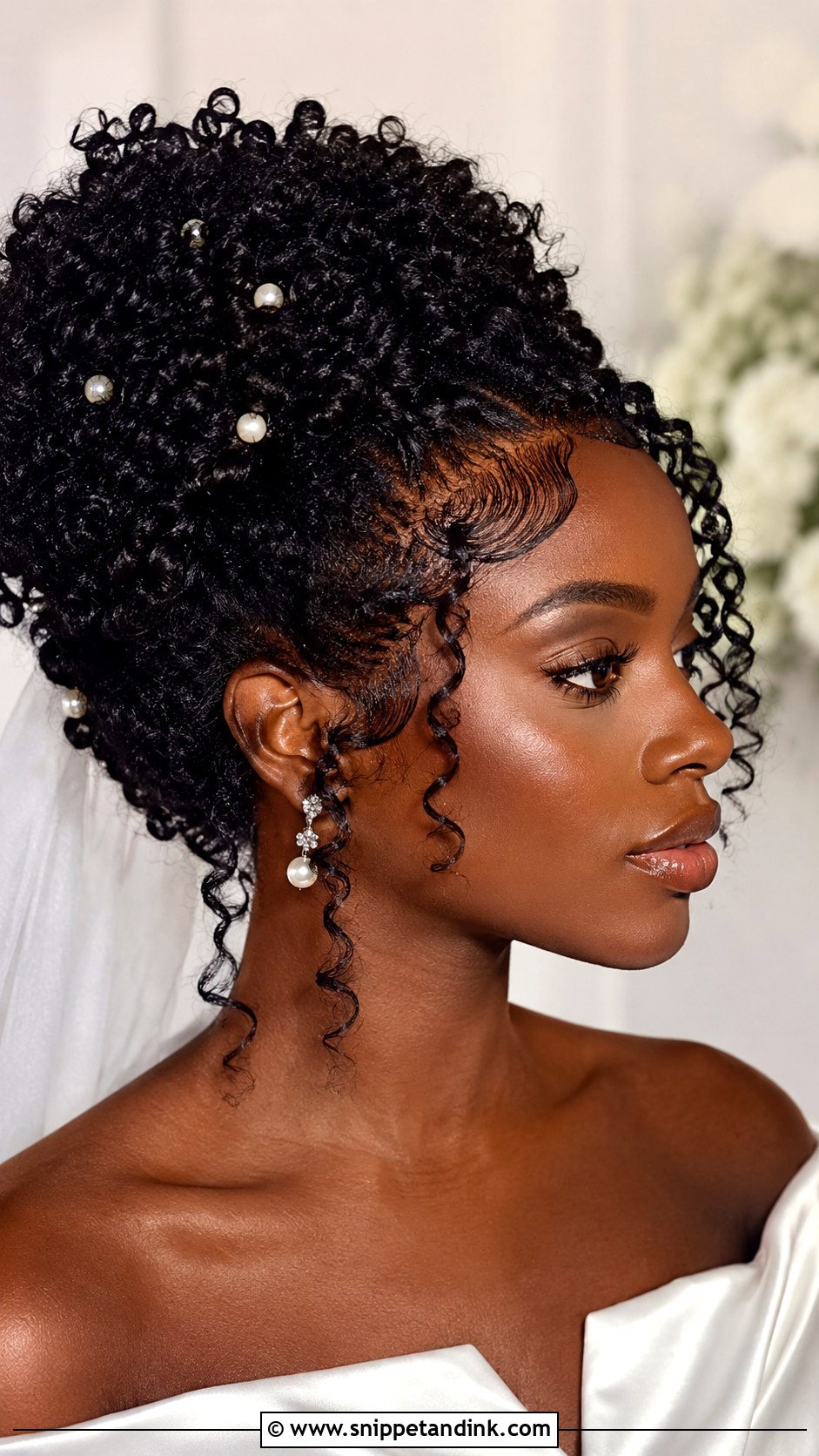
Natural hair has the curl shape already; the work is moisture and definition before any pinning. A defined wash-and-go, a curly puff, a pinned updo, a twist-out updo or half up with sculpted edges all work. Brides with coily or kinky textures can use their natural volume to build a silhouette no heat style can match. I wrap the hair in satin the night before and place accessories with smooth backs so they don’t snag. A small refresh kit with a water mister and leave-in handles the reception.
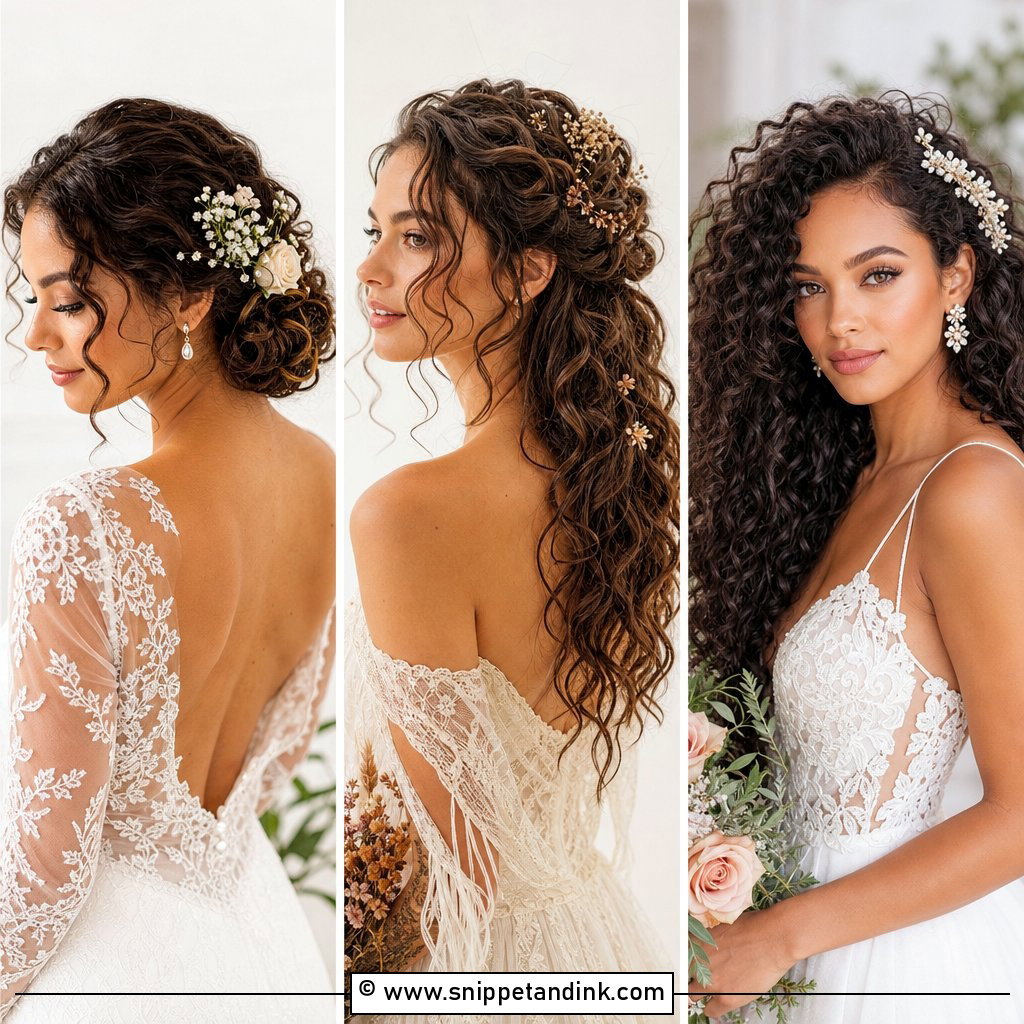
15. Tight Curls Wedding Hair With Face Framing Curls
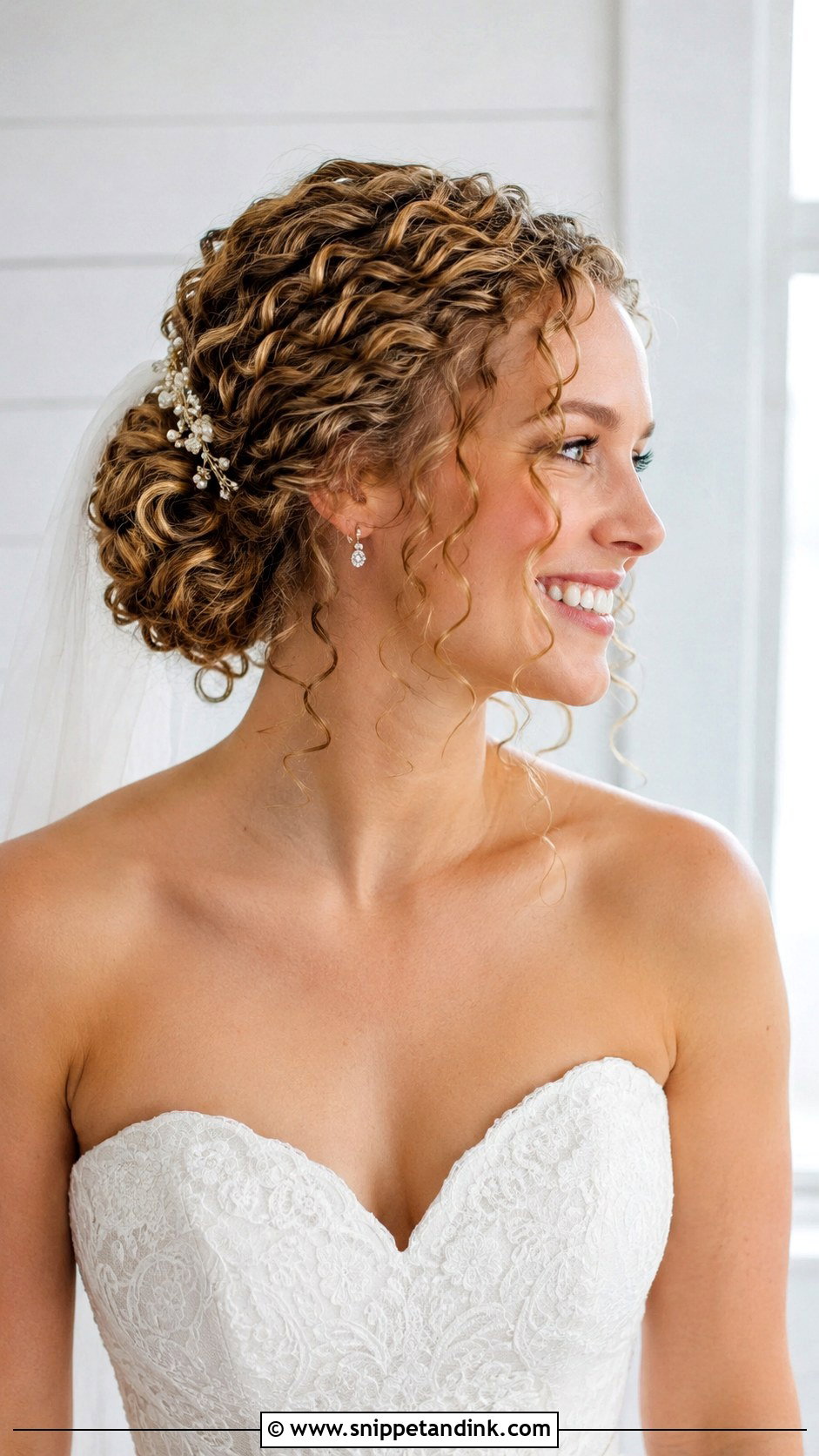
Face-framing curls are the detail people notice in close-ups. The main style can be a bun, half up, ponytail or updo, with chosen curls left at the face. They have to look placed, not escaped. I pick the length by face shape and neckline, landing at the cheekbone, jaw or collarbone, and set them with a light hold so they stay soft but keep their spiral. They’re especially kind to a veil or tiara, which can feel severe on a fully pulled-back face.
If the Forecast Says Rain
Moisture in the air affects tight curls in opposite ways. Natural curls drink it in and expand into frizz; heat-set curls lose their memory and slowly loosen. Either way, the fix is planned the day before, not on the morning.
- Use a gel or cream with real hold on natural curls, and let it dry completely before stepping outside.
- For heat-set curls, pick a pinned style over curls worn down. Pinned curls are supported and drop less.
- Keep a small umbrella for the walk from the car. A few minutes of drizzle undoes an hour of styling.
- Pack a mister, a little curl cream and pins for a bridesmaid to carry. Rewetting and scrunching a frizzy section is faster than brushing it.
Never brush dry tight curls to tidy them. The brush turns every curl into a cloud of frizz, and the only cure is wetting the hair and starting over. Fingers only, all day.
Let the Curl Pattern Lead the Style
Tight curls can look modern, classic, natural or romantic depending on how they’re shaped. The choice isn’t only up or down; it’s balancing your texture against the dress, veil, accessories, weather and comfort. A trial is especially worthwhile because tight curls change with product, humidity, length and pin placement. Bring photos from the front, side and back so your stylist sees the whole picture. If your curls feel secure, soft and like your own, the style is right.
You'll Like These Ideas:


Leave a Reply