
A traditional bridal hairstyle has a job to do before it has to look pretty. It carries the weight of a dupatta, a veil, a maang tikka or a flower string for hours, often through heat, hugging and a lot of sitting cross-legged. When I plan one, I start with what will be pinned to it and work backward to the shape. These traditional marriage hairstyle ideas are the ones I come back to most, with notes on where each one holds up and where it struggles, so you can walk into your trial knowing what to ask for.
Plan the Hair Around the Dupatta, Veil and Tikka First
Most of what decides a traditional style happens before a single curl. I ask three things at the consultation: what is going on your head, how long you’ll be wearing it, and how much of the ceremony you’ll spend seated or bending.
Weight and where it lands
A heavy embroidered dupatta pinned to the head can weigh far more than a tulle veil. It needs an anchor, which means a bun or a firmly pinned crown section. Loose hair cannot hold it. If your dupatta is heavy and you want your hair down, we’ll talk about a half-up base at the very least, or pinning the dupatta to a hidden braid.
Jewelry changes the part
A maang tikka or matha patti wants a clean center part. A passa on one side wants a side part with the hair smoothed flat on that side. Bring the pieces to your trial, not photos of them, so I can see where the hooks fall and how heavy the chains are.
Prepping your hair the right way
- Wash the day before, not the morning of. Freshly washed hair is slippery and pins slide out of it.
- Skip conditioner on the roots and avoid oiling, even if oiling is part of a pre-wedding ritual, unless it can be washed out a day ahead.
- If you plan extensions, buy them before the trial so they can be color-matched and cut in.
- Wear a button-front top on the day so nothing has to go over your head once the style is done.
1. Traditional Bridal Bun With Gajra
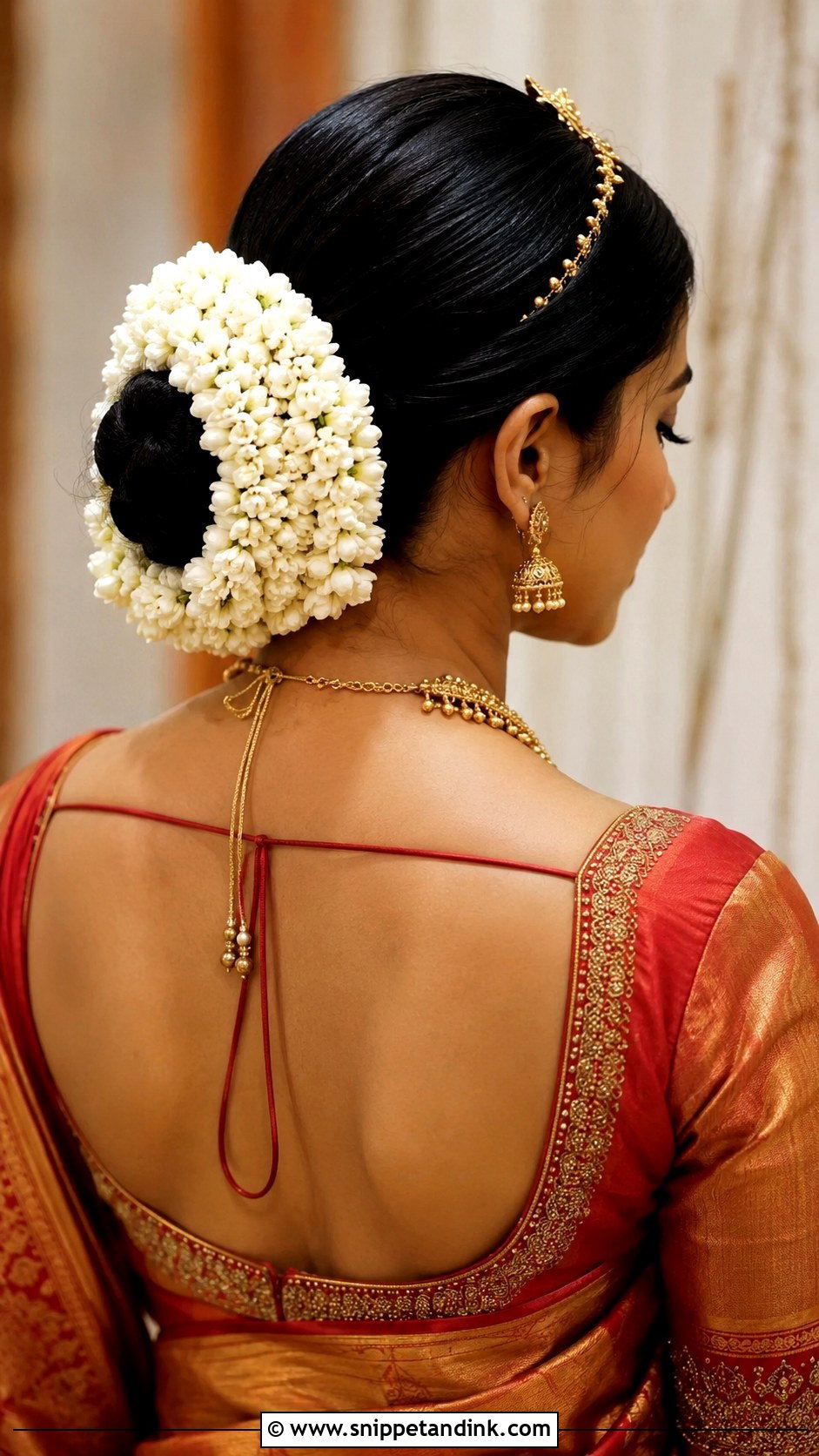
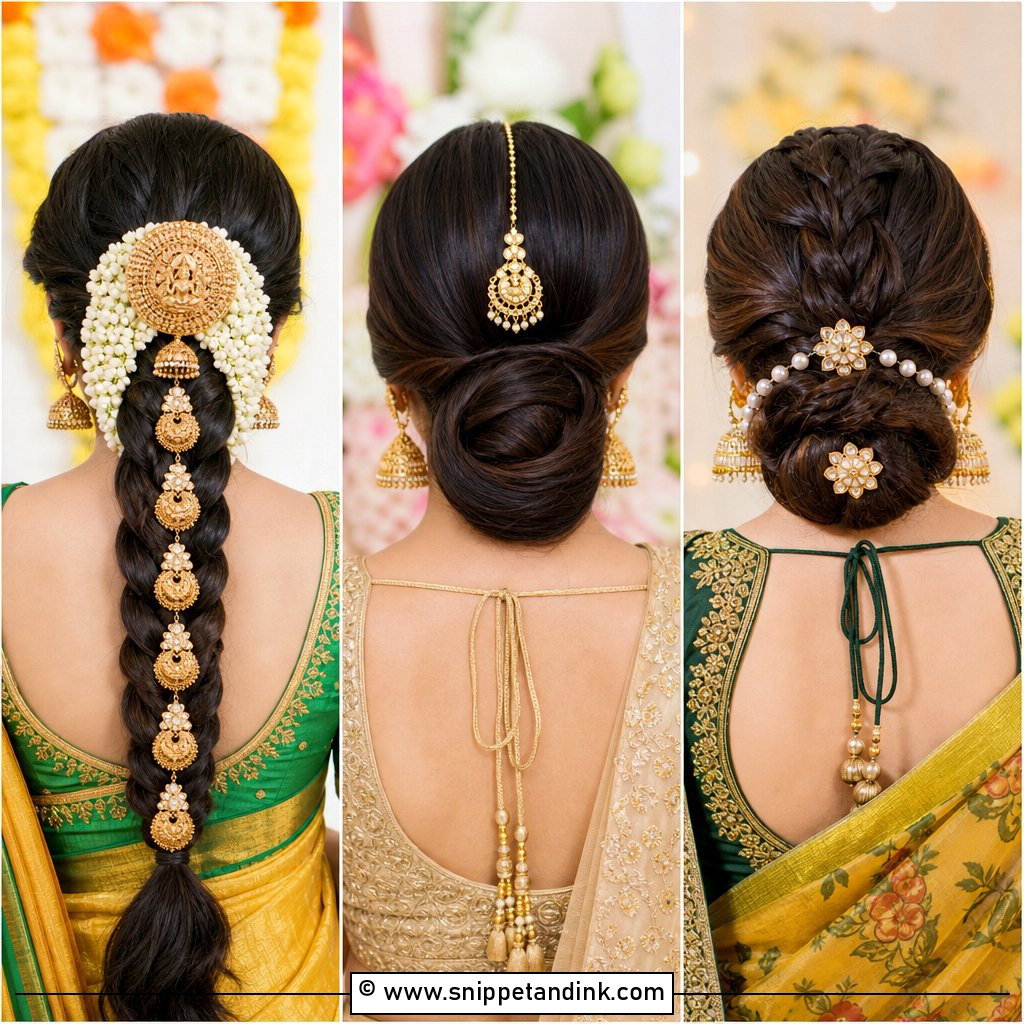
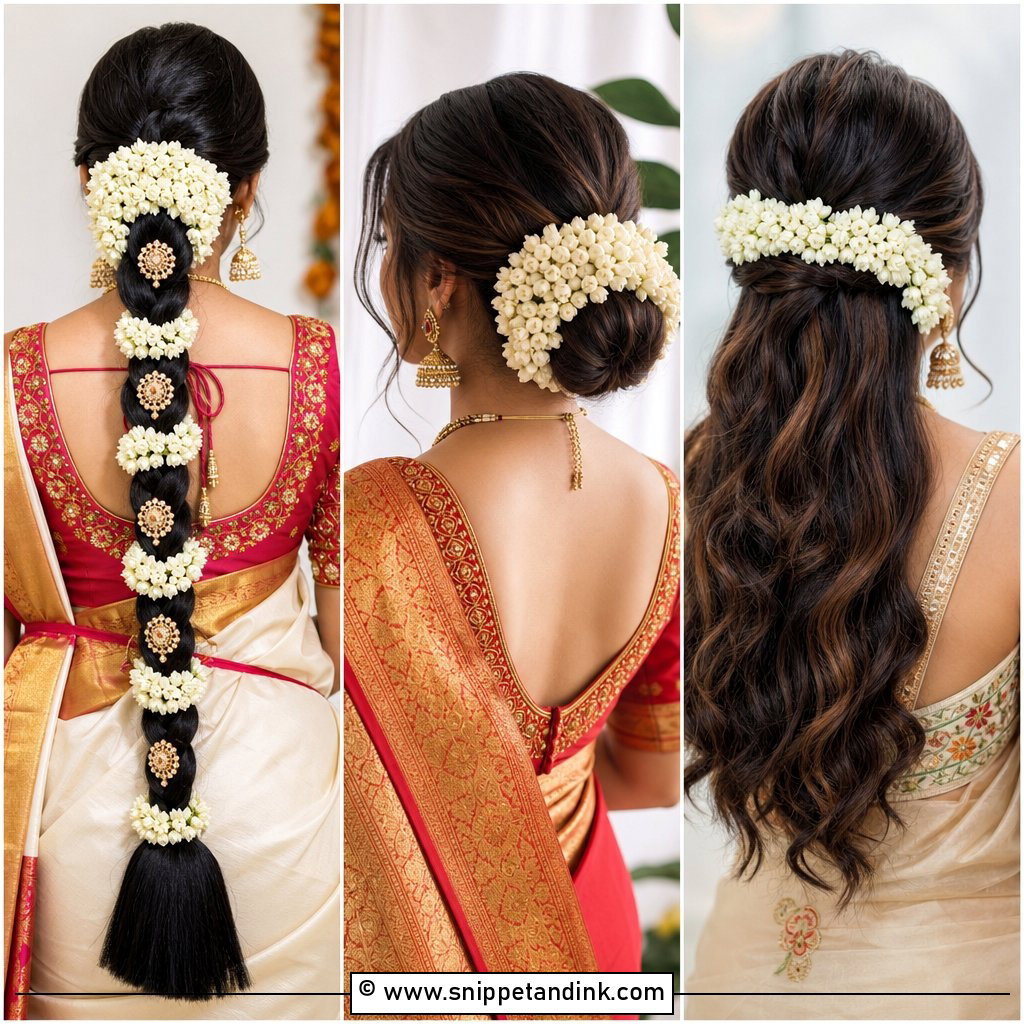
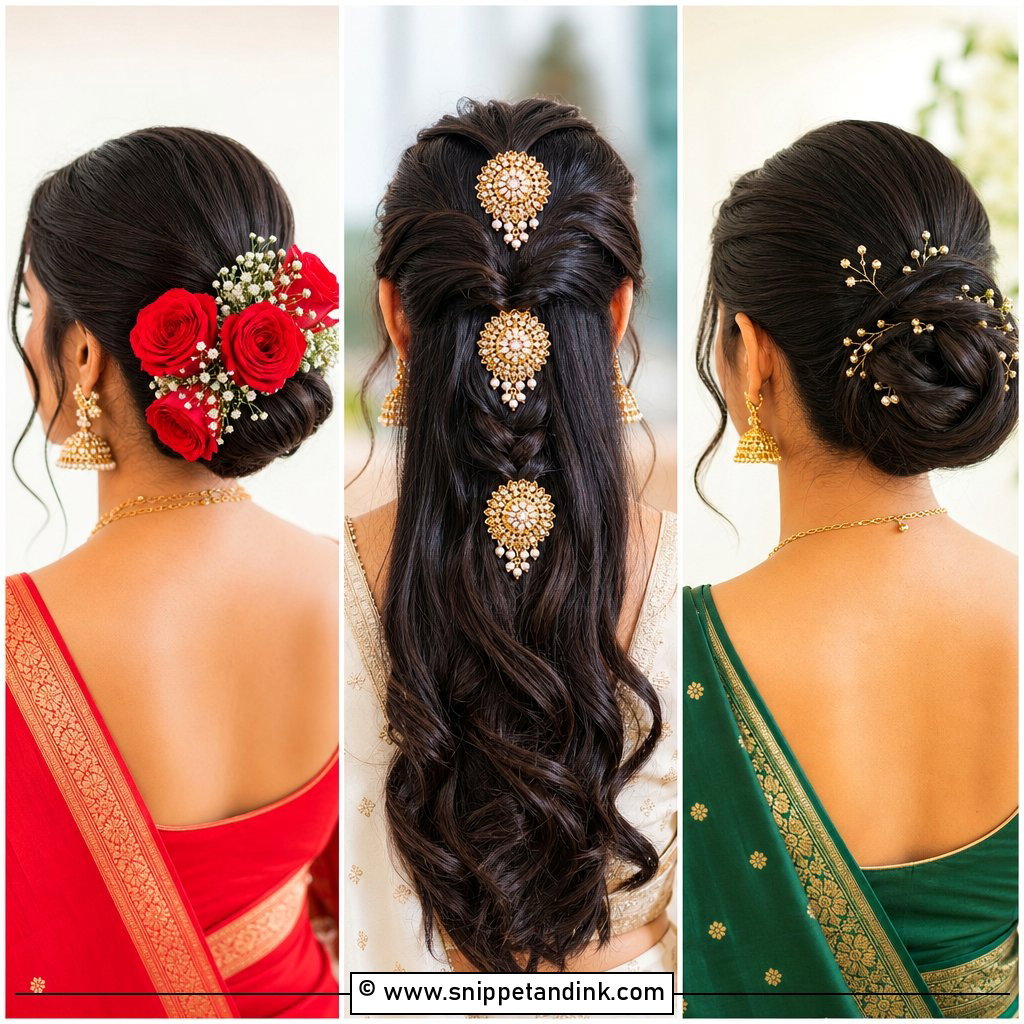
A traditional bridal bun with gajra is the style I get asked for more than any other, and for good reason: a firm round bun is the best anchor you can give a heavy dupatta. I build the bun over a padded donut or a small backcombed base so the gajra has something solid to wrap around, then secure the jasmine with U-pins pushed toward the center of the bun rather than along its surface. The buds open and soften over the evening, so I usually attach the strings last, after the outfit is on. If you want a softer face, I’ll leave two thin pieces at the temples and set them with a small iron.
2. Traditional Bridal Low Bun With Veil
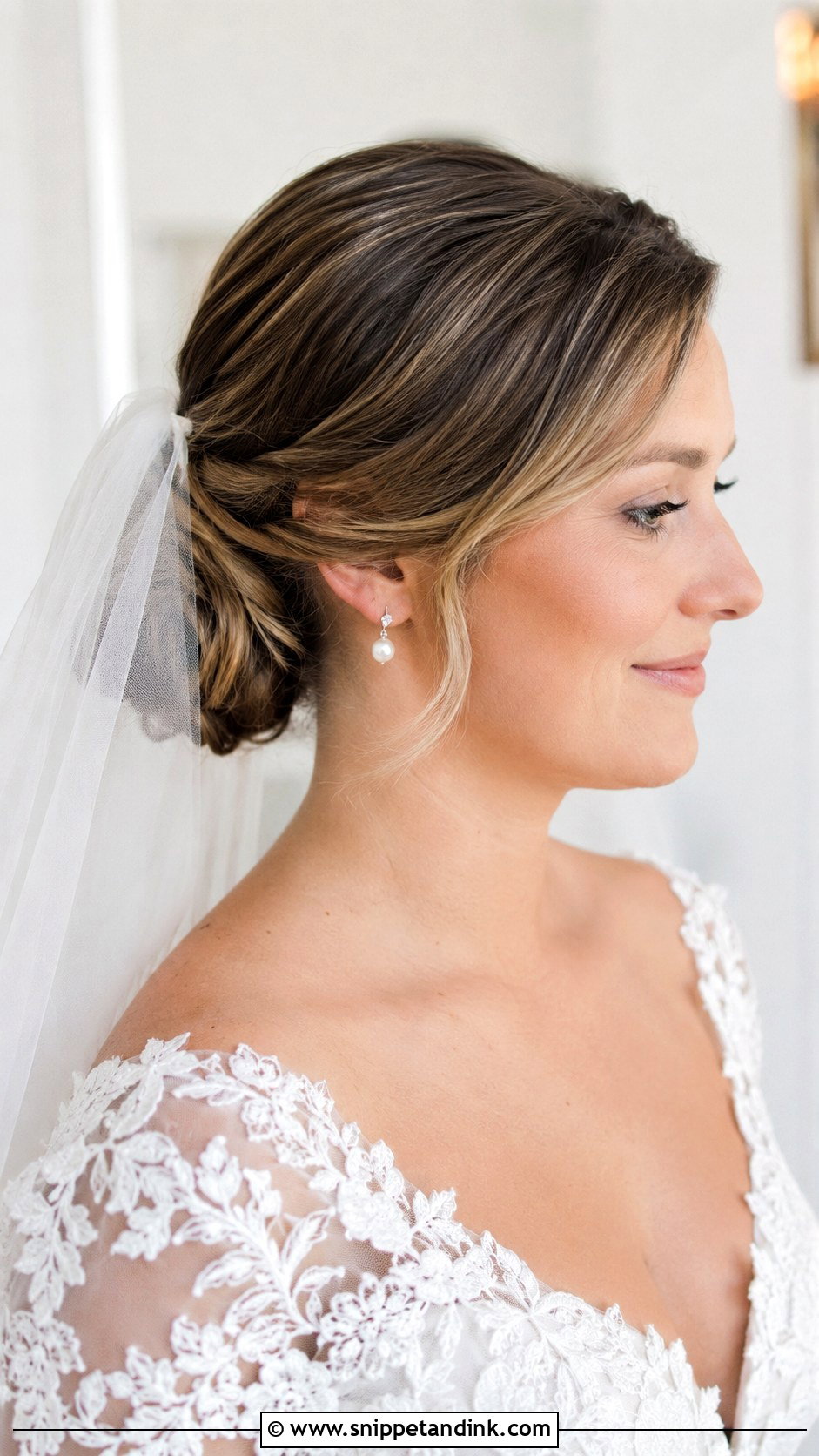
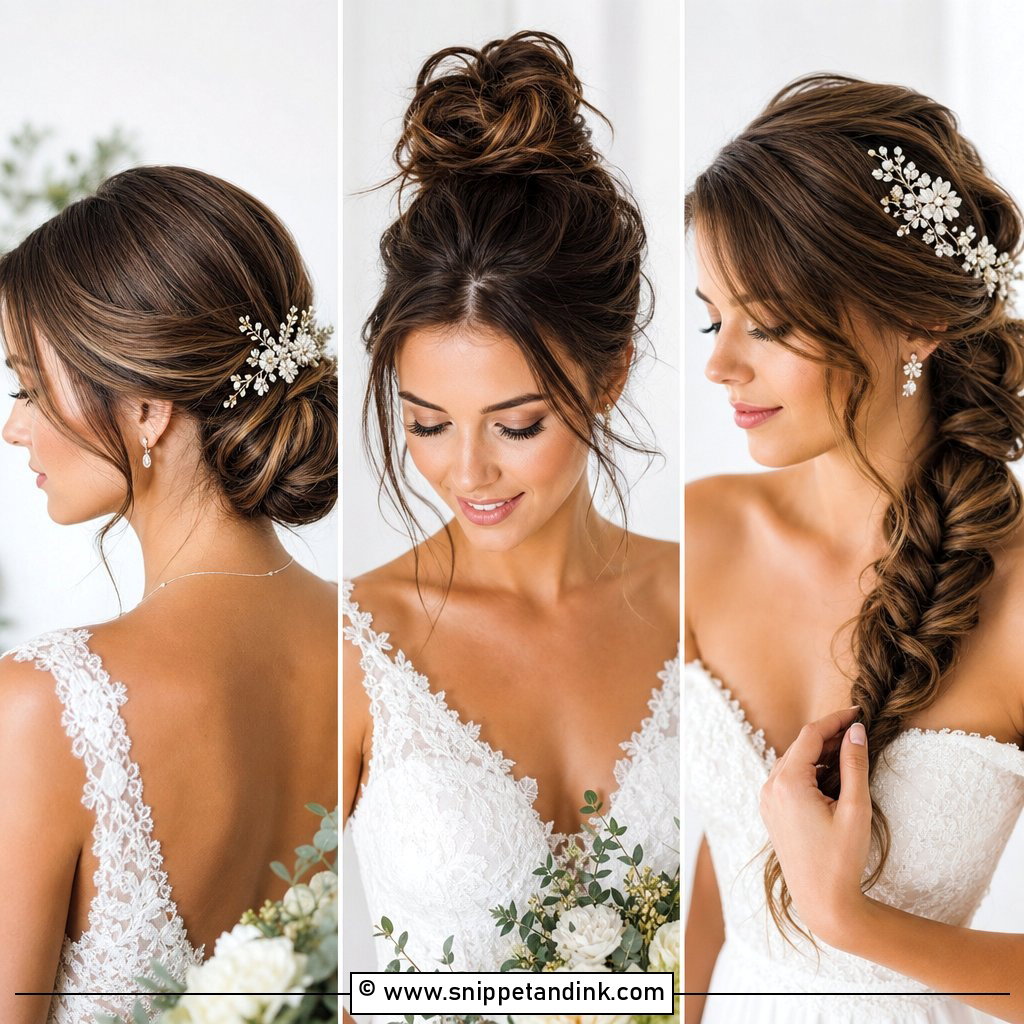
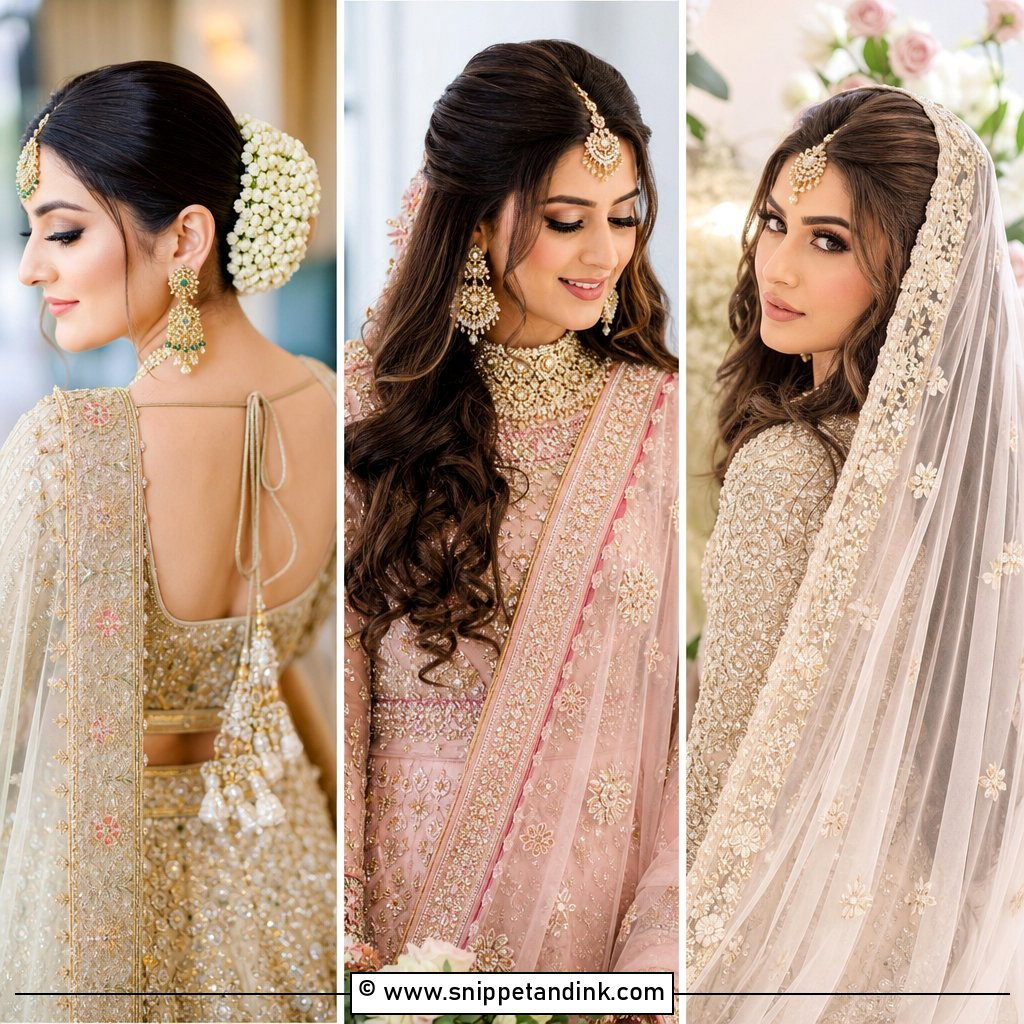
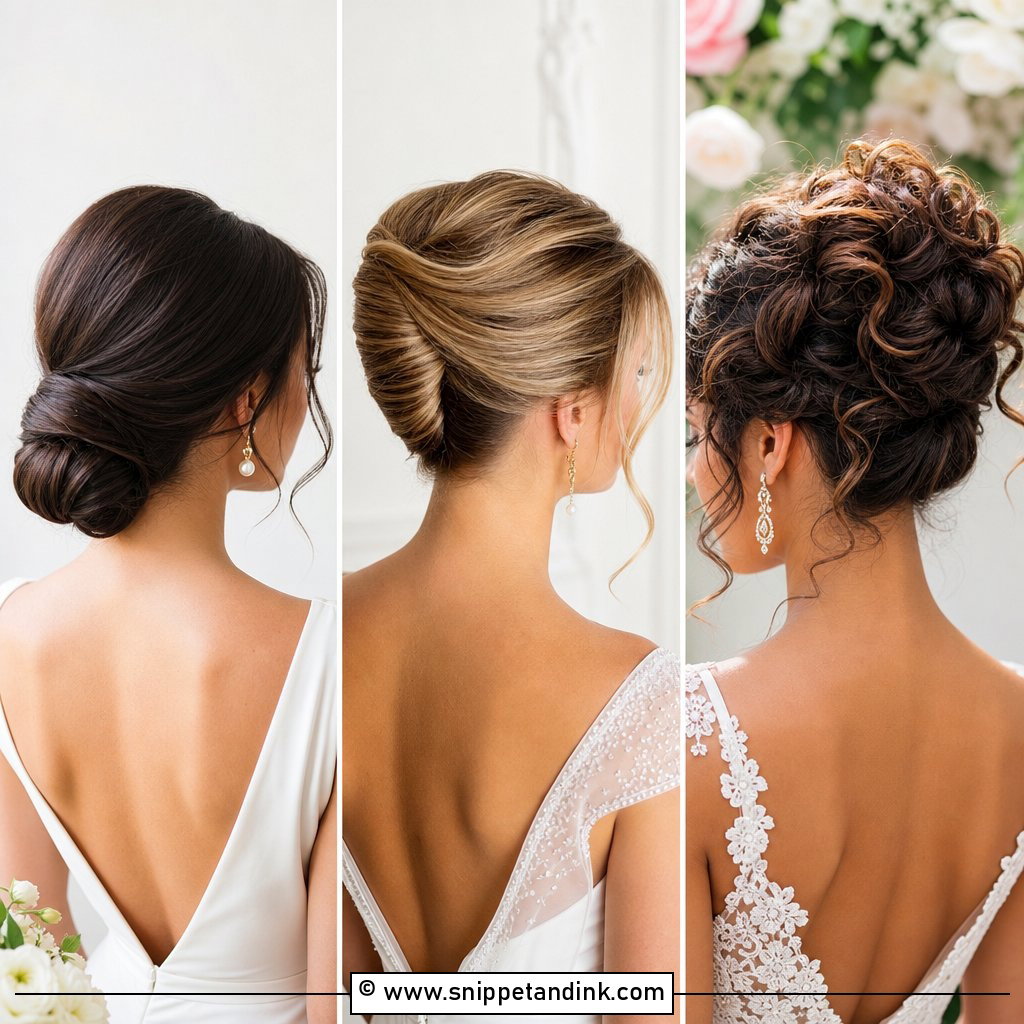
A low bun under a veil is easy to wear through a long ceremony because the weight sits on the strongest part of your head, right at the nape. I place the veil comb just above the bun and slide it in against the direction of the hair, then lock it with two crossed bobby pins under the comb’s teeth. That is what keeps it from drifting backward every time you turn. A center part reads more formal in side photos; a soft side sweep is kinder if your hairline has cowlicks. Gowns, lace veils and modest dresses all sit well with it.
3. Traditional Bridal Braid With Flowers
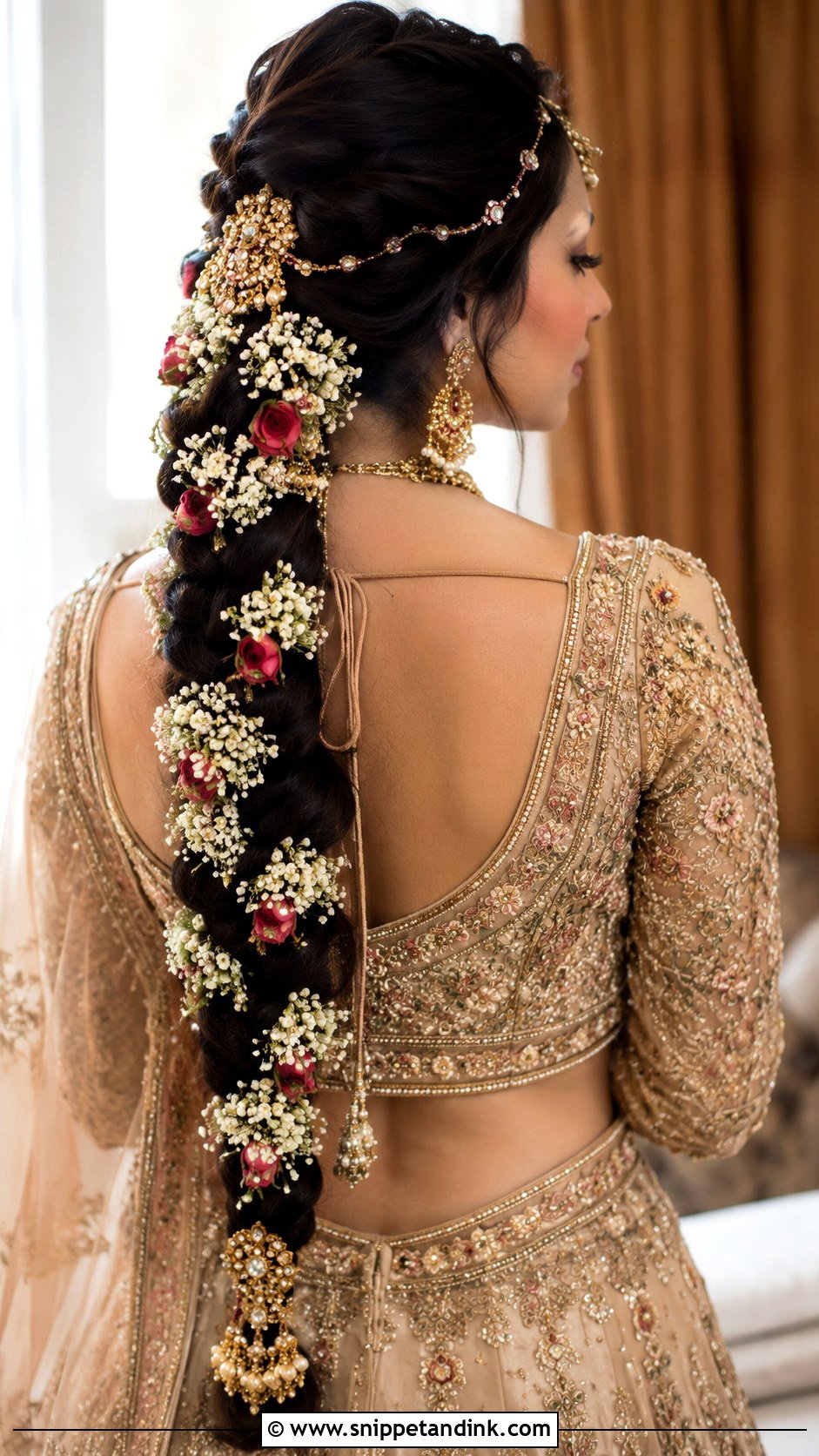
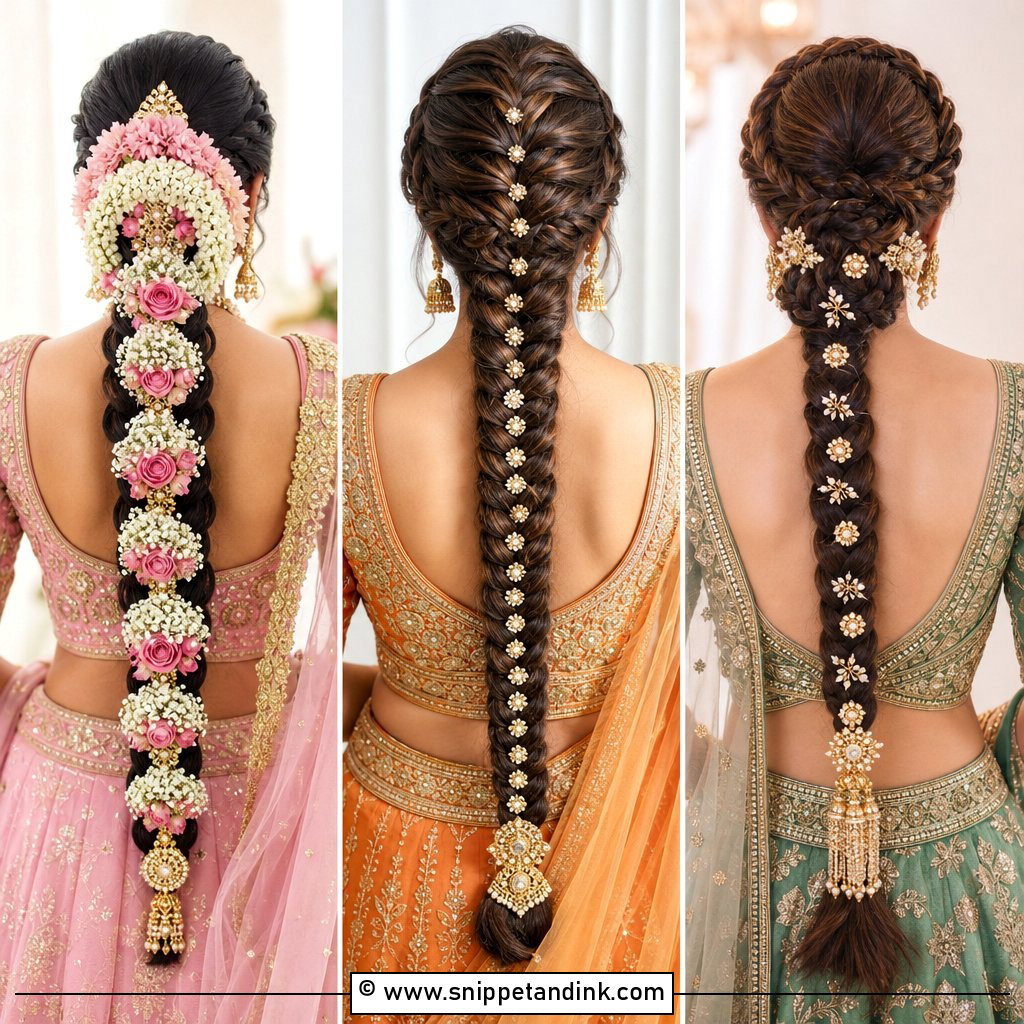
A long braid dressed with flowers shows off length better than almost anything else. I’ll decide between a three-strand, a fishtail or a chunky woven braid based on how thick the lengths are at the bottom, because most hair thins toward the ends and the braid will taper unless we add a clip-in weft. Flowers go in last, pinned through the braid’s outer loops so they don’t twist sideways. It pairs naturally with temple jewelry and heavily embroidered dupattas. One honest caution: a braid that hangs down your back gets sat on, so I keep the crown slightly lifted and the braid finished well above the waist for seated rituals.
4. Traditional Bridal Chignon
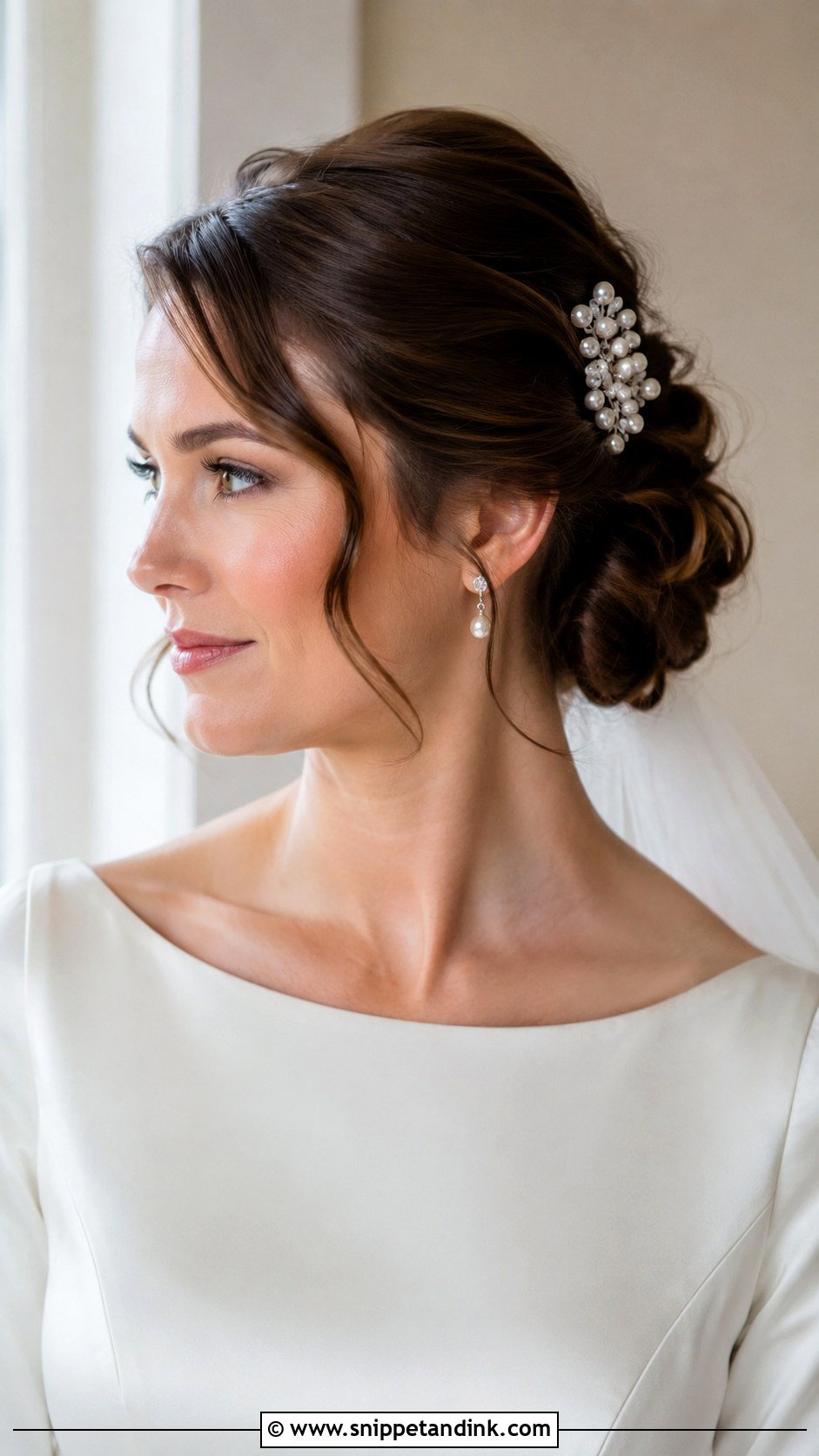
A chignon is sculpted rather than round. I gather the hair low, twist it into a neat knot or a tucked roll, and shape it with pins placed in a figure-eight so it lies flat against the head. That flatter profile is why it suits high necklines and boat-neck blouses; a big round bun would push the collar out. Sleek suits a formal ceremony, and a little texture works for a garden one. I’d keep decoration to a single comb or a few small white blooms, since anything heavy pulls the roll open.
5. Traditional Bridal Crown Braid
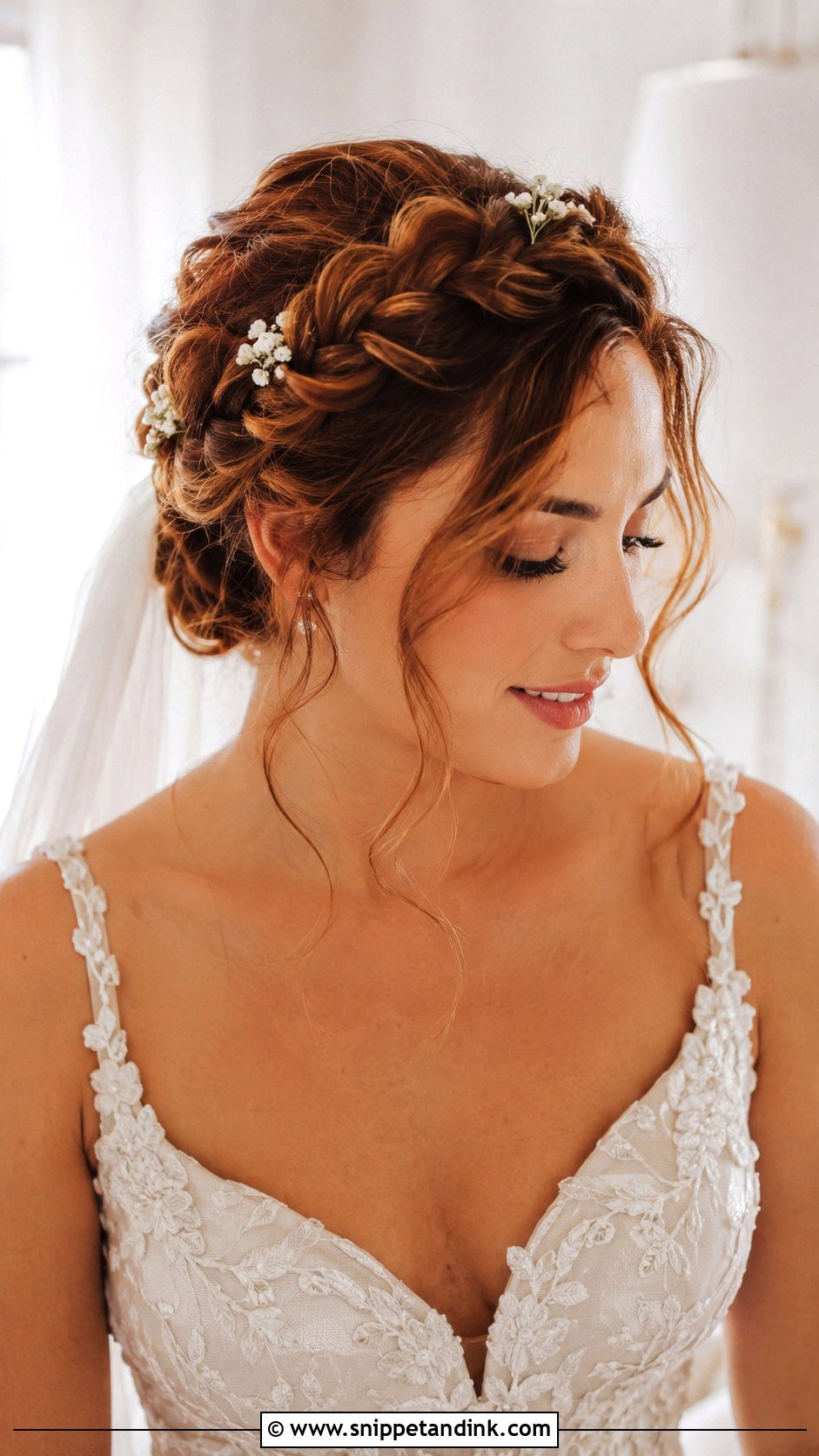
Crown braids take the hair completely off the face, which is a relief at outdoor ceremonies where wind and heat are both working against you. I usually build it as two Dutch braids that meet and tuck at the back, because one braid circling the whole head rarely has enough length on medium hair. Pancaking the edges gently gives fullness without making it fragile. Tuck small flowers or pearl pins into the gaps. You’ll want open-necked outfits and statement earrings here, since nothing else frames the face.
6. Traditional Bridal Half Up Half Down Hair
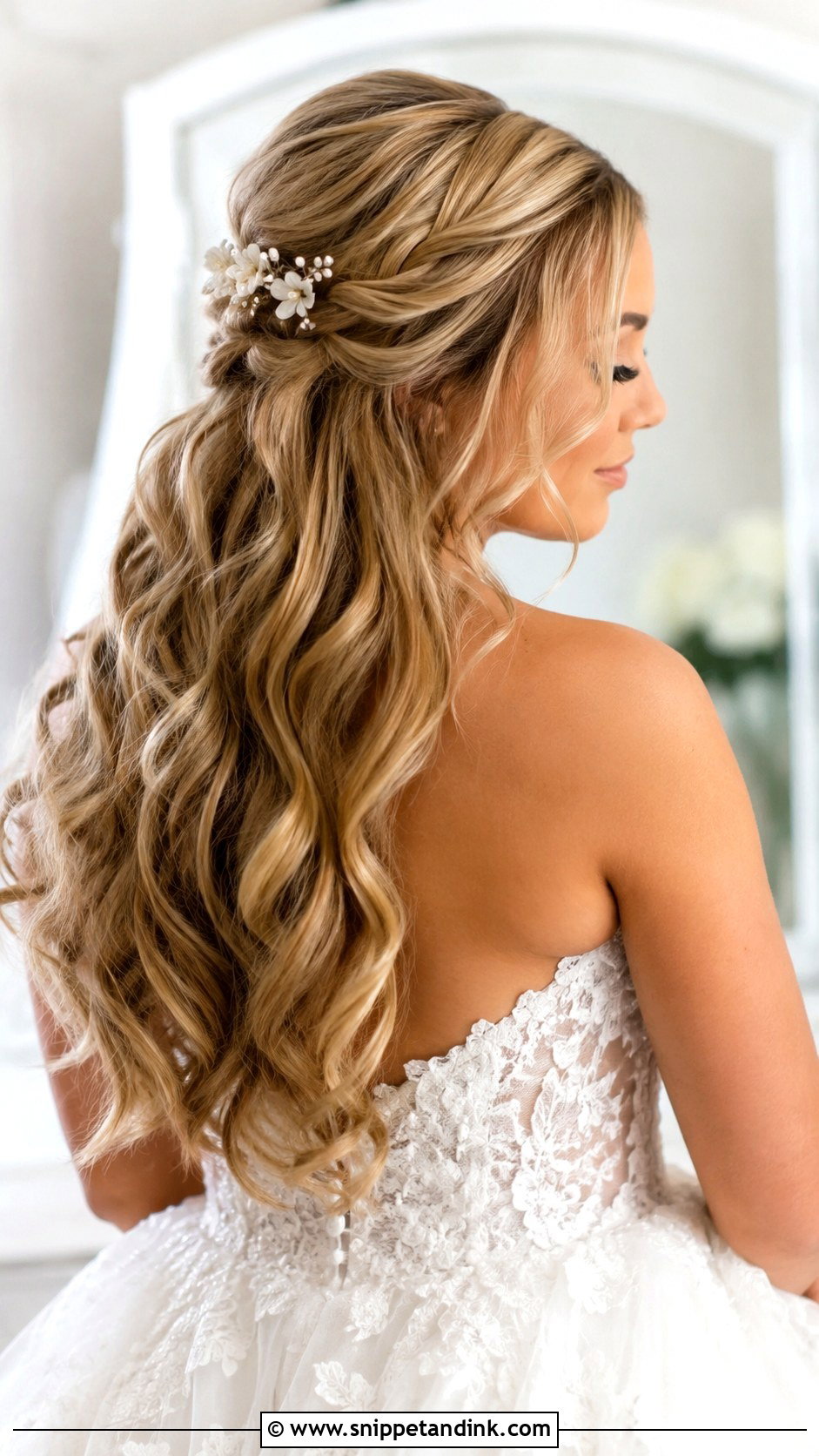
Traditional bridal half up half down hair gives you movement at the shoulders with some control at the crown. The top section is pinned back with twists, a small braid or a gentle bump, and it is that pinned section that carries any veil, dupatta or floral clip. The loose lengths are where this style fails. Curls need to be set while hot, cooled in pin curls, and only brushed out once the outfit is on, or they will drop within a couple of hours. I’d avoid it entirely in a humid outdoor venue unless your hair naturally holds a curl.
7. Traditional Bridal Side Braid
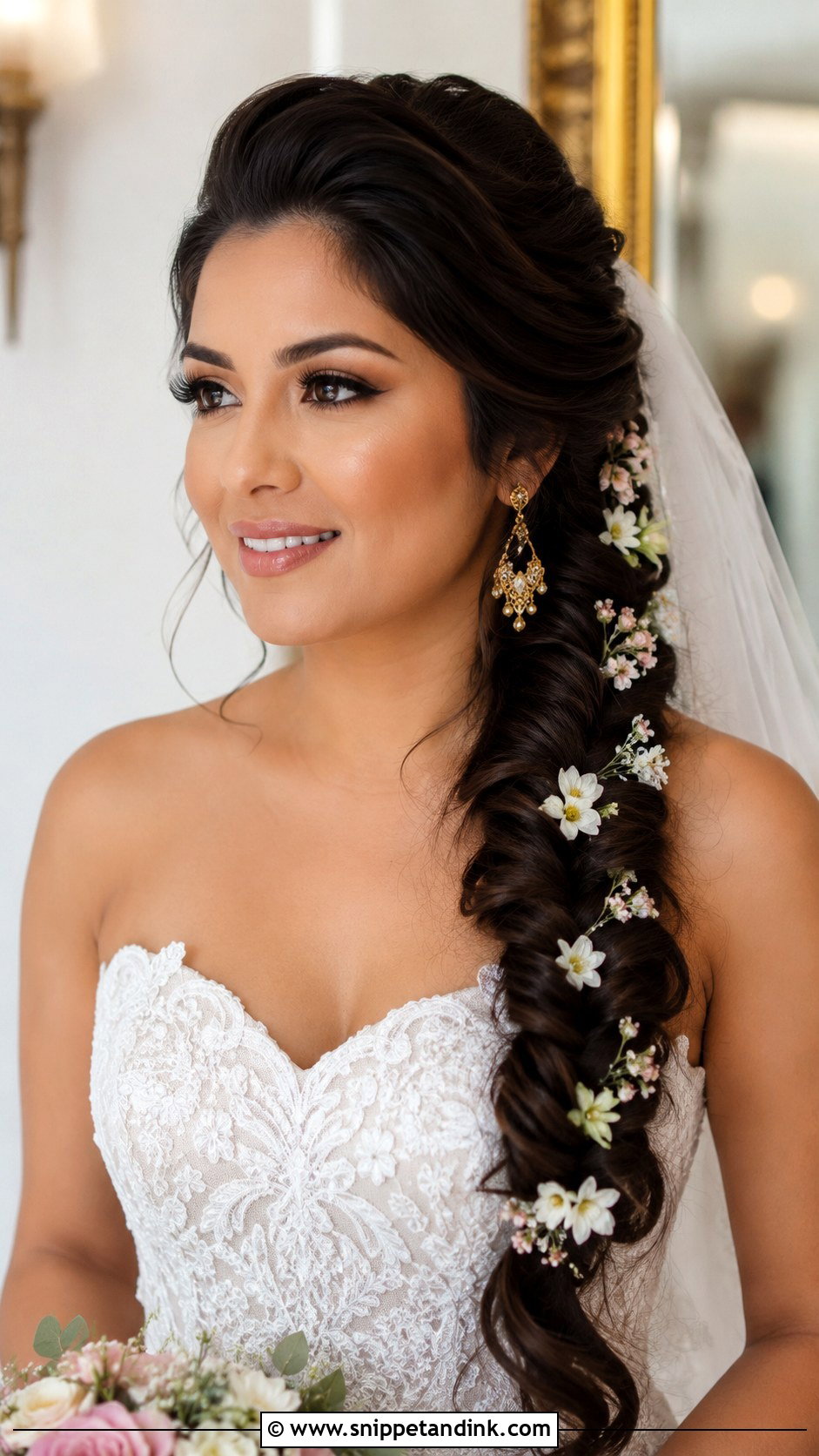
Side braids are kind to front-facing photos because the braid sits right next to the necklace and earrings instead of disappearing behind you. It can be a loose fishtail, a Dutch braid, a rope braid or a classic plait with flowers woven through. The thing I watch is the shoulder it falls over: it should be the side away from your partner during the ceremony, so you aren’t leaning on it. Medium hair can get the same effect with one or two clip-in wefts placed just behind the ear.
8. Traditional Bridal Sleek Bun
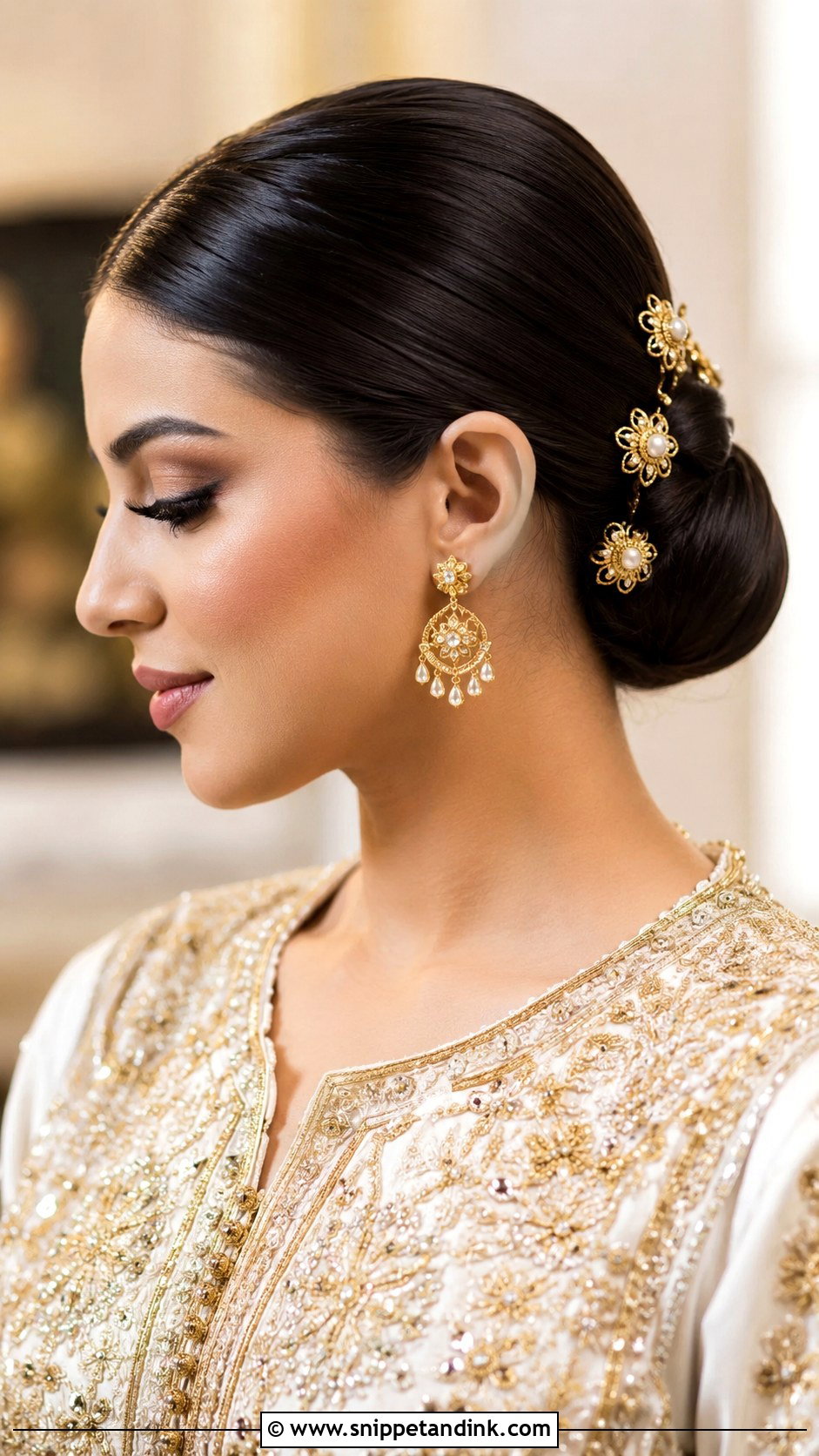
When the jewelry and embroidery are heavy, I often recommend a sleek bun, simply because it stops the hair from competing with everything else. A sharp part, a light shine serum and a firm elastic at the base do most of the work. It survives warm weather and crowded rooms better than any loose style here. The trap is tension. If the bun is pulled tight enough to look perfectly smooth, you’ll have a headache by the reception, so I smooth with product and a boar-bristle brush rather than by pulling harder. A floral ring or gold pins add the traditional touch.
9. Traditional Bridal Bun With Maang Tikka
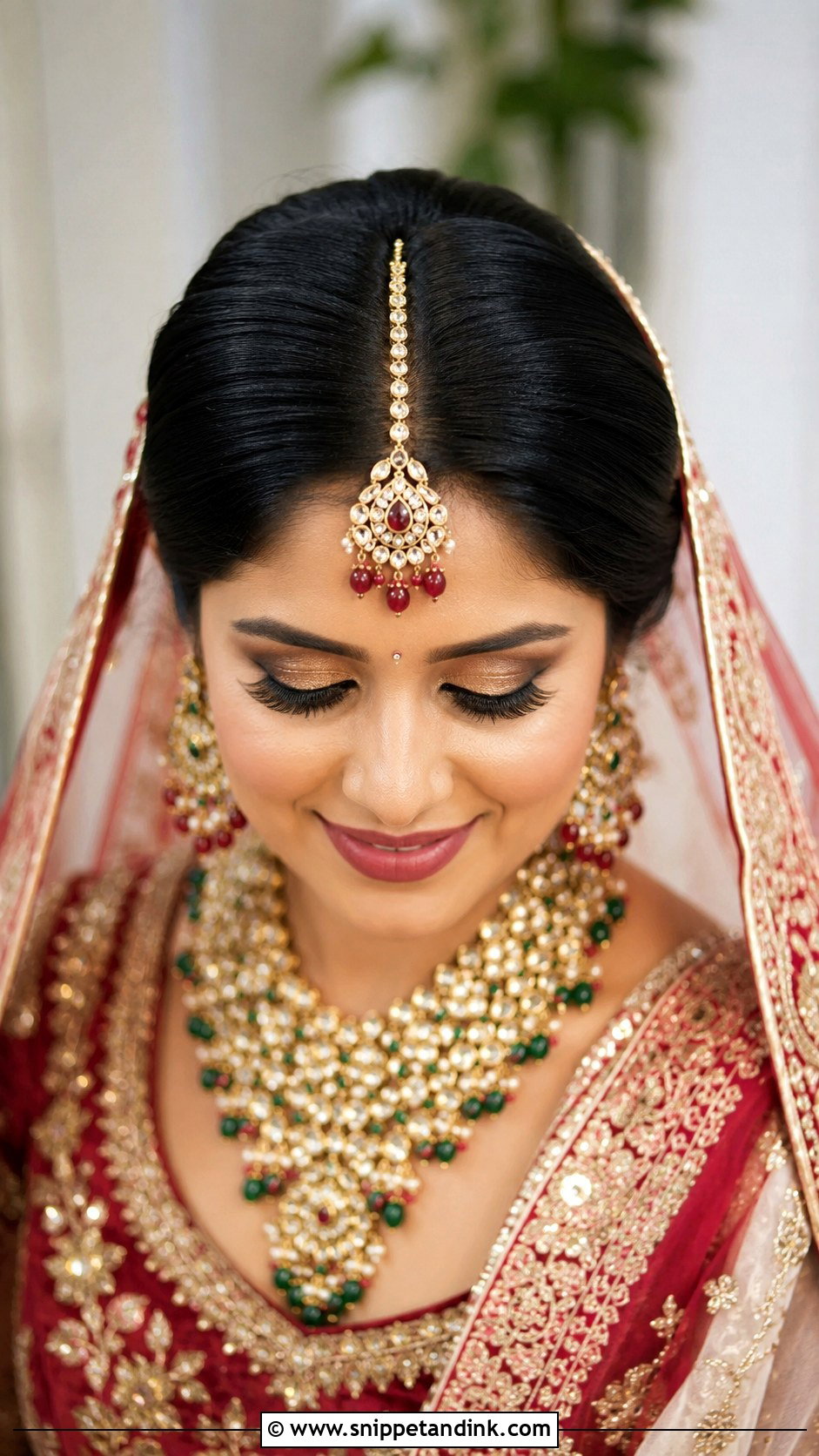
A bridal bun with maang tikka starts with the part, and I measure it from the bridge of the nose so the tikka hangs truly centered. The chain is then hooked into a small pinned section at the crown, not just tucked into the bun, because the bun alone won’t stop it sliding sideways once the dupatta is draped. A little lift at the crown keeps the tikka from sitting flat against the scalp. Sleek, textured or wrapped in flowers, the bun suits lehengas and sarees equally.
10. Traditional Bridal French Twist
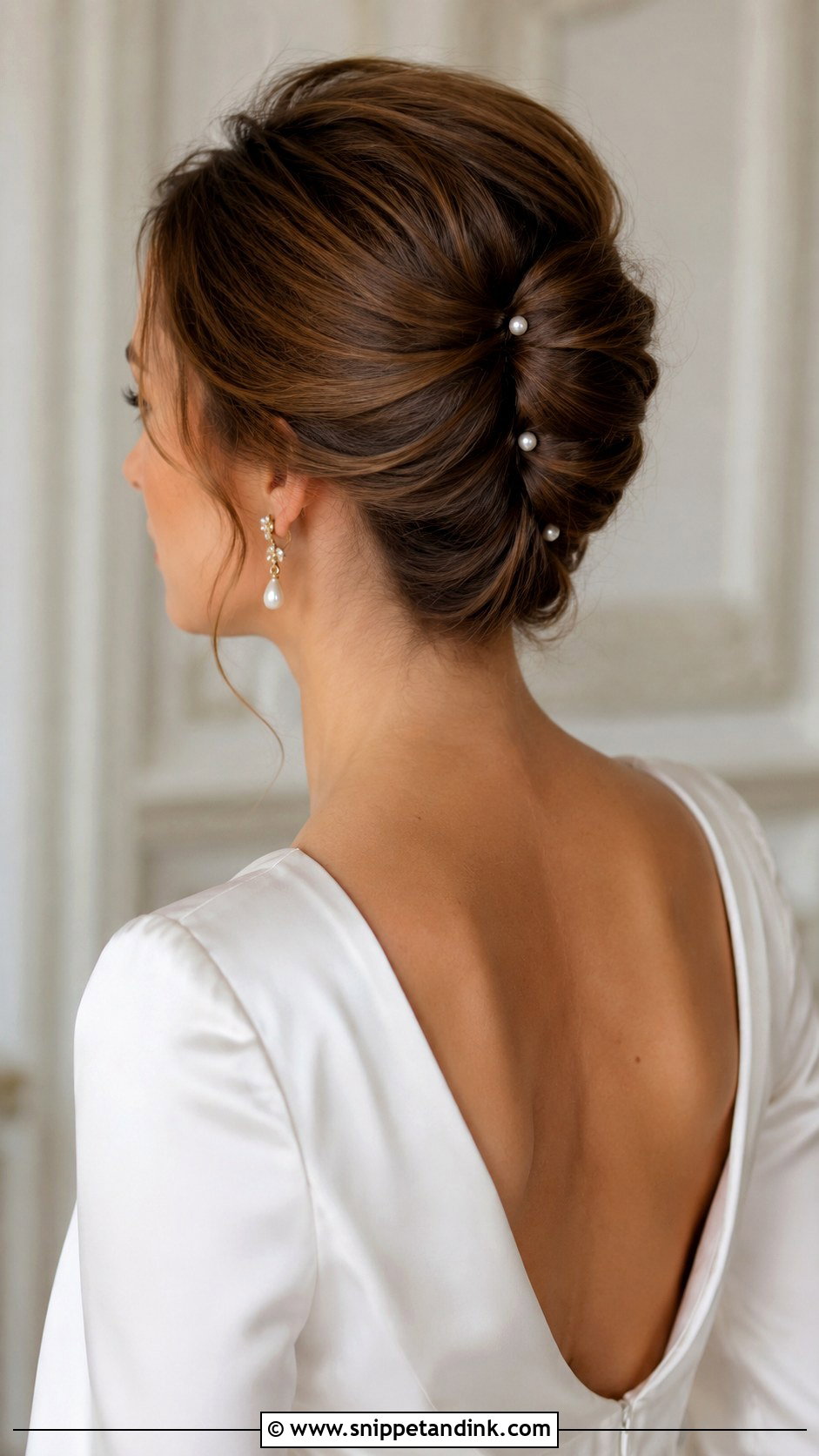
The French twist is an old-school shape, swept up and tucked vertically into a smooth roll along the back of the head. It needs medium to long hair with a bit of grip, so on very silky hair I prep with a texture spray and do a little backcombing inside the roll before I close it. Pearl pins look right along the seam. I like it with lace and silk gowns. It isn’t a great fit under a heavy dupatta, though, because the fabric presses on the roll and flattens its line.
11. Traditional Bridal Loose Waves With Veil
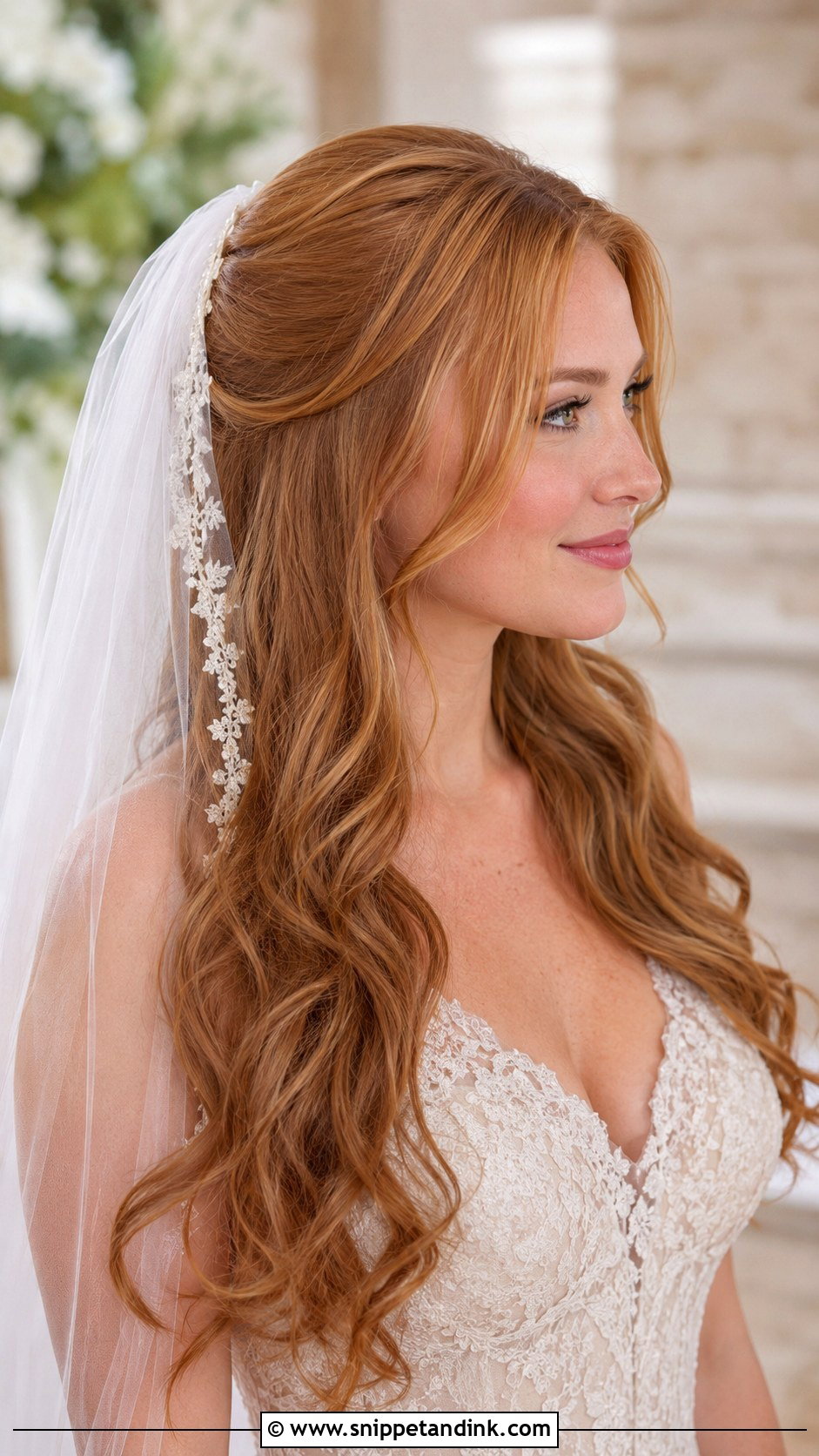
Loose waves with a veil appeal to brides who don’t want an updo but still want something that feels ceremonial. I curl in medium sections, pin each curl while it cools, then brush the set into one soft wave pattern. The veil goes in at the crown, under a small twist or behind a comb, so its weight lands on a pinned section rather than on loose hair. Hold comes from product worked in at the roots and mid-lengths, not hairspray on the surface, which is how you avoid the crunchy look. Be realistic about humidity: waves relax faster than any updo.
12. Traditional Bridal Bun With Pearls
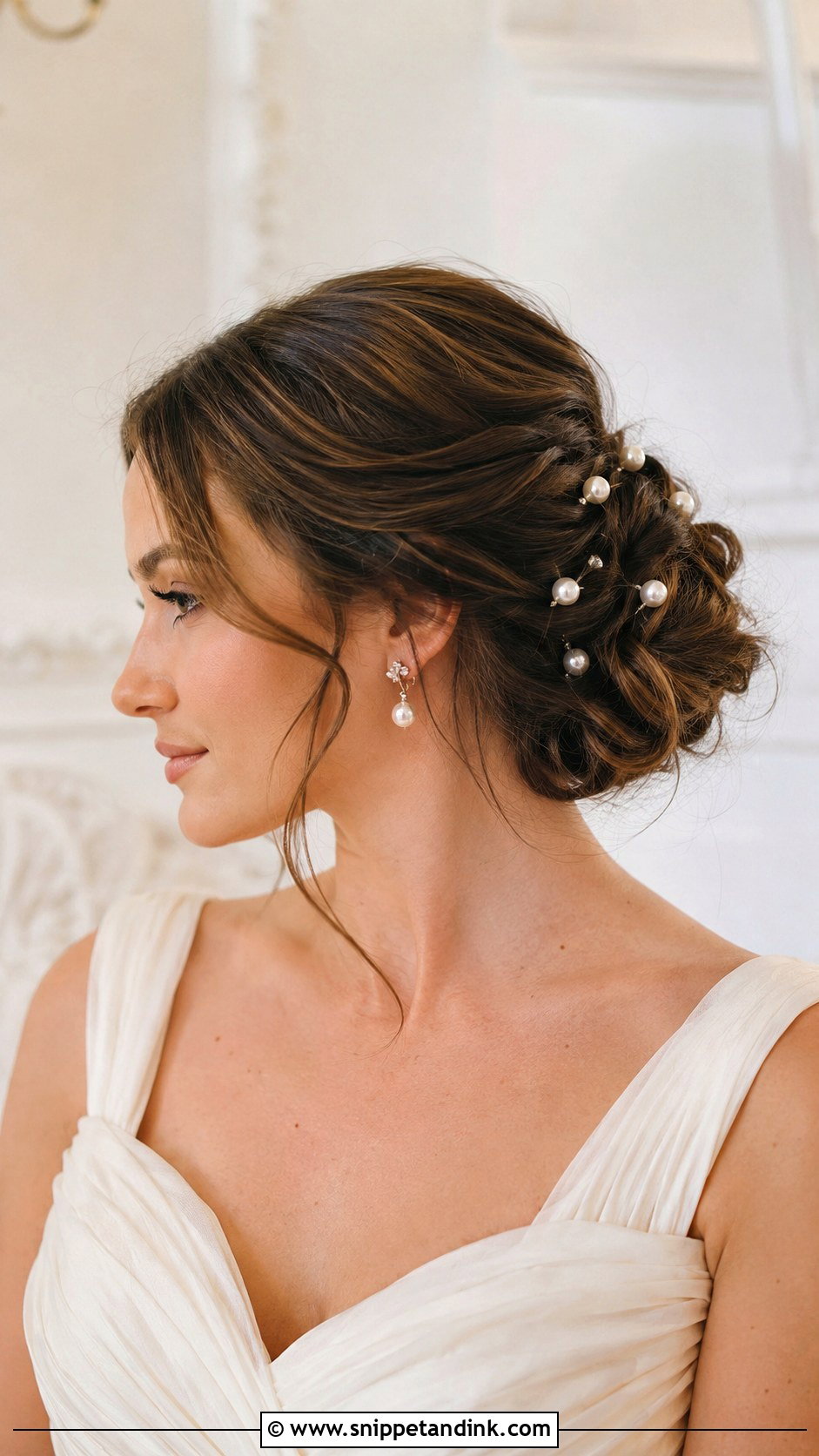
Pearls are the quiet choice. They catch light without the glare that crystals sometimes throw back into a flash, and they sit well beside ivory, champagne and gold outfits. The bun underneath can be low, twisted, braided or round. I scatter the pins unevenly, a cluster on one side and a few strays across, because a perfectly spaced row tends to look stuck on. A smooth or gently waved front keeps the attention on the pearls.
13. Traditional Bridal Braided Bun
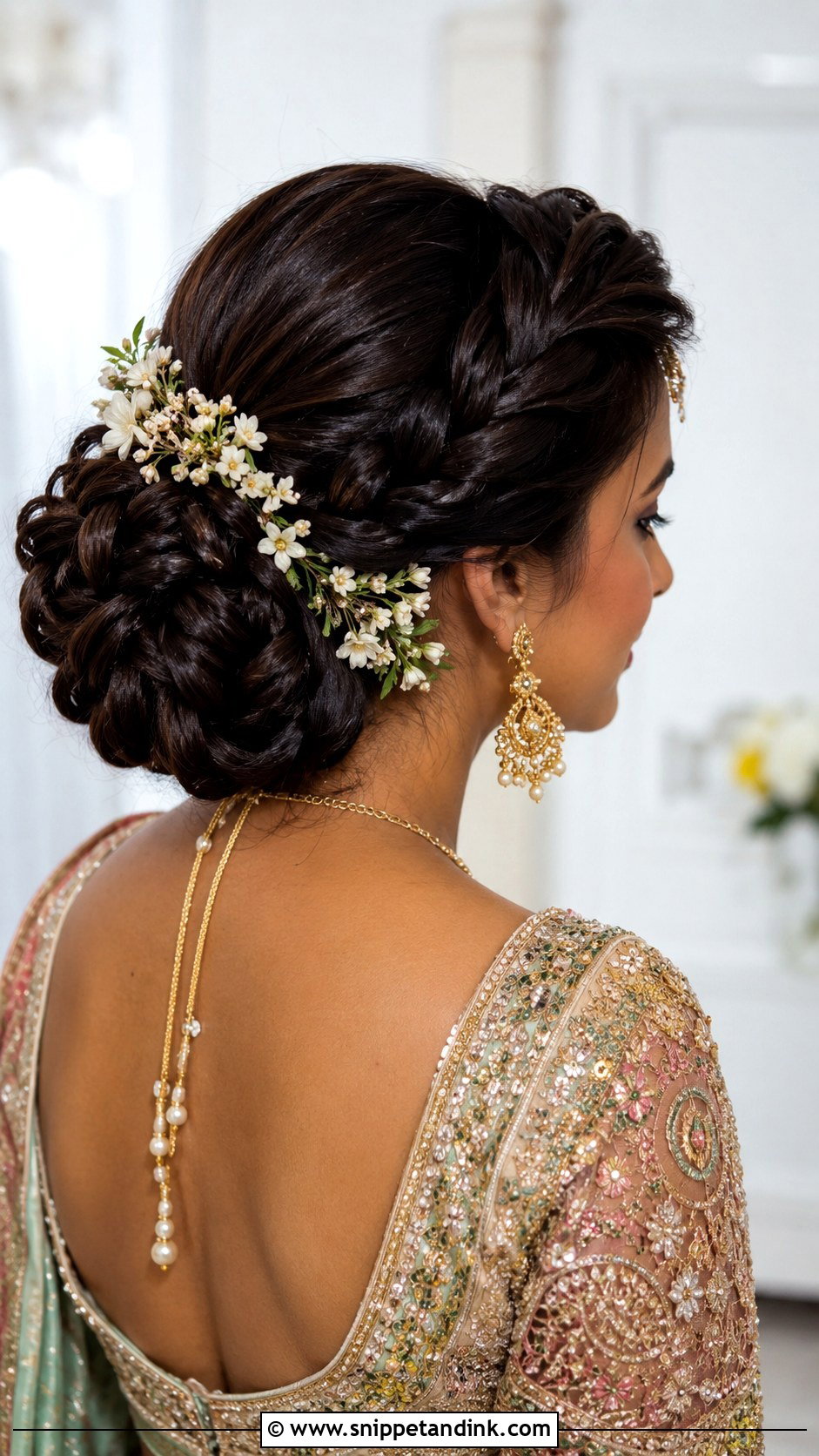
A braided bun gives you detail from every angle while staying very secure, since the braid itself acts as a grip for the pins. The braid can wrap around the bun, feed into it, or weave across the back of the head. It suits thick and long hair best. On finer hair I’d add a weft or two, otherwise the braid comes out thin and the bun underneath shows through. Flowers or a veil go in once the shape is locked.
14. Traditional Bridal Updo With Flowers
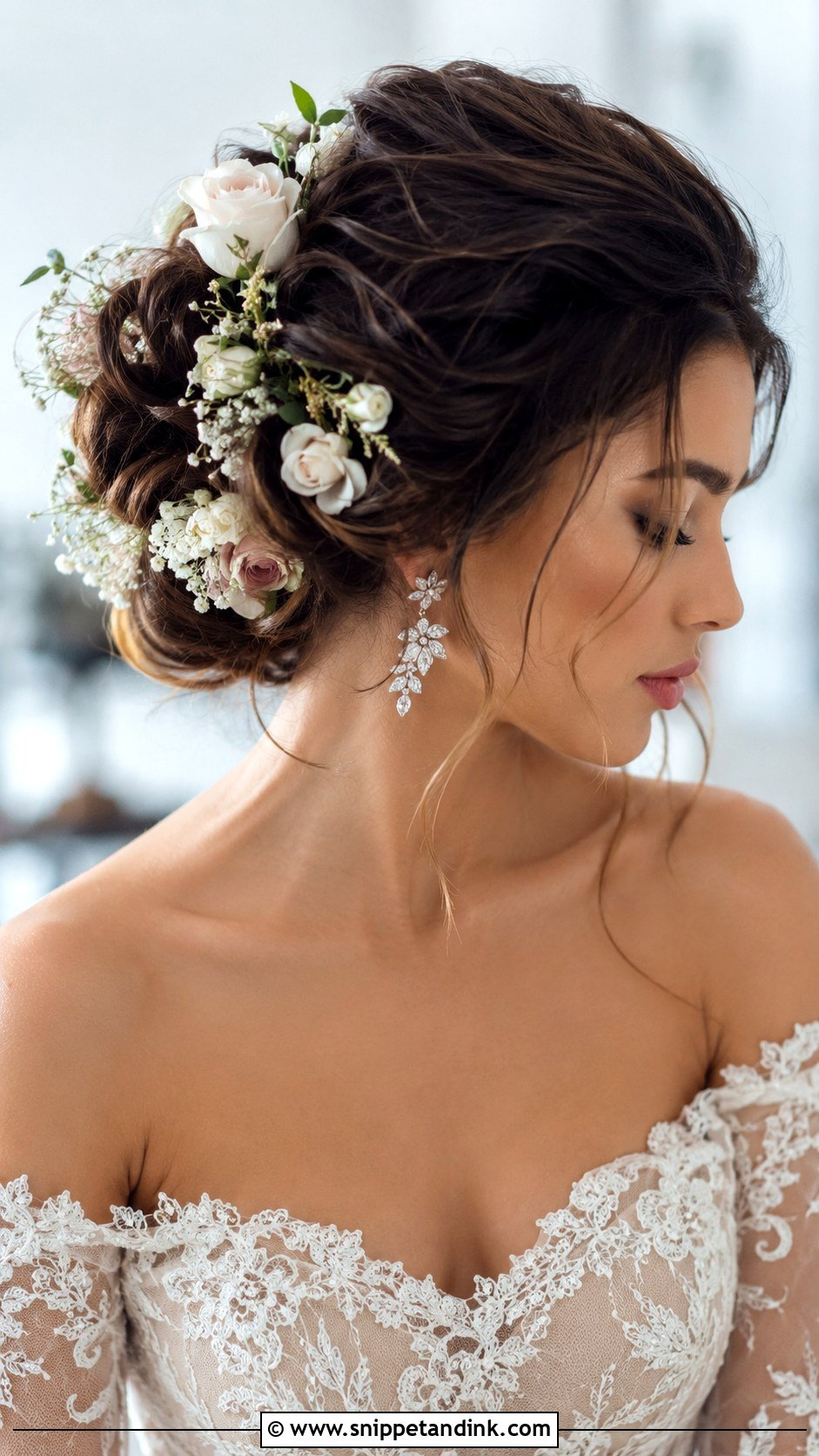
An updo with flowers is the most adaptable shape in this list, because the hair underneath can be twisted, braided or loosely gathered. Color sets the mood: white reads classic, deep red reads bold, pale blooms feel softer. The mistake I see most is too many flowers, which makes the hair look crowded and adds weight that drags pins loose. Ask your florist for small, light heads and have them wired, then I pin them into the structure rather than onto the surface.
15. Traditional Bridal High Bun
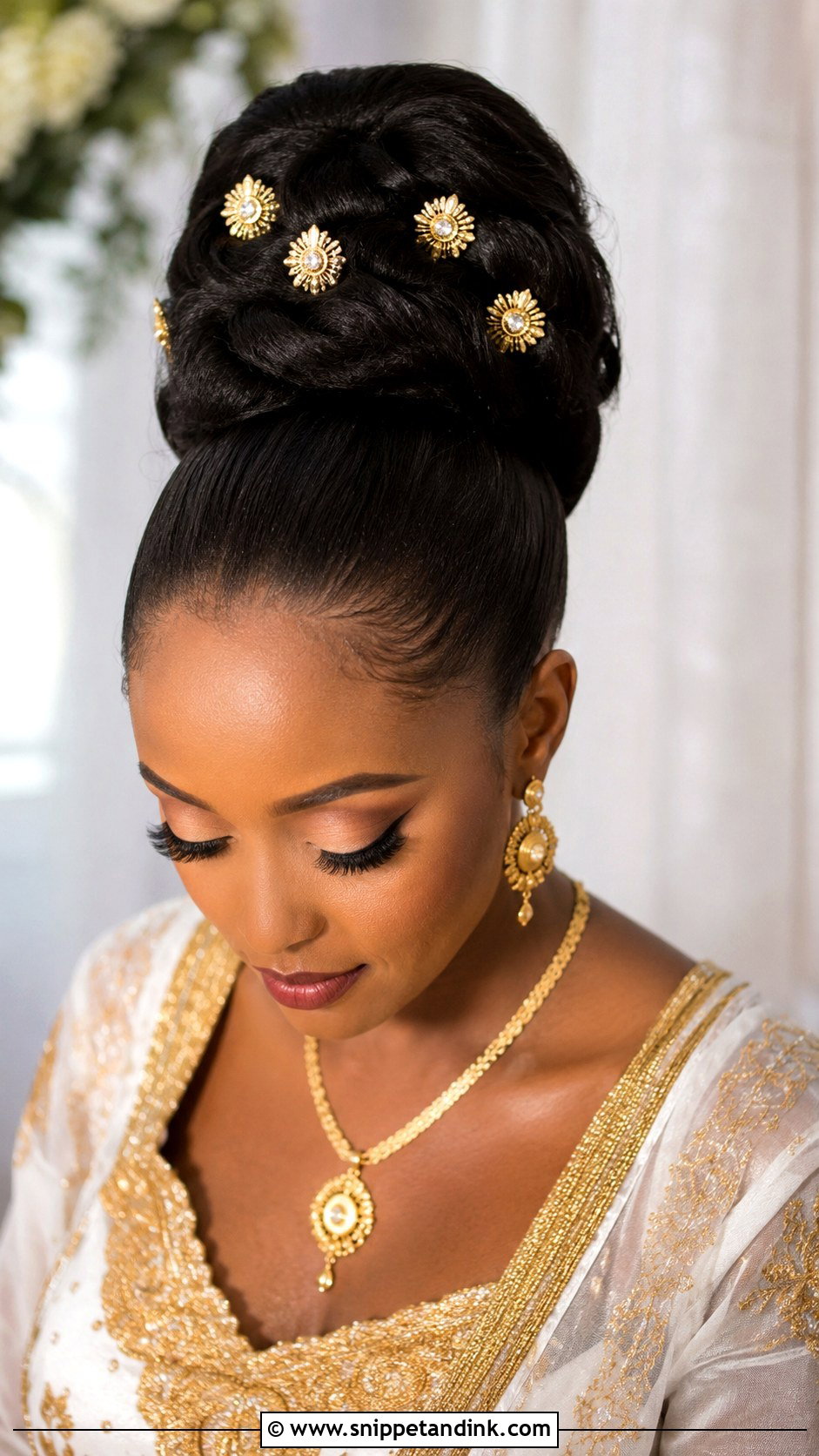
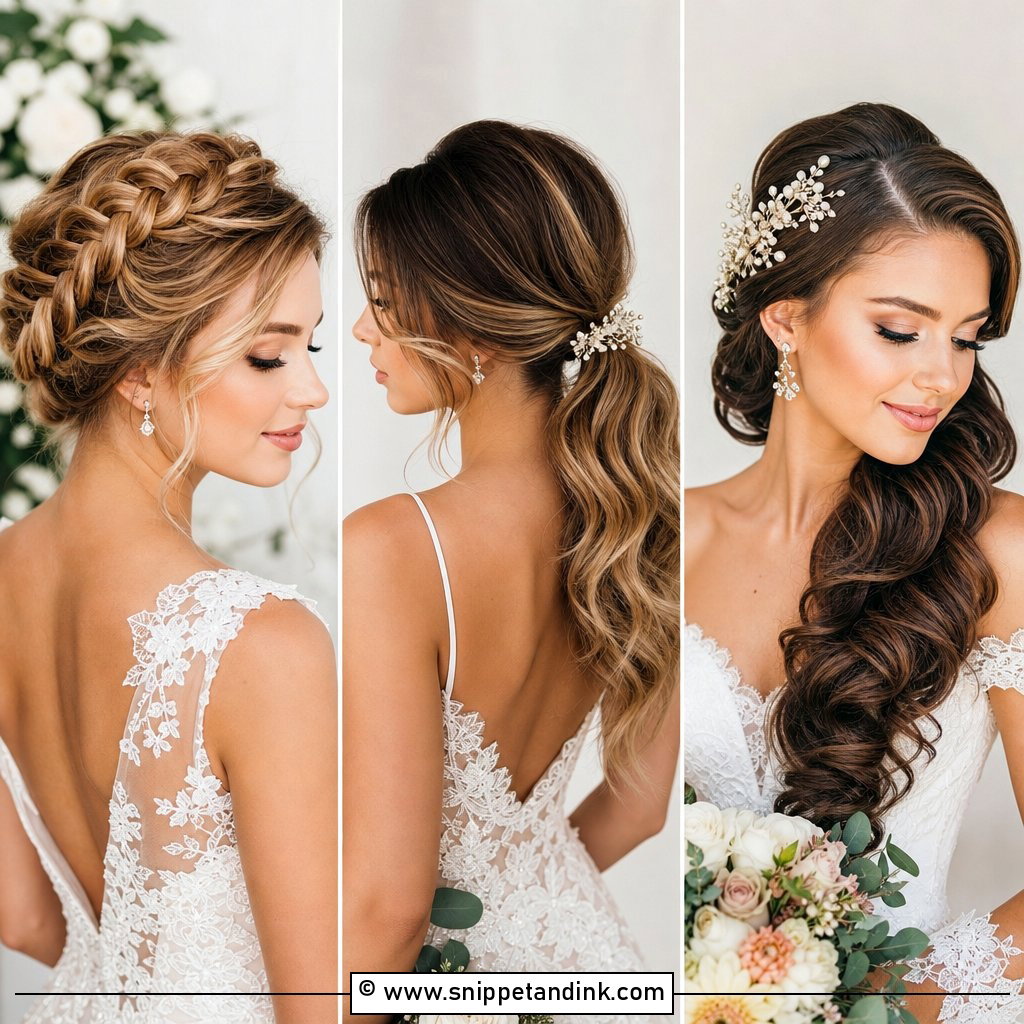
A high bun sits near the crown, lengthens the neck and gives heavy earrings room to be seen. It’s my pick under high collars and statement necklaces, and in hot weather because no hair touches the back of the neck. Size is what goes wrong. On long thick hair a high bun can get top-heavy, so I’ll split the length, use part of it in the bun and pin the rest flat underneath. A tiara or a few decorative pins finish it.
Real Jasmine, Silk Flowers and How Each Behaves Over a Long Day
Fresh jasmine and mogra are fragrant, traditional and honestly fragile. The buds are picked closed and open over the next several hours, so a gajra that looks tight in the morning is fully open by evening and starts to brown at the edges after that. Keep the strings wrapped in a damp cloth in the fridge until the last moment, and attach them only once your outfit and dupatta are on.
Fresh roses and orchids are heavier and bruise where pins touch them, so I pin through the stem wire, never the petals. For a very long day, or a reception in a different outfit, a good set of silk flowers is worth considering for the second look. They don’t wilt or drop pollen on a dark blouse, though up close they will never smell or move like the real thing.
What Slips Between the Ceremony and the Reception, and the Fix
Even a well-built style shifts a little after hours of rituals and hugs. The usual suspects are a veil comb that has worked loose, a gajra that has slid down the bun, and baby hairs that frizz at the temples. None of them need a restyle.
- Ask a bridesmaid or cousin to carry a small pouch: a dozen bobby pins matching your hair color, a few U-pins, a mini hairspray and a clean spoolie brush.
- For a loose veil or dupatta, add two crossed bobby pins under the comb rather than pushing the comb in harder.
- Flyaways at the hairline settle with a little hairspray sprayed onto the spoolie, then brushed back. Spraying the head directly will dull the shine.
- If you change outfits, plan the second hairstyle so it starts from the first. A bun can open into a half-up or a side braid quickly; going from waves into a sleek bun cannot.
One Trial, Two Hours of Wear, Then Decide
Every one of these shapes can work, but only some will work on your hair, under your dupatta or veil, in your venue’s weather. Book a trial and wear the style for a couple of hours afterward, ideally with a scarf draped where the dupatta will sit, so you feel the weight. Bring your jewelry, and especially a heavy headpiece if you have one, because it changes where the pins need to go. If the style still feels comfortable at the end of that test, that’s the one.
You'll Like These Ideas:


Leave a Reply