
Curls worn down are the style brides ask me for most and the one I worry about most. An updo is locked in with pins; open curls only have their own set to rely on, plus whatever the weather, the veil and a hundred hugs do to them. Done properly, they still have shape at midnight. Done in a rush, they are waves by the first dance and straight by the speeches. The 25 looks below run from sleek Hollywood glamour to loose beach texture, and for each one I’ve added what I actually watch for when I build it on a real head of hair.
Why Down Curls Fall Before Pinned Hair Does
Hair holds a curl because heat breaks the hydrogen bonds inside the strand and they re-form in the curled shape as it cools. Moisture undoes that. Humid air, a damp neck, even a warm hand running through the lengths all let the hair slowly return to its natural form. In an updo, pins hold the shape while that happens. Loose curls have nothing but the set.
So the curl’s lifespan is decided before the first ringlet is brushed out. I prep with a light mousse or setting lotion on damp hair, dry it completely, and then curl clean, small sections. Each curl gets pinned in its coil to cool, ideally for 15 to 20 minutes, while I finish the rest. Brushing out a warm curl is the single most common reason a style drops by the speeches.
What your hair type changes
- Fine or very straight hair: second-day hair, a stronger set, and a smaller barrel than the final curl you want, because it will relax.
- Thick or heavy hair: smaller sections so heat reaches the middle of each curl, otherwise the inside stays straight and drags the outside down.
- Naturally curly or coily hair: often better to define your own pattern than to straighten and re-curl, which adds heat damage and frizz risk.
- Coloured or bleached hair: lower heat and a protectant, since lightened ends lose the set faster and singe more easily.
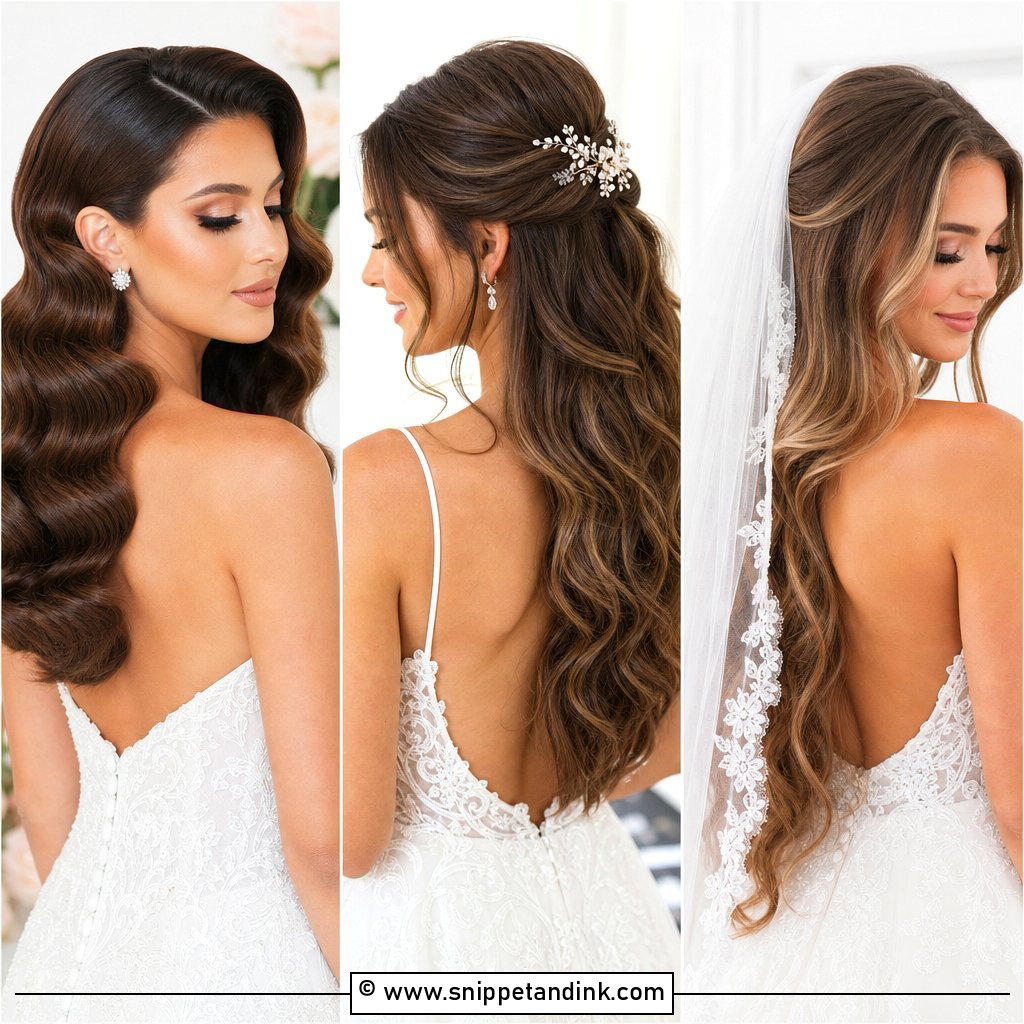
1. Loose Hollywood Waves for Wedding
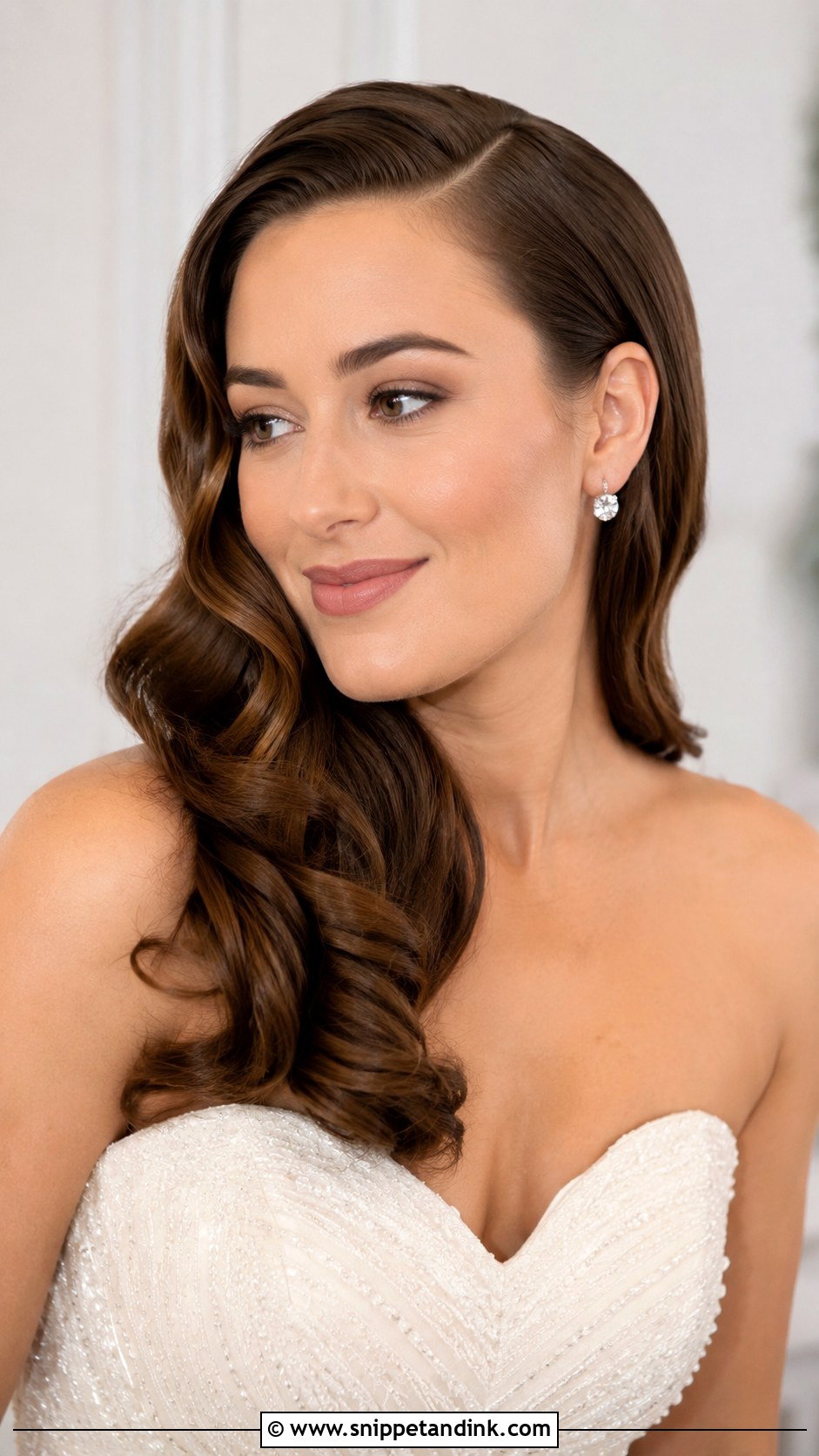
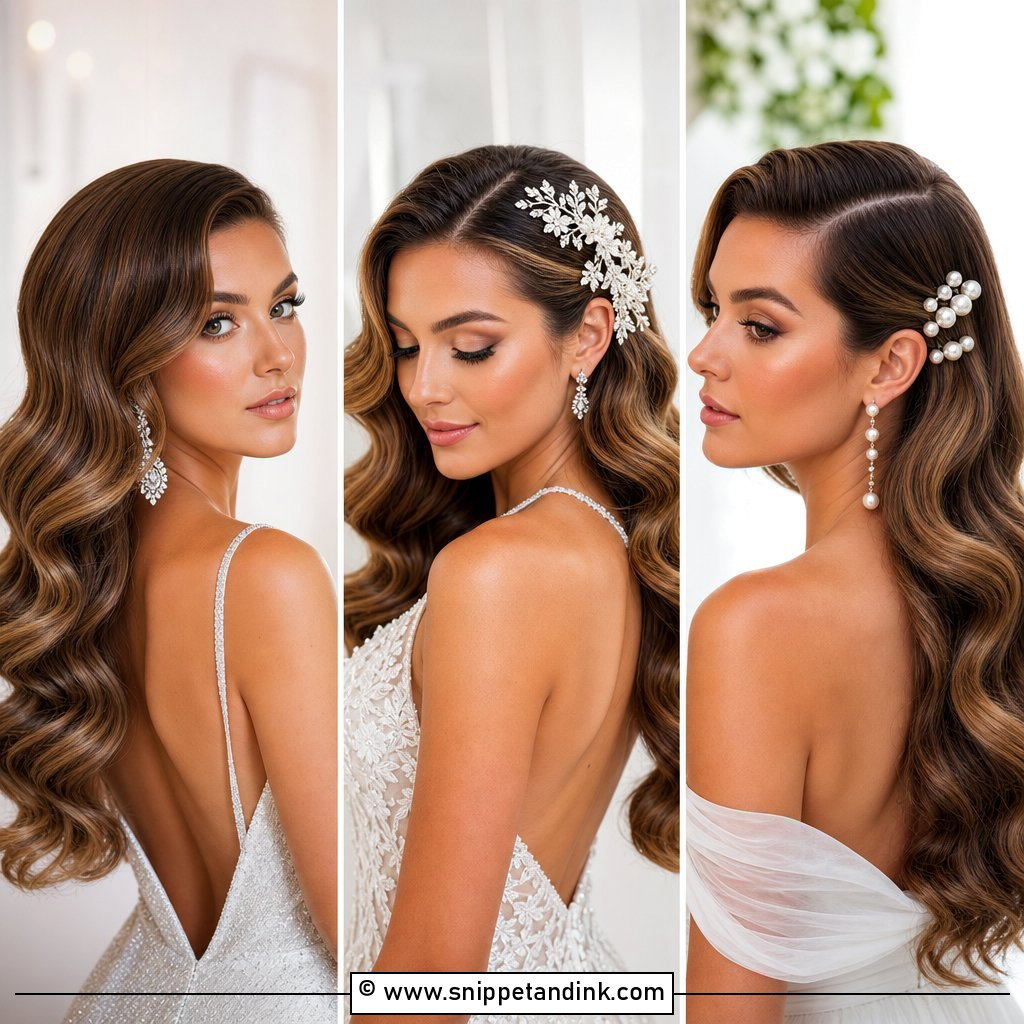
This is the most technical look on the list, even though it reads as simple. Every curl is wound the same direction, pinned to cool, then brushed out with a boar bristle brush until the ringlets merge into one ribbon of S-waves. A deep side part does the heavy lifting, and a couple of hidden clips at the temple help the wave hold its line through the ceremony. It suits strapless gowns and sweetheart necklines because nothing competes at the shoulder. Crystal studs or a small side comb are enough; anything bigger breaks up the wave pattern.
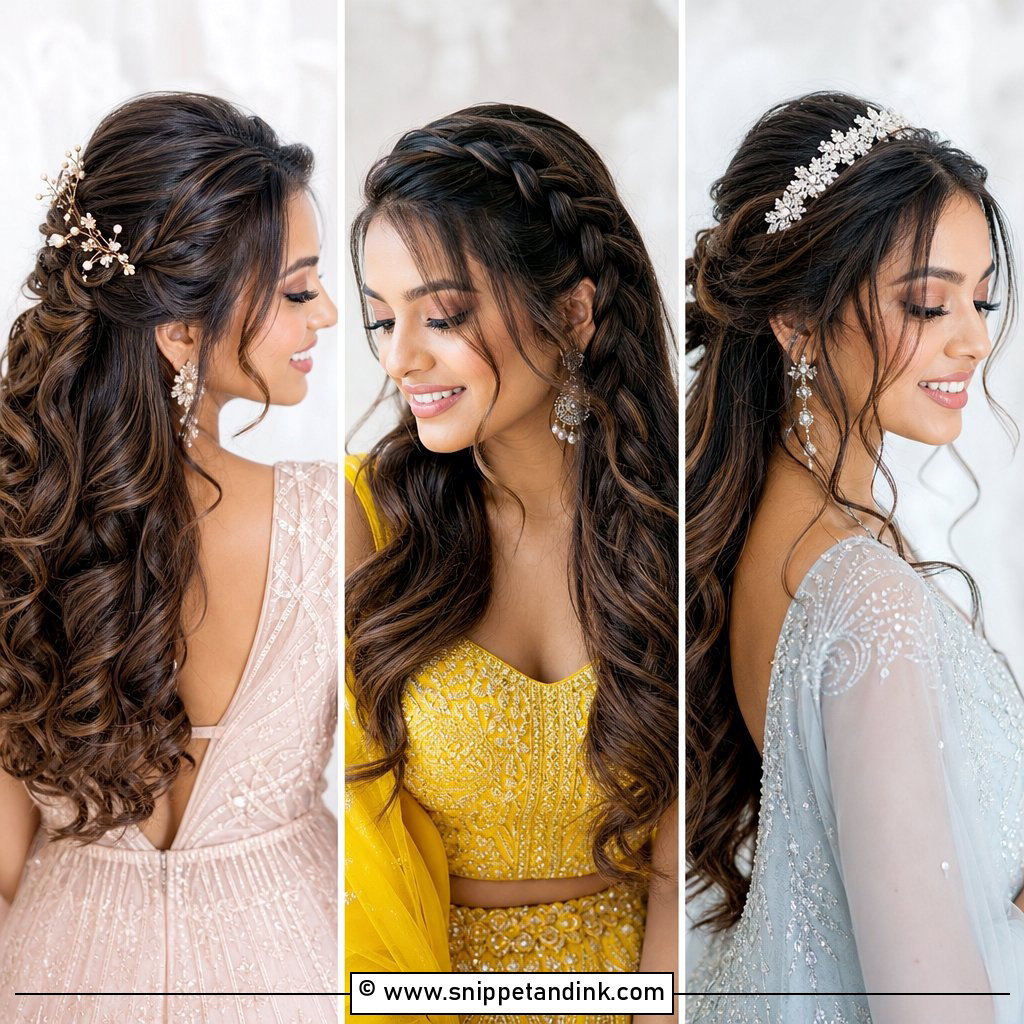
2. Half-Up Half-Down Open Curls
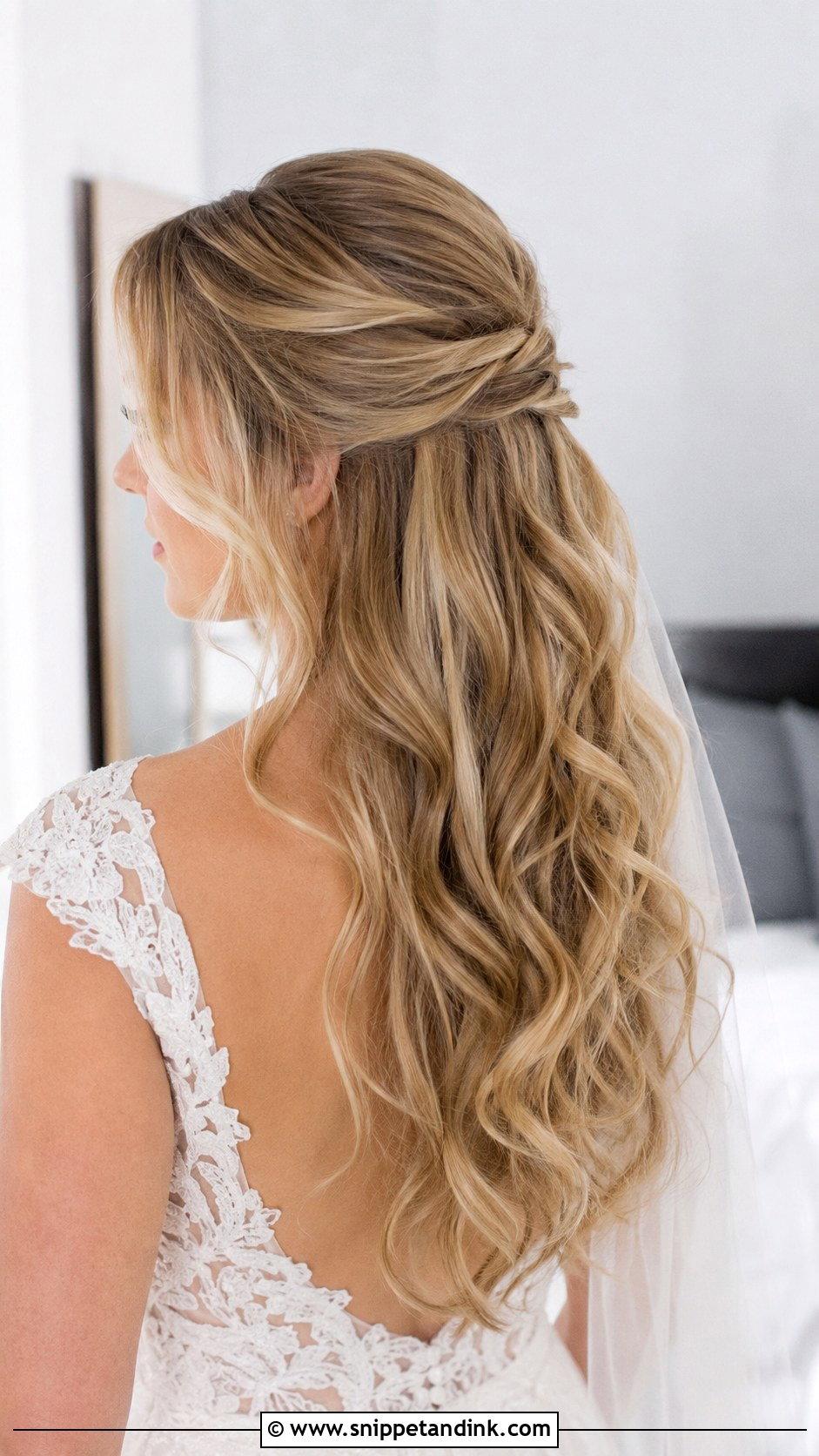
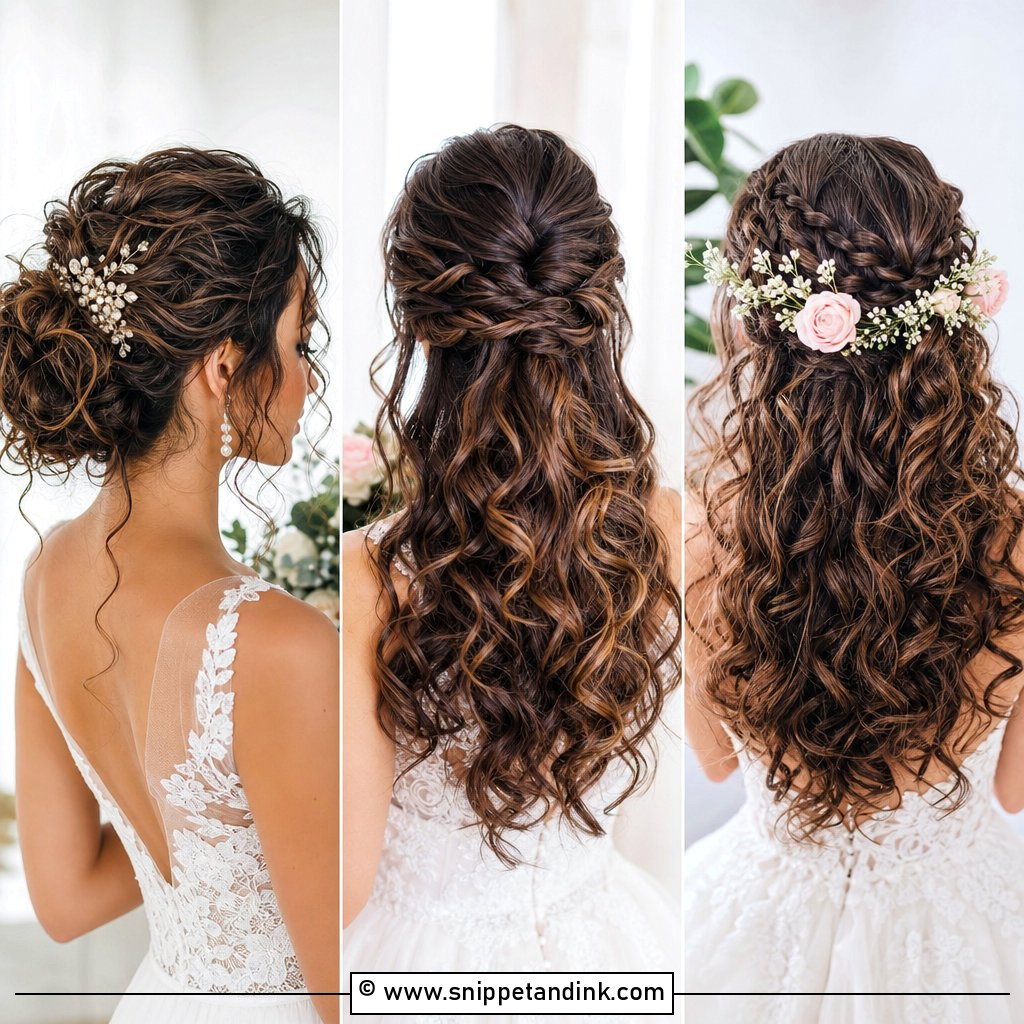
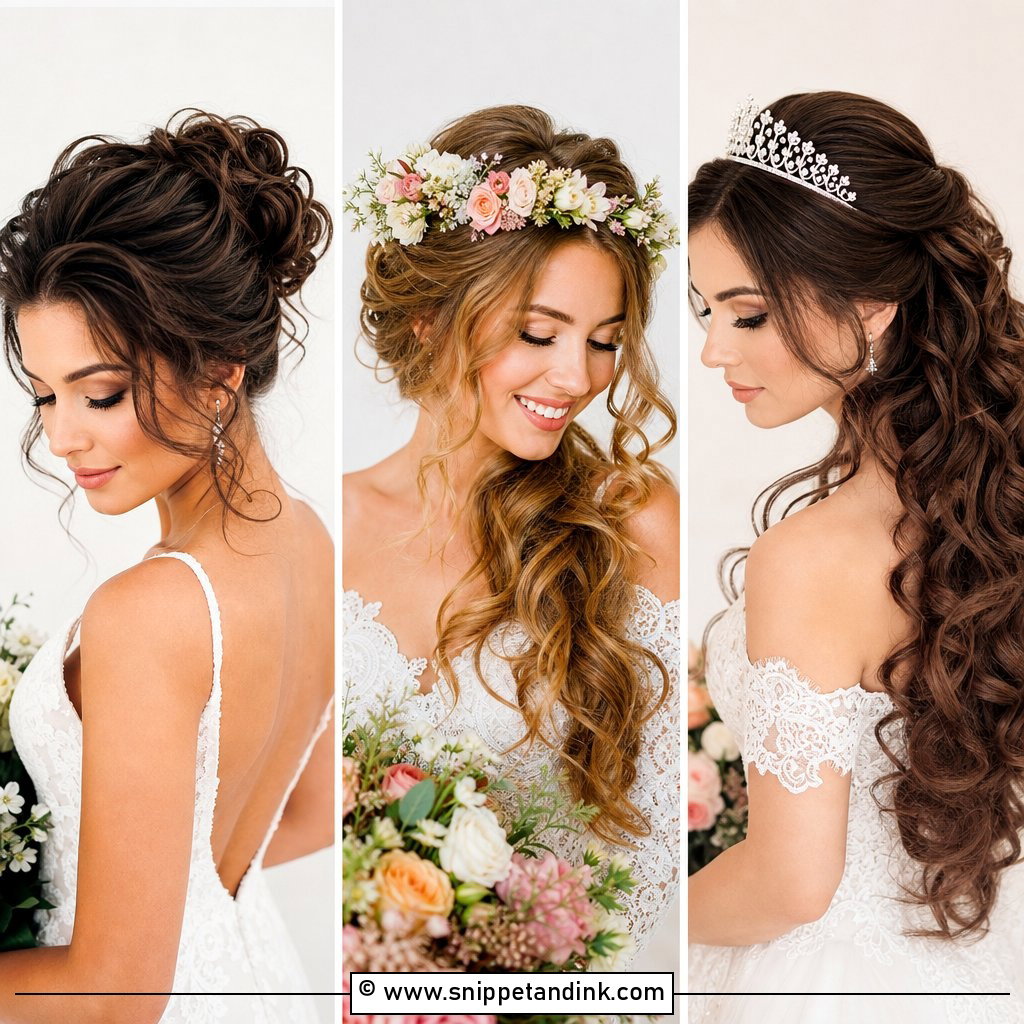
Half-up is my answer for the bride who wants her hair down but has never once worn it loose for twelve hours. I take the top section from the temples back, secure it with a small elastic hidden under a crisscross of pins, and leave the lengths free. That anchor point is also where a veil comb sits most securely. Twisting the front pieces softens it; a skinny braid adds texture. The honest trade-off: on very fine hair the pinned section can pull the crown flat, so I backcomb the base lightly before closing it.
3. Side Swept Open Curls for Wedding
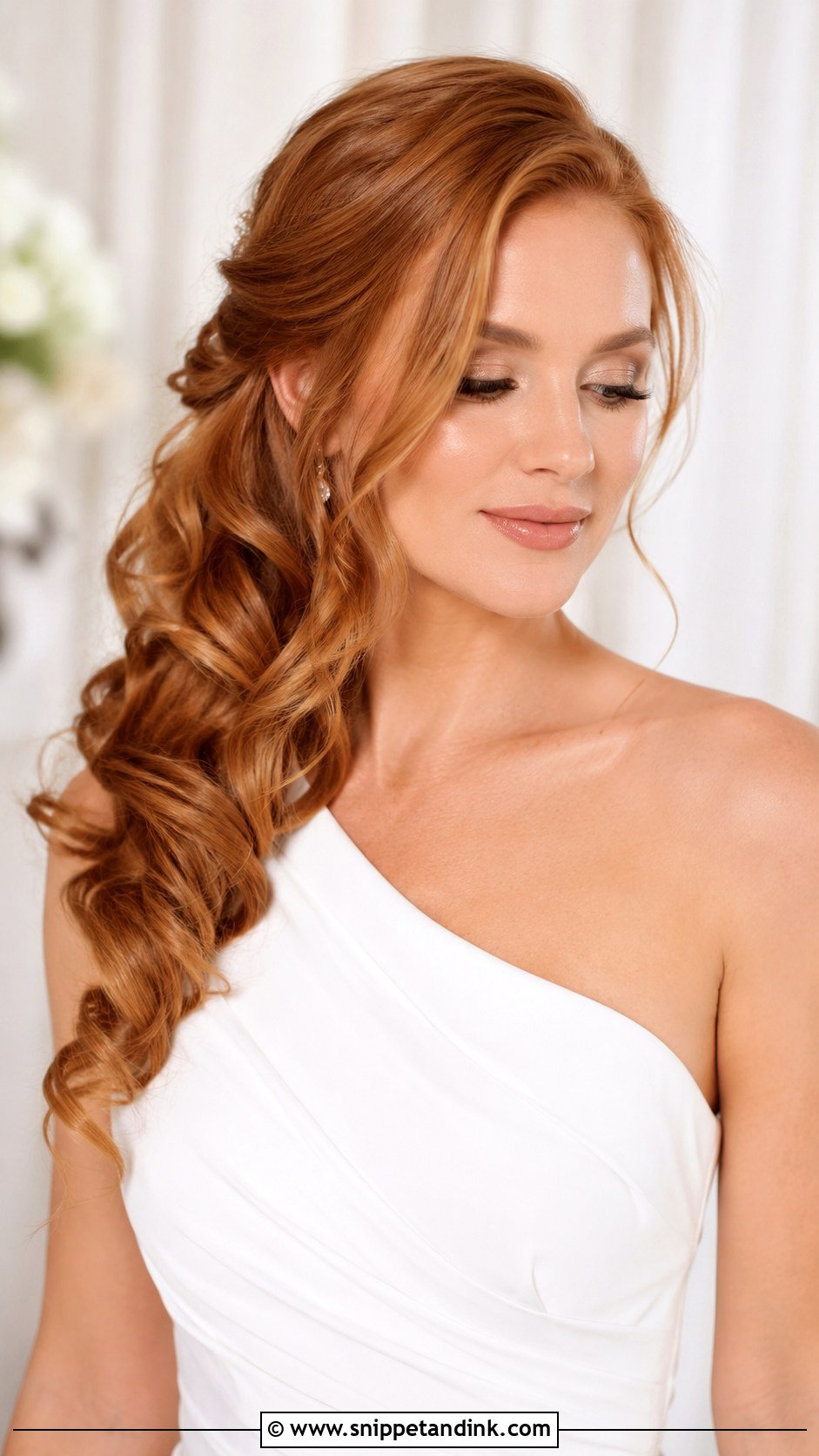
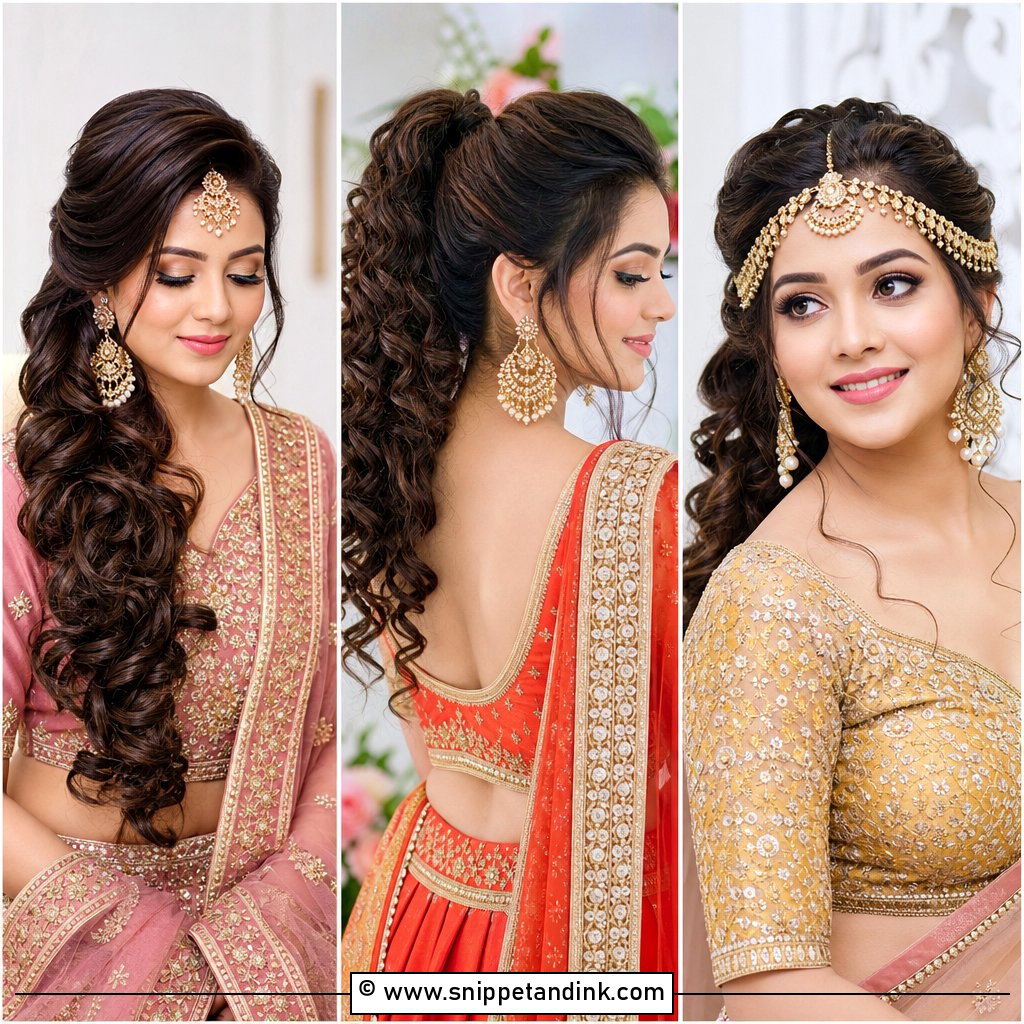
Sweeping everything over one shoulder looks relaxed, but the hair on the far side is fighting gravity all day. I crisscross a row of bobby pins just behind the ear on the bare side so the curls stay put when you turn your head. It’s the natural match for a one-shoulder gown or a dress with a detailed back, because it clears the view. A few loosened face pieces at the front keep it from looking severe. If you’ll wear a necklace, try it on at the trial; long curls tangle in chains.
4. Open Curls With Flower Crown
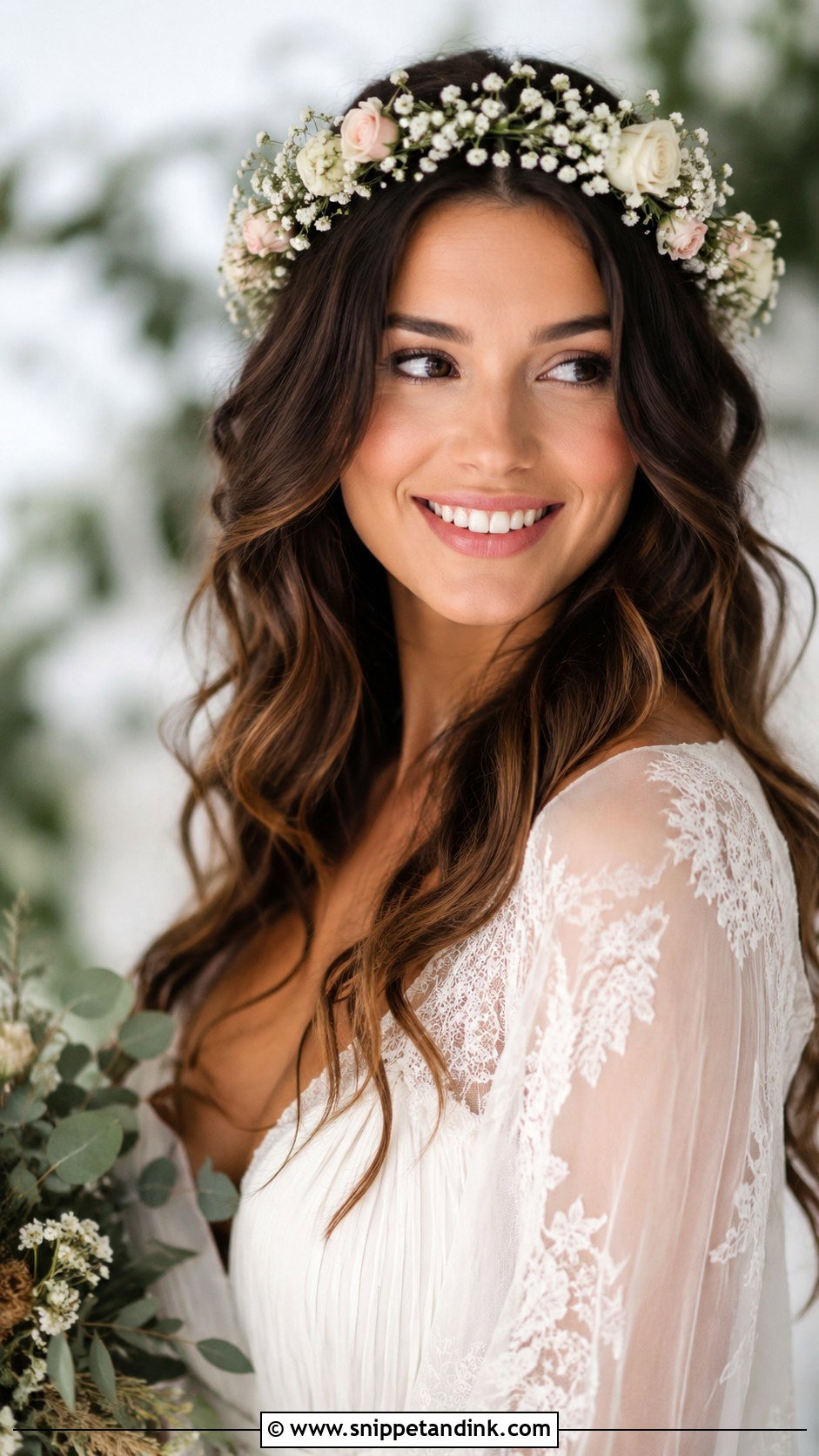
A flower crown needs something to grip, which loose curls on their own do not provide. I pin two small anchor sections under the crown line, then attach the crown to those with pins through the wire base. Fresh blooms are heavier than people expect and wilt in heat, so for an outdoor summer ceremony I’d suggest silk flowers or hardy picks like spray roses over delicate petals. Tiny baby’s breath gives an airy line; larger roses sit lower and read stronger in photos. It belongs with flowing, lightweight gowns and relaxed venues.
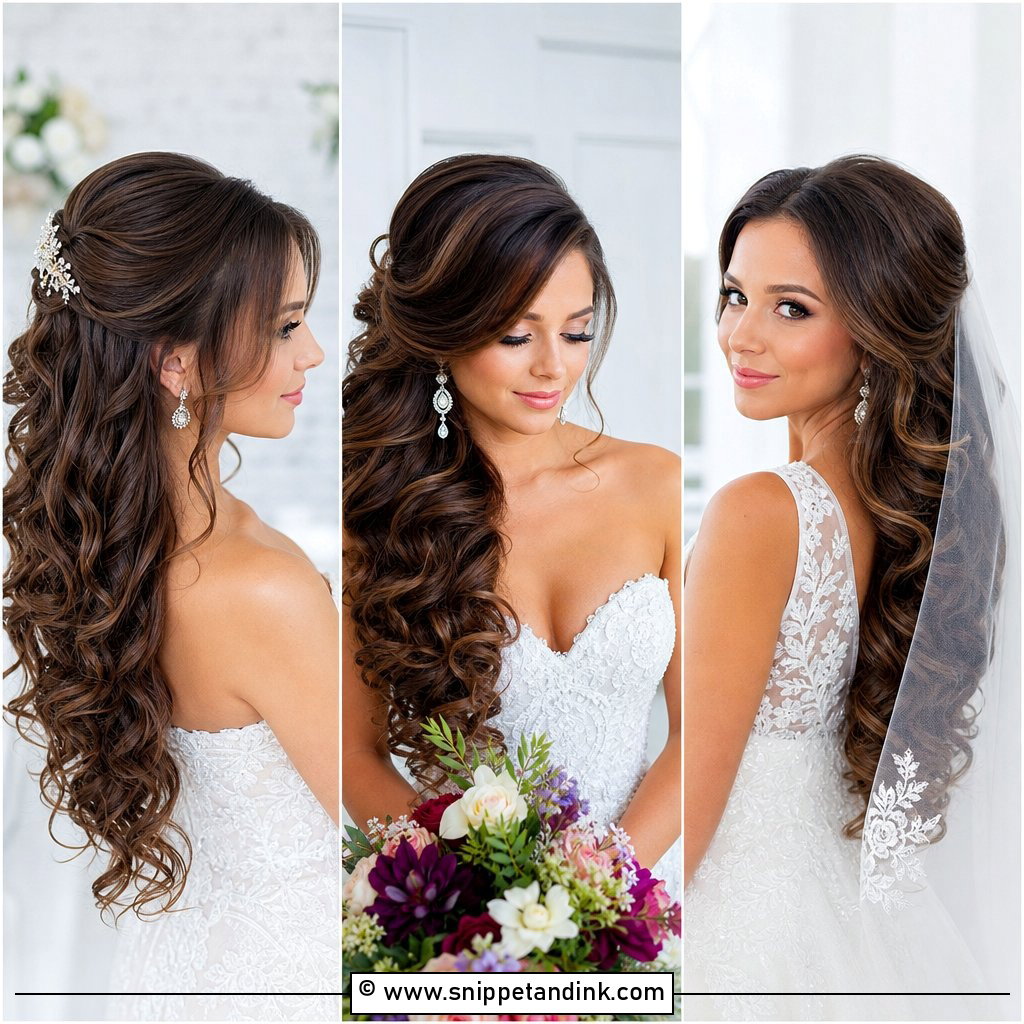
5. Voluminous Curls With Side Part
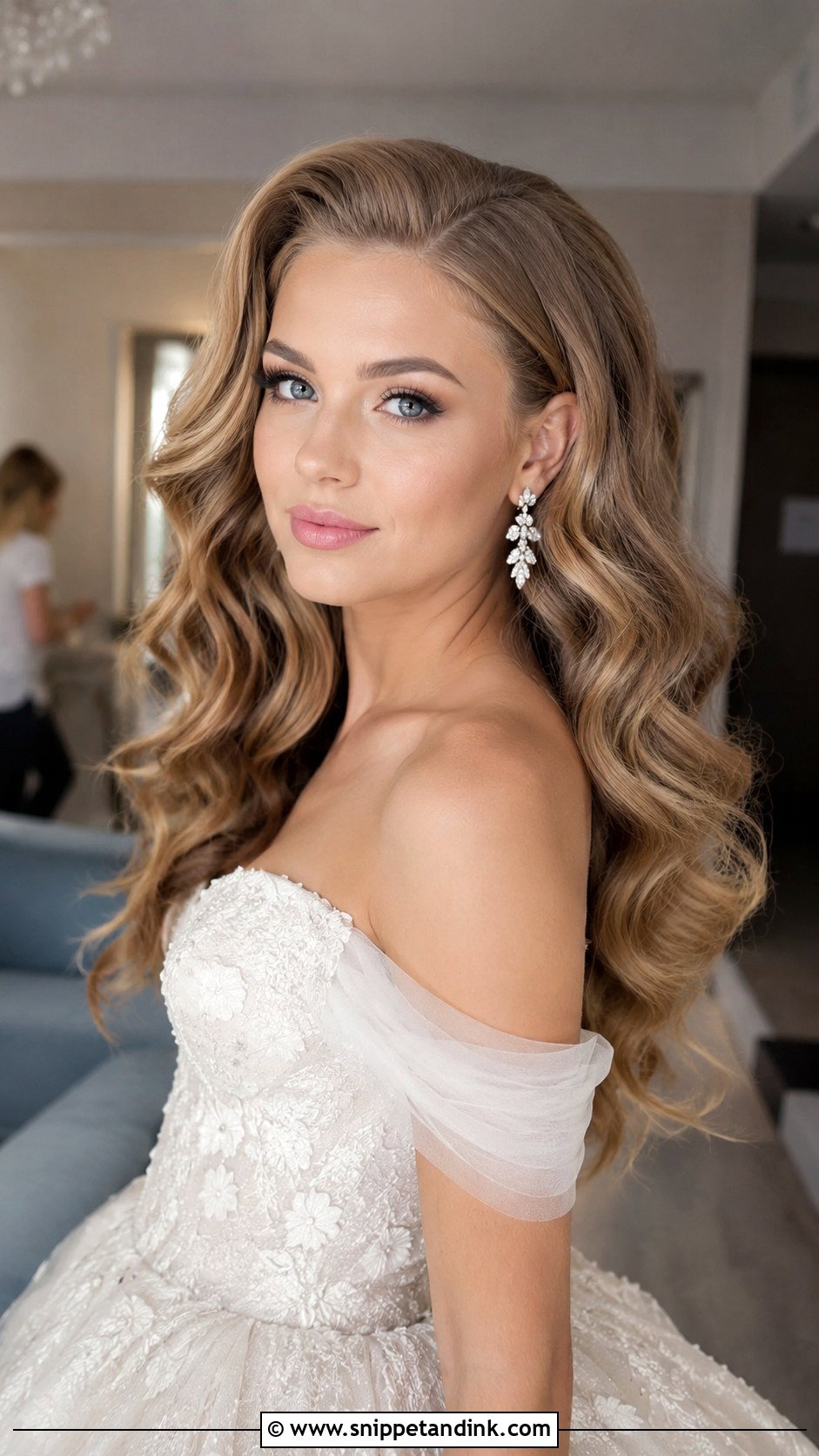
Big curls are built, not sprayed. I start with a volumizing mousse at the root on damp hair, use a larger barrel than you’d think, and pin each curl in its coil until the hair is fully cool. Root lift comes from light backcombing under the top layer so it never shows. A deep side part then throws most of that volume to one side. On thick, heavy hair this holds for hours; on fine hair it needs more product and a teasing comb, and I’d tell you honestly that it will relax by evening.
6. Open Curls With Pearl Pins
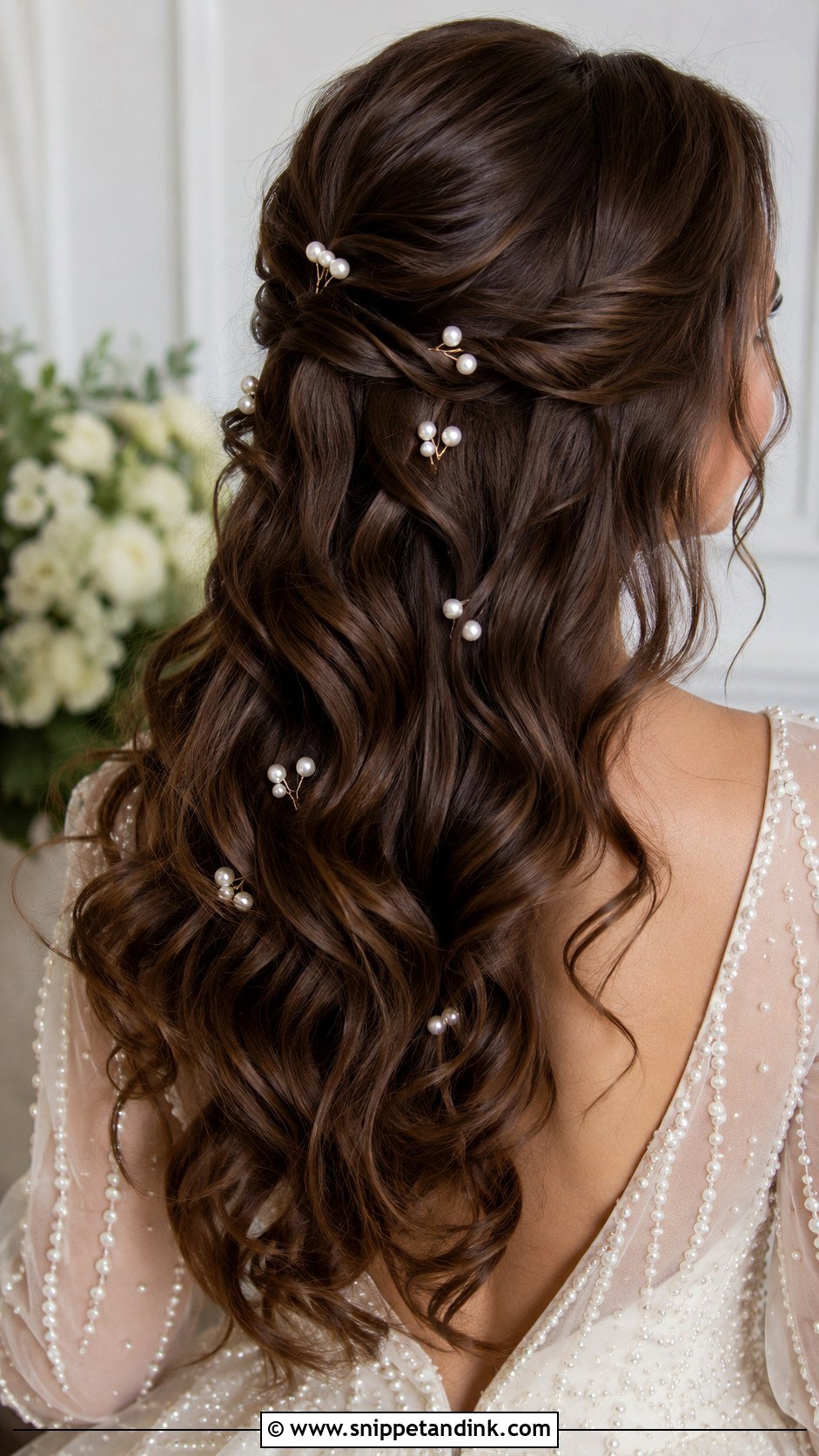
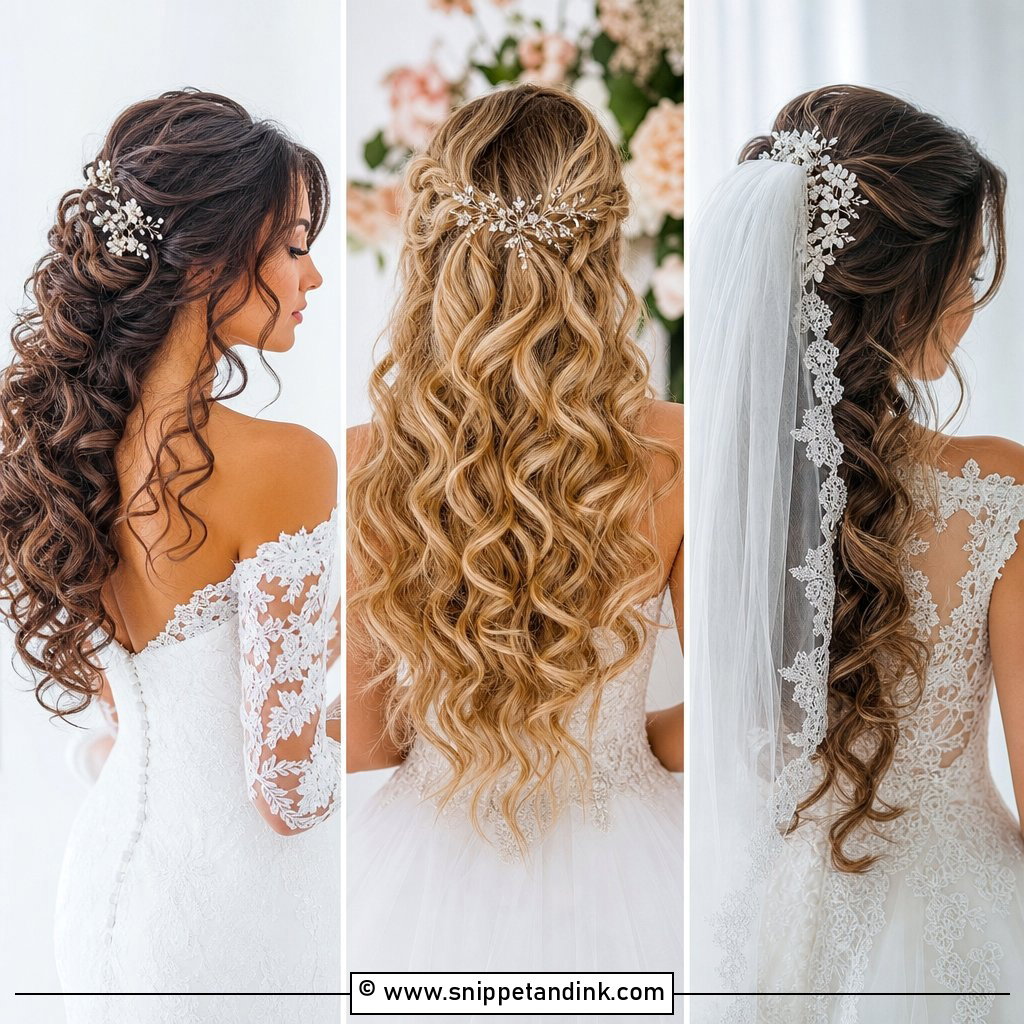
Pearl pins are the safest accessory I know for curls worn down. Each one is light, slides into a curl without disturbing it, and can be moved in seconds if a wave drops. I place them in an uneven scatter, mostly on the heavier side of the part, and avoid an exact line because it looks like a hair grid in photos. Pearls sit well against ivory and champagne fabrics and pair naturally with a veil. Five to nine pins is usually plenty; more starts to look busy.
7. Long Layered Open Curls for Wedding
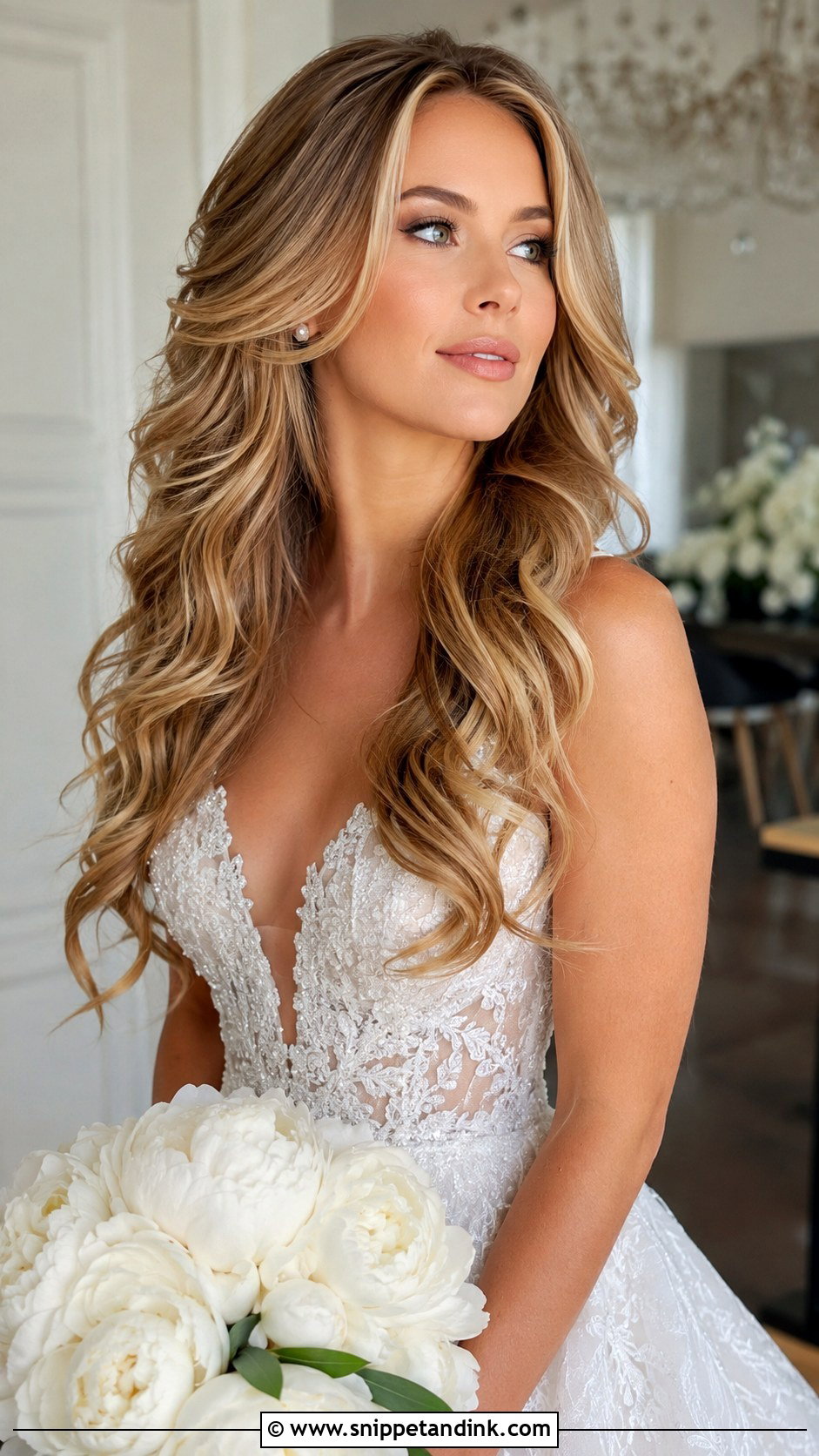
A good layered cut does half my work on the morning. Shorter layers near the face catch the curl and create lift, while longer layers fall into separate waves rather than one heavy sheet. The caution is timing: any new layers should be cut at least a few weeks before the wedding so the ends have settled. Fine hair benefits most because layers remove weight that would otherwise drag curls straight. Wear it fully down, or clip a section back at the temples if you want your face clear for the ceremony.
8. Open Curls With Braided Crown
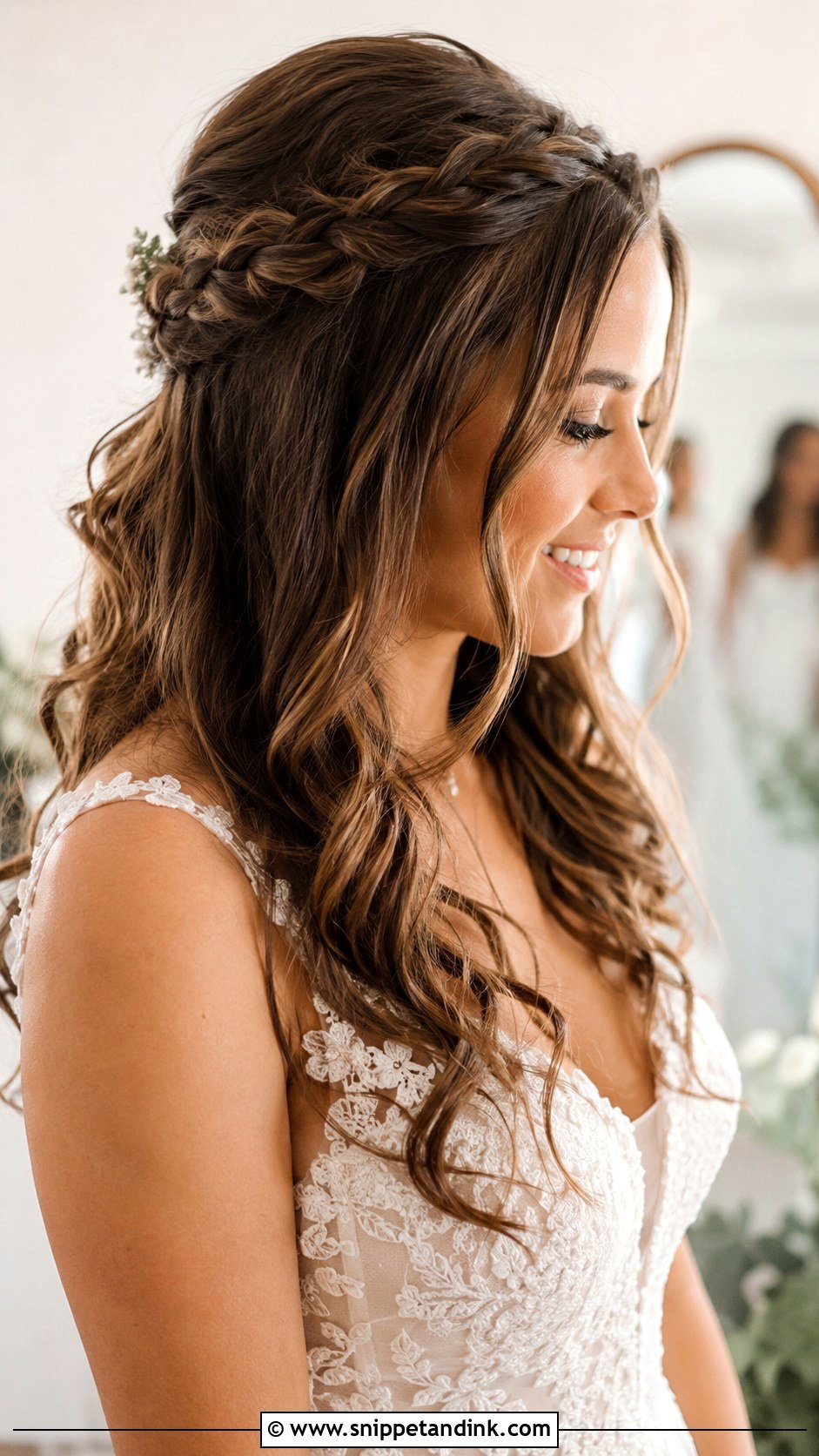
A braided crown keeps hair off the face for the whole day, which is half the reason brides choose it. I braid along the hairline from one temple to the other, tuck the end under, and pin it behind the ear on the far side. The braid itself becomes the anchor for a veil comb or a few flowers. Tight braids read tidy and classic; pancaked, pulled braids read relaxed and suit garden and rustic venues. If your hair is layered short around the front, expect a few pieces to pop out, and plan to call that softness.
9. Curtain Bangs With Open Curls
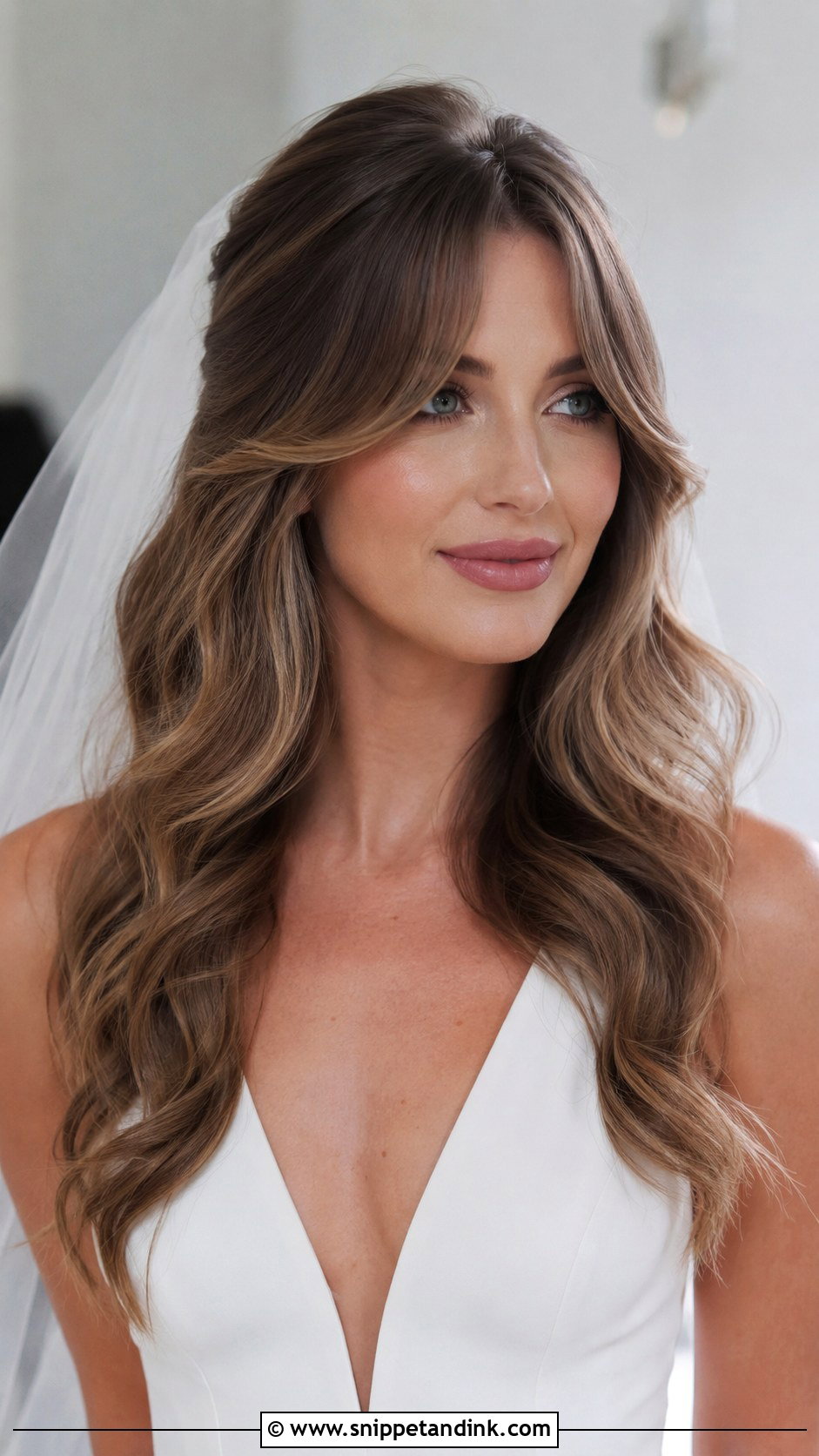
Curtain bangs are lovely with curls, but they react to weather faster than any other part of the head. I blow-dry them with a round brush away from the face first, then curl them separately with a smaller barrel so they blend into the lengths instead of flipping. Center parting is the classic placement. They flatter oval and heart-shaped faces particularly well. If you sweat easily or the ceremony is outdoors in summer, bring a mini dry shampoo; damp bangs separate long before the rest of the hair moves.
10. Open Curls With Hair Vine
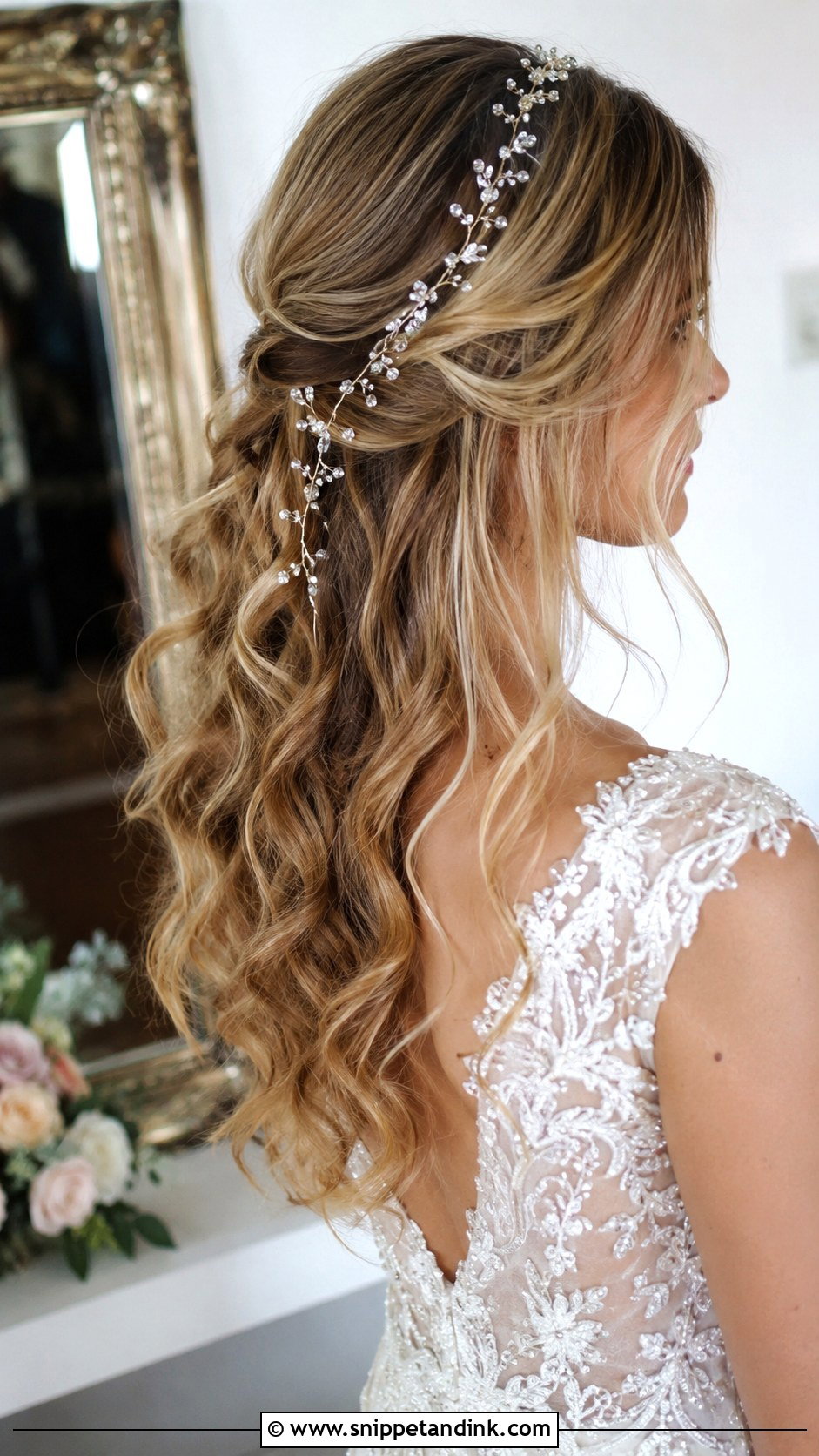
A hair vine weighs almost nothing, which makes it a great match for loose curls that can’t support a heavy piece. I thread the wire through two or three pinned anchor points rather than relying on its ends alone, so it doesn’t creep when you turn. Running it along the side part keeps it visible from the front; weaving it through a half-up section frames the back for the processional. Crystal vines sparkle under flash, while pearl ones look softer in daylight. It’s a simple way to dress up curls without adding bulk.
11. Deep Side Part Open Curls
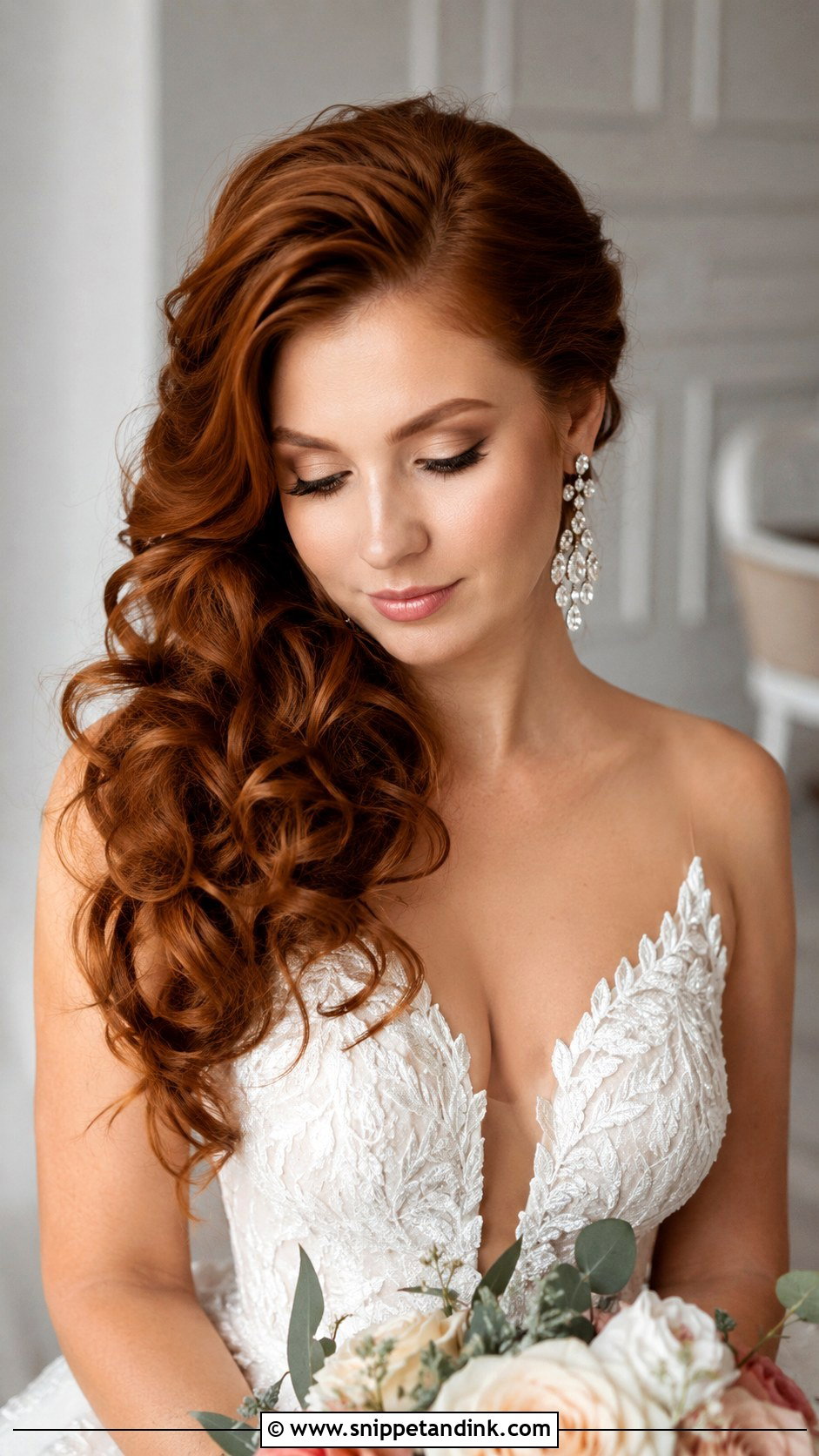
A deep part changes the face more than people expect. Moving the part two or three finger-widths over lifts the crown, softens a strong jaw and gives one side a cascade of curls to play with. I set the part before curling, never after, so the roots dry in the right direction. It’s especially good on long, layered hair. The thing to check at your trial is which side you favour: most people have a natural part, and fighting it means the hair keeps trying to flip back.
12. Open Curls With Tiara
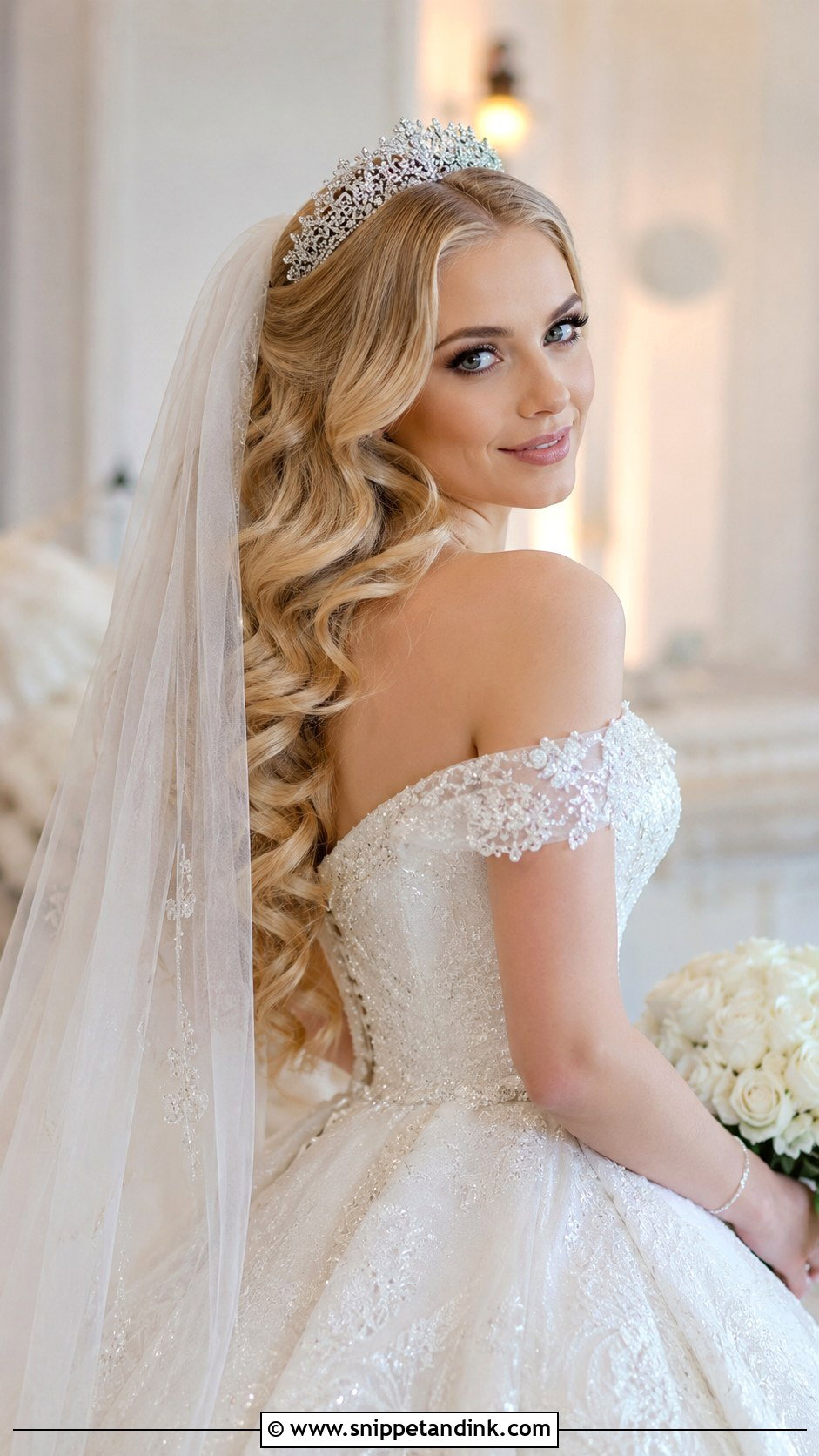
A tiara looks regal, but it needs real structure under it. I tease and pin a small base at the crown and slide the combs into that rather than into loose curls, which can’t hold the weight. A tiara with side loops lets me pin it at both ends, which is far steadier for dancing. Delicate pieces suit a softer curl; bold ones need volume at the crown to stay in proportion. It sits naturally with ballgowns and cathedral-length veils, and the veil comb goes just behind the tiara band.
13. Beachy Open Curls for Wedding
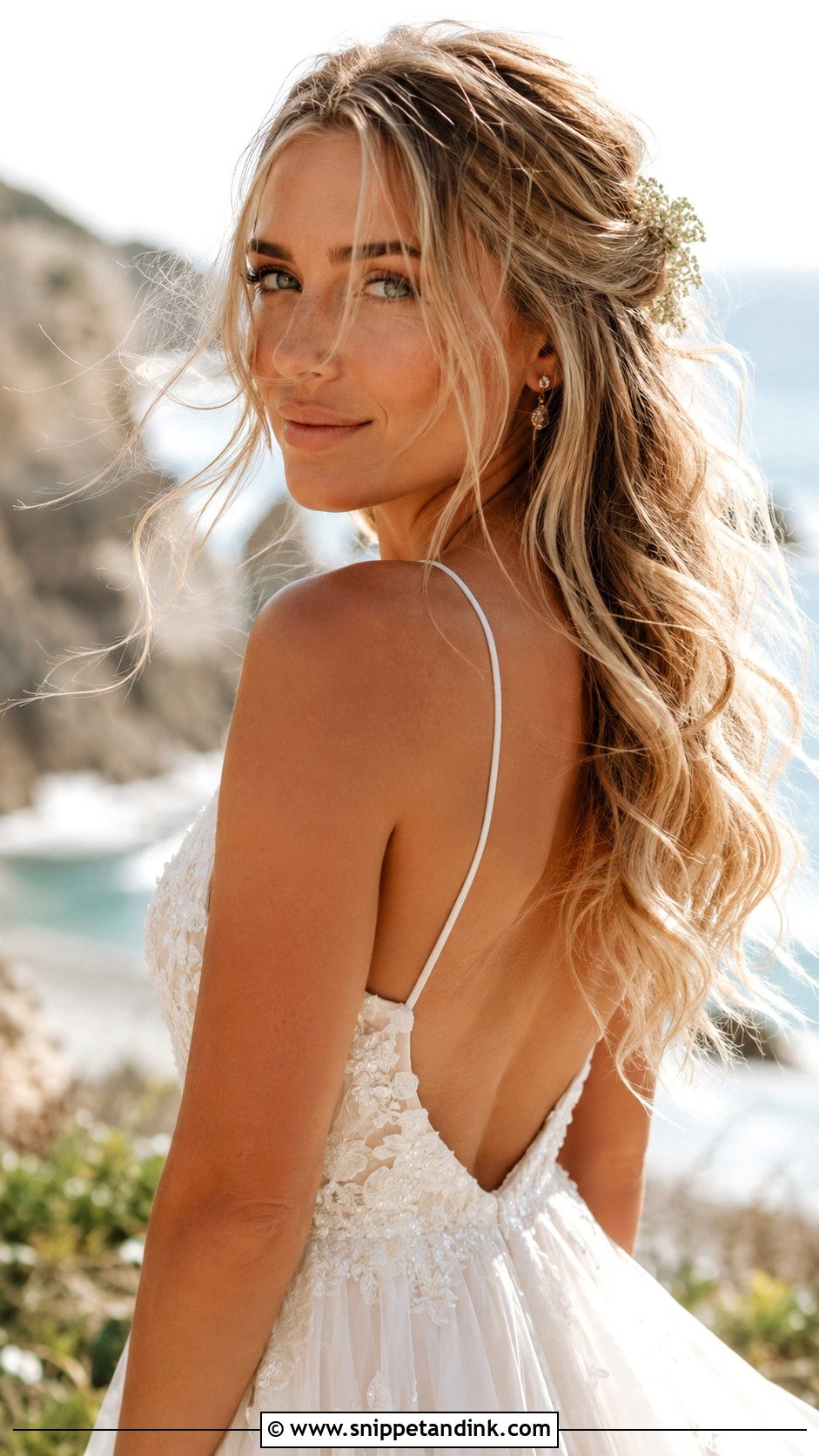
Beach texture is the hardest curl to keep looking intentional. These loose, undone waves are made with a flat iron twisted through the hair or a wand with the ends left straight, then broken up with fingers and a dry texture spray. Salt air and sea breeze will add more texture by the hour, which is part of the charm. What I warn against is a heavy oil or shine spray; on the beach it goes stringy fast. Keep accessories minimal and the gown light.
14. Open Curls With Floral Pins
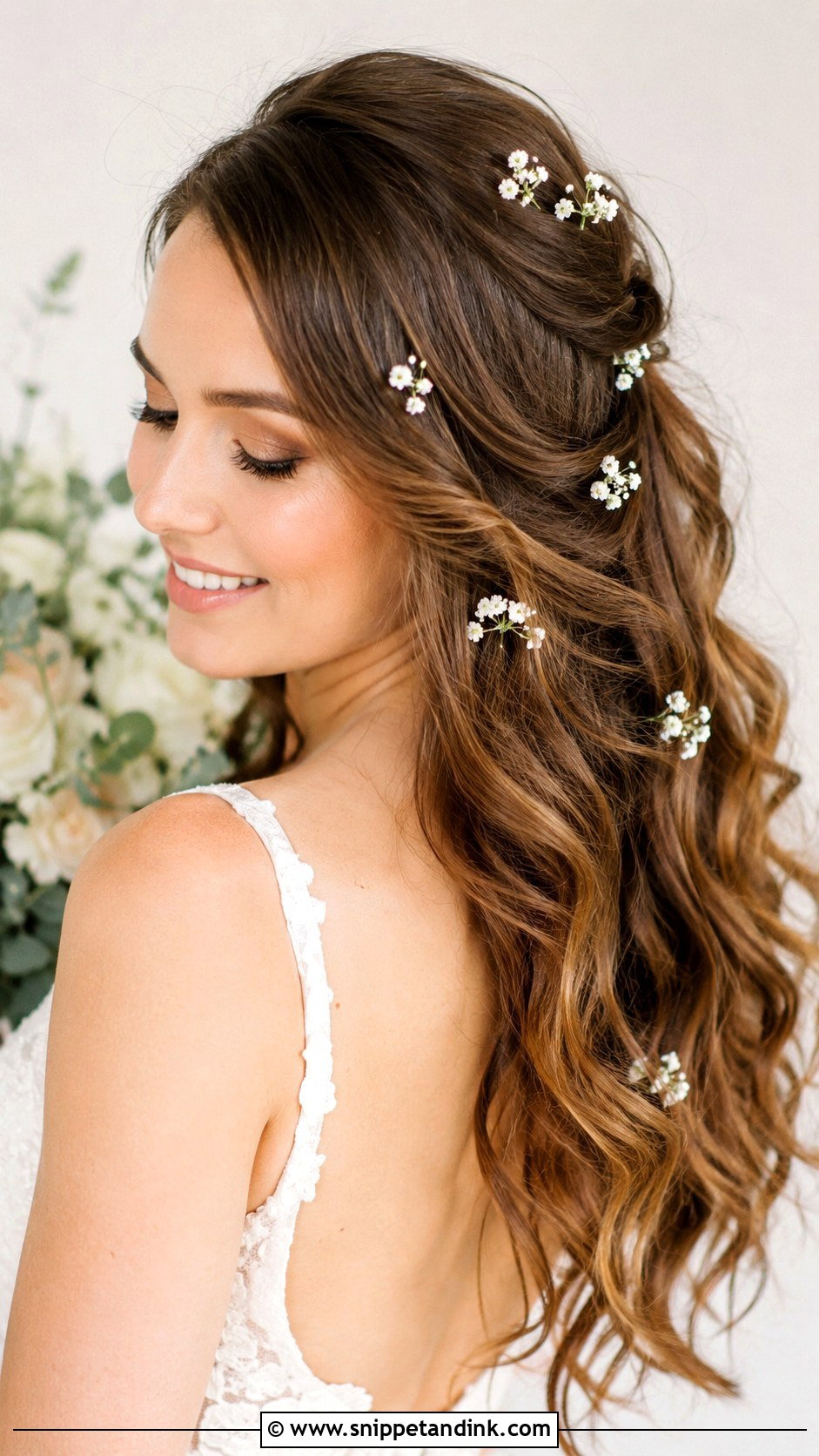
Small floral pins are less fuss than a full crown and far more forgiving. I cluster them on one side behind the ear, or scatter a few through the back, and use pins with a grip clip rather than a straight wire so they stay in loose waves. Matching them to the bouquet ties the look together. If you choose fresh blooms, your florist needs to know early, because they’ll be cut and wired separately and kept chilled until the last moment. In spring and summer, silk versions are often the calmer option.
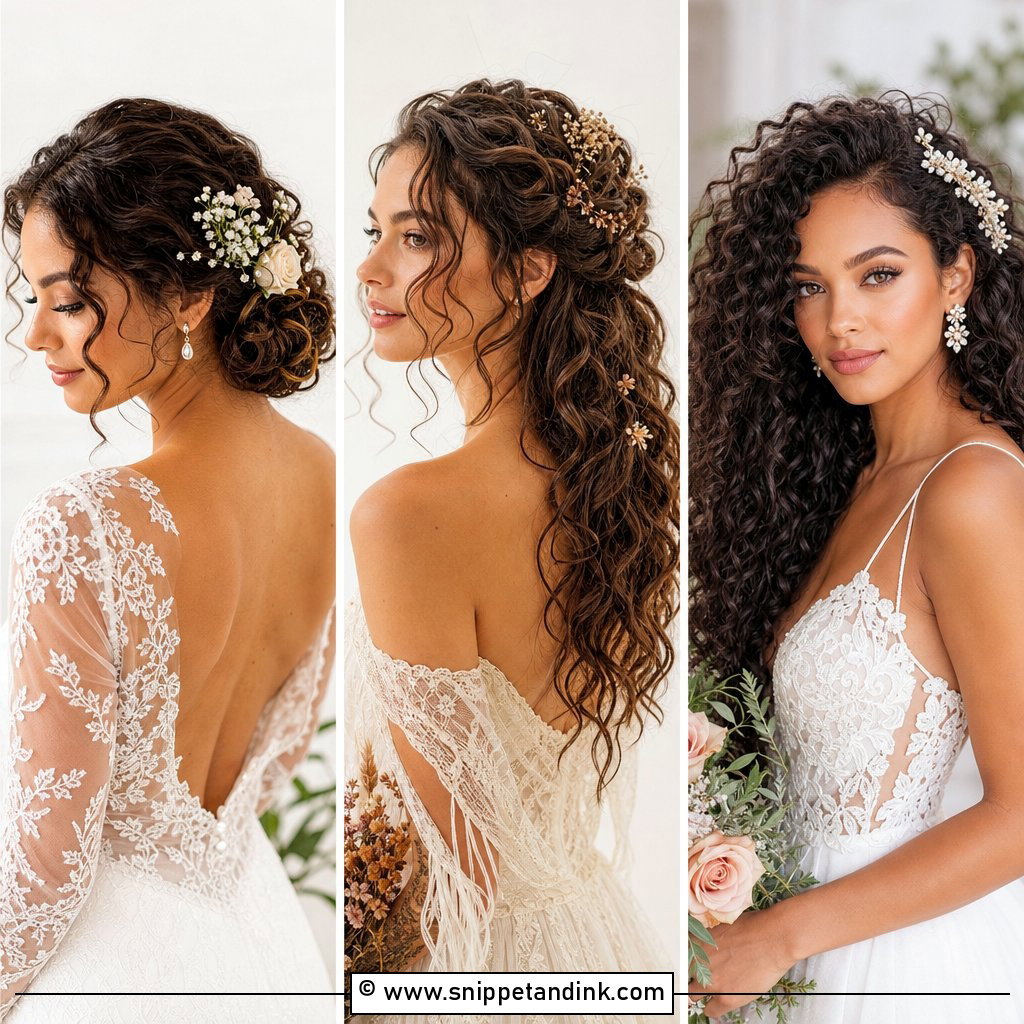
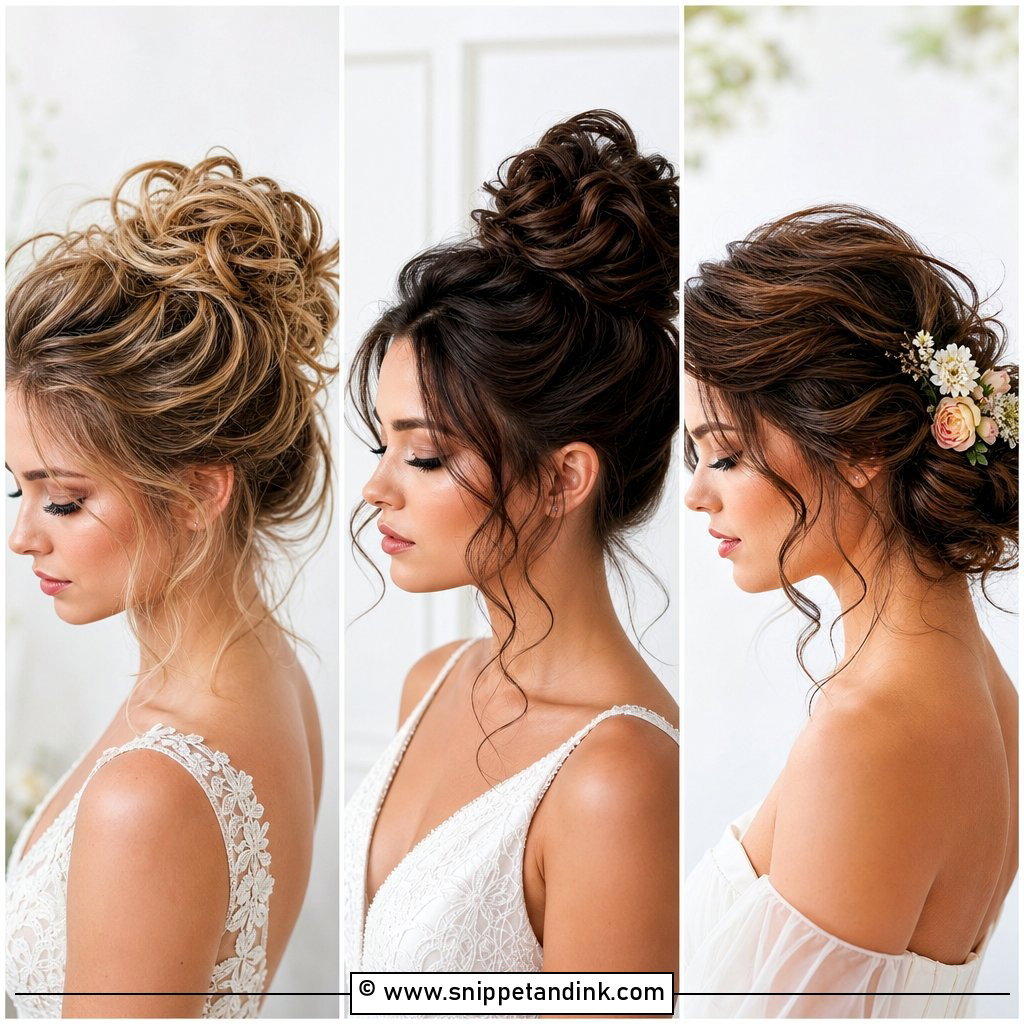
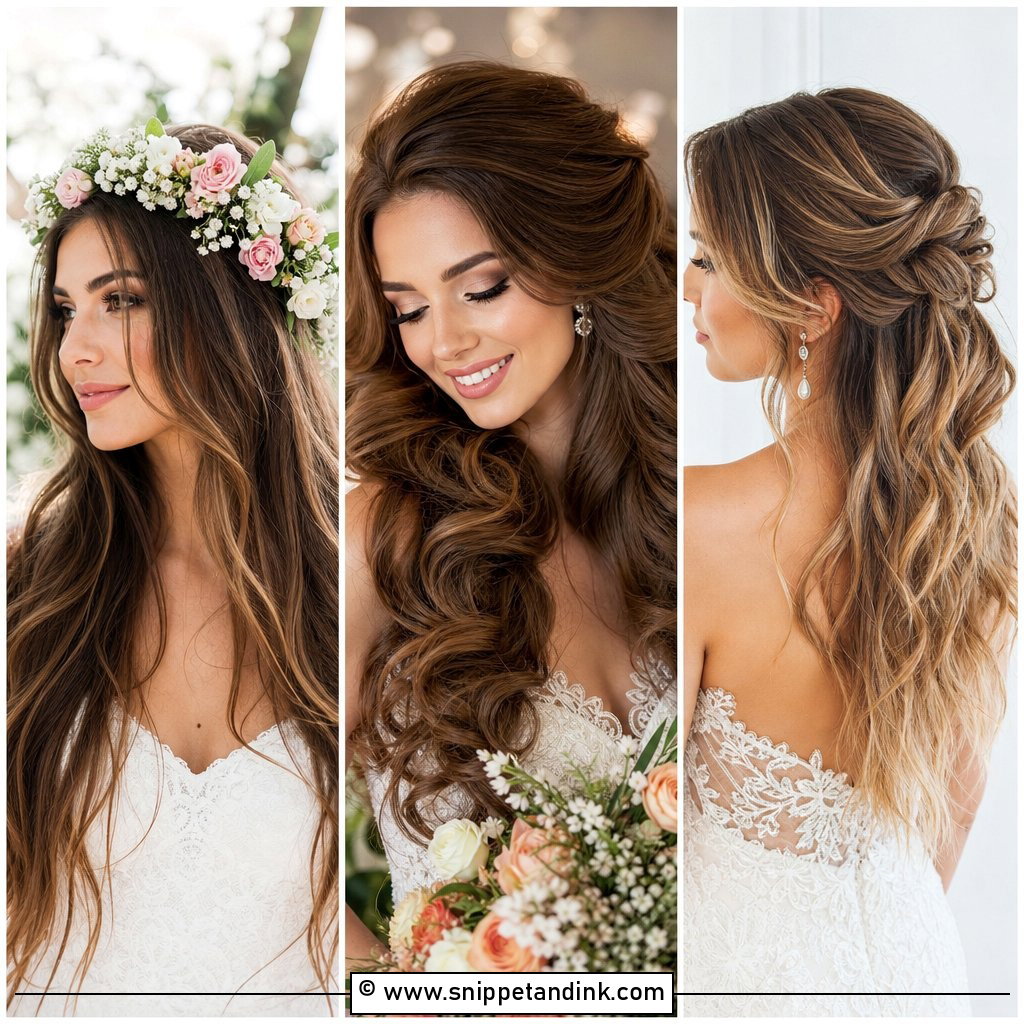
15. Sleek Roots With Open Curls
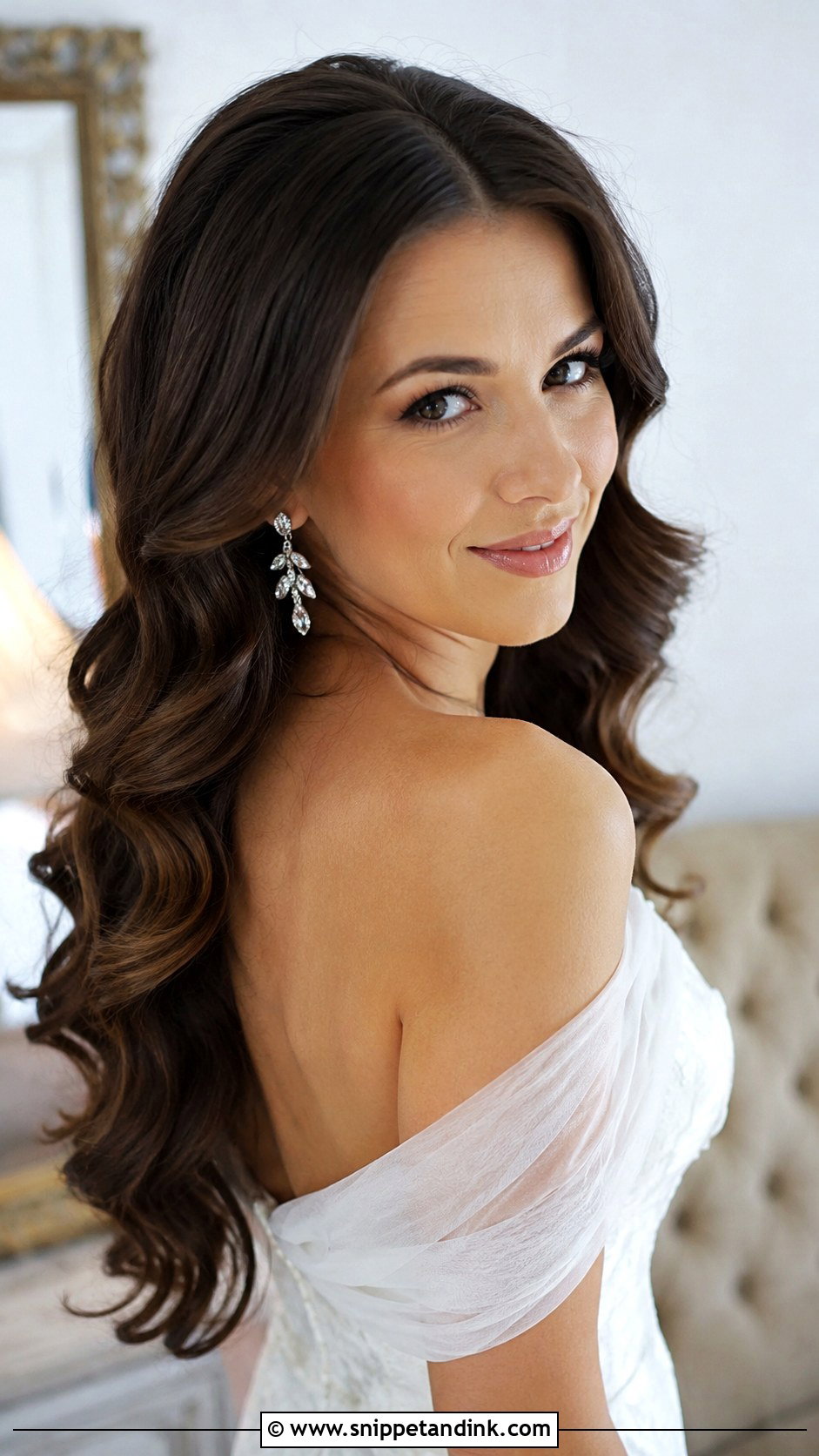
The sleek crown is where the polish comes from. I smooth the top with a fine-toothed comb and a light cream, then curl only from about the ear down, so the roots lie flat and the ends carry the movement. The contrast reads modern and clean. On very straight, fine hair the curl tends to fall out faster than it does on fuller hair, so I’ll use a stronger set and pin curls longer. Statement earrings and a clean neckline suit it well.
16. Open Curls With Veil
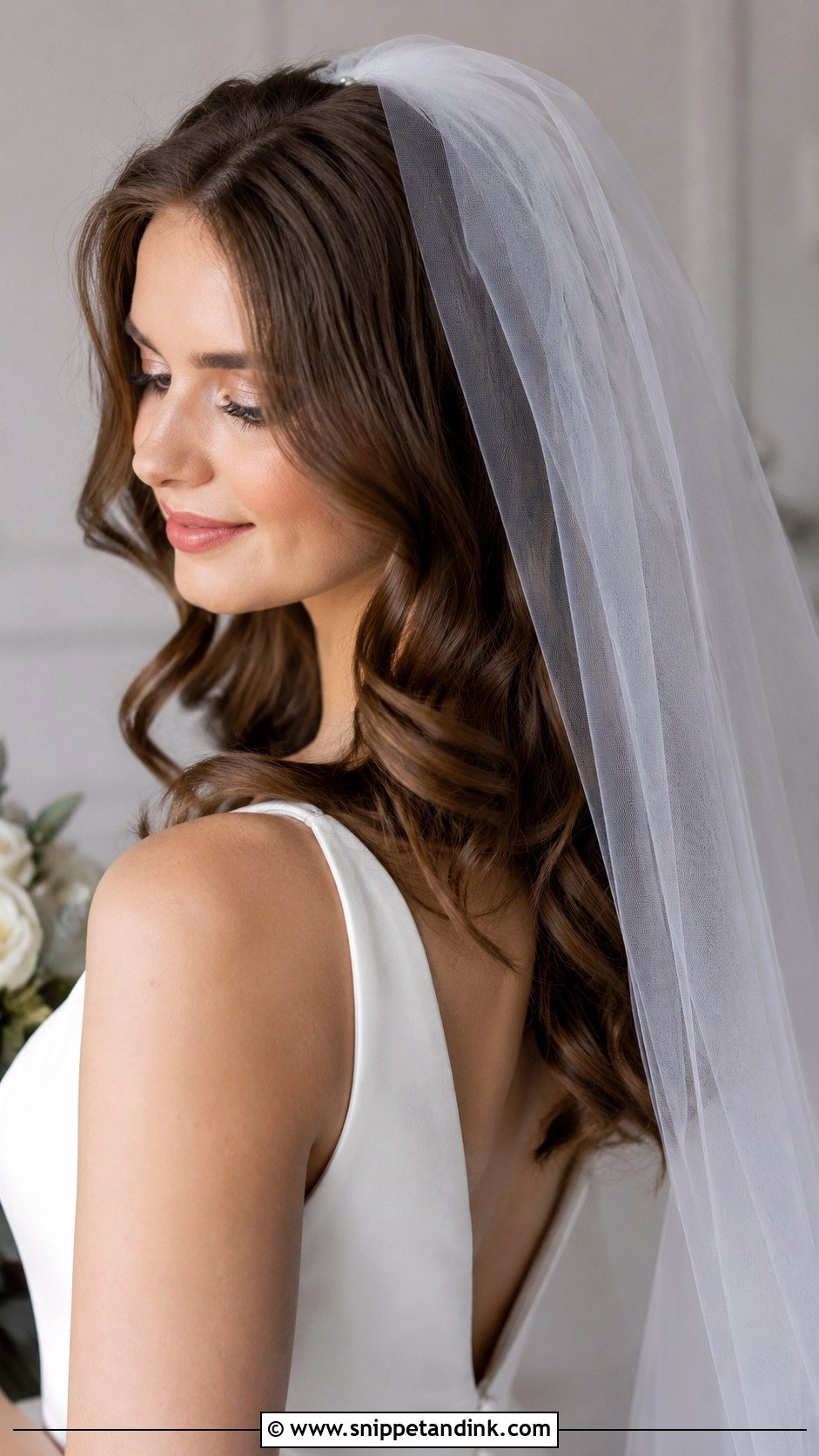
A veil over curls is a classic for good reason, but the comb is the weak point. I make a small pinned base where the veil will sit, either high at the crown for drama or lower near the nape for a softer line, and slide the comb into that. Loose curls alone will let it slip. Lifting the veil off after the ceremony takes seconds, and the curls should still be intact underneath. Do a short walk and a hug test at your trial with the actual veil.
17. Center Part Open Curls for Wedding
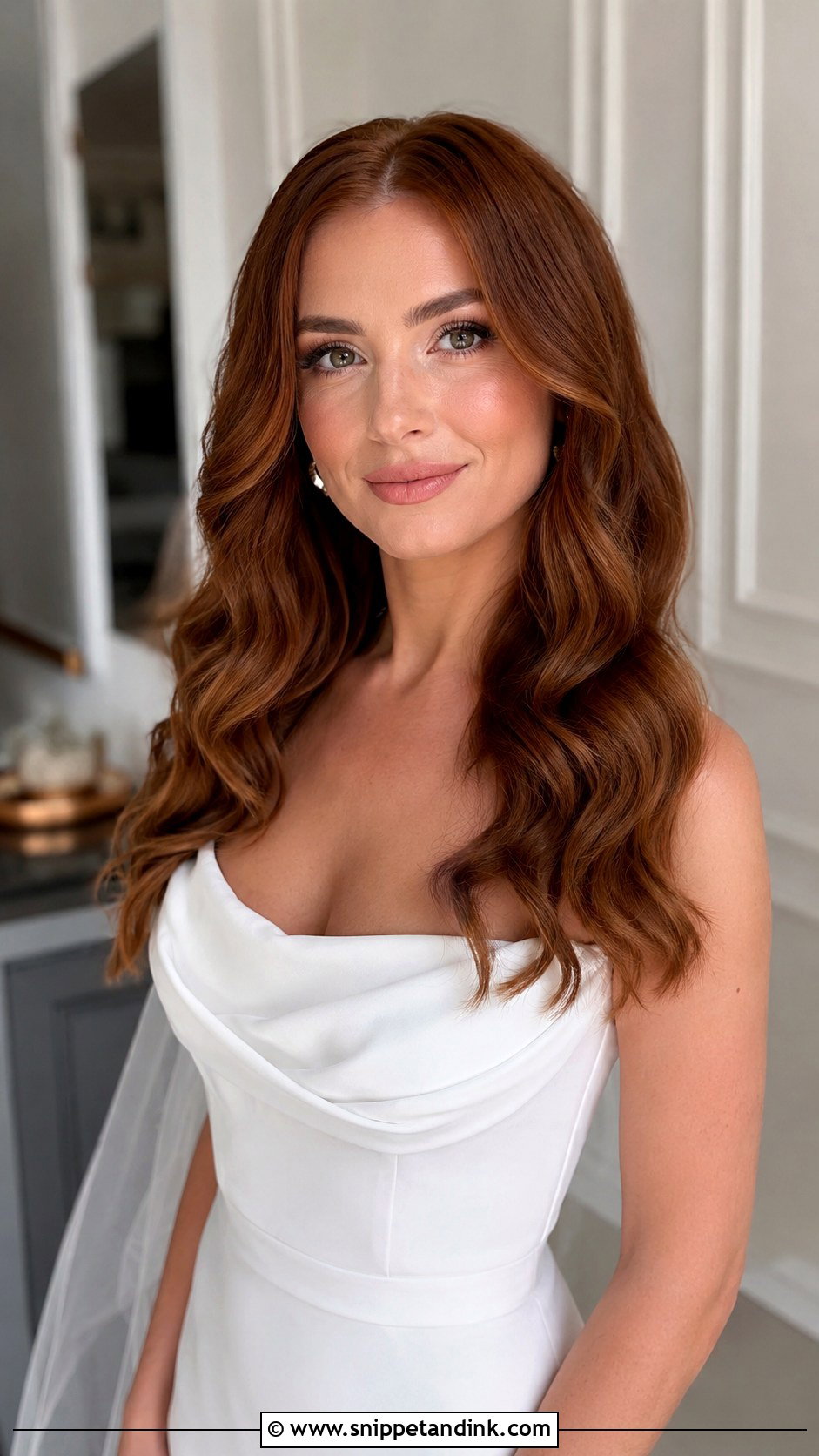
A center part is unforgiving of uneven curls, so I work both sides in mirror directions, curling away from the face, and check them in a hand mirror from the front before brushing out. Done well, it frames the face cleanly and suits oval and long faces in particular. If you have a strong cowlick at the front, a middle part can fight it all day. The center-parted curls here look relaxed with minimal accessories and pair with nearly any gown.
18. Open Curls With Side Braid
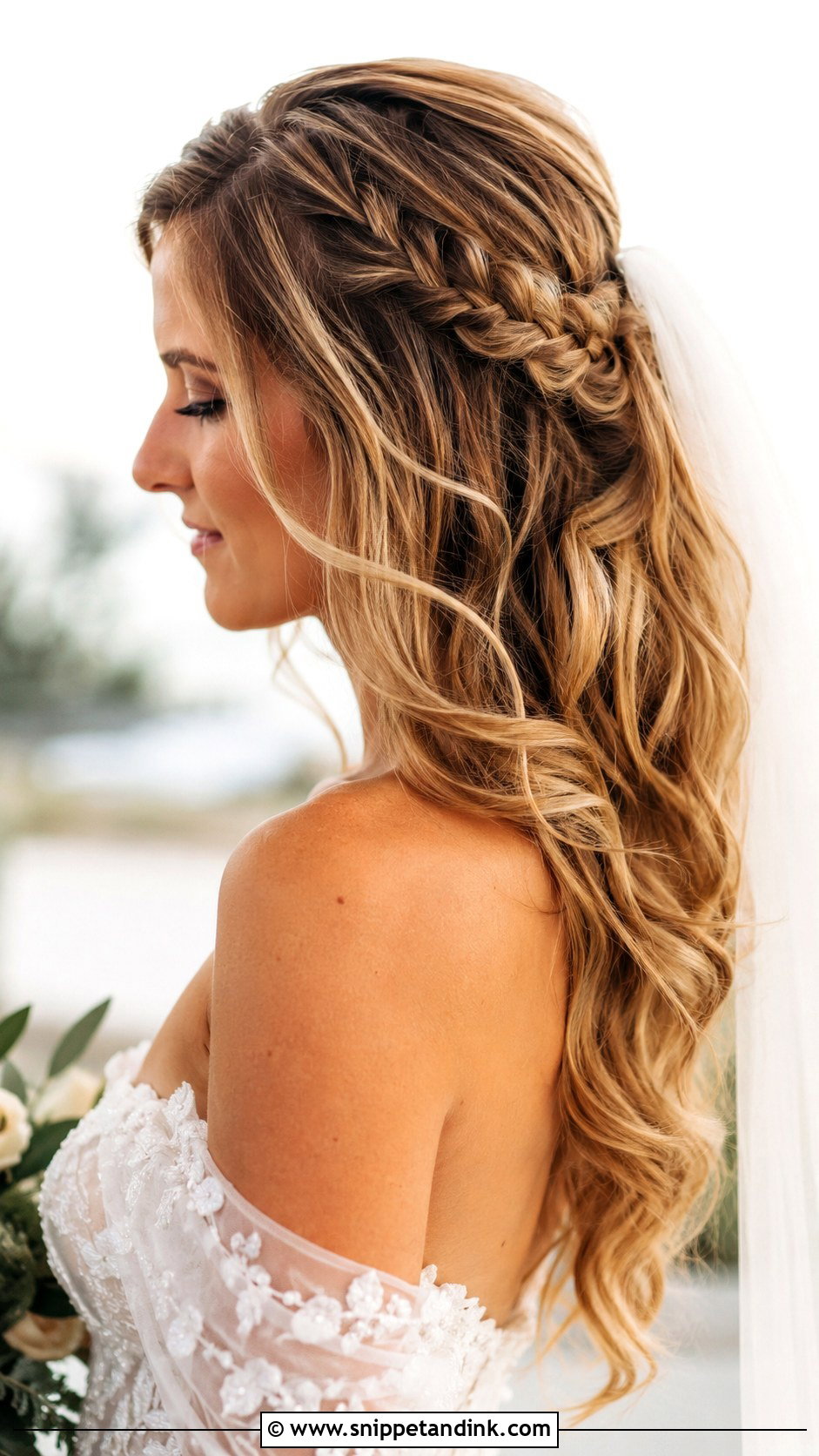
A side braid gives open curls a structural spine. I start it near the temple, braid loosely down behind the ear, and secure it with a clear elastic before pancaking the loops for width. It keeps hair off one shoulder and helps the curls on that side stay where they were placed. The look suits rustic and garden weddings and off-shoulder gowns. On short-layered hair, pieces will escape the braid, so I tuck the tail under the curls and pin it in place.
19. Voluminous Open Curls With Volume
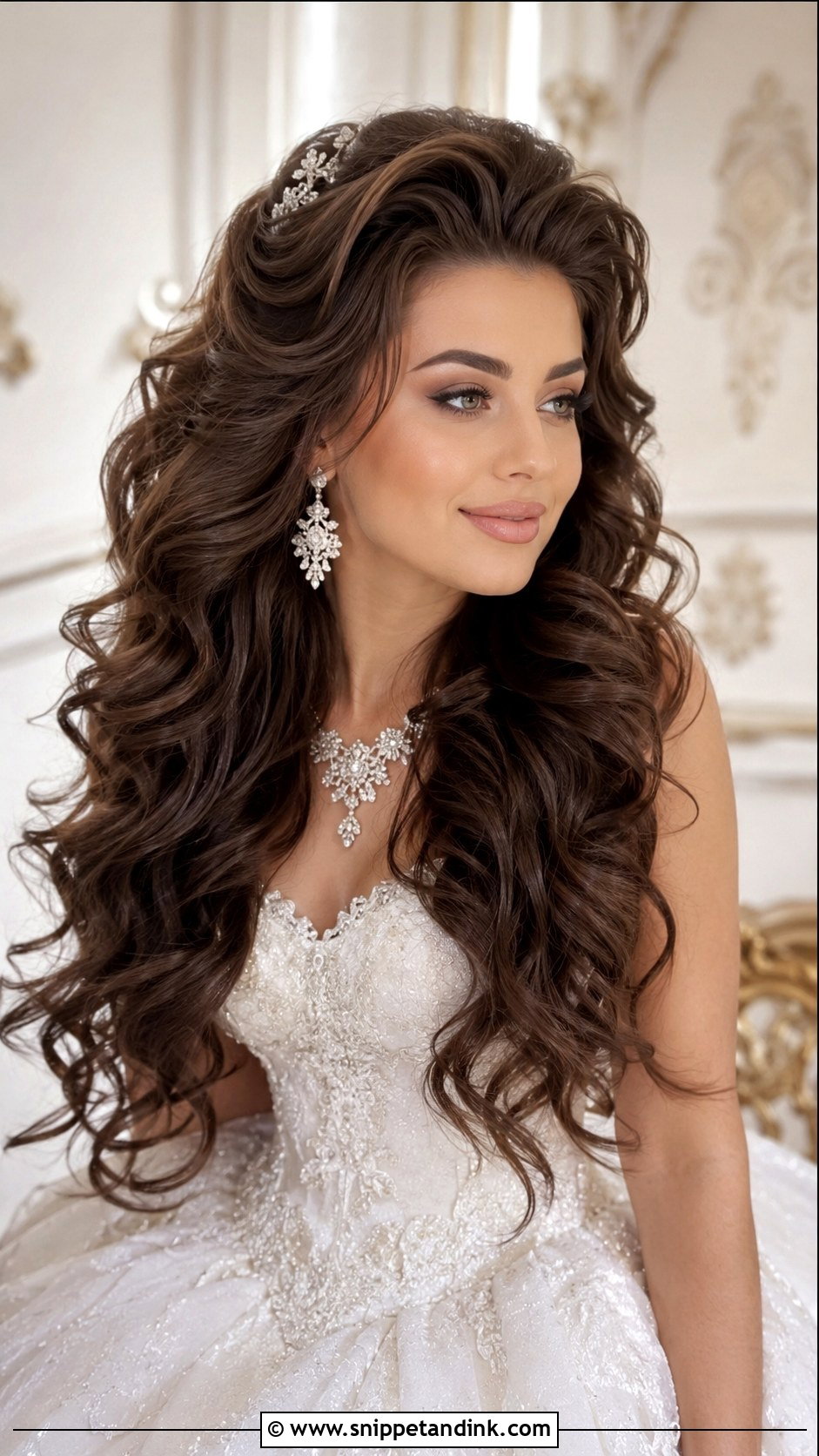
This one is all about lift. Teasing the roots gently beneath the top layer, then using a flexible hairspray, gives body that still moves. I’ll warn every bride that maximum volume reads differently in daylight versus a dark reception room; outside it can look bigger than expected in photos. It suits formal venues, ballgowns and statement jewelry. Humidity is the enemy here, so if your venue is coastal or tropical, we may trade some height for a style that keeps its shape.
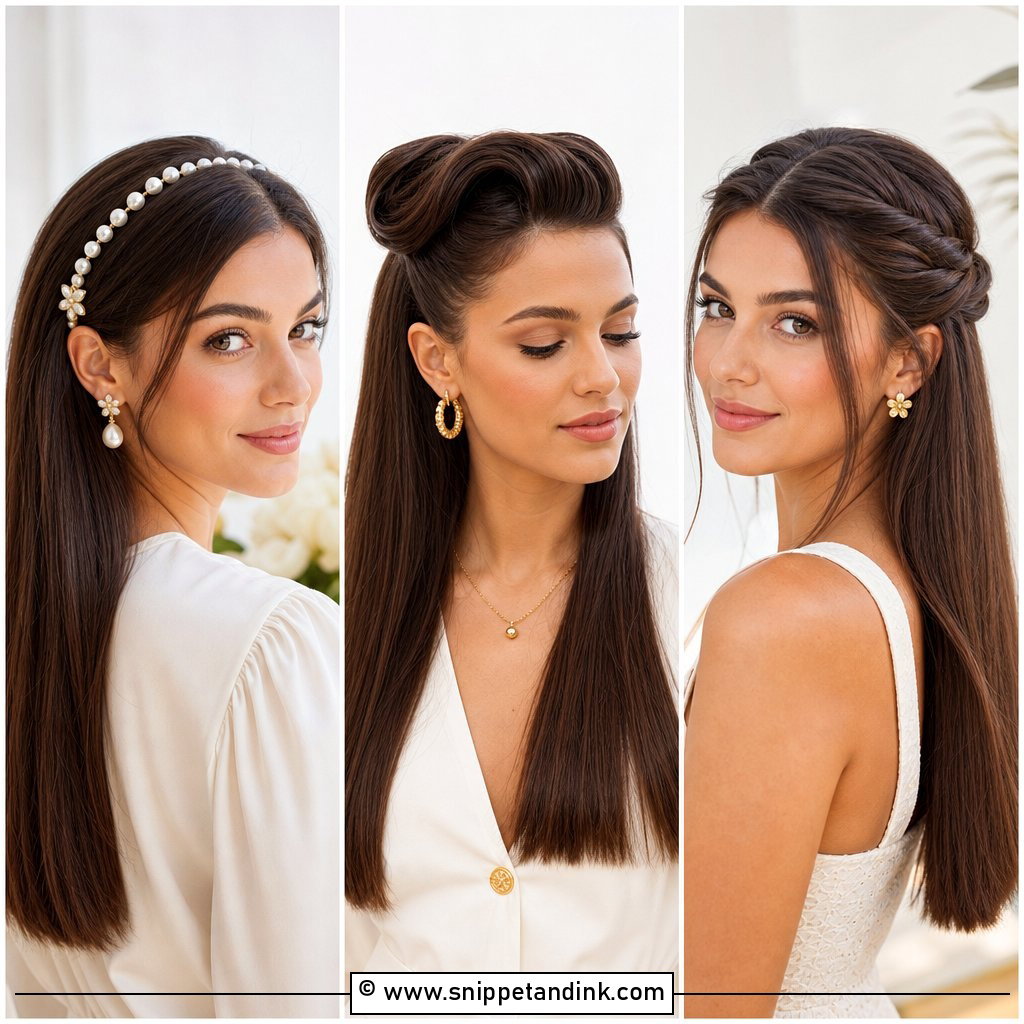
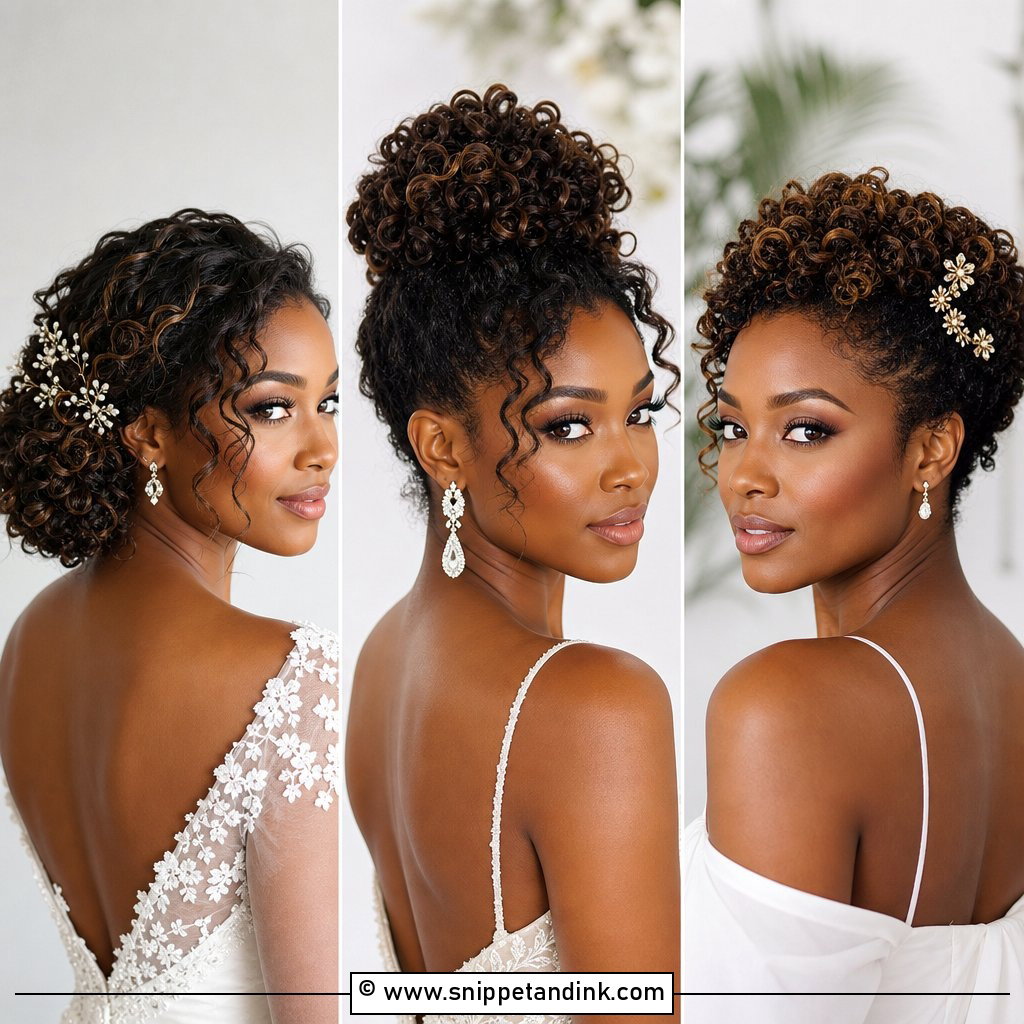
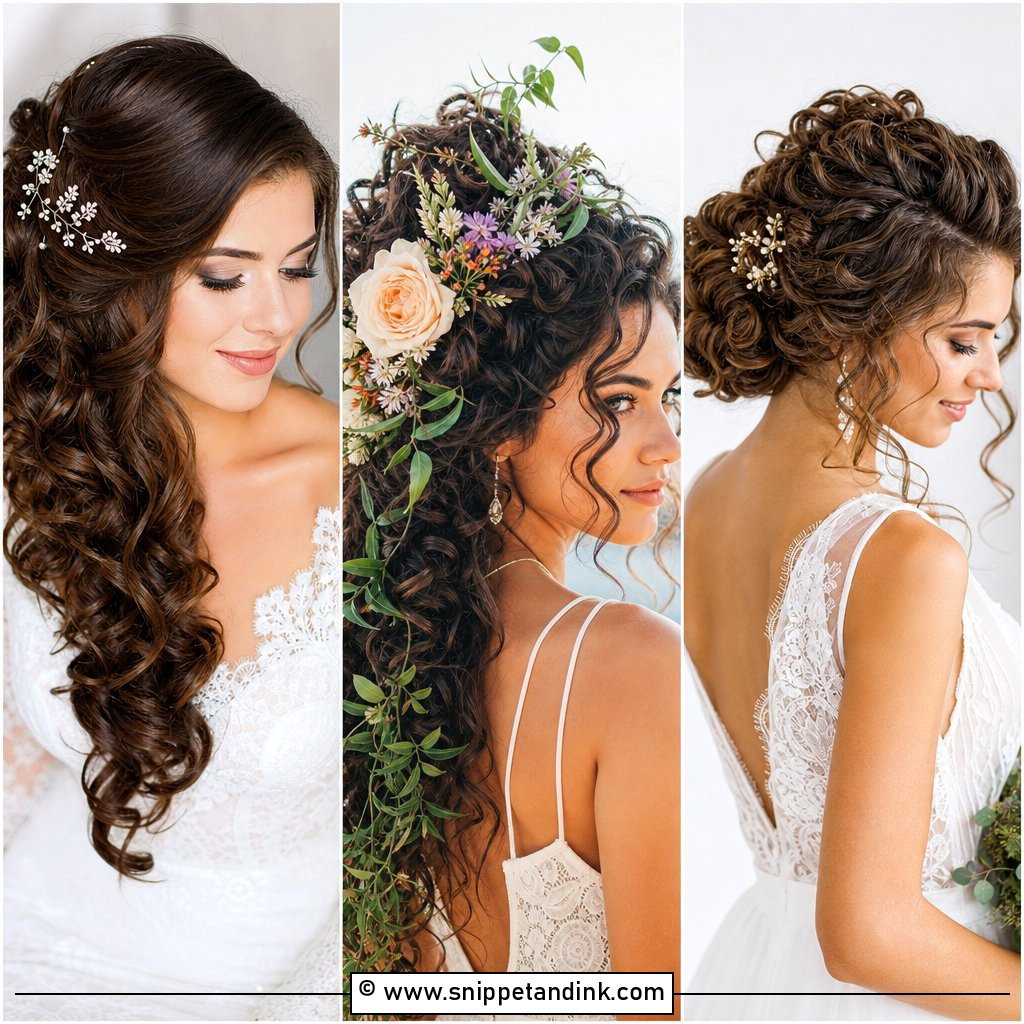
20. Open Curls With Gold Accessories
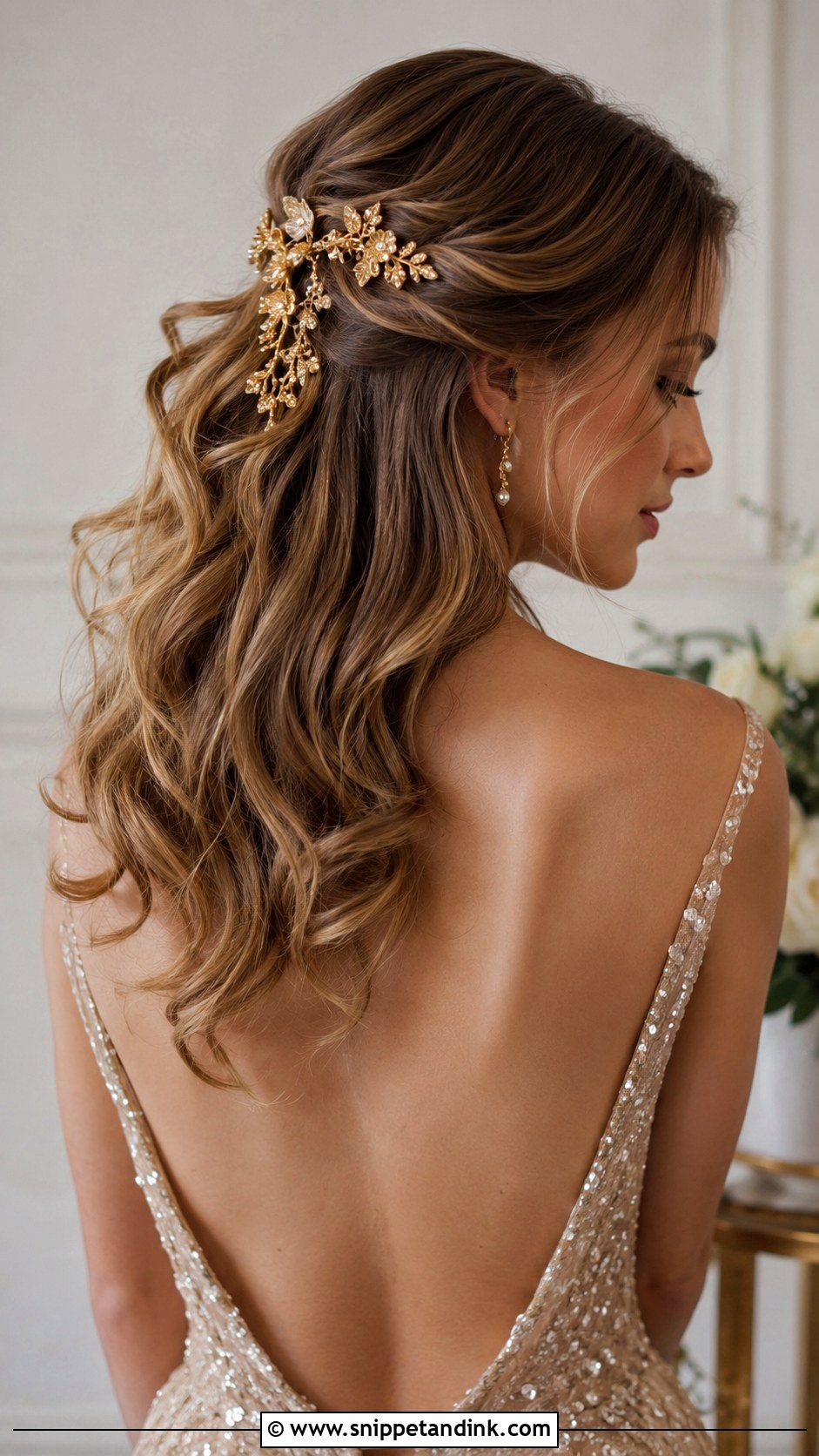
Gold accessories warm up the whole look, especially against honey, copper and dark brown hair, where silver can disappear. I place the main piece just behind the side part and add one or two small pins on the opposite side to balance it. Gold also sits naturally next to ivory and champagne gowns. The caution is mixing metals: if your earrings and ring are silver or platinum, a gold hair piece may feel disconnected. Bring your jewelry to the trial so we can see everything together.
21. Soft Romantic Open Curls
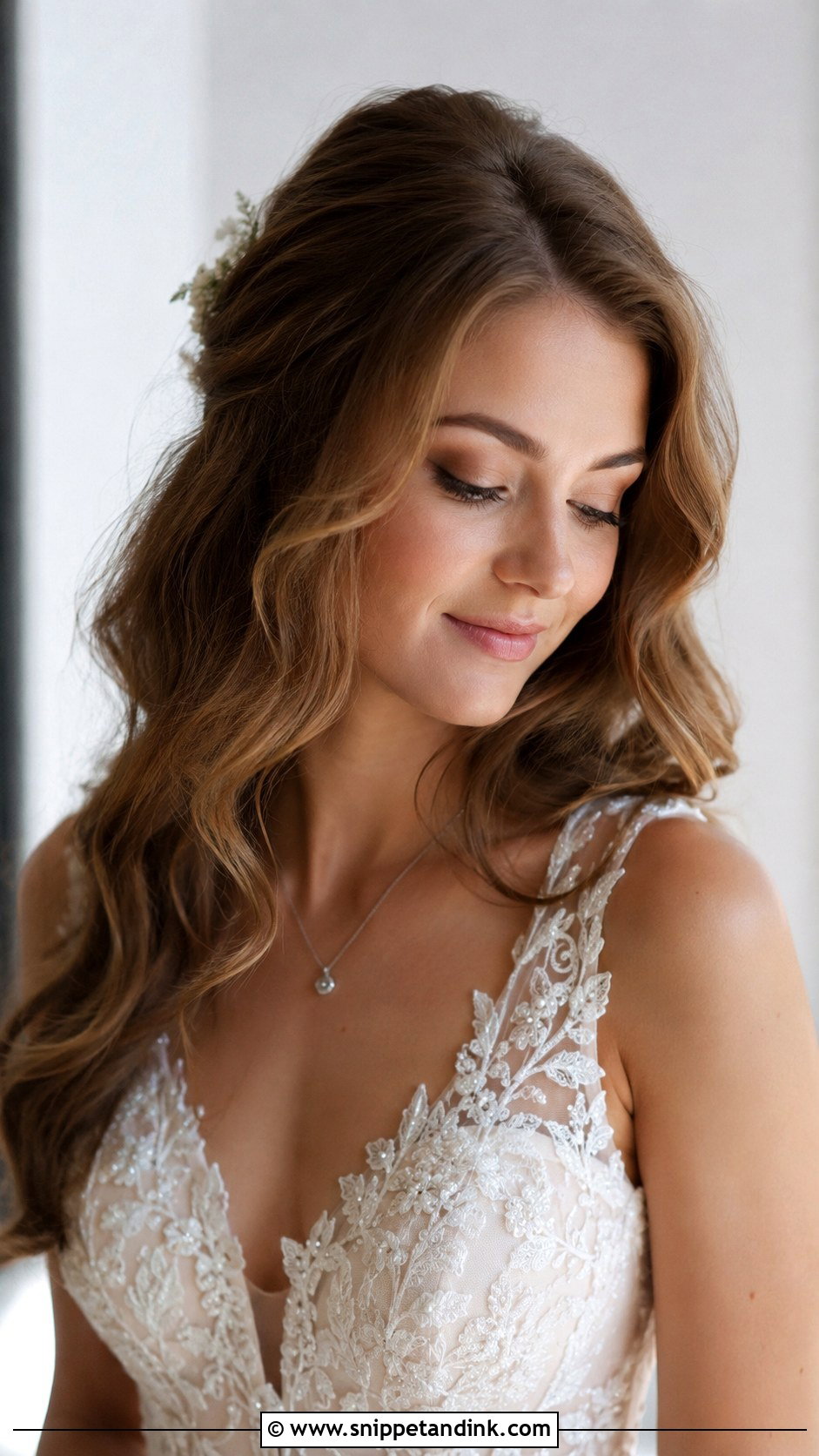
Soft curls are the closest thing to your own hair, just better behaved. I curl in larger sections with a bigger barrel, skip heavy hairspray and brush the curls out until they’re loose and airy. The trade-off is staying power: a lighter set relaxes sooner, so this suits brides who are comfortable with the curl softening into waves through the evening. A light shine spray at the end keeps the hair looking healthy in flash photos. Minimal jewelry sits well with it.
22. Open Curls With Headband
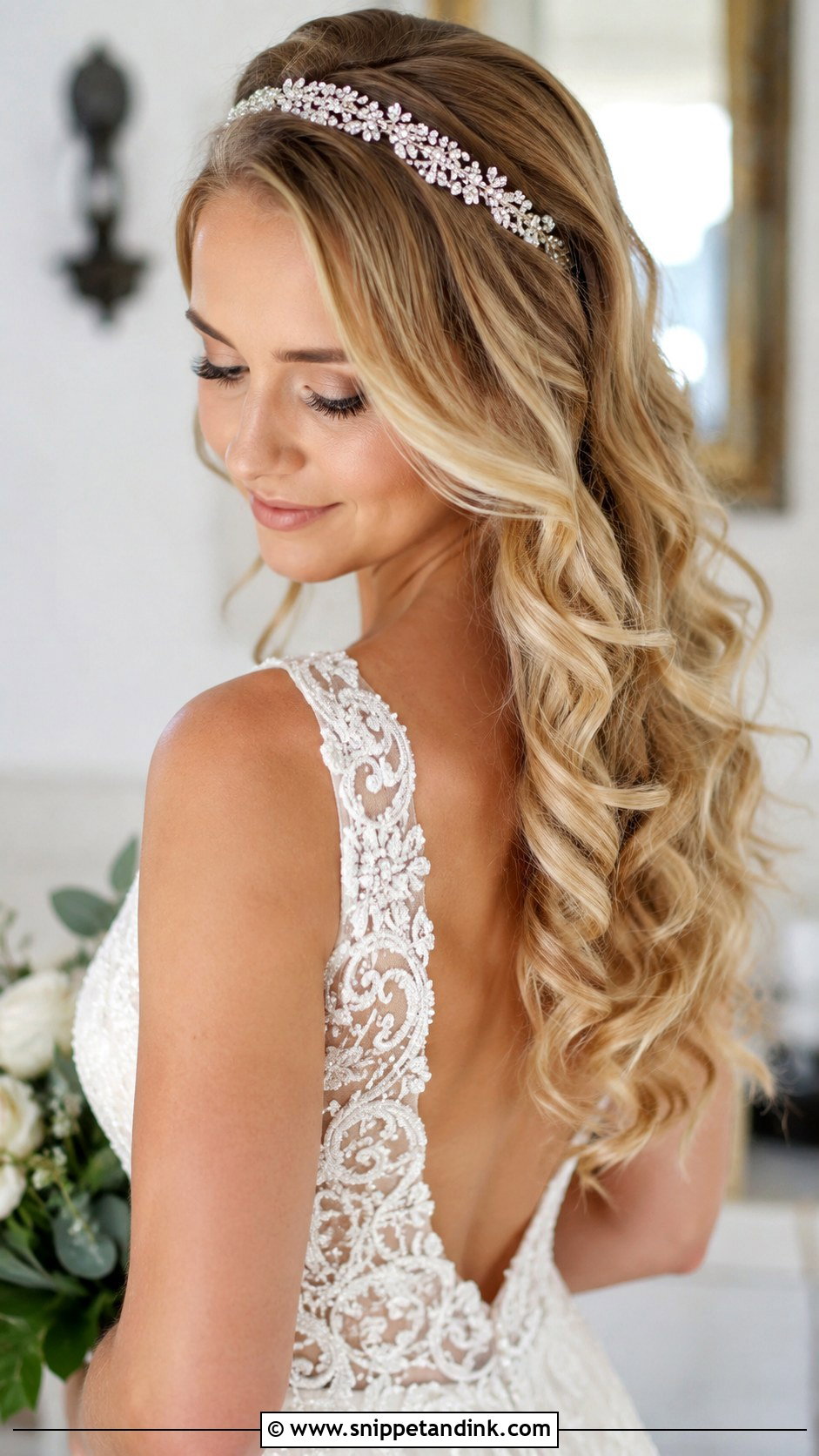
A headband is the most practical accessory I use on curls worn down. It holds the front off the face, hides any frizz along the hairline, and doesn’t need a pinned base. The thing to check is pressure: a stiff band can give you a headache by hour four, so test it at your trial for a good half-hour. A crystal band reads formal; a floral one reads relaxed. Slide it in before the final brush-out so the curls fall naturally over its ends.
23. Open Curls Ponytail for Wedding
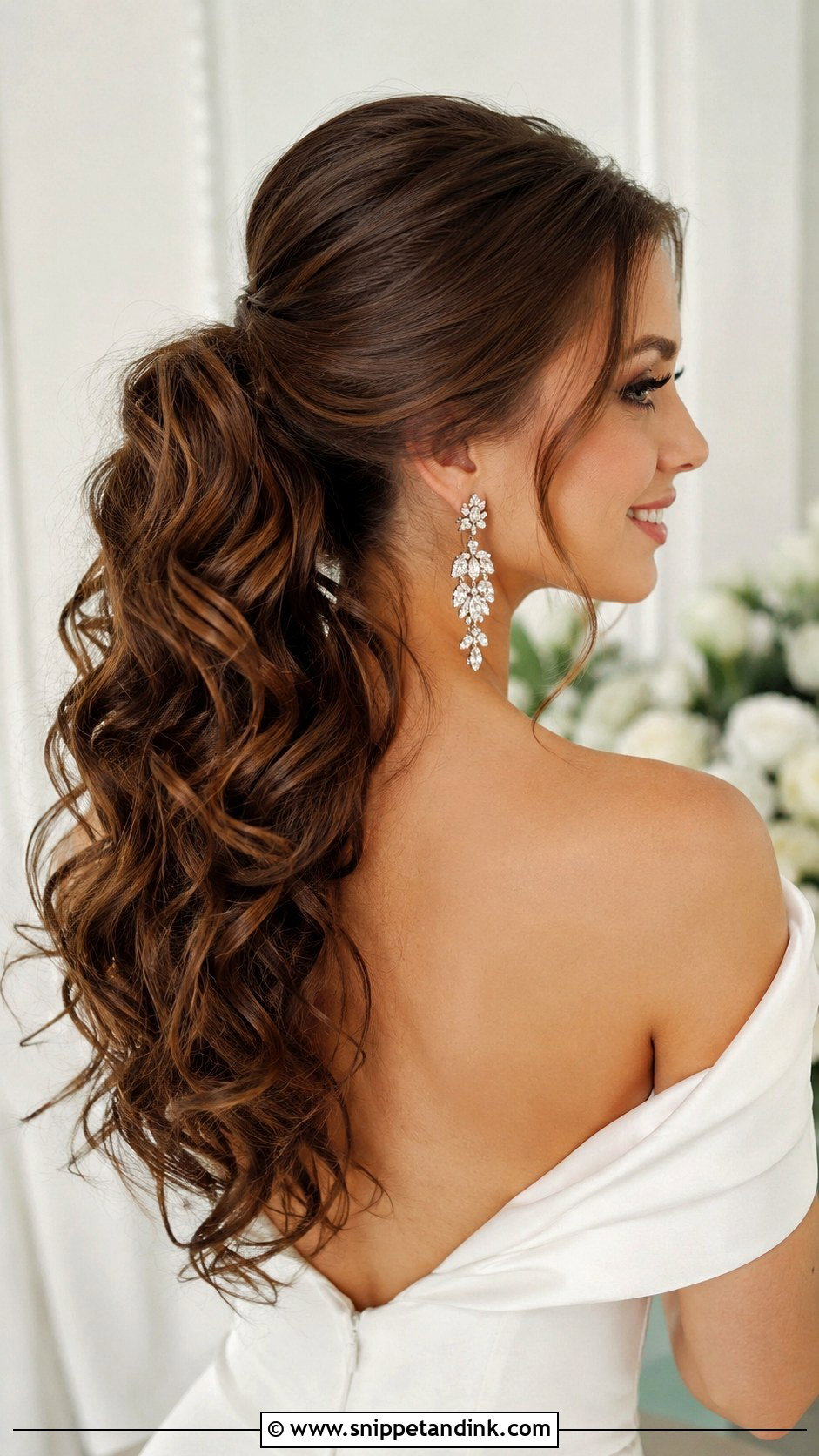
A curly ponytail keeps hair off your neck, which matters more than people realize during a summer reception. I smooth the crown, tie the ponytail with two elastics so it doesn’t droop, and wrap a small section of hair around the base to hide them. The curls are added after the tie, then separated. It’s a clean, modern look with bold earrings. On fine hair, a hidden clip-in piece under the tail adds body without changing the shape.
24. Open Curls With Twisted Sides
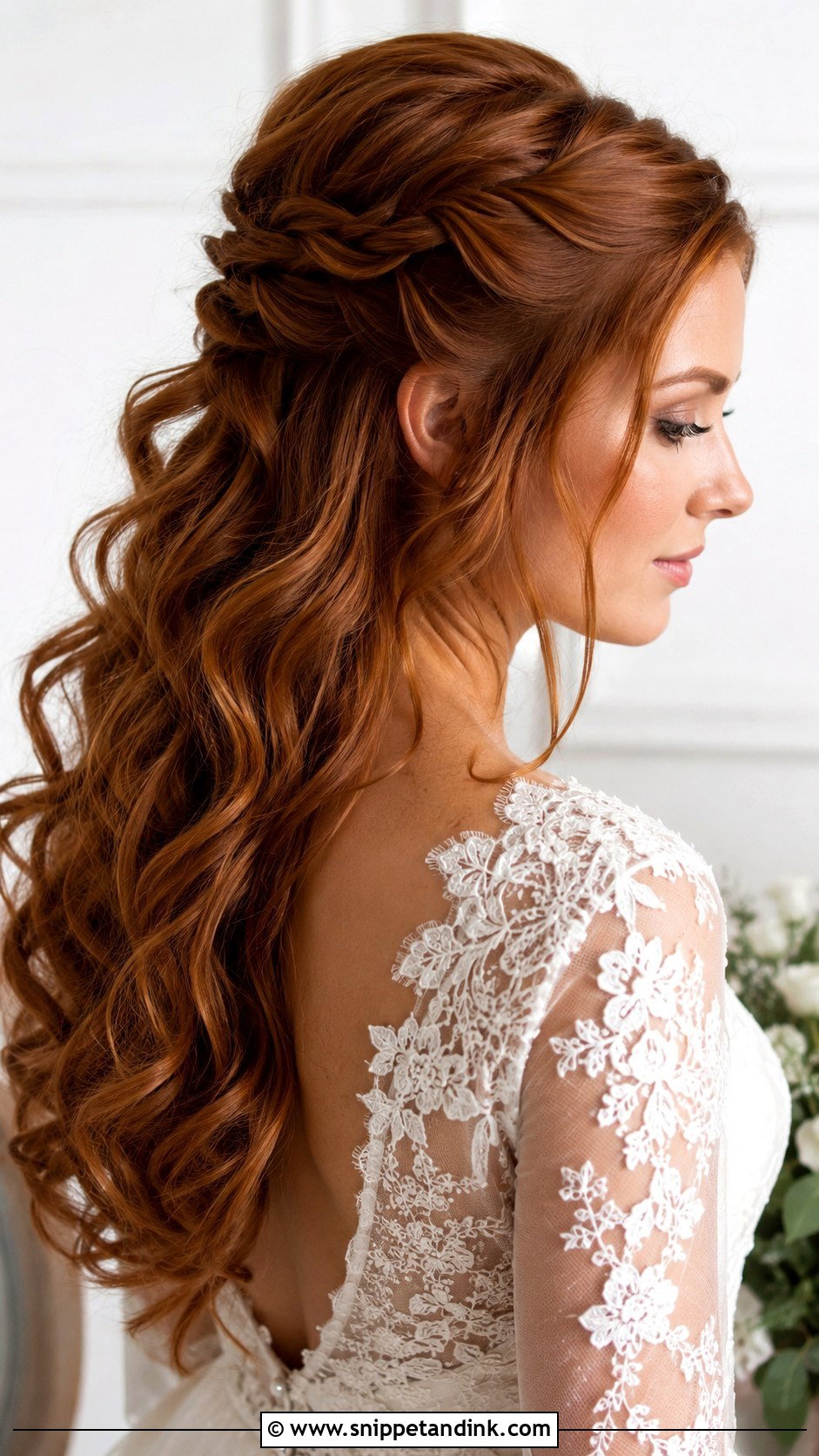
Twisted sides give curls a little structure without committing to an updo. I take a section from each temple, twist it back toward the crown, and join the two with crossed pins under the curls. The twists keep hair off the face and anchor the look. Pull them loose for a softer feel, or keep them tight for a formal one. The thing I avoid is twisting too far up the head; it flattens the crown and can look severe in profile.
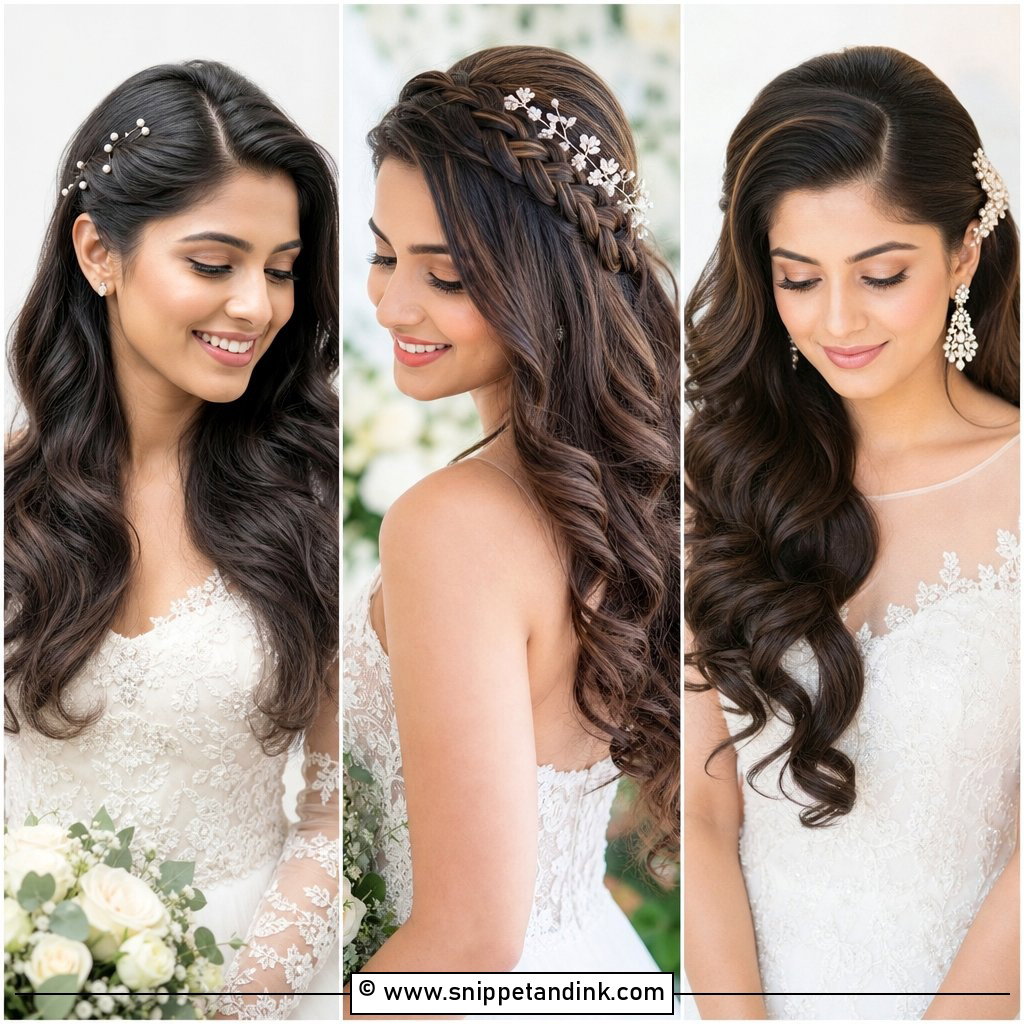
25. Vintage Open Curls for Wedding
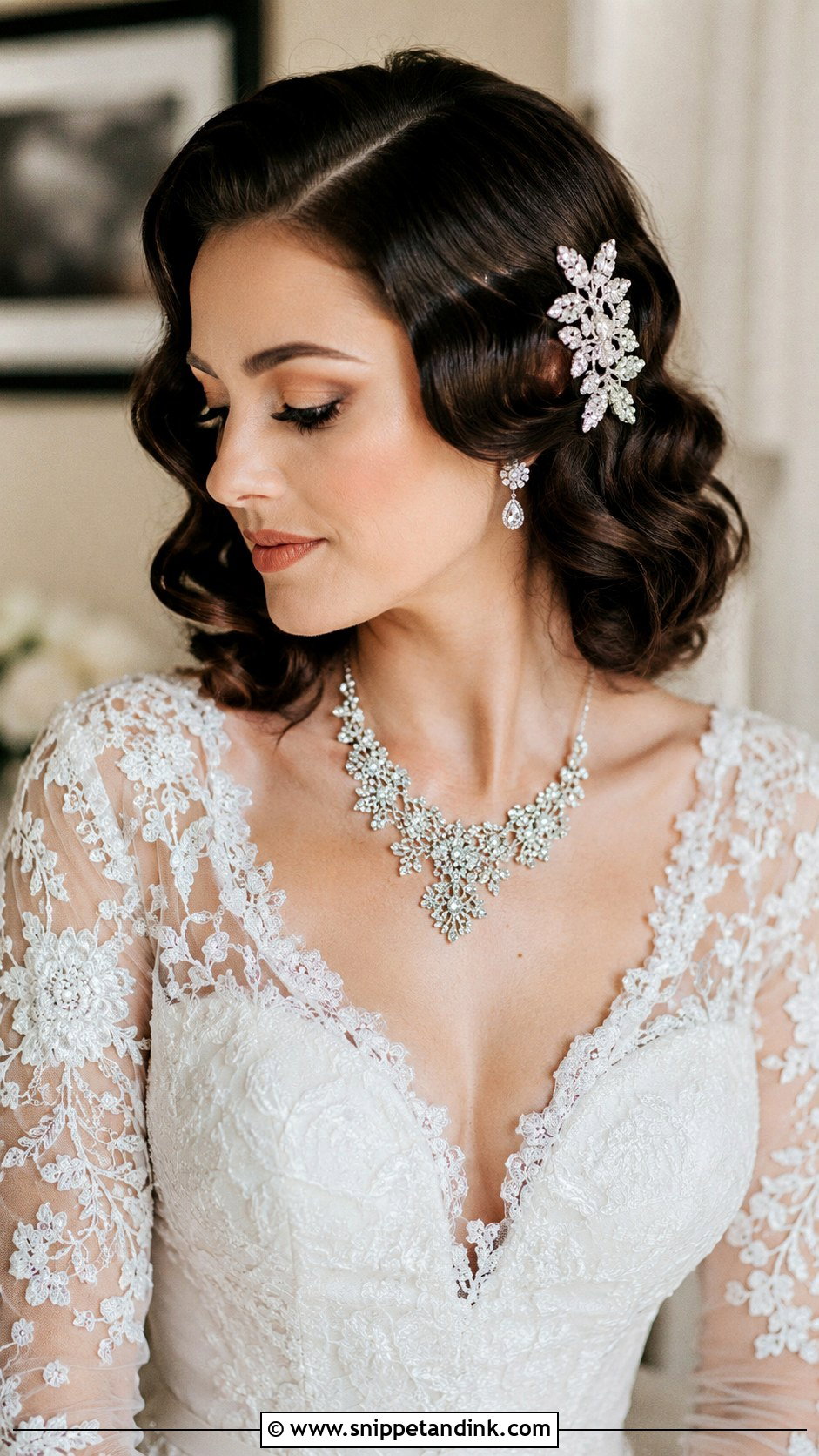
Vintage curls need a different method from modern waves. I set the hair in uniform sections, often pin curls, and brush them into finger-wave-style curls that fall in polished, defined ridges. A deep side part and a sparkling comb complete the period feel. It suits lace gowns, statement jewelry and vintage-themed weddings. The honest caveat: this look is only as good as the setting time, so it can’t be rushed into the last 20 minutes.
A Touch-Up Plan for the Hours Between Vows and Last Dance
Even a perfect set will relax by evening, and that’s not a failure; it’s how curls behave. The trick is having a plan for it. I give every bride with her hair down a small kit and show her maid of honour how to use it, because I’m usually gone by the reception.
- Six to eight bobby pins in your hair colour, for pinning a fallen section back or turning loose curls into a quick half-up.
- A travel-size flexible hairspray, sprayed into the palm and scrunched in rather than misted over the head.
- A mini dry shampoo for a damp hairline or flat roots after the dancing starts.
- A soft clip so you can lift the hair off your neck during dinner without crushing it.
If curls fall noticeably, don’t re-curl with a borrowed iron. Twist the section around two fingers, pin it in a coil for ten minutes during the meal, and release it when you stand up. It gives you most of the shape back without heat or a straight dent. And if the evening is humid enough that nothing holds, a half-up or a low twist is a reception change I’d rather see than a bride fighting her hair.
Curls That Still Have Shape When the Band Stops
Open curls cover a wide range of moods, from sleek Hollywood waves to loose beach texture. Whatever you dress them with, pearls, flowers, a tiara or nothing at all, the curls themselves need a solid set and the right product for your hair type. Pick the look that matches your dress and your venue, then test it at a trial with your actual accessories and a few hours of real movement before you commit.
You'll Like These Ideas:





Leave a Reply