
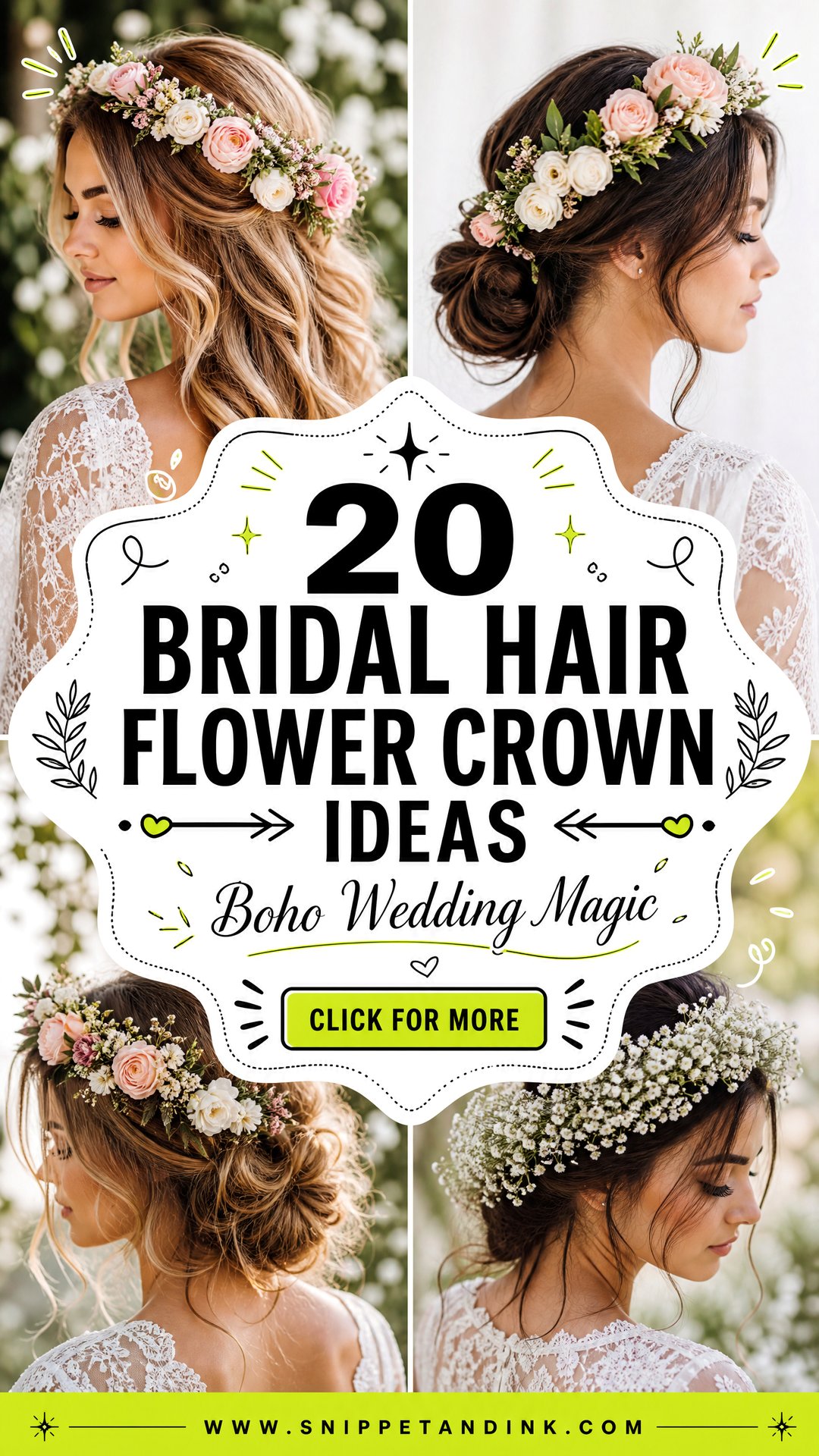
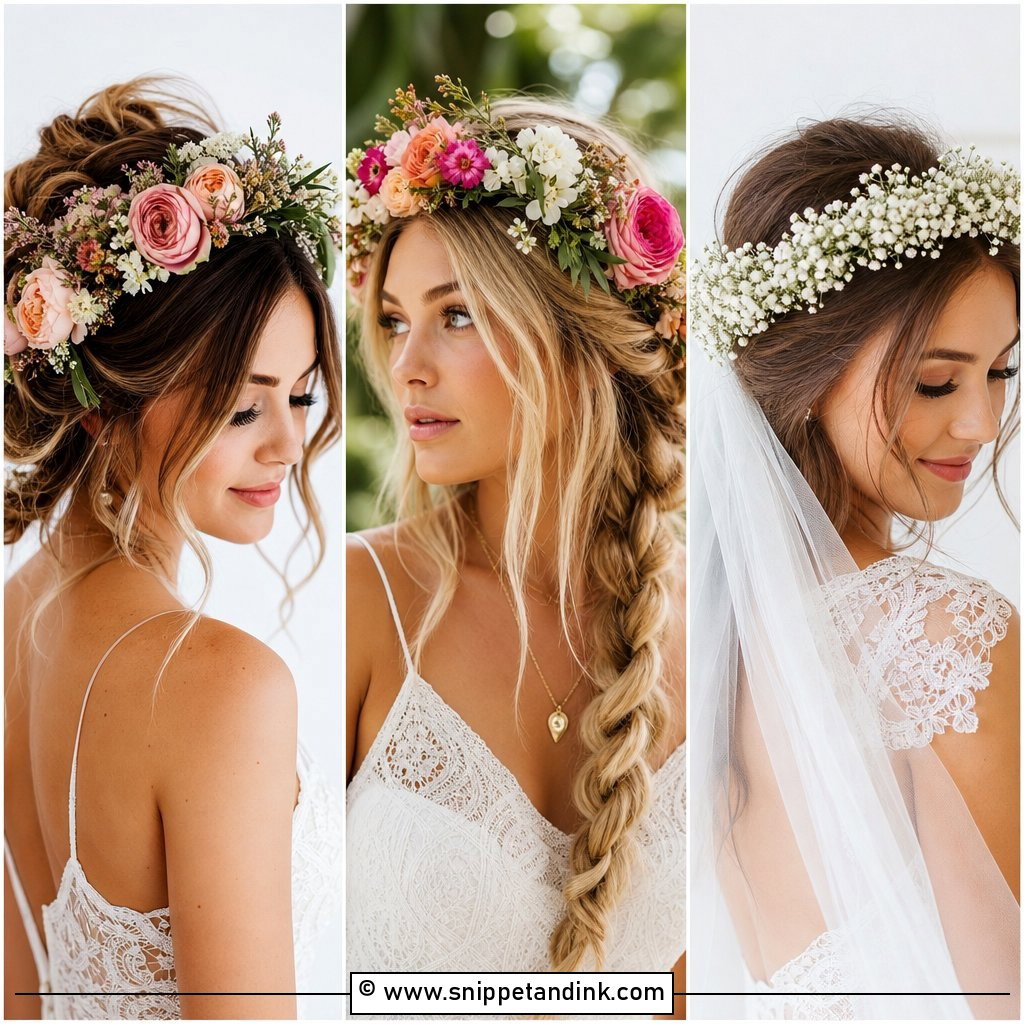
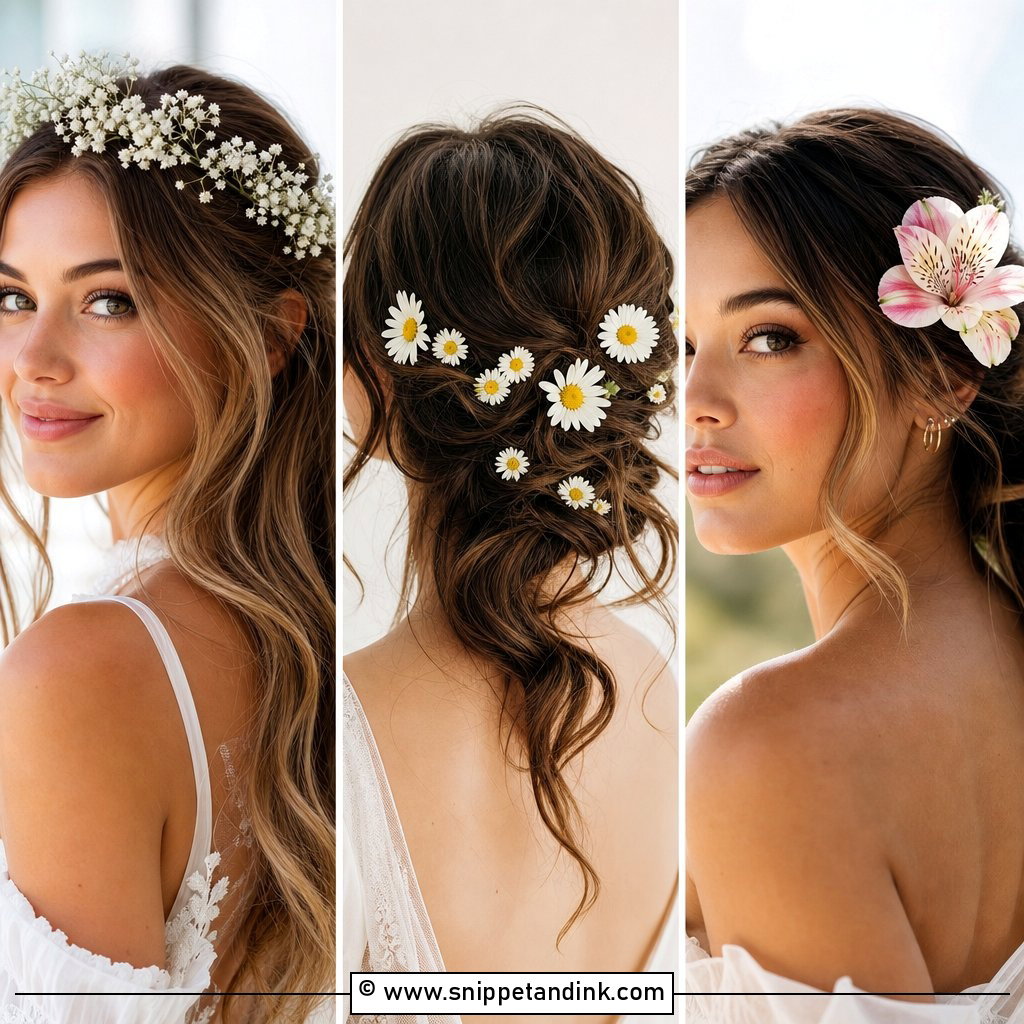
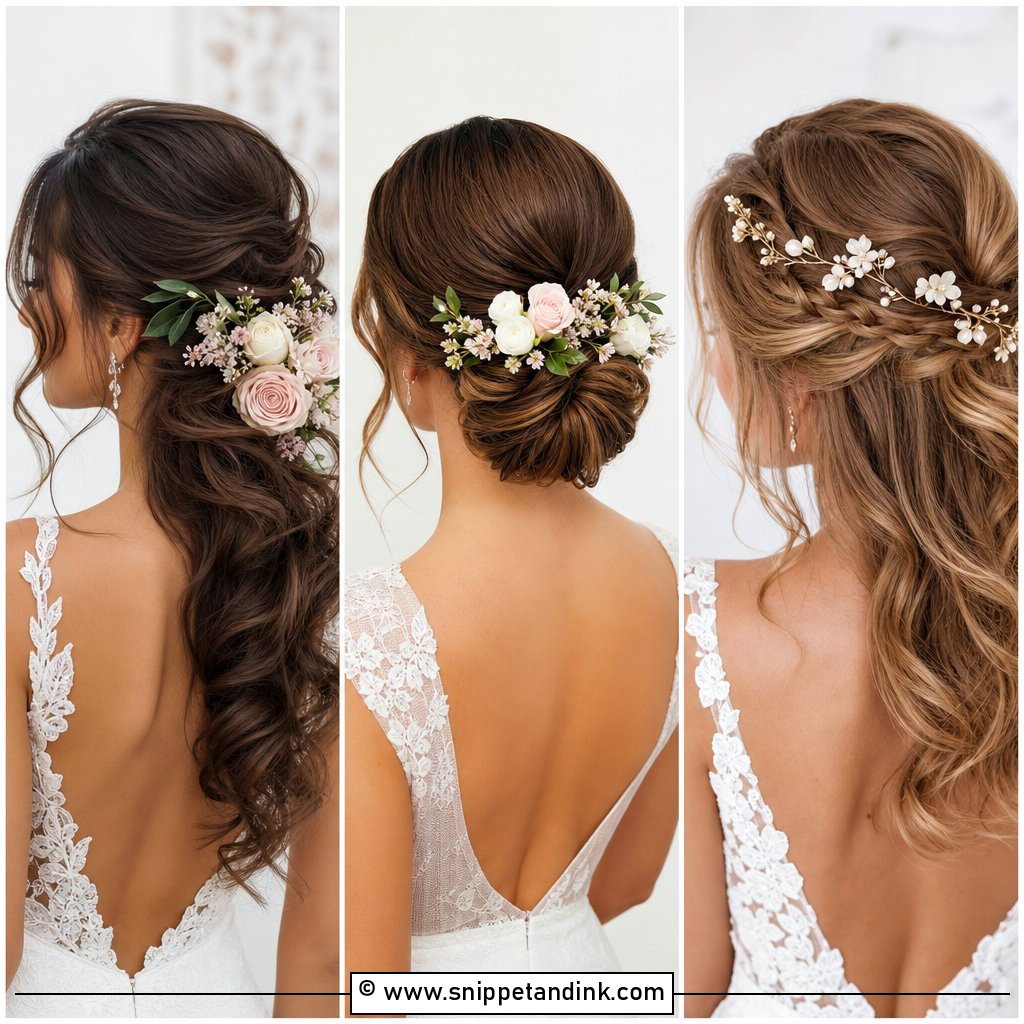
A flower crown is the one piece of wedding floristry that has to survive being worn, not just admired on a table. It sits against warm skin and hair for hours, gets hugged, and moves every time you turn your head. That’s why I never design one in isolation: I want to know the hairstyle underneath, the dress, the venue and how hot the day will be before I pick a single stem. A thin band of small blooms suits a quiet garden ceremony, while oversized flowers read as editorial. Fresh flowers move naturally; silk and dried ones give you more control. The twenty looks below pair each crown with the hairstyle it actually works with.
Fresh, Silk or Dried: How Each Crown Lasts Through a Long Day
Every crown is made of stems that have been cut and wired with no water source, so the flower choice decides how it looks at the reception.
Fresh flowers
I make fresh crowns as close to the wedding as I can, usually the evening before or that morning, then keep them in a cool fridge in a box with a light mist. Sturdy blooms survive best: spray roses, wax flower, orchids, statice, ruscus and eucalyptus. Hydrangea, sweet peas and gardenias look wonderful for an hour and then droop or bruise. If your ceremony is in full sun, choose from the sturdy list.
Silk and dried
Silk crowns can be ordered months ahead and fitted at your hair trial, which takes all the guesswork away. Dried crowns sit in between: natural texture, no wilting, but brittle. Both are lighter on the day because nobody has to collect them from a fridge.
1. Bridal Flower Crown With Loose Waves
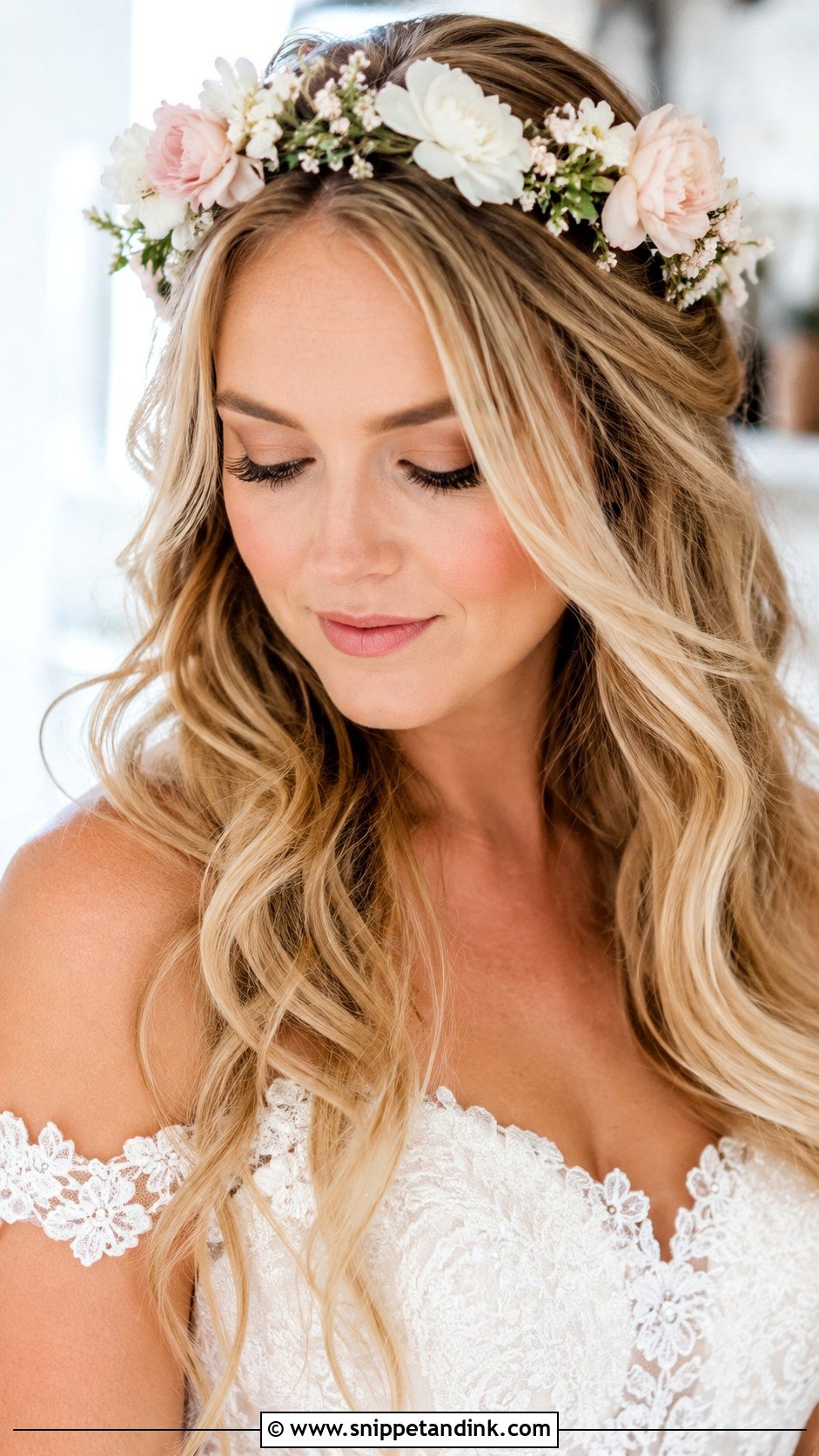
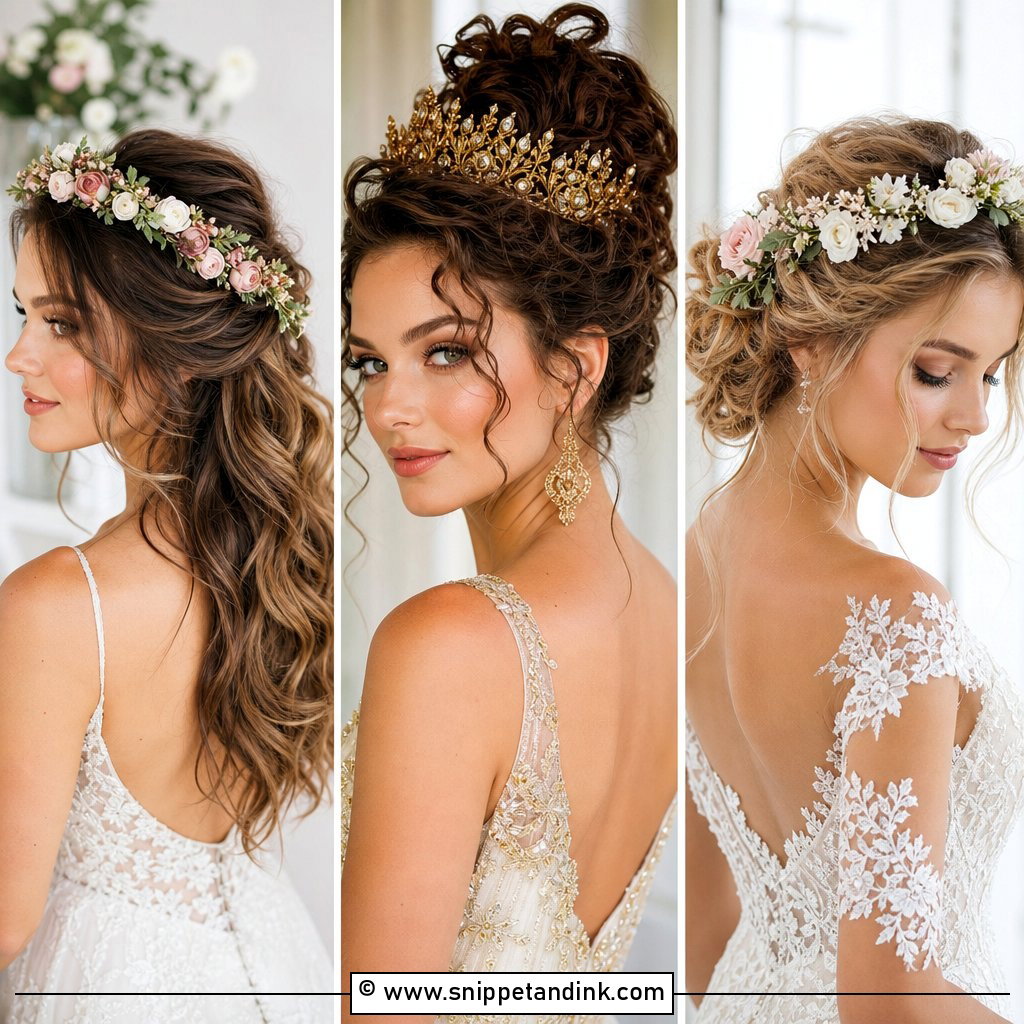
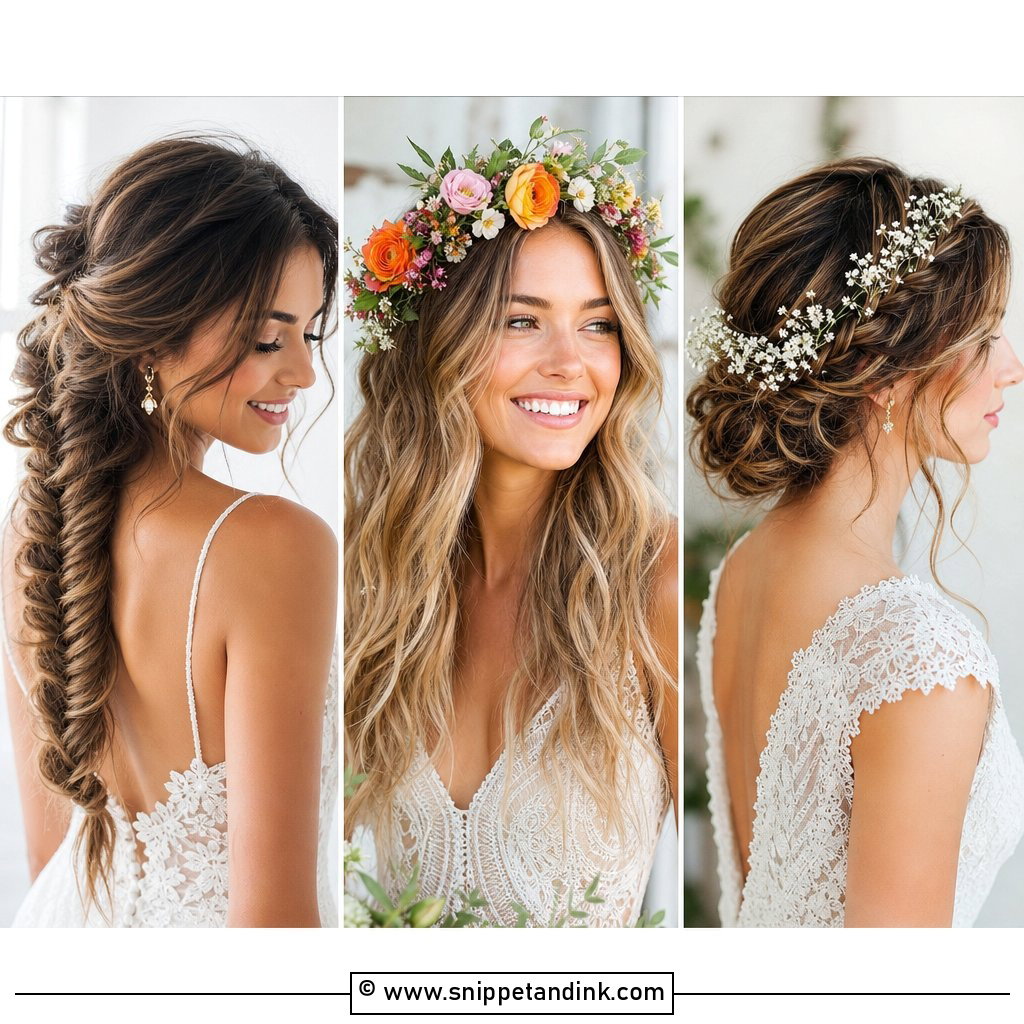
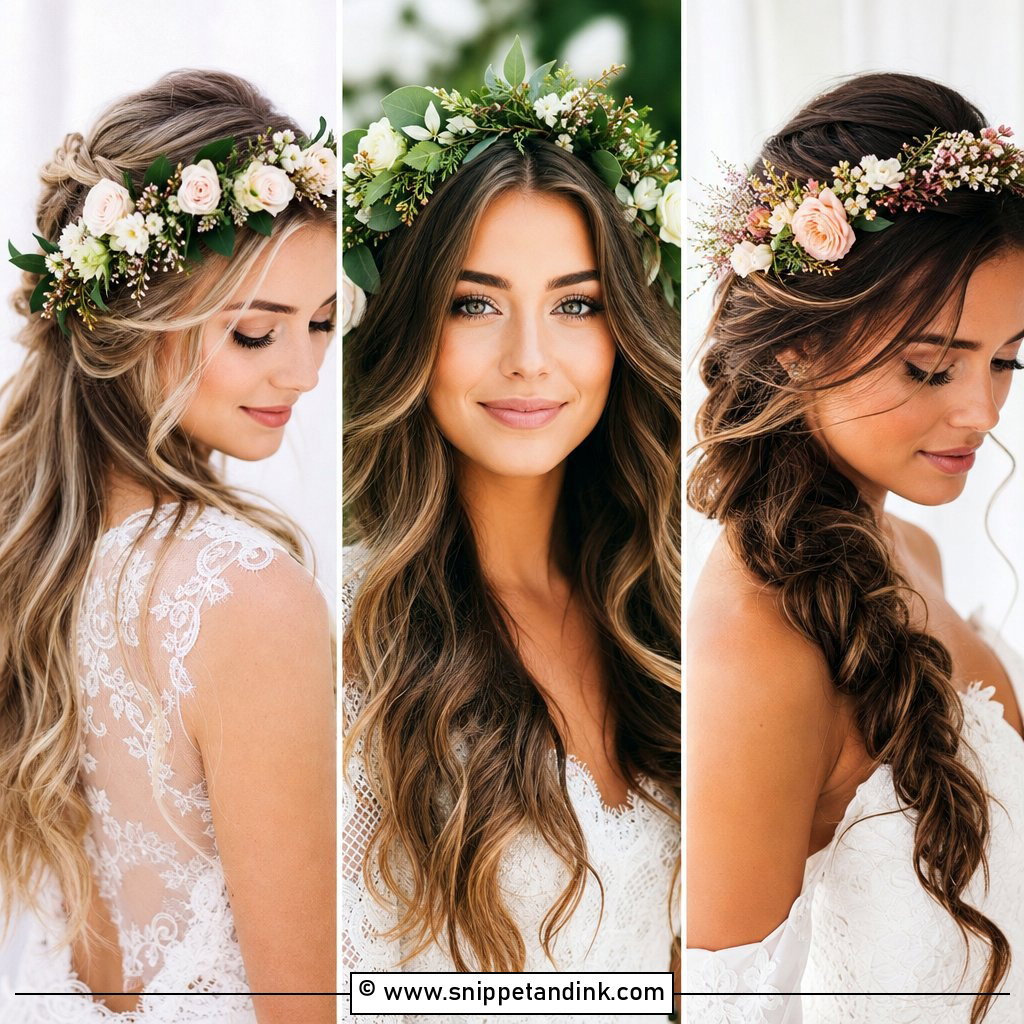
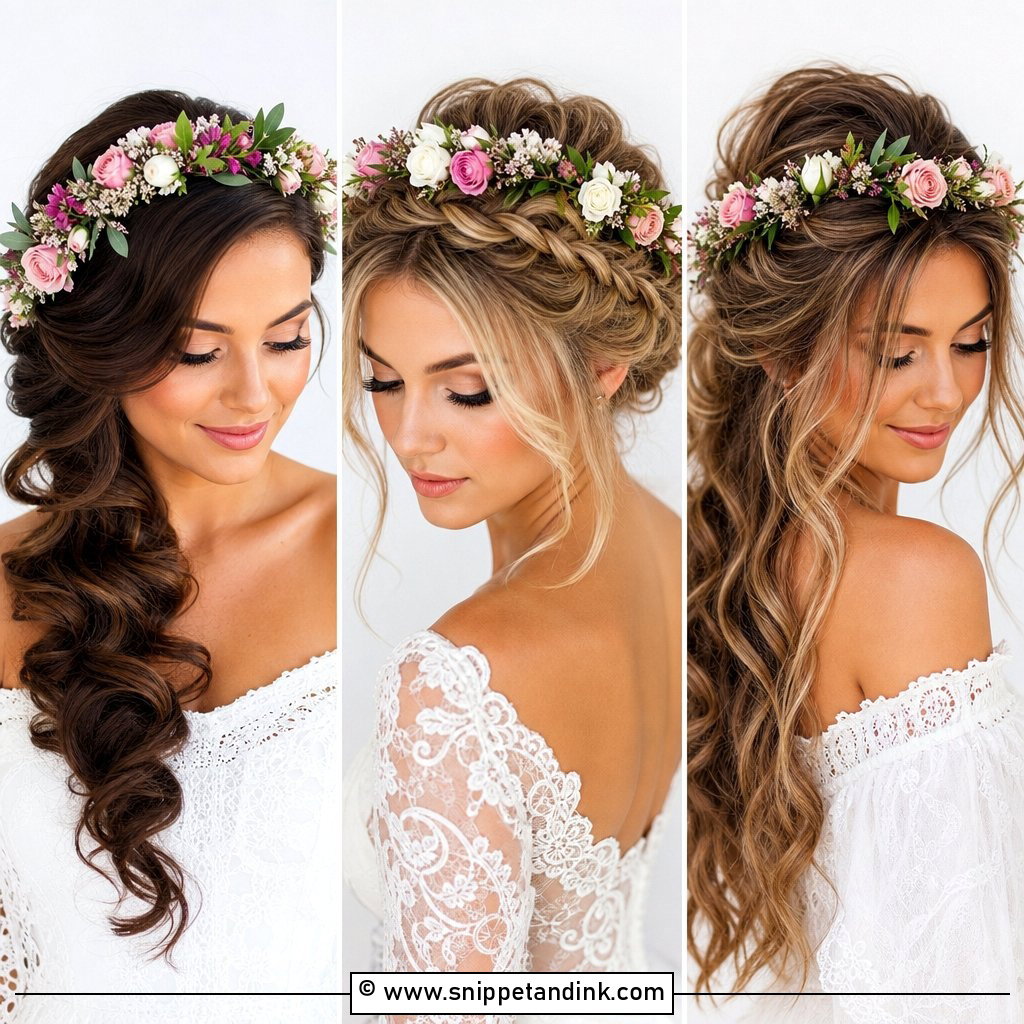
Loose waves and a crown are the pairing I’m asked for most, and it’s easy to see why: the waves give movement and the crown frames the face without any structure to compete with. On medium to long hair, I keep the crown slim, using spray roses, wax flower or a little greenery, so it rests on the waves instead of flattening them. Lace, tulle and off-shoulder necklines all sit well under it. One practical point: ask your stylist for a flexible hold, because a crown wired onto stiff, crunchy hair has nothing soft to settle into.
2. Bridal Flower Crown With Half Up Hair
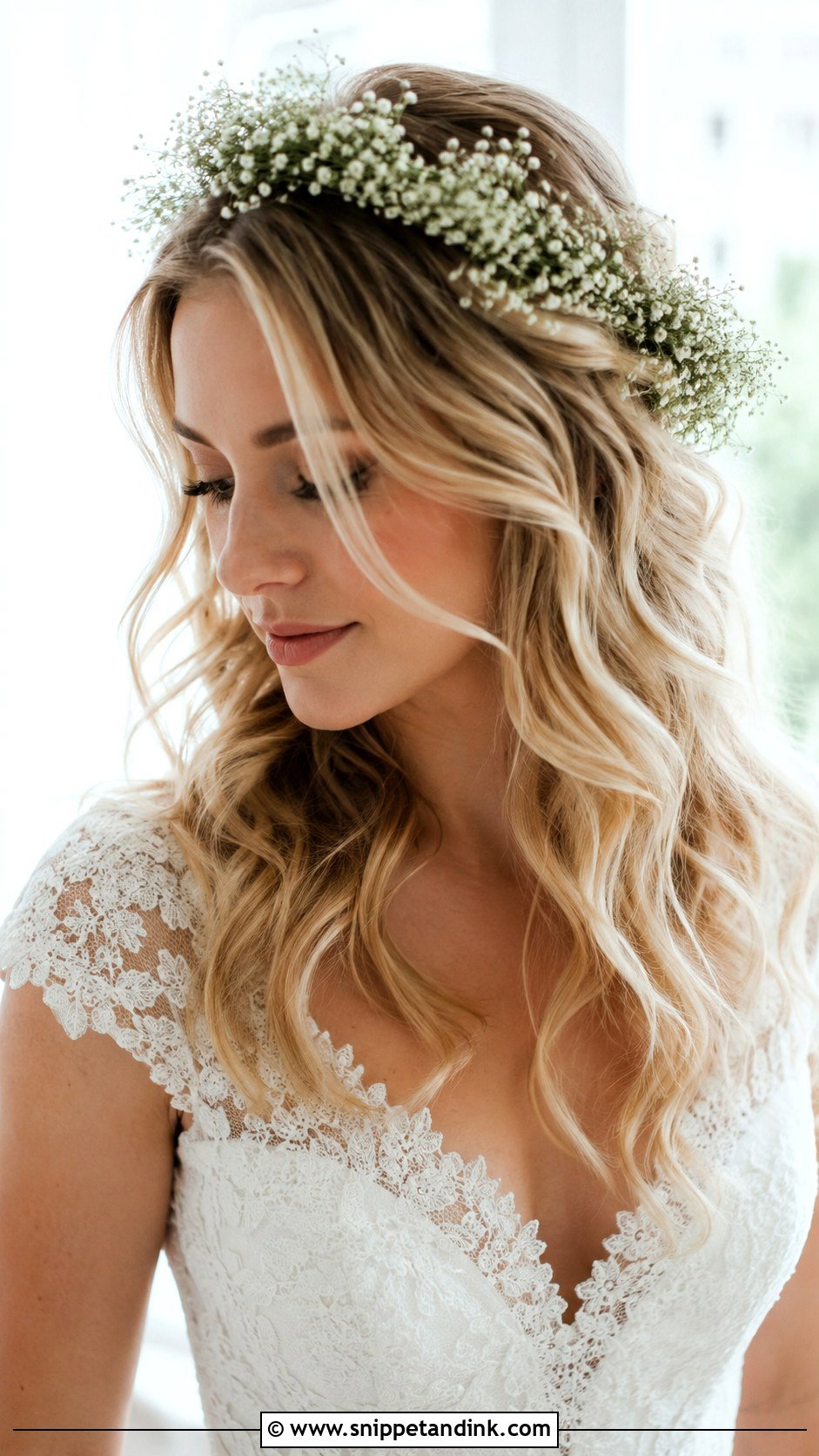
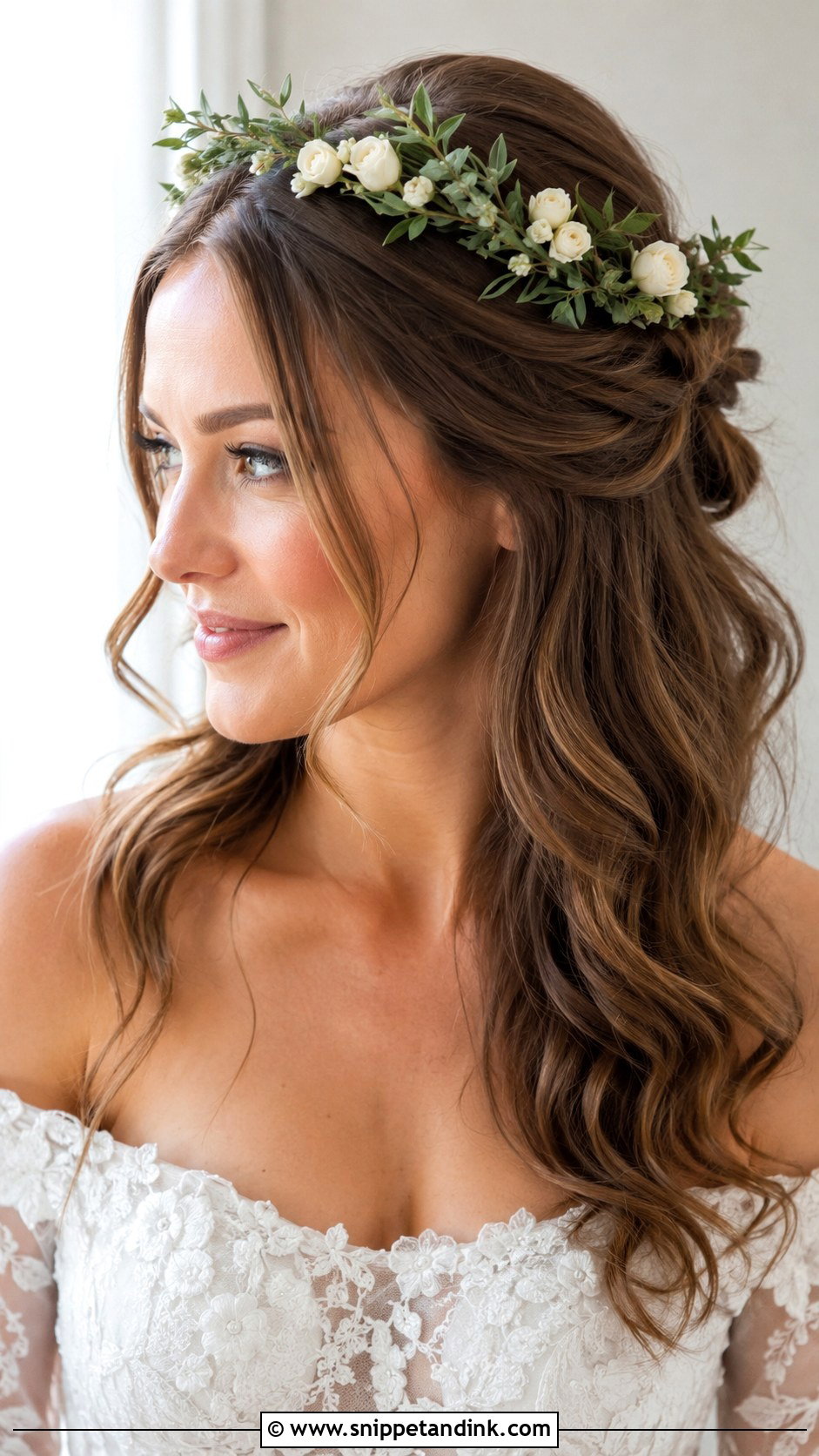
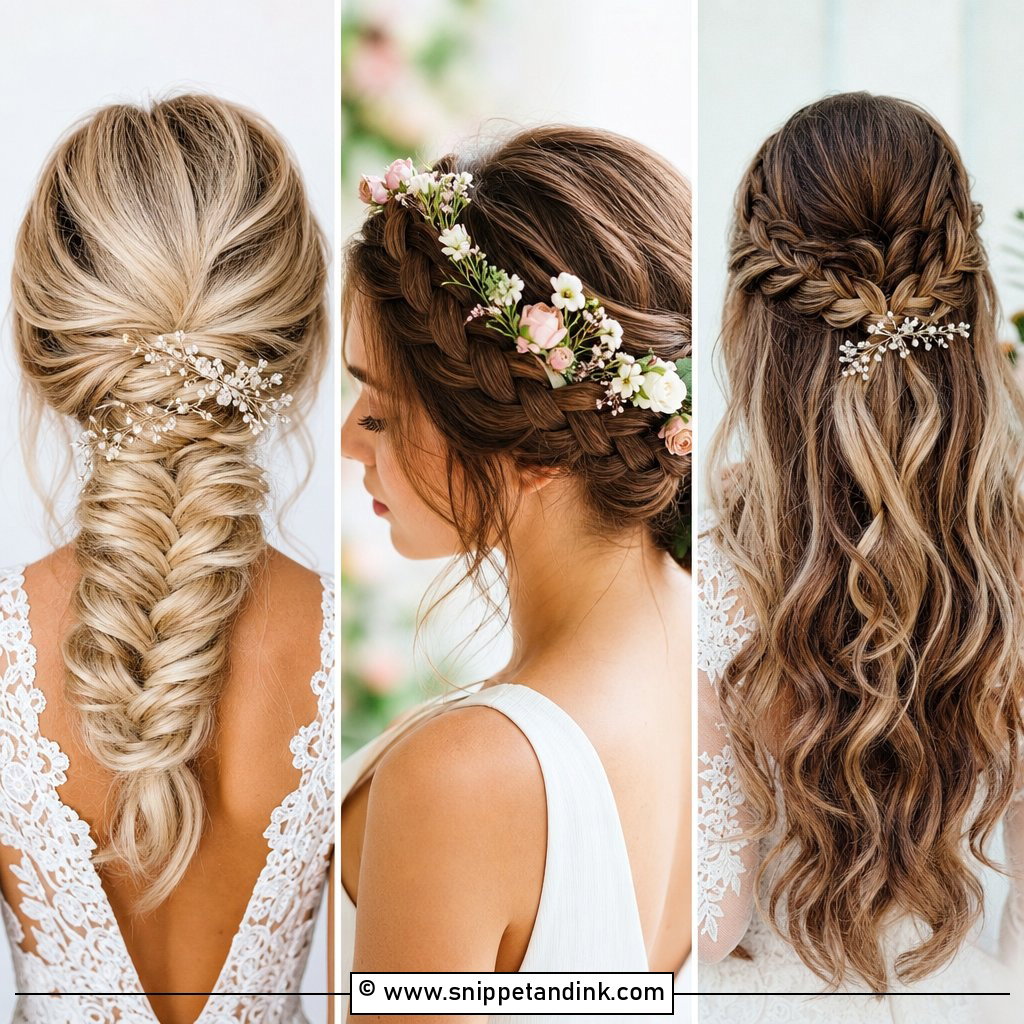
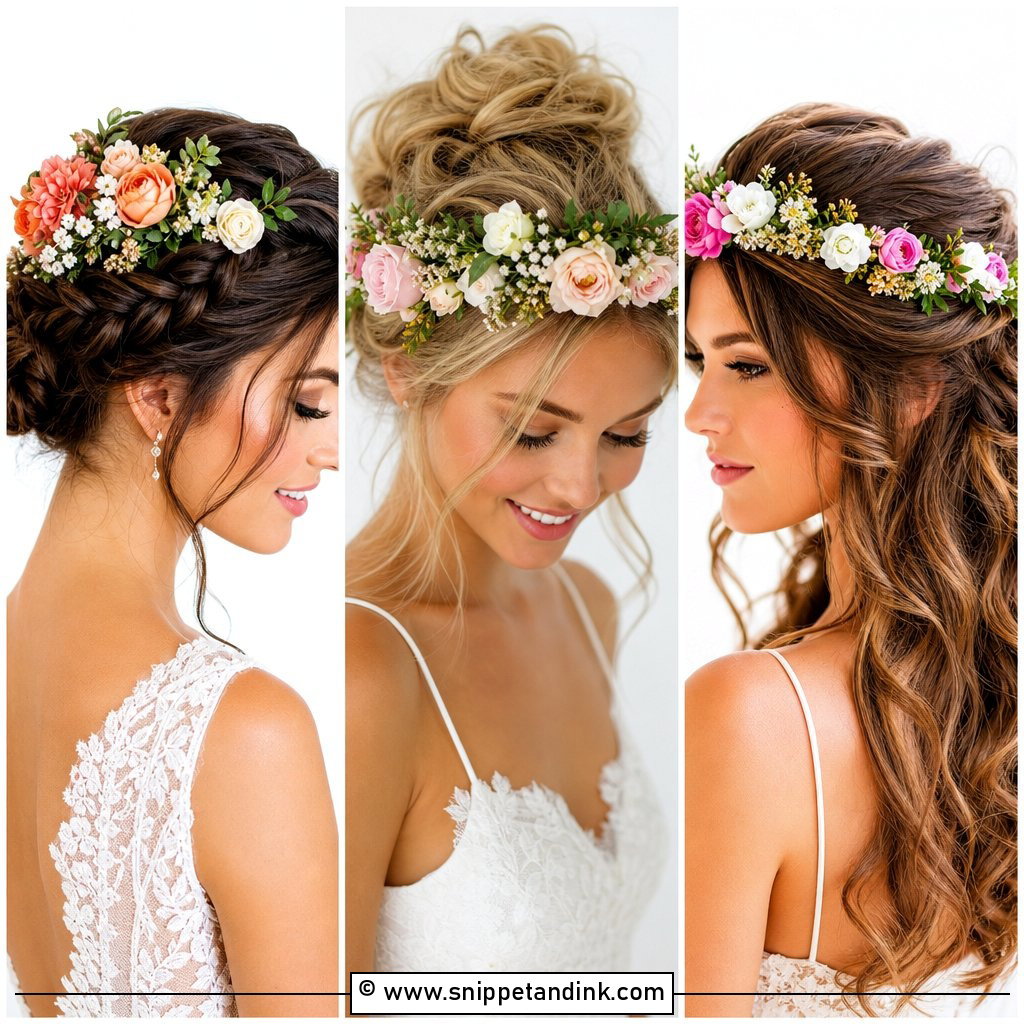
Half up hair gives a crown its most secure base. The twisted or braided top section creates a ridge that the wire band can sit just in front of, so the crown doesn’t slide back. I make these crowns smaller and lighter, because the half up shape already brings detail to the back of the head. Leave a couple of front pieces out for softness. For an outdoor ceremony with a breeze, this is the combination I’d point you toward first.
3. Bridal Flower Crown With Low Bun
With a low bun, the crown does a different job. It frames the face from the front while the bun stays visible from behind, which is what guests see through the vows. I keep these crowns on the lighter side, since any weight that rests on the bun tugs at its pins. A smooth bun suits a refined crown; a textured one can take something looser. In humid weather this is the safest option of the lot, because the hair is pinned away and the flowers aren’t sitting on sticky skin.
4. Bridal Flower Crown With Messy Bun
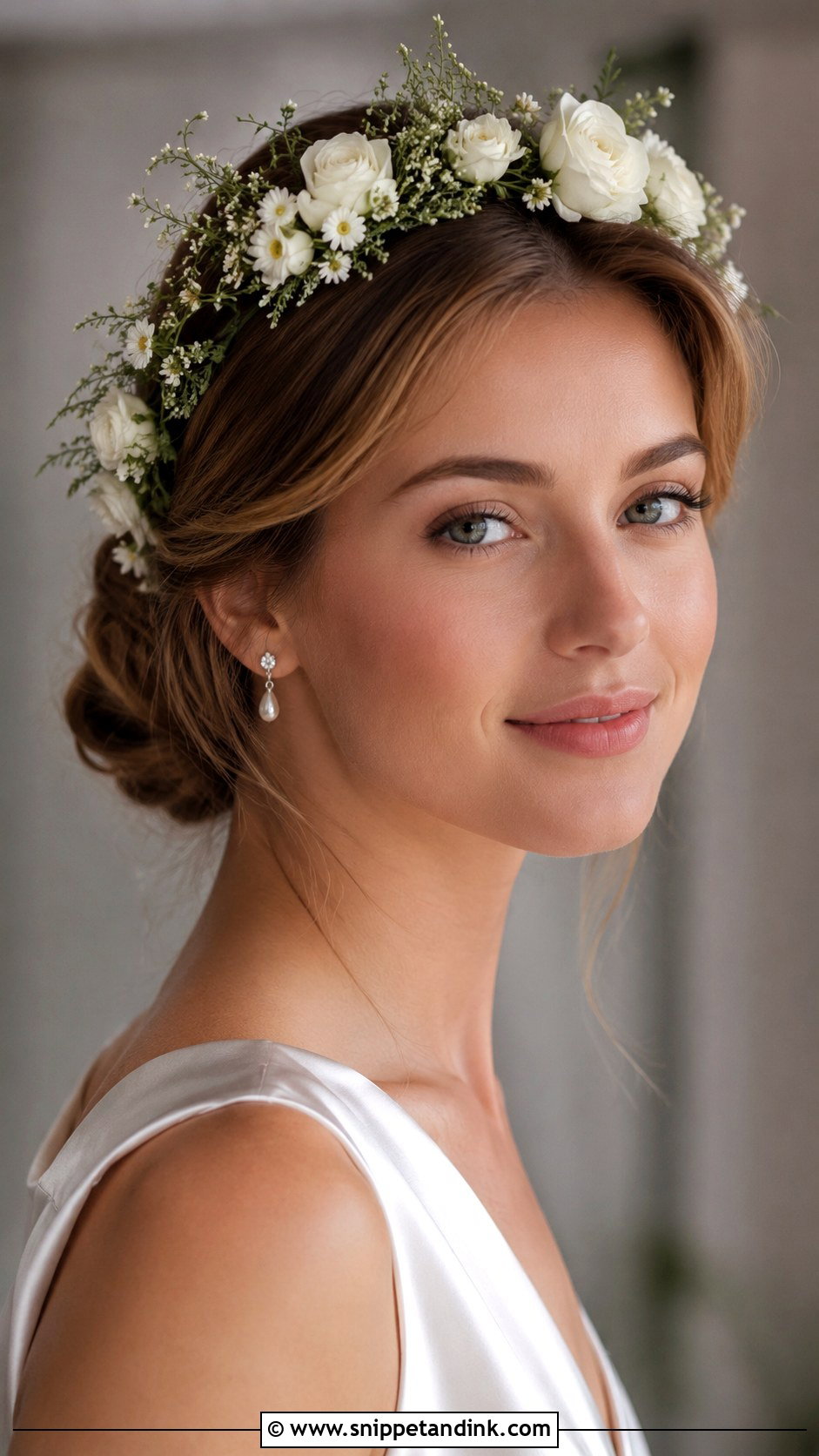
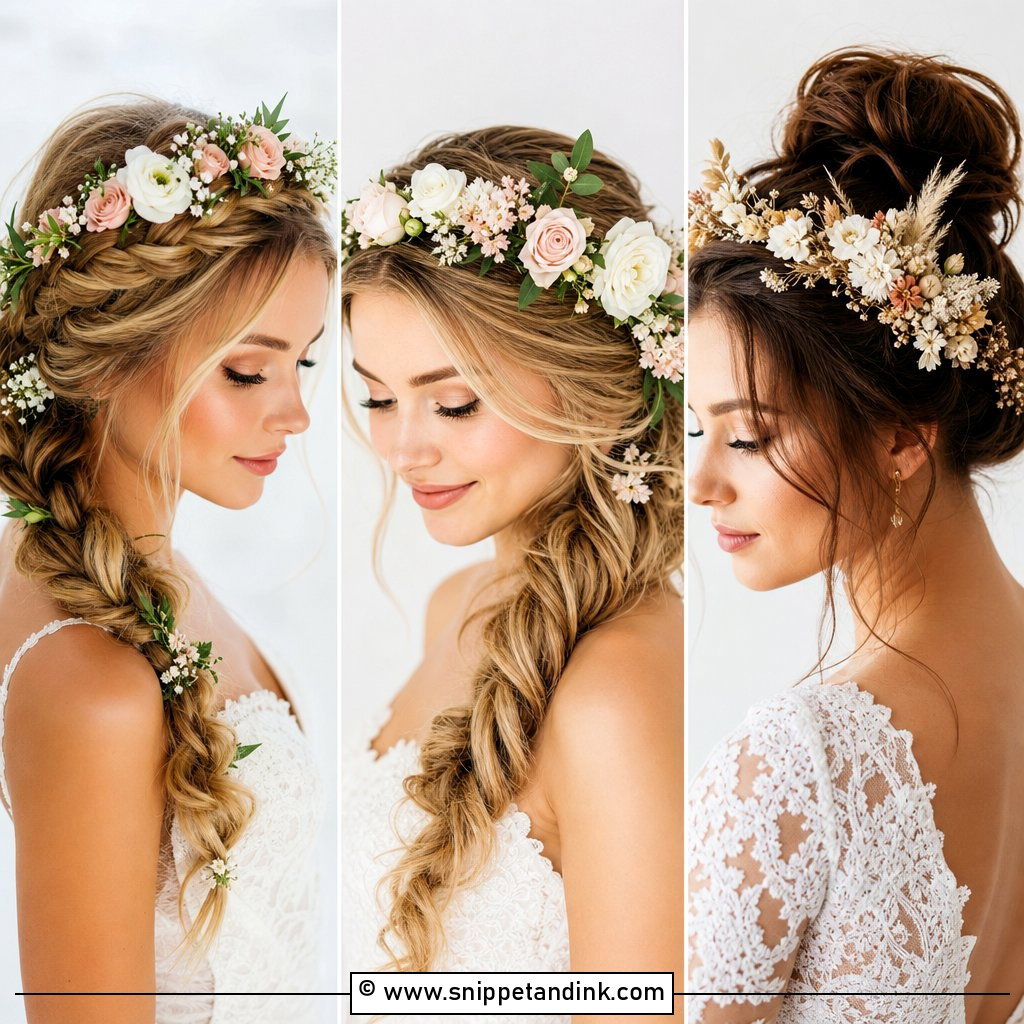
The messy bun belongs at boho, rustic and garden weddings, and the crown should match its looseness. I build these with small wildflowers and trailing greenery that I let break the outline a little. That only looks good if the bun underneath is balanced and firmly pinned, so it reads as planned rather than falling down. Curled tendrils at the front soften it, and a light finishing spray holds everything without making the hair crisp under the stems. Lace gowns and flowing sleeves sit naturally with it.
5. Bridal Flower Crown With Braided Crown
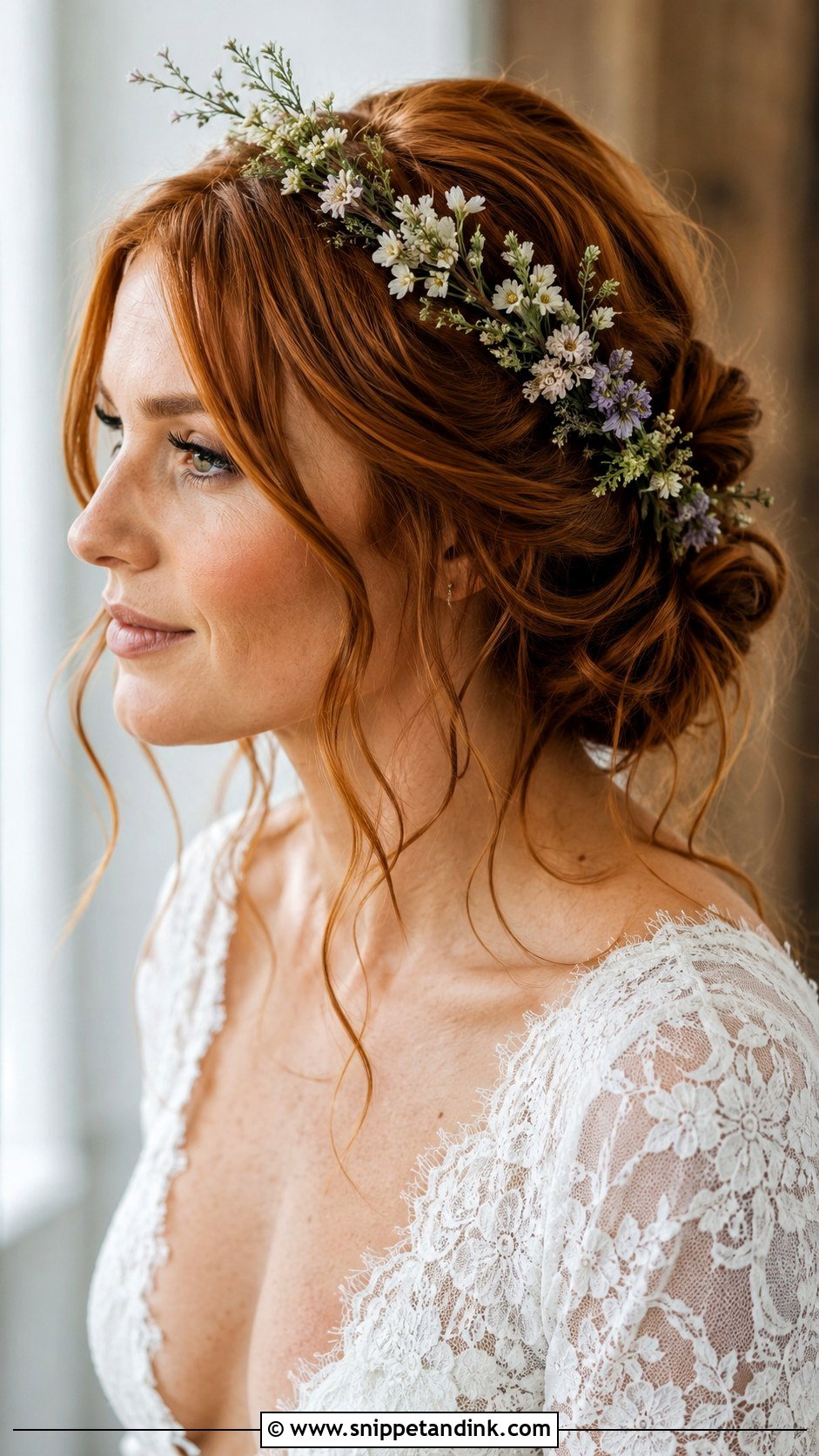
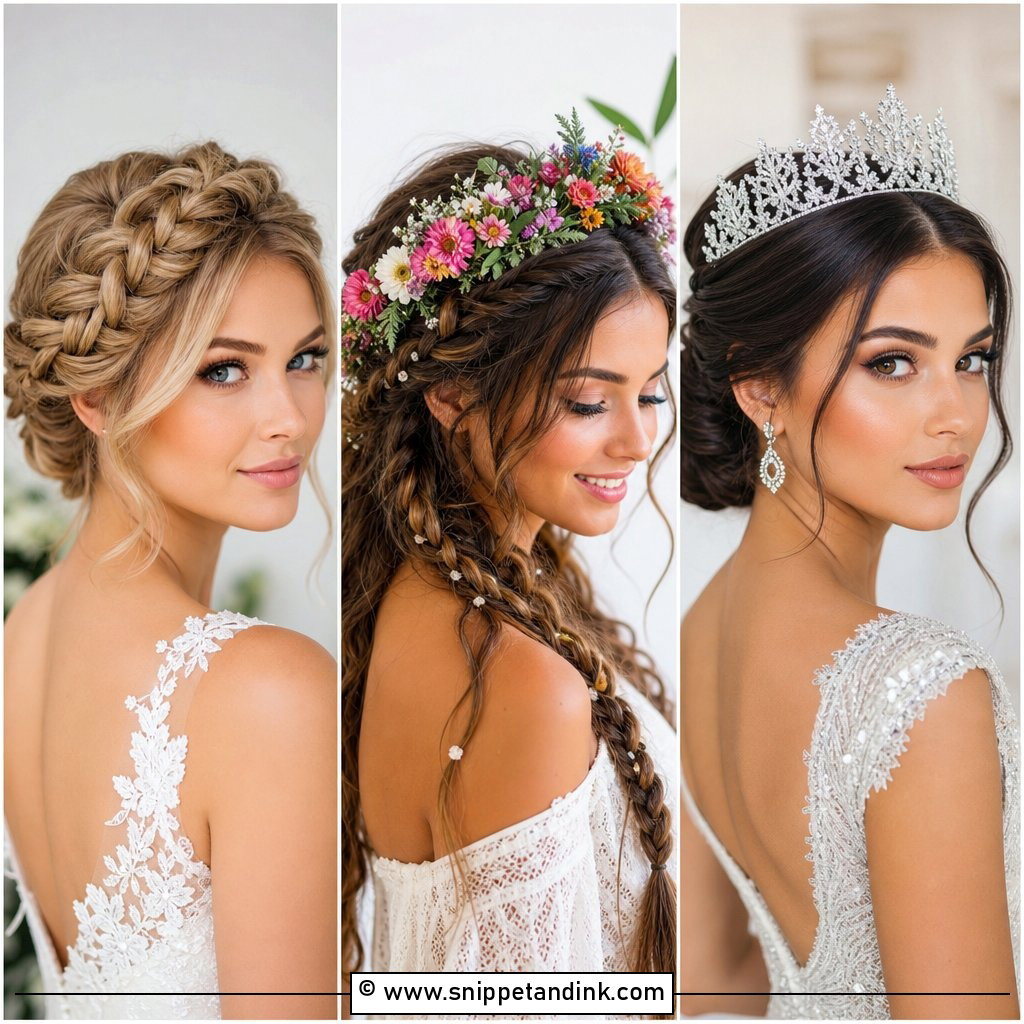
Combining a braided crown with flowers gives you two layers of texture, and the danger is that they fight. I prefer to tuck small blooms beside the braid or between its stitches rather than setting a separate band over it. That way the flowers look grown into the hair. Highlights show off nicely in a braid, so I keep the flowers small enough that the plait is still visible. Because the braid locks everything to the head, this is one of the most secure options for a long night of dancing.
6. Bridal Flower Crown With Fishtail Braid
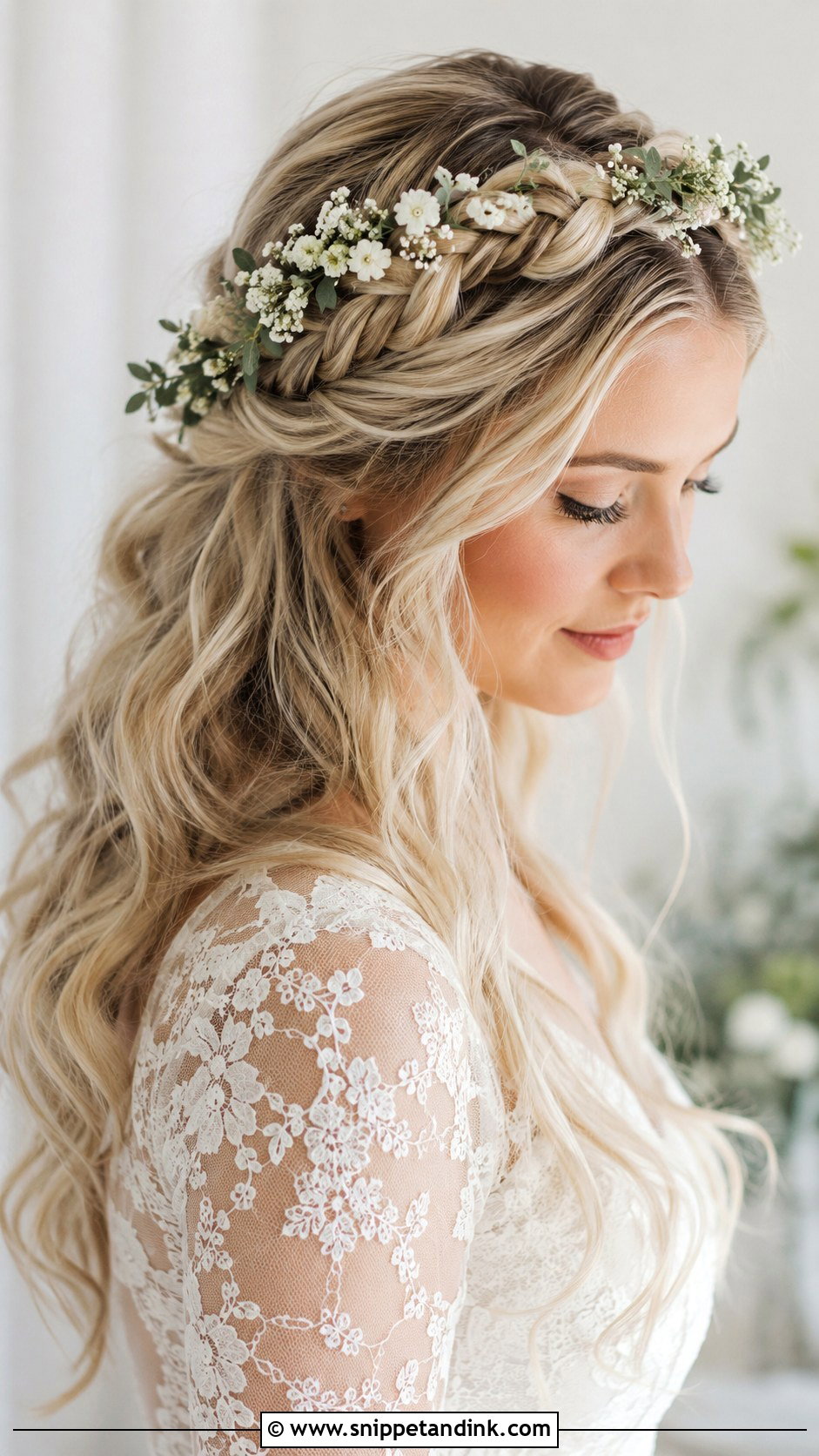
A fishtail braid needs length to show its pattern, so this is one for long hair or extensions. Worn over a shoulder or down the back, it gives a detailed, slightly whimsical shape. I usually suggest a thin crown here and a few loose flowers tucked into the braid itself, using the same blooms so the two connect. Your stylist will pull the braid apart a little for volume before I add anything. On a beach, the braid keeps hair out of your face, which wind otherwise makes impossible.
7. Bridal Flower Crown With Side Braid
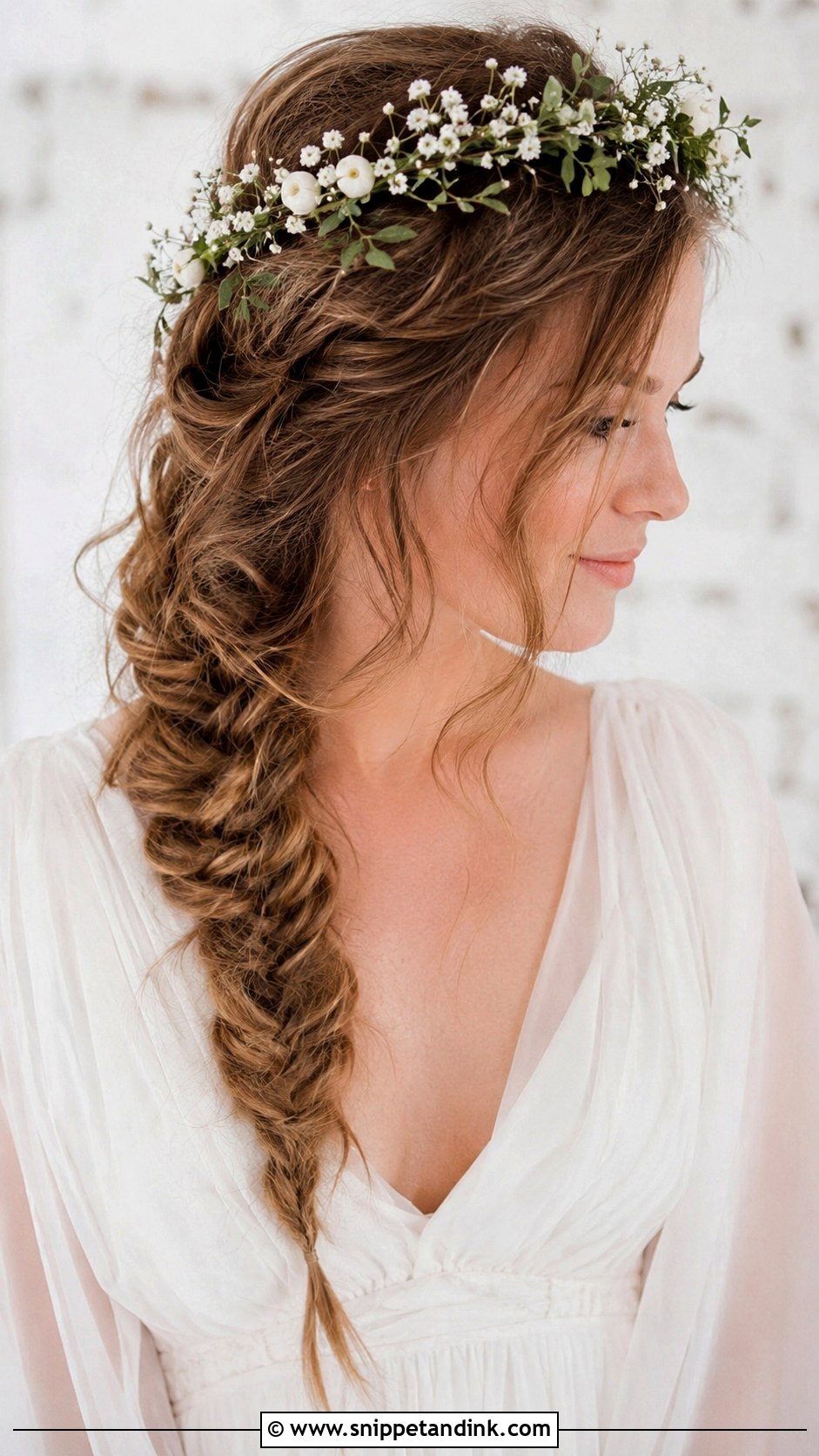
A side braid draws the eye down to the neckline and shoulders, so the crown has to balance it at the top. Strapless and one-shoulder gowns suit this especially well. Soft white flowers keep it classic; a few coloured blooms tie it to a garden palette. The crown gets anchored with hidden pins at the temples and behind the ears, and I make sure the band doesn’t sit on the start of the braid, where it would squash the volume your stylist built.
8. Bridal Flower Crown With Hollywood Waves
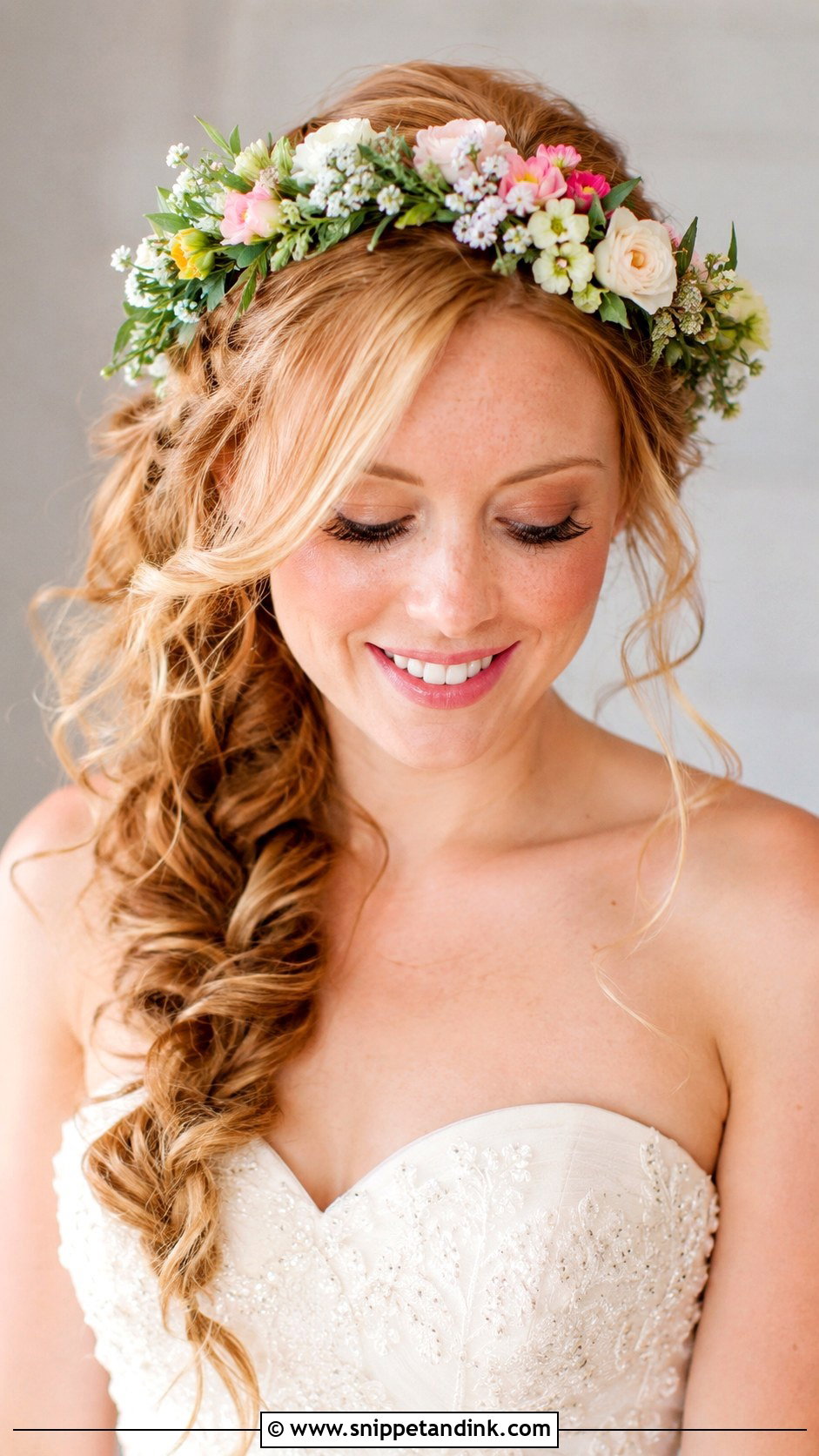
Hollywood waves are sculpted and glossy, and flowers can soften that formality without turning it boho. The crown here needs to be thin and refined: a few white orchids, tiny roses or a line of delicate greenery. Anything bulky competes with the wave pattern and breaks it up. I place the band slightly back from the hairline so it follows the curve of the deep side part. Your stylist sets the waves first with shine spray, and the crown goes on last so it doesn’t disturb a single ridge.
9. Bridal Flower Crown With Short Hair
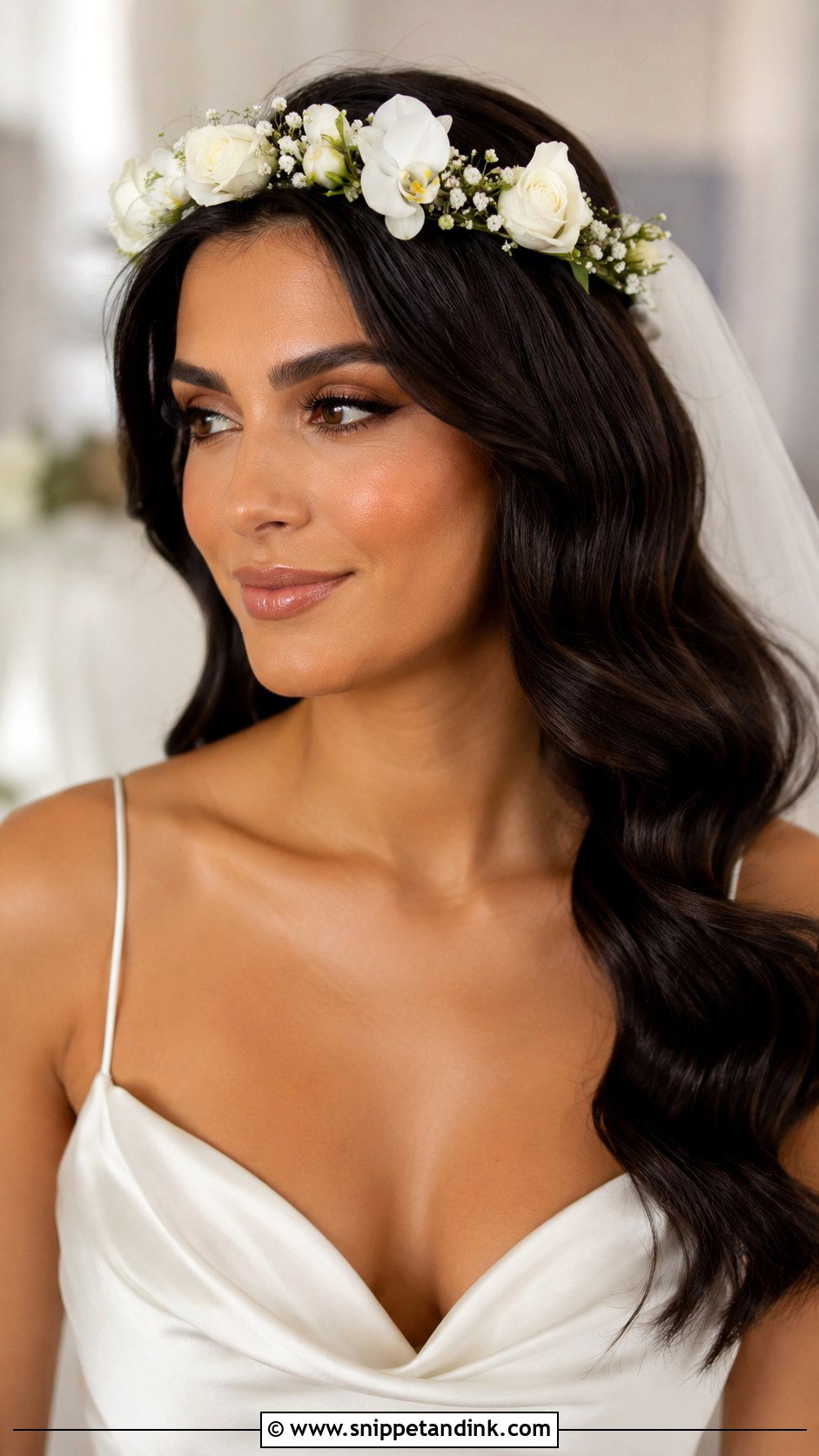
Short hair takes a crown well, as long as the scale is right. Pixies, bobs and chin-length cuts all look best with a slim crown that frames the face rather than burying the cut. For a bob, soft texture or waves give the flowers something to sit in. For a pixie, I set the crown a little forward on the head, which looks deliberate and modern. Small blooms, a few leaves and perhaps tiny pearls are plenty. I’d steer you away from wide crowns on very short hair; they can look borrowed.
10. Bridal Flower Crown With Bob Hair
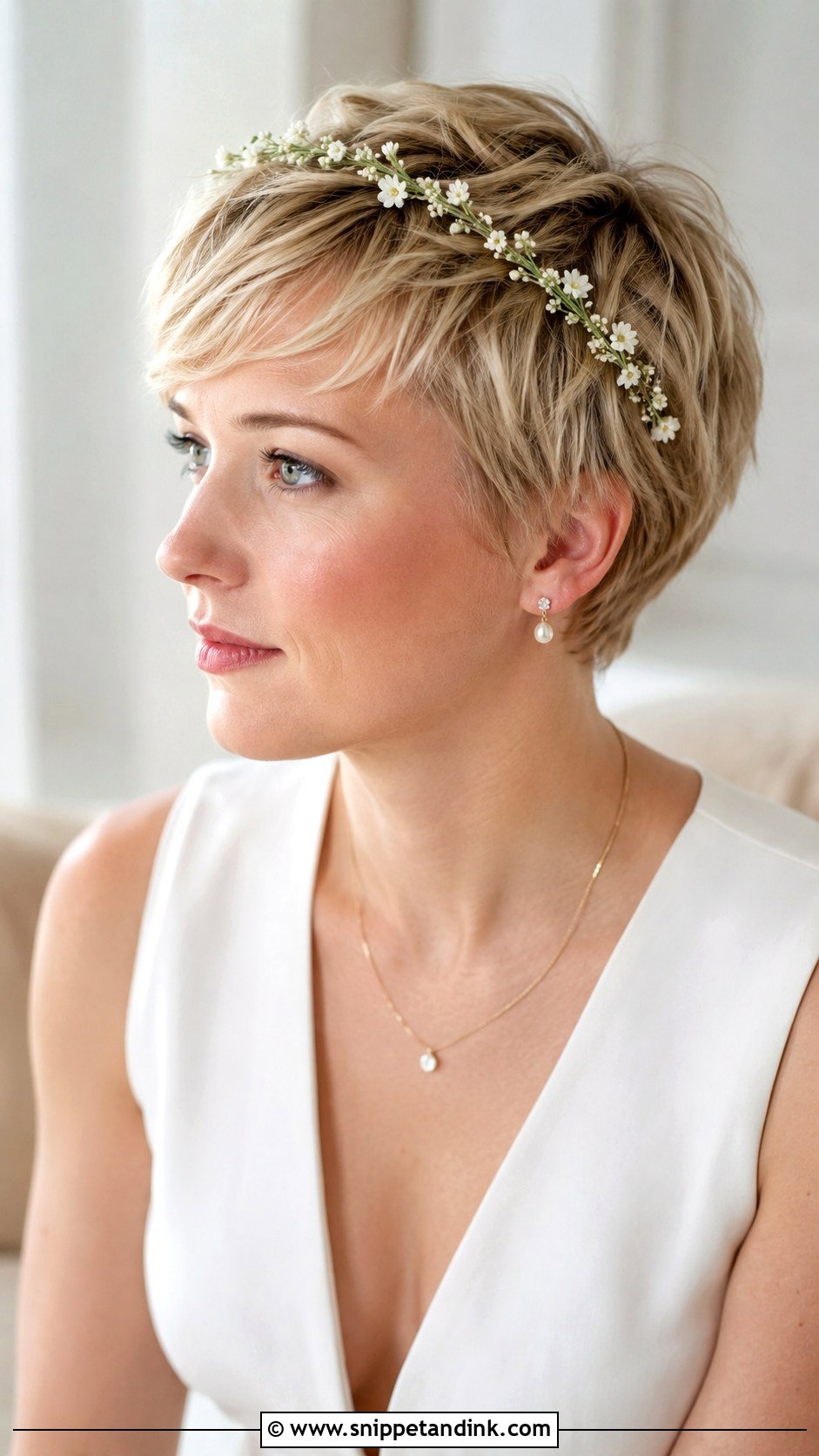
A bob already has a strong outline, so the flowers should support the haircut, not hide it. I often make a half crown or a narrow floral band that runs over the top and stops above the ears, which suits short hair better than a full circle. Sleek bobs get a cleaner, more spaced design; wavy bobs take a slightly looser one. I pull flowers from your bouquet recipe so the two read as a set. Texture spray at the roots gives the band a little grip.
11. Bridal Flower Crown With Curly Hair
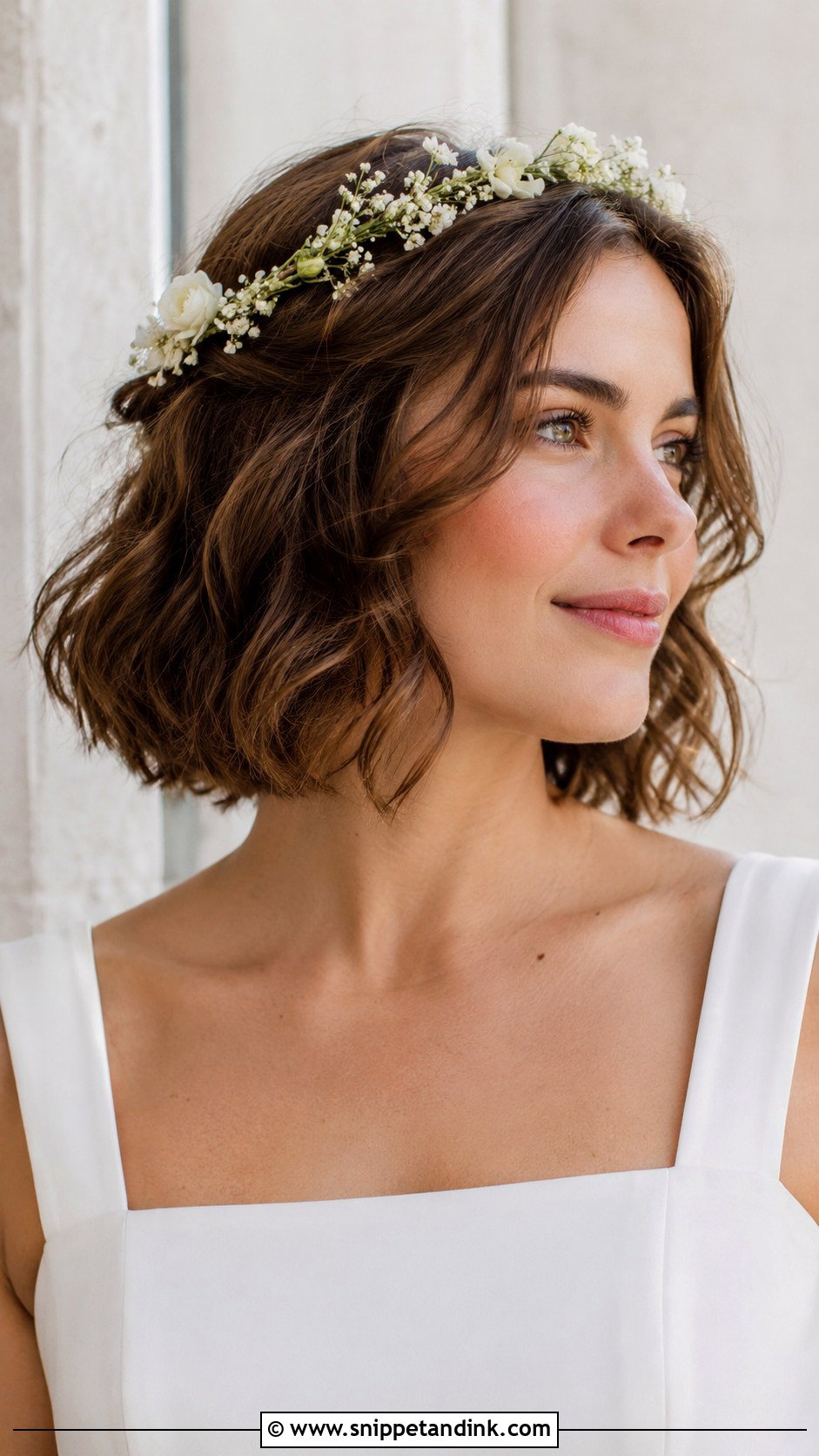
Curly hair has volume of its own, and a crown should sit in it without crushing the curls. I size these slightly larger and lighter, so the band rests on top rather than pressing down. Medium blooms, textured greenery and a few soft accent flowers match the scale of curls better than tiny buds, which disappear. A full crown can look dramatic; a half crown is easier to wear for hours. Curls should be hydrated and defined before I place anything, and a few left loose at the face keep it soft.
12. Bridal Flower Crown With Natural Hair
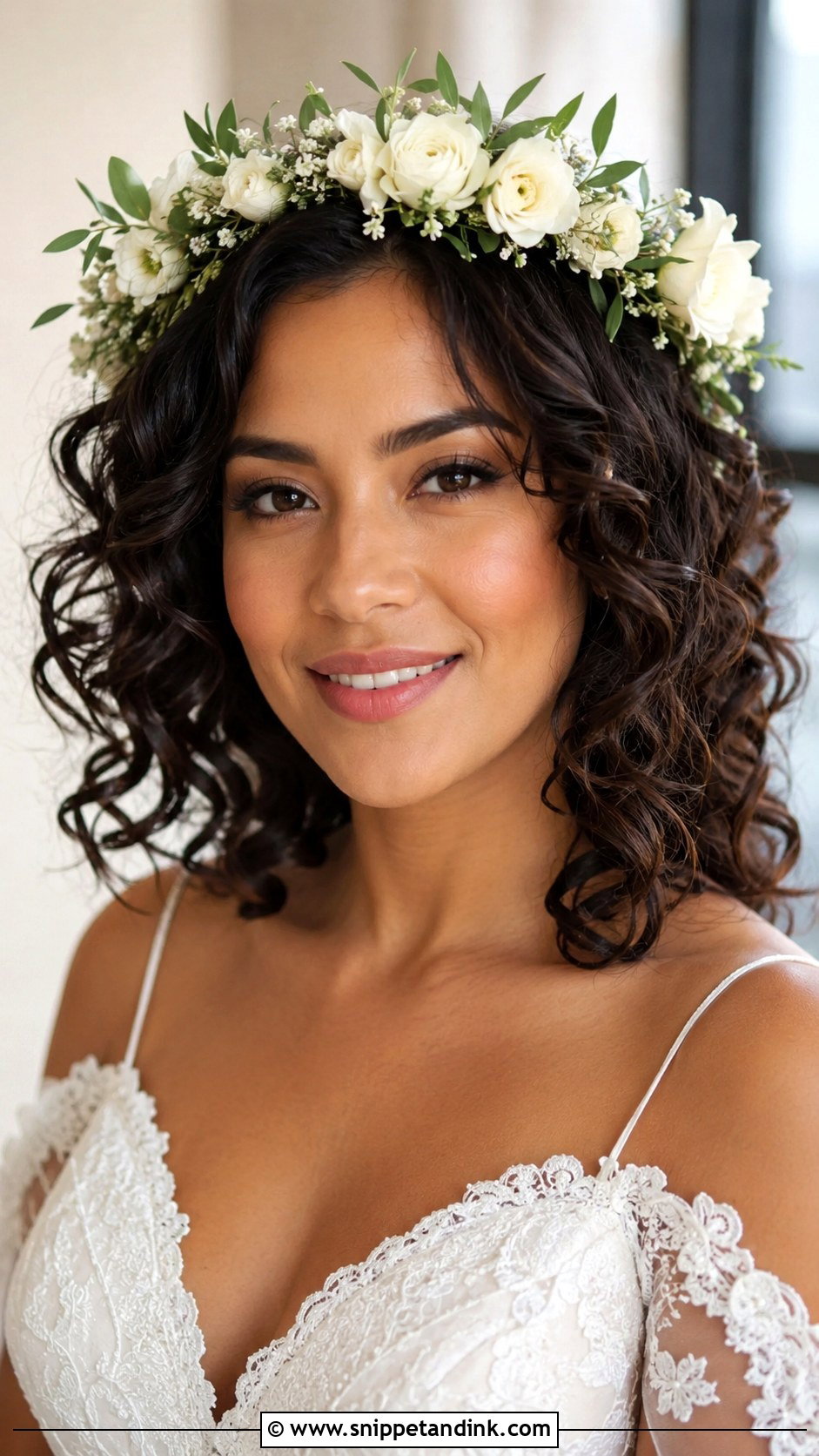
Natural hair carries flowers wonderfully, whether that’s an afro, a twist out, a braid out, coils, locs or protective bridal looks. The crown has to respect the volume, so I measure over the finished style, never over flat hair. Large blooms stand out boldly against full hair; small ones make a halo effect. I make these crowns adjustable at the back with ribbon so they sit securely without pulling at the edges. Moisture, definition and gentle pins matter more than anything I add on top.
13. Bridal Flower Crown With Long Hair
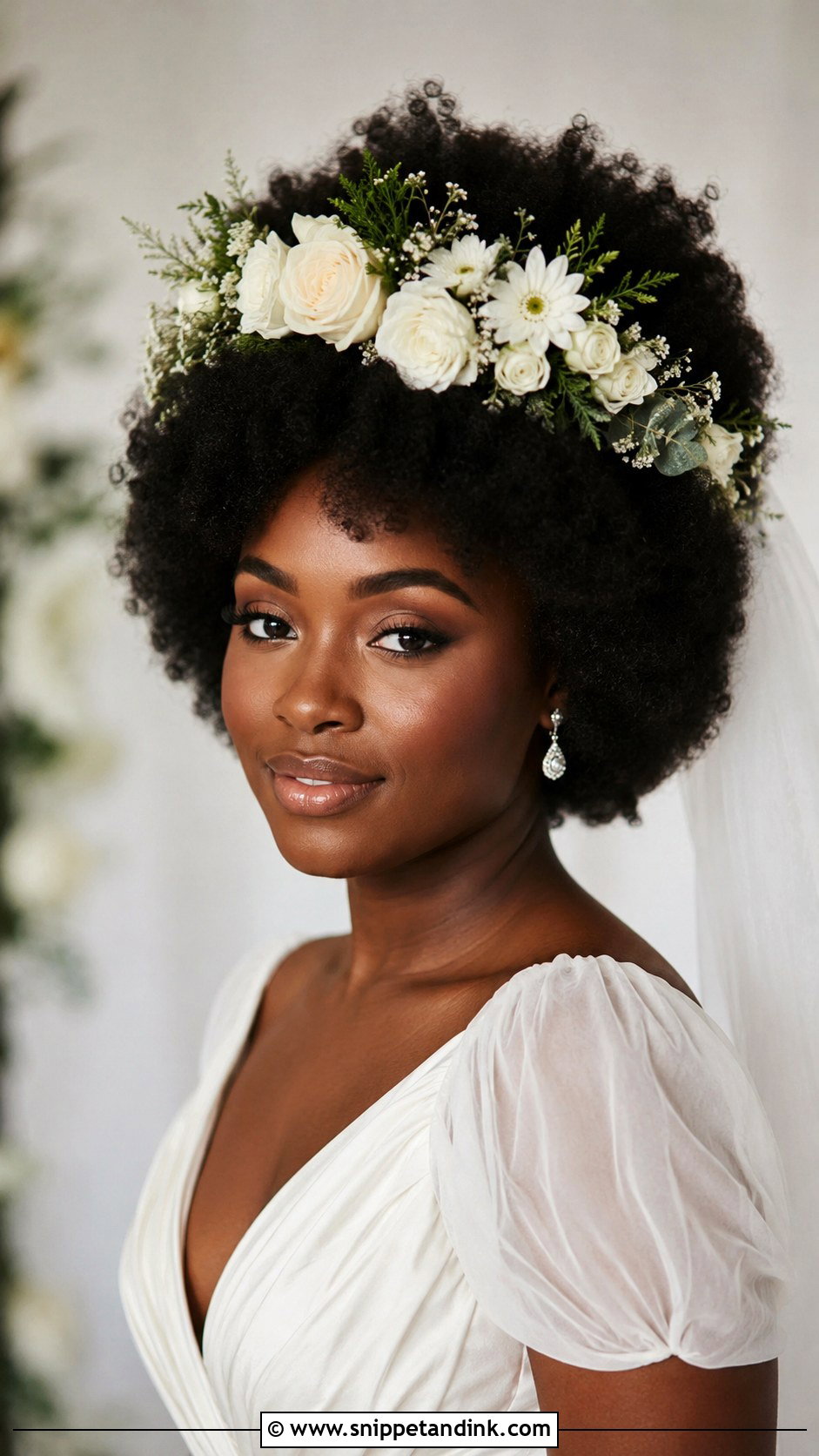
Long hair worn down can look a little plain on its own, and a crown gives it a frame. I see this most with veils, capes and flowing gowns, where the hair needs one point of structure. Very thick hair should be shaped so it moves, otherwise the crown sits on a solid mass. Tiny flowers keep it delicate; fuller blooms make it lush. Long hair also hides the tie at the back of the band, which gives me more freedom with how I finish it.
14. Bridal Flower Crown With Veil
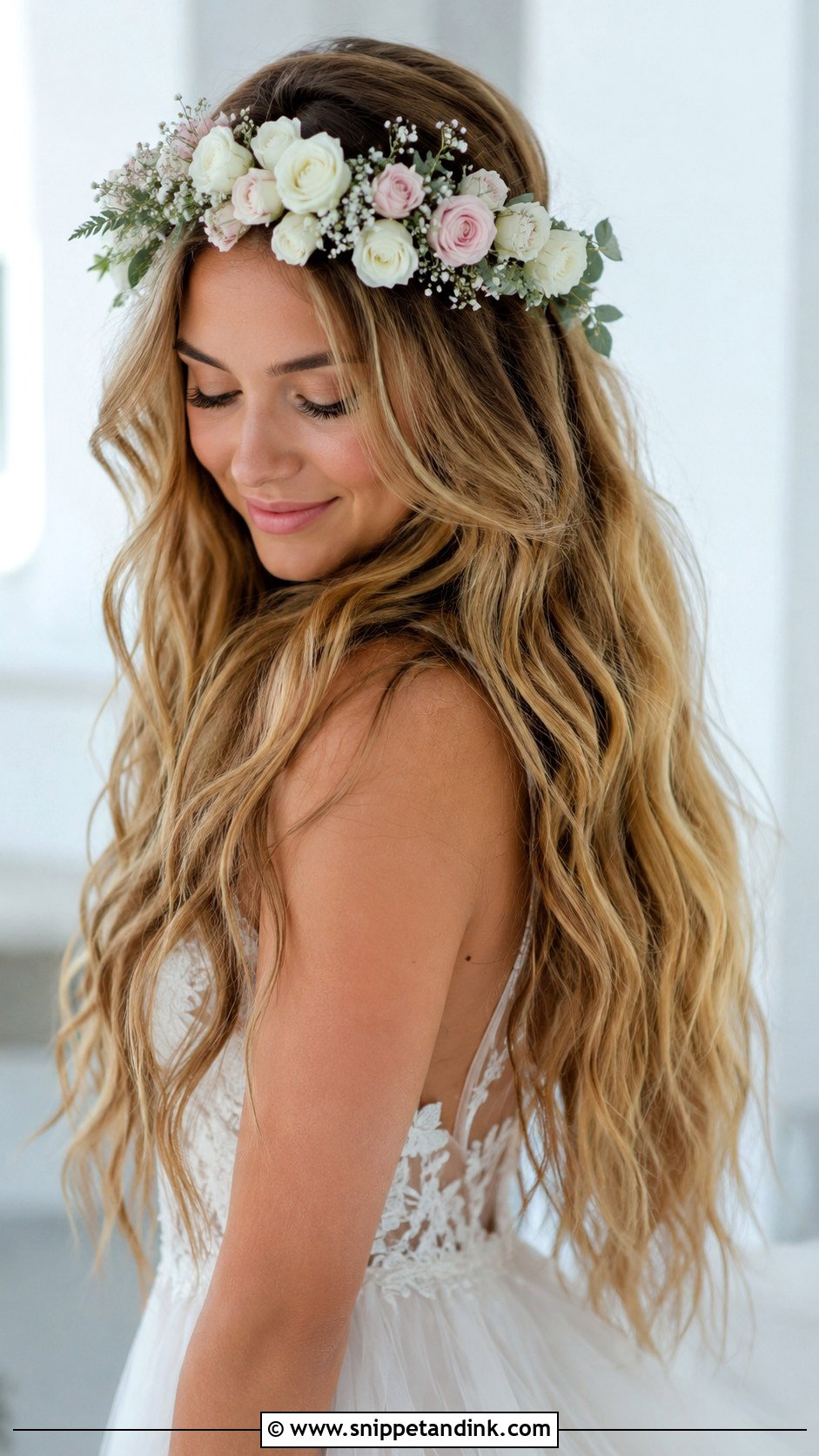
Wearing a crown with a veil means planning both together. The veil can slide in under the crown, sit behind it on its own comb, or be stitched to the back of the band. A lighter crown is usually right, since the tulle already adds volume. Loose waves, low buns, half up hair and soft braids all work underneath. Bring the crown, or a sample of it, and the veil to your hair trial so your stylist can test placement. Matching the flowers to your bouquet ties the look together.
15. Bridal Flower Crown With Baby’s Breath
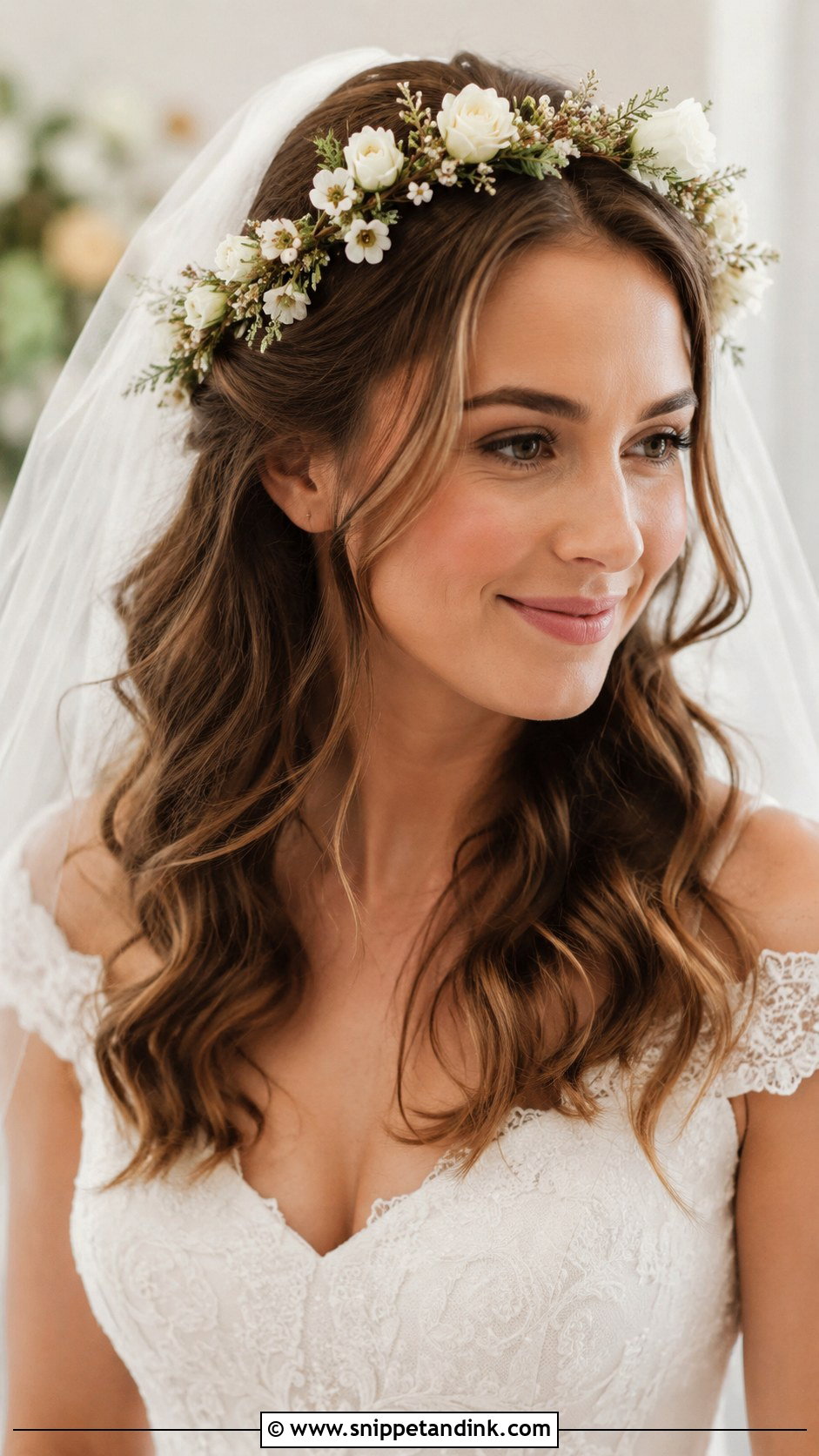
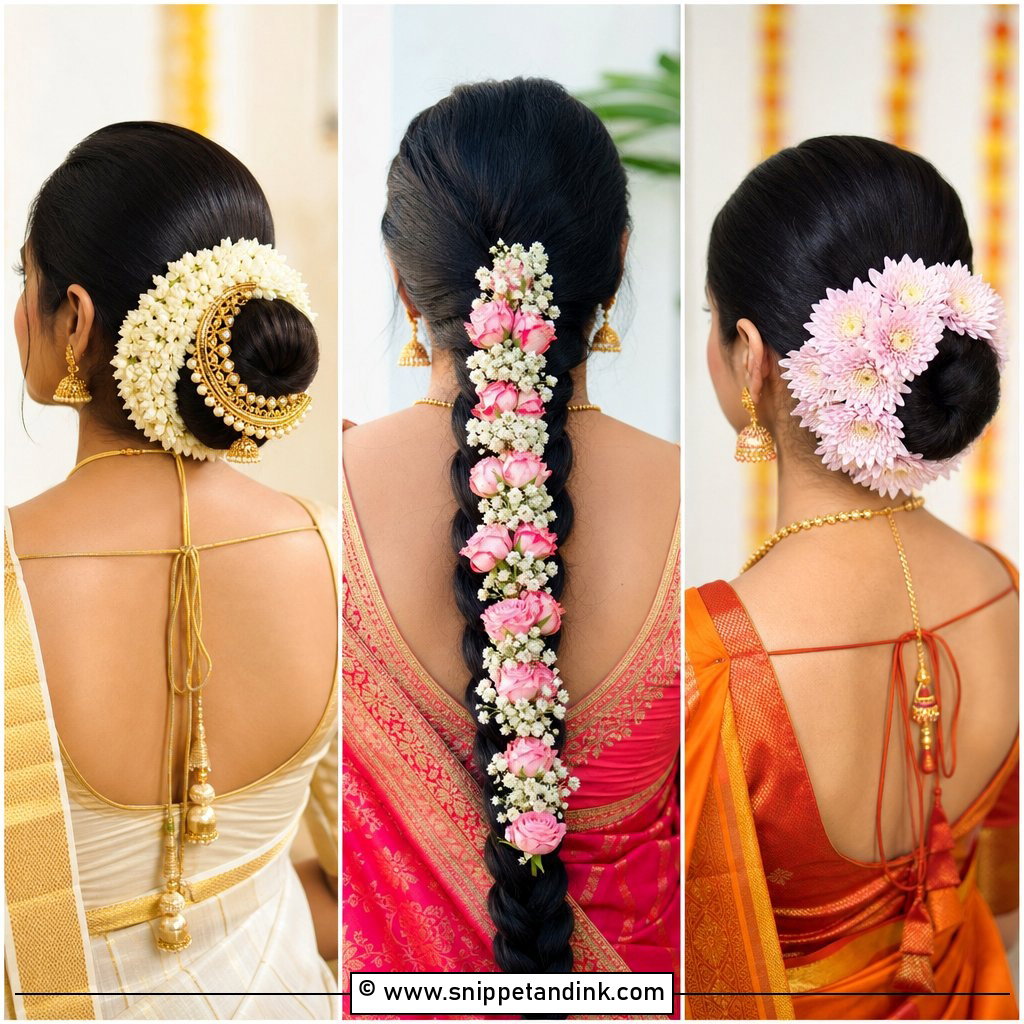
Baby’s breath is one of the lightest flowers I can wire, and it makes a soft cloud around the head. It holds up out of water better than most fresh stems. One honest caution: it has a faint smell some people dislike, so sniff a bunch before you commit to a full crown of it. It sits easily on waves, low buns, braids and half up styles, and pairs with plain or lace dresses. Use it alone for an airy band, or mix in tiny roses and greenery for more shape.
16. Bridal Flower Crown With Roses
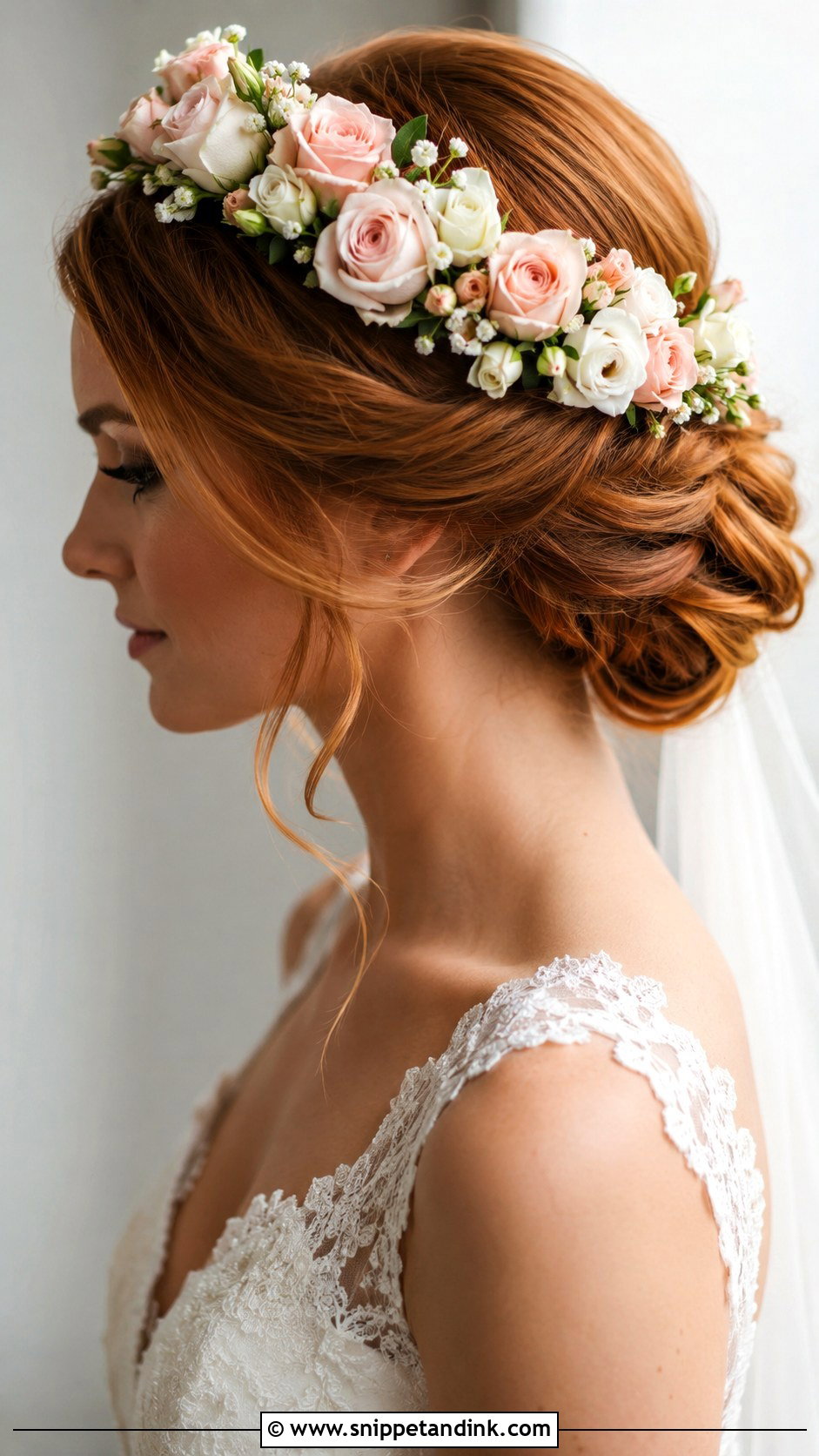
Roses are the easiest crown to tie to the rest of your wedding flowers. I almost always use spray roses rather than full garden roses, since a full head weighs too much for a band and can tip forward. White feels traditional, blush is softer, and deeper tones suit autumn. Roses get bold quickly, so I space them out with leaves. With a beaded or lace dress, keep the crown delicate; a plain gown can carry a fuller rose crown well.
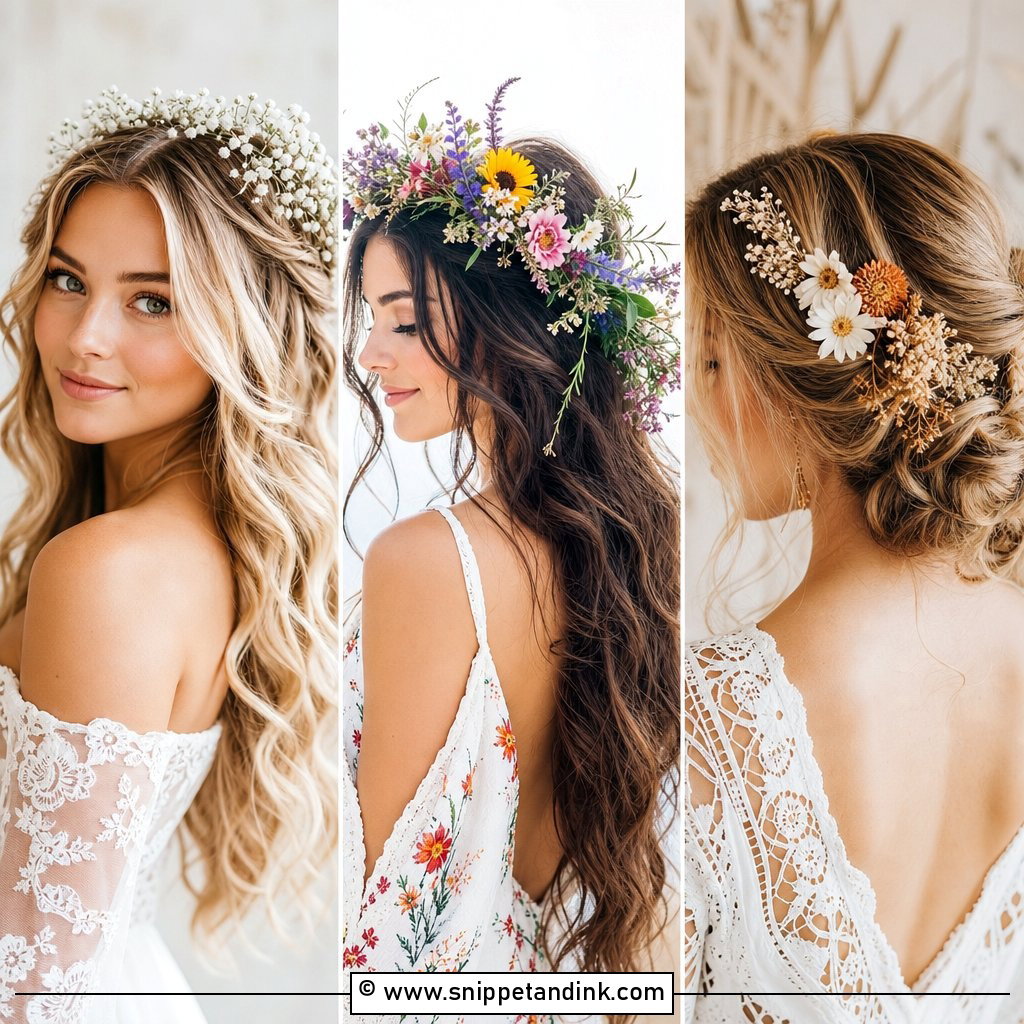
17. Bridal Flower Crown With Wildflowers
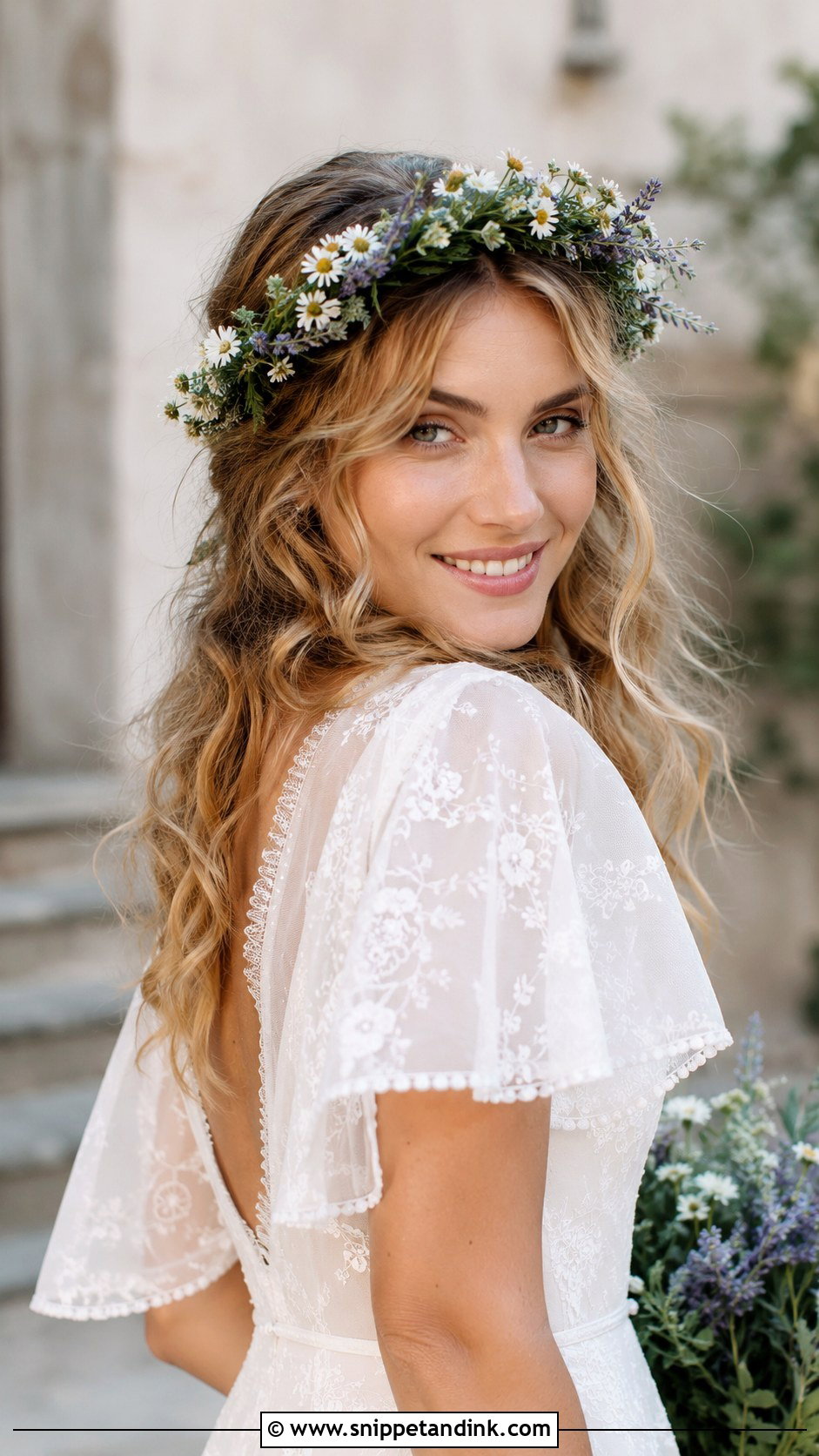
Wildflower crowns are relaxed and colourful, using small daisies, lavender, chamomile, greenery and whatever small seasonal blooms are at their best that week. They suit meadow, backyard and rustic weddings. The design should look a little wild yet still balanced on both sides of the head. Some wildflowers wilt within an hour out of water, so I choose the tougher stems and keep delicate ones for the bouquet, which at least sits in a vase between photos. Loose waves, textured braids and soft buns all sit well under it.
18. Bridal Flower Crown With Orchids
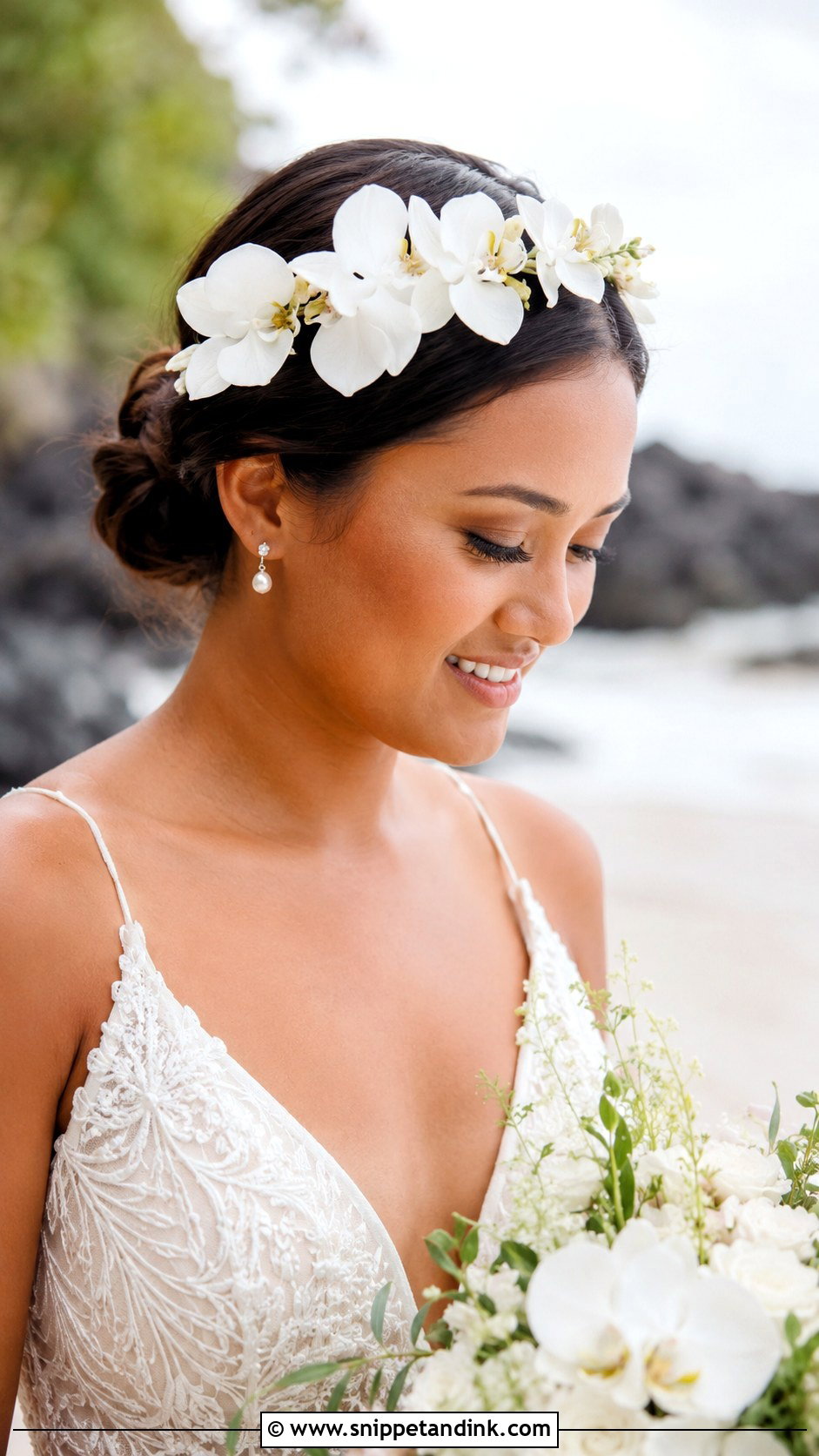
Orchids have a sculptural shape, so I use them sparingly in a refined crown or a half crown. Most orchids are sturdy out of water for a day, which makes them reliable in tropical heat. They suit sleek low buns, polished waves and smooth half up hair, where the hair stays controlled and the flowers carry the interest. White orchids look clean and bridal; soft pink or peach adds warmth. For a destination or beach wedding, an orchid crown fits the setting without trying.
19. Bridal Flower Crown With Colorful Flowers
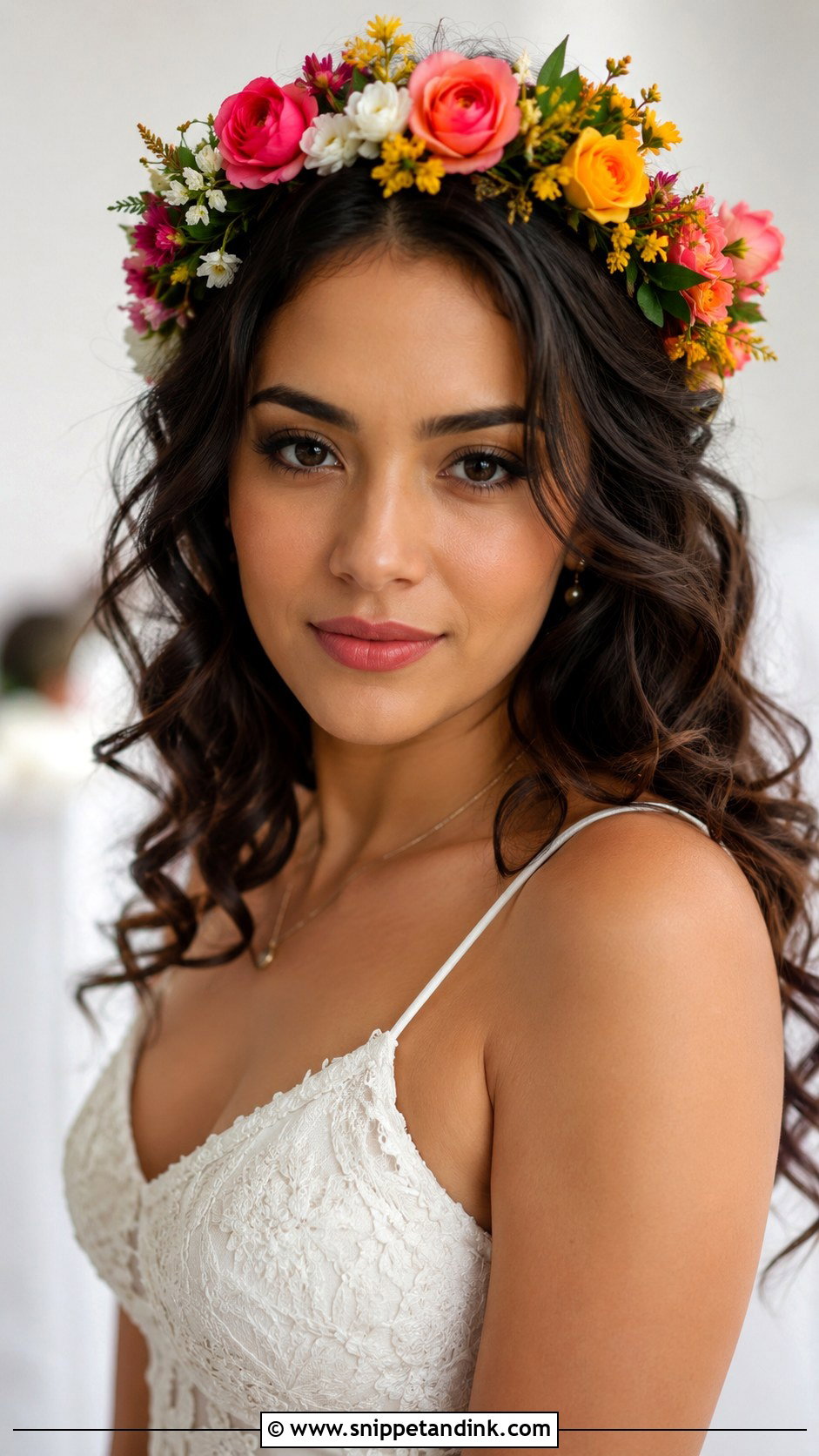
A crown with colorful flowers brings your personality straight to the top of the look. I pull the colours from your bouquet or wedding palette, and I limit it to two or three main shades, since more than that starts to look random. A simple dress lets the crown take the lead. Keep the hairstyle soft underneath so the colour has room. It’s at home in spring and summer and anywhere outdoors.

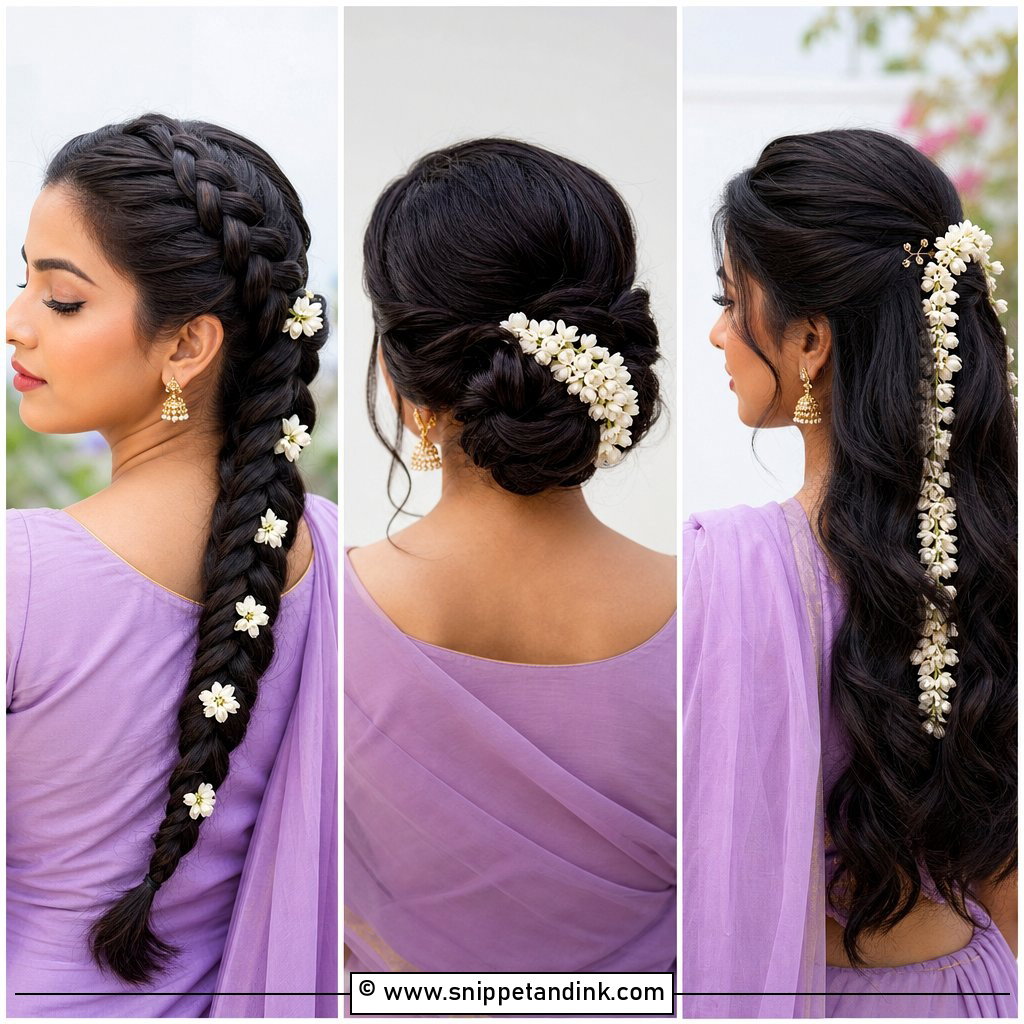
20. Bridal Flower Crown With Dried Flowers
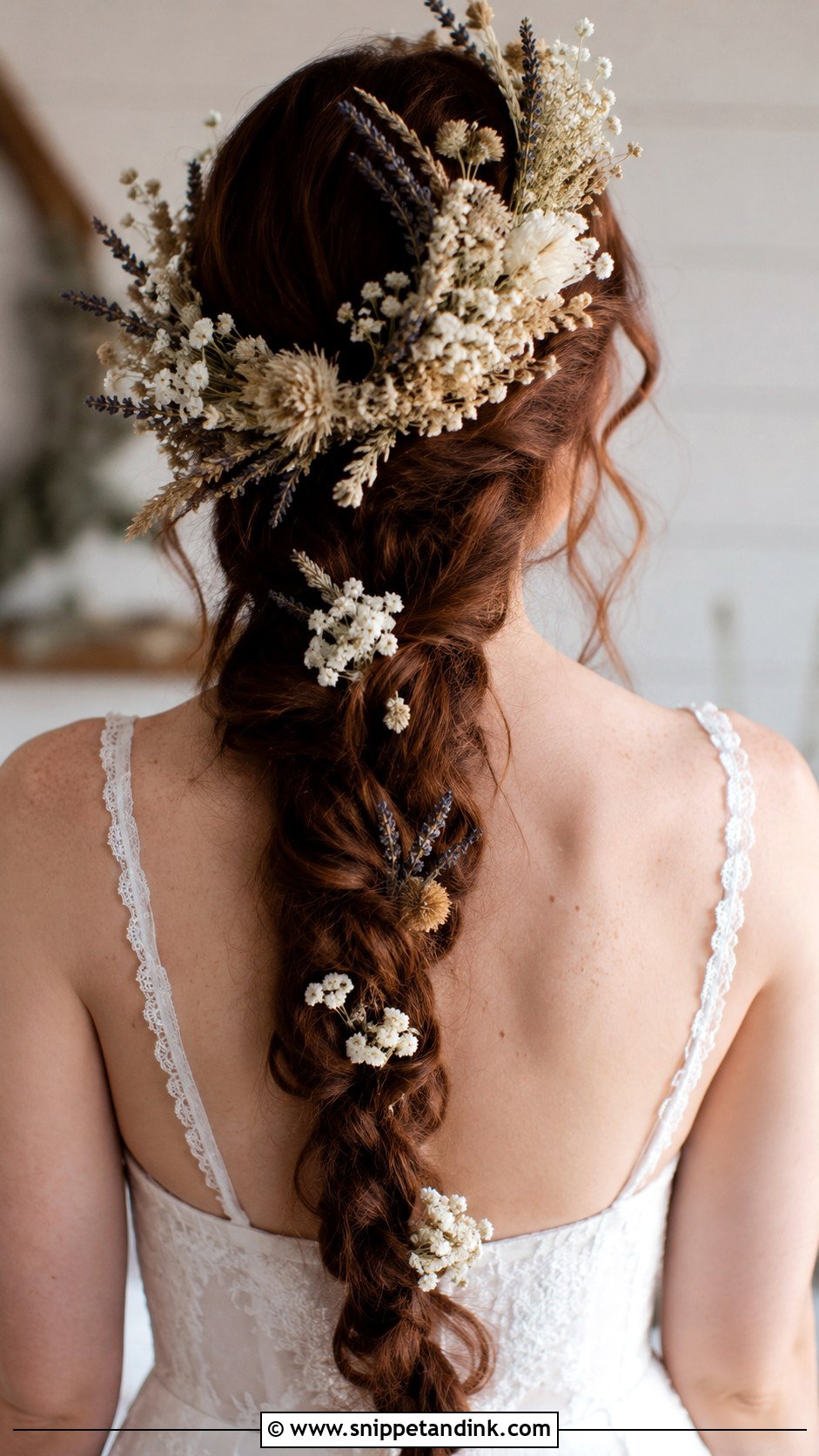
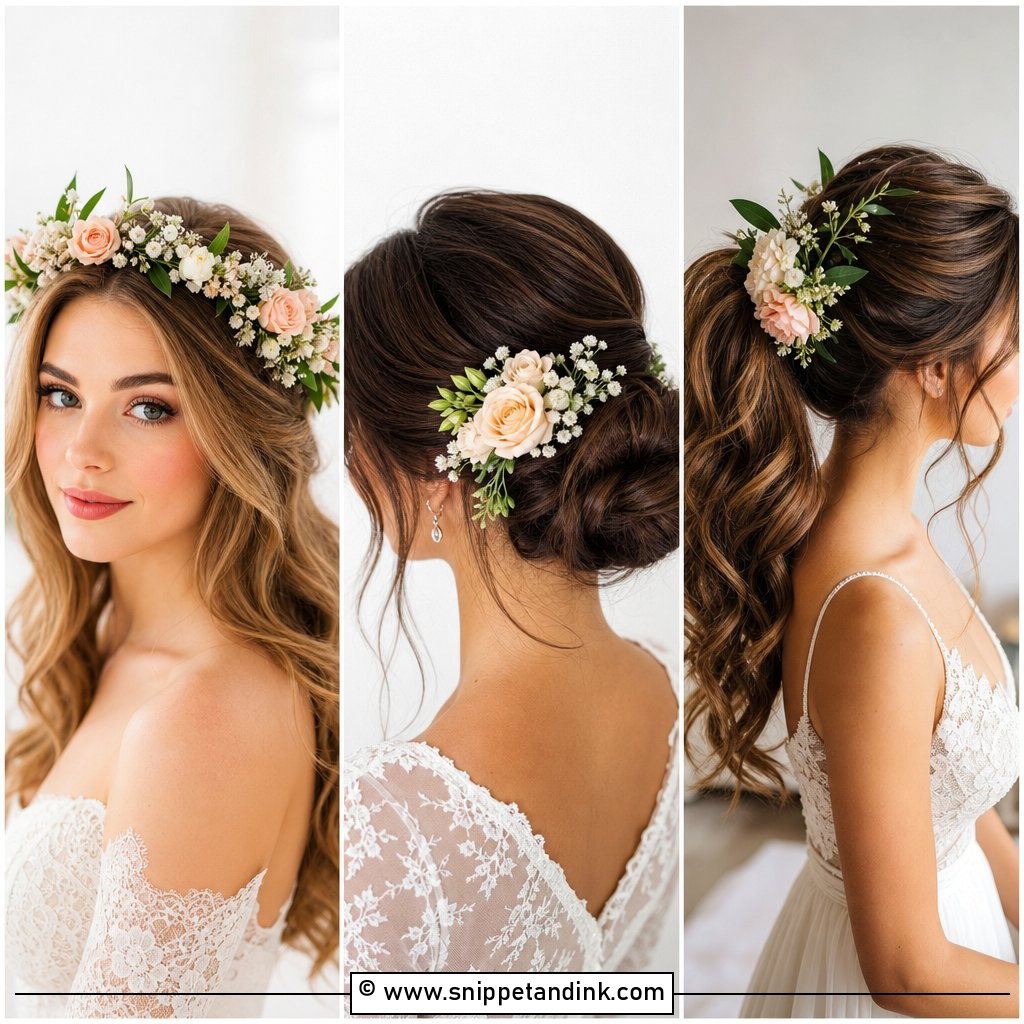
Dried flowers are the practical choice: I can make the crown weeks ahead, it won’t wilt in desert heat, and it keeps afterward. Pampas, preserved baby’s breath, dried lavender, strawflowers and soft grasses give a warm, earthy texture that suits boho gowns, rustic venues and autumn palettes. The trade-off is fragility. Dried stems shatter if pressed, so I tell stylists to place it by the band only and never squeeze the flowers. Loose waves, low buns and relaxed braids complete it.
Measuring Your Head So the Crown Doesn’t Slip
Most crown problems on the day are fit problems. I ask brides to measure with a soft tape exactly where the crown will sit, and to do it over the hairstyle they’ll wear, not flat hair. A half up style or curls can add a surprising amount to the circumference.
- Send your stylist’s trial photo to your florist so the band can be shaped to the style.
- Ask for a ribbon tie at the back, which adjusts if your hair ends up fuller than planned.
- Keep the heaviest blooms toward the sides rather than the front, where they tip forward.
- Have your stylist place it, using small bobby pins crossed over the wire at the temples.
If it slips during the day, a bridesmaid can re-pin it at the temples in under a minute. Pack two extra pins in your colour just for that.
Can You Keep a Fresh Crown After the Wedding?
You can, if you act that night. Remove it carefully, untie the band, and hang it upside down in a dark, dry room for a couple of weeks. Roses, statice, lavender and baby’s breath dry well; soft petals like peonies tend to shrivel and brown. The colours will fade and the leaves will curl, so it won’t look like the day itself. If keeping it matters to you, a dried or preserved crown from the start is the more reliable route.
A Crown Should Look Like It Grew With the Hairstyle
The crowns I’m proudest of are the ones nobody would notice being put on at the last minute. Settle your hairstyle, neckline, veil, bouquet, season and venue first, and the crown’s size and flowers follow from those. Waves suit a romantic band, buns a refined one, braids something tucked in, and short hair a slim line of blooms. Fresh stems move naturally; dried and silk give you control. Whatever you pick should feel secure and comfortable from the ceremony to the last photo.
You'll Like These Ideas:


Leave a Reply