
Terracotta is the colour couples bring me swatches of more than almost any other right now, and I understand why. It sits happily next to ivory, sage, blush, rust, copper, mocha, cream and muted gold, and it suits a barn, a garden, a desert venue or a city reception without dating the photos. The cakes that work best use it on purpose, in the buttercream, the fondant, the flowers, a few dried grasses, a painted detail or a texture, rather than everywhere at once. Below are 35 designs, with my notes on how each one is actually built and where it can go wrong.
Mixing Terracotta Buttercream That Stays Clay and Not Salmon
Terracotta is a tricky shade to mix. Too much orange and it looks like salmon; too much brown and it turns muddy in photos. I build it from an orange gel base, deepen it with brown, and add the smallest touch of red at the end. Then I leave it. Gel colours keep developing in buttercream for several hours, so a shade mixed the night before is darker by morning, and I always match the swatch the next day rather than straight away.
- Yellow butter shifts every colour warmer. For a true clay tone I start from a whiter base, such as a meringue buttercream or a lightened butter mix.
- Fondant and buttercream take colour differently. If one tier is fondant and another is buttercream, I mix them side by side and compare under the same light.
- Reception lighting changes the shade. Warm candlelight pushes terracotta toward orange; cool daylight pulls it toward brown.
- A deep shade needs more colouring. Past a certain point it can taste slightly bitter, so I’d keep the darkest rust for accents, not whole tiers.
1. Terracotta Wedding Cake With Dried Flowers
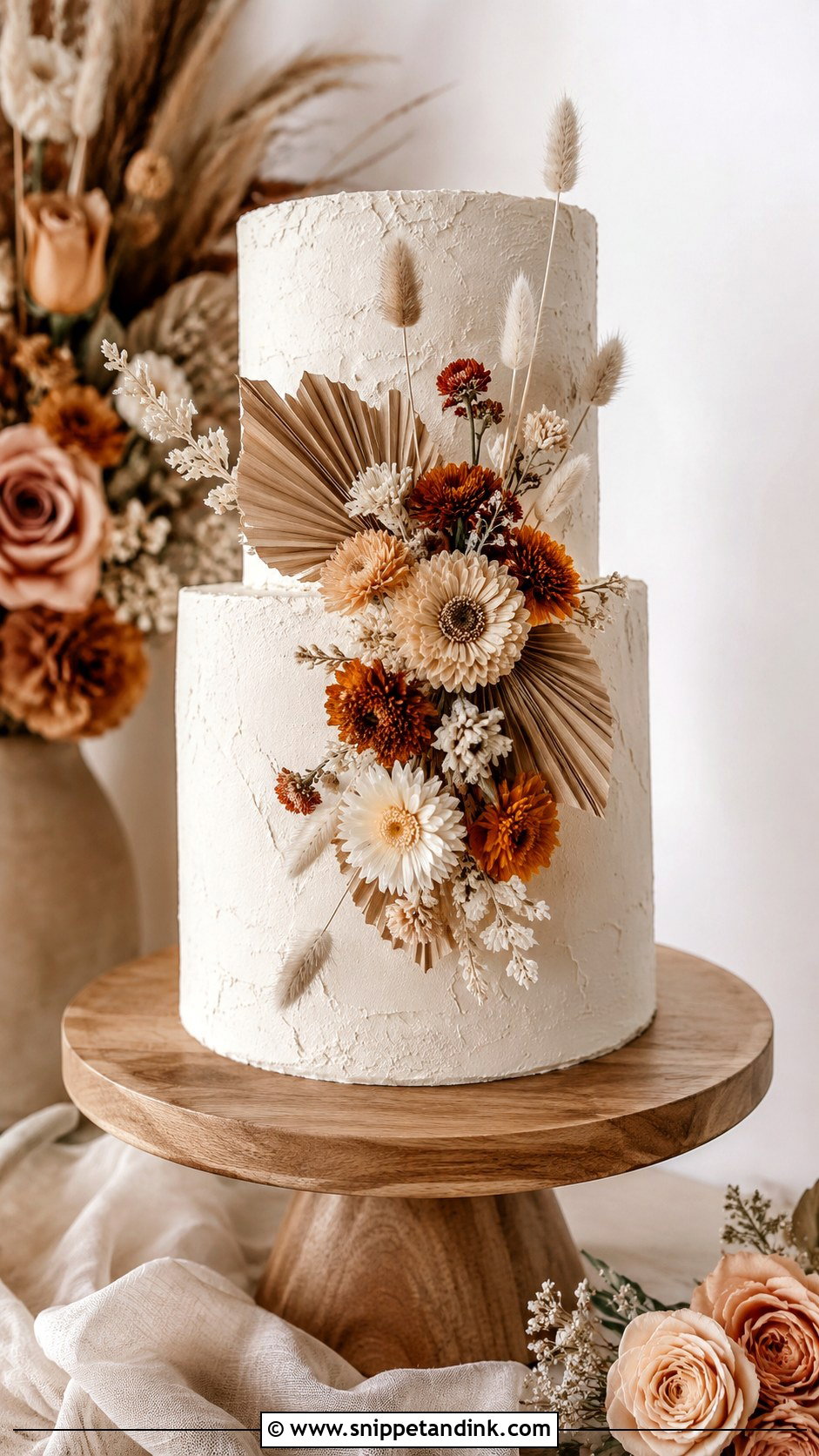
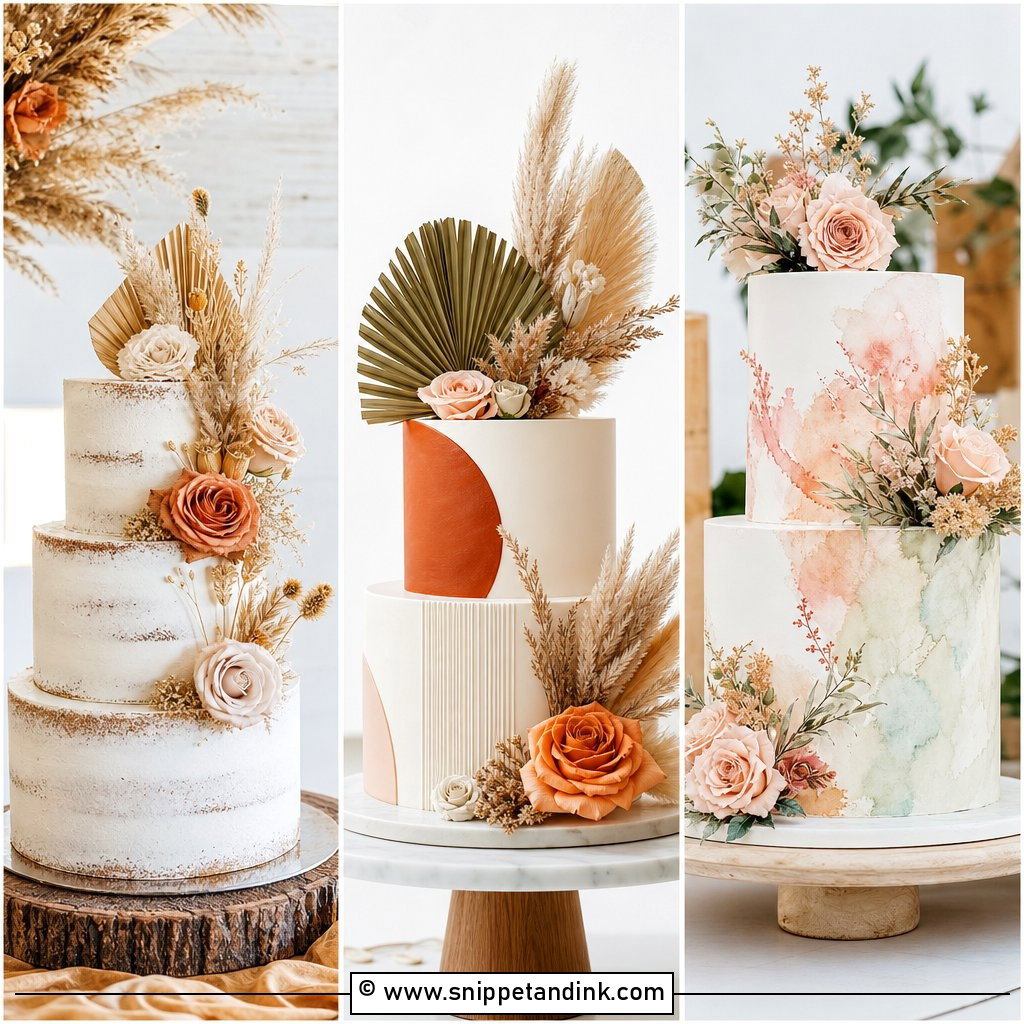
Dried palms, bunny tails, preserved ferns, strawflowers and small rust blooms on an ivory or clay-toned buttercream give an easy boho look. Two or three tiers with the flowers running diagonally from top to base is the arrangement I come back to most. Here’s the part people skip: dried and preserved stems are often dyed, bleached or sprayed. I never push them straight into the cake. They go into food-safe picks or sit on small acetate discs, so I can lift the whole arrangement off before cutting. A terracotta linen cloth or a plain wood stand finishes the table.
2. Terracotta Wedding Cake With Fresh Flowers
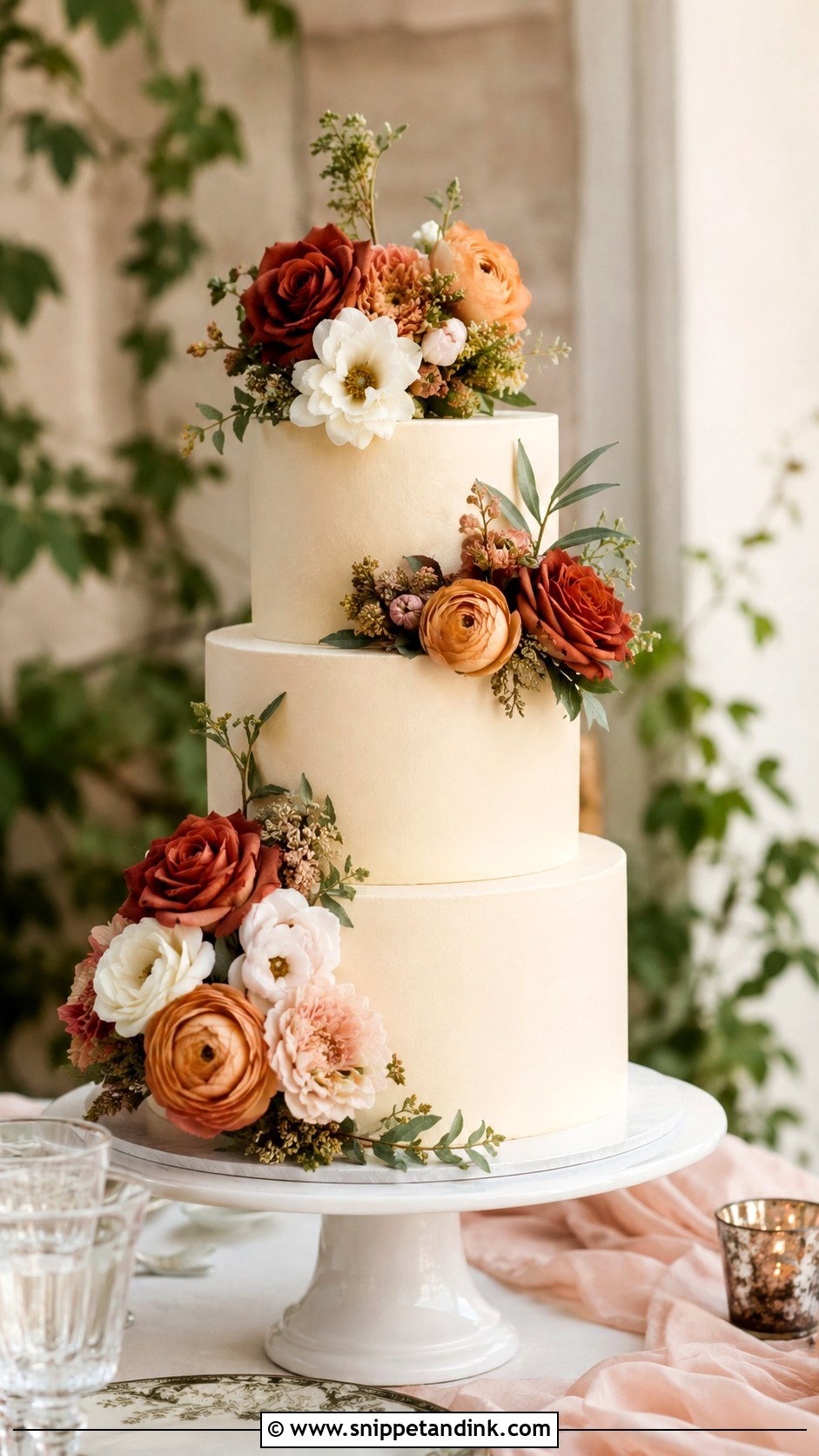
Roses, dahlias, lisianthus, orchids and carnations in rust, peach, cream and burnt orange make a lush, seasonal cake. Too much orange gets heavy fast, so I mix in ivory blooms and some greenery for relief. Smooth buttercream, fondant or a semi-naked finish all work, with larger heads at the base and smaller ones climbing one side. I ask the florist for unsprayed stems and wrap every one in floral tape before it touches the cake. Ranunculus, a florist’s favourite, is toxic, so it never goes straight into sponge.
3. Terracotta Wedding Cake With Sage Green
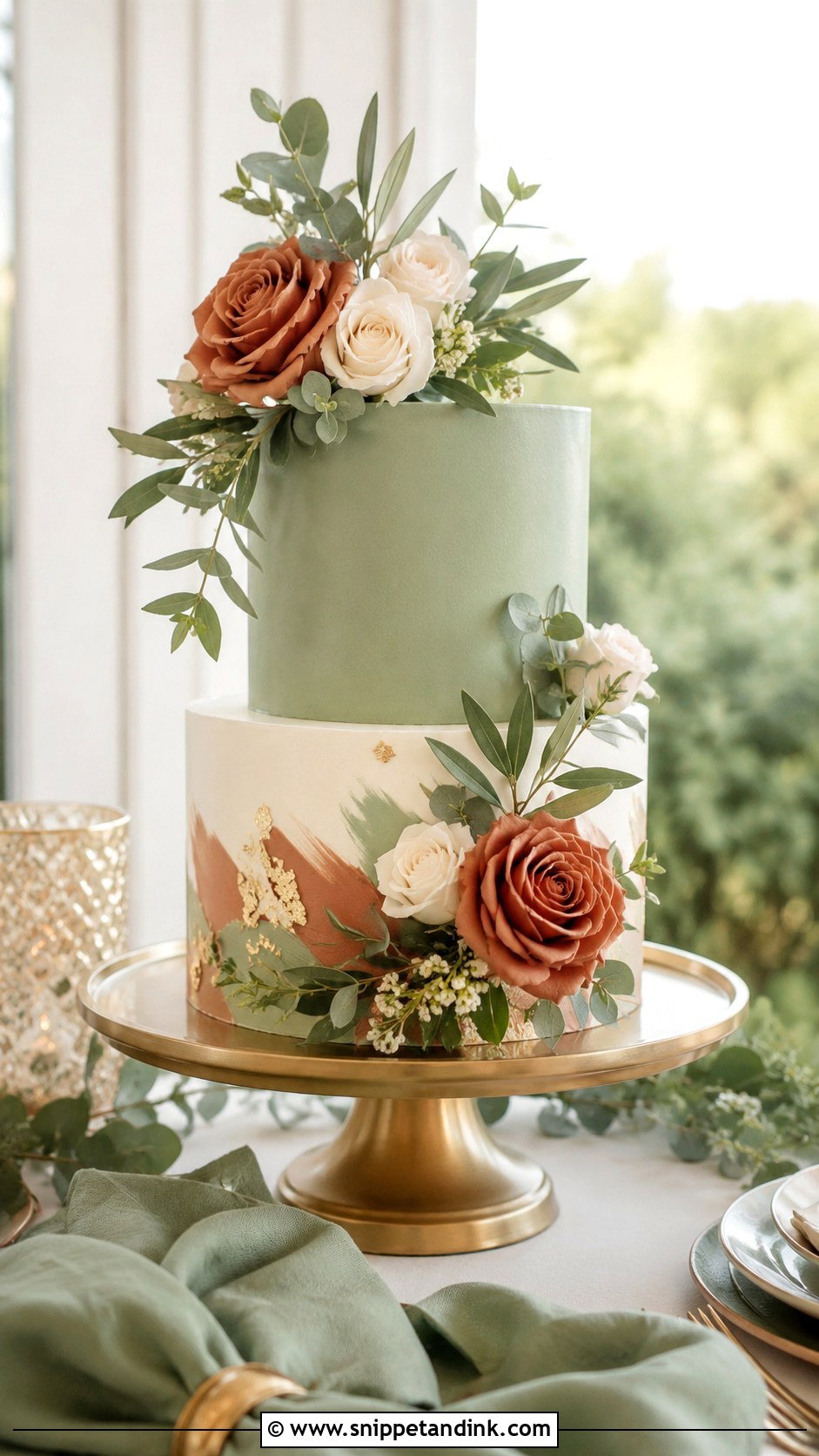
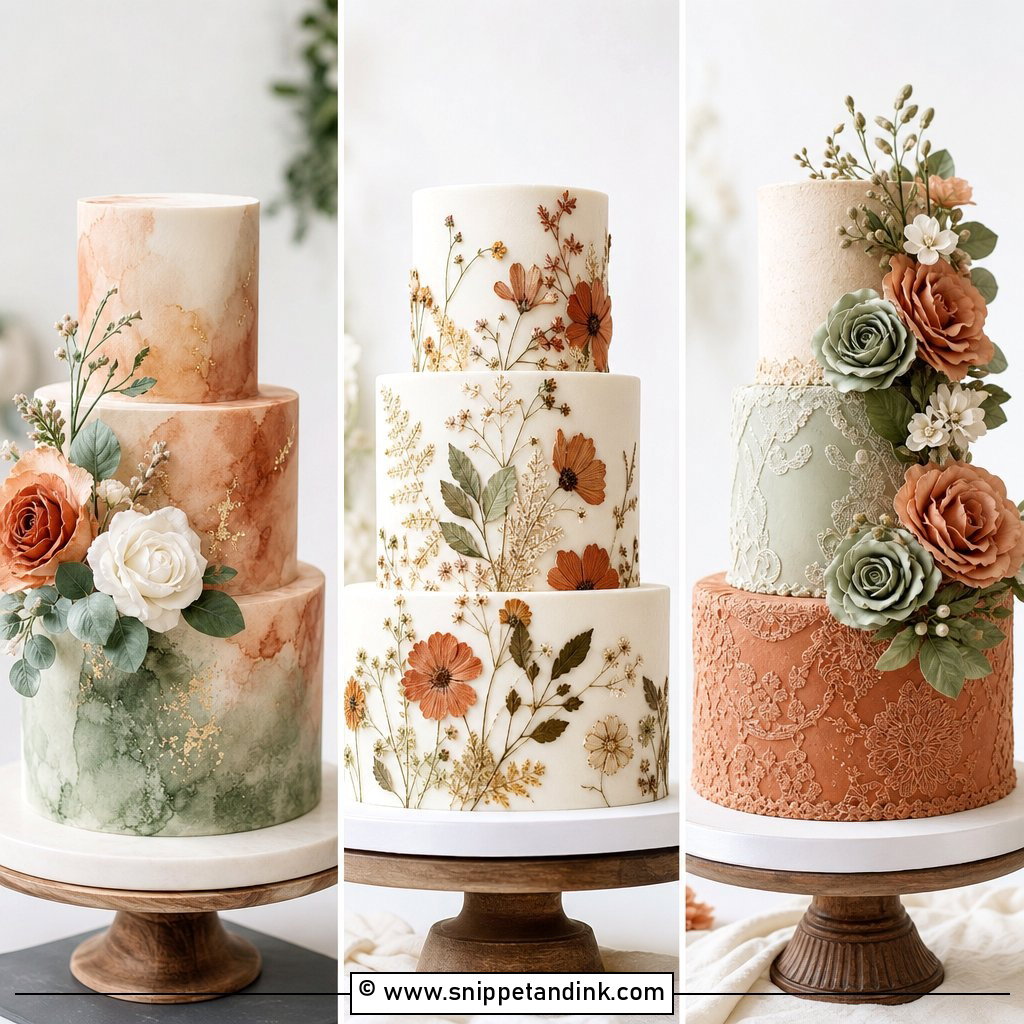
Sage and terracotta might be the easiest pairing in this whole list. The clay tone grounds it and the sage calms it down. Keep it soft with ivory buttercream, terracotta flower accents and sage leaves, or go bolder with one sage tier and one terracotta tier. Sugar foliage in a muted green gives me full control of the shade, which matters because real eucalyptus and dusty miller can read grey rather than sage under reception lighting. A white ceramic, wood or matte gold stand keeps the focus on the cake.
4. Terracotta Wedding Cake With Gold
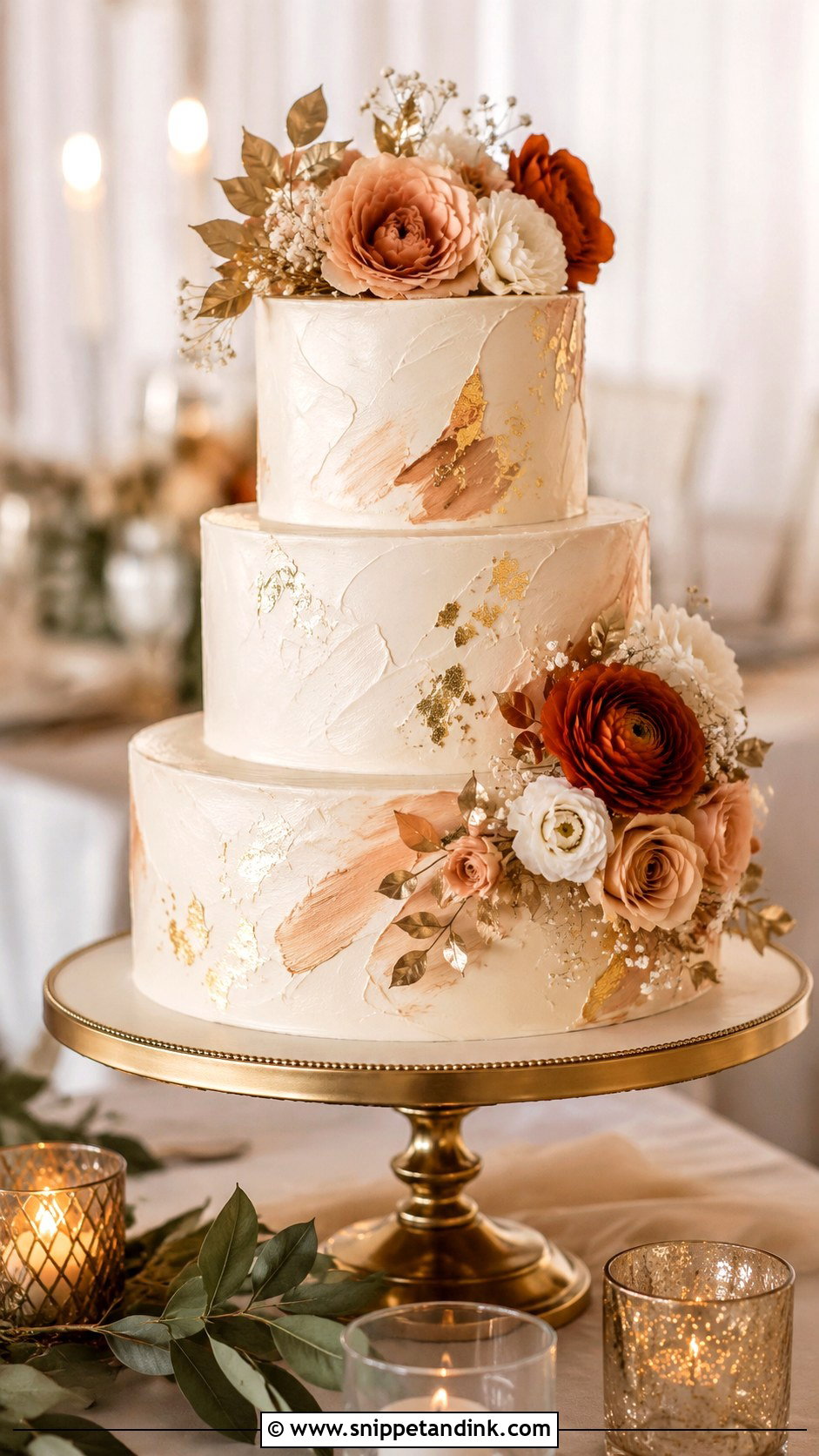
Gold leaf, a brushed metallic edge, thin painted lines or a gold stand add shine to terracotta without turning it flashy. It sits well with ivory buttercream, mocha accents and peach florals. For a modern take, smooth fondant with one terracotta tier and fine gold veining; for something softer, buttercream with scattered leaf and fresh roses. Make sure your baker is using edible gold leaf or an edible lustre. Plenty of shimmering dusts are sold as non-toxic, which is not the same as food-grade, and I only use the latter on anything that will be eaten.
5. Terracotta Wedding Cake With Pampas Grass
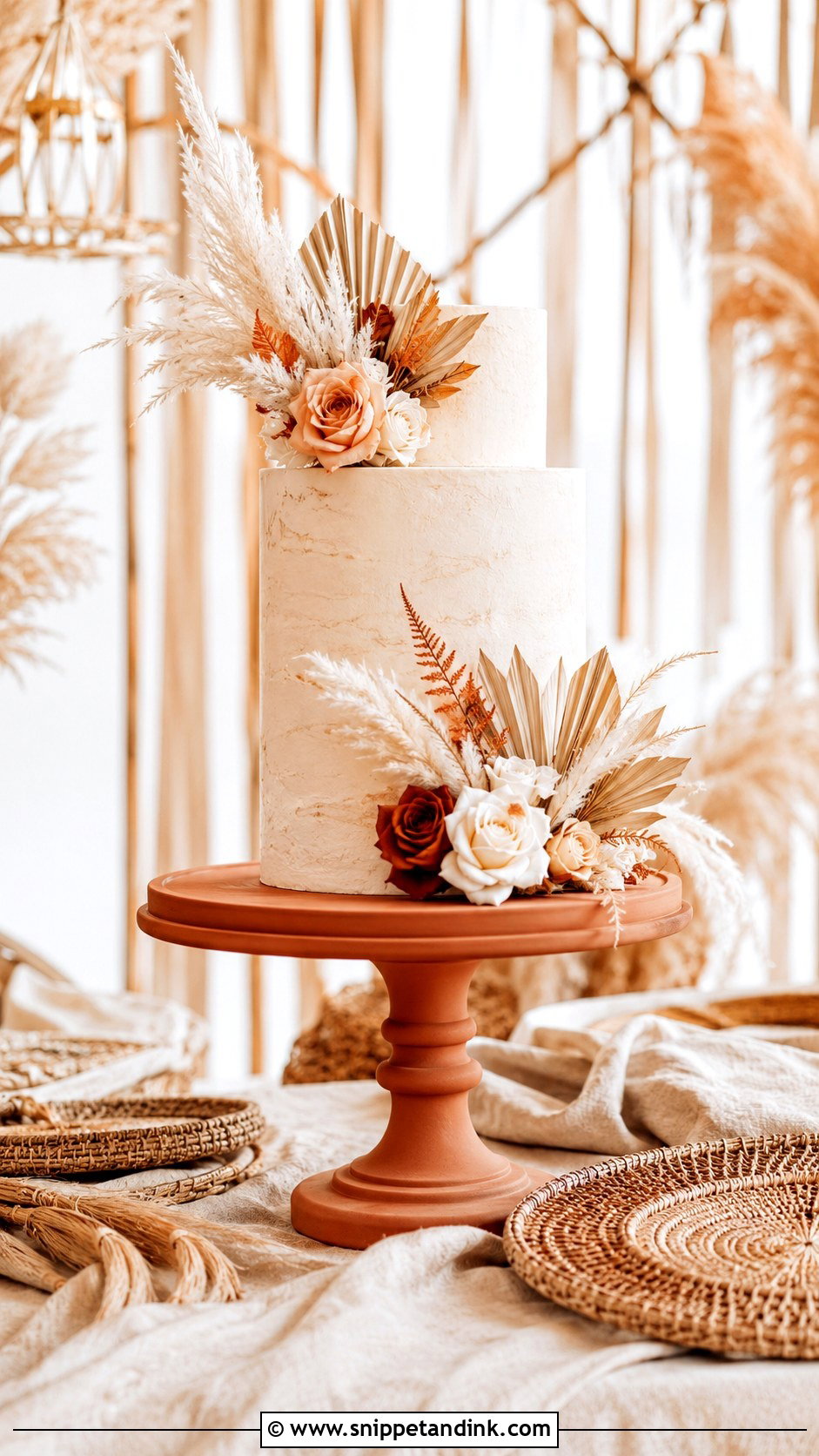
Tall, wispy Pampas grass around neutral buttercream with clay accents gives that airy desert feel couples ask for at boho and autumn weddings. On its own it can drift into all-beige, so I add rust roses, cream flowers or small peach blooms. Pampas sheds, and it sheds onto frosting. I spray it with a sealant days ahead and keep the plumes in picks set slightly away from the cake surface, then place it on site rather than transporting it attached. A matte terracotta pedestal or natural wood stand completes it.
6. Terracotta Wedding Cake With Burnt Orange Flowers
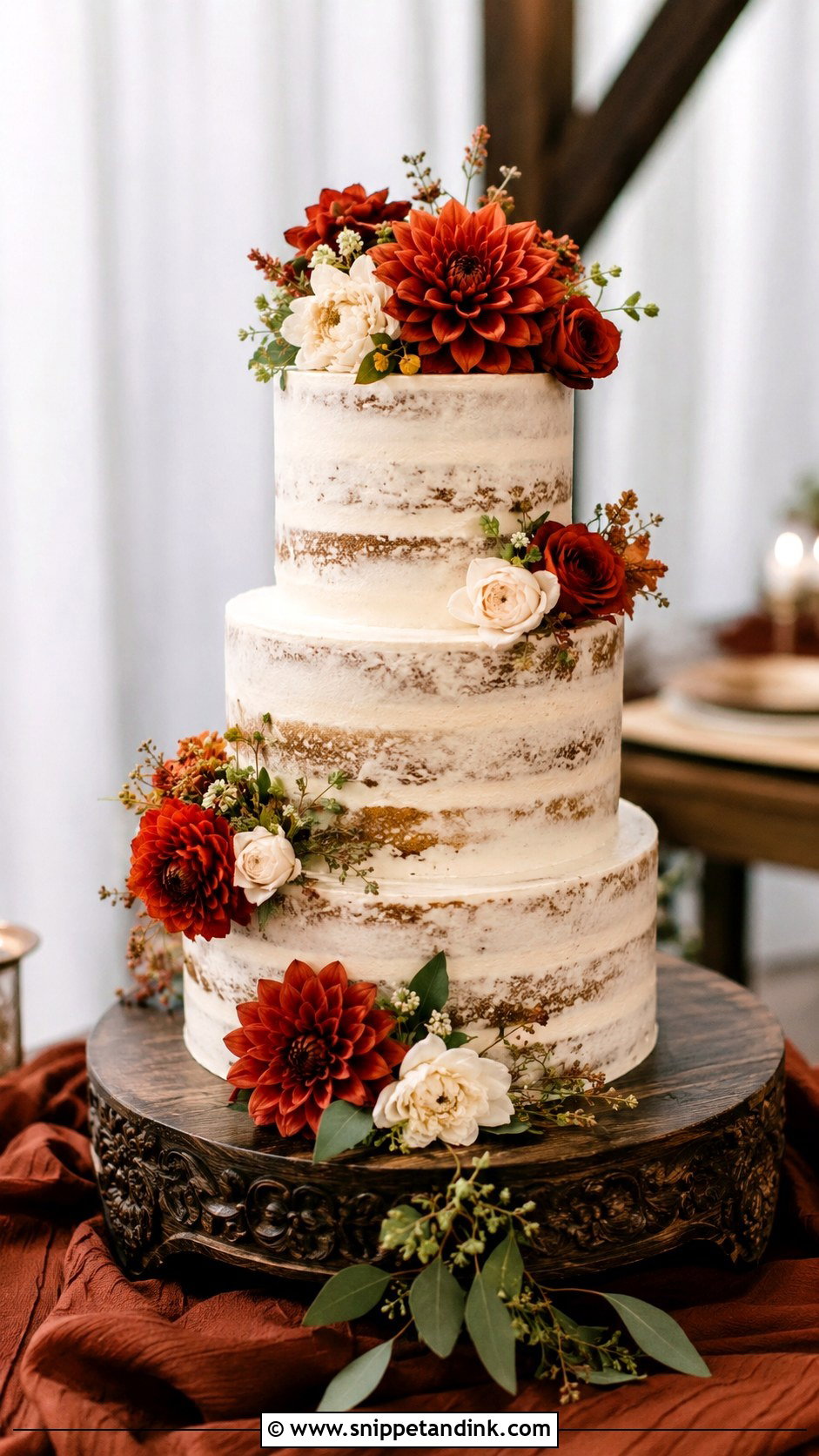
Burnt orange dahlias, roses, ranunculus, marigolds and carnations clustered against ivory or sand-coloured frosting give the palette its deepest note. The trick is mixing in cream, copper, peach and muted rust, so the cluster has depth instead of one flat orange block. Semi-naked reads rustic; smooth fondant reads refined. It’s at its best in late summer and autumn, when the flowers are actually in season and the colours look right with the light outside.
7. Terracotta Wedding Cake With Rust Roses
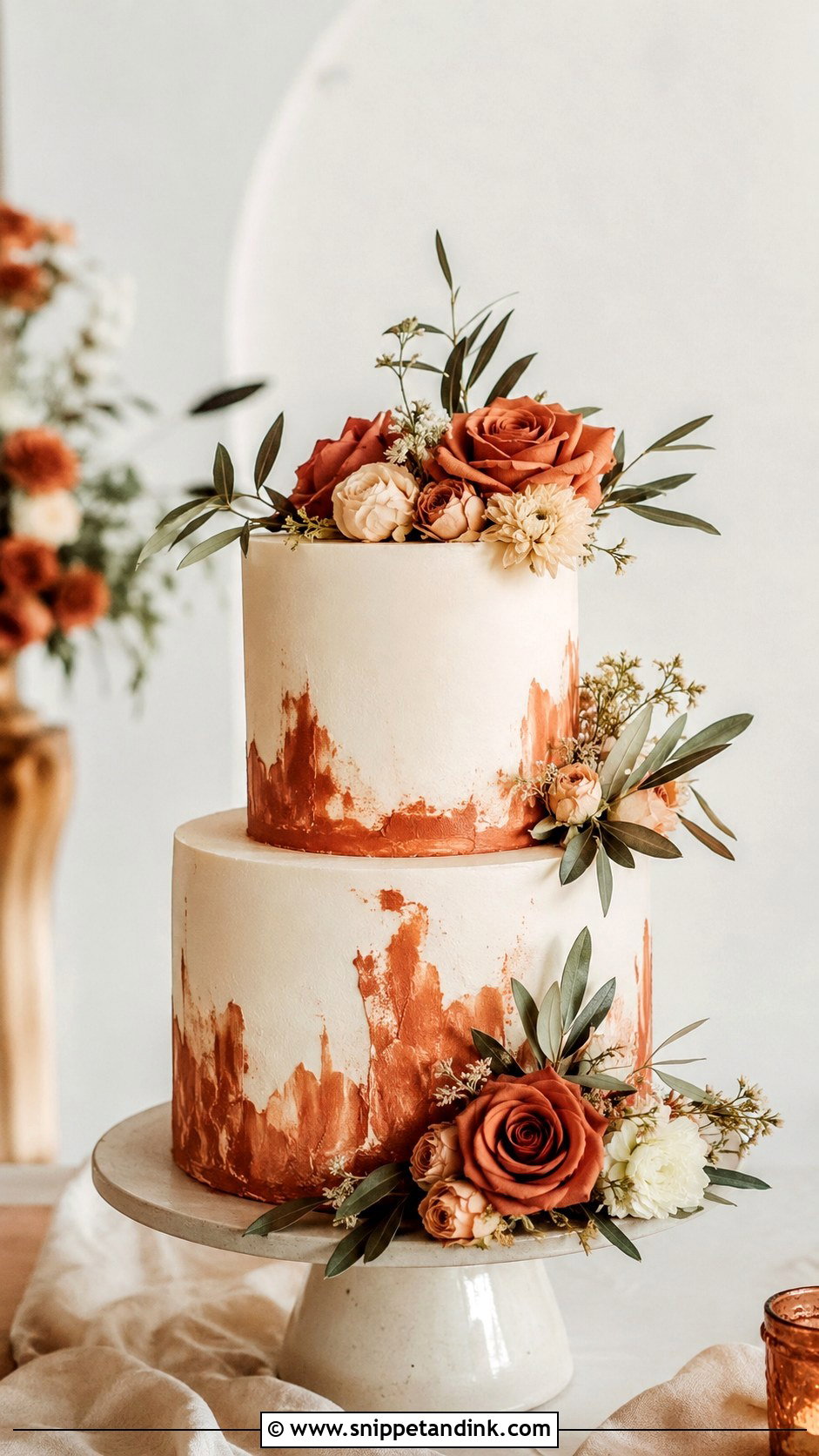
Rust roses give warmth without turning the whole cake orange. They can be fresh, silk or sugar depending on budget and venue. Around the base of each tier gives a lush look; a clean diagonal reads more modern. I usually keep the buttercream ivory and bring the terracotta in with brush strokes or painted edges. Silk flowers are fine on a cake if they’re new and kept on a barrier, but check the stems: many contain wire that should never go into sponge.
8. Terracotta Wedding Cake With White Buttercream
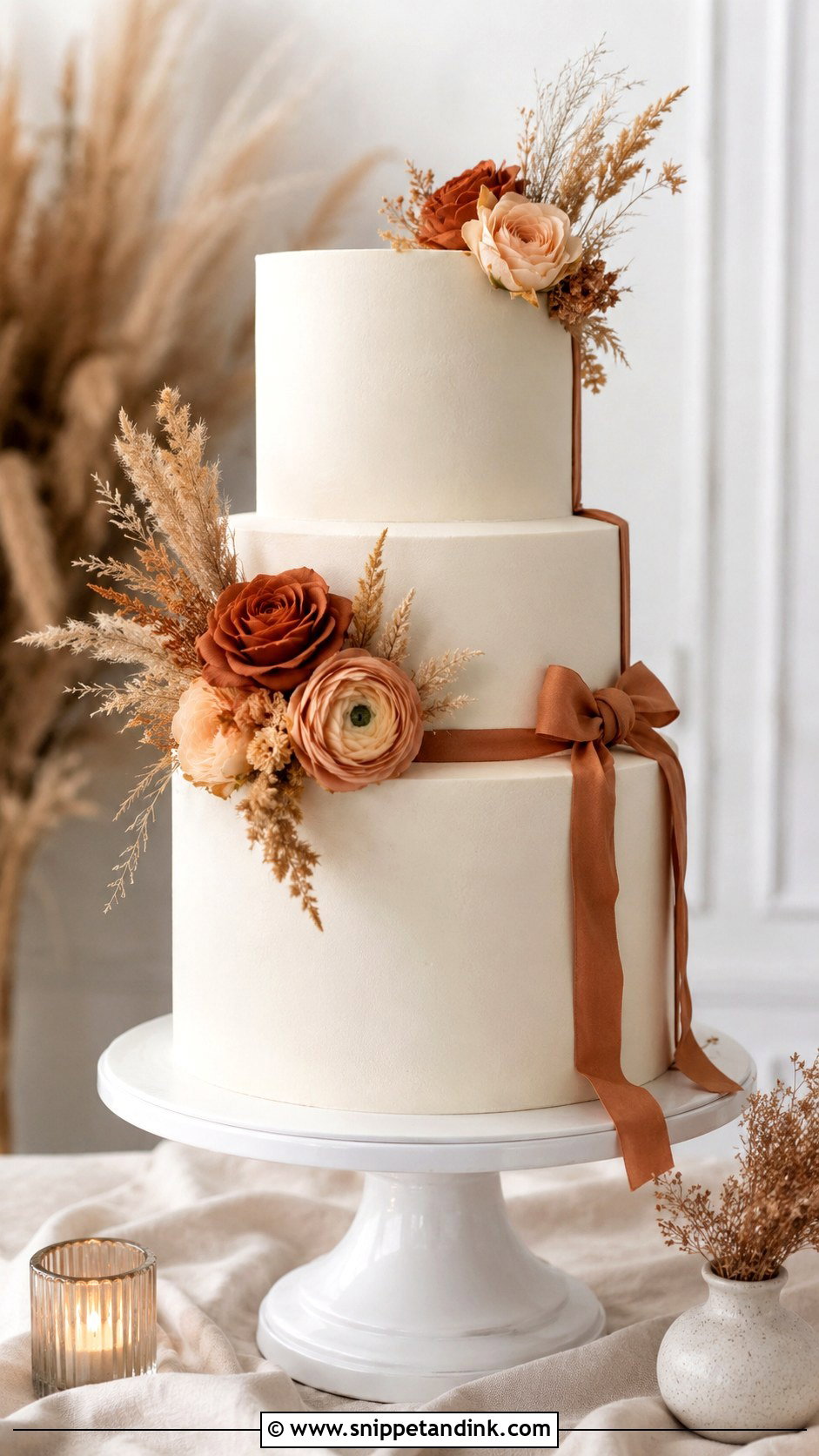
If you love the warm palette but still want a traditional white cake, this is the version. Terracotta arrives through florals, painted strokes, ribbon, piping or a single accent tier, and the white keeps every detail easy to see in photos. Smooth white buttercream feels modern; textured white feels rustic. One practical note: ribbon placed directly on buttercream absorbs the butter and goes blotchy. I back it with a strip of acetate or use a fondant ribbon in the same colour.
9. Terracotta Wedding Cake With Ivory Fondant
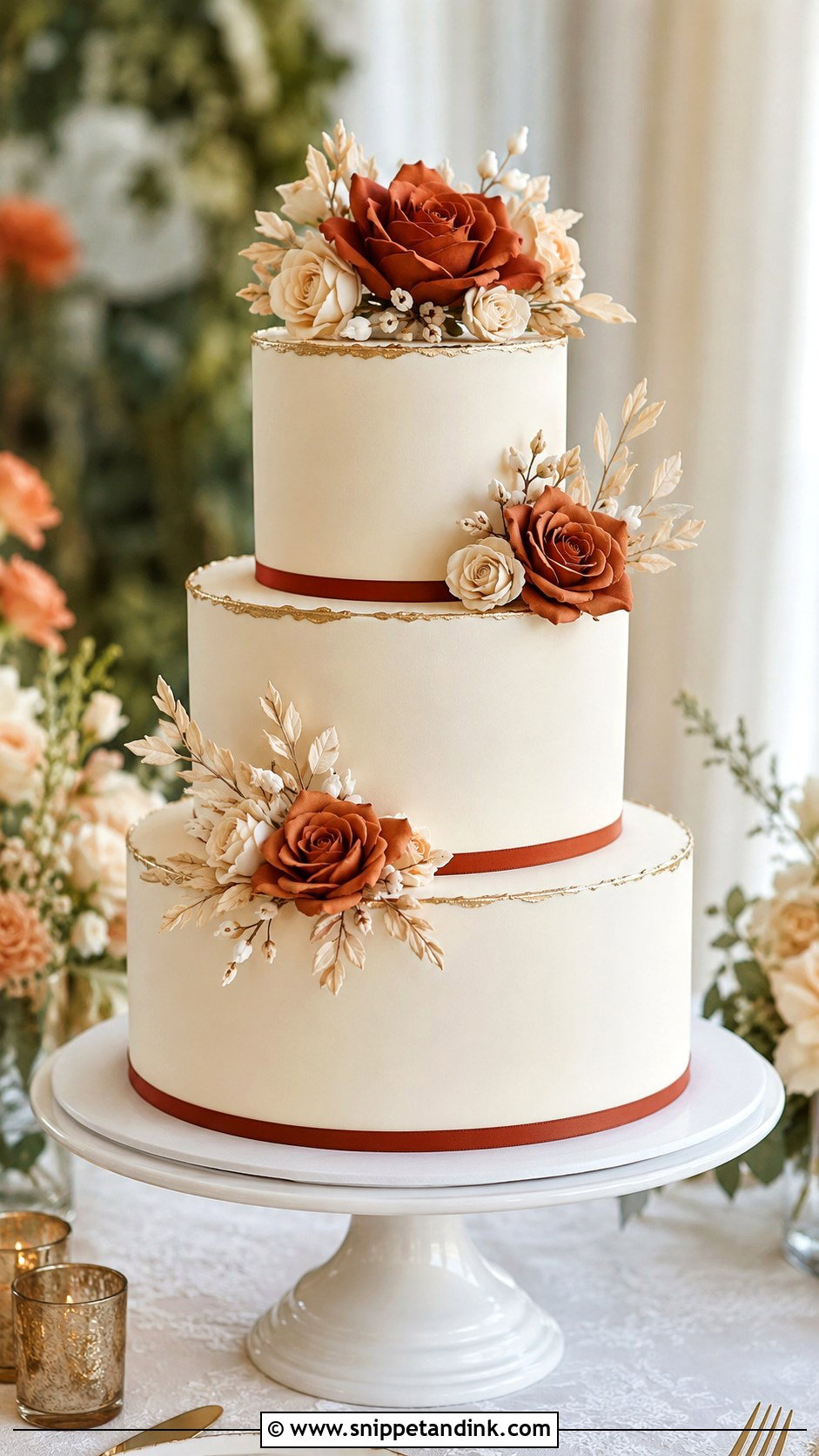
Ivory fondant gives terracotta details a smooth, formal background, and ivory blends with candlelight far better than bright white. Sugar flowers, painted clay panels, wafer-paper petals or fondant appliques can all sit on it, with a thin rust ribbon or a fine gold edge for depth. It works on two tiers or a tall statement cake. I’d steer you away from fondant if your reception is outdoors in full sun on a hot day; it can sweat and soften, and coloured fondant fades in direct light.
10. Terracotta Wedding Cake With Textured Buttercream
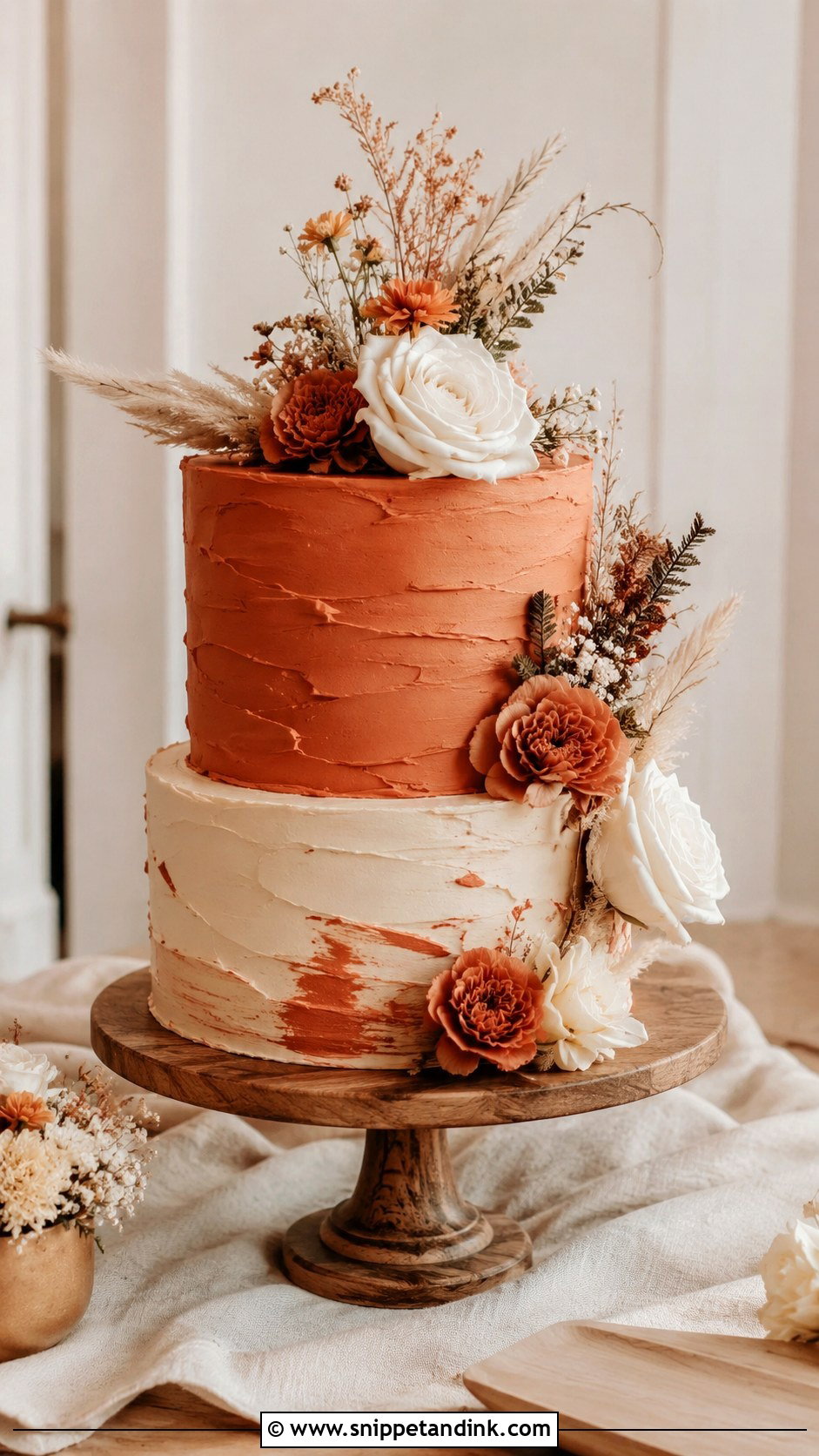
Palette-knife strokes, soft ridges, stucco texture or gentle horizontal lines give the frosting its own movement. A clay-coloured textured tier between ivory ones looks especially good with dried florals. Keep the decoration light, a few rust blooms, cream roses or small dried grasses, and let the texture carry it. Side light from a window catches every ridge, which is why I always ask where the cake table sits before I decide how deep to carve the texture.
11. Terracotta Wedding Cake With Watercolor
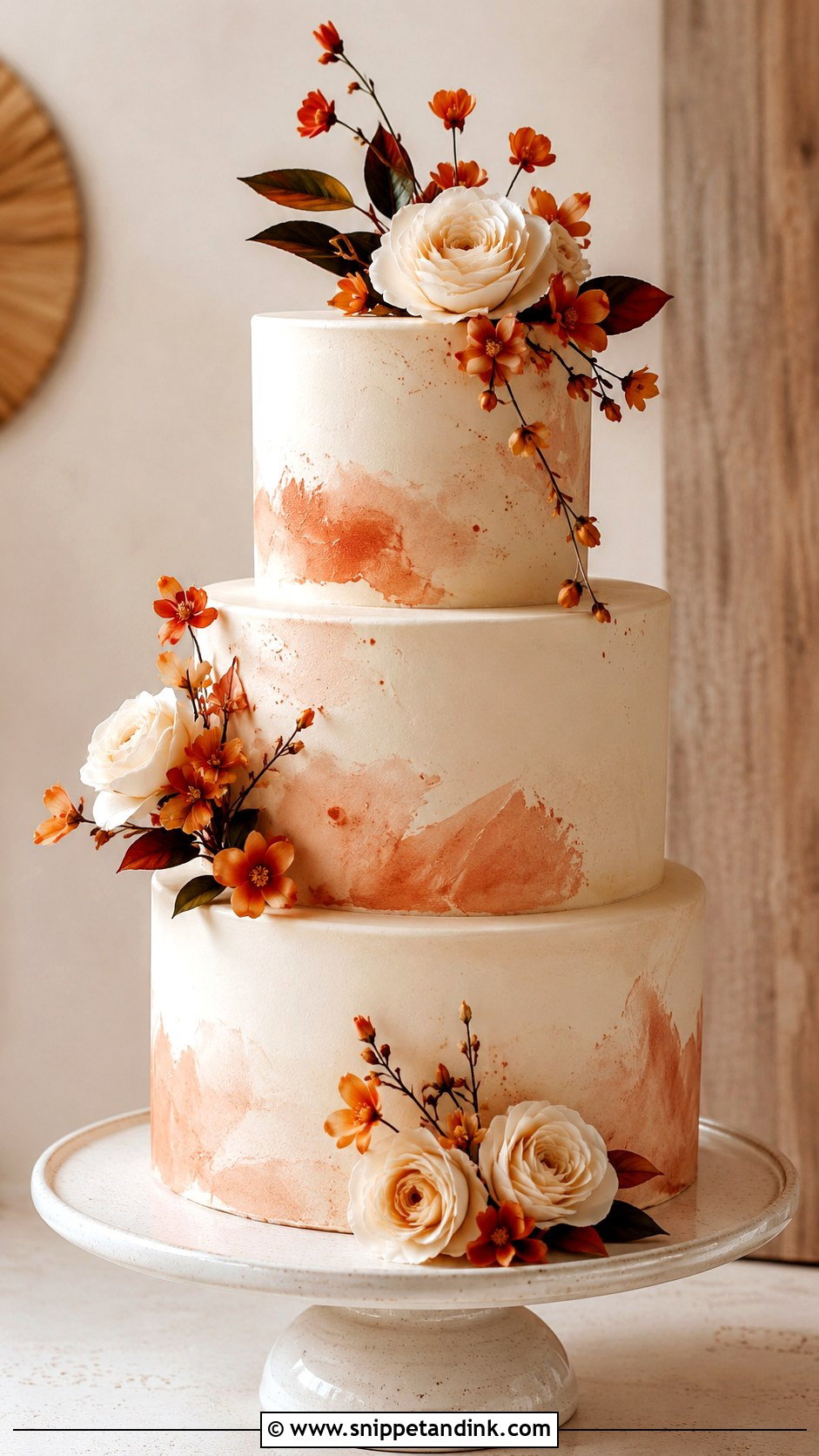
Paint does the work here. A terracotta watercolor wedding cake gets its colour from soft washes of clay, peach, rust and cream painted over fondant or chilled buttercream. Painting on fondant gives crisper edges; on buttercream the colours bleed slightly, which some couples prefer. It works on a single statement tier or across three. Keep florals minimal, maybe a few ivory roses, so the painting shows. Ask for muted washes if you want it romantic rather than bold.
12. Terracotta Wedding Cake With Ombre
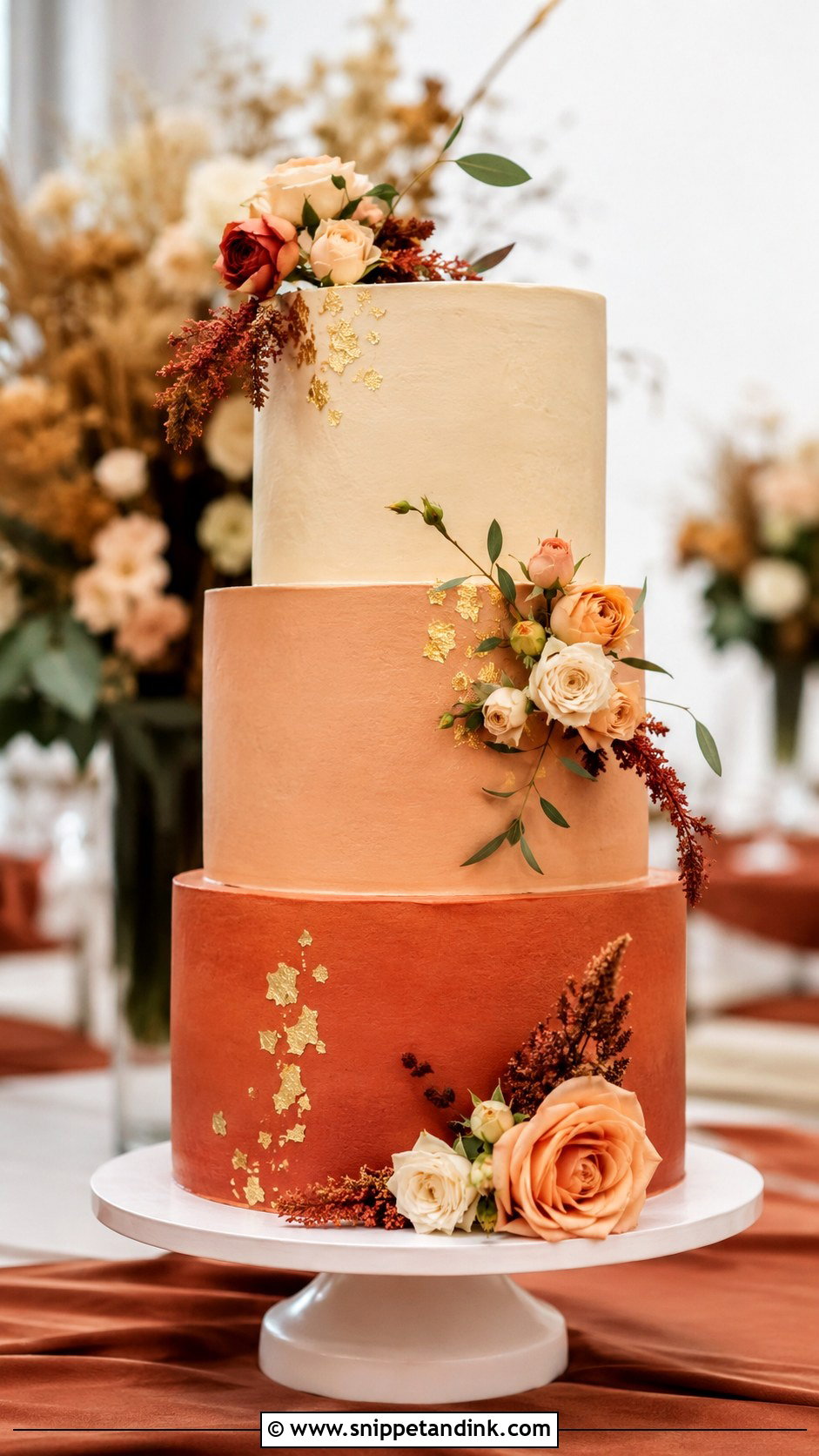
Ombre moves from cream or peach at the top into deep clay, rust or burnt orange at the base, so the cake carries the colour story by itself. Buttercream blends from tier to tier more smoothly than fondant. Keep the decoration to a few flowers, or add some gold leaf if you want shine. I mix each shade from one master batch so the steps stay in the same colour family; mixing every tier separately is how ombre ends up looking like five unrelated colours.
13. Terracotta Wedding Cake With Copper Accents
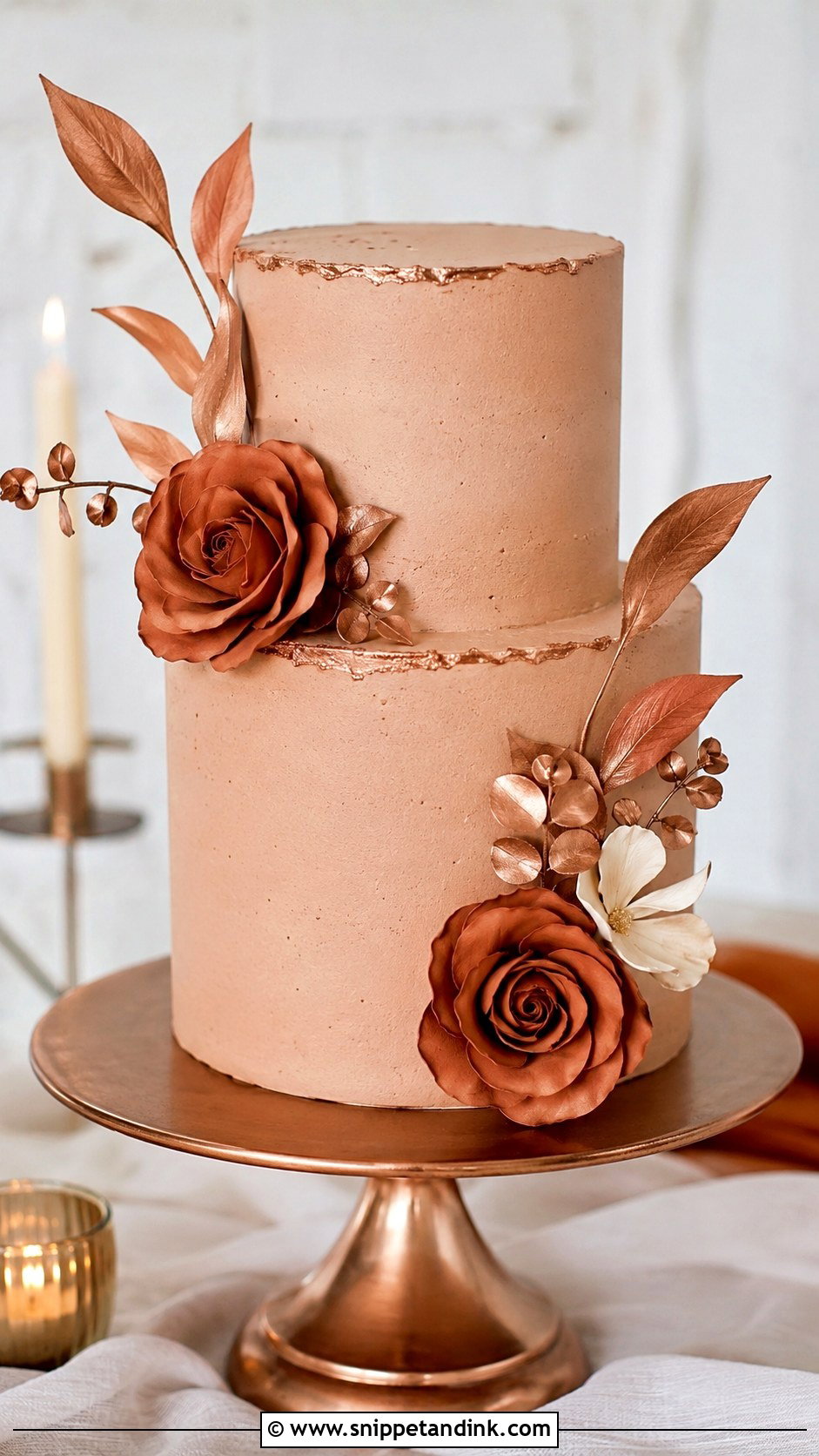
Copper sits closer to terracotta than bright gold or silver does, so it blends rather than competes. Copper-painted edges, edible metallic strokes, copper-toned sugar leaves or a copper stand pair well with ivory buttercream, mocha shading and rust florals. It suits industrial venues and candlelit receptions. I keep the metallic lines thin; a broad copper band looks heavy and shows every brush mark under spotlights.
14. Terracotta Wedding Cake With Blush Flowers
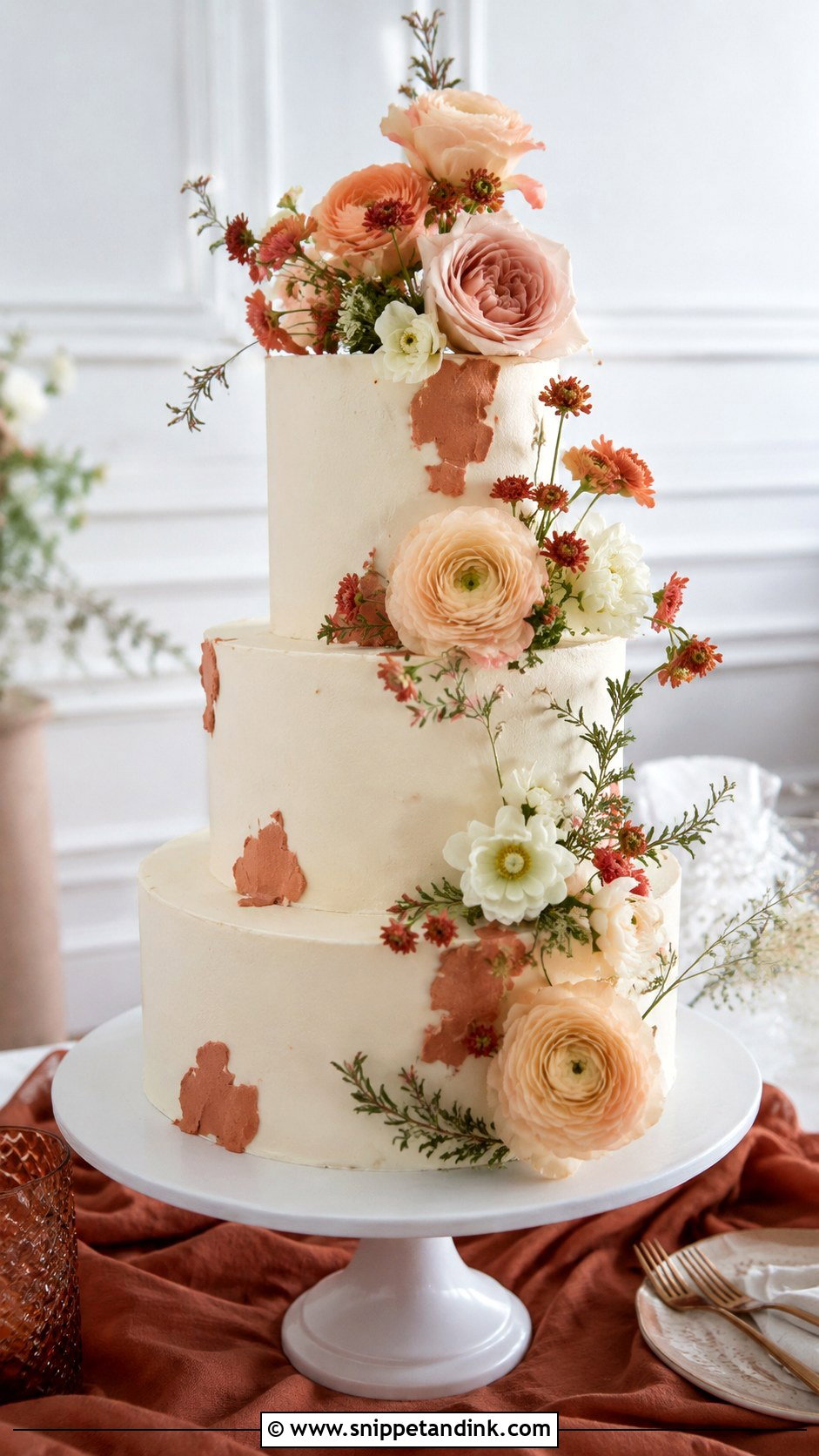
Blush softens terracotta, which is useful if the full earthy palette feels too dark for you. Blush roses, peach ranunculus, cream lisianthus and small rust accents on ivory or pale terracotta buttercream keep it gentle. Smooth reads classic; semi-naked reads rustic. Blush is also the colour most likely to look grey or washed out in photos, so I always test a sample swatch of the frosting next to the real flowers before the wedding week.
15. Terracotta Wedding Cake With Cream Roses
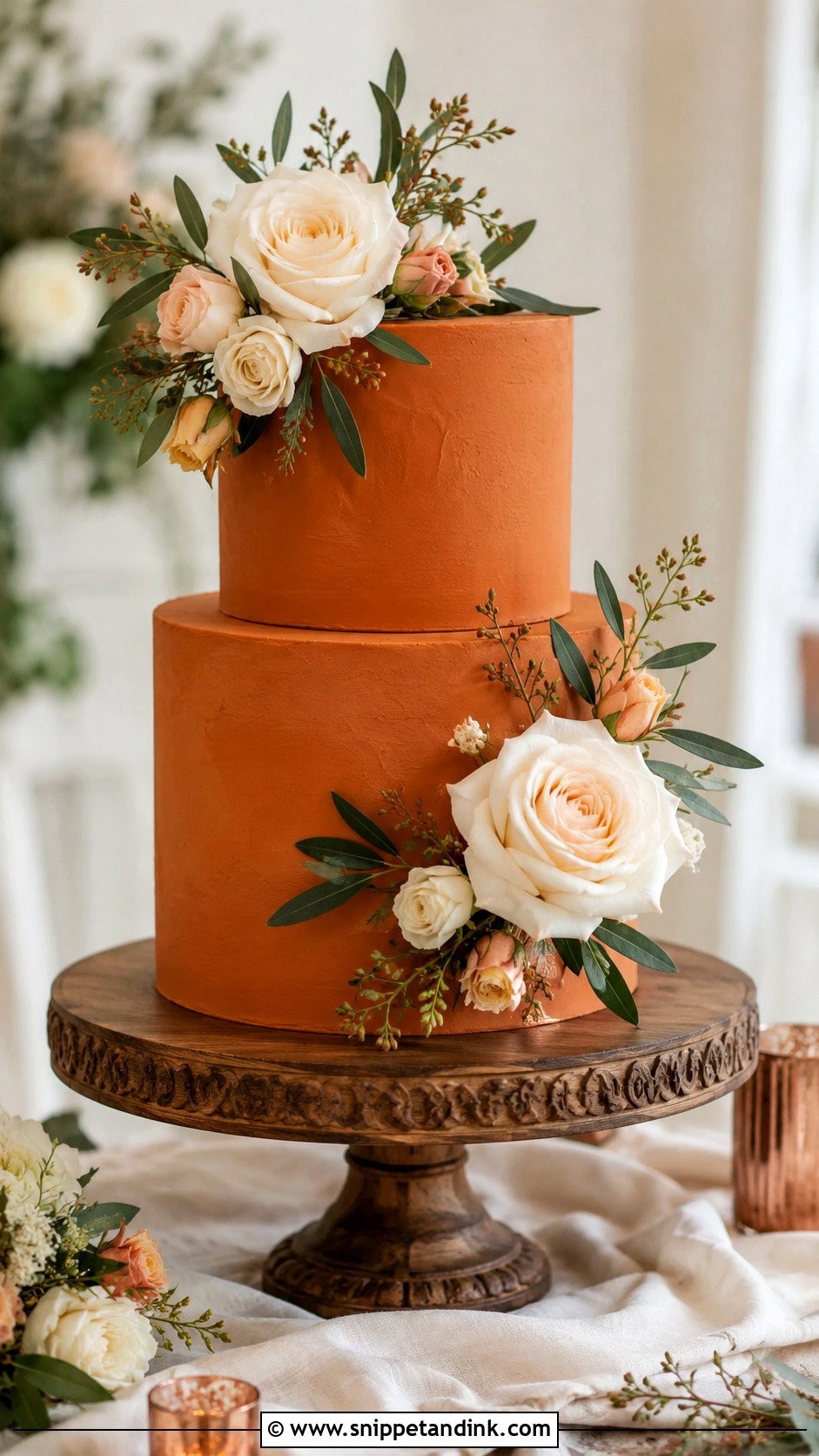
Cream roses against clay buttercream, rust strokes or terracotta fondant keep the cake feeling bridal while the colours stay warm. Clusters at the tier edges, a ring around the base or a cascade down one side all work, with small peach buds, olive leaves or copper touches for depth. White ceramic suits a formal room and carved wood suits a barn. Fresh cream roses bruise brown at the edges in a warm room, so I hold them in water until the last moment.
16. Terracotta Wedding Cake With Olive Leaves
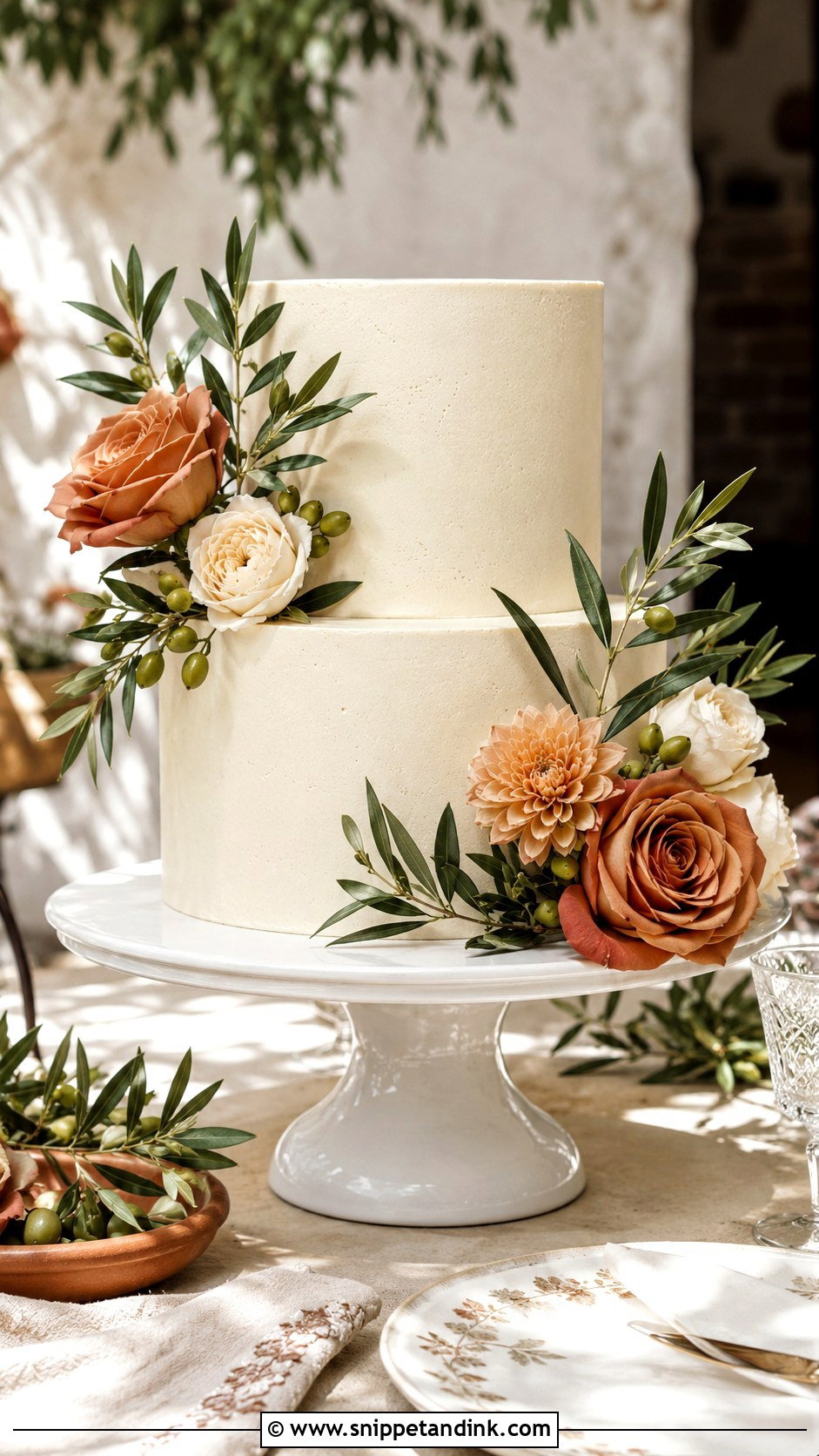
Olive leaves bring a soft grey-green that never gets too bright next to clay, which is why I like them for Mediterranean, vineyard and garden weddings. Start with ivory or sand buttercream, add olive branches, terracotta flowers and a few cream blooms. Fresh olive is fairly sturdy, but I still wrap the cut ends. Sugar olive leaves are an option if you’d rather nothing from the garden sits on the cake. One round tier with a single cluster can look as good as a big tiered cake.
17. Terracotta Wedding Cake With Eucalyptus
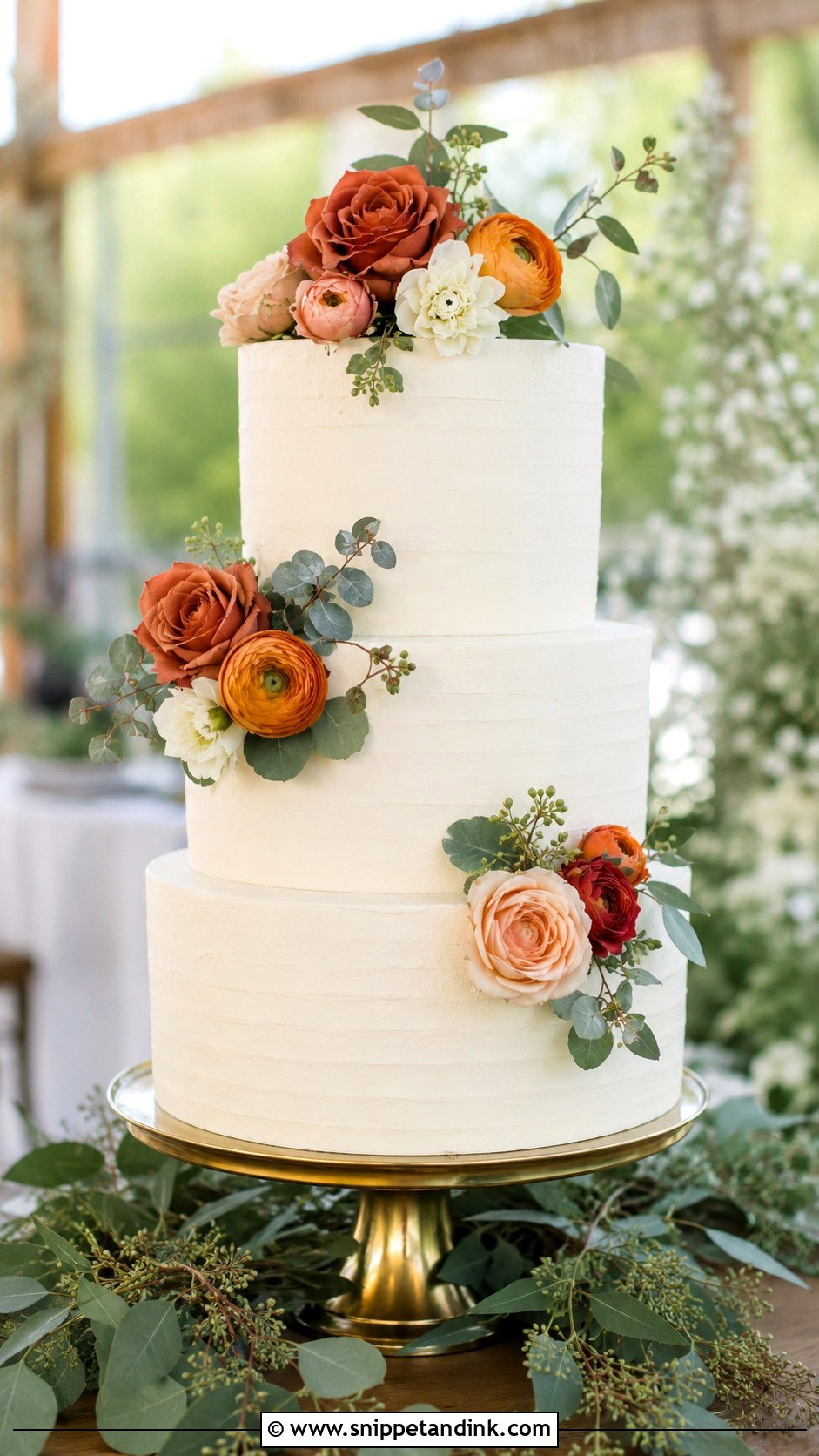
Eucalyptus wrapped loosely around smooth white or cream buttercream gives a fresh, modern garden feel, with terracotta roses, burnt orange ranunculus or dried blooms to tie it to the palette. It works best when your reception already has green garlands. Eucalyptus is not safe to eat, though, and its oils can seep into frosting, so every sprig sits on a barrier or in a pick and comes off before cutting. Keep the placement sparse.
18. Terracotta Wedding Cake With Sugar Flowers
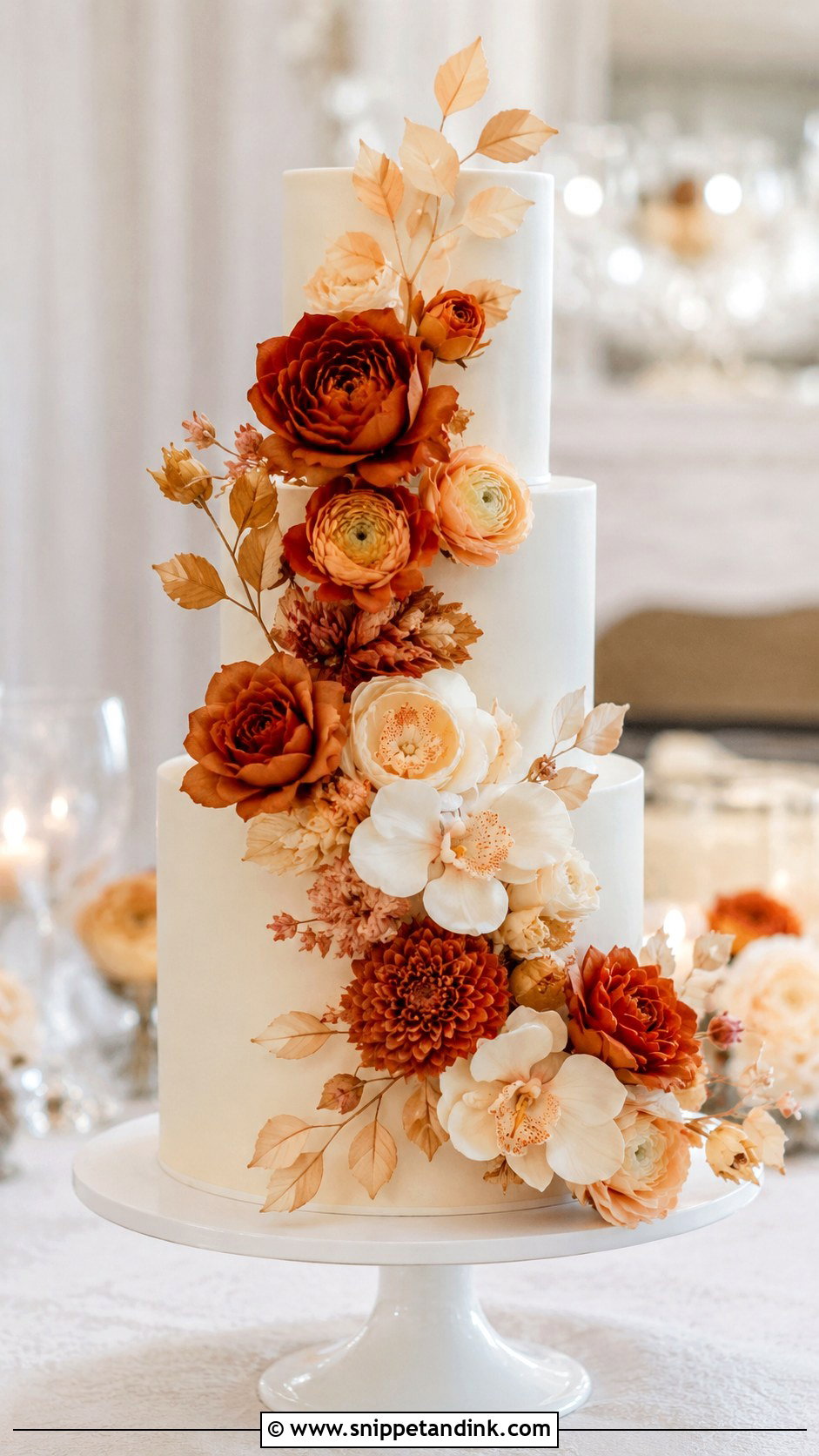
Sugar flowers let you have any bloom in any shade, in season or not, and they’re the safest choice for anyone worried about what’s touching the cake. Roses, dahlias, orchids, poppies and ranunculus can be made in terracotta, rust, cream, blush and peach, then arranged as a cascade or small clusters. They hold their shape through a long reception, though they don’t love humidity. Good sugar work is slow, so they need to be ordered well ahead, and they cost accordingly.
19. Terracotta Wedding Cake With Wafer Paper
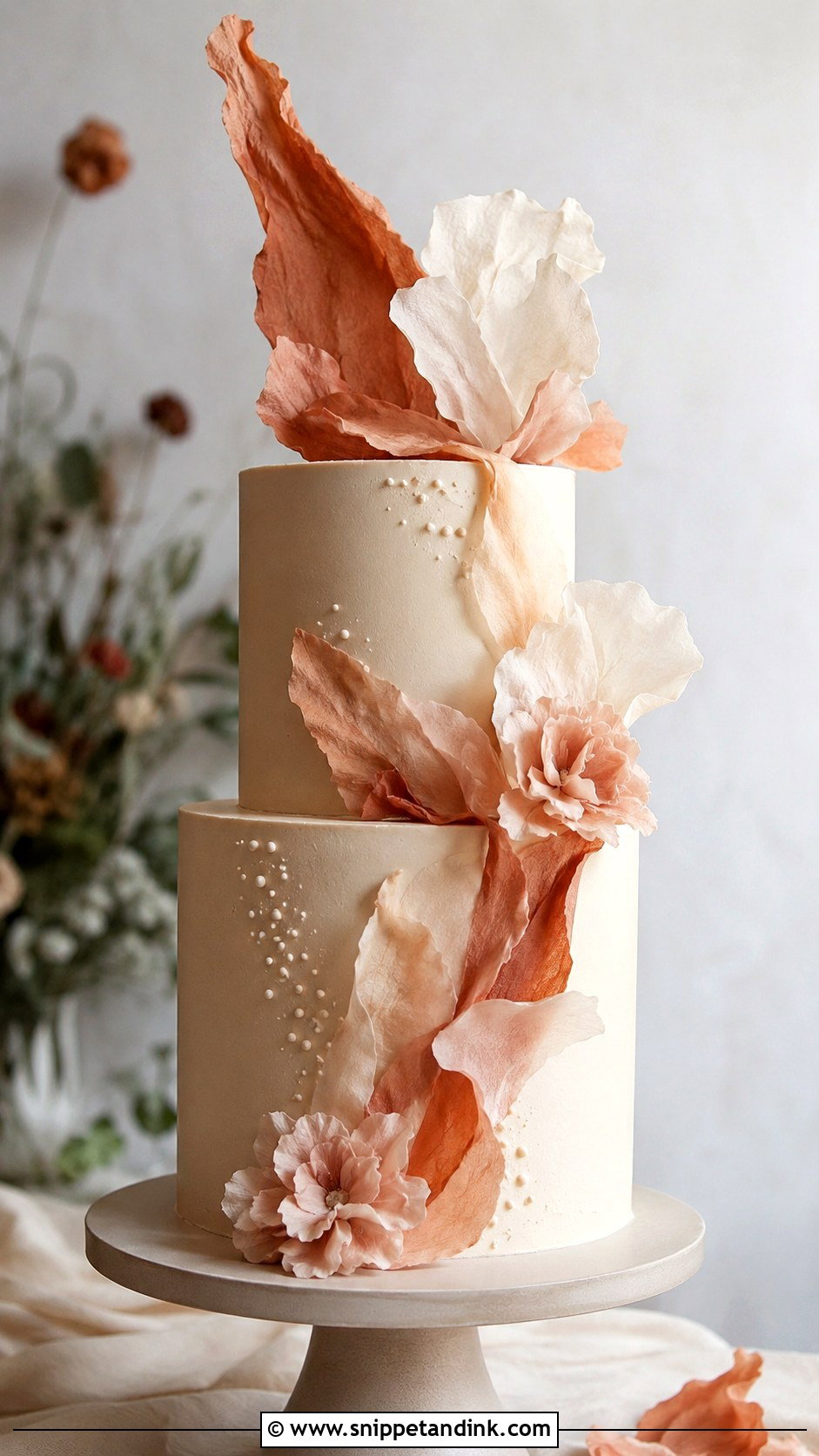
Wafer paper can be shaped into petals, sails, ruffles or abstract flowers, and in terracotta it looks like soft clay petals, with ivory or blush pieces for contrast. One large arrangement on the side of a tall cake makes the point. It suits clean buttercream or fondant with little else on it. Wafer paper’s weakness is moisture: it wilts in humidity and softens if it rests on damp buttercream, so for a summer outdoor wedding I’d rather make the petals in sugar.

20. Terracotta Wedding Cake With Arch Details
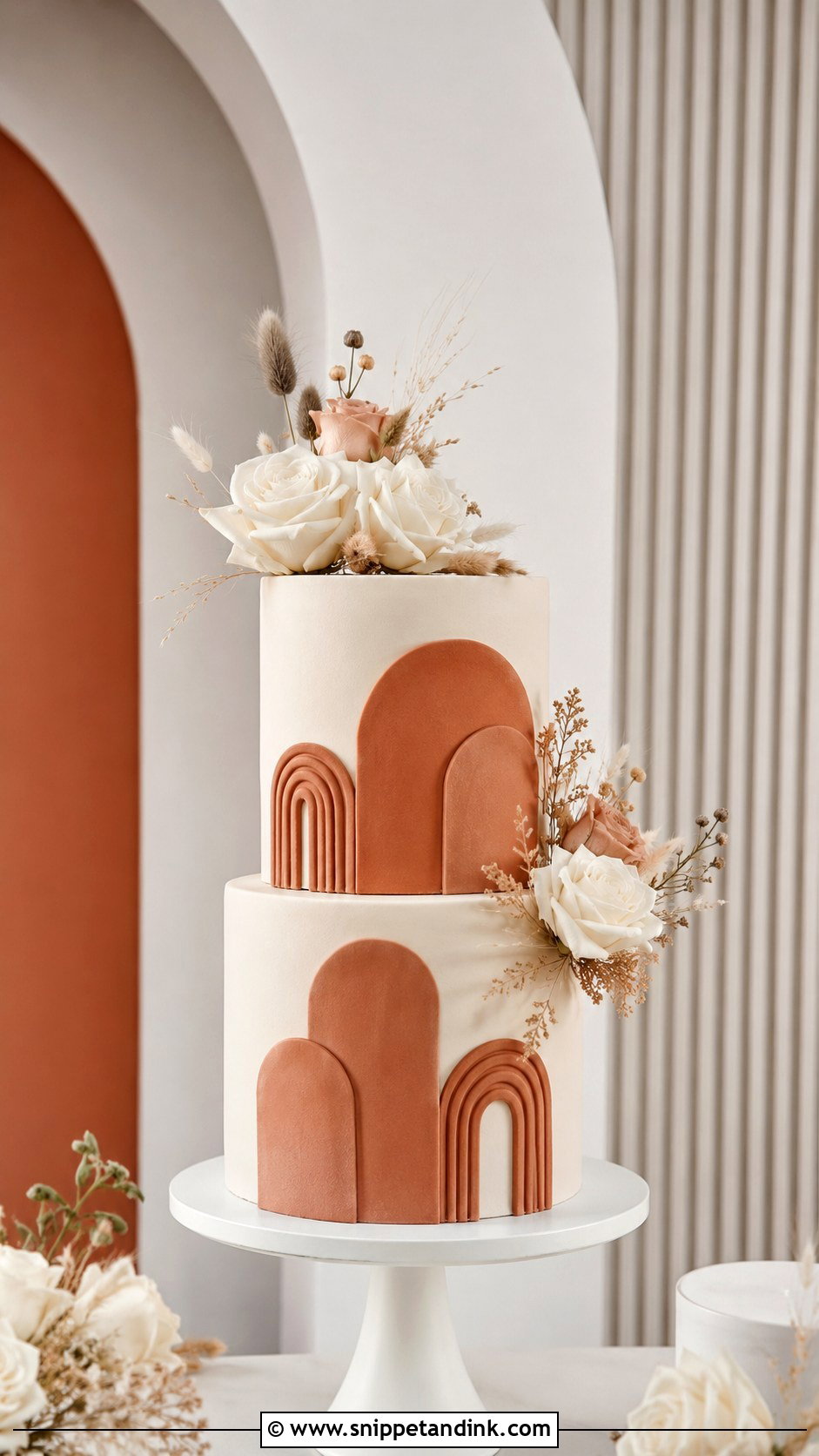
Fondant arches, painted arch shapes, piped outlines or raised panels in clay and cream give the cake an architectural edge, and they echo arched ceremony backdrops nicely. Two tiers, an ivory base with terracotta arch panels, is simple and sharp. Arches need crisp, straight tier edges, so this is a fondant or very firm ganache job rather than soft buttercream. Keep flowers or grasses to the base so they don’t cover the design.
21. Terracotta Wedding Cake With Boho Style
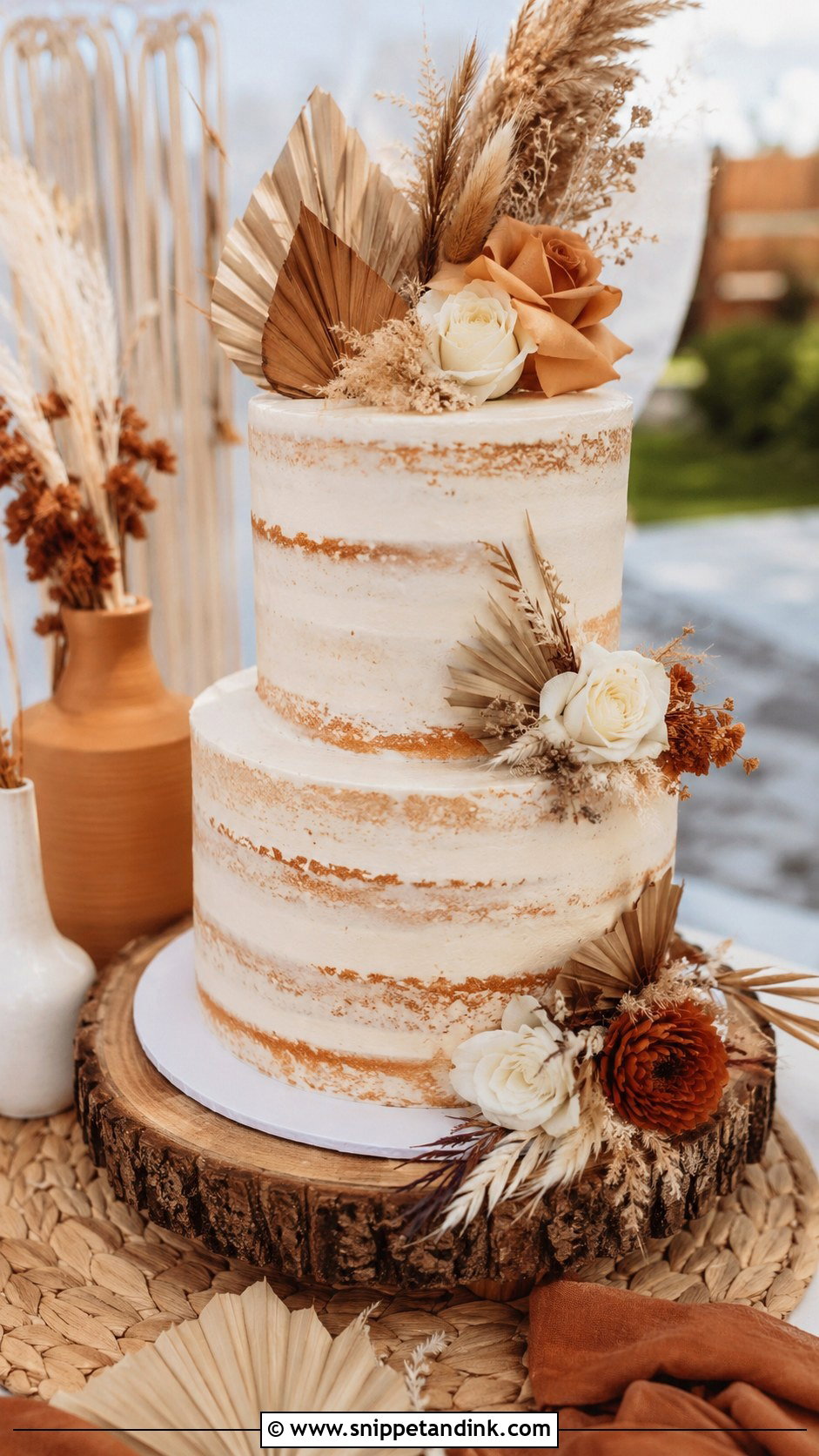
Semi-naked buttercream, dried palms, pampas, rust flowers, cream roses and a wood or ceramic stand: that’s the boho cake. It belongs outdoors, in the desert, in barns and in backyards. The ones that work feel layered, not messy, and that comes from limiting yourself to two or three textures. Terracotta can live in the frosting, the flowers or both, with a little sage, beige or blush to soften it. Semi-naked cakes dry out faster than fully frosted ones, so I don’t let them sit uncovered for hours before the reception.
22. Terracotta Wedding Cake With Modern Style
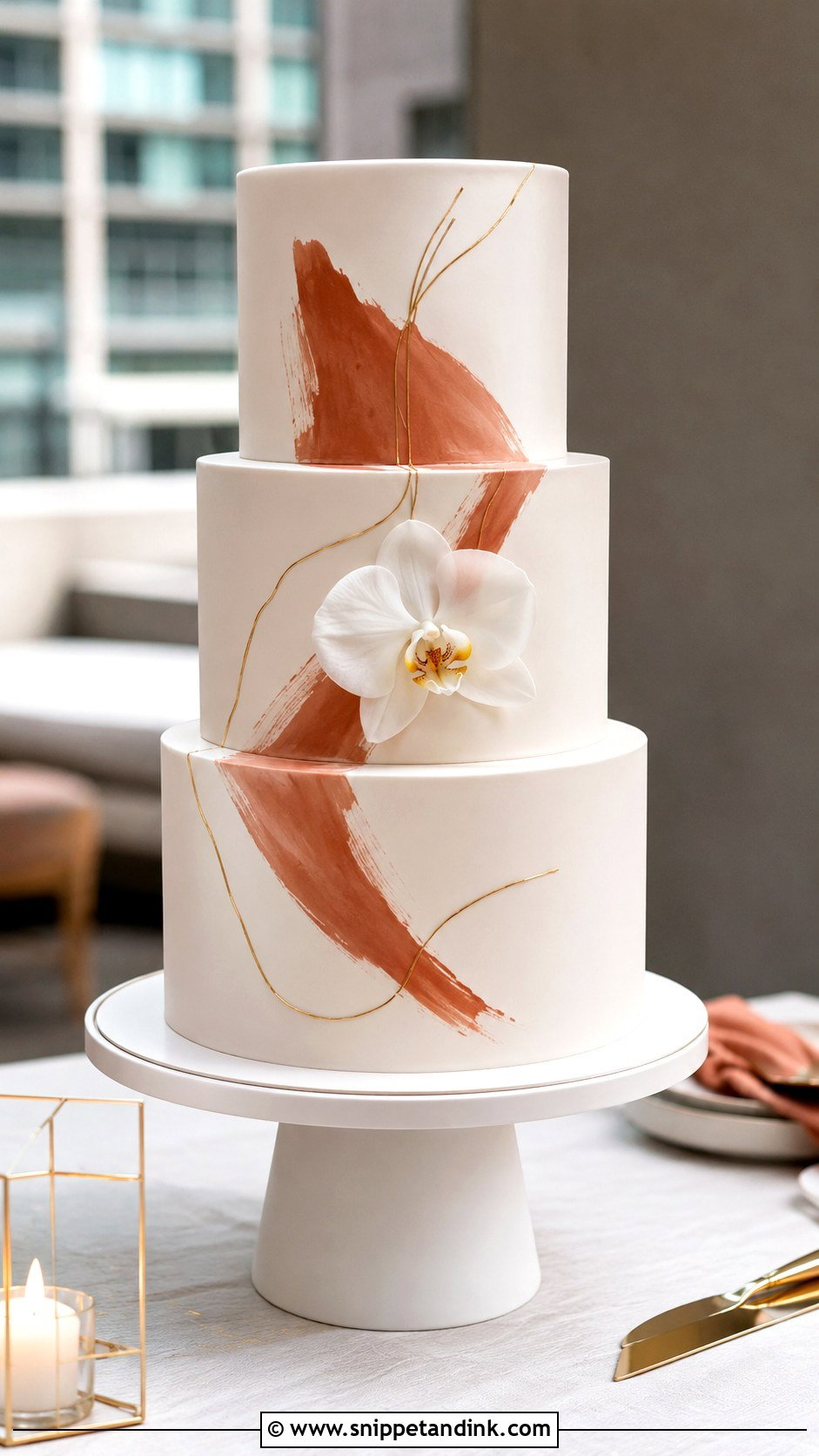
Modern means clean shape, strong colour and one deliberate idea: a terracotta tier, abstract brush strokes, wafer paper or painted lines on smooth fondant or sharp buttercream edges. It suits city venues, galleries and minimal receptions. One orchid, a small sugar cluster or a thin gold accent is enough decoration. I lean toward matte finishes with terracotta; a high sheen makes the colour look plasticky rather than earthy.
23. Terracotta Wedding Cake With Rustic Style
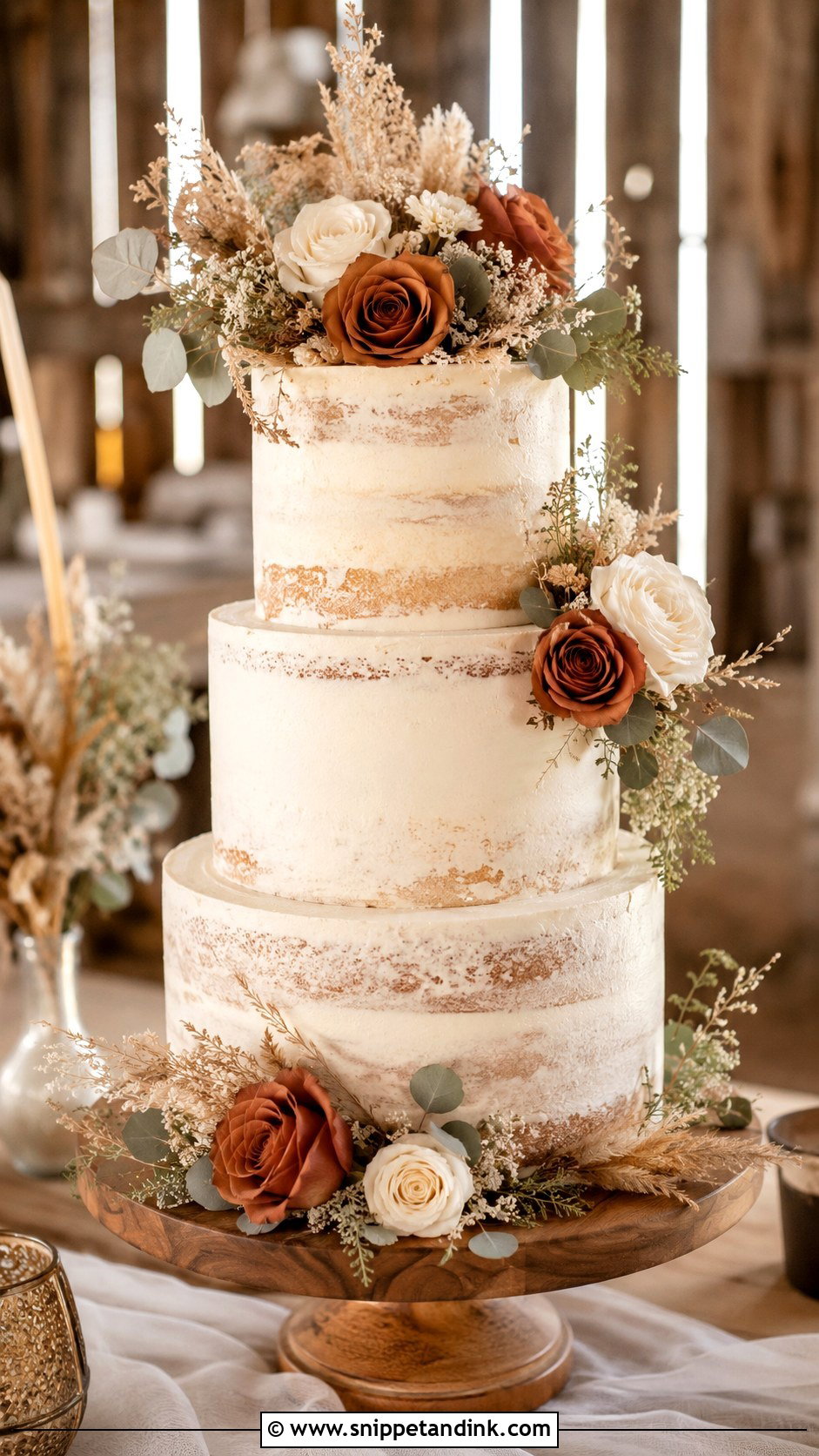
A semi-naked cake with the layers showing, decorated with rust flowers, cream roses, dried grasses and a few leaves, is the rustic classic. Textured buttercream gives a similar handmade feel with more protection for the sponge. A wood slice, carved stand or simple ceramic pedestal suits barns, farms and gardens. Keep the colours earthy rather than bright orange. Wood slices need a cake board and a food-safe barrier on top; raw wood isn’t a surface I’d put frosting on.
24. Terracotta Wedding Cake With Minimalist Style
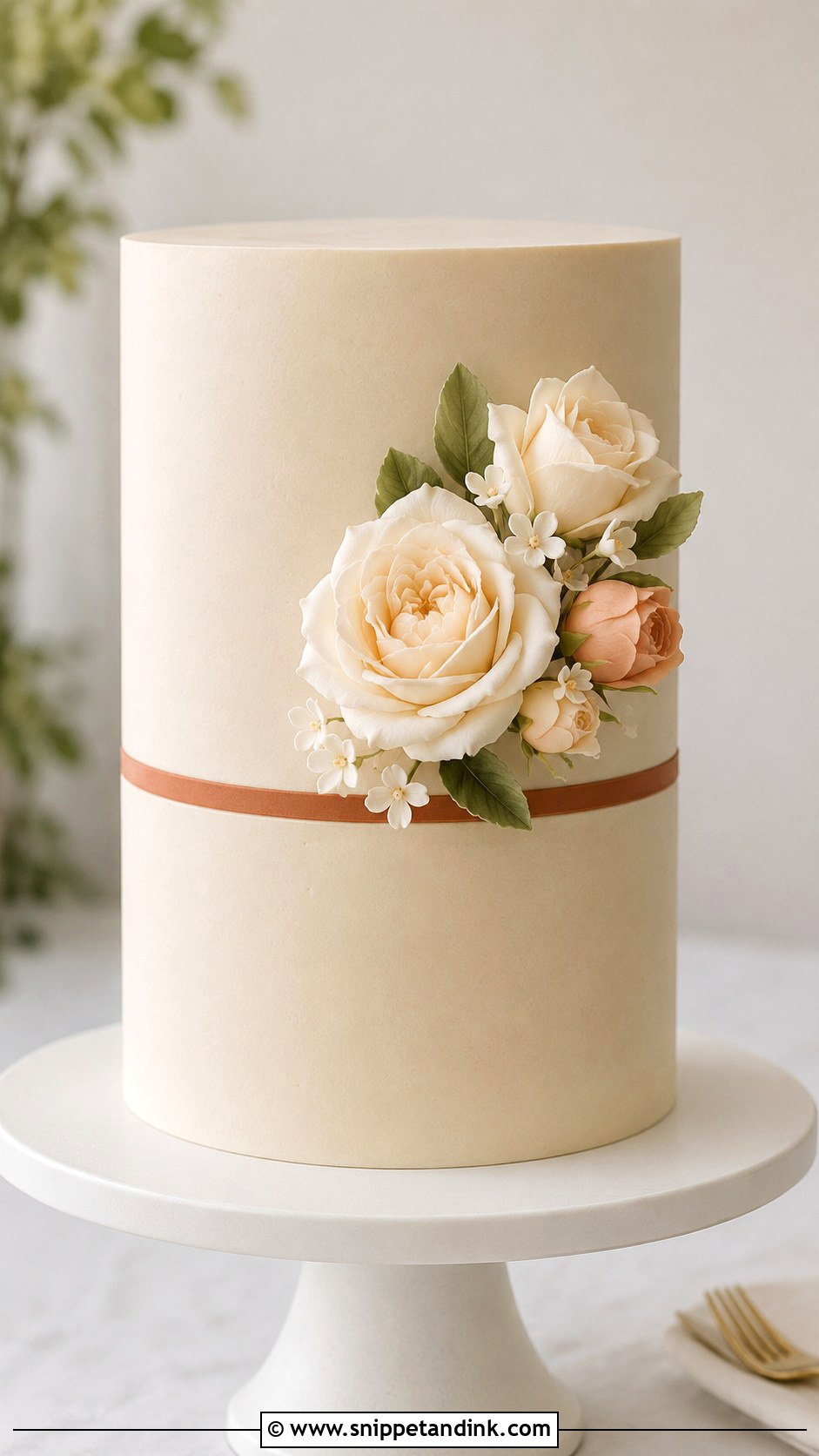
One smooth ivory or pale clay cake and one detail: a thin terracotta ribbon, a single floral cluster, a soft painted edge or a small sugar flower. That restraint suits clean, neutral decor and smaller weddings where a big decorated cake would feel like too much. With so little going on, every flaw shows. Smooth frosting, sharp edges and careful spacing are what make it look intentional, so it is harder to make than it looks.
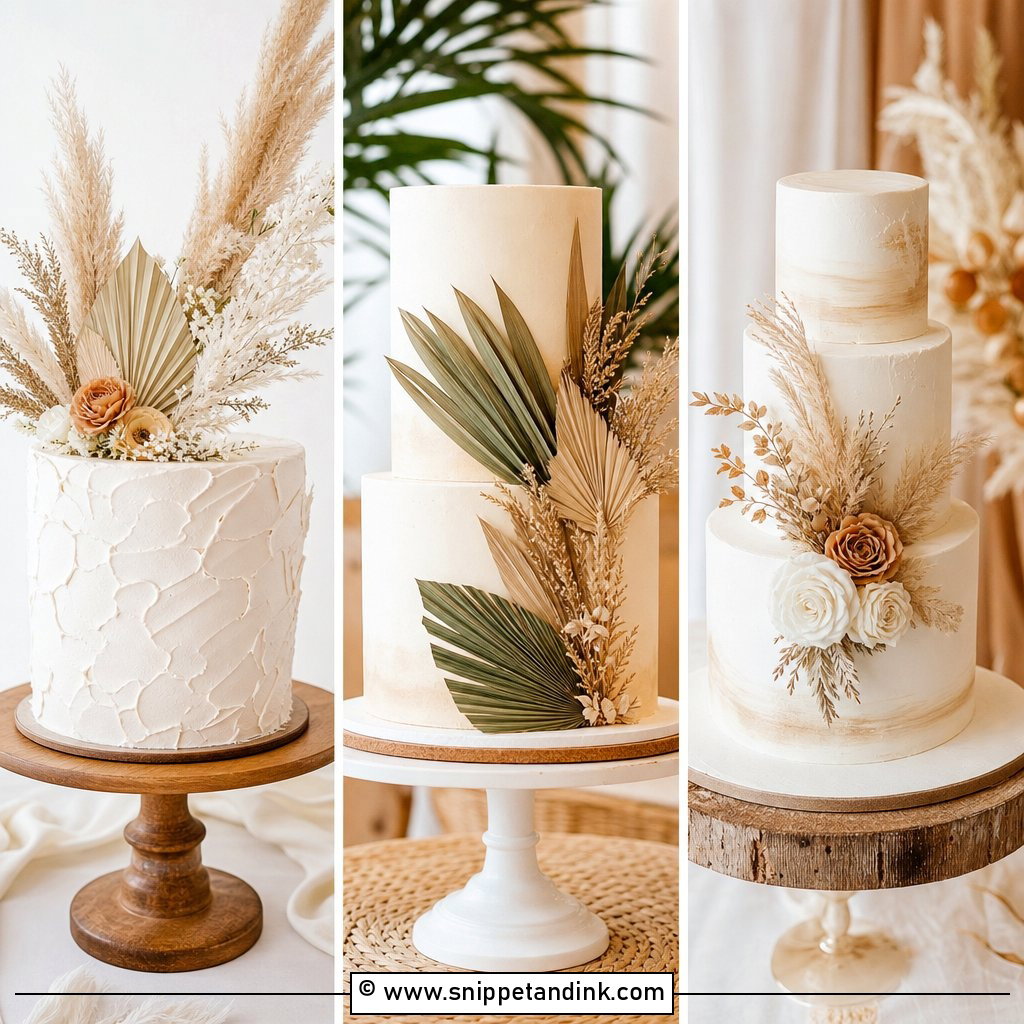
25. Terracotta Wedding Cake With Vintage Piping
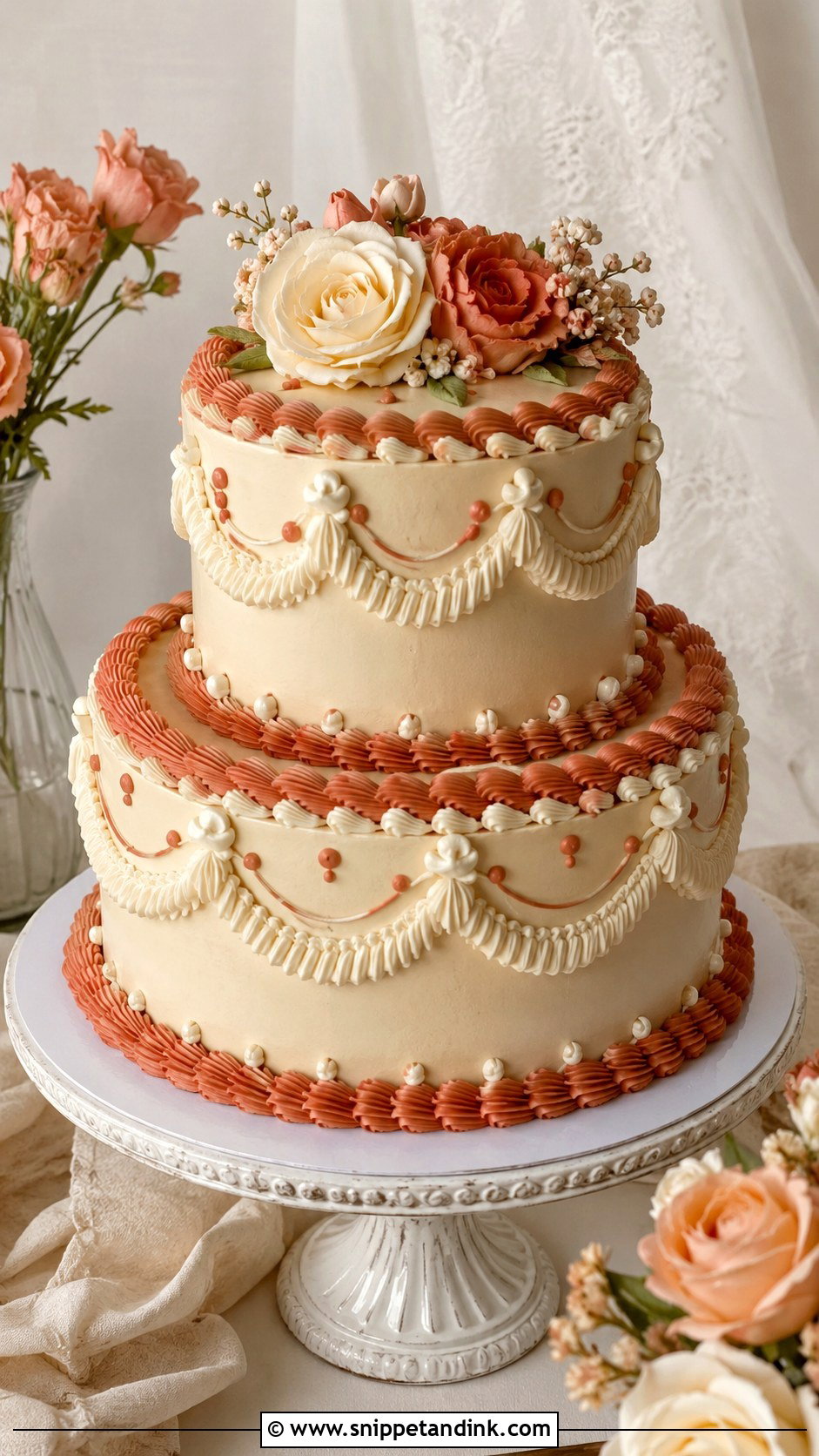
Shell borders, pearls, swags and small ruffles in ivory, clay, peach or rust give a vintage feel without many flowers, and the terracotta stops it from looking old-fashioned. A heart-shaped cake suits a small reception; a round tiered one feels traditional. I pipe this style in a stiffer buttercream so the shells hold their ridges, and I’d warn against it for a hot outdoor afternoon, where fine piping is the first thing to slump.
26. Terracotta Wedding Cake With Pearl Details
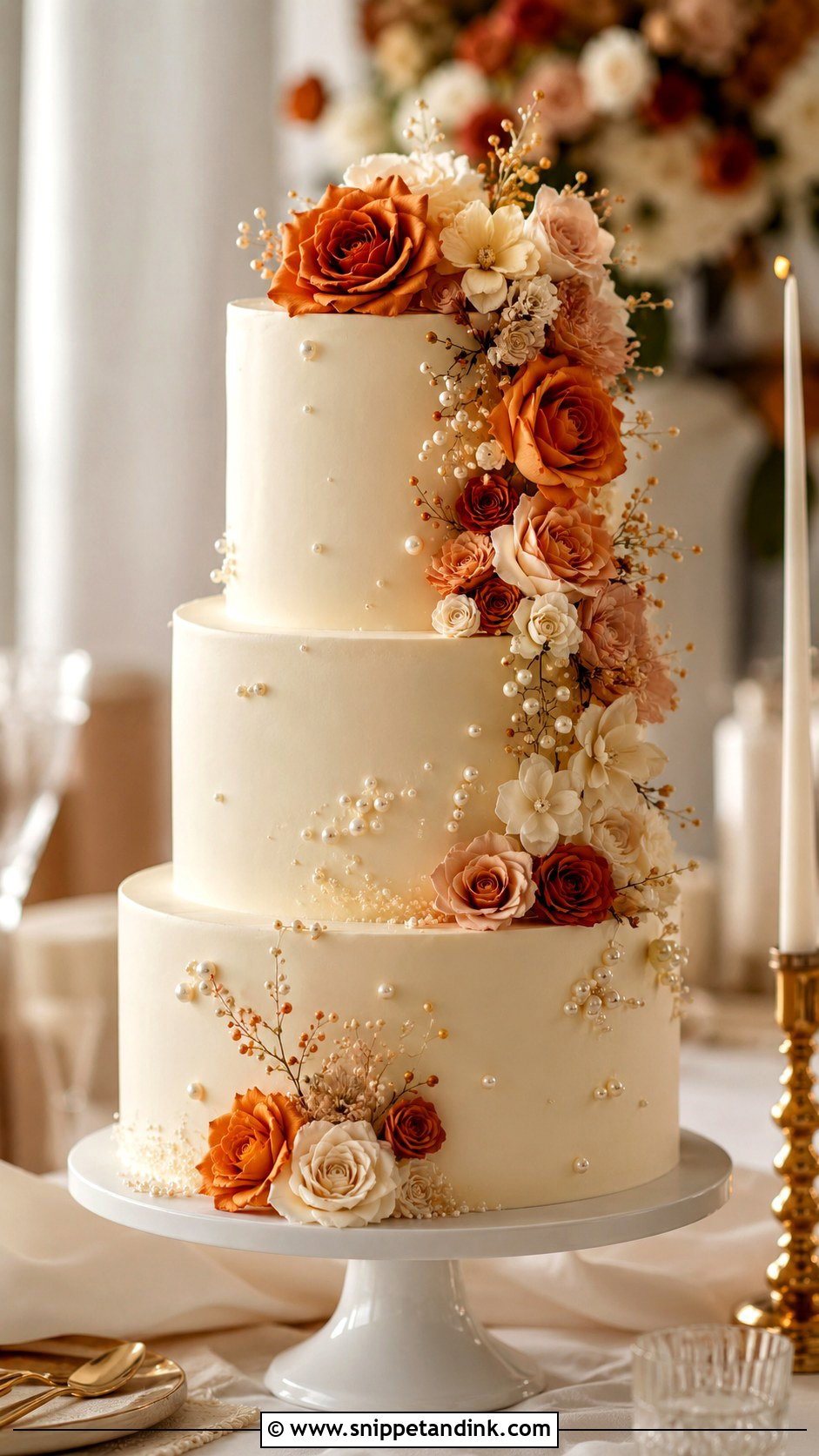
Edible pearls show up well against ivory buttercream, especially with terracotta flowers nearby. Scatter a few, line them along tier borders or combine them with vintage piping. Covering every inch dates the look quickly; a handful placed with intent is more current. Hard sugar pearls are tough on teeth, so I use soft sugar or fondant pearls on anything at bite level and tell guests if any hard ones are purely decorative.
27. Terracotta Wedding Cake With Black Accents
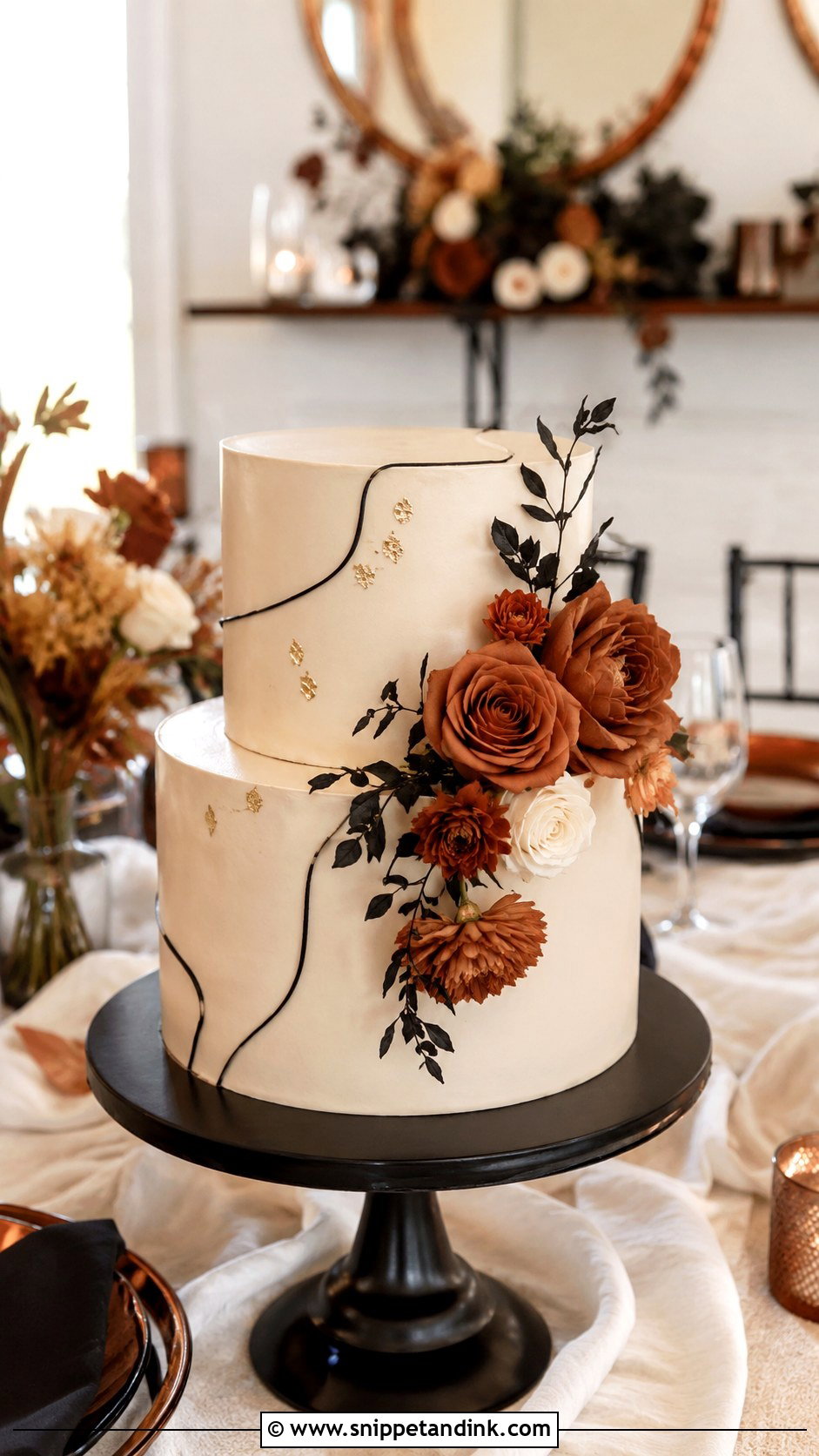
Black accents give terracotta a sharp, modern edge for loft venues and evening receptions. Thin fondant lines, a black stand, small ribbon details or a few painted strokes are plenty, with ivory buttercream and terracotta flowers keeping it bridal. True black buttercream takes a lot of colouring, which can taste bitter and stain mouths. I start from a chocolate base to get there with less dye, or keep the black on non-eaten elements like the stand.
28. Terracotta Wedding Cake With Navy Blue
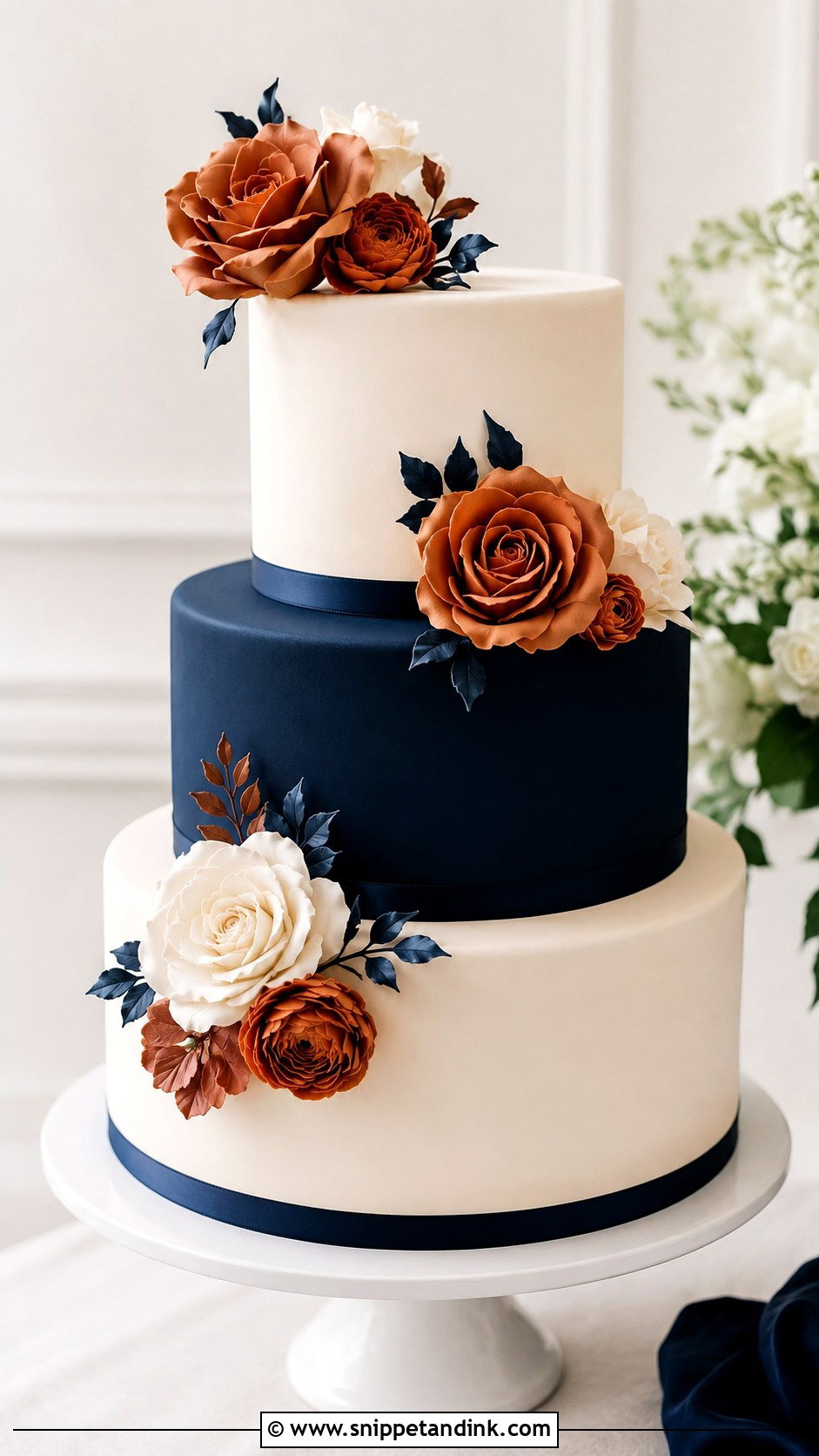
Navy and terracotta balance each other, one cool and one warm. Navy can appear as a painted tier, a ribbon, a floral accent or the stand, while terracotta comes through the flowers or frosting, and an ivory tier between them keeps things from going dark. It suits formal autumn weddings and coastal receptions. Like black, deep navy needs a lot of colour, so I keep navy to thin details or fondant rather than whole tiers of buttercream.
29. Terracotta Wedding Cake With Dusty Blue
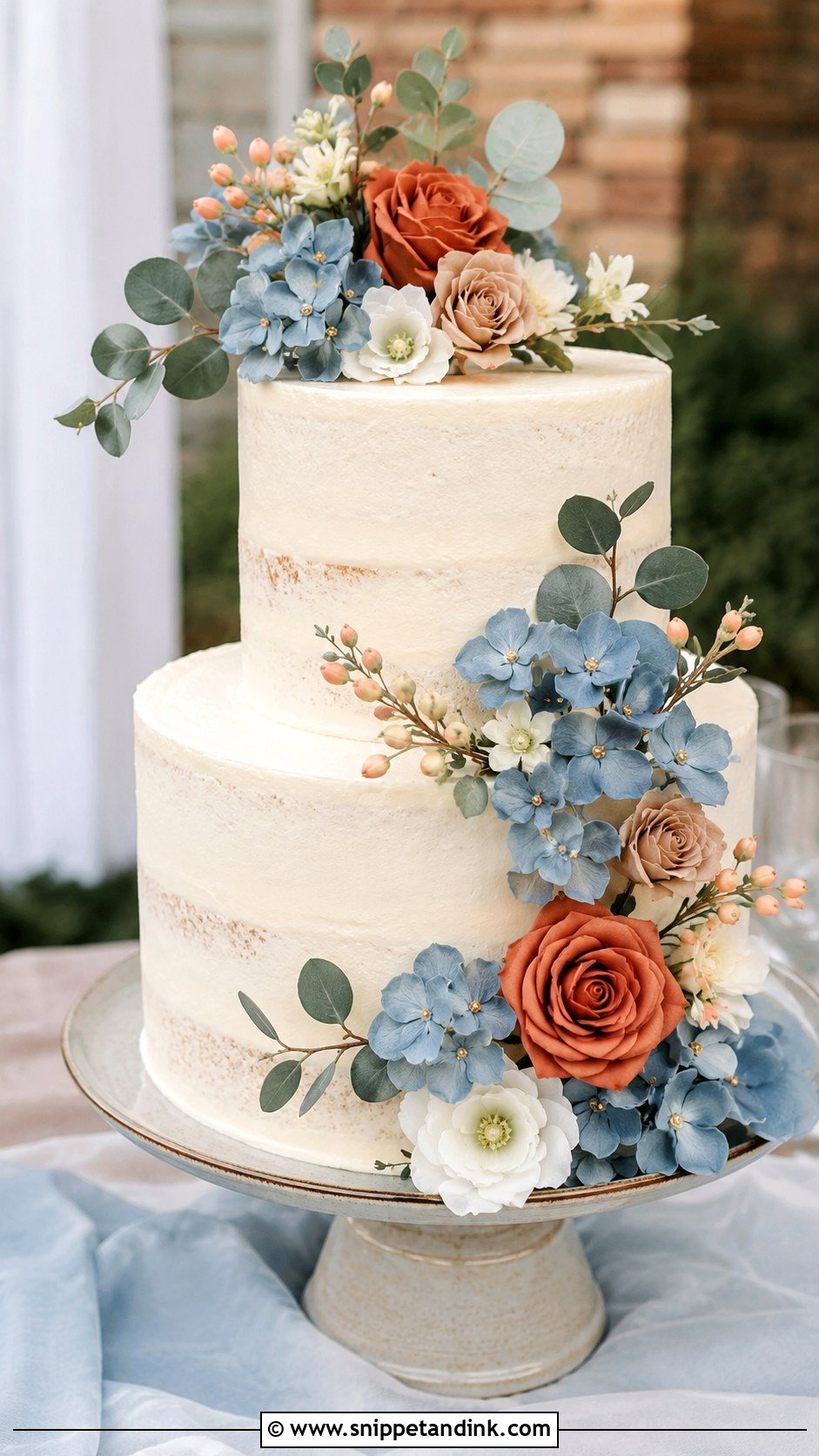
Dusty blue softens terracotta and keeps an earthy palette light. Try ivory buttercream with terracotta florals and dusty blue sugar flowers, or a pale blue tier with clay accents, bridged by cream roses, peach blooms or eucalyptus. Keep both shades muted so they sit together. Blue buttercream made with yellow butter can turn greenish, so I whiten the base first. It’s a fresh option if you’ve seen too many versions of the sage and terracotta pairing.
30. Terracotta Wedding Cake With Mauve Flowers
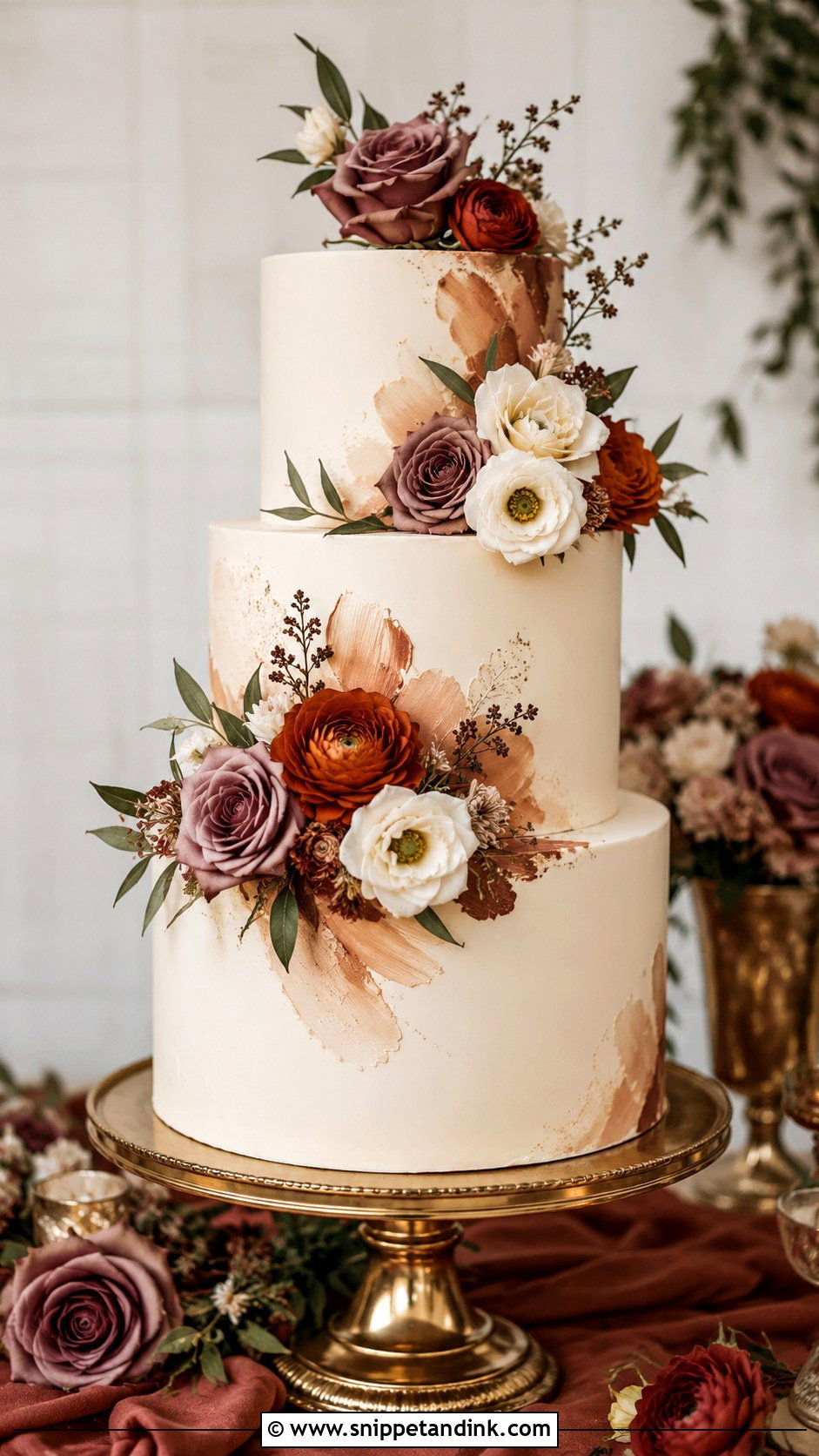
Mauve has a purple-pink undertone that adds depth to clay, rust, blush and cream. Mauve roses, lisianthus, orchids or sugar flowers around an ivory buttercream cake, with terracotta strokes or a clay tier to tie it in, give a muted, slightly moody result. Mauve stops the cake from reading too orange. Purple-toned sugar work and fondant fade quickly in sunlight, so I keep a mauve cake out of direct light until it’s time to cut.
31. Terracotta Wedding Cake With Chocolate
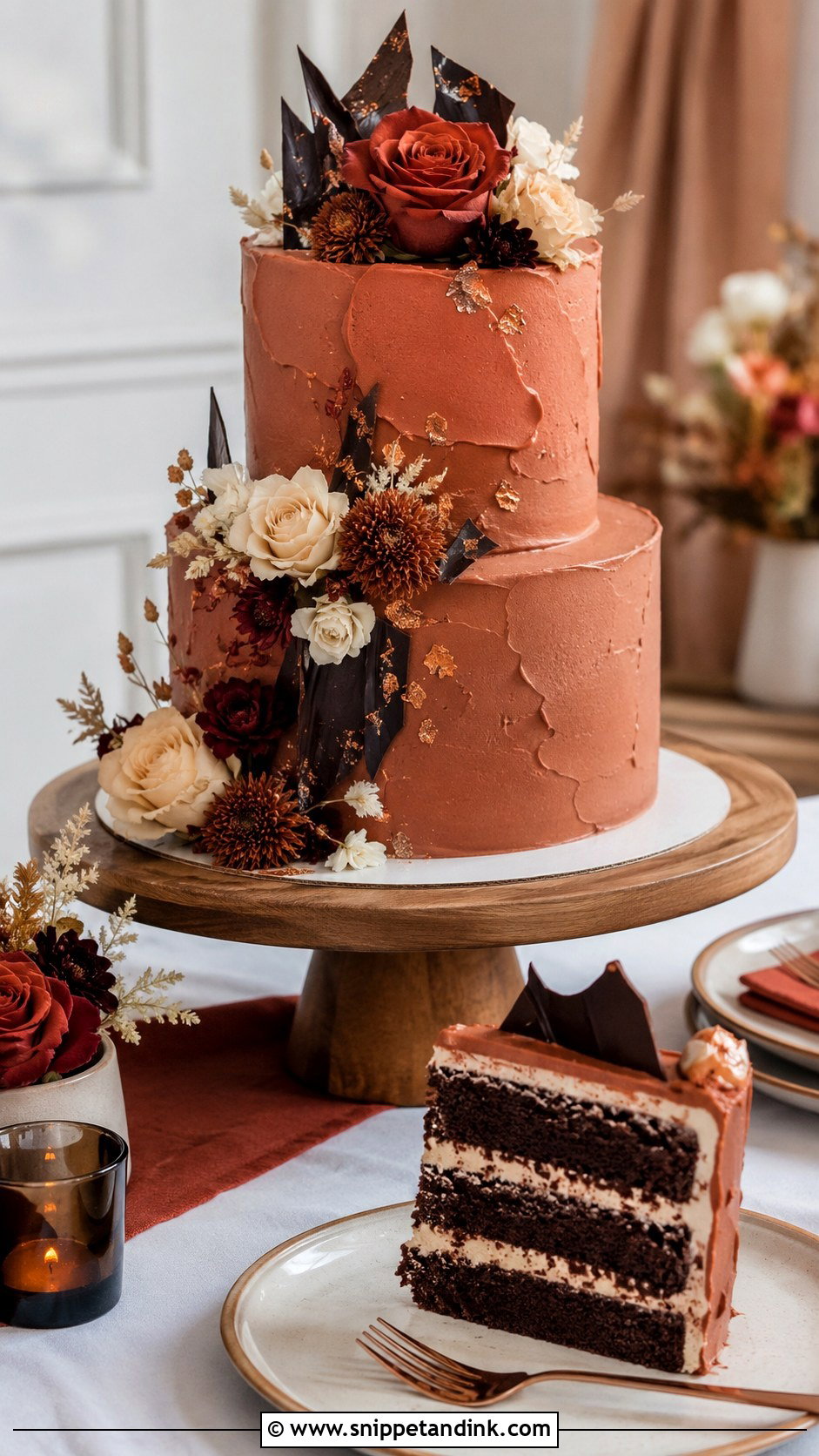
Chocolate inside and terracotta outside make a cake for autumn and evening receptions. The sponge can be dark chocolate, mocha or chocolate hazelnut; the outside ivory buttercream, cocoa-toned ganache or terracotta accents, with rust flowers, cream roses, chocolate shards or copper. Ganache is my preference for warm days because it sets firmer than buttercream and holds sharp edges. A drip can work if it’s tidy and stops at a consistent length.
32. Terracotta Wedding Cake With Caramel Drip
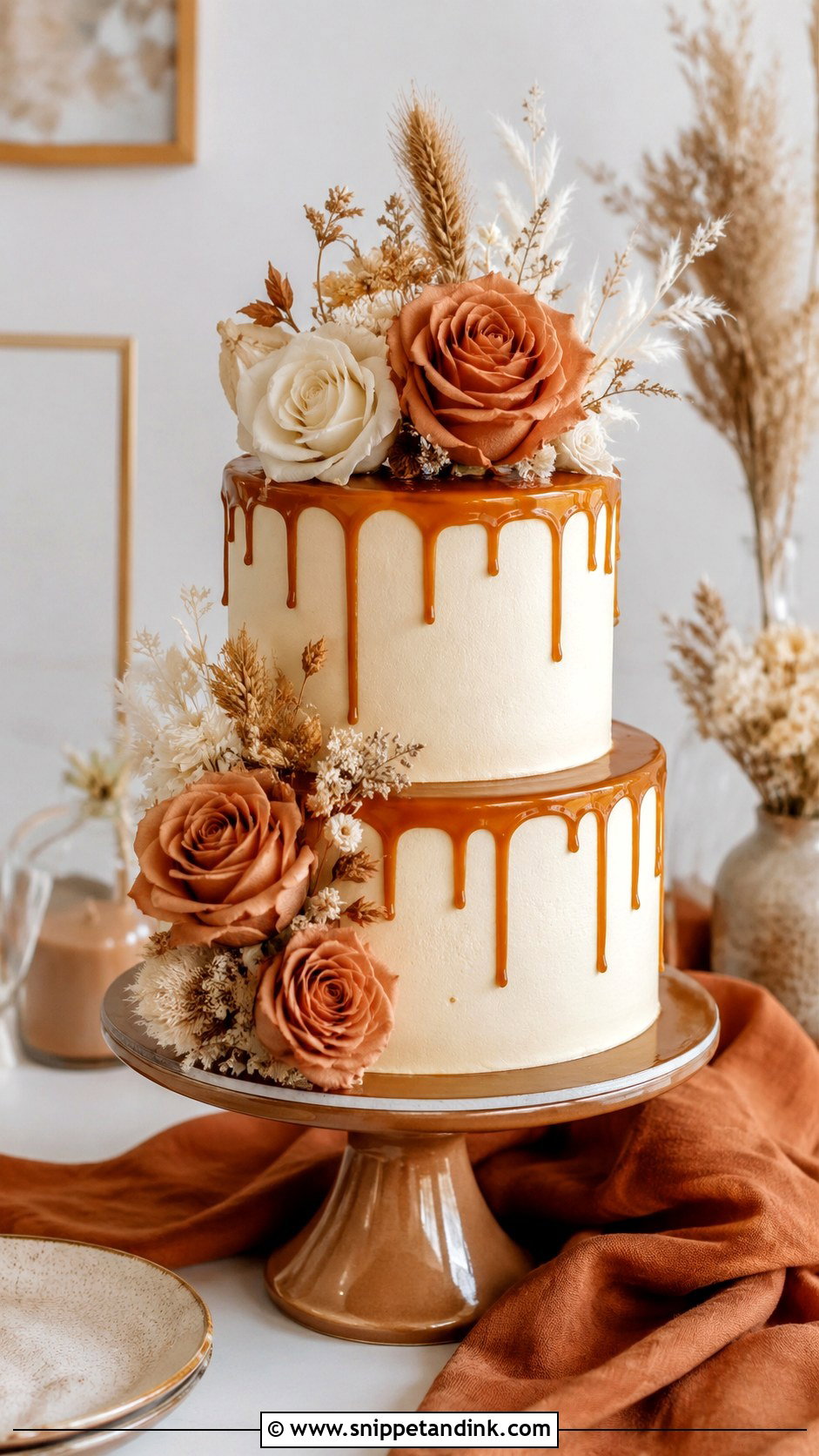
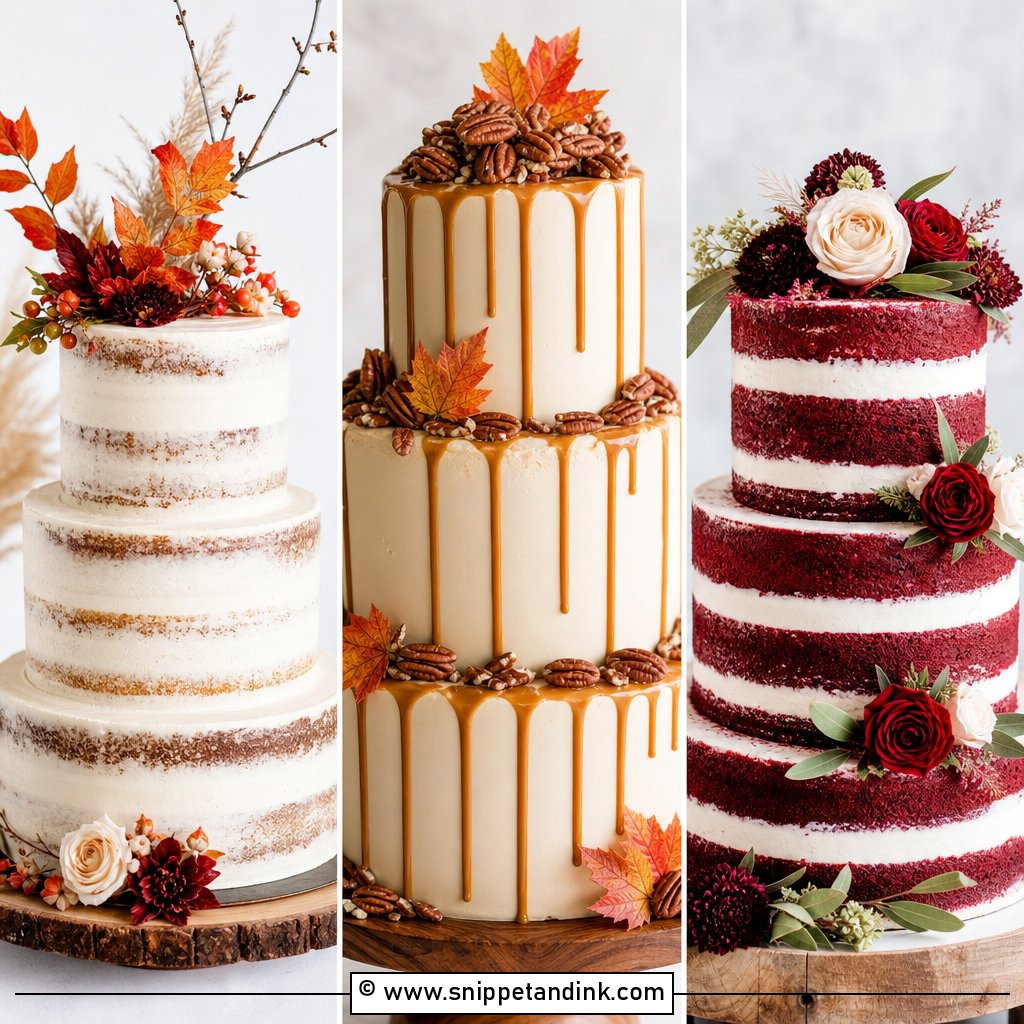
Caramel running over ivory buttercream picks up the colour of rust flowers and clay accents, and it suits barn receptions and autumn weddings. Vanilla bean, spice, brown sugar or chocolate sponges all support it. I thicken caramel for drips so it sets rather than creeping down the tier over the evening, and I apply it on a chilled cake. Keep the drips short and controlled, then add cream roses, dried grasses or small terracotta blooms at the top and base.
33. Terracotta Wedding Cake With Marble
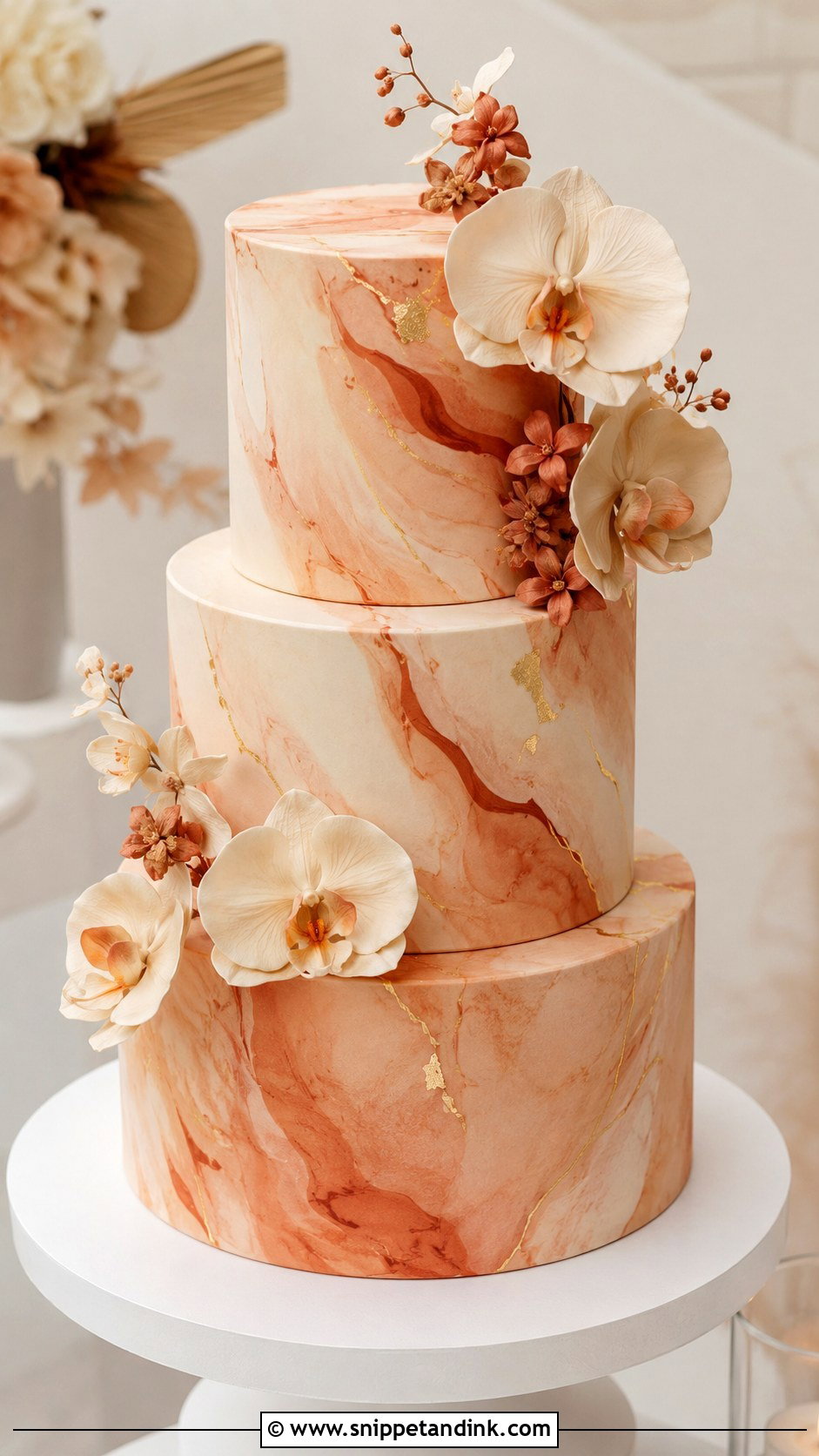
Marbling blends ivory, clay, peach, rust and beige across fondant or smooth buttercream, and gold or copper veining can push it toward polished. It suits modern venues, desert weddings and formal indoor receptions. No two marble cakes come out alike, which couples love, but it also means you can’t order an exact copy of a photo. Keep the flowers to one small cluster of cream roses or sugar orchids so the pattern stays the focus.
34. Terracotta Wedding Cake With Floral Cascade
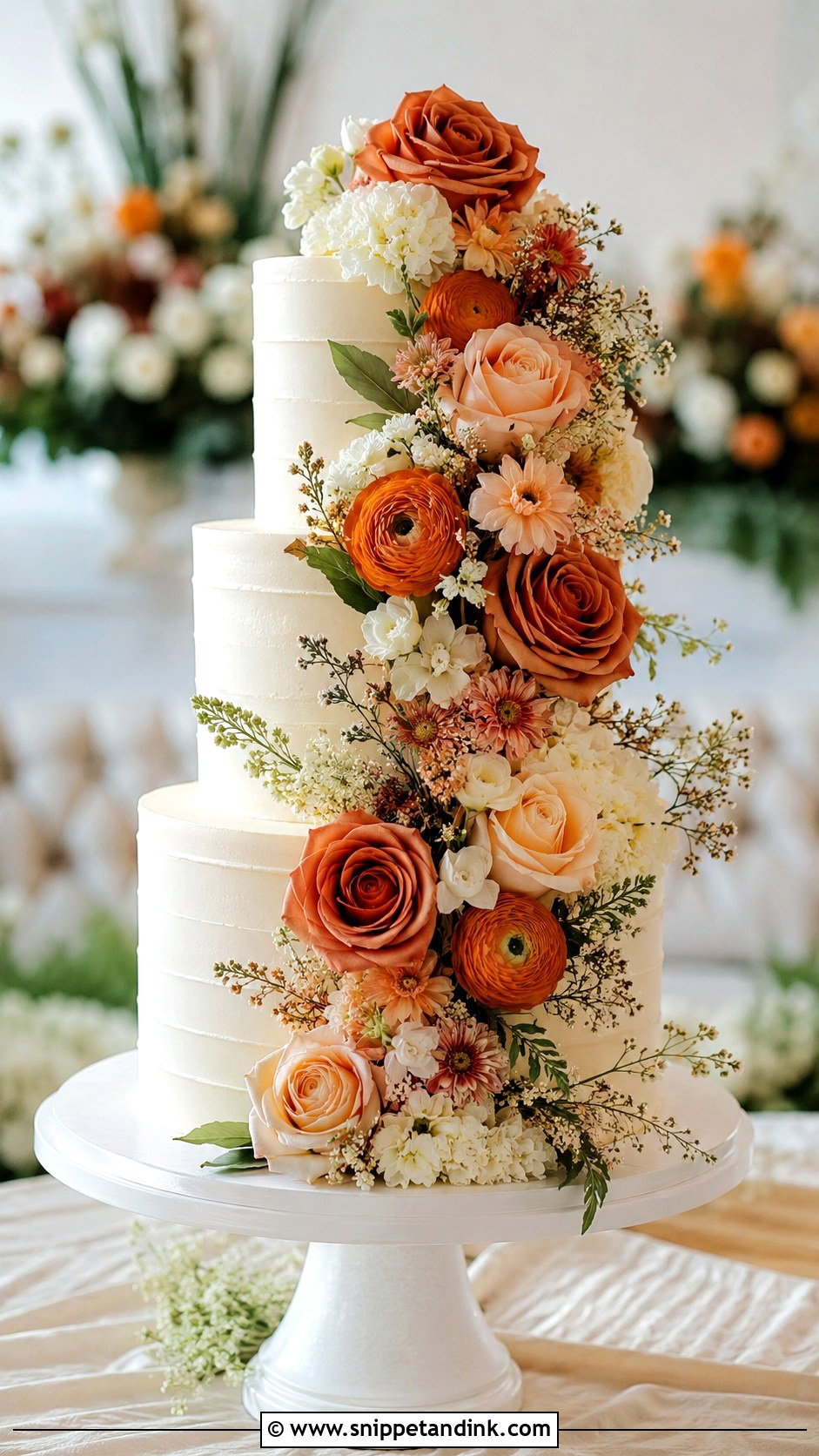
A cascade runs from the top tier down one side and turns the cake into the room’s centrepiece. Terracotta roses, burnt orange ranunculus, cream blooms, peach flowers and greenery give it depth. It needs a tall cake so the flowers have room, on smooth buttercream or fondant so they stand out. A full fresh cascade is heavy. I build it on hidden supports and pre-wired picks so nothing presses into the tiers, and I set it at the venue rather than drive with it attached.
35. Terracotta Wedding Cake With Single Tier
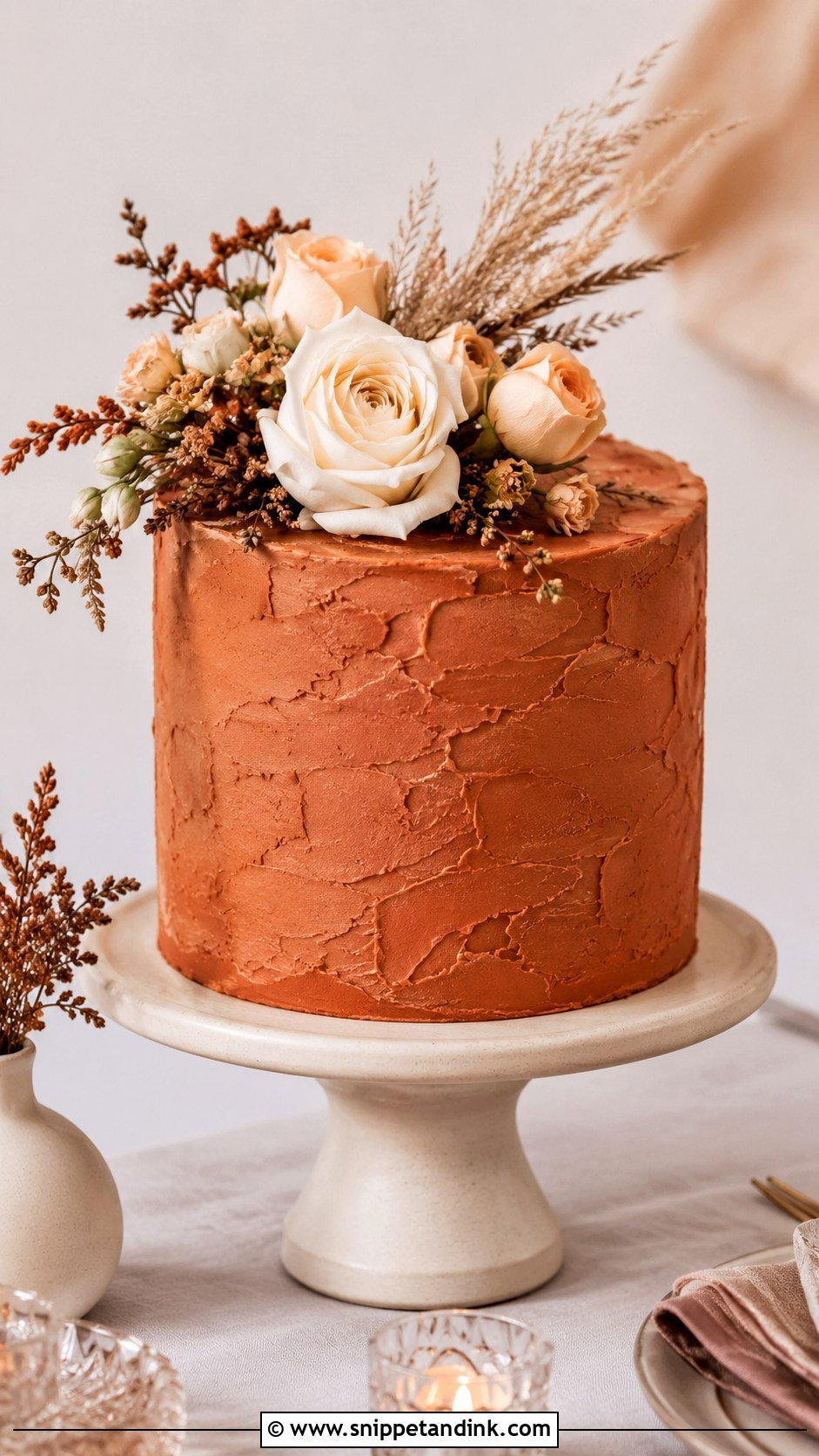
One tall tier can carry as much presence as a stacked cake: textured buttercream, terracotta flowers, dried grasses or a smooth clay finish, topped with a simple topper or one floral cluster. It’s the right size for elopements, micro weddings or a cutting cake beside a dessert table, and a kitchen sheet cake can feed everyone else. Spend a little on the stand. On a small cake, the stand does a lot of the visual work in photos.
Which Pampas, Palms and Stems I Let Near the Frosting
Half the designs above rely on something that isn’t cake: pampas, dried palms, bunny tails, eucalyptus, fresh flowers. Many florals are toxic, many dried stems are dyed or sprayed, and few florists grow their flowers to food standards. None of that rules them out. It just means they need handling.
- Tell your cake designer and your florist about each other early, and agree who supplies and places the flowers on the cake.
- Ask for unsprayed stems for the cake specifically, and a list of every variety going on it.
- Every stem gets floral tape and a food-safe pick or straw, or sits on a small barrier disc on top of the frosting.
- Everything decorative comes off before cutting, and the slices with flower contact are not served.
Warm venues and outdoor tables
Rustic and desert weddings are often the hottest ones. Buttercream softens quickly in direct sun, caramel and chocolate drips start to run, and fresh flowers wilt against a warm cake. I ask for the cake table in shade, away from heaters and candles, and set the cake out as late as the timeline allows. If the reception is in a tent in summer, ganache under a thin buttercream layer or a fondant finish will hold its shape far longer.
Bring the Linen Swatch and the Flower List to Your Tasting
Terracotta works because it’s warm without shouting. Keep it classic with ivory buttercream and rust flowers, or take it modern with watercolour, marble, wafer paper or sculpted details, and pair it with sage, cream, blush, copper, mauve, dusty blue or olive across most seasons. When you meet your cake designer, bring a fabric swatch, your florist’s stem list and a photo of the venue at the time of day you’ll cut the cake. Those three things tell us more than any inspiration picture about the shade, the decoration and what will survive the room.
You'll Like These Ideas:







Leave a Reply