
A cake covered in meadow flowers reads as romantic without tipping into formal, which is why I get asked for it for barns, cottage gardens and grand estates alike. The trick is that the loose, just-picked look is planned down to the stem: which flowers are safe, how the colors sit against the frosting, and what the buttercream will do in that season’s heat. Some couples want nothing more than pressed edible blooms on a single tier; others want a tall cake that looks like it grew out of a field. Below are twenty versions I’d happily make, with notes on what each one asks of your baker.
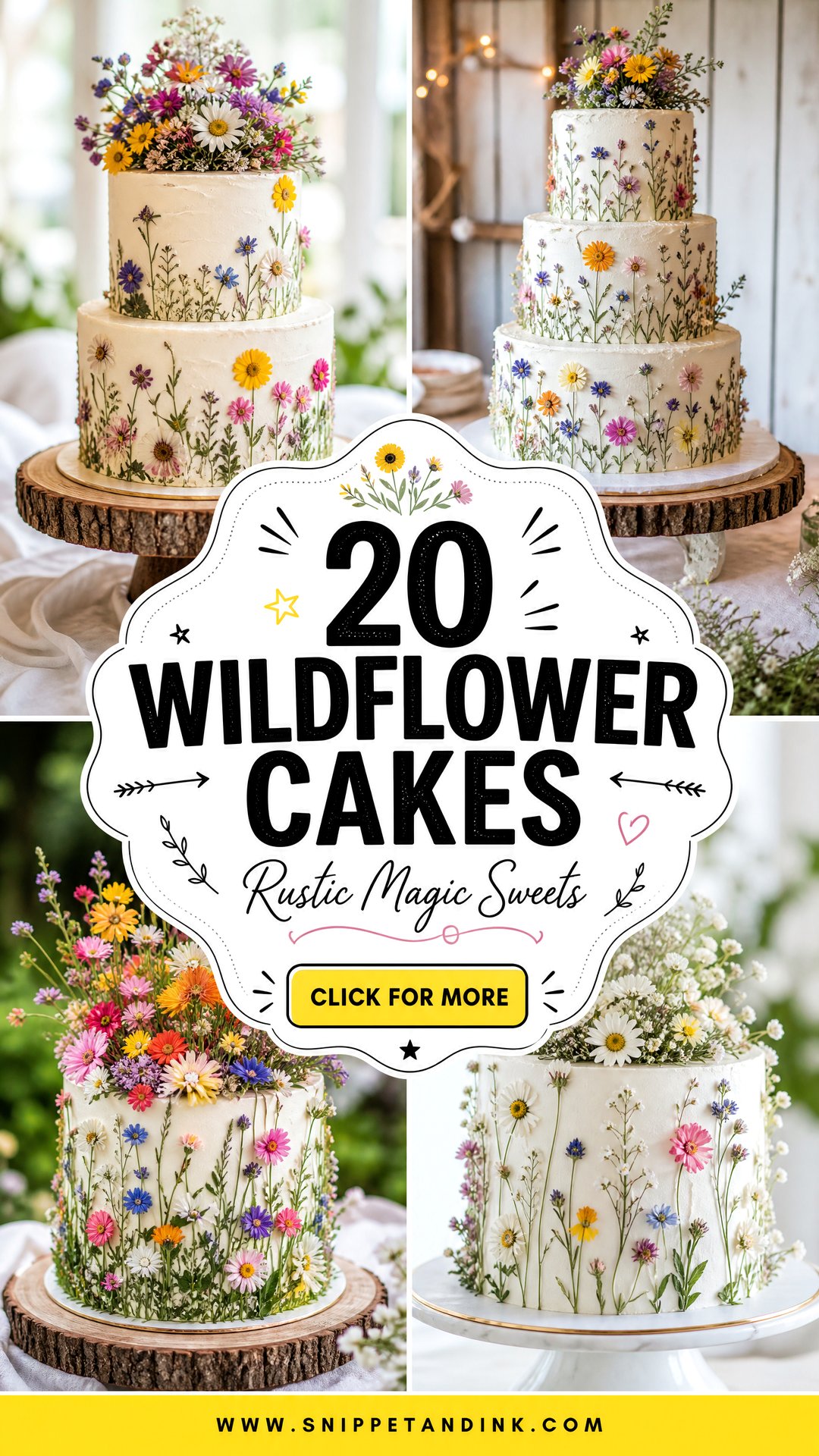
Which Meadow Flowers Can Safely Touch the Frosting
The first question I ask any couple who brings me a wildflower photo is where the flowers in it came from. Many of the prettiest field flowers are not safe near food, and florist stock is usually grown with sprays that were never meant to be eaten. So every design in this list falls into one of three groups, and knowing which group you’re in shapes the whole order.
- Edible blooms: violas, pansies, calendula, borage, cornflowers, chamomile and nasturtiums, bought from a grower who sells them for culinary use, not from a florist bucket.
- Decorative fresh flowers: fine on the cake only with a barrier. I wrap stems in floral tape and set them into food-safe picks, and anything resting on the surface sits on a small disc of parchment.
- Never on the cake: foxglove, lily of the valley, sweet pea, hydrangea, delphinium, larkspur and baby’s breath are all toxic or irritants, however natural they look.
Pressed and sugar flowers get around the problem entirely, which is why they show up so often in the ideas below. If your florist is supplying the stems, ask them to keep the cake flowers aside unsprayed, and tell your baker in writing which group each flower belongs to.
1. Pressed Wildflower Wedding Cake
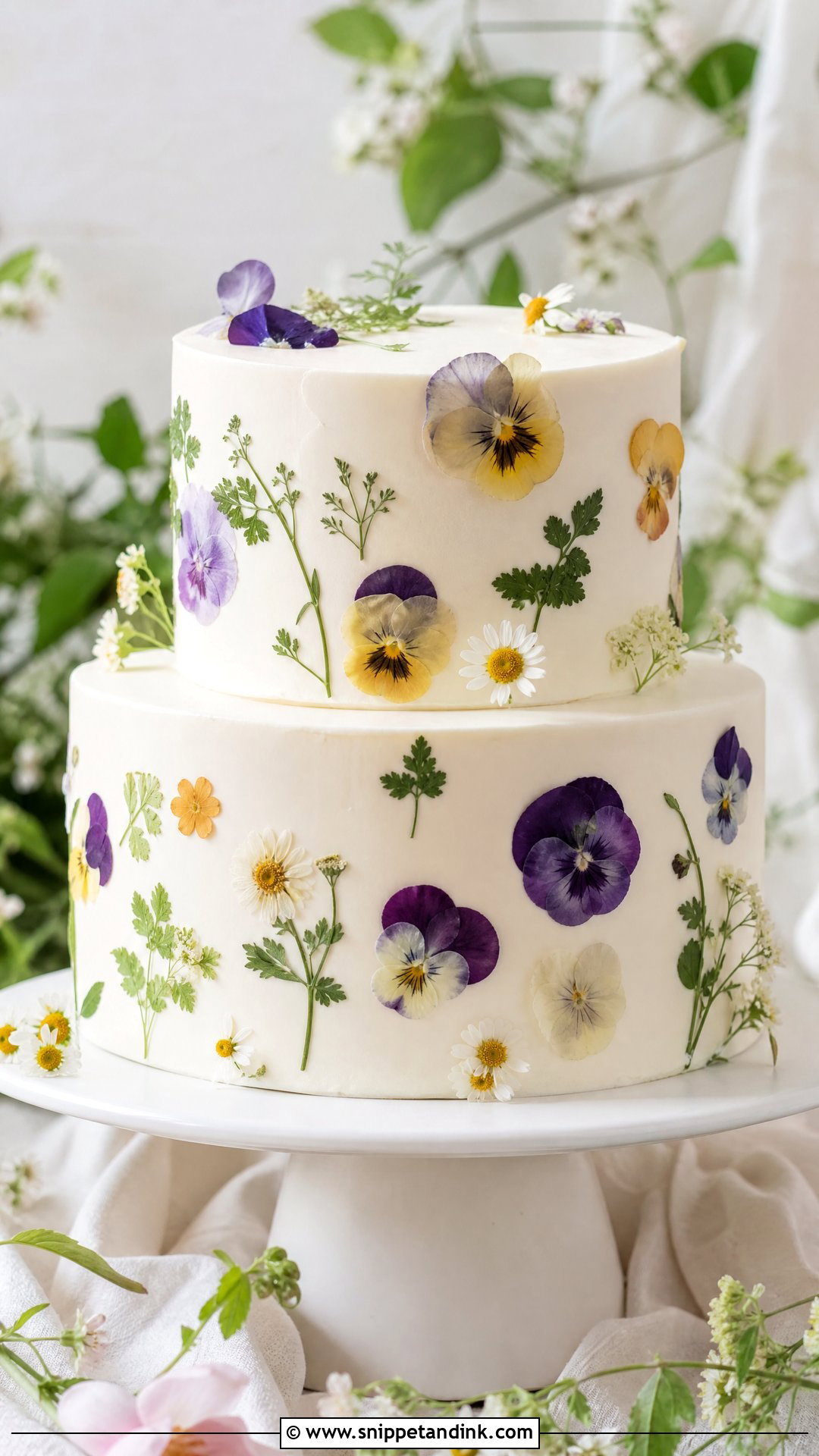
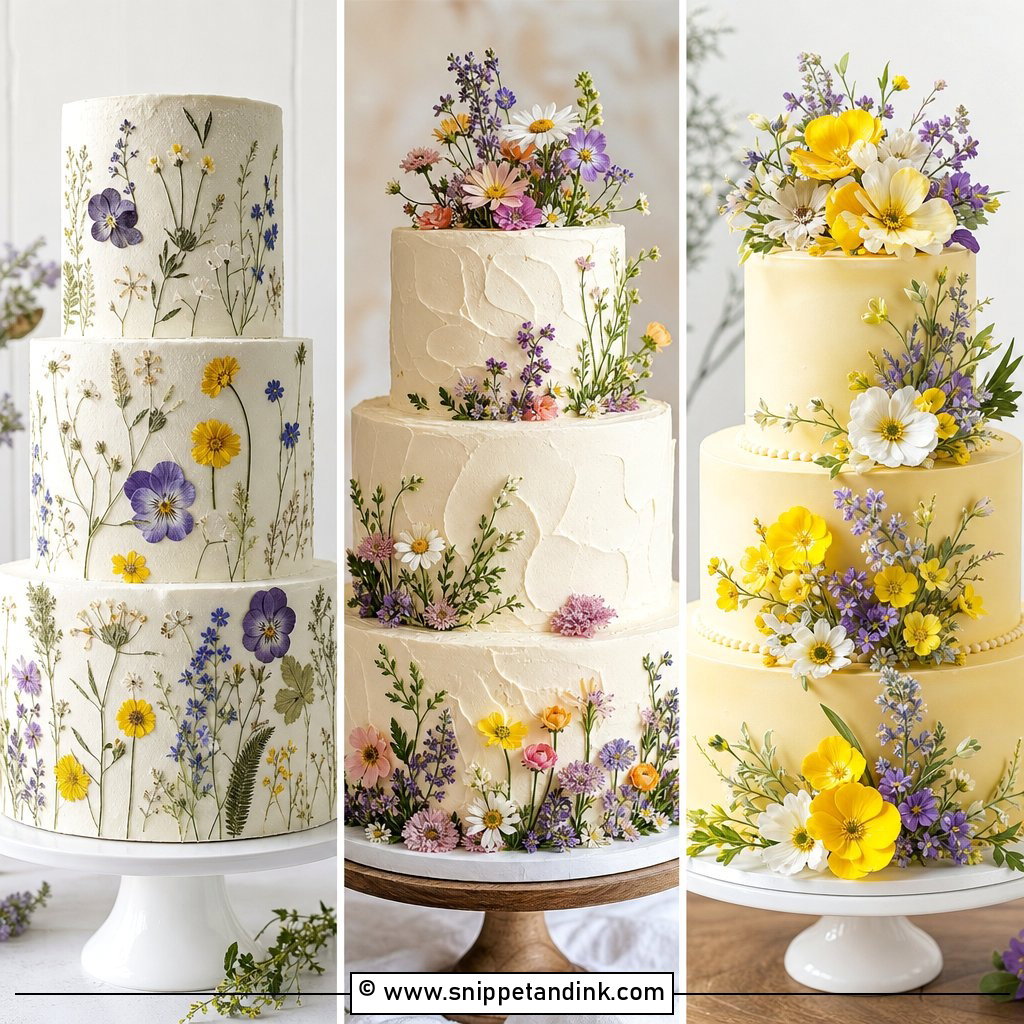
Pressed flowers are the version I recommend most to couples who are nervous about fresh stems near food, because everything on the cake is edible and sits flat. Violas, small pansies, cornflower petals and herb leaves are pressed for days beforehand, then laid against smooth ivory buttercream so the tiers look like pages from a garden journal. I chill the cake first so the petals grip without sliding. Keep the flavor light, vanilla bean, lemon or elderflower, so it matches how delicate the outside looks.
2. Semi Naked Wildflower Wedding Cake
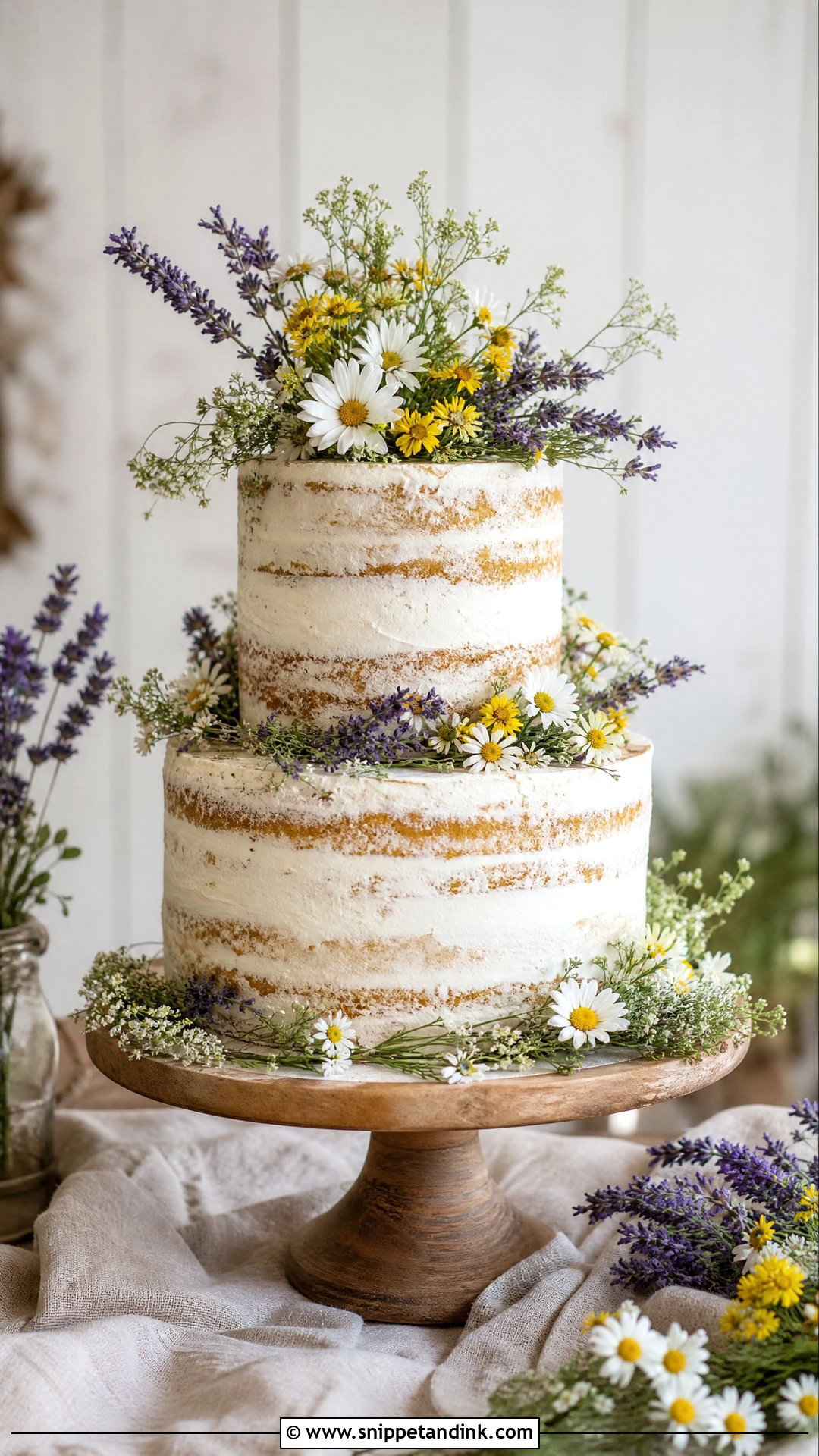
A semi naked finish is a thin scrape of buttercream that lets the golden sponge show at the edges, and it suits a countryside reception better than almost anything. Be aware that the exposed cake dries faster than a fully coated one, so I assemble these as close to the day as possible and keep them wrapped until delivery. Tuck loose stems between tiers or cluster them at the base, and put it on a wooden stand. Honey vanilla, almond and brown sugar all sit well with that rustic crumb. Go sparse with the flowers; too many and the open sides start to look messy rather than delicate.
3. Two Tier Wildflower Wedding Cake
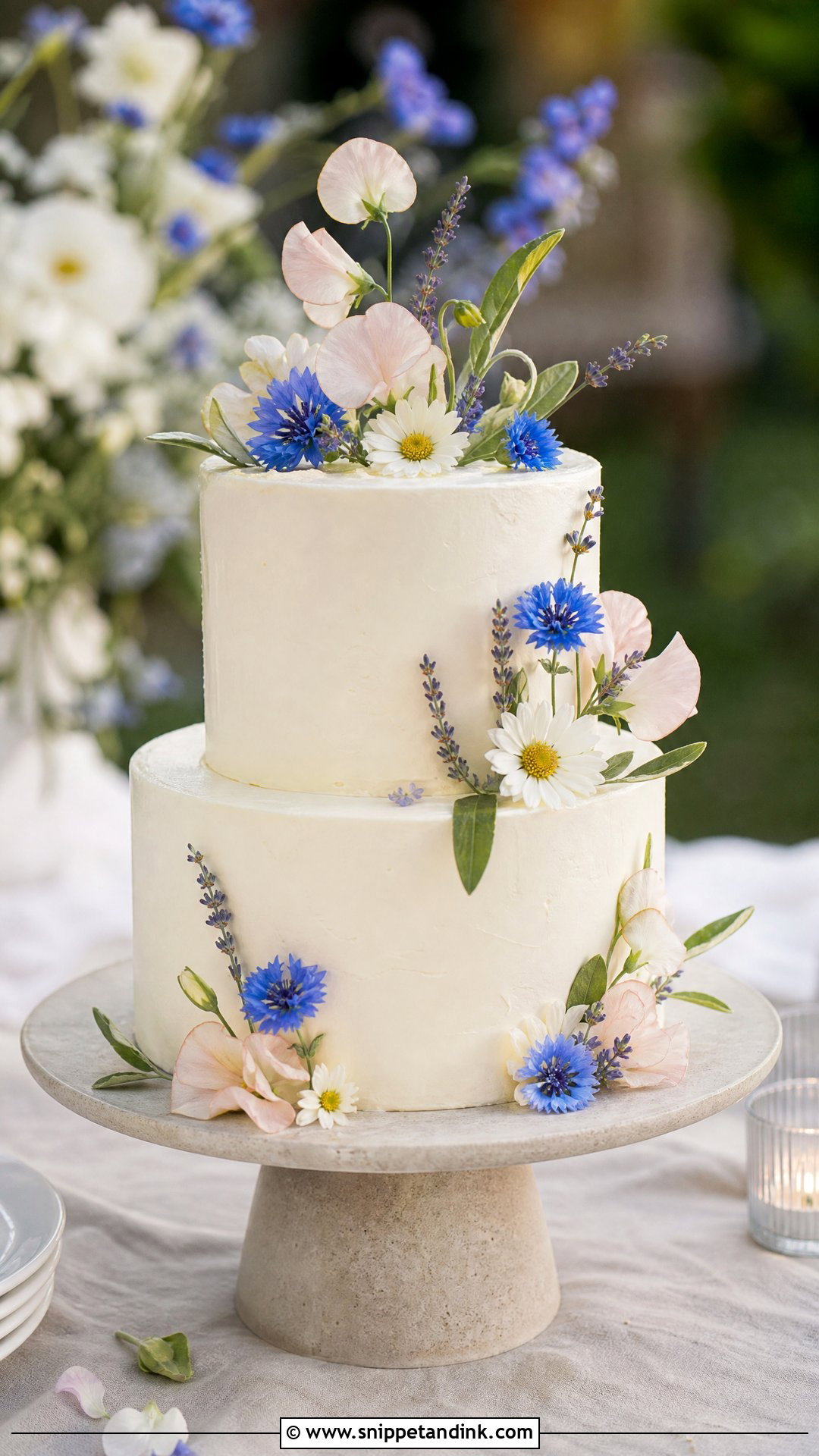
For smaller weddings or a dessert table where the cake shares the space, two tiers is plenty. Every flower is noticed at this size, so I usually use fewer stems than couples expect. My placement rule is taller wildflowers up top and short, rounded blooms near the base, which gives the eye a path downward. Smooth buttercream reads more polished; a light palette-knife texture feels more organic. Ivory with sage, butter yellow and dusty blue is a palette that rarely fails.
4. Three Tier Wildflower Wedding Cake
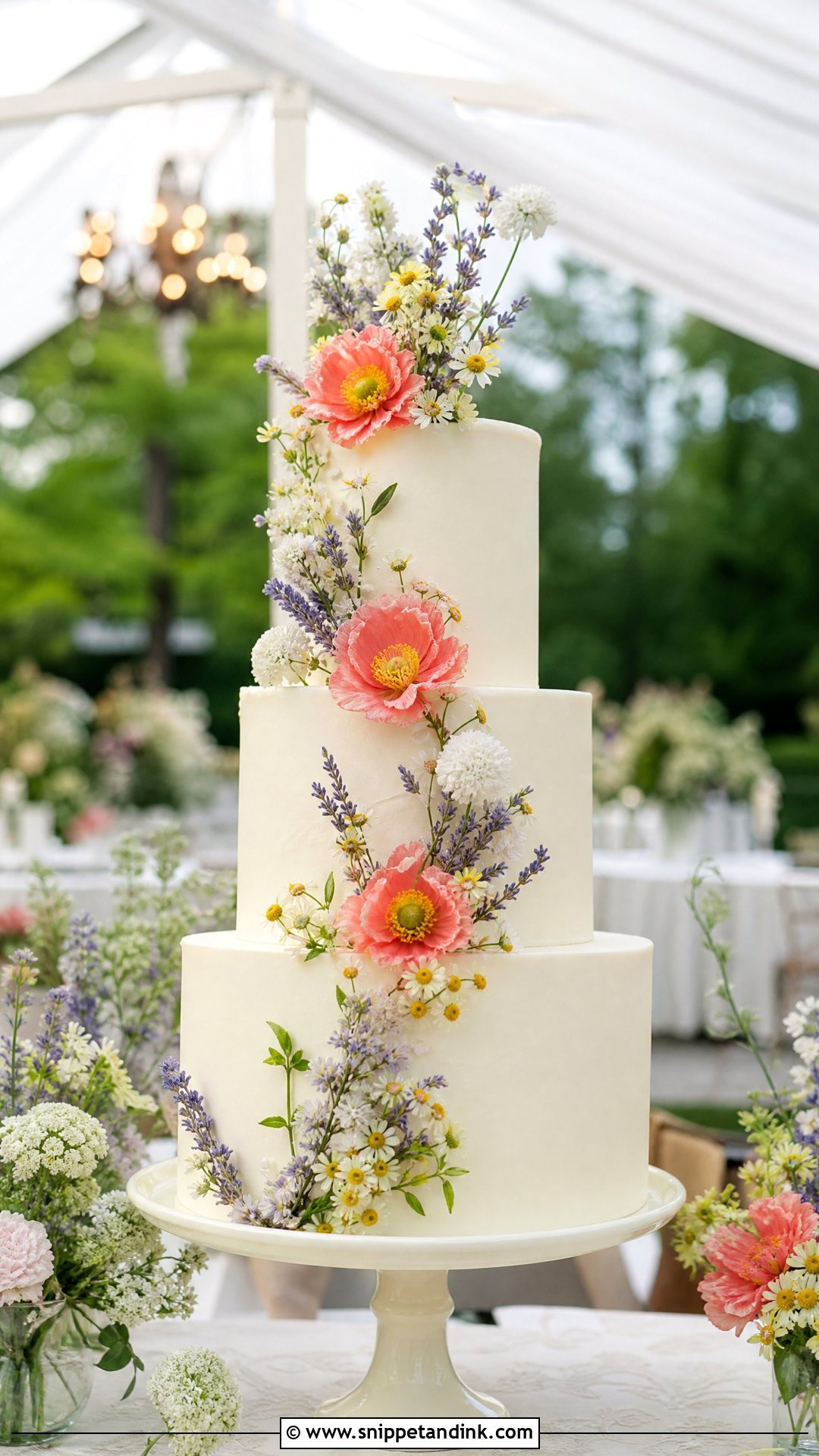
Height is what a three tier wildflower wedding cake gives you, and height is also where flower placement goes wrong. Evenly spaced clusters on every tier look stiff. I prefer a loose diagonal that climbs from the bottom tier up one side, or a spill from the top that thins as it falls. Smooth white buttercream keeps it bridal while the color comes from the blooms. A three tier cake needs internal dowels and a cool, steady table, so it belongs indoors or under a tent, not on a lawn in direct sun. Lemon raspberry and pistachio are good fresh-tasting flavors here.
5. Wildflower Buttercream Wedding Cake
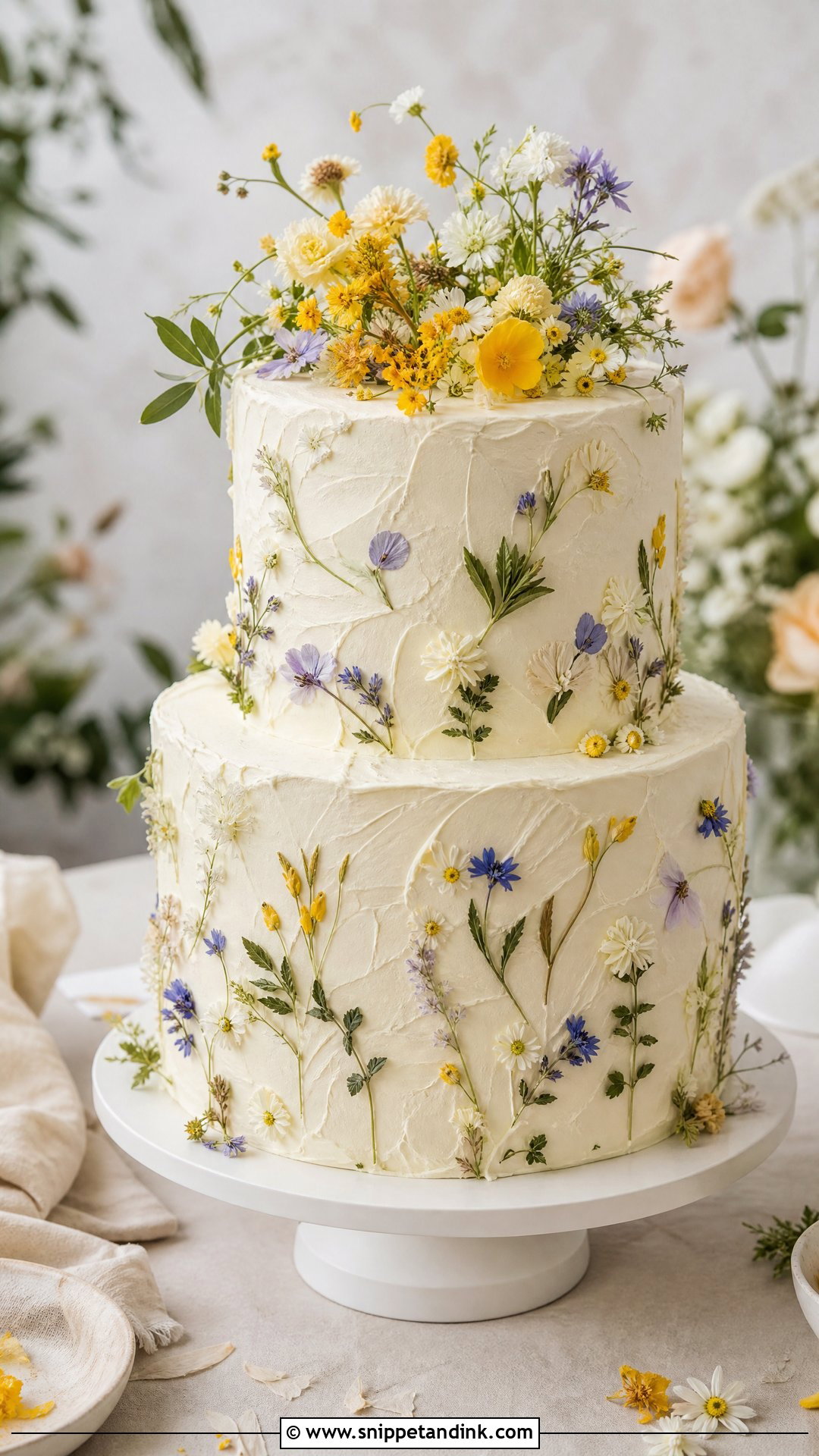
Here the frosting is the decoration. Swipes, ridges and palette-knife strokes give the buttercream an artist’s texture, and the flowers can be pressed in, piped, or set fresh on top. It’s my usual answer for couples who find fondant too formal but still want something finished. Be honest with yourself about the weather, though: buttercream textures soften and lose their crisp edges in a warm room long before a smooth coat would show it. Hold the palette to one frosting color and three or four flower colors so the texture still has room to show.
6. Wildflower Wedding Cake With Fresh Flowers
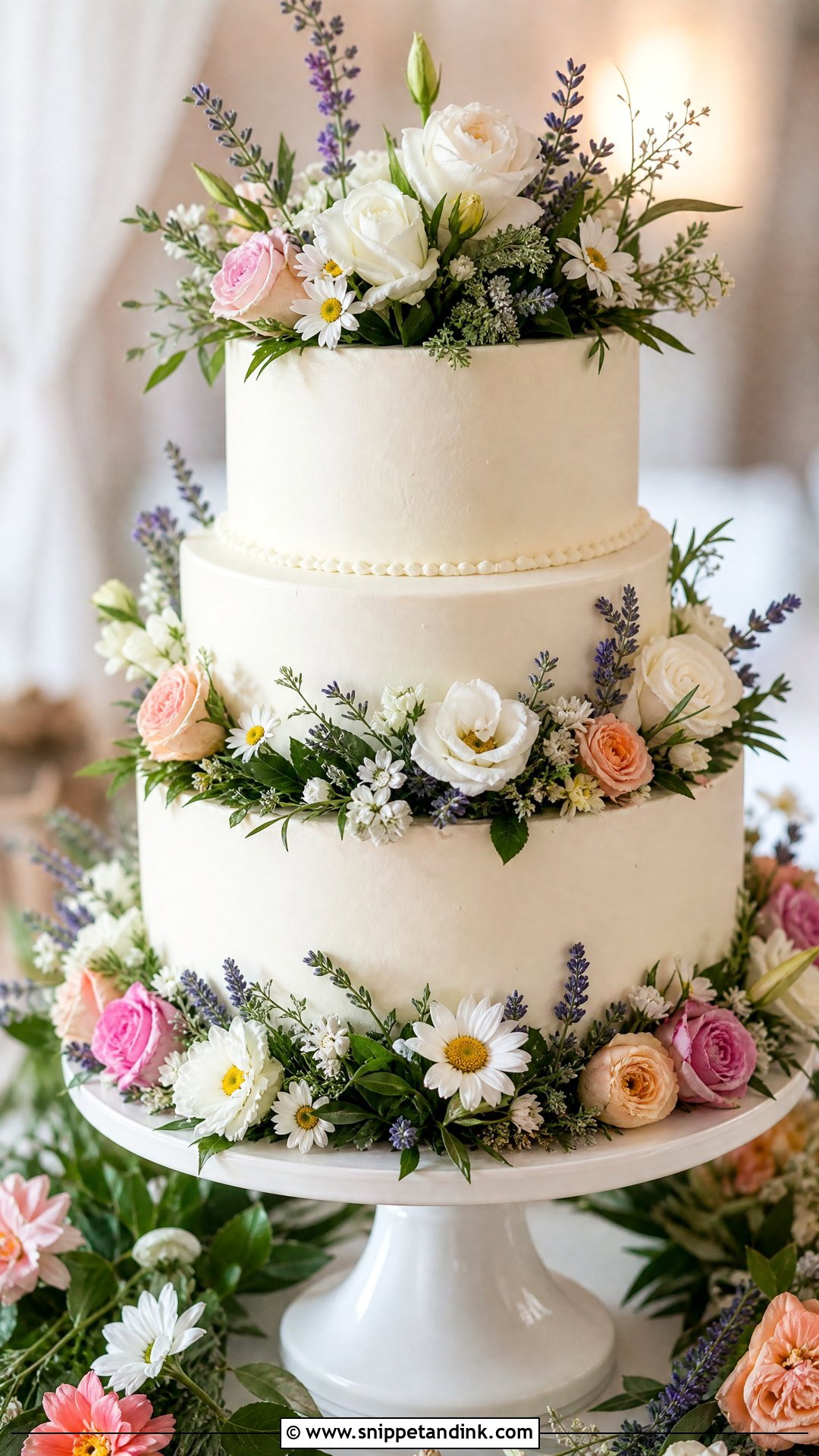
Fresh flowers give the fullest garden look, and they need the most coordination. I want your florist and me talking weeks ahead about which exact blooms, where they’ll sit and who places them on the day. No stem should go straight into the sponge: I wrap cut ends in floral tape and set them in food-safe picks or straws so sap never touches the cake. One crown on top is the low-risk version; blossoms between every tier is the dramatic one. Mix many small flowers with two or three larger focal heads so it has depth.
7. Wildflower Wedding Cake With Edible Flowers
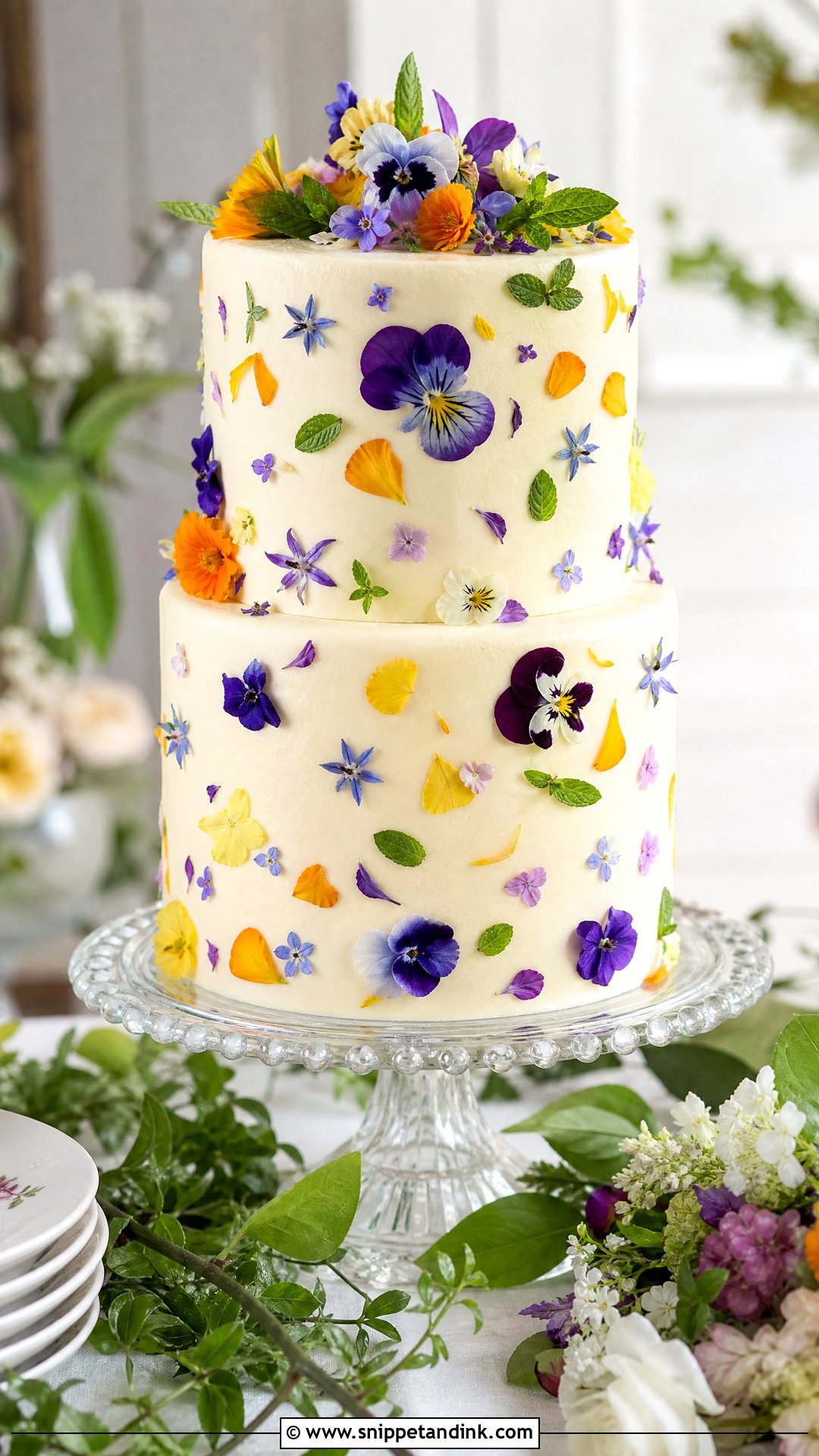
With edible flowers, the decoration is grown to be eaten, which removes the biggest worry about fresh blooms. Pansies, violas, calendula and borage give natural color without sugar work. The catch is that they are thin-petaled and wilt within hours once they’re out of the cooler, so I place them at the venue, not at the bakery. Vary the sizes so the scattering looks grown rather than stamped on, and pair them with light flavors such as lemon, honey or chamomile.
8. Wildflower Wedding Cake With Sugar Flowers
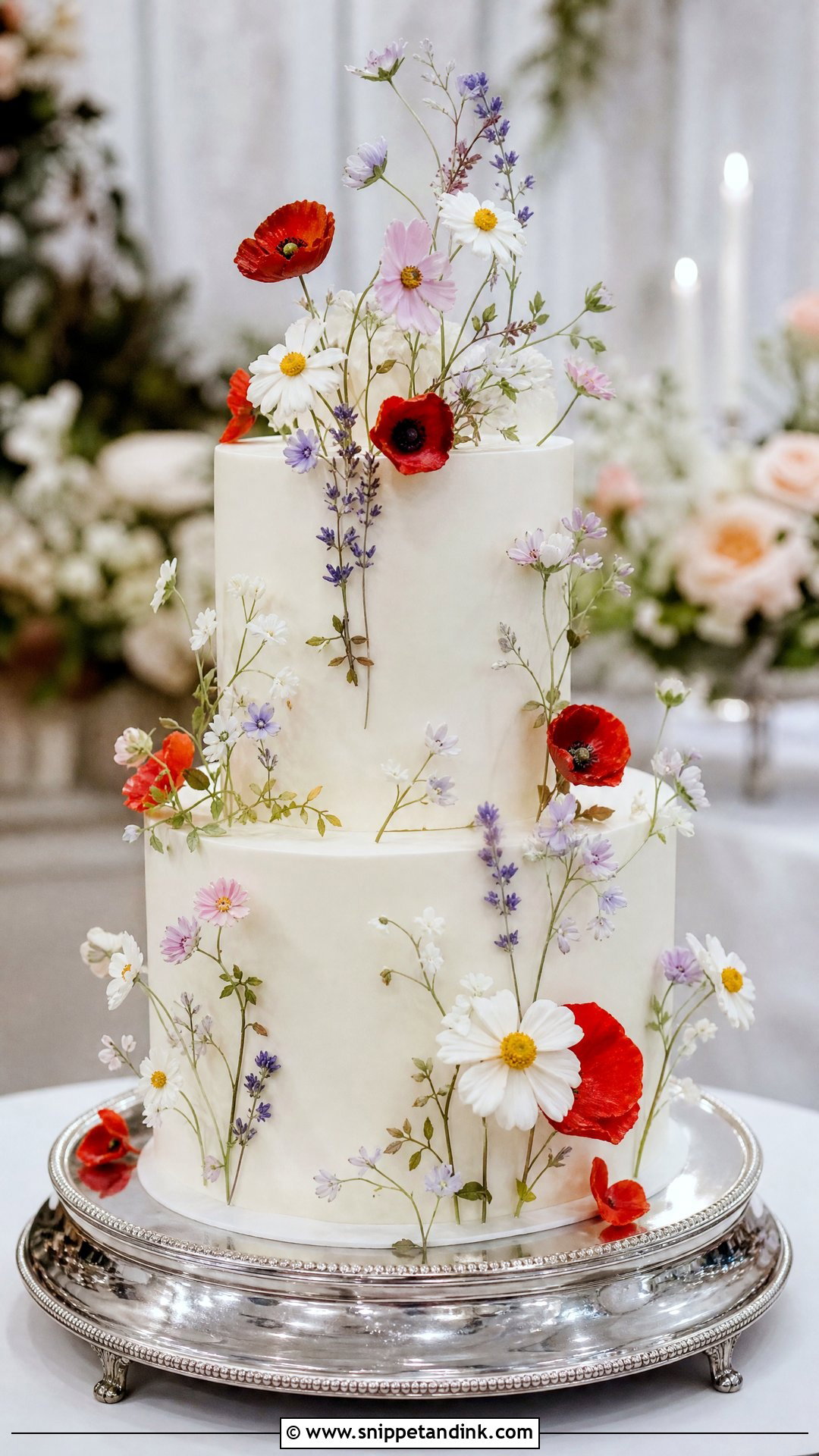
Sugar flowers solve three problems at once: seasonal availability, safety and heat. A good sugar artist can make tiny daisies, poppies, lavender sprigs and cosmos that pass for real at a step’s distance. I steer anyone with an August outdoor reception or a strict color scheme toward this option, because the flowers can be tinted to a swatch and made weeks early. They’re also rigid, so they survive a bumpy drive and can be placed precisely. They aren’t something guests eat, so plan to lift them off before cutting. Smooth, ribbed or lightly textured frosting all work underneath.
9. Wildflower Wedding Cake With Daisies
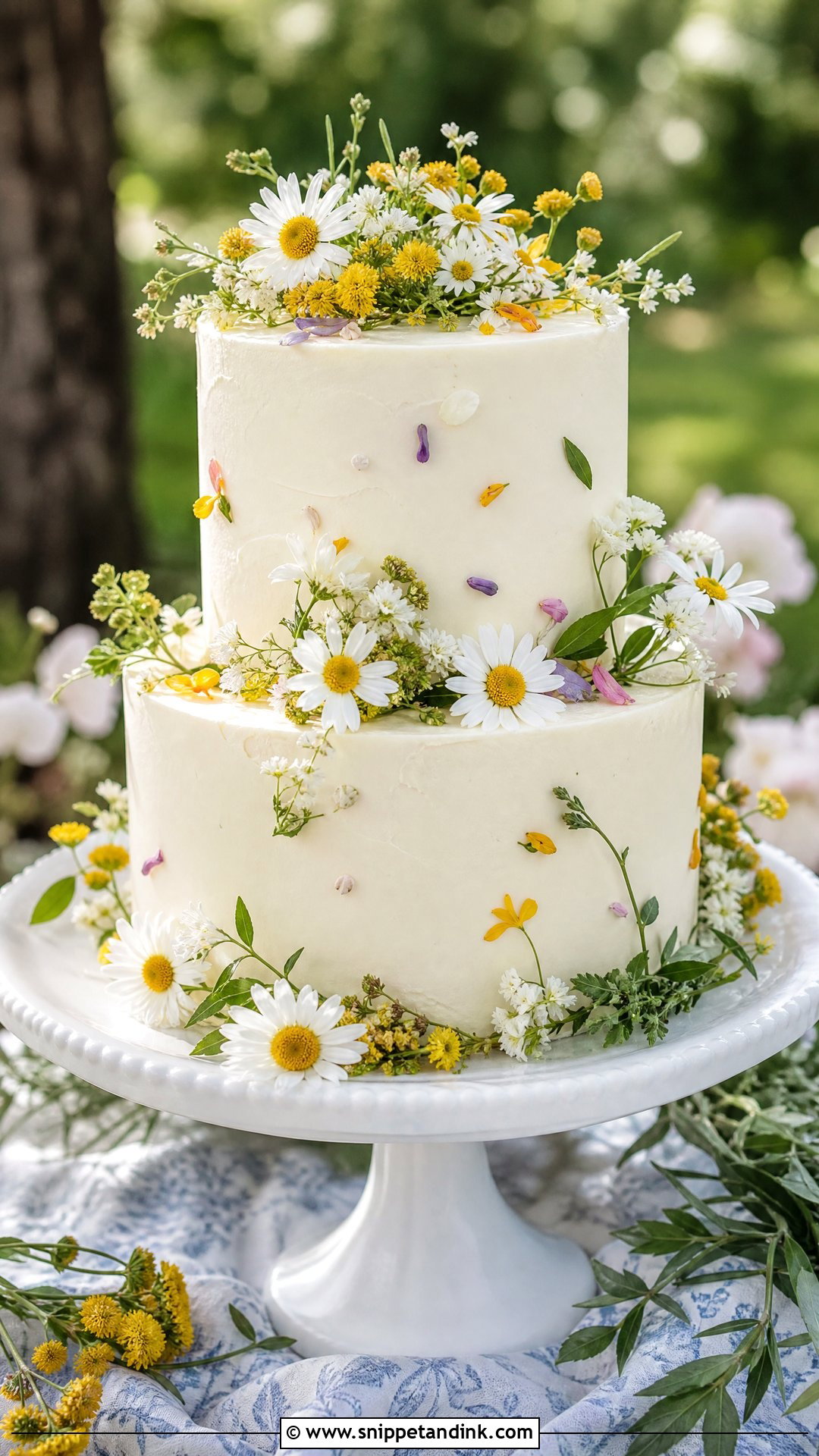
Daisies are cheerful and simple, and I like them best in small clusters rather than spread over every inch. Mixed with tiny yellow flowers, a few white blossoms and soft greenery, they bring a meadow feeling to smooth buttercream or a semi naked finish. Florist daisies aren’t something I’d press into frosting, so mine are usually sugar or wafer-paper daisies, with real edible chamomile heads mixed in for scale. Lemon, coconut and honey cakes match that bright mood, especially in spring.
10. Wildflower Wedding Cake With Lavender
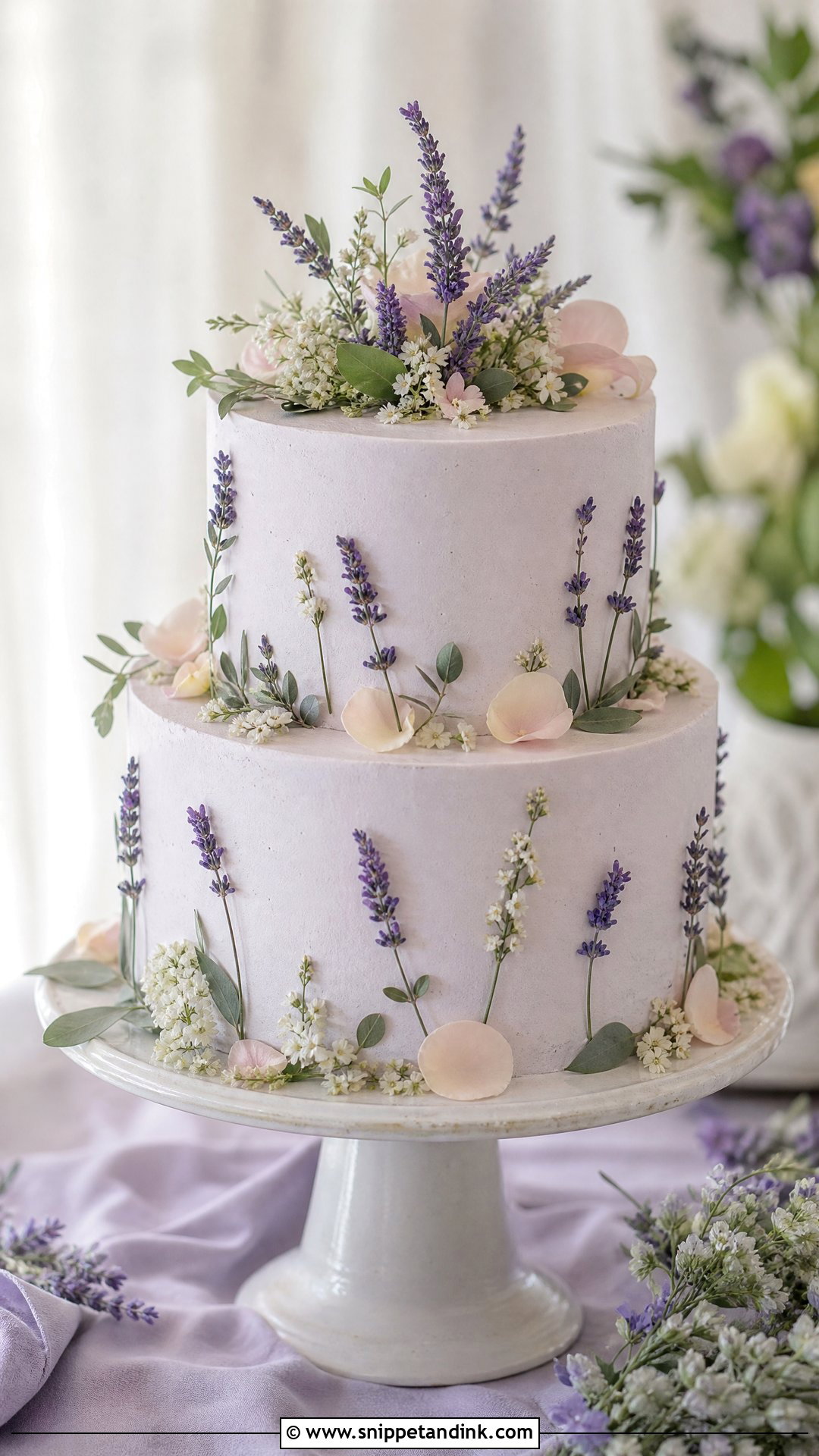
Lavender brings height and a calm purple line without making the tiers look busy, and it sits nicely with ivory buttercream and tiny blush or white blooms. It also ties in well with soft purple color palettes. If you want the flavor too, lavender honey or lemon lavender connects the inside to the outside. Go carefully: culinary lavender is strong, and a heavy hand makes the sponge taste like soap. The same goes for the stems on top. A few airy sprigs read better than a bundle.
11. Wildflower Wedding Cake With Poppies
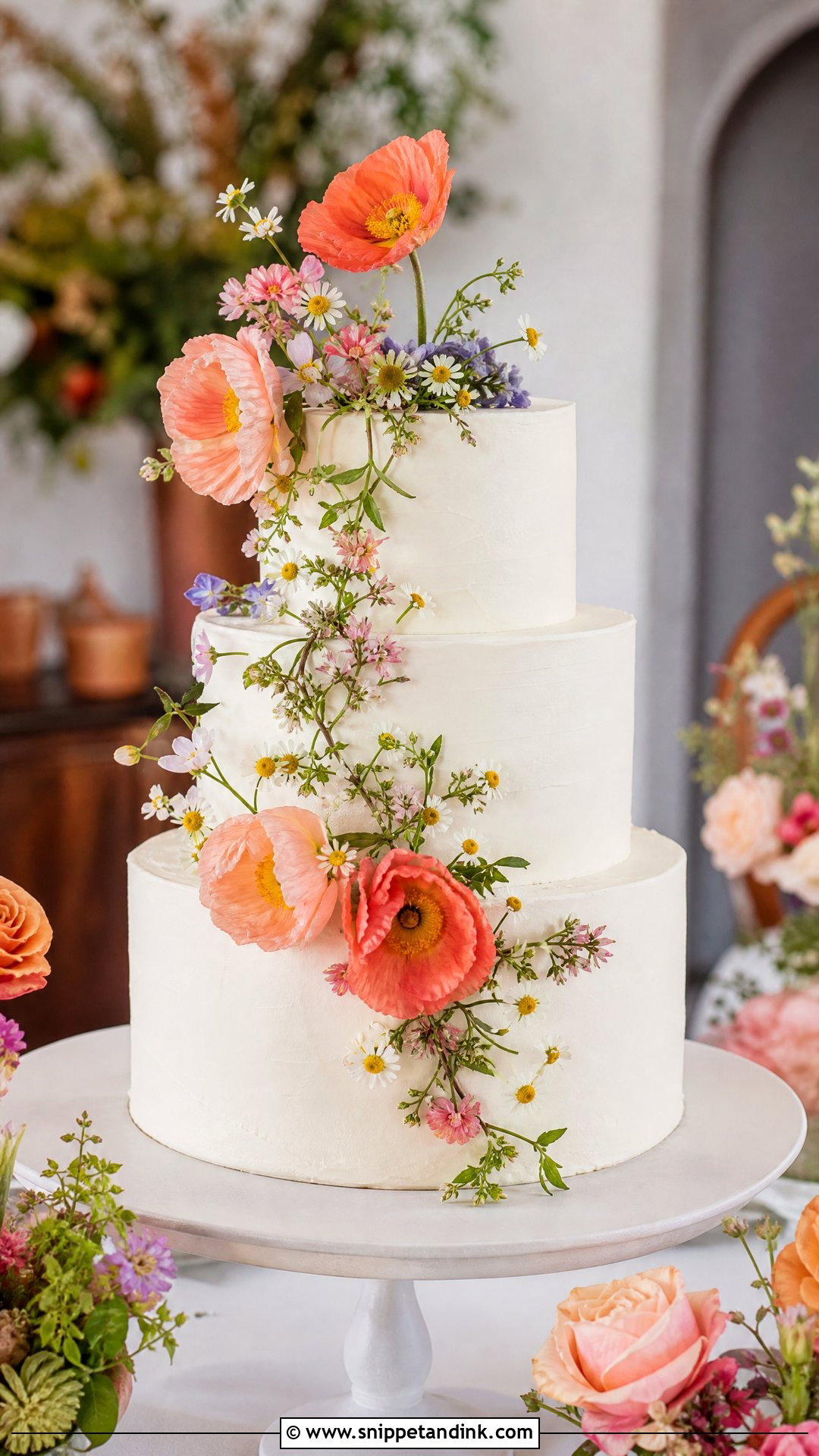
Poppies are the choice when you want color and some drama. Their crinkled petals look delicate and slightly imperfect, which is exactly the point. Real poppies are not ones I’d put on a cake, so these are almost always sugar or wafer paper, and coral or orange ones glow against ivory frosting. Keep them company with small wildflowers and wispy grasses rather than heavy bunches. A tall two or three tier cake gives them the room they need, and almond or citrus flavors keep things bright.
12. Wildflower Wedding Cake With Blue Flowers
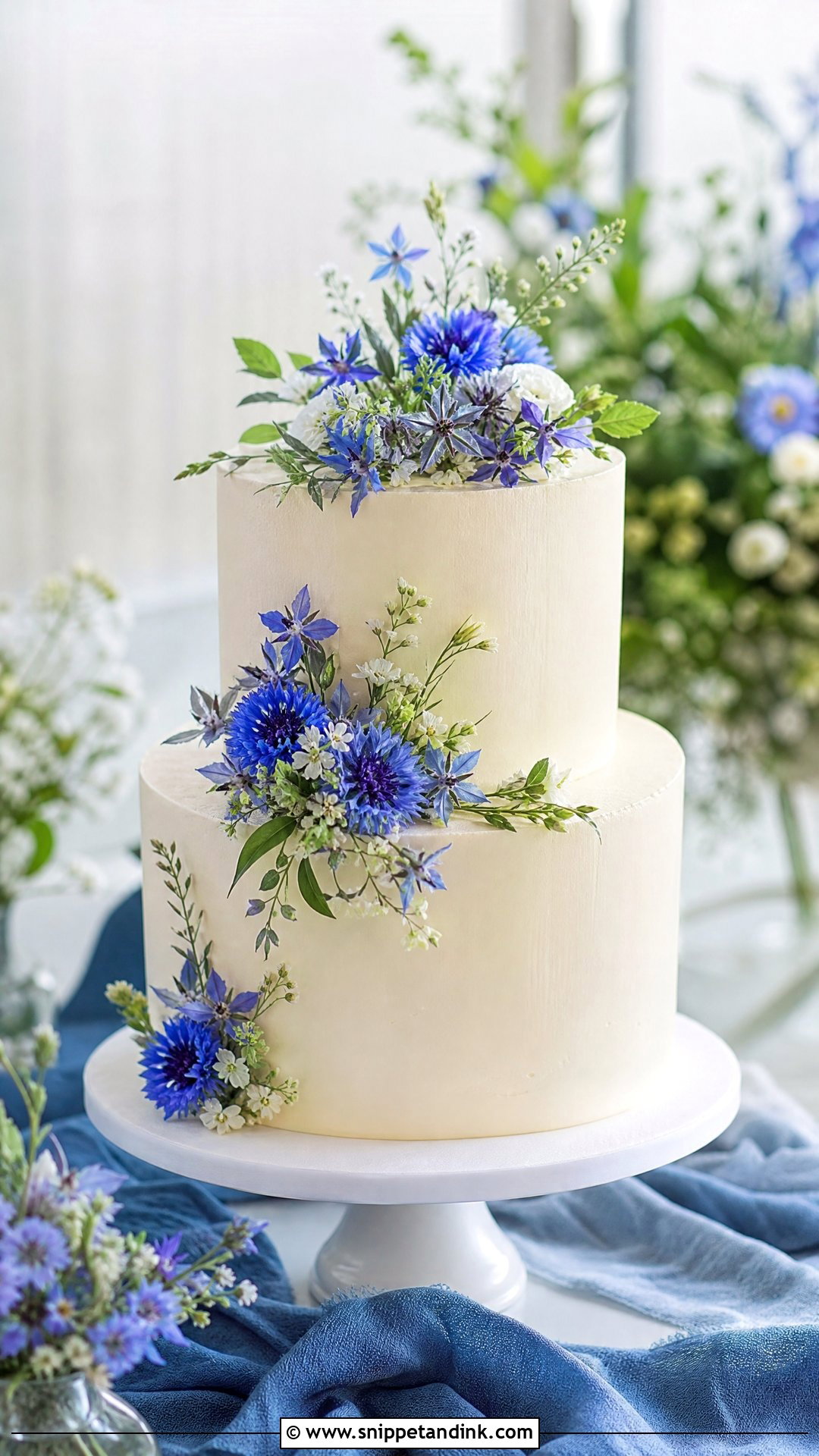
Blue on a cake is unexpected, and it doubles neatly as a something-blue moment. Cornflowers and borage are both edible; forget-me-nots I make in sugar. Blue petals lose intensity under warm yellow reception lighting and can look grey in photos, so I always choose a slightly brighter blue than the swatch. An ivory or very pale blue base keeps the flowers in focus, and a few white blooms with gentle greenery soften the contrast. Lemon, blueberry or almond fit the cool colors and stay light in warm weather.
13. Wildflower Wedding Cake With Yellow Flowers
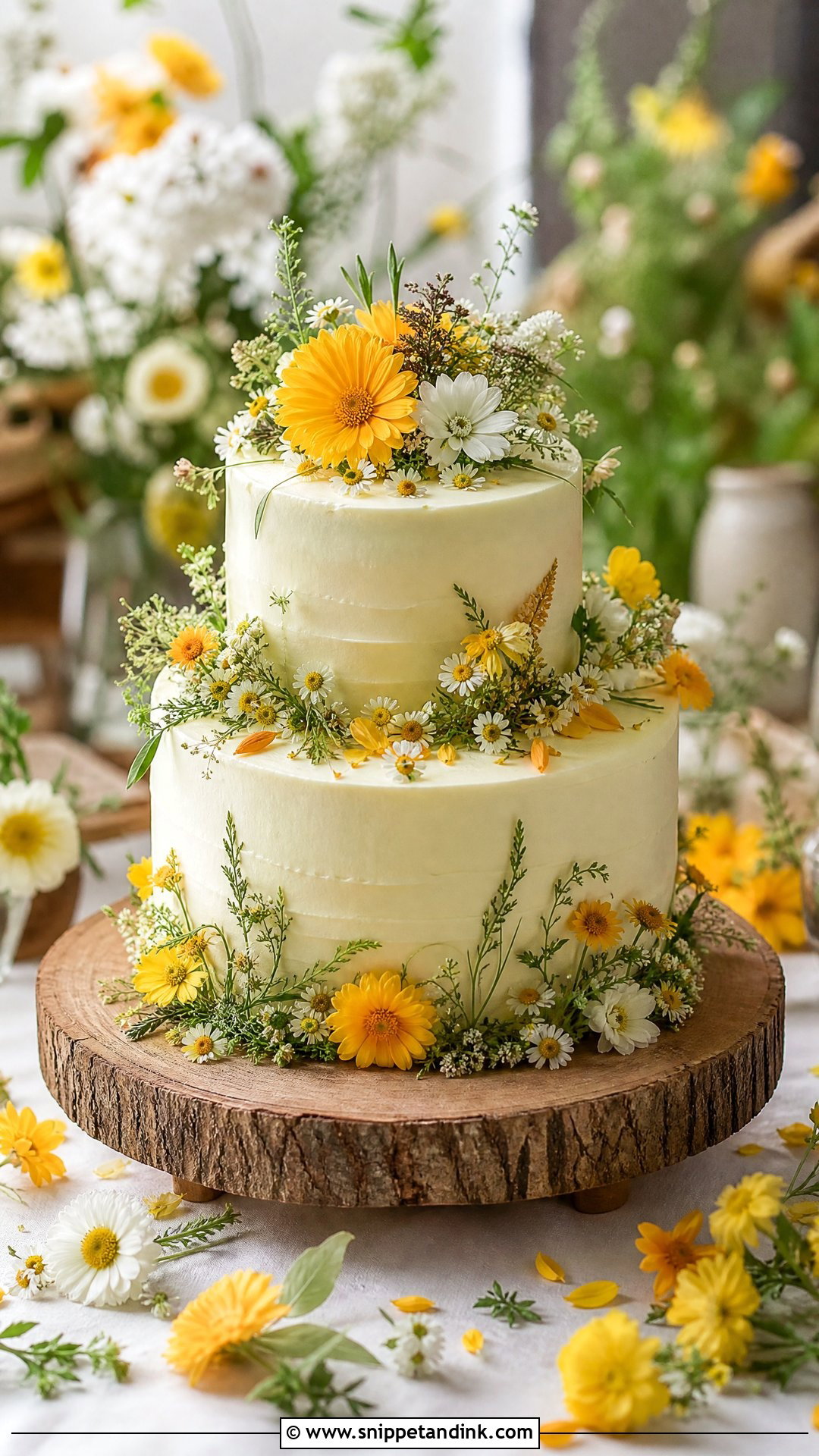
Yellow flowers bring warmth without shouting, as long as you vary the shade. A cake that uses one flat yellow looks printed; mixing pale butter tones with deeper marigold makes it look picked. They sit well on ivory buttercream with pale green leaves and tiny white flowers. Calendula petals are edible and hold their color well, which makes them one of my go-to yellows. A lemon cake or vanilla sponge with citrus filling matches the mood, and a plain stand lets the color carry the display.
14. Rustic Wildflower Wedding Cake
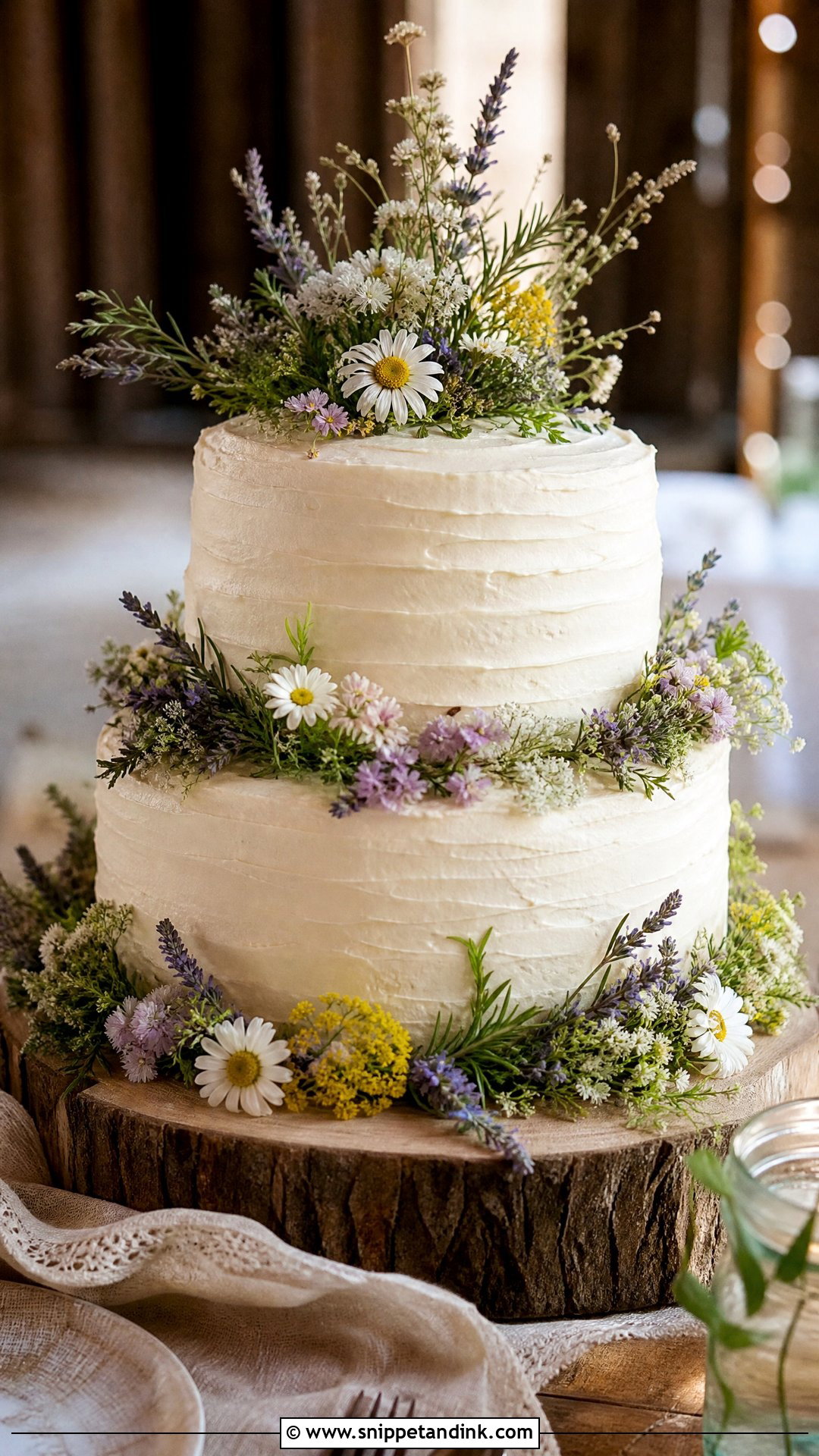
Rustic is the hardest style to get right, because gathered and messy sit close together. I use lightly textured buttercream, exposed edges and greenery, then place each flower as if it had been picked on the walk over, but with care, so nothing looks dropped. It belongs at barns, farms, woodland venues and backyards, on a wooden stand or a simple ceramic pedestal. For the inside, earthy flavors like honey almond, carrot spice or lemon thyme carry the theme through.
15. Boho Wildflower Wedding Cake
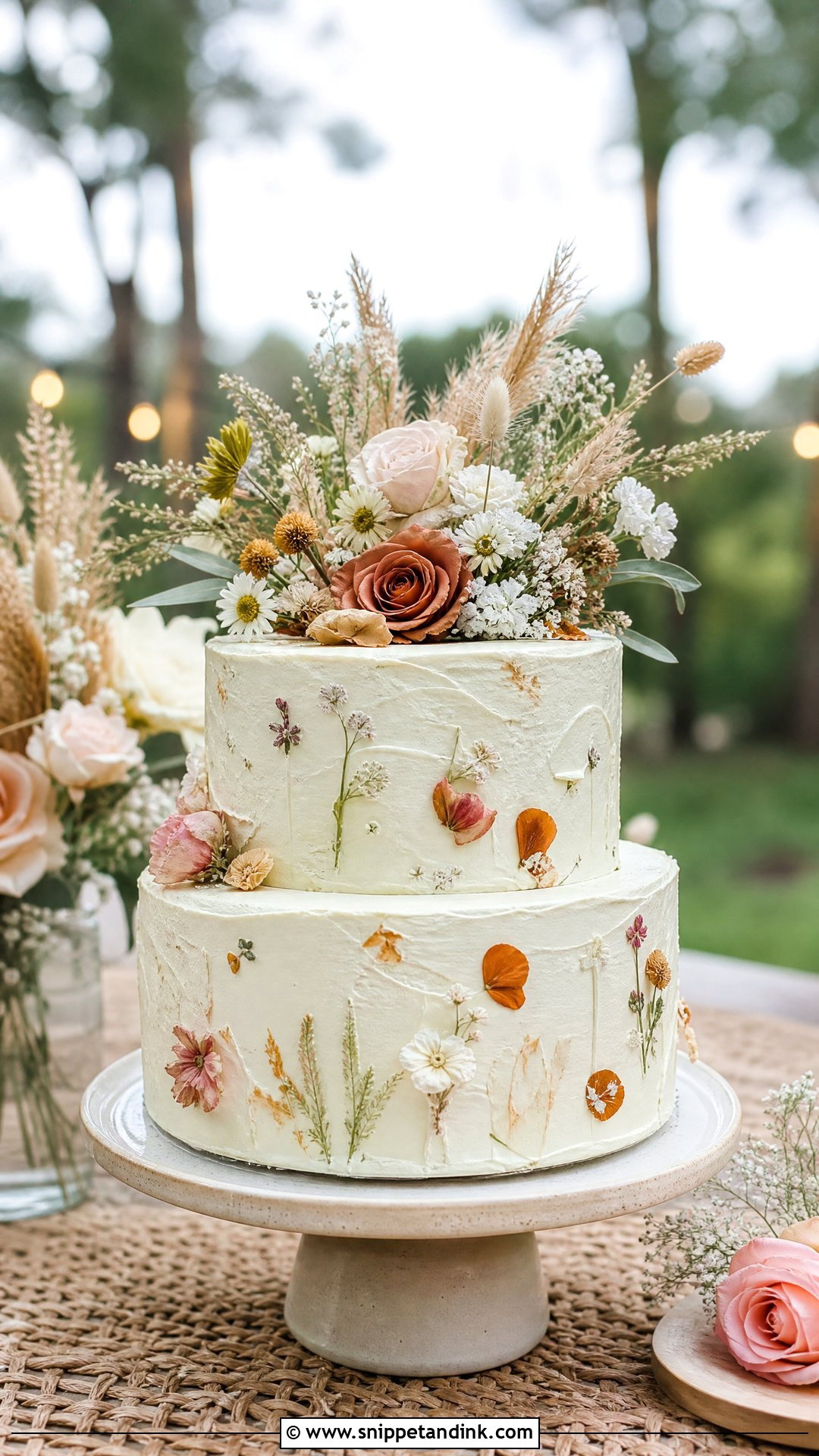
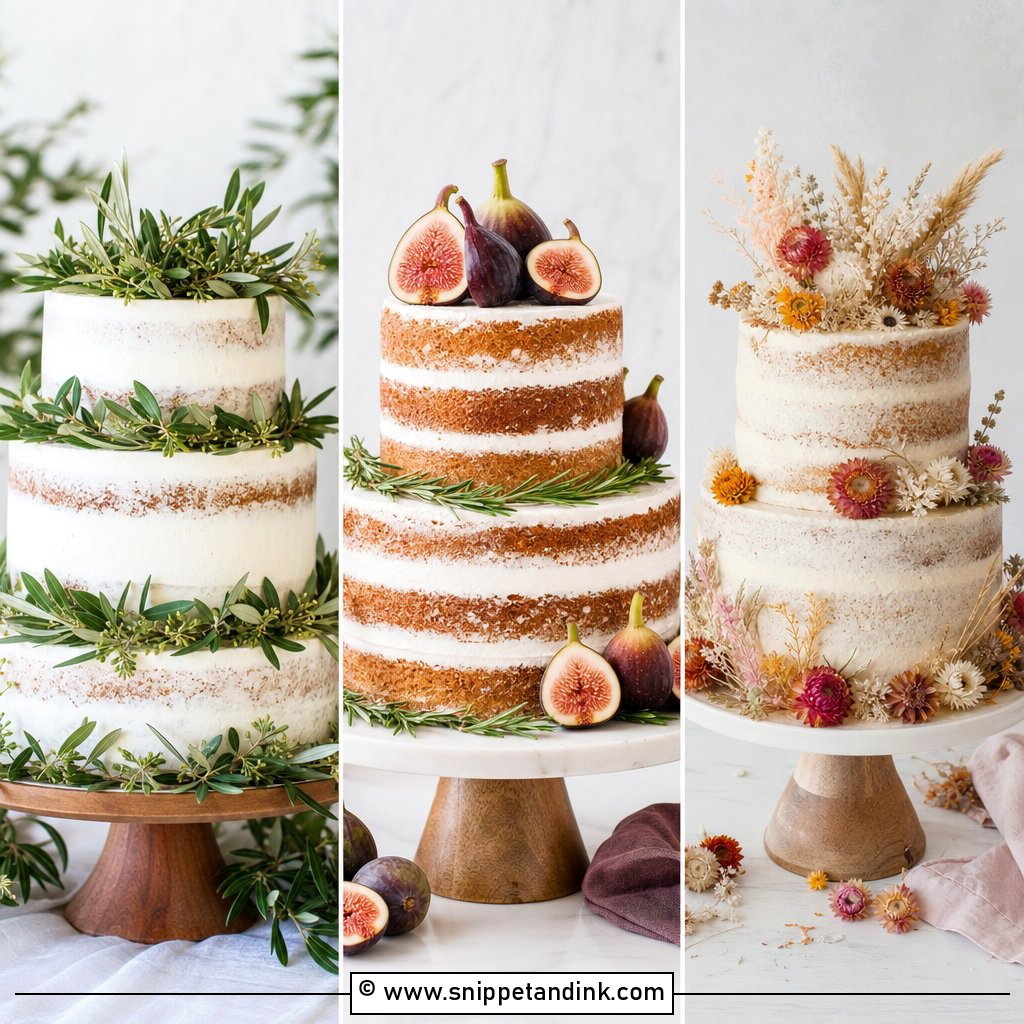
Boho versions lean on dried grasses, pressed edible petals and a handmade-looking buttercream, with a palette that can run from terracotta and dusty peach to sage and muted yellow. Dried grasses and pampas shed, and they aren’t food-safe, so I sit them on a barrier or keep them to the board rather than the tiers. Too much dried material makes the cake look heavy and brown; a few fresh-looking blooms keep it alive. Vanilla chai or pistachio raspberry suits a desert garden or a tented reception.
16. Garden Wildflower Wedding Cake
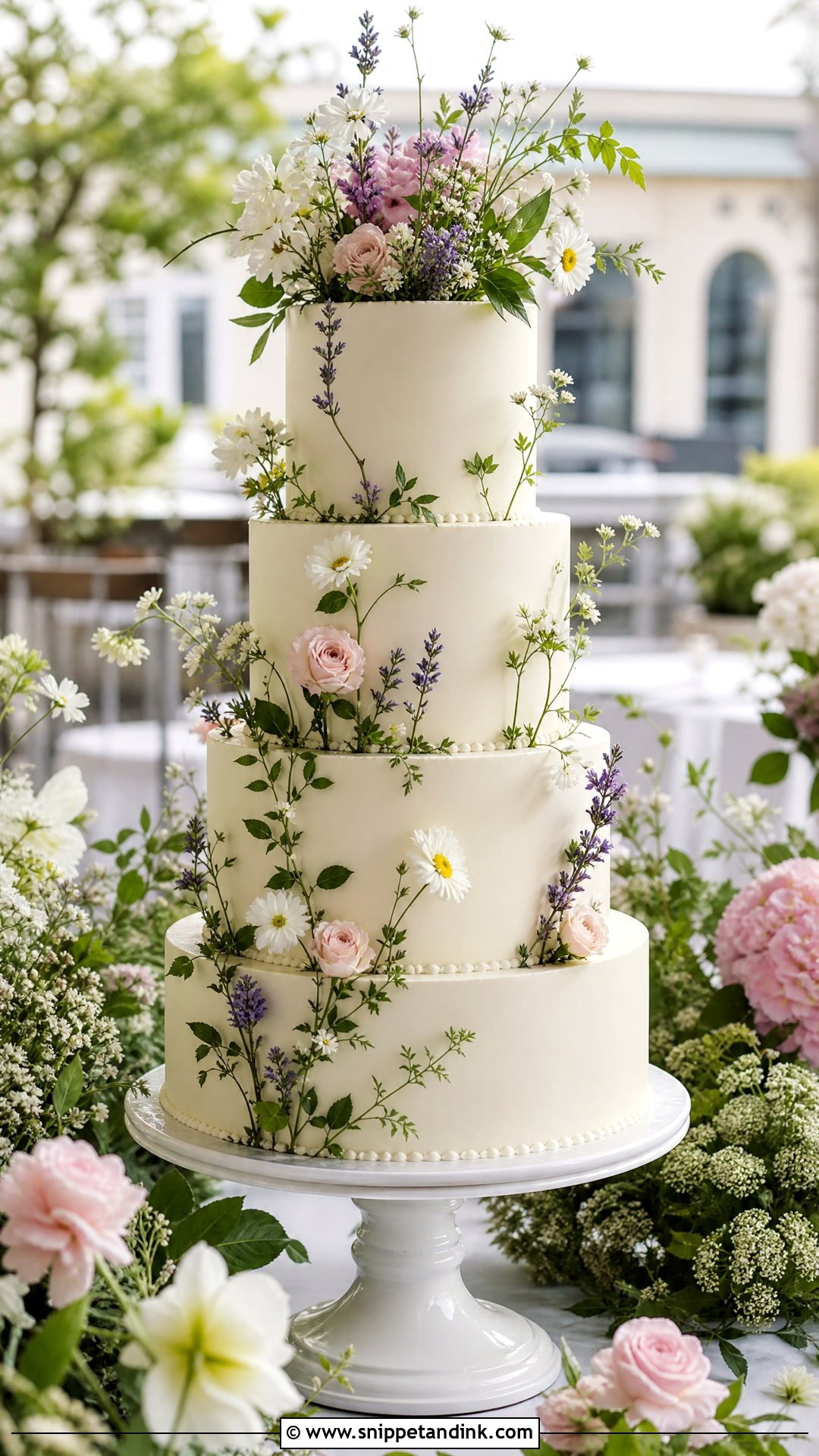
The garden version is more polished than rustic, suited to estates, courtyards and botanical gardens. Flowers either climb upward over smooth buttercream or sit in clusters on a soft texture. I build depth with a mix of small flowers, leafy stems and one or two focal blossoms, and I match the palette to your florist’s work so the cake looks like it came from the same garden as the tables. Vanilla bean, lemon elderflower and almond raspberry all suit it.
17. Meadow Wildflower Wedding Cake
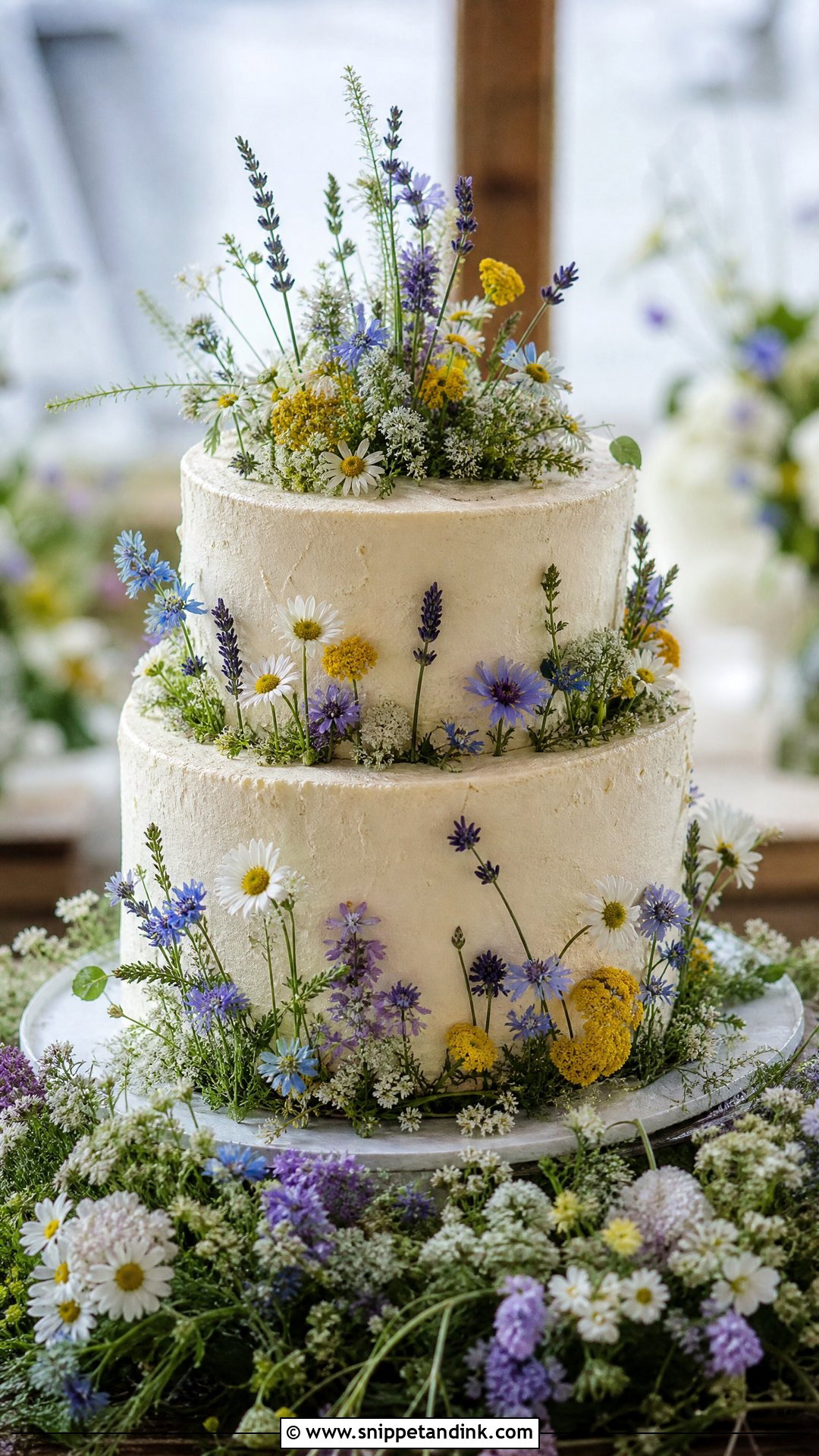
A meadow cake looks as if it’s standing in a field: blooms around the base, small flowers climbing the tiers, and loose greenery framing everything. It pairs well with low, meadow-style ceremony arrangements. My one warning is about the base. When the florist surrounds the cake with too much, guests can’t see it and the cutting photos lose it entirely, so I ask that the board stays mostly clear. A smooth or lightly textured ivory finish gives the flowers room. Honey vanilla, lemon curd or a berry filling fits the theme.
18. Vintage Wildflower Wedding Cake
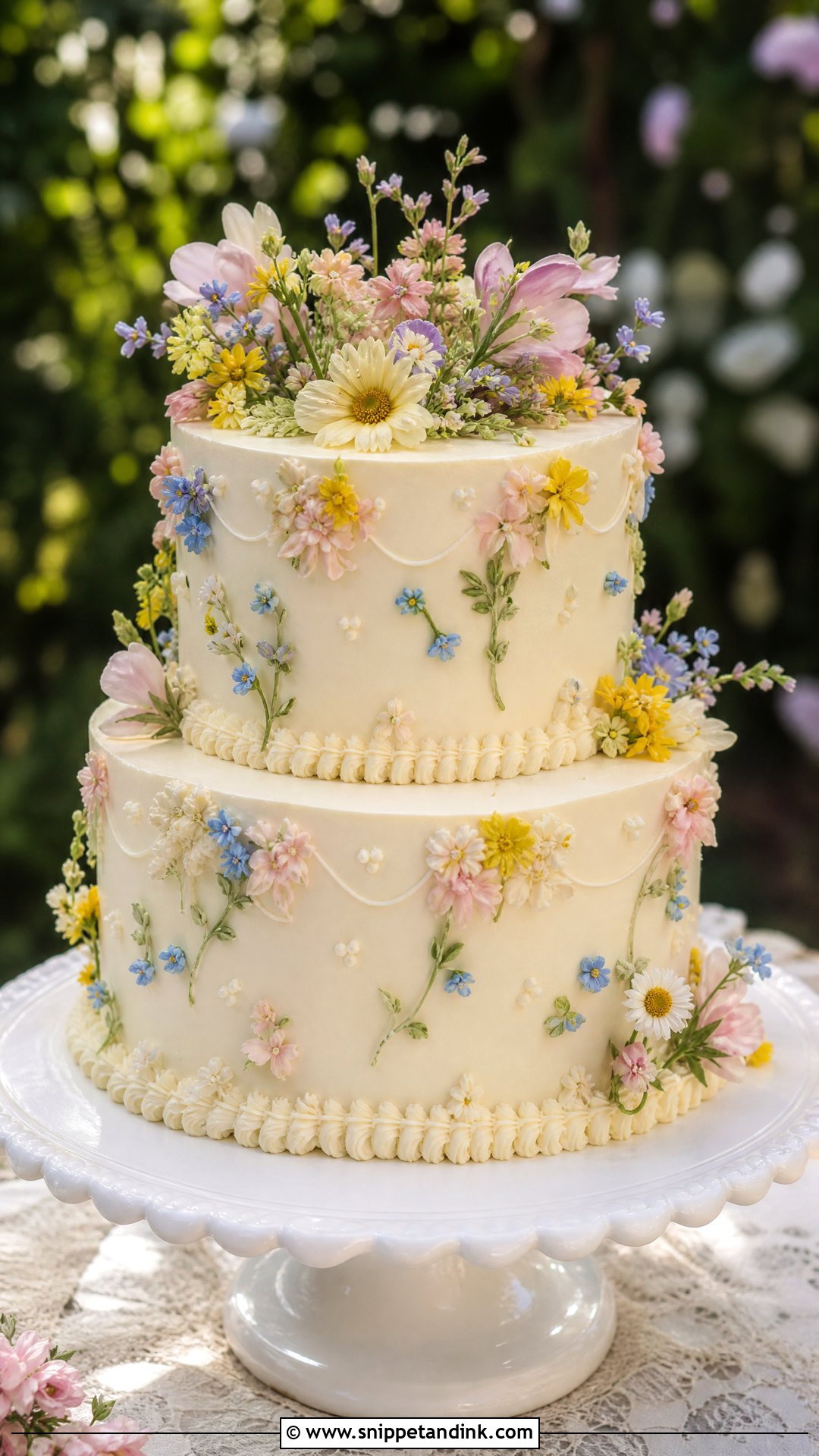
Vintage brings back piped buttercream borders, shell edging and small floral clusters, set against pastel wildflowers on each tier. Piping in buttercream softens quickly in heat, so this is a cake I prefer indoors or in a cool season. Ivory frosting with blush, pale yellow, lavender and blue flowers keeps it sweet rather than fussy, and it suits historic venues and garden parties. Classic flavors, vanilla, almond or strawberry cream, match the nostalgia, while fresh flowers stop it from feeling dated.
19. Small Wildflower Wedding Cake
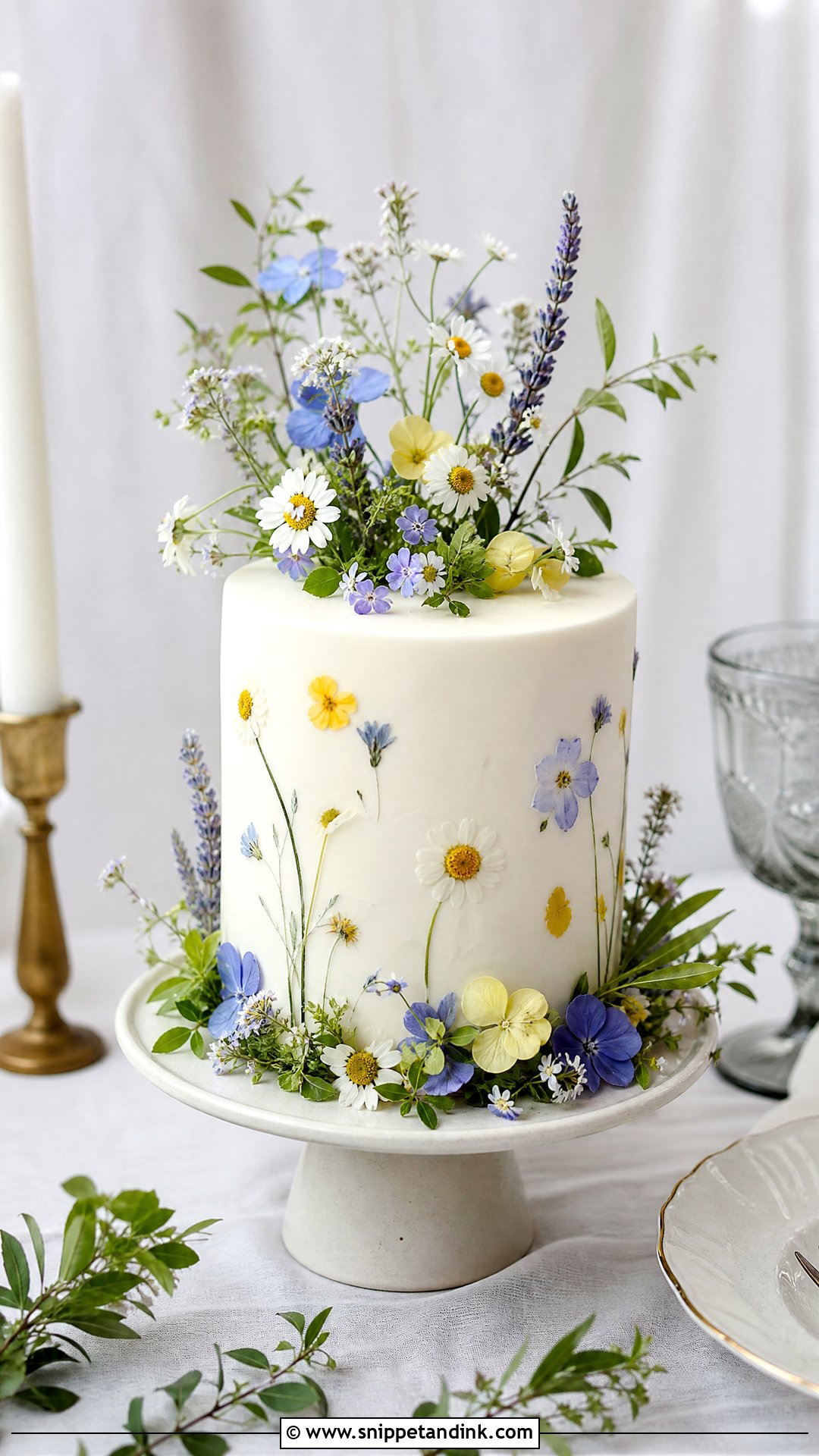
One tier is all an elopement or micro wedding needs, especially when other desserts are being served. A single tier puts every flower on show, so a crown on top, pressed petals on the sides or a small meadow at the base is enough to finish it. I usually make these taller than standard, an extended-height tier, so it still has presence on the table. It’s also the easiest size to personalize with a flower that means something to you. Lemon blueberry or vanilla honey keeps it fresh.

20. White Wildflower Wedding Cake
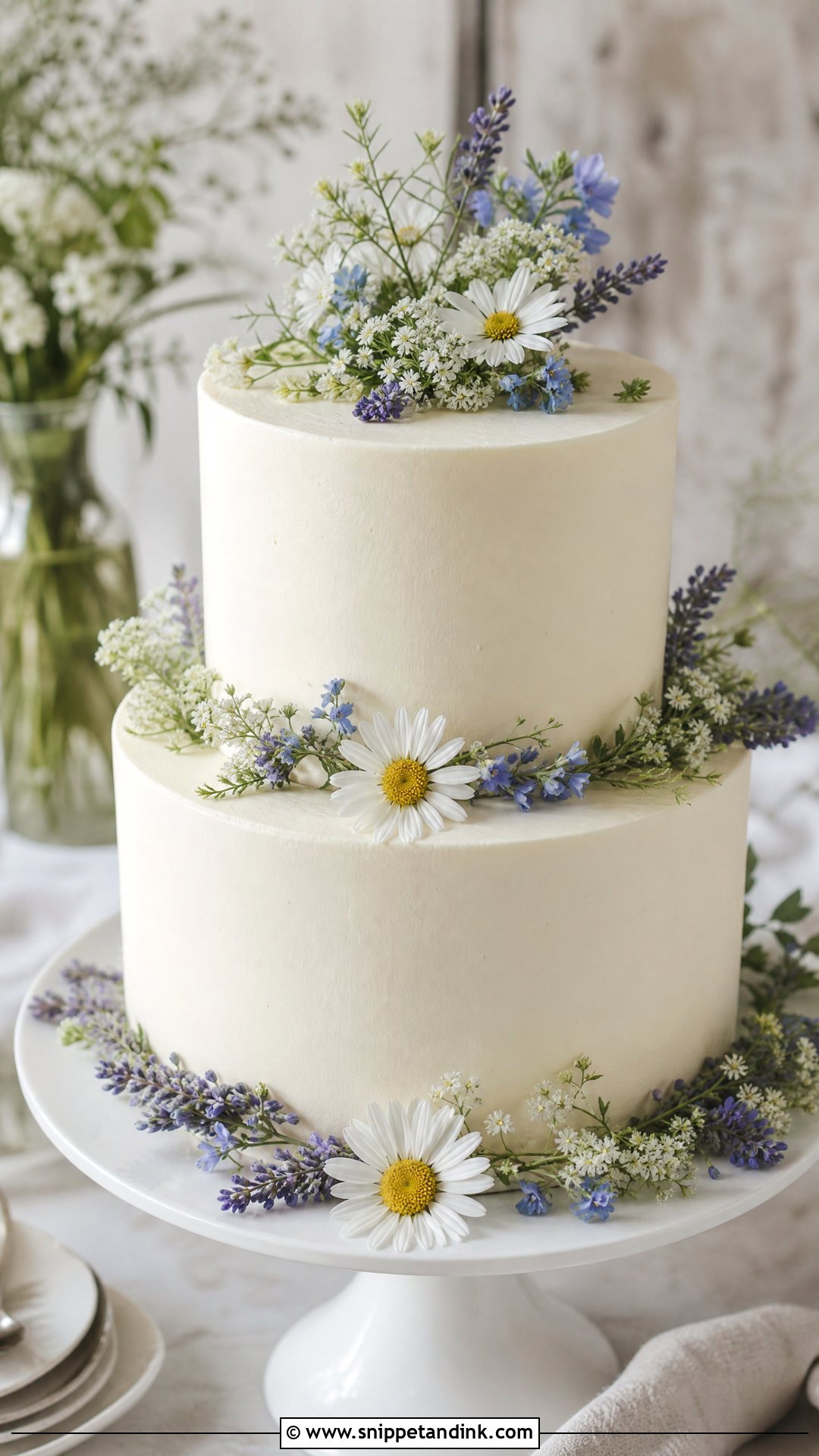
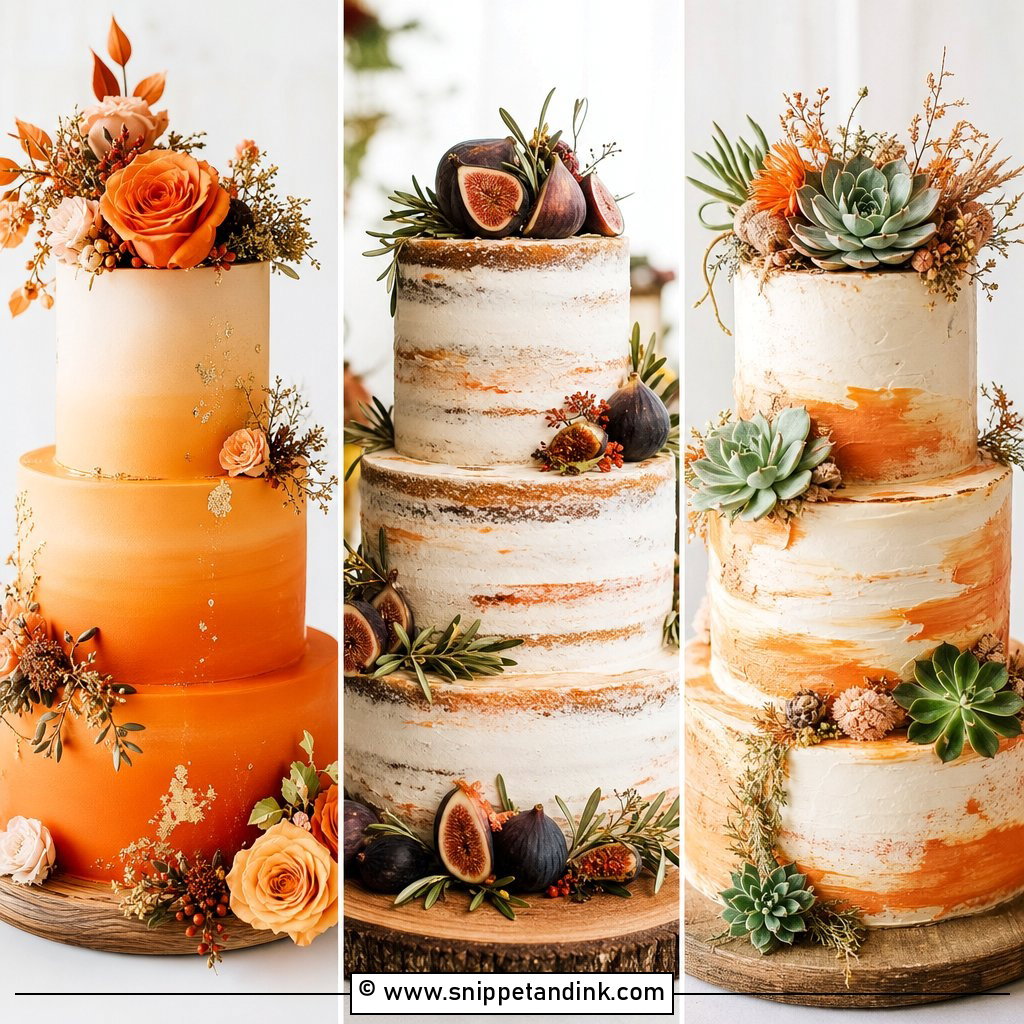
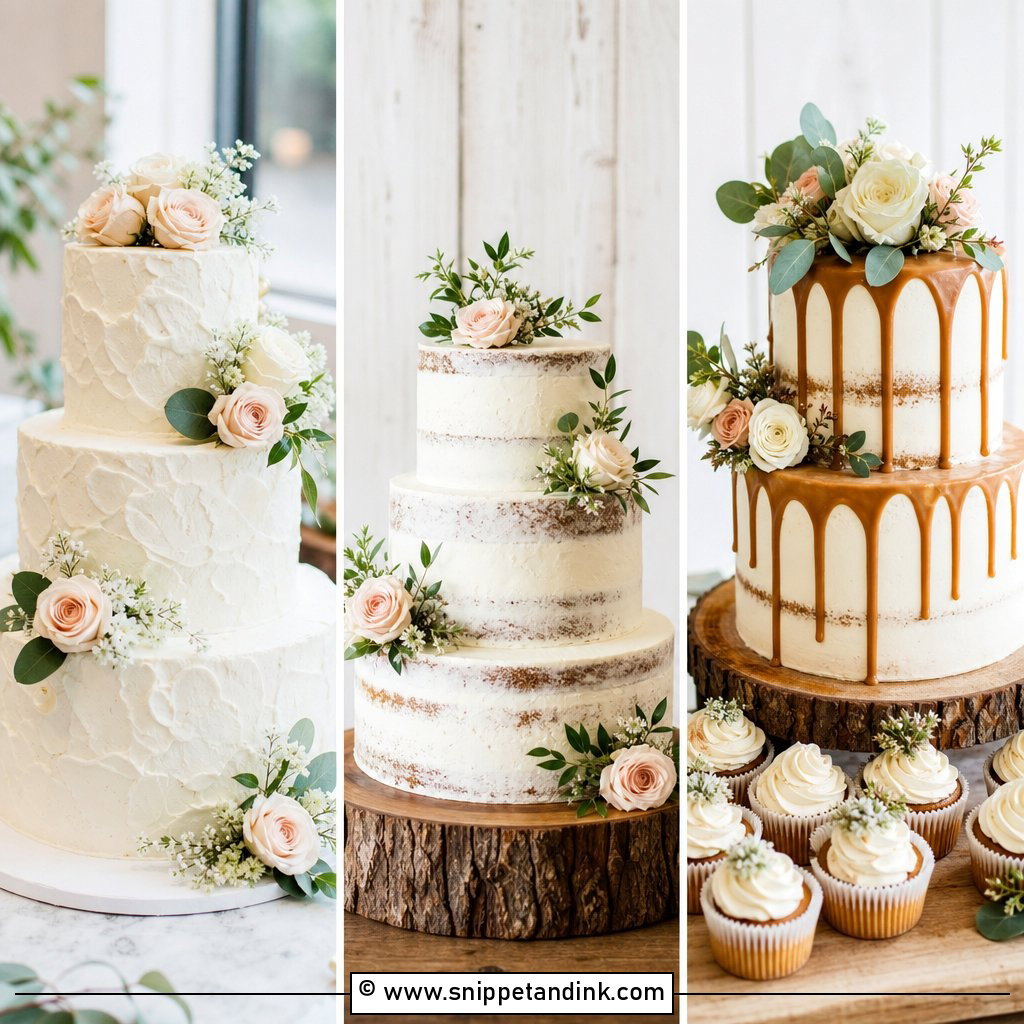
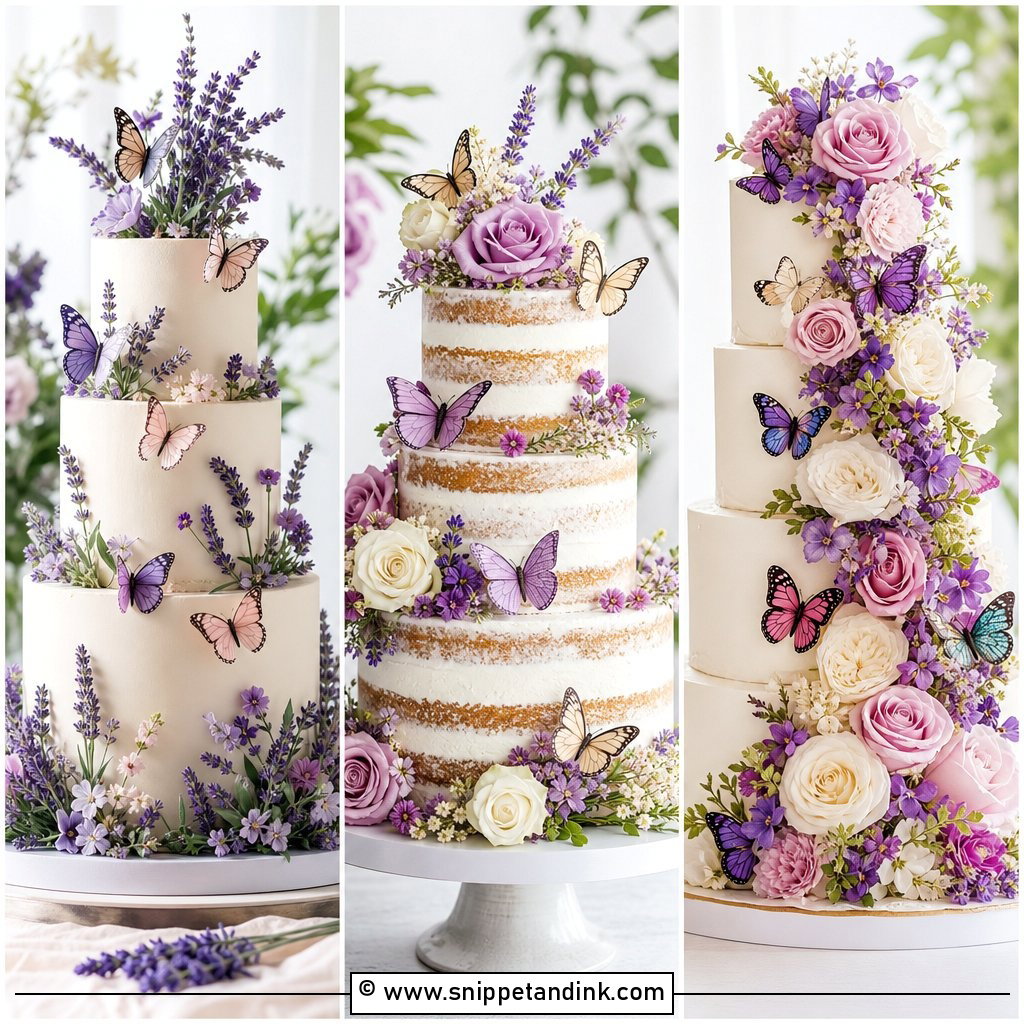
White on white is the safest version to match with any reception, because it can’t clash with the décor. Use all-white edible flowers for a monochrome cake, or add pinpricks of yellow, lavender and green for a meadow hint. Smooth buttercream gives a refined finish and soft texture a more natural one. Where I’d hesitate is a very bright white dress beside an ivory buttercream cake in photos: put a sample of each side by side under daylight before you decide which white you want. It suits every season.
What Happens to Fresh Petals Between Delivery and the Cut
A wildflower cake looks its best for a shorter window than most couples imagine. Thin-petaled blooms like violas and cornflowers start to droop within a couple of hours out of the cooler, and buttercream begins to soften in a warm room or a tent in the afternoon sun. Planning around that window matters more than any design choice.
Timing the dressing
I deliver the cake undressed or partly dressed and add the fresh flowers at the venue, as late as setup allows. Pressed petals go on at the bakery because they’re stable. Sugar flowers can travel on the cake if they’re secured, or ride separately in a box and be placed in a few minutes on site.
Where the table goes
Ask your planner to put the cake table out of direct sun and away from heaters, speakers and the dance floor, where vibration and heat both add up. If the reception is outdoors in summer, consider cutting earlier in the evening rather than leaving the cake on display for five hours. A swiss meringue or ganache-based coat also stands up to warmth better than a sweet American buttercream, which is worth discussing at your tasting.
Finally, keep a few spare stems in the cooler. If one bloom wilts badly, it can be swapped quietly before the photos, and nobody will ever know.
Start With the Reception, Then Choose the Blooms
Wildflower cakes earn their popularity because they look personal without heavy decoration, from a single pressed tier to a tall cake spilling over with flowers. My process is always the same: look at the venue and the season first, then decide on fresh, edible or sugar flowers, then the frosting, and only then the flavor. Bring your florist into the conversation early, ask your baker how the cake will hold up during setup, and you’ll end up with a cake that looks gathered and still stands up straight at the cutting.
You'll Like These Ideas:










Leave a Reply