
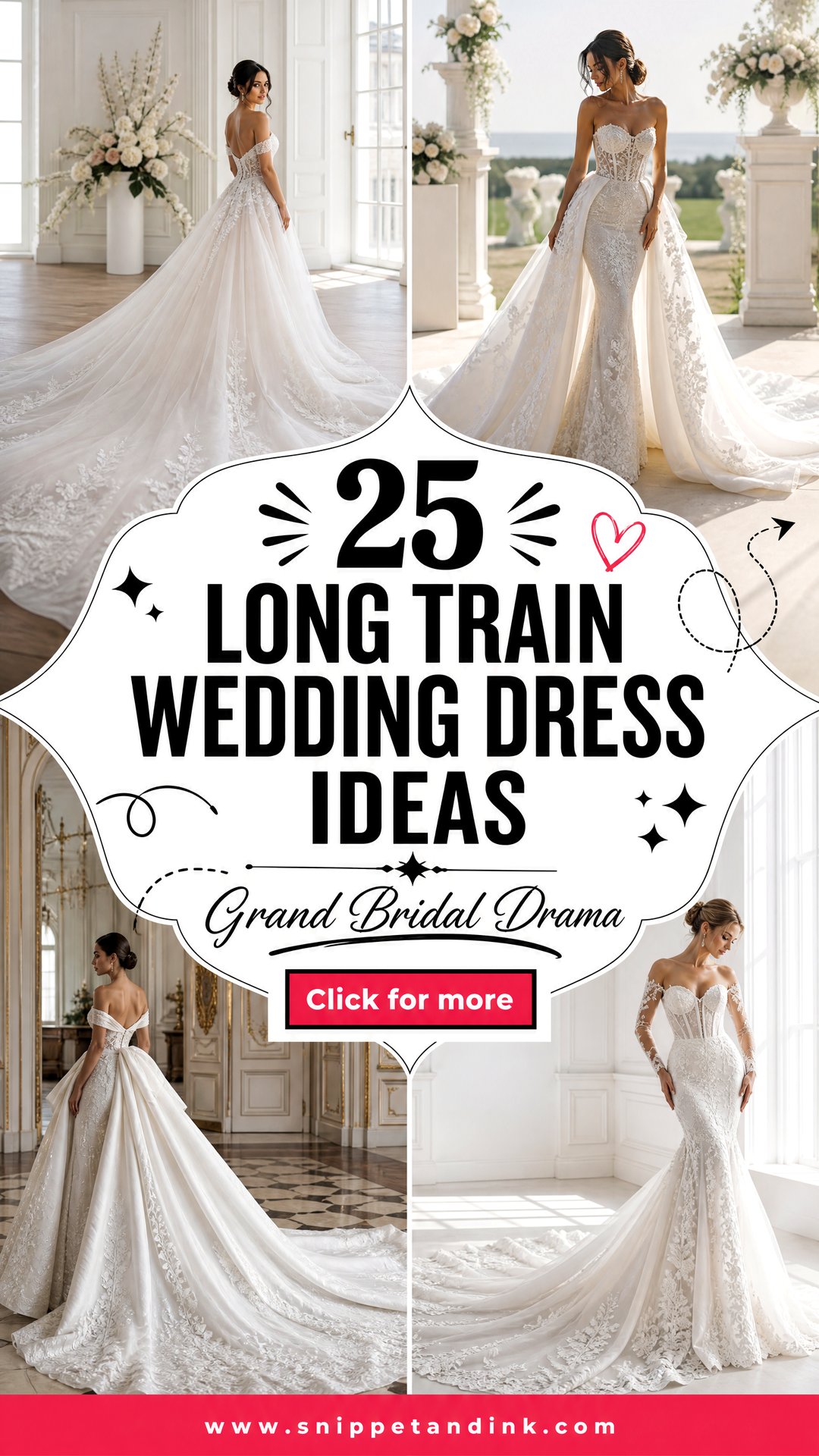
A long train changes how a bride moves, and that’s the first thing I talk through when someone falls for one. The fabric that pools so dramatically in a photo also has to follow you up steps, around corners and through a receiving line. Which length makes sense depends on your aisle, your height, the fabric and how much help you’ll have on the day. A chapel train is the length most brides manage comfortably on their own, while cathedral and royal trains turn the entrance into the main event and need a helper. Detachable trains and overskirts sit in between: all the drama for the vows, freedom for the dancing. Below are the train styles I’d consider, with what each one asks of you.
How Long Is a Cathedral Train, Really?
Train names aren’t standardized, and designers measure them differently. Some count from the waist, some from where the skirt meets the floor. As a rough guide, these are the lengths I work with when planning an aisle:
- Sweep or brush: just touches the floor behind you, around a foot or less.
- Court: a little longer, often a few feet from the waist.
- Chapel: roughly three to four feet from the waist, the most common long train.
- Cathedral: around six to seven feet from the waist.
- Royal or monarch: longer still, sometimes many feet, usually needing an attendant.
Measure your aisle and the space at the altar before you order. A cathedral train needs room to be spread out behind you while you stand for the vows, and in a small chapel or registry office it ends up bunched against the front pew. If the venue has stairs, a winding path or a narrow doorway, a shorter train or a detachable one will save you a lot of lifting.
1. Cathedral Train Wedding Dress
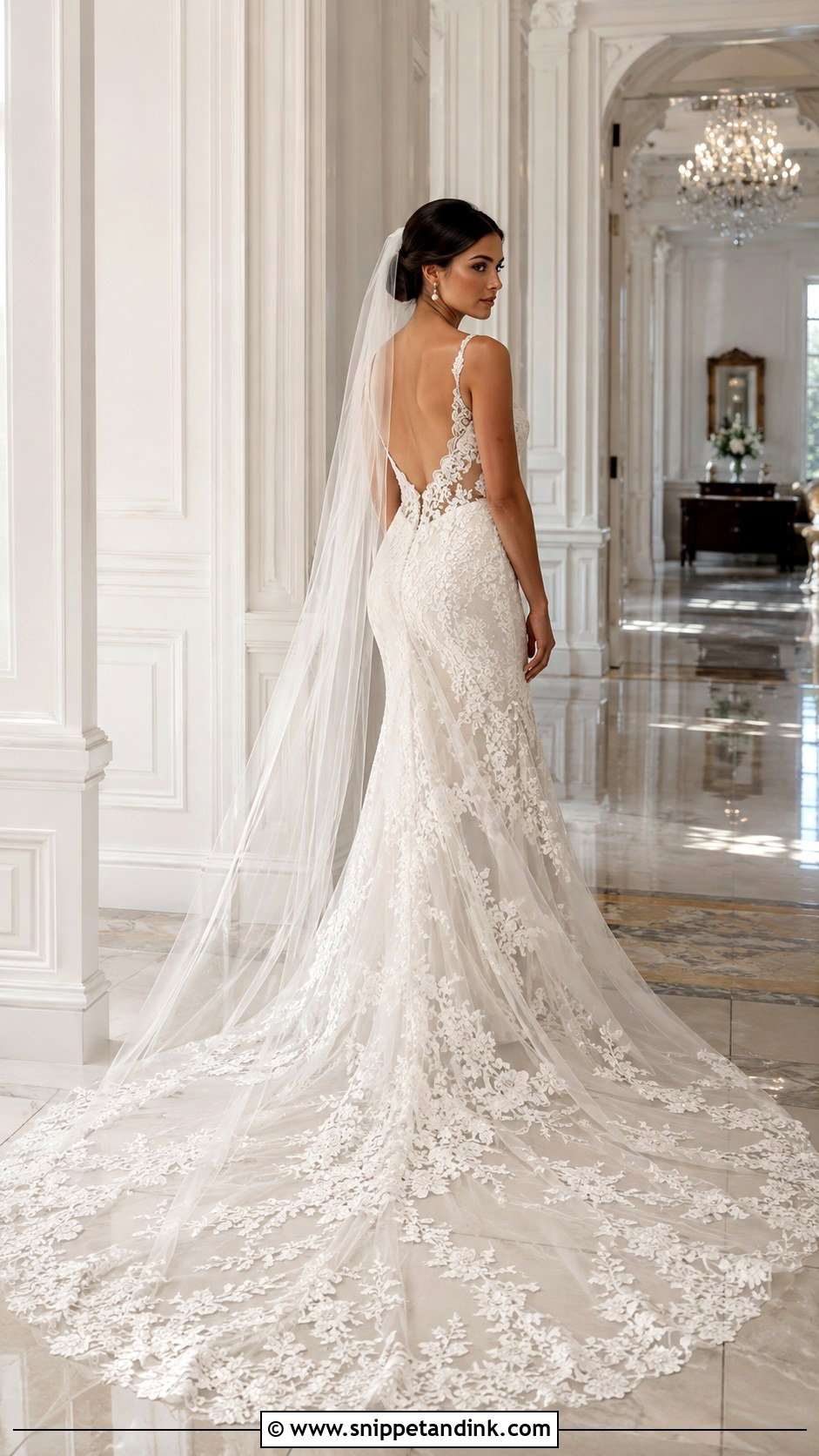
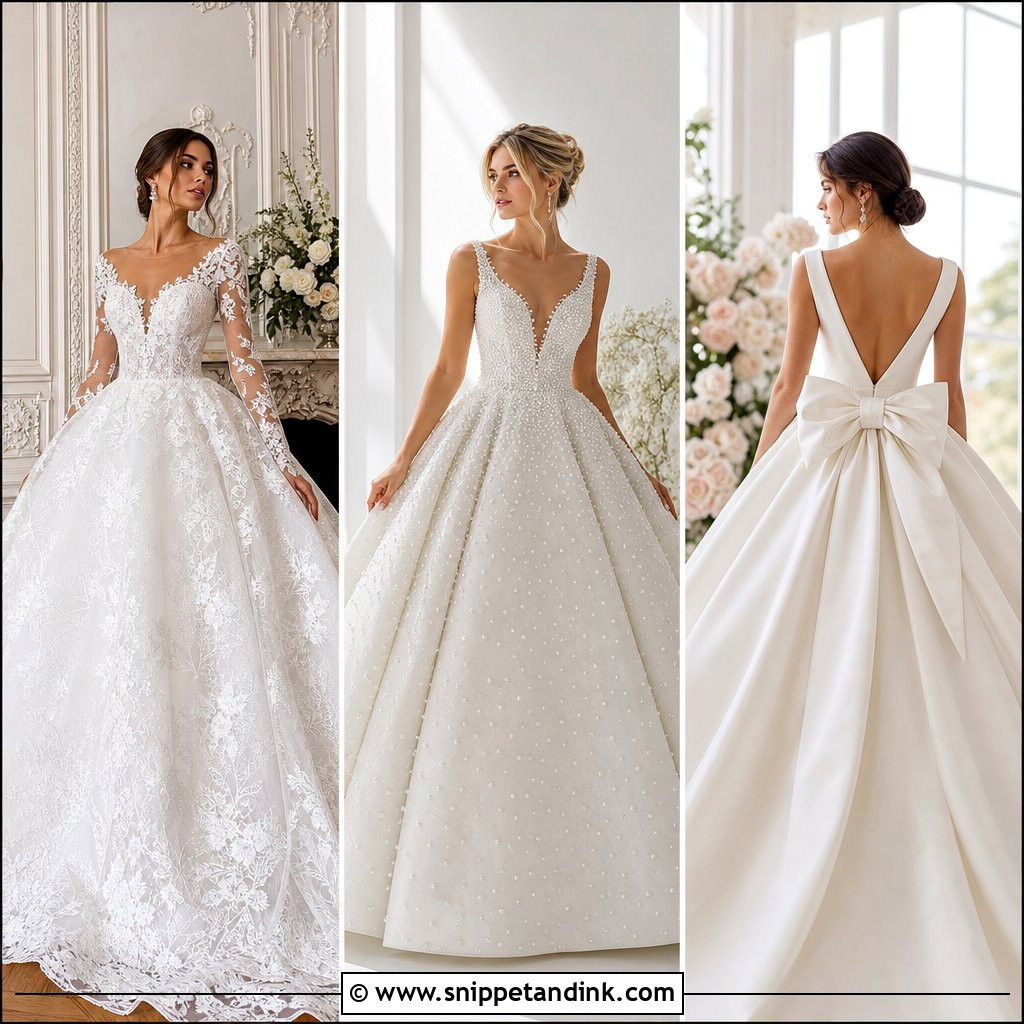
A cathedral train wedding dress gives you the long sweep down the aisle without the logistics of a royal train. It suits a structured ball gown or a clean satin fit-and-flare equally well. My rule for the veil: if the train carries heavy lace or beading, keep the veil plain, and if the gown is plain, a lace-edged cathedral veil can carry the detail instead. Ask about the bustle at your very first fitting, because a train this long needs several attachment points to hang neatly afterwards.
2. Royal Train Wedding Dress
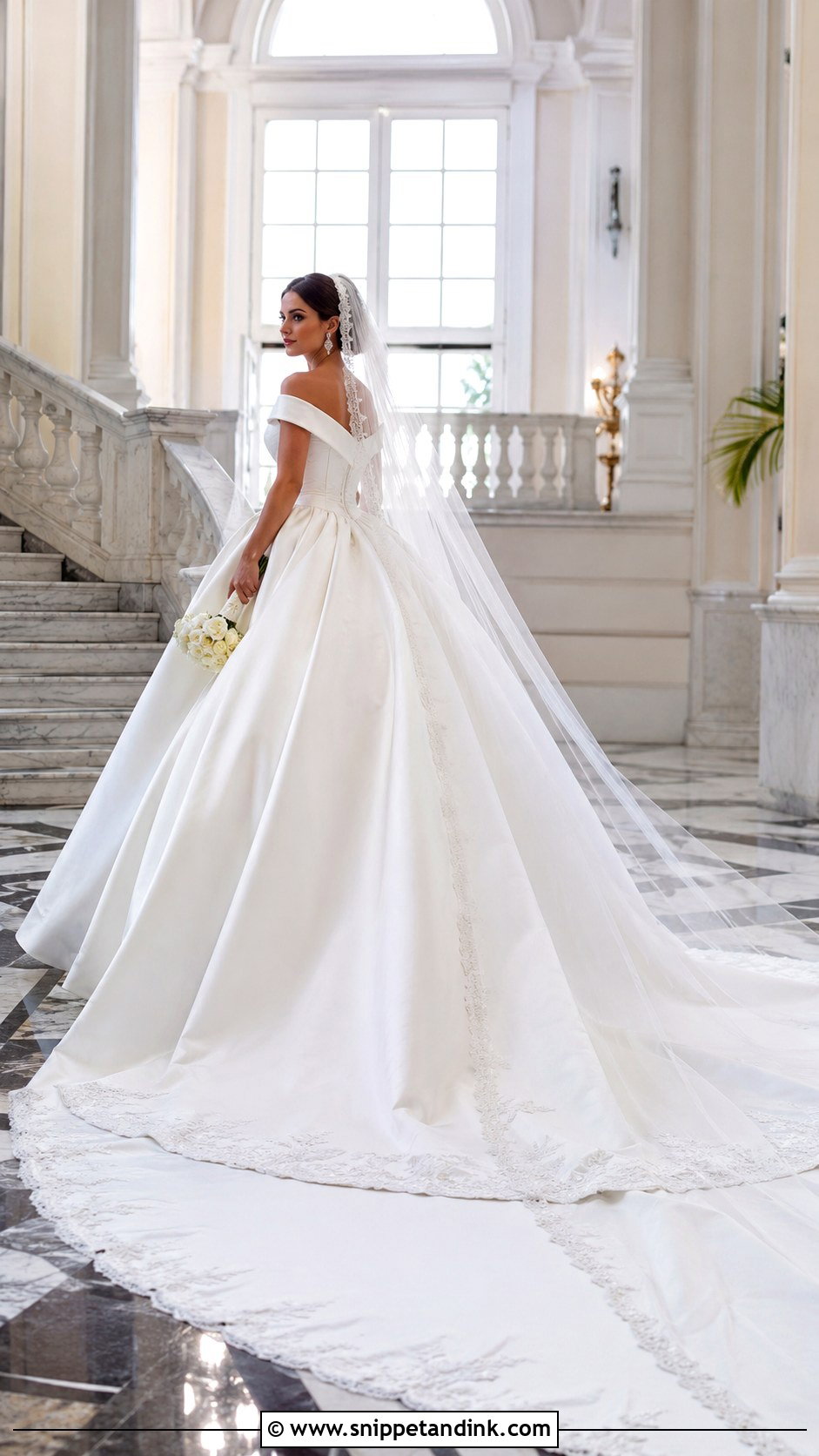
The royal train is the longest and the least forgiving. It needs a wide aisle, a ceremony space with room to lay it out, and usually two people to manage it at the turn. Because the back of the gown does all the talking, I keep the front simple and supportive, with a well-boned bodice that won’t be pulled backwards by the weight behind it. Mikado and brocade hold a royal train’s shape; layered tulle is lighter but tangles. For the reception, a detachable version is close to essential.
3. Chapel Train Wedding Dress
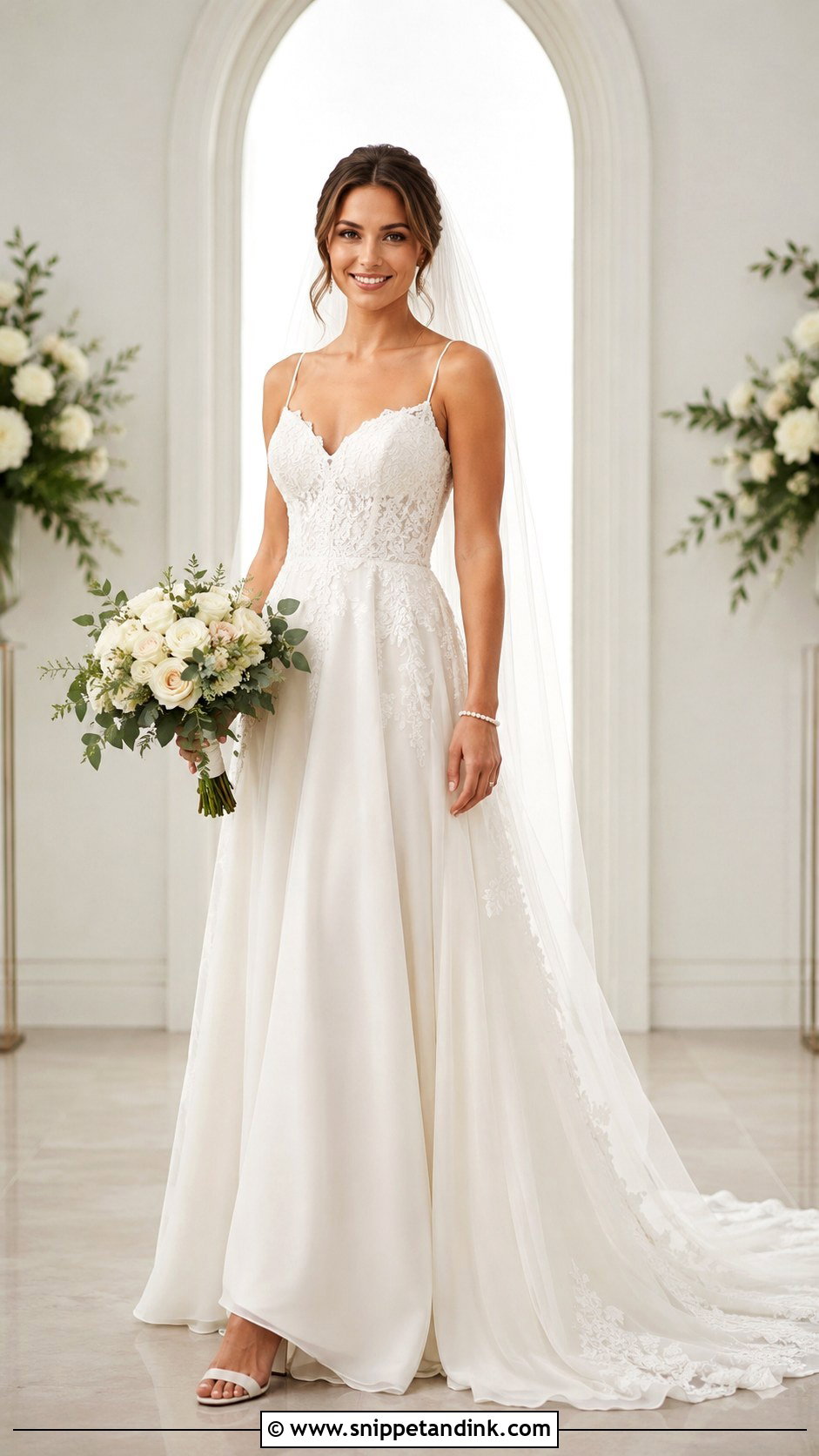
Chapel length is the one I recommend most often. It’s long enough to look bridal from the back of the room, short enough to bustle simply, and it works on an A-line, a sheath or a soft tulle skirt. Outdoors, it lifts out of the grass more easily than anything longer. A simple veil, pearl earrings and a classic heel are all it needs.
4. Lace Long Train Wedding Dress
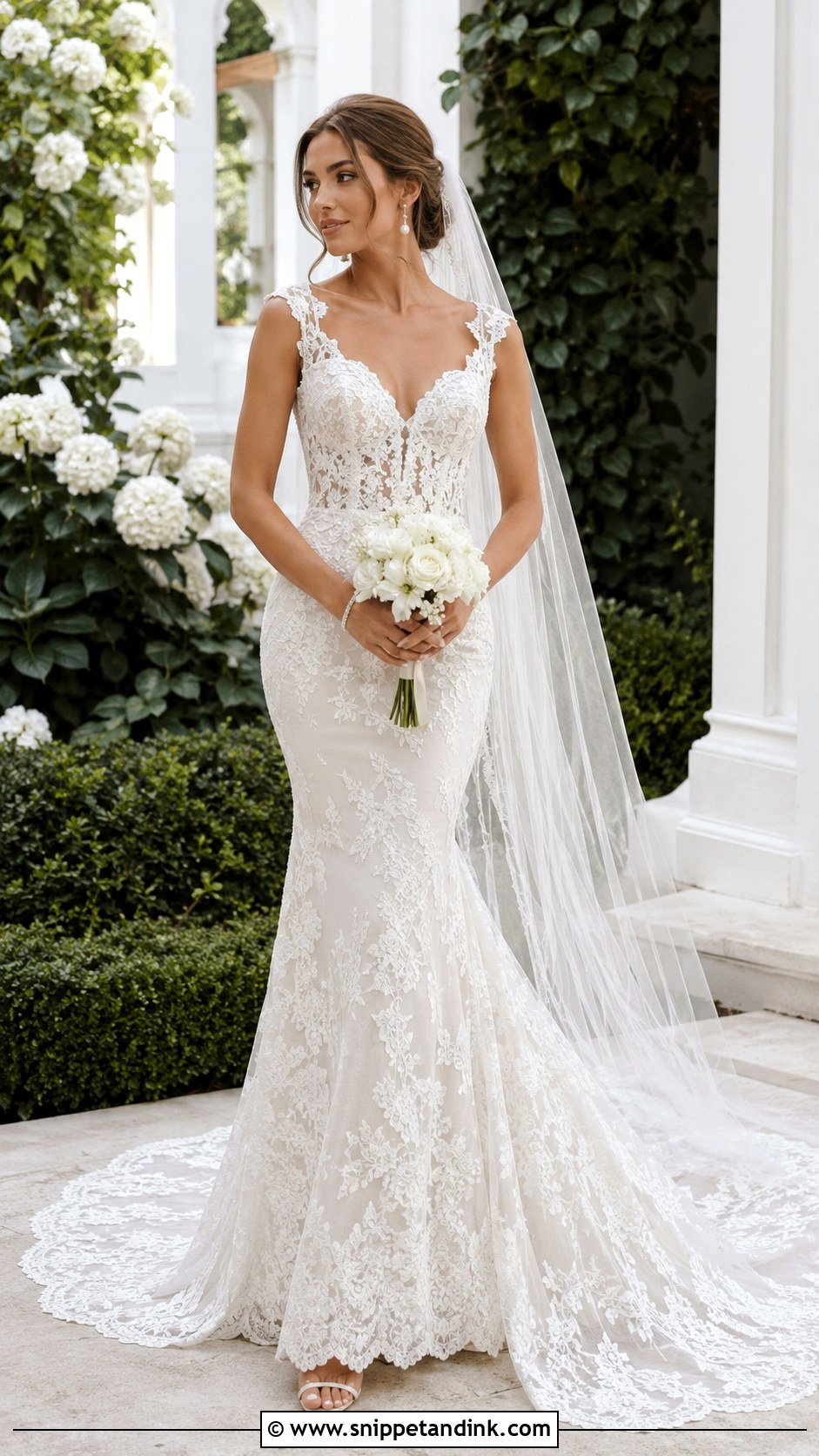
Lace on a long train is all about the pattern reaching the floor. When the lace continues from bodice to hem, the train becomes the most detailed part of the dress, and a scalloped edge or an illusion base lets the motifs show clearly against the aisle runner. Floral lace reads soft; geometric lace looks more current. One warning from fittings: lace trains catch on rough stone and wooden benches, so I check the ceremony floor before I fall in love with a delicate Chantilly.
5. Satin Long Train Wedding Dress
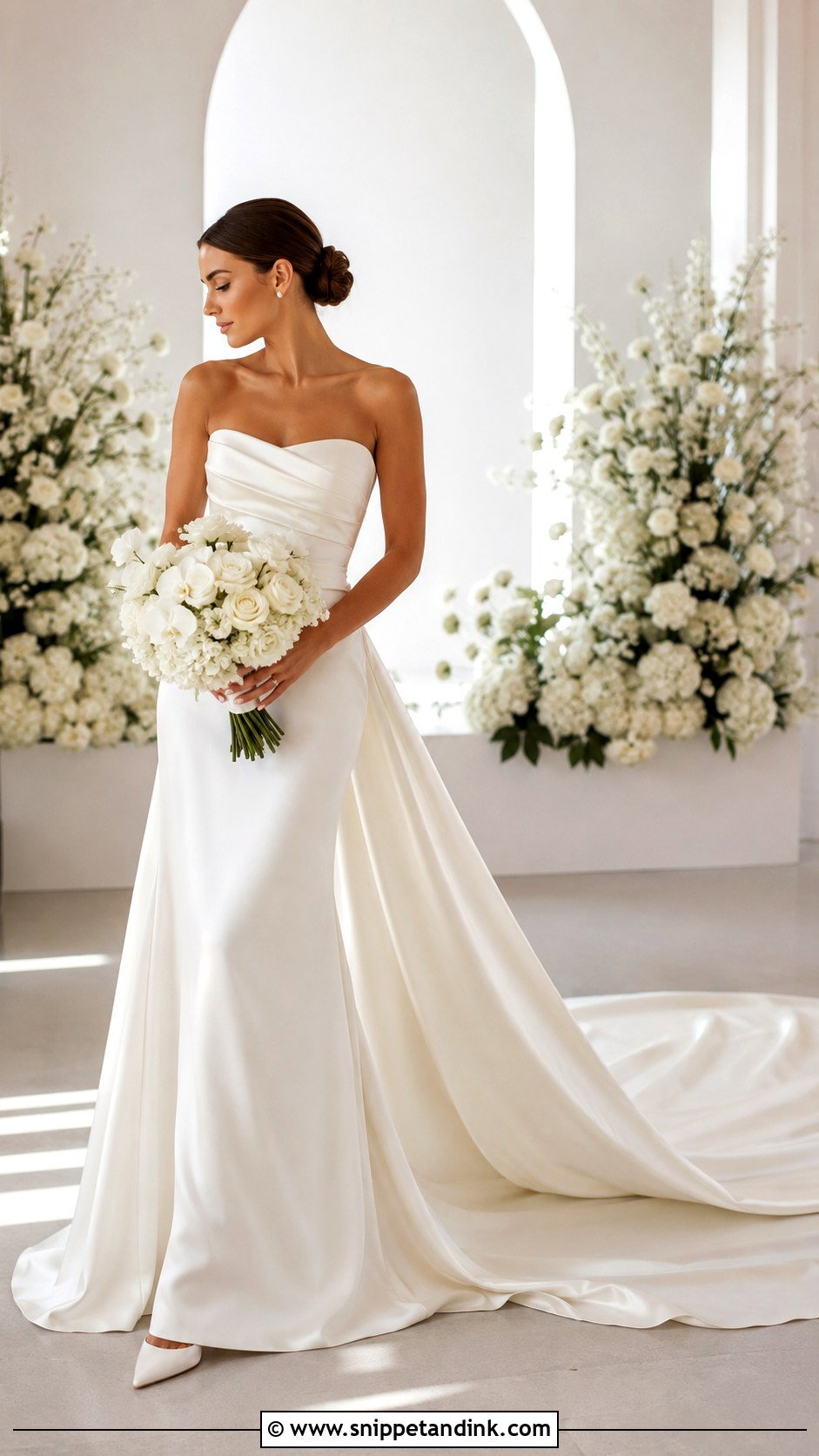
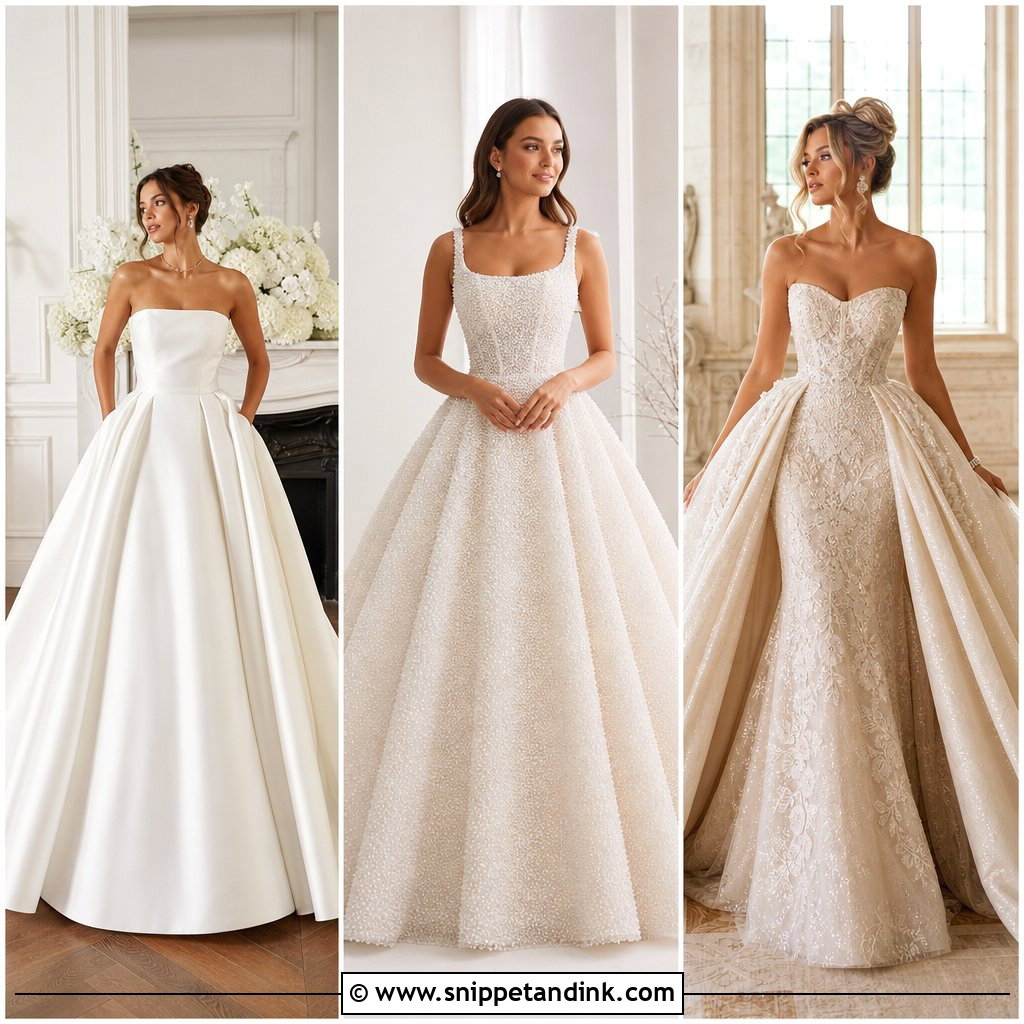
Satin gives the cleanest line of any train fabric because it falls in one smooth sheet behind you. A strapless neckline makes it classic; long sleeves make it more formal. Satin also shows every crease, so the train needs to be steamed on site and carried, not dragged, between the car and the ceremony. With that much surface shine, accessories can be minimal: a sleek bun, pearl studs and a pointed heel.
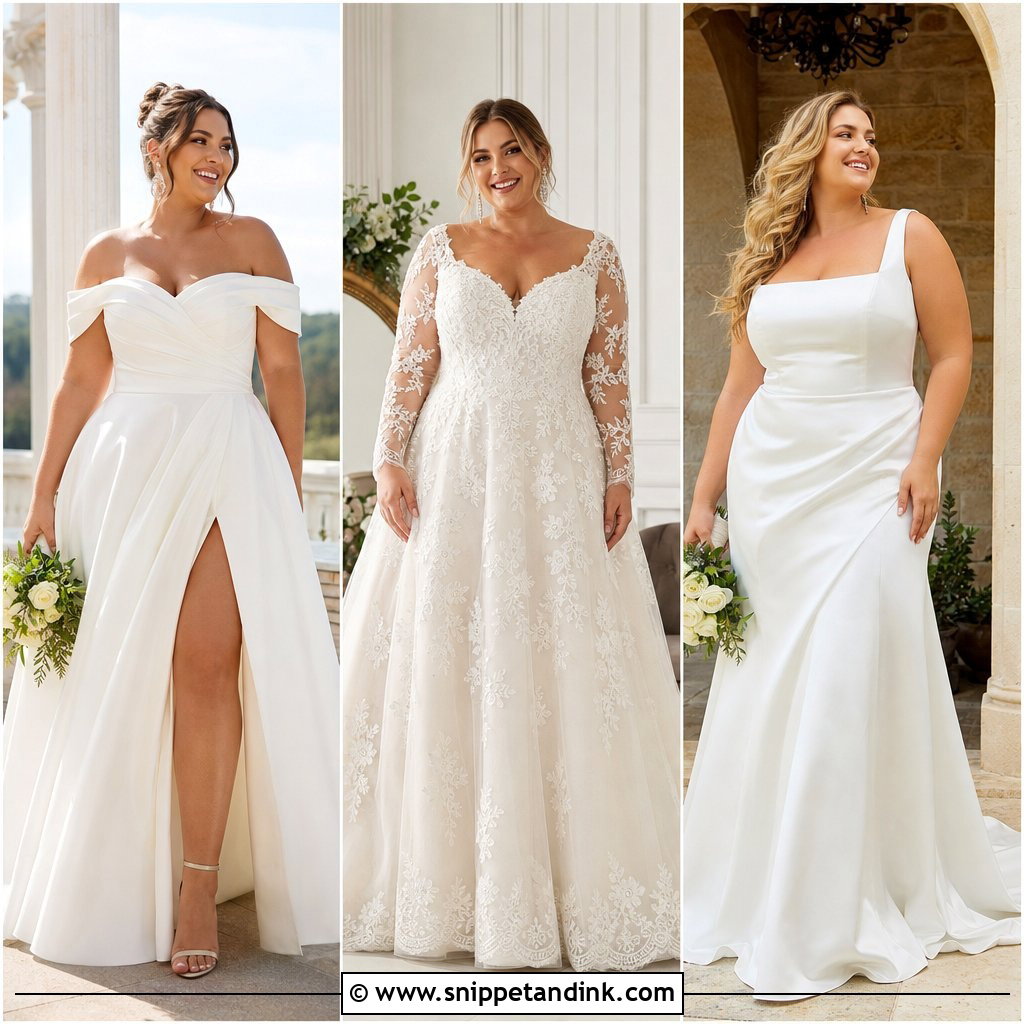
6. Long Sleeve Wedding Dress With Long Train
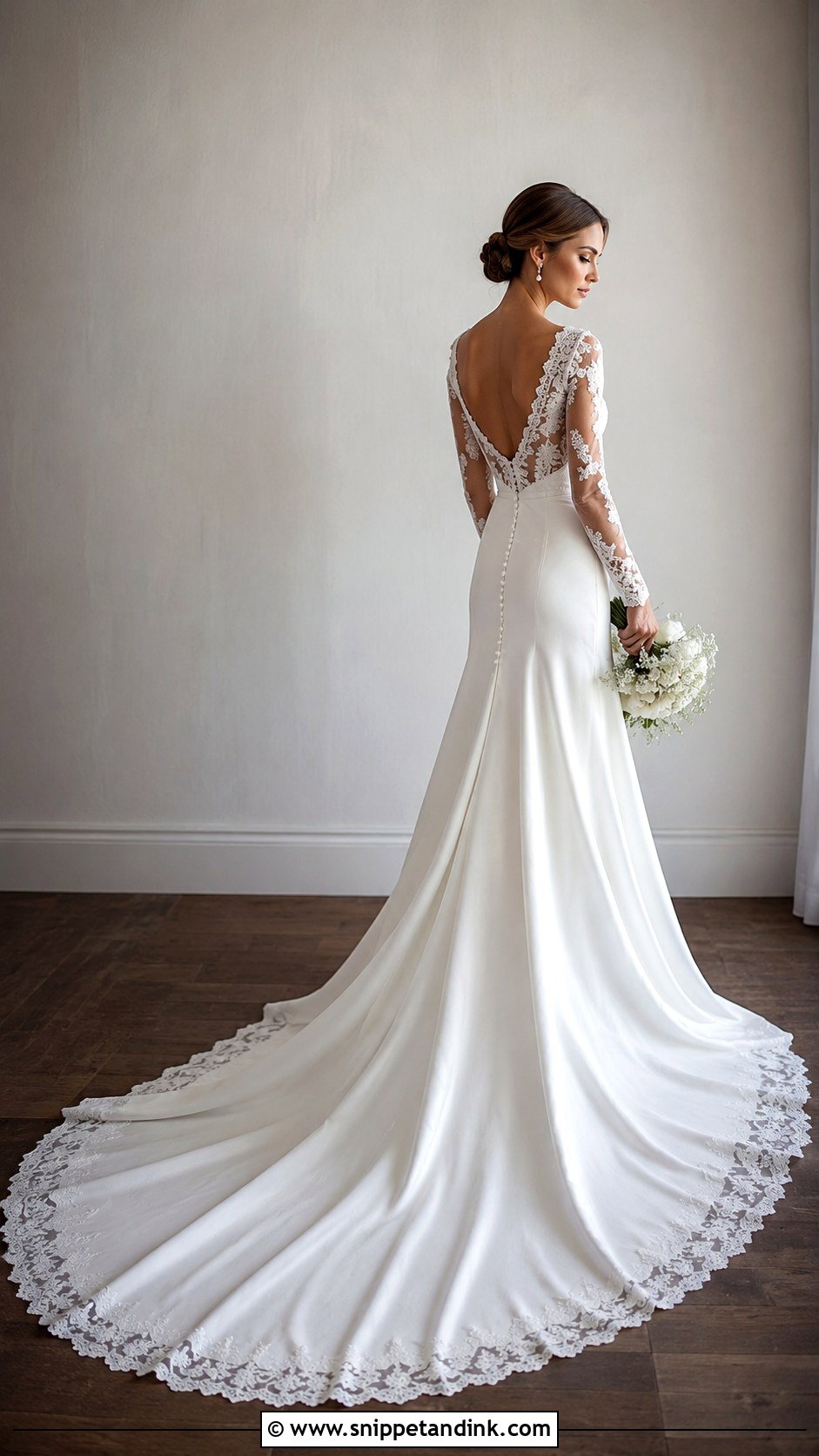
Sleeves and a long train balance each other well. Sheer lace sleeves feel romantic, while crepe or satin sleeves look sharper and more modern. This combination is a natural fit for autumn and winter or for a bride who simply wants her arms covered. I always check one thing at the fitting with sleeves plus a heavy train: lift your arms as if to hug someone. If the train’s weight pulls the bodice back when you move, the shoulders need adjusting. Keep the hair low and neat so the neckline stays visible.
7. Off Shoulder Wedding Dress With Long Train
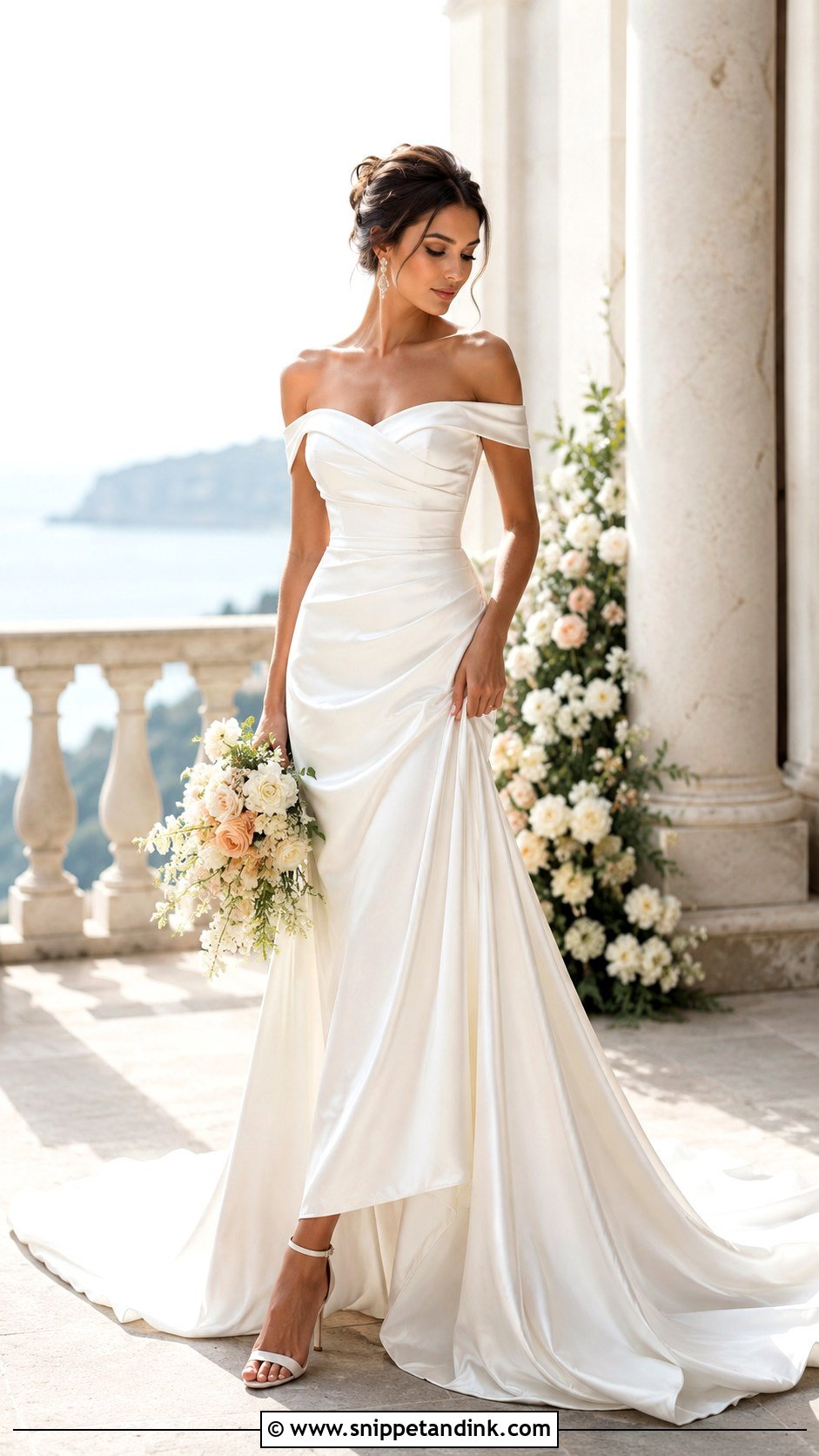
An off-shoulder neckline frames the collarbones while the train moves behind you, and it works on a mermaid shape as easily as a ball gown. Satin or lace keeps it classic; tulle or organza softens it. I skip necklaces with this neckline and go straight to earrings. The thing I test hardest is arm movement: off-shoulder straps can restrict how high you raise your arms, which matters when you’re holding a bouquet or hugging guests for hours.
8. Mermaid Wedding Dress With Long Train
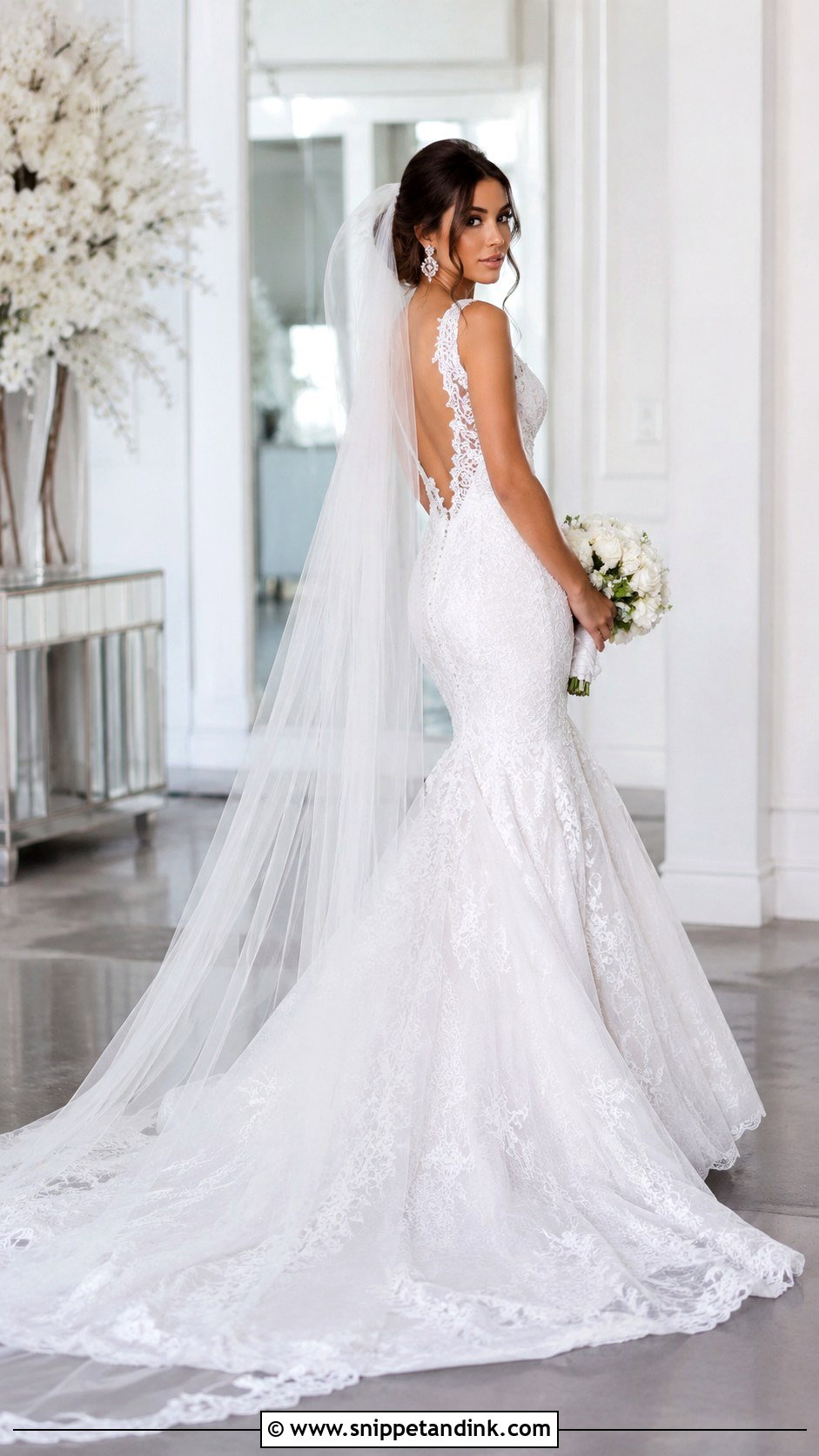
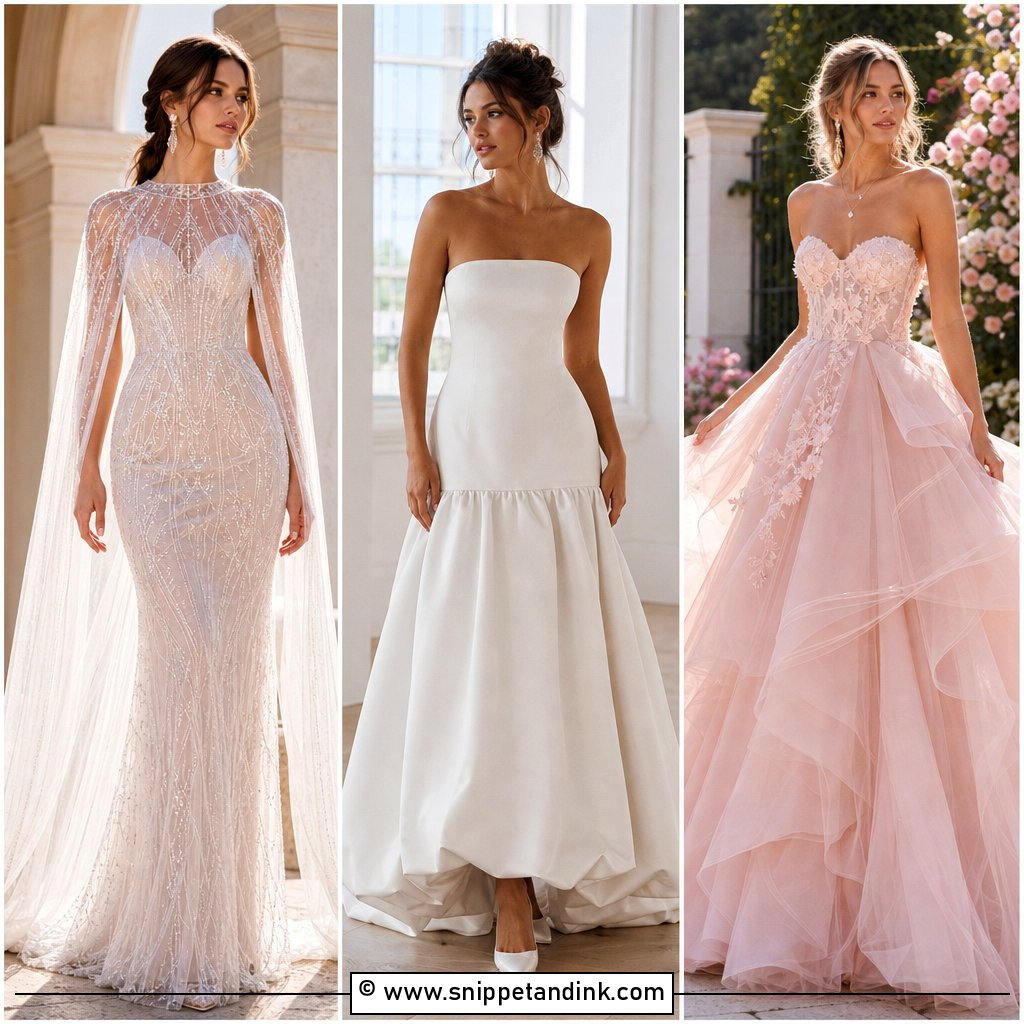
A mermaid dress fits through the bodice and hips, then flares near the knee, and a long train balances that sculpted line from behind. Crepe makes it modern; lace makes it romantic. It photographs especially well from the side and back. But I always make brides sit, walk and climb a step at fittings, because the flare point determines how freely your legs move. The bustle matters even more here: a heavy train hanging from a fitted skirt drags on the hips by the evening.
9. Ball Gown Wedding Dress With Long Train
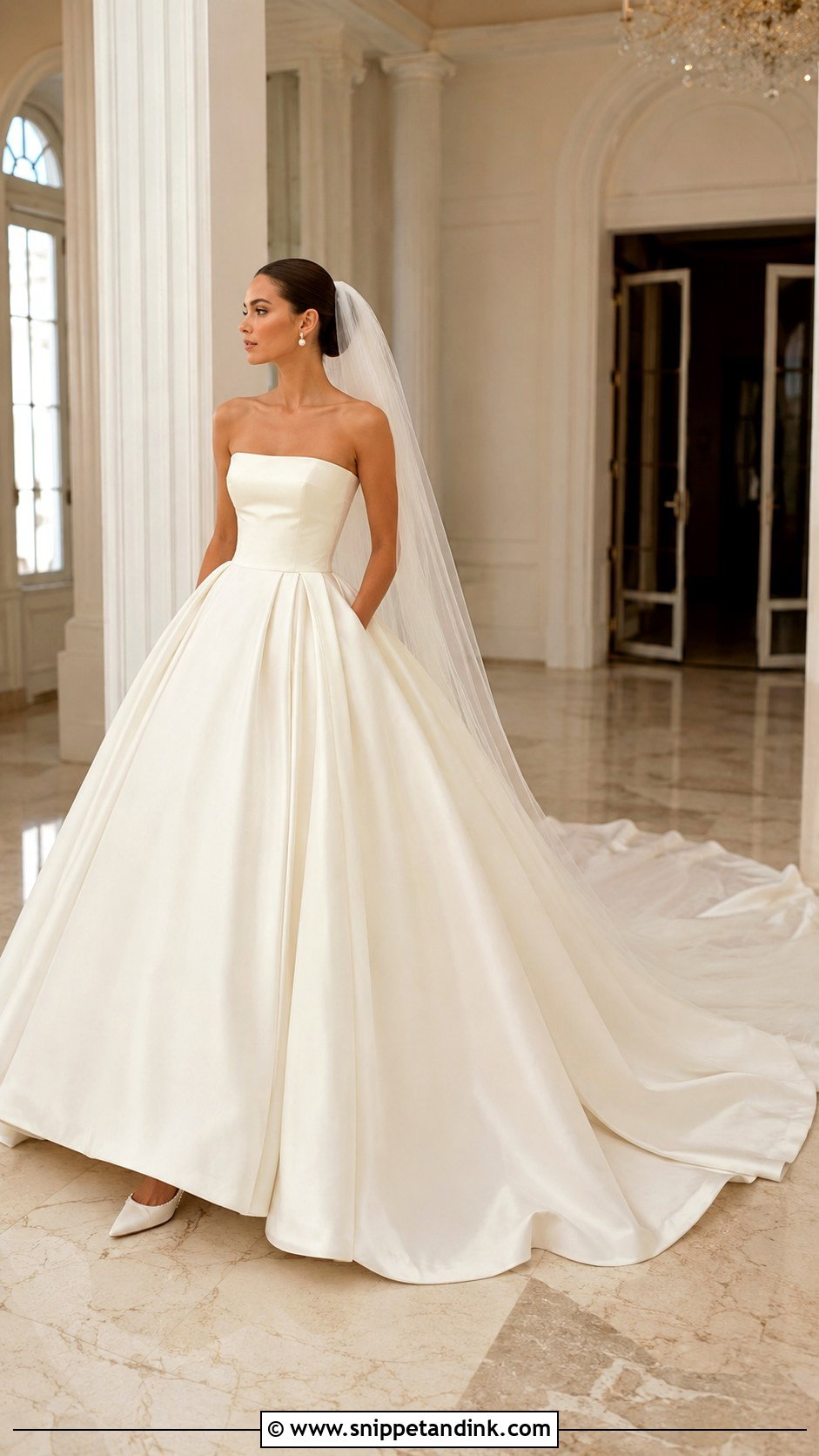
A ball gown supports a long train naturally because the wide skirt gives it somewhere to flow from. Tulle keeps it airy; satin or mikado makes it formal. Any of the classic necklines suit it. The detail people forget is the bouquet: with a full skirt and a long train, an oversized bouquet hides the waist, so I keep the flowers medium and easy to hold in one hand. Choose a venue where the photographer has room to lay the whole train out.
10. A Line Wedding Dress With Long Train
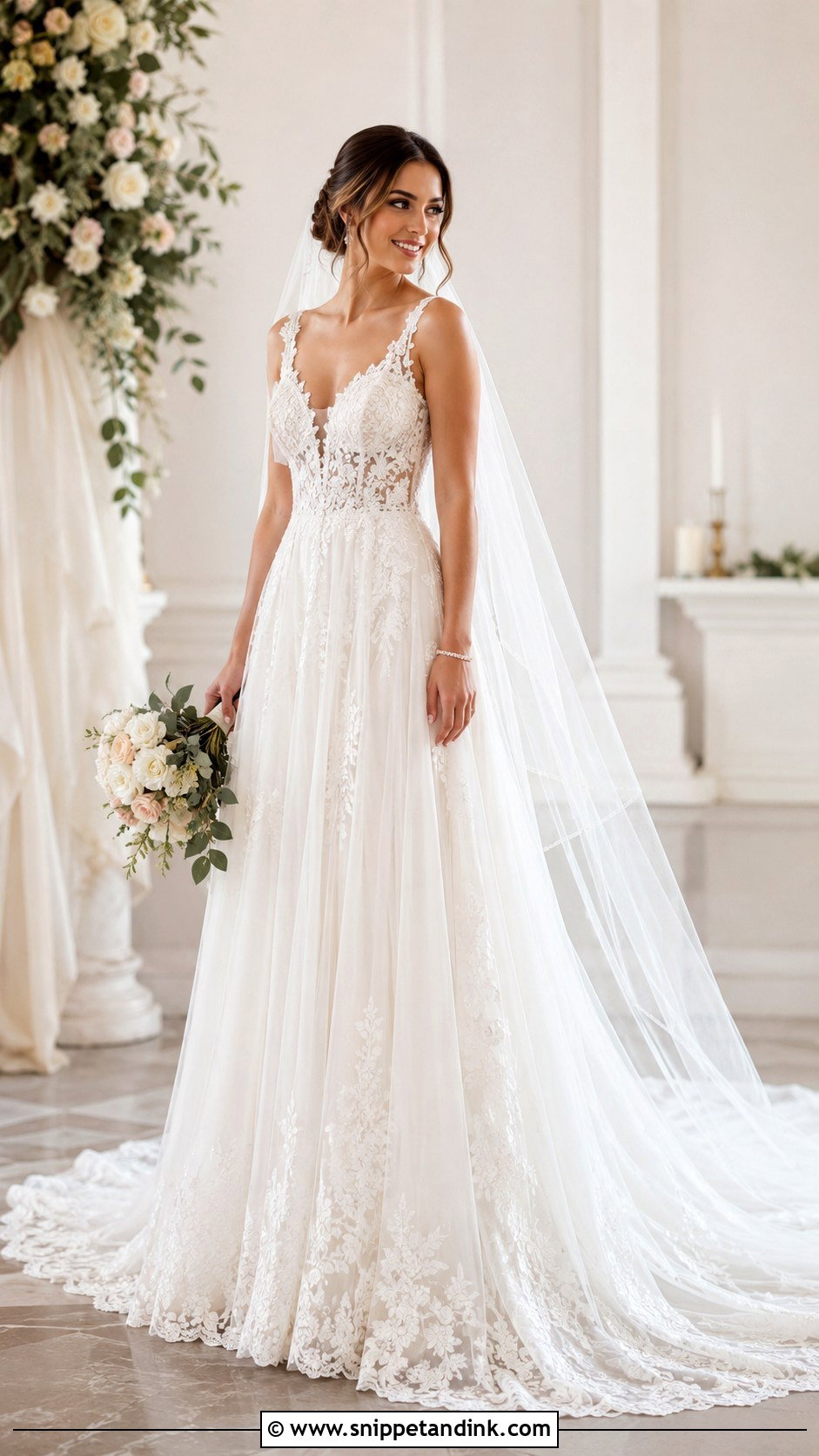
A-line is the easiest silhouette to wear with a long train. The skirt falls from the waist without gripping the hips, so walking and sitting stay comfortable, and the train simply extends the line. Lace makes it traditional, crepe or satin cleaner. It suits most body shapes and is the cut I suggest when a bride wants drama but is nervous about managing it. Comfortable heels and a soft veil finish it.
11. Crepe Wedding Dress With Long Train
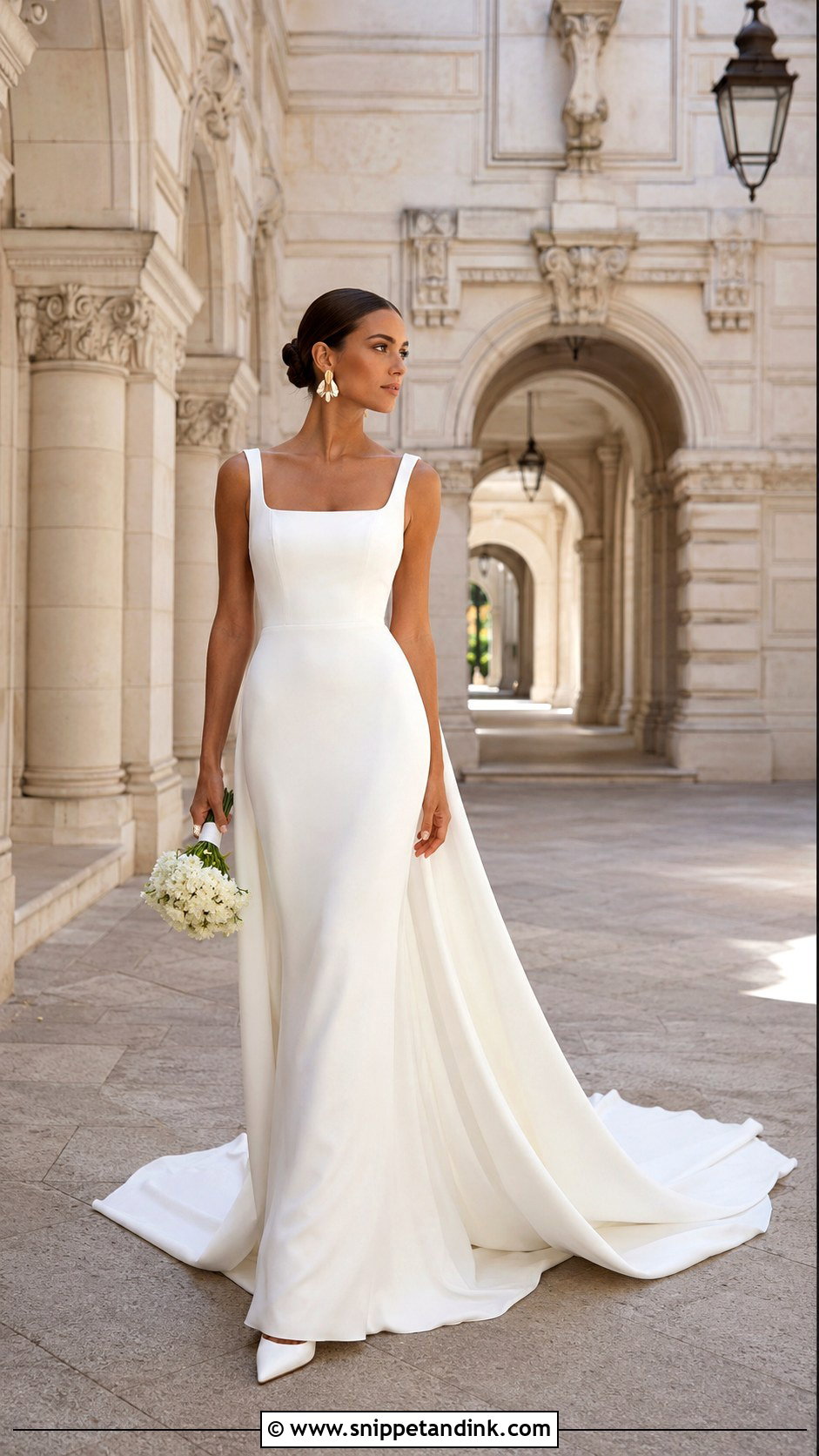
A crepe wedding dress with a long train is a study in contrast: a matte, minimal body and a single dramatic sweep behind. Crepe suits sheath, column and fit-and-flare shapes, and it looks particularly sharp with a square neck or an open back. Because crepe skims the body, it shows every tailoring flaw, so I budget extra fitting time for the seams around the hip. Sculptural earrings and a smooth updo keep the look graphic.
12. Tulle Wedding Dress With Long Train
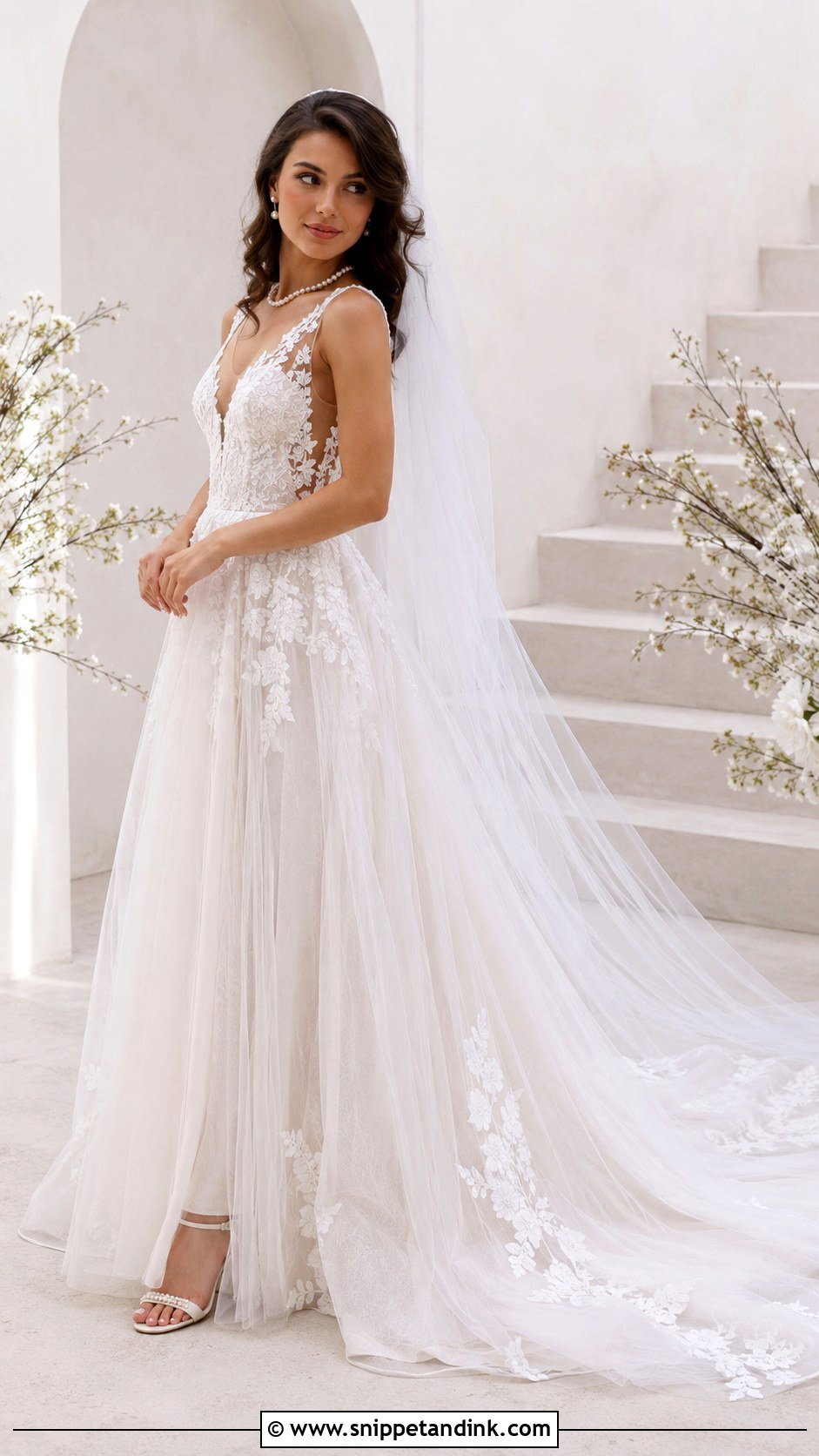
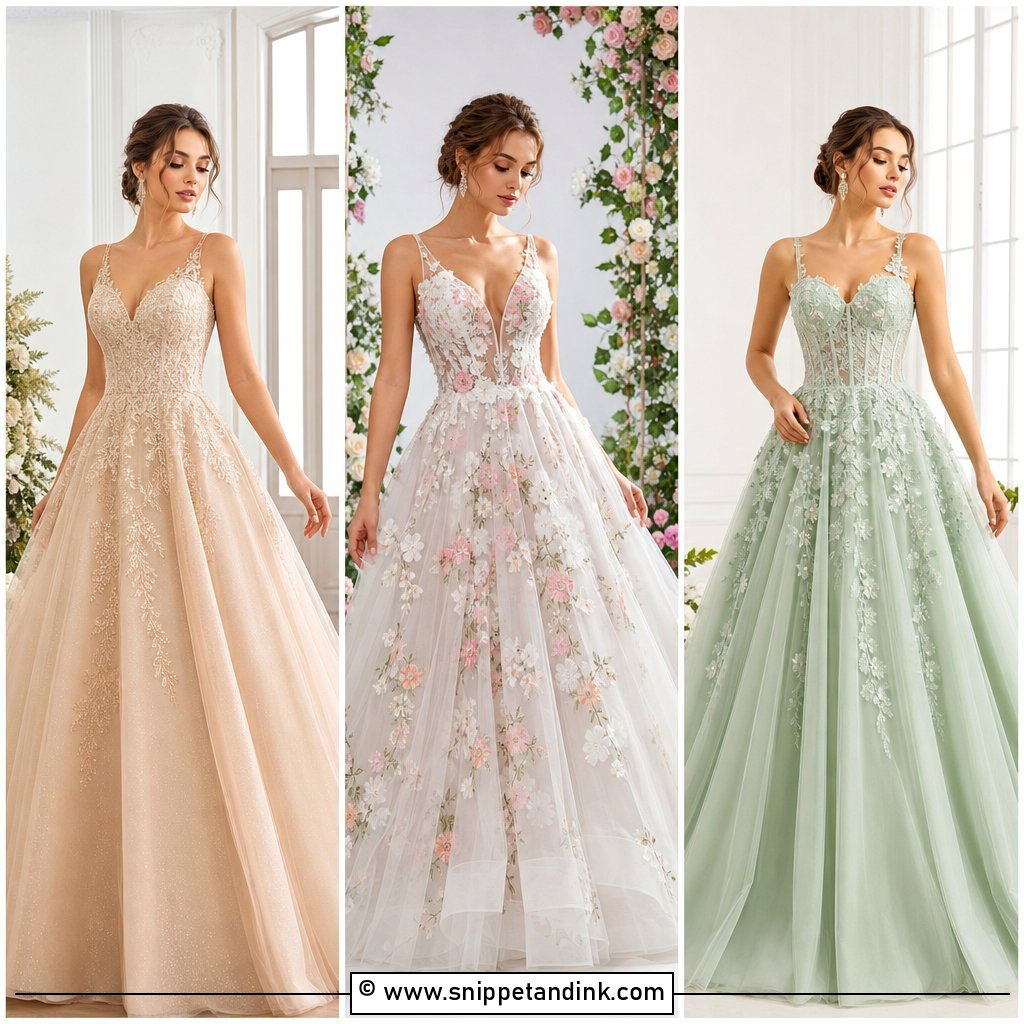
Tulle trains are light and float when you walk, which is why many brides find them easier to carry than satin. A tulle A-line feels graceful; a tulle ball gown gives more volume. Scattered appliqués or soft sparkle can make the train itself a focal point. The real downside is snagging. Tulle catches on stone, gravel and splintered wood, so it suits smooth indoor floors or an outdoor aisle with a runner laid down.
13. Floral Wedding Dress With Long Train
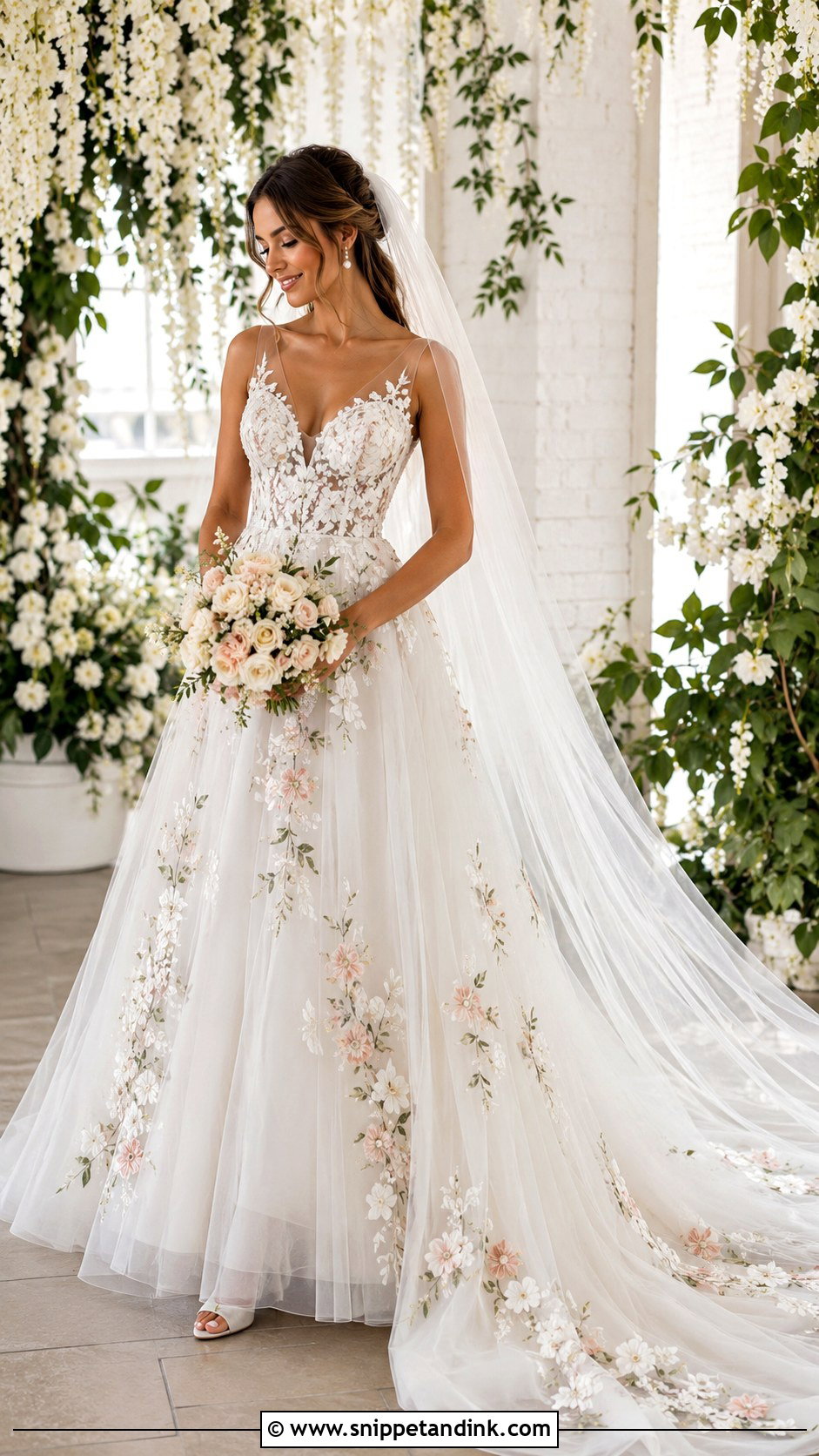
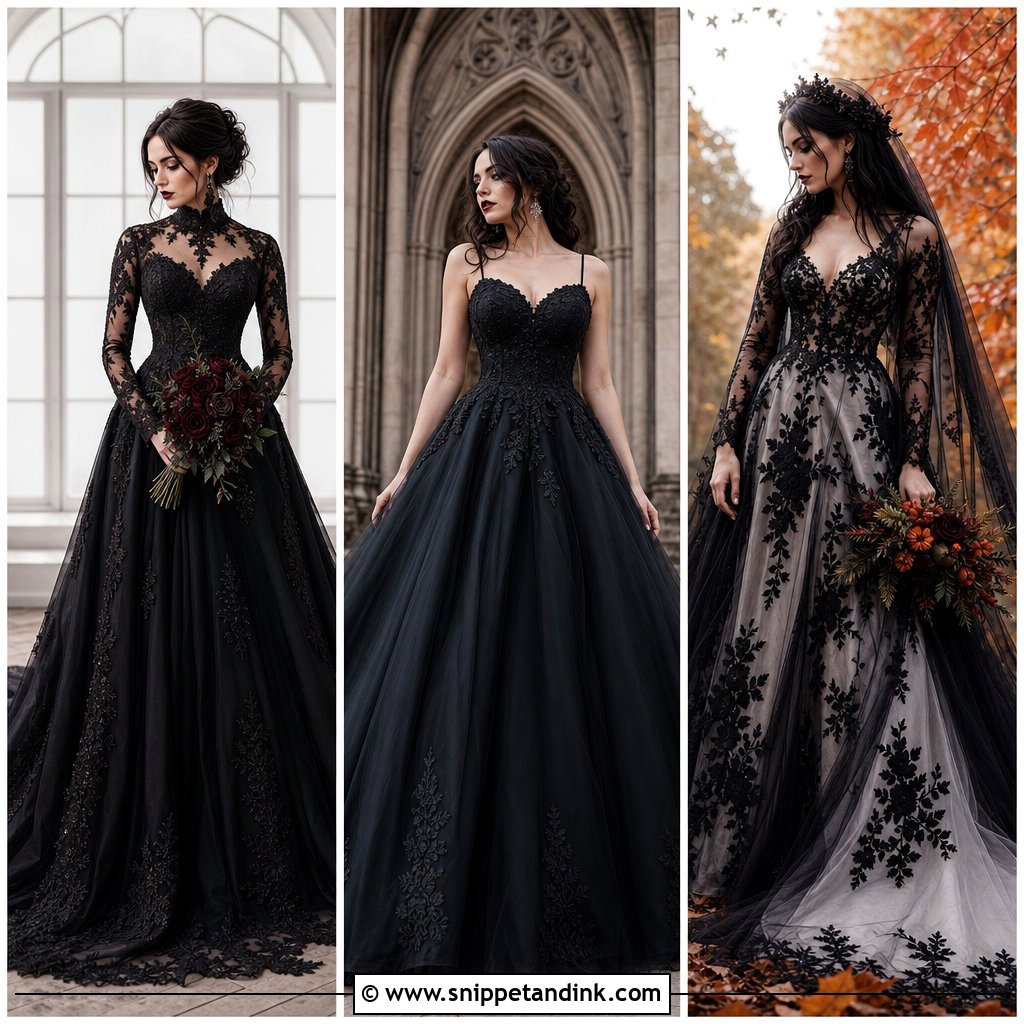
Flowers carried down onto the train make the back of the dress feel like a garden path. They can be lace appliqués, embroidered vines, 3D petals or tonal florals over tulle. Because the gown is already busy, I pair it with a plain veil and a small bouquet. Before the wedding, check how the 3D petals behave when the train is bustled; raised flowers can crush and flatten where the fabric folds up.
14. Beaded Wedding Dress With Long Train
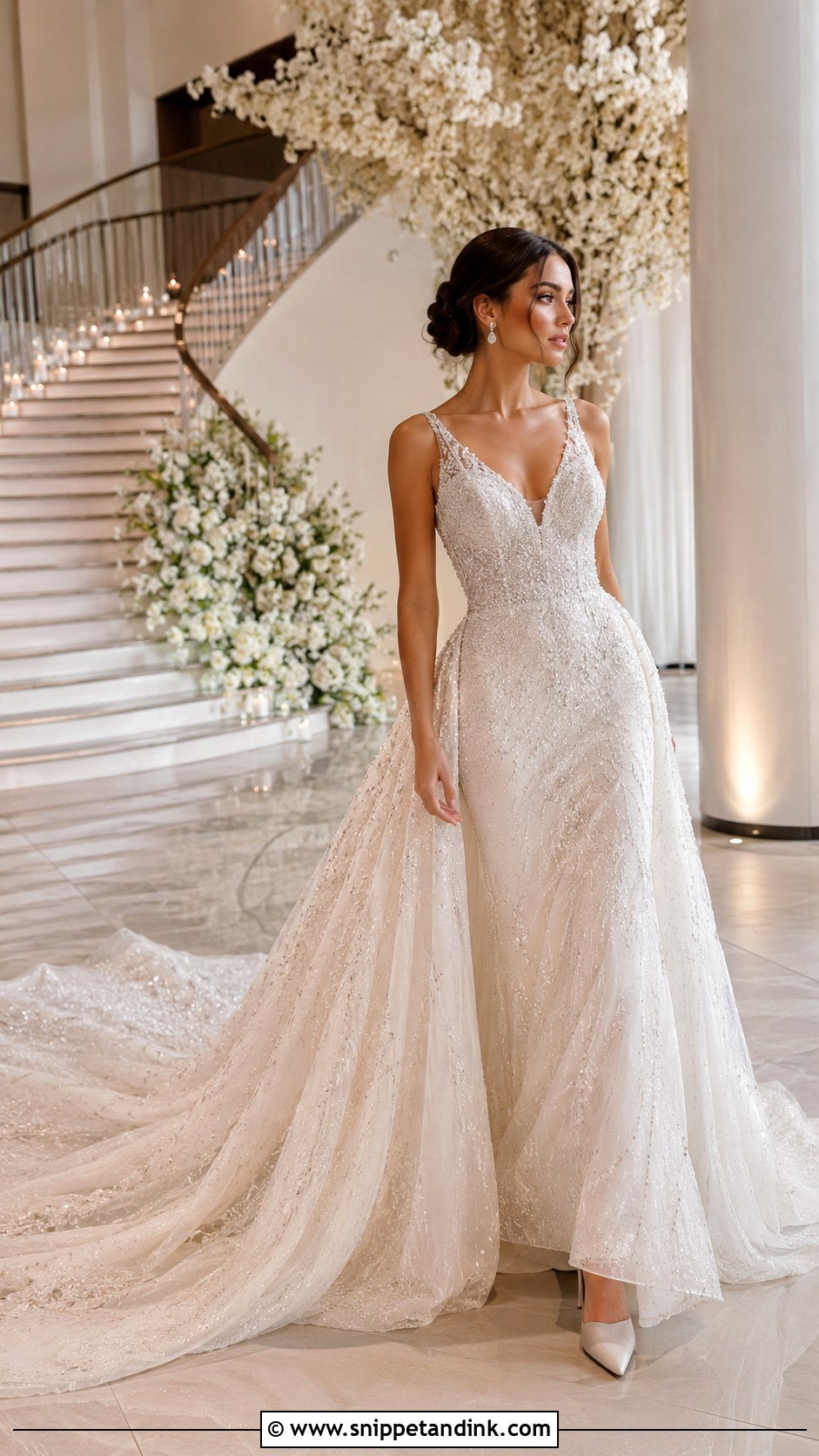
Beading gives a long train sparkle that really comes alive in candlelight or under spotlights. The most refined versions follow the lines of the dress rather than covering it. Beaded trains are heavy, though, and that weight hangs off your waist all day, so I check support, lining and the strength of the bustle hooks at every fitting. Crystal studs and a simple bracelet are enough; anything more competes with the gown.
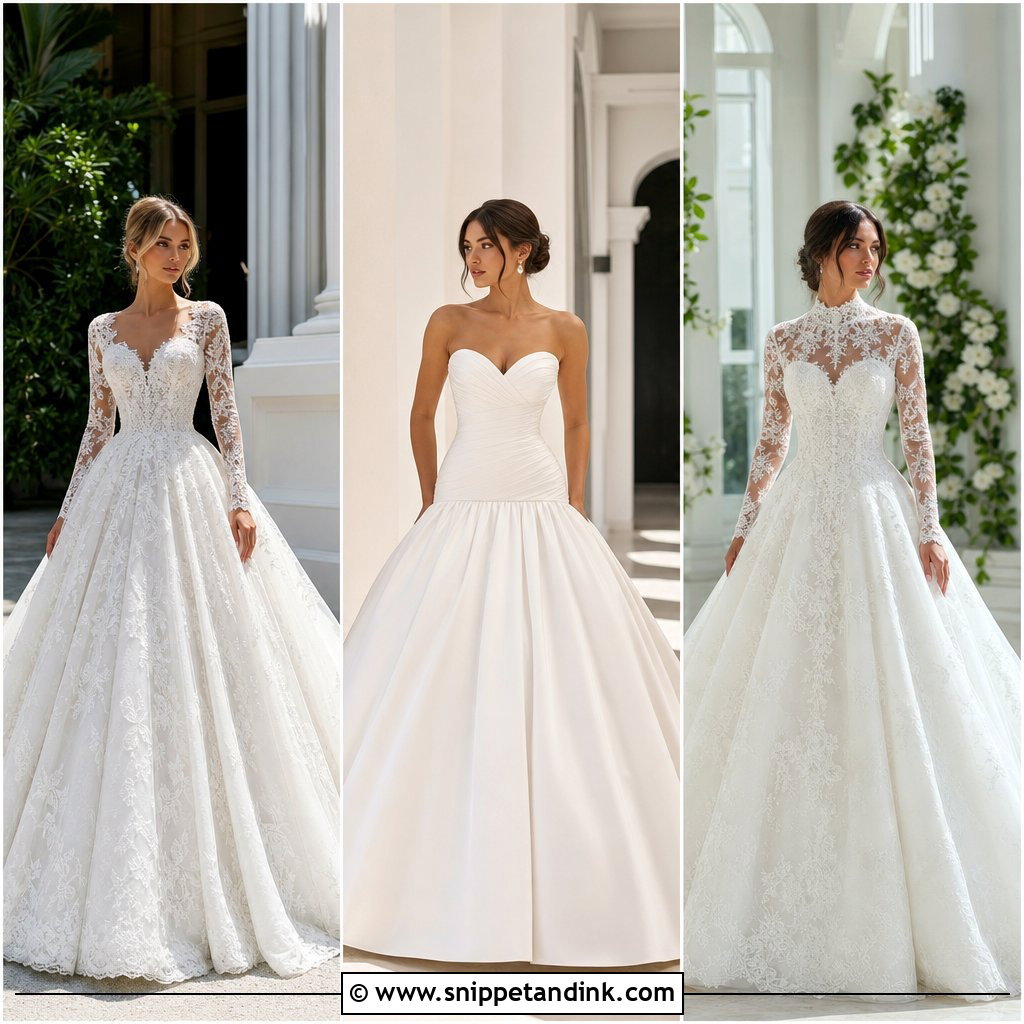
15. Minimalist Wedding Dress With Long Train
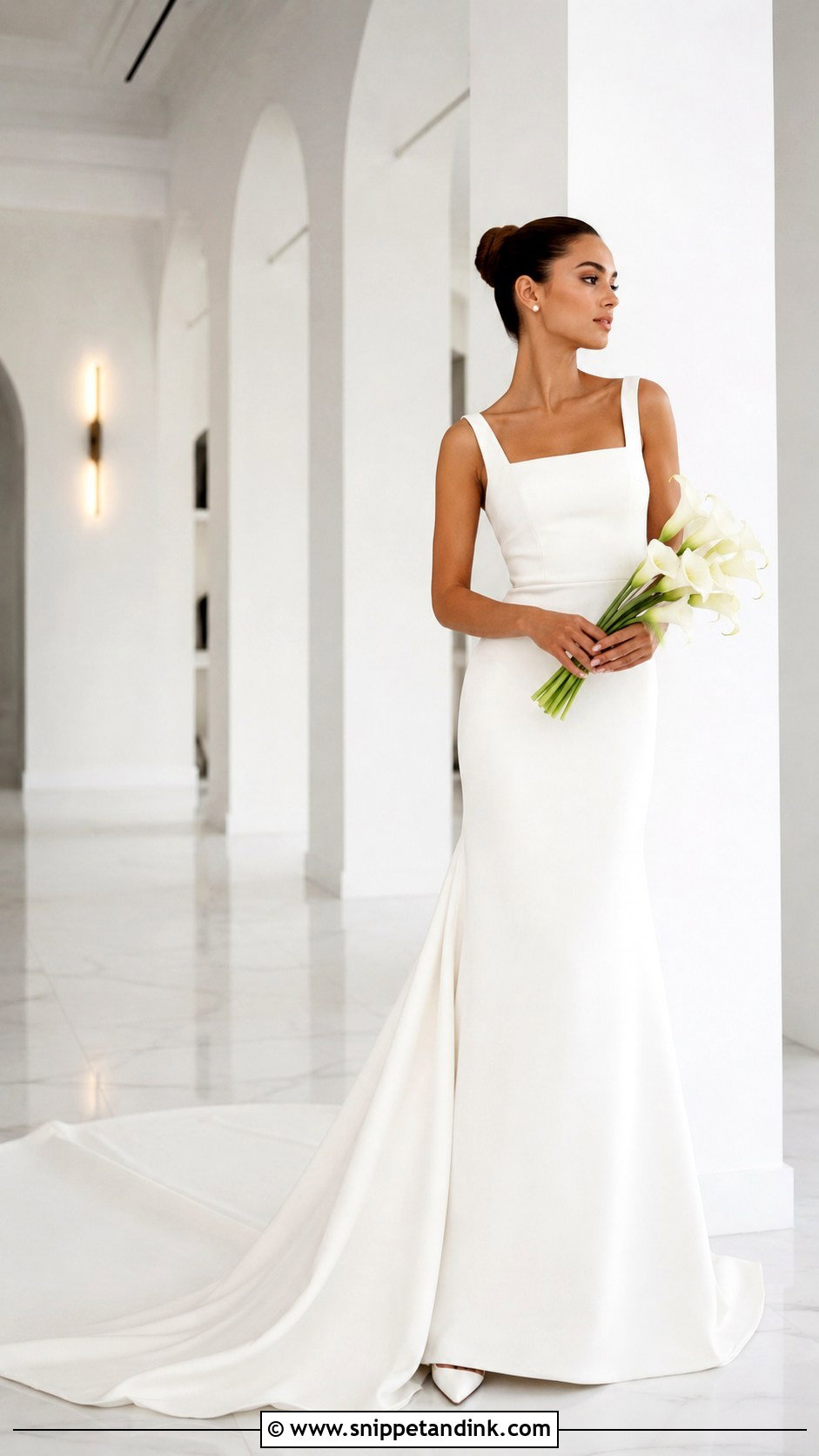
Minimal gowns put everything into shape, fabric and fit. Clean satin, crepe or mikado with a square neck, strapless bodice or high neck lets the long train do all the dramatic work. I like this approach for brides who worry about their photos dating, since there’s no trend detail to pin it to a year. A sleek bun and a structured bouquet keep the whole look calm.
16. Detachable Train Wedding Dress
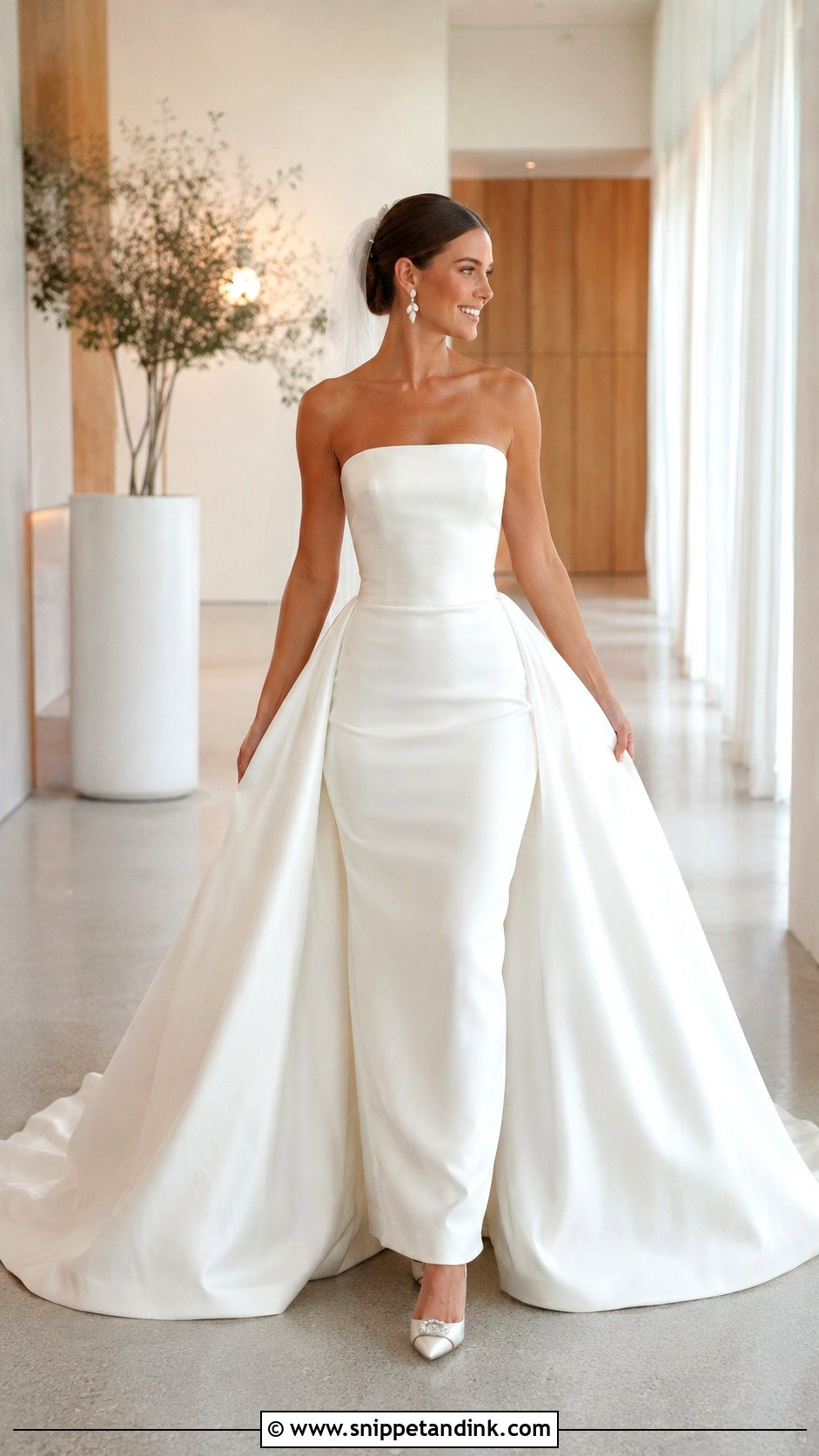
A detachable train is the practical answer if you’d like a long train for the vows and nothing to manage at dinner. They attach at the waist, shoulders or back, sometimes as an overskirt and sometimes as a cape. I’m careful about the attachment: hooks or snaps must be strong enough for the train’s weight and placed so they disappear into seams. Practice taking it off at your final fitting, because doing it for the first time in a venue bathroom is stressful.
17. Overskirt Wedding Dress With Long Train
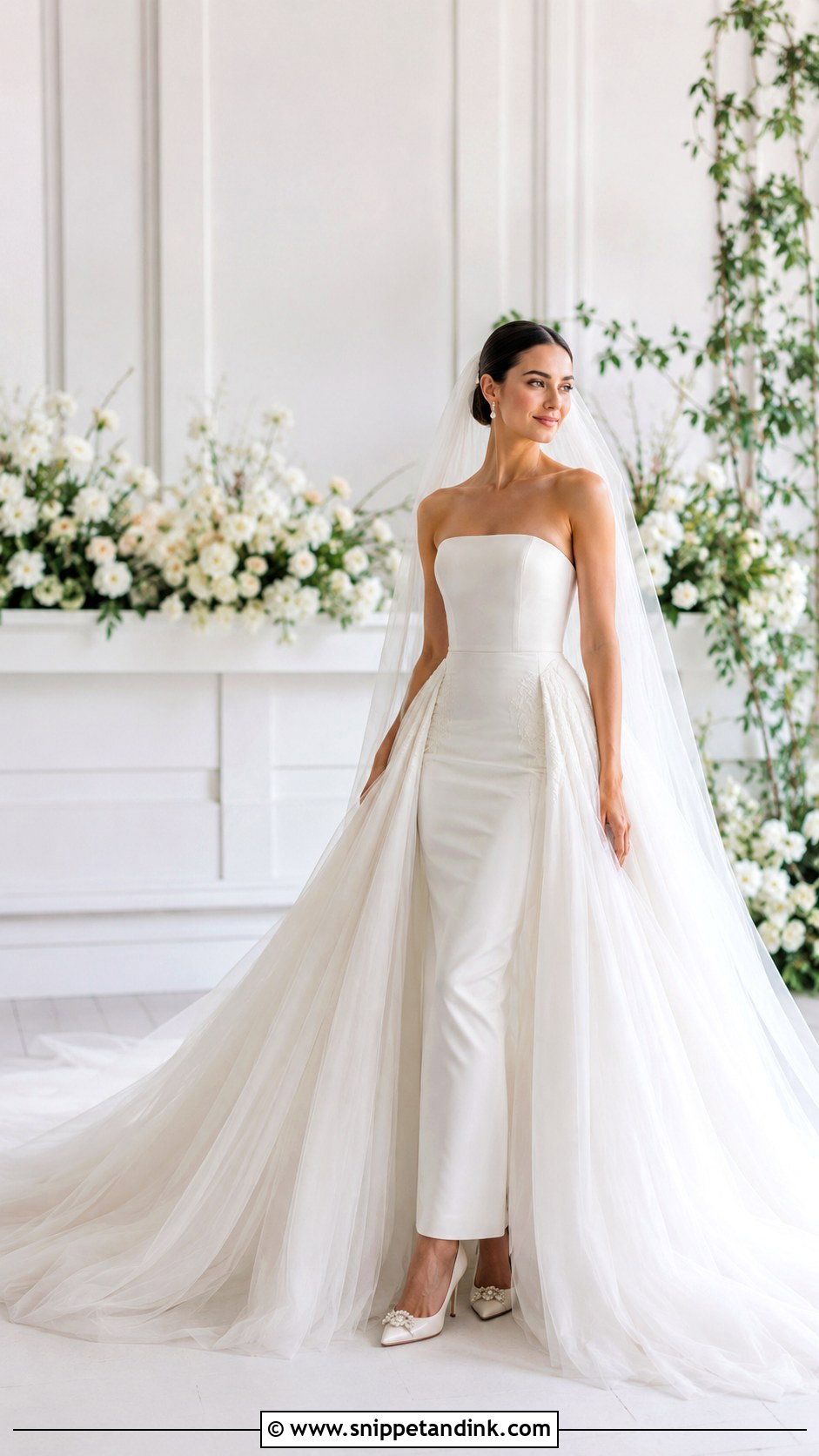
An overskirt wedding dress with a long train lets you wear a full skirt for the ceremony over a slim gown, then remove it for the reception. Tulle overskirts are soft and light; satin ones are structured and heavier. The slim gown underneath has to fit perfectly on its own, so I fit it first and the overskirt second. A clean veil and simple jewelry keep the layers from fighting each other.
18. Cape Train Wedding Dress
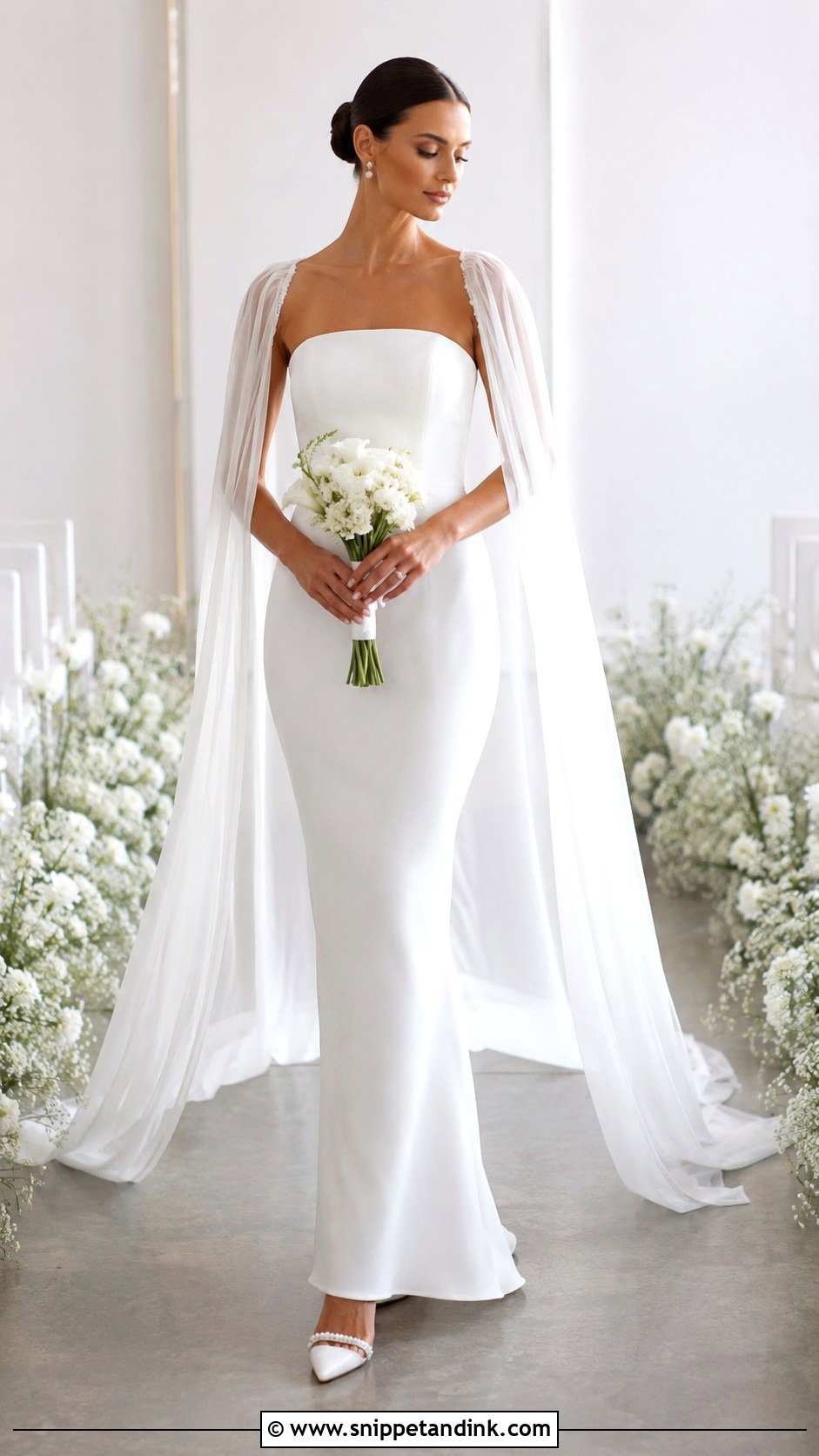
A cape train wedding dress lets the train fall from the shoulders or back rather than the skirt, so it moves around your whole body as you walk. It suits a sheath, a strapless gown or a crepe column, and it can replace a veil altogether. Sheer tulle feels soft; satin gives structure. I check that a cape attached at the shoulders doesn’t pull the neckline back when the train is stepped on, which happens more than brides expect.
19. Square Neck Wedding Dress With Long Train
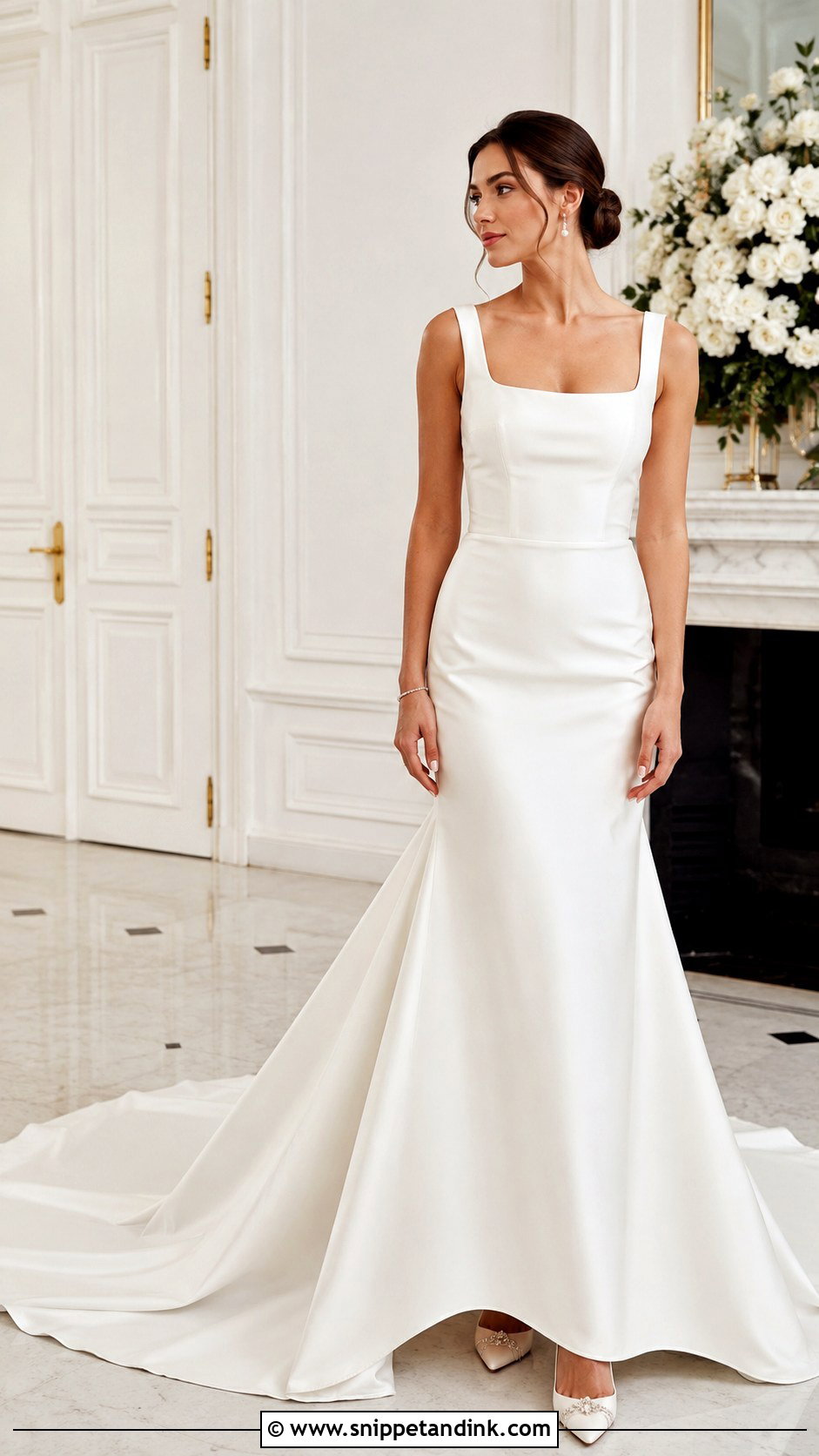
A square neck gives the upper body structure and frames the collarbones, while the train softens the overall line. It works in satin, crepe, lace and mikado. Fitted versions look modern; A-line versions look traditional. I’d keep the jewelry to pearl drops unless the gown is very plain. A low bun keeps the neckline’s straight edge visible.



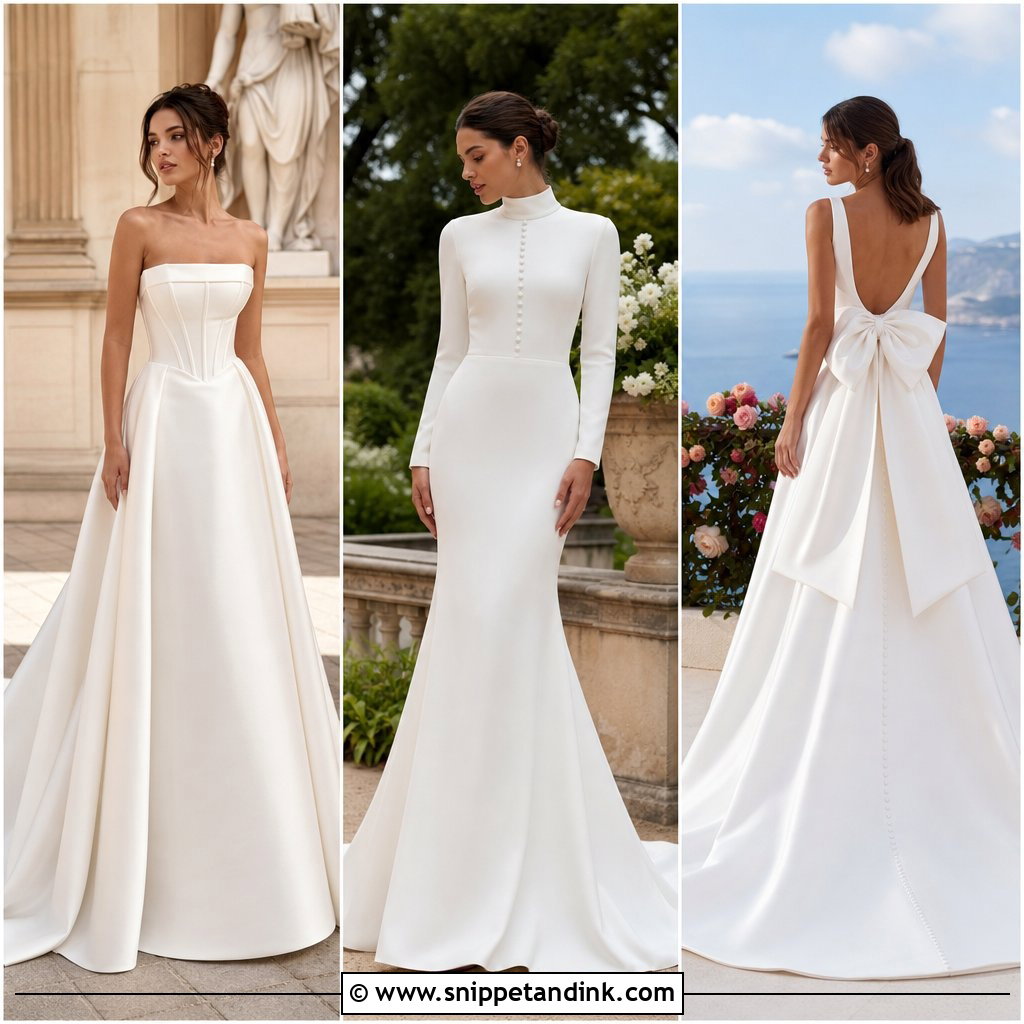
20. Strapless Wedding Dress With Long Train
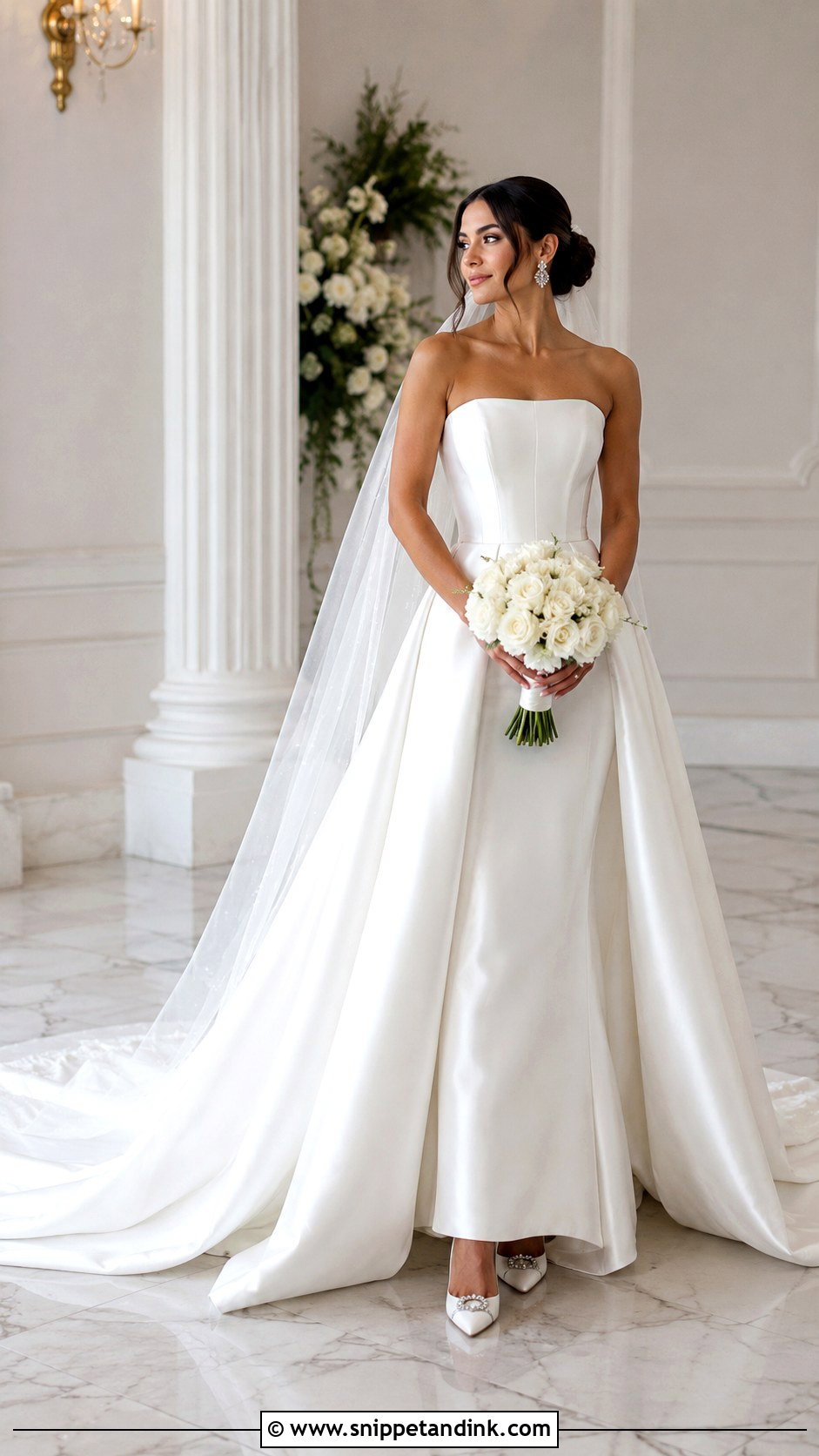
Strapless gowns are the classic base for a long train, but they’re also where fit matters most. A train adds weight behind you, and a strapless bodice has only its internal structure to resist that pull. If the boning and waist stay aren’t built well, you’ll spend the day hiking the bodice up. I test this by having the bride walk with the train fully extended at the fitting. A removable bolero or wrap gives extra coverage for a religious ceremony.
21. V Neck Wedding Dress With Long Train
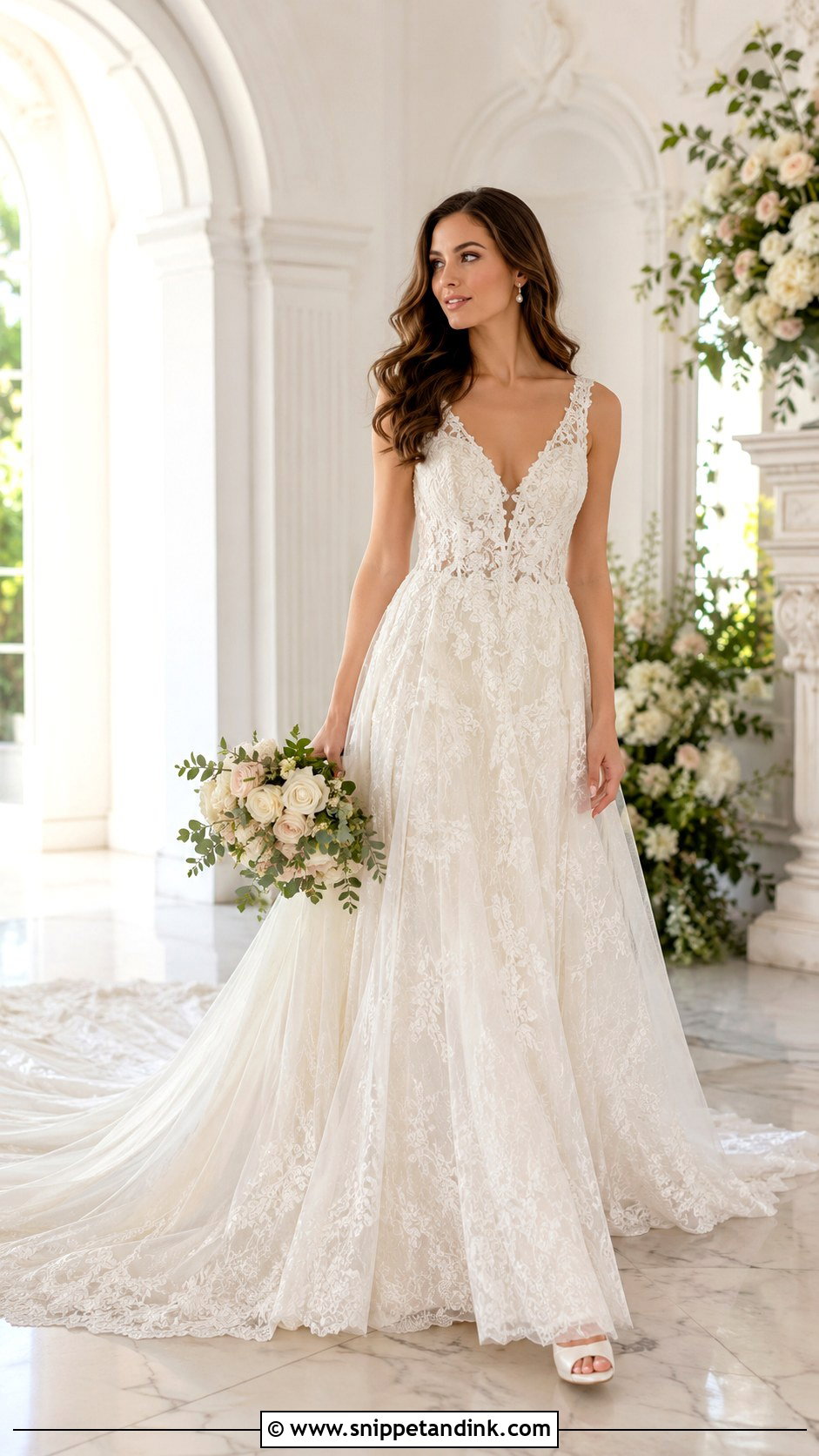
A V neck lengthens the torso, and paired with a long train it creates one long vertical line from neckline to hem. The V can be modest or deep. With a deep V, I rely on careful tailoring, a supportive inner structure and fashion tape rather than hoping it stays put. Earrings are usually easier than a pendant. Long sleeves or illusion panels give extra support and work well with lace or crepe.
22. Open Back Wedding Dress With Long Train
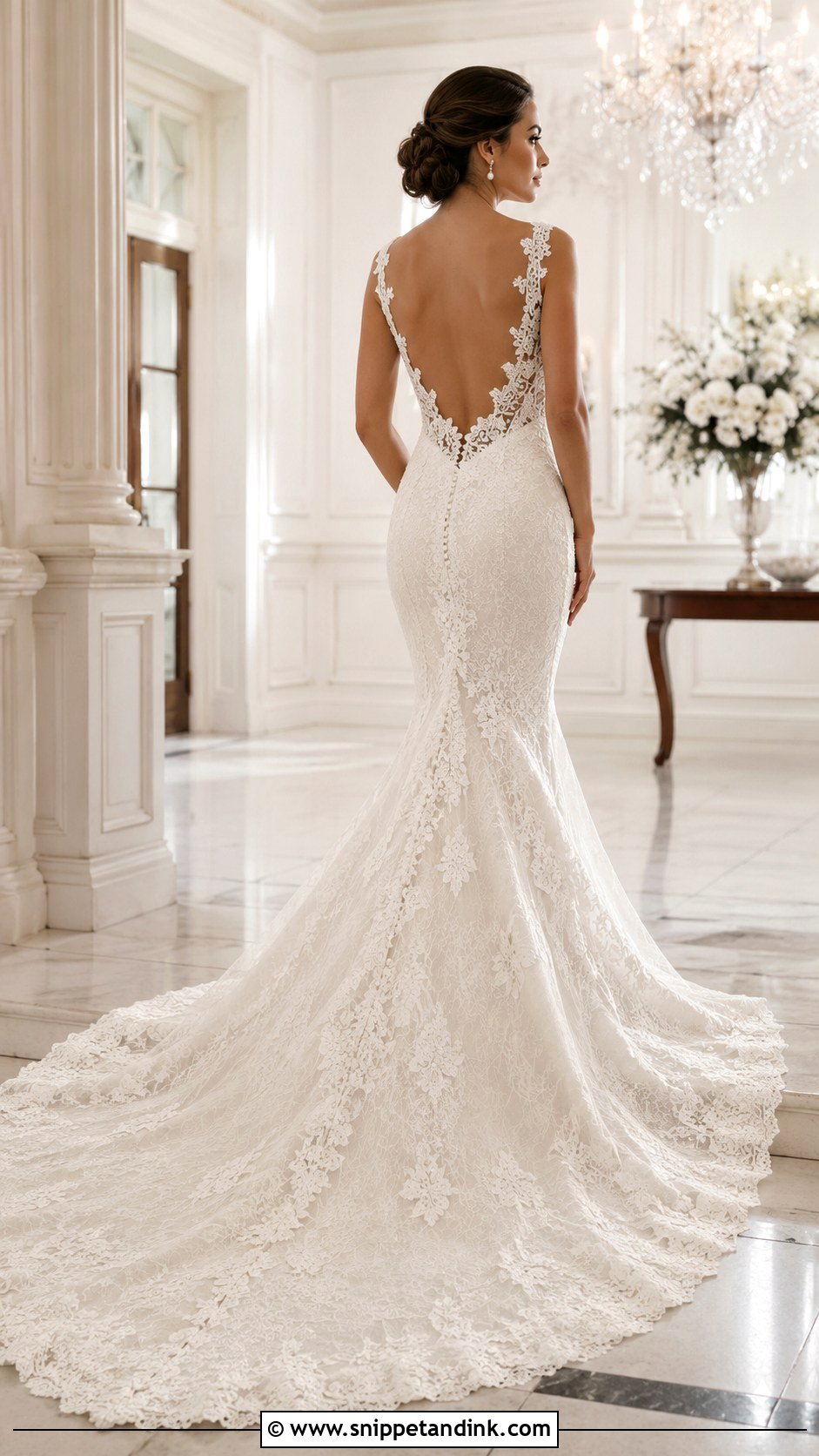
When a bride walks away from her guests, the back of the dress is what everyone sees, and an open back with a long train leads the eye straight down it. The back can be clean, lace-framed, buttoned or softened with illusion mesh. Wear your hair up or swept to one side so the design stays visible. If the back has heavy detail, choose a plain veil, or attach the veil below the opening so it doesn’t hide it.
23. Basque Waist Wedding Dress With Long Train
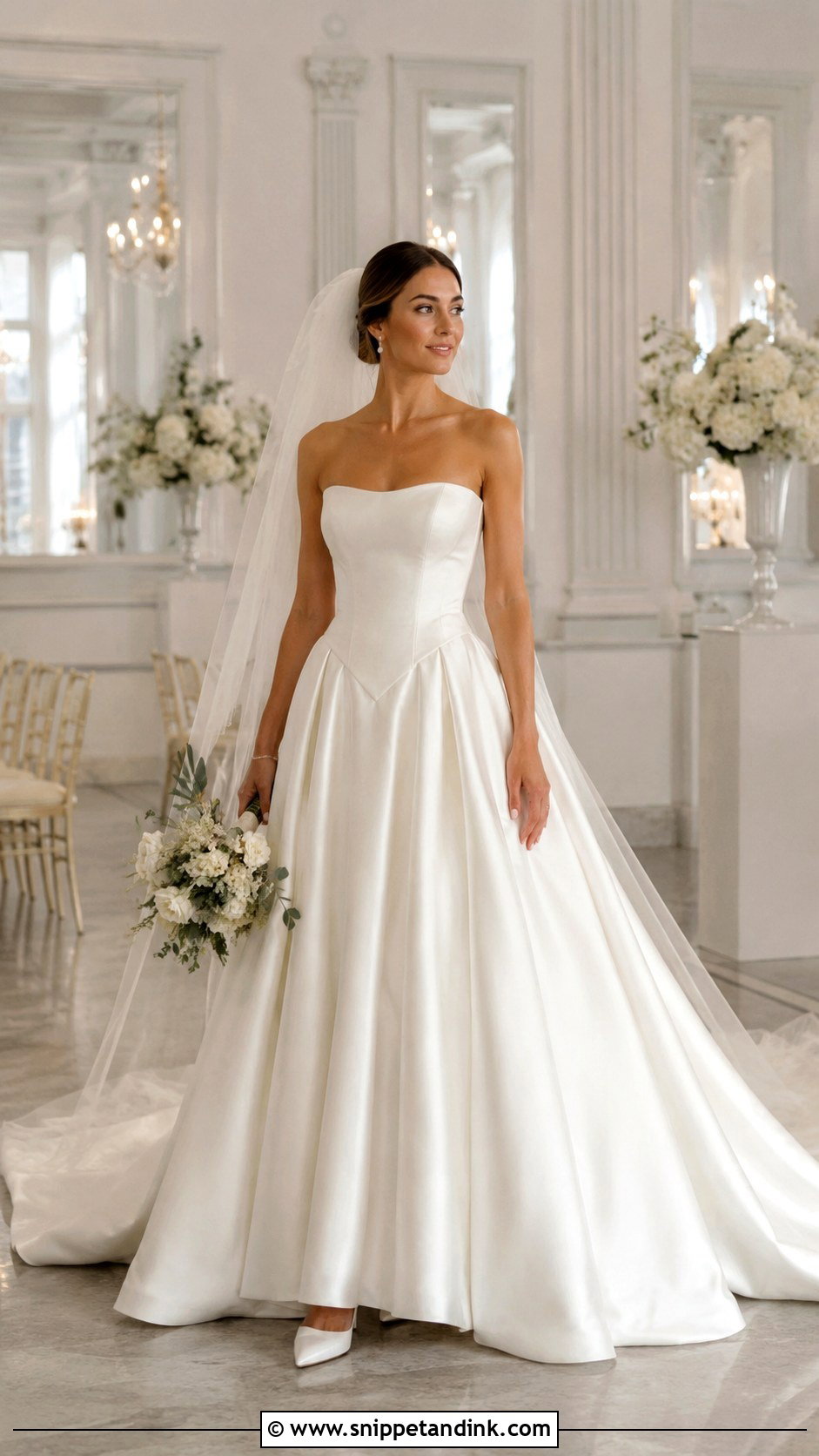
A basque waist dips into a soft V at the center front, lengthening the torso and easing the transition into a full skirt. It’s a natural partner for a ball gown or A-line with a long train. Satin, mikado and lace all hold the shape. Since the waistline is the feature, skip belts and heavy waist trim. I check that the point of the basque sits at the right height when you’re seated, because a dip placed too low digs in at dinner.
24. Illusion Wedding Dress With Long Train
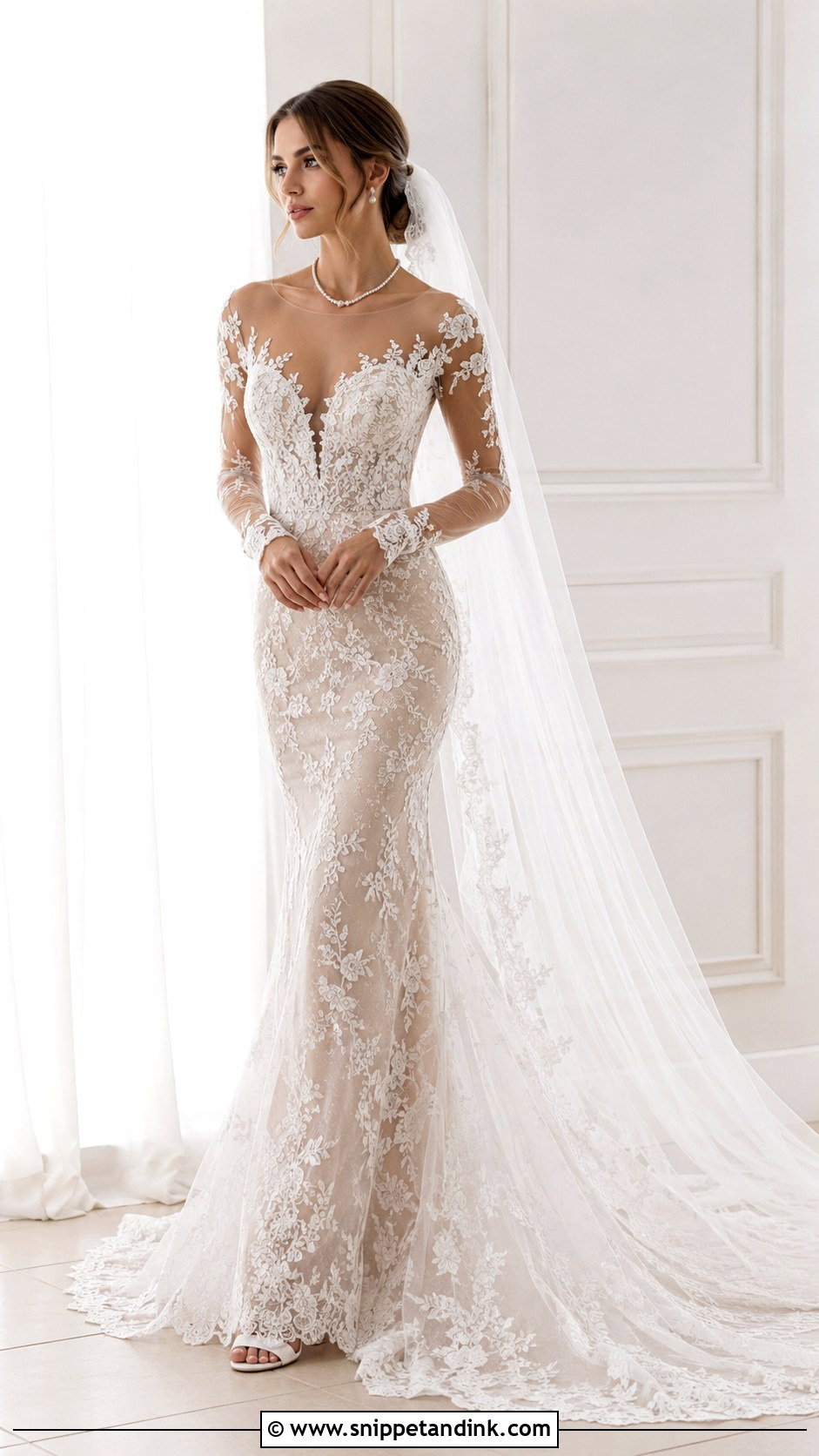
Illusion fabric is a sheer mesh that holds lace or embroidery so it seems to float, and an illusion train shows those motifs clearly against the floor. It’s a good choice when you want detail without a heavy skirt. The catch is color matching. The mesh needs to be close to your skin tone or it shows as a visible panel in photos, so I always check it in daylight, not just under the shop’s warm lights.

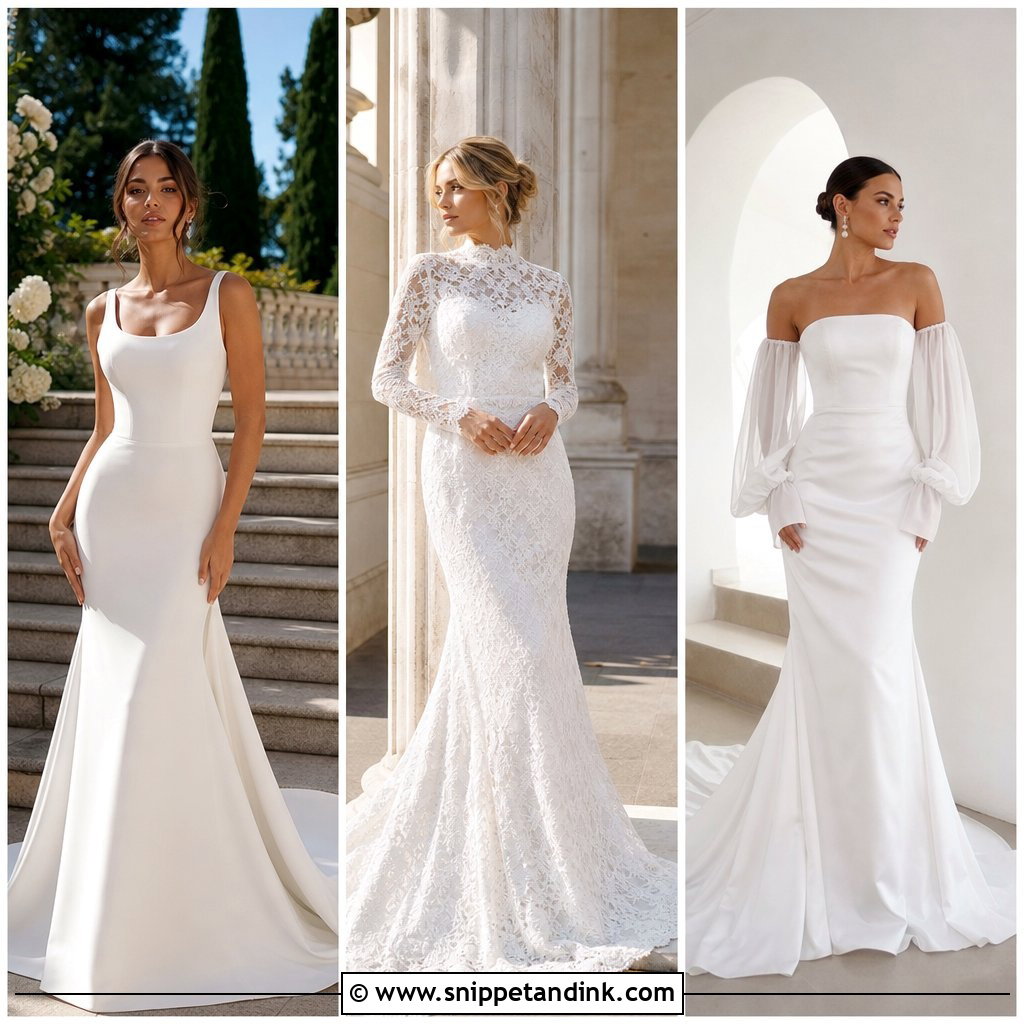

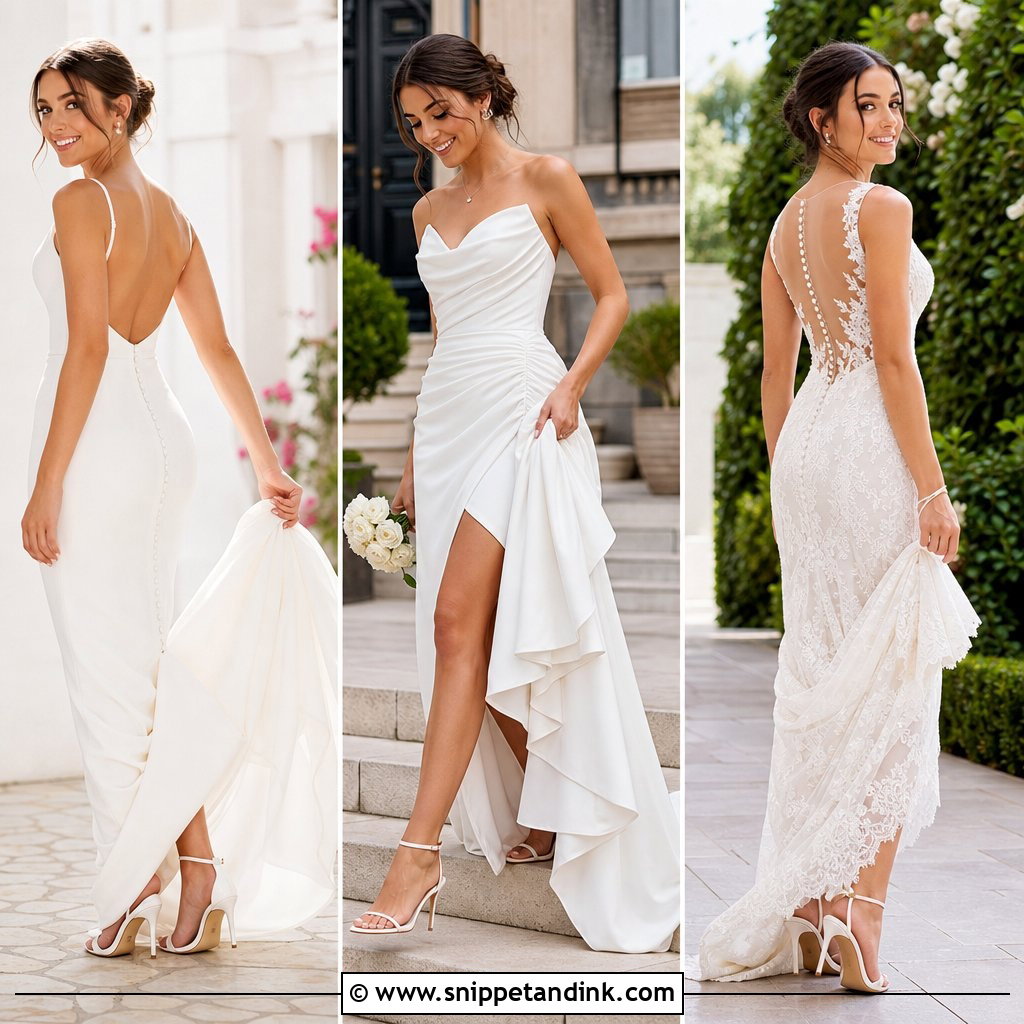
25. Colored Wedding Dress With Long Train
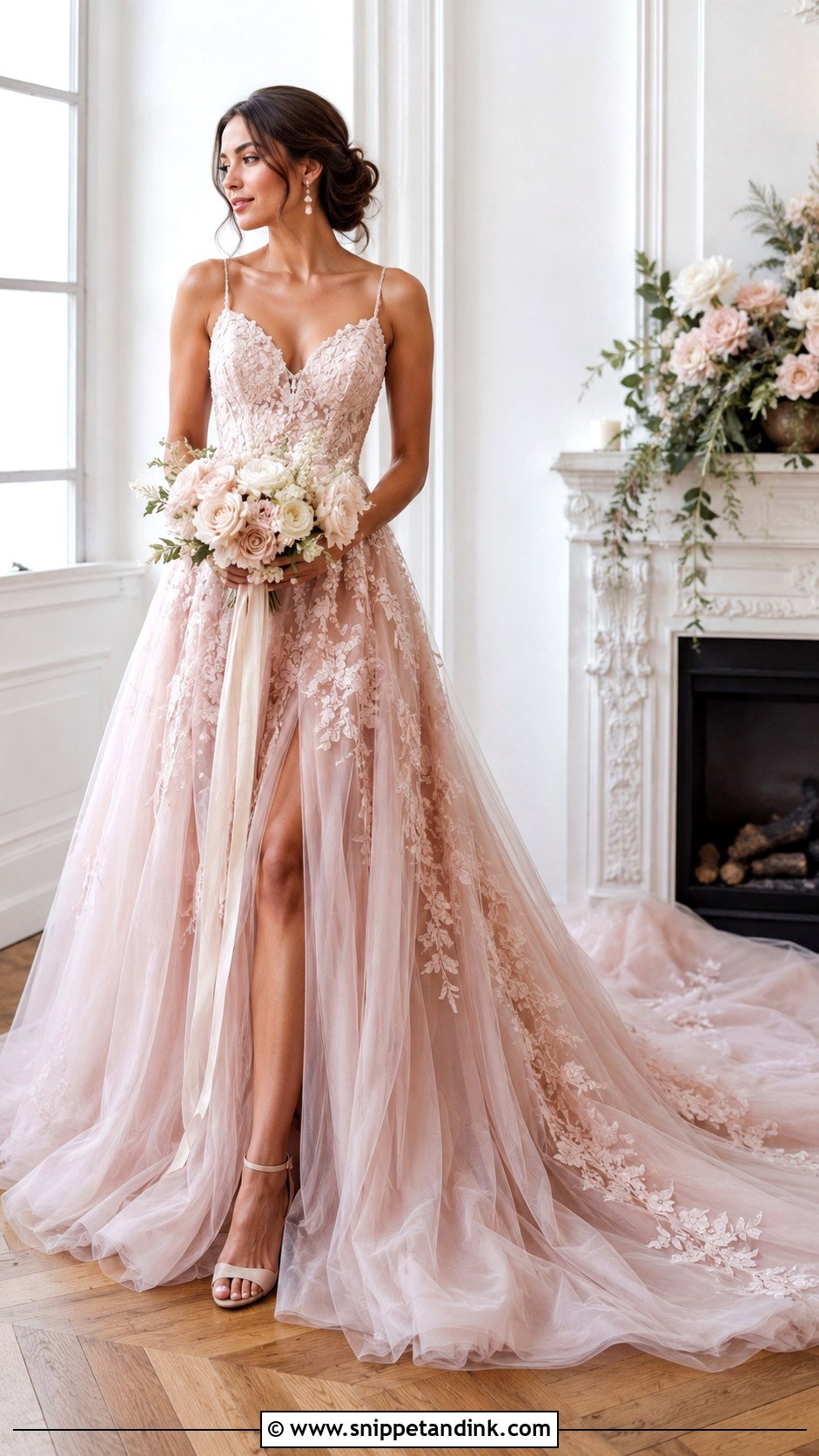
A colored gown with a long train still feels bridal because the train keeps it formal. Blush, champagne, pale blue, silver gray and warm ivory all add depth to the fabric. Under layers of tulle the color reads softly; in satin or organza it’s much stronger. I’d see the gown in daylight and under evening light before committing, since soft colors can shift a lot between the two. Shoes and jewelry in the same tonal family keep it cohesive.
The Bustle Decides How Your Evening Goes
Every long train needs a bustle, and it’s the part of the dress brides think about least. The seamstress sews hooks, buttons or ribbon ties that lift the train off the floor for the reception. The three types I see most:
- Over bustle: the train hooks up onto the back of the skirt. Quick and secure, and it works with most fabrics.
- Under bustle: the train tucks under itself with ribbon ties, giving a draped, layered look. It takes longer to do.
- Ballroom bustle: several hidden points lift the train evenly so the skirt looks floor length all round.
Bring whoever will bustle you to the final fitting and have them practice twice. Ask the seamstress to color-code the ribbons; numbered tags or matching colors make it a two-minute job instead of a frustrated ten in a dim corridor.
Moving in Several Feet of Fabric Without Tripping
I give brides the same few habits. Never step backwards in a train; turn by walking a small circle forward instead. On stairs, lift the front of the skirt, not the train, and let the train follow. At the altar, ask your maid of honor to straighten the train once you’ve stopped, then leave it alone.
For practice, pin an old bedsheet to the back of a long skirt and walk around the house in your wedding shoes for twenty minutes. It sounds silly, but it shows you how a train pulls when you turn, and you’ll walk much more calmly on the day.
Walk Ten Steps Before You Say Yes to the Train
The right train is the one your venue, your schedule and your body can actually carry. Cathedral and royal trains give the most drama; chapel length is the easiest to live with. Detachable trains, capes and overskirts give you options after the ceremony. Fabric decides the rest: satin for formality, tulle for lightness, lace for romance, crepe for a modern line. Try every gown with the veil, the shoes and a bustle plan before you decide, and walk in it as if it were the day.
You'll Like These Ideas:



Leave a Reply