
Styling locs for a wedding is mostly about weight and anchors. A mature set of shoulder-length locs is far heavier than loose hair of the same length, and every pin I place has to carry that load through hugs, dancing and a warm room. Get that part right and the shape can be anything you like: sculpted, loose, regal or quietly simple. Mature locs, microlocs, Sisterlocks and faux locs all behave a little differently, so I’ve noted which styles suit which. These wedding loc looks are the ones I’d actually reach for, with the trade-offs I’d mention at a consultation.
Retwist Timing and the Wash That Comes First
The two appointments that affect your wedding locs most happen before I ever pick up a pin. A fresh retwist can leave the scalp tender and the roots looking very tight for a few days, while new growth left too long looks fuzzy in close-up photos. The aim is the window in between.
- Retwist or interlock about one to two weeks before the wedding, so the roots look tidy but have relaxed.
- Wash at least two days before, not the night before. Thick locs can take many hours to dry right through, and damp locs packed into an updo all day can end up smelling musty.
- Skip heavy butters and oils that week. They sit on the surface and can show as white residue under flash.
- If you want curls, set them on rods once the locs are clean and still slightly damp, and allow a full night to dry.
Have your trial after the retwist so we’re styling the same roots you’ll have on the day.
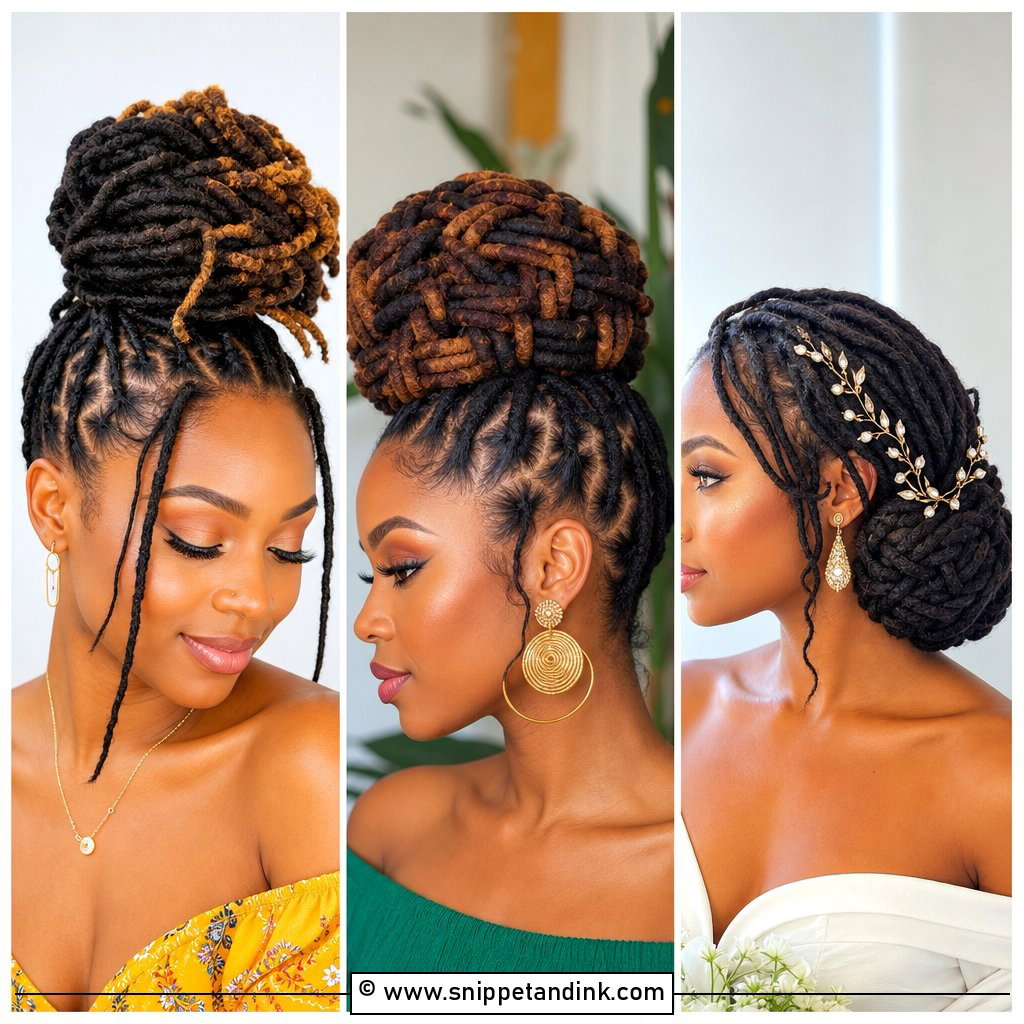
1. Bridal Loc Updo
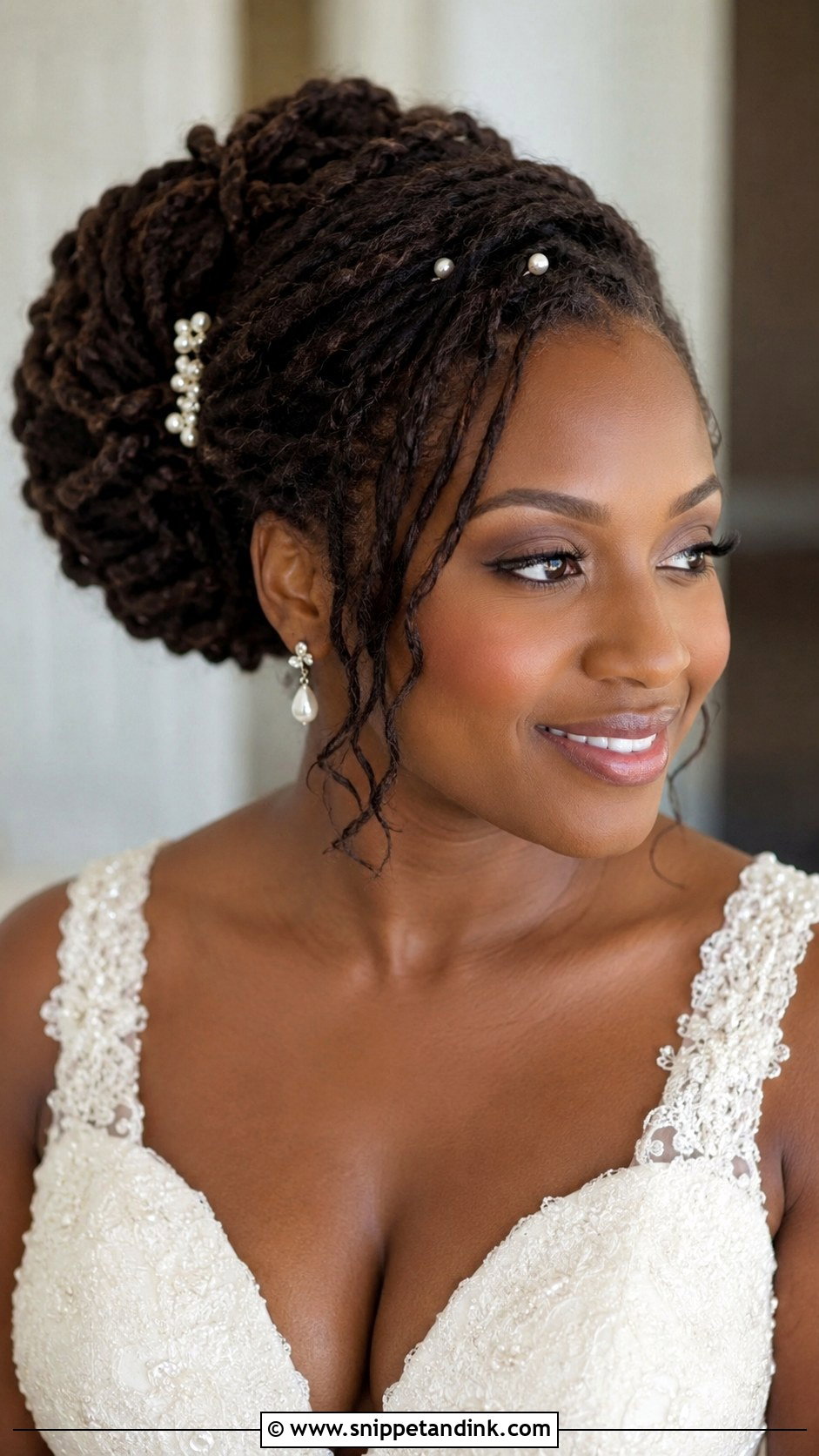
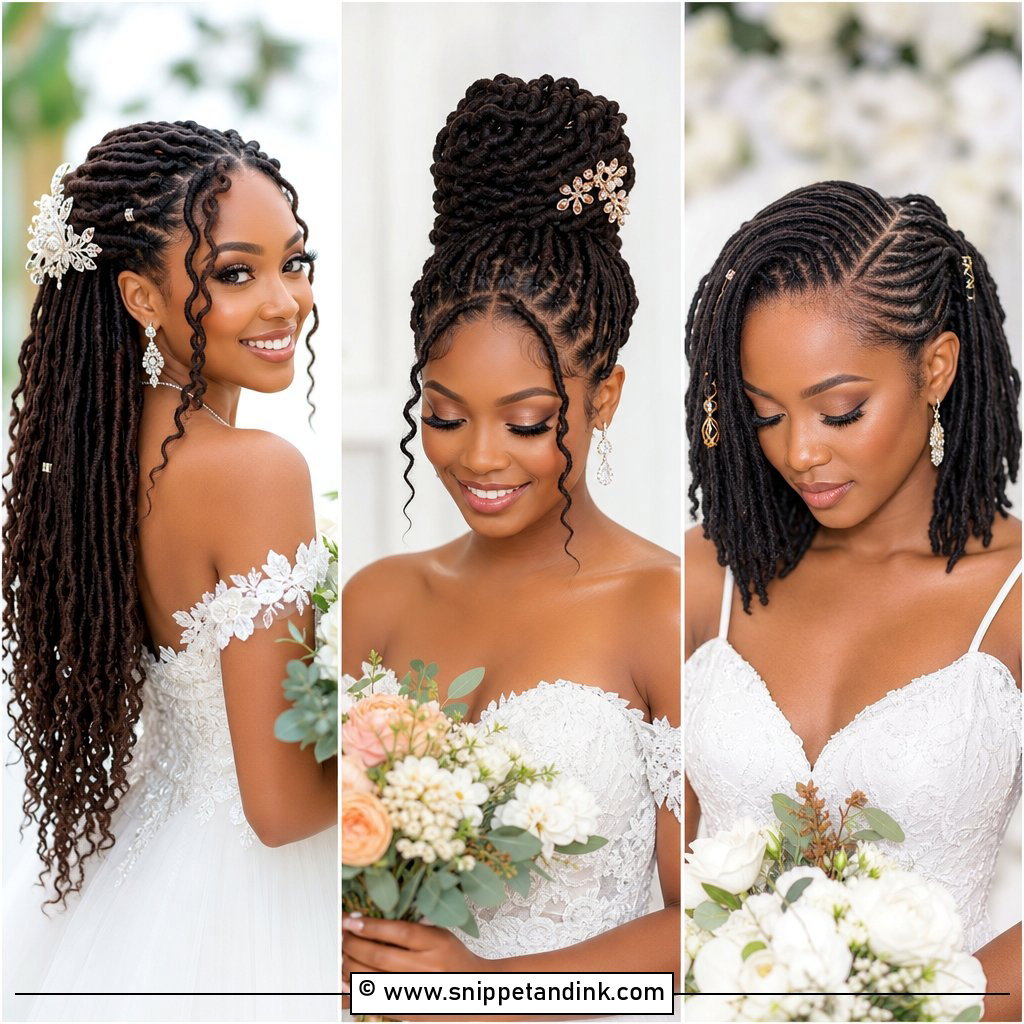
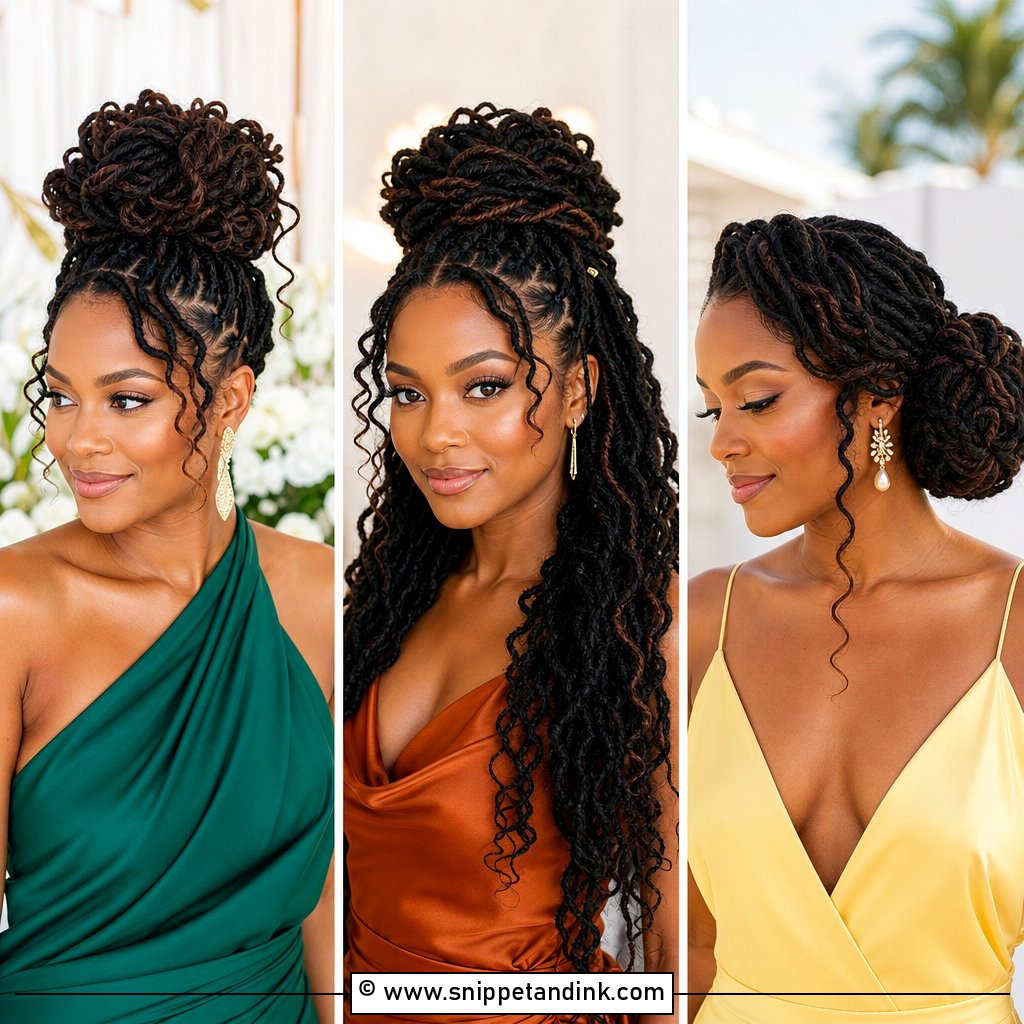
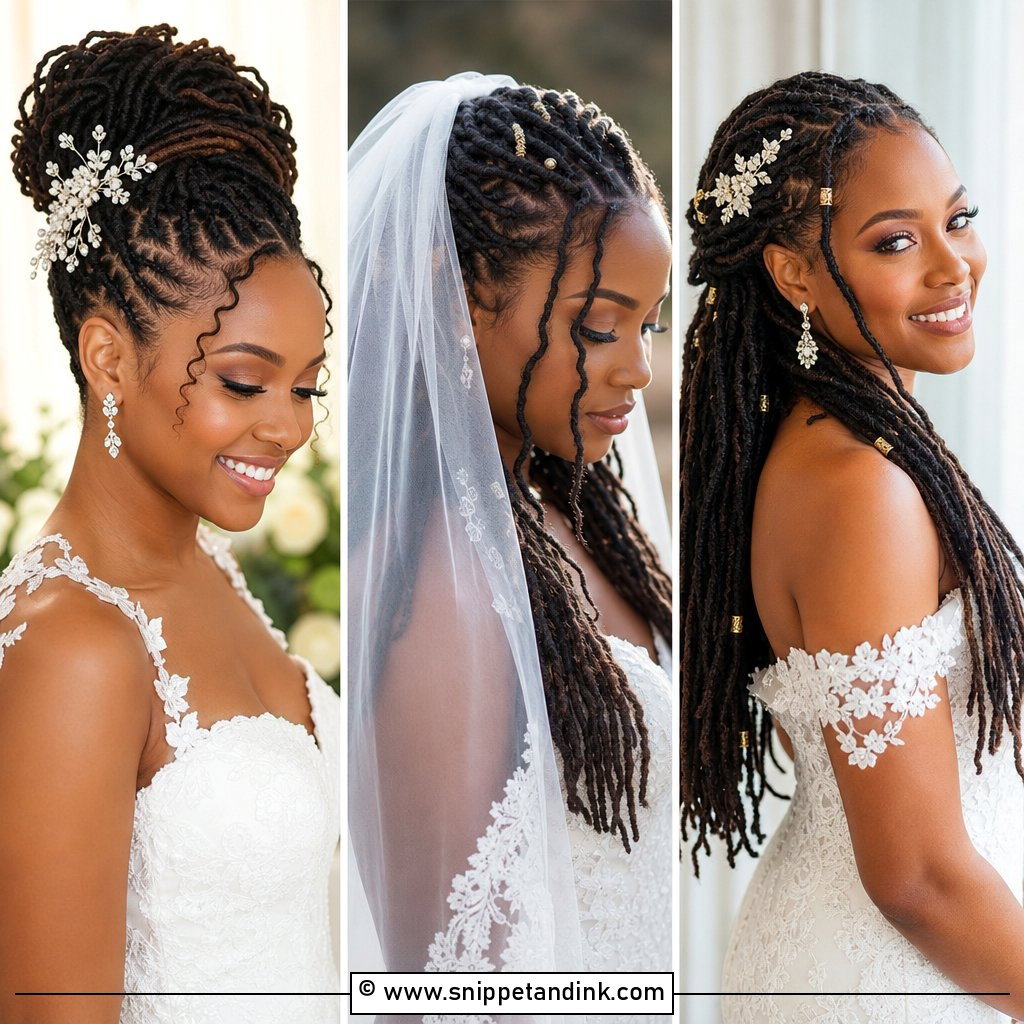
For a classic updo I wrap and tuck the locs into a rounded shape rather than dragging them tight to the scalp. Tension at the hairline is the thing I watch most, since locs already pull on the roots by their own weight. The lifted shape opens the shoulders and suits strapless gowns, high necklines and a veil set just under the crown. I’ll often leave one or two slim locs loose at the temples to soften the front. Gold pins or a few pearls are enough; heavy ornaments on top of heavy locs add up quickly.
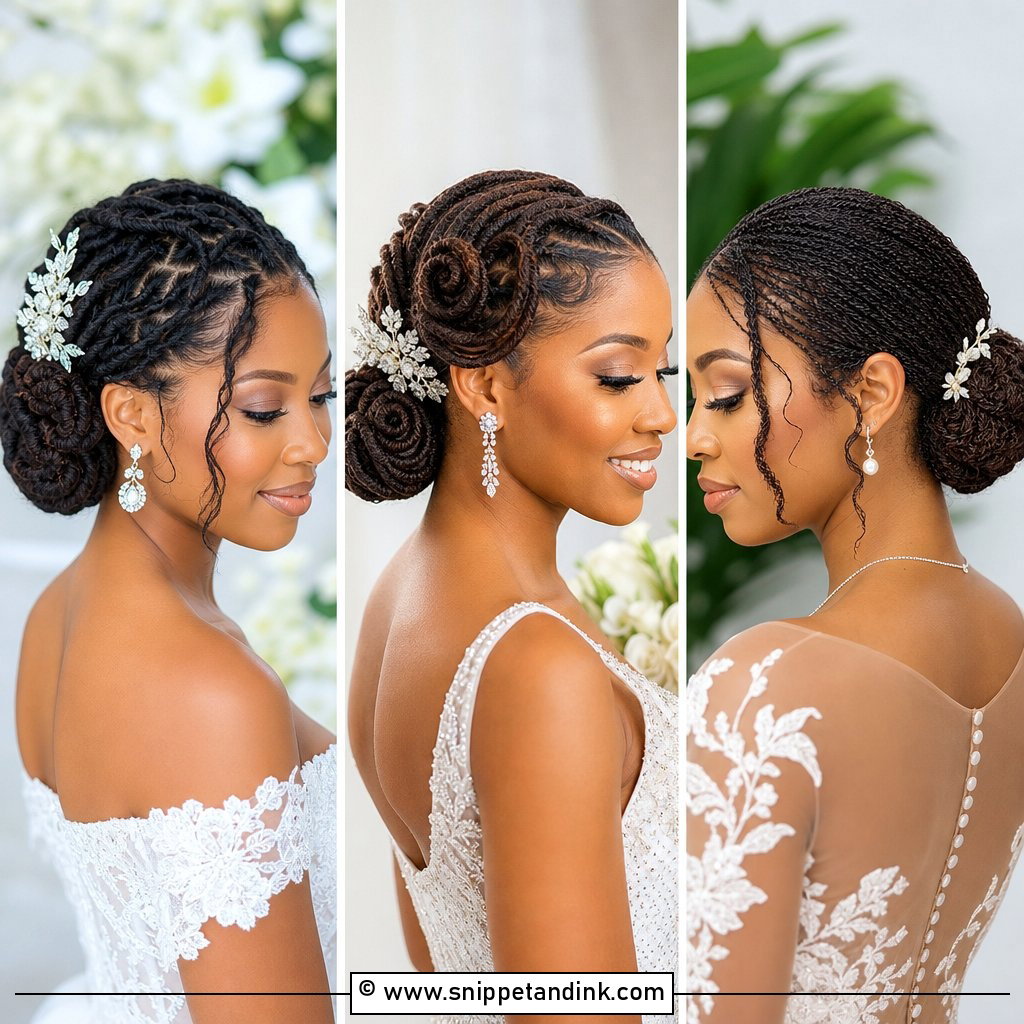
2. Loc Petal Bun
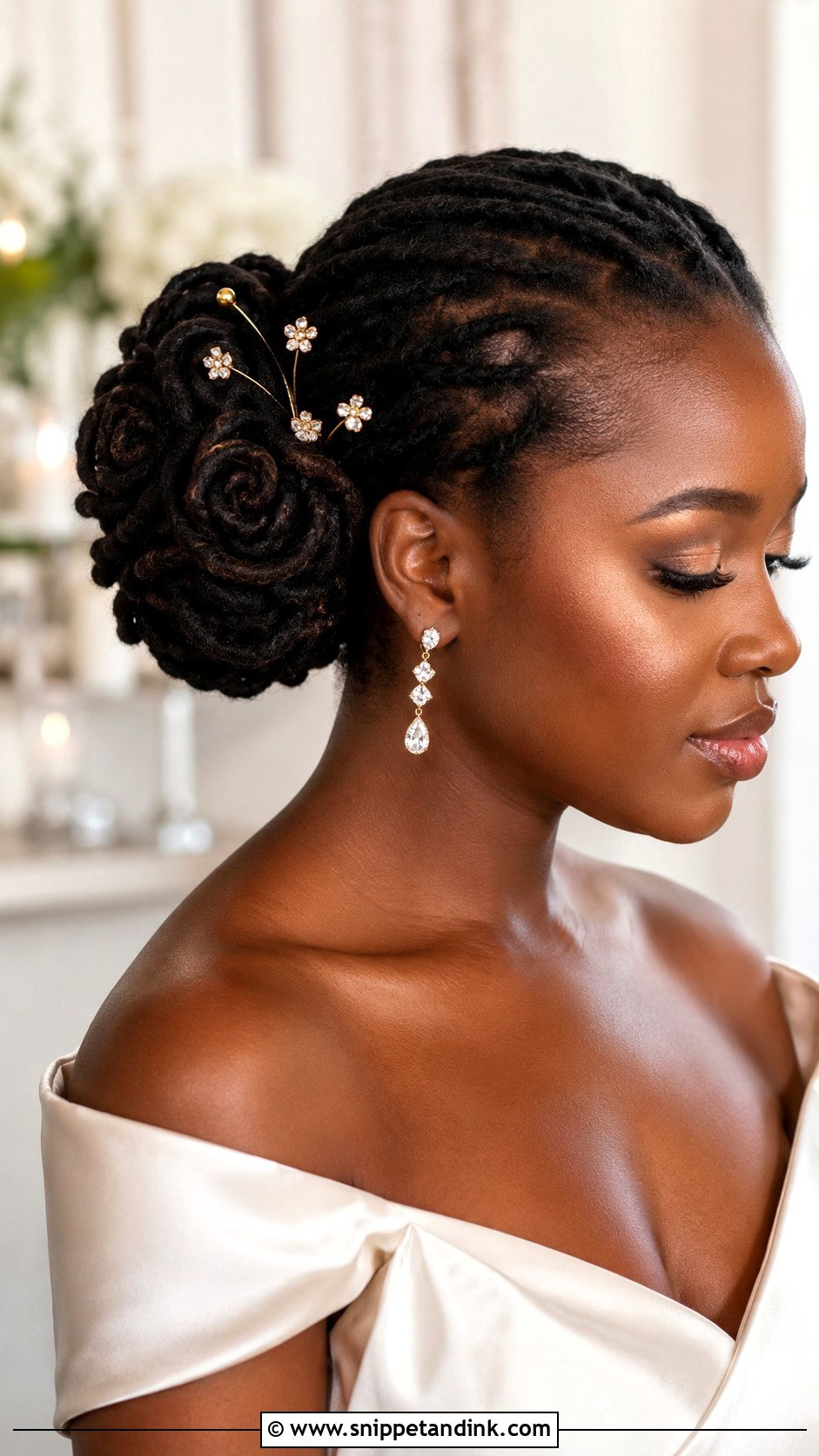
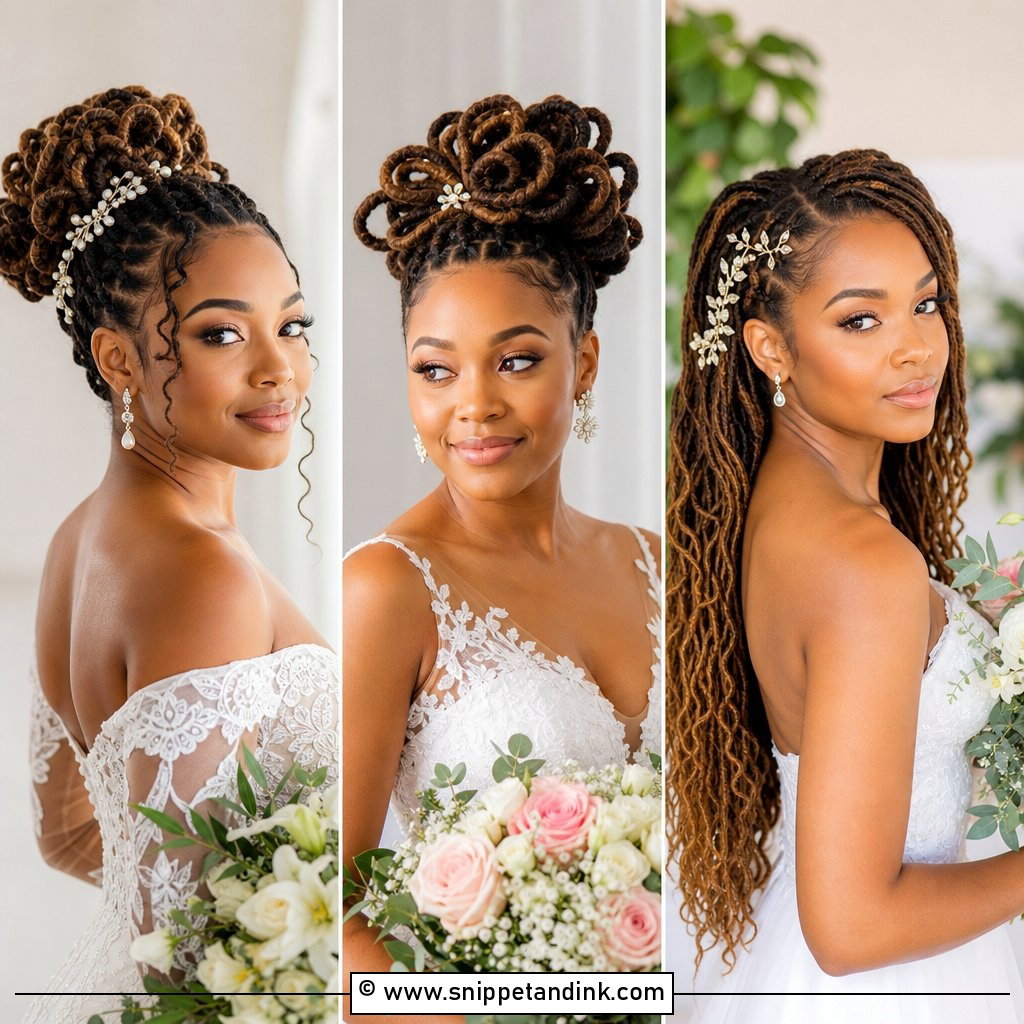
Each petal in a loc petal bun is a single loc, or a pair, looped back on itself and pinned at its base. That gives you a sculpted flower at the crown, back or side. It needs locs of fairly even thickness, otherwise the petals look lopsided. Because the shape is already detailed, I keep accessories to a few pearl pins or a thin vine that follows the outer edge. It holds very well, since each loop is pinned on its own.
3. Half Up Half Down Locs
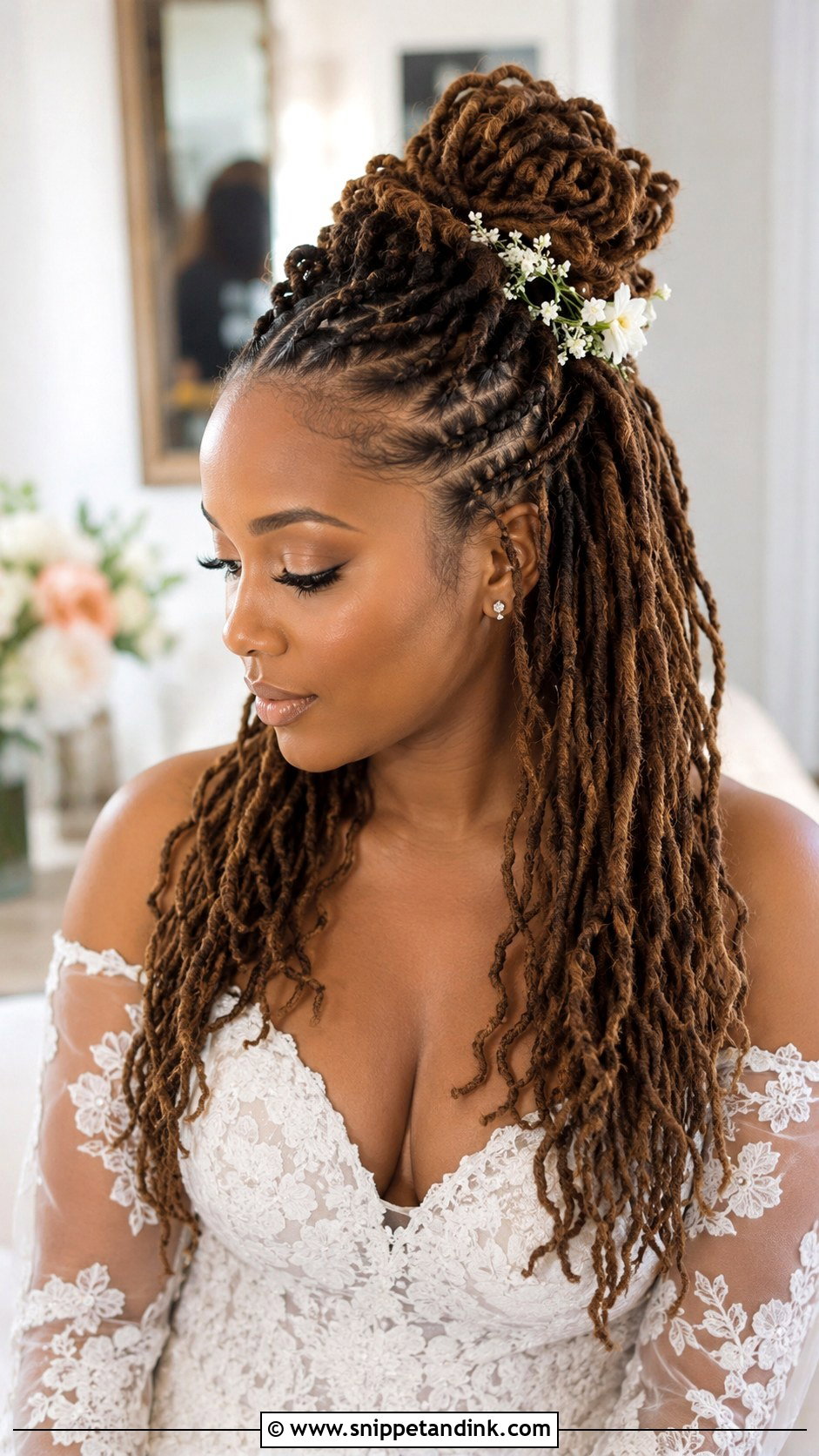
Half up, half down shows off your length while still lifting the face. The top section can be twisted, braided or wound into a small bun, and the rest falls over the back. The common problem with long locs is that the pinned top section ends up supporting too much weight, which starts to ache by the reception. I take a smaller top section than people expect and spread it across two anchor points. Curled ends or a few small flowers finish it well with an open-back gown.
4. Side Swept Locs
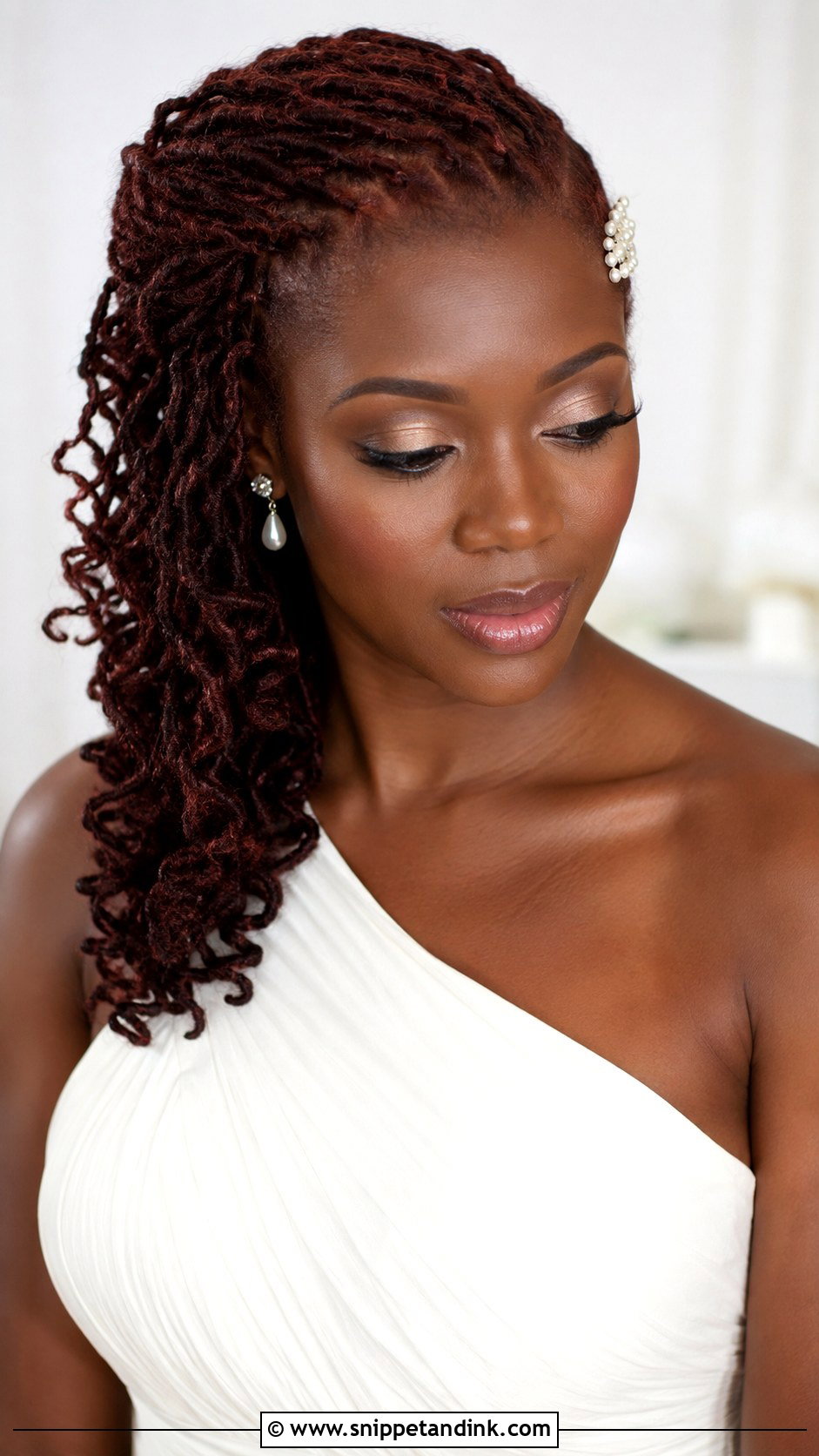
Side-swept locs give you a romantic outline without a full updo. I build a hidden anchor behind one ear, usually a short flat twist with pins crossed through it, and drape the rest of the locs over that shoulder. A one-shoulder or sweetheart neckline balances it. If your locs are very full, I’d split the weight between that anchor and a second one lower on the nape, or the side will slowly drop. A comb near the anchor point covers the pins and gives a veil something to sit beside.
5. Curled Locs For Wedding
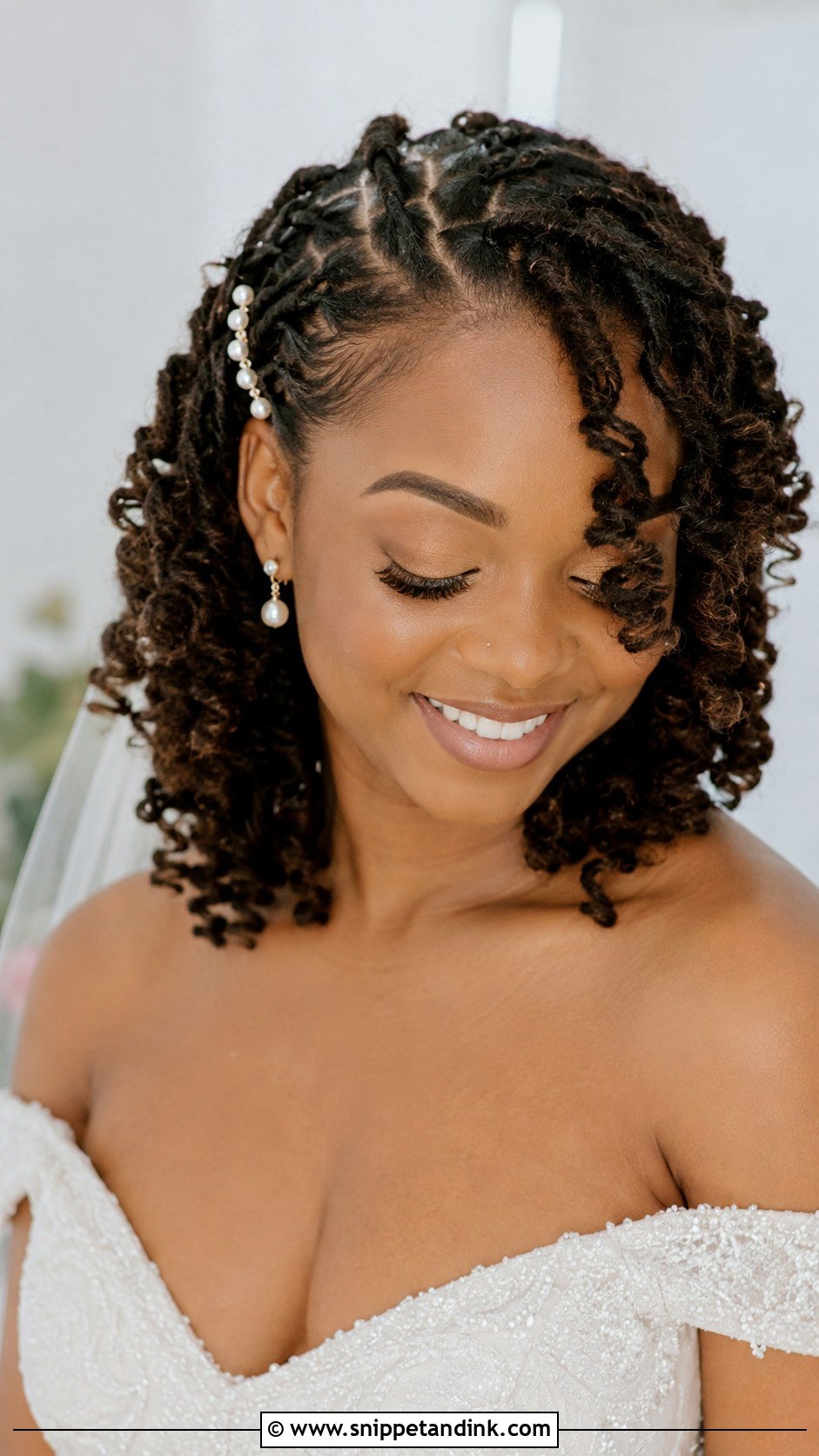
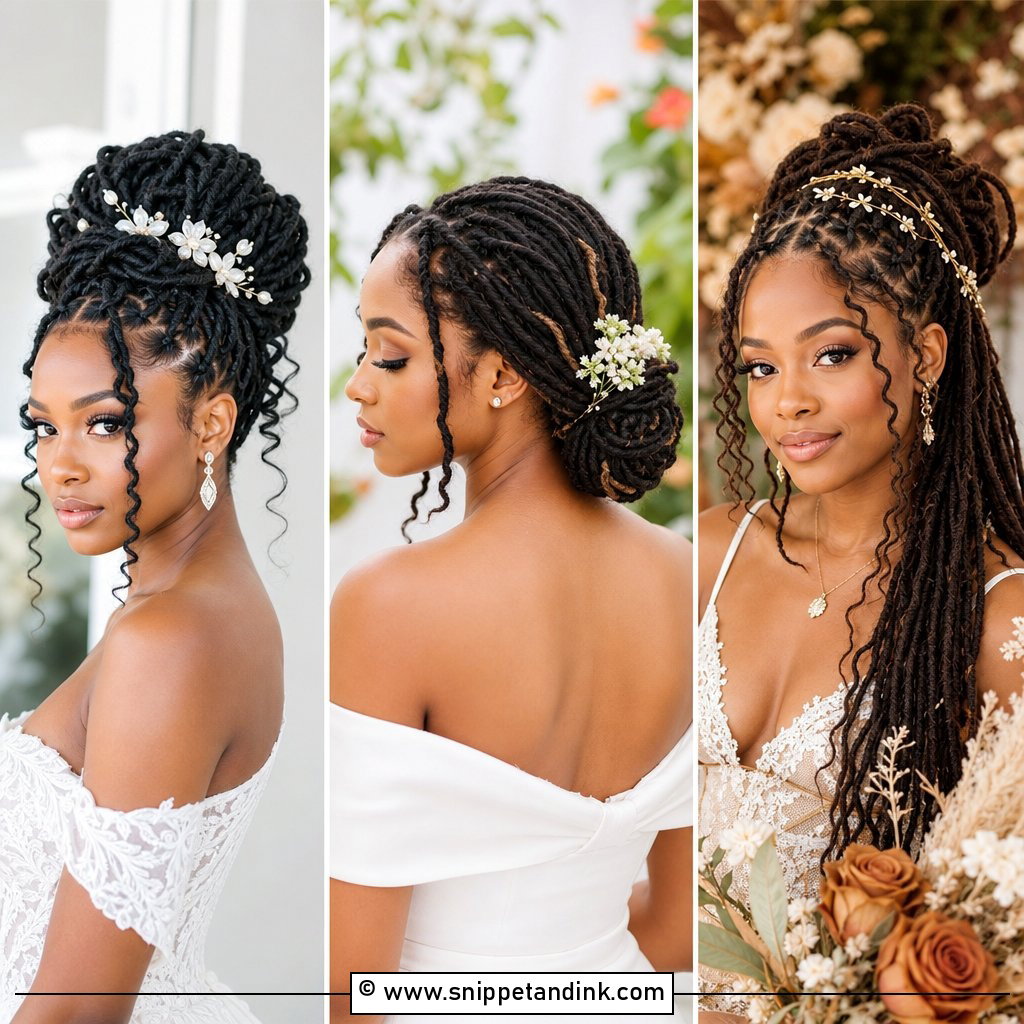
Locs take a curl set really well, but they need time. I set them damp on pipe cleaners, flexi rods or perm rods and leave them to dry fully, which can mean overnight or longer for thick locs. Heat is rarely needed and it’s not something I’d risk on the morning. Small rods give tight, defined spirals; larger ones give looser bends. A middle part reads modern and a side part feels softer. Keep accessories minimal so the curl pattern stays the focus.
6. Loc French Twist
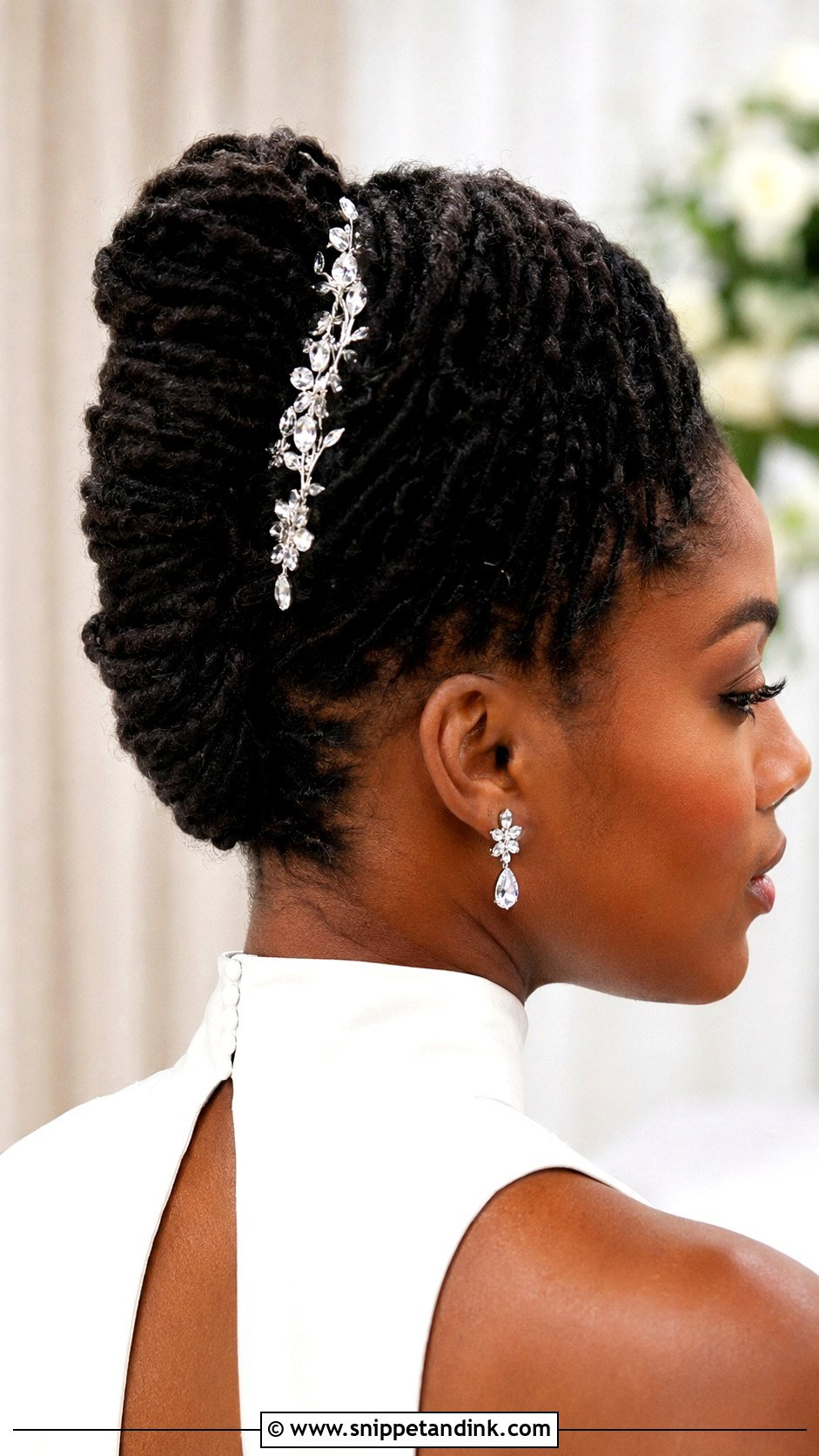
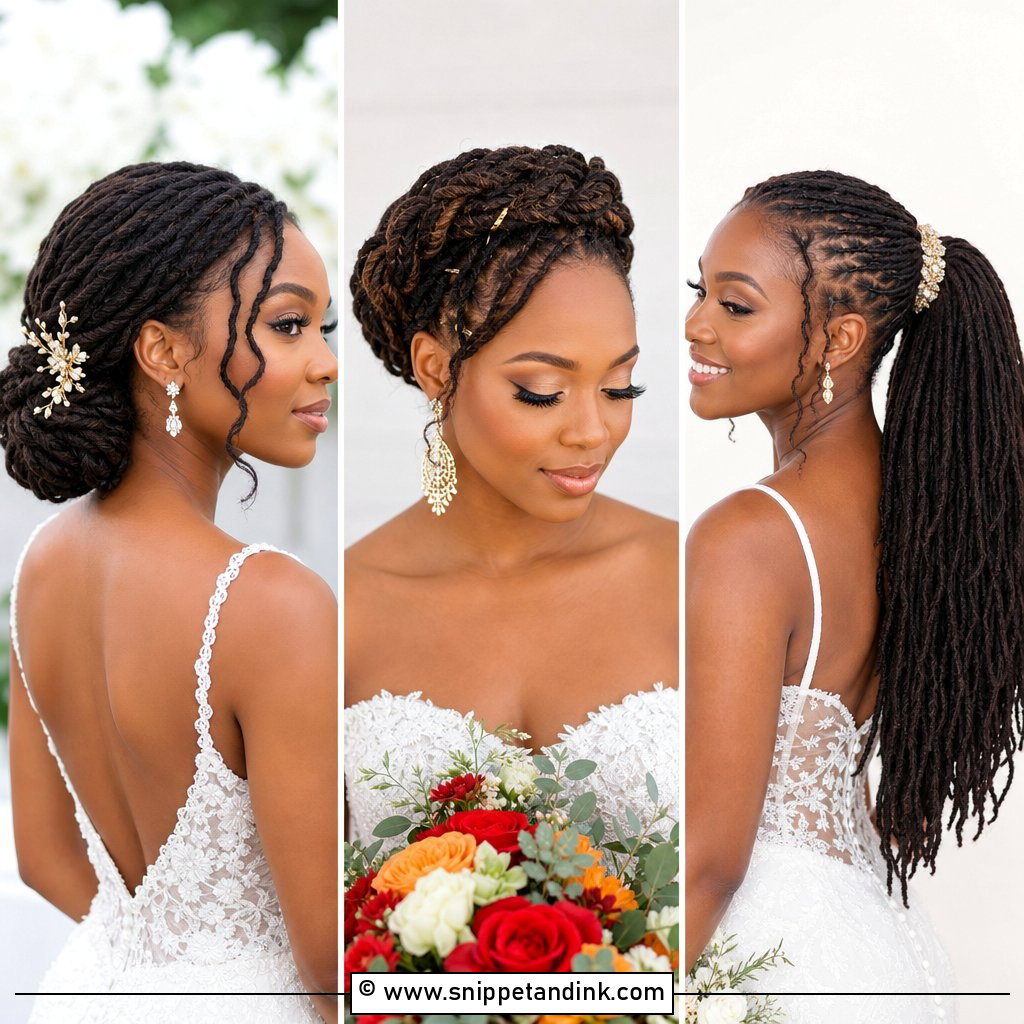
A loc French twist works differently from one done on loose hair. Instead of smoothing a single roll, I stack locs upward along the back of the head, fold the ends under and pin each layer as I go. It needs locs that reach at least past the shoulders so they can fold without strain. The clean vertical line looks right for a formal ceremony or a courthouse wedding. A decorative comb along one side catches light and helps hide the final pins.
7. Low Loc Bun
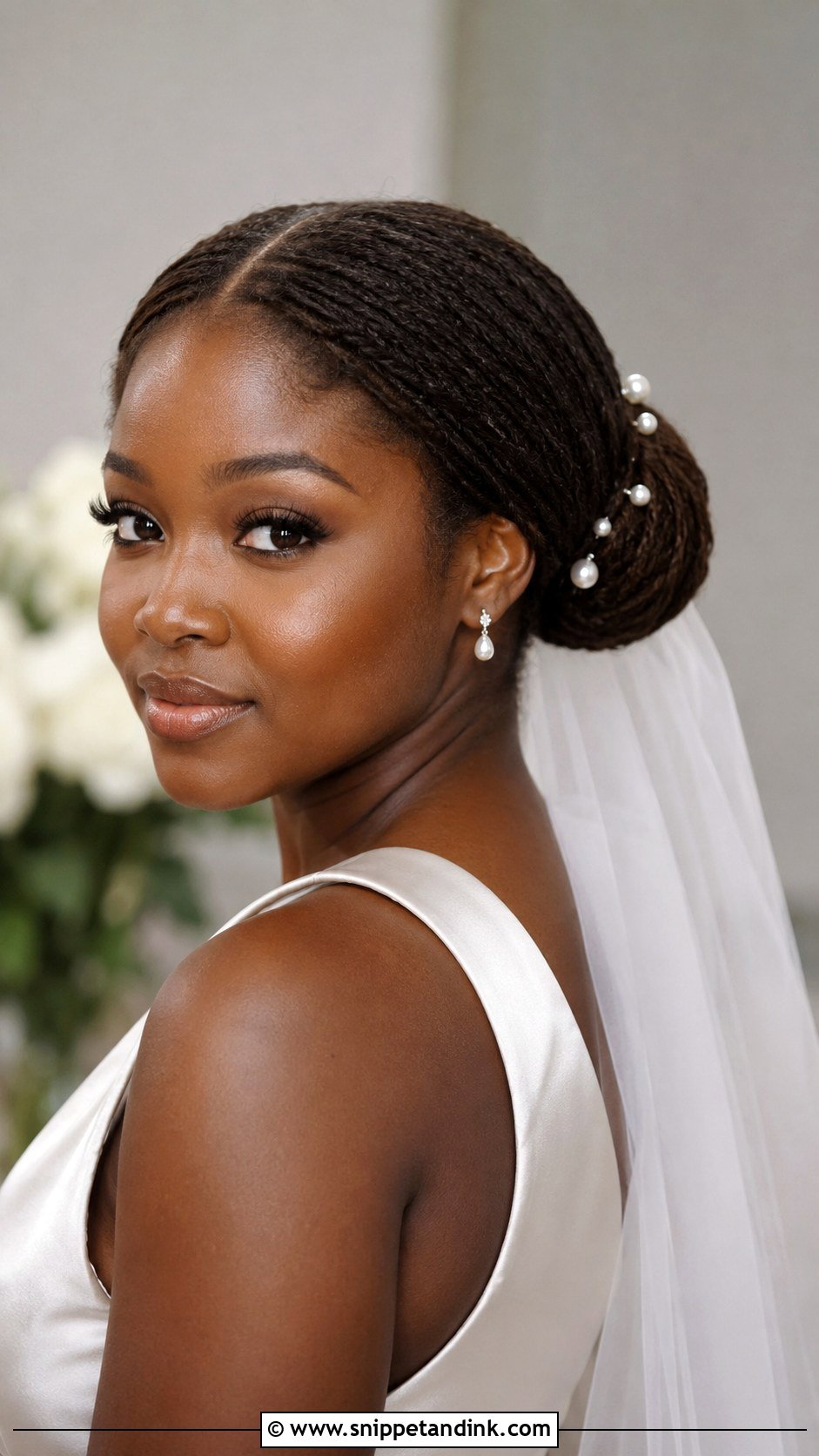
If you aren’t sure which updo to choose, this is where I’d start. A low bun at the nape puts the weight right where your neck can support it, so it’s the most comfortable option for a long day. It sits neatly under a veil and leaves the back of the gown visible. Keep it neat for a modern dress or let a little texture show for a softer feel. Pearl pins or a couple of gold loc cuffs are enough decoration.
8. High Loc Bun
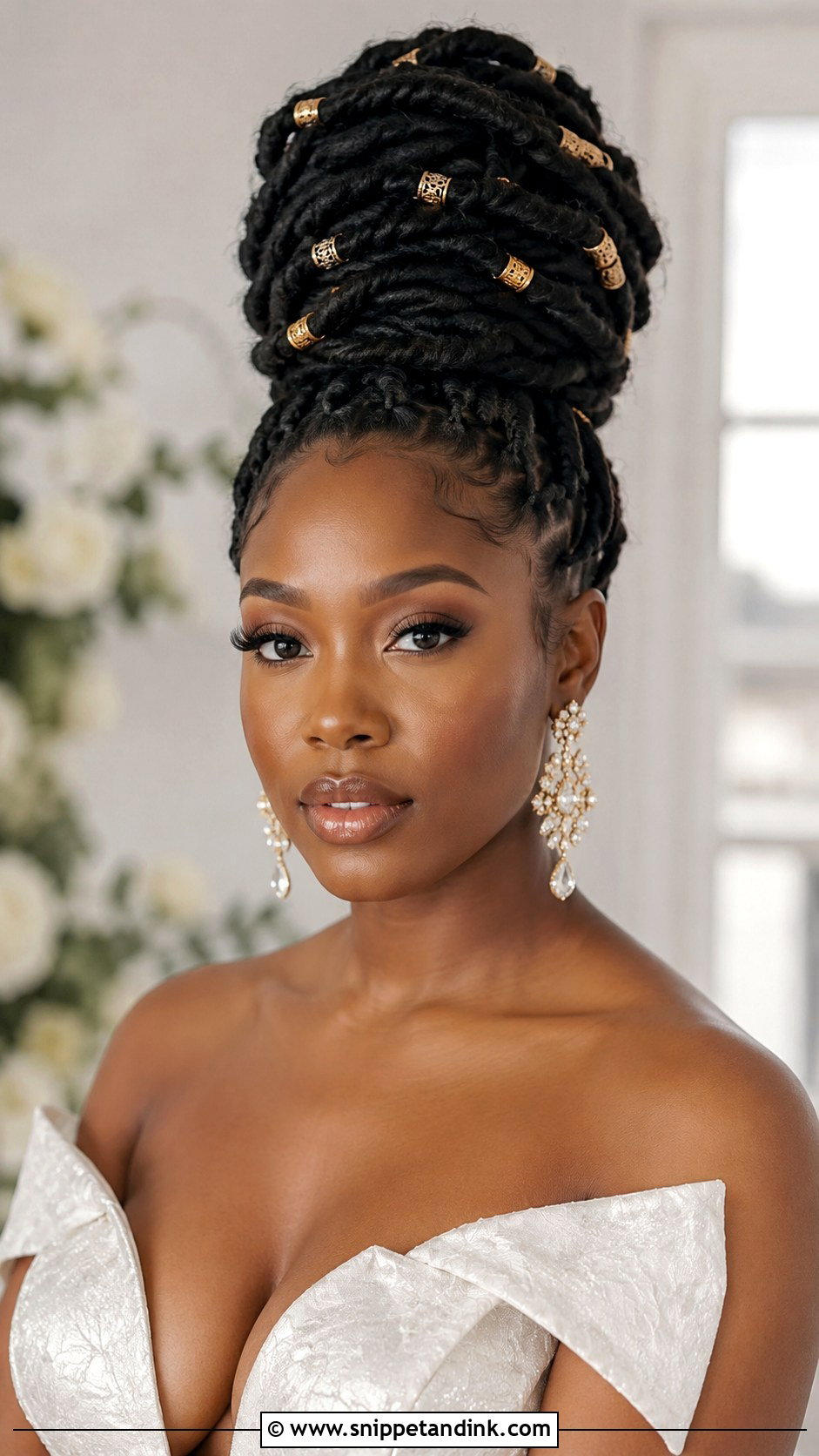
A high bun gives real height and draws the eye to your cheekbones, earrings and neckline. The trade-off is weight: piling thick locs at the crown puts pressure on a small area of scalp, so I’d only recommend it if you’ve worn it for several hours before and felt fine. I shape the bun wider rather than taller when locs are very full. Any edge styling should stay soft and light. A small tiara or scattered pins at the base finish the look.
9. Loc Crown Braid
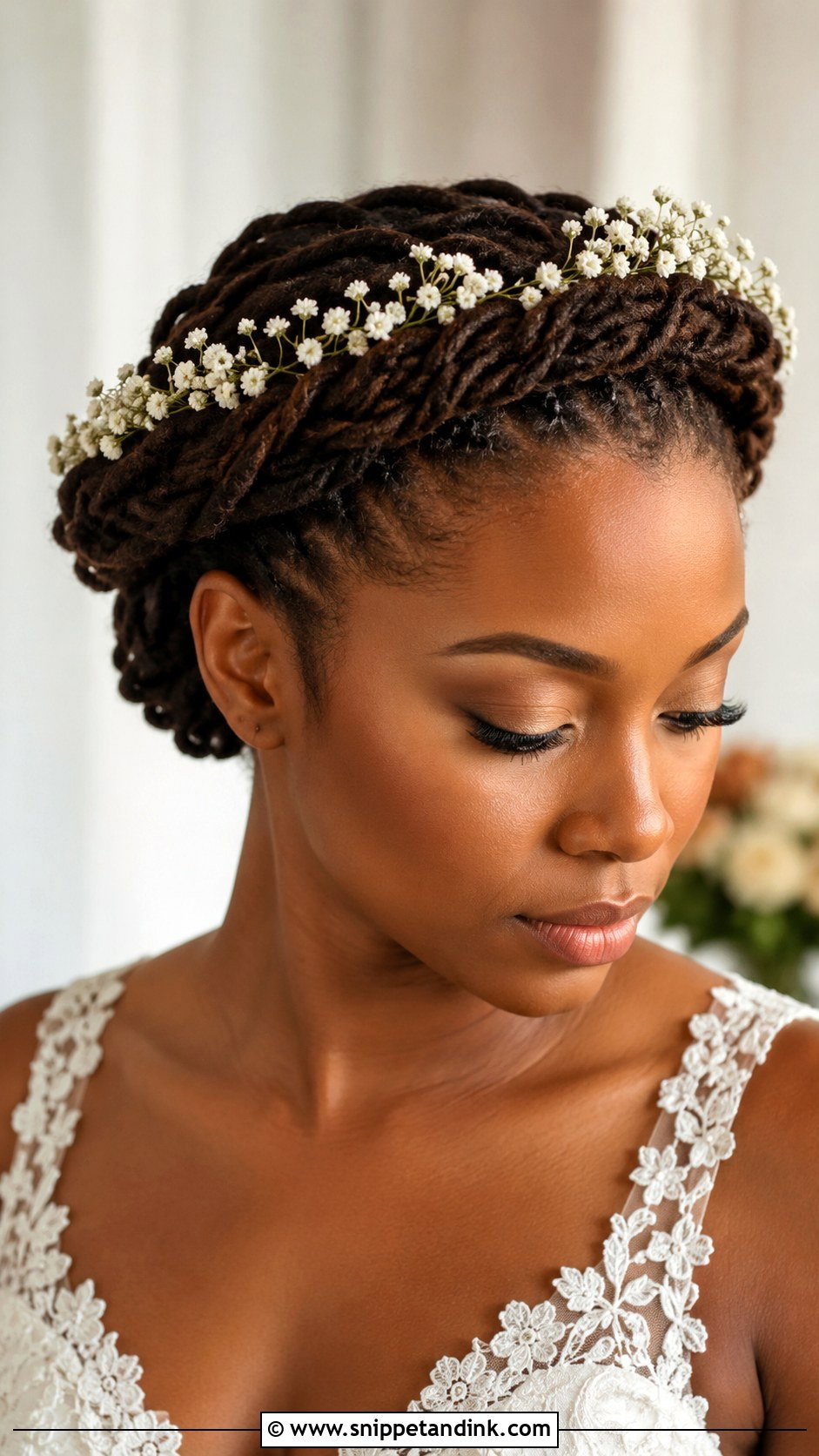
A loc crown braid wraps around the head and frames the face in a halo. I braid or twist the locs, then pin the braid down along its whole length, not just at the ends, so it doesn’t slide once you start moving. It keeps hair off the face without a bun and fits garden weddings and cultural ceremonies well. Small flowers, beads or pearl pins tuck easily between the sections. Keep the front of the braid sitting slightly back from the hairline so it doesn’t drag on your edges.
10. Loc Ponytail For Wedding
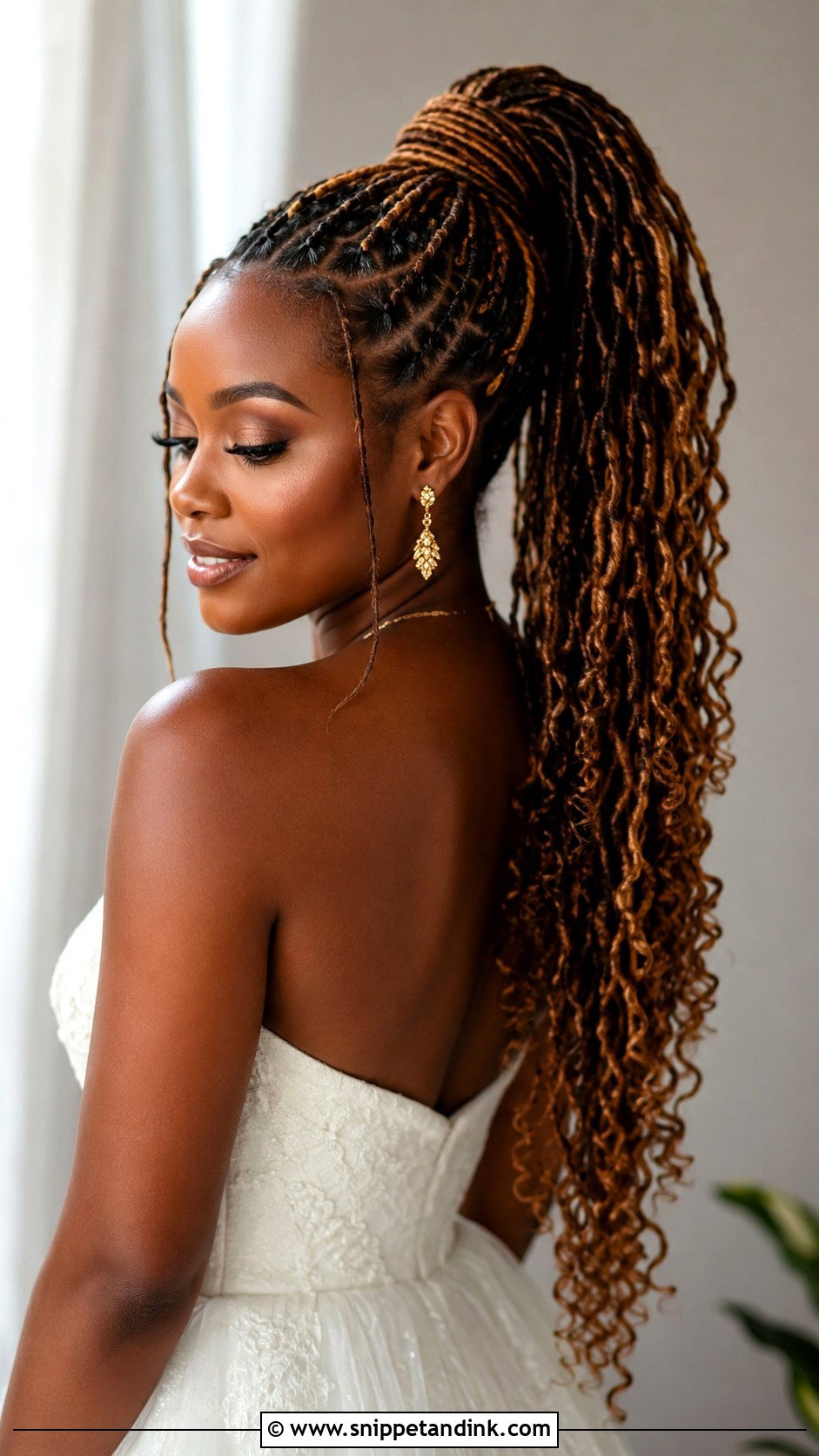
Height changes the whole mood of a loc ponytail. A low one feels refined; a mid or high one adds lift and drama but loads the scalp more. I hide the elastic by wrapping a single loc around the base and pinning its end underneath, then add a gold cuff or pearl wrap if you’d like some detail there. If you’re prone to tension headaches, go low. I always check the hairline after securing it and loosen anything that pulls.
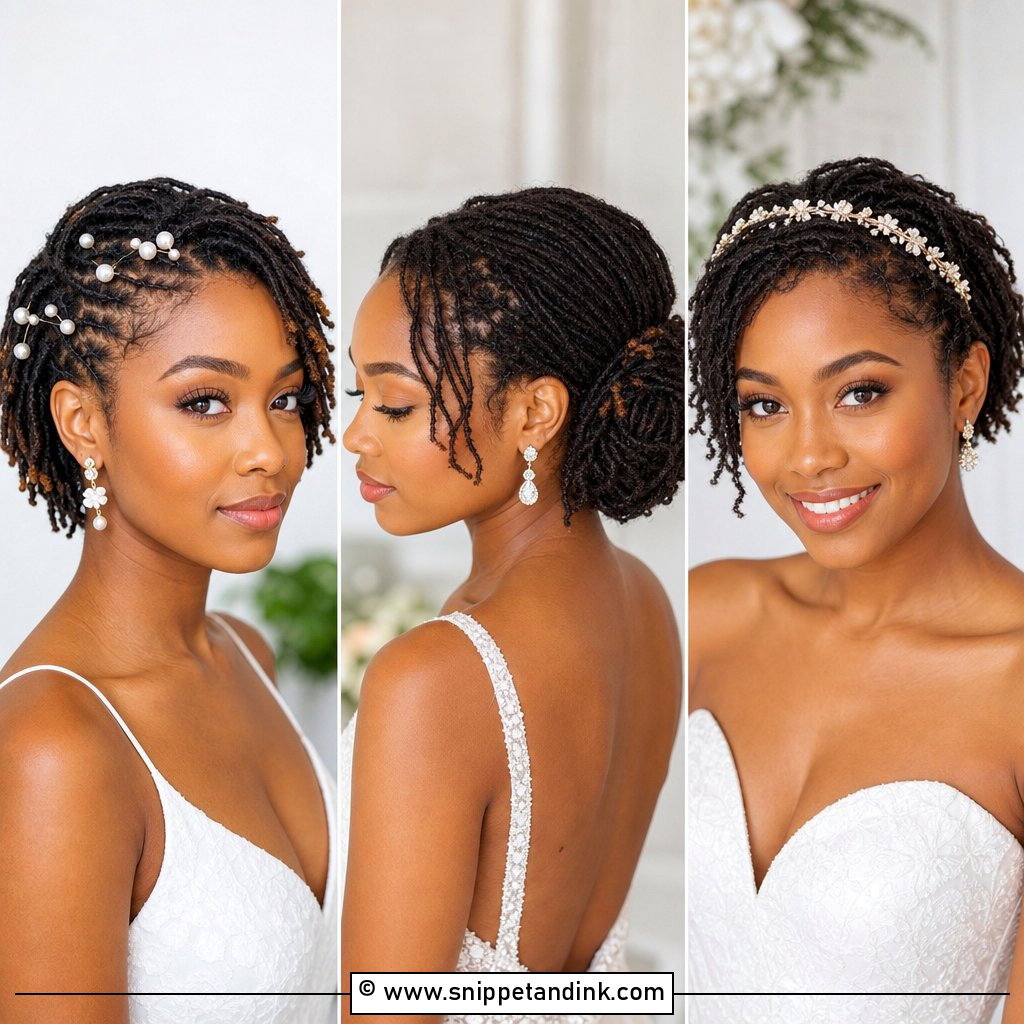
11. Loc Bob For Wedding
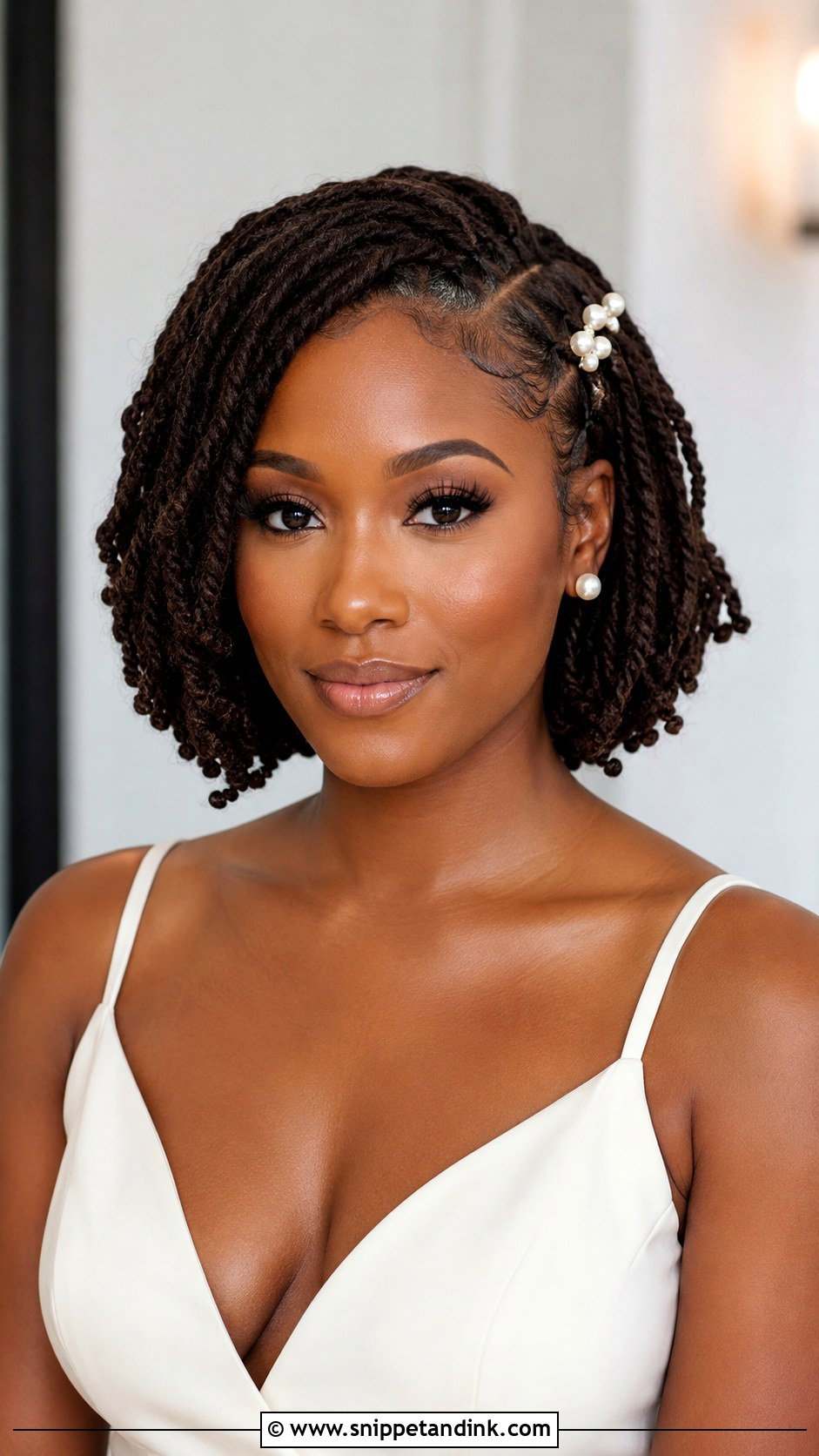
Shorter locs give a bob that’s neat and very easy to wear. I curl the ends under on small rods the night before, then pin back one side or add a small clip on the day. Chin to shoulder length is ideal. A deep side part or a tucked section gives it more shape and shows off a statement earring. A light shine mist freshens the locs for photos; I’d avoid heavy oils, which can leave a visible film on close-ups.
12. Microlocs Wedding Updo
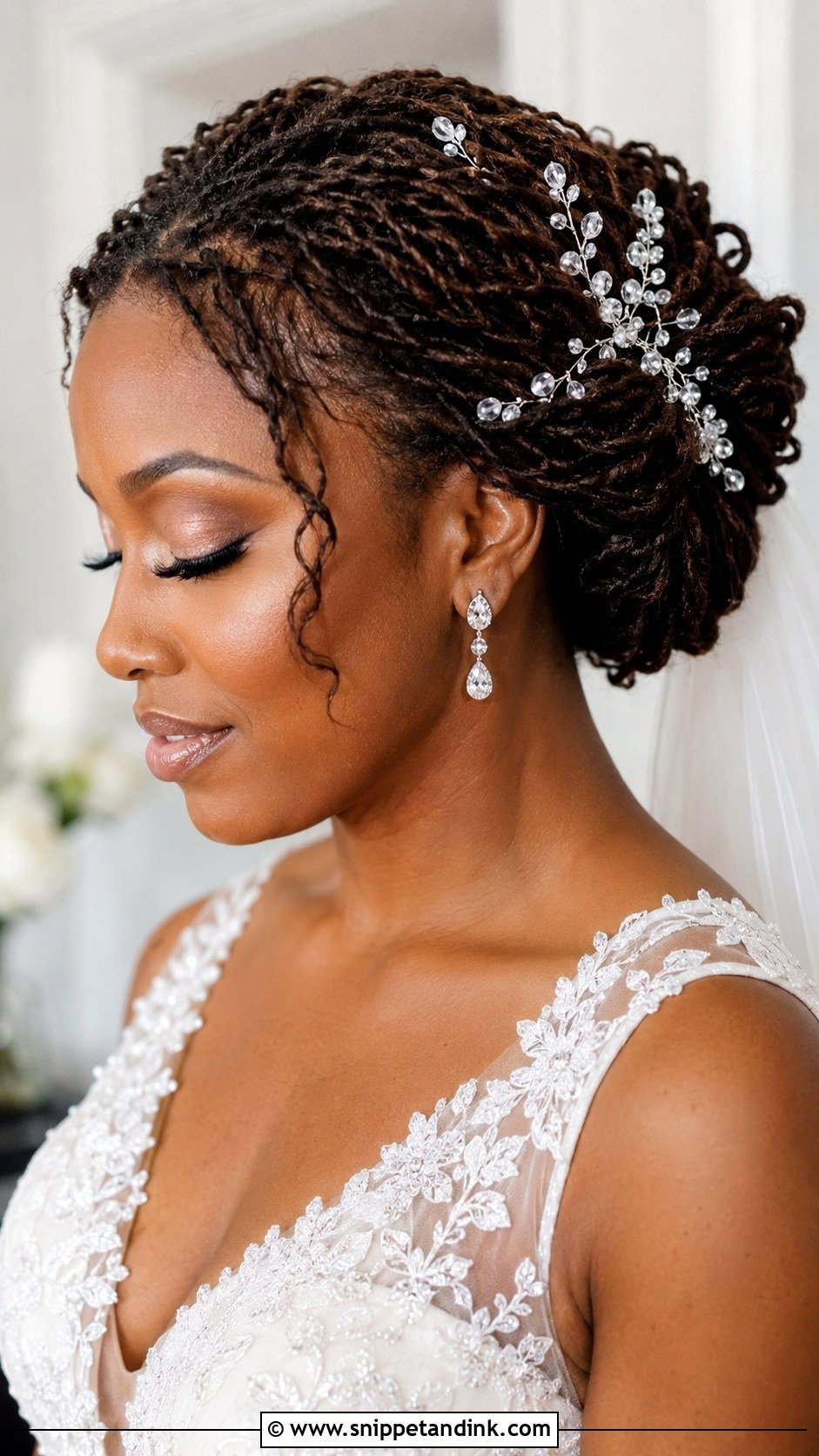
Microlocs behave more like loose hair than mature locs do, so they take fine detail well. A microlocs wedding updo can have tucked rolls, small twists, curled ends or a soft bun with a few face pieces left out. The smaller size gives a lighter, airier finish. Their roots are also more delicate, so I’m careful not to pin through them or pull at the edges. A few tiny pearls or crystal pins are plenty.
13. Sisterlocks Wedding Curls
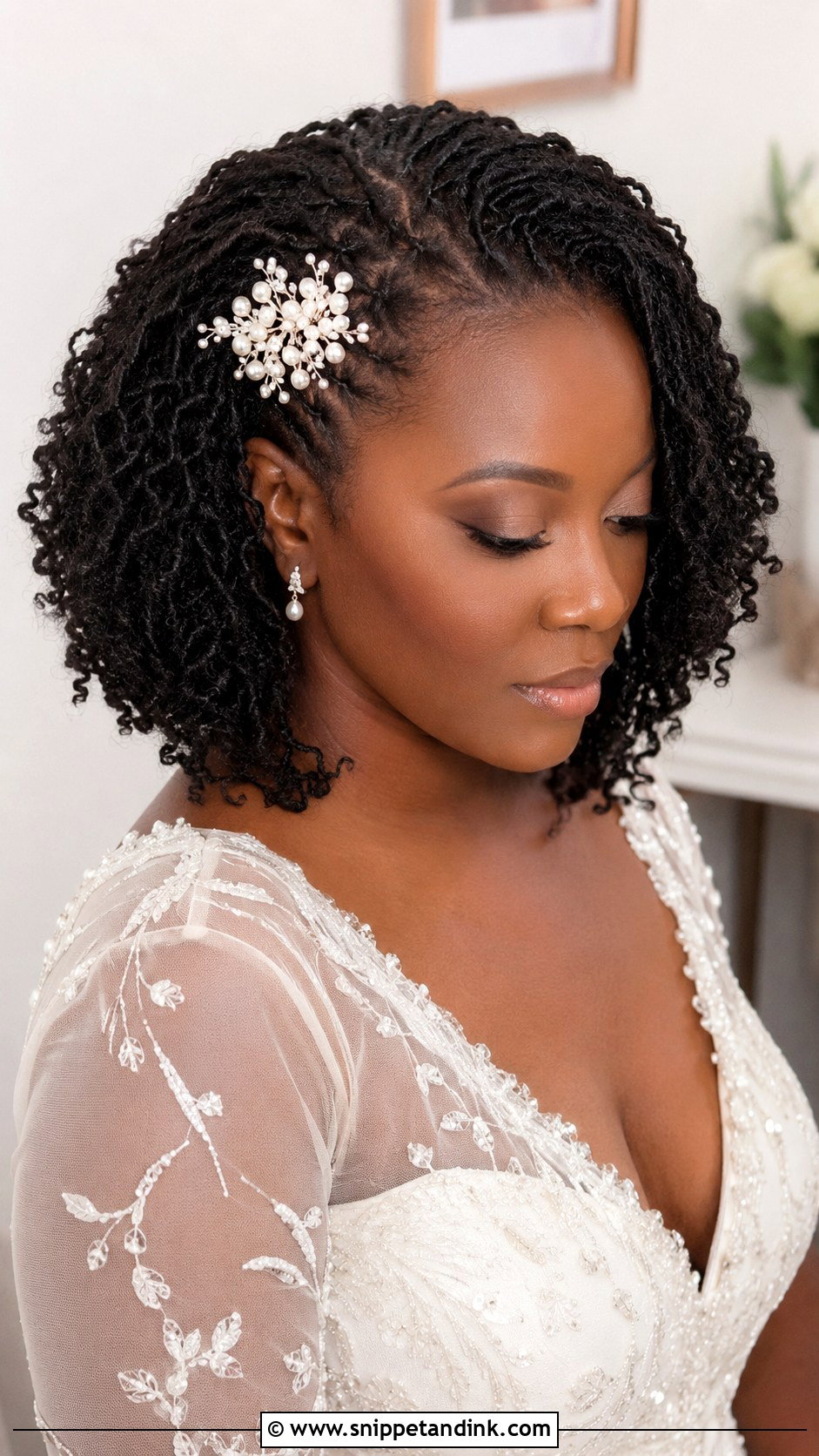
Sisterlocks are small and flexible enough to hold a soft, full curl around the face and shoulders. I set them a day or two ahead on rods so the curl has time to dry and settle; on the morning I only separate and arrange. That means very little pinning, which suits brides who want to feel light. A side part, middle part or a single pinned section at the front all work. Finish with a pearl comb or one small flower.
14. Faux Locs Wedding Hairstyle
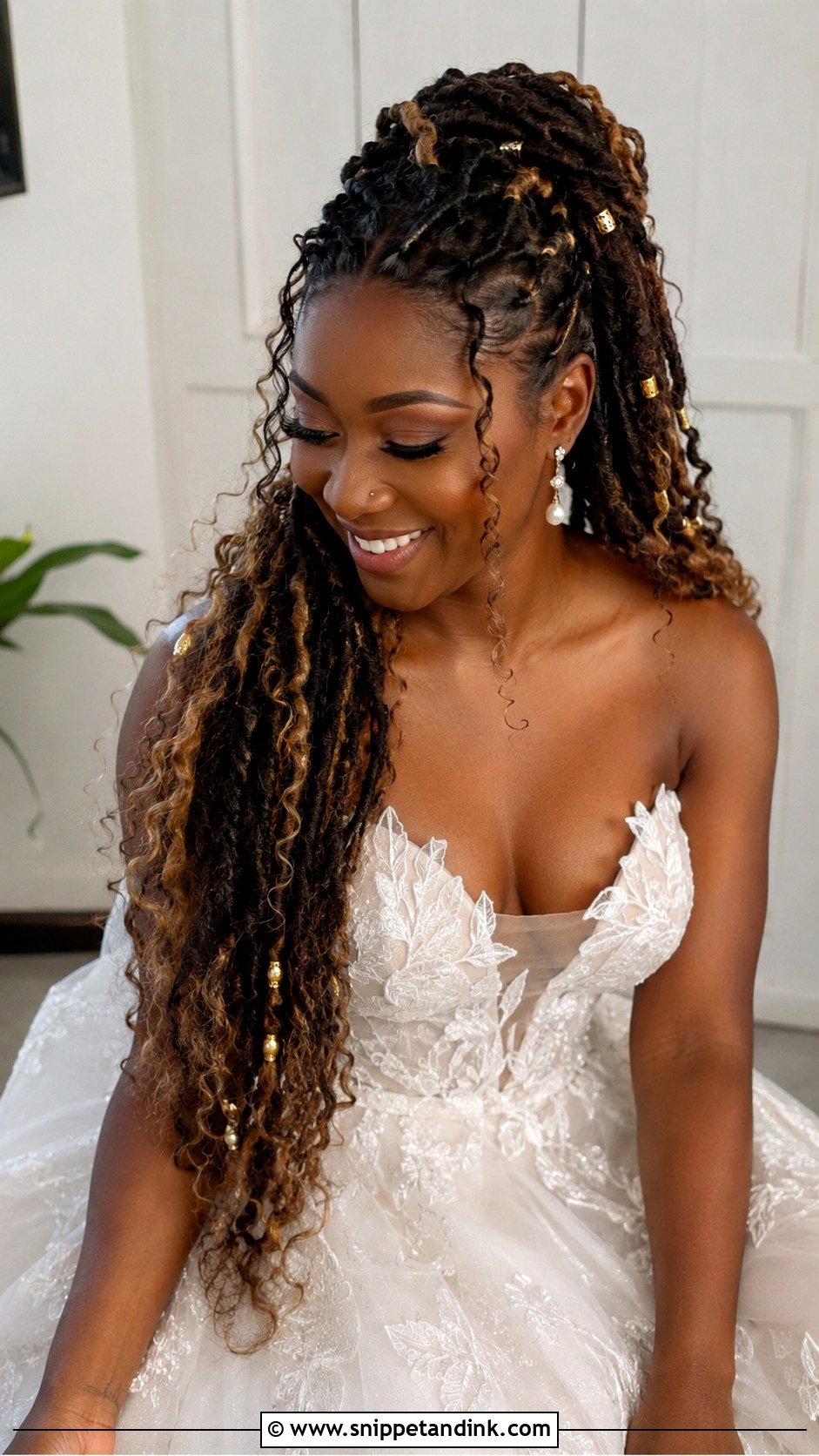
Faux locs give you length or a temporary loc look for the celebration. The install itself is the thing to plan: book it about a week before, so the roots relax and any tightness has eased, but the style is still fresh. Choose lightweight, soft locs rather than very stiff ones, because heavy faux locs in an updo will pull. Boho faux locs with curly pieces feel romantic, while smooth ones look sleek. They can be worn up, half up, swept to one side or left long with cuffs or a veil.
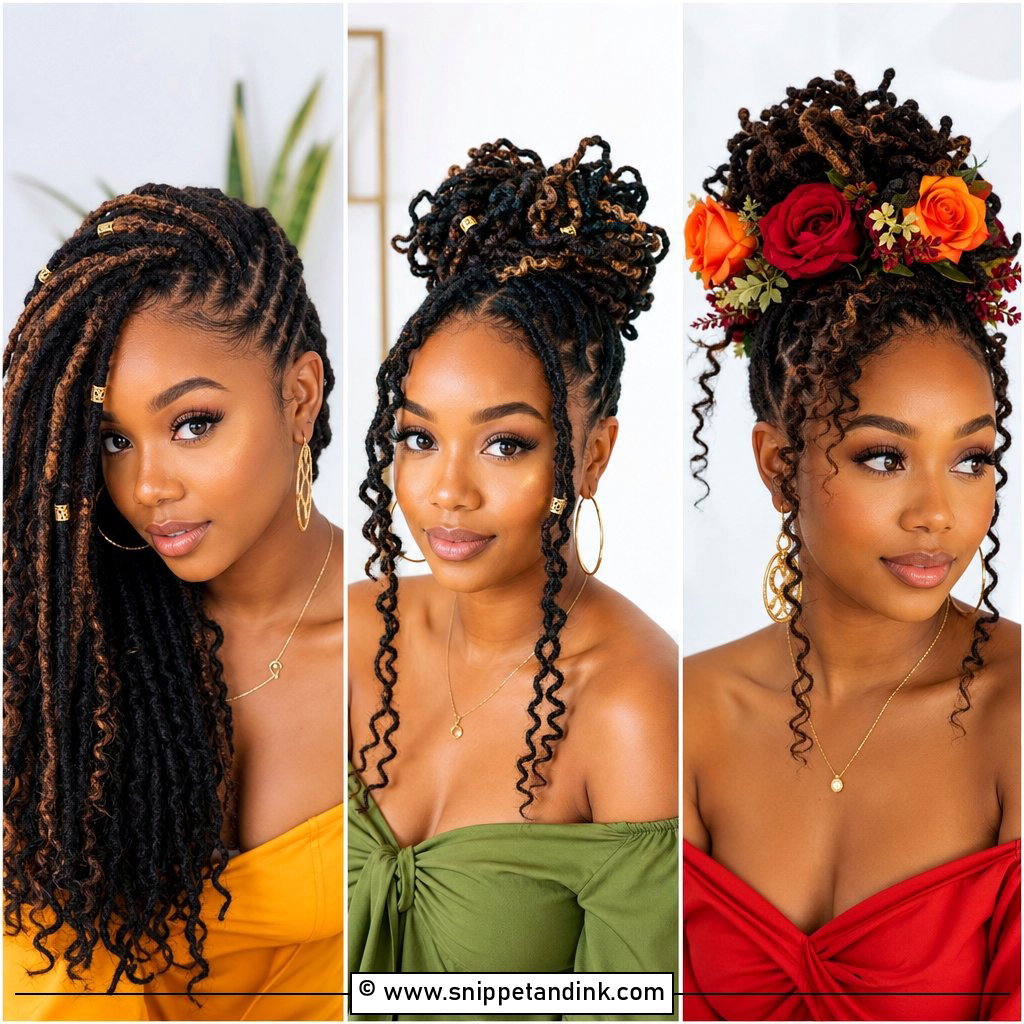
15. Short Locs Wedding Hairstyle
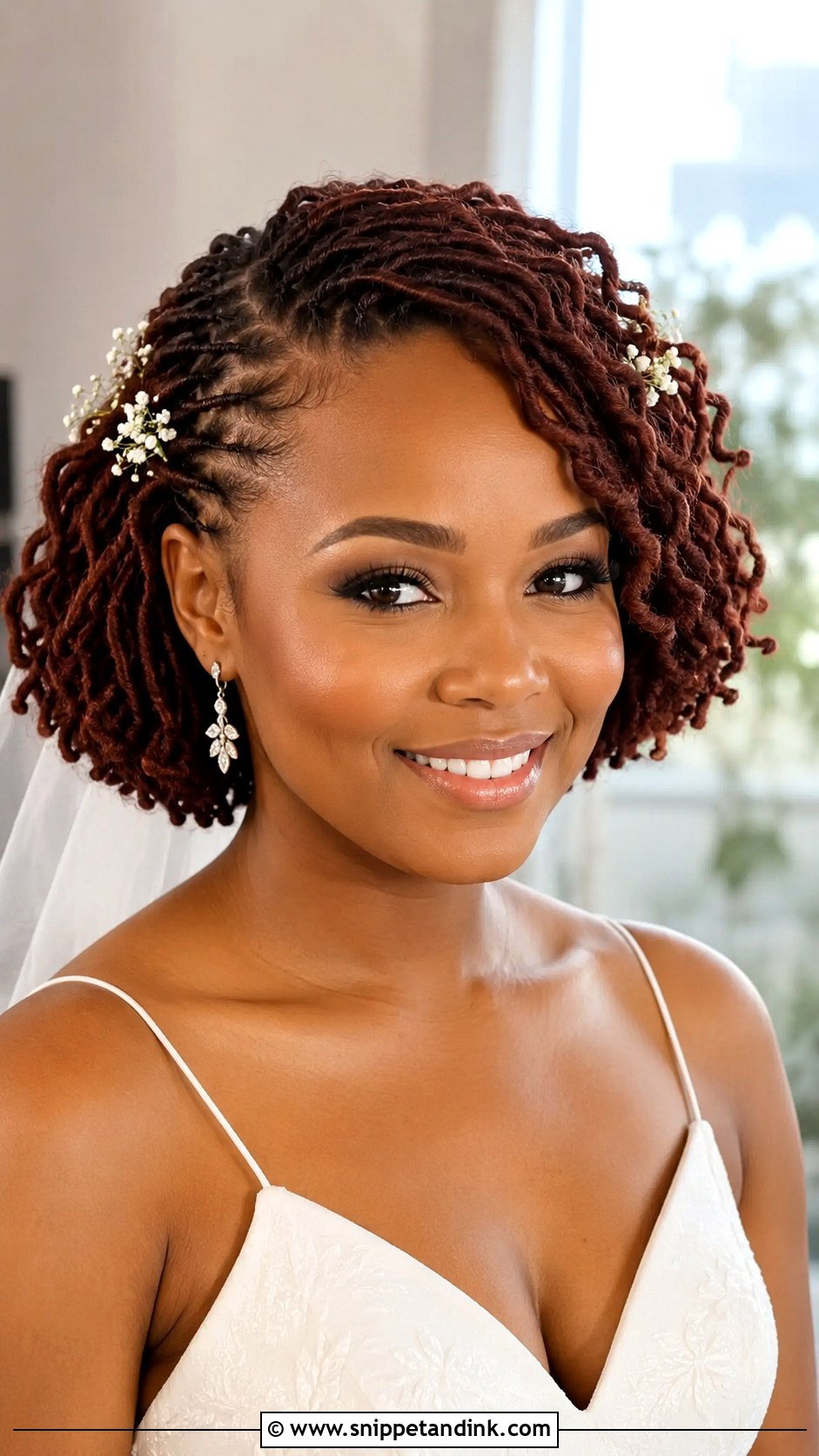
Short locs don’t need to pretend to be long. I work with volume, a clean part and detail: curling them into a soft halo, pinning one side back, or shaping small rolls along the crown. Tiny pearls and flowers sit nicely between short locs and catch the light. A single comb behind one ear can be the whole bridal accent. It’s also the most comfortable look on this list, which counts for a lot by the end of the night.
Heavy Locs Need a Different Pinning Plan
The most common complaint I hear after a loc wedding is a headache, and it nearly always comes from a style that hangs on two or three pins. Long, mature locs are heavy, and putting that weight on one spot of the scalp for a whole day is uncomfortable even when it looks fine at first.
- Large U-pins and loc pins spread the load better than standard bobby pins, which can also snag the outer surface of a loc.
- For a tall updo, I’ll sometimes secure sections with thread or a soft wrap instead of relying on pins alone.
- Wear your trial style for at least three or four hours at home. If it aches by then, it will ache by the reception.
- Ask someone to help with the takedown that night and remove pins slowly; pulling them out fast can tug at the roots.
Where the Veil Comb Goes
Veil comb teeth can catch inside a loc and leave frizz when you pull them out. I prefer to slide the comb into the base of a bun or a pinned section and lock it with two crossed U-pins through the comb itself. For a heavy cathedral veil, I’d plan a small removable section so the full length can come off after the ceremony.
Locs That Last From the Vows to the Last Dance
Locs give you a huge range, from a low bun to curls, crown braids, petal buns and half-up shapes. What decides the right one for you is length, thickness, your neckline, the veil and how much weight your scalp is comfortable with for twelve or more hours. Comfort is not a minor detail here. Bring photos to your loctician and stylist together if you can, settle accessories early, and plan the retwist and any curl set around the timings above, so the hair has settled by the morning.
You'll Like These Ideas:


Leave a Reply