
An Indian bride’s hair has a lot to carry. It holds the maang tikka and the flowers, anchors a dupatta that can weigh more than you expect, and has to last through hours of ceremonies, photographs, dancing and the odd cry on the way out. So when I sit with a bride, I look at the lehenga or saree, the neckline and the jewelry before we talk about style at all. The fifteen looks below run from jasmine buns and South Indian braids to soft waves and textured updos, and each one comes with what I’d tell you at the trial. For more Indian bridal hair looks, including lighter options for mehendi, haldi, sangeet and the reception, keep that collection open alongside this one.
Oiling, Henna Dye and Hair Treatments in the Run-Up
What you do to your hair in the last month matters almost as much as the style. Most of the problems I meet on wedding mornings started weeks earlier.
- Keep up a weekly oil massage if you already do one, but stop two or three days before the wedding. Oil left at the roots makes pins slide and curls fall within the hour.
- Wash the evening before, or the morning of if your roots get greasy fast, and keep conditioner on the lengths only.
- Henna-based hair dye leaves a coating that makes hair coarser and slower to take a curl. If you henna your hair, tell your stylist so she can plan more heat time.
- A keratin or smoothing treatment in the final weeks leaves hair so slippery that updos struggle. Do it well in advance or save it for after the wedding.
- Buy extensions early and match them in daylight, and bring them to the trial so they can be cut and curled to blend.
Get any colour or trim done two to three weeks before. That gives the colour time to soften and the ends time to settle, so nothing looks freshly done in the photos.
1. Indian Bridal Low Bun With Gajra
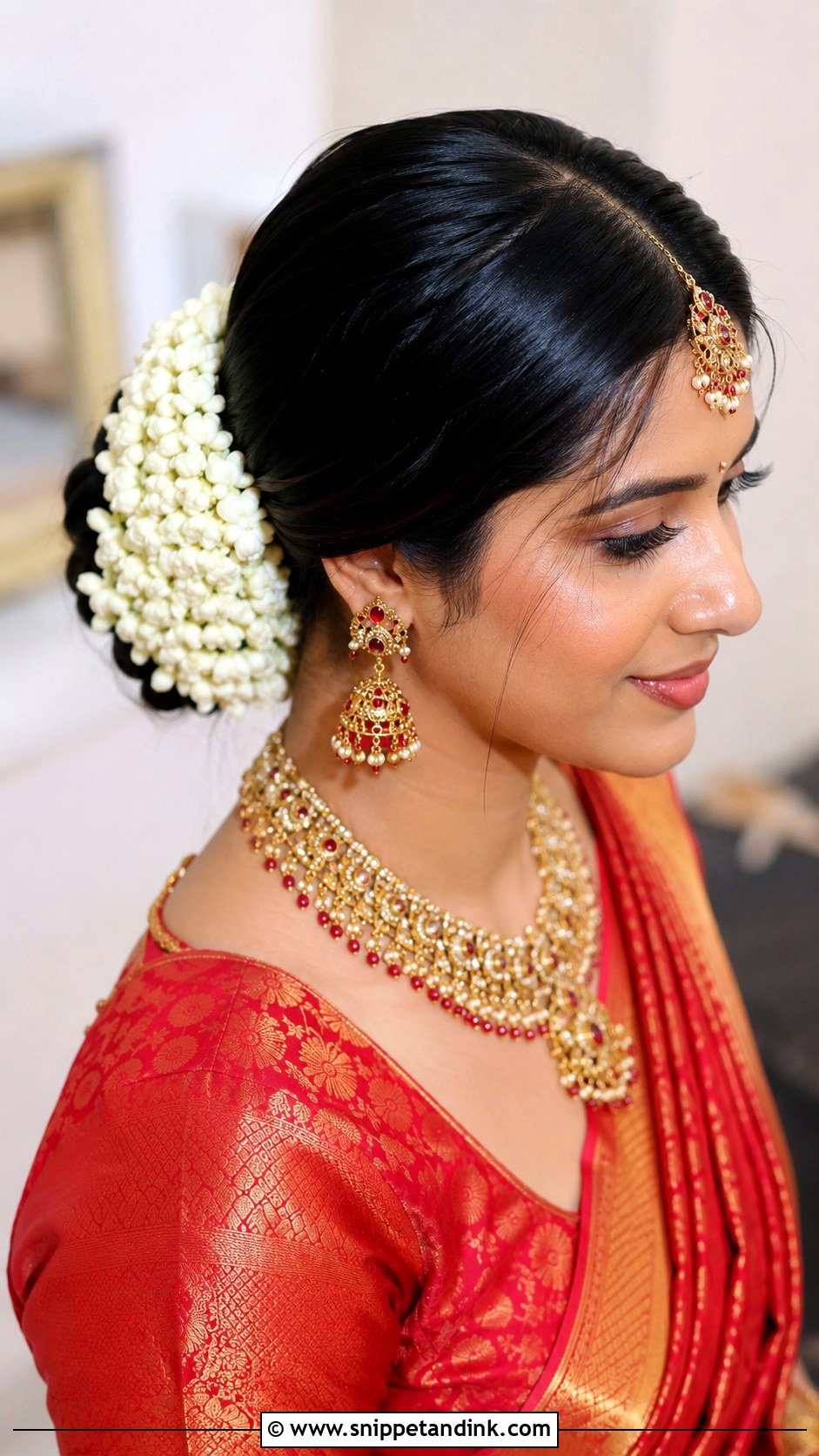
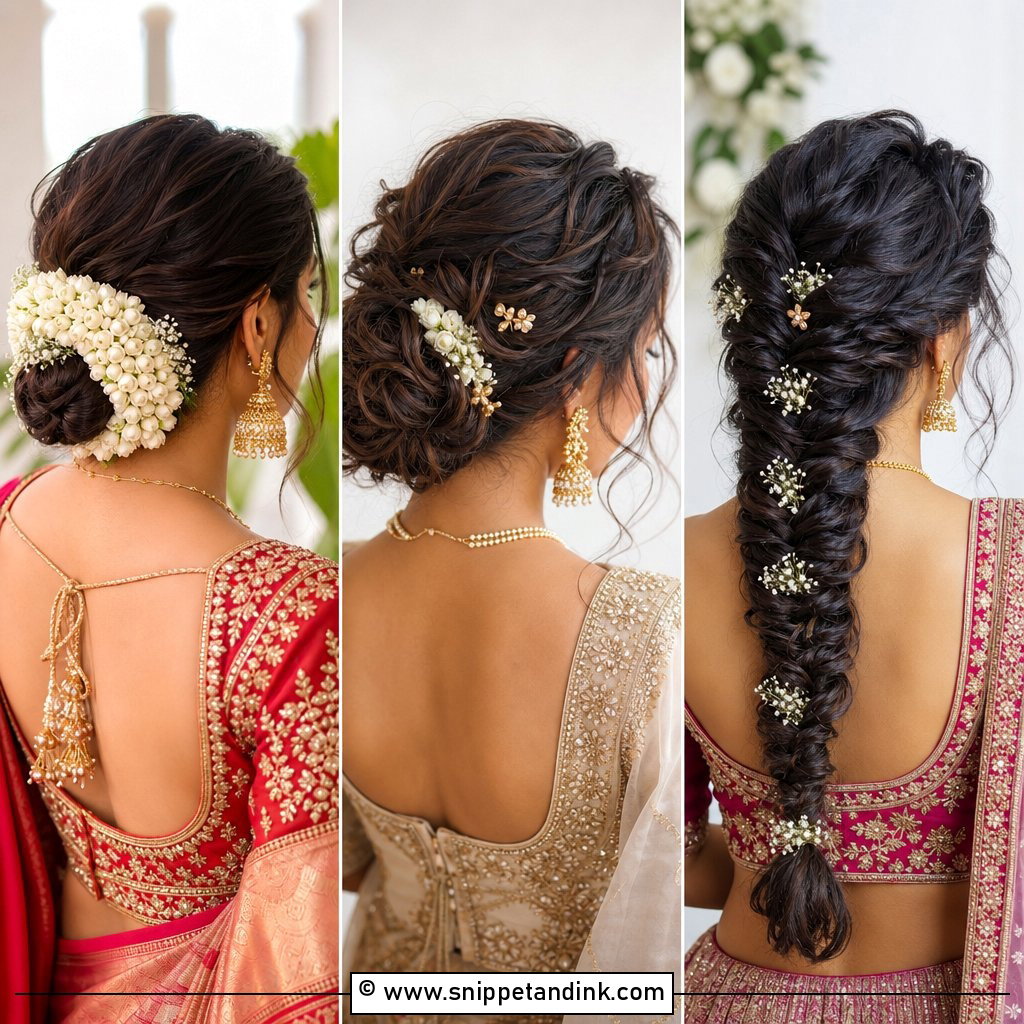
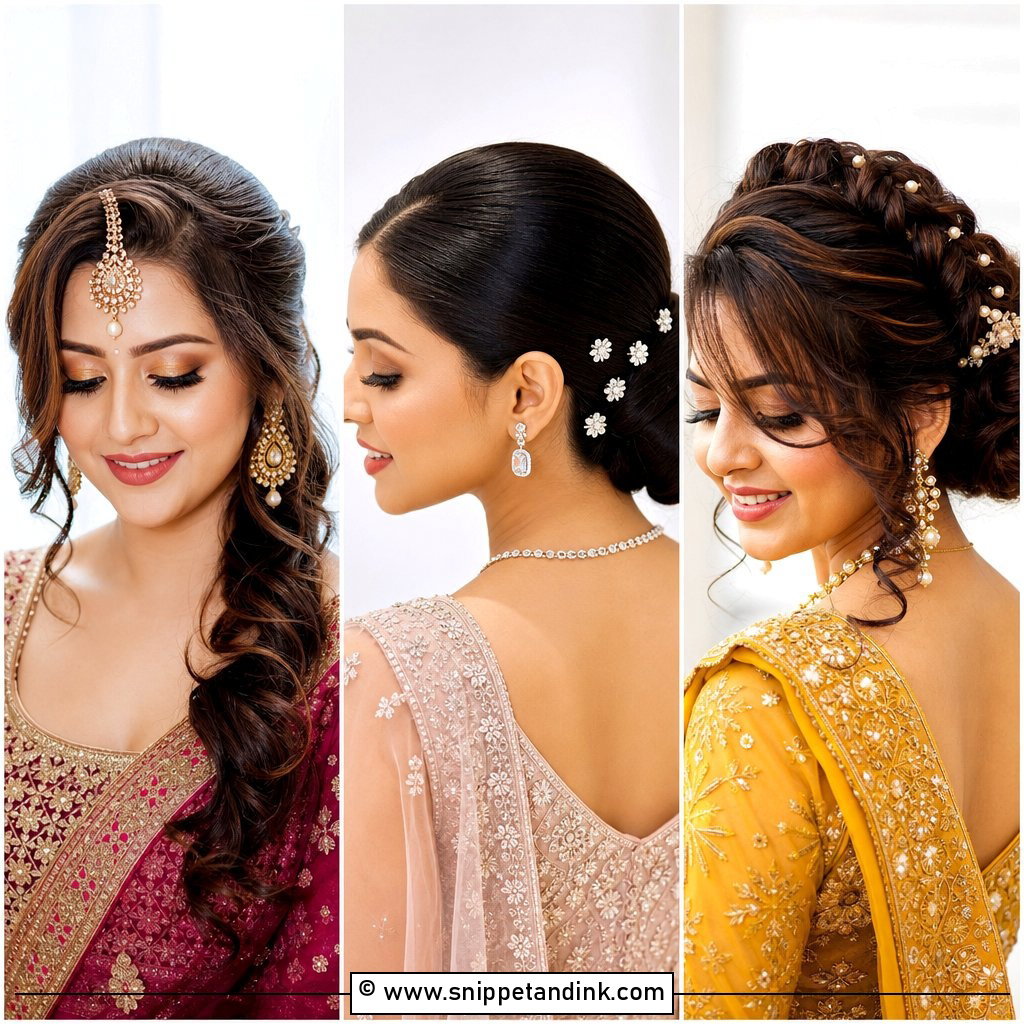
If I could only do one style for the pheras, it would be this. The bun sits at the nape and gives the dupatta a solid base, so the drape stays put without hiding your face. Fresh jasmine, mogra or white floral strings wrap around it for a clean finish against a red lehenga or a silk saree with temple jewelry. The flowers are heavier than they look, so I pin them through the body of the bun with U-pins, not just into the surface. Ask for soft crown volume and smooth sides.
2. Indian Bridal High Bun With Maang Tikka
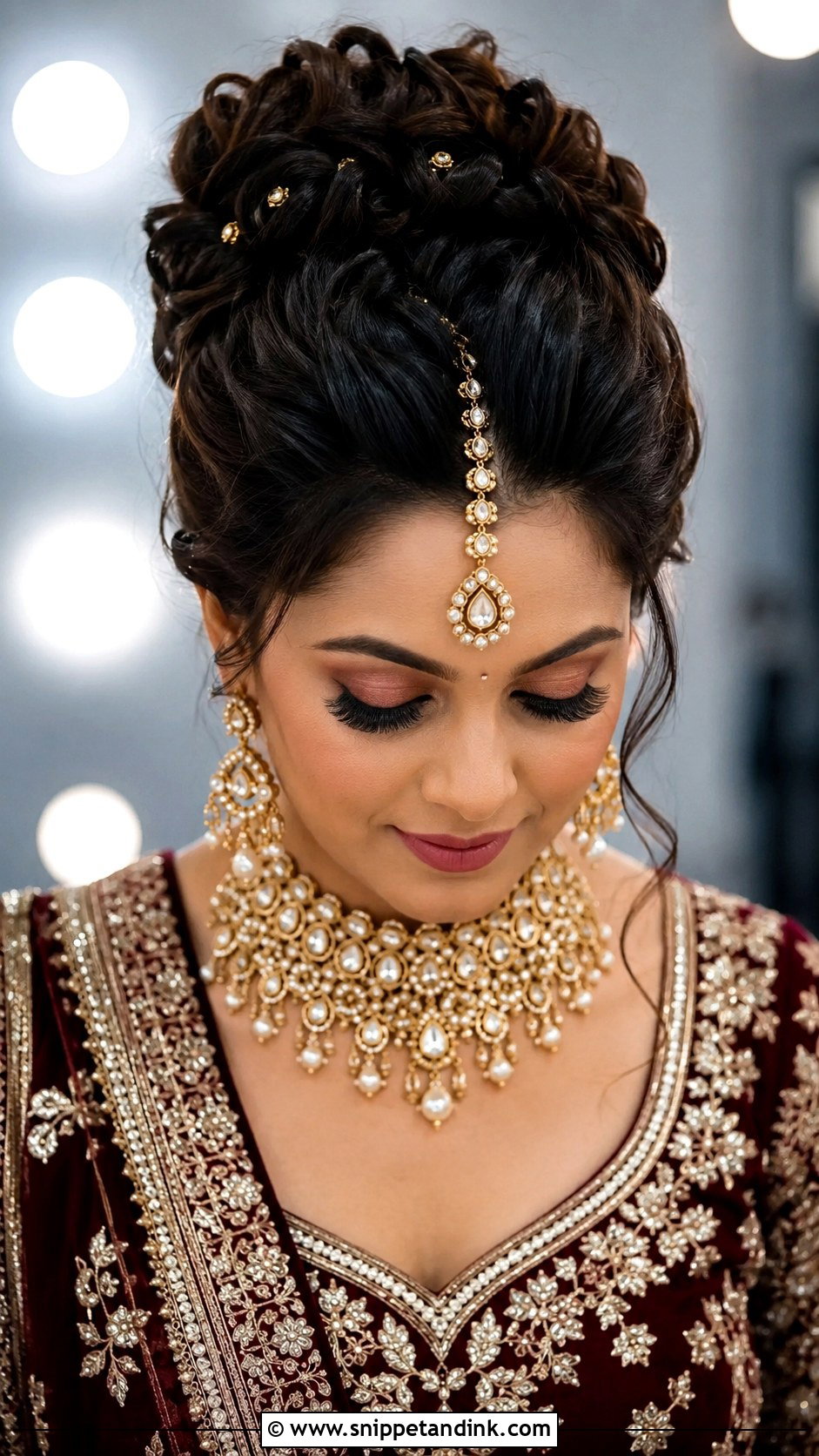
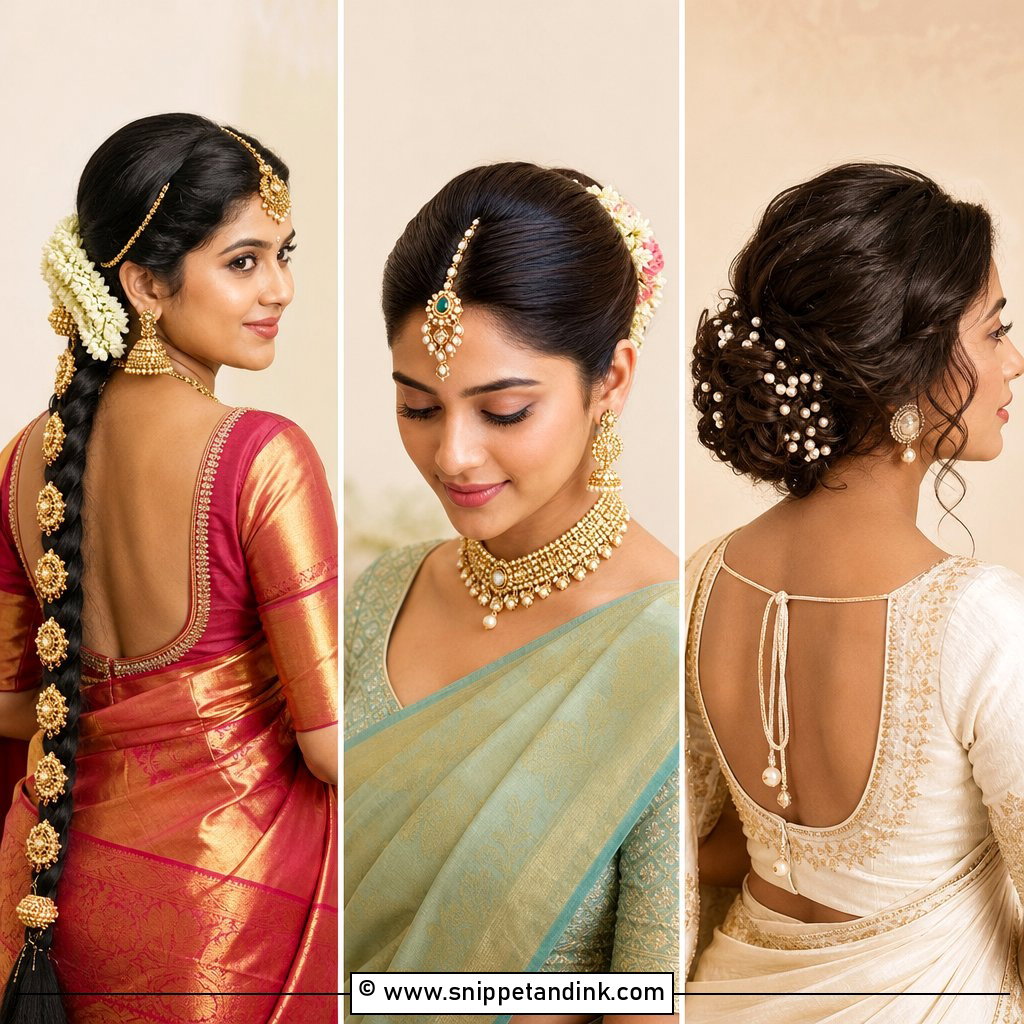
A high bun with a maang tikka gives height and a royal look, and it frees the sides of the head for a matha patti, a passa or bold earrings. It makes sense when the blouse has a detailed back or when the dupatta will be pinned over the crown, because the bun props the fabric up and shows its border. The trap is height: placed too far forward, it competes with the tikka. I set it at the back of the crown and leave a few soft pieces at the temples for round or heart-shaped faces.
3. South Indian Bridal Braid With Flowers
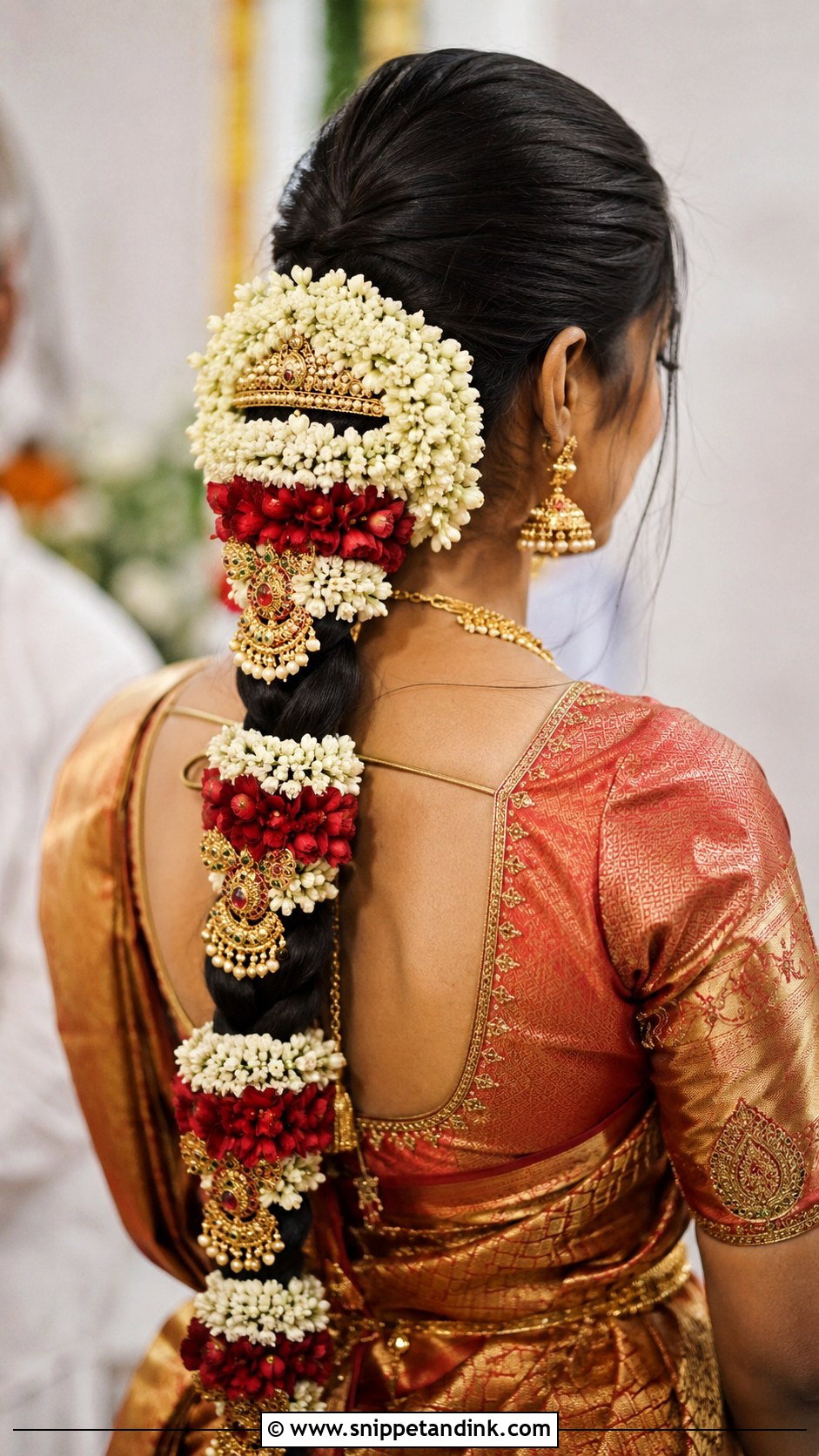
Nothing says Kanjivaram quite like a South Indian bridal braid wrapped in jasmine and finished with a jadanagam or other temple hair jewelry. It is deeply traditional, and it photographs best from behind, which is exactly the angle the mandap shots are taken from. Most brides need a braid extension for the length and thickness this look expects; I attach it at the nape and blend it over the first few crosses. The heavy part is the jewelry. Keep the top smooth and firmly structured, because a soft crown lets the ornament tilt within the first hour.
4. Indian Bridal Braided Bun
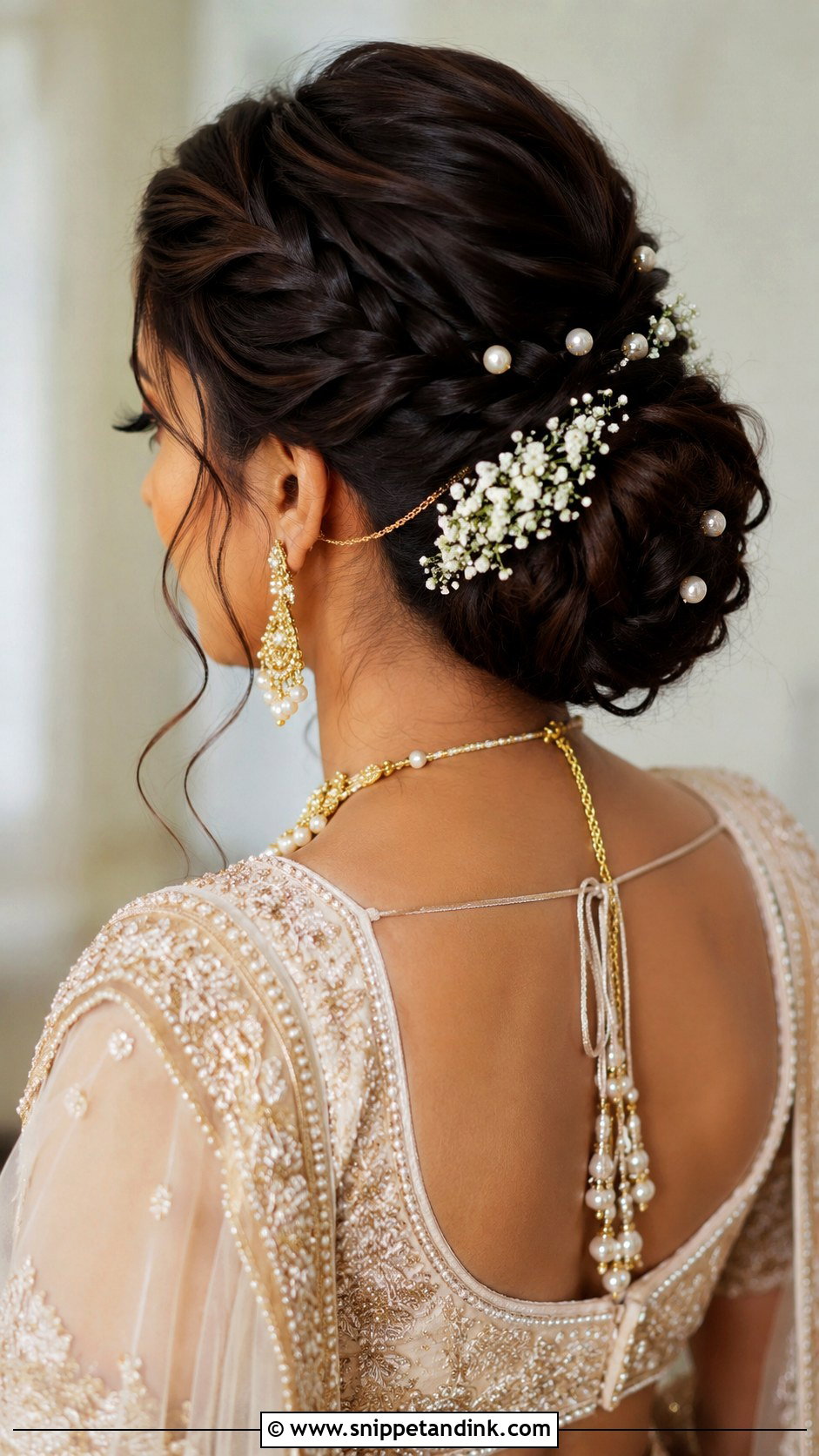
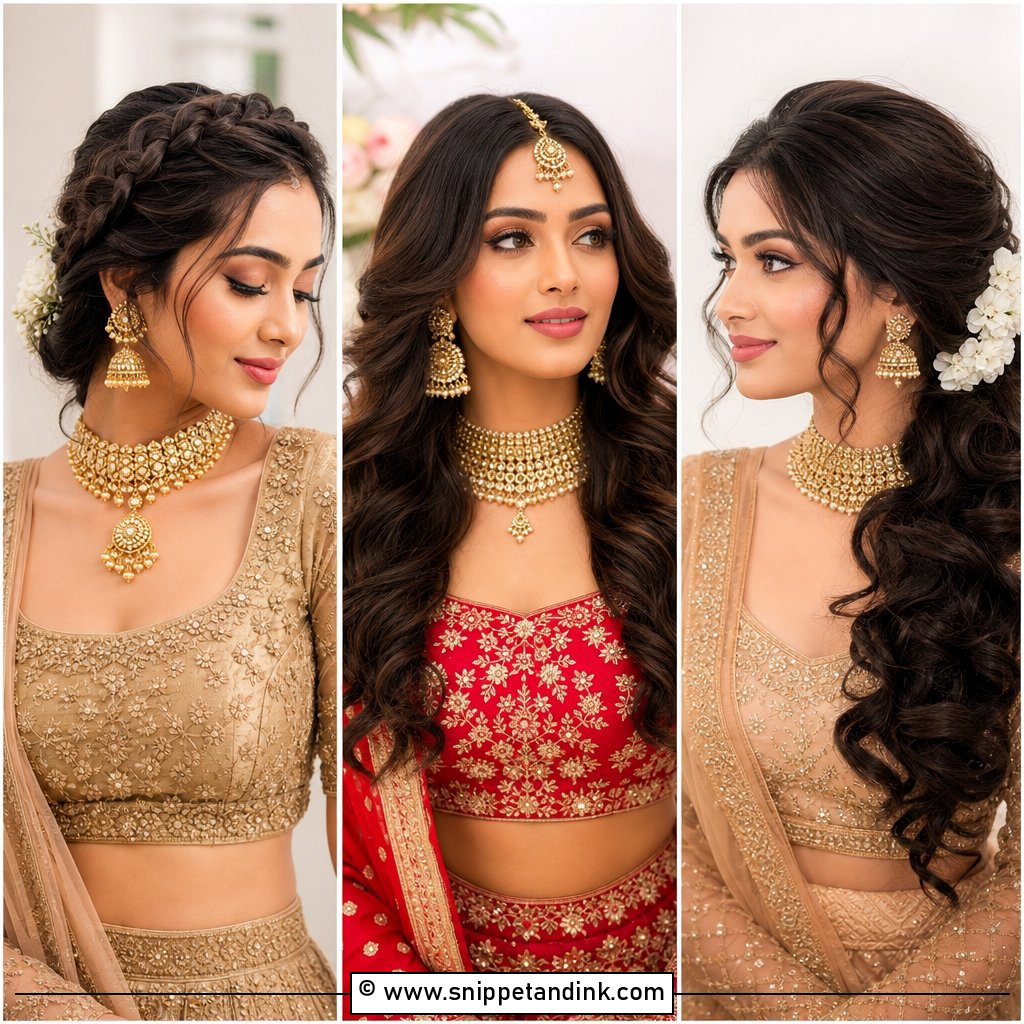
Thick hair is easier to tame in a braided bun than in a sleek one. The hair is braided first, then coiled into a rounded shape, so the braid controls bulk while the bun still looks full. Close-up photos pick up the woven texture even without many accessories. Pearl pins, a few jasmine buds or small roses tucked into the braid’s outer loops are enough. If your hair is fine, I’d choose a different style, because the braid shrinks it and the bun ends up smaller than you pictured.
5. Indian Bridal Side Braid
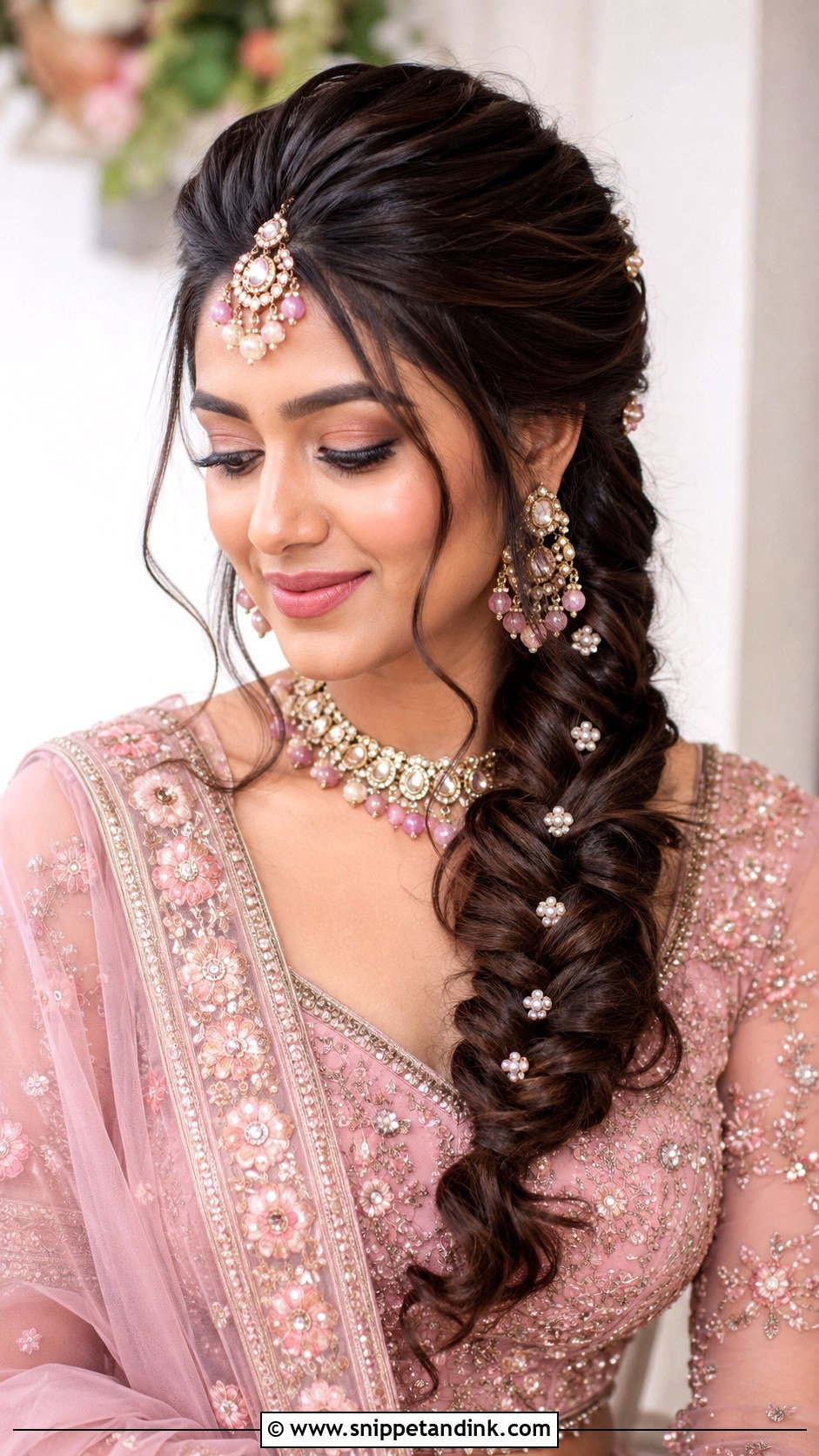
A side braid keeps your hair in the front-facing photos, which a bun never does. It falls over one shoulder and suits lehengas, shararas and lighter functions like mehendi or sangeet. I build it as a Dutch or fishtail braid, then loosen the outer edges for width. Small flowers, pearls, gold chains, or kundan clips woven through it make it bridal. One warning: a braid over the shoulder gets caught in a heavy necklace and rubs against embroidery, so I’d skip it with a big choker or a zardozi blouse.
6. Indian Bridal Open Curls With Dupatta
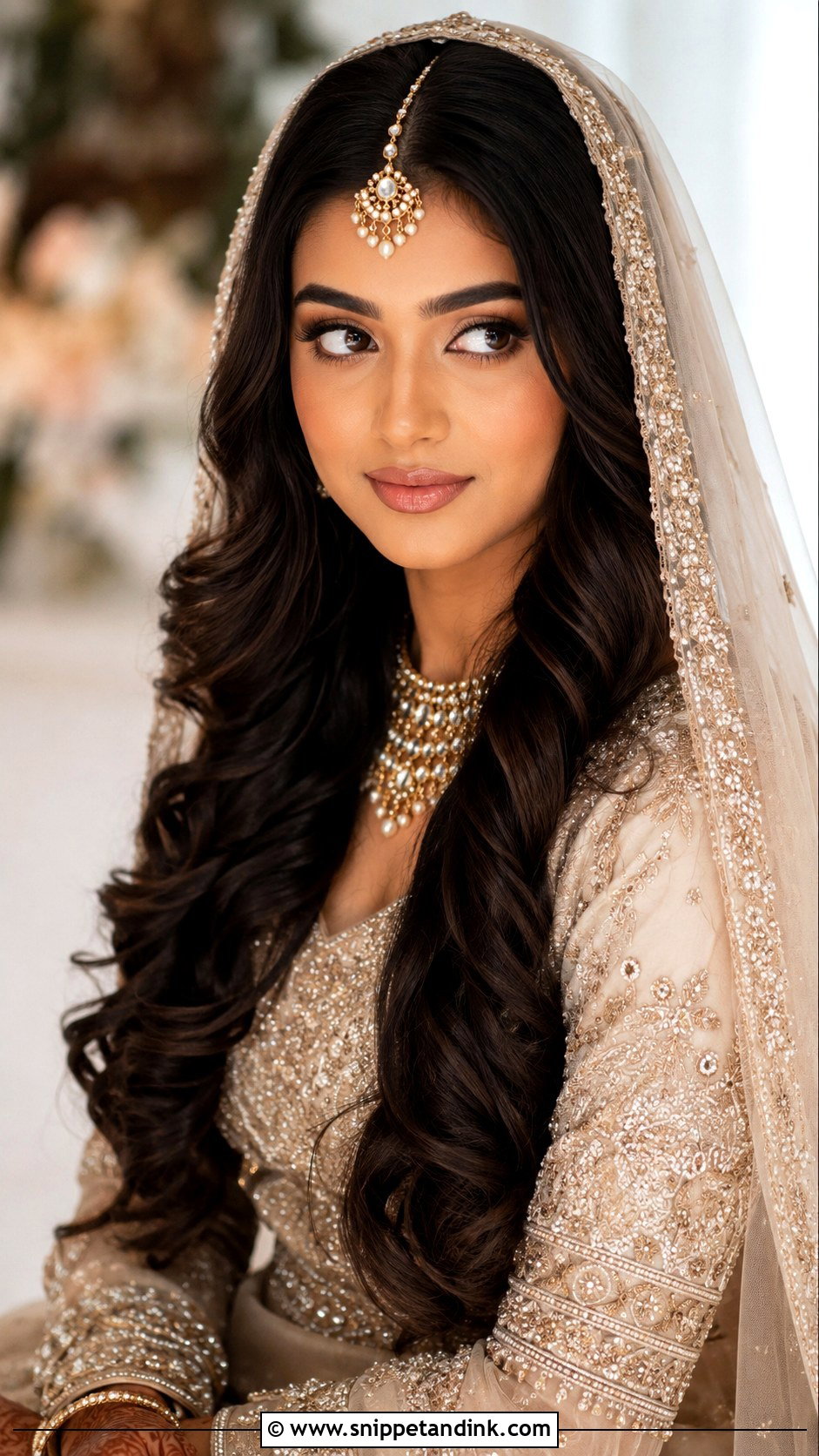
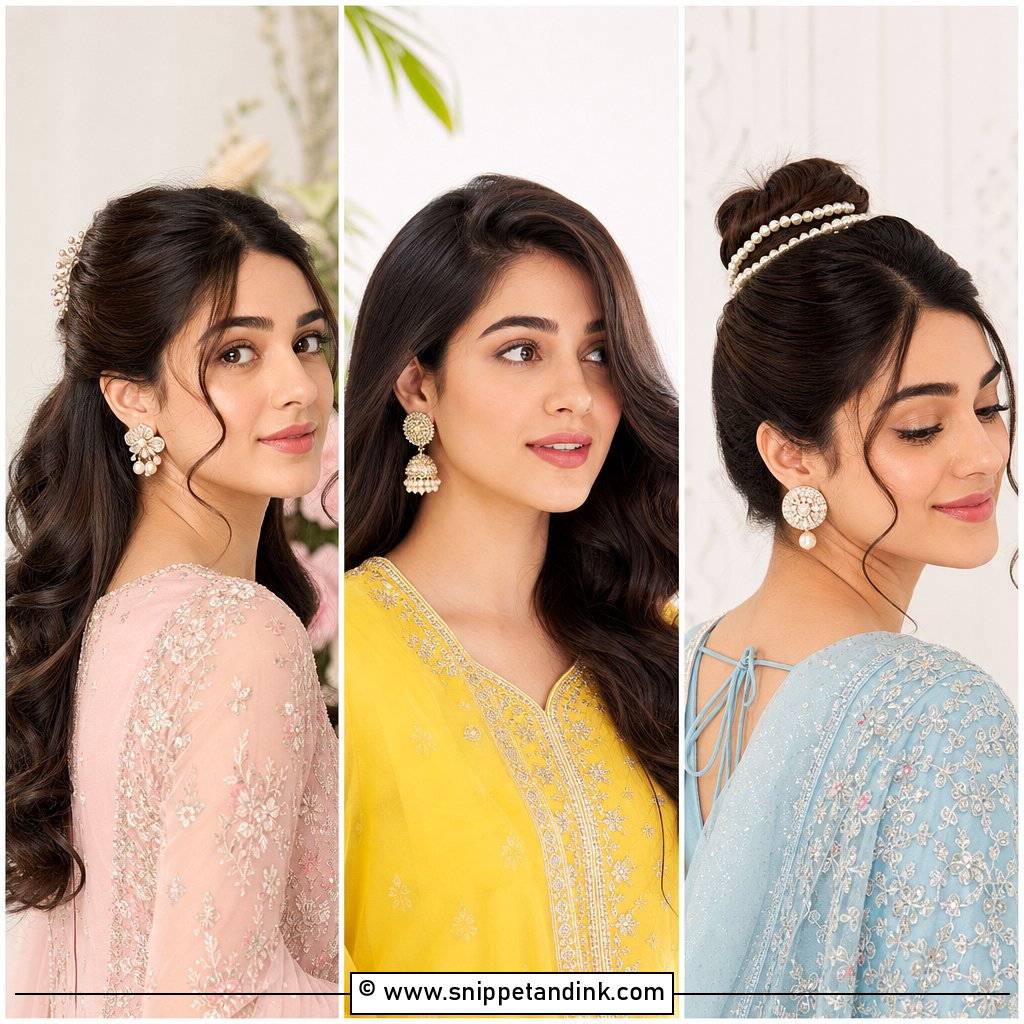
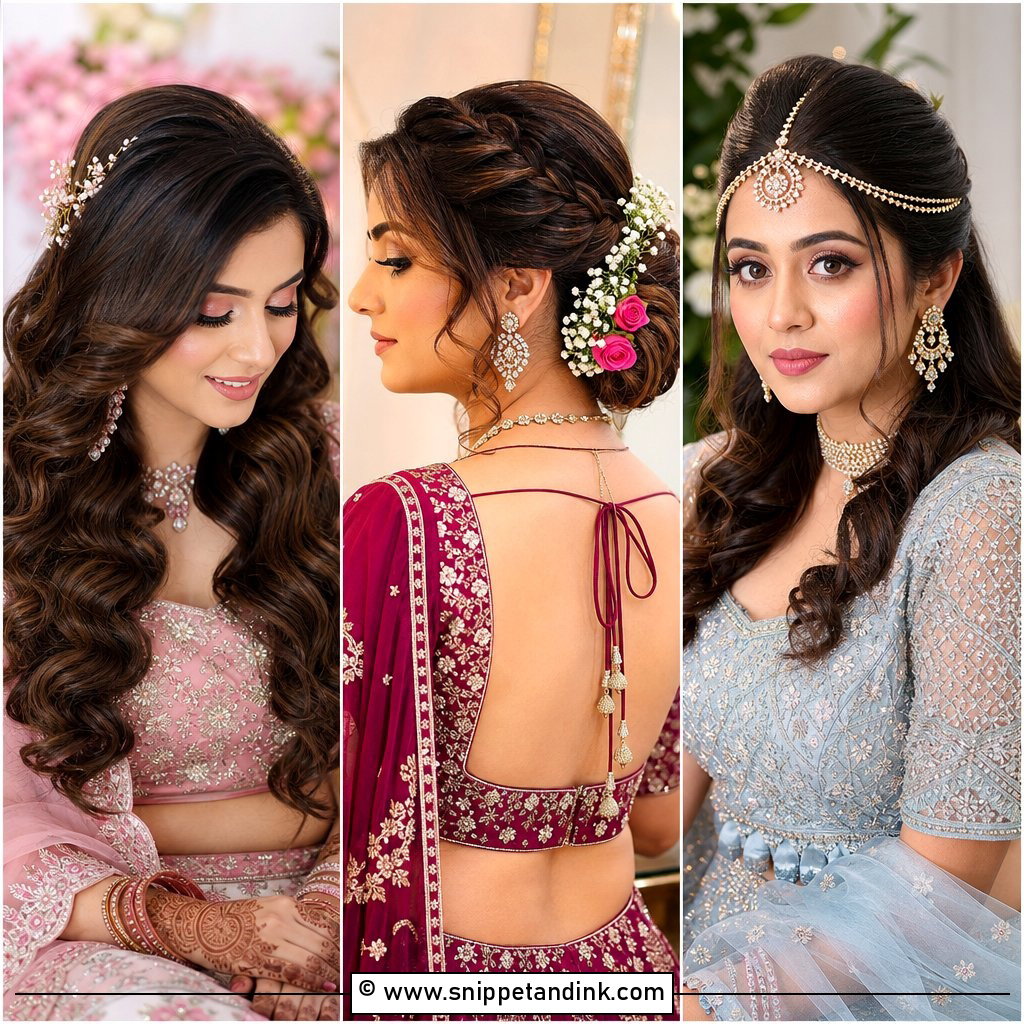
Open curls under a dupatta make a softer, more modern Indian bridal look, mostly for receptions, engagements and pastel lehengas. The dupatta is pinned at the crown or the back, which only works if the roots are smooth enough to give the pins something to hold. I curl, let the curls set cold, then brush them out so they move. Heavy spray is the mistake I see most: it leaves curls crunchy and shiny in flash photography. A center part with a maang tikka keeps it bridal.
7. Indian Bridal Half Up Half Down Hair
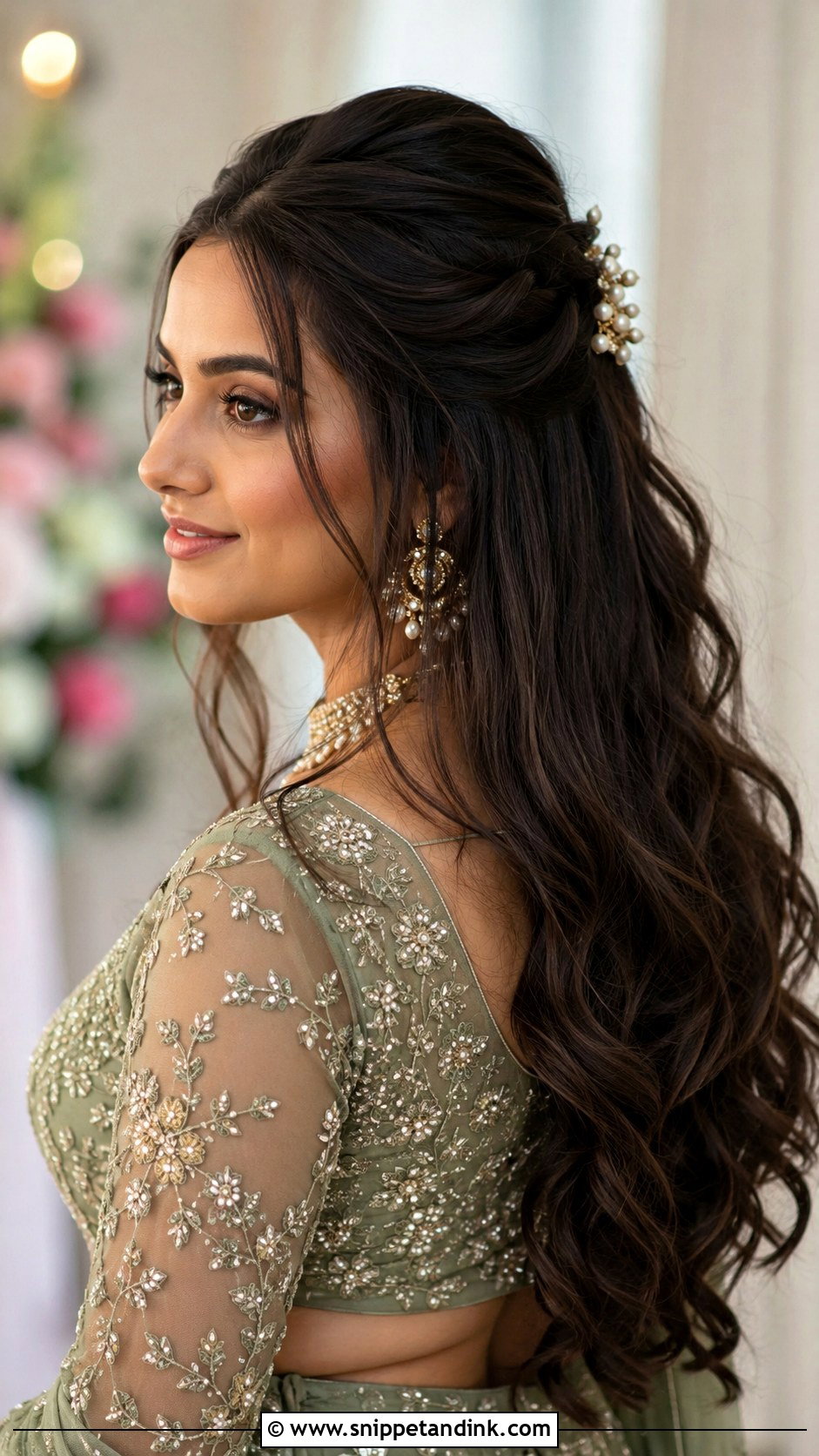
Half up, half down gives you movement and security in one style. The top section is pinned firmly and the lengths stay open in curls or waves. I usually twist or braid the crown section rather than just backcombing it, because a twist gives the maang tikka and any floral pins a firm place to sit. For engagement, reception and sangeet looks with heavy outfits, the loose lengths soften everything. Humid venues are its weakness, as the open hair drops long before the pinned part does.
8. Indian Bridal Sleek Bun
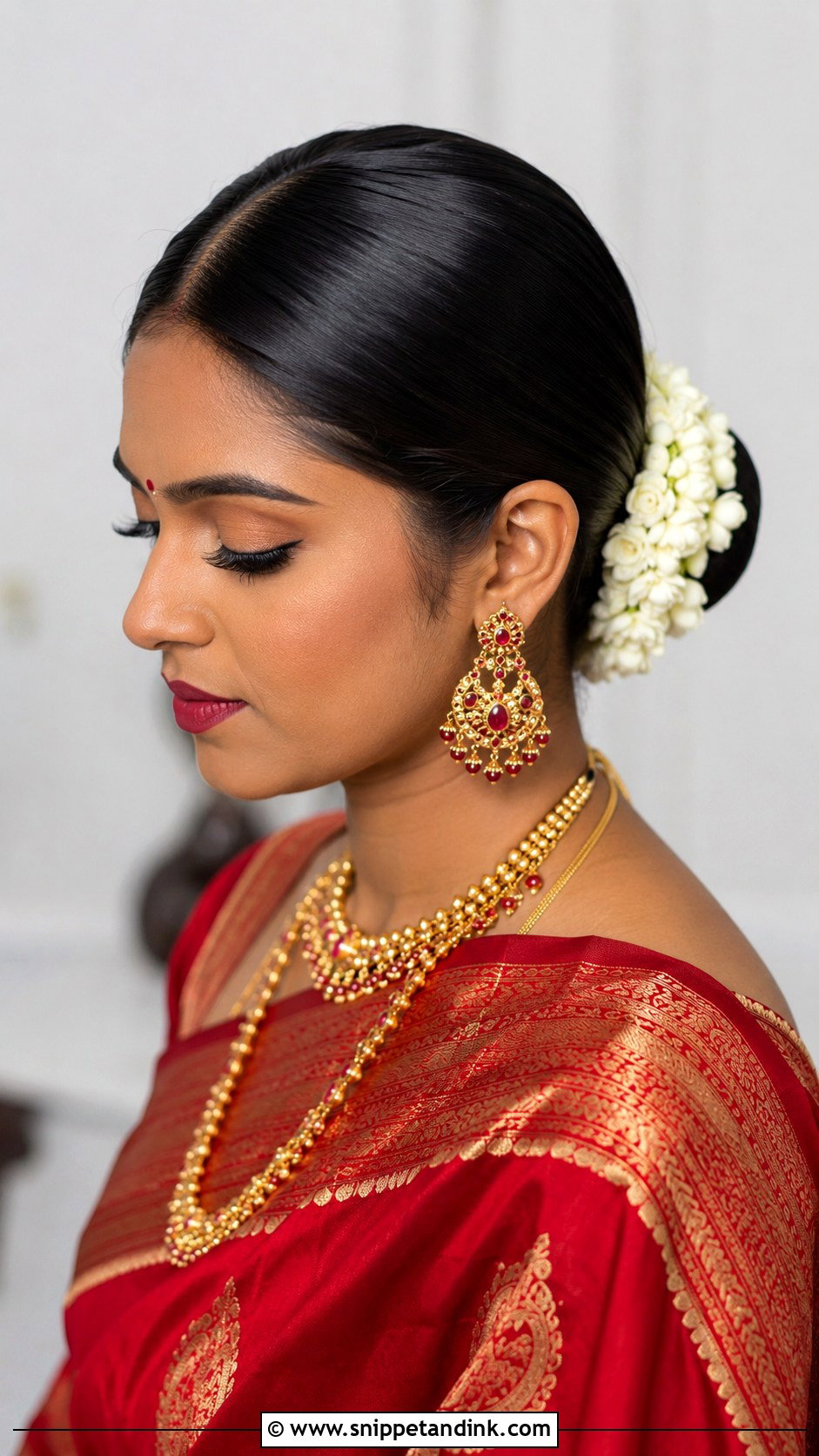
A sleek bun puts all the attention on jewelry and makeup. The hair is parted precisely, smoothed back and secured low or mid-height, and that parting carries the whole look, so I cut it with a tail comb and check it twice. Bold sindoor, a center tikka, heavy earrings and an embroidered saree all stand out against it. Leave it plain or add a thin gajra. It needs real shine and control, and it isn’t forgiving on hair with lots of breakage, since every short broken strand shows on a smooth surface.
9. Indian Bridal Messy Bun With Flowers
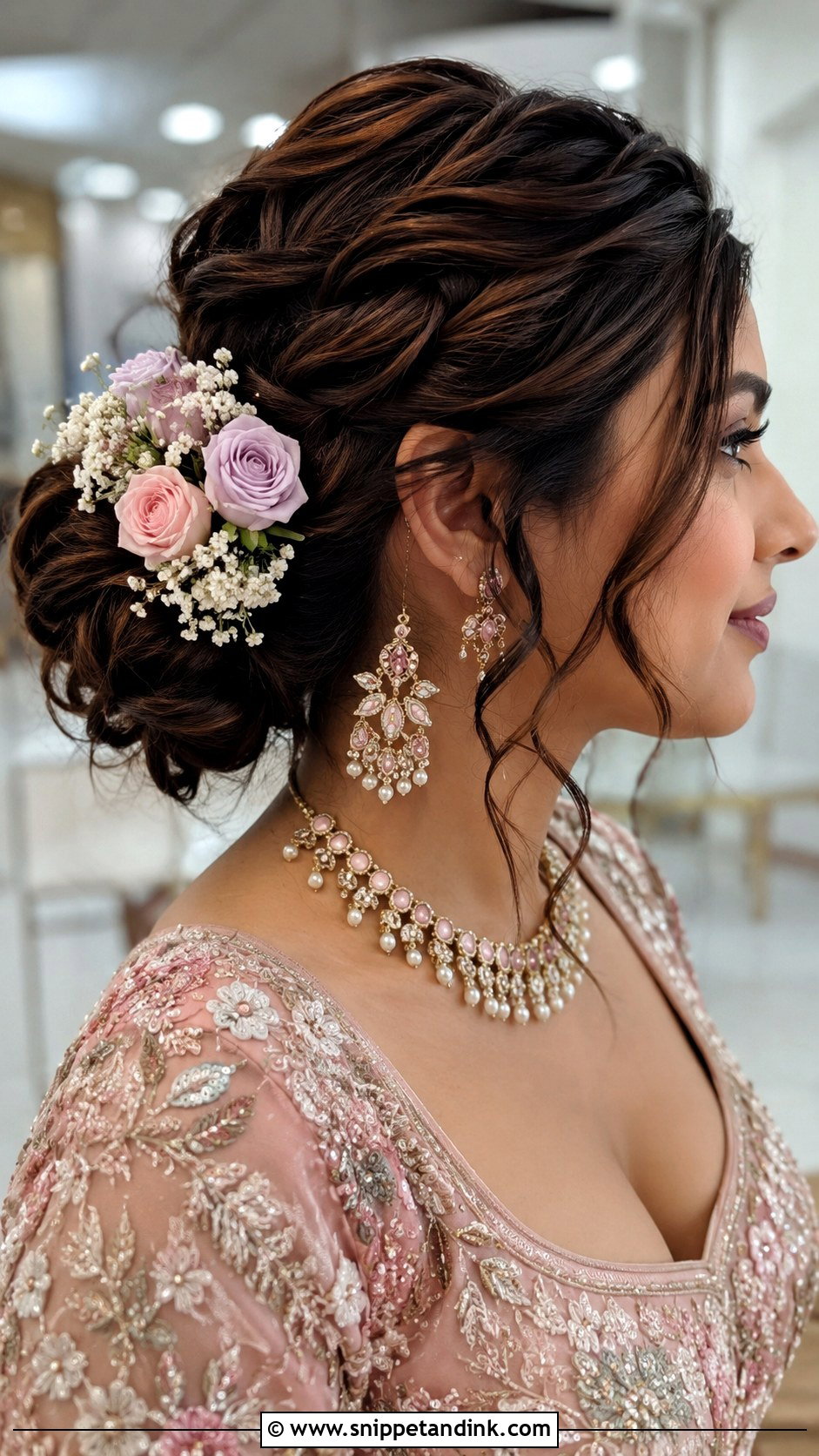
The messy bun is never actually messy. It is shaped with deliberate loose pieces and soft texture, which takes longer to pin than a sleek one. I like it with pastel lehengas and daytime or garden ceremonies, finished with roses, baby’s breath or small seasonal blooms on one side. It also softens a strong jawline or high cheekbones. Keep the front pieces few and controlled; too many and it starts to look like the style has fallen out.
10. Indian Bridal Bubble Braid
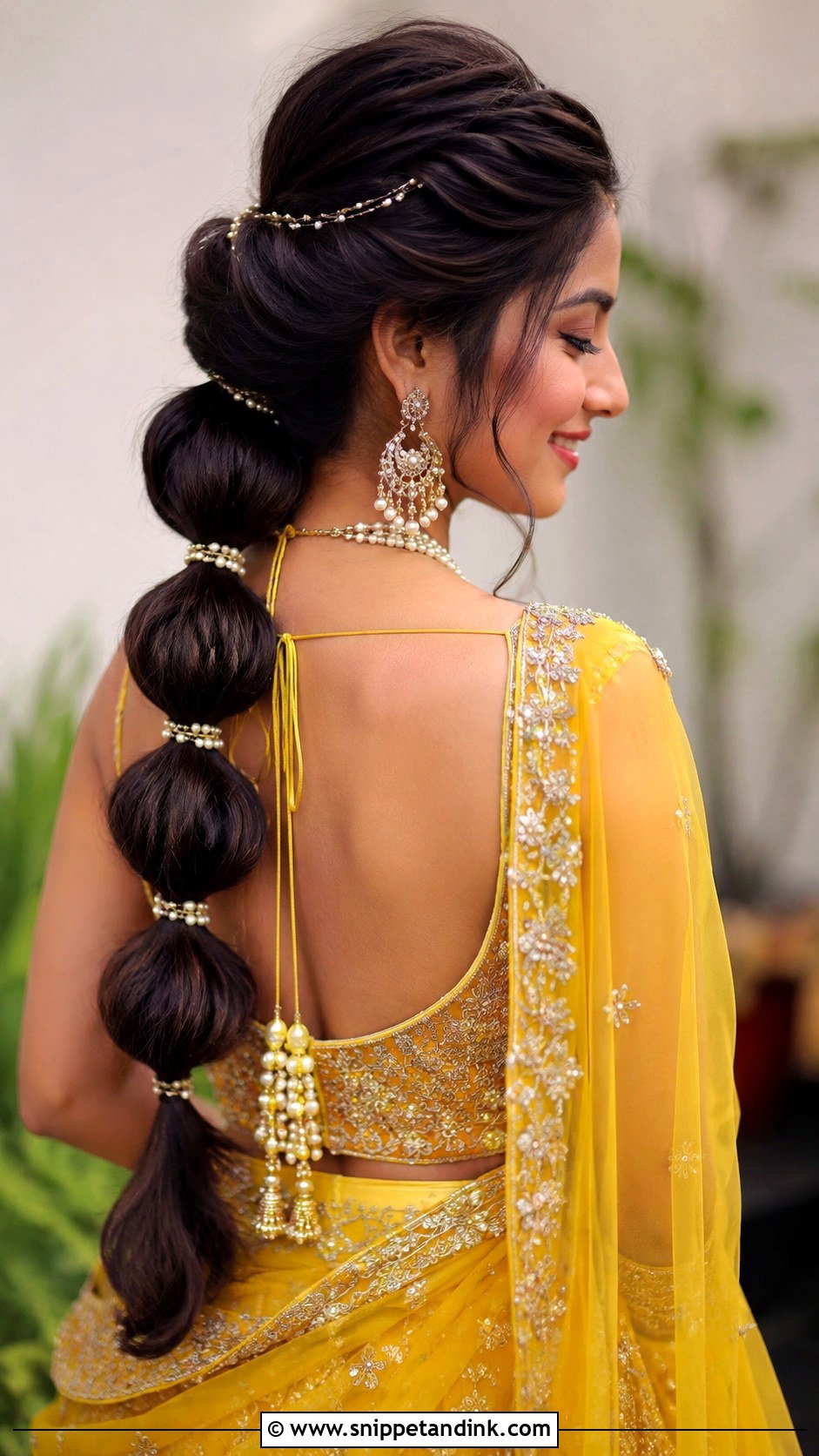
Bubble braids are the playful option, and they belong at mehendi, haldi or sangeet more than at the pheras. The hair is gathered into a long ponytail and tied at intervals, then each section is eased out into a rounded bubble and dressed with pearls, gold thread or jeweled bands. Long hair or extensions are a must, since short sections look like knots rather than bubbles. I use clear elastics wrapped with a strand of hair at each tie, because metallic bands show every fly-away in close-ups.
11. Indian Bridal Fishtail Braid
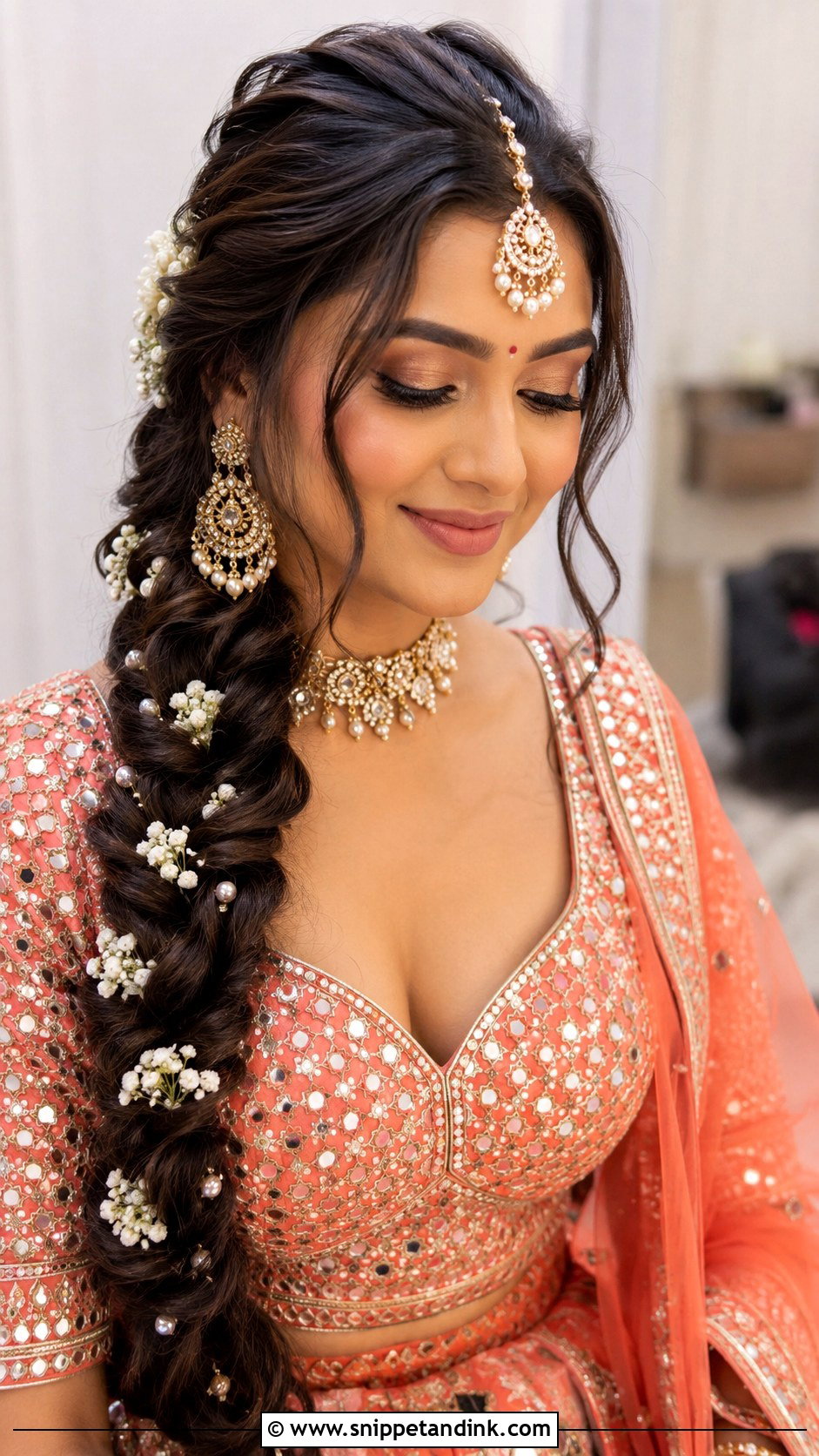
A fishtail gives a detailed woven finish without the weight of a bun. Wear it down the back, over one shoulder or blended into a half-up style, with lehengas, floral jewelry or mirror-work outfits and soft glam makeup. I pull the edges apart gently to widen it; pulling too hard on fine hair creates gaps you can see through. Small pearls or fresh flowers can sit between the sections. Thin hair benefits from a clip-in weft hidden in the base before braiding.
12. Indian Bridal Ponytail With Curls
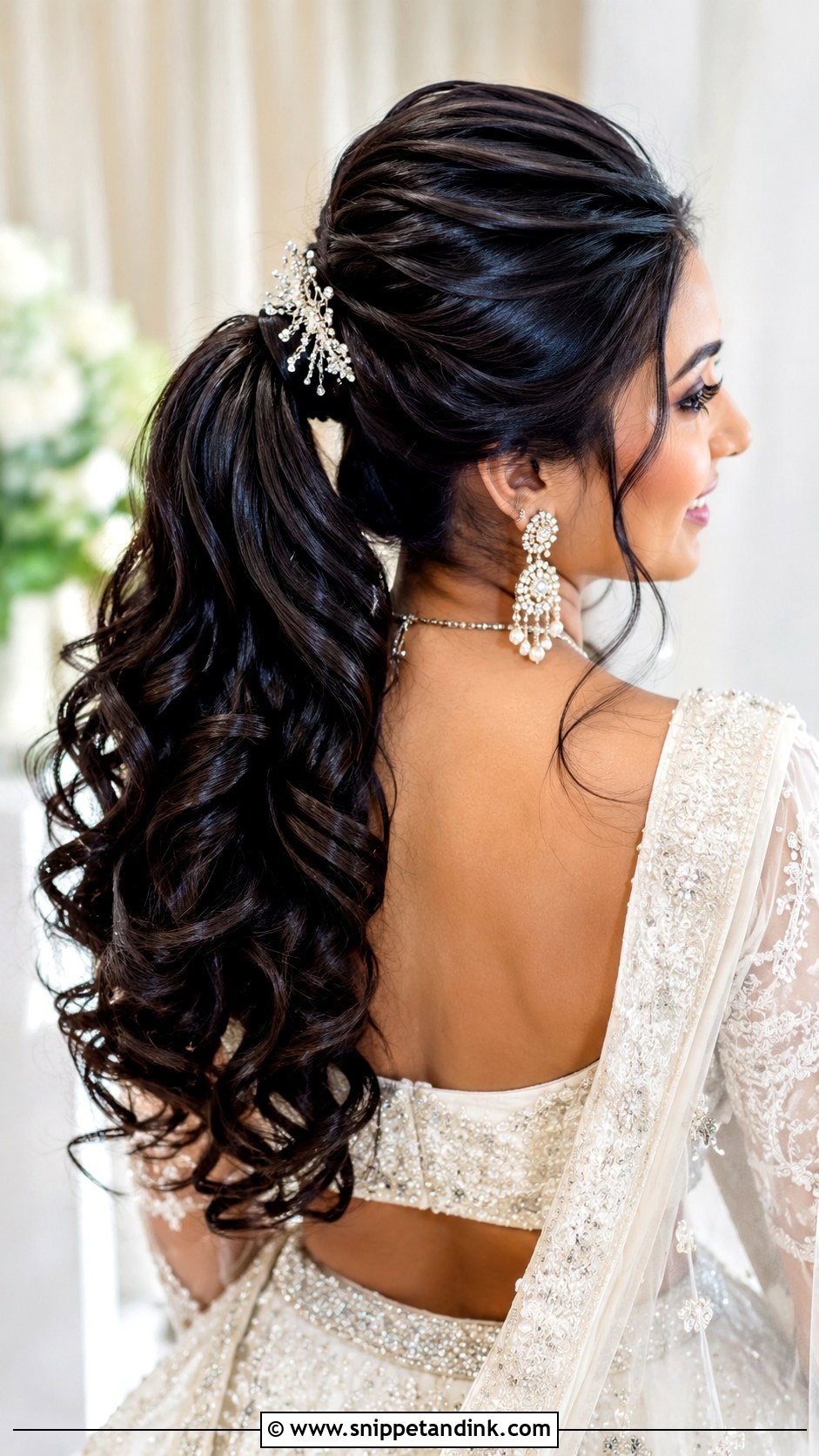
A curled ponytail is the bride’s dancing style. Pulled high, mid or low with curls through the lengths, it keeps hair off the face and neck for sangeet, reception and cocktail nights. I wrap a section of hair around the base to hide the elastic, then pin a passa or a few pearl pins beside it. Heavy hair can make a high ponytail ache after a few hours, so the base needs two elastics and a crisscross of pins underneath. It pairs well with gowns, fusion lehengas and modern saree drapes.
13. Indian Bridal Crown Braid Bun
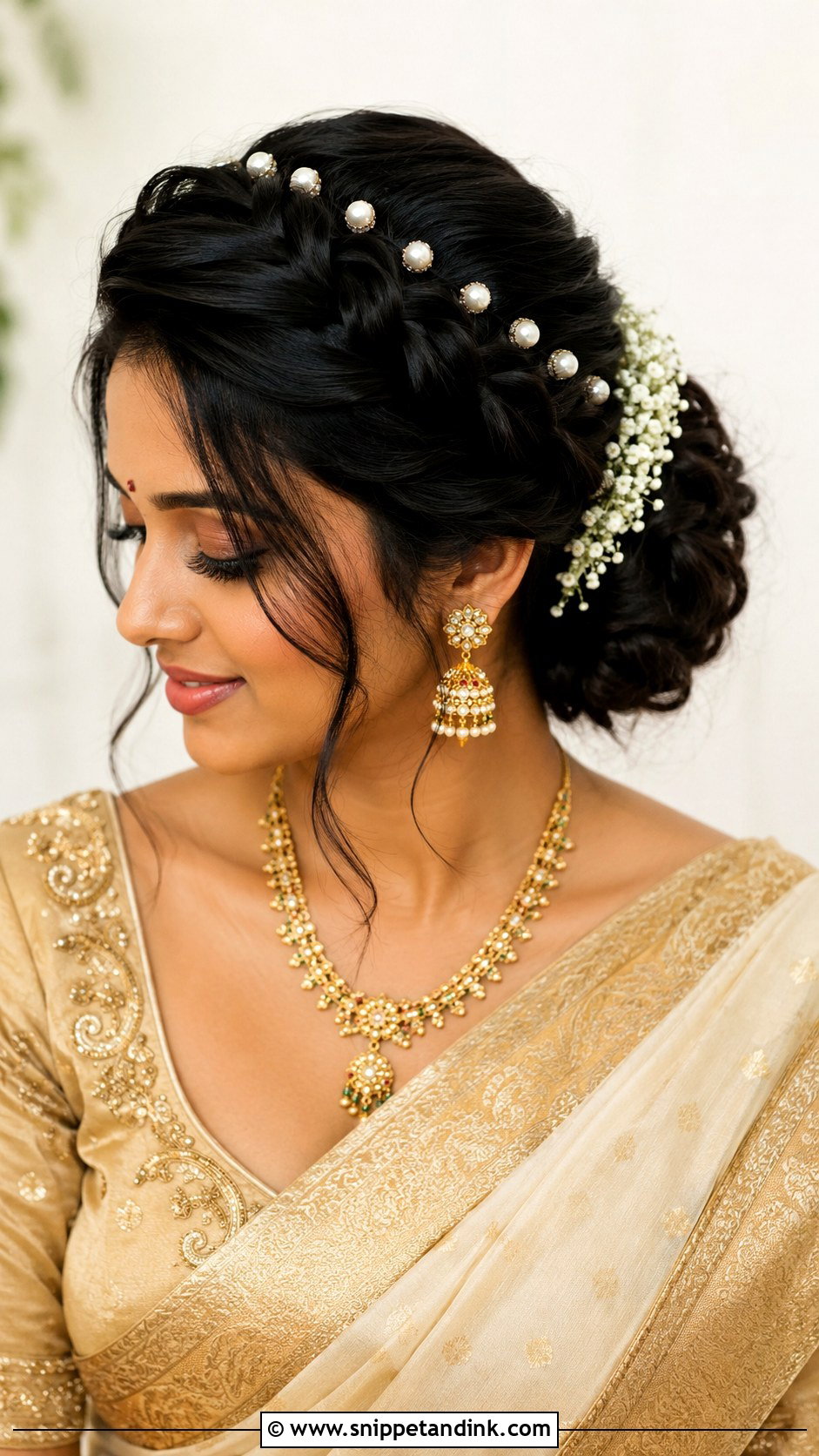
A crown braid around the head makes a halo, and it gives a dupatta something to rest on, which keeps the fabric from flattening your hair. The braid can sit across the front, along the sides or lead back into a low bun. I decorate the bun rather than the braid, because pins pushed into a crown braid tend to work loose as the dupatta shifts. Loosening the front a little suits oval, round and long faces.
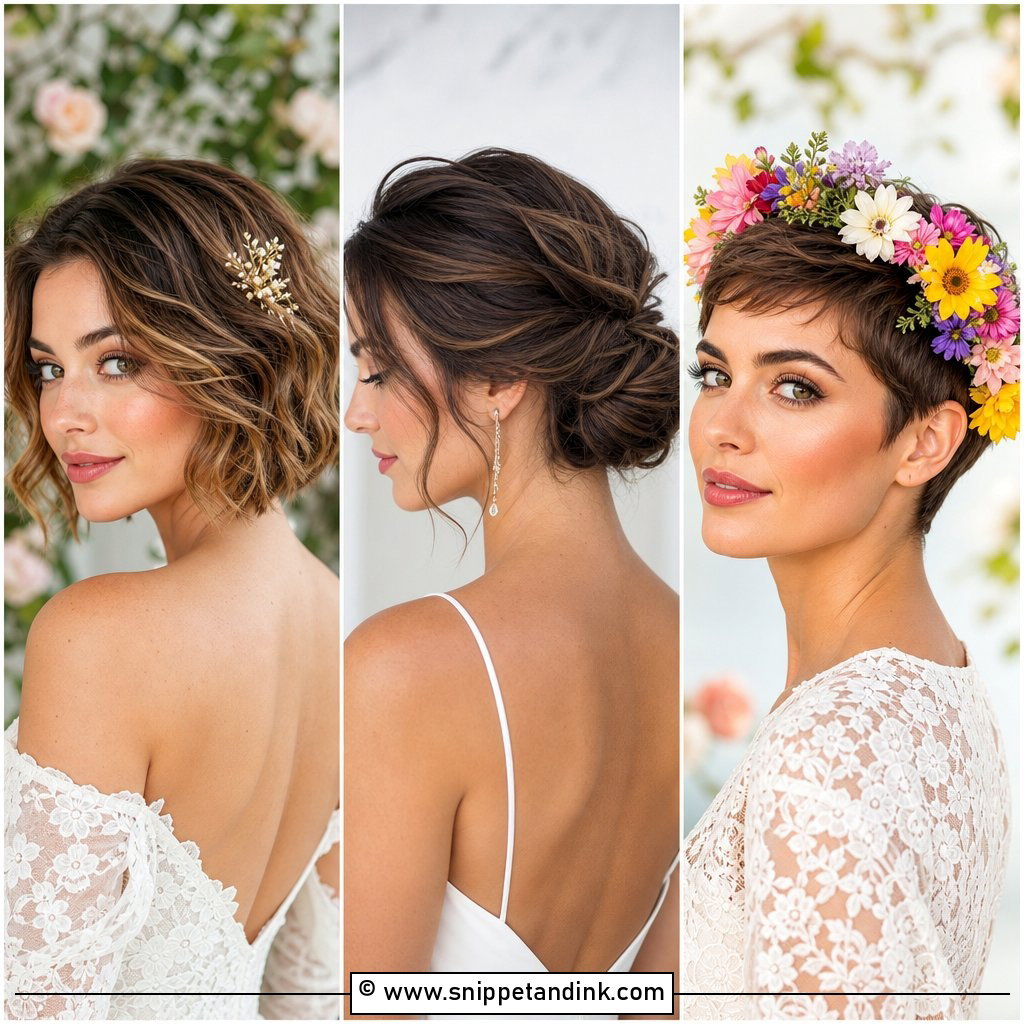
14. Indian Bridal Loose Waves
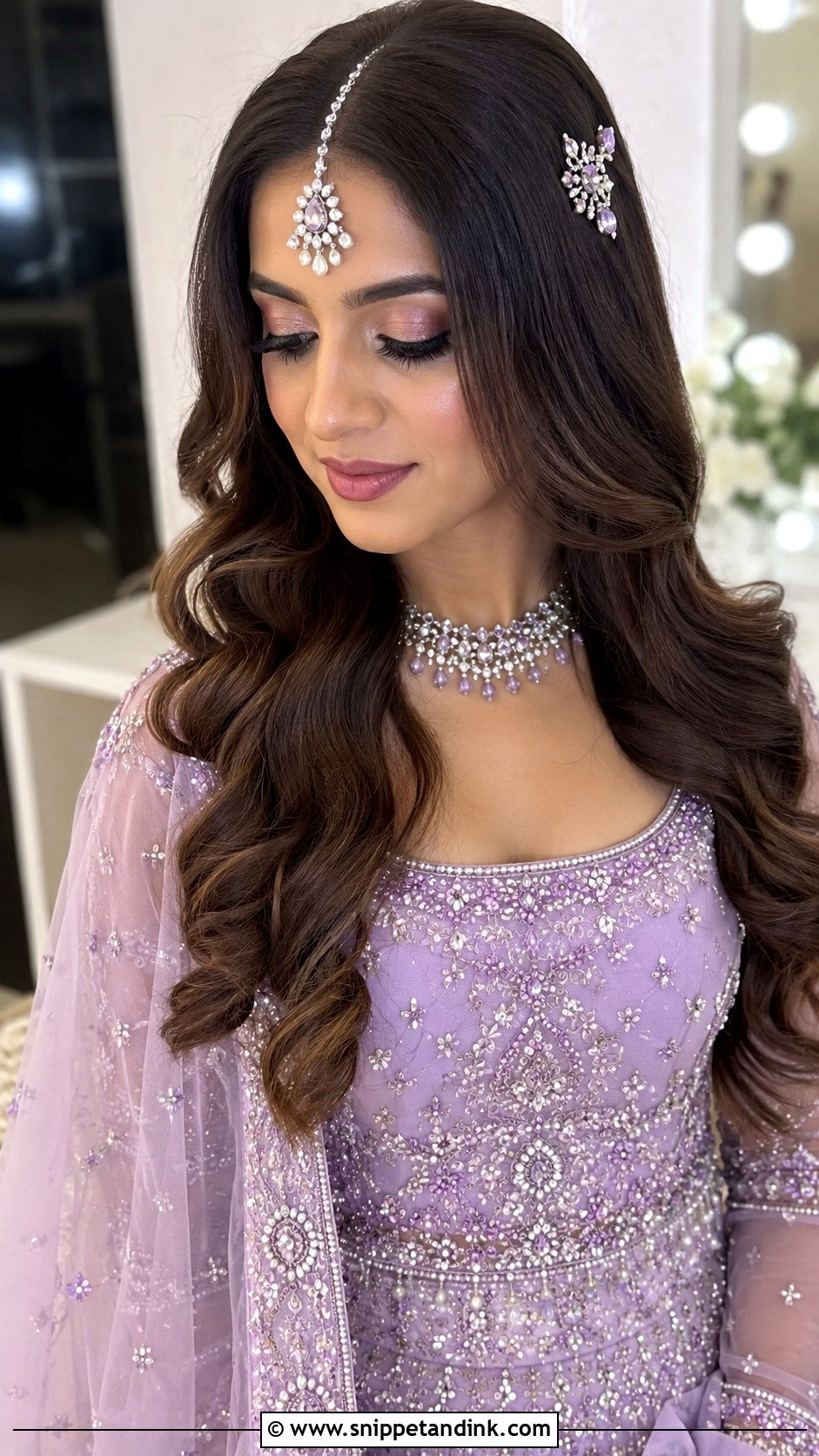
Loose waves make sense when the outfit is already heavily worked, since the hair adds softness without fighting the embroidery. They show off length and shine, and a center part with a maang tikka keeps them traditional, while a side part reads more like evening. I set them with a large barrel and brush them out into smooth bends; tight curls look dated here. One jeweled clip, a few fresh flowers or a delicate hair chain is all the decoration they need.
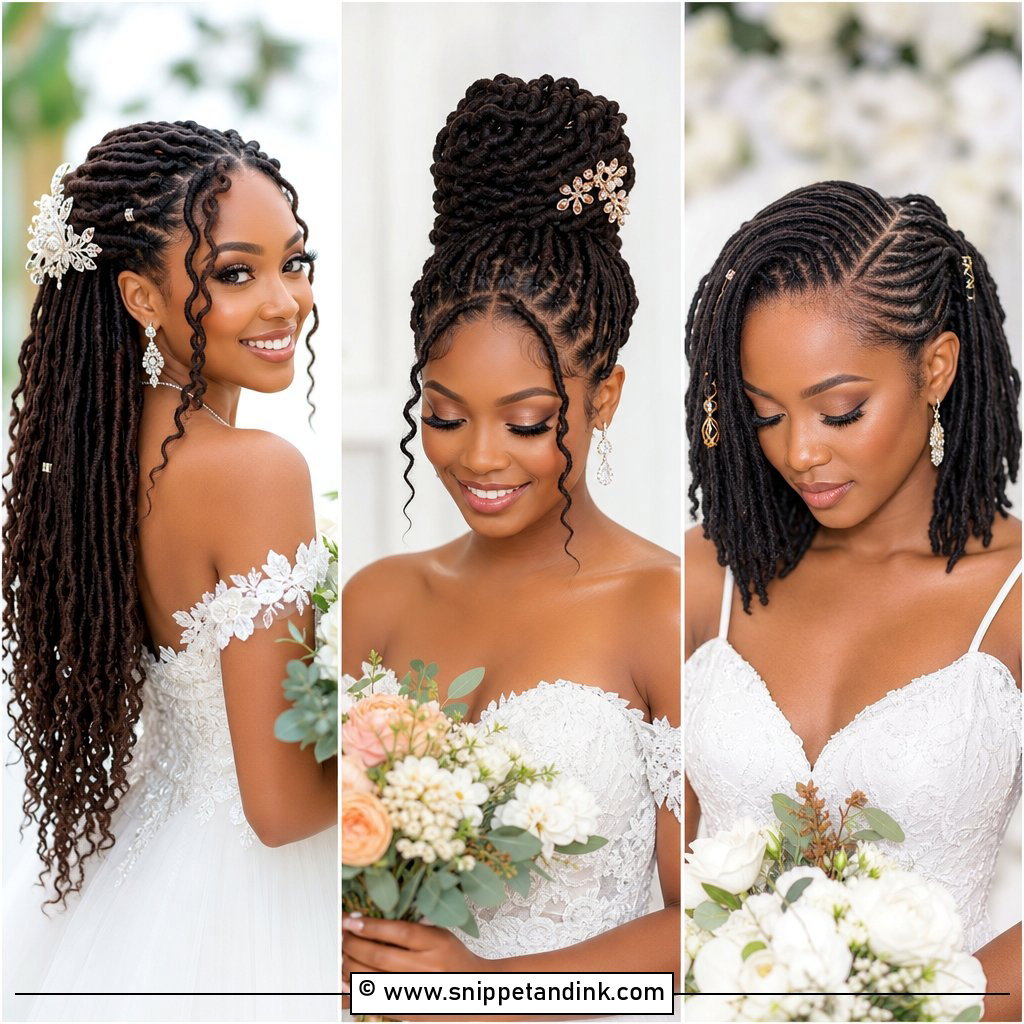
15. Indian Bridal French Twist
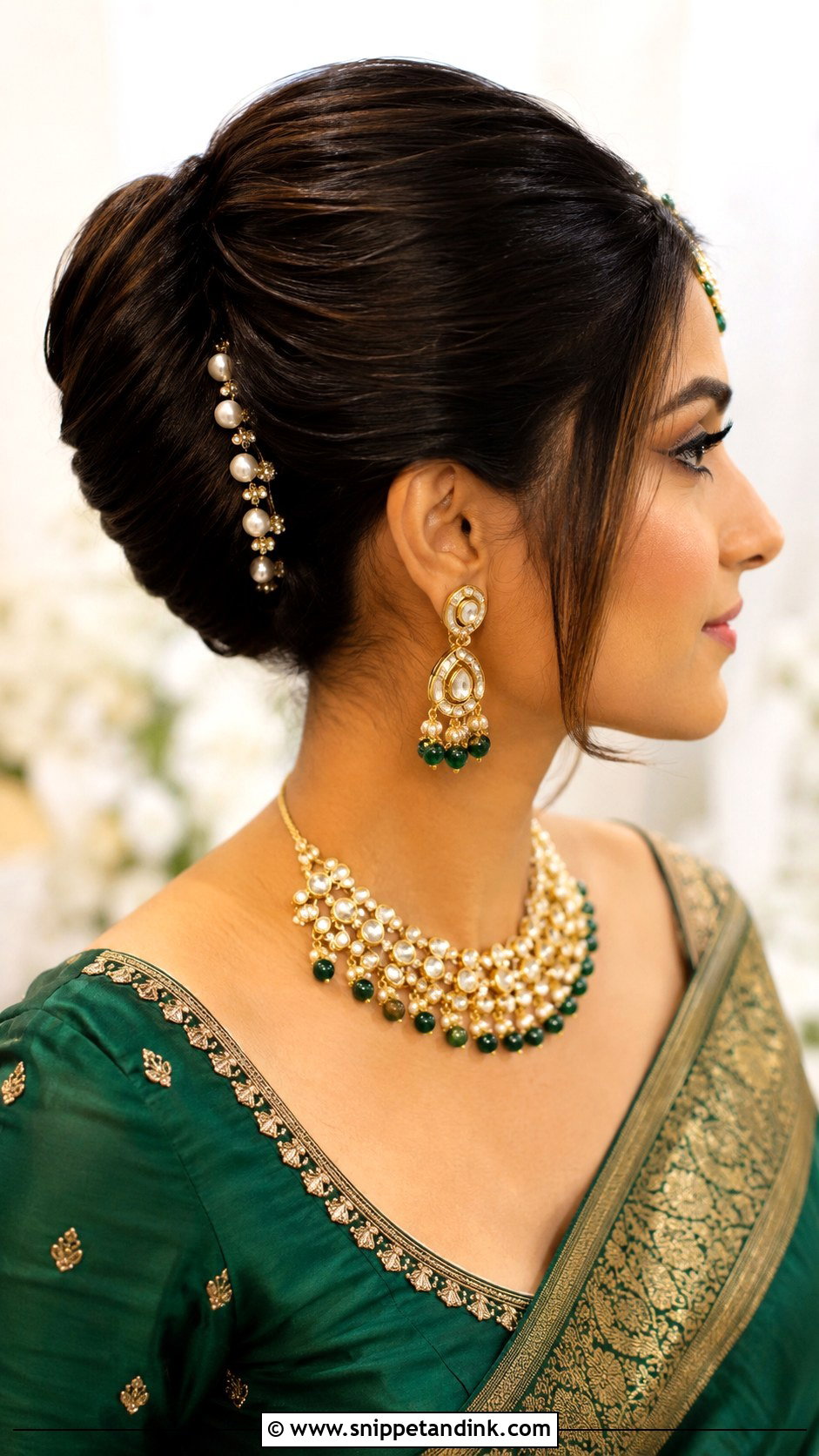
A French twist suits structured blouses, gowns and sarees with statement necklines, because it keeps the back of the neck clear and gives a clean profile from the side. The hair is swept up and tucked into a vertical roll. I lock it with a line of crossed pins up the center before folding, so it won’t open as the evening goes on. Pearl pins, kundan clips or jasmine buds give it an Indian finish. A slightly textured twist feels current; a sleek one feels classic.
Sindoor in the Parting and Other Ritual Moments Your Hair Must Allow For
A hairstyle can look perfect at the trial and still get in the way of the ceremony itself. I ask every bride to walk me through her rituals, because each one asks something different of her hair.
The parting
If sindoor will be applied, the parting needs to be clean and reachable. A crisp center part or a maang tikka that sits slightly back from the hairline lets your groom fill it without lifting jewelry. Side-swept fronts and heavy fringes make this moment awkward.
Sitting and bending
You may sit cross-legged for a long time, bow for blessings and lean toward the fire. High buns and big ponytails shift when you bow repeatedly, so I pin them heavier than usual. Keep loose curls away from the havan; fine strands near an open flame are a real hazard, and spray makes them catch faster.
Knots and veils
When the dupatta is tied to the groom’s scarf, it gets tugged as you walk the rounds. A dupatta pinned to the hair alone will drag the style backwards. I pin the dupatta to the blouse at the shoulder as well, so the pull lands on the fabric and not on your bun.
What to Bring to the Trial So the Photos Tell the Truth
Let the outfit, the jewelry, your face shape, the ceremony and your own comfort decide. A gajra bun rarely fails at a traditional ceremony, while loose waves or a curled ponytail usually suit the reception or sangeet. Braids add structure and cultural weight; buns carry dupattas and heavy jewelry best. For the trial, bring your actual tikka, earrings, hair jewelry and a dupatta of similar weight to the real one. Take photos from the front, side and back, and look at them the next day before you decide.
You'll Like These Ideas:


Leave a Reply