
Natural hair gives a bride more shapes to choose from than almost any other texture: defined curls, sculpted updos, twists, braids, locs and full rounded afros. What decides the result is usually not the style on the inspiration board but the hair underneath it: how much it shrinks, how it was stretched, how dense it is, and how well the edges can handle tension. Below are fifteen looks for coils, curls, twists, locs, braids and volume, each with what I check before I commit to building it on a client.
Shrinkage Decides the Shape, So Plan the Stretch First
Coily hair can shrink to a fraction of its stretched length, and humidity pulls it back toward that shrunken state as the day goes on. So before I agree on a style, I ask how the hair will be stretched and when. That answer shapes everything else.
- Defined curls and wash-and-go looks: wash and style the day before or the morning of, with enough drying time. Wet curls pinned or touched lose definition.
- Twist-outs and braid-outs: set two to three days ahead, sleep on them with a satin bonnet, and unravel on the morning.
- Sleek buns and smooth updos: a gentle blow-dry stretch, or banding overnight if you avoid heat. Stretched hair pins smoother and needs fewer pins.
- Cornrows, flat twists and braided styles: install a day or two before so the scalp settles and any tightness has eased.
- Locs: retwist a week or two ahead so the roots look neat but not freshly tight.
Try to book your trial on a day with similar weather to your wedding, or at least test the style for a few hours outdoors. A shape that looks perfect in an air-conditioned salon can shrink up noticeably on a humid afternoon.
1. Natural Hair Bridal Updo
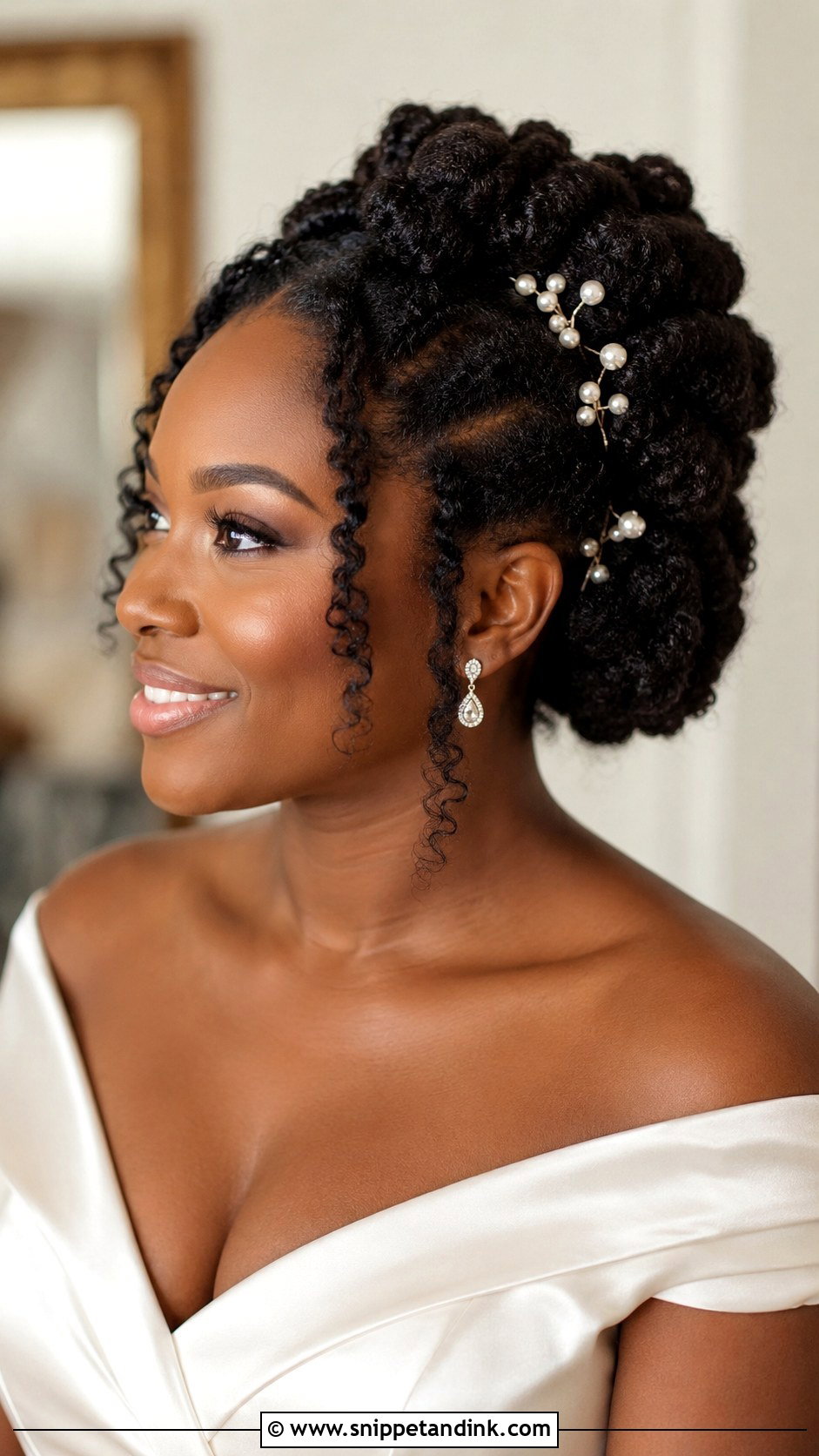
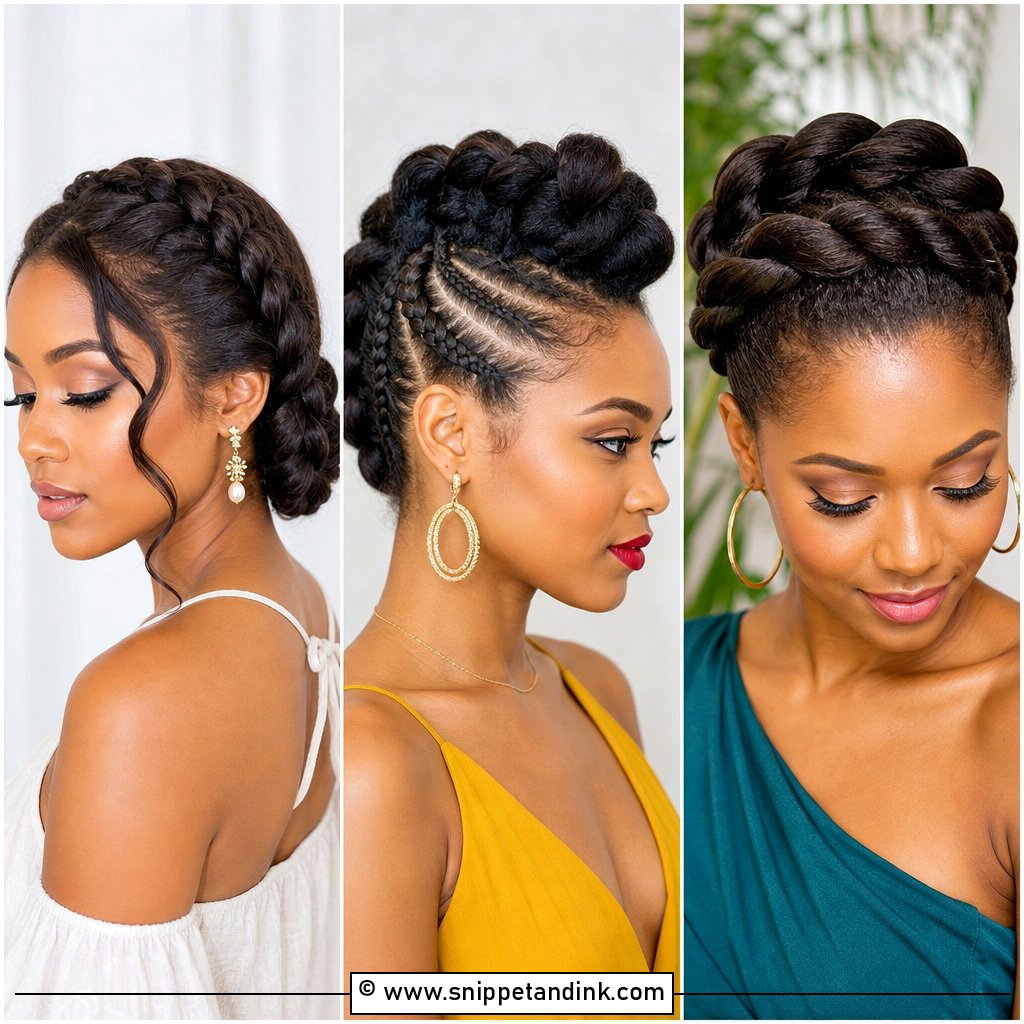
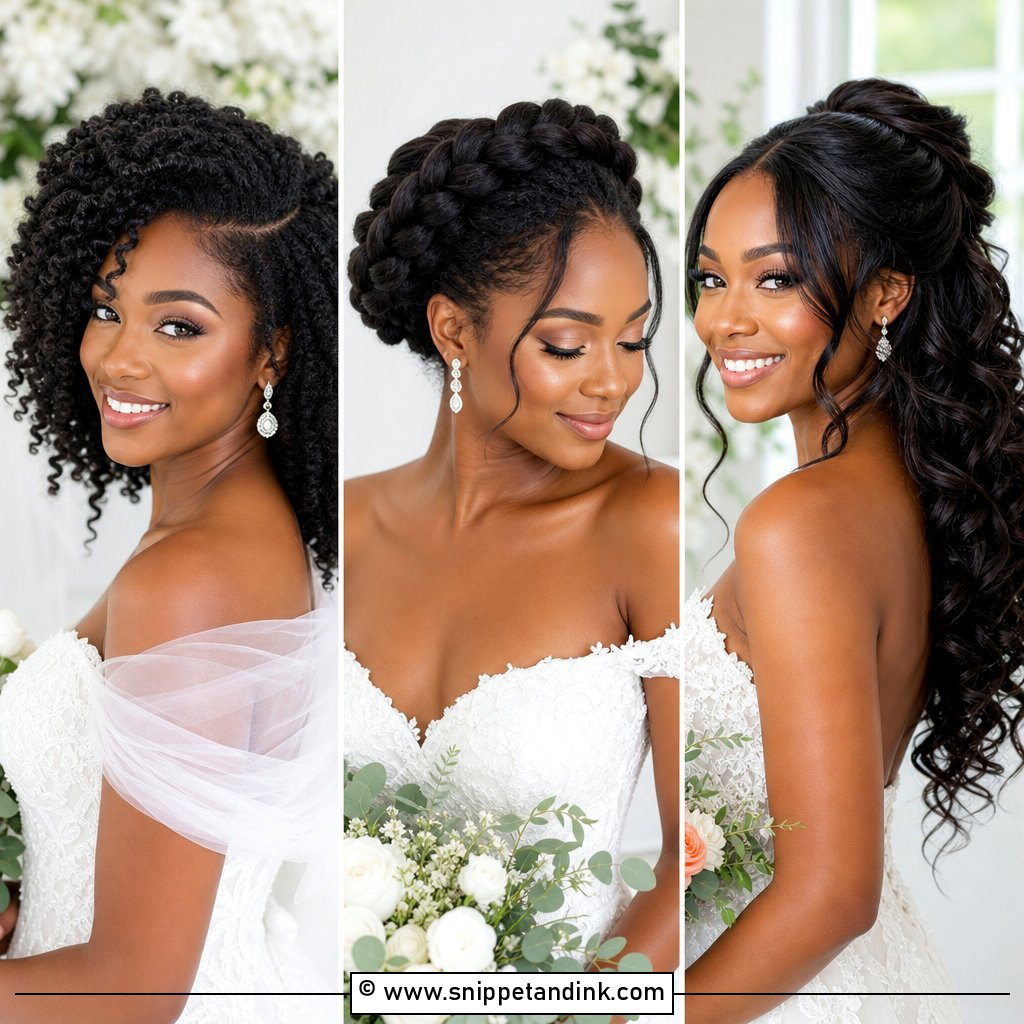
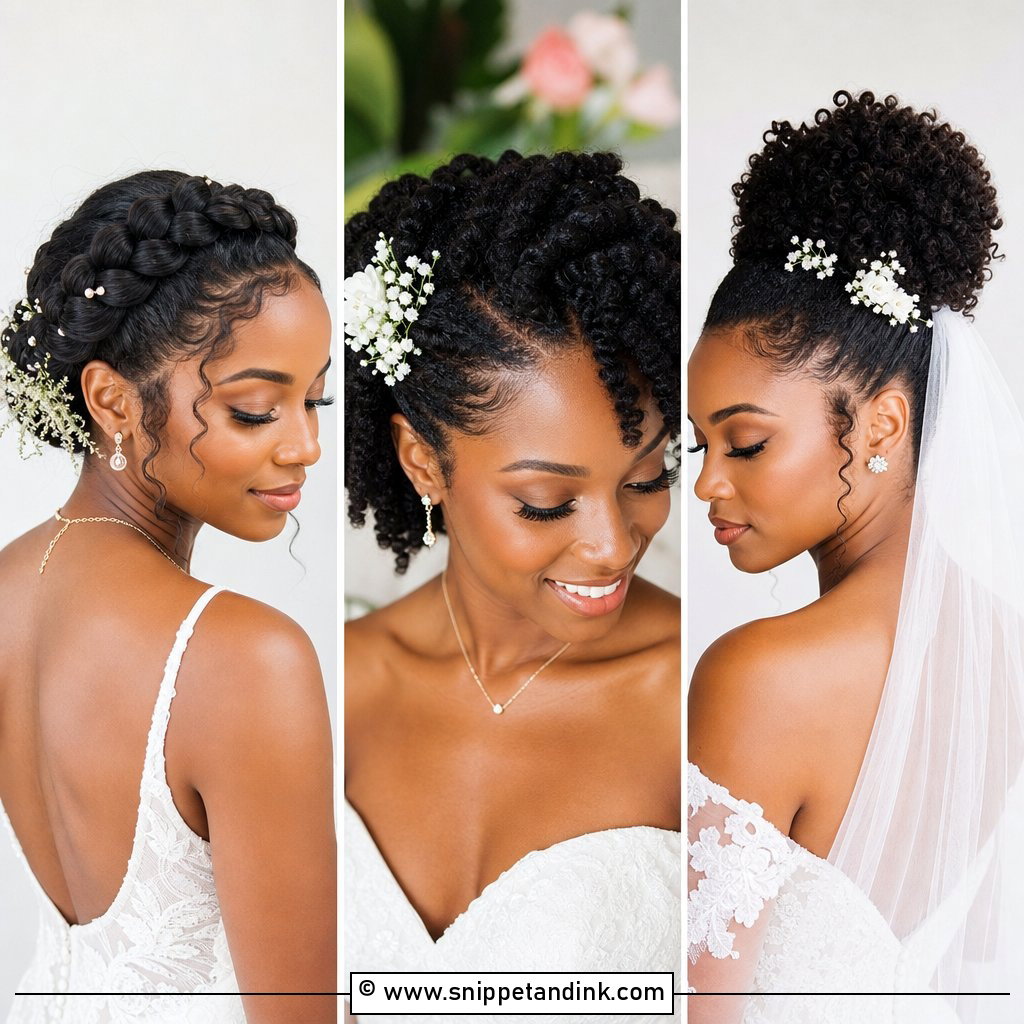
An updo lifts the hair off the shoulders, so strapless gowns, detailed backs and big earrings all get space. On natural hair I usually build it on stretched hair, because coils at full shrinkage are hard to shape smoothly, and I pin with large U-pins rather than bobby pins. The shape can be rounded, sculpted or piled high in coils. I keep the edges neat with a light edge gel and a soft brush, not plastered. A couple of loose curls at the temples keep it from looking severe.
2. Natural Hair Low Bun
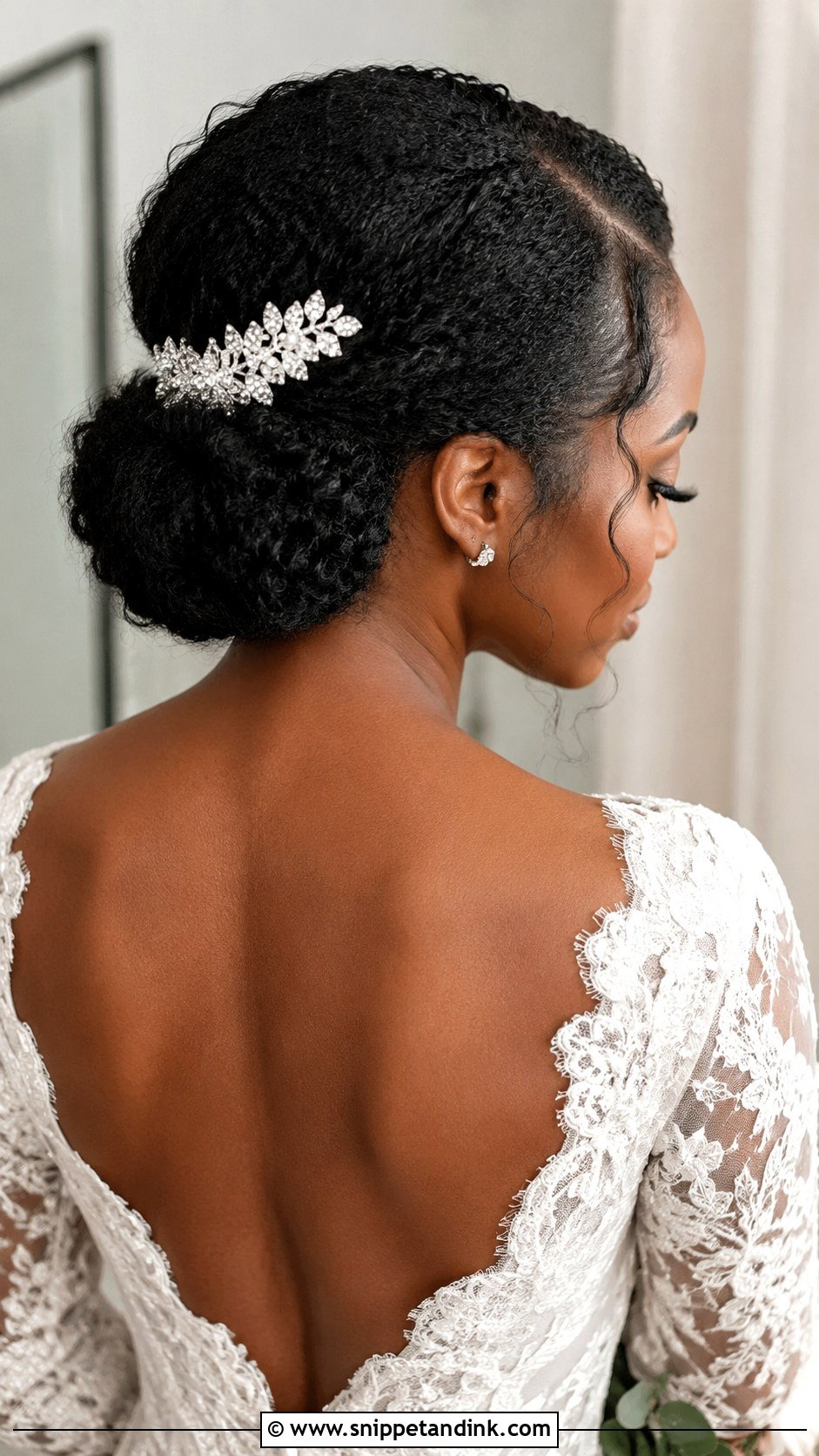
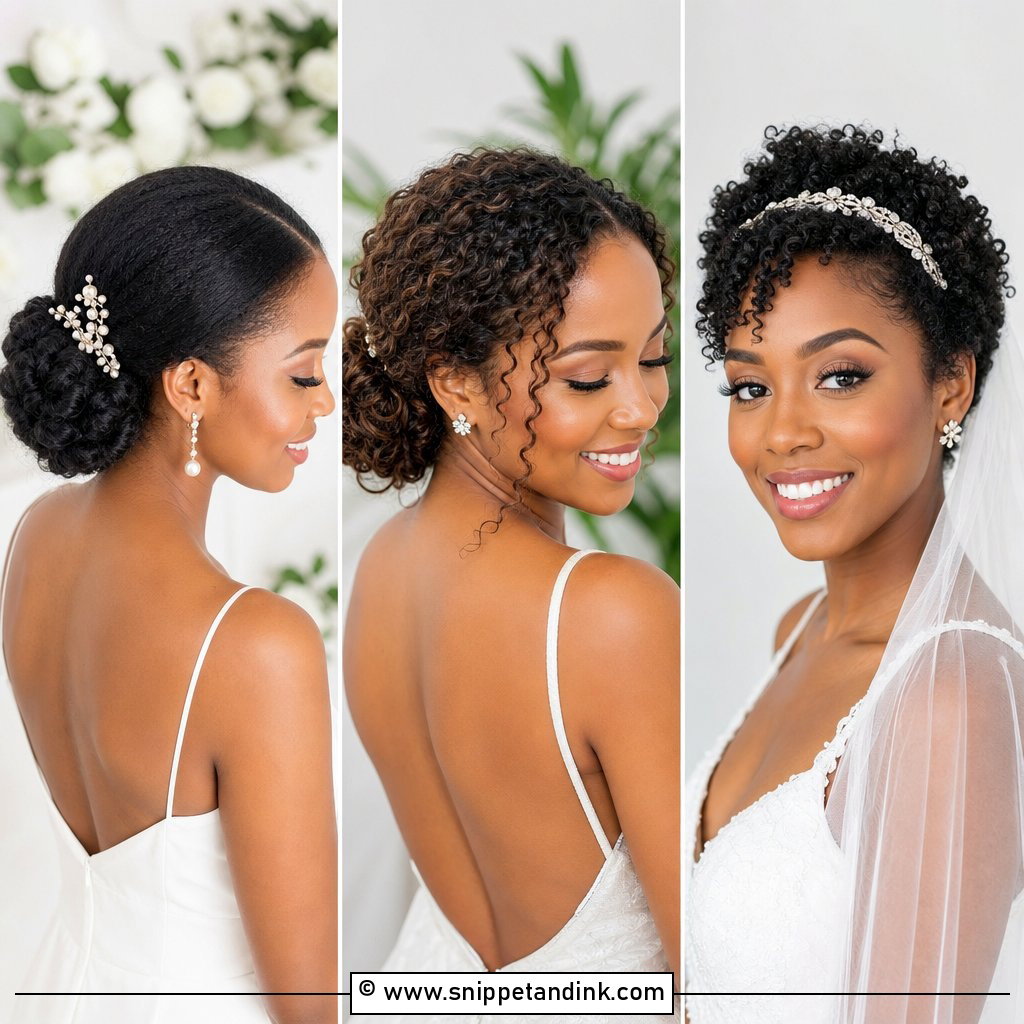
A low bun is quiet and dependable. It sits at the nape, holds through a long day and gives a cathedral veil a solid place to attach. I’ll build it from stretched hair, twists or coils depending on length and density; very dense hair often needs the bun split into two sections so it doesn’t sit too wide. Smooth the crown gently and keep the part clean. Leave the bun itself textured, which is what keeps it looking like your hair rather than a piece.
3. Natural Hair High Bun
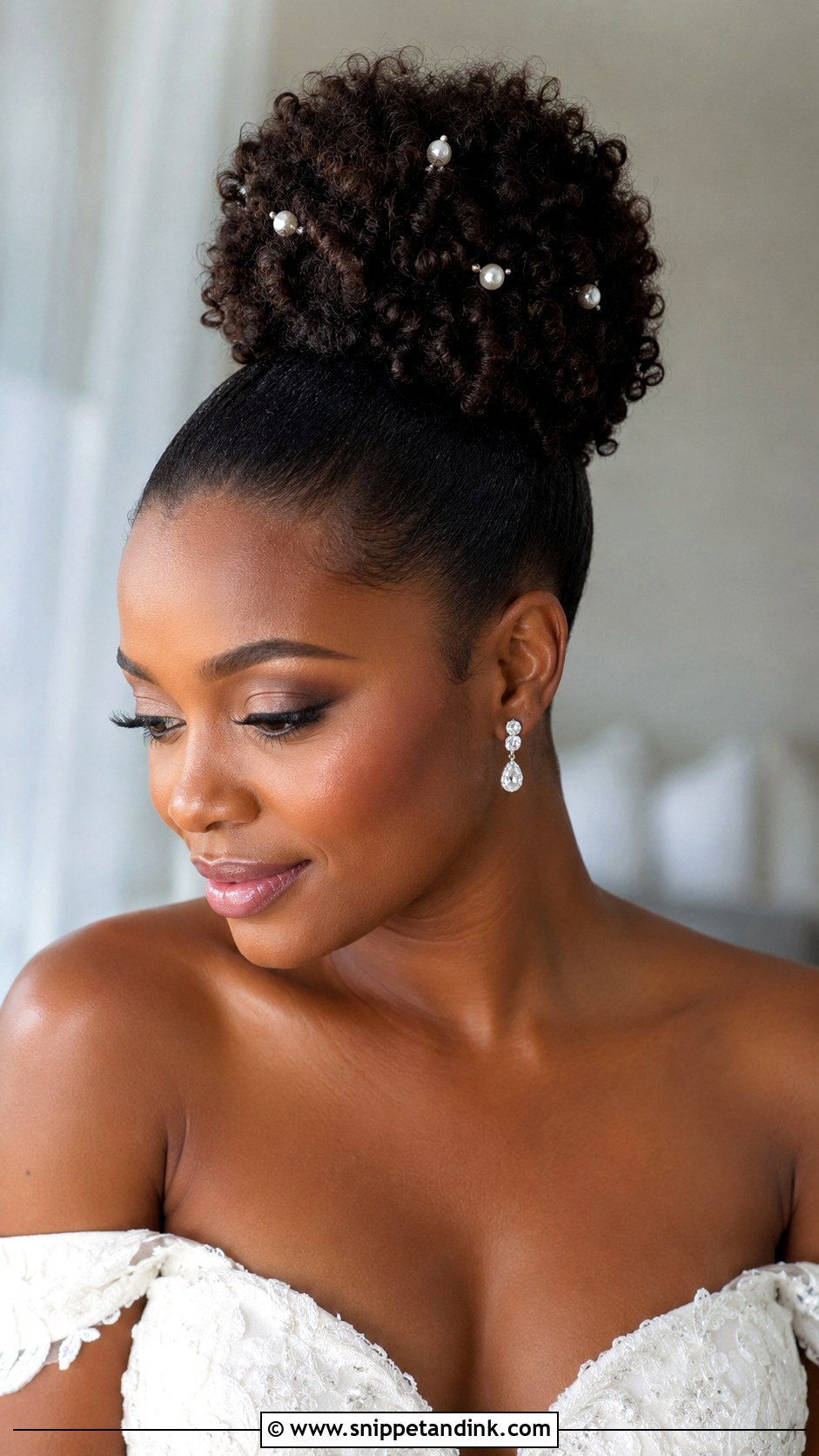
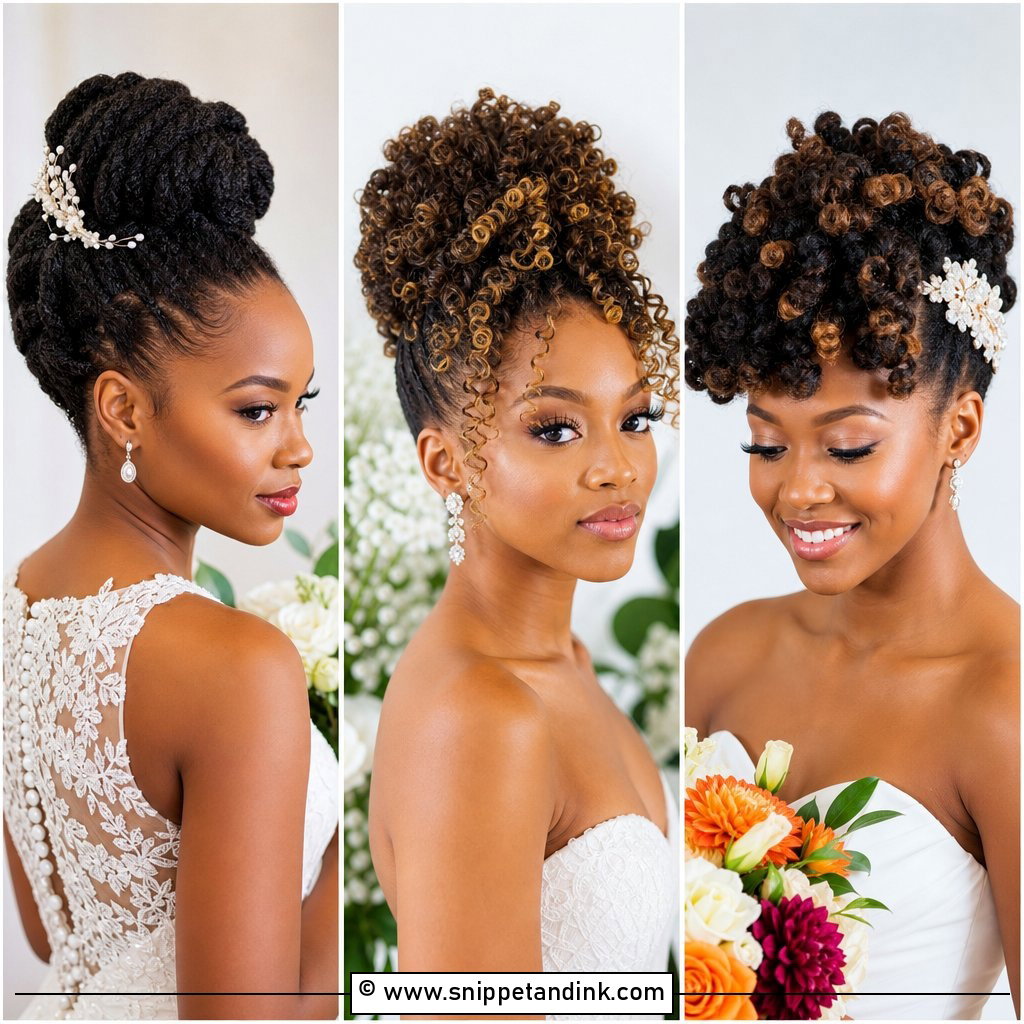
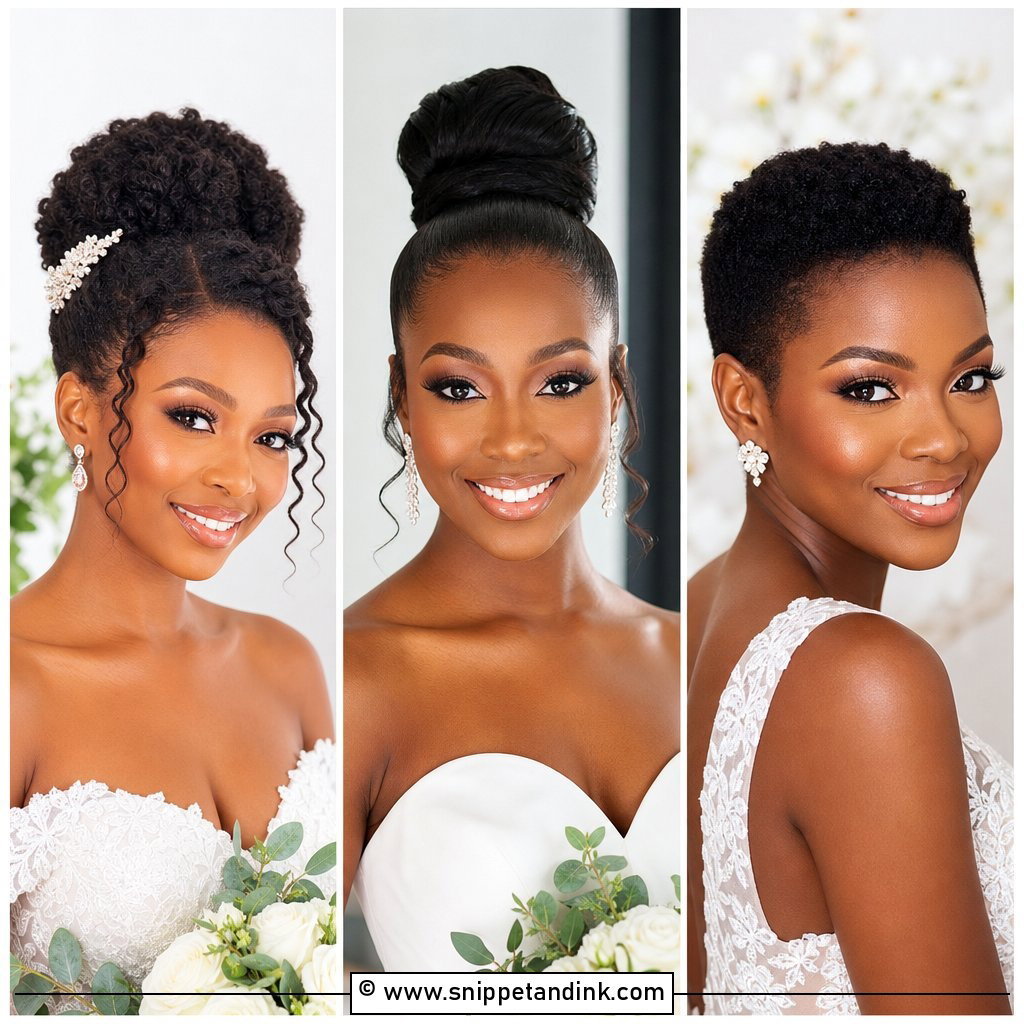
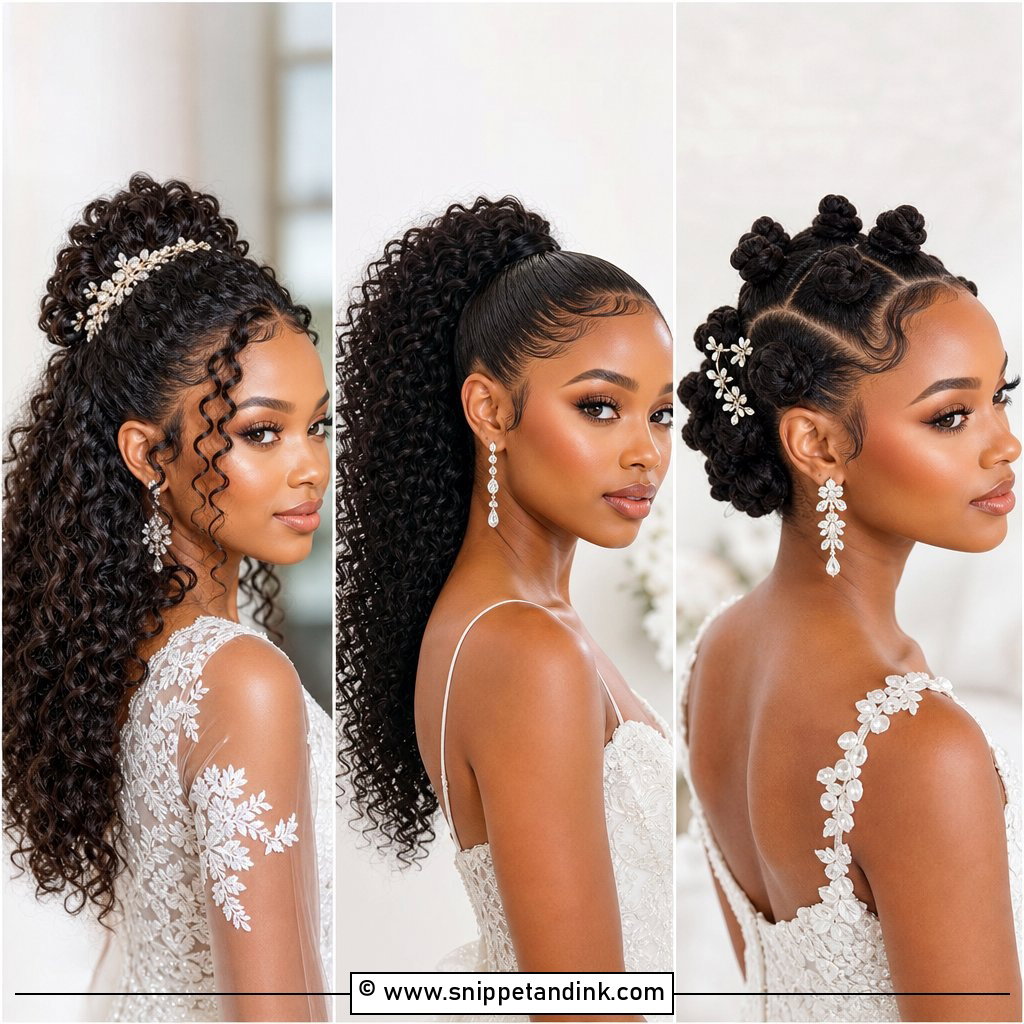
Height pulls the eye up to the face and neckline, which suits off-the-shoulder and fitted gowns very well. The base can be sleek with a full curly puff on top, or built from twists for more structure. The one thing I watch closely is the hairline. A high bun puts the most pull on the edges, and if they’re fragile or recovering from tight styles, I’d steer you to a lower placement. A veil can sit just under the bun, so plan that at the trial.
4. Natural Hair Twist Updo
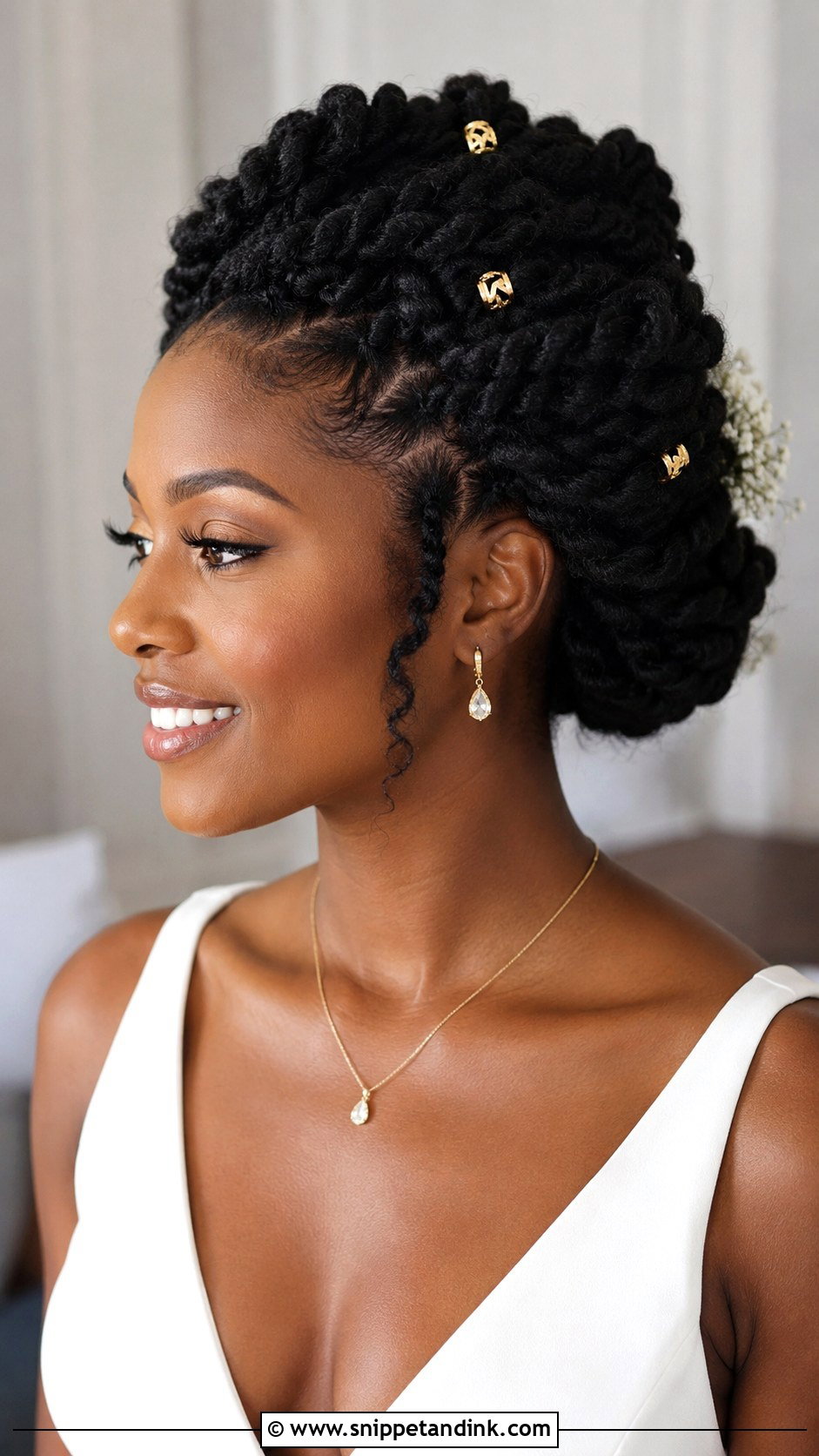
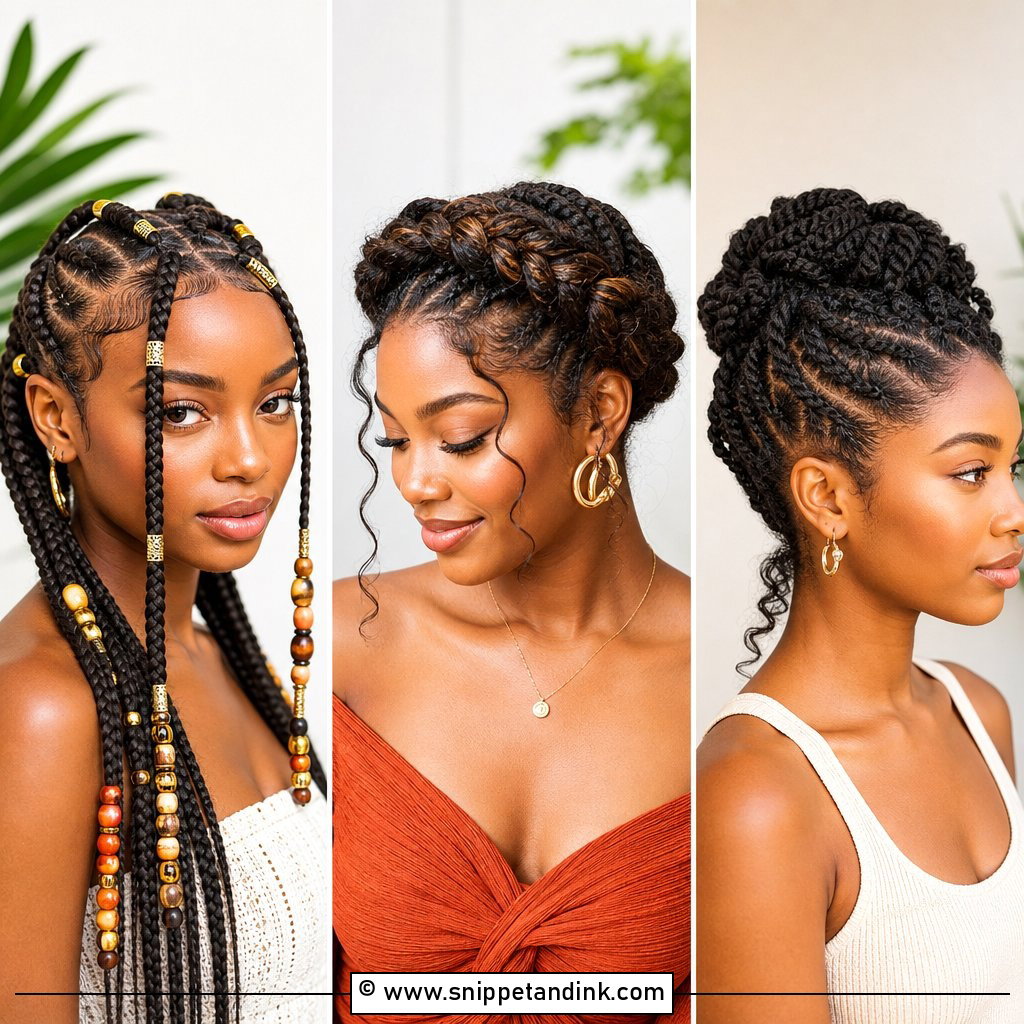
Twists give an updo texture and real hold, and they protect the ends too. Flat twists, two-strand twists or chunky twists can be shaped into a crown, swept to one side or pinned into a bun. Twist on well-moisturized hair with a light cream and a holding product, and let them dry completely before shaping, or they unravel at the ends. Done a day or two ahead, they settle nicely. Pearl pins or gold cuffs add shine without hiding the pattern.
5. Natural Hair Crown Braid
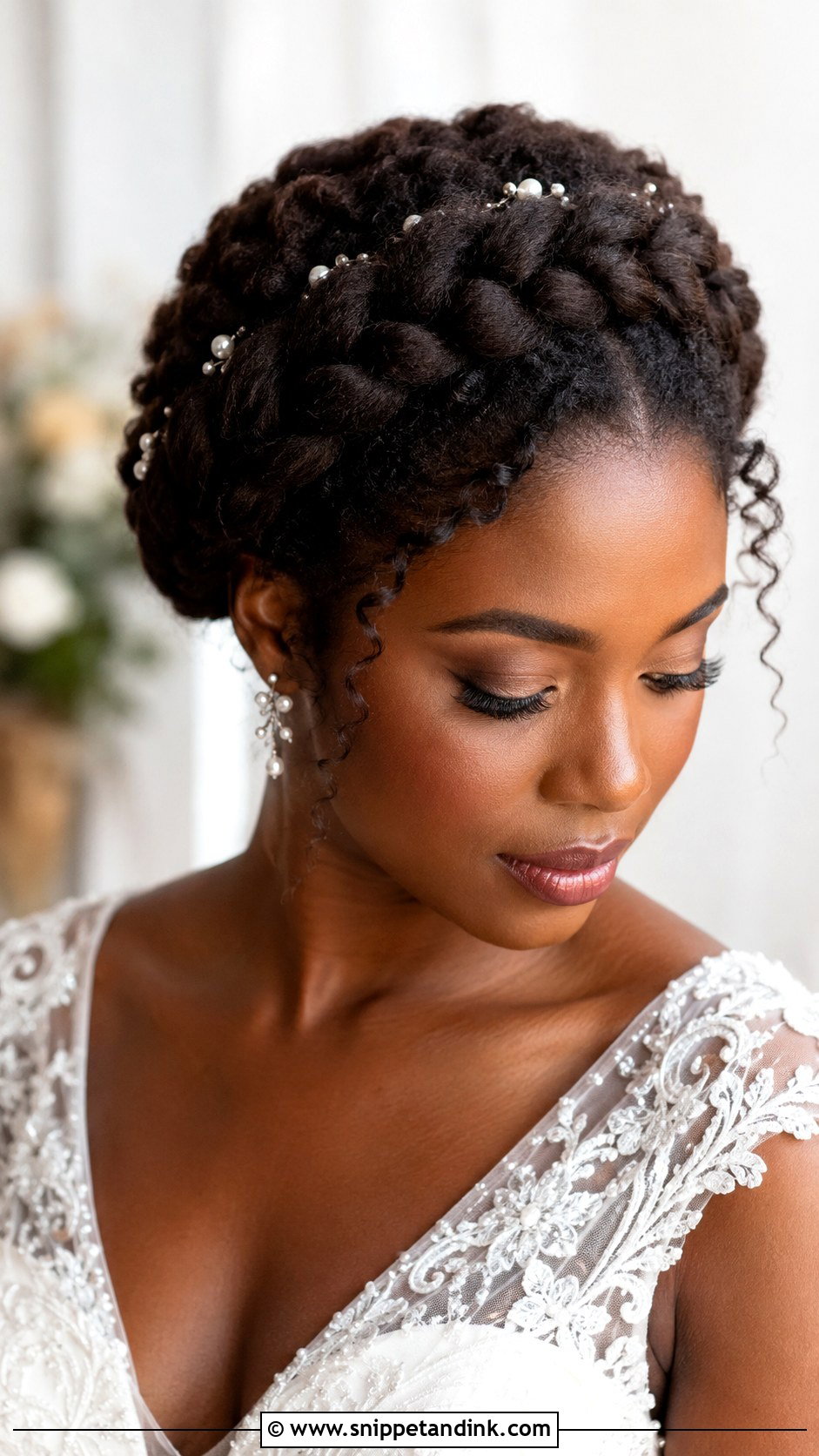
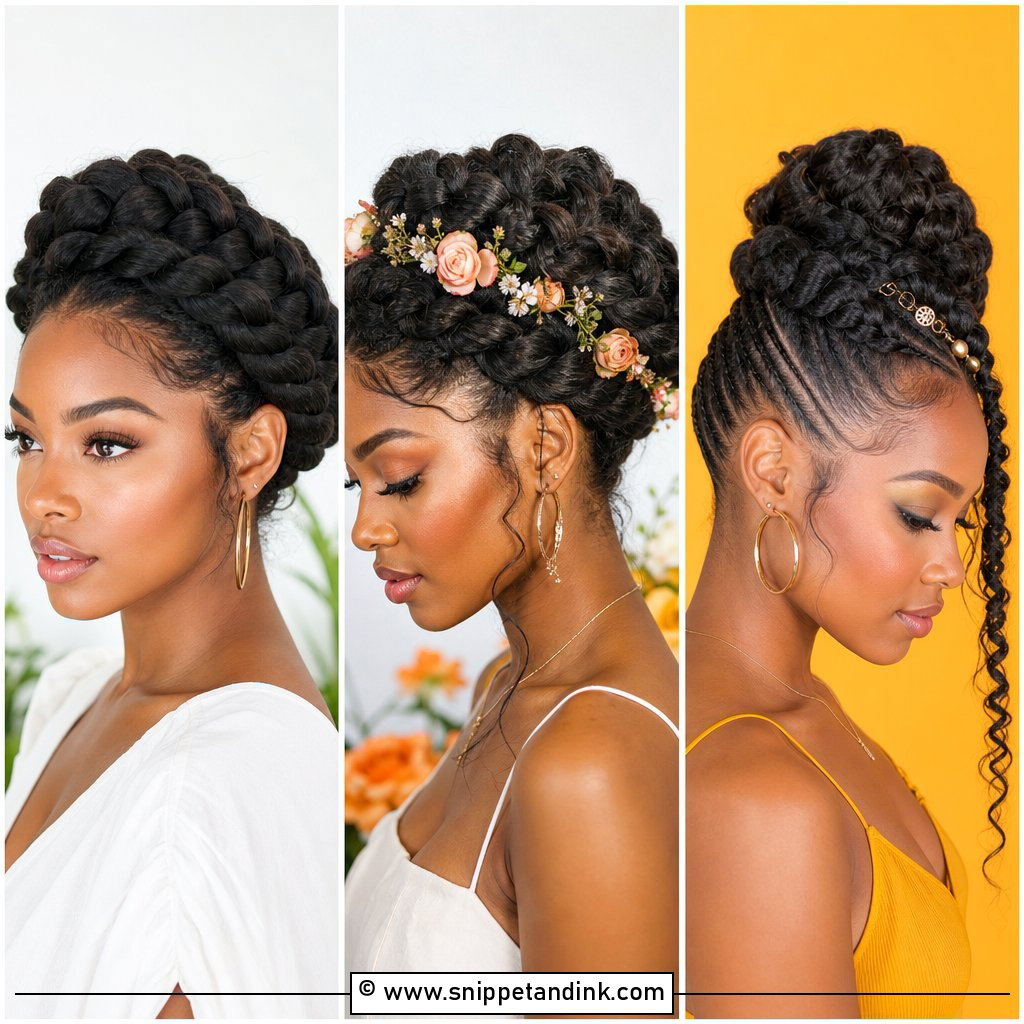
The crown braid wraps the head and leaves the face fully open. Natural hair can do it alone, but many brides add braiding hair for a fuller, more even halo, which is easier to blend if it matches your texture. I braid it a little loose at the outer edge and firm at the base. Garden ceremonies and lace gowns suit it well. It also makes accessories easy: pins, flowers and a veil comb all have a braid to hook into.
6. Natural Hair Halo Twist
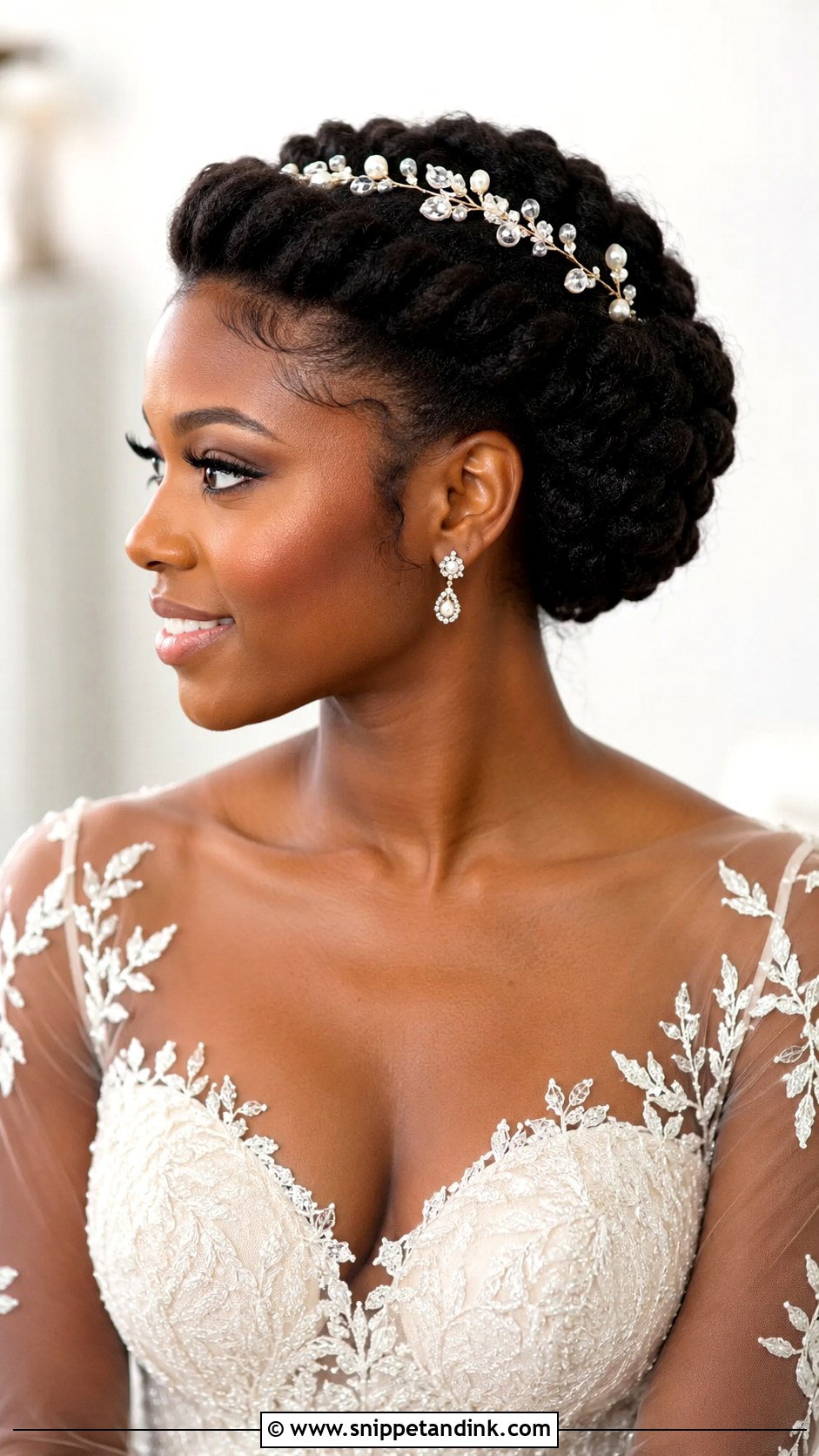
A halo twist reads softer than a braid while giving the same wrapped outline. The hair is twisted around the perimeter and tucked into itself at the back so no ends show. It is protective, comfortable and very flattering around the hairline on most face shapes. Keep it under a satin scarf while you get dressed and do makeup; it saves the smoothness you paid for. A slim headpiece or a few small pearls finish it.
7. Natural Hair Half Up Half Down
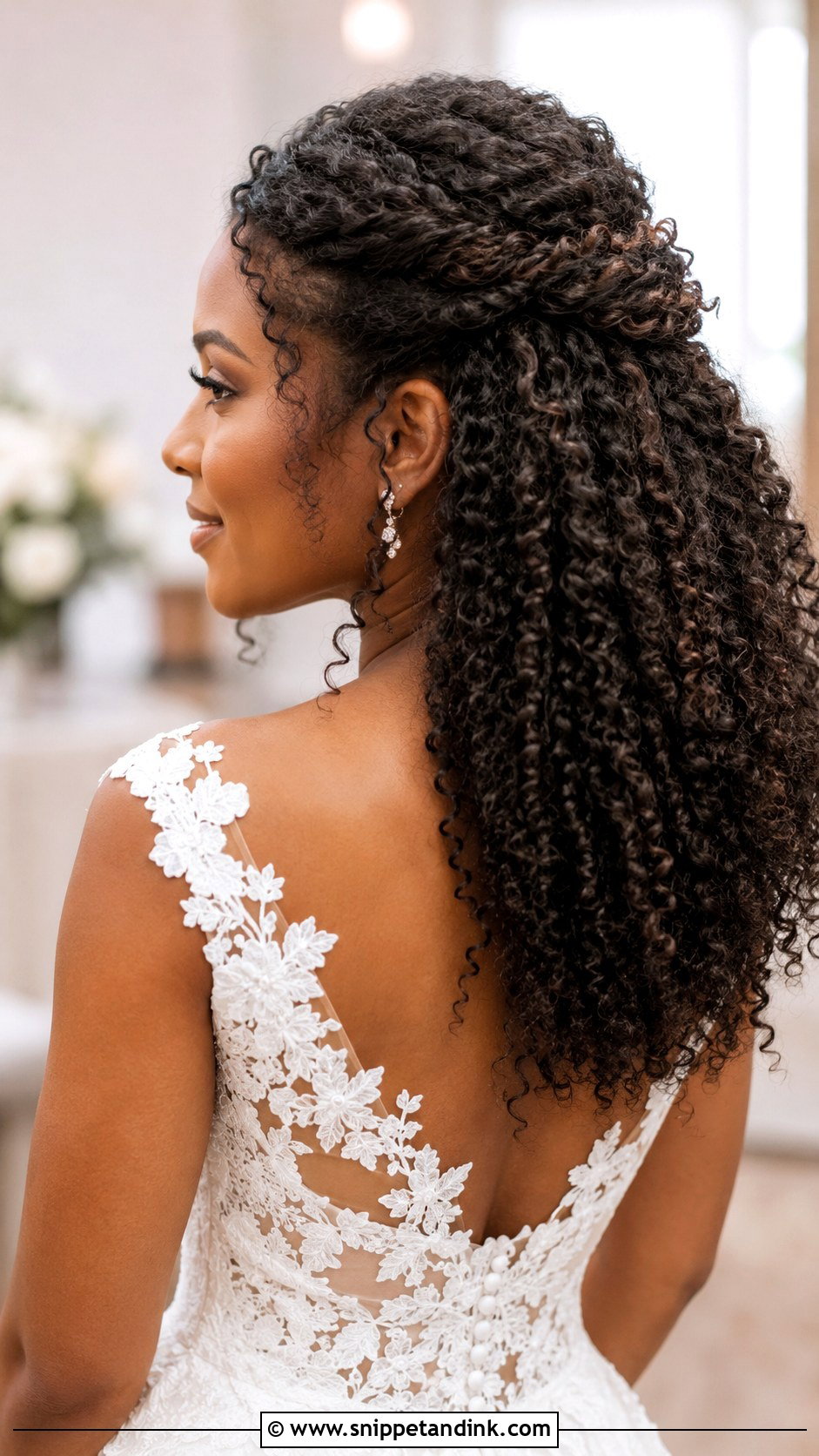
Half up gives volume at the back with structure on top, and it keeps curls out of your face while you’re signing papers or eating. The top can be twisted, braided, pinned or shaped into a small crown. It works best with medium to long natural hair, twist-outs, braid-outs, or curly extensions matched closely to your pattern. Plan for shrinkage: a twist-out that hangs at shoulder length at nine in the morning may sit higher by the evening if the day is humid.
8. Natural Hair Defined Curls
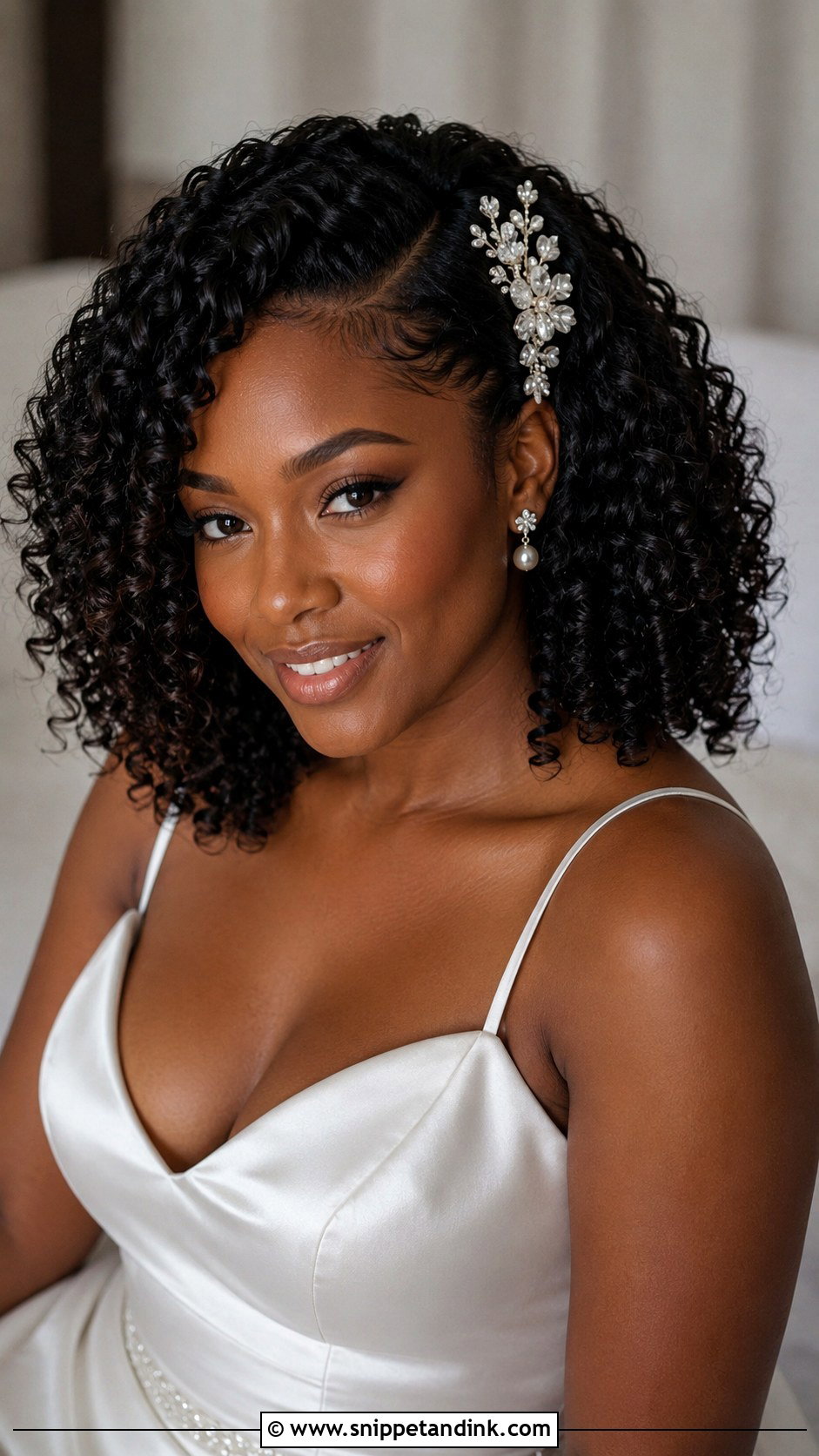
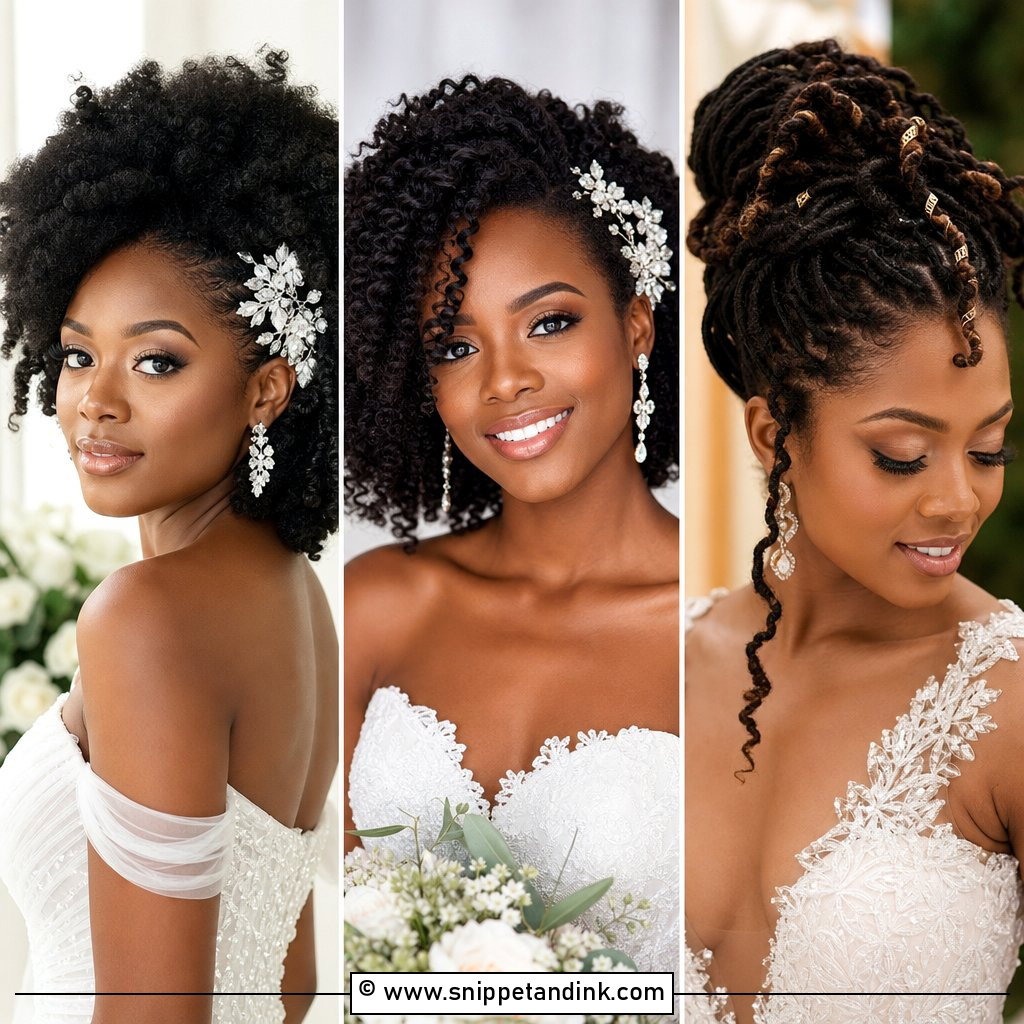
For a defined curl look, your real texture is the whole style, so preparation does most of the work. I’d book a trim a couple of weeks ahead to clean up the ends, deep condition in the days before, then apply curl cream and gel to soaking-wet hair and let it dry fully, diffused or air-dried, without touching it. Separation and fluffing come last, with oiled fingertips. Wear it rounded, side-parted or pinned on one side. A small comb or floral pin is enough decoration.
9. Natural Hair Afro Wedding Hairstyle
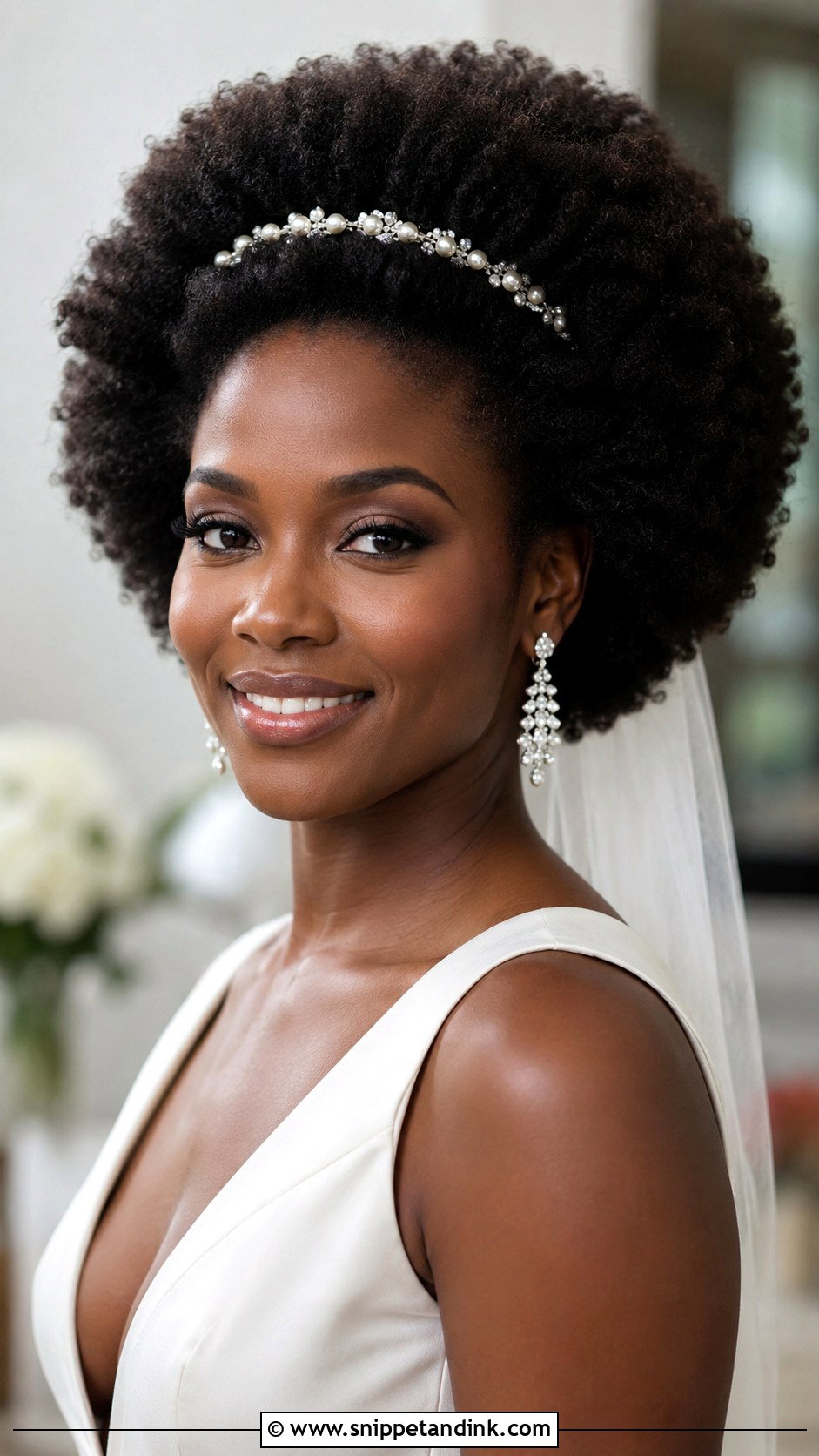
A full natural hair afro wedding hairstyle needs no taming to feel formal. It needs a balanced shape and moisture. I shape it with a pick and my hands from a stretched base, then check the outline from every side, because an afro that’s slightly lopsided shows clearly in profile photos. Minimalist gowns let it take the lead. Big earrings and glowing skin are all it needs.
10. Natural Hair TWA Wedding Hairstyle
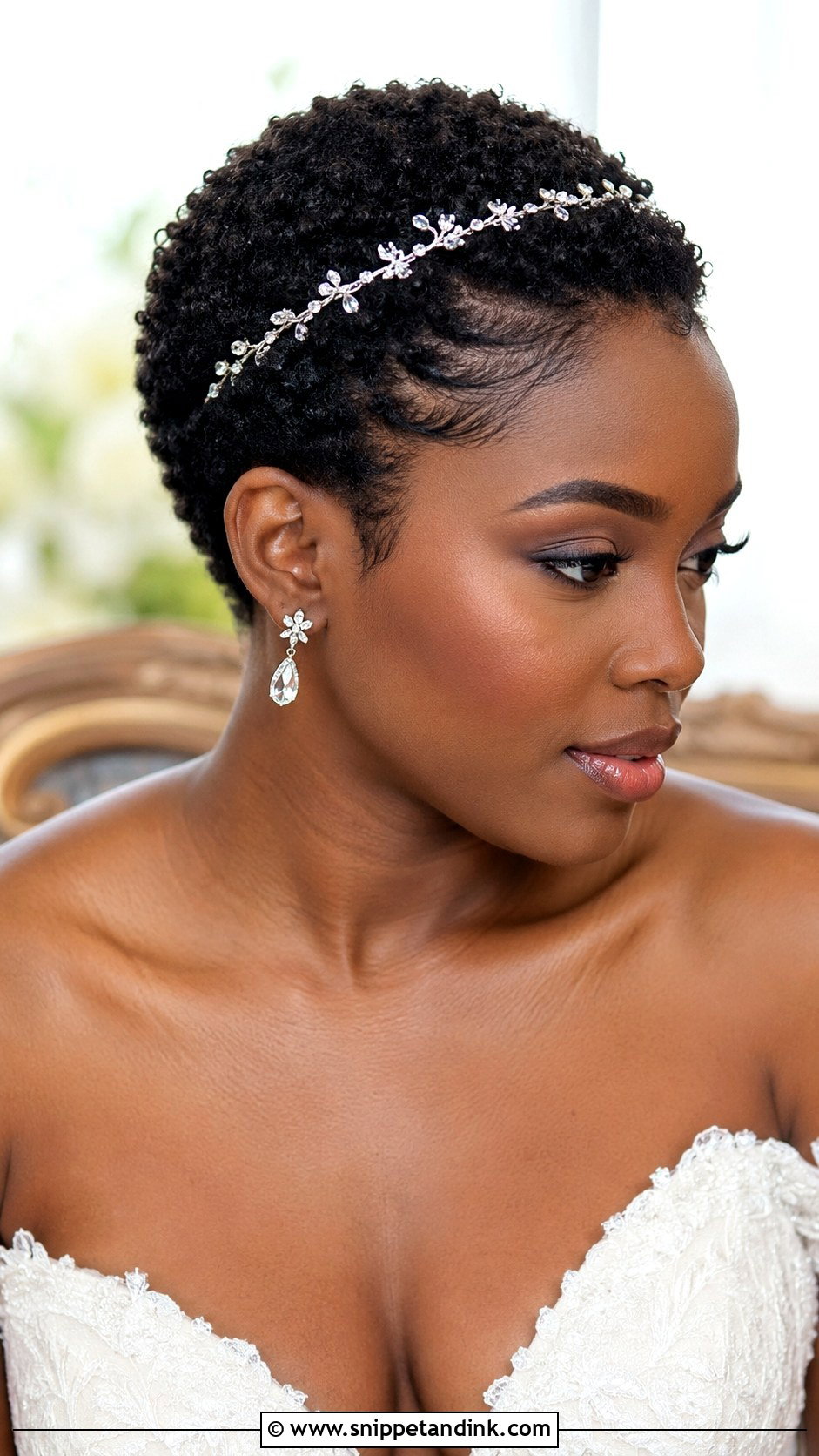
A teeny weeny afro is the lowest-maintenance bridal style here and one of the most striking. It depends on a fresh shape, so book the shape-up a few days before the wedding, not the morning. Wear it defined, finger-coiled, tapered or brushed smooth. Because there’s little hair to anchor into, accessories need to be chosen well: a headband or a birdcage veil on a band sits better than combs, which have nothing to grip.
11. Natural Hair Cornrow Bun
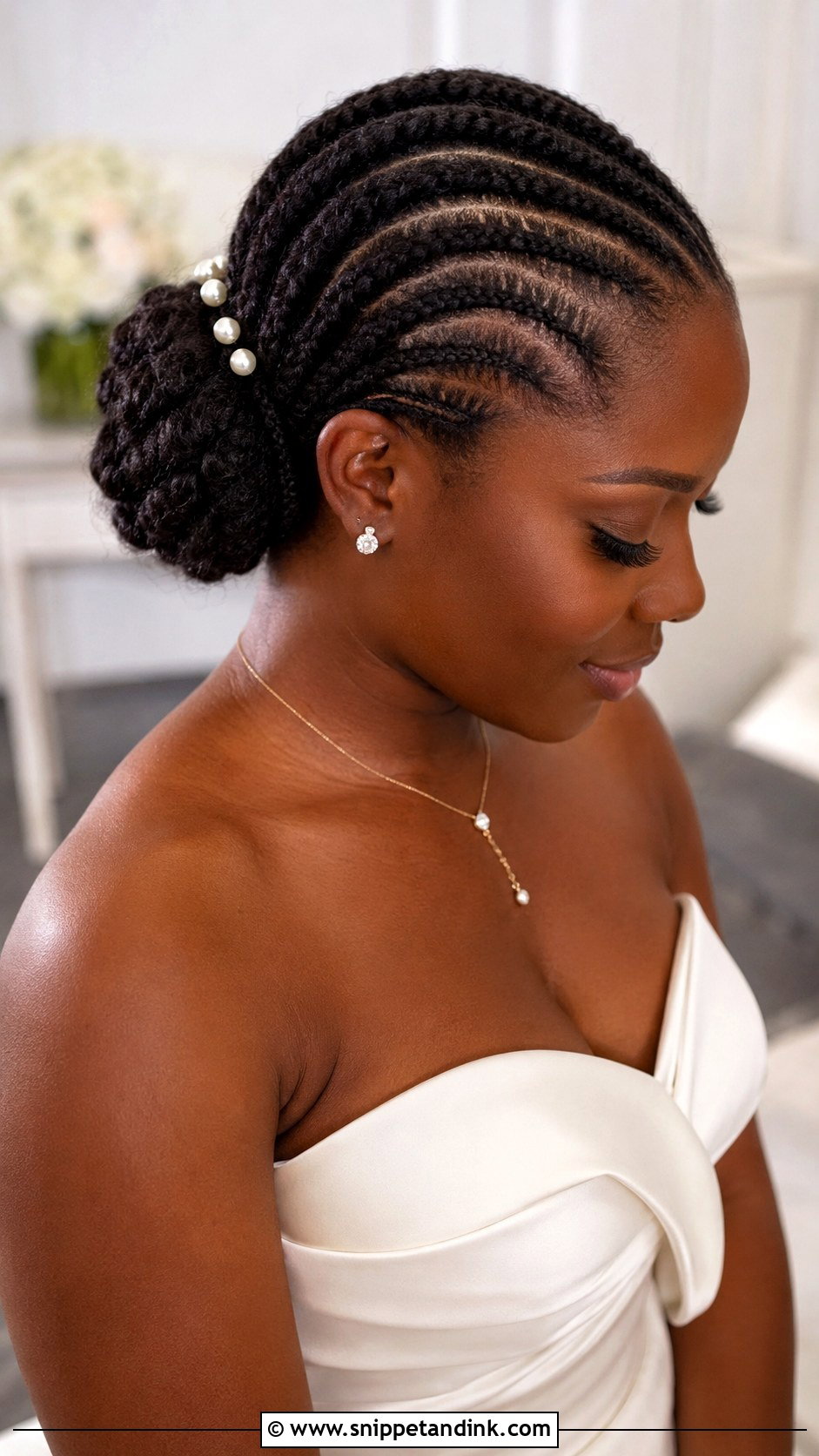
Cornrows into a bun give the most secure style on this list; nothing shifts, even through heavy dancing in humid air. The pattern can go straight back, curve or sweep to one side. My advice is to keep the design simple; an elaborate pattern can compete with lace or beading. Braid it a day or two before so the scalp has time to settle, and ask your braider to keep tension light at the edges. A natural hair cornrow bun looks clean with subtle cuffs or pearls.
12. Natural Hair Flat Twist Bun
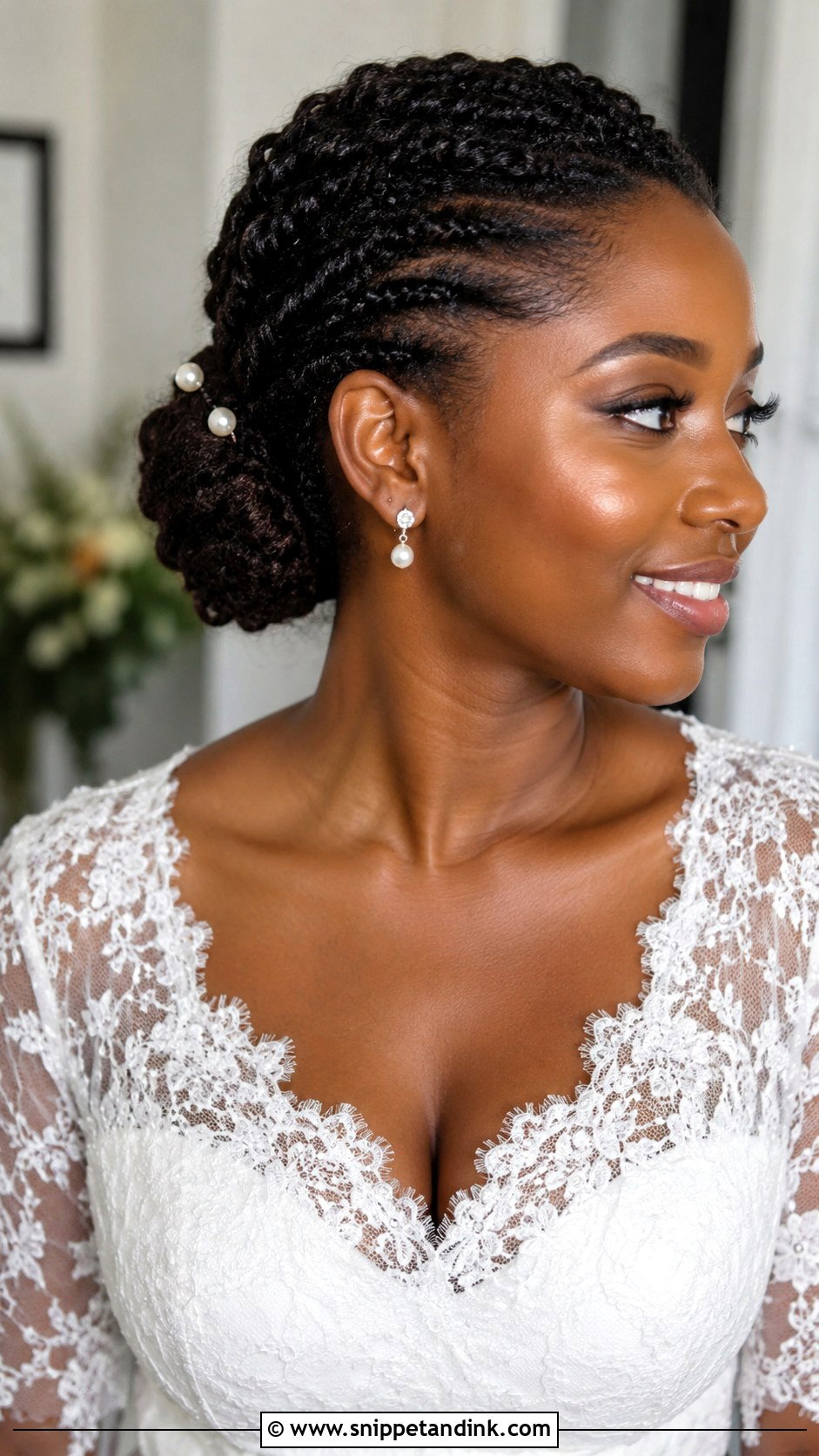
Flat twists sit between the softness of a twist-out and the precision of cornrows. They lie close to the scalp in clean lines that lead into a low, middle or side bun. Stretching the hair before twisting gives smoother lines. Medium-length hair suits it well, and the bun gives veils and combs a sturdy base. It is a little less durable than cornrows over a long day, so a bit of mousse on the lines keeps them crisp.
13. Natural Hair Loc Updo
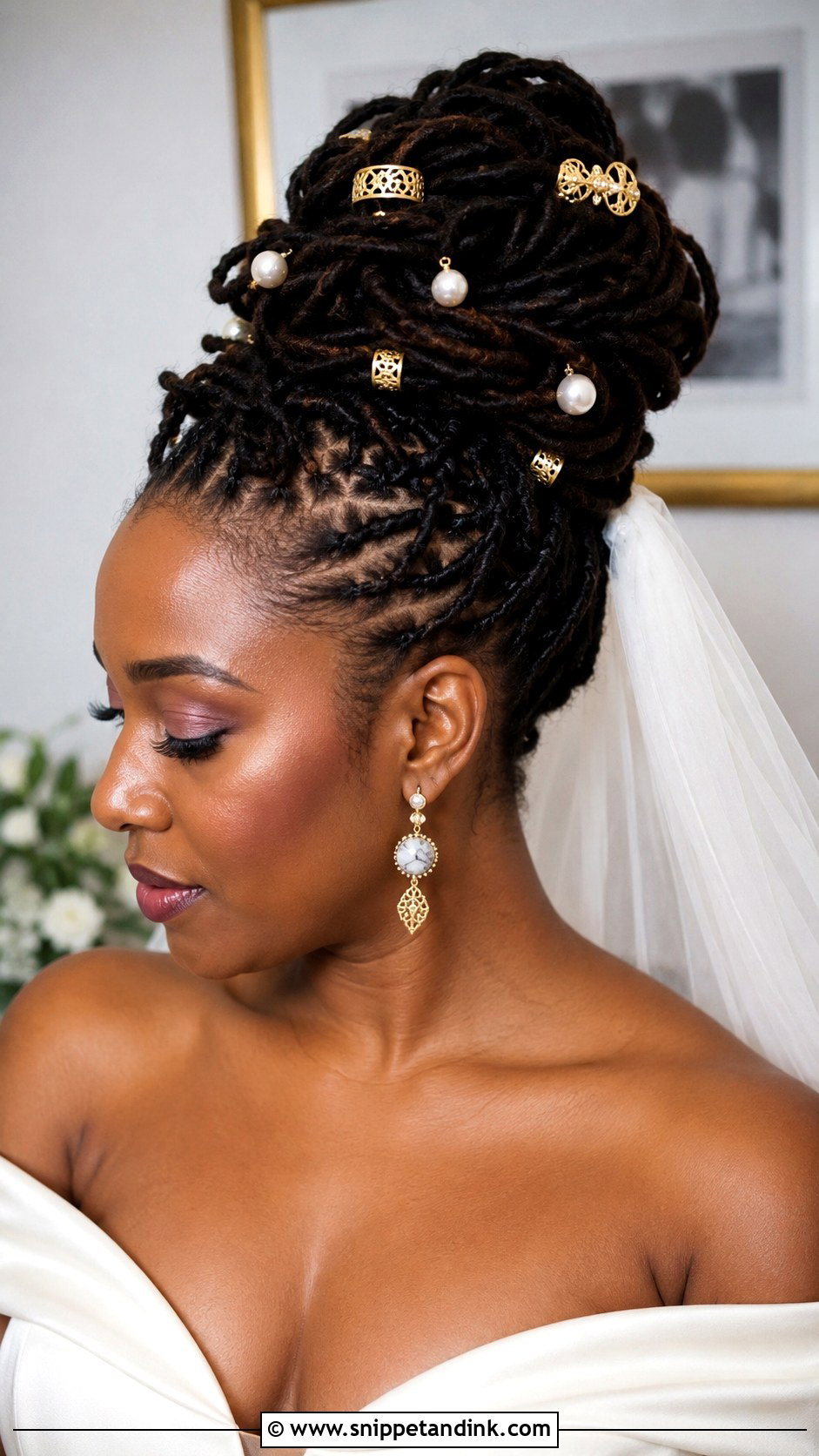
Locs are heavy, which helps them hold pinned shapes but also means a natural hair loc updo can pull hard on the scalp. I pin locs with large hairpins in a criss-cross and check how it feels before finishing. They wrap into a high bun, tuck into a low chignon or form a crown. Retwist about a week or two before the wedding, not the day before, so the roots don’t feel tight during the ceremony. Cuffs and pearls slide right onto individual locs.
14. Natural Hair Loc Petal Bun
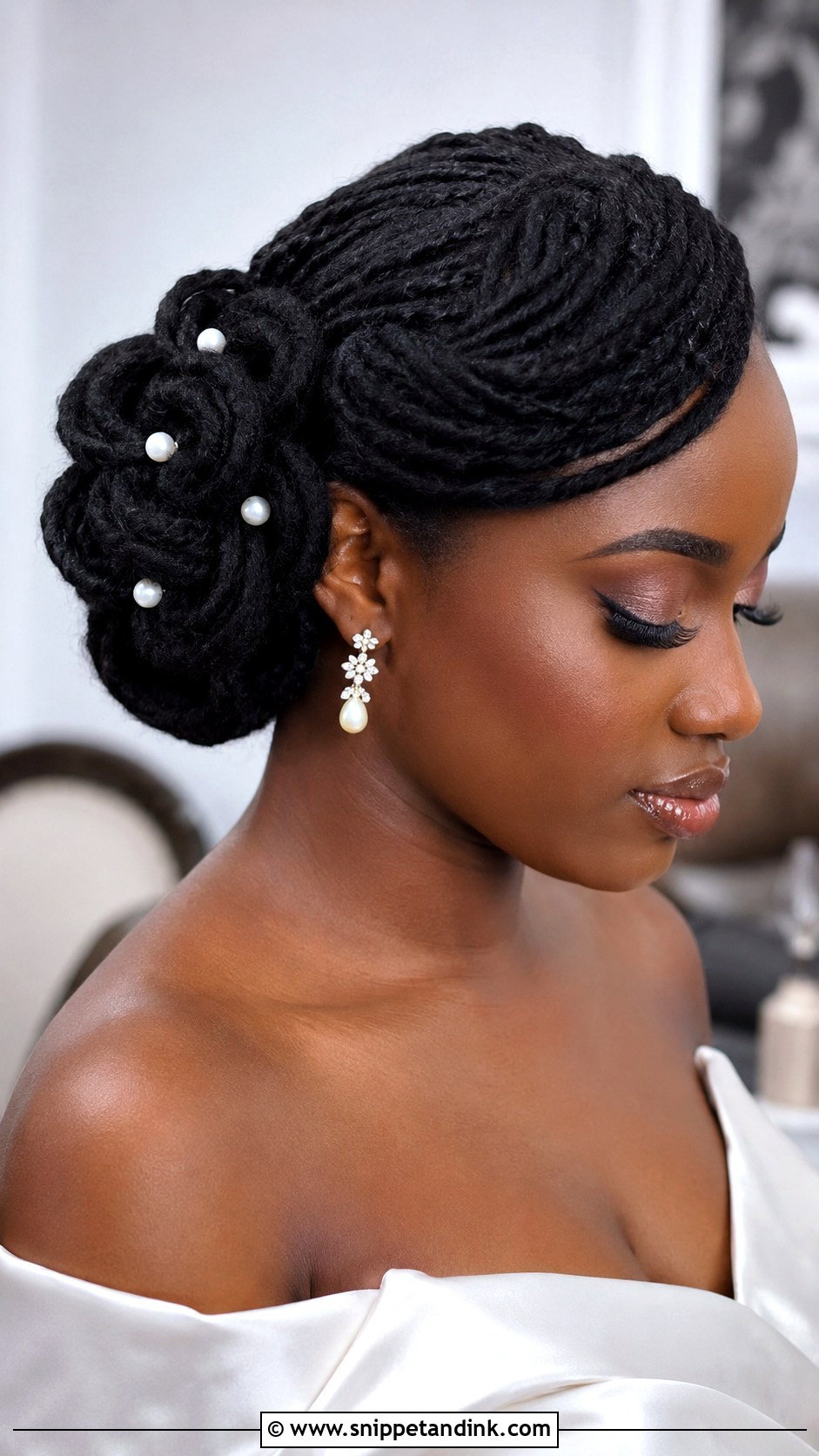
The petal bun folds individual locs into rounded loops, so the bun itself becomes the decoration. It can sit high, low or to the side. Medium-length locs fold most neatly; very long ones give more petals but more weight, so a lower placement is kinder over a long day. Keep the front smooth or swept back. A few pearl pins in the centre of the petals catch the light in photos.
15. Natural Hair Braided Mohawk
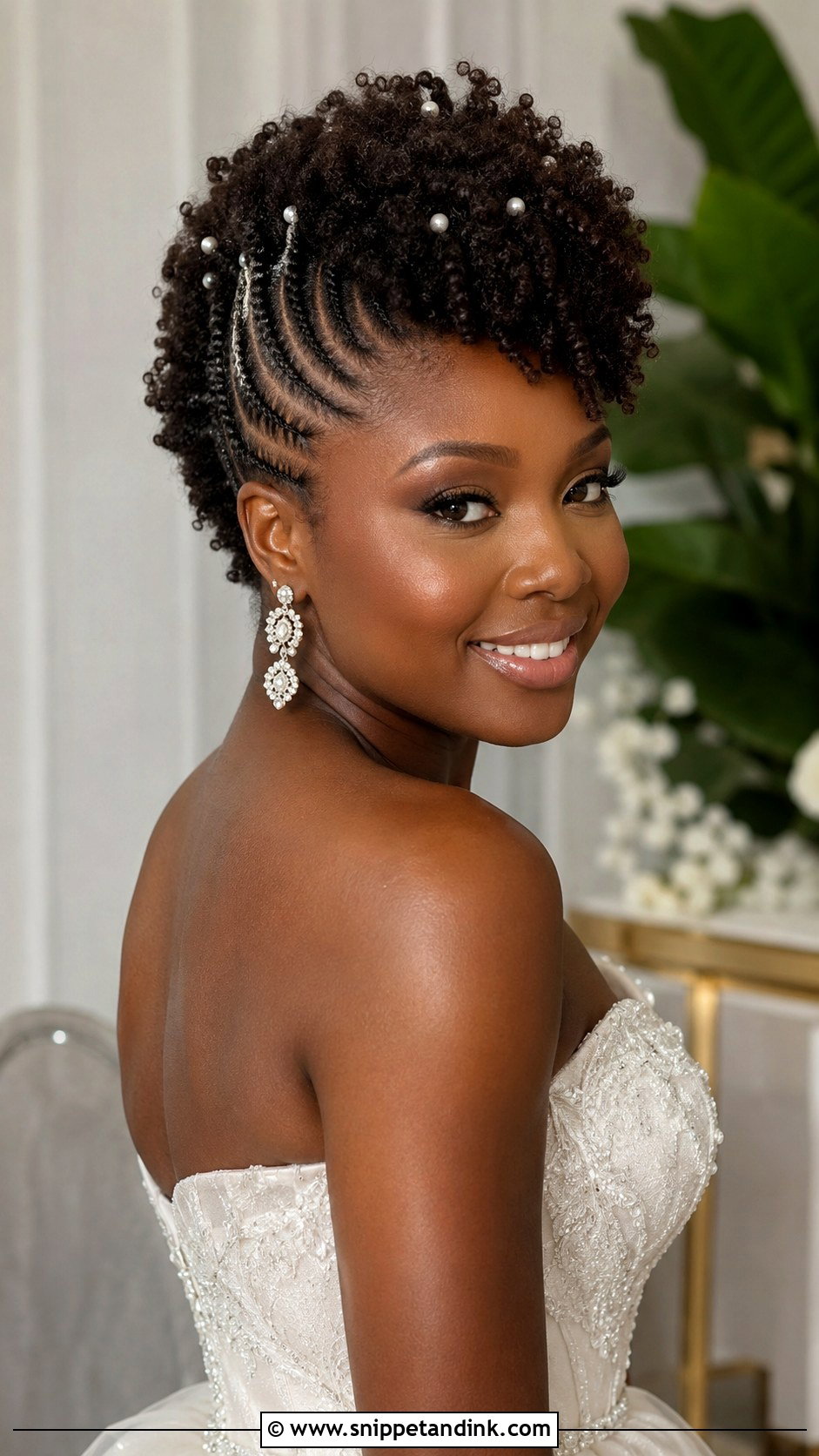
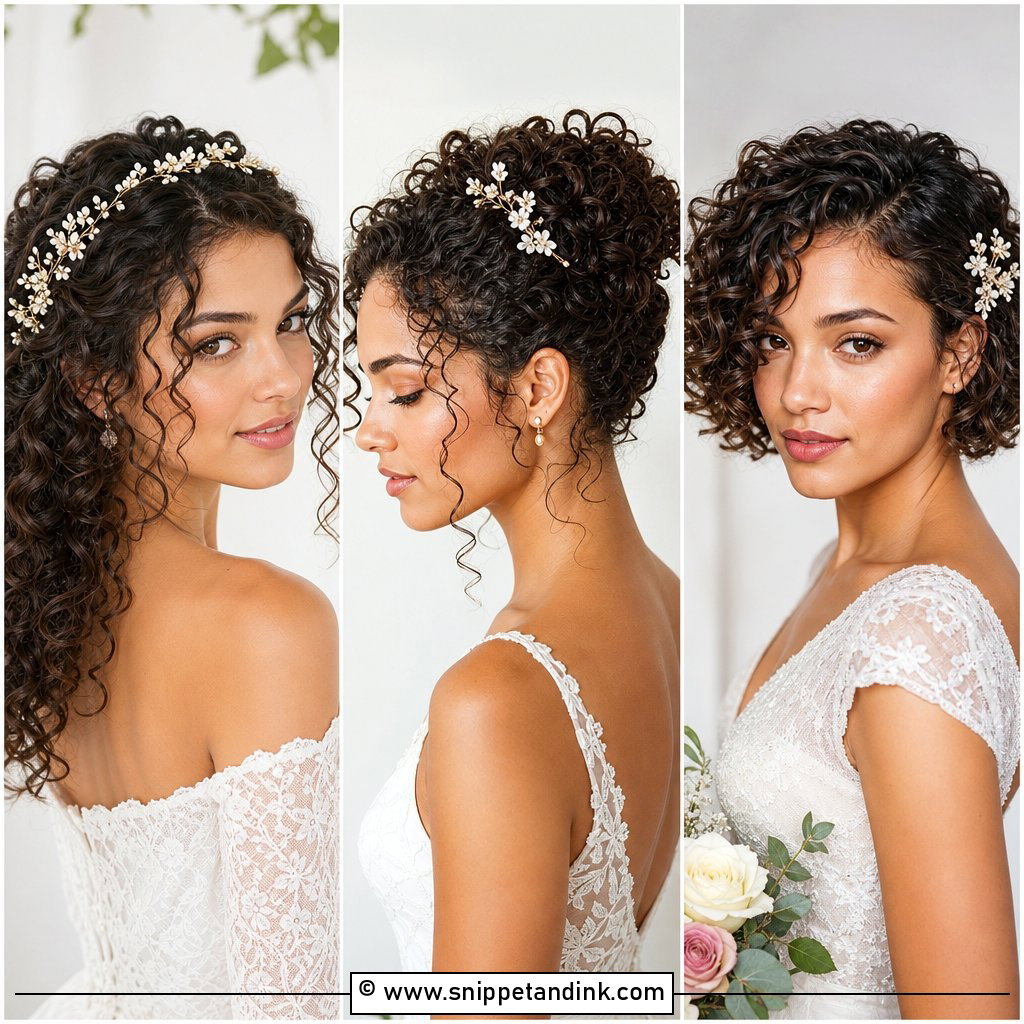
A natural hair braided mohawk gives height and edge with the sides kept completely tidy. The sides are braided, twisted or pinned up, and the centre stays full with coils, twists or a sculpted roll. Strapless gowns, modern dresses and jumpsuits all suit it. To keep it bridal rather than severe, I soften the centre, leaving coils a little looser at the front. Ask for flat braids on the sides if you plan to wear a veil, so the comb has somewhere to sit.
Coils Won’t Hold a Plain Comb, So Plan the Veil Early
A standard veil comb is made for smooth, straight hair. In coils and a full afro, the teeth often have nothing to grip, and a long veil’s weight slowly drags it out. I plan the veil attachment at the trial, with the actual veil, every time.
In an updo or bun, I anchor the comb into the bun itself, sometimes with a few crossed pins under it for extra hold. With cornrows or flat twists, a small hidden braid or loop near the crown gives the comb something firm. For afros and TWAs, a veil sewn onto a headband or a thin wire band is usually more secure than any comb. Locs can take a comb if it is pinned through and around them, not pushed straight in.
Protect the edges whatever you choose. Tight pulling for one day can still leave tender spots and, repeated over a wedding week with events every night, can stress the hairline. Ask for low tension at the front and tell your stylist immediately if anything stings.
Talk Density and Shrinkage at the Trial, Not the Morning Of
A low bun, twist updo, crown braid, defined curls, a loc bun or a braided mohawk can all work for your wedding. What matters is that the style suits your texture and stays comfortable from the first photo to the last dance. Bring inspiration pictures, but also tell your stylist honestly about your length, density, shrinkage, edges, veil and the forecast. A trial is worth it for every one of these looks, because it shows you how the shape, hold and comfort really feel after a few hours.
You'll Like These Ideas:


Leave a Reply