
Locs take styling differently from loose hair. They’re heavier, they don’t respond to a curling iron the way loose strands do, and every pin has to go in without snagging or splitting a loc. That doesn’t limit what a bride can wear; it just changes how I build it. Short locs can still be pinned into a sculpted updo, long ones can be curled on rods and worn down, and pearls, flowers and loc jewelry all sit well against the texture. Below are twenty bridal looks for locs, with notes on how each one is built, how it handles weight, and who it suits.
Weight, Length and Loc Size Shape the Whole Plan
When I meet a bride with locs, I lift a handful at the crown to feel the weight before I look at any inspiration photos. Mature, long locs are heavy, and that weight decides more about the style than anything else.
- Short locs, above the shoulder: barrel rolls, pinned twists, a mohawk updo or a half-up style. Buns need more length to wrap, but a short loc can be pinned into a sculpted shape.
- Medium locs, shoulder to mid-back: almost everything here works. Crown braids, chignons and half-up buns are easy at this length.
- Long, thick locs: low buns and styles that leave some locs down. A high bun or high ponytail with long locs puts a lot of weight on the crown for many hours.
- Fine locs or sisterlocks: detailed twists and woven patterns, with more pins than you’d use for thicker locs.
Your edges matter more than the style. If anything pulls at the hairline during the trial, it will be worse after eight hours, so I’ll loosen it or change the plan. I use large U-shaped pins slid along the loc, not regular bobby pins forced through it, and fabric bands instead of rubber ones.
1. Loc Low Bun for Brides
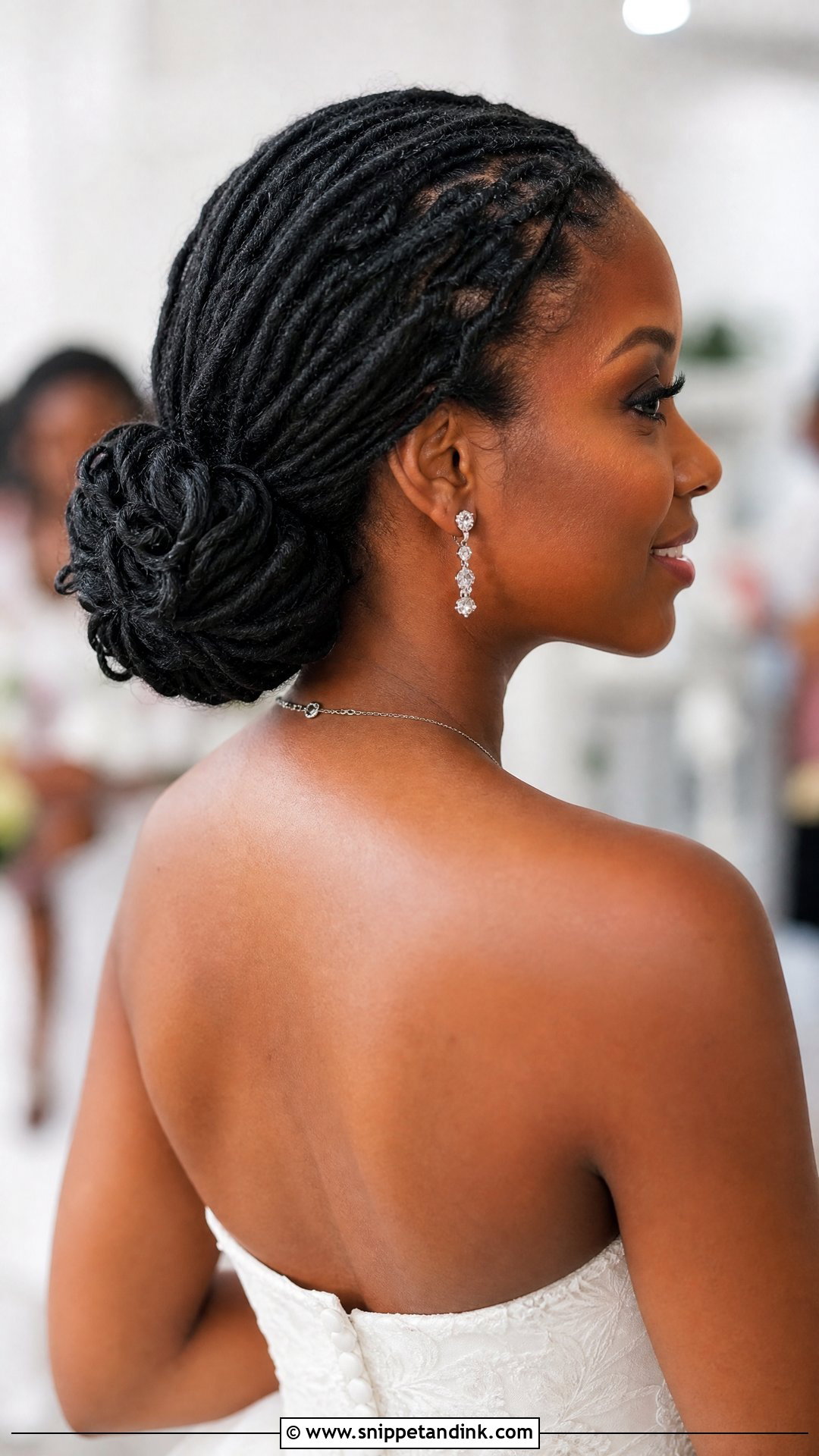
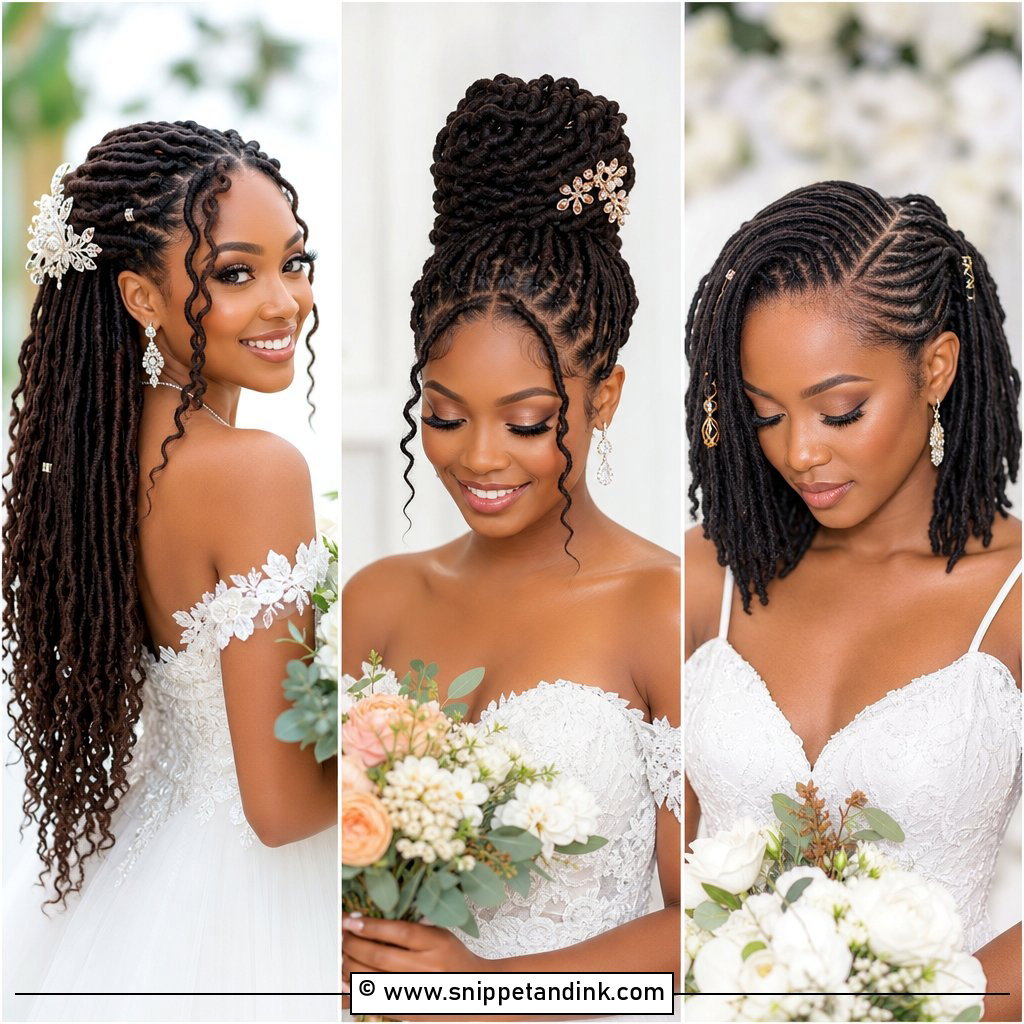
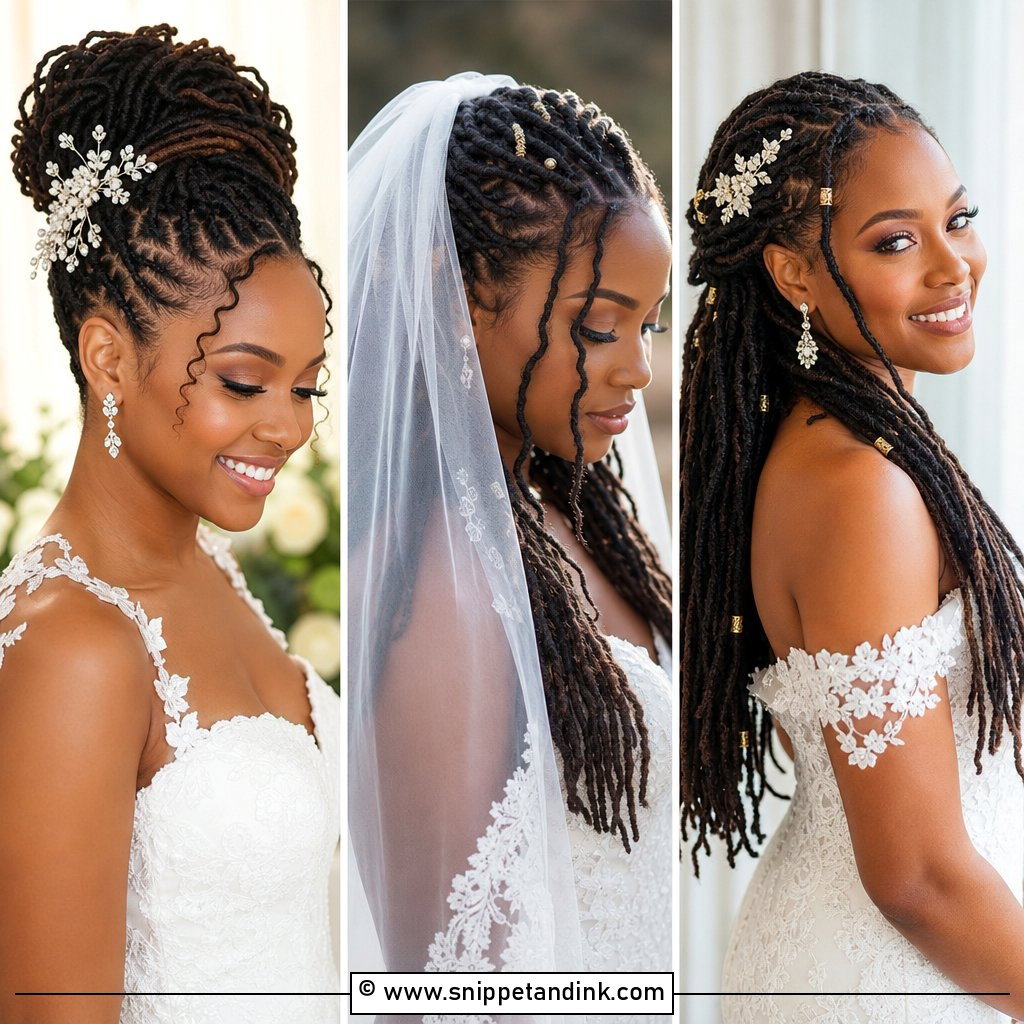
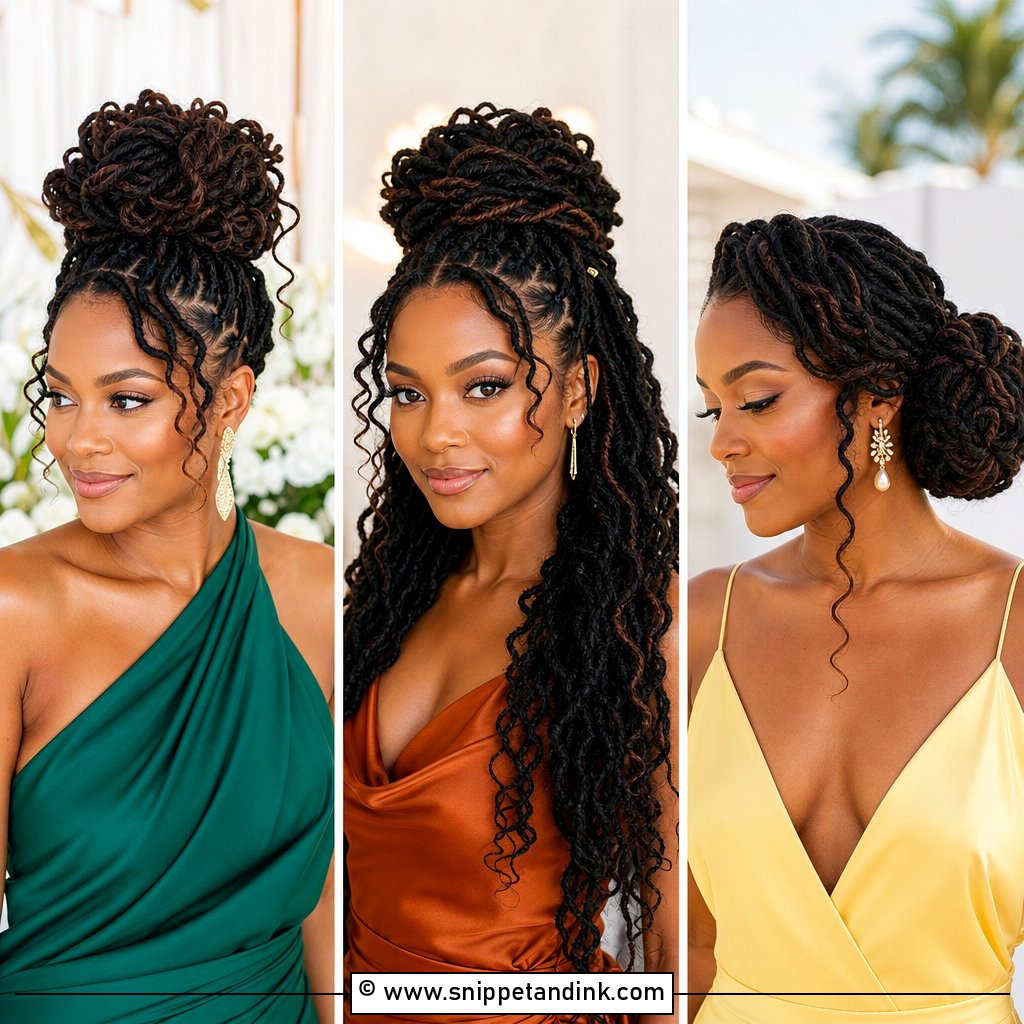
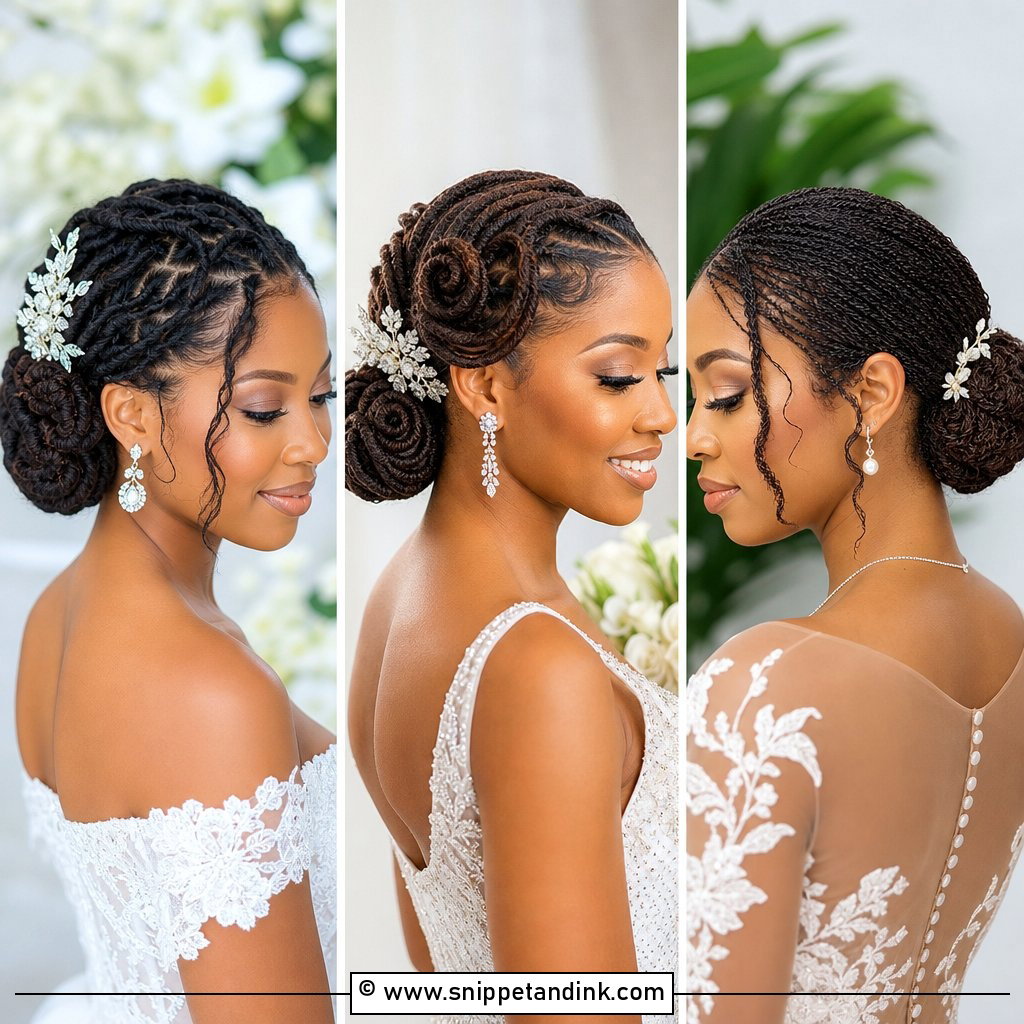
A low bun is the style I suggest most for long, heavy locs, because the weight rests at the nape instead of pulling from the crown. I gather the locs smoothly, wrap them into a rounded knot just above the collar, and anchor it with large U-shaped pins pushed in along the loc rather than through it. It never competes with the dress. A cathedral veil comb slides in above the bun, or a single pearl comb sits at the side. Brides who worry about headaches during a long reception usually end up here.
2. High Bun With Locs
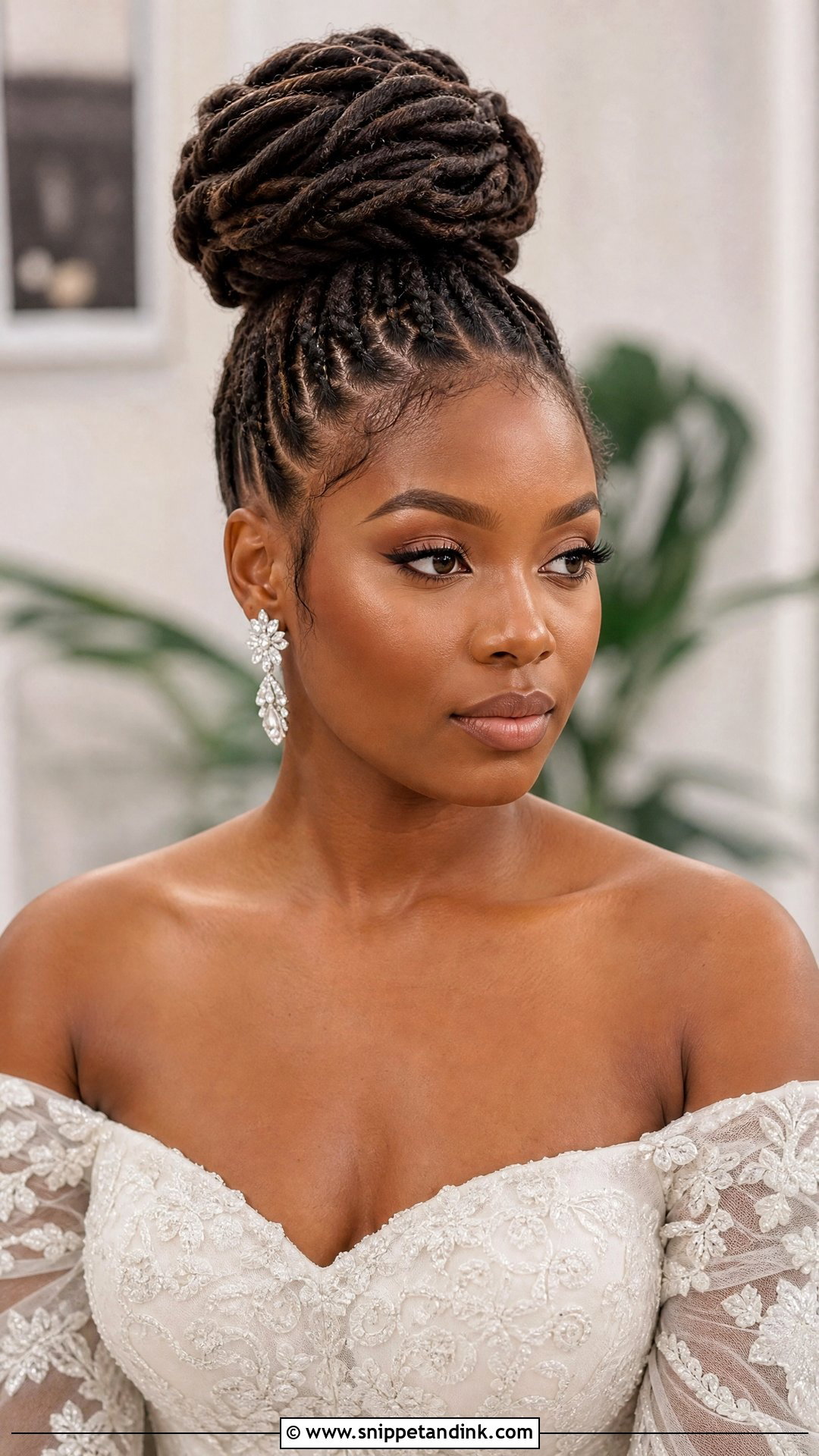
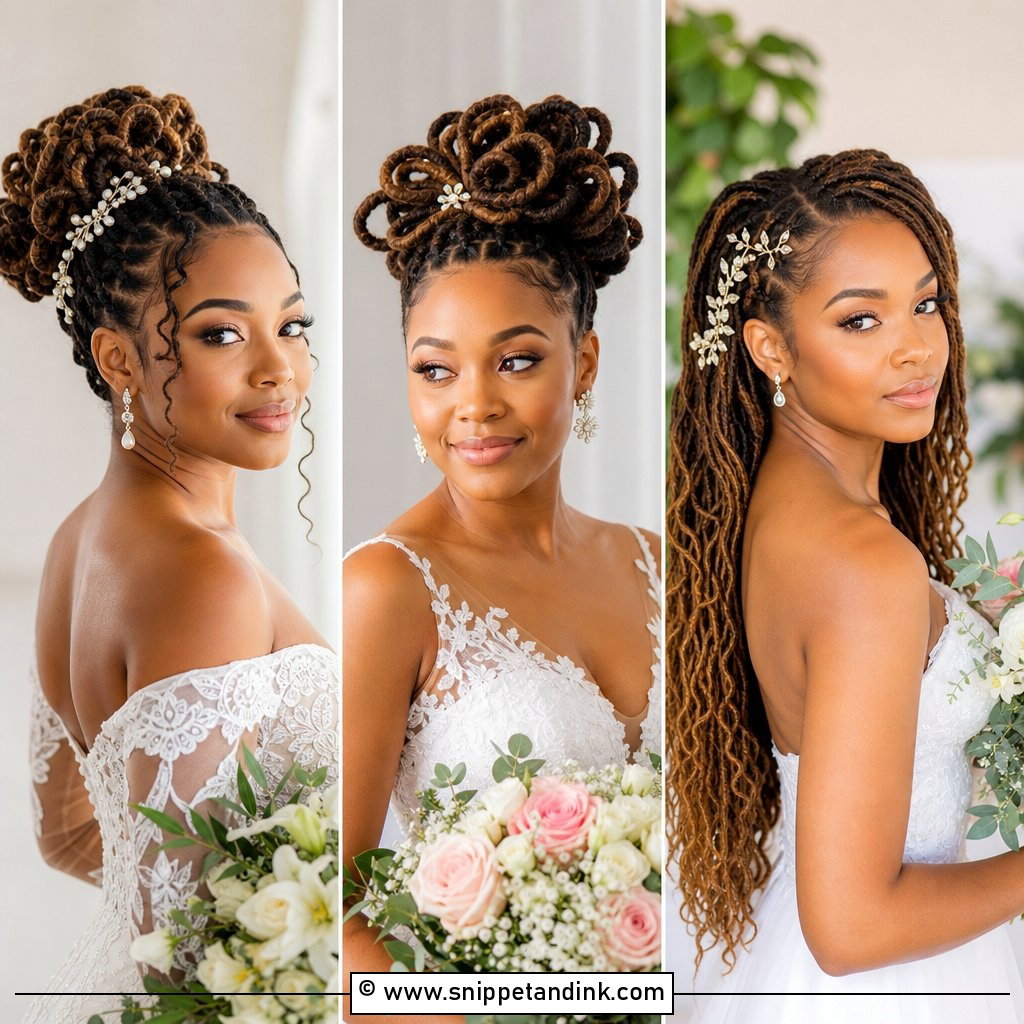
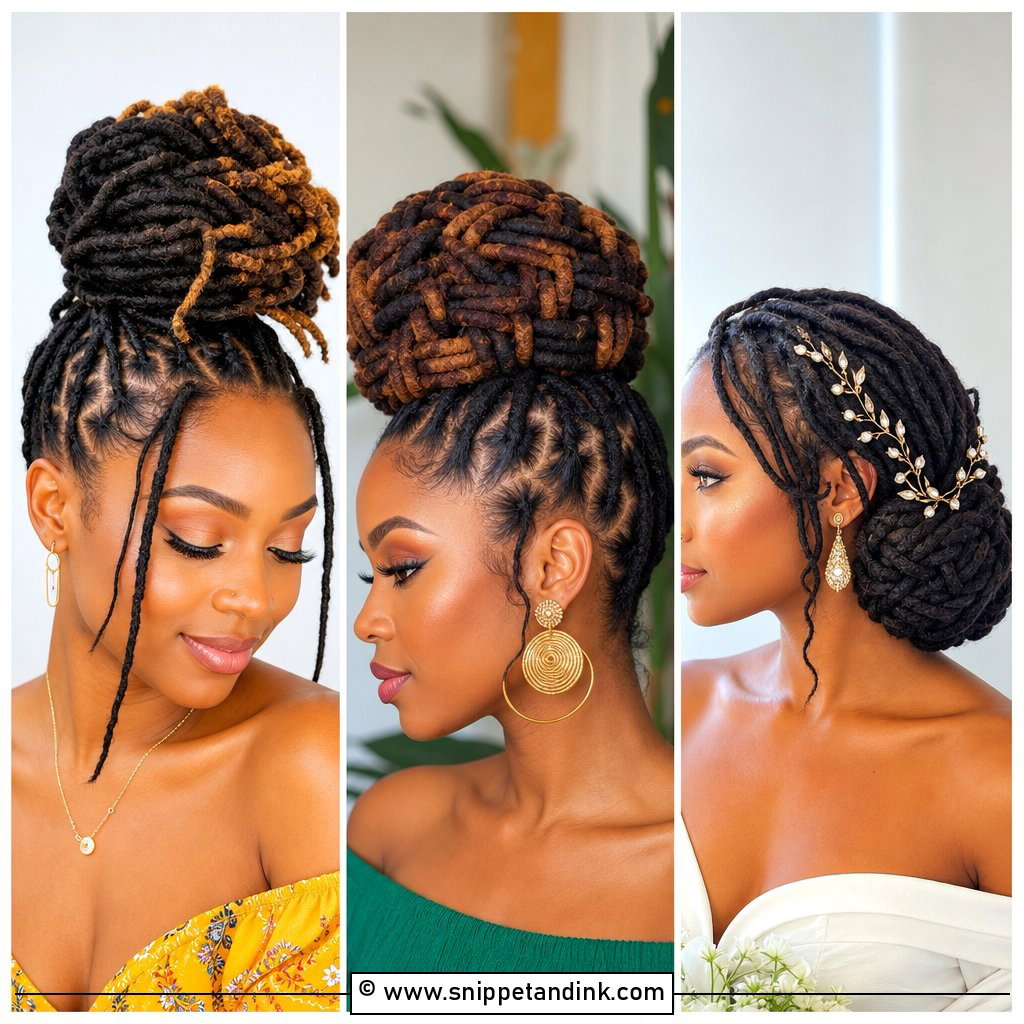
A high bun shows off the neck, shoulders and earrings, which is why it suits strapless and off-the-shoulder gowns. It’s also the most demanding style on your edges. All the weight of the locs sits on the crown, and if the locs are long and thick, that pull lasts for hours. I check the weight at the trial: if you feel tension within the first half hour, we lower it or reduce the bun by leaving some locs down. A veil can go under the bun for a soft fall or in front of it for a classic outline.
3. Loc Crown Braid for Wedding
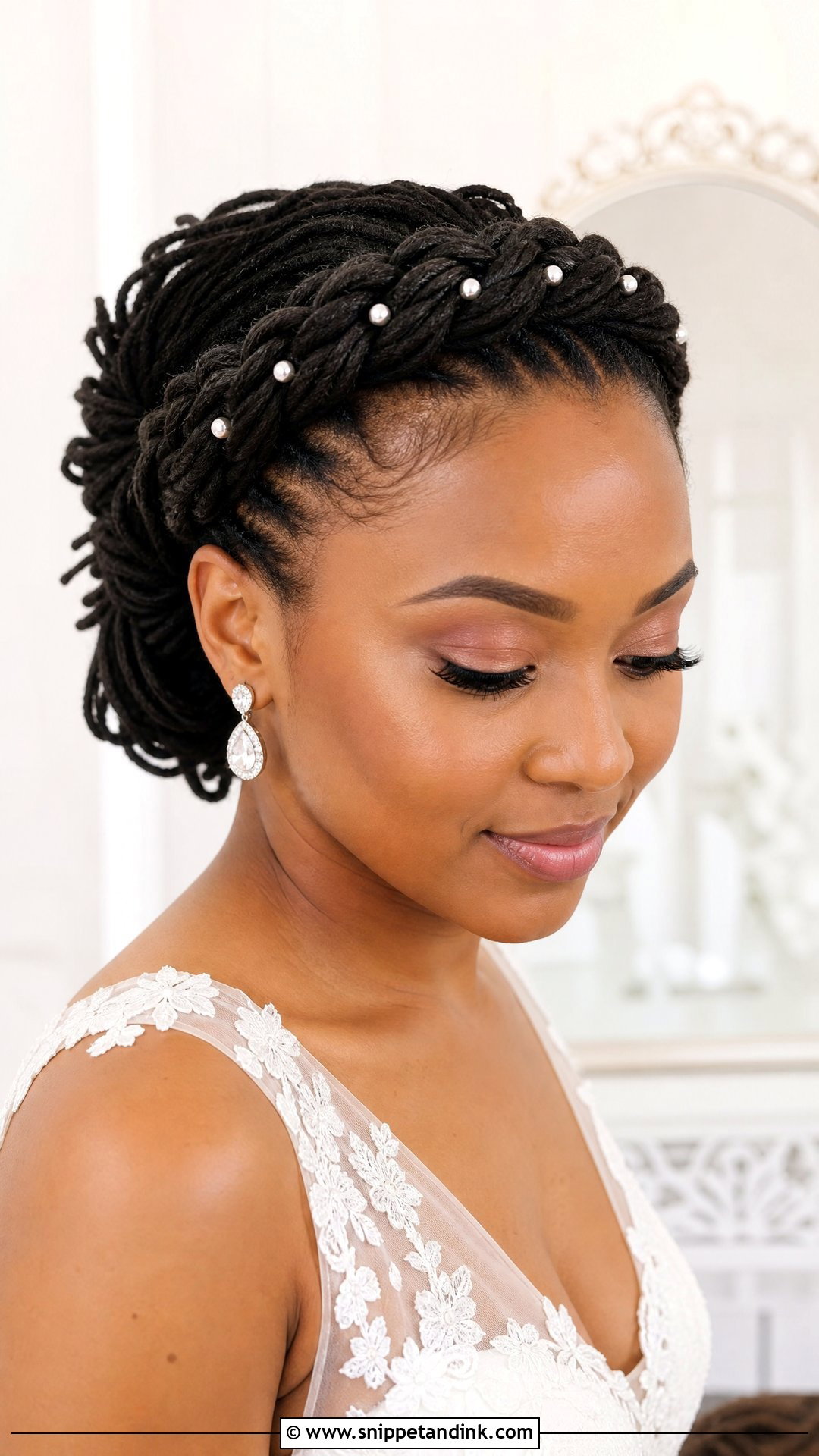
A loc crown braid wraps a thick band around the head like a halo and keeps the locs off your shoulders. I braid or two-strand twist sections of locs into a wide band, then pin it flat around the head and either let the rest fall at the back or tuck it in. This needs locs that reach at least past the ears, or the band won’t close. Pearl pins and small flowers slot neatly between the braided locs. It’s a good outdoor style because it’s light around the neck and won’t blow around in the wind.
4. Half-Up Half-Down Locs
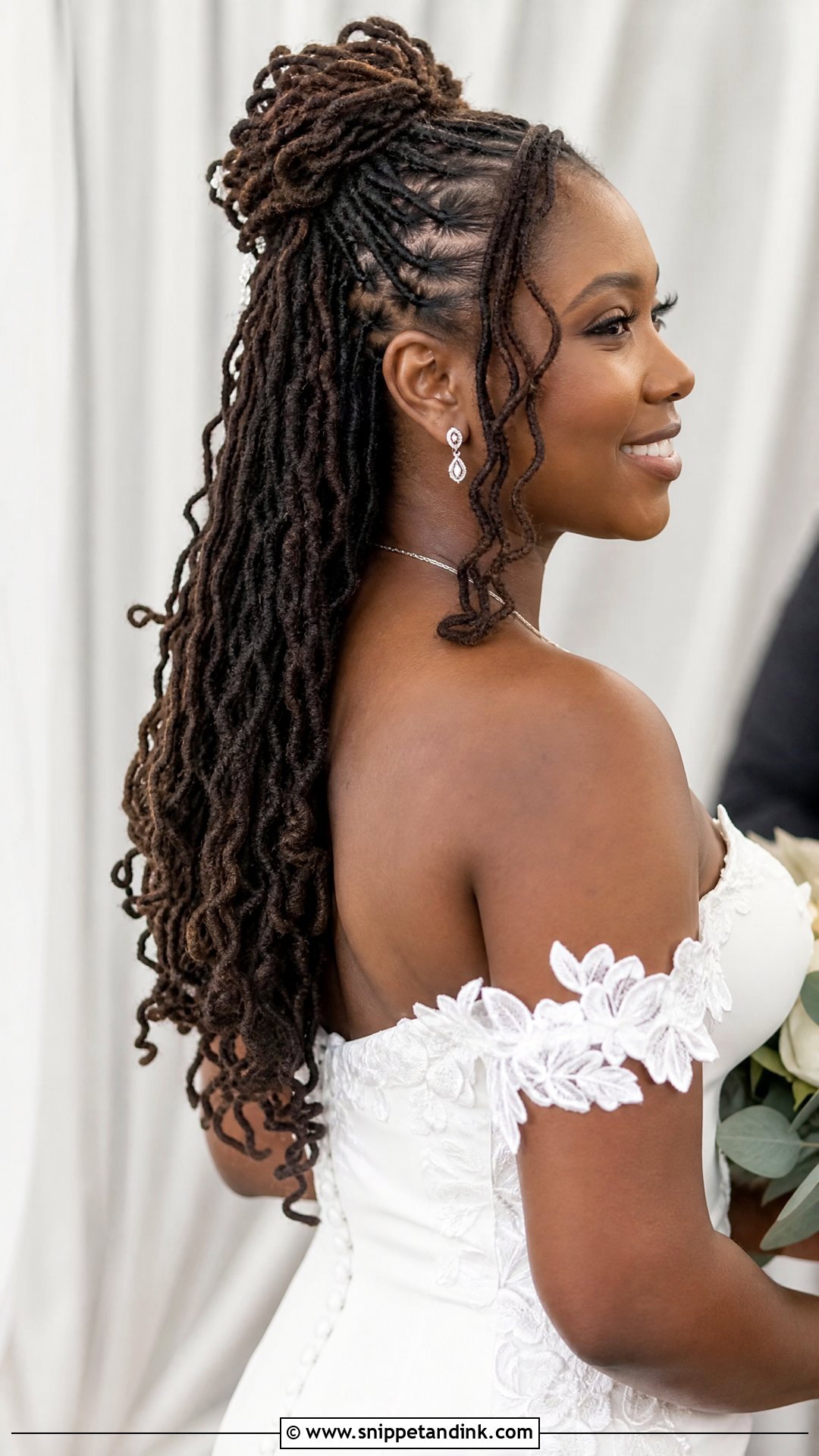
Half-up, half-down gives you an updo at the top and length at the back. I gather the top section, pin it, and leave the rest loose, with a few pieces at the face if you like. Curled ends add movement, but they need to be set the day before on rods, not on the morning. This style spreads the weight between hanging and pinned locs, so it’s comfortable for most loc lengths. It works with almost any neckline and moves easily from ceremony to reception.
5. Barrel Curl Locs for Brides
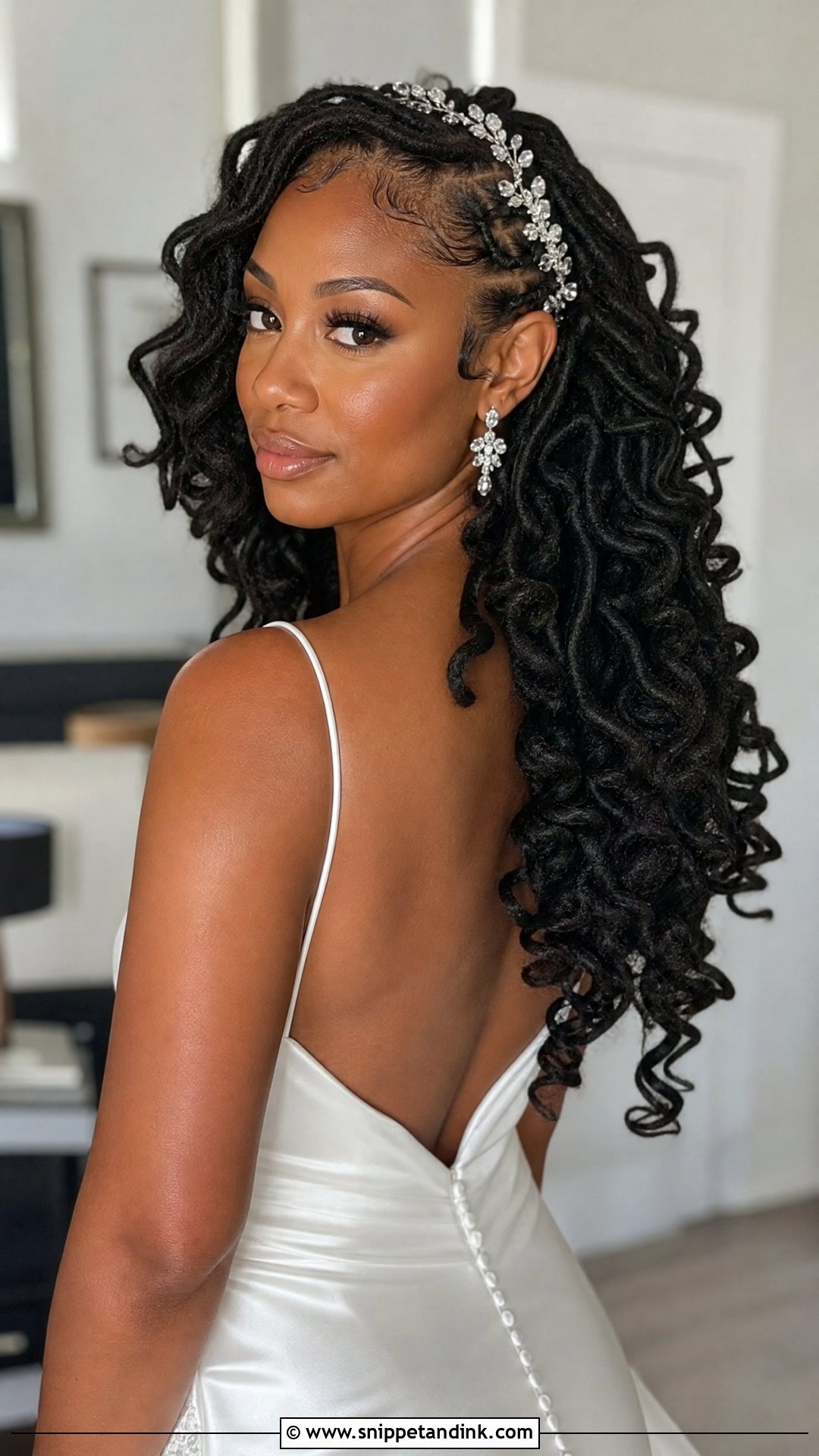
Curls on locs aren’t done with a curling iron. I set damp locs on perm rods, flexi rods or pipe cleaners, then let them dry fully, usually under a hooded dryer, and take them down once they’re completely dry. Barrel curls set this way give full, bouncy volume and can last for days. The common mistake is taking the rods out while the inside of the loc is still damp, which leaves the curls limp and can trap moisture. Wear them down for the most impact, or pull half up to show the texture, and finish with a hair vine.
6. Loc Updo With Face-Framing Pieces
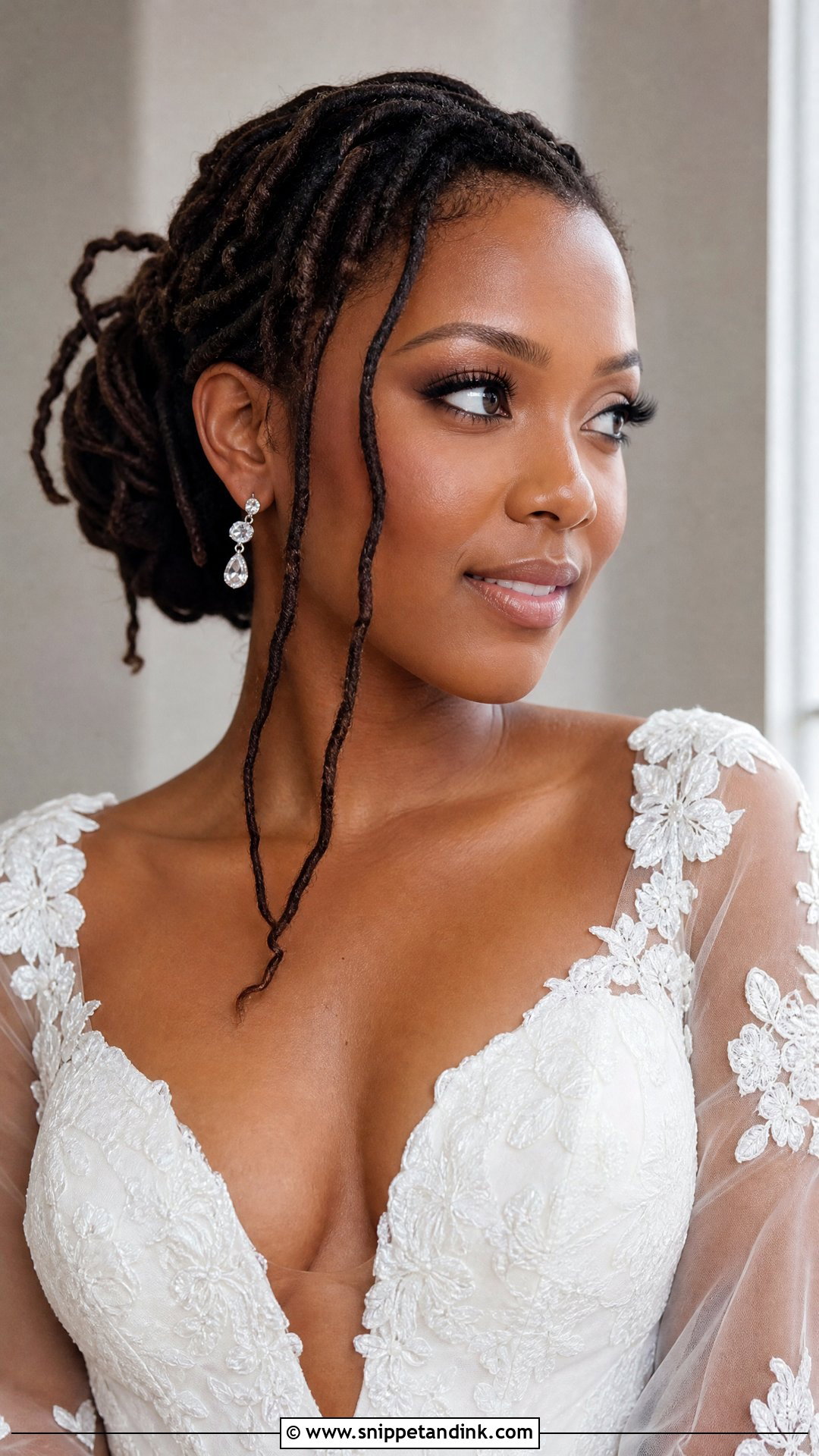
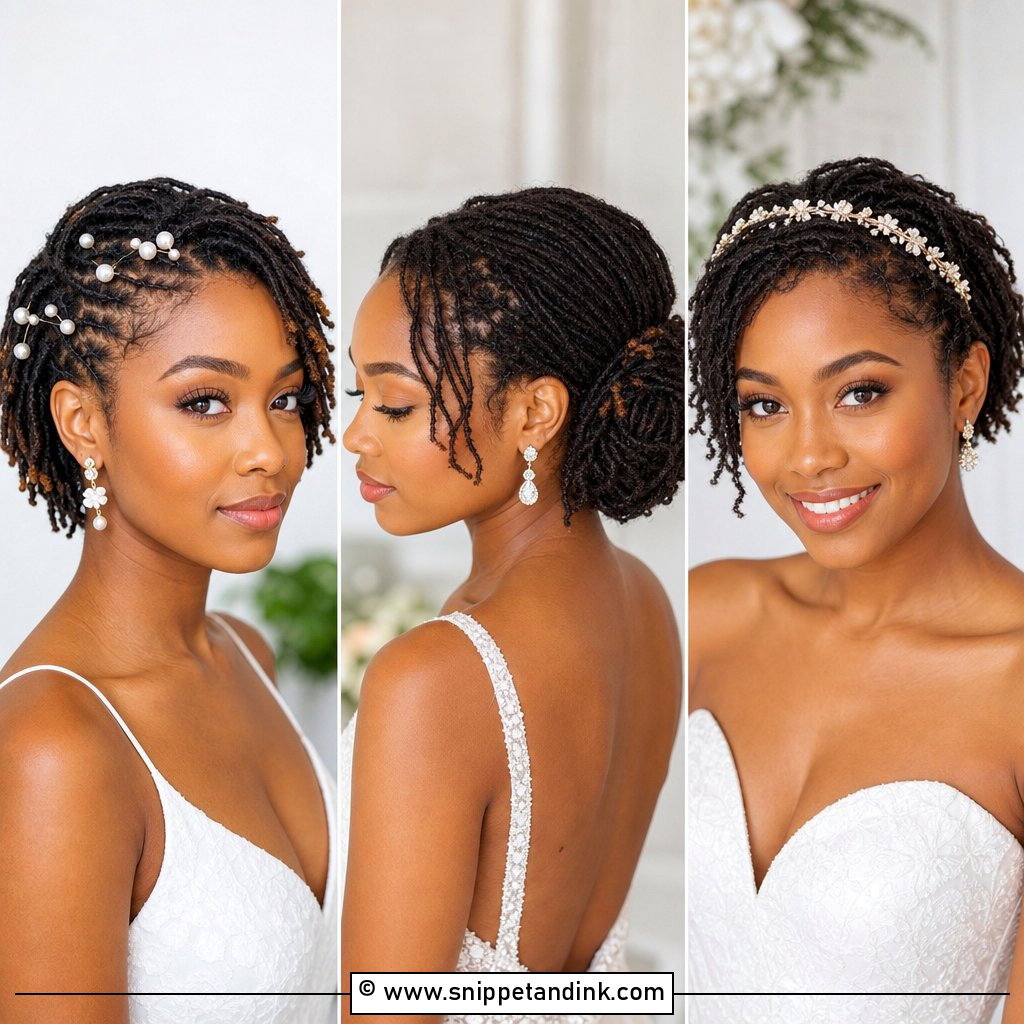
This updo gathers the bulk of the locs into a loose bun or a cluster of twists at the back, then leaves a few locs free at the face. Those front locs soften the hairline and stop the look from feeling severe. I choose them carefully: thinner locs from the temples sit better against the face than thick ones, which can swing forward and get in the way. Pair it with small earrings so the face-framing pieces stay the detail.
7. Sisterlocks Bridal Updo
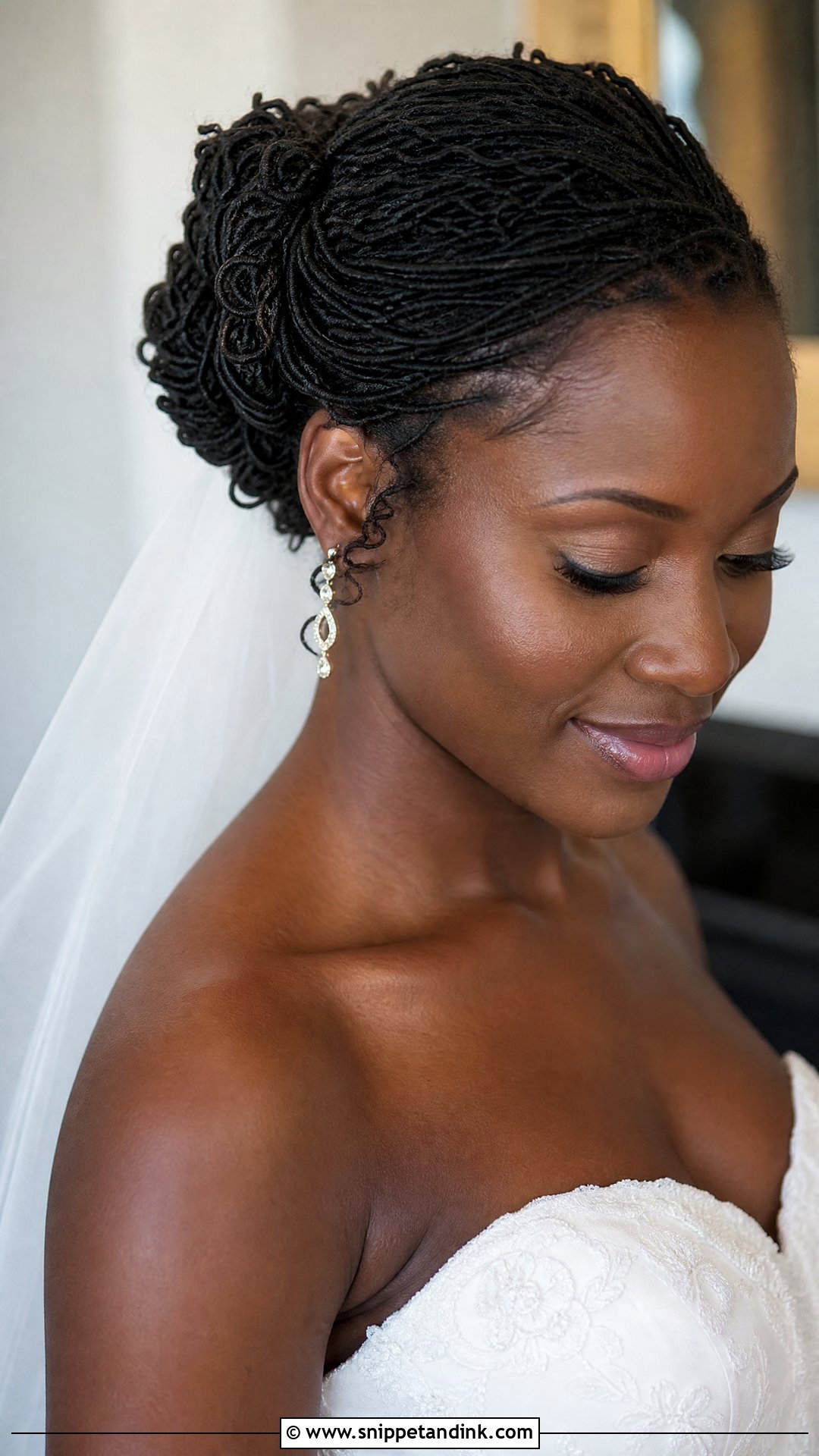
Sisterlocks are smaller and lighter than traditional locs, which opens up detailed styles. Their fine size lets me create small twists, loops and pinned patterns that thicker locs can’t hold. A woven design at the crown or a detailed bun both work well. The same lightness means they can slip out of pins more easily, so I use smaller pins and more of them. Brides with sisterlocks often have a consultant who does their retightening, and I’d ask that person how the locs should be handled before the trial.
8. Loc Mohawk Updo
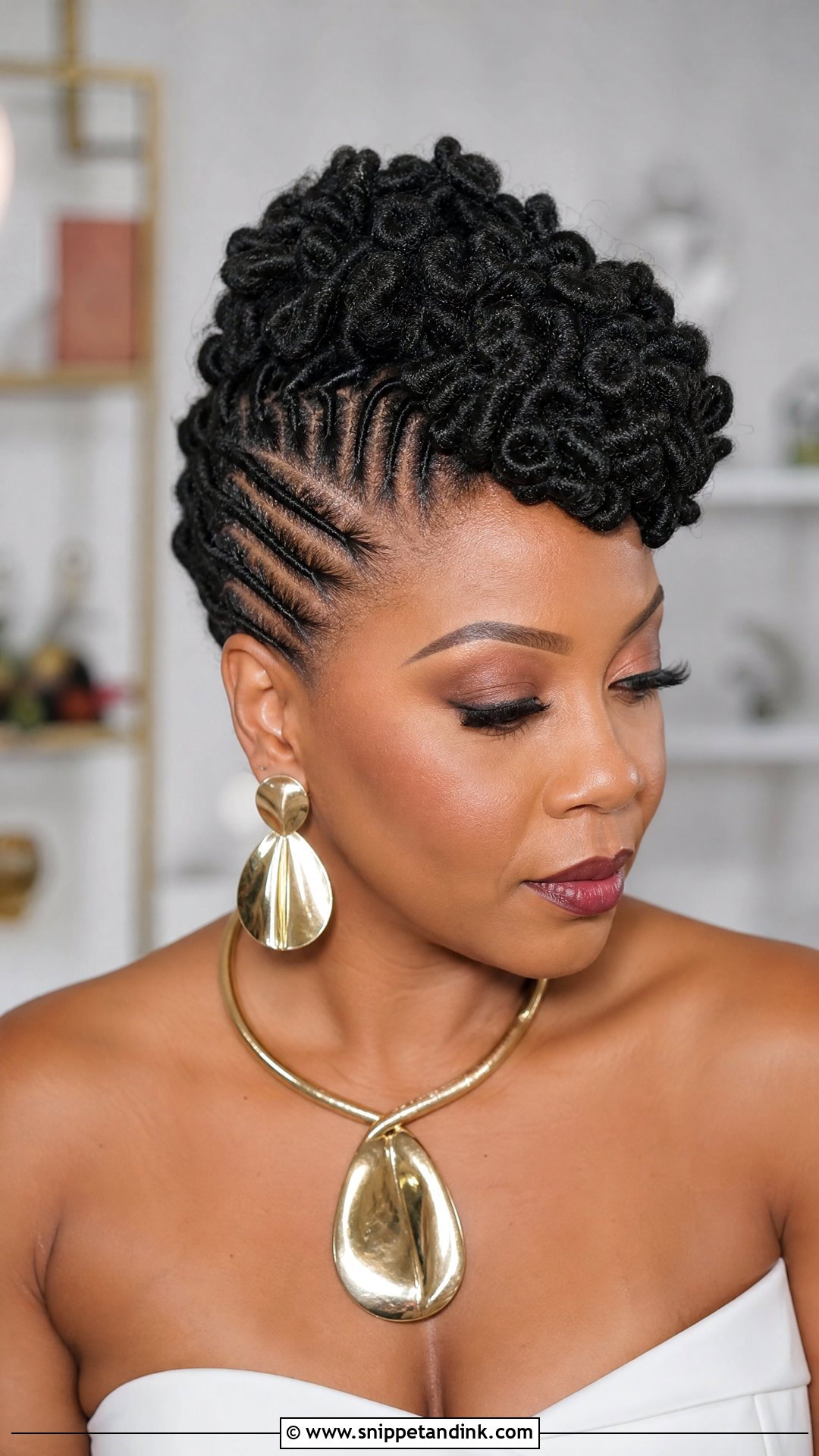
A loc mohawk updo pins or flat twists the sides back against the scalp and leaves a central strip of locs running front to back. The center can be curled, stacked into rolls or shaped into small buns. The sides need to be secured tightly, but not tight enough to strain the hairline, so I flat twist rather than pull the locs straight back. It’s the boldest look here, and it goes with statement jewelry and a sleek gown.
9. Loc Chignon for Wedding
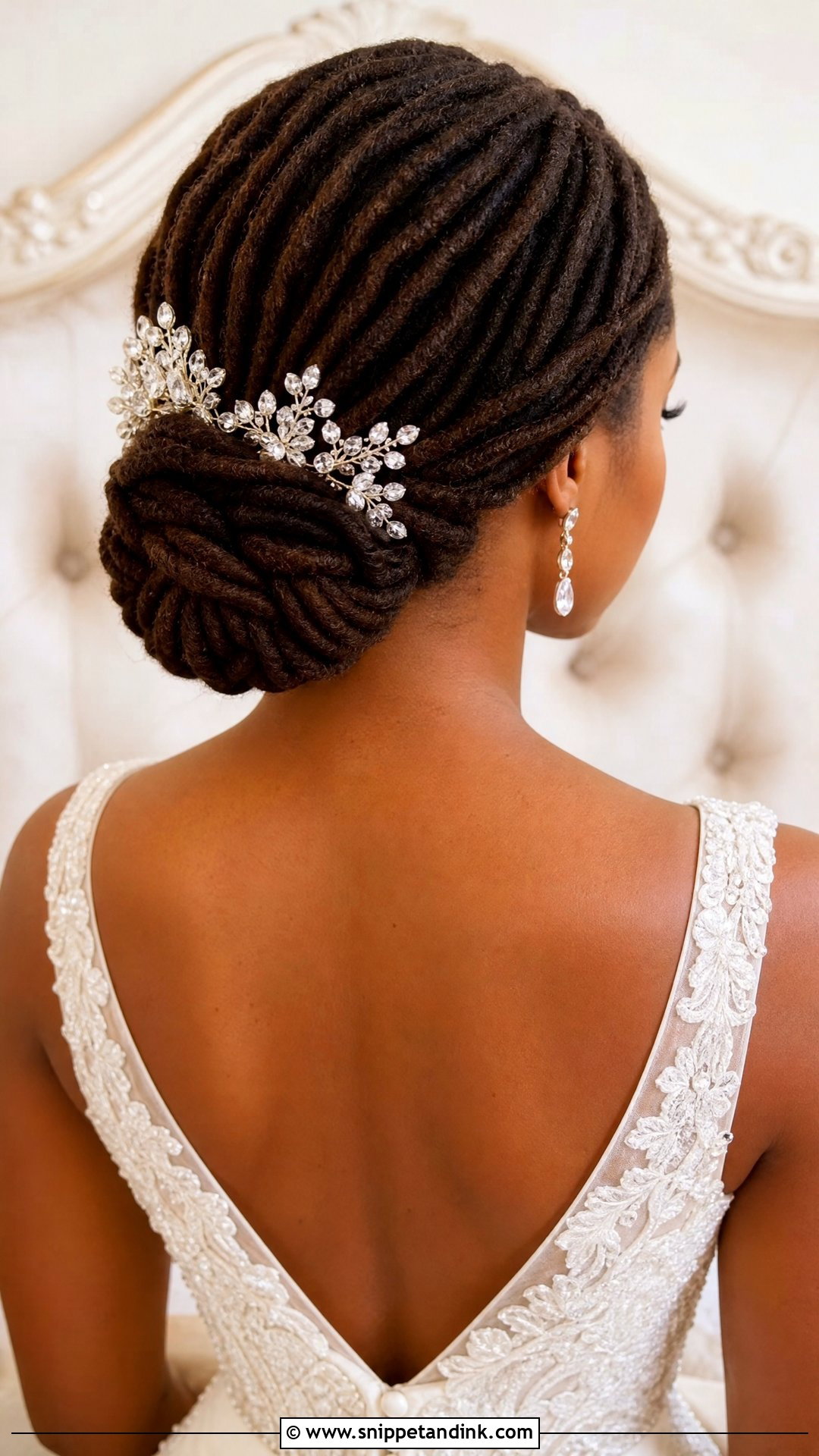
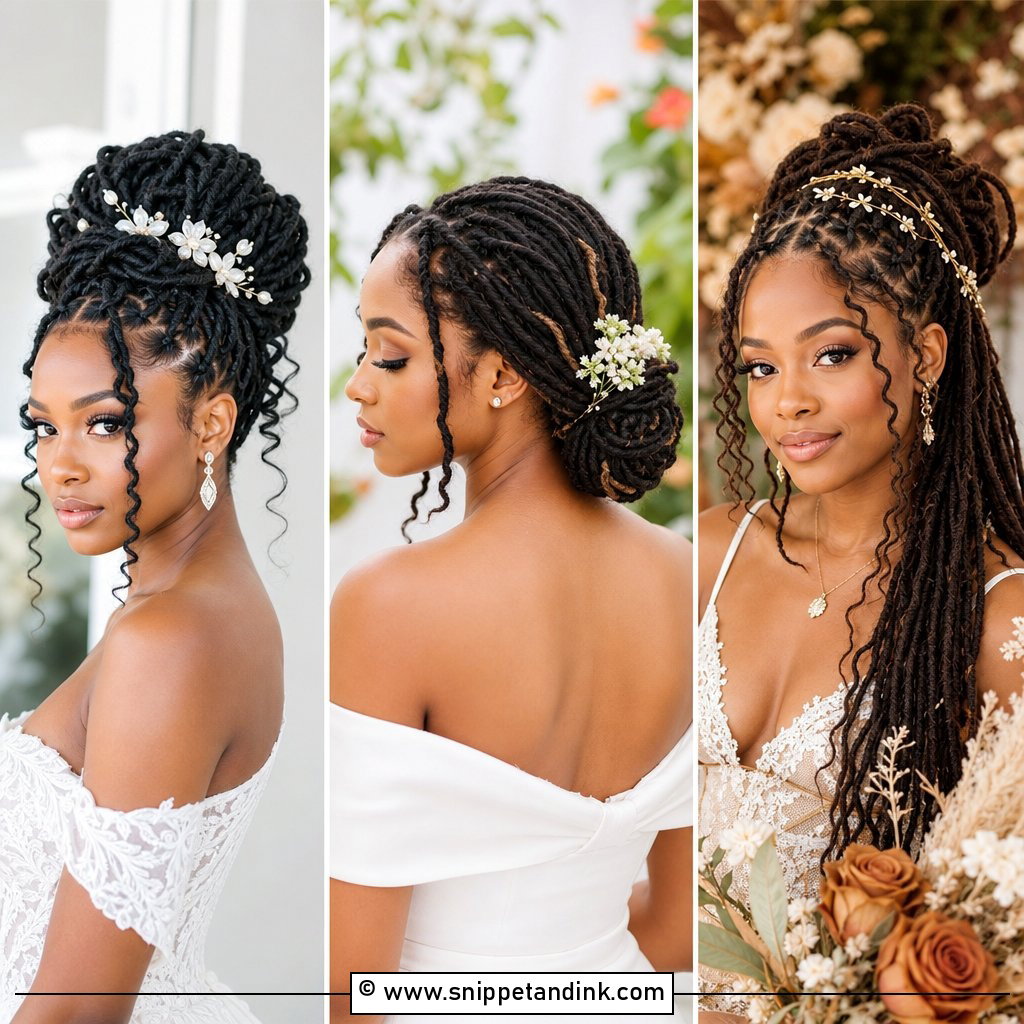
A low chignon smooths the locs along the scalp and gathers them into a rounded or braided knot at the nape. It’s a formal, understated choice. Smoothing the locs is the key step: I use a light, water-based product rather than gel or wax, which can build up inside the locs and leave white residue. A pearl comb or a few crystal pins finish it without much fuss. It suits traditional and formal ceremonies, and it’s another good one for heavy locs since the weight sits low.
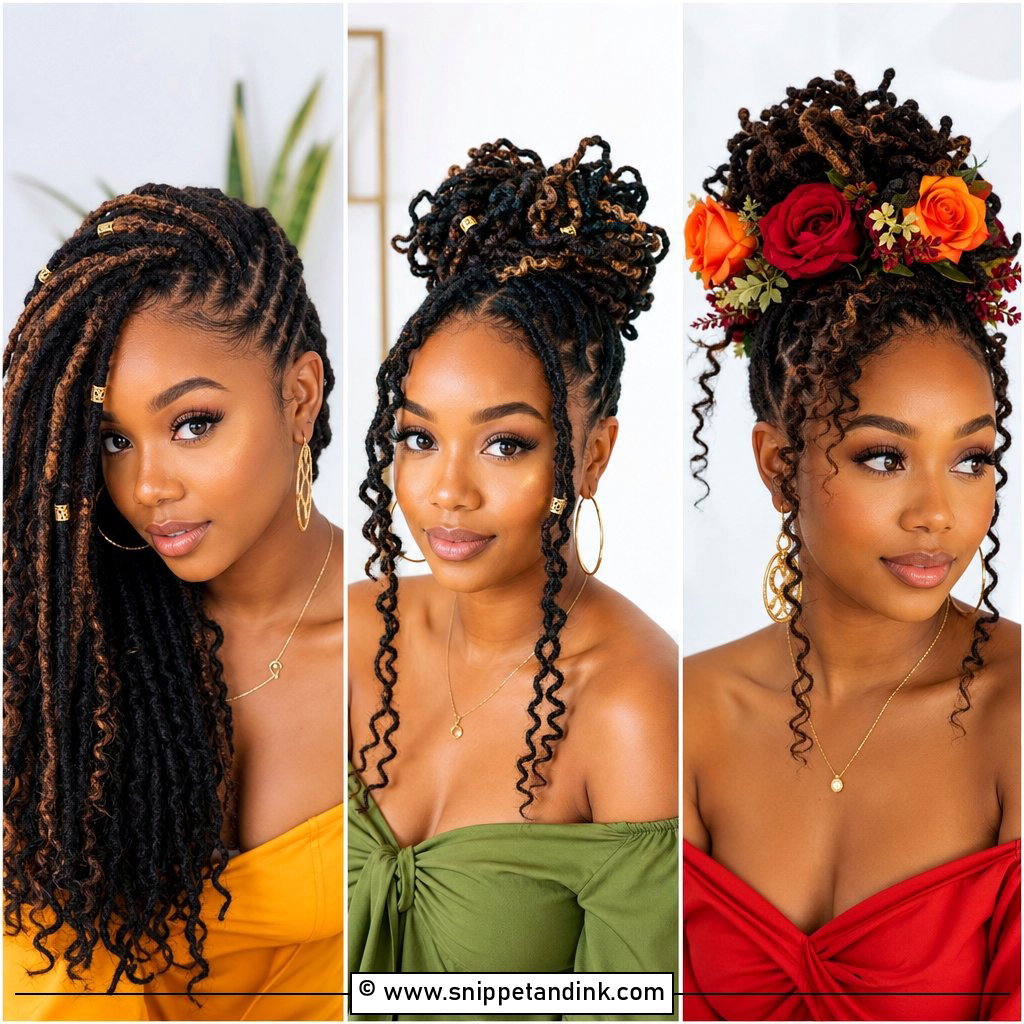
10. Boho Locs With Flowers
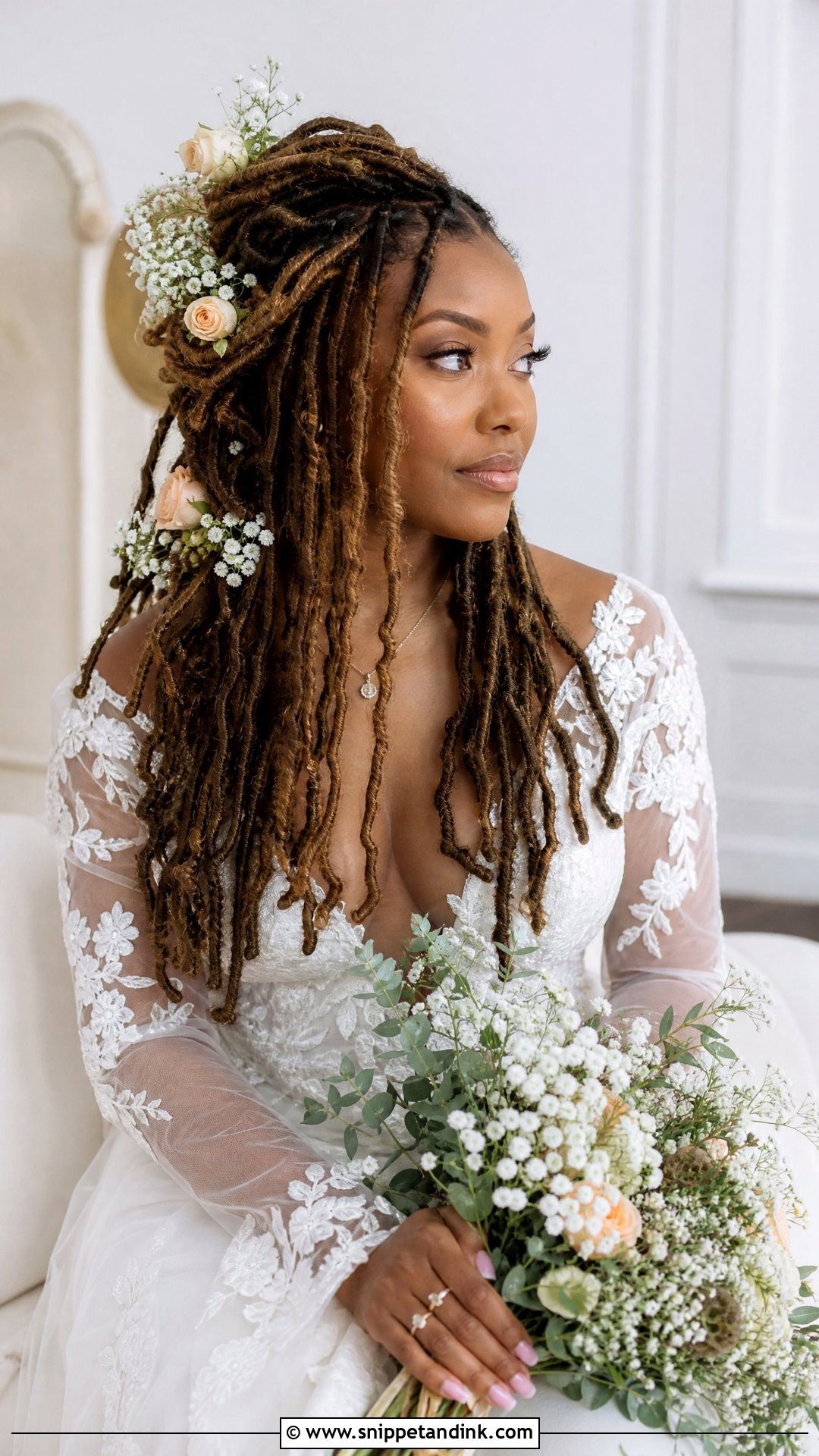
Fresh flowers look right against loc texture, and a boho style worn down or loosely half-up suits a garden, beach or outdoor wedding. I wire small blooms or use silk flowers, then tuck them in at random points. With locs, I avoid flowers with sticky sap or pollen, like lilies, since they stain and are hard to wash out of a loc. Baby’s breath, spray roses and small wildflowers hold up better. Ask your florist for a few extra stems, and keep them chilled until the last moment.
11. Loc Ponytail for Brides
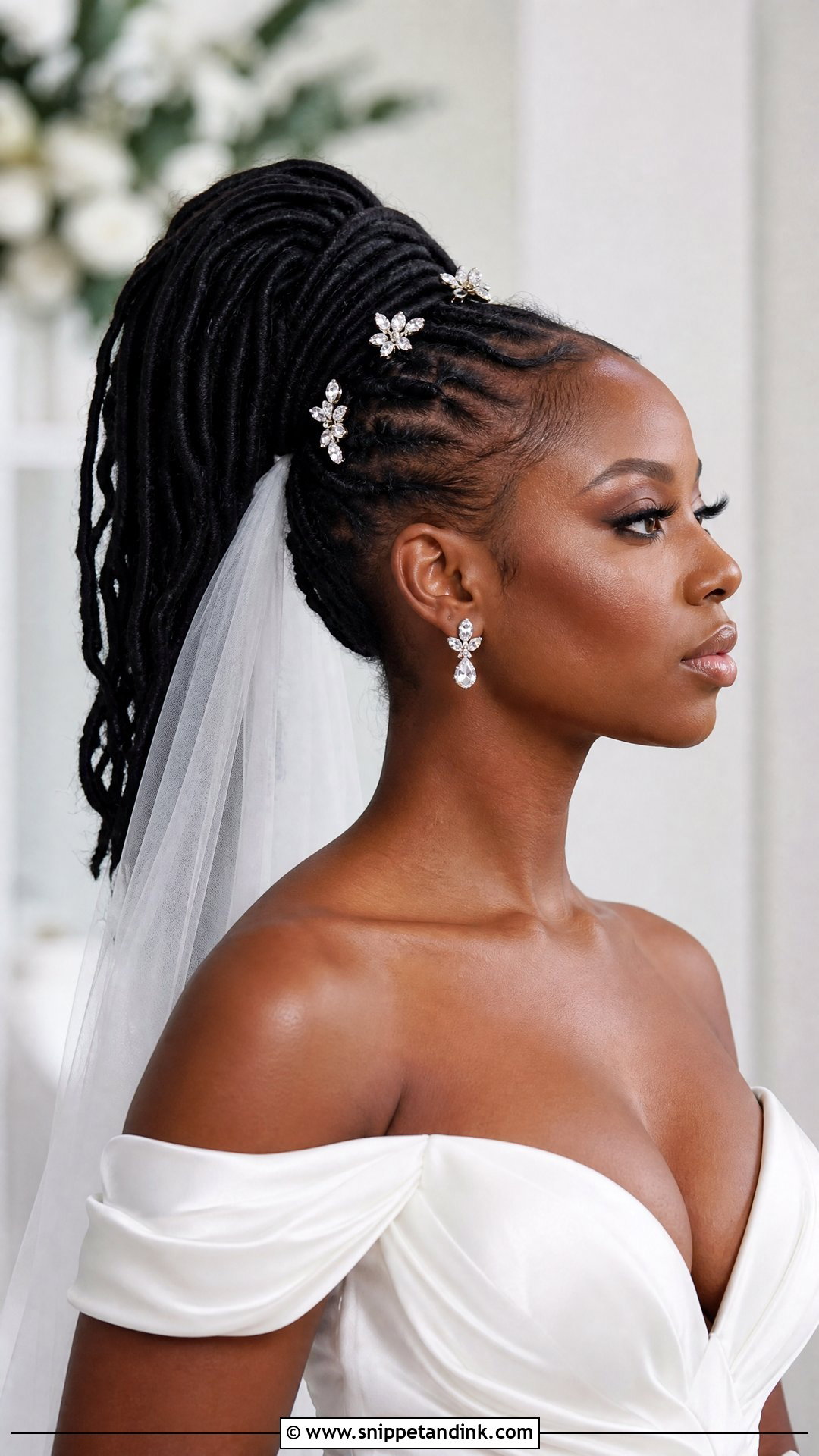
A ponytail is simpler than most of the styles here, but done right it looks deliberate. I gather the locs high or low, then wrap one loc around the base to hide the band. I use a fabric-covered band or a loc tie rather than a rubber elastic, which can snag and break a loc when you take it out. A high ponytail reads modern; a low one is softer and more classic. Add jeweled pins at the base for a bridal touch. It’s comfortable for hours of dancing, though a heavy high pony can tug at the crown.
12. Twisted Updo With Locs
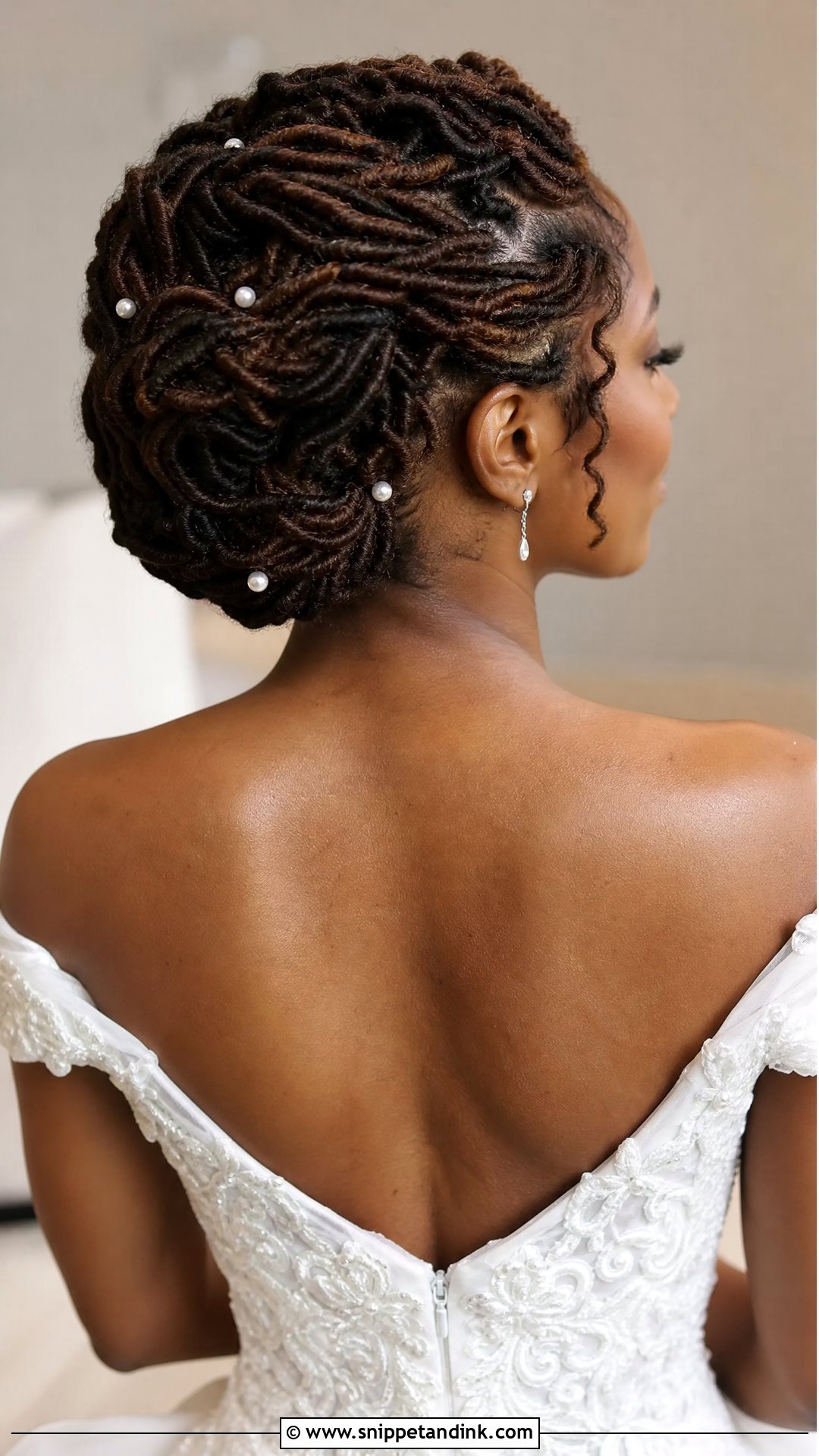
A twisted updo pins sections of locs into twists and arranges them into a structured shape at the back. The craftsmanship shows, which is part of the appeal. It holds well all day, since locs keep their twisted shape better than loose hair. Keep it smooth for a formal wedding or loosen the twists slightly for a softer finish. Pearls or crystals tuck neatly into the gaps between twists.
13. Loc Barrel Roll Updo
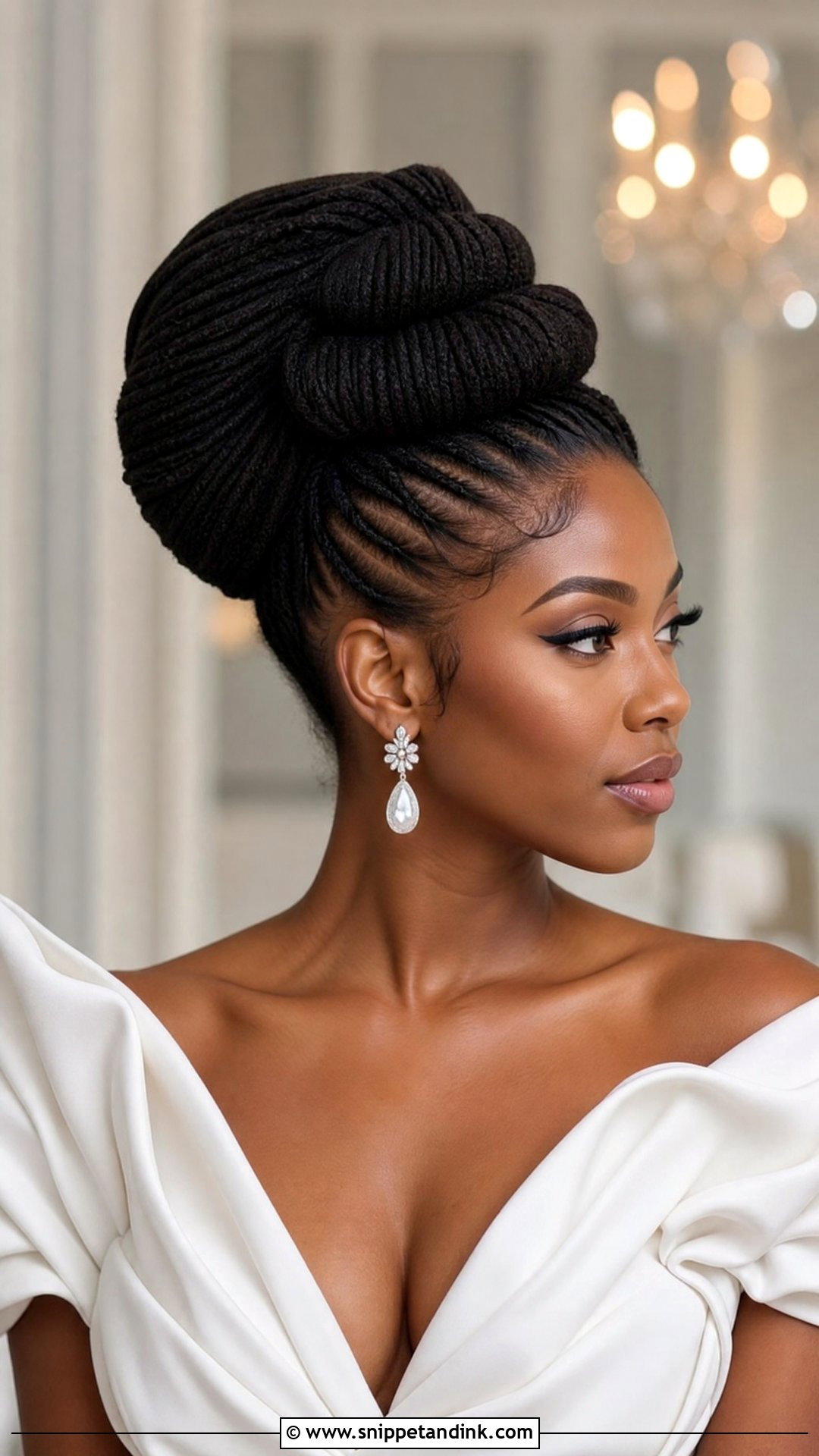
Barrel rolls create smooth, rounded shapes that stack and overlap close to the head. I roll each section around my fingers and pin it from the inside so the pins don’t show. The look has a vintage feel. It works with short locs as well as long ones, which is unusual among updos, since each roll only needs a few inches of length. It pairs well with a structured gown and statement earrings, and it’s my usual suggestion for shoulder-length locs.
14. Half-Up Bun With Locs
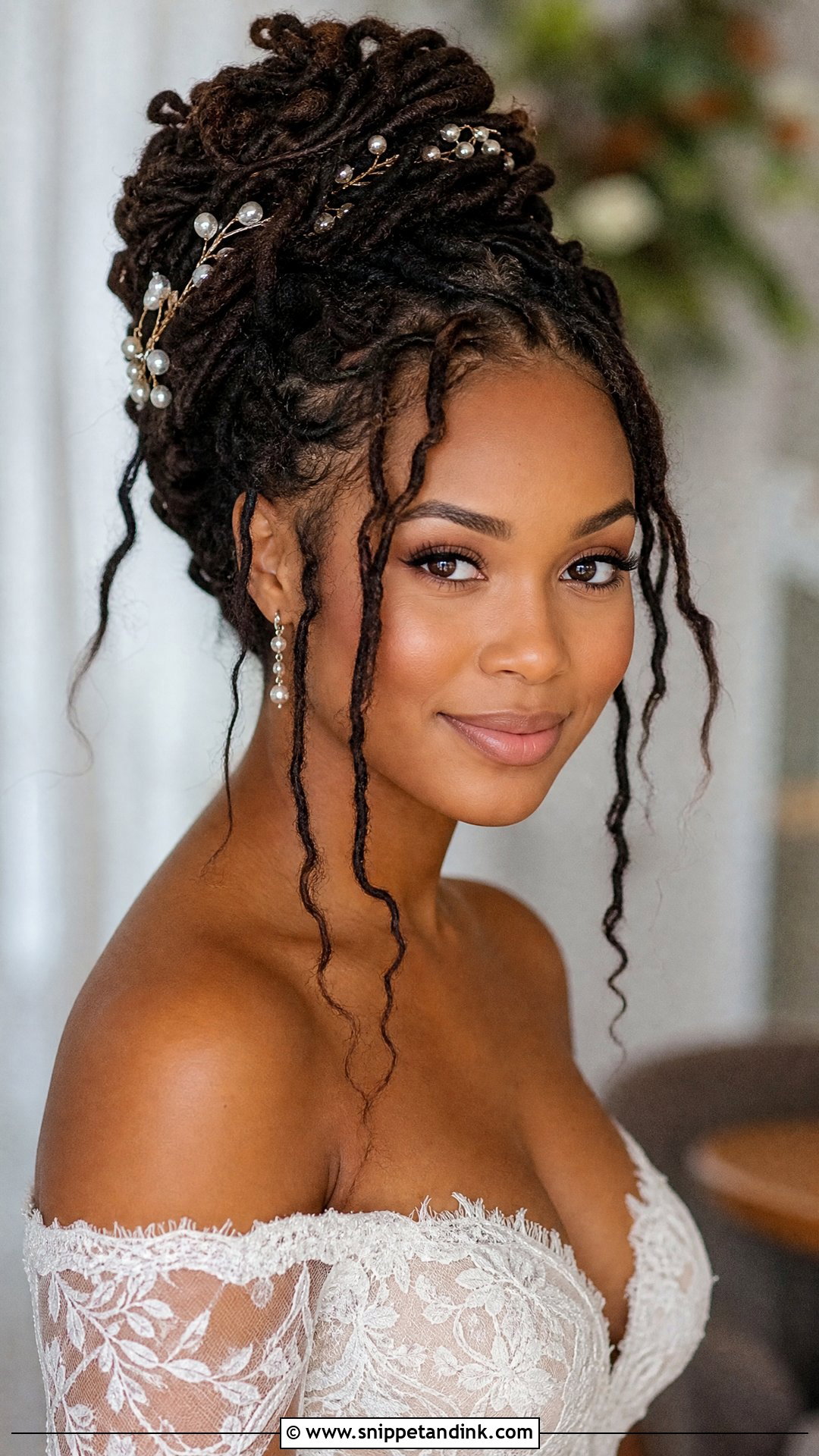
A half-up bun gathers the top section into a bun at the crown and lets the rest flow. A few loose locs at the face soften it. It keeps hair out of your eyes and still shows your length. The bun at the crown takes some weight, so I make it smaller than you might picture if the locs are long. Dress it with pearls, flowers or a delicate hair vine. It suits indoor and outdoor weddings.
15. Goddess Locs Bridal Style
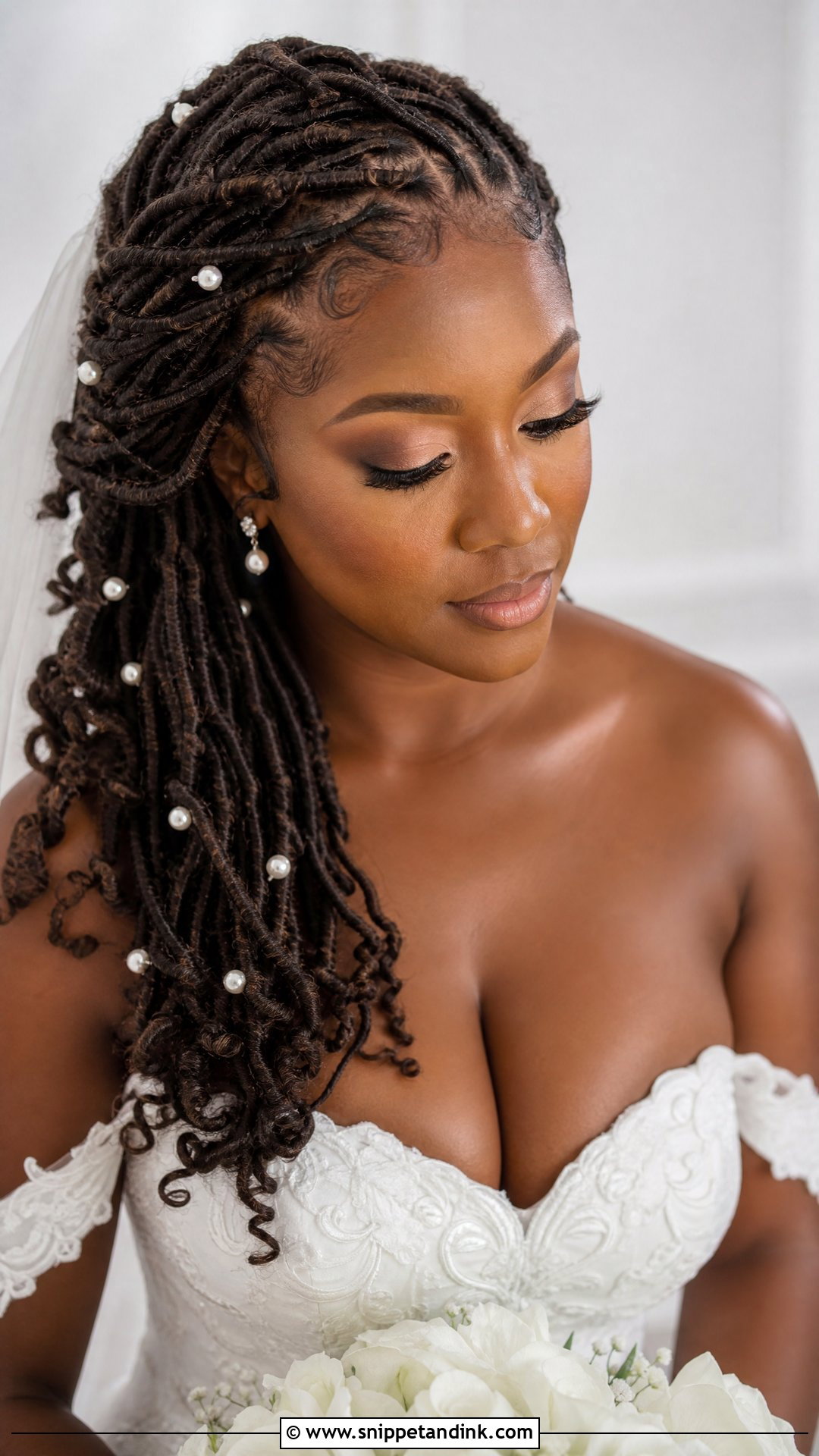
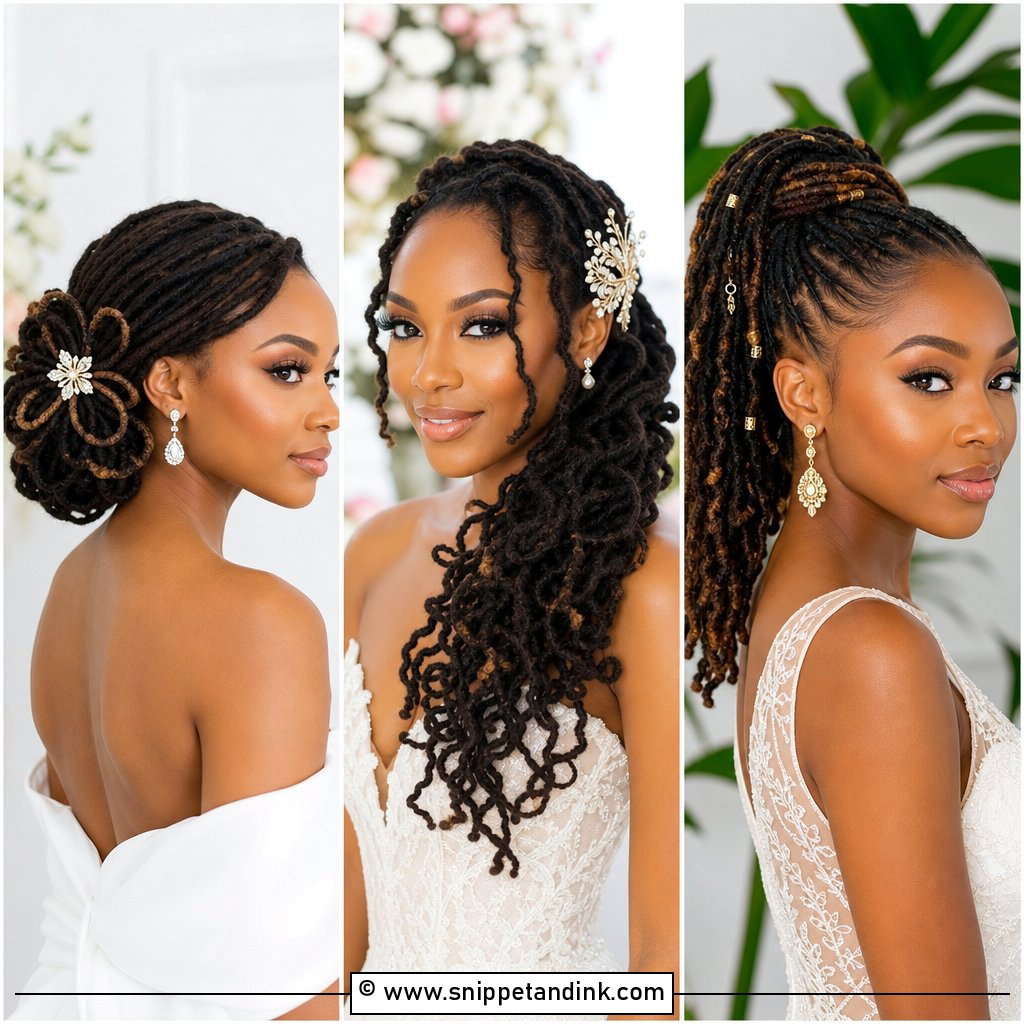
Goddess locs are usually a faux loc style, installed over your natural hair, with loose curly ends that give a flowing look. They take several hours to install, so I’d book the install a few days before the wedding rather than the day before. That gives the scalp time to settle if it feels tight. Wear them down or sweep them into a loose updo. A rose gold hair vine or scattered pearl pins add shine. If you’re new to them, try them out well before the wedding to make sure the weight and tension suit you.
16. French Braid Locs for Wedding
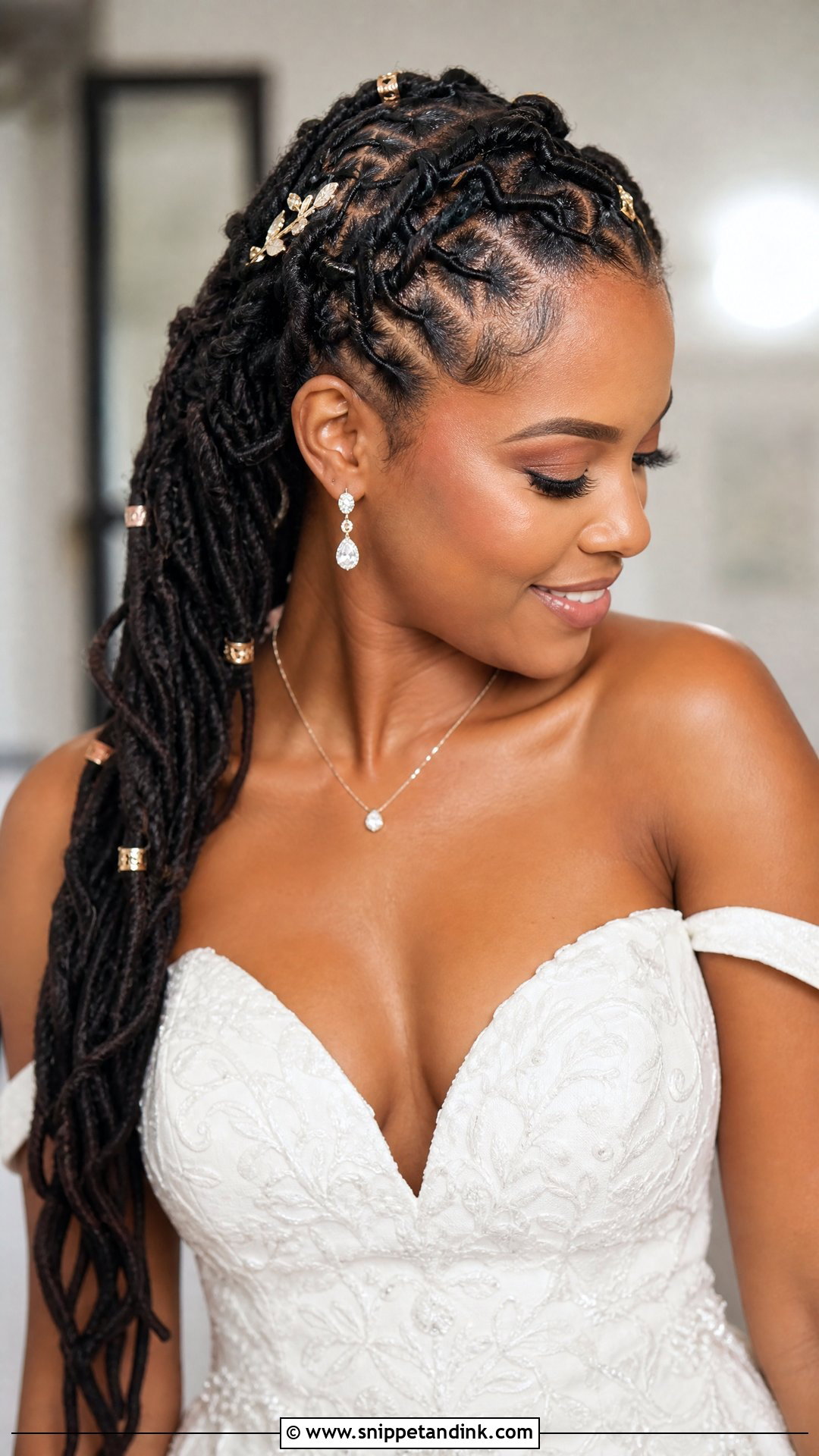
A French braid with locs starts at the front and works down to the back, giving a neat, structured look that still shows length. One braid down the center or two along the sides both work. Locs are thicker than loose hair, so the braid is chunkier and holds its shape well without much product. I braid fairly loosely at the hairline to avoid tension. Small accessories along the braid make it bridal. It’s practical and lasts all day.
17. Loc Updo With Veil
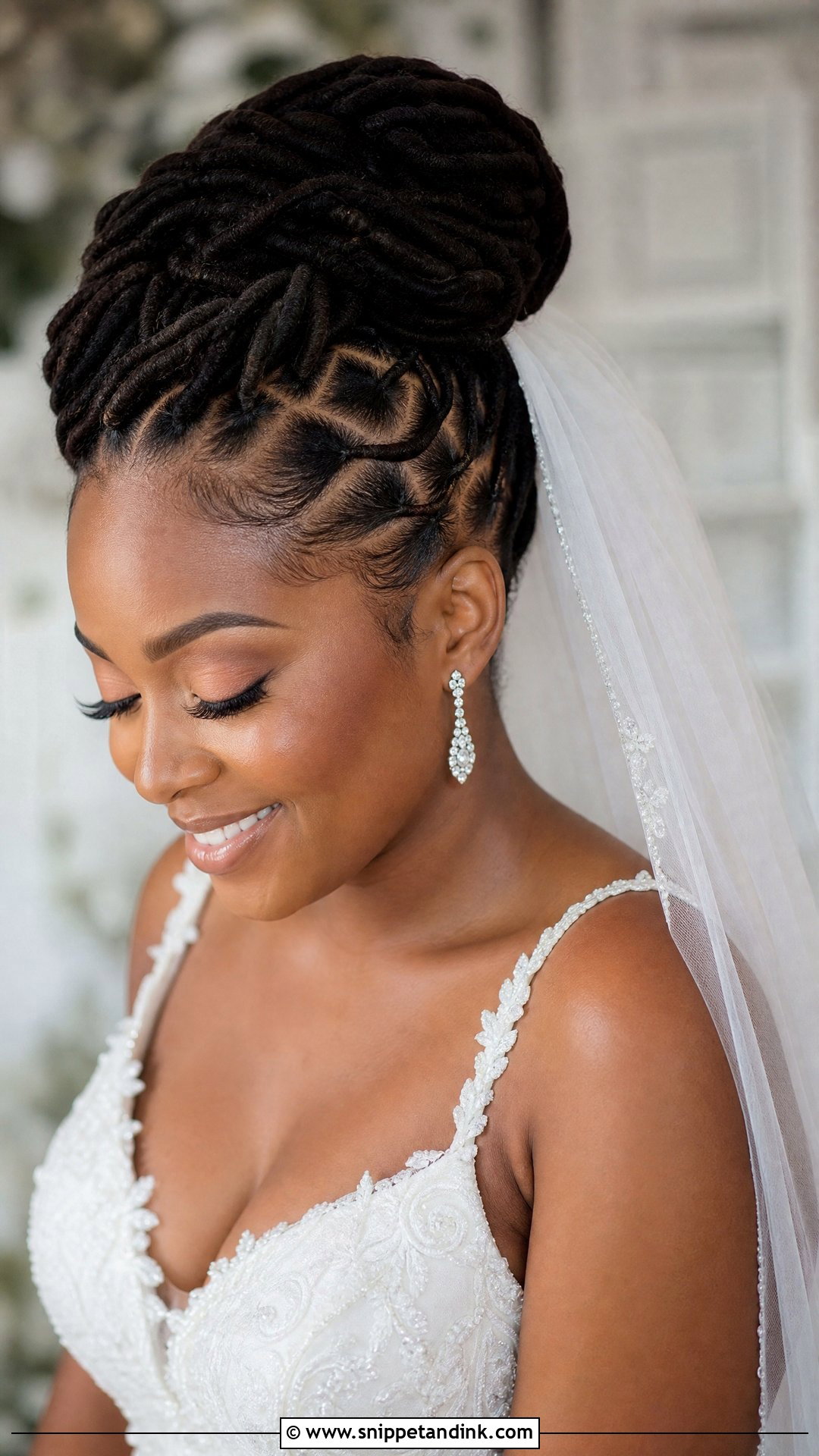
Pairing locs with a veil takes a little planning. A veil comb doesn’t grip locs as easily as loose hair, so I sew or pin it into the base of the updo, or slide its teeth through the wraps of the bun itself. The veil can sit under the updo for a soft fall or above it for a classic outline. Once the veil comes off for the reception, the updo still looks finished. Bring your veil to the trial so we can work out exactly where it anchors.
18. Crown Twist Bridal Locs
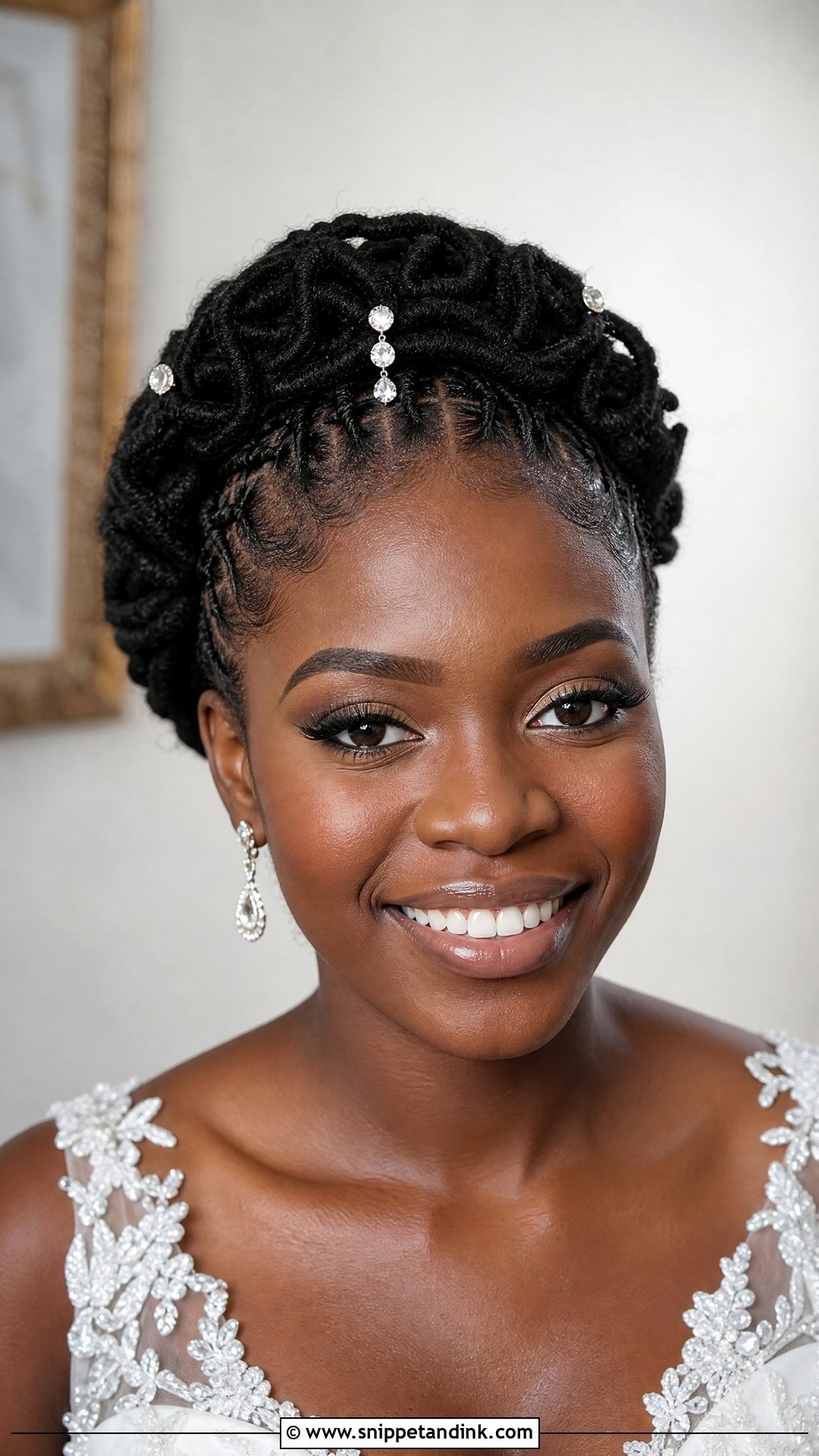
A crown twist arranges the locs around the head in a halo shape. I twist and pin sections along the top, then secure them close so nothing slides. It frames the face and draws the eye upward. You can leave a few pieces loose for softness or keep it sleek. It needs locs long enough to wrap around, usually past the shoulders. Crystal pins along the twist add a bit of sparkle.
19. Pinned Side-Swept Locs
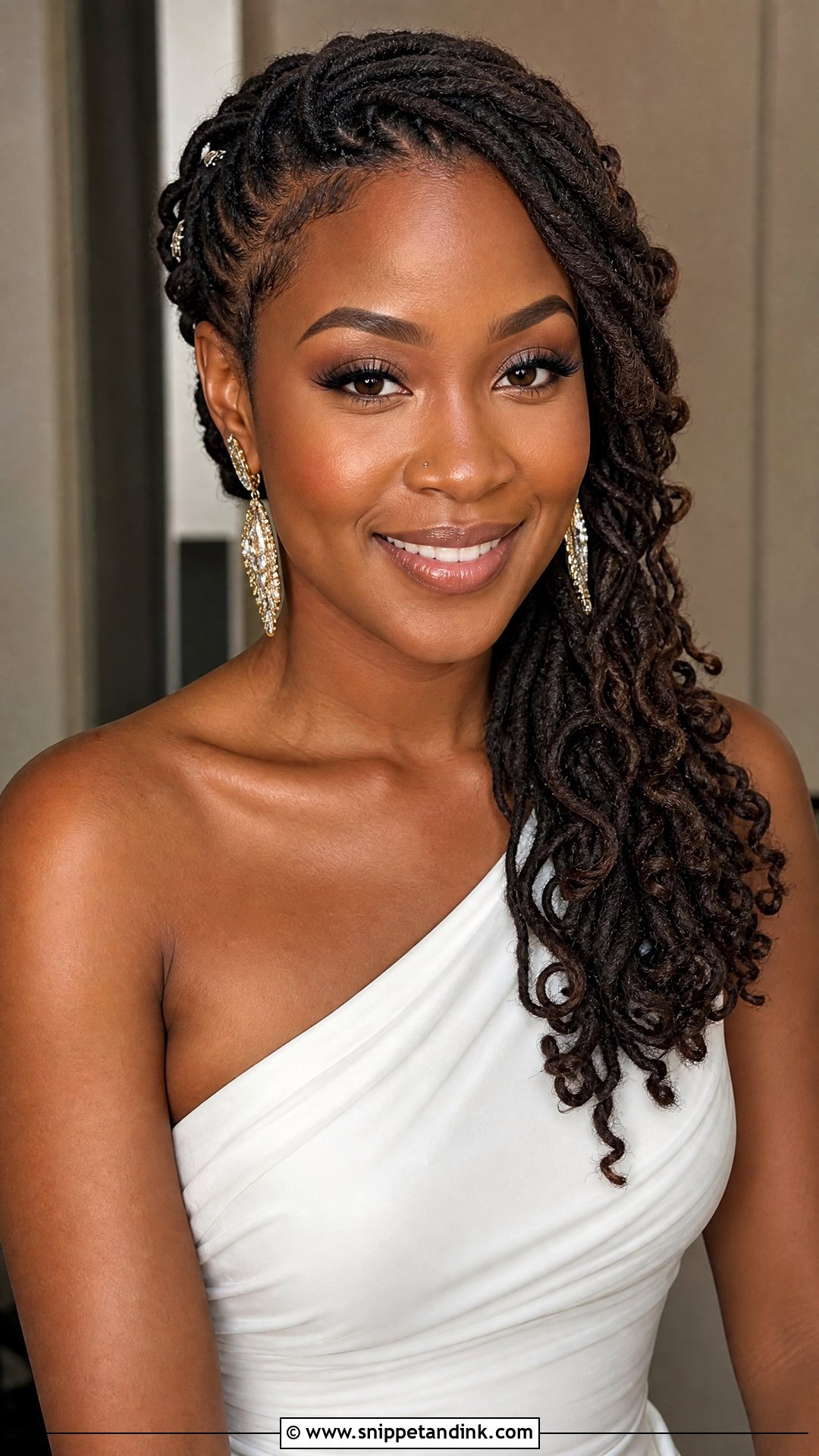
Sweeping the locs to one side gives a bit of old Hollywood. I gather them and pin them over one shoulder, so one side of the neck and an earring show. The pinned side takes the strain, so I use several U-pins in a line behind the ear rather than one or two clips. Curl the ends on rods for movement, or leave them straight for a sleeker finish. It suits a one-shoulder gown or a plunging neckline.

20. Loc Bun With Pearls and Pins
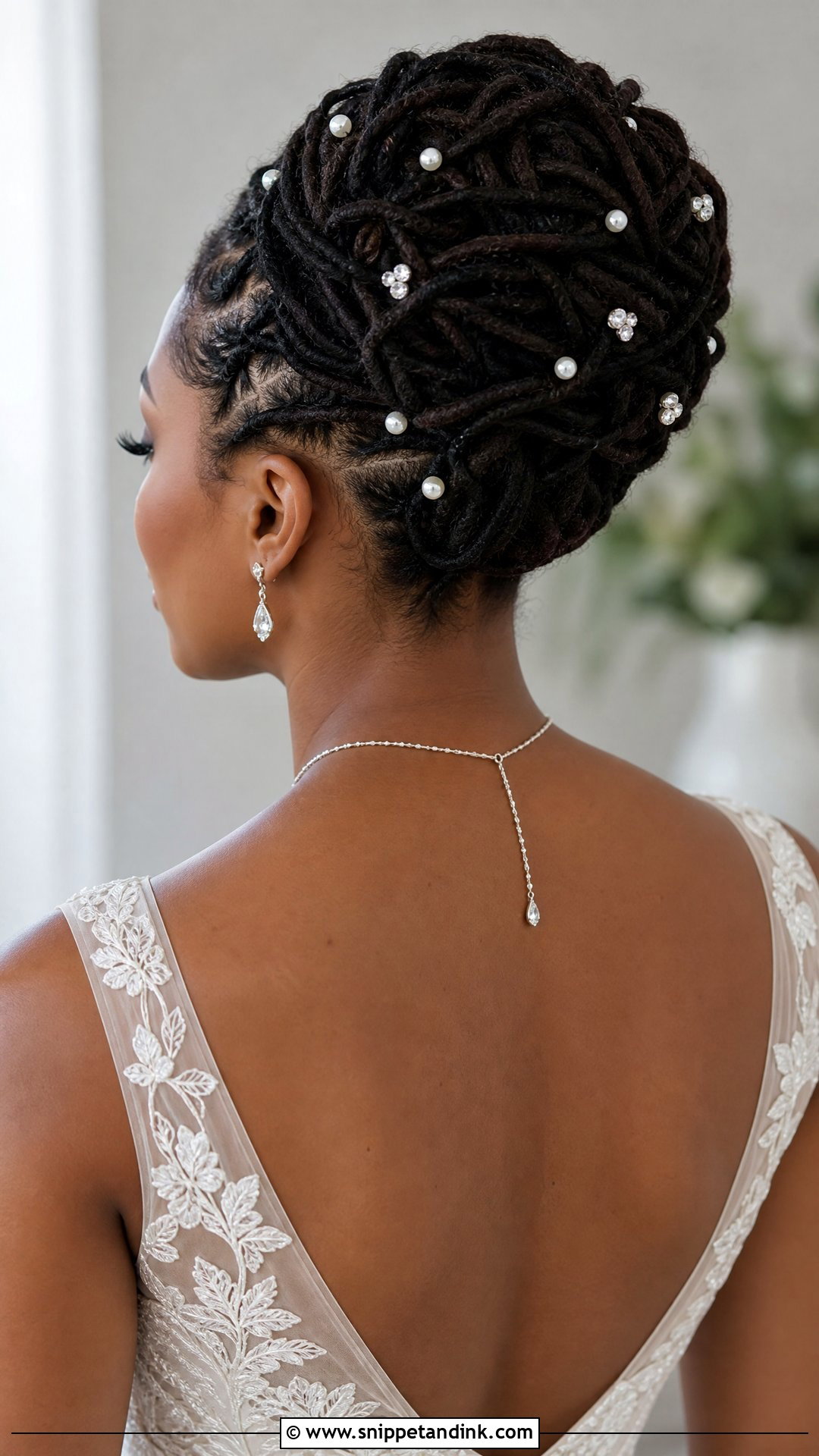
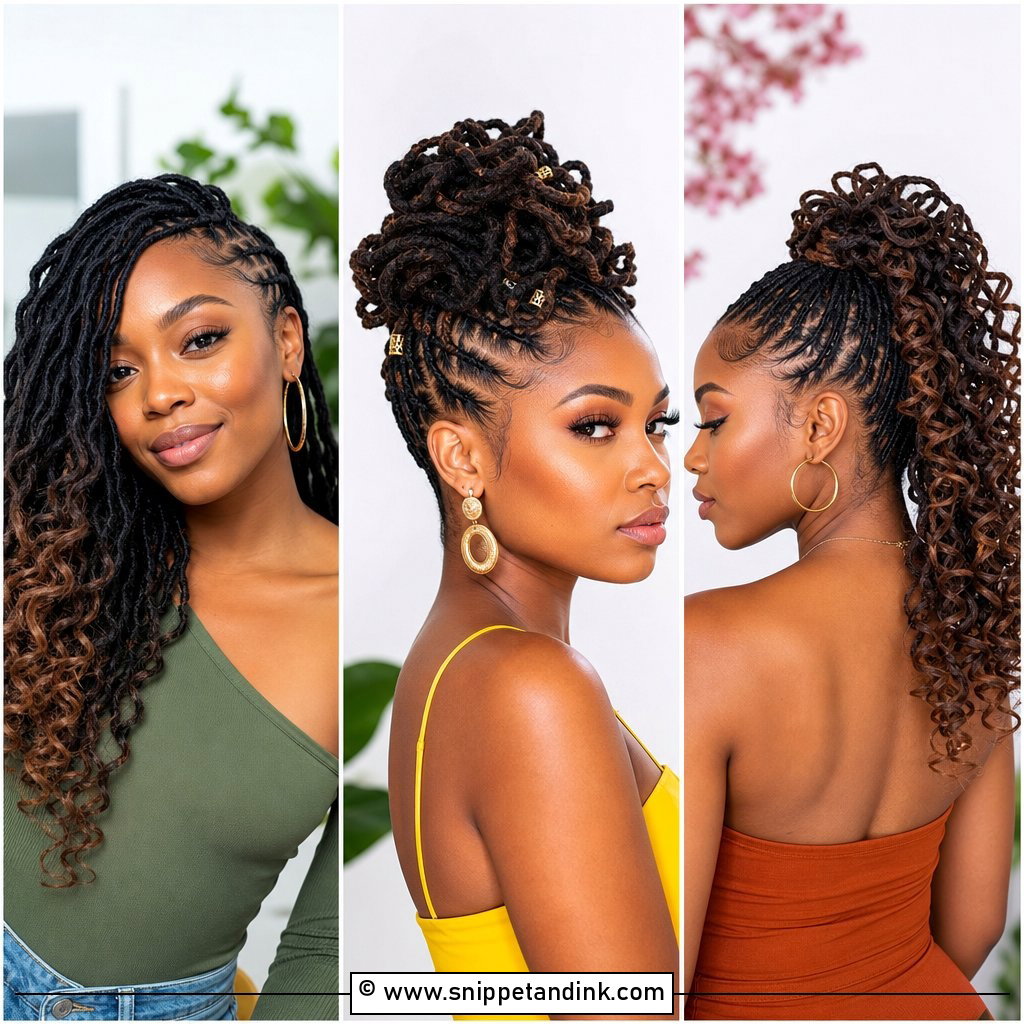
Pearls look natural against locs, whether they’re pins scattered across a bun or loc beads threaded onto individual locs. This style gathers the locs into a smooth bun, then dots it with pearl pins and crystal accents. Dense or sparse placement both work; I place a few first, step back, and add more only if it needs them. A high or low bun both work. If you choose loc jewelry that slides onto the loc, make sure it opens cleanly so it doesn’t damage the loc on removal.
Retwist, Wash and Dry: The Wedding Month for Locs
Most loc problems I see on a wedding morning start a few weeks earlier, with a retwist done too late or locs washed too close to the day. Here is the order I’d follow.
- Get your retwist or retightening one to two weeks before. Fresh retwists can feel tight and the scalp can be tender for a few days, and that’s the last thing you want under pins.
- Wash two or three days before the wedding, not the day before. Locs take a long time to dry right through, and a loc that’s still damp inside can smell musty and won’t hold a set.
- Set any curls the night before or two nights before, on rods, and dry them completely.
- Skip heavy creams, waxes and gels in the final week. They build up inside the loc and leave residue that shows in flash photos.
- On the morning, keep the locs covered with a satin scarf until I start.
Taking it down after the reception
Take the pins out slowly, one by one, and gently loosen the locs with your fingers. Don’t rush it at midnight by pulling everything at once. A few drops of a light oil on the scalp helps after a day of tension, and sleep with your locs in a satin bonnet or on a satin pillowcase.
Which of These Will Your Locs Carry Best?
Locs can carry almost any bridal style, from a low bun to barrel curls to a crown braid with pearls. The choice comes down to the length, thickness and weight of your locs, your gown’s neckline, and how long you’ll be wearing the style. Book a trial a few months out, bring your veil and accessories, and pay attention to how your scalp feels after a few hours. The style you can wear comfortably through the last dance is the one to choose.
You'll Like These Ideas:


Leave a Reply