
Locs hold a style better than almost any other hair I work with, and they carry real weight, both literally and in what they mean to the bride wearing them. If you’re a bride with locs, you don’t need to hide or straighten anything to look bridal. What changes from look to look is how I manage length, weight and tension so you’re still comfortable at the last dance. The 25 styles below run from low buns and crown twists to mohawks and goddess updos, with what each one asks of your locs and your scalp.
When to Retwist, Wash and Set Locs Before the Wedding
Timing matters more for locs than for loose hair, because locs take a long time to dry and a fresh retwist can leave the scalp tender. Here’s the calendar I give my loc brides.
- Retwist or maintenance about one to two weeks before. Roots look neat but have relaxed slightly, and any soreness from tension has passed.
- Wash two or three days before, early in the day, and let the locs dry completely. Thick locs can stay damp inside for many hours, and a damp loc pinned into an updo can smell musty by evening.
- Skip heavy oils and butters for the final few days. They make locs slippery to pin and leave residue on veils.
- Set curls or knots the night before on rods, pipe cleaners or Bantu knots, on slightly damp locs, and sleep in a satin scarf.
- On the morning, arrive with dry, set hair and no fresh product, and let your stylist build from there.
If you’re adding color or new loc jewelry, do it before your trial, not after, so you see the full look together.
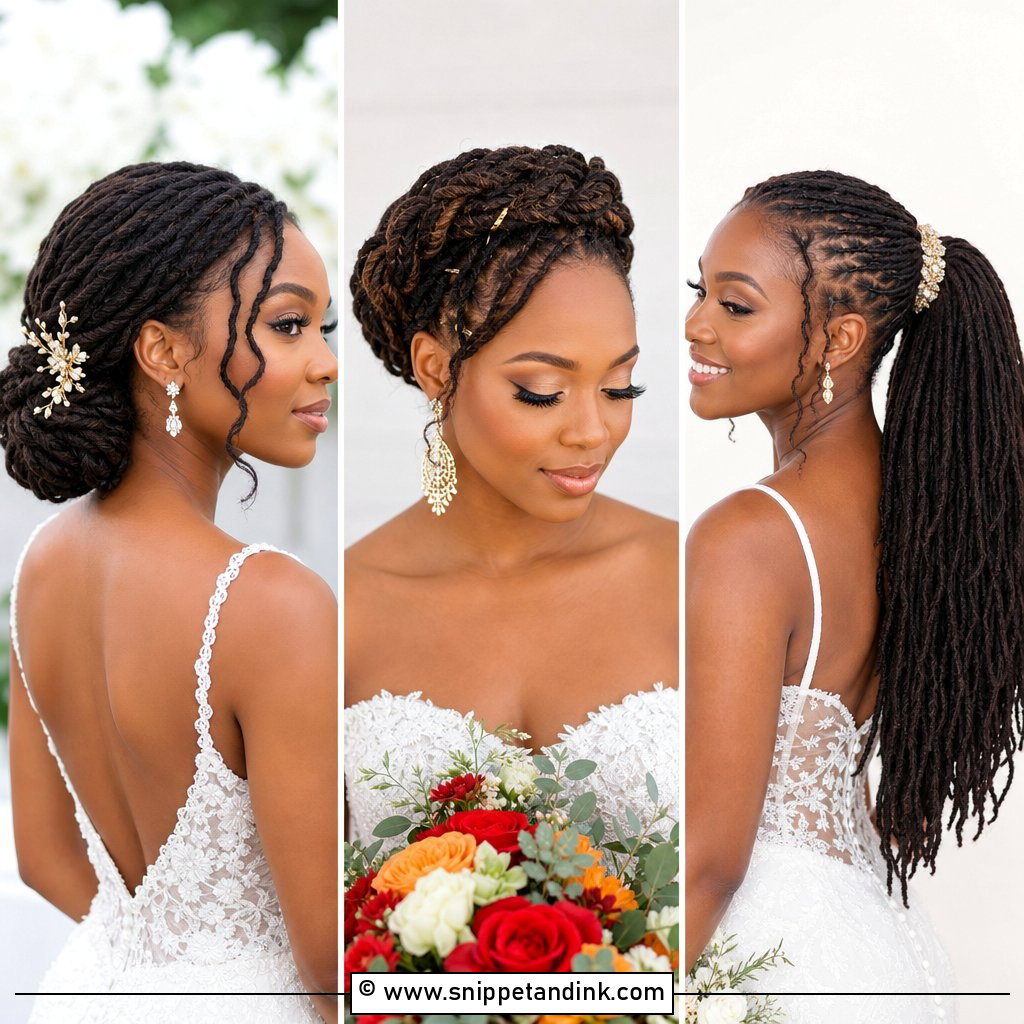
1. Low Bun Bridal Locs
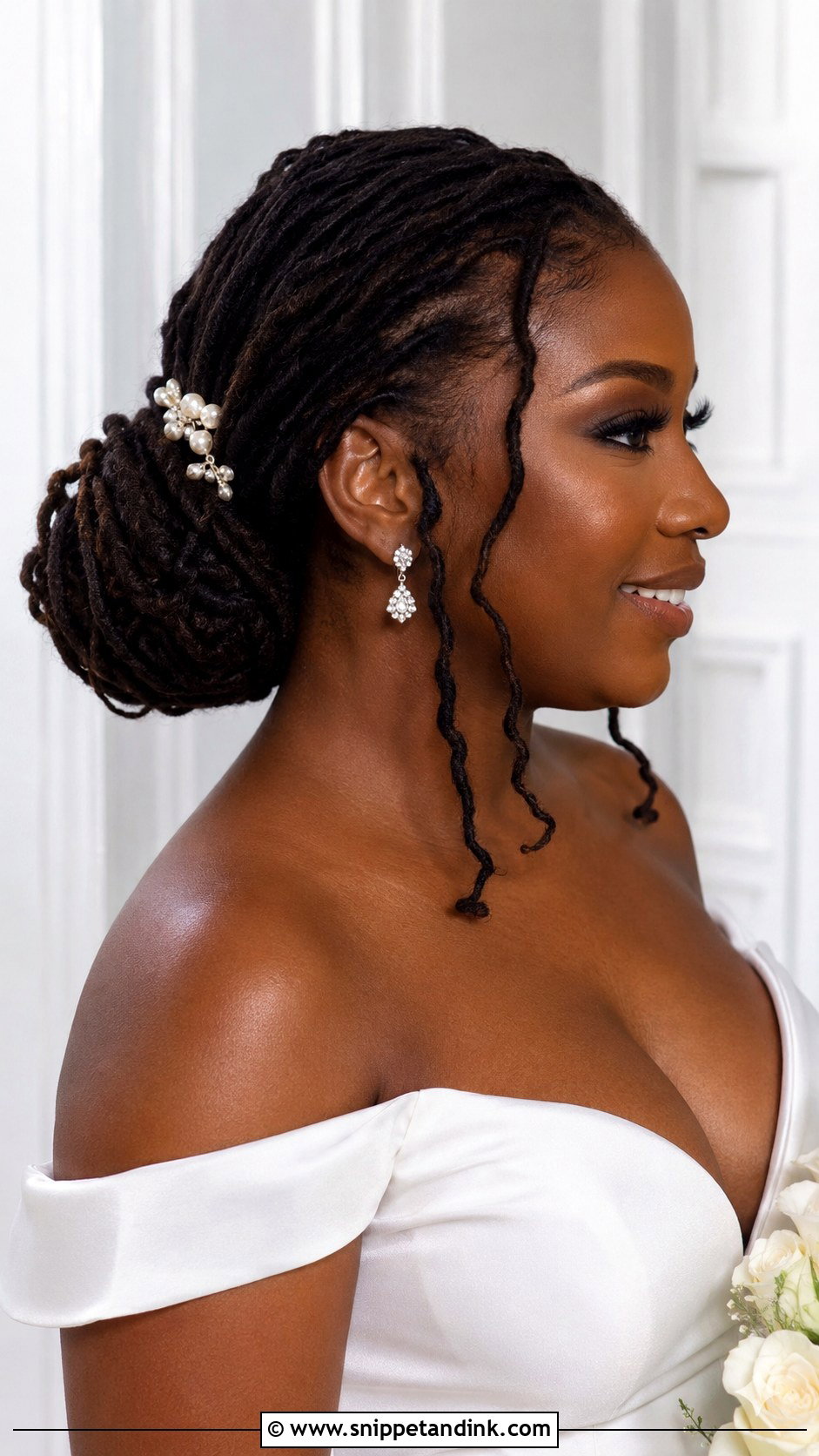
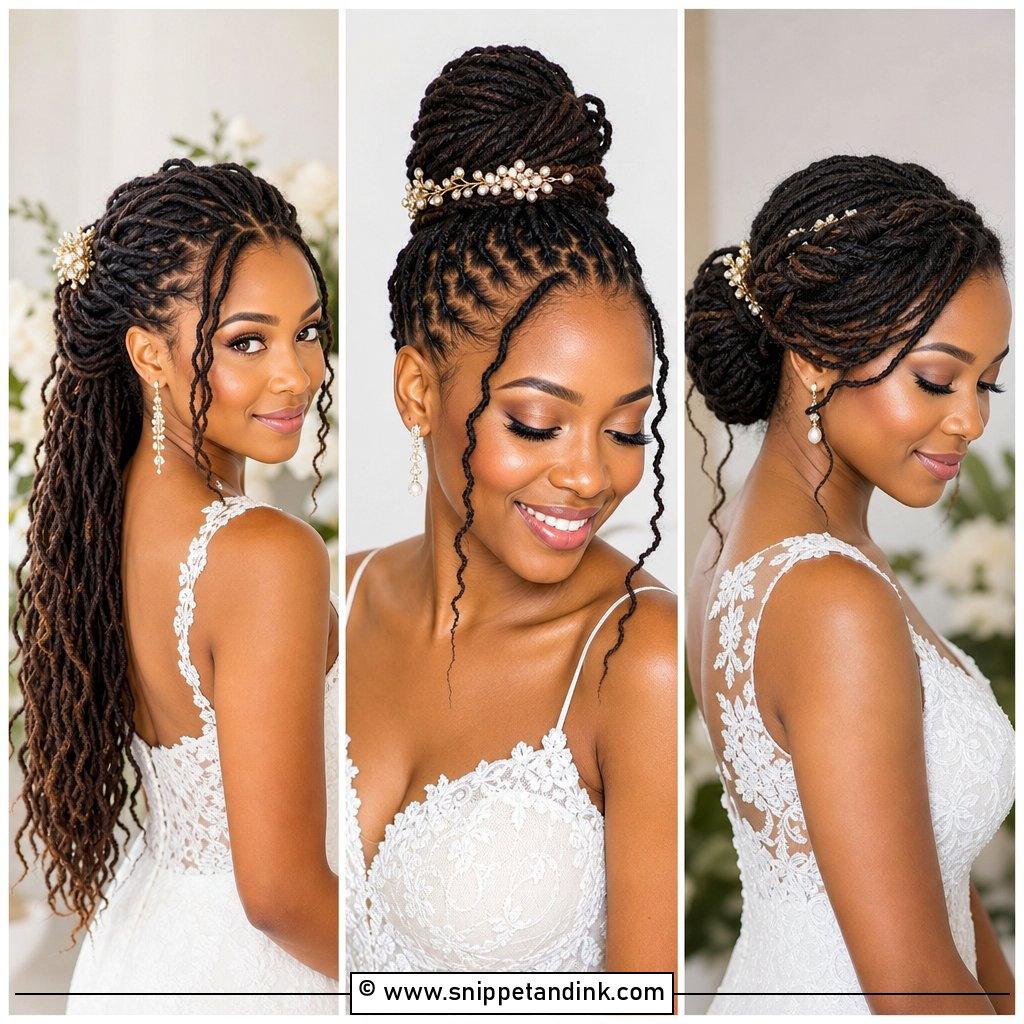
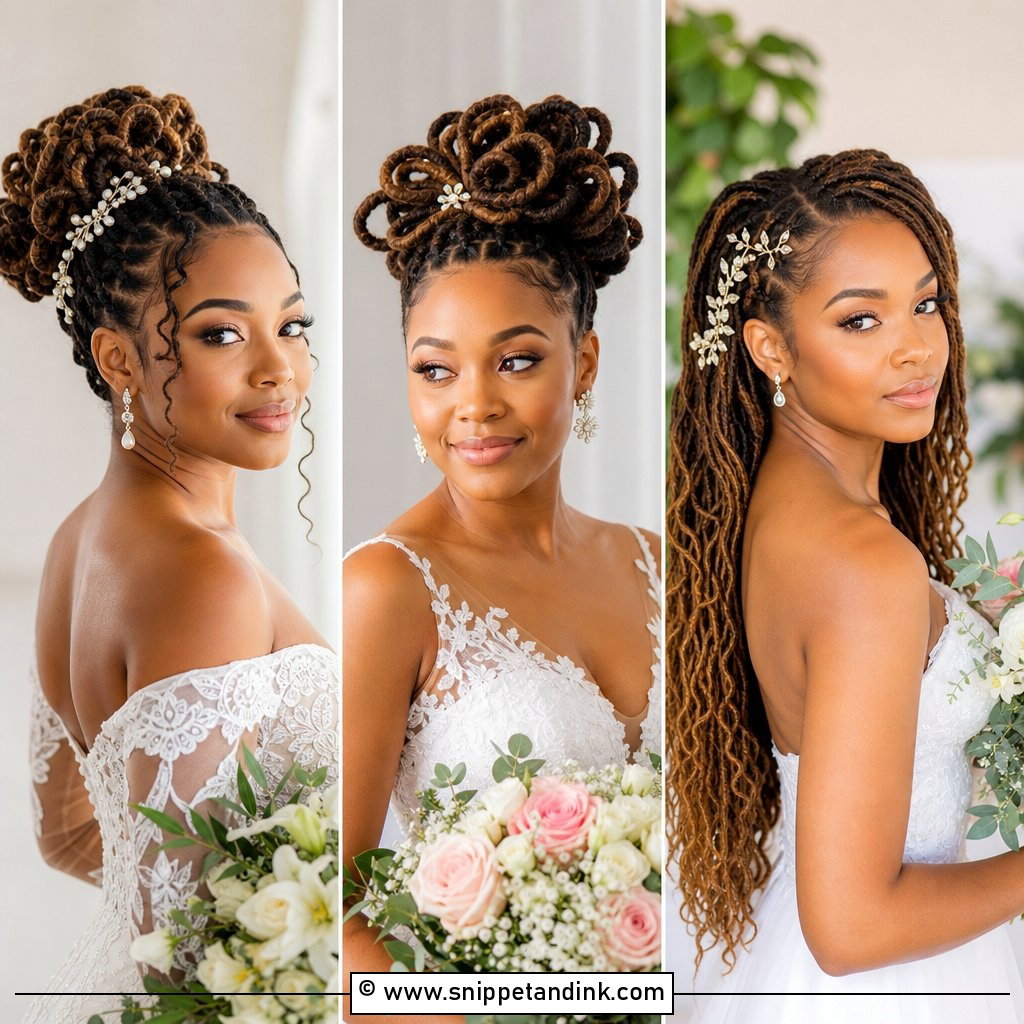
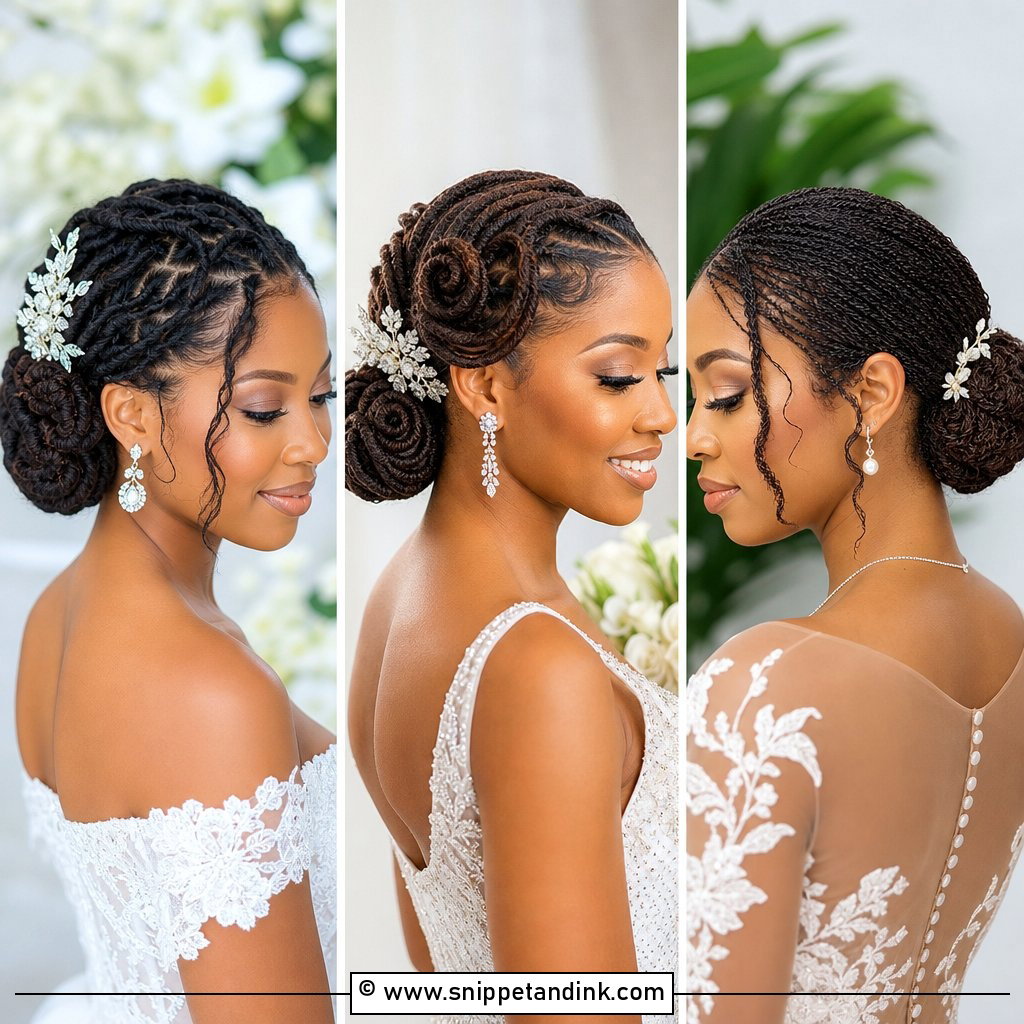
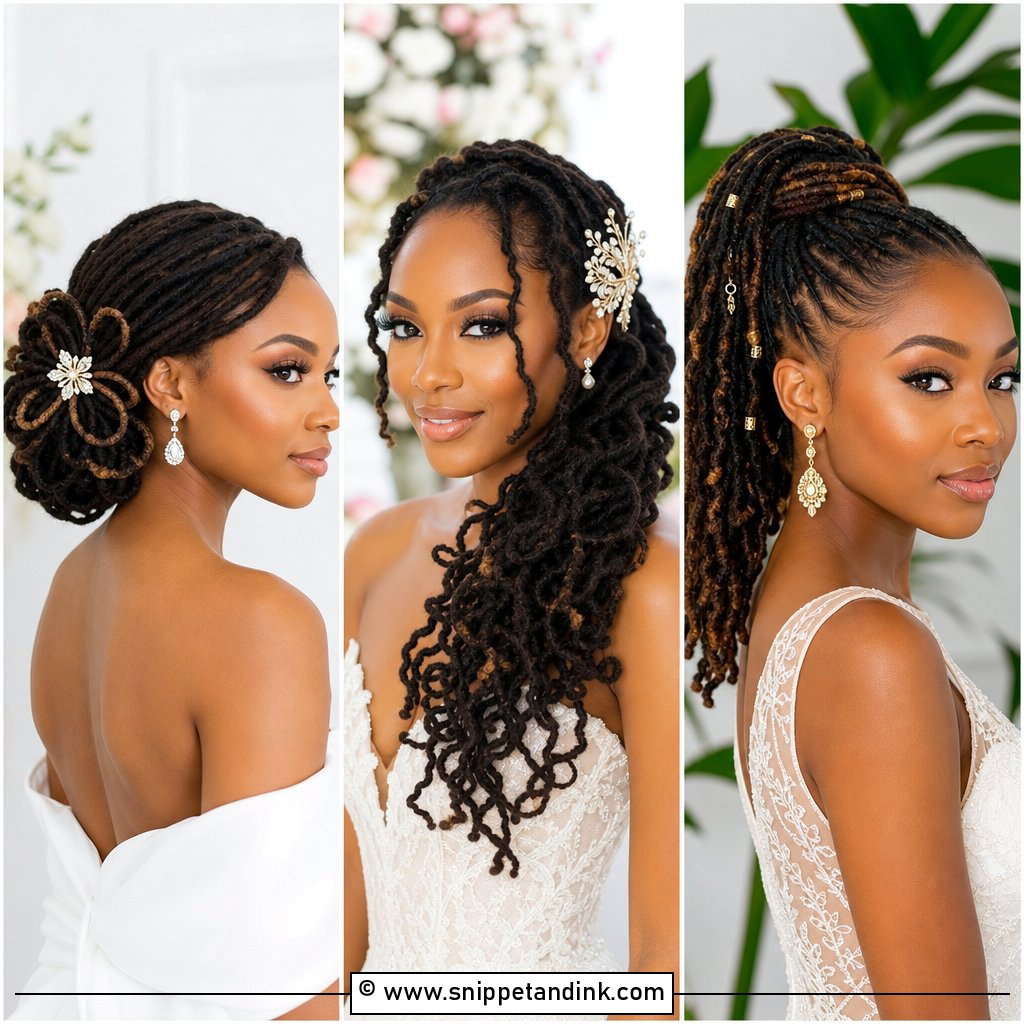
The low bun is my default recommendation for locs that are long or thick, because it puts the weight at the nape where your neck carries it best. I wrap and coil the locs and secure them with large U-pins rather than a fistful of bobby pins, which slide out of smooth mature locs. Sleek reads modern; leaving a few face-framing locs loose softens it. It leaves the neckline open for statement earrings and gives a veil comb a solid base.
2. Crown Twist Loc Updo
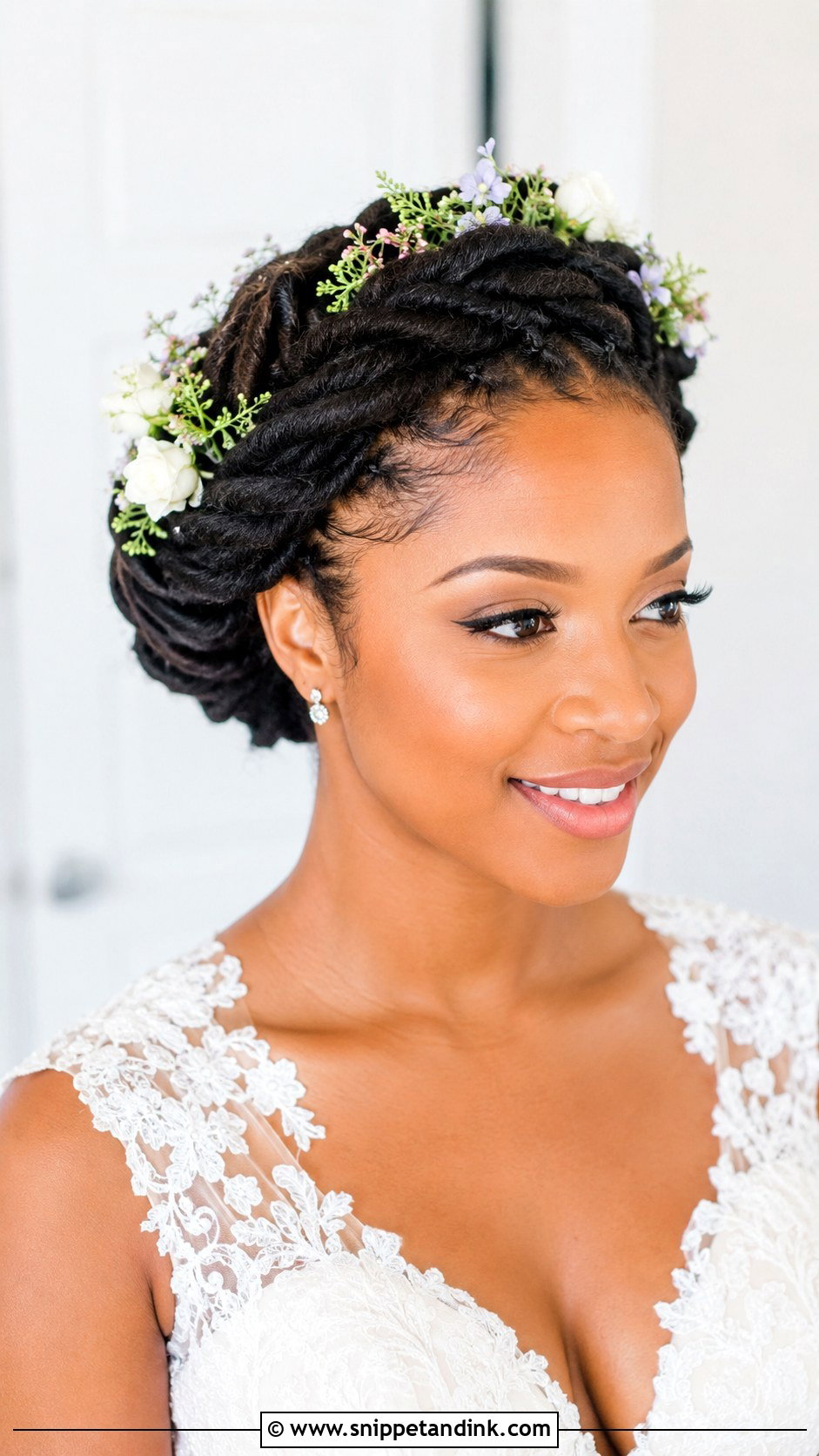
A crown twist wraps your locs around the head like a halo, adding height without stacking weight on top. I build it by twisting sections in two directions and pinning them flat along the hairline, keeping the tension off your edges, since that’s where locs pull hardest. It doubles as a headpiece, so a veil is optional. Small flowers tucked between twists suit a garden wedding. Once it’s pinned well, it handles dancing and hugs.
3. Romantic Loose Locs With Flowers
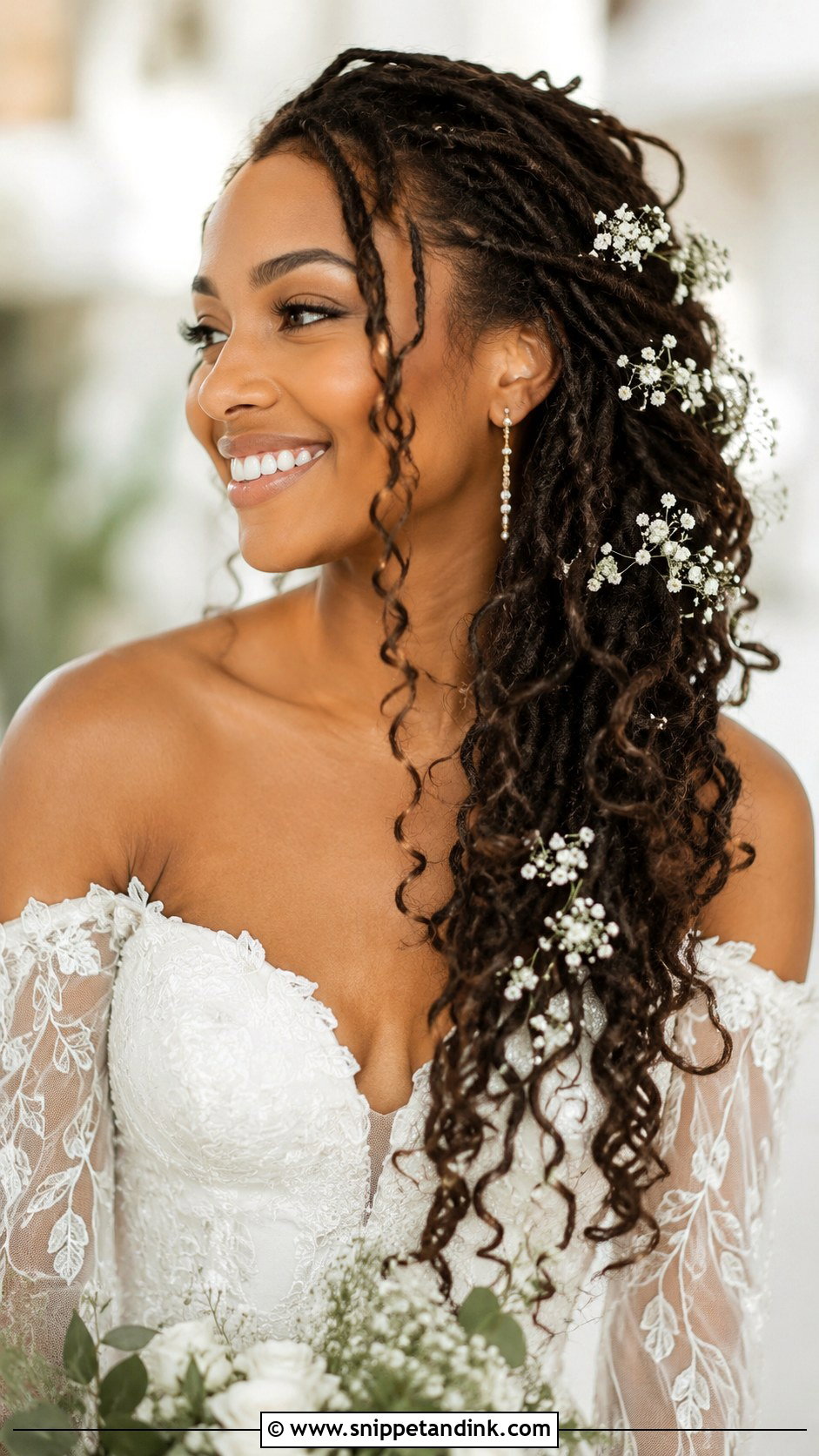
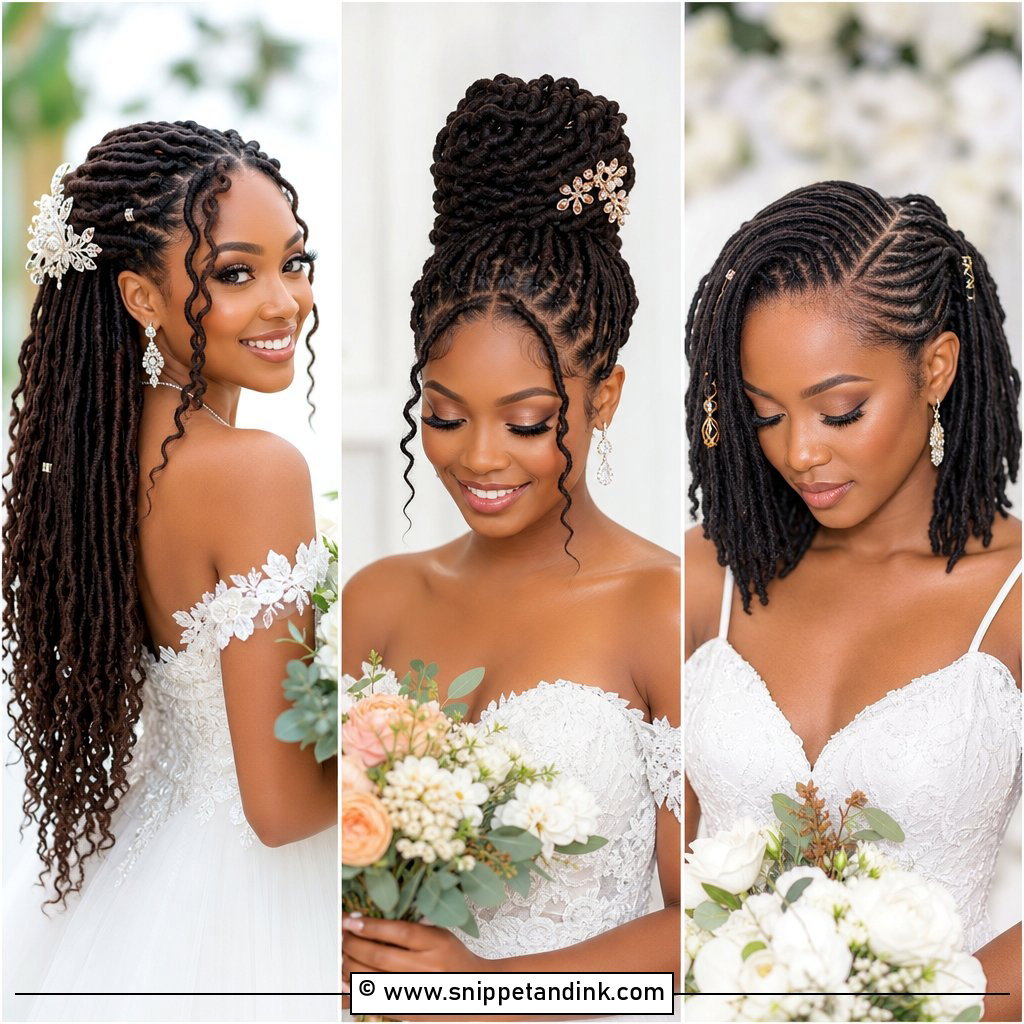
Loose locs are the most honest version of you, and they need the most prep to look intentional. I set them the night before, on rods or pipe cleaners, so they have movement instead of hanging straight. Sweep one side over a shoulder or let everything fall down your back, and add a few small blooms or pins through the length. Long, heavy locs can feel hot on the back during a summer reception, so I’d keep a soft tie handy for later.
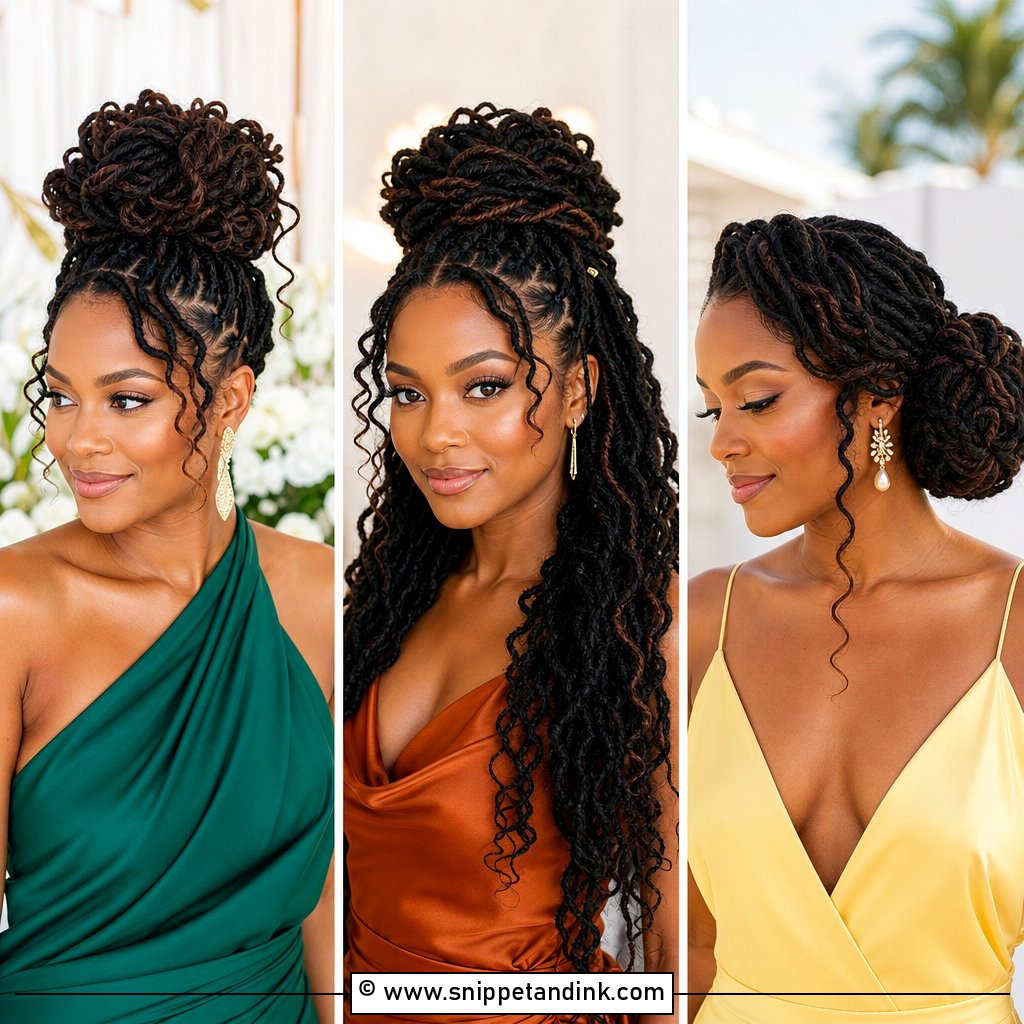
4. Loc Top Knot for Brides
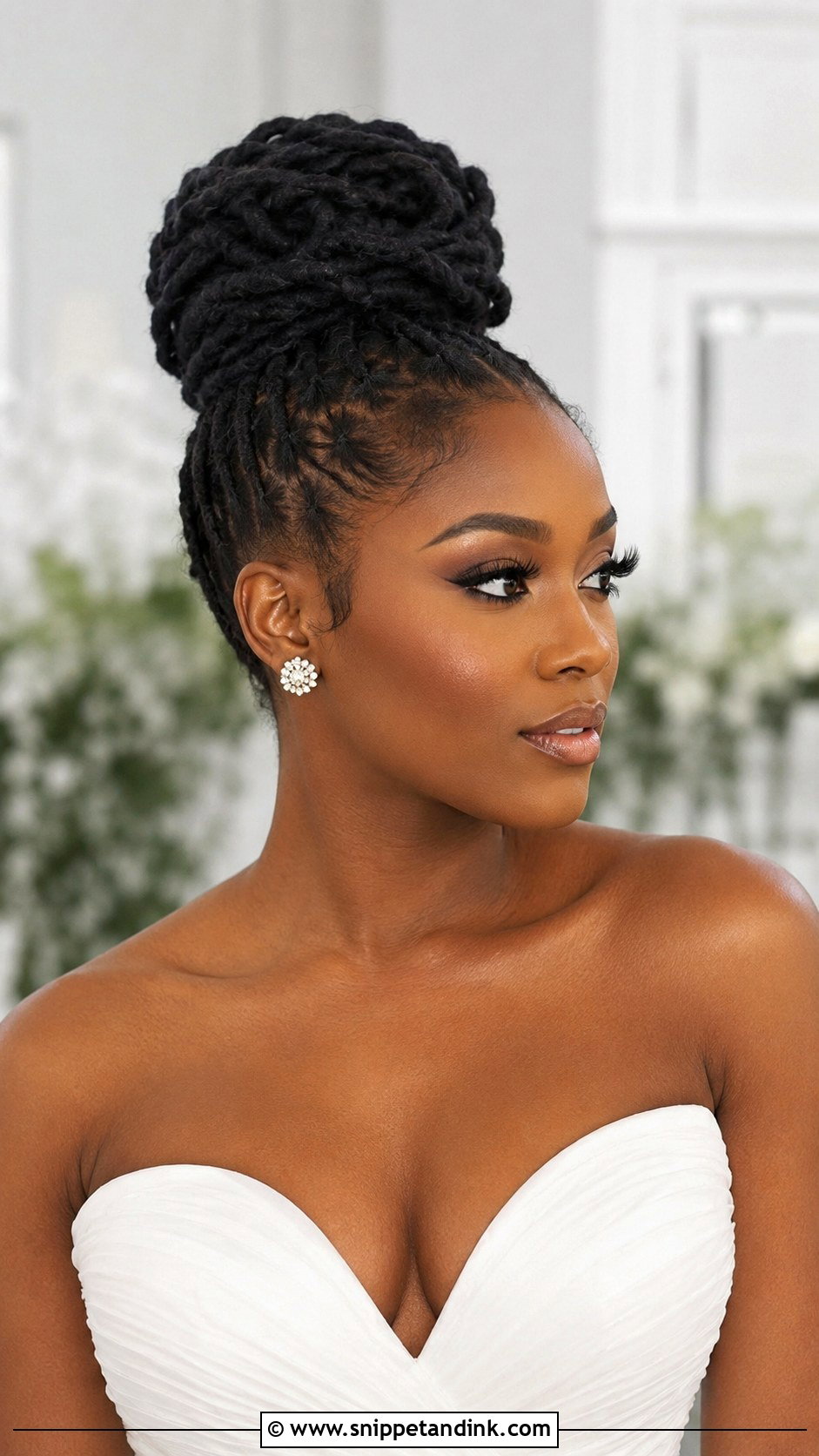
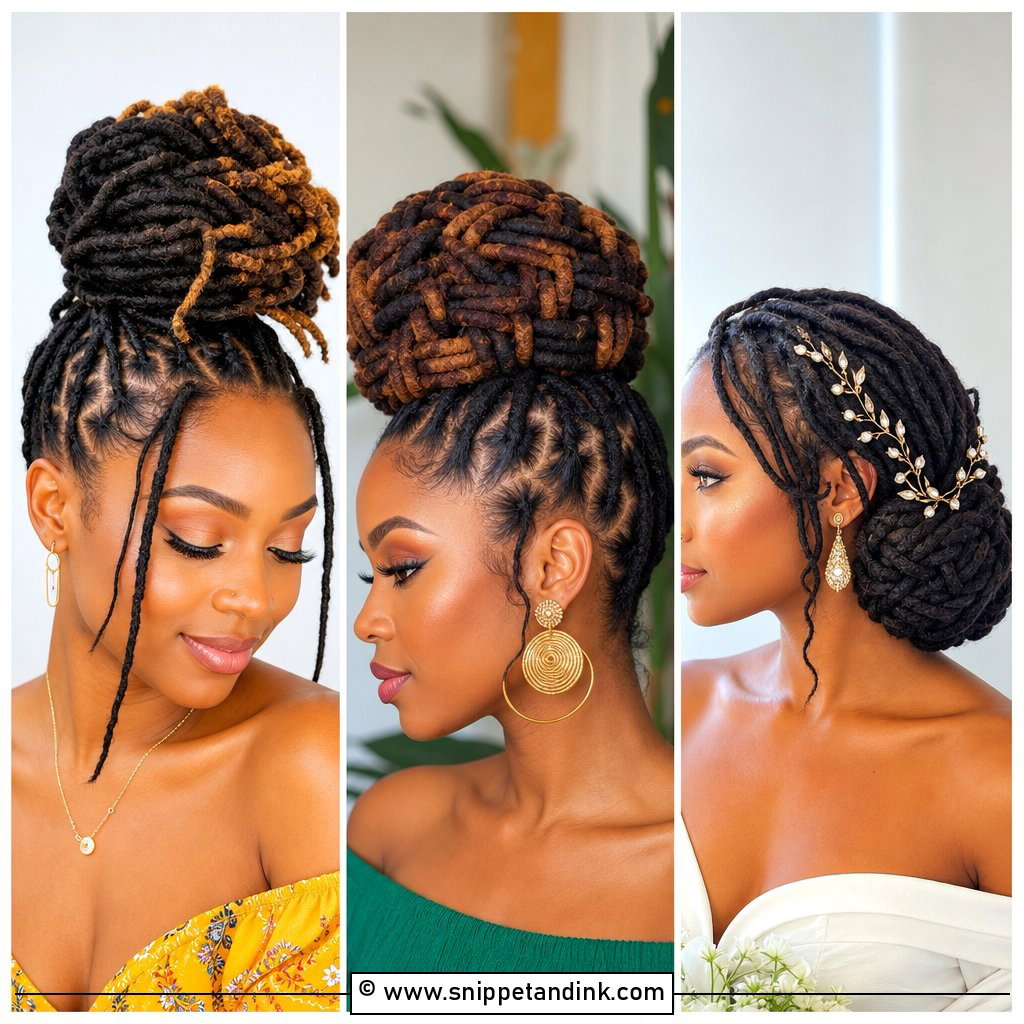
Gathering everything high on the crown keeps your neck cool, which is why I suggest the top knot for hot outdoor weddings. It shows off the jawline and earrings and pairs well with a bold lip. The catch: a top knot with long locs puts a lot of weight in one spot, so I split the bulk into two coils stacked on each other rather than one heavy knot. Sculpted looks sharper; a little looser is gentler on the scalp.
5. Loc Mohawk Updo
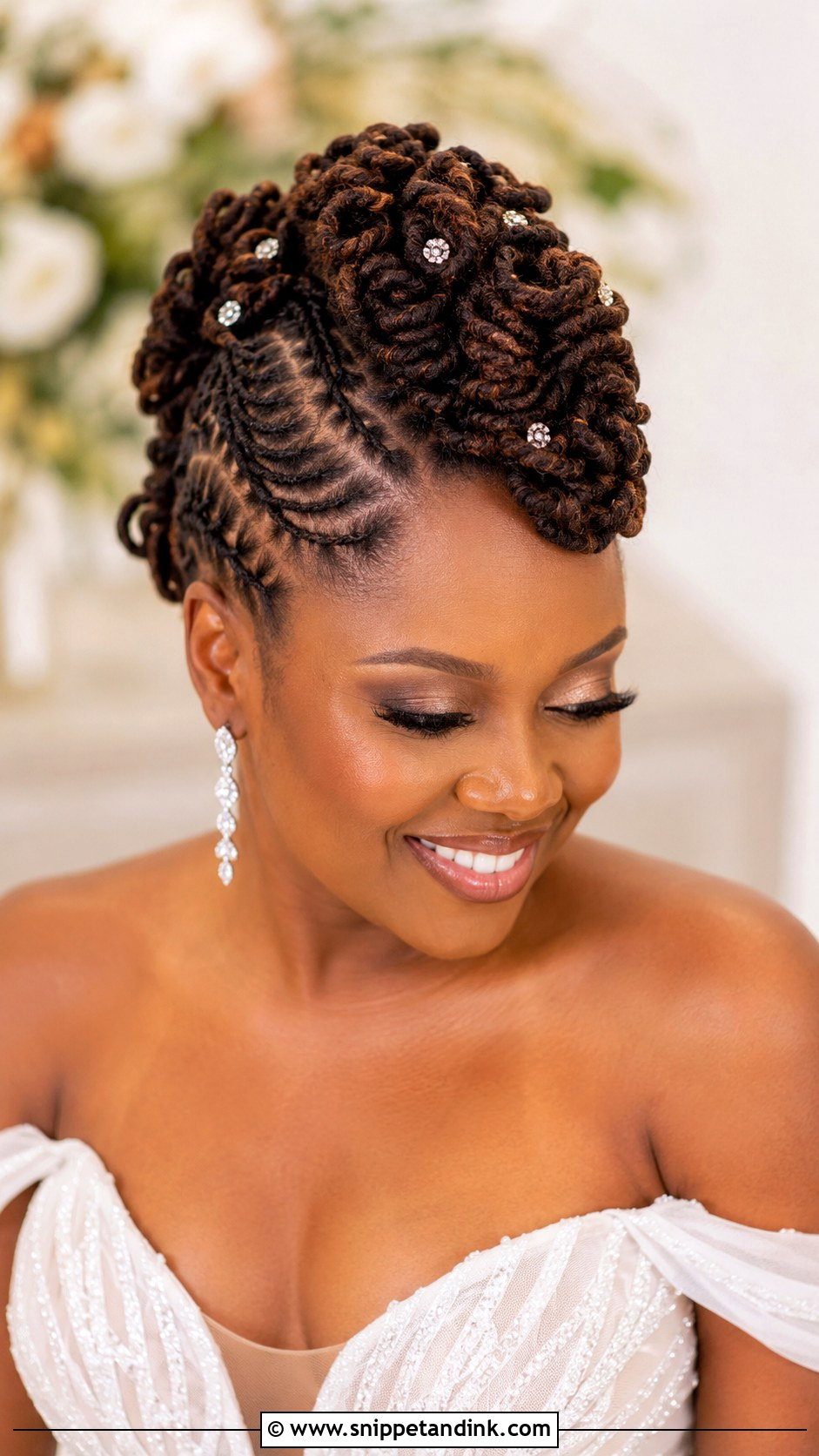
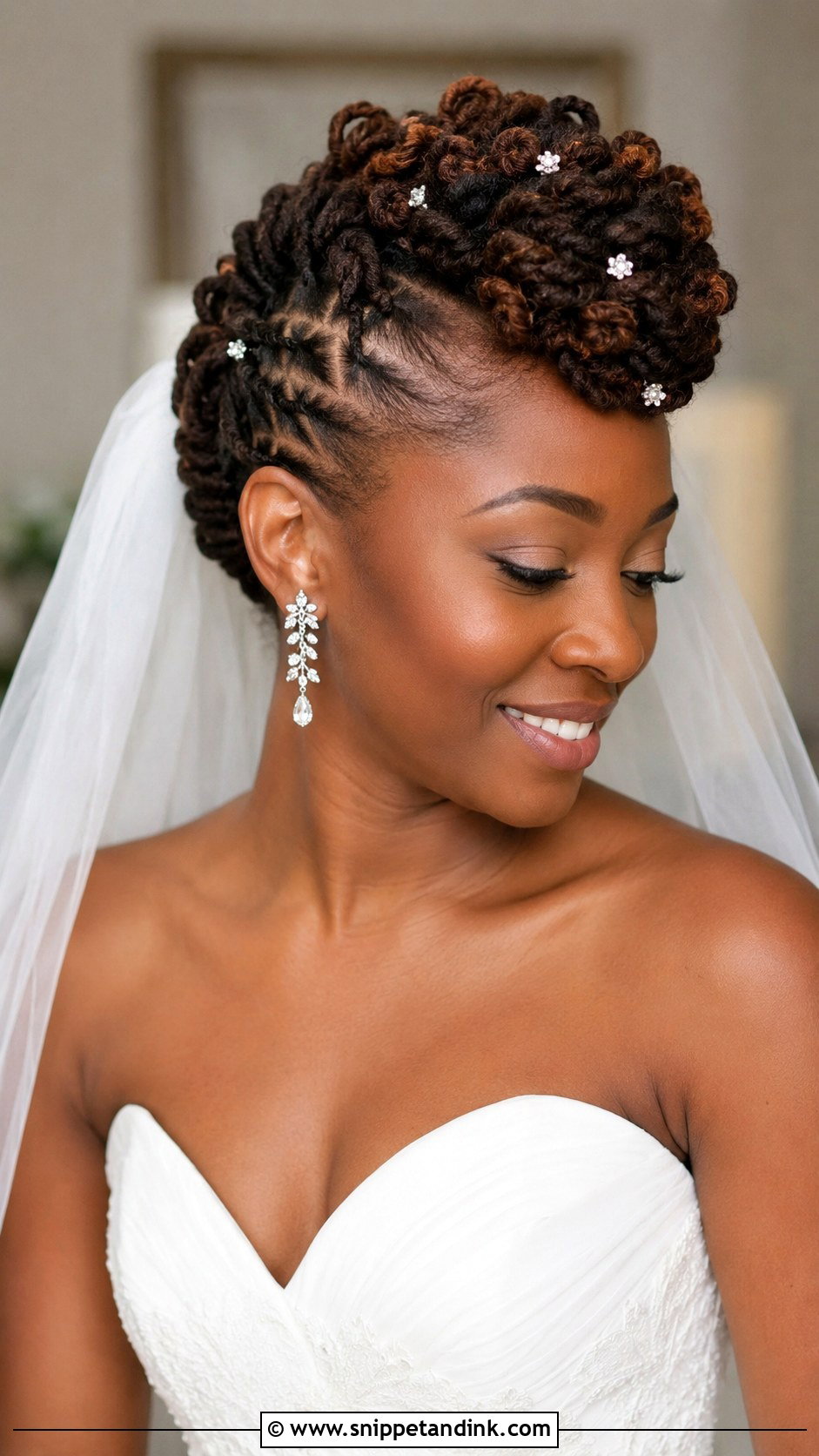
A mohawk is all about the contrast between flat sides and a raised center. I flat-twist or pin the sides tightly back, then shape the central locs into curls, stacked rolls or small buns. The sides take the most tension of any style here, so I check that nothing pulls at the temples before you leave my chair. A line of crystal pins along the twisted sides adds sparkle. It’s for the bride who wants her hair to look like her, not like a tradition.
6. Loc Bun With Curls
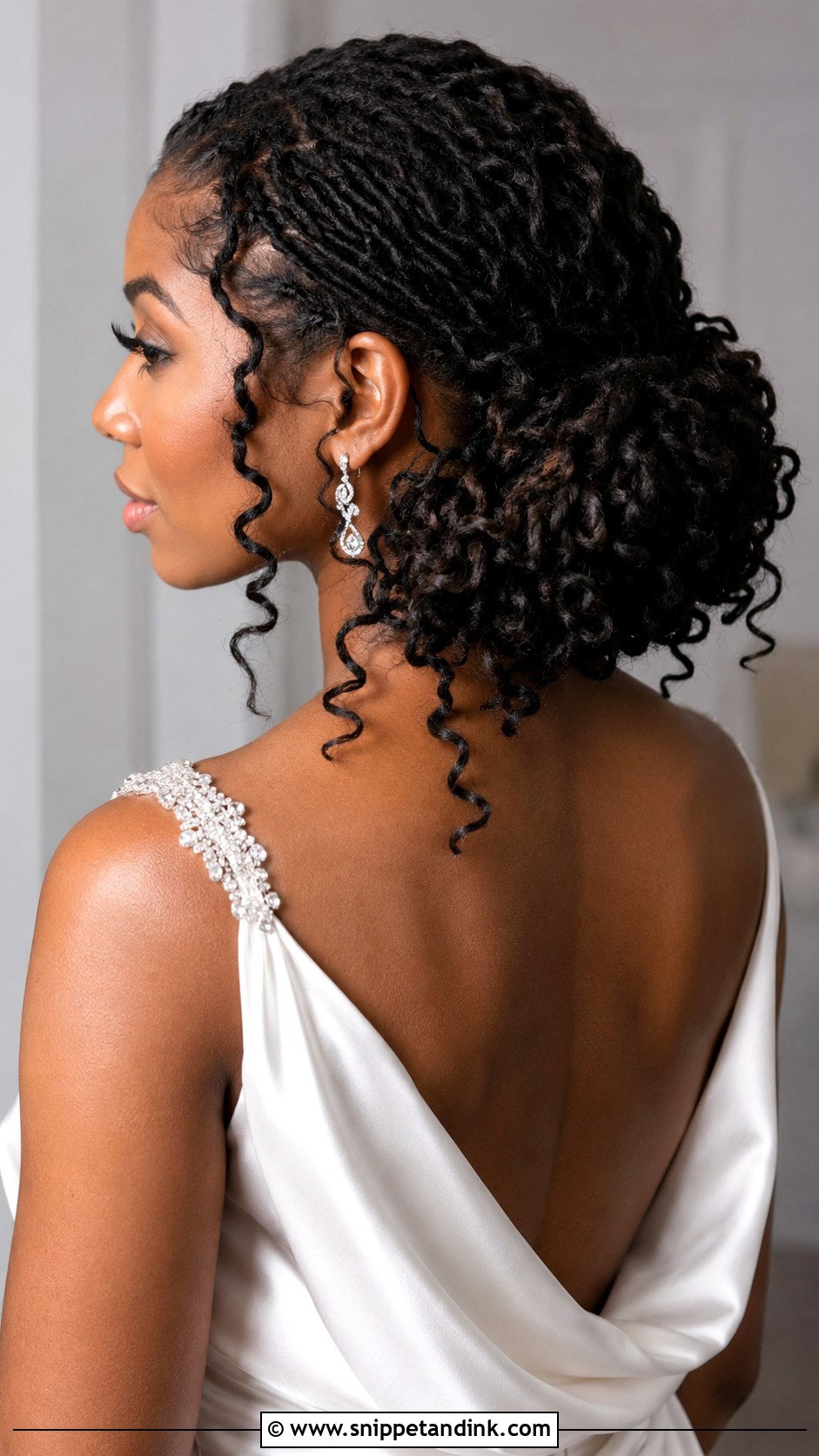
Can’t pick between up and down? Here the top and sides go into a smooth mid or low bun while a few locs at the base stay loose, set into soft curls or waves across the upper back. I set those loose locs the night before so the curl survives the day. The bun stays polished; the curls give movement. It’s a good compromise if your dress has an open back you want partly visible.
7. Pearl-Adorned Loc Updo
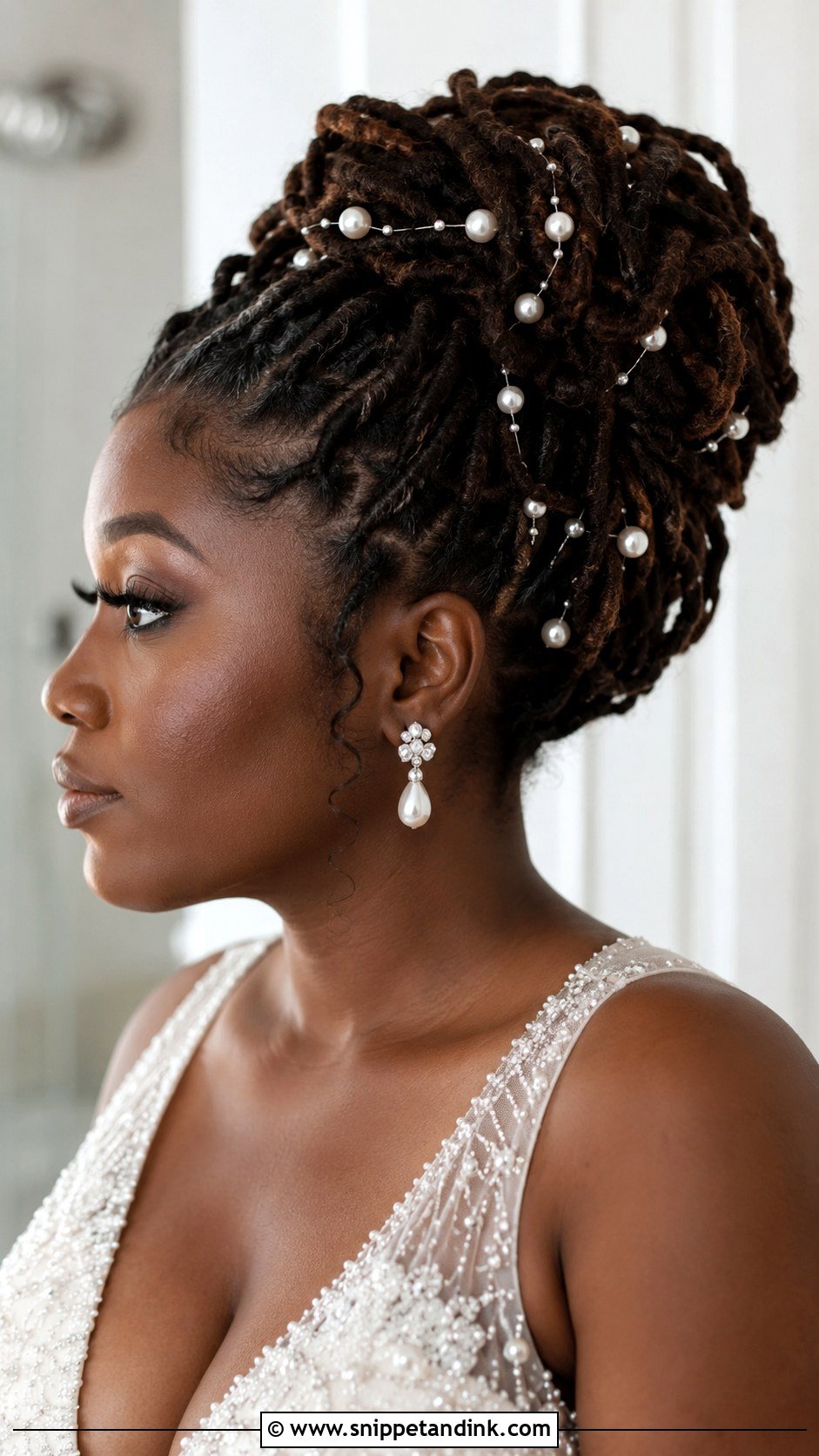
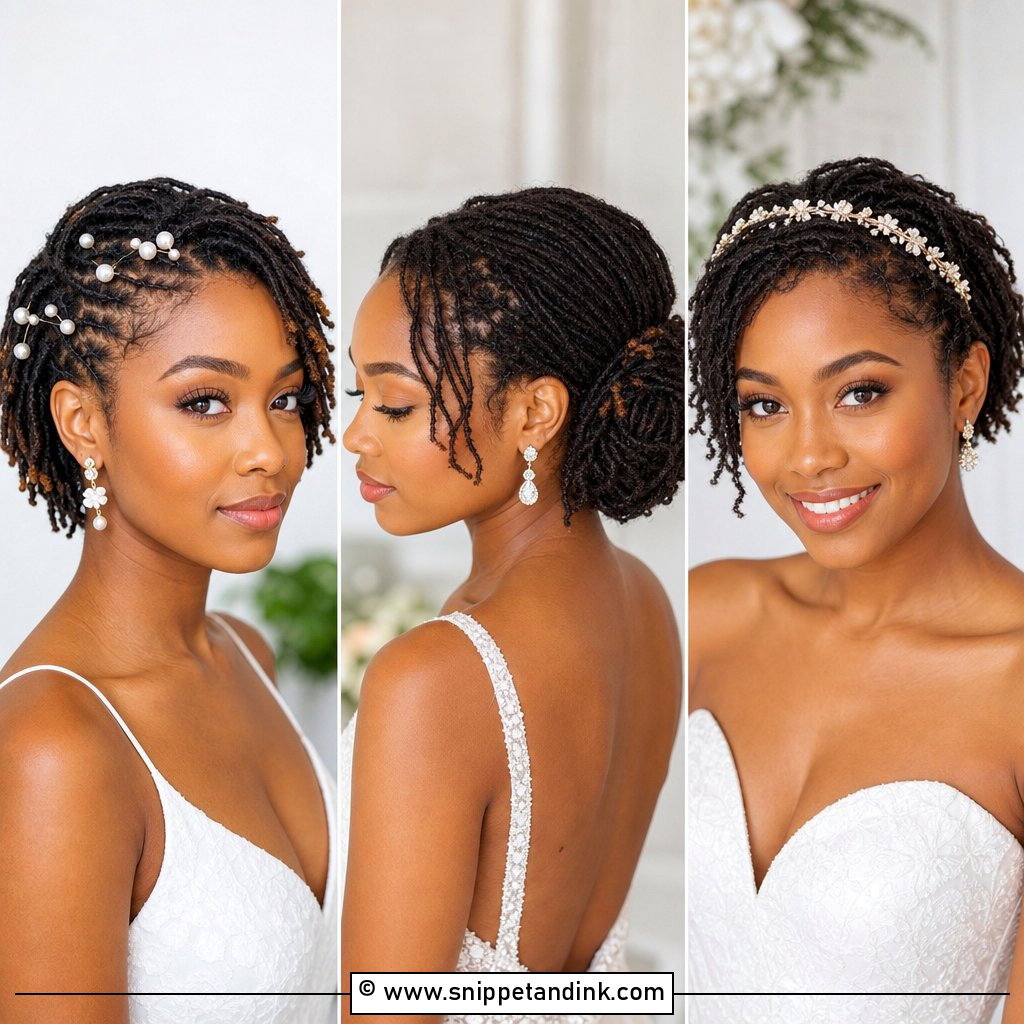
Pearl pins scattered through an updo give quiet sparkle against darker locs. I slide each pin through the body of a loc rather than resting it on the surface, otherwise they slip during hugs. Scatter them evenly or cluster them on one side; clusters photograph more clearly from a distance. Pearls connect neatly with pearl jewelry or beading on the gown, and the look suits formal and church ceremonies.
8. Flat Twist Loc Updo
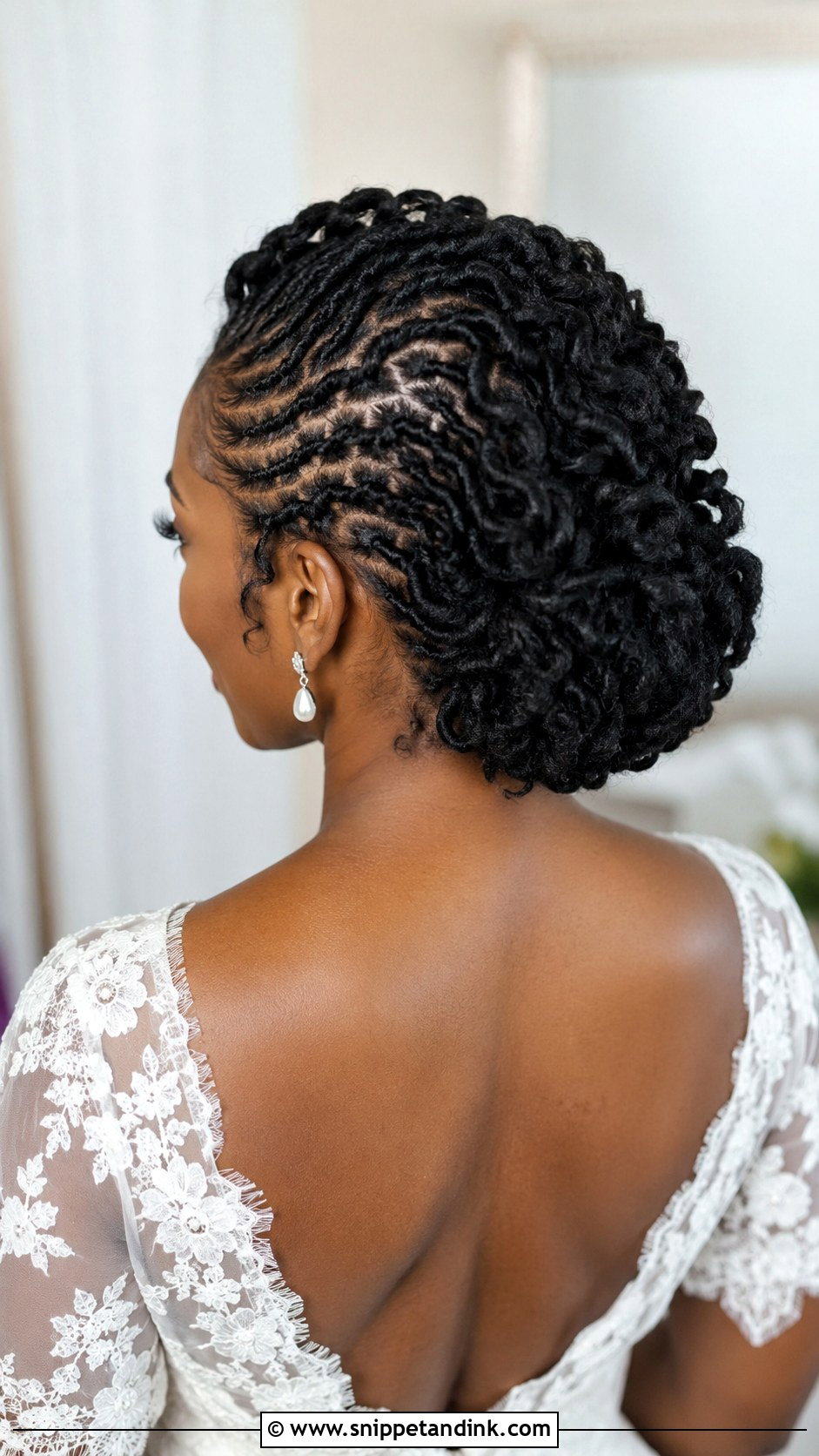
Flat twists add pattern close to the scalp before the locs gather into a bun or curled section at the back. They can be simple lines or swirling designs, and the more detailed the pattern, the longer you’ll be in my chair, so I plan time for it. Because they lie flat and are pinned along their length, flat-twist updos are among the most secure styles for a long day. Ask your stylist to keep the twists snug but not tight at the hairline.
9. Side-Swept Loc Style
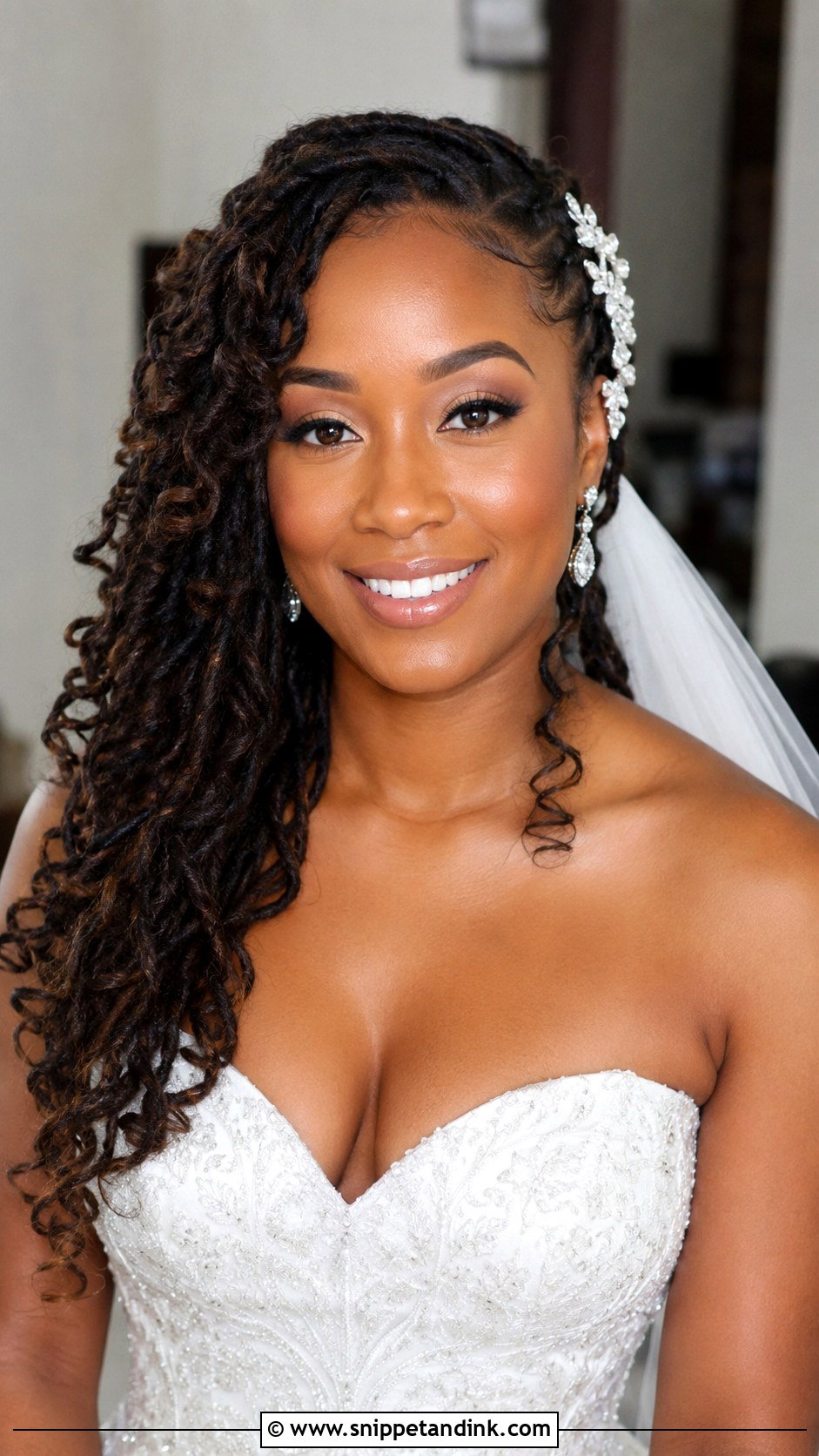
Side-swept locs drape over one shoulder for an old-Hollywood shape. I anchor the gathered side with crossed pins behind the ear, then hide them under a jeweled clip. It flatters a sweetheart or off-shoulder neckline and looks best in profile. The weight all sits on one side, so for very long locs I’d pin part of the length underneath to stop it dragging at the neck by evening.
10. Bantu Knot Out Locs
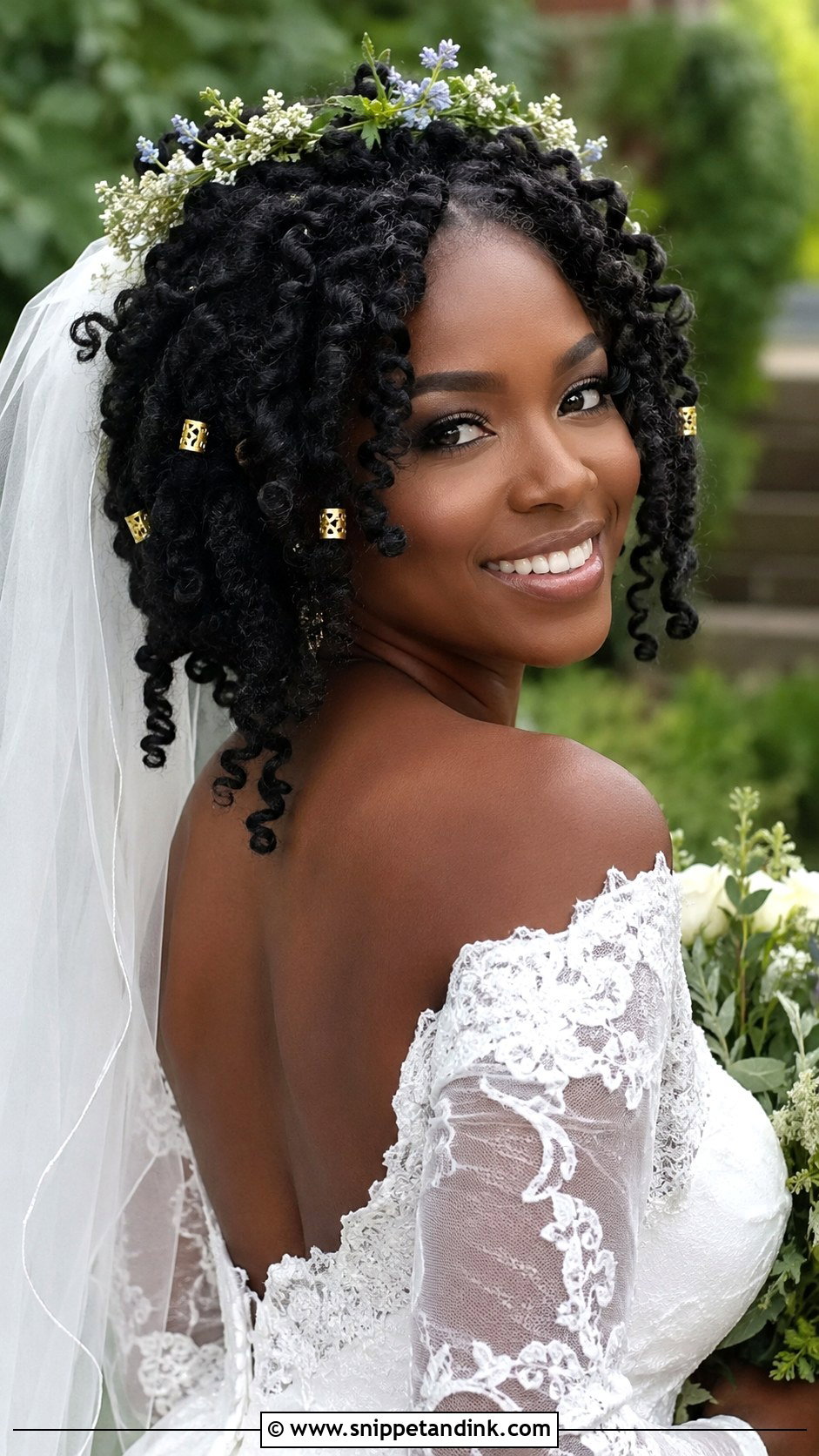
Bantu knots carry deep cultural roots and can be worn two ways at a wedding: as the knots themselves, sculptural and bold, or unraveled into spiral waves. For a knot-out, I set the knots on slightly damp locs and leave them overnight; locs take a long time to dry fully, and a damp set will drop or, worse, stay musty. The unraveled version gives big volume for dancing. Gold cuffs on the knots, or a flower crown with the curls, finish the look.
11. Half-Up Half-Down Locs
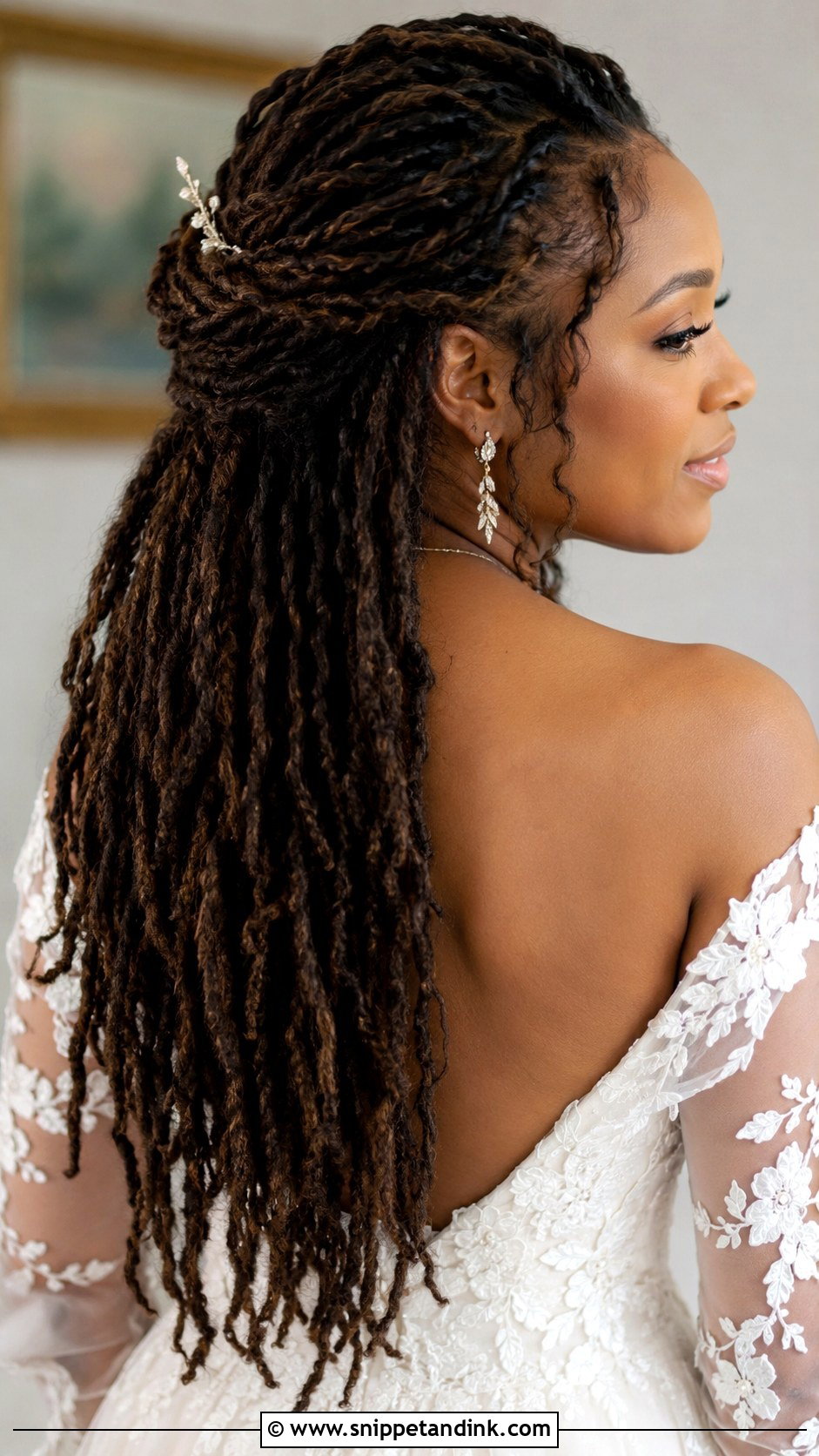
Half-up, half-down keeps locs off your face while showing length and texture. The top section is pinned or twisted back, and the rest falls freely. I place the anchor point a little higher than most brides expect, because heavy locs below pull a low half-up section down over the day. A small braid, clip or a few flowers at the crown dress it up for any venue.
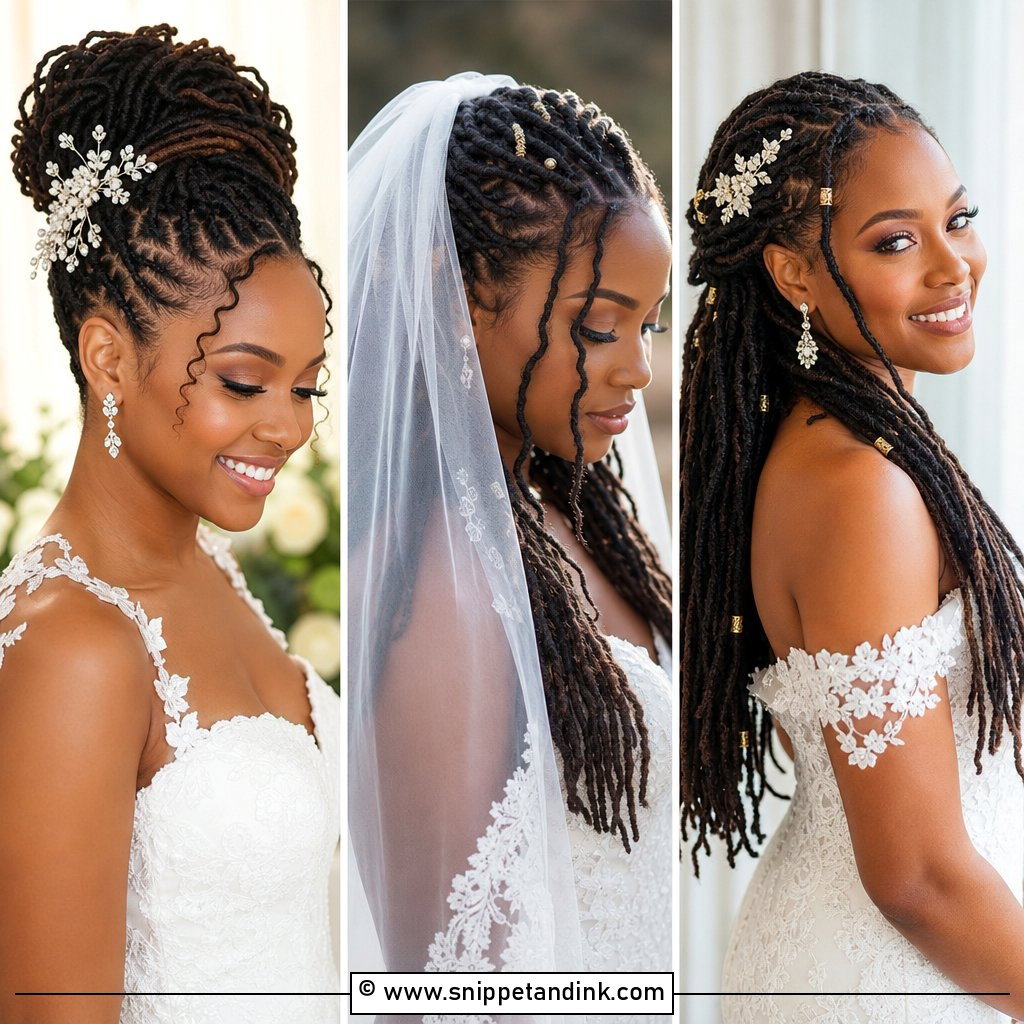
12. Loc Updo With Gold Accents
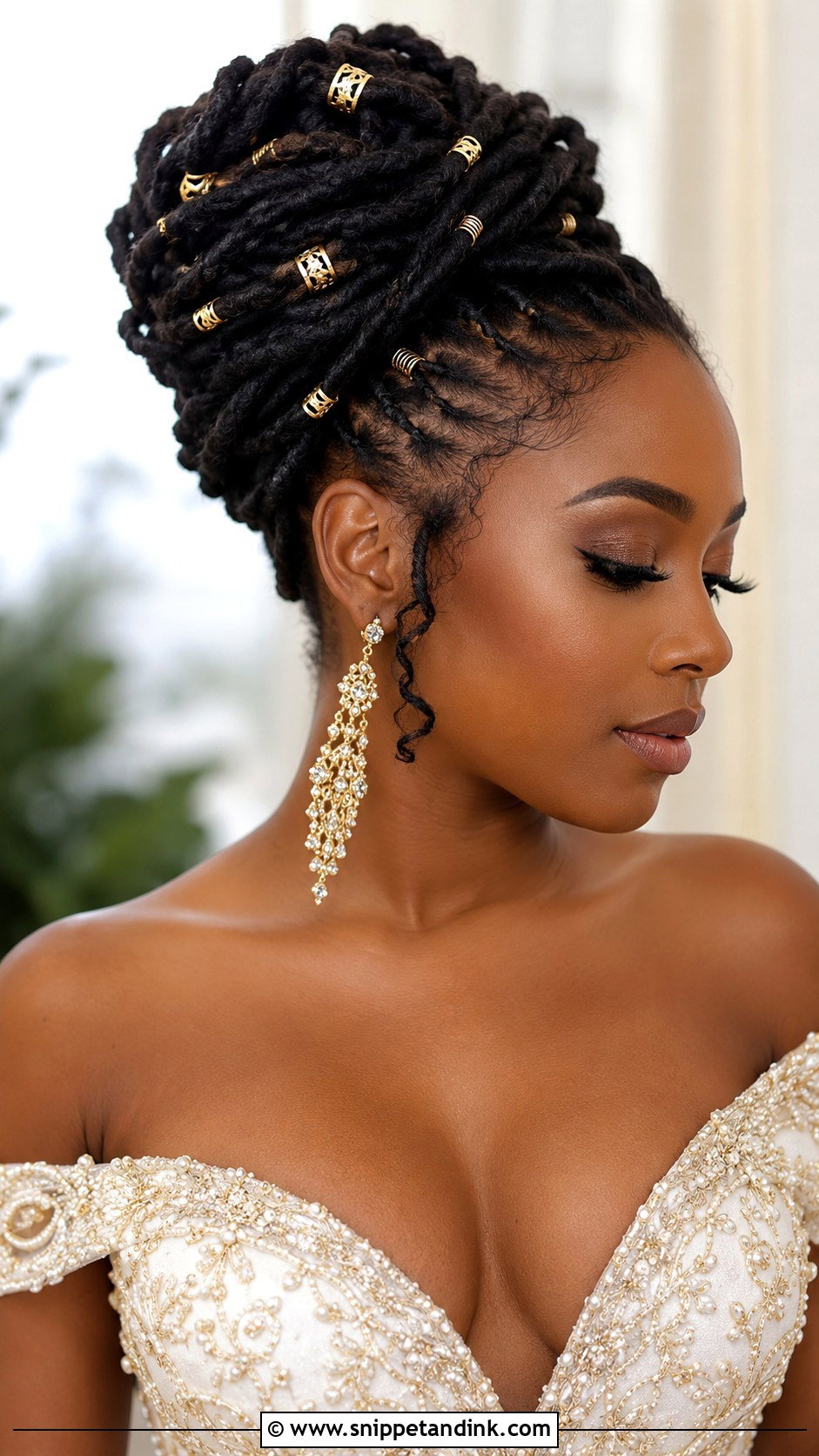
Gold cuffs and beads threaded through an updo catch light and contrast warmly with darker locs. Check the cuff diameter before the day; a cuff that fits a fine loc won’t close on a thick one, and pinching one shut can damage the loc. Space them evenly or cluster near the crown. They tie in with gold jewelry and warm-toned gown details and give the style a regal finish.
13. Sleek Loc Ponytail
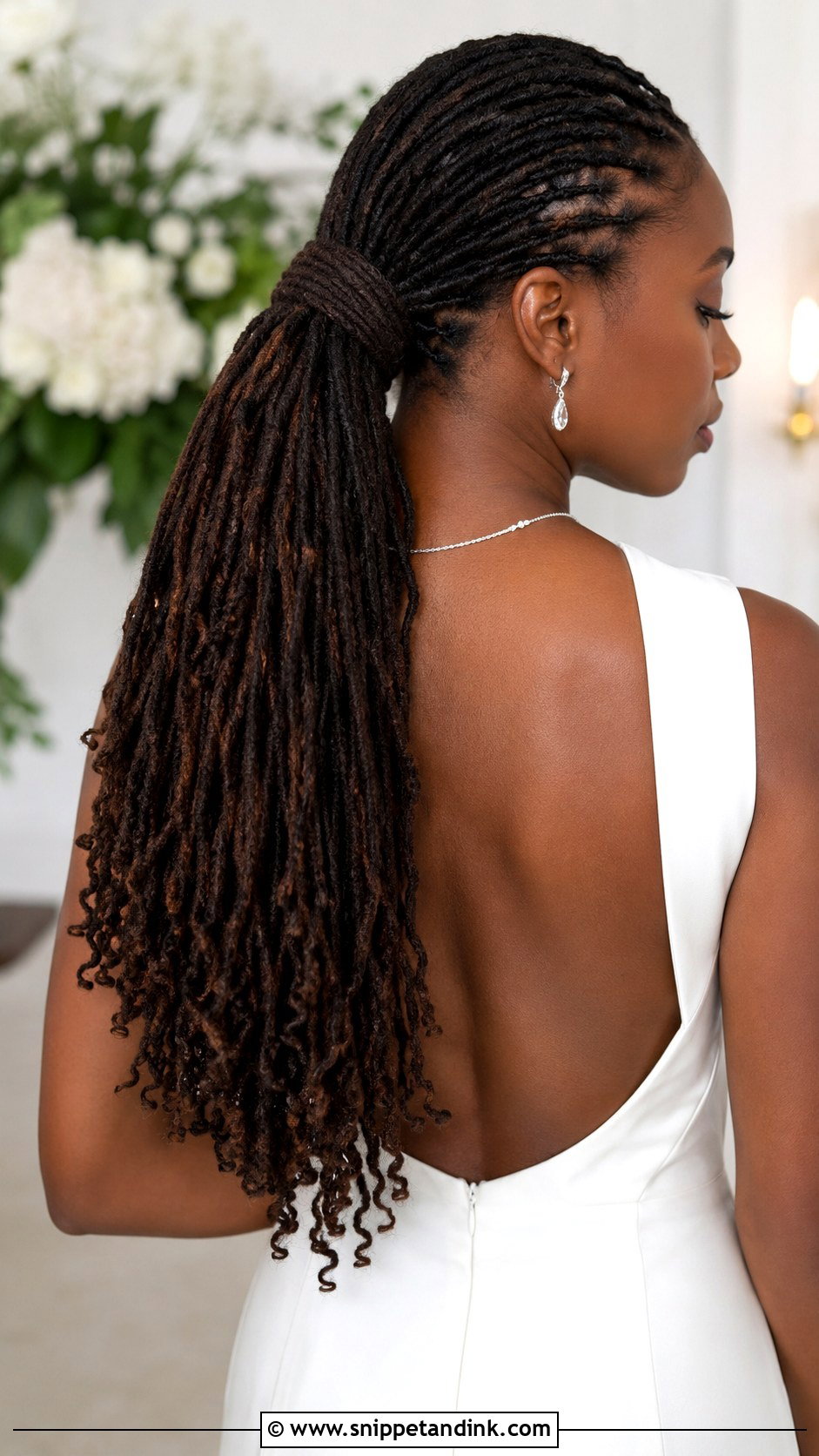
A loc ponytail looks simple and needs care. I never use a thin elastic on locs; it snags and can weaken them over hours. Instead I use a soft covered band or a loose cord, then wrap one loc around the base to hide it. High reads youthful, low reads classic. Curling the ends softens it. If your locs are very heavy, a high ponytail can cause a headache by the reception, so low is the safer choice.
14. Braided Loc Updo
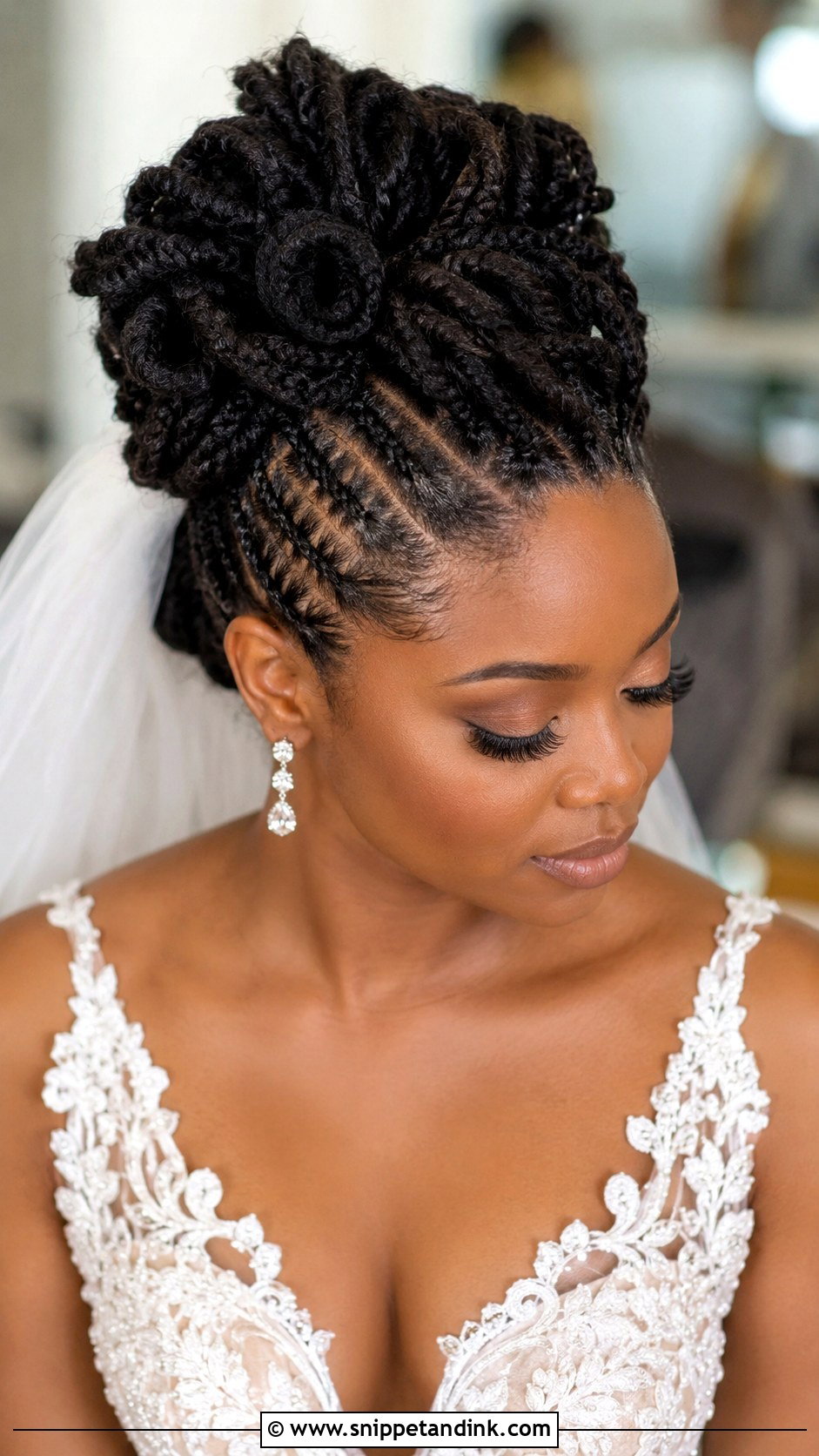
Mixing braided sections with buns, twists or loops gives an updo depth you can see from across the room. Some locs are braided along the scalp, others gathered at the back, and the mix of textures is where the craft shows. Braids add tension, so I keep them loose at the edges and tighter only where they’re anchoring weight. Well-built braided loc updos suit formal weddings and stay secure for hours; soft tendrils around the face can loosen the look.
15. Loc Bun With Veil
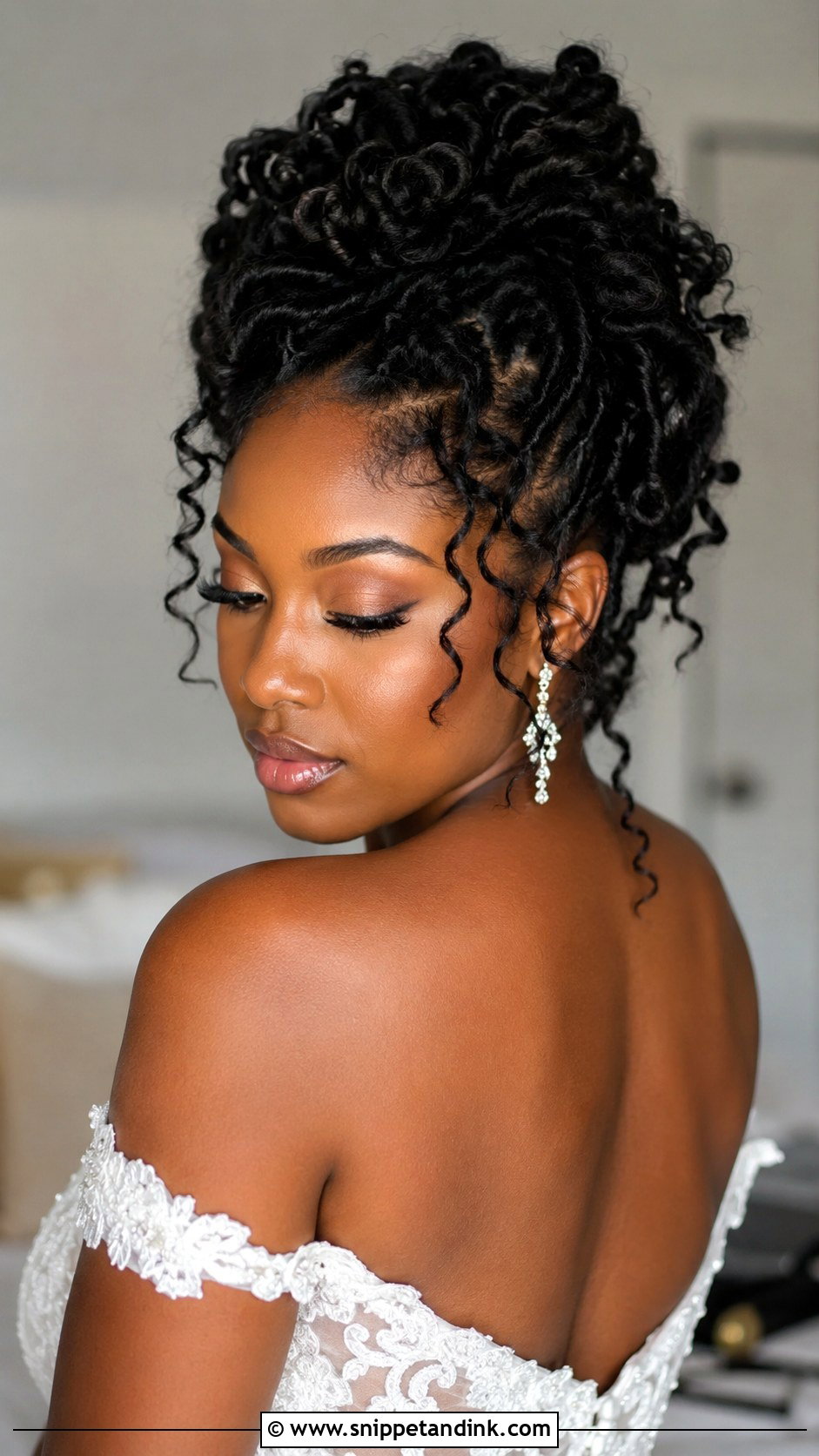
A veil comb slides on smooth locs, which is the main issue I solve with this style. I build the bun with a pinned base underneath and slide the comb in against the direction of the locs, then lock it with two crossed pins. A cathedral veil or a short blusher both sit securely that way. After the ceremony the veil comes out and the bun stands on its own, maybe with a pearl pin added.
16. Curly Loc Updo
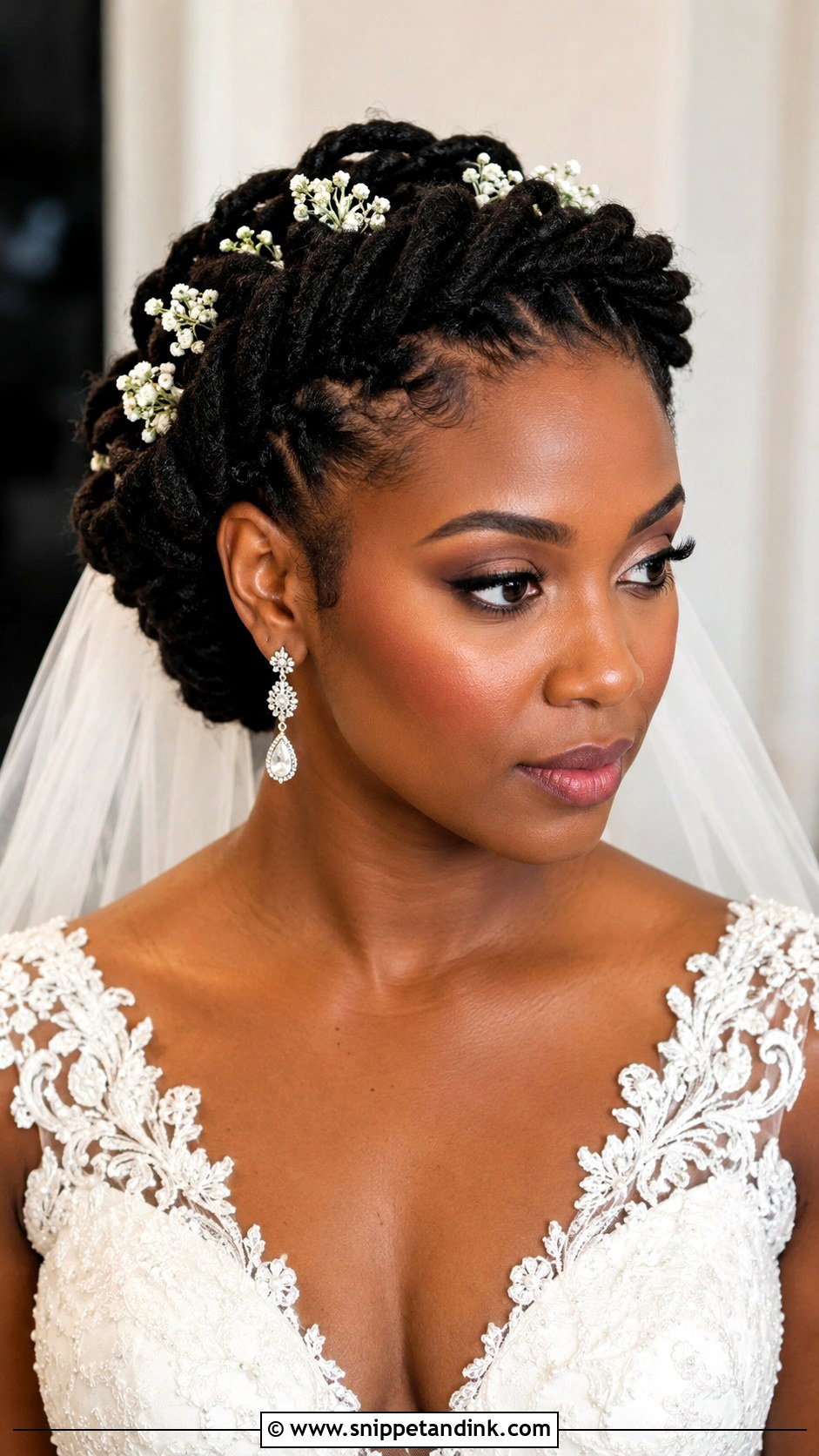
Curls in an updo add softness and movement rather than a flat, sleek finish. I set locs on rods or pipe cleaners overnight, then pin the spirals up around the crown so they catch light from different angles. Heat tools aren’t much use on locs, so the curl has to come from the set. Leave a few curled tendrils at the face, and pair it with delicate jewelry and a glowy makeup look.
17. Loc Faux Hawk
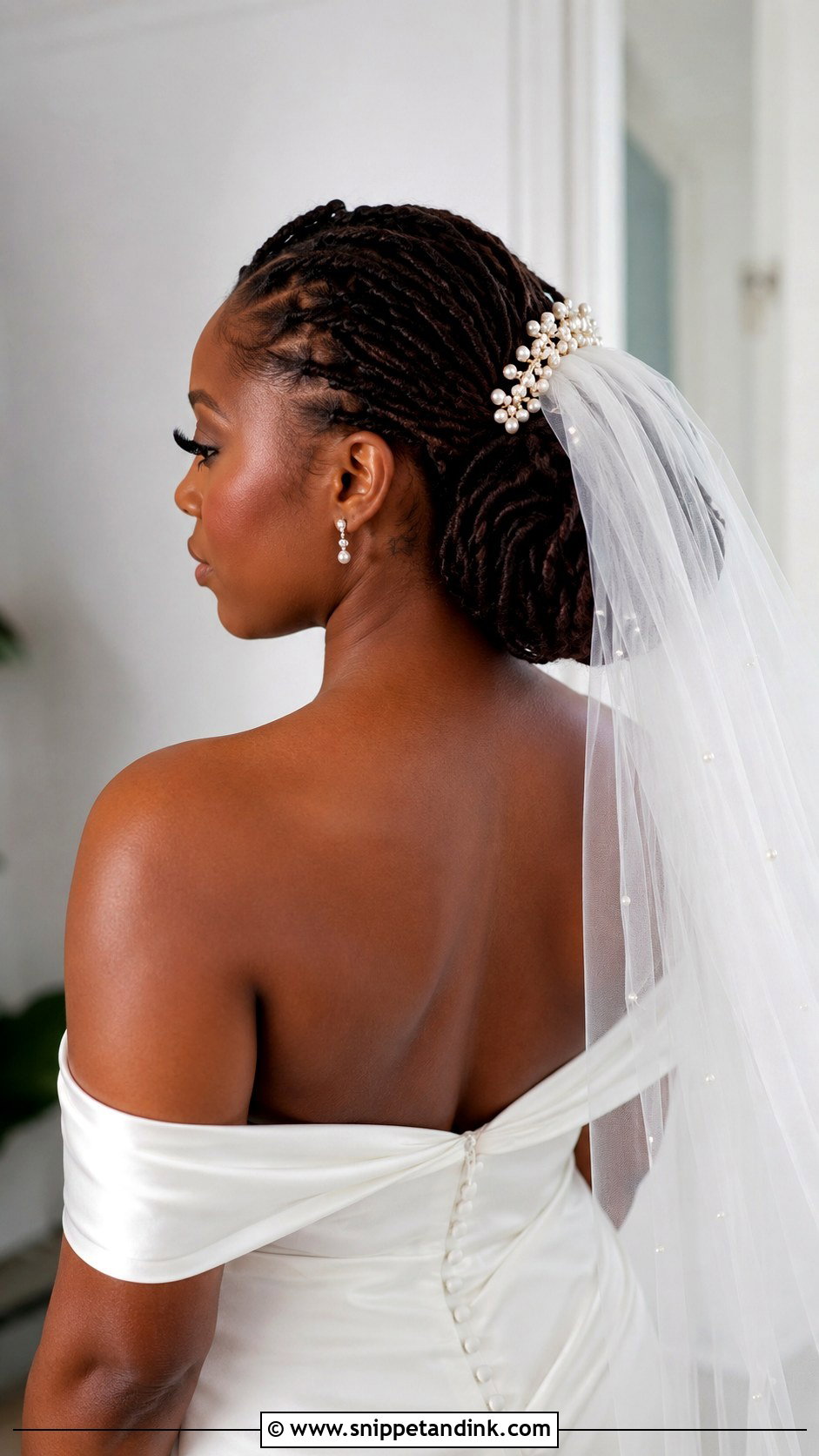
A faux hawk gives you the height of a mohawk without shaving anything; the sides are simply pinned or twisted back to create the illusion. The central locs become rolls, curls or a soft peak. It’s less tension-heavy than a true mohawk updo because the sides can sit a little looser. Sparkling pins along the sides add glamour. It suits a bride who wants her hair to lead the look.
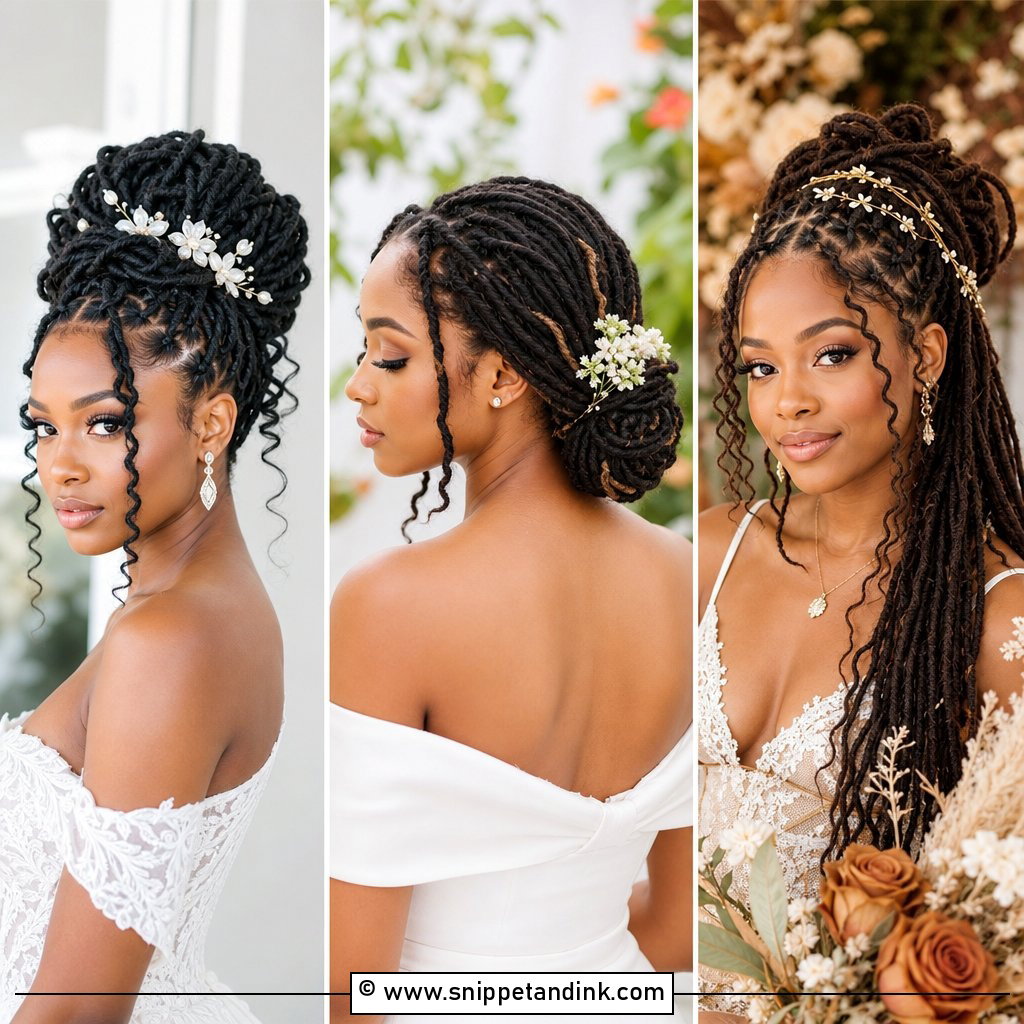
18. Loc Updo With Fresh Flowers
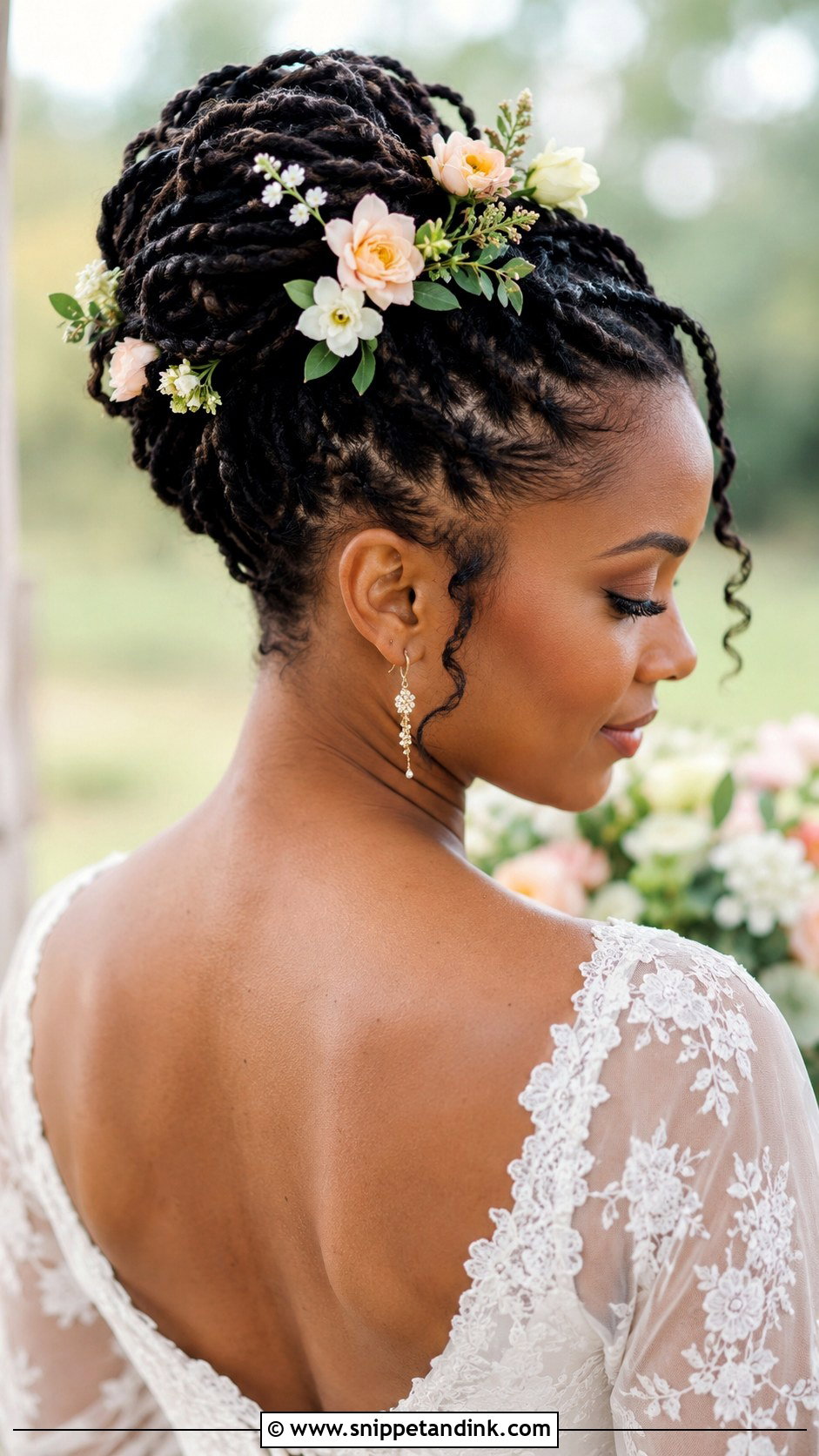
Fresh flowers tucked into twisted or pinned locs bring color and texture from your bouquet into your hair. I ask the florist for hardy blooms, wired and taped, because soft petals wilt fast against a warm scalp. A few buds look subtle; a full cluster makes a strong floral point. Match the palette to your bouquet. It suits outdoor, spring and summer weddings, though in heat I’d avoid gardenias and other bruise-prone flowers.
19. Chunky Loc Bun
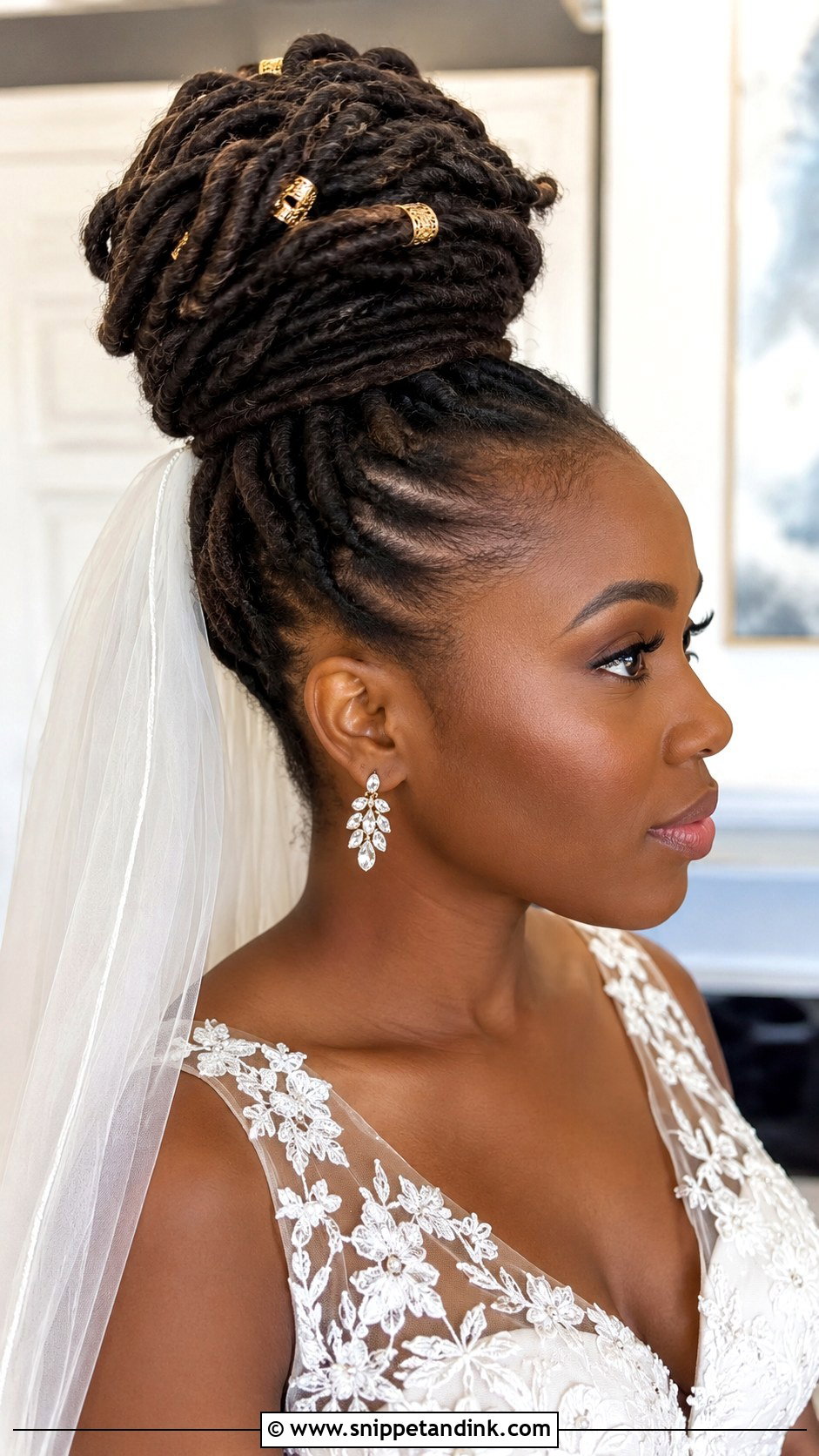
Thick locs make a full, sculptural bun with almost no added detail. The size is the point. High looks dramatic, low looks classic. With very full locs, I sometimes split the bulk and wrap it in two layers so the bun sits flat against the head instead of tipping backward. A few gold cuffs or a single jeweled pin dress it up.
20. Loc Crown Braid
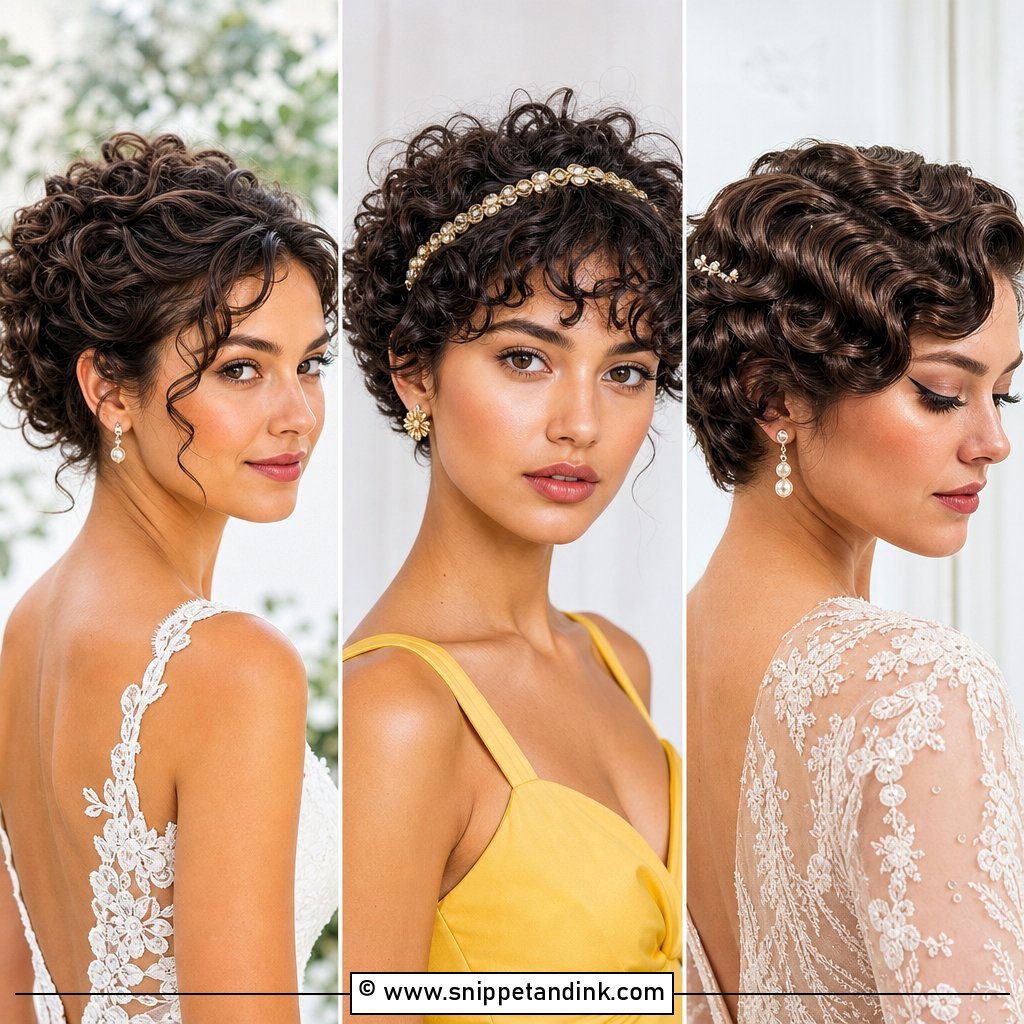
A crown braid sits along the hairline like a natural tiara, so you don’t need a headpiece. I braid loosely at the front to avoid pulling on the edges, then pin the braid flat as I go around. Small flowers between the braided sections suit boho, garden and vintage weddings. Once anchored, it stays secure through a long celebration, and your locs become their own crown.
21. Loc Chignon
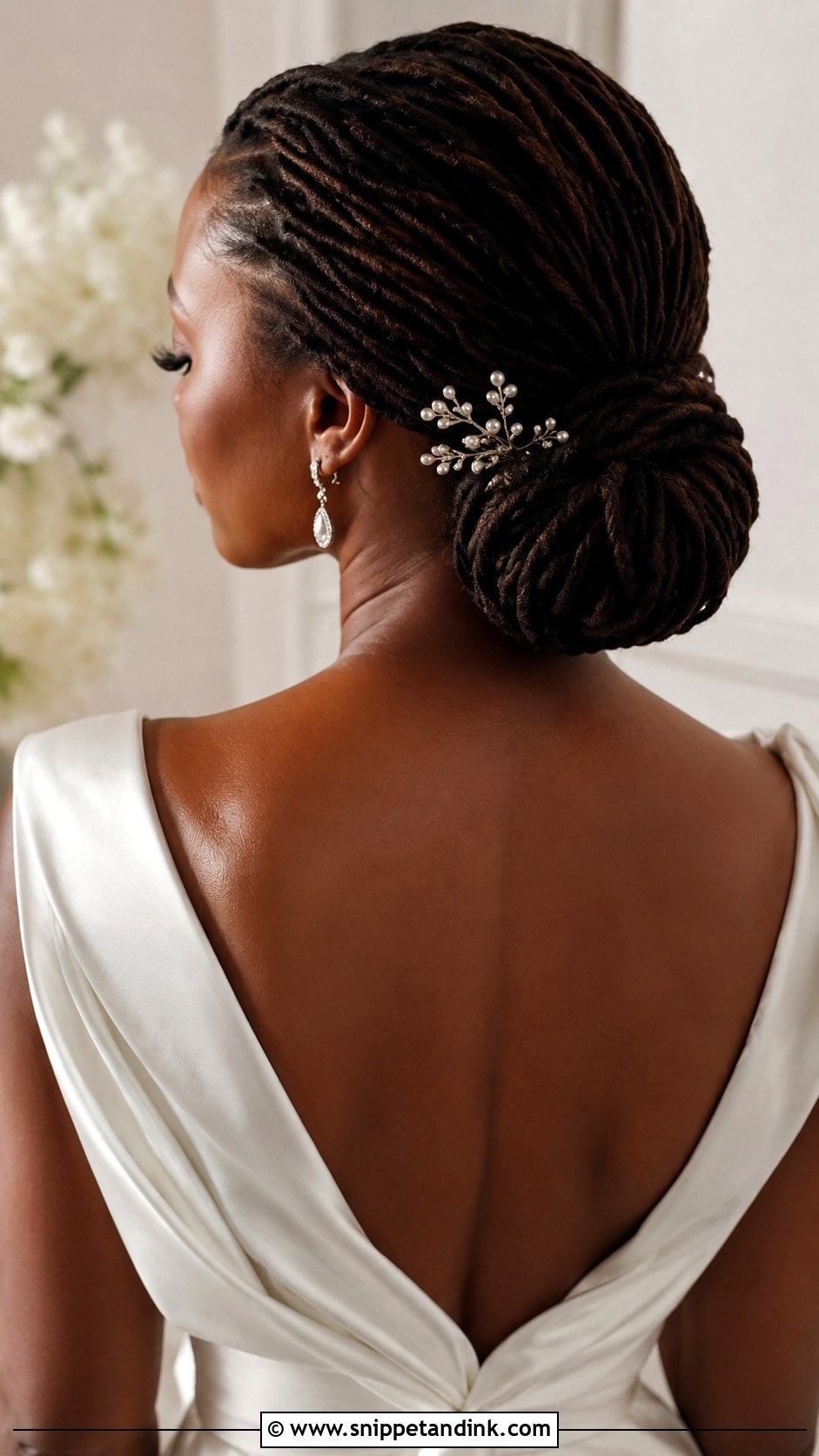
A chignon is the classic coiled knot at the nape, smooth and refined. I coil the locs and pin through the coil, not just around its edge, so it doesn’t loosen as the day goes on. Tight and structured for black tie, slightly looser for a softer feel. It sits under a veil easily and leaves the neckline and jewelry clear. Simple styling, done precisely, looks as luxurious as anything elaborate.
22. Two-Strand Twist Loc Updo
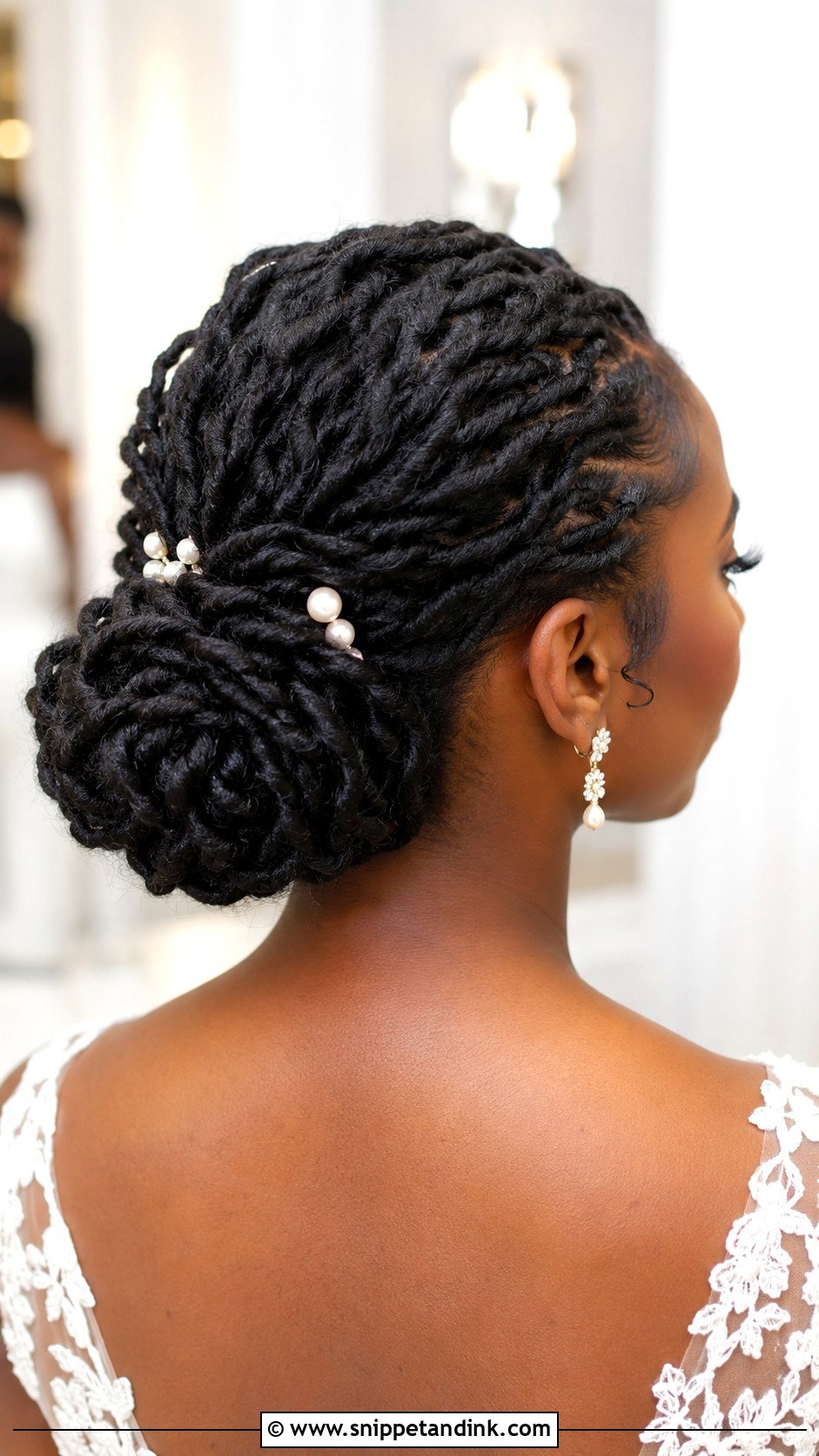
Twisting pairs of locs together before pinning them up adds definition and pattern. I twist in the same direction throughout so the pattern looks deliberate rather than random. The finish is soft yet structured. Gather the twists into a bun or let a few fall at the face, and add pearls or gold for sparkle. It’s an easy way to give texture without a long chair time.
23. Loc Updo With Hair Vine
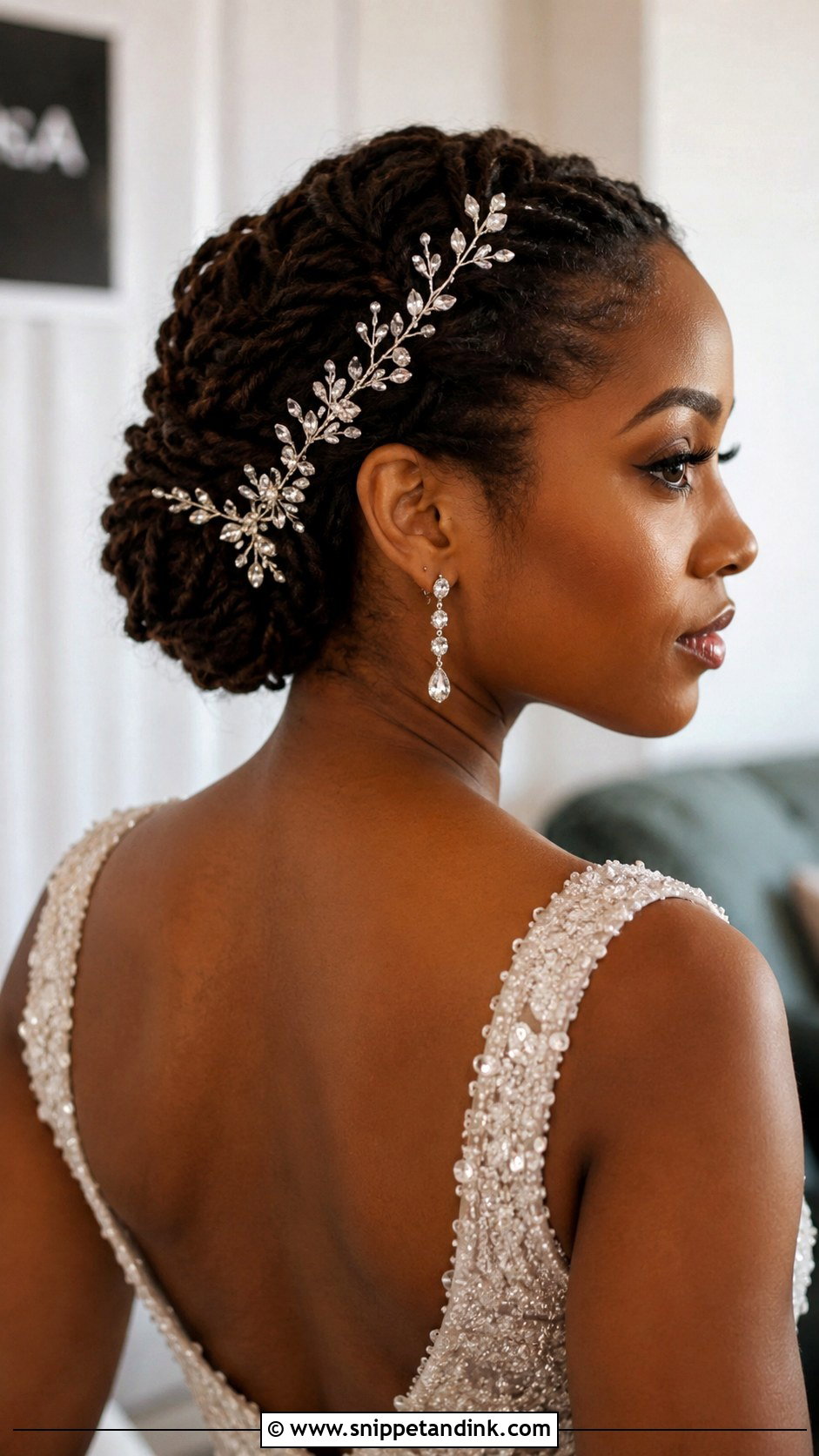
A crystal or floral hair vine bends through your updo instead of sitting stiffly like a tiara. I weave it in and stitch it down with small pins every few inches, otherwise it lifts at the ends. It can wind through a bun, around a crown twist or along a half-up style. It catches light in photos without the weight of a heavy headpiece, and suits ballrooms and gardens alike.
24. Loc Updo With Side Bangs
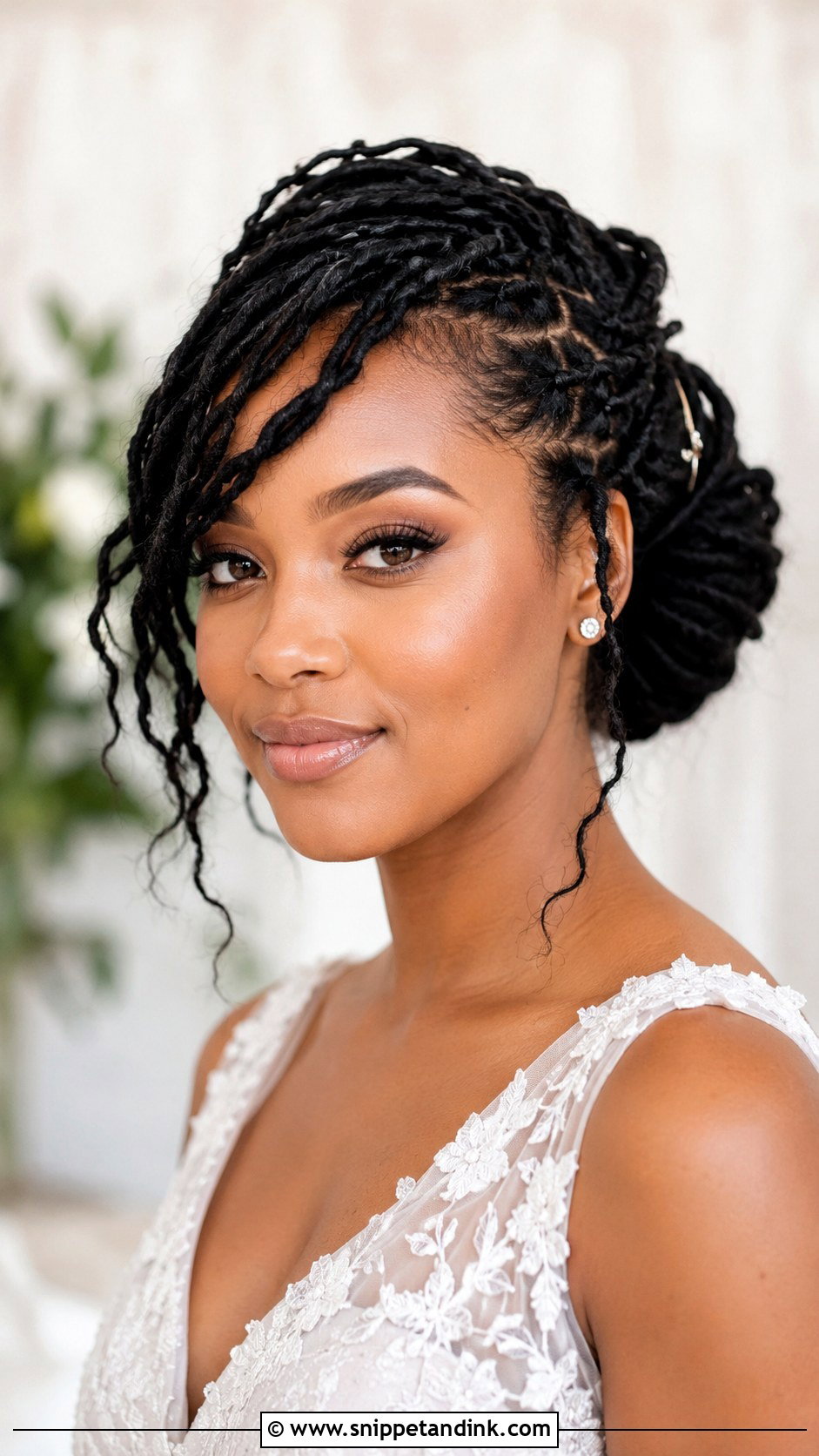
Leaving a few locs loose at the front to sweep across the forehead softens the structure of an updo. I set these front locs with a curve the night before so they fall to the side instead of straight into your eyes. They frame the eyes and add movement. Pair with a sleek bun or twisted crown. If you’ll be outdoors in wind, keep the bang locs short enough to tuck behind an ear.
25. Loc Goddess Updo
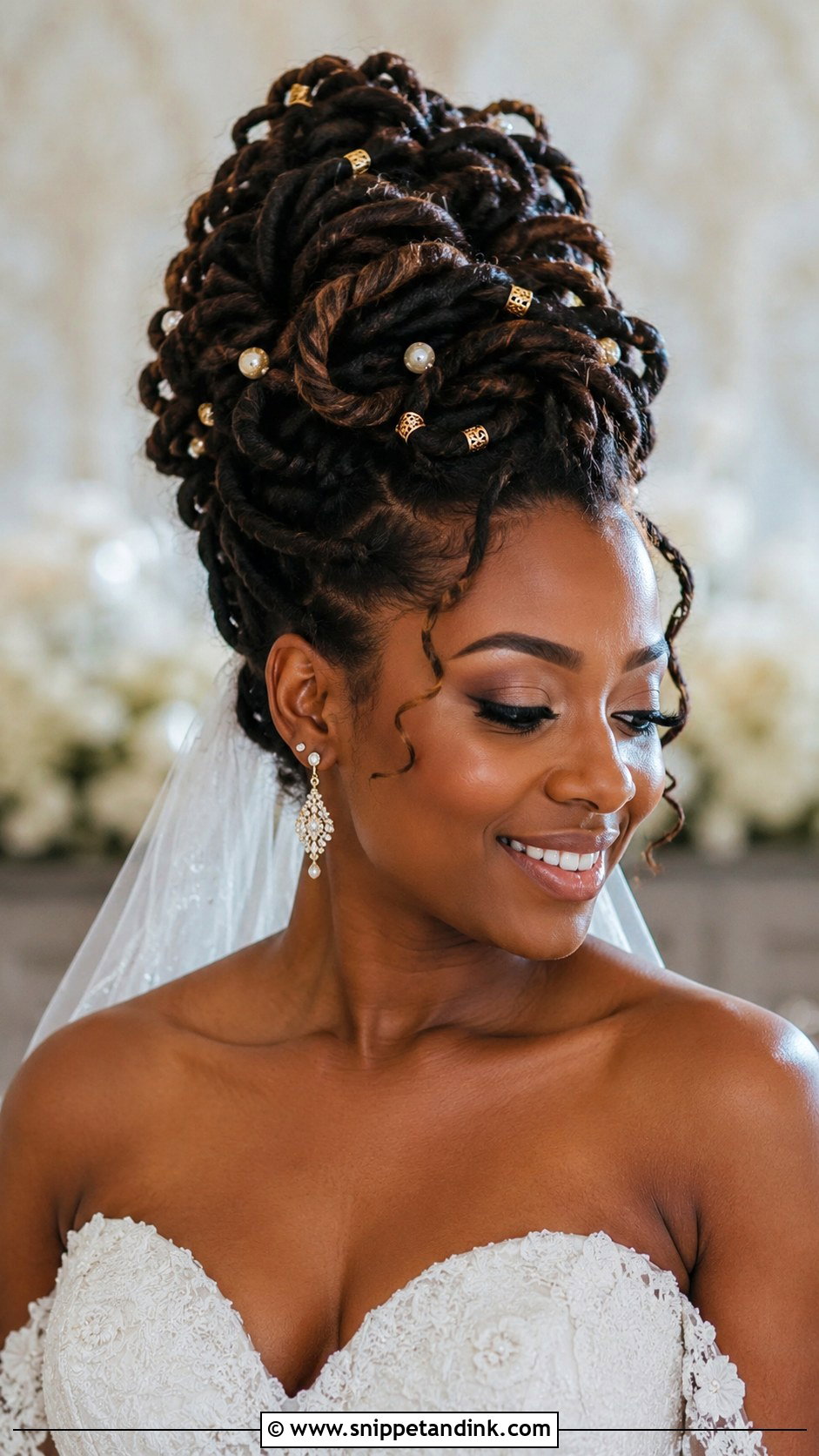
The goddess updo piles locs high into twists, loops and curls, the most sculptural style here. It takes the longest to build and carries the most weight on top, so I only suggest it to brides whose scalp is comfortable with height, and I distribute the locs across several anchor points. Gold cuffs, pearls or fresh flowers add to it. It fits grand formal weddings and brides who want their hair to be the centerpiece.
Heavy Locs and Tender Edges: Keeping an Updo Comfortable All Day
Mature locs can be surprisingly heavy, and an updo concentrates that weight on a few points. Most of my work on a loc bride is about spreading the load. I anchor to several sections instead of one, use large U-pins that grip through the loc rather than bobby pins, and keep tension off the hairline, where repeated pulling causes thinning over time.
At the trial, wear the style for a few hours. If you feel a pulling spot or a headache starting, tell your stylist; it won’t improve by evening. When the night ends, remove pins slowly and gently separate the locs rather than shaking them out.
Short, starter or waist-length locs
- Short locs: pin curls, petal shapes and a sculpted front with an accessory work better than forcing a bun.
- Starter locs: keep manipulation light, since young locs can unravel. Half-up styles and loose looks with a clip are safest.
- Waist-length locs: low buns, chignons and side-swept styles carry the weight best; very high styles get heavy fast.
Locs Down the Aisle, Styled the Way You Wear Them
Your locs are part of who you are, and the wedding is the day to let them be seen. A sleek low bun, a crown twist or a goddess updo can all be shaped to your length, weight and scalp comfort. Go soft, structured, or somewhere between, and add pearls, gold cuffs or flowers to make it yours. Most of all, book a stylist who works on locs regularly and do a trial with your actual accessories, so the day itself holds no surprises.
You'll Like These Ideas:


Leave a Reply