
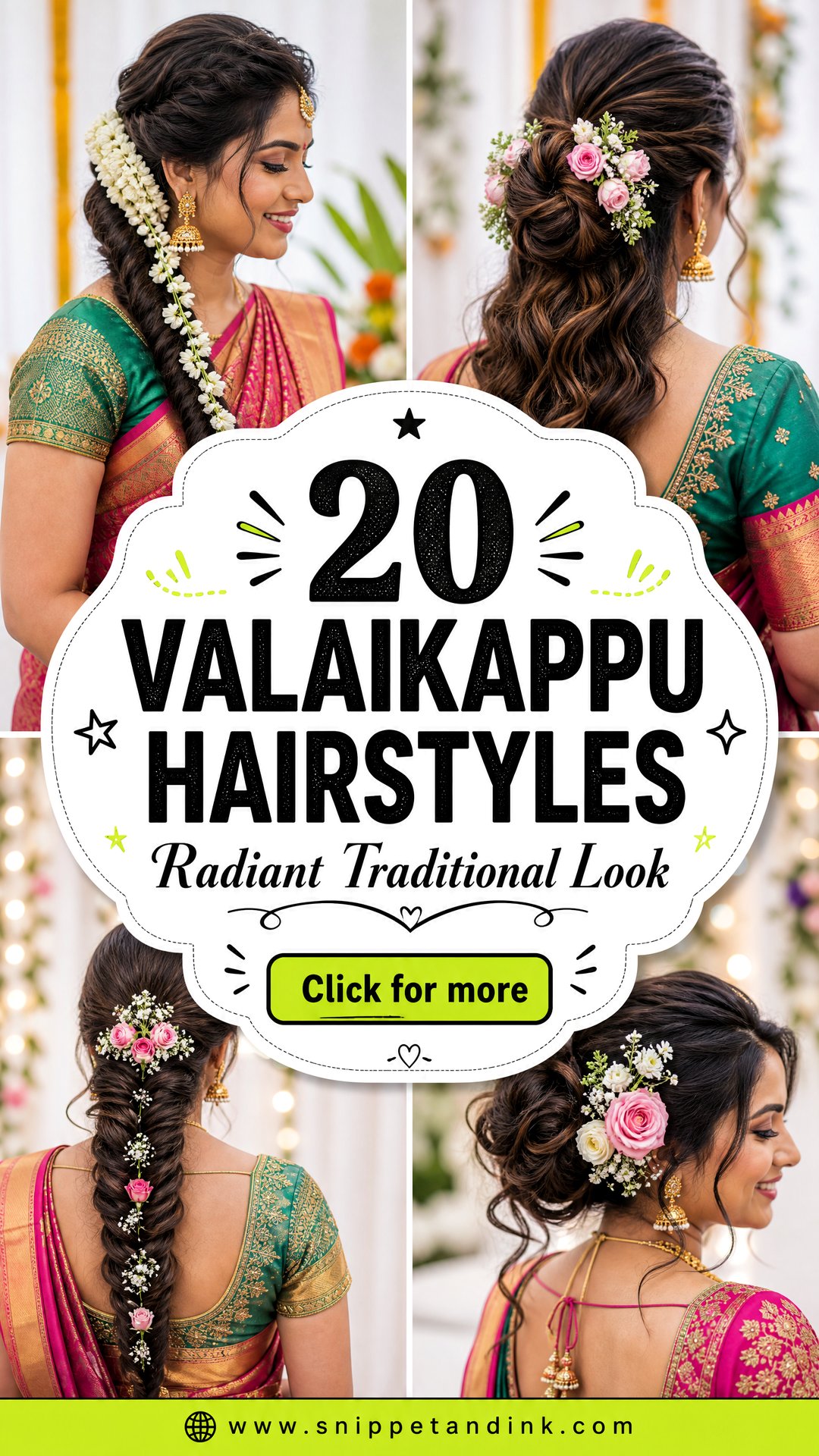
Valaikappu is the Tamil and South Indian blessing for a mother-to-be, when elders slide glass bangles onto her wrists and the house fills with flowers. Hair for this ceremony is a different job from bridal hair, even when the looks resemble each other. The person in my chair is usually seven to nine months pregnant, she will sit through long rituals, and she may suddenly find jasmine overpowering. So I plan every style around comfort and weight first. The 20 Valaikappu hairstyles below run from jasmine-wrapped buns to full poola jada braids, with notes on how each sits during the ceremony and who it suits.
Styling Hair at Seven or Nine Months Pregnant
Late pregnancy changes how I work. Standing or sitting upright for a long styling session is tiring, so I aim to keep the appointment short and set you up on a chair with a backrest, not a stool. A heavy poola jada can take a long time to stitch, so if you want one, have the braid done first and the flowers added while you rest.
Smell is the next consideration. Many women become sensitive to strong scents in pregnancy, and jasmine, mogra and hairspray can all trigger nausea. Tell me if certain smells bother you, and I’ll do the spraying near an open window and keep the most fragrant strings for the last step.
- Wear a front-opening blouse or top, so nothing goes over your head once the hair is done
- Eat and drink something before we start, and keep water nearby
- Tell me if your scalp feels tender; I’ll avoid tight sections there
- Plan where you’ll sit during the ritual, as high buns press against chair backs
1. Floral Bun With Jasmine Garland
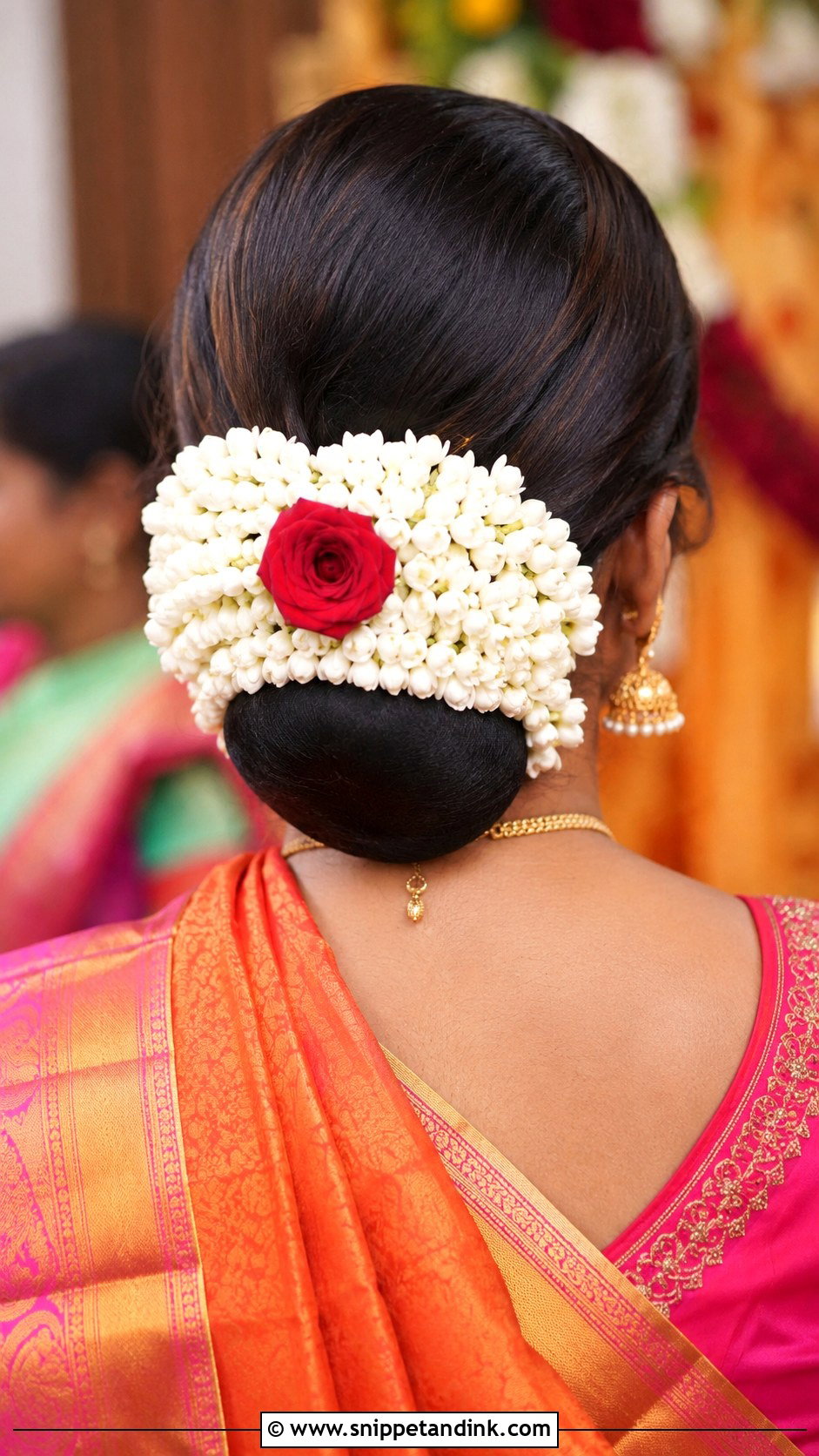
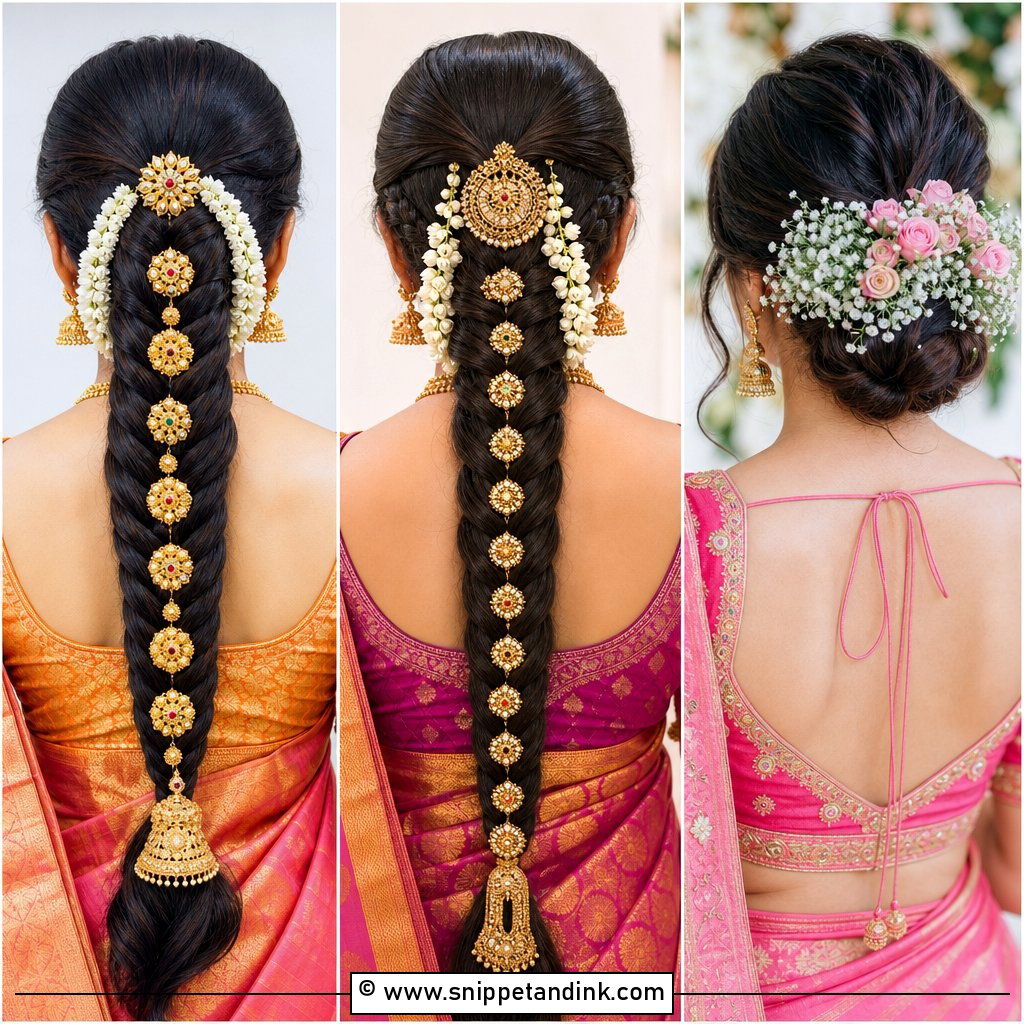
If a mother asks me for the safe choice, this is it. The bun sits low or mid-height and strings of jasmine circle it completely. I build the bun on a small, firm base first and then pin the jasmine to the bun itself, never to loose hair, so the strings don’t drag the style down as the morning goes on. A sleek bun looks formal against a silk saree; a slightly loosened one reads softer in close photos. One or two roses at the side are enough colour.
2. Traditional Long Braid With Fresh Flowers
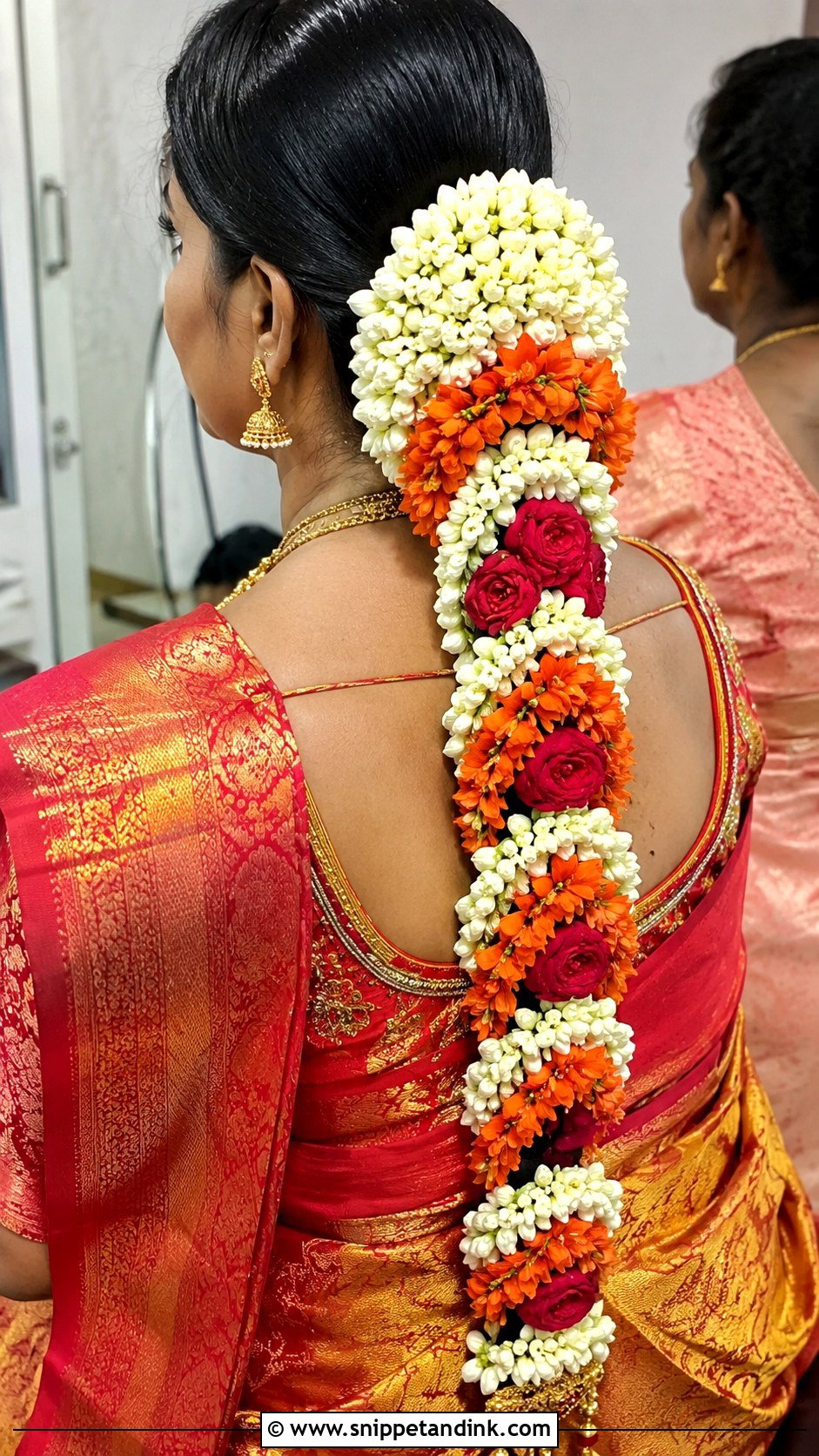
The long plaited braid covered in flowers, known as poola jada, is the most ceremonial look on this list. Jasmine, roses and kanakambaram are fixed in rows down the full length. A fully covered jada is heavy, and for a pregnant mother sitting for hours that weight pulls on the neck. I usually suggest a lighter version with flowers on the top half and a thinner row lower down. Choose the density at the trial, not on the morning; it’s hard to remove flowers once they’re stitched on.
3. Side Braid With Jasmine Strings
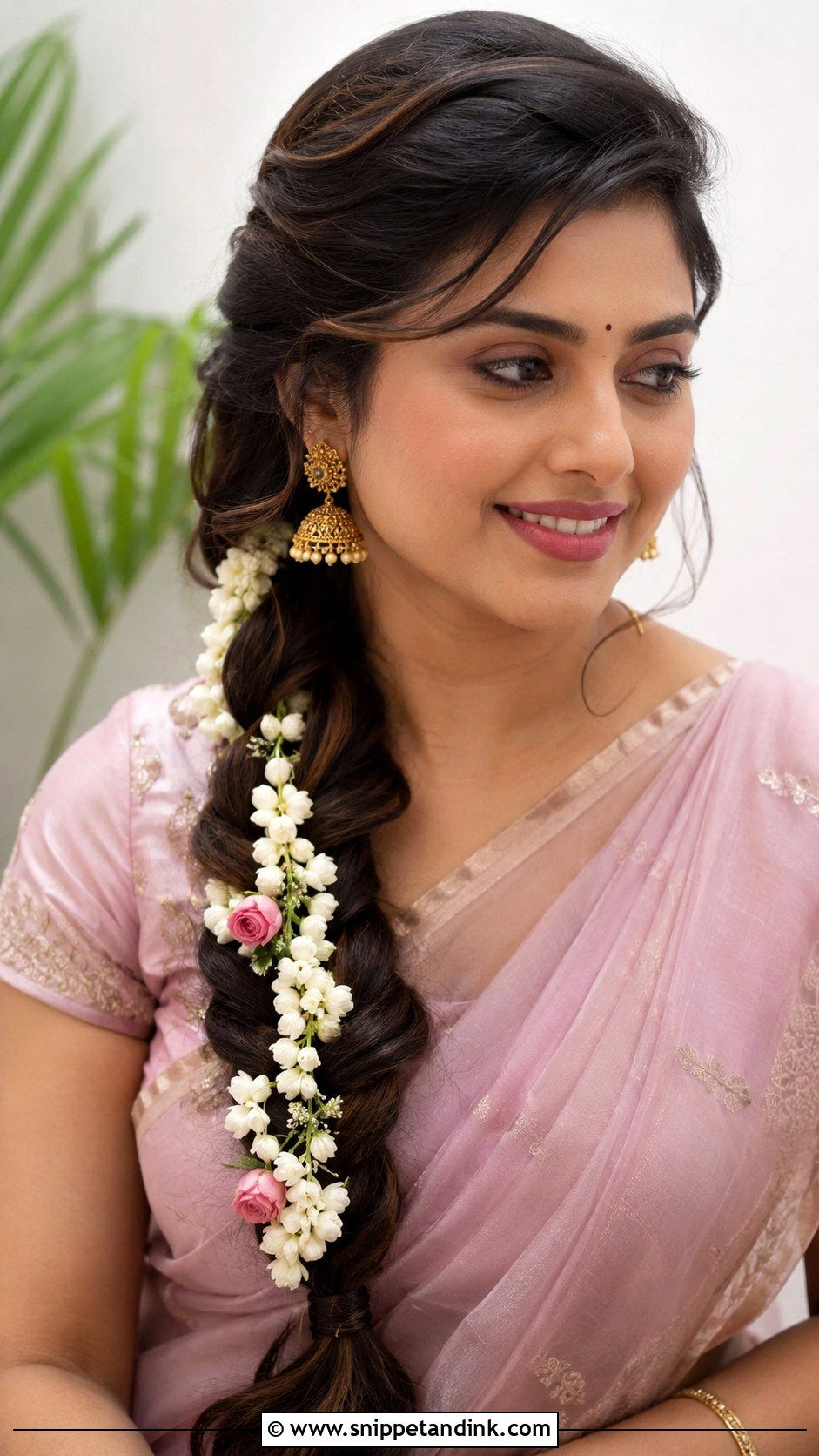
A loose side braid draped over one shoulder with jasmine strings woven through keeps the back of the neck free, which helps in warm halls. It’s also one of the lightest options for a mother who gets headaches from tight styling. The braid stays comfortable when you lean back against a chair, unlike a bun at the crown. Small rosebuds or mogra add colour, and it suits a lehenga as well as a saree.
4. Low Bun With Gajra Wrap
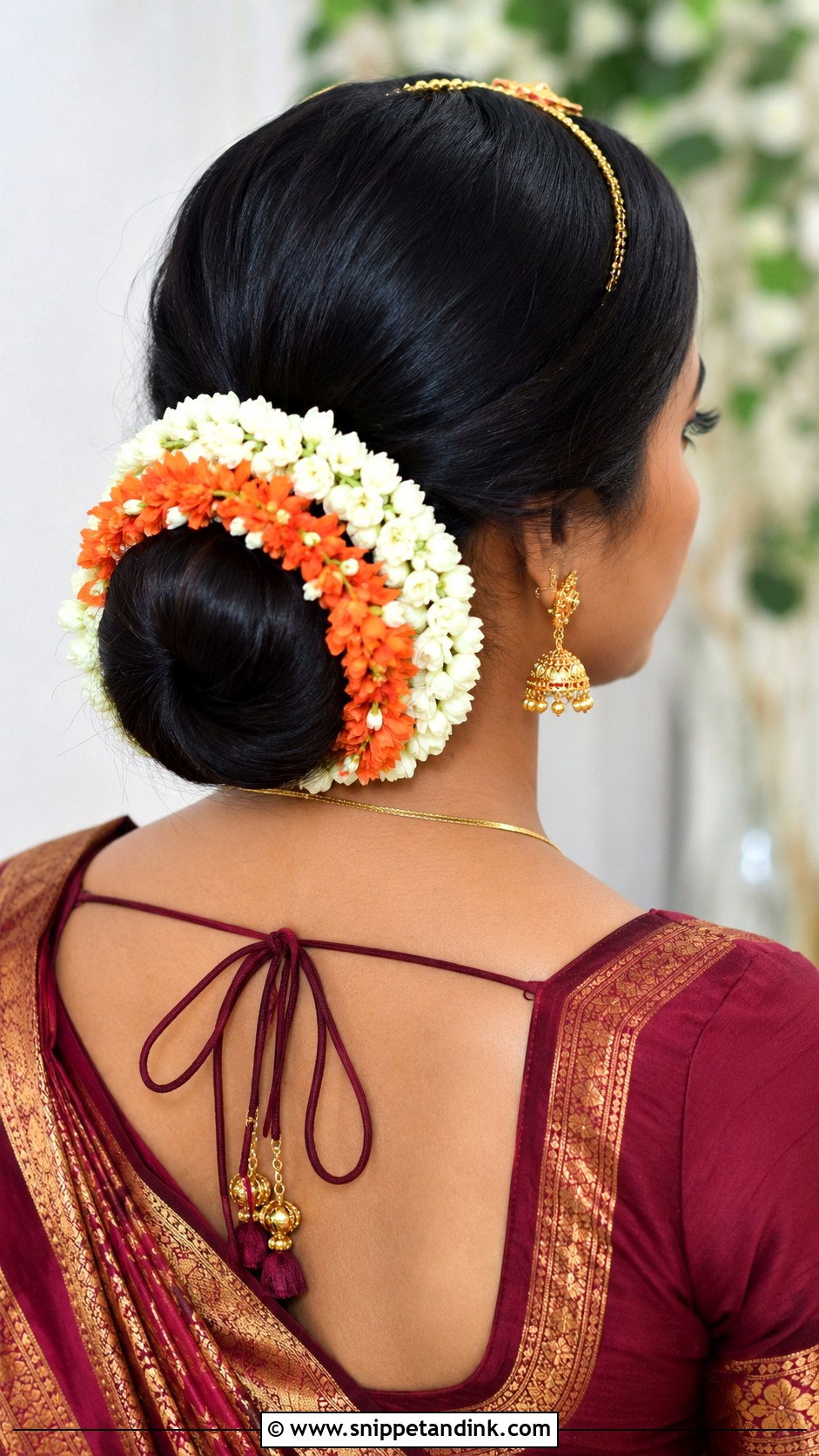
Here the hair goes into a plain low bun and the gajra circles the bun fully, keeping the fragrance close all through the ceremony. Because it sits at the nape, you can rest against a cushion during rituals without crushing anything. The clean shape leaves earrings and a maang tikka visible. I like a thin row of orange kanakambaram against the white for contrast, and the style looks the same at the evening photos as it did in the morning.
5. Half-Up Floral Bun
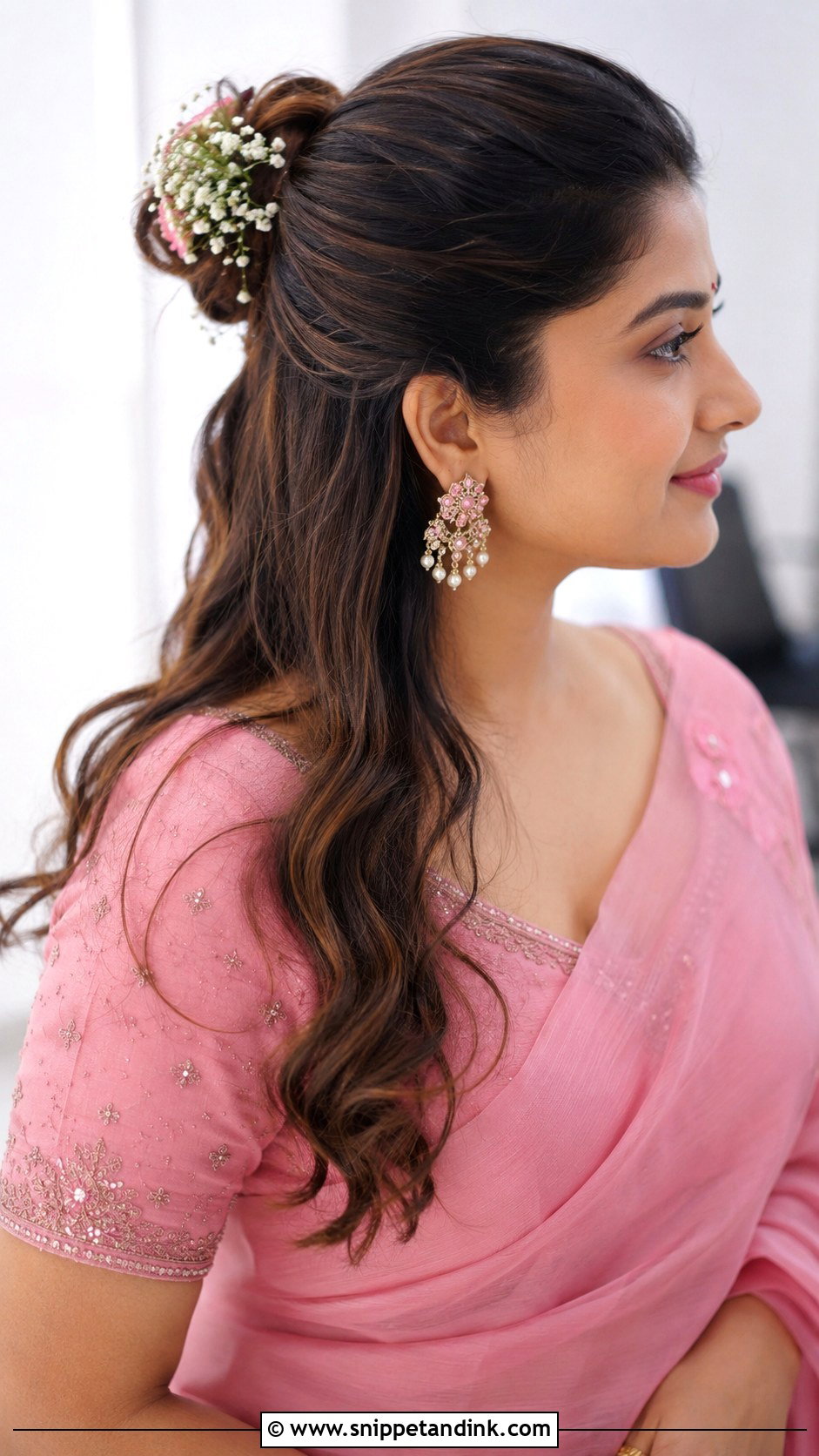
The top section goes up into a small flowered bun and the rest stays open, loose or lightly waved. Mothers who rarely tie their hair often prefer this, because open hair feels familiar. In heat, though, the open lengths stick to the neck, so I’d only suggest it for an air-conditioned venue or a cooler month. Jasmine around the small bun is enough; it also works with an Indo-western outfit.
6. Fishtail Braid With Flowers
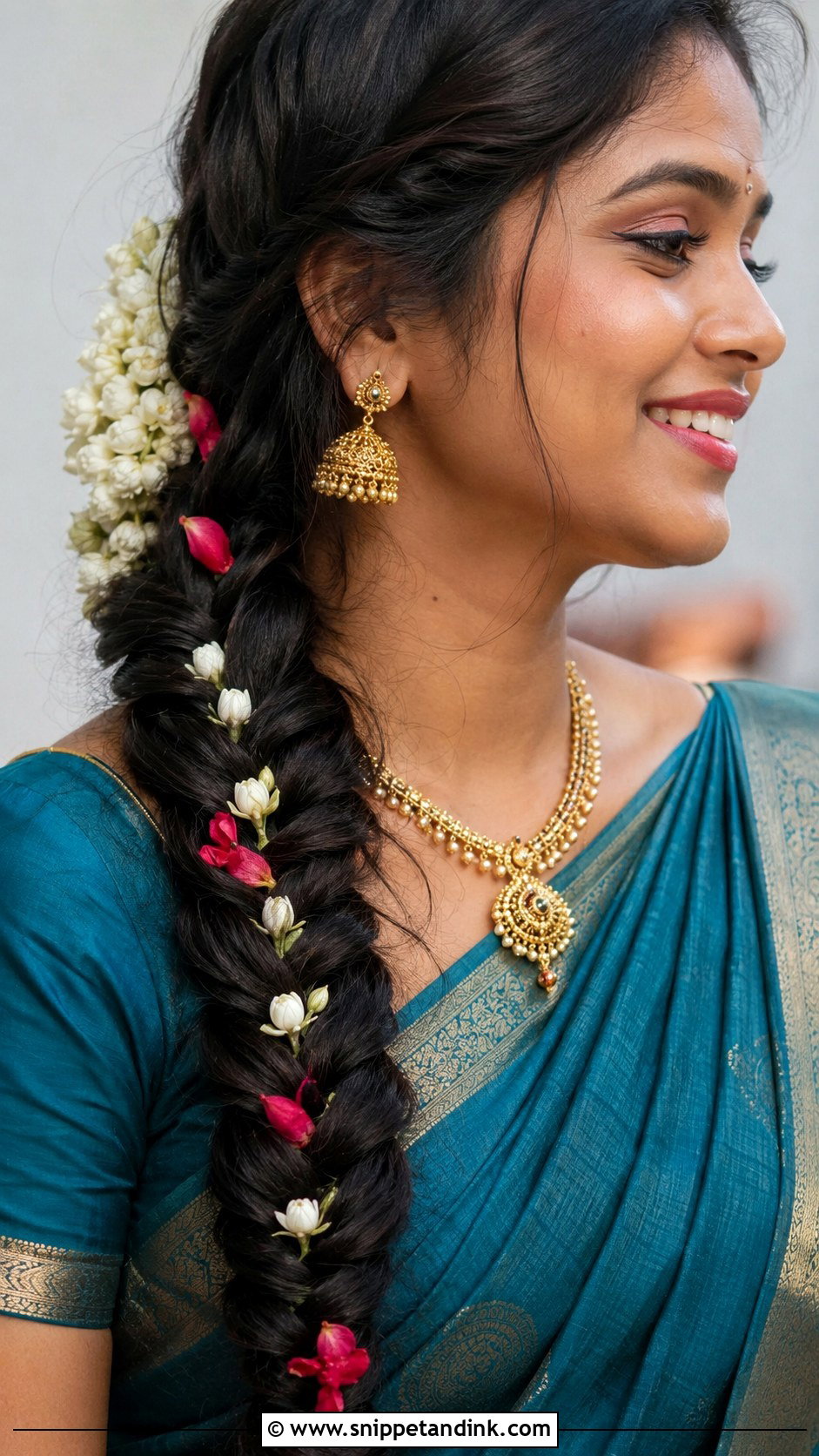
A fishtail is made of many tiny crossings, so it shows texture far more than a three-strand braid. Tiny jasmine buds tucked into the weave sit securely because the braid is so tight. It works on most lengths, though very short layers poke out of a fishtail more than a plain plait. After braiding I gently pull the edges wider for fullness, then add the flowers last so the pulling doesn’t dislodge them.
7. Donut Bun With Rose And Jasmine
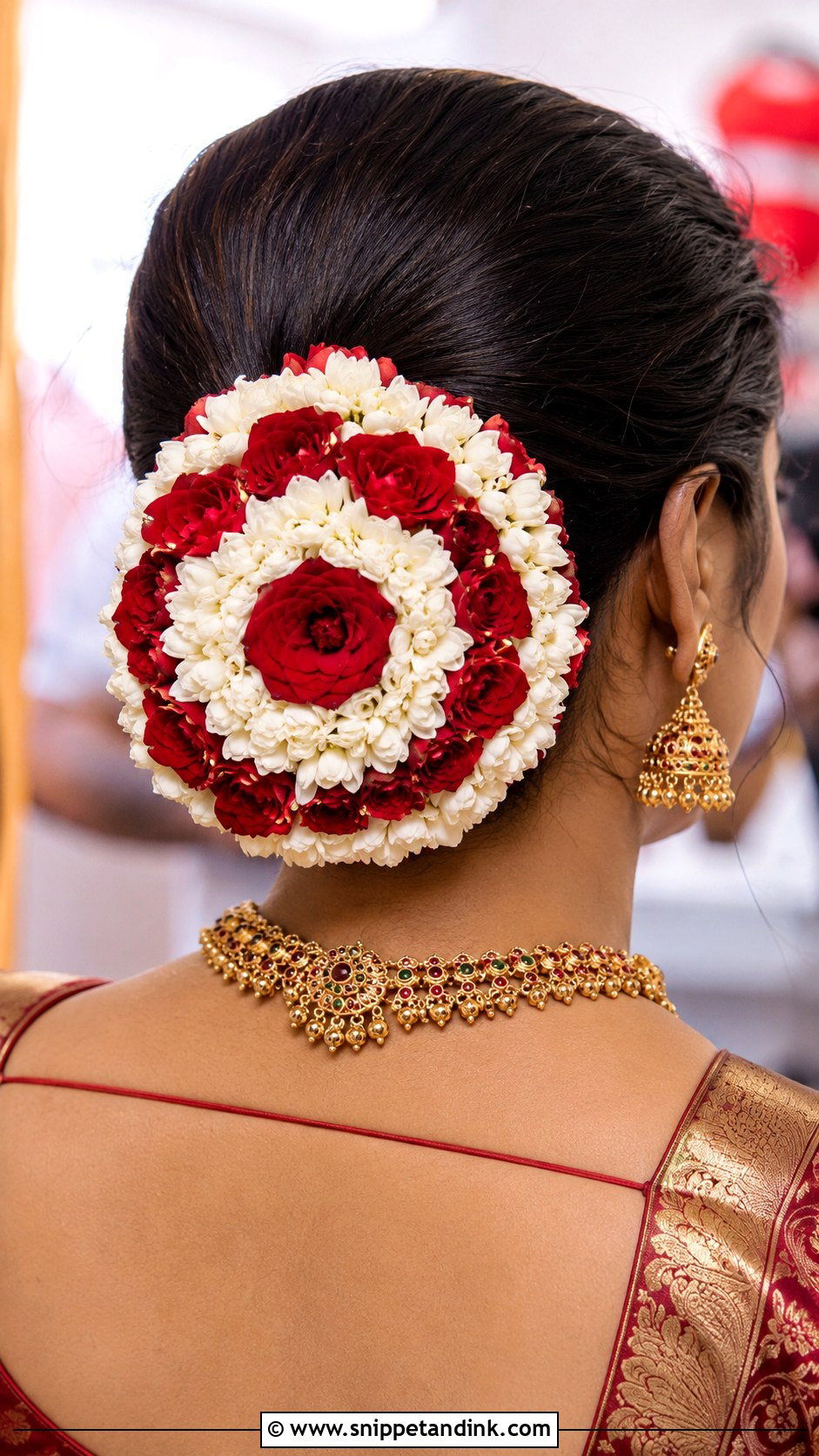
A donut base gives a big round bun that holds a lot of flowers, with red roses and white jasmine arranged in alternating rings. It’s the grandest of the buns and sits well with heavy silk and temple jewellery. All those flowers add weight, so I anchor the donut with crossed pins in four directions before decorating. I’d steer a mother away from it if she’s already feeling neck or back strain, because the load sits in one spot.
8. Braided Crown With Flowers
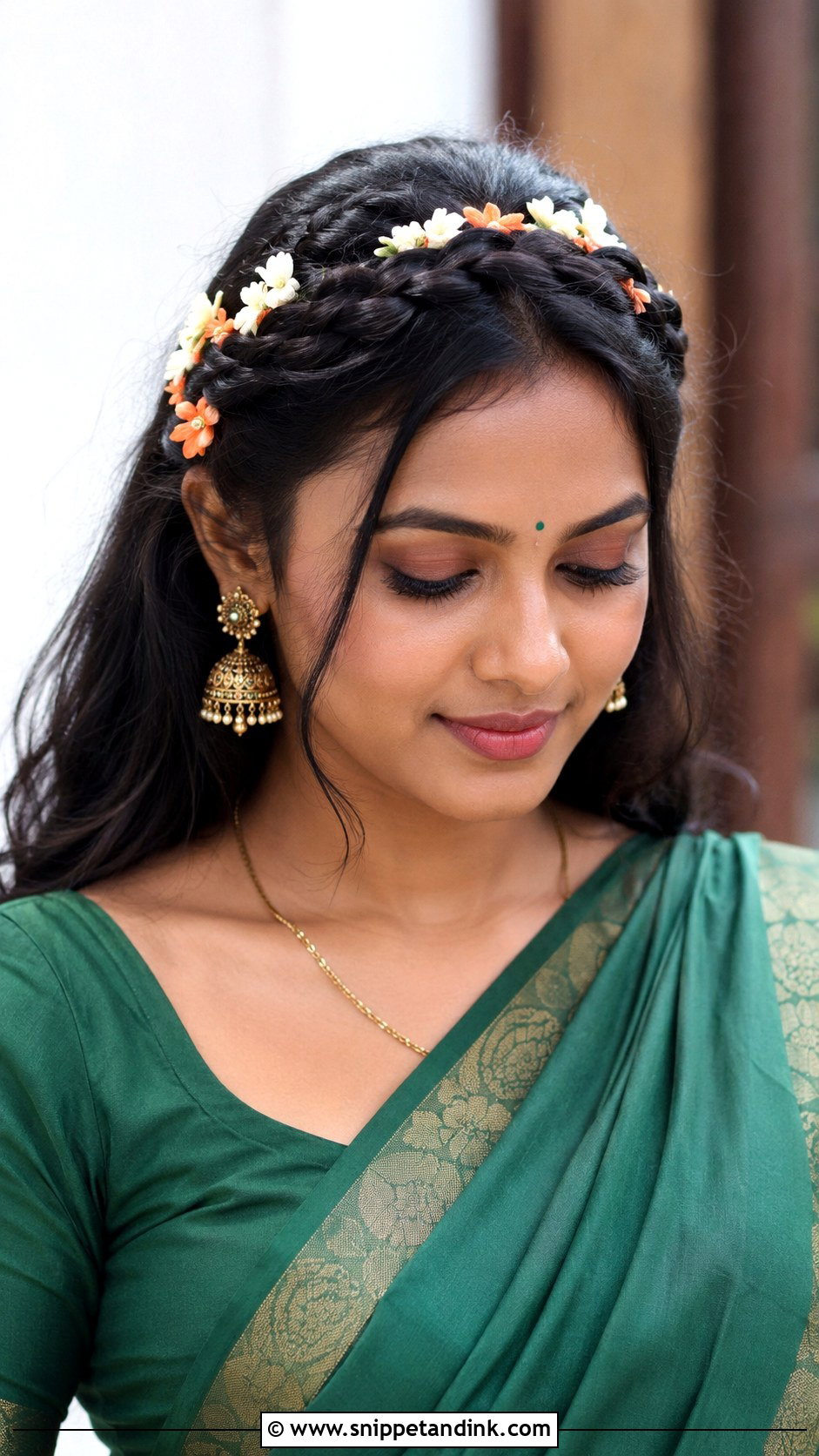
Braids along the hairline meet around the head to form a crown, with jasmine or kanakambaram tucked in. It keeps hair off the face completely, which is useful when elders are applying sandalwood and kumkum to your cheeks and forehead during the ritual. The back can stay loose or go into a soft bun. Check the crown in a hand mirror before the flowers go in; gaps are much easier to fix at that stage.
9. Twisted Updo With Floral Accents
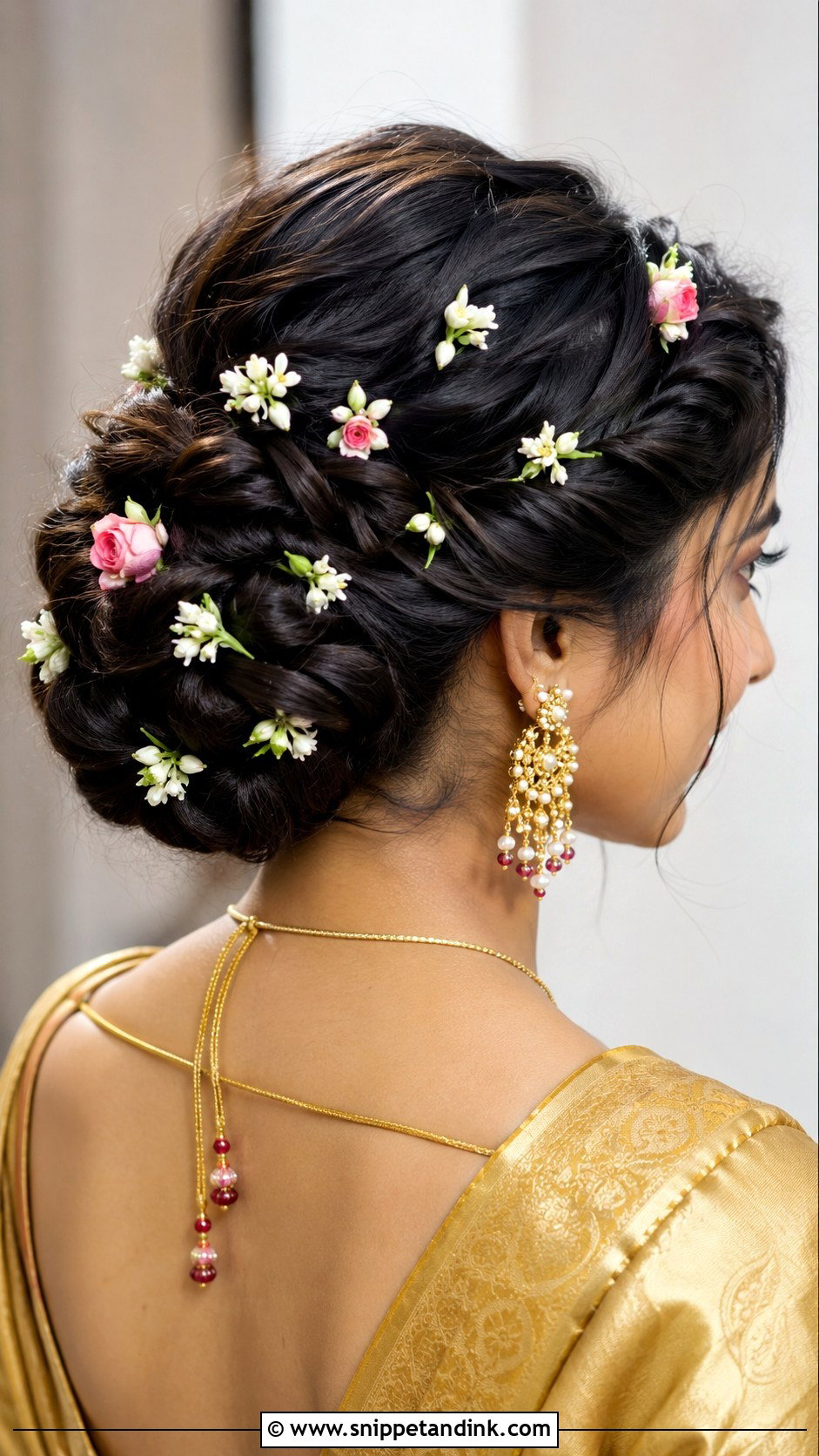
Sections of hair are twisted and pinned up, then dotted with flowers wherever they fit. It’s lighter than a braid-and-bun combination and keeps the neck cool. I spray each twist lightly as I pin it rather than spraying the whole head at the end, which is kinder to a pregnant mother who may be sensitive to fumes. It sits well with statement earrings and a silk saree.
10. Low Bun With Mogra Flowers
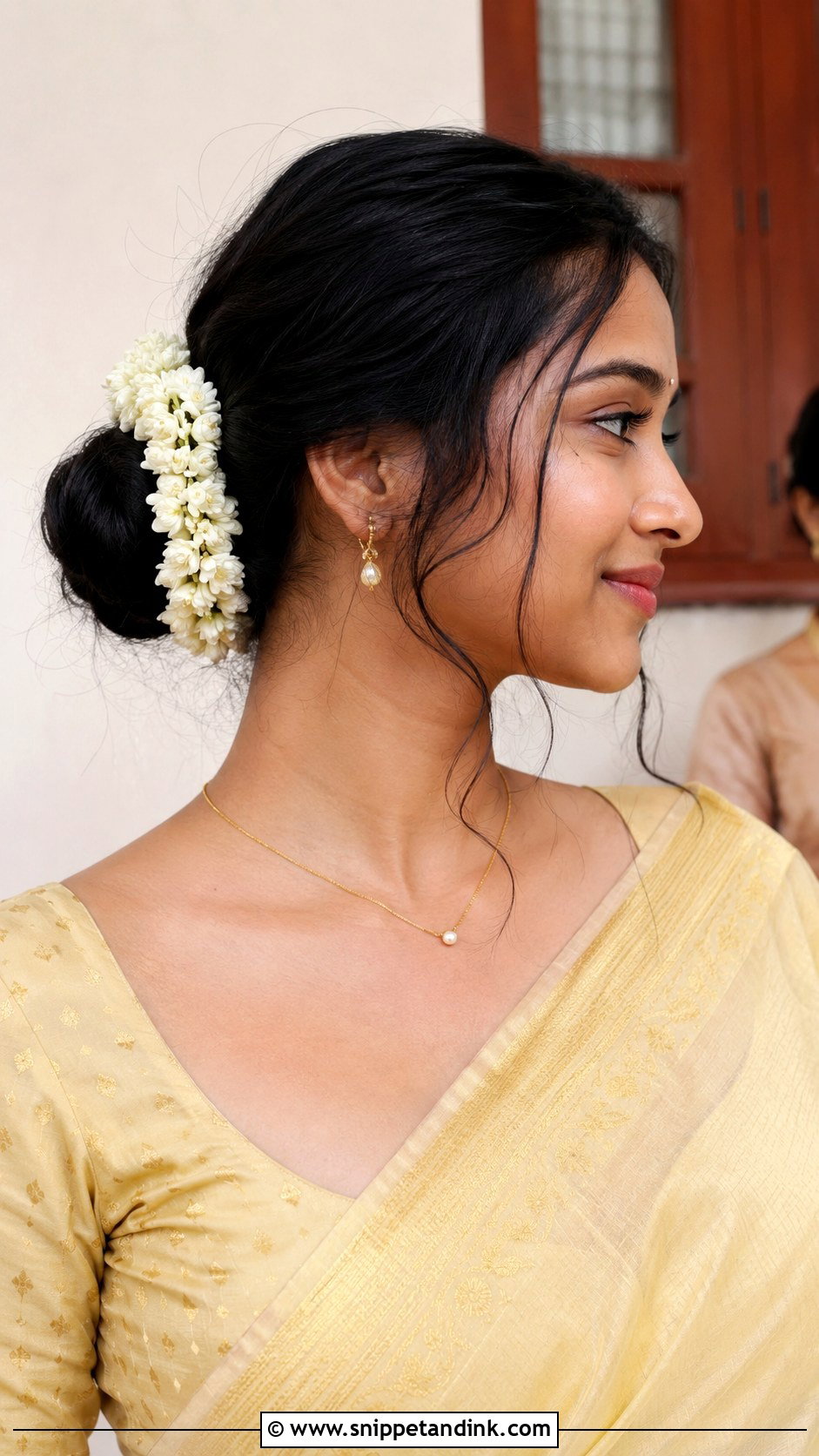
Mogra has a sweet, strong scent, and that’s the first thing I ask about before choosing it: some women find it pleasant all day, others feel queasy within an hour during pregnancy. If you’re fine with it, a low bun wrapped in mogra is comfortable and easy to rest against. Leave a couple of strands out at the face. If you’re unsure, a mix of mogra and unscented flowers gives you the look with less fragrance.
11. Front Puff With Braid And Flowers
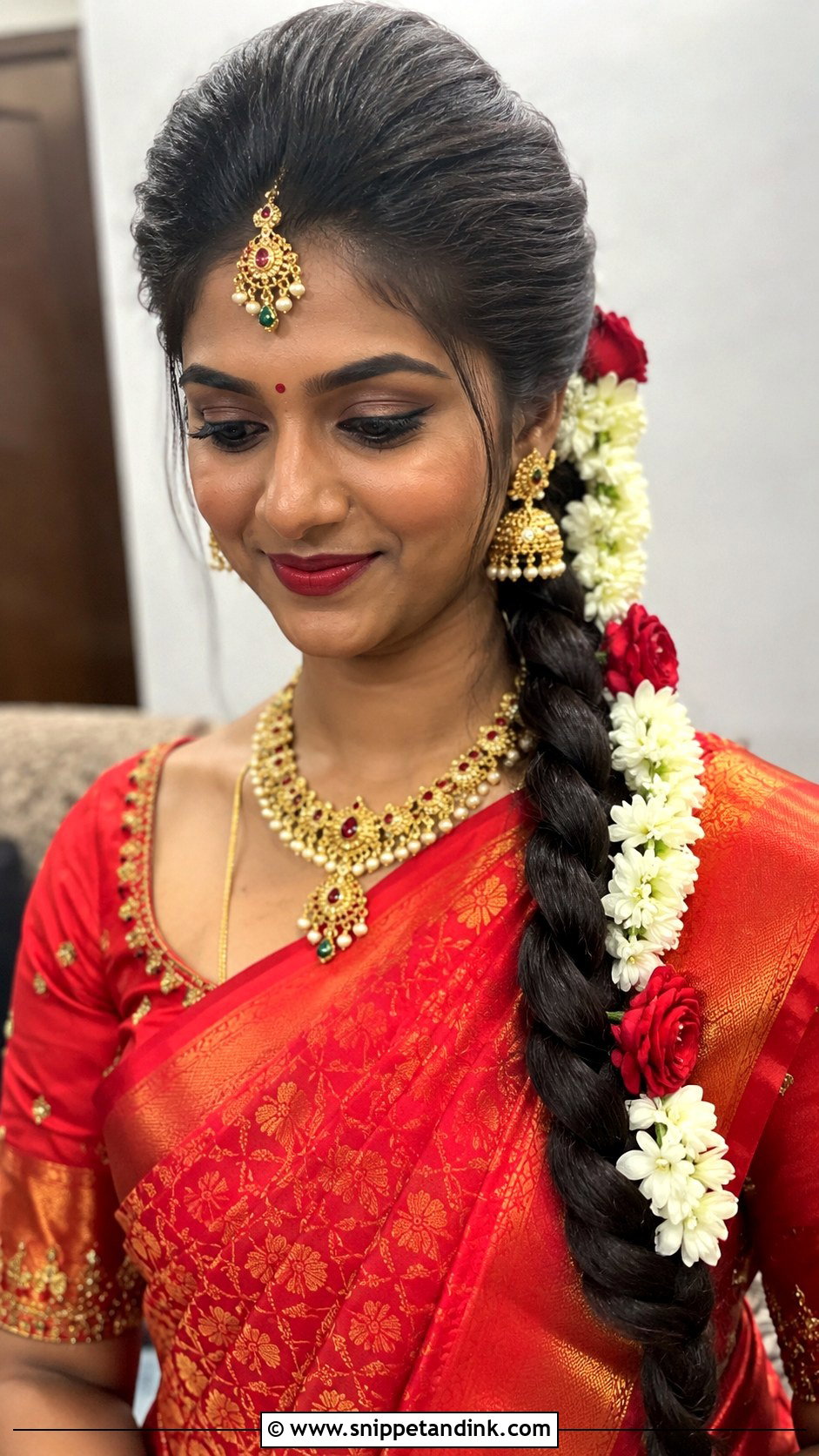
A front puff adds height at the crown, and a flower-filled braid runs down the back. I backcomb the puff lightly at the root and pin it from underneath so it holds without heavy spray. The puff height should be adjusted to your face: smaller on a long face, taller on a round one. Jhumkas and a maang tikka finish it, and the overall effect is close to bridal.
12. Dutch Braid With Jasmine
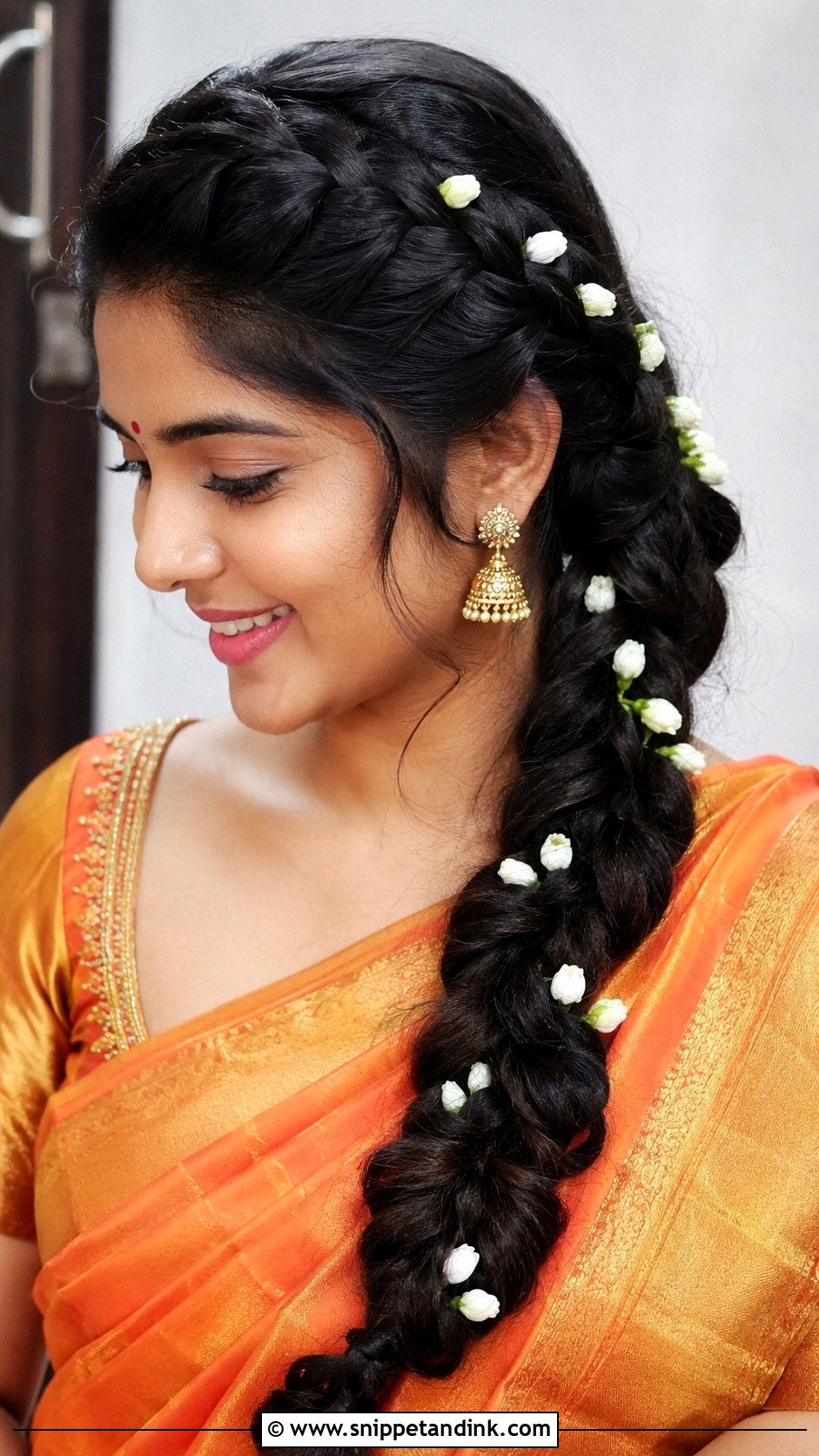
In a Dutch braid the strands cross under rather than over, so the plait sits raised on the surface. That ridge holds jasmine strings and buds better than a flat braid. It can run straight down the back or to one side. Because it’s braided tight to the scalp, it holds up through a crowded, active day without much maintenance.
13. Messy Bun With Loose Curls And Flowers
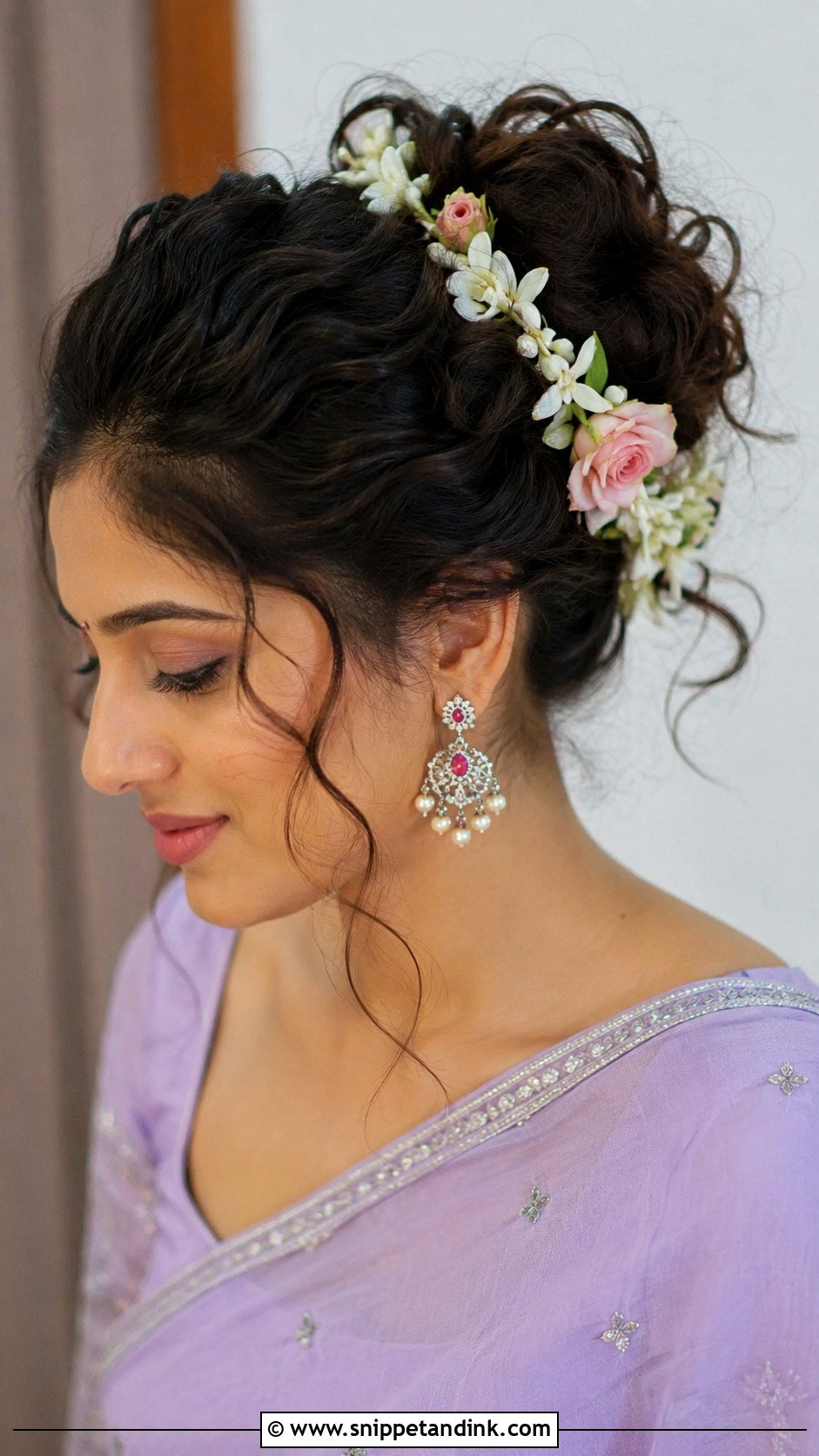
A loose bun with a few soft curls left out at the face is relaxed without looking unfinished, and most of the hair stays up, which helps in warm weather. I curl the face pieces with a medium iron and let them cool fully, or the heat of the hall drops them by lunch. Jasmine, roses or baby’s breath all suit it.
14. Bun With Kunjalam Tassels
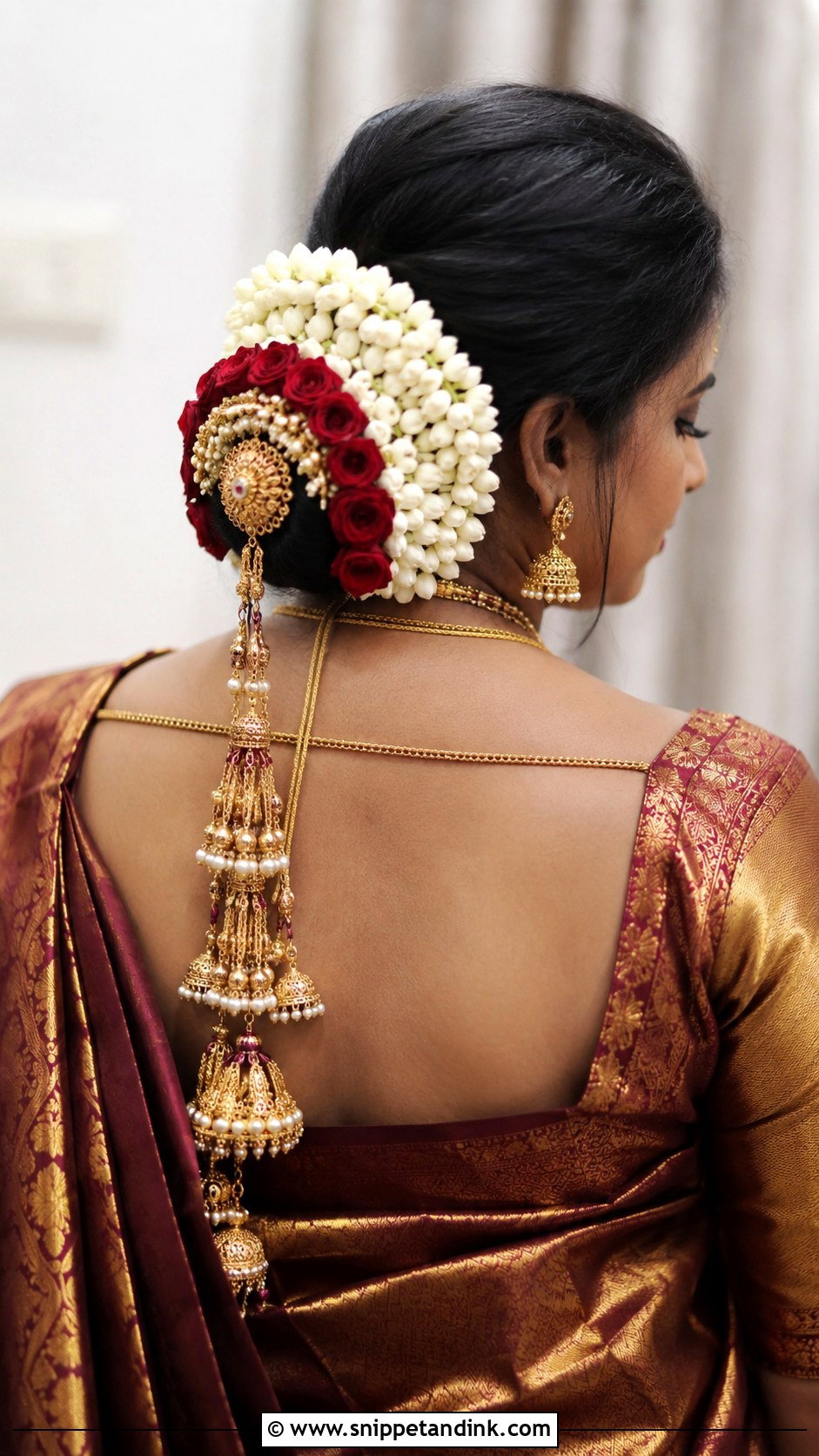
Kunjalam, the traditional braid tassels, hang from the base of the bun and swing as you move. With jasmine and roses wrapped around the bun, it’s the most heritage-rooted look here. The tassels have some weight, so I attach them to the firm base of the bun with a dedicated pin rather than to a loose section. It pairs naturally with silk and temple jewellery.
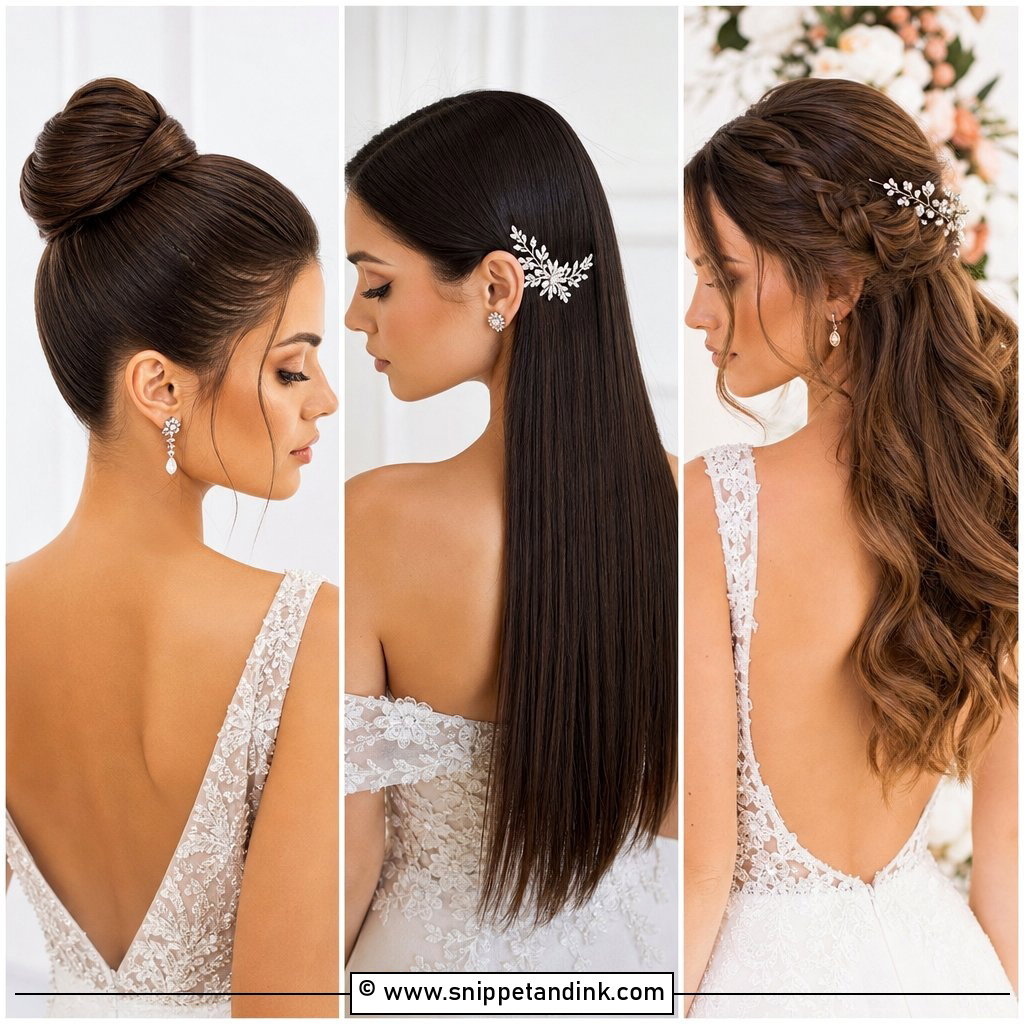
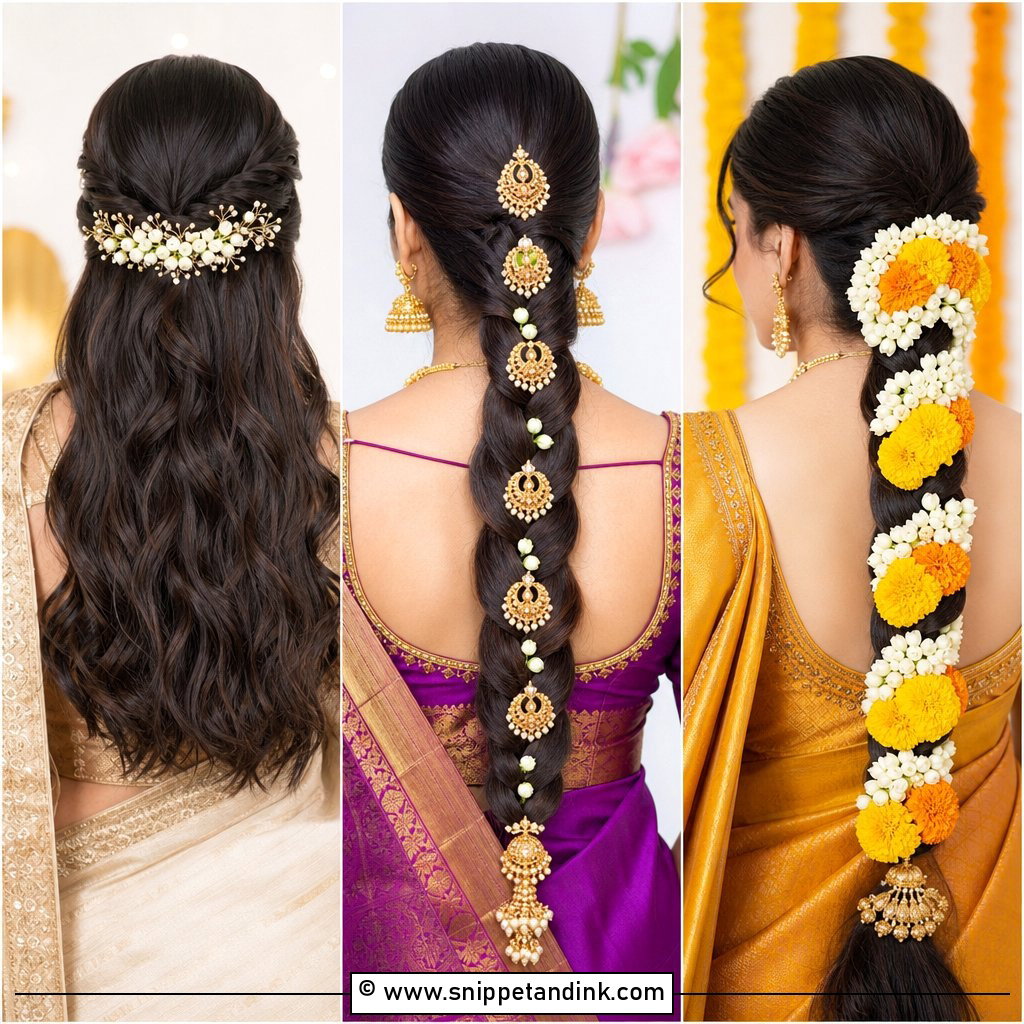
15. High Bun With Rose Petals
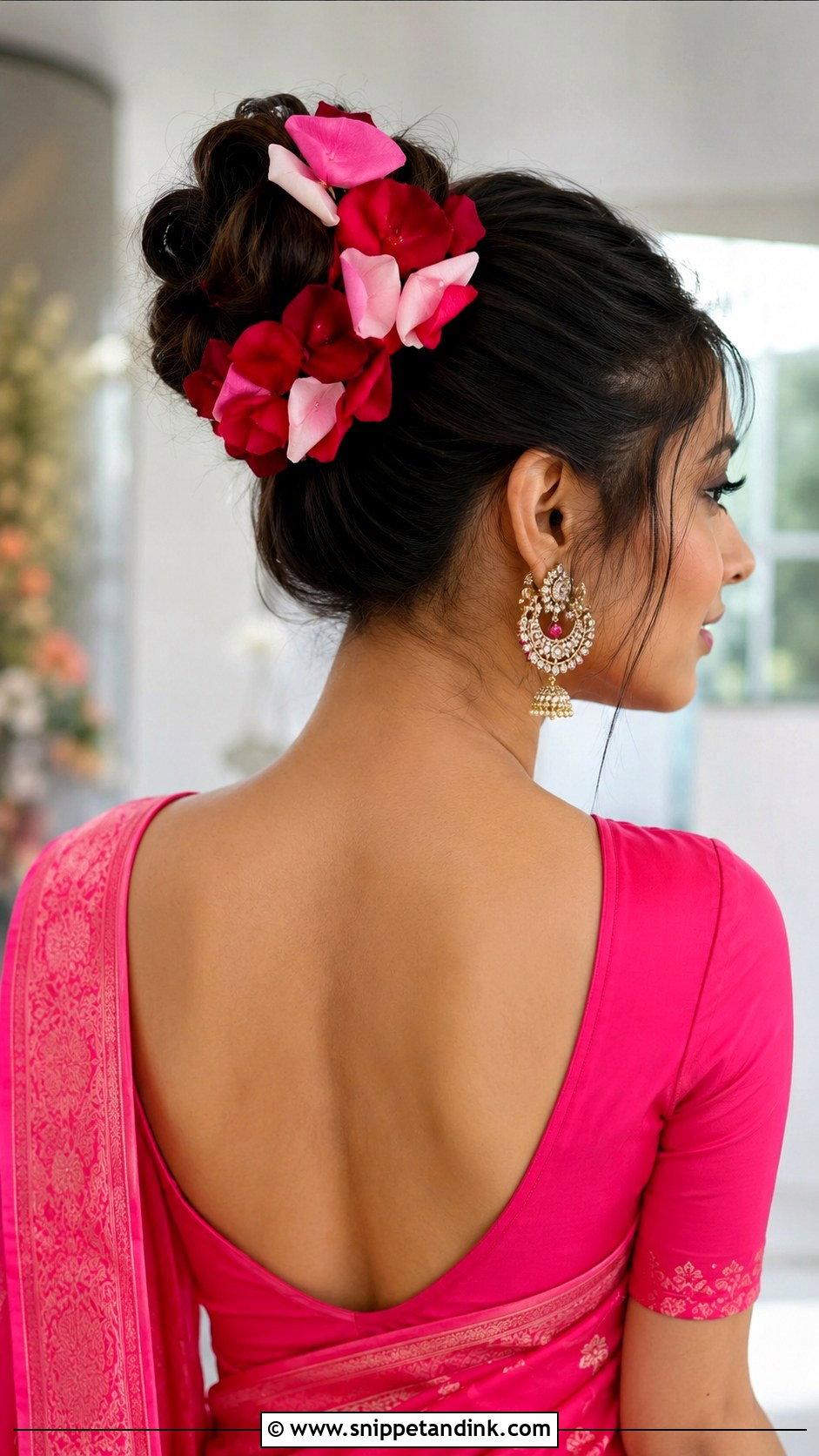
A bun set high on the crown, ringed with rose petals, gives a tall profile and leaves the neck and jewellery clear. My caution is practical: a high bun presses against the back of a chair, and you’ll be sitting for much of the ceremony. If you choose it, ask for a lower, mid-height version and test sitting back during the trial. Chandbalis and a bright saree suit it.
16. Curly Open Hair With Floral Side Pin
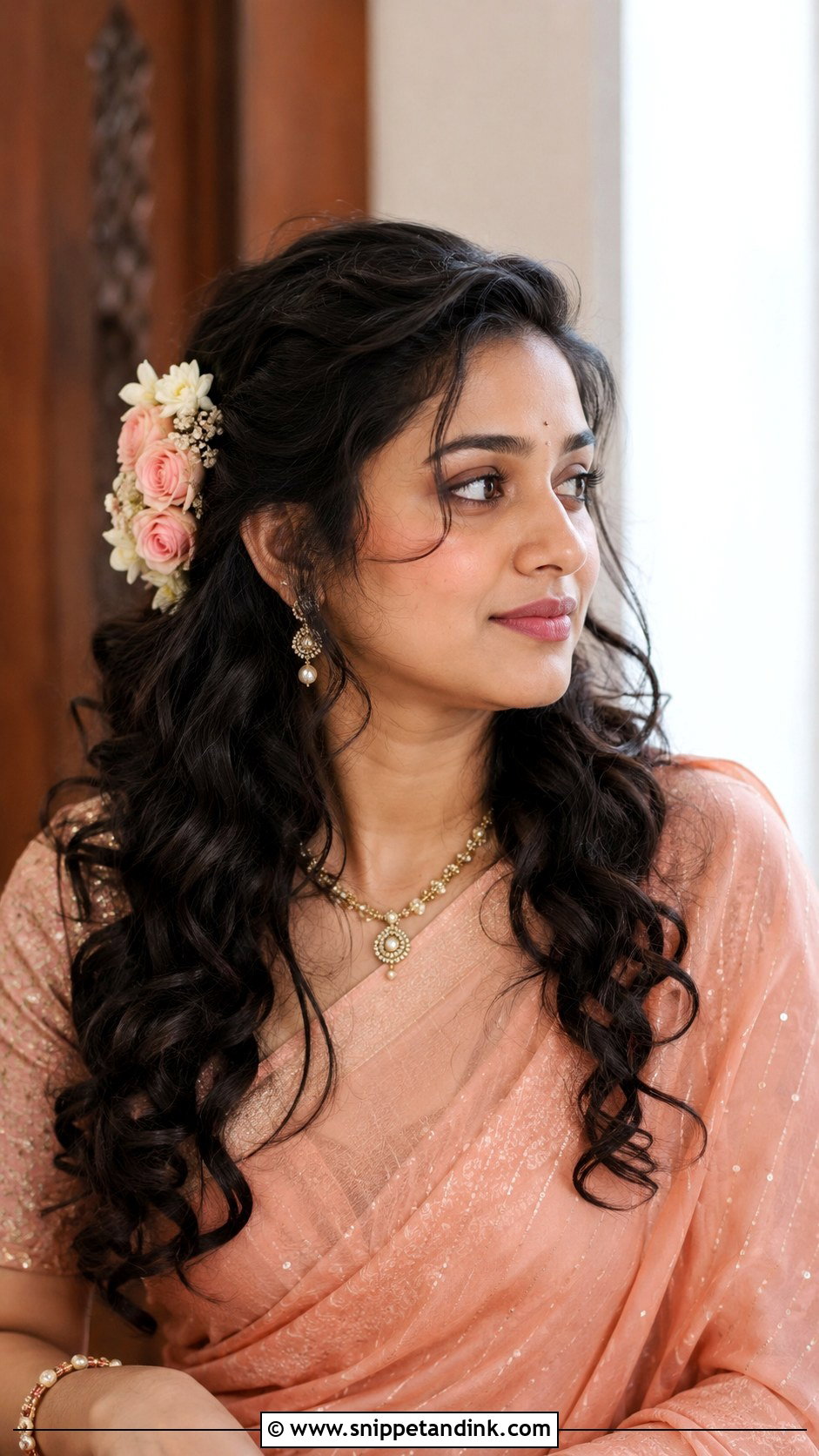
Open hair with soft curls and a cluster of flowers pinned to one side is the least formal look in this list. It shows your length and is light on the scalp. I set the curls with a light spray, since heat and humidity in a crowded hall loosen them quickly. Pin the flower cluster into a small hidden braid behind the ear, which gives it something firm to grip.
17. Braided Ponytail With Jasmine
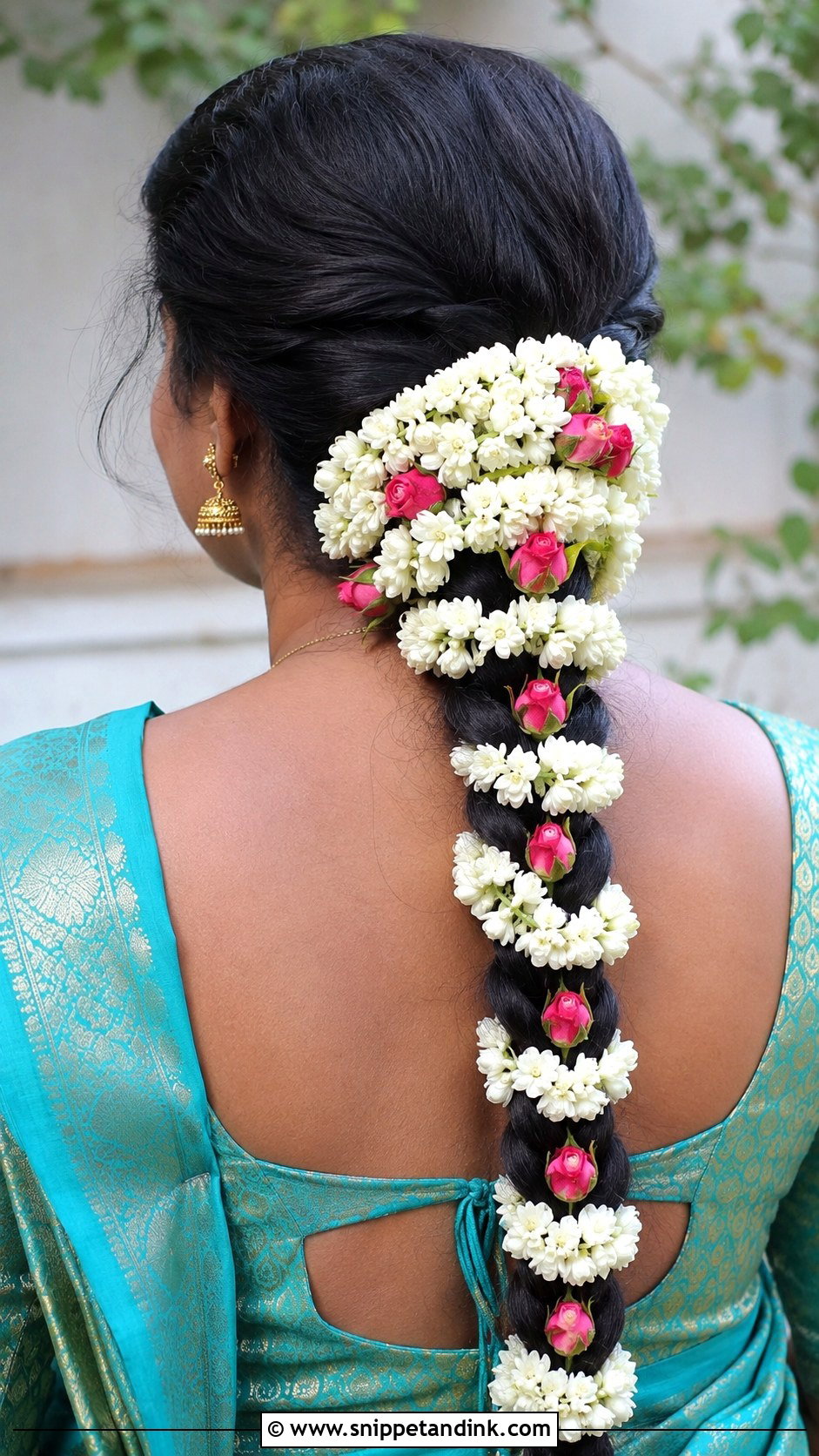
The hair is gathered into a ponytail, braided, and wrapped with jasmine. It’s neat, quick, and keeps hair off the neck for the busy hours. A low ponytail is more comfortable to lean against than a high one. Rows of jasmine or scattered rosebuds both work, and the style suits traditional or Indo-western outfits.
18. Twisted Side Bun With Flowers
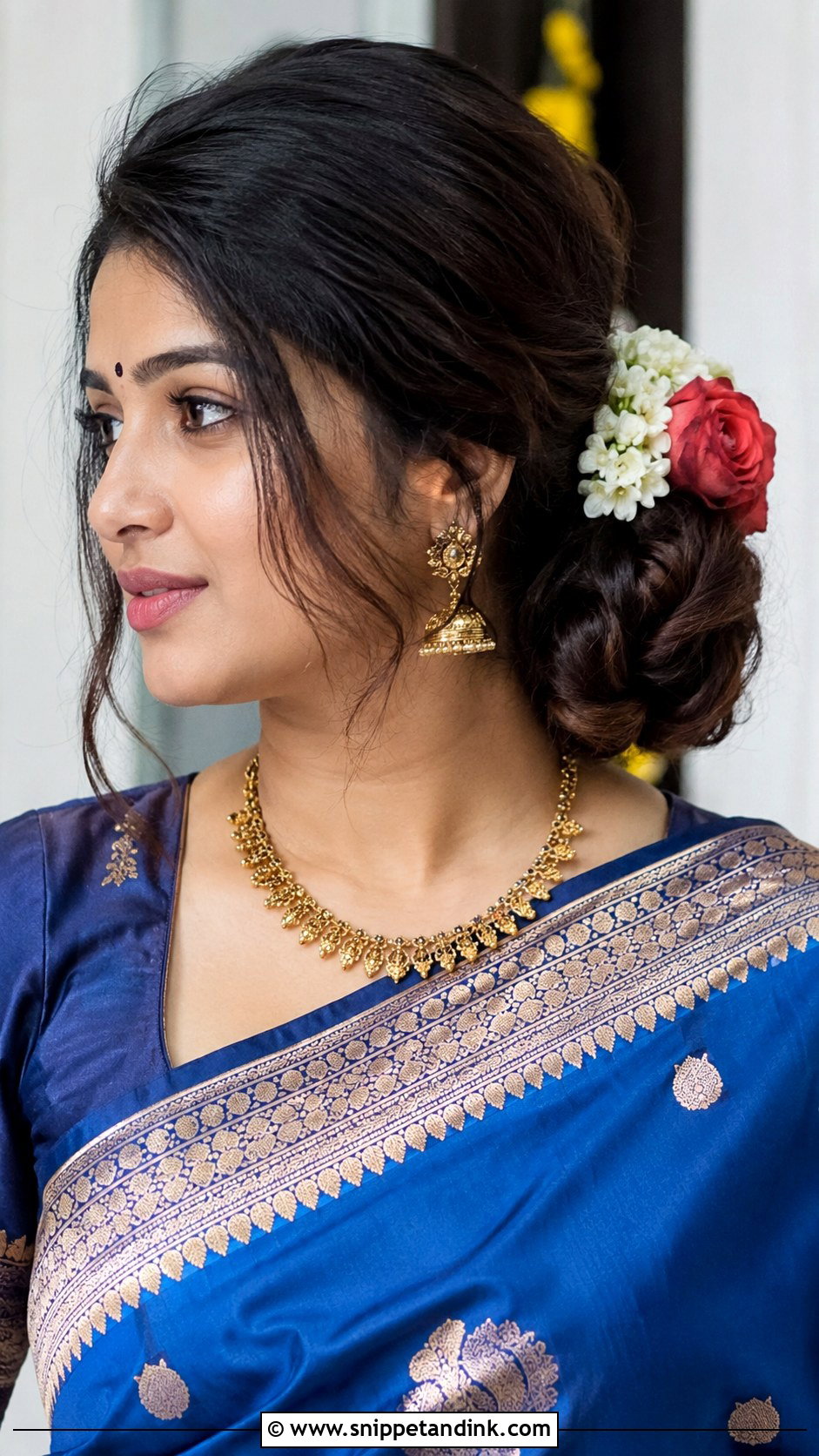
A twisted bun sits low near one ear with flowers tucked around it. The asymmetry shows off one earring and gives a pleasing angle in photos. Put the bun on the side that will face the guests and photographer during the ritual, which your family can tell you in advance. Jasmine or mixed blooms both suit it, as does traditional jewellery.
19. Braided Updo With Temple Jewelry
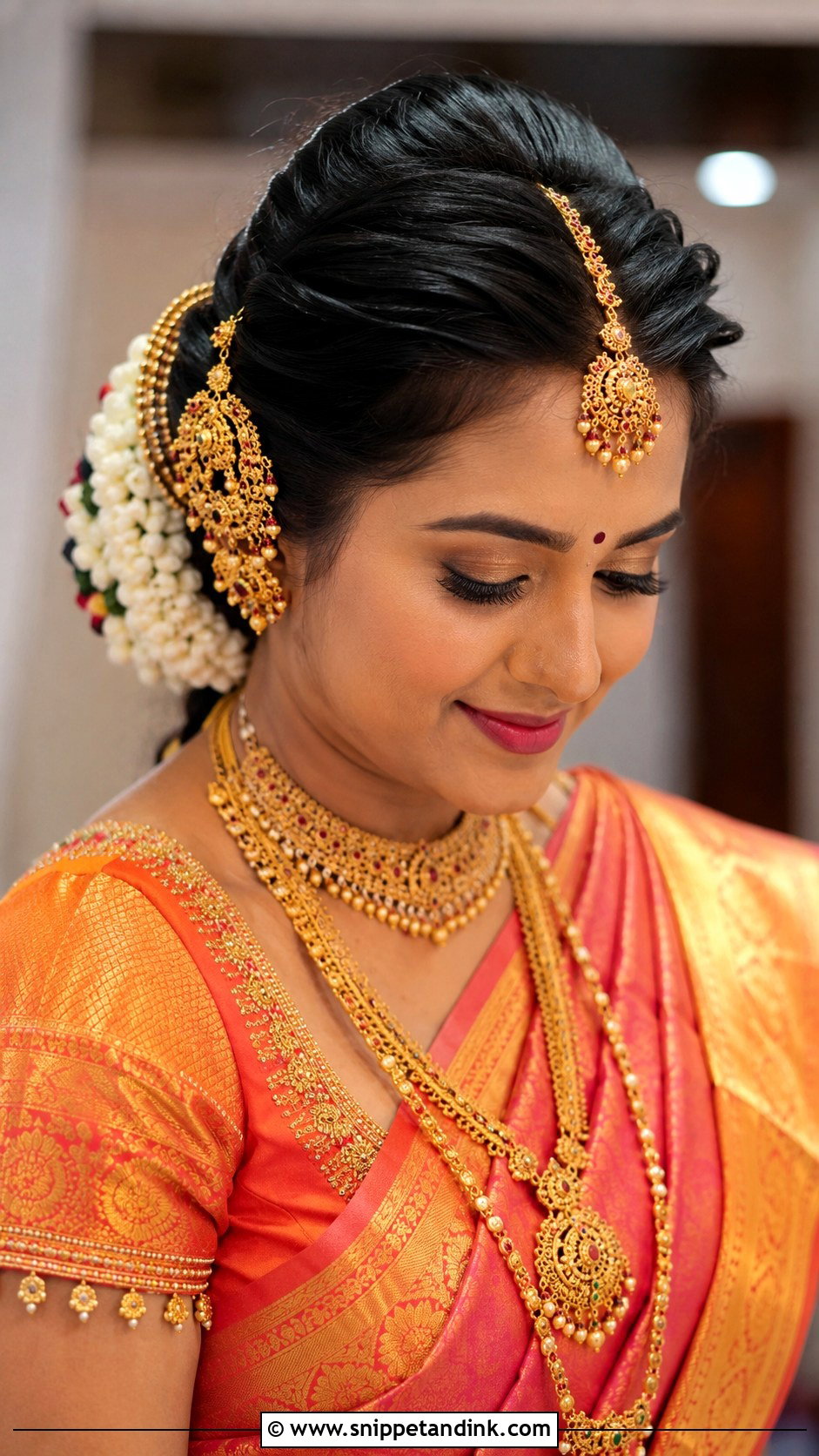
The braid is coiled and pinned into an updo, then dressed with jasmine and small flowers. Adding temple hair jewellery such as a rakodi or jada billalu takes it close to bridal styling. Gold hair jewellery is heavy, so I fix each piece onto braided sections, not loose hair, and keep the total load modest for a pregnant mother. It stays secure all day and is the grandest option here.
20. Floral Bun With Maang Tikka
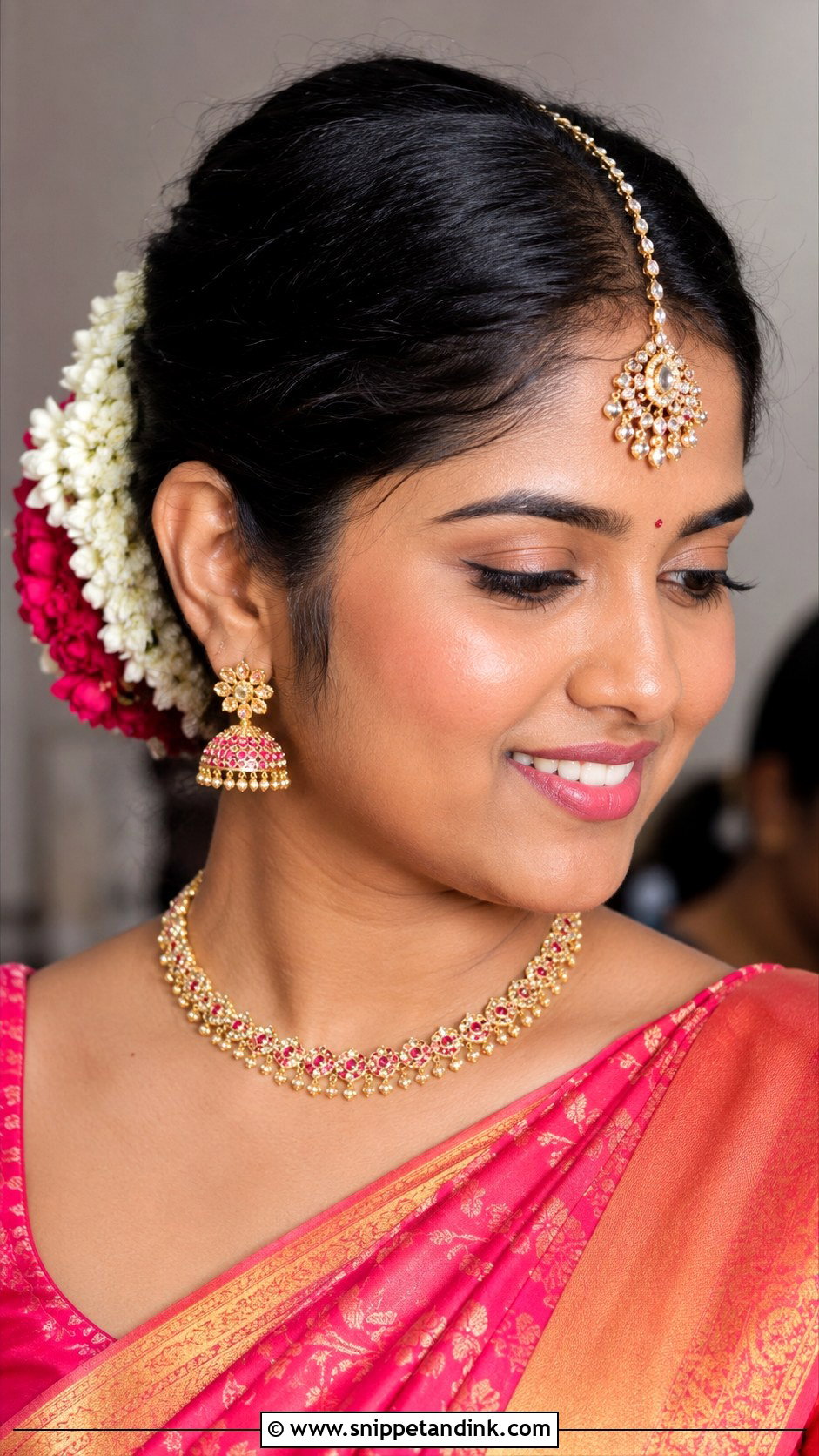
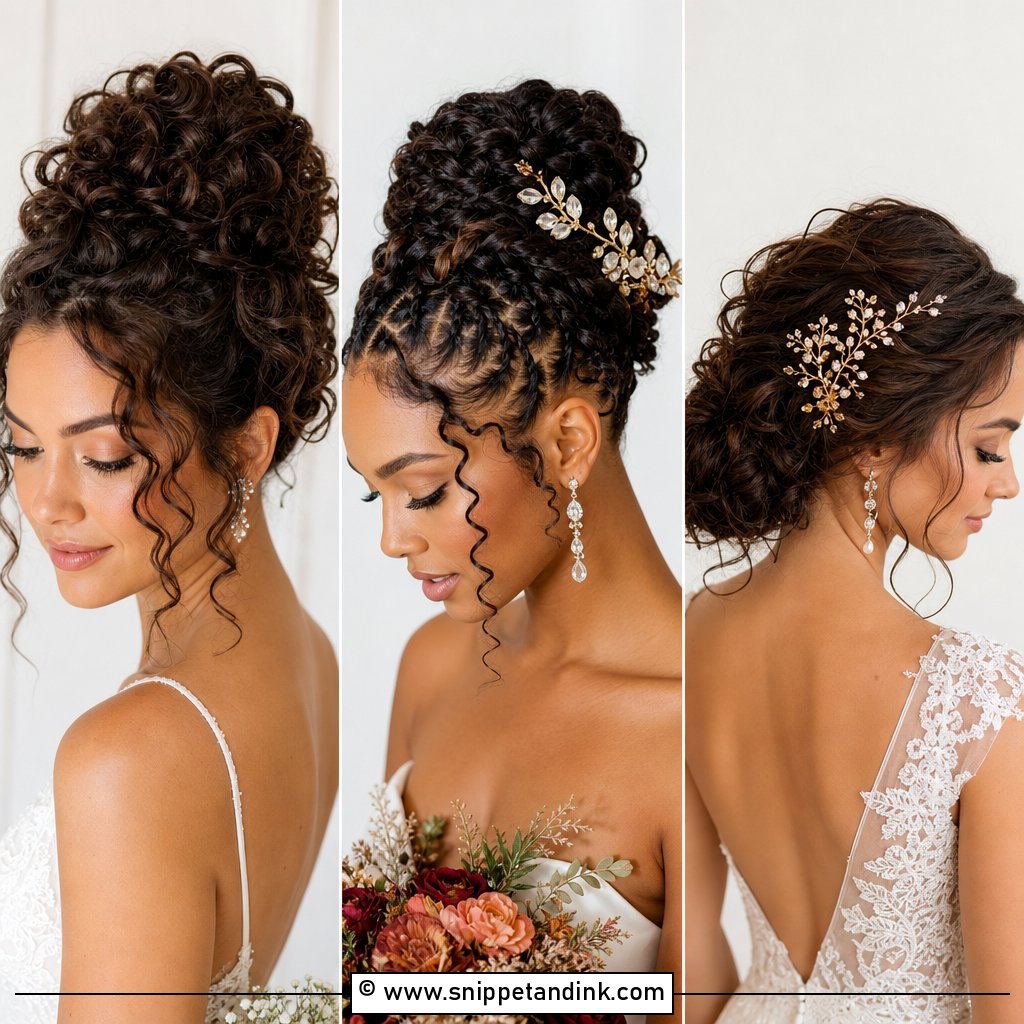
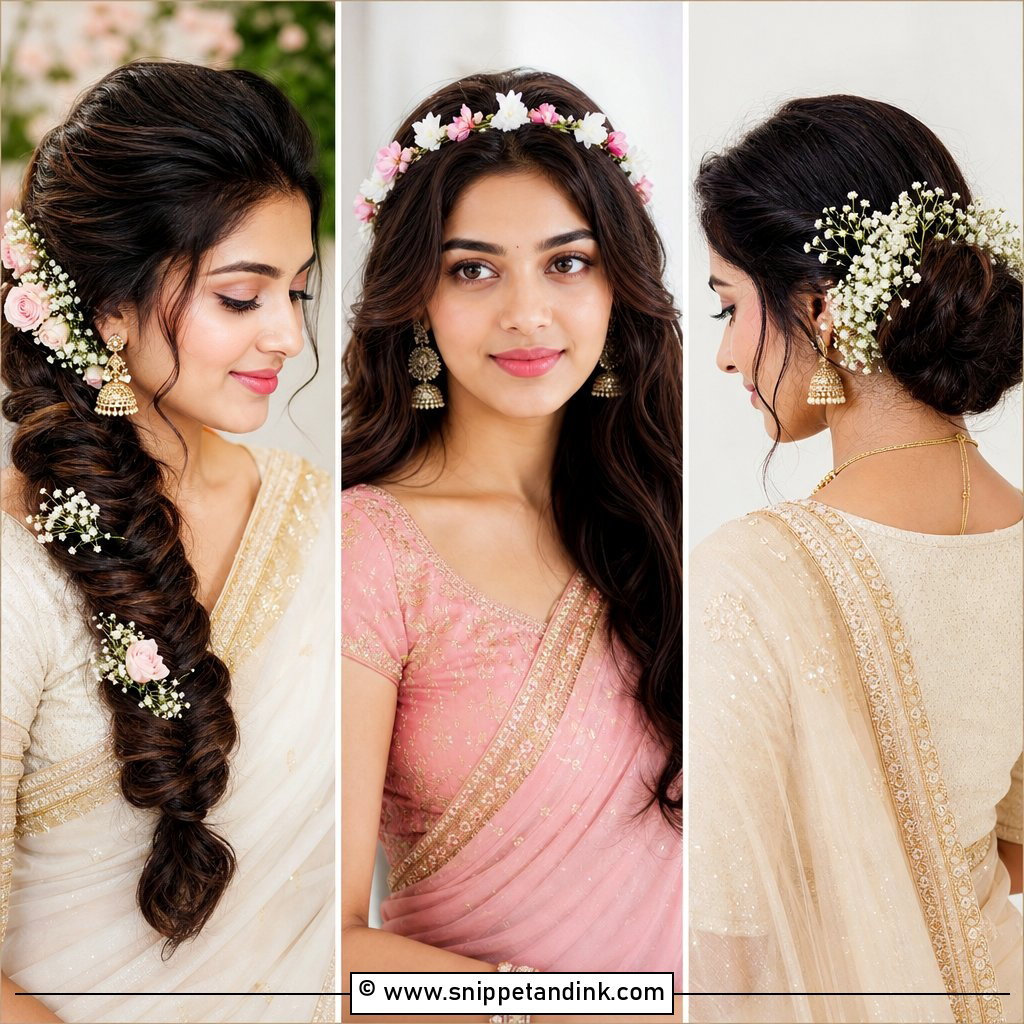
A jasmine and rose bun at the back with a maang tikka at the centre of the forehead balances the look front and back. The tikka chain should be pinned into the parting firmly, because it shifts every time you bow your head for a blessing. Keep the flowers lighter if your saree is heavily worked. Matching jhumkas finish it.
Jasmine Wilts Faster Than You Expect
Fresh flowers are the heart of a Valaikappu look, and also the part most likely to fail. Jasmine buds open over several hours, so strings bought too early in the morning may be fully open and browning by the evening photos. I prefer strings of tight buds collected the evening before, wrapped loosely in a damp cotton cloth and kept somewhere cool. They open gradually through the day.
Roses and kanakambaram last longer once pinned, but they bruise if crushed in a bag. Keep a spare string of jasmine and a few roses in a box with a damp tissue, and ask a sister or cousin to hold it. If a section drops, it takes two minutes to replace.
If the flowers trigger nausea mid-ceremony
It happens. A gajra that was pleasant at nine can become overwhelming by noon. Pin flowers so that one string can be lifted out without undoing the bun, and you’ll be able to swap it for unscented blooms or simply remove it without disturbing the rest of your hair.
Let Comfort Lead on the Day of the Blessing
The right Valaikappu hairstyle is the one you can sit in comfortably for the whole ceremony. Think about your saree, how long the rituals last and how you’re feeling in the last weeks of pregnancy. Fresh jasmine, roses and mogra carry the tradition, and temple jewellery or a maang tikka adds sparkle. Above all, do a short trial and sit in it for an hour before deciding.
You'll Like These Ideas:



Leave a Reply