
Coily and kinky hair holds a shape that finer textures simply won’t, which gives Black brides more structural options than almost anyone I style. You can wear your coils, kinks, twists exactly as they grow, sculpt them into a firm updo, have them braided weeks ahead, or press them smooth for a sleek finish. Each route needs different preparation, and each reacts differently once a warm room and a long day get to it. Below are 25 bridal styles I’d happily put on a client, with notes on what each one asks of your hair and what I check before you leave the chair.
Plan the Install Date Before You Fall for a Style
Half of the styles below depend on work done days or weeks before the wedding, and that timing is what I ask about first at a consultation. A braided or twisted style is not something I want installed the night before. New braids feel tight, the scalp can be tender, and the parts look raw for a few days.
- Braids and cornrows: install about five to seven days out, so the tension eases and any flyaways can be tidied the morning of.
- Locs: retwist one to two weeks ahead, then only touch up the hairline on the day.
- Silk press or relaxer touch-up: one to two weeks before, never the day before, in case the scalp reacts.
- Twist-outs and Bantu knot curls: set the night before, or two nights before if your hair dries slowly.
- Wash-and-go or afro: wash and condition the day before, and shape on the morning.
If your heart is set on a sleek, pressed look but your hair reverts quickly, tell me at the trial. I would rather plan a protective style you love than watch a press puff up halfway through the photos.
1. Flat Twist Bun for Black Brides
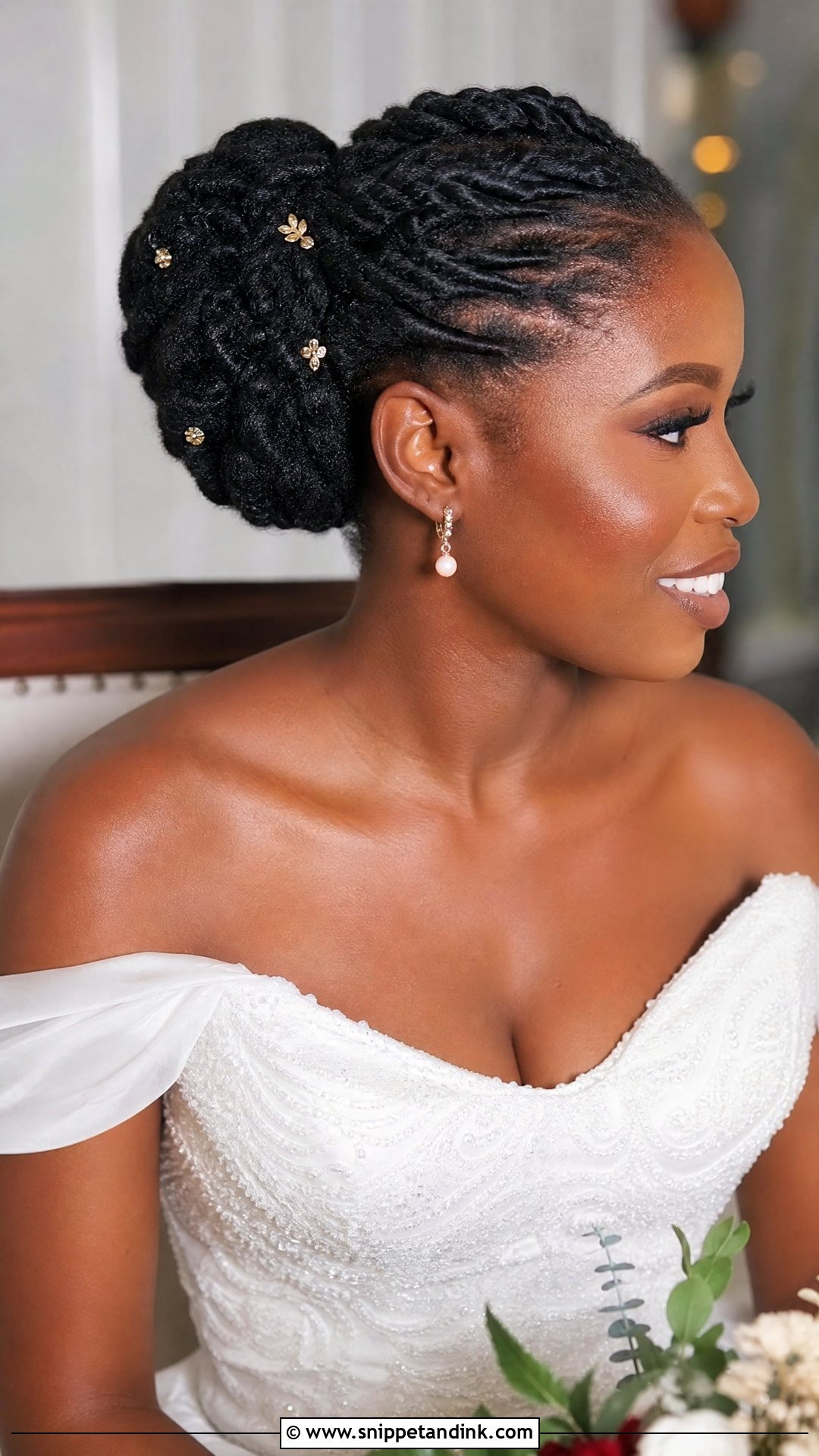
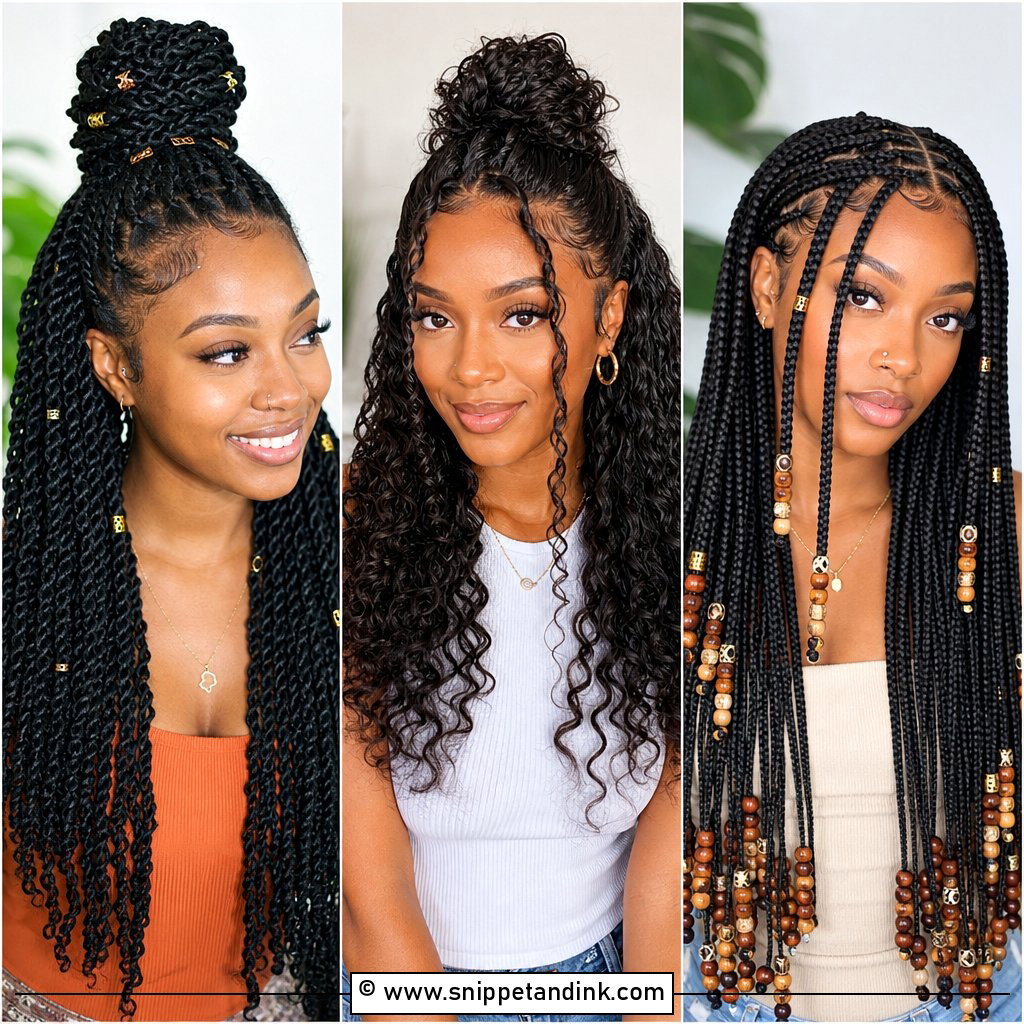
This is the style I suggest most often to brides who plan to do their own hair, because flat twists are forgiving to practise. The twists lie flat against the scalp and feed into a bun at the crown or nape, so scalp tension does most of the holding and you need far fewer pins than a loose updo. Twist on stretched, slightly damp hair with a light cream, then sleep in a satin scarf so the parts look crisp in the morning. Gold pins or single flower heads slot neatly between the rows. In sticky summer air it barely moves.
2. French Roll Updo for Black Brides
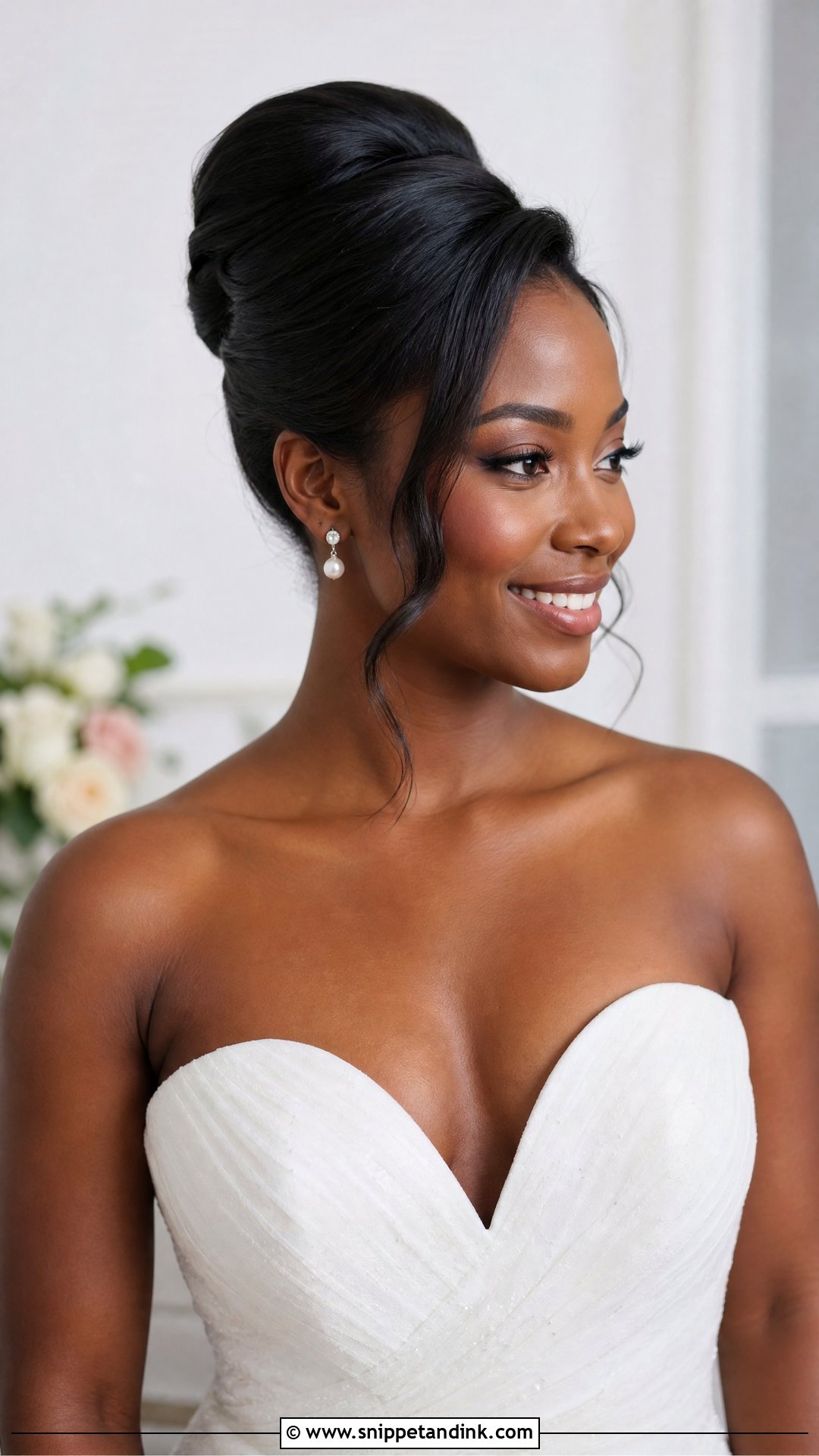
A French roll is a smooth vertical fold down the back of the head, and it only folds cleanly on hair that has been blown out or pressed. Tight coils resist the fold and the seam ends up lumpy, so on natural hair I stretch first. I crisscross the pins inside the roll where nobody can see them from the side. Tendrils at the front only stay if they’ve been set with a curl; a limp strand beside a sharp roll looks unfinished by the speeches. If your press tends to revert in damp air, I’d be wary of it for an outdoor ceremony.
3. Natural Curly Afro Wedding Hairstyle
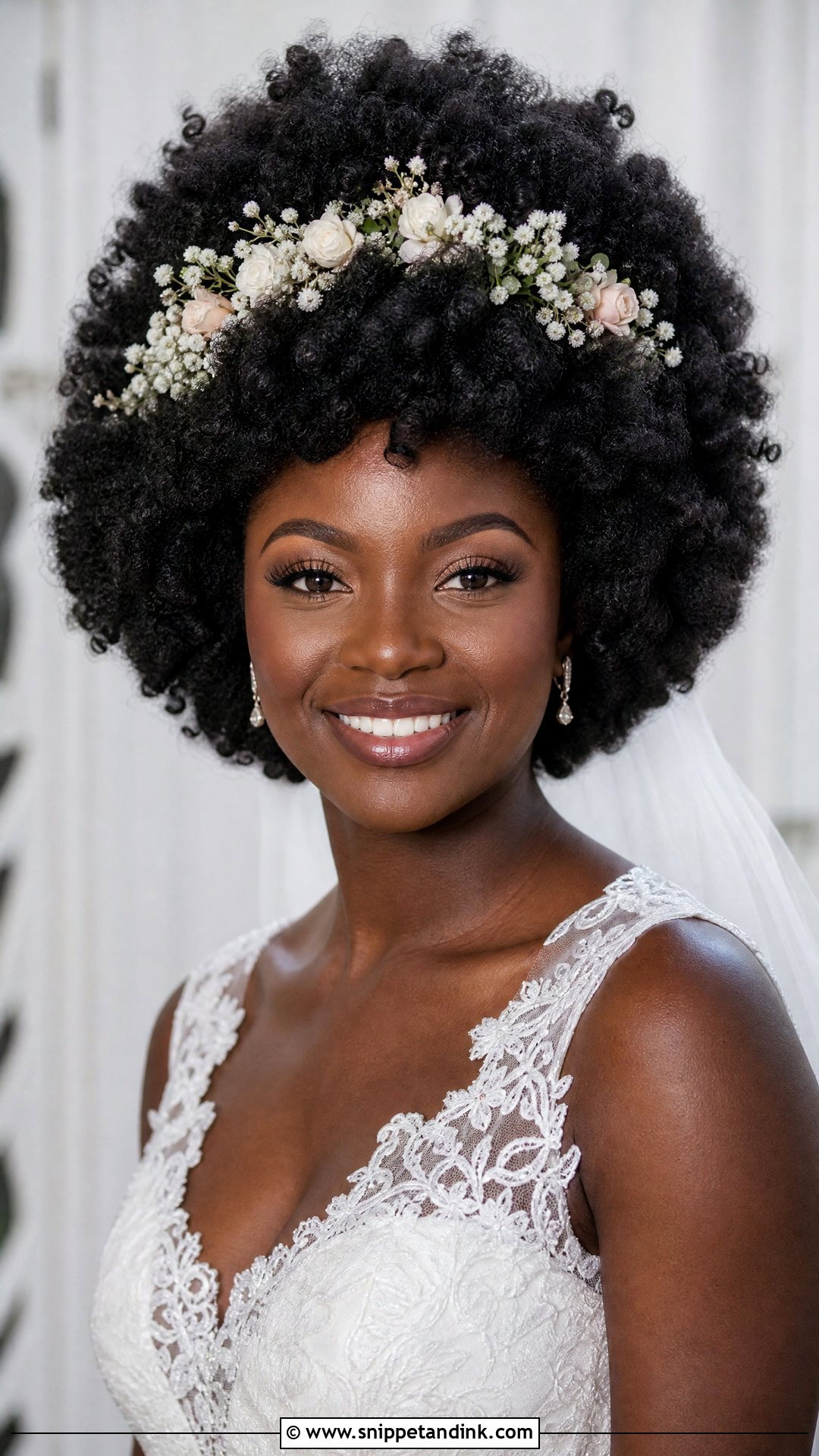
Wearing your afro down the aisle takes less pinning than any updo here, but more shaping. I pick it out from the root and check the outline in profile, because a flat spot at the back shows up instantly in side-on photos. Shrinkage is the thing to plan for: in humidity the afro gets smaller and denser through the day, so I shape it a touch larger than the target. A flower crown or a padded headband sits firmly on that volume without a single pin. I’d only suggest it to a bride who already loves wearing her hair out; the wedding morning is a poor time to try it for the first time.
4. Twist-Out Updo for Natural Hair
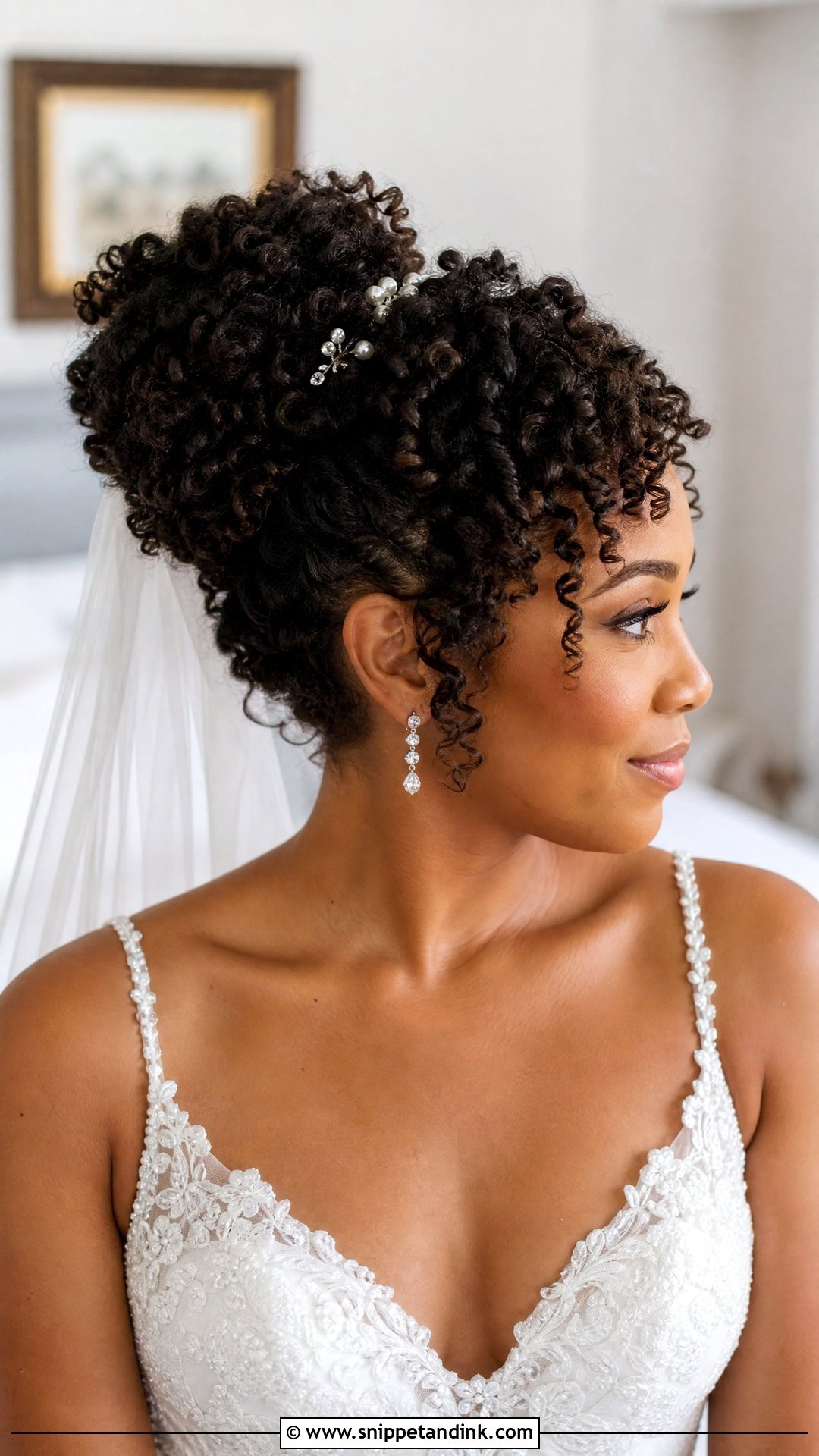
The twist-out gets decided the night before. Twists taken down while still damp frizz and lose their definition by lunchtime, so I want them fully dry before I separate a single curl. From there I gather the curls loosely and pin underneath them, letting the springy ends sit on top. A few curls left free at the crown keep the shape soft, and pearl pins nest well inside the curl pattern. Expect a bit more volume by evening, which on this style reads as fuller rather than messy.
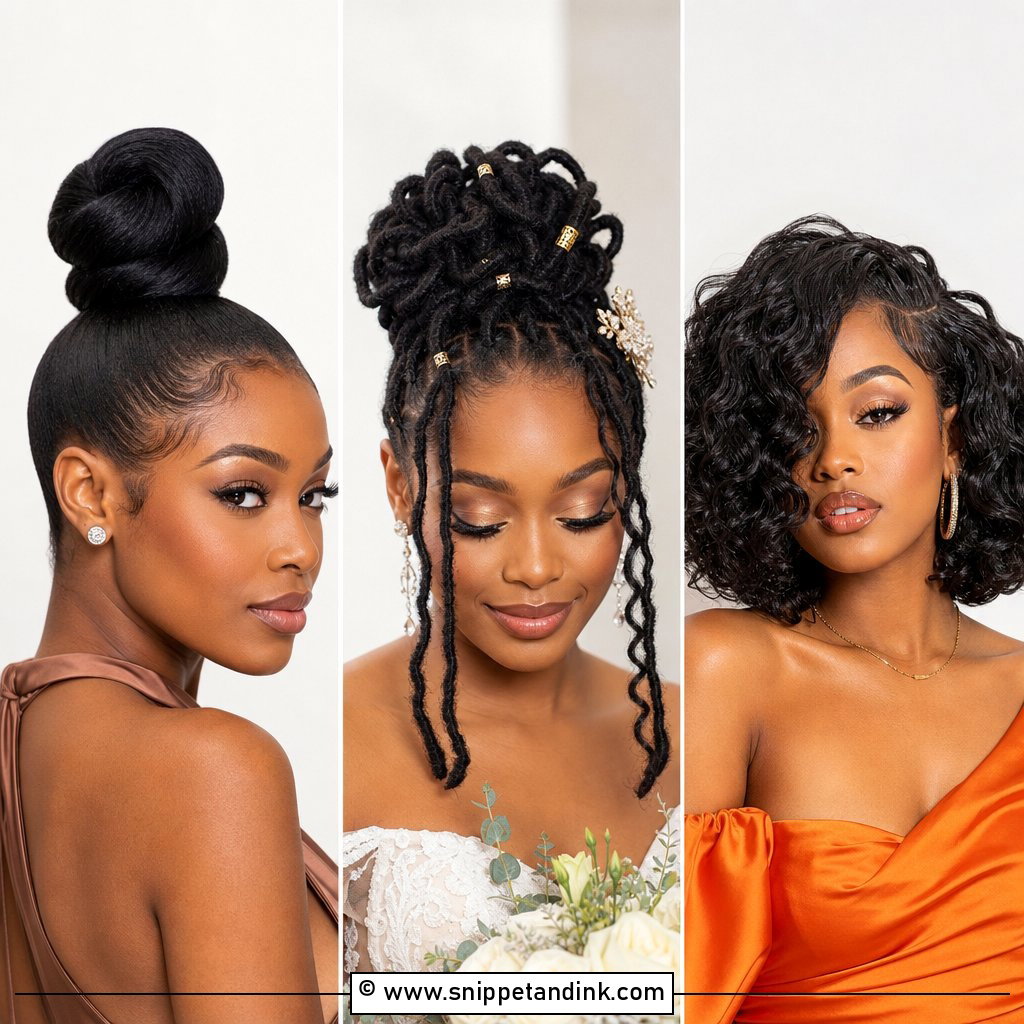
5. Sleek Bridal Bun for Black Brides
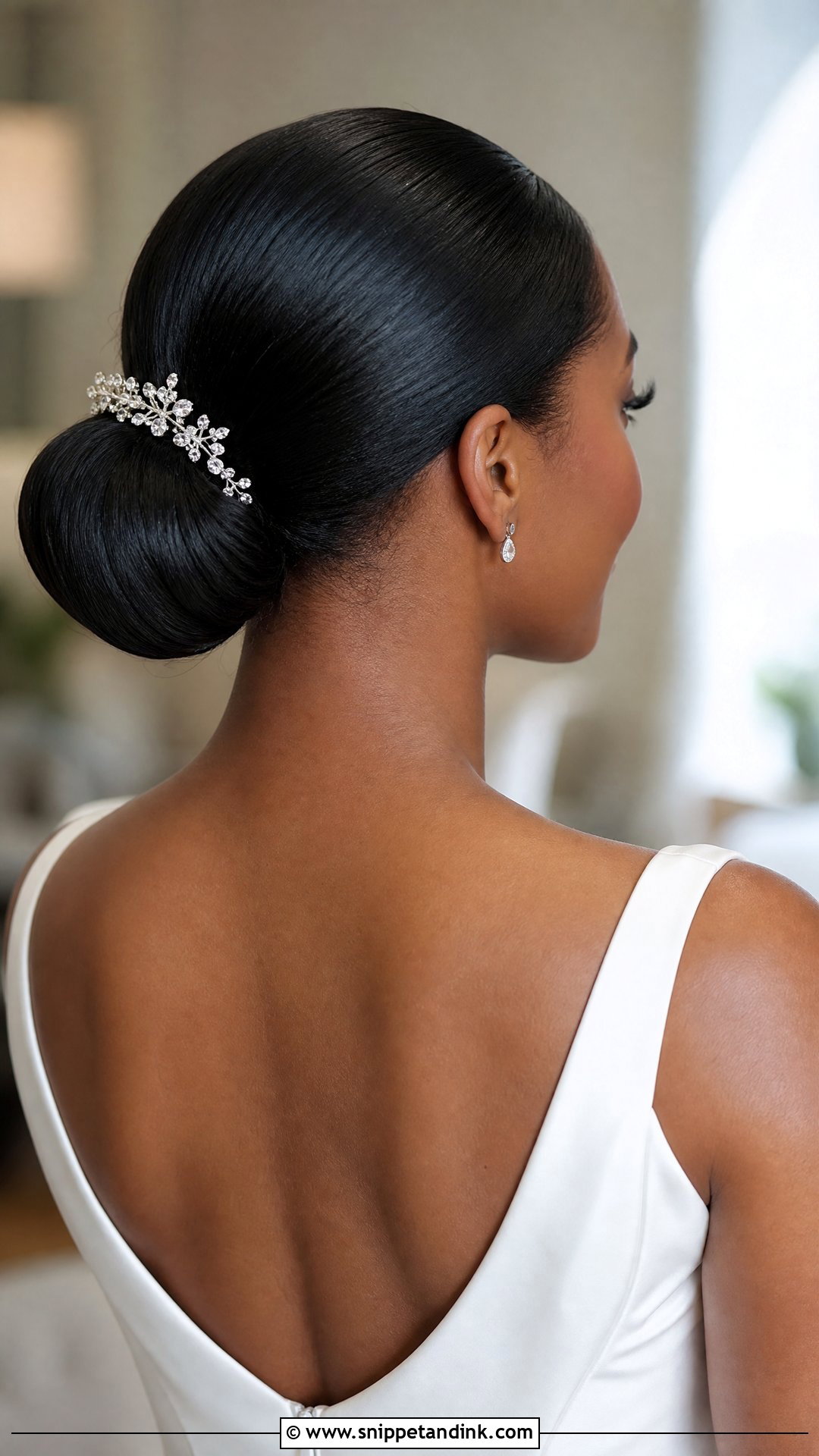
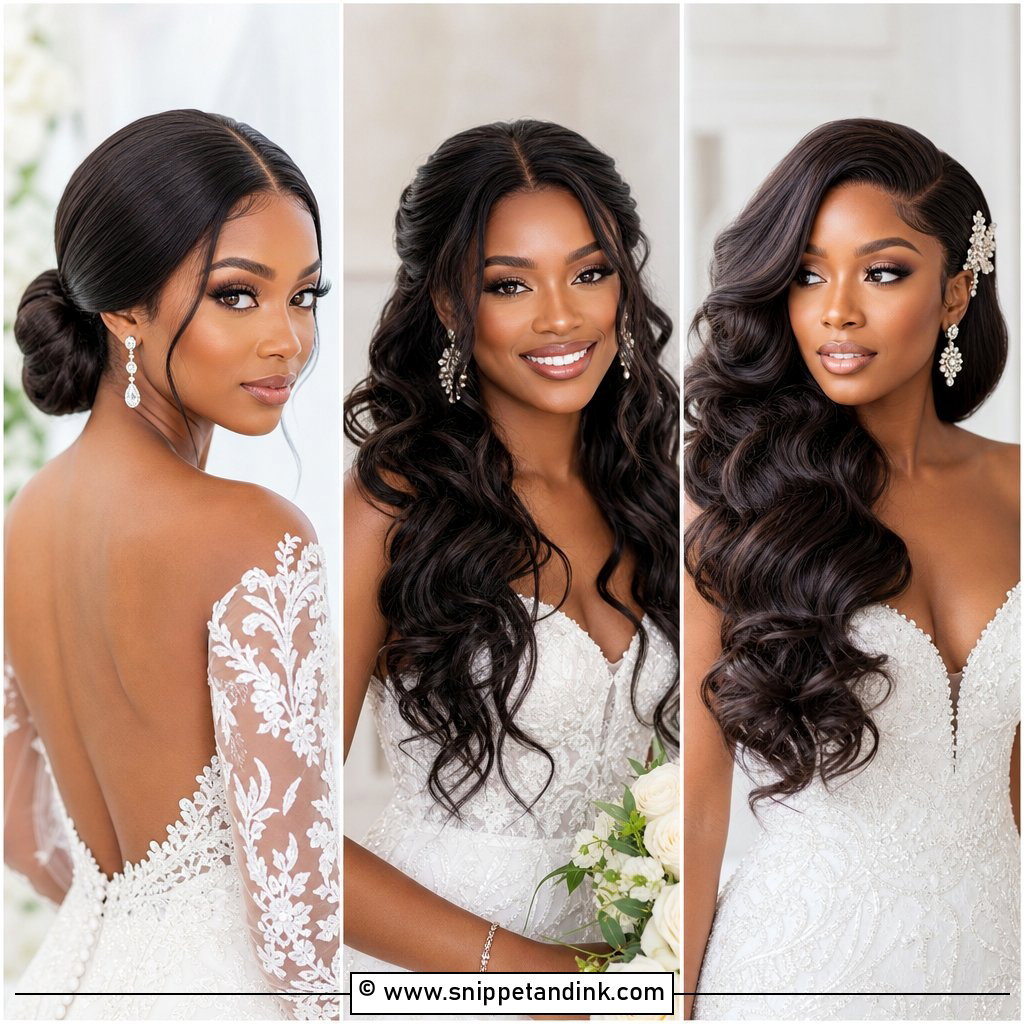
Almost all the work in a sleek bun happens before the bun exists. On natural hair I stretch it first, brush it back with a firm gel and a boar bristle brush, then tie a satin scarf around the hairline for ten minutes while the gel sets. High or low changes the whole effect: a high bun lifts the face and suits a strapless neckline, while a low one sits better under a long veil. The common failure is white flaking from one thick layer of gel, so I build it in thin coats instead. Once set, this one ignores humidity better than anything else on the list.
6. Elegant Loc Updo for Black Brides
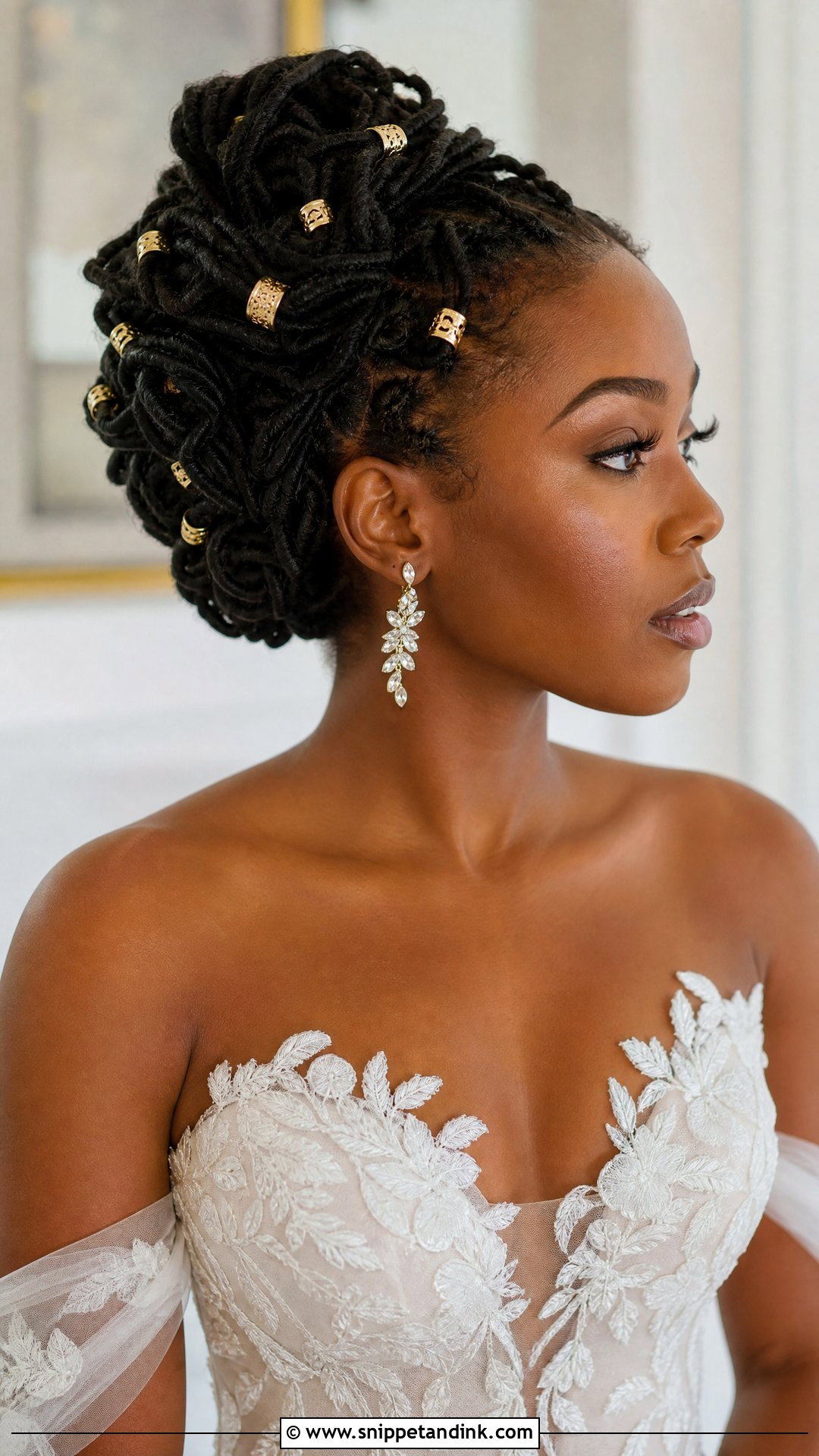
Weight is the first thing I plan around with locs. A full head of long locs is heavy, and anchoring it all in one spot can make the scalp ache by the second hour, so I spread the load across several pinning points. The loc updo can be coiled, wrapped or sculpted at the crown or nape, and gold loc cuffs slide on in seconds. Ask your loctician to retwist about one to two weeks before the wedding rather than the day before. Fresh retwists can look stiff and shiny with product, while a week of wear softens the roots.
7. Half-Up Half-Down Natural Hair Style
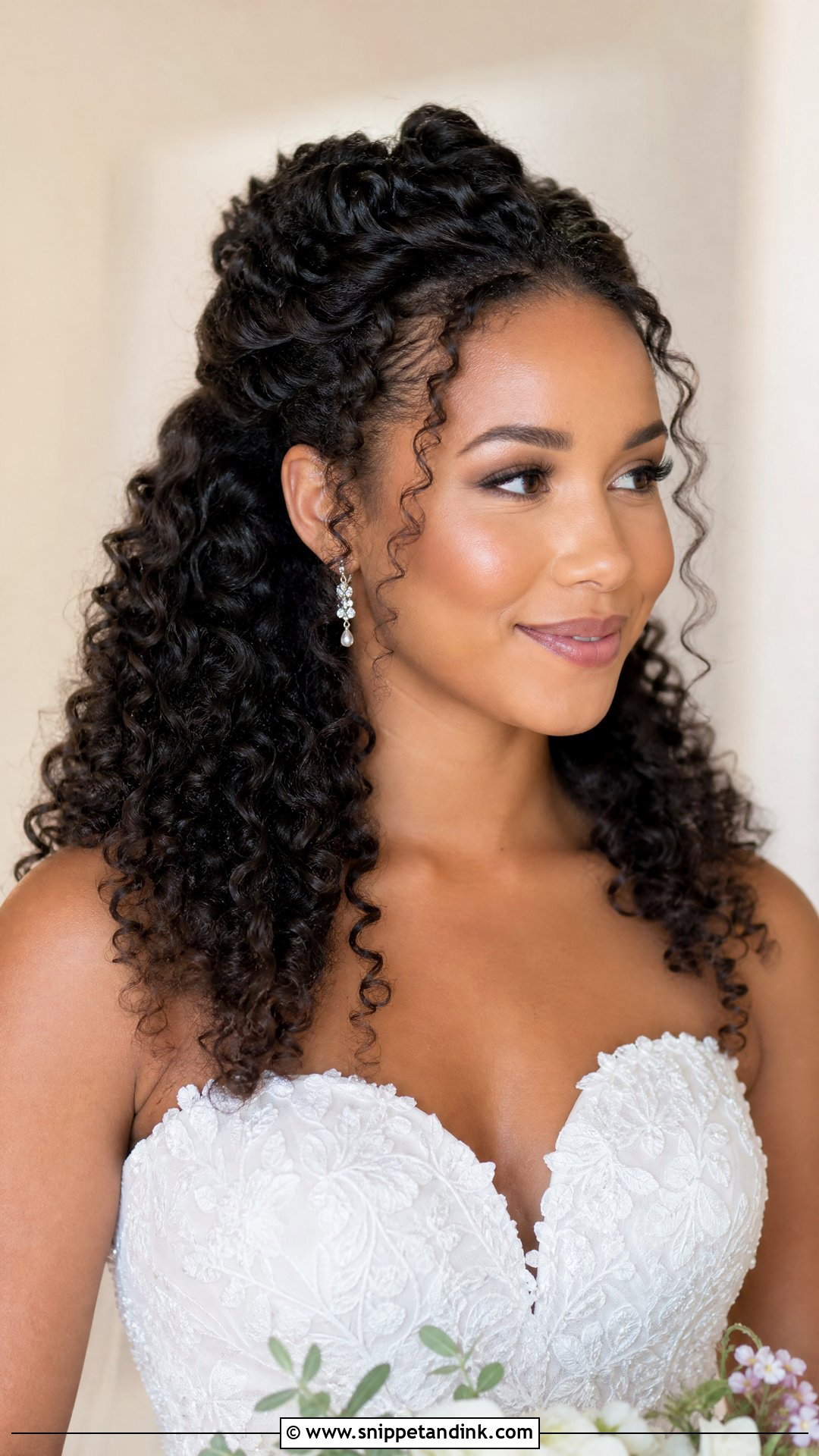
Half-up is my answer for brides who keep changing their mind between up and down. The top section is knotted or twisted at the crown, which clears your face for portraits, and the rest stays loose to show length. On coily hair I set the loose half in twists or rollers the night before so it has defined shape instead of fuzz. There’s less hair holding the knot than in a full updo, so it needs firm, crossed pins. On a very hot outdoor day I’d think twice if your hair puffs quickly, since the down section sits against your neck for hours.
8. Bantu Knot Wedding Hairstyle
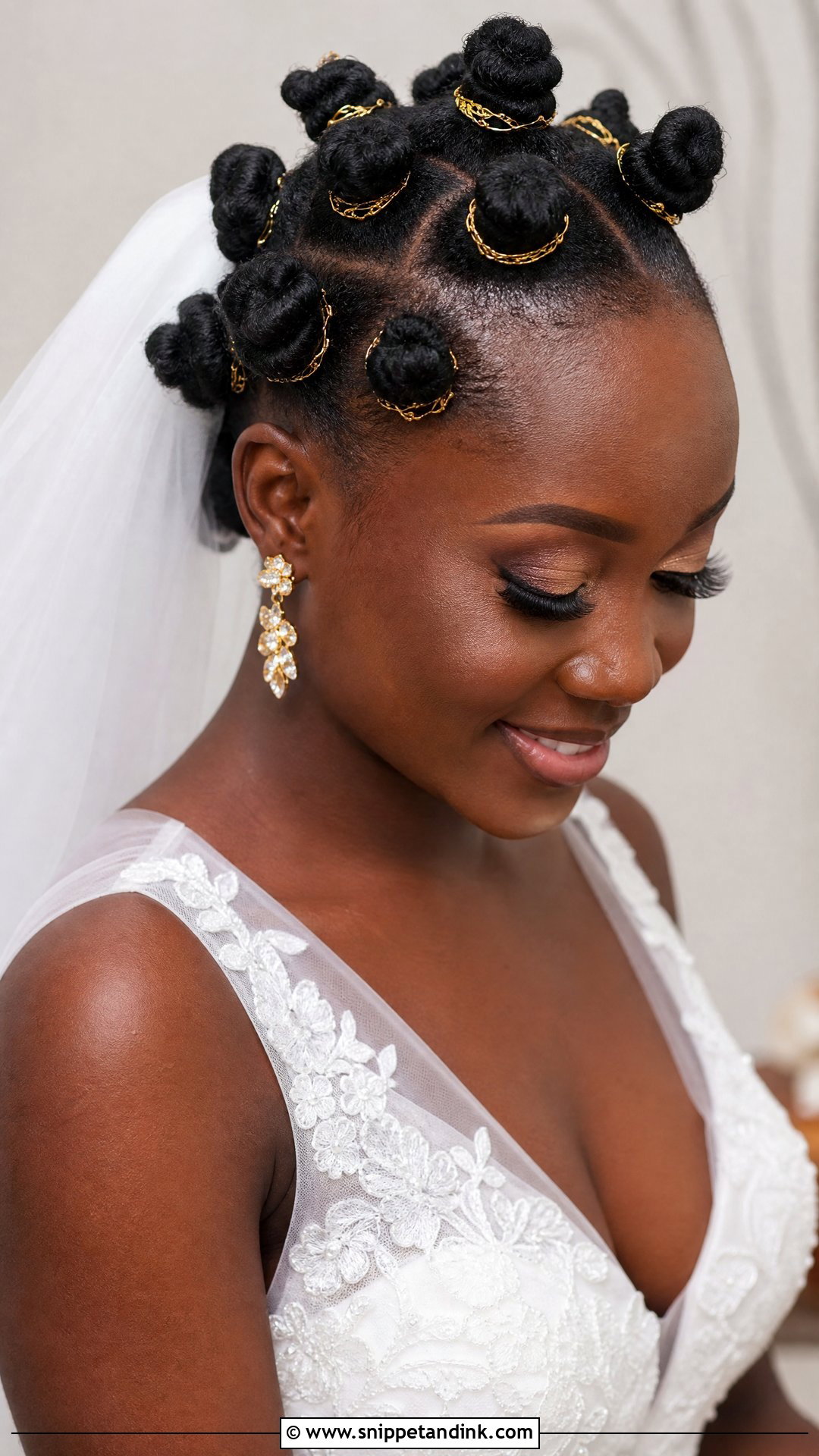
Every parting shows in Bantu knots, so I treat the sectioning as the actual design and map it before I twist anything. Bantu knots celebrate African heritage, and plenty of my brides want exactly that on their head as they walk in. Worn as knots, they give a sculptural, geometric effect; taken down, they leave a defined curl. If you want the curl version, set them two nights ahead so the centre of each knot is completely dry. Gold thread or small beads can be wrapped around the base. Bring a hand mirror to the trial and check the back partings yourself.
9. Goddess Braids Updo for Black Brides
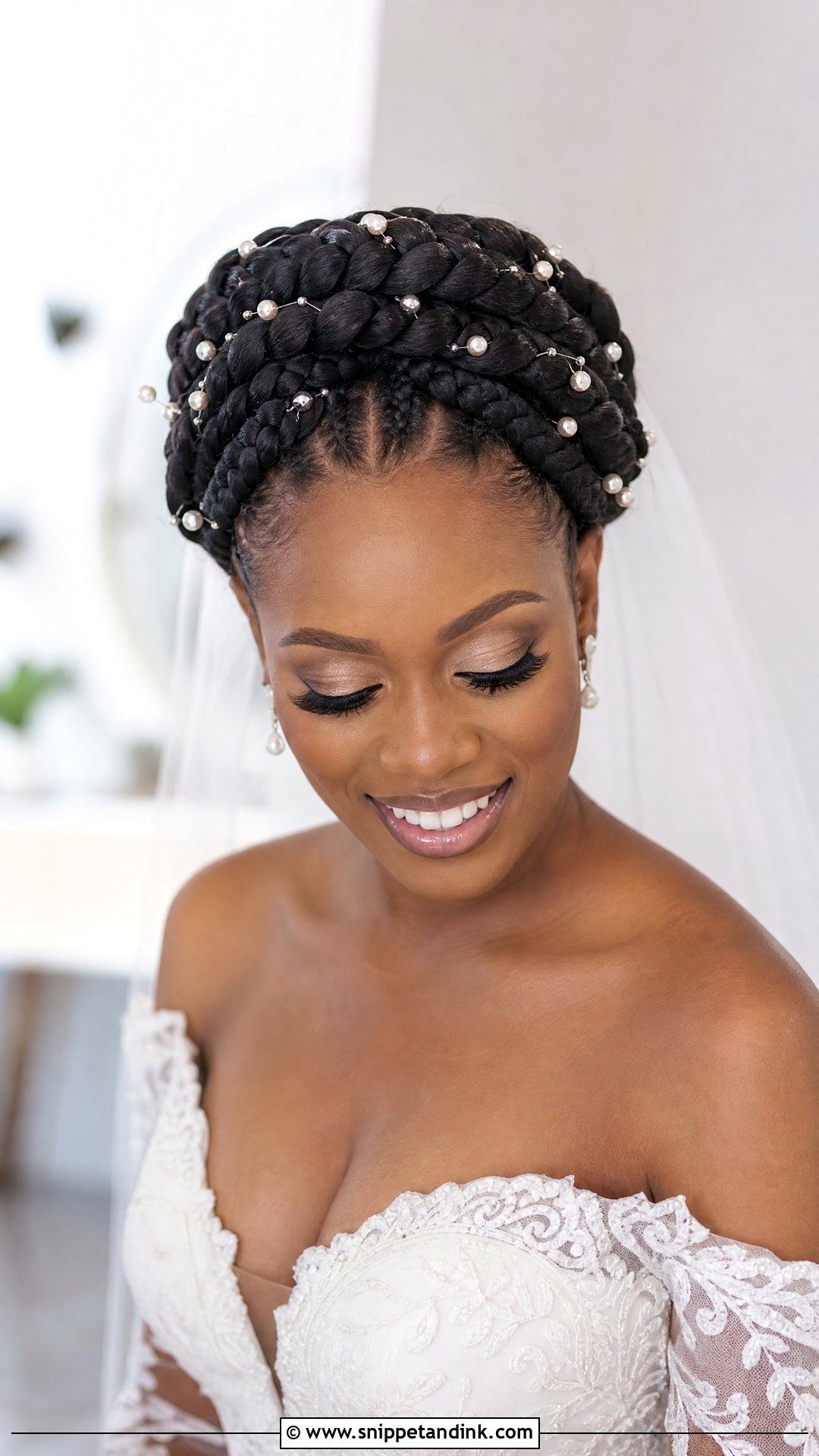
Goddess braids are thick, smooth braids that coil into a crown or a pinned shape on top, and because each braid is large, the updo comes together fast. What I check first is whether extension hair was added. If it was, the weight builds up quickly, and I pin the coil at several points so nothing sags by evening. Gold cuffs, pearls or a few fresh stems tucked between the braids are plenty. Your own hair rests underneath the whole time, which is a real bonus if you have a honeymoon right after.
10. Retro Pin Curls for Black Brides
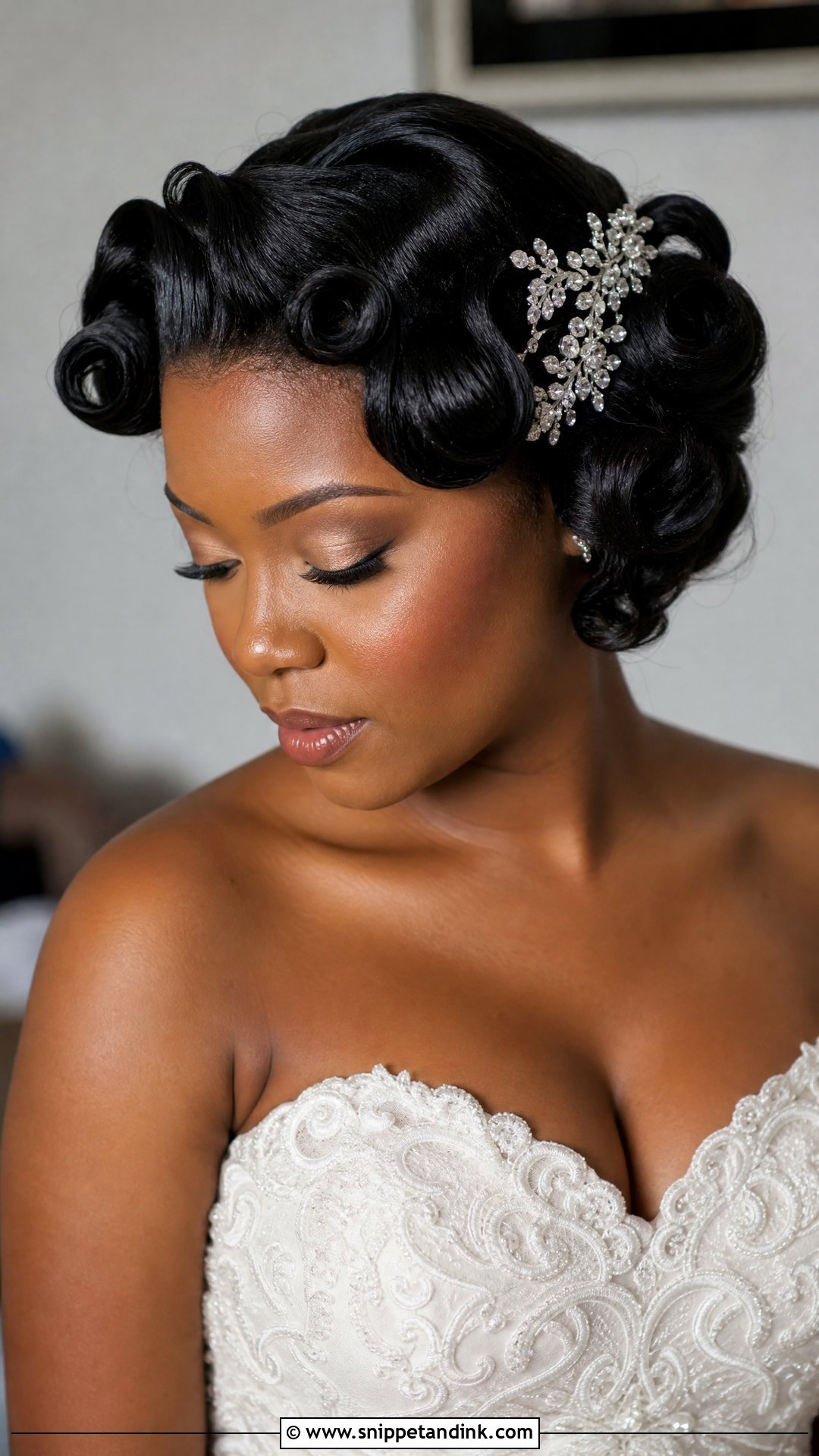
Pin curls need a smooth, straight base, so they work on pressed or relaxed hair and not on a wash-and-go. Each section is wound, pinned flat and left until it is completely cool, then brushed into that glossy wave. Brush them out warm and the wave drops within the hour; that’s the mistake I see most. You can leave the waves down or roll them into a vintage updo, and a rhinestone clip or an old-style comb is all the decoration they need. If your press reverts in humidity, keep this one for an indoor venue.
11. Cornrow Updo for Black Brides
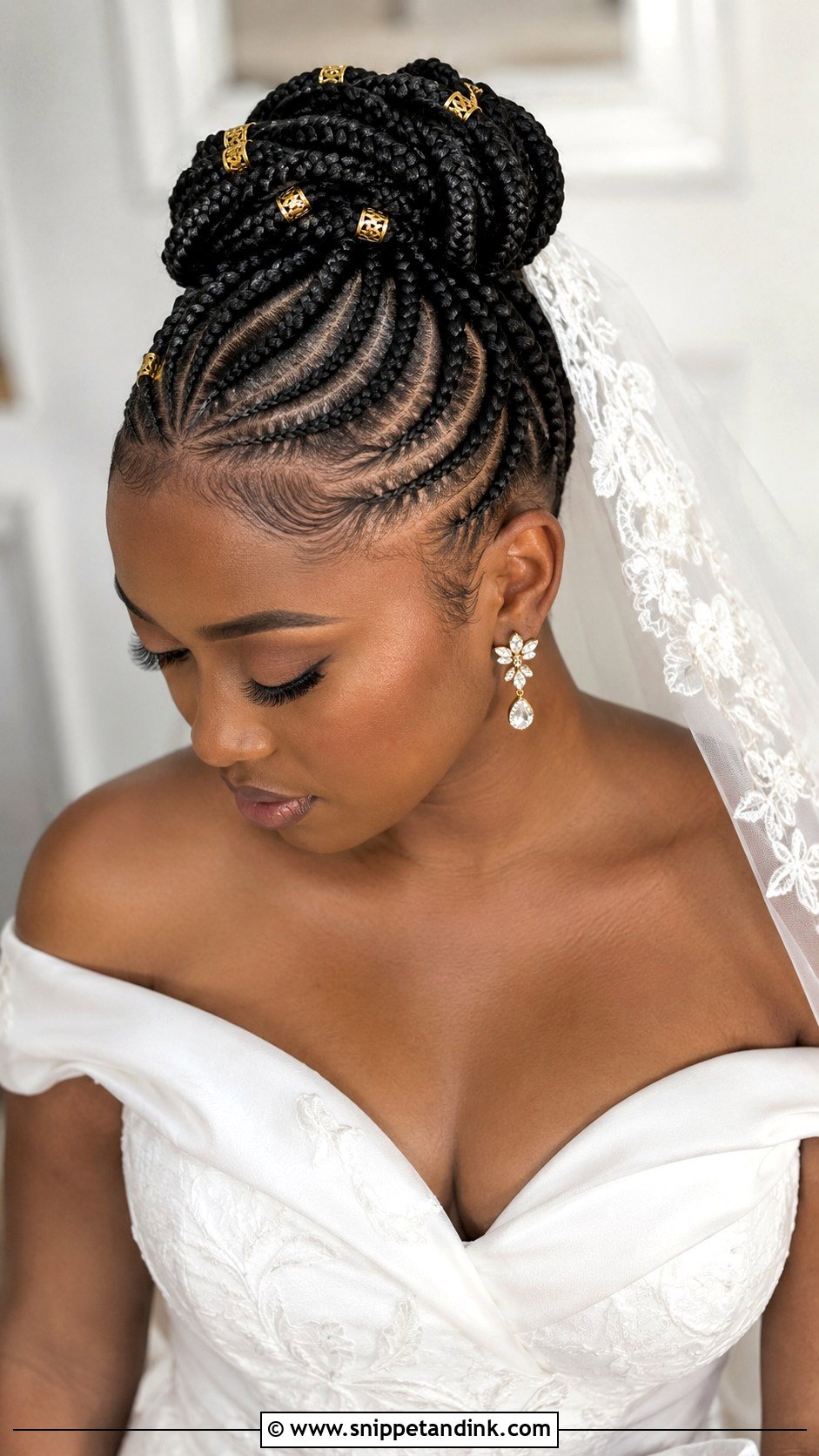
Cornrows turn the scalp into the design, so the lines and swirls become the main feature rather than the bun. The detailed cornrows lead back into an updo or bun that stays put through any amount of dancing. Braids installed too tight cause tenderness and can damage edges, so speak up if anything pulls while your braider works. I like the install done about a week out, which gives the tension time to ease and any redness at the scalp time to settle. Gold beads or cuffs can go on the ends or around the bun.
12. Curly High Bun for Natural Hair
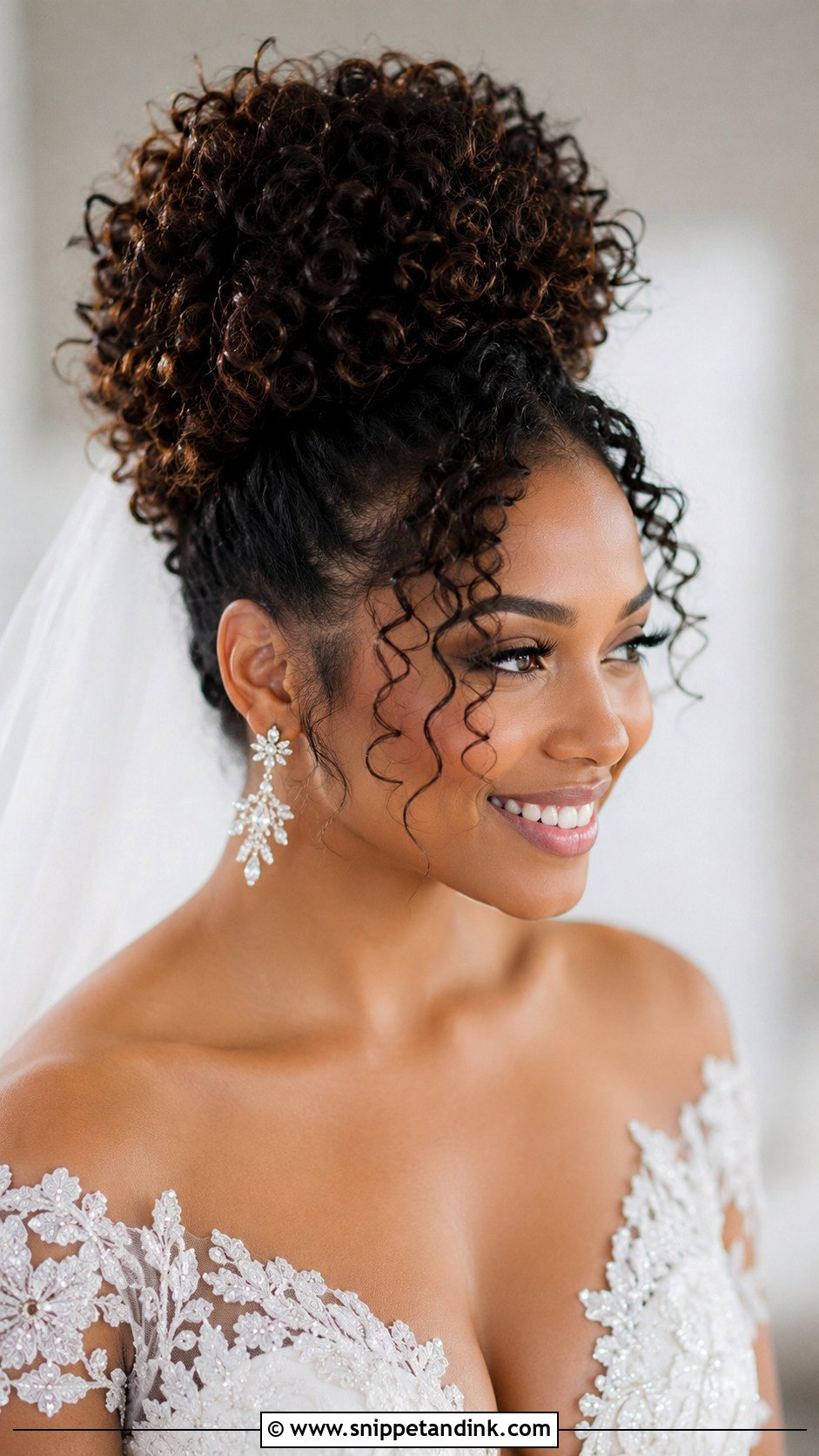
A high bun of natural curls lengthens the neck, which is why I steer brides with open-back or strapless gowns toward it. I gather the curls on the crown with a stretchy band or a drawstring, then pin them loosely so the bun keeps its volume instead of flattening. A few curls left out in front soften it. One caution: the pull of a high bun can strain thin or fragile edges, so if your hairline is delicate, I’ll move it a couple of inches lower.
13. Side-Swept Locs for Black Brides
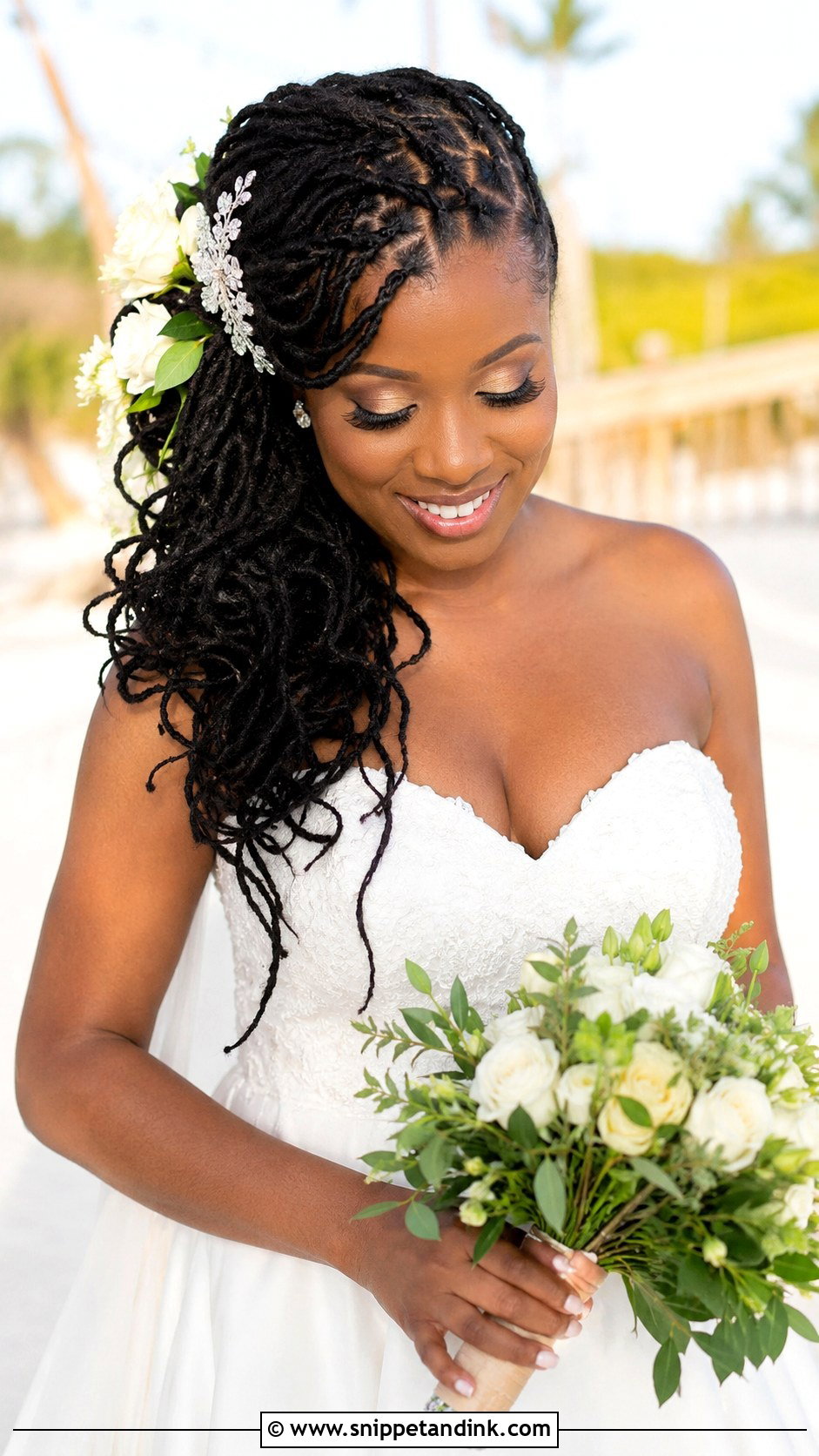
Swept to one side, locs look relaxed, but all that weight sits on one shoulder. I anchor them behind the opposite ear with hidden pins so they don’t slide back across the neck by the first dance. For waves, set the locs on pipe cleaners or in braids the night before. A jeweled clip or fresh flowers near the part finish it. It suits a beach or outdoor wedding, though wind will push them around, so I add a couple of extra pins on a breezy day.
14. Crown Braid for Black Brides
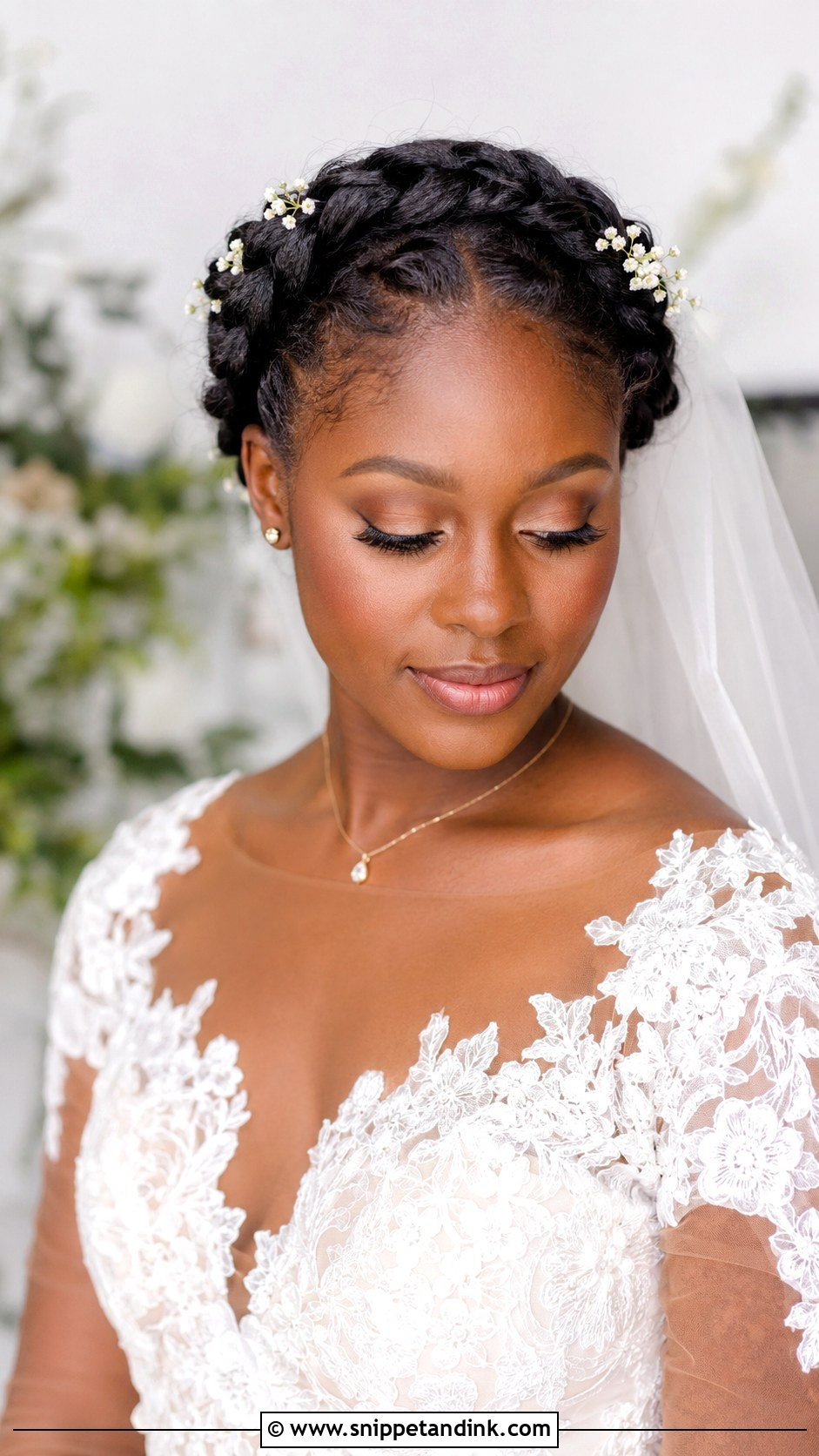
A crown braid needs enough length to travel all the way around the head, roughly shoulder length or longer on stretched hair. If yours falls short, braiding hair can be added to close the circle without anyone noticing. I stretch natural hair before braiding so it doesn’t shrink unevenly as the day goes on. I’d keep the braid on the firm side, because a loose one starts to look fuzzy by evening. Veils sit well just below it at the back, and small pearls tuck neatly between the stitches.
15. Faux Hawk Updo for Black Brides
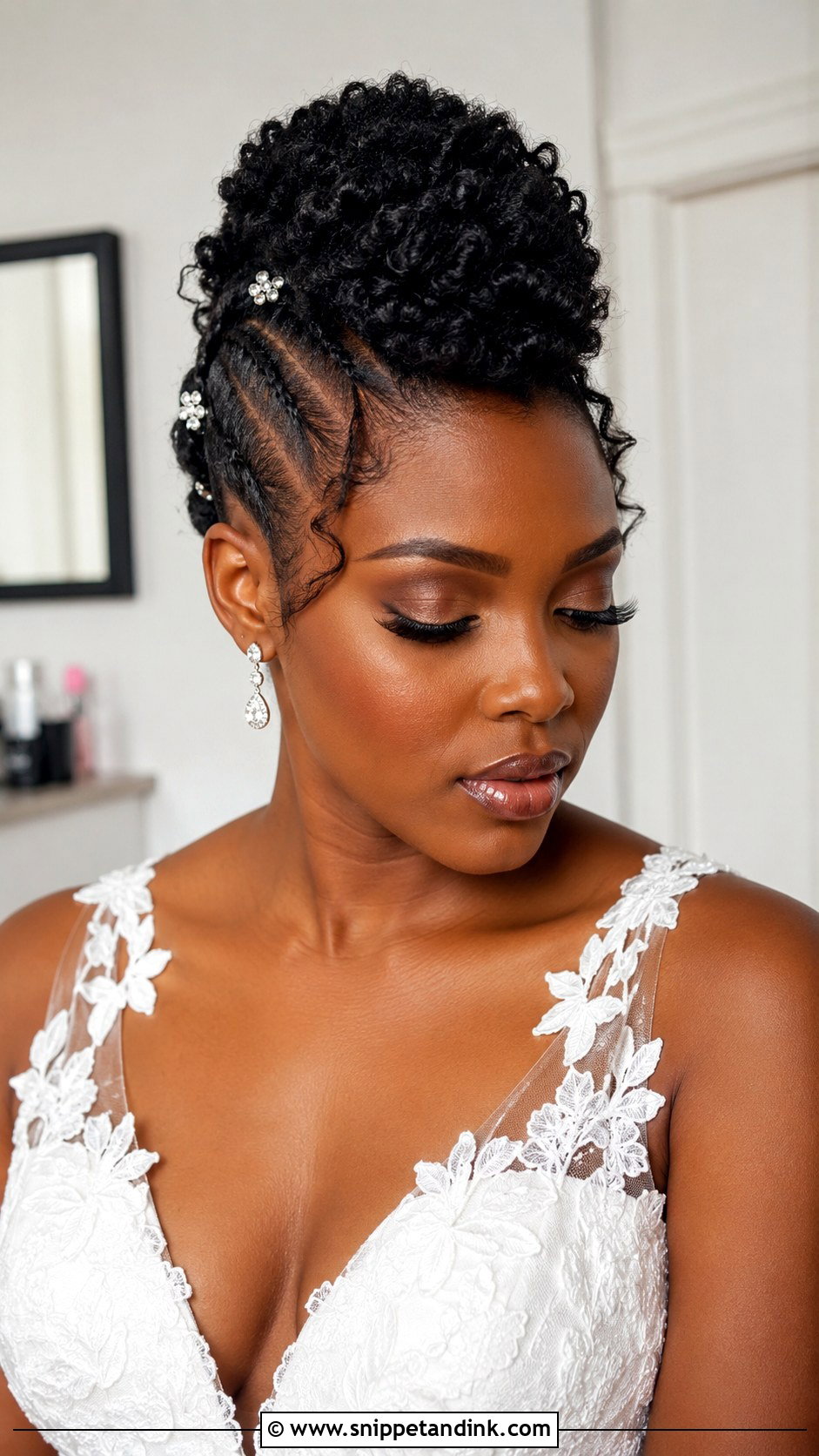
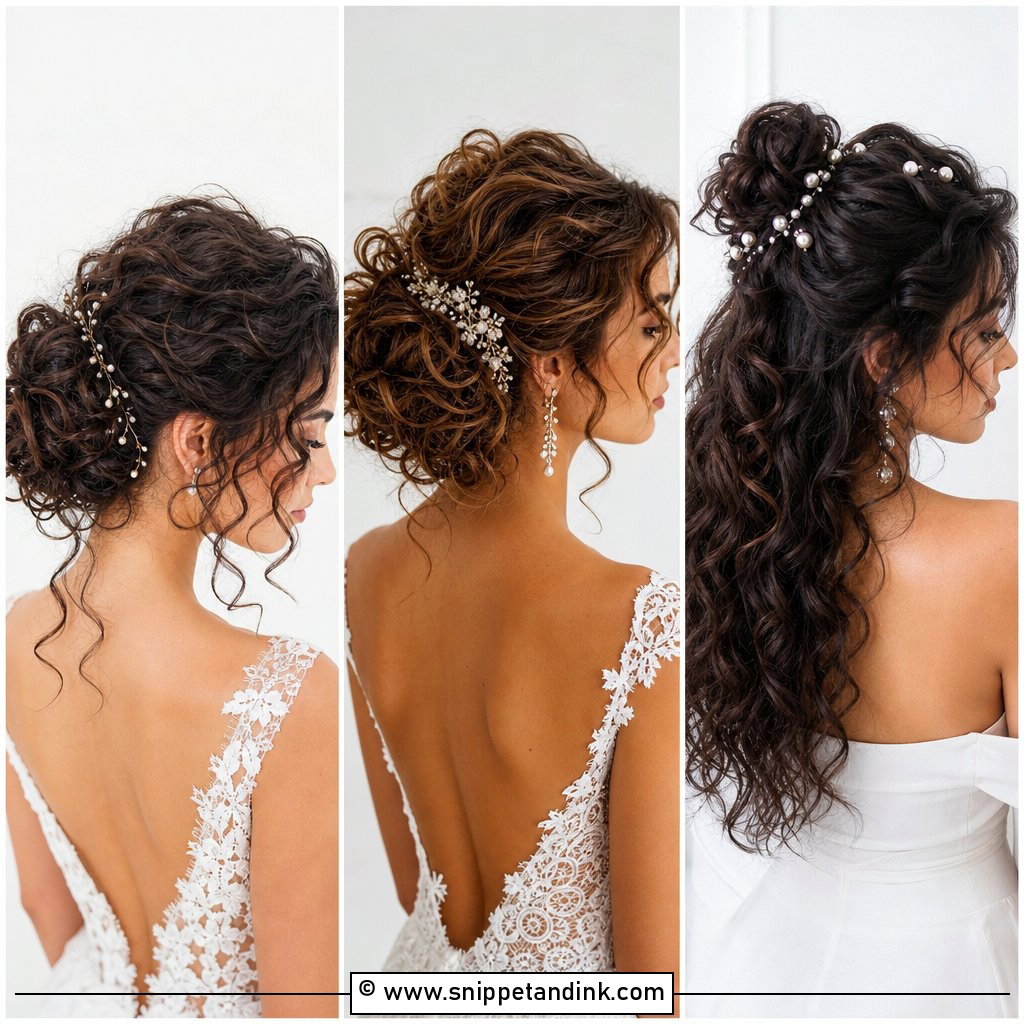
The faux hawk puts all the height down the centre of the head, with the sides smoothed back or braided flat for contrast. On coily hair I build it either from the hair’s own volume or from a row of pinned puffs, which holds its shape longer. This is a bold look, and I want you to wear it for a few hours after the trial before committing. A traditional veil fights the height, so plan for a short one set behind the hawk or none at all. Gold pins down the sides keep it bridal rather than casual.
16. Twisted Halo Updo for Natural Hair
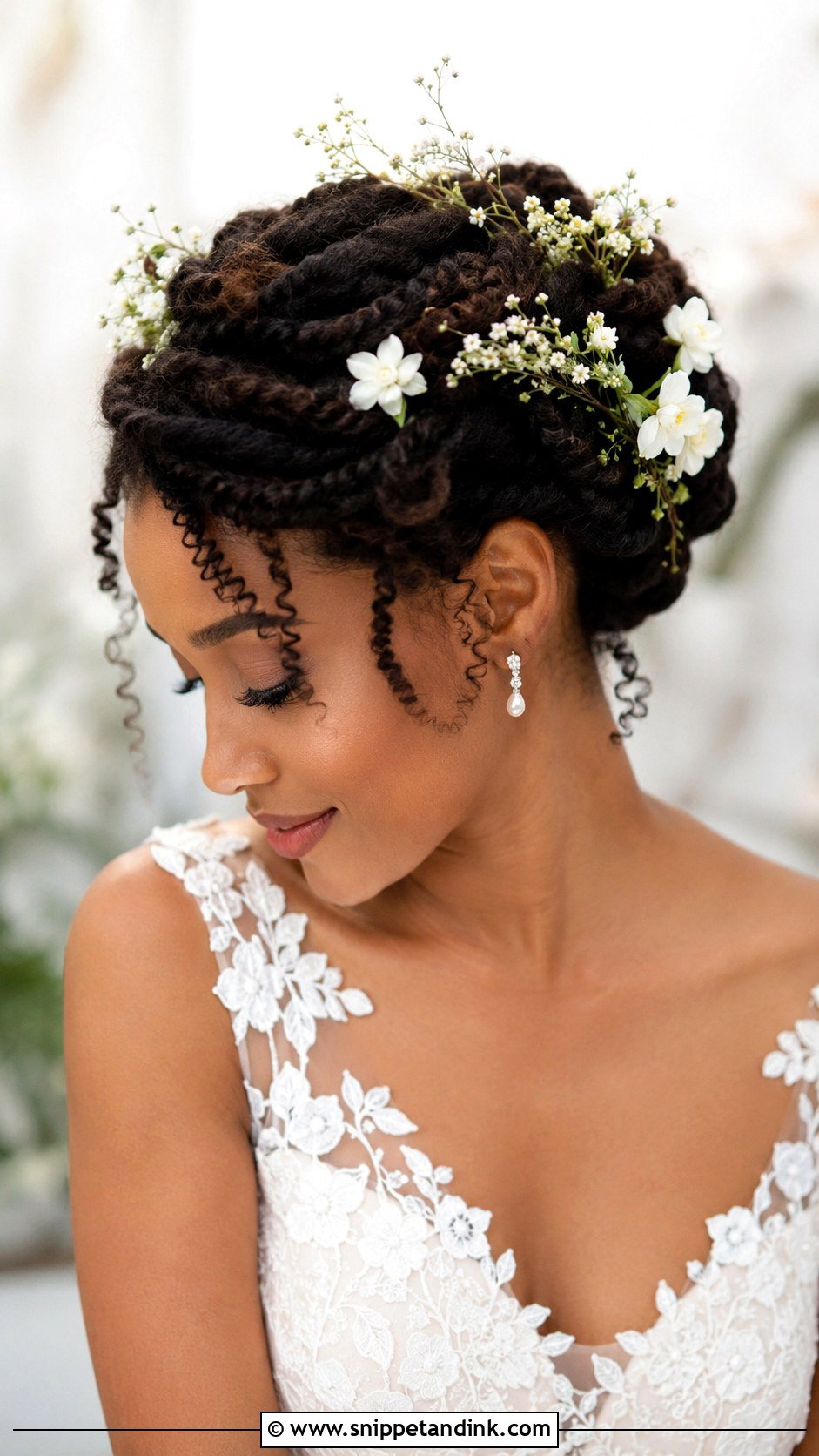
A twisted halo updo sits slightly higher and softer than a crown braid, since it is made of two-strand twists laid around the head in a circle. Uniform twists matter here, so I twist on stretched hair and keep the sections the same size. I only leave tendrils out if they are already defined; undefined ones turn to fuzz near the face. Flowers and pearls pinned along the circle suit a garden ceremony.
17. Sleek Low Ponytail for Black Brides
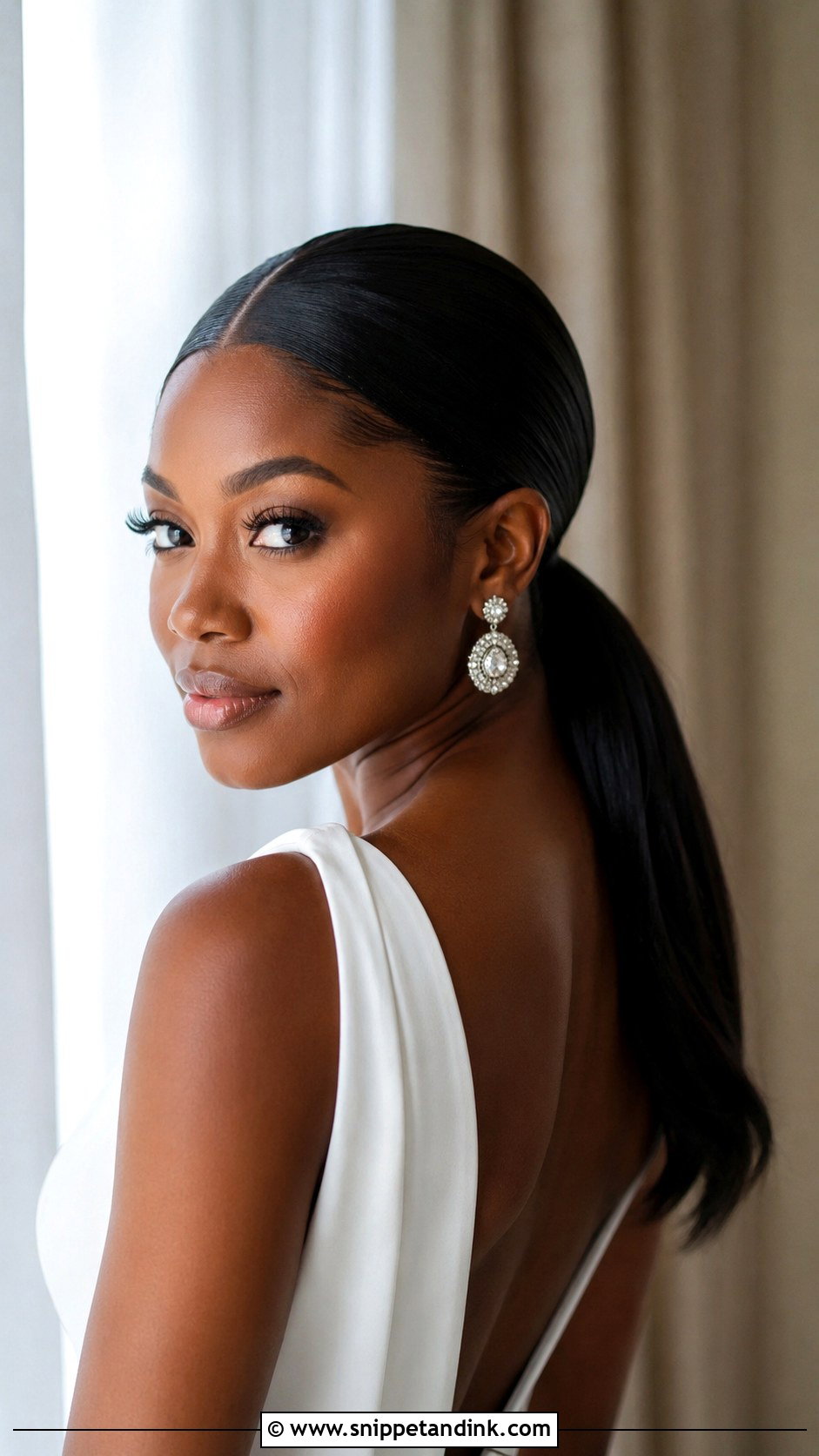
A sleek low ponytail is about two things: the brush-back and a clean base. I smooth the hair, secure it at the nape, and wrap a strand around the elastic so nothing shows. A centre part sharpens it. On natural hair I start from a pressed or well-stretched finish and set the edges under a scarf. Since nothing covers your ears, this is the style to show off big earrings. If your hair is shorter than you’d like, a clip-in ponytail adds length and blends easily at the nape.
18. Floral Adorned Afro Updo
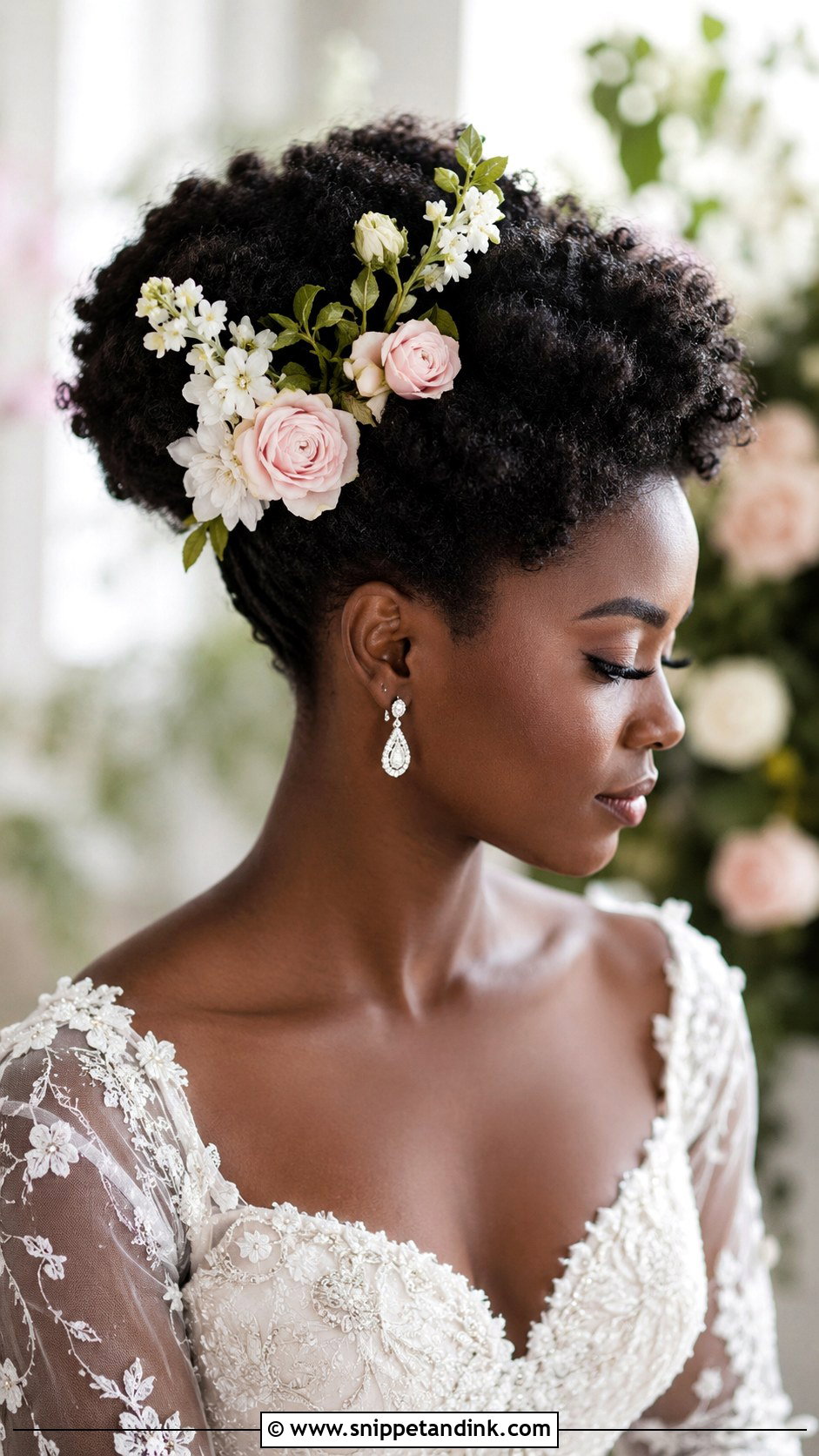
My main concern with fresh flowers in an afro updo is water. Blooms pinned into hair start wilting within hours unless they are sturdy, such as orchids, spray roses or wax flower. Ask your florist for flowers prepared specifically for hair, wired and kept chilled until the last moment. I gather the coils into a soft updo and add the flowers at the very end. Matching them to your bouquet ties the look together.
19. Box Braids Bridal Updo
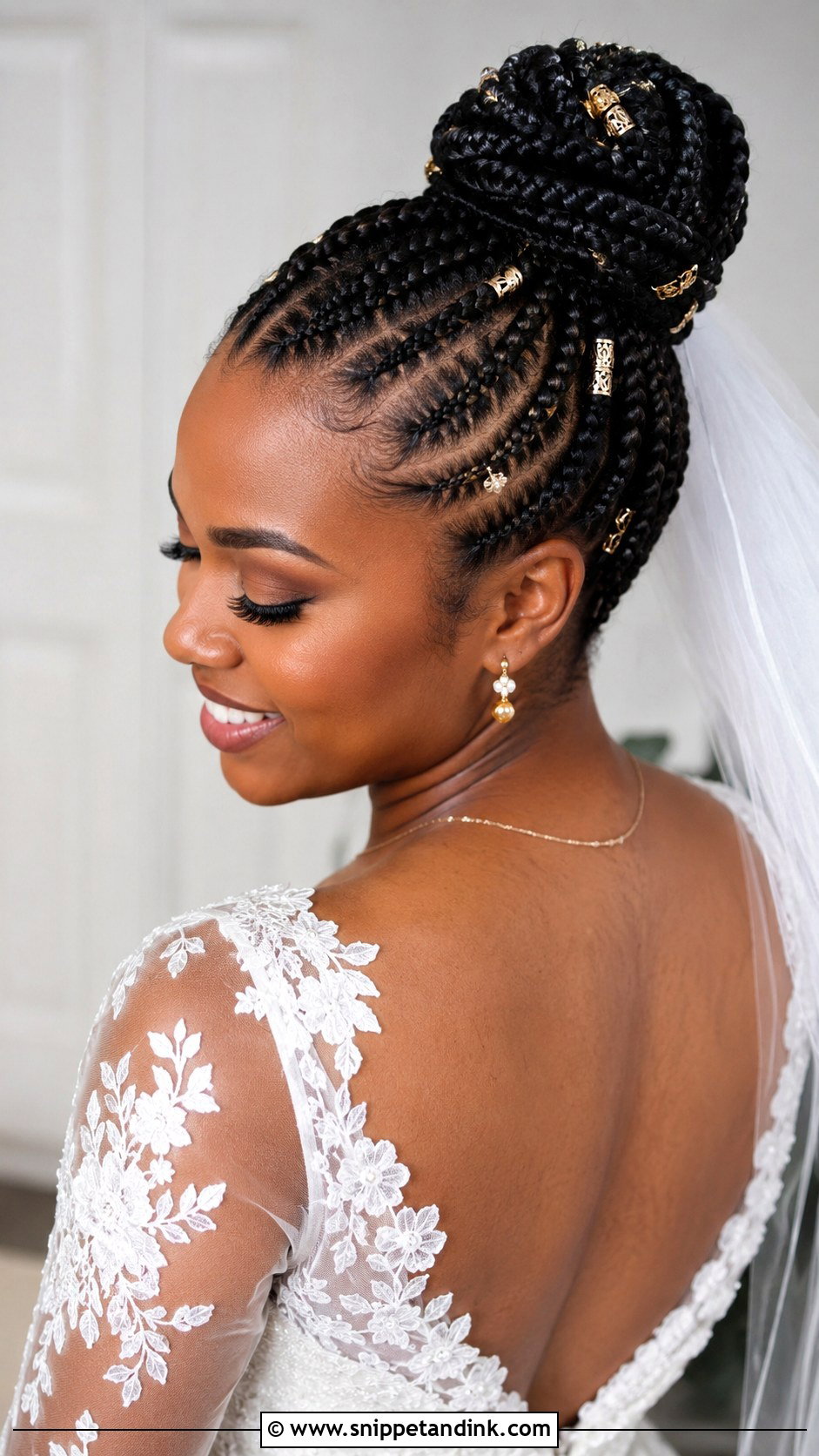
Long box braids get heavy once they are piled up, so I plan the shape around the weight rather than the other way round. They can go into a bun, a crown or a sculpted shape at the back or top, and a low coil puts less strain on the scalp than a high pile. Have them installed about a week before the wedding so the new tension eases. Gold cuffs, beads or small flowers slide onto individual braids. Once in, there is almost nothing to maintain on the day.
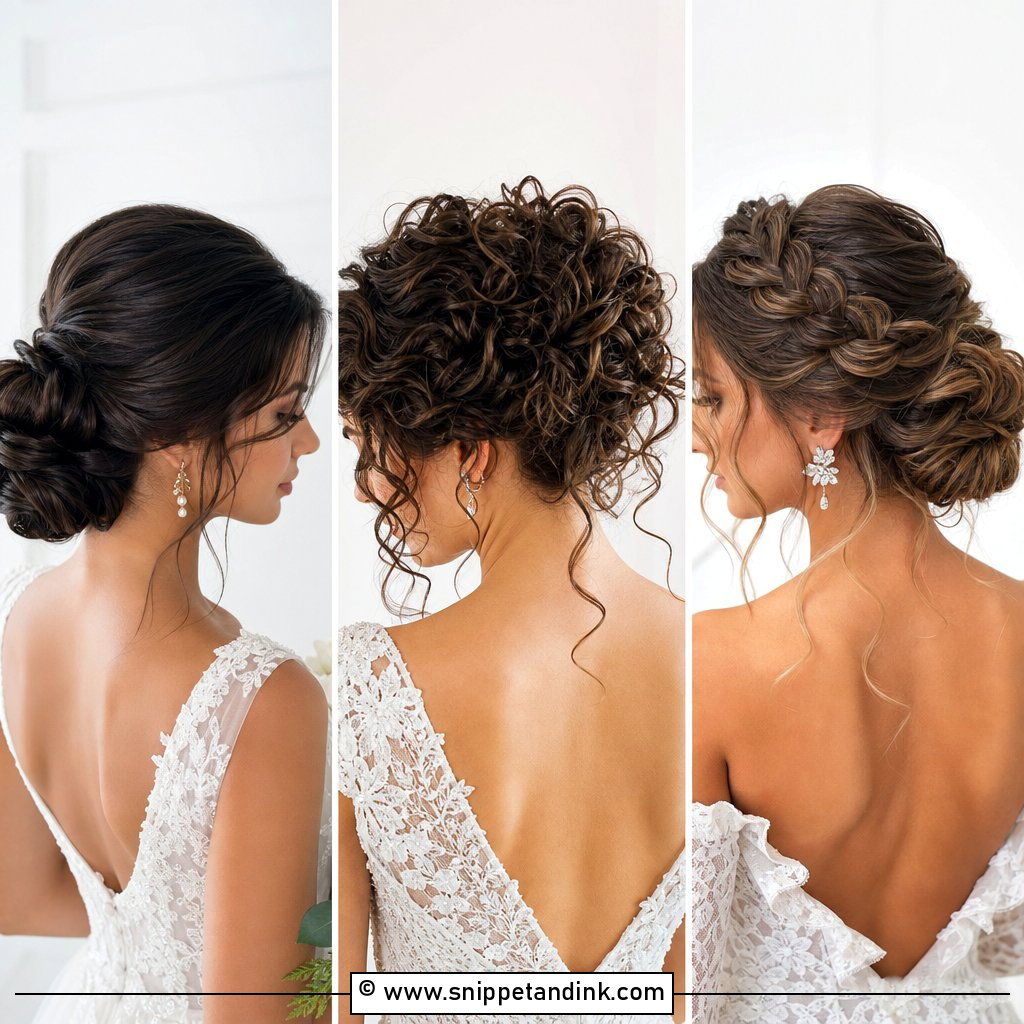
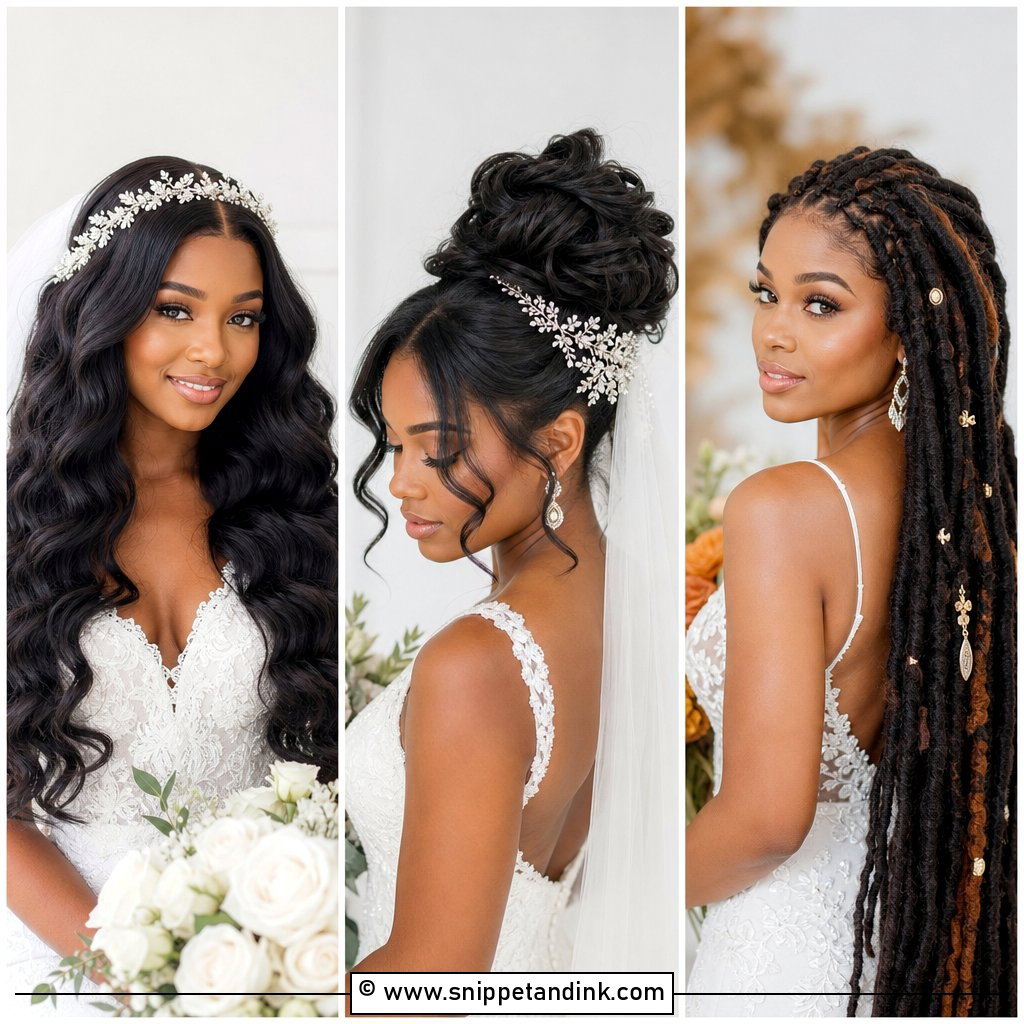
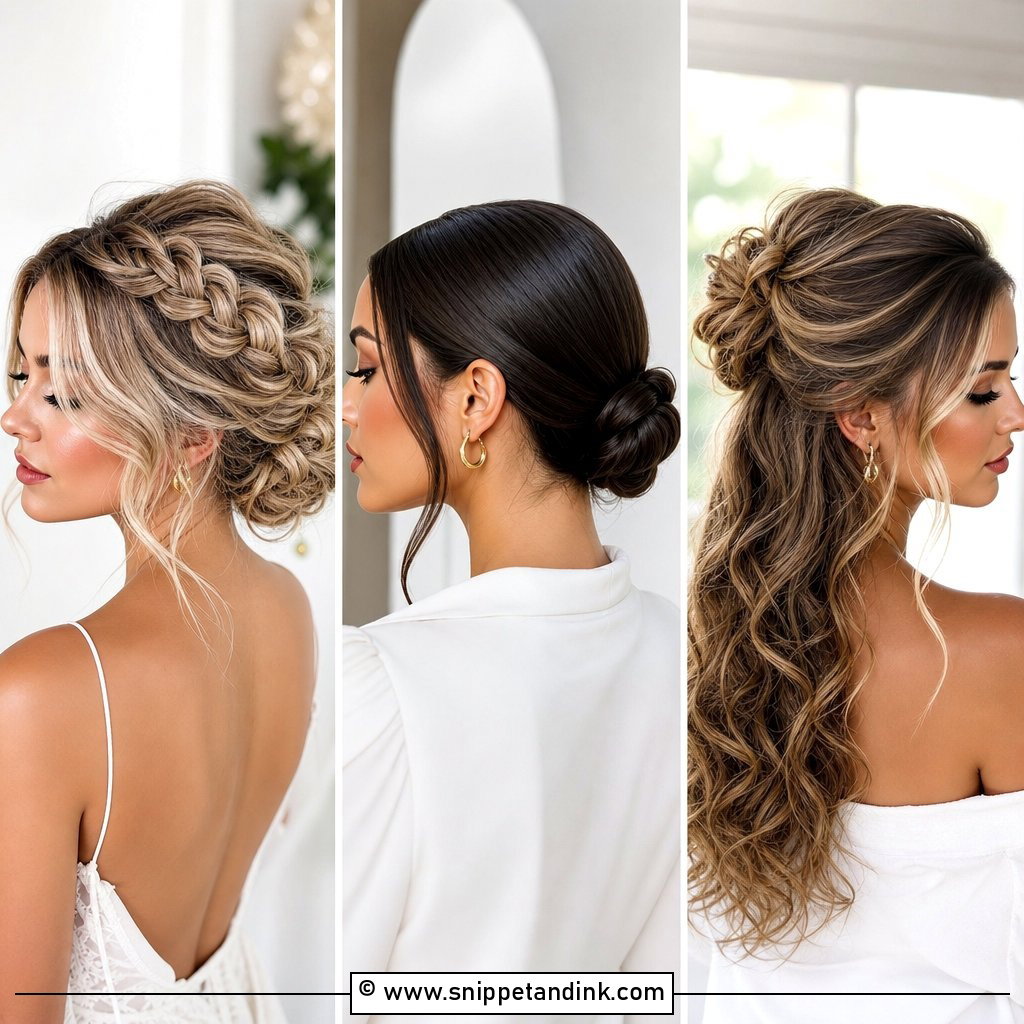
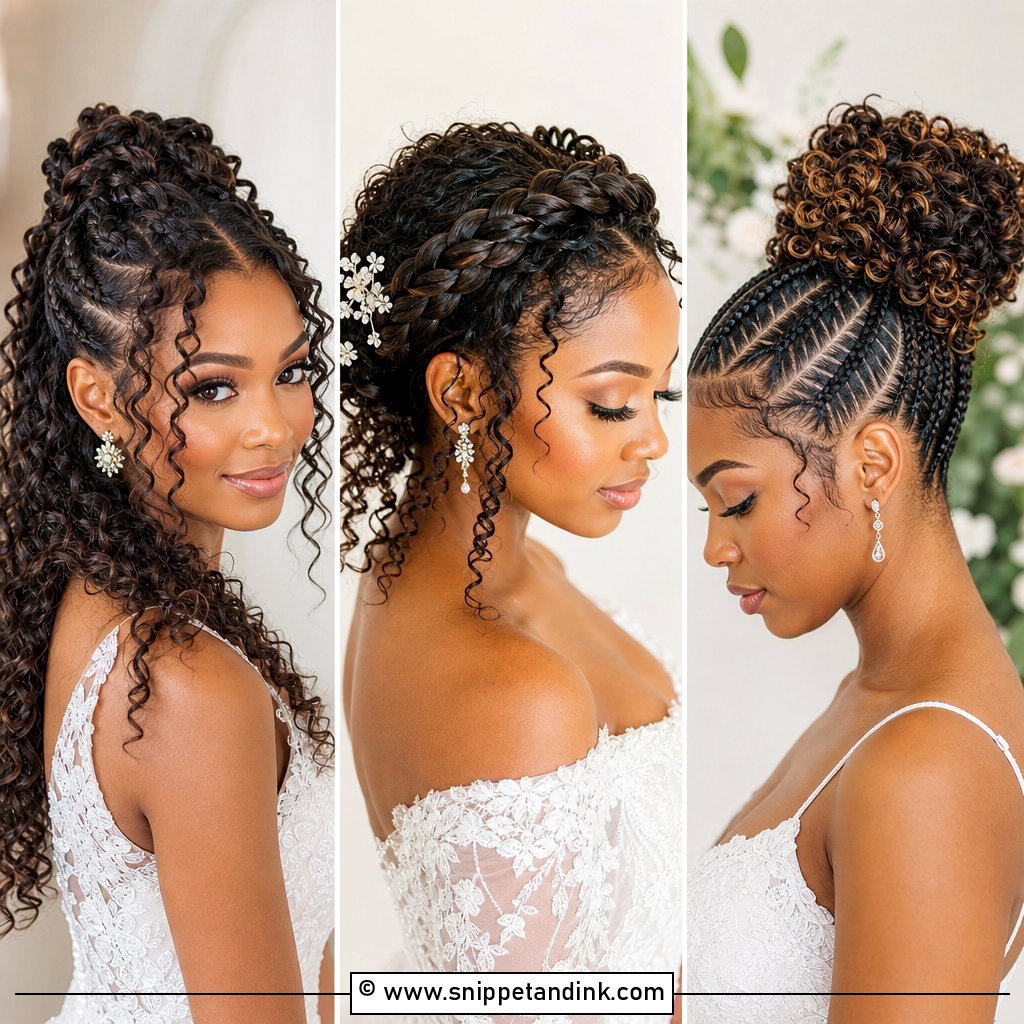
20. Finger Wave Bridal Hairstyle
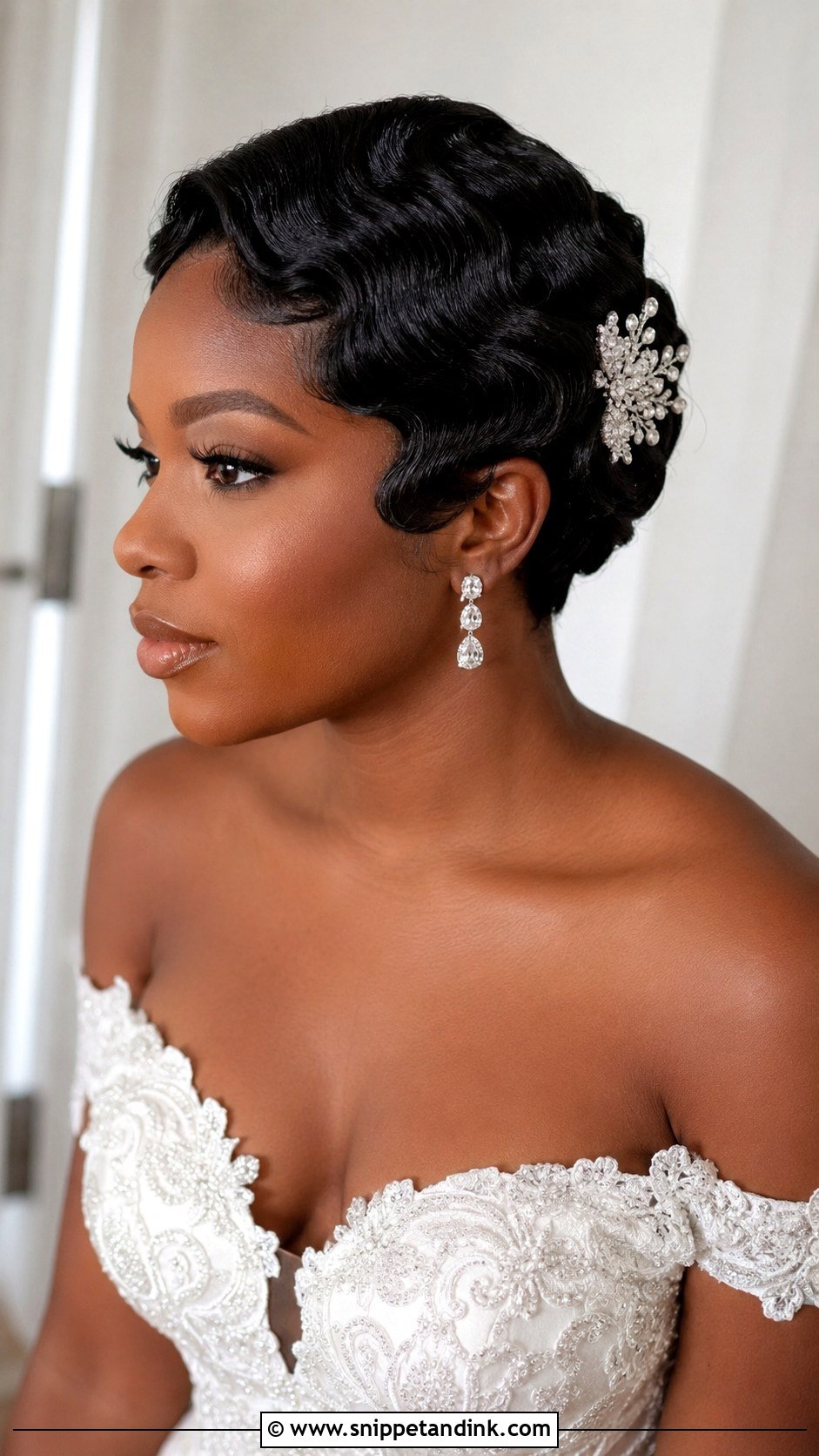
Finger waves are made for short hair: pixies, bobs and relaxed cuts. The S-shaped ridges are combed into wet hair with setting lotion or gel, pinched by hand, then dried under a hooded dryer until they’re completely set. It is slow, skilled work, so book someone who does it regularly rather than a stylist who has only seen it on a mood board. A jeweled clip at the side is enough decoration. Humidity softens the ridges, so keep a small bottle of holding spray in your bag.
21. Curly Updo With Baby Hair Detailing
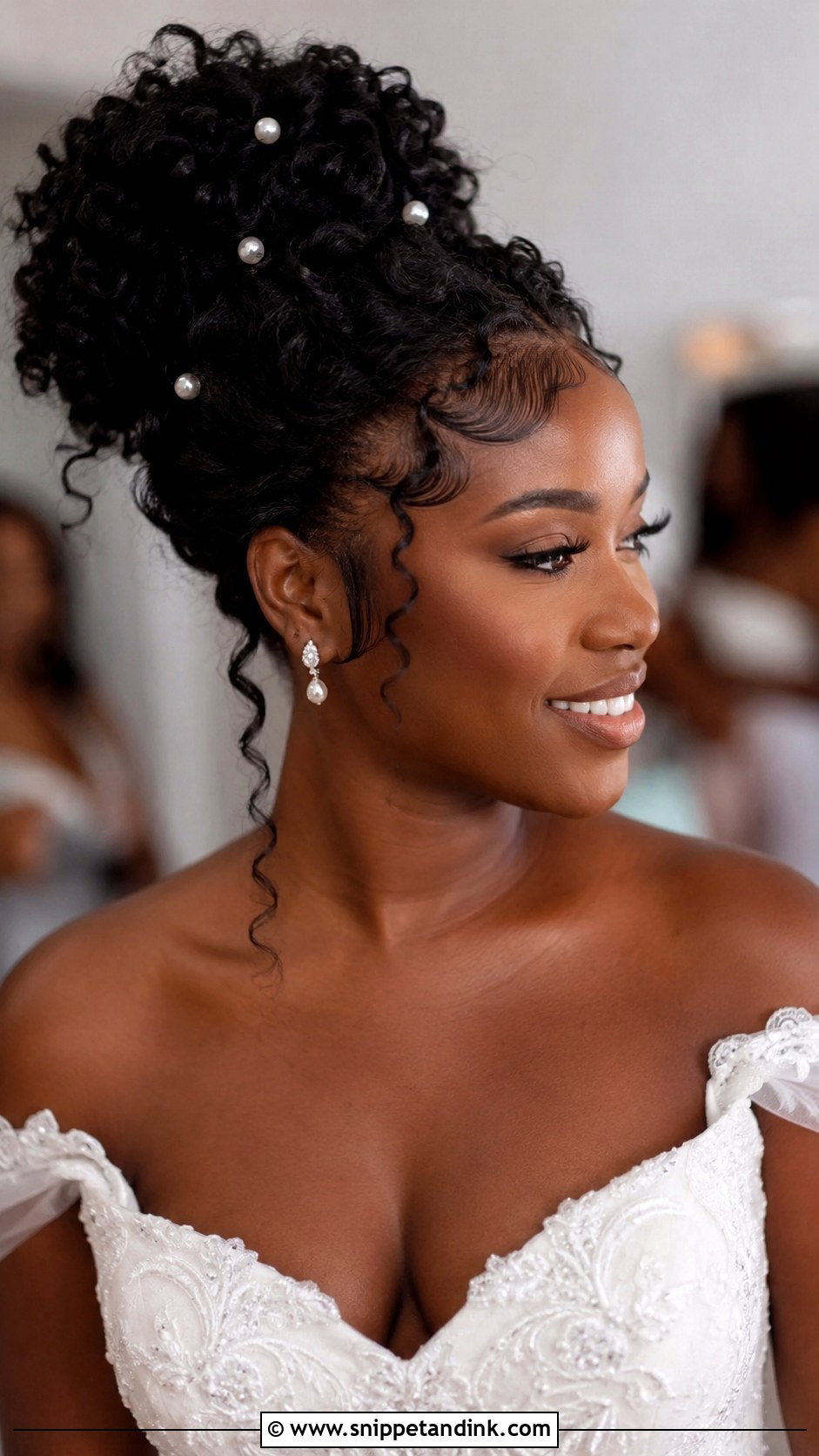
Baby hair detailing is fine, careful work, and it is the first thing guests notice up close. I gather the curls into a soft updo, then shape the laid baby hair into swirls with a small brush and edge control. Thick edge control can turn white or flake in heat, so I use a light layer and set it under a scarf for several minutes. Protect your edges in the weeks before by avoiding tight styles near the hairline. Pins or small flowers go in after the edges are done, so nothing disturbs them.
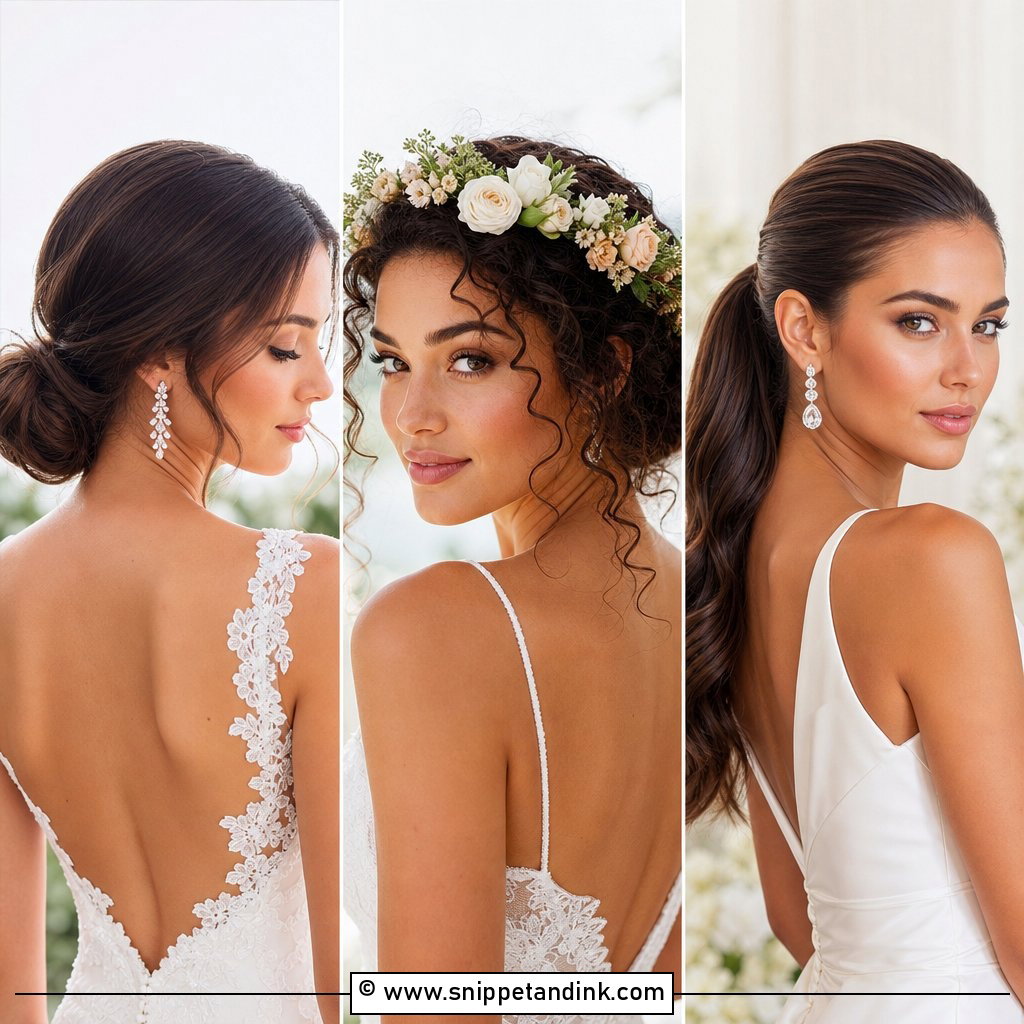
22. Low Chignon for Black Brides
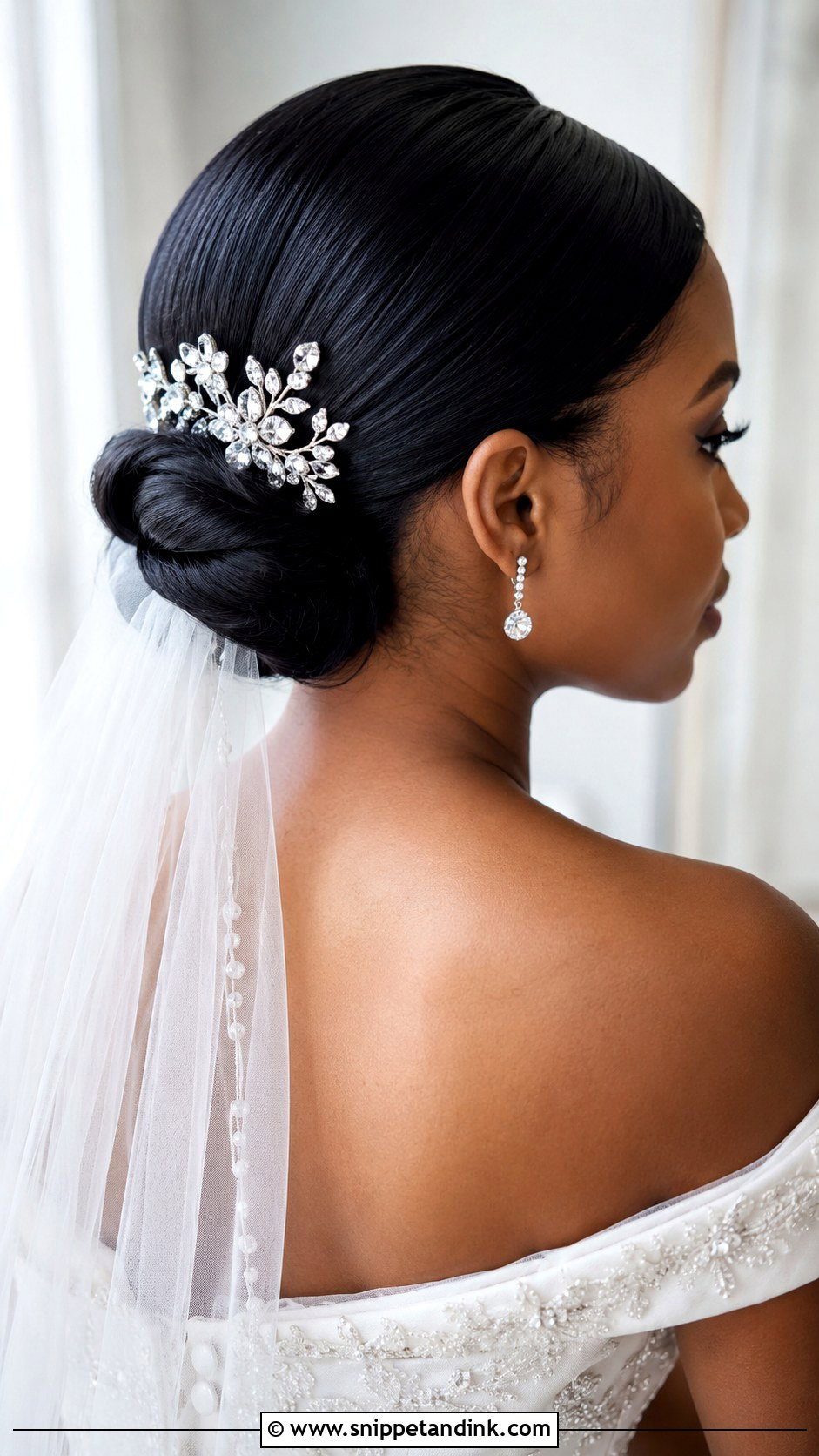
The low chignon is my go-to under a long veil, because the veil comb slots right above the coil at the nape. It needs relaxed, pressed or well-stretched hair for a clean surface. If your hair is on the shorter side, I build it around a small donut so the shape stays full instead of looking thin. With nothing around the face, both statement earrings and a high neckline get their moment. A decorative comb at one side is all it needs.
23. Two-Strand Twist Updo
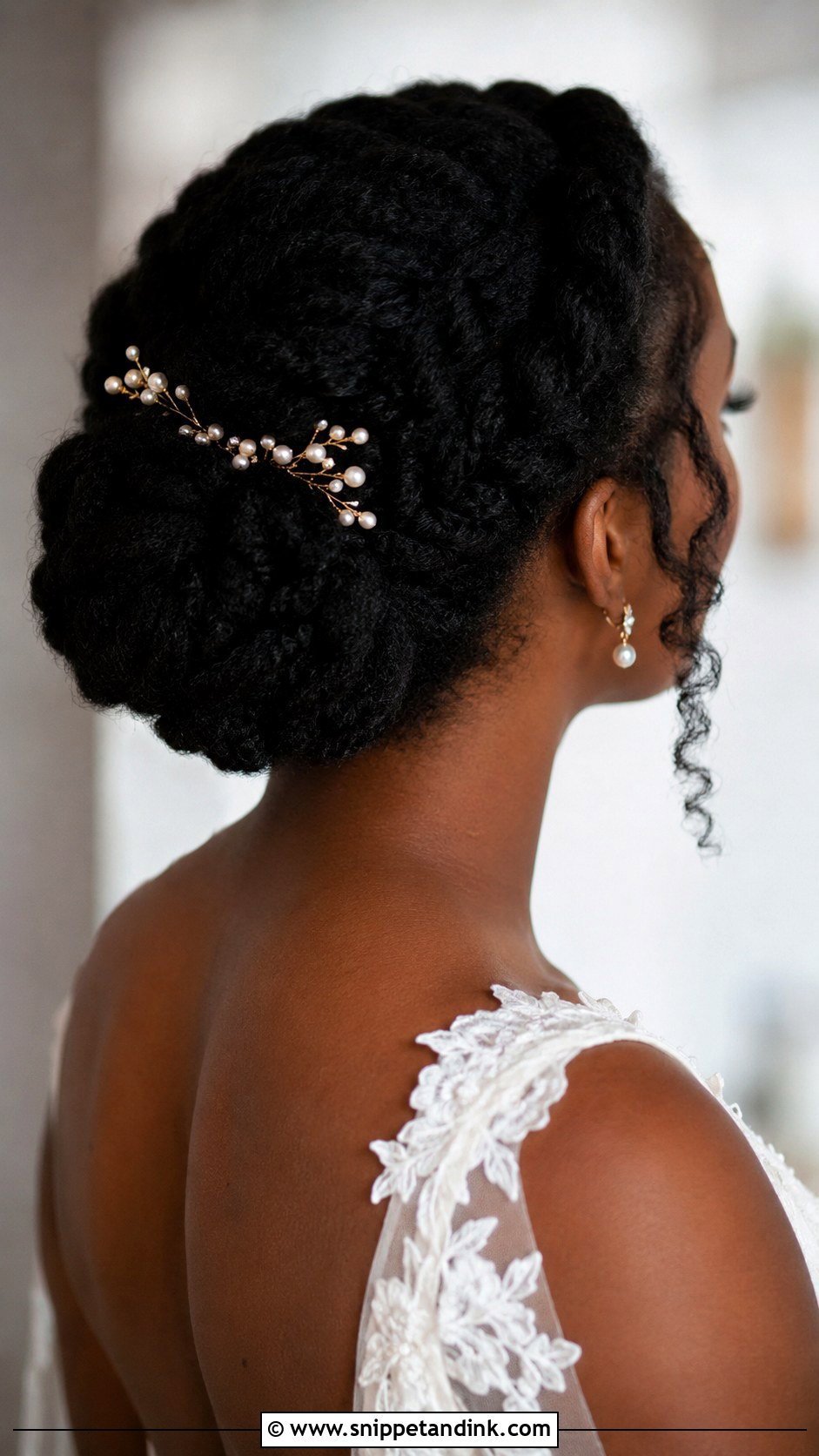
Two-strand twists are the most adjustable base on this list. I arrange them into a bun or a looser updo, and if the shape looks too neat at the trial, I can unravel a few at the front for curl without redoing anything. Twist a day or two ahead rather than the morning of, because fresh twists are stiff and stand away from the head until they’ve been slept on. Gold pins or pearls sit in the gaps between twists. By the end of the night the twists loosen slightly, which softens the whole shape.
24. Voluminous Curly Half Updo
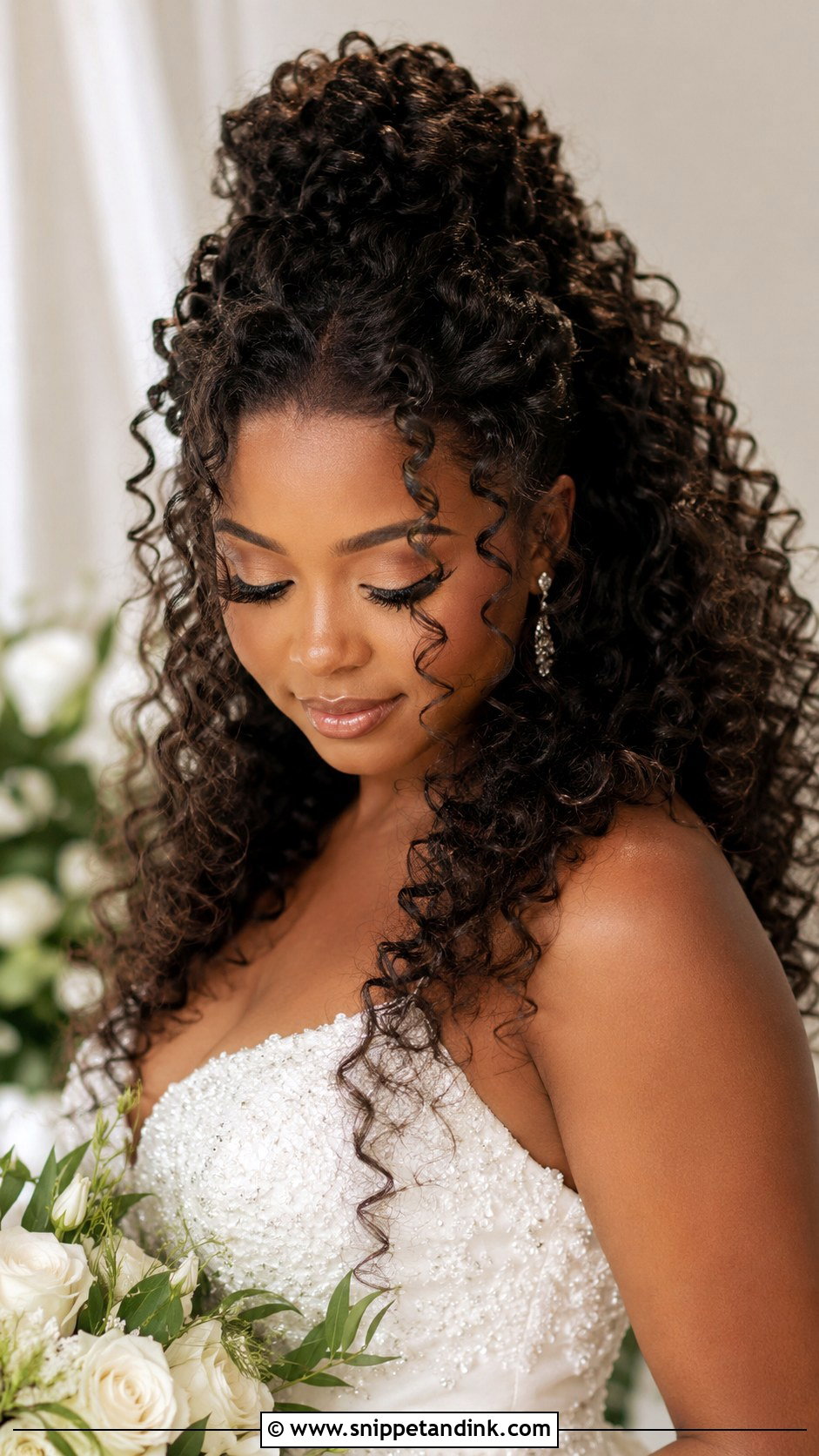
Big curls are the point here, so I keep the knot at the crown small and let the volume underneath carry the look. The top section comes back off your face, which your photographer will thank you for, and everything below stays free. Volume grows through the day, so I start slightly smaller than where you want to end up. Face-framing curls are optional. I’d skip this one if you can’t stand hair on your neck during a warm reception.
25. Sculpted Natural Updo With Gold Pins
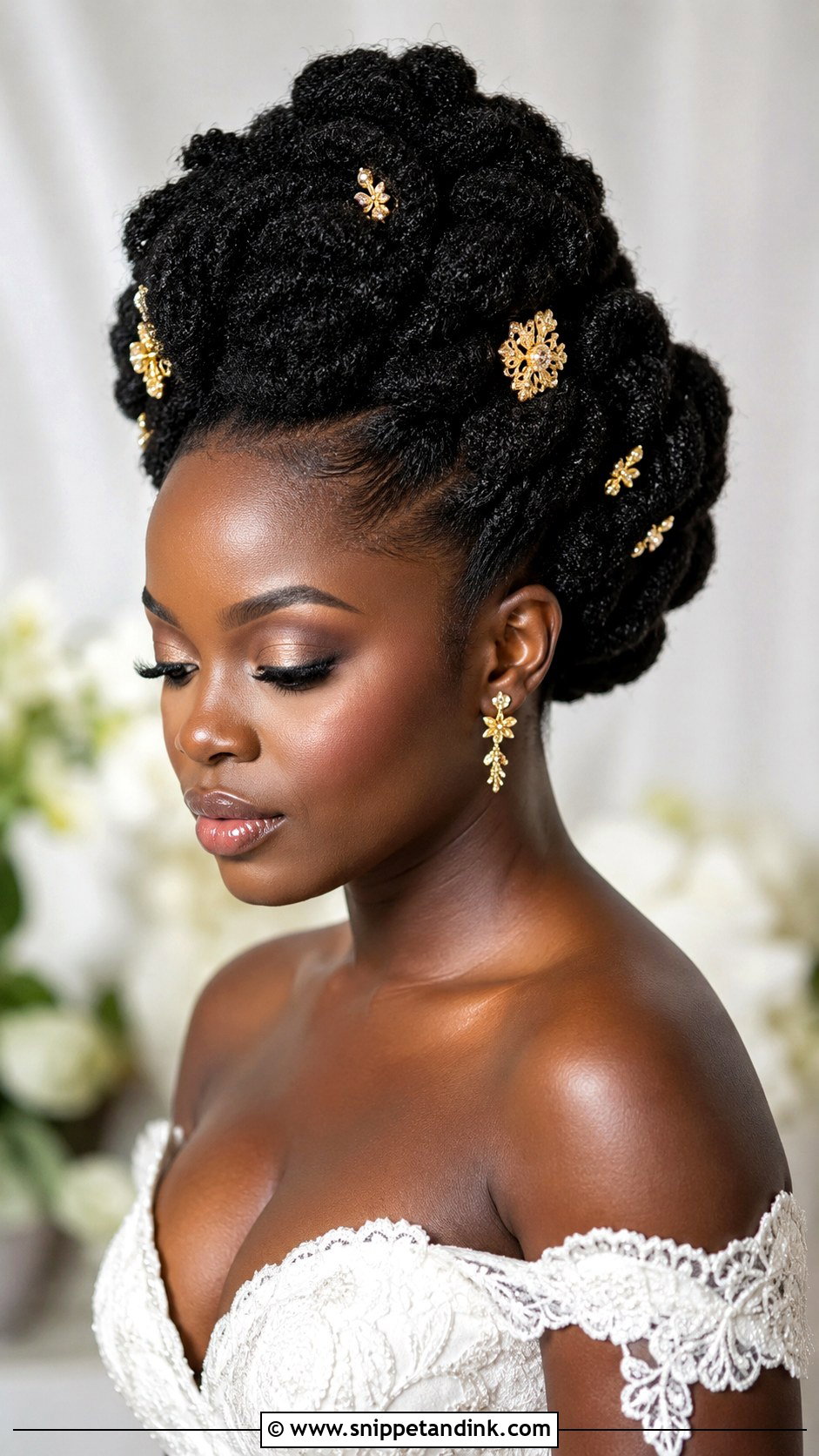
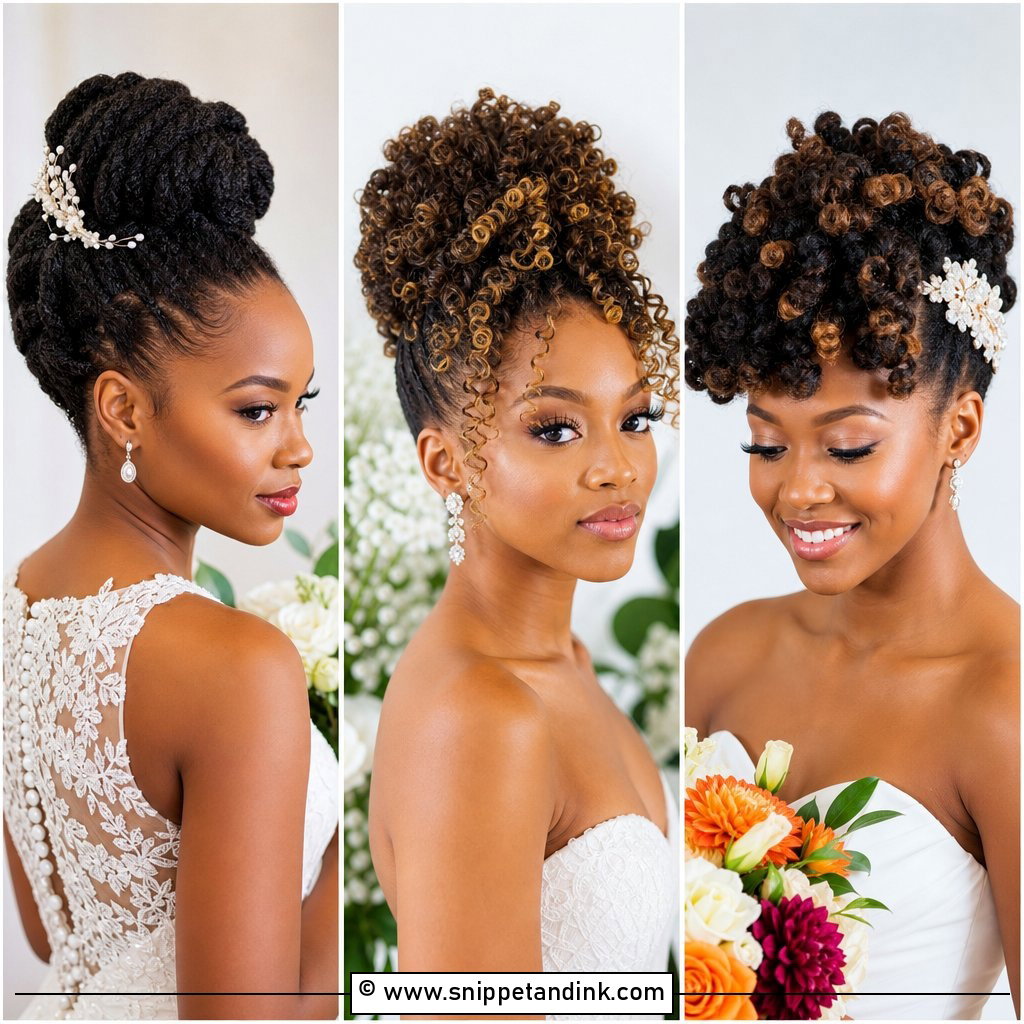
Sculpting coils into a firm updo shows off texture while still reading as formal, and it is the style where I spend the most time with gel and a fine brush. I mold the shape in sections, pinning as I go, so the texture stays visible on the surface instead of being slicked flat. Gold pins, clips or hair jewelry go in last, spaced so they catch light from every side rather than clustering at the back. Once set, it holds very well through a long reception.
Shrinkage, Heat and a Ten-Hour Wedding Day
Coily hair responds to moisture in the air faster than straight hair does. A twist-out shrinks, an afro tightens, and a press starts to lift at the roots the moment you step from air conditioning into a humid garden. None of that is a disaster if you plan for it.
What goes in my kit for natural-hair brides
- A satin scarf for getting dressed, so the gown goes over your head without catching a curl.
- A small amount of the same gel or edge control I used, with a soft toothbrush, for touch-ups on laid edges.
- Extra pins in your own hair colour, the ridged kind that grip coily hair better than smooth ones.
- A wide-tooth pick for reshaping volume after photos outside.
Veils need their own thinking too. A veil comb slides easily into a sleek bun but has nothing to grip in a soft afro, so I sew the comb into a small braid hidden underneath or use a few extra pins at the base. On locs, the comb goes under a coil rather than across the top. Try the veil at your trial, walk around with it, and turn your head quickly. If it shifts there, it will shift on the day.
Your Texture Sets the Shape, the Pins Come Last
Your texture tells you which of these styles will hold and which will fight you all day, so start there and let the decoration come last. Book a stylist who works with your hair type every week, not one who will be practising on you, and have a trial at least six weeks out so there’s time to adjust. Bring the gown neckline, the veil and any jewelry to that trial. The gold pins, flowers and pearls are the easy part. The right base, set properly the night before, is what keeps you looking like yourself through the last dance.
You'll Like These Ideas:


Leave a Reply