
A bolero is the most useful piece of fabric I fit. It can give a strapless gown sleeves for a church ceremony, add warmth for winter portraits, make a plain crepe dress look detailed, and then come off in seconds for the dancing. It’s also the piece brides most often get wrong, usually because it was bought separately and doesn’t quite match the gown. Below are 25 ways to wear one, sorted by fabric, sleeve and the gown underneath, each with the detail I’d check before buying.
Matching a Bolero to a Gown You Already Bought
Most brides add a bolero after the dress is ordered, and that’s where colour trouble starts. Bridal whites are not one colour. Pure white, diamond white, ivory and champagne all sit next to each other on the rail, and two ivories from different makers can look clearly different in daylight.
- Ask your gown’s designer first. Many offer a matching bolero or jacket in the same fabric and dye lot.
- If not, get a fabric swatch from the salon, or from the hem cut-offs after alterations, and take it shopping.
- Compare in daylight, by a window, not under shop lights, which hide the difference between ivory and white.
- Match the sheen as well as the colour. Matte crepe and shiny satin never look like one garment.
- Consider having a seamstress make one. Leftover fabric from shortening the hem or train can sometimes be enough for a small cropped piece.
1. Lace Bolero Wedding Dress
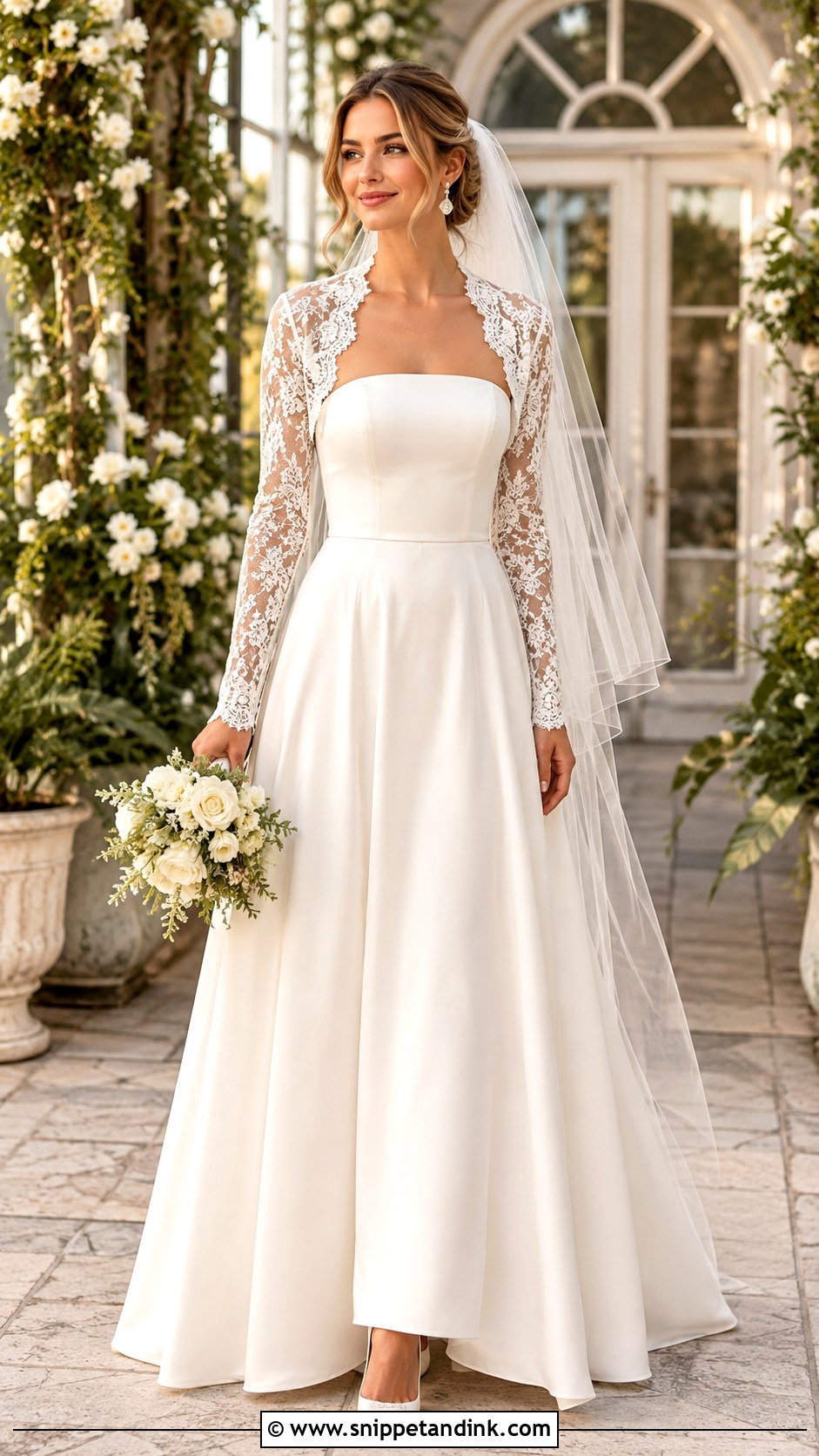
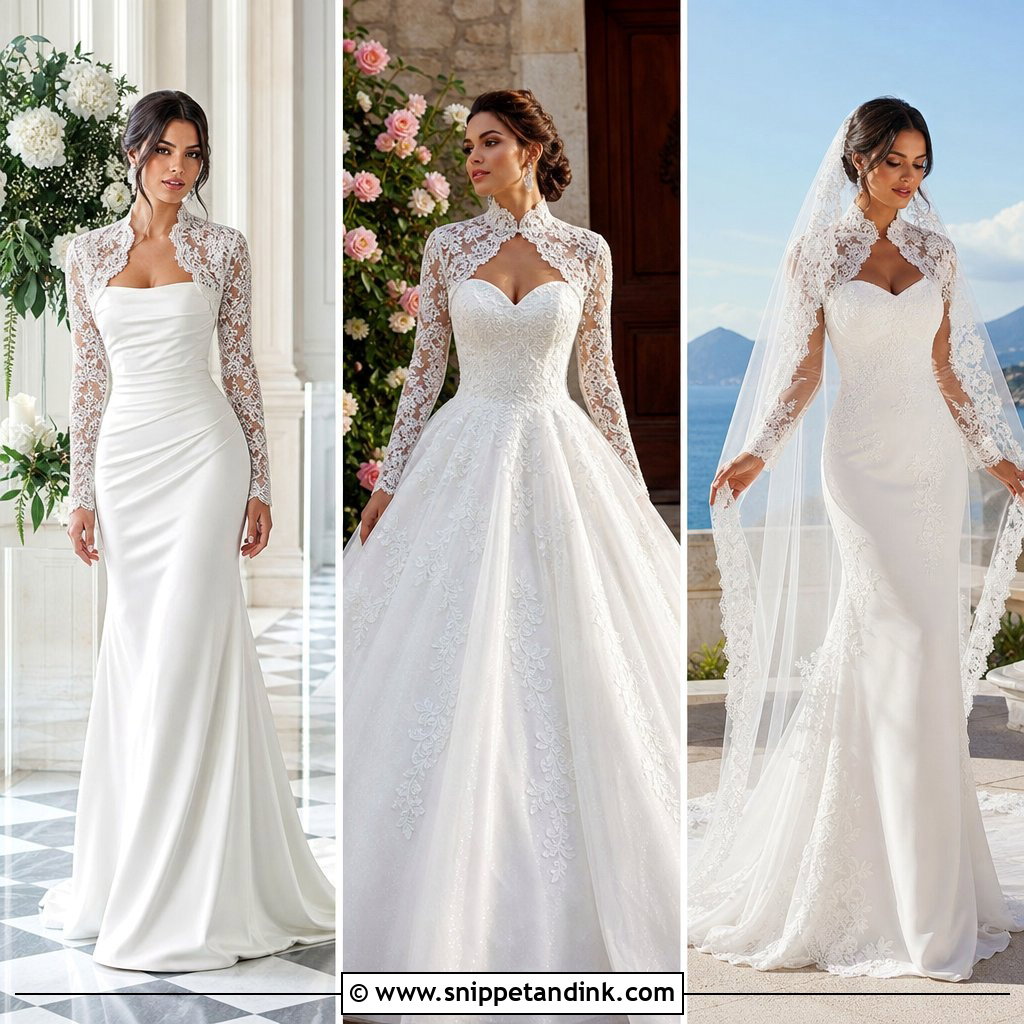
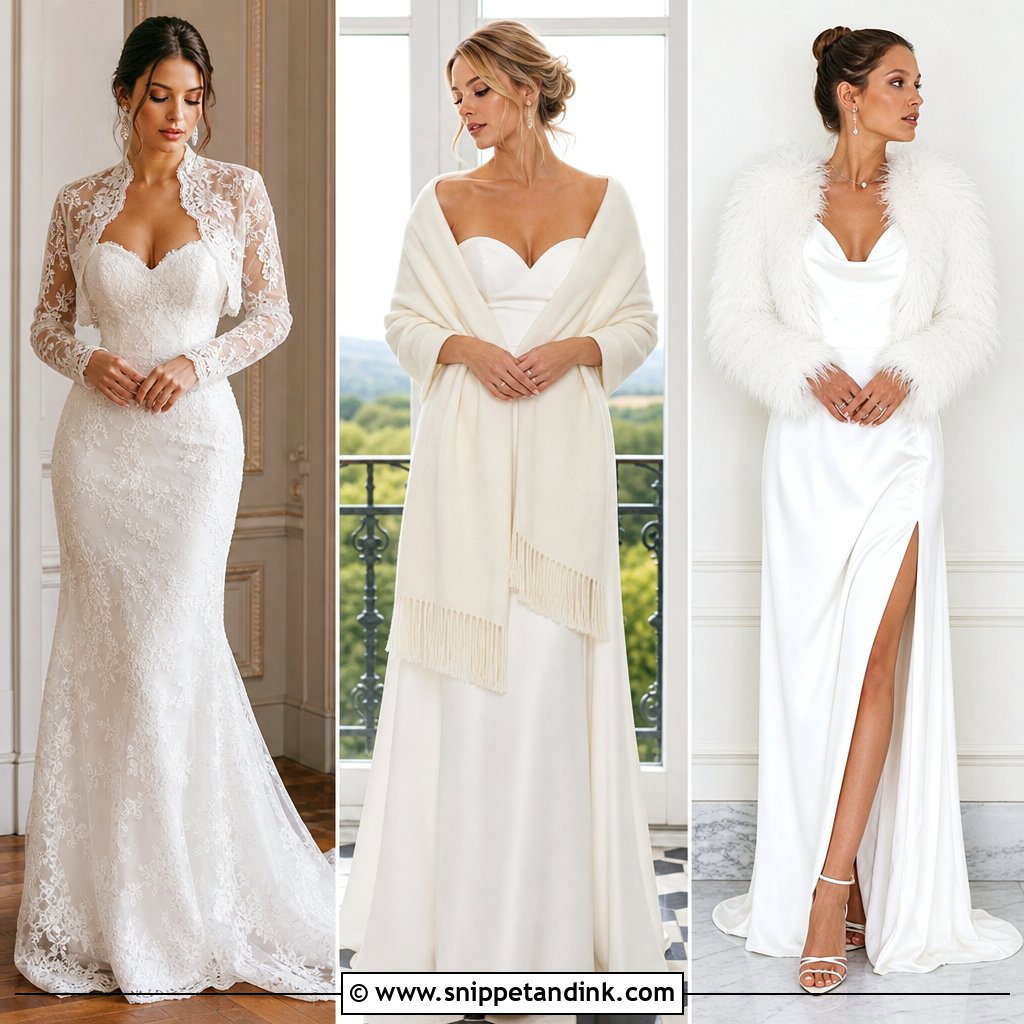
Lace is the bolero I’m asked for most, and the hardest to match. It adds softness without hiding the gown, especially over a strapless A-line, a sweetheart neckline or a plain crepe dress. The lace should feel related to the dress: a similar motif, the same ivory, or a shared trim. I’d avoid two different lace patterns side by side; they look accidental. Pointed ivory heels, pearl drops and a simple veil suit it, with white roses or ranunculus so the lace stays the main texture.
2. Satin Bolero Wedding Dress
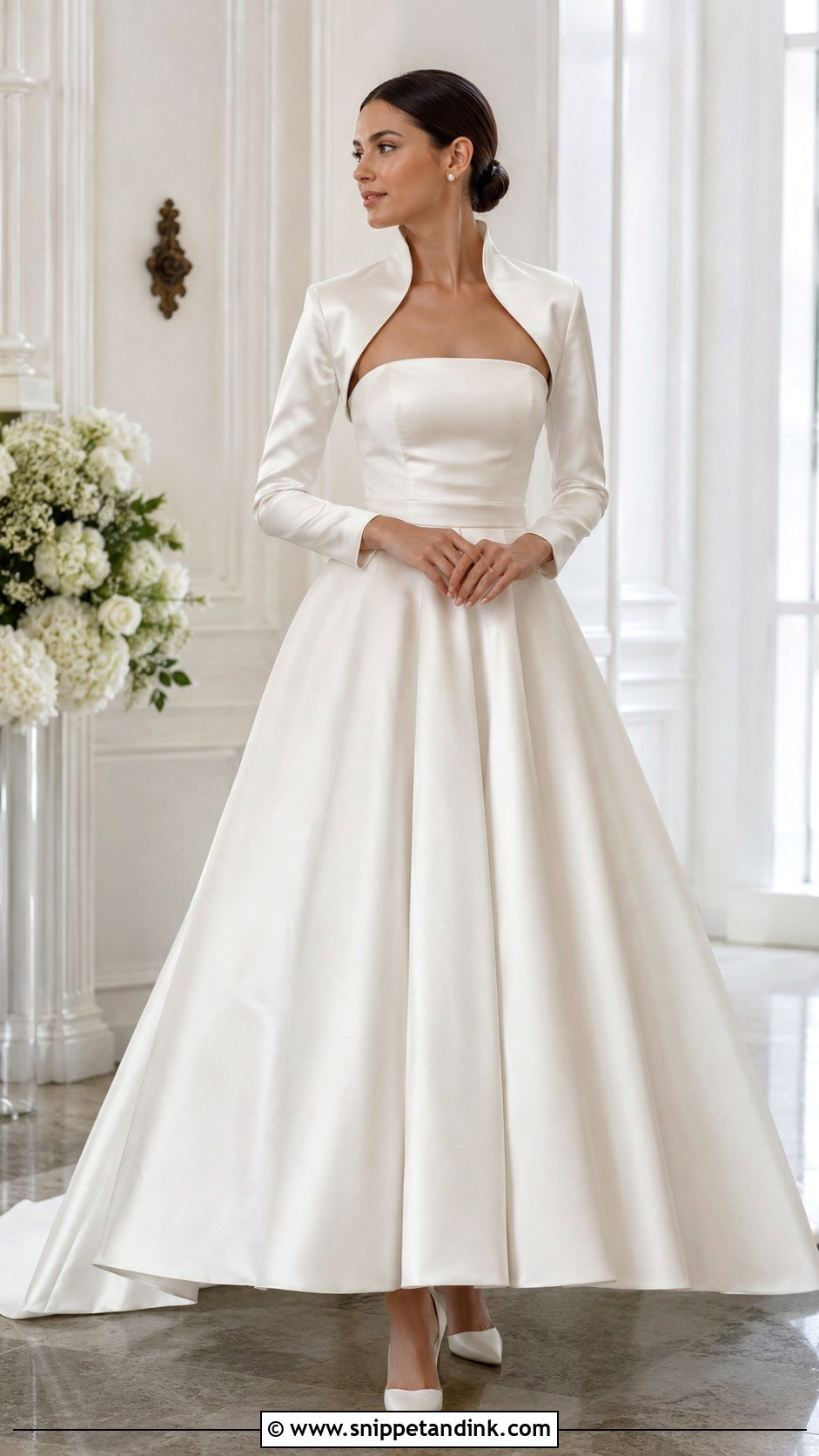
Satin has enough body to look tailored, which is why a cropped satin bolero with long sleeves can make a strapless gown look custom-made. Pair it with a structured ball gown or sleek fit-and-flare. The danger is shade: satins vary in sheen as well as colour, and a slightly shinier bolero over a matte gown looks like a separate jacket. Satin pumps, a low bun, pearl studs and a structured clutch. It suits formal venues and cooler months.
3. Tulle Bolero Wedding Dress
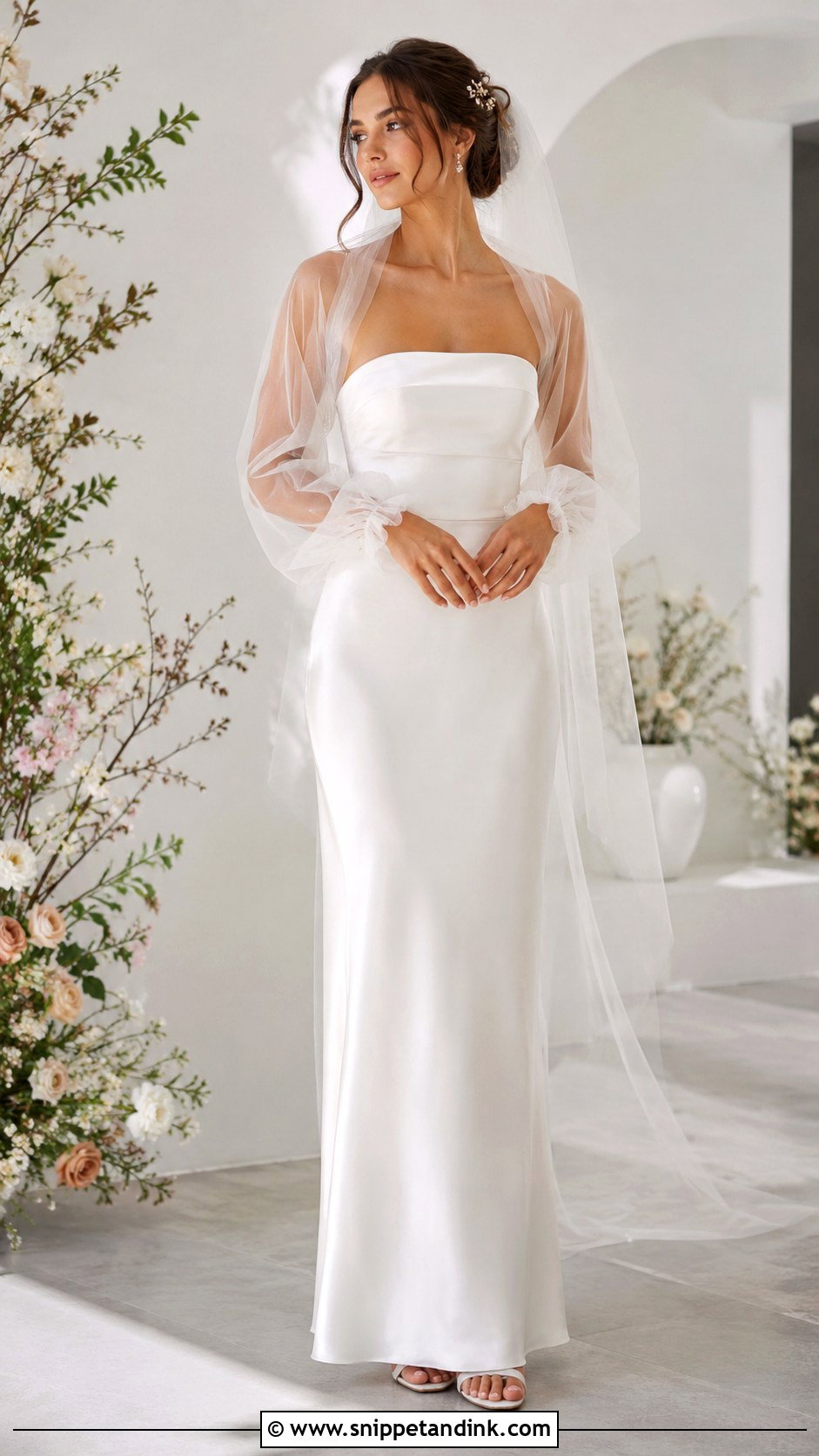
Tulle gives coverage you barely feel. Over a satin slip, strapless column or tulle skirt, it blends into the gown. It’s the one I suggest for spring and summer, since it breathes. Plain tulle does show its seams clearly, so look for a rolled or bound edge rather than a raw serged one at the neckline. Ivory sandals, a soft updo, crystal pins and a fingertip veil finish it.
4. Pearl Bolero Wedding Dress
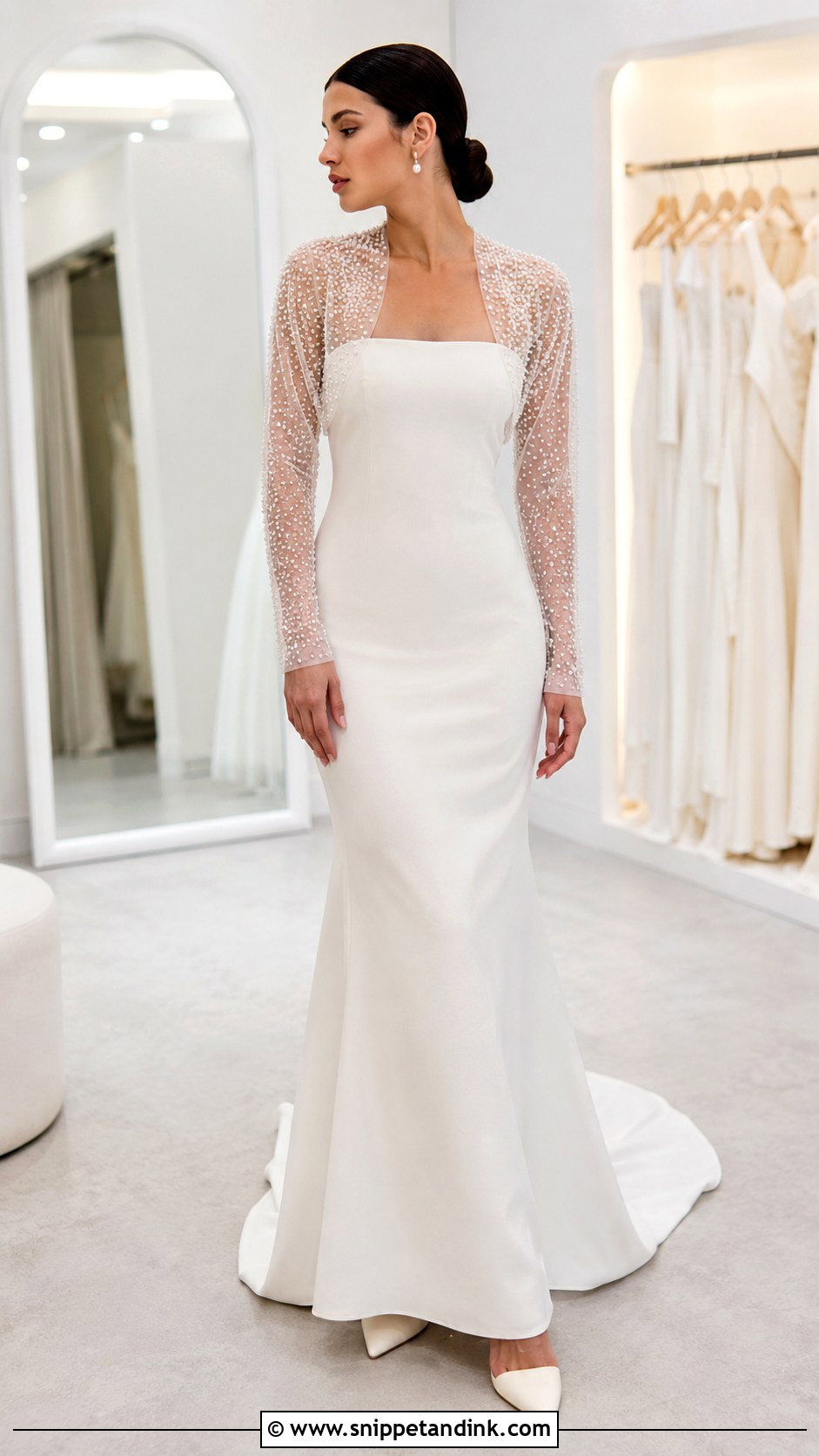
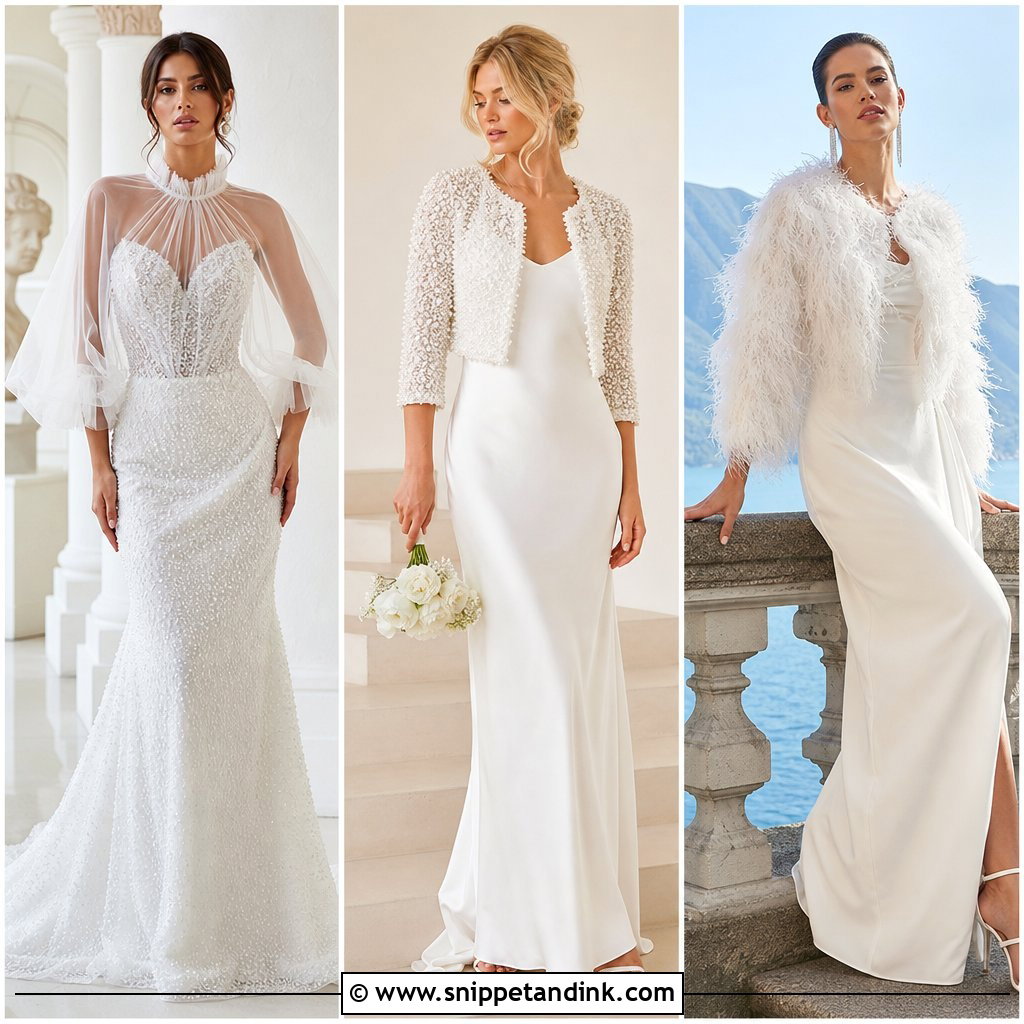
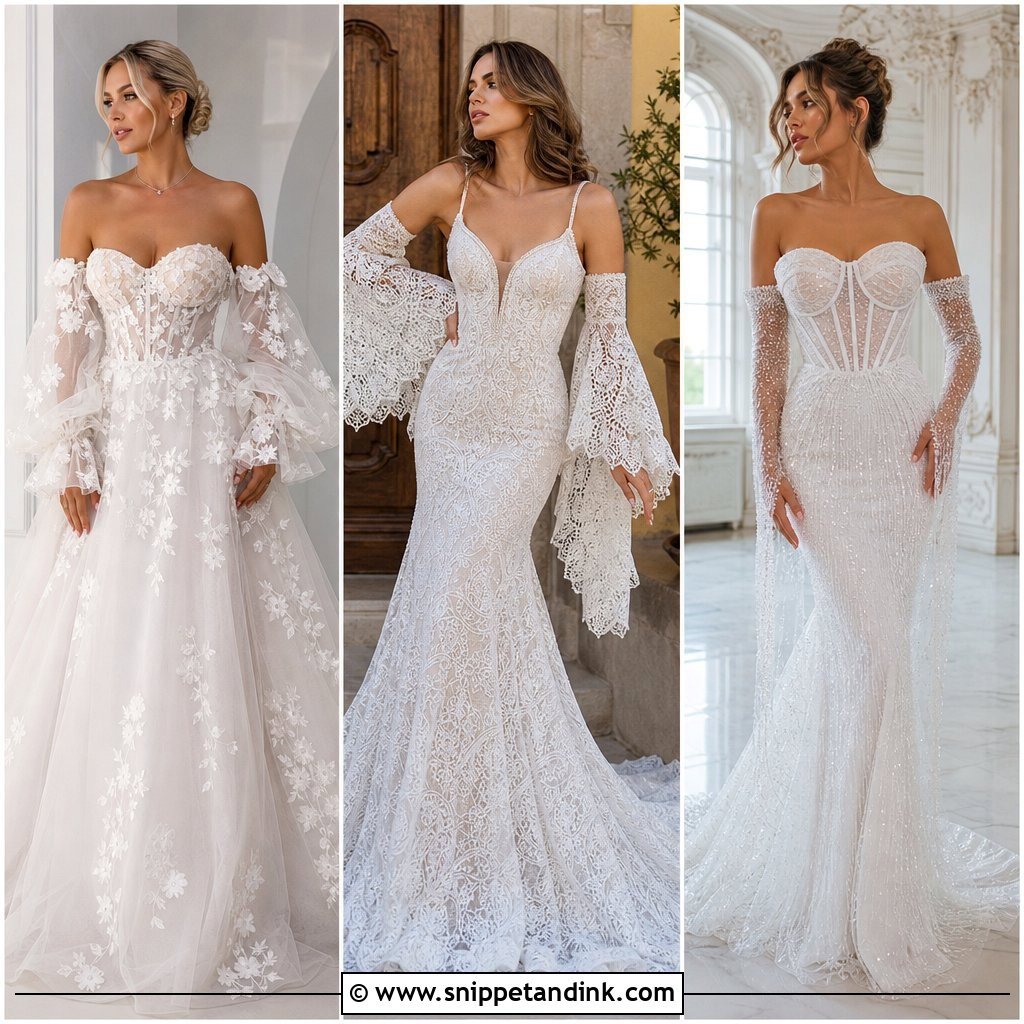
Scattered pearls on sheer tulle or illusion mesh add light around the face. They look best over clean lines: a strapless sheath, square neck or minimalist A-line. Pearls are heavier than they look, and a densely beaded bolero can drag backwards on narrow shoulders, so I always watch whether it sits forward when the bride stands straight. Pearl earrings, ivory heels and a smooth low bun suit it. Skip the necklace if pearls sit near the neckline.
5. Long Sleeve Bolero Wedding Dress
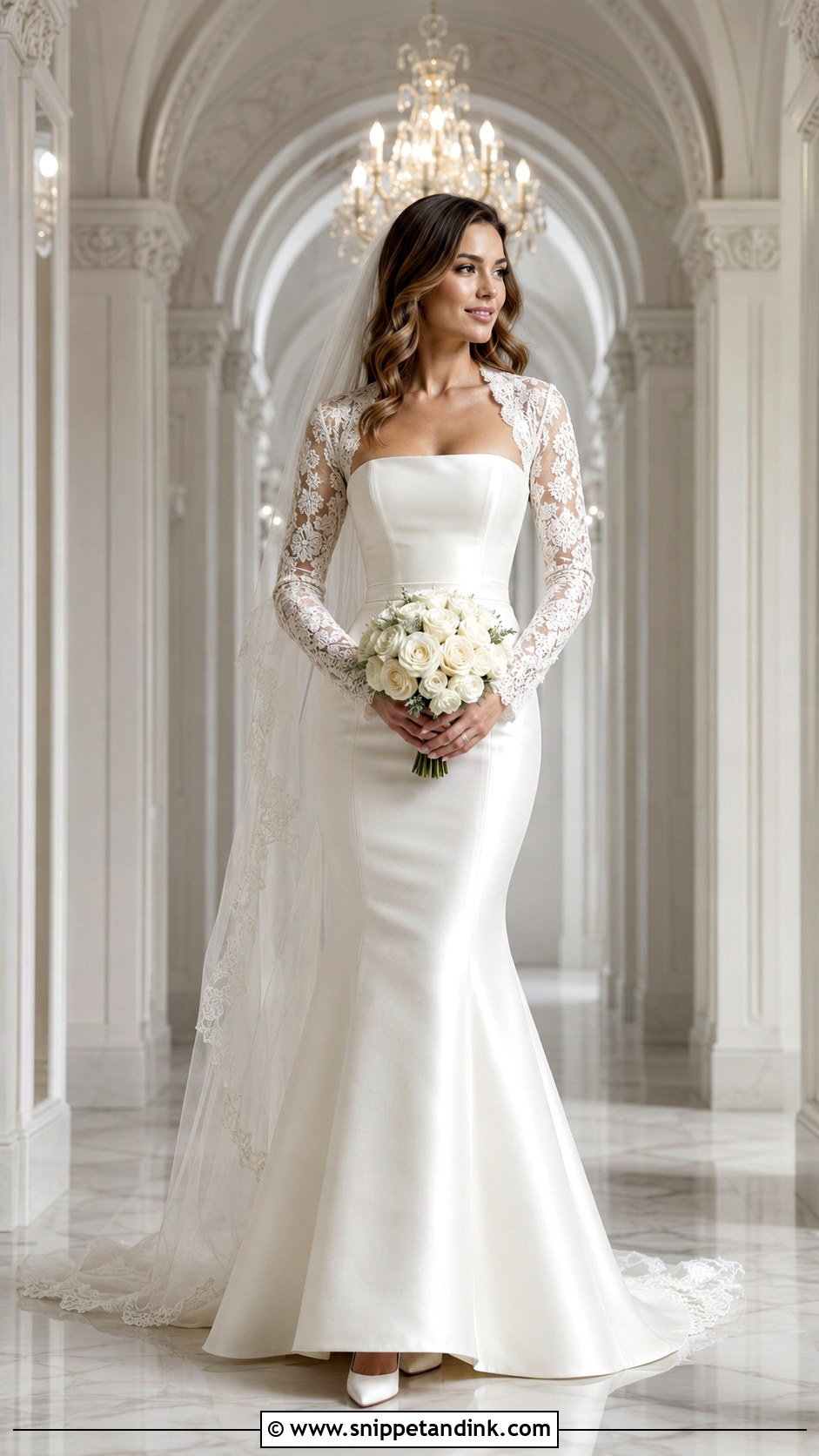
Long sleeves for the ceremony, bare arms for the party: that flexibility is the whole appeal of a long sleeve bolero wedding dress. Over a strapless or sleeveless gown it creates the look of a full long-sleeve dress. Lace looks romantic, satin formal, sheer tulle light. Fitted long sleeves need arm movement, so at the fitting reach forward as if signing the register. Closed-toe pumps, a chapel veil and a neat bun or soft waves.
6. High Neck Bolero Wedding Dress
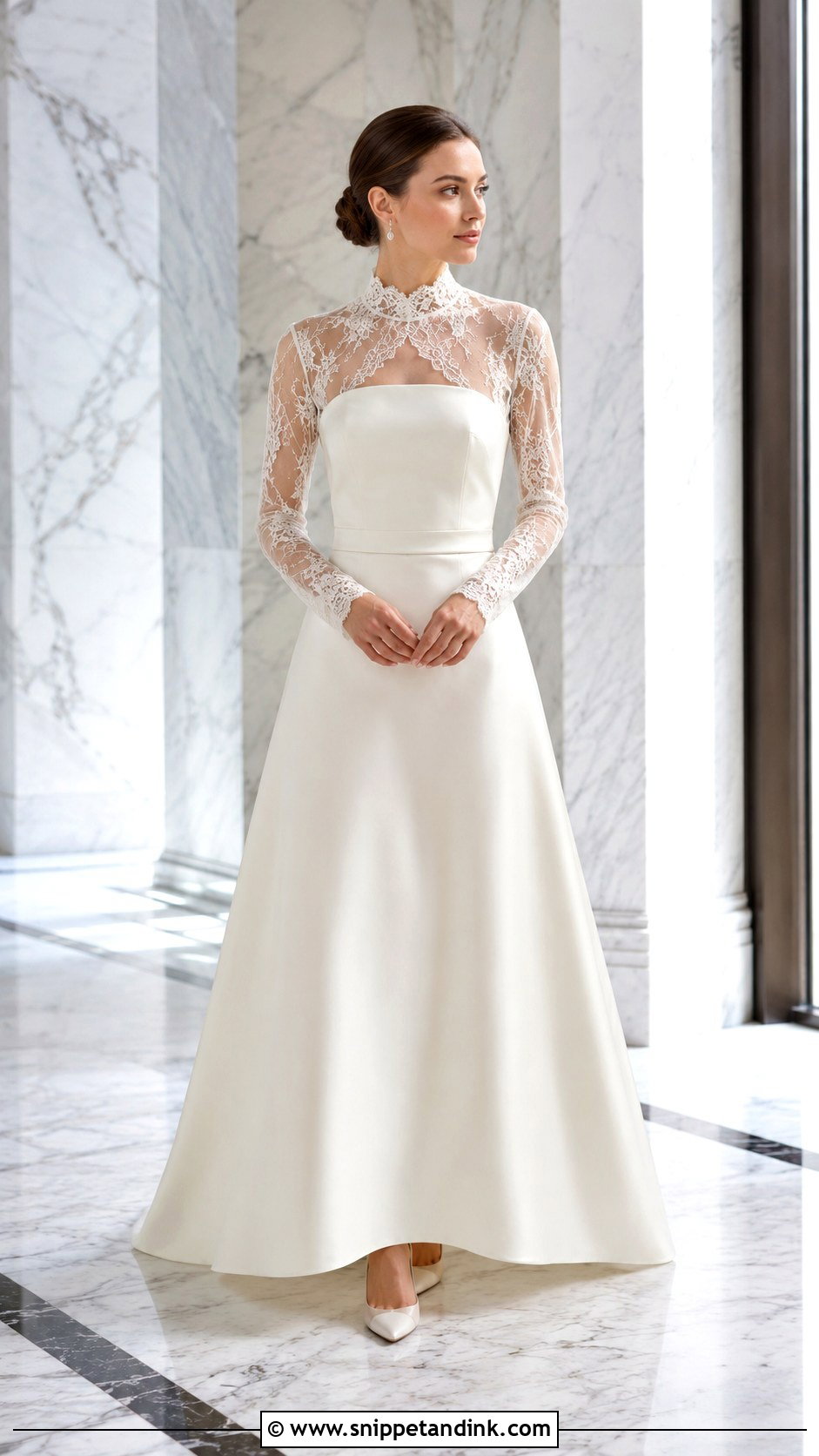
High necks look regal, especially over a strapless gown, and they draw the eye to the face and posture. Lace, beaded tulle or sheer mesh keep it from feeling heavy. The neck must fit precisely, since a few millimetres too tight is uncomfortable for hours, and a loose one gapes when you look down at your bouquet. Pull the hair back to show it. A sleek A-line or fit-and-flare underneath, drop earrings and ivory pointed heels.
7. Off The Shoulder Bolero Wedding Dress
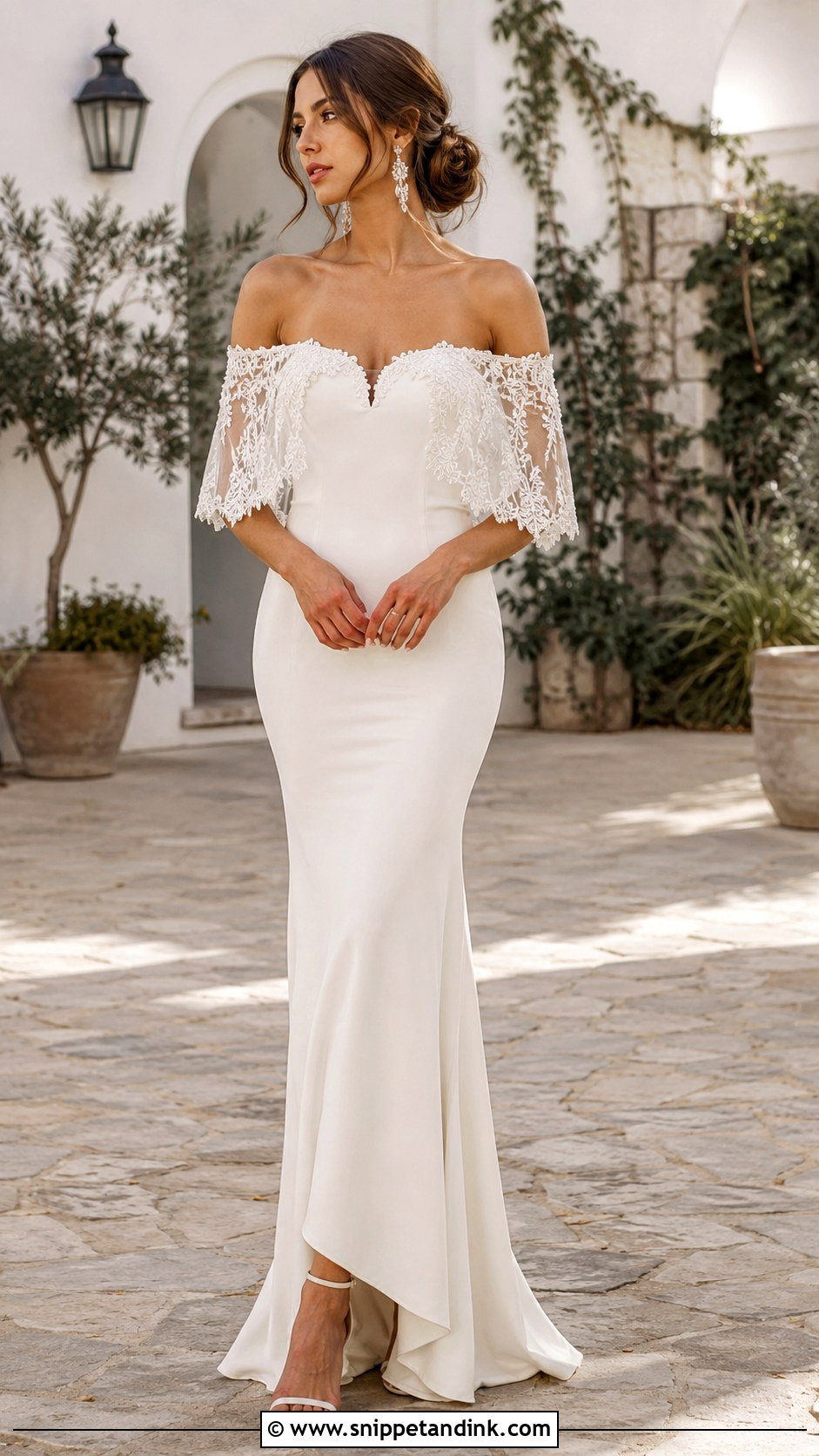
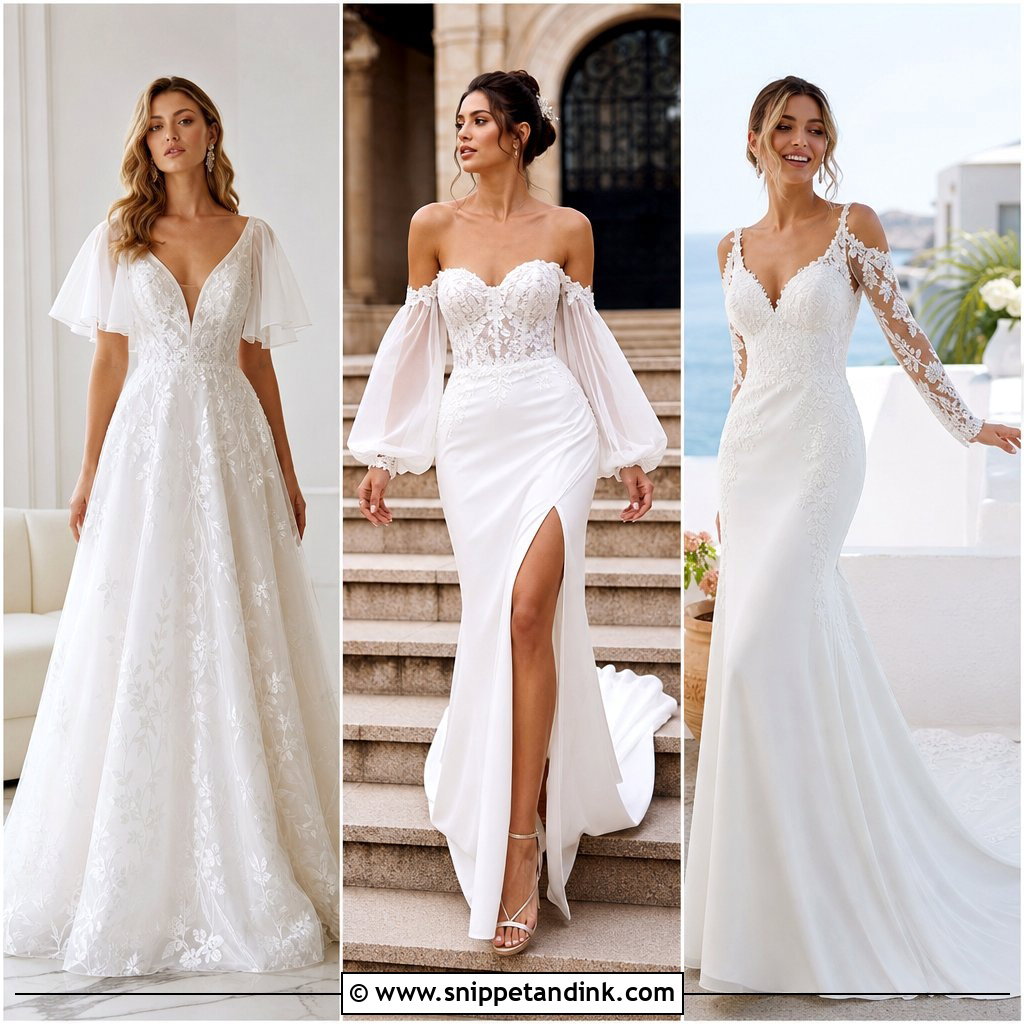
Off-the-shoulder boleros show the collarbone while giving the arms cover. They suit fitted, mermaid and simple strapless gowns. Lace sleeves, gathered tulle or smooth satin change the drama level. This style slides more than any other, so ask for elastic or silicone inside the band. Statement earrings, a loose low bun and ankle-strap heels. Skip the necklace.
8. Sheer Bolero Wedding Dress
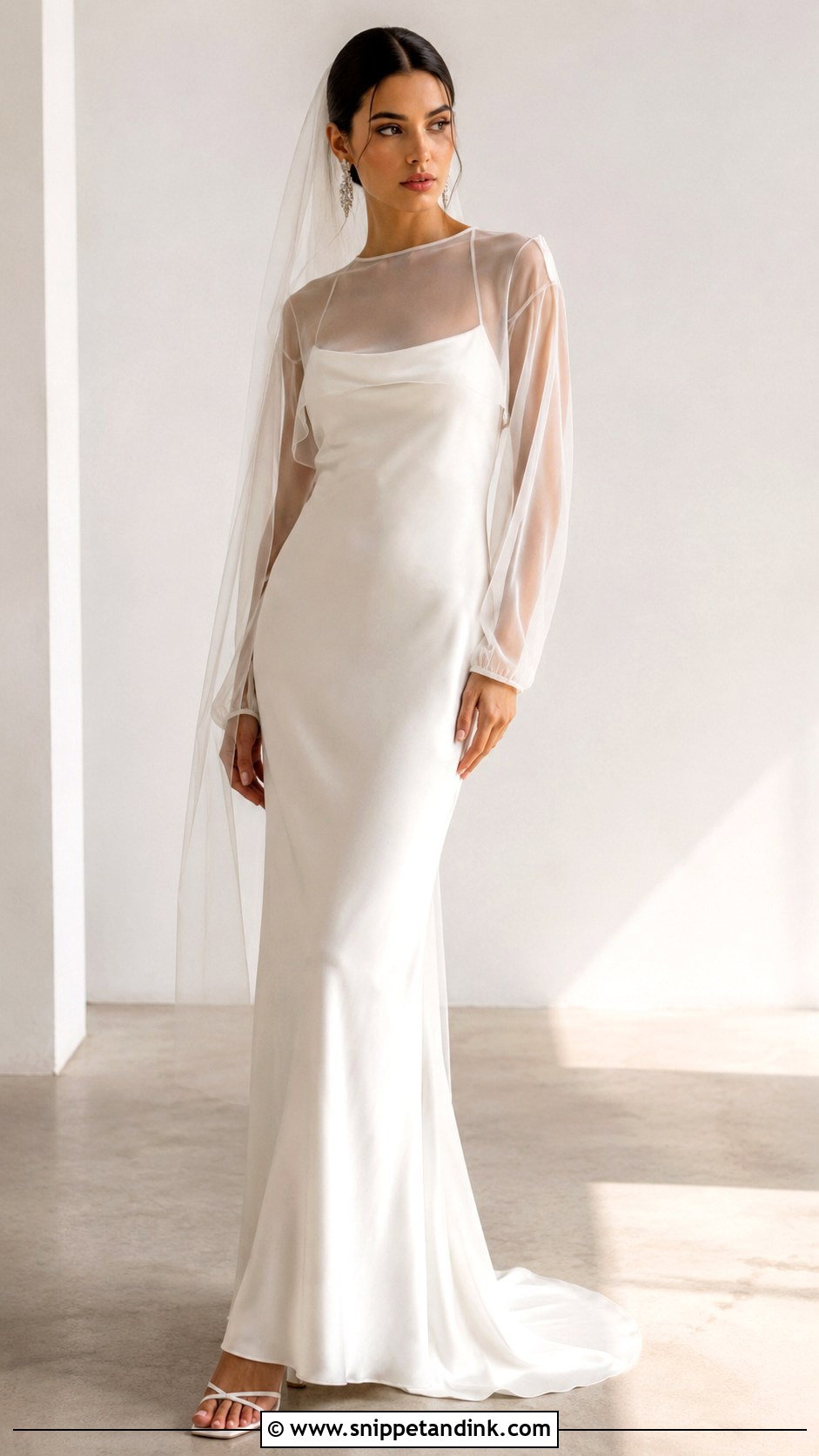
Illusion mesh, fine tulle or delicate organza soften the shoulders while the gown’s neckline still shows through. That makes a sheer bolero ideal over minimalist dresses, satin slips and columns. The mesh should match your skin tone where it touches you, not the gown, or it shows as a band in photos. Strappy heels, crystal earrings and a sleek veil. It’s an easy change between ceremony and reception.
9. Beaded Bolero Wedding Dress
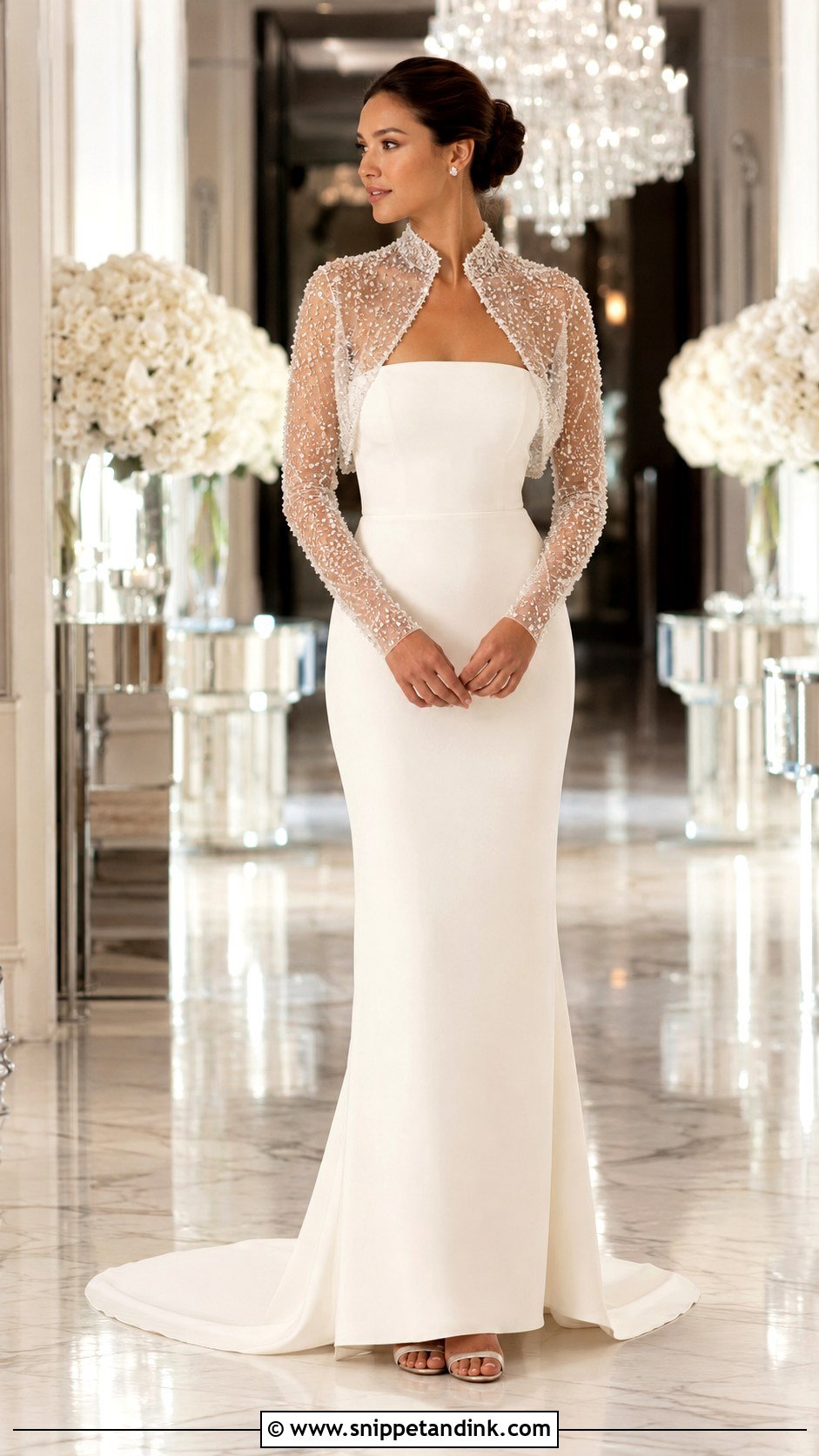
Beading on a bolero puts the sparkle near your face without committing the whole gown to it. A sheer beaded piece turns a simple crepe or satin dress glamorous. Keep the dress underneath plain. The first thing I check is the inside: beads stitched through to the lining can scratch bare shoulders, so look for a soft backing. Crystal studs, metallic ivory heels and a smooth updo. A plain veil, or none, avoids clutter at evening weddings.
10. Floral Applique Bolero Wedding Dress
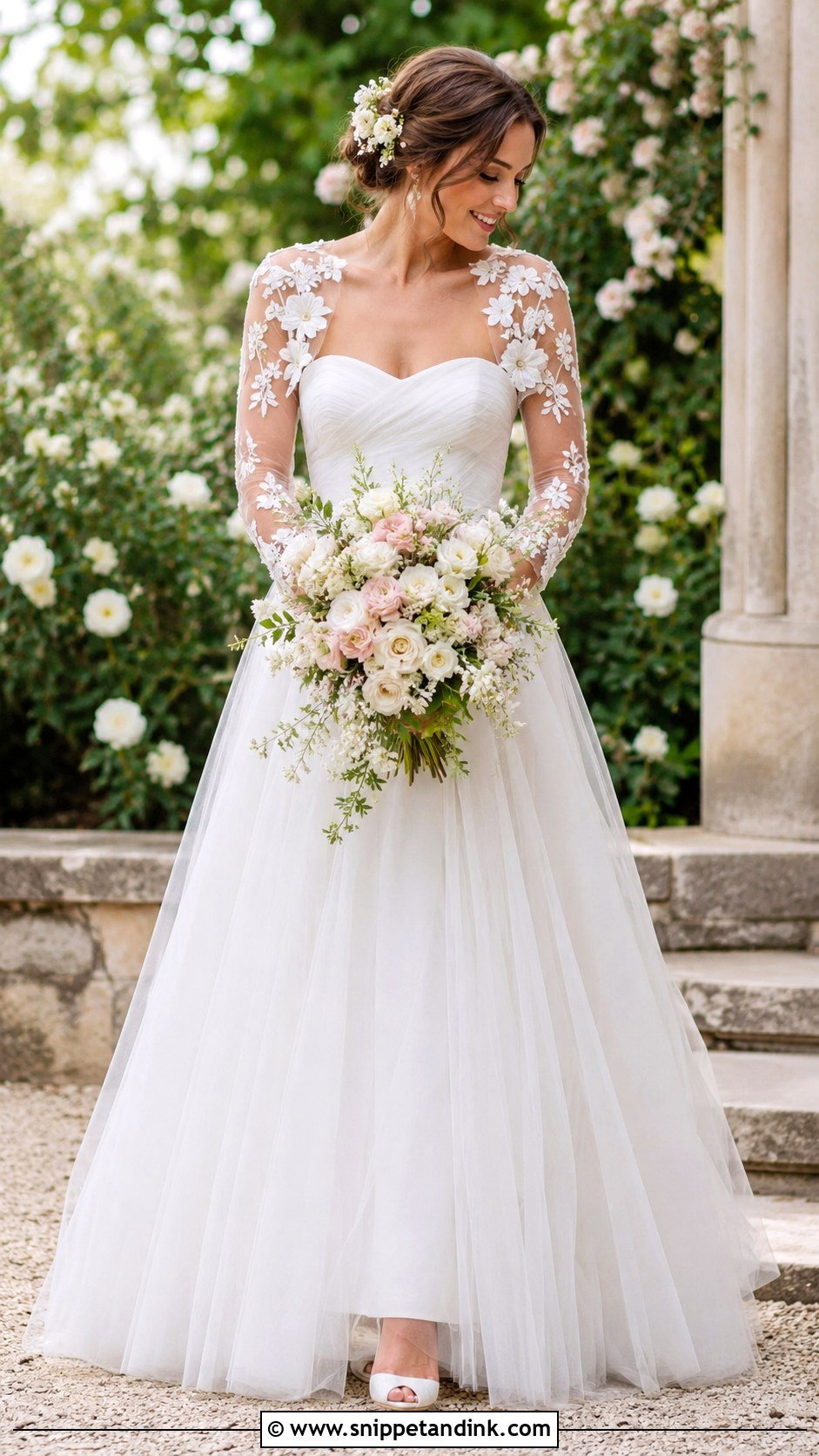
Three-dimensional flowers, embroidered petals or lace appliqués bring garden texture to a simple gown. Strapless tulle, satin A-line and fitted crepe all take it. Raised flowers crush when you hug, so ask whether the appliqués are padded or stitched flat at the centre. Soft ivory heels, floral hair pins and a bouquet with similar flower shapes tie it together. Keep jewellery to pearl studs or small crystals. Spring and outdoor weddings suit it.
11. Feather Bolero Wedding Dress
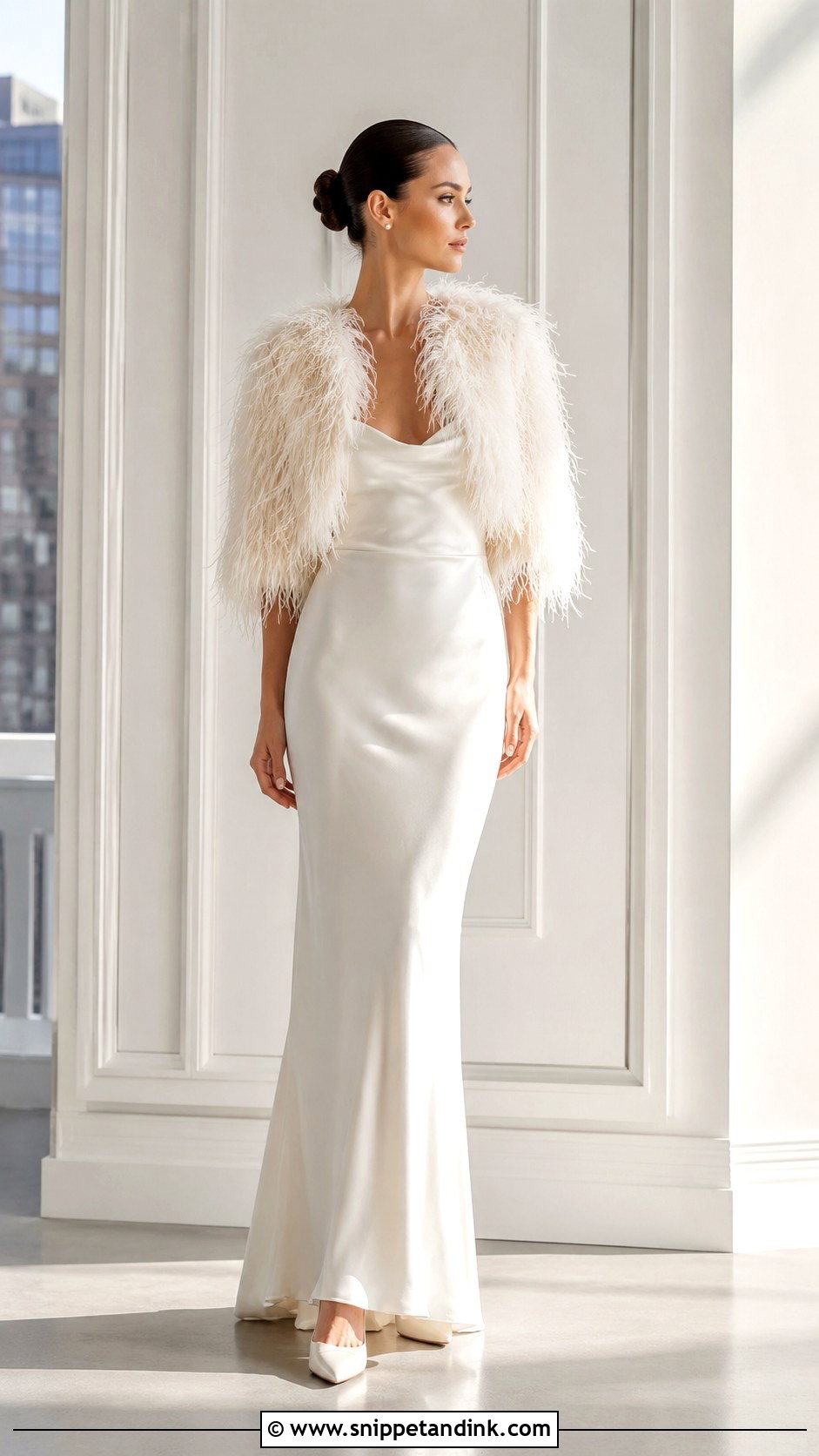
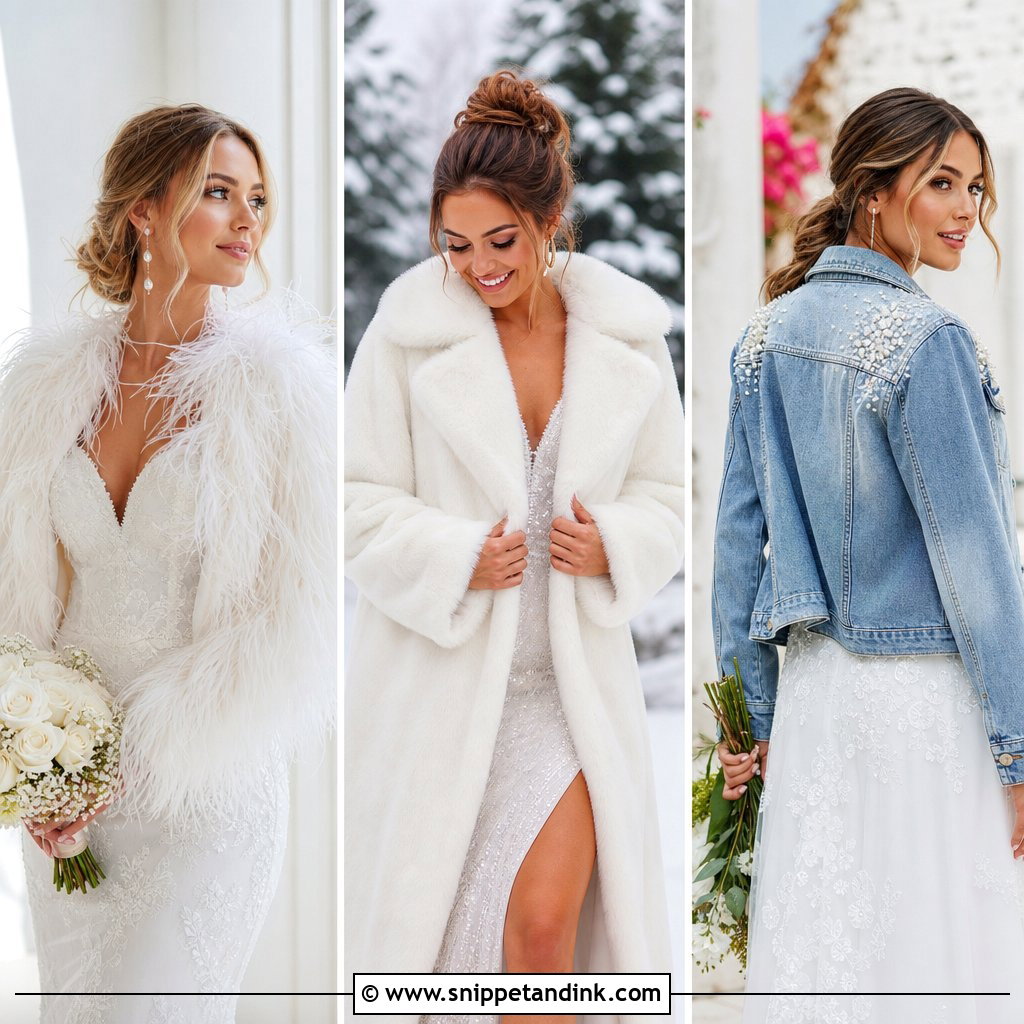
Feathers are fashion, and they need a quiet dress: a satin slip, strapless column or clean reception dress. Let the bolero be the statement and keep everything else smooth. Feathers shed, especially early in the day, so give the piece a gentle shake outdoors before you put it on, and keep it away from lipstick. Ivory pumps, small earrings and a polished bun. I’d save it for a stylish ceremony exit or city wedding. Feathers only at cuffs or hem give drama with less volume.
12. Organza Bolero Wedding Dress
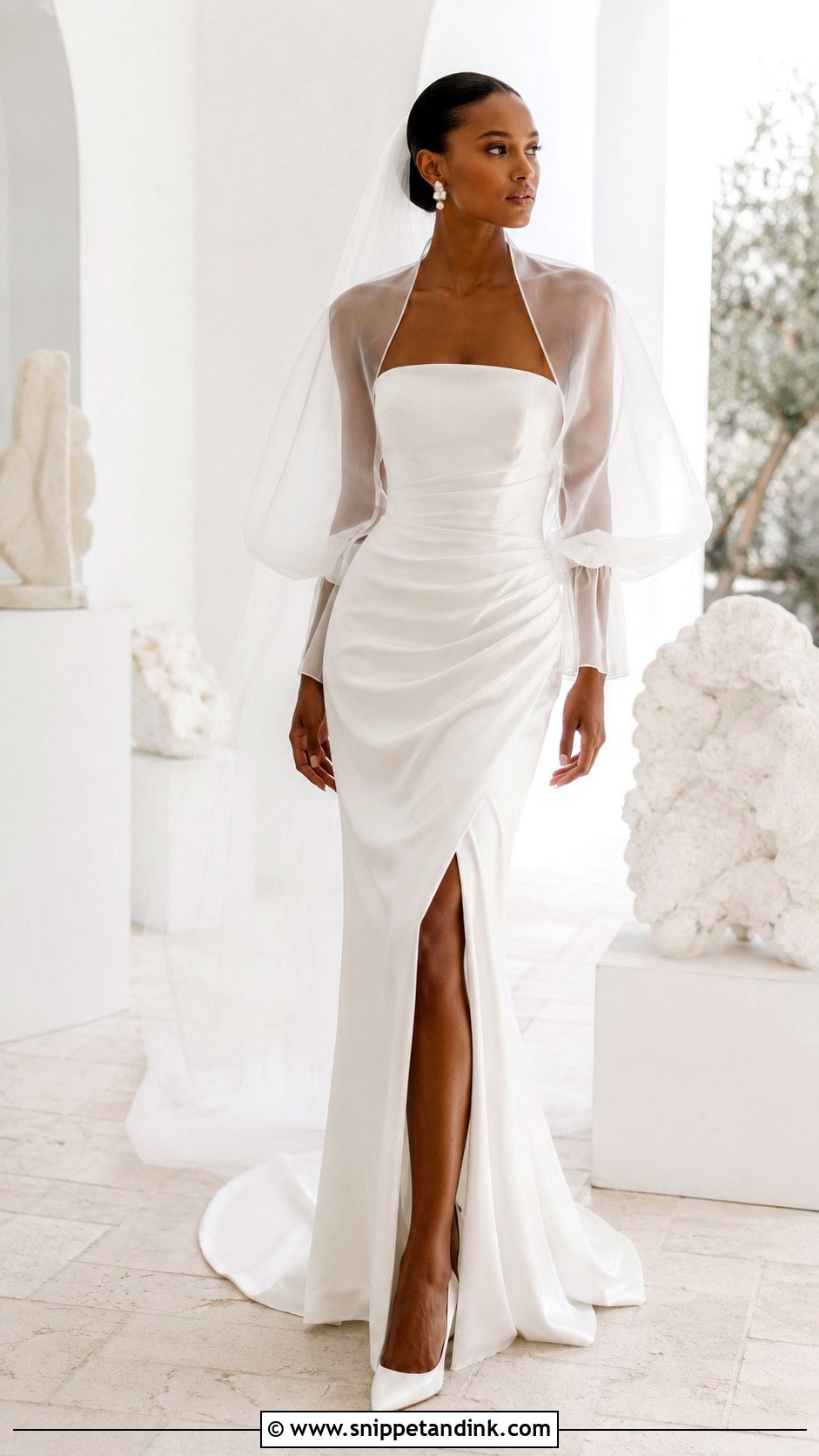
Organza is crisper than tulle, so it holds puff sleeves, structured shoulders and a light cropped jacket effect. Its transparency keeps it bridal. Wear it over a strapless gown, square neck or fitted satin. Organza creases sharply when packed, so transport it hanging or rolled in tissue, and steam gently. Pointed heels, a clean veil and sculptural pearl earrings suit it.
13. Mikado Bolero Wedding Dress
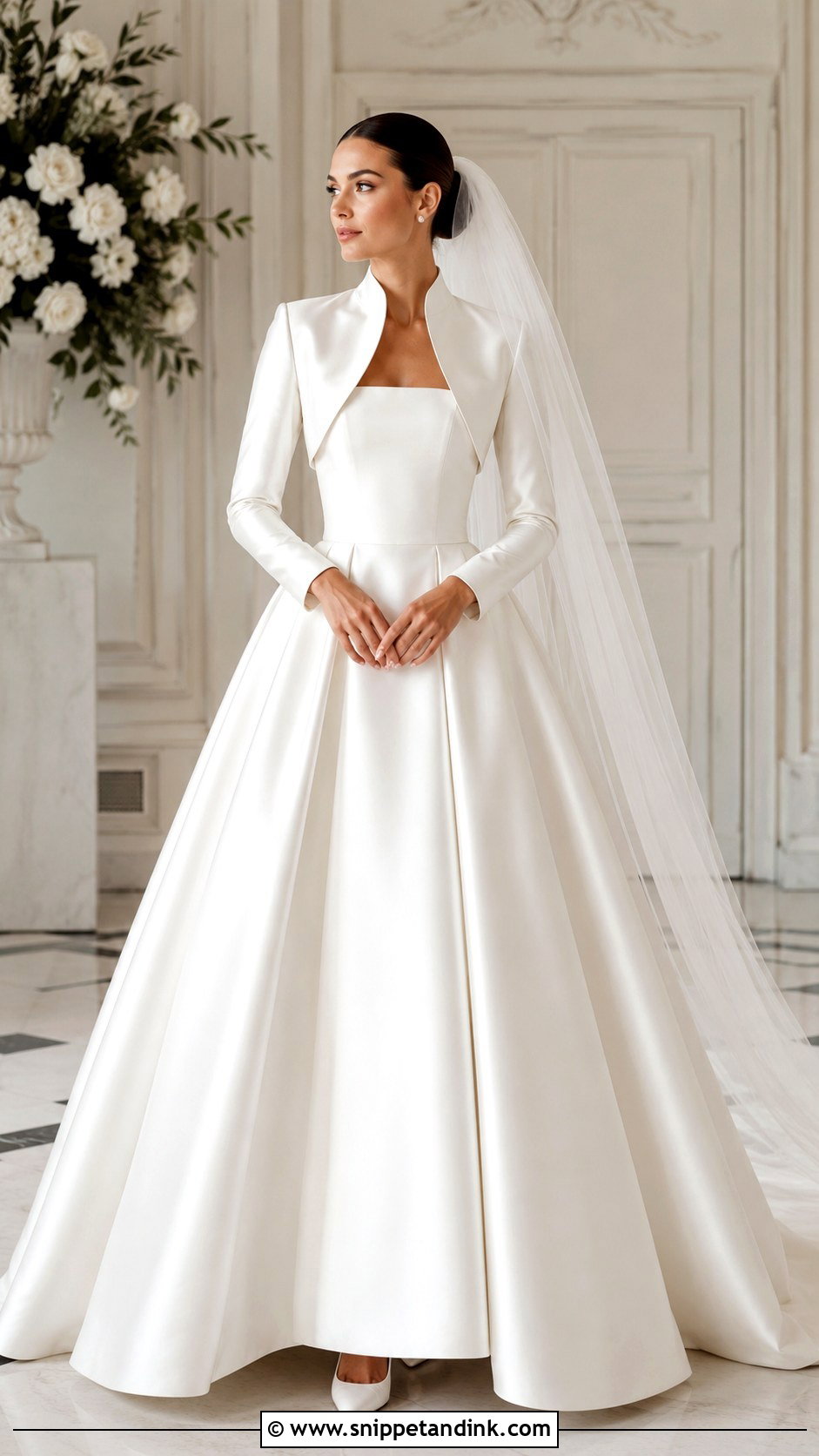
Mikado has a crisp body, so a cropped bolero in it looks tailored over ball gowns, basque waists and clean A-lines. It makes a strapless dress more formal for the ceremony, then comes off for a lighter reception. Mikado has very little stretch, so the shoulders and armholes must be cut for your measurements, not just the size label. Satin pumps, a long veil and classic studs. Neat hair suits the strong shape.
14. Crepe Bolero Wedding Dress
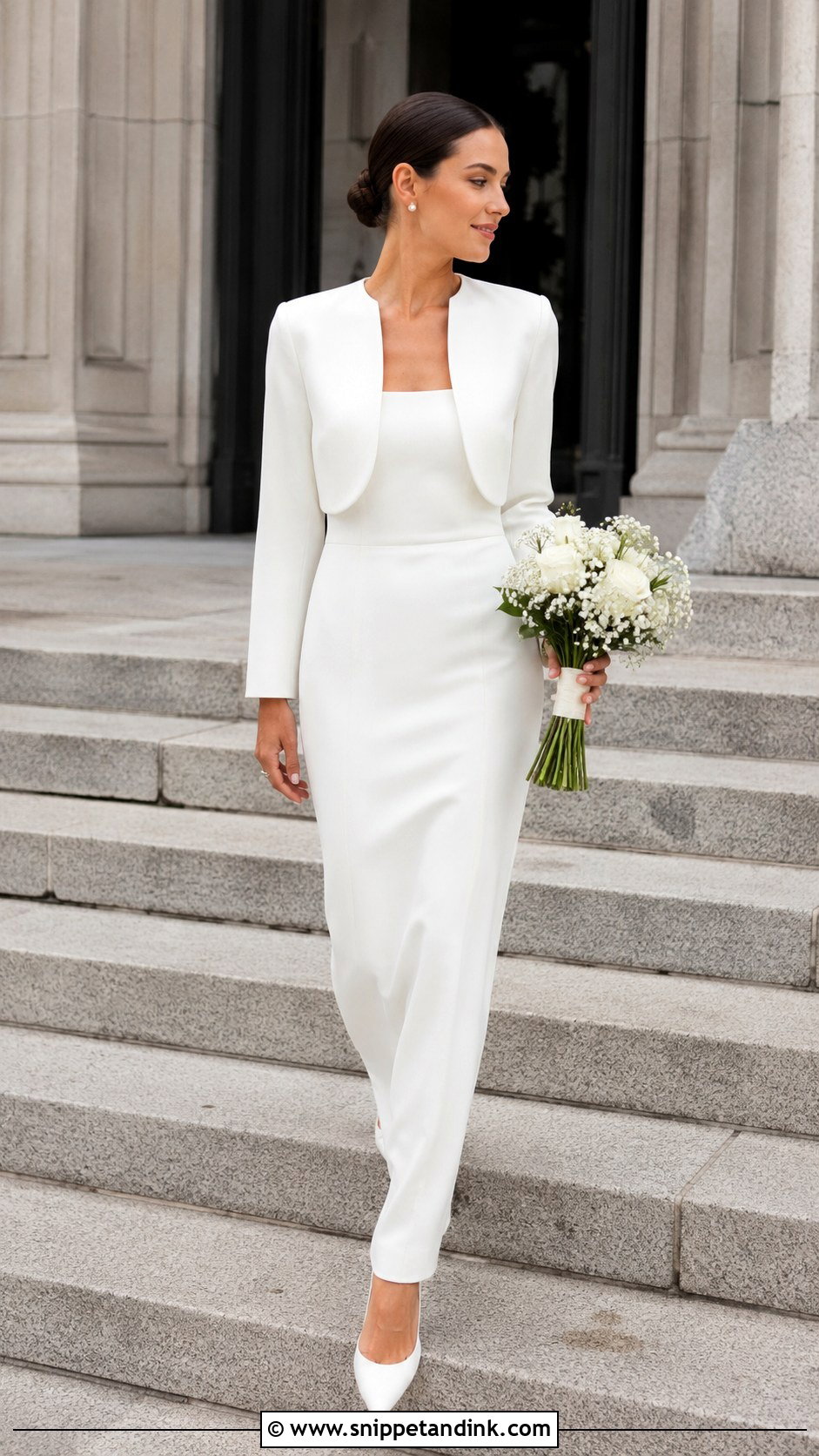
Crepe has a soft matte finish that pairs with fitted gowns, sheaths and minimalist A-lines. A long-sleeve crepe bolero cut from the same fabric as the dress can look like built-in sleeves. The seams are what give it away, so ask for princess seams or darts shaped to your body rather than bulky side seams. Pointed ivory heels, a sleek low bun and small pearls suit courthouse and modern weddings.
15. Crochet Bolero Wedding Dress
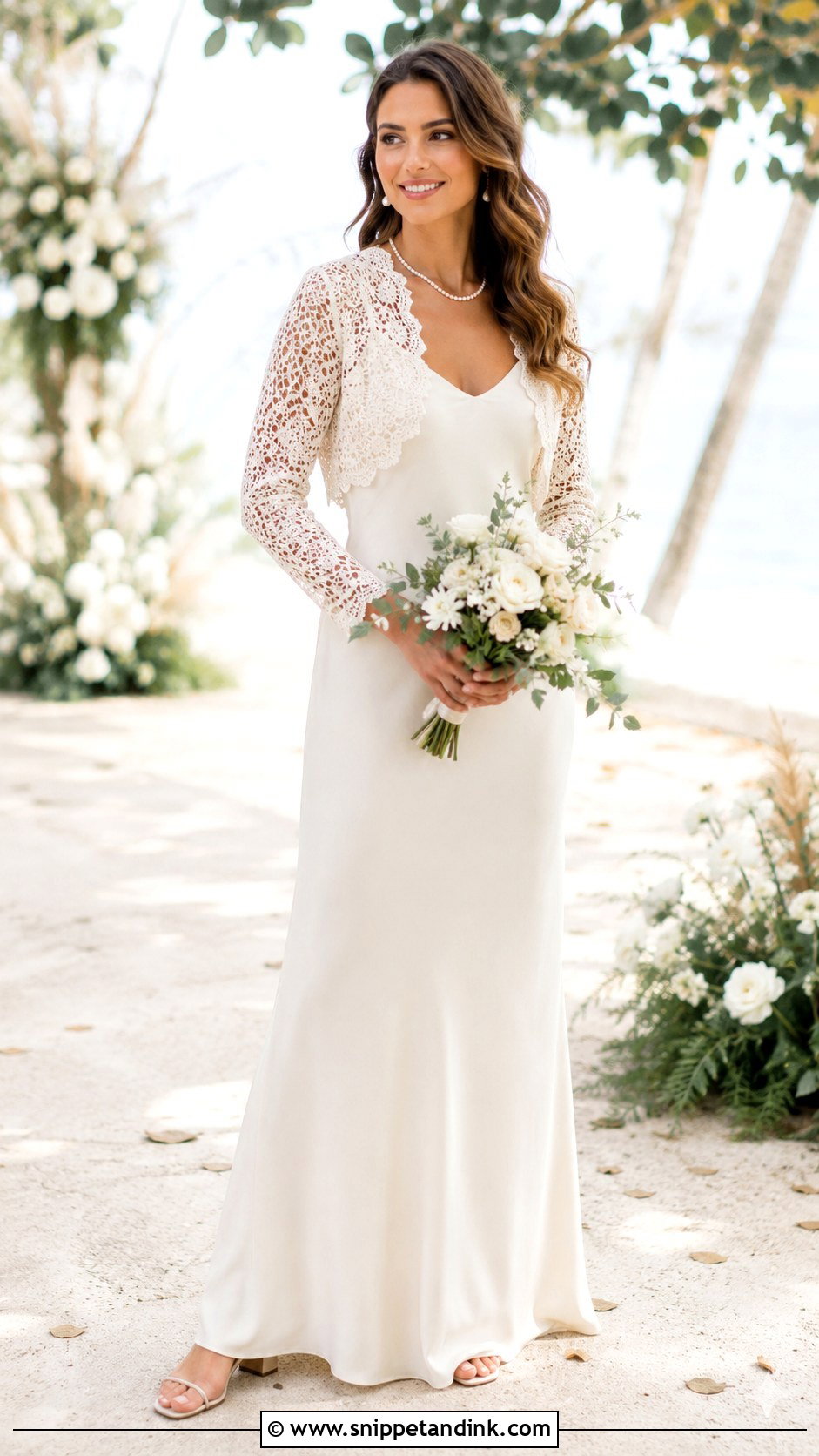
Crochet gives a warm, handmade feel that suits beach, garden and boho weddings. Choose fine ivory crochet rather than chunky open knit so it stays bridal. It sits best over a slip dress, flowing chiffon or soft A-line. Cotton crochet stretches as you wear it, so buy it snug rather than loose. Block heels or sandals, loose waves and natural pearl jewellery, with a small wildflower bouquet.
16. Puff Sleeve Bolero Wedding Dress
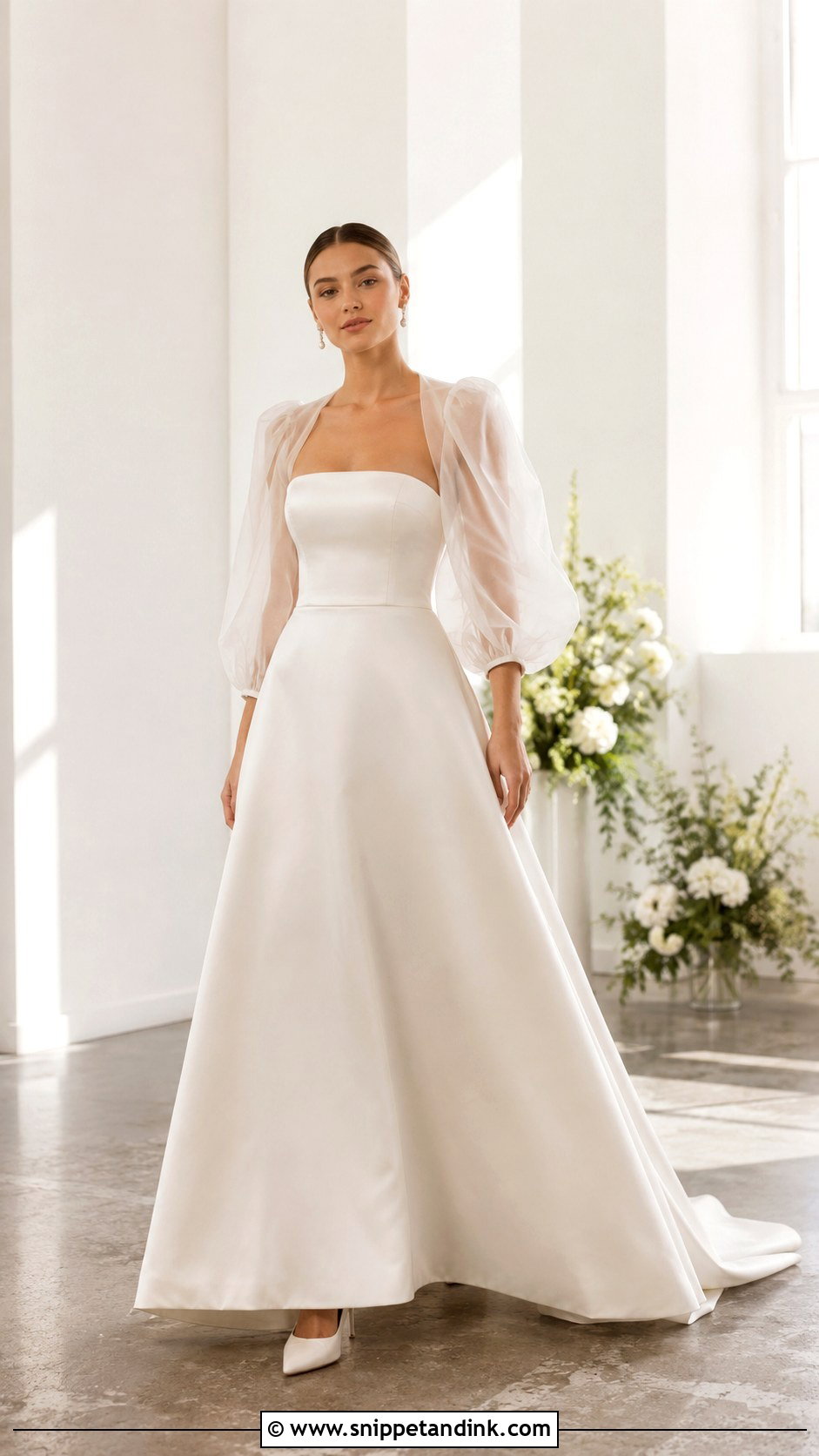
Puff sleeves add volume to the upper body, so keep the bodice underneath plain: strapless satin, fitted crepe or a clean A-line. Organza or tulle holds the puff best; softer fabrics collapse after a few hours. Sleek heels and delicate earrings, with hair pulled back or tucked behind the ears. No heavy necklace. The sleeves give enough drama.
17. Cap Sleeve Bolero Wedding Dress
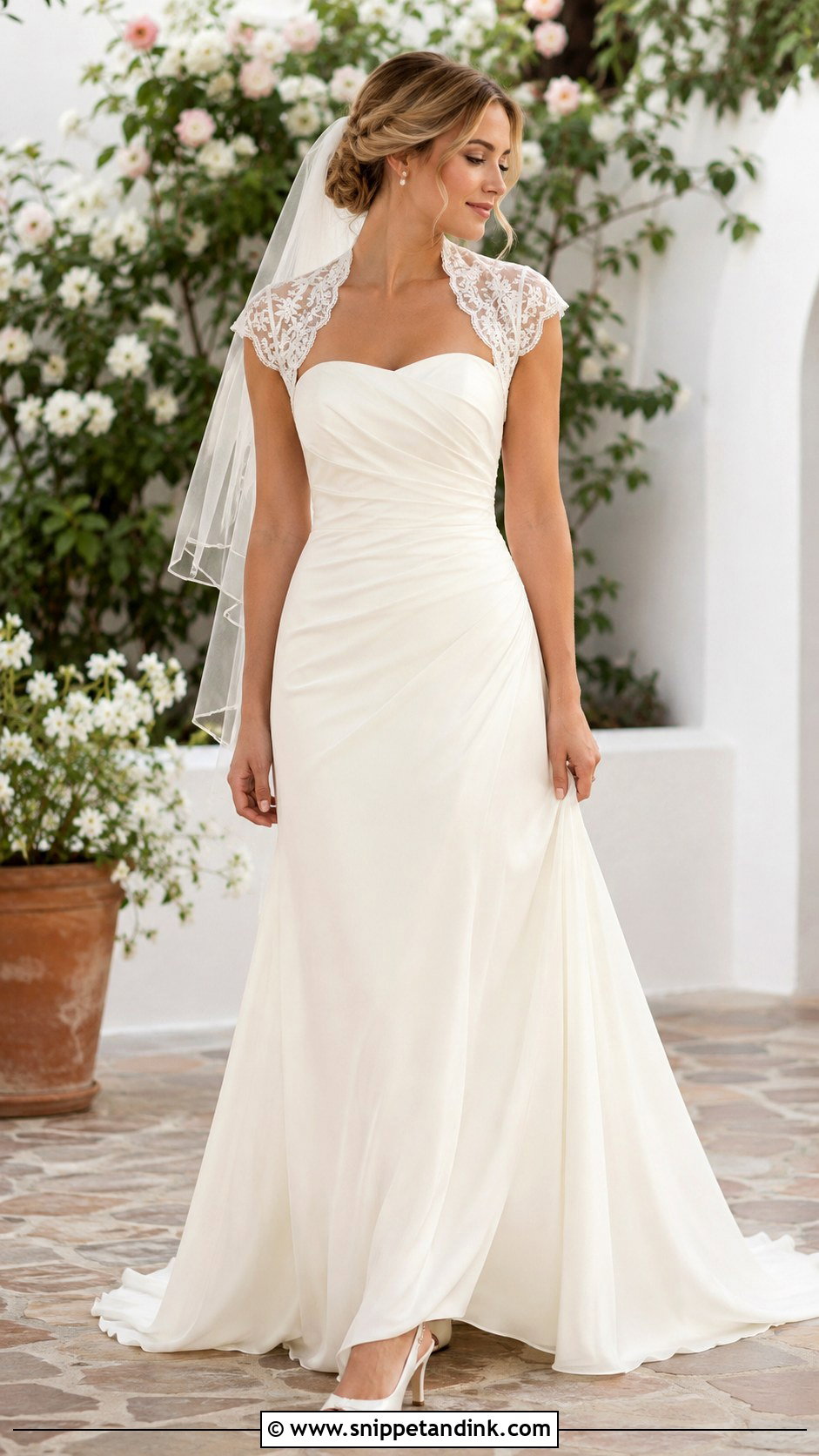
Cap sleeves give just a little shoulder coverage, which suits warm weather and gowns with a detailed skirt. Lace softens a strapless dress; satin finishes a minimal one. They add almost no bulk or heat. On broad shoulders, a cap sleeve that ends at the widest point can make them look wider, so I’d ask for it a touch longer. Ivory slingbacks, pearl studs and a soft veil behind the shoulders.
18. Short Sleeve Bolero Wedding Dress
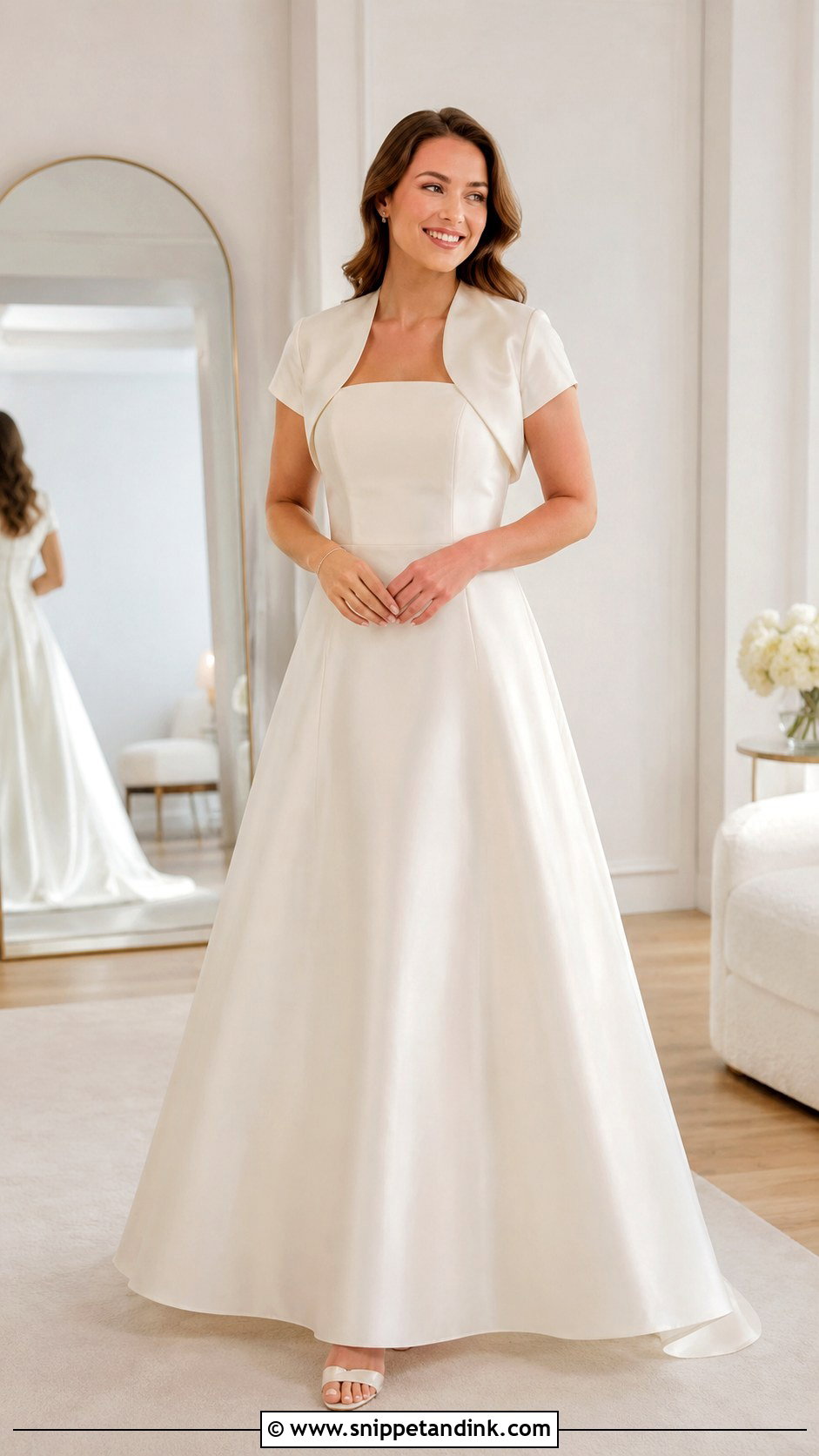
Short sleeves sit between bare shoulders and full coverage, and they work most of the year. Lace over tulle or chiffon looks romantic; smooth satin over a structured dress looks clean. Check where the sleeve hem lands on your upper arm, since ending at the fullest point draws the eye there. Classic ivory heels, a simple bracelet and a low bun or soft curls. A medium-length veil doesn’t fight the sleeves.
19. Three Quarter Sleeve Bolero Wedding Dress
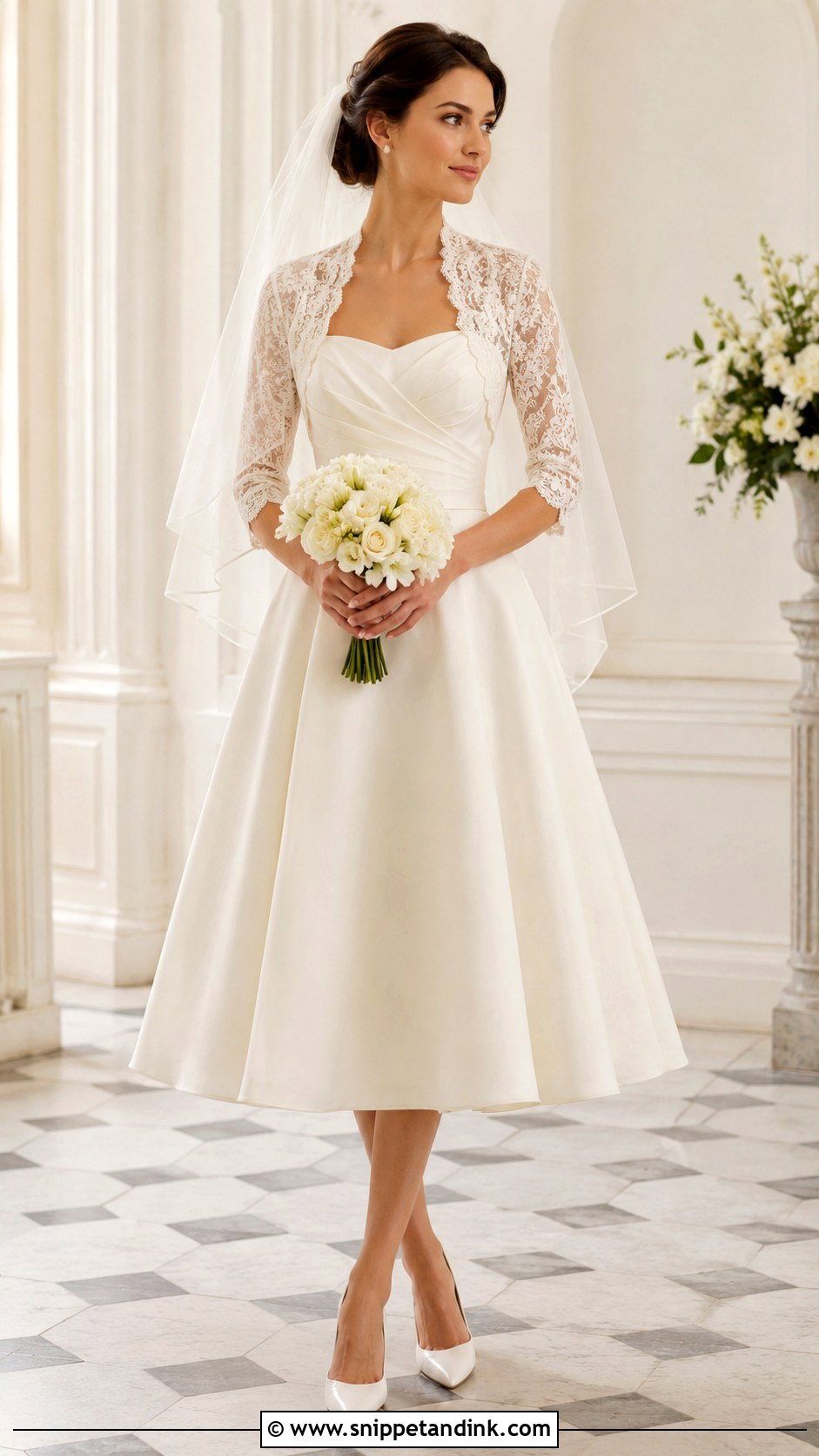
Three-quarter sleeves show the wrists, which keeps the look lighter and leaves room for a bracelet or pearl cuff. They suit tea-length dresses, A-lines and clean satin. They’re my recommendation for spring and autumn, when full sleeves are too warm and bare arms too cold. They also stay clear of the bouquet and the cake knife. Pointed pumps, pearl earrings and a soft veil.
20. Strapless Dress With Bolero
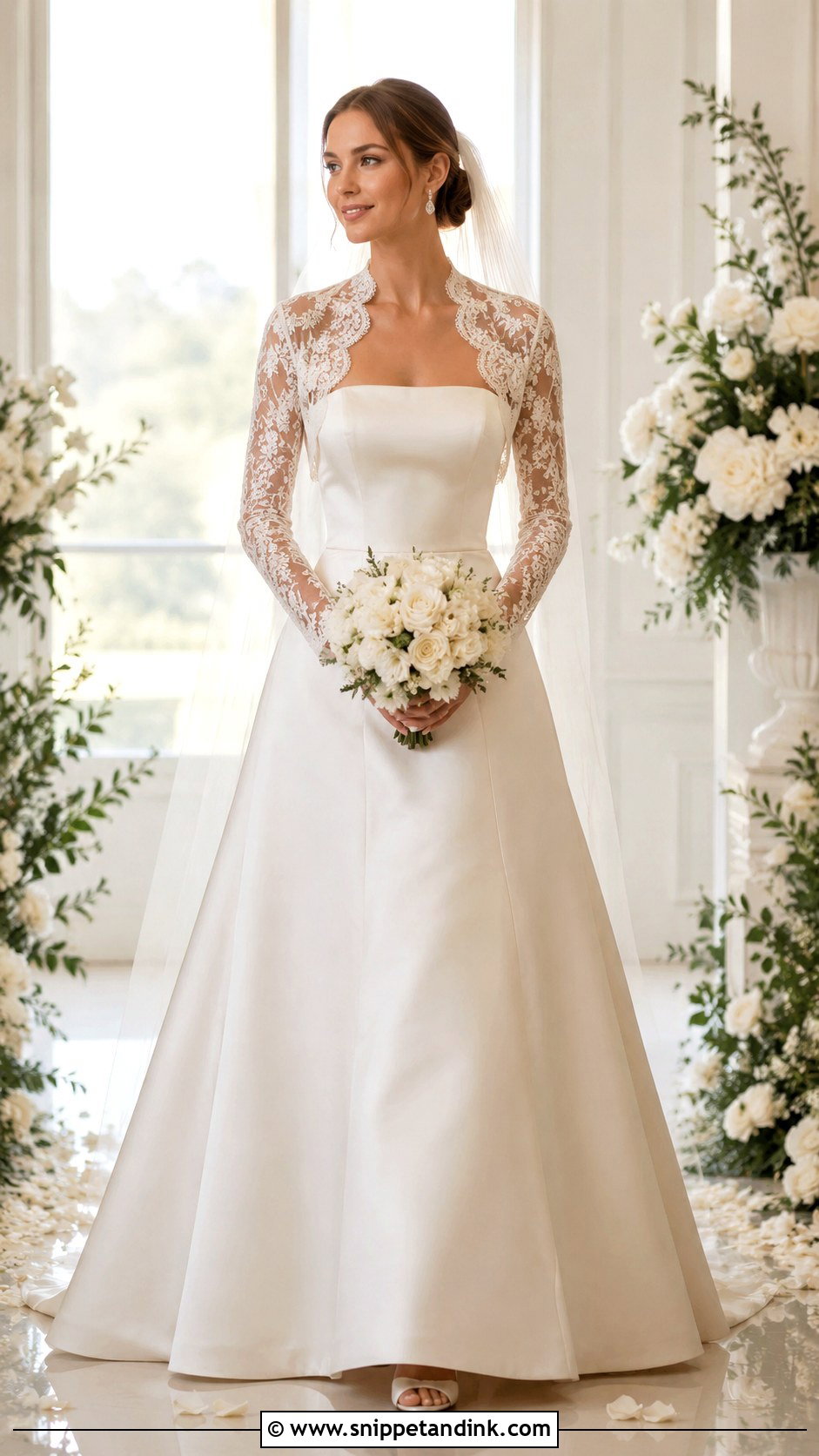
Two looks from one dress is the idea here. The bolero adds sleeves and coverage for the ceremony, then comes off to reveal the strapless neckline for the reception. Lace, satin, tulle, pearl or sheer boleros all suit, depending on the gown. A strapless satin A-line with a lace bolero is classic; crepe with a sheer pearl bolero feels modern. Choose earrings that suit both versions. Always fit the bolero over the dress at fittings, since the bodice’s structure changes how it sits.
21. Ball Gown With Bolero
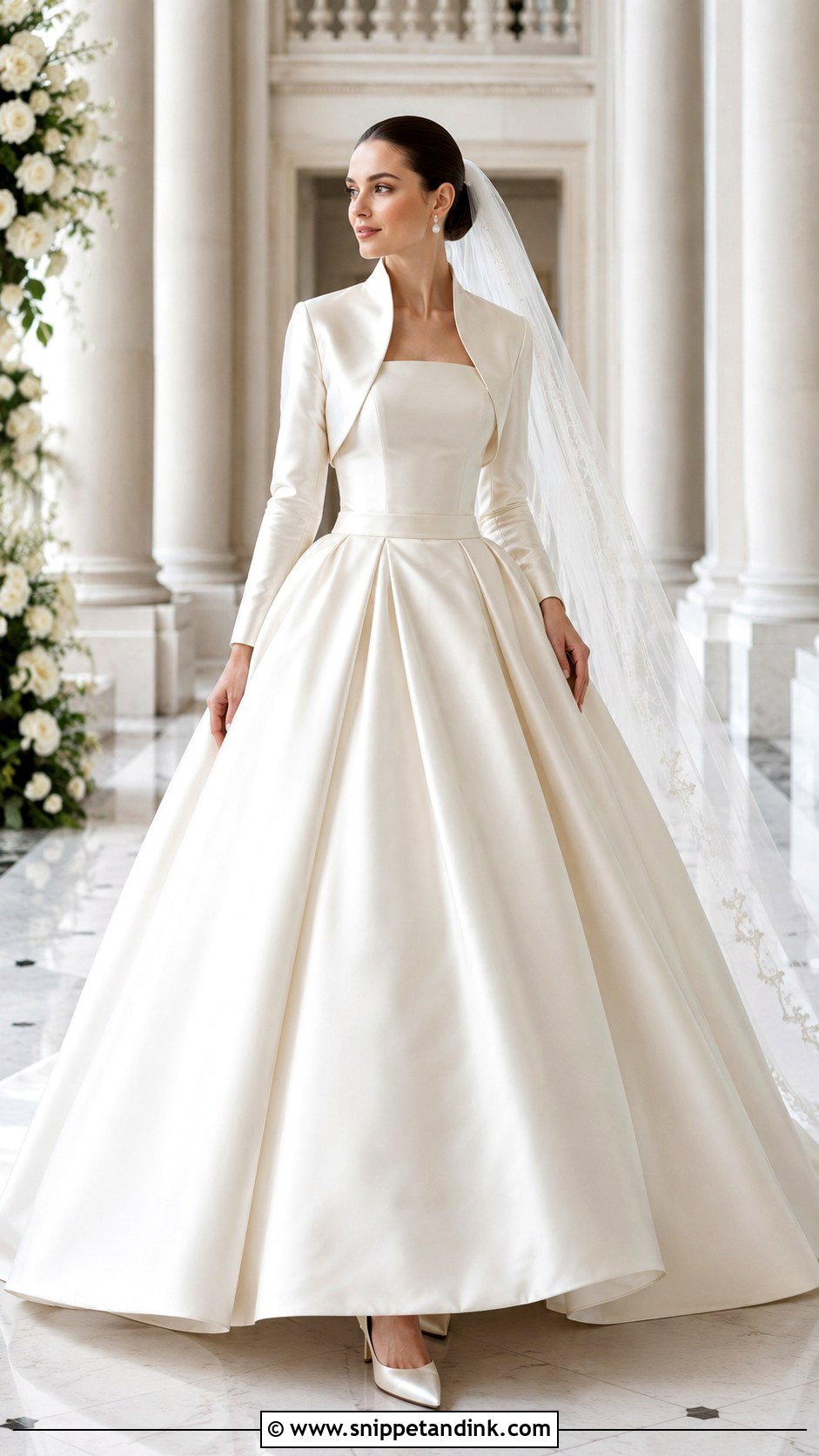
A full skirt gives drama, and the bolero balances the top. Lace makes it romantic, satin classic, a high-neck sheer bolero regal. In my fittings, the hem of the bolero needs to stop right at or just above the waist, because one that ends mid-ribcage breaks up the line and makes a ball gown look top-heavy. Satin pumps, a long veil and simple earrings. Larger venues suit the proportions.
22. Mermaid Dress With Bolero
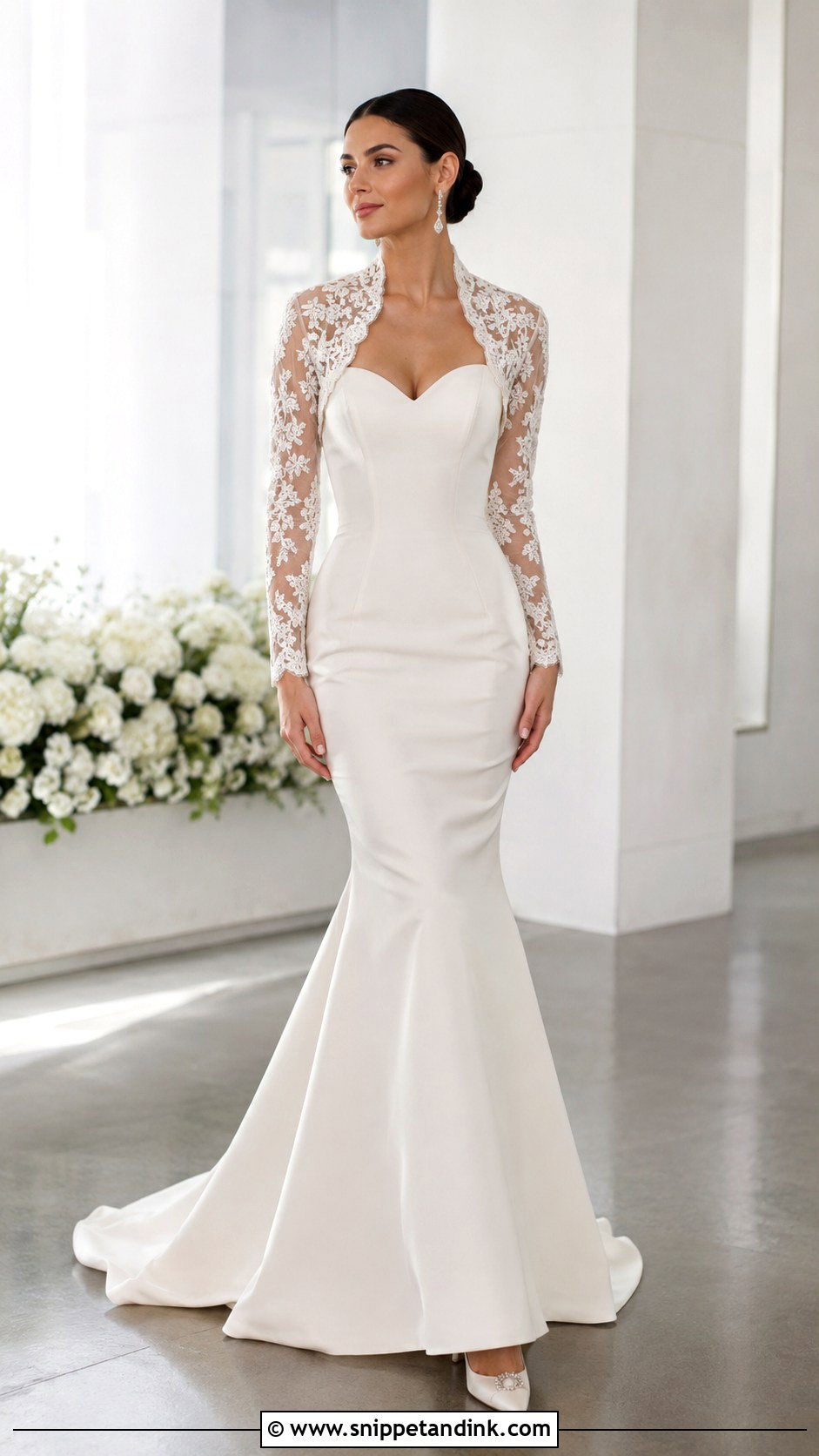
Mermaid gowns emphasise waist and hips, and a bolero adds detail above without hiding the shape. Sheer lace softens; sleek crepe or satin modernises. Keep it cropped short so the waist stays visible. Pointed heels lengthen the line, with drop earrings and smooth hair. A simple veil is best, since the silhouette already gives impact.
23. A Line Dress With Bolero
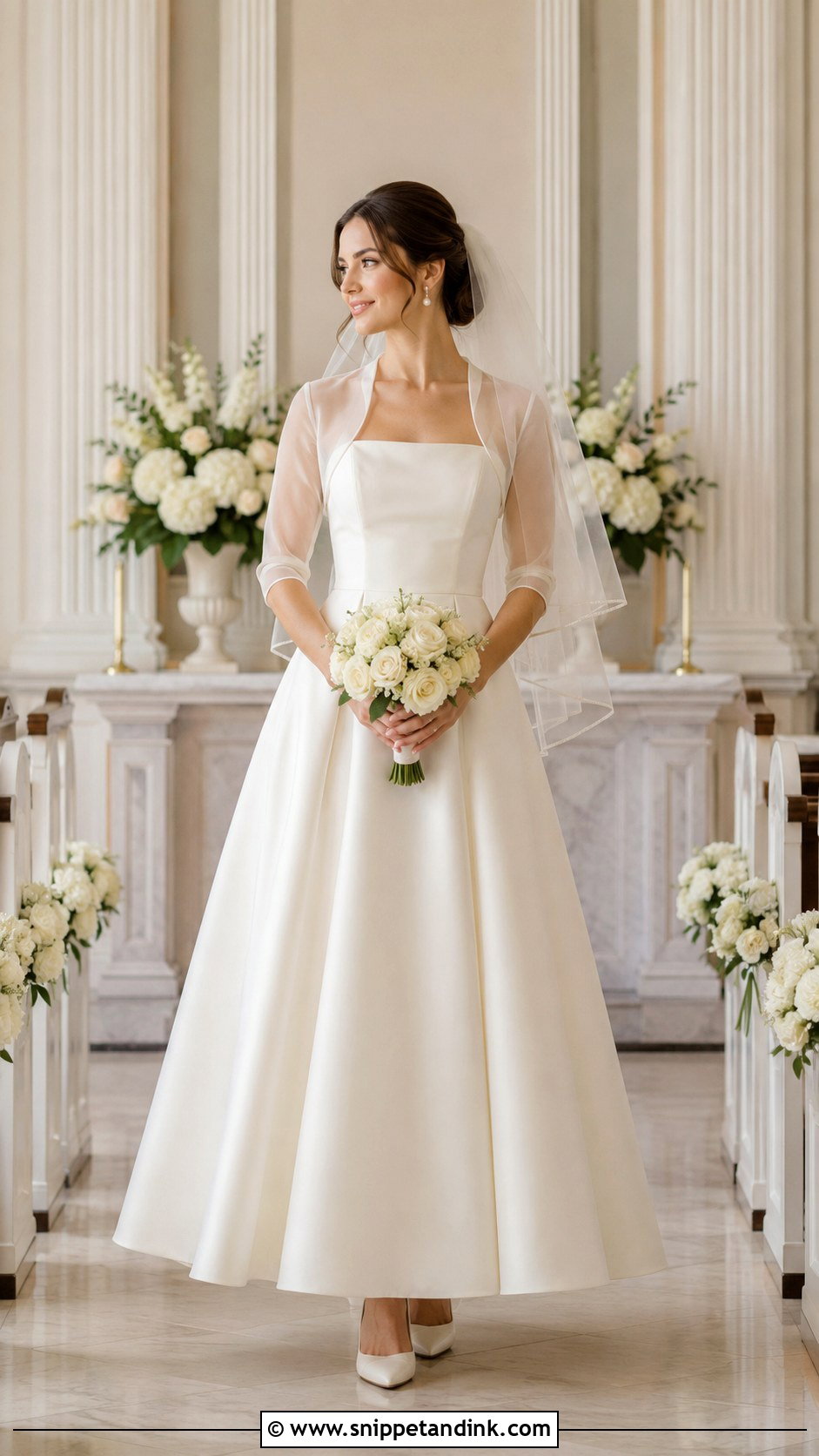
An A-line is the most forgiving base for a bolero: classic, easy to move in, and it lets the bolero set the neckline and sleeves. Lace adds romance, tulle lightness, satin formality. A cropped bolero keeps the waist visible and doesn’t interrupt the skirt. Comfortable ivory heels, pearl earrings and a veil with the same amount of detail as the bolero. It suits nearly any venue or season.
24. Slip Dress With Bolero
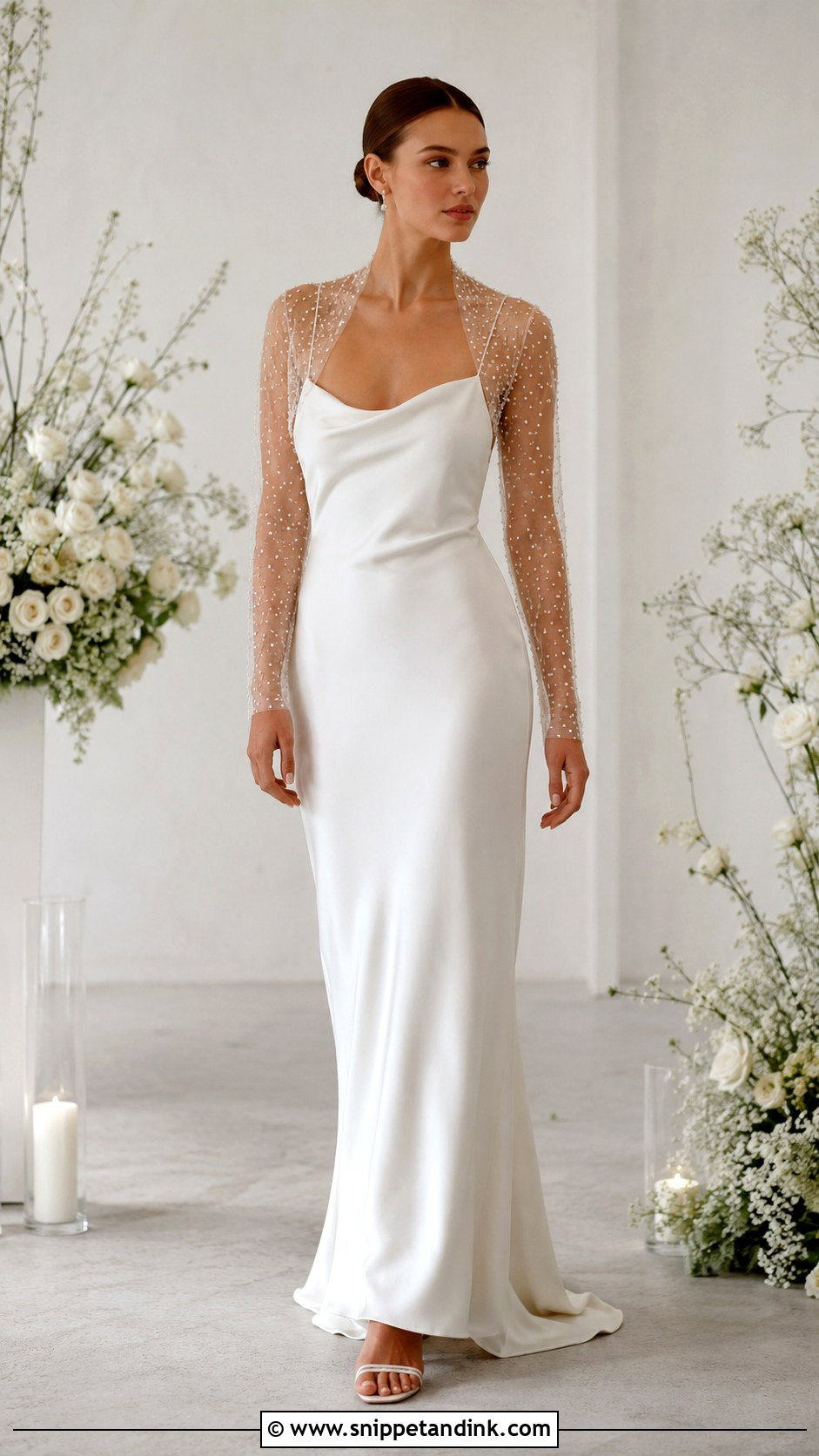
A satin or crepe slip on its own can feel minimal; a lace, pearl or sheer tulle bolero adds ceremony detail in seconds. The contrast between a smooth slip and a textured bolero is what makes it look intentional. Slip dresses have thin straps, so the bolero should cover them completely or sit well clear, never half over. Strappy sandals, delicate earrings, a sleek bun and a soft veil or sheer cape veil.
25. Winter Bolero Wedding Dress
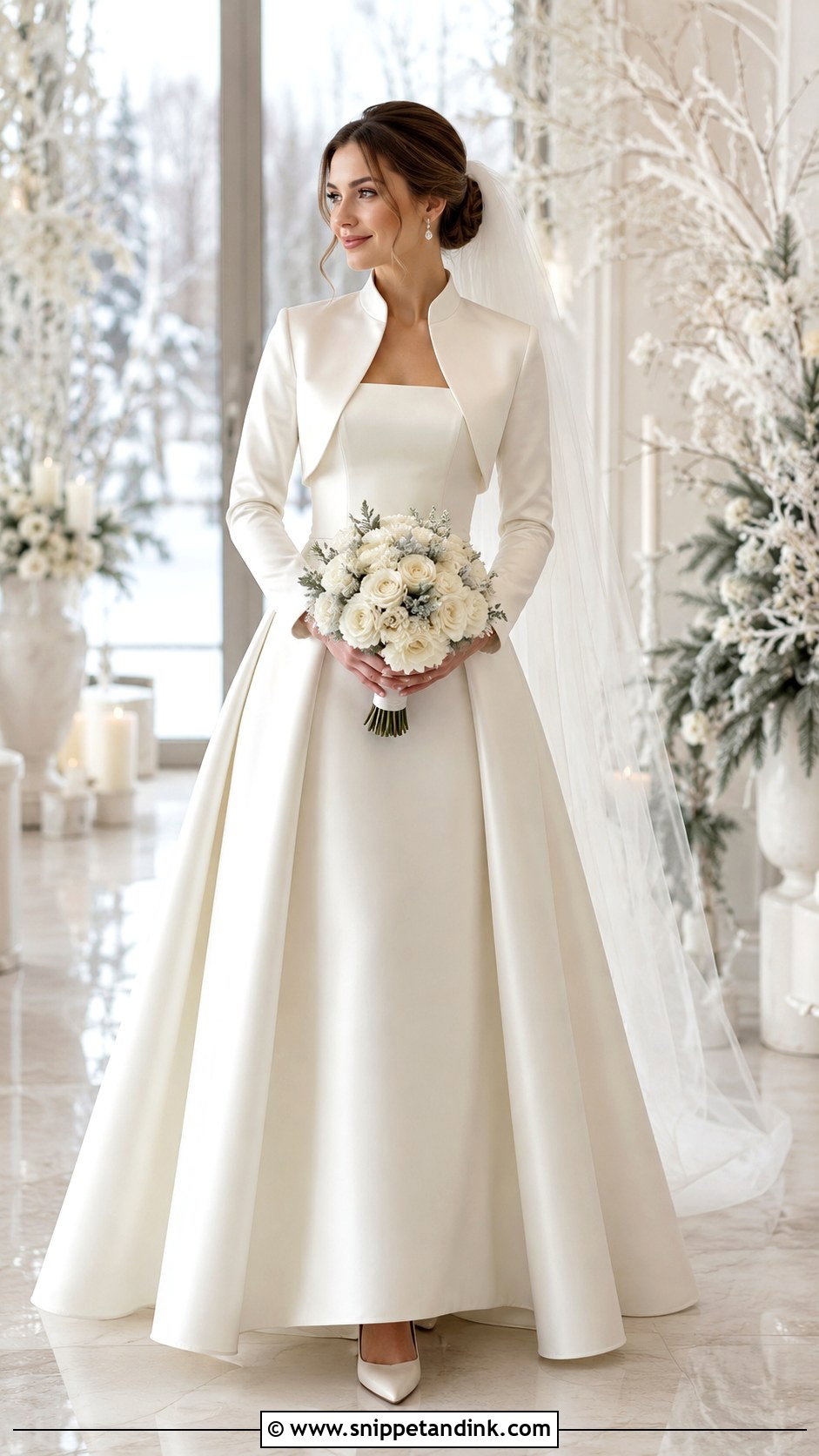
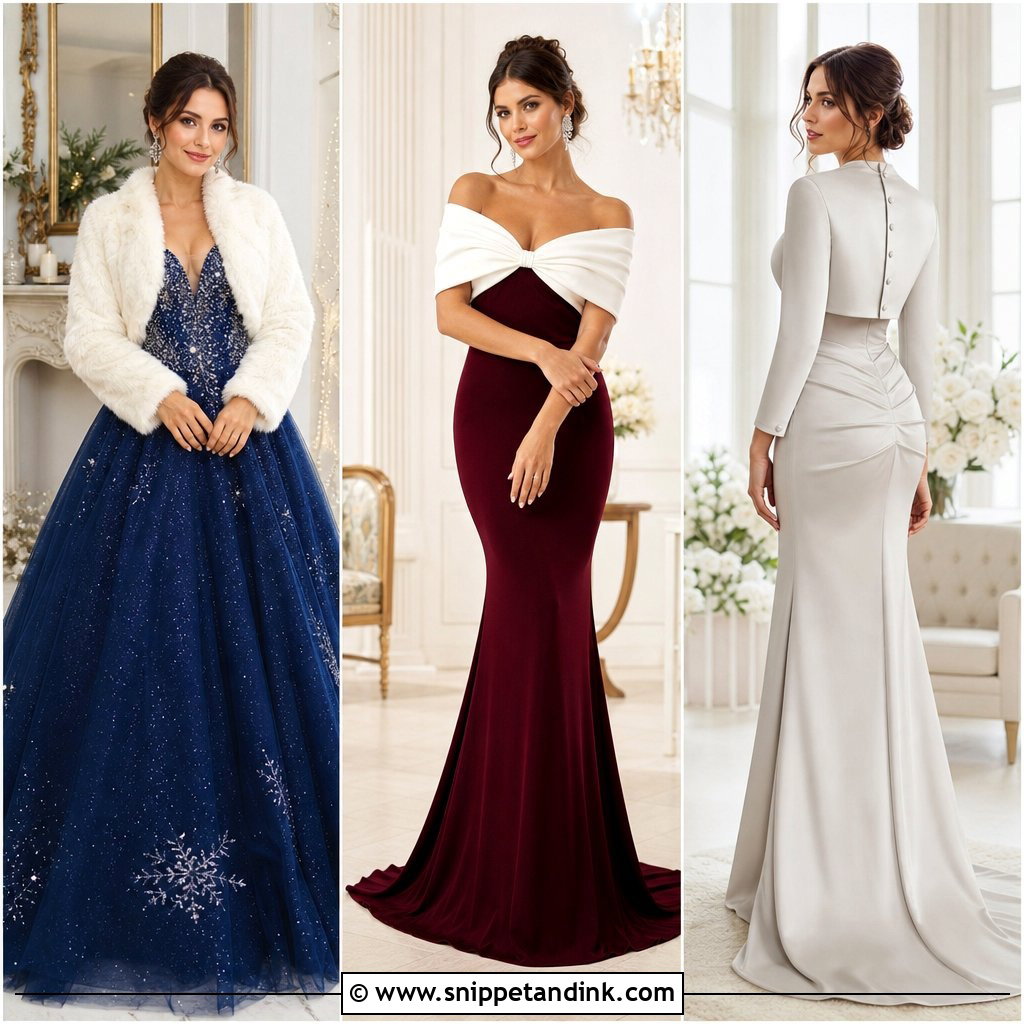
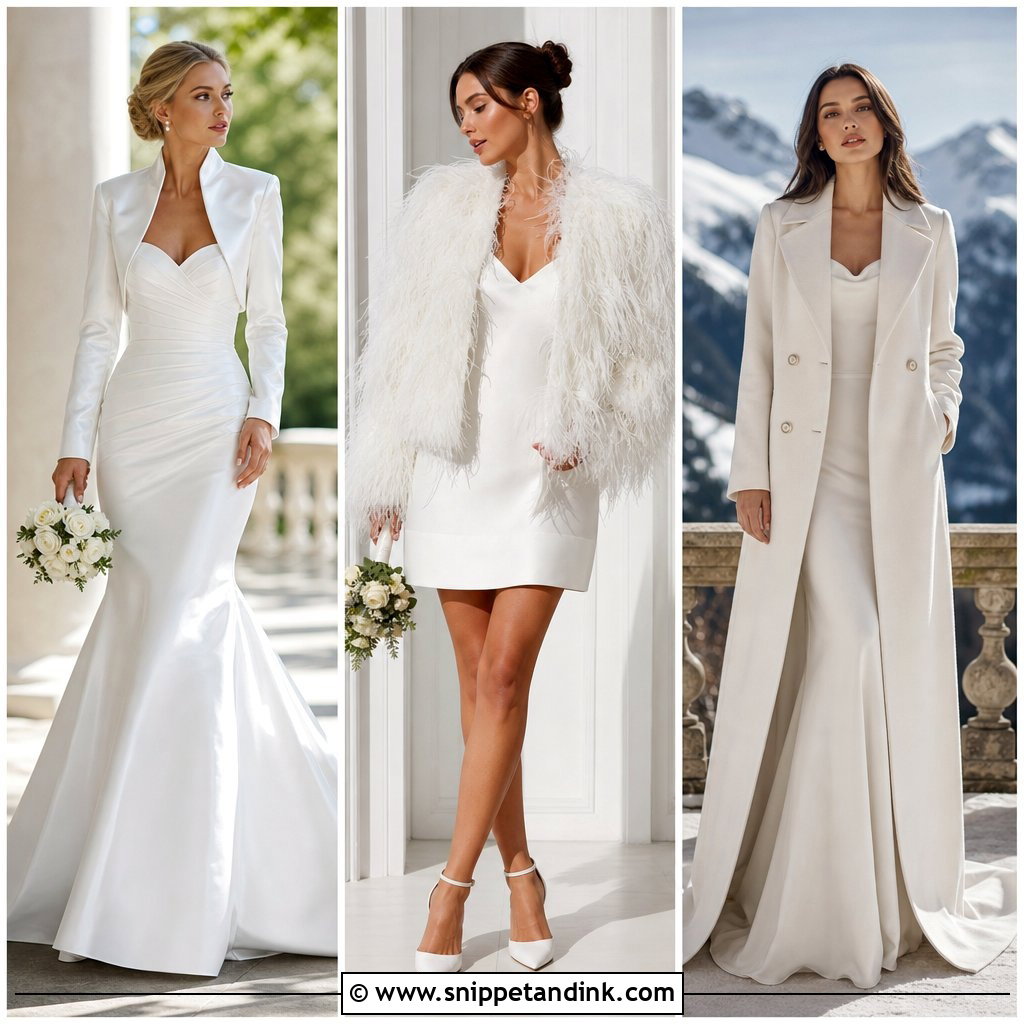
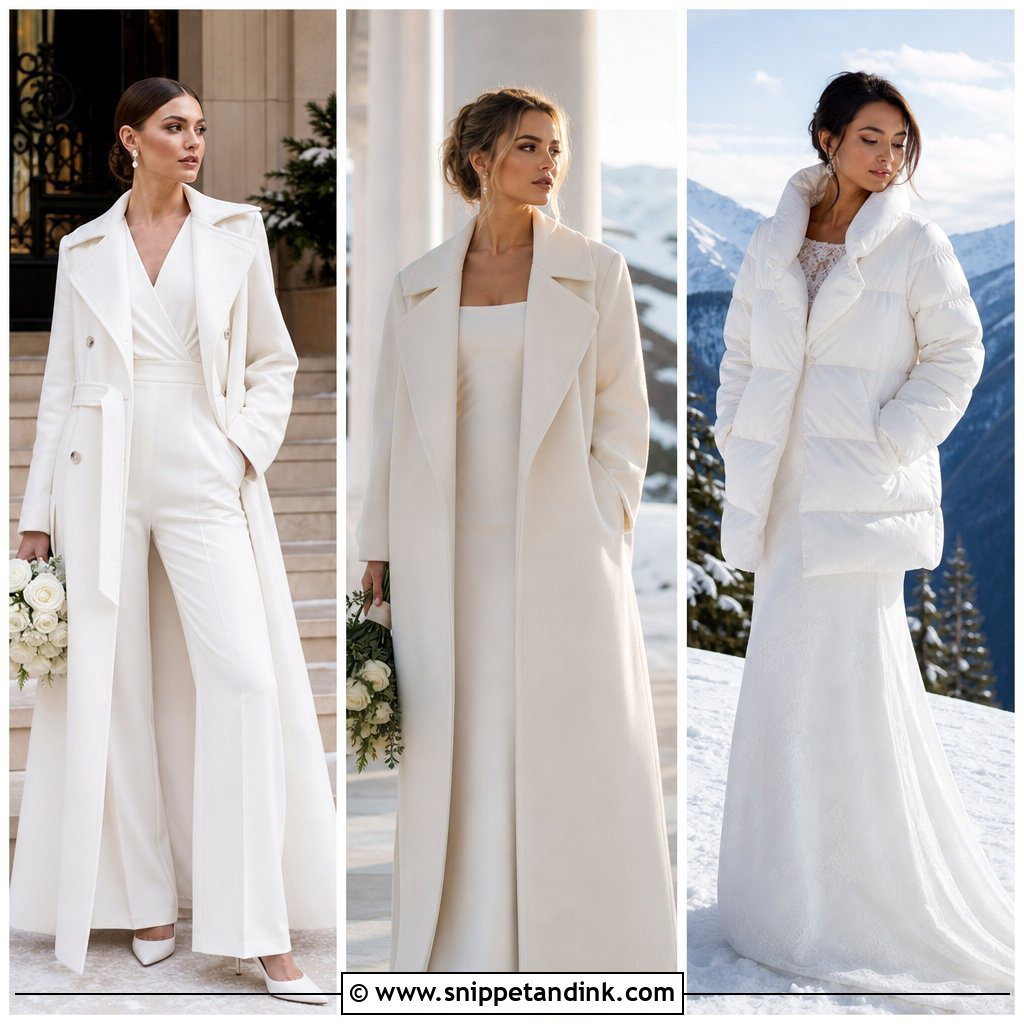
In winter, warmth and looks need to work together. Satin, mikado, crepe, faux fur trim and denser lace all have enough presence. A long-sleeve bolero over a structured gown keeps the ceremony polished and gives warmth outdoors. A thin lining in the same shade adds warmth without bulk. Closed-toe ivory heels, pearl earrings and a long veil. It suits cold outdoor portraits and formal indoor venues.
Fitting a Bolero So You Can Still Hug People
Boleros are often sized by dress size, but what decides comfort is the shoulder width and the armhole. Too narrow across the back and you can’t bring your arms forward to hold the bouquet or hug your guests. Too wide and it slides off the shoulders all day.
At the fitting, I have brides cross their arms in front of them, then raise them as if reaching for a hug. The back should stay smooth and the front edges shouldn’t pull away from the body. Sit down, too, because a cropped bolero can ride up at the back when you sit.
The Moment It Comes Off at the Reception
The handover from ceremony look to party look should take seconds, so plan it. A single hook at the neck or a ribbon tie is quick. A row of tiny covered buttons is lovely but slow, so ask whether they can be decorative with hidden hooks behind them.
- If your veil comb sits over the bolero collar, take the veil out first, or the comb will catch.
- Ask a bridesmaid to bustle the train and remove the bolero at the same time, so you only step away once.
- Have a padded hanger and garment bag ready, so the bolero doesn’t end up crushed on a chair.
- Check your hair and earrings after it comes off. A high collar can flatten curls at the nape.
One Gown, Two Looks, and a Bolero That Fits Both
A bolero changes the mood of a gown without changing the dress. Lace makes it romantic, satin classic, and sheer or pearl styles add detail to a minimal dress. Match it to the gown’s fabric, neckline, season and your comfort. Then try them together at a fitting, look at both in daylight, and sit, walk and raise your arms. If the bolero still looks like part of the dress after all that, you’ve found the right one.
You'll Like These Ideas:


Leave a Reply