
I don’t dress brides by birthday. What changes with an older bride is usually the brief, not the rules: she knows her body, she knows what she can stand in for eight hours, and she rarely wants to spend the reception hitching up a strapless bodice. Champagne suits that brief well. It’s softer than bright white, and its range runs from warm beige through soft gold to antique ivory with a touch of blush, so there’s a version for most skin tones. The gowns below go from lace with sleeves to sleek crepe, and for each one I’ve noted the fit detail I’d look at first and the alteration I’d ask for.
Look Past the Bridal Salon Too
Many of the gowns below don’t need a traditional bridal shop. Plenty of brides I dress find their dress in the eveningwear or occasion department, or with a dressmaker, and champagne is a common eveningwear colour, which helps.
Bridal salons
Salons usually carry samples in one or two sizes and order your gown made to your measurements, so expect a wait of several months plus time for alterations. That’s fine for a long engagement, less so for a wedding a few months away. Ask whether they hold sleeved or covered styles, since many sample rails lean strapless.
Eveningwear and occasion departments
Here you can try your actual size, take the dress home that day and spend the time saved on tailoring. Quality varies more, so check the lining, seams and zip closely.
A dressmaker
The best route if you want a particular sleeve or neckline that you can’t find. Bring photos of what you like and what you don’t; I find the second list is often more useful.
1. Long Sleeve Lace Champagne Wedding Dress
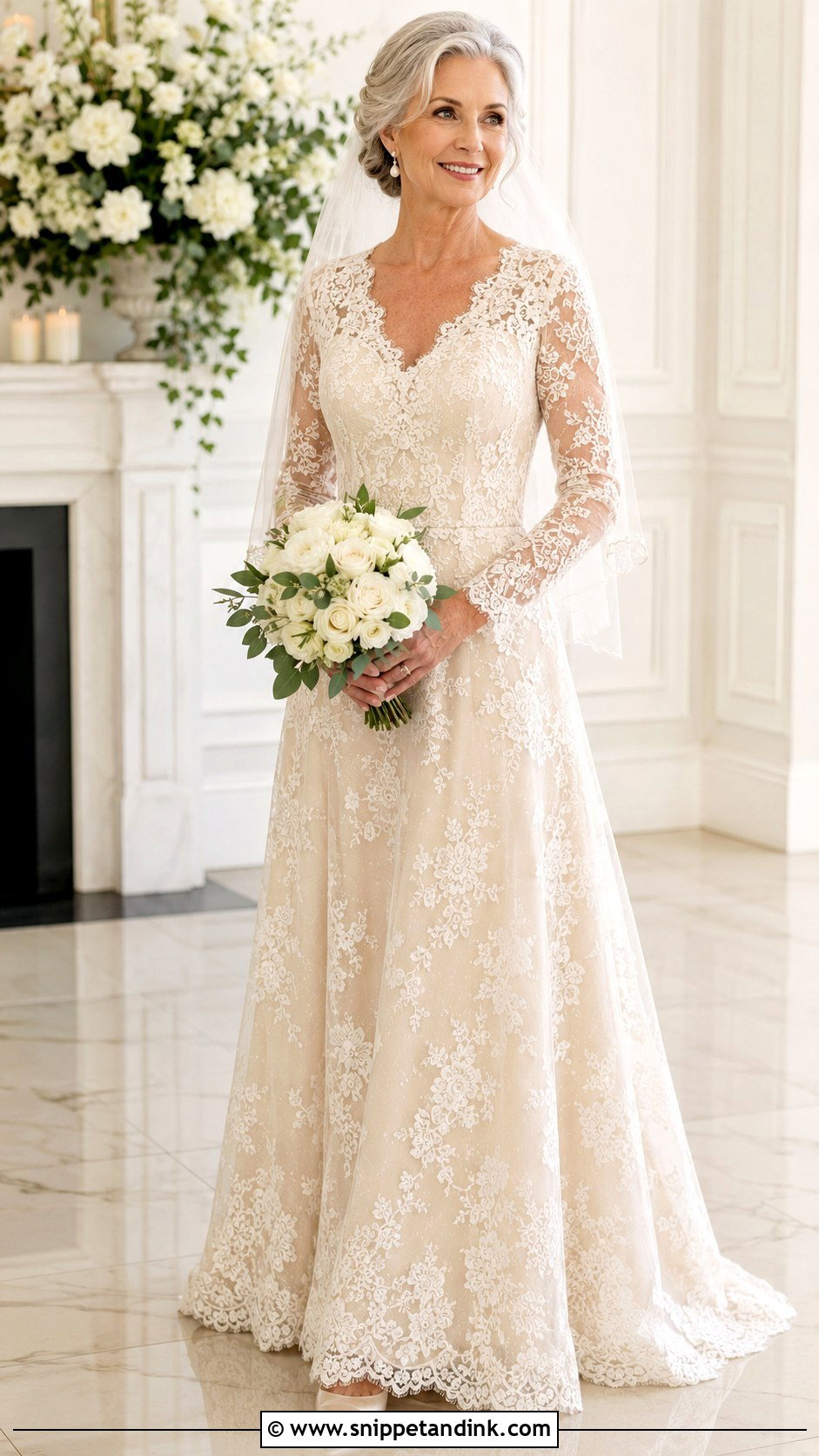
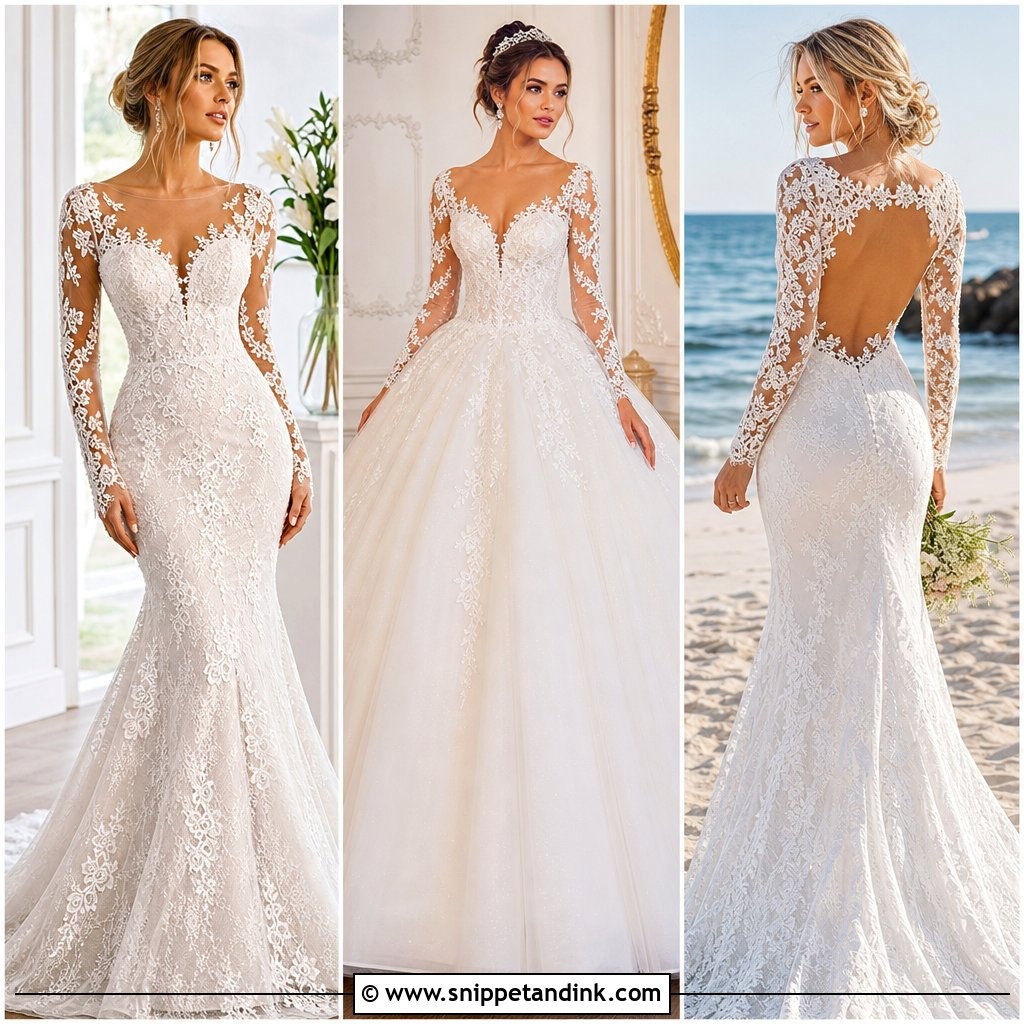
Antique ivory lace over a champagne lining is the pairing I suggest most when a bride wants sleeves without weight. The lining shows through the gaps in the lace and gives it depth, so the gown still reads as bridal from the back of the church. Sheer sleeves give coverage without heat, and a bateau or modest V frames the face. Two alterations I nearly always request here: wrist loops, so the sleeve doesn’t ride up, and a built-in bra cup sewn into the lining. Champagne pointed pumps, pearl drops and a small satin clutch finish it, with a low chignon to show the neckline. In cooler months a pale beige cashmere wrap keeps the shoulders warm between portraits.
2. A-Line Chiffon Champagne Wedding Dress
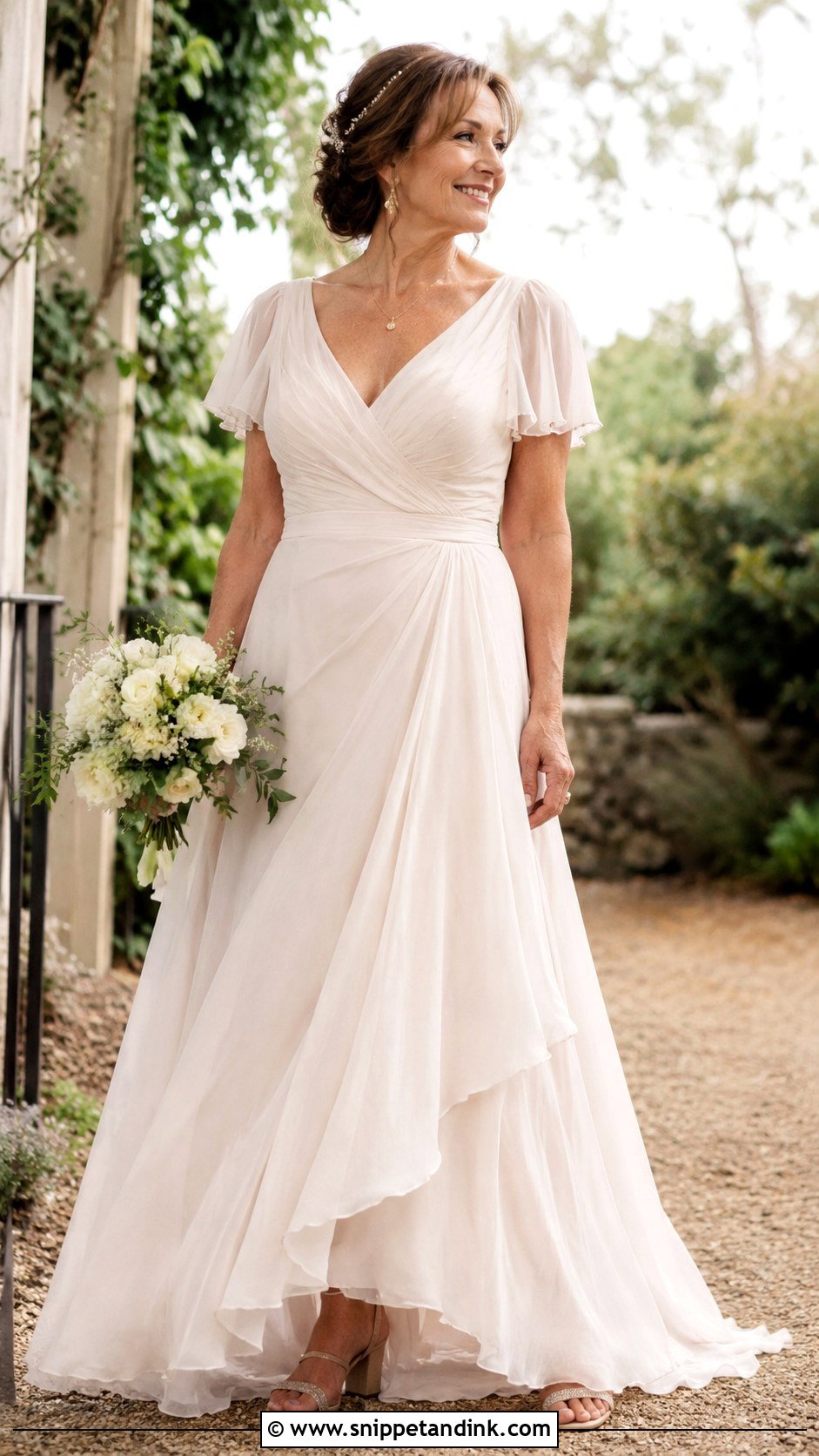
Chiffon is the most forgiving fabric I work with outdoors. It floats over the hips rather than clinging, and several thin skirt layers move well in photos without adding bulk. A crossover V lengthens the neck, and flutter sleeves cover the upper arm in a relaxed way. On grass or gravel I’d always swap stilettos for block-heel sandals. A long veil in wind is a nuisance, so for a breezy garden I suggest a chapel-length one or simply a decorative comb. Gold earrings, a slim bracelet and a loose updo keep it light enough for a destination ceremony.
3. Tea-Length Champagne Wedding Dress
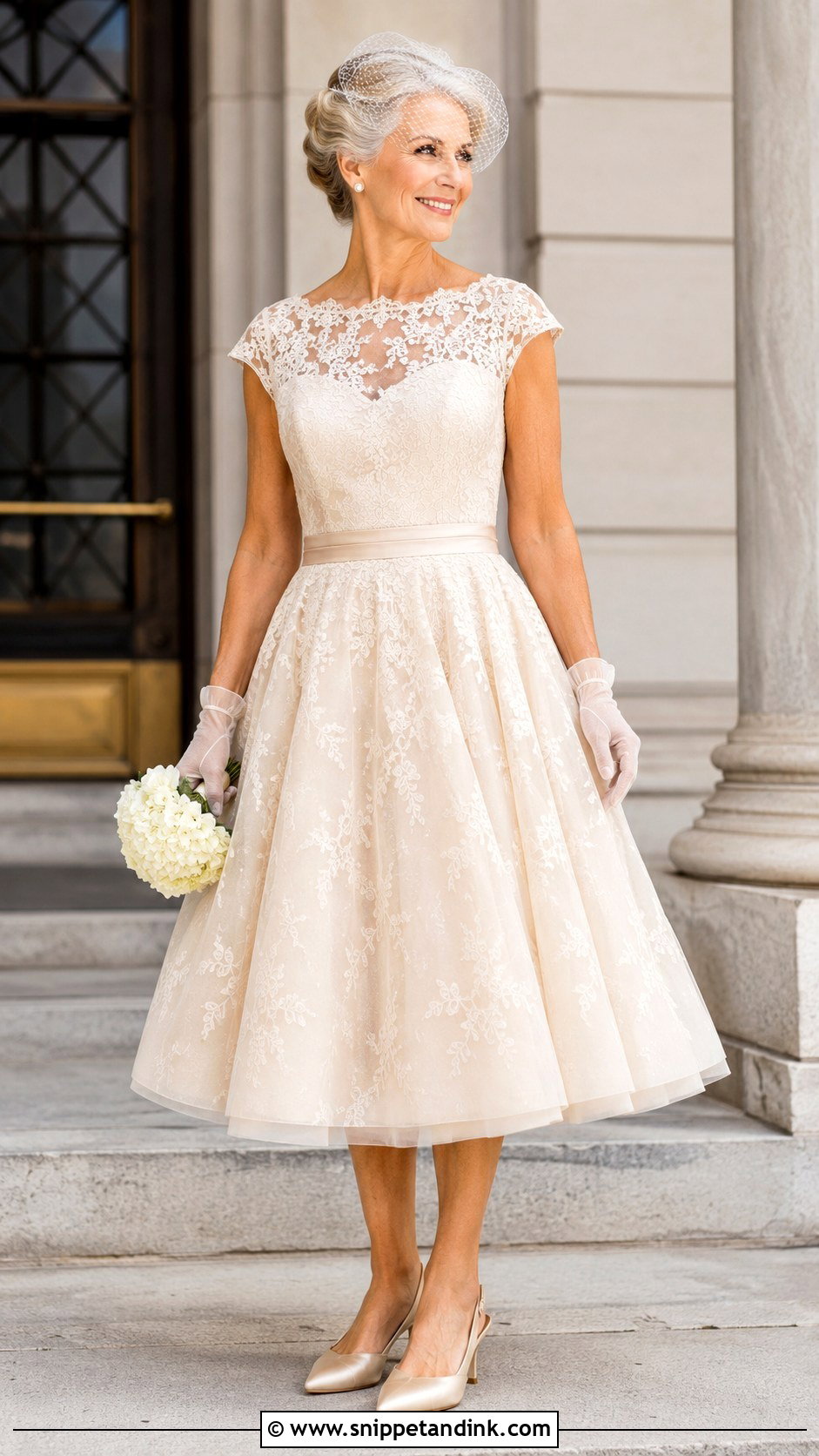
Where the hem lands is the whole trick with tea length. It should fall at the narrowest part of the lower leg, just above the ankle bone or at the slimmest point of the calf, and I pin it with the bride in her real shoes, never in socks. A fitted bodice and a gently flared skirt keep the shape bridal, helped by lace appliqué or jacquard texture. Slingbacks or satin ankle-strap shoes will be seen, so pick a pair you love. Pearl studs, optional short gloves and a pearl hairband or birdcage veil suit the proportion. A courthouse ceremony or a small lunch wedding is exactly where this length shines.
4. Beaded Column Champagne Wedding Dress
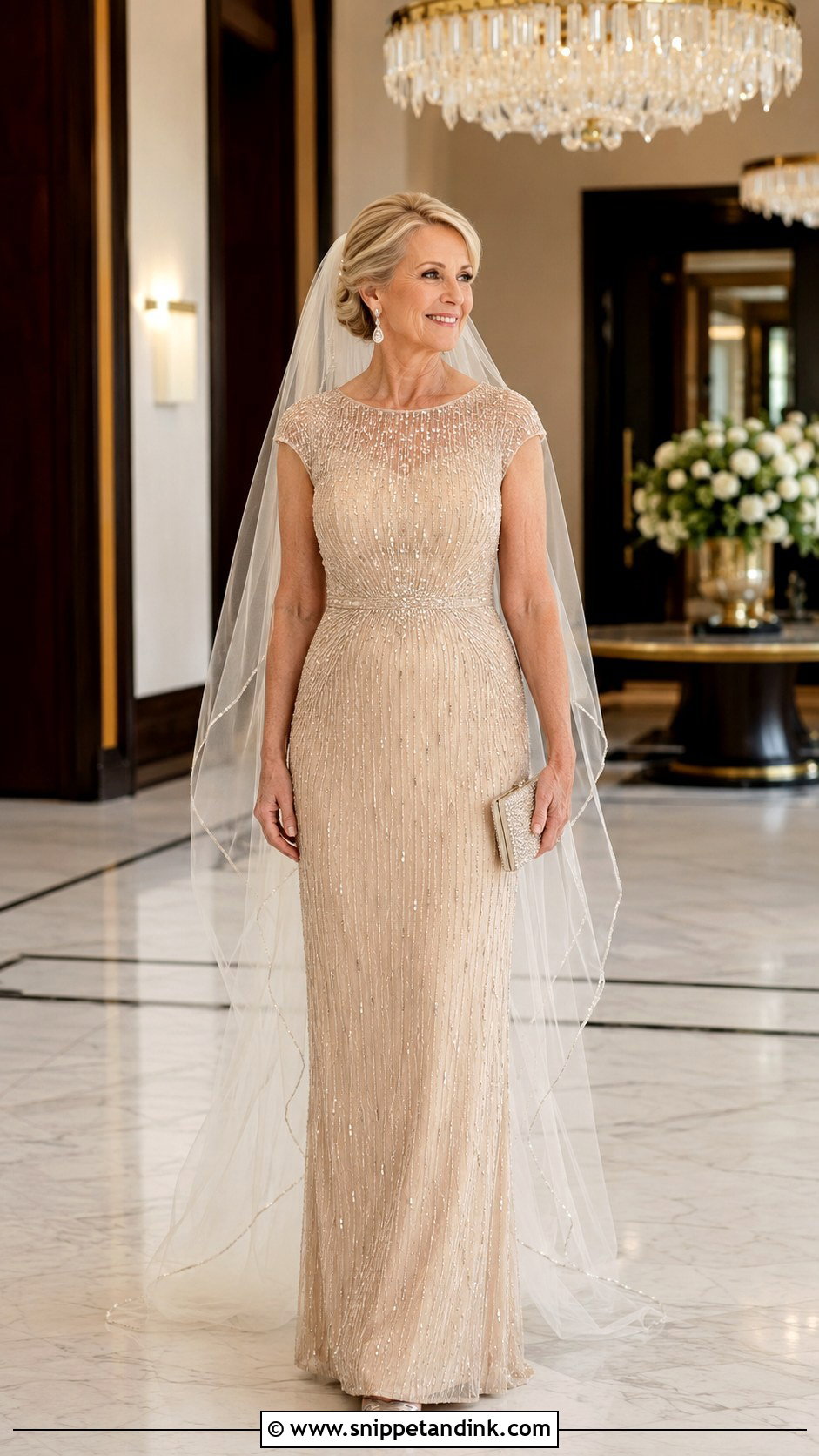
A beaded column gives sparkle without a big skirt, and vertical or diagonal beadwork draws the eye up and down rather than across. The comfort question comes first, though. Beads sewn onto a stiff base can scratch the inner arm and make sitting through dinner a chore, so I look for a soft mesh overlay with a smooth lining underneath. Sit down in it at the shop for a full minute before deciding. Low metallic heels, crystal drops and a rectangular clutch keep the outfit sleek; skip the necklace if the bodice is busy. A plain fingertip veil softens it, and polished waves or a sleek bob suit the clean line.
5. Champagne Wedding Dress With Jacket
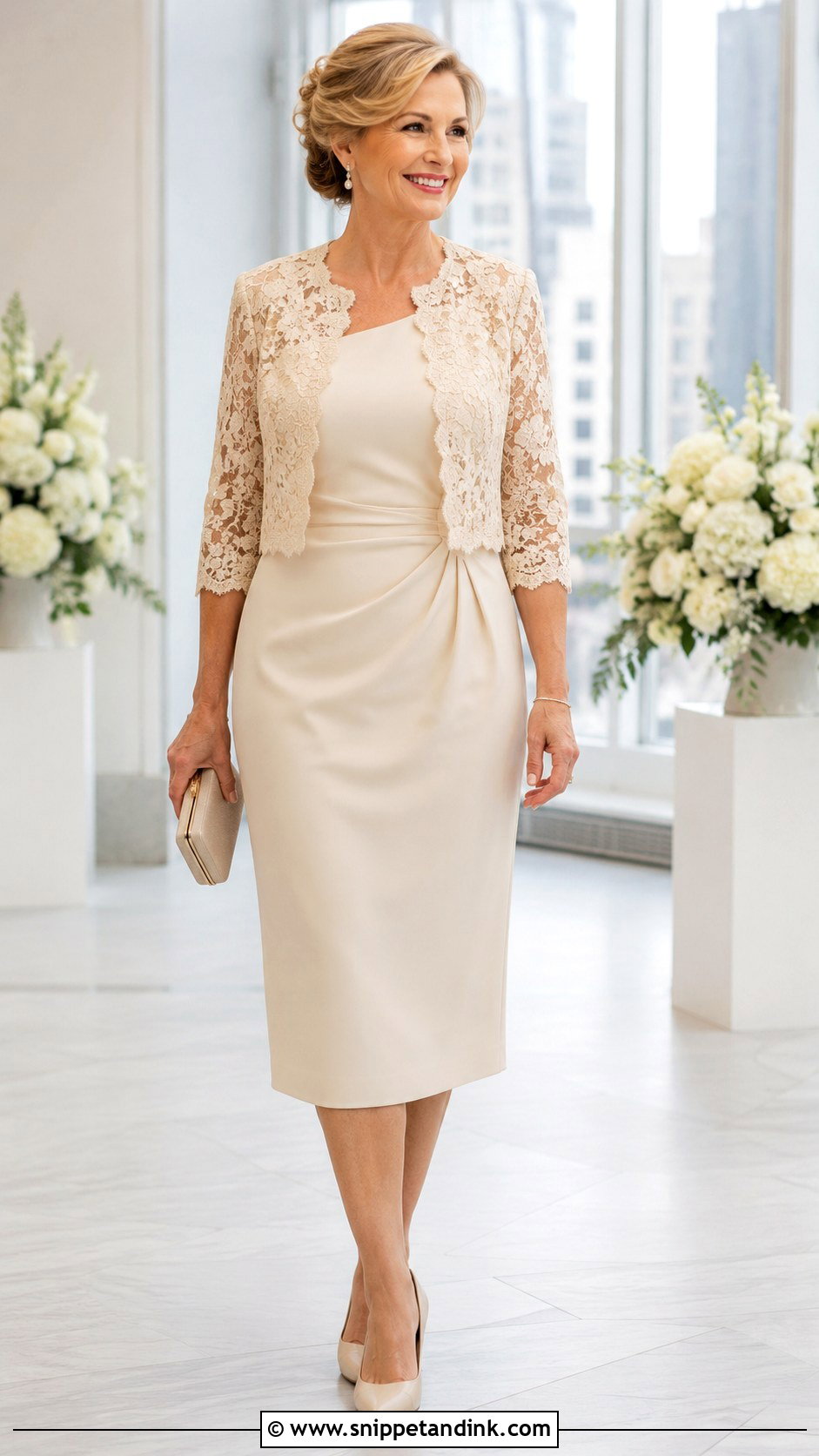
A dress-and-jacket pairing is one of the most practical choices I offer, because the bride gets coverage for the ceremony and a lighter outfit for dancing. Start with a sleeveless or short-sleeve sheath in crepe, satin or soft jacquard, then add a cropped lace jacket or a tailored longline one in the same colour family. The jacket must follow the dress shape; boxy cuts add bulk at the waist. If the jacket and dress come from different makers, take swatches of both outside, because champagne can range from pale beige to deep antique gold and the mismatch only shows in daylight. Closed-toe pumps, pearl and gold earrings and a neat updo complete it.
6. V-Neck Satin Champagne Wedding Dress
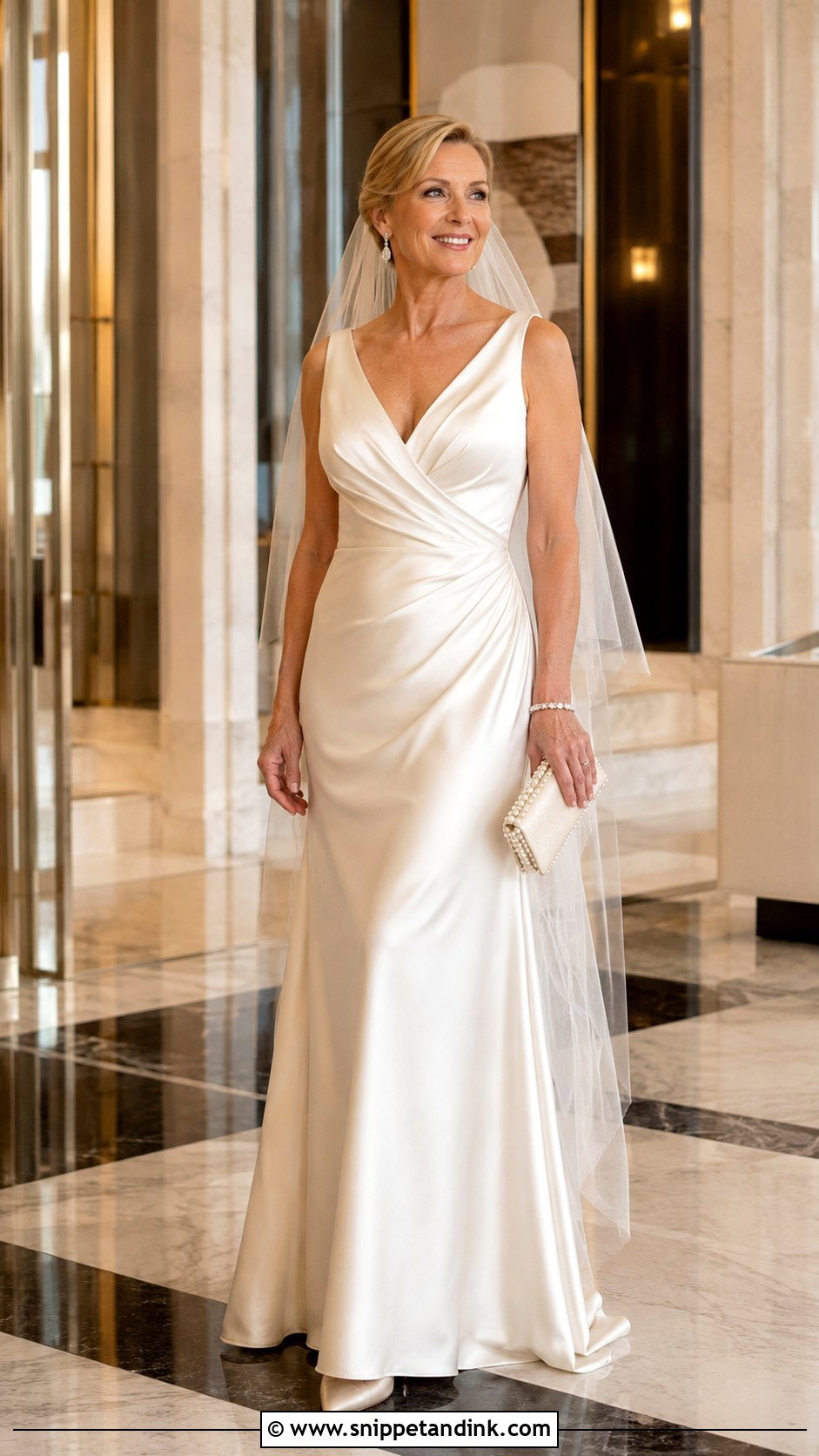
Weight is what makes satin flatter. Thin satin catches on every seam and strap underneath, while heavier satin skims the figure and hangs cleanly. A V-neck pulls attention to the face and collarbone, and if you’d like more coverage, ask for a modest plunge with a sheer insert or wider straps. I’m fussy about underwear under satin and ask brides to bring their actual shapewear to every fitting, because a line that’s invisible under lace shows clearly here. Satin pumps, refined drop earrings and a pearl-edged clutch suit it. A cathedral veil makes it formal; a shoulder-length one suits a smaller gathering.
7. Empire Waist Champagne Wedding Dress
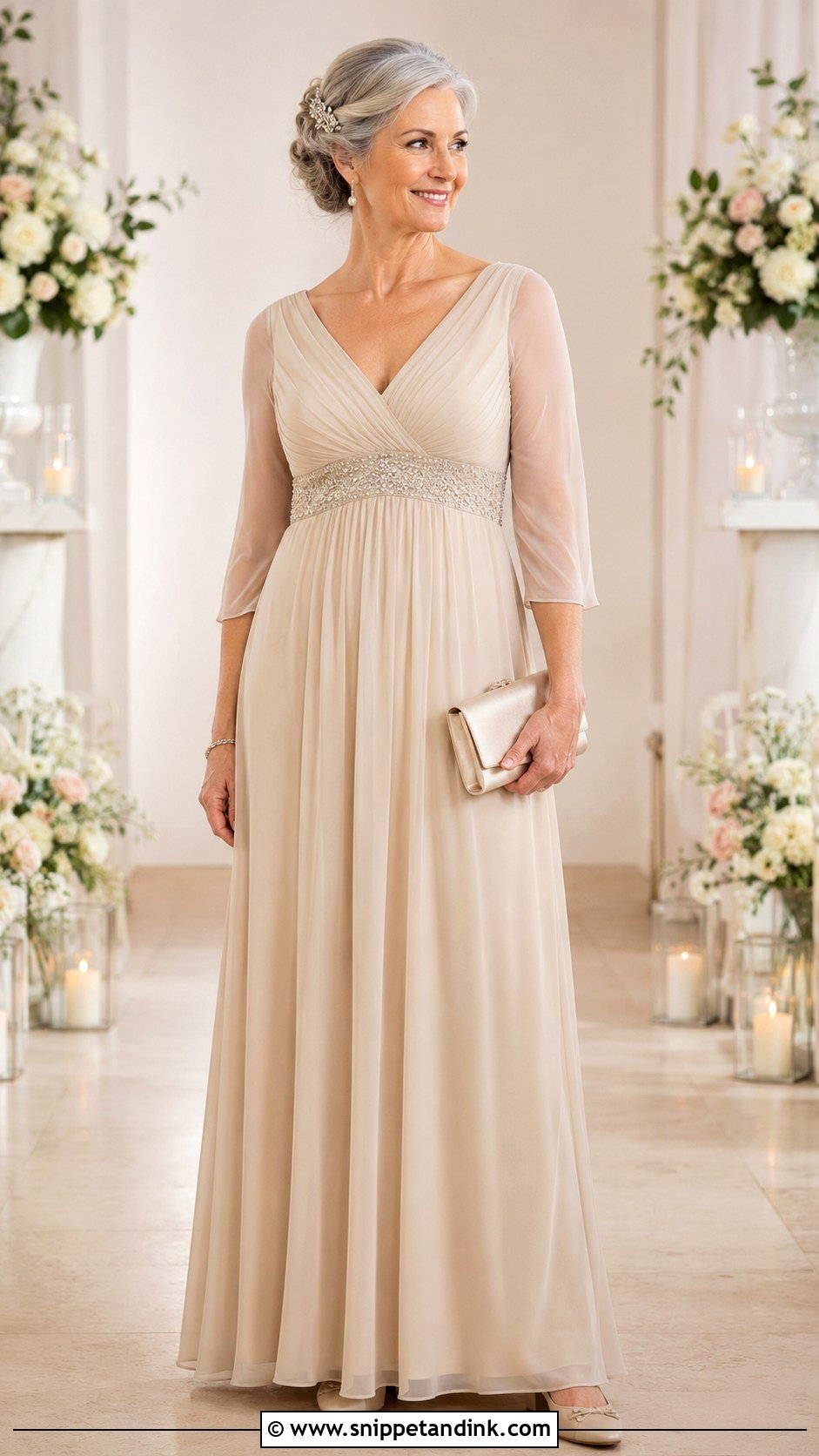
An empire waist lets the skirt fall freely from just under the bust, so the band beneath it has to fit precisely. Too tight and it digs into the ribs by the speeches; too loose and the bodice slides. Chiffon, georgette or light crepe keeps the silhouette from ballooning. Short lace sleeves or sheer three-quarter sleeves add detail. I’d avoid a wide sash sitting high under the bust, which crowds a fuller chest, and use a narrow line of tonal beading along the seam instead. Low block heels, a delicate pendant and a loosely twisted updo with a crystal comb finish the romantic shape.
8. Illusion Neckline Champagne Wedding Dress
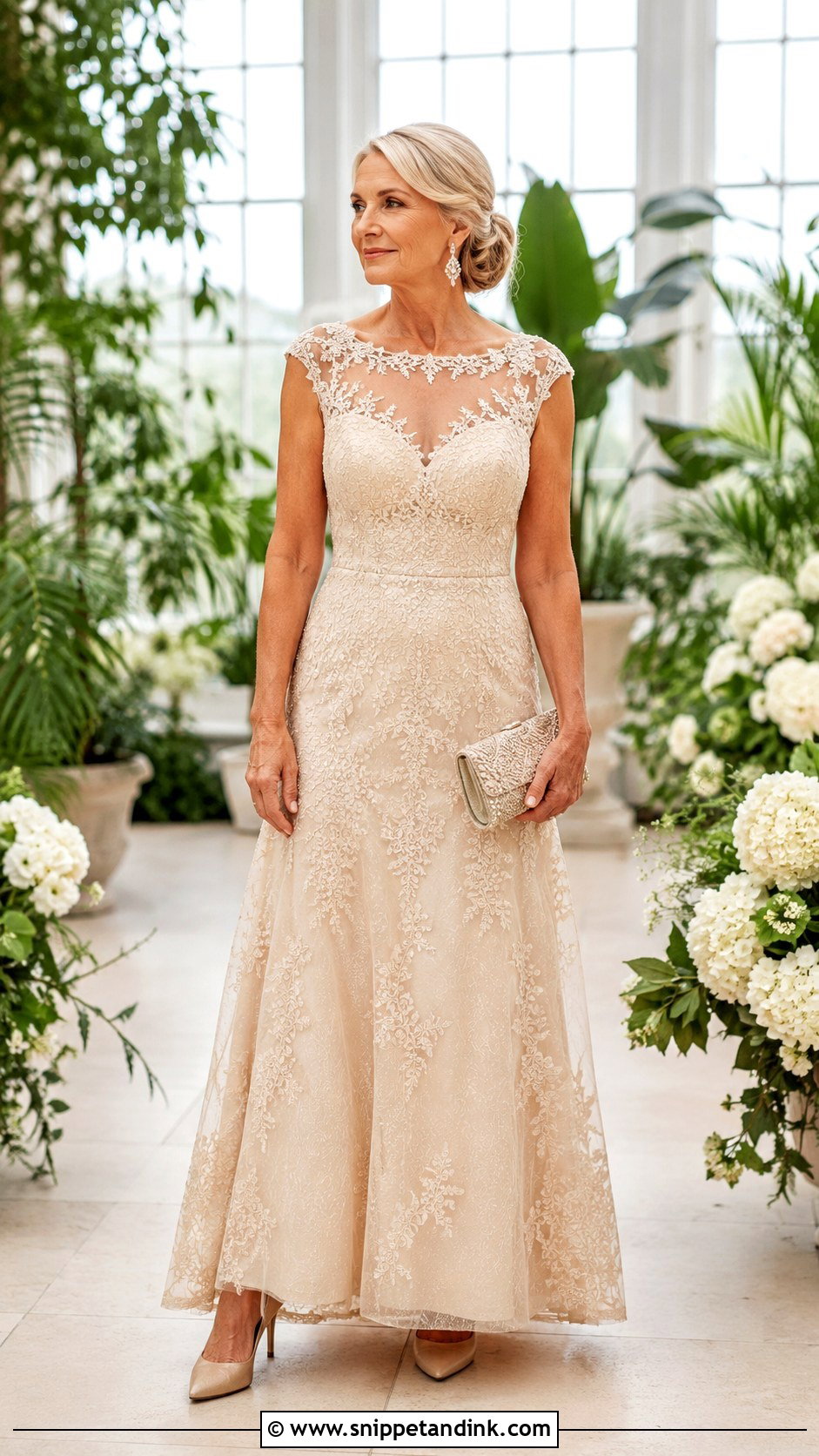
Illusion necklines give the look of an open bodice with real coverage, but only if the mesh disappears. Mesh comes in several skin shades, and I compare it against the bride’s chest in daylight and under indoor light before anything is ordered. Lace appliqué or delicate beading sits on top. A fitted bodice and A-line skirt keep the balance. Skip the necklace, since it fights the detailing, and choose earrings that echo one motif from the neckline. One alteration I always check: rough appliqué edges around the neck and armholes, which a good tailor can trim and finish so nothing itches.
9. Off-Shoulder Champagne Wedding Dress
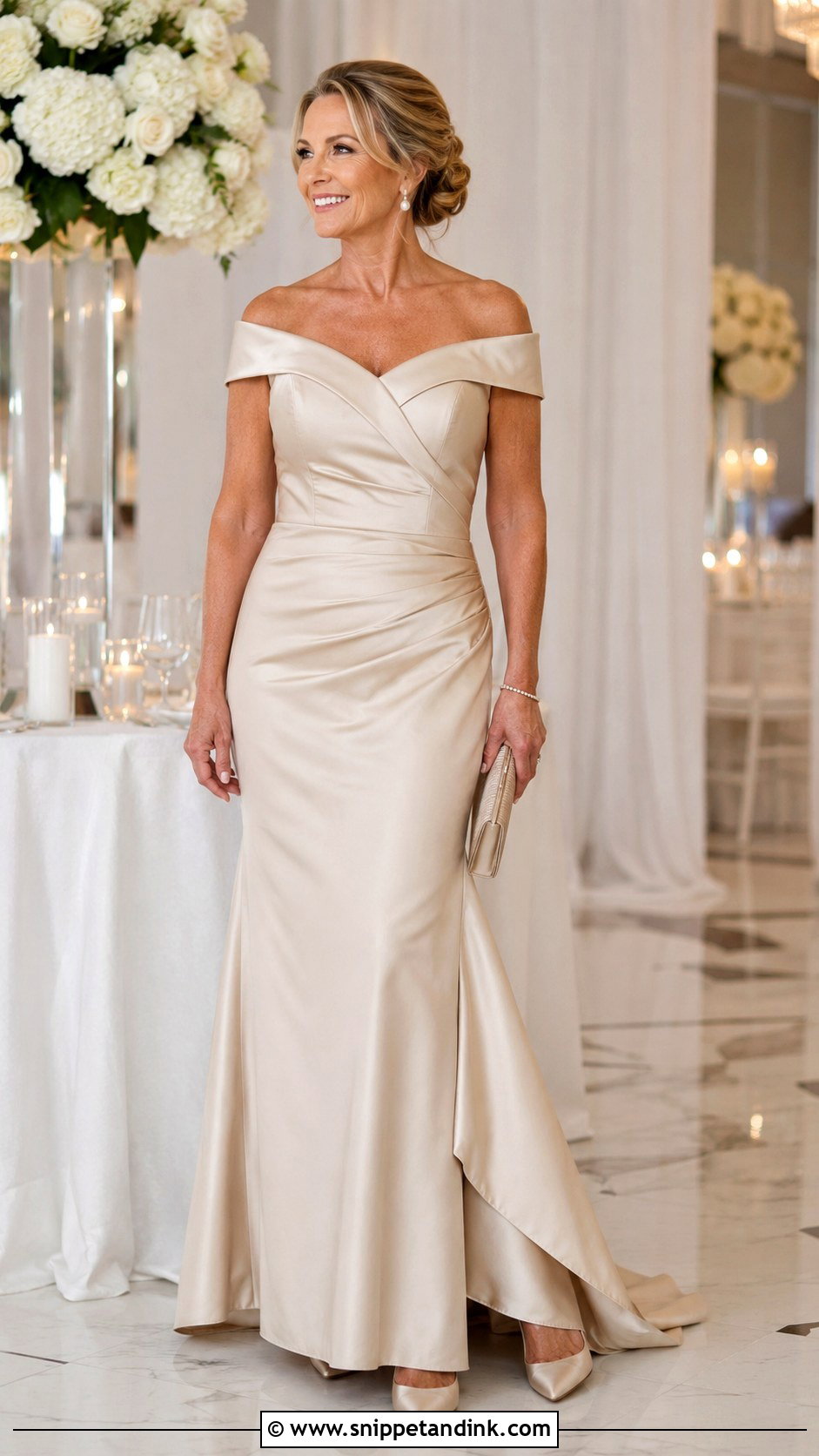
Off-the-shoulder bodices worry many brides, and with good reason, because a poorly built one slides down every time you lift your arms. A fold-over portrait collar or softly draped sleeves are more secure than a very low bodice. What holds it up is the inside: internal boning, a waist stay and tailoring around the arms. At the fitting, raise your arms as if hugging someone, sit, then reach across a table. If it shifts, it needs work. A fit-and-flare or restrained A-line skirt balances the shoulder line. Pearl drops, satin pumps and a polished updo complete it, with the collarbone left bare.
10. Champagne Wedding Dress With Cape
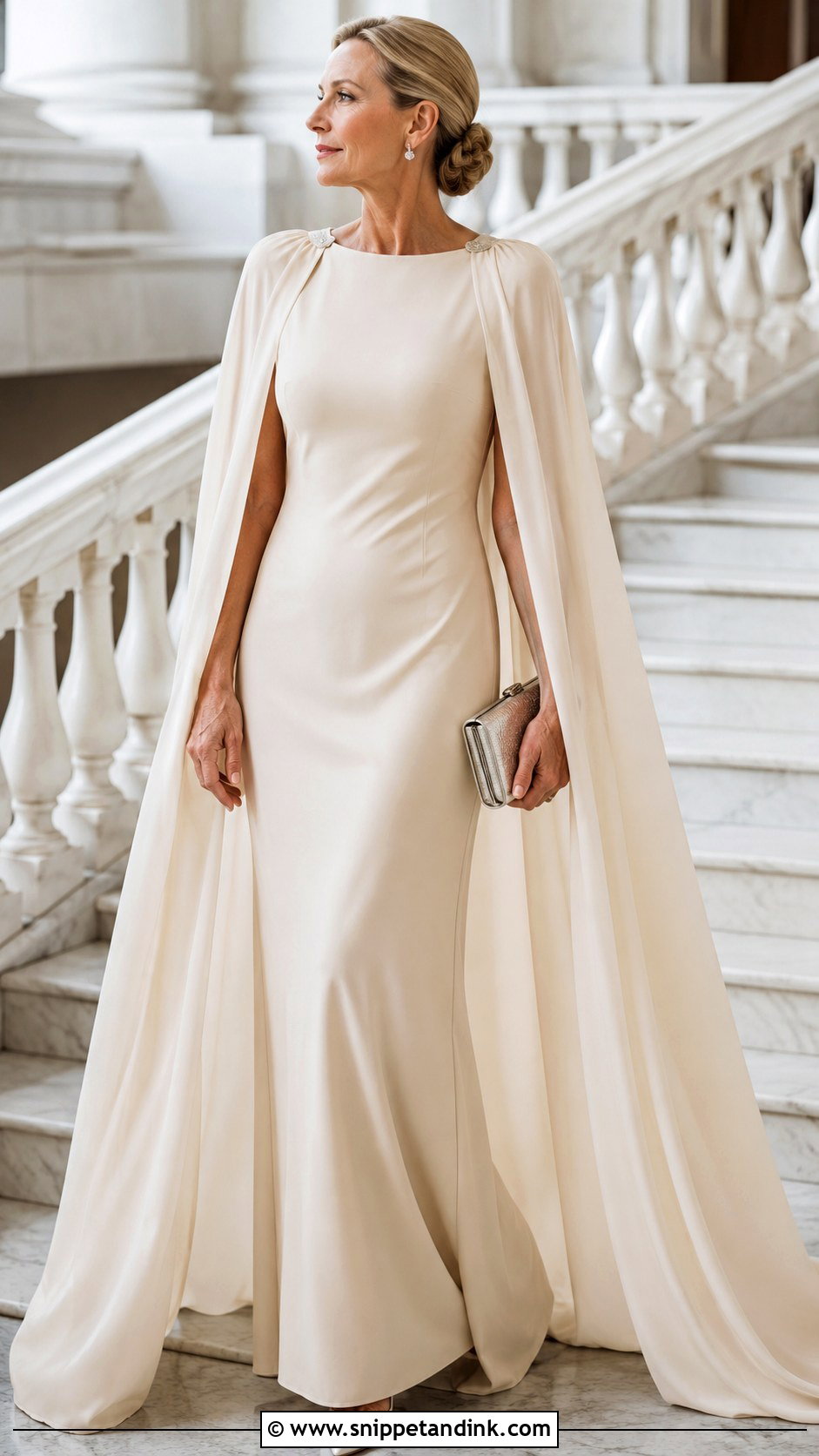
A cape gives movement and drama without a veil, and it’s a favourite with brides who don’t want a veil at all. Start with a streamlined crepe or satin column so the cape stays the focus. Sheer shoulder capes suit warm weather, while floor-length chiffon or lace adds coverage in cooler months. I prefer capes that attach with discreet buttons or pearl clasps, so they can come off before dinner. During alterations, walk and turn in your heels: a cape cut too long catches under the shoe heel on turns. Pointed pumps, small crystal earrings and a sleek low bun keep the neckline clear.
11. High-Neck Crepe Champagne Wedding Dress
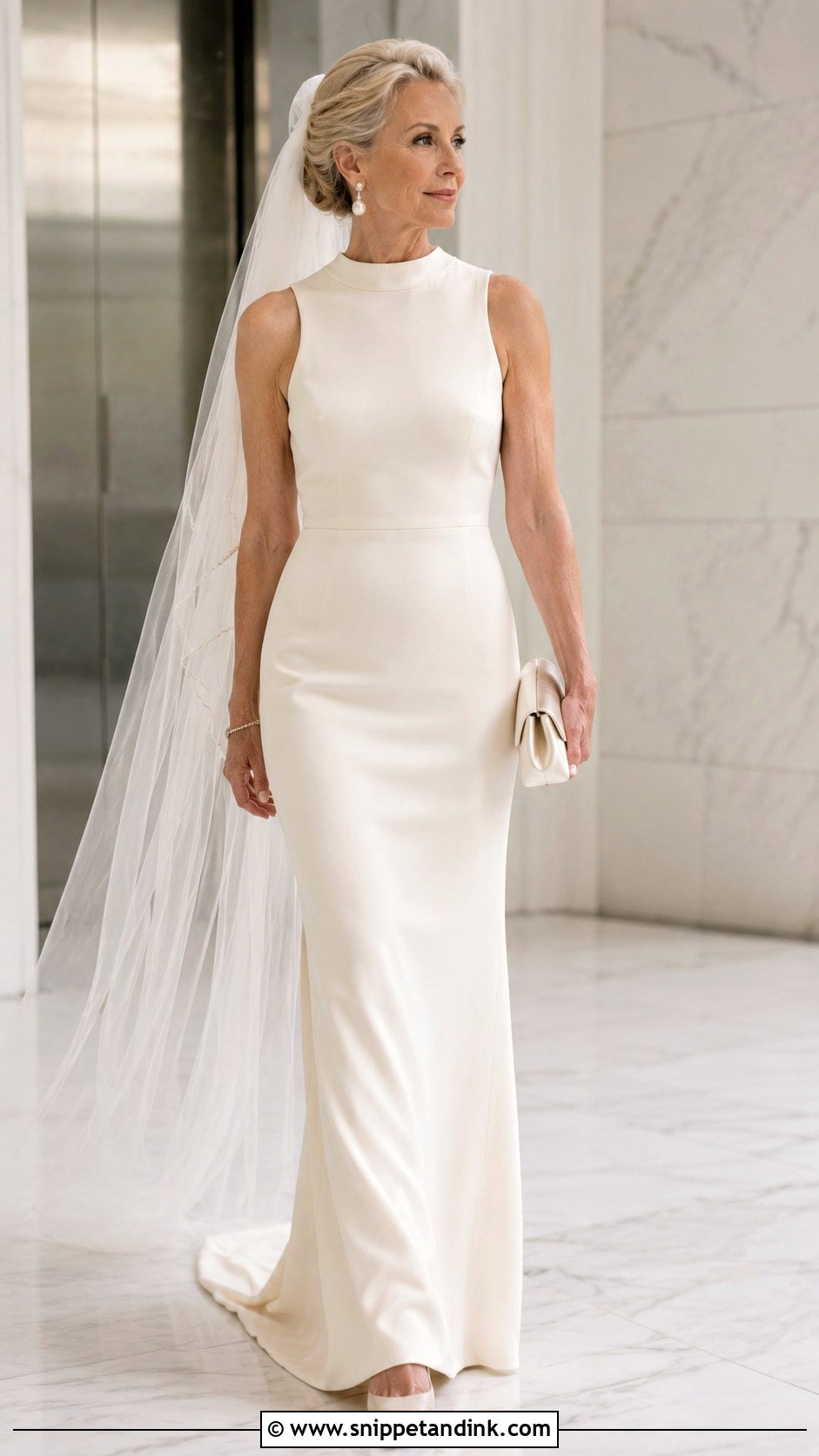
Crepe shows exactly how well a dress is cut. With no lace to hide behind, princess seams, gentle ruching or a defined waist do the shaping, so I check those seams lie flat before anything else. A high neck feels clean and confident; sleeveless is contemporary, and fitted long sleeves suit colder seasons. Choose crepe with real weight, because thin crepe clings at the stomach. Skip the necklace and wear a polished bracelet with pointed heels and sculptural pearl earrings. A smooth bun or a short cut tucked back keeps the line, and a removable overskirt adds ceremony drama if you want it.
12. Fit-And-Flare Champagne Wedding Dress
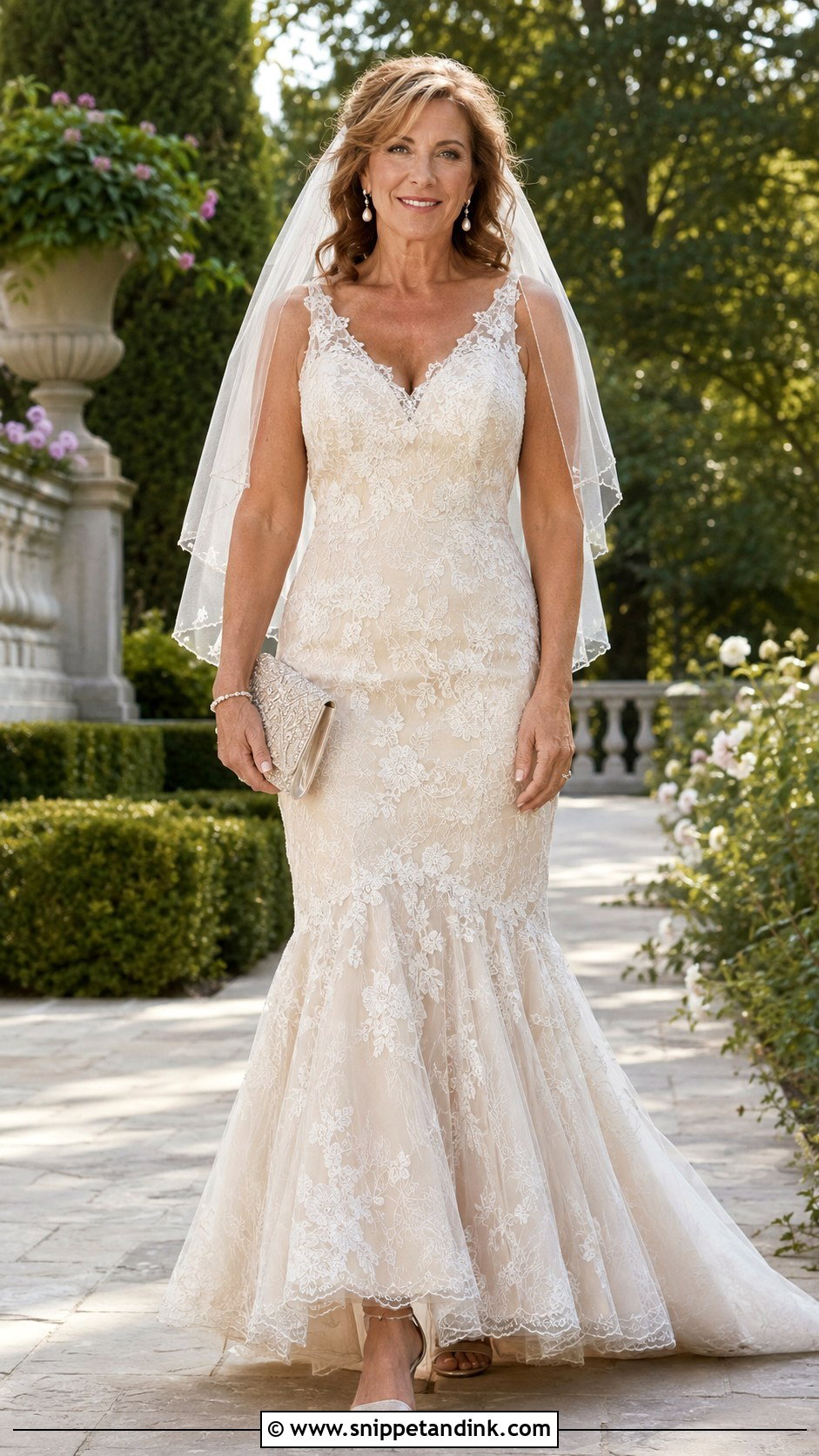
Fit-and-flare is the shape I suggest to curvy brides who like the idea of a mermaid but not the restriction. The flare starts around mid-thigh rather than at the knee, which means you can climb stairs and sit at dinner without a struggle. Stretch crepe, soft lace or lined tulle makes it easier still. A V-neck or scoop keeps the top balanced. Stable heeled sandals, pearl earrings and a small embellished clutch suit it, and a fingertip veil ends right where the skirt flares. Ask for a proper bustle and discreet internal support. If you can’t breathe deeply or hug comfortably at the fitting, it’s too tight.
13. Pleated Midi Champagne Wedding Dress
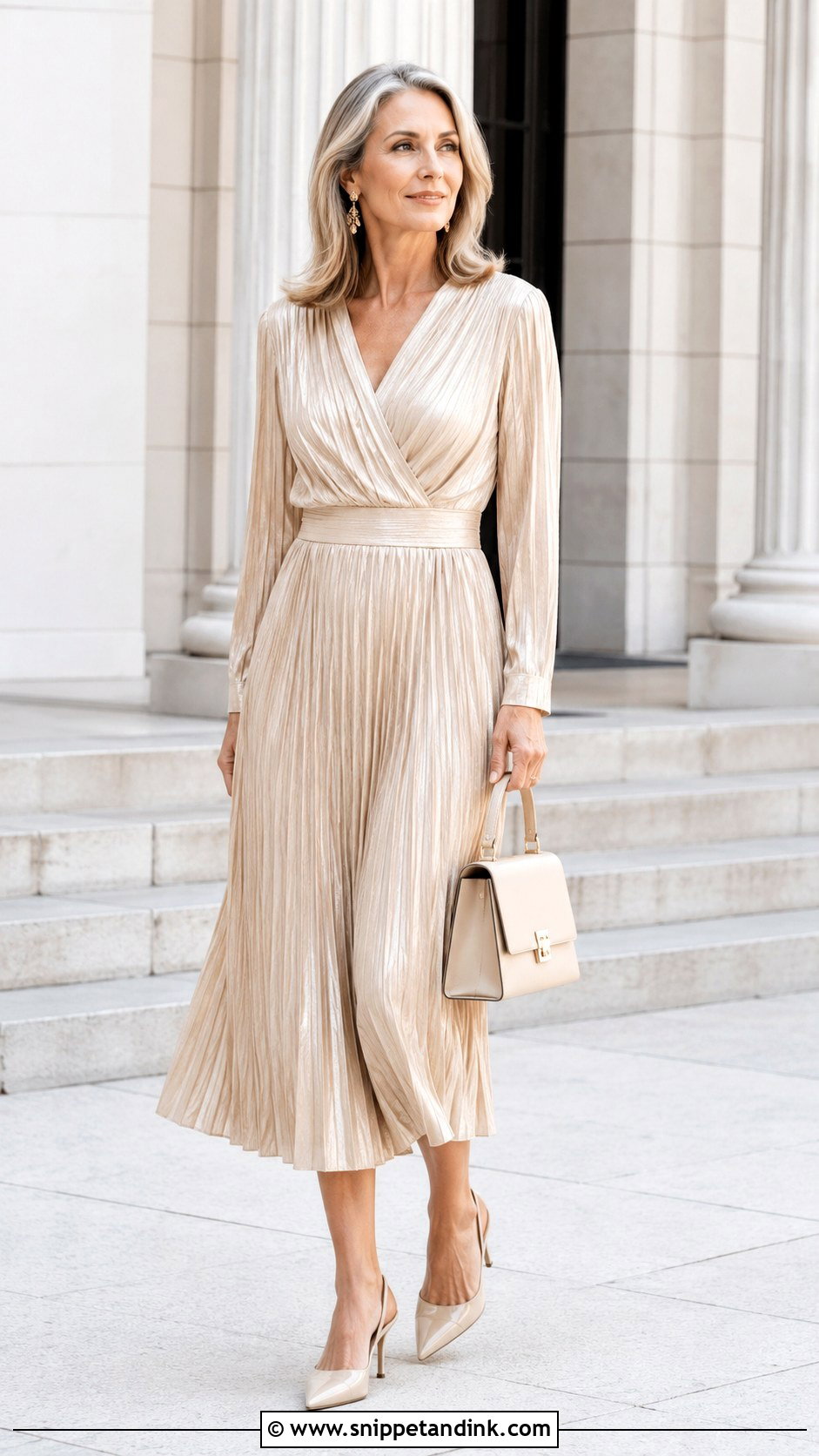
Fine pleats give a midi dress movement and a modern finish, and it’s the dress I see brides wear again most often afterwards. Metallic pleats feel festive; matte chiffon is quieter. A wrap-inspired bodice or softly defined waist with a skirt below the knee is the most flattering length for most legs. Pleats can open and flatten at the seat after a long dinner, so I tell brides to hang the dress the night before and steam it lightly. Slingbacks, a structured bag and small gold earrings suit the length, with a cropped jacket if needed. It’s right at home at civil ceremonies, restaurant receptions and second weddings.
14. Two-Piece Champagne Wedding Dress
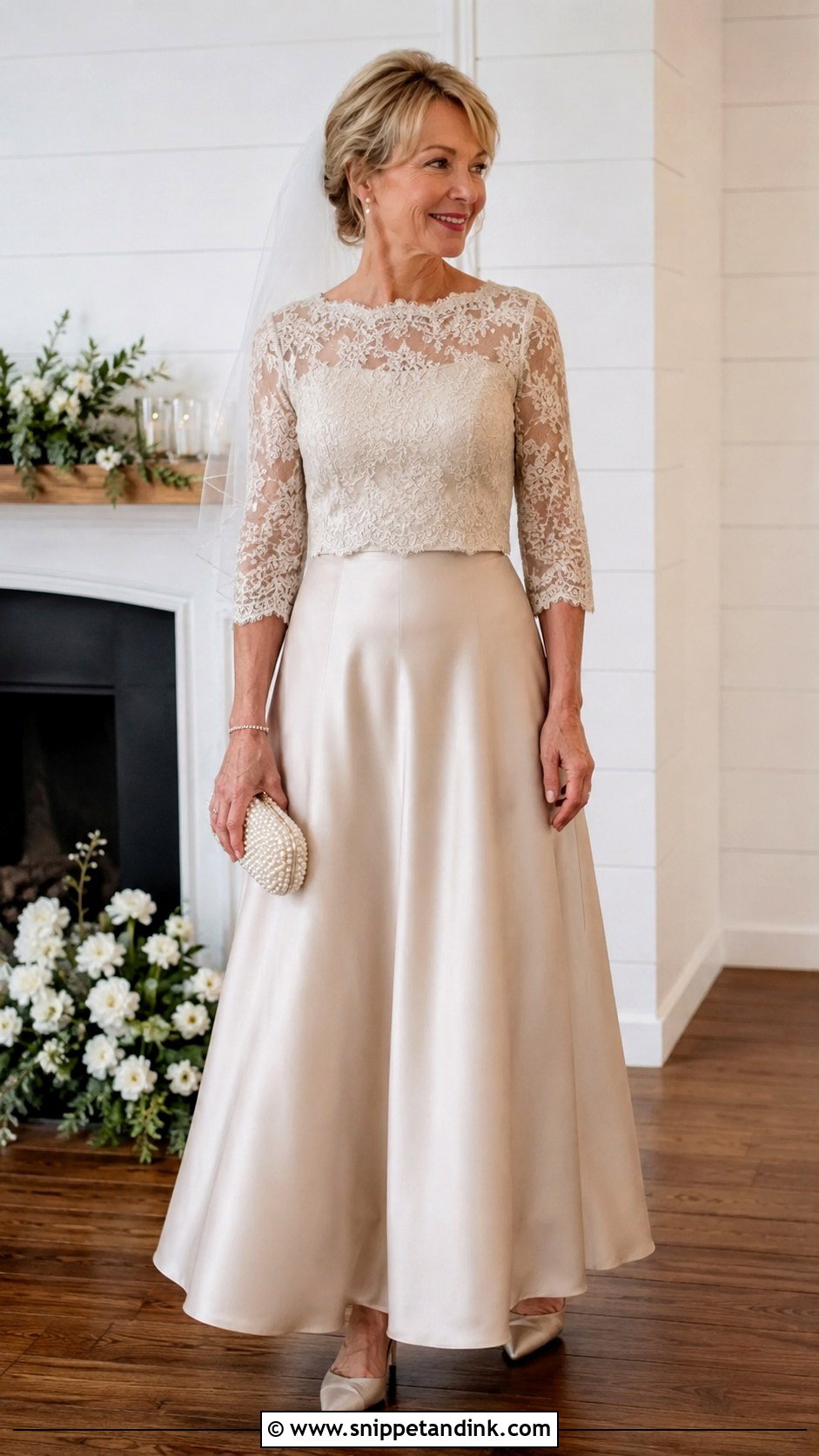
Separates are underrated. A lace top with a flowing skirt, or a structured crepe bodice with a pleated midi, gives the same polish as a gown and is far easier to alter, since top and skirt can each be adjusted for different sizes. The pieces should meet at the natural waist unless you want skin showing. Three-quarter sleeves and a bateau neckline make a refined top half. Order both pieces at the same time from the same dye lot if you can; champagne from two batches can differ. Satin pumps, a pearl clutch and a comb or short veil make it unmistakably bridal.
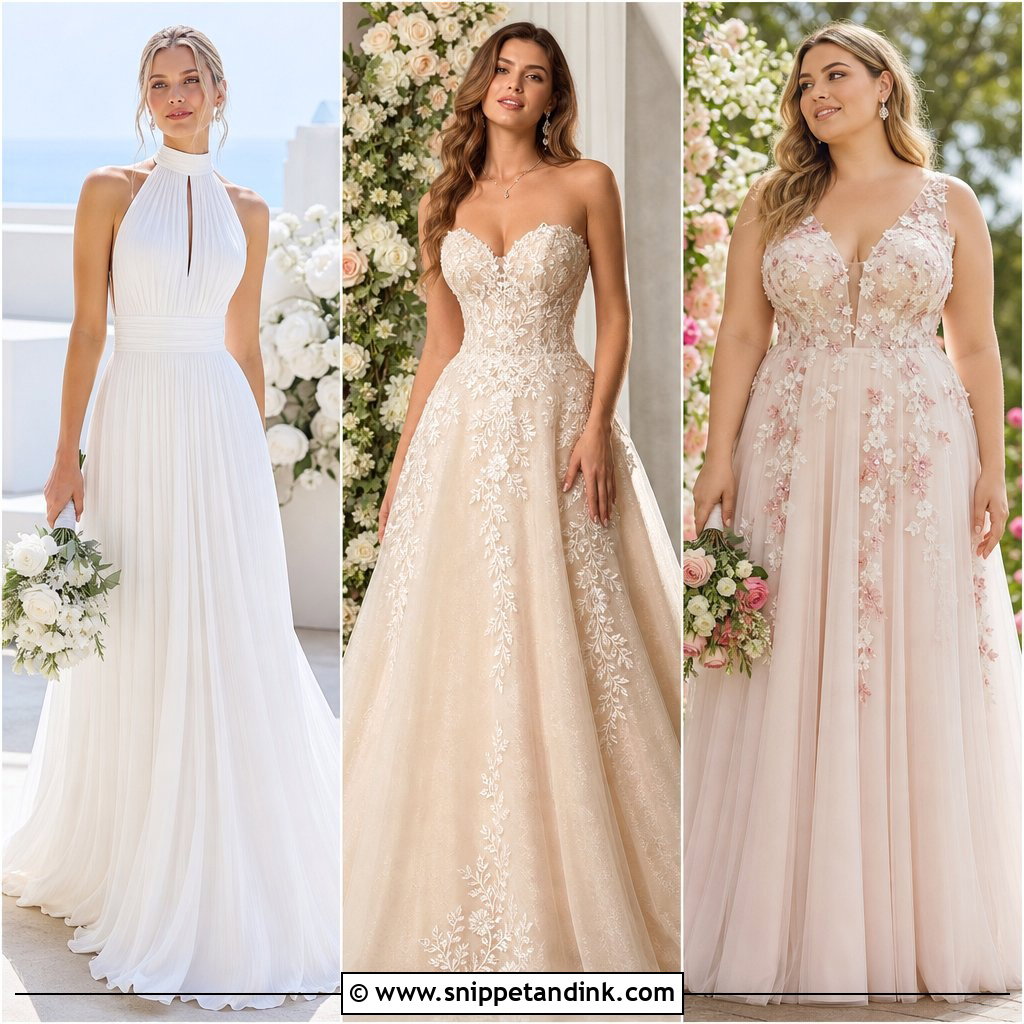

15. Embroidered Tulle Champagne Wedding Dress
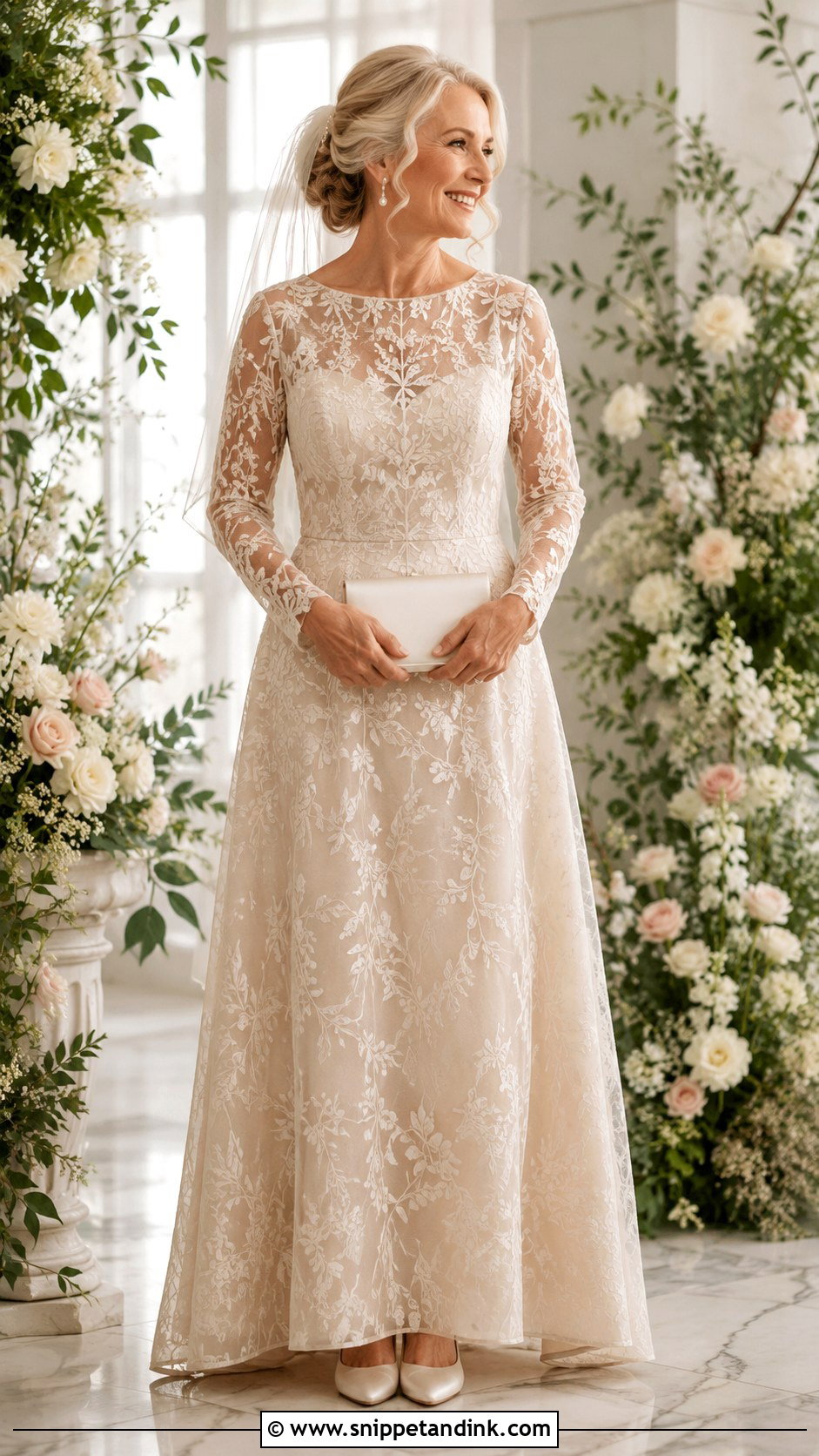
Embroidered tulle gives depth, and a champagne underlayer makes ivory threadwork stand out clearly. Botanical embroidery and scattered appliqués keep the gown light; very dense decoration gets heavy and stiff. My check here is placement: I look at the dress from the front, back and both sides, because a large motif landing across the bust or hip can draw attention somewhere you didn’t intend. A softly flared skirt lets the tulle move. Closed-toe satin shoes, pearl earrings and a plain clutch keep the focus on the embroidery, with a loose chignon and a small floral comb.
16. Simple Sheath Champagne Wedding Dress
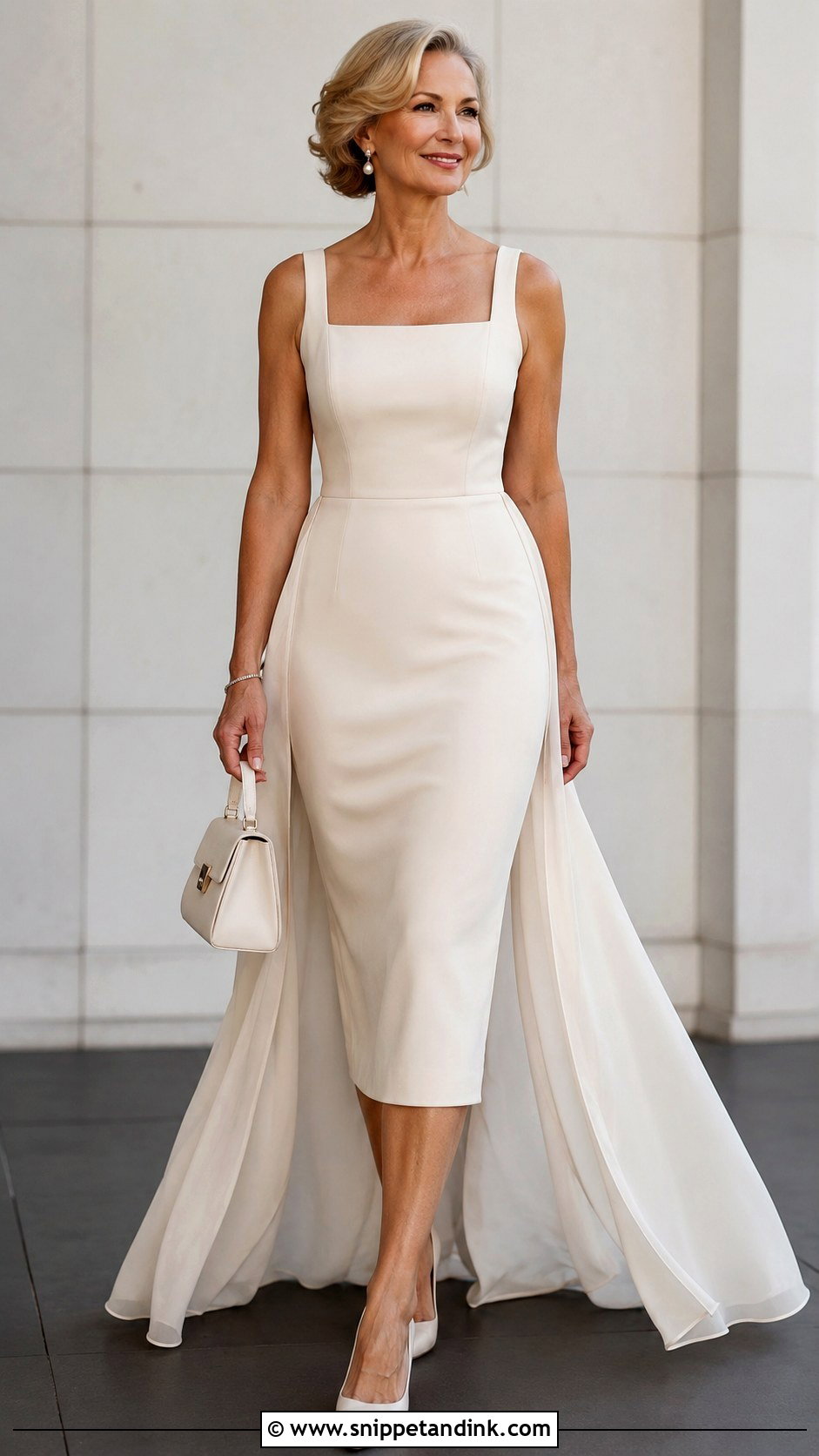
A simple sheath relies on cut and cloth and nothing else, so this is where I tell brides to spend. Matte crepe or silk should fall from the shoulders without pulling across the hips. A back vent is the detail people forget; without one, the skirt hobbles your stride. Subtle waist shaping and a good lining help it move. A square, scoop or shallow V gives definition. Pointed pumps, pearl earrings and a small structured bag suit the minimalist line, and a tailored coat or detachable chiffon train adds ceremony. Small adjustments at the shoulder seam make more difference here than anywhere else.
17. Flutter Sleeve Champagne Wedding Dress
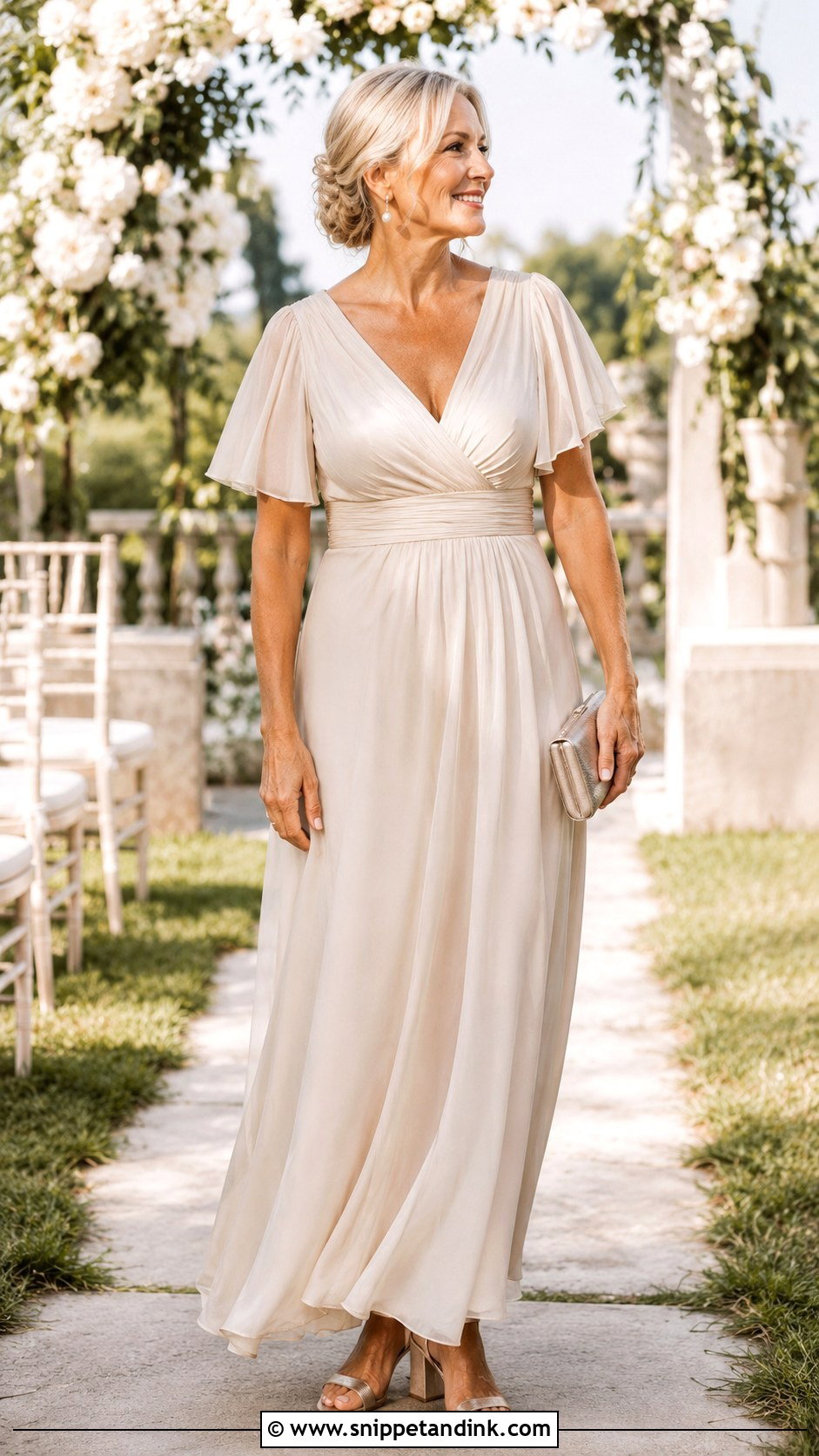
Flutter sleeves cover the upper arm lightly and move as you walk, which brides who dislike fitted sleeves tend to love. Chiffon or georgette sleeves should start from a supportive bodice. A defined waist and A-line skirt balance the proportions, and a modest V-neck stops the top from looking closed in. Armhole placement is what I check: cut too low, the bodice pulls up when you raise your arms. Test the sleeves outside if the ceremony might be breezy. Block-heel sandals, pearl drops and a half-up style complete the relaxed feel.
18. Champagne Gold Ball Gown Wedding Dress
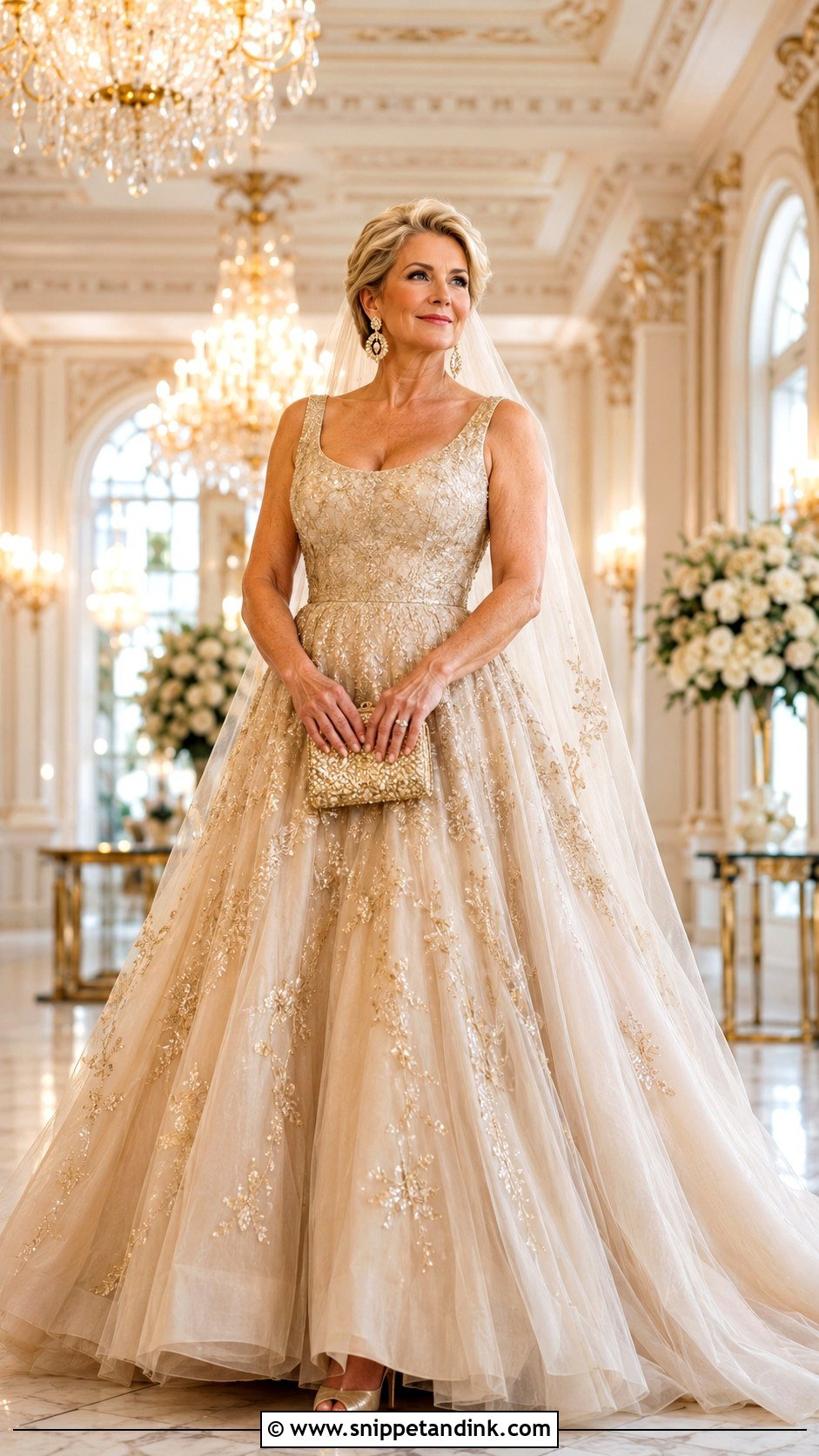
A champagne gold ball gown is for the bride who wants a real entrance. A structured bodice and full skirt in satin, organza or layered tulle, with tonal embroidery or restrained beading, show off the warm colour. The weight is what most people underestimate; a good gown carries the skirt from the waist with internal structure so it doesn’t drag on the shoulders. Hidden low platform heels make long standing easier. Practise walking through doorways and turning in small spaces, and make sure the bustle is practical. A cathedral veil matches the scale, though a jewelled comb is lighter.
19. Wrap-Style Champagne Wedding Dress
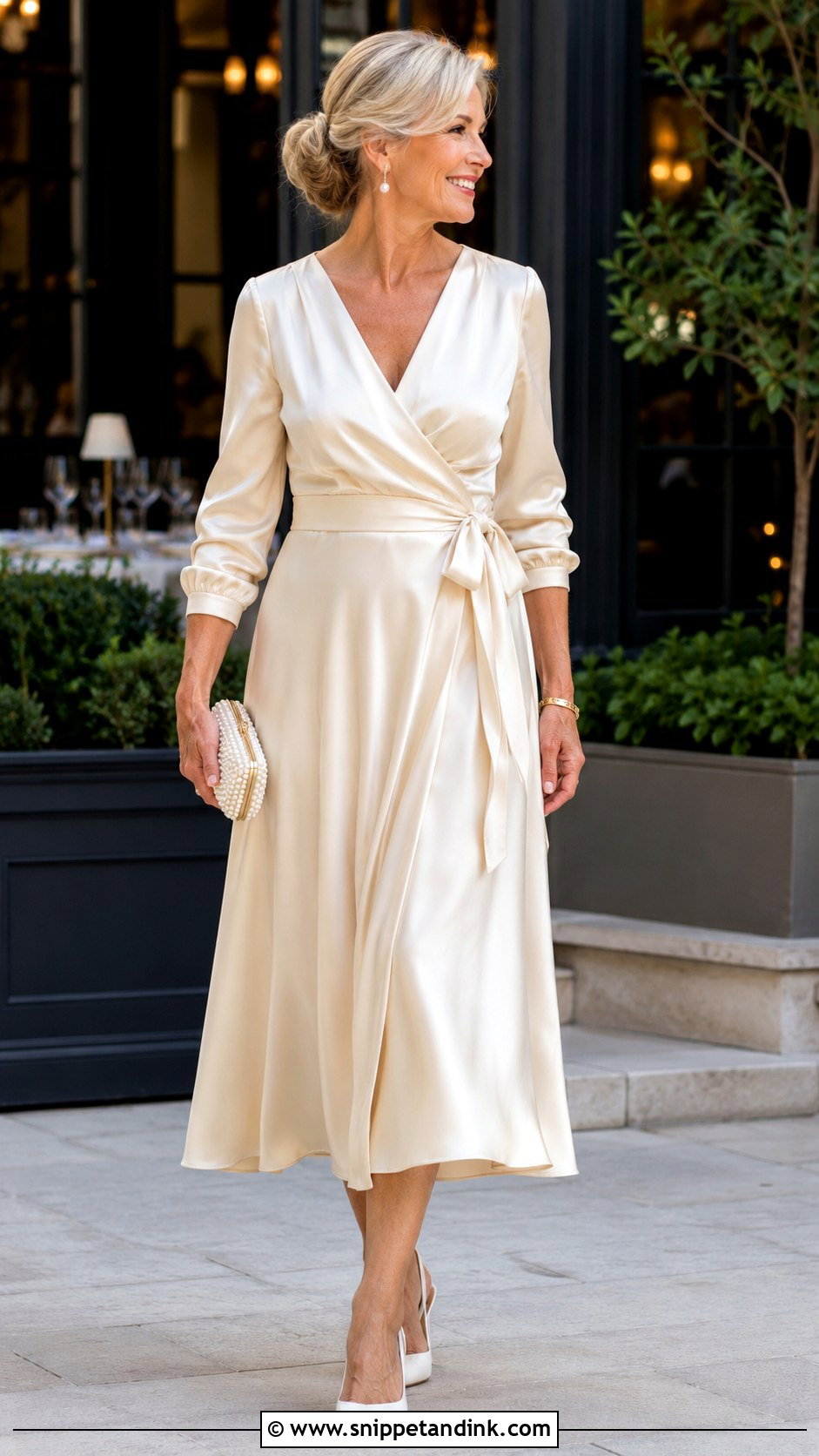
A wrap bodice adjusts to your shape and defines the waist naturally, which is why I like it for brides whose size may shift between fittings. Choose a true wrap or a well-built faux wrap in satin, crepe or chiffon. Test the crossover sitting and leaning forward, not just standing, because that’s when it gapes. Hidden snaps, fashion tape and a fitted underlayer keep everything in place. A midi or floor-length skirt depends on how formal the venue is. Slingbacks, a pearl clutch and soft waves or a low side bun suit it; keep any waist tie neat rather than oversized.
20. Champagne Wedding Dress With Detachable Train
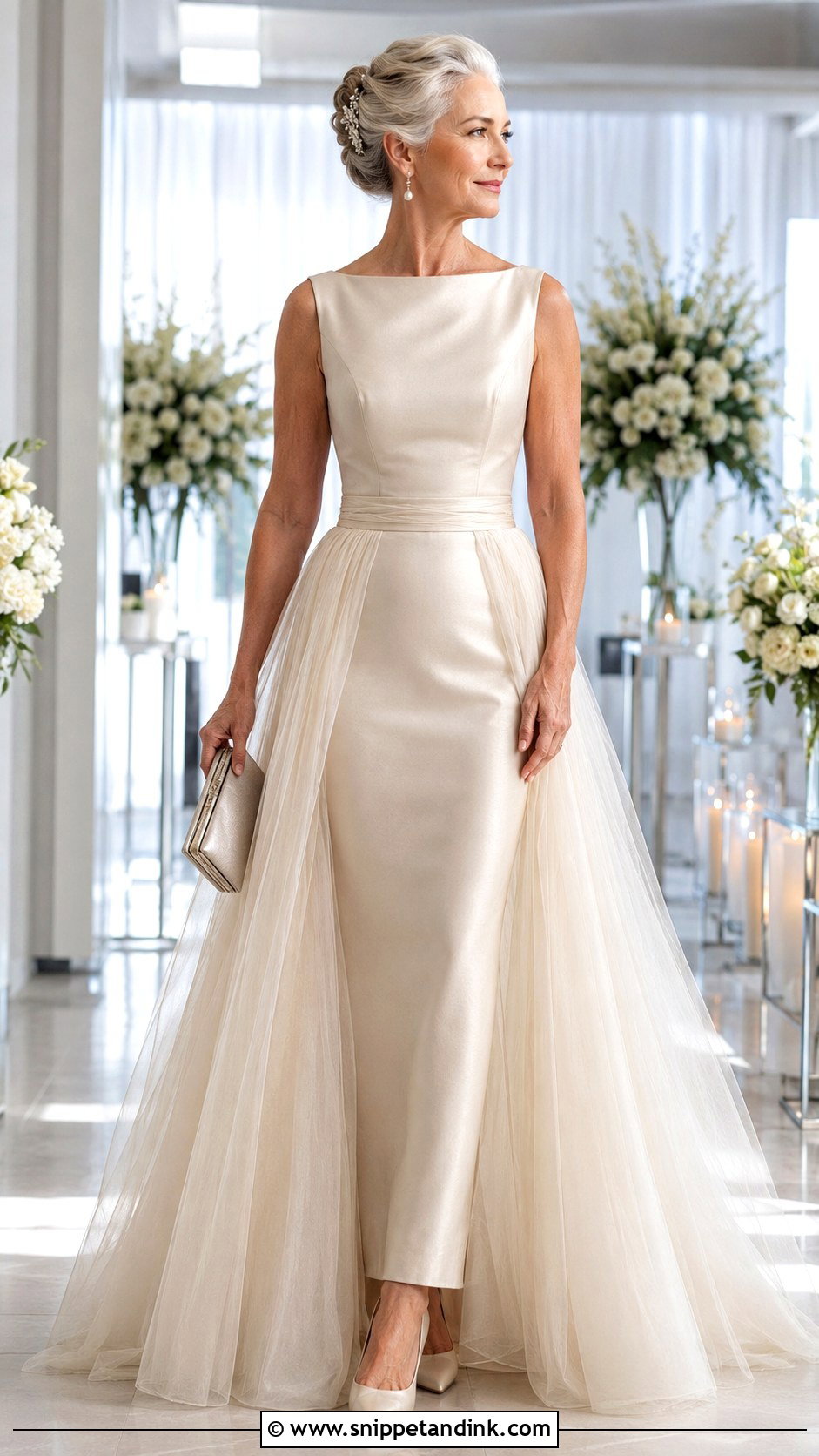
A detachable train gives you a dramatic ceremony look and a lighter reception one in the same dress. Start with a comfortable column, sheath or fitted midi, then attach a full overskirt or chapel train at the waist in lace, satin or tulle. Ask the tailor to hide every hook under a narrow belt or along the waist seam, and practise taking it off and putting it on with whoever will help you. Choose a veil that ends above the train, or skip it for a comb. Pointed heels, pearl earrings and a streamlined clutch work with both versions.
Ask Your Tailor About the Inside of the Dress
The most comfortable gowns I fit have the work hidden inside them. When a dress feels right in the mirror but you’re already thinking about taking it off, the fix is usually structural, and a good tailor can add most of it.
- Sewn-in bra cups, so you’re not relying on a strapless bra that slips by the evening.
- A waist stay, a grosgrain band inside the waist that takes weight off the shoulders and stops the bodice shifting.
- Wider or added straps, including clear or fabric-covered ones that hide under a sheer sleeve.
- A softer lining, if the original feels scratchy or warm against the skin.
- Small weights or a hem tape in chiffon skirts, which keeps them from lifting in wind.
Bring the shoes and underwear you’ll wear to every fitting, and plan at least two fittings before the wedding, with the last one a week or two out. If anything pinches during the final fitting, say so then; it won’t feel better by the reception.
What a Good Gown Lets You Do All Day
The right champagne gown fits the woman wearing it, not an idea of what suits a certain age. Lace, chiffon, satin, crepe and embroidered tulle each create a different mood, and good tailoring makes any of them comfortable. At every try-on, sit, walk, raise your arms and wear shoes close to your planned heel height, then look at the colour by a window as well as under the shop lights. From a full ball gown to a relaxed tea length or a modern sheath, the right one is the dress you forget you’re wearing by the second hour.
You'll Like These Ideas:






Leave a Reply