
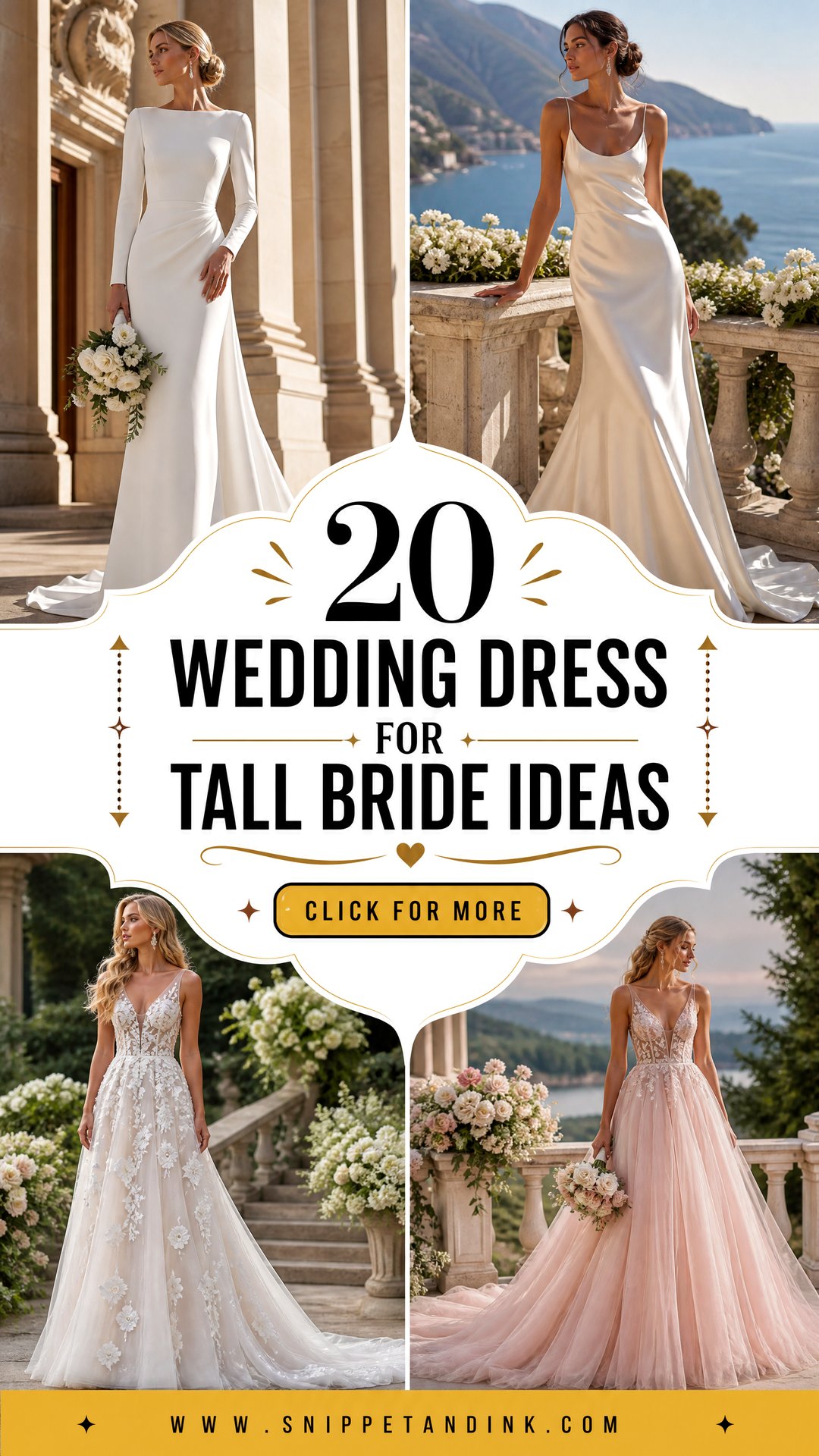
Height is an advantage in a bridal salon, as long as the gown is long enough in the right places. That’s the real issue for tall brides: proportion, not rules about what you should or shouldn’t wear. The waist seam, the neckline and the point where the skirt flares all have to land where your body is, and the hem has to reach the floor in the shoes you’ve chosen. Some bridal labels offer tall sizing with longer torso and skirt measurements, which saves a lot of awkward alteration work. A-line, fit-and-flare, ball gown and column shapes are all good starting points. Every look below comes with shoes, accessories and the fitting checks I’d make on a taller frame.
Length Has to Be Ordered, Because It Can’t Be Added Later
Most alterations remove fabric. A hem can be shortened by any amount, but it can only be let down by whatever was folded inside it, and on many bridal gowns that’s almost nothing. So for a tall bride, the most important decision happens at the order, not the fitting.
When a gown catches your eye, ask the salon three things:
- Does this designer offer extra length, and is it added to the skirt only or to the torso as well?
- Can the sleeves be ordered longer, if the gown has them?
- Is there an extra charge or a longer production time for those changes?
Extra skirt length is a common option and usually adds a few inches to the hem. Torso length is rarer and matters more, because it decides where the waist seam lands. If the sample’s waist sits at your ribs, ask specifically about it. Standing in the shoes you’ll wear when they take your hollow-to-hem measurement avoids a skirt that ends up too short in heels.
1. A-Line Wedding Dress With V-Neck
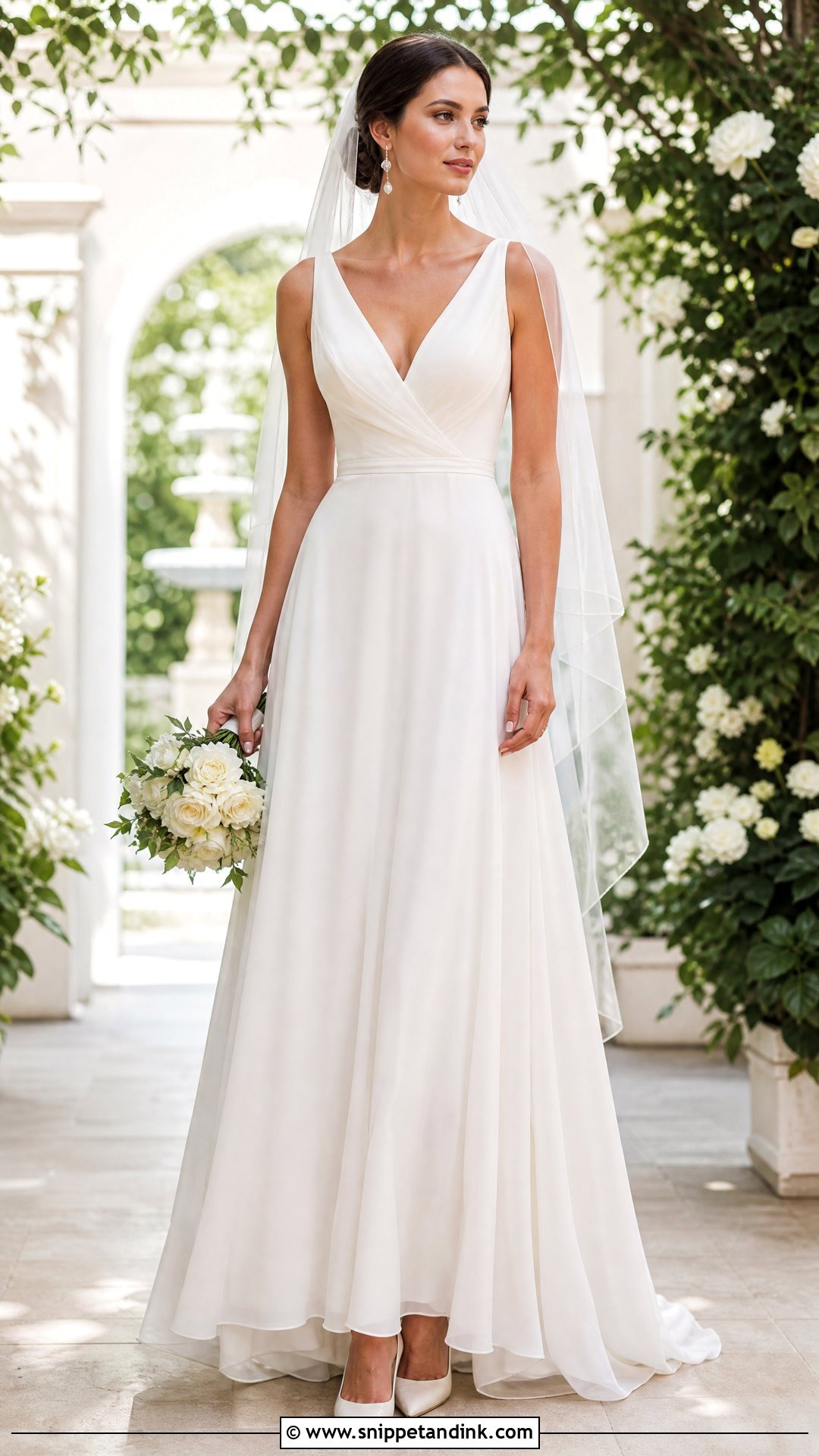
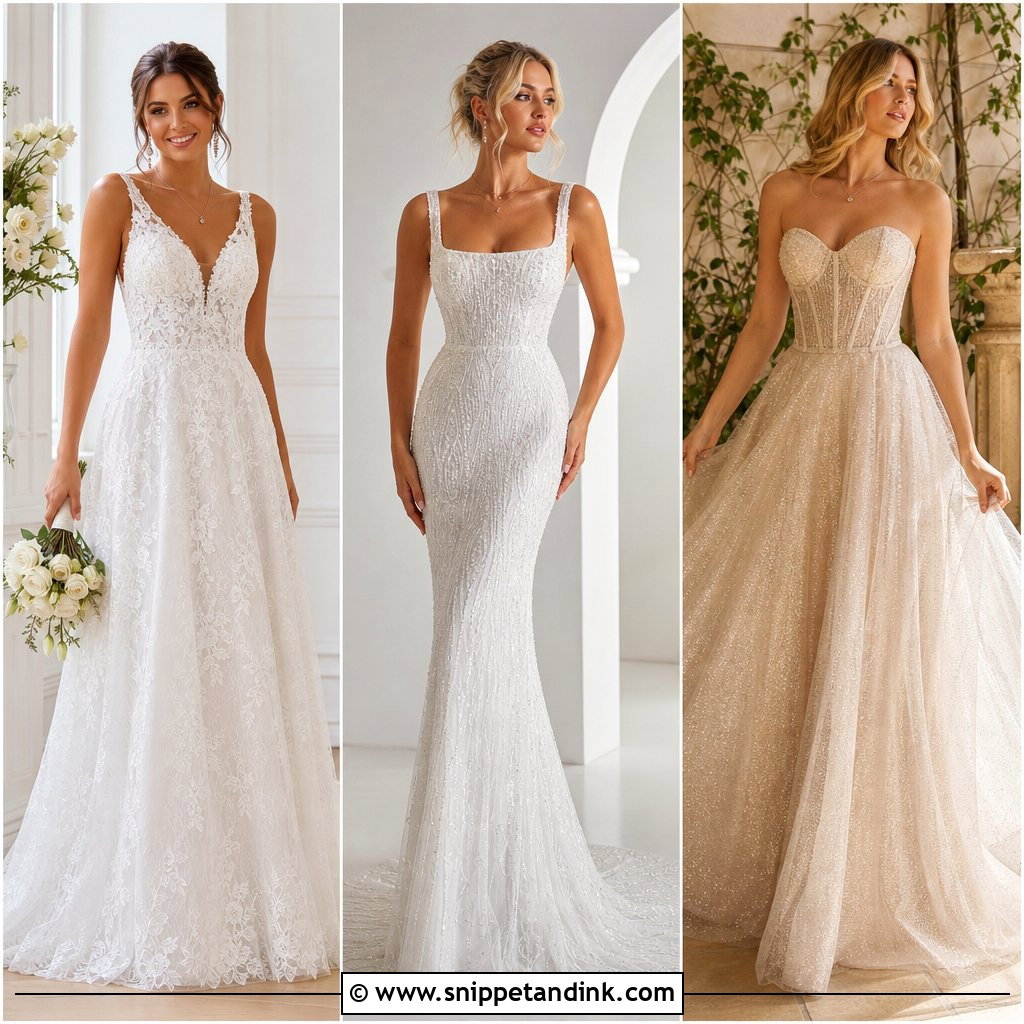
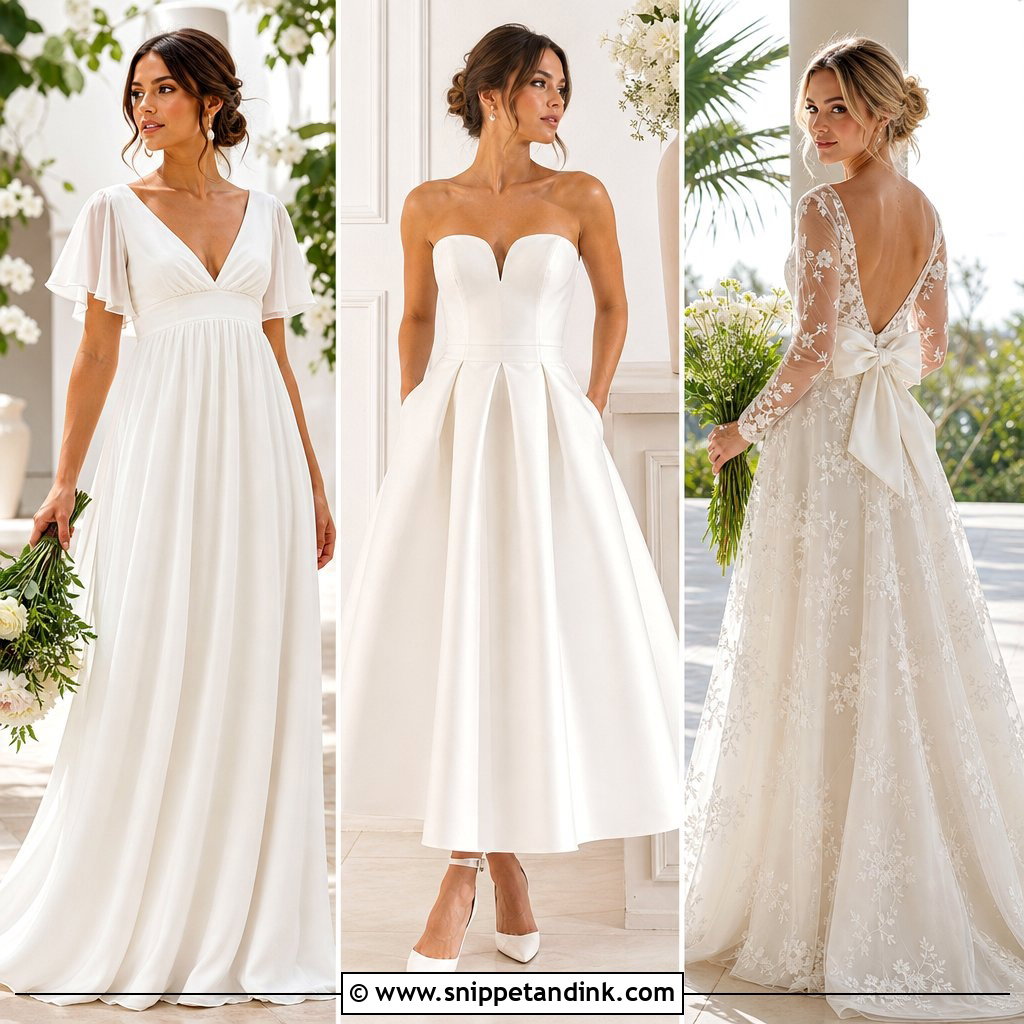
An A-line shows a tall frame without burying it in fabric. Choose a moderately deep V, supportive side panels and a defined natural waist, with a chiffon or soft tulle skirt that moves freely. Pointed ivory pumps, pearl drops and a fingertip veil finish it; on you, that veil should stop above the widest part of the skirt rather than halfway down it. A low textured bun keeps the neckline open. The thing I check first is the waist seam. On a standard sample it usually sits too high on a tall bride, which shortens the bodice and makes the skirt start at the ribs.
2. Satin Ball Gown Wedding Dress
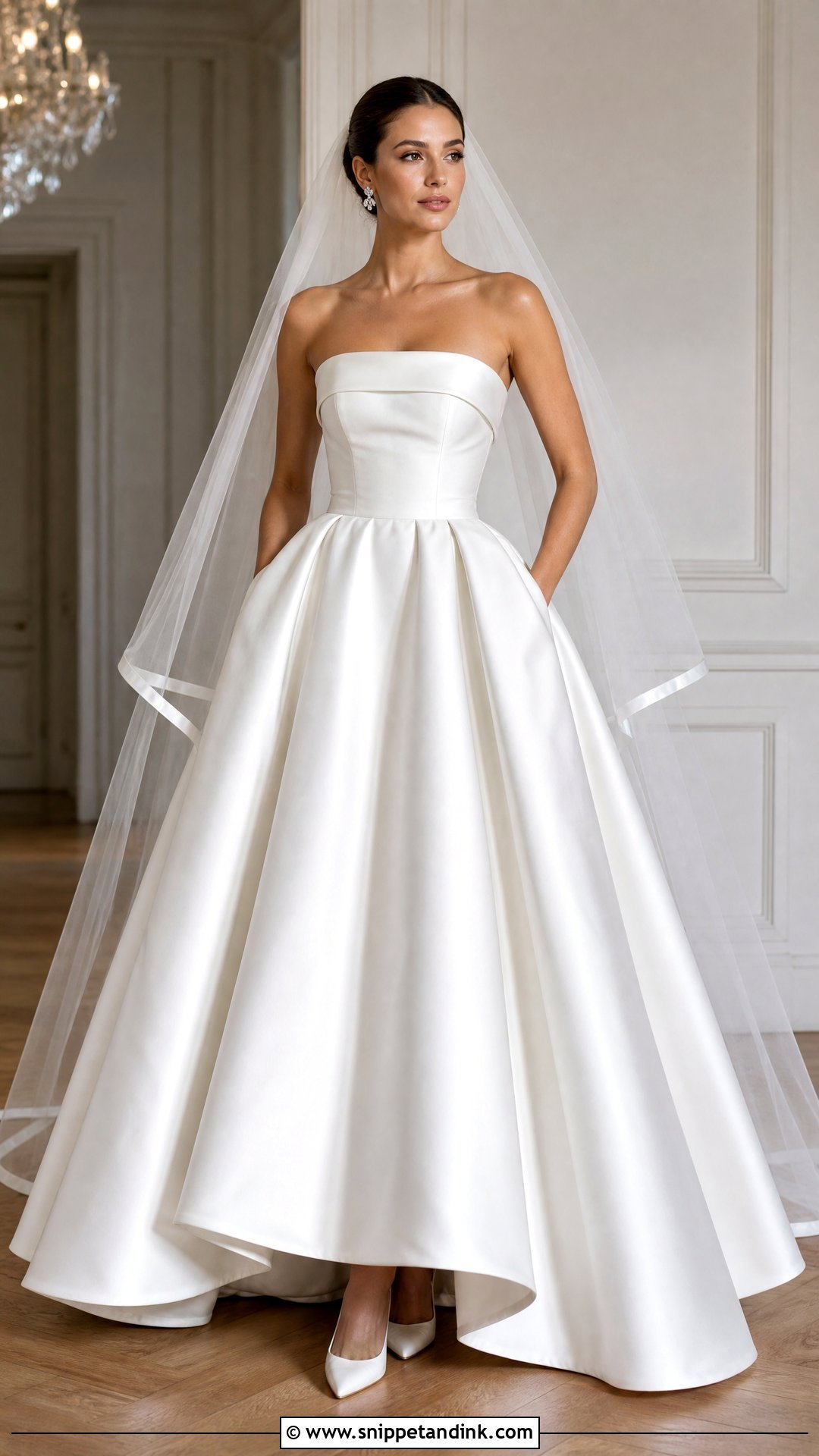
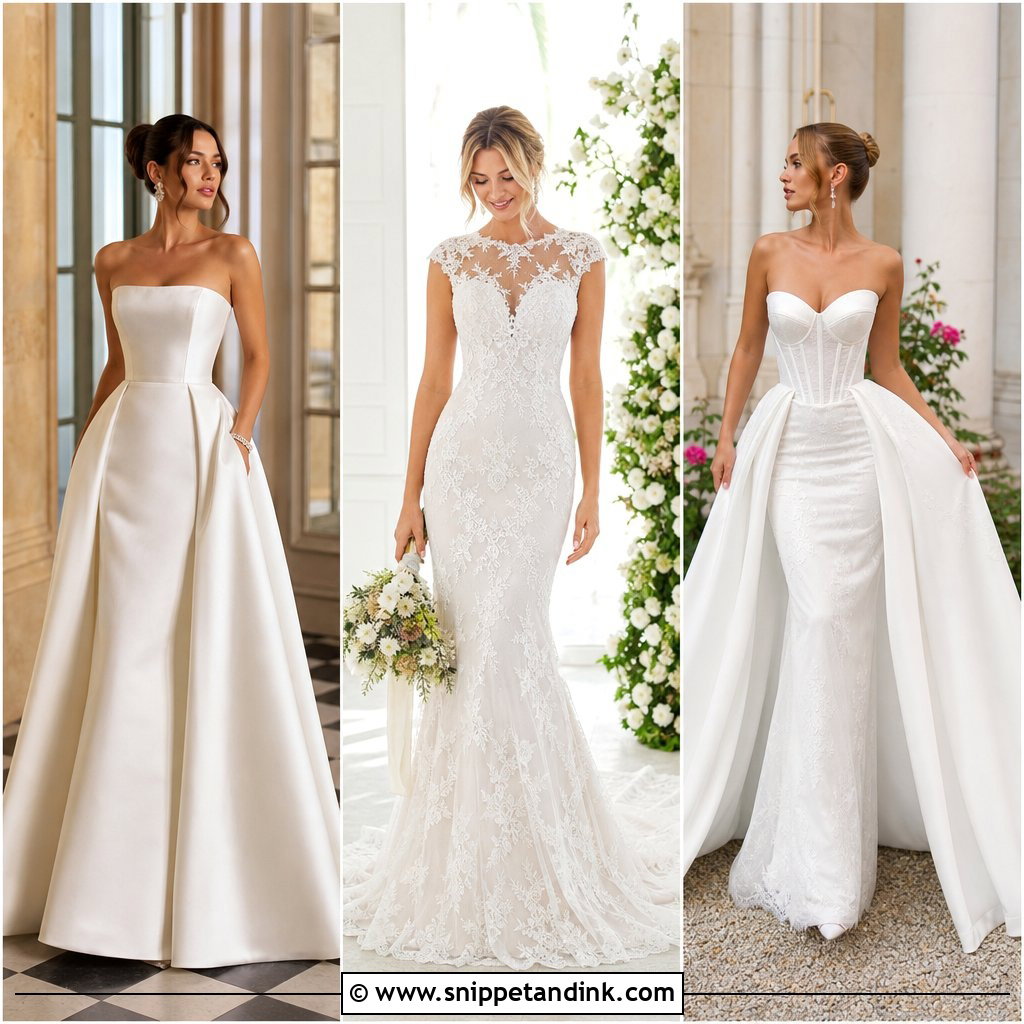
A tall bride has the frame to carry a full satin ball gown, and a formal venue gives it room. Look for a structured bodice, a defined waist and controlled pleating that spreads the volume evenly. A clean scoop or strapless neckline lets the satin lead. Crystal studs, satin pumps and a chapel veil with a narrow ribbon edge suit it, and a polished chignon adds balance without stacking more height on top. Fix the torso before the hem. If the bodice is too short, letting down the skirt won’t help, because the waist will still sit in the wrong place and the boning will press into your ribs when you sit.
3. Square-Neck Column Wedding Dress
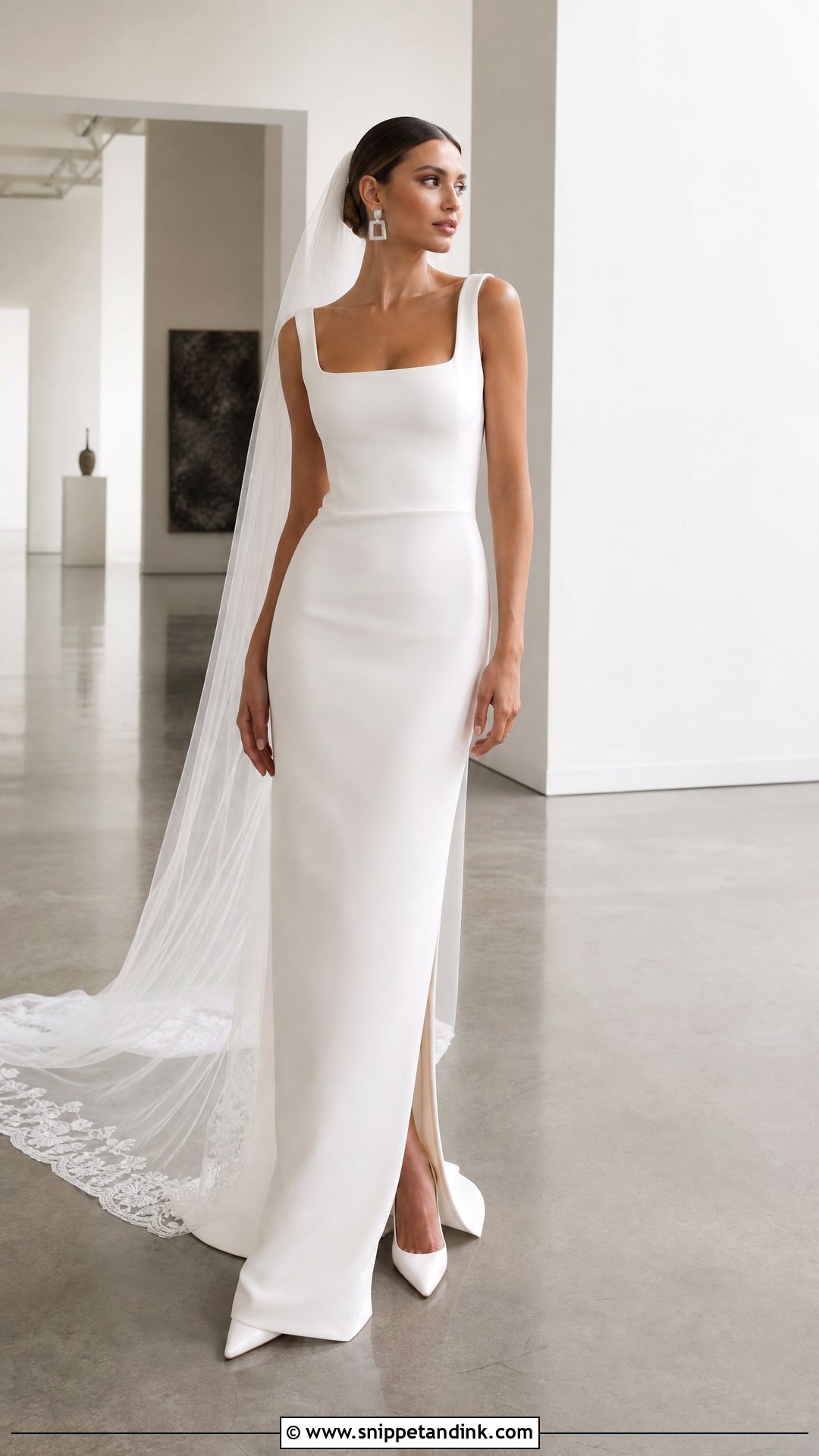
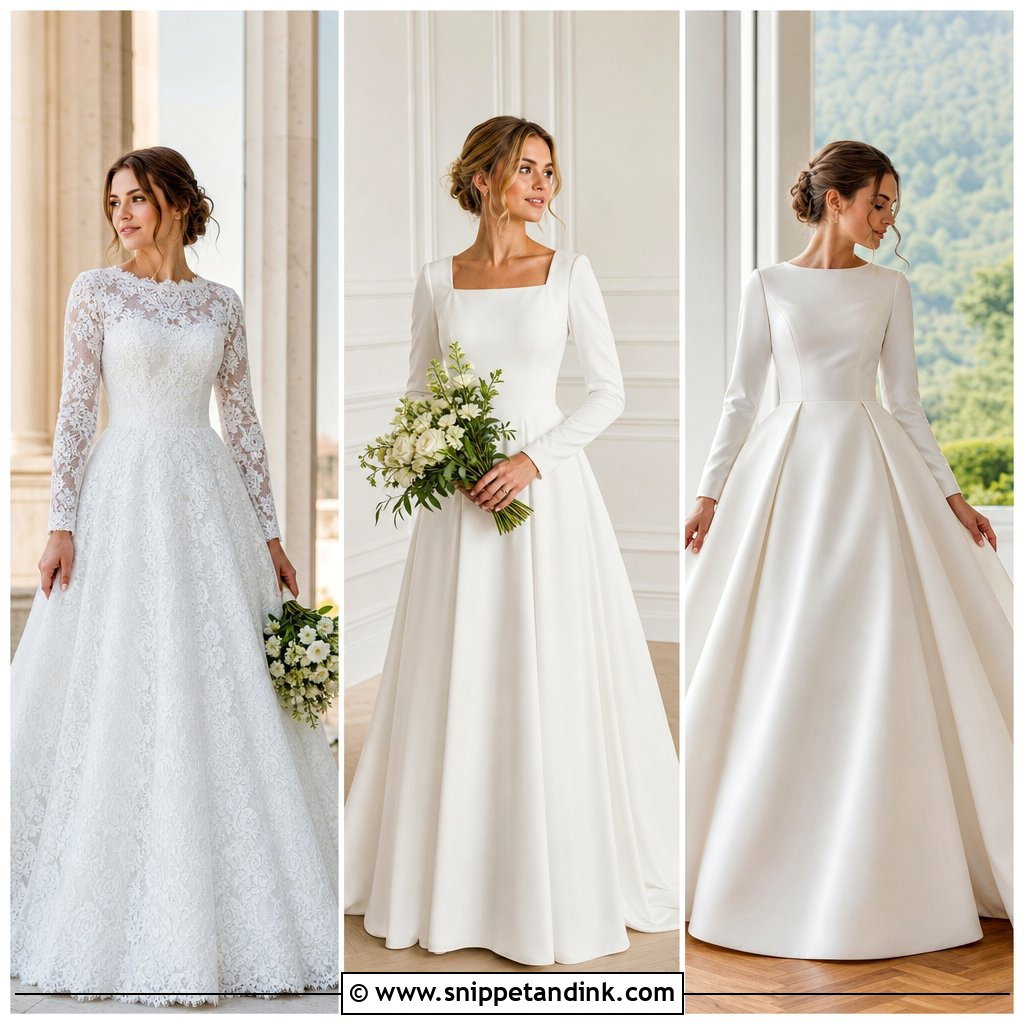
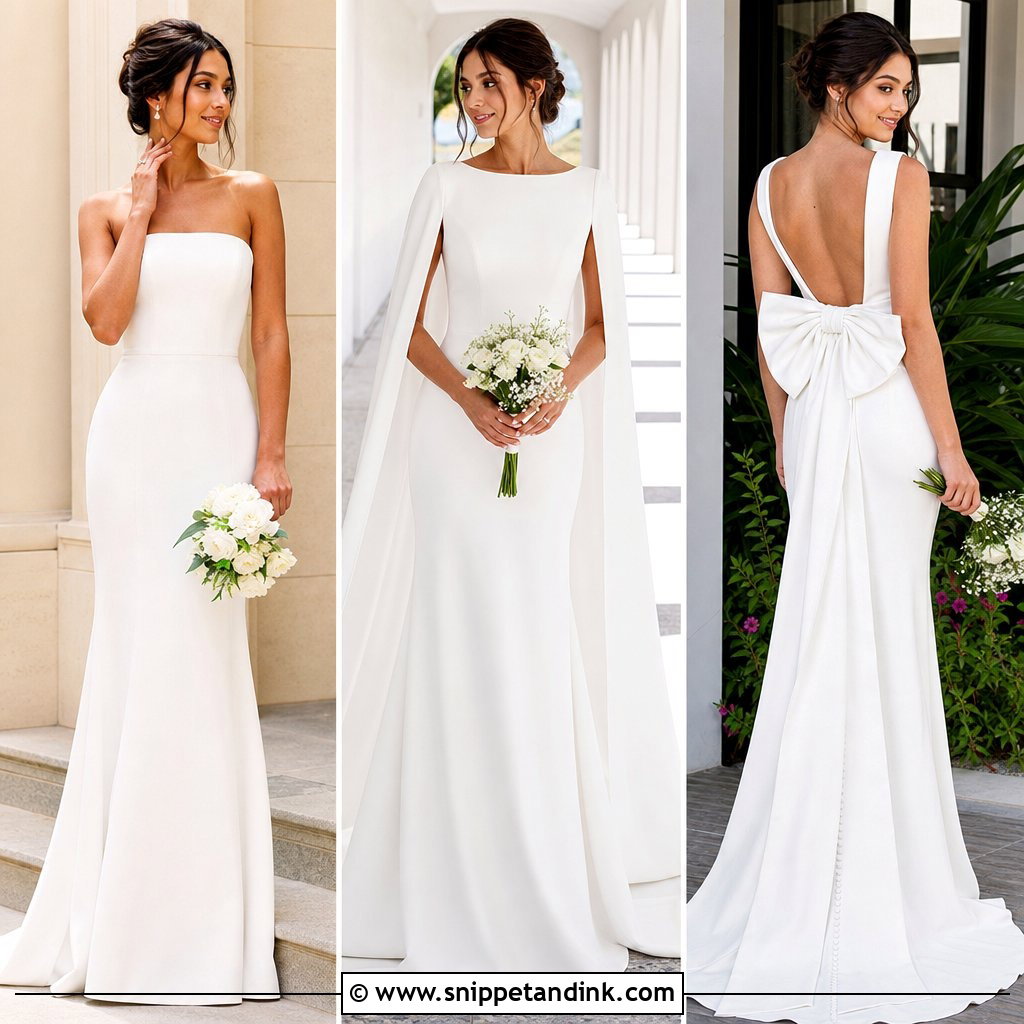
Long, clean lines make the most of height, and a square-neck column has nothing but clean lines. Choose substantial crepe or lined satin that follows the body without clinging. Wide straps frame the shoulders and give support, while a back slit lets you walk. Sleek ivory heels, geometric earrings and a structured mini bag for the reception keep it modern, with a centre-parted low bun. A cathedral veil adds ceremony drama and comes off for the party. Columns are narrow at the knee, and long legs need more stride room than the sample allows. Sit, climb steps and dance at the fitting before anyone pins the slit.
4. Lace Fit-And-Flare Wedding Dress
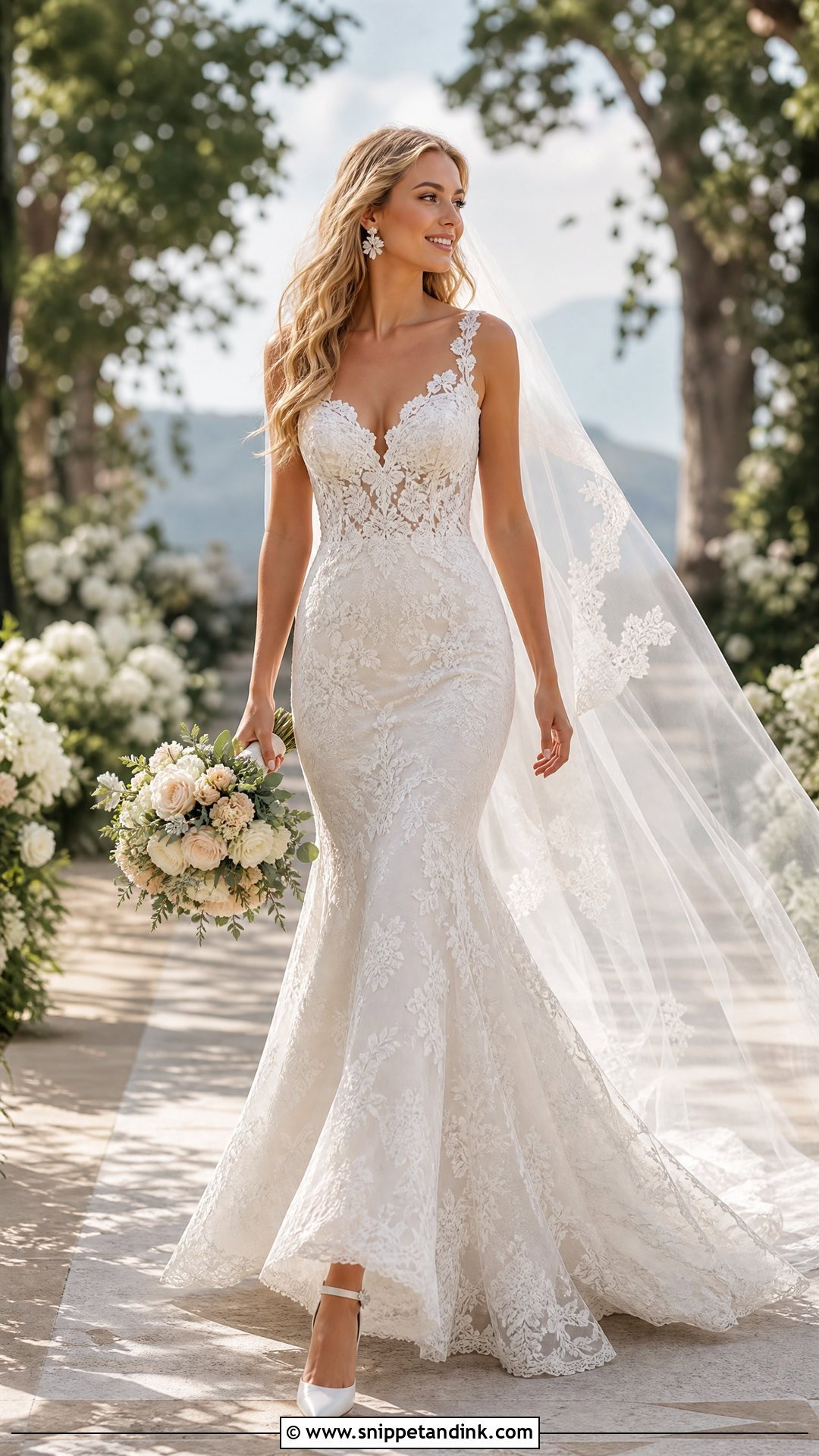
Lace on a fit-and-flare shows the length of your body and adds romance without bulk. Pick a gown that follows the torso and hips and opens around mid-thigh or knee. On a tall bride, I’d usually set the flare a little lower than on the sample model, because a flare that starts too high reads as a short gown with a big hem. Almond-toe heels, small floral earrings and a sheer veil with a narrow lace border suit it, plus loose waves or a relaxed updo. Match the veil lace to the exact ivory or white of the gown. Walk and sit in the sample so the lining, train and opening can be adjusted to your stride.
5. Long-Sleeve Crepe Wedding Dress
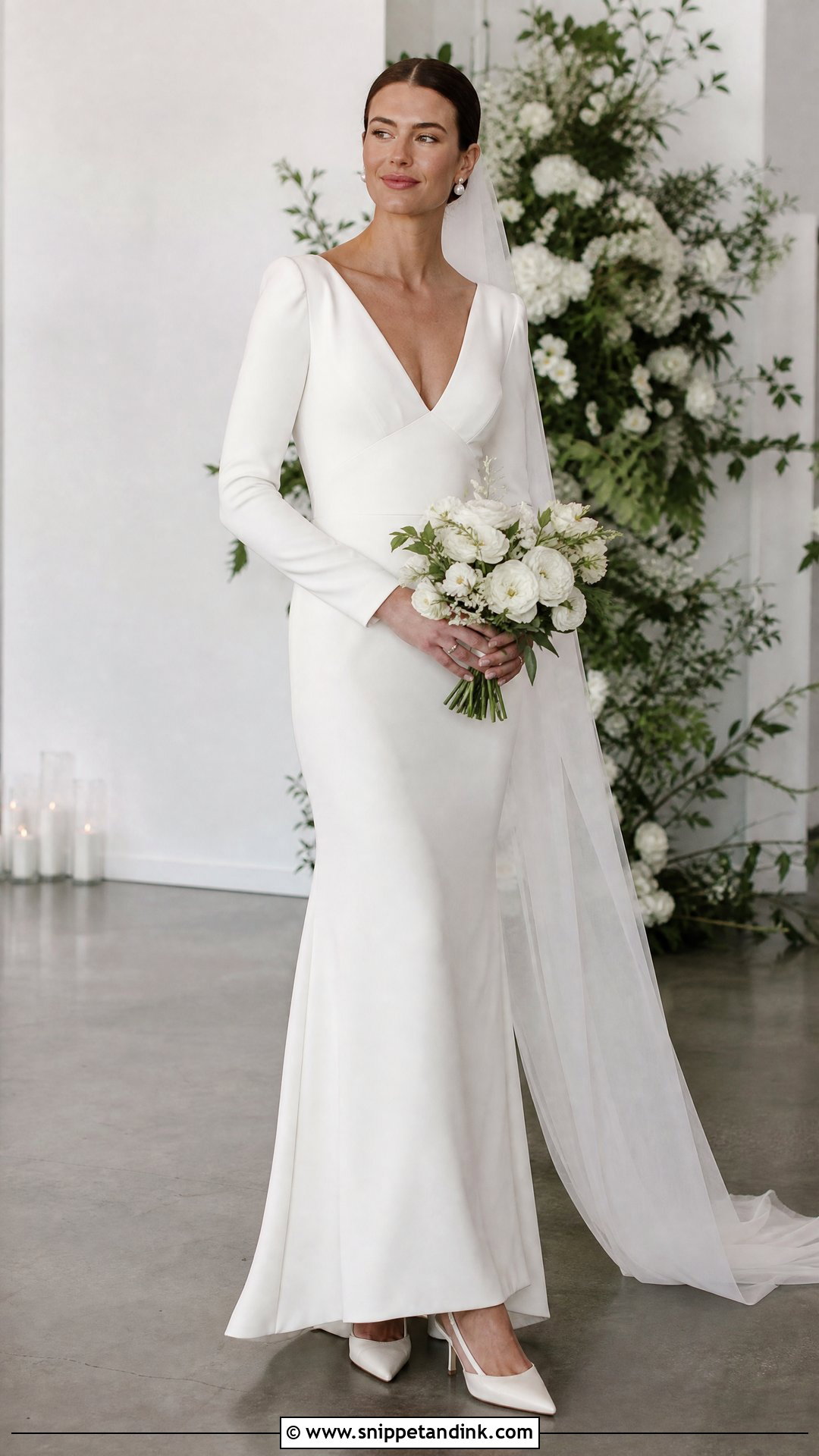
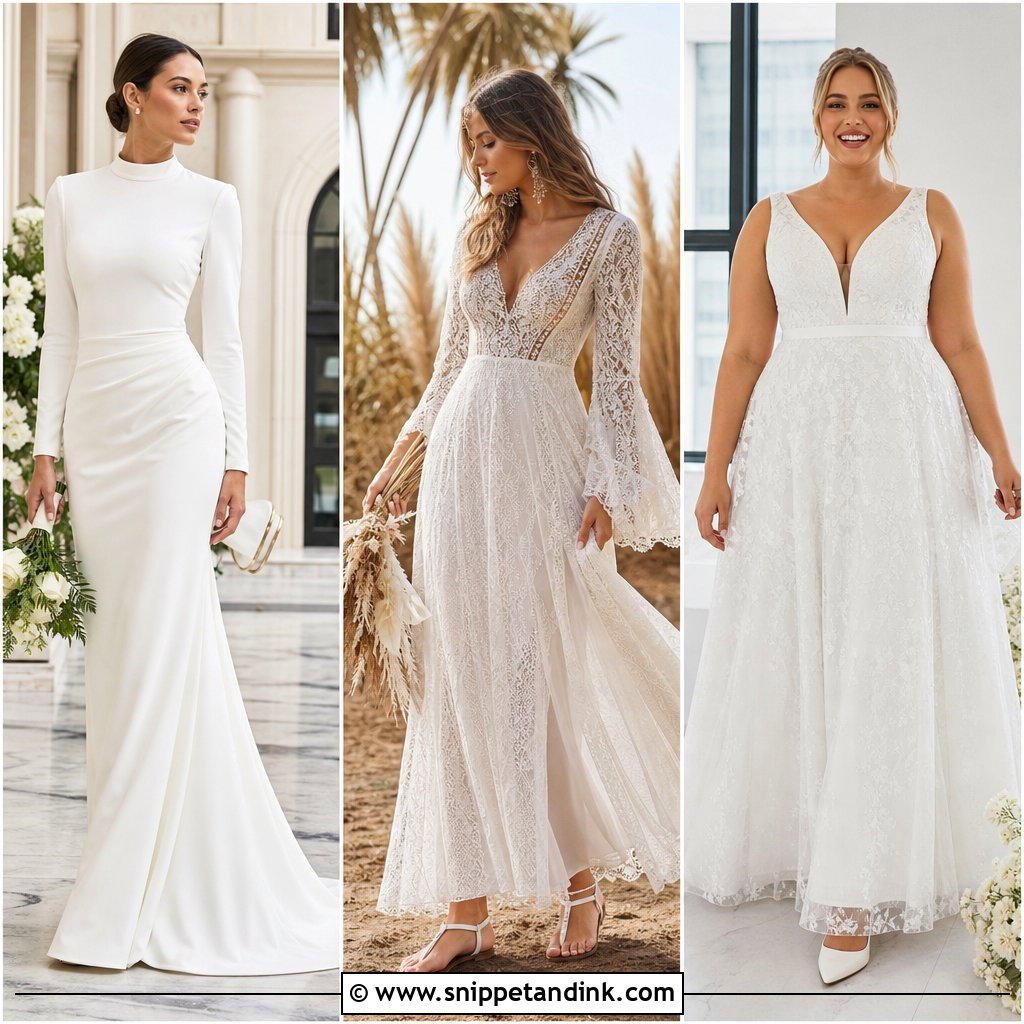
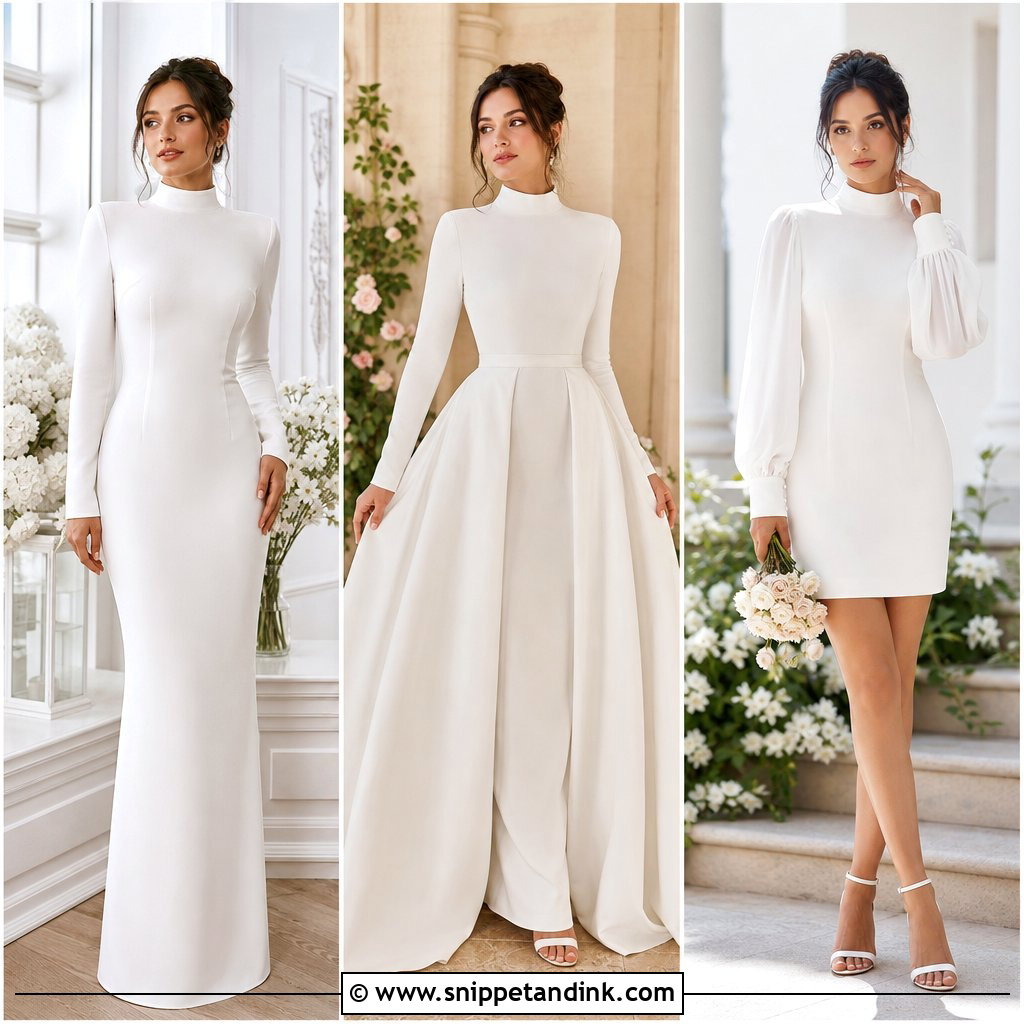
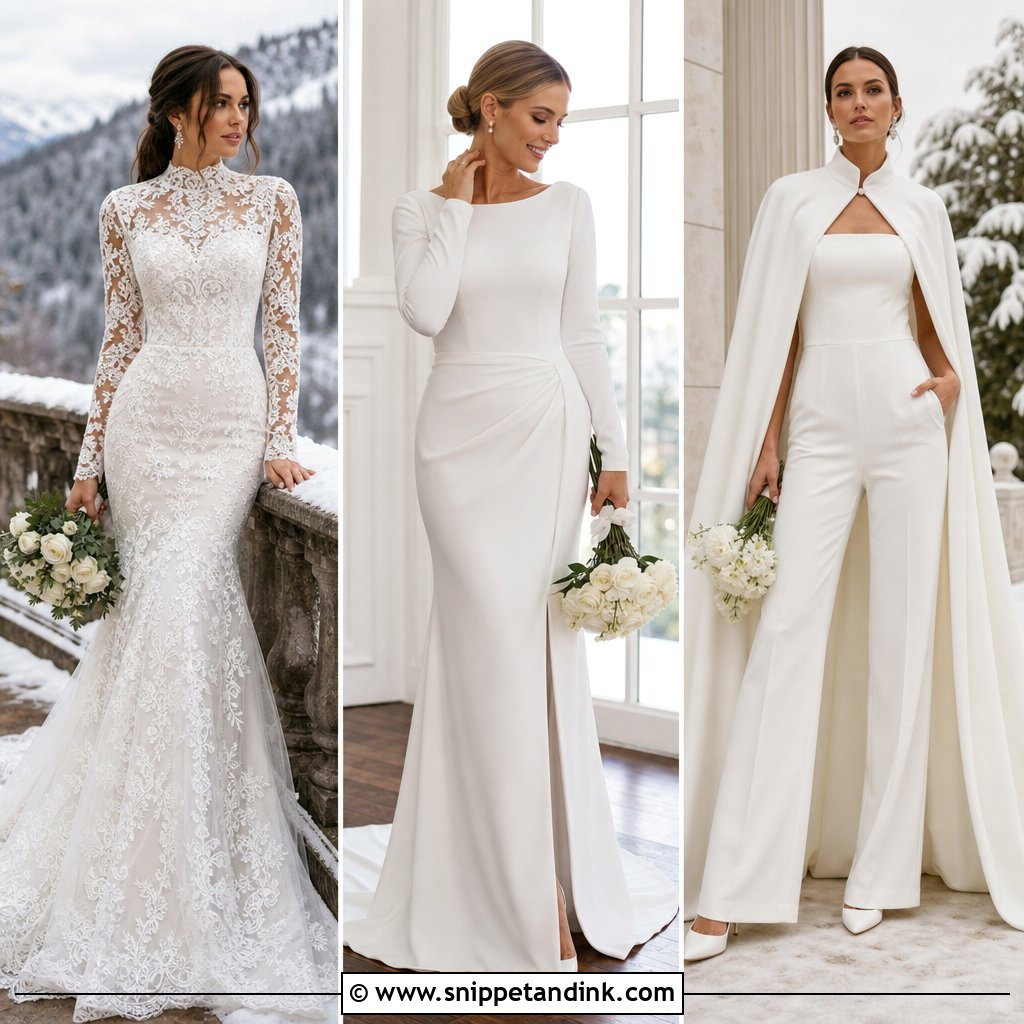
Smooth crepe, long sleeves and a skirt in one uninterrupted line: it’s a restrained look that suits a modern indoor ceremony or a cool-season wedding. Sleeves should reach the wrist bone and move freely at the shoulder and elbow, and a bateau or shallow V keeps the coverage balanced. Pearl earrings, pointed slingbacks and a long plain veil complete it, with a sleek bun or softly pinned waves. Sleeve length is the tall bride’s trap. Arms are longer too, and sample sleeves often end several centimetres above the wrist, so ask whether the gown can be ordered with longer sleeves and torso. Adding skirt length alone fixes nothing above the waist, and plain crepe shows every fitting error.
6. Basque-Waist Wedding Dress With Full Skirt
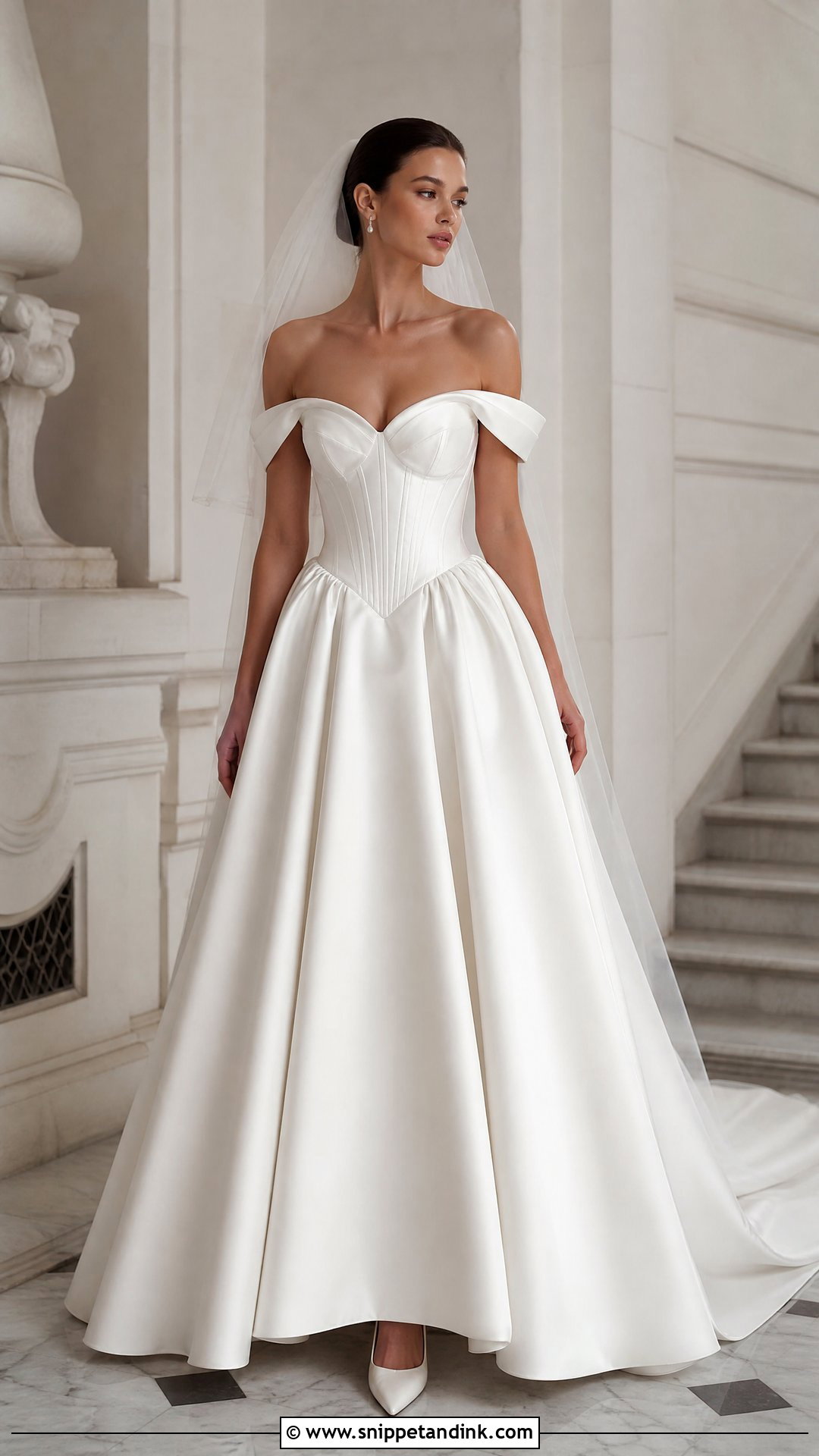
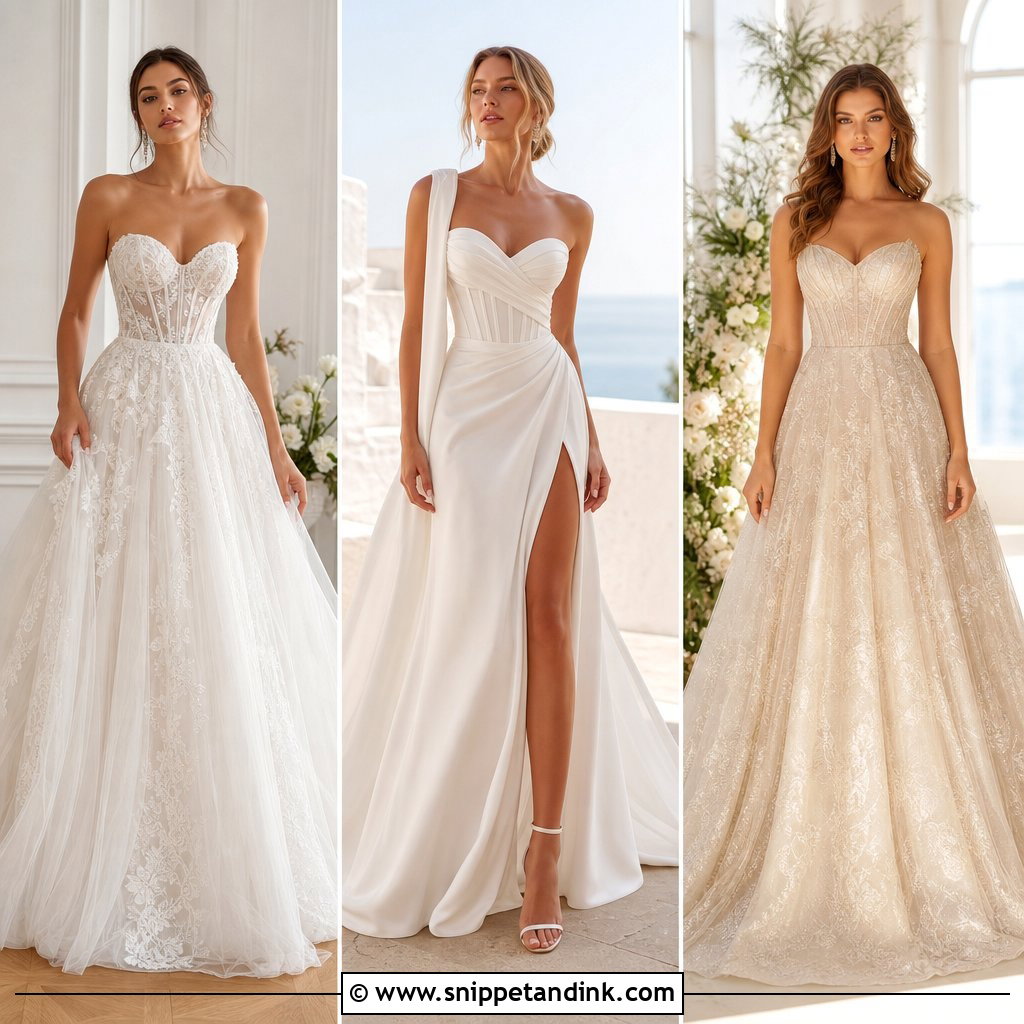
A basque waist points down at the centre and makes a strong transition from bodice to skirt. A long torso gives that point room to sit properly, which is why it suits tall brides so well. Select a corseted bodice with comfortable boning, secure straps or an off-the-shoulder neckline, and a full satin or tulle skirt. Classic pumps, a fine necklace and a plain chapel veil let the waist do the talking, with hair in a low bun to show the construction. Visible corsetry gives an old shape a current feel. Check the point when seated; it should rest flat, not push into your stomach.
7. Halter-Neck Sheath Wedding Dress
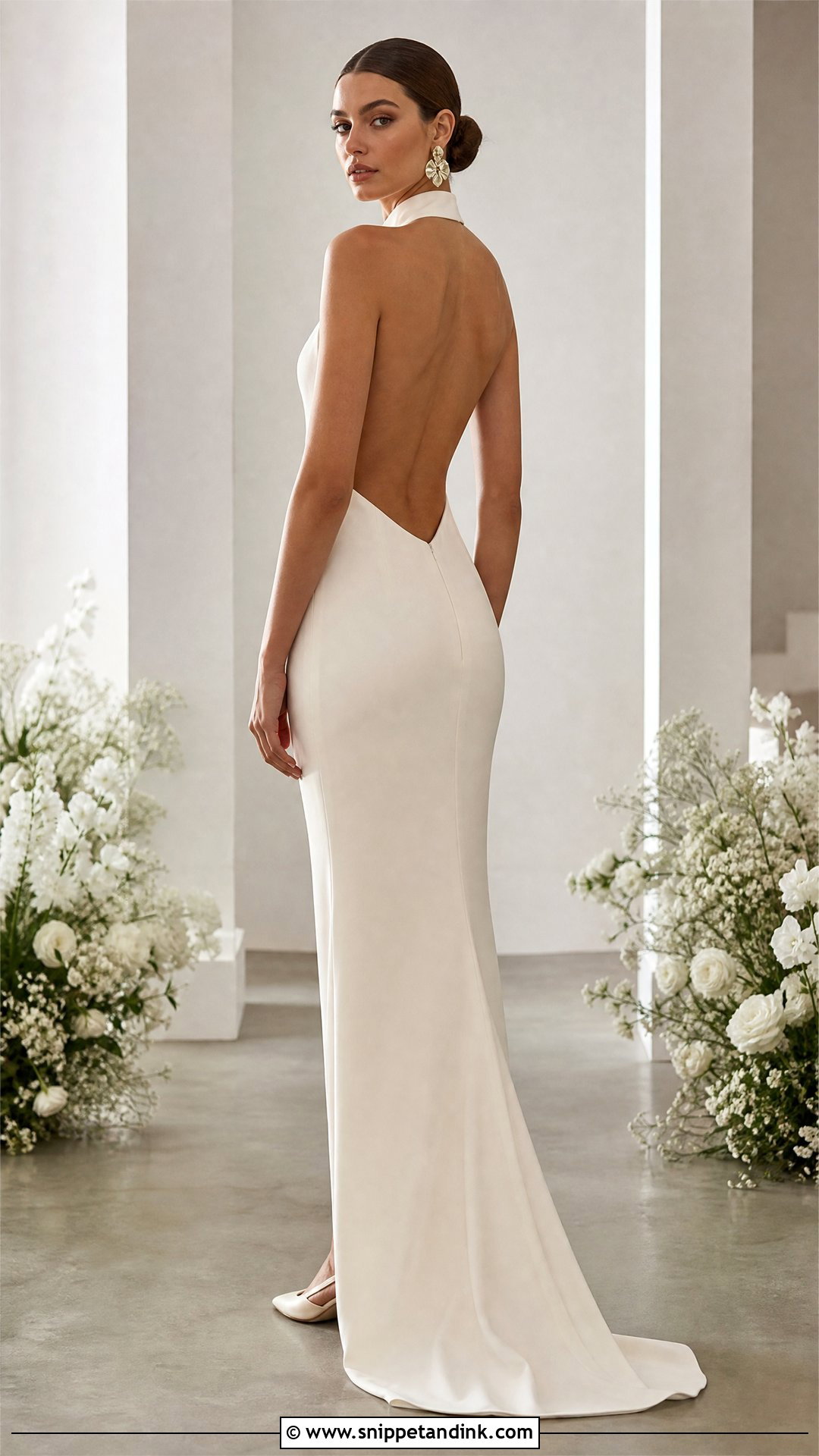
A halter-neck sheath gown puts the shoulders forward and keeps the whole silhouette clean. The halter should sit around the neck without pulling, and the bodice has to be cut for your torso length, because a short bodice on a halter drags the strap forward. Fluid crepe, satin or a silk-like fabric keeps the narrow skirt graceful. Low pointed heels, sculptural earrings and a wrist cuff suit it; skip the necklace. A neat ponytail or swept-back hair shows the shoulders. Open backs need built-in cups or proper internal structure. Turn your head and sit before the final pinning.
8. Off-the-Shoulder Mikado Wedding Dress
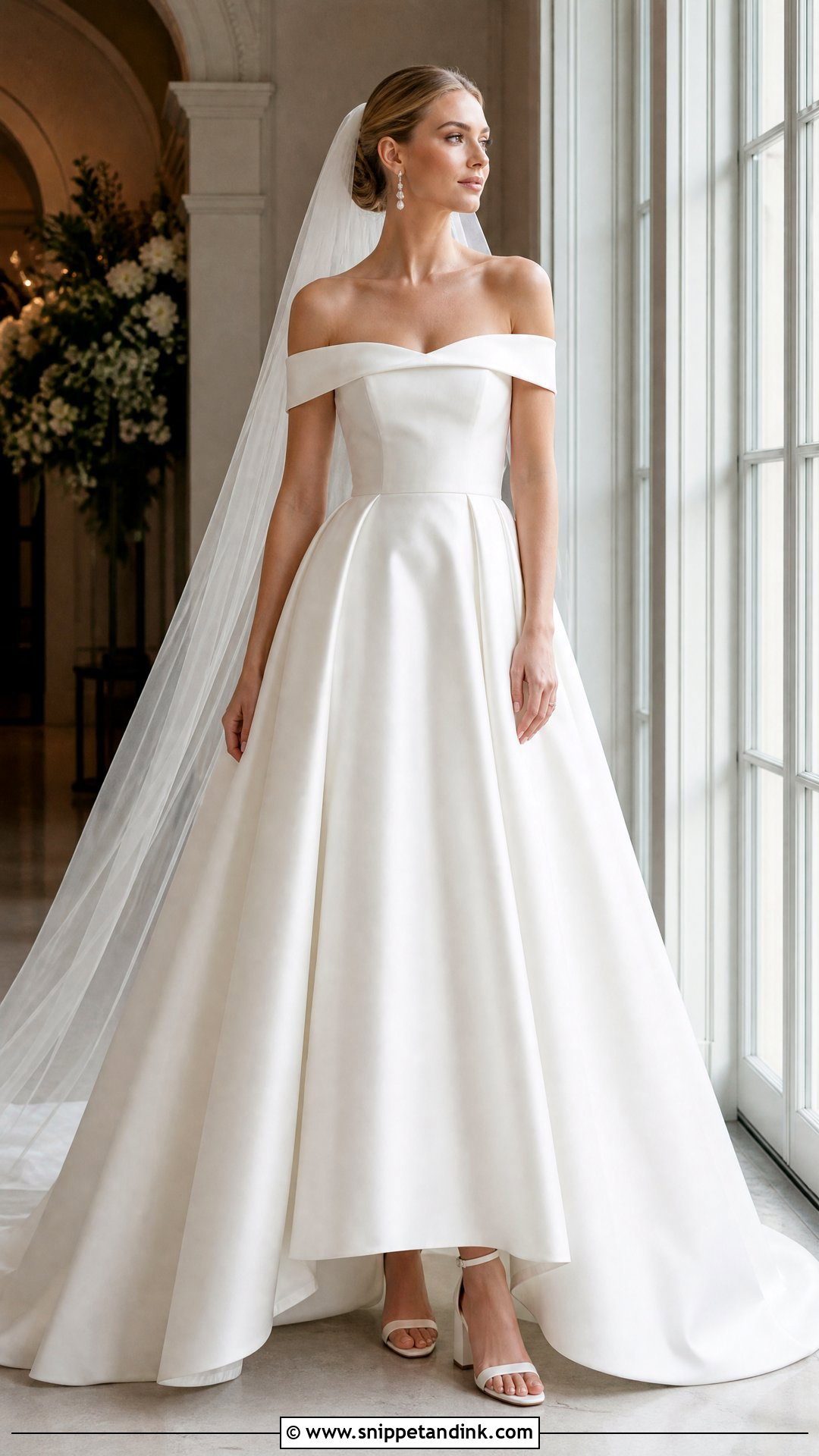
Mikado is crisp, so an off-the-shoulder gown in it holds a sharp, polished shape. With a fitted bodice and moderately full skirt, it builds a strong hourglass outline that a tall frame carries well. The folded neckline must stay put while you move your arms. Pearl-and-crystal earrings, ivory block heels, a sheer cathedral veil and a low chignon keep the shoulders as the focus. Because Mikado doesn’t soften, the train length has to suit your height and the venue, and the bustle needs to be planned carefully; a stiff train folded up badly makes a bulky lump at the back.
9. Empire-Waist Chiffon Wedding Dress
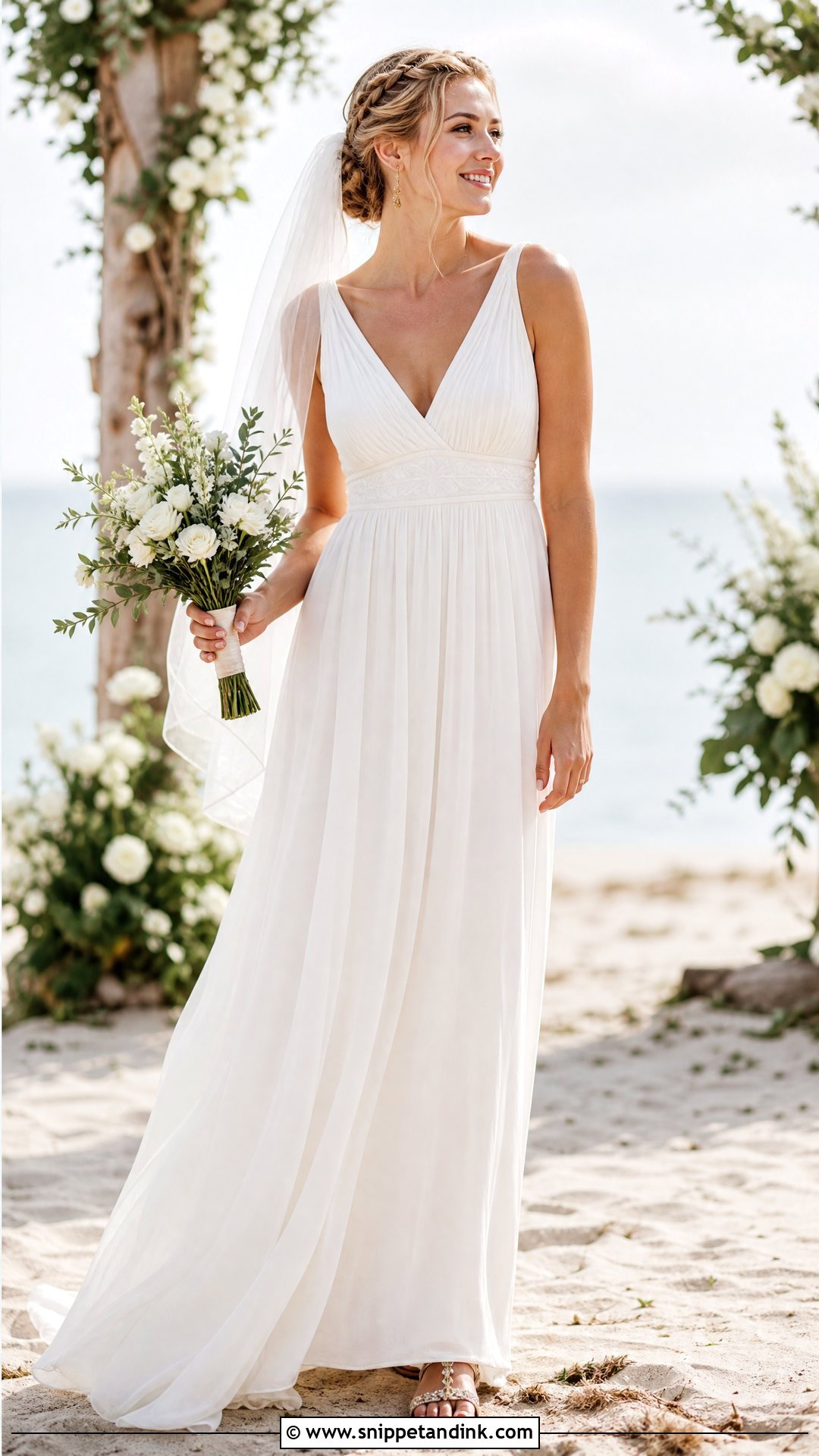
For an airy ceremony, an empire-waist chiffon gown with a gathered skirt is about as comfortable as bridal gets. The raised seam still has to fit the bust and rib cage correctly, so choose a V-neck or softly draped bodice with supportive straps rather than a loose top. Embellished flat sandals, fine gold earrings and a shoulder-length veil suit it, with a loose braided updo. Chiffon goes sheer in bright light, so photograph the gown outdoors before you buy. Tall brides in flats often find the skirt is still long enough, but check the hem doesn’t pool, especially on grass or sand where it will drag and stain.
10. Drop-Waist Corset Wedding Dress
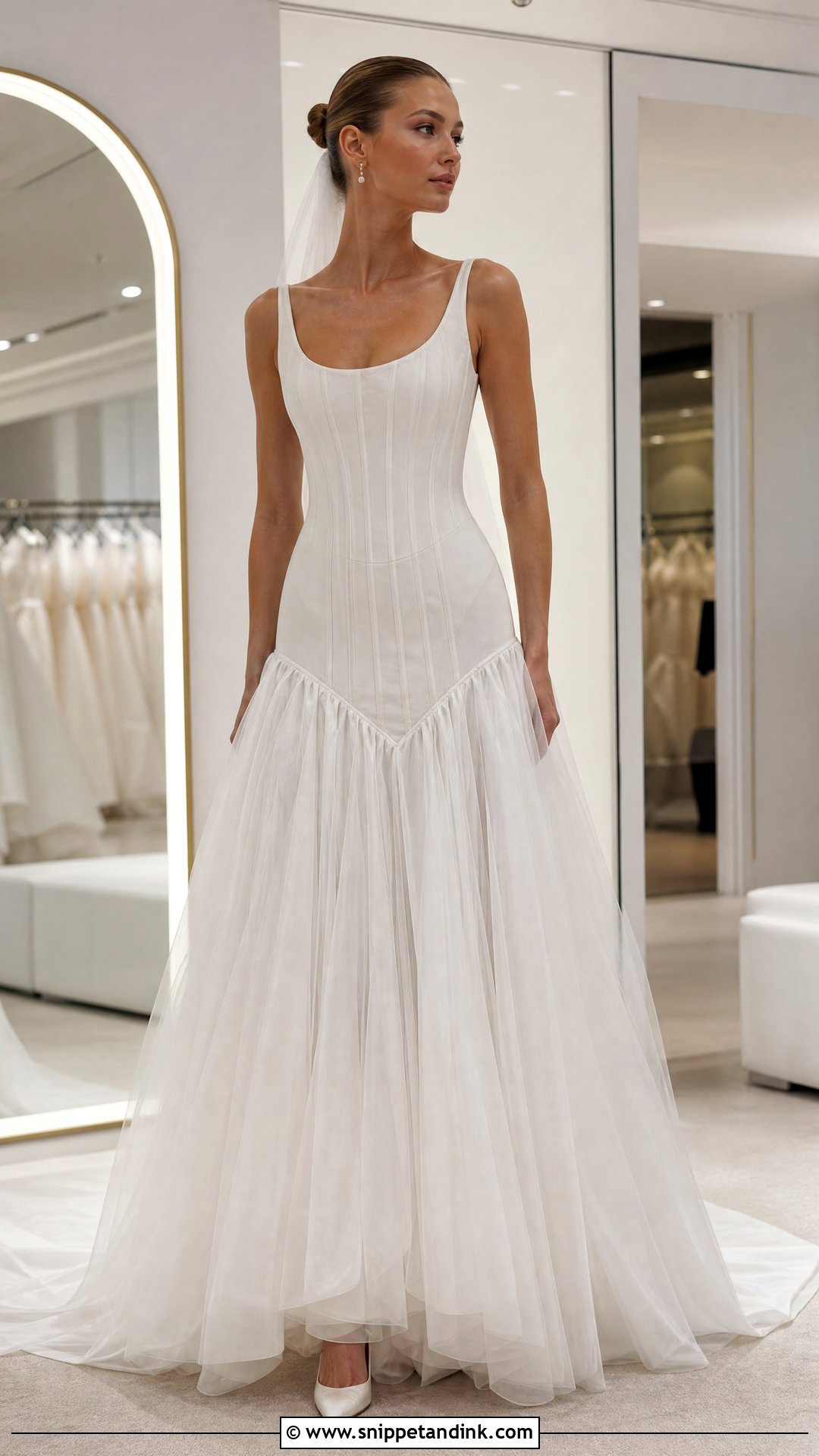
Here’s a silhouette that genuinely needs a long torso. A drop waist carries the bodice below the natural waist before the skirt opens, and on a shorter body there’s no room for it. Look for corsetry that follows your shape without digging into the hips when you sit. A scoop, cat-eye or strapless neckline balances the long bodice. Elegant satin heels, small drops and a narrow veil under a smooth bun finish it. Keep the skirt volume orderly with organised pleats or layered tulle rather than ruffles. Sit for several minutes at the fitting, then walk some stairs. A well-placed bustle makes the reception easier.
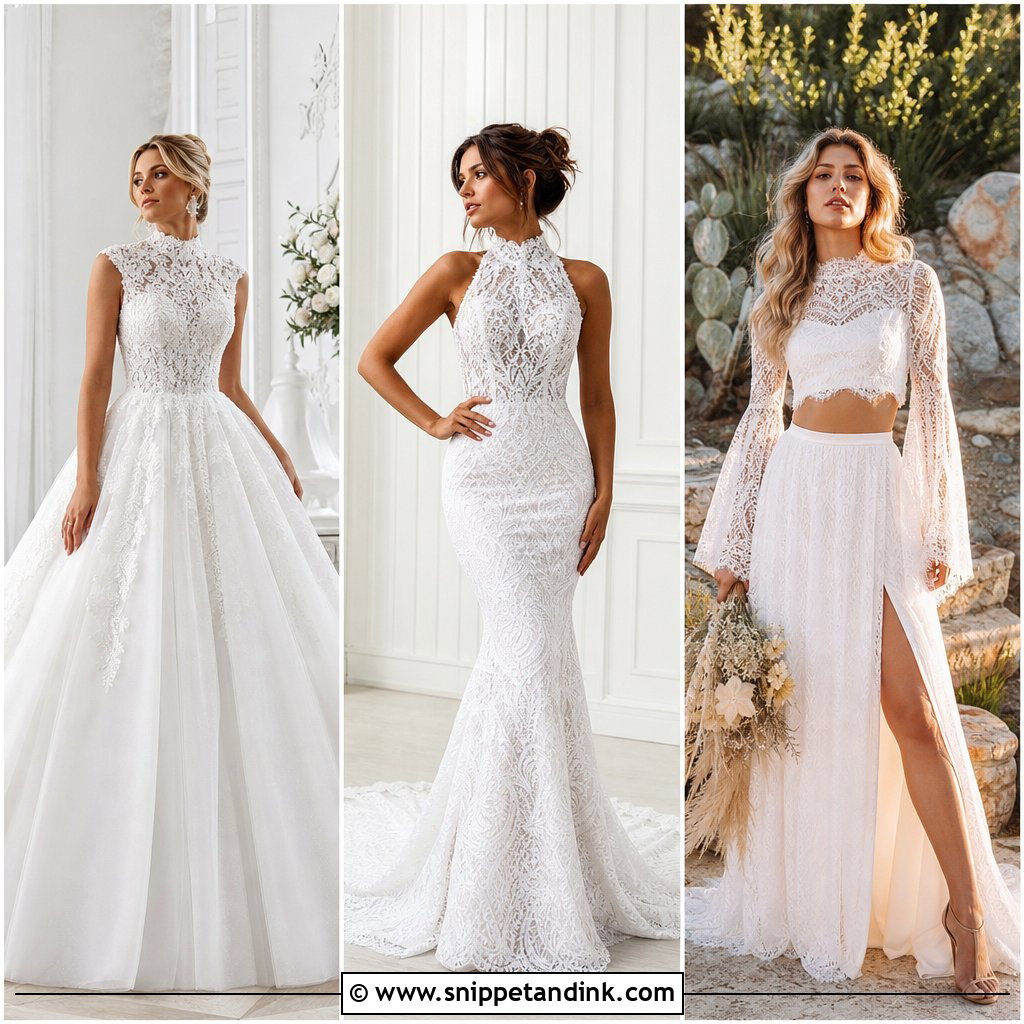
11. High-Neck Lace Wedding Dress
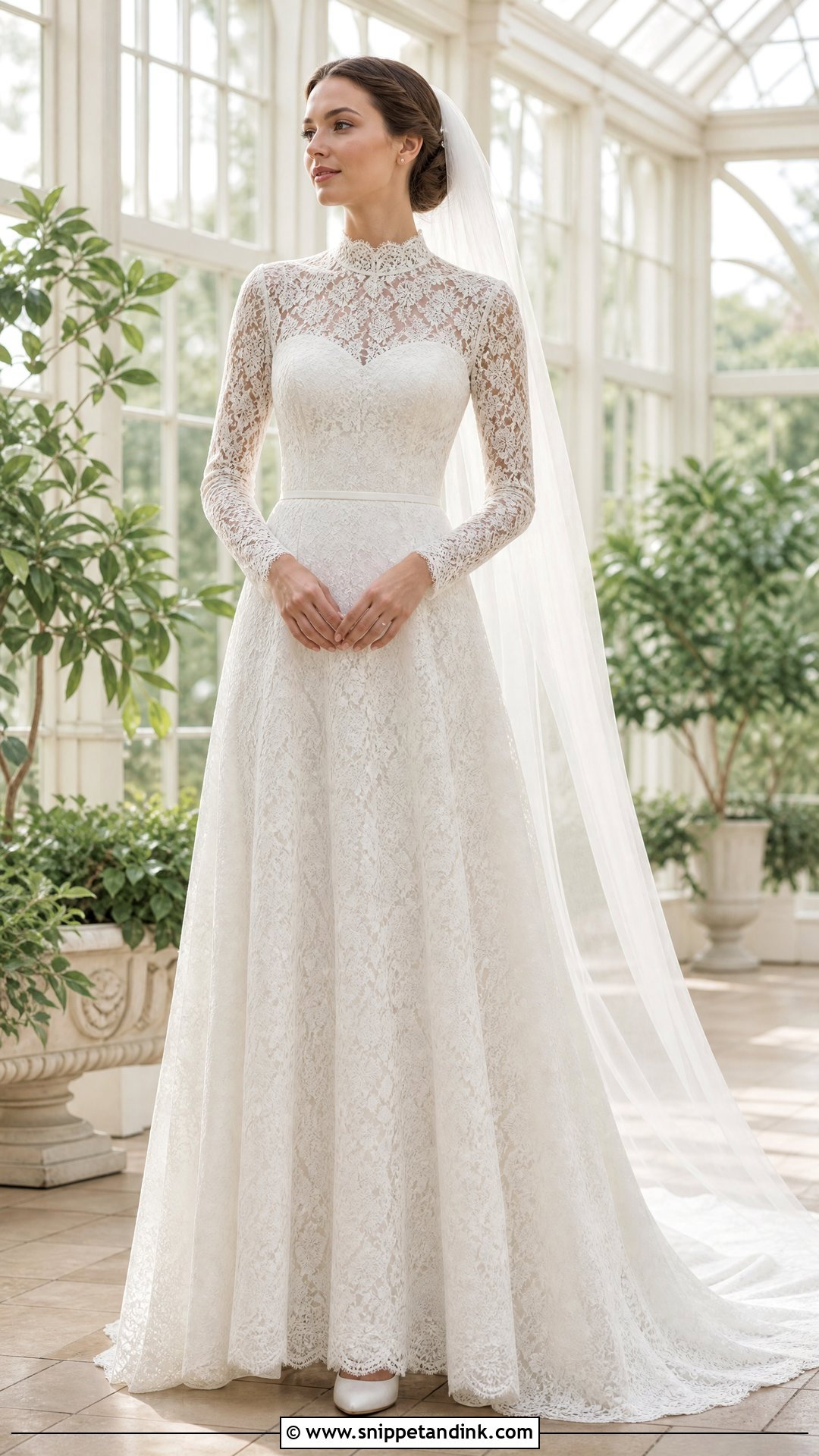
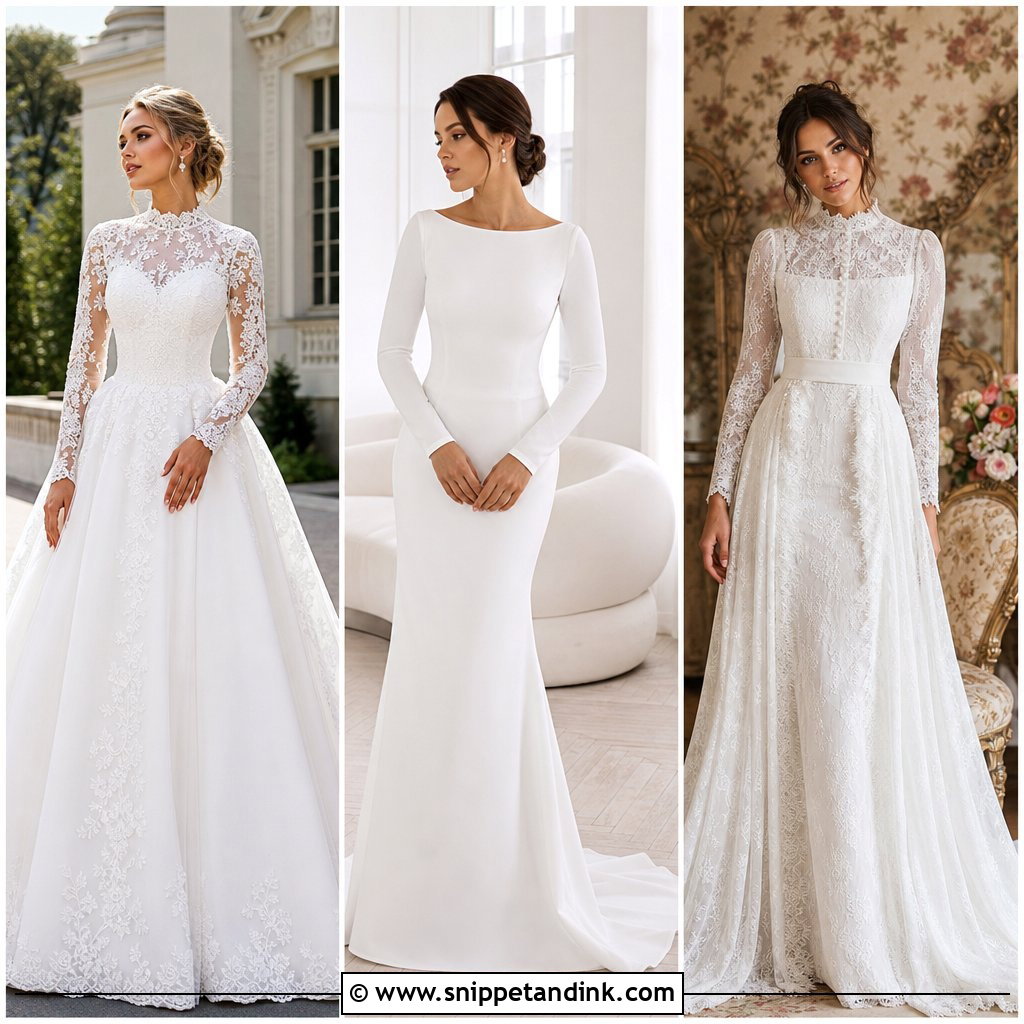
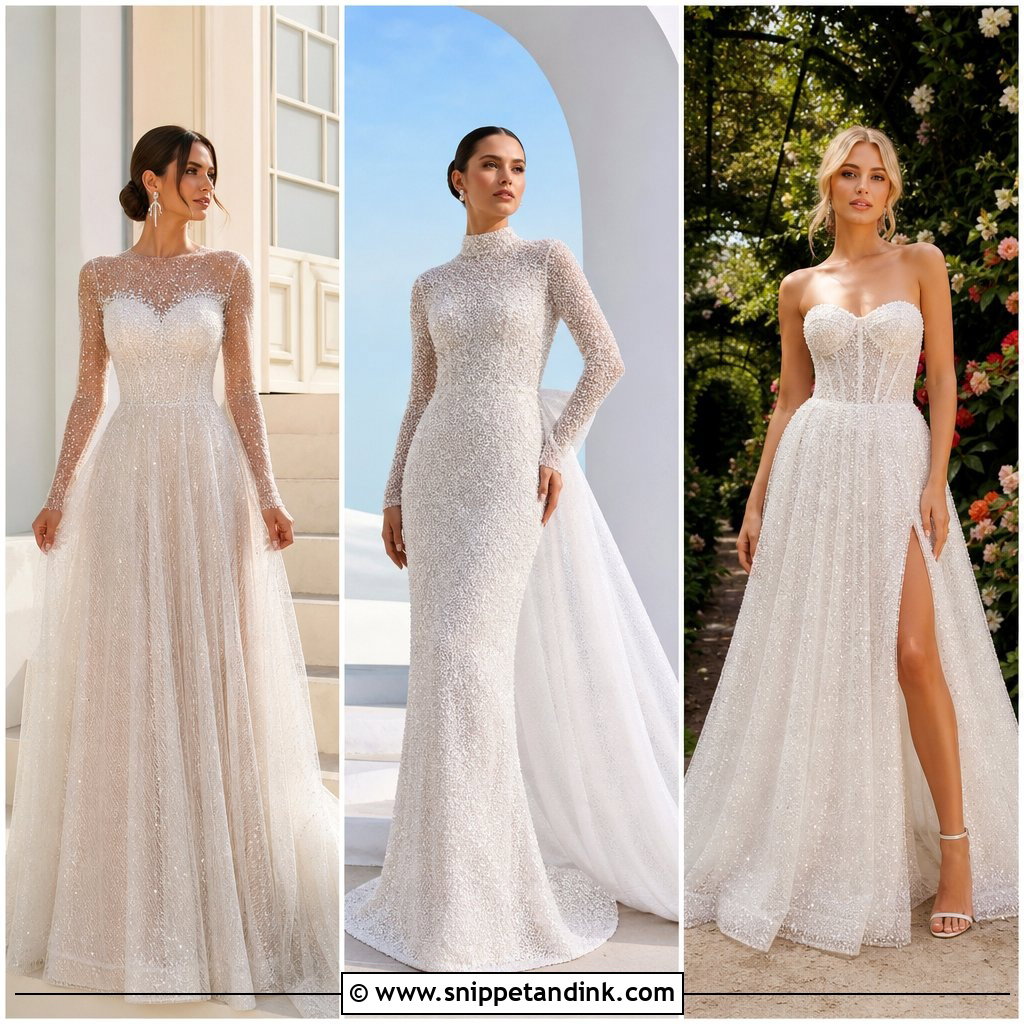
High-neck lace gives graceful coverage and a lot of detail. Choose soft lace over a fitted lining, with a neckline that doesn’t rub when you turn your head. Long sleeves or bare shoulders both work, depending on season. A lightly shaped waist and flowing A-line keep the covered top from feeling heavy. Pearl studs, closed-toe heels and a plain tulle veil let the lace show, and a low bun or side-swept updo keeps the collar clear. Look hard at sleeve length, shoulder placement and the neck closure on a tall frame. These are the hardest areas to lengthen if the original cut is too short, since lace can’t simply be let down.
12. One-Shoulder Draped Wedding Dress
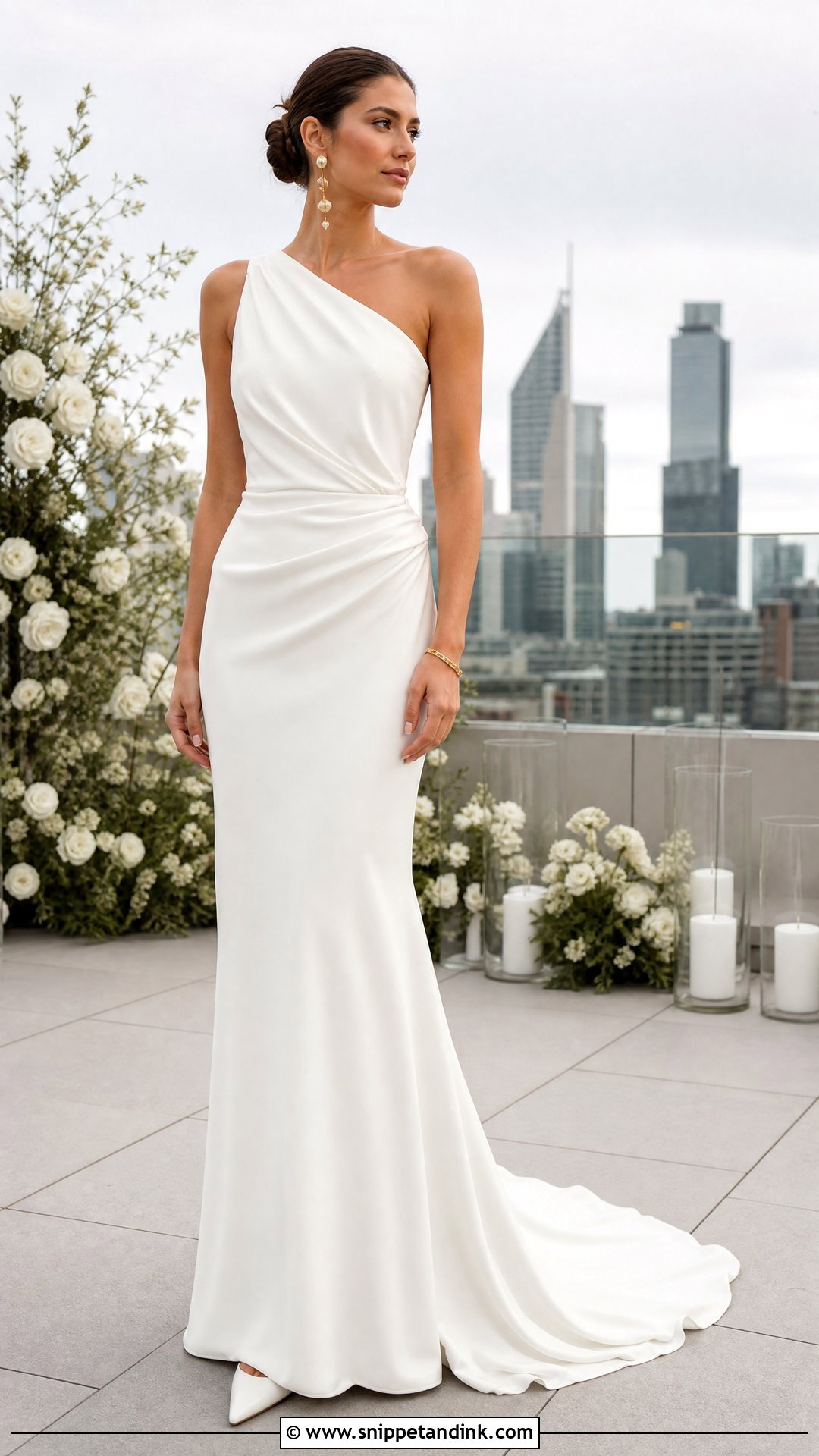
A diagonal neckline breaks the vertical and gives a tall look some movement. I’d choose soft crepe or satin with gentle draping across the bodice and a skirt that falls close to the body. A small side train or flowing back panel adds ceremony drama without weight. One statement earring, a slim bracelet and pointed ivory pumps suit it; a low bun placed toward the bare shoulder balances the asymmetry, and a necklace would only interrupt the line. The single strap should hold the bodice level. If it’s too long for your torso, the drape tilts and the bodice slowly slips toward the uncovered side.
13. Sweetheart Mermaid Wedding Dress
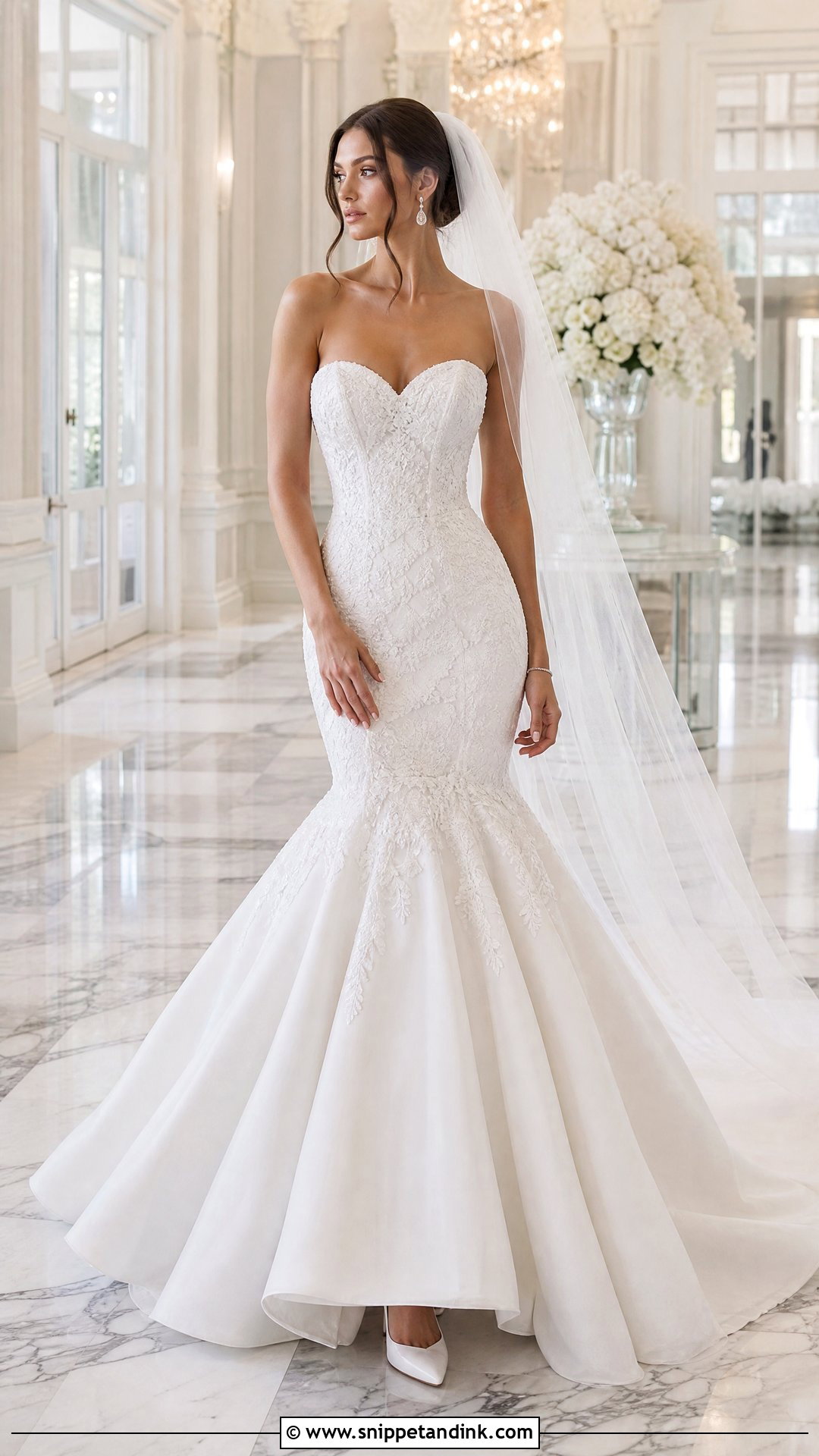
A sweetheart mermaid makes long proportions part of the design and builds a bold hourglass. Choose a bodice with internal structure and a skirt that flares at or slightly above the knee. On long legs, a knee-height flare is in the right place to look intentional rather than restrictive. Stretch crepe, lace or lined satin fits closely and still moves. Teardrop earrings, a fine bracelet, high or mid pumps and a long plain veil complete it, with Hollywood waves or a side-parted bun. Take full strides at the fitting. If your steps feel short, the tailor can often open the lining or move the flare point down.
14. Scoop-Neck Satin Slip Wedding Dress
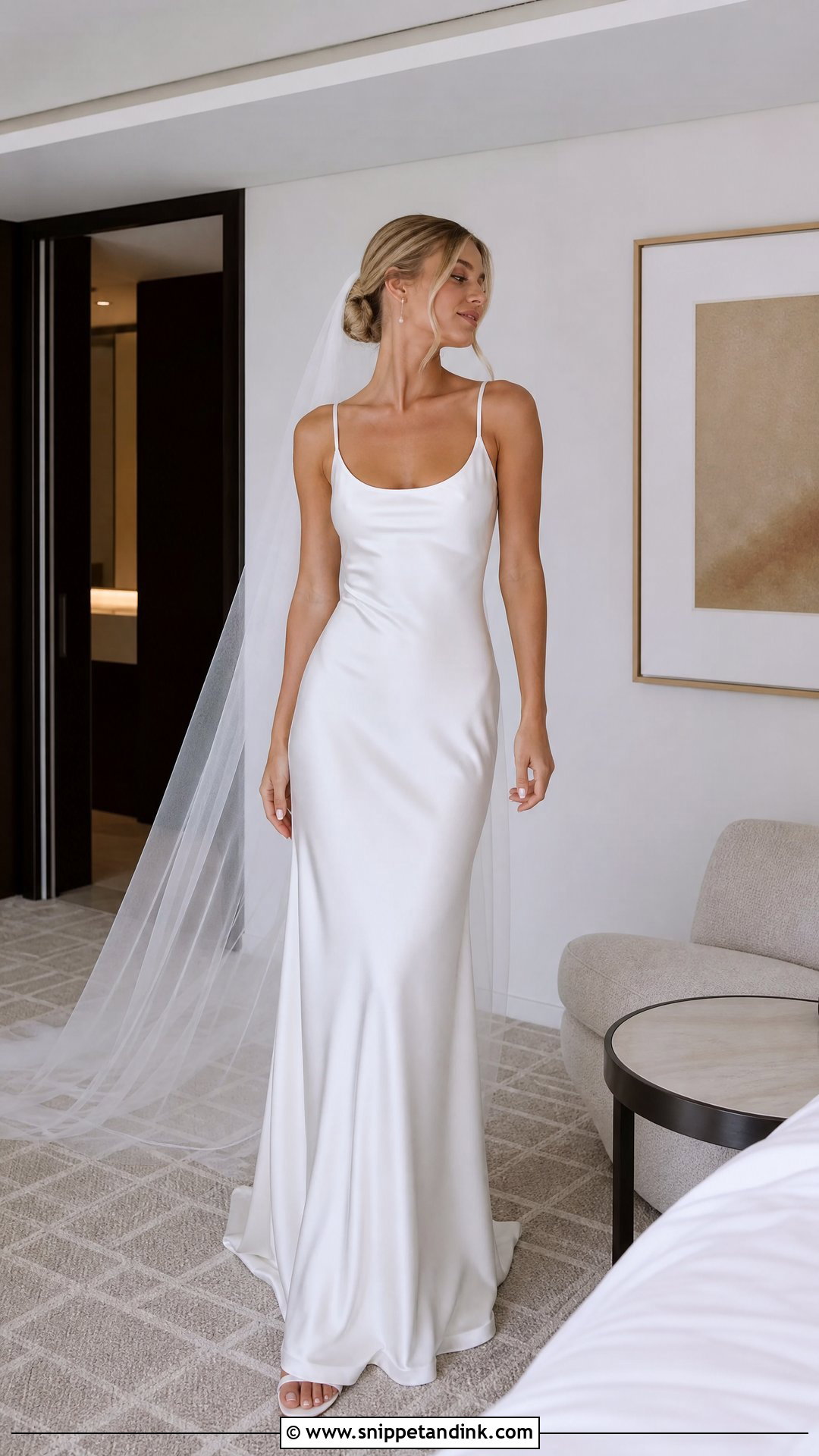
A satin slip is about as uncomplicated as bridal gets. Pick a soft scoop neckline, straps cut to your proportions and a bias-cut skirt that moves naturally. A low back or gentle cowl adds interest, but it should still support you through the whole day. Minimal drops, strappy ivory heels and a sheer chapel veil suit it, with a smooth blowout or low twist. Satin reflects light, so view it in daylight and under indoor bulbs, where seams and undergarments show more. For tall brides, I’d always order extra length on a slip. Bias-cut hems have very little allowance, and you can’t add what isn’t there.

15. Tea-Length Wedding Dress With Pumps
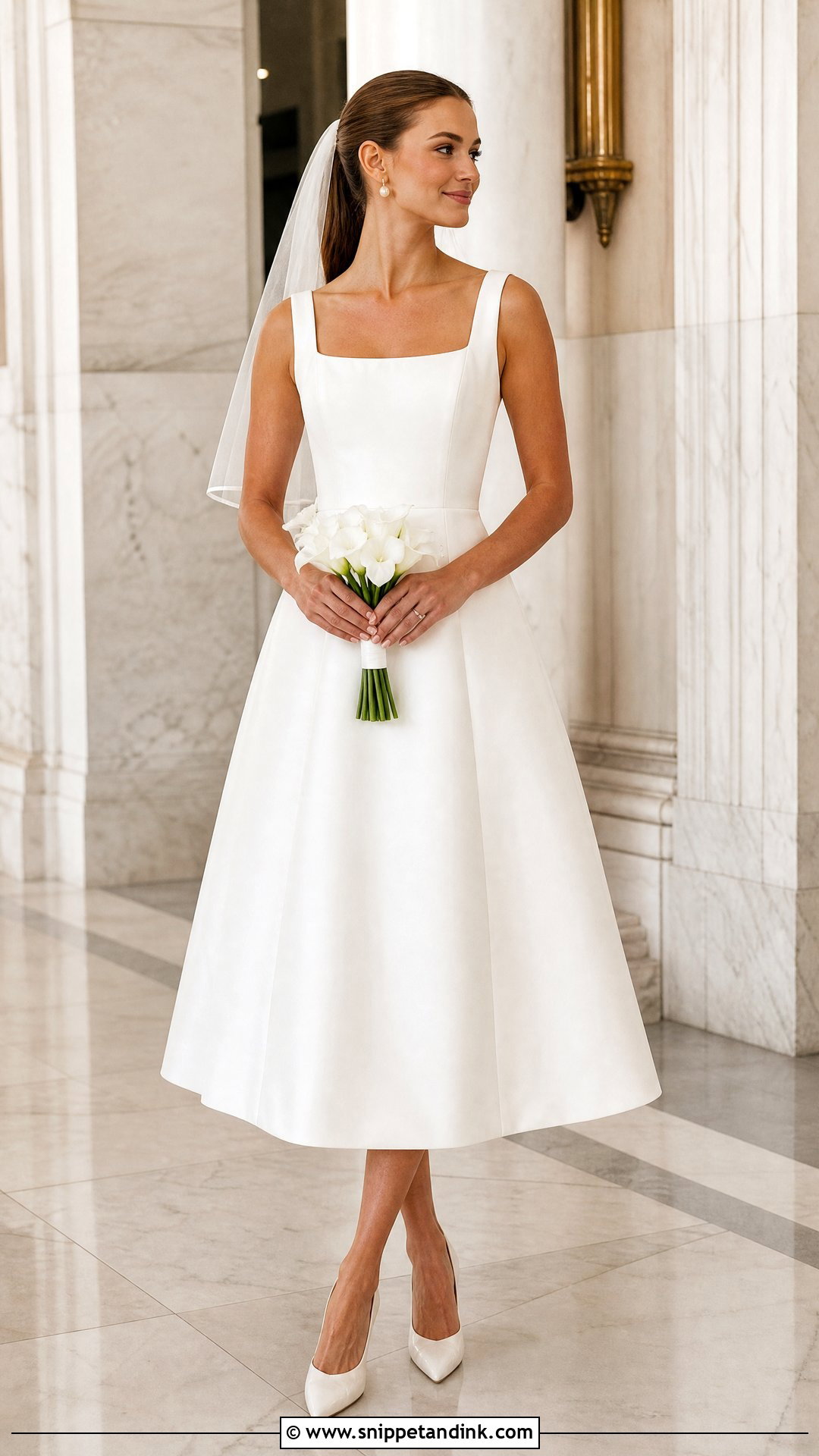
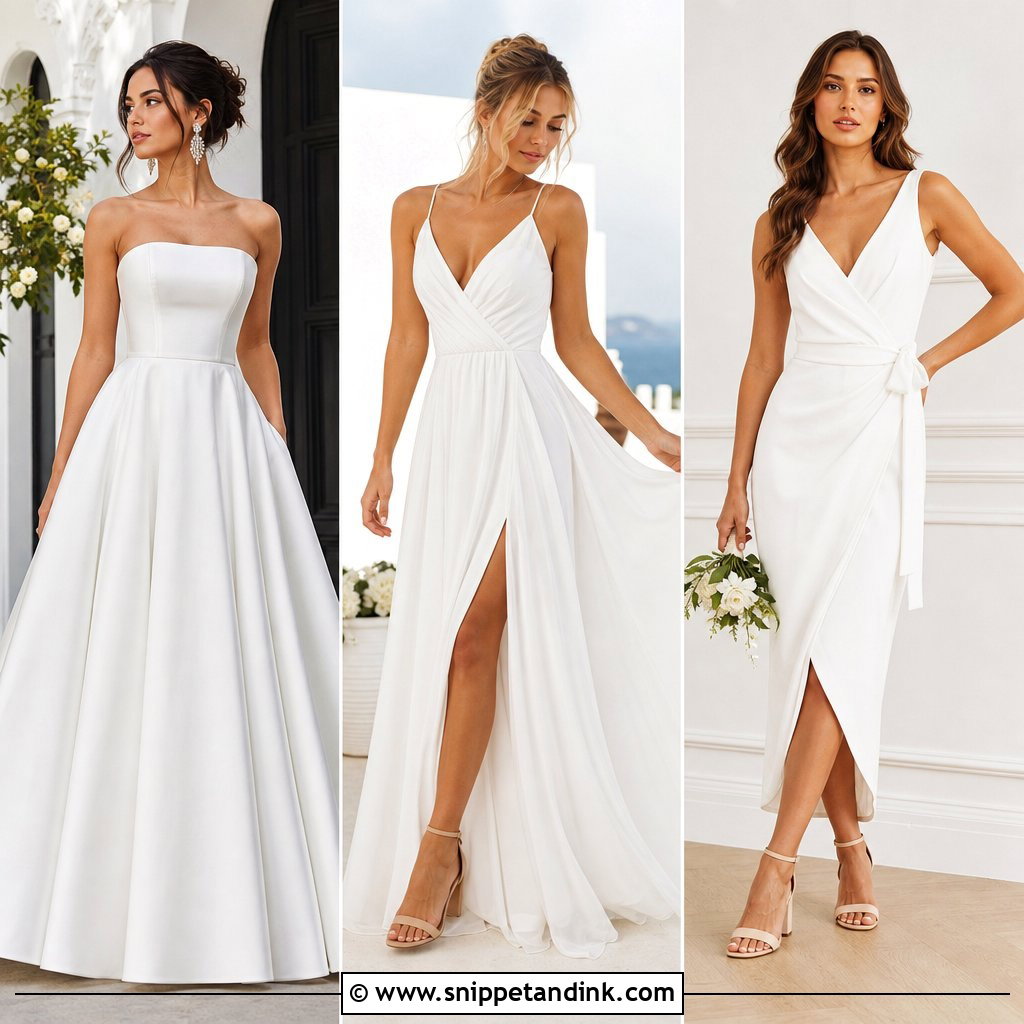
Tea length looks deliberate on a tall bride because the shorter hem shows the whole outfit. Choose a fitted bodice with a square, scoop or sweetheart neckline and a skirt ending between lower calf and ankle. Pointed satin pumps, pearl earrings and a birdcage or elbow-length veil suit it, and the shoes should feel special but comfortable for hours of standing. A polished ponytail or softly curled bob keeps it clean. Have the tailor pin several hem lengths before cutting. On longer legs, a standard tea-length sample often lands mid-calf, right at the widest point, which is the least flattering place for a hem to stop.
16. Floral Appliqué A-Line Wedding Dress
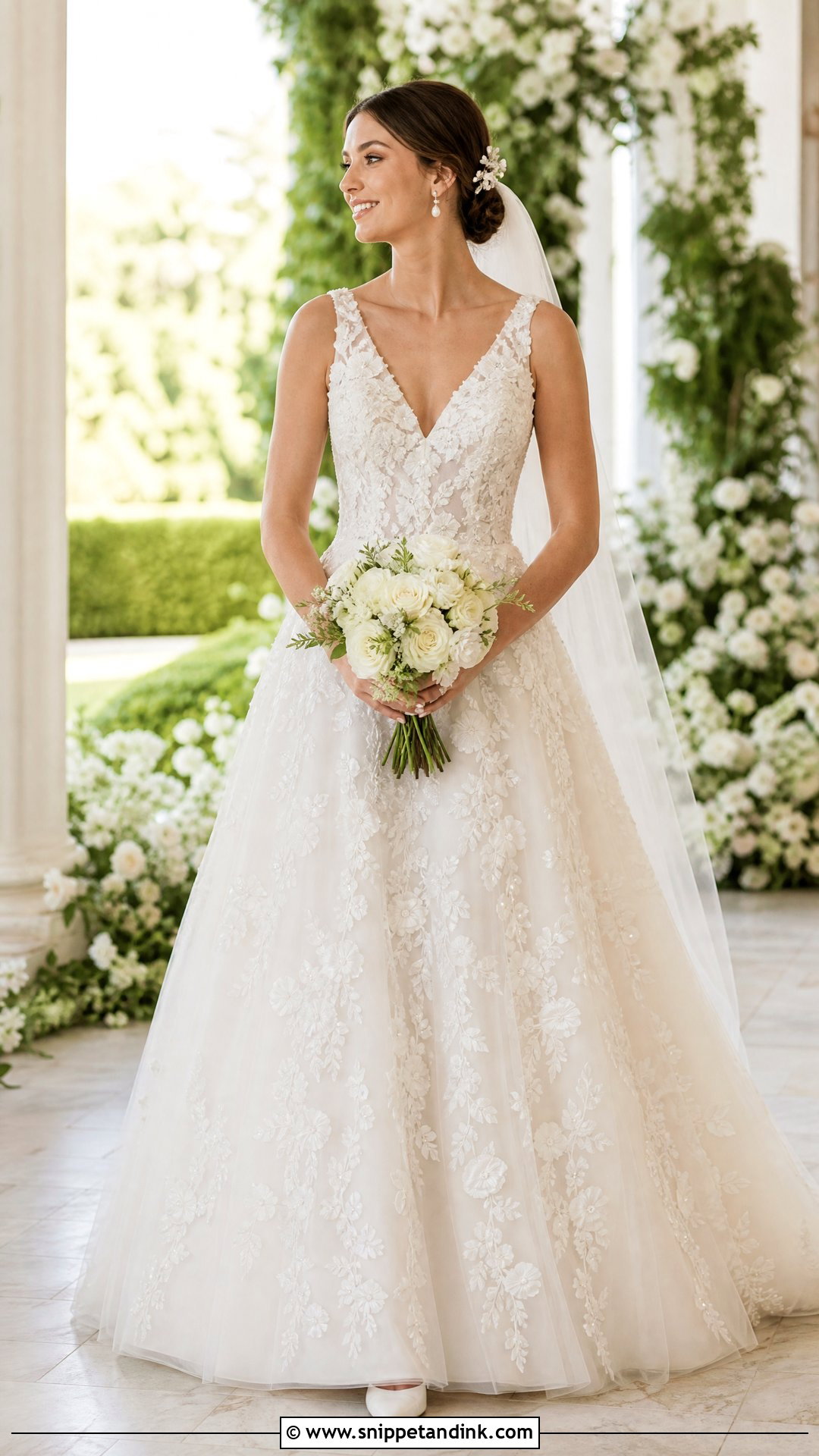
Floral appliqué adds texture and softness to a classic A-line. On a taller frame, I prefer motifs spread across both bodice and skirt rather than bunched at the hem, which can leave a long stretch of plain tulle in the middle. A sheer bateau, V-neck or supportive straps give structure beneath the flowers. Simple pearl earrings, closed-toe pumps and a plain veil that doesn’t hide the detail suit it, plus a low bun with a small floral comb. Placement is what keeps three-dimensional florals from looking dated. Check that appliqués near the waist, zip and bustle points are stitched firmly, since those are the spots that catch and pull.
17. Cape-Sleeve Column Wedding Dress
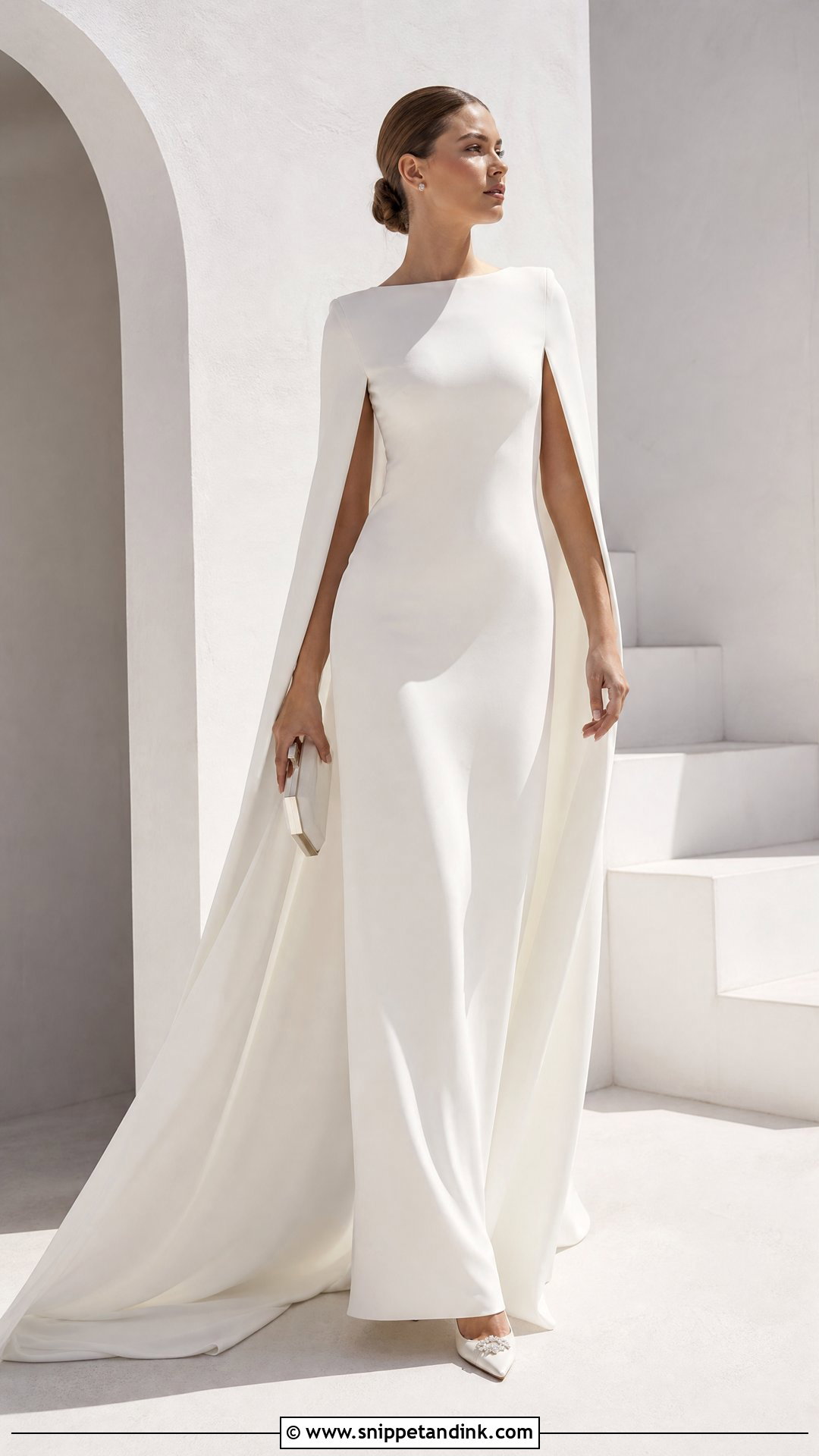
Cape sleeves give a column gown drama without any embellishment. Start with a fitted crepe base and a clean neckline, then add light cape panels from the shoulders, ending at the elbow, the wrist or the floor. Pointed heels, crystal studs and a structured clutch suit it, and a sleek low bun keeps loose hair from tangling in the fabric. You may not need a veil at all, as the cape already moves behind you. Practise walking outdoors and turning quickly. A floor-length cape cut for an average height can fall short on you, so check it reaches where you want it with your heels on.
18. Wedding Dress With Detachable Overskirt
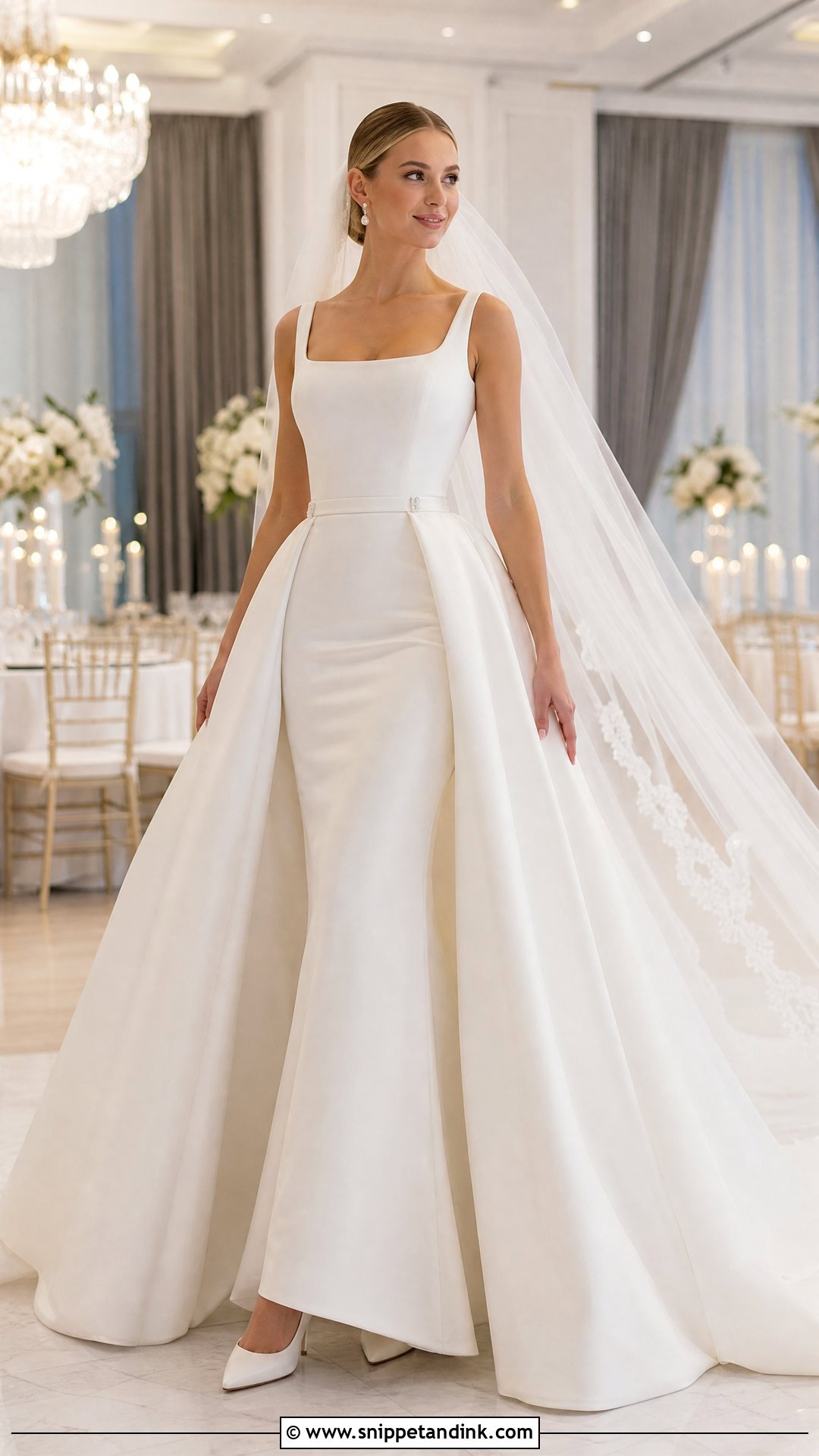
A detachable overskirt gives a tall bride two silhouettes from one purchase. Begin with a fitted column, sheath or mermaid base and add a full satin or tulle overskirt for the ceremony. Style that version with a cathedral veil, pearl earrings and elegant pumps; remove the overskirt and veil for the reception. A sleek bun works with both. The overskirt’s waistband should sit exactly at the base gown’s waist, which on a longer torso may mean having it adjusted, otherwise it leaves a visible gap or ridge. Ask someone in the wedding party to practise taking it off and putting it back on.
19. Backless Cowl-Neck Wedding Dress
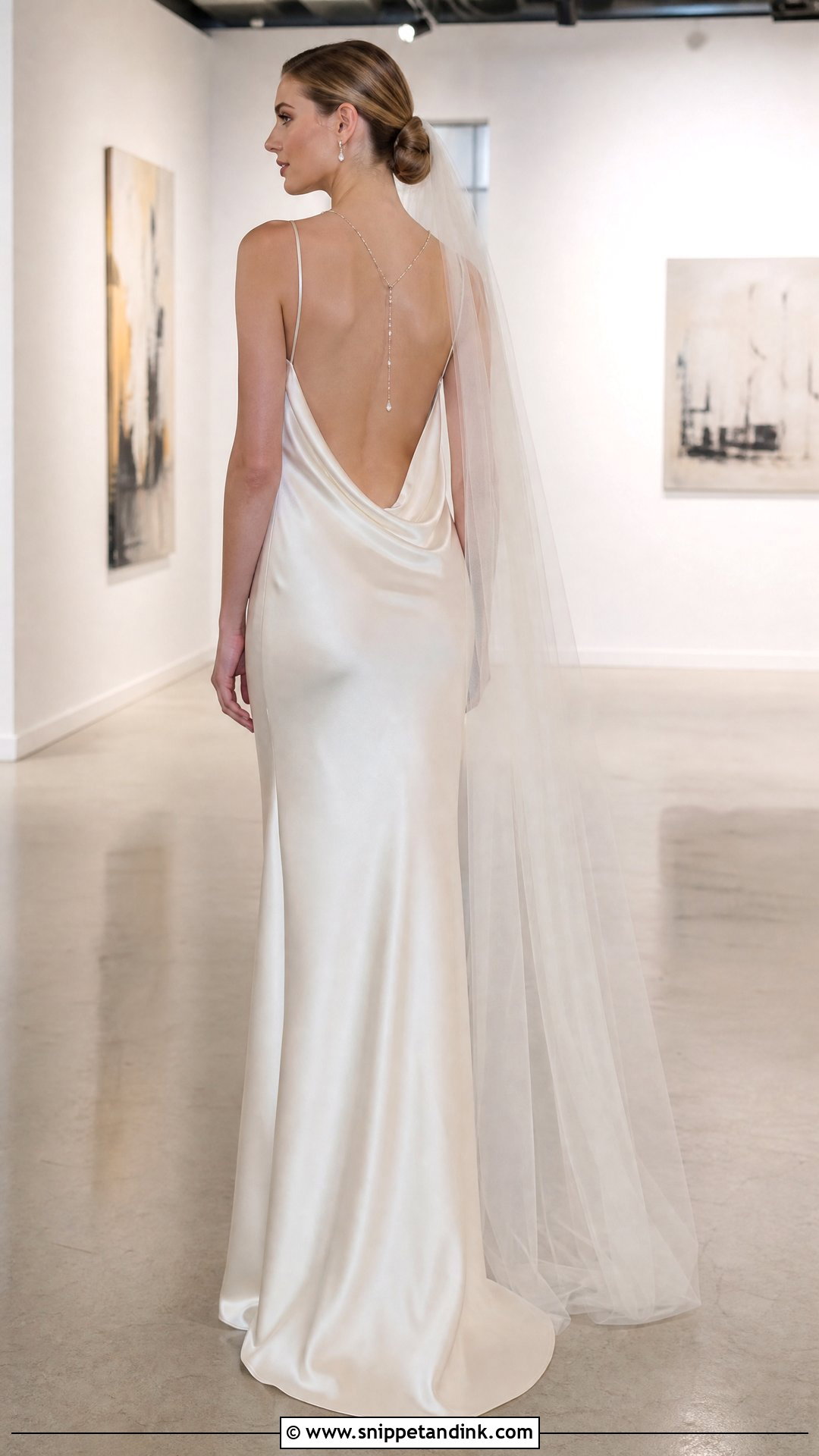
An open back and a soft cowl front make a fluid, modern gown. Choose satin or soft crepe with straps long enough for your torso and enough structure to keep the cowl from shifting. Back-drop jewellery, slim earrings and low satin heels suit it, with a low bun to show the back and a sheer fingertip veil for the ceremony. If the back is the feature, skip a heavily decorated veil that covers it. Talk through support with the tailor before you buy undergarments. Built-in cups, discreet mesh and careful strap placement help, and short straps on a long torso are what usually drag a cowl down too low.
20. Blush Tulle Wedding Dress
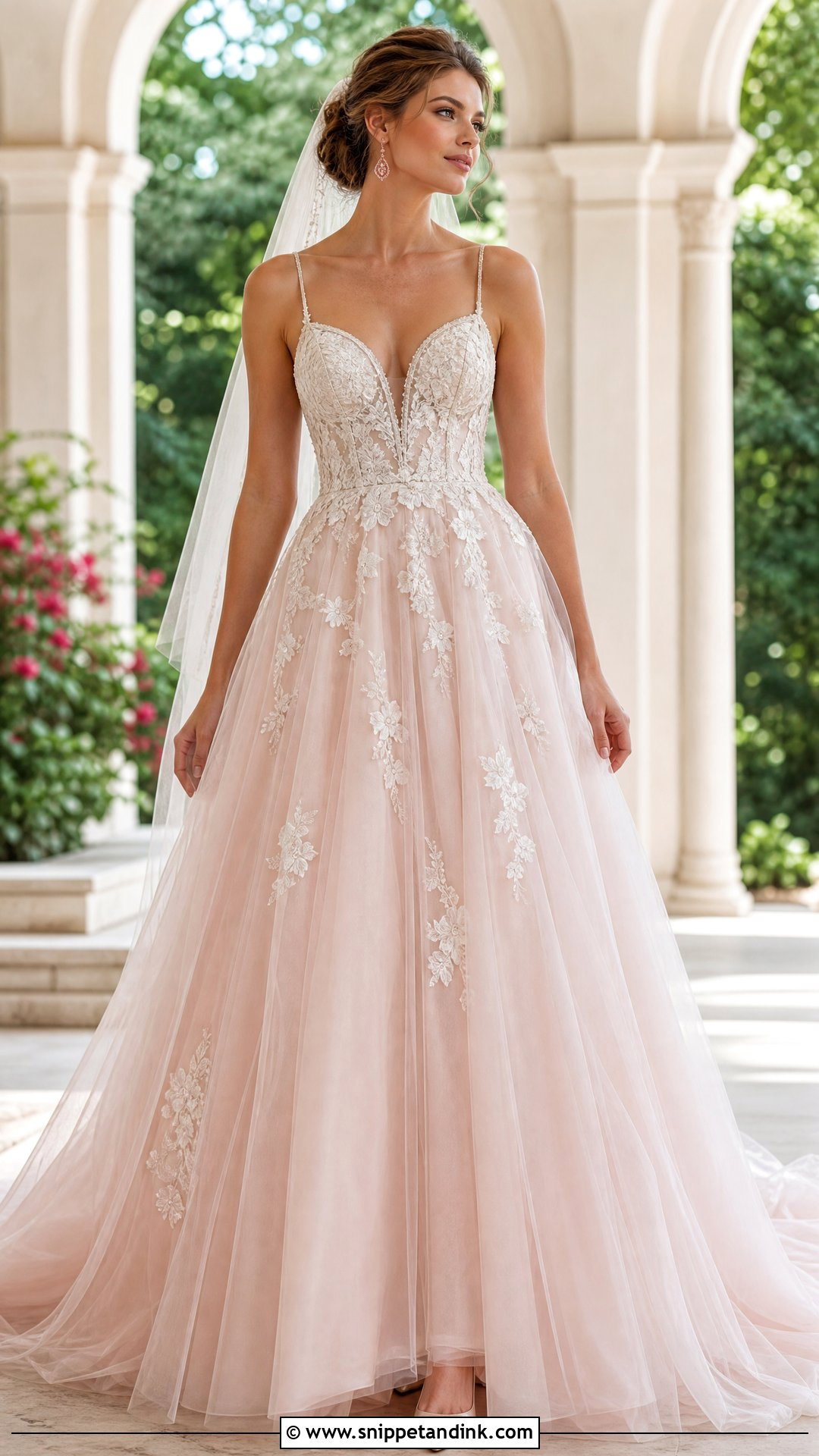
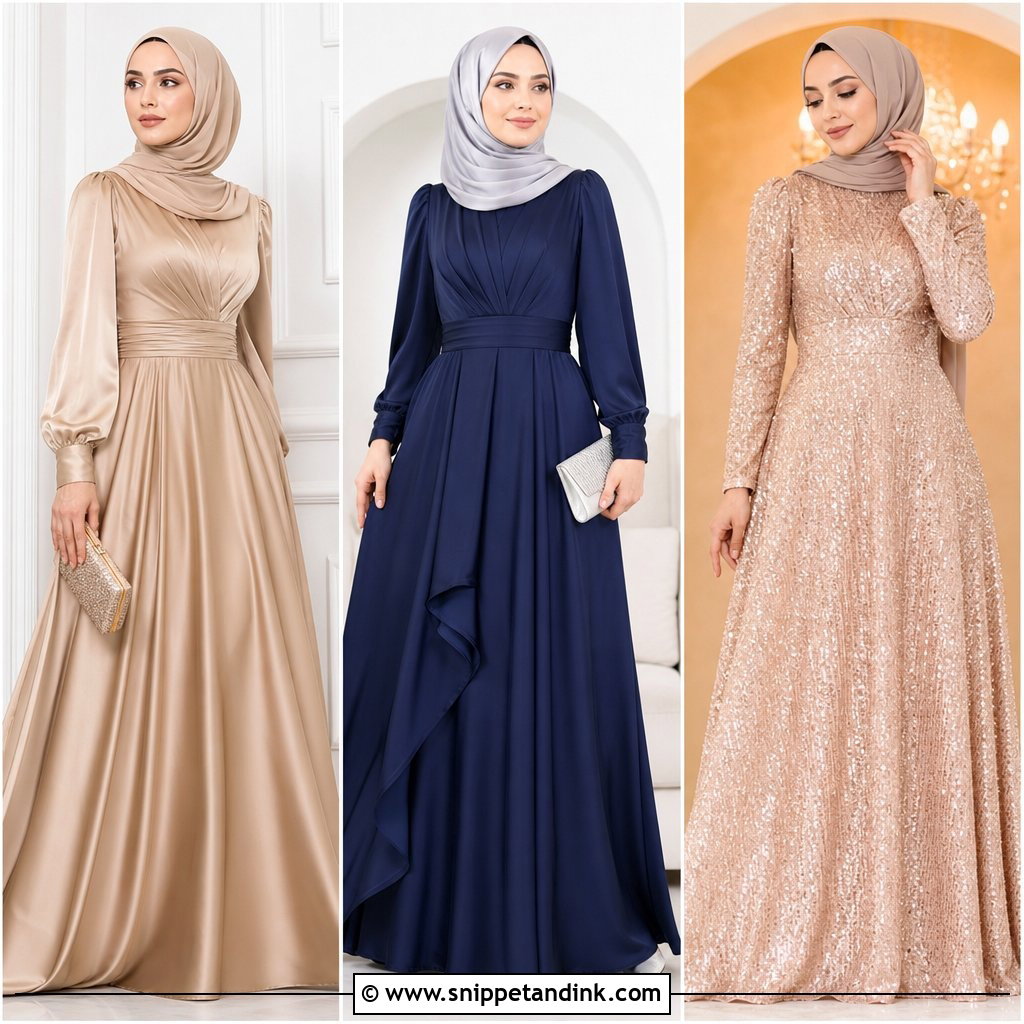
Blush tulle is a gentle step away from white that still looks unmistakably bridal. Choose a layered A-line or ball gown with a supportive ivory bodice and a softly tinted skirt. Appliqué, fine beading or scattered embroidery adds dimension, but spread it evenly across a taller silhouette. Neutral satin pumps, rose-toned earrings and a light ivory veil that lets the colour show complete it, with a softly pinned updo. Compare blush, champagne and nude linings against your skin in natural light. Tulle layers shift when a hem or bustle is altered, so ask the tailor to keep the spacing between them even.
Scaling the Veil, Train and Heels to Your Height
Veil names describe where a veil lands on an average-height bride. On you, a fingertip veil may stop at the hip and a chapel veil may barely touch the floor. I order veils by measurement instead: hold a tape from the comb position at the back of your head to where you want it to end, then add a little for the gather.
Trains work the same way. A short sweep that looks generous on the sample can look clipped behind a taller frame, while a long train scaled to your height looks balanced rather than excessive. Bear in mind that a longer train needs more bustle points to lift cleanly for dancing.
Heels or flats?
Wear what you like. Some tall brides worry about towering over a partner in photos, but a good photographer handles height differences with posing, and slouching in flats to look shorter shows in every frame. What matters is choosing before the hem is cut, because switching from heels to flats afterward leaves a skirt pooling on the floor.
Proportion Over Disguise
The gowns that work best on tall brides celebrate height while solving the practical problems: skirt length, sleeve length, torso fit and where the waist lands. Start with shapes you love, not shapes meant to make you look shorter. Bring your shoes and undergarments to every fitting, and judge each gown while walking, sitting, turning and lifting your arms. If a tall or extra-length version exists, order it before you consider major alterations. Then look at the whole outfit. Veil, jewellery, hair, shoes, train and bustle should support the gown rather than compete with it.
You'll Like These Ideas:



Leave a Reply